Exhibition: ‘open spaces | secret places: composite works from the collection’ at Museum Der Moderne Salzburg

Exhibition dates: 20th October 2012 – 3rd March 2013


Many thankx to the Museum Der Moderne Salzburg for allowing me to publish the text and photographs in the posting. Please click on the photographs for a larger version of the image.
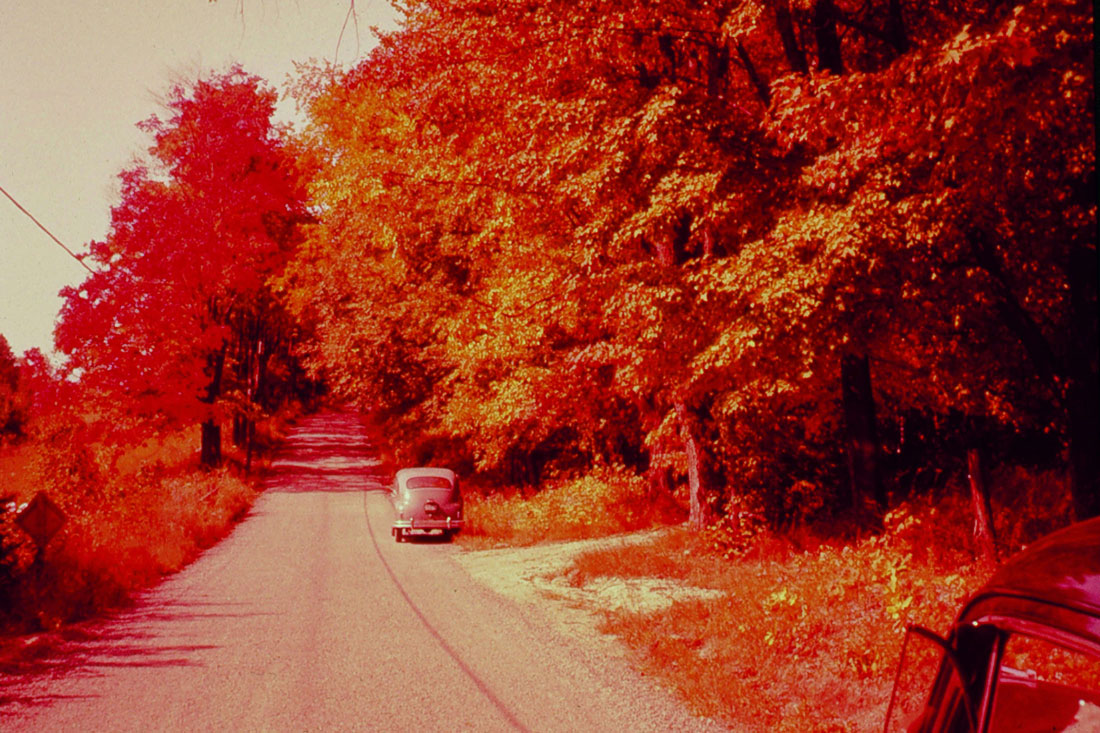
 

Janet Cardiff / George Bures Miller. 'Road Trip' 2004


Janet Cardiff / George Bures Miller
Road Trip
2004
Dia-und Audioinstallation
Fotos: Anton Bures, Ton: Janet Cardiff und George Bures Miller
15 Minuten / Loop
© Janet Cardiff/George Bures Miller / SAMMLUNG VERBUND, Wien
Courtesy the artists, Galerie Barbara Weiss, Berlin


Anthony McCall (British, b. 1946) 'Line Describing a Cone' 1973


Anthony McCall (British, b. 1946)
Line Describing a Cone
1973
16-mm-Film, s/w, ohne Ton; Installation
30 Minuten
© Anthony McCall / SAMMLUNG VERBUND, Wien
Courtesy the artist and Gagosian Gallery, Paris/London
Foto: Hank Graber, © Whitney Museum of American Art, New York


In the exhibition open spaces | secret places, the MUSEUM DER MODERNE SALZBURG is showing artistic positions from 1970 until today from the SAMMLUNG VERBUND. The phenomenons of the perception of spaces and places will be visualised. The first part of the exhibition is dedicated to the medium of photography. Jeff Wall stages mysterious fragments of urban environments in peripheral area. Joachim Koester, Bernd and Hilla Becher, Tom Burr, Teresa Hubbard / Alexander Birchler and David Wojnarowicz explore the fragility of the present in the light of historical changes of space and time. Louise Lawler draws our attention to places where works of art are stored and presented. Janet Cardiff / George Bures Miller stage a journey through memories as an audiovisual space of experience…

The increasing spatialisation of art goes hand in hand with our life style, which has changed considerably in social and cultural terms as a result of new spatial conditions (virtual space, increased mobility). It is this fluctuating presence which seems to make us more acutely aware of our location. In the past we asked other people on the telephone “How are you?”, today we ask “Where are you?

All text from the Museum Der Moderne Salzburg website (including below)
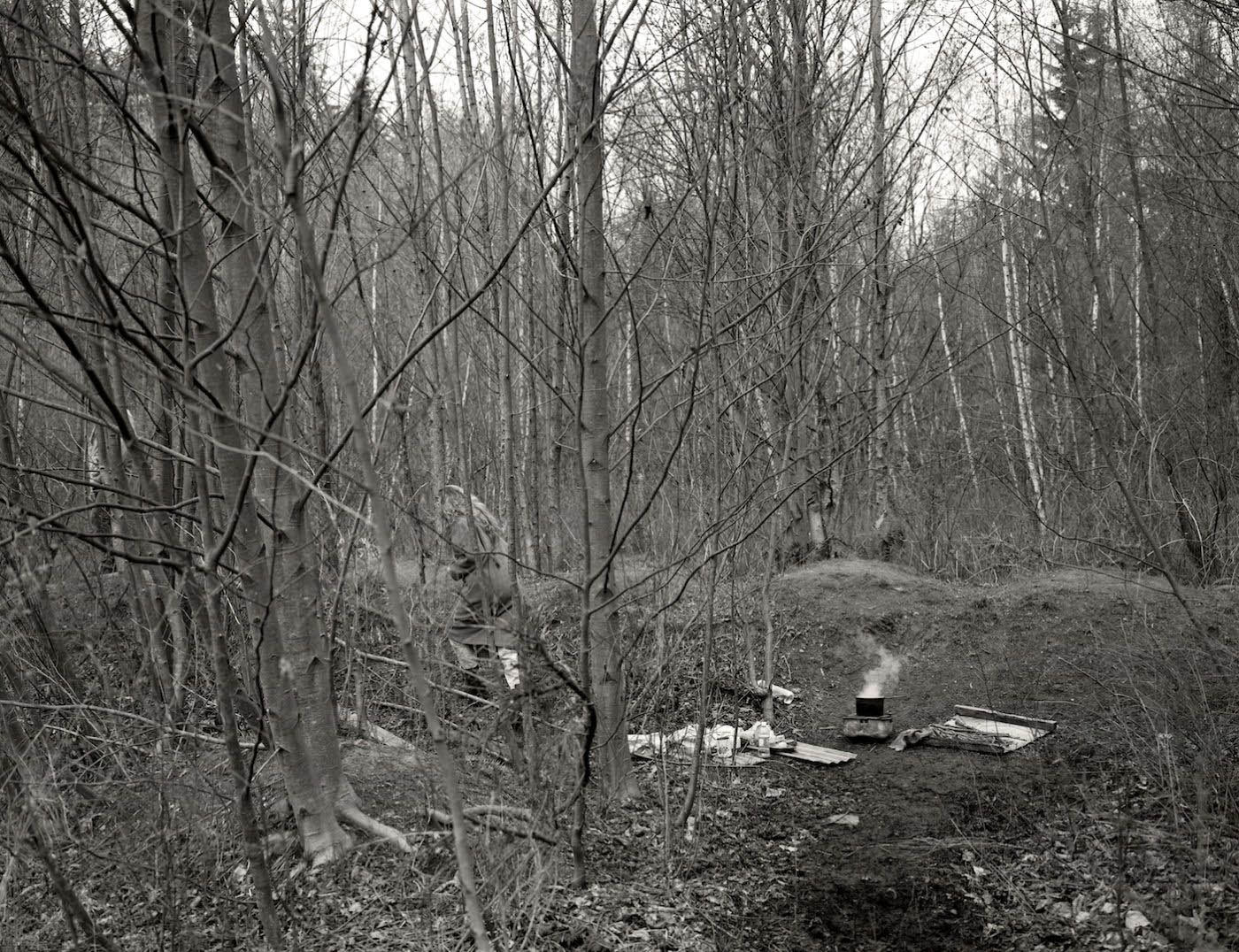
 

Jeff Wall (American, b. 1946) 'Forest' 2001


Jeff Wall (American, b. 1946)
Forest
2001
Jeff Wall / SAMMLUNG VERBUND, Wien
Courtesy Jeff Wall Studio, Vancouver and Marian Goodman Gallery, New York/Paris
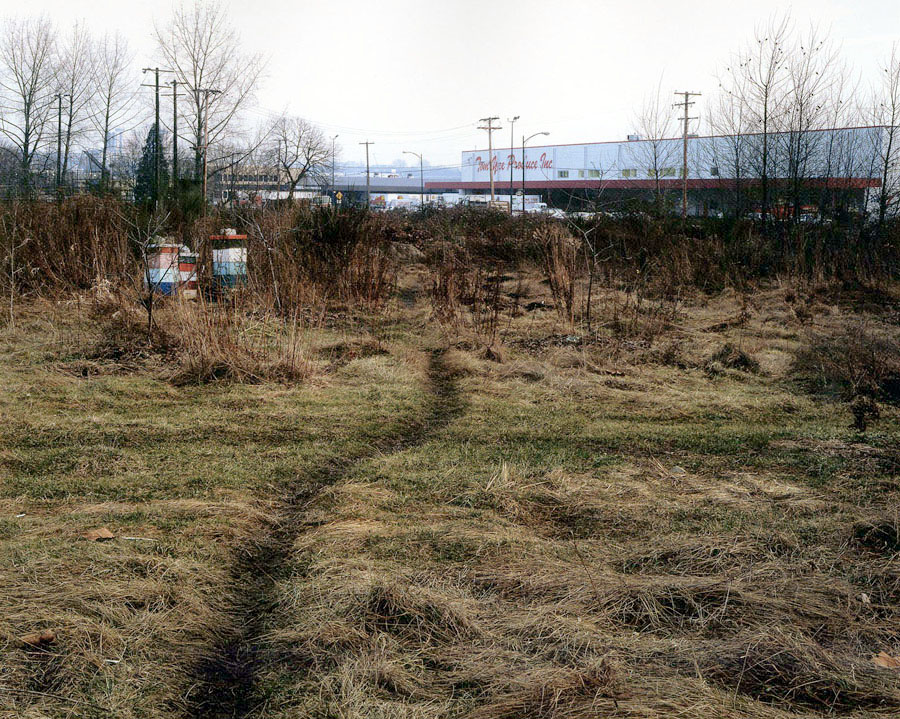
 

Jeff Wall (American, b. 1946) 'The Crooked Path' 1991


Jeff Wall (American, b. 1946)
The Crooked Path
1991
Grossbilddia in Leuchtkasten
Jeff Wall / SAMMLUNG VERBUND, Wien
Courtesy Jeff Wall Studio, Vancouver and Marian Goodman Gallery, New York/Paris


Jeff Wall

Boys Cutting Through a Hedge, 2003
The Crooked Path, 1991
Forest, 2001

For more than thirty years now, Jeff Wall has been best known for his large-format light boxes in which the colours of his giant transparencies are brilliantly illuminated. In the first few decades of his career, he was celebrated as a peintre de la vie moderne [the painter of modern life] – to use Charles Baudelaire’s term – on account of his ability to combine traditional composition with themes of modern life. For the past decade, however, he has produced a number of large format black-and-white photographs that clearly belong in the context of his affinity for traditional documentary photography or straight photography. The group of three photographs in the SAMMLUNG VERBUND shows peripheral, unimportant places, underscoring Wall’s interest in the “unofficial use of places” (Jeff Wall). In Forest two people are claiming a makeshift private territory in a forest. The Crooked Path and Boys Cutting Through a Hedge, meanwhile, show places in which people have to find their way on the other side of conventional topography.
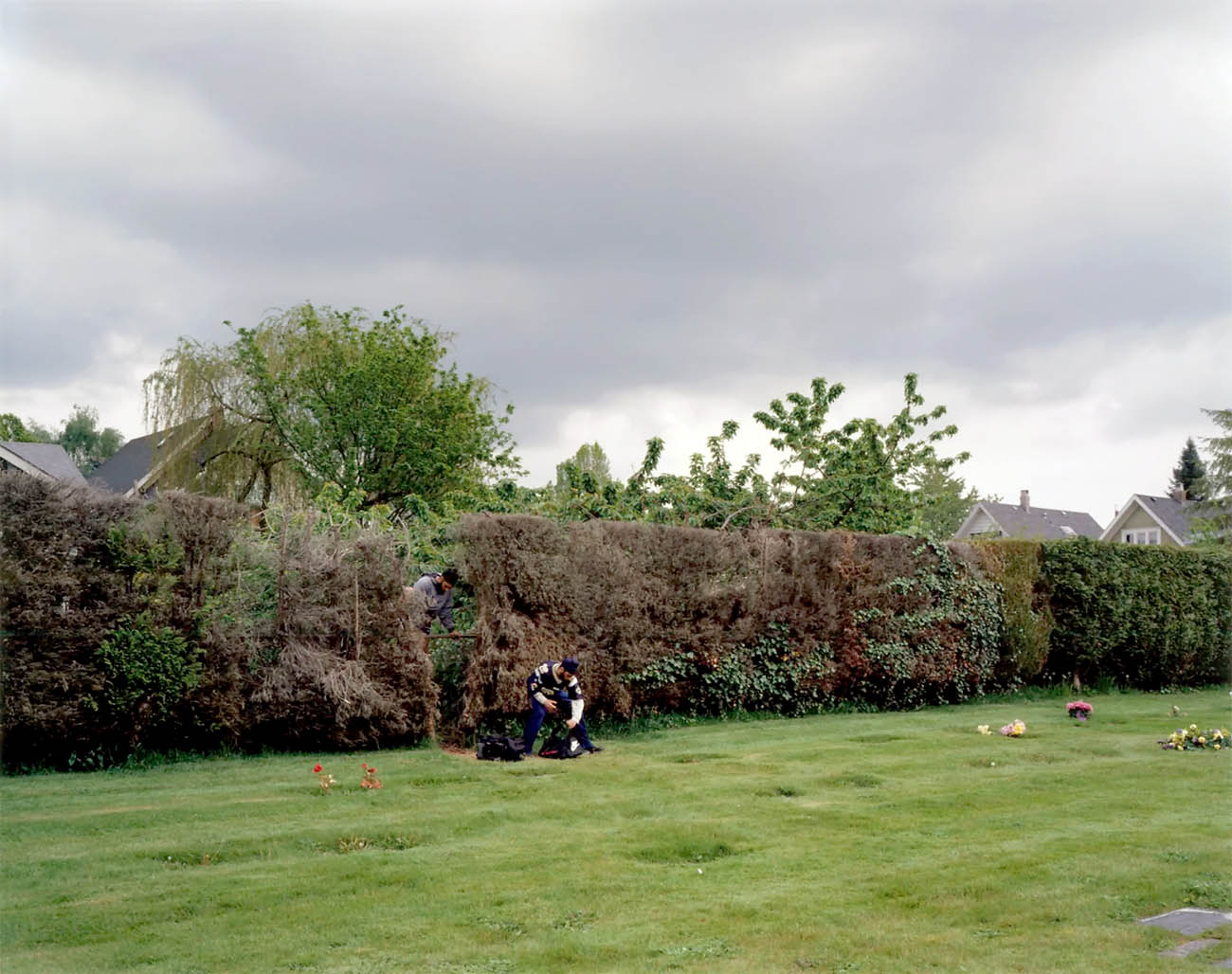
 

Jeff Wall (American, b. 1946) 'Boys Cutting Through a Hedge' 2003


Jeff Wall (American, b. 1946)
Boys Cutting Through a Hedge
2003
Grossbilddia in Leuchtkasten
Jeff Wall / SAMMLUNG VERBUND, Wien
Courtesy Jeff Wall Studio, Vancouver and Marian Goodman Gallery, New York/Paris
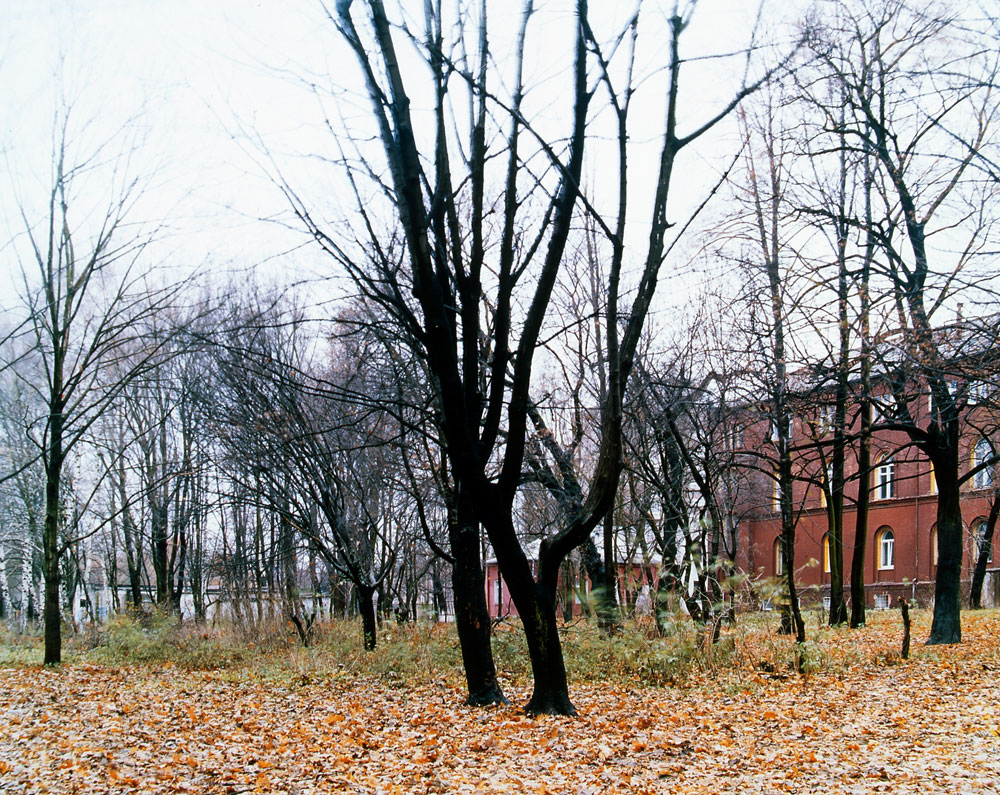
 

Joachim Koester (Danish, b. 1962) 'The Kant Walks' 2003-2004


Joachim Koester (Danish, b. 1962)
The Kant Walks
2003-2004
Aus der 7-teiligen Serie
C-Print
47.5 x 60.3cm
© Joachim Koester / SAMMLUNG VERBUND, Wien
Courtesy the artist and Galerie Jan Mot, Brussels


Joachim Koester

The Kant Walks, 2003-2004
histories, 2003-2005

Historically and philosophically charged places form the prime themes in the photographical work of Danish artist Joachim Koester. The series The Kant Walks follows the great philosopher’s daily and precisely scheduled walks through his hometown Kaliningrad (formerly known as Königsberg), which Kant allegedly never left throughout his life. Drifting through Kaliningrad’s “psychogeography” (Joachim Koester), the artist rediscovers Kant’s walks. His photographs evoke impressions, both from the past and the present, as they visualise overgrown roads, disintegrating concrete buildings, and presumably abandoned and forgotten places.

Likewise, Koester creates a link to the past in histories. Juxtaposing historic, not less than 30 year old photographs – taken by Gordon Matta-Clark or Bernd and Hilla Becher to name just a few – with recently taken shots from the very same location evokes not one, but two “histories”: that of conceptual photography, and that of the places and events depicted.
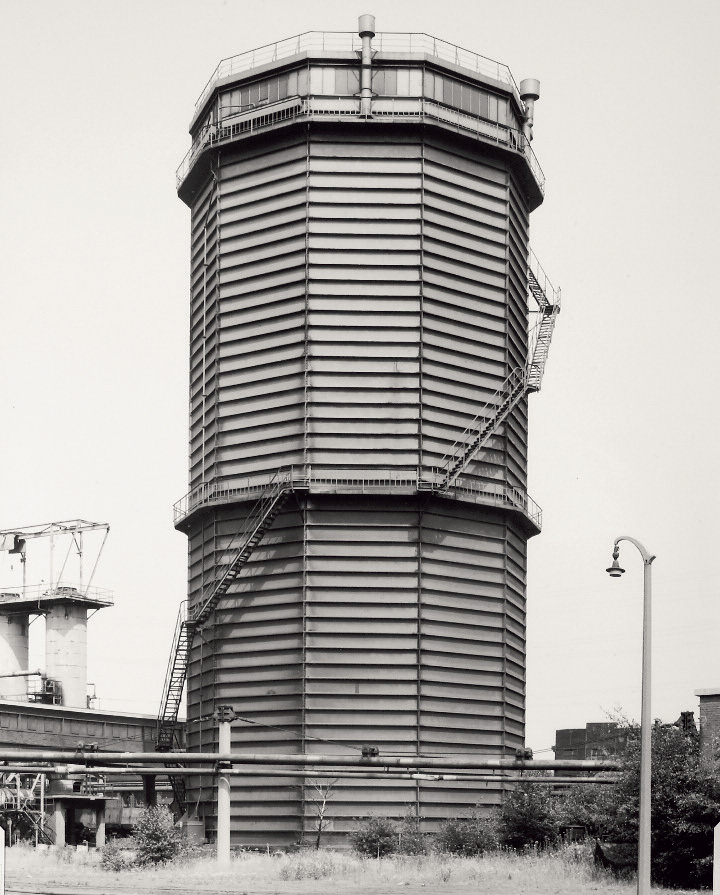
 

Bernd und Hilla Becher. 'Gasbehälter' 1965-2001


Bernd (German, 1931-2007) und Hilla Becher (German, 1934-2015)
Gasbehälter
1965-2001


Bernd and Hilla Becher

Entwürfe für Typologien, aufgenommen in den 1960er-Jahren, zusammengestellt 1970-1971
Gasbehälter, 1965-2001

Within 20th century art only a few artists have been able to combine their enduring artistic concept with an outstanding history of reception of their own work. The German photographer couple Bernd and Hilla Becher has been working strictly with documentary photography since the 1950s, and thus influences publications, exhibitions and art collections worldwide up to this day and even beyond the death of Bernd Becher in 2007, providing crucial impulses for the theory and history of art.

Ever since they started working together, Bernd and Hilla Becher were creating an inventory of industrial architecture, both in Europe and in the United States. Their black-and-white photographs depict furnaces, water towers, winding towers, factory buildings, cement and lime plants, entire mining sites as well as timbered houses. A sense of objectivity is innate to their approach to documentary photography. Bernd and Hilla Becher avoided any dramatic setting and confidently relied on the formal aesthetics of analog photography. Through strictly standardising the photographic process, the couple created the possibility to categorise their entire work in typologies, adding a whole new and important conceptual level to their oeuvre.
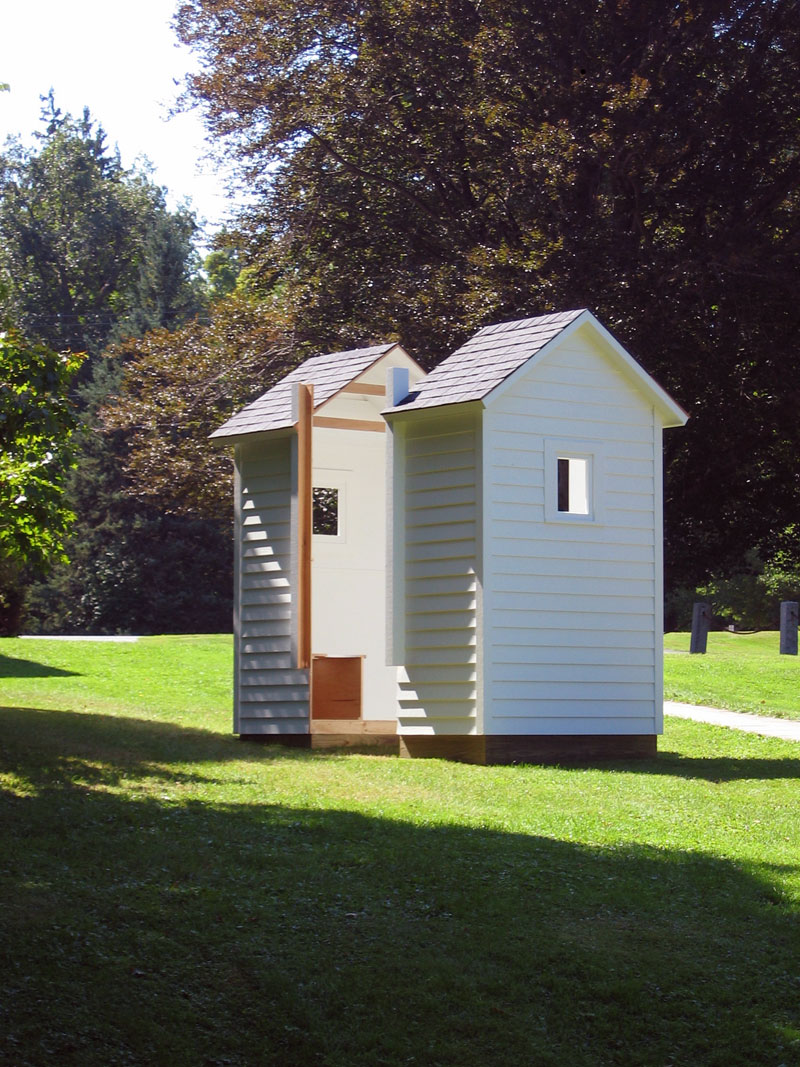
 

Tom Burr. 'Split' 2005


Tom Burr (American, b. 1963)
Split
2005
Lackiertes Sperrholz, Zedernschindeln, Asphaltschindeln
285 x 248 x 157cm
© Tom Burr / SAMMLUNG VERBUND, Wien
Courtesy the artist and Galerie NEU, Berlin


Tom Burr

Split, 2005
Unearthing the Public Restroom, 1994

Tom Burr addresses a long-obsolete phenomenon. In 2005, he presented a white wooden house cut in two halves, entitled Split, outside on a lawn. Burr’s house is a response to the multiple-seat outhouse from the premodern era. Despite (or perhaps because of) the cramped conditions, he sees in it the symbol of “a lost type of intimacy”, repressed by our western societies from their collective consciousness “in favour of cool, smooth, and clean porcelain surfaces.” Considering Burr’s penchant for referencing selected avant-garde works, what comes to mind in relation to this work is Marcel Duchamp’s urinal Fountaine of 1917 and certainly Matta-Clark’s bisected Splitting house, also shown in the exhibition, as well as Minimal Art. Burr stages Split with aesthetic minimalism – cool, austere, and sober. At the same time, however, he unfolds a strange associative field of uncomfortable conditions: of closeness and intimacy, shame, smell, at times even disgust. The earth toilet was common from ancient times up until the 19th century. Installing a version of it in public space today is intended to have the function of an “alien”, a foreign element. Burr’s earlier photo series Unearthing the Public Restroom of 1994 traces experiences of public access, hygiene, privacy, sexuality, criminality, and surveillance that cluster around, and in fact produce, the history of the public restroom. Crime and sexuality, particularly homosexuality, caused many of these spaces to be shut down. What interests the artist is precisely this state of non-use, of abandonment, and the ghost-like presence.
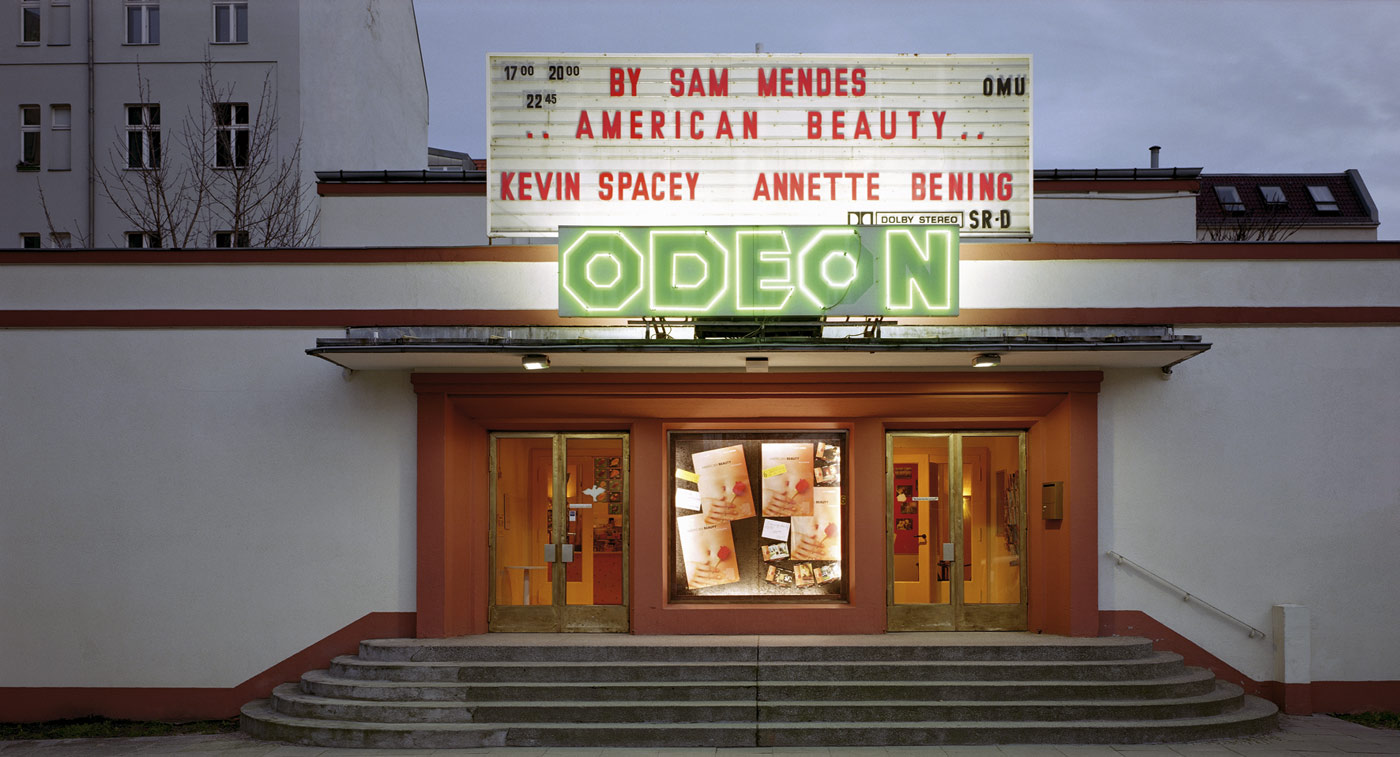
 

Teresa Hubbard / Alexander Birchler. 'Filmstills, Odeon' 2000


Teresa Hubbard / Alexander Birchler
Filmstills, Odeon
2000
Aus der 4-teiligen Serie
C-Print
140 x 259cm
© Teresa Hubbard / Alexander Birchler / SAMMLUNG VERBUND, Wien
Courtesy Teresa Hubbard / Alexander Birchler Studio, Austin, Texas


Teresa Hubbard / Alexander Birchler

Filmstills, 2000
Arsenal, 2000

The photo work Filmstills, created in 2000, marks a crucial step in the oeuvre of Teresa Hubbard and Alexander Birchler. Up to this work, the two Irish-Swiss artists were mainly known for their large-size photo series, such as Falling Down, Holes, or Gregor’s Room which were choreographed down to the smallest detail. Filmstills was the first work done outside the studio and on the spot. Filmstills show movie theatres in Berlin, which have been getting on in years. The Rio was closed some time ago and let go to ruin, whereas the Odeon still tries to maintain its hold against the flood of standardised movieplexes. Both shots are based on the same formal principle. A very narrow detail shows the respective main entrance with the cinema’s name written in big letters. The digital processing of the photographs as well as their sizes make the viewers perceive the cinemas as film stills or clips from a movie. In contrast to filmic illusion, here reality is fictionalised. The series Arsenal delivers melancholic interior views of the deserted premises of an abandoned independent cinema in Berlin, wherein only a female usher is still present.


David Wojnarowicz (American, 1954-1992) 'Arthur Rimbaud in New York' 1978-1979 / 2004


David Wojnarowicz (American, 1954-1992)
Arthur Rimbaud in New York
1978-1979 / 2004
Aus der 44-teiligen Serie
Gelatinesilberabzug
32.8 x 24.5cm
© Estate of David Wojnarowicz / SAMMLUNG VERBUND, Wien
Courtesy Estate of P.P.O.W. Gallery, New York and Cabinet Gallery, London
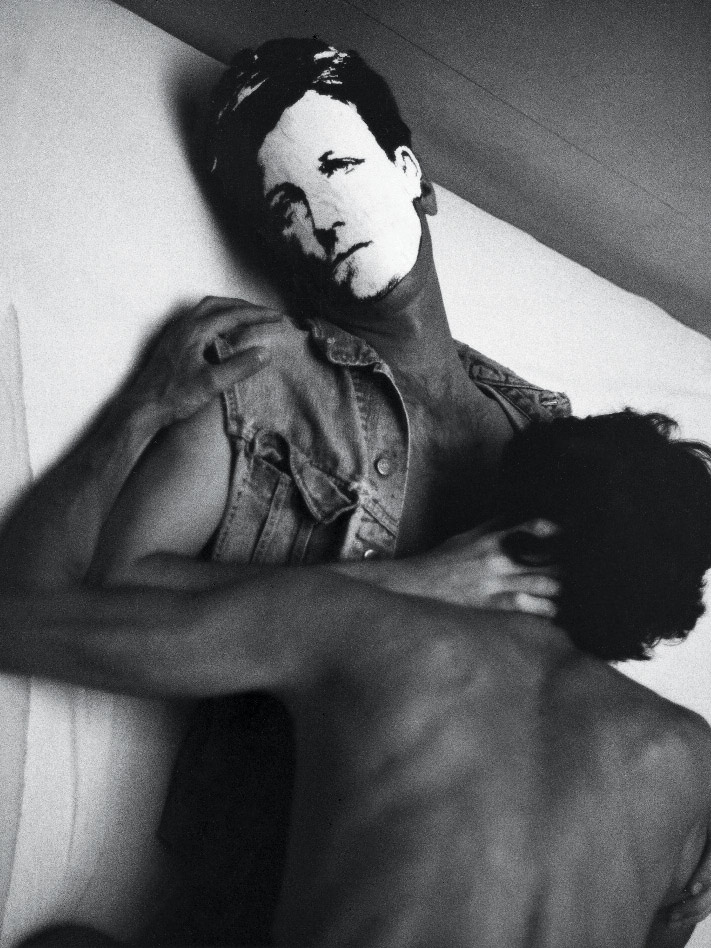
 

David Wojnarowicz (American, 1954-1992) 'Arthur Rimbaud in New York' 1978-1979 / 2004


David Wojnarowicz (American, 1954-1992)
Arthur Rimbaud in New York
1978-1979 / 2004
Aus der 44-teiligen Serie
Gelatinesilberabzug
32.8 x 24.5cm
© Estate of David Wojnarowicz / SAMMLUNG VERBUND, Wien
Courtesy Estate of P.P.O.W. Gallery, New York and Cabinet Gallery, London


David Wojnarowicz

Arthur Rimbaud in New York, 1978-1979 / 2004

In the summer of 1979, David Wojnarowicz a twenty-four-year-old self-taught artist, borrowed a broken camera to produce a series of black-and-white photographs entitled Arthur Rimbaud in New York.

The Rimbaud series proposes hypothetical scenarios involving the French Symbolist outlaw poet as if he existed a century later, showing Brian Butterick, the friend and temporary lover of the artist, with a mask of Rimbaud. Arthur Rimbaud in New York tracks provocative “locations and movements.” Meatpacking district, subway, piers and Coney Island (off-season) further characterise a generally invisible marginalisation reinforced by abiding unsightliness, tawdriness, and rustication. Desolate Hudson river pier warehouses or anonymous Times Square’s red-light district allude to cavalcades of outsiders whether artists, thieves, queers, young runaways, sex workers, injection drug users, the poor, or homeless. The Rimbaud series would forge links between the artist’s engagement in his own social marginality to that of peers and prior heroes, each one demonstrating the transformative potential of creative response to existential crisis.


Louise Lawler (American, b. 1947) 'CS #204' 1990


Louise Lawler (American, b. 1947)
CS #204
1990
Cibachrom auf Polyester kaschiert
99.1 x 135.9cm
© Louise Lawler / SAMMLUNG VERBUND, Wien
Courtesy the artist and Metro Pictures, New York
 

Louise Lawler (American, b. 1947) 'It Could Be Black and White' 1994/1996


Louise Lawler (American, b. 1947)
It Could Be Black and White
1994/1996
Gelatin silver print
© Louise Lawler / SAMMLUNG VERBUND, Wien
Courtesy the artist and Metro Pictures, New York
 

Louise Lawler (American, b. 1947) 'Not Yet Titled' 2004-2005


Louise Lawler (American, b. 1947)
Not Yet Titled
2004-2005


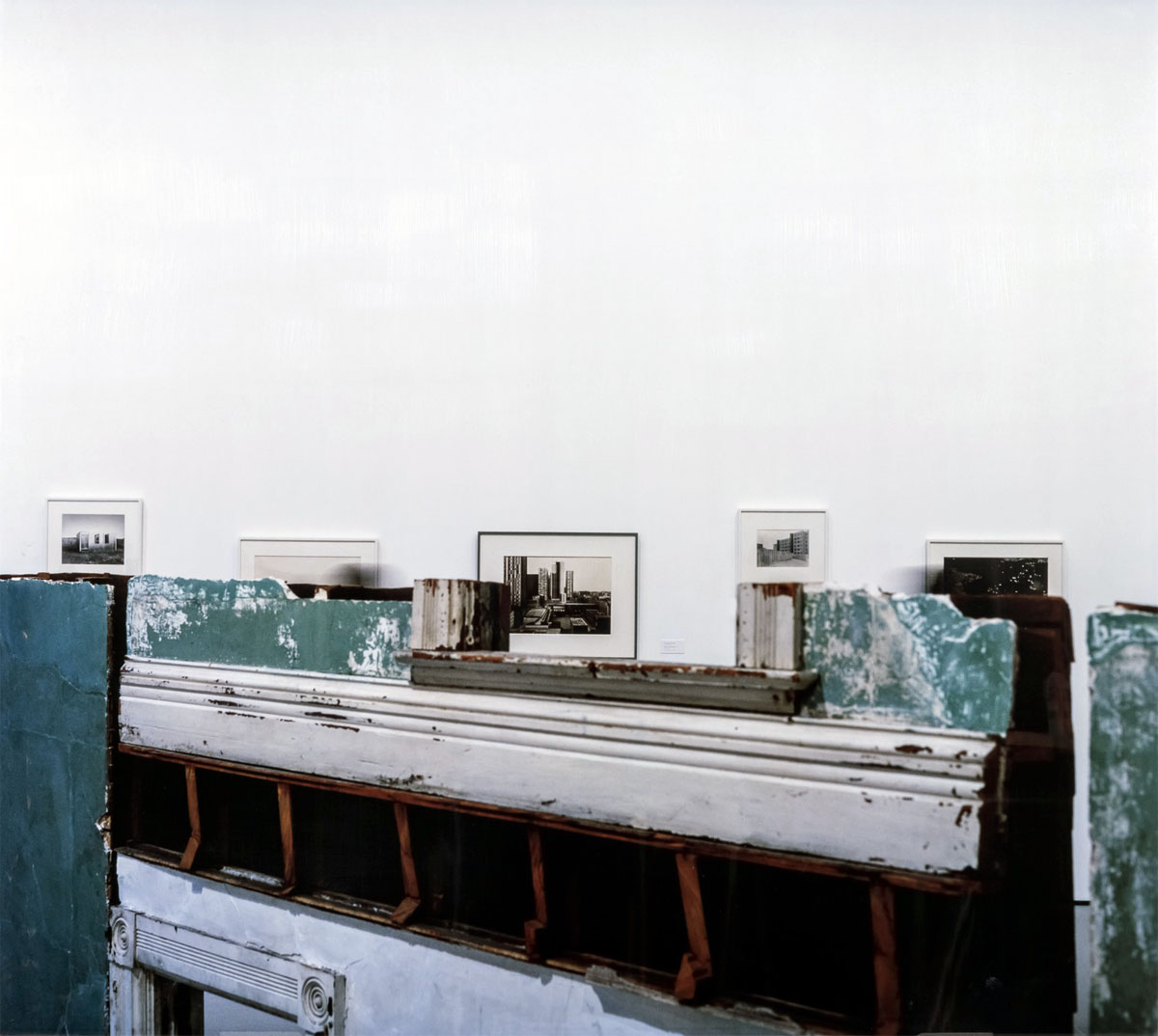
Louise Lawler is one of a group of artists associated with the so-called Pictures generation of the 1970s and 1980s. The Pictures generation conceived of the image as a “picture” – that is, as a set of representations that could be found or appropriated, was rarely original or unique, and that contradicted the claims of authenticity upheld by most modern aesthetics. Lawler’s Not Yet Titled belongs to a long series of projects that investigate the afterlife of artworks – what happens to them after they leave the artist’s studio and enter the domain of private homes or public institutions. This photograph captures Gordon Matta-Clark’s “building cut” Bingo (1974) just after it was installed in the contemporary art galleries of the recently renovated Museum of Modern Art in New York in 2004. Only the top of Bingo is visible in the near foreground, as the edges of Matta-Clark’s object alternately frames and obscures smaller black-and-white photographs of buildings by the contemporary artist Thomas Struth mounted on the gallery walls behind. Lawler’s luminous colour photograph demonstrates the ways in which an institution can change the meaning of an object, as it turns Bingo – already transformed from a building part into a sculpture – into an enigmatic framing device that calls into question the relationships between both the artworks and their context.

Exhibition brochure text from the exhibition Focus on Photography: Recent Acquisitions at the Mildred Lane Kemper Art Museum, Washington University in St. Louis, 2010
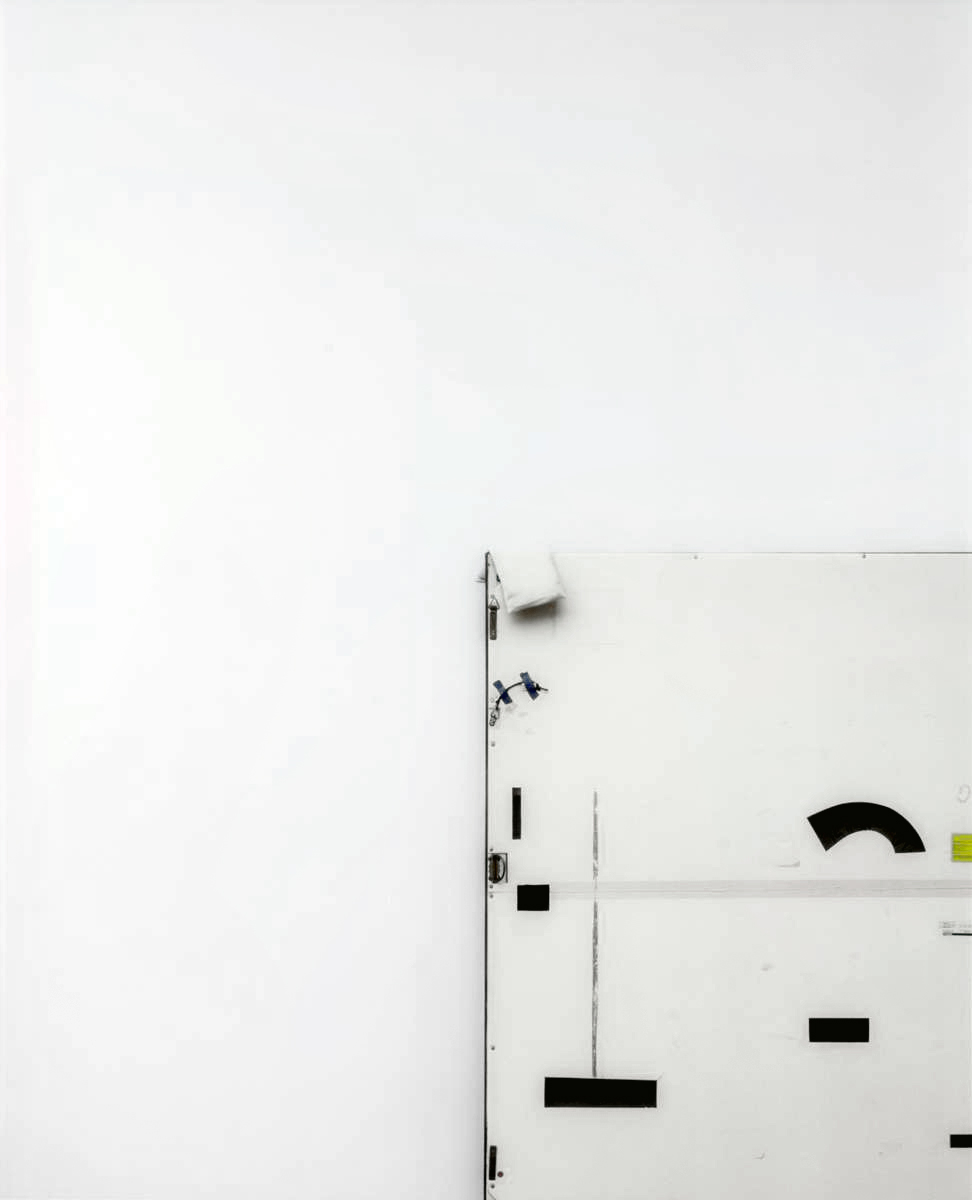
 

Louise Lawler (American, b. 1947) 'Wall Pillow' 2010, printed 2012


Louise Lawler (American, b. 1947)
Wall Pillow
2010, printed 2012
Photograph, dye destruction print on paper
© Louise Lawler / SAMMLUNG VERBUND, Wien
Courtesy the artist and Metro Pictures, New York


Louise Lawler

Not Yet Titled, 2004-2005
Abbau, 2002
Not Yet Titled, 2004-2005
CS # 204, 1990
It Could Be Black and White, 1994-1996
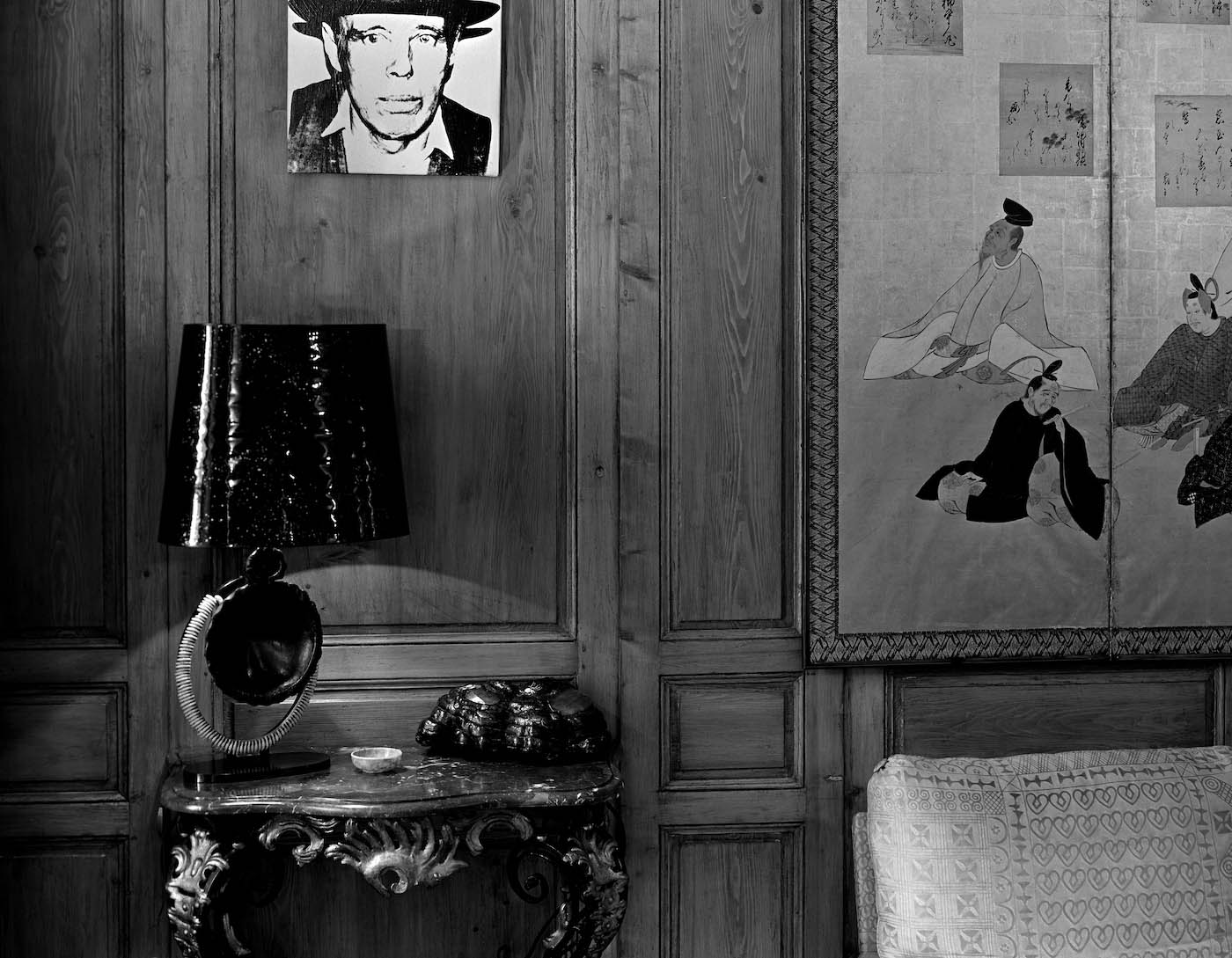
Wall Pillow, 2010/2012


Louise Lawler’s gaze is fixed not on a single, isolated work of art, but rather on the institutional environment in which that particular work is viewed; this, astonishingly, turns out to lend works a completely different meaning. It is the private, semi-public or public context of the gallery or the museum which constantly reshapes, redefines, and refigures a work of art. In principle, Lawler takes pictures of existing situations, in the sense that she does not rearrange the works or make any changes to their position relative to each other. She quite often adopts an off-stage stance to this end, enabling her to view an exhibition from an angle which would normally be closed to visitors.

Wall Pillow, for instance, reveals the verso of a painting, while Abbau shows the absence of art – the two nails and a spotlight shining on a bare wall are all that remains after the work itself has been removed. For what she has done is to sever the magic thread that connects the work per se to the aura it acquires through its hanging. What is evident from Not Yet Titled and CS #204, is that the artist is clearly attracted first and foremost by those works of art which she herself values highly, such as by Gordon Matta-Clark’s façades and Cindy Sherman’s self portraits. Lawler’s photographs focus on the other side of the coin of institutional art presentation. Yet for all her apparent deconstruction, one still has the feeling that she wants to “rescue” these works and in doing so restore their original dignity.
 

Ulla von Brandenburg (German, b. 1974) 'Around' 2005 (still)


Ulla von Brandenburg (German, b. 1974)
Around (still)
2005
16-mm-Film transferiert auf Digibeta PAL, s/w, ohne Ton
2:30 Minuten / Loop
© Ulla von Brandenburg / SAMMLUNG VERBUND, Wien
Courtesy the artist and Produzentengalerie, Hamburg


Ulla von Brandenburg

Around, 2005

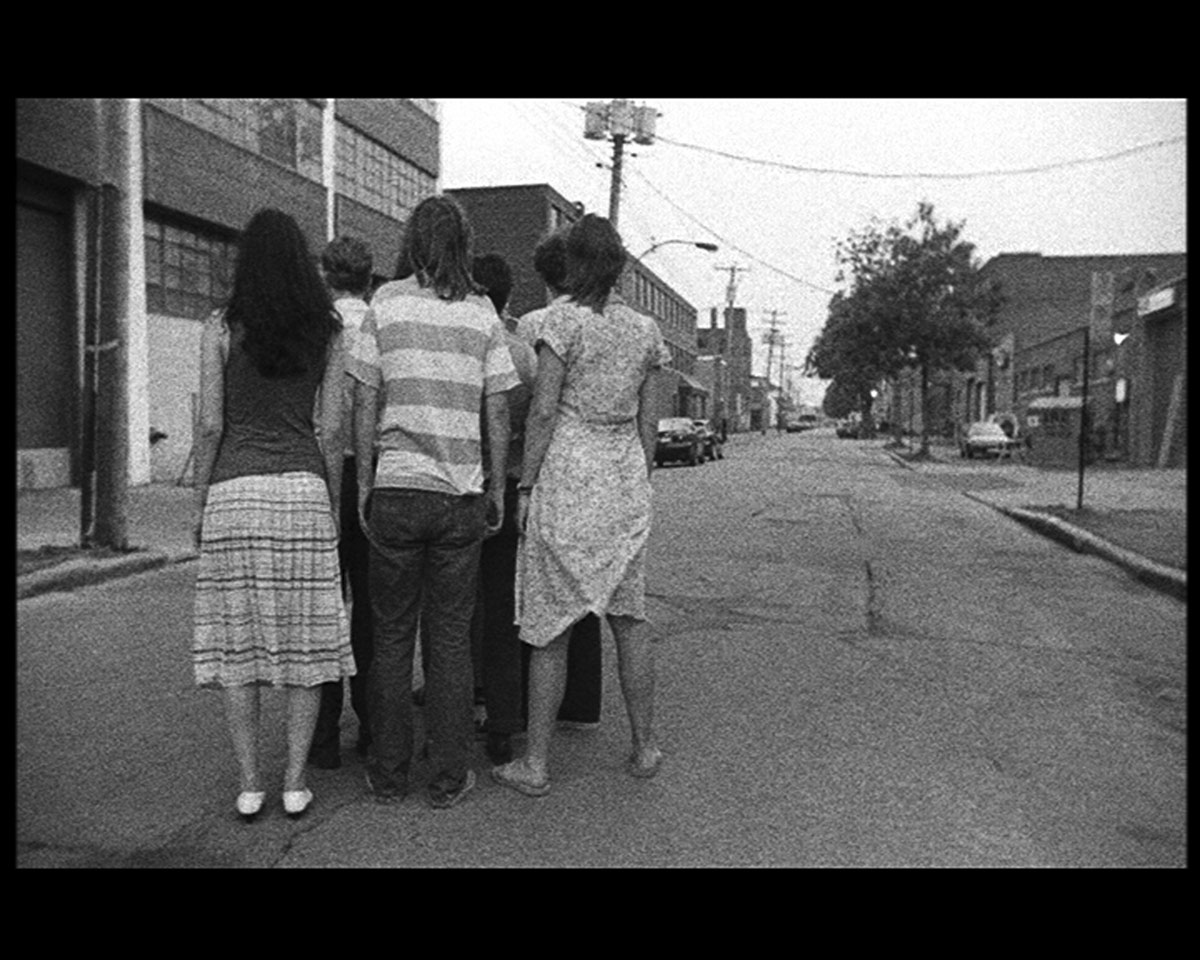
The striking presence of female figures in Ulla von Brandenburg’s work suggests an interest in the conflicted role of nineteenth-century women and the continued complexity of the performance of gender roles and attitudes in contemporary society. Our uncertainty about the position of these women, who are frequently presented in a liminal state, and their potential vulnerability, align perfectly with von Brandenburg’s interest in shifting roles and meaning: Though commanding of attention, von Brandenburg’s female figures are often on the verge of hysteria or loss of control – a state of powerlessness that nevertheless enforces their centrality in the action taking place. The artist’s work Around, 2005 best embodies this state of deferral or ambiguity: von Brandenburg filmed a tightly packed group of figures standing in the middle of a street with their backs to the camera. As the camera travels around the group the figures shift their position so that no frontal aspect is ever revealed. A view of their faces is never revealed in this conspirative meeting. Around we go waiting for the glimpse that will reveal, well, what exactly? We are left standing in front of the projection watching this group of performers, each of us struggling to find the “right” position.
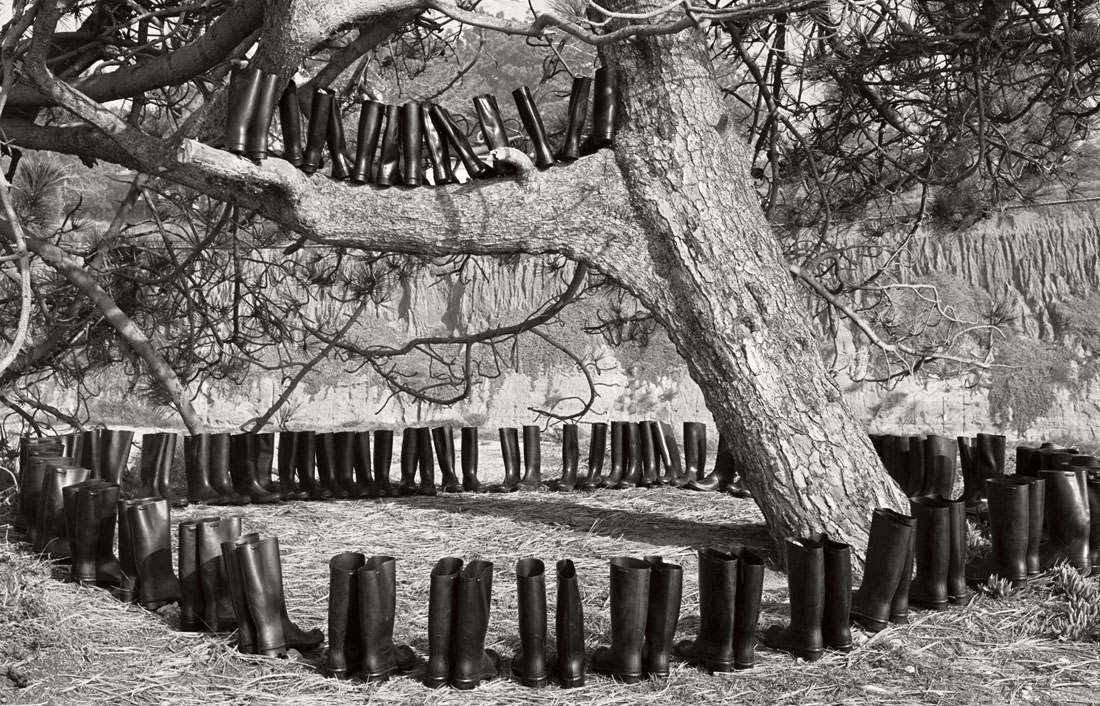
 

Eleanor Antin (American, b. 1935) '100 Boots' 1971-1973


Eleanor Antin (American, b. 1935)
100 Boots
1971-1973
100 Boots in a Field, Route 101, California.
February 9, 1971, 3:30 p.m.
Aus der 51-teiligen Serie, S/W-Postkarte
11.4 x 17.7cm
© Eleanor Antin / SAMMLUNG VERBUND, Wien
Courtesy the artist and Ronald Feldman Fine Arts, New York

.
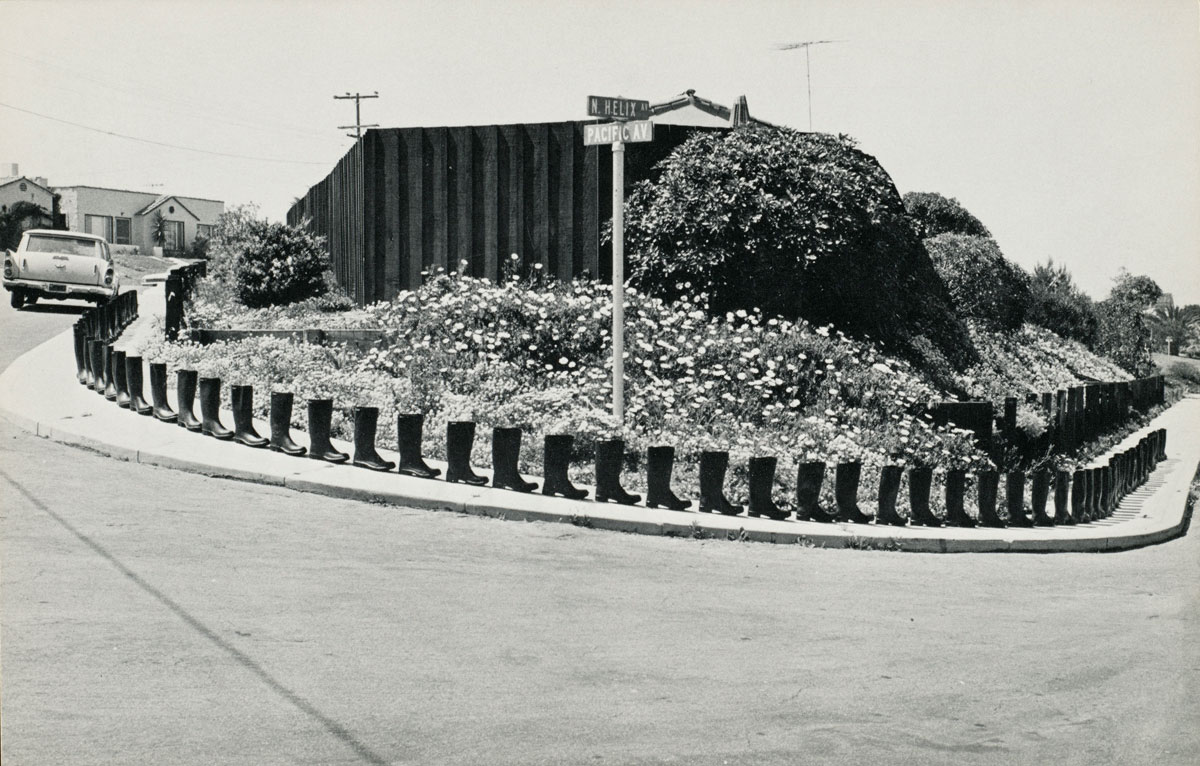
Eleanor Antin (American, b. 1935) '100 Boots' 1971-1973


Eleanor Antin (American, b. 1935)
100 Boots
1971-1973
Aus der 51-teiligen Serie, S/W-Postkarte
Eleanor Antin / SAMMLUNG VERBUND, Wien
Courtesy the artist and Ronald Feldman Fine Arts, New York


Eleonor Antin

100 Boots, 1971-1973

For her 51-piece instalment 100 Boots Eleonor Antin positioned one hundred ordinary black rubber boots on various locations all over Southern California and consequently in New York City. She took photos, printed them on postcards and assembled a mailing list of about a thousand names – mainly artists, writers, critics, galleries, universities and museums – who received the various postcards over a period of two and a half years between 1971 and 1973. The first card, 100 Boots Facing the Sea, was mailed on the Ides of March, 1971, unannounced and without further comment. A few weeks later it was followed by 100 Boots on the Way to Church and three weeks thereafter by the next one.

In a total of 51 photographs, Eleanor Antin documented the travels of the 100 Boots, her so called “hero” – from a beach close to San Diego to a church, to a bank, to the supermarket, trespassing, under the bridge, to a saloon and on their travels eastward. Finally, on May 15th, 1973 100 Boots arrived at the Museum of Modern Art in New York. By this time, 100 Boots had long become an epic visual narrative and a picaresque work of conceptual art.


Ceal Floyer (British, b. 1968) 'On Air' 2009


Ceal Floyer (British, b. 1968)
On Air
2009
Metallbox, Plexiglas, Licht, Kabel
12.6 x 25.6 x 6.2cm
© Ceal Floyer / SAMMLUNG VERBUND, Wien
Courtesy the artist and Esther Schipper, Berlin


Ceal Floyer

On Air, 2009
Me/You (Love Me Tender), 2009

The works of Ceal Floyer are minimalist and restrained. Some visitors will walk past them without even taking note of them. What the artist addresses everyday situations and activities. It is this apparent insignificance that Ceal Floyer refuses to accept, and so the conceptual strategy she pursues is interrogating our modes of perception. For her piece Me/You (Love Me Tender) from 2009, the artist installs two loudspeakers facing each other, from which the words “me” and “you” can be heard. Between them, the silence becomes palpable. The title can be read as the key to the work since it makes clear that what is heard is an excerpt from Elvis Presley’s song “Love Me Tender.” Ceal Floyer condenses love to its very essence here, namely, to the notions of “me” and “you.”

On Air (2009) is a work in which title and material are one and the same. The words “on” and “air” do not usher in the work, they are the work itself. Ceal Floyer uses the red neon letters used by radio and TV stations to signal that a live broadcast is going on and mounts them above the museum’s or gallery’s exit door. As soon as the viewer connects with the recording studio it becomes clear that this is about a shifting of our perception: We see five letters and realise that the real content of this work is what can be heard. All the sounds, voices and talks from outside the museum are put “on air” here, and the museum, the place where we have learnt to contemplate works of art in silence, pauses to listen to everyday life outside the walls of the institution.
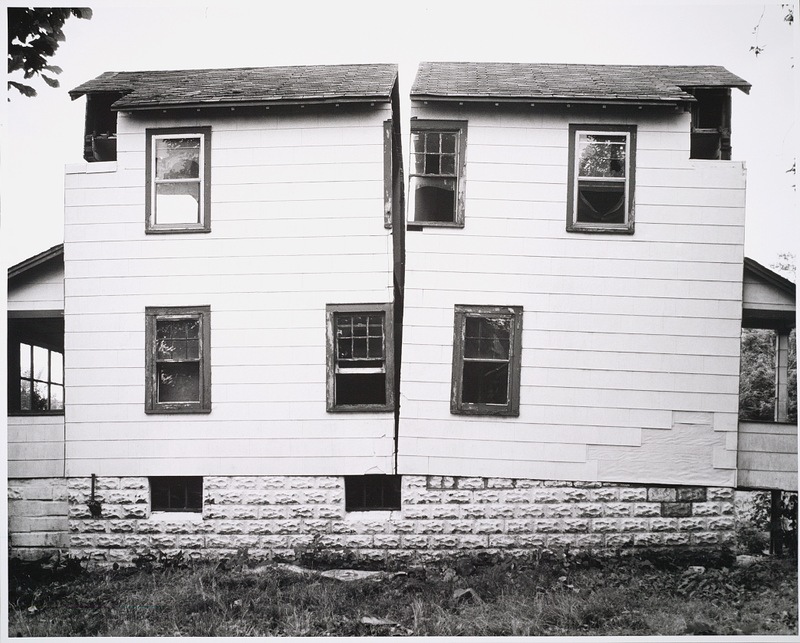
 

Gordon Matta-Clark (American, 1943-1978) 'Splitting (b)' 1974


Gordon Matta-Clark (American, 1943-1978)
Splitting (b)
1974
Gelatin silver print
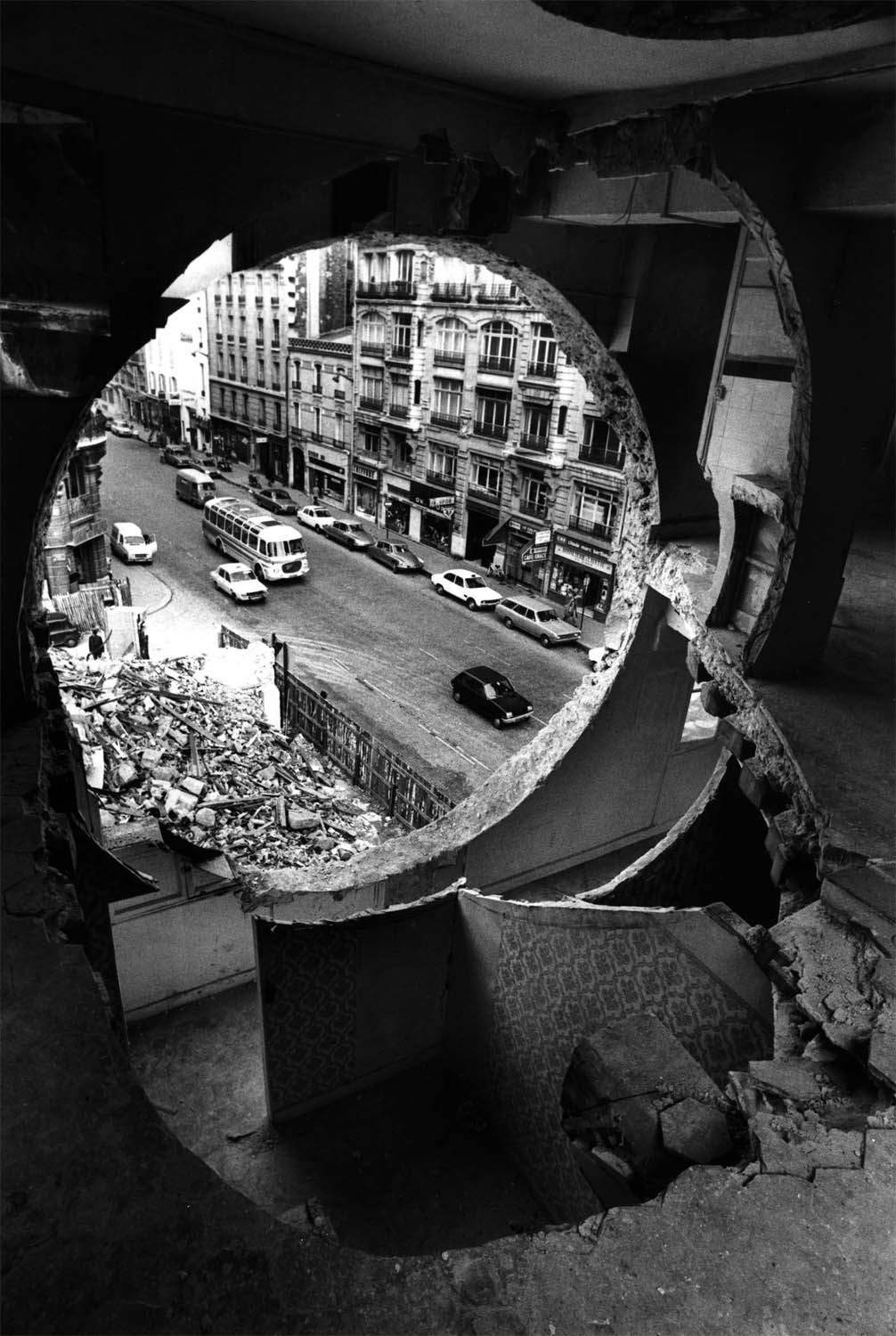
 

Gordon Matta-Clark (American, 1943-1978) 'Conical Intersect' 1975


Gordon Matta-Clark (American, 1943-1978)
Conical Intersect
1975
Gelatin silver print
 

Gordon Matta-Clark (American, 1943-1978) 'Office Baroque' 1977/2005


Gordon Matta-Clark (American, 1943-1978)
Office Baroque
1977/2005
Gelatin silver print


Gordon Matta-Clark

Conical Intersect, 1975
Splitting: Exterior, 1974
Office Baroque, 1977/2005
Untitled (Cut Drawing), 1975
Circus No. 14 (from Circus Book), 1978
Artpark, 1974

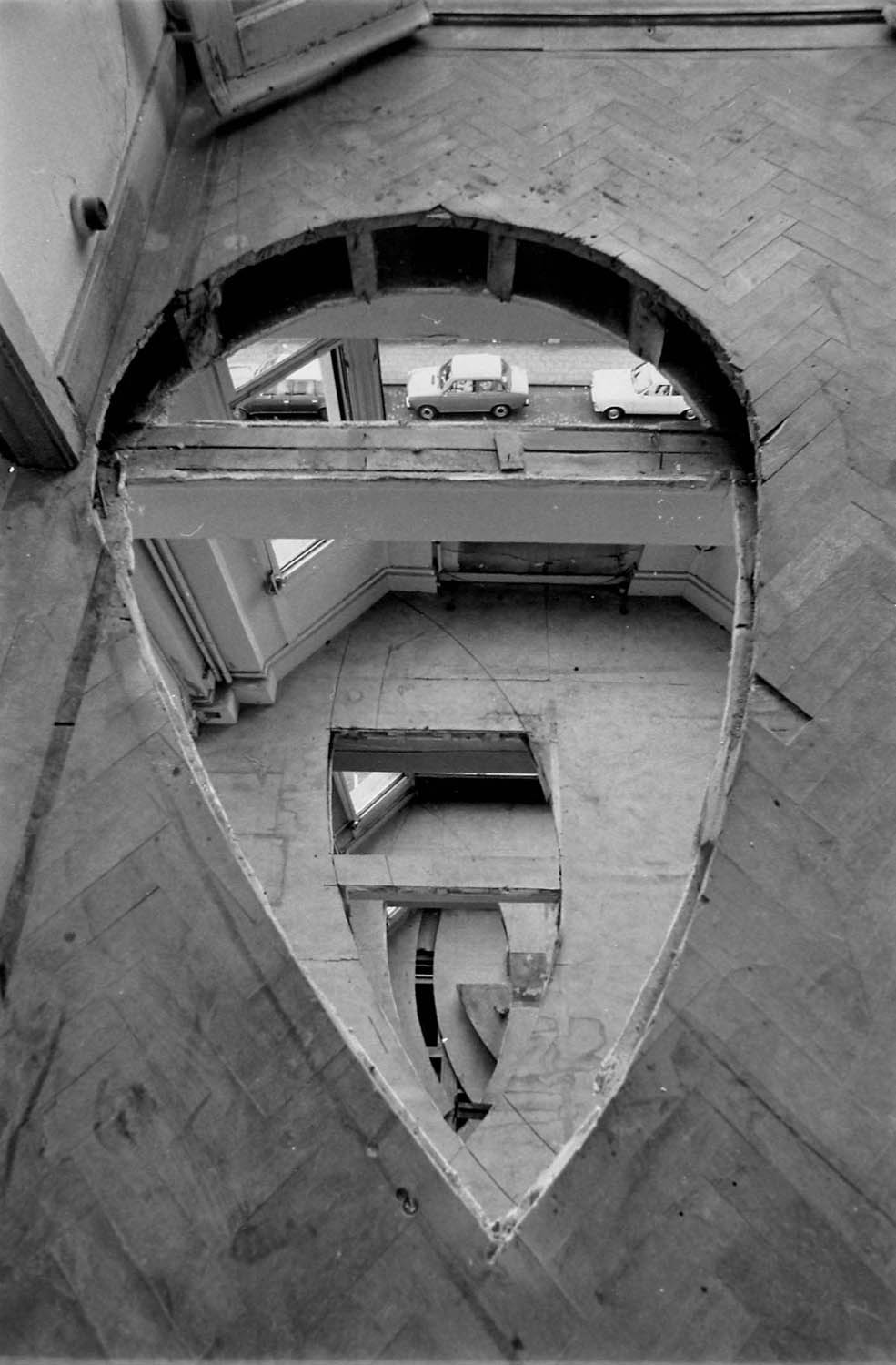
In spring 1973 Gordon Matta-Clark presented his gallerists Holly and Horace Solomon with an unusual idea. He wanted to saw a house into two halves, and asked them if they knew of anything that might be available. As it happened, Horace Solomon had just the thing. He had bought a house in a speculative real estate deal, and it was soon to be demolished. Matta-Clark was given permission to do what he wanted with it, although it was clear that the work would not last.

Matta-Clark completely cleared the house and, taking a chain-saw and a plumb line, made two parallel incisions into the house. He then cut diagonally through one half of the foundations of house. Next, one half (weighing fifteen tons) of the house started to slope downwards until a split appeared that measured sixty centimeters at the top of the roof. Lastly, Matta-Clark sawed off the four top corners of the house. These were later exhibited as a sculpture entitled Four Corners. The whole project took about four months in total and was demolished shortly after completion. A film, a series of photographs, photomontages, and an artist’s book – all autonomous works of art in their own right – documented the process.


Museum der Moderne Salzburg
Mönchsberg 32
5020 Salzburg
Phone: +43 662 842220

Opening hours:
Tuesday – Sunday 10.00am – 6.00pm
Wednesday 10.00am – 8.00pm
Monday closed

Museum der Moderne website

LIKE ART BLART ON FACEBOOK

Back to top

Exhibition: ‘Present Tense: An Imagined Grammar of Portraiture in the New Media Age’ at the National Portrait Gallery, Canberra

Exhibition dates: 22nd May – 22nd August, 2010


Many thankx to David Edghill and the National Portrait Gallery for allowing me to publish the photographs in the posting. Please click on the photographs for a larger version of the image.


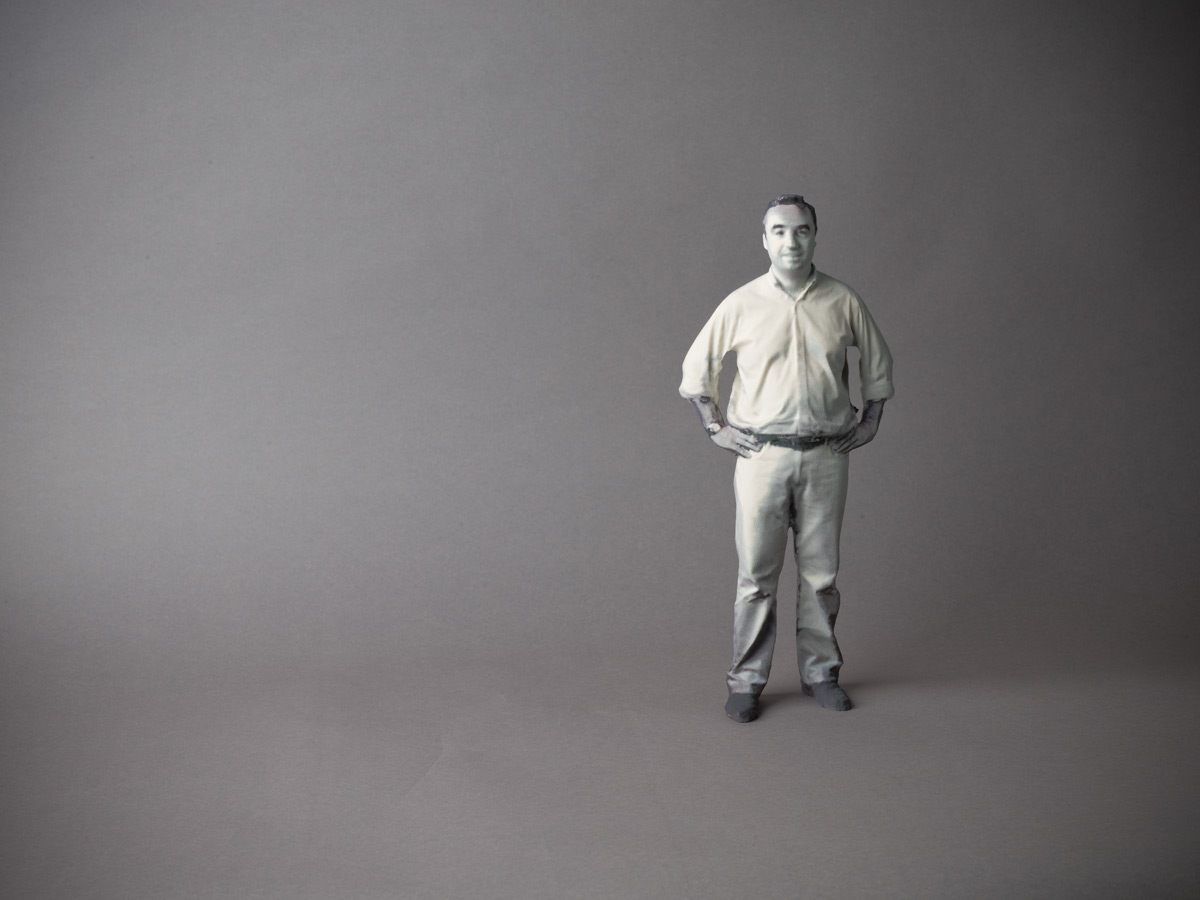
Karen Sander (German, b. 1957) 'Herve Blechy' 1:5 2008 from the exhibition 'Present Tense: An Imagined Grammar of Portraiture in the New Media Age' at the National Portrait Gallery, Canberra, May - August, 2010


Karen Sander (German, b. 1957)
Herve Blechy 1:5
2008
3D Bodyscans of the living person (3D coordinates and colour texture), MPT (Miniaturised Projection Technology), rapid prototyping, 3D Inkjet printer, plaster material, pigment
Courtesy of the artist, Berlin, and Galerie Nachst St. Stephan, Vienna, and Galerie Helga de Alvear, Madrid


Karen Sander (German, b. 1957) 'Herve Blechy' 1:5 2008


Karen Sander (German, b. 1957)
Herve Blechy 1:5
2008
3D Bodyscans of the living person (3D coordinates and colour texture), MPT (Miniaturised Projection Technology), rapid prototyping, 3D Inkjet printer, plaster material, pigment
Courtesy of the artist, Berlin, and Galerie Nachst St. Stephan, Vienna, and Galerie Helga de Alvear, Madrid.


A good way of looking at the show as a whole is that it is about the interaction of new technologies with the traditional methods of portraiture – painting, sculpture and photography – which already have their own pre-established ‘grammars’… This show foregrounds the fundamental image-making actions which have now become proper to contemporary portraiture. No longer just the snap the of camera’s shutter or the incremental description of the painter’s brush, but now also the trundling progress of the flatbed scanner and the circular pan of the 3D scanner…

In the end this is a humanist show, about ghosts more than shells. It argues that despite all of the cold digital technology in the world portraits are still about the promise of finding the warm interior of a person via their exterior. The show’s inclusion of some three-dimensional ultrasound images of foetuses in the womb could have easily been over-the-top and obvious in its point about our intimate adoption of new imaging technologies. Until we see one intrauterine image of twins in which one foetus is caught sticking its toe into the eye of its sibling. A rivalry which, we think to ourselves, will no doubt continue for the rest of their lives.

Martyn Jolly. “Review of Present Tense: An Imagined Grammar of Portraiture in the New Media Age, on the Martyn Jolly website October 3, 2013 [Online] Cited 10/07/2022


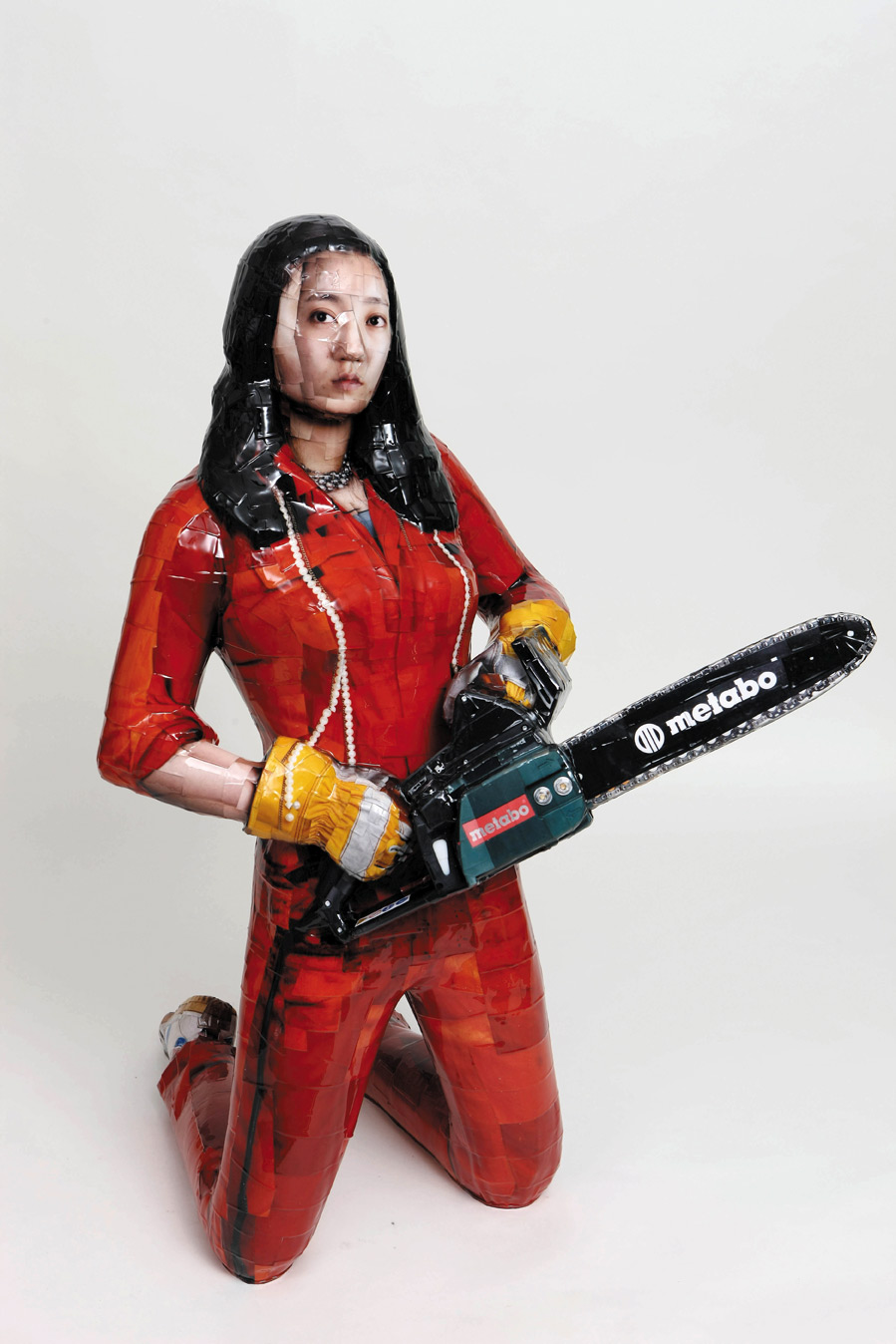
Osang Gwon (Korean, b. 1974) 'Metabo' 2009 from the exhibition 'Present Tense: An Imagined Grammar of Portraiture in the New Media Age' at the National Portrait Gallery, Canberra, May - August, 2010


Osang Gwon (Korean, b. 1974)
Metabo
2009
C-prints, mixed media
130.0 x 80.0 x 105.0cm
Courtesy of the artist and Arario Gallery, Seoul


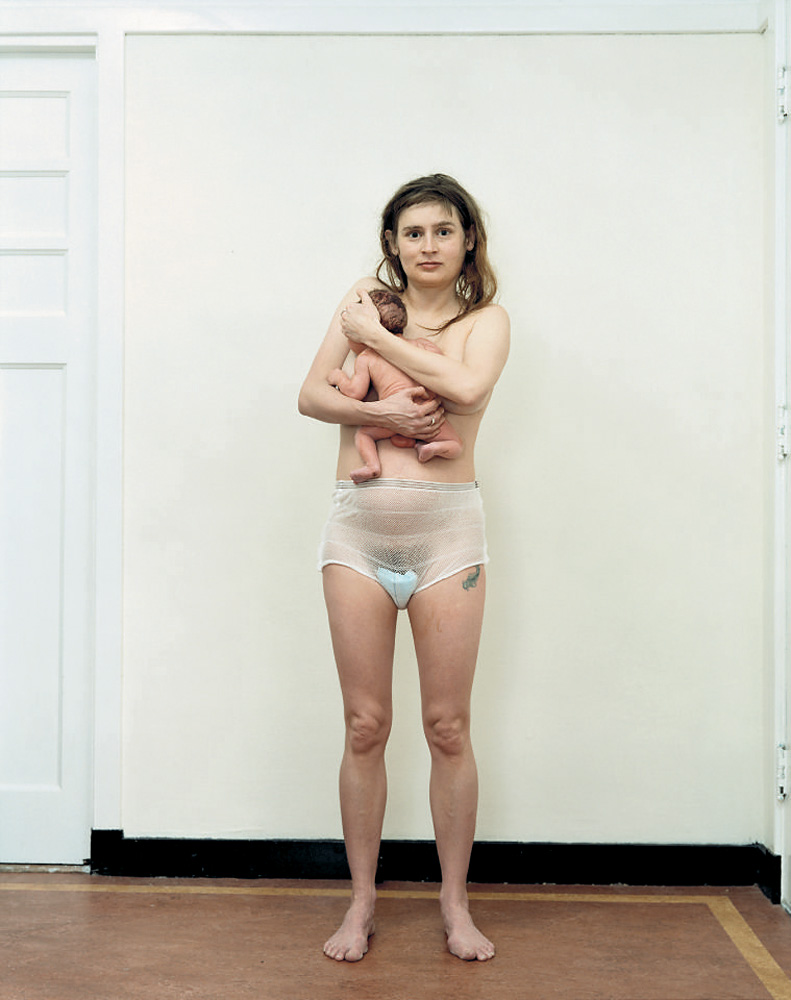
Rineke Dijkstra (Dutch, b. 1959) 'Julie, Den Hagg, The Netherlands, February 29, 1994' 1994  from the exhibition 'Present Tense: An Imagined Grammar of Portraiture in the New Media Age' at the National Portrait Gallery, Canberra, May - August, 2010


Rineke Dijkstra (Dutch, b. 1959)
Julie, Den Hagg, The Netherlands, February 29, 1994
1994
Courtesy of Marian Goodman Gallery and the artist


The masterful Dutch photographer Rineke Dijkstra provides the emotional centre of gravity for the show. Her simple nude photographs of startled young mothers clutching their newborn babies like bags of shopping about to burst remind us again of the power of the straight photo. But her stunning two-gun video installation, The Buzzclub, LiverpoolUK / Mysteryworld, Zaandam NL, also from the mid-nineties, confirms the pre-eminence of the video portrait. Dijkstra has, presumably, momentarily pulled young off-their-faces clubbers straight from the dance floors of the two clubs and put them in front of her video camera in a bare white space off to the side. But the laser lightshows and the duff duff are obviously still going on inside their skulls. As they continue to work their jaws and jig robotically we get full voyeuristic access to them and, even though their interior individualities have temporarily gone AWOL, we nonetheless feel an extraordinary tenderness welling up for them.

Martyn Jolly. “Review of Present Tense: An Imagined Grammar of Portraiture in the New Media Age, on the Martyn Jolly website October 3, 2013 [Online] Cited 10/07/2022


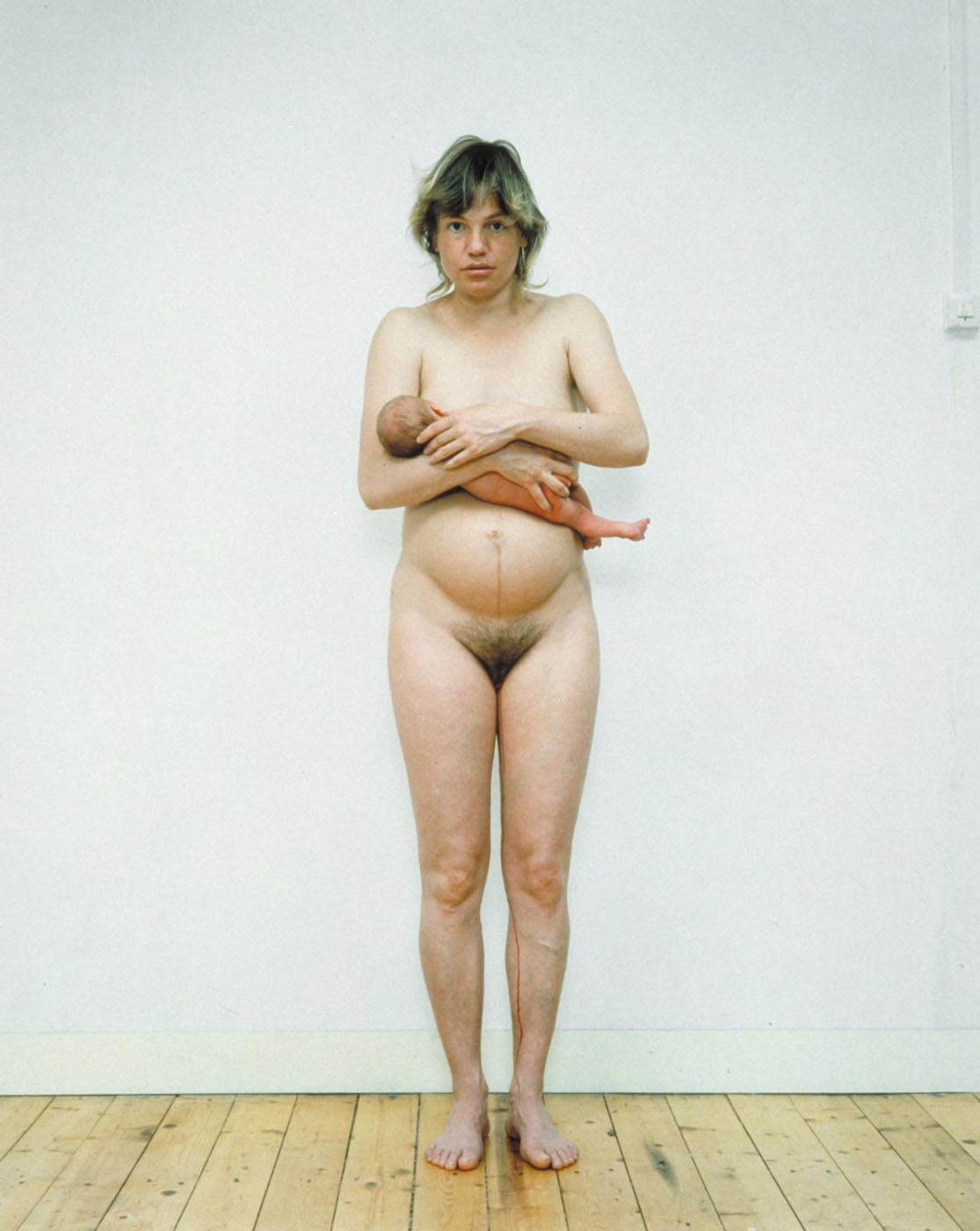
Rineke Dijkstra (Dutch, b. 1959) 'Tecla, Amsterdam, Netherlands, May 16 1994' 1994


Rineke Dijkstra (Dutch, b. 1959)
Tecla, Amsterdam, Netherlands, May 16 1994
1994
C-print on paper, mounted on aluminium


Dijkstra decided to make these portraits after witnessing the birth of a friend’s baby. She photographed three women, one hour (Julie), one day (Tecla) and one week (Saskia) after giving birth. The raw immediacy of these images captures something of the contradictions inherent in this common and yet most singular of human experiences. The women appear at once vulnerable and invincible, traumatised and self-composed.

Tate Gallery label, May 2010


Tecla, Amsterdam, Netherlands, May 16, 1994 (1994, above) Julie, Den Haag, Netherlands, February 29 1994 (1994, above) and Saskia, Harderwijk, Netherlands, March 16 1994 (Tate P78099) are three portraits of women made shortly after they had given birth. All the women were known to the artist – one was a personal friend and the other two were friends of friends. Dijkstra photographed the women in their homes because in Holland it is more common for women to give birth at home than in a hospital. While bearing signs of their recent ordeal – the medical pants and sanitary towel which Julie wears, a trickle of blood down the inside of Tecla’s left leg, the caesarean scar on Saskia’s belly – the women appear proud and happy. They hold their new babies turned away from the camera, protectively pressed against their bodies. Dijkstra has developed a way of combining natural light with flash which results in particular quality of soft, clear light. Julie’s left hand covers her baby’s eyes to protect them from the flash.

Dijkstra was inspired to make these portraits after watching the birth of a friend’s baby. She is interested in photographing people at a time when they do not have everything under control. She uses the device of the formally posed, full-length portrait to try to reveal something of what people carry inside them – the emotional intensity concealed behind the mask of the face and the body’s pose. The photographic portrait, titled with the date and place, records a specific moment in time in which the subject was undergoing a particular experience. Dijkstra has commented:

As a photographer you enlarge or emphasise a certain moment, making it another reality. For instance the portraits I made of women after giving birth: the reality of this experience is about the whole atmosphere, which is very emotional. In the photograph, you can scrutinise all the details, which makes it a bit harsh: you can see things you normally would not pay so much attention to. (Quoted in Douglas, p. 79.)

In the same year that Dijkstra photographed the new mothers, she photographed matadors in Portugal, just after they had come out of the ring. Like the new mothers, the bull-fighters had been in emotionally charged, potentially life-threatening situations. Both mothers and matadors are captured in a state of physical and emotional catharsis which contributes to the intensity of their engagement with the camera. Dijikstra uses 4 x 5 inch film to make her portraits, demanding time and concentration on the part of both artist and subject. She is sensitive to the vulnerability which her subjects give her access to and is careful not to abuse their trust. She has explained of the new mothers:

‘It’s amazing how they trust me, and I think that afterwards they understand that these photos are about something universal and that it’s not particularly about them …the first show I had in Amsterdam with these photos a lot of women came to me and said, you know it’s really great that you make these photographs because it’s really the way it is but nobody ever shows it, and I can recognise myself in it. And the men were all like, you can’t show a woman like that.’
(Quoted in unpublished interview with Tate Modern Curator Jane Burton, on the occasion of the exhibition Cruel and Tender, in 2003.)

Elizabeth Manchester
July 2005

Elizabeth Manchester. “Tecla, Amsterdam, Netherlands, May 16 1994,” on the Tate Gallery website Nd [Online] Cited 10/07/2022


The portrait is an art of surface predicated on a paradox – that the rendering of someone’s features will somehow ultimately reveal more than just their outward appearance. It reminds me of the twist at the core of Tarkovsky’s film Solaris, (one of the greatest films about identity and representation) where the sceptical psychologist is finally forced to conclude, despite his rationalism, that ‘we need secrets to preserve simple human truths’. But how can the secretive preserve the truthful? It’s a question that Dijkstra, in her portraits, attempts to answer, albeit enigmatically and allusively. A withholding of information and obsession with surface makes her portraits feel recognisably human. They’re so riddled with secrets they practically breathe.

Perhaps it’s to do with the scale of the images, which are large and impossible to overlook, and her palette, which is almost as subtle and perfect as her 17th- and 18th-century precursors. If the Dutch and Flemish portrait painters looked at the world with eyes that anticipated photography, it could be said that Dijkstra continues the cycle by looking at photography through the lens of historical painting. …

Dijkstra’s portraits of three young mothers (Julia, Saskia and Tecla, all 1994) holding their new born babies to their chests with absolute, exhausted tenderness, exemplifies the restraint and deceptive simplicity of her approach towards representing people whose lives have been touched by commonplace but monumental change. Replace the sand with a floor and the sky with a hospital wall and the only thing that separates these images from the beach series is the nature of the transition that these people are experiencing. Our culture’s puritanical fear of the body, so beautifully reflected for hundreds of years in scores of paintings of bloodless, saintly motherhood, is countered in these truthful, unflinching images. One mother stands in her underwear, her sanitary pad bulgingly visible. The other two women stand naked, swollen, scarred and bloody. They all, as well they might, look faintly triumphant.

I can’t remember a show where the audience stood for so long in front of a series of images of ordinary people. The same can be said of Dijkstra’s video in which she isolated teenagers against a white background in two night-clubs (The Buzz Club in Liverpool, England and Mystery World in Zaandam, Netherlands) and videoed them dancing, mainly alone, to the camera. Each of them, of course, responded differently to the absence of those clubbing staples, dim lights and crowds – they danced self-consciously and smoked defiantly. Some flirted with the camera, others looked almost annoyed. Most of them, despite trying very hard not to be, looked very young, rather forlorn, sweet even. The audience watched, riveted. The film was long and repetitive, but mysteriously and compulsively viewable.

Jennifer Higgie. “Rineke Dijkstra – Young Mothers,” on the Sihyun Art website, February 2012 [Online] Cited 07/07/2022


 Video of Rineke Dijkstra “The Buzzclub, Liverpool, UK / Mysteryworld, Zaandam, NL”, 1996-1997. Presented in exhibition at Mücsarnok, Budapest, “Coolhunters. Youth cultures between media and the market”, 23 March 2006 – 28 May 2006.

The video was recorded pulling people out of the dance floor of a nightclub and inserting it in a white cube. The behaviour on the dance floor as part of the group, here so isolated as a rare person, an indigenous moved to the museum space.


Robert Lazzarini (American, b. 1965) 'Skull' 2000


Robert Lazzarini (American, b. 1965)
Skull
2000
Resin, bone, pigment
35.0 x 8.0 x 20.0cm
Courtesy of the artist and Deitch Projects


Present Tense: An Imagined Grammar of Portraiture in the New Media Age is the principal exhibition in the National Portrait Gallery’s 2010 exhibition calendar. It will be displayed from 22 May to 22 August 2010. We are entering an exceptional time for portraiture and visual culture in general as the art world embraces the digital age. Traditional portraiture is responding to the application of new technologies and this imaging process is reshaping our interpretation and reading of the face.

Present Tense considers the alliance between portraiture and technology, showing how different ways of imaging in this contemporary, digital world reflect the way an individual is perceived and the various mechanisms of imaging that are used to manipulate that perception. The exhibition is comprised of works by Australian and international artists’ and includes examples of the informal and immediate images made on mobile phones, images recorded with sonograms that reveal faces that cannot be seen by the unaided eye, 2D and 3D portraits generated exclusively from binary code, as well as the more expected streaming digital works and manipulated photographs.

‘Some of the images in Present Tense are confronting and some are positively endearing’, said exhibition Curator Michael Desmond. ‘The exhibition surveys the possibilities of portraiture today, with the premise that the inhabitants’ of our digital society are pictured in a technological mirror’.

The use of digital technologies by artists is increasing, providing affordable alternatives to traditional media and offering a new tool set and the possibility of a new aesthetic. This is not to suggest that older media has been abandoned, or is associated only with conservative practice, rather that artists’ have greater choice in the materials that they use and the style that they wish to engage with. Chuck Close is one of artists’ in the exhibition who ignores the rising tide of digital imaging processes to favour old technology, creating powerful images with the archaic daguerreotype technique. Other artists’ in Present Tense include: Loretta Lux, Patrick Pound, Stelarc, Jonathon Nichols, Petrina Hicks, Ghostpatrol, Patricia Piccinini and more.

‘At one time, oil on canvas or bronze was the medium for portraits. The medium now is technology. In an inversion of one of Modernism’s classic aphorisms, digital technology allows function to follow form; the function of the portrait – to illustrate an individual’s character and physiognomy – is established by the stamp of the technology that created it’, said Michael Desmond.

Press release from the National Portrait Gallery website [Online] Cited 06/08/2010


Chuck Close (American, 1940-2021) 'Self portrait daguerreotype' 2000


Chuck Close (American, 1940-2021)
Self portrait daguerreotype
2000
16.5 x 21.6cm each
Courtesy of Pace/MacGill Gallery, New York


Patricia Piccinini (Australian, b. 1965) 'Psychogeography' 1996


Patricia Piccinini (Australian, b. 1965)
Psychogeography
1996
From the series Psycho
Type C colour photograph
120.0 x 247.0cm
Courtesy of the Parliament House Art Collection, Department of Parliamentary Services, Canberra


Stelarc (Australian born Cyprus, b. 1946) 'Stretched skin' 2009


Stelarc (Australian born Cyprus, b. 1946)
Stretched skin
2009
type C photograph
120.0 x 180.0cm
Courtesy of the artist and Scott Livesey Galleries


Jonathan Nichols (Australian, b. 1956) 'Lucy' 2001


Jonathan Nichols (Australian, b. 1956)
Lucy
2001
Courtesy of James and Jacqui Erskine, Sydney


Petrina Hicks (Australian, b. 1972) 'Ghost in the Shell' 2008


Petrina Hicks (Australian, b. 1972)
Ghost in the Shell
2008
From the series The Descendents
Courtesy of the artist and Stills Gallery, Sydney


There can be no doubt that we are entering an exceptional time for portraiture as the art world embraces the digital age. Traditional portraiture is responding to the application of new technologies and this imaging process is reshaping our interpretation and reading of the face.

The use of the computer and the internet at the most basic level to source or digitalise images is pervasive. Artists are using digital technologies as alternatives to traditional media and offering the possibility of a new aesthetic. The ease of manipulating an image is a prime aspect of portraiture in the digital age and equally important is the ease of distribution. Artists seek out images on the internet and send out or ‘post’ their own, setting up their own virtual galleries using social media such as Flickr, Facebook, YouTube, Twitter and Tumblr.

The National Portrait Gallery exhibition Present Tense: An imagined grammar of portraiture in the digital age considers the alliance between portraiture and technology and investigates how different ways of imaging reflect how the individual is perceived as well as how the various mechanisms of imaging that are used to manipulate that perception.

Present Tense includes examples of the informal and immediate digital snapshots made with mobile phones; images recorded with sonograms that reveal faces that cannot be seen by the unaided eye; 2d and 3d portraits generated exclusively from binary code; and the more expected videos and manipulated photographs. A number of artists in the exhibition ignore the rising tide of digital imaging processes to favour old technology and create powerful images with the archaic daguerreotype technique or cruder still, old-fashioned stencil.

Video is still the dominant filmic medium. It is a difficult medium for portraiture as the narrative is the signifying factor of this temporal medium. Artist Petrina Hicks tackles this directly in her video portraits. In Ghost in the shell 2008 there are no props to convey identity in a conventional sense; the video is a slow pan of objectivity across the visage of a girl, unimpeded by good manners or fear. The camera records every detail, as her head pivots though 360 degrees and we are able to study and scrutinise the face and enjoy the sheer beauty of youth. The scanning view and the model’s perfect features conjure up the notion of a computer-aided design program that displays the object created by a 3d graphic application. Exhaled smoke emerges from the girl’s mouth in Art Nouveau curls and undulating arabesques. The combination of stilled, unemotional beauty makes the mobile, insubstantial smoke a metaphor for the soul. This is the ghost of the title but also a portrait of the inner self that inhabits all of us. Hicks makes a poetic contrast between the mapped surface and the unseen interior.

Zombies, vampires and plagues that decimate humankind to a few survivors haunt the movie and television screens of this decade. They represent the uncomfortable intimacy and connectedness of contemporary society – the six degrees of separation. While Jonathan Nichols’ portraits Lucy 2001, Nina 2002, and Smiling 2003 are hardly ghoulish the aura of uneasiness that surrounds them derives from the sense of being connected. Using social networks we can connect with fame and celebrity and we are also able to broadcast ourselves. The biggest and most varied galleries of portraits today are websites such as Facebook. These portrait galleries are more likely to display the girl next door rather than the glamorous magazine cover girls. Exhibitionism and voyeurism are implicit in posting portraits online. The aesthetic is bland and gives away little. They are image of self that are safe to broadcast. Nichols uses images taken from the internet to test the ‘look’ of such portraits. There is the hint of smiles to break the passport photo impassiveness, neutrality with a touch of erotic potential, enough personality to separate these anonymous faces from the crowd, and perhaps the comfort of looking at a face and knowing we all are connected.

Ghostpatrol & Miso are street artists who work together creating an extended portrait of a place, the inner Melbourne suburb of Fitzroy. Their portrait layers the views and experiences of inner city living as a sensual rather than documentary composite. Fitzroy 2010 is an homage to the streets of Fitzroy that Ghostpatrol & Miso have explored, stencilled, pasted and postered. Fitzroy is their platform for communication and the multiple images in this work are a response to the streets and the urban network of windows, houses and streets. Fitzroy is a self portrait, illustrating the artists’ perspective and their story in the city.

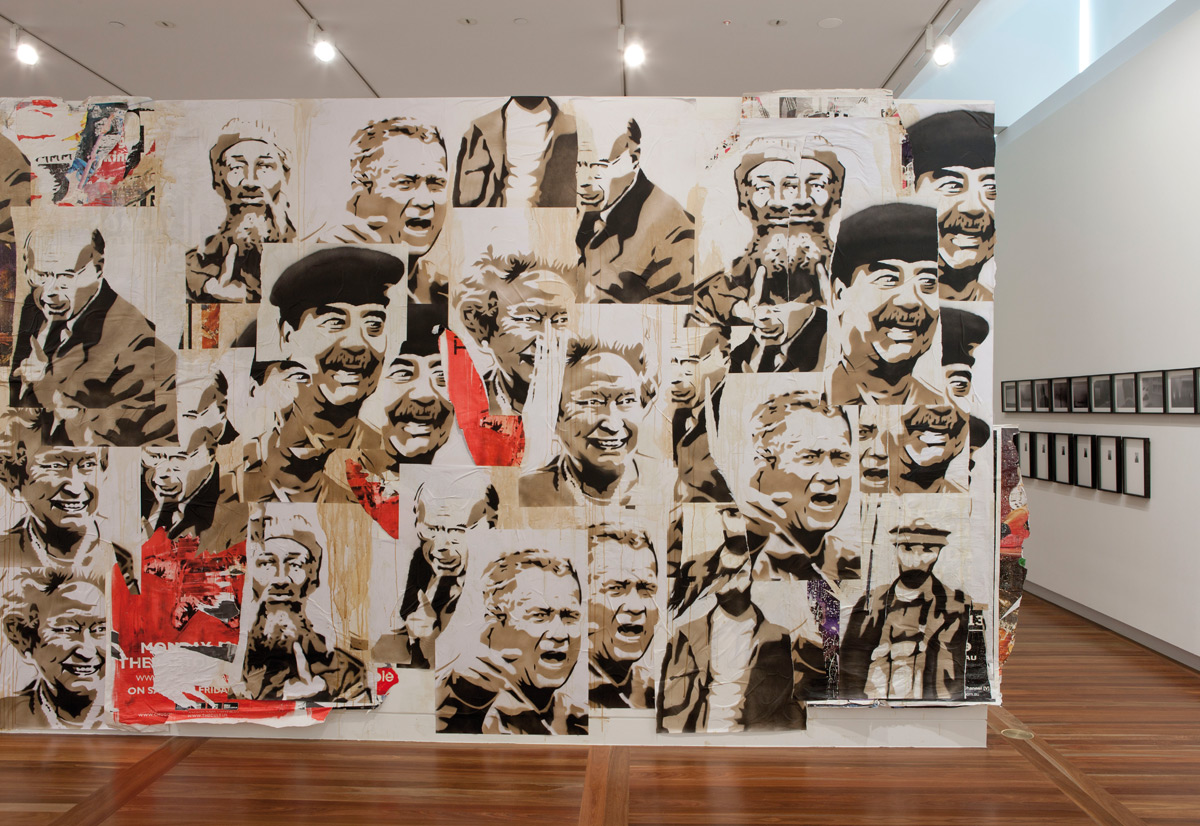
James Dodd, like Ghostpatrol & Miso, makes the streets his gallery. His posters from Occupied territory 2003 return to an established way of broadcasting and connecting, not by phone or internet, but by placing his portrait posters in the natural nodes and pathways where people travel and congregate. His faces in the streets – George W Bush, Saddam Hussein, Elizabeth II, Osama Bin Laden, John Howard – are powerful individuals who literally occupy the territory as they do the media. Advertisement, wanted poster or propaganda, Dodd employs the hand-made look of stencil to equalise differences between world leaders and as a means to counter the ubiquitous urbane and subjective portraits presented by mainstream new media with a fresh alternative.

The idea of creating accurate three dimensional portraits has always fascinated humanity. Here are portraits that are inseparable from the technology that created it. Robert Lazzarini sculpts forms with the computer. In making Skull 2000 he had little or no contact with traditional art materials. Lazzarini uses materials as close as possible to the original – in this case the skull is bone, though reconstituted with a resin binder. Anamorphic forms like this are measured against an ideal or archetype. The distorted form plays on our ability to recognise common forms such as a face or death’s head and reconstruct them in the mind.

So, having considered Lazzarini’s computer created sculpture, is it Karin Sander or the machine that created Hervé Blechy 1:5 2008? The artist herself didn’t touch any art materials or intervene in the process which involves the subject being photographed from all angles by multiple cameras; the images sent to a computer application that creates 3d models from photos and the resultant model is then sent to a rapid prototyping machine which generates the model in white plastic. This, in turn, is painted by an assistant. In 1967 Sol LeWitt declared that ‘The idea becomes a machine that makes the art.’ Sander’s mini-monuments, which she refers to as ‘assisted self portraits’ are classic examples of conceptual art, but with the neat twist that if an idea is as ephemeral as data, then here, data takes on materiality.

Portraiture with its strict focus on the recognisable image of the individual face is resistant to change despite the many movements and styles in the twentieth century and adoption of new digital technologies in the last decade. And although more choices of media available to the artist who is now able to make portraits using digital photography, digital video or installation the effect of the digital age is probably less on form and more on society. The use of digital media is near ubiquitous in part of the portrait process today. Photography, once considered an objective record of a sitter, as digital photography has gained the persuasive power of painting to subtly alter features and flatter beyond candid or objective description. There is greater spread and distribution with the increasing emphasis on the photographic but this may be only temporary as other forms and hybrids come online with 2d and 3d computer applications.

There is an increasing separation from old materials that slop, mess, spill in favour of keyboards and mice and the artist’s studio is starting to look like an executive’s work space. Research is done online and sketches are made on the camera rather than drawn from life and art is accordingly mediated from the start. Medium is less important than media, and in fact the term ‘medium’ is already starting to be an art historical term. Today, technology is not merely the means of transmission, it is the medium of so much contemporary art. While technology changes, the human face is a constant, mediated by fashion, politics and technological change. It is rewarding to look at portraits in terms of the technology that made it.

Michael Desmond. “Technical Terminology,” on the National Portrait Gallery website, 1 June 2010 [Online] Cited 10/07/2022


Present Tense: An imagined grammar of portraiture in the digital age

Senior Curator Michael Desmond talks about the exhibition Present Tense held at the National Portrait Gallery, Canberra from 22 May – 22 August 2010.


James Dodd (Australian, b. 1977) Posters from 'Occupied Territory' 2010 (installation view)


James Dodd (Australian, b. 1977)
Posters from Occupied Territory (installation view)
2010
Courtesy of the artist, Adelaide


GhostPatrol & Miso (David Booth and Stanislava Pinchuck) (Australian) 'Fitzroy' 2010 (installation view)


GhostPatrol & Miso (David Booth and Stanislava Pinchuck) (Australian)
Fitzroy (installation view)
2010
Courtesy of the artists, Melbourne


Aaron Seeto. 'Oblivion' 2006


Aaron Seeto
Oblivion
2006
From the series Oblivion
Daguerreotype


Aaron Seeto makes alternate historical positions and experiences visible through an exploration of archives, family photo albums and photographic records. In recent bodies of work Fortress and Oblivion, Seeto has utilised the daguerreotype, one of the earliest and most primitive photographic techniques, to highlight the malleability of narratives within archive records. Not only is the chemical process itself highly toxic and temperamental but the daguerreotype’s mirrored surface means the image appears as both positive and negative, depending on the angle of view. For Seeto, this mutability captures the essence of our experience of history and memory, reflecting how images degrade, how stories are formed and privileged, how knowledge and history are written. …

For his ongoing series Oblivion Seeto sourced details from images of the Cronulla riots – beachside riots around race and territory – of 2005 found on the internet. In reproducing these as daguerrotypes he seeks less to represent the incident than to look at how it was reported, understood and remembered. The instability of the virtual information found online is echoed in the photographic process.

Text from the Stills Gallery website [Online] Cited 14/02/2019


National Portrait Gallery
King Edward Terrace
Parkes, Canberra

Opening hours:
Daily 10am – 5pm

National Portrait Gallery website

LIKE ART BLART ON FACEBOOK

Back to top