Exhibition: ‘Nicolás Muller: beauty and commitment’ at Real Academia de Bellas Artes de San Fernando, Madrid

Exhibition dates: 19th November, 2024 – 2nd March, 2025


Nicolás Muller (Spanish born Hungary, 1913-2000) 'Tangier' 1940, printed 2005 from the exhibition 'Nicolás Muller: beauty and commitment' at Real Academia de Bellas Artes de San Fernando, Madrid


Nicolás Muller (Spanish born Hungary, 1913-2000)
Tangier
1940, printed 2005 by J. M. Castro Prieto
Printed with pigmented inks on cotton paper
623 x 610 mm
Acquired in 2006 with a charge to the Guitarte legacy


What an enchanted life!

Nicolás Muller was a Hungarian photographer but the rise of Nazism forced him to flee his homeland in 1938 because he was Jewish.. to Paris to continue his work, then temporary shelter in Portugal before finally finding sanctuary in Tangier under the Spanish protectorate where he “published two notable books: Estampas marroquíes (Moroccan Prints) and Tánger por el Jalifa (Tangier by the Khalifa). These works revealed a mature artist, deeply sensitive to his surroundings and possessing a mastery of his craft.” (Press release)

“… in the 1930s Muller worked in a humanist, documentary vein, evincing a strong sense of sympathy for the world of labour and the most modest members of society. His interest in the working man’s experience would remain a hallmark of his photographs. As the social and political contexts changed, he photographed agricultural labourers and dockers in the ports of Marseille and Porto, then children and street vendors in Tangiers, and life in the countryside.”1

Off to Madrid for the first time to mix with underground intelligentsia where he met a beautiful woman who was to become his wife (moving to Madrid permanently in 1947, for love!), living in Spain under a fascist dictator (oh the irony, of one who had fled fascism!)

Then to become one of Spain’s greatest photographic visual storytellers, capturing the essence of the Spanish countryside and its people, the peasants and the sacred myths of the cultures of Spain, the mountain towns and the cities, the artists and the intellectuals. The passion and the people.

In Morocco it’s the blinding light and the open space of his photographs; in Spain it’s the intensity of his vision revealing something sensual and intimate in his photographs. Rich, textured, engaged / engaging.

“I learned that photography can be a weapon, an authentic document of reality. […] I became an engaged person, an engaged photographer.”

At heart always a humanist photographer he seems to me to be a romantic and I love that. I want to see more of his photographs, particularly his early photographs in Hungary and Paris which I have never seen.

Nicolás Muller is my secret pleasure. He deserves to be more widely recognised in the history of photography.

Dr Marcus Bunyan


1/ Press release on the exhibition Nicolás Muller (1913-2000). Traces of exile from the Château de Tours website quoted in Art Blart: art and cultural memory archive, May 10, 2015 [Online] Cited 28/02/2025


Many thankx to the Real Academia de Bellas Artes de San Fernando for allowing me to publish the photographs in the posting. Please click on the photographs for a larger version of the image.

Fore more photographs of the artist’s work please see the previous posting on the exhibition ‘Nicolás Muller (1913-2000). Traces of exile’ at the Château de Tours, November 2014 – May 2015


Nicolás Muller (Spanish born Hungary, 1913-2000) 'Desnudo. Tangier' 1940, printed 2005 from the exhibition 'Nicolás Muller: beauty and commitment' at Real Academia de Bellas Artes de San Fernando, Madrid


Nicolás Muller (Spanish born Hungary, 1913-2000)
Desnudo. Tangier
1940, printed 2005 by J. M. Castro Prieto
Printed with pigmented inks on cotton paper
724 x 610 mm
Acquired in 2006 with a charge to the Guitarte legacy


Within the hallowed halls of the Real Academia de Bellas Artes de San Fernando, a collection of photographs whispers stories of exile, resilience, and the vibrant cultural tapestry of a bygone era. These are the works of Nicolás Muller, a Hungarian-born photographer who, through his lens, became one of Spain’s most influential visual storytellers. This current exhibition at the prestigious academy offers a profound look at his impact, reminding us of the power of photography to transcend borders and capture the essence of humanity.

Muller’s life reads like a historical novel. Born in Hungary in 1913, he belonged to a remarkable generation of Hungarian photographers – a group that included giants like Robert Capa, Brassaï, Moholy-Nagy, and André Kertész. But the rise of Nazism forced him to flee his homeland in 1938, beginning a journey of exile that would shape his life and work.

Paris became his first refuge, where he contributed to prestigious publications like France Magazine, Paris-Match, and Regard. However, the shadow of war followed him. As a Jew, Muller was again forced to move, seeking temporary shelter in Portugal. Even there, he was not safe, facing expulsion by the Salazar regime’s secret police.

His wandering eventually led him to Tangier, a cosmopolitan city in Morocco, where he found a semblance of stability. From 1940 to 1947, Muller established a successful portrait studio, capturing the diverse faces of the city. During this time, under the Spanish Protectorate, he also collaborated with the newspaper España and published two notable books: Estampas marroquíes (Moroccan Prints) and Tánger por el Jalifa (Tangier by the Khalifa). These works revealed a mature artist, deeply sensitive to his surroundings and possessing a mastery of his craft.

In 1944, a pivotal encounter with Fernando Vela, a prominent intellectual and co-founder of the Revista de Occidente, brought Muller to Madrid for the first time. Three years later, he made Madrid his permanent home, opening a studio on Serrano Street, near the iconic Puerta de Alcalá.

Post-war Madrid was a city recovering from the ravages of conflict and under the weight of Franco’s dictatorship. Yet, Muller’s studio became a beacon of light and a haven for intellectuals, artists, and writers who yearned for intellectual freedom. His studio wasn’t just a place for portraits; it was a salon, a vibrant hub where minds met and ideas were exchanged.

Imagine the scene: the warm glow of studio lights, the quiet hum of conversation, the friendly presence of Muller’s dogs. Within those walls, giants of Spanish thought and culture gathered: Baroja and Azorín, elder statesmen of literature; philosophers like Pedro Laín Entralgo and Xavier Zubiri; poets like Gabriel Celaya and Gerardo Diego; writers like Ignacio Aldecoa and María Zambrano. Once a week, Muller himself would venture out to the nearby Café Gijón, joining the lively discussions of poets and painters.

This gathering at Muller’s studio echoed the legendary salons of 19th-century Paris, particularly that of Nadar. Like Nadar, Muller created a visual record of his time, capturing the faces of a generation that shaped Spain’s intellectual and artistic landscape. His portraits are more than just images; they are intimate glimpses into the souls of these remarkable individuals.

But Muller’s work extended far beyond the confines of his studio. He ventured across Spain, documenting its landscapes, towns, monuments, and people. His photographs offer a poignant portrayal of a country grappling with its past and striving for a new identity. His books, such as España Clara (Clear Spain) and numerous regional guides, are now treasured historical documents, offering a window into a Spain that has changed but not disappeared.

In 1980, after a rich and eventful career, Muller passed the torch to his daughter, Ana, also a talented photographer, and retired to the coastal town of Andrín, Asturias. It wasn’t until the 1990s, with a major retrospective at the Museum of Contemporary Art of Madrid and a comprehensive catalog, that Muller’s work received the widespread recognition it deserved. He was finally acknowledged as one of Spain’s most important photographers, a status he shares with his admired colleague, Catalá-Roca.

Now, this important body of work is being celebrated at the Real Academia de Bellas Artes de San Fernando, offering a new generation the chance to connect with Muller’s vision. His photographs remind us of the power of art to transcend borders, to connect us to the past, and to illuminate the human experience. They are a testament to the enduring impact of a wandering lens that found its home in Spain and captured the soul of a nation.

Press release from the Real Academia de Bellas Artes de San Fernando


Nicolás Muller (Spanish born Hungary, 1913-2000) 'Bailarina Tajara. Larache' (Tajara dancer. Larache) 1942, printed 2005 from the exhibition 'Nicolás Muller: beauty and commitment' at Real Academia de Bellas Artes de San Fernando, Madrid


Nicolás Muller (Spanish born Hungary, 1913-2000)
Bailarina Tajara. Larache (Tajara dancer. Larache)
1942, printed 2005 by J. M. Castro Prieto
Printed with pigmented inks on cotton paper
623 x 610 mm
Acquired in 2006 with a charge to the Guitarte legacy


Nicolás Muller (Spanish born Hungary, 1913-2000) 'Fiesta del Mulud II' 1942, printed 2005 from the exhibition 'Nicolás Muller: beauty and commitment' at Real Academia de Bellas Artes de San Fernando, Madrid


Nicolás Muller (Spanish born Hungary, 1913-2000)
Fiesta del Mulud II
1942, printed 2005 by J. M. Castro Prieto
Printed with pigmented inks on cotton paper
724 x 610 mm
Acquired in 2006 with a charge to the Guitarte legacy


Nicolás Muller (Spanish born Hungary, 1913-2000) 'Pio Baroja paseando por el Retiro' (Pio Baroja strolling through the Retiro) 1950, printed 2005 from the exhibition 'Nicolás Muller: beauty and commitment' at Real Academia de Bellas Artes de San Fernando, Madrid


Nicolás Muller (Spanish born Hungary, 1913-2000)
Pio Baroja paseando por el Retiro (Pio Baroja strolling through the Retiro)
1950, printed 2005 by J. M. Castro Prieto
Printed with pigmented inks on cotton paper
623 x 610 mm
Acquired in 2006 with a charge to the Guitarte legacy


 The Museum’s photography room displays a selection of works by photographer Nicolás Muller that are part of the Academy’s collection. In addition, bibliographic and photographic material from the Pedro Melero / Marisa Llorente collection and a portrait of the photographer from the Ana Muller collection are on display.

In the cultural wasteland of autocratic Spain, the photographer Nicolás Muller (Hungary, 1913 – Asturias, 2000) was, together with Catalá-Roca, the greatest and most influential Spanish photographer. A prominent member of the privileged group of Hungarian photographers of his generation – Robert Capa, Brassaï, Moholy-Nagi, André Kertész… – like them, he had to leave his country fleeing Nazism in 1938, to settle in Paris, where he actively collaborated in the famous weeklies France Magazine, Paris-Match and Regard. Of Jewish origin, the German occupation condemned him to a new and precarious exile in Portugal, a country from which he was arrested and expelled by the PIDE, the political police of the Salazar dictatorship. Finally, his long journey as a wandering Jew led him to Tangier, an open city where he lived and worked until 1947.

In Tangier he set up a portrait studio, which soon became the most prestigious and visited in the city. During the Spanish Protectorate of Morocco, Muller collaborated with the newspaper España and published two of his best books, Estampas marroquíes and Tánger por el Jalifa, which were added to those published in Hungary and which showed a photographer in full maturity, cultured, delicate, committed and deeply knowledgeable of all the secrets of his trade. In 1944, with the help of his great friend Fernando Vela, co-founder of the Revista de Occidente and director of España, he came to Madrid for the first time, where he exhibited his photographs at the Palace Hotel. Three years later he left Tangier for good, to move to Madrid. After working in two portrait studios, in 1947 he took up residence in a bright gallery on Calle Serrano, a stone’s throw from the Puerta de Alcalá.

In a shabby and intimidated Madrid, his studio soon became the most prestigious in the city and a back room and meeting point for a group of intellectuals and artists close to the liberal ideas led by Ortega y Gasset and Fernando Vela, from the Revista de Occidente. In that culturally depressed time, marked by the obsolescence of an aesthetically exhausted photographic officialdom, Muller represented one of the few windows open to modernity. In the shadow of the spotlights in his studio, in the presence of his friendly dogs, the most notable artists and intellectuals of the day met for years: Baroja and Azorín, as foster parents, Pedro Laín Entralgo, Lorenzo Goñi, Fernando Vela, Gabriel Celaya, Dionisio Ridruejo, Rodrigo Uría, Xavier Zubiri, Gerardo Diego, Pío and Julio Caro Baroja, Ignacio Aldecoa, María Zambrano… And once a week, the photographer would go to the nearby Café Gijón to join the well-known gathering known as the poets and painters, made up of Martínez Novillo, Benjamín Palencia, Pablo Serrano, Zabaleta, Pancho Cossío, Paco García Pavón, Gabriel Celaya and Cristino Mallo.

The gatherings in Muller’s studio, given the distance in time, are comparable only to the councils held a century earlier in the Parisian studio of the first Nadar, on the Boulevard des Capucines. Like the great French portraitist, Muller was building an admirable Parnassus, made up of more than a hundred portraits of painters, sculptors, poets, novelists and philosophers from that Madrid aggrieved by pain, hunger, fear and ration cards, which contrasted with the frivolous and offensive euphoria of the disrespectful mandarins and the rich speculators, to use the words of Dionisio Ridruejo. For these portraits alone, Muller would deserve a place of honour in the history of Spanish and universal photography.

But, unlike his Madrid colleagues at the time – Gyenes, Amer Ventosa, Ibáñez – whom he surpassed in talent, in addition to his work in the studio, from the very day of his arrival in the capital, Muller deployed an intense professional activity that led him to travel around Spain and portray its towns, its monuments, its landscapes and its people. The fruit of that titanic work are his numerous and excellent books, unfortunately not available today, such as España Clara (1966) and a dozen guides to the various provinces and regions of Spain, such as those produced in the Basque Country (1967), Andalusia (1968), Cantabria (1969) and La Mancha (1970). This series was followed by those dedicated to the Landscapes of Spain, Spanish Popular Architecture, Spanish Romanesque and the Jewish footprint in Spain, with texts by Azorín, Sáinz de Robles, Luis Rosales, Julio Caro Baroja, Gerardo Diego, Dionisio Ridruejo, Torrente Ballester, Fernando Vela and Laín Entralgo. In 1980, after a turbulent and well-lived professional life, in which he came to penetrate the roots of grief, successive exiles, love, friendship and melancholy, he left his Madrid studio in the hands of his daughter Ana Muller, an excellent professional, and retired to his small chosen homeland, in Andrín, Asturias, on the seashore.

Following his retrospective exhibition, Nicolás Muller. Fotógrafo, held in 1994 at the Museum of Contemporary Art in Madrid and the extraordinary catalogue published by Lunwerg Editores, Muller began to be recognised as the most important Spanish photographer of his time; a status he shares with his admired Catalá-Roca, with whom he shared many common points: curiosity, talent, a love of the arts, a joy for his work and a deep knowledge of the secrets of life and his craft. Since 1994, his exhibitions have multiplied in Spain and in various countries in Europe and America. Among them, Nicolás Muller. Obras maestras (2013) and Nicolás Muller, una mirada compromiso (2020) stand out, which is still touring various countries in Europe.

With the fall of communism in Hungary, Muller began to be known and admired in his country as well, after the retrospective exhibition of his photographs, held with great solemnity in his hometown and inaugurated by Arpad Gönez, the first Hungarian president of the democratic era. This exhibition was followed by others, among which Nicolas Muller. A retrospective look stands out, held in Budapest, organised by the Embassy of Spain and the House of Hungarian Photographers, six years after the death of the master. An emotional and well-deserved tribute to this great professional, Hungarian by birth, Spanish by adoption and, above all, a wandering Jew and citizen of the world.

Publio López Mondéjar
Academic. Section of Image Arts

Text from the Real Academia de Bellas Artes de San Fernando website


Nicolás Muller (Spanish born Hungary, 1913-2000) 'Pintando el barco. Las Palmas de Gran Canaria' (Painting the boat. Las Palmas de Gran Canaria) 1964, printed 2005 from the exhibition 'Nicolás Muller: beauty and commitment' at Real Academia de Bellas Artes de San Fernando, Madrid


Nicolás Muller (Spanish born Hungary, 1913-2000)
Pintando el barco. Las Palmas de Gran Canaria (Painting the boat. Las Palmas de Gran Canaria)
1964, printed 2005 by J. M. Castro Prieto
Printed with pigmented inks on cotton paper
623 x 610 mm
Acquired in 2006 with a charge to the Guitarte legacy


Nicolás Muller (Spanish born Hungary, 1913-2000) 'Monjitas en Lanzarote' (Nuns in Lanzarote) 1964, printed 2005 from the exhibition 'Nicolás Muller: beauty and commitment' at Real Academia de Bellas Artes de San Fernando, Madrid


Nicolás Muller (Spanish born Hungary, 1913-2000)
Monjitas en Lanzarote (Nuns in Lanzarote)
1964, printed 2005 by J. M. Castro Prieto
Printed with pigmented inks on cotton paper
724 x 610 mm
Acquired in 2006 with a charge to the Guitarte legacy


Nicolás Muller (Spanish born Hungary, 1913-2000) 'Pablo Serrano' 1965 from the exhibition 'Nicolás Muller: beauty and commitment' at Real Academia de Bellas Artes de San Fernando, Madrid


Nicolás Muller (Spanish born Hungary, 1913-2000)
Pablo Serrano
1965
Vintage silver gelatin print


Pablo Serrano Aguilar (8 March 1908, Crivillén, Teruel – 26 November 1985, Madrid) was a Spanish abstract sculptor.


Nicolás Muller (Spanish born Hungary, 1913-2000) 'Soledad. Cudillero' (Solitude. Cudillero) 1965, printed 2005 from the exhibition 'Nicolás Muller: beauty and commitment' at Real Academia de Bellas Artes de San Fernando, Madrid


Nicolás Muller (Spanish born Hungary, 1913-2000)
Soledad. Cudillero (Solitude. Cudillero)
1965, printed 2005 by J. M. Castro Prieto
Printed with pigmented inks on cotton paper
623 x 610 mm
Acquired in 2006 with a charge to the Guitarte legacy


Nicolás Muller (Spanish born Hungary, 1913-2000) 'País Vasco' (the Basque Country) 1966, printed 2005 from the exhibition 'Nicolás Muller: beauty and commitment' at Real Academia de Bellas Artes de San Fernando, Madrid


Nicolás Muller (Spanish born Hungary, 1913-2000)
País Vasco (the Basque Country)
1966, printed 2005 by J. M. Castro Prieto
Printed with pigmented inks on cotton paper
623 x 610 mm
Acquired in 2006 with a charge to the Guitarte legacy


Real Academia de Bellas Artes de San Fernando
C. de Alcalá, 13, Centro, 28014 Madrid, Spain

Real Academia de Bellas Artes de San Fernando website

LIKE ART BLART ON FACEBOOK

Back to top

Exhibition: ‘Nicolás Muller (1913-2000). Traces of exile’ at the Château de Tours

Exhibition dates: 22nd November 2014 – 31st May 2015

Curator: Chema Cones, a freelance curator


Nicolás Muller (Spanish born Hungary, 1913-2000) 'Carénage du navire. Canaries' 1964


Nicolás Muller (Spanish born Hungary, 1913-2000)
Carénage du navire. Canaries [Fairing the ship. Canary Islands]
1964
© Nicolás Muller


Another artist whom I knew very little about before researching for this posting. Another human being who survived the maelstrom of the Second World War by the skin of his teeth – obtaining a visa for Tangiers which, at the time, was the destination for thousands of Jews fleeing from Central Europe.

After seven years in Tangier – “Tangier, in December 1939, was an international city, almost a paradise in the middle of a world war-crazed … My stinging eyes, hands and my whole being to want to walk everywhere taking pictures” – he moved to Madrid, in order to go back to working as a photojournalist, to explore the regions of Spain, and to publish books of his work. This seems a strange country of choice to move to after the freedom of Tangiers, especially with the Fascist dictatorship of General Franco in full swing until 1975. I wonder what were his reasons behind this choice? Muller obviously loved the Spanish landscape and its people and you can track his journeys across the Iberian Peninsula by looking up the places of his photographs on a map of the region. He travelled everywhere, from North to South, from West to East. Apparently, he was an active member of Spain’s underground intelligentsia, but why would you go to a country if you had to be covert about your intelligence? Was he in exile from Hungary or France, or from himself?

The strongest photographs in this posting are the images from Tangiers, although I would love to see more of his portrait work (the image of Susana, 1937, below is a cracker). Unfortunately there are very few of his portrait photographs online. The best of his work has an elegant simplicity with a wonderful control of people, space and light.

Addendum November 2017

I received a wonderful and unexpected email from Dania Muller, whose grandfather was Nicolás Muller. Dania explains the “enigma” of Nicolás settling in Spain:

He was asked by the intellectuals who weren’t dismissed by Franco, Spain’s dictator at the time, to exhibit in Madrid. He was living in Tangier at the time. And so he went to Madrid to expose his work… only to encounter a beautiful lady who he felt a strong attraction too, and told his friend that he would marry her. She was my grandma, they fell in love and eventually he moved to Spain, had four kids and took in the Spanish way of life, where he lived peacefully and happily.”

Dania Muller email to Marcus Bunyan 25/11/2017.


What a joyous, happy ending! Dania is sending me a book on her grandfather’s work and I hope to do another posting in the near future.

Dr Marcus Bunyan


Many thankx to the Château de Tours for allowing me to publish the photographs in the posting. Please click on the photographs for a larger version of the image.


Nicolás Muller (Spanish born Hungary, 1913-2000) 'Country House. Madrid' 1950


Nicolás Muller (Spanish born Hungary, 1913-2000)
Country House, Madrid
1950
© Nicolás Muller


“La fotografía en España en el año 47 ofrecía un aspecto bastante original: por un lado Ortiz Echagüe, el venerado maestro que hacía sus libros y sus fotografías como si fueran pinturas o grabados preciosos y por otra parte … Campúa, el fotógrafo del Caudillo, Jalón Ángel, Kaulak en la calle Alcalá y Geynes que junto Amer Ventosa copaban las fotografías de ata sociedad.

Por lo demás la fotografía no estaba valorada en nada o en casi nada, mostrando una perspectiva desoladora.”


“Photography in Spain in 1947 offered a rather original appearance: first Ortiz Echague, the revered teacher who had his books and his photographs as if they were paintings or beautiful prints and elsewhere … Campúa, photographer of the Caudillo, Jalon Ángel, Kaulak in Alcala Street and Geynes and Amer Ventosa together photographs were permeating society.

Otherwise the picture was not worth anything or almost nothing, showing a bleak outlook.”


Nicolás Muller (Spanish born Hungary, 1913-2000) 'Marché de nattes de paille' Tanger, Maroc, 1944


Nicolás Muller (Spanish born Hungary, 1913-2000)
Marché de nattes de paille [Straw mats at the market]
Tangier, Morocco, 1944
© Nicolás Muller


Nicolás Muller (Spanish born Hungary, 1913-2000) 'Danseuse' Larache, Maroc, 1942


Nicolás Muller (Spanish born Hungary, 1913-2000)
Danseuse [Dancer]
Larache, Maroc, 1942
© Nicolás Muller


Nicolás Muller (Spanish born Hungary, 1913-2000) 'Portrait of Susana' 1937


Nicolás Muller (Spanish born Hungary, 1913-2000)
Portrait of Susana
1937
© Nicolás Muller


“En mis retratos, si hubiera algo de interés, no será por el retratista, sino por parte del retratado. Me gustaba hacer retratos para conocer al personaje.”

“In my portraits, there was something of interest, it is not for the portrait, but for the sitter. I liked doing portraits to know the character.”


Nicolás Muller (Spanish born Hungary, 1913-2000) 'Bajo la Lluvia' Portugal, 1939


Nicolás Muller (Spanish born Hungary, 1913-2000)
Bajo la Lluvia [In the Rain]
Portugal, 1939
© Nicolás Muller


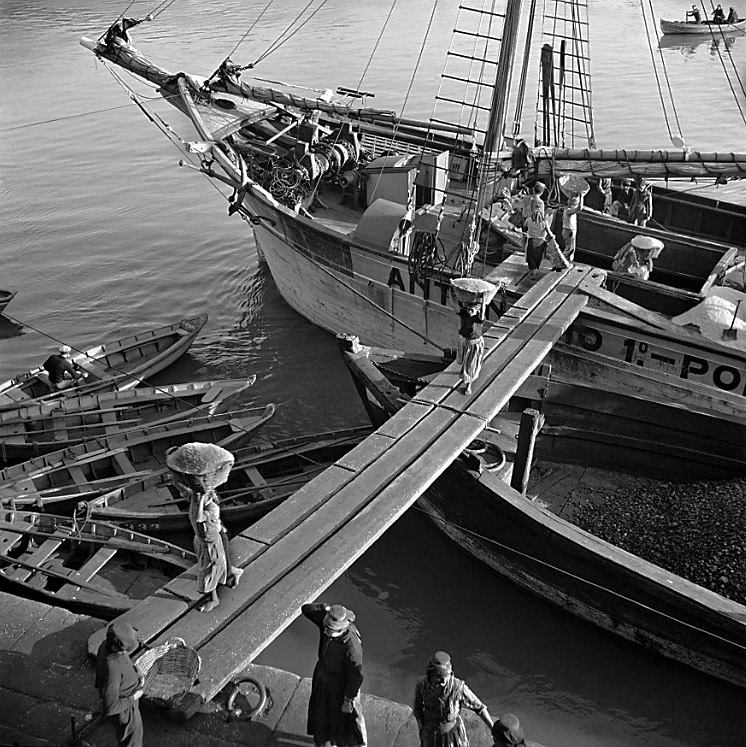
Nicolás Muller (Spanish born Hungary, 1913-2000) 'Descargando sal' Oporto, Portugal, 1939


Nicolás Muller (Spanish born Hungary, 1913-2000)
Descargando sal [Unloading salt]
Oporto, Portugal, 1939
© Nicolás Muller


“In Porto I liked the harbour full of bustle, with its vivid colours … women with heavy downloading caryatids necks baskets of salt and coal. Other women, always with baskets on their heads, downloading large bales of dried cod, and among both men lying or sitting in the sun, watching the clouds, playing cards …”


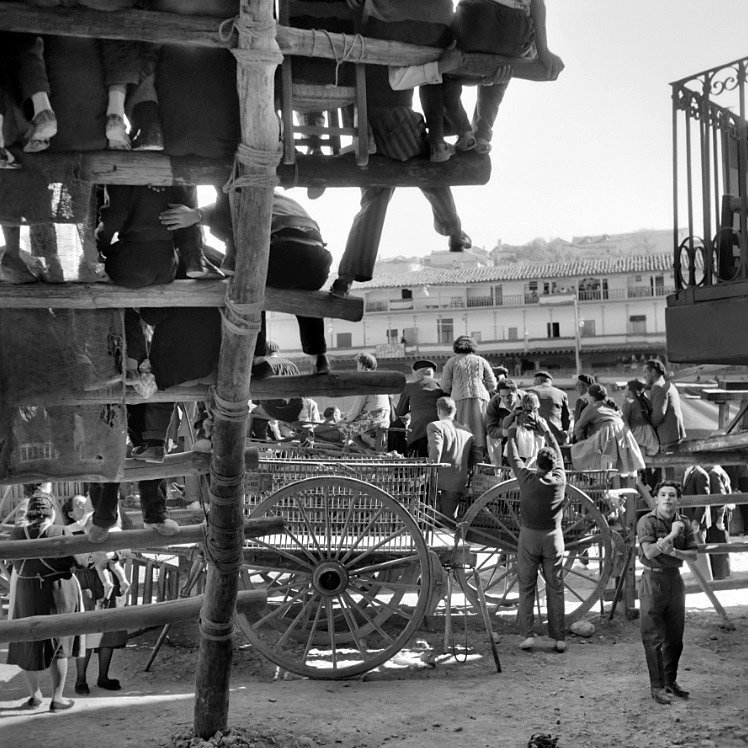
Nicolás Muller (Spanish born Hungary, 1913-2000) 'Chinchón II' Madrid, 1950


Nicolás Muller (Spanish born Hungary, 1913-2000)
Chinchón II
Madrid, 1950
Chinchón II


Although little known in France, Nicolás Muller (Orosháza, Hungary, 1913 – Andrín, Spain, 2000) was one of the leading exponents of Hungarian social photography. Like many of his compatriots – Eva Besnyö, Brassaï, Robert Capa, André Kertész and Kati Horna – he spent much of his life in exile: born into a bourgeois Jewish family, he left Hungary shortly after the Anschluss in 1938, spending time in Paris, Portugal and Morocco before finally setting in Spain. This experience, and the situations and people he encountered along the way, did much to shape Muller’s work.

Like many of his fellow Hungarian photographers at the time, in the 1930s Muller worked in a humanist, documentary vein, evincing a strong sense of sympathy for the world of labour and the most modest members of society. His interest in the working man’s experience would remain a hallmark of his photographs. As the social and political contexts changed, he photographed agricultural labourers and dockers in the ports of Marseille and Porto, then children and street vendors in Tangiers, and life in the countryside. Later, he photographed cultural and social figures in Madrid.

The exhibition at the Château de Tours – the first show in France dedicated exclusively to this photographer – brings together a hundred images and documents from the archives kept by his daughter Ana Muller. This chronologically presented selection made by curator Chema Conesa follows the career and travels of this alert, curious photographer from 1935 to 1981.

Nicolás Muller was given his first camera at the age of thirteen, and immediately began to explore its capacity to express a certain idea of the world and of human beings. He maintained this passion for photography when studying law and politics at the Szeged University. His camera, and the feeling that he could use it to convey the adventure of living, were the formative constants of his life and art.

“I learned that photography can be a weapon, an authentic document of reality. […] I became an engaged person, an engaged photographer.”

During his four years at university he would also explore the Hungarian plains, whether on foot, by train or by bike, photographing men and women, the interiors of houses, scenes of rural life and the workers building the dykes on the River Tisza.

His early work is dominated by this rural aspect of Hungary – a country that had lost a significant fraction of its territory under the Treaty of Versailles (1920). It is also influenced by the avant-garde aesthetic of the day, with its diagonal perspectives and high- and low-angle shots.

When Nazi Germany annexed Austria in 1938 (the Anschluss), Hungary aligned itself with the fascist regime and Muller decided to continue his photographic career elsewhere. He came to Paris, where he was in touch with other Hungarian photographers such as Brassaï, Robert Capa and André Kertész. He found work with periodicals such as Match, France Magazine and Regards, which published his photographs of working life in Hungary and Marseille. This theme continued to occupy him during his short stay in General Salazar’s Portugal, until he was imprisoned and then expelled.

Through his father, who had stayed in Hungary and had close links with Rotary Club International, Muller managed to obtain a visa for Tangiers – which, at the time, was the destination for thousands of Jews fleeing from Central Europe. The city roused him to a state of almost febrile creativity. “My eyes, my hands and my whole being are itching to go everywhere, to take photographs wherever I can.” His tireless portrayal of Tangiers also shows him learning to deal with a new challenge: intense light.

In Tangiers Muller contributed photographs to a number of books, such as Tanger por el Jalifa and Estampas marroquis, and did reportage work on the towns of the “Spanish Zone” commissioned by the Spanish High Commission in Morocco. After seven years in Tangiers – “the happiest years of my life” – Muller decided to move to Madrid in order to go back to working as a photojournalist, to explore the regions of Spain, and to publish books of his work.

As the reputation of his studio grew, so he frequented the writers, philosophers and poets who met at the legendary Café Gijón and around the Revista d’Occidente. An active member of Spain’s underground intelligentsia, he also made portraits of artist and writer friends, including Pío Baroja, Camilo José Cela, Eugeni d’Ors and Ramón Pérez de Ayala, and of figures such as the pianist Ataúlfo Argenta and the torero Manolete (Muller’s photo captures him not long before his death).

Nicolás Muller retired at the age of 68 and moved to Andrín (Asturias), where he died in 2000.”

Press release from the Château de Tours website


Nicolás Muller (Spanish born Hungary, 1913-2000) 'Castro Urdiales (Santander)' 1968


Nicolás Muller (Spanish born Hungary, 1913-2000)
Castro Urdiales (Santander)
1968
© Nicolás Muller


Nicolás Muller (Spanish born Hungary, 1913-2000) 'Aiguisage de la faux. Hongrie' 1935


Nicolás Muller (Spanish born Hungary, 1913-2000)
Aiguisage de la faux. Hongrie [Sharpening the scythe. Hungary]
1935
© Nicolás Muller


Nicolás Muller (Spanish born Hungary, 1913-2000) 'San Cristóbal de Entreviñas' Zamora, 1957


Nicolás Muller (Spanish born Hungary, 1913-2000)
San Cristóbal de Entreviñas
Zamora, 1957
© Nicolás Muller


Nicolás Muller


Nicolás Muller

And in Spain, Muller, he found the picture of the war, depressed by the legacy of the war and destroyed by repression and losses, a strange climate where lived traditions and religion country, big cities and the inland villages, children and widows of war. In our country, there were few references of the new documentary that took place in the rest of Europe, not to say that they are almost non-existent except in the case of Jose Ortiz Echague. You could say that with Catalá Roca, Muller is one of the most important photographers of the era in which he portrayed the society of Spain…

His social photography is part of this new documentary, from a very specific perspective, where the photographer has to be absent from the picture, it must be maintained as an external agent. Under this premise, Nicolas Muller, is a hunter of moments immortalised through his camera. He observed from the outside, does not seek to intervene in the context, it seeks to be faithful to the situation, the purity of the image and emotions. The artist is absent on the scene and that allows you to create a picture where the main protagonists are the people who participate in the moment. The exhibition held in 1947 for the West Magazine which expresses the new artistic concepts which would give photography in the context of modernity. For this exhibition portrayed famous people of Spanish society, mostly intellectuals and cultural figures as Azorín, Ortega y Gasset, Menendez Pidal, Marañón or John Doe … With this starting point, Nicolas Muller discovers the Spanish geography and unleashes the photographic socialism, traveling through villages and cities. In this series, the photographer welcomes environments, customs and influences of the inhabitants of the places where he spent days or months…

If a photographer wants to be the chronicler of the time in which he lives you have to convey reality and not an image that changes or imagines himself.”

Text translated from “Nicolás Muller, Social Photography in the War,” on the Madriz website, 15th January 2014. No longer available online.


Nicolás Muller (Spanish born Hungary, 1913-2000) 'Séville' 1951


Nicolás Muller (Spanish born Hungary, 1913-2000)
Séville
1951
© Nicolás Muller


Nicolás Muller (Spanish born Hungary, 1913-2000) 'Semana Santa (Cuenca)' 1950


Nicolás Muller (Spanish born Hungary, 1913-2000)
Semana Santa (Cuenca) [Easter (Cuenca)]
1950
© Nicolás Muller


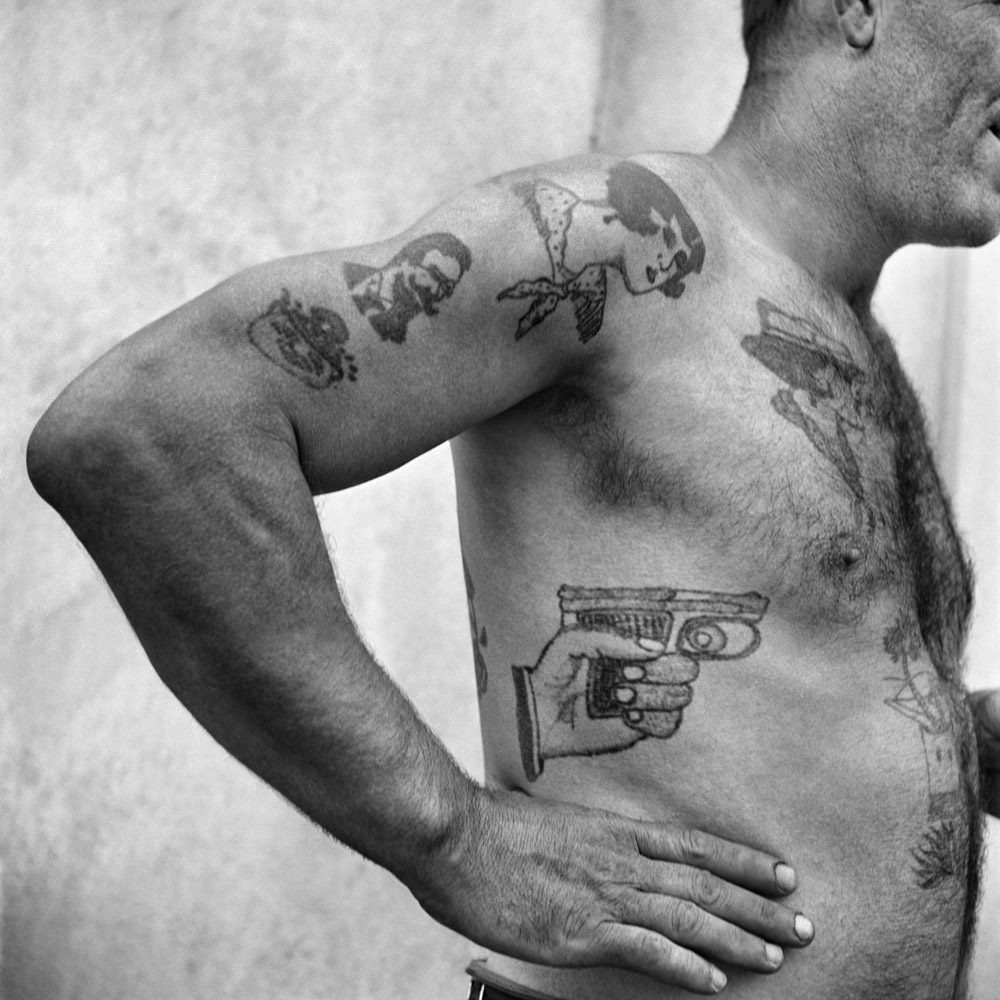
Nicolás Muller (Spanish born Hungary, 1913-2000) 'Tattoo' Bordeaux, France, 1938


Nicolás Muller (Spanish born Hungary, 1913-2000)
Tattoo
Bordeaux, France, 1938
© Nicolás Muller


Nicolás Muller (Spanish born Hungary, 1913-2000) 'Arcos de la Frontera (Cádiz)' 1957


Nicolás Muller (Spanish born Hungary, 1913-2000)
Arcos de la Frontera (Cádiz)
1957
© Nicolás Muller


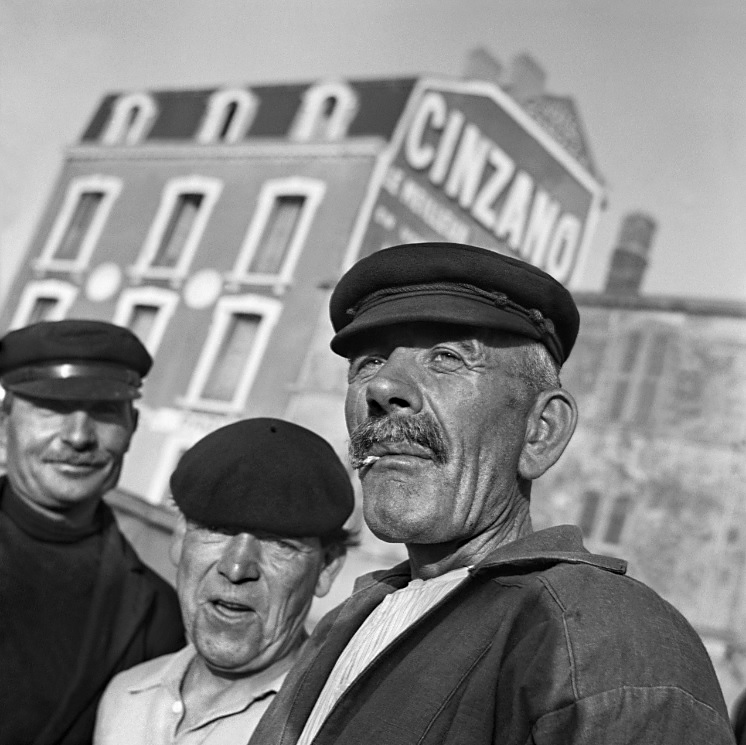
Nicolás Muller (Spanish born Hungary, 1913-2000) 'Three men' Marseilles, France, 1938


Nicolás Muller (Spanish born Hungary, 1913-2000)
Tres hombres [Three men]
Marseilles, France, 1938
© Nicolás Muller


Nicolás Muller (Spanish born Hungary, 1913-2000) 'Le Lévrier et la modèle' Tanger, Maroc, 1940


Nicolás Muller (Spanish born Hungary, 1913-2000)
Le Lévrier et la modèle [The Greyhound and model]
Tangier, Morocco, 1940
© Nicolás Muller


Nicolás Muller (Spanish born Hungary, 1913-2000) 'Fête du Mouloud I' Tanger, Maroc, 1942


Nicolás Muller (Spanish born Hungary, 1913-2000)
Fête du Mouloud I – Al Mawlid I [Mouloud festival I]
Tangier, Morocco, 1942
© Nicolás Muller


Nicolás Muller (Spanish born Hungary, 1913-2000) 'Fête du Mouloud II' Tanger, Maroc, 1942


Nicolás Muller (Spanish born Hungary, 1913-2000)
Fête du Mouloud II [Mouloud festival II]
Tangier, Morocco, 1942
© Nicolás Muller


Nicolás Muller (Spanish born Hungary, 1913-2000) 'Tangier, Morocco' 1942


Nicolás Muller (Spanish born Hungary, 1913-2000)
Tánger, Marruecos [Tangier, Morocco]
1942
© Nicolás Muller


“Tangier, in December 1939, was an international city, almost a paradise in the middle of a world war-crazed … My stinging eyes, hands and my whole being to want to walk everywhere taking pictures.”


Nicolás Muller (Spanish born Hungary, 1913-2000) 'Casares' Malaga, 1967


Nicolás Muller (Spanish born Hungary, 1913-2000)
Casares
Malaga, 1967
© Nicolás Muller


Château de Tours
25 avenue André Malraux
37000 Tours

Opening hours:
Tuesday to Friday: 2pm – 6pm
Saturday and Sunday: 2.15pm – 6pm

Château de Tours website

LIKE ART BLART ON FACEBOOK

Back to top