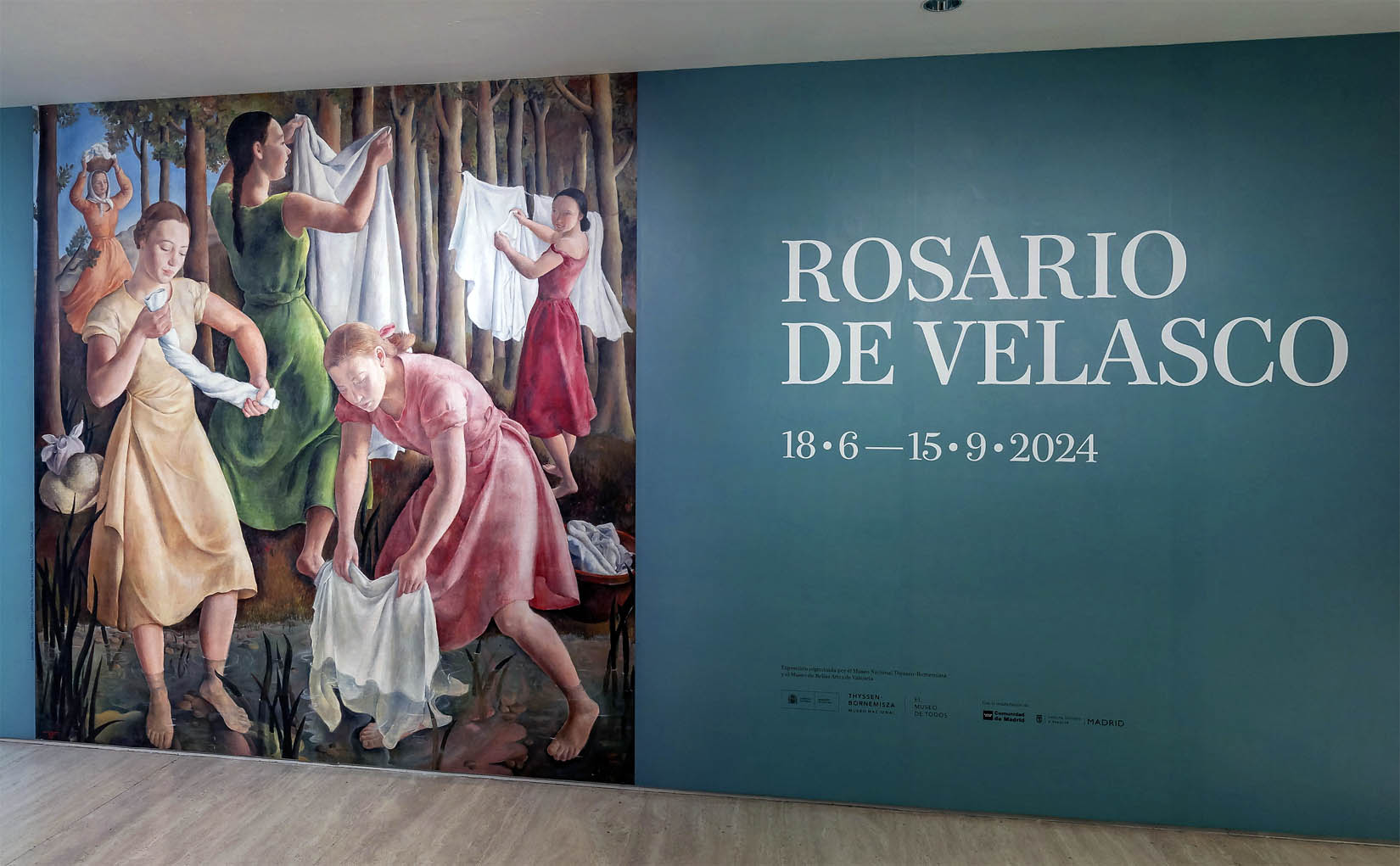
Exhibition: ‘Rosario de Velasco’ at the Museo Nacional Thyssen-Bornemisza, Madrid

Exhibition dates: 18th June to 15th September 2024

Curators: Toya Viudes de Velasco and Miguel Lusarreta


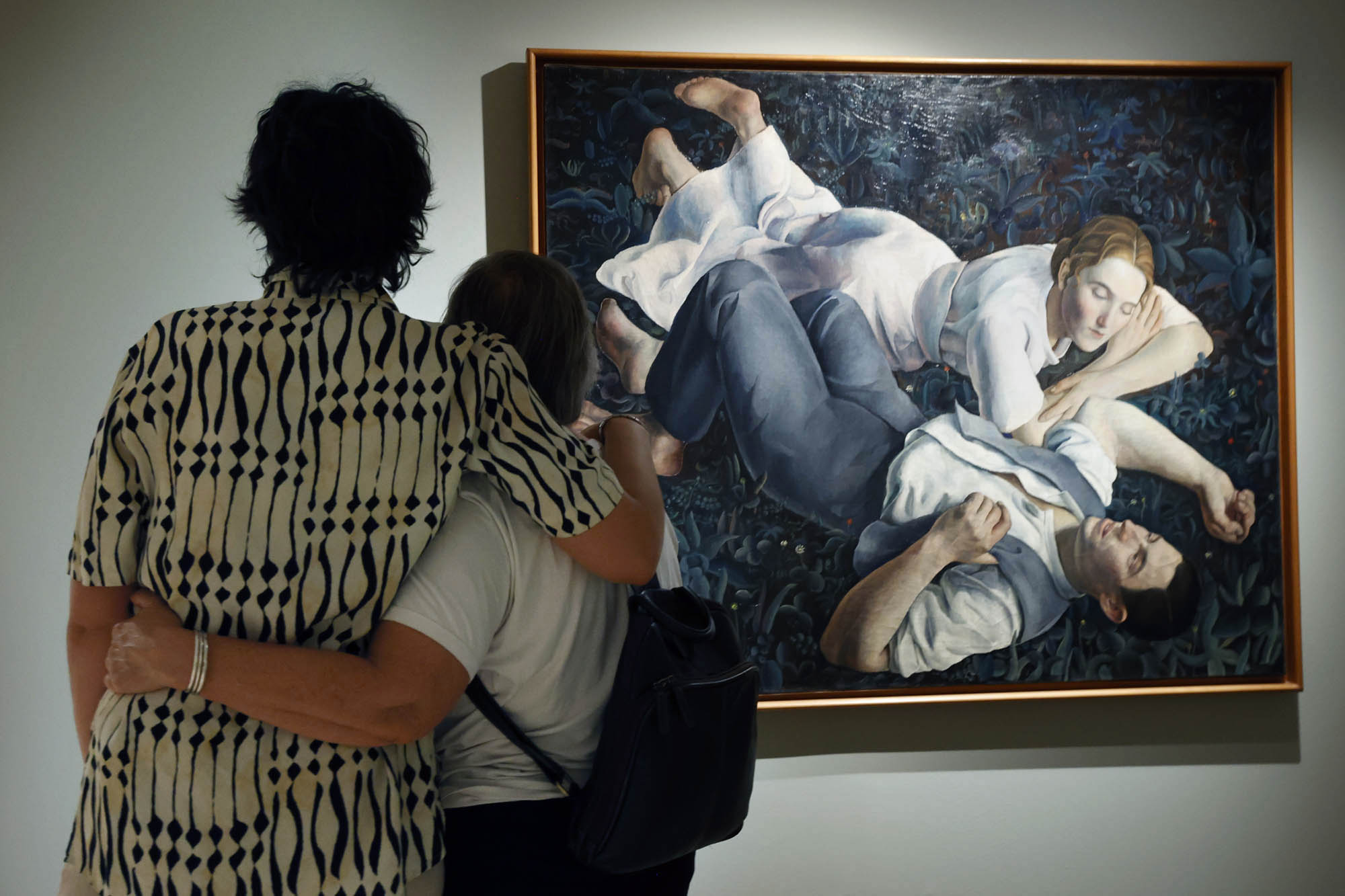
Rosario de Velasco (Spanish, 1904-1991) 'Adam and Eve' (Adán y Eva) 1932


Rosario de Velasco (Spanish, 1904-1991)
Adam and Eve (Adán y Eva)
1932
Oil on canvas
109 x 134cm
Museo Nacional Centro de Arte Reina Sofía, Madrid
Photo credit: Museo Nacional Centro de Arte Reina Sofía Photographic Archive
© Rosario de Velasco, VEGAP, Madrid, 2024


(hidden) in plain sight

When Museo Nacional Thyssen-Bornemisza, Madrid sent me an email about this exhibition I was captivated by the beautiful paintings of Rosario de Velasco, an artist who I had never hear of before, and I decided to do a posting on the exhibition.

Rosario de Velasco was part of the “return to order” movement in Spain which was a style that combined tradition and modernity, associated with a revival of classicism and realistic painting. The paintings are stylish with clean lines and finely honed forms. Among other influences, they evoke Cubism in the tilting of perspective and De Chirico in the slightly twisted perspective of the architectural landscape scenes (for example, see Portrait of Doctor Luis de Velasco (Retrato del doctor Luis de Velasco) c. 1933 below) … while also incorporating magic realism (a style which presents a realistic view of the world while incorporating magical elements) in their story telling.


The press release and various commentators link de Velasco’s paintings to the Italian Novecento and German New Objectivity (Neue Sachlichkeit) movements and there are visible connections to these movements in the work. De Velasco stated that Novecento was an influence on her art practice. But while there are surface similarities in style to the likes of Christian Schad, for example, I believe that de Velasco’s work is of a different order: for New Objectivity was described by art historian G.F. Hartlaub, as ‘new realism bearing a socialist flavour’. And while de Velasco’s work bears a working class flavour it is anything but socialist.

While New Objectivity mines the satirical, debauched air of decadence of the Weimar Republic, de Velasco’s paintings are a paen (perhaps even a sermon) to motherhood, heterosexuality, religiosity, utopianism and the fascist desire for a clean, lean and muscular art. Figurative stylisation and idealisation are used to evidence this desire for wholesomeness in her paintings of gypsies, peasants and working people (just as the stereotypical form of modern realist painting imposed by Stalin following his rise to power after the death of Lenin in 1924 crushed all extant art movements in Russia including the wonderful, briefly flowering Ukrainian modernist movement).

Indeed, glossed over by the press release in a paragraph or two, is the fact that de Velasco believed in the ideas of the Spanish fascists, in “the ideas of the Falange Española de las JONS and José Antonio Primo de Rivera [which] led her to collaborate with the magazine Vértice between 1937 and 1946, where she illustrated the ideology of the new regime.”1 Her art was placed at the service of propaganda and as an artist she benefitted from being on the side of the regime.

It’s a prickly question: Is her ideology complicit with her art? Can you separate the artist from the art?

And the answer is, no you can’t.

In Rosario de Velasco’s paintings the ideology slips behind the surface but it is still there. Witness the diabolical power of destruction rained down on a civilian population in Picasso’s painting Guernica (1937) – “an emotional response to war’s senseless violence ” – when compared to de Resario’s very Catholic, idealistic preternatural interpretation of a massacre in her The Massacre of the Innocents (La matanza de los inocentes) (1936, below). “She covers up with religious aura what was actually going on.”2

With the transition to democracy in Spain starting after the death of Franco in November 1975, “the exiled and forgotten republican artists were recovered, Rosario de Velasco was ignored both for her genre and for her ideology.”3 But now with her rehabilitation – noun: the action of restoring someone to former privileges or reputation after a period of disfavour – in her privilege, her special right to speak as an artist to all, we must not be blinded to the fact that de Velasco’s art is authoritarian utopian erasing social libertarian hiding dystopian destruction.

As my good friend, writer and philosopher Associate Professor James McArdle commented on Rosario de Velasco’s work: “I think we can admire the art but we must be knowing of its seduction, and be prepared to see straight through it to that layer of ideology ‘hidden in plain sight’.”4

Personally, I believe that it’s not so much hidden in plain sight, but right there in plain sight. If you are an informed, aware, sentient human being you know these things, you feel these things, and you can see these things.

There is never any excuse for a collective forgetting or cultural amnesia of the ideologies of the past for, with the rise of the far right around the world, they are returning to haunt us.

Dr Marcus Bunyan


1/ Anonymous. “La matanza de los inocentes,” on the  on the Museo Belles Arts Valencia website Nd [Online] Cited 05/09/2024. Translated by Google Translate from the Spanish text

2/ Associate Professor James McArdle email to the author, 04/09/2024

3/ Anonymous. “La matanza de los inocentes,” on the  on the Museo Belles Arts Valencia website Nd [Online] Cited 05/09/2024. Translated by Google Translate from the Spanish text

4/ Associate Professor James McArdle email to the author, 04/09/2024


Many thankx to the Museo Nacional Thyssen-Bornemisza for allowing me to publish the photographs in the posting. Please click on the photographs for a larger version of the image.


“Rosario de Velasco is part of the “return to order” movement in Spain, parallel to the German New Objectivity and the Italian Novecento, with a style that combines tradition and modernity. The artist admired masters such as Giotto, Mantegna, Piero de la Francesca, Durero, Velázquez and Goya, but also the vanguardists, such as De Chirico, Braque or Picasso and the protagonists of that return to order in Germany and Italy that she met through of magazines and exhibitions held in the 1920s in Madrid.”


Cristina Perez. “La fuerza bíblica de Rosario de Velasco ilumina el Museo Thyssen,” (The biblical force of Rosario de Velasco illuminates the Thyssen Museum) on the rtve website 18.06.2024 [Online] Cited 14/08/2024. Translated from the Spanish by Google Translate


The return to order (French: retour à l’ordre) was a European art movement that followed the First World War, rejecting the extreme avant-garde art of the years up to 1918 and taking its inspiration from classical art instead. The movement was a reaction to the war. Cubism was partially abandoned even by its co-creator Picasso. Futurism, which had praised machinery, dynamism, violence and war, was rejected by most of its adherents. The return to order was associated with a revival of classicism and realistic painting.


Text from the Wikipedia website


Installation view of the exhibition 'Rosario de Velasco' at the Museo Nacional Thyssen-Bornemisza 

Installation view of the exhibition 'Rosario de Velasco' at the Museo Nacional Thyssen-Bornemisza 

Installation view of the exhibition 'Rosario de Velasco' at the Museo Nacional Thyssen-Bornemisza 

Installation view of the exhibition 'Rosario de Velasco' at the Museo Nacional Thyssen-Bornemisza showing Velasco's 'Adam and Eve' (1932)


Installation view of the exhibition Rosario de Velasco at the Museo Nacional Thyssen-Bornemisza showing in the bottom image, Velasco’s Adam and Eve (1932, above)
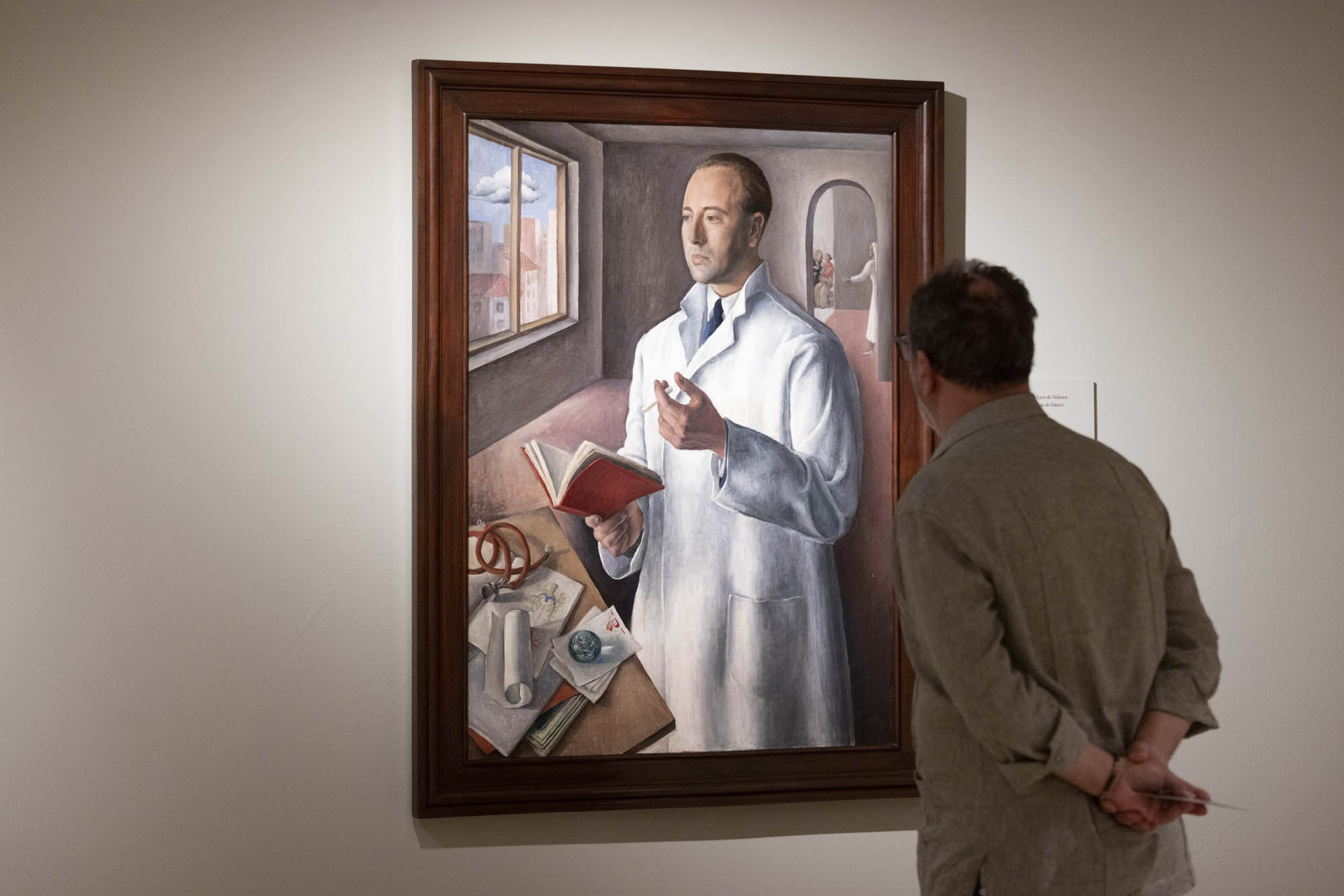
 

Installation view of the exhibition 'Rosario de Velasco' at the Museo Nacional Thyssen-Bornemisza showing Velasco's 'Portrait of Doctor Luis de Velasco' (c. 1933)


Installation view of the exhibition Rosario de Velasco at the Museo Nacional Thyssen-Bornemisza showing Velasco’s Portrait of Doctor Luis de Velasco (c. 1933, below)
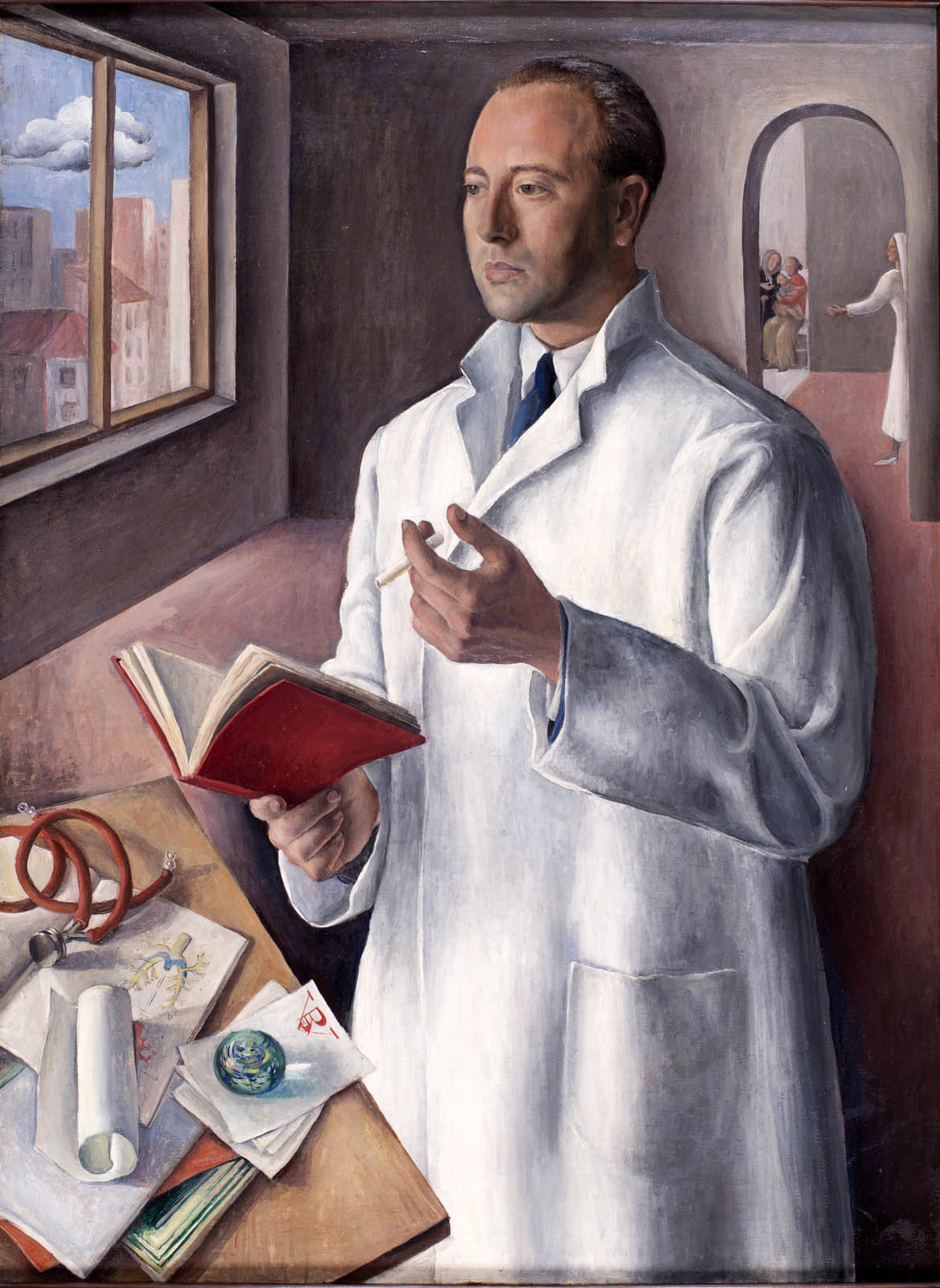
 

Rosario de Velasco (Spanish, 1904-1991) 'Portrait of Doctor Luis de Velasco' (Retrato del doctor Luis de Velasco) c. 1933


Rosario de Velasco (Spanish, 1904-1991)
Portrait of Doctor Luis de Velasco (Retrato del doctor Luis de Velasco)
c. 1933
Oil on canvas
114 x 84cm
José A. de Velasco Collection
© Rosario de Velasco, VEGAP, Madrid, 2024


Otto Dix (German, 1891-1969) 'The Jeweller Karl Krall' (Der Juwelier Karl Krall) 1923


Otto Dix (German, 1891-1969)
The Jeweller Karl Krall (Der Juwelier Karl Krall)
1923
Oil on canvas
Kunst- und Museumsverein im Von der Heydt-Museum Wuppertal

This painting is not in the exhibition and is used under fair use conditions for the purposes of education and research.


The Museo Nacional Thyssen-Bornemisza is jointly organising with the Museo de Bellas Artes de Valencia an exhibition on the Spanish figurative painter Rosario de Velasco (Madrid, 1904 – Barcelona, 1991).

Curated by Miguel Lusarreta and Toya Viudes de Velasco, the artist’s great-niece, the exhibition features 30 paintings from the 1920s to 1940s (the earliest and the most important from Velasco’s career) and a section on her activities as an illustrator. Alongside well known works from museum collections, such as the famous oil Adam and Eve from the Museo Nacional Centro de Arte Reina Sofía, with which the artist obtained the second-prize medal for painting at the National Fine Arts Exhibition in 1932, or The Massacre of the Innocents (1936) from the Museo de Bellas Artes de Valencia, there will be others on display for the first time that have remained with Velasco’s family and in private collections, some unlocated until recently and only found and identified in the past few years.

Through a selection of paintings, drawings and illustrations and employing an approach that combines general art-historical issues and also explores aesthetic, social and political aspects, the exhibition aims to rediscover and reassess the work of one of the great Spanish women artists of the first half of the 20th century.

Following its showing in Madrid the exhibition will be seen at the Museo de Bellas Artes de Valencia from 7 November 2024 to 16 February 2025.

Text from the Museo Nacional Thyssen-Bornemisza website


Rosario de Velasco (Spanish, 1904-1991) 'Seamstress Asleep' (Costurera dormida) c. 1930


Rosario de Velasco (Spanish, 1904-1991)
Seamstress Asleep
c. 1930
Oil on canvas
56 × 75cm
Private collection
Photo: Jonás Bel
© Rosario de Velasco, VEGAP, Madrid, 2024
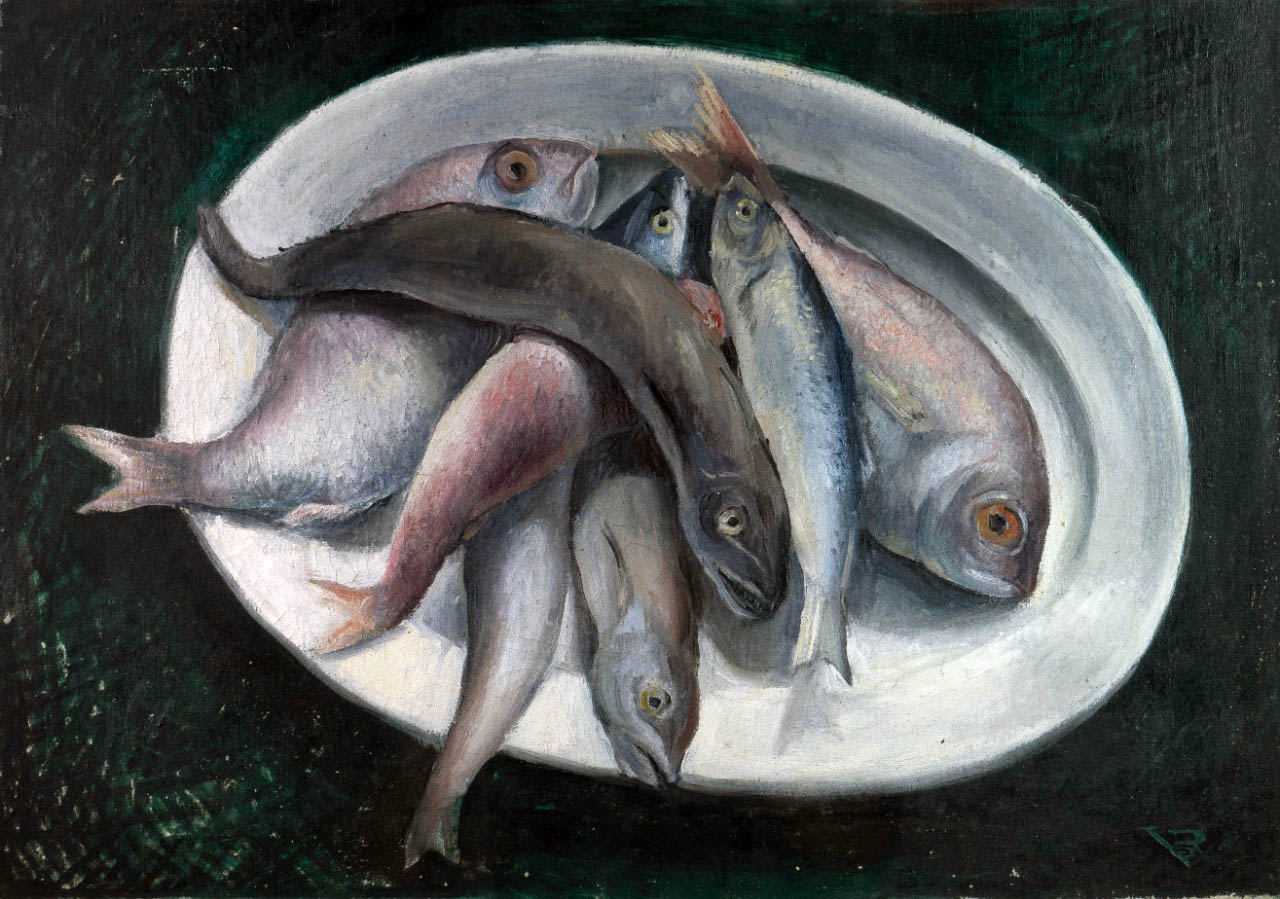
 

Rosario de Velasco (Spanish, 1904-1991) 'Still Life with Fish' (Bodegón con peces) c. 1930


Rosario de Velasco (Spanish, 1904-1991)
Still Life with Fish (Bodegón con peces)
c. 1930
Oil on canvas
42 × 60cm
Ibáñez Museum Collection, Olula del Rio
© Rosario de Velasco, VEGAP, Madrid, 2024
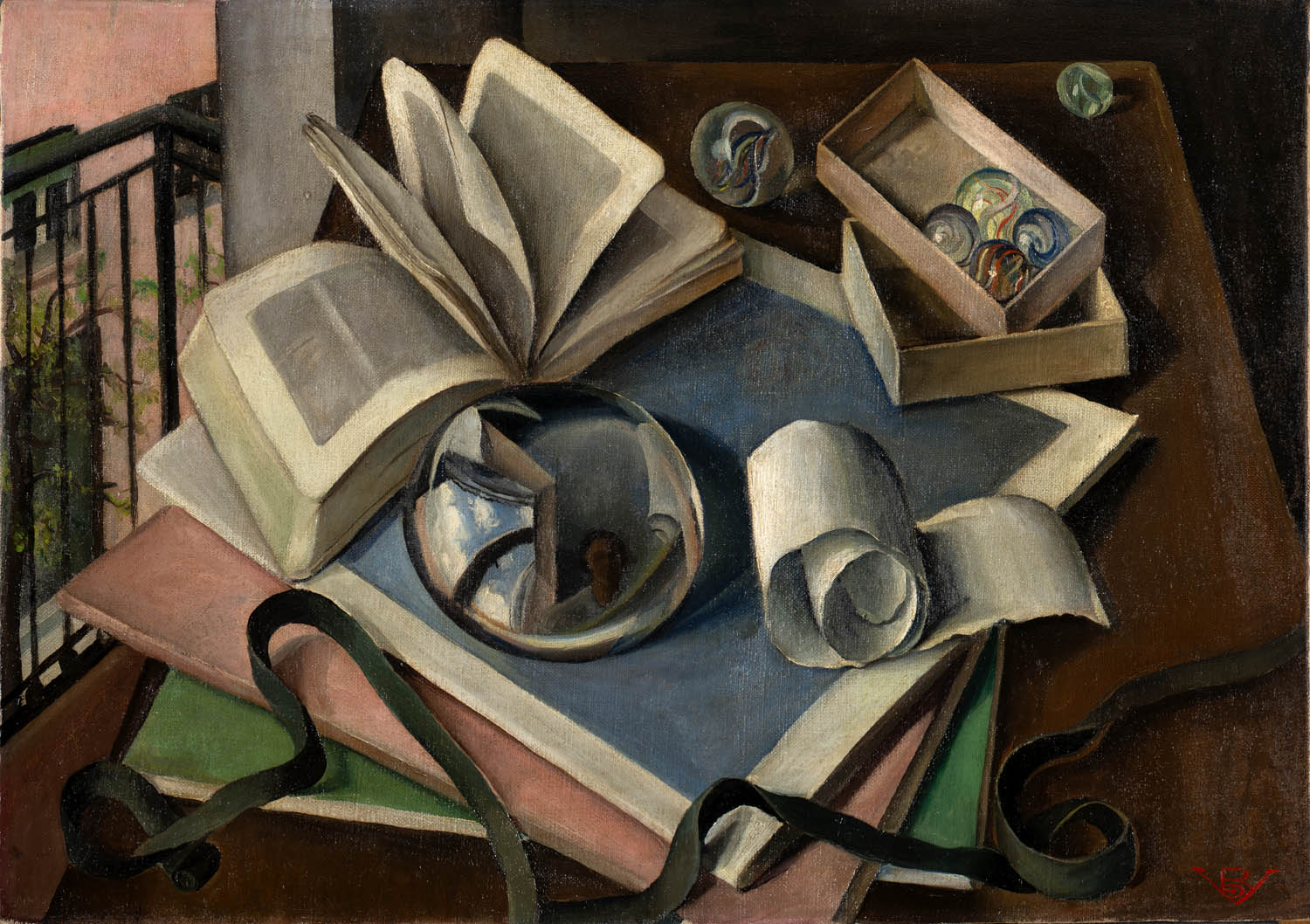
 

Rosario de Velasco (Spanish, 1904-1991) 'Things' (Cosas) 1933


Rosario de Velasco (Spanish, 1904-1991)
Things (Cosas)
1933
Oil on canvas
45.5 × 65.5cm
Private collection
© Rosario de Velasco, VEGAP, Madrid, 2024


Rosario de Velasco (Spanish, 1904-1991) 'Untitled, (The Children's Room)' / Sin título (El cuarto de los niños) 1932-1933


Rosario de Velasco (Spanish, 1904-1991)
Untitled, (The Children’s Room) / Sin título (El cuarto de los niños)
1932-1933
Oil on canvas
55 × 73cm
Museo Nacional Centro de Arte Reina Sofía, Madrid
Photo: Archivo Fotográfico Museo Nacional Centro de Arte Reina Sofía
© Rosario de Velasco, VEGAP, Madrid, 2024


Rosario de Velasco remains one of the least known artists of the 1930s in Spain. Her academic training in Madrid took place alongside Fernando Álvarez de Sotomayor and, above all, was the result of her avid curiosity for the Italian Novecento and the German New Objectivity. This interest came to her through magazines and the contemplation of the work of authors such as Carlo Carrà, Felice Casorati and Ardengo Soffici at the Palacio de Exposiciones del Retiro in 1928.

Her approach to the ideas of the Falange Española de las JONS and José Antonio Primo de Rivera led her to collaborate with the magazine Vértice between 1937 and 1946, where she illustrated the ideology of the new regime. In this context we must place the canvas The Massacre of the Innocents (1936), in which Rosario de Velasco used a religious theme to create a work with clear political content created with the aim of mobilising society. The work was presented at the National Exhibition of Fine Arts inaugurated on July 4, 1936 by the President of the Republic, Manuel Azaña, at the Palacio de Cristal in Madrid.

This drift from realism towards political action was a frequent trend at a turbulent time in the history of Spain when art was placed at the service of propaganda. However, with democracy, the exiled and forgotten republican artists were recovered, Rosario de Velasco was ignored both for her genre and for her ideology. The flood of 1957 only deepened the marginalisation of The Massacre of the Innocents and left the painting covered in mud and with water marks for years. The magnificent and disturbing work was attributed to Ricardo Verde based on the monogram with which Rosario de Velasco signed her works, with the initials of her name, RV, until in 1995 its authorship was returned to the artist.

Anonymous. “La matanza de los inocentes,” on the  on the Museo Belles Arts Valencia website Nd [Online] Cited 05/09/2024. Translated by Google Translate from the Spanish text


The Spanish Civil War marked a turning point in Rosario’s life. Her Falangist militancy and her family environment led her to leave Madrid, traveling first to Valencia and then to Barcelona, ​​where she met the doctor Javier Farrerons, who would become her husband. Thanks to Farrerons, Rosario was released from the Modelo prison in Barcelona, ​​where she was detained. After the war, he settled in Barcelona with his family and continued to participate in various exhibitions, albeit less frequently.

In 1939, she participated in the National Exhibition of Painting and Sculpture in Valencia, and in 1940 she presented her first individual exhibition in Barcelona. Over the following years, she also exhibited in Madrid, at events such as the National Exhibition of Fine Arts in 1941 and 1954, as well as in various galleries. In 1944, she was selected for the II Salón de los Once, organised by the Academia Breve de Crítica de Arte, an initiative by Eugenio d’Ors to promote post-war art.

Redacción. “Rosario de Velasco: Entre Giotto y Picasso, un estilo único en la pintura española,” (Rosario de Velasco: Between Giotto and Picasso, a unique style in Spanish painting) on the GenexiGente website 28/05/2024 [Online] Cited 14/08/2024, Translated from the Spanish by Google Translate


The outbreak of the Civil War, her Falangist militancy and her family environment lead her to leave Madrid. She travels first to Valencia and then to Barcelona, ​​in Sant Andreu de Llavaneres, where she meets the ophthalmologist Javier Farrerons, her future husband, and who managed to free her from the Modelo prison in Barcelona, ​​where she was detained. Viudes de Velasco explains that “thanks to God, she was in prison for one night because she had the immense luck that the doctor in the prison was a very good friend of the one who later became her husband, and that same night they took her out. The next day her cellmate was shot. That marked her life and she didn’t want to talk about the war again.”

Cristina Perez. “La fuerza bíblica de Rosario de Velasco ilumina el Museo Thyssen,” (The biblical force of Rosario de Velasco illuminates the Thyssen Museum) on the rtve website 18.06.2024 [Online] Cited 14/08/2024. Translated from the Spanish by Google Translate
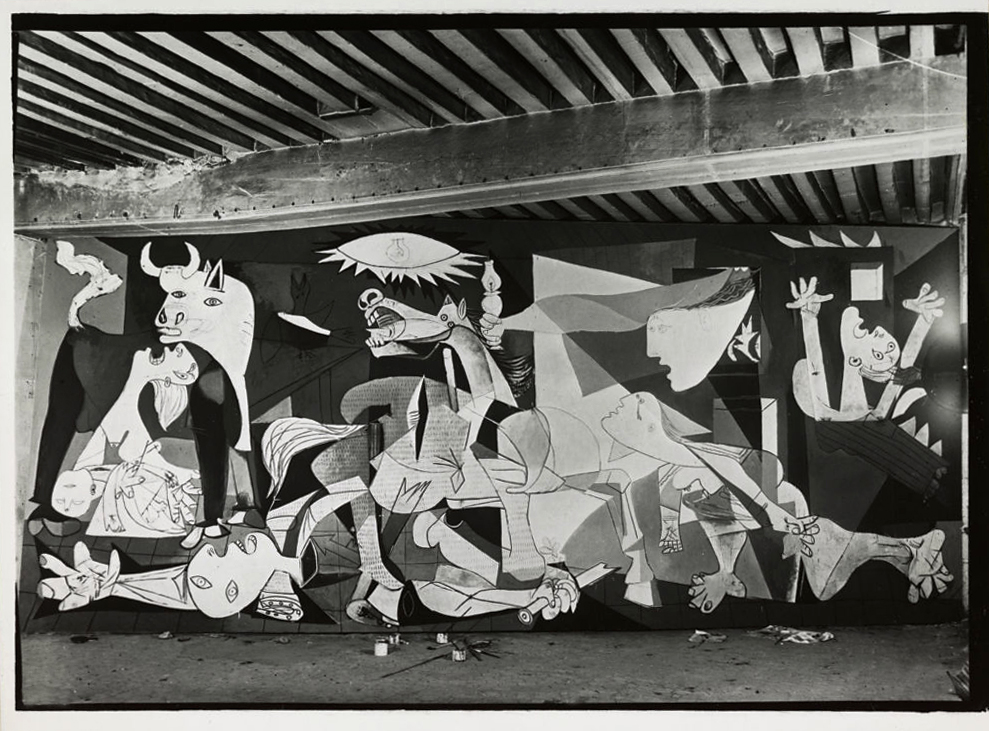
 

Dora Maar (French, 1907-1997) 'Guernica' May-June, 1937


Dora Maar (French, 1907-1997)
Guernica
May-June, 1937
Gelatin silver print

This photograph is not in the exhibition and is used under fair use conditions for the purposes of education and research.
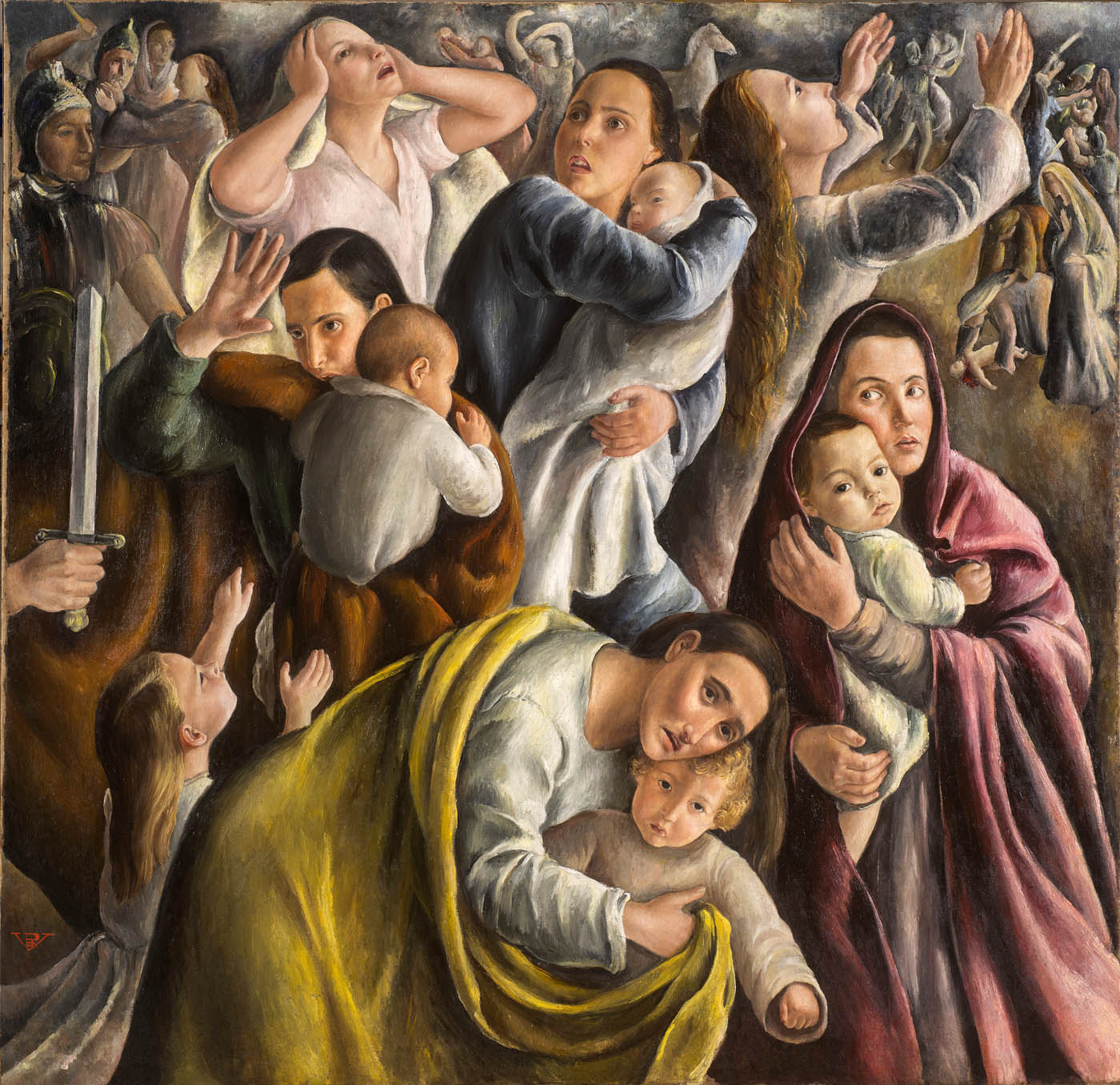
 

Rosario de Velasco (Spanish, 1904-1991) 'The Massacre of the Innocents' (La matanza de los inocentes) 1936


Rosario de Velasco (Spanish, 1904-1991)
The Massacre of the Innocents (La matanza de los inocentes)
1936
Oil on canvas
164 × 167.5cm
Museo de Bellas Artes de Valencia
Photo: Museo de Bellas Artes de Valencia
© Rosario de Velasco, VEGAP, Madrid, 2024


The Museo Nacional Thyssen-Bornemisza is jointly presenting with the Museo de Bellas Artes de Valencia an exhibition on the Spanish figurative painter Rosario de Velasco (Madrid, 1904 – Barcelona, 1991). Curated by Miguel Lusarreta and Toya Viudes de Velasco, the artist’s great-niece, the exhibition brings together around 30 paintings from the 1920s to the 1940s – the earliest and the most important from Velasco’s career – and also has a section on her work as an illustrator.

The exhibition, which is benefiting from the support of the Region of Madrid and the City Council of Madrid, aims to present and draw attention to the work of one of the great Spanish women artists of the first half of the 20th century. In addition to well-known paintings from museum collections, such as the famous oil Adam and Eve (1932) from the Museo Nacional Centro de Arte Reina Sofía, The Massacre of the Innocents (1936) from the Museo de Bellas Artes de Valencia, Maragatos (1934) from the Museo del Traje, Madrid, and Carnival (before 1936) from the Centre Pompidou, Paris, the exhibition features works still with the artist’s family and in private collections and others that have only been rediscovered and located in the past few months. Following its showing in Madrid, the exhibition will be presented at the Museo de Bellas Artes de Valencia from 7 November 2024 to 16 February 2025.

Rosario de Velasco’s work represents an outstanding example of the so-called “return to order” in Spain, a movement parallel to German New Objectivity and Italian Novecento with a style that combined tradition and modernity. Velasco admired painters such as Giotto, Masaccio, Piero della Francesca, Mantegna, Velázquez and Goya, but also avant-garde figures such as De Chirico, Braque, Picasso and the exponents of the “return to order” in Germany and Italy, whom she encountered via magazines and exhibitions held in Madrid in the 1920s.

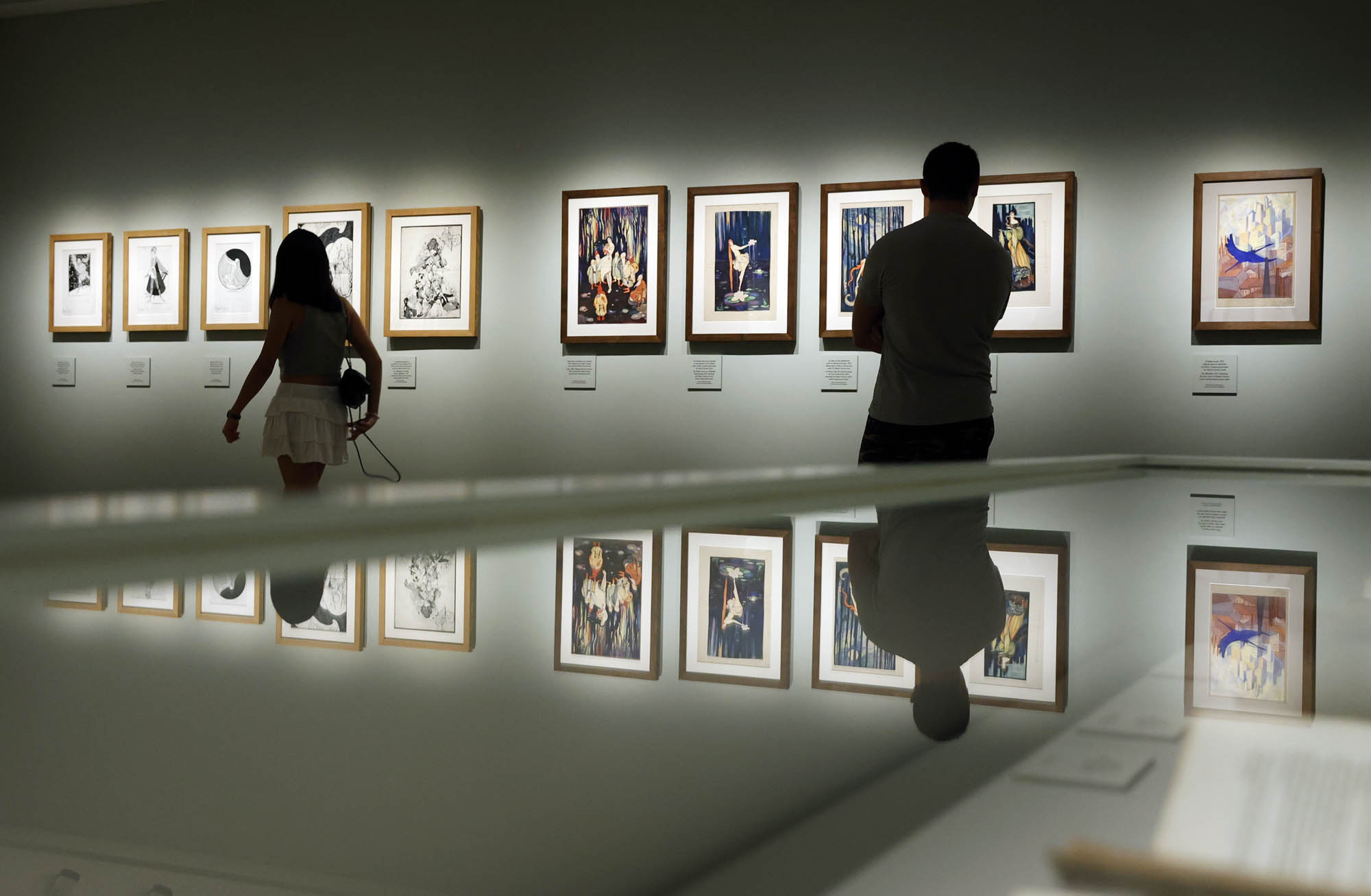
The exhibition also focuses on Velásco’s activities as an illustrator, revealing a graphic artist of great versatility. This is evident, for example, in her illustrations for the 1928 edition of Stories for dreaming by María Teresa León and Stories for my grandchildren (1932) by Carmen Karr.

Rosario de Velasco (Madrid, 1904 – Barcelona, 1991)

Born into a very traditional and religious family in Madrid, Rosario de Velasco began to study art aged fifteen at the academy of the genre painter Fernando Álvarez de Sotomayor, a member of the Royal San Fernando Academy of Fine Arts and two-time director of the Museo del Prado. Dating from that period is her Self-portrait (1924), which she signed with a monogram consisting of the initials R, D and V. Inspired by Dürer’s monogram, it has been fundamental to locating some of the artist’s paintings.

The young artist was, however, aware that she needed to go beyond tradition and assimilate the new trends and avant-gardes in her desire to compete as an equal in a largely male world. Her openness and cultural curiosity led her to associate with numerous creators of her generations, particularly women painters and writers such as Maruja Mallo, Rosa Chacel and María Teresa León. Other women friends included Mercedes Noboa, Matilde Marquina, Concha Espina and Lilí Álvarez, the tennis champion whom Velasco painted in the 1930s and with whom she enjoyed playing the sport. De Velasco was also a tireless traveller and enjoyed mountaineering, skiing and rock climbing.

In 1924, the year she completed her studies, the artist participated in the National Fine Arts Exhibition in Madrid and also produced her first illustrations. By the 1930s Rosario de Velasco had established a considerable reputation, taking part in numerous group shows and competitions, such as the National Fine Arts Exhibition of 1932 in which she presented the canvas Adam and Eve, which earned her a second prize medal in the Painting category. The work was exhibited together with all the other entries in the Palacio de Exposiciones in the Retiro park and in various exhibitions organised by the Society of Iberian Artists held in Copenhagen and Berlin, where it was warmly praised by critics for its power and originality and Velasco was singled out as the major discovery of the season. The work is startling in its play of perspective, employing a bird’s-eye view, a device also used in various still lifes and in (Untitled) The Children’s Room (1932-33), another work in the collection of the Museo Reina Sofía, in which the artist disrupts the space through an original arrangement of objects that recalls Cubism.

The majority of Velasco’s most important works date from that decade: Maragatos, which was awarded second prize in the National Painting competition of 1932; The Massacre of the Innocents (1936), which for many years was attributed to Ricardo Verde due to the signature “RV”, until it was correctly attributed to De Velasco in 1995; and Laundresses (1934), a wedding gift to her brother, Dr Luis de Velasco, who appears in another work in the present exhibition.

In 1935 Gypsies was selected to participate in the Carnegie International, an exhibition of artists from different countries organised by the Carnegie Museum of Art in Pittsburgh. Velasco’s work shared space with that of Carlo Carrá, Otto Dix, Edward Hopper and Georgia O’Keeffe, as well as Picasso and Dalí. Lost for years, the painting has only recently been located and is one of the major discoveries made during the preparation of this exhibition.

On the outbreak of the Spanish Civil War the artist’s membership of the Falange and her family context led her to leave Madrid. She went first to Valencia and later to Barcelona, to Sant Andreu de Llavaneres where she met a doctor, Javier Farrerons, who later became her husband and who succeeded in liberating her from the Modelo prison in Barcelona where she was being held. After the war the artist settled in Barcelona with her husband and their daughter María del Mar.

In 1939 Velasco participated in the National Exhibition of Painting and Sculpture in Valencia and in 1940 presented her first solo exhibition, in Barcelona. Over the following years she continued to exhibit in Madrid although less often, for example at the National Fine Arts Exhibitions of 1941 and 1954, and at various galleries. In 1944 Velasco was selected for the 2nd Salón de los Once, organised by the Academia Breve de Crítica de Arte, founded by Eugenio d’Ors to promote art of the immediate post-war period. D’Ors was one of the well known figures in the artist and her husband’s circle of friends, together with Dionisio Ridruejo, Pere Pruna and Carmen Conde, among others.

The recent search for works by Velasco which was undertaken via the social media and the media in general has resulted in the identification in private collections of both celebrated works of which all trace had been lost, such as Things (1933), Motherhood (1933), Gypsies (1934) and Pensive Woman (1935), as well as various illustrations for books and a preparatory drawing for the oil painting Carnival (before 1936). It has also brought to light some previously completely unknown works such as Still Life with Fish (c. 1930) and Girls with a Doll (1937).

Press release from the Museo Nacional Thyssen-Bornemisza


Rosario de Velasco (Spanish, 1904-1991) ''The Bluebird', drawing for the cover of María Teresa León's book 'Cuentos para soñar'' (El pájaro azul 1927. Dibujo para la cubierta del libro Cuentos para soñar de María Teresa León, 1927) 1927


Rosario de Velasco (Spanish, 1904-1991)
The Bluebird, drawing for the cover of María Teresa León’s book Cuentos para soñar (El pájaro azul 1927. Dibujo para la cubierta del libro Cuentos para soñar de María Teresa León, 1927)
1927
Mixed media on paper
41 x 27.5cm
Gonzalez Rodriguez Collection
Photo: Jonás Bel
© Rosario de Velasco, VEGAP, Madrid, 2024
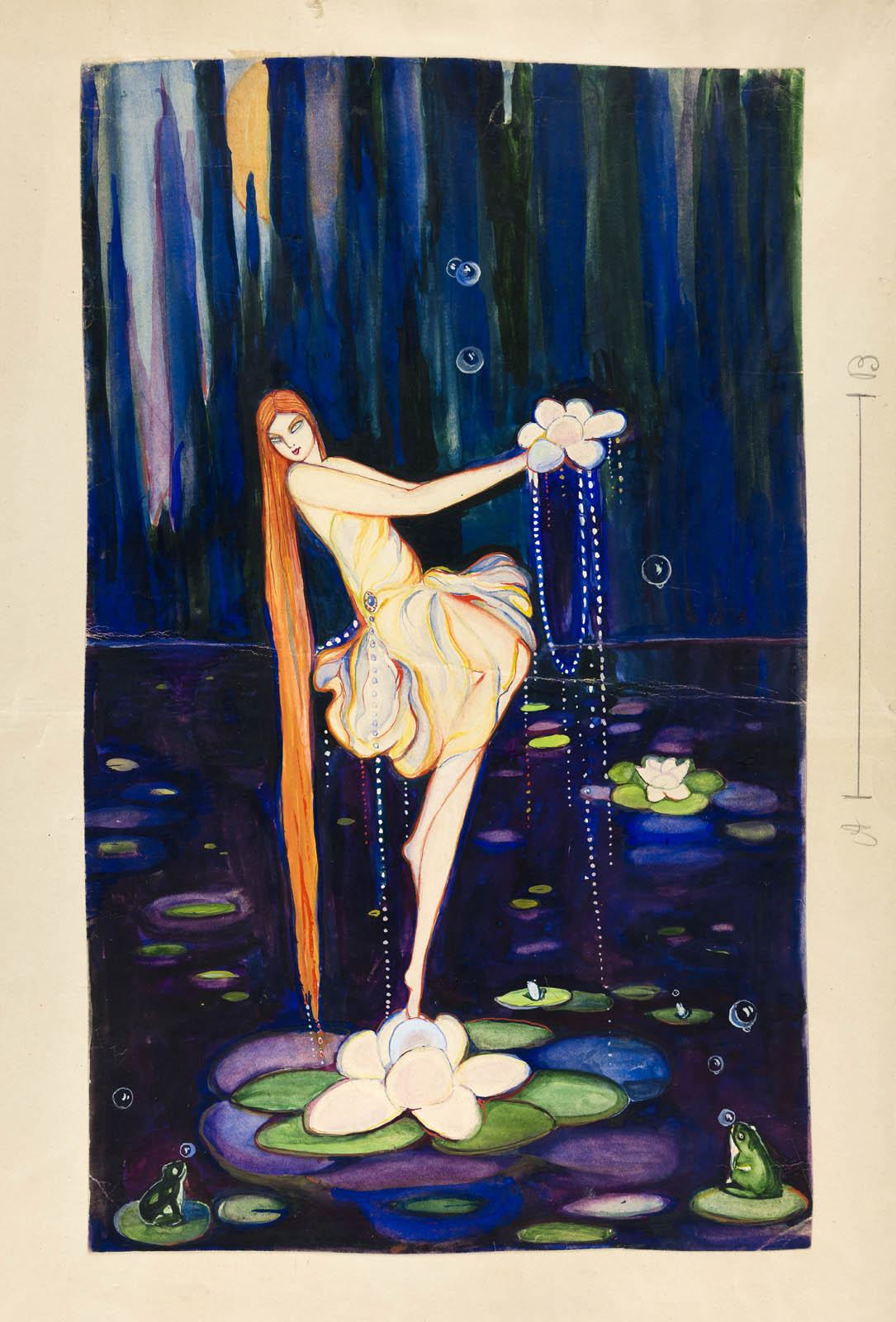
 

Rosario de Velasco (Spanish, 1904-1991) ''The White Leaves of a Waterlily Half Opened', drawing for María Teresa León's book 'Cuentos para soñar'' (Las blancas hojas de nenúfar se entreabrieron, 1927. Dibujo para el libro Cuentos para soñar de María Teresa León) 1927


Rosario de Velasco (Spanish, 1904-1991)
The White Leaves of a Waterlily Half Opened, drawing for María Teresa León’s book Cuentos para soñar (Las blancas hojas de nenúfar se entreabrieron, 1927. Dibujo para el libro Cuentos para soñar de María Teresa León)
1927
Mixed media on paper
50 × 32.3cm
Gonzalez Rodriguez Collection
Photo: Jonás Bel
© Rosario de Velasco, VEGAP, Madrid, 2024
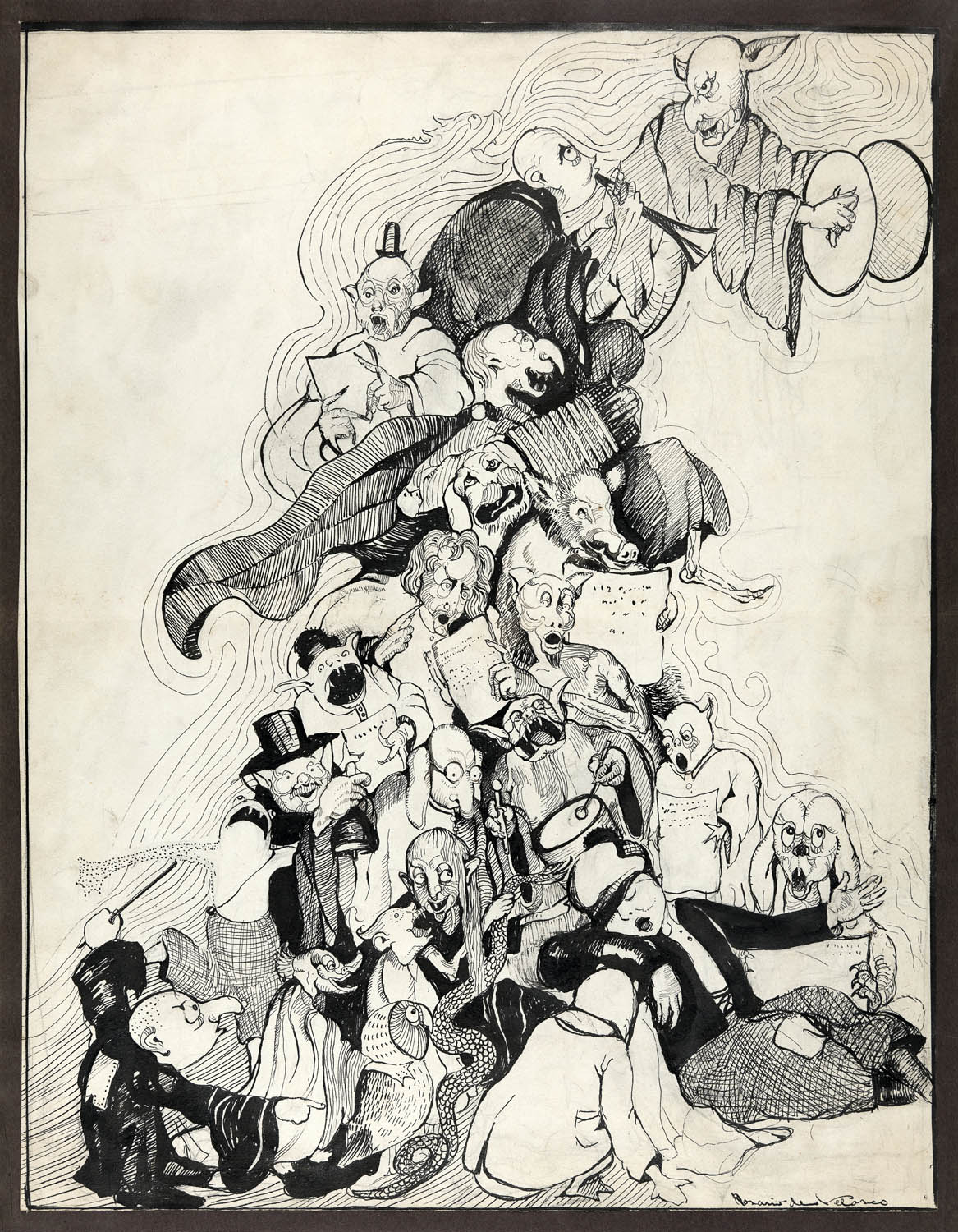
 

Rosario de Velasco (Spanish, 1904-1991) ''The Hullabaloo Gave Him Serious Nightmares', drawing for María Teresa León’s book 'Cuentos para soñar' (Tales to dream about)' (La algarabía ciudadana proporcionó serias pesadillas 1927. Dibujo para el libro Cuentos para soñar de María Teresa León) 1927


Rosario de Velasco (Spanish, 1904-1991)
The Hullabaloo Gave Him Serious Nightmares, drawing for María Teresa León’s book Cuentos para soñar (Tales to dream about) (La algarabía ciudadana proporcionó serias pesadillas, 1927. Dibujo para el libro Cuentos para soñar de María Teresa León)
1927
Ink on paper
42.3 × 32.5cm
Gonzalez Rodriguez Collection
Photo: Jonás Bel
© Rosario de Velasco, VEGAP, Madrid, 2024
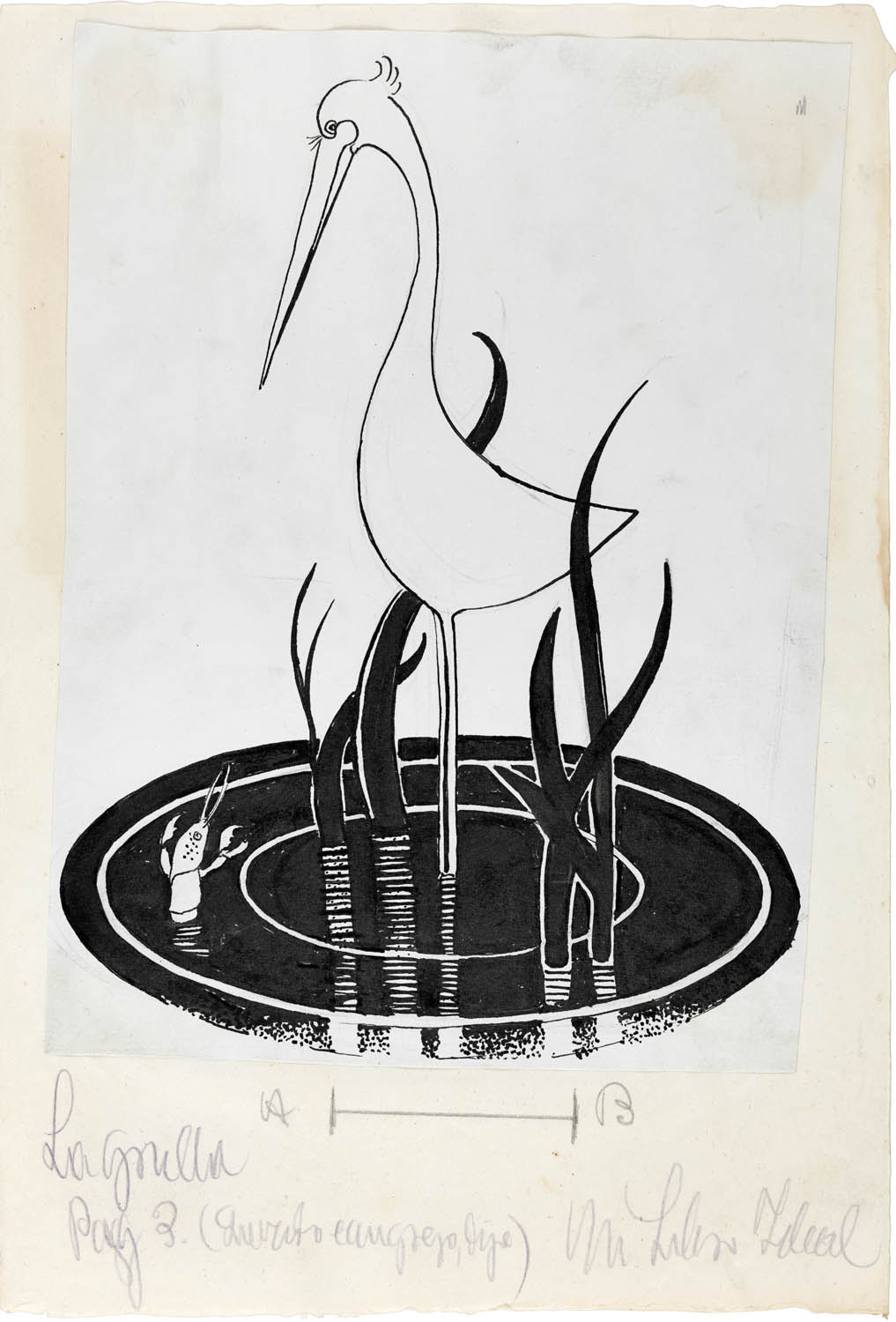
 

Rosario de Velasco (Spanish, 1904-1991) ''Dear Crab, Leave the Crane', drawing for 'Mi libro ideal'' (Querido cangrejo, deja la grulla, 1933. Dibujo para Mi libro ideal de varios autores) 1933


Rosario de Velasco (Spanish, 1904-1991)
Dear Crab, Leave the Crane, drawing for Mi libro ideal (Querido cangrejo, deja la grulla, 1933. Dibujo para Mi libro ideal de varios autores)
1933
Ink on paper
31.2 × 21.4cm
Gonzalez Rodriguez Collection
Photo: Jonás Bel
© Rosario de Velasco, VEGAP, Madrid, 2024
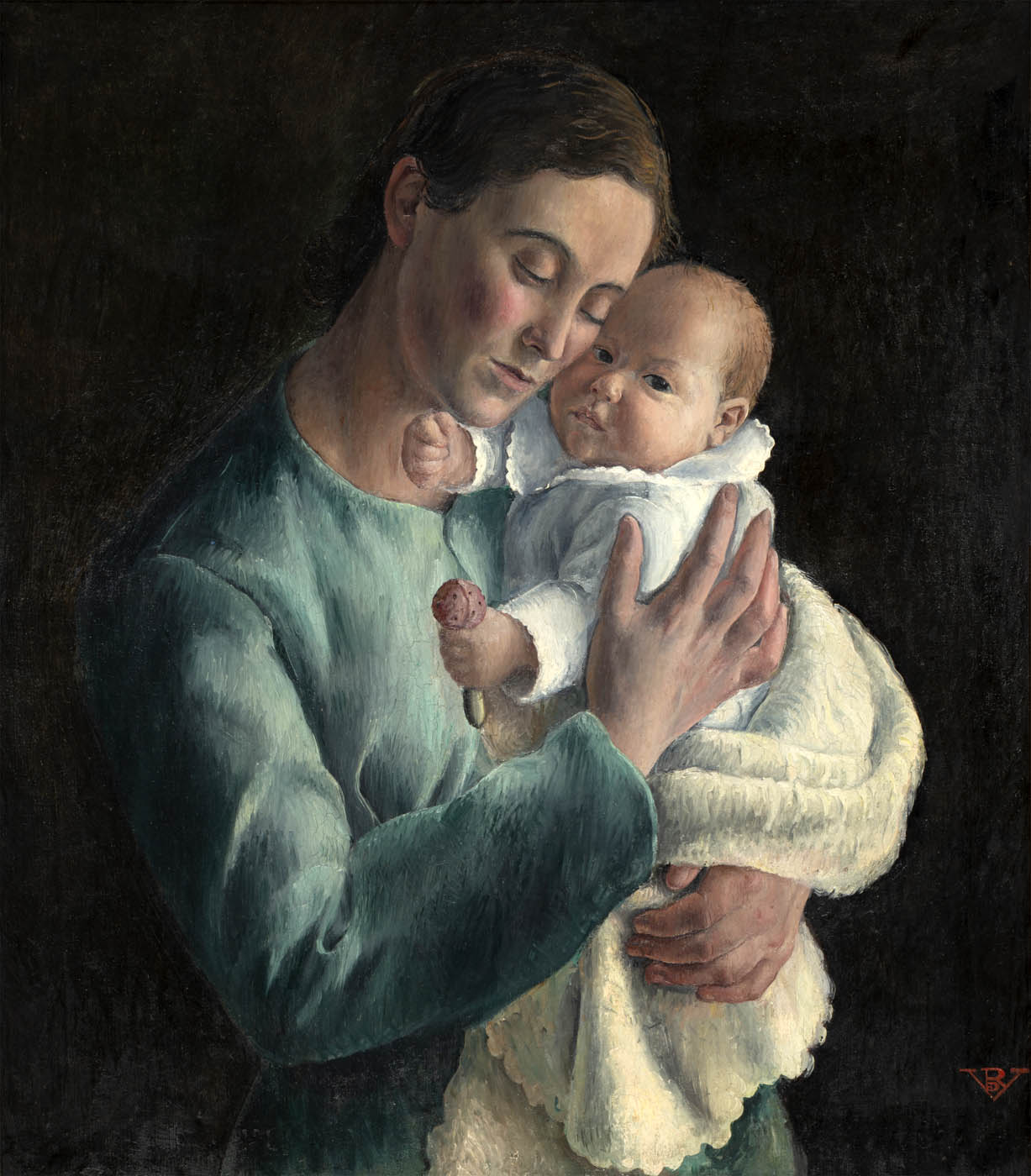
 

Rosario de Velasco (Spanish, 1904-1991) 'Motherhood' (Maternidad) 1933


Rosario de Velasco (Spanish, 1904-1991)
Motherhood (Maternidad)
1933
Oil on canvas
99 × 89cm
Private collection
© Rosario de Velasco, VEGAP, Madrid, 2024
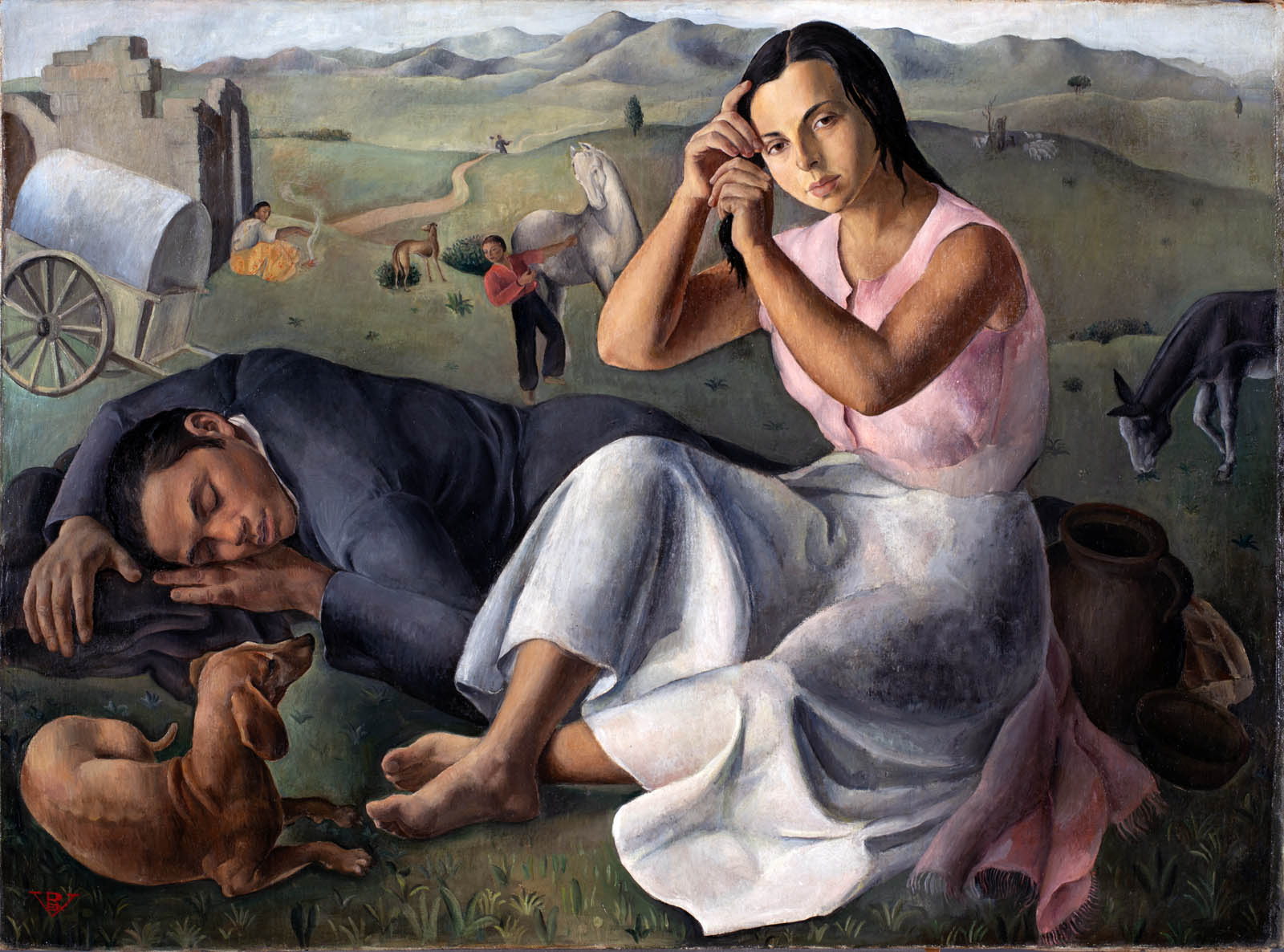
 

Rosario de Velasco (Spanish, 1904-1991) 'Gypsies' (Gitanos) 1934


Rosario de Velasco (Spanish, 1904-1991)
Gypsies (Gitanos)
1934
Oil on canvas
95 × 132cm
Private collection
© Rosario de Velasco, VEGAP, Madrid, 2024


Otto Dix (1891-1969) 'Reclining Woman on a Leopard Skin' 1927


Otto Dix (German, 1891-1969)
Reclining Woman on a Leopard Skin
1927
Oil paint on panel
680 x 980mm
© DACS 2017. Collection of the Herbert F. Johnson Museum of Art, Cornell University. Gift of Samuel A. Berger

This painting is not in the exhibition and is used under fair use conditions for the purposes of education and research.


Dix was a key supporter of the New Objectivity (Neue Sachlichkeit) movement, a name coined after an exhibition held in Mannheim, Germany in 1925. Described by art historian G.F. Hartlaub, as ‘new realism bearing a socialist flavour’, the movement sought to depict the social and political realities of the Weimar Republic.
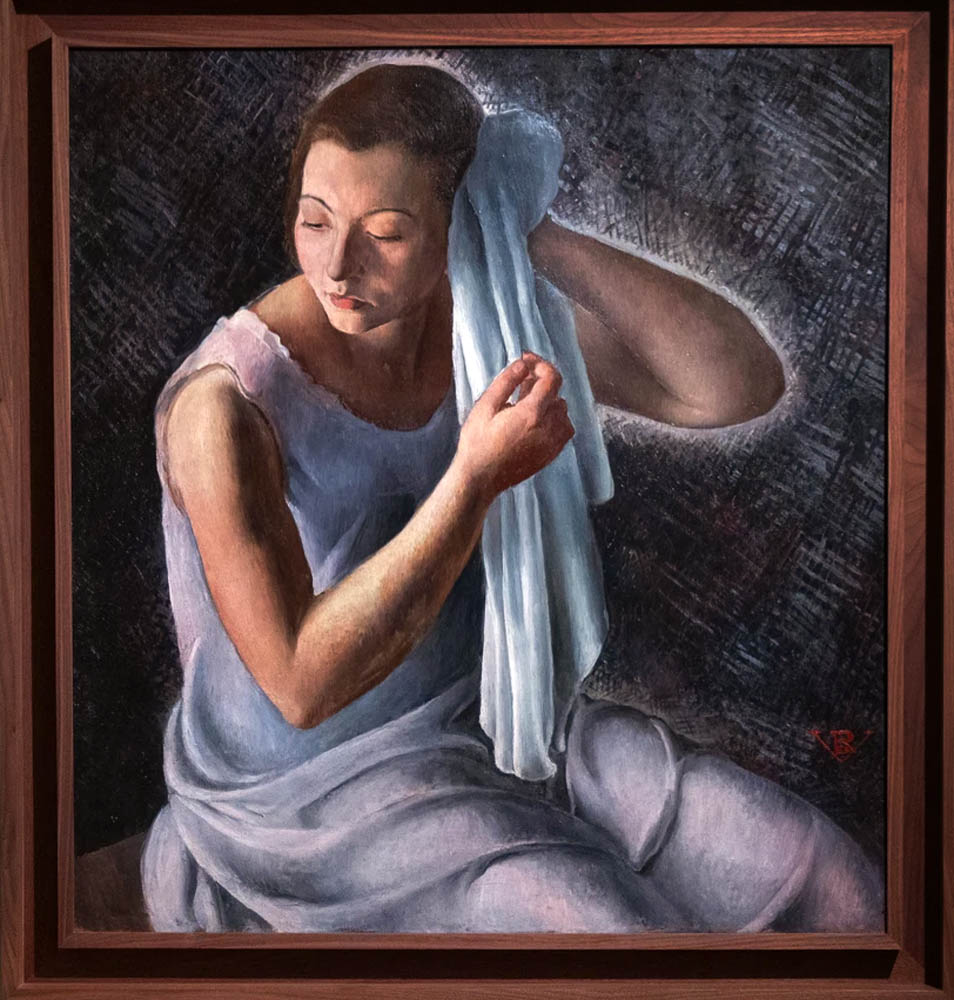
 

Rosario de Velasco (Spanish, 1904-1991) 'Woman with Towel' (Mujer con toalla) 1934


Rosario de Velasco (Spanish, 1904-1991)
Woman with Towel (Mujer con toalla)
1934
Oil on canvas
82 × 76cm
Private collection
© Rosario de Velasco, VEGAP, Madrid, 2024
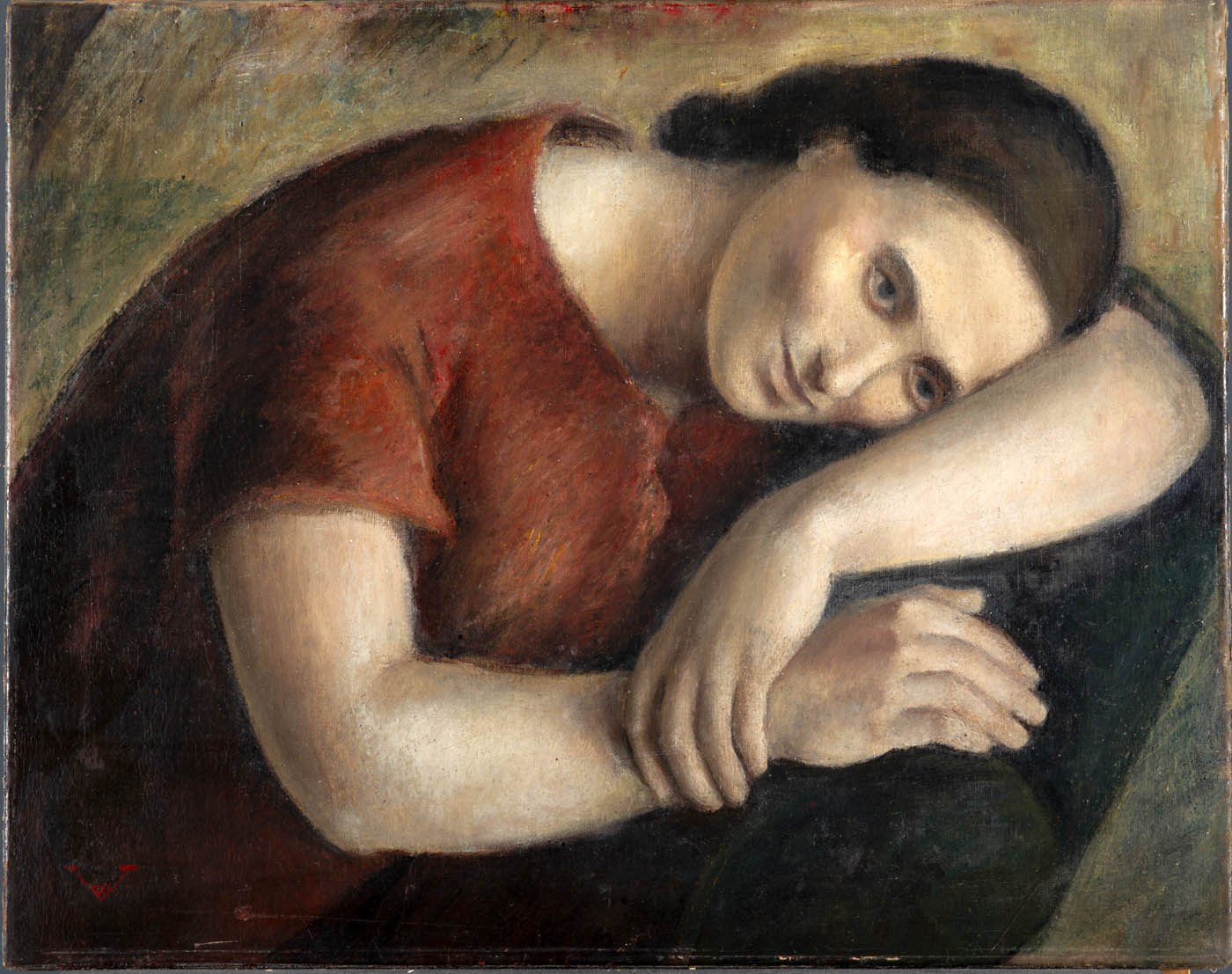
 

Rosario de Velasco (Spanish, 1904-1991) 'Pensive Woman' (Pensativa) 1935


Rosario de Velasco (Spanish, 1904-1991)
Pensive Woman (Pensativa)
1935
Oil on canvas
57.5 × 72cm
Emilia Casal Piga and Guillermo González Hernández Collection
© Rosario de Velasco, VEGAP, Madrid, 2024
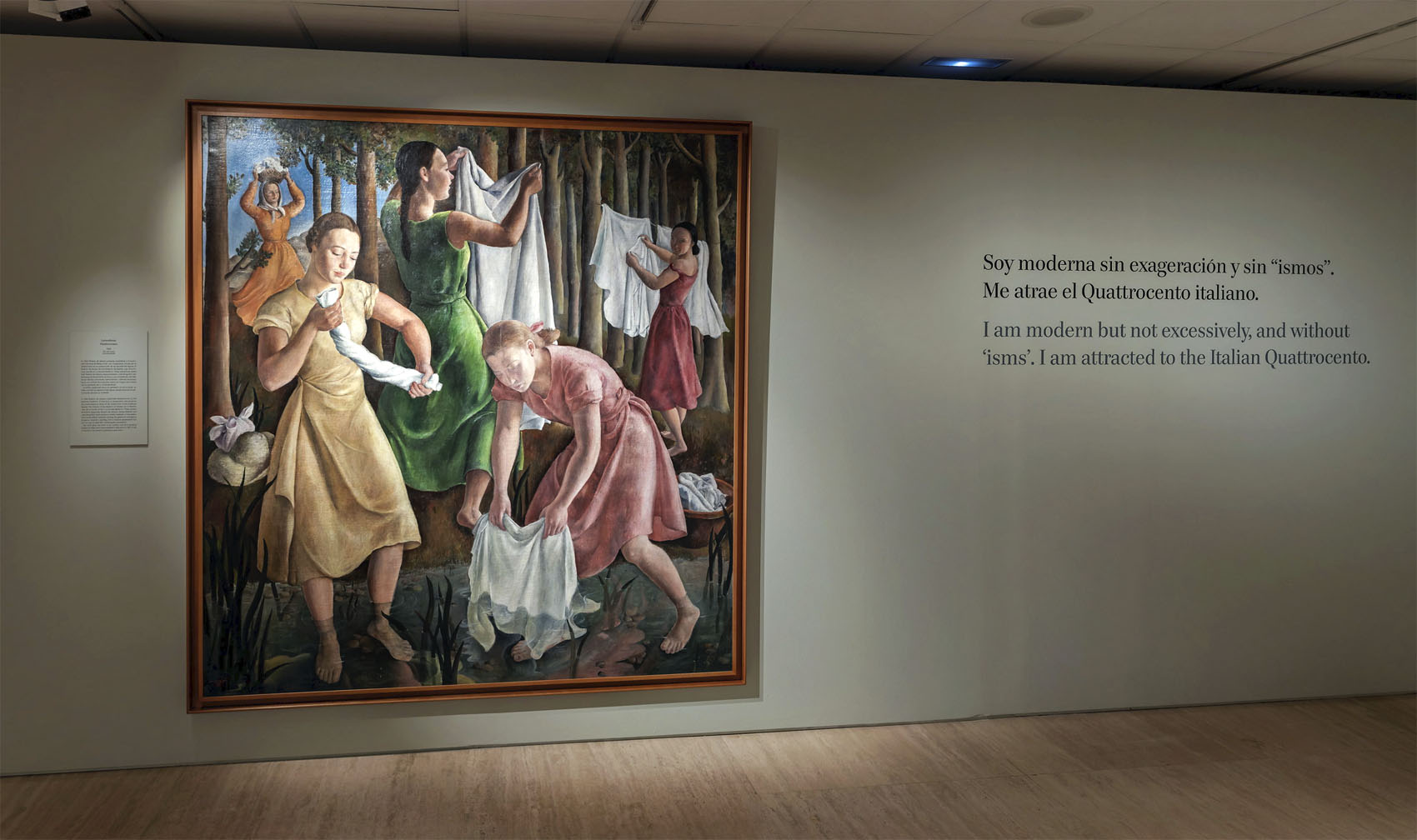
 

Installation view of the exhibition 'Rosario de Velasco' at the Museo Nacional Thyssen-Bornemisza showing at left, de Velsaco's 'Laundresses / The Washerwomen' (Lavanderas) 1934


Installation view of the exhibition Rosario de Velasco at the Museo Nacional Thyssen-Bornemisza showing at left, de Velsaco’s Laundresses / The Washerwomen (Lavanderas) 1934 (below)
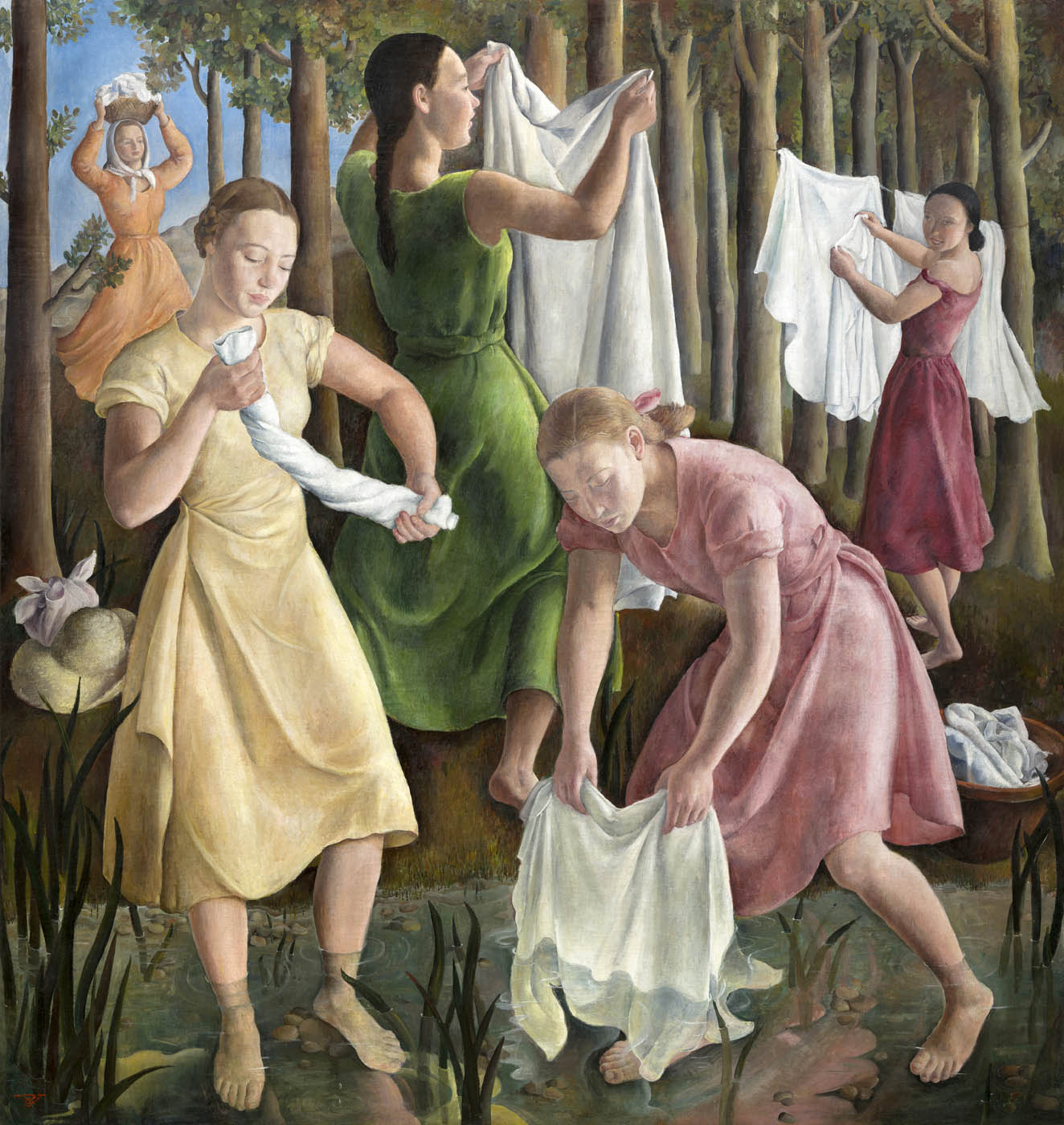
 

Rosario de Velasco (Spanish, 1904-1991) 'Laundresses or The Washerwomen' (Lavanderas) 1934


Rosario de Velasco (Spanish, 1904-1991)
Laundresses / The Washerwomen (Lavanderas)
1934
Oil on canvas
209 × 197cm
Private collection
Photo: Jonás Bel
© Rosario de Velasco, VEGAP, Madrid, 2024
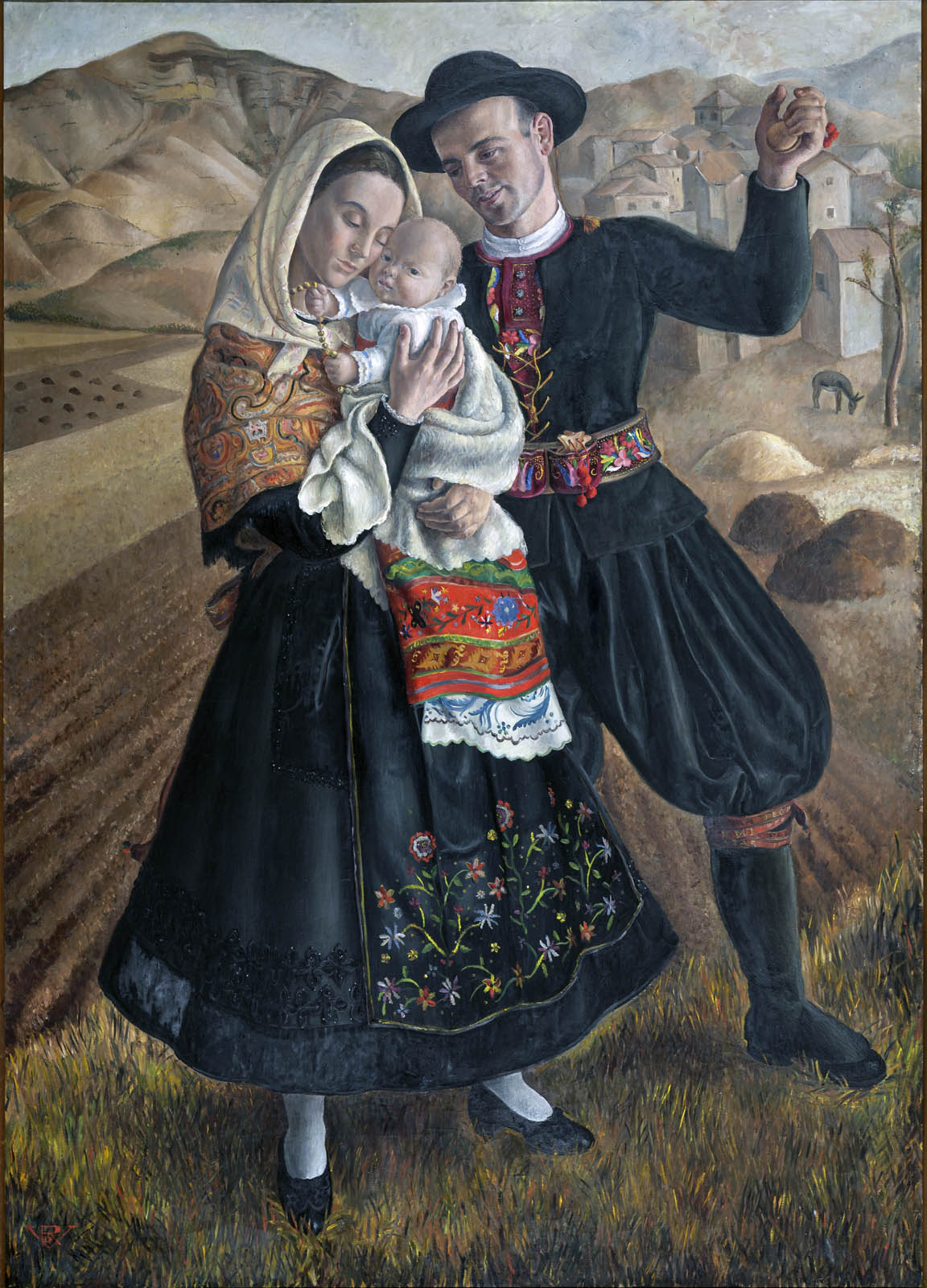
 

Rosario de Velasco (Spanish, 1904-1991) 'Maragatos' 1934


Rosario de Velasco (Spanish, 1904-1991)
Maragatos
1934
Oil on canvas
210 × 150cm
Museo del Traje, Madrid
Photo: Museo del Traje. Centro de Investigación del Patrimonio Etnológico, Madrid
© Rosario de Velasco, VEGAP, Madrid, 2024
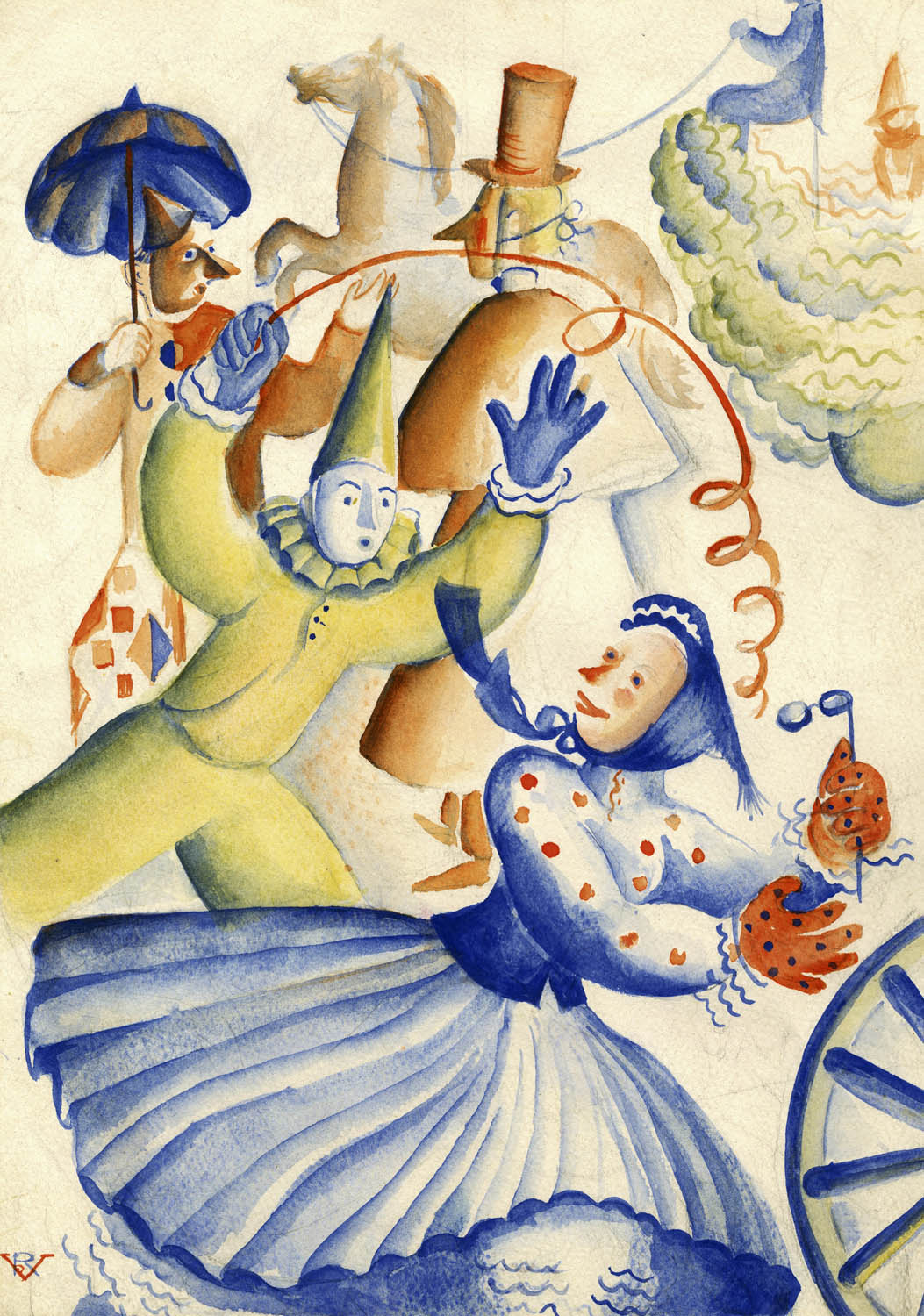
 

Rosario de Velasco (Spanish, 1904-1991) 'Carnival' (Carnavalina) 1936


Rosario de Velasco (Spanish, 1904-1991)
Carnival (Carnavalina)
1936
Watercolour and graphite on cardboard
29.7 × 21.2cm
Fundación Colección ABC
© Rosario de Velasco, VEGAP, Madrid, 2024
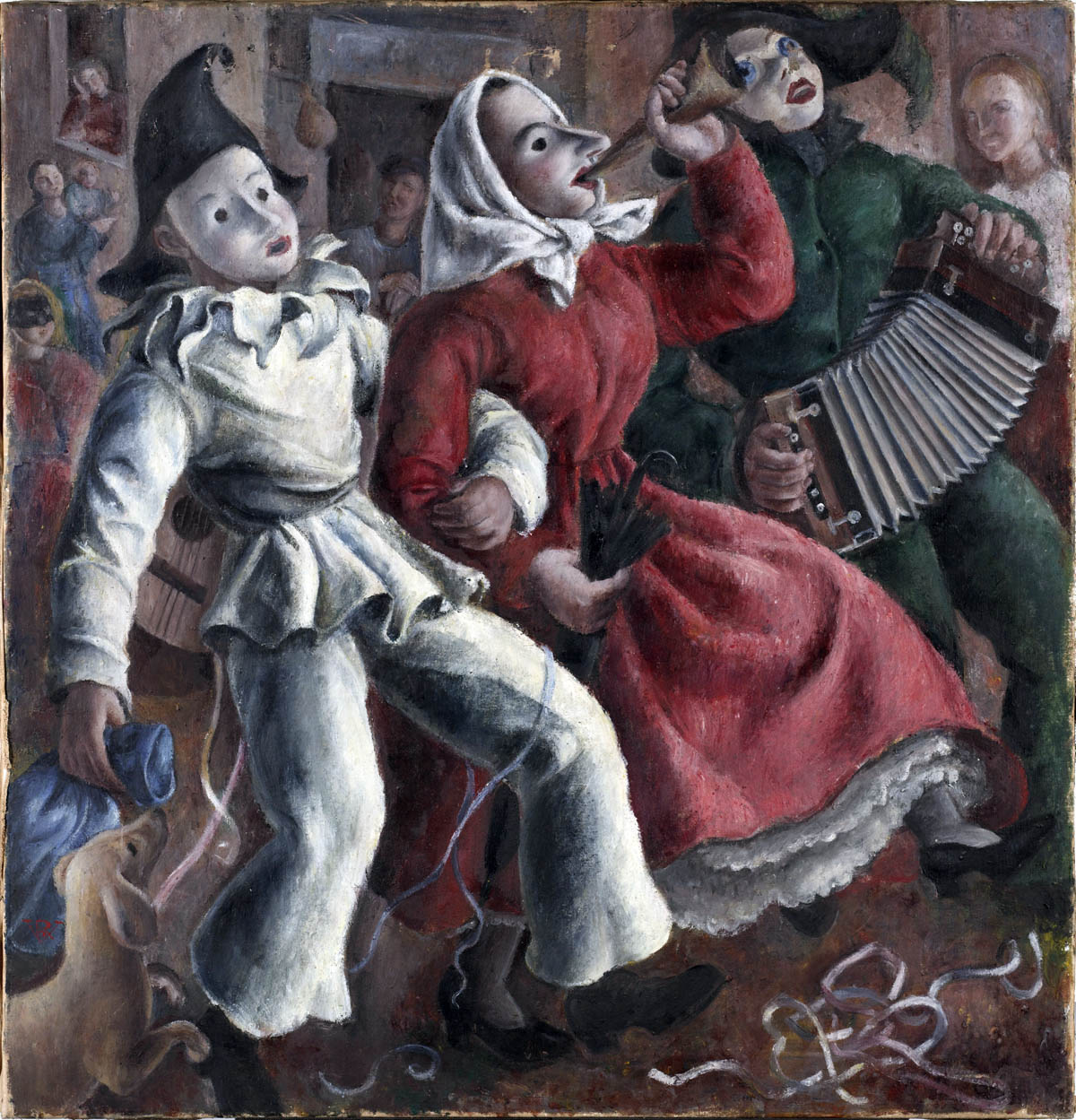
 

Rosario de Velasco (Spanish, 1904-1991) 'Carnival' (Carnaval) Prior to 1936


Rosario de Velasco (Spanish, 1904-1991)
Carnival (Carnaval)
Prior to 1936
Oil on canvas
115 × 110cm
Centre Pompidou, París, Musée national d’art moderne/Centre de création industrielle, adquisición del Estado, 1936
Photo: Centre Pompidou, MNAM-CCI, Dist. GrandPalaisRmn / Bertrand Prévost
© Rosario de Velasco, VEGAP, Madrid, 2024
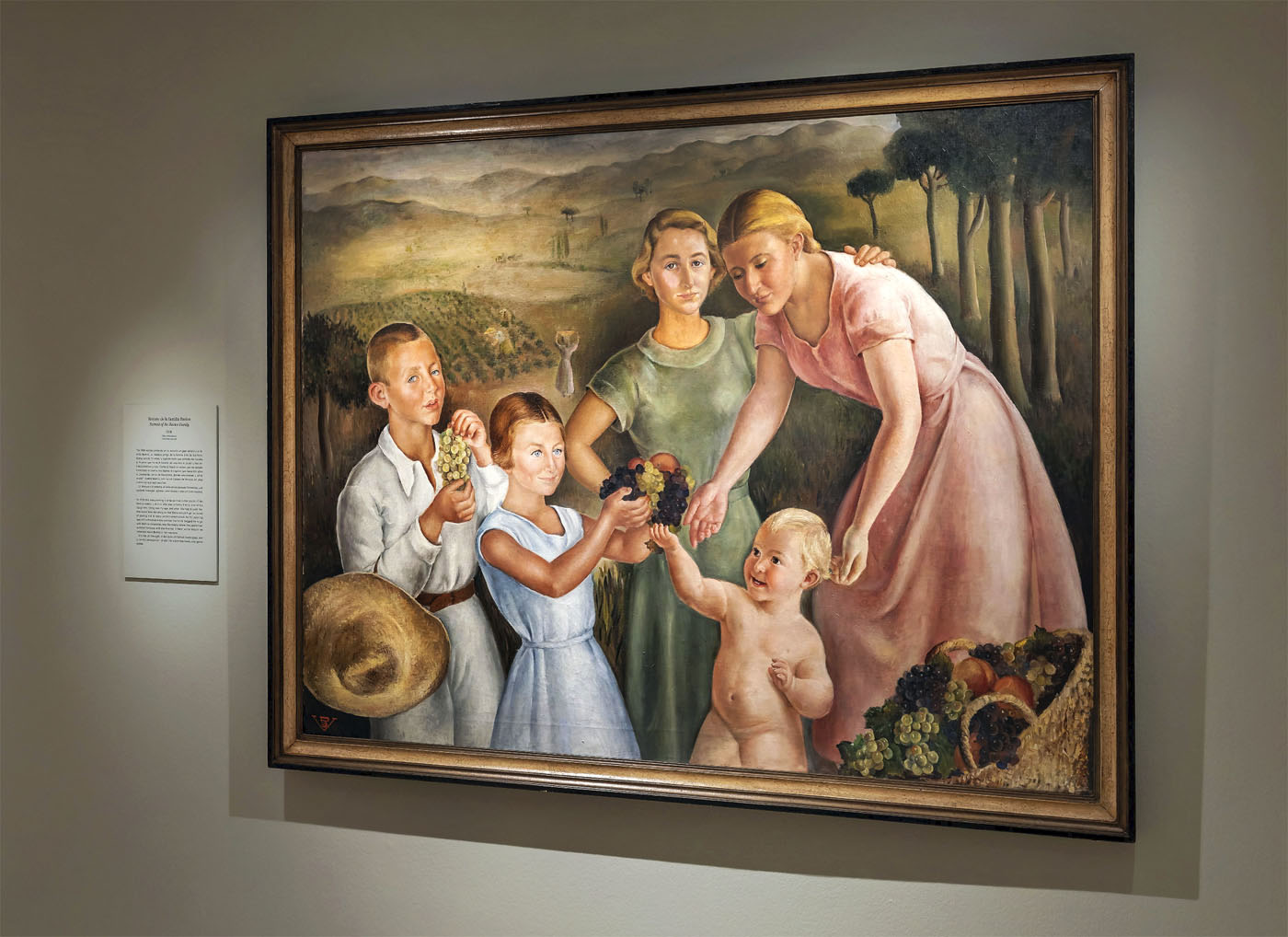
 

Installation view of the exhibition 'Rosario de Velasco' at the Museo Nacional Thyssen-Bornemisza showing de Velsaco's 'Retrato de la familia Bastos' (Portrait of the Bastos family) 1936 Oil on canvas


Installation view of the exhibition Rosario de Velasco at the Museo Nacional Thyssen-Bornemisza showing de Velsaco’s Retrato de la familia Bastos (Portrait of the Bastos family) 1936 Oil on canvas
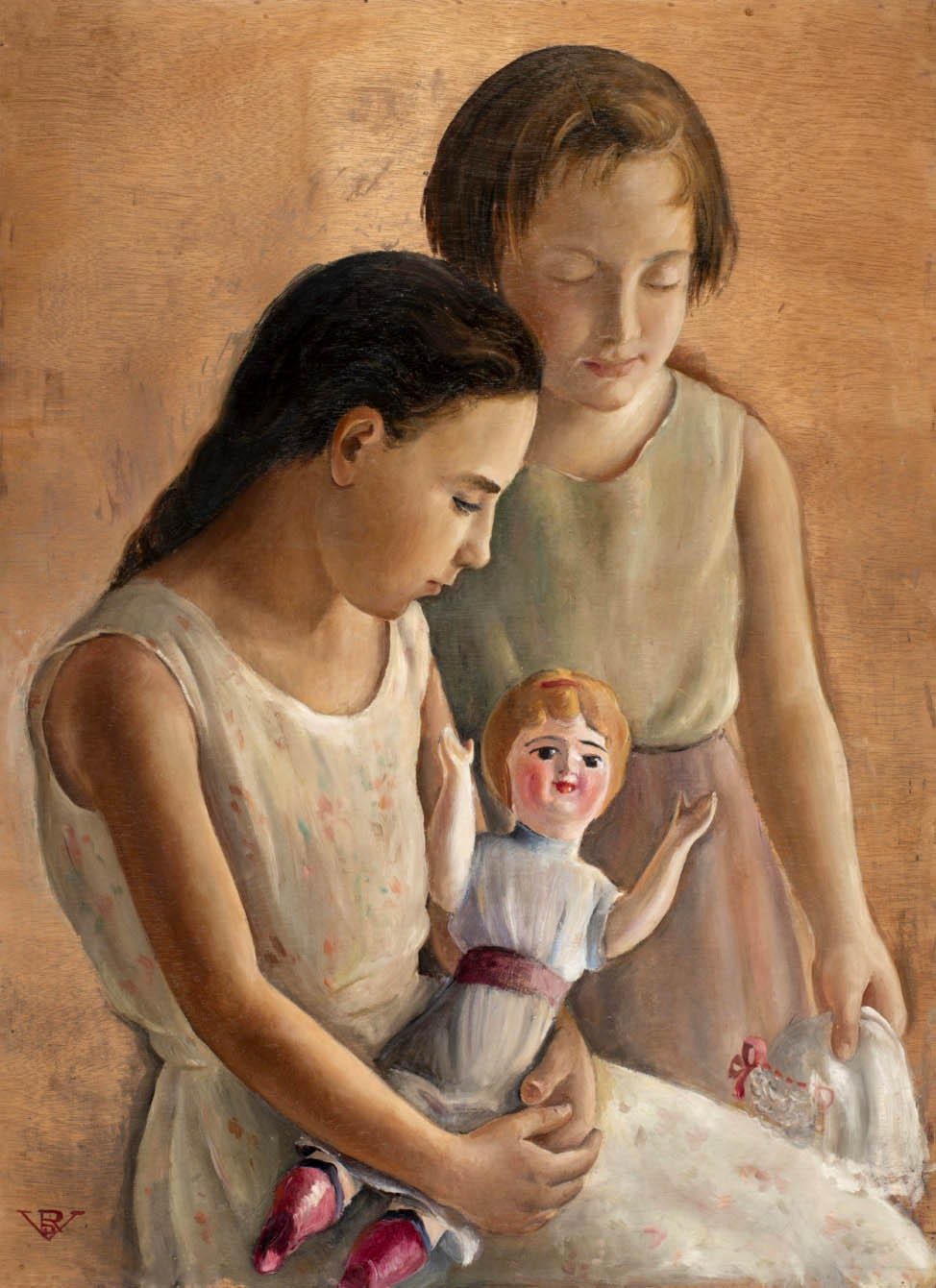
 

Rosario de Velasco (Spanish, 1904-1991) 'Girls with Doll' (Niñas con muñeca) 1937


Rosario de Velasco (Spanish, 1904-1991)
Girls with Doll (Niñas con muñeca)
1937
Oil on canvas
84.7 × 61.8cm
Private collection
© Rosario de Velasco, VEGAP, Madrid, 2024
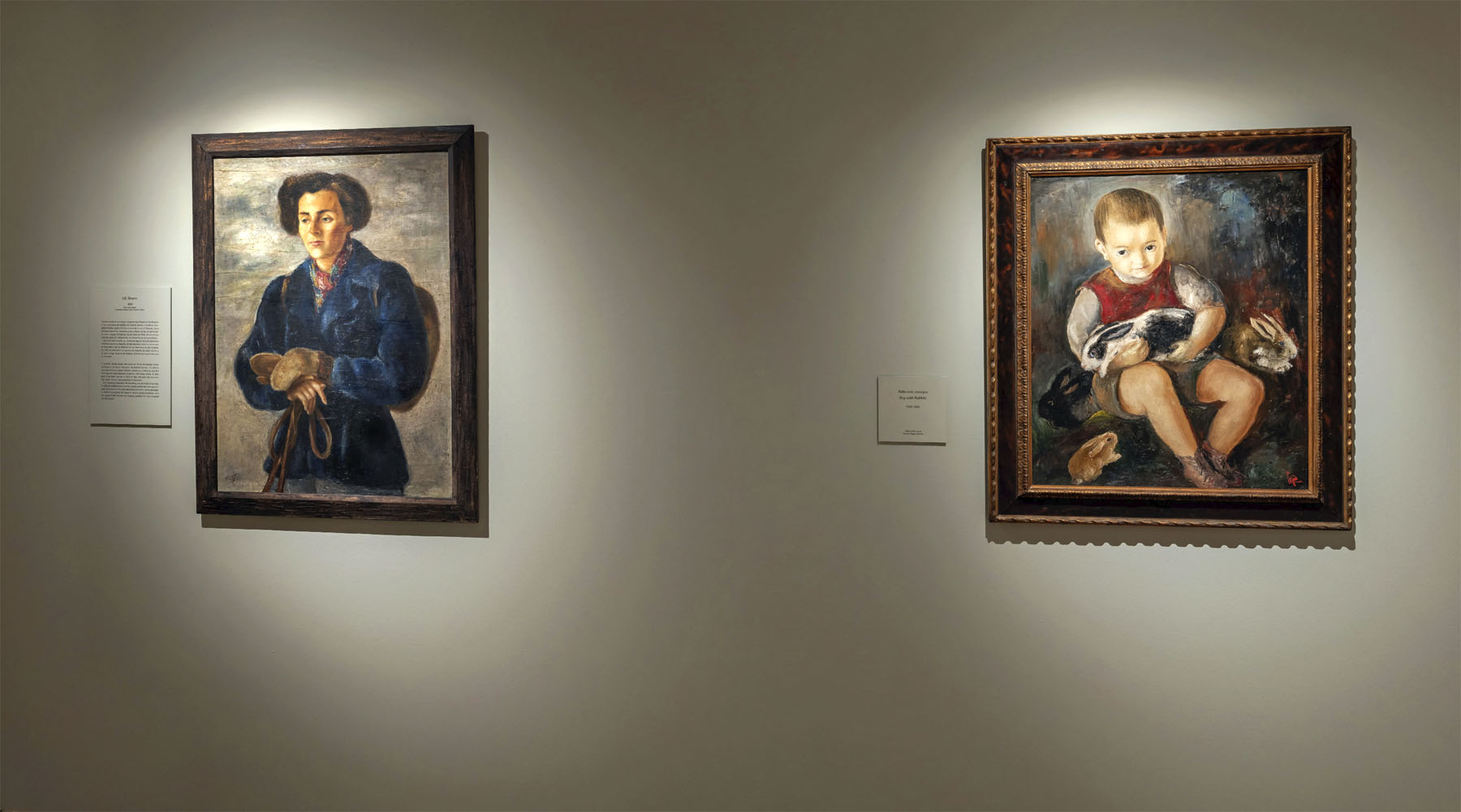
 

Installation view of the exhibition 'Rosario de Velasco' at the Museo Nacional Thyssen-Bornemisza showing at left, de Velsaco's 'Lilí Álvarez' 1938


Installation view of the exhibition Rosario de Velasco at the Museo Nacional Thyssen-Bornemisza showing at left, de Velsaco’s Lilí Álvarez 1938 (below)
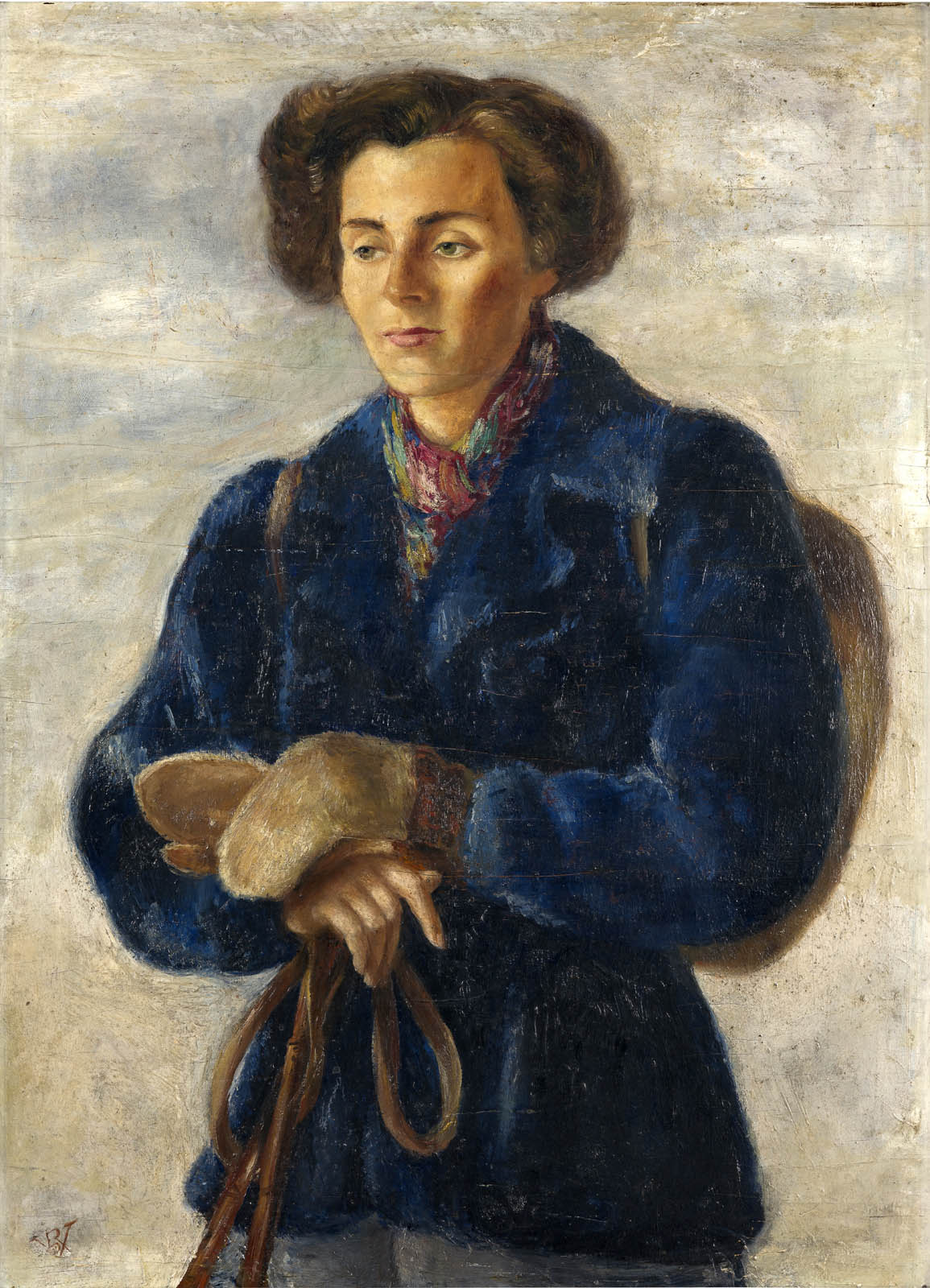
 

Rosario de Velasco (Spanish, 1904-1991) 'Lilí Álvarez' 1938


Rosario de Velasco (Spanish, 1904-1991)
Lilí Álvarez
1938
Oil on board
97.8 × 71.8cm
Lopez-Chicheri Daban Family Collection
Photo: Jonás Bel
© Rosario de Velasco, VEGAP, Madrid, 2024
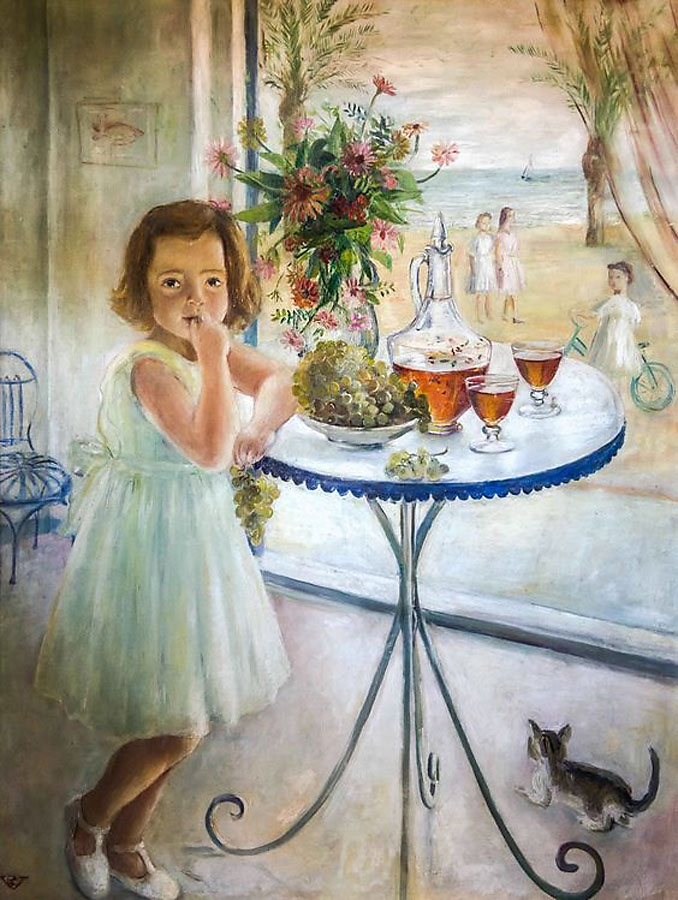
 

Rosario de Velasco (Spanish, 1904-1991) 'María del Mar en Vilanova' 1943


Rosario de Velasco (Spanish, 1904-1991)
María del Mar en Vilanova
1943
Oil on canvas
117 × 89cm
Private collection
© Rosario de Velasco, VEGAP, Madrid, 2024
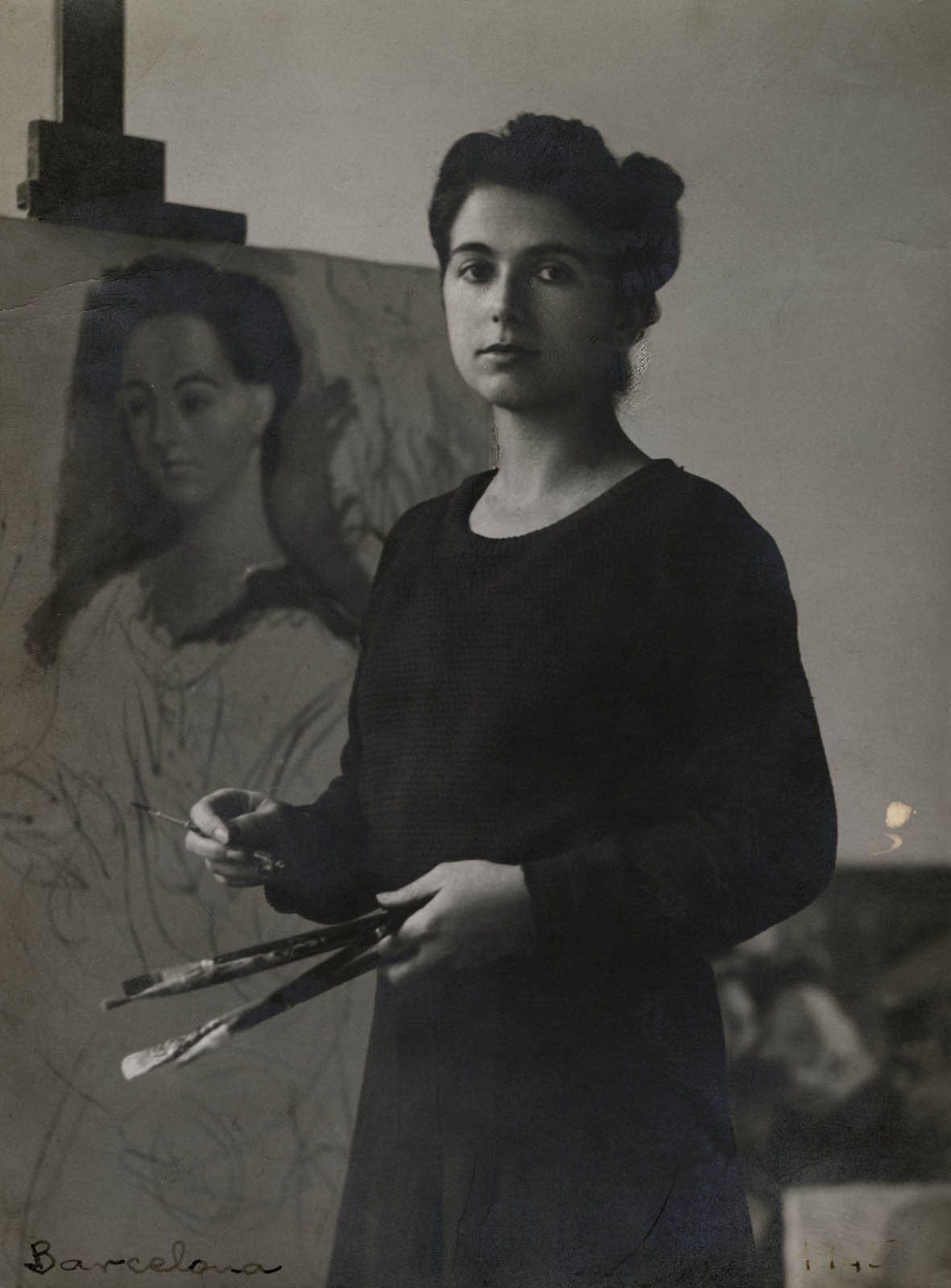
 

Anonymous photographer. 'Rosario de Velasco painting' 1920s


Anonymous photographer
Rosario de Velasco painting
1920s


Anonymous photographer. 'Rosario de Velasco painting 'Laundresses / The Washerwomen' (Lavanderas)' 1934


Anonymous photographer
Rosario de Velasco painting ‘Laundresses / The Washerwomen’ (Lavanderas)
1934
Archive of the Rosario de Velasco family


Museo Nacional Thyssen-Bornemisza
Paseo del Prado, 8. 28014, Madri

Opening hours:
Tuesday – Sunday, 10am – 7pm
Saturdays, 10 am – 9 pm
Closed on Mondays

Museo Nacional Thyssen-Bornemisza website

LIKE ART BLART ON FACEBOOK

Back to top

Exhibition: ‘Victor Vasarely. The Birth of Op Art’ at the Museo Nacional Thyssen-Bornemisza, Madrid

Exhibition dates: 7th June – 9th September, 2018

Curator: Márton Orosz


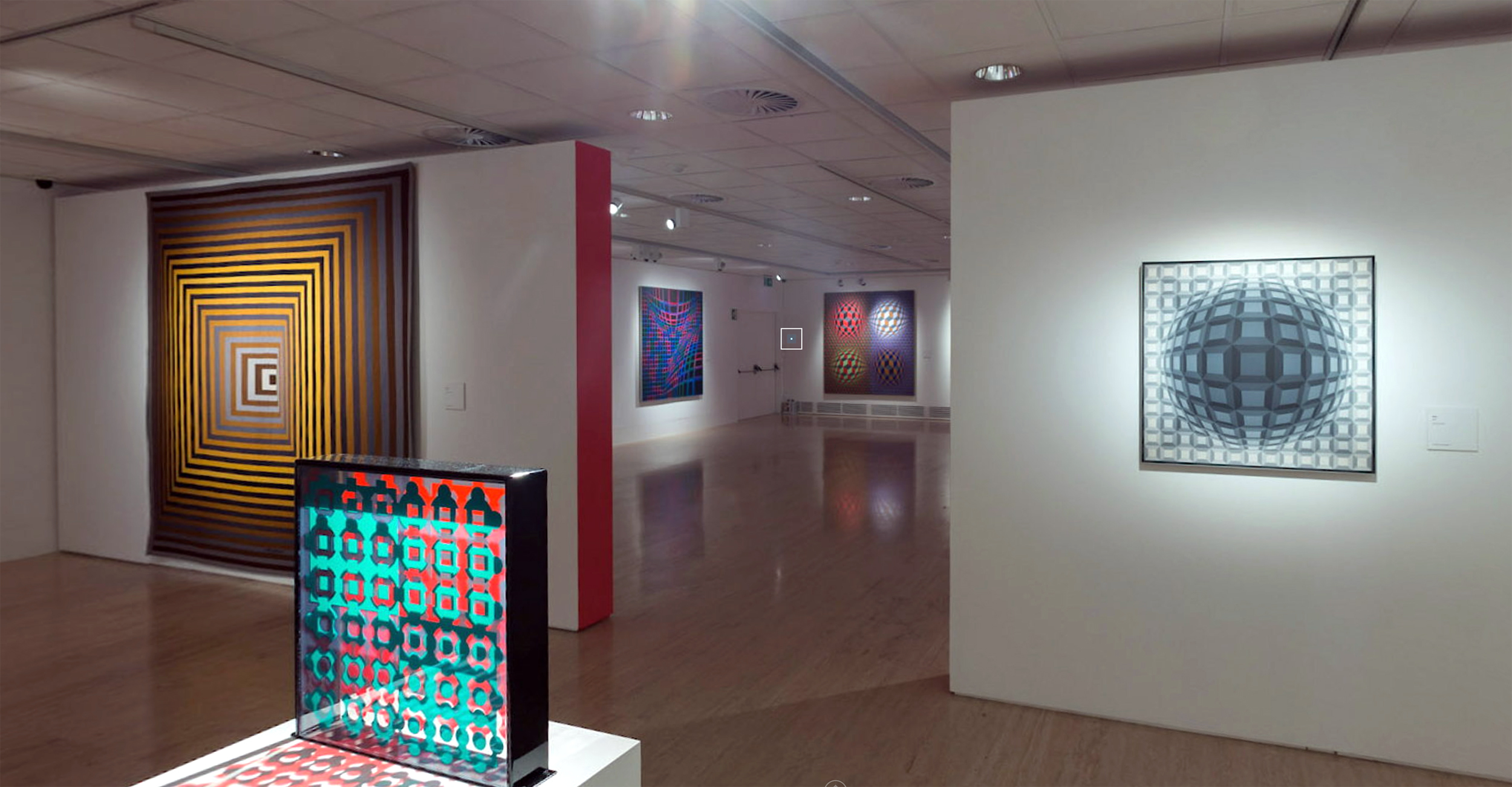
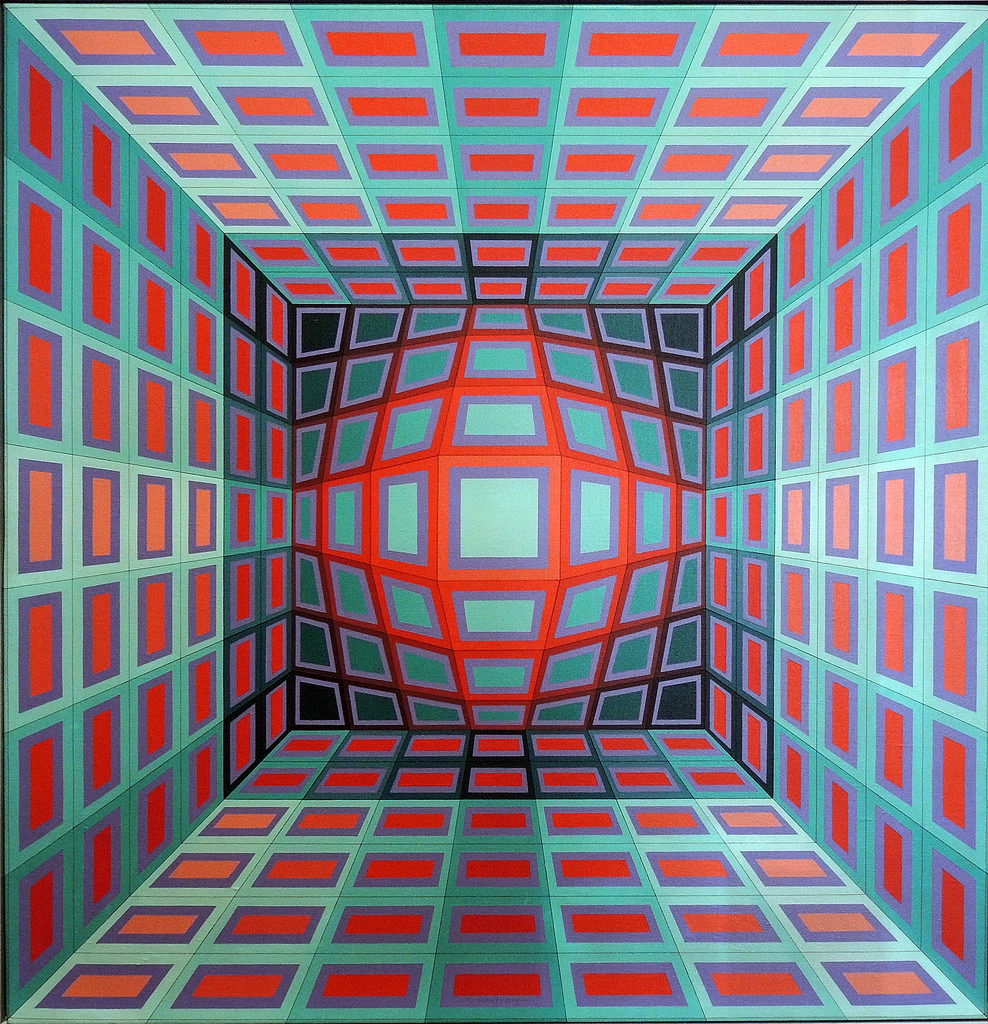
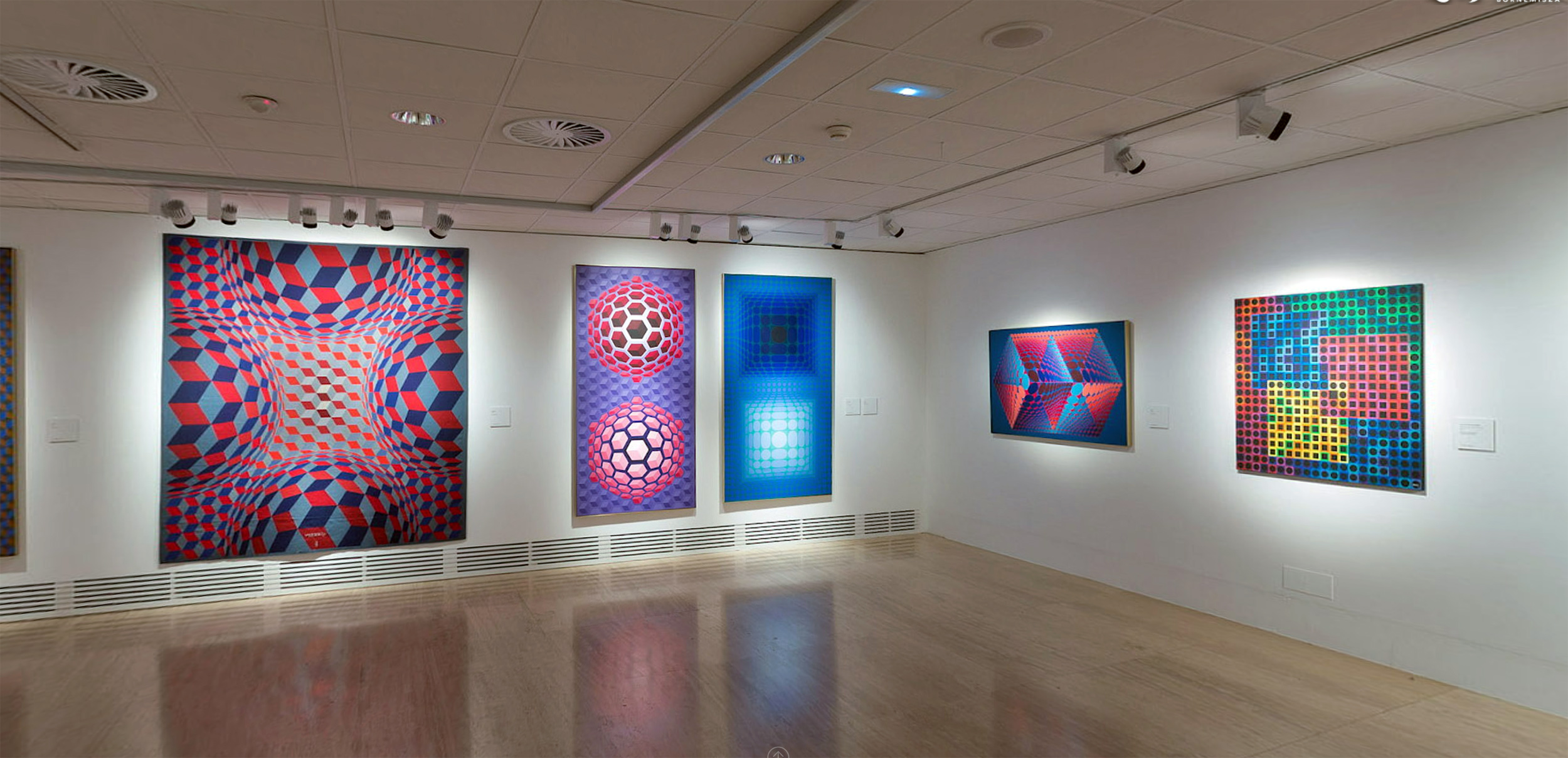
Installation view of the exhibition 'Victor Vasarely. The Birth of Op Art' at the Museo Nacional Thyssen-Bornemisza, Madrid showing Vasarely's 'Feny' (1973)


Installation view of the exhibition Victor Vasarely. The Birth of Op Art at the Museo Nacional Thyssen-Bornemisza, Madrid showing Vasarely’s Feny (1973, below)


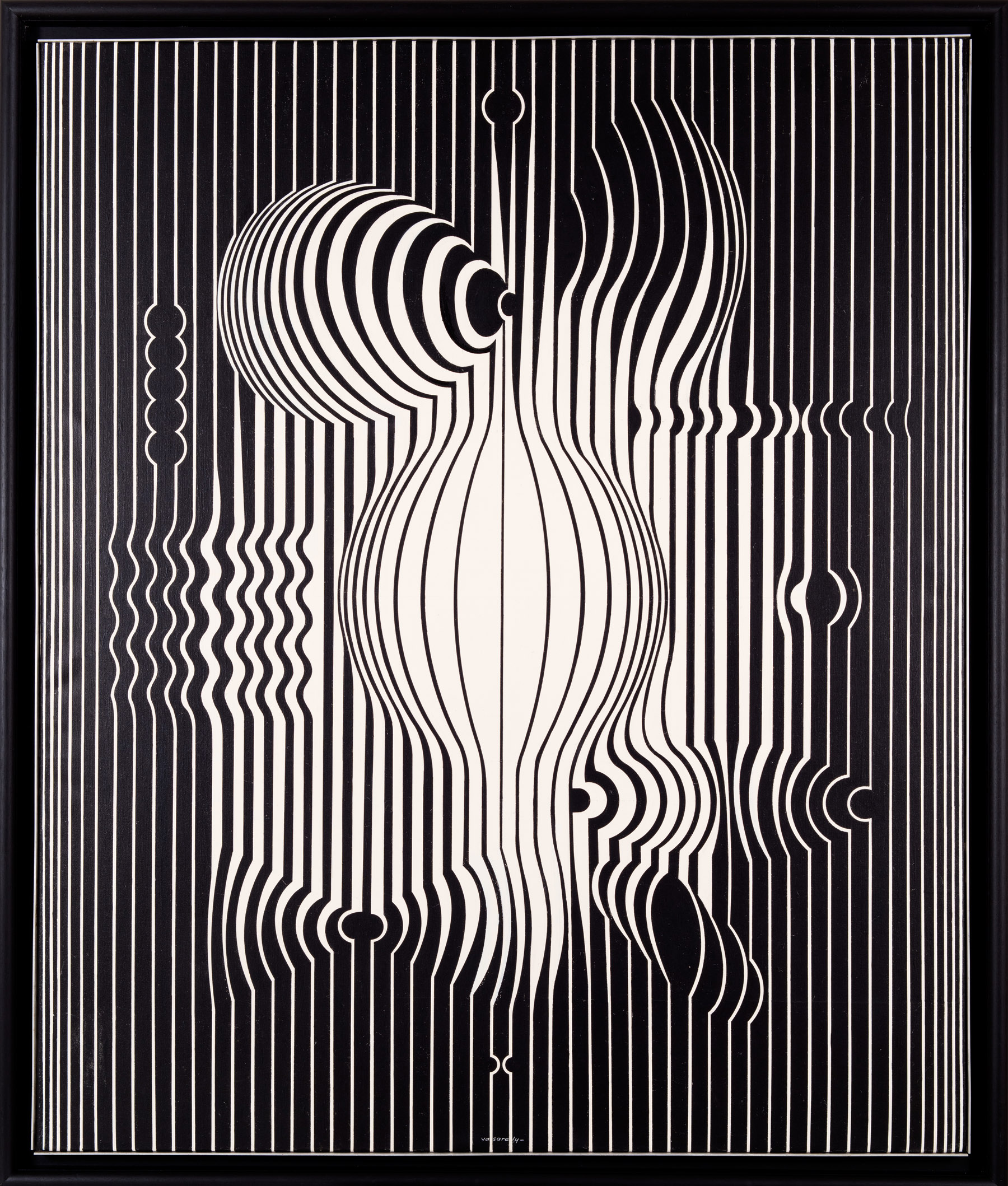
Victor Vasarely (Hungarian-French, 1906-1997) 'Feny' 1973 from the exhibition 'Victor Vasarely. The Birth of Op Art' at the Museo Nacional Thyssen-Bornemisza, Madrid, June - Sept, 2018


Victor Vasarely (Hungarian-French, 1906-1997)
Feny
1973
Acrylic on canvas
180 x 180cm
Colección Carmen ThyssenBornemisza
© Victor Vasarely, VEGAP, Madrid, 2018
(from the Vega Structures section of the exhibition)


Optic geomancer

No comment is really necessary. You just have to look at the spirit and inventiveness of the art. A pioneer of light and colour, a genius of plastic grid and form, is at play here!

The installation photographs show just how optically magnetic these works are. How they are holistic, singular works which then play magnificently off each other when placed in close proximity. Like the fugues of J.S. Bach these optical illusions create dazzlingly beautiful, intricate and powerful works, an earthly divination of a ‘planetary folklore’.

As my good friend Elizabeth Gertsakis said of the work of Robert Hunter, “he had the mind of abstract divination for a music of the spheres, of any geometry.”

Visit the VR Microsite for a Virtual Reality walk through of the exhibition.

Dr Marcus Bunyan


Many thankx to the Museo Nacional Thyssen-Bornemisza for allowing me to publish the photographs in the posting. Please click on the photographs for a larger version of the image.


From 7 June to 9 September 2018, the Museo Nacional Thyssen-Bornemisza will be presenting a monographic exhibition devoted to Victor Vasarely (Pécs, 1906 – Paris, 1997), the founding father of Op Art. Comprising works from the Vasarely Museum in Budapest, the Victor Vasarely Museum in Pécs, the Fondation Vasarely in Aix-en- Provence and prominent loans from private collections, the exhibition will aim to offer an overall vision of the life and work of this Hungarian painter whose best output was created in France. The exhibition includes works from all the principal phases of Vasarely’s career in order to present a chronological survey of his artistic evolution. Visitors will thus be able to appreciate the key role played by the artist in the development of geometrical post-war abstraction and to learn about the experiments based on his artistic principles and theoretical reflections which he undertook with the aim of bringing art and society closer together.

Victor Vasarely is a towering figure in the history of abstract geometric art. The results of his experiments with spatially ambiguous, optically dynamic structures and their effects on visual perception burst into public consciousness in the mid-1960s under the name of Op Art, launching a short-lived yet extraordinarily popular wave of fashion.

The exhibition is organised in eight chronological sections and an introductory space devoted to Vega Structures, one of the best-known and most emblematic series produced by Vasarely at the height of his career named after the brightest star in the northern hemisphere’s summer night sky.

1. Vega Structures

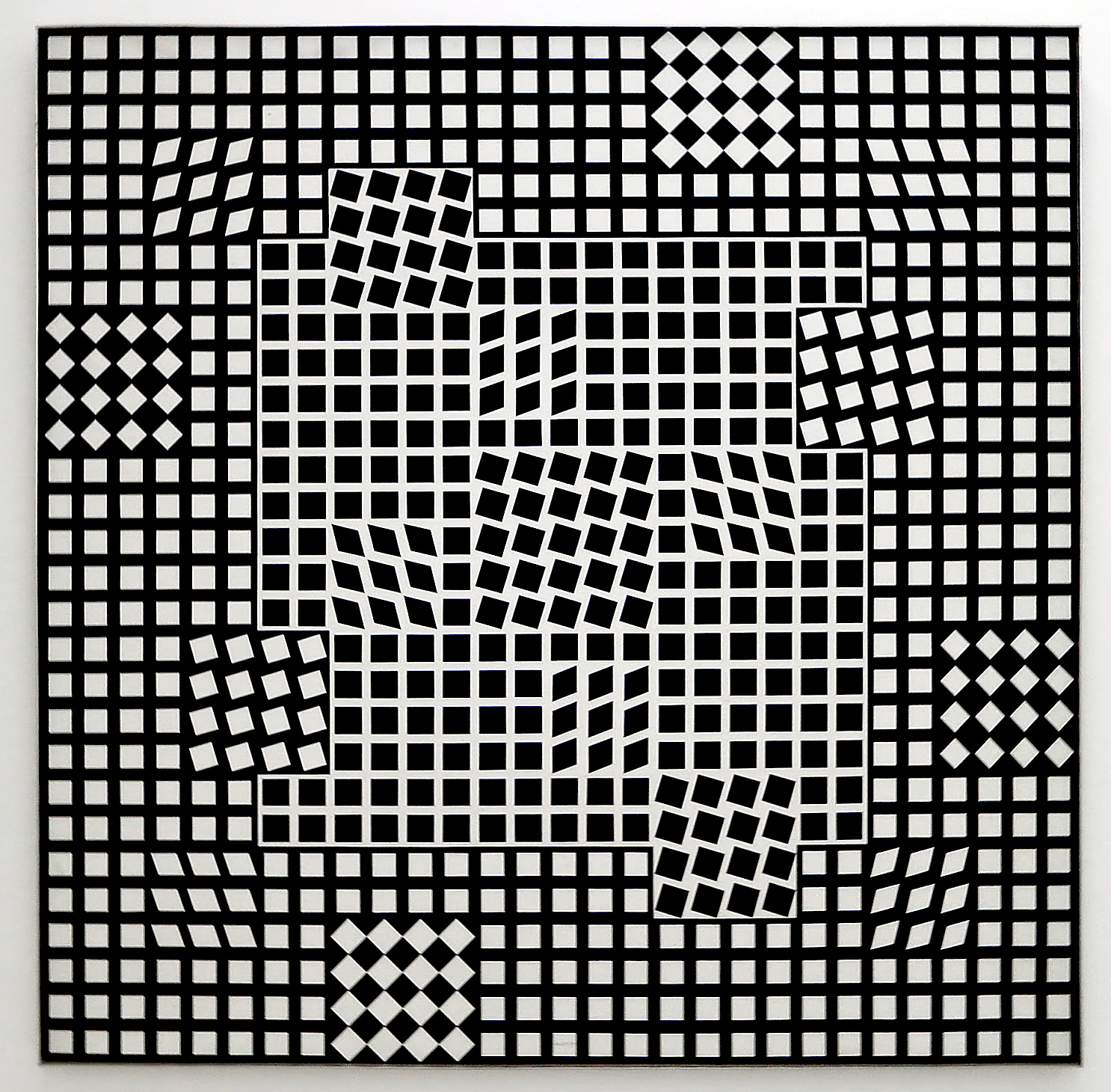
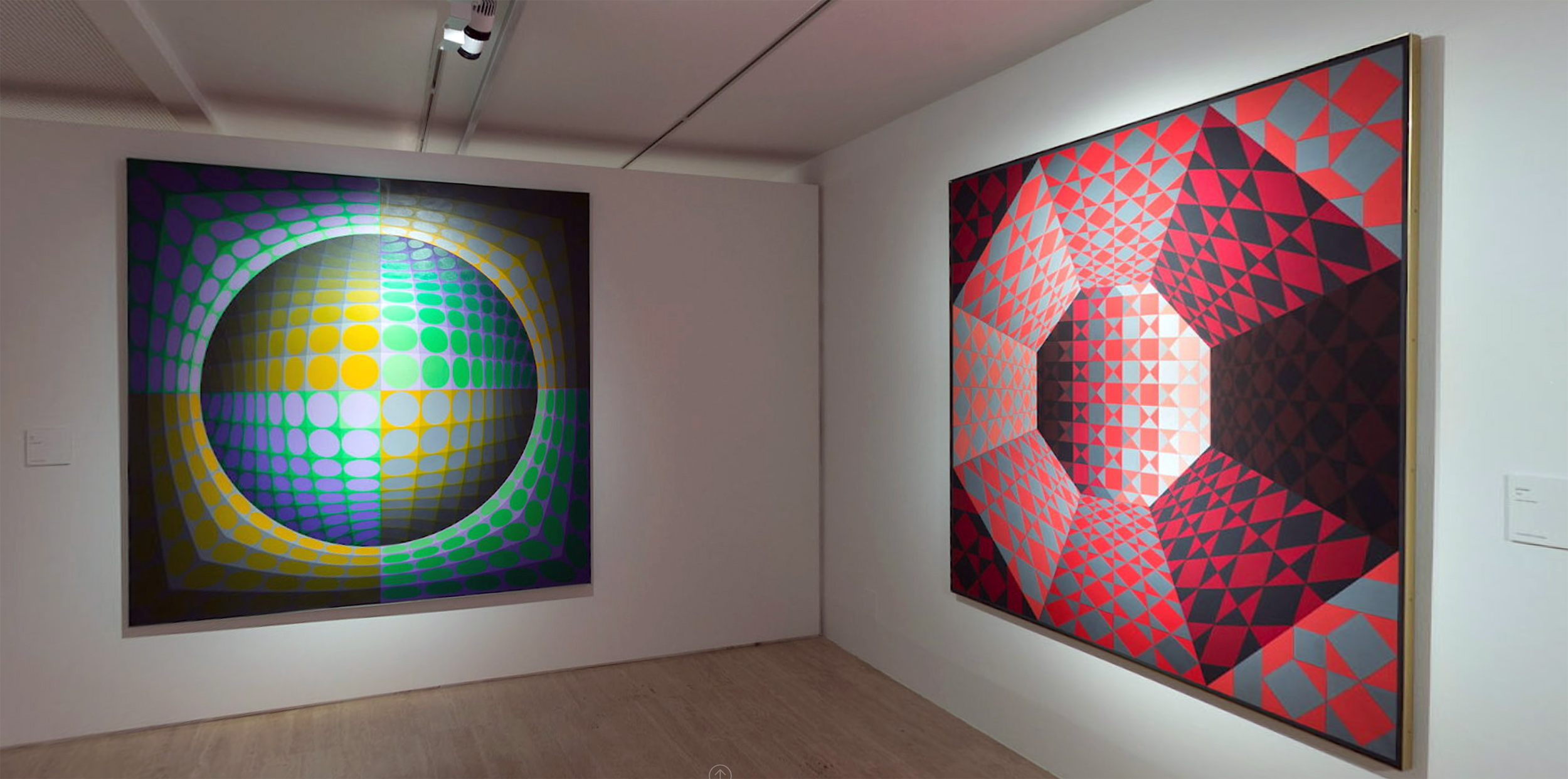
Inspired by contemporary news reports about mysterious signals received from distant galaxies, Vasarely named many of his works after stars and constellations. The Vega pictures rely on convex-concave distortions of a grid-like network, a sophisticated combination of the cube and the sphere, symbolically referring to the two-way motion of the light that emanates from pulsating stars, and to the functioning of condensing galaxies and the expanding universe. The common denominator in these works is Vasarely’s realisation that two dimensions can be expanded into three simply by deforming the basic grid, and that, depending on the degree of enlargement or reduction, the elements in the deformed grid can be transformed into rhombuses or ellipses.


Installation view of the exhibition 'Victor Vasarely. The Birth of Op Art' at the Museo Nacional Thyssen-Bornemisza, Madrid


Installation view of the exhibition Victor Vasarely. The Birth of Op Art at the Museo Nacional Thyssen-Bornemisza, Madrid


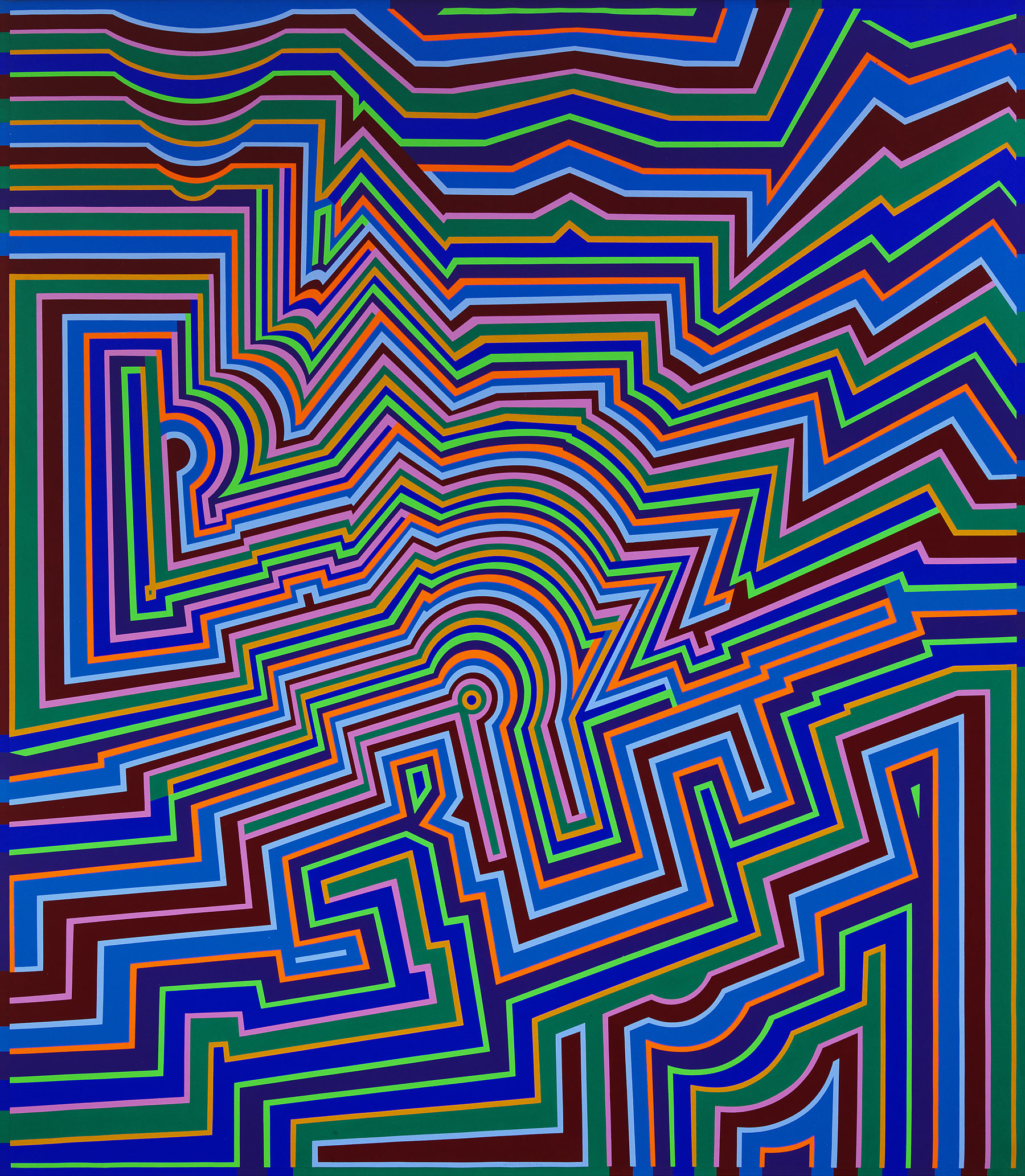
Victor Vasarely (Hungarian-French, 1906-1997) 'Nora-Dell' 1974-1979 from the exhibition 'Victor Vasarely. The Birth of Op Art' at the Museo Nacional Thyssen-Bornemisza, Madrid, June - Sept, 2018


Victor Vasarely (Hungarian-French, 1906-1997)
Nora-Dell
1974-1979
Silkscreen on paper
87 x 78cm
Vasarely Múzeum, Budapest
© Victor Vasarely, VEGAP, Madrid, 2018


Victor Vasarely (Hungarian-French, 1906-1997) 'Manipur–negativo' (Negative Manipur) 1971 from the exhibition 'Victor Vasarely. The Birth of Op Art' at the Museo Nacional Thyssen-Bornemisza, Madrid, June - Sept, 2018


Victor Vasarely (Hungarian-French, 1906-1997)
Manipur–negativo (Negative Manipur)
1971
Acrylic on canvas
156 x 130cm
Colección privada. Cortesía
Fondation Vasarely
© Victor Vasarely, VEGAP, Madrid, 2018


2. Graphic Period

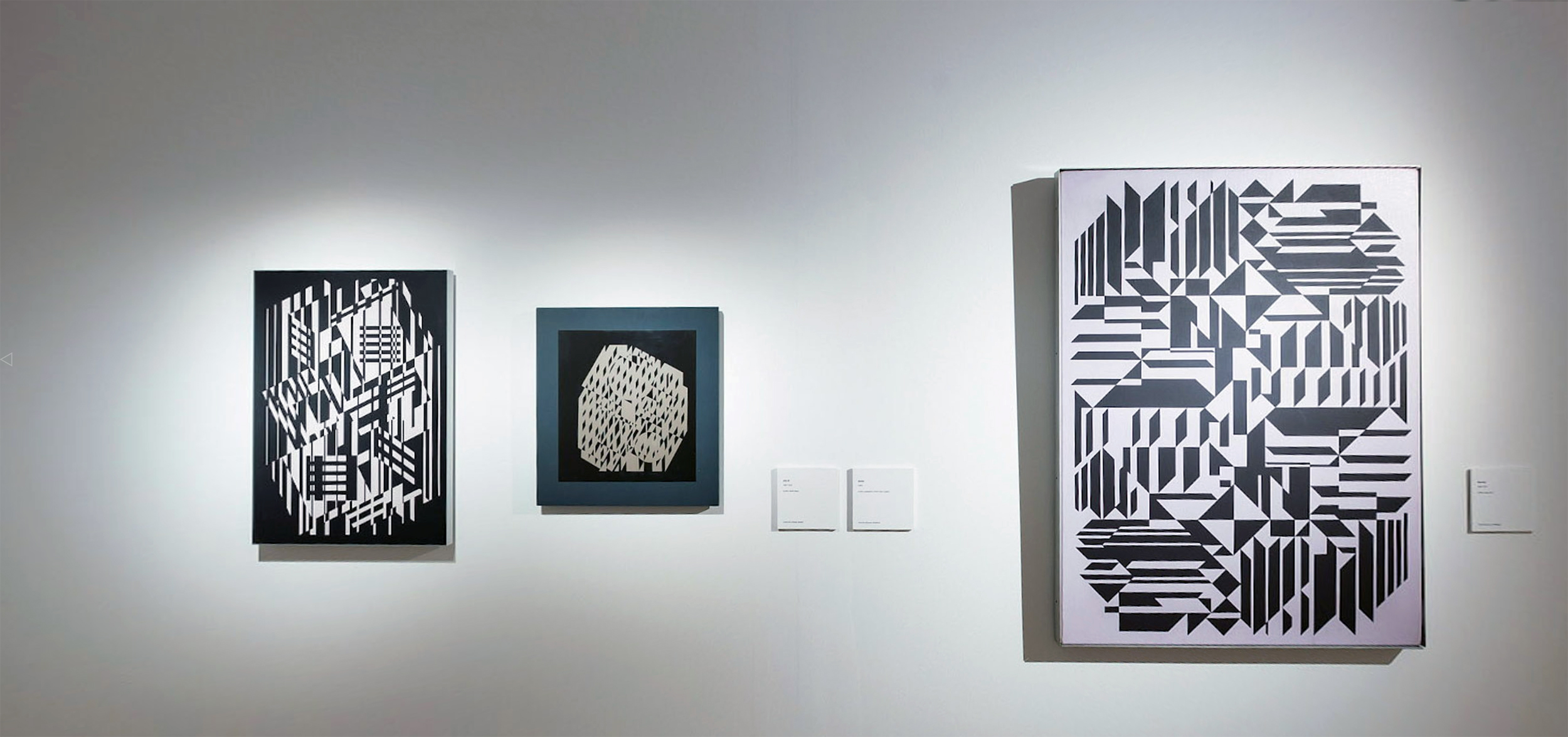
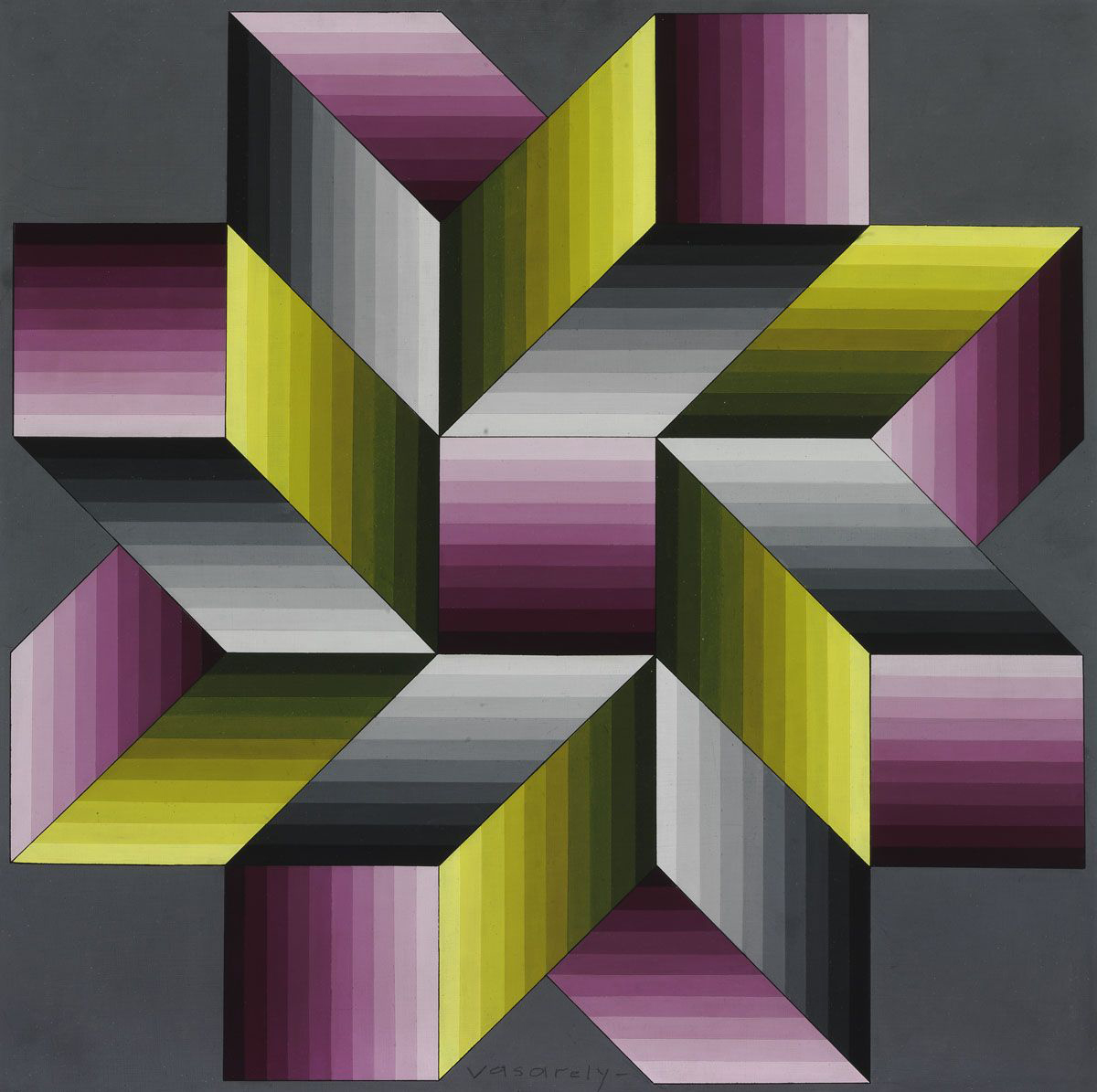
Blessed with exceptional drawing ability, Vasarely studied the basics of graphic design at Műhely (Workshop) from 1929 to 1930. The private school in Budapest was run by Sándor Bortnyik, a painter and graphic designer who had connections with the Bauhaus in Weimar. Through Bortnyik, Vasarely began to take an interest in the formal problems of the kind of art in which composition is based on geometric principles, and as such he adopted Piet Mondrian, Theo van Doesburg, El Lissitzky, Kazimir Malevich and László Moholy-Nagy as his spiritual masters. In the first period of the artist’s career, which lasted until 1939, the imagery had not yet broken away from the primary visual world, that is, it was not entirely abstract, but the paradoxical optical effects produced by his networks of lines and crosses already bore hints of the illusionistic spatiality to come.


Installation view of the exhibition 'Victor Vasarely. The Birth of Op Art' at the Museo Nacional Thyssen-Bornemisza, Madrid showing the works 'Man in motion. Study of Motion (The Man)' 1943 (left) and 'Material Study-Wood' 1939 (right)


Installation view of the exhibition Victor Vasarely. The Birth of Op Art at the Museo Nacional Thyssen-Bornemisza, Madrid showing the works Man in motion. Study of Motion (The Man) 1943 (left) and Material Study-Wood 1939 (right)


Victor Vasarely (Hungarian-French, 1906-1997) 'Man in motion. Study of Motion (The Man)' 1943


Victor Vasarely (Hungarian-French, 1906-1997)
Hombre en movimiento – Estudio del movimiento (El hombre)
Man in motion. Study of Motion (The Man)
1943
Tempera on plywood
117 x 132cm
Vasarely Múzeum, Budapest
© Victor Vasarely, VEGAP, Madrid, 2018


3. Pre-Kinetic Studies and Naissances

In 1951, the Galerie Denise René in Paris held an exhibition titled Formes et couleurs murales (Mural Forms and Colours). It was at this time that the Hungarian-French artist first considered representing the spatial problems of his pictures on a more monumental scale. At this exhibition, Vasarely used photographic methods to blow up his earlier pen-and-ink drawings, which he then arranged in series covering entire walls. These compositions were later rechristened Naissances (Births). The new name came about when the artist swept the photographic negatives of the drawings over one another, and disquieting, randomly arranged patterns emerged. In is Oeuvres profondes cinétiques (deep kinetic works), first exhibited in 1955, which Vasarely created following the same method of image-making, structuring them out of superimposed sheets of glass, acrylic or transparent foil, the sense of spatiality was combined with actual three-dimensional depth. Exploiting the physical laws of refraction and reflection, he produced spatial collages in a constant state of flux generated by the interference of two abstract patterns projected over each other, which were brought alive as the viewer changed position.


Victor Vasarely (Hungarian-French, 1906-1997) 'Cébras - Estudio precinético' (Zebras. Prekinetic Study) 1939


Victor Vasarely (Hungarian-French, 1906-1997)
Cébras – Estudio precinético (Zebras. Prekinetic Study)
1939
Tempera, pencil, colour and white chalk on paper
62 x 57cm
Vasarely Múzeum, Budapest
© Victor Vasarely, VEGAP, Madrid, 2018


Victor Vasarely (Hungarian-French, 1906-1997) 'Zebra' 1938-1960


Victor Vasarely (Hungarian-French, 1906-1997)
Zebra
1938-1960
Wooden wool tapestry
150 x 214cm
Victor Vasarely Múzeum, Pécs
© Victor Vasarely, VEGAP, Madrid, 2018


Victor Vasarely (Hungarian-French, 1906-1997) 'Sophia-III' 1952


Victor Vasarely (Hungarian-French, 1906-1997)
Sophia-III
1952
Oil on canvas
132 x 200cm
Victor Vasarely Múzeum, Pécs
© Victor Vasarely, VEGAP, Madrid, 2018


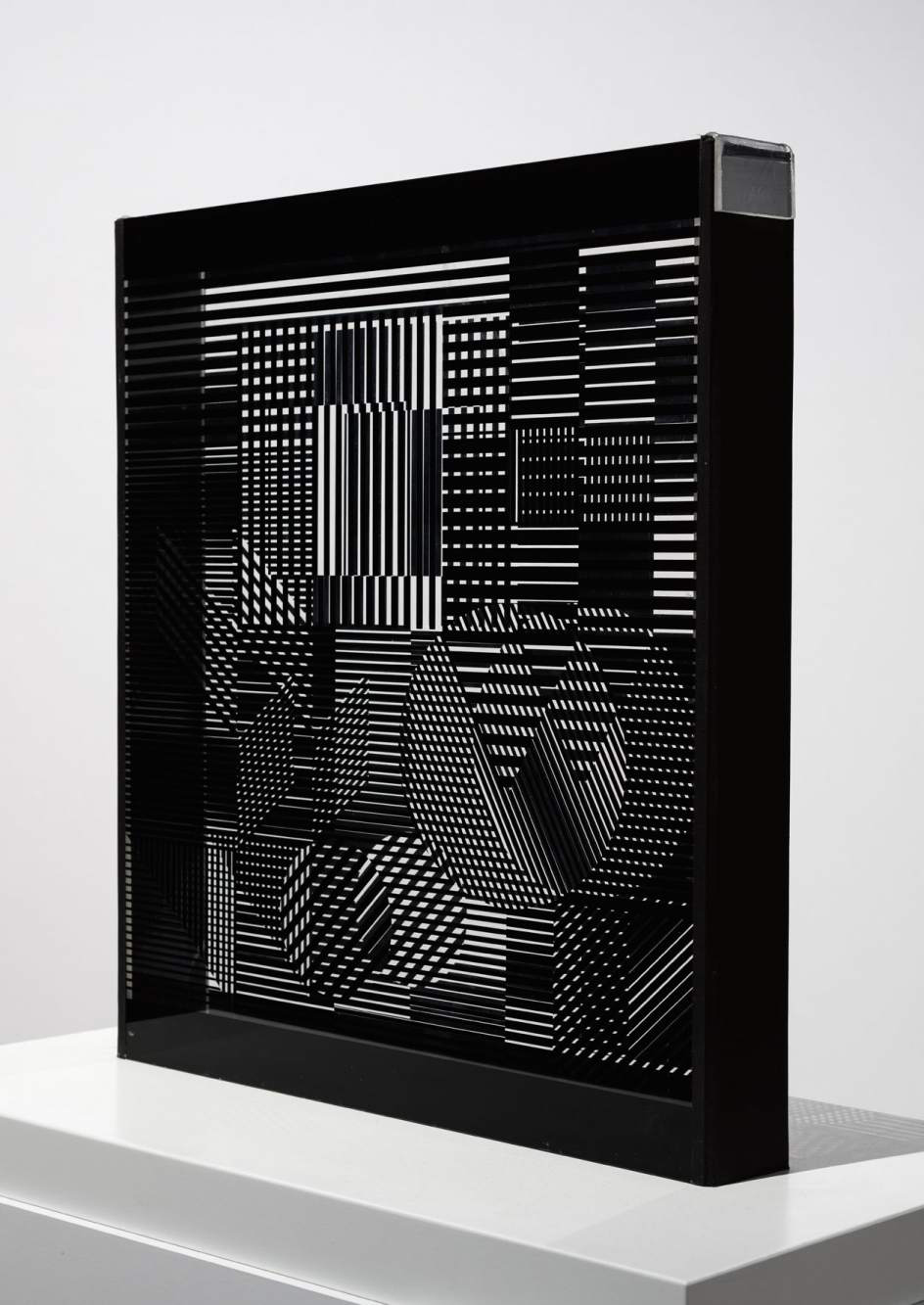
Victor Vasarely (Hungarian-French, 1906-1997) ‘Naissances’ 1954-1960


Victor Vasarely (Hungarian-French, 1906-1997)
Naissances (del album “Hommage à J.S Bach”, suplemento 3)
Naissances (From the album Hommage à J.S. Bach, Supplement No.3)
1954-1960
Multiple. Silkscreen on glass
56 x 49.5 x 7.5cm
Vasarely Múzeum, Budapest
© Victor Vasarely, VEGAP, Madrid, 2018


4. Belle-Isle / Crystal / Denfert

In 1947, while spending the summer on Belle Île, an island off the coast of Brittany, he discovered the internal geometry of nature. He took irregularly shaped glass tiles and pebbles polished by the ocean waves and stylised their abstract forms into ellipses. In 1948, he produced delicate pen-and-ink drawings that conjured up the strange meandering patterns of the hairline cracks that pervaded the ceramic tiles covering the Paris metro station named Denfert-Rochereau. From his sketches, which reveal a vivid imagination, he created evocative paintings composed with well unified colours. Those same years also saw the beginning of his Crystal period, which was inspired by the strict geometric structure of the stone houses in Gordes, a medieval town built on a cliff in the South of France. Vasarely strove to transpose reality into the two-dimensional plane with the help of the axonometric approach.


Installation view of the exhibition 'Victor Vasarely. The Birth of Op Art' at the Museo Nacional Thyssen-Bornemisza, Madrid showing from left, the works 'Lan 2', 1953; 'Amir (Rima)' 1953; and 'Vessant', 1952

Installation view of the exhibition 'Victor Vasarely. The Birth of Op Art' at the Museo Nacional Thyssen-Bornemisza, Madrid showing from left, the works 'Lan 2', 1953; 'Amir (Rima)' 1953; and 'Vessant', 1952


Installation view of the exhibition Victor Vasarely. The Birth of Op Art at the Museo Nacional Thyssen-Bornemisza, Madrid showing from left, the works Lan 2, 1953; Amir (Rima) 1953; and Vessant, 1952


Victor Vasarely (Hungarian-French, 1906-1997) 'Vessant' (Versant) 1952


Victor Vasarely (Hungarian-French, 1906-1997)
Vessant (Versant)
1952
Oil on plywood
150 x 190cm
Vasarely Múzeum, Budapest
© Victor Vasarely, VEGAP, Madrid, 2018


Victor Vasarely (Hungarian-French, 1906-1997) 'Amir (Rima)' 1953


Victor Vasarely (Hungarian-French, 1906-1997)
Amir (Rima)
1953
Oil on plywood
140 x 180cm
Vasarely Múzeum, Budapest
© Victor Vasarely, VEGAP, Madrid, 2018


5. Black and White Period (Kineticism)

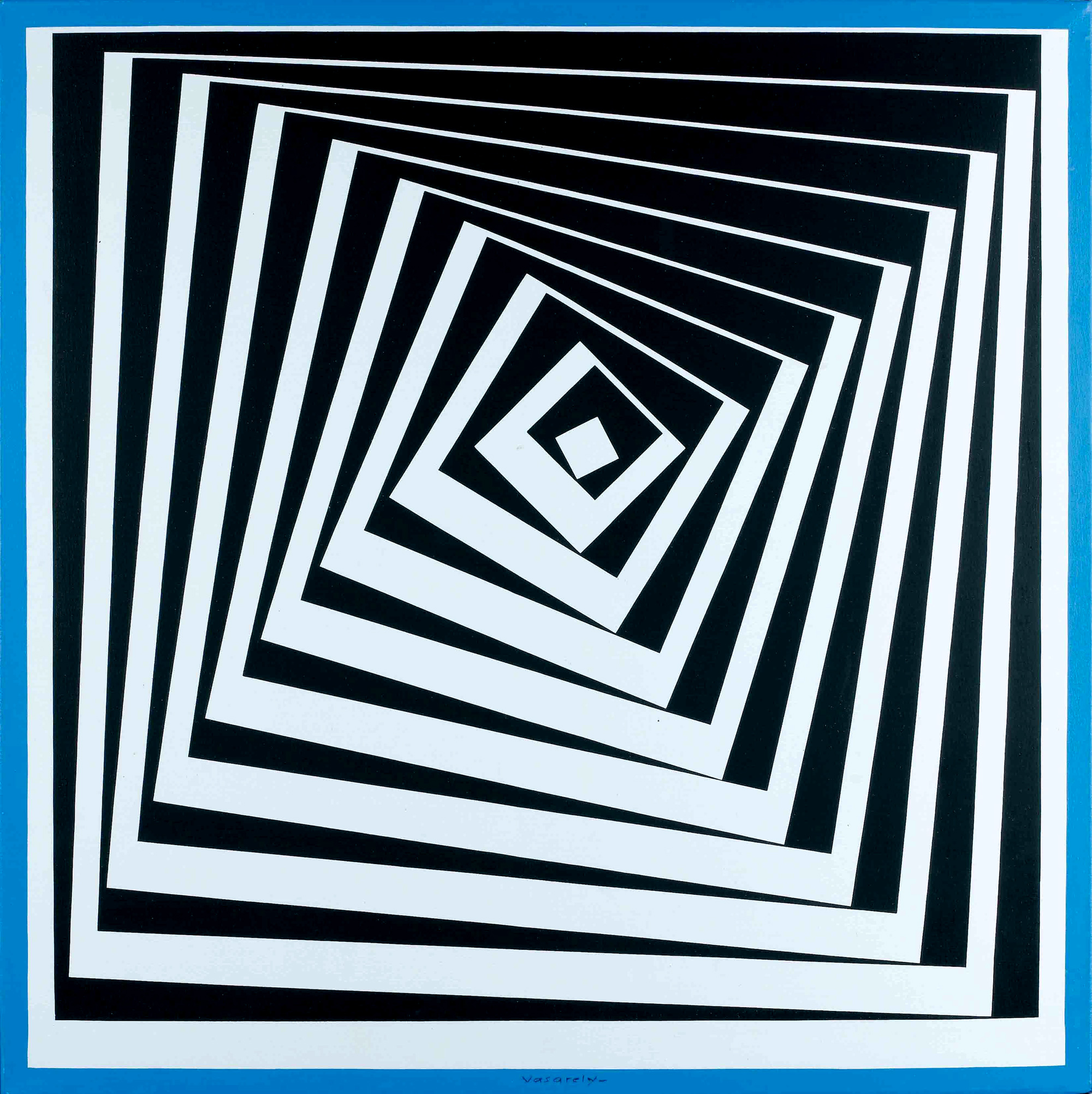
Inspired by Kazimir Malevich’s Suprematist composition, Black and White (1915), which embodies the harmony of spirituality and is widely interpreted as the ‘end point’ of painting, Vasarely conceived of the picture titled Homage to Malevich. Its basic component, a square rotated about its axis so that it appears as a rhombus, became the starting point of his ‘kinetic’ works.


Victor Vasarely (Hungarian-French, 1906-1997) 'Tlinko-F' 1956-1962


Victor Vasarely (Hungarian-French, 1906-1997)
Tlinko-F
1956-1962
Oil on canvas
145 x 145cm
Vasarely Múzeum, Budapest
© Victor Vasarely, VEGAP, Madrid, 2018


Victor Vasarely (Hungarian-French, 1906-1997) 'Gixeh' 1955-1962


Victor Vasarely (Hungarian-French, 1906-1997)
Gixeh
1955-1962
Oil on canvas
170 x 160cm
Museo de Bellas Artes, Budapest
© Victor Vasarely, VEGAP, Madrid, 2018


Installation view of the exhibition 'Victor Vasarely. The Birth of Op Art' at the Museo Nacional Thyssen-Bornemisza, Madrid showing from left, the works 'Doupla', 1970-1975; 'Kotzka', 1973-1976 and 'Gixeh', 1955-1962


Installation view of the exhibition Victor Vasarely. The Birth of Op Art at the Museo Nacional Thyssen-Bornemisza, Madrid showing from left, the works Doupla, 1970-1975; Kotzka, 1973-1976 and Gixeh, 1955-1962


Installation view of the exhibition 'Victor Vasarely. The Birth of Op Art' at the Museo Nacional Thyssen-Bornemisza, Madrid showing from left, the works 'Nethe', 1964; 'Noorum', 1960-1977 and 'Tlinko-F', 1956-1962


Installation view of the exhibition Victor Vasarely. The Birth of Op Art at the Museo Nacional Thyssen-Bornemisza, Madrid showing from left, the works Nethe, 1964; Noorum, 1960-1977 and Tlinko-F, 1956-1962


Installation view of the exhibition 'Victor Vasarely. The Birth of Op Art' at the Museo Nacional Thyssen-Bornemisza, Madrid showing from left, the works 'Afa III', 1957-1973 'Nethe', 1964; 'Noorum', 1960-1977


Installation view of the exhibition Victor Vasarely. The Birth of Op Art at the Museo Nacional Thyssen-Bornemisza, Madrid showing from left, the works Afa III, 1957-1973 Nethe, 1964; Noorum, 1960-1977


Victor Vasarely (Hungarian-French, 1906-1997) 'Noorum' 1960-1977


Victor Vasarely (Hungarian-French, 1906-1997)
Noorum
1960-1977
Acrylic on canvas
112 x 84cm
Vasarely Múzeum, Budapest
© Victor Vasarely, VEGAP, Madrid, 2018


Installation view of the exhibition 'Victor Vasarely. The Birth of Op Art' at the Museo Nacional Thyssen-Bornemisza, Madrid showing from left, the works 'Taymir II', 1956 and 'Afa III', 1957-1973


Installation view of the exhibition Victor Vasarely. The Birth of Op Art at the Museo Nacional Thyssen-Bornemisza, Madrid showing from left, the works Taymir II, 1956 and Afa III, 1957-1973


Victor Vasarely (Hungarian-French, 1906-1997) 'Taymir II' 1956


Victor Vasarely (Hungarian-French, 1906-1997)
Taymir II
1956
Acrylic on canvas
135 x 120cm
Victor Vasarely Múzeum, Pécs
© Victor Vasarely, VEGAP, Madrid, 2018


6. Universal systems built from a plastic alphabet

Vasarely presented the results of his analytical research into the Plastic Unit at an exhibition held in the Musée des Arts Décoratifs in Paris in 1963. His formula for this was built on the structural interplay of form and colour. He regarded colour-forms as the cells or molecules out of which the universe was made. ‘The form-color unit […] is to plasticity what the particle-wave is to nature’, he declared. In pictures based on the mutual association between forms and colours, he claimed to perceive a ‘grammar’ of visual language, with which a set of basic forms making up a composition could be arranged into a system similar to musical notation.

The plastic alphabet

The plastic alphabet is a kind of programmed language with an infinite number of form and colour variations. The basic unit of the alphabet is a coloured square containing smaller basic shapes like squares, triangles, circles and rectangles. Vasarely used these patterns and primary colours plus endless colour permutations as the duplicating and changing elements in his works. In each unit there was a number which determined its colour, tone, form and place in the whole.

Vasarely saw that his plastic alphabet, by enabling serial production, could open the way to countless applications. It could be used as the basis for planning houses and whole environments for cities: it offered countless permutations of form and colour, and the size of the basic unit could be changed or enlarged as required.


Installation view of the exhibition 'Victor Vasarely. The Birth of Op Art' at the Museo Nacional Thyssen-Bornemisza, Madrid showing from centre to right, the works 'Villog', 1979; 'Zila', 1981 and 'Pavo II', 1979

Installation view of the exhibition 'Victor Vasarely. The Birth of Op Art' at the Museo Nacional Thyssen-Bornemisza, Madrid showing from centre to right, the works 'Villog', 1979; 'Zila', 1981 and 'Pavo II', 1979


Installation view of the exhibition Victor Vasarely. The Birth of Op Art at the Museo Nacional Thyssen-Bornemisza, Madrid showing from centre to right, the works Villog, 1979; Zila, 1981 and Pavo II, 1979


Victor Vasarely (Hungarian-French, 1906-1997) 'Pavo II' 1979


Victor Vasarely (Hungarian-French, 1906-1997)
Pavo II
1979
Acrylic on plywood
60 x 60cm
Vasarely Múzeum, Budapest
© Victor Vasarely, VEGAP, Madrid, 2018


Installation view of the exhibition 'Victor Vasarely. The Birth of Op Art' at the Museo Nacional Thyssen-Bornemisza, Madrid

Installation view of the exhibition 'Victor Vasarely. The Birth of Op Art' at the Museo Nacional Thyssen-Bornemisza, Madrid showing from left to right in the bottom image, the works 'Vonal-Fegn', 1968-1971; 'Helios', 1964 (multiple) and 'Villog', 1979


Installation view of the exhibition Victor Vasarely. The Birth of Op Art at the Museo Nacional Thyssen-Bornemisza, Madrid showing from left to right in the bottom image, the works Vonal-Fegn, 1968-1971; Helios, 1964 (multiple) and Villog, 1979


Installation view of the exhibition 'Victor Vasarely. The Birth of Op Art' at the Museo Nacional Thyssen-Bornemisza, Madrid

Installation view of the exhibition Victor Vasarely. The Birth of Op Art at the Museo Nacional Thyssen-Bornemisza, Madrid showing from left, 'Doupla', 1970-1975; 'Kotzka', 1973-1976 and 'Vonal-Fegn', 1968-1971


Installation view of the exhibition Victor Vasarely. The Birth of Op Art at the Museo Nacional Thyssen-Bornemisza, Madrid showing from left in the bottom image, Doupla, 1970-1975; Kotzka, 1973-1976 and Vonal-Fegn, 1968-1971


Installation view of the exhibition 'Victor Vasarely. The Birth of Op Art' at the Museo Nacional Thyssen-Bornemisza, Madrid showing from left, 'Bi-Octans', 1979; 'Doupla', 1970-1975; 'Kotzka', 1973-1976; 'Vonal-Fegn', 1968-1971 and 'Helios', 1964 (multiple)


Installation view of the exhibition Victor Vasarely. The Birth of Op Art at the Museo Nacional Thyssen-Bornemisza, Madrid showing from left, Bi-Octans, 1979; Doupla, 1970-1975; Kotzka, 1973-1976; Vonal-Fegn, 1968-1971 and Helios, 1964 (multiple)


Victor Vasarely (Hungarian-French, 1906-1997) 'Vonal-Fegn' 1968-1971


Victor Vasarely (Hungarian-French, 1906-1997)
Vonal-Fegn
1968-1971
Tapestry, cotton and wool
252 x 255cm
Victor Vasarely Múzeum, Pécs
© Victor Vasarely, VEGAP, Madrid, 2018


Victor Vasarely (Hungarian-French, 1906-1997) 'Kotzka' 1973-1976


Victor Vasarely (Hungarian-French, 1906-1997)
Kotzka
1973-1976
Acrylic on canvas
130 x 130cm
Vasarely Múzeum, Budapest
© Victor Vasarely, VEGAP, Madrid, 2018


Victor Vasarely (Hungarian-French, 1906-1997) 'Doupla' 1970-1975


Victor Vasarely (Hungarian-French, 1906-1997)
Doupla
1970-1975
Acrylic on canvas
210 x 114cm
Vasarely Múzeum, Budapest
© Victor Vasarely, VEGAP, Madrid, 2018


Installation view of the exhibition 'Victor Vasarely. The Birth of Op Art' at the Museo Nacional Thyssen-Bornemisza, Madrid showing from left 'Dirac', 1978 and 'Bi-Octans', 1979


Installation view of the exhibition Victor Vasarely. The Birth of Op Art at the Museo Nacional Thyssen-Bornemisza, Madrid showing from left Dirac, 1978 and Bi-Octans, 1979


Victor Vasarely (Hungarian-French, 1906-1997) 'Bi-Octans' 1979


Victor Vasarely (Hungarian-French, 1906-1997)
Bi-Octans
1979
Acrylic on canvas
180 x 180cm
Vasarely Múzeum, Budapest
© Victor Vasarely, VEGAP, Madrid, 2018


7. Algorithms and Permutations

Vasarely first discussed the necessity for his works to be duplicated and disseminated widely in 1953. Then, in his Yellow Manifesto of 1955 he outlined his ideas on the possibilities of re-creation, multiplication and expansion. He believed that a basic set of corpuscular elements, by virtue of their multiplicability and permutability, could be transformed using a pre-selected algorithm into a virtually infinite number of different compositions. The programmations that would record the picture-composition process onto graph paper assumed that the colours, shades and forms making up each image could be notated numerically, and even fed into an electronic brain to be retrieved at any time. Although Vasarely himself had never worked with computers, his principles led logically to the possibility of creating images with such technology. As conceived by the artist, in future, employing codes of colour and form that were objectively defined using alphanumerical data, his compositions could be recreated at anytime, anywhere in the world, by anybody at all.


Victor Vasarely (Hungarian-French, 1906-1997) 'Stri-Per' 1973-1974


Victor Vasarely (Hungarian-French, 1906-1997)
Stri-Per
1973-1974
Acrylic on canvas
76 x 76cm
Vasarely Múzeum, Budapest
© Victor Vasarely, VEGAP, Madrid, 2018


Installation view of the exhibition 'Victor Vasarely. The Birth of Op Art' at the Museo Nacional Thyssen-Bornemisza, Madrid showing from left 'Kekub', 1976-1978; 'Black Orion', 1970; 'Marsan-2', 1964-1974 and 'Eroed-Pre', 1978

Installation view of the exhibition 'Victor Vasarely. The Birth of Op Art' at the Museo Nacional Thyssen-Bornemisza, Madrid showing from left 'Kekub', 1976-1978; 'Black Orion', 1970; 'Marsan-2', 1964-1974 and 'Eroed-Pre', 1978


Installation view of the exhibition Victor Vasarely. The Birth of Op Art at the Museo Nacional Thyssen-Bornemisza, Madrid showing from left Kekub, 1976-1978; Black Orion, 1970; Marsan-2, 1964-1974 and Eroed-Pre, 1978


Victor Vasarely (Hungarian-French, 1906-1997) 'Eroed-Pre' 1978


Victor Vasarely (Hungarian-French, 1906-1997)
Eroed-Pre
1978
Acrylic on cardboard
52 x 52cm
Vasarely Múzeum, Budapest
© Victor Vasarely, VEGAP, Madrid, 2018


Victor Vasarely (Hungarian-French, 1906-1997) 'Marsan-2' 1964-1974


Victor Vasarely (Hungarian-French, 1906-1997)
Marsan-2
1964-1974
Acrylic on canvas
202 x 253cm
Vasarely Múzeum, Budapest
© Victor Vasarely, VEGAP, Madrid, 2018


Victor Vasarely (Hungarian-French, 1906-1997) 'Orion noir' 1970


Victor Vasarely (Hungarian-French, 1906-1997)
Orion noir (de la serie “Kanta”)
Black Orion (From the “Kanta” series)
1970
Polystyrene
100 x 105cm
Vasarely Múzeum, Budapest
© Victor Vasarely, VEGAP, Madrid, 2018


Victor Vasarely (Hungarian-French, 1906-1997) 'Zint-MC' 1960-1976


Victor Vasarely (Hungarian-French, 1906-1997)
Zint-MC
1960-1976
Acrylic on canvas
179 x 153cm
Vasarely Múzeum, Budapest
© Victor Vasarely, VEGAP, Madrid, 2018


Installation view of the exhibition 'Victor Vasarely. The Birth of Op Art' at the Museo Nacional Thyssen-Bornemisza, Madrid

Installation view of the exhibition 'Victor Vasarely. The Birth of Op Art' at the Museo Nacional Thyssen-Bornemisza, Madrid showing from left 'Yllus', 1978; 'V.P. 102', 1979; 'Trybox', 1979 and 'Toro', 1973-1974


Installation view of the exhibition Victor Vasarely. The Birth of Op Art at the Museo Nacional Thyssen-Bornemisza, Madrid showing in the bottom image from left Yllus, 1978; V.P. 102, 1979; Trybox, 1979 and Toro, 1973-1974


Victor Vasarely (Hungarian-French, 1906-1997) 'Yllus' 1978


Victor Vasarely (Hungarian-French, 1906-1997)
Yllus
1978
Acrylic on canvas
87 x 87cm
Vasarely Múzeum, Budapest
© Victor Vasarely, VEGAP, Madrid, 2018


Victor Vasarely (Hungarian-French, 1906-1997) 'Trybox' 1979


Victor Vasarely (Hungarian-French, 1906-1997)
Trybox
1979
Acrylic on canvas
192 x 218cm
Vasarely Múzeum, Budapest
© Victor Vasarely, VEGAP, Madrid, 2018


Victor Vasarely (Hungarian-French, 1906-1997) 'Toro' 1973-1974


Victor Vasarely (Hungarian-French, 1906-1997)
Toro (Bull)
1973-1974
Acrylic on canvas
175 x 175cm
Vasarely Múzeum, Budapest
© Victor Vasarely, VEGAP, Madrid, 2018


Victor Vasarely (Hungarian-French, 1906-1997) 'Stri-Oet' 1979


Victor Vasarely (Hungarian-French, 1906-1997)
Stri-Oet
Acrylic on canvas
211 x 191cm
Vasarely Múzeum, Budapest
© Victor Vasarely, VEGAP, Madrid, 2018


Installation view of the exhibition 'Victor Vasarely. The Birth of Op Art' at the Museo Nacional Thyssen-Bornemisza, Madrid

Installation view of the exhibition 'Victor Vasarely. The Birth of Op Art' at the Museo Nacional Thyssen-Bornemisza, Madrid showing in the bottom image from left 'Stri-Oet', 1979; 'Cheiyt-Stri-F', 1975; 'Peer-Rouge', 1977; 'Woo', 1972-1975; 'Kekub', 1976-1978 and 'Black Orion', 1970


Installation view of the exhibition Victor Vasarely. The Birth of Op Art at the Museo Nacional Thyssen-Bornemisza, Madrid showing in the bottom image from left Stri-Oet, 1979; Cheiyt-Stri-F, 1975; Peer-Rouge, 1977; Woo, 1972-1975; Kekub, 1976-1978 and Black Orion, 1970


8. Planetary Folklore

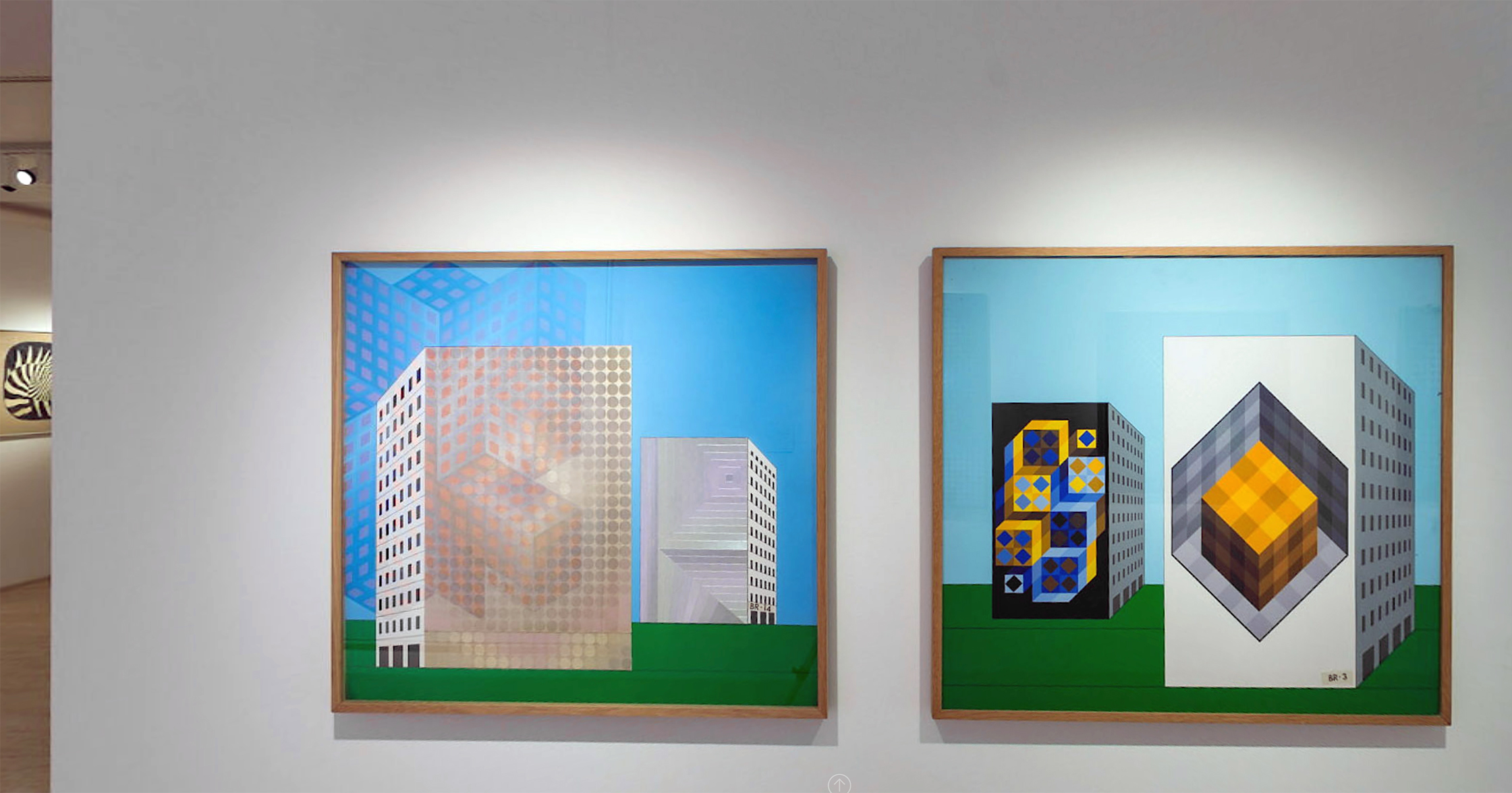
In the early 1960s, Vasarely put forward a proposal for the use of a universal visual language formulated in accordance with the principle of the Plastic Unit, which he called ‘planetary folklore’. He believed that regularly arranged and numbered, homogeneous colours and constant forms, of the kind that could be manufactured industrially, could have meaning attached to them. His intention was for the opportunity of aesthetic pleasure to become part of the everyday environment. As Vasarely argued, artworks not only belonged in museums and galleries, but were also needed in every single segment of urban life. His concept, which built on the ideas of Le Corbusier and Fernand Léger, and which proclaimed a synthesis of the different fields of the arts, was for the building blocks of the cities of the future to consist of mass-produced, monumental ‘plastic’ works that could be extended to any desired size, which would provide limitless possibilities of variation. The first of his architectural integrations was implemented in Venezuela in 1954, on the campus of the Central University of Caracas; this was followed by monumental ‘plastic’ installations on buildings in Bonn, Essen, Paris and Grenoble.


Victor Vasarely (Hungarian-French, 1906-1997) 'Ferde' 1966-1974


Victor Vasarely (Hungarian-French, 1906-1997)
Ferde
1966-1974
Collage on cardboard
78 x 77cm
Vasarely Múzeum, Budapest
© Victor Vasarely, VEGAP, Madrid, 2018


Installation view of the exhibition 'Victor Vasarely. The Birth of Op Art' at the Museo Nacional Thyssen-Bornemisza, Madrid showing at left, 'Estudio BR 14, serie "Pignons" Muros ciegos, Integraciones monumentales, Viviendas colectivas, Edificios grandes' Study BR 14. 'Pignons' Series: Blind Walls, Monumental Interations, Collective Dwellings, Large Buildings 1970; and at right, 'Estudio BR 3, serie "Pignons" Muros ciegos, Integraciones monumentales, Viviendas colectivas, Edificios grandes' Study BR 3. 'Pignons' Series: Blind Walls, Monumental Interations, Collective Dwellings, Large Buildings 1970


Installation view of (l-r):

Victor Vasarely (Hungarian-French, 1906-1997)
Estudio BR 14, serie “Pignons” Muros ciegos, Integraciones monumentales, Viviendas colectivas, Edificios grandes
Study BR 14. ‘Pignons’ Series: Blind Walls, Monumental Interations, Collective Dwellings, Large Buildings
1970
Mixed: Collage on board
75.8 x 81.8cm
Fondation Vasarely, Aix-en- Provence
© Victor Vasarely, VEGAP, Madrid, 2018

Victor Vasarely (Hungarian-French, 1906-1997)
Estudio BR 3, serie “Pignons” Muros ciegos, Integraciones monumentales, Viviendas colectivas, Edificios grandes
Study BR 3. ‘Pignons’ Series: Blind Walls, Monumental Interations, Collective Dwellings, Large Buildings
1970
Mixed: Collage on board
75.8 x 81.8cm
Fondation Vasarely, Aix-en- Provence
© Victor Vasarely, VEGAP, Madrid, 2018


9. Multiples

An important part of Vasarely’s art philosophy was his conscious refusal to discriminate between an individual work and its duplicate. He was convinced that an artwork came alive again when multiplied, and that the multiple was the most democratic form of art. His aim was to topple the elitist concept of owning unique and unrepeatable works by replacing it with the notion of making pictures for mass distribution. The artist experimented with the most diverse assortment of materials and techniques, from the most modern to the most ancient. Weaving workshops in Aubusson, following traditions dating back centuries, produced tapestries from his designs. Vasarely was also especially fond of the serigraph. His individually signed and numbered screen prints were commercially available on the art market, as were the multiple objects composed of individually handcoloured or industrially reproduced sheets mounted on wooden or metal backing materials.


Victor Vasarely (Hungarian-French, 1906-1997) 'Kroa-MC' 1969


Victor Vasarely (Hungarian-French, 1906-1997)
Kroa-MC
1969
44 x 44 x 50cm
Multiple. Metal, silk screen on metal
Vasarely Múzeum, Budapest
© Victor Vasarely, VEGAP, Madrid, 2018


Victor Vasarely (Hungarian-French, 1906-1997) 'Tridim- HH' 1972


Victor Vasarely (Hungarian-French, 1906-1997)
Tridim- HH
1972
Multiple. Acrylic on board
30 x 24 x 6cm
Vasarely Múzeum, Budapest
© Victor Vasarely, VEGAP, Madrid, 2018


Victor Vasarely (Hungarian-French, 1906-1997) 'Beryl-Positive' 1967


Victor Vasarely (Hungarian-French, 1906-1997)
Beryl-Positive
1967
Multiple, acrylic on plywood
36 x 36 x 4.5cm
Vasarely Múzeum, Budapest
© Victor Vasarely, VEGAP, Madrid, 2018


Victor Vasarely (Hungarian-French, 1906-1997) 'Ajedrez' (Chess Set) 1980


Victor Vasarely (Hungarian-French, 1906-1997)
Ajedrez (Chess Set)
1980
Plexiglass on acrylic board
70 x 70 x 15cm
Vasarely Múzeum, Budapest
© Victor Vasarely, VEGAP, Madrid, 2018


Vasarely and the ‘Op Art’ phenomenon

Márton Orosz


‘…here comes Op Art!’

Victor Vasarely, 18 April 1964


When the major exhibition titled The Responsive Eye opened at the New York Museum of Modern Art in 1965, it made Optical Art famous almost overnight. The limelight was stolen by two Europeans: Josef Albers, who continued the legacy of the Bauhaus in his art, and Victor Vasarely. Both men were represented at the show with six works each. But whereas Albers, oft neglected by the critics, was turned into the black sheep of the movement by contemporary art history writing, for Vasarely, who was just reaching the peak of his career, the show served as a launch pad to fame.(…)

The scientific definition of Op Art came soon afterwards, with the first attempt made in 1967 by the German art historian, Max Imdahl. Imdahl interpreted the art of Victor Vasarely as deriving from the Orphism of Robert Delaunay, which ascribed meaning to colour, the Neo-Plasticism of Piet Mondrian, which rested on the symmetry of two-dimensional structures, and the Mechano-Faktura of Henryk Berlewi, which borrowed its aesthetic principles from the schematism of mechanical production. Vasarely, meanwhile, preferred to call his own invention Kineticism, and he was fully justified in doing so, because if we accept the contents of his art philosophical writings, published in chronological order under the title of Notes brutes, then the artist was the first person to consistently use this name for the movement. He coined the phrase ‘kinetic art’ in 1953, basing the term on the description of the movement of gases written by Nicolas Sadi Carnot, the nineteenth-century French engineer who developed thermodynamics. In the light of Vasarely’s consistency of thought, his wide-ranging knowledge and his enthusiasm for science, it would have been the logical outcome of his principles to classify his works under a style or movement of his own construction. Kineticism, however, was regarded by Vasarely as something more than a simple art movement. He not only referred to it in a formal sense, but also accorded it ethical, economic, social and philosophical functions. He believed it to be of greater significance than Cubism, and he was convinced the Kineticism offered, for the first time since the Renaissance, a synthesis of ‘the two creative expressions of man: the arts and the sciences’. The simultaneous representation of movement, space and time had already found expression in Constructivist art in the 1920s, but Vasarely’s Op Art was fundamentally different, in that it aimed to generate a spatial effect through the use of a two-dimensional surface by creating the illusion of motion in macro-time, whereby the image formed on the retina underwent virtual manipulation. Consequently, the name Op Art can be given to any artwork ‘that shifts during the spectator’s act of perception’. (…).

‘Optical’ paintings

(…) Vibrant surfaces created from patterns of geometric figures arranged according to a particular algorithm can be found among the mosaics of Antiquity. The first stage in the history of the autonomisation of retina-based art, however, came at the end of the nineteenth century with Pointillist painting, which relied on the scientific theory of the optical combination of colours, and with the so-called Divisionists, who strove to separate optical effects using an analytical method. Georges Seurat’s ‘optical painting’, however, remained firmly attached to the real spectacle. Primary shapes became a means of generating illusions with the arrival of non-objective, abstract art styles, especially Cubism. Optical games derived from periodic series of geometric elements were incorporated into the repertoire of applied photography in the second half of the 1920s. During his studies in Budapest, Vasarely may have come across such depictions, even in the printed press, such as the photograph of the Hollywood actress, Alice White, in a room of mirrors decorated with abstract patterns.

Yet optical illusion was not enough to bring about Op Art, which also needed the dynamism of kinetics. It became inseparable from the concept of the fourth dimension of motion-time, which tipped the static work out of its fixed position by involving the viewer and turning the eye into the active organ of sight. In this sense, Vasarely’s optical kineticism also posed the question of the dematerialisation of the artwork, for in his works, the actual spectacle is not present on the canvas at rest in front of us, but comes about through interacting with the work and is generated on the retina. Vasarely was never concerned with the type of mechanical movement that brought about the works of Jean Tinguely or Marcel Duchamp. The Hungarian artist’s planar kineticism was in this respect far more closely connected to visual research than to the approach of works that emphasise their industrial nature. (…)

Op Art as Algorithm

(…) When it came to the aesthetic and market values of artworks that existed in multiple copies, opinion was split even among the artists participating in the exhibition. In terms of form, the experiments into perception conducted by Vasarely and Bridget Riley, for example, had much in common, and yet their views on the democratisation and interdisciplinarity of art differed sharply. Unlike Riley, who always insisted on her paintings being one of a kind, Vasarely’s programme of art targeted a re-evaluation of the aesthetic of reproduced, duplicated objects. It was in this regard that Vasarely came closest to Pop Art and to its iconic exponent, Andy Warhol. In spite of this, Vasarely was not in thrall to Pop Art. He spoke appreciatively of its achievements, but he considered it to be a movement outside the realm of painting, a parody or caricature of its own times. Pop Art, meanwhile, suffered greatly from the fact that Op Art ultimately proved far more popular. ‘I am “pop” in the sense that I would like to be popular’, Vasarely wittily replied when one journalist pressed him on his personal position in Op Art, shortly after it had found fame as a fashion phenomenon. A few years later, at a reception held in the Galerie Spiegel in Cologne in September 1971, where a work by Vasarely hung on the wall beside Tom Wesselmann’s Great American Nude, an iconic piece from the rival movement, the Hungarian-born artist was asked his opinion of Pop Art. He could not refrain from commenting that the essence of Pop was exaggeration. He then cast a malicious glance at Wesselmann’s painting before declaring, ‘Art is not about painting gigantic pictures for billionaires’. When it was subsequently suggested that his democratic views were not compatible with the high prices commanded by his works, he replied, ‘The critics compare me to hippies who loathe money but who want to get around by hitchhiking. And at such times it is of no concern to them that they are travelling with the help of General Motors, Shell and other billionaire companies’.

There was, however, a whole group of Pop-Art fans who would never have dreamed of denigrating Kineticism. Warhol, for instance, began to follow Vasarely’s career after seeing his works at the opening of The Responsive Eye. He was present at the artist’s exhibition held in 1965 in the Pace Gallery in New York, and his admiration endured until 1984, when he attended Vasarely’s birthday party, arranged by Yoko Ono. It was probably on this occasion that Warhol was given a handkerchief signed by Vasarely, decorated with a pre-kinetic zebra composition, which the American artist preserved among his relics up until his death. We would find few artists in the twentieth century who achieved more in rethinking the aesthetic of the multiplied artwork than Vasarely and Warhol, so there is a striking contradiction in the fact that the only work by Vasarely in Warhol’s collection was a monochromatic oil painting, titled Onix 107 (1966), which actually represented the counterpoint to the paradigm expressing the latent artistic opportunities in duplication (including the entire spectrum of vibrant and saturated colours). (…)

Extract from the catalogue


Victor Vasarely (Hungarian-French, 1906-1997) 'Transparence-XIII' 1952


Victor Vasarely (Hungarian-French, 1906-1997)
Transparence-XIII
1952
Kinetic object, silkscreen on plastic foils mounted on plywood
40 x 33cm
Vasarely Múzeum, Budapest
© Victor Vasarely, VEGAP, Madrid, 2018
(from the Belle-Isle / Crystal / Denfert section of the exhibition)


Museo Nacional Thyssen-Bornemisza
Paseo del Prado 8, 28014 Madrid, Spain
Phone: 91 791 13 70

Opening hours:
Tuesday to Sunday: 10.00 – 19.00

Museo Nacional Thyssen-Bornemisza website

LIKE ART BLART ON FACEBOOK

Back to top