
Exhibition dates: 2nd March – 26th May 2013
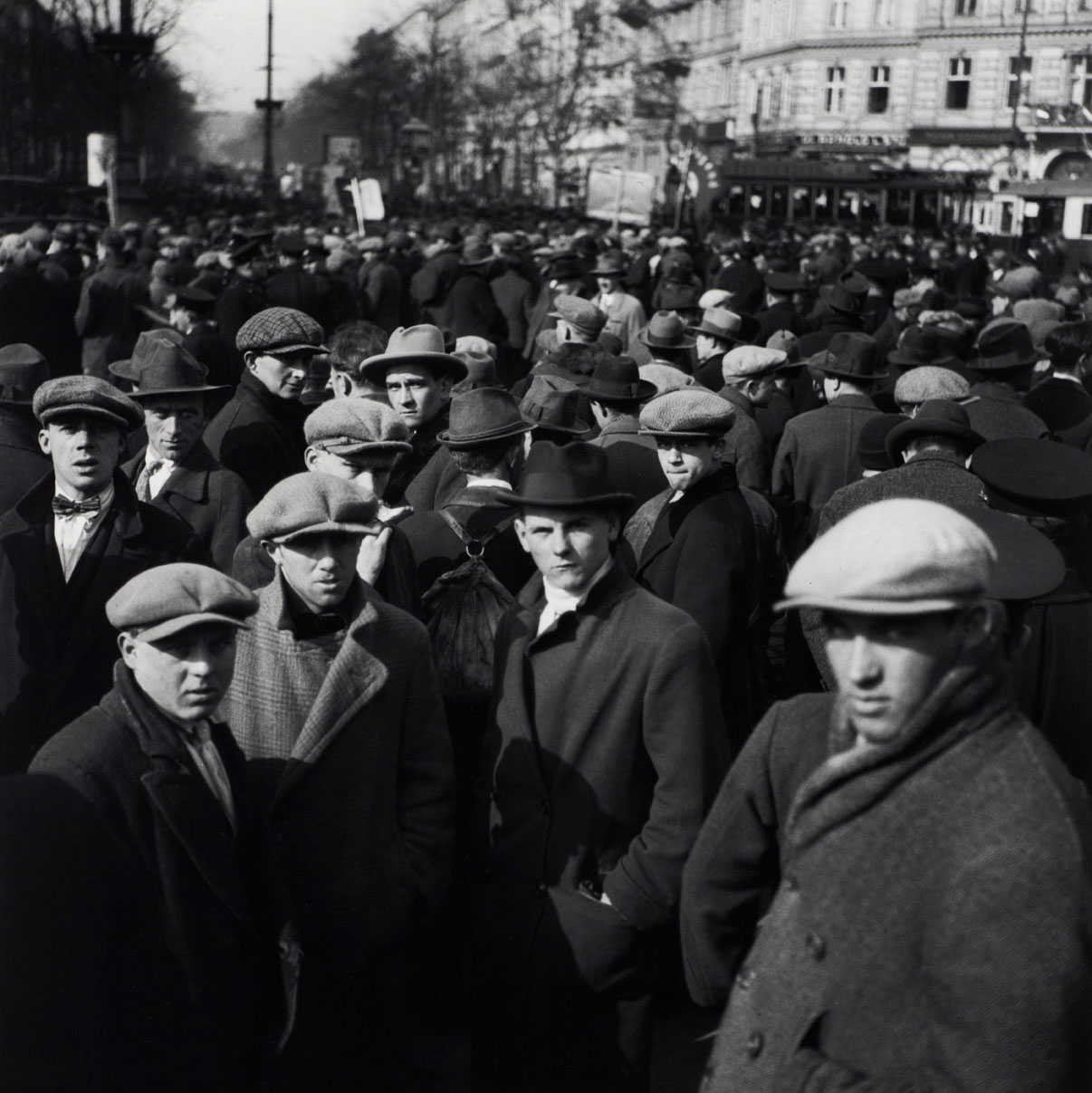
Edith Tudor-Hart (Austrian-British, 1908-1973)
Untitled (Unemployed Workers’ Demonstration, Vienna)
1932
Modern silver gelatine print from archival negative
30.3 x 30cm
Scottish National Portrait Gallery: Archive presented by Wolfgang Suschitzky 2004
© The Estate of Edith Tudor-Hart
Another photographer unknown to me, who “attempted to use the camera as a political weapon, aligning her practice with the wider worker photography movement” and produced “images that show a sophisticated realism, marked by their directness and capacity to communicate issues of inequality and deprivation.” In other words she was using photography to fight the good fight, producing photographs that interrogate issues of poverty, unemployment and slum housing.
But there is more to Tudor-Hart’s photographs than just social realism otherwise they would not hold us so. Beyond a perceptive understanding of light and the formal elements of the picture plane there is that ineffable something that a good photographer always has – the ability to transcend the scene, to capture the chance encounter – be it the look on a woman’s face, the ensemble of children preparing vegetables or the untitled man ‘In Total Darkness’ (with traces of Eugene Atget). The aesthetic of engagement, the ability of her photographs to speak directly to the viewer in a vital, dynamic way, also speaks to the life of the photographer: studied at the Bauhaus, an agent for the Communist party, I would have liked to have met this artist.
Dr Marcus Bunyan
Many thankx to the Scottish National Portrait Gallery for allowing me to publish the photographs in the posting. Please click on the photographs for a larger version of the image.

Edith Tudor-Hart (Austrian-British, 1908-1973)
Demonstration, South Wales
1935
Printed 2004 from original negatives held in the Edith Tudor Hart Archive
Gelatin silver print
Framed: 50.80 x 40.64cm
© The Estate of Edith Tudor-Hart
Edith Tudor Hart was in South Wales in the 1930s following her husband’s appointment as a GP there. As communists they would have sympathised with the economic hardship of the miners in the Rhondda valley. During the industrial depression following the First World War, unemployment figures in the area soared. With the help of other unions, the National Unemployed Workers’ Movement (NUWM) organised Hunger Marches, which demanded more fair unemployment legislation. This photograph was taken during one such demonstration, with the photographer perched on a post opposite the crowd of men.
Text from the National Galleries of Scotland website
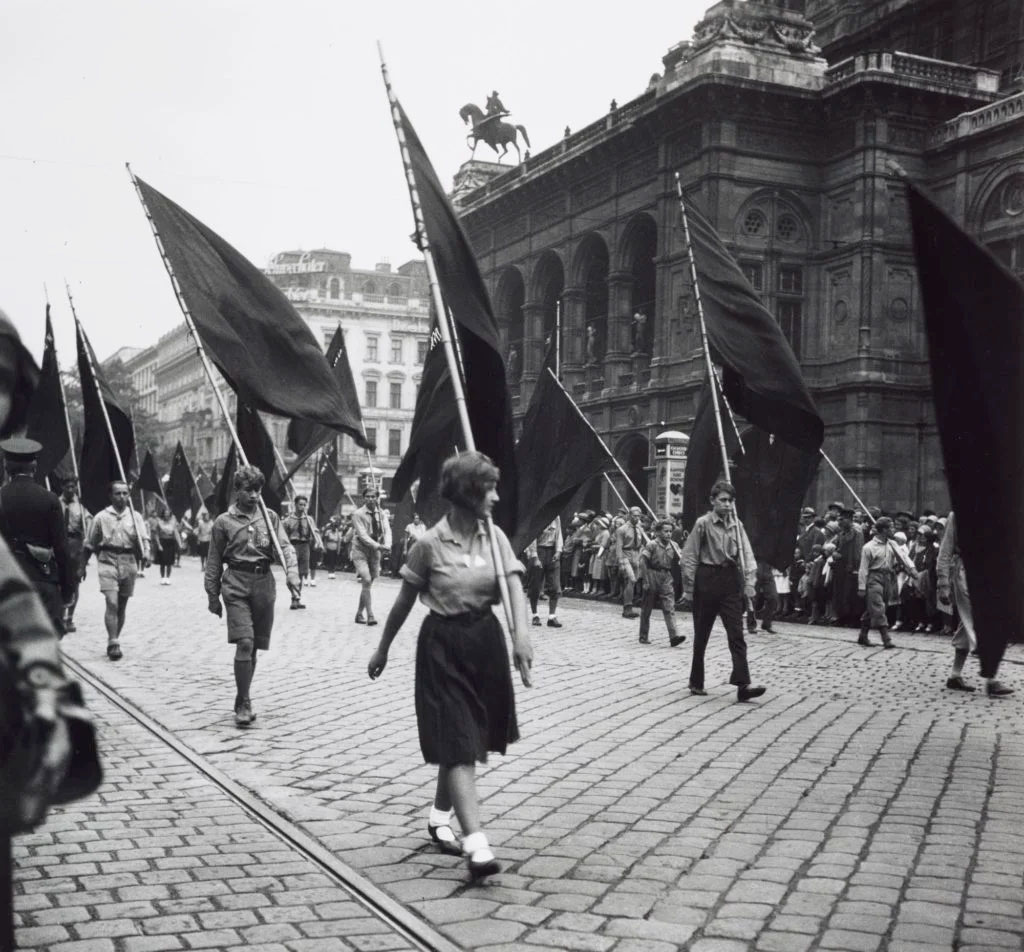
Edith Tudor-Hart (Austrian-British, 1908-1973)
Members of the Social-Democratic Youth Movement Marching Past the Opera House, Opernring, Vienna
c. 1928
Printed 2004 from original negatives held in the Edith Tudor Hart Archive
Gelatin silver print
28 x 30cm
Scottish National Portrait Gallery
© Copyright held jointly by Peter Suschitzky, Julia Donat & Misha Donat
This is a very dynamic image showing members of the Social-Democratic Youth Movement marching in Vienna. In the wake of the First World War, the Austrian political parties had a youthful membership – it is estimated that up to sixty per cent of the Viennese Social Democrats were under forty years of age. The limits of teenagers’ political engagement was a particular source of controversy, with many arguing that the youth movement should be more educational than political. Memoirs of the period reveal that political identification was often fluid. A common joke amongst young activists was that you went to bed a Social Democrat and woke up a Communist!
Text from the National Galleries of Scotland website

Edith Tudor-Hart (Austrian-British, 1908-1973)
Untitled (Man Selling Fruit, Vienna)
c. 1930
Modern silver gelatine print from archival negative
30.3 x 30.1cm
Scottish National Portrait Gallery: Archive presented by Wolfgang Suschitzky 2004
© The Estate of Edith Tudor-Hart
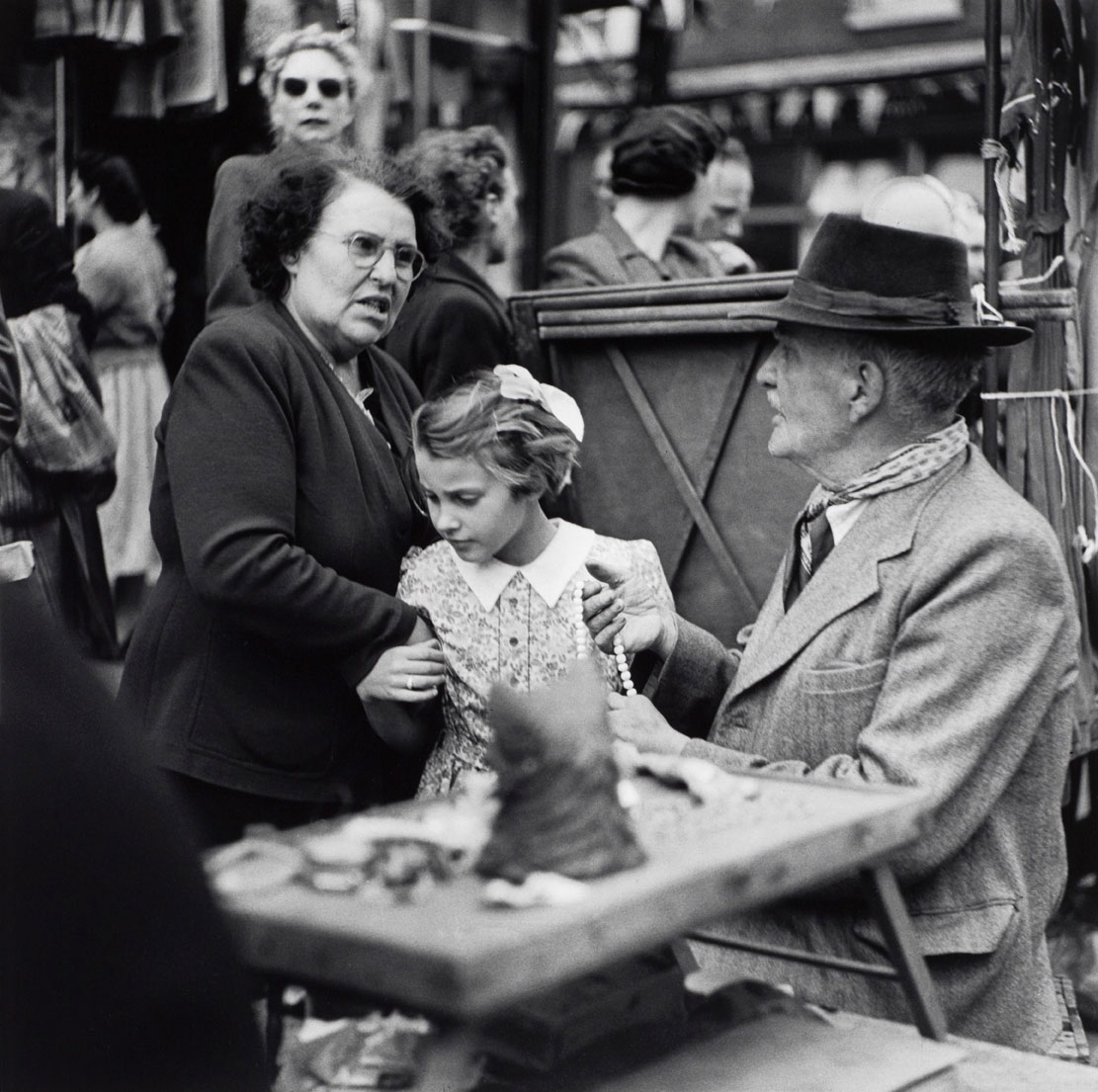
Edith Tudor-Hart (Austrian-British, 1908-1973)
Untitled (Caledonian Market, London)
c. 1931
Modern silver gelatine print from archival negative
27.7 x 27.5cm
Scottish National Portrait Gallery: Archive presented by Wolfgang Suschitzky 2004
© The Estate of Edith Tudor-Hart

Edith Tudor-Hart (Austrian-British, 1908-1973)
Ferris Wheel, Vienna
c. 1931
Printed 2004 from original negatives held in the Edith Tudor Hart Archive
Gelatin silver print
29.3 x 29.2cm
Scottish National Portrait Gallery: Archive presented by Wolfgang Suschitzky 2004
© The Estate of Edith Tudor-Hart
Before marrying Edith Tudor Hart had studied photography at the Bauhaus in Dessau. The concerns of this school are obvious in the geometries and startling perspective of this image. Note the exaggerated size of the steel supports of the wheel and the minute figures of the people standing on the ground. The photographer’s eagerness to document the dynamism of urban life suggests she was aware of developments in Soviet avant-garde photography.
Text from the National Galleries of Scotland website
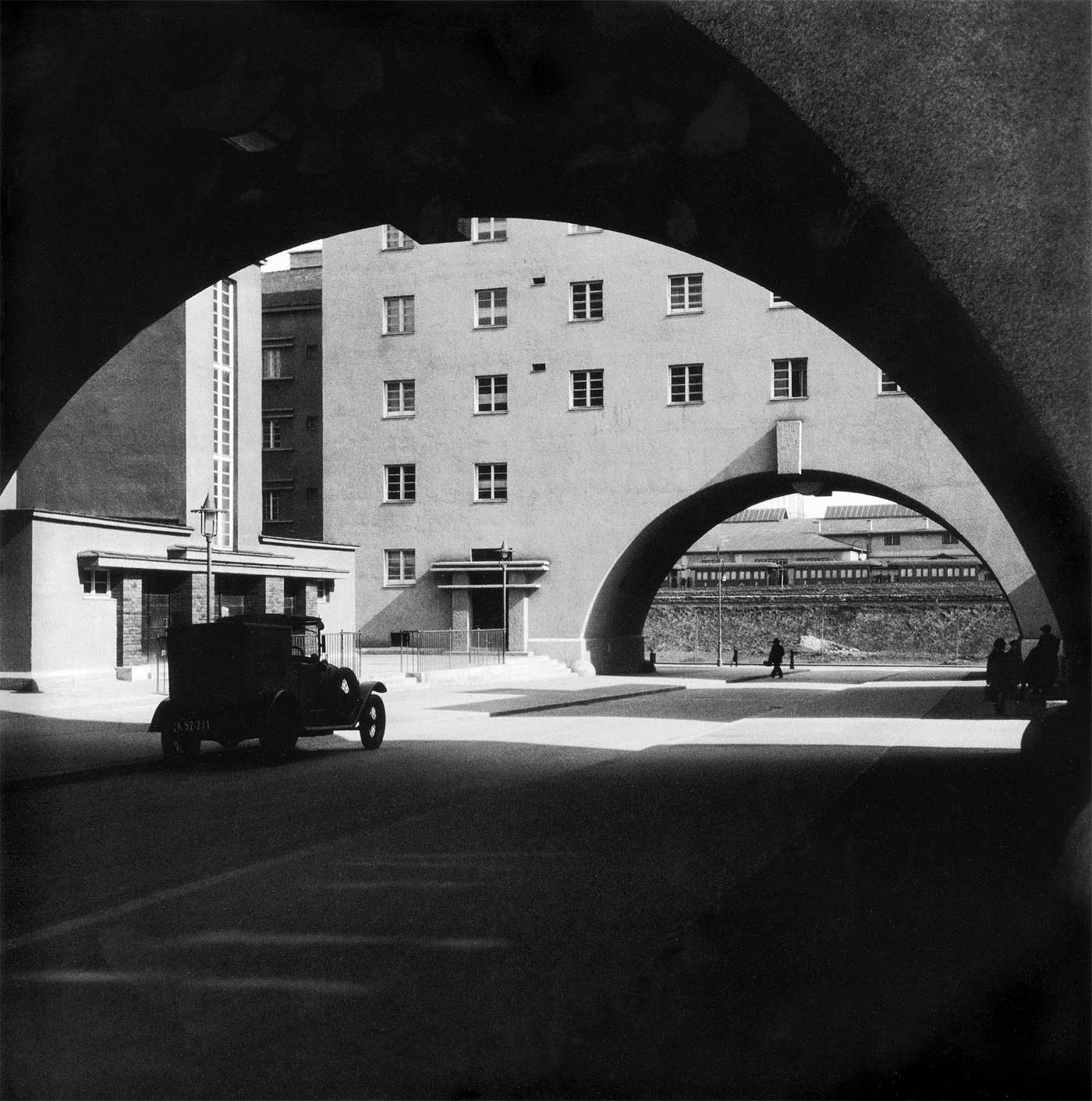
Edith Tudor-Hart (Austrian-British, 1908-1973)
Karl-Marx-Hof, Vienna
c. 1932
Printed 2004 from original negatives held in the Edith Tudor Hart Archive
Gelatin silver print
30.2 x 30cm
Scottish National Portrait Gallery
© Copyright held jointly by Peter Suschitzky, Julia Donat & Misha Donat
The Karl-Marx-Hof was a fortress-like housing estate built by the Social Democrats between 1927 and 1930. A kilometre in length, its huge walls contained nearly 1400 apartments for Viennese workers. In her photograph of the building Tudor-Hart summons both its strength and sense of modernity. However, the permanence evoked by the architecture soon proved to be more apparent than real. In February 1934, during the short-lived Austrian civil war, the building was shelled by Austro-fascist forces. Out-gunned, and concerned about women and children still in their homes, the Karl-Marx-Hof’s defenders surrendered. The first mass movement against European fascism was easily defeated and the Austrian Social Democrats were driven into illegality and exile.
Text from the National Galleries of Scotland website

Edith Tudor-Hart (Austrian-British, 1908-1973)
Family Group, Stepney, London
c. 1932
Printed 2004 from original negatives held in the Edith Tudor Hart Archive
Gelatin silver print
Scottish National Portrait Gallery
© Copyright held jointly by Peter Suschitzky, Julia Donat & Misha Donat
Tudor-Hart worked extensively amongst working-class communities in East and North London, photographing children on the streets and families in their homes. She was part of a larger movement on the left concerned about the effect of widespread slum housing. However, Tudor-Hart’s imagery is rarely merely propaganda and her ability to connect with those she photographs – often women and children – is evident. This complex photograph explores the photographer’s relationship to her subjects. Shot deliberately through the window it emphasises her voyeurism, thus limiting the sentimental impact of the image.
Text from the National Galleries of Scotland website
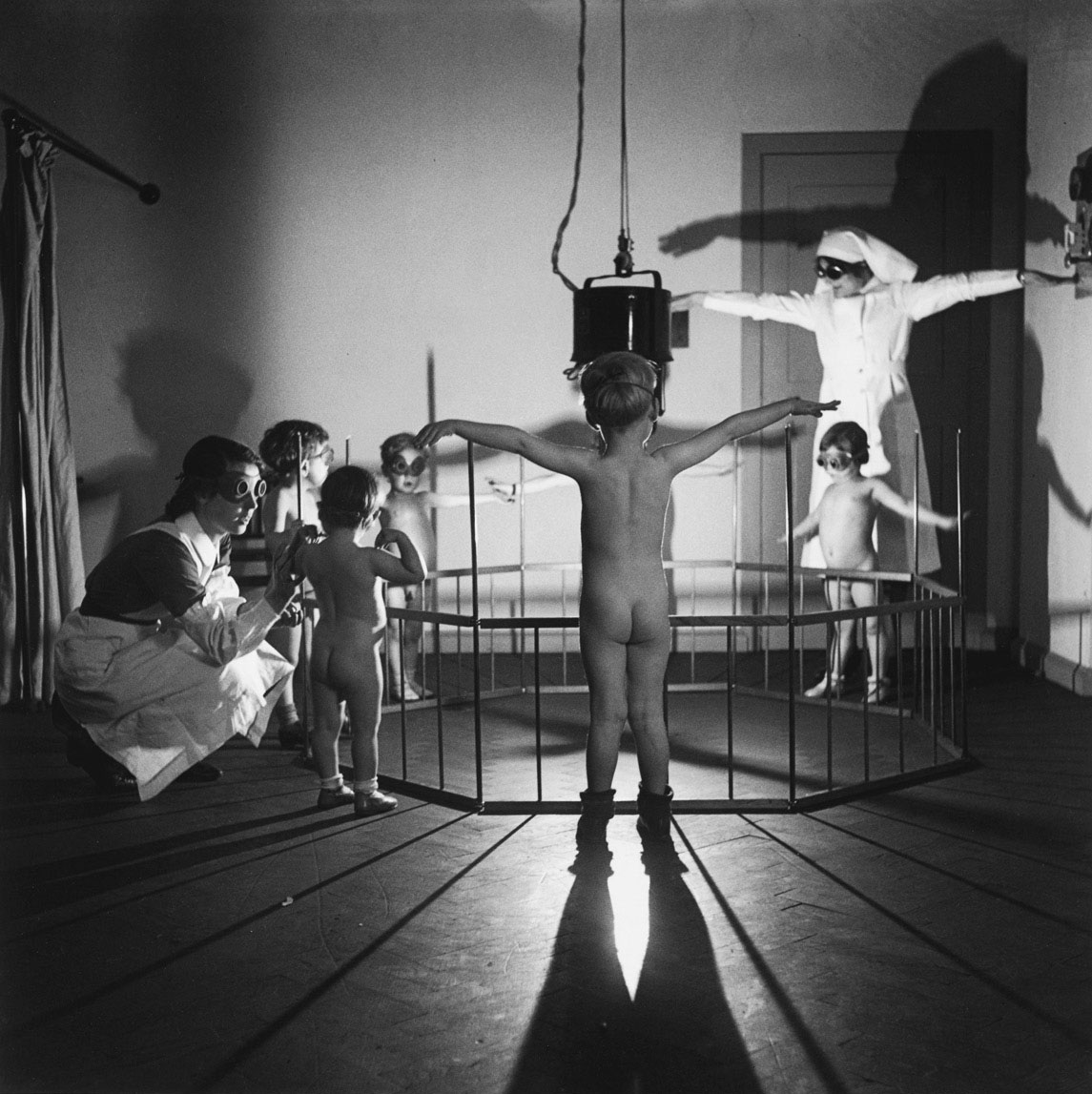
Edith Tudor-Hart (Austrian-British, 1908-1973)
Untitled (Ultraviolet Light Treatment, South London Hospital for Women and Children)
c. 1935
Modern silver gelatine print from archival negative
30.3 × 30cm
Scottish National Portrait Gallery: Archive presented by Wolfgang Suschitzky 2004
This photograph was taken for a booklet promoting the work of the South London Hospital for Women and Children, produced in collaboration with the German exile photographer, Grete Stern. It shows light treatment for children suffering from vitamin deficiencies, a standard cure at the time. The South London Hospital was founded in 1912 “to meet the growing demand of women for medical treatment by members of their own sex.” Tudor-Hart campaigned throughout her life for health reforms for women and children, part of a wider movement of women whose activity was vital to the formation of the National Health Service in 1948.
Text from the National Galleries of Scotland website
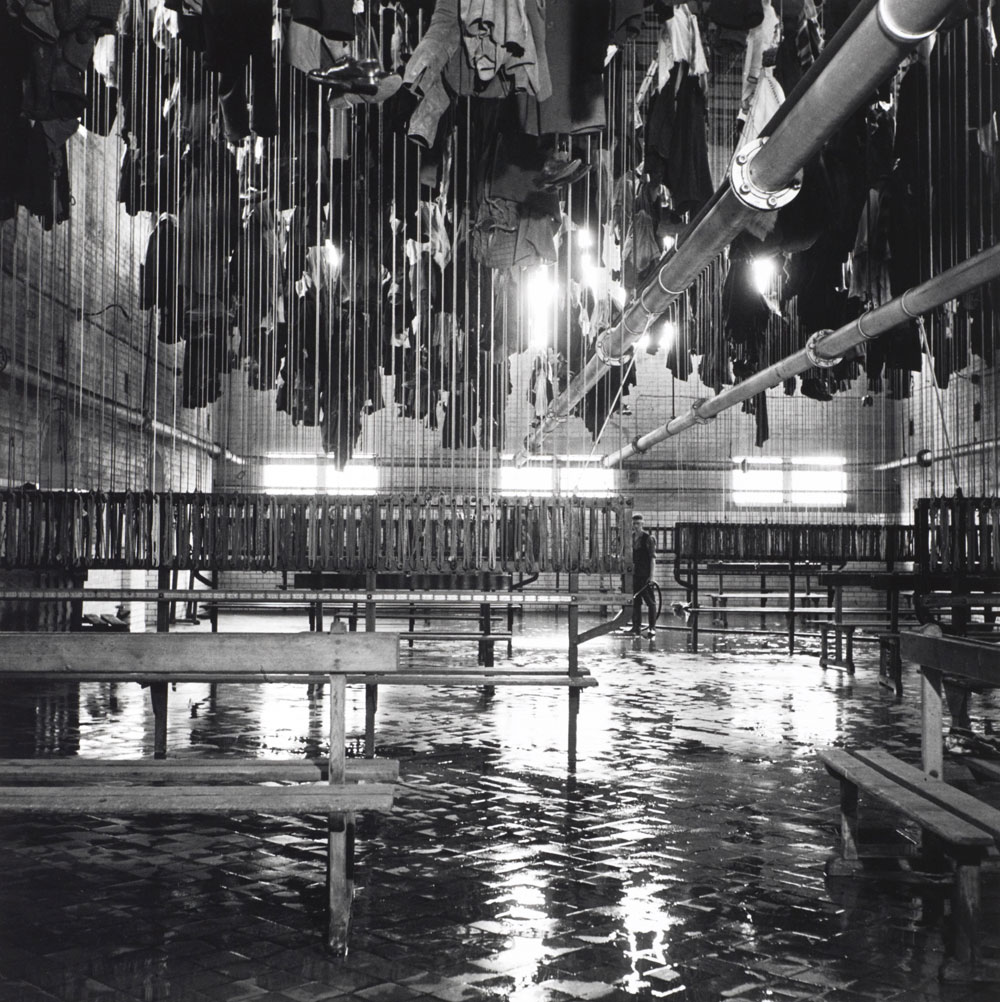
Edith Tudor-Hart (Austrian-British, 1908-1973)
Untitled (Drying Room, Pit-head Baths, Ashington Colliery, Northumberland)
c. 1937
Modern silver gelatine print from archival negative
30.3 x 30.1cm
Scottish National Portrait Gallery: Archive presented by Wolfgang Suschitzky 2004
© The Estate of Edith Tudor-Hart
The life and work of one of the most extraordinary photographers in Britain during the 1930s and 1940s is the subject of a major new exhibition at the Scottish National Portrait Gallery. Based on extensive new research, Edith Tudor-Hart: In the Shadow of Tyranny, is the first full presentation of the Austrian-born photographer’s work. The exhibition presents over 80 photographs, many of which have never been shown before, and includes film footage, Tudor-Hart’s scrapbook and a selection of her published stories in books and magazines.
During the 1930s, photography became implicated in the vital political and social questions of the era as never before. The enhanced technological capacities of the camera and faster printing processes offered left-wing political activists new techniques for popular mobilisation. The medium took on a sharper social purpose, breaking down the traditional divisions of culture through its quality of immediacy and capacity for self-representation.
Edith Tudor-Hart was a key exponent of this aesthetic of engagement, with images that show a sophisticated realism, marked by their directness and capacity to communicate issues of inequality and deprivation. In a turbulent decade, she attempted to use the camera as a political weapon, aligning her practice with the wider worker photography movement. Tudor-Hart’s photography dealt with many of the major social issues of the day, including poverty, unemployment and slum housing. Her imagery is a vital record of the politically-charged atmosphere of inter-war Vienna and Britain during the Great Slump of the 1930s. After 1945, Tudor-Hart concentrated on questions of child welfare, producing some of the most psychologically penetrating imagery of children of her era.
Tudor-Hart’s life story as a photographer is inextricably tied to the great political upheavals of the twentieth century. Born Edith Suschitzky in Vienna in 1908, she grew up in radical Jewish circles in a city ravaged by the impact of the First World War. Her childhood was dominated by social issues in a culture acutely aware of the impact of the Russian Revolution. After training as a Montessori teacher, she studied photography at the Bauhaus in Dessau and pursued a career as a photojournalist. However, her life was turned upside down in May 1933 when she was arrested whilst working as an agent for the Communist Party of Austria. She escaped long-term imprisonment by marrying an English doctor, Alexander Tudor-Hart, and was exiled to London shortly afterwards. Notoriously, Tudor-Hart continued to combine her practice as a photographer with low-level espionage for the Soviet Union and was pursued by the security services until her death in 1973.
Tudor-Hart’s photography introduced into Britain formal and narrative features that derived from her training on the Continent. Her method initiates a dialogue with those she photographs, very different from the more distancing imagery of the photojournalists. Along with thirty or so German-speaking exile photographers, many of Jewish origin, Tudor-Hart helped transform British photography. After the Second World War, rejected by Fleet Street and the British establishment, Tudor-Hart turned to documenting issues of child welfare. Her photographs were published in Picture Post and a range of other British magazines. By the late 1950s she had abandoned photography altogether.
Commenting on the exhibition, Director of the Scottish National Portrait Gallery, Christopher Baker, said, ‘We are really pleased to be staging this thrilling retrospective of Tudor-Hart’s photography. It combines stunning images with an intriguing life-story and illuminates a turbulent period in European history. Tudor-Hart was one of the great photographers of her era.’ Edith Tudor-Hart: In the Shadow of Tyranny is drawn largely from the photographer’s negative archive, which was donated to the National Galleries of Scotland by her family in 2004. The exhibition travels to the Wien Museum in September and will form the first complete presentation of her work in Austria.
Press release from the Scottish National Portrait Gallery
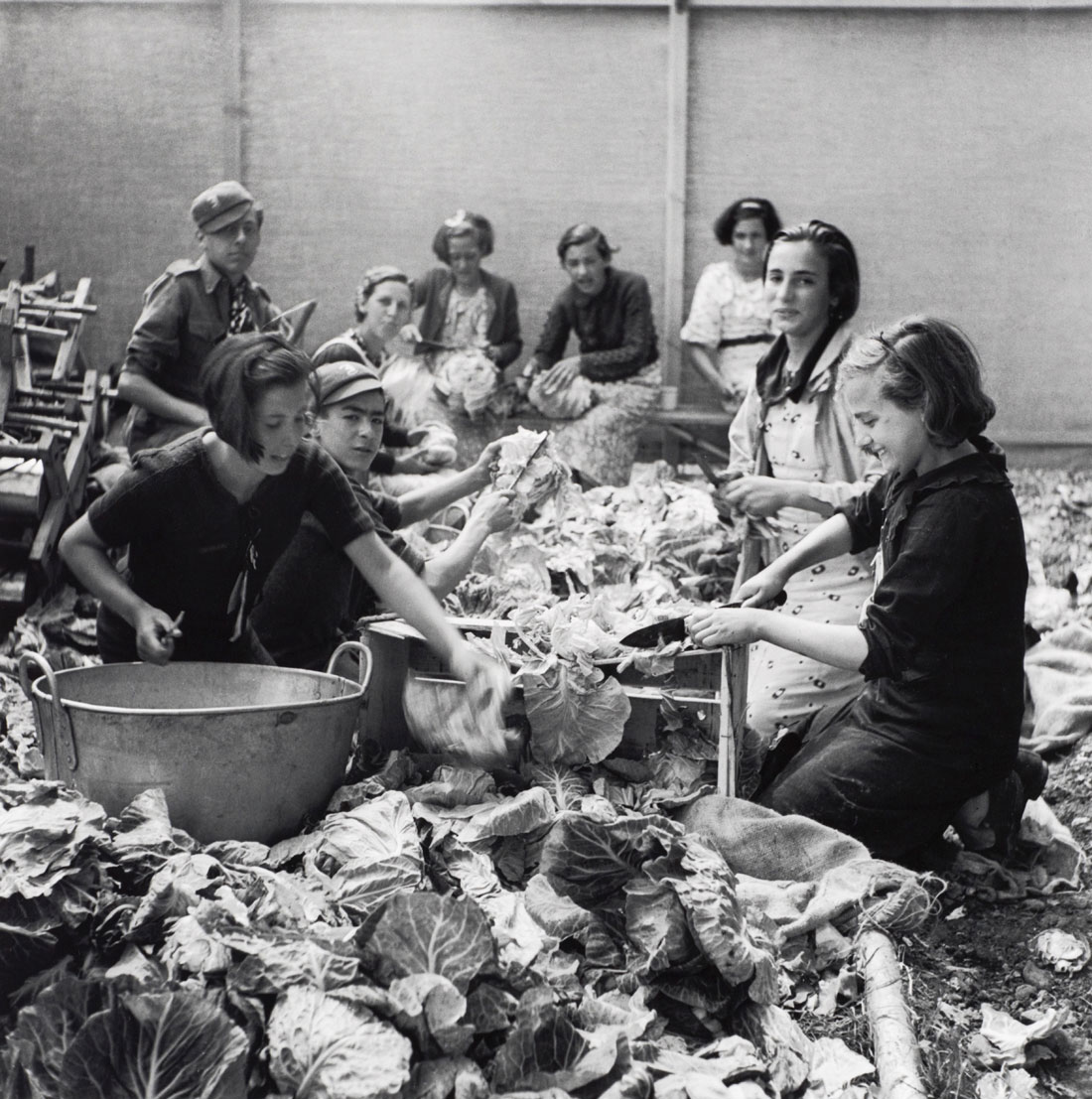
Edith Tudor-Hart (Austrian-British, 1908-1973)
Untitled (Children Preparing Vegetables, North Stoneham Camp, Hampshire)
1937
Modern silver gelatine print from archival negative
30.2 x 29.8cm
Scottish National Portrait Gallery: Archive presented by Wolfgang Suschitzky 2004
© The Estate of Edith Tudor-Hart
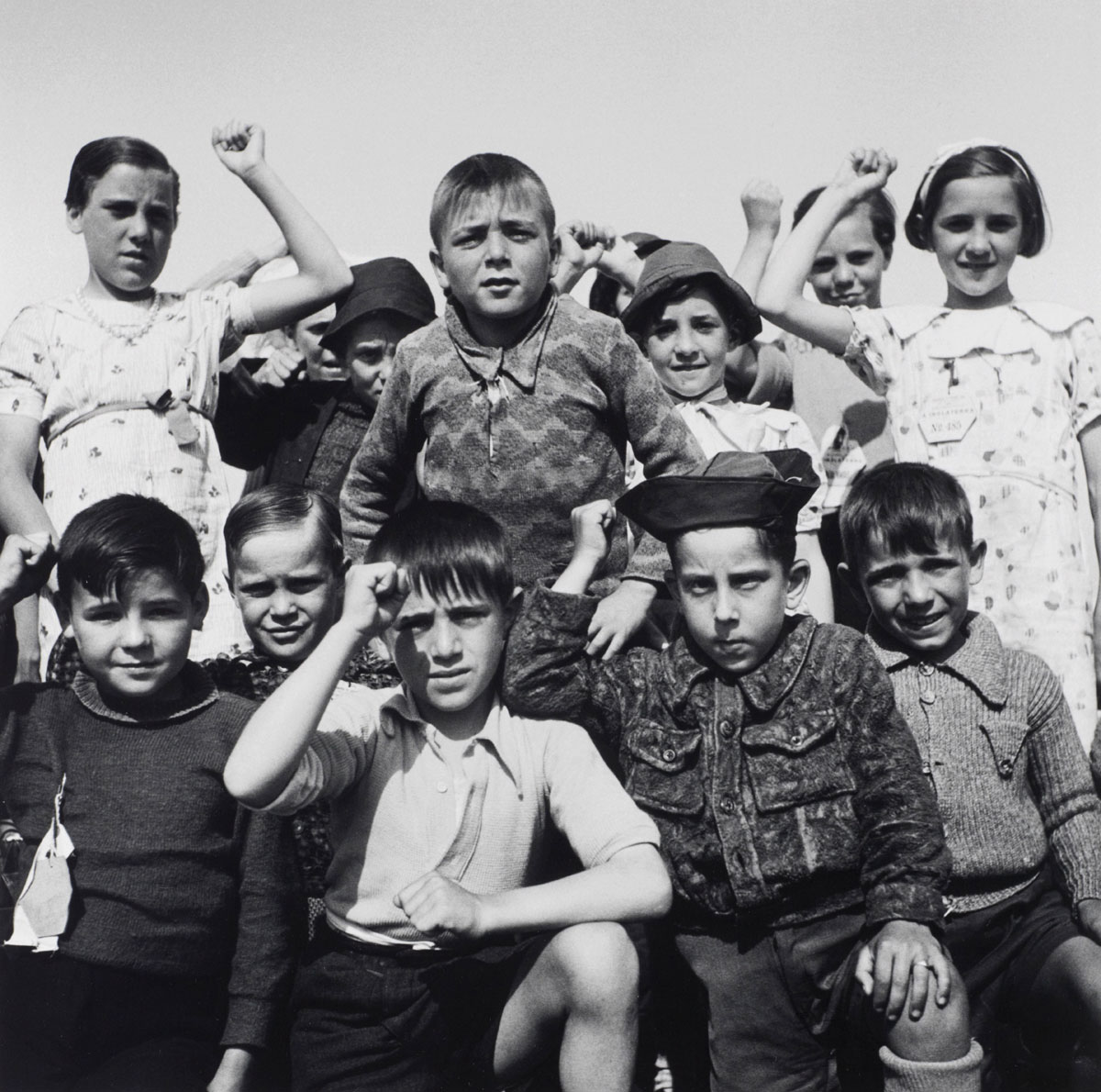
Edith Tudor-Hart (Austrian-British, 1908-1973)
Untitled (Basque Refugee Children, North Stoneham Camp, Hampshire)
1937
Modern silver gelatine print from archival negative
30.2 x 30cm
Scottish National Portrait Gallery: Archive presented by Wolfgang Suschitzky 2004
© The Estate of Edith Tudor-Hart
The children are giving the Spanish anti-fascist Republican salute.
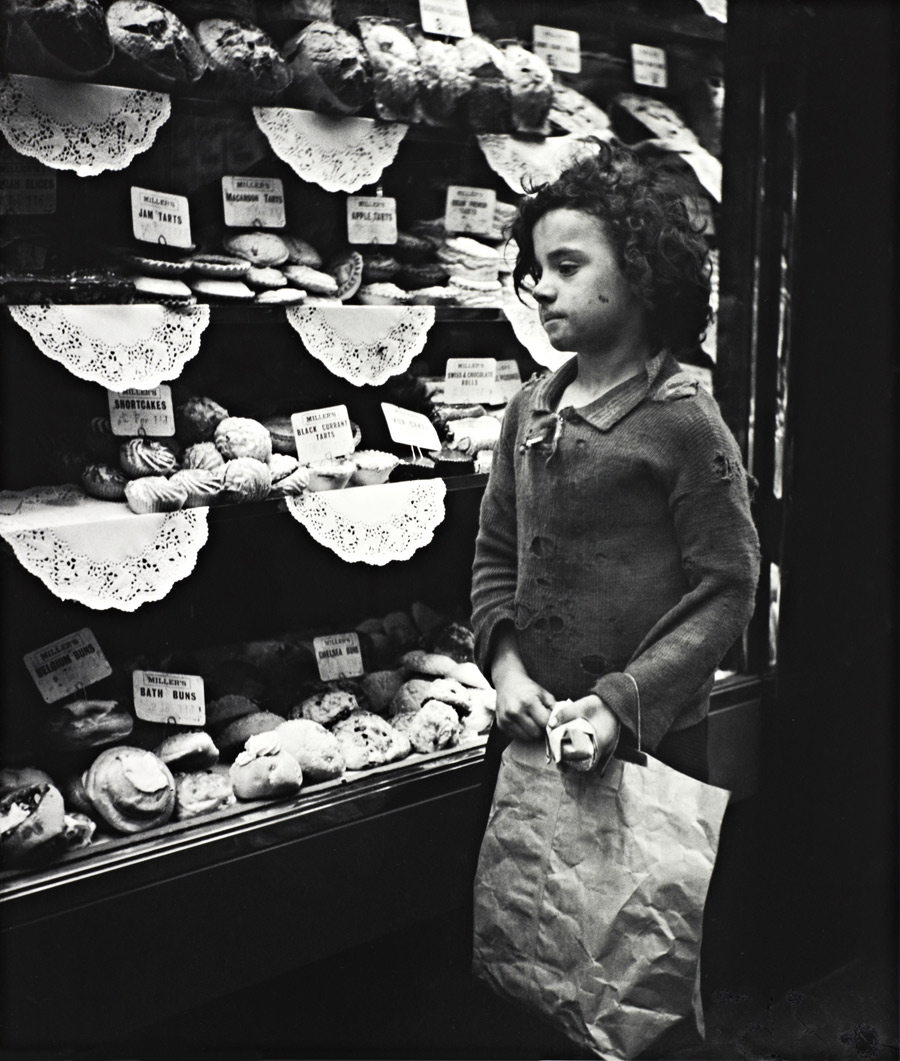
Edith Tudor-Hart (Austrian-British, 1908-1973)
Untitled (Child Staring into Bakery Window)
c. 1935
Modern silver gelatine print from archival negative
35.30 x 30.00cm
Scottish National Portrait Gallery: Archive presented by Wolfgang Suschitzky 2004
© The Estate of Edith Tudor-Hart
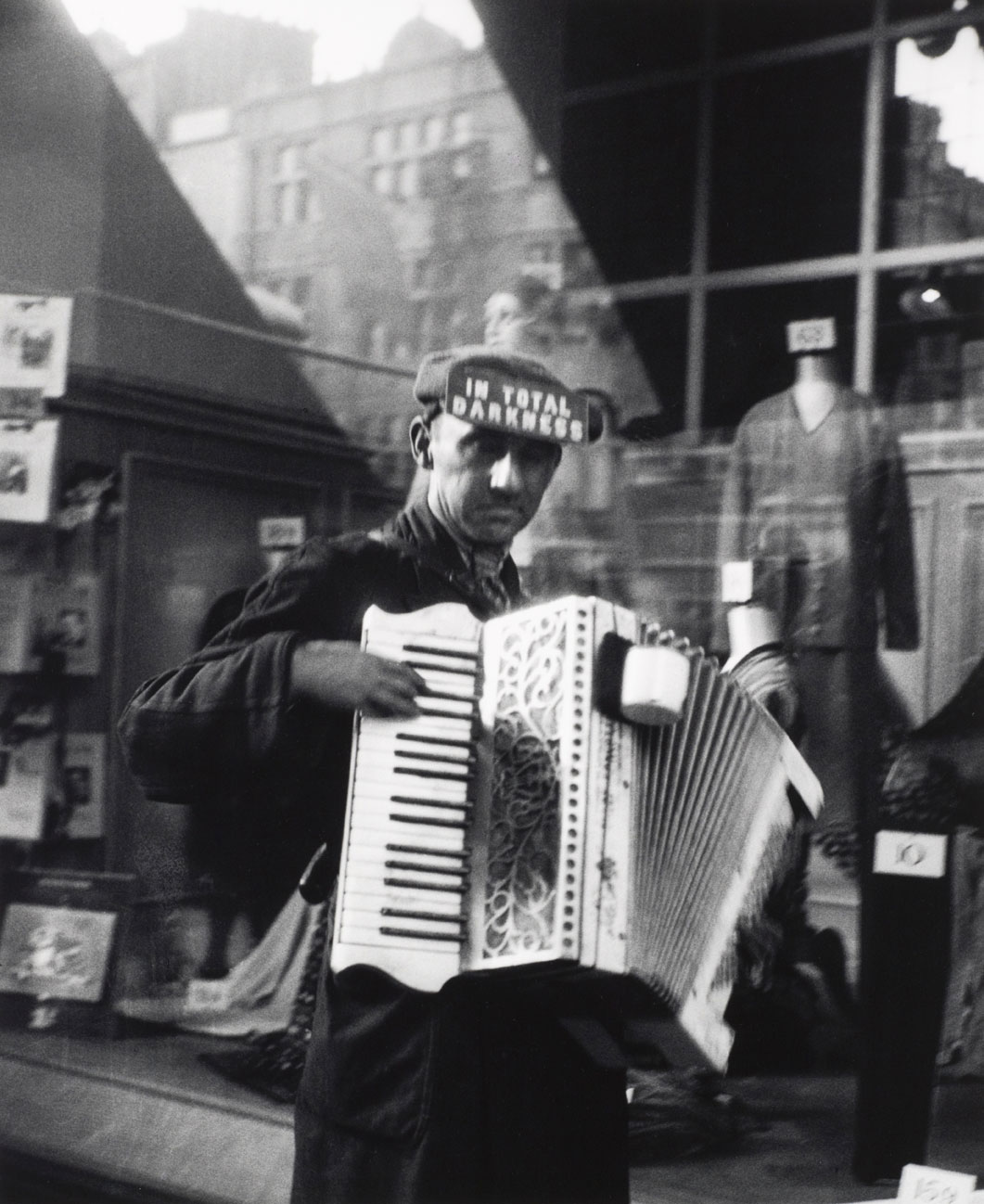
Edith Tudor-Hart (Austrian-British, 1908-1973)
Untitled (In Total Darkness, London)
c. 1935
Modern silver gelatine print from archival negative
27.70 x 27.50cm
Scottish National Portrait Gallery: Archive presented by Wolfgang Suschitzky 2004
© The Estate of Edith Tudor-Hart
Scottish National Portrait Gallery
1 Queen Street, Edinburgh EH2 1JD
Phone: +44 131 624 6200
Opening hours:
Daily 10am – 5pm
 Art Blart _ art and cultural memory archive
You must be logged in to post a comment.