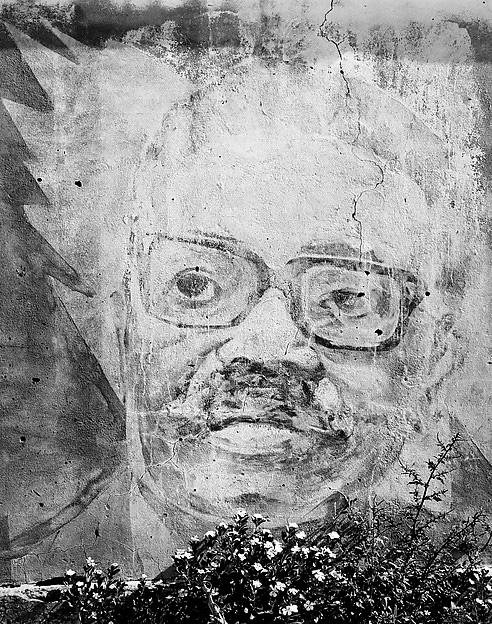
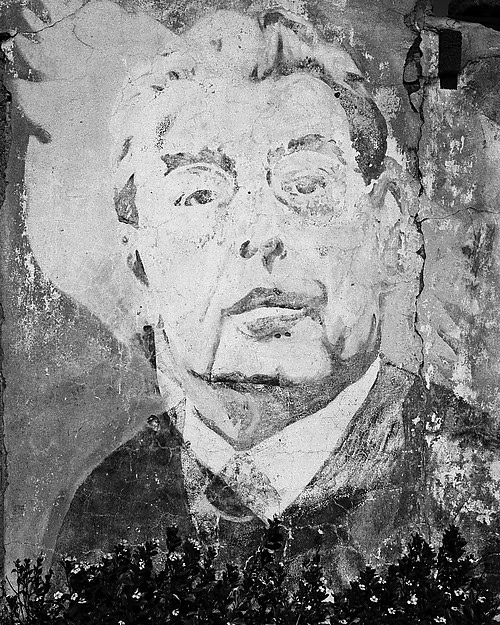
Exhibition: ‘Barbara Klemm. ­Light and Dark. Photographs from Germany’ at the Galerie für Zeitgenössische Kunst, Leipzig from ifa – Institut für Auslandsbeziehungen

Exhibition dates: 30th November, 2024 – 23rd March, 2025


Barbara Klemm (German, b. 1939) 'Offenbach' 1968


Barbara Klemm (German, b. 1939)
Offenbach
1968
Black and white photograph on baryta paper
300 × 400 mm
© Barbara Klemm, Institut für Auslandsbeziehungen e. V.


Apparently, “the exhibition presents photography by one of Germany’s most important artists.”

Until recently I had never heard of this artist and I have been studying photography for over 35 years.

Allegedly, “many of Klemm’s photographs have become “icons of contemporary history” and have shaped the cultural memory of several generations.”

What does that even mean – “icons of contemporary history” – it’s just art speak that means absolutely nothing!

If we actually look at the work there are some really strong photographs here that form a cohesive body of work which interrogates the reality of a country that was divided for decades, which examine the postwar formation of German culture and identity.

“[The exhibition] includes pictures from every sphere of society: from politics, culture and the economy, photos that capture unique and often tense moments as well as plain everyday life, photos of demonstrations, protests, and of immigrants, of cultural events, mass gatherings, and urban spaces.” (Text from ifa website)

While Klemm’s photographs combine the documentary and the artistic in German press photography, her artistic voice is not a lone voice in the wilderness documenting Germany before and after reunification. Variously (but not exclusively) we have from the 1930s onwards and reaching its social reality apotheosis in the 1970s-1980s artists such as Friedrich Seidenstücker, Benjamin Katz, Chargesheimer, Michael Schmidt, Helga Paris, Günter Zint, Wendelin Bottländer, Andreas Horlitz, Christa Mayer, Sibylle Bergemann, Tata Ronkholz, Thomas Struth, Wilhelm Schürmann, Volker Döhne, Elfriede Mejchar, Hildegard Heise, and Timm Rautert.

At their best Klemm’s photographs are essential – (in the sense ‘in the highest degree’): from late Latin essentialis, from Latin essentia (see essence) – which is, the intrinsic nature or indispensable quality of something … which determines its character. That is what Klemm so vibrantly and insightfully captures, the true essence of an event which is then marked down in history. “Her sure sense of the true essence of an event allows her to capture moments that tell stories far beyond what the pictures seem to show at first glance.” In the highest degree, Klemm’s photographs “offer an insight into the most significant aspects of social life in both the Federal Republic of Germany and the GDR”

But she is not alone in this endeavour and to argue that her photographs are “icons of history” and that she is one of Germany’s most important artists is pure hokum. Why curators and/or media people continue to write this stuff is beyond me…

Just let the artist tell her stories and the photographs will speak for themselves.

Strength, insight, essence.

Dr Marcus Bunyan


Many thankx to the Galerie für Zeitgenössische Kunst for allowing me to publish the photographs in the posting. Please click on the photographs for a larger version of the image.
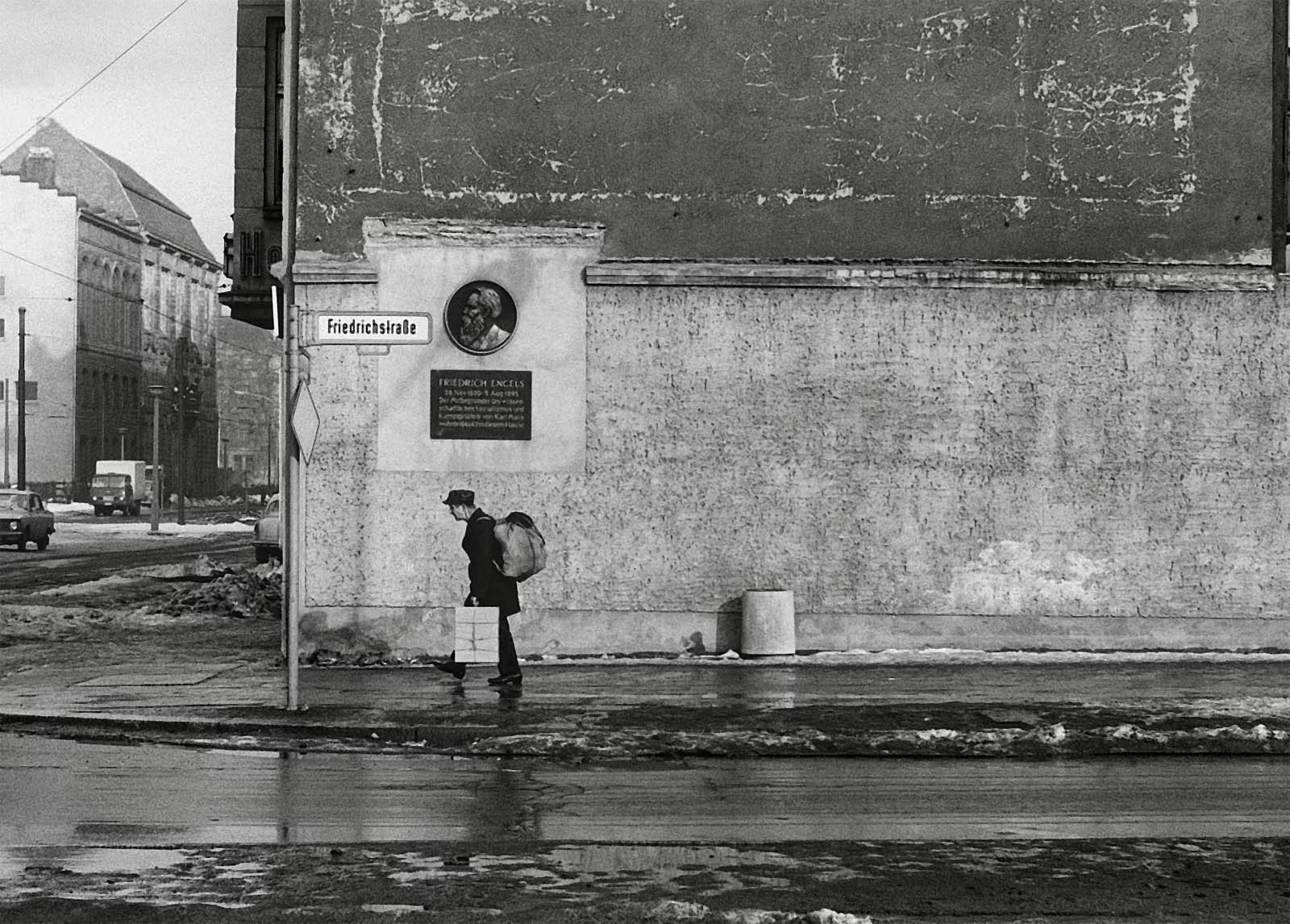


Barbara Klemm (German, b. 1939) 'Friedrichstrasse, East Berlin' 1970


Barbara Klemm (German, b. 1939)
Friedrichstrasse, East Berlin
1970
Black and white photograph on baryta paper
300 × 400 mm
© Barbara Klemm, Institut für Auslandsbeziehungen e. V.


The exhibition presents photography by one of Germany’s most important artists. Barbara Klemm’s work, spanning forty years, bears witness to the historical development and present-day reality of a country that was divided for decades. Many of her pictures have become icons of contemporary history, shaping the cultural memory of several generations.

An exhibition by ifa – Institut für Auslandsbeziehungen e. V. ifa is funded by the German Federal Foreign Office, the state of Baden-Württemberg, and the city of Stuttgart.


Barbara Klemm (German, b. 1939) 'Leipzig' 1970


Barbara Klemm (German, b. 1939)
Leipzig
1970
Black and white photograph on baryta paper
300 × 400 mm
© Barbara Klemm, Institut für Auslandsbeziehungen e. V.
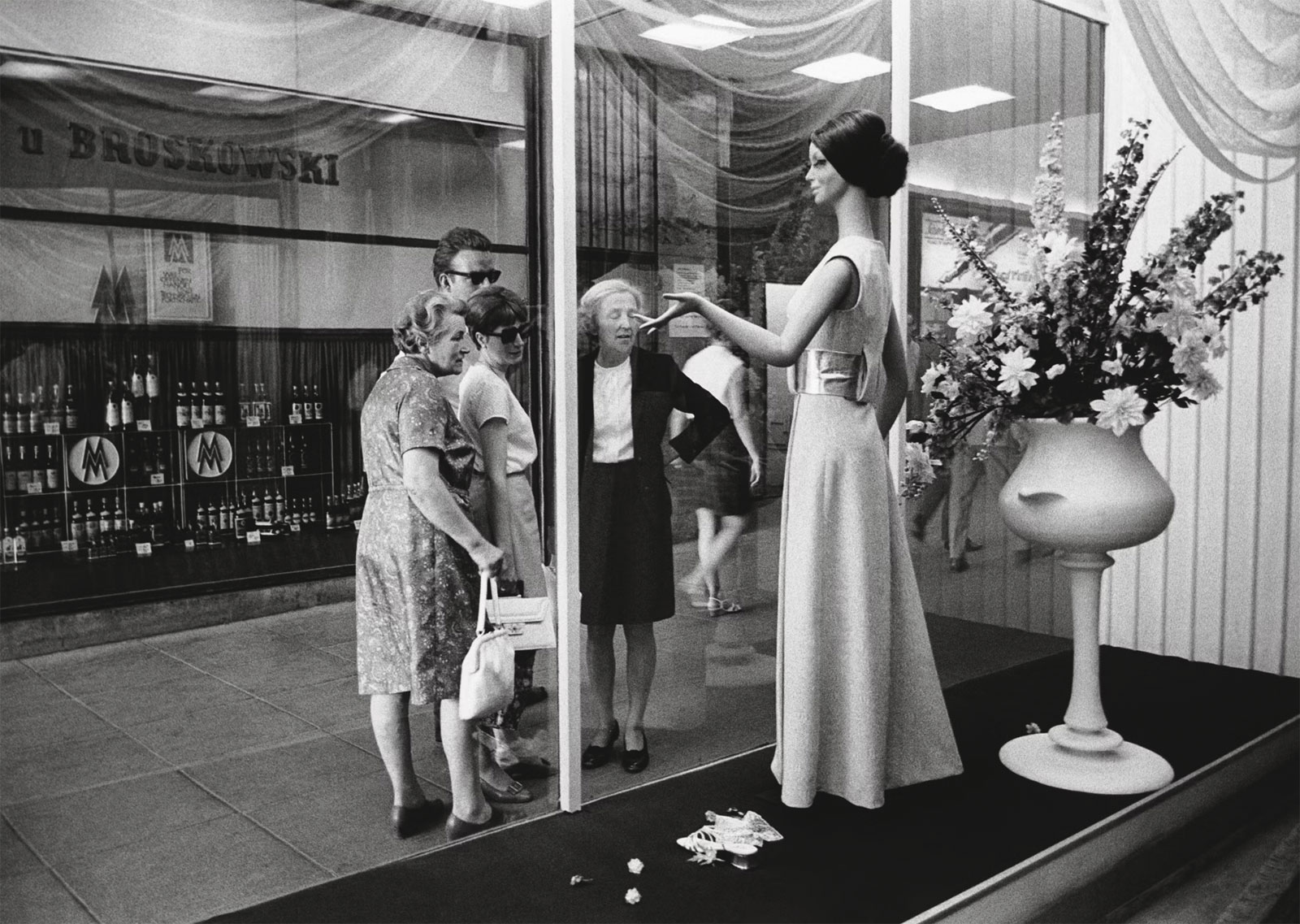
 

Barbara Klemm (German, b. 1939) 'Leipzig' 1970


Barbara Klemm (German, b. 1939)
Leipzig
1970
Black and white photograph on baryta paper
300 × 400 mm
© Barbara Klemm, Institut für Auslandsbeziehungen e. V.
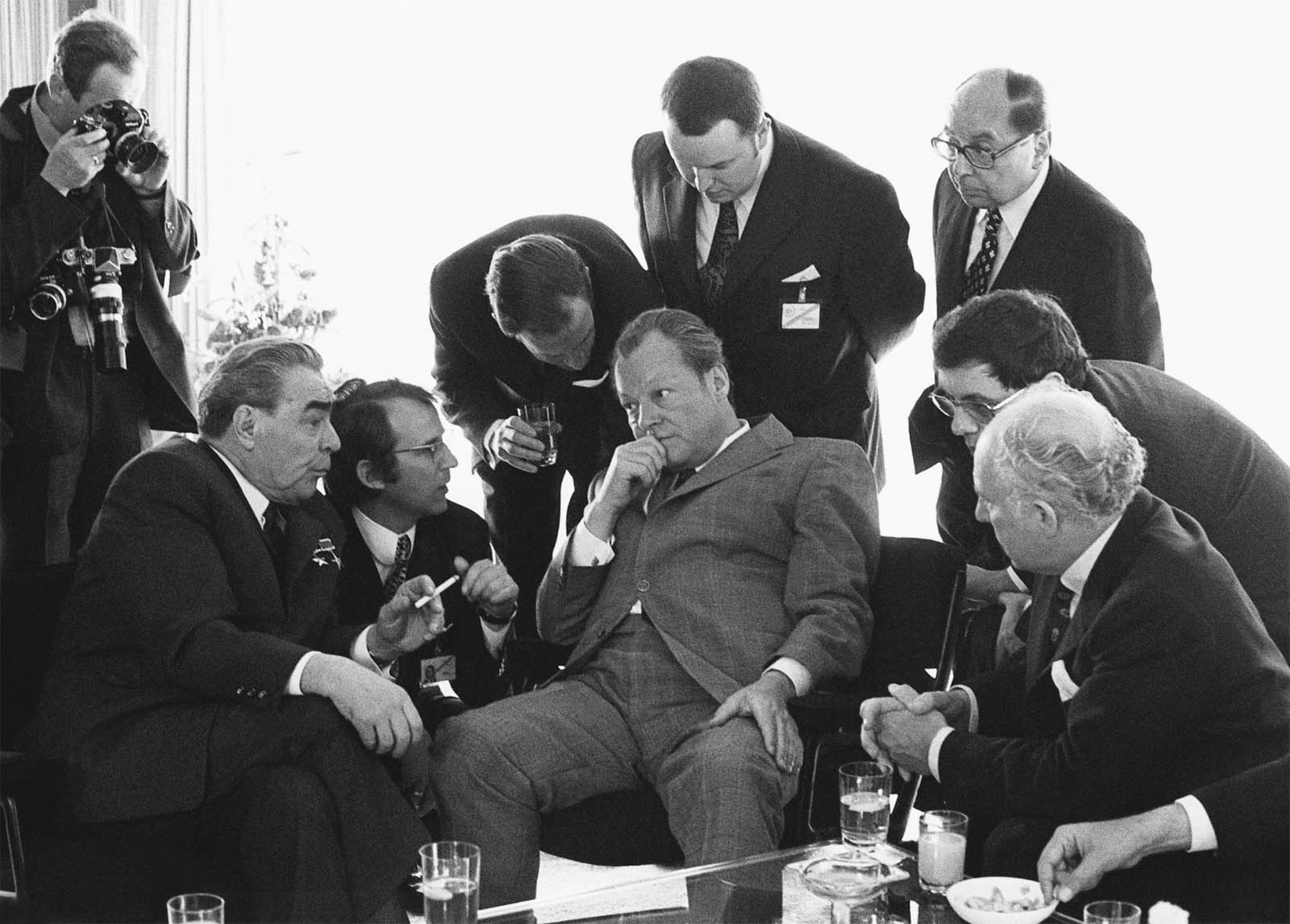
 

Barbara Klemm (German, b. 1939) 'Leonid Brezhnev, Willy Brandt, Bonn' 1973


Barbara Klemm (German, b. 1939)
Leonid Brezhnev, Willy Brandt, Bonn
1973
Gelatin Silver Print
© Barbara Klemm, Institut für Auslandsbeziehungen e. V.


Barbara Klemm (German, b. 1939) 'Psychiatric Clinic, Bethel' 1973


Barbara Klemm (German, b. 1939)
Psychiatric Clinic, Bethel
1973
Gelatin Silver Print
© Barbara Klemm, Institut für Auslandsbeziehungen e. V.


Barbara Klemm (German, b. 1939) 'Rostock' 1974


Barbara Klemm (German, b. 1939)
Rostock
1974
Gelatin Silver Print
© Barbara Klemm, Institut für Auslandsbeziehungen e. V.
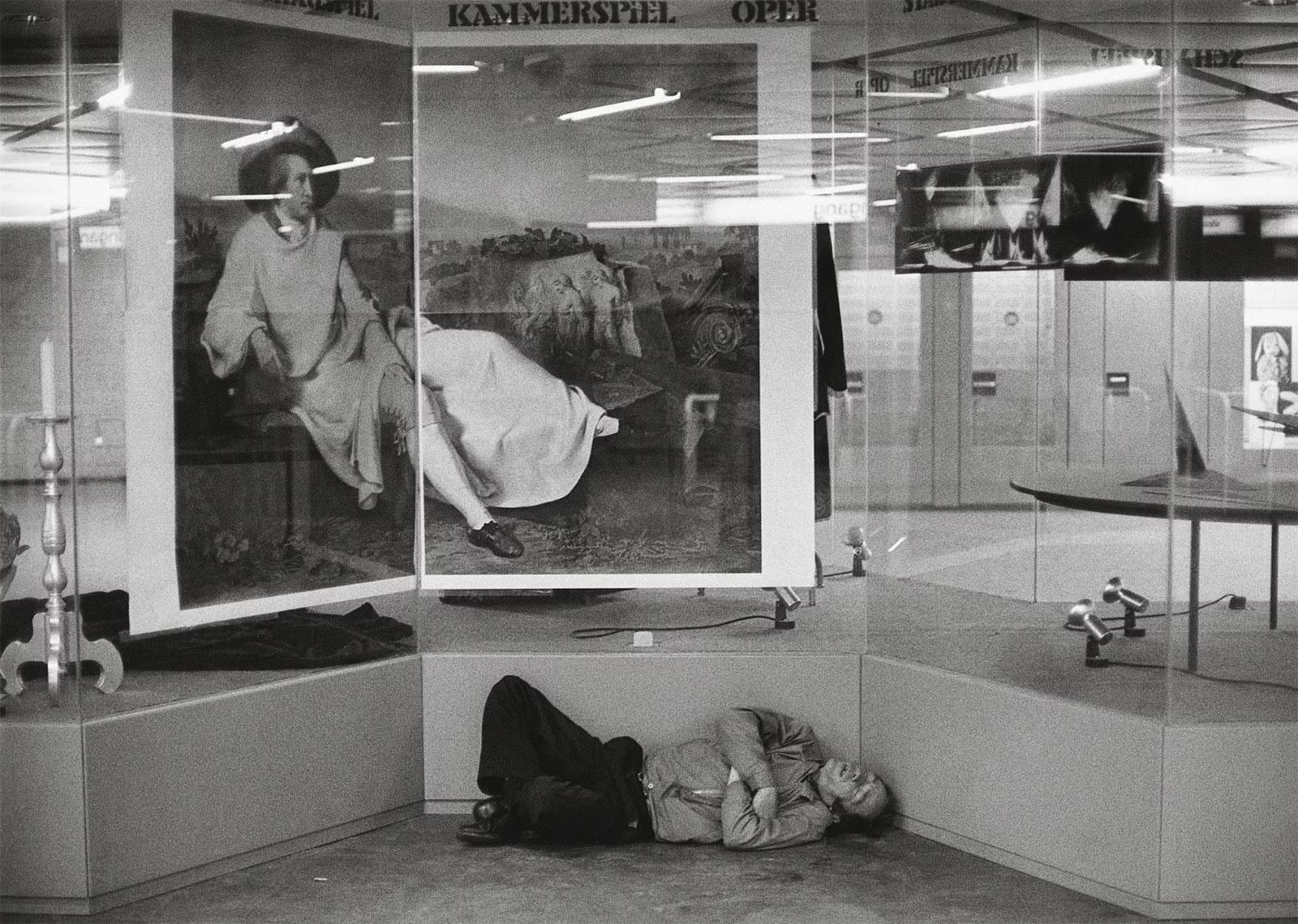
 

Barbara Klemm (German, b. 1939) 'Frankfurt am Main' 1974


Barbara Klemm (German, b. 1939)
Frankfurt am Main
1974
Black and white photograph on baryta paper
300 × 400 mm
© Barbara Klemm, Institut für Auslandsbeziehungen e. V.


Barbara Klemm (German, b. 1939) 'Frauendemonstration gegen § 218' / Women Demonstration against Abortion Laws, Frankfurt am Main 1974


Barbara Klemm (German, b. 1939)
Frauendemonstration gegen § 218 / Women Demonstration against Abortion Laws, Frankfurt am Main
1974
Black and white photograph on baryta paper
400 x 300 mm
© Barbara Klemm, Institut für Auslandsbeziehungen e. V.


Barbara Klemm’s works bear witness to the historical development and present-day reality of a country that was divided for decades. Many of her pictures have become icons of contemporary history, shaping the cultural memory of several generations. It is a body of photographic work that blends documentation and artistic inspiration in a way that is rarely encountered in the German press.

With the exhibition Barbara Klemm: Light and Dark. Photographs from Germany, the ifa – Institut für Auslandsbeziehungen presents photographs by one of Germany’s leading photographers. At GfZK, they will be shown in Germany for the first time in 15 years

Most of the photographs shown in the exhibition were taken for the Frankfurter Allgemeine Zeitung. Starting in 1959, Barbara Klemm began her career at this newspaper working as a laboratory assistant and in plate production. From 1970, she became an editorial photographer focusing primarily on political and feature photography. However, her photographs are far more than coverage photos taken for the moment. They offer an insight into the most significant aspects of social life in both the Federal Republic of Germany and the GDR. A central focus of the exhibition is on photographs taken in East and West Germany before and after reunification. These images portray diverse aspects of social life, including politics, culture, and business. They depict a wide range of social realities – precarious and everyday situations, demonstrations, protests, migrant life, as well as cultural events, mass gatherings and urban space.

With an unerring instinct for the essence of a situation, the photographer captures moments that reveal far more than what is portrayed on the surface. Her photographs, as Barbara Klemm herself describes, reveal the “distillation of an action” – and, in doing so, the distillation of history itself.

 Text from the GfZK website
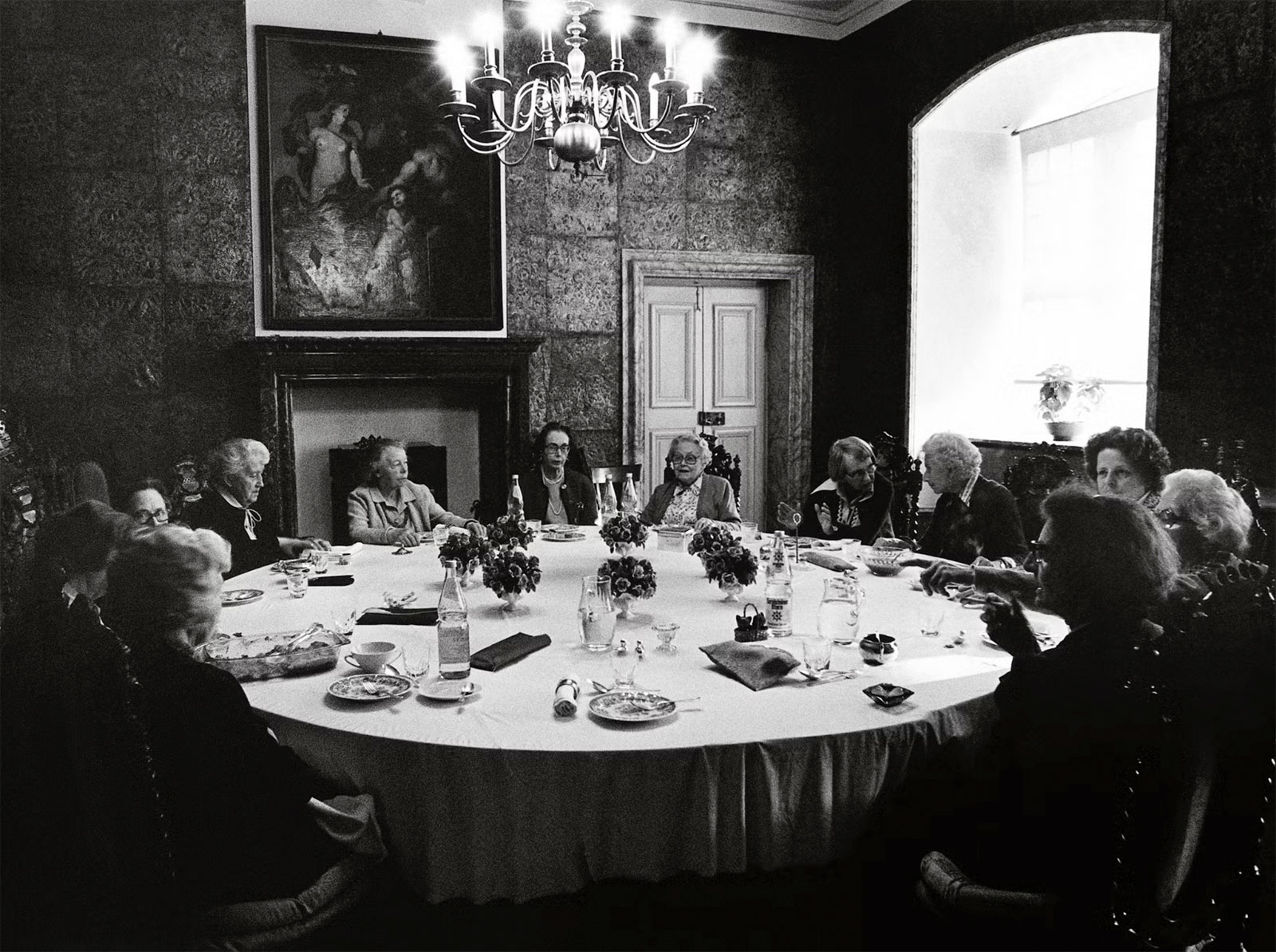
 

Barbara Klemm (German, b. 1939) 'Stift Ehreshoven, Loope' 1977


Barbara Klemm (German, b. 1939)
Stift Ehreshoven, Loope
1977
Black and white photograph on baryta paper
300 × 400 mm
© Barbara Klemm, Institut für Auslandsbeziehungen e. V.
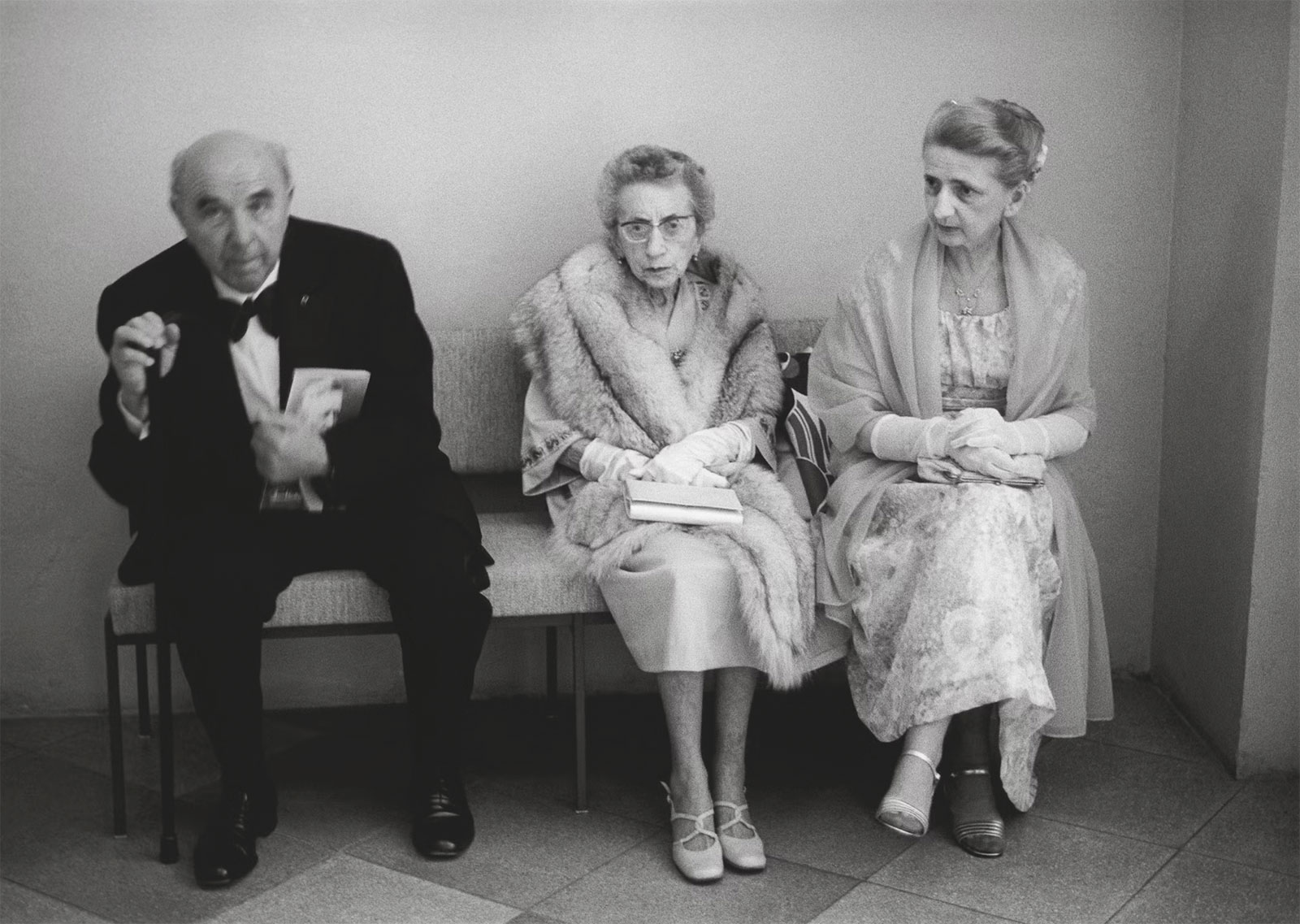
 

Barbara Klemm (German, b. 1939) 'Bayreuth' 1977


Barbara Klemm (German, b. 1939)
Bayreuth
1977
Black and white photograph on baryta paper
300 × 400 mm
© Barbara Klemm, Institut für Auslandsbeziehungen e. V.
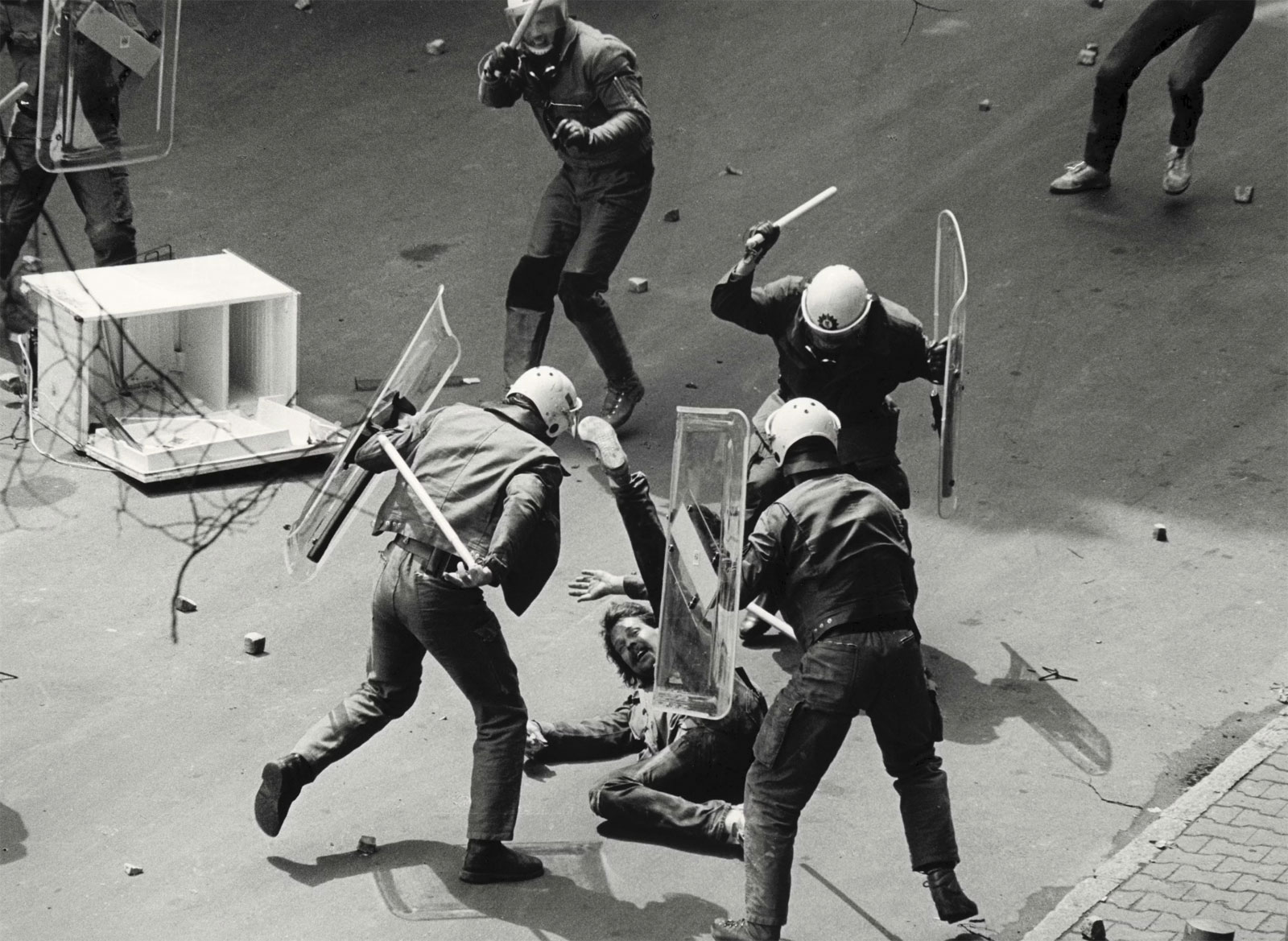
 

Barbara Klemm (German, b. 1939) 'Ronald Reagan Visits, West Berlin' 1982


Barbara Klemm (German, b. 1939)
Ronald Reagan Visits, West Berlin
1982
Black and white photograph on baryta paper
300 × 400 mm
© Barbara Klemm, Institut für Auslandsbeziehungen e. V.
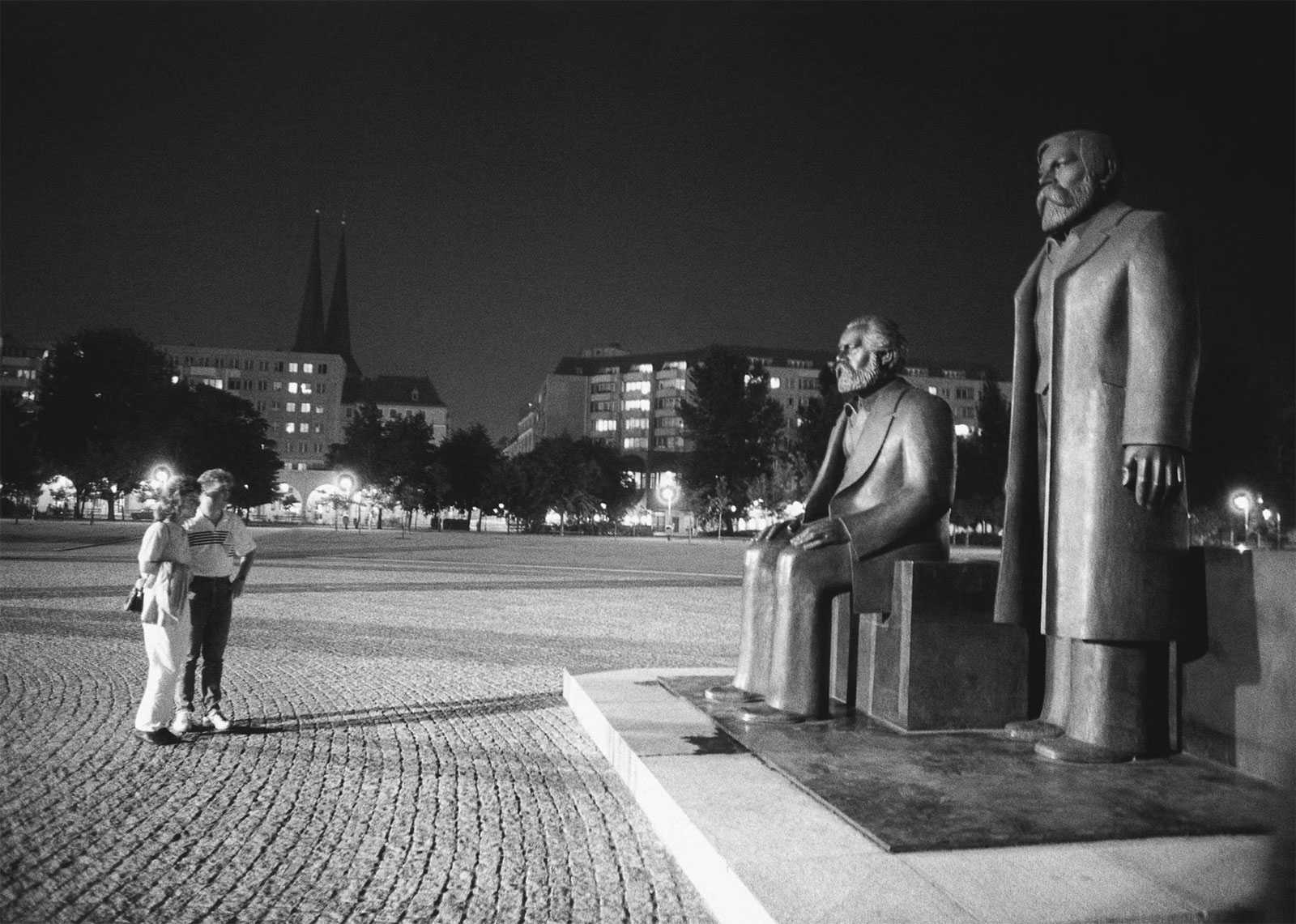
 

Barbara Klemm (German, b. 1939) 'Monument to Marx and Engels, East Berlin' 1987


Barbara Klemm (German, b. 1939)
Monument to Marx and Engels, East Berlin
1987
Black and white photograph on baryta paper
300 × 400 mm
© Barbara Klemm, Institut für Auslandsbeziehungen e. V.


Barbara Klemm (German, b. 1939) 'At the Reichstag, West Berlin' 1987


Barbara Klemm (German, b. 1939)
At the Reichstag, West Berlin
1987
Gelatin Silver Print
© Barbara Klemm, Institut für Auslandsbeziehungen e. V
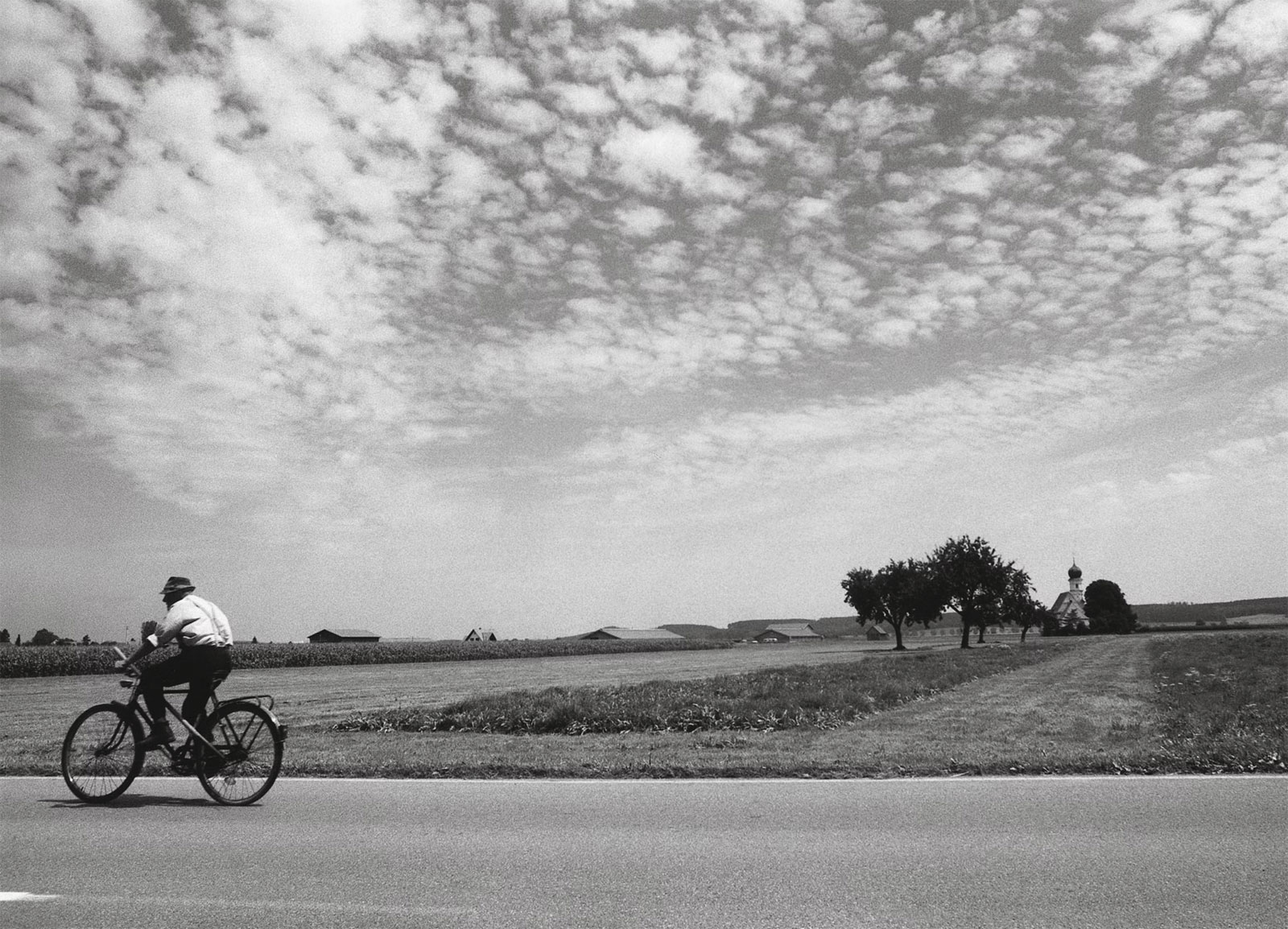
 

Barbara Klemm (German, b. 1939) 'Hawangen' 1988


Barbara Klemm (German, b. 1939)
Hawangen
1988
Black and white photograph on baryta paper
300 × 400 mm
© Barbara Klemm, Institut für Auslandsbeziehungen e. V.
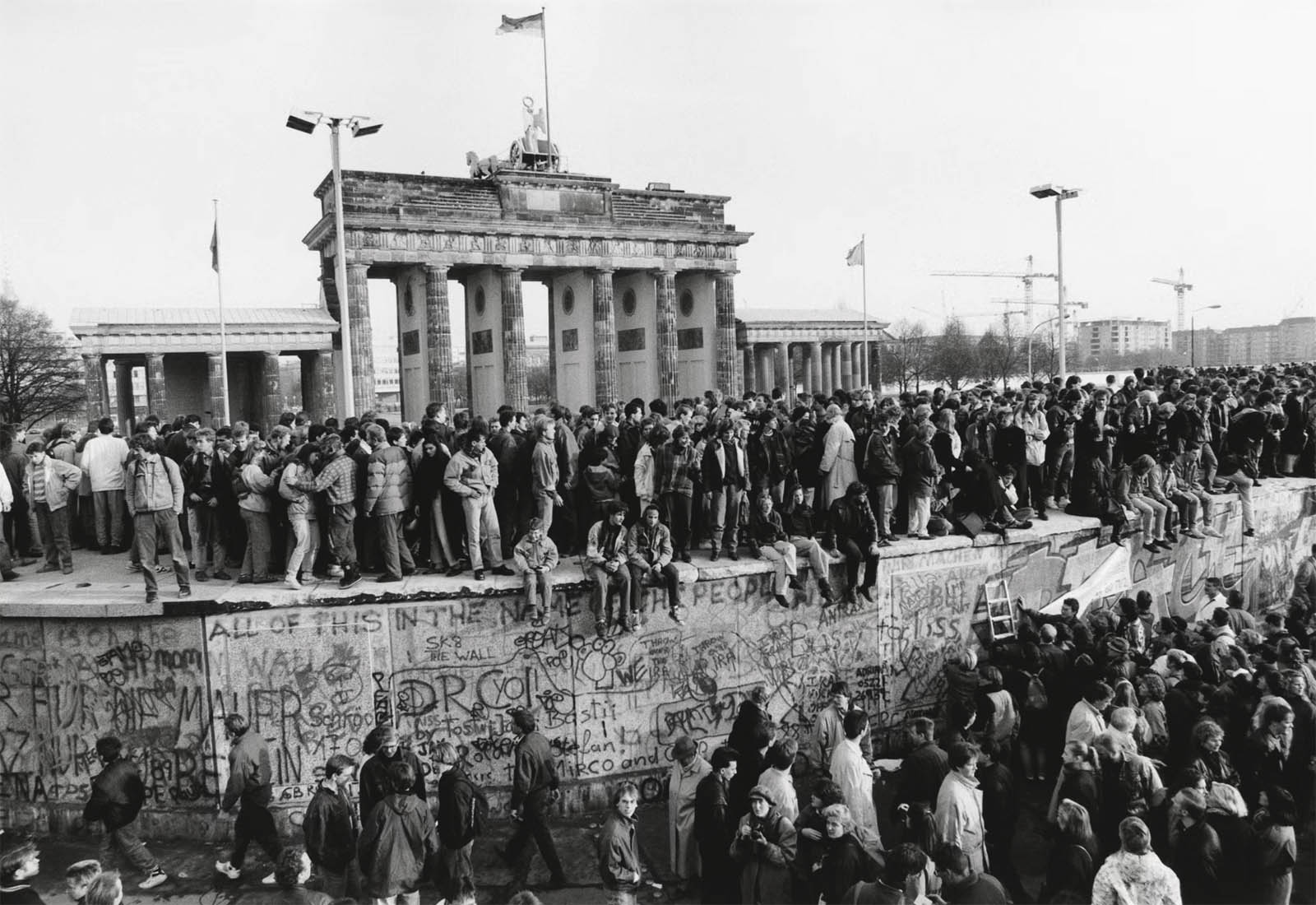
 

Barbara Klemm (German, b. 1939) 'The Fall of the Wall, Berlin, 10 November 1989' 1989


Barbara Klemm (German, b. 1939)
The Fall of the Wall, Berlin, 10 November 1989
1989
Gelatin Silver Print
© Barbara Klemm, Institut für Auslandsbeziehungen e. V


Photography as documentation and artistic inspiration

Many of Klemm’s photographs have become “icons of contemporary history” and have shaped the cultural memory of several generations. It is a photographic work that combines documentation and artistic inspiration in a way rarely found in the German press. Barbara Klemm adds her own perspective to the supposedly objective documentary and follows the design rules of art in her image compositions.

Although these photographs were mostly commissioned by the Frankfurter Allgemeine Zeitung – for which Barbara Klemm worked from 1959 as a laboratory assistant and in cliché production, and from 1970 as an editorial photographer specialising in politics and the arts section – they are far more than reportage images made for the day.

Social insights from East and West Germany before and after reunification

The images show the most important areas of social life in the Federal Republic of Germany and the GDR. A clear focus of the exhibition is on photographs taken in East and West Germany before and after reunification. There are pictures from all areas of social life – from politics, culture and the economy – of precarious and everyday situations of social reality, of demonstrations, protests and the lives of immigrants as well as of cultural events, mass events and urban spaces.

About the exhibition

Many of her pictures have become “icons of contemporary history”, shaping the cultural memory of several generations. She has created a body of photographs which combine the documentary and the artistic in a manner seldom encountered in German press photography. She adds her own perspective to the documentary genre, following artistic principles of composition. Although the majority of these photos were commissioned for the daily newspaper Frankfurter Allgemeine Zeitung they represent far more than coverage of the day’s events. Barbara Klemm first joined the newspaper in 1959, working in the photo lab and producing photographic plates, before becoming a photographer on the editorial board for art, culture and politics in 1970. Her commissioned work for the newspaper took her to many of the most important events and places in the Federal Republic of Germany, the German Democratic Republic and in numerous other countries. Photos of East and West Germany before and after unification are clearly the focus of this exhibition. It includes pictures from every sphere of society: from politics, culture and the economy, photos that capture unique and often tense moments as well as plain everyday life, photos of demonstrations, protests, and of immigrants, of cultural events, mass gatherings, and urban spaces. And again and again, Barbara Klemm portrays people in those rare moments of being that make life so special.

Barbara Klemm’s photographs stand for concrete social reality. Her sure sense of the true essence of an event allows her to capture moments that tell stories far beyond what the pictures seem to show at first glance. These photos are “action in condensed form”, as Klemm puts it, and thus also a condensed image of history. Her photos of the fall of the Berlin Wall are a dramatic climax to her own narrative of history, and in retrospect, her earlier photos from both sides of the Wall seem to be tracing the two Germanies on their path towards reunification, while her later photos closely observe the consequences of the new order.

Text from ifa – Institut für Auslandsbeziehungen website


Barbara Klemm (German, b. 1939) 'Braunkohleabbau bei Leipzig' / Lignite Mining near Leipzig 1990


Barbara Klemm (German, b. 1939)
Braunkohleabbau bei Leipzig / Lignite Mining near Leipzig
1990
Black and white photograph on baryta paper
300 × 400 mm
© Barbara Klemm, Institut für Auslandsbeziehungen e. V.
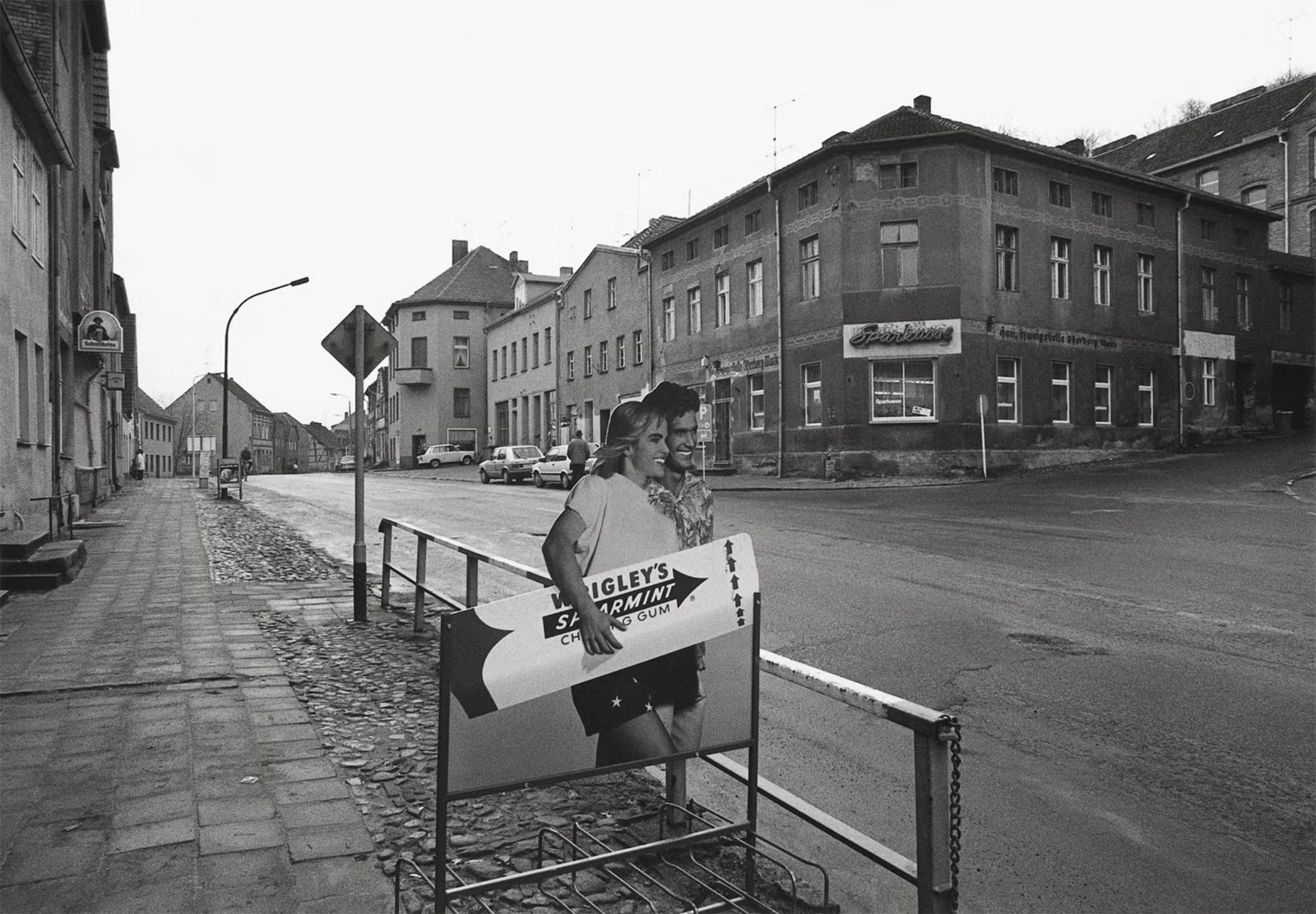
 

Barbara Klemm (German, b. 1939) 'Oderberg, Oderbruch' 1990


Barbara Klemm (German, b. 1939)
Oderberg, Oderbruch
1990
Black and white photograph on baryta paper
300 × 400 mm
© Barbara Klemm, Institut für Auslandsbeziehungen e. V.


Barbara Klemm (German, b. 1939) 'Remnants of the Wall near Lübars, Berlin' 1990


Barbara Klemm (German, b. 1939)
Remnants of the Wall near Lübars, Berlin
1990
Black and white photograph on baryta paper
300 × 400 mm
© Barbara Klemm, Institut für Auslandsbeziehungen e. V.
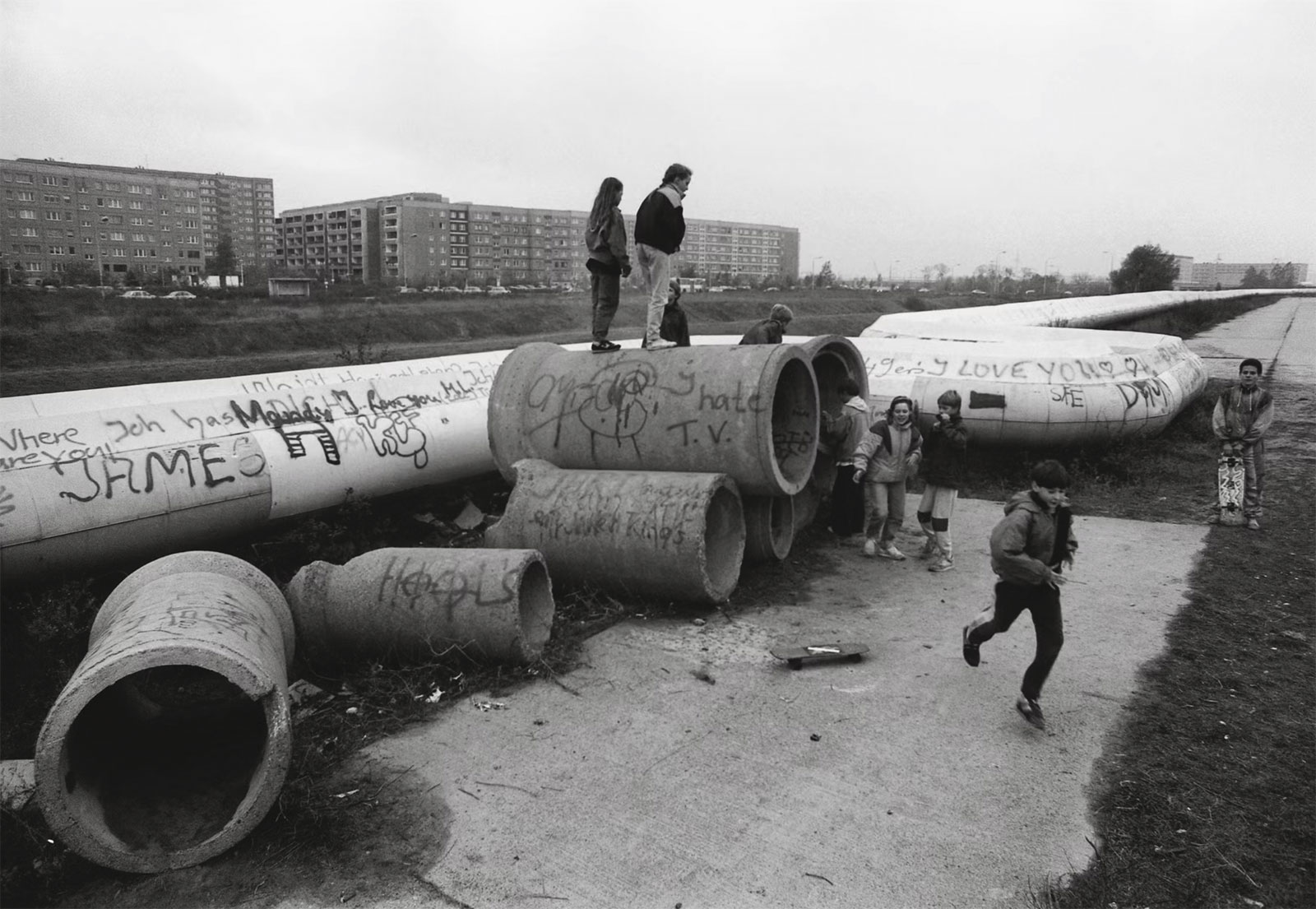
 

Barbara Klemm (German, b. 1939) 'Berlin-Marzahn' 1991


Barbara Klemm (German, b. 1939)
Berlin-Marzahn
1991
Black and white photograph on baryta paper
300 × 400 mm
© Barbara Klemm, Institut für Auslandsbeziehungen e. V.


Barbara Klemm (German, b. 1939) 'Frankfurt am Main' 1993


Barbara Klemm (German, b. 1939)
Frankfurt am Main
1993
Black and white photograph on baryta paper
300 × 400 mm
© Barbara Klemm, Institut für Auslandsbeziehungen e. V.
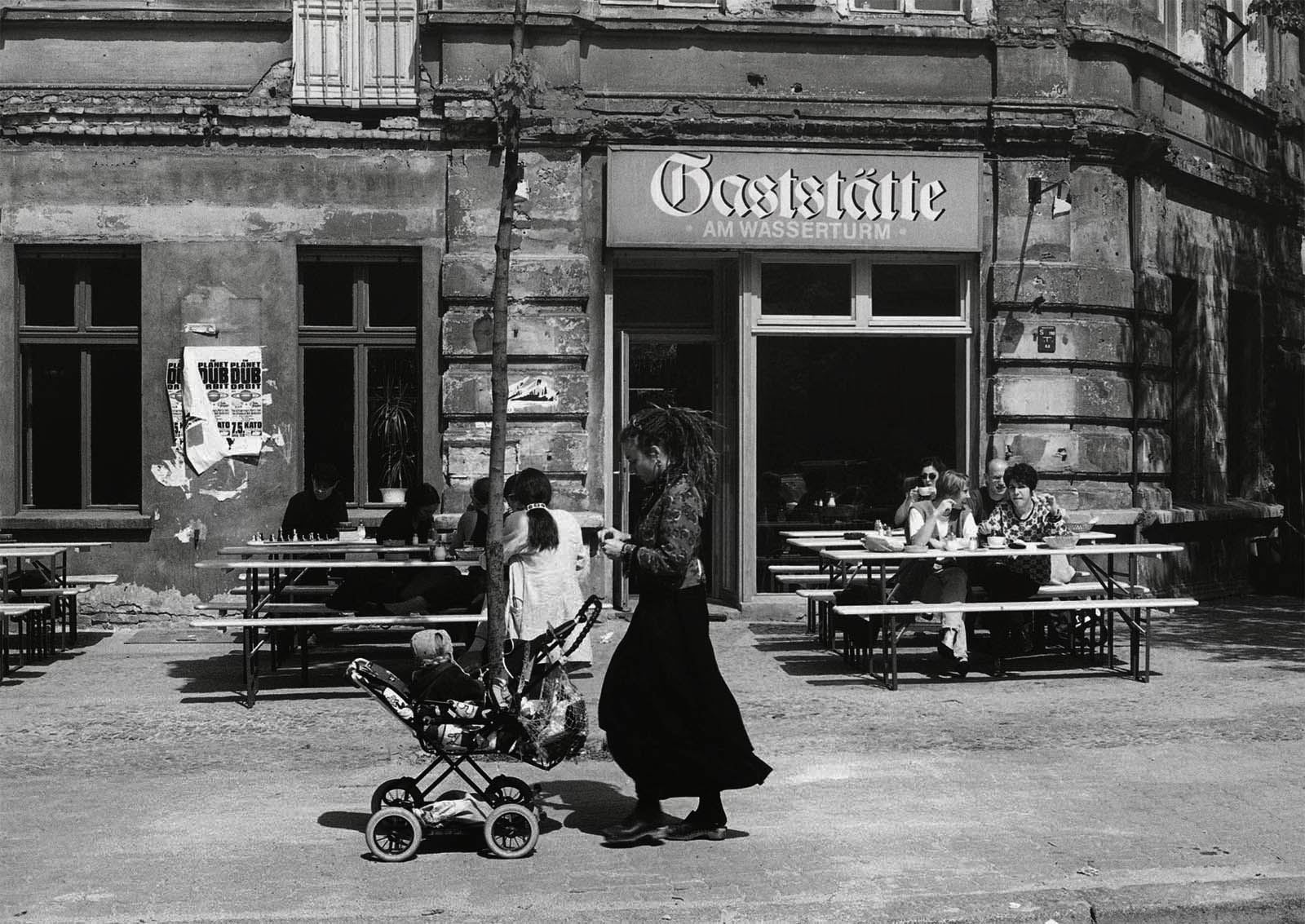
 

Barbara Klemm (German, b. 1939) 'Prenzlauer Berg, Berlin' 1994


Barbara Klemm (German, b. 1939)
Prenzlauer Berg, Berlin
1994
Black and white photograph on baryta paper
300 × 400 mm
© Barbara Klemm, Institut für Auslandsbeziehungen e. V.
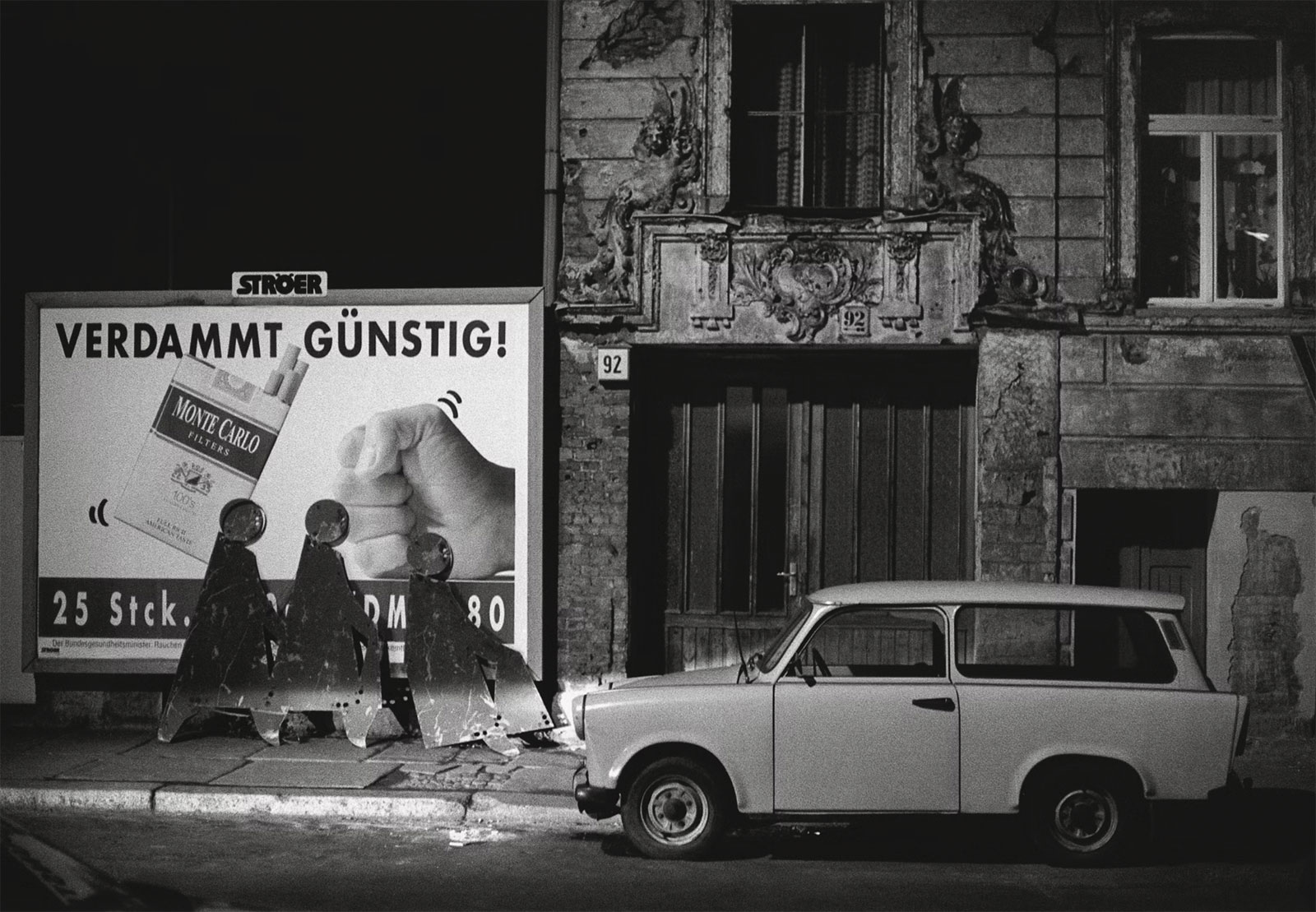
 

Barbara Klemm (German, b. 1939) 'Oranienburger Straße, Berlin' 1994


Barbara Klemm (German, b. 1939)
Oranienburger Straße, Berlin
1994
Black and white photograph on baryta paper
300 × 400 mm
© Barbara Klemm, Institut für Auslandsbeziehungen e. V.
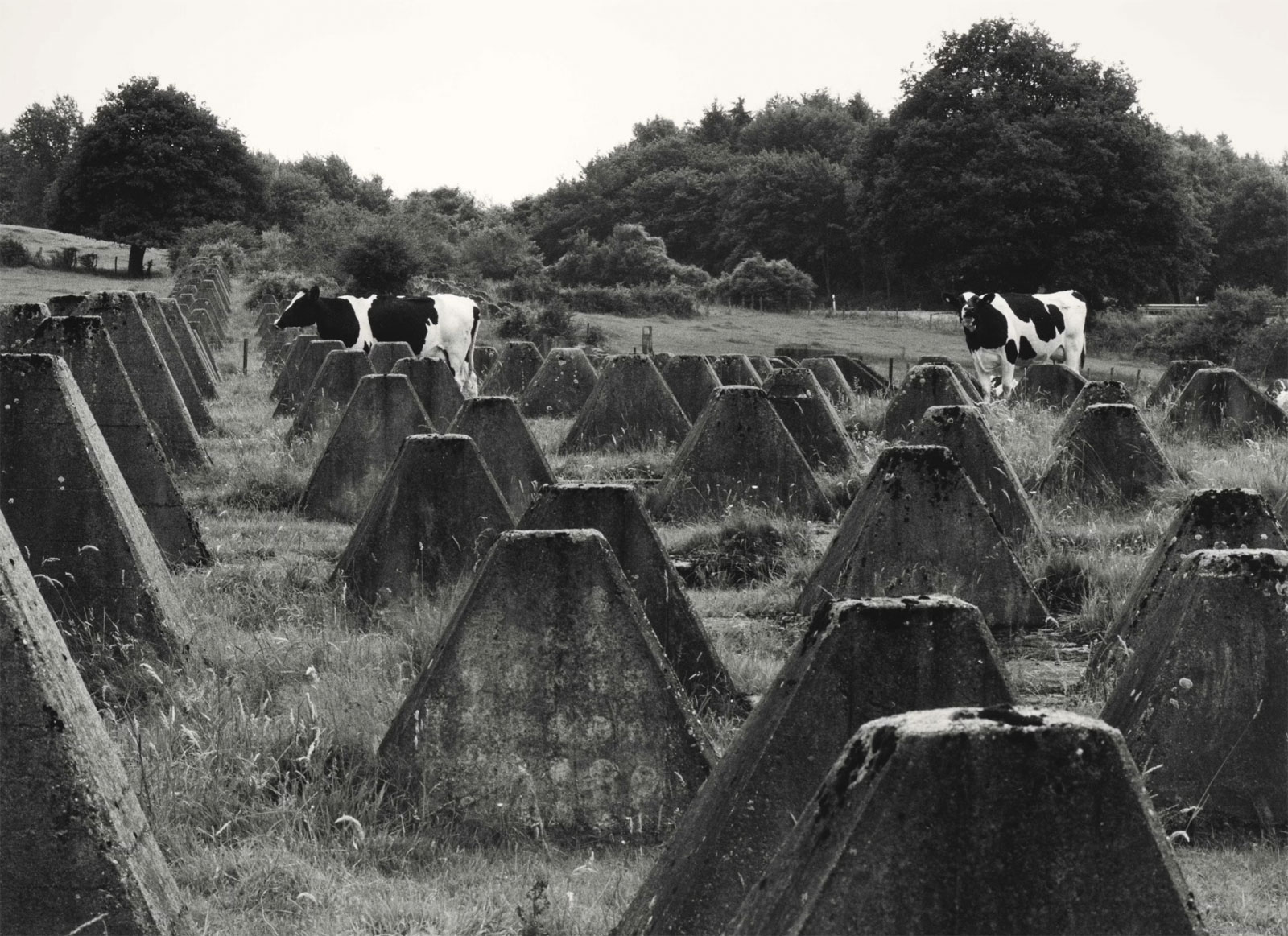
 

Barbara Klemm (German, b. 1939) 'West Wall, near Aachen' 1998


Barbara Klemm (German, b. 1939)
West Wall, near Aachen
1998
Black and white photograph on baryta paper
300 × 400 mm
© Barbara Klemm, Institut für Auslandsbeziehungen e. V.
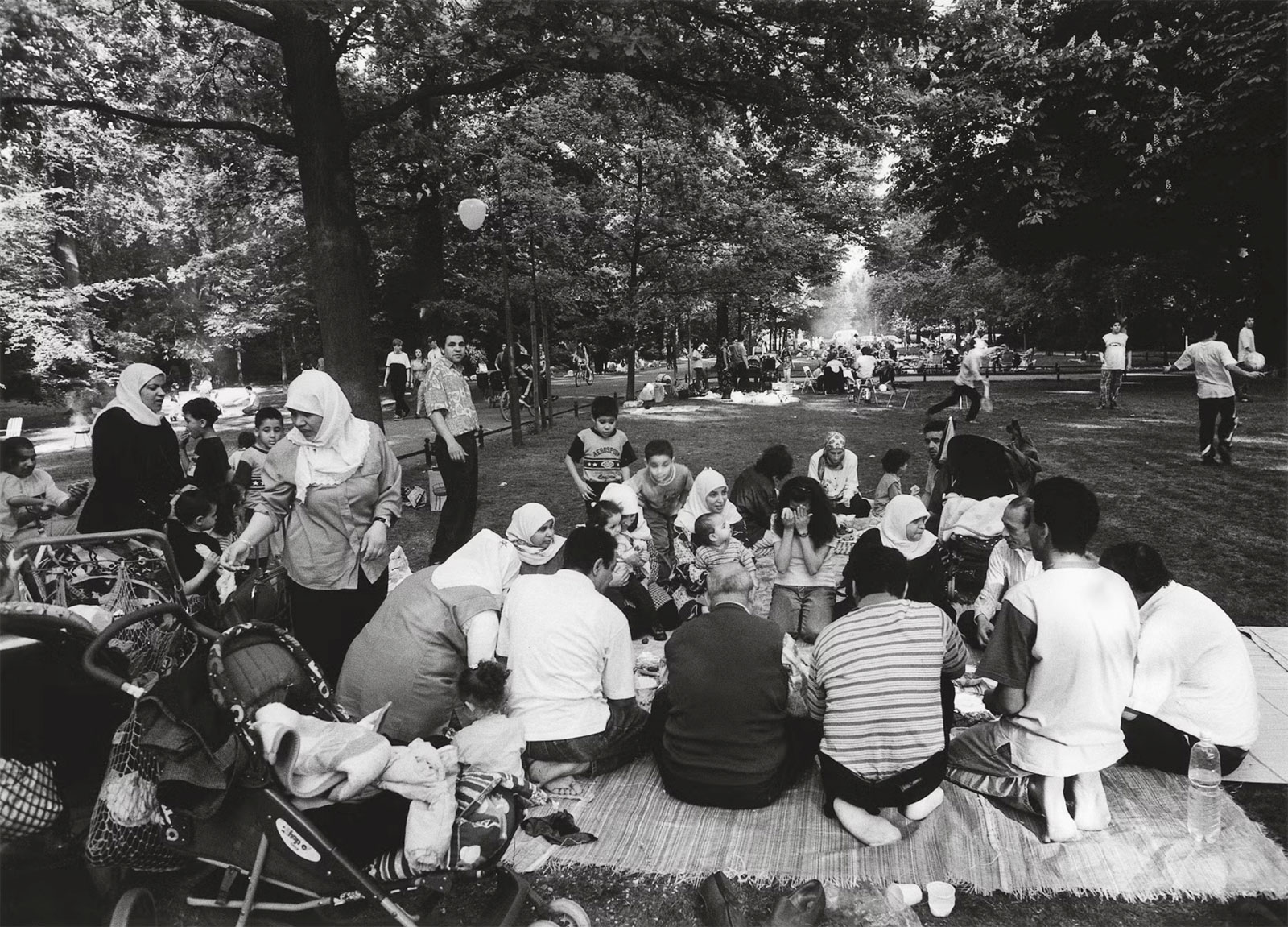
 

Barbara Klemm (German, b. 1939) 'Berlin' 1998


Barbara Klemm (German, b. 1939)939)
Berlin
1998
Black and white photograph on baryta paper
300 × 400 mm
© Barbara Klemm, Institut für Auslandsbeziehungen e. V.


GfZK-Villa
Karl-Tauchnitz-Str. 11
04107 Leipzig

Opening hours:
Tue - Fri: 2pm – 7pm
Sat - Sun: 12am – 6pm
GfZK-Villa website

Arc One Gallery website

LIKE ART BLART ON FACEBOOK

Exhibition: ‘The Aftermath of Conflict: Jo Ractliffe’s Photographs of Angola and South Africa’ at The Metropolitan Museum of Art, New York

Exhibition dates: 24th August 2015 – 3rd January 2016


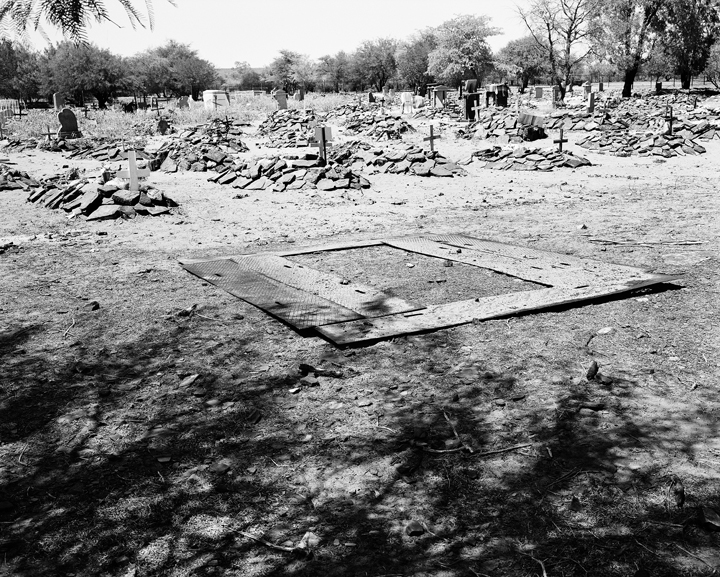
Jo Ractliffe (South African, b. 1961) 'Template for digging graves, Pomfret' 2013


Jo Ractliffe (South African, b. 1961)
Template for digging graves, Pomfret
2013
Inkjet print, 2015
Height: 14 3/16 in. (36 cm)
Width: 17 11/16 in. (45 cm)
On loan from the artist, courtesy Stevenson, Cape Town and Johannesburg
© Jo Ractliffe. Courtesy of Stevenson, Cape Town and Johannesburg


The photograph as unoccupied land

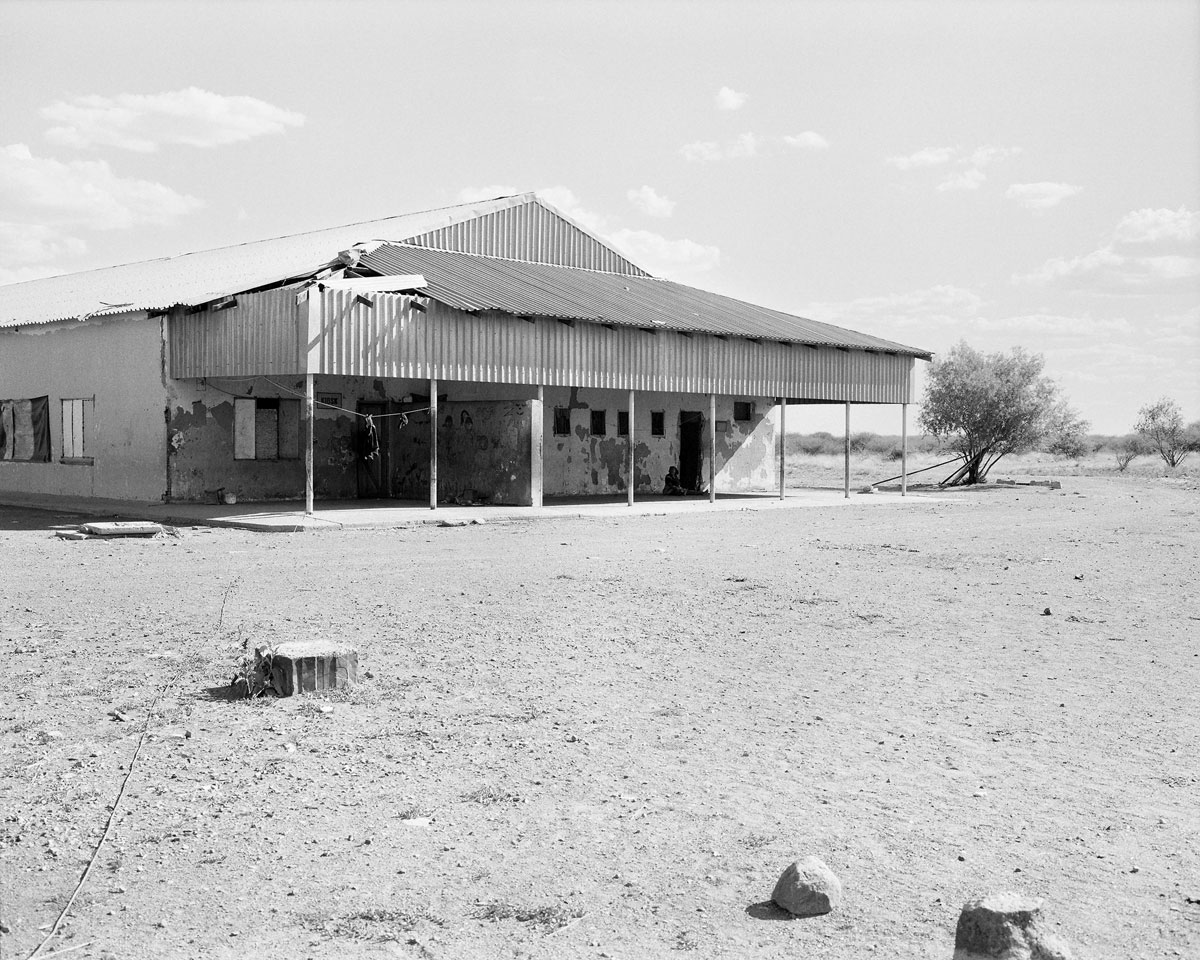
To be frank, I am not enamoured of these photographs. They seem to be conceptual ideas masquerading as documentary photographs that evidence a lazy way of seeing the world, one in which the untold narrative has become an empty spectacle. The story, such as it is, is only narrativised by the accompanying text. If an image cannot stand on its own two feet in and of itself without lines of text to support its supposition, then it is not doing its job properly.

The framing is sloppy and the focus of the images is poor. For example, the focus of Template for digging graves, Pomfret (above) is the shadow at the front of the photograph, where the real focus should have been the template and the graves beyond with their horizontals and verticals. This would have made for a much stronger photograph because the foreground and the background are extraneous to the image.

Ractliffe really needs to look at the documentary photographers of the 19th century to see how it is done. The aftermath of conflict photographs of the American Civil War by photographers such as Matthew Brady, Alexander Gardner and Timothy O’Sullivan (and here I am not talking about the battlefield photographs) have a robust narrative quality that this artist could only ever hope to achieve. Their photographs possess a clear and consistent vision, a deep aesthetic that is emergent, based on transparence, a ruddy darkness and textural ambience – rather than an aesthetic that is superficially descriptive of surfaces.

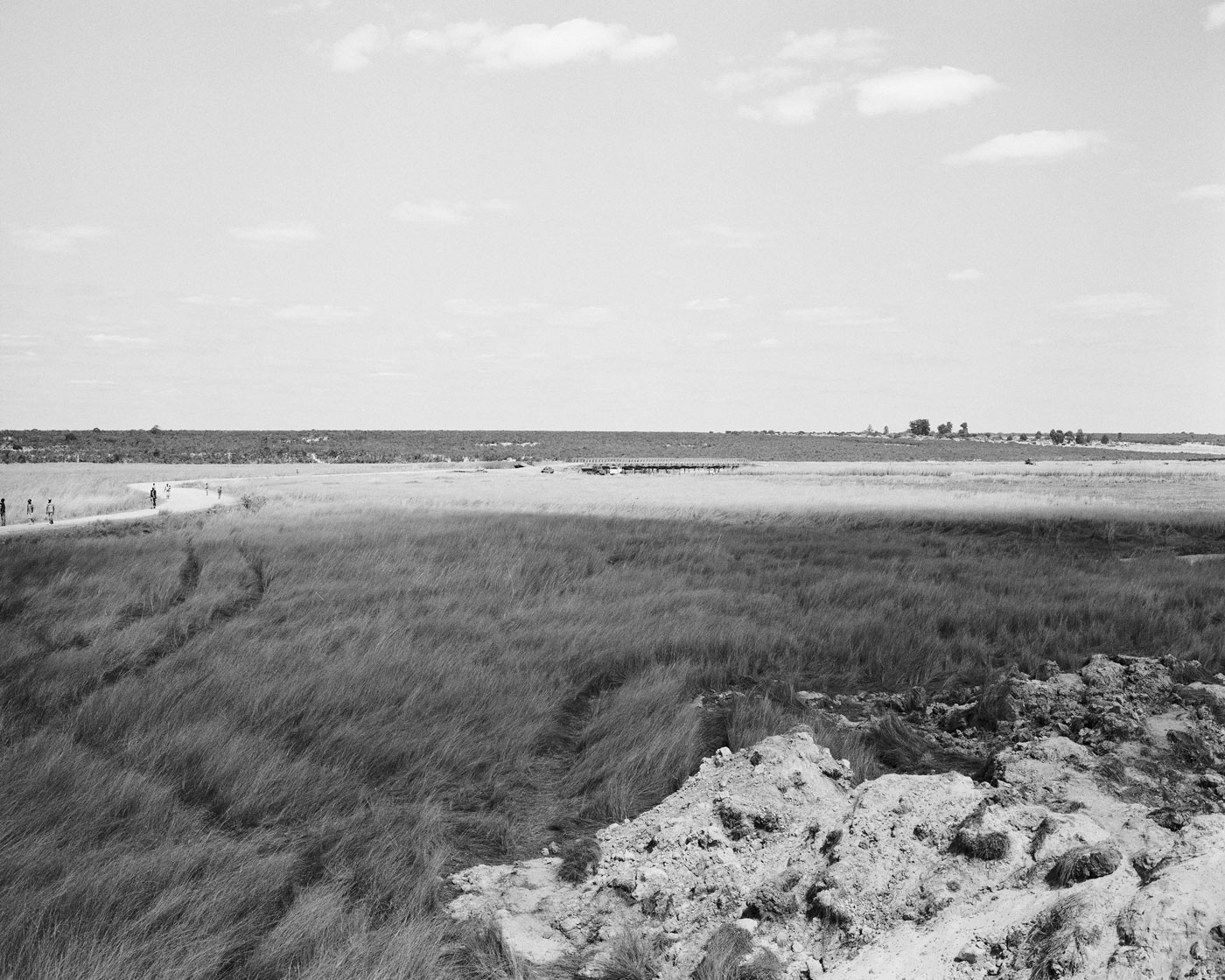
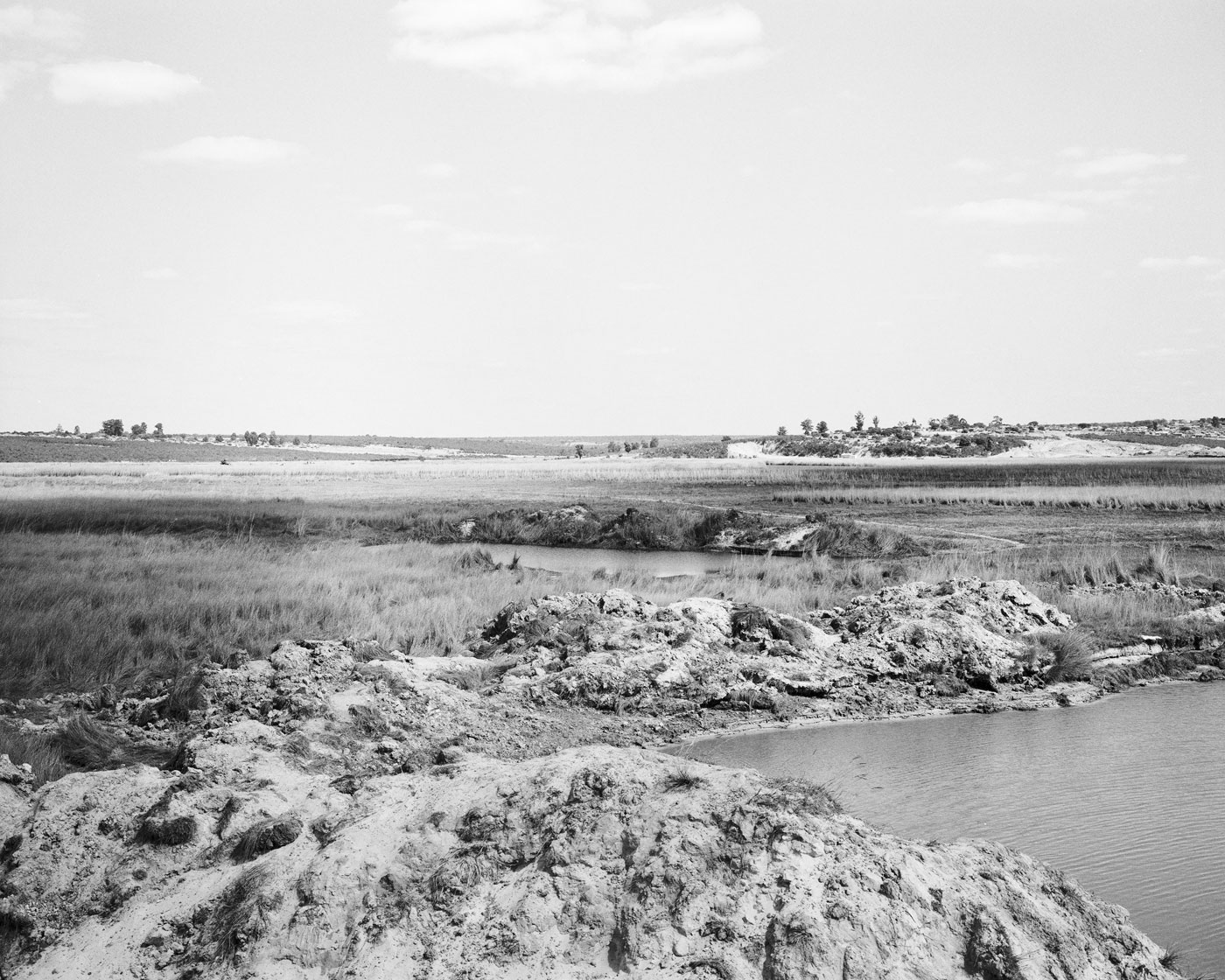
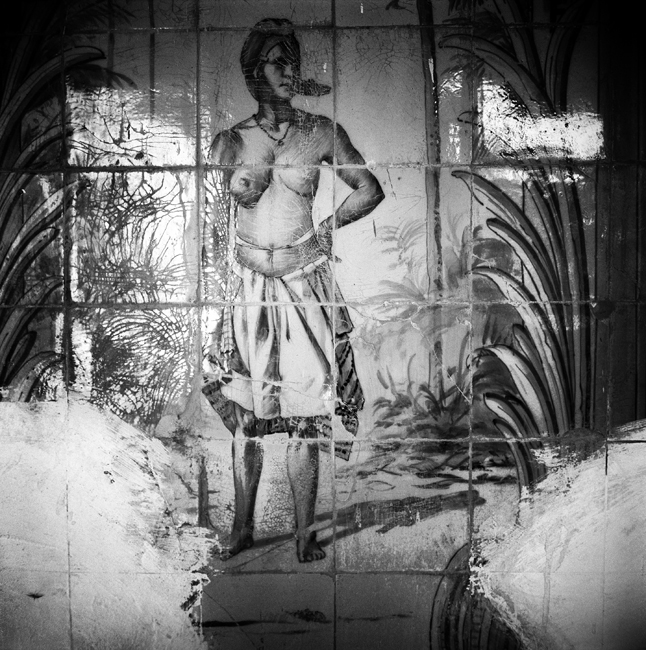
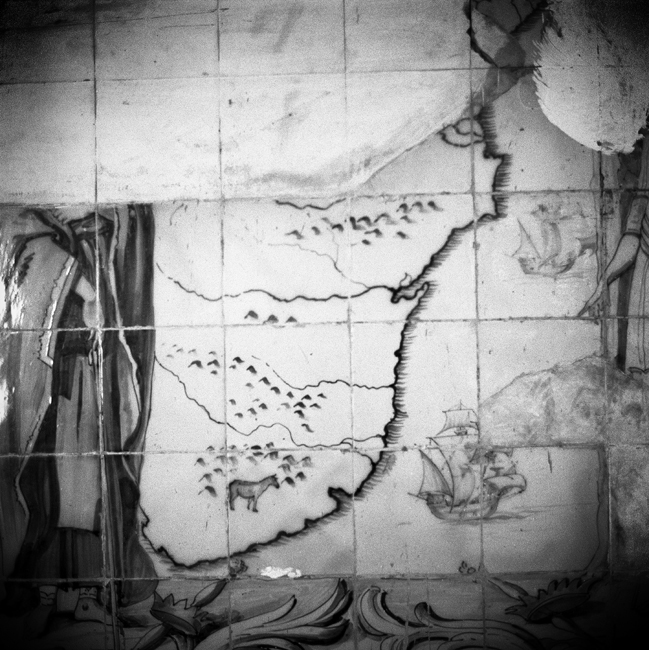
This lack of understanding of the depth of contested place / disputed histories can be no better illustrated than in the diptych The battlefield at Cuito Cuanavale (2009, below) whose photographs really say nothing about what went on here. The photographs are prescriptive (relating to the imposition or enforcement of a rule or method) statements constructed by the artist, with no emotion and little ambience or feeling for subject matter. They are not even very good descriptive photographs of the landscape. Photographs such as Mural depicting Fidel Castro, Agostinho Neto and Leonid Brezhnev, circa 1975, Viriambundo (2009, below) and Details of tiled murals at the Fortaleza De São Miguel, depicting Portuguese explorations in Africa (2007, below) are worse, recording inarticulate artefacts at a level best reserved for student work.

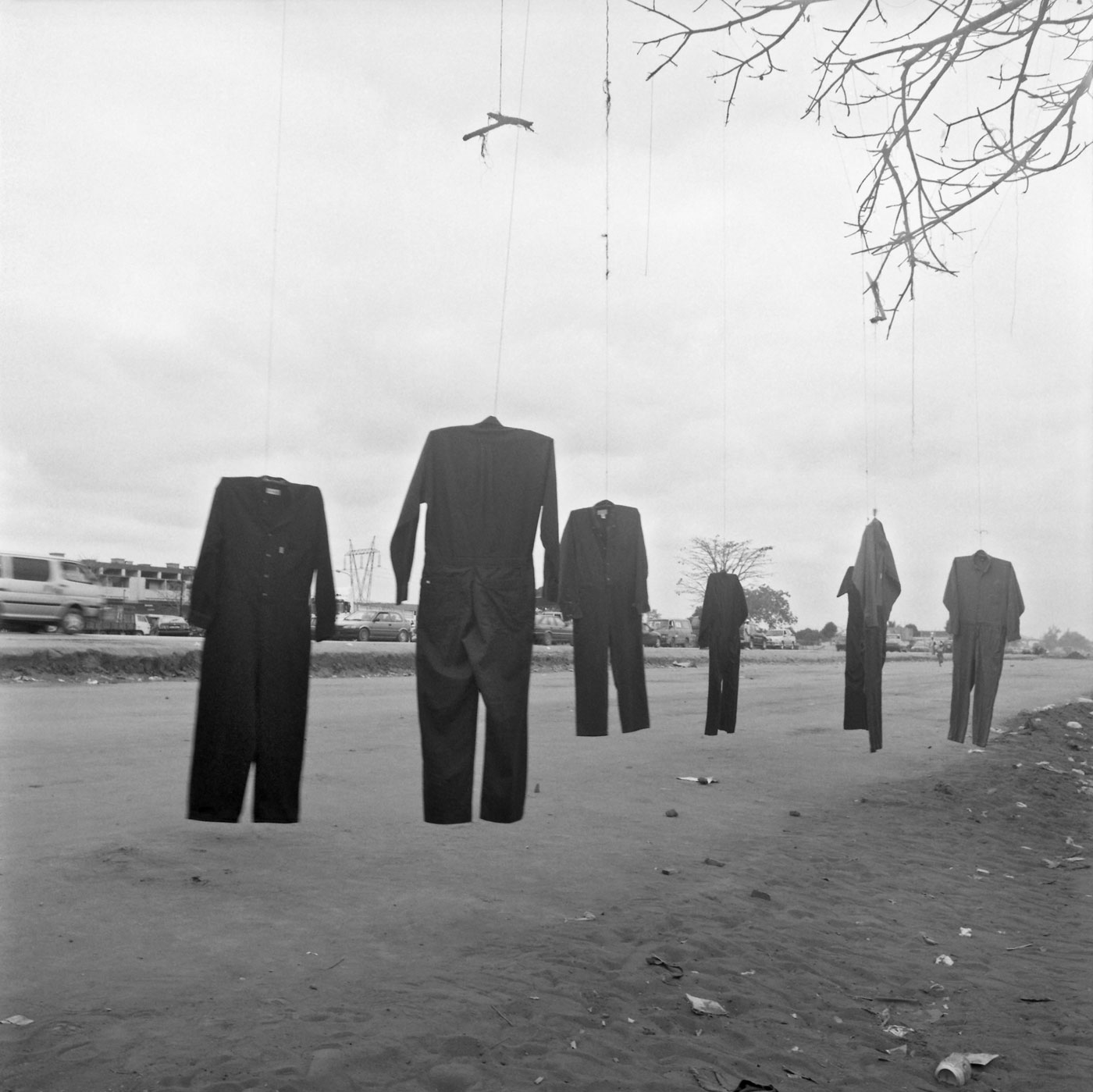
By far the most interesting and powerful photograph is Roadside stall on the way to Viana (2007, below). This photograph is memorable as so many of the other are not, because it possesses a sense of disposition, of alienation, ambience and the weight of history all bound up in those hanging bodies.

Dr Marcus Bunyan


Many thankx to The Metropolitan Museum of Art for allowing me to publish the photographs in the posting. Please click on the photographs for a larger version of the image.


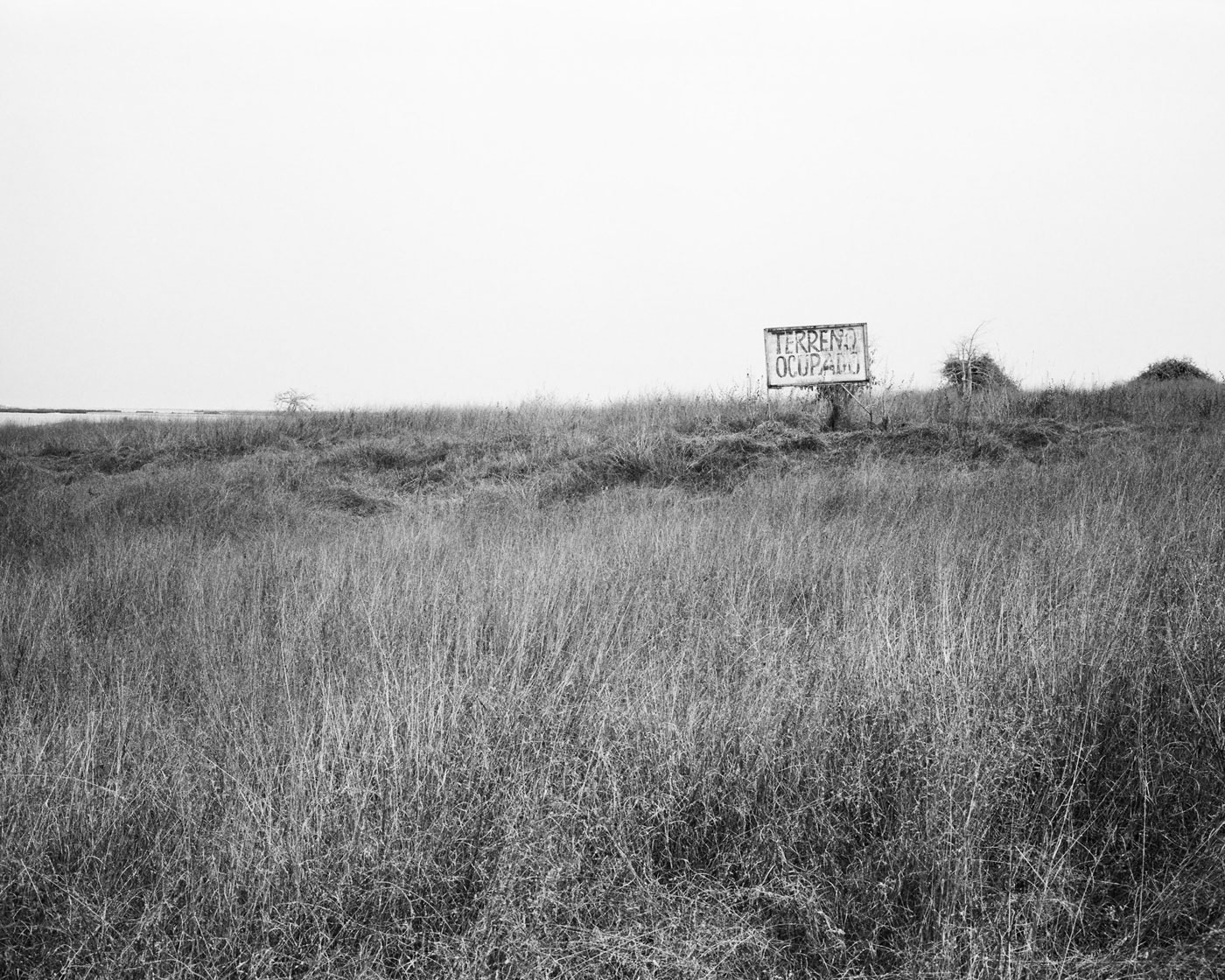
Jo Ractliffe (South African, b. 1961) 'Vacant plot near Atlantico Sul' 2007


Jo Ractliffe (South African, b. 1961)
Vacant plot near Atlantico Sul
2007
From the series Terreno Ocupado
Inkjet print, 2015
On loan from the artist, courtesy Stevenson, Cape Town and Johannesburg
© Jo Ractliffe. Courtesy of Stevenson, Cape Town and Johannesburg


This coarse, grassy landscape appears at first glance to be empty, yet the billboard declaring “Terreno Ocupado” – Portuguese for “occupied land” – reveals this site in Luanda as both active and politically charged. It points to Angola’s long history of occupation and territorial turmoil, from the arrival of Portuguese explorers in 1483 through to the tangled twentieth-century conflicts that spilled over into neighbouring countries. It also points to the contested terrain that is today’s Luanda. With this image, the opening photograph of the first series, Ractliffe sets the scene for her exploration of land, borders, and displacement, themes which thread through all the works featured here.


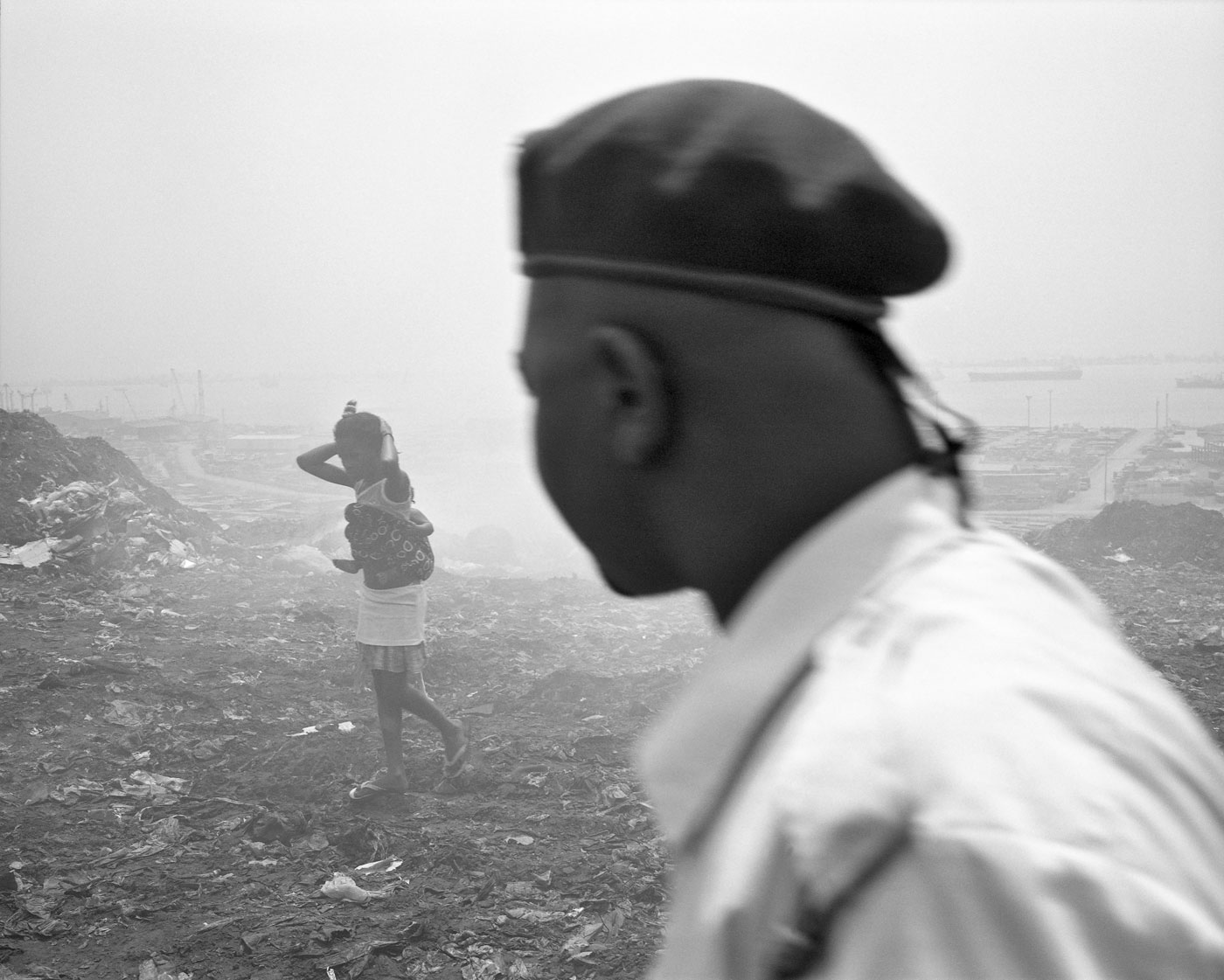
Jo Ractliffe (South African, b. 1961) 'Woman and her baby, Roque Santeiro market' 2007


Jo Ractliffe (South African, b. 1961)
Woman and her baby, Roque Santeiro market
2007
From the series Terreno Ocupado
Inkjet print, 2015
On loan from the artist, courtesy Stevenson, Cape Town and Johannesburg
© Jo Ractliffe. Courtesy of Stevenson, Cape Town and Johannesburg


Conflict between Luanda’s population and its governing elites forms an undercurrent to this photograph of a young woman carrying a baby across litter-strewn ground, observed by a man wearing a military beret. In September 2010, three years after Ractliffe took these photographs and following a protracted dispute between the government and the local community, the Luandan authorities closed down Roque Santeiro and relocated it to a new Chinese-built facility at Panguila, some twelve miles to the north. Although the government cited concerns over insanitary conditions and organised crime, critics argued that the relocation had more to do with repossessing prime real estate for new luxury apartments.


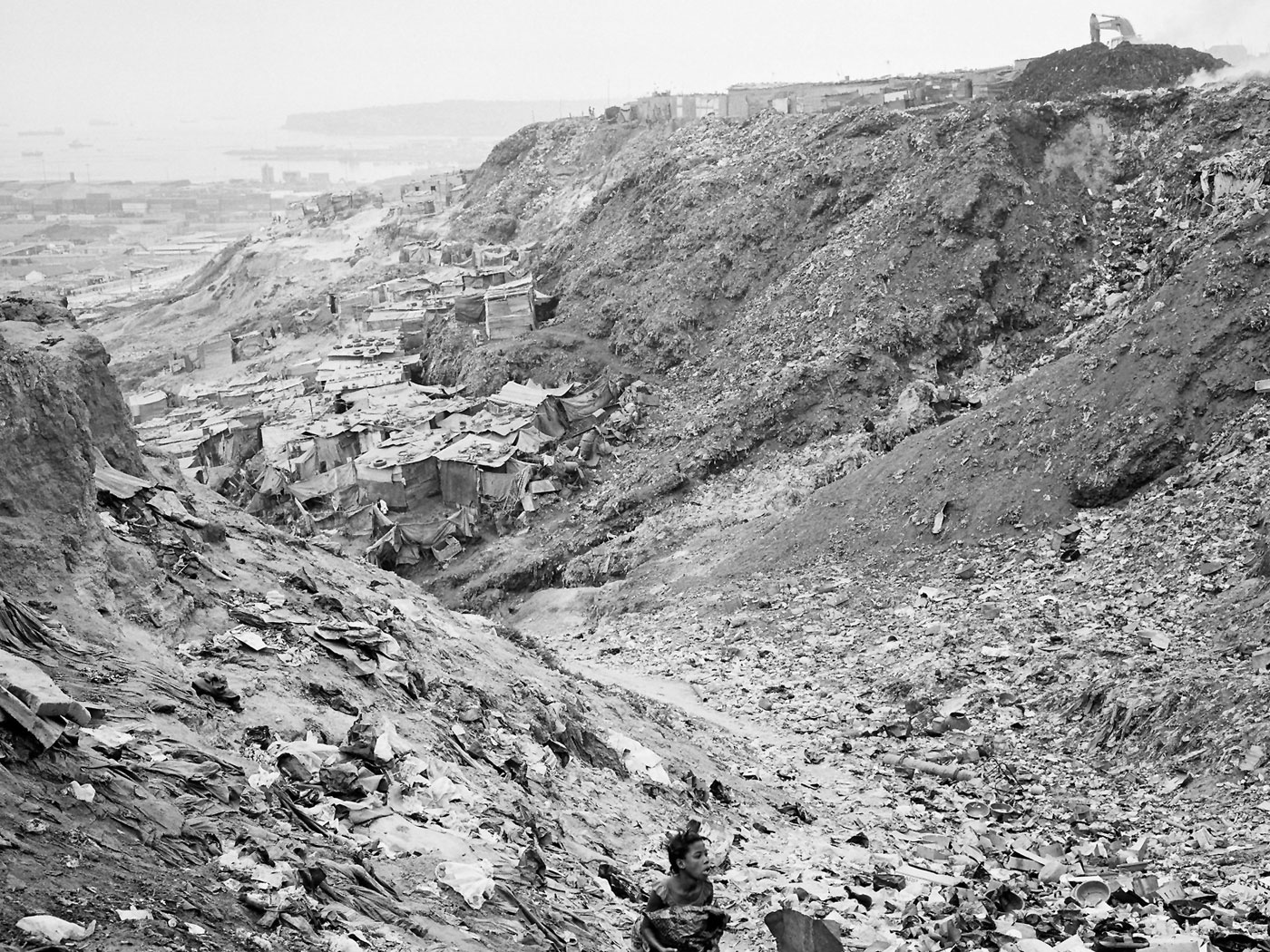
Jo Ractliffe (South African, b. 1961) 'Woman on the footpath from Boa Vista to Roque Santeiro market' 2007


Jo Ractliffe (South African, b. 1961)
Woman on the footpath from Boa Vista to Roque Santeiro market
2007
From the series Terreno Ocupado
Inkjet print, 2015
On loan from the artist, courtesy Stevenson, Cape Town and Johannesburg
© Jo Ractliffe. Courtesy of Stevenson, Cape Town and Johannesburg


Apparently out of breath and clutching a plastic bag, the woman in the foreground of this photograph is making her way up a faintly visible footpath and out of Ractliffe’s field of vision. A digger perches on the cliff top above her, and in the middle distance, a cluster of dwellings clings precariously to the litter-strewn side of the ravine. Boa Vista – “good view” – is one of Luanda’s largest shanty towns, and at the time of this photograph was home to over 50,000 people. Following landslides in 2001 which killed several residents, parts of the neighbourhood were bulldozed and over 4,000 families were evicted from their homes and relocated to tents in other parts of the city while awaiting the construction of their new accommodation.


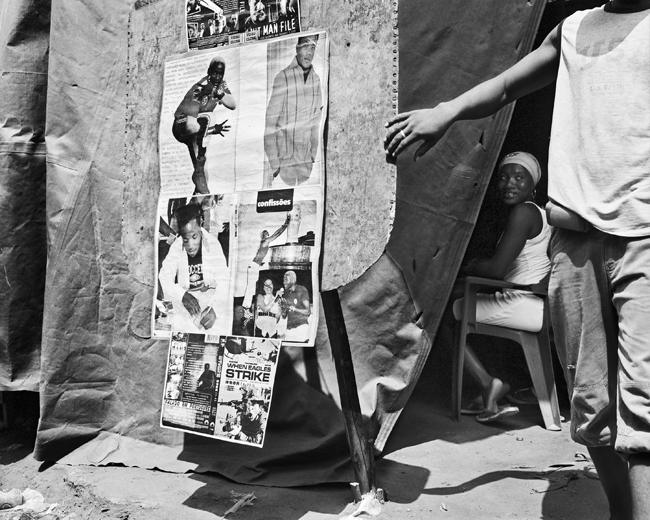
Jo Ractliffe (South African, b. 1961) 'Video club, Roque Santeiro market' 2007


Jo Ractliffe (South African, b. 1961)
Video club, Roque Santeiro market
2007
Inkjet print, 2015
Height: 14 3/16 in. (36cm) Width: 17 11/16 in. (45cm)
On loan from the artist, courtesy Stevenson, Cape Town and Johannesburg
© Jo Ractliffe. Courtesy of Stevenson, Cape Town and Johannesburg


Before its closure in 2010, Roque Santeiro was renowned as the biggest open-air market in sub-Saharan Africa, and the centre of Angola’s informal economy. Established in the 1980s and named after a popular Brazilian soap opera, it flourished during the Angolan Civil War as streams of refugees fled the countryside and came to Luanda, searching for new livelihoods. Everything was for sale in its makeshift stalls, from household items, food, and clothes, to contraband alcohol, cars, and livestock. In this photograph Ractliffe focuses on one of the market’s many video clubs, which were housed in military-style tents and screened action movies on televisions powered by generators.


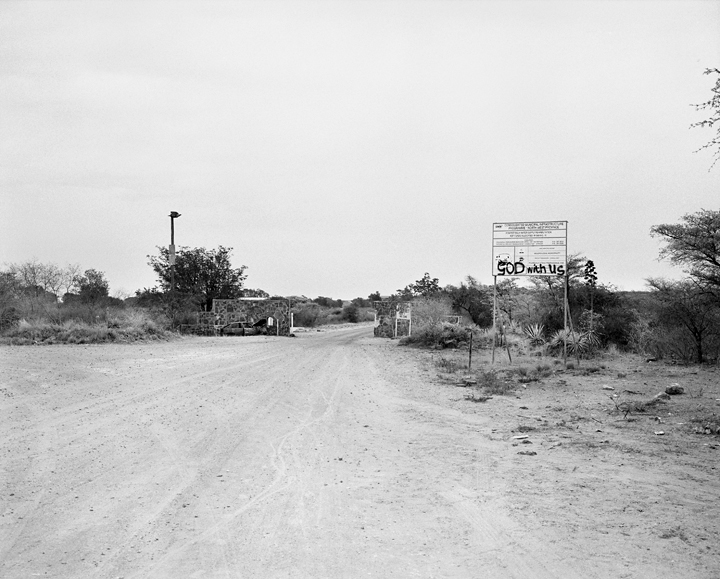
Jo Ractliffe (South African, b. 1961) ''God with us', Pomfret' 2011


Jo Ractliffe (South African, b. 1961)
‘God with us’, Pomfret
2011
Inkjet print, 2015
Height: 17 11/16 in. (45cm) Width: 22 1/16 in. (56cm)
On loan from the artist, courtesy Stevenson, Cape Town and Johannesburg
© Jo Ractliffe. Courtesy of Stevenson, Cape Town and Johannesburg


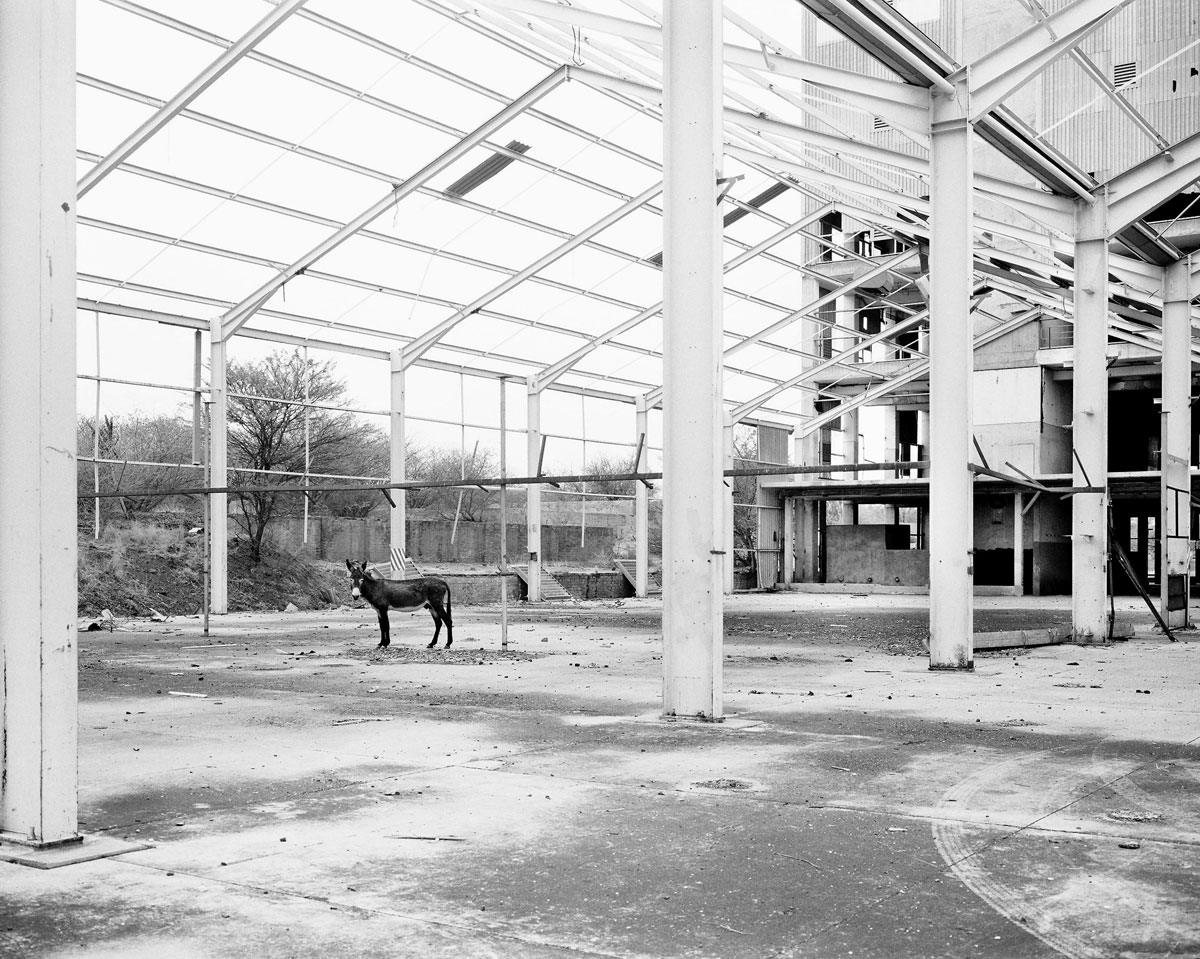
The abandoned mining town of Pomfret is located in the far north of South Africa, near the border with Botswana. After the closure of its asbestos mine, the town was converted into a military base and used to accommodate 32 Battalion, an elite Special Forces unit made up of Angolan soldiers. When the unit was disbanded in 1993, most of the veterans and their families stayed in Pomfret, living in abject conditions without basic services and under constant threat of eviction. Ractliffe has spoken of finding graves there marked only with “Born Angola”; for the veterans whose paths ended here, death in Pomfret was “the final displacement”.


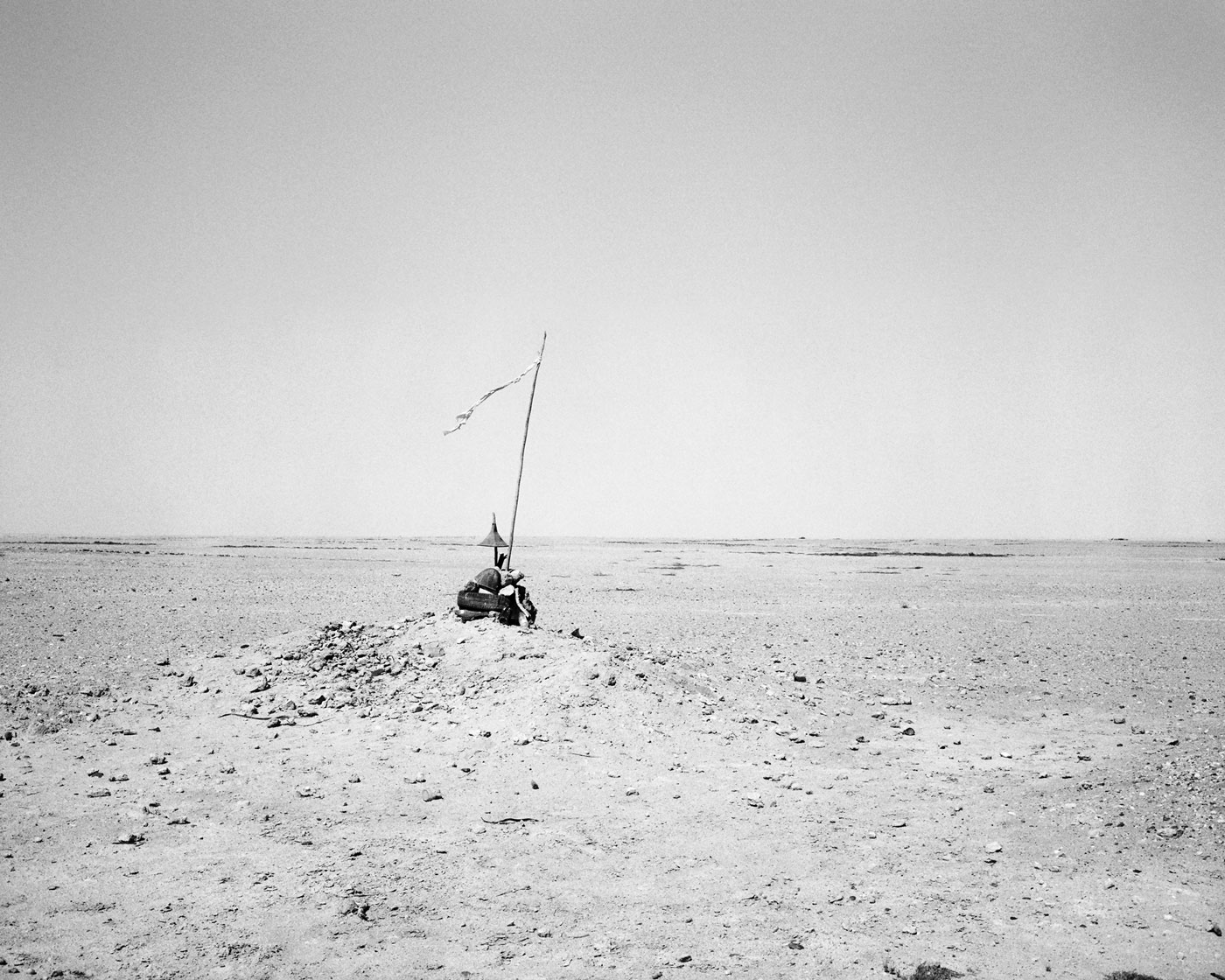
Jo Ractliffe (South African, b. 1961) 'Unidentified memorial in the desert, south of Namibe I' 2009


Jo Ractliffe (South African, b. 1961)
Unidentified memorial in the desert, south of Namibe I
2009
From the series As Terras do Fim do Mundo
Inkjet print, 2015
On loan from the artist, courtesy Stevenson, Cape Town and Johannesburg
© Jo Ractliffe. Courtesy of Stevenson, Cape Town and Johannesburg


In this photograph, an assemblage of objects perches on a stony outcrop, surrounded by a barren expanse of desert. The long pole protruding from the pile is topped with a ragged banner, announcing the presence of this unusual memorial, but giving little away about its exact significance. Ractliffe took this photograph close to the Cuban base at Namibe on Angola’s southwestern coast, where an extensive network of trenches, bunkers, and anti-aircraft defences is located. As Ractliffe has remarked: “there are some very poignant things in the landscape, like these markers, that seem to say ‘I have been here, people have been here.'”


Jo Ractliffe (South African, b. 1961) 'The battlefield at Cuito Cuanavale' 2009 (diptych left)

Jo Ractliffe (South African, b. 1961) 'The battlefield at Cuito Cuanavale' 2009 (diptych right)


Jo Ractliffe (South African, b. 1961)
The battlefield at Cuito Cuanavale (diptych left and right)
2009
From the series As Terras do Fim do Mundo
Inkjet prints, 2015
On loan from the artist, courtesy Stevenson, Cape Town and Johannesburg
© Jo Ractliffe. Courtesy of Stevenson, Cape Town and Johannesburg


Reflecting on this diptych, Ractliffe has observed that “Quite often, sites of significance don’t evidence their historical weight.” It is true that the calm landscape – muddy riverbanks weaving through a marsh – together with the small size of these prints belies the huge historical importance of their subject. In 1987-1988, during the Angolan Civil War, Cuito Cuanavale was the site of the biggest battle in Africa since World War II. On one side was the armed wing of Agostinho Neto’s government, supported by their Cuban allies; on the other side was the rebel group UNITA, supported by the South African Defence Force. The outcome of the battle is still widely disputed, with both sides claiming victory.


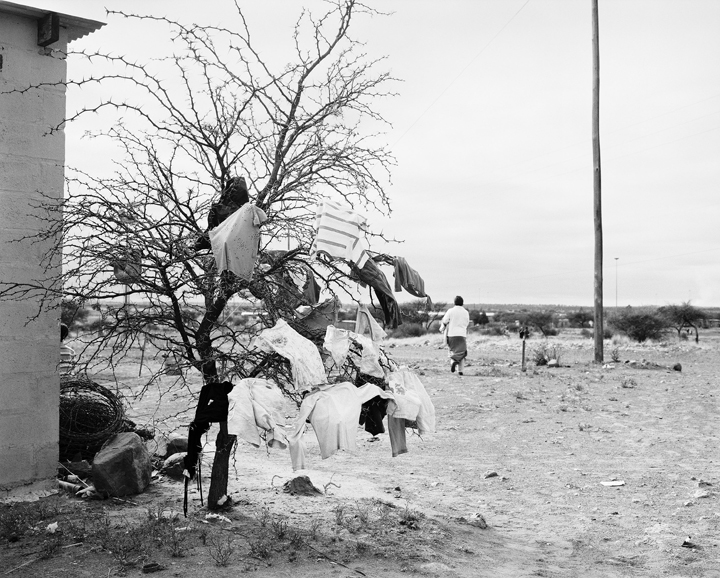
Jo Ractliffe (South African, b. 1961) 'Thorn tree, Platfontein' 2012


Jo Ractliffe (South African, b. 1961)
Thorn tree, Platfontein
2012
Inkjet print, 2015
Height: 14 3/16 in. (36cm) Width: 17 11/16 in. (45cm)
On loan from the artist, courtesy Stevenson, Cape Town and Johannesburg
© Jo Ractliffe. Courtesy of Stevenson, Cape Town and Johannesburg


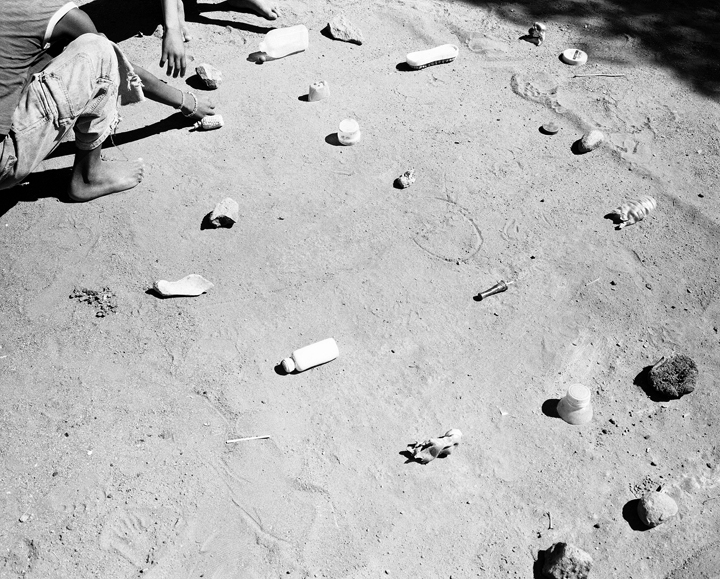
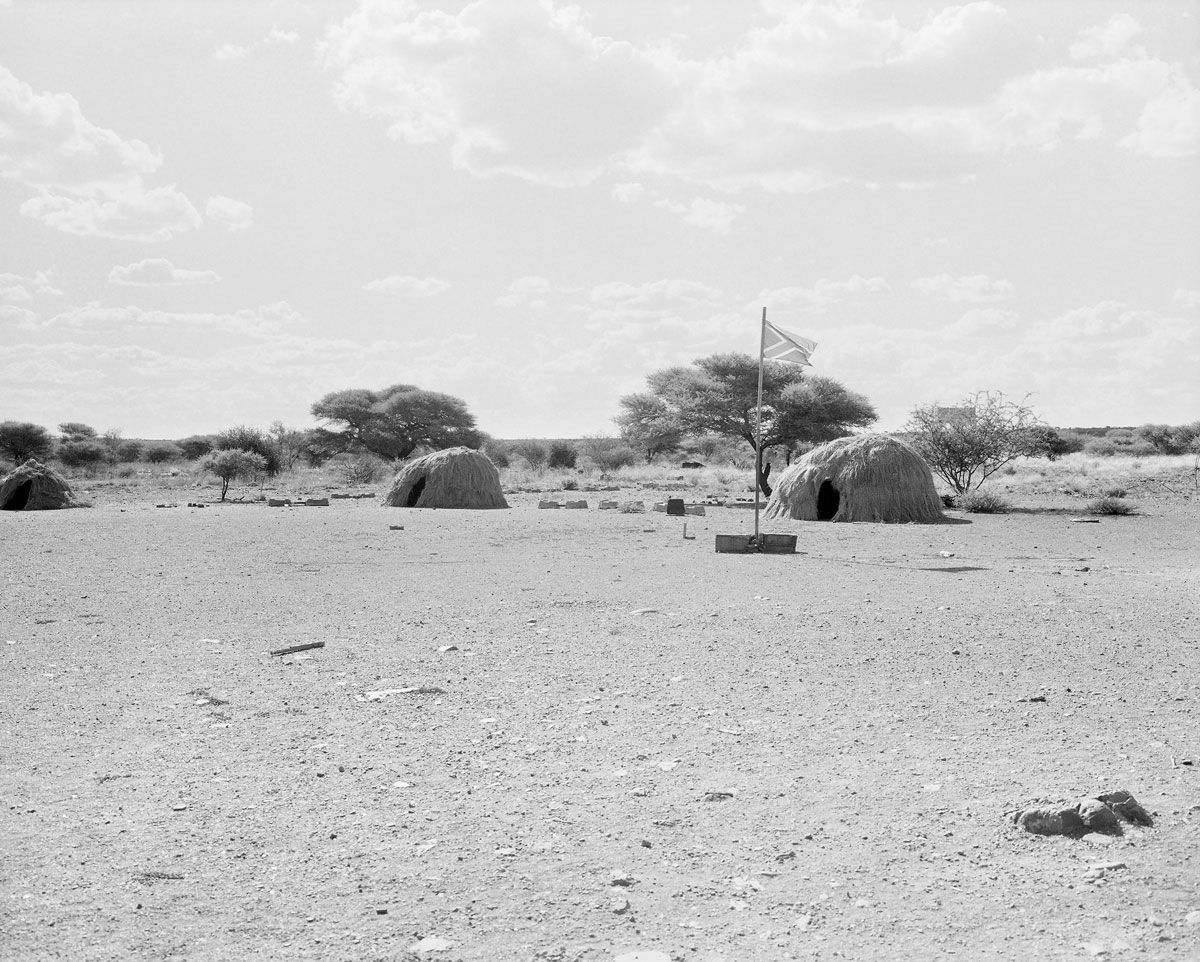
In this photograph and the next one, “Playing soccer with marbles, Platfontein”, the placement of personal objects in a seemingly unforgiving setting hints at the tension between resilience and vulnerability negotiated by the resident community. The settlement of Platfontein is now home to veterans of 31/201 Battalion, a South African Special Forces unit made up of Angolan and Namibian San trackers who became tied up in the independence conflicts in Angola and Namibia. After the conflicts ended, many of the San veterans were relocated to Schmidtsdrift, but had to live in tents for 14 years because of a competing claim on the land from local communities. The veterans ultimately accepted financial compensation, which enabled them to buy land at Platfontein, pictured here.


Jo Ractliffe (South African, b. 1961) 'Playing soccer with marbles, Platfontein' 2012


Jo Ractliffe (South African, b. 1961)
Playing soccer with marbles, Platfontein
2012
Inkjet print, 2015
Height: 10 1/4 in. (26cm) Width: 12 13/16 in. (32.5cm)
On loan from the artist, courtesy Stevenson, Cape Town and Johannesburg
© Jo Ractliffe. Courtesy of Stevenson, Cape Town and Johannesburg


In this photograph and the previous one, “Thorn tree, Platfontein”, the placement of personal objects in a seemingly unforgiving setting hints at the tension between resilience and vulnerability negotiated by the resident community. The settlement of Platfontein is now home to veterans of 31/201 Battalion, a South African Special Forces unit made up of Angolan and Namibian San trackers who became tied up in the independence conflicts in Angola and Namibia. After the conflicts ended, many of the San veterans were relocated to Schmidtsdrift, but had to live in tents for 14 years because of a competing claim on the land from local communities. The veterans ultimately accepted financial compensation, which enabled them to buy land at Platfontein, pictured here.


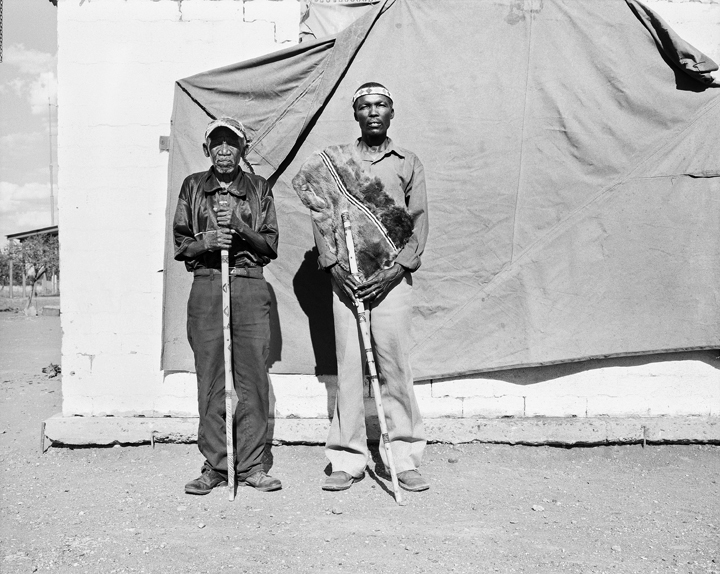
Jo Ractliffe (South African, b. 1961) 'Veteran soldiers of 'Omega' 31/201 Battalion, Paulo Cassanga and Automover Kakenge, Schmidtsdrift (portrait under instruction)' 2012


Jo Ractliffe (South African, b. 1961)
Veteran soldiers of ‘Omega’ 31/201 Battalion, Paulo Cassanga and Automover Kakenge, Schmidtsdrift (portrait under instruction)
2012
Inkjet print, 2015
Height: 14 3/16 in. (36cm)
Width: 17 11/16 in. (45cm)
On loan from the artist, courtesy Stevenson, Cape Town and Johannesburg
© Jo Ractliffe. Courtesy of Stevenson, Cape Town and Johannesburg


The veterans’ experiences are given added poignancy in this portrait, in which they stand in front of a tarpaulin hanging untidily from a derelict building. Automover Kakenge, standing on the right, is the leader of a group of San veterans who refused to move to Platfontein after their land claim at Schmidtsdrift was unsuccessful. Kakenge has stated that “Schmidtsdrift was the ending for us […]. When we were relocated from Namibia, we had to swear, “South Africa is our land, and our house is here in Schmidtsdrift.” This attachment to the land and buildings at Schmidtsdrift is the endpoint of what Ractliffe refers to as an “epic narrative of displacement”.


Jo Ractliffe (South African, b. 1961) 'On the Road to Cuito Cuanavale I' 2009


Jo Ractliffe (South African, b. 1961)
On the Road to Cuito Cuanavale I
2009
On loan from the artist, courtesy Stevenson, Cape Town and Johannesburg
© Jo Ractliffe. Courtesy of Stevenson, Cape Town and Johannesburg


Jo Ractliffe (South African, b. 1961) 'Donkey, Pomfret Asbestos Mine' 2011


Jo Ractliffe (South African, b. 1961)
Donkey, Pomfret Asbestos Mine
2011
From the series The Borderlands
Inkjet print, 2015
On loan from the artist, courtesy Stevenson, Cape Town and Johannesburg
© Jo Ractliffe. Courtesy of Stevenson, Cape Town and Johannesburg


The Aftermath of Conflict: Jo Ractliffe’s Photographs of Angola and South Africa at The Metropolitan Museum of Art beginning August 24 features 23 works produced over the past 10 years by South African artist Jo Ractliffe (born 1961). The photographs examine the landscapes of Angola and South Africa as sites of conflict and contention. Focusing on the aftermath of the Angolan Civil War and the intertwined conflict known in South Africa as the “Border War,” her photographs address themes of dispossession, history, memory, and erasure. The exhibition highlights Ractliffe’s engagement with the land and structures of Angola’s capital, Luanda, as well as with places in the Angolan and South African countryside where unmarked mass graves, minefields, and former military testing sites reveal the complex traces of the past in the present.

The 23 works on loan from the artist include single images, diptychs, and triptychs selected from three photographic series: Terreno Ocupado (2007), As Terras do Fim do Mundo (2010), and The Borderlands (2013). In Terreno Ocupado, Ractliffe establishes the city of Luanda as a multilayered place of both historical dispute and present-day struggle. Photographs highlighting the Portuguese colonial occupation of Angola and its imprint on the built environment appear alongside works depicting the often harsh economic conditions of Luanda today. By focusing on the structural instability of the city’s shanty towns, as well as the longer history of political instability threading through their foundations, these photographs question what it means for land to be occupied, abandoned, and struggled over.

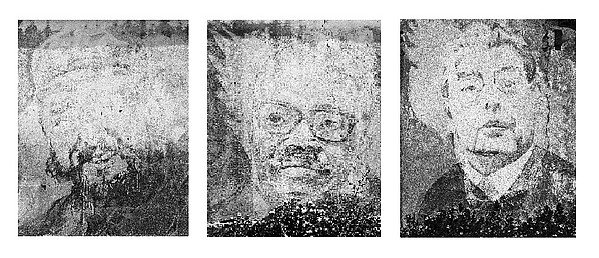
The works selected from 2010’s As Terras do Fim do Mundo highlight traces of the Border War, a conflict fought in rural Angola and present-day Namibia between South Africa and its allies on one side and, on the other, the exiled Namibian liberation movement, the Angolan government, and their allies. For this series, Ractliffe traveled alongside ex-soldiers returning to the desolate places where they had fought. The images produced on these trips include photographs of unmarked mass graves, minefields, and other often-inconspicuous signs of past conflict, showing how landscape can function as a repository of histories and memories and yet not be apparent at first glance. Most of the photographs in this series appear devoid of human presence, but in a triptych featuring mural representations of the conflict’s three key political leaders – Fidel Castro, Agostinho Neto, and Leonid Brezhnev – Ractliffe points more directly to notions of individual agency, culpability, and experience.

For her most recent series, The Borderlands, Ractliffe sought out sites in South Africa that were intricately connected to the history of the Border War and photographed their inhabitants amid their surroundings. The people she photographed, often the subjects of forced relocation and living in precarious conditions, exist at the intersection of the region’s troubled history and challenging present. Works from this series show how histories of violence and dispossession under apartheid intersect with these militarised landscapes.

The Aftermath of Conflict has been organised to coincide with the special exhibition Kongo: Power and Majesty, which focuses on works created by artists in present-day Angola between the 16th and 19th centuries (on view at the Metropolitan Museum September 17, 2015 – January 3, 2016). The landscapes captured by Ractliffe consider a more recent chapter of Angola’s history. The Aftermath of Conflict: Jo Ractliffe’s Photographs of Angola and South Africa is curated by Yaëlle Biro, Associate Curator in the Department of Africa, Oceania, and the Americas at the Metropolitan Museum, together with Dr Evelyn Owen, the 2013-2015 Mellon Curatorial Fellow at The Africa Center, New York, in collaboration with the Museum’s Department of Modern and Contemporary Art and Department of Photographs.

Text from The Metropolitan Museum of Art


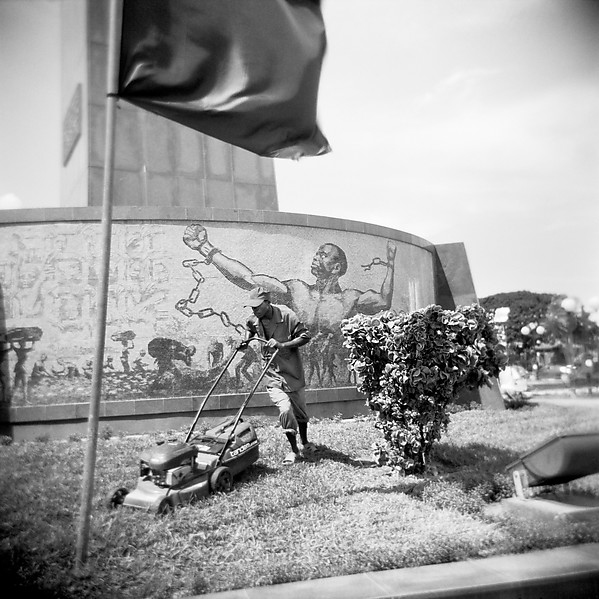
Jo Ractliffe (South African, b. 1961) 'Man maintaining the lawn of the Monumento de Agostinho Neto' 2007


Jo Ractliffe (South African, b. 1961)
Man maintaining the lawn of the Monumento de Agostinho Neto
2007
Inkjet print, 2015
Height: 13 3/4 in. (35cm) Width: 13 3/4 in. (35cm)
On loan from the artist, courtesy Stevenson, Cape Town and Johannesburg
© Jo Ractliffe. Courtesy of Stevenson, Cape Town and Johannesburg


This monument to Angola’s first president Agostinho Neto (1922-1979) was erected in 2001-2002 as a gift from North Korea. Neto, a doctor and poet, was a founder of the MPLA (People’s Movement for the Liberation of Angola) and led the party during Angola’s struggle for independence from Portugal. When the Portuguese withdrew from Angola on November 11, 1975, with help from Cuba and in the face of competing anti-colonial factions, the MPLA seized control of Luanda and Neto became president. He went on to cultivate closer ties with the Soviet Union and other communist states. In this photograph, Ractliffe contrasts the heroic figure symbolising freedom from colonialism shown on the monument’s pedestal with the everyday heroism of a man pushing a heavy lawnmower.


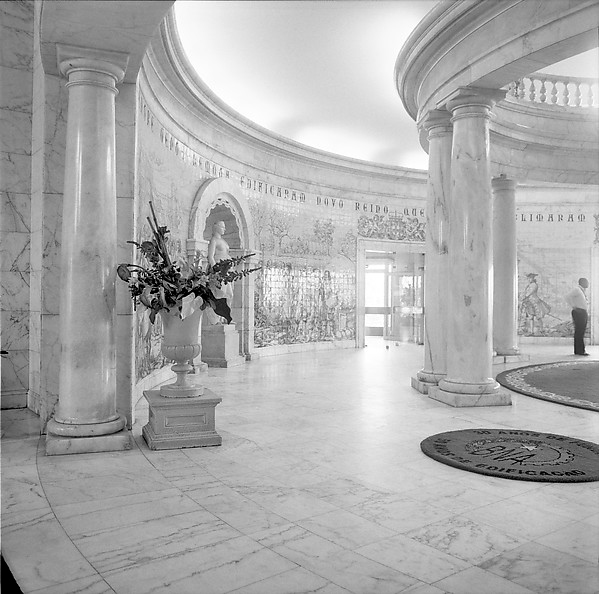
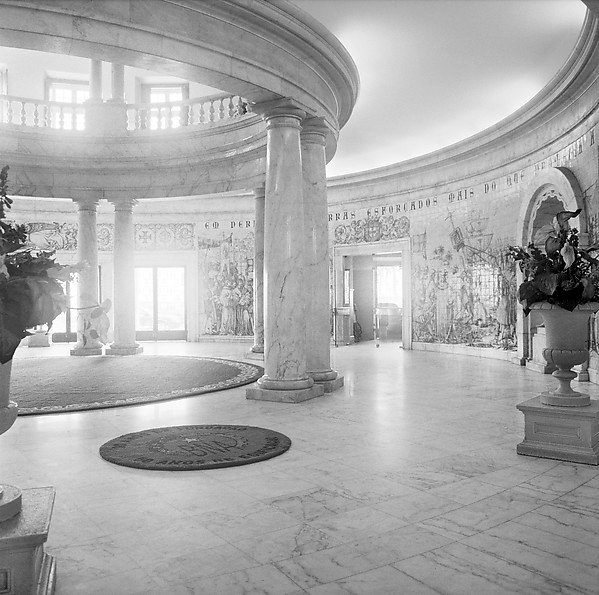
Jo Ractliffe (South African, b. 1961) Banco Nacional de Angola 2007 (diptych left)

Jo Ractliffe (South African, b. 1961) Banco Nacional de Angola 2007 (diptych right)


Jo Ractliffe (South African, b. 1961)
Banco Nacional de Angola (diptych left and right)
2007
Inkjet prints, 2015
Height: 17 11/16 in. (45cm) Width: 17 11/16 in. (45cm)
On loan from the artist, courtesy Stevenson, Cape Town and Johannesburg
© Jo Ractliffe. Courtesy of Stevenson, Cape Town and Johannesburg


The National Bank of Angola building was designed by Portuguese architect Vasco Regaleira and inaugurated in 1956 by Portuguese president Francisco Lopes. The building’s pink exterior, with its imposing dome and colonnade, was intended to fit in with other colonial-style buildings in Luanda. The bank’s lavish décor provides a dramatic contrast to many of Ractliffe’s other photographs of the city, especially the marble atrium, which features tiled murals portraying the arrival of the Portuguese in Angola. In the image to the right (bottom above), Portuguese explorers are depicted disembarking from their ship and erecting a padrão; these large limestone markers were inscribed with the Portuguese coat of arms and positioned at key locations along the coast by Portuguese navigator Diogo Cão in 1483. An original padrão is currently on view in the exhibition Kongo: Power and Majesty.


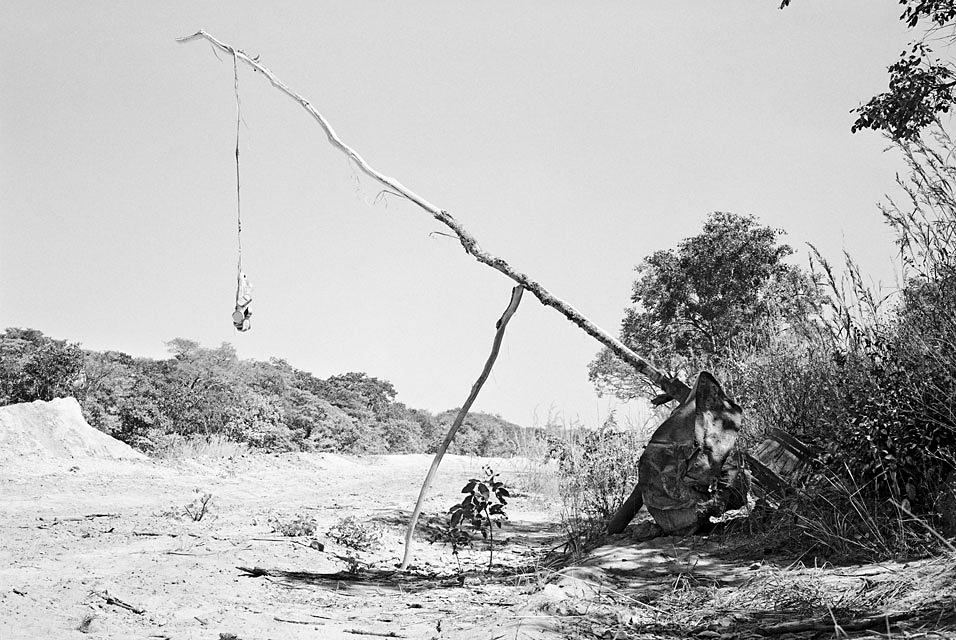
Jo Ractliffe (South African, b. 1961) 'Roadside stall on the way to Viana' 2007


Jo Ractliffe (South African, b. 1961)
Roadside stall on the way to Viana
2007
From the series Terreno Ocupado
Inkjet print, 2015
On loan from the artist, courtesy Stevenson, Cape Town and Johannesburg
© Jo Ractliffe. Courtesy of Stevenson, Cape Town and Johannesburg


In this photograph and the next one, “Wreck of a Chinese ship at Ilha”, stretches of bare ground in and around Luanda form the backdrop to ghostly signs of economic activity. Workmen’s overalls dangle from a tree at a roadside stall next to a taxi rank, and a grounded ship basks on a deserted beach while other vessels float offshore. Before it capsized in the mid-2000s, this ship transported and housed Chinese workers drawn to Angola by the many Chinese-run infrastructure projects in the country. These images reflect Angola’s diverse economy where a globalised workforce and the informal sector both play important roles, yet the absence of the workers themselves is striking.


Jo Ractliffe (South African, b. 1961) 'Details of tiled murals at the Fortaleza De São Miguel, depicting Portuguese explorations in Africa 2' 2007


Jo Ractliffe (South African, b. 1961)
Details of tiled murals at the Fortaleza De São Miguel, depicting Portuguese explorations in Africa 2
2007
Inkjet print, 2015
Height: 13 3/4 in. (35cm)
Width: 13 3/4 in. (35cm)
On loan from the artist, courtesy Stevenson, Cape Town and Johannesburg
© Jo Ractliffe. Courtesy of Stevenson, Cape Town and Johannesburg


Jo Ractliffe (South African, b. 1961) 'Details of tiled murals at the Fortaleza De São Miguel, depicting Portuguese explorations in Africa 4' 2007


Jo Ractliffe (South African, b. 1961)
Details of tiled murals at the Fortaleza De São Miguel, depicting Portuguese explorations in Africa 4
2007
Inkjet print, 2015
Height: 13 3/4 in. (35cm) Width: 13 3/4 in. (35cm)
On loan from the artist, courtesy Stevenson, Cape Town and Johannesburg
© Jo Ractliffe. Courtesy of Stevenson, Cape Town and Johannesburg


This photograph and the previous one were taken inside the Fortaleza de São Miguel, a fort originally built in 1576 by Paulo Dias de Novais, the explorer who “founded” Luanda. It later became the administrative heart of the Portuguese colony of Angola in its important role as a trading centre and slaving hub. In 1938 the fort was transformed into the home of the Museum of Angola, and the tiled murals shown here were commissioned at this time. Depicting the flora, fauna and history of Angola, these cobalt-blue 18th-century style tiles were inspired by early modern European prints depicting the Kongo and Angola kingdoms, and represented an attempt to legitimise the ongoing Portuguese presence in the country. Sources included Olfert Dapper’s 1668 “Description of Africa” from which the map fragment shown here is drawn.


Jo Ractliffe (South African, b. 1961) Decommissioned military outpost, Schmidtsdrift 2012 (triptych left)

Jo Ractliffe (South African, b. 1961) Decommissioned military outpost, Schmidtsdrift 2012 (triptych middle)

Jo Ractliffe (South African, b. 1961) Decommissioned military outpost, Schmidtsdrift 2012 (triptych right)


Jo Ractliffe (South African, b. 1961)
Decommissioned military outpost, Schmidtsdrift (triptych left, middle and right)
2012
From the series The Borderlands
Inkjet prints, 2015
On loan from the artist, courtesy Stevenson, Cape Town and Johannesburg
© Jo Ractliffe. Courtesy of Stevenson, Cape Town and Johannesburg


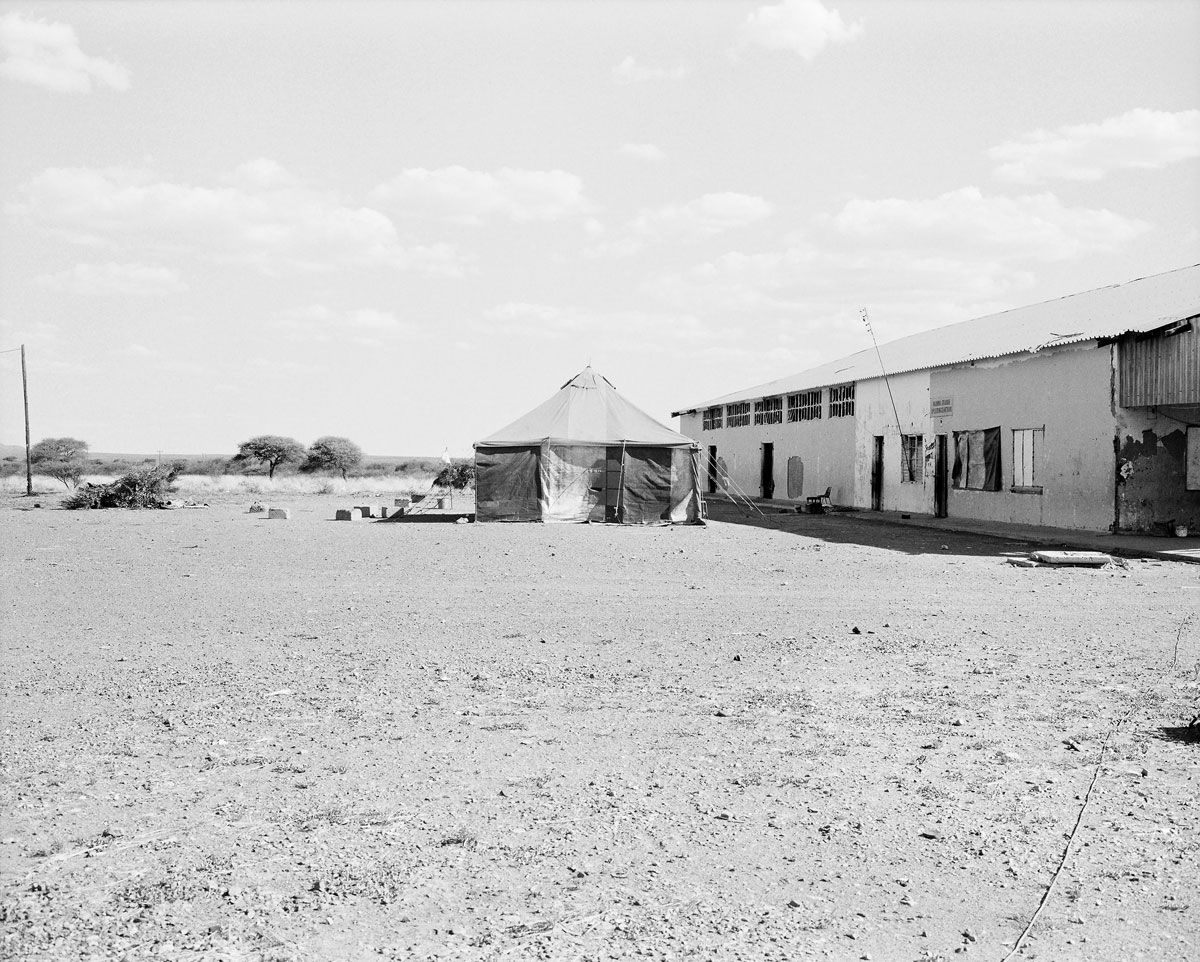
In this triptych, Ractliffe’s focal point is a ghostly ensemble of deserted military buildings. Schmidtsdrift’s original inhabitants were forcibly relocated in the 1950s-1970s under the apartheid regime’s policy of racial segregation. From 1974 the emptied settlement was used as a military training base by the South African Defence Force, which was fighting against the exiled Namibian liberation movement and the Angolan army in a conflict later referred to in South Africa as the “Border War”. Now that the war is over, the decommissioned buildings remain, testifying to the region’s past conflicts and histories of forced relocation.


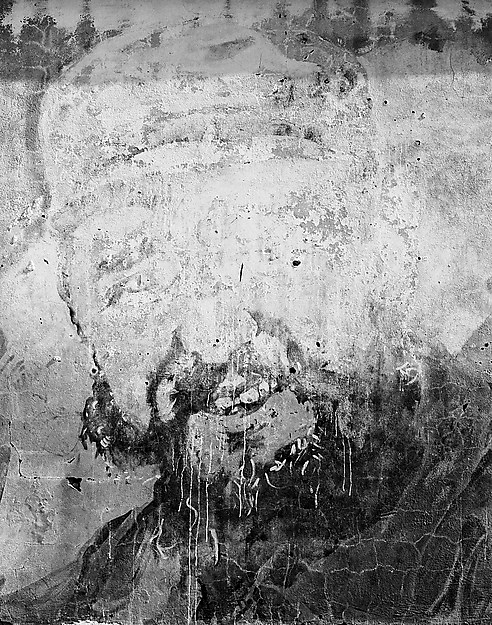
Jo Ractliffe (South African, b. 1961) 'Mural depicting Fidel Castro, Agostinho Neto and Leonid Brezhnev, circa 1975, Viriambundo' 2009

Jo Ractliffe (South African, b. 1961) Mural depicting Fidel Castro, Agostinho Neto and Leonid Brezhnev, circa 1975, Viriambundo 2009 (detail)

Jo Ractliffe (South African, b. 1961) Mural depicting Fidel Castro, Agostinho Neto and Leonid Brezhnev, circa 1975, Viriambundo 2009 (detail)

Jo Ractliffe (South African, b. 1961) Mural depicting Fidel Castro, Agostinho Neto and Leonid Brezhnev, circa 1975, Viriambundo 2009 (detail)


Jo Ractliffe (South African, b. 1961)
Mural depicting Fidel Castro, Agostinho Neto and Leonid Brezhnev, circa 1975, Viriambundo (details)
2009
Inkjet prints, 2015
Height: 15 3/4 in. (40cm) Width: 19 11/16 in. (50cm)
On loan from the artist, courtesy Stevenson, Cape Town and Johannesburg
© Jo Ractliffe. Courtesy of Stevenson, Cape Town and Johannesburg


The central figure of Agostinho Neto, Angola’s anti-colonial leader and president from 1975-79, is flanked by Cuban revolutionary Fidel Castro on the left, and Soviet leader Leonid Brezhnev on the right. This mural personifies the threats of African Nationalism and Communism that propelled South Africa to become involved in the Border War. It highlights the fact that the Angolan Civil War was also a Cold War battleground, with Cuba and the Soviet Union on the side of Neto’s party, the MPLA (People’s Movement for the Liberation of Angola), and South Africa and the United States supporting UNITA (National Union for the Total Independence of Angola). Here, all three men still command a presence despite their faded, cartoon-like rendering.


The Metropolitan Museum of Art
1000 Fifth Avenue at 82nd Street
New York, New York 10028-0198
Phone: 212-535-7710

Opening hours:
Sunday – Tuesday, and Thursday: 10am – 5pm
Friday and Saturday: 10am – 9pm
Closed Wednesday

The Metropolitan Museum of Art website

LIKE ART BLART ON FACEBOOK

Back to top