
Exhibition dates: 2nd April – 16th June 2010
Many thankx to Fenna Lampe and the Foam Fotografiemuseum Amsterdam for allowing me to publish the photographs in the post. Please click on the photographs for a larger version of the image.
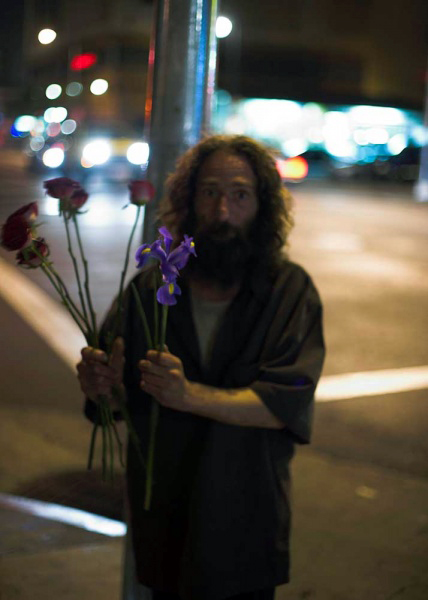
Paul Graham (English, b. 1956)
Las Vegas, 2005
2005
From the series a shimmer of possibility
© Paul Graham
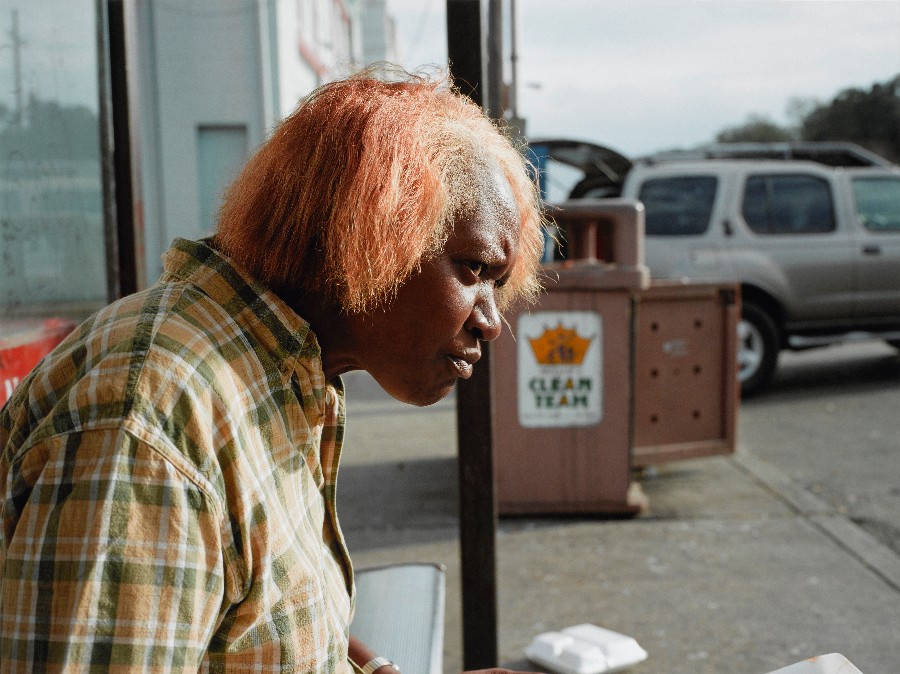
Paul Graham (English, b. 1956)
New Orleans 2004 (Woman Eating)
2004
From the series a shimmer of possibility
© Paul Graham
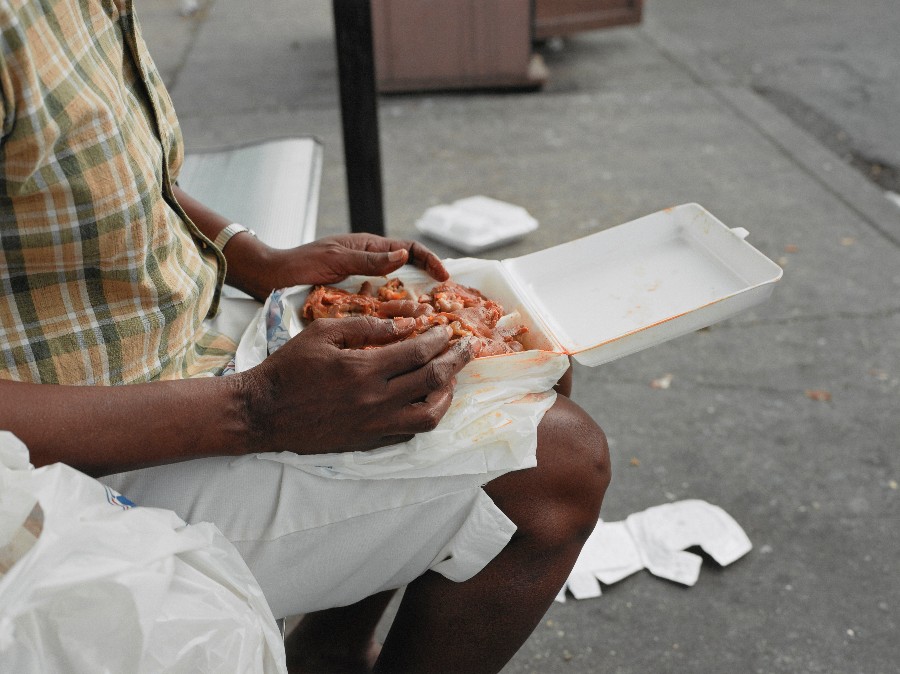
Paul Graham (English, b. 1956)
New Orleans 2004 (Woman Eating)
2004
From the series a shimmer of possibility
© Paul Graham
a shimmer of possibility is the latest project by influential British photographer Paul Graham. This work was created during Graham’s many travels through the United States since 2002. a shimmer of possibility consists of twelve sequences varying in number: from just a few images to more than ten. Each sequence offers an informal look at the life of ordinary, individual Americans – from a woman eating to a man waiting for the bus. The sequences focus attention on very ordinary things, which Graham has photographed with affection and curiosity.
Each sequence is a short, casual encounter, where we consider for a moment something that attracts our attention. Then life goes on, full of new possibilities. The way Graham presents the diverse sequences in the exhibition is crucial. Instead of being shown in a linear fashion, a sequence fans out over the wall like a cloud. Due to the carefully considered and inventive structure, no viewing direction or predominant hierarchy is imposed on the individual images. The eye of the viewer wanders over the photos, offering the opportunity to make personal connections in an associative manner.
a shimmer of possibility can be seen as the ultimate antithesis of what Henri Cartier-Bresson called ‘the decisive moment’. This French master endeavoured to record exactly those moments where subject matter and formal aspects combined perfectly in a single image. Paul Graham, by contrast, defends how we normally look around us. We move through the world and look from left to right, see something that grabs our attention, move towards it, glance to the side while en route, pass that by and continue on our way. Observation is a never-ending series of ‘non-decisive moments’, full of potential for anyone who is open to see it.”
Text from the Foam website [Online] Cited 06/06/2010 no longer available online
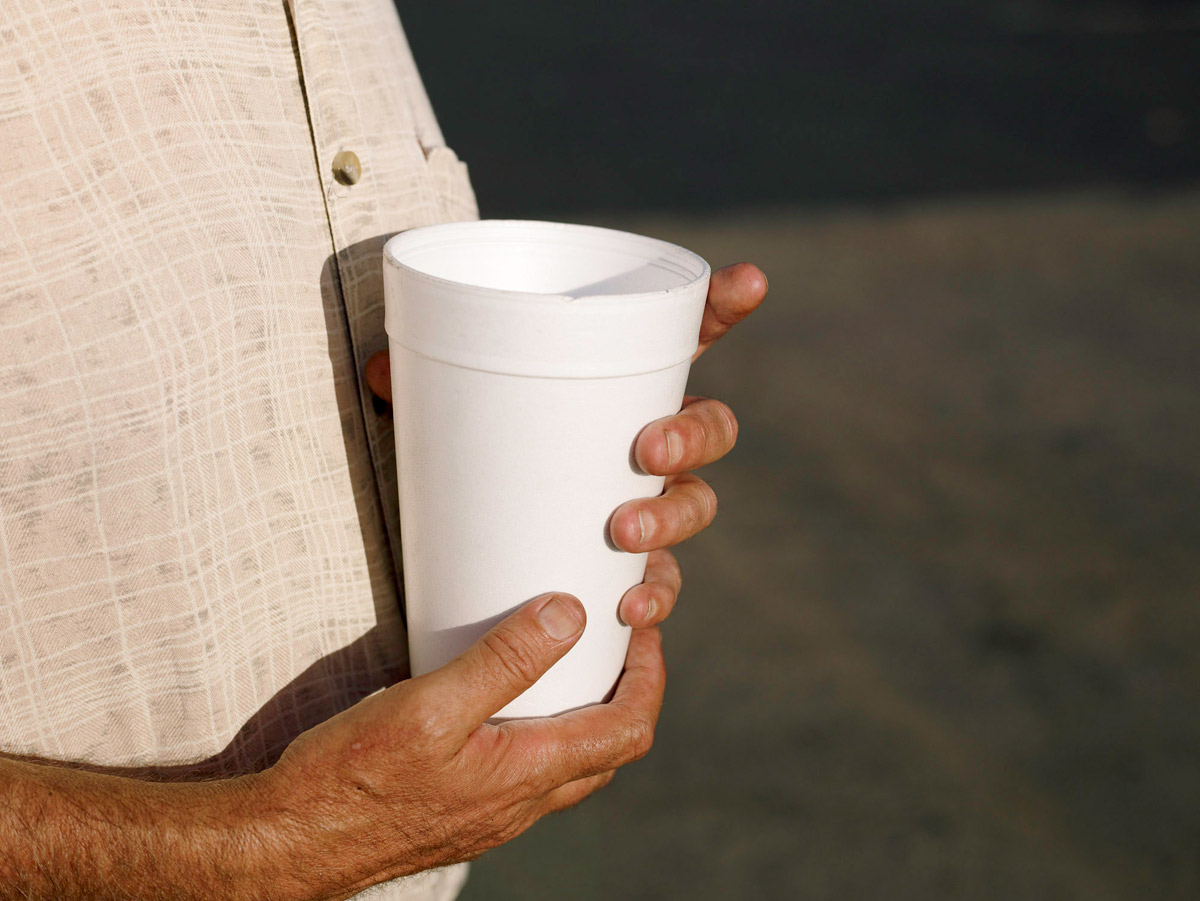
Paul Graham (English, b. 1956)
California 2006 (Sunny Cup)
2006
From the series a shimmer of possibility
© Paul Graham
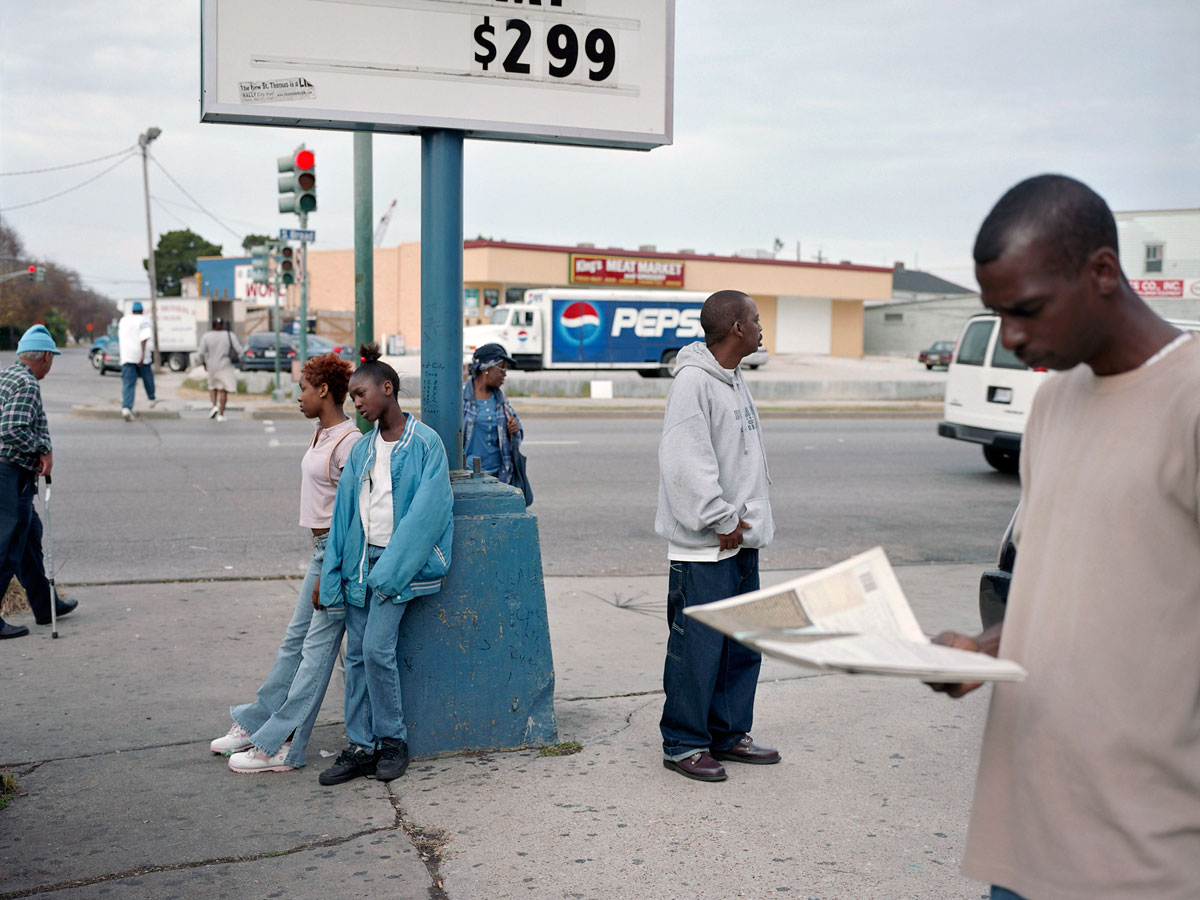
Paul Graham (English, b. 1956)
New Orleans 2005 (Cajun Corner)
2005
From the series a shimmer of possibility
© Paul Graham
Graham walked the streets of residential neighbourhoods in Massachusetts, Pennsylvania, and Louisiana, and the sidewalks of New Orleans, Las Vegas, and New York, and when he encountered someone who caught his eye, he photographed them: an older woman retrieving her mail; a young man and woman playing basketball at dusk; a couple returning from the supermarket. Graham followed people navigating their way through crowded city sidewalks, and tracked and photographed lone figures crossing a busy roadway, unaware of the camera.
Reviewing several trips’ worth of photographs on the large, flat screen of his computer, Graham realised that the more or less randomly gathered pictures could be united into multipart works. As in a poem, where language and rhythm organise words, lines, and stanzas into an imaginative interpretation of a subject, Graham’s imposed yet open-ended structures imply – through close-ups, crosscutting, and juxtapositions of people and nature-specific narratives and overarching ideas. Images of people placed in tandem with other people and with nature suggest the flow of life, pointing to the unknown and the possibility of change, with nature acting as a balm, whether as raindrops, trees silhouetted against a burning sunset, or the bright green grass on a highway meridian.
In his reconstruction of the world in pictures, Graham describes an America at odds with itself, filled with contradictions and inconsistencies. Yet, through the gloom, the small felicities of life peek through. Fluid, filled with desire, and marked by extremes, his view is what the late curator, critic, and photographer John Szarkowski called, in another context, a “just metaphor” for our times.
Text from the Museum of Modern Art (MoMA) website [Online] Cited 14/08/2019
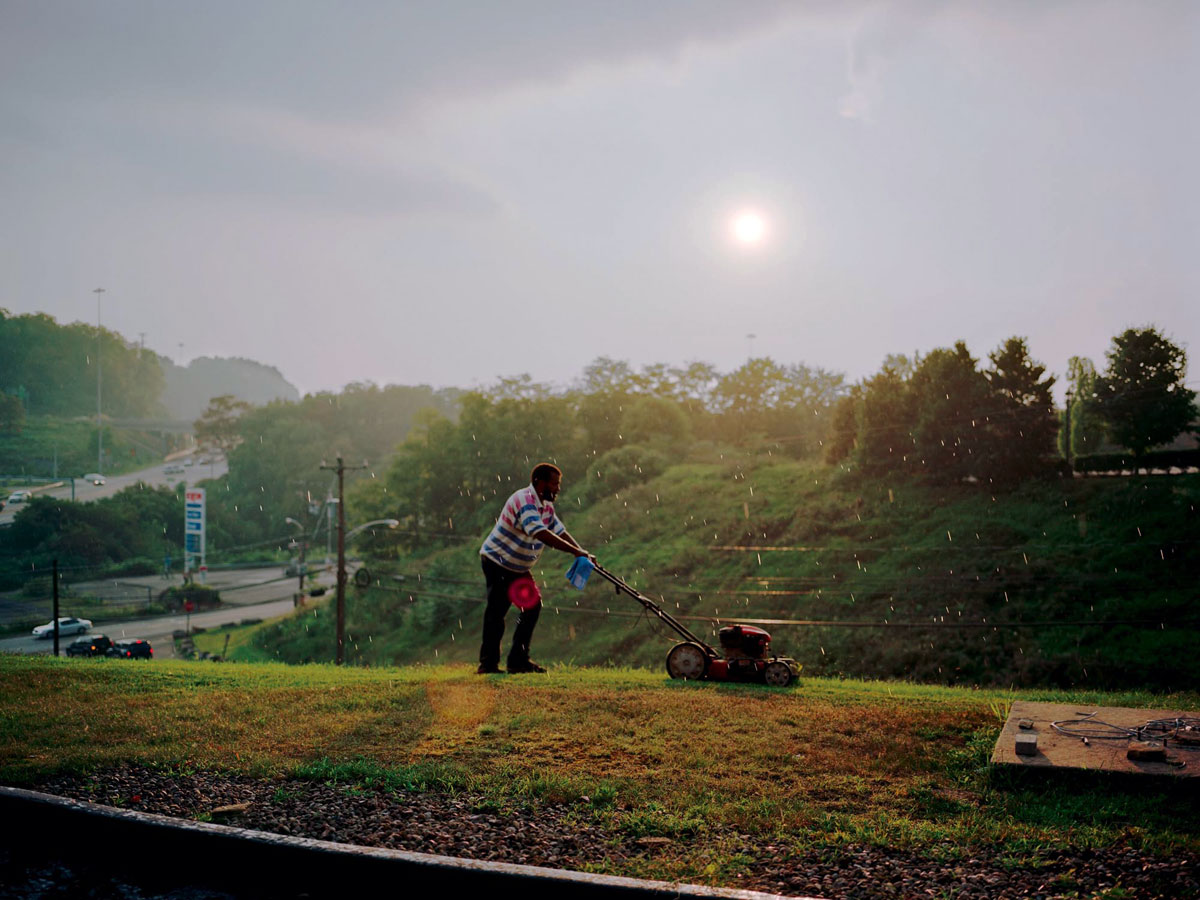
Paul Graham (English, b. 1956)
Pittsburgh 2004 (Lawnmower Man)
2004
From the series a shimmer of possibility
© Paul Graham
Inspired by Chekhov’s short stories – and by his own contagious joy in the book form – photographer Paul Graham has created A Shimmer of Possibility, comprised of 12 individual books, each a photographic short story of everyday life. Some are simple and linear – a man smokes a cigarette while he waits for a bus in Las Vegas, or the camera tracks an autumn walk in Boston. Some entwine two, three or four scenes – while a couple carry their shopping home in Texas, a small child dances with a plastic bag in a garden. Some watch a quiet narrative break unexpectedly into a sublime moment – as a man cuts the grass in Pittsburgh it begins to rain, until the low sun breaks through and illuminates each drop. Graham’s filmic haikus shun any forceful summation or tidy packaging. Instead, they create the impression of life flowing around and past us while we stand and stare, and make it hard not to share the artist’s quiet astonishment with its beauty and grace. The 12 books gathered here are identical in trim size, but vary in length from just a single photograph to 60 pages of images made at one street corner.
Text from the Mack website [Online] Cited 14/08/2019
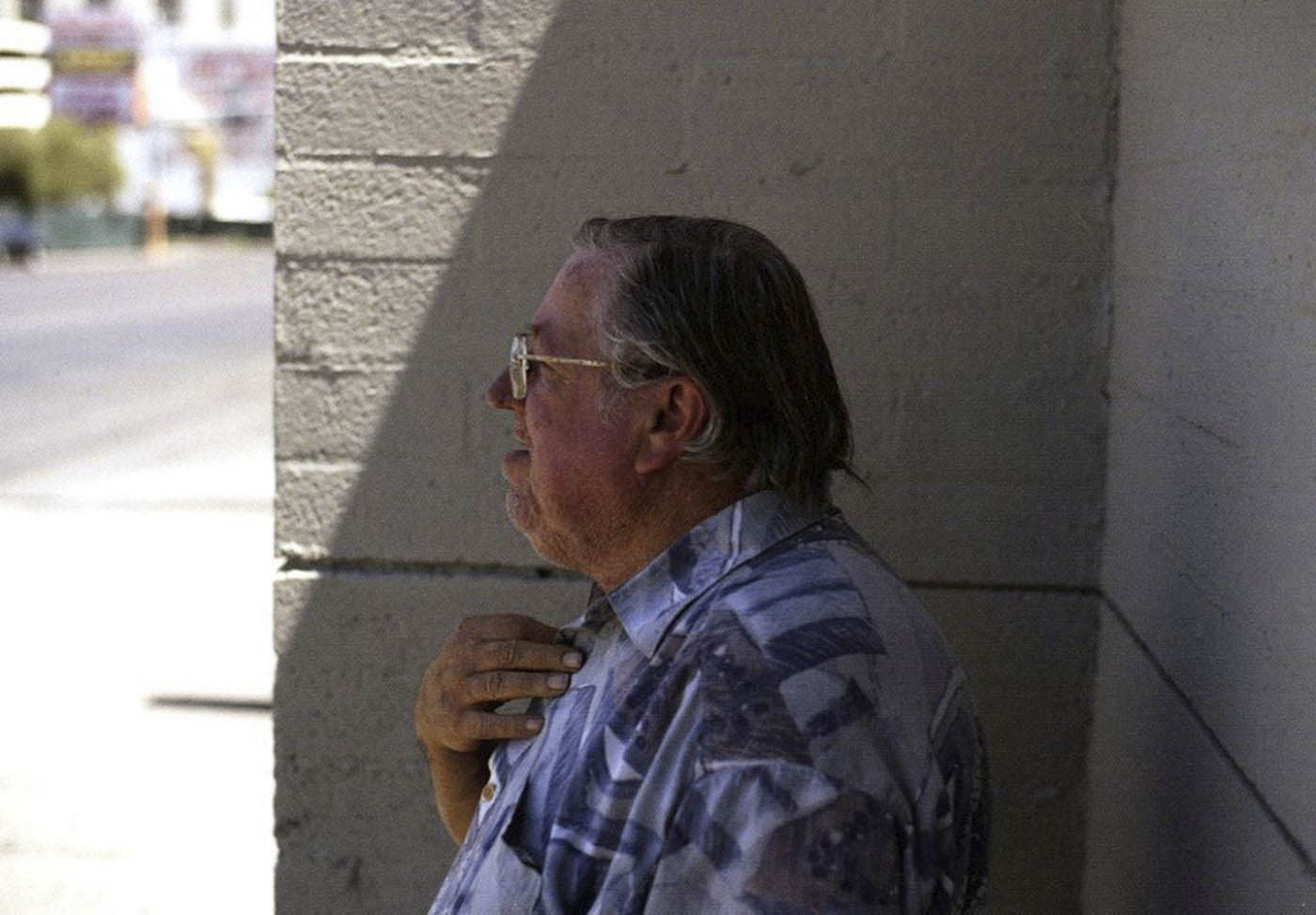
Paul Graham (English, b. 1956)
Las Vegas (Smoking Man)
2005
From the series a shimmer of possibility, 2003-2006
Colour coupler print
© Paul Graham
a shimmer of possibility by Paul Graham
12 volumes
376 pages, 167 colour plates
24.2 cm x 31.8 cm
12 cloth covered hardbacks
Limited edition of 1,000 sets
MACK
ISBN: 9783865214836
Publication date: October 2007
Foam Fotografiemuseum Amsterdam
Keizersgracht 609
1017 DS Amsterdam
Phone: + 31 (0)20 551 6500
Opening hours:
Monday – Wednesday 10.00 – 18.00
Thursday – Friday 10.00 – 21.00
Saturday – Sunday 10.00 – 18.00


 Art Blart _ art and cultural memory archive
You must be logged in to post a comment.