Exhibition: ‘TRACEY MOFFATT: narratives’ at Art Gallery of South Australia, Adelaide

Exhibition dates: 26th February – 20th March 2011

 Curators: Maria Zagala, Associate Curator of Prints, Drawings and Photographs, Art Gallery of South Australia and Stephen Zagala, Curator at Monash Gallery of Art


Tracey Moffatt (Australia, b. 1960) 'Something More (no. 3)' 
from the series of 9 photographs ‘Something More’ 1989


Tracey Moffatt (Australia, b. 1960)
Something More (no. 3)
From the series of 9 photographs Something More
1989
Direct positive colour photograph
98 × 127cm
Courtesy the artist and Roslyn Oxley9 Gallery, Sydney


Many thankx to the Art Gallery of South Australia for allowing me to publish the photographs in the posting. Please click on the photographs for a larger version of the image.


Tracey Moffatt: Narratives is the first major exhibition of this leading contemporary Australian artist to be held in Adelaide. The exhibition is a collaboration between the Monash Gallery of Art in Melbourne and the Art Gallery of South Australia and explores Moffatt’s interest in the history of cinema and the formal language of film and video in her construction of ‘photo-narratives’. It features seven of Moffatt’s multi-part photographic series, including Something More (1989), Scarred for Life I (1994) and II (1999), Up in the Sky (1997), Laudanum (1999), Invocations (2000), and The Adventure Series (2004).

In these series Moffatt uses photographic stills to build non-linear and open-ended stories. The narrative aspect of these series allows her to develop dream-like sequences, in which the real and the imaginary can unfold alongside each other. In this way, Moffatt invests the social reality of issues like race relations and domestic violence with uncertainty and subconscious dimensions. She presents disturbing subject matter in highly staged photographs which use the seductive language of film and popular culture to directly engage her audience.

The exhibition also includes Moffatt’s ground breaking films Nice Coloured Girls (1987), Night Cries (1990), Heaven (1997) and BeDevil (1993), and the critically acclaimed video montages produced with Gary Hillberg, Artist (2000), Revolution (2008) and Other (2009).

Text from the AGSA website
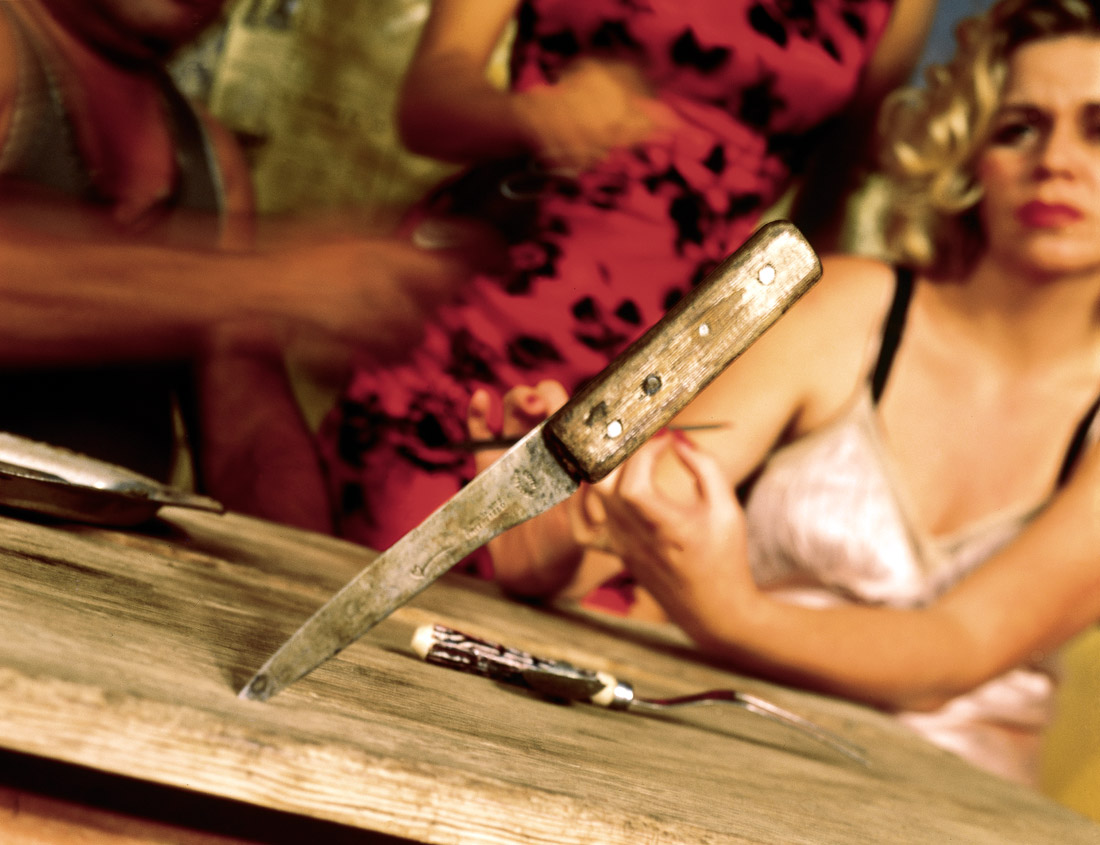


Tracey Moffatt (Australia, b. 1960) 'Something More (no. 5)' from the series of 9 photographs 'Something More' 1989


Tracey Moffatt (Australia, b. 1960)
Something More (no. 5)
From the series of 9 photographs Something More
1989
Direct positive colour photograph
98 × 127cm
Courtesy the artist and Roslyn Oxley9 Gallery, Sydney
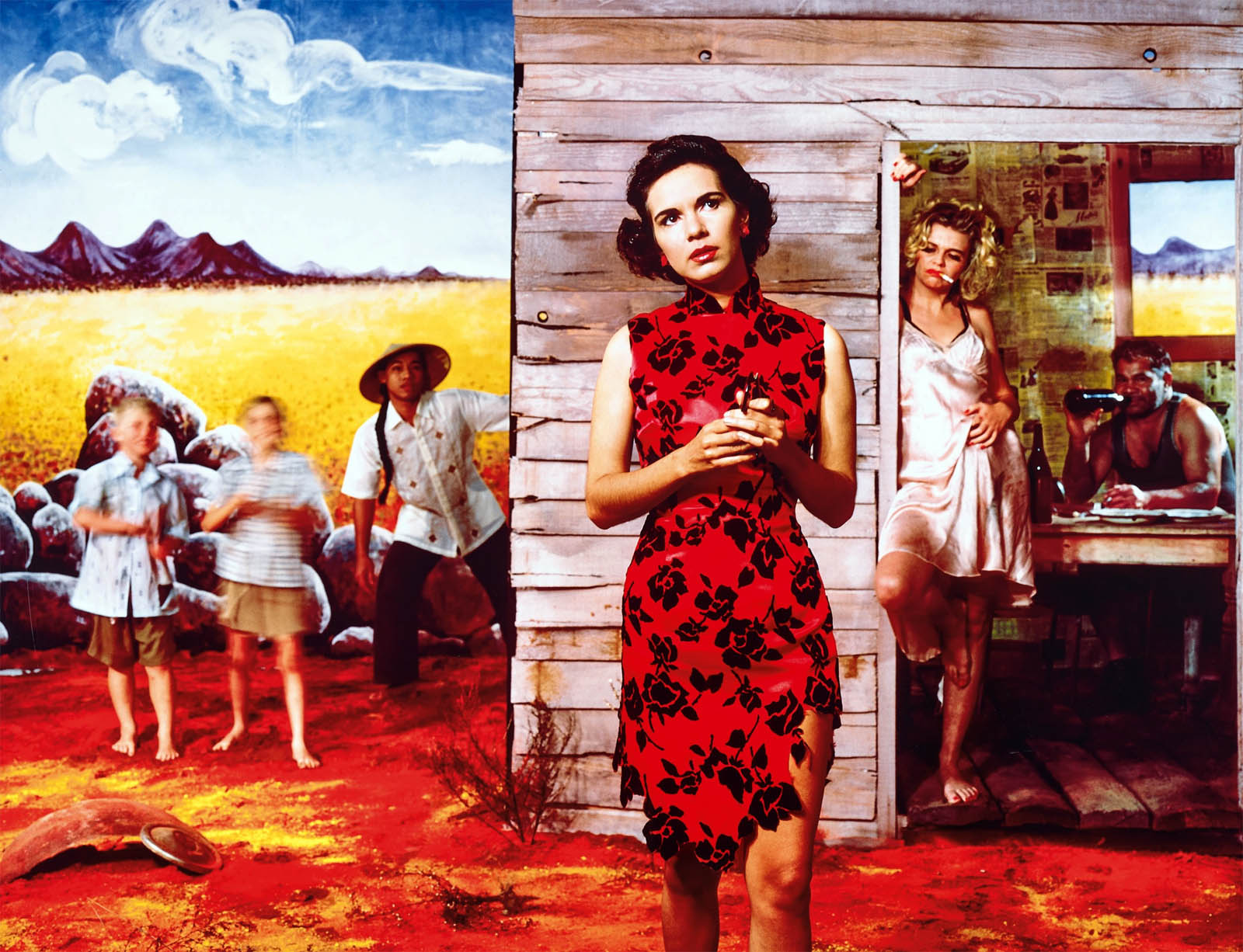
 

Tracey Moffatt (Australian, b. 1960)
'Something More (no. 1)' 1997


Tracey Moffatt (Australian, b. 1960)
Something More (no. 1)
1997
From the series of 9 photographs Something More
1989
Direct positive colour photograph
98 × 127cm
Courtesy the artist and Roslyn Oxley9 Gallery, Sydney


Tracey Moffatt (Australia, b. 1960) 'Job hunt, 1976' 1994


Tracey Moffatt (Australia, b. 1960)
Job hunt, 1976
From the series of 10 prints Scarred for life I
1994
Colour photolithograph on paper
80 x 60cm
Monash Gallery of Art, City of Monash Collection
Courtesy of the artist and Roslyn Oxley9 Gallery, Sydney
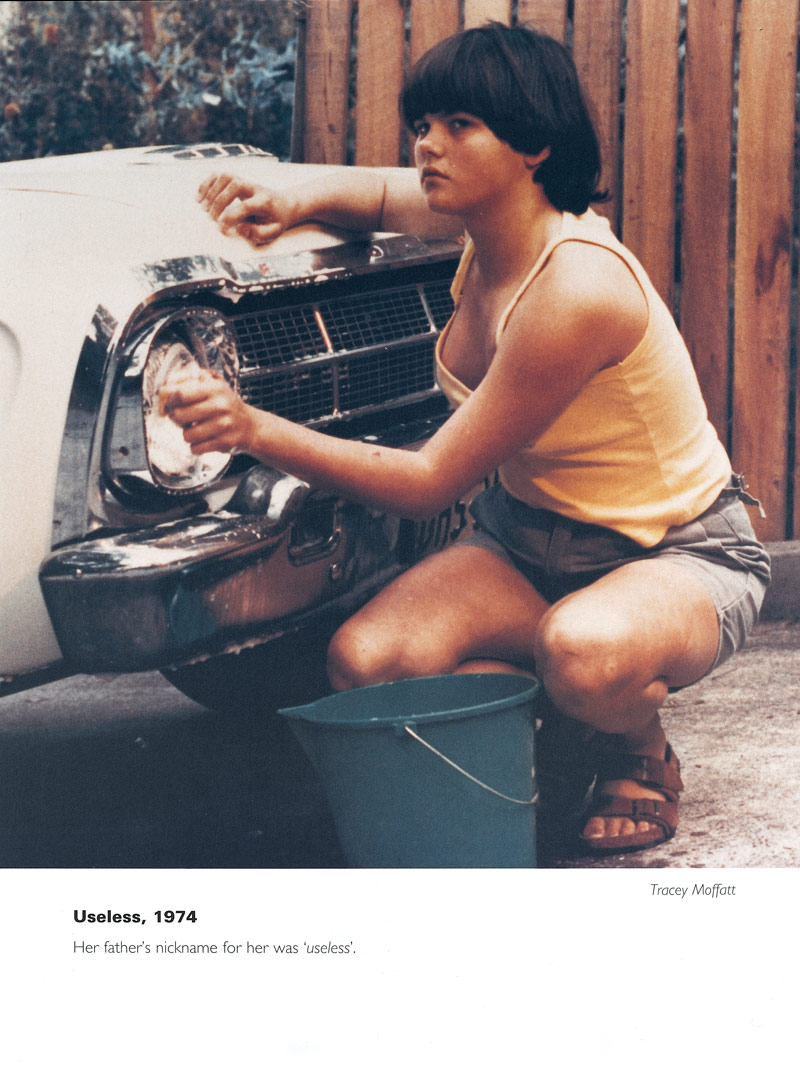
 

Tracey Moffatt (Australia, b. 1960) 'Useless, 1974' 1994


Tracey Moffatt (Australia, b. 1960)
Useless, 1974
From the series of 10 prints Scarred for life I
1994
Colour photolithograph on paper
80 x 60cm
Monash Gallery of Art, City of Monash Collection
Courtesy of the artist and Roslyn Oxley9 Gallery, Sydney


Tracey Moffatt (Australia, b. 1960) 'Up in the sky (no. 1)' 1997


Tracey Moffatt (Australia, b. 1960)
Up in the sky (no. 1)
From the series of 25 prints Up in the sky
1997
colour photolithograph on paper
61 x 76cm
Monash Gallery of Art, City of Monash Collection
Courtesy of the artist and Roslyn Oxley9 Gallery, Sydney


Tracey Moffatt (Australia, b. 1960) 'Up in the sky' 1997


Tracey Moffatt (Australia, b. 1960)
Up in the sky
From the series of 25 prints Up in the sky
1997
colour photolithograph on paper
61 x 76cm
Monash Gallery of Art, City of Monash Collection
Courtesy of the artist and Roslyn Oxley9 Gallery, Sydney
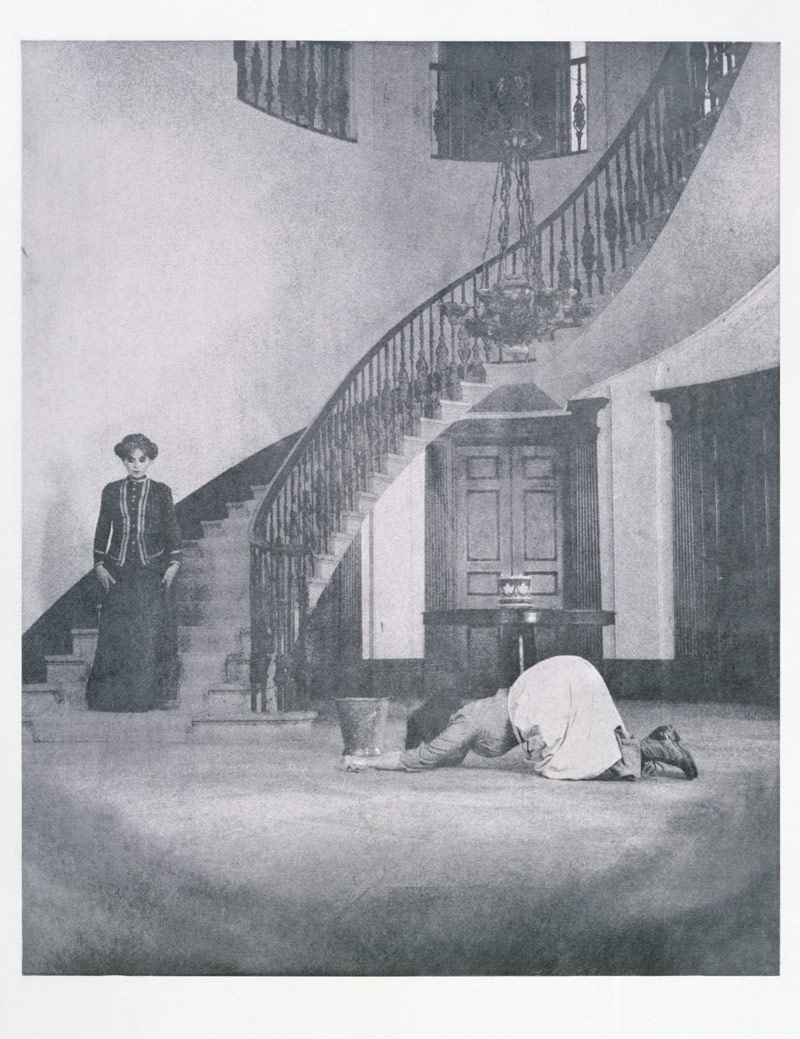
 

Tracey Moffatt (Australia, b. 1960) 'Laudanum (no. 1)' 1998


Tracey Moffatt (Australia, b. 1960)
Laudanum (no. 1)
From the series of 19 prints Laudanum
1998
Photogravure on paper
76 × 57cm
Courtesy the artist and Roslyn Oxley9 Gallery, Sydney


Tracey Moffatt (Australia, b. 1960) 'Invocations (no. 2)' 2000


Tracey Moffatt (Australia, b. 1960)
Invocations (no. 2)
From the series of 13 prints Invocations
2000
Colour silkscreen on paper
146 x 122cm
Monash Gallery of Art, City of Monash
Collection 
Courtesy of the artist and Roslyn Oxley9 Gallery, Sydney


Tracey Moffatt (Australia, b. 1960) 'Invocations (no. 5)' 2000


Tracey Moffatt (Australia, b. 1960)
Invocations (no. 5)
From the series of 13 prints Invocations
2000
Colour silkscreen on paper
146 x 122cm
Monash Gallery of Art, City of Monash
Collection 
Courtesy of the artist and Roslyn Oxley9 Gallery, Sydney
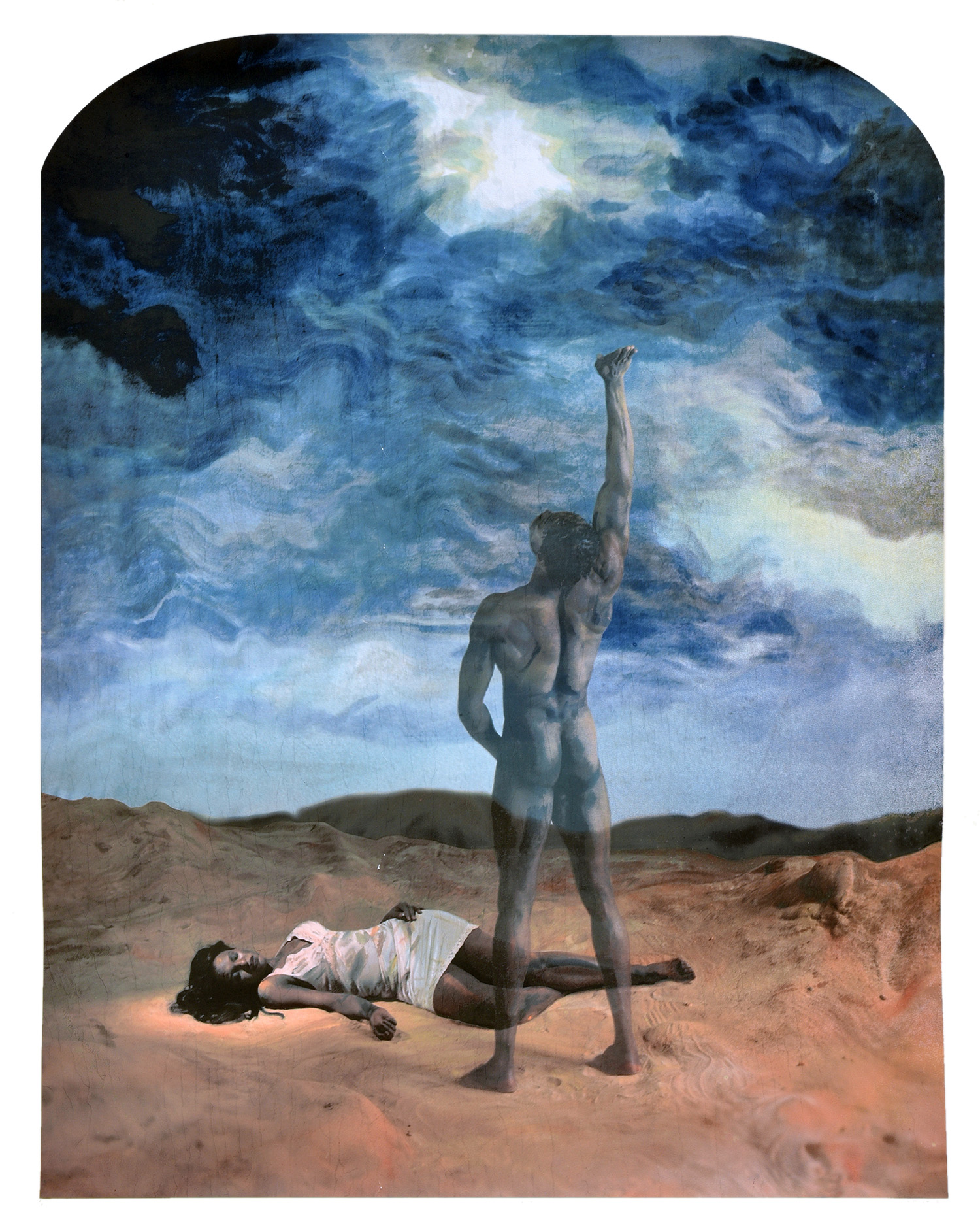
 

Tracey Moffatt (Australia, b. 1960) 'Invocations (no. 7)' 2000


Tracey Moffatt (Australia, b. 1960)
Invocations (no. 7)
From the series of 13 prints Invocations
2000
Colour silkscreen on paper
146 x 122cm
Monash Gallery of Art, City of Monash
Collection 
Courtesy of the artist and Roslyn Oxley9 Gallery, Sydney


Tracey Moffatt (Australia, b. 1960) 'Adventure Series (no. 1)' 2004


Tracey Moffatt (Australia, b. 1960)
Adventure Series (no. 1)
from the series of 10 prints Adventure Series
2004
Inkjet print on paper
132 × 114cm
Courtesy the artist and Roslyn Oxley9 Gallery, Sydney


Tracey Moffatt (Australia, b. 1960) 'Adventure Series (no. 2)' 2004


Tracey Moffatt (Australia, b. 1960)
Adventure Series (no. 2)
From the series of 10 prints Adventure Series
2004
Inkjet print on paper
132 × 114cm
Courtesy the artist and Roslyn Oxley9 Gallery, Sydney


Art Gallery of South Australia
North Terrace Adelaide
Public information: 08 8207 7000

Opening hours:
Daily 10am – 5pm (last admissions 4.30pm)

Art Gallery of New South Wales website

LIKE ART BLART ON FACEBOOK

Back to top

Review: ‘Sistagirls’ by Bindi Cole at Nellie Castan Gallery, Melbourne

Exhibition dates: 8th July – 31st July, 2010


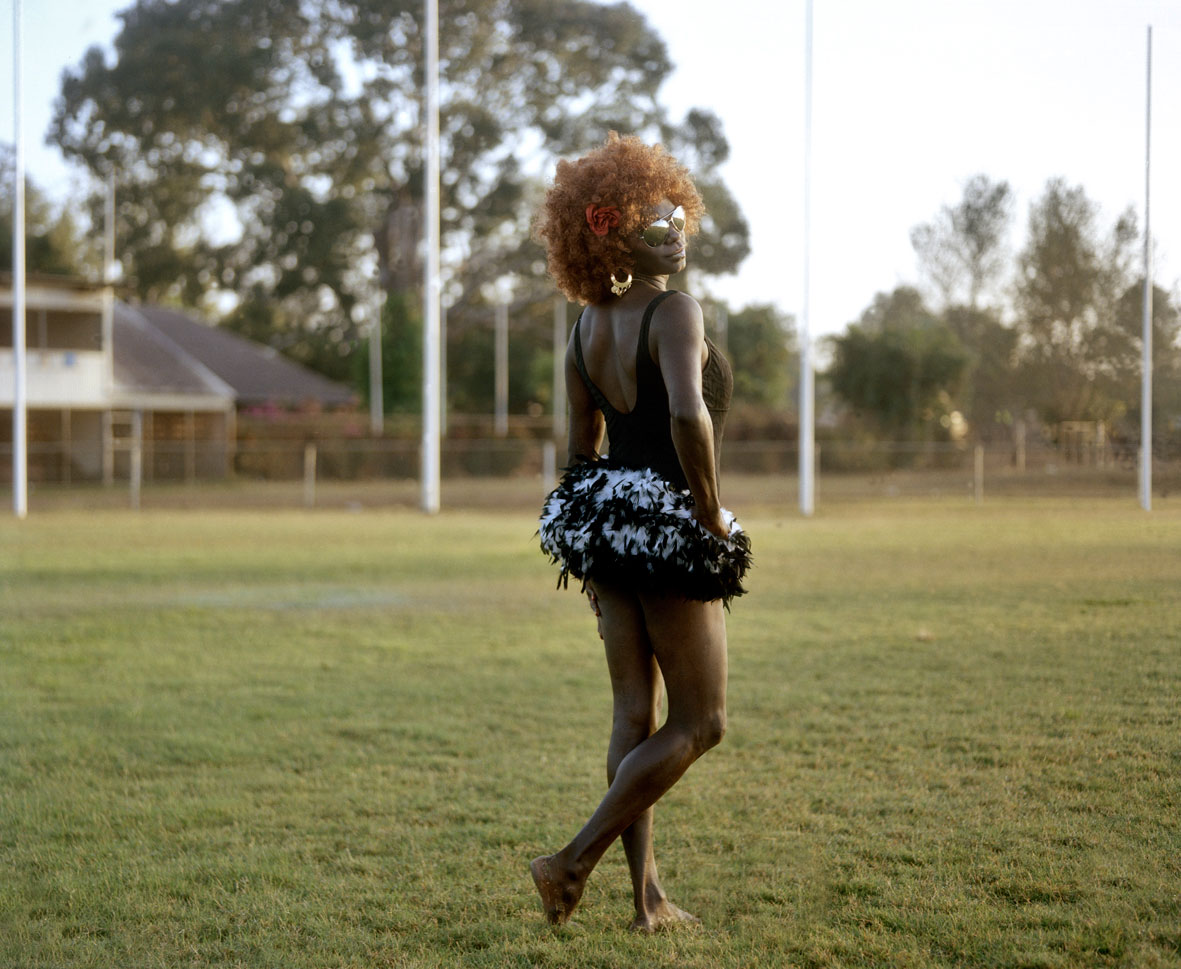
Bindi Cole Chocka (Australian, b. 1975) 'Bimbo' 2009 from the exhibition 'Sistagirls' by Bindi Cole at Nellie Castan Gallery, Melbourne, July 2010


Bindi Cole Chocka (Australian, b. 1975)
Bimbo
2009


The exhibition Sistagirls by Bind Cole at Nellie Castan Gallery contains some beautiful photographs and others that are less successful. The successful portraits the ones that depict the Sistagirls in a more natural, less stylised way – they are the more interesting photographs. The subjects seem to speak for themselves without restriction, to be not so beholden to the pose that photographer wishes them to assume and/or the pose they wish to impose on themselves.

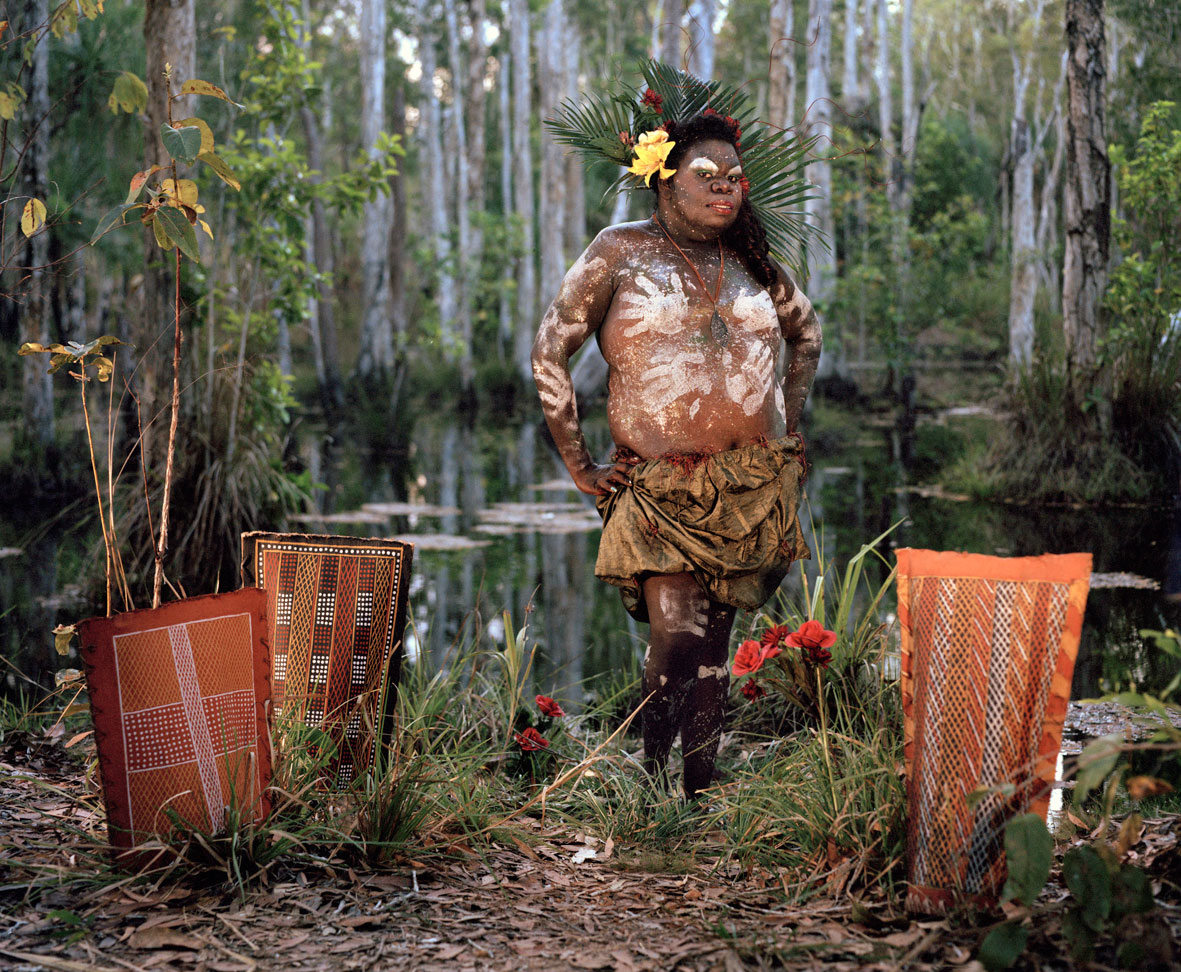
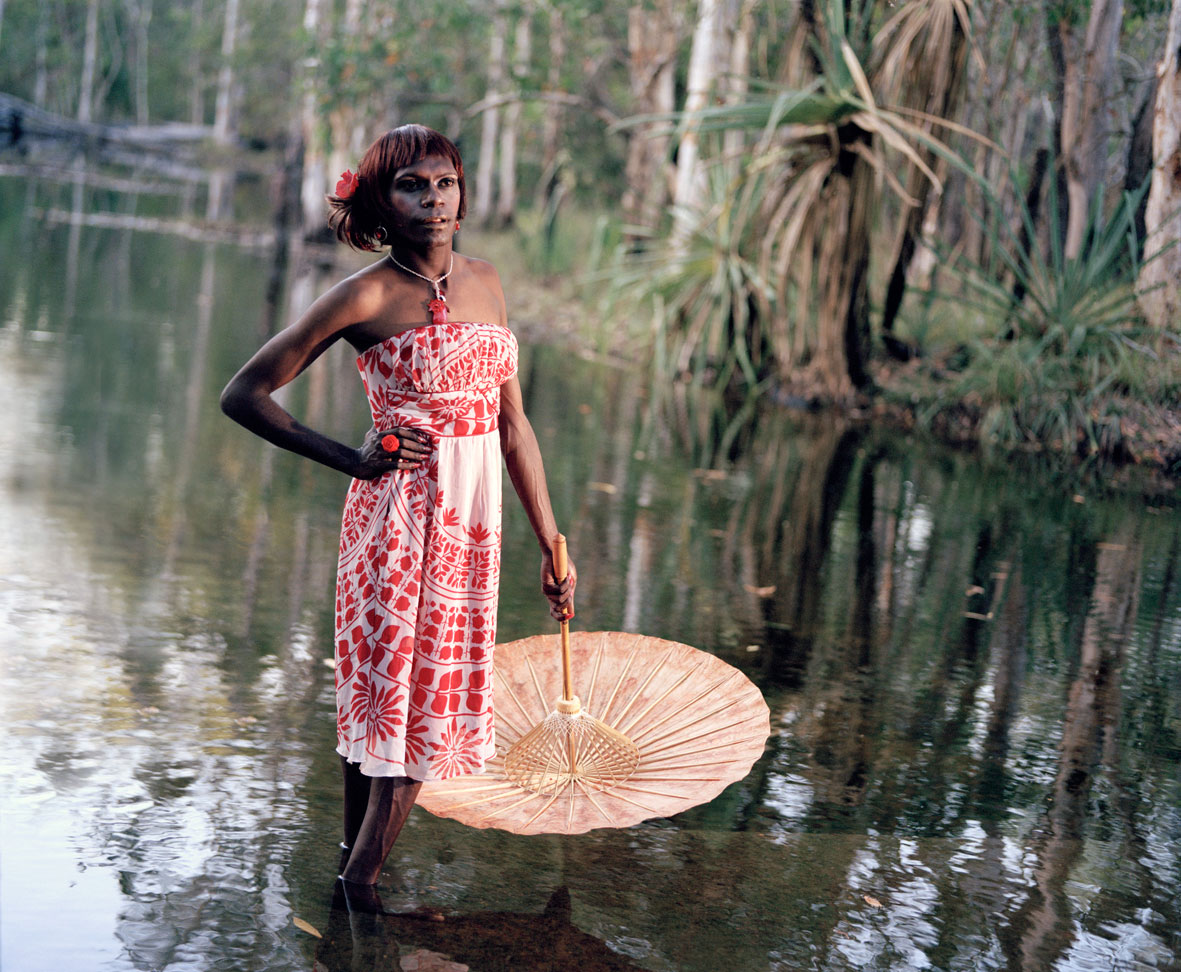
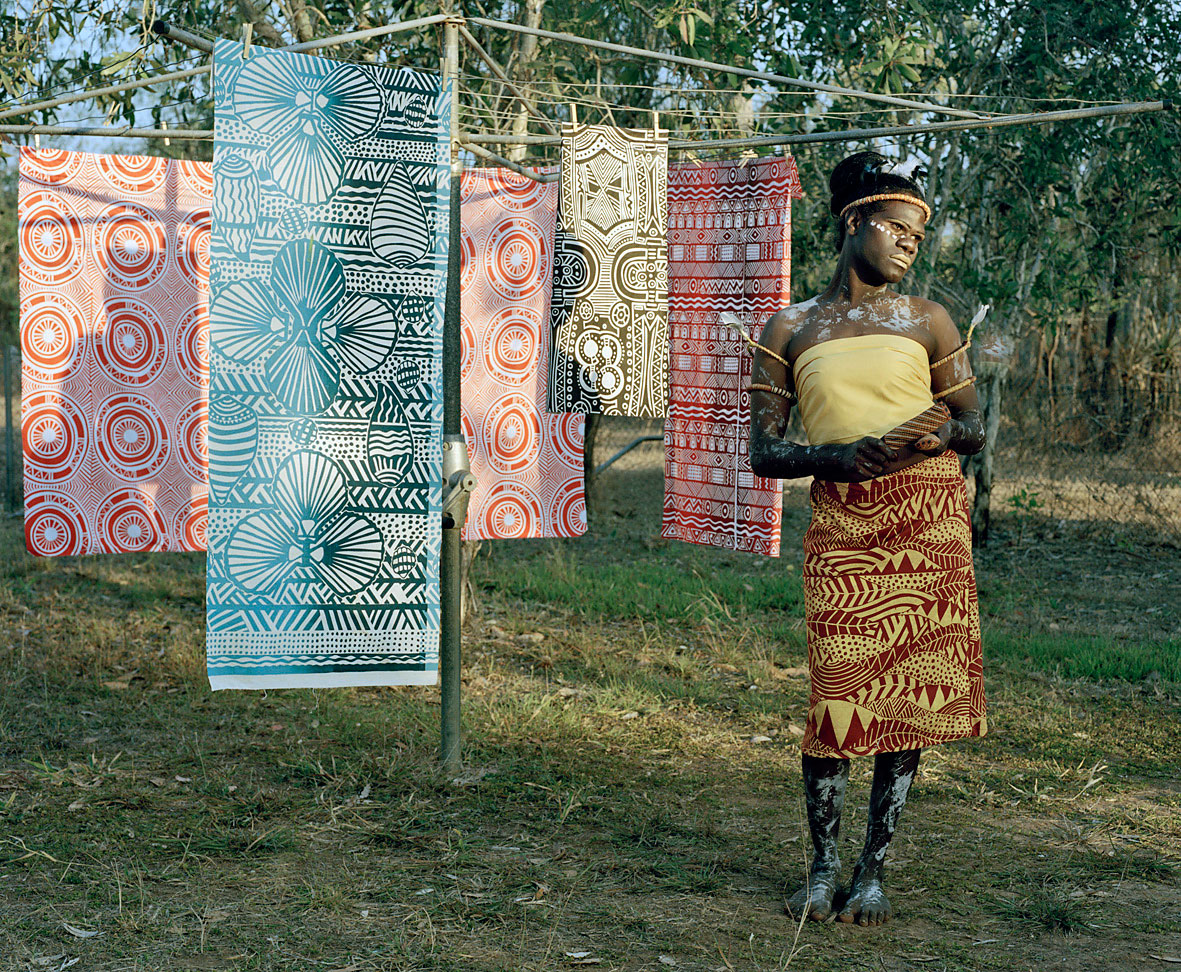
For example, the photograph of Jemima (see below) is just stunning in it’s naturalness and beauty. The two photographs of Crystal and Patricia, where the transgendered person asked to be photographed in traditional body paint with traditional objects, are highly successful in their form, composition and in the ability of the photographs to challenge stereotypical notions of Aboriginal culture.

Other portraits are anachronistic and a little try hard, with the misplacing of persons and objects in regard to each other. The portrait of Bimbo (very top photograph) did not need the two objects placed on the beach next to the person to make it a successful photograph; the portrait of Frederina (below) had enough going on in the photograph without the seemingly gratuitous placement of traditional objects in the background. We get the point and there was really no need to labour it.

One of the problems, of course, of a ‘stylised’ portrait (Bind Cole’s word in her artist statement) is that the portrait can become a double forgery, that of the pose of the person and that of the photographer imposing the style …

” … in a sense, the posed photograph is a kind of forgery, an imposition of an artificial composition before the recording instrument. On the other hand, the photo of a posing subject captures the authenticity of the practice of posing. A version of a person’s image is still an image of that person …

We are confronted with the pose, the conscious composition of the image to be photographed, the inherent constructedness of the posed photograph. Our heretofore implicit faith in the photograph as an evidentiary document is shaken. This is not to imply an outright rejection of photography … the effect is more properly an inducement to engage the document directly, personally, and on its own terms.”1


As noted at the end of the quotation, we, the viewer, must cut through this com-pose-ition to address the document directly. We must cut away the appendages of style and view the person and the photograph on its own terms. This is why the simpler portraits in the exhibition have so much more power than the overly constructed ones – they reach for an intangible essence that Cole is seeking by dropping away style and surrendering to the ineffable, a recognition of the lightness and joy in just being.

Dr Marcus Bunyan


1/ Feiereisen, Florence and Pope, Daniel. “True Fiction and Fictional Truths: The Enigmatic in Sebald’s Use of Images in The Emigrants,” in Patt, Lise (ed.,). Searching for Sebald: Photography after W.G. Sebald. Los Angeles: The Institute of Cultural Inquiry, 2007, p. 175.


Many thankx to Olivia Poloni and Nellie Castan Gallery for allowing me to publish the photographs in the posting. The permission is most appreciated. Please click on the photographs for a larger version of the image. All photographs © Bind Cole, courtesy of the artist and Nellie Castan Gallery.


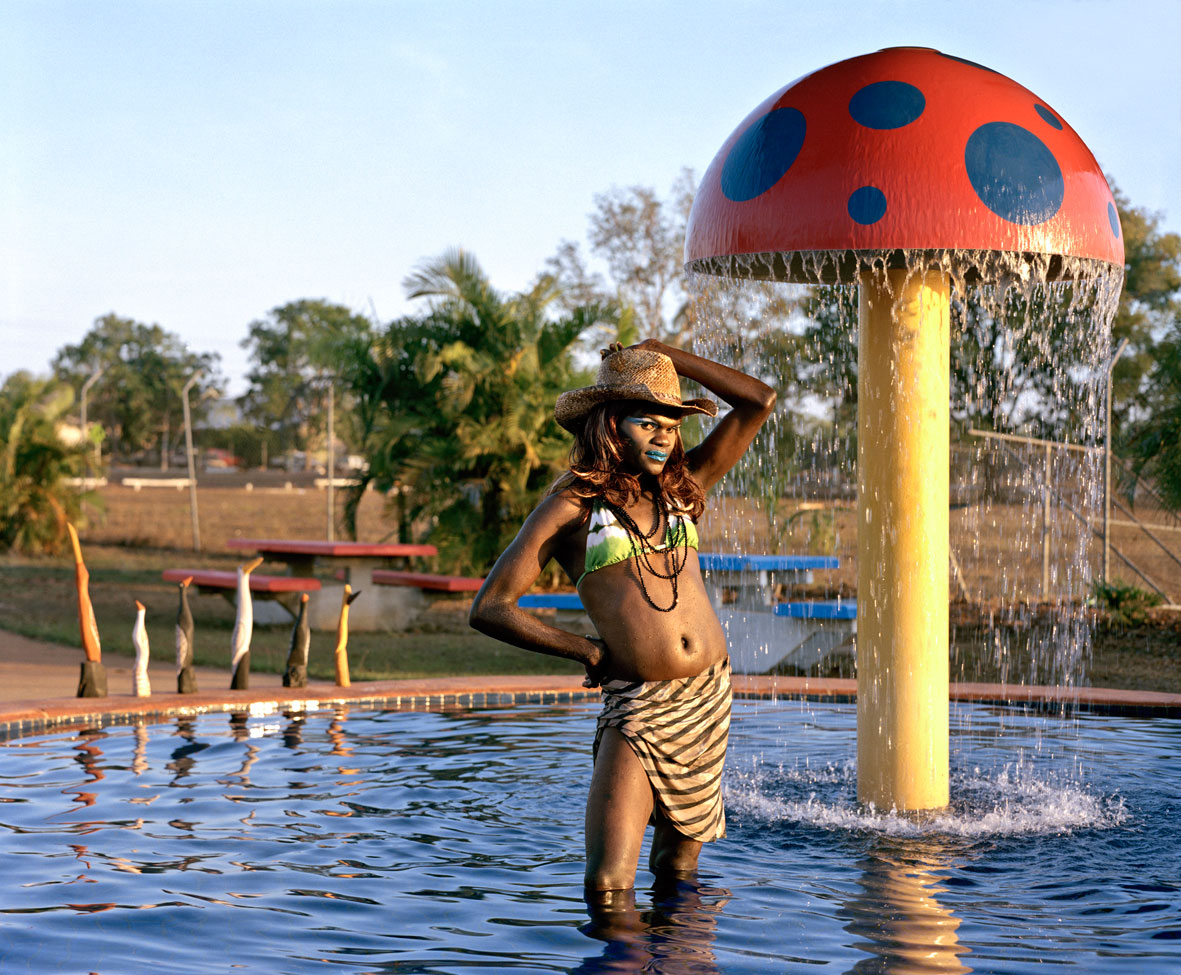
Bindi Cole Chocka (Australian, b. 1975) 'Buffy' 2009 from the exhibition 'Sistagirls' by Bindi Cole at Nellie Castan Gallery, Melbourne, July 2010


Bindi Cole Chocka (Australian, b. 1975)
Buffy
2009


Bindi Cole Chocka (Australian, b. 1975) 'Crystal' 2009 from the exhibition 'Sistagirls' by Bindi Cole at Nellie Castan Gallery, Melbourne, July 2010


Bindi Cole Chocka (Australian, b. 1975)
Crystal
2009


Bindi Cole Chocka (Australian, b. 1975) 'Frederina' 2009


Bindi Cole Chocka (Australian, b. 1975)
Frederina
2009


The term ‘Sistagirl’ is used to describe a transgender person in Tiwi Island culture. Traditionally, the term was ‘Yimpininni’. The very existence of the word provides some indication of the inclusive attitudes historically extended towards Aboriginal sexual minorities. Colonisation not only wiped out many indigenous people, it also had an impact on Aboriginal culture and understanding of sexual and gender expression. As Catholicism took hold and many traditions were lost, this term became a thing of the past. Yimpininni were once held in high regard as the nurturers within the family unit and tribe much like the Faafafine from Samoa. As the usage of the term vanished, tribes’ attitudes toward queer indigenous people began to resemble that of the western world and religious right. Even today many Sistergirls are excluded from their own tribes and suffer at the hands of others.

Within a population of around 2500, there are approximately 50 ‘Sistagirls’ living on the Tiwi Islands. This community contains a complex range of dynamics including a hierarchy (a queen Sistergirl), politics, and a significant history of pride and shame. The Sistagirls are isolated yet thriving, unexplored territory with a beauty, strength and diversity to inspire and challenge.

During August and September of 2009, I was fortunate enough to have the opportunity to spend a month living with the ‘Sistagirls’ on the Tiwi Islands creating a series of highly stylised portraits of them. I loaded a barge with a four wheel drive, lights, a generator, cameras and enough film to fill a suitcase. Each day brought an emotional roller coaster from moments of elation around what was being achieved with the images to complete anxiety from the many dramas that occurred. This time has affected me in a profound way. The ‘Sistagirls’ have touched my heart. I only hope that in some way I have captured the essence of who they are and the spirit of their community. I know that they will always be a part of me and that I will be a regular visitor to Tiwi to visit the ‘Sistagirl’ community for the rest of my life.

Artist statement from the Nellie Castan website [Online] Cited 22/07/2010 no longer available online


Bindi Cole Chocka (Australian, b. 1975) 'Jemima' 2009


Bindi Cole Chocka (Australian, b. 1975)
Jemima
2009


Bindi Cole Chocka (Australian, b. 1975) 'Patricia' 2009


Bindi Cole Chocka (Australian, b. 1975)
Patricia
2009


Nellie Castan Gallery

This gallery is no longer open.

LIKE ART BLART ON FACEBOOK

Back to top

Review: ‘First Jobs’ by Tracey Moffatt at Centre for Contemporary Photography, Fitzroy, Melbourne

Exhibition dates: 7th August – 27th September, 2009


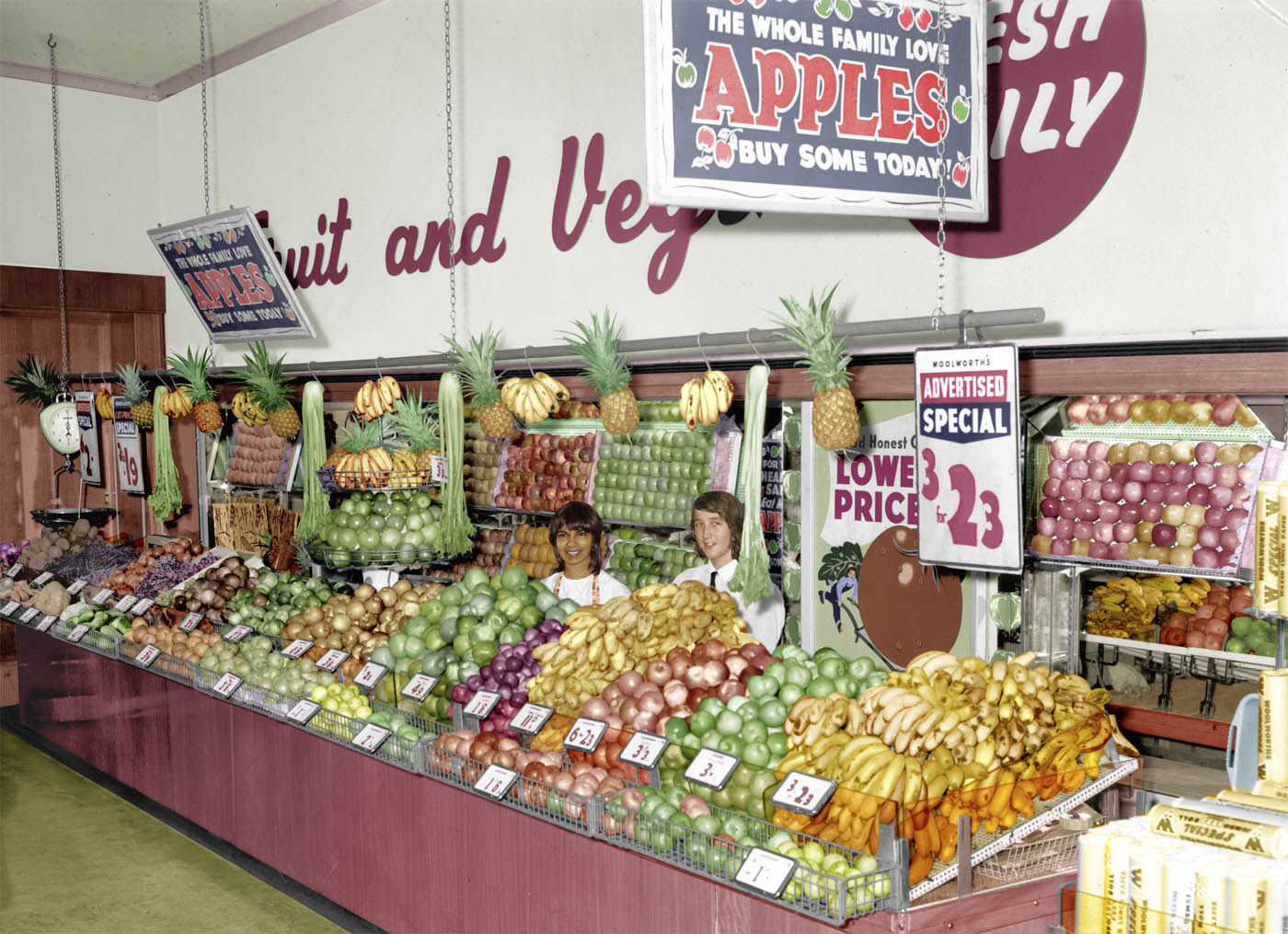
Tracey Moffat (Australian, b. 1960) 'First Jobs, Fruit Market' 1975 from the exhibition 'First Jobs' by Tracey Moffatt at Centre for Contemporary Photography, Fitzroy, Melbourne, August - Sept, 2009


Tracey Moffat (Australian, b. 1960)
First Jobs, Fruit Market
1975
Archival pigments on rice paper with gel medium
71 × 91.5cm


There are some wonderful bodies of photographic work on show around Melbourne at the moment and this is one of them.

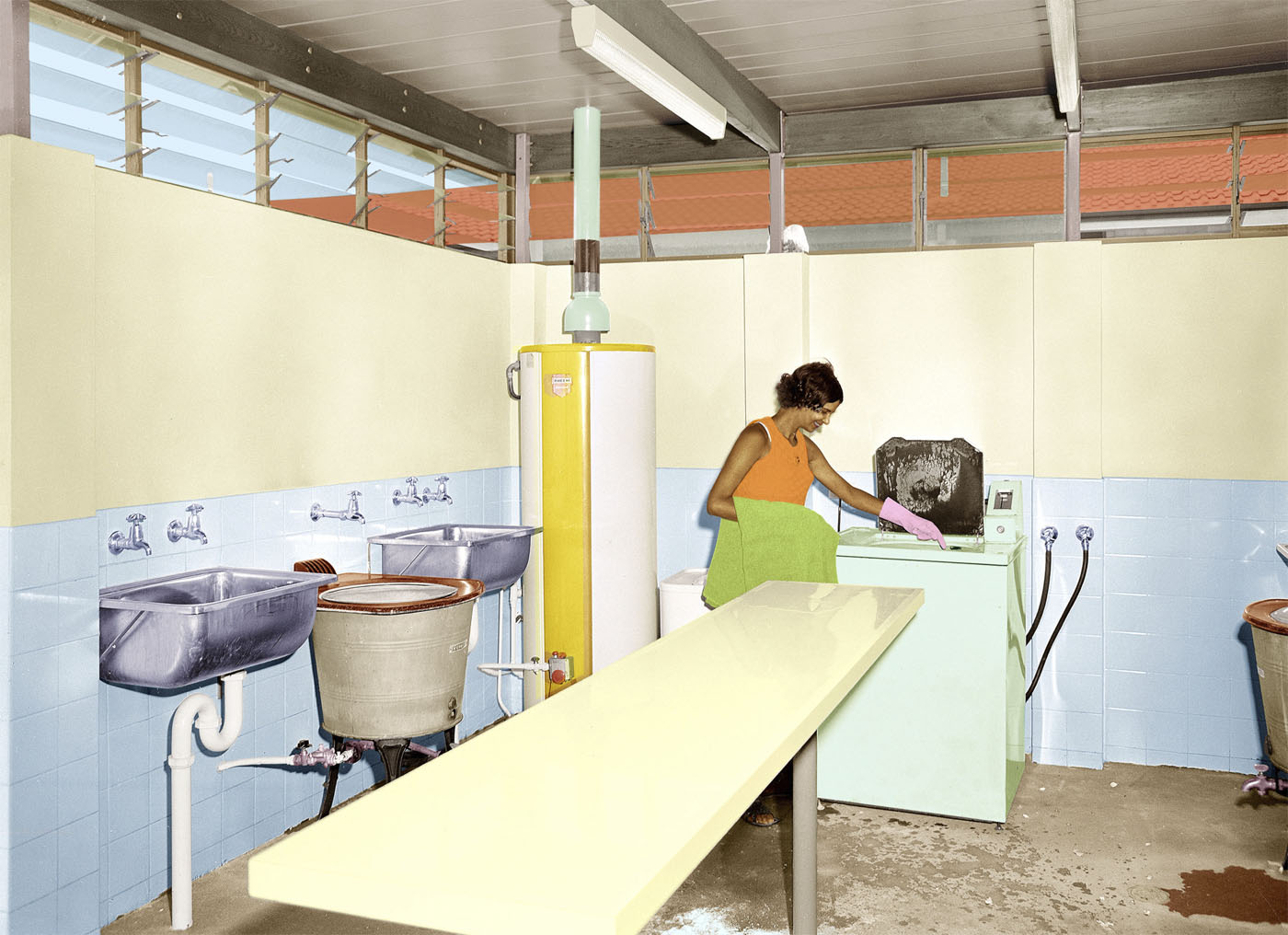
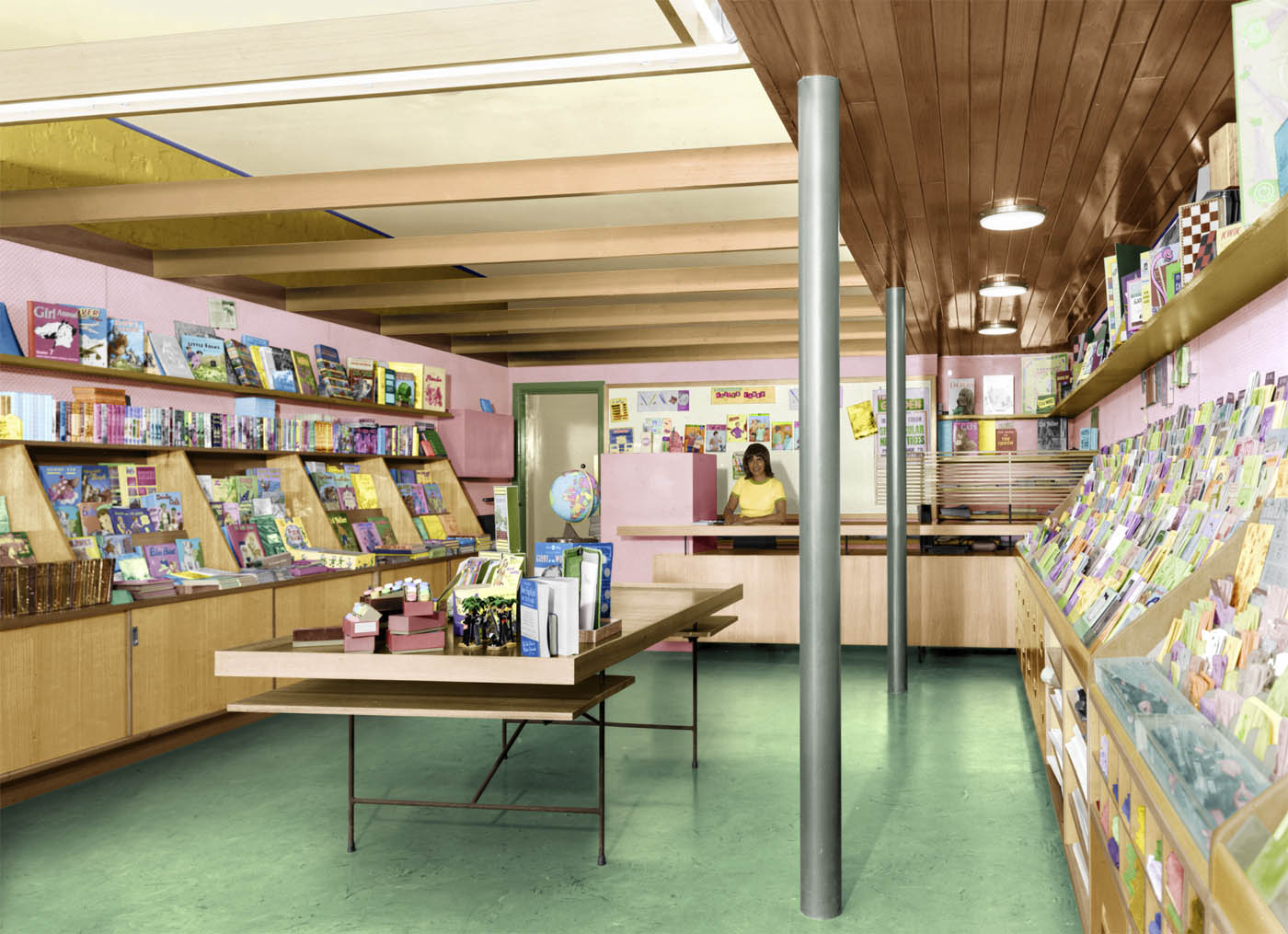
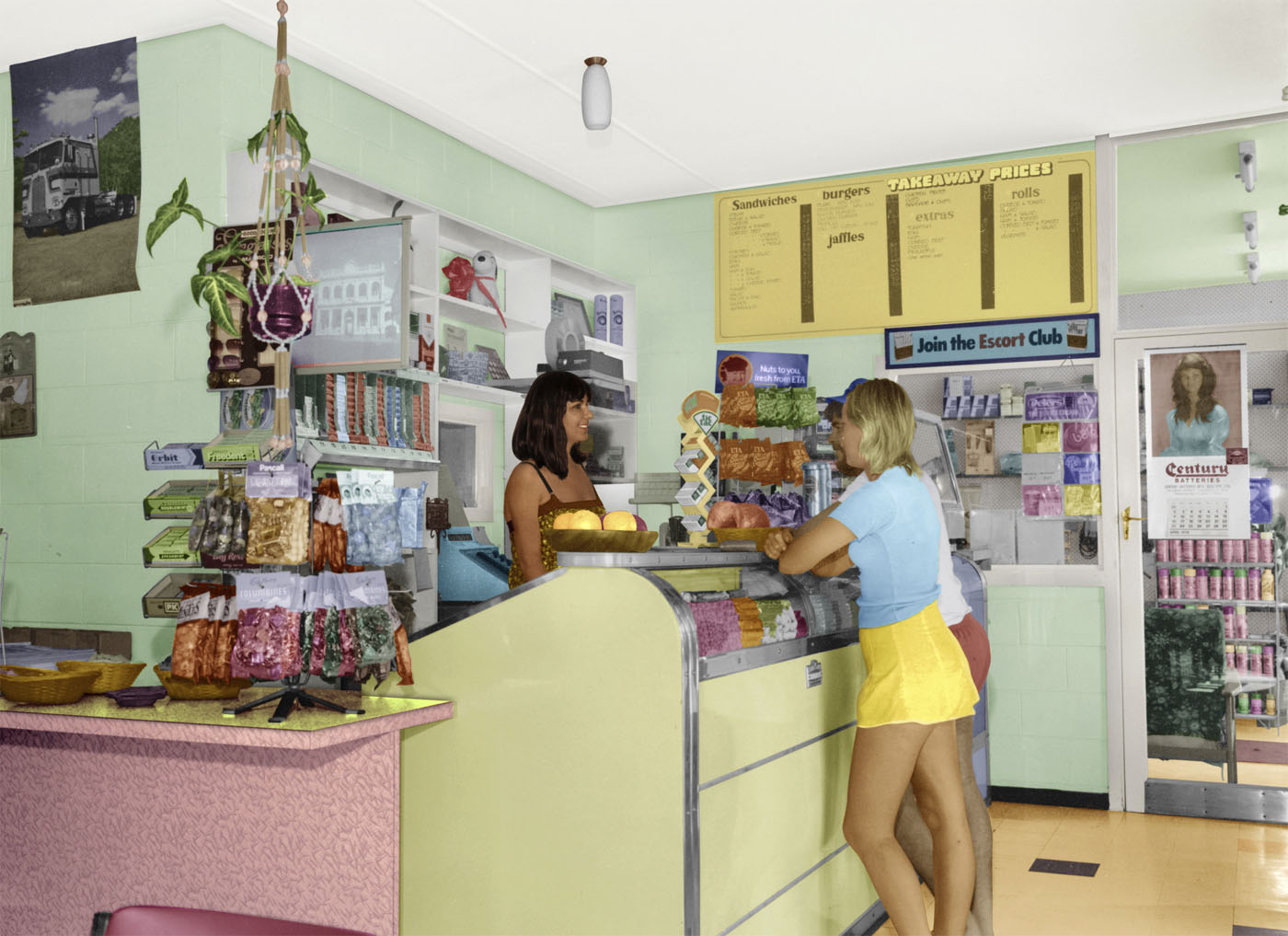
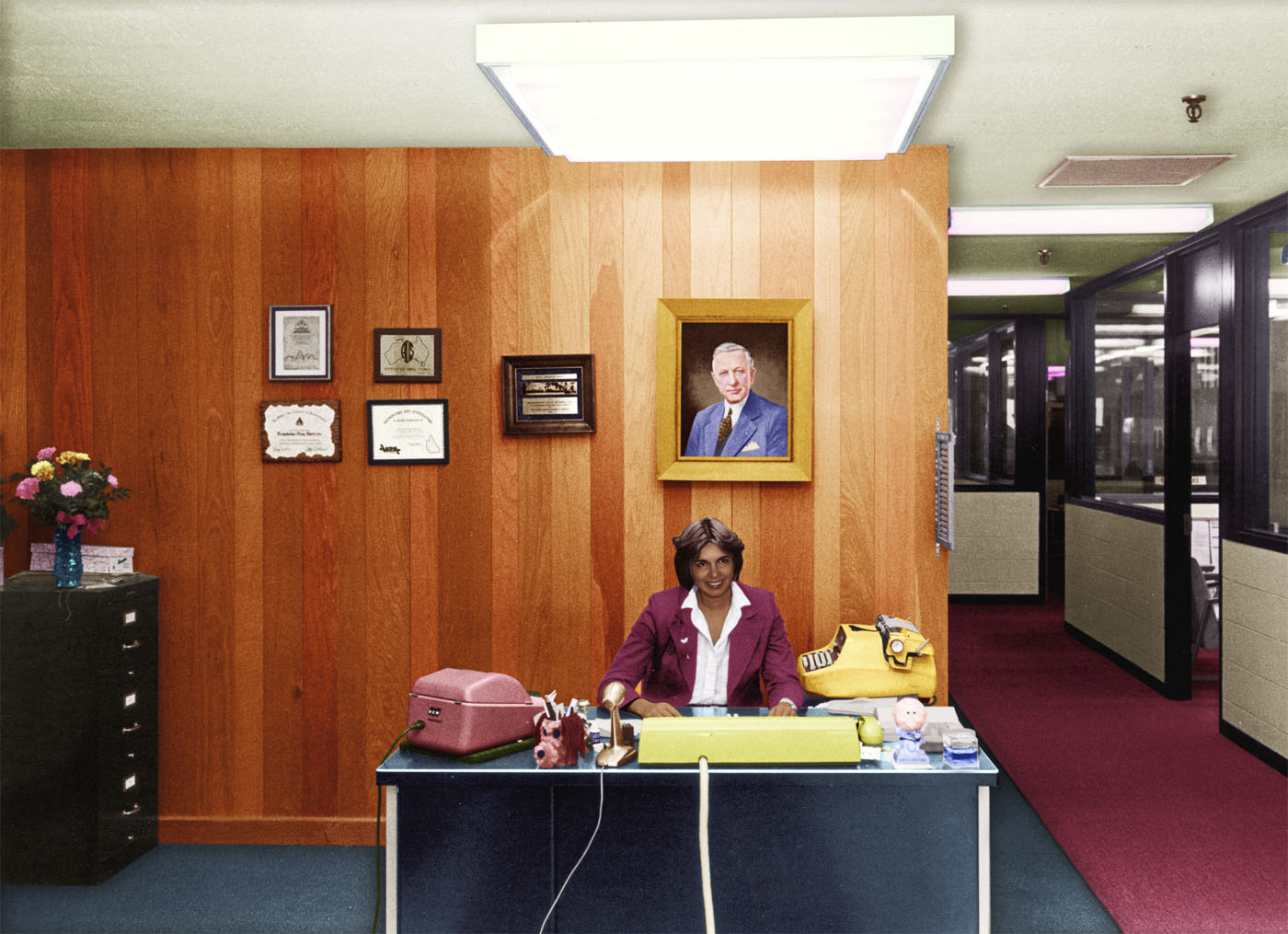
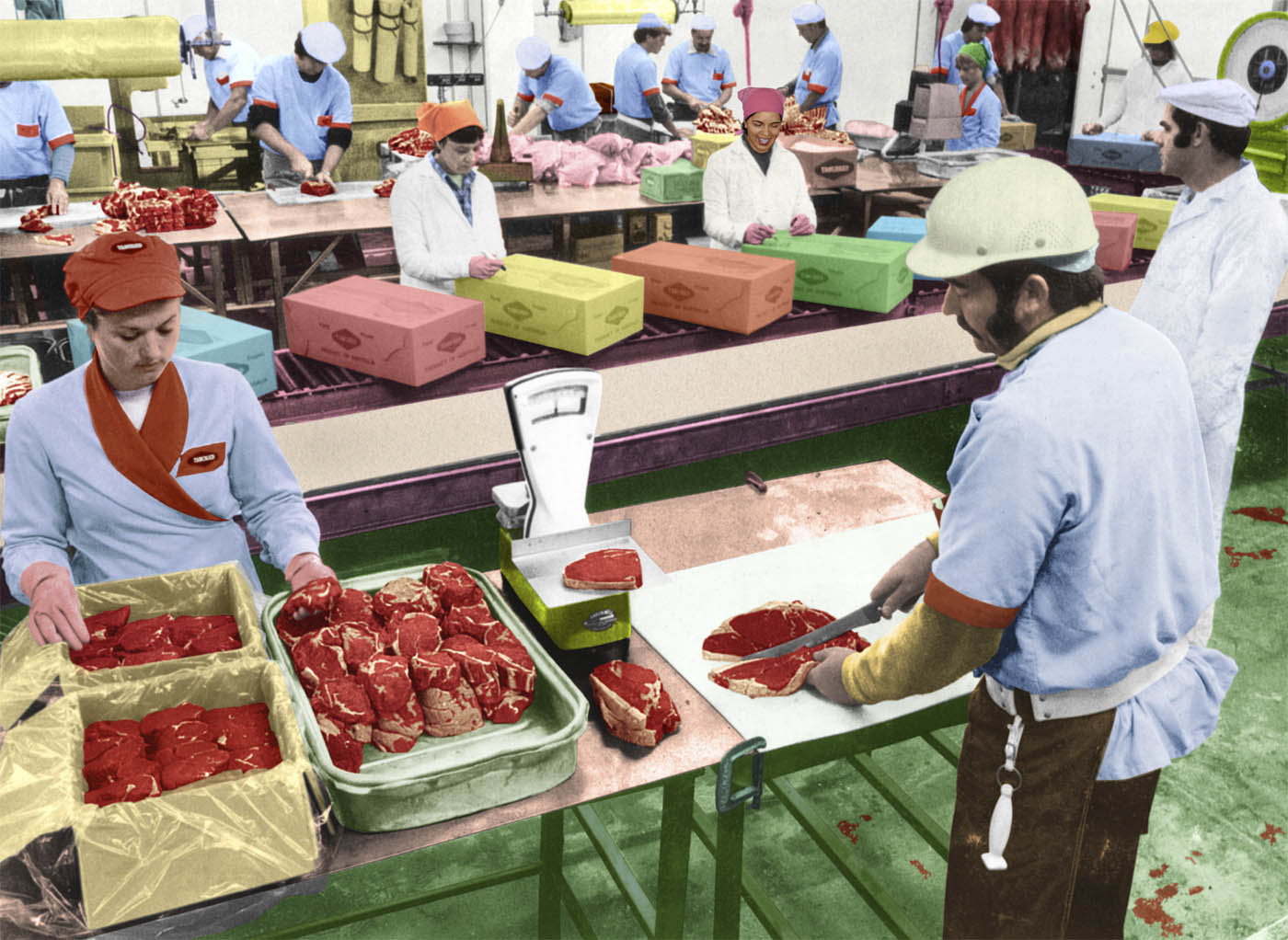
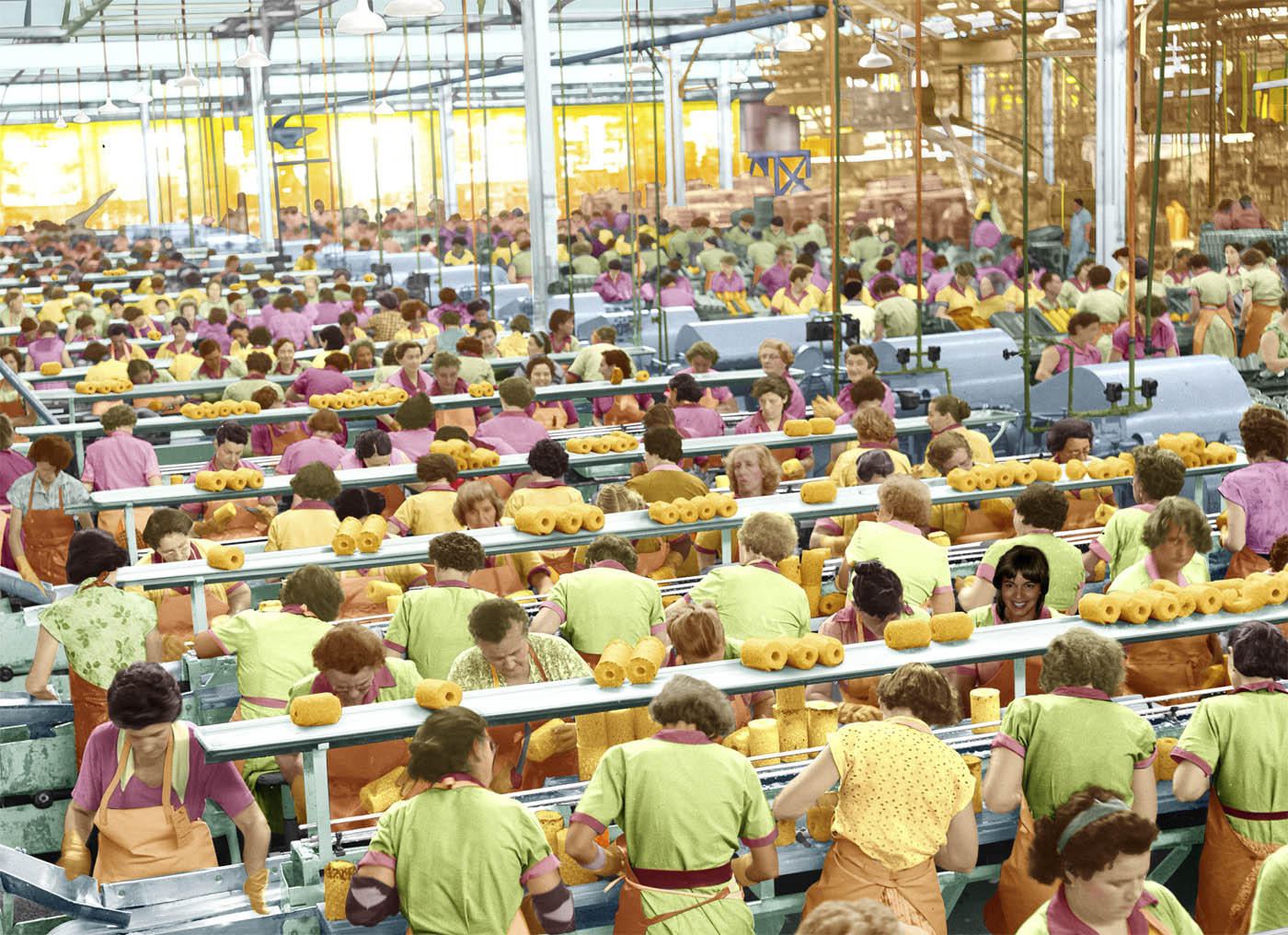
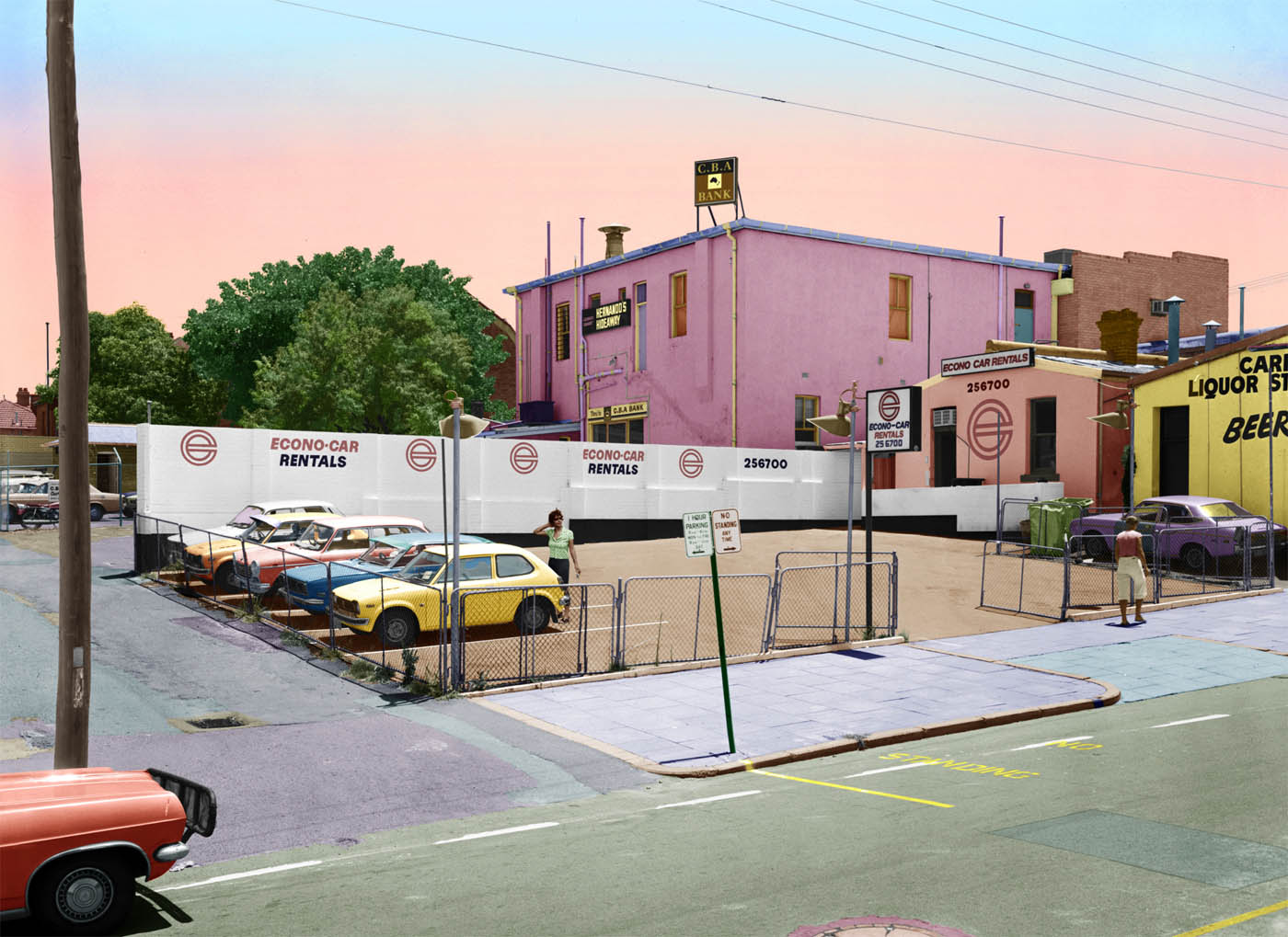
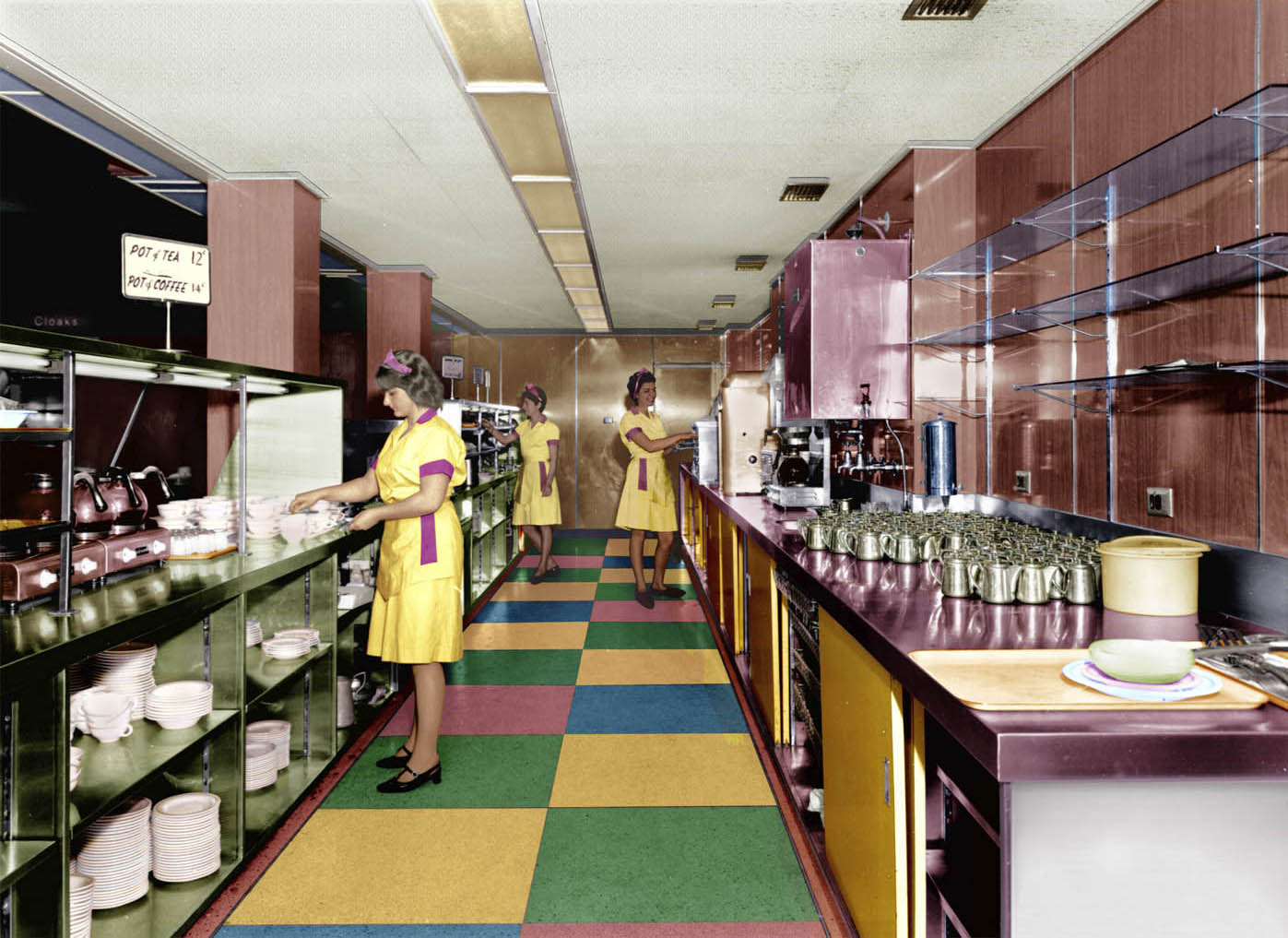
Featuring twelve archival pigment on rice paper with gel medium prints, Tracey Moffatt’s series First Jobs (2008) is a knockout. Images of the artist are inserted into found photographs which are then “hand coloured” (like old postcards) in Photoshop. Moffatt’s series conceptualises the early jobs that she had to do to survive – investigating the banality of the jobs, the value of friendships that were formed coupled with an implicit understanding of the dictum ‘work is life’.

Moffatt’s images hark back to the White Australia policy of the 1950s and the home and living books of that period. With their hyper-real colours, strange coloured skies, green washing machines and purple tarmac Moffatt amps up the voltage of these images and subverts their idealisation. Here is the re-presentation of the physical and spatial isolation of the figure (store clerk / housekeeper) or the sublimation of the usually female figure into the amorphous mass of the whole (meat packing / pineapple cannery) in quintessentially Australian environments. Here also is comment on the nature of a patriarchal society – the smiling receptionist sitting under the portrait of her male boss, awaiting his command.

The spaces of these photographs seem to (literally) consume the artist and her remembrance of these jobs. Despite her smiling face in each of the images we implicitly understand the banality of the jobs for we have done them ourselves. We know these spaces intimately: the spaces inhabit us as much as we inhabit them. As the viewer we experience the being of these images, their reverberation, where the two kinds of space – the space of intimacy and the world space – blend.1

The only sour note of the series comes not in the work itself but in the accompanying artist statement (see below). In this churlish expose of the ‘woe is me, I’m a full time artist and isn’t it so difficult to be a full time artist’ variety, Moffatt complains about the miserable voices in her head and about having to get up off the couch because she is the only person able to make the work and the money. Oh to be so lucky to actually make a living as a full time artist and have the time and space to be creative 7 days a week! Would I have her situation anytime soon? Ha, um, yes.

Dr Marcus Bunyan


1/ Bachelard, Gaston. The Poetics of Space. Boston: Beacon Press, 1969, p. 203.


    Many thankx to the Centre for Contemporary Photography for allowing me to publish the photographs in the posting.


    Tracey Moffat (Australian, b. 1960) 'First Jobs, Housekeeper' 1975 from the exhibition 'First Jobs' by Tracey Moffatt at Centre for Contemporary Photography, Fitzroy, Melbourne, August - Sept, 2009


    Tracey Moffat (Australian, b. 1960)
    First Jobs, Housekeeper
    1975
    Archival pigments on rice paper with gel medium
    71 × 91.5cm


    Tracey Moffat (Australian, b. 1960) 'First Jobs, Store Clerk' 1975 from the exhibition 'First Jobs' by Tracey Moffatt at Centre for Contemporary Photography, Fitzroy, Melbourne, August - Sept, 2009


    Tracey Moffat (Australian, b. 1960)
    First Jobs, Store Clerk
    1975
    Archival pigments on rice paper with gel medium
    71 × 91.5cm


    Tracey Moffat (Australian, b. 1960) 'First Jobs, Corner Store' 1977


    Tracey Moffat (Australian, b. 1960)
    First Jobs, Corner Store
    1977
    Archival pigments on rice paper with gel medium
    71 × 91.5cm


    Tracey Moffat (Australian, b. 1960) 'First Jobs, Receptionist' 1977


    Tracey Moffat (Australian, b. 1960)
    First Jobs, Receptionist
    1977
    Archival pigments on rice paper with gel medium
    71 × 91.5cm


    Tracey Moffat (Australian, b. 1960) 'First Jobs, Meat Packing' 1978


    Tracey Moffat (Australian, b. 1960)
    First Jobs, Meat Packing
    1978
    Archival pigments on rice paper with gel medium
    71 × 91.5cm


    Over the years my friends and I joke about our dreadful past jobs. Jobs we worked as teenagers and young students. Awful jobs that we would rather forget about such as cleaning out the local cinema after a screening of The Exorcist in 1974.

    When I was a kid I always had jobs and I always made my own money whether it was receiving a dollar for pulling up the weeds in the yard or baby sitting for neighbours or working at the local green grocers. The thing about making a bit of your own cash was that you could buy your own clothes and not have to wear the clothes that your mother picked out.

    In 1978 at seventeen I worked in factories peeling pineapples. I also packed meat and shelled prawns. Such back breaking labour was exhausting but the money was good.  After one year I saved enough money to travel to Europe and backpacked around for nine months. Then in 1980 I went to art school in Brisbane but continued part-time work as a waitress to pay for art materials.

    After art school I was desperate for money to pay the rent and I worked many jobs. Some were: scrubbing floors in a women’s refuge, washing dishes in a canteen and parking cars in a car park beneath a restaurant called Dirty Dicks (I had no driver’s licence, but the patrons were always drunk and didn’t care.)

    I am resentful and appalled at the work I had to do to survive. I hold a grudge towards rich kids who never had to slave like I did. Secretly though I’m proud of myself. When I think of those early years I realise that I was learning to be tough and work whether I liked it or not. I put my head down and was forced to be productive. I was learning how to get on with other people and learning to handle a boss. These days I do nothing but make art and have exhibitions. Being an artist feels like being on a permanent but jittery holiday in comparison to those early working days. Now I sleep in until 9.30am and press the ‘ignore’ button on my phone if I don’t feel like talking to anyone. But, as Bette Davis put it, it is ‘The Lonely Life’. You have come up with the ideas and make them happen. No-one else is going to do it for you.

    But I remember the good things about the factory floor. Walking into work everyday and saying hi to people you knew, there was a camaraderie. The work was mindless but it didn’t mean that your mind couldn’t go places. Then there was knock-off time. The bell would ring and you would be out the door with a wad of cash in your hand and not a care in the world.

    In being a full-time artist there never is any knock-off time. There’s always a nagging, miserable voice of ideas in your head and you MUST get up off the sofa and produce work. The bell never rings and you never know where your next buck is coming from. Your mind is constantly wound up. You’re never really physically tired not like when you had a real honest job. But would I go back to working in a factory just to get good a night’s sleep? Ha, um, no.”

    Tracey Moffatt, 
New York 2008

    Press release from Roslyn Oxley9 Gallery [Online] Cited 23/04/2019


    Tracey Moffat (Australian, b. 1960) 'First Jobs, Pineapple Cannery' 1978


    Tracey Moffat (Australian, b. 1960)
    First Jobs, Pineapple Cannery
    1978
    Archival pigments on rice paper with gel medium
    71 × 91.5 cm


    Tracey Moffat (Australian, b. 1960) 'First Jobs, Parking Cars' 1981


    Tracey Moffat (Australian, b. 1960)
    First Jobs, Parking Cars
    1981
    Archival pigments on rice paper with gel medium
    71 × 91.5cm


    Tracey Moffat (Australian, b. 1960) 'First Jobs, Canteen' 1984


    Tracey Moffat (Australian, b. 1960)
    First Jobs, Canteen
    1984
    Archival pigments on rice paper with gel medium
    71 × 91.5cm


    Centre for Contemporary Photography
    Level 2, Perry St Building
    Collingwood Yards, Collingwood
    Victoria 3066

    Opening hours:
    Wednesday – Saturday 11am – 5pm

    Centre for Contemporary Photography website

    LIKE ART BLART ON FACEBOOK

    Back to top