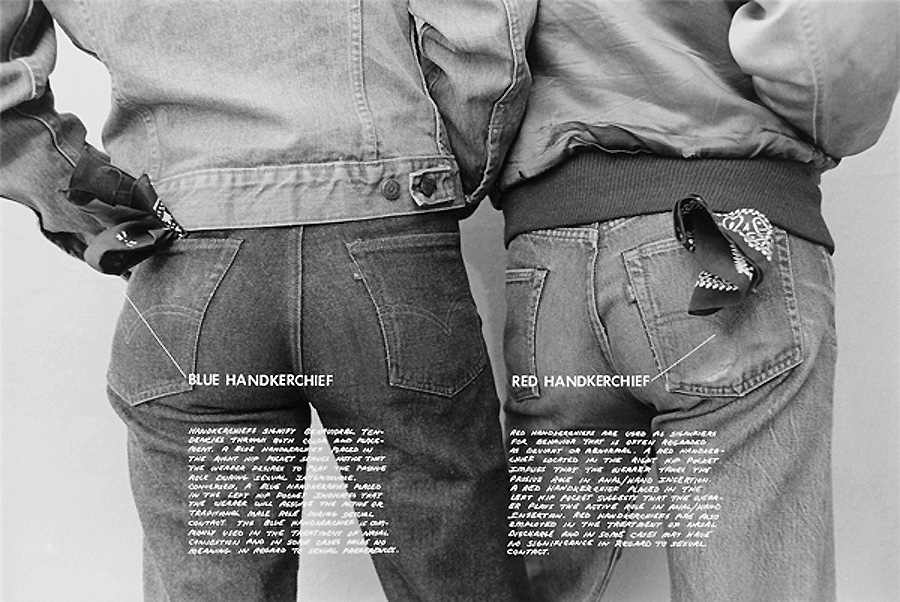
Hal Fischer (American, b. 1950) Blue Handkerchief, Red Handkerchief 1977/2014 From Gay Semiotics 1977 Inkjet print
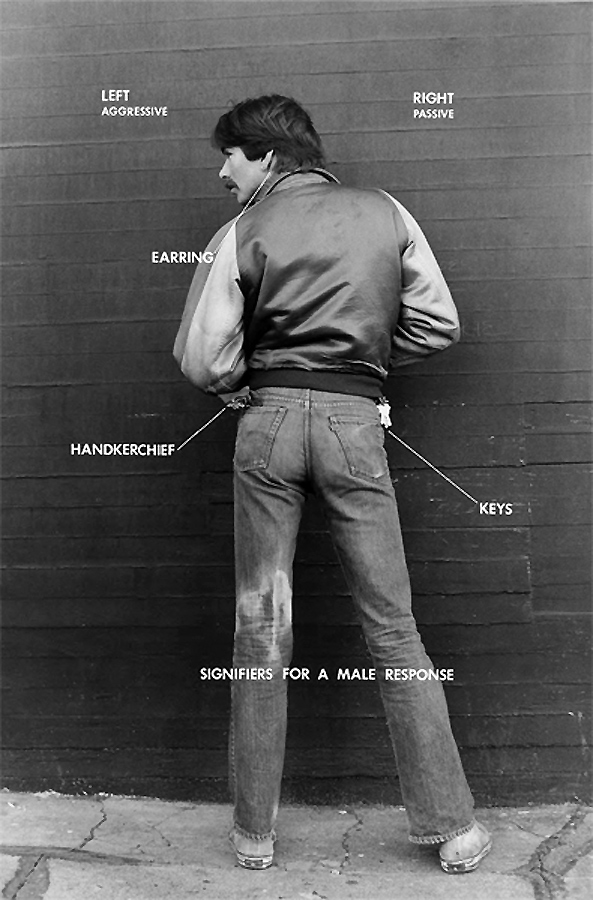
I remember coming out in 1975, six years after Stonewall, that seismic event that was the out and proud culmination of the resistance to oppression that had been building since the Second World War. Pre-disco, pre-Heaven night club (opened in December 1979) young gay men like me went to pubs in the Soho and Earl’s Court district of London and to places like Bang! nightclub on Tottenham Court Road (opened 1976). I used to wear an earring in my left ear, keys on the left, handkerchiefs to all the fetish nights at Heaven, and speak a queer language that secretive gay men had to speak in straight places… Polari (or alternatively Parlare, Parlary, Palare, Palarie, Palari; from Italian parlare, “to talk”).
“Polari is a form of cant slang used in Britain by actors, circus and fairground showmen, merchant navy sailors, criminals, prostitutes, and the gay subculture. There is some debate about its origins, but it can be traced back to at least the nineteenth century and possibly the sixteenth century… Polari is a mixture of Romance (Italian or Mediterranean Lingua Franca), London slang, backslang, rhyming slang, sailor slang, and thieves’ cant… It was a constantly developing form of language, with a small core lexicon of about 20 words (including bona, ajax, eek, cod, naff, lattie, nanti, omi, palone, riah, zhoosh (tjuz), TBH, trade, vada), and over 500 other lesser-known words.
Polari was used in London fishmarkets, the theatre, fairgrounds and circuses, hence the many borrowings from Romany. As many homosexual men worked in theatrical entertainment it was also used among the gay subculture, at a time when homosexual activity was illegal, to disguise homosexuals from hostile outsiders and undercover policemen. It was also used extensively in the British Merchant Navy, where many gay men joined ocean liners and cruise ships as waiters, stewards and entertainers. On one hand, it would be used as a means of cover to allow gay subjects to be discussed aloud without being understood; on the other hand, it was also used by some, particularly the most visibly camp and effeminate, as a further way of asserting their identity.” (Text from Wikipedia)
For example “vada the bona omi” was a “look at the good man”, “spark out on his palliass” was “flat out on his back”, and “he had huge lallies” which was “he had huge legs” (more terms can be found on the Polari – British gay slang web page). Another favourite was “trolling the Dilly” which means “to cruise or walk about Pica/dilly” where the rent boys (known as Dilly boys) used to line up against the railings looking for customers or “trade”. In this context “trolling” could be seen as a form of gay flâneur. Wikipedia states that Polari had begun to fall into disuse amongst the gay subculture by the late 1960s, but in my experience this is not true. Within my circle of friends it was still in constant use into the early 1980s. The language was very useful in pubs in London where sailors, ruff trade, and the theatre crowd mixed in Soho, were you could comment to a gay friend on a man that you thought attractive and anyone overhearing your conversation would not know what you were talking about.
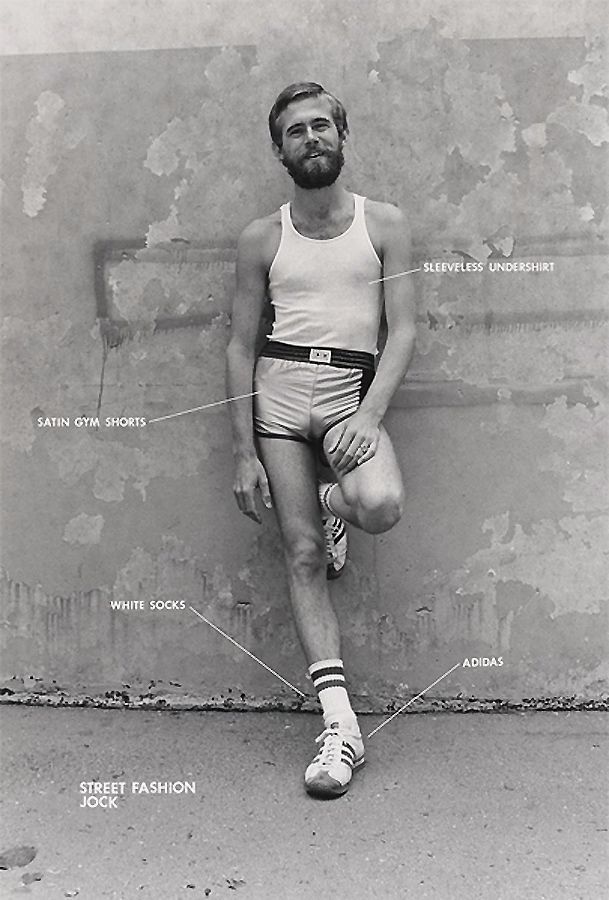
All this must seem rather quaint now, but the archetypal images of gay men have not changed much over the intervening years. There is still the natural young gay man, the bear, the leatherman (or those that just wear leather for dance parties, just for show and not for attitude), the S/M scene, still the handkerchief code (still seen though rarely these days), the armband on the left or right for active or passive, still the gay jocks but now much more the gym preened bunnies. Everything old is new again… it’s just less heterogeneous.
Dr Marcus Bunyan
Many thankx to the Fotomuseum Winterthur for allowing me to publish the photographs in the posting. Please click on the photographs for a larger version of the image.
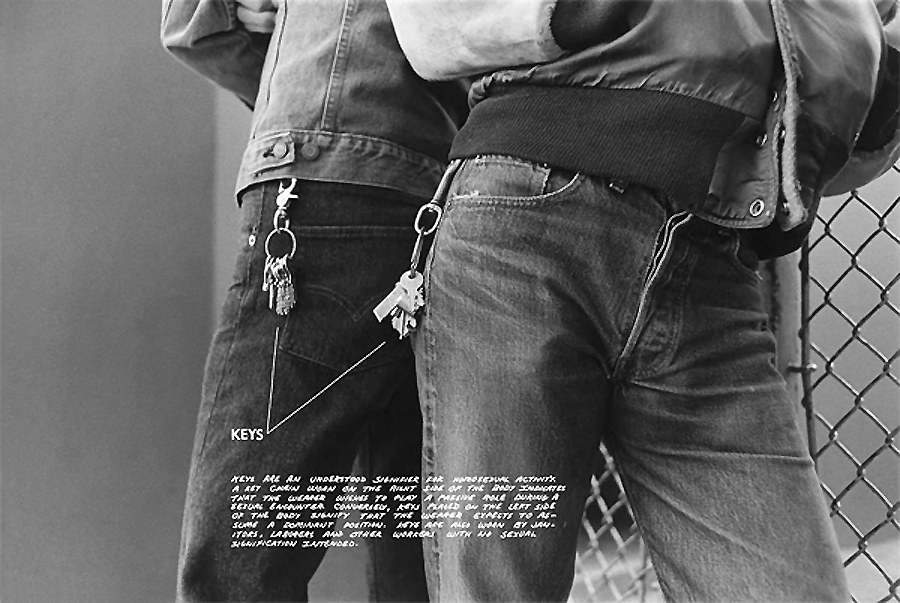
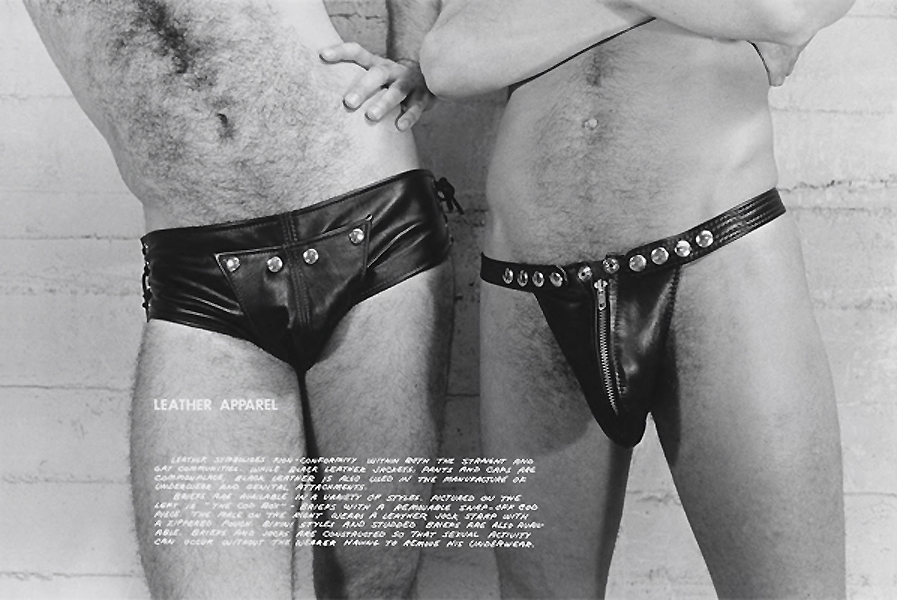
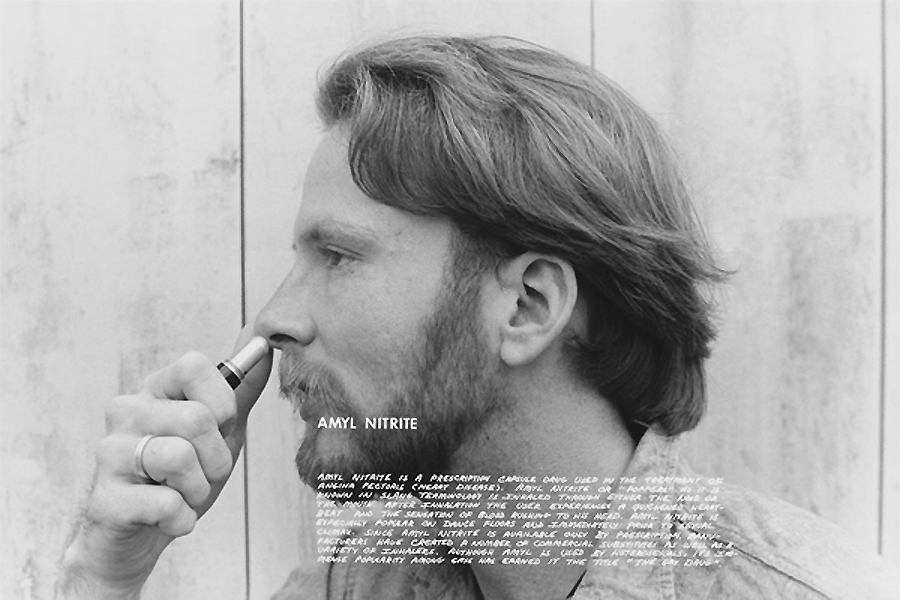
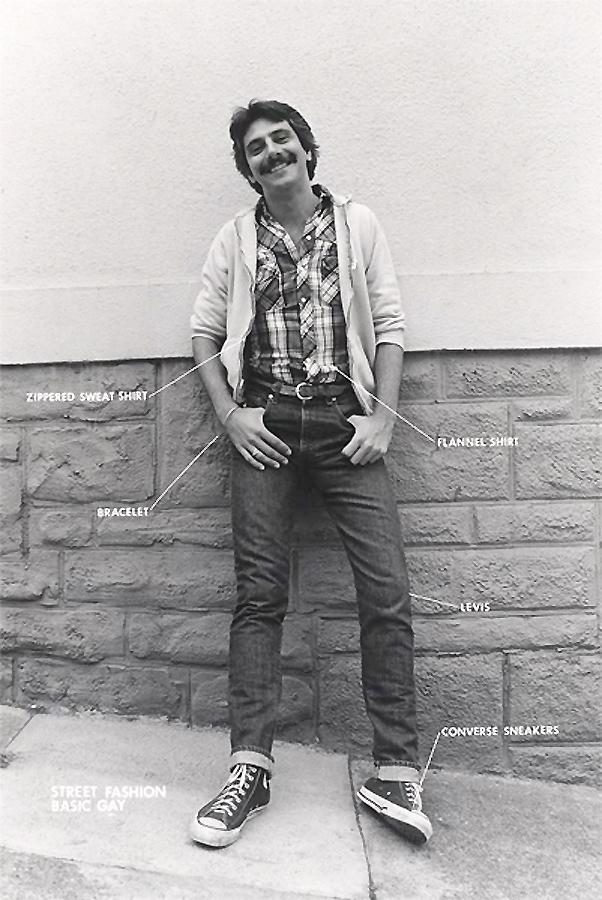
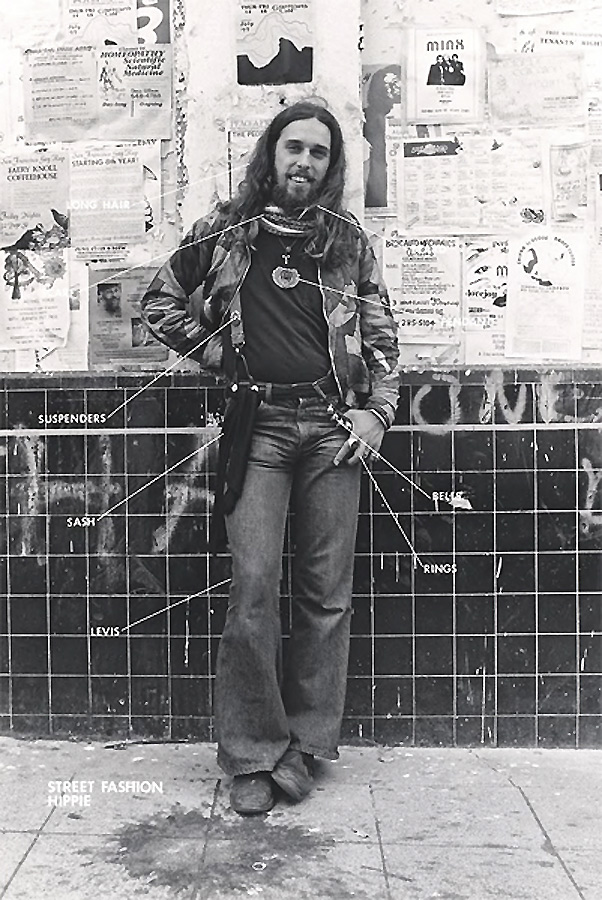
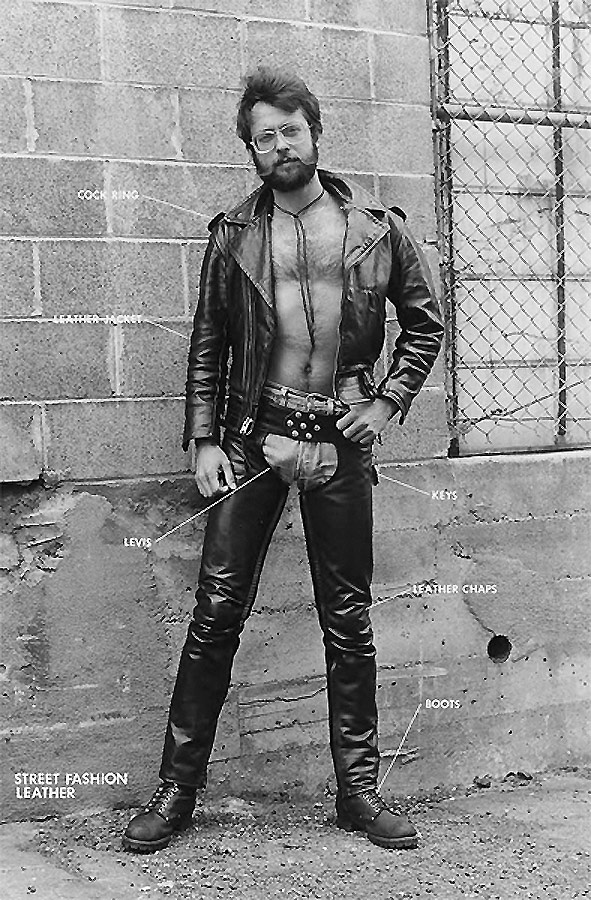
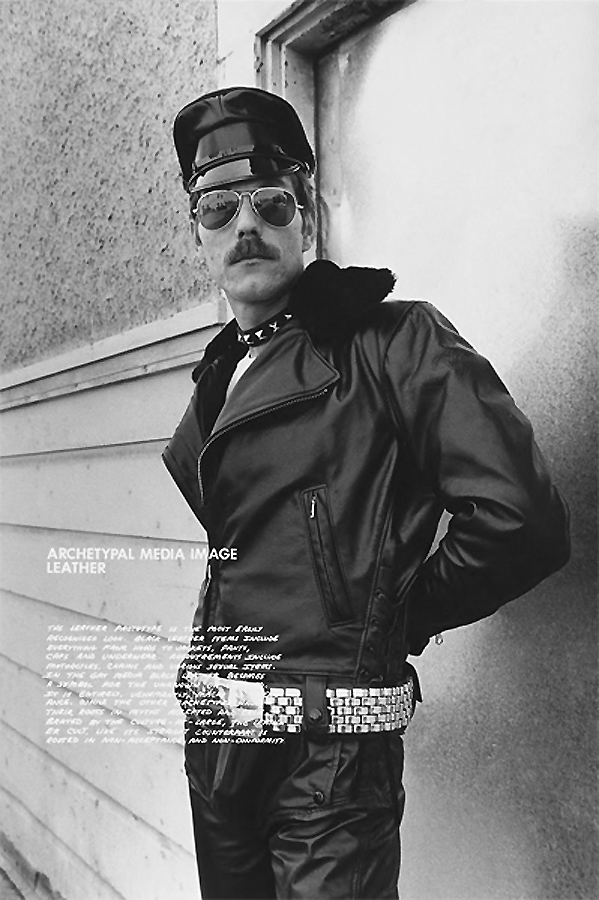
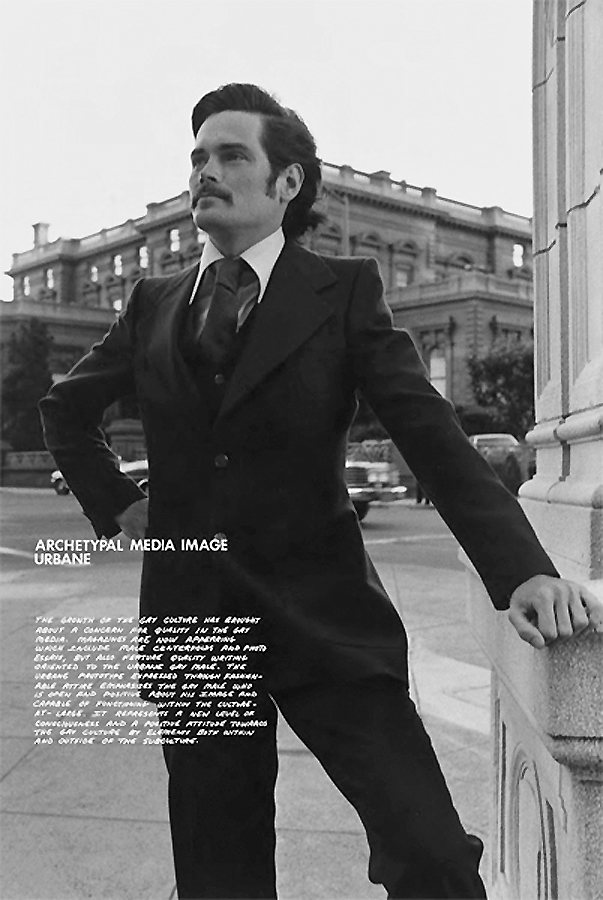
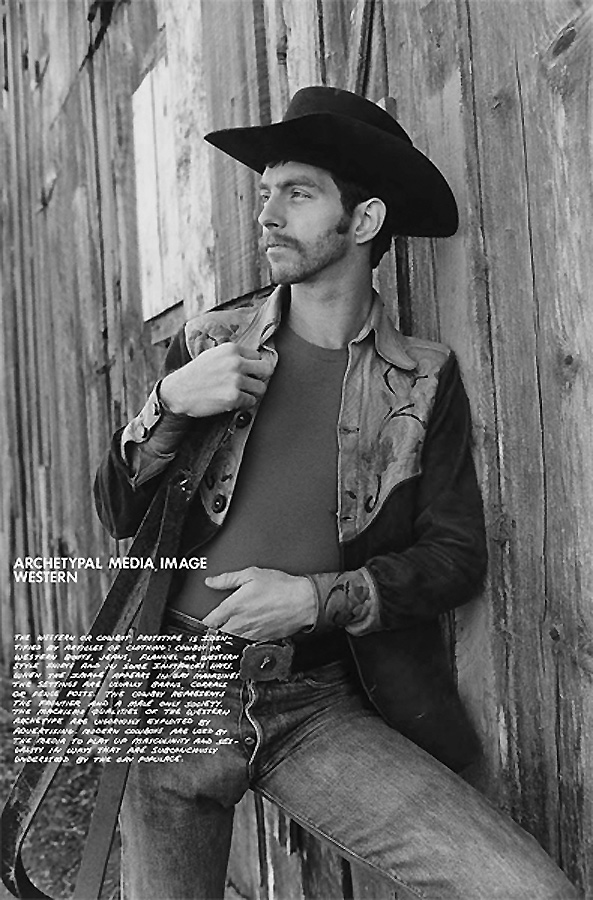
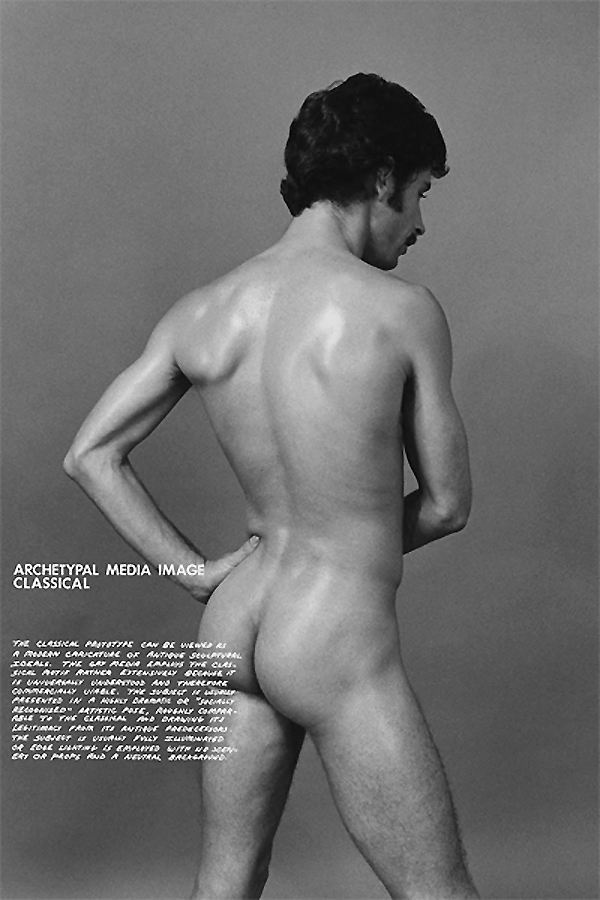
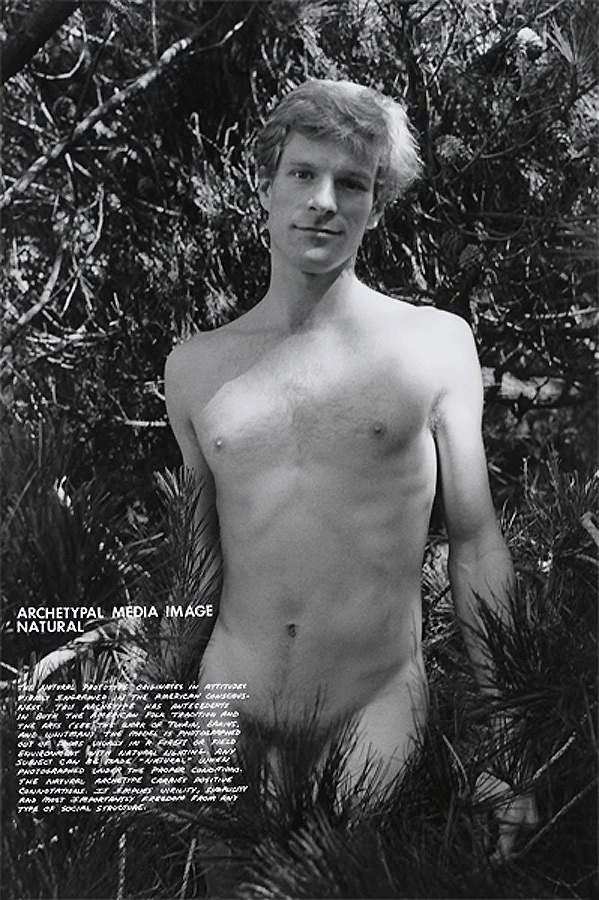
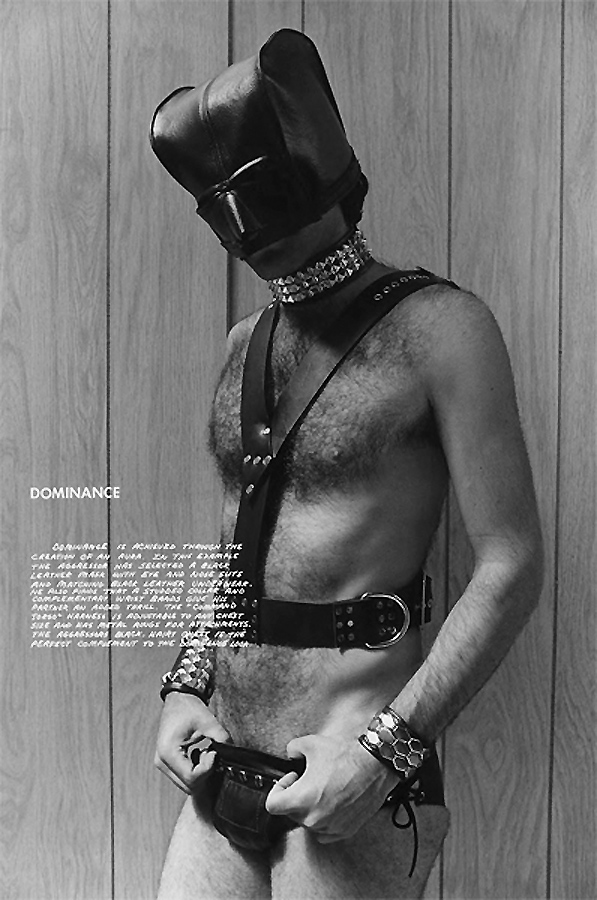
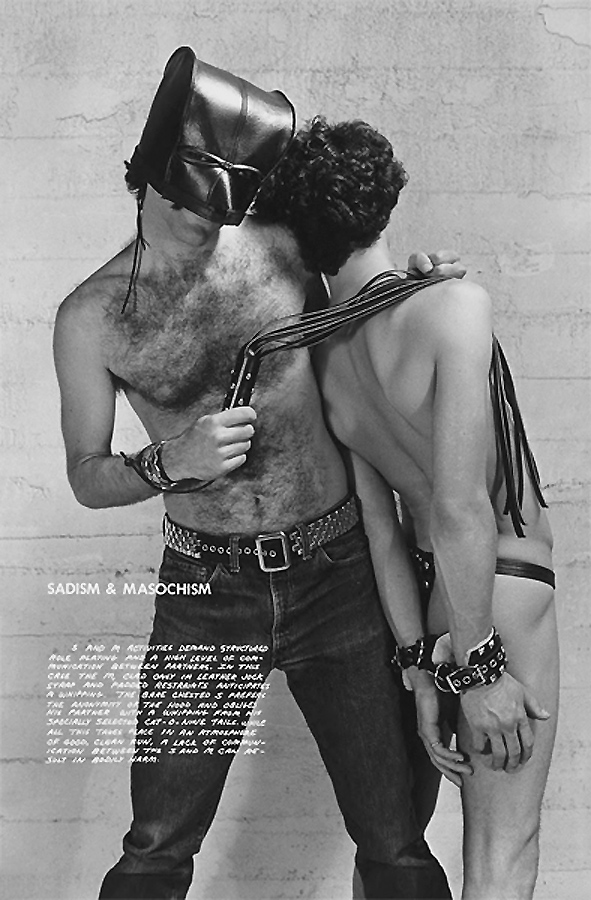
In 1977, Hal Fischer produced his photo-text project Gay Semiotics, first as a series of silver gelatin prints and then as a book published by NFS Press. The project explored the growing visibility of the male gay community in the Castro district of San Francisco, particularly its street style and so-called ‘hanky codes’ indicating different sexual preferences. Fisher’s series was one of the earliest attempts to explore a queer semiotics, offering a playful engagement with male self-fashioning and archetypes. Gay Semiotics is both a marker of the self-confidence and creativity of the San Francisco gay community before the emergence of HIV/AIDS and an important contribution to West Coast conceptual photography.
Hal Fischer (American, b. 1950) Keys 1977/2014 From Gay Semiotics 1977 Inkjet print
Hal Fischer (American, b. 1950) Leather Apparel 1977/2014 From Gay Semiotics 1977 Inkjet print
Hal Fischer (American, b. 1950) Gag Mask 1977/2014 From Gay Semiotics 1977 Inkjet print
Hal Fischer (American, b. 1950) Amyl Nitrite 1977/2014 From Gay Semiotics 1977 Inkjet print
Hal Fischer (American, b. 1950) Earring 1977/2014 From Gay Semiotics 1977 Inkjet print
JBW:Gay Semiotics is an attempt to map some of the discourse of structuralism onto the visual codes of male queer life in the Castro. How did you come to structuralism?
HF: Thanks to Lew Thomas, in graduate school I began reading things like Jack Burnham’s The Structure of Art and Ursula Meyer’s Conceptual Art. Those were two key texts. Of course, structuralism came late to photography, when you consider that Susan Sontag’s Against Interpretation came out in 1966. Reading Burnham, going on to read Claude Lévi-Strauss, all that was crucial. I learned about signifiers, and thought, this is going on all around me.
JBW: You’re doing several things in Gay Semiotics. On the one hand, you’re parsing a signification system that arose out of a nonverbal, erotic exchange, and you’re also deconstructing gay male self-fashioning and photographing “archetypes.” It is thus a photo-project about the history of photography and its long legacy of ethnographic typing.
HF: I can’t say I was conscious of it at the time, but one of the first photographers who influenced me was August Sander. I mean, I LOVED Sander. I still do. I probably was a fascist in an earlier life, because I’m definitely into types, and I’m definitely into archetyping. I don’t really think it’s that awful a thing to do; it can be very informative. I was also interested in the Bechers and the notion of repetition.
JBW: So the work is also about genre.
HF: Yes. It’s also about personal desire; it’s a lexicon of attraction.”
Extract from Julia Bryan-Wilson speaking with Hal Fischer. Aperture magazine #218, Spring 2015
Hal Fischer (American, b. 1950) Signifiers for a Male Response 1977/2014 From Gay Semiotics 1977 Inkjet print
Hal Fischer (American, b. 1950) Street Fashion Basic Gay 1977/2014 From Gay Semiotics 1977 Inkjet print
Hal Fischer (American, b. 1950) Street Fashion Jock 1977/2014 From Gay Semiotics 1977 Inkjet print
Hal Fischer (American, b. 1950) Street Fashion Forties Trash 1977/2014 From Gay Semiotics 1977 Inkjet print
Hal Fischer (American, b. 1950) Street Fashion Hippie 1977/2014 From Gay Semiotics 1977 Inkjet print
Hal Fischer (American, b. 1950) Street Fashion Uniform 1977/2014 From Gay Semiotics 1977 Inkjet print
Hal Fischer (American, b. 1950) Street Fashion Leather 1977/2014 From Gay Semiotics 1977 Inkjet print
Hal Fischer (American, b. 1950) Archetypal Media Image Leather 1977/2014 From Gay Semiotics 1977 Inkjet print
Hal Fischer (American, b. 1950) Archetypal Media Image Urbane 1977/2014 From Gay Semiotics 1977 Inkjet print
Hal Fischer (American, b. 1950) Archetypal Media Image Western 1977/2014 From Gay Semiotics 1977 Inkjet print
Hal Fischer (American, b. 1950) Archetypal Media Image Classical 1977/2014 From Gay Semiotics 1977 Inkjet print
Hal Fischer (American, b. 1950) Archetypal Media Image Natural 1977/2014 From Gay Semiotics 1977 Inkjet print
Hal Fischer (American, b. 1950) Dominance 1977/2014 From Gay Semiotics 1977 Inkjet print
Hal Fischer (American, b. 1950) Sadism & Masochism 1977/2014 From Gay Semiotics 1977 Inkjet print
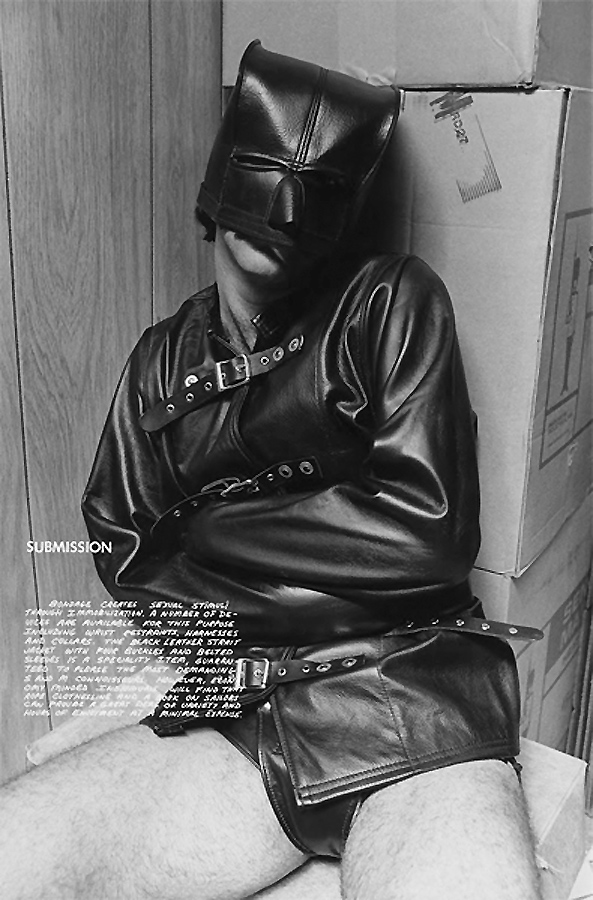
Hal Fischer (American, b. 1950) Submission 1977/2014 From Gay Semiotics 1977 Inkjet print
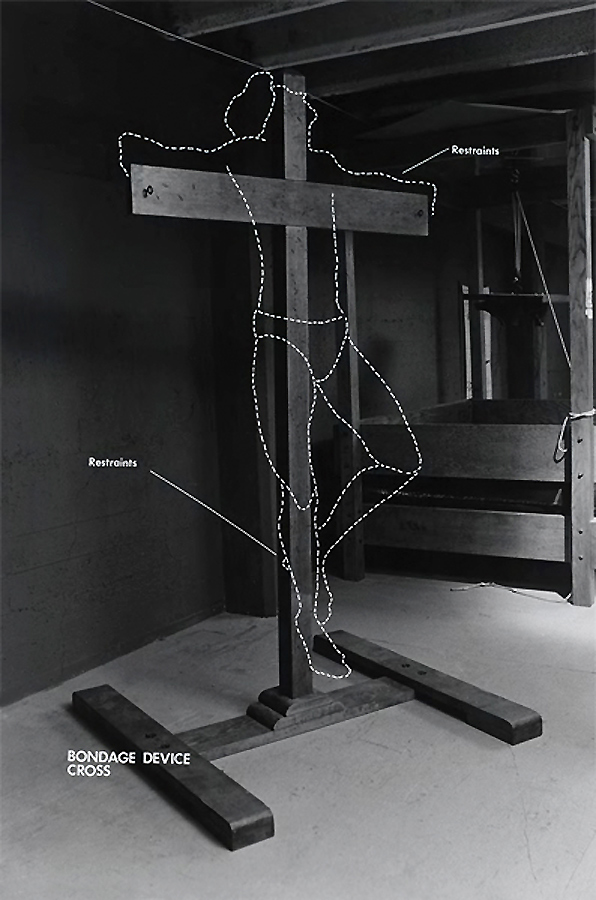
Hal Fischer (American, b. 1950) Bondage Device Cross 1977/2014 From Gay Semiotics 1977 Inkjet print
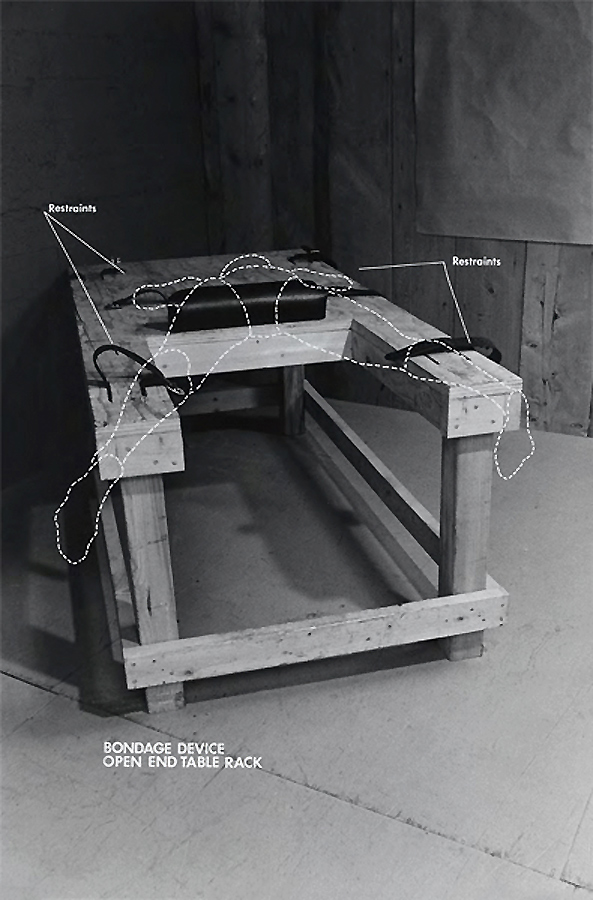
Hal Fischer (American, b. 1950) Bondage Device Open End Table Rack 1977/2014 From Gay Semiotics 1977 Inkjet print
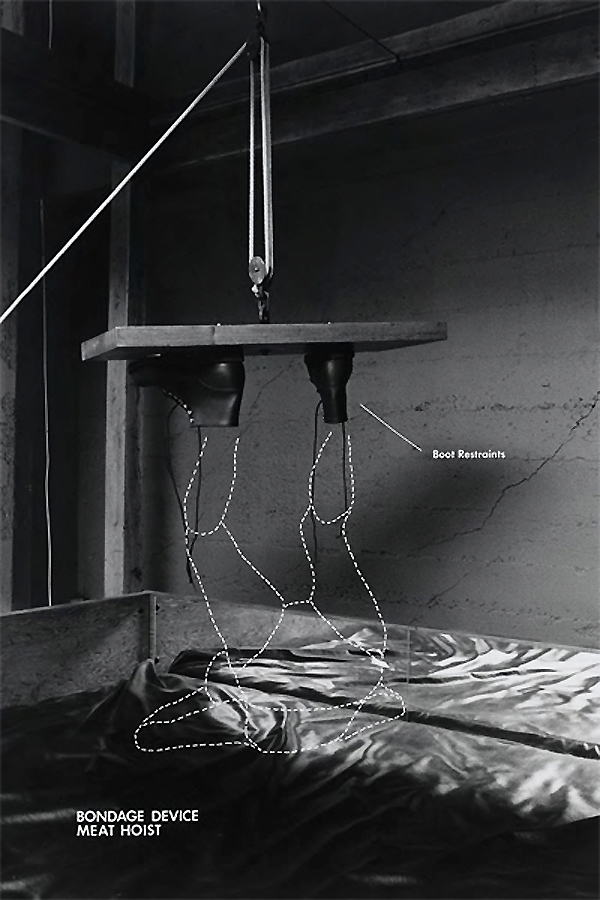
Hal Fischer (American, b. 1950) Bondage Device Meat Hoist 1977/2014 From Gay Semiotics 1977 Inkjet print
“How I wish this selection had been available to me when I was young and trying to make sense of my reactions to the world. How inspirational to have had portraits of the great and the good staring out at me telling me that I was not by any measure on my own.”
“… it is her [K.D. Lang’s] androgynous good looks and tendency to strut on the stage which warms many lesbian hearts.”
~ Sandi Toksvig
Many thankx to the National Portrait Gallery for allowing me to publish the photographs in the posting. Please click on the photographs for a larger version of the image.
The first portrait exhibition to celebrate the contribution of gay people and gay icons to history and culture. 60 photographs selected by Waheed Alli, Alan Hollinghurst, Elton John, Jackie Kay, Billie Jean King, Ian McKellen, Chris Smith, Ben Summerskill, Sandi Toksvig and Sarah Waters.
An important photography exhibition, Gay Icons, at the National Portrait Gallery (2 July – 18 October 2009) will celebrate the contribution of gay people – and the significance of the gay icon – to history and culture. Ten selectors have worked with the Gallery to make their own personal choices of six individuals, their ‘icons’. Not only does this exhibition include many well-known icons, who may or may not be gay themselves, it also reveals some surprises and will encourage a wide audience to think about familiar faces in new ways.
The Gay Icons shown in the exhibition will include those people, living or dead, whatever their sexual orientation or interests, who the ten individual selectors regard as inspirational, or as a personal icon. Gay Icons brings together portraits of those people who are regarded as especially significant to each of the selectors, alongside those of the selectors themselves, all prominent gay figures in contemporary culture and society.
Coinciding with the fortieth anniversary of the Stonewall Riots in New York, this exhibition focuses on portraits of both historical and modern figures. The choices provide a fascinating range of inspiring figures – some very famous, some heroic, others relatively unknown. Each icon is presented with information about their personal, and sometimes public, significance, some of it relating to the sitter but much of it linked to the selectors who have been prepared to share their experiences and feelings in their own exhibition texts.
Themes running through the exhibition include inspiration and how the ‘icons’ have inspired each selector in an extremely personal sense to realise their full potential, human rights, stemming from the specific consideration of sexuality, and how this might lead us to consider parallels between the struggles of different minority groups, re-discovery, or rescuing the reputations of figures who might otherwise have been forgotten or, worse, actively disregarded and surprise at some of the perhaps unexpected choices.
The project was developed from an initial proposal made by Bernard Horrocks, Copyright Officer, at the Gallery. The concept quickly evolved to include invitations to ten gay people – each distinguished in different fields – to act as selectors. They were chosen in consultation with their Chair, Sandi Toksvig.
Each selector could freely choose six ‘icons’, although the Gallery decided to limit the choices to photographic portraits, and therefore to subjects who had lived, more or less, within the last 150 years. This also seemed appropriate because within this same period homosexuality was gradually accepted and made legitimate in Britain.
The selectors are Lord Waheed Alli, Alan Hollinghurst, Sir Elton John, Jackie Kay, Billie Jean King, Sir Ian McKellen, Lord Chris Smith, Ben Summerskill, Sandi Toksvig and Sarah Waters.
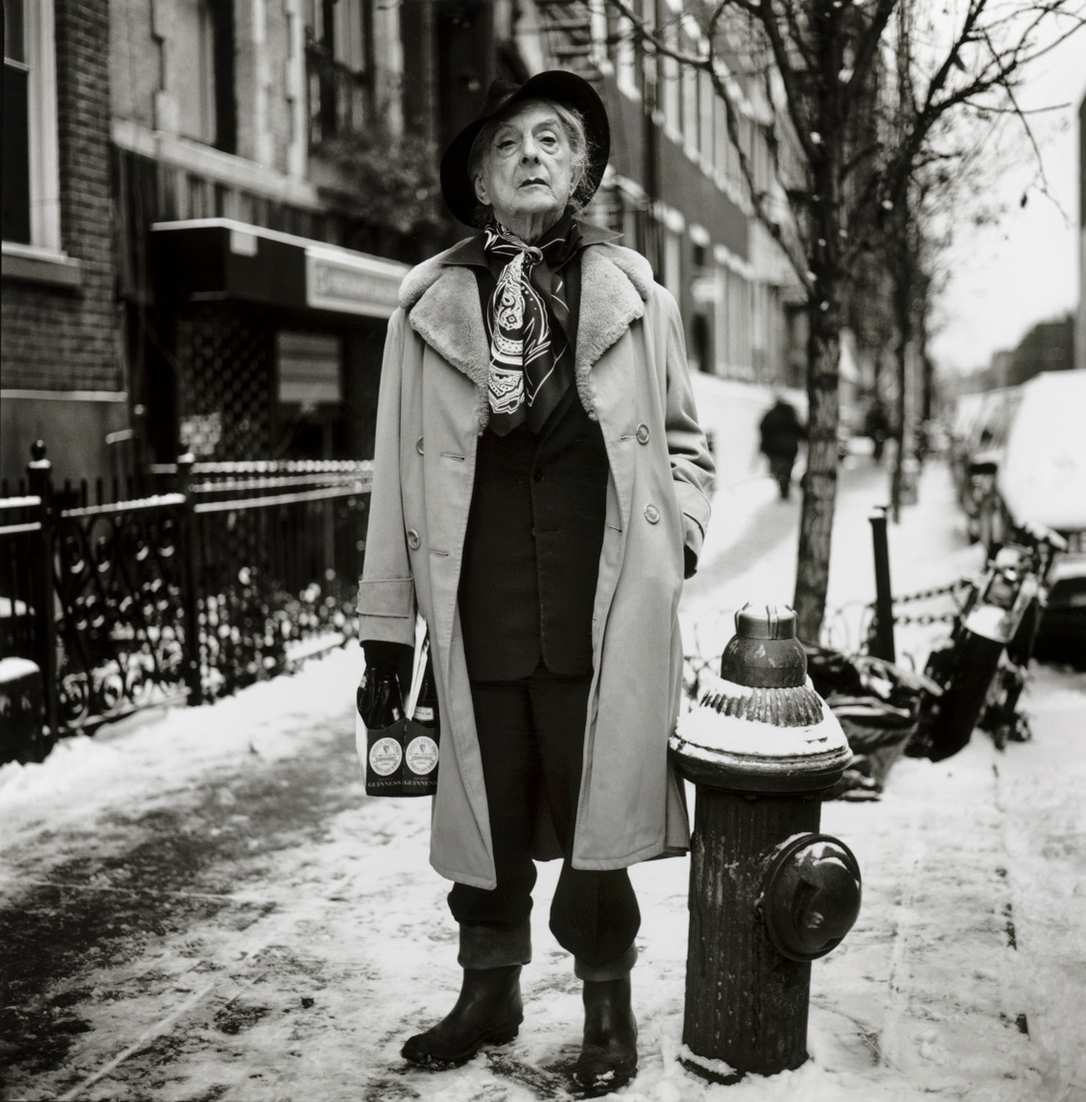
Sitters include artists Francis Bacon and David Hockney, civil rights campaigner Harvey Milk, writers Quentin Crisp, Joe Orton, Dame Daphne Du Maurier, Patricia Highsmith and Walt Whitman, composer Pyotr Tchaikovsky, musicians k.d. lang, Will Young and Village People, entertainers Ellen DeGeneres, Kenneth Williams and Lily Savage, and Nelson Mandela and Diana, Princess of Wales. Their fascinating stories will be illustrated by sixty photographic portraits including works by Andy Warhol, Linda McCartney, Snowdon, Polly Borland, Fergus Greer, Terry O’Neill and Cecil Beaton.
Sandy Nairne, Director of the National Portrait Gallery, London, says: “Gay Icons is an exhibition in which inspiring stories – both private and public – are shared. These are stories of brave lives and significant achievements, told through iconic photographic images chosen by selectors who are themselves icons.
Text from the National Portrait Gallery website [Online] Cited 10/07/2009. No longer available online
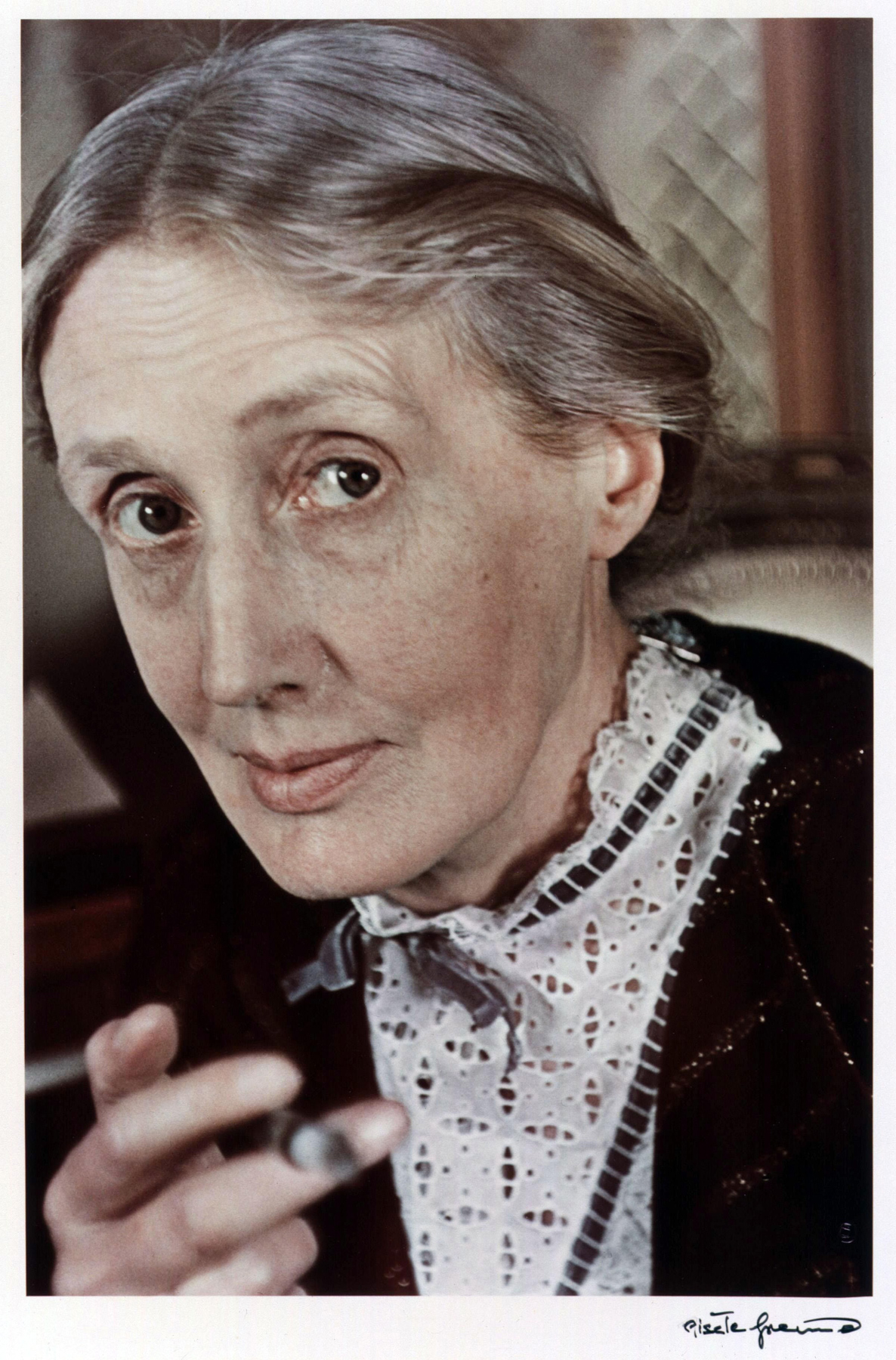
Gisèle Freund (born Gisela Freund; December 19, 1908 in Schöneberg District, Berlin – March 31, 2000 in Paris) was a German-born French photographer and photojournalist, famous for her documentary photography and portraits of writers and artists. Her best-known book, Photographie et société (1974), is about the uses and abuses of the photographic medium in the age of technological reproduction. In 1977, she became President of the French Association of Photographers, and in 1981, she took the official portrait of French President François Mitterrand.
She was made Officier des Arts et Lettres in 1982 and Chevalier de la Légion d’honneur, the highest decoration in France, in 1983. In 1991, she became the first photographer to be honoured with a retrospective at the Musée National d’art Moderne in Paris (Centre Georges Pompidou).
Freund’s major contributions to photography include using the Leica Camera (with its 36 frames) for documentary reportage and her early experimentation with Kodachrome and 35 mm Agfacolor, which allowed her to develop a “uniquely candid portraiture style” that distinguishes her in 20th century photography.
She is buried at the Montparnasse Cemetery in Paris, France near her home and studio at 12 rue Lalande.
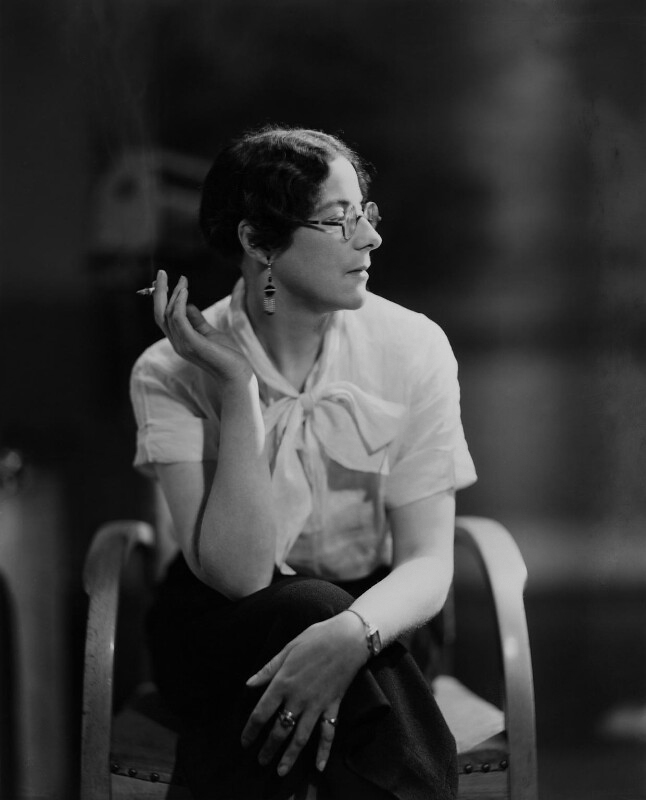
“… is a significant writer by any standard, but she deserves honouring as a lesbian and gay icon on the strength of one novel alone, The Price of Salt, a wonderfully complex and upbeat representation of lesbian love.”
~ Sarah Waters
Patricia Highsmith (January 19, 1921 – February 4, 1995) was an American novelist and short story writer best known for her psychological thrillers, including her series of five novels featuring the character Tom Ripley. She wrote 22 novels and numerous short stories throughout her career spanning nearly five decades, and her work has led to more than two dozen film adaptations. Her writing derived influence from existentialist literature, and questioned notions of identity and popular morality. She was dubbed “the poet of apprehension” by novelist Graham Greene.
Her first novel, Strangers on a Train, has been adapted for stage and screen numerous times, notably by Alfred Hitchcock in 1951. Her 1955 novel The Talented Mr. Ripley has been adapted numerous times for film, theatre, and radio. Writing under the pseudonym “Claire Morgan,” Highsmith published the first lesbian novel with a happy ending, The Price of Salt, in 1952, republished 38 years later as Carol under her own name and later adapted into a 2015 film.
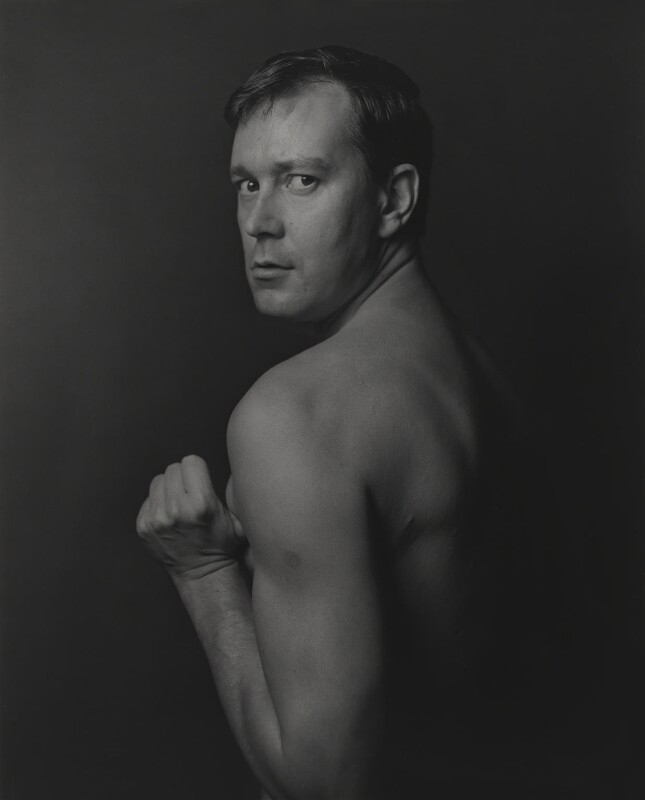
Joseph Angelo D’Allesandro III (born December 31, 1948), better known as Joe Dallesandro, is an American actor and Warhol superstar. Having also crossed over into mainstream roles like mobster Lucky Luciano in The Cotton Club, Dallesandro is generally considered to be the most famous male sex symbol of American underground films of the 20th century, as well as a sex symbol of gay subculture.
Dallesandro starred in the 1968 film produced by Andy Warhol, Flesh, as a teenage street hustler. Rolling Stone magazine in 1970 declared his second starring vehicle, Trash, the “Best Film of the Year”, making him a star of the youth culture, sexual revolution and subcultural New York City art collective of the 1970s. Dallesandro also starred in 1972’s Heat, another Warhol film that was conceived as a parody of Sunset Boulevard. …
Underground film career
Dallesandro met Andy Warhol and Paul Morrissey in 1967 while they were shooting Four Stars, and they cast him in the film on the spot. Warhol would later comment “In my movies, everyone’s in love with Joe Dallesandro.”
Dallesandro played a hustler in his third Warhol film, Flesh (1968), where he had several nude scenes. Flesh became a crossover hit with mainstream audiences, and Dallesandro became the most popular of the Warhol stars. New York Times film critic Vincent Canby wrote of him: “His physique is so magnificently shaped that men as well as women become disconnected at the sight of him”
As Dallesandro’s underground fame began to cross over into the popular culture, he appeared on the cover of Rolling Stone in April 1971. He was also photographed by some of the top celebrity photographers of the time: Francesco Scavullo, Annie Leibovitz, Richard Avedon.
Dallesandro appeared in Lonesome Cowboys (1968), Trash (1970), Heat (1972), Andy Warhol’s Frankenstein, and Andy Warhol’s Dracula (both 1974), also directed by Morrissey. These last two films were shot in Europe. After filming was complete, he chose not to return to the U.S. He appeared in Serge Gainsbourg’s Je t’aime moi non plus (France, 1976), which starred Gainsbourg’s wife, British actress Jane Birkin.
Gay Icons explores gay social and cultural history through the unique personal insights of ten high profile gay figures, who have selected their historical and modern icons.
The chosen icons, who may or may not be gay themselves, have all been important to each selector, having influenced their gay sensibilities or contributed to making them who they are today. They include artists Francis Bacon and David Hockney; writers Daphne du Maurier and Quentin Crisp; composers Pyotr Tchaikovsky and Benjamin Britten; musicians k.d. lang, the Village People and Will Young; entertainers Ellen DeGeneres, Lily Savage and Kenneth Williams; sports stars Martina Navratilova and Ian Roberts and political activists Harvey Milk and Angela Mason.
Their fascinating and inspirational stories will be illustrated by over sixty photographic portraits including works by Andy Warhol, Snowdon and Cecil Beaton together with specially commissioned portraits of the selectors by Mary McCartney. McCartney. All are set in a striking exhibition design conceived by renowned theatre designer, Robert Jones …
This exhibition brings together ten selectors, chaired by Sandi Toksvig, each of whom is a prominent gay figure in contemporary culture and society. Each selector was asked to name six people, who may or may not be gay, whom they personally regard as inspirational, or an icon for them.
Their choices provide a fascinating range of figures – some heroic, some very famous, others less well known. In the exhibition the selectors write about their choices and share their own convictions, experiences and feelings. The display also features specially commissioned portraits of the selectors by Mary McCartney.
Anonymous text. “Gay Icons,” on the National Portrait Gallery website [Online] Cited 18/06/2022. No longer available online
“He has touched my heart, just as he has influenced the hearts and minds of people all over the world.”
~ Billie Jean King
“The great single picture is emotionally satisfying, whereas getting a good journalistic story is more about being a professional”
~ Ian Berry
Ian Berry was born in Lancashire, England. He made his reputation in South Africa, where he worked for the Daily Mail and later for Drum magazine. He was the only photographer to document the massacre at Sharpeville in 1960, and his photographs were used in the trial to prove the victims’ innocence.
Henri Cartier-Bresson invited Ian Berry to join Magnum in 1962 when he was based in Paris. He moved to London in 1964 to become the first contract photographer for the Observer Magazine. Since then assignments have taken him around the world: he has documented Russia’s invasion of Czechoslovakia; conflicts in Israel, Ireland, Vietnam and the Congo; famine in Ethiopia; apartheid in South Africa. The major body of work produced in South Africa is represented in two of his books: Black and Whites: L’Afrique du Sud (with a foreword by the then French president François Mitterrand), and Living Apart (1996). During the last year, projects have included child slavery in Ghana and the Spanish fishing industry.
Important editorial assignments have included work for National Geographic, Fortune, Stern, Geo, national Sunday magazines, Esquire, Paris-Match and LIFE. Ian Berry has also reported on the political and social transformations in China and the former USSR.
Anonymous text. “Ian Berry,” on the Magnum website [Online] Cited 16/03/2019
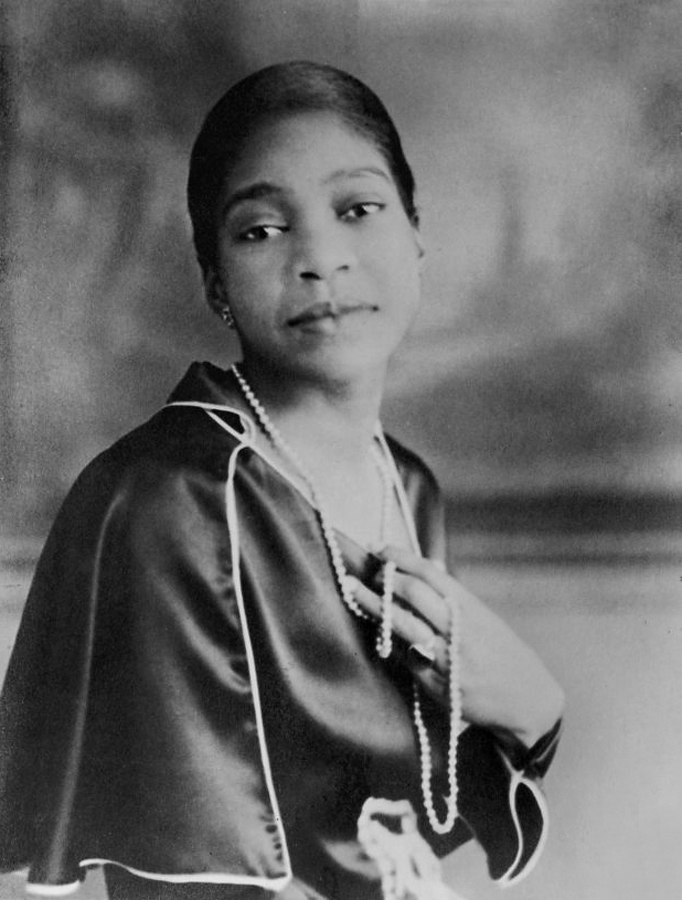
“A feisty woman who always stood up for herself… She was bisexual and practically an alcoholic – the perfect icon.”
~ Jackie Kay
Bessie Smith (April 15, 1894 – September 26, 1937) was an American blues singer. Nicknamed the Empress of the Blues, she was the most popular female blues singer of the 1920s and 1930s. She is often regarded as one of the greatest singers of her era and was a major influence on fellow blues singers, as well as jazz vocalists.
Sylvia Townsend Warner (6 December 1893 – 1 May 1978) was an English novelist and poet. She also made a contribution to musicology as a young woman.
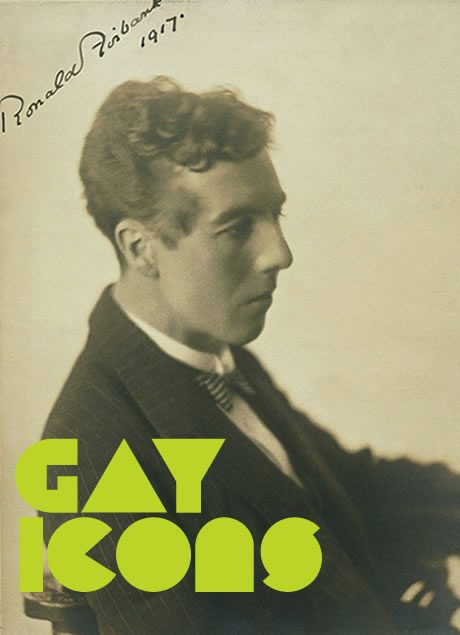
Bertram Park (British, 1883-1972) Ronald Firbank (detail) 1917
“He [Ronald Firbank] is celebrated as a master of high camp, but he was also a radical technician and radical homosexualiser of the novel.”
~ Alan Hollinghurst
Bertram Park (British, 1883-1972) Ronald Firbank 1917
Bertram Charles Percival Park, OBE, (1883-1972) was a portrait photographer whose work included British and European royalty. Engravings of his photographs were widely used on British and British Commonwealth postage stamps, currency, and other official documents in the 1930s. His theatrical portraits were the source for two paintings by Walter Sickert. With his wife Yvonne Gregory, he also produced a number of photographic books of the female nude. He was an expert in the cultivation of the rose and the editor of The Rose Annual.
Arthur Annesley Ronald Firbank (17 January 1886 – 21 May 1926) was an innovative English novelist. His eight short novels, partly inspired by the London aesthetes of the 1890s, especially Oscar Wilde, consist largely of dialogue, with references to religion, social-climbing, and sexuality.
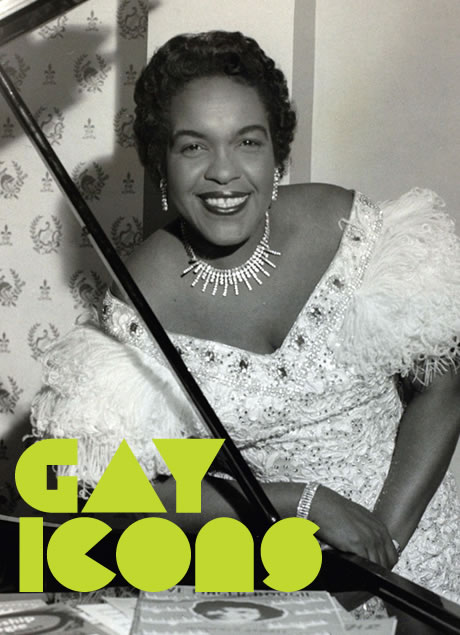
Unknown photographer Winifred Atwell (detail) c. 1950s Courtesy of Getty Images
“Winifred Atwell’s piano performances were simply captivating. She showed me what was possible and was a total inspiration.”
~ Elton John
Una Winifred Atwell (27 February or 27 April 1910 or 1914 – 28 February 1983) was a Trinidadian pianist who enjoyed great popularity in Britain and Australia from the 1950s with a series of boogie-woogie and ragtime hits, selling over 20 million records. She was the first black person to have a number-one hit in the UK Singles Chart and is still the only female instrumentalist to do so.
Read the full entry about this amazing women on the Wikipedia website
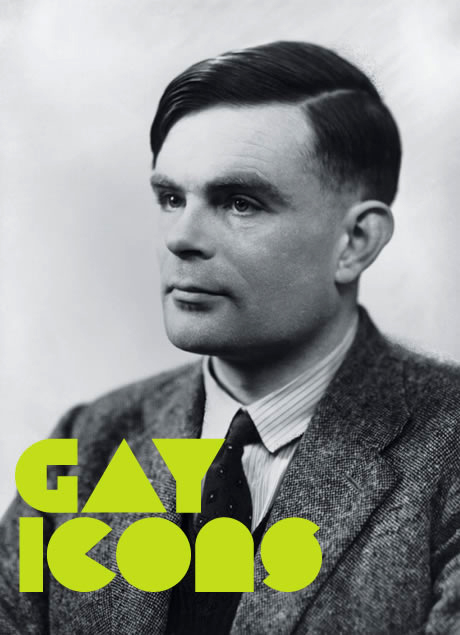
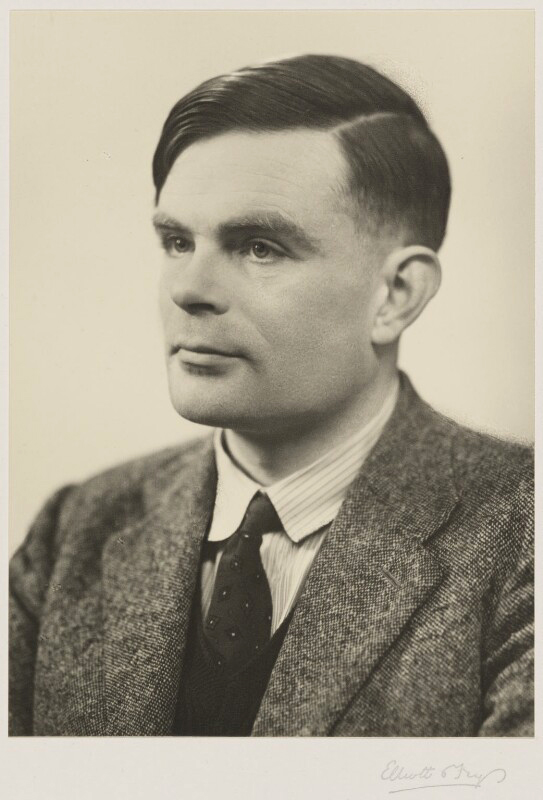
Elliott & Fry was a Victorian photography studio founded in 1863 by Joseph John Elliott (14 October 1835 – 30 March 1903) and Clarence Edmund Fry (1840 – 12 April 1897). For a century the firm’s core business was taking and publishing photographs of the Victorian public and social, artistic, scientific and political luminaries. In the 1880s the company operated three studios and four large storage facilities for negatives, with a printing works at Barnet.
The firm’s first address was 55 & 56 Baker Street in London, premises they occupied until 1919. The studio employed a number of photographers, including Francis Henry Hart and Alfred James Philpott in the Edwardian era, Herbert Lambert and Walter Benington in the 1920s and 1930s and subsequently William Flowers. During World War II the studio was bombed and most of the early negatives were lost, the National Portrait Gallery holding all the surviving negatives. With the firm’s centenary in 1963 it was taken over by Bassano & Vandyk.
“Turing was one of the most brilliant men of the first half of the twentieth century, but the refusal of post-war society to accept his sexuality drove him to commit suicide… We can and should honour him now.”
~ Chris Smith
National Portrait Gallery St Martin’s Place London WC2H 0HE










 Art Blart _ art and cultural memory archive
You must be logged in to post a comment.