Exhibition: ‘Eugène Atget: “Documents pour artistes”‘ at the Museum of Modern Art (MoMA), New York

Exhibition dates: 6th February – 9th April 2012


Eugène Atget (French, 1857-1927) 'Coin, Boulevard de la Chapelle et rue Fleury 76,18e' June 1921


Eugène Atget (French, 1857-1927)
Coin, Boulevard de la Chapelle et rue Fleury 76,18e
June 1921
Matte albumen silver print
6 13/16 x 9 inches (17.3 x 22.9cm)
The Museum of Modern Art, New York
Abbott-Levy Collection. Partial gift of Shirley C. Burden


“These are simply documents I make.”


Eugène Atget


“One might think of Atget’s work at Sceaux as… a summation and as the consummate achievement of his work as a photographer – a coherent, uncompromising statement of what he had learned of his craft, and of how he had amplified and elaborated the sensibility with which he had begun. Or perhaps one might see the work at Sceaux as a portrait of Atget himself, not excluding petty flaws, but showing most clearly the boldness and certainty – what his old friend Calmettes called the intransigence – of his taste, his method, his vision.


John Szarkowski


The first of two postings about the work of Eugène Atget, this exhibition at MoMA the first in twenty-five years to focus on his “Documents for artists.” Atget was my first hero in photography and the greatest influence on my early black and white photography before I departed and found my own voice as an artist. Through his photographs, his vision he remains a life-long friend. He taught me so much about where to place the camera and how to see the world. He made me aware. For that I am eternally grateful.

Dr Marcus Bunyan


Many thankx to MOMA for allowing me to publish the photographs in the posting. Please click on the photographs for a larger version of the image.


Eugène Atget (French, 1857-1927) 'Cour, 7 rue de Valence' June 1922


Eugène Atget (French, 1857-1927)
Cour, 7 rue de Valence
June 1922
Matte albumen silver print
7 x 8 15/16 inches (17.8 x 22.7cm)
The Museum of Modern Art, New York
Abbott-Levy Collection. Partial gift of Shirley C. Burden
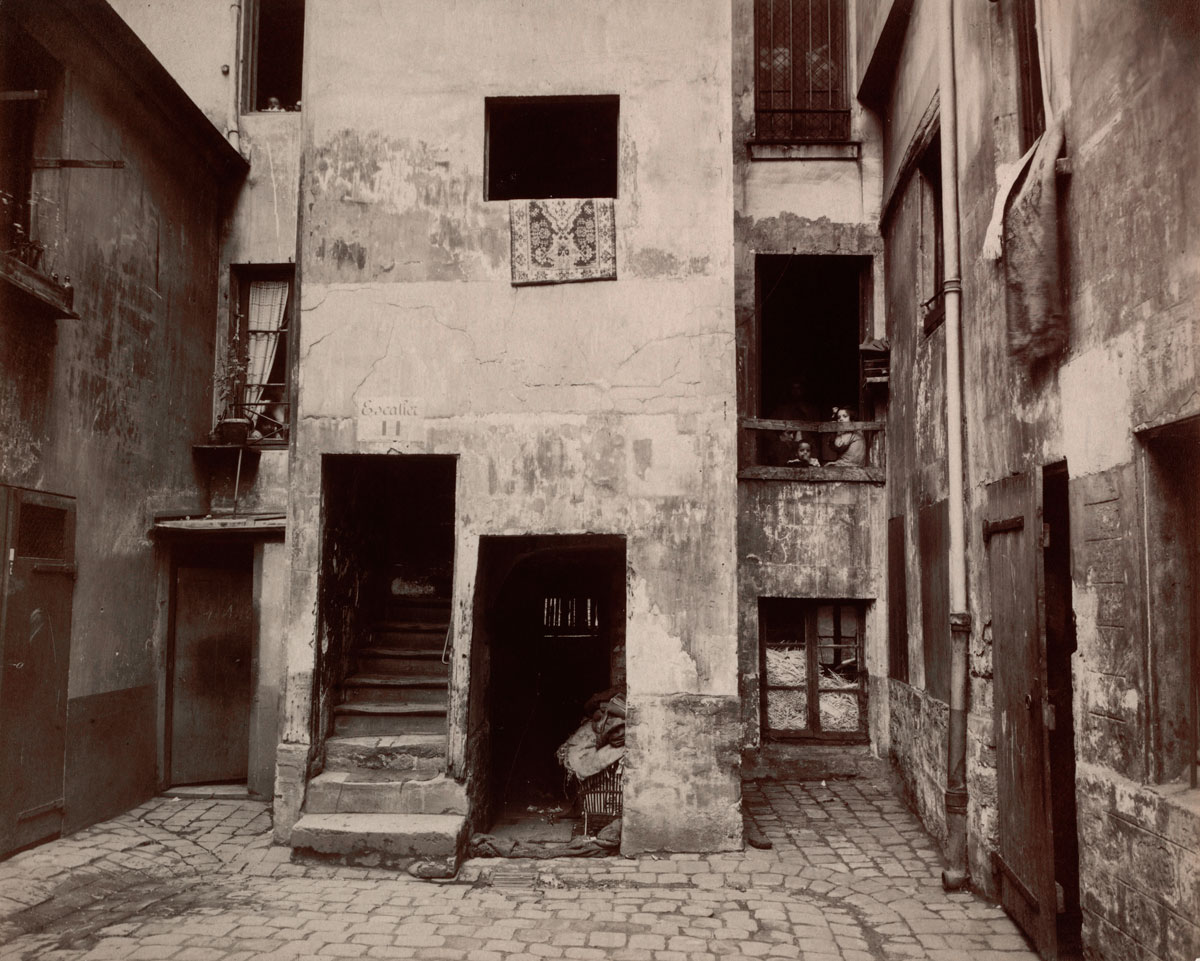
 

Eugène Atget (French, 1857-1927) 'Cour, 41 rue Broca' 1912


Eugène Atget (French, 1857-1927)
Cour, 41 rue Broca
1912
Albumen silver print
6 5/8 x 8 1/4 inches (16.9 x 21cm)
The Museum of Modern Art, New York
Abbott-Levy Collection. Partial gift of Shirley C. Burden


The sign above the entrance to Eugène Atget’s studio in Paris read Documents pour artistes (Documents for artists), declaring his modest ambition to create photographs for others to use as source material in their work. Atget (French, 1857-1927) made more than 8,500 pictures of Paris and its environs in a career that spanned over thirty years, from the late nineteenth century until his death. To facilitate access to this vast body of work for himself and his clients, he organised his photographs into discrete series, a model that guides the organisation of this exhibition. The works are presented here in six groups, demonstrating Atget’s sustained attention to certain motifs or locations and his consistently inventive and elegant methods of rendering the complexity of the three-dimensional world on a flat, rectangular plate.

In 1925 the American artist Man Ray purchased forty-two photographs from Atget, who lived down the street from him in Montparnasse. Man Ray believed he detected a kindred Surrealist sensibility in the work, to which suggestion Atget replied, “These are simply documents I make.” This humility belies the extraordinary pictorial sophistication and beauty that is characteristic of much of Atget’s oeuvre and his role as touchstone and inspiration for subsequent generations of photographers, from Walker Evans to Lee Friedlander. This exhibition bears witness to his success, no matter the unassuming description he gave of his life’s work.

A Note on the Prints

Atget made photographs with a view camera resting on a tripod. An example of his 24-by-18-centimeter glass plate negatives is on display here. Each print was made by exposing light-sensitive paper to the sun in direct contact with one of these negatives, which Atget numbered sequentially within each series. He frequently scratched the number into the emulsion on the negative, and thus it appears in reverse at the bottom of most prints. He also inscribed the number, along with the work’s title, in pencil on the verso of each print. These titles appear (with English translations where necessary) on the individual wall labels, preserving Atget’s occasionally idiosyncratic titling practices. The Abbott-Levy Collection at The Museum of Modern Art, to which the prints in this exhibition belong (except where noted), is composed of close to 5,000 distinct photographs and 1,200 glass plate negatives that were in Atget’s studio at the time of his death. The Museum purchased this collection in 1968 from photographer Berenice Abbott and art dealer Julien Levy, thanks to the unflagging efforts of John Szarkowski, then director of the Department of Photography, and in part to the generosity of Shirley C. Burden.

Fifth arrondissement

For more than thirty years, Atget photographed in and around Paris. Curiously, given the depth of this investigation, he never photographed the Eiffel Tower, generally avoided the grand boulevards, and eschewed picture postcard views. Instead Atget focused on the fabric of the city: facades of individual buildings (both notable and anonymous), meandering streetscapes, details of stonework and ironwork, churches, shops, and the occasional monument. Even a selective cross section of the photographs he made in the fifth arrondissement over the course of his career suggests that his approach, while far from systematic, might yet be termed comprehensive.

Courtyards

Atget clearly relished the metaphorical and physical aspects of the courtyard – a space that hovers between public and private, interior and exterior – and he photographed scores of them, both rural and urban. The motif was chosen as the backdrop for what was likely Atget’s first photograph of an automobile (Cour, 7 rue de Valence), and it was versatile enough to transform itself depending on where Atget placed his camera (see the two views of the courtyard at 27 quai d’Anjou). The dark areas that appear in the upper corners of some prints are the result of vignetting: a technique in which the light coming through the camera’s lens does not fully cover the glass plate negative, allowing Atget to create an arched pictorial space that echoed the physical one before his camera.

Wall text from the exhibition
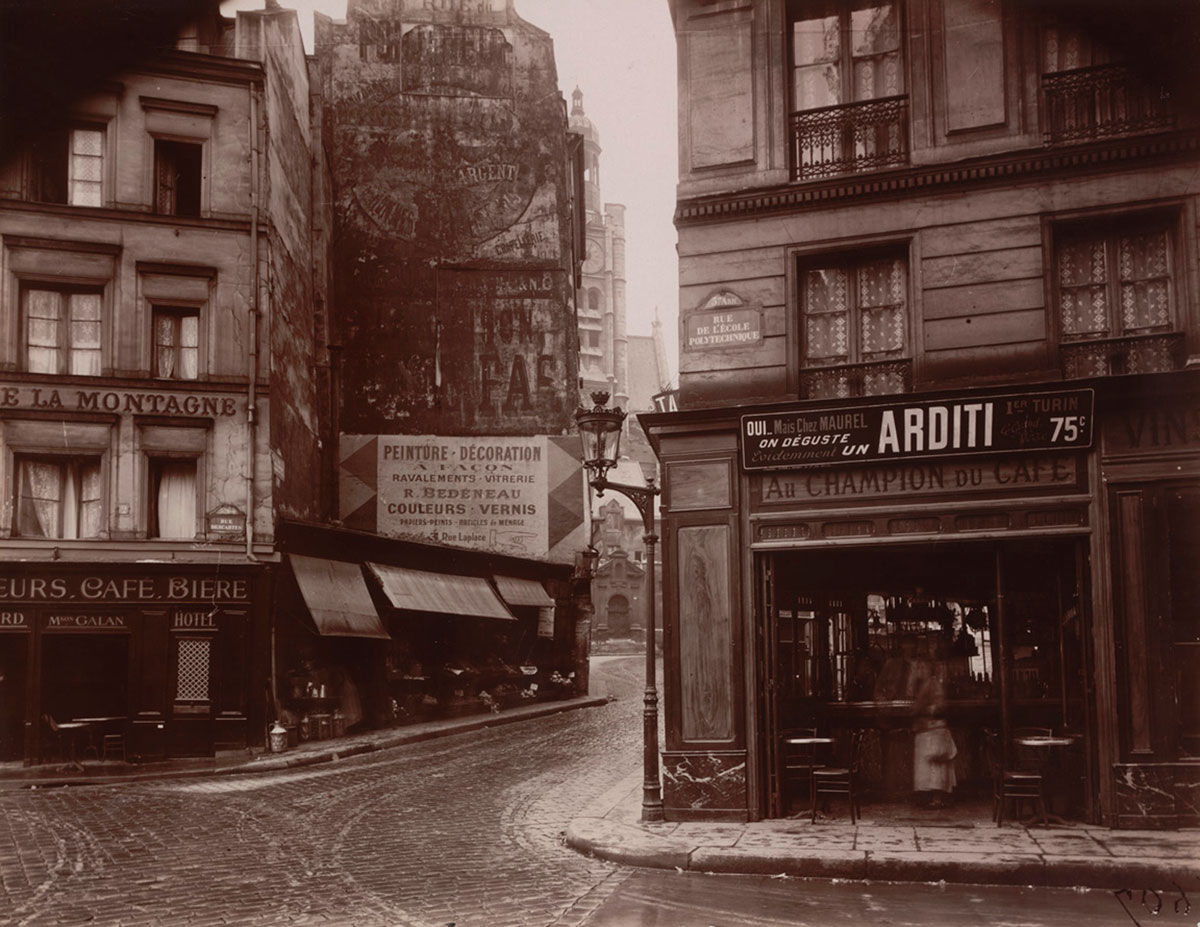
 

Eugène Atget (French, 1857-1927) 'Rue de la Montagne-Sainte-Geneviève' June 1925


Eugène Atget (French, 1857-1927)
Rue de la Montagne-Sainte-Geneviève
June 1925
Gelatin silver printing-out-paper print
6 11/16 x 8 3/4 inches (17 x 22.2cm)
The Museum of Modern Art, New York
Abbott-Levy Collection. Partial gift of Shirley C. Burden


Eugène Atget (French, 1857-1927) 'Maison où Mourut Voltaire en 1778, 1 rue de Beaune' 1909


Eugène Atget (French, 1857-1927)
Maison où Mourut Voltaire en 1778, 1 rue de Beaune
1909
Albumen silver print
8 9/16 x 7 inches (21.8 x 17.8cm)
The Museum of Modern Art, New York
Abbott-Levy Collection. Partial gift of Shirley C. Burden


Eugène Atget (French, 1857-1927) 'Balcon, 17 rue du Petit-Pont' 1913


Eugène Atget (French, 1857-1927)
Balcon, 17 rue du Petit-Pont
1913
Albumen silver print
8 5/8 x 6 15/16 inches (21.9 x 17.7cm)
The Museum of Modern Art, New York
Abbott-Levy Collection. Partial gift of Shirley C. Burden


Eugène Atget: “Documents pour artistes presents six fresh and highly focused cross sections of the career of master photographer Eugène Atget (French, 1857-1927), drawn exclusively from The Museum of Modern Art’s unparalleled holdings of his work. The exhibition, on view at MoMA from February 6 through April 9, 2012, gets its name from the sign outside Atget’s studio door, which declared his modest ambition to create documents for other artists to use as source material in their own work. Whether exploring Paris’s fifth arrondissement across several decades, or the decayed grandeur of parks at Sceaux in a remarkable creative outburst at the twilight of his career, Atget’s lens captured the essence of his chosen subject with increasing complexity and sensitivity. Also featured are Atget’s photographs made in the Luxembourg gardens; his urban and rural courtyards; his pictures of select Parisian types; and his photographs of mannequins, store windows, and street fairs, which deeply appealed to Surrealist artists living in Paris after the First World War. The exhibition is organised by Sarah Hermanson Meister, Curator, Department of Photography, The Museum of Modern Art.

Atget made more than 8,500 pictures of Paris and its environs in a career that spanned over 30 years, from the late-19th century until his death. To facilitate access to this vast body of work for himself and his clients, he organised his photographs into discrete series, a model that guides the organisation of this exhibition. More than 100 photographs are presented in six groups, demonstrating Atget’s sustained attention to certain motifs or locations and his consistently inventive and elegant methods of rendering the complexity of the three-dimensional world on a flat, rectangular plate.

With seemingly inexhaustible curiosity, Atget photographed the streets of Paris. Eschewing picture-postcard views, and, remarkably, never once photographing the Eiffel Tower, he instead focused on the fabric of the city, taking pictures along the Seine, in every arrondissement, and in the “zone” outside the fortified wall that encompassed Paris at the time. His photographs of the fifth arrondissement are typical of this approach, and include facades of individual buildings (both notable and anonymous), meandering streetscapes, details of stonework and ironwork, churches, and the occasional monument.

Between March and June 1925, Atget made 66 photographs in the abandoned Parc de Sceaux, on the outskirts of Paris, almost half of which are on view in this exhibition. His approach was confident and personal, even quixotic, and his notations of the time of day for certain exposures read almost like diary entries. These photographs have long been recognised as among Atget’s finest, and this is the first opportunity for audiences outside of France to appreciate the full diversity and richness of this accomplishment.

Atget photographed the Jardin de Luxembourg more than any other Parisian park, likely reflecting his preference for its character and its proximity to his home and studio on rue Campagne-Première in Montparnasse. His early photographs there tend to capture human activity – children with their governesses or men conversing in the shade – but this gave way to a more focused exploration of the garden’s botanical and sculptural components following the First World War, and culminated in studies that delicately balance masses of light and shadow, as is typical of Atget’s late work.

Atget firmly resisted public association with the Surrealists, yet his work – in particular his photographs of shop windows, mannequins, and the street fairs around Paris – captured the eye of artists with decidedly avant-garde inclinations, such as Man Ray and Tristan Tzara. Man Ray lived down the street from Atget, and the young American photographer Berenice Abbott, while working as Man Ray’s studio assistant, made Atget’s acquaintance in the mid-1920s – a relationship that ultimately brought the contents of Atget’s studio at the time of his death to MoMA, almost 40 years later.

Atget clearly relished the metaphorical and physical aspects of the courtyard – a space that hovers between public and private, interior and exterior – and he photographed scores of them, both rural and urban. This exhibition marks the first time these pictures have been grouped together, allowing the public to appreciate previously unexplored aspects of the Abbott-Levy Collection, which includes prints of nearly 5,000 different images.

Only a tiny fraction of the negatives Atget exposed during his lifetime are photographs of people, yet they have attracted attention disproportionate to their number. With few exceptions, this segment of his creative output can be divided into three types: street merchants (petits métiers); ragpickers (chiffonniers) or Romanies (romanichels, or Gypsies), who lived in impermanent structures just outside the fortified wall surrounding Paris; and prostitutes. As with each section of this exhibition, Atget’s career is represented by the finest prints drawn from critically distinct and essential aspects of his practice, allowing a fresh appreciation of photography’s first modern master.

Press release from the MoMA website


Eugène Atget (French, 1857-1927) 'Luxembourg' 1923-25


Eugène Atget (French, 1857-1927)
Luxembourg
1923-1925
Matte albumen silver print
6 7/8 x 9 inches (17.5 x 22.8cm)
The Museum of Modern Art, New York
Abbott-Levy Collection. Partial gift of Shirley C. Burden
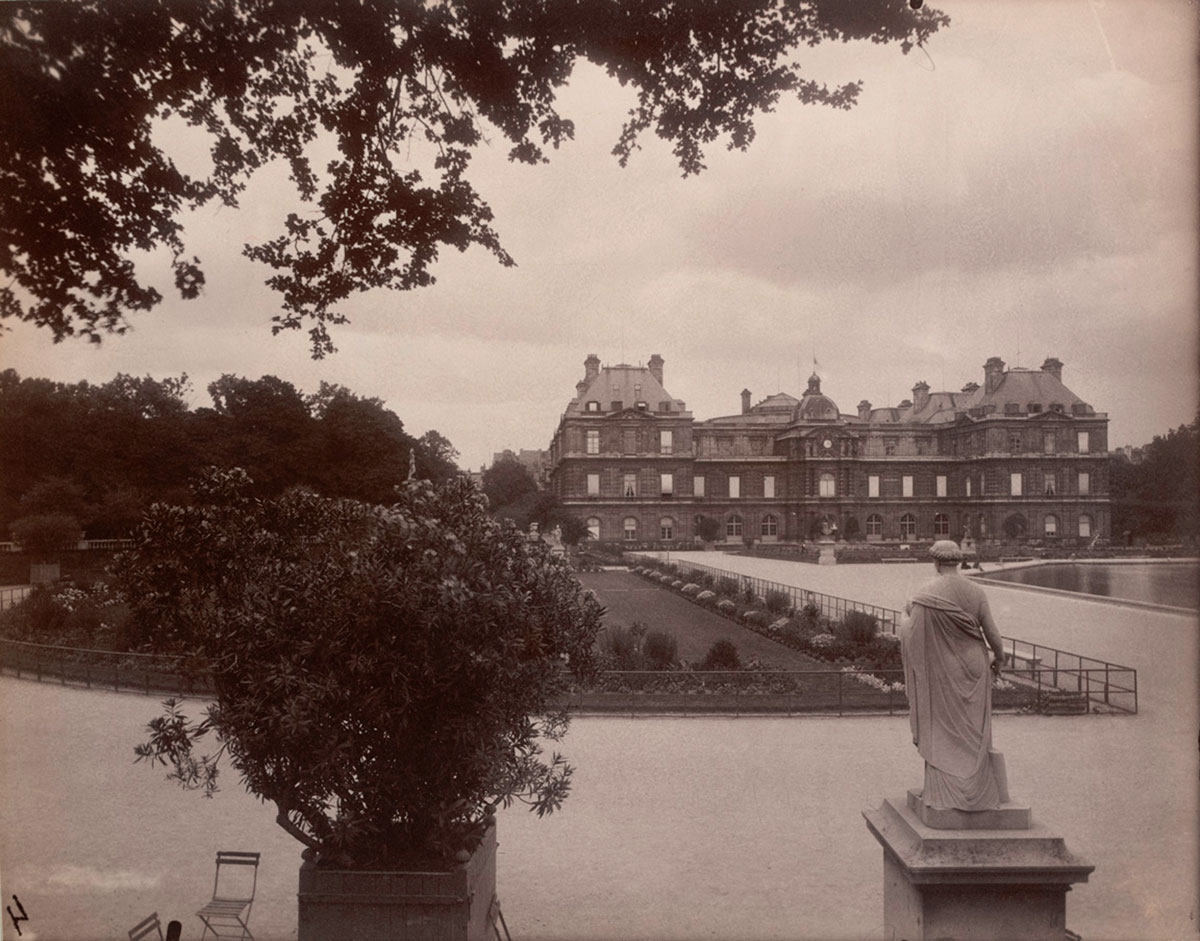
 

Eugène Atget (French, 1857-1927) 'Luxembourg' 1923-25


Eugène Atget (French, 1857-1927)
Luxembourg
1923-1925
Matte albumen silver print
7 x 8 13/16 inches (17.8 x 22.4cm)
The Museum of Modern Art, New York
Abbott-Levy Collection. Partial gift of Shirley C. Burden


Eugène Atget (French, 1857-1927) 'Luxembourg' 1902-1903


Eugène Atget (French, 1857-1927)
Luxembourg
1902-1903
Albumen silver print
6 5/8 x 8 3/8 inches (16.8 x 21.3cm)
The Museum of Modern Art, New York
Abbott-Levy Collection. Partial gift of Shirley C. Burden


Jardin de Luxembourg

Atget photographed the Jardin de Luxembourg more than any other Parisian park, likely reflecting his preference for its character as well as its proximity to his home and studio on rue Campagne-Première in Montparnasse (about a ten-minute walk away). His photographs of the gardens made around 1900 tend to capture human activity (children with their governesses, men conversing in the shade), but this gave way to a more focused exploration of the garden’s botanical and sculptural components following the First World War and culminated in studies that delicately balance masses of light and shadow, typical of Atget’s late work.

Parc de Sceaux

Between March and June 1925, Atget made sixty-six photographs in the abandoned Parc de Sceaux, on the outskirts of Paris. His approach was confident and personal, even quixotic, and his notations of the time of day for certain exposures read almost like diary entries. John Szarkowski wrote of this body of work: “One might think of Atget’s work at Sceaux as… a summation and as the consummate achievement of his work as a photographer – a coherent, uncompromising statement of what he had learned of his craft, and of how he had amplified and elaborated the sensibility with which he had begun. Or perhaps one might see the work at Sceaux as a portrait of Atget himself, not excluding petty flaws, but showing most clearly the boldness and certainty – what his old friend Calmettes called the intransigence – of his taste, his method, his vision. Atget made his last photograph at Sceaux after its restoration had begun. He perceived that the effort to tidy the grounds in anticipation of their conversion to a public park would fundamentally alter the untended, decayed grandeur that had been his muse.”

Wall text from the exhibition
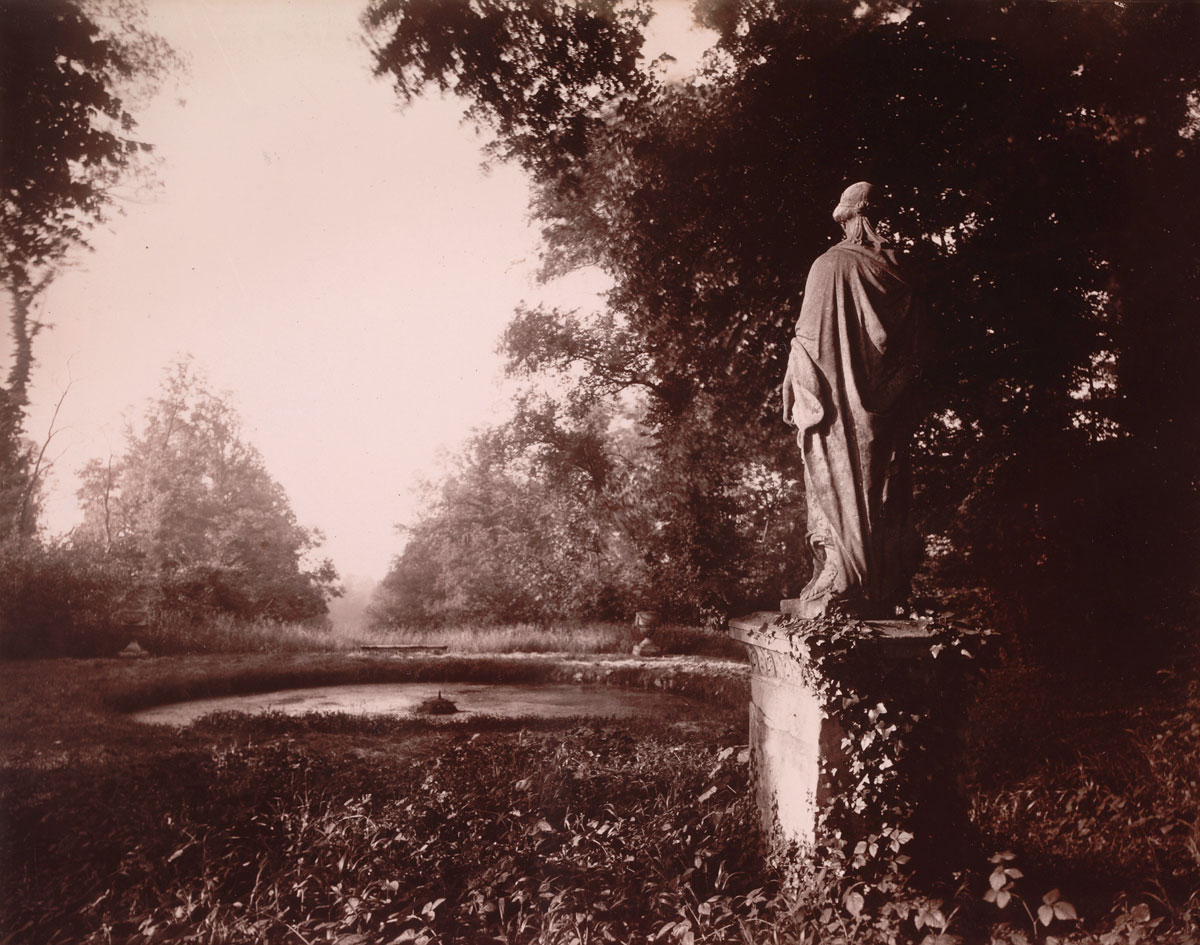
 

Eugène Atget (French, 1857-1927) 'Parc de Sceaux' June 1925


Eugène Atget (French, 1857-1927)
Parc de Sceaux
June 1925
Gelatin silver printing-out-paper print
7 x 8 7/8 inches (17.8 x 22.5cm)
The Museum of Modern Art, New York
Abbott-Levy Collection. Partial gift of Shirley C. Burden
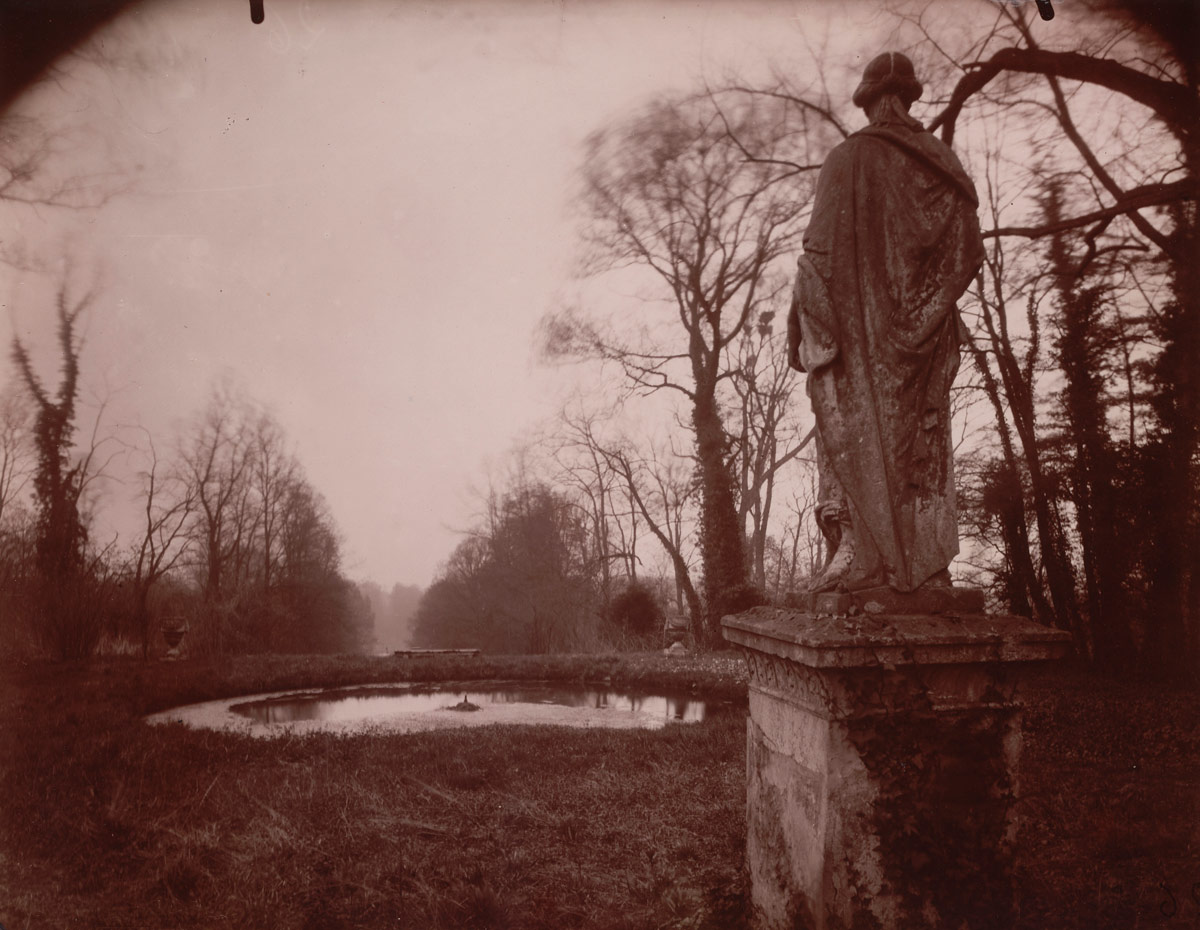
 

Eugène Atget (French, 1857-1927) 'Parc de Sceaux, mars, 8 h. matin' 1925


Eugène Atget (French, 1857-1927)
Parc de Sceaux, mars, 8 h. matin
1925
Gelatin silver printing-out-paper print
7 1/16 x 8 13/16 inches (17.9 x 22.4cm)
The Museum of Modern Art, New York
Abbott-Levy Collection. Partial gift of Shirley C. Burden


Eugène Atget (French, 1857-1927) 'Parc de Sceaux, 7 h. matin' March 1925


Eugène Atget (French, 1857-1927)
Parc de Sceaux, 7 h. matin
March 1925
Matte albumen silver print
6 15/16 x 9 1/16 inches (17.6 x 23cm)
The Museum of Modern Art, New York
Abbott-Levy Collection. Partial gift of Shirley C. Burden


People of Paris

Only a tiny fraction of the negatives Atget exposed during his lifetime feature the human figure as a central element. With few exceptions, this segment of his creative output can be divided into three types: street merchants (petits métiers); zoniers – ragpickers (chiffonniers) and Romanies (romanichels, or Gypsies) – who lived in impermanent structures in the zone just outside the fortified wall surrounding Paris; and prostitutes. The painter André Dignimont commissioned Atget to pursue this third subject in the spring of 1921, but the decidedly untawdry resulting images of brothels and prostitutes are only obliquely suggestive of the nature of their trade, so it is not difficult to imagine why the commission was concluded after only about a dozen negatives.

Surrogates and the Surreal 

Atget’s photograph Pendant l’éclipse (During the eclipse) was featured on the cover of the seventh issue of the Parisian Surrealists’ publication La Révolution surréaliste, with the caption Les Dernières Conversions (The last converts), in June 1926. The picture was uncredited, as were the two additional photographs reproduced inside. Although Atget firmly resisted the association, his work – in particular his photographs of shop windows, mannequins, and the street fairs around Paris – had captured the attention of artists with decidedly avant-garde inclinations, such as Man Ray and Tristan Tzara. Man Ray lived on the same street as Atget, and the young American photographer Berenice Abbott (working as Man Ray’s studio assistant) learned of the French photographer and made his acquaintance in the mid-1920s – a relationship that ultimately brought the contents of Atget’s studio at the time of his death (in 1927) to The Museum of Modern Art almost forty years later.

Wall text from the exhibition


Eugène Atget (French, 1857-1927) 'Fête du Trône' 1925


Eugène Atget (French, 1857-1927)
Fête du Trône
1925
Gelatin silver printing-out-paper print
6 7/16 x 8 7/16 inches (16.4 x 21.5cm)
The Museum of Modern Art, New York
Abbott-Levy Collection. Partial gift of Shirley C. Burden
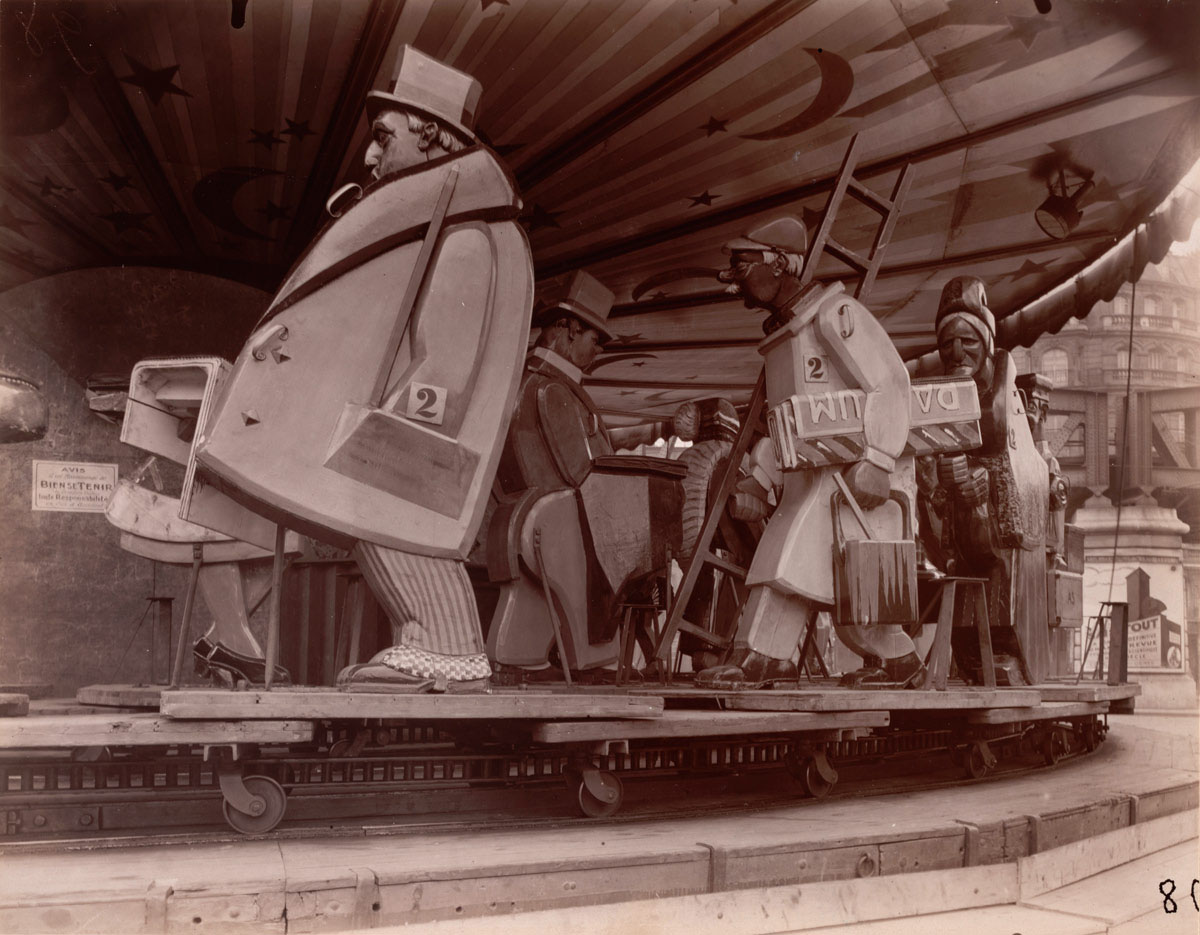
 

Eugène Atget (French, 1857-1927) 'Fête de Vaugirard' 1926


Eugène Atget (French, 1857-1927)
Fête de Vaugirard
1926
Gelatin silver printing-out-paper print
6 13/16 x 8 3/4 inches (17.3 x 22.2cm)
The Museum of Modern Art, New York
Abbott-Levy Collection. Partial gift of Shirley C. Burden


Eugène Atget (French, 1857-1927) 'Avenue des Gobelins' 1925


Eugène Atget (French, 1857-1927)
Avenue des Gobelins
1925
Gelatin silver printing-out-paper print
8 1/4 x 6 1/2inches (21 x 16.7cm)
The Museum of Modern Art, New York
Abbott-Levy Collection. Partial gift of Shirley C. Burden


Eugène Atget (French, 1857-1927) 'Romanichels, groupe' 1912


Eugène Atget (French, 1857-1927)
Romanichels, groupe
1912
Gelatin silver printing-out-paper print
8 3/8 x 6 11/16 inches (21.2 x 17cm)
The Museum of Modern Art, New York
Abbott-Levy Collection. Partial gift of Shirley C. Burden


The Museum of Modern Art
11 West 53 Street
New York, NY 10019
Phone: (212) 708-9400

Opening hours:
10.30am – 5.30pm
Open seven days a week
MoMA website

LIKE ART BLART ON FACEBOOK

Back to top

Exhibition: ‘Raphaël Dallaporta: Observation’ at Foam, Amsterdam

Exhibition dates: 2nd September – 26th October 2011

Foam Paul Huf Award 2011


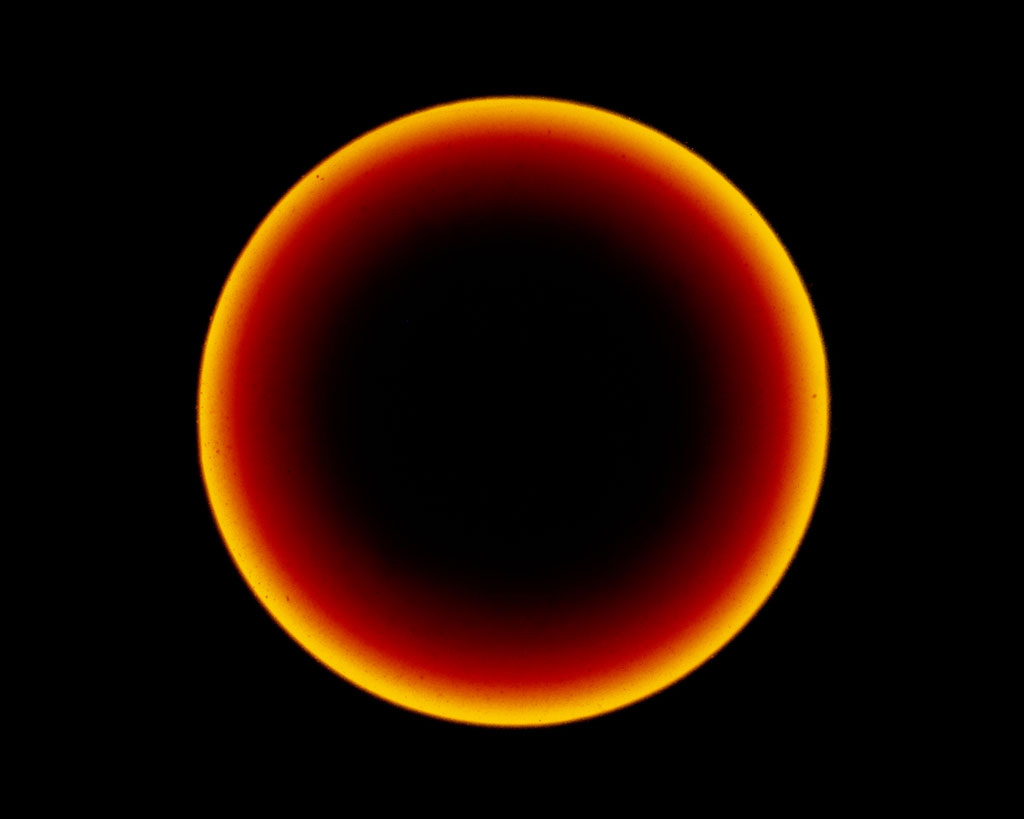
Raphaël Dallaporta (French, b. 1980) 'Fragile, Blood 1' 2010
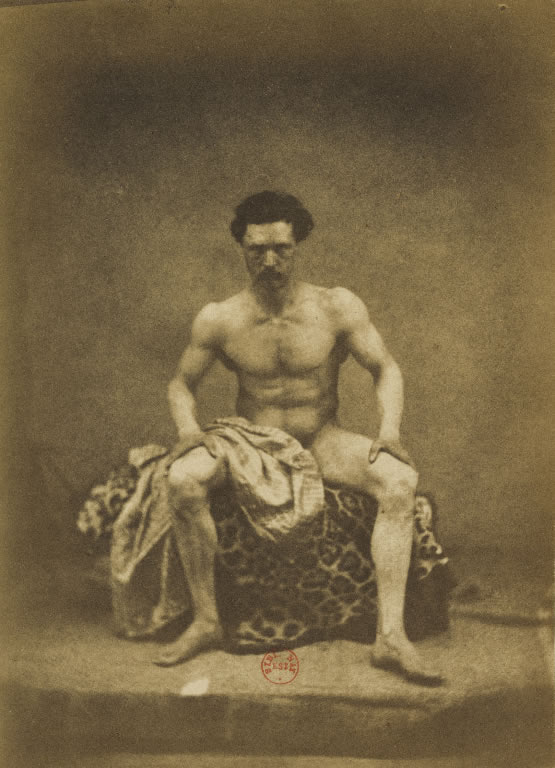
 

Raphaël Dallaporta (French, b. 1980)
Fragile, Blood 1
2010
© Raphaël Dallaporta


Antipersonnel. The positive pleasure of inflicting cruelty at an ambiguous physical and ethical distance. Use limited only by the imagination of the user. Detonated remotely using a laptop computer. 10 million times. US$3 each.

Dr Marcus Bunyan


Many thankx to Foam for allowing me to publish the photographs in the posting. Please click on the photographs for a larger version of the image.


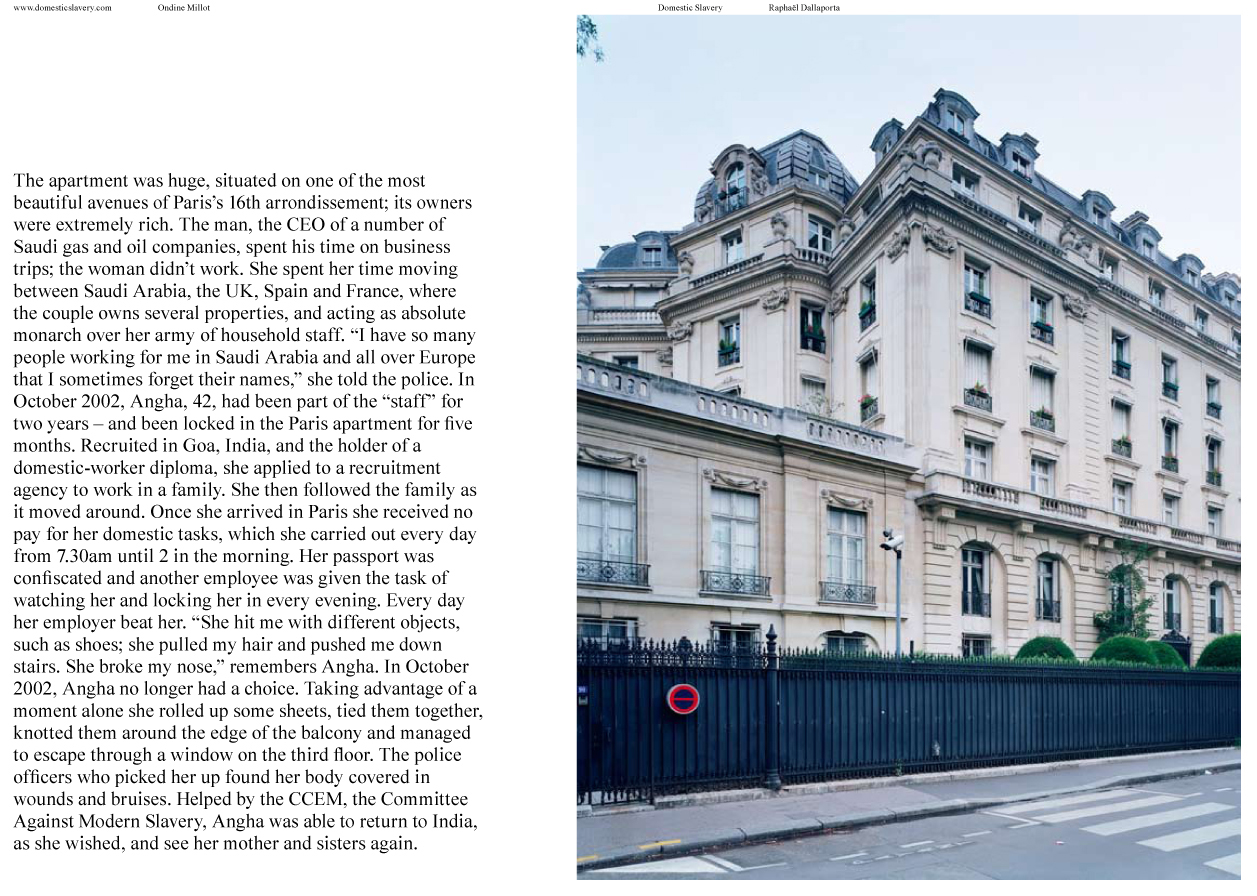
Raphaël Dallaporta (French, b. 1980) 'Domestic Slavery, Angha' 2006


Raphaël Dallaporta (French, b. 1980)
Domestic Slavery, Angha
2006
© Raphaël Dallaporta


Domestic Slavery, 2006

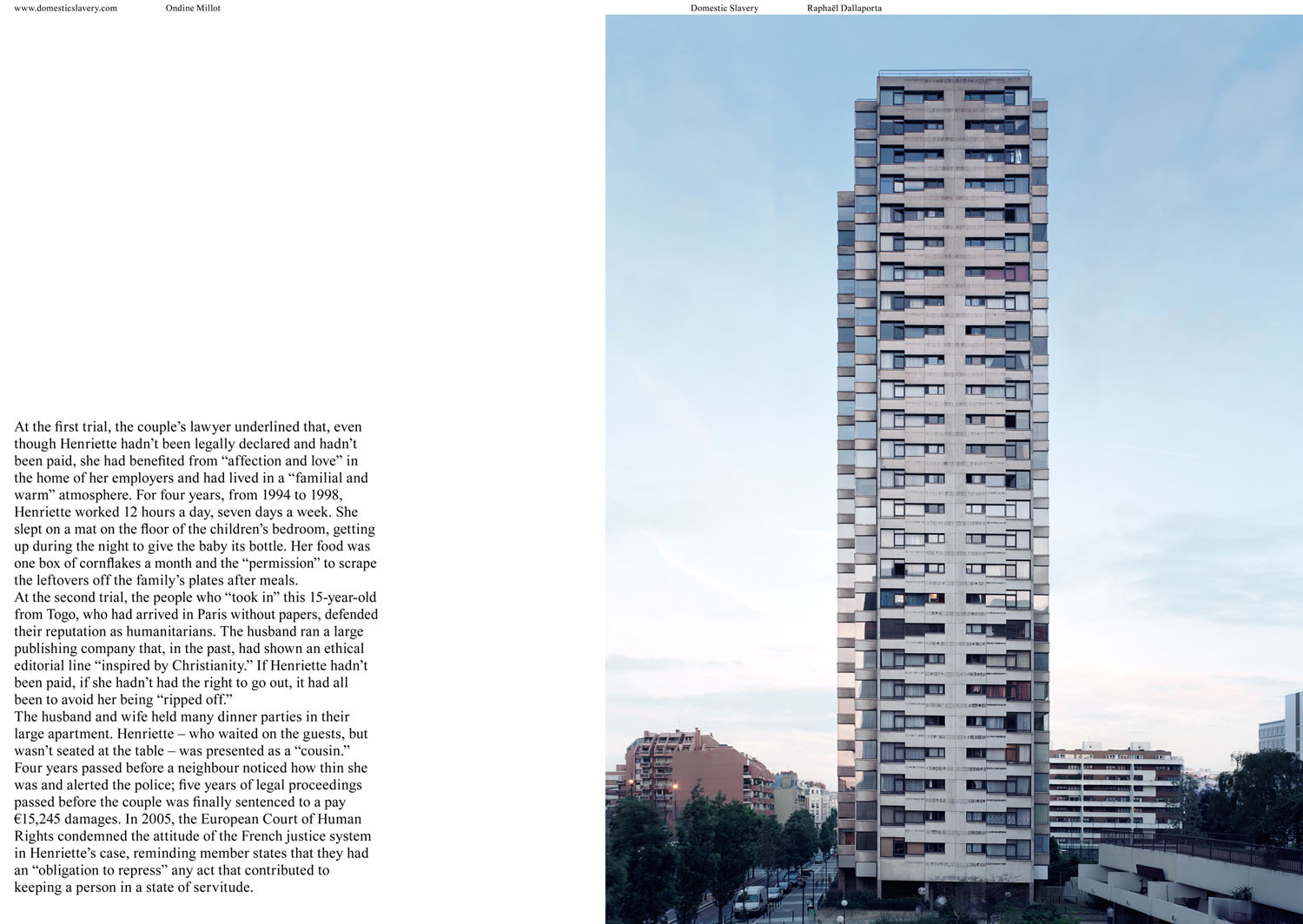
Cold, distant images of building facades are associated with text. The narratives are written by Ondine Millot to describe the events that took place at the exact address of the buildings in the photographs. The spectator comes to understand that the series deals with an often undocumented consequence of human trafficking: modern slavery.

The images force us to come to terms with the upsetting reality that is hidden behind the ordinary facades. Raphaël Dallaporta denounces unbearable situations where one human being reduces another to the status of thing, and gives it depth through the distance of the photographs and his refusal to sensationalise.

Text from the Musée Nicéphore Niépce website [Online] Cited 29/03/2020


Raphaël Dallaporta (French, b. 1980) 'Domestic Slavery, Henriette' 2006


Raphaël Dallaporta (French, b. 1980)
Domestic Slavery, Henriette
2006
© Raphaël Dallaporta


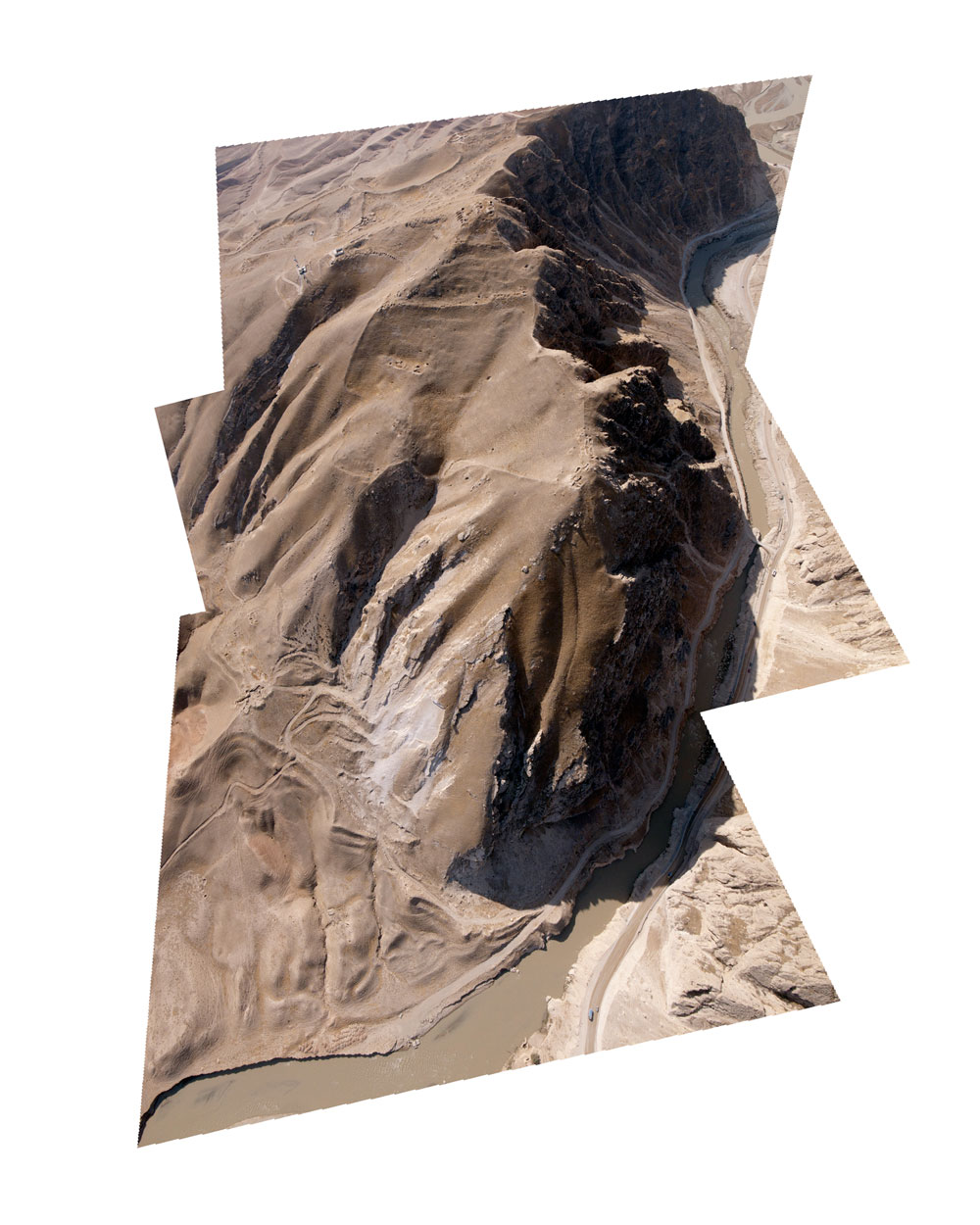
Raphaël Dallaporta (French, b. 1980) 'Ruins (Season 1), The Balkh-AB gorges, Afghanistan' 2011


Raphaël Dallaporta (French, b. 1980)
Ruins (Season 1), The Balkh-AB gorges, Afghanistan
2011
© Raphaël Dallaporta


Ruin, Season 1, 2011

In the autumn of 2010, Raphaël Dallaporta took part in an archaeological mission in the Bactriane region in Afghanistan, scene of Alexander the Great’s mythical conquest. Using a drone he designed himself, he took aerial photographs of endangered or heretofore unknown archaeological sites in a country at war. The remote controlled device was timed to take photos of unrivalled precision every five seconds. The way the images are put together with their voluntarily asymmetrical contours depict these inaccessible monuments and places at their best. The most cutting-edge technology reveals the artist’s themes – destruction, the precariousness of things. It brings to light that which was and is no longer. Is this not the very definition of all photography?

Text from the Musée Nicéphore Niépce website [Online] Cited 29/03/2020


Raphaël Dallaporta (French, b. 1980) 'Fragile, "Four Moods", Black Bile'  2010


Raphaël Dallaporta (French, b. 1980)
Fragile, “Four Moods”, Black Bile 
2010
© Raphaël Dallaporta


Fragile, 2010

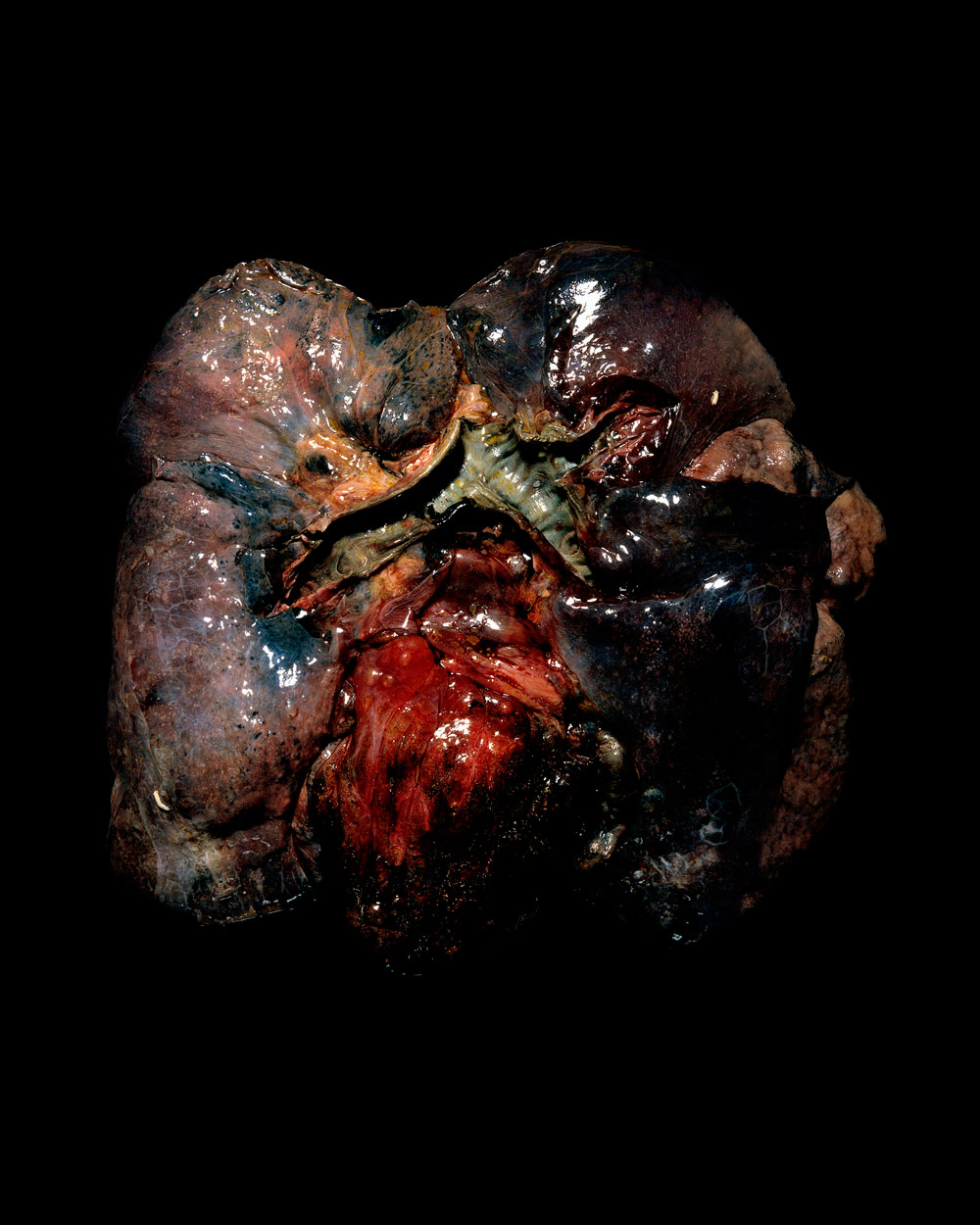
Raphaël Dallaporta photographs organs, like the encyclopaedic colour plates for an anatomy class. The legend, again, explains the origins of these silent images. The organ represented is not the issue; the reason for its presence on the slab is the issue. The apparent neutrality of the shot, according to a strict protocol (frontal shot, on a black background enabling the strong lighting of the “subject”), isolates each fragment of the body as a clue that enables to determine the cause of death. These relics of flesh and bone have a real role to play. But the way they are shot lends them a metaphysical and philosophical dimension that reminds us of life’s ephemeral nature and human vulnerability.

Text from the Musée Nicéphore Niépce website [Online] Cited 29/03/2020


Raphaël Dallaporta (French, b. 1980) 'Fragile, Cardiopulmonary system' 2010


Raphaël Dallaporta (French, b. 1980)
Fragile, Cardiopulmonary system
2010
© Raphaël Dallaporta


Undetermined circumstances

The body of the subject whose presumed identity is …, aged 92, was found in a ditch around 10.05am by a walker whose attention had been attracted by his dog.

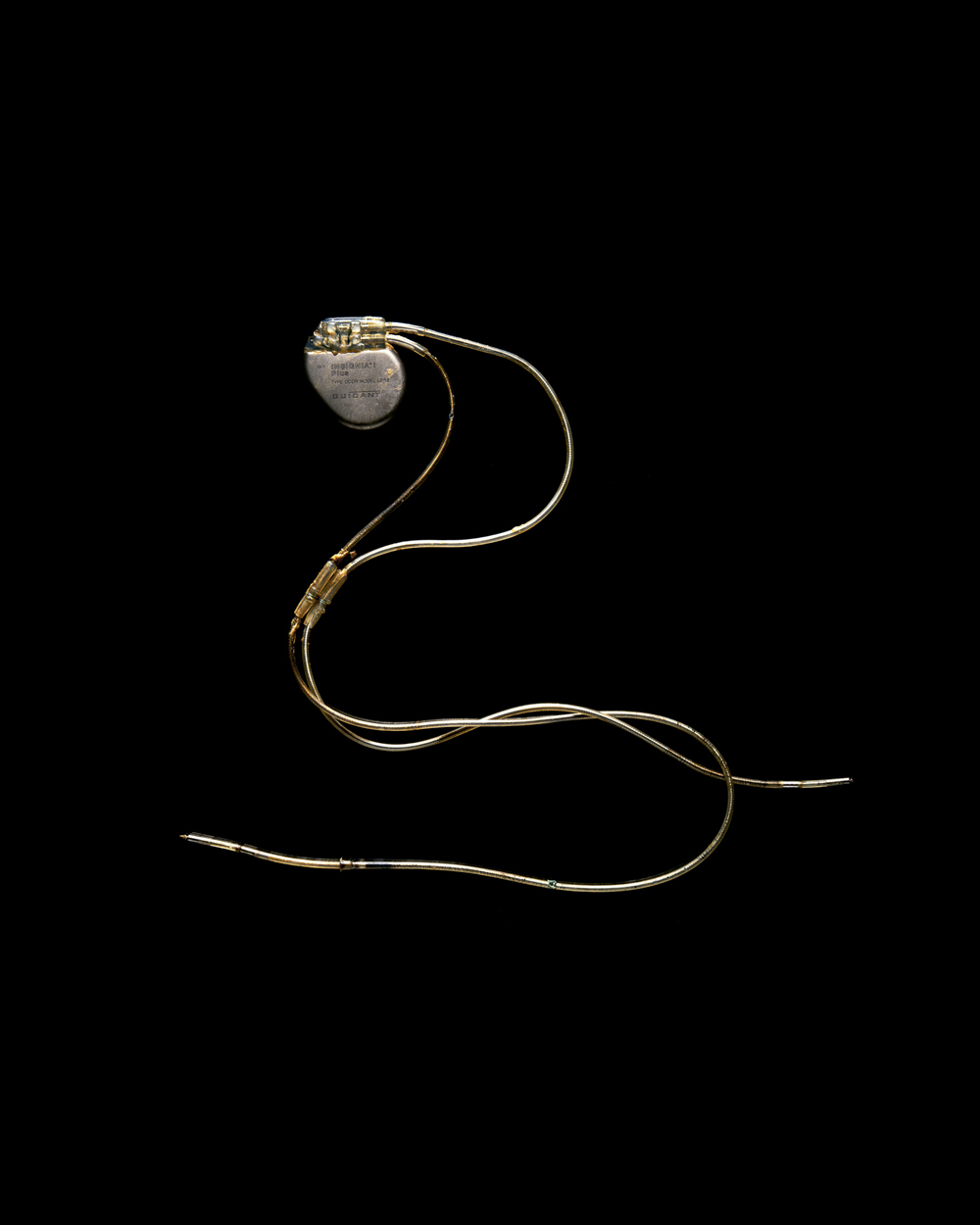
The autopsy that we carried out on the body showed the presence of a state of extremely advanced putrefaction with partial skeletonisation, consistent with a death dating back one month in an outdoor environment; it is not possible to be more precise. There is no immediately detectable cause of death. No lesions suggesting recent detectable violence were observed. As for identification, the deceased is an adult male, wearing a pacemaker and an old surgical scar on the abdominal wall.


Raphaël Dallaporta (French, b. 1980) 'Fragile, Pacemaker' 2010


Raphaël Dallaporta (French, b. 1980)
Fragile, Pacemaker
2010
© Raphaël Dallaporta


French photographer Raphaël Dallaporta (b. 1980) received the Foam Paul Huf Award earlier this year from an international jury. The prize is organised by Foam and is awarded annually to up and coming international photographers below the age of 35. A major aspect of the award is an exhibition. Observation appears at Foam from 2 September to 26 October. Characteristic of the show’s four series is the clinical, perceptive style of photography. Dallaporta’s photos possess an inner tension that stems from the beauty of the object and the serious tone of the subject. The photographer works intensively with specialists in fields relating to his series. Jury chair François Hébel (director of Les Rencontres d’Arles international photography festival) comments on Dallaporta’s work that ‘He combines involvement with a highly analytical approach to social perversities. His uncompromising, conceptual and extremely creative approach mark him as an authentic artist who stands out in the young generation of photographers.’

The landmines in the Antipersonnel series have an exquisite beauty: small, with pleasant colours and an attractive form. Elegantly photographed, simply framed and persuasively presented, their aesthetic quality is what first attracts attention. Until we realise the full purpose of their existence: pure cruelty.

Fragile features frontal and objective shots of organs and limbs taken from corpses. Dallaporta worked with a team of forensic surgeons for this series. While the physicians were looking for causes of death, Dallaporta recorded the body parts they examined and the instruments they used. The power of this work comes from the combination of apparently neutral images and texts relating to human pain.

Dallaporta also worked with experts when making Ruins. He travelled with a team of French archaeologists to Afghanistan. Using a drone – a small remote-controlled helicopter – he took numerous photos of the war-ravaged landscape. In combination, these form a single large aerial picture that also shows traces of ancient civilisations. Past and present come together in this series of almost scientific photos.

In Domestic Slavery, Dallaporta (pictures) and Ondine Millot (text) tackle the tragic reality of this phenomenon: people, many unregistered migrants, held against their will in places where their voice cannot be heard. While their names have been altered, the stories are true. Dallaporta’s clinical, unsentimental pictures of the buildings in which these modern-day slaves are kept testify to the banality of day-to-day inhumanity.

Text from the Foam website


Antipersonnel, 2004

Unknown objects seem to emerge from the darkness. The legend quickly informs us that they are anti-personnel mines. Raphaël Dallaporta deals with the object reproduced to scale and lets us imagine the consequences of its existence. There are no bloody reportage images to illustrate the mutilations caused by these devices. The photographer presents us with contemporary still life that appear inoffensive but that tend to be aestheticised by photographic techniques all the better to erase the actual use of the object.

Text from the Musée Nicéphore Niépce website [Online] Cited 29/03/2020


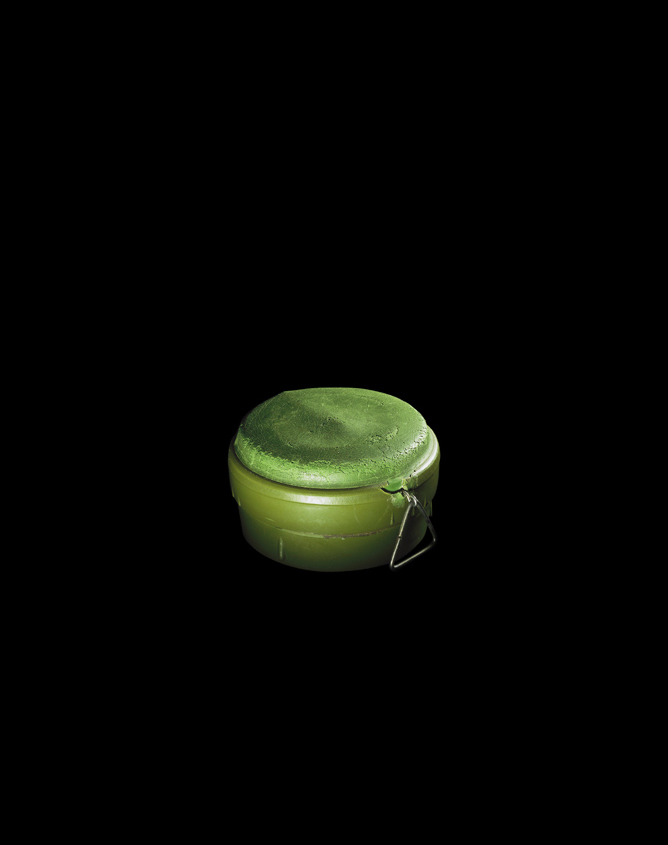
Raphaël Dallaporta (French, b. 1980) 'Antipersonnel, Blast Mine Type 72B China' 2004


Raphaël Dallaporta (French, b. 1980)
Antipersonnel, Blast Mine Type 72B China
2004
© Raphaël Dallaporta


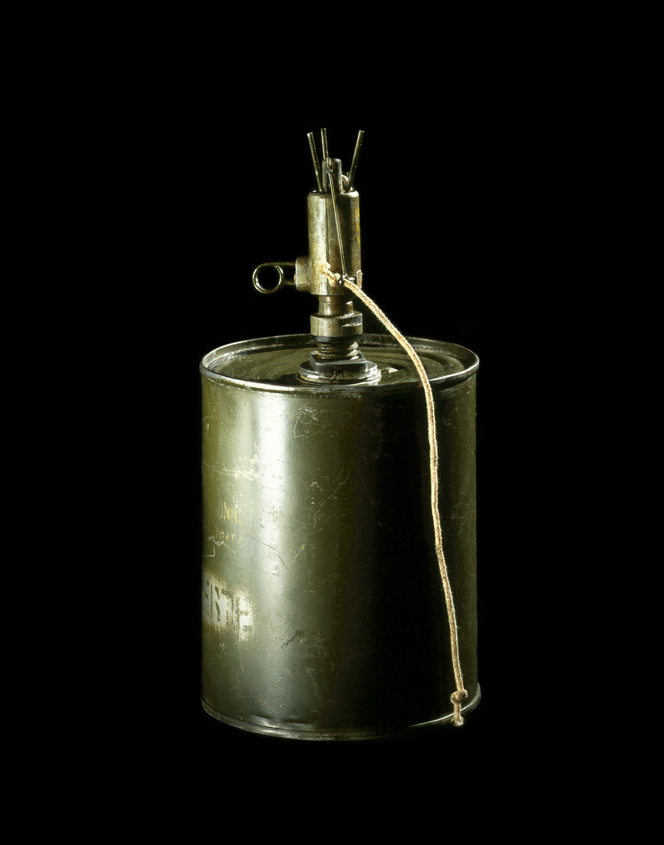
Type 72 blast mines are said to make up 100 million of China’s 110 million antipersonnel landmine stockpiles (Chinese officials claim this figure is exaggerated). Manufactured by China North Industries Corporation (NORINCO), Type-72s are reportedly priced at US$3 each. The Type-72B includes an anti-handling mechanism that makes it impossible to neutralise – if the mine is moved more than 8º from the horizontal, it will explode, amputating the limb that activated it.


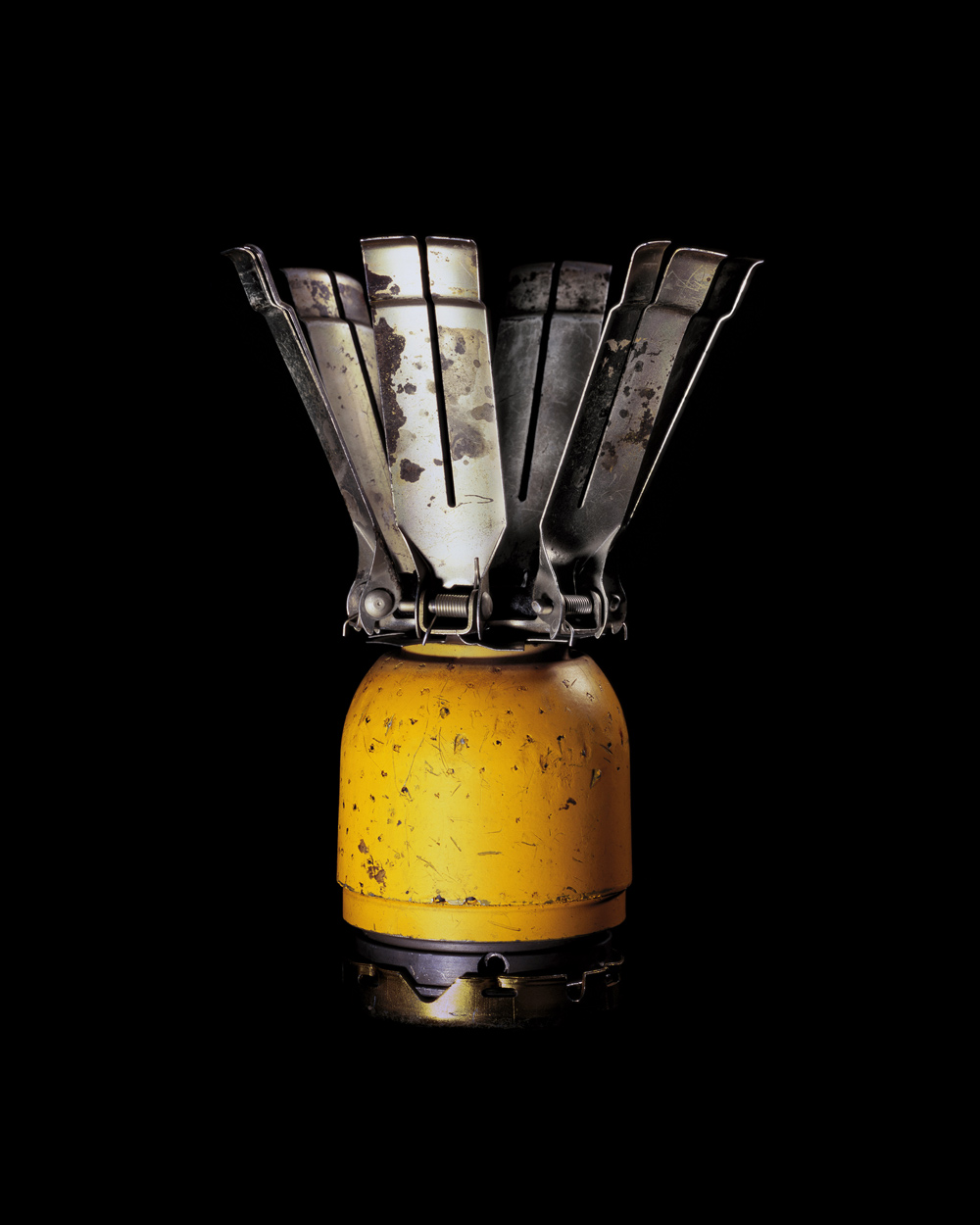
Raphaël Dallaporta (French, b. 1980) 'Antipersonnel, Submunition BLU-­3/B USA' 2004


Raphaël Dallaporta (French, b. 1980)
Antipersonnel, Submunition BLU-­3/B USA
2004
© Raphaël Dallaporta


On release from a CBU-2C.A bomb this 785 g submunition – known as the “Pineapple” – is stabilised and slowed in its descent by six fins. Each CBU-2C/A contains 409 BLU-3/Bs, of which nearly 25 percent do not explode on impact. d: 73mm W: 785g


Raphaël Dallaporta (French, b. 1980) 'Antipersonnel, Bounding Fragmentation Mine M-16, USA' 2004


Raphaël Dallaporta (French, b. 1980)
Antipersonnel, Bounding Fragmentation Mine M-16, USA
2004
© Raphaël Dallaporta


When detonated the M-16 antipersonnel bounding fragmentation mine is shot up approximately 1.5m in the air and explodes within 0.5 seconds, creating a lethal radius of 10m. Nicknamed the “Bouncing Betty,” each mine is supplied with four tripwires (two olive-green, two sand-coloured) and a wrench. In September 2002 (the most recent statistics available) the USA had 465,330 M16s in stock.


Raphaël Dallaporta (French, b. 1980) 'Antipersonnel, Directional Fragmentation Mine M-18/A1, USA' 2004


Raphaël Dallaporta (French, b. 1980)
Antipersonnel, Directional Fragmentation Mine M-18/A1, USA
2004
© Raphaël Dallaporta


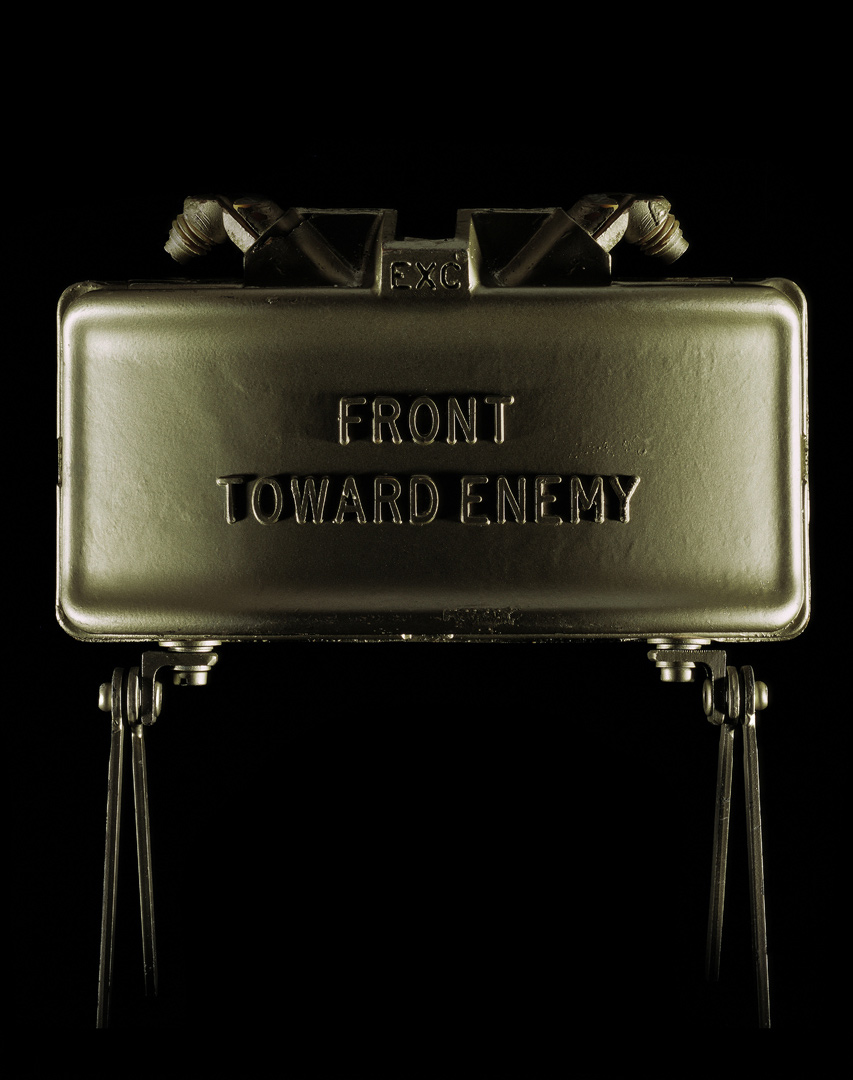
A “Claymore” directional fragmentation mine releases 700 steel balls when detonated by a hand-turned dynamo, a tripwire or, when used with the “Matrix” system, remotely using a laptop computer. (Multiple Claymores can also be linked together using a detonator cord.) A 1996 Department of the Army filed manual states that, “the number of ways in which the Claymore may be employed is limited only by the imagination of the user.” In September 2002 (the most recent available statistics), Claymores made up 403,096 of the 10,404,148 landmines stockpiled by the USA.


Raphaël Dallaporta (French, b. 1980) 'Antipersonnel Bounding Fragmentation Mine, V-69, Italy' 2004


Raphaël Dallaporta (French, b. 1980)
Antipersonnel Bounding Fragmentation Mine, V-69, Italy
2004
© Raphaël Dallaporta


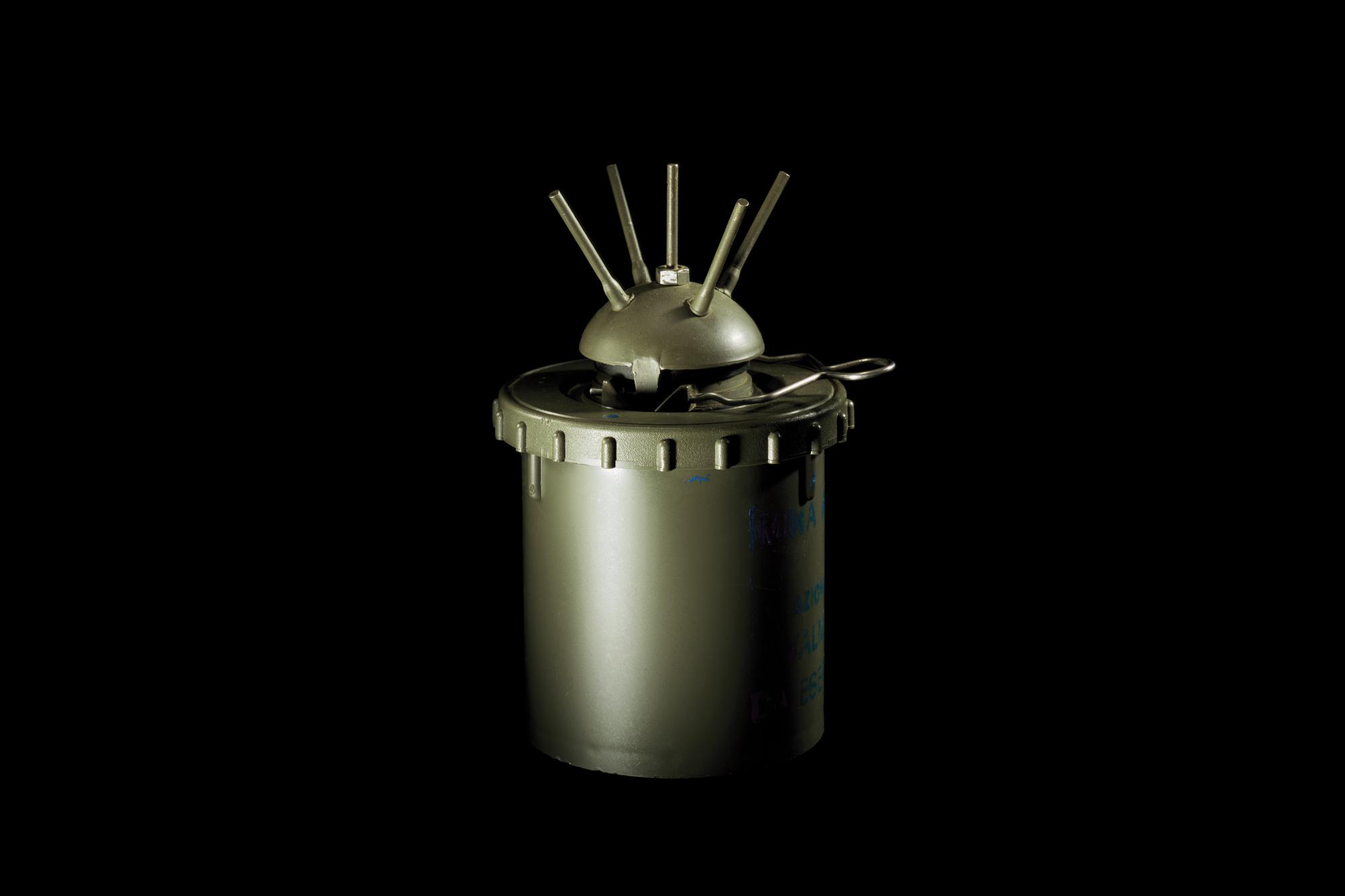
Antipersonnel Bounding Fragmentation Mine, V-69, Italy. The V-69 can be set off by footfall pressure or through a tripwire. When detonated the fuse sets off propellant gases that fire the mine’s inner body 45cm above the ground. This explodes sending out more than 1,000 pieces of chopped steel. Between 1982 and 1985, its manufacturer Valsella sold around 9 million V-69s to Iraq. The mine was given a nickname by Iraqi minelayers: the “Broom”. 120mm, 3.2kg.


Foam
Keizersgracht 609
1017 DS Amsterdam
The Netherlands
Phone: + 31 20 5516500

Opening hours:
Mon – Wed 10am – 6pm
Thu & Fri 10am – 9pm
Sat & Sun 10am – 6pm

Foam website

LIKE ART BLACK ON FACEBOOK

Back to top

Exhibition: ‘Twombly and Poussin: Arcadian Painters’ at the Dulwich Picture Gallery, London

Exhibition dates: 29th June – 25th September 2011

Curator: Dr Nicholas Cullinan, Curator of International Modern Art at Tate Modern.


Many thankx to the Dulwich Picture Gallery for allowing me to publish the images in the posting. Please click on them for a larger version of the image.


Robert Rauschenberg (American, 1925-2008) 'Cy and Relics' 1952


Robert Rauschenberg (American, 1925-2008)
Cy and Relics
1952
Photograph
© The Rauschenberg Foundation


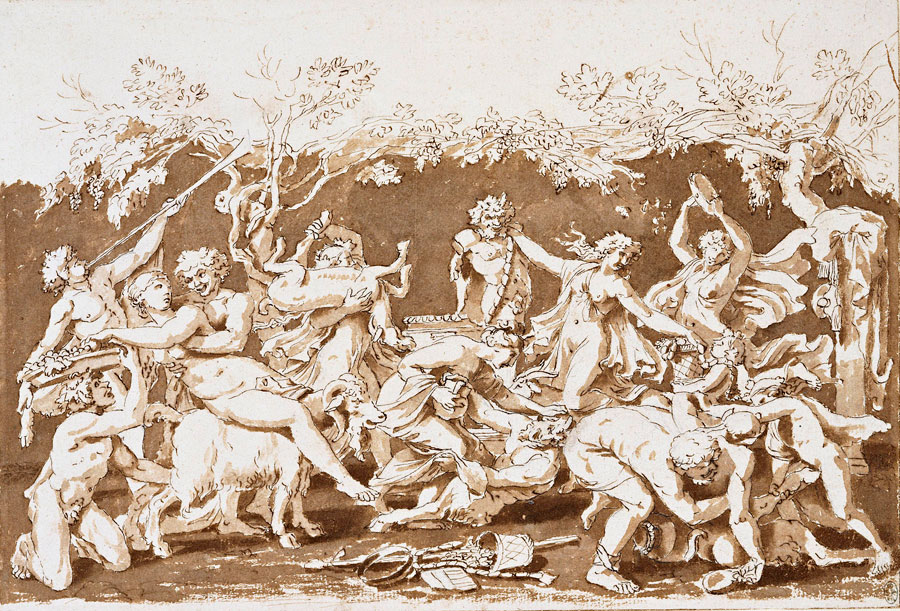
Nicolas Poussin (French, 1594-1665) 'The Triumph of Pan' c. 1636


Nicolas Poussin (French, 1594-1665)
The Triumph of Pan
c. 1636
Pen and ink with wash over stylus and black chalk
581 x 410 x 29 mm
Lent by Her Majesty the Queen. The Royal Collection
© 2011 Her Majesty Queen Elizabeth II


Cy Twombly (American, 1928-2011) 'Bacchanalia-Fall (5 Days in November) Blatt 4, InvNr. UAB 457' 1977


Cy Twombly (American, 1928-2011)
Bacchanalia-Fall (5 Days in November) Blatt 4, InvNr. UAB 457
1977
Collage, oil, chalk, gouache, on fabriano paper, graph paper
101.2 x 150.5cm
Bayerische Staatsgemäldesammlungen – Museum Brandhorst, München
Leihgeber: Udo Brandhorst
© Cy Twombly


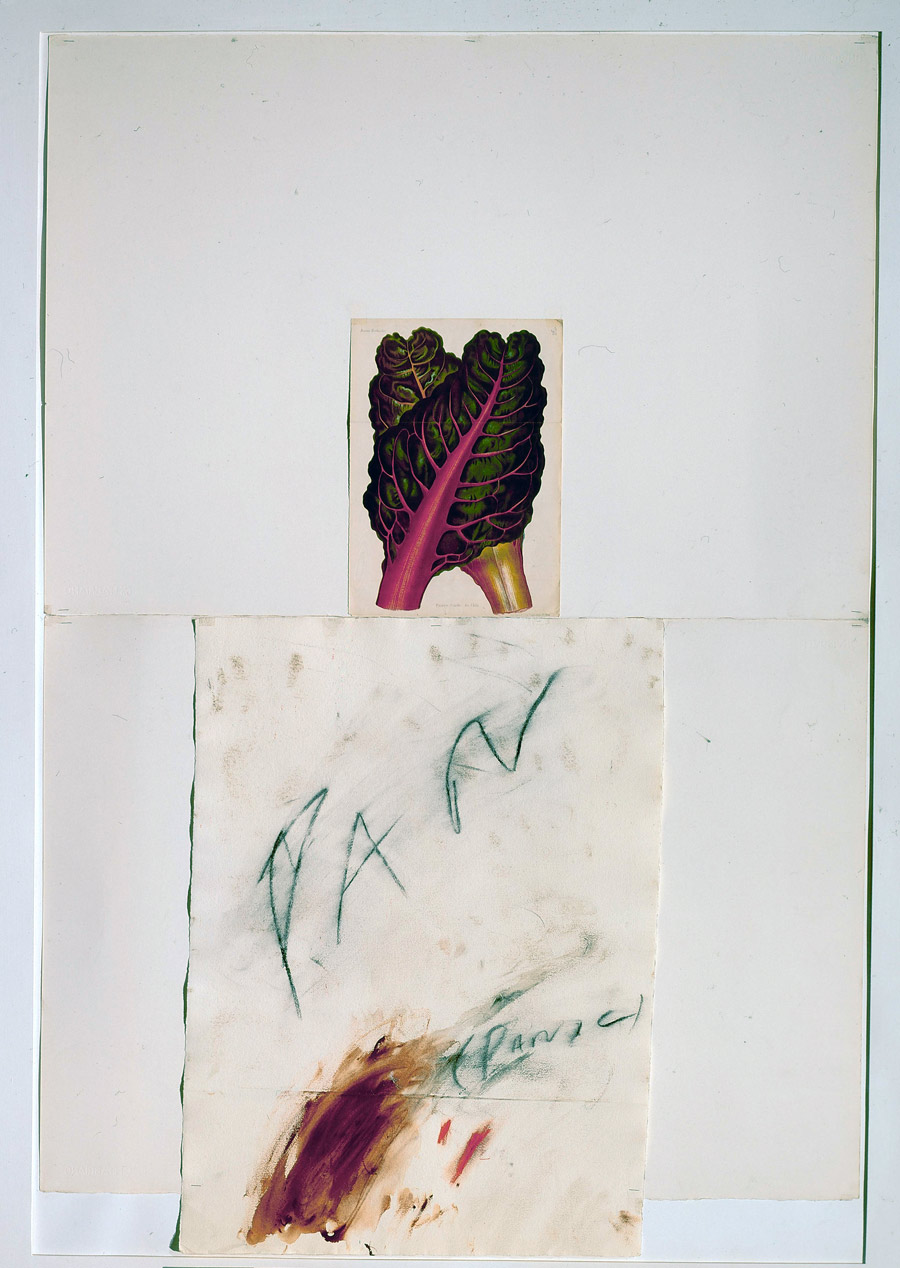
Cy Twombly (American, 1928-2011) 'Pan' 1975


Cy Twombly (American, 1928-2011)
Pan
1975
148 x 100cm
Private Collection
© Cy Twombly, Courtesy: Cy Twombly Archive


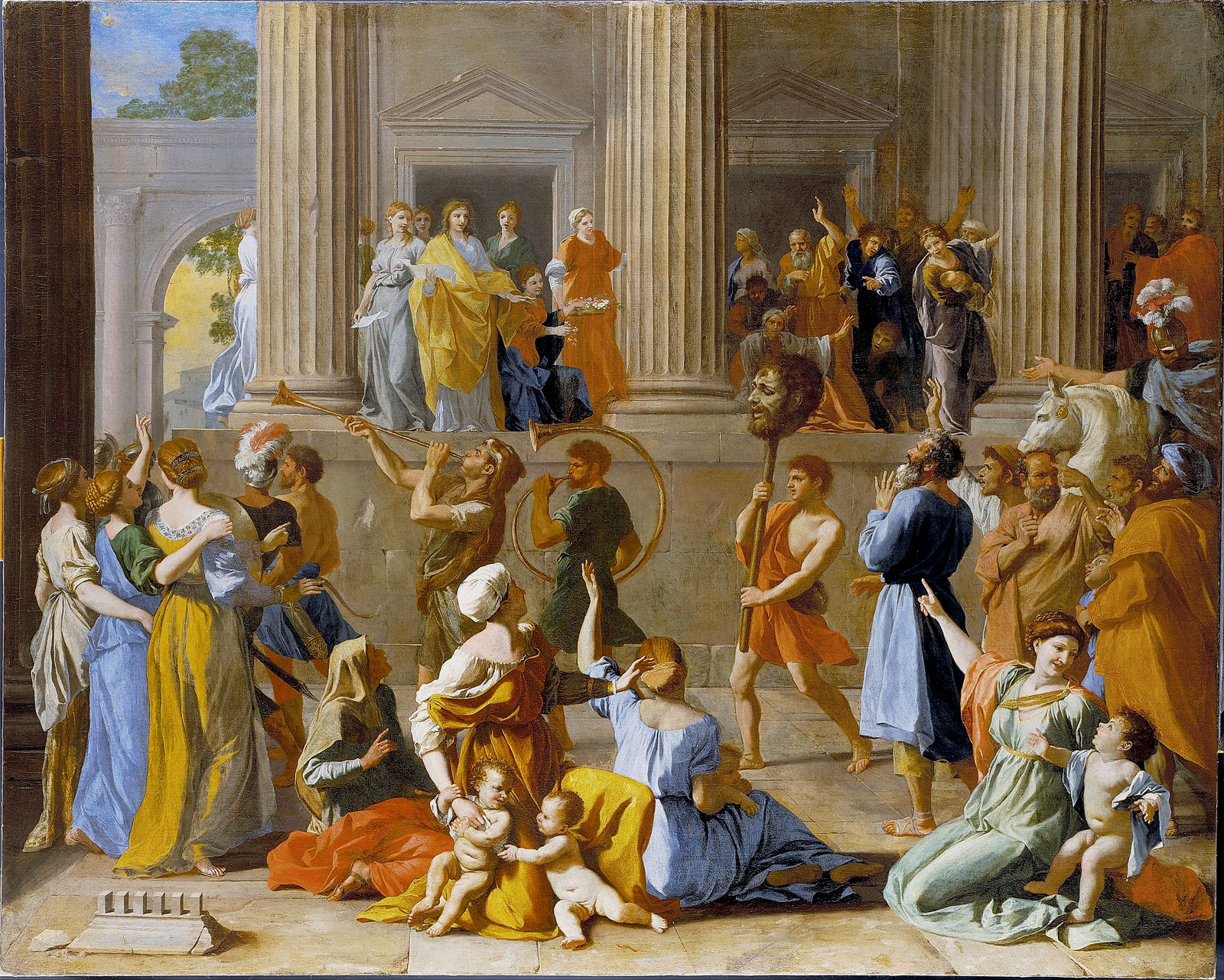
Nicolas Poussin (French, 1594-1665) 'The Triumph of David' 1628-1631


Nicolas Poussin (French, 1594-1665)
The Triumph of David
1628-1631
Oil on canvas
Height: 1,184 mm (46.61 in)
Width: 1,483 mm (58.38 in)
Dulwich Picture Gallery
© By permission of the Trustees of Dulwich Picture Gallery


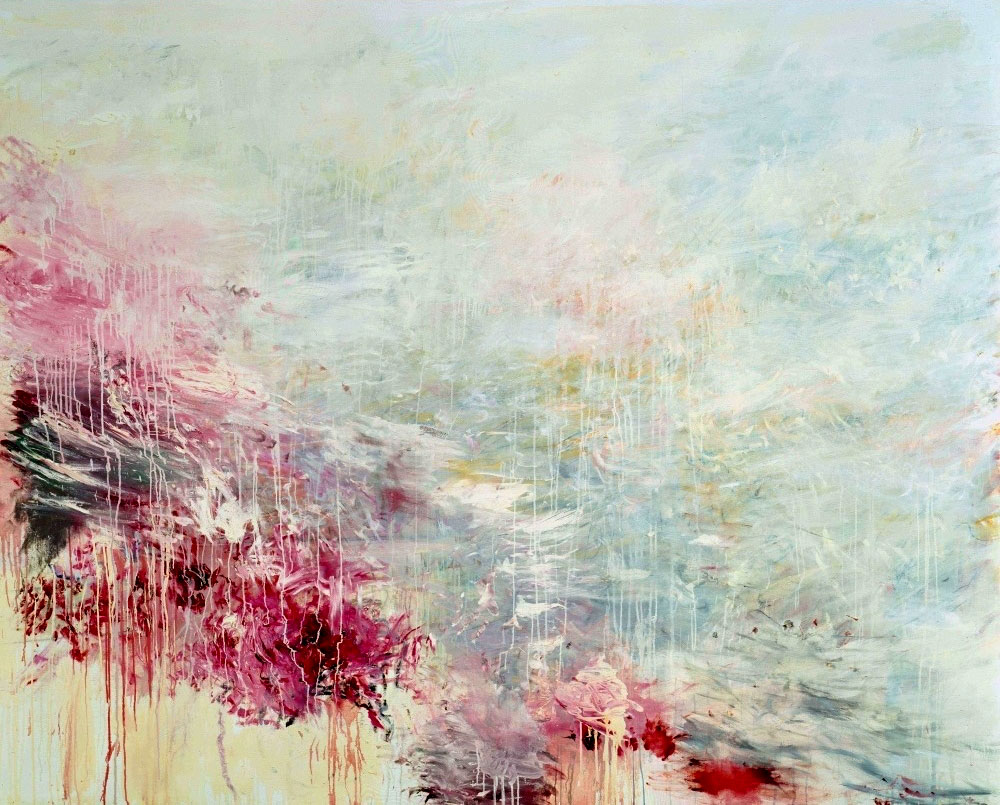
Cy Twombly (American, 1928-2011) 'Hero and Leandro' 1985


Cy Twombly (American, 1928-2011)
Hero and Leandro
1985
202 x 254cm
Private Collection, Courtesy Thomas Ammann Fine Art AG, Zurich
© Cy Twombly


“I would’ve liked to have been Poussin, if I’d had a choice, in another time.”


Cy Twombly


Dulwich Picture Gallery is proud to announce a revelatory exhibition of the work of Cy Twombly and Nicolas Poussin. Organised to celebrate the Bicentenary of the Gallery, this major show will explore, for the first time, the unexpected yet numerous parallels and affinities between the two artists. The exhibition will draw upon the world-class permanent collection of works at Dulwich Picture Gallery by Nicolas Poussin, alongside other works from major collections around the world by both Poussin and Twombly.

In 1624 and 1957, the two artists, aged around thirty, moved to Rome. Nicolas Poussin and Cy Twombly subsequently spent the majority of their lives in the Eternal City, and went on to become the pre-eminent painters of their day. Rather than recent exhibitions that have sought to compare and contrast old masters with contemporary artists through superficial visual appearances, this groundbreaking show will instead juxtapose works which may seem radically disparate in terms of style, yet ones that share deep and timeless interests. Both Poussin and Twombly were artists of prodigious talent who found in the classical heritage of Rome a life-long subject. Both spent their lives studying, revivifying and making newly relevant for their own eras antiquity, ancient history, classical mythology, Renaissance painting, poetry and the imaginary, idealised realm of Arcadia.

Curated by Dr. Nicholas Cullinan, Curator of International Modern Art at Tate Modern, the exhibition examines how Twombly and Poussin, although separated by three centuries, nonetheless engaged with the same sources and will explore the overlapping subjects that the two artists have shared. It will consist of around thirty carefully-chosen paintings, drawings and sculptures, structured thematically around six sections devoted to key shared themes, from both artists’ early fascinations with Arcadia and the pastoral when they first moved to Rome, Venus and Eros, Anxiety and Theatricality, Apollo, Parnassus and Poetry, Pan and the Bacchanalia, through to the theme of The Four Seasons.

The exhibition will be accompanied by the British premiere of Tacita Dean’s new 16mm film portrait of Cy Twombly, Edwin Parker (2011). The film documents Twombly in his studio in Lexington, Virginia, and follows on from Dean’s series of filmed depictions of subjects such as the choreographer Merce Cunningham, the poet Michael Hamburger and the artist Mario Merz, where the inner life of the sitter is implied through their physical demeanour and surroundings. A series of talks will also accompany the exhibition, including Sir Nicholas Serota, Director of Tate, in conversation with Dr. Nicholas Cullinan on the topic of curating Twombly, and Malcolm Bull (Ruskin School of Drawing, University of Oxford) and T. J. Clark (Professor Emeritus of Modern Art at the University of California, Berkeley; and Visiting Professor, University of York) who will discuss the work of Poussin and Twombly and the themes raised by the exhibition.

Ian Dejardin, Director of Dulwich Picture Gallery explains that the exhibition “fits in with a philosophy I have pursued here – that exhibitions can conduct a dialogue with the permanent collection. In the past Howard Hodgkin, Lucian Freud and Paula Rego have all hung their paintings within the collection, so Poussin and Twombly seemed like a natural extension of those experiments.”

The exhibition has received enthusiastic support and loans from major private and public collections around the world, including The National Gallery and Tate in London; The Royal Collection; The Duke of Devonshire; The Fitzwilliam Museum, Cambridge; Museo del Prado, Madrid; The Brandhorst Museum, Munich and The Art Institute of Chicago. The exhibition has been developed in close collaboration with Cy Twombly himself, and will include works that have never been exhibited before.

Press release from the Dulwich Picture Gallery


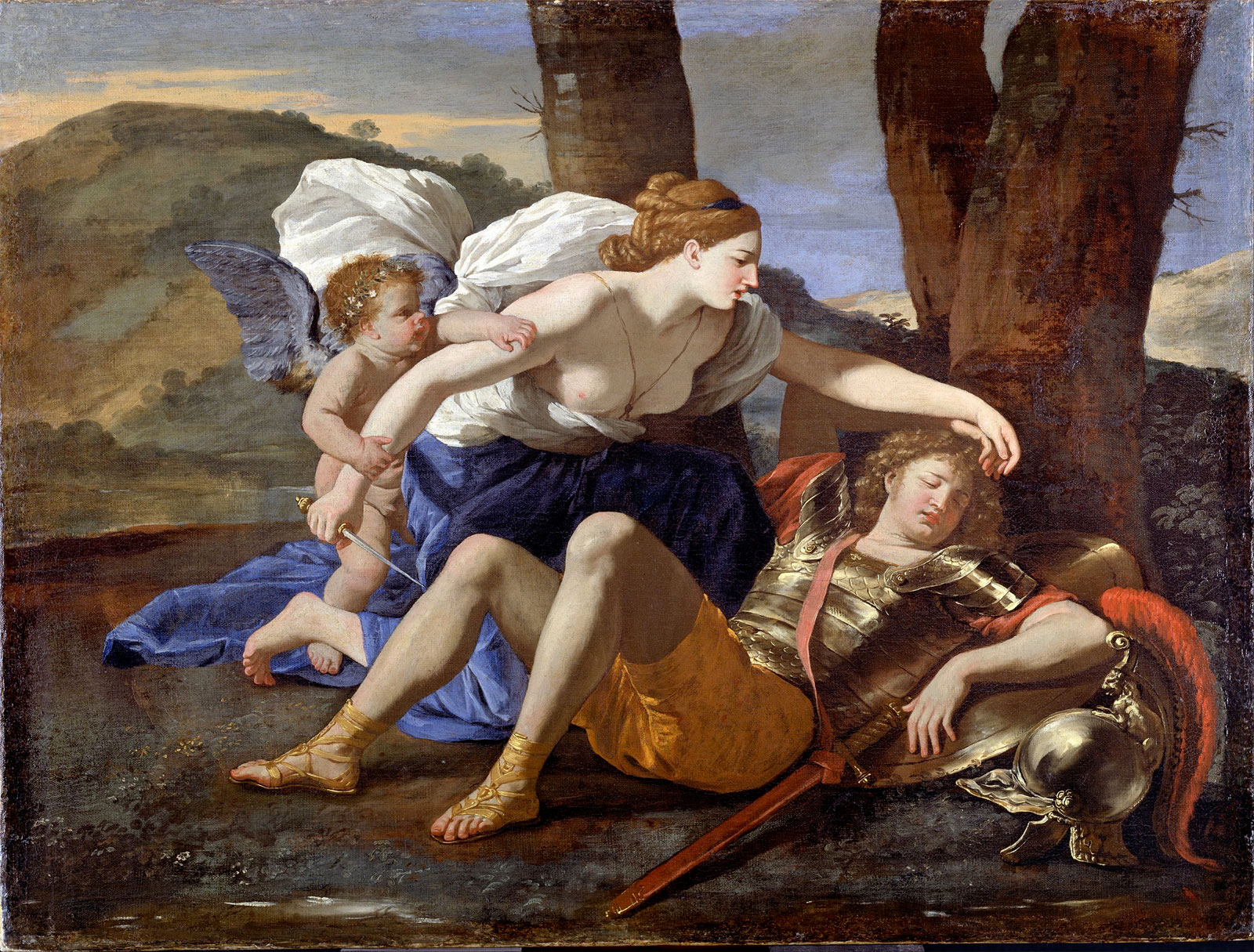
Nicolas Poussin (French, 1594-1665) 'Rinaldo and Armida' c. 1630


Nicolas Poussin (French, 1594-1665)
Rinaldo and Armida
c. 1630
Oil on canvas
Height: 822 mm (32.36 in)
Width: 1,092 mm (42.99 in)
Dulwich Picture Gallery
© By permission of the Trustees of Dulwich Picture Gallery


Nicolas Poussin (French, 1594-1665) 'The Nurture of Jupiter' mid 1630s


Nicolas Poussin (French, 1594-1665)
The Nurture of Jupiter
mid 1630s
Oil on canvas
Height: 965 mm (37.99 in)
Width: 1,210 mm (47.63 in)
Dulwich Picture Gallery
© By permission of the Trustees of Dulwich Picture Gallery


Cy Twombly (American, 1928-2011) 'Quattro Stagioni: Primavera' 1993-5


Cy Twombly (American, 1928-2011)
Quattro Stagioni: Primavera
1993-1995
Acrylic, oil, crayon and pencil on canvas
3230 x 1996 x 67 mm
Tate: Purchased with assistance from the American Fund for the Tate Gallery and Tate Members 2002
© Tate, London, 2010, © Cy Twombly


Cy Twombly (American, 1928-2011) 'Quattro Stagioni: Estate' 1993-5


Cy Twombly (American, 1928-2011)
Quattro Stagioni: Estate
1993-1995
Acrylic and pencil on canvas
3241 x 2250 x 67 mm
Tate: Purchased with assistance from the American Fund for the Tate Gallery and Tate Members 2002
© Tate, London, 2010, © Cy Twombly


Nicolas Poussin (French, 1594-1665) 'Venus and Mercury' c. 1627/1629


Nicolas Poussin (French, 1594-1665)
Venus and Mercury
c. 1627/1629
© By permission of the Trustees of Dulwich Picture Gallery


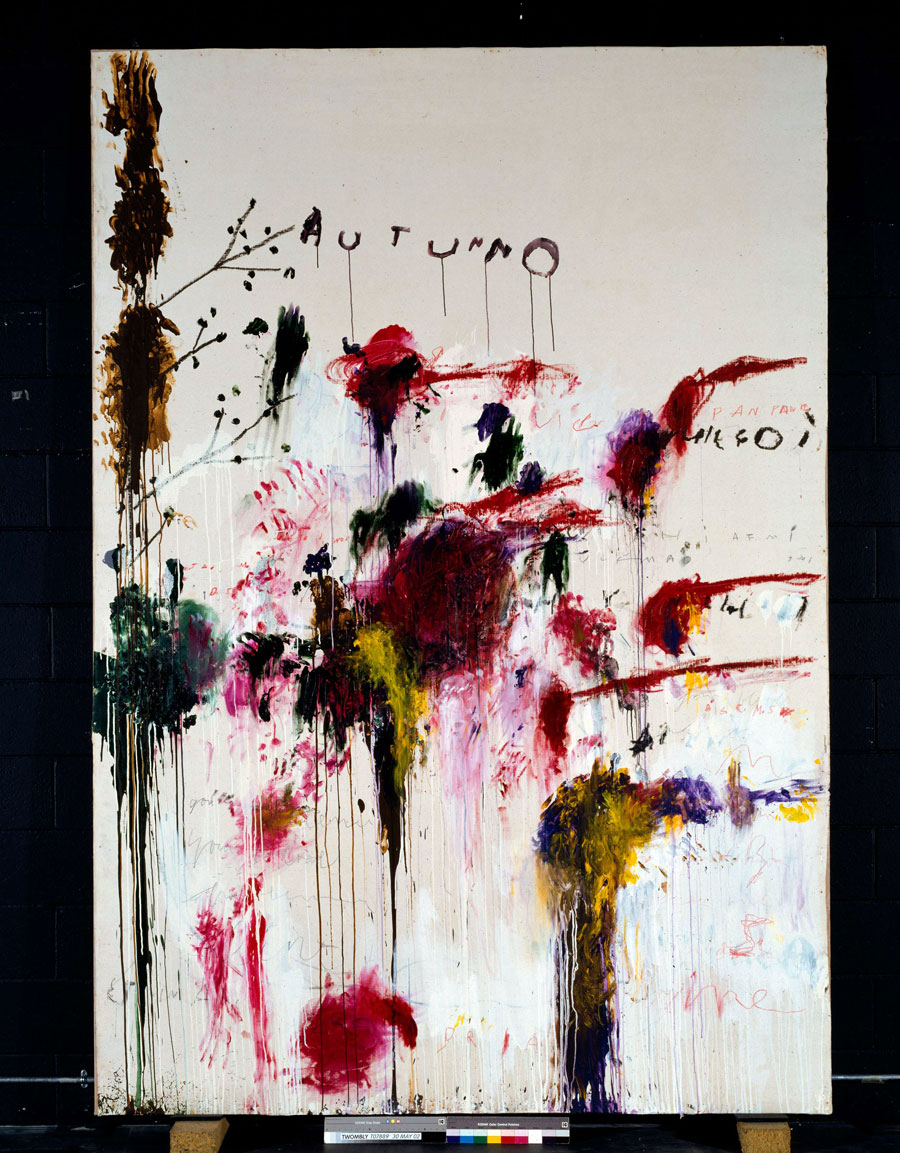
Cy Twombly (American, 1928-2011) 'Quattro Stagioni: Autunno' 1993-5


Cy Twombly (American, 1928-2011)
Quattro Stagioni: Autunno
1993-1995
Acrylic, oil, crayon and pencil on canvas
3230 x 2254 x 67 mm
Tate: Purchased with assistance from the American Fund for the Tate Gallery and Tate Members 2002
© Tate, London, 2010, © Cy Twombly


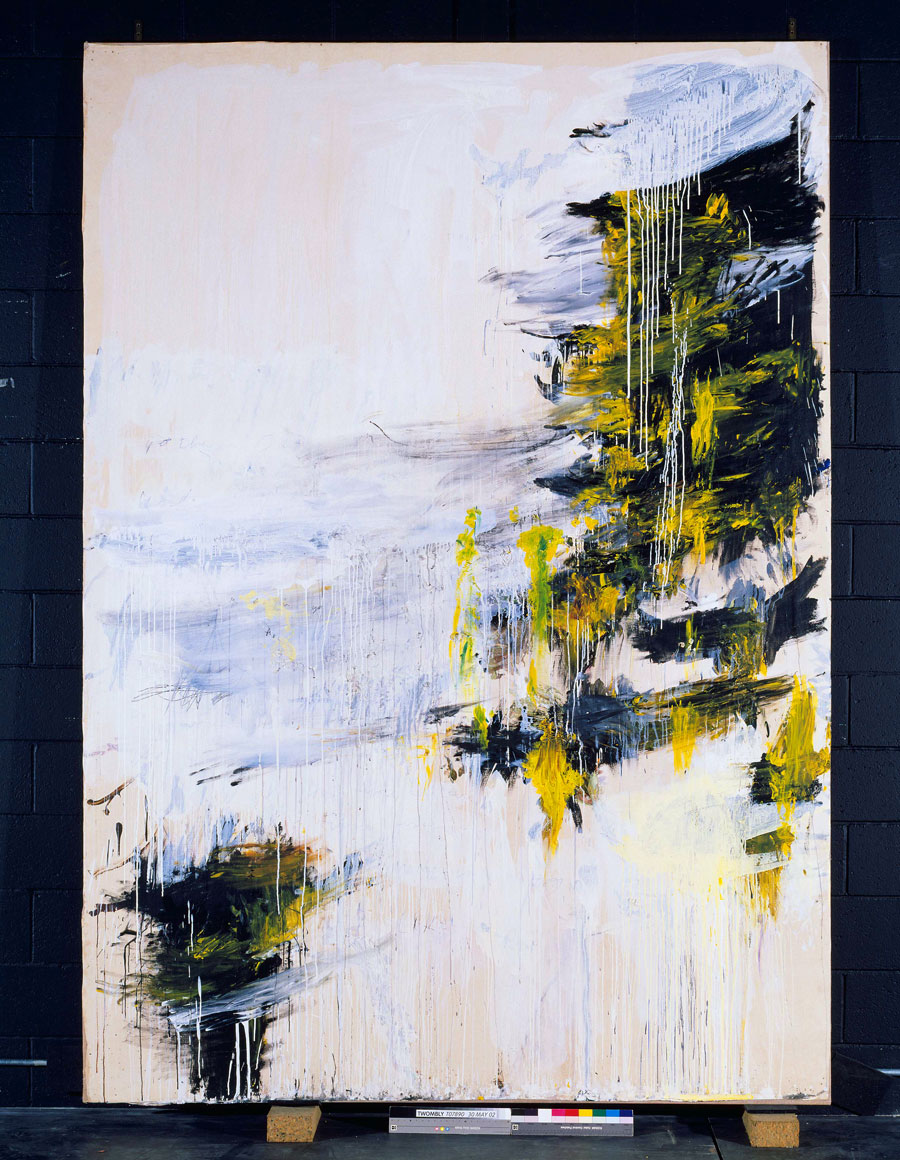
Cy Twombly (American, 1928-2011) 'Quattro Stagioni: Inverno' 1993-5


Cy Twombly (American, 1928-2011)
Quattro Stagioni: Inverno
1993-1995
Acrylic, oil and pencil on canvas
3229 x 2300 x 67mm
Tate: Purchased with assistance from the American Fund for the Tate Gallery and Tate Members 2002
© Tate, London, 2010, © Cy Twombly


Dulwich Picture Gallery
Gallery Road, London, SE21 7AD

Opening hours:
Tuesday – Sunday, 10am – 5pm
Closed Mondays except Bank Holidays

Dulwich Picture Gallery website

LIKE ART BLART ON FACEBOOK

Back to top

Exhibition: ‘Pierre Soulages’ at the Martin-Gropius-Bau, Berlin

Exhibition dates: 2nd October 2010 – 17th January, 2011


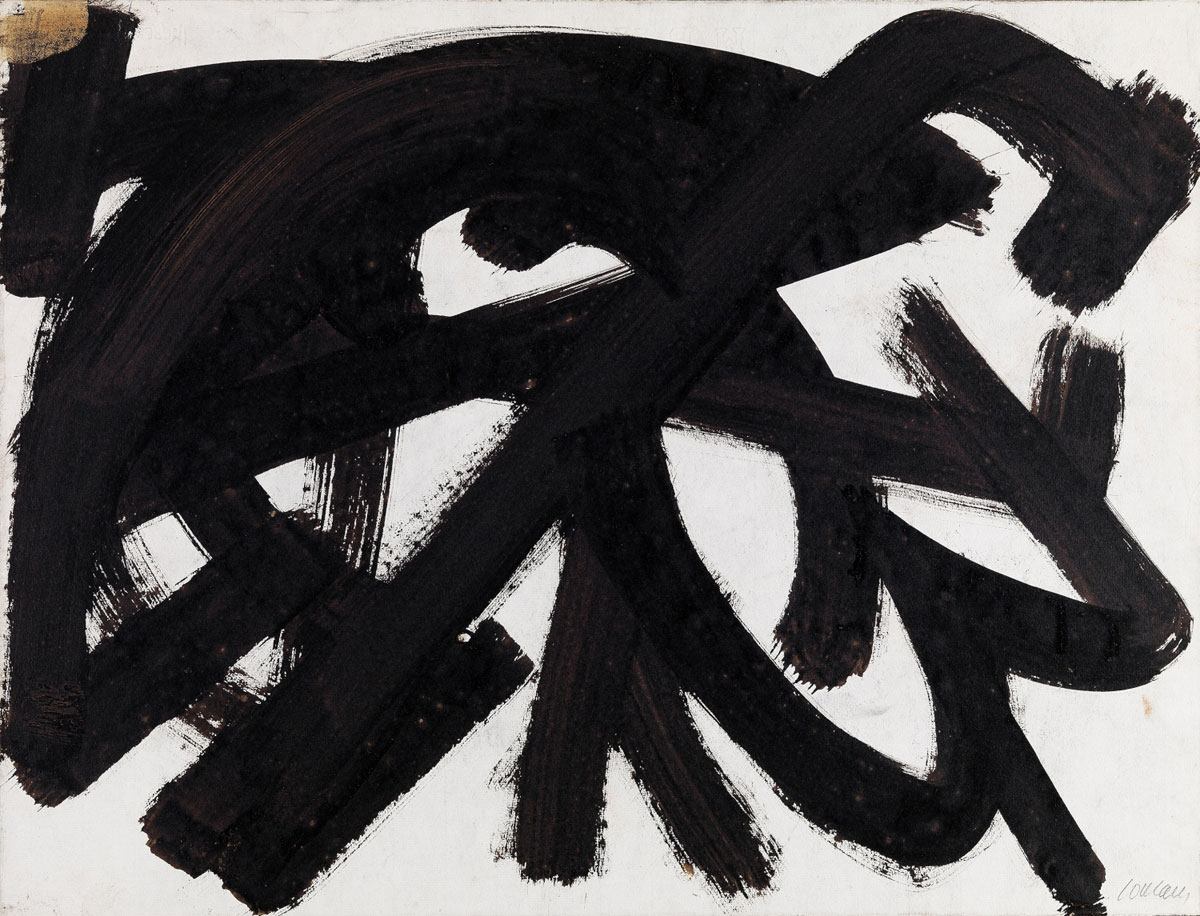
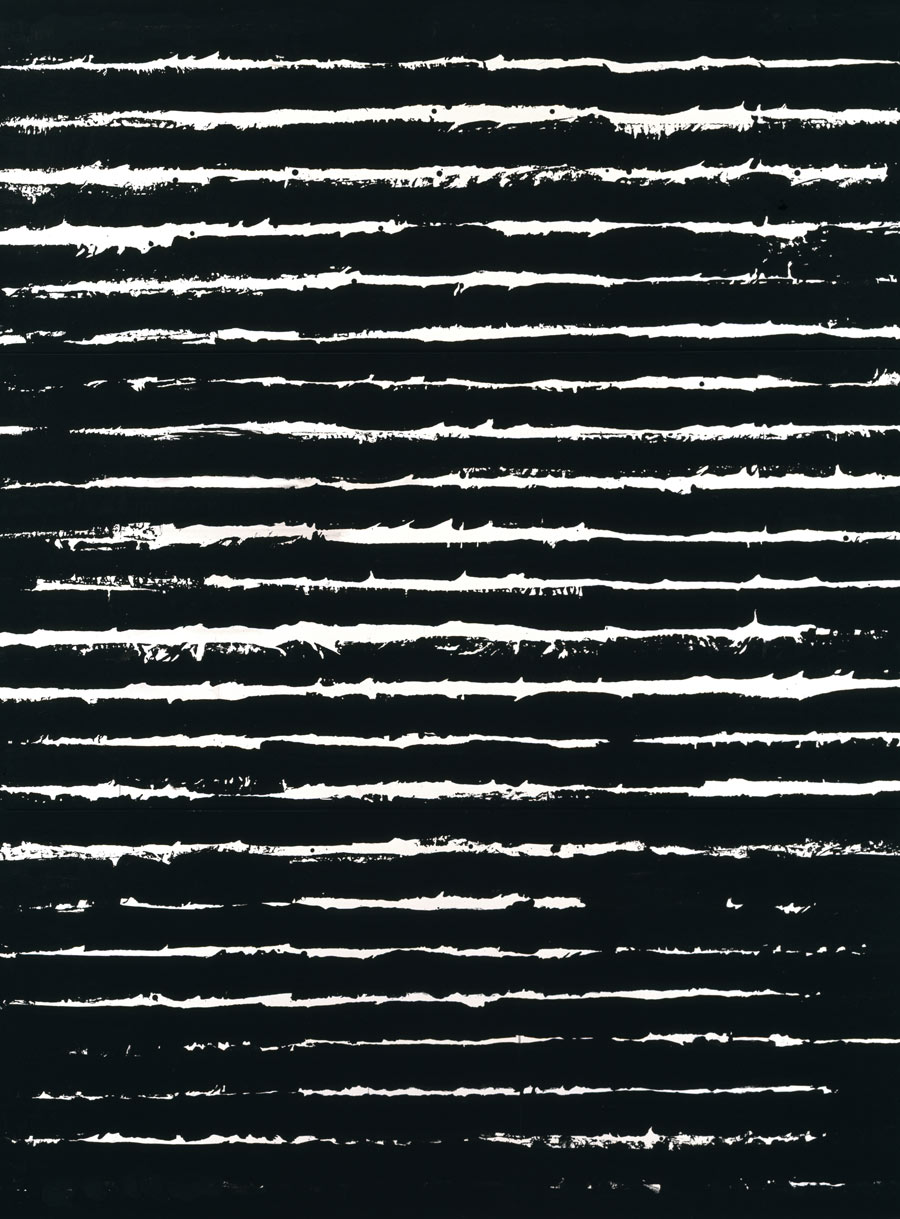
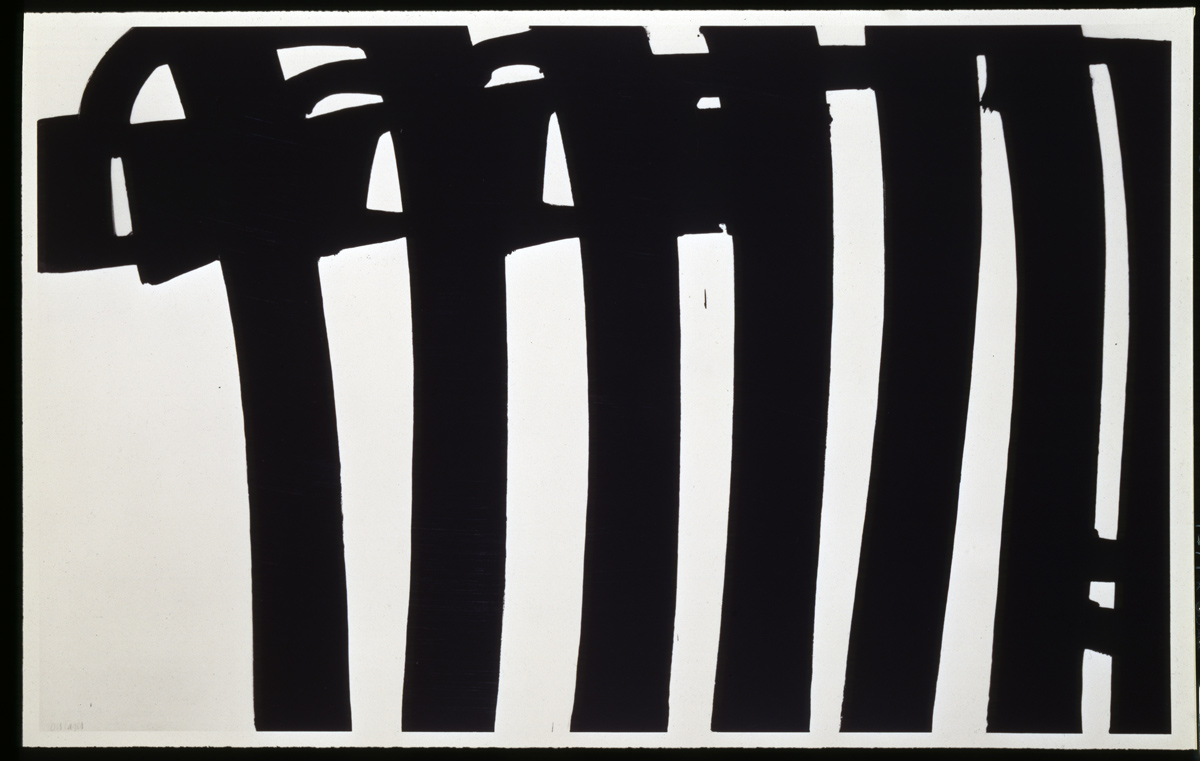
Pierre Soulages (French, 1919-2022) 'Brou de noix sur papier' 1946 from the exhibition 'Pierre Soulages' at the Martin-Gropius-Bau, Berlin


Pierre Soulages (French, 1919-2022)
Brou de noix sur papier
1946
48 x 62.5cm
Private collection
© Photo: DR, Archive Soulages / VG Bild-Kunst Bonn, 2010


The light of beyond black!

Nothing more really needs to be said …

Dr Marcus Bunyan


Many thankx to the Martin-Gropius-Bau, Berlin for allowing me to publish the photographs in the posting. Please click on the photographs for a larger version of the image.


Pierre Soulages (French, 1919-2022) 'Peinture 324 x 181 cm, 17 novembre 2008' from the exhibition 'Pierre Soulages' at the Martin-Gropius-Bau, Berlin


Pierre Soulages (French, 1919-2022)
Peinture; 324 x 181cm; 17 novembre 2008
2008
Acrylic on canvas
Private collection
© Photo: George Poncet, Archive Soulages / VG Bild-Kunst Bonn, 2010


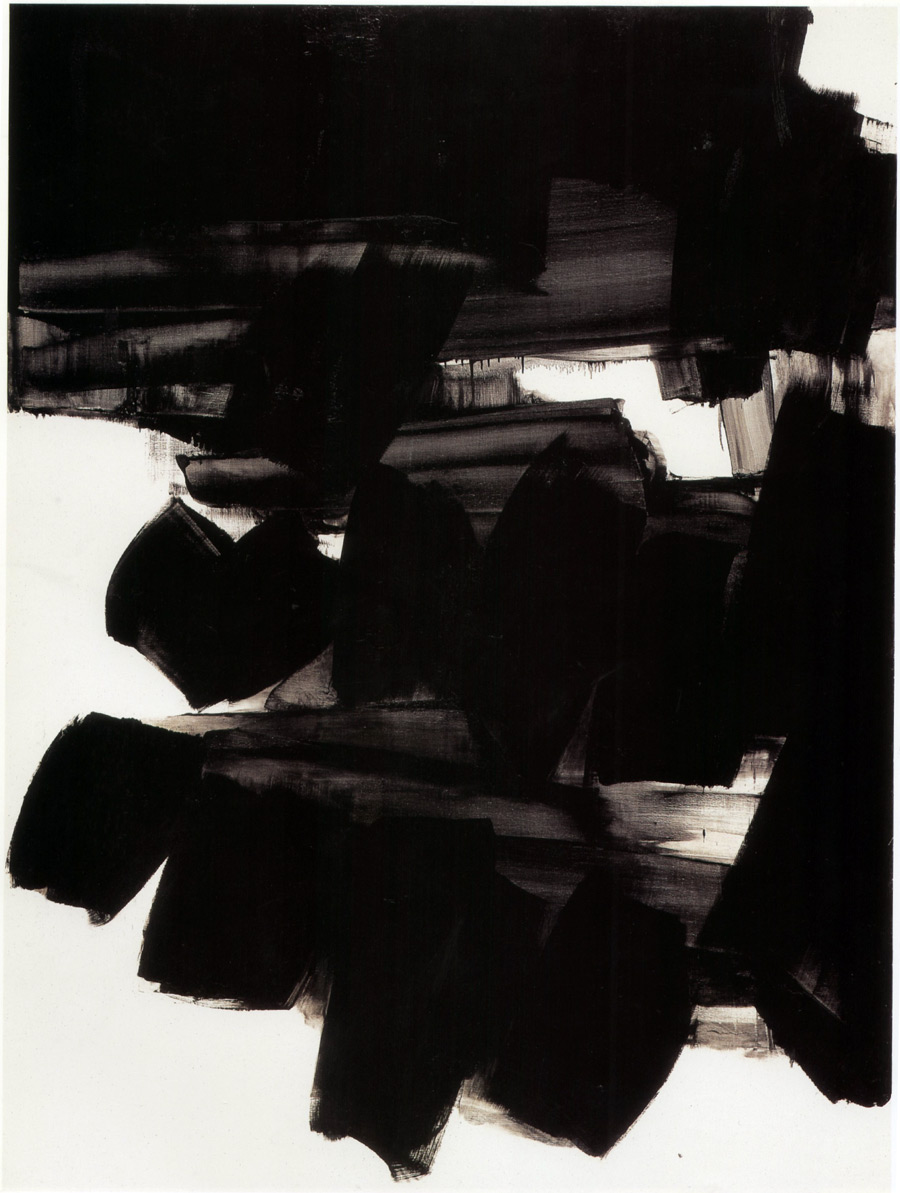
Pierre Soulages (French, 1919-2022) 'Peinture; 243 x 181 cm; 26 juin 1999' from the exhibition 'Pierre Soulages' at the Martin-Gropius-Bau, Berlin


Pierre Soulages (French, 1919-2022)
Peinture; 243 x 181cm; 26 juin 1999
1999
Oil on canvas
Private Collection
© VG Bild-Kunst Bonn, 2010


Pierre Soulages (French, 1919-2022) 'Peinture; 260 x 202 cm; 19 juin 1963' from the exhibition 'Pierre Soulages' at the Martin-Gropius-Bau, Berlin


Pierre Soulages (French, 1919-2022)
Peinture; 260 x 202cm; 19 juin 1963
1963
Oil on canvas
Collection Centre Pompidou, Musée national d’art moderne, Diffusion RMN
© VG Bild-Kunst Bonn, 2010


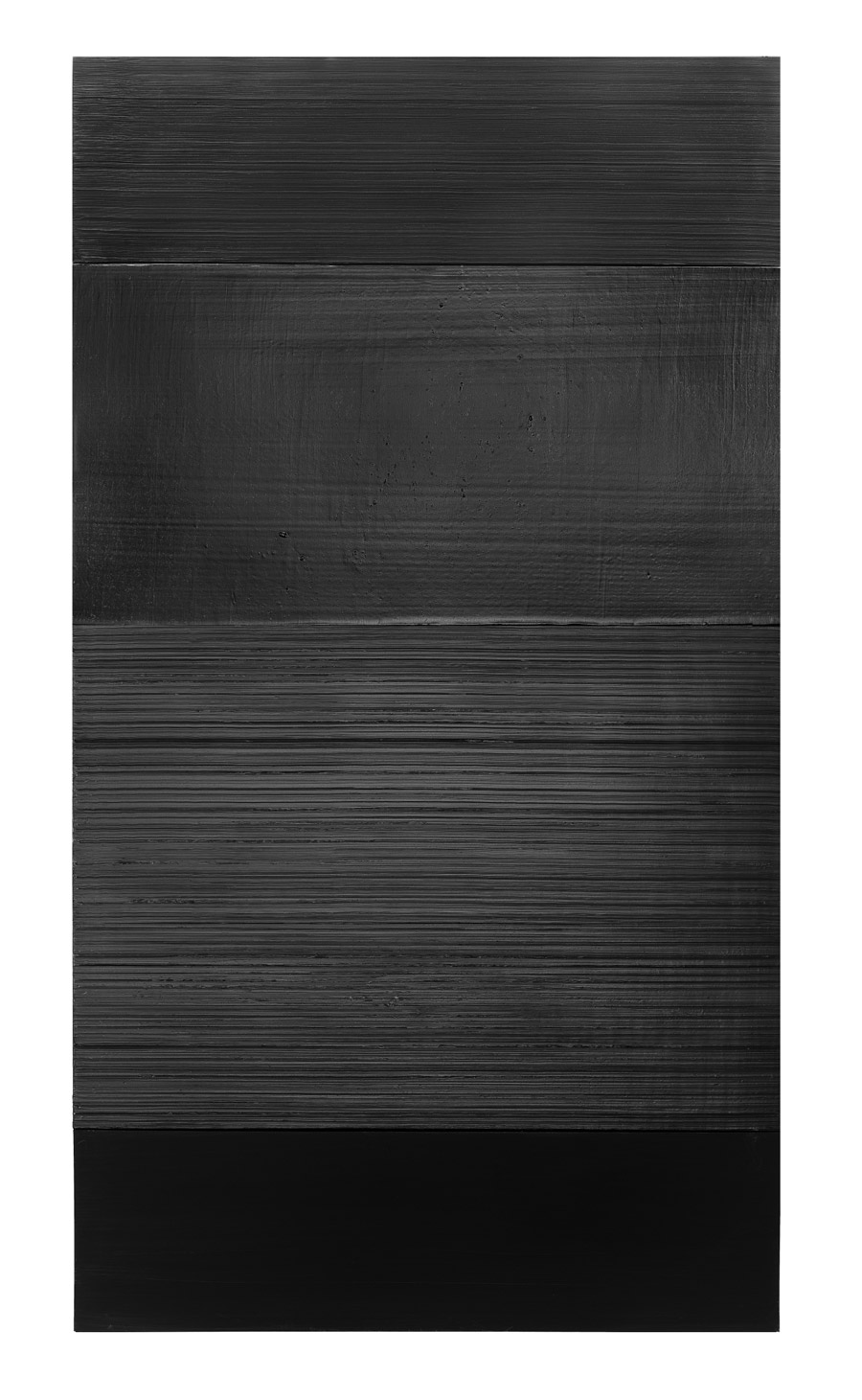
Pierre Soulages is one of the world’s foremost abstract painters of recent decades. On the occasion of his 90th birthday he is being honoured by a retrospective in the Centre Pompidou in Paris. Starting on 2 October 2010 Berlin’s Martin-Gropius-Bau will be showing this exhibition in an altered form.

Over 70 pictures of all his creative periods, from the works with walnut stain (1947 to 1949) to the radically black paintings of recent years measuring up three metres high, are being shown, many of them for the first time in Germany. They illustrate the dynamic artistic development of this most famous of contemporary French artists.

Born on 24 December 1919 in Rodez, a small town located to the north of and roughly equidistant from Toulouse und Montpellier, Pierre Soulages refused to train at the “Ecole nationale superieure des beaux arts” in Paris, being out of sympathy with what he saw as that institution’s retrograde approach to art. Instead he spent the year 1939 visiting exhibitions and familiarising himself with the works of Picasso and Cézanne. But that same year he left Paris and headed south to Montpellier to attend the “Ecole des beaux arts” there. At that time he made the acquaintance of Sonia Delaunay, who showed him catalogues containing what those in power at that time considered to be “degenerate art”. For Soulages this was the justification for working as an abstract artist. After the war he moved to Paris, where he successfully exhibited in the Salon of the Surindépendants. His acquaintanceship with Francis Picabia and Hans Hartung in 1947, and his familiarity with the American scene as represented by such artists as Marc Rothko, Robert Motherwell and Wilhelm de Kooning, show how rapidly he was gaining an international reputation. In 1948, three years after the end of the Second World War, he took part in the then pioneering exhibition “French Abstract Painting”, which was shown in Stuttgart, Hamburg and Düsseldorf. He was the youngest of a group of masters of abstract art, including such names as Kupka, Doméla and Herbin. His participation in Documenta I, II and III brought him recognition in artistic and critical circles.

His wayward style, and more specifically his almost exclusive reliance on the colour black, give him a unique place in the world of art, although the American Robert Motherwell produced similar results in some of his works. But only Soulages consistently dedicated his works to the colour black over a period of decades, before finally turning to light.

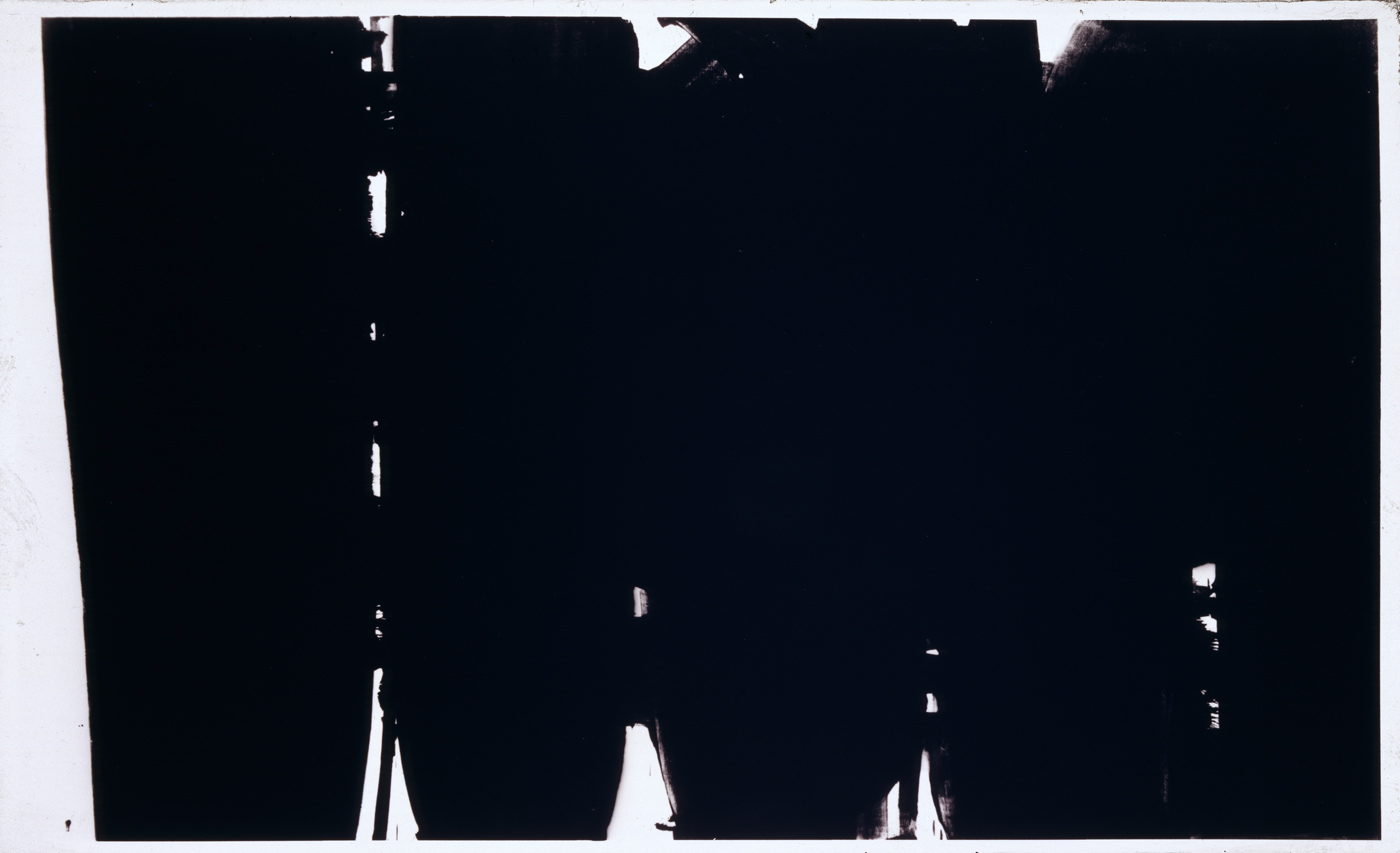
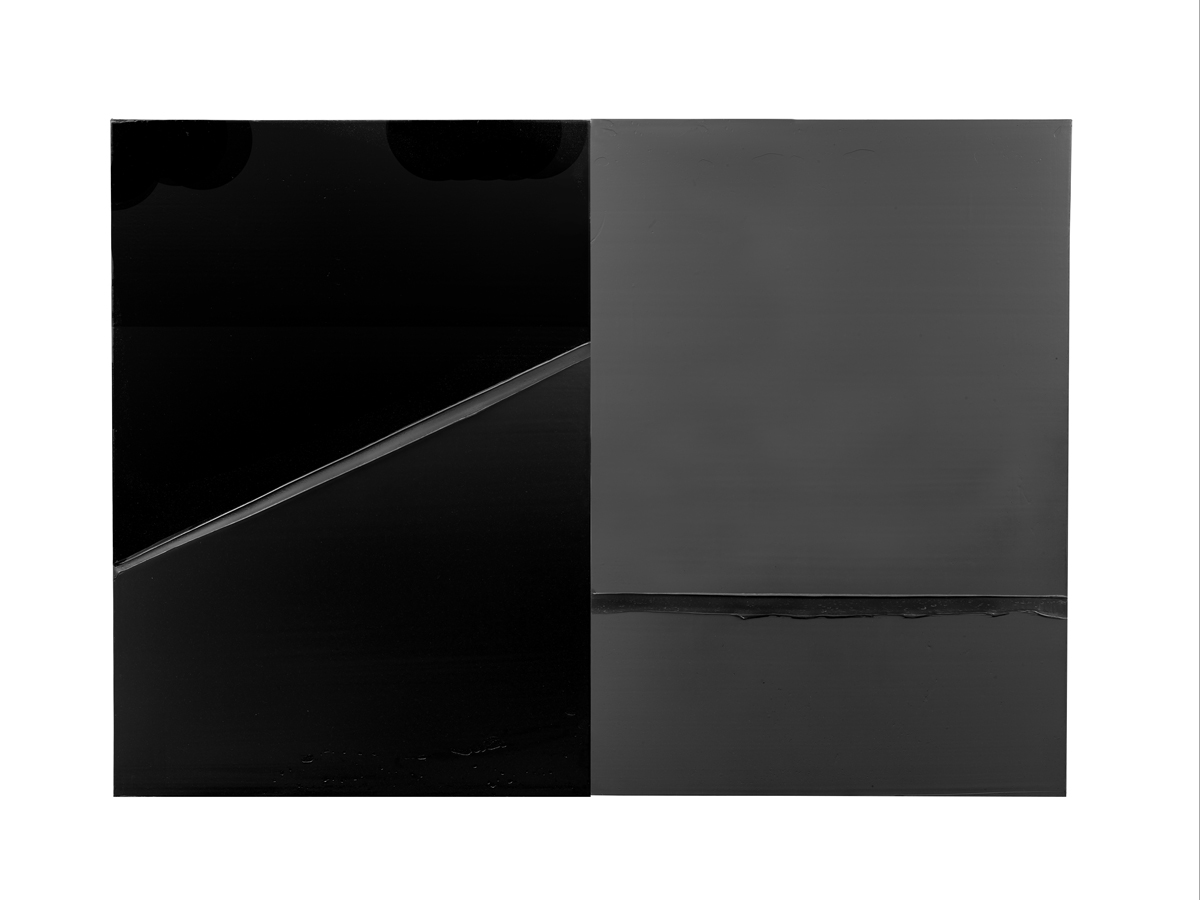
His “outrenoir”, a term coined by Soulages for the use of black in his work, swallows up light, especially in his works on paper, achieving a particular sense of depth. “Outrenoir”, which may be translated as “the other side of black”, or “beyond black”, does not exclude, but draws the observer into the picture, inducing him to make a close and precise examination of the work by holding his gaze.

Like many painters, Pierre Soulages is fascinated by the phenomenon of light. He seeks obsessively for ways of letting light operate in the colour black. Works in which black is accompanied by a second colour such as blue or red remain the exception.

His individual style, characterised by strong bold lines and occasional calligraphic elements, is an important organising principle in his works. “I found small brushes only for the exact work, as was necessary and important in the art of the 19th century and earlier – Picasso himself worked with fine brushes in his early works. But for me there was no question of that. I wanted to try something quite different, so I went into a paint shop in Paris and bought myself broad brushes and rollers of the kind used for house-painting.” By using this technique in combination with a dark walnut stain known as “de noix” he created his first masterpieces, one of which was bought by the Museum of Modern Art in New York as early as 1948.

His paintings are to be found in the collections of over 100 museums worldwide, such as the Solomon R. Guggenheim Museum, New York; the Australian National Gallery, Canberra; the Hermitage, St. Petersburg; the Musée national d’Art moderne, Paris; the Staatsgalerie Stuttgart; the Instituto Valenciano de Arte Moderno, Valencia; the Museum of Modern Art, Toyama; the Tate Gallery, London; the Museum of Fine Arts, Houston; and the Musée d’Art contemporain, Montréal, to name but a few.

Press release from the Martin-Gropius-Bau website [Online] Cited 11/01/2011 no longer available online


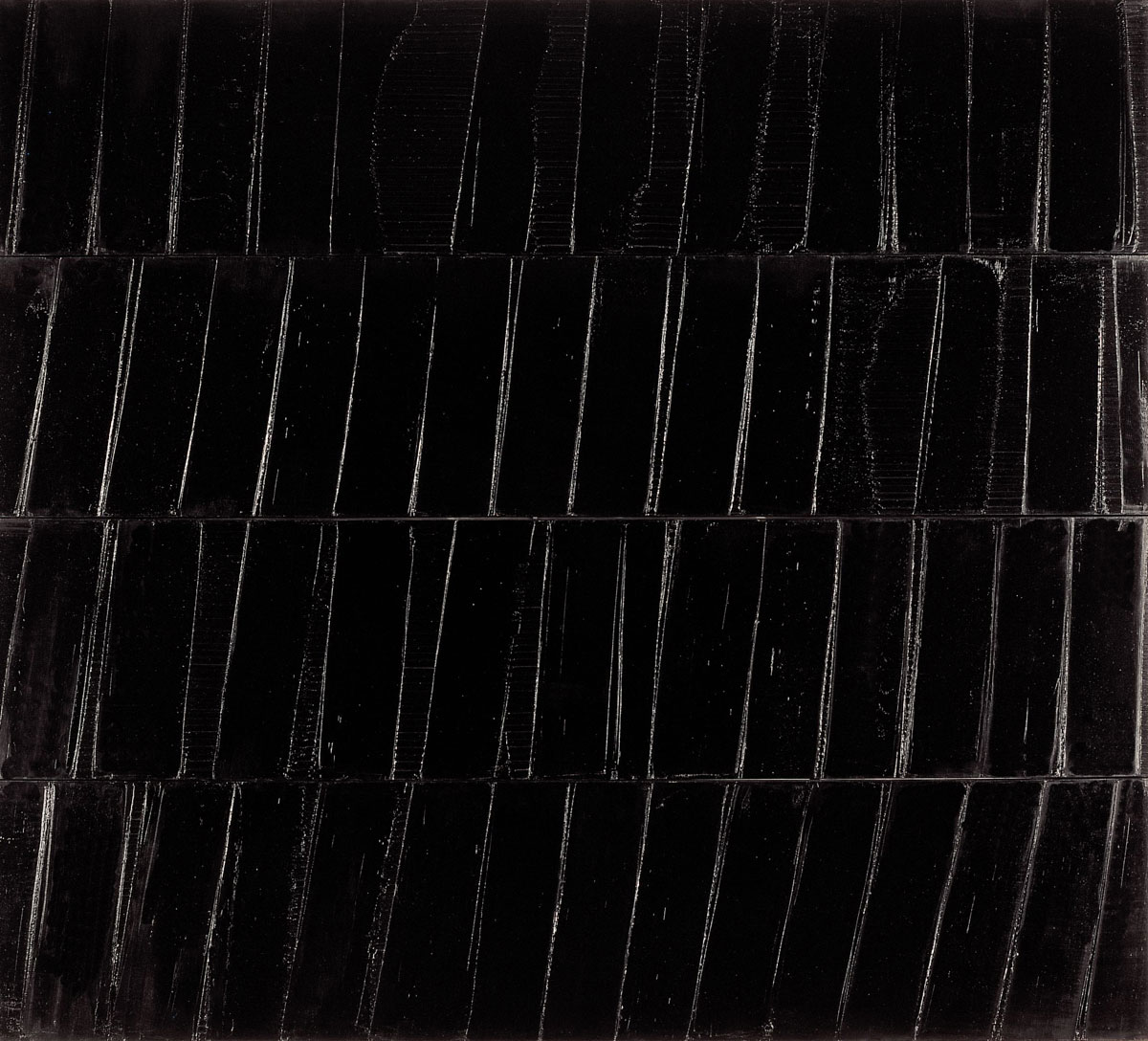
Pierre Soulages (French, 1919-2022) 'Peinture; 324 x 362 cm; 1985' from the exhibition 'Pierre Soulages' at the Martin-Gropius-Bau, Berlin


Pierre Soulages (French, 1919-2022)
Peinture; 324 x 362cm; 1985
1985
Polyptique C (4 elements 81 x 362cm)
Oil on canvas
Collection Centre Pompidou, Musée national d’art moderne, Diffusion RMN
© VG Bild-Kunst Bonn, 2010


Pierre Soulages (French, 1919-2022) 'Peinture 202 x 327 cm, 17 janvier 1970' from the exhibition 'Pierre Soulages' at the Martin-Gropius-Bau, Berlin


Pierre Soulages (French, 1919-2022)
Peinture 202 x 327cm, 17 janvier 1970
1970
Private collection
© Photo: François Walch, Archive Soulages / VG Bild-Kunst Bonn, 2010


Pierre Soulages (French, 1919-2022) 'Peinture 220 x 366 cm, 14 mai 1968' from the exhibition 'Pierre Soulages' at the Martin-Gropius-Bau, Berlin


Pierre Soulages (French, 1919-2022)
Peinture 220 x 366cm, 14 mai 1968
1968
Collection Centre Pompidou, Musée national d’art moderne, Diffusion RMN
© VG Bild-Kunst Bonn, 2010


Pierre Soulages (French, 1919-2022) 'Peinture 222 x 314 cm, 24 février 2008' from the exhibition 'Pierre Soulages' at the Martin-Gropius-Bau, Berlin


Pierre Soulages (French, 1919-2022)
Peinture 222 x 314cm, 24 février 2008
2008
Acrylic on canvas
Private collection
© Photo: Georges Poncet, Archive Soulages / VG Bild-Kunst Bonn, 2010


Martin-Gropius-Bau Berlin
Niederkirchnerstraße 7
Corner Stresemannstr. 110
10963 Berlin
Phone: +49 (0)30 254 86-0

Opening hours:
Wednesday to Monday 10 – 19 hrs
Tuesday closed

Martin-Gropius-Bau website

LIKE ART BLART ON FACEBOOK

Back to top

Exhibition: ‘Camille Silvy, Photographer of Modern Life, 1834-1910’ at the National Portrait Gallery, London

Exhibition dates: 15th July – 24th October 2010


Many thankx to the National Portrait Gallery, London for allowing me to publish the photographs in the posting. Please click on the photographs for a larger version of the image.


Camille Silvy (French, 1834-1910) '[River Scene, France]' Negative 1858; print 1860s from the exhibition 'Camille Silvy, Photographer of Modern Life, 1834-1910' at the National Portrait Gallery, London, July - Oct 2010


Camille Silvy (French, 1834-1910)
[River Scene, France]
Negative 1858; print 1860s
Albumen silver print
25.7 × 35.6cm (10 1/8 × 14 in.)


When Camille Silvy originally exhibited this photograph in 1859 (with the title Vallée de l’Huisne), a reviewer wrote: “It is impossible to compose with more artistry and taste than M. Silvy has done. The Vallée de l’Huisne… [is a] true picture in which one does not know whether to admire more the profound sentiment of the composition or the perfection of the details.”

Early collodion-on-glass negatives, such as those Silvy used to render this scene, were particularly sensitive to blue light, making them unsuitable for simultaneously capturing definition in land and sky. Silvy achieved this combination of richly defined clouds and terrain by skilfully wedding two exposures and disguising any evidence of his intervention with delicate drawing and brushwork on the combination negative. The print exemplifies the tension between reality and artifice that is an integral part of the art of photography.

The Huisne River provided power for flour and tanning mills and was significant in the history of Nogent-le-Rotrou, the town where Silvy was born. This photograph was taken from the Pont de Bois, a bridge over the river, looking toward the south and downstream. It was only a few minutes’ walk from Silvy’s birthplace. As the reviewer suggested, it is a sentimental image, an idyllic landscape full of reverence for and memory of a timeless place that was significant in the artist’s development.

Text from the J. Paul Getty Museum website


Camille Silvy (French, 1834-1910)
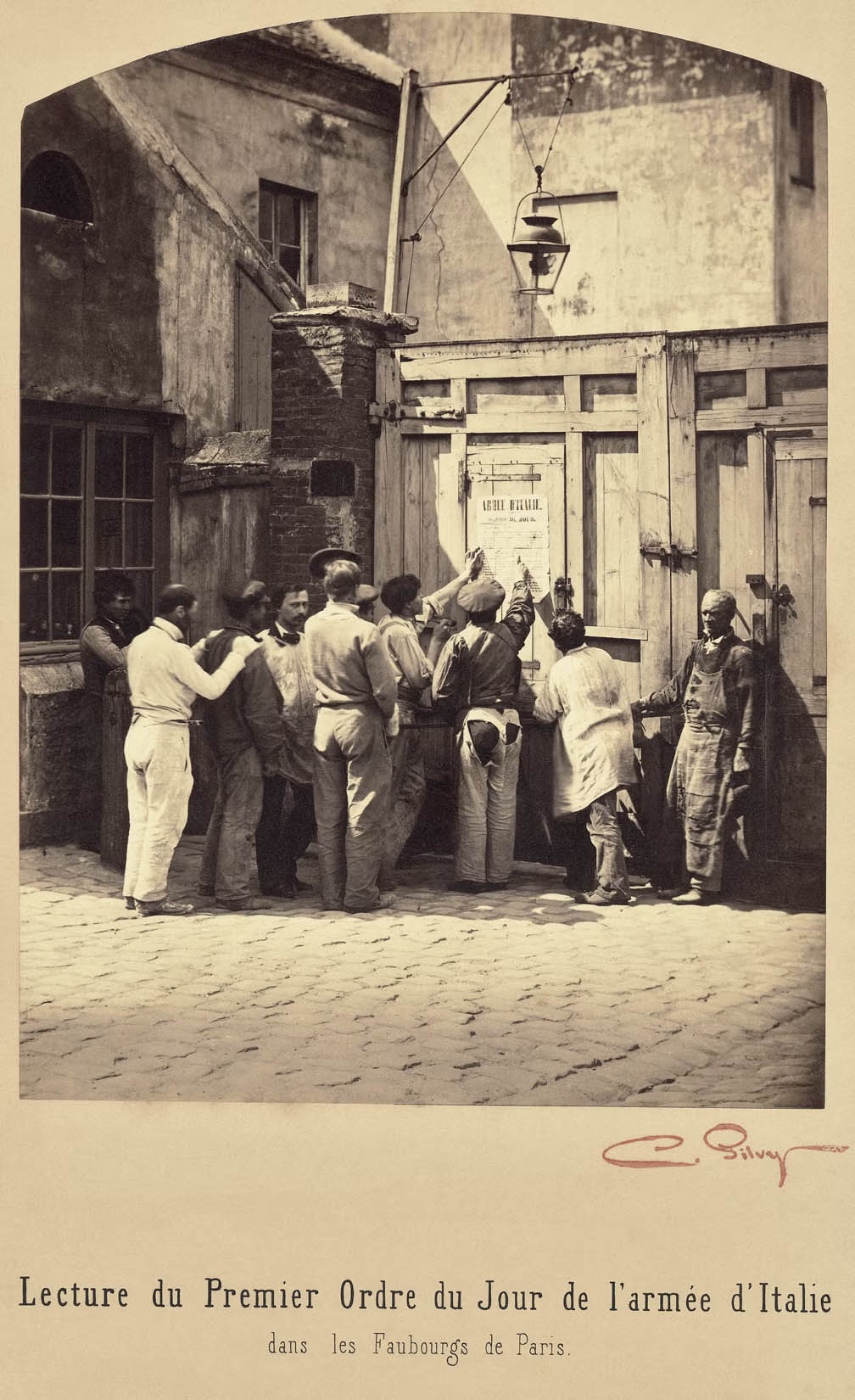
'Lecture du Premier Ordre du Jour de l'armée d'Italie dans Les Faubourgs de Paris' (Reading of the First Agenda of the army of Italy in the suburbs of Paris) 1859 from the exhibition 'Camille Silvy, Photographer of Modern Life, 1834-1910' at the National Portrait Gallery, London, July - Oct 2010


Camille Silvy (French, 1834-1910)
Lecture du Premier Ordre du Jour de l’armée d’Italie dans Les Faubourgs de Paris
(Reading of the First Agenda of the army of Italy in the suburbs of Paris)
1859
Albumen print
10 x 7 1/4 inches (25.4 x 18.42cm)
© Private Collection, Paris


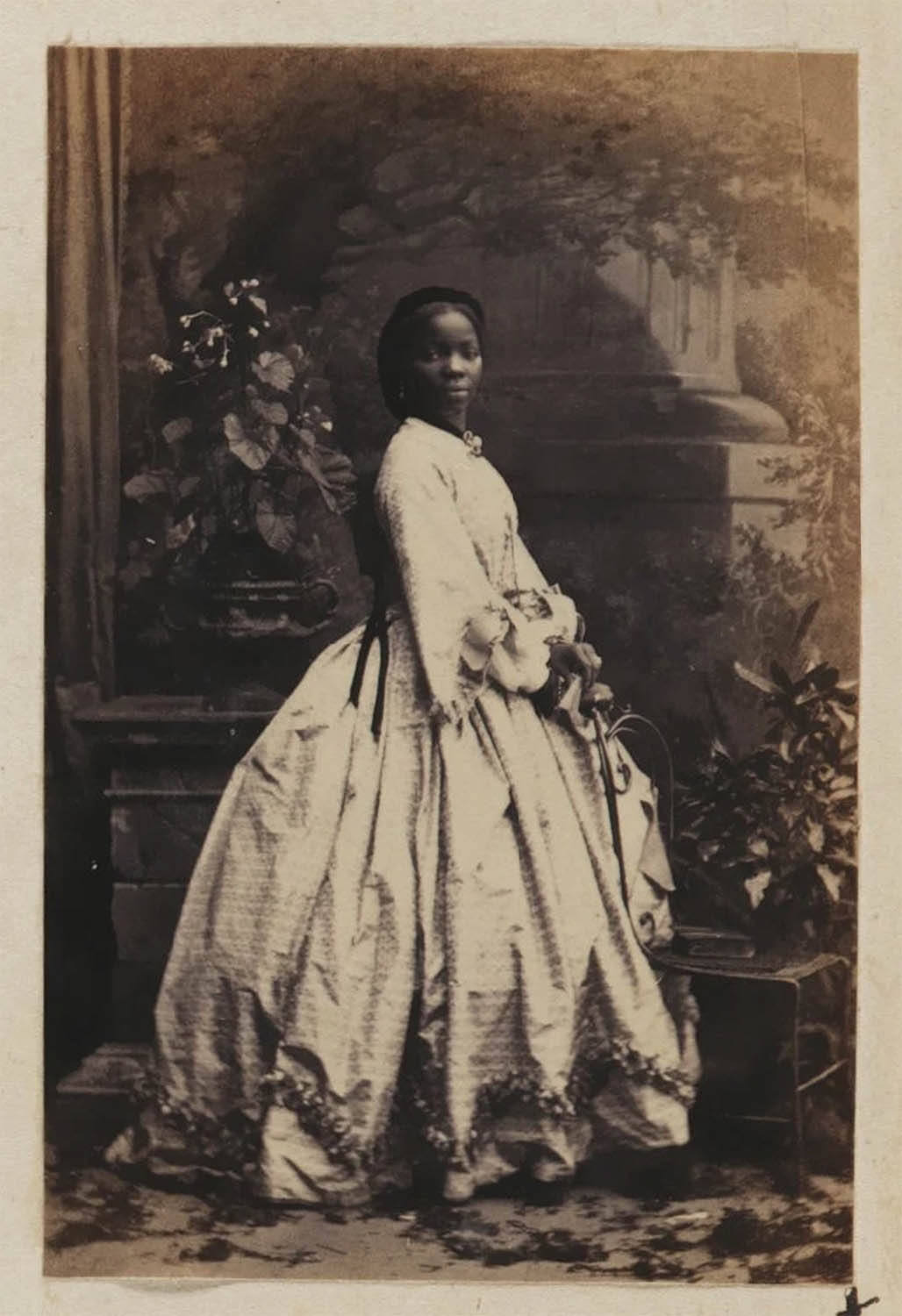
Camille Silvy (French, 1834-1910) 'James Pinson Labulo Davies and Sarah Forbes Bonetta (Sarah Davies)' 1862 from the exhibition 'Camille Silvy, Photographer of Modern Life, 1834-1910' at the National Portrait Gallery, London, July - Oct 2010


Camille Silvy (French, 1834-1910)
James Pinson Labulo Davies and Sarah Forbes Bonetta (Sarah Davies)
1862
© National Portrait Gallery, London


James Pinson Labulo Davies was a 19th-century African merchant-sailor, naval officer, influential businessman, farmer, pioneer industrialist, statesman, and philanthropist who married Sarah Forbes Bonetta in colonial Lagos.

Sara Forbes Bonetta, otherwise spelled Sarah, was a West African Egbado princess of the Yoruba people who was orphaned in intertribal warfare, sold into slavery and, in a remarkable twist of events, was liberated from enslavement and became a goddaughter to Queen Victoria. She was married to Captain James Pinson Labulo Davies, a wealthy Victorian Lagos philanthropist.


Camille Silvy (French, 1834-1910) 'Aina (Sarah Forbes Bonetta (later Davies))' 15 September 1862 from the exhibition 'Camille Silvy, Photographer of Modern Life, 1834-1910' at the National Portrait Gallery, London, July - Oct 2010


Camille Silvy (French, 1834-1910)
Aina (Sarah Forbes Bonetta (later Davies))
15 September 1862
From Album 9 (Daybook Volume 9)
Albumen print
3 1/4 in. x 2 1/4 in. (83 mm x 56 mm) image size
National Portrait Gallery, London
Purchased, 1904
© National Portrait Gallery, London


Now best known as Sarah Forbes Bonetta, Aina lived a life of extraordinary contrasts. Her story is one of displacement and reveals how she was fetishized in both Africa and England. Born in modern-day south-west Nigeria, Aina was about five years old when she was captured by soldiers of King Ghezo of Dahomey, a central figure in the transatlantic slave trade. She was discharged by the King to Captain Frederick Forbes, who was sent to west Africa to persuade the King to abandon slavery. He bargained to save the child, convincing the King to send her as a ‘gift’ to Queen Victoria. Before setting sail for England on board HMS Bonetta, Forbes had Aina baptised Sarah Forbes Bonetta. This stripped her of her original name ‘Aina’ and symbolically, of her west-African identity. The Queen, impressed by the young girl’s intelligence and dignity, became her protector, funding her education and providing for her welfare. She became one of the Queen’s favourites and by her late teens, had entered elite society. She was highly regarded in the royal household, appearing at many social events including the wedding of Princess Victoria, the Queen’s eldest daughter. It was at one such event that a Sierra Leonian merchant, prominent in missionary circles, first saw her and declared his interest in marrying her. The match was considered a suitable one and Aina was encouraged to accept the proposal from widower James Pinson Labulo Davies. In 1862, the couple married in a lavish wedding featuring ten carriages. They settled in colonial Lagos, naming their first child Victoria with the Queen’s blessing. When Aina died of tuberculosis in Madeira, aged just 37, the Queen wrote: “Saw poor Victoria Davies, my black godchild, who learnt this morning of the death of her dear mother.” Caught up in Britain’s imperial ambitions and plunged into Victorian high society, Aina had crossed immense boundaries between places, cultures and identities – often without a choice.

Text from the National Portrait Gallery, London website


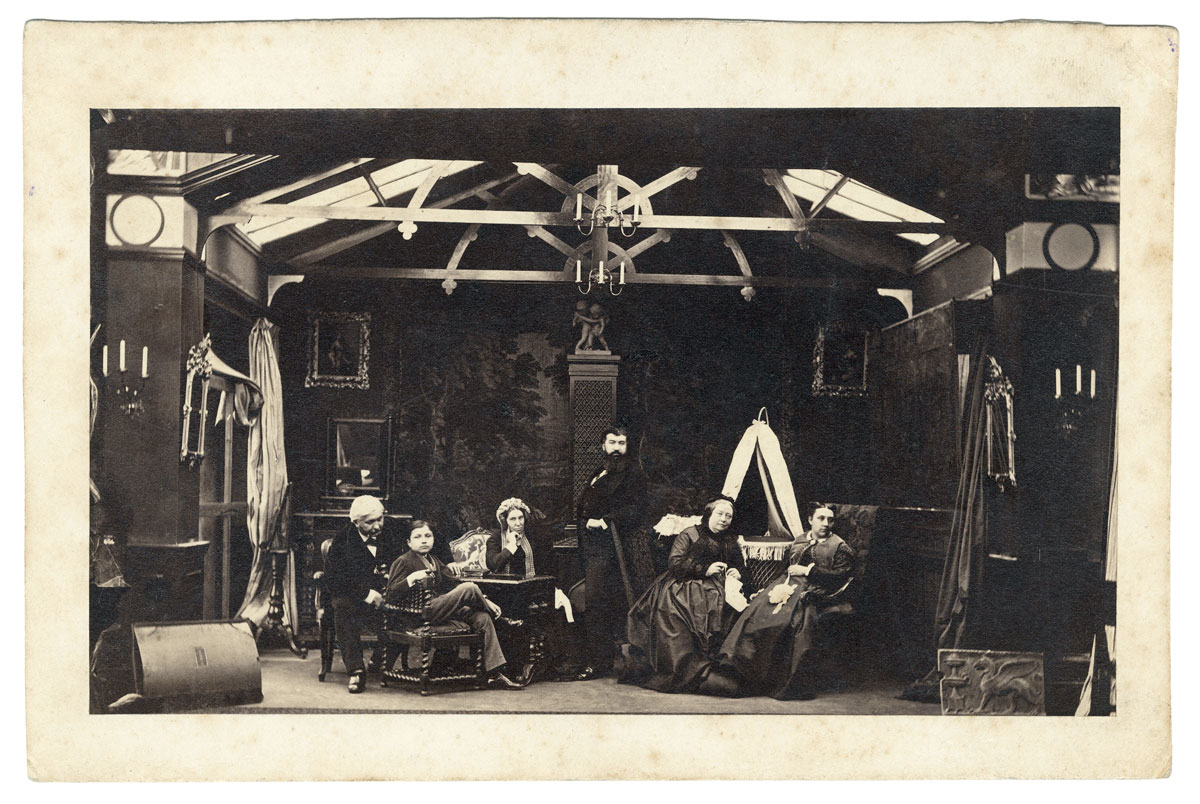
Camille Silvy (French, 1834-1910) 'Silvy in his Studio with his Family' 1866


Camille Silvy (French, 1834-1910)
Silvy in his Studio with his Family
1866
© Private Collection, Paris


Camille Silvy (French, 1834-1910) 'Proof sheet of Madame Silvy' c. 1865


Camille Silvy (French, 1834-1910)
Proof sheet of Madame Silvy
c. 1865
© Private Collection, Paris


This is the first retrospective exhibition devoted to Camille Silvy, pioneer of street photography, early image manipulation and photographic mass production. The exhibition includes photographs not seen for over 150 years.

The first retrospective exhibition of work by Camille Silvy, one of the greatest French photographers of the nineteenth century, will open at the National Portrait Gallery this summer. Marking the centenary of Silvy’s death, Camille Silvy, Photographer of Modern Life, 1834-1910, includes over a hundred objects, many of which have not been exhibited since 1860. The portraits on display offer a unique glimpse into nineteenth-century Paris and Victorian London through the eyes of one of photography’s greatest innovators.

Focusing on Silvy’s ten-year creative burst from 1857-67 when he was working in Algiers, rural France, Paris and London, the exhibition will show how Silvy pioneered many branches of the photographic medium including theatre, fashion, military and street photography. Working under the patronage of Queen Victoria, Silvy photographed royalty, statesmen, aristocrats, celebrities, the professional classes, businessmen and the households of the country gentry. Silvy’s London studio was a model factory producing portraits in the new carte de visite format – small, economically priced, and collectable. Silvy played an important role in the popularity of the carte de visite format in London and these portraits show how the modern and fashionably dressed looked. Silvy’s Bayswater studio, with a staff of forty, produced over 17,000 portraits.

Works on display will include River Scene, France (1858), considered Silvy’s masterpiece, alongside his London series on twilight, sunlight and fog. Anticipating our own era of digital manipulation, Silvy created photographic illusions in these works by using darkroom tricks. Mark Haworth-Booth, the curator of this exhibition, claims that Camille Silvy came closest in photography to embodying the vision of ‘the painter of modern life’ sketched out by Charles Baudelaire in a famous essay.

The exhibition draws on works from public and private collections including that belonging to Silvy’s descendants, seen for the first time, along with a cache of letters in which Silvy describes to his parents how he set up and ran his London studio. A selection of Daybooks, providing a unique record of the day to day workings of Silvy’s studio will also be on display. The Daybooks were bought by the National Portrait Gallery in 1904 and are among the rarely seen treasures of the Gallery’s photography collection. Albums, documents, a dress worn by Silvy’s wife for a portrait session in 1865 and other items which build up a picture of Silvy’s working practice will also be included in the exhibition. The exhibition will illustrate the transformation of photographic art into industry, the beginnings of the democratisation of portraiture and the life of this photographic genius who fell into obscurity.

Born 1834 in Nogent-le-Rotrou, France, Silvy graduated in arts and law and took up a diplomatic post in the French foreign office in 1853 and was first sent to London the following year. In 1857, he joined a six month mission to Algeria to draw buildings and scenes but he soon realised the inadequacy of his talents and turned to photography. Returning to London, he exhibited River Scene, France to immense success in the 3rd annual exhibition of the Photographic Society in Edinburgh and at the first ever Salon of photography as a fine art in Paris. In 1859 he took over the photographic studio of Caldesi and Montecchi at 38 Porchester Terrace in Bayswater, London. After ten years of creative productivity, in 1869, at the age of thirty-five, Silvy retired from photography. He went on to fight with distinction in the Franco-Prussian War of 1870 before being diagnosed with folie raisonnante (manic-depression) in 1875. Camille Silvy spent the remaining thirty-one years of his life in psychiatric asylums before dying from bronchopneumonia in the Hôpital de St Maurice, France in 1910.

Press release from the National Portrait Gallery website [Online] Cited 13/10/2010 no longer available online


Camille Silvy (French, 1834-1910) 'The Misses Booth' 1861


Camille Silvy (French, 1834-1910)
The Misses Booth
1861
Albumen print
© K and J Jacobson Collection, United Kingdom


Camille Silvy (French, 1834-1910) 'Adelina Patti as Harriet in Martha' 1861


Camille Silvy (French, 1834-1910)
Adelina Patti as Harriet in Martha
1861
© Private Collection


Adelina Patti (10 February 1843 – 27 September 1919) was an Italian 19th-century opera singer, earning huge fees at the height of her career in the music capitals of Europe and America. She first sang in public as a child in 1851, and gave her last performance before an audience in 1914. Along with her near contemporaries Jenny Lind and Thérèse Tietjens, Patti remains one of the most famous sopranos in history, owing to the purity and beauty of her lyrical voice and the unmatched quality of her bel canto technique.

The composer Giuseppe Verdi, writing in 1877, described her as being perhaps the finest singer who had ever lived and a “stupendous artist”. Verdi’s admiration for Patti’s talent was shared by numerous music critics and social commentators of her era.

Text from the Wikipedia website


Camille Silvy (French, 1834-1910) 'Studies on Light: Twilight' 1859


Camille Silvy (French, 1834-1910)
Studies on Light: Twilight
1859
© Private Collection, Paris


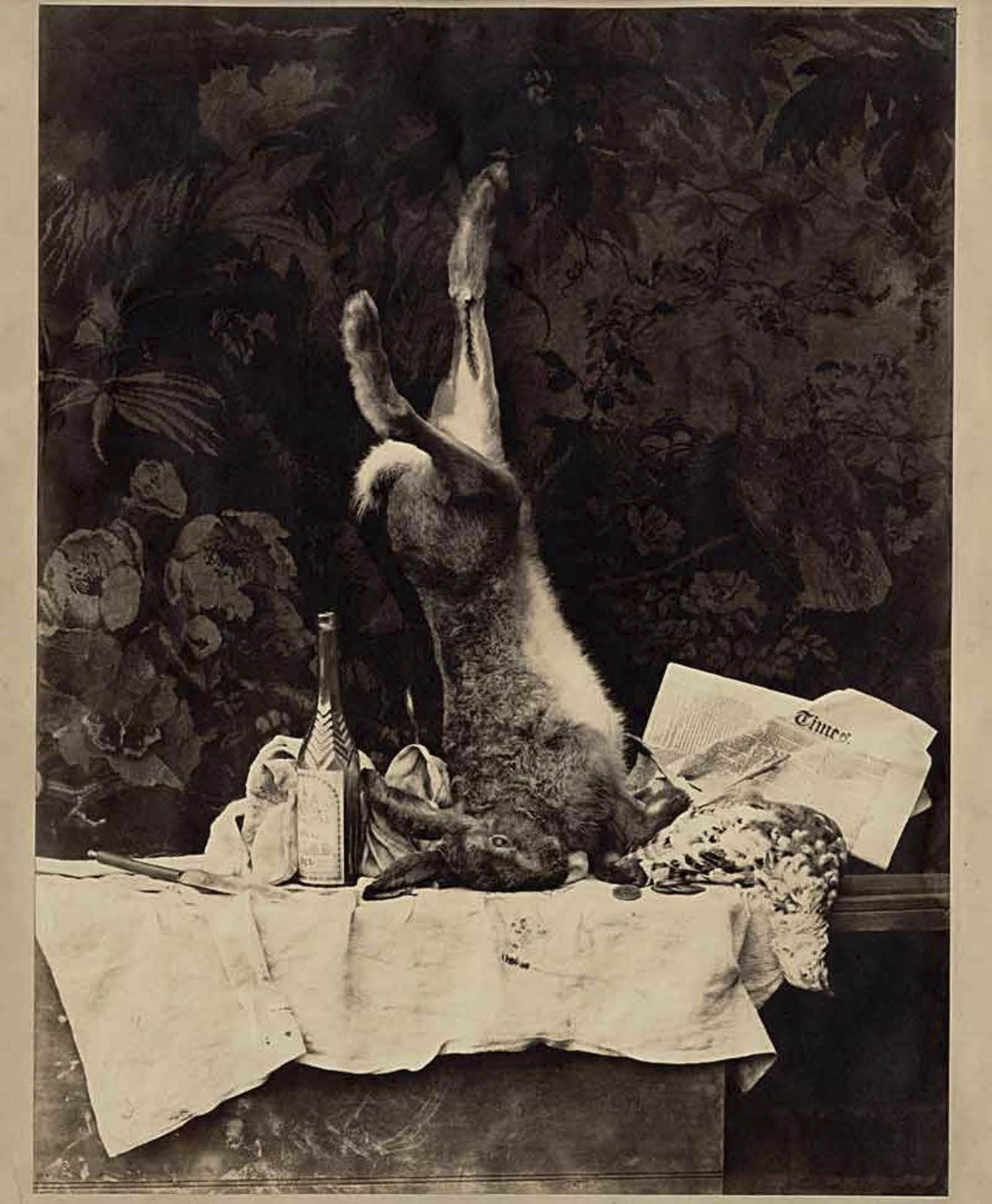
Camille Silvy (French, 1834-1910)
'Hunting Still Life with The Times'
After 1859


Camille Silvy (French, 1834-1910)
Hunting Still Life with The Times
After 1859
Albumen print
Dietmar Siegert Collection, Munich


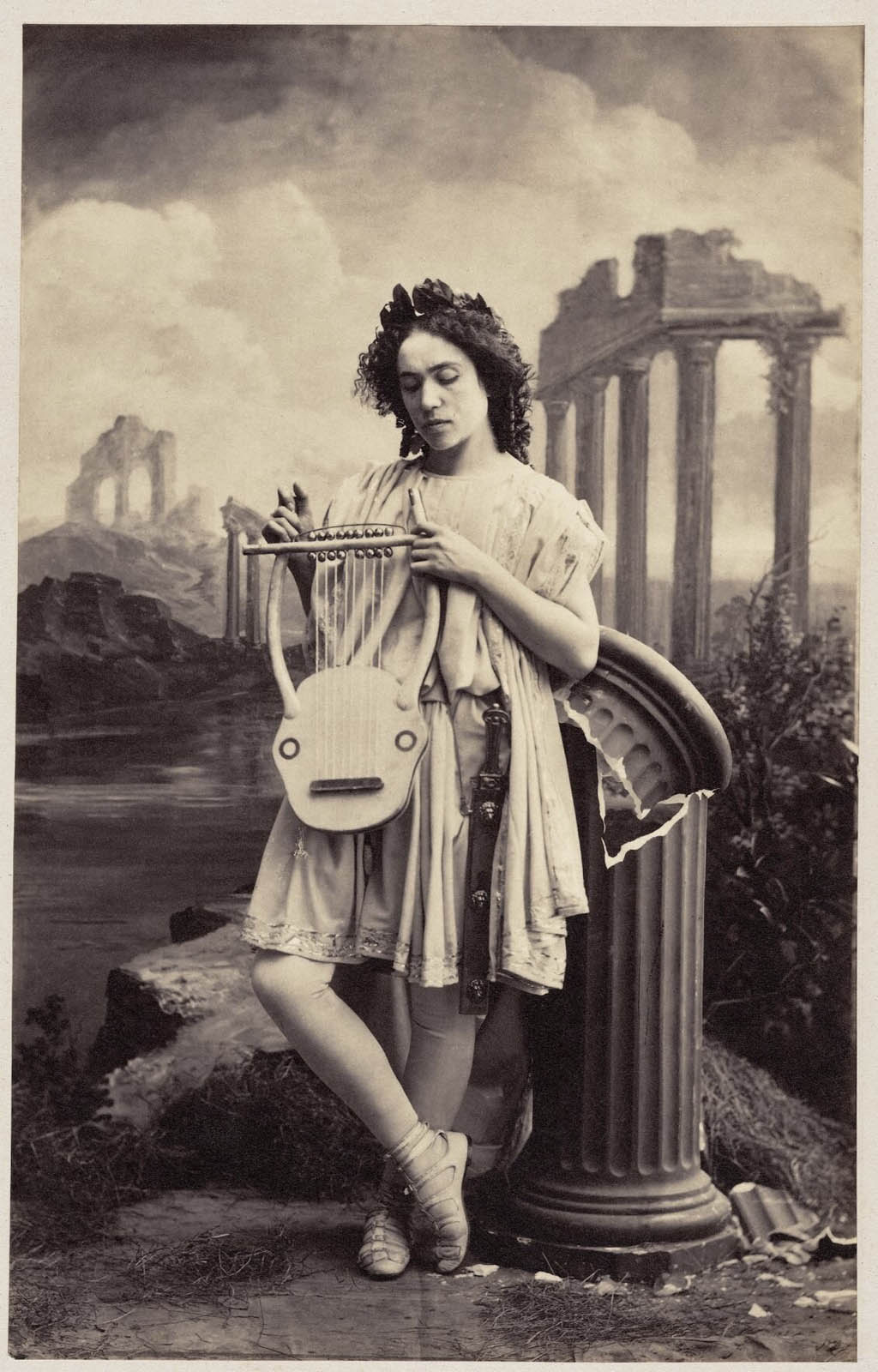
Camille Silvy (French, 1834-1910)
'Rosa Csillag as Orfeo' 1860


Camille Silvy (French, 1834-1910)
Rosa Csillag as Orfeo
1860
© Private Collection, Paris


Camille Silvy (French, 1834-1910) 'Mrs Holford's daughter' Nd


Camille Silvy (French, 1834-1910)
Mrs Holford’s daughter
Nd
Albumen print
© K and J Jacobson Collection, United Kingdom


Camille Silvy (French, 1834-1910) 'Children at play' Nd


Camille Silvy (French, 1834-1910)
Children at play
Nd
Albumen print
© Private Collection, Paris


Camille Silvy was a pioneer of early photography and one of the greatest French photographers of the nineteenth century. This exhibition includes many remarkable images which have not been exhibited since the 1860s.

Over 100 images, including a large number of carte de visites, focus on a ten-year creative burst from 1857-1867 working in Algiers, rural France, Paris and London, and illustrate how Silvy pioneered many now familiar branches of the medium including theatre, fashion and street photography.

Working under the patronage of Queen Victoria, Silvy photographed royalty, aristocrats and celebrities. He also portrayed uncelebrated people, the professional classes and country gentry, their wives, children and servants. The results offer a unique glimpse into nineteenth-century society through the eyes of one of photography’s outstanding innovators.

Exhibition organised by the Jeu de Paume, Paris, in collaboration with the National Portrait Gallery, London

Introducing Camille Silvy

Camille Silvy was one of the photographic pioneers who burst on the scene in the 1850s.

The great photographer Nadar described him as one of photography’s ‘primitives’ and a ‘zélateur’ or enthusiast. Silvy was born in 1834 in Nogentle-Rotrou, about forty miles west of Chartres, trained in law and became a diplomat.

Silvy took up photography as an amateur in 1857 and his work was first exhibited in 1858. He gave up his career in the French diplomatic service, moved from Paris to London, and set up a portrait studio in fashionable Bayswater, just north of Hyde Park. Silvy met and married Alice Monnier in 1863.

Portraits of Silvy capture his passionate horsemanship and dashing presence. He portrayed his wife on many occasions, dressed in the most elegant fashions. Silvy’s self-portraits show him posing in his studio or in impressive fancy-dress. The most characteristic self-portrait presents him four times over: Silvy – like Andy Warhol a century later – made his studio a factory.

Early Photographs: Algeria and Rural France

While still a diplomat, Silvy visited Algeria in 1857 on a commission from the Minister of Public Instruction to draw buildings and scenes. He later confessed that ‘when I realised the inadequacy of my talent in obtaining exact views of the places we travelled through, I dedicated myself to photography and … concentrated especially on reproducing everything interesting – archaeologically or historically – that presented itself to me’.

Two of the photographs are shown here. On returning to France, Silvy studied with an innovative amateur, Count Olympe Aguado. Silvy photographed the countryside around Nogent-le-Rotrou. His rural subjects included a self-portrait with a local priest. These rural photographs were shown in the first exhibition devoted to photography as a fine art, held in Paris in spring 1859.

River Scene, France and ‘The Emperor’s Order of the Day’

The climax of Silvy’s photography of his native countryside was ‘River Scene, France’ or ‘La Vallée de l’Huisne’, from the summer of 1858. The river Huisne runs through Silvy’s birthplace, Nogent-le-Rotrou.

Silvy’s subject, modern leisure at the edge of town, became popular with Impressionist painters a decade later. Silvy’s next tableau presented an important moment in French military history. Napoleon III led his army to Italy to drive out the Austrians.

After arriving in Genoa, the Emperor wrote out an Order of the Day for his army. The text was telegraphed to Paris, printed up overnight and posted in the streets of Paris the next morning. The proclamations showed that although the Emperor was away he was still in control of the volatile capital.

The Streets of London

In summer 1859 Silvy established his London studio in Bayswater on the north side of Hyde Park. He chose this location because he was a keen and knowledgeable horseman and wanted to make equestrian portraits. The poet Baudelaire, in his famous essay ‘The Painter of Modern Life’ (1863), recommended sleek carriages and smart grooms as a subject for modern artists.

Silvy also responded to what the novelist Henry James called ‘the thick detail of London life’. He became entranced by the light effects in the capital’s streets. In this section, three tableaux – ‘Sun’, ‘Twilight’ and ‘Fog’ – comprise his highly original series Studies on Light from autumn 1859. All sorts of special effects and manipulations were required to create the illusion of fog and twilight. It is likely, for example, that four separate negatives were combined to produce Twilight. This picture includes perhaps the first ever deliberate use of blur in a photograph to suggest movement.

London Portrait Studio

Silvy’s studio occupied a house at 38 Porchester Terrace, Bayswater, which is still standing, and the yard behind it (now built over). The yard was used to print out the photographs by sunlight. The reception rooms were grandly appointed, with tapestries, choice furniture, sculptures and Old Master paintings. There was a dressing room in which to prepare for a sitting and the ‘Queen’s Room’ was created to welcome the monarch if she were ever to come to sit for Silvy. She did not but sent her family and friends.

Generally, two poses were recorded, three times each, on one glass negative. When the sitter had chosen which they preferred, the portraits would be printed, gold-toned, trimmed, mounted on card and dispatched by post. Over 17,000 portraits were made here between 1859 and 1868, and over a million prints produced for sale.

Theatre

Portraits of actors and actresses became popular in the 1850s. When Silvy opened his London studio, he sought out stage performers. They needed portraits to sell to fans and Silvy needed sitters. The tactic worked, launching Silvy’s studio and spreading his fame.

Silvy began working with London’s resident theatricals but soon he photographed one of the greatest international operatic stars – Adelina Patti. He portrayed Patti in many of the roles she performed at Covent Garden and she brought the best out of his talent.

Although Patti sometimes seems to be caught by Silvy’s camera in mid-aria, all of his theatre portraits were made in the studio. Given the cumbersome cameras and relatively slow exposures of the period, only studio lighting – natural light, controlled by a system of blinds – provided Silvy with the conditions he required.

Photographing Art

Silvy set up a Librairie photographique in 1860. This was envisaged as a series of photographic facsimiles of illuminated manuscripts. The Manuscrit Sforza was published in two volumes in 1860. Silvy wrote an introduction and set out a typically bold claim for photographic reproduction. He argued that the medium of photography could not merely reproduce manuscripts but also appear to restore them. This was because the standard photographic medium of the time, the wet collodion process, recorded yellow as black.

Another early commercial venture was the reproduction of paintings by Sir Peter Lely at Windsor Castle. These were published as an instalment of Silvy’s magazine, the London Photographic Review – another of his publishing ventures – in 1860.

1867 and after

Silvy wound up his London studio in 1868 but may have taken his last portraits in 1867. There were several reasons for selling up. He was often unwell in London’s coal-smoke-laden atmosphere; he had expended huge amounts of energy on photography and become wealthy; the craze for carte-de-visites had waned and perhaps he wanted to resume his diplomatic career.

In spring 1867 Silvy demonstrated a new photographic system he had designed to record battlefields. From the middle of the Champs Elysées, in the heart of Paris, Silvy produced a panoramic photograph which made the French capital look – prophetically – like a battlefield.

In 1874 he succumbed to what would later be termed manic-depression and spent most of the rest of his life in psychiatric hospitals until his death in 1910. His friend Nadar remembered Silvy in a memoir published in 1889: ‘This photographer and his studio … had no equals’.

Text from the National Portrait Gallery, London website


Camille Silvy (French, 1834-1910)
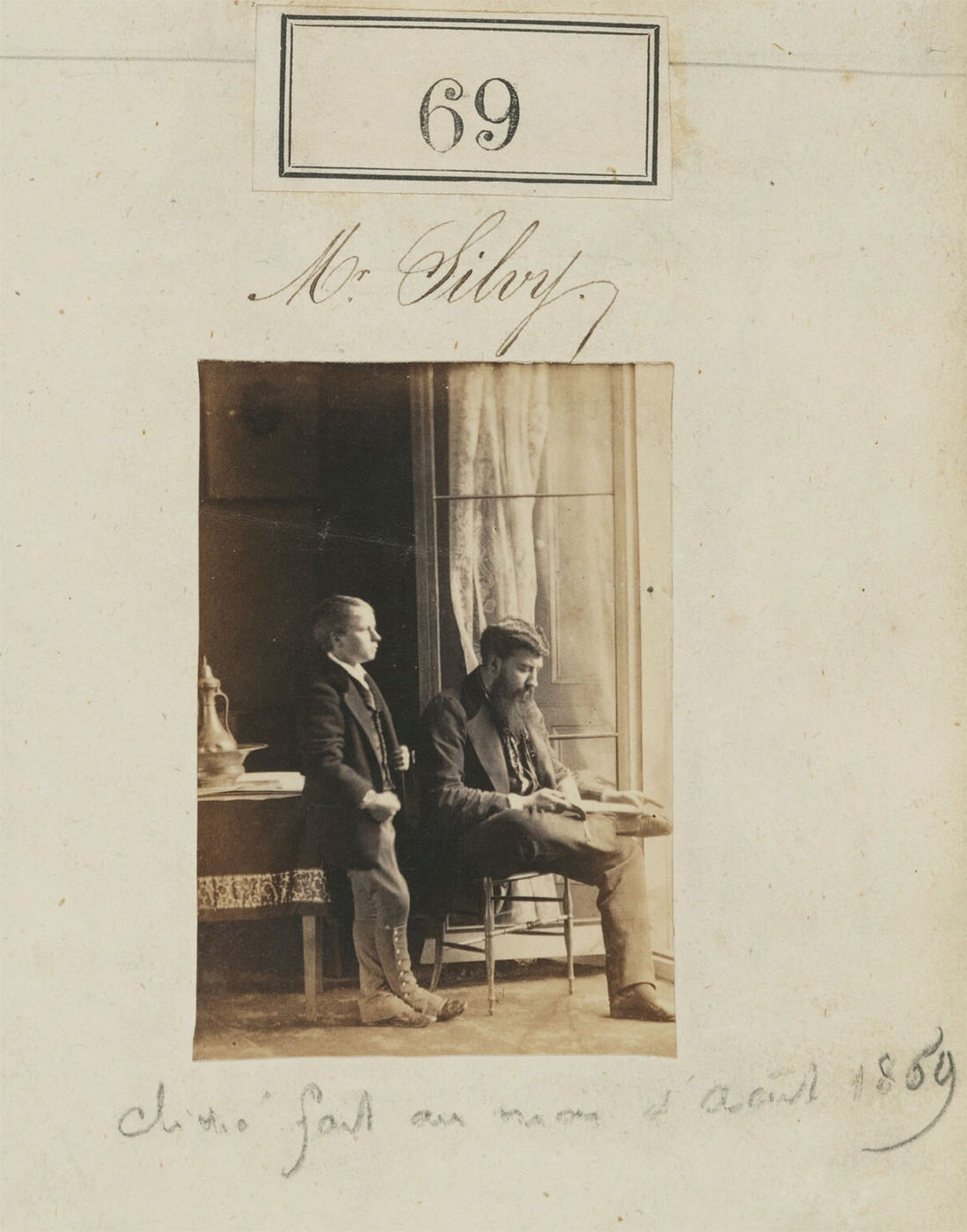
'Camille Silvy with a boy' August 1859
Screenshot


Camille Silvy (French, 1834-1910)
Camille Silvy with a boy
August 1859
Albumen print
3 1/4 in. x 2 1/4 in. (82 mm x 57 mm)
National Portrait Gallery, London
Purchased, 1904
© National Portrait Gallery, London


Camille Silvy (French, 1834-1910)
'Self-portrait' 20 August 1861


Camille Silvy (French, 1834-1910)
Self-portrait
20 August 1861
National Portrait Gallery, London
Purchased, 1904
© National Portrait Gallery, London


Camille Silvy (French, 1834-1910) 'Self-portrait' 1863


Camille Silvy (French, 1834-1910)
Self-portrait
1863
© Private Collection, Paris


National Portrait Gallery
St Martin’s Place
London WC2H 0HE

Opening hours:
Open daily 10.00 – 18.00
Friday until 21.00

National Portrait Gallery website

LIKE ART BLART ON FACEBOOK

Back to top

Exhibition: ‘Yves Klein: With the Void, Full Powers’ at Hirshhorn Museum and Sculpture Garden, Washington, D.C.

Exhibition dates: 20th May – 12th September 2010


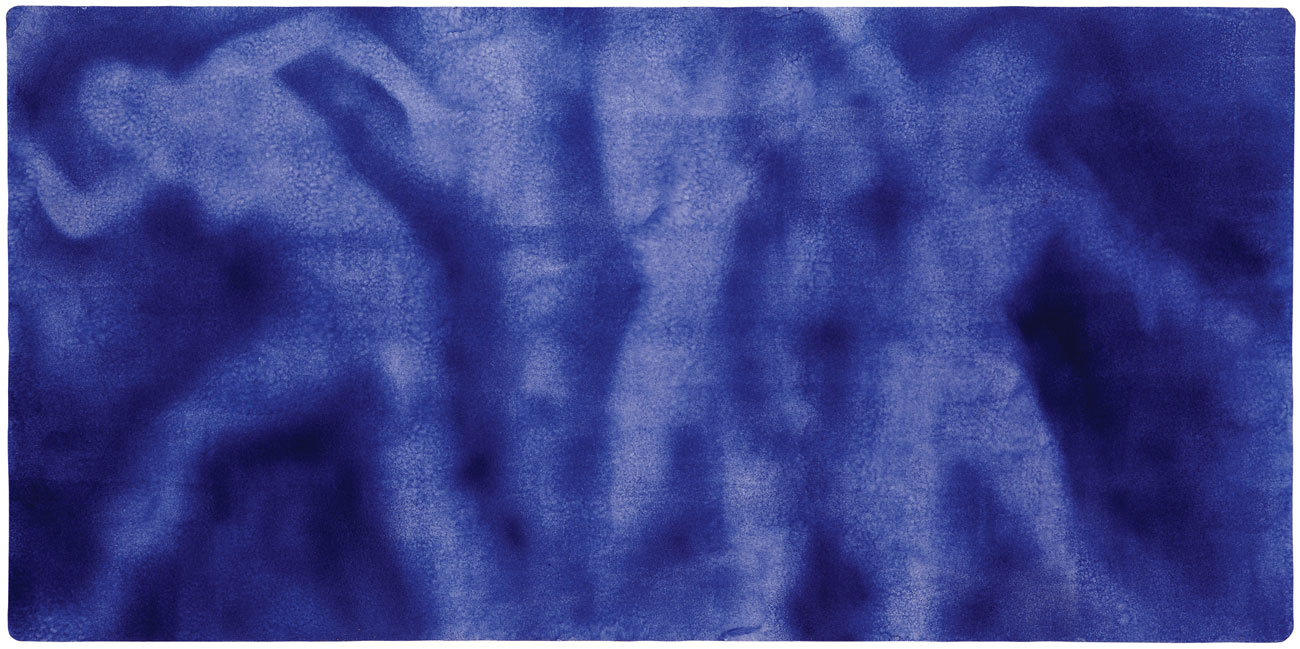
Yves Klein (French, 1928-1962) 'Hiroshima' c. 1961 from the exhibition 'Yves Klein: With the Void, Full Powers' at Hirshhorn Museum and Sculpture Garden, Washington, D.C., May-  Sept, 2010


Yves Klein (French, 1928-1962)
Hiroshima
c. 1961
Dry pigment and synthetic resin on paper mounted on canvas
© The Estate of Yves Klein c/o ADAGP, Paris


Space [    ] the final frontier … where silence is golden !


Many thankx to the Hirshhorn Museum and Sculpture Garden for allowing me to publish the photographs in the posting. Please click on the photographs for a larger version of the image. See all the Hirshhorn Flicker photosets of Yves Klein.


“I am the painter of space. I am not an abstract painter but, on the contrary, a figurative artist, and a realist. Let us be honest, to paint space, I must be in position. I must be in space.”


Yves Klein


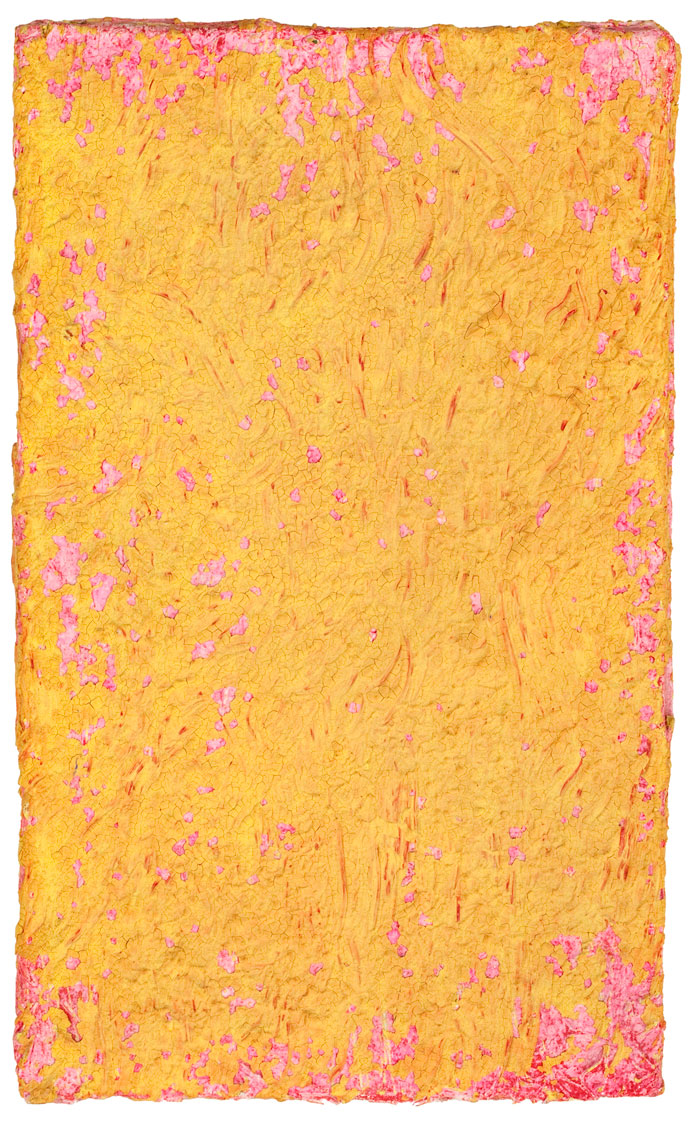
Yves Klein (French, 1928-1962) 'Untitled Yellow and Pink Monochrome' 1955 from the exhibition 'Yves Klein: With the Void, Full Powers' at Hirshhorn Museum and Sculpture Garden, Washington, D.C., May-  Sept, 2010


Yves Klein (French, 1928-1962)
Untitled Yellow and Pink Monochrome
1955
Dry pigment and binder on canvas
22 x 13 1/2 inch
© The Estate of Yves Klein c/o ADAGP, Paris


Yves Klein (French, 1928-1962) 'La Vent du voyage' (The Wind of the Journey) c. 1961 from the exhibition 'Yves Klein: With the Void, Full Powers' at Hirshhorn Museum and Sculpture Garden, Washington, D.C., May-  Sept, 2010


Yves Klein (French, 1928-1962)
La Vent du voyage (The Wind of the Journey)
c. 1961
Dry pigment and synthetic resin on canvas
37 x 29 1/2 inch
© The Estate of Yves Klein c/o ADAGP, Paris


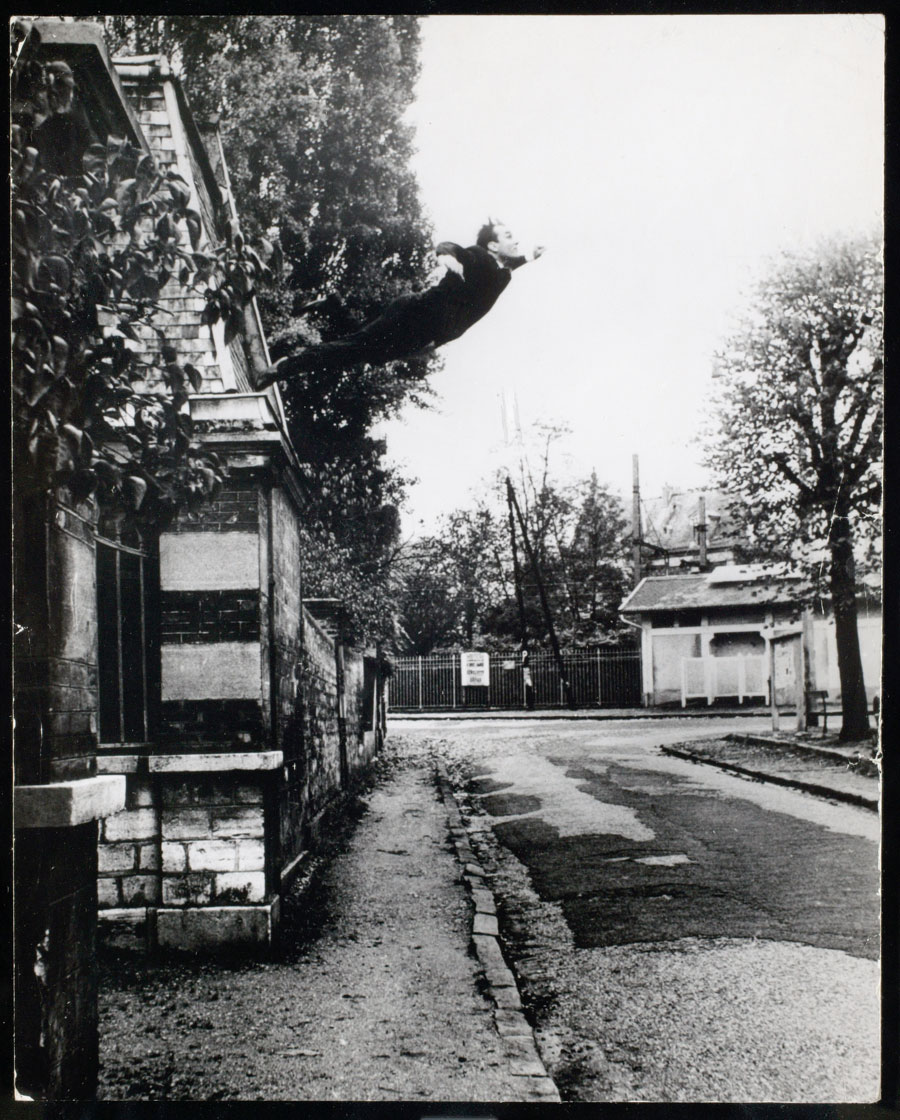
Yves Klein (French, 1928-1962) 'Le Saut dans le Vide' (Leap into the Void) 1960


Yves Klein (French, 1928-1962)
Le Saut dans le Vide (Leap into the Void)
1960
Gelatin silver print


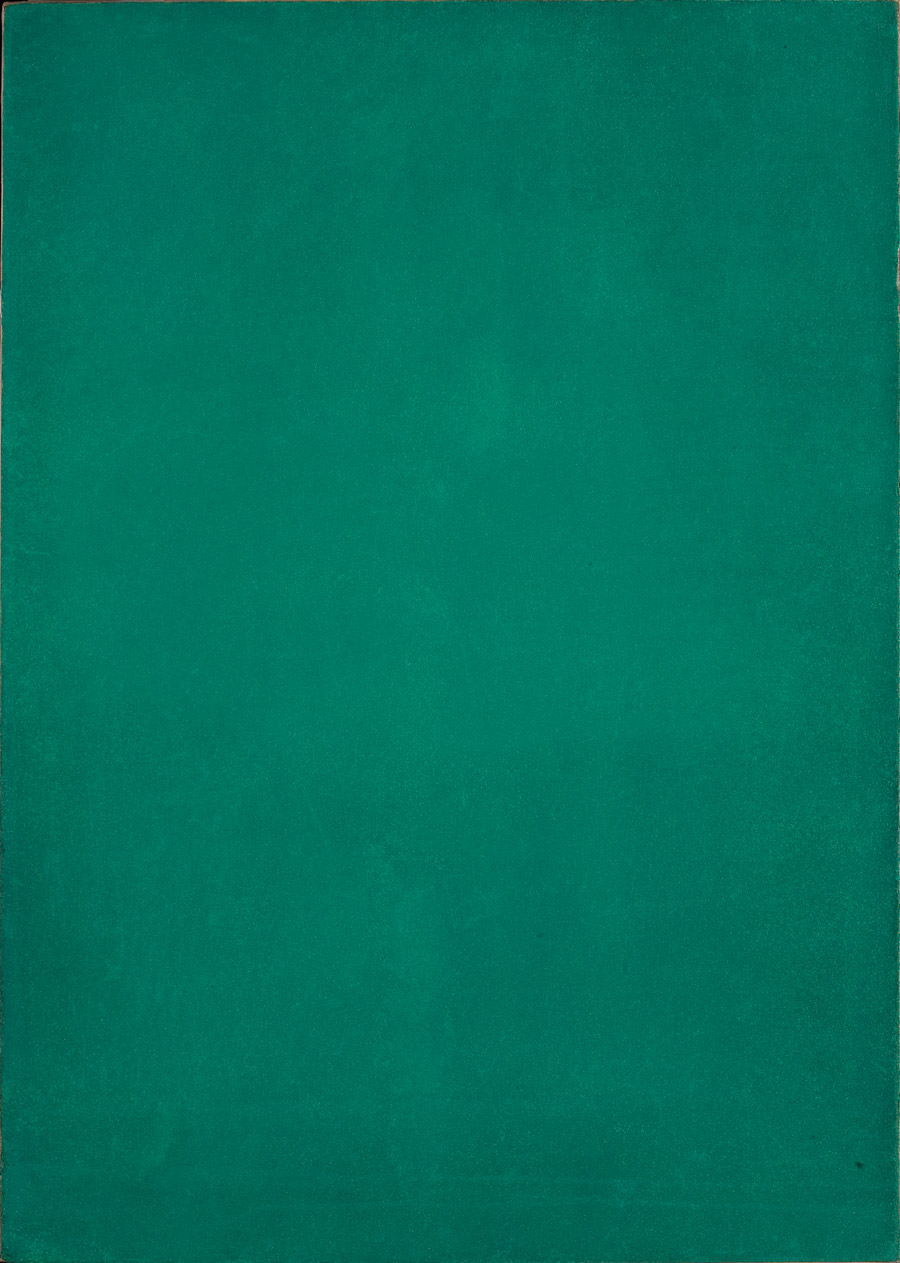
Yves Klein (French, 1928-1962) 'Untitled Green Monochrome' c. 1954


Yves Klein (French, 1928-1962)
Untitled Green Monochrome
c. 1954
Pure pigment and binder on paper
© The Estate of Yves Klein c/o ADAGP, Paris


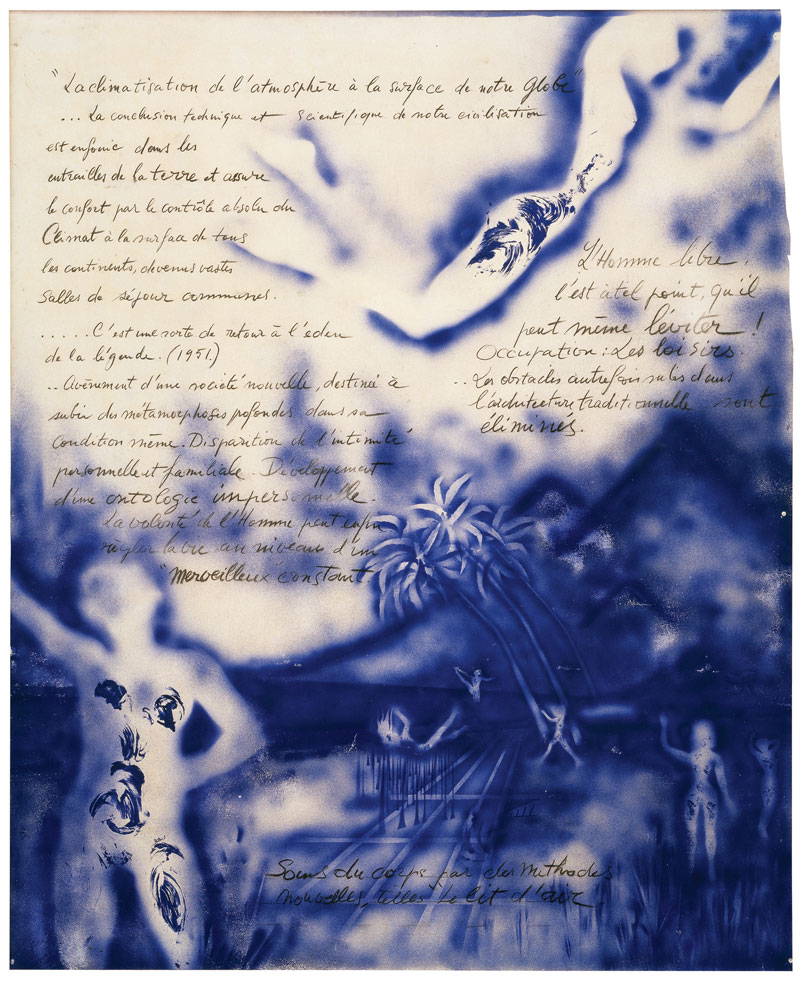
Yves Klein (French, 1928-1962) 'Architecture de l'air' (Air Architecture) 1961


Yves Klein (French, 1928-1962)
Architecture de l’air (Air Architecture)
1961
Dry pigment and synthetic resin on paper mounted on canvas
103 x 84 inch
© The Estate of Yves Klein c/o ADAGP, Paris


One of the 20th century’s most influential artists, Yves Klein (French, b. Nice, 1928; d. Paris, 1962), took the European art scene by storm in a prolific but brief career that lasted only from 1954 to 1962. Yves Klein: With the Void, Full Powers, on view at the Hirshhorn May 20 through Sept. 12, is the first major retrospective of the artist’s work in the United States since 1982. Co-curated by the Hirshhorn’s deputy director and chief curator Kerry Brougher and Dia Art Foundation director, former chief curator and deputy director at the Walker Art Center in Minneapolis, the exhibition is co-organised by the Hirshhorn and the Walker and developed in full collaboration with the Yves Klein Archives in Paris.

Presenting approximately 200 works, Yves Klein: With the Void, Full Powers explores the full range of the artist’s body of work and offers an essential overview and examination of a career that marked a key transition in 20th-century art. His work embodied an understanding of art beyond a western conception of modernity, beyond the object and beyond traditional notions of what art can be.

“Klein’s short but intense career is a pivotal moment in contemporary art history,” said Brougher. “His work questioned what art and even society could be in the future, and it provided new pathways leading to pop art, minimalism, conceptual art, installation and performance.”

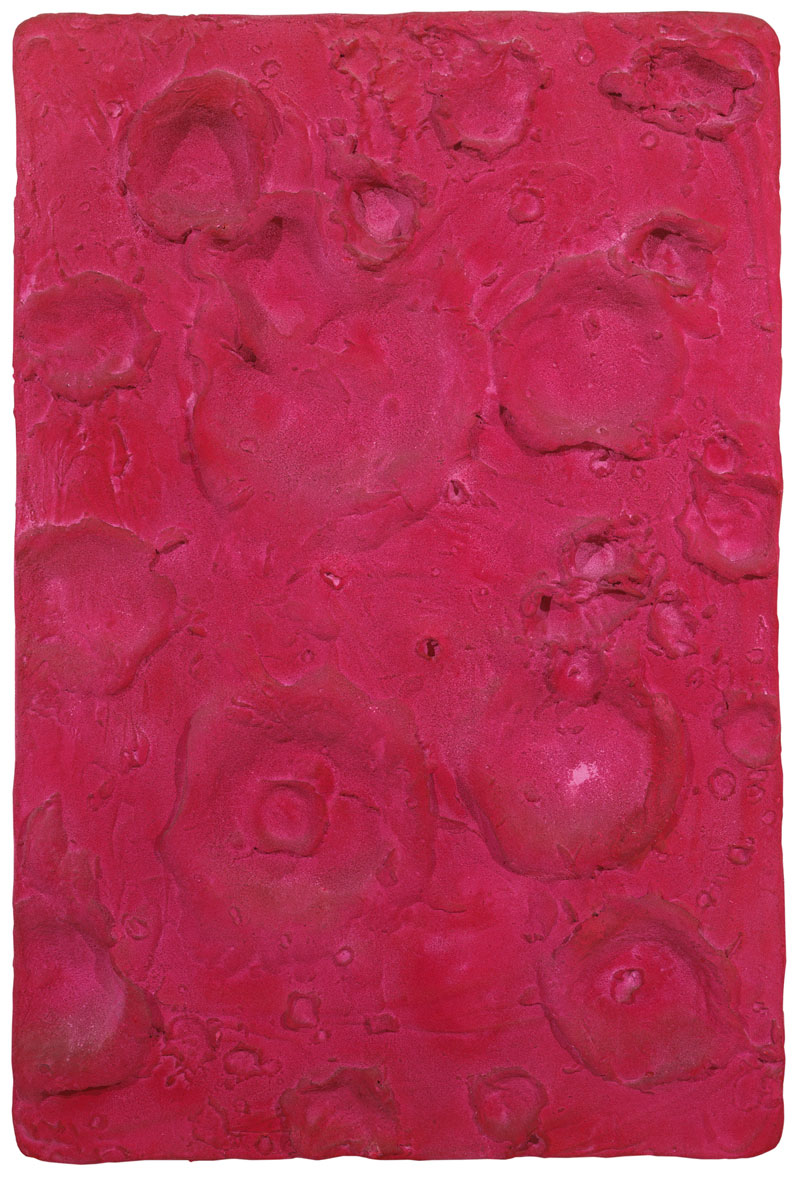
The exhibition features examples from all of Klein’s major series, from his iconic blue monochromes and Anthropometries to sponge reliefs, Fire Paintings, “air architecture” projects, Cosmogonies and planetary reliefs as well as many works that have rarely been on view. The installation provides insight into the artist’s process and conceptual endeavours through an array of ephemera, including sketches, photographs, letters and writings. Several films, including performances and documentaries, further demonstrate Klein’s creative practice.

“I would like that when people leave the exhibition they leap into a void, leaving behind traditional notions of art and representation, but even more importantly, questioning the notion of materiality and materialism in art as well as in their lives,” said Vergne. “Ultimately, Klein’s lesson is about a different way of being together.”

Numerous objects are on loan directly from the Yves Klein Archives, with additional loans from the Musée National d’Art Moderne, Centre Pompidou in Paris, Kunstmuseen Krefeld in Krefeld, Germany, The Menil Collection in Houston, the Museum of Contemporary Art in Tokyo, the San Francisco Museum of Modern Art and a host of international private collections, including a rare loan from the Monastery of Saint Rita in Cascia, Italy.

Klein was an innovator and visionary whose goal was no less than to radically reinvent what art could be in the postwar world. Through a diverse practice, which included painting, sculpture, performance, photography, music, architecture and writing as well as plans for projects in theatre, dance and cinema, he shifted the focus of art from the material to “immaterial sensibility”; he levitated art above the weariness induced by the Second World War, resurrecting its avant-garde tendencies, injecting a new sense of spirituality and opening doors for much that followed in the 1960s and beyond.

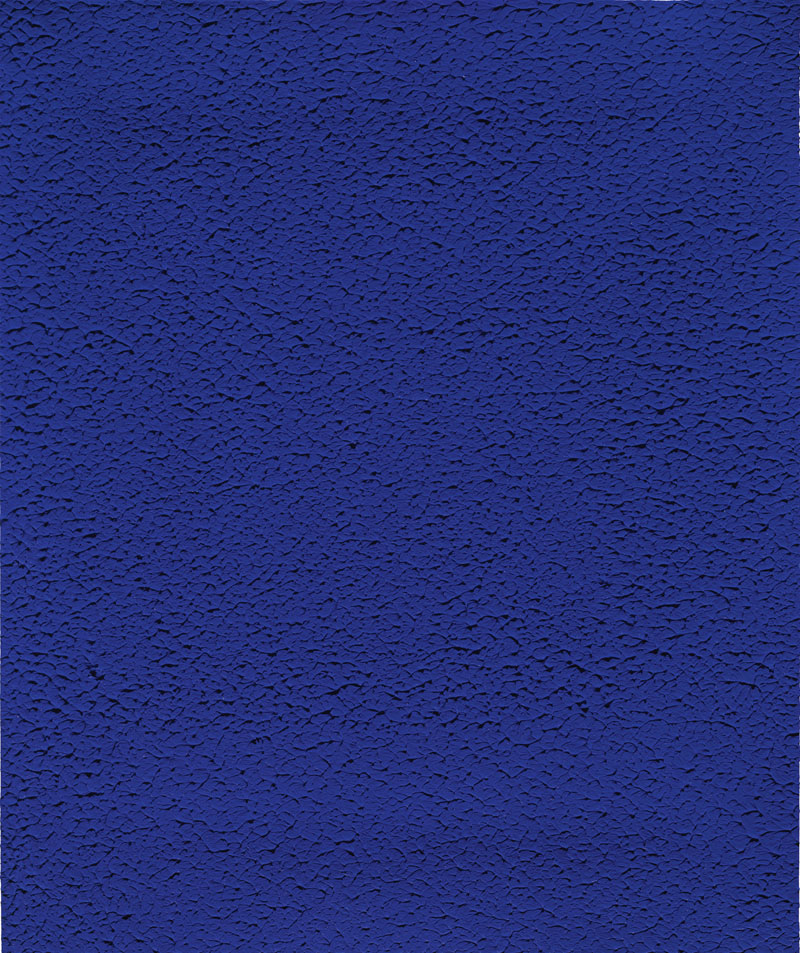
Self-identified as “the painter of space,” Klein sought to achieve immaterial sensibility through pure colour, primarily an ultramarine blue of his own invention – International Klein Blue. This exhibition begins by examining Klein’s early explorations of colour with works in pastels, watercolours and more than 15 coloured monochromes created during the mid-to-late 1950s. Several significant blue monochromes, dating from as early as 1955 up through 1961, are on view. Klein further pushed boundaries in his engagement with colour and form by using pure pigment in tandem with unconventional materials, such as natural sponges. The sponge, which Klein incorporated into his practice in the late 1950s, became a metaphor, as its porous surface completely absorbed his signature colour, giving a material presence to the immaterial.

Among Klein’s best-known works are the Anthropometries, begun in 1958. Under the artist’s direction, nude female models were smeared with International Klein Blue paint and used as “living brushes” to make body prints on prepared sheets of paper. Klein wanted to record the body’s physical energy, and the resulting images represent the model’s temporary physical presence. More than an expression of the inner psyche of the artist, these paintings offer one method of giving visual presence to a cosmic, spiritual body, which neither photography nor film can fully capture. Seven works from this series are on view, including People Begin to Fly (1961) from The Menil Collection and Untitled Anthropometry (1960) from the Hirshhorn’s collection, which features the bodies of Klein and his future wife Rotraut Uecker.

In the late 1950s, but most notably in 1961, Klein began to use fire, which he considered “the universal principle of expression,” as part of his creative process. His Fire Paintings, such as Untitled Fire Painting (1961), in which fire either replaced or was combined with paint, embody concepts of process, transformation, creation, destruction, dissolution and elemental cosmology that were so essential throughout his career. The final galleries of the exhibition include examples from Klein’s “air architecture” projects, including drawings, plans and models for architectural spaces, such as fountains and walls, constructed out of natural elements like air, water and fire – elements that were not traditionally associated with architecture.

Klein created what he considered his first artwork when he signed the blue sky above Nice in 1947, making his first attempt to capture the immaterial. In his celebrated 1958 exhibition Specialization of Sensibility in the Raw Material State of Stabilized Pictorial Sensibility, better known as The Void, at Galerie Iris Clert in Paris, Klein went further by emptying the gallery of all artworks and painting the walls white. Among those who attended the renowned exhibition was Albert Camus, who reacted with a notable entry into the visitors’ album: “with the void, full powers.” In his famous Leap into the Void (1960) image by Harry Shunk and Janos Kender, which was published Nov. 27, 1960, in the faux newspaper Dimanche, which he created for the second Avant-Garde Art Festival, Klein is actually depicted leaping into space himself; the accompanying text asserts: “… to paint space, I must be in position. I must be in space.”

Defying the common understanding and definitions of art – from his experiments with architecture made of air to his leap into the void – Klein aimed to rethink the world in spiritual and aesthetic terms. His philosophy was revolutionary and demonstrated his acute grasp of the contemporary moment, from the horror of the Second World War to the promise of space travel. This presentation of his full oeuvre is essential to discern the shift from modern to contemporary practice and to reveal the extent of the artist’s influence.

Press release from the Hirshhorn website [Online] Cited 04/09/2010 no longer available online


Yves Klein (French, 1928-1962) 'Lune II' (Moon II), 1961


Yves Klein (French, 1928-1962)
Lune II (Moon II)
1961
Pure pigment and undetermined binder on plaster
© The Estate of Yves Klein c/o ADAGP, Paris


Yves Klein (French, 1928-1962) 'Untitled Blue Monochrome' 1959


Yves Klein (French, 1928-1962)
Untitled Blue Monochrome
1959
© The Estate of Yves Klein c/o ADAGP, Paris


Yves Klein (French, 1928-1962) 'Untitled Gold Monochrome' 1962


Yves Klein (French, 1928-1962)
Untitled Gold Monochrome
1962
Gold leaf on wood
© Yves Klein, ADAGP, Paris / SAVA


Yves Klein (French, 1928-1962) 'La Rêve du Feu' (The Dream of Fire) c. 1961


Yves Klein (French, 1928-1962)
La Rêve du Feu (The Dream of Fire)
c. 1961
Yves Klein, ADAGP, Paris / DACS


Harry Shunk and János Kender, photograph of Yves Klein, The Dream of Fire, c. 1961. Artistic action by Yves Klein.


Yves Klein (French, 1928-1962) 'Le Silence est d'or' (Silence is Golden) 1960


Yves Klein (French, 1928-1962)
Le Silence est d’or (Silence is Golden)
1960
Gold leaf on wood
© Yves Klein, ADAGP, Paris / SAVA


Hirshhorn Museum and Sculpture Garden
The Hirshhorn is located on the National Mall at the corner of 7th Street and Independence Avenue SW, Washington, D.C.

Opening hours:
Open daily except December 25
10am – 5.30pm

Hirshhorn Museum and Sculpture Garden website

LIKE ART BLART ON FACEBOOK

Back to top

Exhibition: ‘Pierre et Gilles. Retrospective’ at the C/O Berlin Gallery, Berlin

Exhibition dates: 25th July – 4th October, 2009


Many thankx to the C/O Berlin Gallery for allowing me to publish the photographs in the posting. Please click on the photographs for a larger version of the image.


Pierre et Gilles (French, Pierre Commoy b. 1950 and Gilles Blanchard, b. 1953) 'Mercury' 2001 from the exhibition 'Pierre et Gilles. Retrospective' at the C/O Berlin Gallery, Berlin, July - Oct, 2009


Pierre et Gilles (French, Pierre Commoy b. 1950 and Gilles Blanchard, b. 1953)
Mercury
2001


“It’s hard to think of contemporary culture without the influence of Pierre et Gilles, from advertising to fashion photography, music video, and film. This is truly global art.”


Jeff Koons


The cosmos of the worldwide renowned French artist duo is a vivid, colourful world poised between baroque sumptuousness and earthly limbo. Pierre et Gilles create unique hand-painted photographic portraits of film icons, sailors and princes, saints and sinners, of mythological figures and unknowns alike. Pierre et Gilles pursue their own, stunningly unique vision of an enchanted world spanning fairytale paradises and abyssal depths, quoting from popular visual languages and history of art. Again and again, they re-envision their personal dream of reality anew in consummate aesthetic perfection.

Pierre et Gilles are among the most influential artists of our time. In their complex, multilayered images, they quote from art history, transgress traditional moral codes, and experiment adeptly with social clichés. Their painterly photographic masterpieces exert an intense visual power that leaves the viewer spellbound.

Over the last thirty years, Pierre et Gilles have created photographic portraits of numerous celebrities including Marc Almond, Mirelle Mathieu, Catherine Deneuve, Serge Gainsbourg, Iggy Pop, Jean-Paul Gaultier, Nina Hagen, Madonna, and Paloma Picasso. They work almost exclusively in an opulently furnished studio, where their subjects are costumed lavishly and placed before three-dimensional backgrounds. Pierre photographs the model, and Gilles retouches and hand-colours the print. The reproducible portrait is rendered unique through painting, which highlights each detail with carefully selected materials and accessories.

As only venue in Germany, C/O Berlin presents the exhibition as the first of Pierre et Gilles in fifteen years. The show comprised a total of 80 unique large-format works – from their early photographies of the 1970s to the brand new pictures that were never shown in public before.”

Text from the C/O Berlin website [Online] Cited 20/08/2009 no longer available online


Pierre et Gilles (French, Pierre Commoy b. 1950 and Gilles Blanchard, b. 1953) 'St. Sebastian' 1987 from the exhibition 'Pierre et Gilles. Retrospective' at the C/O Berlin Gallery, Berlin, July - Oct, 2009


Pierre et Gilles (French, Pierre Commoy b. 1950 and Gilles Blanchard, b. 1953)
St. Sebastian
1987


Pierre et Gilles (French, Pierre Commoy b. 1950 and Gilles Blanchard, b. 1953) 'Neptune' 1988


Pierre et Gilles (French, Pierre Commoy b. 1950 and Gilles Blanchard, b. 1953)
Neptune
1988


Pierre et Gilles (French, Pierre Commoy b. 1950 and Gilles Blanchard, b. 1953) 'Saint Rose De Lima' 1989


Pierre et Gilles (French, Pierre Commoy b. 1950 and Gilles Blanchard, b. 1953)
Saint Rose De Lima
1989


Pierre et Gilles (French, Pierre Commoy b. 1950 and Gilles Blanchard, b. 1953) 'Le Petit Communiste Christophe' 1990


Pierre et Gilles (French, Pierre Commoy b. 1950 and Gilles Blanchard, b. 1953)
Le Petit Communiste Christophe (The Little Communist Christophe)
1990


Pierre et Gilles (French, Pierre Commoy b. 1950 and Gilles Blanchard, b. 1953) 'Legend' (Madonna) 1990


Pierre et Gilles (French, Pierre Commoy b. 1950 and Gilles Blanchard, b. 1953)
Legend (Madonna)
1990


Pierre et Gilles (French, Pierre Commoy b. 1950 and Gilles Blanchard, b. 1953) 'La Madone au coeur blessé' 1991


Pierre et Gilles (French, Pierre Commoy b. 1950 and Gilles Blanchard, b. 1953)
La Madone au coeur blessé (Madonna with a wounded heart)
1991


Pierre et Gilles (French, Pierre Commoy b. 1950 and Gilles Blanchard, b. 1953) 'St. Sebastian of the Sea' 1994


Pierre et Gilles (French, Pierre Commoy b. 1950 and Gilles Blanchard, b. 1953)
St. Sebastian of the Sea
1994


Pierre et Gilles (French, Pierre Commoy b. 1950 and Gilles Blanchard, b. 1953) 'The Martyrdom of St Sebastian' 1996


Pierre et Gilles (French, Pierre Commoy b. 1950 and Gilles Blanchard, b. 1953)
The Martyrdom of St Sebastian
1996


Pierre et Gilles (French, Pierre Commoy b. 1950 and Gilles Blanchard, b. 1953) 'Extase' (Arielle Dombasle) 2002


Pierre et Gilles (French, Pierre Commoy b. 1950 and Gilles Blanchard, b. 1953)
Extase (Arielle Dombasle)
2002


Pierre et Gilles (French, Pierre Commoy b. 1950 and Gilles Blanchard, b. 1953) 'Le Grand Amour' (Marilyn Manson and Dita von Teese) 2004


Pierre et Gilles (French, Pierre Commoy b. 1950 and Gilles Blanchard, b. 1953)
Le Grand Amour (Marilyn Manson and Dita von Teese)
2004


C/O Berlin
Postfuhramt
Oranienburger Straße 35/36
10117 Berlin

Opening hours:
Daily 11am – 8pm

C/O Berlin website

LIKE ART BLART ON FACEBOOK

Back to top

Exhibition: ‘Delacroix and Photography’ at Musée National Eugène Delacroix, Paris

Exhibition dates: 28th November, 2008 – 2nd March, 2009


Many thankx to the Musée national Eugène Delacroix for allowing me to publish the artwork in the posting. Please click on the photographs for a larger version of the image.


Eugène Delacroix (French, 1798-1863) 'Etude de jambes d'homme assis et étude d'une tête' Nd from the exhibition 'Delacroix and Photography' at Musée National Eugène Delacroix, Paris, Nov 2008 - March 2009


Eugène Delacroix (French, 1798-1863)
Etude de jambes d’homme assis et étude d’une tête
Nd
Lead pencil
20.3 x 15.2cm
Museum of Fine Arts and Archeology of Besançon
© Museum of Fine Arts and Archeology of Besançon


Eugène Durieu (French, 1800-1874) 'Nu masculin assis de face, les jambes écartées' 1854 from the exhibition 'Delacroix and Photography' at Musée National Eugène Delacroix, Paris, Nov 2008 - March 2009


Eugène Durieu (French, 1800-1874)
Nu masculin assis de face, les jambes écartées
1854
Plate XV of the Durieu Album
Salted paper from negative paper
17.8 x 12.8cm
BnF, Department of Prints and photography
© BnF


Jean Louis Marie Eugène Durieu (1800-1874) was an early French amateur nude photographer, primarily known for his early nude photographs of men and women. A number of his male and female models were also painted by Eugène Delacroix, with whom he was friends.

Durieu was born in Nîmes, and became known for making studies of nudes for Delacroix. During his career Durieu was a lawyer. His last job was inspector for education and culture. In 1849 he went into early retirement and devoted himself to the newly developing technology of photography. In 1853, Durieu worked with Delacroix on a series of photographs of different male and female nude models.

Text from the Wikipedia website


In the early 1850s, Durieu, like many of his photographic peers, gravitated from the daguerreotype to the calotype. None of the works from his daguerreotypical oeuvre can be attributed to him with any certainty. Apart from the Delacroix album held at the Bibliothèque Nationale de Paris, another work on paper does exist, however, a more personal album preserved at the George Eastman House in Rochester, which was once part of the Gabriel Cromer collection. Its repertoire is more varied and includes female nudes in fairly elaborate settings, as well as portraits and reproductions of paintings and engravings. …

In 1851, along with Delacroix, Durieu became one of the founder members of the Société Heliographique, the first French institution to be created specifically for photographers. Above all, its brief was to encourage the development of photography on paper and in particular the calotype as opposed to the daguerreotype.

It was at precisely this time in the early 1850s that Delacroix’s interest in photography was at its height, coinciding with that of Durieu. In February 1850, he wrote in his journal: “ask Boissard for some daguerreotypes on paper,” and later, in September 1850: “Laurens tells me that Ziegler is producing a sizeable number of daguerreotypes, including portrayals of nude men. I intend to go and see him to ask if he can lend me a few.” In May 1853, he showed Pierret and his cousin Léon Riesener the prints given to him by Durieu. In November 1853, he discussed the topic of photography with Riesener, who in the 1840s had not only been a painter but an ‘author’ of daguerreotypes. Delacroix maintained that the term author was a misnomer for what he regarded as a mechanical recording process, a machine-led art: “He referred to the solemn account the good Durieu and his friend, who assists him in these operations, give of their time and trouble, whilst taking much of the credit for the success of the aforementioned operations, or more precisely their results.” He made fun of Riesener, who had asked them with great trepidation if he could use their pictures as models for his paintings without being accused of plagiarism. Finally, on two successive Sundays, 18 and 25 June 1854, he visited Durieu on the seventh floor of his home at 40 rue de Bourgogne to ask him to make a series of photographs of models under his guidance…

Extract from Sylvie Aubenas. “Eugène Durieu, senior civil servant, photographer and forger,” in No 32 Printemps 2015 (translation Caroline Bouché) on the Etudes photographiques website [Online] Cited 04/10/2018


Eugène Durieu (French, 1800-1874) 'Nude couple: female nude standing in the background, male nude sitting in profile on a leopard skin' 1854


Eugène Durieu (French, 1800-1874)
Nude couple: female nude standing in the background, male nude sitting in profile on a leopard skin
1854
Plate 3 of an album containing 32 studies of models
Salted paper print
16.2 x 11.5cm
BnF coll., Paris
© BnF


Eugène Durieu (French, 1800-1874) 'Model of male nude sitting in profile on a leopard skin' 1854


Eugène Durieu (French, 1800-1874)
Model of male nude sitting in profile on a leopard skin
1854
Plate 11 of an album containing 32 studies of models
Salted paper print
17 x 13.5cm
BnF coll., Paris
© BnF


“I look with passion and without fatigue at these photographs of naked men, this admirable poem, this human body on which I learn to read and whose sight tells me more than the inventions of scribblers.”


Delacroix, ‘Journal’, October 5, 1855


Delacroix was confronted, like his entire generation, with the emergence of photography. An intriguing tool fascinating for the painter, this medium occupies a place apart in all of his work. He is at the source of a deep reflection on artistic truth in the face of photographic realism.

Far from seeing photography as a potential rival to painting, Delacroix took a keen interest in the development of this new medium, following its technical progress with sufficient curiosity to become a founding member of the Heliographic Society in 1851. He amassed a considerable photographic collection-of frescoes by Raphael, paintings by Rubens, and cathedral sculptures. Moreover, although he did not use a camera himself, a series of male and female nude models were photographed at his request by Eugène Durieu, in 1854. We know from his diary and letters that he sometimes used these photographs to practice drawing when no live models were available. These shots, which he sometimes carries with him, are a valuable tool for practicing drawing during his stays in the province. They meet very personal criteria; Delacroix wanted to use images voluntarily a little blurry and mostly stripped of all the quaint accessories conveyed by commercial photographs to the attention of artists.

However, despite a deep fascination for photography, Delacroix keeps a critical eye on this new medium. He adopts an attitude sometimes skeptical about his proper use and mastery of the technique, refusing to award benefits beyond its instrumental value. His reluctance is particularly keen with regard to one’s own photographed image: he even goes so far as to demand the destruction of some negatives, fortunately in vain.

Almost all the photographs and the drawings done from them (together with a number of paintings) have been assembled for the first time at the Musée Delacroix, with the generous support of the Bibliothèque Nationale de France and other collections. The exhibition also features a surprising series of photographic portraits of Delacroix himself, ranging from the precious intimate daguerreotypes of the 1840s to the more posed and strikingly dignified pictures taken by Carjat or Nadar toward the end of his life-many of which images the great man himself would rather have had destroyed.

Press release from the Musée National Eugène Delacroix


The Durieu Album

The album of thirty-two photographs preserved in the department Prints and Photography of the National Library de France and commonly known as “Durieu Album”, by the name of the author of the photographs contains mainly photographs of two nude models, a man and a woman, taken by Eugene Durieu in the presence and on the indications of Delacroix during two sessions of successive poses, on Sunday 18 and 25 June 1854. The album was probably in lot 1532 of the sale after the painter’s death, bought by the critic Philippe Burty, who said on the front page: “All this sequence of photographs was bought by me at the posthumous sale of Eugène Delacroix’s workshop. He used it often and his cartons contained a considerable number of pencil studies from these photographs some of which were made expressly for him by one of his friends, and the models posed by him.” This album went on to the bibliographer and historian of the art Maurice Tourneux, who offered it in 1899 to the Cabinet des Prints.

The examination of the album, whose pages are all presented here in the order of the pages, shows that divides into four distinct sequences. Plate I represents a seated male nude model. His black beard and its abundant hair absolutely distinguishes him from the model with the better drawn musculature having posed in the following photographs. This test is undoubtedly part of a different set provided by Durieu to Delacroix.

The twenty-six photographs that follow in the album are, like the first, calotypes, that is to say prints from negative on paper. The calotype is characterised by a slight blur that Delacroix’s eyes found useful and tolerable photography, the grain of the negative paper producing, in the prints, less precise contours than in the daguerreotype or prints based on collodion glass. These twenty-six photographs of June 1854 form a very homogeneous series, with two models. The man that Delacroix calls “the Bohemian” appears by the development of his musculature and his ease to pose, as a professional model. He is present alone on seventeen views, and on the other nine in the company of a female model, probably an Italian, also a professional model, who posed again in 1855 for two other photographers.

After this series, the album contains two studies (plates XXVIII and XXIX) of the same young woman, of which one served as the model for Odalisque of 1857 (private collection). The model is Miss Hamély, a small actress who appeared in tableaux vivants and pantomimes at the Porte-Saint-Martin theater (1853) but who also posed for photographers. The freedom that Delacroix takes in the painting in relation to the photography confirms that, he only uses it as a support for the imagination, unlike a painter like Gérôme for whom the cliche really replaces the model. So photography is amalgamated, among other ingredients, in a personal universe, not to mention the colours of the painting.

The album ends with three prints, based on a glass negative, of the same model draped to the waist, sitting in front of a plain canvas background. The sharpness, due to the negative on glass, the rigorous composition and images, their “professional” aspect make them totally different from the previous ones, to such that we can hesitate to attribute them to Durieu. While the calotypes posed by Delacroix are very rare, these last three images are seen in more than one collection; they have been broadcast to a wider audience.

Text from the Delacroix et la photographie exhibition pdf (translated from the French by Google translate)


Eugène Delacroix (French, 1798-1863) 'Two studies of naked men one standing, the other sitting' Nd


Eugène Delacroix (French, 1798-1863)
Two studies of naked men one standing, the other sitting
Nd
Graphite
Musée Eugène-Delacroix
© RMN / Michèle Bellot


Eugène Durieu (French, 1800-1874) 'Nu féminin assis sur un divan, la tête soutenue par un bras' 1854


Eugène Durieu (French, 1800-1874)
Nu féminin assis sur un divan, la 
tête soutenue par un bras
1854
Plate XXIX of the Durieu Album
Salted paper varnished from negative paper
14 x 9.5cm
BnF, Department of Prints and Photography
© BnF


Eugène Delacroix (French, 1798-1863) 'Odalisque' 1857


Eugène Delacroix (French, 1798-1863)
Odalisque
1857
Oil on wood
39.5 x 31cm
Private Collection


Eugène Durieu (French, 1800-1874) 'Model Study' 1854


Eugène Durieu (French, 1800-1874)
Model Study
1854
Calotype
BnF, Department of Prints and photography, Paris
© BnF


Louis Camille d'Olivier (French, 1827-1870) 'Female nude' 1855


Louis Camille d’Olivier (French, 1827-1870)
Female nude
1855
Salted paper print
21 x 16cm
BnF, Department of Prints and Photography
© BnF


Eugène Delacroix (French, 1798-1863) 'Study of naked woman in profile on the left' Nd


Eugène Delacroix (French, 1798-1863)
Study of naked woman in profile on the left
Nd
Lead pencil
13.6 x 20.9cm
Louvre Museum, Department of the Arts graphics
© RMN Photo / Thierry Le Mage


Eugène Delacroix (French, 1798-1863) 'Three studies of men' Nd


Eugène Delacroix (French, 1798-1863)
Three studies of men
Nd
Lead pencil
19.2 x 25.3cm
Museum of Fine Arts and Archeology from Besançon
© Museum of Fine Arts and Archeology from Besançon


Eugène Durieu (French, 1800-1874) 'Naked man standing, back, holding a vertical stick' Nd


Eugène Durieu (French, 1800-1874)
Naked man standing, back, holding a vertical stick
Nd
Albumine paper
9.9 x 5.8cm
Gérard Lévy Collection
© 2008 Louvre Museum / Pierre Ballif


Eugène Durieu (French, 1800-1874) 'Naked man sitting on a chair' Nd


Eugène Durieu (French, 1800-1874)
Naked man sitting on a chair
Nd
Albumen paper
9.7 x 5.8cm
Gérard Lévy Collection
© 2008 Louvre Museum / Pierre Ballif


Léon Riesener (French, 1808-1878) 'Portrait of Eugène Delacroix (1798-1863)' 1842


Léon Riesener (French, 1808-1878)
Portrait of Eugène Delacroix (1798-1863)
1842
Daguerreotype
© Musée d’Orsay, Dist RMN / Patrice Schmidt


Louis Antoine Léon Riesener (21 January 1808 in Paris – 25 May 1878 in Paris) was a French Romantic painter.

Enchanted by the play of light and reflections which transformed the appearance of matter, Riesener began a new aesthetic that made him one of the precursors of impressionism. A passionate colourist, he researched all the nuances of colour and studied the techniques of ancient Greece and the Renaissance, including Titian, Veronese and Corregio. Impressed by his research into colour, he turned towards Rubens, which for him was the Shakespeare of painting. Very early in his career Riesener studied tonal divisions, well before the physician Chevreul discovered their scientific basis. His tactile taste led him to look for the most perfect expression of matter and particularly of skin. He put poetry into his painting by the play of shadow and he passionately admired nature, life and all the beauties they produced.

He researched the subject of life in the countryside and, liking to paint reality, said he wanted to express “the heat of the day, the melancholy of the evening, meadows, flowers as they are in nature”. His study of the elements caused him to paint a series of skies which varied according to the light and time of day – the subjects were ahead of their time and Riesener had to fight hard against the Salon juries and the Institut. Using pure colours, he excluded the blacks and whites which had been used for shadows and light before him. His material science of colour was the opposition which gave birth to contrasts from juxtaposed pigments. He did not portray faces by contours, but by shadows and modelling.

Relations with Delacroix

After his father’s return from Russia in 1823 Léon got to know Eugène Delacroix better. Ten years older than Riesener, Delacroix was his first-cousin – they shared a grandmother, Marguerite-Françoise Vandercruse, whose daughter by her first marriage was Delacroix’s mother and whose second husband Jean-Henri Riesener was Riesener’s grandfather. Delacroix quickly recognised Riesener’s talent and originality and he supported his early career by recommending him to civil servants he knew. On trips to the countryside they met at Valmont, near Fécamp, the home of their cousin Bataille, owner of the abbaye from 1822 onwards. Riesener devotedly attended Pierret’s salon (Pierret was a school friend of Delacroix), where he met Mérimée, Viel-Castel, Sauvageot, Feuillet de Conches, Viollet-le-Duc, Lasus and Guillemardet. Later, Riesener became friends with Fantin-Latour, Ernest Chausson and the Morisots (the Morisot family was very friendly with the Riesener family, with Rosalie Riesener’s friend Berthe Morisot researching Léon’s opinions, listening to his advice and copying out about 135 pages of his writings) – his friends were artists and he preferred a quiet life rather than the high life favoured by Delacroix.

From childhood, Riesener and Delacroix were friends and confidants. So different in life and character and so independent, they were preoccupied by the same artistic problems and enjoyed exchanging ideas, both having been formed by the 18th century and its neo-classical culture. They discussed their study of the classical world and they were both colourist painters searching for new techniques in tonal division. The difference in their temperaments expressed itself in their ways of looking at nature – Delacroix thought of drama, Riesener thought of sensuality. Delacroix bought Riesener’s painting Angélique as an exemplar for all painters and put it in his studio. On his death in 1863, Delacroix left Riesener his country house at Champrosay.

Text from the Wikipedia website


Nadar (Gaspard-Félix Tournachon) (French, 1820-1910) 'Eugène Delacroix seated three-quarter facing, his hand in the waistcoat' 1858


Nadar (Gaspard-Félix Tournachon) (French, 1820-1910)
Eugène Delacroix seated three-quarter facing, his hand in the waistcoat
1858
Salted paper
24.5 x 18cm
BnF, Department of Prints and Photography
© BnF


Musée National Eugène Delacroix
6 rue de Furstenberg
75 006 Paris
Phone: +33 (0)1 44 41 86 50

Opening hours:
The museum is open daily except Tuesday, 9.30am – 5pm (tickets sold until 4.30pm)

Musée national Eugène Delacroix website

LIKE ART BLART ON FACEBOOK

Back to top