Fratelli Gajo – Piazza S.Marco 139 – Venezia Castelo canal with a view of the Church of San Geremia 1880s Hand-coloured albumen print mounted on cardboard Image: 20 x 26cm Support: 27 x 36cm
I bought this album of 30 hand-coloured albumen prints by Fratelli Gajo together with numerous other black and white albumen prints at auction. Unfortunately the album had no cover but to save it for prosperity I had it rebound in leather at one of the only bookbinders left in Melbourne: White’s Law Bindery. They did a superb job.
I cannot find out anything about the Venetian photographer Fratelli Gajo except the address of his business. No dates, no bibliographic information.
What I do know is that these hand-coloured photographs are rare and exceptionally beautiful. They add an early chapter to the story of hand-coloured photography, which stretches from daguerreotypes, albumen prints, and silver gelatin prints to hand-coloured digital photographs with an equally varied subject matter – aerial photographs, landscapes, portraits, bodies, social documentary photographs and architectural renderings to name but a few.
The photographs in the posting are in the order they appear in the album. I have interleaved the albumen photographs with historical and contemporary images giving us a vista of Venice through time. Enjoy.
Dr Marcus Bunyan
Please click on the photographs for a larger version of the image.
Fratelli Gajo – Piazza S.Marco 139 – Venezia 153 Rivo delle Maravege 1880s Hand-coloured albumen print mounted on cardboard Image: 20 x 26cm Support: 27 x 36cm
Fratelli Gajo – Piazza S.Marco 139 – Venezia Untitled [The Doges’ Palace and the Piazzetta] 1880s Hand-coloured albumen print mounted on cardboard Image: 20 x 26cm Support: 27 x 36cm
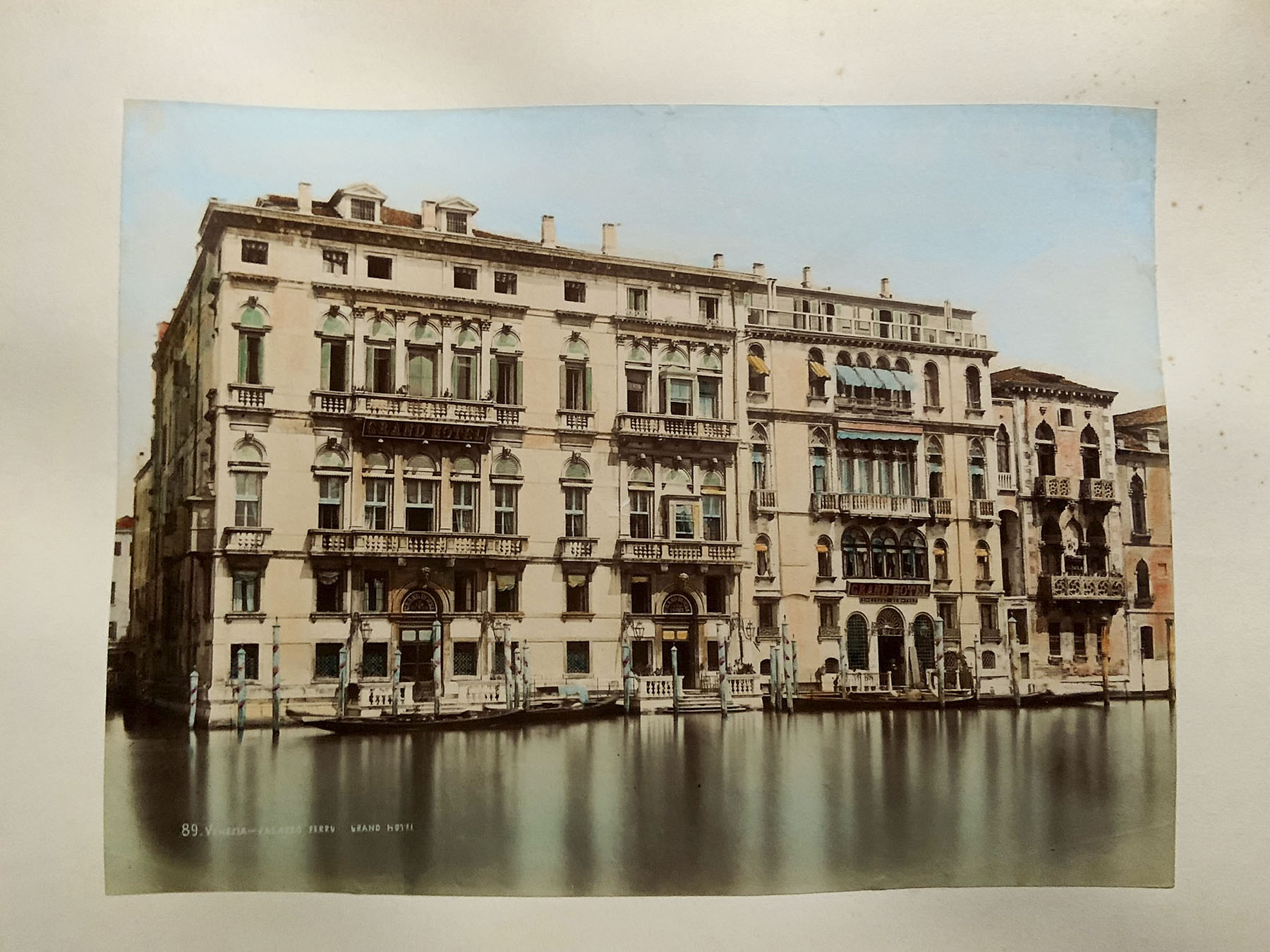
Fratelli Gajo – Piazza S.Marco 139 – Venezia 89 Venezia – Palazzo Ferry, Grand Hotel 1880s Hand-coloured albumen print mounted on cardboard Image: 20 x 26cm Support: 27 x 36cm
Wolfgang Moroder Palazzo Ferro Fini in Venice. Facade on Grand Canal 18 April 2016 CC BY-SA 3.0
Fratelli Gajo – Piazza S.Marco 139 – Venezia 680 Venezia 1880s Hand-coloured albumen print mounted on cardboard Image: 20 x 26cm Support: 27 x 36cm
Fratelli Gajo – Piazza S.Marco 139 – Venezia Untitled [St Mark’s Basilica] 1880s Hand-coloured albumen print mounted on cardboard Image: 20 x 26cm Support: 27 x 36cm
Fratelli Gajo – Piazza S.Marco 139 – Venezia Untitled 1880s Hand-coloured albumen print mounted on cardboard Image: 20 x 26cm Support: 27 x 36cm
Fratelli Gajo – Piazza S.Marco 139 – Venezia Untitled 1880s Hand-coloured albumen print mounted on cardboard Image: 20 x 26cm Support: 27 x 36cm
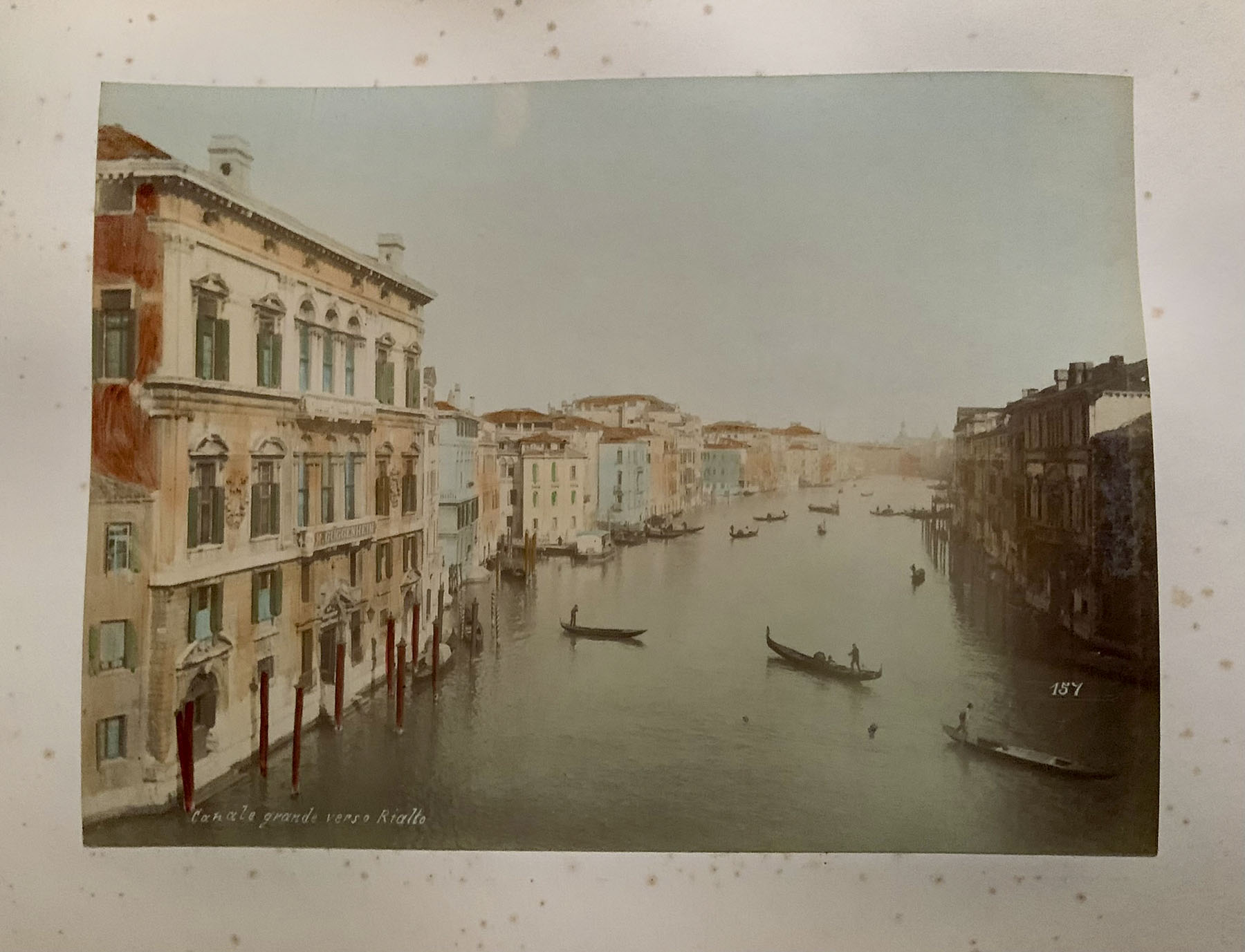
Fratelli Gajo – Piazza S.Marco 139 – Venezia Canale grande verso Rialto 1880s Hand-coloured albumen print mounted on cardboard Image: 20 x 26cm Support: 27 x 36cm
Canaletto (Italian, 1697-1768) Grand Canal from Palazzo Balbi towards the Rialto Between 1720 and 1723 Oil on canvas Height: 144cm (56.6 in) Width: 207cm (81.4 in) Museum of 18th-century Venice Public domain
Fratelli Gajo – Piazza S.Marco 139 – Venezia Untitled [Bridge of Sighs] 1880s Hand-coloured albumen print mounted on cardboard Image: 20 x 26cm Support: 27 x 36cm
Fratelli Gajo – Piazza S.Marco 139 – Venezia After the painting by A. Paoletti, Venezia 1880s Hand-coloured albumen print mounted on cardboard Image: 20 x 26cm Support: 27 x 36cm
Antonio Ermolao Paoletti (Venezia, 1834-1912) A Venetian ice cream seller Nd Oil on canvas 50.2 x 74.9cm (19.8 x 29.5 in.)
Fratelli Gajo – Piazza S.Marco 139 – Venezia Untitled [The Courtyard of the Doge’s Palace looking towards the Torricella] 1880s Hand-coloured albumen print mounted on cardboard Image: 20 x 26cm Support: 27 x 36cm
Fratelli Gajo – Piazza S.Marco 139 – Venezia No. 5 Piazza S. Marco dai Leoni 1880s Hand-coloured albumen print mounted on cardboard Image: 20 x 26cm Support: 27 x 36cm
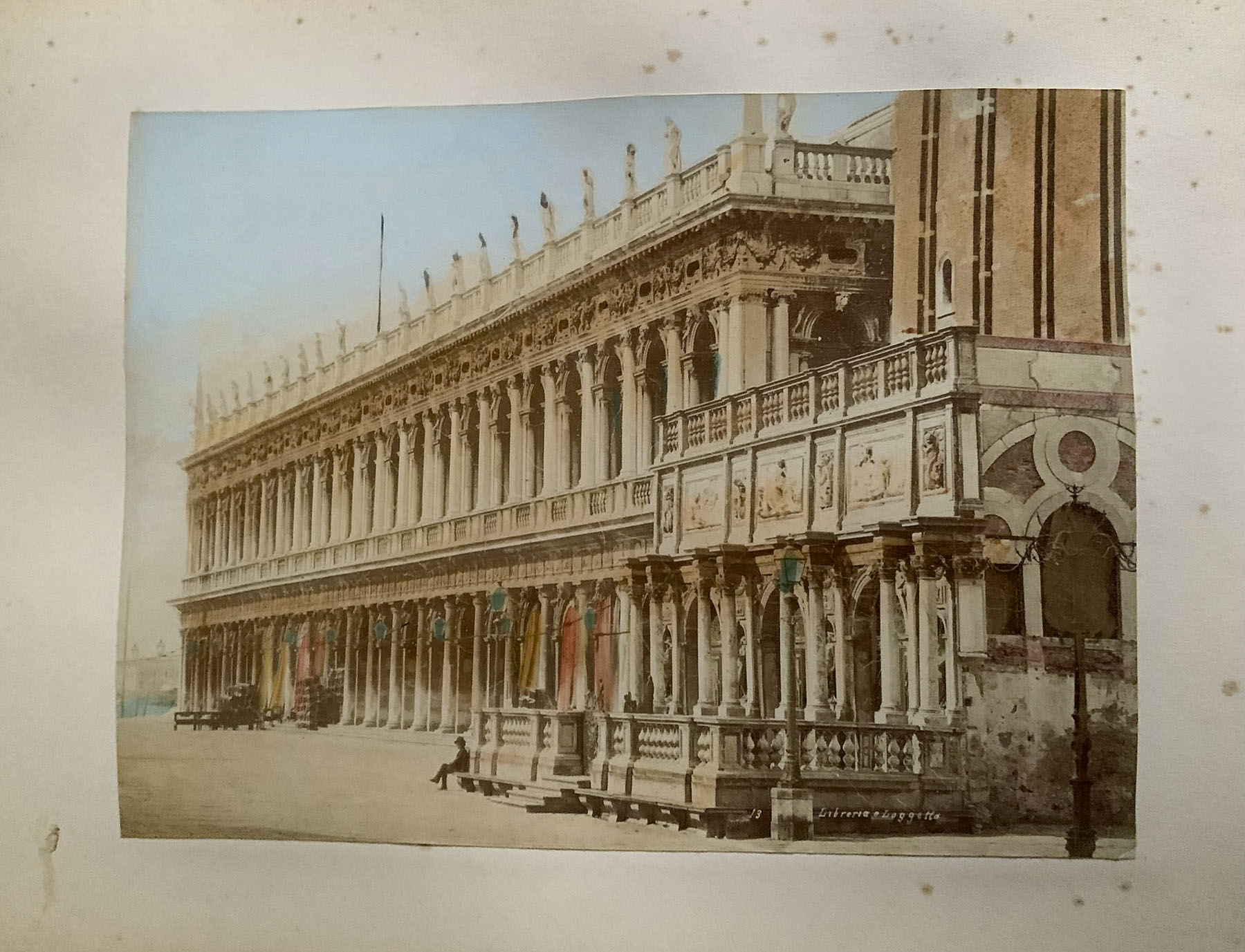
Fratelli Gajo – Piazza S.Marco 139 – Venezia 13 Libreria e Loggetto 1880s Hand-coloured albumen print mounted on cardboard Image: 20 x 26cm Support: 27 x 36cm
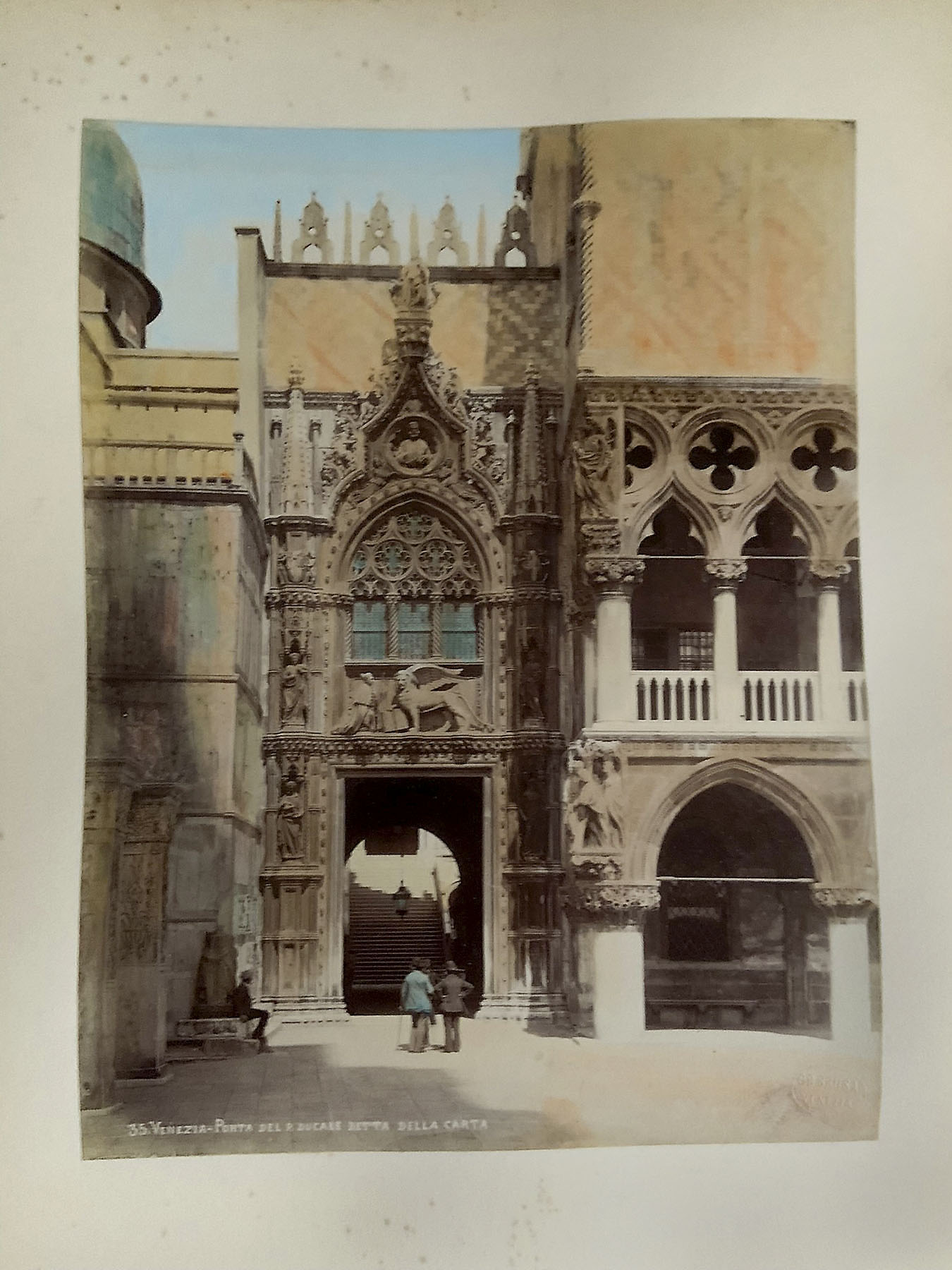
Fratelli Gajo – Piazza S.Marco 139 – Venezia 35. Venezia – Porta del P. Ducale detta della Carta 1880s Hand-coloured albumen print mounted on cardboard Image: 20 x 26cm Support: 27 x 36cm
Jean-Pol Grandmont The Porta della Carta of the Doges Palace on Piazzetta San Marco in Venice 1 June 2013 CC BY-SA 4.0
Fratelli Gajo – Piazza S.Marco 139 – Venezia 230 [Interior of the Doges Palace] 1880s Hand-coloured albumen print mounted on cardboard Image: 20 x 26cm Support: 27 x 36cm
Torre dell’Orologio, Piazza san Marco, Venice
Fratelli Gajo – Piazza S.Marco 139 – Venezia 101. Torre del Orologio 1880s Hand-coloured albumen print mounted on cardboard Image: 20 x 26cm Support: 27 x 36cm
Fratelli Gajo – Piazza S.Marco 139 – Venezia 141. Venezia Chiesa della Salute 1880s Hand-coloured albumen print mounted on cardboard Image: 20 x 26cm Support: 27 x 36cm
Walter Richard Sickert (British, 1860-1942) Santa Maria della Salute, Venice c. 1901 Oil on canvas 56 x 46cm Royal Academy of Arts
Fratelli Gajo – Piazza S.Marco 139 – Venezia Untitled 1880s Hand-coloured albumen print mounted on cardboard Image: 20 x 26cm Support: 27 x 36cm
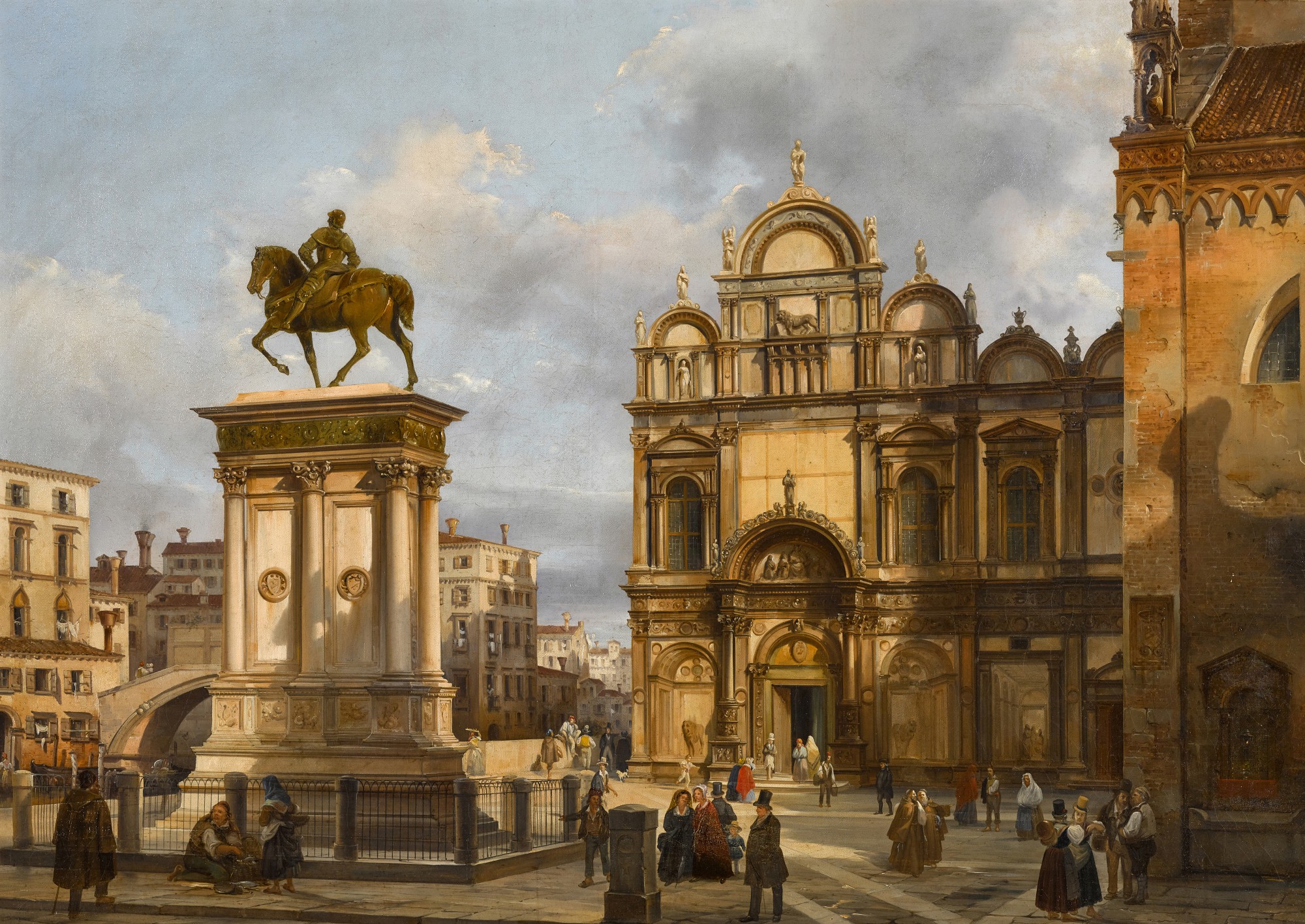
Fratelli Gajo – Piazza S.Marco 139 – Venezia 65 Monumento Collooni 1880s Hand-coloured albumen print mounted on cardboard Image: 20 x 26cm Support: 27 x 36cm
Federico Moja (Italian, 1802-1885) Venice, a View of the Campo Santi Giovanni e Paolo, with the Equestrian Monument to Bartolomeo Colleoni and the Scuola Grande di San Marco in the Background 1848 Oil on canvas Unframed: 74.5 by 104.5cm Framed: 89 by 118.5cm
Fratelli Gajo – Piazza S.Marco 139 – Venezia No. 30 Rivo di Canonica 1880s Hand-coloured albumen print mounted on cardboard Image: 20 x 26cm Support: 27 x 36cm
Fratelli Gajo – Piazza S.Marco 139 – Venezia Untitled [Entry to the presbytery of St Mark’s Basilica] 1880s Hand-coloured albumen print mounted on cardboard Image: 20 x 26cm Support: 27 x 36cm
Fratelli Gajo – Piazza S.Marco 139 – Venezia Untitled [Bridge of Sighs] 1880s Hand-coloured albumen print mounted on cardboard Image: 20 x 26cm Support: 27 x 36cm
Fratelli Gajo – Piazza S.Marco 139 – Venezia Untitled 1880s Hand-coloured albumen print mounted on cardboard Image: 20 x 26cm Support: 27 x 36cm
Fratelli Gajo – Piazza S.Marco 139 – Venezia 58. Rio S. Agostino 1880s Hand-coloured albumen print mounted on cardboard Image: 20 x 26cm Support: 27 x 36cm
Didier Descouens Rio di S. Agostino seen from the S. Agostino Bridge in Venice 11 May 2015 CC BY-SA 4.0
Fratelli Gajo – Piazza S.Marco 139 – Venezia Untitled [Torre del Orologio] 1880s Hand-coloured albumen print mounted on cardboard Image: 20 x 26cm Support: 27 x 36cm
Fratelli Gajo – Piazza S.Marco 139 – Venezia Untitled [The Doge’s Palace] 1880s Hand-coloured albumen print mounted on cardboard Image: 20 x 26 cm Support: 27 x 36 cm
Fratelli Gajo – Piazza S.Marco 139 – Venezia 87 Venezia – Palazzo Contarini Fasan 1880s Hand-coloured albumen print mounted on cardboard Image: 20 x 26cm Support: 27 x 36cm
Wolfgang Moroder Palazzo Contarini Fasan in Venice. Facade on Grand Canal 31 July 2010 CC BY-SA 4.0
Fratelli Gajo – Piazza S.Marco 139 – Venezia Venezia – Palazzo Pisaro 1880s Hand-coloured albumen print mounted on cardboard Image: 20 x 26cm Support: 27 x 36cm
Fratelli Gajo – Piazza S.Marco 139 – Venezia 100. Venezia – Palazzo Rezzonico 1880s Hand-coloured albumen print mounted on cardboard Image: 20 x 26cm Support: 27 x 36cm
Didier Descouens Ca ‘Rezzonico, Venice facade of Giorgio Massari on the Grand Canal 7 May 2012 CC BY-SA 4.0
Fratelli Gajo – Piazza S.Marco 139 – Venezia Untitled [Statue of King Vittorio Emanuel II by the sculptor Ettore Ferrari 1887] c. 1887 Hand-coloured albumen print mounted on cardboard Image: 20 x 26cm Support: 27 x 36cm
Didier Descouens The main gate at the Venetian Arsenal 9 May 2012 CC BY-SA 4.0
The so-called “Solid ground entrance” of the Arsenale in Venice was built between 1692 and 1694 on a project by Alessandro Tremignon. Eight standing figures on pedestals on the ground: At the front row: from left to right: La Giustizia by Giovanni Antonio Comino, Marte by Giovanni Antonio Comino, Nettuno by Giovanni Antonio Comino, Bellona by Francesco Cabianca At the the second and the third rows: L’Abbondanza by Francesco Cabianca (last row on the right), La Vigilanza by Francesco Cabianca (second row on the right), Two more Allegorical statues by Giovanni Antonio Comino, (second and third row on the left)
Fratelli Gajo – Piazza S.Marco 139 – Venezia 157 33 Arsenale 1880s Hand-coloured albumen print mounted on cardboard Image: 20 x 26cm Support: 27 x 36cm
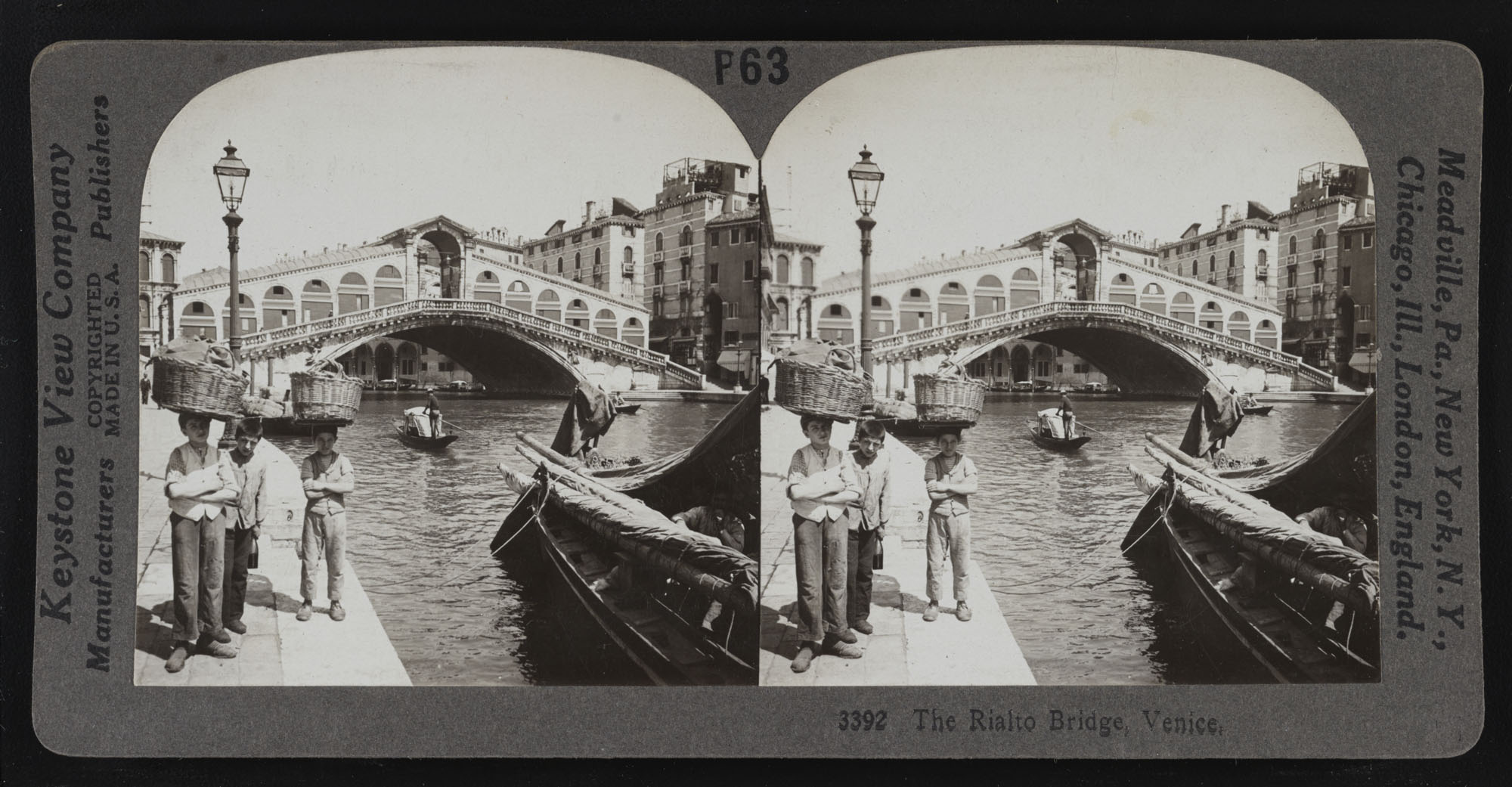
Keystone View Company (American, Manufacturers and Publishers) The Rialto Bridge, Venice 1929 Stereograph print on card mount Mount: 9 x 18cm
Fratelli Gajo – Piazza S.Marco 139 – Venezia Untitled [Rialto Bridge] 1880s Hand-coloured albumen print mounted on cardboard Image: 20 x 26cm Support: 27 x 36cm
Fratelli Gajo – Piazza S.Marco 139 – Venezia 211. Bis- Venezia – Chiesa S. Marco – Interno (Interior of the San Marco Church) 1880s Hand-coloured albumen print mounted on cardboard Image: 20 x 26cm Support: 27 x 36cm
Fratelli Gajo – Piazza S.Marco 139 – Venezia Untitled 1880s Hand-coloured albumen print mounted on cardboard Image: 20 x 26cm Support: 27 x 36cm
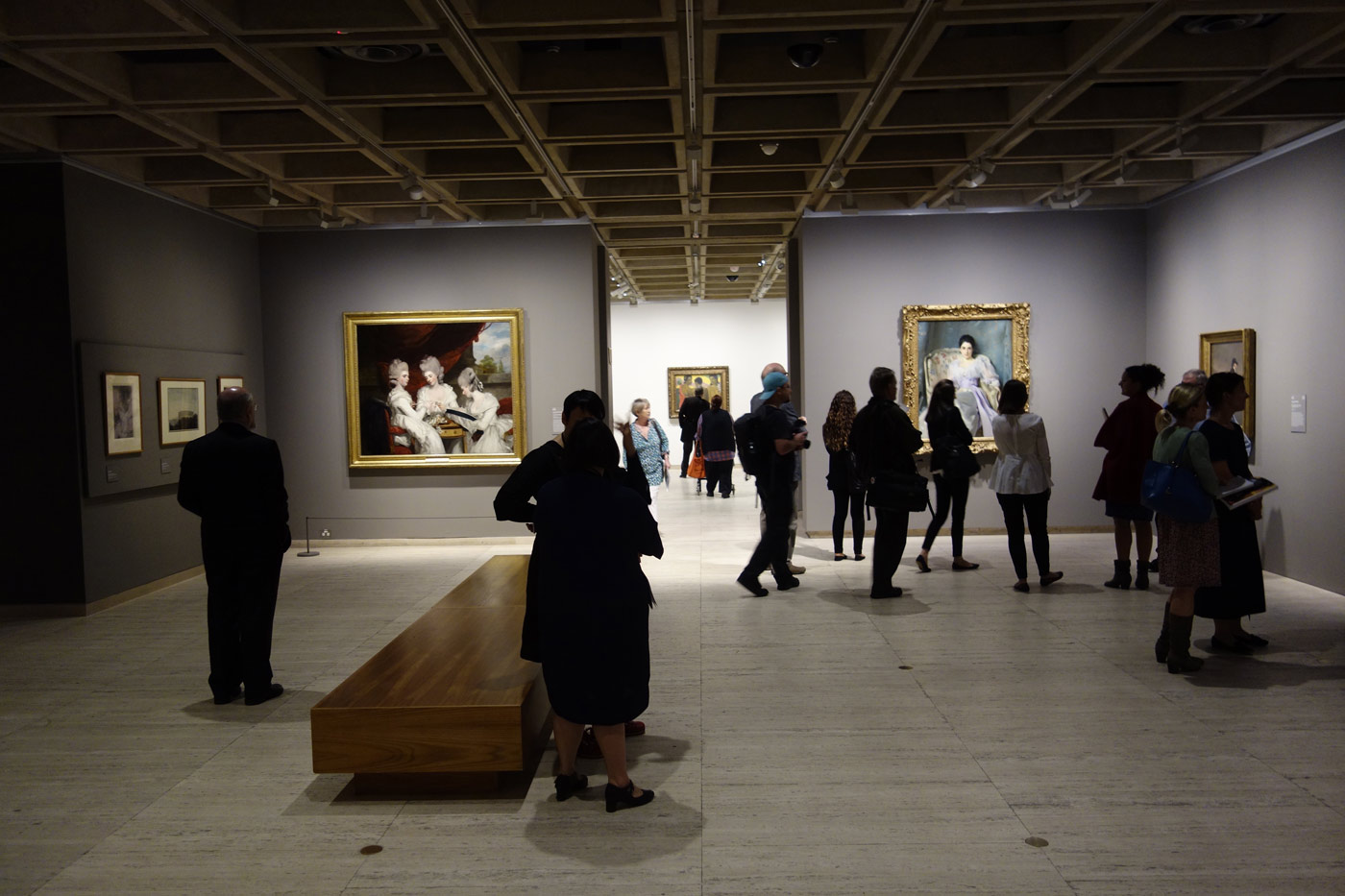
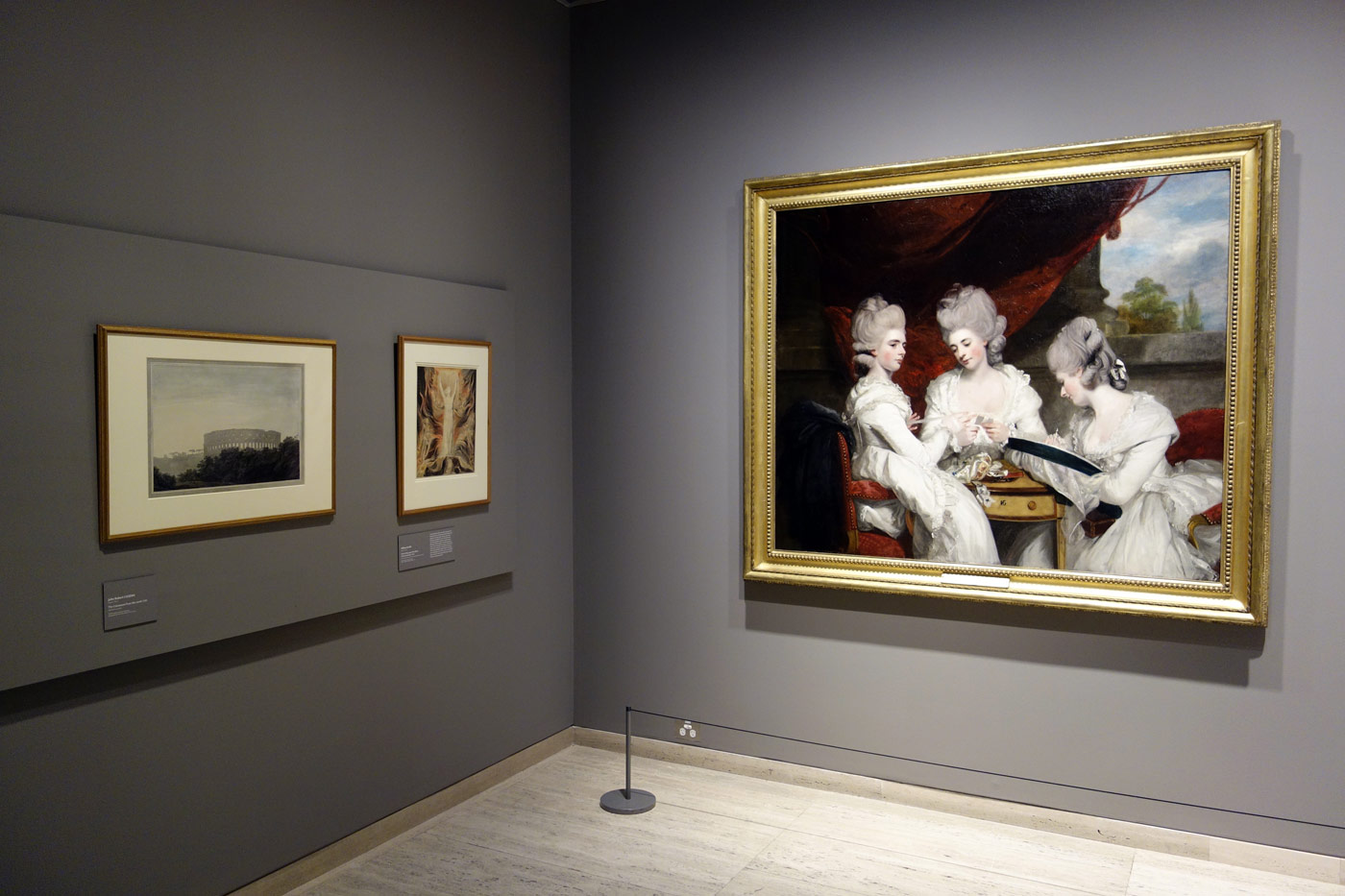
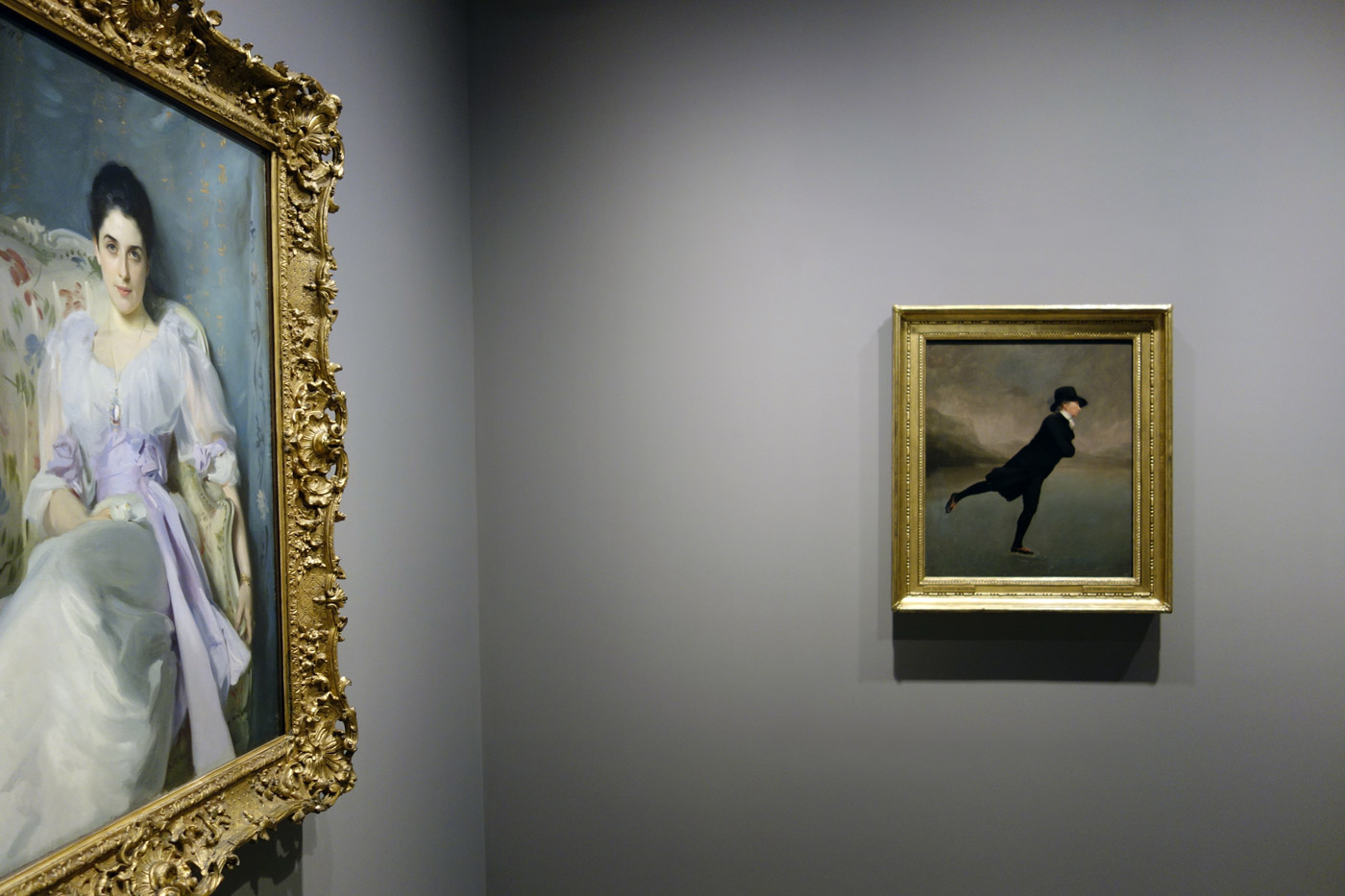
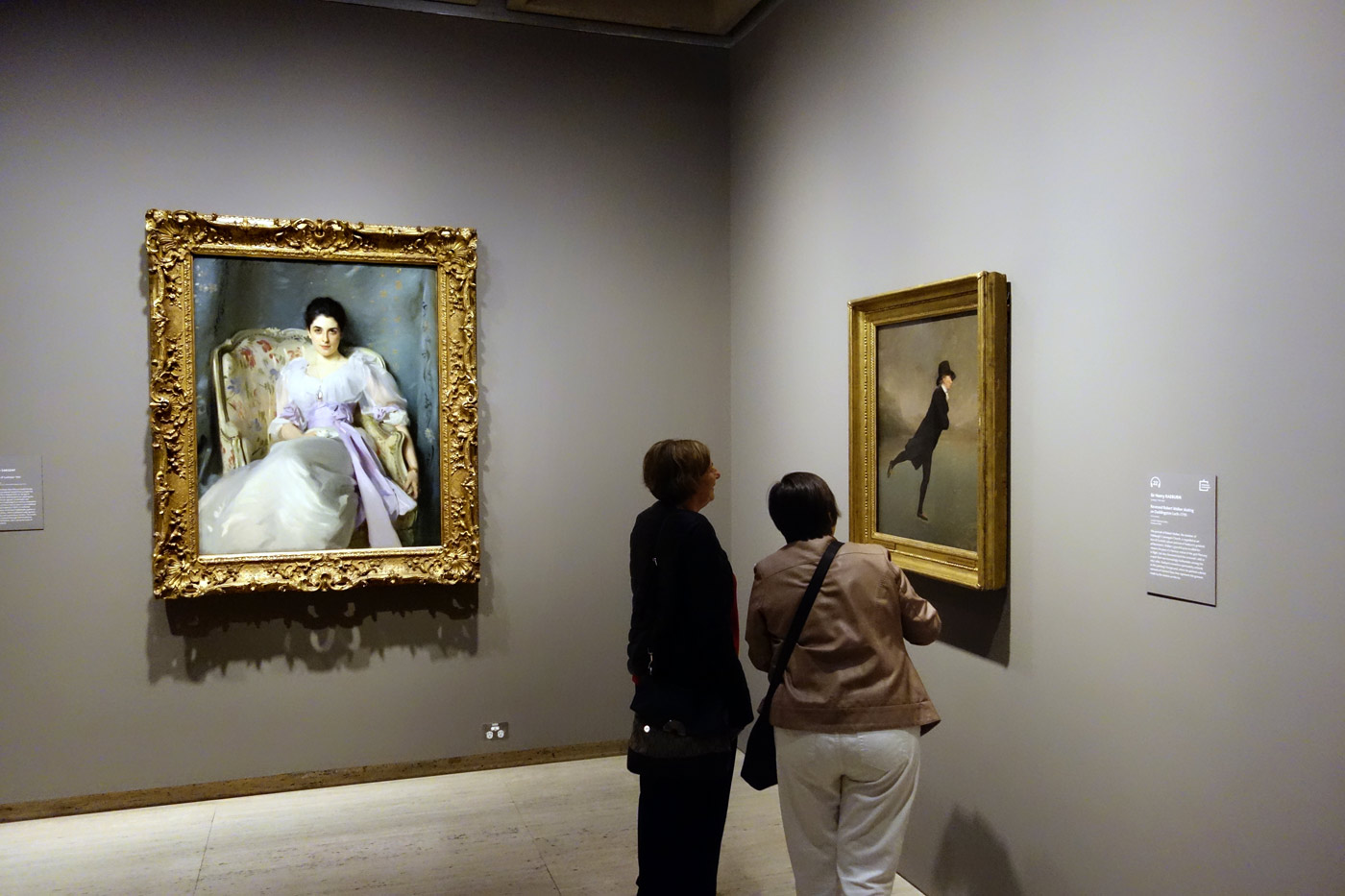
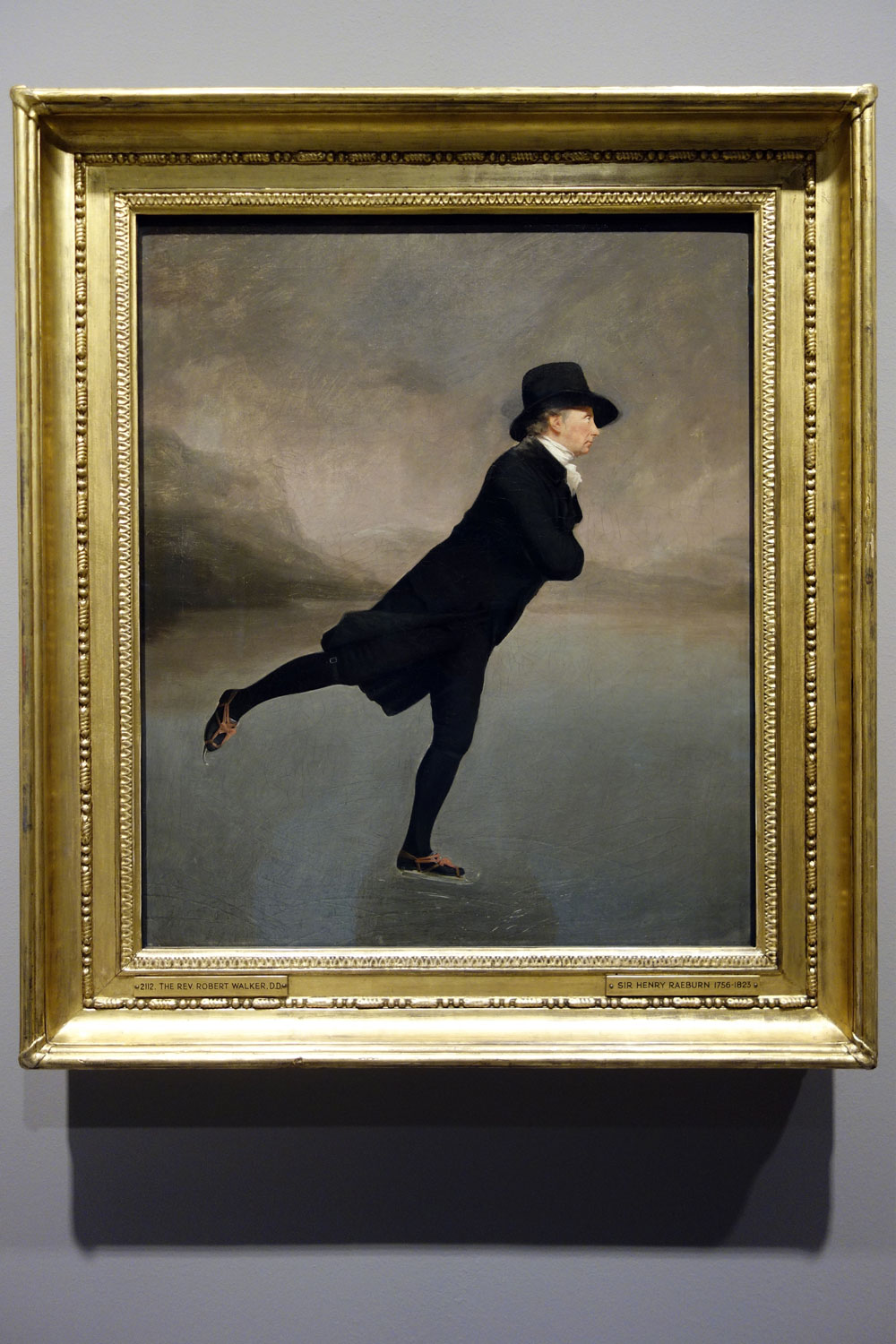
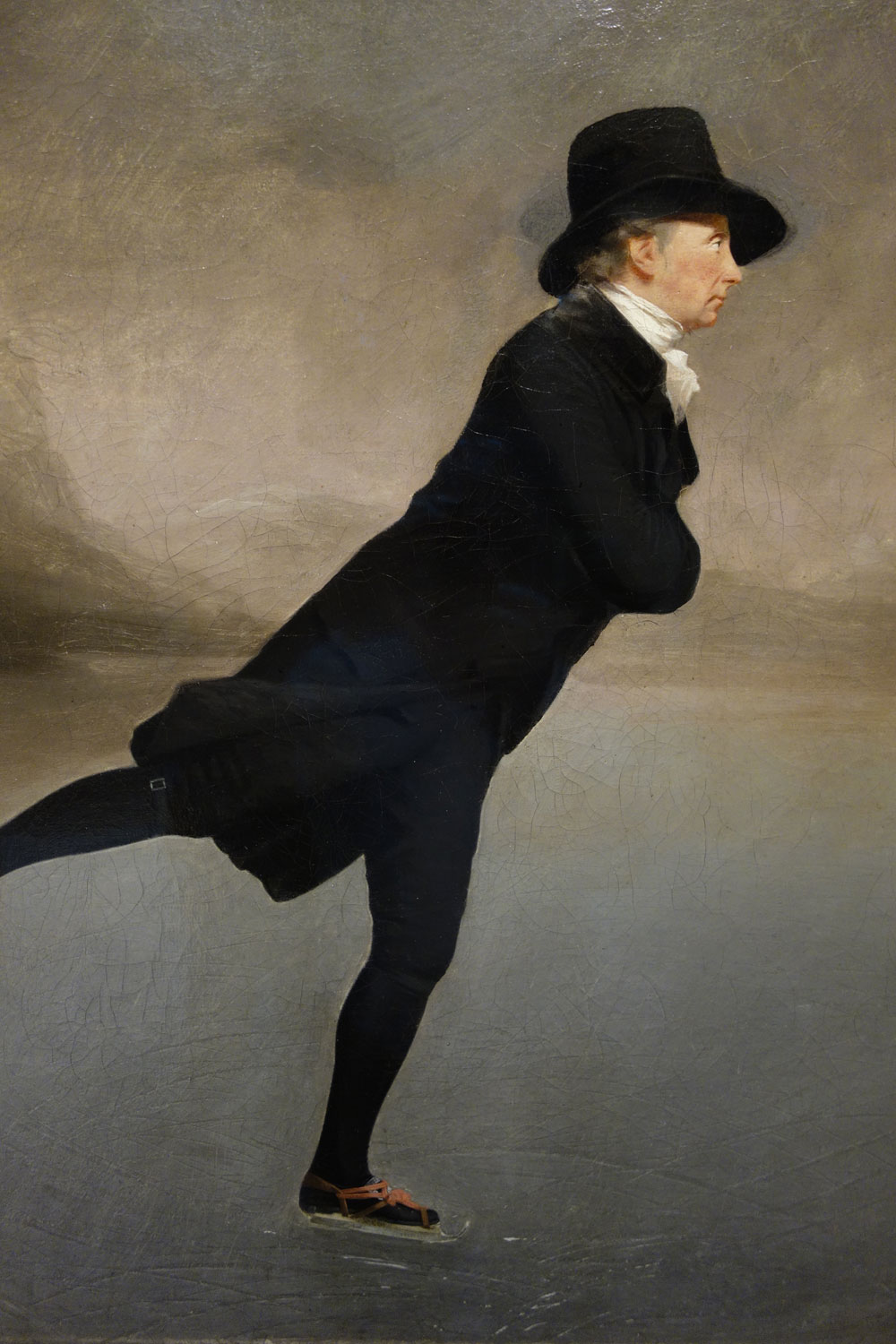
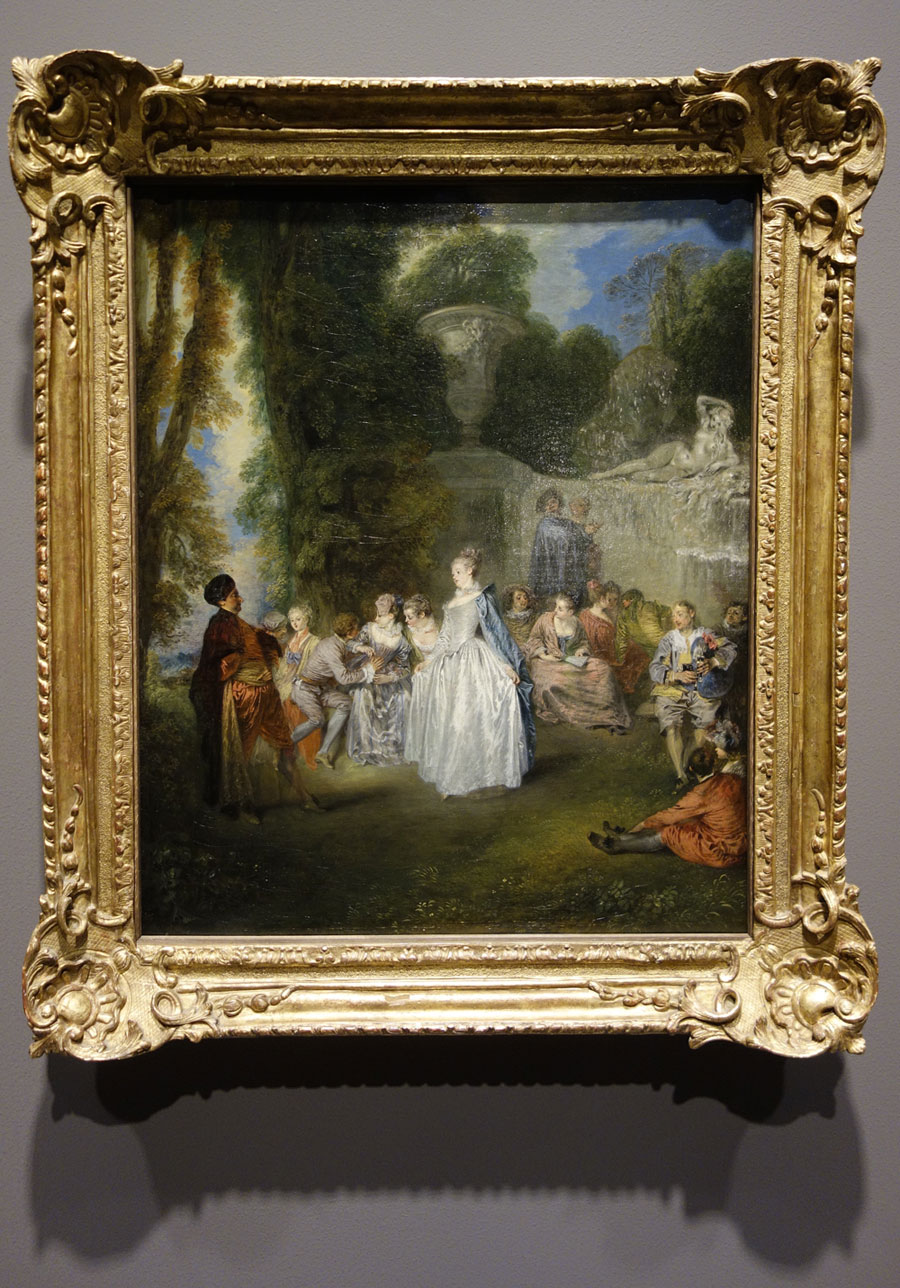
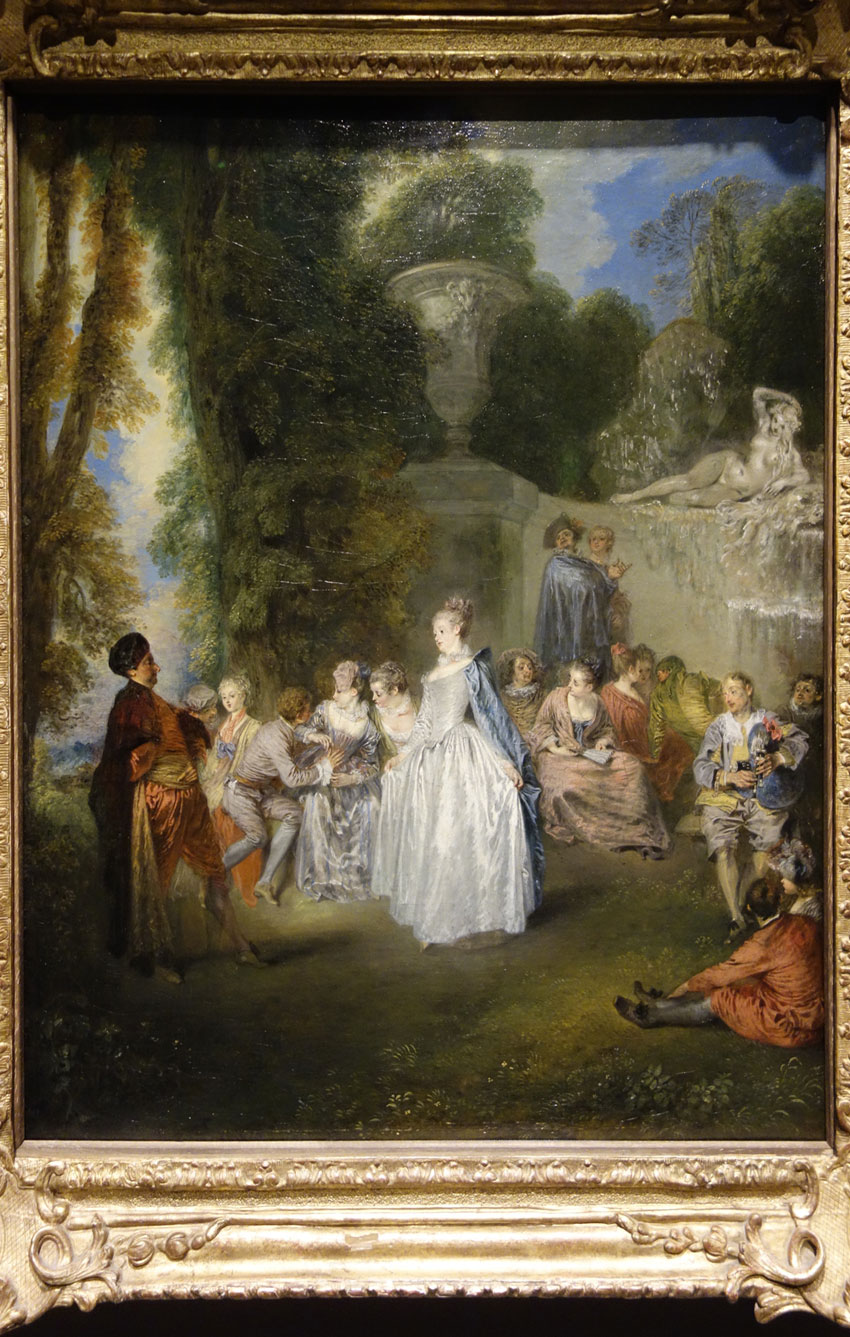
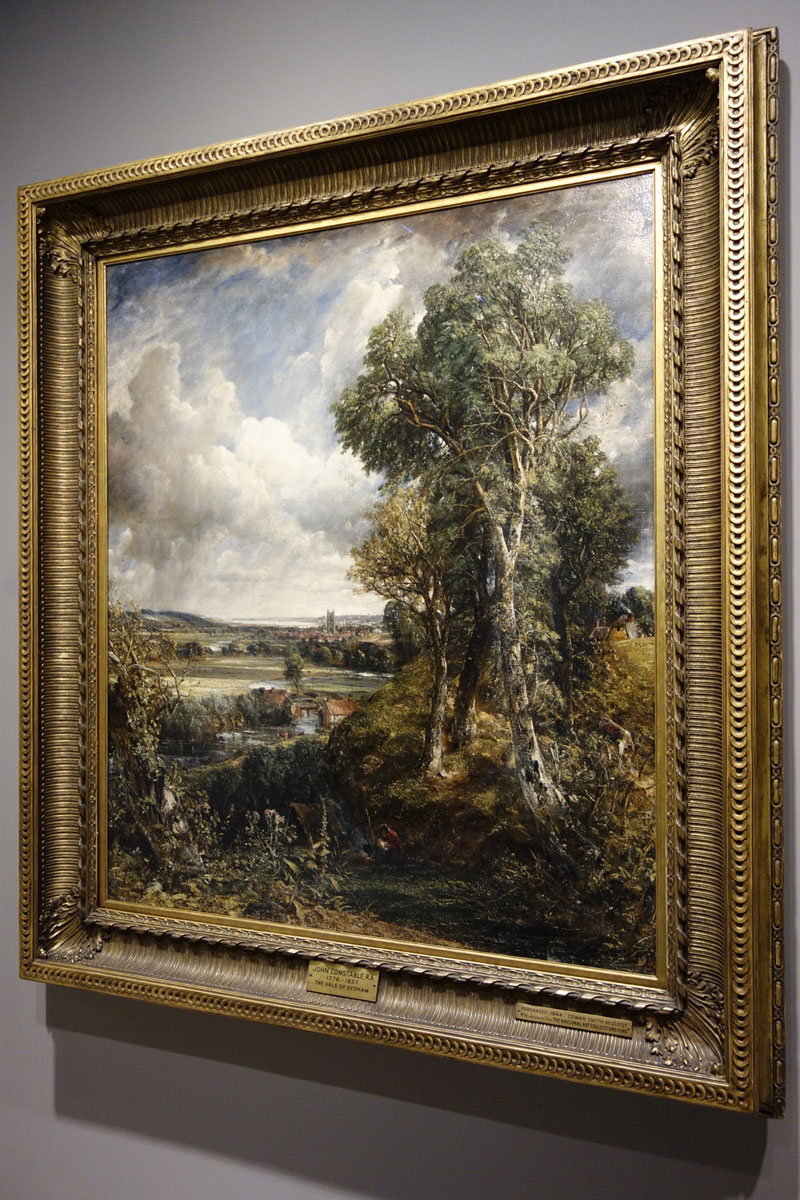
Highlights include the delicacy and strength of the William Blake, the stunning beauty of the John Singer Sargent portrait Lady Agnew of Lochnaw (1892), the perceived movement and presence of The Reverend Robert Walker skating on Duddingston Loch by Sir Henry Raeburn (c. 1795). Watteau’s Fêtes vénitiennes (1718-1719) confirmed my pleasure when looking at his paintings, the stillness, romanticism and intensity of vision while the muscularity and intensity of the painting in Constable’s The Vale of Dedham c. 1827-1828 was a revelation.
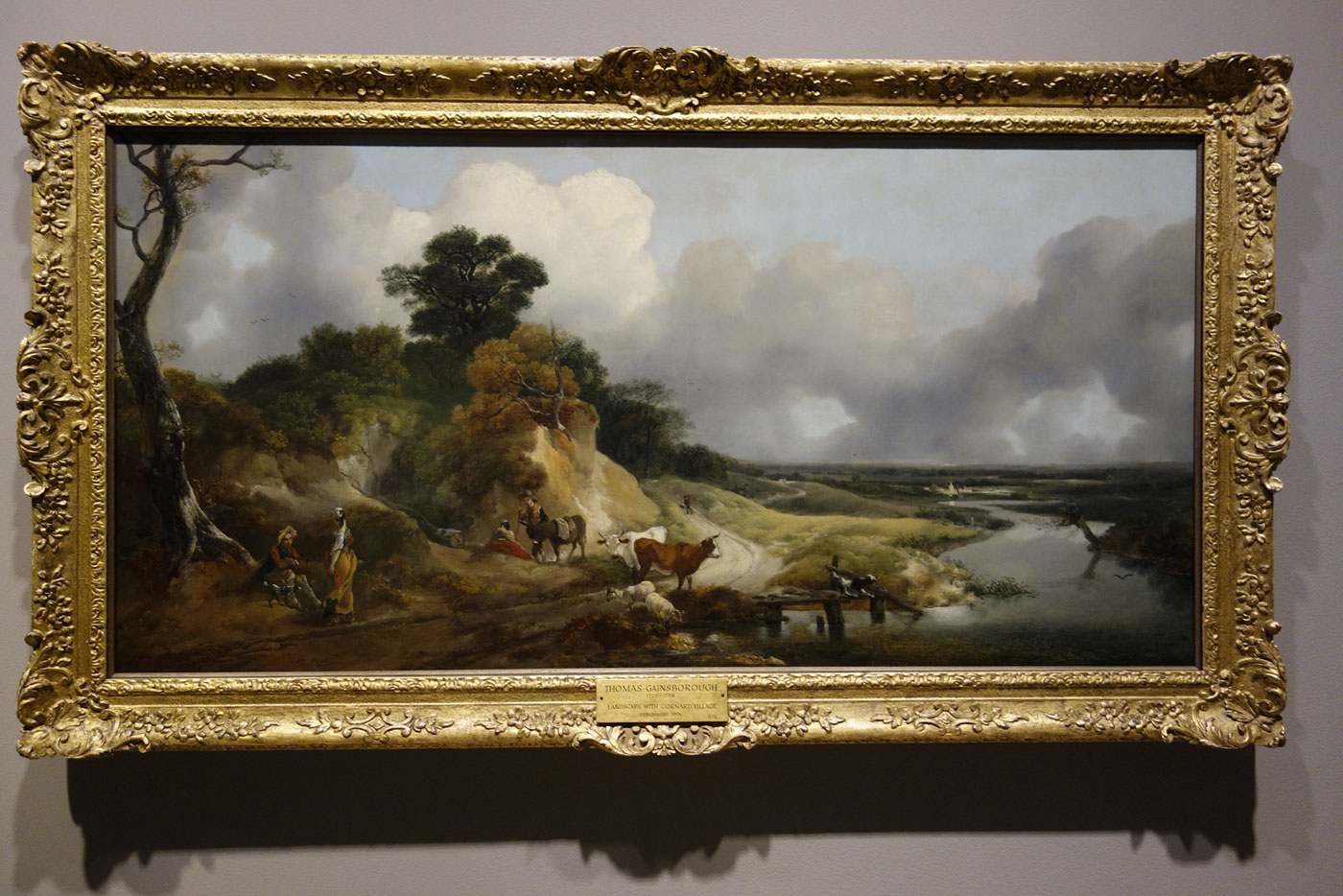
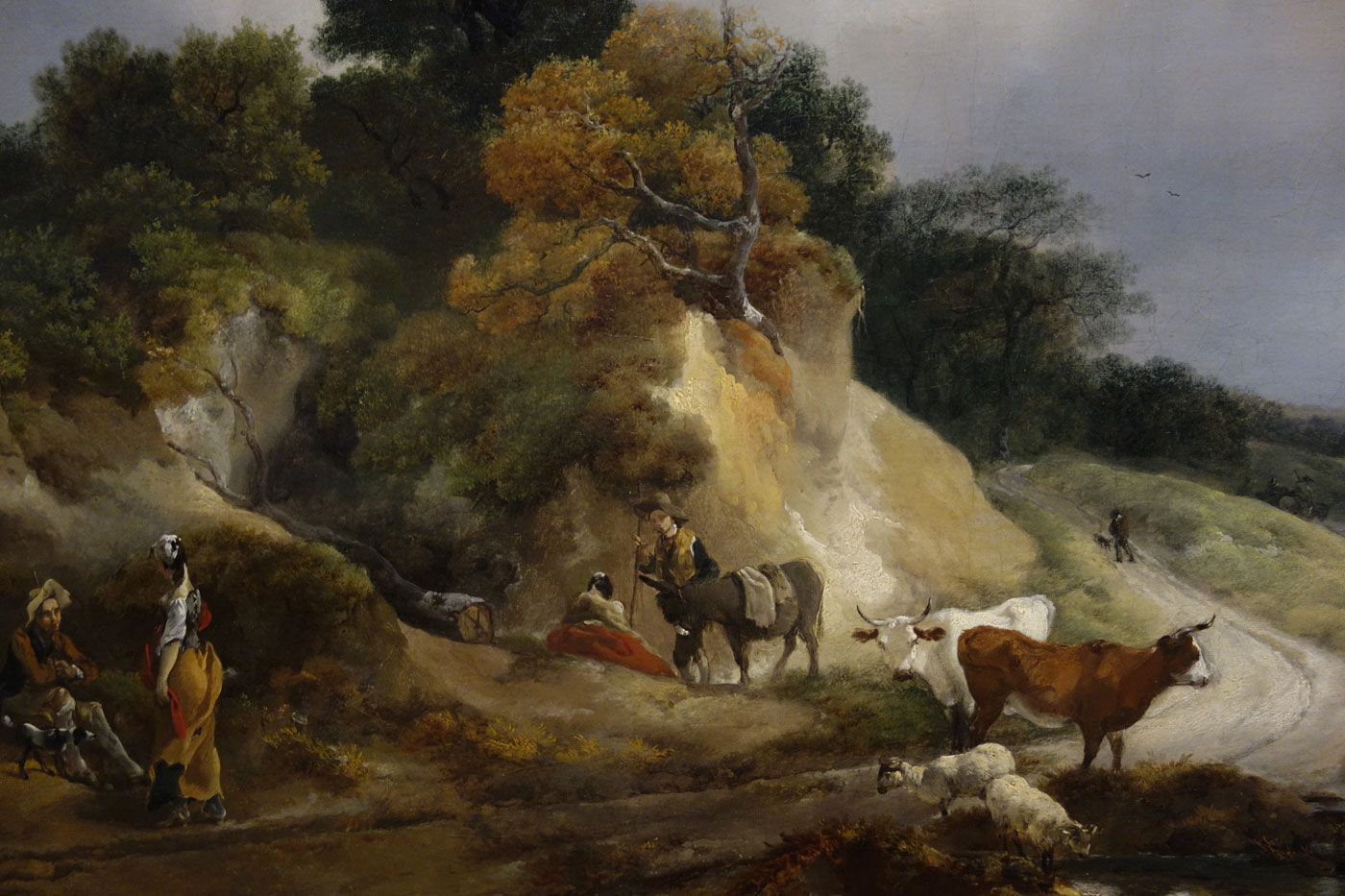
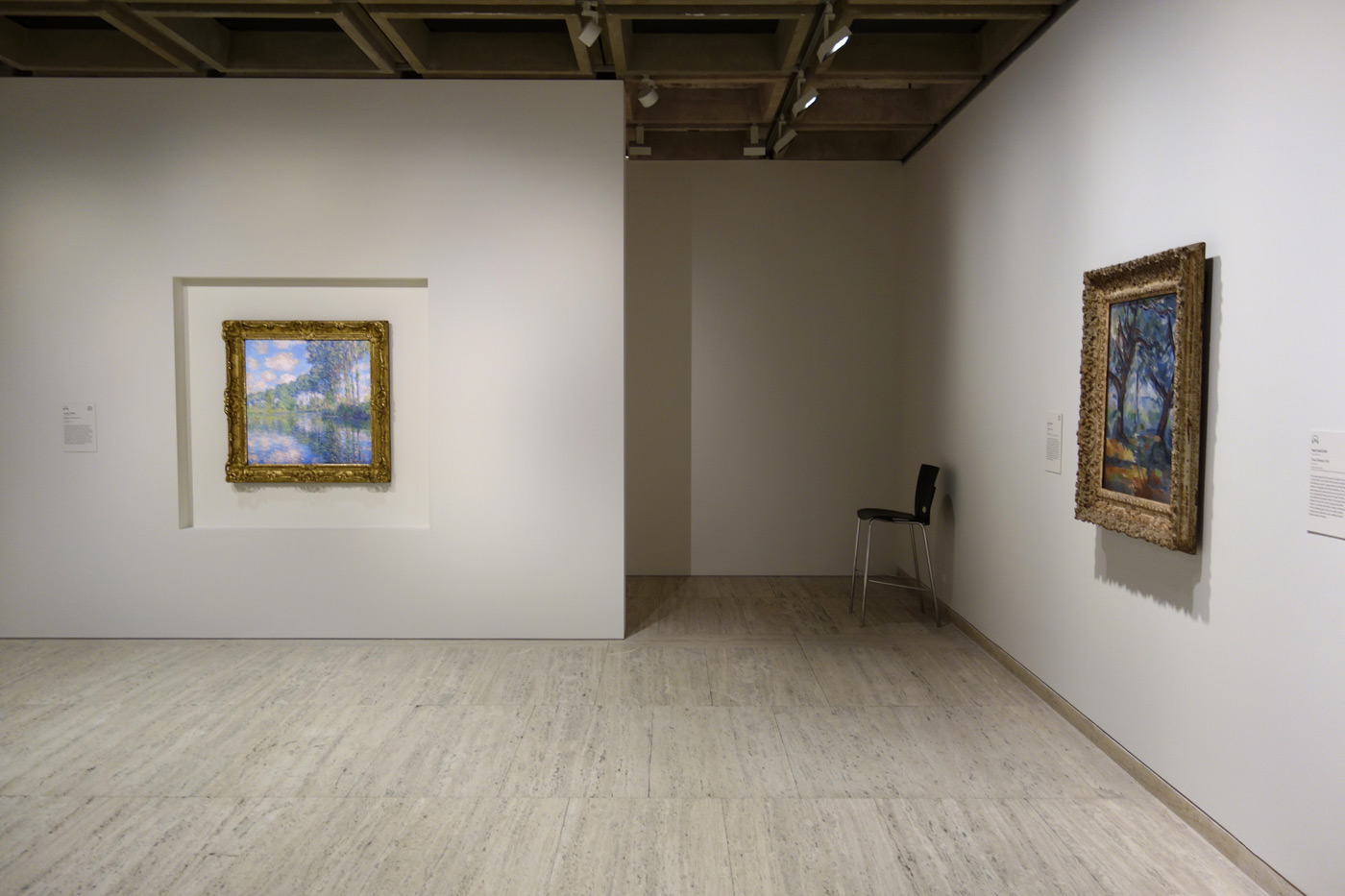
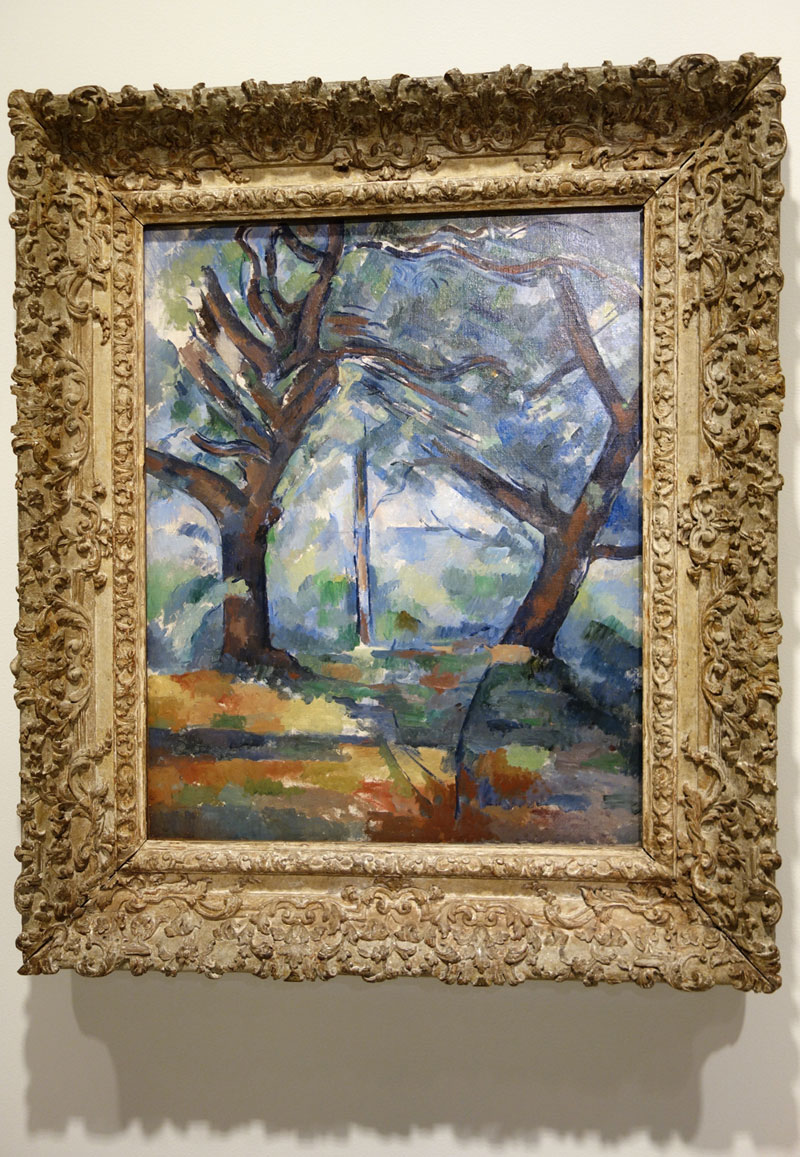
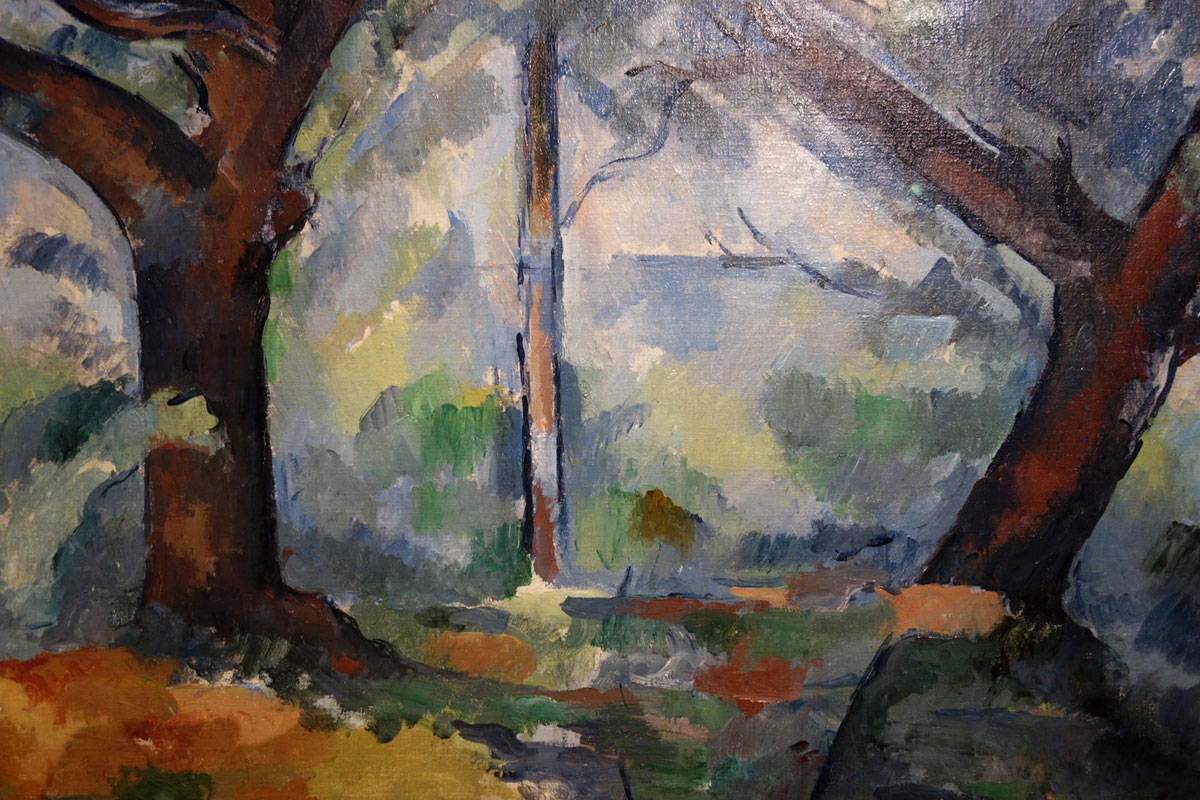
Gainsborough’s pastoral River landscape with a view of a distant village (c. 1748-1750) was a surprise while the impressionists did not disappoint. Favourite among the last room, though, was the joyous spaces and overlaid patches of light and colour in Paul Cézanne’s The big trees (c. 1904). One of the great treasures of the exhibition.
This superb watercolour comes from a group of over 80 illustrations to the Bible executed from Blake’s most significant and loyal patron, Thomas Butts. Artist and patron probably first met in 1799, when Butts commissioned Blake to produce 50 small tempera paintings of biblical subjects. This initial commission seems to have developed into an open-ended series of watercolours, painted over a period of nine years, for which Butts paid Blake a regular stipend. The original mount belonging to this work, now lost, was inscribed with a reference to the relevant biblical text, which in this case is Deuteronomy 9:10.
The first president of the Royal Academy, Reynolds worked to raise the status of portraiture in Britain by painting people in the ‘grand manner’ more commonly associated with history painting. This informal portrait, a ‘conversation piece’, features the three sisters Lady Charlotte Maria, Lady Elizabeth Laura and Lady Anna Horatia Waldegrave. Depicting interlocking figures, Reynolds subtly alludes to trios of goddesses or graces of antiquity – a reference that would have been understood by classically educated viewers of the late 18th century. Reynolds’s triple portrait was commissioned by the sitters’ great-uncle, the celebrated antiquarian, connoisseur and critic Horace Walpole.
One of the best-loved pictures of the National Galleries of Scotland, this portrait of 27-year old Lady Agnew of Lochnaw is the first Sargent to be exhibited in Sydney in 35 years. As one of Sargent’s most glamorous and beguiling characterisations, it was pivotal in establishing the renown of both artist and sitter. The painting was first exhibited at the Royal Academy exhibition in 1893 to wide public acclaim and cemented Sargent’s position as a sought-after, fashionable portraitist of high society. For Lady Agnew, it launched her as a society beauty who later established her own private salon in London. Ironically, the costs of sustaining such fine style led Lady Agnew to sell her own portrait to the Scottish National Gallery in 1925.
In an ornate plush chair and surrounded by swathes of Chinese fabric, Lady Agnew gazes out at the viewer, confidently but enigmatically. Her pose is gracious, but relaxed. The chair and fabric were Sargent’s own props, and along with the generous, gauzy swathes of the sitter’s dress they give the painting a sense of comfort and luxury. Sargent’s brushstrokes are wide and fluid, and in some areas the canvas shows through the thin, sketchy layers of paint. But it is also very carefully composed to present Lady Agnew as an assured and elegant society woman.
Raeburn was the leading Scottish portrait painter of his time. This striking portrait of Robert Walker (1755-1808), minister of Edinburgh’s Canongate Church and a leading member of the city’s exclusive skating society, has come to be regarded as one of Raeburn’s greatest works. It is the most famous painting in the Scottish National Gallery, often described as the quintessential Scottish painting, and is listed in a recent publication as one of the 1000 paintings you must see before you die.
Its simple composition bestows the painting with an extraordinary visual impact. Walker is shown gliding across the icy surface of one of the small lochs near Edinburgh, his arms folded nonchalantly across his chest and his right leg lifted balletically behind him. Raeburn has cleverly created the effect of ice scored by the skater’s blades by scratching back into the paint surface. Unlike most of his artistic peers, Raeburn received no formal artistic education, instead pursuing other academic studies before being apprenticed to a local goldsmith at the age of sixteen.
Raeburn’s approach to painting reflected this unusual path into his profession. He avoided the meticulous production of preparatory drawings and sketches, instead preferring to work straight onto the canvas with minimal formal planning. While this approach invariably meant having to deal with compositional changes in the process of painting, it also enabled Raeburn to produce portraits that were unrivalled in their directness and spontaneity.
One of the most significant collections of European old master paintings ever seen in Australia is now open at the Art Gallery of New South Wales, providing a once in a lifetime opportunity for Australians to contemplate the extraordinary quality of over 70 masterful paintings and drawings from across four centuries. The Greats marks the first time these artworks have been exhibited in Australia, with the exception of Rembrandt’s A woman in bed (c. 1647) and Seurat’s La Luzerne, Saint-Denis (1884-1885).
Deputy Premier and Minister for the Arts, Troy Grant, said with works by some of the world’s most well-known artists, The Greats alongside the Art Gallery of NSW’s own impressive collection is bound to draw big crowds this summer. “An exhibition of this calibre is a real coup for the State and builds on our standing as the cultural capital of Australia,” Minister Grant said. “These incredible works from Scotland may never be on Australian soil again, so art-lovers and novices alike should visit the Art Gallery of NSW and see this historic exhibition while they can.”
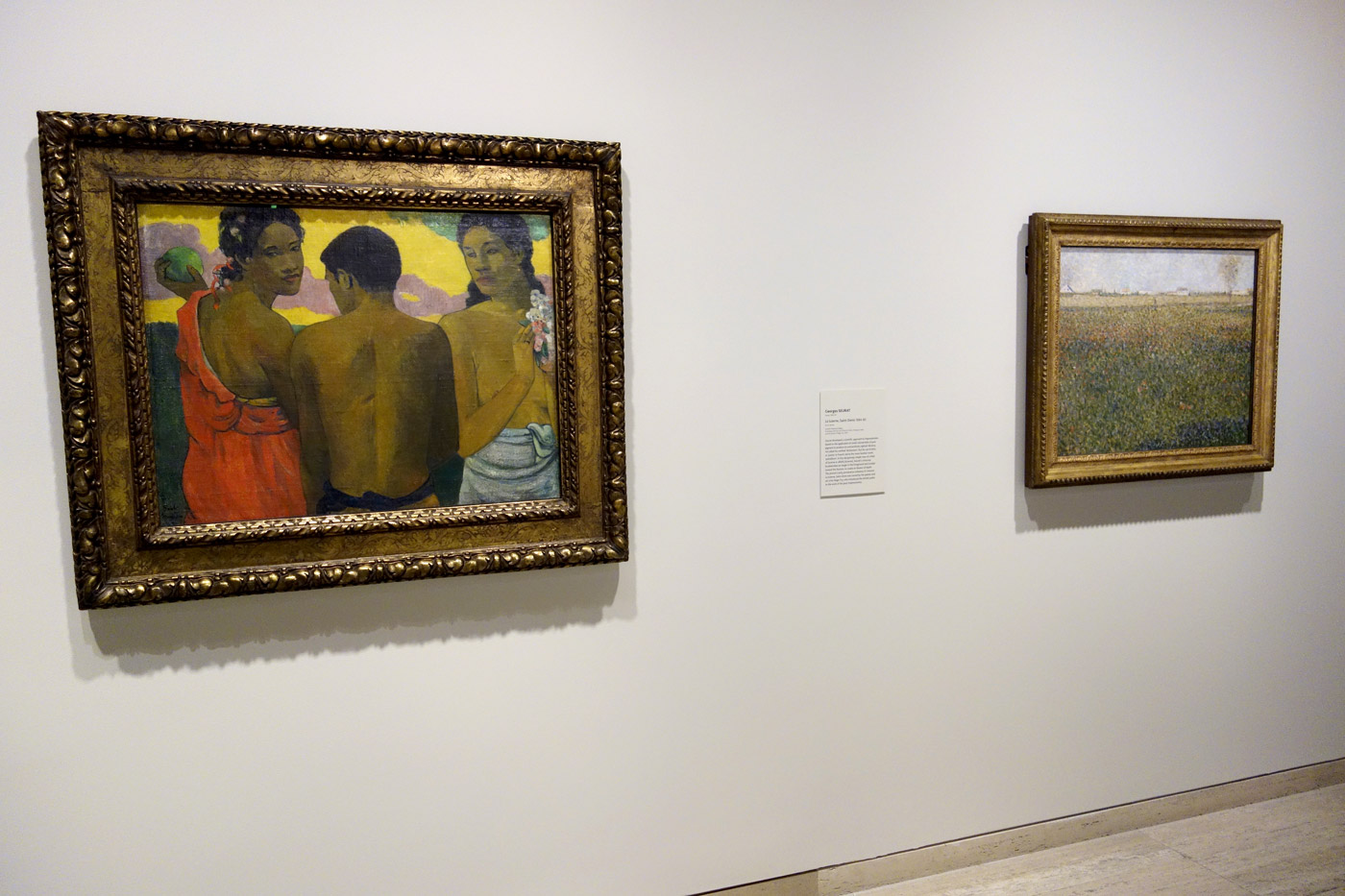
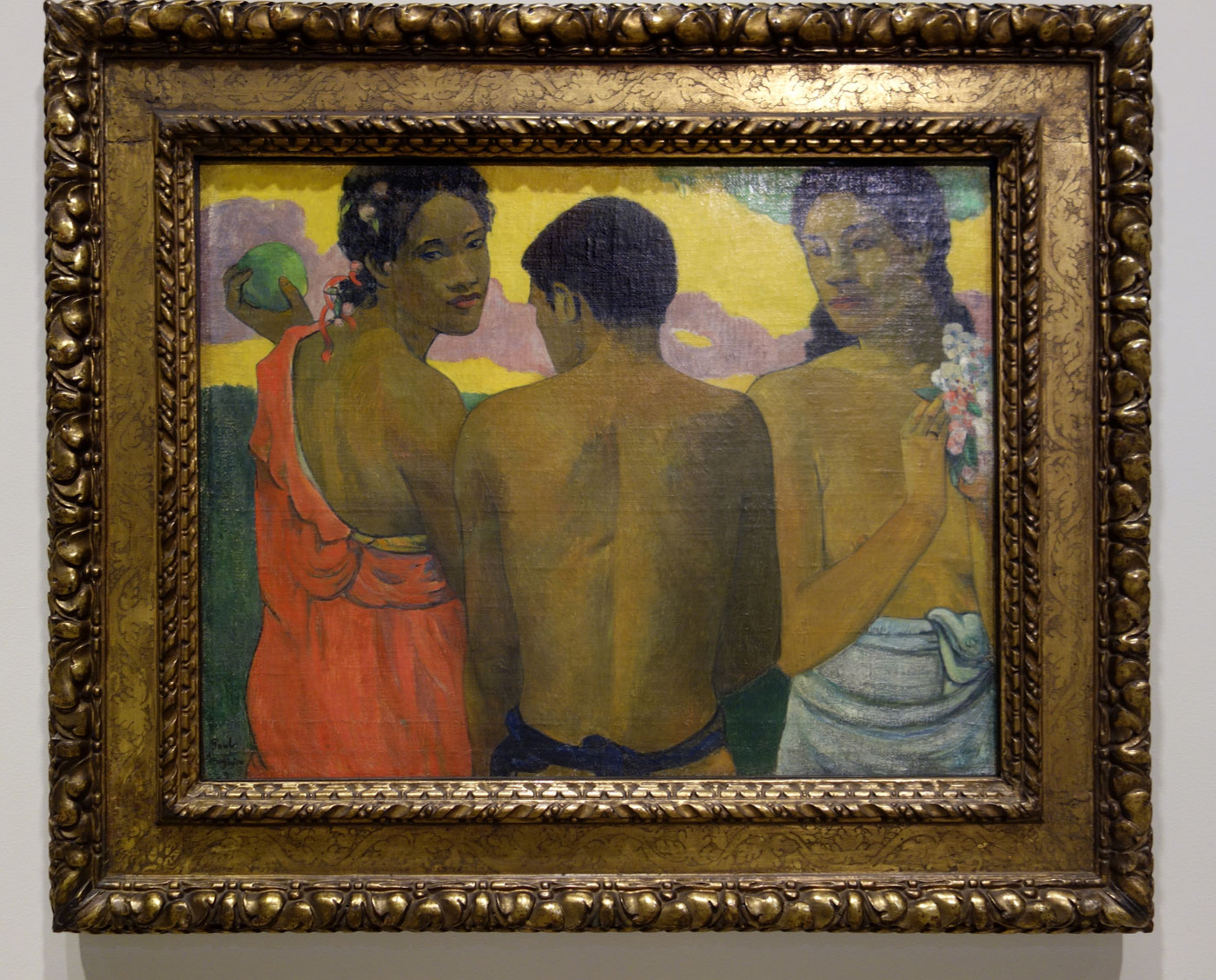
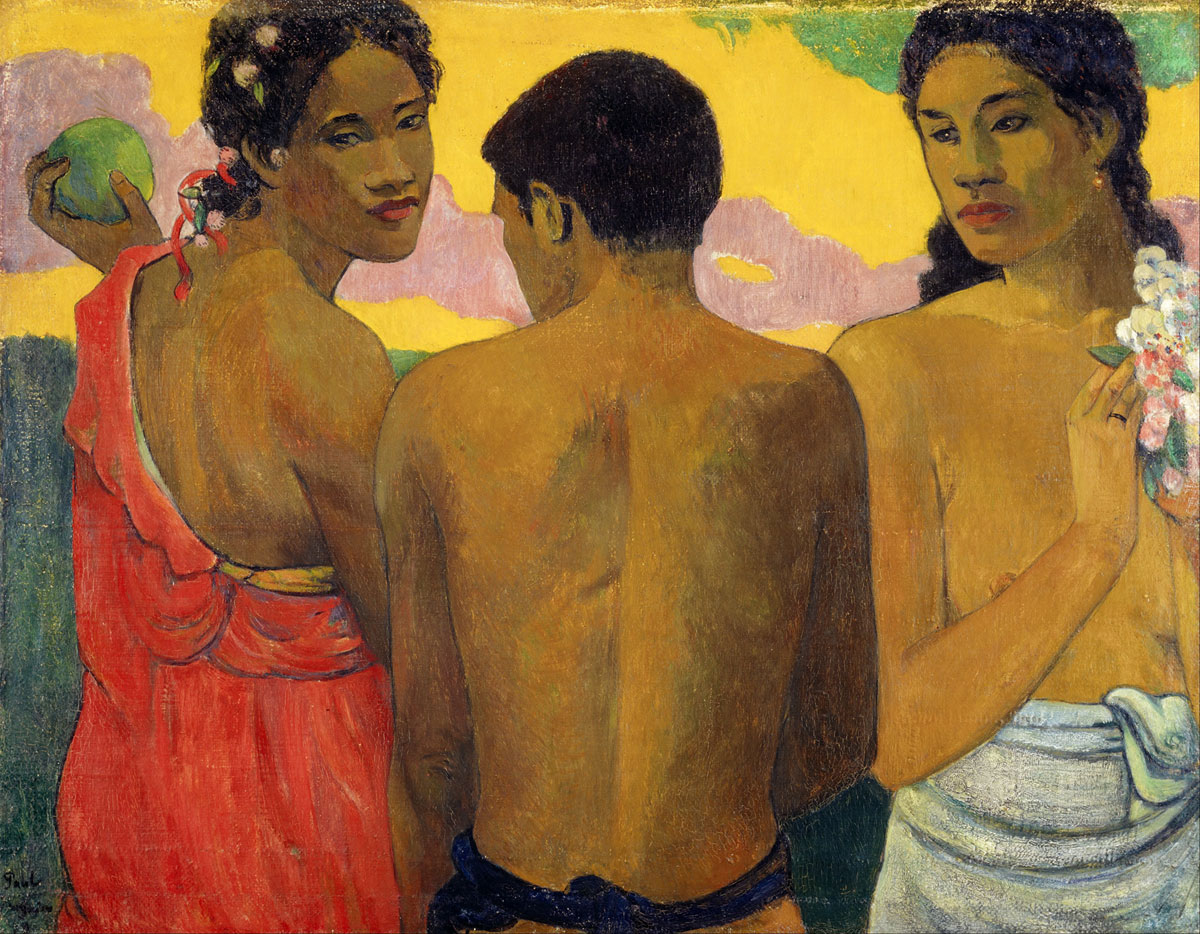
Michael Brand, director of the Art Gallery of NSW said The Greats is a rich and intimate show of remarkable quality. “Each masterpiece – whether it be Titian’s luminous Venus rising from the sea (c. 1520-1525) or Gauguin’s striking Three Tahitians (1899) – tells its own unique story. Through robust and engaging public programs, the Gallery looks forward to sharing these stories with visitors of all ages.”
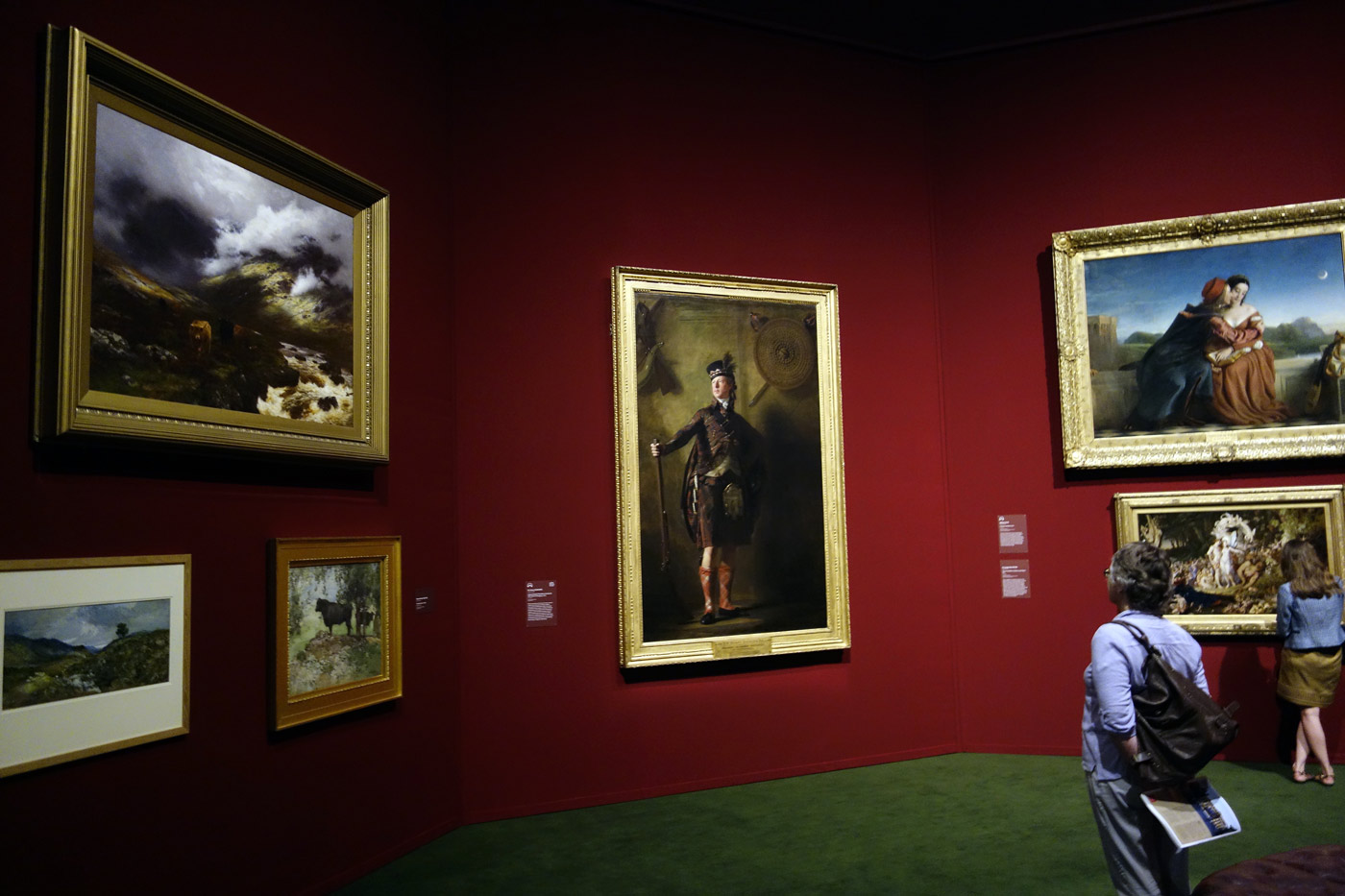
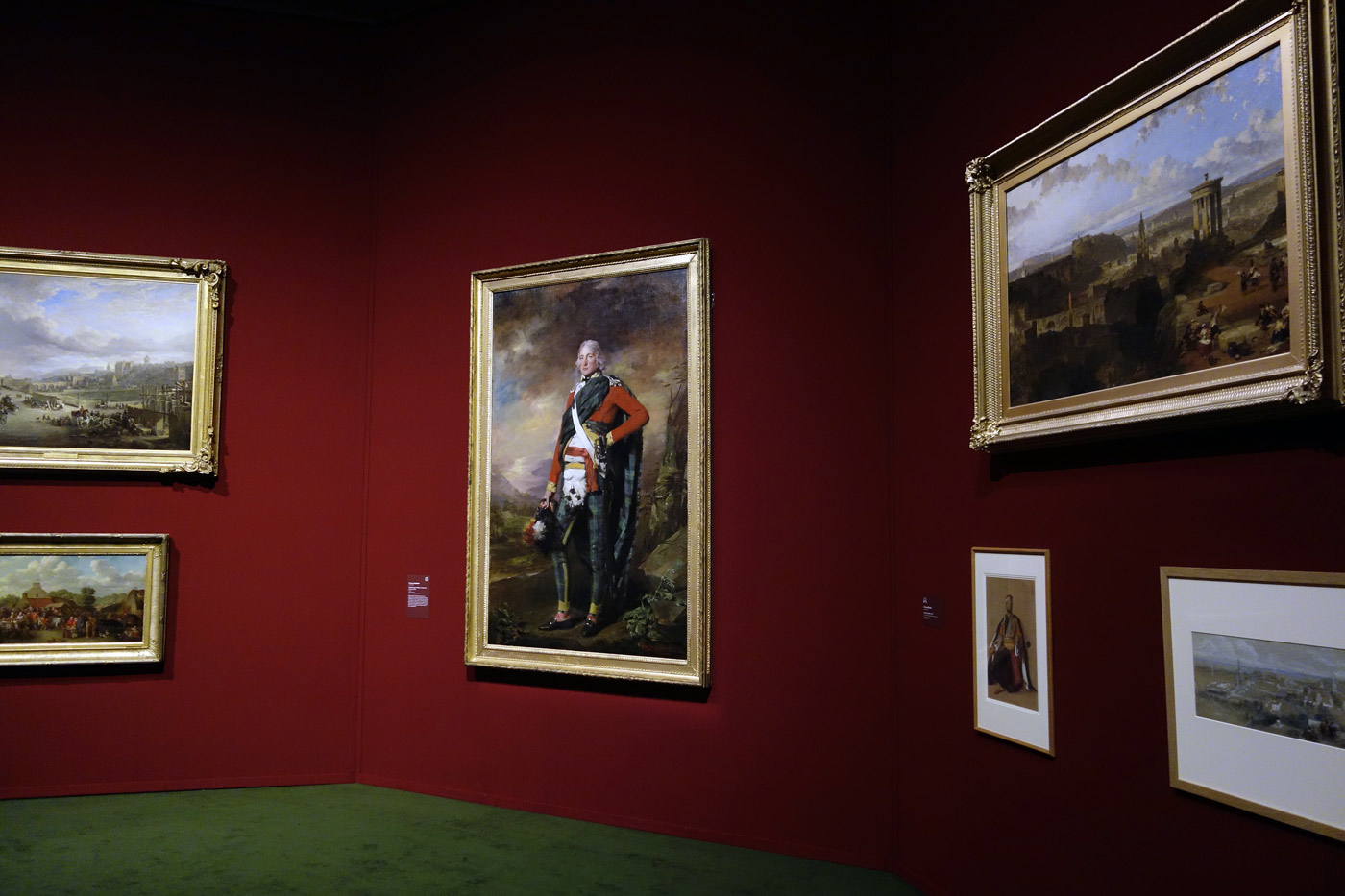
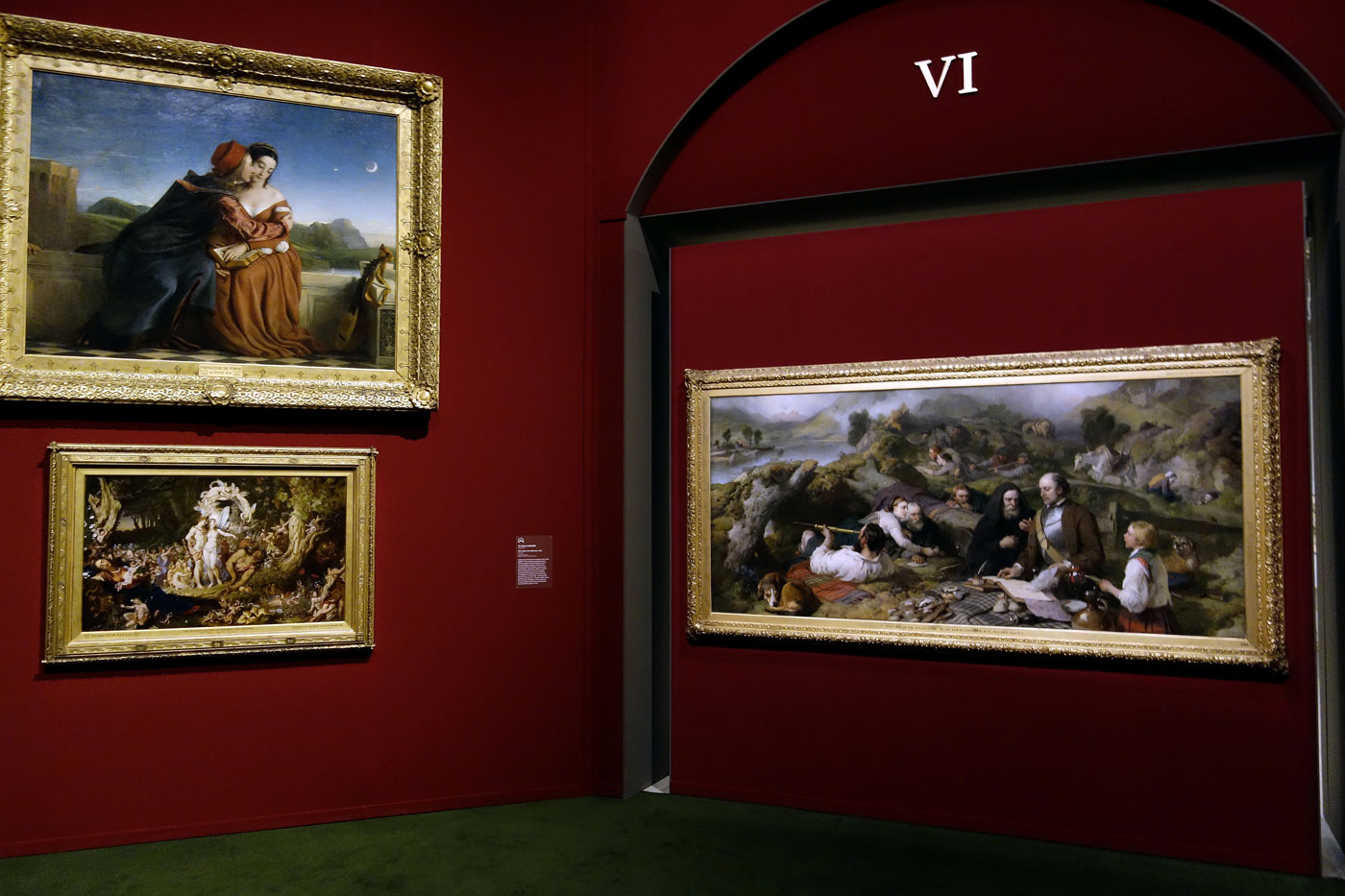
The Greats: masterpieces from the National Galleries of Scotland unfolds in rooms devoted to the art of the Italian Renaissance, the Baroque in Southern and Northern Europe, the French and British Enlightenment, nineteenth century Scotland, and Impressionism. The exhibition has been carefully designed and installed to accentuate the grandeur of the paintings and foster an intimate experience with each of the artworks.”
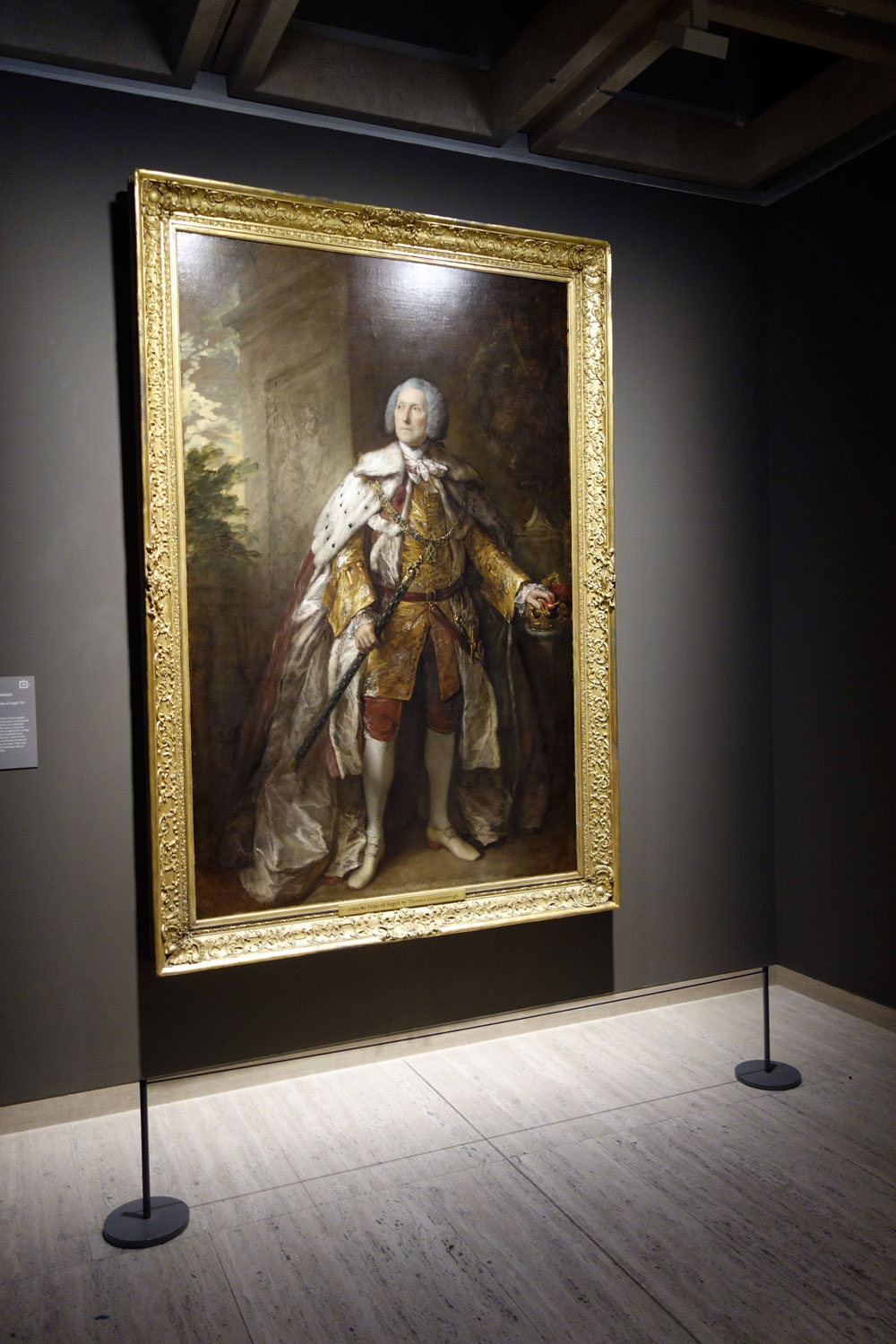
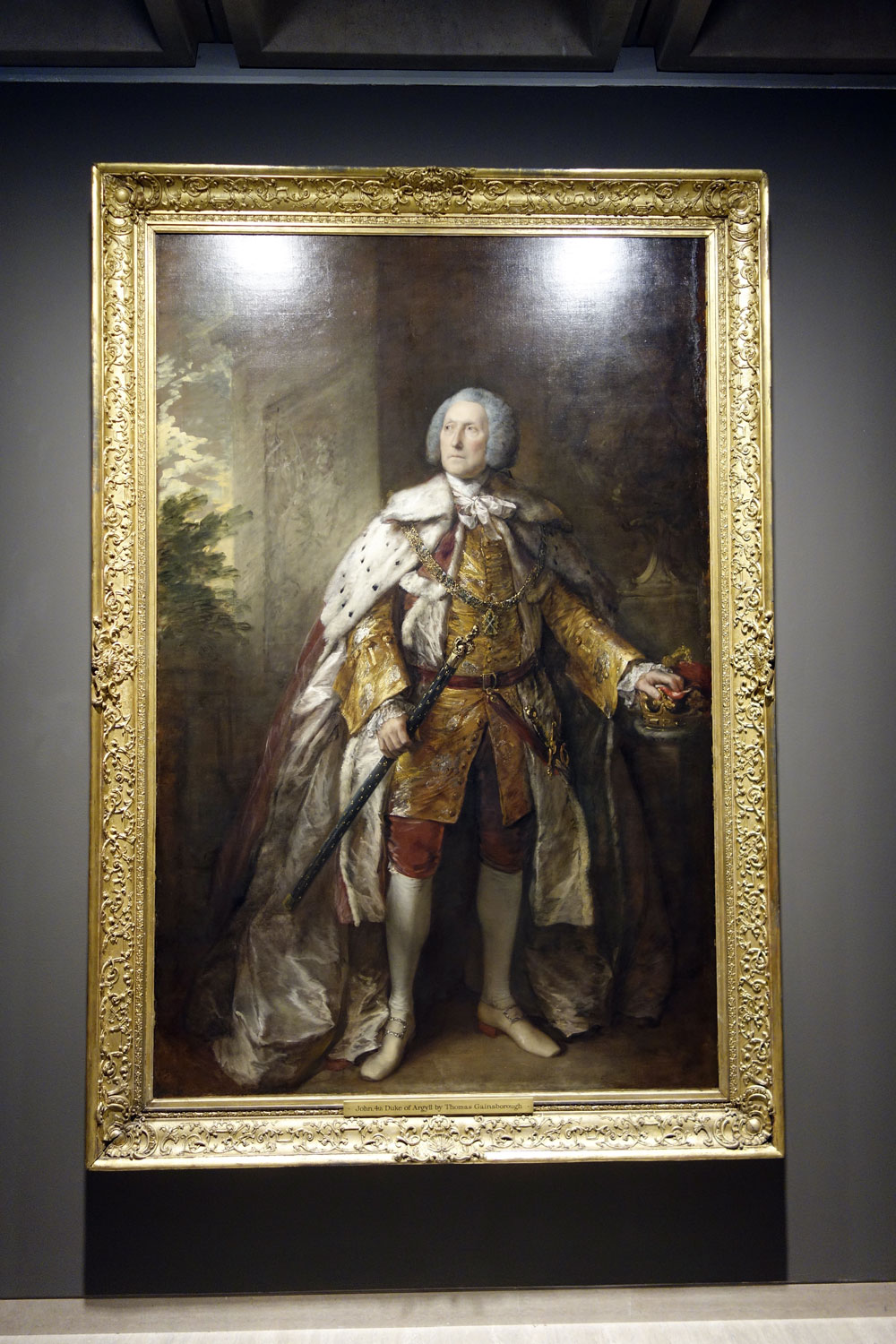
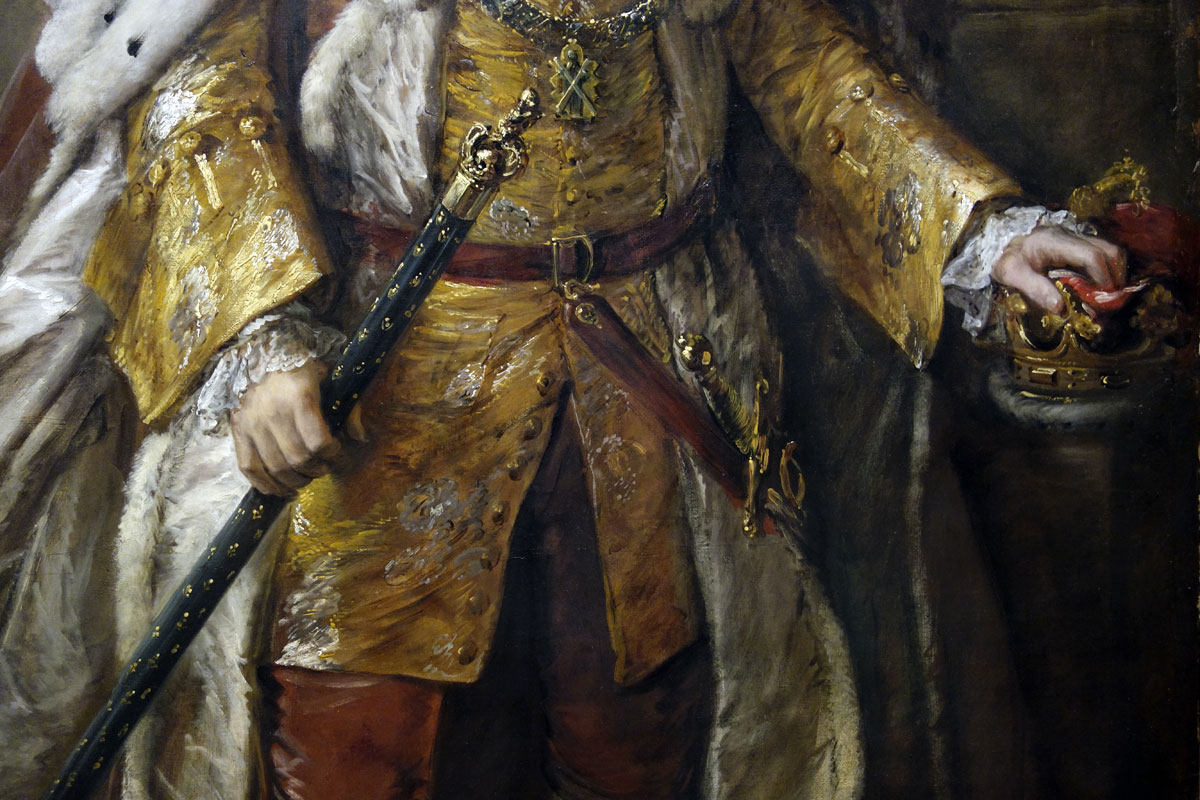
The Scottish Duke of Argyll, Chief of Clan Campbell, whose hereditary seat is Inverary Castle, commissioned Thomas Gainsborough, one of the most celebrated English portraitists of the 18th century, to paint his likeness. The artist’s talents were sought by the wealthy elite both in London and in the fashionable resort town of Bath, where he established a studio in 1759. Gainsborough applied dense and feathery brushwork to convey Argyll’s ducal robes, his collar of the Order of Thistle, and the baton of his hereditary office of Master of the King’s Household.
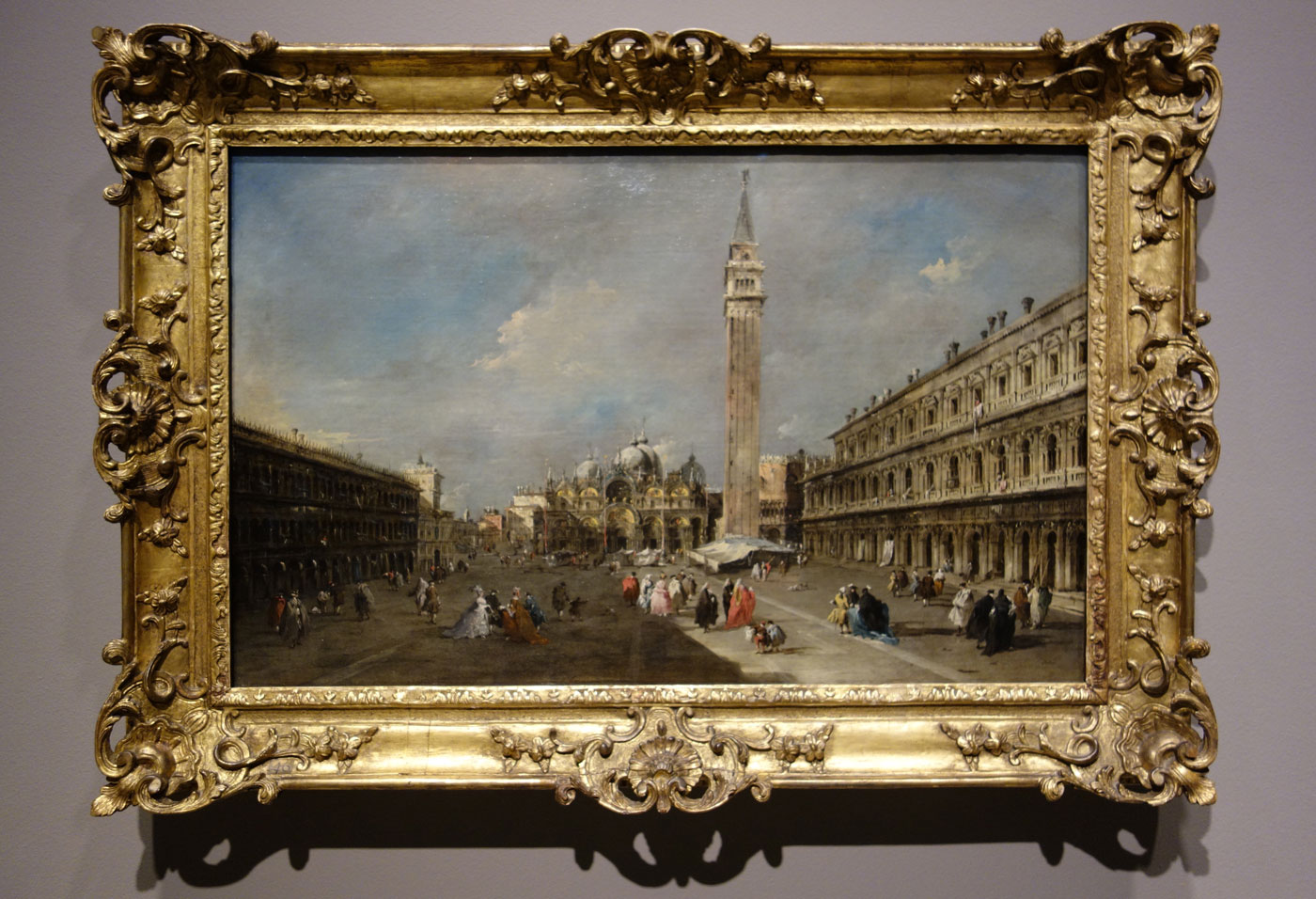
Like his fellow painter Canaletto, Guardi capitalised on the market of tourists eager for topographical views – vedute – of the spectacular urban spaces of Venice. This composition features the Piazza San Marco, which Napoleon would later call ‘the most splendid drawing room in Europe’. On either side, the receding arcades of official buildings, the Procurator Vecchio and Procurator Nuove, lead the eye towards the Basilica of San Marco, its mosaics shimmering in the sunlight. Behind the bellower is a glimpse of the Doge’s Palace. The scene is enlivened by traders, uniformed government officials, and fashionably dressed tourists – all portrayed through only a few deft strokes of the brush.
At the beginning of the 18th century, Watteau pioneered the fêtes gallant, a type of painting depicting a group of men and women enjoying flirtatious love, music and conversation, generally in a park or a garden setting. His paintings inspired a generation of artists who sought to capture the light-hearted elegance of the period. This painting is one of his few compositions that portray real people: the figure on the left can be identified as Watteau’s friend and fellow artist Nichola Vleugxhels, and the lovelorn bagpipe player on the right is considered a self-portrait of Watteau himself.
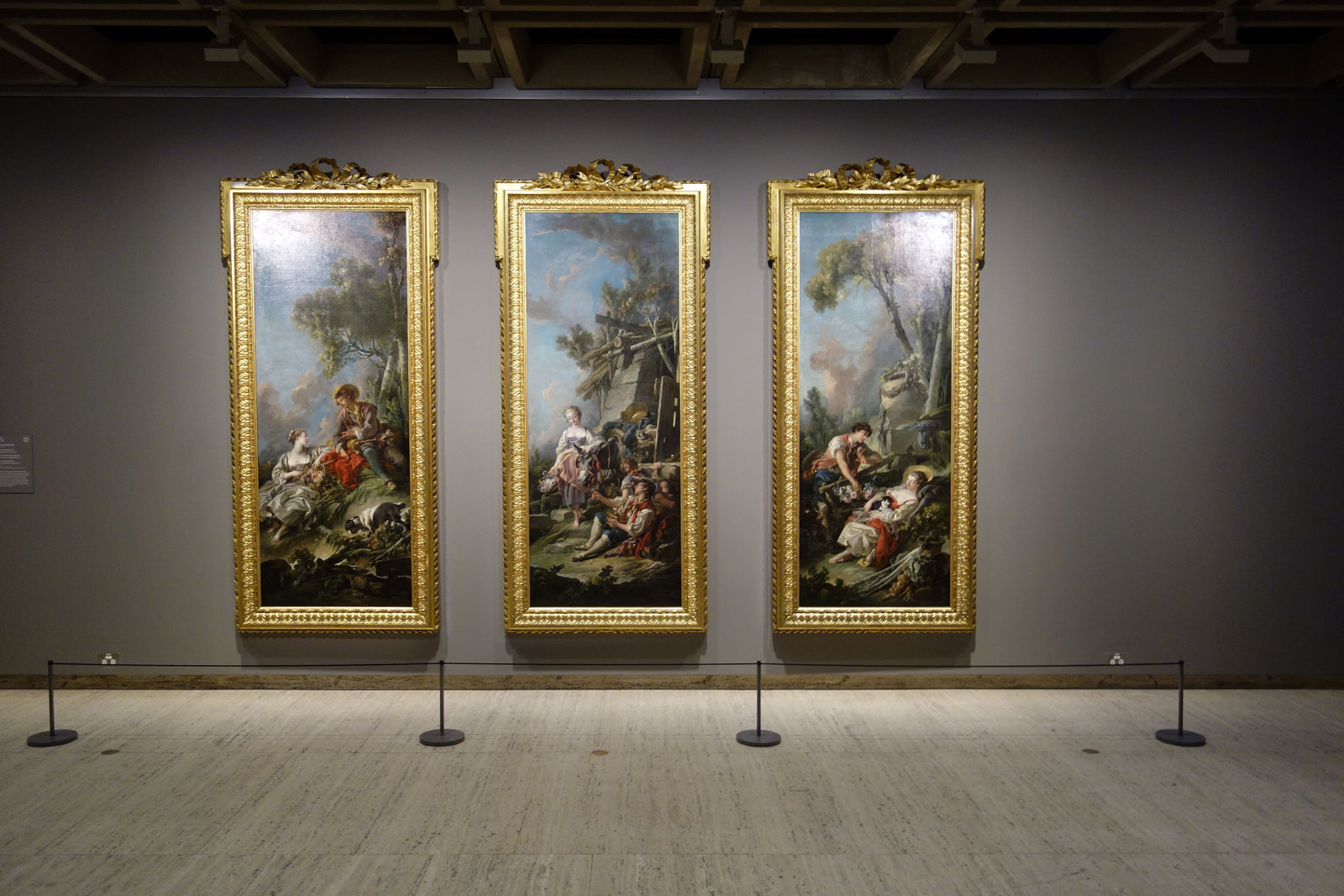
François Boucher (France, 1703-1770) The pleasing pastoral: l’aimable pastorale 1762 Oil on canvas 231.5 x 91cm The offering of the village girl: l’offrande à la villageoise 1761 Oil on canvas 229 x 89cm The sleeping gardener: la jardinière endormie 1762 Oil on canvas 232 x 91cm
Boucher, considered the pre-eminent painter of the French rococo, effectively invented this genre of elegiac, erotic pastoral which found a parallel in the pantomimes devised by his friend Charles-Simon Favart. In these three pastoral scenes set in a luxuriant and entirely unthreatening nature, shepherds engage in a perpetual drama of frustrated courtship, reflecting the polished etiquette and suppressed passions of aristocratic society in pre-revolutionary France.
Constable was born in Suffolk, and he dedicated most of his career to painting the surrounding English countryside with a marked romantic idealism. He was influenced by the grand tradition of European landscape painting, which he learned from artists and dealers he met in London early in his career. This composition, for instance, is indebted broadly to that of Claude Lorrain’s work Hagar and the angel 1646 (National Gallery, London). Constable referred to his own mature masterpiece in al better of June 1828: ‘I have painted a large upright landscape, perhaps my best.’
Although best known for his portraits, Gainsborough consistently painted landscape throughout his long career. Rich in detail and carefully composed, this painting reveals his firsthand knowledge of 17th-century Dutch landscapes. During the 1740s, collectors in London admired and sought out works by such artists of Holland’s Golden Age as Meindert Hobbema and Jacob van Ruisdael. The especially horizontal format of this work suggests that it may have been part of a decorative cycle for a domestic interior, perhaps hanging above a fireplace.
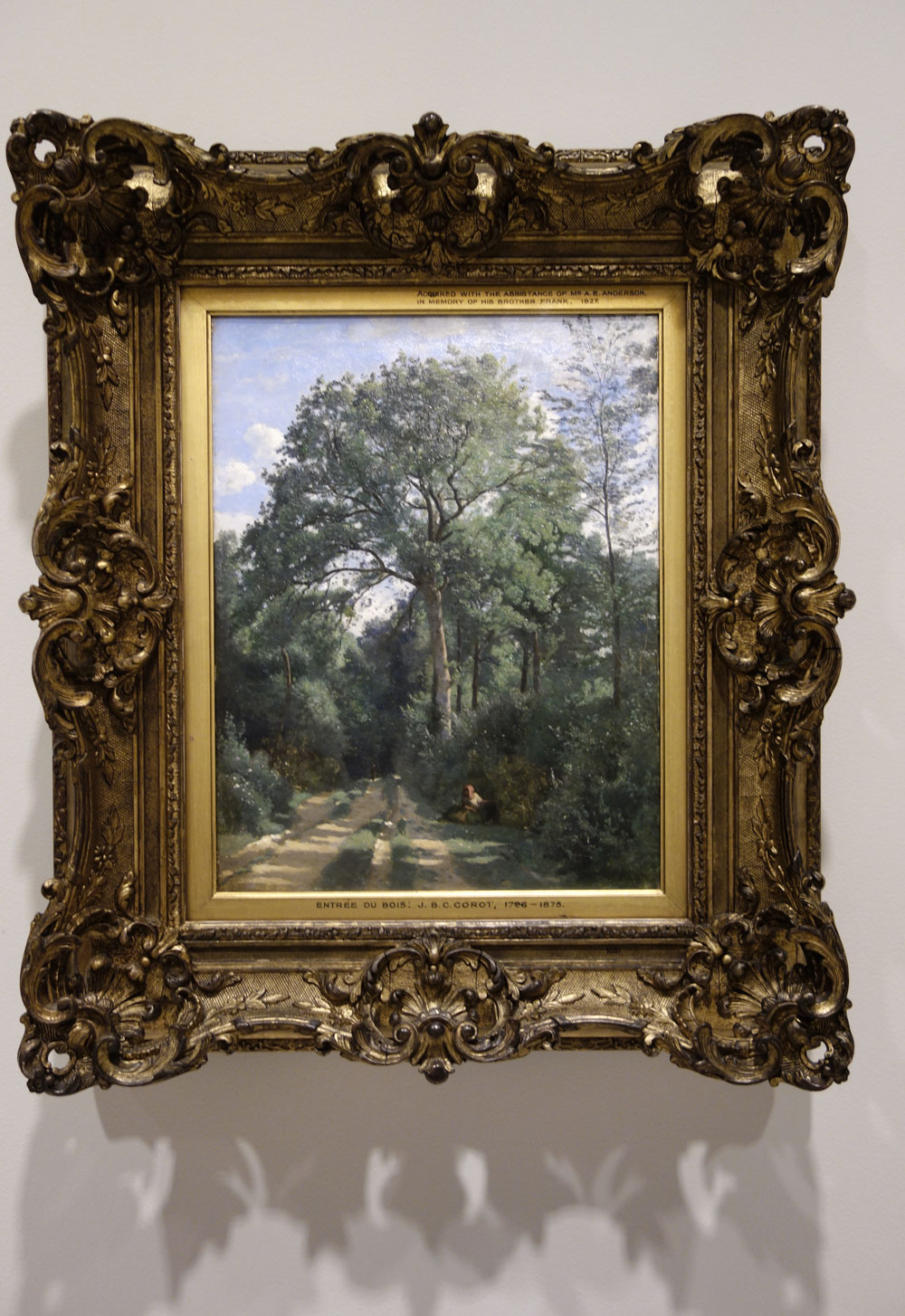
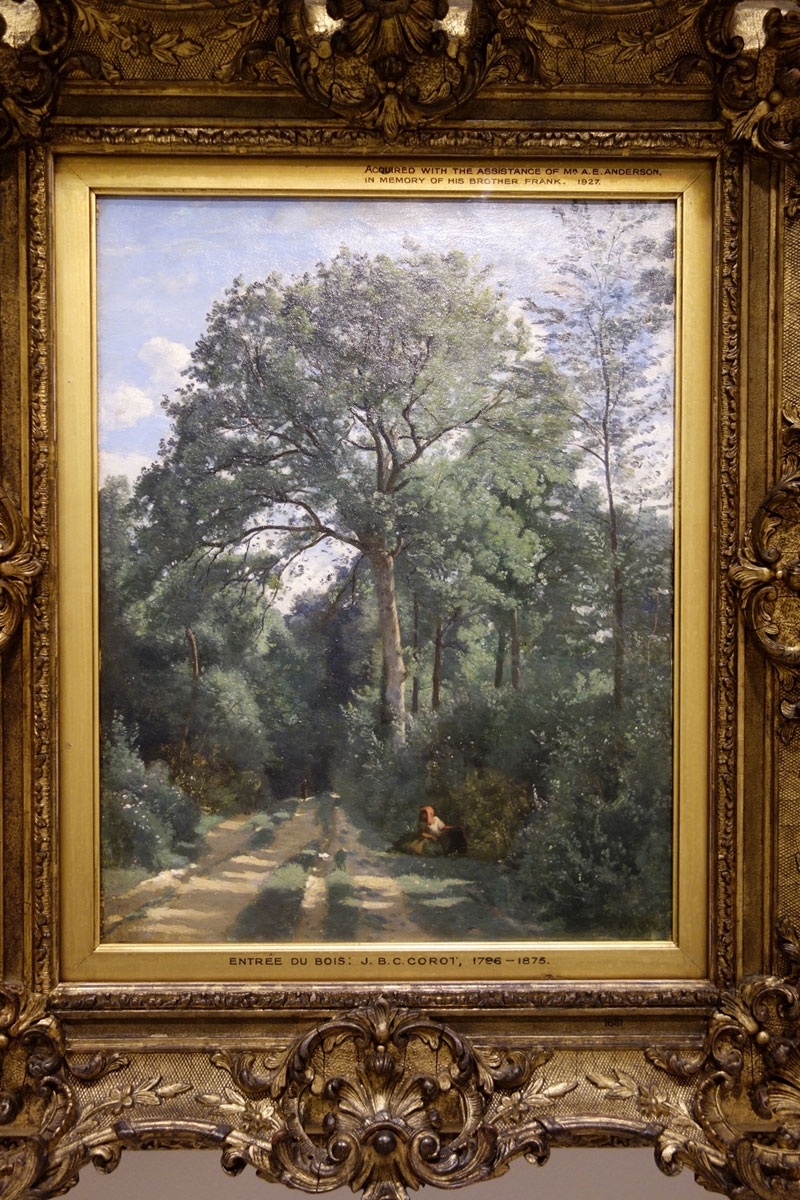
Corot, whose career spanned more than 50 years, emerged from the classicism of the 1820s to found the ‘school of nature’ that would find its culmination after his death in the art of the impressionists. This bucolic early work was painted at Ville-d’Avray, a small town west of Paris, where Corot’s parents owned a modest country house with grounds. The painting was retouched around 1850, at least in part by Corot’s friend and fellow artist Narcisse Virgile Diaz de la Peña, who added the red cap of the seated woman as a bold implement to the otherwise cool palette.
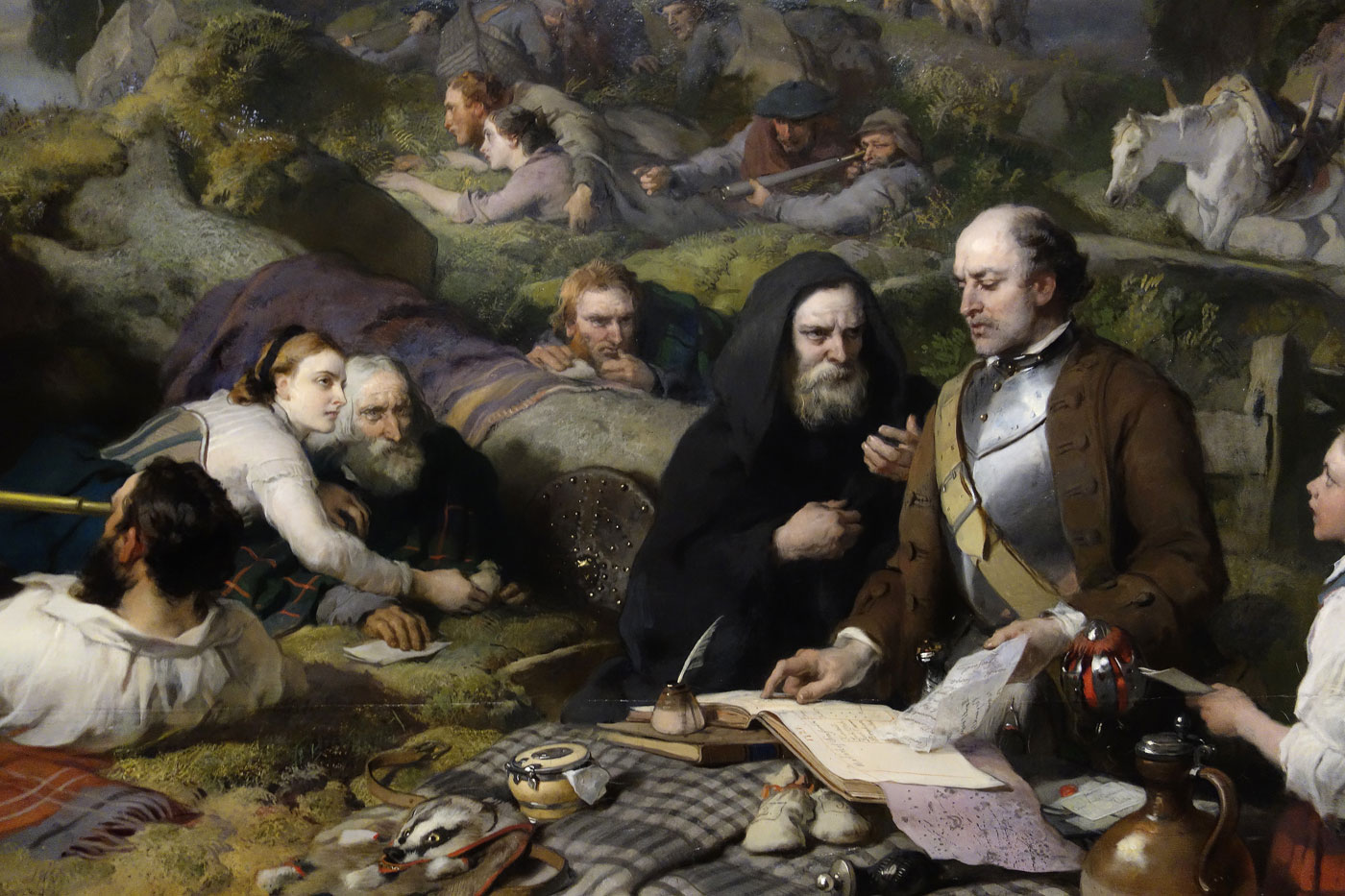
Lands became famous for his paintings of the Scottish Highlands. This unusual history painting is based on the heroic exploits of Colonel Donald Murchison, as recounted in Robert Chamber’s Domestic annals of Scotland (1858-1860). Murchison, a lawyer turned guerrilla fighter, supported the rebellion to reinstate the Stuart dynasty to the throne of Great Britain. he brazenly defied the government by collecting rents illegally from Scottish tenants to finance local armed resistance. In this painting – commissioned by Murchison’s great-grandson – Landseer conflates several distinct episodes, including the colonel’s daring and notorious ambush of government-appointed agents, escorted by British redcoats, in 1721.
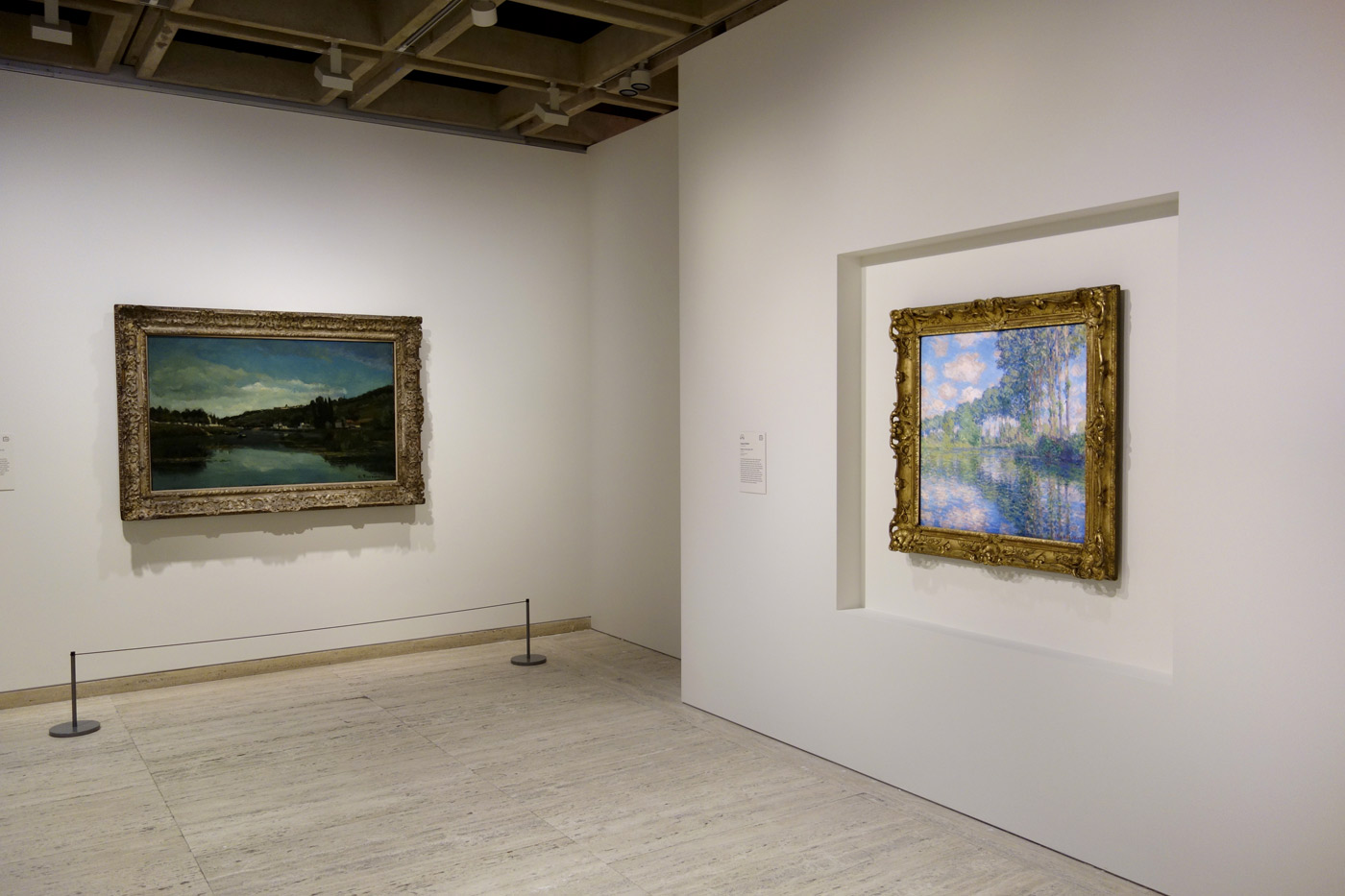
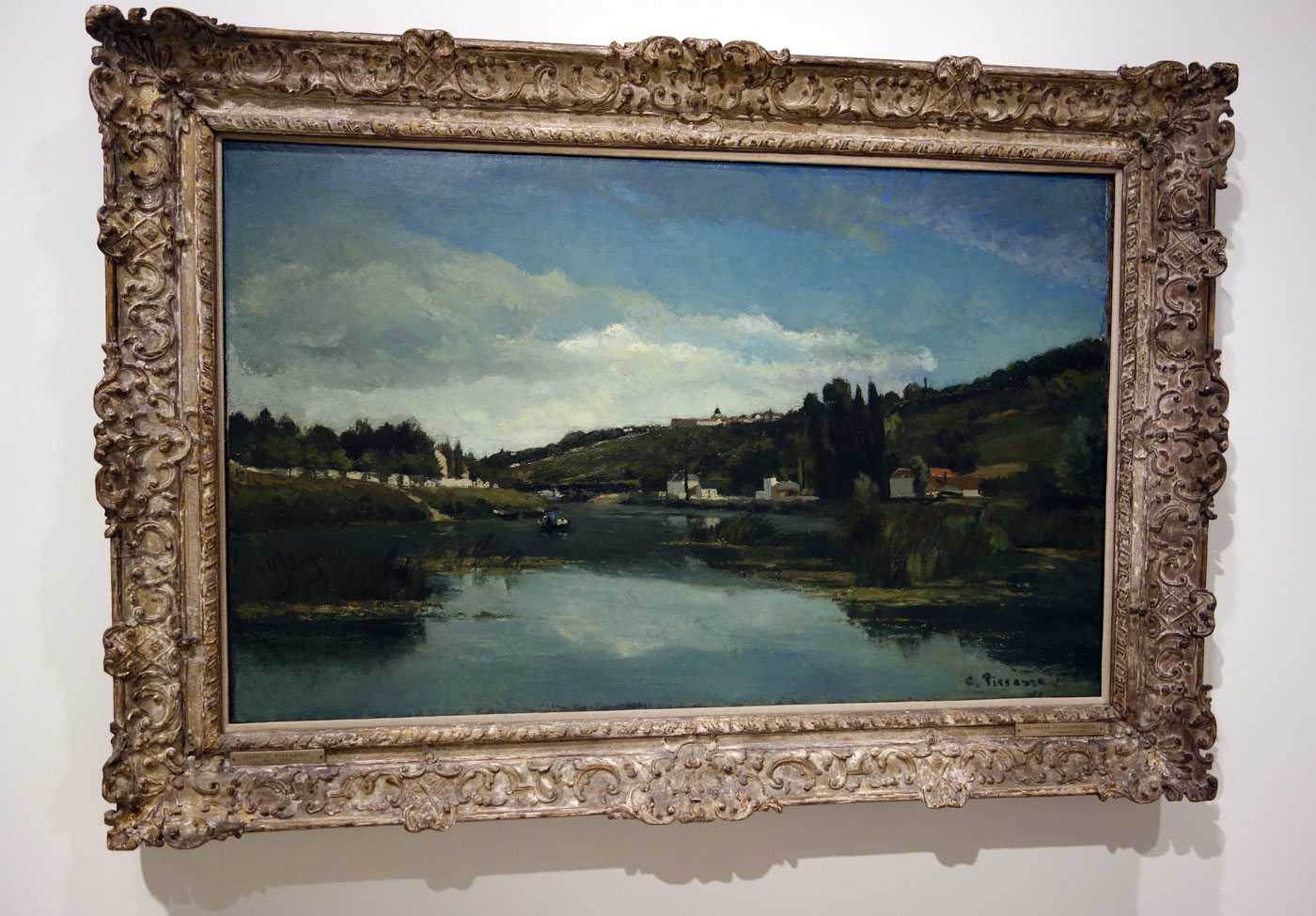
Pisarro, the oldest and perhaps the most paternal of the impressionists, was the only artist to show at all eight of the group exhibitions. He painted this large riverscape early in his career, while renting a house at La Varenne-Saint-Hilaire, a village to the southeast of Paris, situated on the river Marne. The diagonal composition and the use of a palette knife to create this bucolic scene reflect the painter’s admiration for such diverse artists as Charles François Daubigny and Gustave Courbet.
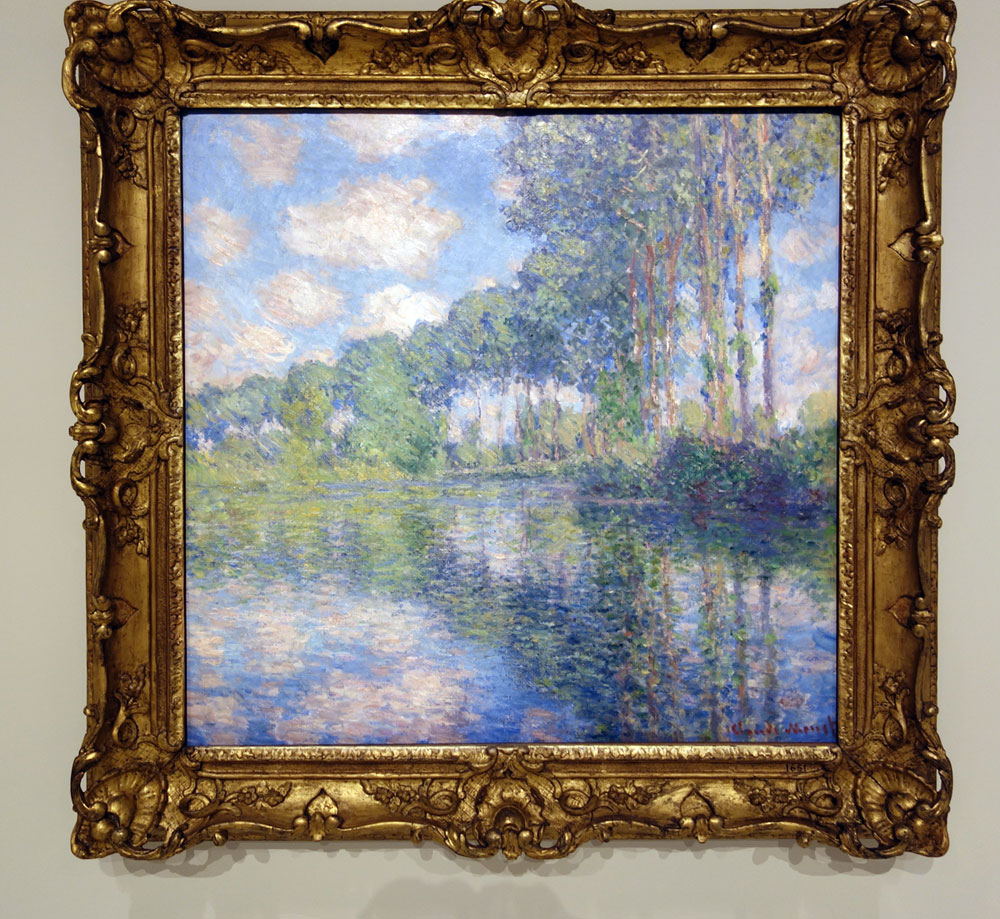
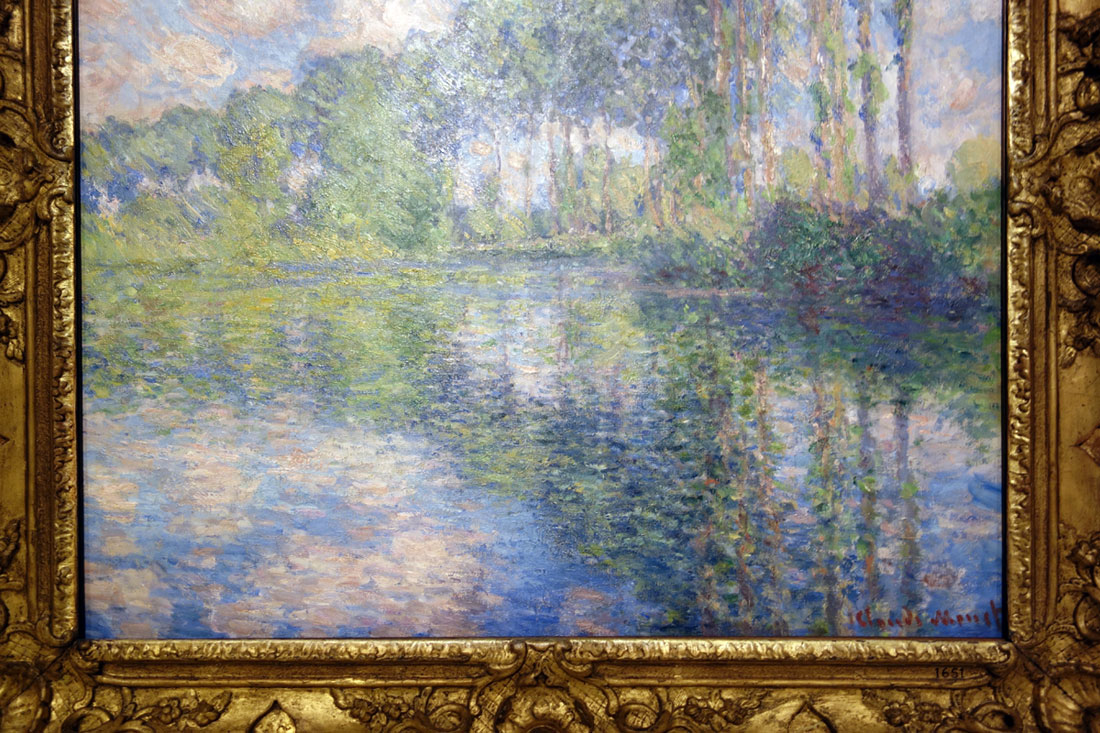
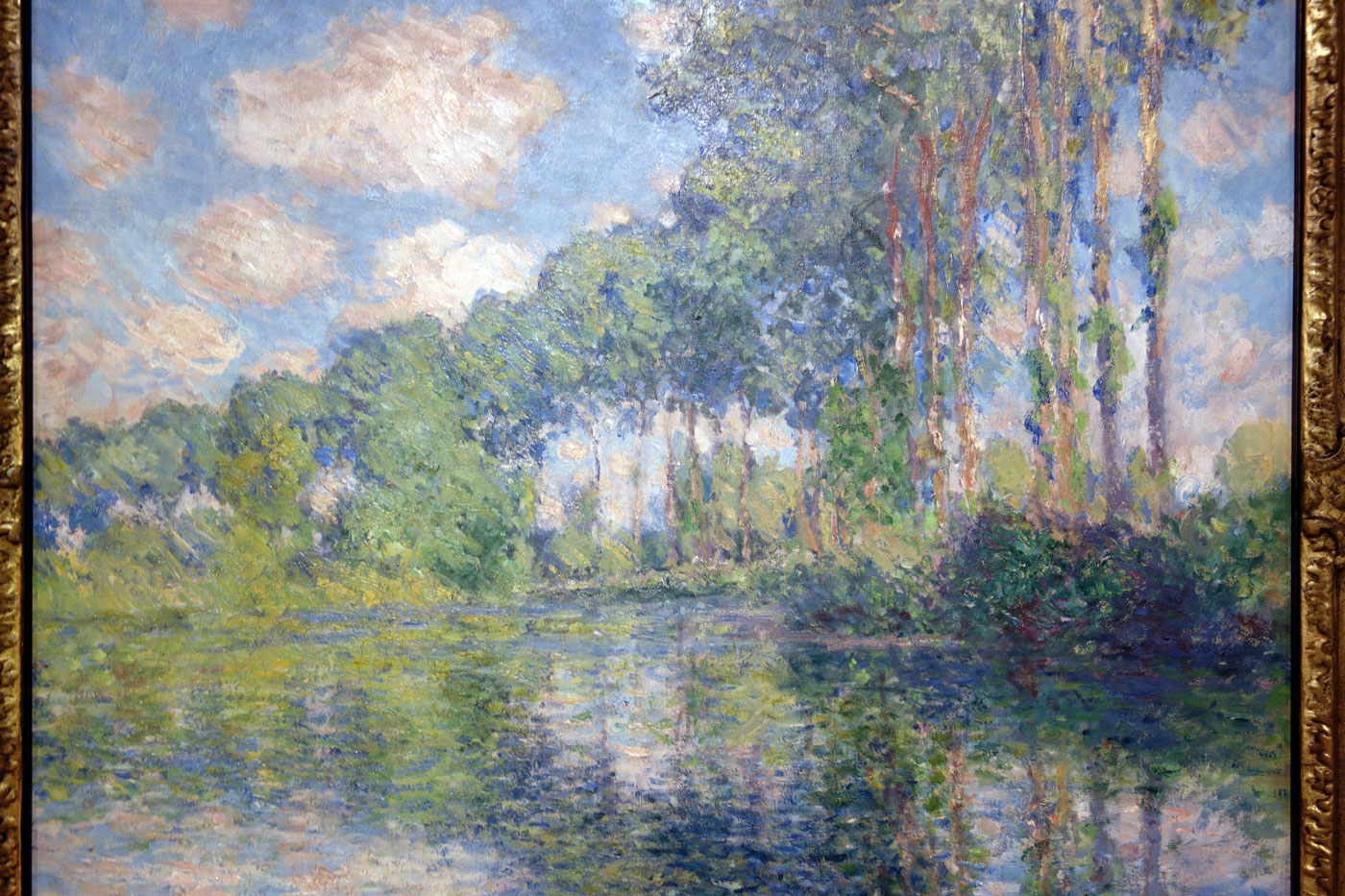
In the 1880s, Monet gradually developed a more schematic and decorative approach to landscape, which led to his ‘series’ paintings of the 1890s, beginning with the Haystacks in 1891 and culminating in his water lily paintings. This painting belongs to a series of twenty-three canvases that Monet, the founder of French impressionism and one of the most celebrated artists in Western art history, completed in the late spring and autumn of 1891.
For the series, Monet painted poplar trees on the river Epte, close to where it joins the river Seine, just more than a mile from his home at Giverny. The clear blue sky and sunlit clouds express a fresh atmosphere. Monet painted the scene on the river from his boat, which served as a floating studio. This explains the low vantage point, with the trees towering above, the river bank at eye level, and the vast expanse of water dominating the lower half of the painting. Unlike most of the series paintings which are vertical, the Edinburgh picture’s format is square, emphasising the gentle curve of the bank and the verticality of the slender trees trunks and their reflection in the water.
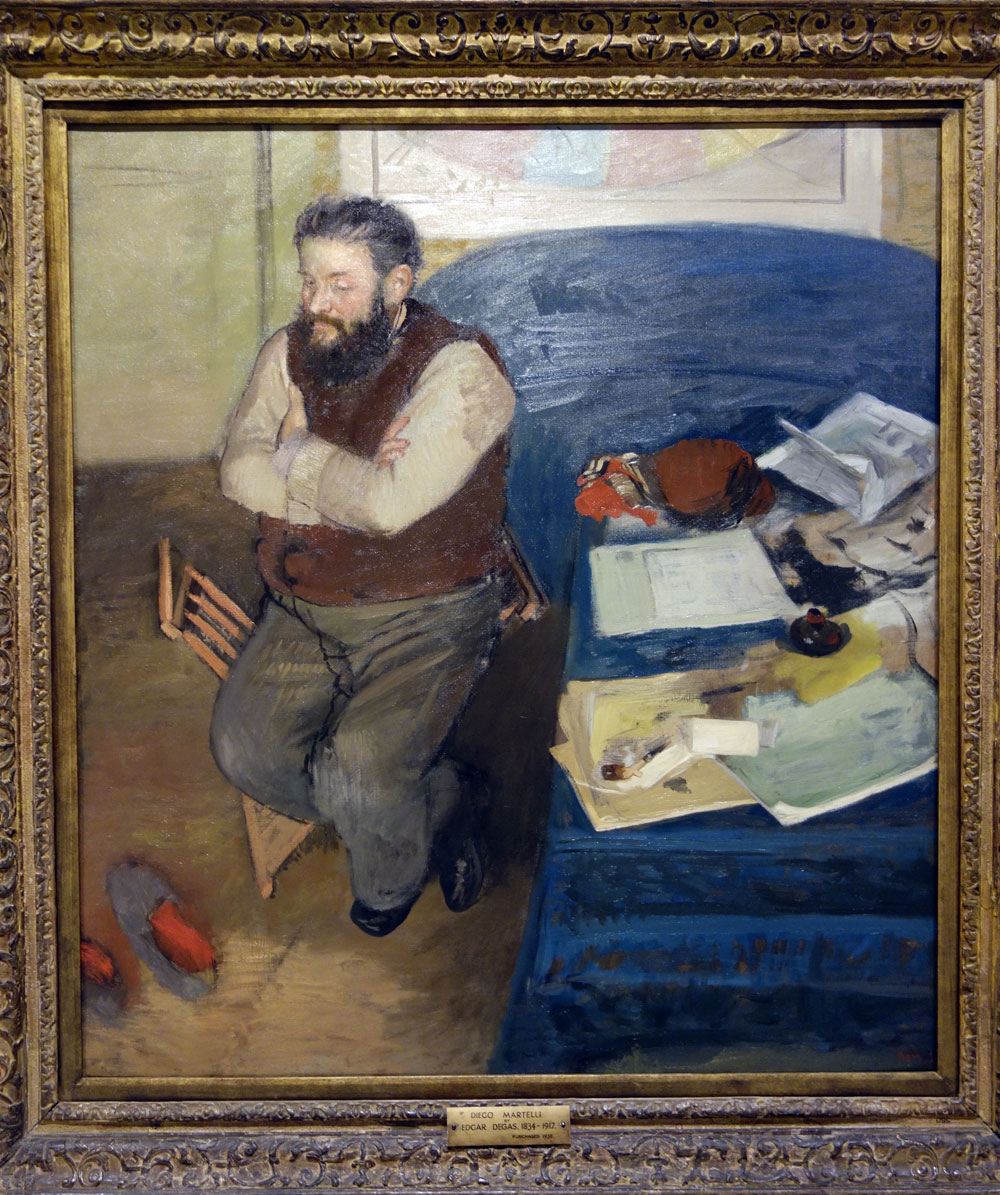
Monet had already started to create these works when municipal authorities decided to cut down the trees for lumber and sell them at auction. In order to preserve his motifs, Monet partnered with a timber merchant, and successfully saved the poplars, allowing him to complete his series for exhibition in 1892. The painting was the first impressionist picture to enter the National Galleries of Scotland’s collection. It was sold to the Gallery in 1924 by the important Scottish art dealer Alex Reid, who was responsible for introducing impressionism to many British collectors. Degas’ Portrait of Diego Martelli 1879 also passed through his hands (see below).
This portrait of the Florentine art critic Diego Martelli, a close friend of Degas and an important champion of impressionism, was painted in Martelli’s Paris apartment. The high viewpoint flattens the composition, throwing the sitter’s legs into sharp perspective. The work’s asymmetry and the cropping of such elements as the discarded slippers reflect Degas’s interest in Japanese prints. The curved picture behind the sofa is a map of Paris: the river Seine is visible, running through coloured segments denoting the city’s new souther neighbourhoods.
This painting dates from the last years of Cézanne’s career. It is one of a series of works executed in the forest around the Bibémus quarry and the Château Noir, areas in which he often painted in his native Aix-en-Provence. The twisting limbs of the tree at left and the dramatic diagonal of the tree at right inject a sense of dynamism into the composition. Cézanne often left his pertaining in seemingly unfinished states, with areas of the primed white canvas showing through; here, they function not only as markers of the painter’s practice but also as patches of reflected sunlight.
Three Tahitians epitomises the decorative intensity of Gauguin’s late Polynesian works. Painted in the artist’s final years, during his second period in Tahiti, the work is said to depict a silent conversation in which the man appears to be undecided about the choice offered by the two attractive women – the choice between sensuality and piety. Although ambiguous, it has been suggested these two women are respectively symbolic of vice and virtue.
The bare-chested woman, holding a small posy of flowers and wearing a wedding ring, would seem to represent goodness, her gaze directed to the man. While the woman who turns to face the viewer, her sensuous lips in an enigmatic smile, and holds a mango, may be a reference to the biblical figure Eve who tempted Adam with an apple. These two women recur in several other compositions by Gauguin around this time. In the 1880s, the French post-impressionist fled urban civilisation in search of a tropical Garden of Eden, in which he felt his art could flourish. His final two years of life were spent on the remote island of Hivaoa in the tiny village of Atuona.
Art Gallery of New South Wales Art Gallery Road, The Domain Sydney NSW 2000, Australia
Opening hours: Open every day 10am – 5pm except Christmas Day and Good Friday



![Fratelli Gajo – Piazza S.Marco 139 – Venezia. 'Untitled [The Doges' Palace and the Piazzetta]' 1880s](https://artblart.com/wp-content/uploads/2022/05/3-untitled.jpg "Fratelli Gajo – Piazza S.Marco 139 – Venezia. 'Untitled [The Doges' Palace and the Piazzetta]' 1880s")


![Fratelli Gajo – Piazza S.Marco 139 – Venezia. 'Untitled [St Mark's Basilica]' 1880s](https://artblart.com/wp-content/uploads/2022/05/5-untitled.jpg "Fratelli Gajo – Piazza S.Marco 139 – Venezia. 'Untitled [St Mark's Basilica]' 1880s")



![Fratelli Gajo – Piazza S.Marco 139 – Venezia. 'Untitled [Bridge of Sighs]' 1880s](https://artblart.com/wp-content/uploads/2022/05/9-untitled.jpg "Fratelli Gajo – Piazza S.Marco 139 – Venezia. 'Untitled [Bridge of Sighs]' 1880s")


![Fratelli Gajo – Piazza S.Marco 139 – Venezia. 'Untitled [The Courtyard of the Doge's Palace looking towards the Torricella]' 1880s](https://artblart.com/wp-content/uploads/2022/05/10-untitled.jpg "Fratelli Gajo – Piazza S.Marco 139 – Venezia. 'Untitled [The Courtyard of the Doge's Palace looking towards the Torricella]' 1880s")


![Fratelli Gajo – Piazza S.Marco 139 – Venezia. '230 [Interior of the Doges Palace]' 1880s](https://artblart.com/wp-content/uploads/2022/05/14-230-untitled.jpg "Fratelli Gajo – Piazza S.Marco 139 – Venezia. '230 [Interior of the Doges Palace]' 1880s")



![Fratelli Gajo – Piazza S.Marco 139 – Venezia. 'Untitled [Entry to the presbytery of St Mark's Basilica]' 1880s](https://artblart.com/wp-content/uploads/2022/05/20-untitled.jpg "Fratelli Gajo – Piazza S.Marco 139 – Venezia. 'Untitled [Entry to the presbytery of St Mark's Basilica]' 1880s")
![Fratelli Gajo – Piazza S.Marco 139 – Venezia. 'Untitled [Bridge of Sighs]' 1880s](https://artblart.com/wp-content/uploads/2022/05/21-untitled.jpg "Fratelli Gajo – Piazza S.Marco 139 – Venezia. 'Untitled [Bridge of Sighs]' 1880s")


![Fratelli Gajo – Piazza S.Marco 139 – Venezia. 'Untitled [Torre del Orologio]' 1880s](https://artblart.com/wp-content/uploads/2022/05/24-untitled.jpg "Fratelli Gajo – Piazza S.Marco 139 – Venezia. 'Untitled [Torre del Orologio]' 1880s")
![Fratelli Gajo – Piazza S.Marco 139 – Venezia. 'Untitled [The Doge's Palace]' 1880s](https://artblart.com/wp-content/uploads/2022/05/25-untitled.jpg "Fratelli Gajo – Piazza S.Marco 139 – Venezia. 'Untitled [The Doge's Palace]' 1880s")


![Fratelli Gajo – Piazza S.Marco 139 – Venezia. 'Untitled [Statue of King Vittorio Emanuel II by the sculptor Ettore Ferrari 1887]' c. 1887](https://artblart.com/wp-content/uploads/2022/05/28-untitled.jpg "Fratelli Gajo – Piazza S.Marco 139 – Venezia. 'Untitled [Statue of King Vittorio Emanuel II by the sculptor Ettore Ferrari 1887]' c. 1887")


![Fratelli Gajo – Piazza S.Marco 139 – Venezia 'Untitled [Rialto Bridge]' 1880s](https://artblart.com/wp-content/uploads/2022/05/30-untitled.jpg "Fratelli Gajo – Piazza S.Marco 139 – Venezia 'Untitled [Rialto Bridge]' 1880s")





















 Art Blart _ art and cultural memory archive
You must be logged in to post a comment.