
Exhibition dates: 13th March – 13th September, 2015
Curators: Jérôme Neutres from Paris with Director Pirkko Siitari and Chief Curator Marja Sakari from Kiasma

Robert Mapplethorpe (American, 1946-1989)
Ken Moody and Robert Sherman
1984
Gelatin silver print
© Robert Mapplethorpe Foundation
These images are good to see… but not really what I want to see.
I want to see some of the early work, and some of the S/M photographs. You never get to see these online. It’s almost as though the Robert Mapplethorpe Foundation is too scared to authorise the online publication of these works, for fear of – heaven forbid – letting people understand all the facets of Mapplethorpe’s work.
Its the origin story and the picturing of his sexual proclivities that are some of his most powerful work… and we never get to see them. Eros (denied).
Dr Marcus Bunyan
Many thankx to the Museum of Contemporary Art Kiasma for allowing me to publish the photographs in the posting. Please click on the photographs for a larger version of the image.
Robert Mapplethorpe @ Kiasma 13.3. – 13.9.2015

Robert Mapplethorpe (American, 1946-1989)
Self-Portrait
1980
Gelatin silver print
© Robert Mapplethorpe Foundation

Robert Mapplethorpe (American, 1946-1989)
Leather Crotch
1980
Gelatin silver print
© Robert Mapplethorpe Foundation
The American photographer Robert Mapplethorpe (1946-1989) lived a life of passion in the New York underground and rock scenes in the 1970s and ’80s. That passion also made its way into his art.
Consisting of more than 250 works, the retrospective exhibition in the Museum of Contemporary Art Kiasma offers a broad overview of the key periods of Mapplethorpe’s career. In their aspiration for perfection, Mapplethorpe’s pictures blend beauty and eroticism with pain, pleasure and death. Mapplethorpe also photographed his celebrity friends such as Patti Smith, Andy Warhol and Richard Gere. Although solidly anchored in their time, his photographs are also universal and topical even today.
Arriving from Paris to Helsinki, the high-profile exhibition is a unique opportunity to learn about the art and life of one of the most important photographic artists of our time. The exhibition is curated by Jérôme Neutres from Paris with Director Pirkko Siitari and Chief Curator Marja Sakari from Kiasma.
This exhibition is organised by The Finnish National Gallery – Museum of Contemporary Art Kiasma and the Réunion des Musées Nationaux – Grand Palais, with the collaboration of the Robert Mapplethorpe Foundation New York.
Exhibition themes
Body sculpture
“If I had been born one hundred or two hundred years ago, I might have been a sculptor, but photography is a very quick way to see, to make sculpture.”
~ Robert Mapplethorpe
Mapplethorpe became interested in photographing sculpture during his first trip to Paris in the early 1970s. He also began taking pictures of people in poses that imitated classical sculptures. Lisa Lyon, the first World Women’s Bodybuilding Champion, was the subject in many of the pictures.
Body and geometry
Mapplethorpe prized order and purity of form in his art. He was also particular about the frames of his pictures, which he often designed himself. He had great respect for the long history of art. Some of his nude studies echo Leonardo da Vinci’s Vitruvian Man which shows an idealised human body inside a circle and a square
Still lifes and body details
“I am looking for perfection in form. I do that with portraits. I do it with cocks. I do it with flowers.”
~ Robert Mapplethorpe
Mapplethorpe’s still lifes and pictures of body parts play with stormy associations. They are distinctly corporeal and vitalistic, whether the subject is an exposed penis or an aubergine on a table. Mapplethorpe said he looked at all objects in precisely the same way. According to Patti Smith, “Robert infused objects, whether for art or life, with his creative impulse, his sacred sexual power. He transformed a ring of keys, a kitchen knife, or a simple wooden frame into art.”
Chapel and Colour bracket
“I was a Catholic boy, I went to church every Sunday. A church has a certain magic and mystery for a child.”
~ Robert Mapplethorpe
Mapplethorpe came from a Roman Catholic family, but his interest in the church was primarily aesthetic. He said he wanted his pictures to be viewed like altars. The figure of a crucified Christ appears in some of his works, as does the human skull, a traditional reminder of death. Instead of suffering, however, the images convey a sense of sinful pleasure. Mapplethorpe worked with colour film starting in the late 1970s, but did not routinely exhibit his colour photos until the end of the 1980s.
Mapplethorpe and women
“Lisa Lyon reminded me of Michelangelo’s subjects, because he did muscular women.”
~ Robert Mapplethorpe
Poet and musician Patti Smith was Mapplethorpe’s first and last model and muse. Mapplethorpe photographed covers for Smith’s albums and books of poems. Another important model was the body builder Lisa Lyon, who is the subject of Mapplethorpe’s book Lady: Lisa Lyon. Both women could be described as androgynous. Locating himself in the same intermediate space between femininity and masculinity, Mapplethorpe photographed himself in drag.
Portraits
New York and the Chelsea Hotel in particular were places where the American cultural intelligentsia used to gather in the 1970s. There Mapplethorpe met writers, musicians and artists such as William Burroughs, Iggy Pop and David Hockney, and enjoyed the attention lavished on him. He became the court photographer of certain cultural circles, his camera capturing friends, celebrities and famous figures in the art world.
Eros
“I don’t think anyone understands sexuality. It’s about an unknown, which is why it’s so exciting.”
~ Robert Mapplethorpe
Sadomasochism, S&M, was both sex and magic for Mapplethorpe. Like the French writer Jean Genet, he too wanted to elevate things into art that were not yet considered art. Mapplethorpe’s depiction of fetishes in his photographs was deliberately formal. He documented spontaneous acts only very infrequently. The sex he captured in his pictures was neither malicious nor repugnant. S&M is about desire and pleasure, and above all about trust.
Polaroids
“I’m trying to record the moment I’m living in and where I’m living, which happens to be in New York. These pictures could not have been done at any other time.”
~ Robert Mapplethorpe
Mapplethorpe got his first Polaroid camera in 1970 and fell in love with its simplicity: there were few adjustments to make and you could see the results instantly. Because the film was expensive, Mapplethorpe felt that every picture had to be perfect. Precision and economy became a habit that endured throughout his career. In 1975, he switched over to the more versatile Hasselblad 500.
Still moving
“We were like two children playing together, like the brother and sister in Cocteau’s ‘Enfants Terribles’.”
~ Patti Smith
Robert Mapplethorpe and Patti Smith began their creative careers together. Frequently they would not plan their projects in advance. The experimental short Still Moving had no script, and Smith improvised her movements and lines. The camera operator was Lisa Rinzler. “He wordlessly guided me. I was an oar in the water and his the steady hand,” Smith has said.
Robert Mapplethorpe – Portraits
New York was home to America’s cultural intelligentsia in the 1970s. Mapplethorpe was the court photographer of the cultural elite. His portraits feature his friends, celebrities and influential figures on the art scene.

Robert Mapplethorpe (American, 1946-1989)
Self-Portrait
1975
Gelatin silver print
© Robert Mapplethorpe Foundation

Robert Mapplethorpe (American, 1946-1989)
Patti Smith
1979
Gelatin silver print
© Robert Mapplethorpe Foundation
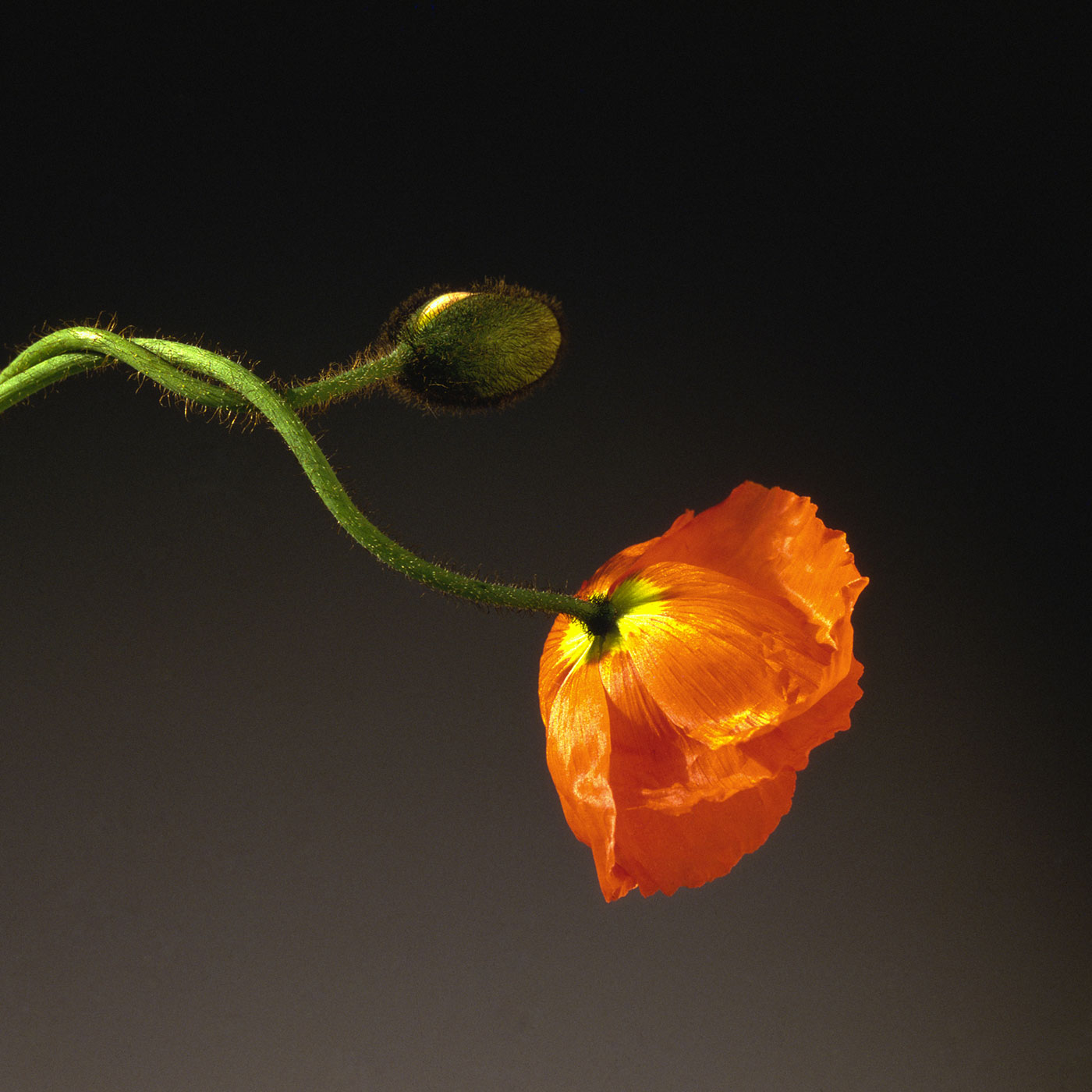
Robert Mapplethorpe (American, 1946-1989)
Poppy
1988
Unique dye transfer
© Robert Mapplethorpe Foundation


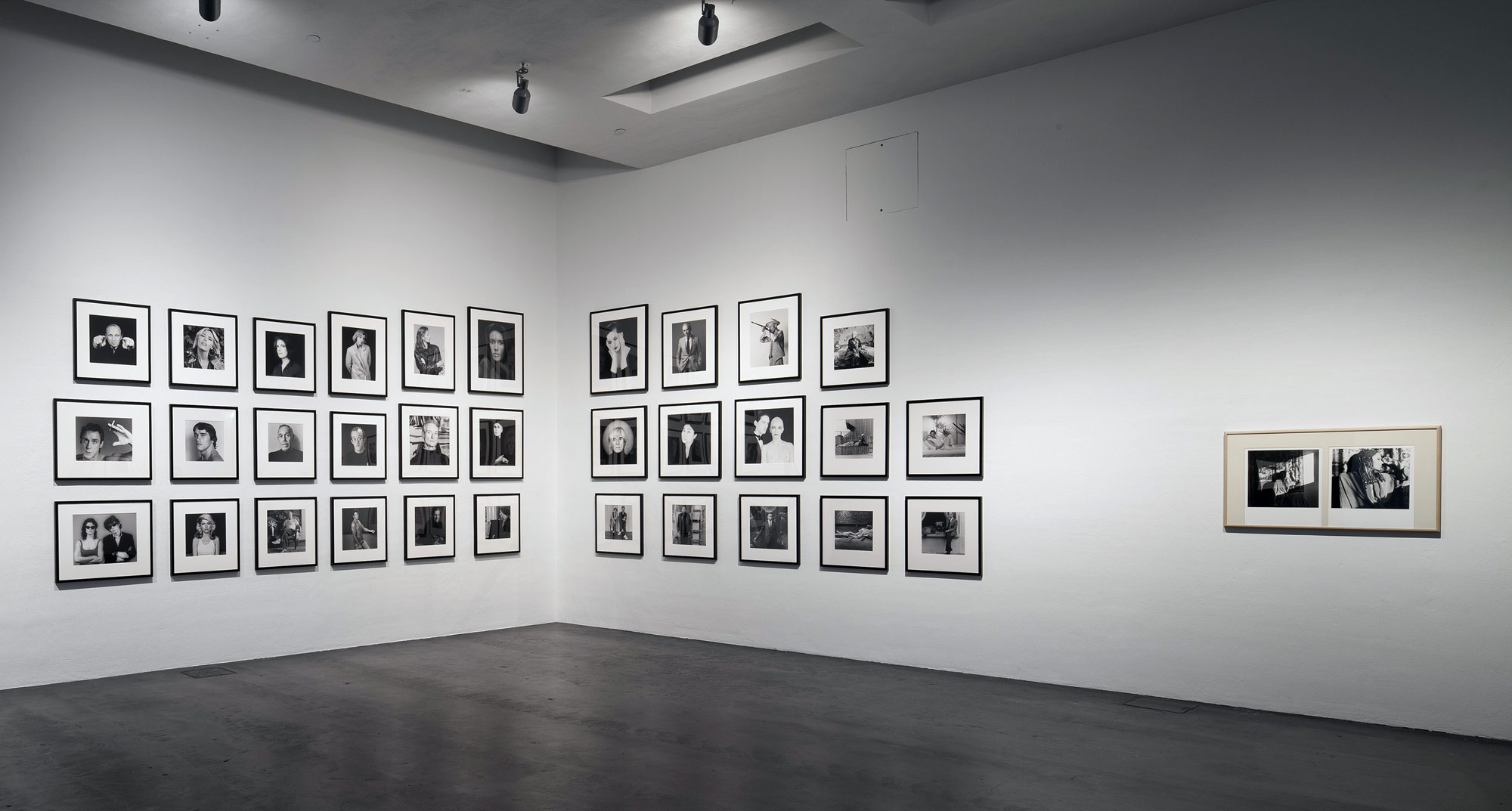

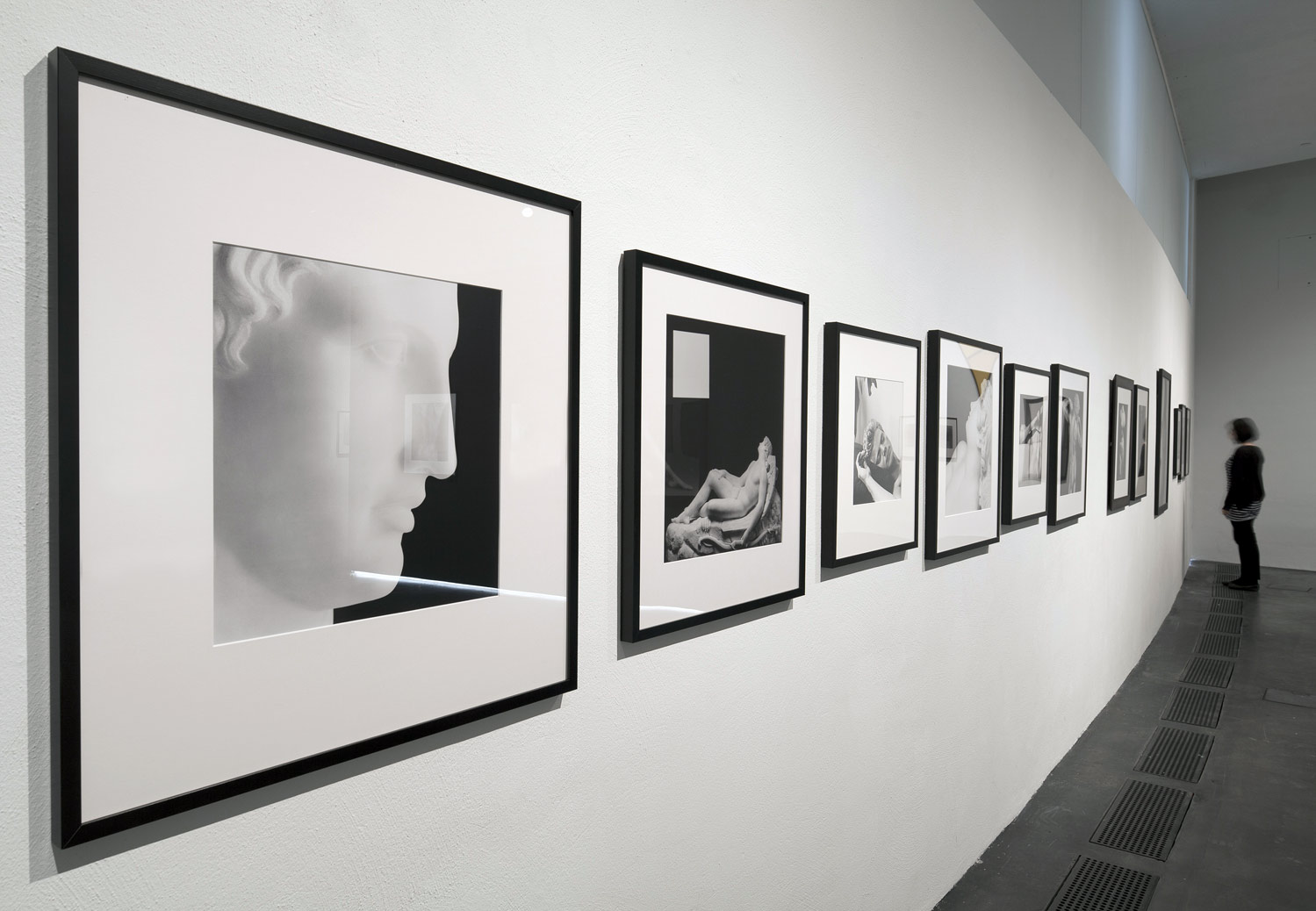
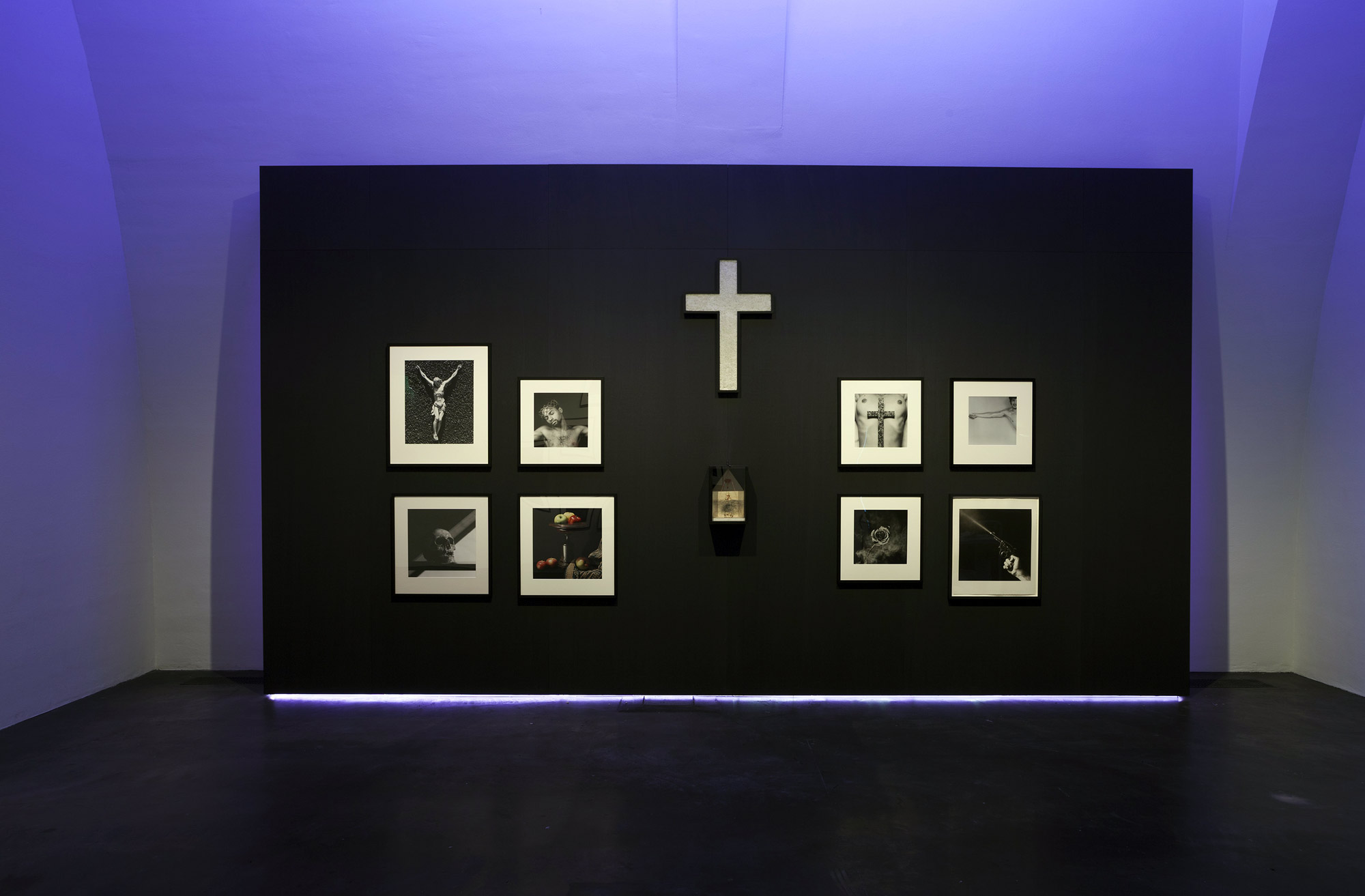


Installation views of the exhibition Robert Mapplethorpe at the Museum of Contemporary Art Kiasma, Helsinki
Finnish National Gallery / Pirje Mykkänen
Who’s who?
~ Princesse Diane de Beauvau
French aristocrat, model and fashion muse
~ Bruno Bischofberger
Swiss gallerist and art dealer known for bringing American Pop Art to Europe, long-term associate of Andy Warhol
~ Louise Bourgeois
French-born sculptor known for her gigantic spider sculptures
~ Miep Brons
Dutch porn dealer
~ William Burroughs
Writer and primary figure of the Beat Generation
~ Alistair Butler
New York dancer
~ Patrice Calmettes
French photographer
~ Truman Capote
American author and journalist whose best known titles include Breakfast at Tiffany’s and In Cold Blood
~ Leo Castelli
American-Italian gallerist, influential promoter of contemporary art in New York
~ Katherine Cebrian
San Francisco socialite
~ Francesco Clemente
Italian-born contemporary artist
~ Ed and Melody
Mapplethorpe’s brother Edward and his girlfriend at the time, Melody, a friend of Mapplethorpe’s
~ Richard Gere
American actor, idolised at the time of this portrait following his performance in American Gigolo
~ Philip Glass and Robert Wilson
Glass is a contemporary composer, Wilson a director and playwright. At the time of this portrait, they had worked together on their opera Einstein on the Beach
~ Keith Haring
American Pop and graffiti artist
~ Deborah Harry
Singer and actress, best known as lead singer of Blondie
~ David Hockney and Henry Geldzahler
Hockney is a British artist and Pop Art pioneer. Belgian-born Geldzahler was a curator, critic and art historian
~ Grace Jones
Jamaican-born singer, producer, actress and model
~ Amanda Lear
French singer, performer, painter and author, friend of celebrities such as David Bowie, Salvador Dalí and Brian Jones
~ Annie Leibovitz
American photographer whose work featured on the cover Rolling Stone and Vanity Fair
~ Roy Lichtenstein
American painter, sculptor and leading Pop artist
~ Lisa and Robert
Mapplethorpe and his long-term muse, bodybuilder Lisa Lyon
~ John McKendry
Curator of prints and photographs at the Metropolitan Museum of Art and personal friend who first introduced Mapplethorpe to the MET’s fine art photography collection
~ Louise Nevelson
American sculptor
~ Yoko Ono
Japanese-born artist and musician
~ Philippe
French socialite
~ Iggy Pop
Singer, songwriter and actor known for his energetic stage presence as lead singer of The Stooges
~ Robert Rauschenberg
American artist who inspired later generations of artists including Andy Warhol and Roy Lichtenstein, regarded as a major figure in the transition from Abstract Expressionism to Pop Art
~ Isabella Rossellini
Italian-born actress, model, filmmaker, author, and philanthropist
~ Giorgio di Sant’Angelo
Italian-born fashion designer
~ Arnold Schwarzenegger
Budding actor and award-winning bodybuilder at the time of this portrait, he later achieved world renown as a Hollywood star and Governor of California
~ Cindy Sherman
American contemporary artist, known for photographs analysing women’s roles and place in society
~ Holly Solomon
A self-anointed ‘Pop princess’, Solomon was a prominent collector and subsequent dealer of contemporary art. She was famously immortalised by other artists such as Andy Warhol and Roy Lichtenstein
~ Susan Sontag
American writer and essayist
~ Tom of Finland
Finnish artist and illustrator. His drawings had a major influence on gay culture from the 1970s onwards. Mapplethorpe and Andy Warhol were among his admirers
~ Sam Wagstaff
Curator, collector, Mapplethorpe’s lifetime companion and artistic mentor
~ Andy Warhol
Pop Art pioneer and filmmaker, greatly admired by Mapplethorpe
~ Edmund White
American author, known for his work on gay themes

Robert Mapplethorpe (American, 1946-1989)
Ajitto
1981
Gelatin silver print
© Robert Mapplethorpe Foundation

Robert Mapplethorpe (American, 1946-1989)
Lisa Lyon
1982
Gelatin silver print
© Robert Mapplethorpe Foundation
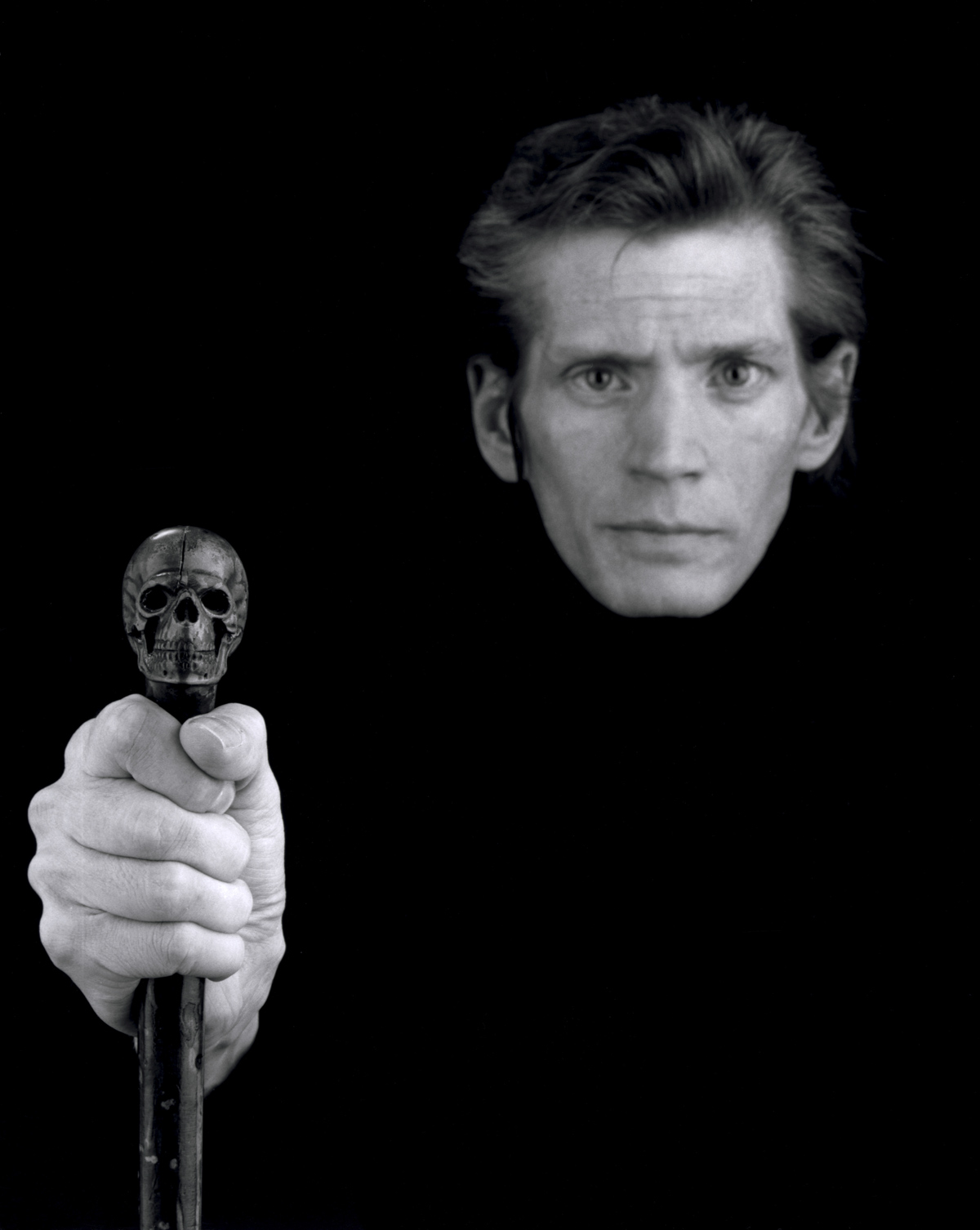
Robert Mapplethorpe (American, 1946-1989)
Self-Portrait
1988
Gelatin silver print
© Robert Mapplethorpe Foundation
Museum of Contemporary Art Kiasma
Mannerheiminaukio 2, FIN-00100
Helsinki, Finland
Phone:+358 (0)294 500 501
Opening hours:
Tuesday – Friday 10 – 20.30
Saturday 10 – 18
Sunday 10 – 17
Monday closed
 Art Blart _ art and cultural memory archive
You must be logged in to post a comment.