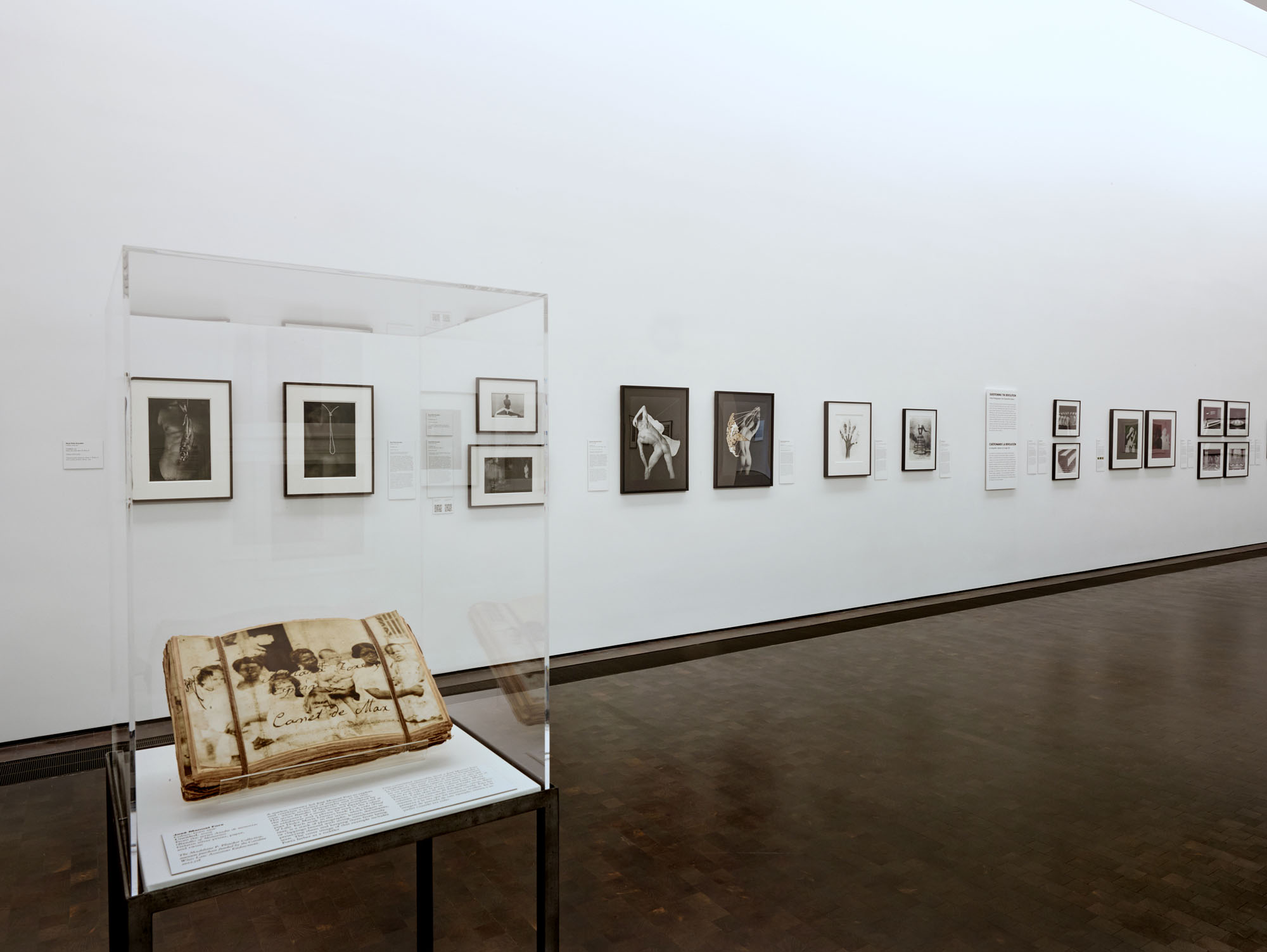
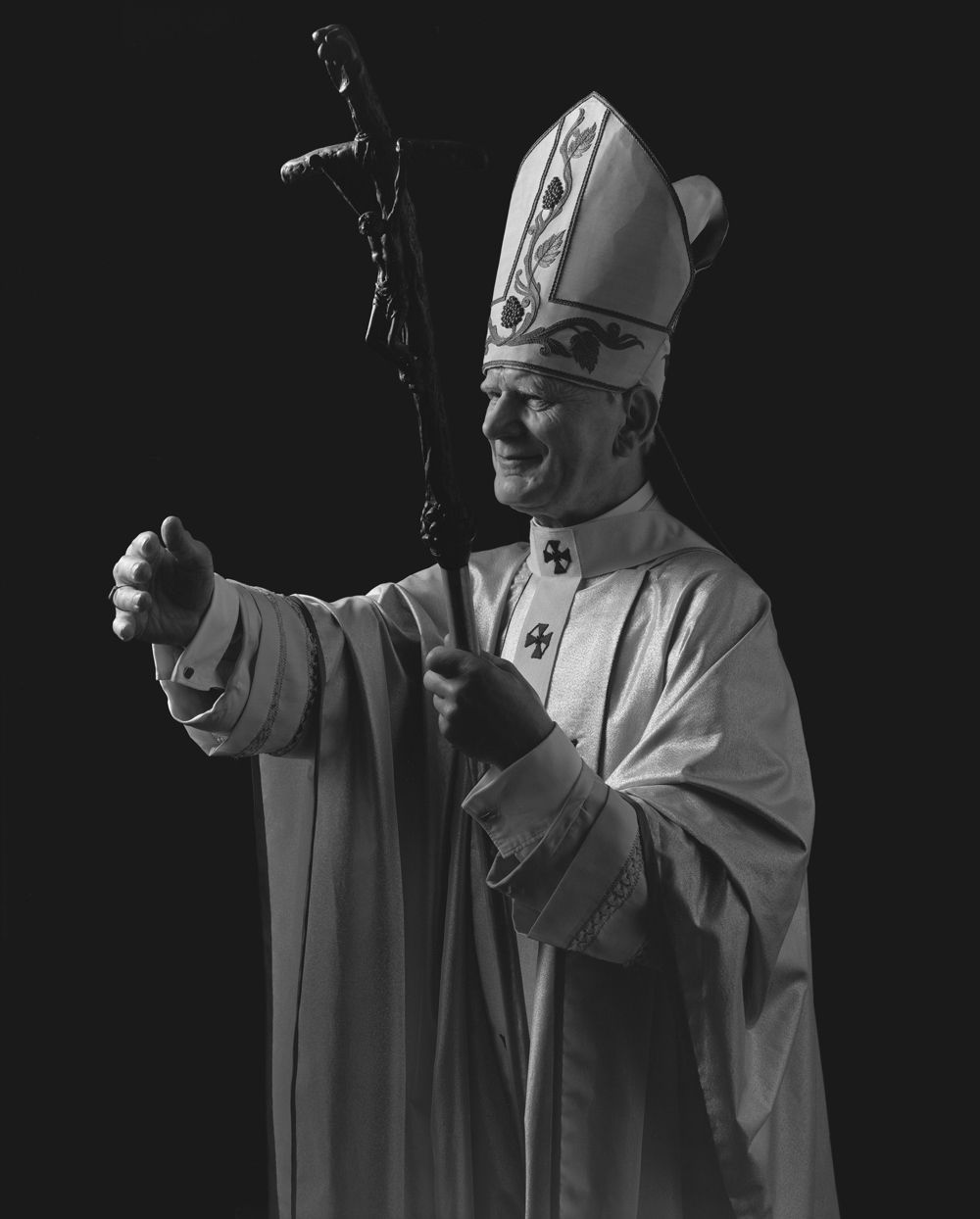
Exhibition: ‘Navigating the Waves: Contemporary Cuban Photography’ at the Museum of Fine Arts, Houston

Exhibition dates: 29th September, 2024 – 16th March, 2025


Raúl Cañibano (Cuban, b. 1961) 'Untitled' 2009 from the series 'Country Land' (Tierra guajira) from the exhibition 'Navigating the Waves: Contemporary Cuban Photography' at the Museum of Fine Arts, Houston, Sept 2024 - March 2025


Raúl Cañibano (Cuban, b. 1961)
Untitled
2009
From the series Country Land (Tierra guajira)
Inkjet print
The Museum of Fine Arts, Houston
The Madeleine P. Plonsker Collection, gift of Madeleine and Harvey Plonsker
© 2009 Raúl Cañibano


Raúl Cañibano grew up in both Havana and the eastern part of the country, and in 1998 he returned to the east to develop his series Tierra guajira (Country Land), a project strongly linked to his childhood memories. There, rural life and labor remained little changed despite the vast social and political waves that had swept across the nation in the intervening years.


This is an exhibition on a subject that I had little knowledge of before constructing the posting.

Imagine

Being born after the Cuban Revolution in 1953.

Being a child during the Bay of Pigs Invasion in 1961 (a clandestine invasion of Cuba by a brigade of Cuban exiles planned and executed by the CIA, with the support of the US government) and the Cuban Missile Crisis of 1962 (when nuclear missile sites were being built by the Soviet Union on the island of Cuba).

The fear of invasion and nuclear war.

Imagine

Growing up in a nation full of national fervour and revolutionary heroes, a “cult of personality”.

Growing up in country that defied the United States of America to stand on its own two feet but was plagued by shortages of foods, fuel, and other necessities, where “hundreds of thousands of Cubans, especially skilled workers and wealthy investors, emigrated to the United States (principally to Miami, Florida), Spain, and other countries”1 even as the country drew closer to the Soviet Union.

Growing up in a country where prominent dissidents were jailed and repressive laws enacted.

Imagine

Living under a communist regime where, when Soviet troops withdrew in 1991, there was high unemployment, energy conservation and severe internal “shortages of food, medical supplies, raw materials, and fuel which were exacerbated by the ongoing U.S. trade embargo.”1

Imagine

Growing up gay in a country where during The First Period (1965-1979) LGBTQ+ individuals were imprisoned in labor camps called Unidades Militares de Ayuda a la Producción (UMAPs); and during The Second Period (1980-2004) “the homophobia possessed by the government led to more acts of oppression toward LGBTQ+ individuals, but the government also extended more rights to gays.”2

Imagine

Growing up to be an artist, a photographer, living and working under the regime.

Living in a country as a creative person and trying to subversively comment on the precarious nature of life in present-day Cuba (questioning the power of photography and its relationship to political authority) without ending up in prison.

Despite these conditions of becoming, Cuban photographers continue to photograph their own lives and the life and spirit of the people. Through reality, myth and fantasy, through rituals, personal history, queer identity, race and gender they examine Cuban culture and history from a constructive and/or critical perspective.

The light of the artist and the light of the people shines on.

Dr Marcus Bunyan


1/ Sandra H. Levinson and Franklin W. Knight. “National evolution and Soviet influence,” on the Britannica website last updated Mar 11, 2025 [Online] Cited 13/03/2025

2/ Giovanny Bravo. “the cuban government’s treatment of lgbtq+ cubans since the revolution,” on the Cow Latin America website, May 2, 2020 [Online] Cited 13/03/2025


Many thankx for the Museum of Fine Arts, Houston for allowing me to publish the photographs in the posting. Please click on the photographs for a larger version of the image.

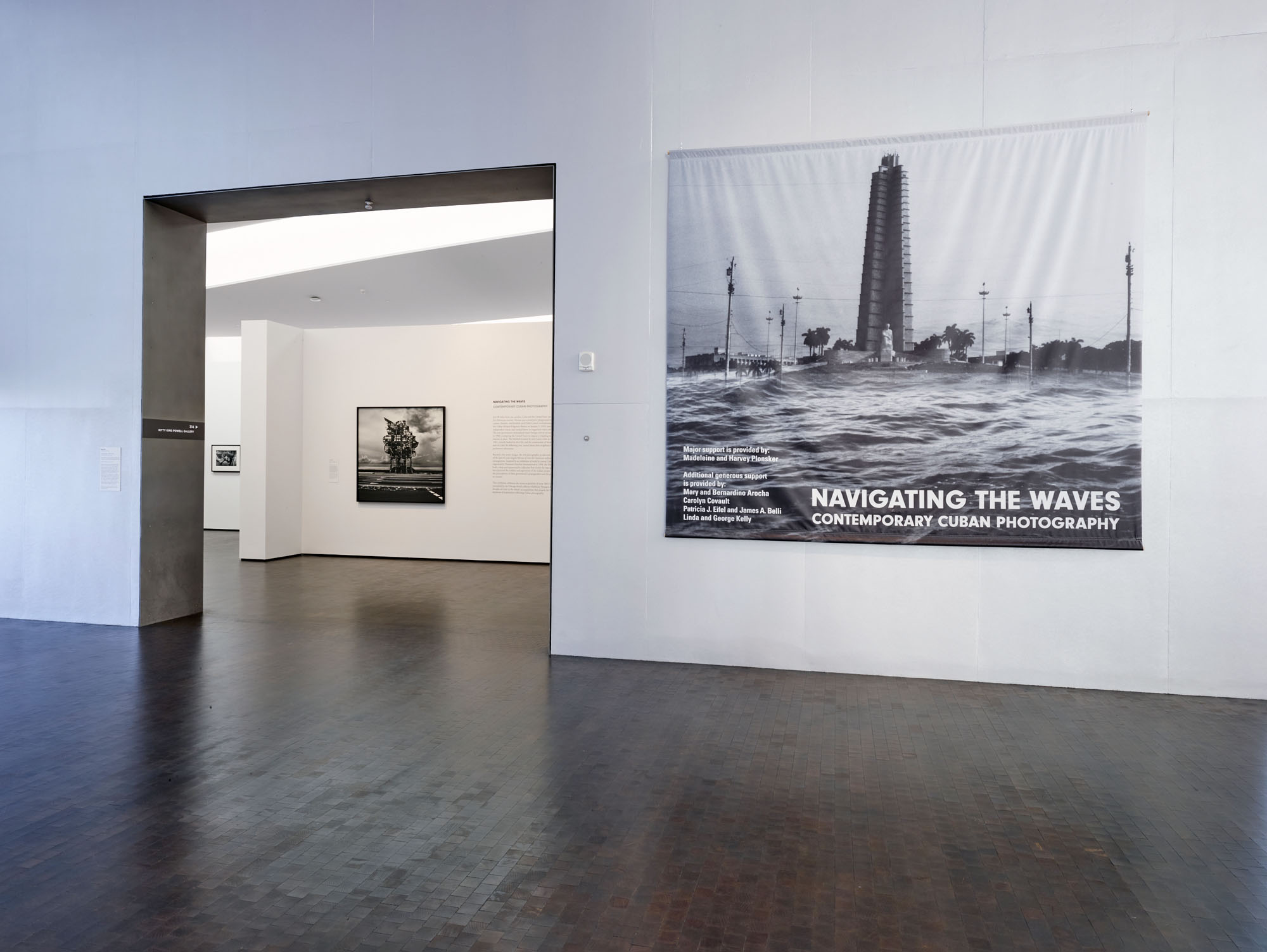


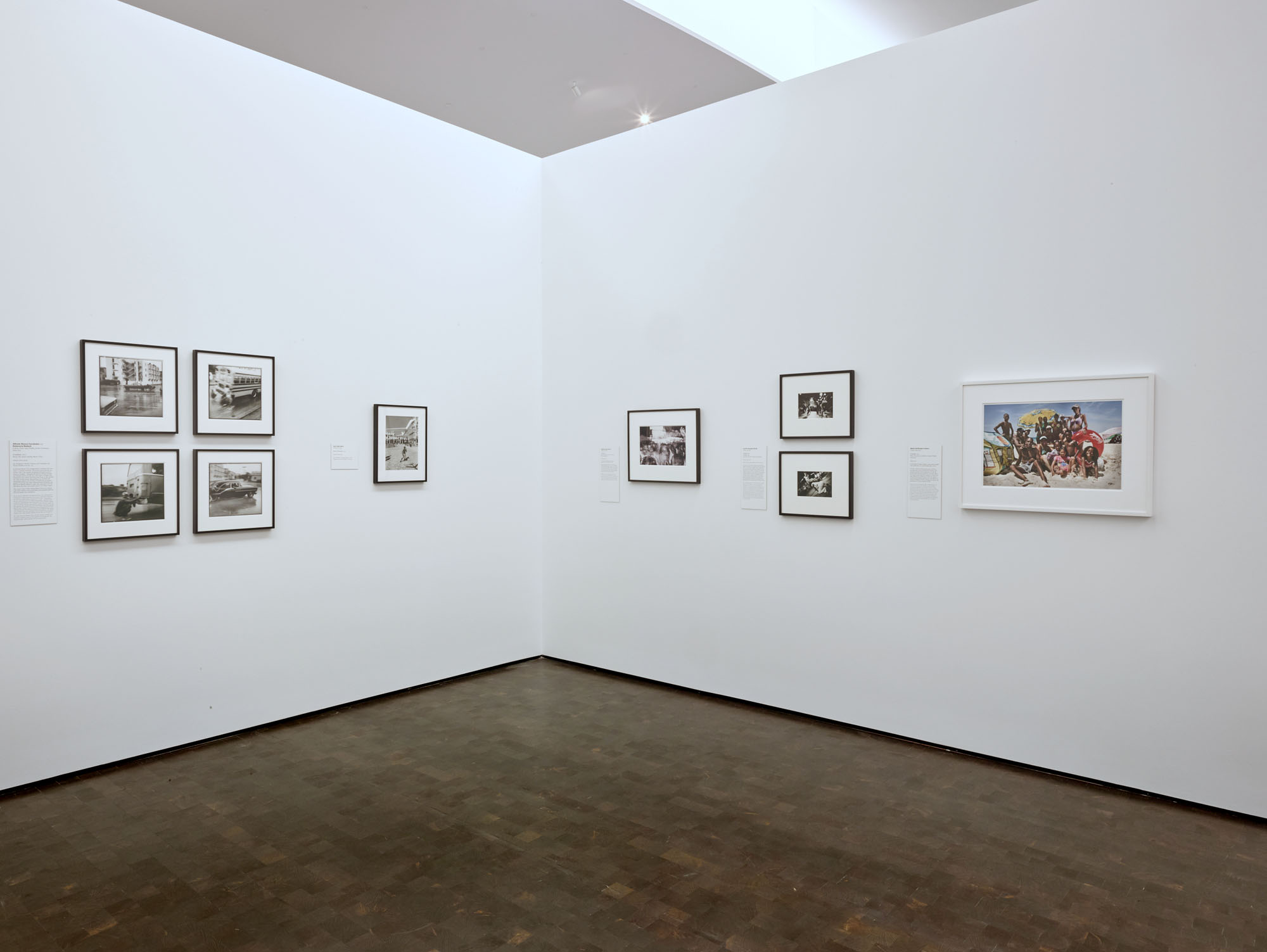
Installation view of the exhibition ‘Navigating the Waves: Contemporary Cuban Photography’ at the Museum of Fine Arts, Houston showing at left, Adrián Fernández's 'Untitled No. 1' 2017 from the series 'Pending Memories' (Memorias pendientes); and at right in the banner image a reproduction of Liudmila & Nelson's photograph 'Absolut Revolution - La Isla' (Absolut Revolution - The Island) 2002
Installation view of the exhibition ‘Navigating the Waves: Contemporary Cuban Photography’ at the Museum of Fine Arts, Houston


Installation views of the exhibition Navigating the Waves: Contemporary Cuban Photography at the Museum of Fine Arts, Houston showing at left, Adrián Fernández’s Untitled No. 1 2017 (below) from the series Pending Memories (Memorias pendientes); and at right in the banner image a reproduction of Liudmila & Nelson’s photograph Absolut Revolution – La Isla (Absolut Revolution – The Island) 2002 (below)
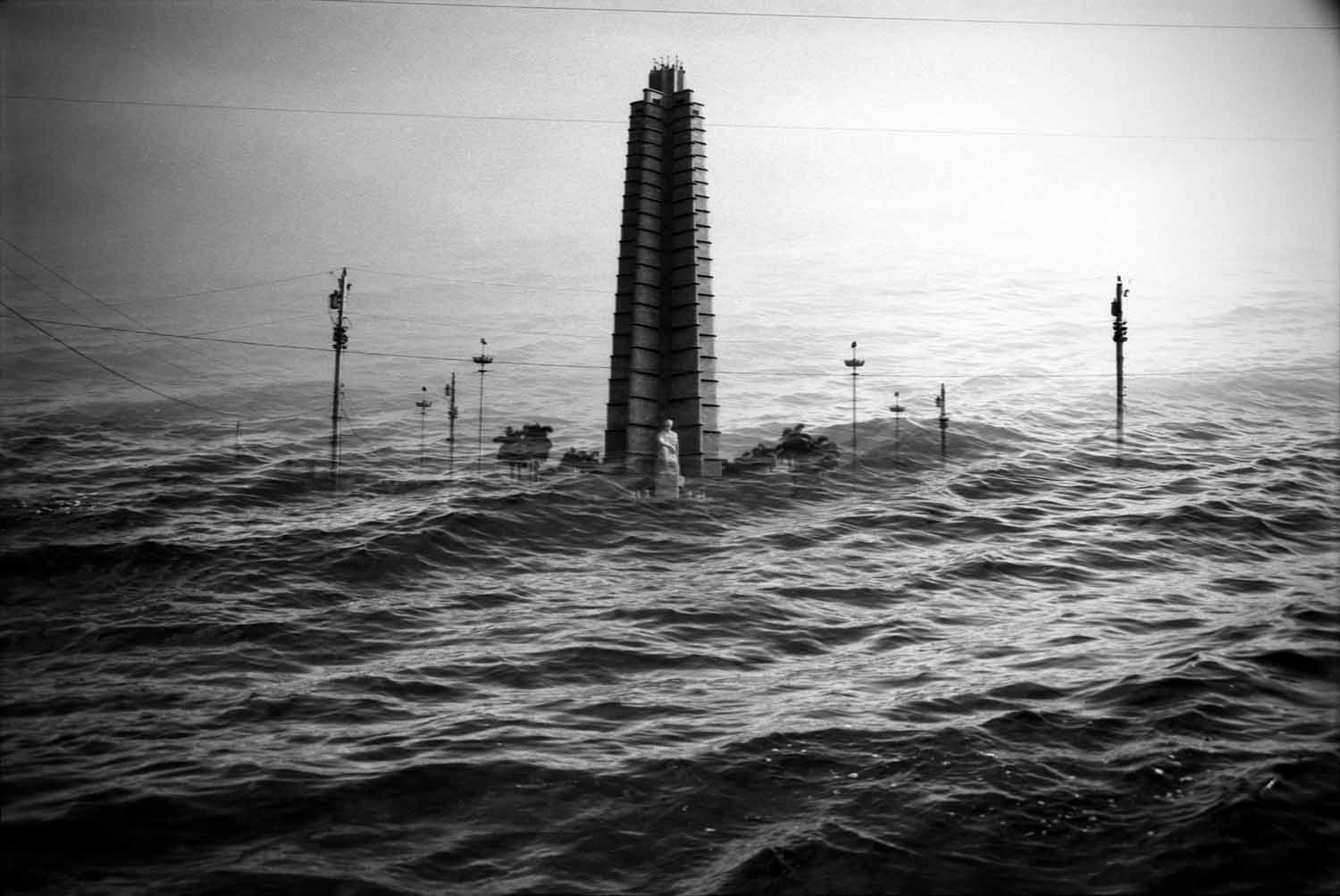
 

Liudmila & Nelson (active Cuba, founded 1994) Liudmila Velazco (Cuban born Russia, b. 1969) Nelson Ramírez de Arellano (Cuban born Germany, b. 1969) 'Absolut Revolution - La Isla' (Absolut Revolution - The Island) 2002


Liudmila & Nelson (active Cuba, founded 1994)
Liudmila Velazco (Cuban born Russia, b. 1969)
Nelson Ramírez de Arellano (Cuban born Germany, b. 1969)
Absolut Revolution – La Isla (Absolut Revolution – The Island)
2002
From the series Absolut Revolution
Gelatin silver print
15 1/2 × 23 in. (39.3 × 58.4cm)
The Museum of Fine Arts, Houston
The Madeleine P. Plonsker Collection, Gift of Madeleine and Harvey Plonsker


The José Martí monument holds a powerful, symbolic place in the history and psyche of the nation. From its base, Fidel Castro routinely addressed vast crowds gathered in the expansive Plaza de la Revolución. Is Liudmila & Nelson’s imagining of a flooded Havana meant to represent the nation, battered by forces beyond its control, still standing strong, or a revolution that has sacrificed the lives of its people for its own survival? Where art and literature are scrutinised by official censors, it pays to retain plausible deniability, even in photography, a medium often thought to be unambiguously truthful.
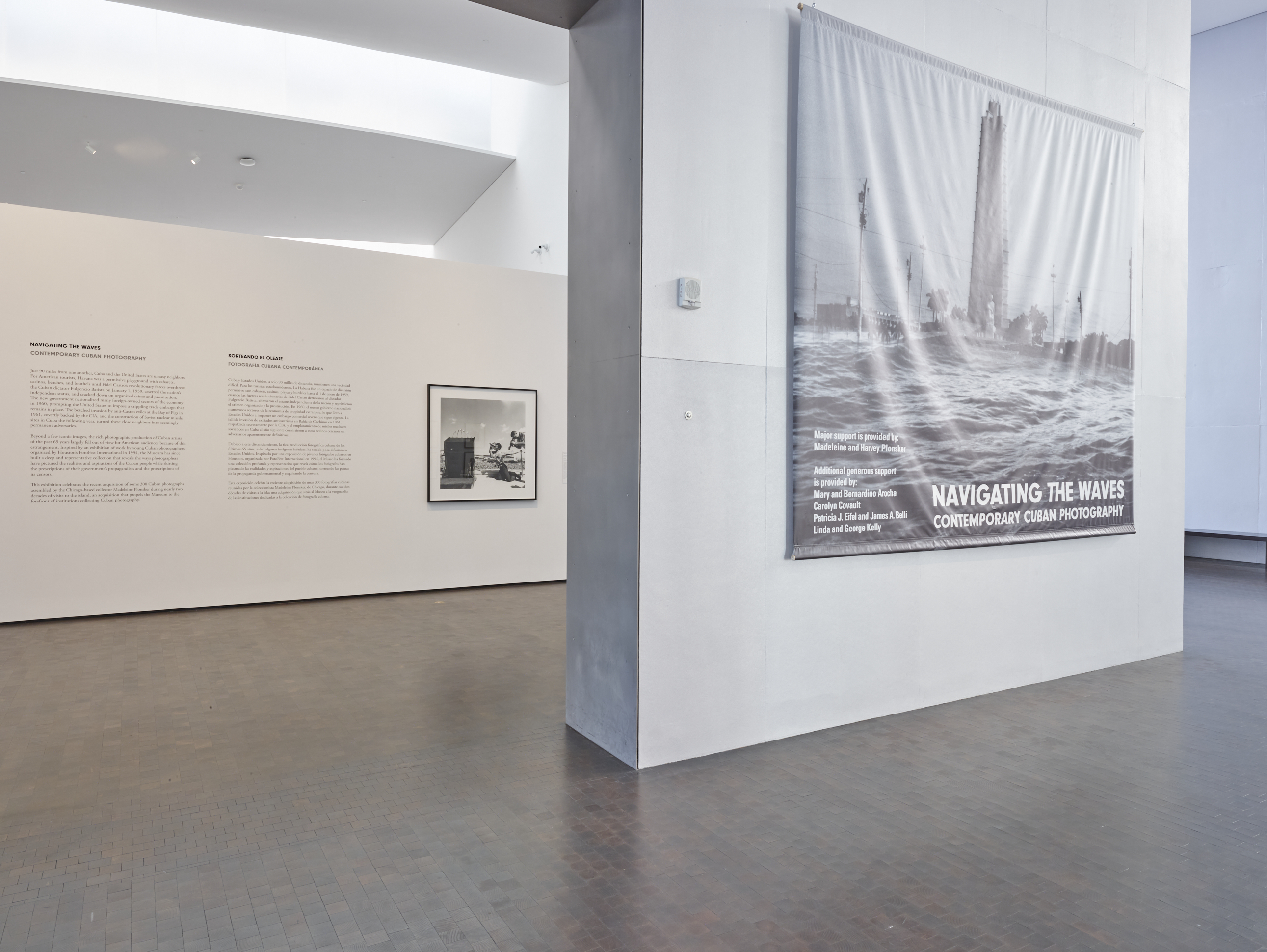
 

Installation view of the exhibition ‘Navigating the Waves: Contemporary Cuban Photography’ at the Museum of Fine Arts, Houston


Installation view of the exhibition Navigating the Waves: Contemporary Cuban Photography at the Museum of Fine Arts, Houston


Navigating the Waves: Contemporary Cuban Photography traces the evolution of photography in Cuba over nearly five decades, from the 1960s to early 2000s.

The exhibition looks at contemporary Cuban photography from its role in promoting the Cuban Revolution after Fidel Castro’s 1959 takeover of the Batista government to engaging in social and political critique following the 1991 collapse of the Soviet Union. Over the subsequent years, Cuban photographers created powerful personal expressions by exploring individual identity, the body and spirit, Afro-Cuban heritage, and the margins of society, all while navigating the changing prescriptions and proscriptions of official cultural policy.

Showcasing approximately 100 images, Navigating the Waves: Contemporary Cuban Photography celebrates the acquisition and promised gift to the MFAH of some 300 photographs from Chicago-based collectors Madeleine and Harvey Plonsker.

Text from the Museum of Fine Arts, Houston website
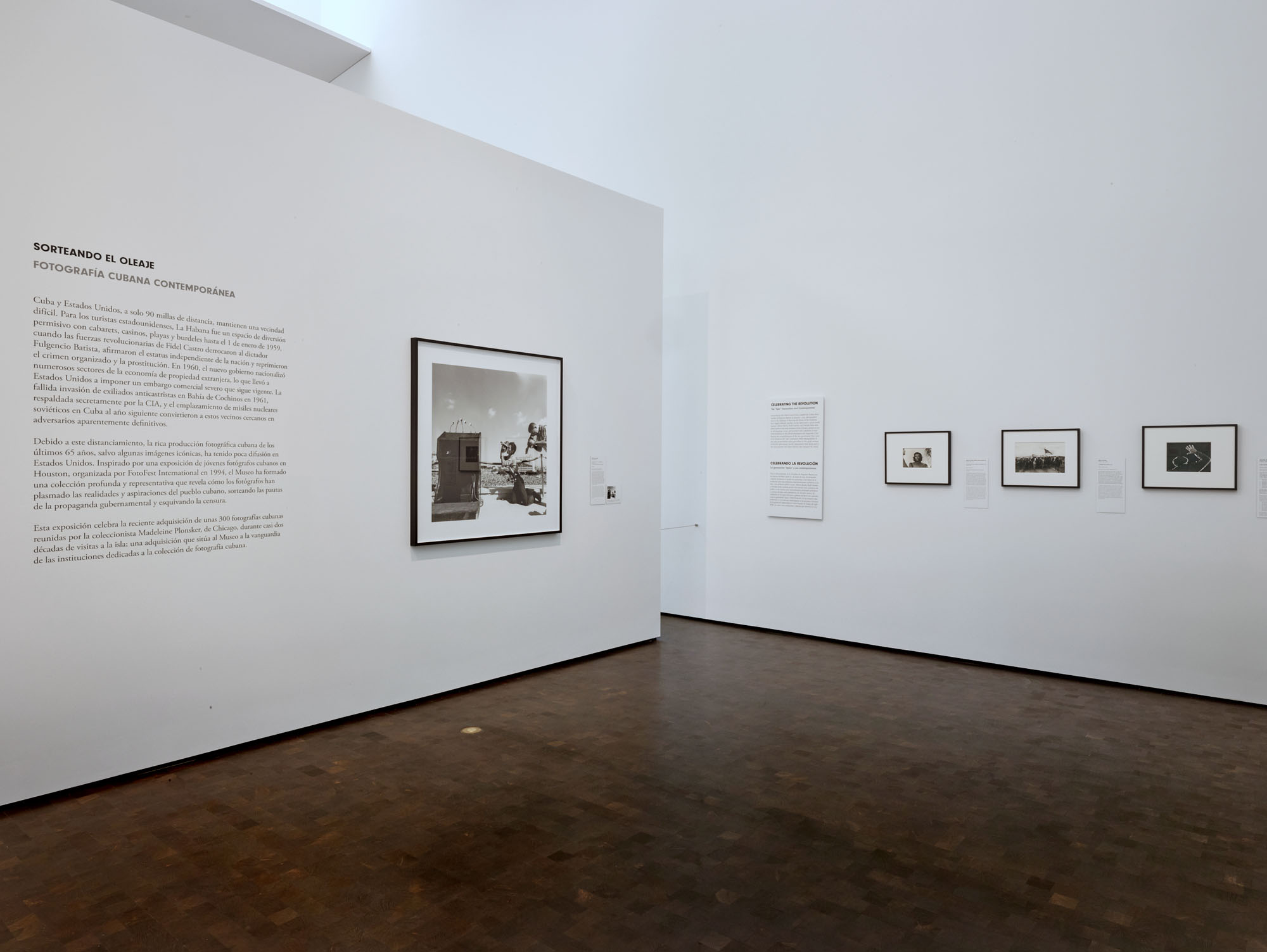
 

Installation view of the exhibition ‘Navigating the Waves: Contemporary Cuban Photography’ at the Museum of Fine Arts, Houston showing at left, Reynier Leyva Novo's 'Un día feliz FC No. 11' (A Happy Day FC No. 11) 2016; and at right the section "Celebrating the Revolution" including at third right, Alberto Korda's 'Heroic Guerrilla' (Guerillero heroico) 1960; at second right, Raúl Corrales' 'Caballería' (Cavalry) 1960; and at right, Osvaldo Salas' 'Five Points of Fidel' (Cinco puntos de Fidel) 1982


Installation view of the exhibition Navigating the Waves: Contemporary Cuban Photography at the Museum of Fine Arts, Houston showing at left, Reynier Leyva Novo’s Un día feliz FC No. 11 (A Happy Day FC No. 11) 2016 (below); and at right the section “Celebrating the Revolution” including at third right, Alberto Korda’s Heroic Guerrilla (Guerillero heroico) 1960 (below); at second right, Raúl Corrales’ Caballería (Cavalry) 1960 (below); and at right, Osvaldo Salas’ Five Points of Fidel (Cinco puntos de Fidel) 1982 (below)


Reynier Leyva Novo (Cuban, b. 1983) 'Un día feliz FC No. 11' (A Happy Day FC No. 11) 2016, printed 2024 from the exhibition 'Navigating the Waves: Contemporary Cuban Photography' at the Museum of Fine Arts, Houston, Sept 2024 - March 2025


Reynier Leyva Novo (Cuban, b. 1983)
Un día feliz FC No. 11 (A Happy Day FC No. 11)
2016, printed 2024
From the series Un día feliz
From the series A Happy Day
Inkjet print
39 3/4 × 39 3/4 in. (101 × 101cm)
The Museum of Fine Arts, Houston
Museum purchase funded by Joan Morgenstern, Jereann Chaney, and Carl Niendorff


In meticulous digital postproduction, Reynier Leyva Novo removed Fidel Castro from a photograph by Alberto Korda, the photographer most credited with establishing the iconography of the triumphant revolution and its leaders. Here, Castro’s presence is suggested only by the photographers stretching to film and photograph him addressing the crowds gathered below in the Plaza de la Revolución. What would modern-day Cuba look like without the imagery of its charismatic leader that fed a cult of personality for half a century? This is what Leyva Novo asks in his series Un día feliz (A Happy Day), begun in the year of Castro’s death.


Navigating the Waves: Contemporary Cuban Photography

Just 90 miles from one another, Cuba and the United States are uneasy neighbours. For American tourists, Havana was a permissive playground with cabarets, casinos, beaches, and brothels until Fidel Castro’s revolutionary forces overthrew the Cuban dictator Fulgencio Batista on January 1, 1959, asserted the nation’s independent status, and cracked down on organised crime and prostitution. The new government nationalised many foreign-owned sectors of the economy in 1960, prompting the United States to impose a crippling trade embargo that remains in place. The botched invasion by anti-Castro exiles at the Bay of Pigs in 1961, covertly backed by the CIA, and the construction of Soviet nuclear missile sites in Cuba the following year, turned these close neighbours into seemingly permanent adversaries.

Beyond a few iconic images, the rich photographic production of Cuban artists of the past 65 years largely fell out of view for American audiences because of this estrangement. Inspired by an exhibition of work by young Cuban photographers organised by Houston’s FotoFest International in 1994, the Museum has since built a deep and representative collection that reveals the ways photographers have pictured the realities and aspirations of the Cuban people while skirting the prescriptions of their government’s propagandists and the proscriptions of its censors.

This exhibition celebrates the recent acquisition of some 300 Cuban photographs assembled by the Chicago-based collector Madeleine Plonsker during nearly two decades of visits to the island, an acquisition that propels the Museum to the forefront of institutions collecting Cuban photography.

Celebrating the Revolution: The “Epic” Generation and Contemporaries

Immediately after Fidel Castro’s forces toppled the Cuban dictatorship of Fulgencio Batista on January 1, 1959, photographers rose to the challenge of depicting the heroes of the revolution for a largely illiterate populace on the island and a curious world beyond. Alberto Korda, Raúl Corrales, and Osvaldo Salas were given entrée to the most exclusive circles of power, granted access to all important events, and provided with a platform of mass communication in the official newspapers and magazines. Celebrating the accomplishments of the new government, they came to be known as the “epic” generation. Other photographers of the early post-revolution years paid tribute to the aging veterans of the late 19th-century war for independence from Spain and to the rural peasants and urban labourers who sustained the island.

Wall text from the exhibition


Alberto Korda (Cuban, 1928-2001)
'Heroic Guerrilla' (Guerillero heroico) 1960, printed 1995 from the exhibition 'Navigating the Waves: Contemporary Cuban Photography' at the Museum of Fine Arts, Houston, Sept 2024 - March 2025


Alberto Korda (Cuban, 1928-2001)
Heroic Guerrilla (Guerillero heroico)
1960, printed 1995
Gelatin silver print
The Museum of Fine Arts, Houston
Museum purchase funded by Dan and Mary Solomon
© Estate Alberto Korda


Alberto Korda’s portrait of Che Guevara, stoic and implacable at a memorial for victims of an explosion in Havana’s harbour, is undoubtedly the best known of all Cuban photographs. The image sat mostly unused in the artist’s files from 1960 to 1967, when Che was captured and assassinated by government forces in Bolivia while trying to organize a popular revolution. He was lionised in Cuba as the exemplar of revolutionary self-sacrifice, and Korda’s portrait of him came to function like a secular image of a martyred saint, appearing on everything from billboards to refrigerator magnets and tattoos to book covers.


Raúl Corrales (Cuban, 1925-2006)
'Caballería' (Cavalry) 1960


Raúl Corrales (Cuban, 1925-2006)
Caballería (Cavalry)
1960
Gelatin silver print
The Museum of Fine Arts, Houston
Gift of the estate of Esther Parada


Raúl Corrales’s Cavalry records an event at which the nationalisation and expropriation of a plantation owned by the United Fruit Company were celebrated by reenacting a famous scene from Cuba’s late 19th-century war for independence from Spain. With reenactments such as this, the triumph of the revolution was linked to a decades-long struggle to shake off the bonds of colonialism. Corrales’s photograph of smiling guerrillas wearing matching straw hats, riding horses, and waving Cuban flags also conjures associations with heroic 19th-century history paintings.


Osvaldo Salas (Cuban, 1938-2005)
'Five Points of Fidel' (Cinco puntos de Fidel) 1982


Osvaldo Salas (Cuban, 1938-2005)
Five Points of Fidel (Cinco puntos de Fidel)
1982
Gelatin silver print
The Museum of Fine Arts, Houston
Gift of the estate of Esther Parada
© 1982 Osvaldo Salas


The title of this photograph, taken in 1982, links Fidel Castro’s gesture to a crucial speech 20 years earlier aimed at President John F. Kennedy amid the Cuban Missile Crisis. Castro outlined five conditions for Cuba’s consent to the withdrawal of Soviet missiles from its territory:

1/ Ending the economic blockade and other commercial and economic pressures
2/ Ending subversive activities
3/ Ending pirate attacks
4/ Ending violations of Cuban airspace
5/ Withdrawal from the Guantanamo Naval Base and its return to the Cuban government.

At the time, however, Castro was unaware that President Kennedy and Soviet Premier Nikita Khrushchev were already discussing missile withdrawal without Cuba’s participation.
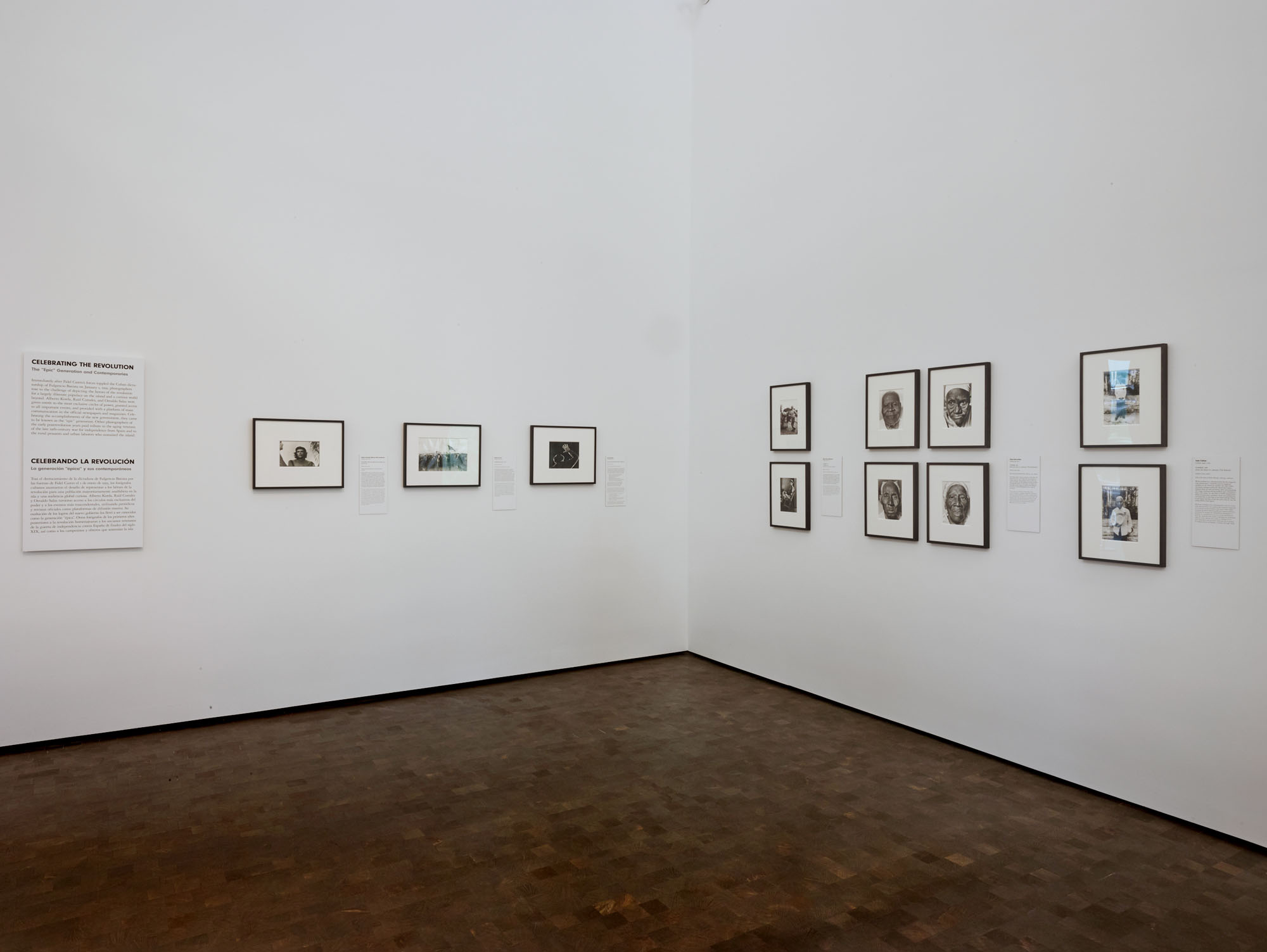
 

Installation view of the exhibition ‘Navigating the Waves: Contemporary Cuban Photography’ at the Museum of Fine Arts, Houston showing at left the section "Celebrating the Revolution" including at left, Alberto Korda's 'Heroic Guerrilla' (Guerillero heroico) 1960; at second left, Raúl Corrales' 'Caballería' (Cavalry) 1960; and at third right, Osvaldo Salas' 'Five Points of Fidel' (Cinco puntos de Fidel) 1982


Installation view of the exhibition Navigating the Waves: Contemporary Cuban Photography at the Museum of Fine Arts, Houston showing at left the section “Celebrating the Revolution” including at left, Alberto Korda’s Heroic Guerrilla (Guerillero heroico) 1960 (above); at second left, Raúl Corrales’ Caballería (Cavalry) 1960 (above); and at third right, Osvaldo Salas’ Five Points of Fidel (Cinco puntos de Fidel) 1982 (above)


Celebrating the acquisition of some 300 Cuban photographs from the Chicago-based collectors Madeleine and Harvey Plonsker, Navigating the Waves: Contemporary Cuban Photography traces the medium’s evolution in Cuba over nearly six decades – from promoting the Revolution following Fidel Castro’s 1959 overthrow of the Batista government, to engaging in social and political critique in more recent times as the triumph of the Revolution increasingly gave way to economic hardship and political repression. Particularly in the years after the 1991 collapse of the Soviet Union, Cuban photographers created powerful personal expressions by exploring individual identity, the body and spirit, Afro-Cuban heritage, and the margins of society, all while navigating the fluctuating prescriptions and proscriptions of official cultural policy.

The exhibition of some 100 works will be on view September 29, 2024 through March 16, 2025, in the Museum’s Nancy and Rich Kinder Building for modern and contemporary art.

“With the acquisition of the Madeleine P. Plonsker Collection, the Museum of Fine Arts, Houston, now boasts the most complete collection anywhere of post-Revolution Cuban photography, with an emphasis on the years since 1990: nearly 700 works by more than 80 Cuban artists,” commented Gary Tinterow, director and Margaret Alkek Williams Chair of the Museum of Fine Arts, Houston. “We are enormously grateful to Mrs. Plonsker, who assembled the collection through the lasting relationships she forged with artists over many visits to Cuba from 2005 to 2020.”

“The strengths of the Plonsker Collection are unparalleled, in terms of telling the complex and compelling story of post-Revolution Cuban photography,” commented Malcolm Daniel, Gus and Lyndall Wortham Curator of photography at the MFAH. “Combined in this exhibition with works already in the Museum’s holdings, the collection allows us to chronicle that story from the ‘epic generation,’ whose work would define the image of the Cuban Revolution, to the succeeding generations of photographers, who questioned the power of photography and its relationship to political authority and who created highly personal work in the context of a greater awareness of international contemporary art.”

Prologue: The “Epic” Generation

The exhibition begins with a brief prologue featuring works by the so-called “epic” generation of photographers – Alberto Korda, Raul Corrales and Osvaldo Salas among them – who used the medium to further the ideals of the Cuban Revolution, celebrating its heroes and promoting its ambitions. It opens with Korda’s iconic portrait of Che Guevara, Guerrillero Heroico (1960), the most widely reproduced and recognised of all Cuban photographs.

Gallery 1: Life in Post-Revolution Cuba

The first gallery presents images of daily life in Cuba, primarily from the 1990s and early 2000s, beginning with photographs that reference patriotic themes: the Cuban flag, veterans, a military parade and public portraits of 19th-century Independence hero José Martí and Cuban leader Fidel Castro. While ostensibly honoring the new Cuba, many of the images question both the power of photography and its relationship to political authority. An Untitled 1992 photograph by José Figueroa depicts dozens of freshly made prints of Alberto Korda’s iconic portrait of Che laid out on a bed – Figueroa was Korda’s longtime printer – and suggests the ubiquity of that iconic image as both propaganda and commodity. Other photographs in this section of the exhibition depict the hardships and aspirations of rural Cubans in the post-revolutionary era as well as the day-to-day joys of life divorced from political concerns. Photographers in this section include Pedro Abascal, Raúl Cañibano, María Cienfuegos Leiseca, José Julián Martí, Humberto Mayol and Eduardo Muñoz Ordoqui.

Gallery 2: Memory, the Body, and Identity

The second section of the exhibition marks a pivotal shift in Cuban photography. As the nation plunged into economic, social and political crisis following the collapse of the Soviet Union [1991] and the loss of its financial support, a time that Castro dubbed the “Special Period,” many photographers turned from documentation of the public sphere to a more personal and poetic exploration of the private realm. Photographers treated the body, often their own, as the path through which to examine their present situation through the lens of Afro-Cuban rituals, personal history, queer identity, race and gender. This particularly rich section features exceptional work by Juan Carlos Alom, Arien Chang Castán, José Manuel Fors, Alejandro González, Eduardo Hernandez Santos, Cirenaica Moreira, René Peña, and others.

Gallery 3: Myth and Reality

In the final section of the exhibition, composed primarily of work made since 2005, photographers address the current political, social and economic situation more directly than in previous years – but slyly still, in order not to run afoul of government dictates and official arbiters of culture. This most recent generation of photographers, born well after the Revolution, came of age in the depths of the Special Period, and began their artistic careers with a greater awareness of international contemporary art. Again, national symbols appear – the Cuban flag, currency, stamps, historic events – but this time with a knowing nod to their emptiness. The precarious nature of life in present-day Cuba and the widespread desire for emigration are common subjects.

This gallery includes work by Adrián Fernández, Alejandro González, Glenda Léon, Liudmila & Nelson, Yasser Piña Peña, Sandra Ramos, Esterio Segura, Lisette Solórzano, and others.

Press release from the Museum of Fine Arts, Houston
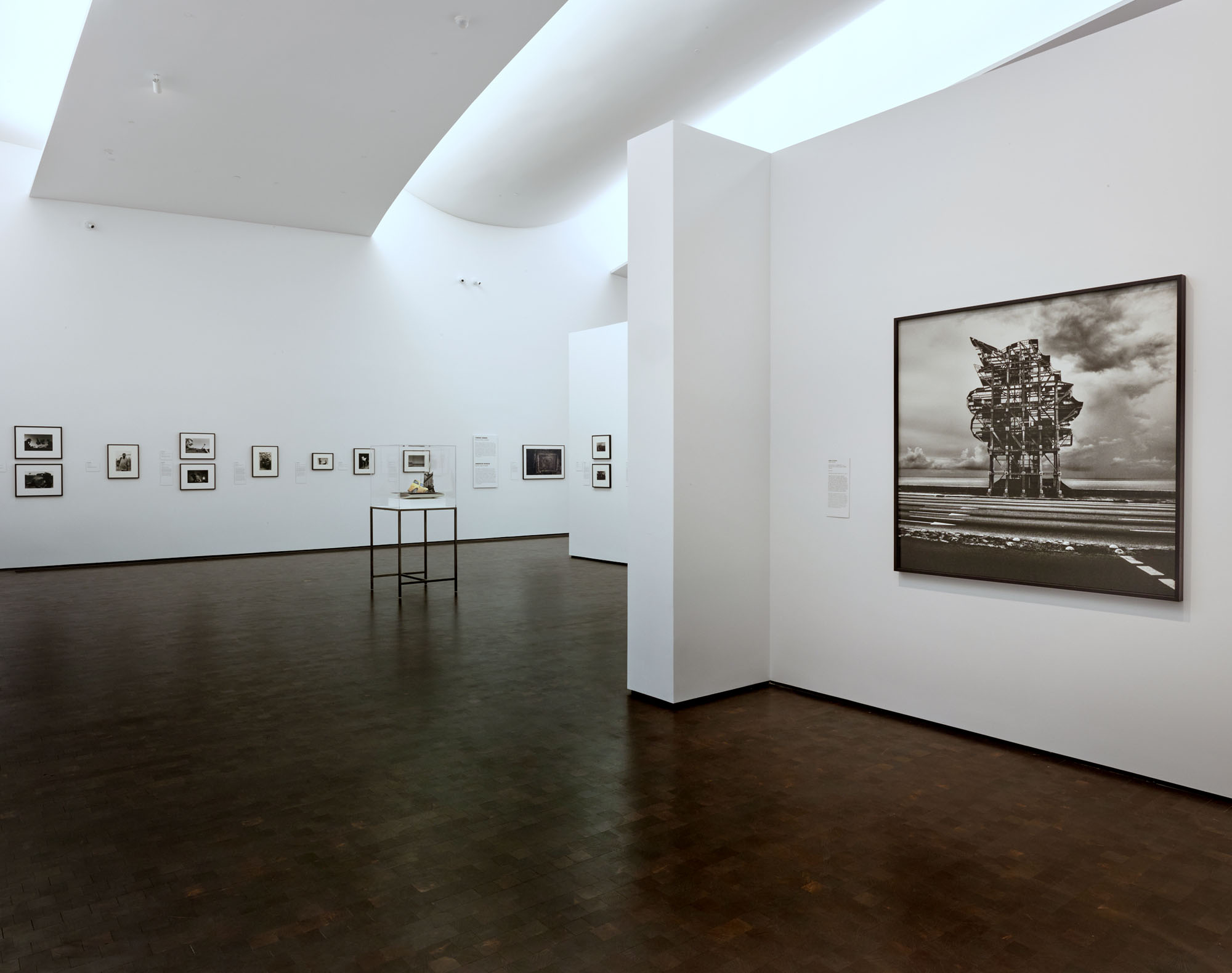
 

Installation view of the exhibition ‘Navigating the Waves: Contemporary Cuban Photography’ at the Museum of Fine Arts, Houston showing at right, Adrián Fernández's 'Untitled No. 1' 2017 from the series 'Pending Memories' (Memorias pendientes)


Installation view of the exhibition Navigating the Waves: Contemporary Cuban Photography at the Museum of Fine Arts, Houston showing at right, Adrián Fernández’s Untitled No. 1 2017 (below) from the series Pending Memories (Memorias pendientes)


Adrián Fernández (Cuban, b. 1984)
'Untitled No. 1 (Sin título No. 1)' 2017, printed 2020 from the series 'Pending Memories' (Memorias pendientes) from the exhibition 'Navigating the Waves: Contemporary Cuban Photography' at the Museum of Fine Arts, Houston, Sept 2024 - March 2025


Adrián Fernández (Cuban, b. 1984)
Untitled No. 1 (Sin título No. 1)
2017, printed 2020
From the series Pending Memories (Memorias pendientes)
Inkjet print
The Museum of Fine Arts, Houston
Museum purchase funded by Photo Forum 2021
© 2017 Adrián Fernández


Inspired by industrial remnants, unfinished construction projects, propaganda billboards, and carnival decorations, Adrián Fernández collaborated with architects, engineers, and computer specialists to combine a lens-based photograph (the landscape) with a digitally constructed image of the back of a fictional structure. It is easy to imagine this structure, set along the Malecón (Havana’s seaside esplanade), as the remains of a once-grand declaration, facing north like a challenge to the United States and as a greeting to anyone arriving in Havana by sea. Fernández intends this image to be a metaphor for today’s teetering ruins of the Cuban Revolution’s grand ambitions.
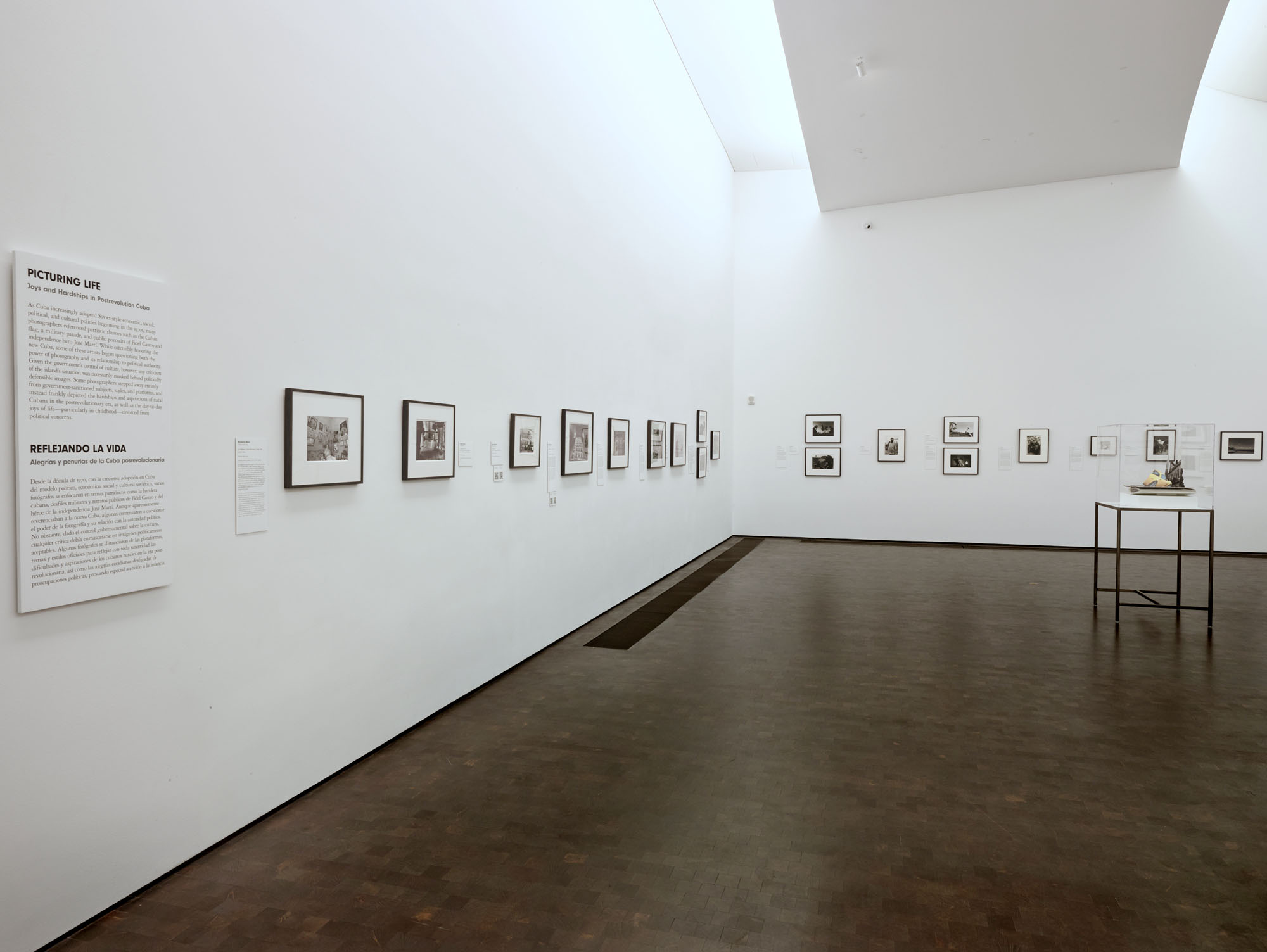
 

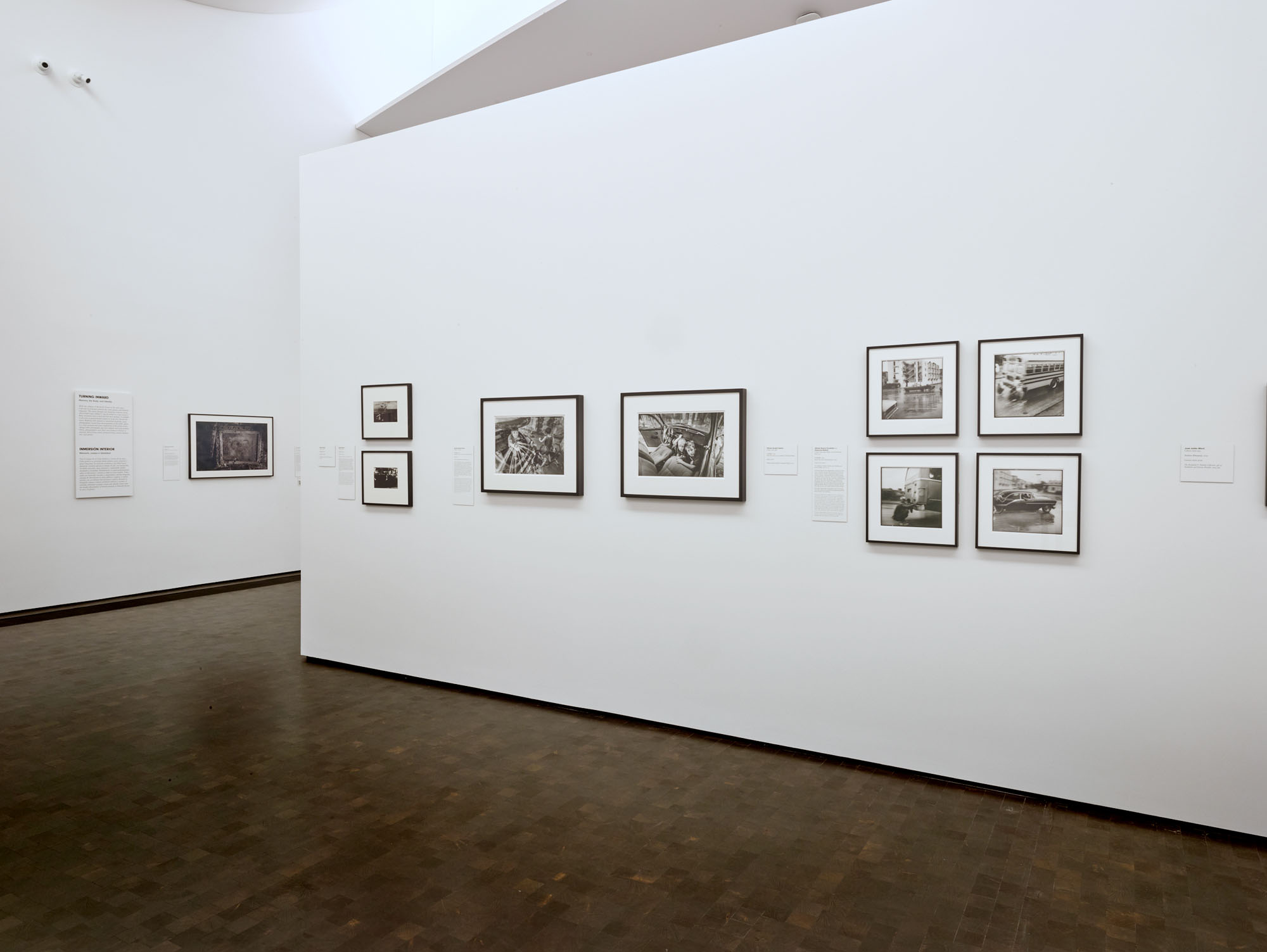
Installation view of the exhibition ‘Navigating the Waves: Contemporary Cuban Photography’ at the Museum of Fine Arts, Houston showing at left the wall text for the section "Picturing Life: Joys and Hardships in Postrevolution Cuba"


Installation view of the exhibition Navigating the Waves: Contemporary Cuban Photography at the Museum of Fine Arts, Houston showing at left the wall text for the section “Picturing Life: Joys and Hardships in Postrevolution Cuba”


Picturing Life: Joys and Hardships in Postrevolution Cuba

As Cuba increasingly adopted Soviet-style economic, social, political, and cultural policies beginning in the 1970s, many photographers referenced patriotic themes such as the Cuban flag, a military parade, and public portraits of Fidel Castro and independence hero José Martí. While ostensibly honouring the new Cuba, some of these artists began questioning both the power of photography and its relationship to political authority. Given the government’s control of culture, however, any criticism of the island’s situation was necessarily masked behind politically defensible images. Some photographers stepped away entirely from government-sanctioned subjects, styles, and platforms, and instead frankly depicted the hardships and aspirations of rural Cubans in the post-revolutionary era, as well as the day-to-day joys of life – particularly in childhood – divorced from political concerns.

Wall text from the exhibition
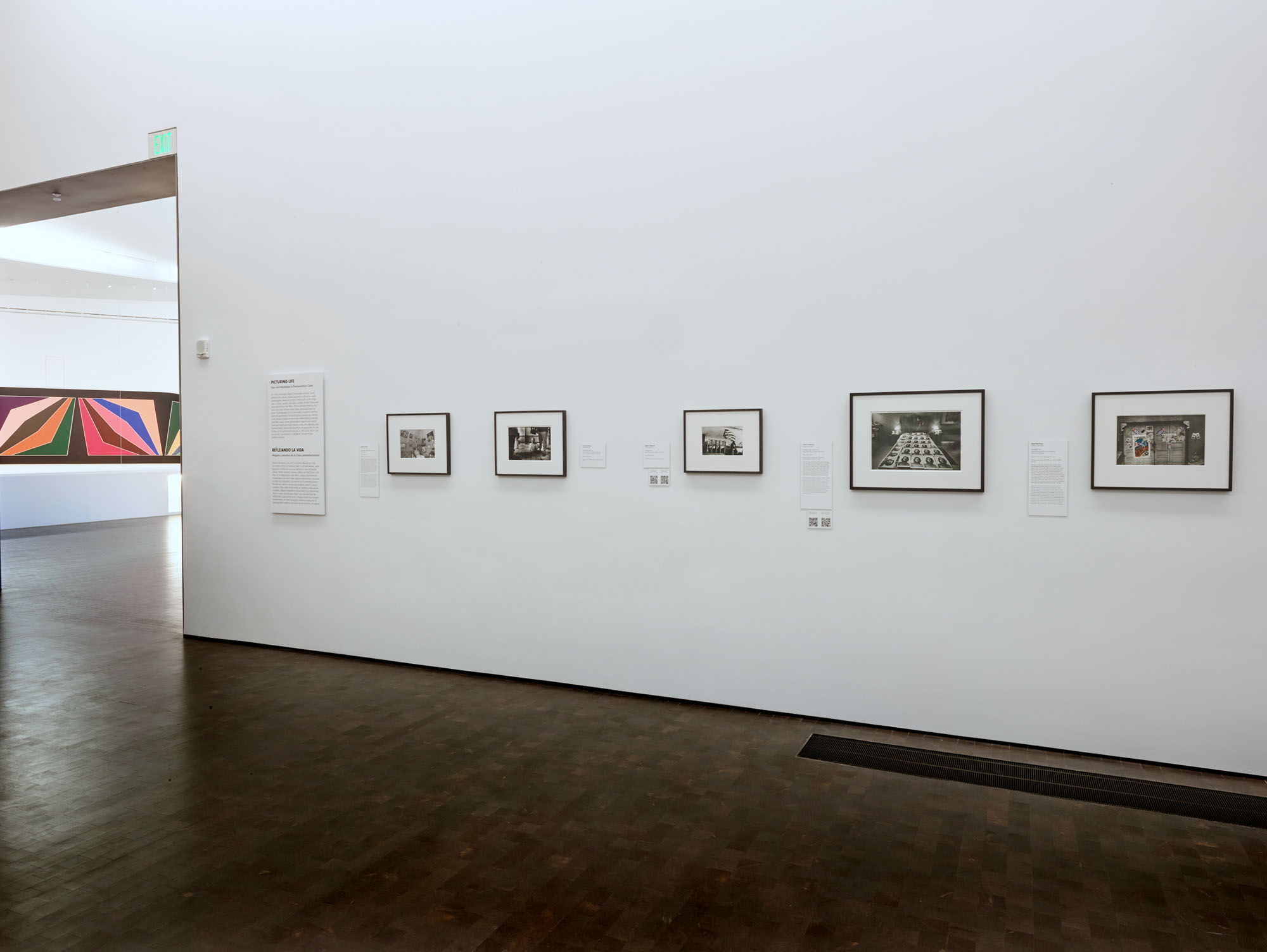
 

Installation view of the exhibition ‘Navigating the Waves: Contemporary Cuban Photography’ at the Museum of Fine Arts, Houston showing at second right, José A. Figueroa's 'Untitled' 1992 from the series 'The Image'


Installation view of the exhibition Navigating the Waves: Contemporary Cuban Photography at the Museum of Fine Arts, Houston showing at second right, José A. Figueroa’s Untitled 1992 from the series The Image (below)


José A. Figueroa (Cuban, b. 1946)
'Untitled' 1992, printed 2023 From the series 'The Image'


José A. Figueroa (Cuban, b. 1946)
Untitled
1992, printed 2023
From the series The Image
Gelatin silver print
40 x 50cm
The Museum of Fine Arts, Houston
Museum purchase funded by Joan Morgenstern in honor of Raquel Carrera


Over the course of decades, Alberto Korda’s protégé and longtime printer José Figueroa printed thousands of copies of Korda’s iconic portrait of Che Guevara. As he worked to fulfil the never-ending demand for Guerrillero heroico, in 1992, 25 years after Che’s death, Figueroa photographed dozens of fresh prints laid out on his bed to dry, an image that revealed his own awareness of the changing nature and role of photography in Cuba from servant of the socialist revolution to commodity and social commentary.
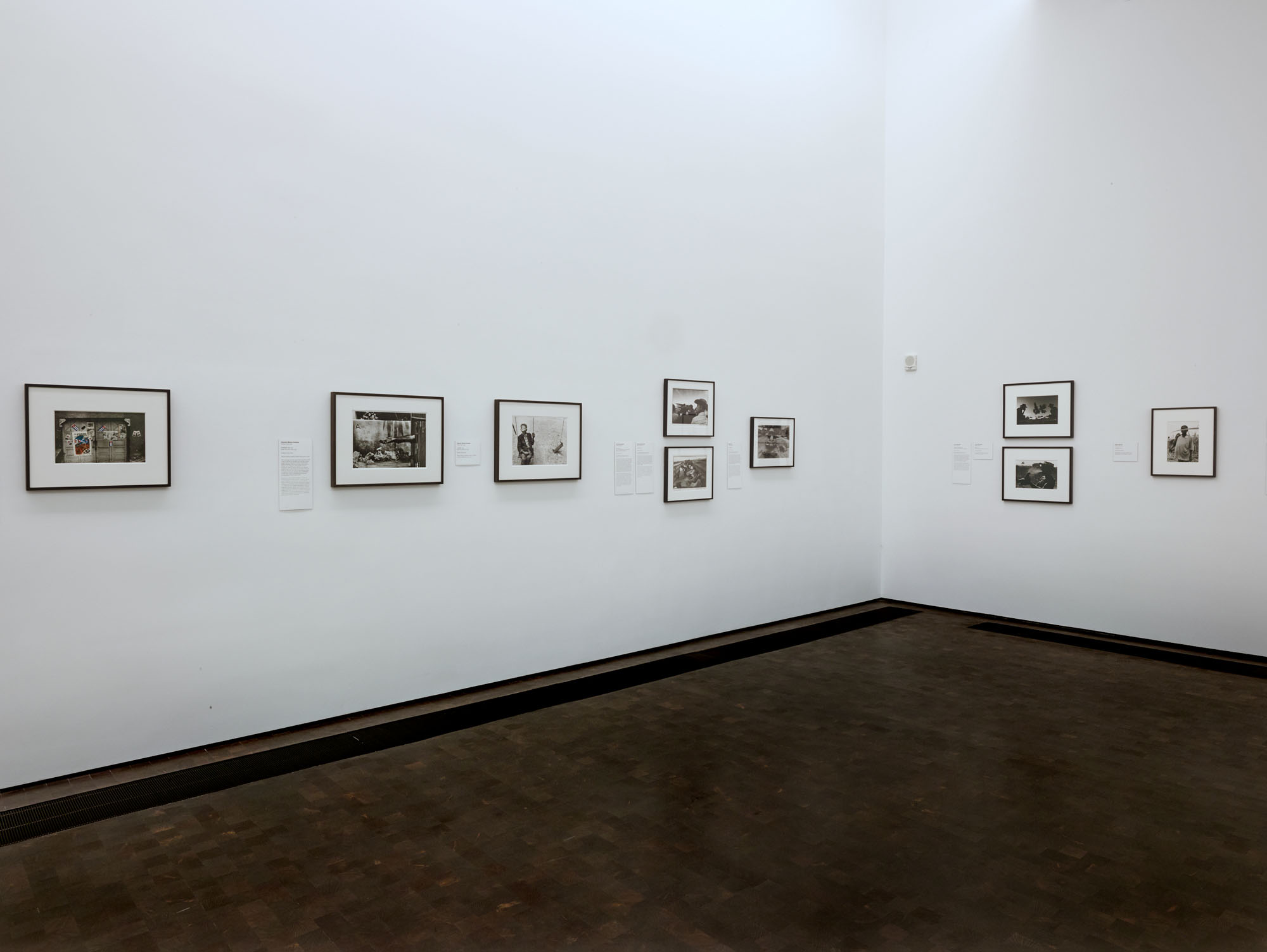
 

Installation view of the exhibition ‘Navigating the Waves: Contemporary Cuban Photography’ at the Museum of Fine Arts, Houston showing at second left, Eduardo Muñoz Ordoqui's 'Untitled' 1992 from the series 'Zoo-Logos'; and at third right, Eduardo Muñoz Ordoqui's 'Untitled' 1992 from the series 'Zoo-Logos'


Installation view of the exhibition Navigating the Waves: Contemporary Cuban Photography at the Museum of Fine Arts, Houston showing at second left, Eduardo Muñoz Ordoqui’s Untitled 1992 from the series Zoo-Logos (below); and at third right, Eduardo Muñoz Ordoqui’s Untitled 1992 from the series Zoo-Logos (below)
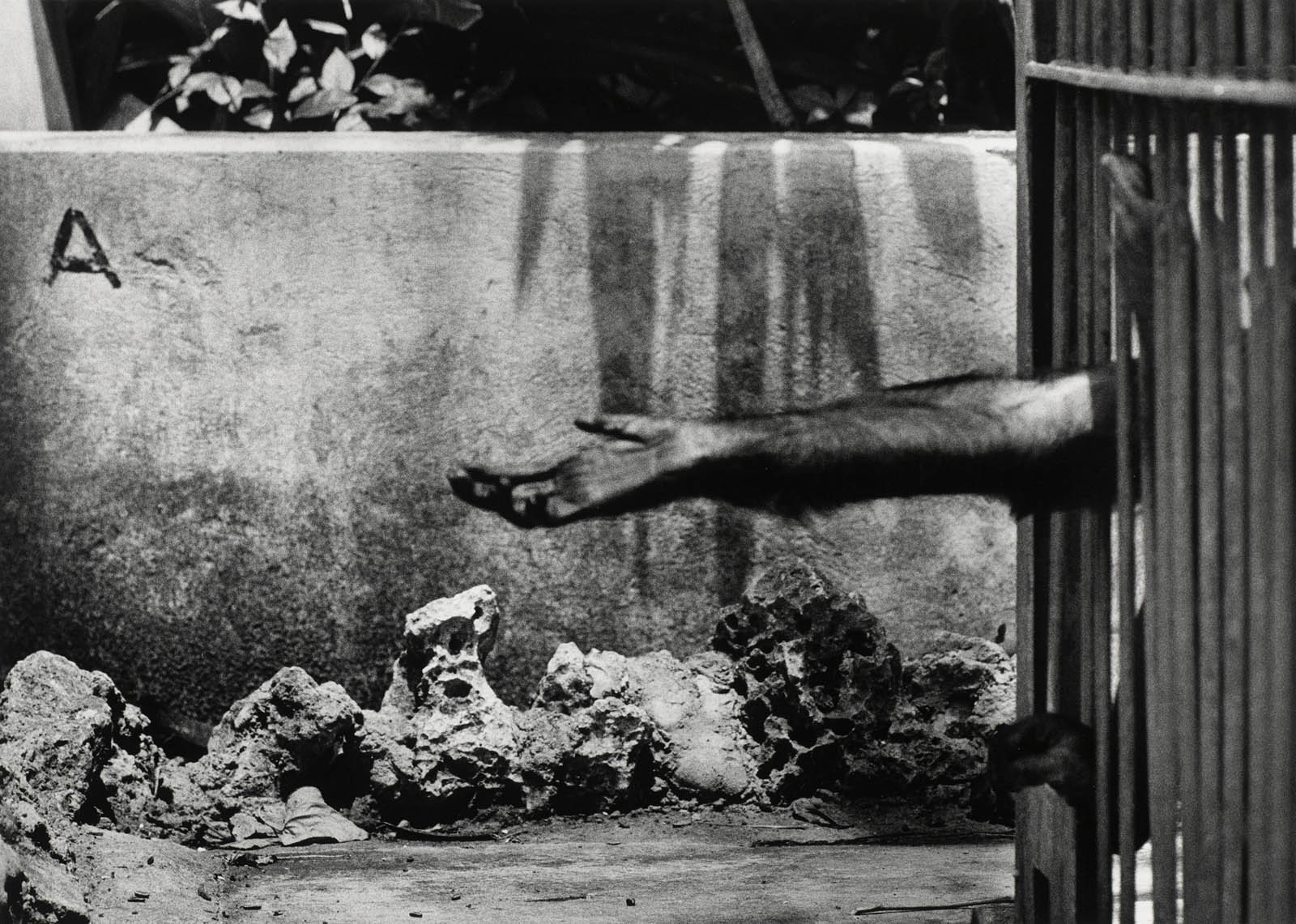
 

Eduardo Muñoz Ordoqui (Cuban, b. 1964) 'Untitled' 1992 From the series 'Zoo-Logos'


Eduardo Muñoz Ordoqui (Cuban, b. 1964)
Untitled
1992
From the series Zoo-Logos
Gelatin silver print
The Museum of Fine Arts, Houston
Museum purchase funded by Clinton T. Willour in honor of Mickey Marvins
© 1992 Eduardo Muñoz Oroqui


The challenge for Cuban artists has long been to find a way to portray life candidly and critically without triggering the attention of censors. For Eduardo Muñoz Ordoqui, this process began with trips to Havana’s zoo, where he photographed visitors, employees, caged animals, and even the adjacent slaughterhouse, where horses were killed to feed the large cats. By the 1990s, the zoo had become home to neglected creatures enduring their confinement as best they could, a metaphor for the extreme circumstances of life in 1990s Cuba.


Eduardo Muñoz Ordoqui (Cuban, b. 1964) 'Untitled' 1990-1992
From the series 'Zoo-Logos'


Eduardo Muñoz Ordoqui (Cuban, b. 1964)
Untitled
1990-1992
From the series Zoo-Logos
Gelatin silver print
The Museum of Fine Arts, Houston
Museum purchase funded by Clinton T. Willour in honor of Mickey Marvins
© 1992 Eduardo Muñoz Oroqui
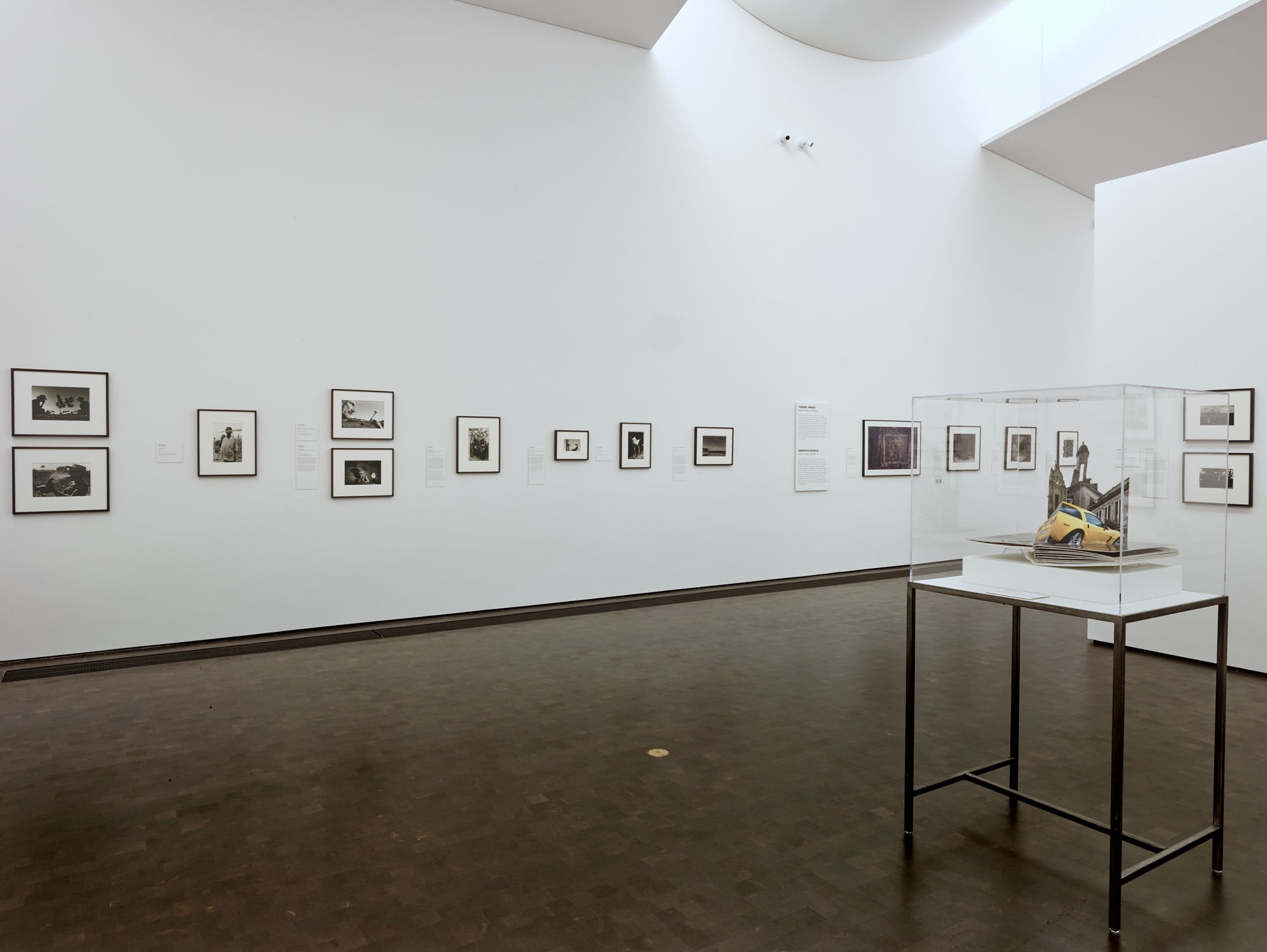
 

Installation view of the exhibition ‘Navigating the Waves: Contemporary Cuban Photography’ at the Museum of Fine Arts, Houston


Installation views of the exhibition Navigating the Waves: Contemporary Cuban Photography at the Museum of Fine Arts, Houston
 

Installation view of the exhibition ‘Navigating the Waves: Contemporary Cuban Photography’ at the Museum of Fine Arts, Houston showing at right, María Cienfuegos Leiseca's 'Untitled' 2011 from the series 'La familia se retrata'


Installation view of the exhibition Navigating the Waves: Contemporary Cuban Photography at the Museum of Fine Arts, Houston showing at right, María Cienfuegos Leiseca’s Untitled 2011 from the series La familia se retrata (below)
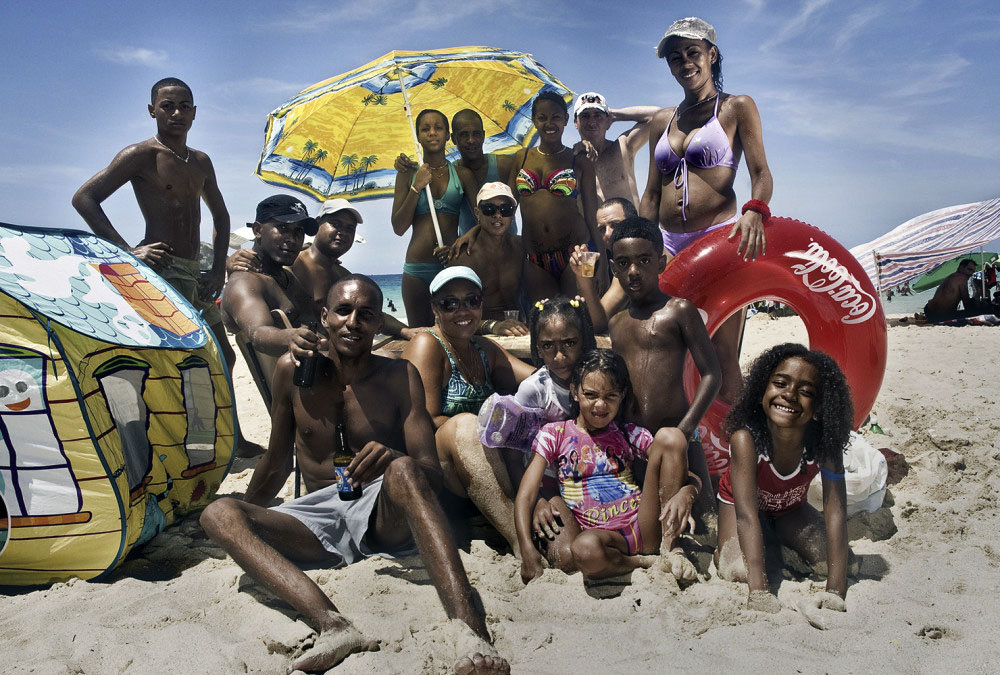
 

María Cienfuegos Leiseca (Cuban, b. 1974) 'Untitled' 2011 From the series 'La familia se retrata'


María Cienfuegos Leiseca (Cuban, b. 1974)
Untitled
2011
From the series La familia se retrata
From the series Family Portrayed
Inkjet print
15 11/16 × 23 5/8 in. (39.9 × 60 cm)
The Museum of Fine Arts, Houston
The Madeleine P. Plonsker Collection, museum purchase funded by the Caroline Wiess Law Accessions Endowment


In Cuba, a narrow island spanning just 118 miles at its widest point, beach excursions are common, often bringing together several generations of a family. For her series of family portraits at the beach, María Cienfuegos Leiseca asked her subjects to choose how they wished to be represented. Unlike the solemn, carefully posed formal portraits seen throughout art history, Cienfuegos Leiseca’s photographs capture the spontaneity of a joyous family reunion.
 

Installation view of the exhibition ‘Navigating the Waves: Contemporary Cuban Photography’ at the Museum of Fine Arts, Houston showing at third right, Alfredo Sarabia Fajardo's 'Untitled' 2017 from the series 'Casa Redonda'


Installation view of the exhibition Navigating the Waves: Contemporary Cuban Photography at the Museum of Fine Arts, Houston showing at third right, Alfredo Sarabia Fajardo’s Untitled 2017 from the series Casa Redonda (below)


Alfredo Sarabia Fajardo (Cuban, b. 1986) 'Untitled'
2017, printed 2021
From the series 'Casa Redonda'


Alfredo Sarabia Fajardo (Cuban, b. 1986)
Untitled
2017, printed 2021
From the series Casa Redonda
From the series Round House
Inkjet print
13 9/16 × 20 1/2 in. (34.5 × 52cm)
The Museum of Fine Arts, Houston
Museum purchase funded by Madeleine Plonsker


The family Volkswagen dating to his childhood has become a playground for Alfredo Sarabia Fajardo’s young children and a way to connect to his father who died when the younger Alfredo was just six. “I frequently travel with my family, just as my father did with me, even using the same or similar objects,” the photographer explained. “As a natural consequence of this, I reactivate the memories of my childhood, refresh the nostalgia, and end up reliving some of those experiences. I like to think of it as a creative legacy that gets renewed, embodying the very spirit of a journey.”
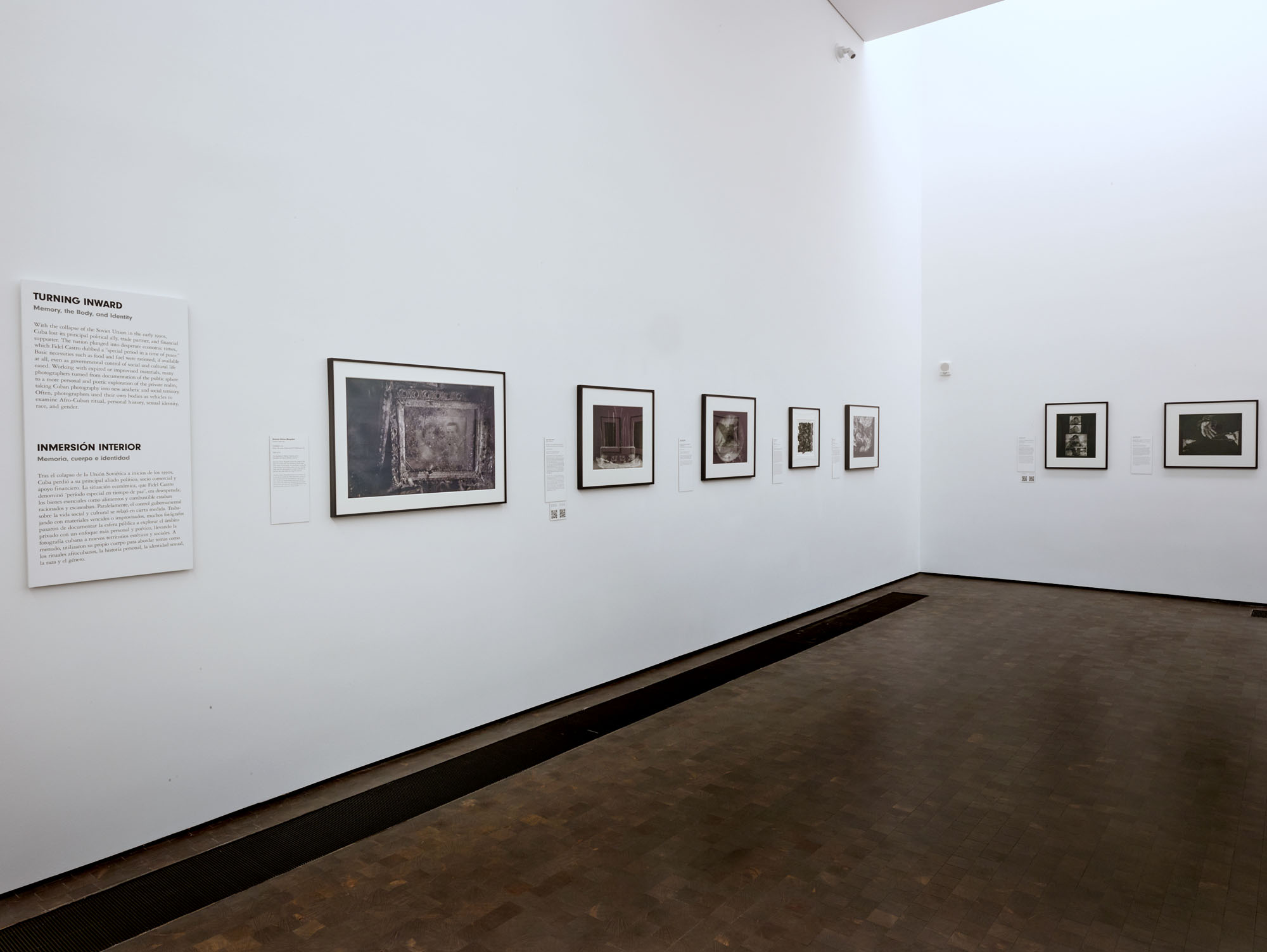
 

Installation view of the exhibition ‘Navigating the Waves: Contemporary Cuban Photography’ at the Museum of Fine Arts, Houston showing at left the wall text for the section "Turning Inward: Memory, the Body, and Identity"


Installation view of the exhibition Navigating the Waves: Contemporary Cuban Photography at the Museum of Fine Arts, Houston showing at left the wall text for the section “Turning Inward: Memory, the Body, and Identity”


Turning Inward: Memory, the Body, and Identity

With the collapse of the Soviet Union in the early 1990s, Cuba lost its principal political ally, trade partner, and financial supporter. The nation plunged into desperate economic times, which Fidel Castro dubbed a “special period in a time of peace.” Basic necessities such as food and fuel were rationed, if available at all, even as governmental control of social and cultural life eased. Working with expired or improvised materials, many photographers turned from documentation of the public sphere to a more personal and poetic exploration of the private realm, taking Cuban photography into new aesthetic and social territory. Often, photographers used their own bodies as vehicles to examine Afro-Cuban ritual, personal history, sexual identity, race, and gender.


Gory (Rogelio López Marin) (Cuban, b. 1953) From the series 'It's Only Water in the Teardrop of a Stranger' (Es sólo agua en la lágrima de un extraño) 1986, printed 2023


Gory (Rogelio López Marin) (Cuban, b. 1953)
From the series It’s Only Water in the Teardrop of a Stranger (Es sólo agua en la lágrima de un extraño)
1986, printed 2023
Chromogenic print
The Museum of Fine Arts, Houston
Museum purchase funded by the Photography Subcommittee, 2023
© 1986 Rogelio López Marín (Gory)


Gory originally presented this series – perhaps the most prominent example of experimental Cuban photography of the 1980s – as an installation of nine photographs. Eight are photomontages in which a pool ladder in the foreground
gives access to an alternate world in the middle distance; the final image presents the empty pool, with an aura of abandonment. When first shown, each photograph was accompanied by a text fragment from Michael Ende’s The Mirror in the Mirror: A Labyrinth (1984). The first of those phrases began: “Like a swimmer who has gotten lost under a layer of ice, I look for a place to emerge, but there is no place. All life long I swim holding my breath.”

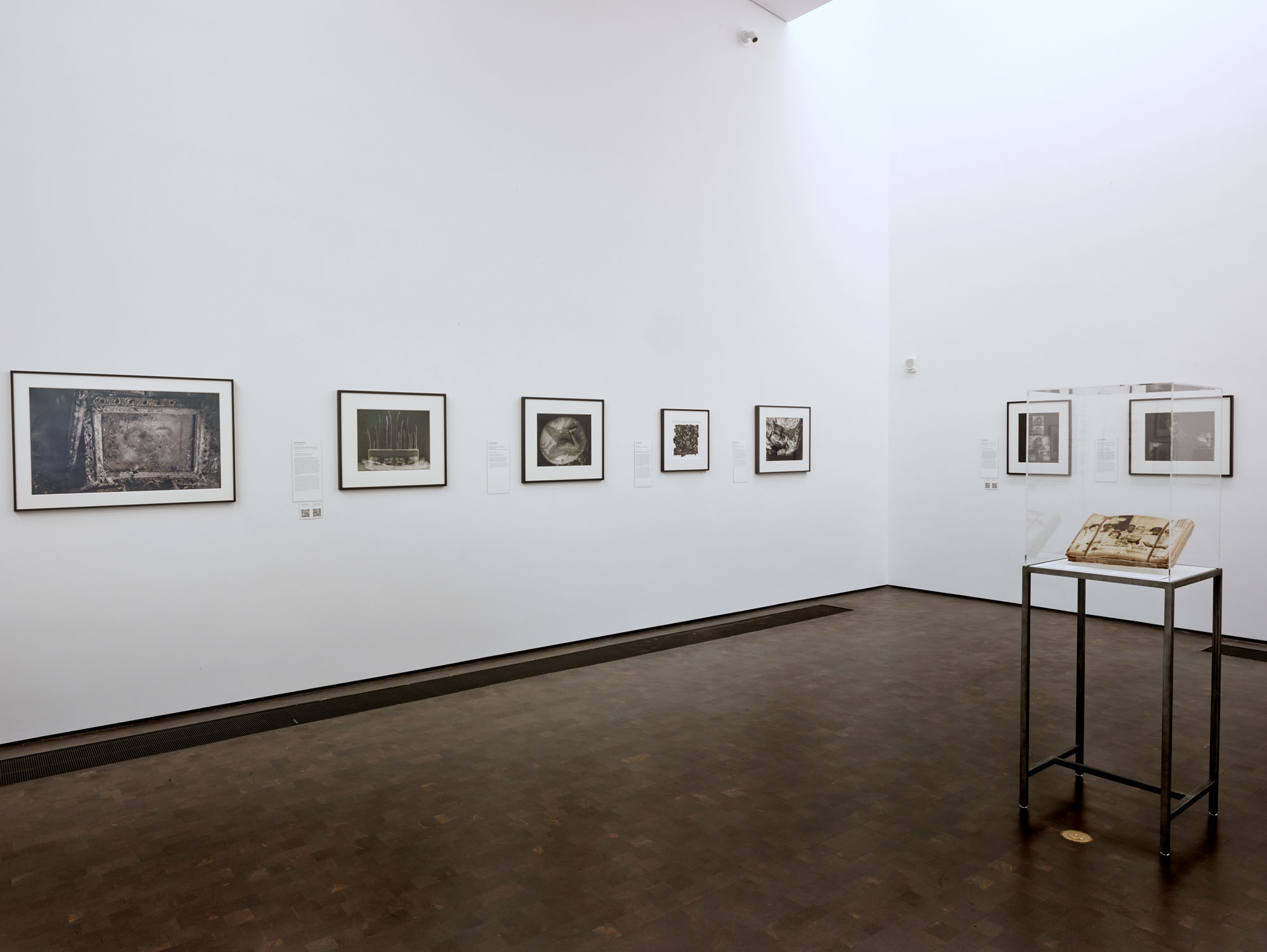
 

Installation view of the exhibition ‘Navigating the Waves: Contemporary Cuban Photography’ at the Museum of Fine Arts, Houston


Installation views of the exhibition Navigating the Waves: Contemporary Cuban Photography at the Museum of Fine Arts, Houston
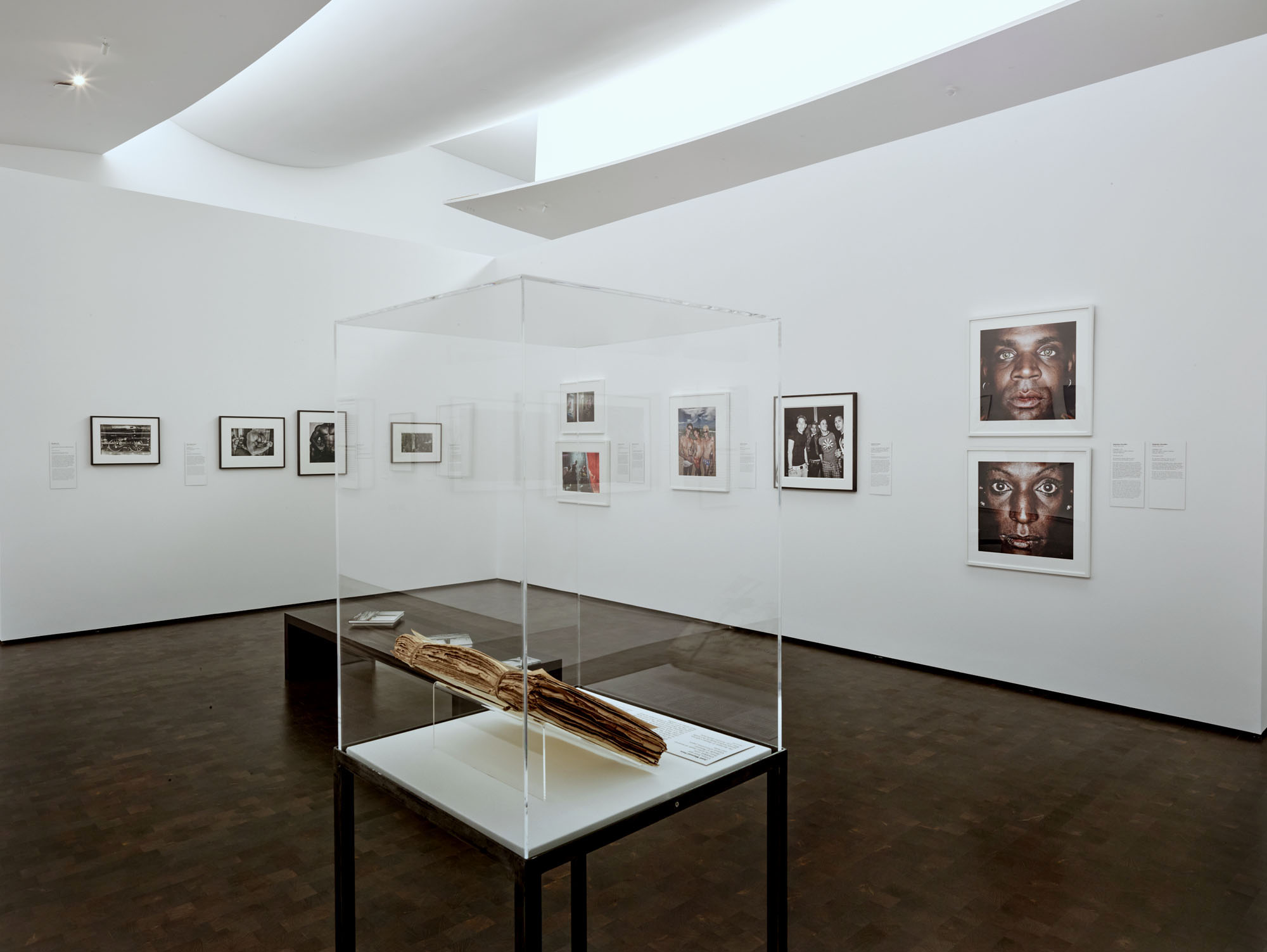
 

Installation view of the exhibition 'Navigating the Waves: Contemporary Cuban Photography' at the Museum of Fine Arts, Houston showing at right top, Alejandro González's 'Untitled' 2008 from the series 'Conducta impropia'; and at second right, Alejandro González's '2:57 am, 24 de dic de 2005, Vedado, La Habana, Cuba' 2005 from the series 'AM-PM'


Installation view of the exhibition Navigating the Waves: Contemporary Cuban Photography at the Museum of Fine Arts, Houston showing at right top, Alejandro González’s Untitled 2008 from the series Conducta impropia (below); and at second right, Alejandro González’s 2:57 am, 24 de dic de 2005, Vedado, La Habana, Cuba 2005 from the series AM-PM (below)


Alejandro González (Cuban, b. 1974) 'Untitled' 2008 From the series 'Conducta impropia'


Alejandro González (Cuban, b. 1974)
Untitled
2008
From the series Conducta impropia
From the seres Improper Behaviour
Chromogenic print
23 × 22 15/16 in. (58.4 × 58.3cm)
The Museum of Fine Arts, Houston
The Madeleine P. Plonsker Collection, Gift of Madeleine and Harvey Plonsker


Not without setbacks, major advances in LGBTQ+ legal rights had occurred in Cuba by the 2000s, and most legal prohibitions against homosexuality had been lifted. Alejandro González was on hand for the second annual event in observance of the International Day Against Homophobia in 2008. There, he carried out the first part of a series titled Improper Behavior – large, extreme close-up portraits of participants, so close that the subjects’ gender becomes hard to identify. Although frontal and straightforward as a mugshot, they are nonetheless assertive of power rather than subservient to it.

The title of Alejandro González’s series Conducta impropia is an intentional reference to the 1984 documentary of the same name by Cuban exiles Néstor Almendros and Orlando Jiménez Leal detailing the Castro government’s oppression of Cuba’s gay population.


Alejandro González (Cuban, b. 1974)
'2:57 am, 24 de dic de 2005, Vedado, La Habana, Cuba'
2005 From the series 'AM-PM'


Alejandro González (Cuban, b. 1974)
2:57 am, 24 de dic de 2005, Vedado, La Habana, Cuba
2005
From the series AM-PM
Inkjet print
21 1/4 × 21 1/4 in. (54 × 54cm)
The Museum of Fine Arts, Houston
The Madeleine P. Plonsker Collection, museum purchase funded by the Caroline Wiess Law Accessions Endowment


“In 2005, I started getting interested in social topics and people,” Alejandro González has said. “I was seeing what was happening in society, and I was feeling that I was not participating.” A night creature himself at age 31, Alejandro González began with a candid look at youth culture in the wee hours of the morning along Havana’s 23rd Street, a hub of nightlife. Using a Rolleiflex camera, with its square format and characteristically low vantage point, his method was straightforward, and his pictures – almost always made with the permission of his subjects – felt undeniably authentic.
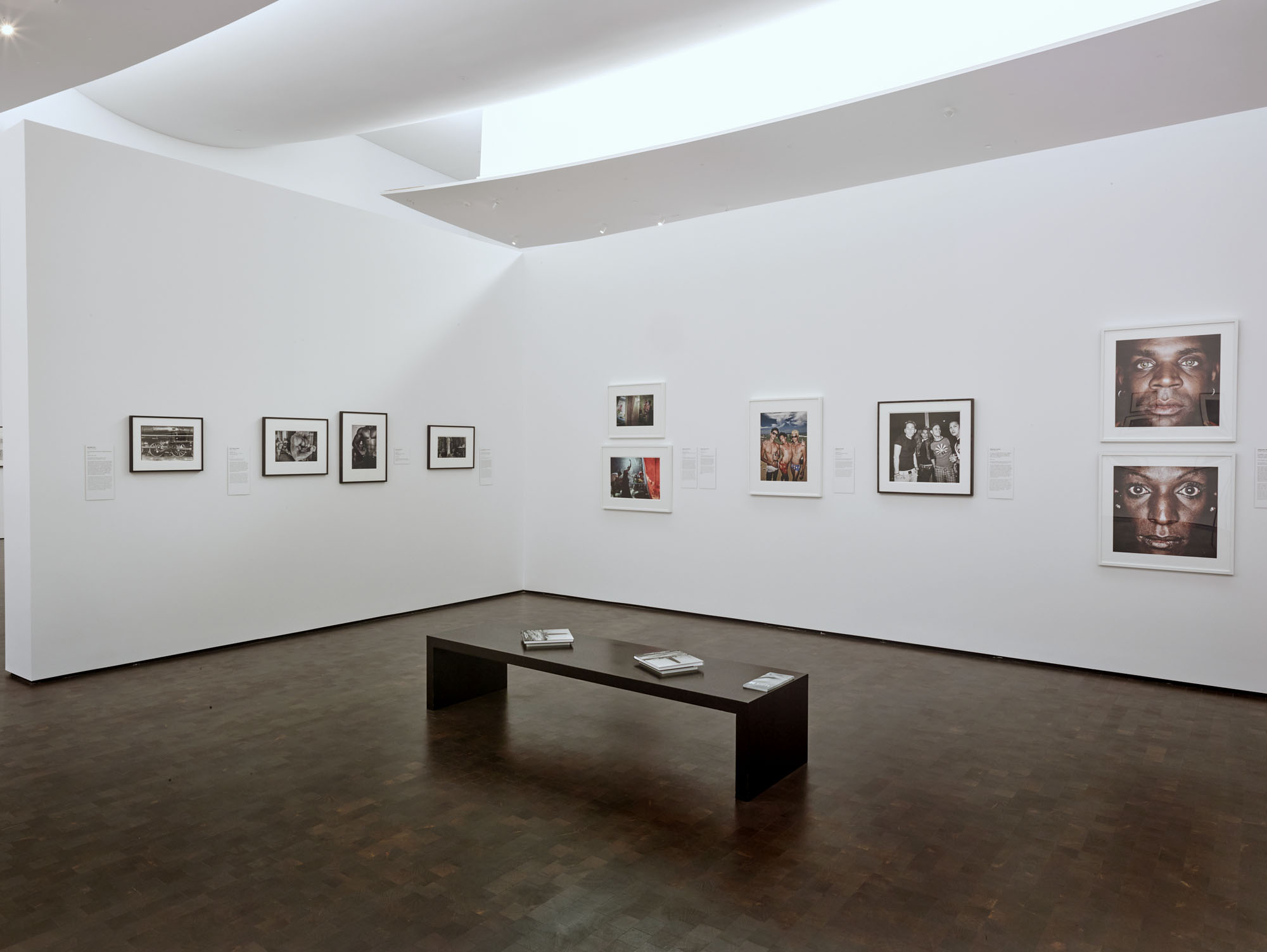
 

Installation view of the exhibition ‘Navigating the Waves: Contemporary Cuban Photography’ at the Museum of Fine Arts, Houston showing at right top, Alejandro González's 'Untitled' 2008 from the series 'Conducta impropia'; and at second right, Alejandro González's '2:57 am, 24 de dic de 2005, Vedado, La Habana, Cuba' 2005 from the series 'AM-PM'; and at third right, Alejandro González's 'Untitled' 2008 from the series 'Conducta impropia'


Installation view of the exhibition Navigating the Waves: Contemporary Cuban Photography at the Museum of Fine Arts, Houston showing at right top, Alejandro González’s Untitled 2008 from the series Conducta impropia (above); and at second right, Alejandro González’s 2:57 am, 24 de dic de 2005, Vedado, La Habana, Cuba 2005 from the series AM-PM (above); and at third right, Alejandro González’s Untitled 2008 from the series Conducta impropia (below)


Alejandro González (Cuban, b. 1974) 'Untitled' 2008 From the series 'Conducta impropia'


Alejandro González (Cuban, b. 1974)
Untitled
2008
From the series Conducta impropia
From the series Improper Behaviour
Chromogenic print
23 3/8 × 17 3/8 in. (59.3 × 44.2cm)
The Museum of Fine Arts, Houston
The Madeleine P. Plonsker Collection, museum purchase funded by the Caroline Wiess Law Accessions Endowment


A month after beginning his series Improper Behaviour with close-up portraits, Alejandro González continued the project by photographing jubilant young people at a gay pride party at Mi Cayito, a popular gay beach east of Havana that little more than a decade earlier had been subject to police raids, arrests, fines, and threats of imprisonment.
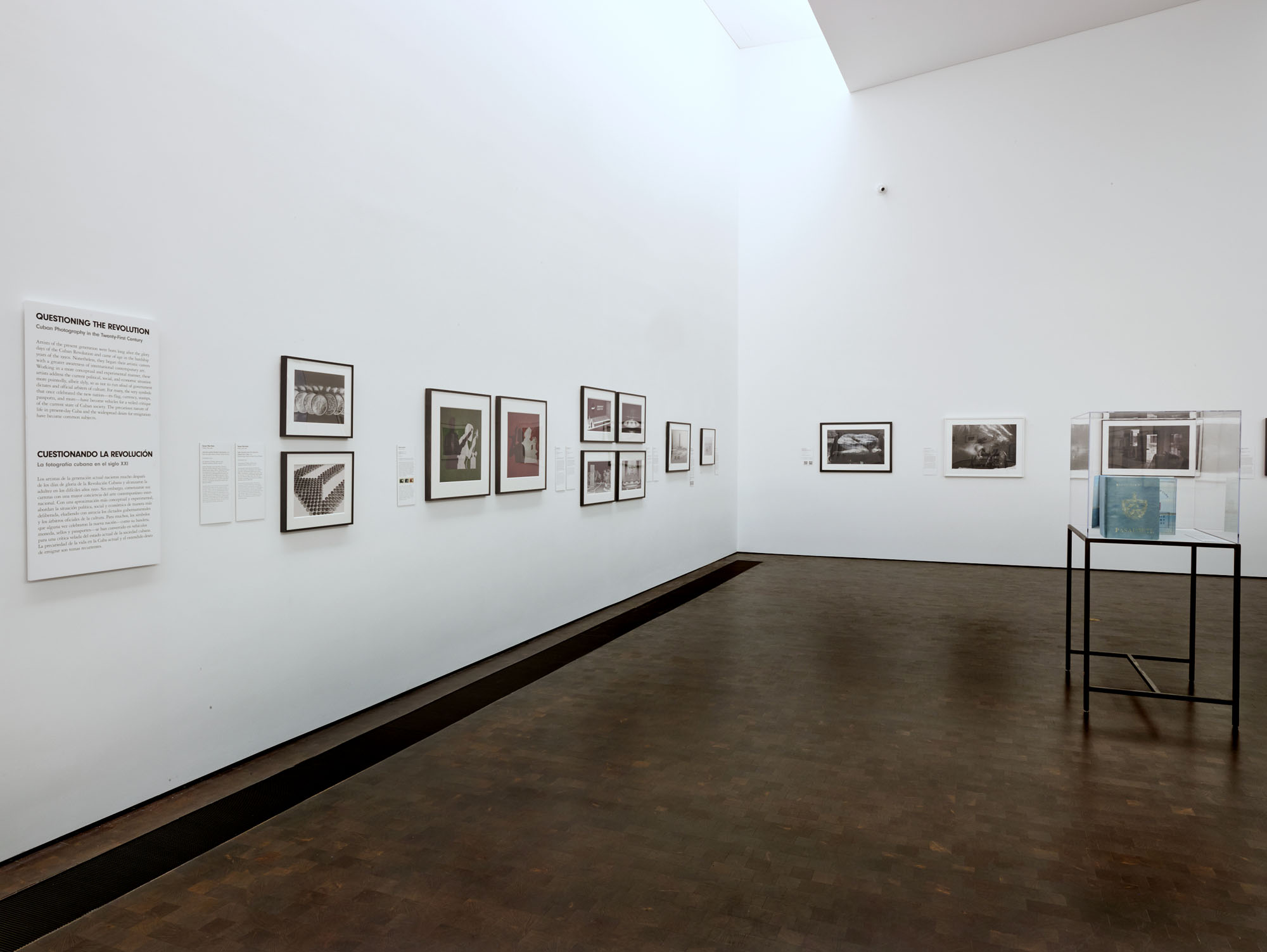
 

Installation view of the exhibition ‘Navigating the Waves: Contemporary Cuban Photography’ at the Museum of Fine Arts, Houston showing at left the wall text from the section "Questioning the Revolution: Cuban Photography in the Twentieth-First Century"


Installation view of the exhibition Navigating the Waves: Contemporary Cuban Photography at the Museum of Fine Arts, Houston showing at left the wall text from the section “Questioning the Revolution: Cuban Photography in the Twentieth-First Century”


Questioning the Revolution: Cuban Photography in the Twentieth-First Century

Artists of the present generation were born long after the glory days of the Cuban Revolution and came of age in the hardship years of the 1990s. Nonetheless, they began their artistic careers with a greater awareness of international contemporary art. Working in a more conceptual and experimental manner, these artists address the current political, social, and economic situation more pointedly, albeit slyly, so as not to run afoul of government dictates and official arbiters of culture. For many, the very symbols that once celebrated the new nation – its flag, currency, stamps, passports, and more – have become vehicles for a veiled critique of the current state of Cuban society. The precarious nature of life in present-day Cuba and the widespread desire for emigration have become common subjects.

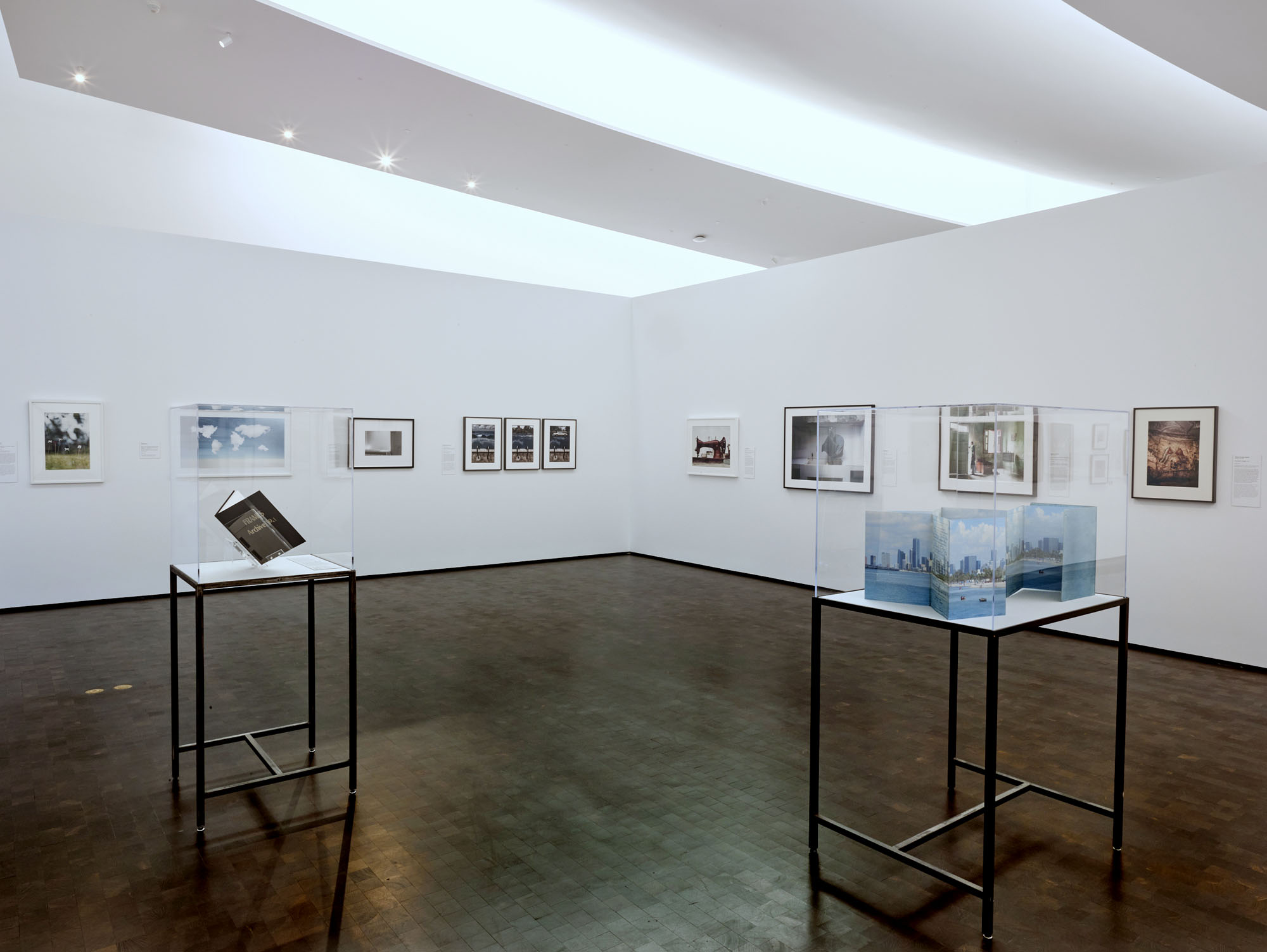
 

Installation view of the exhibition ‘Navigating the Waves: Contemporary Cuban Photography’ at the Museum of Fine Arts, Houston


Installation views of the exhibition Navigating the Waves: Contemporary Cuban Photography at the Museum of Fine Arts, Houston


Installation view of the exhibition ‘Navigating the Waves: Contemporary Cuban Photography’ at the Museum of Fine Arts, Houston showing at left, Houston Liudmila & Nelson's photograph 'Absolut Revolution - La Isla' (Absolut Revolution - The Island) 2002


Installation view of the exhibition Navigating the Waves: Contemporary Cuban Photography at the Museum of Fine Arts showing at left, Houston Liudmila & Nelson’s photograph Absolut Revolution – La Isla (Absolut Revolution – The Island) 2002
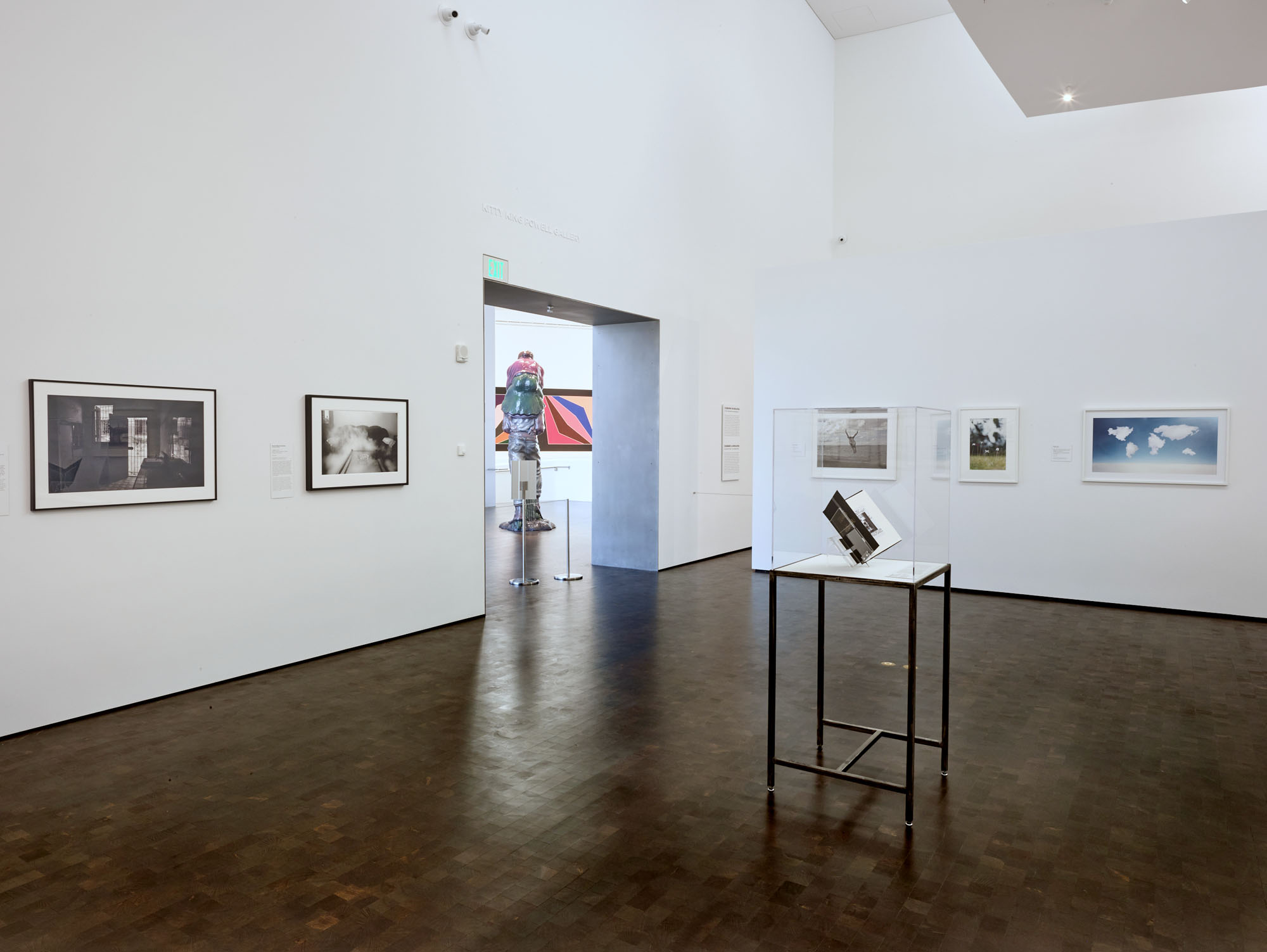
 

Installation view of the exhibition ‘Navigating the Waves: Contemporary Cuban Photography’ at the Museum of Fine Arts, Houston


Installation view of the exhibition Navigating the Waves: Contemporary Cuban Photography at the Museum of Fine Arts
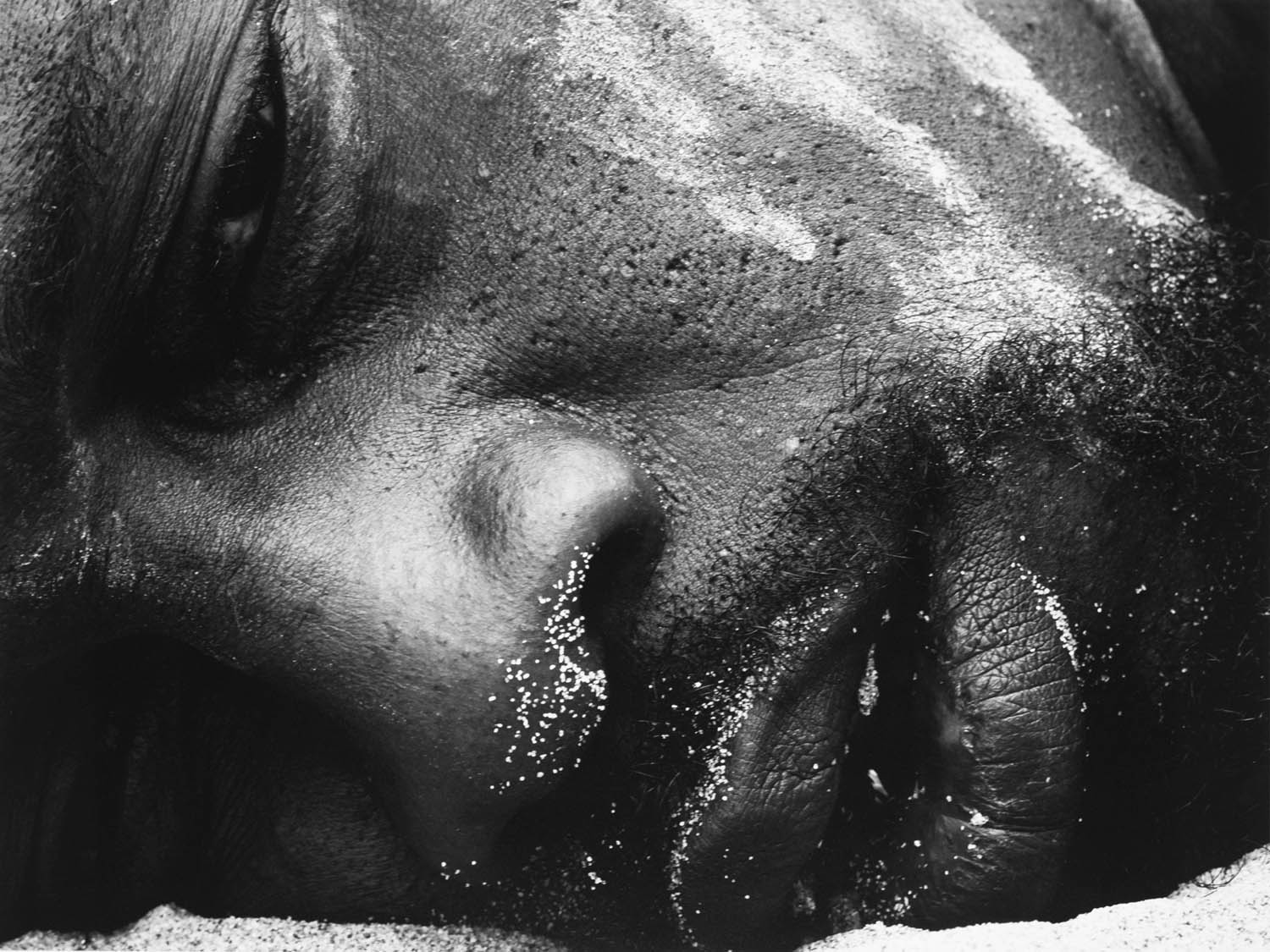
 

Jorge Luis Álvarez Pupo (Cuban, b. 1970) 'Wandering Paths No. 15' (Caminos errantes No. 15) 2009


Jorge Luis Álvarez Pupo (Cuban, b. 1970)
Wandering Paths No. 15 (Caminos errantes No. 15)
2009
From the series Wandering Paths (Caminos errantes)
Gelatin silver print
The Museum of Fine Arts, Houston
The Madeleine P. Plonsker Collection, gift of Madeleine and Harvey Plonsker
© 2009 Jorge Luis Álvarez Pupo


Born, raised, and schooled in Havana, Jorge Luis Álvarez Pupo continued to think of himself as Cuban even when residing abroad. His series Wandering Paths is a visual reflection on the theme of migration. Now living and working in Belgium, Álvarez Pupo said the series takes “as inspiration the moment I realised that I myself had become an immigrant, even when visiting my own country. It reflects on people who have been forced to leave their environment to face the unknown, which is not always welcoming.”


Museum of Fine Arts, Houston
1001 Bissonnet Street
Houston, TX 77005

Opening hours:
Wednesday 11am – 5pm
Thursday 11am – 9pm
Friday 11am – 6pm
Saturday 11am – 6pm
Sunday 12.30pm – 6pm
Closed Monday and Tuesday, except Monday holidays
Closed Thanksgiving Day and Christmas Day
Museum of Fine Arts, Boston website

LIKE ART BLART ON FACEBOOK

Back to top

Exhibition: ‘The Aftermath of Conflict: Jo Ractliffe’s Photographs of Angola and South Africa’ at The Metropolitan Museum of Art, New York

Exhibition dates: 24th August 2015 – 3rd January 2016


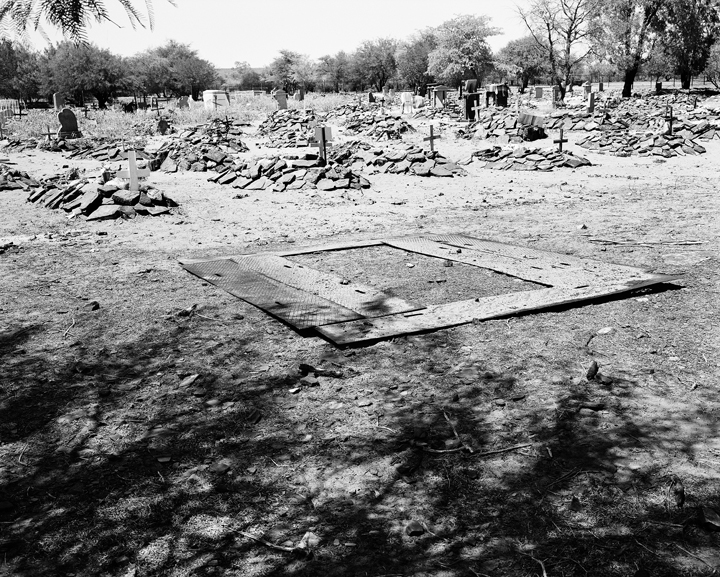
Jo Ractliffe (South African, b. 1961) 'Template for digging graves, Pomfret' 2013


Jo Ractliffe (South African, b. 1961)
Template for digging graves, Pomfret
2013
Inkjet print, 2015
Height: 14 3/16 in. (36 cm)
Width: 17 11/16 in. (45 cm)
On loan from the artist, courtesy Stevenson, Cape Town and Johannesburg
© Jo Ractliffe. Courtesy of Stevenson, Cape Town and Johannesburg


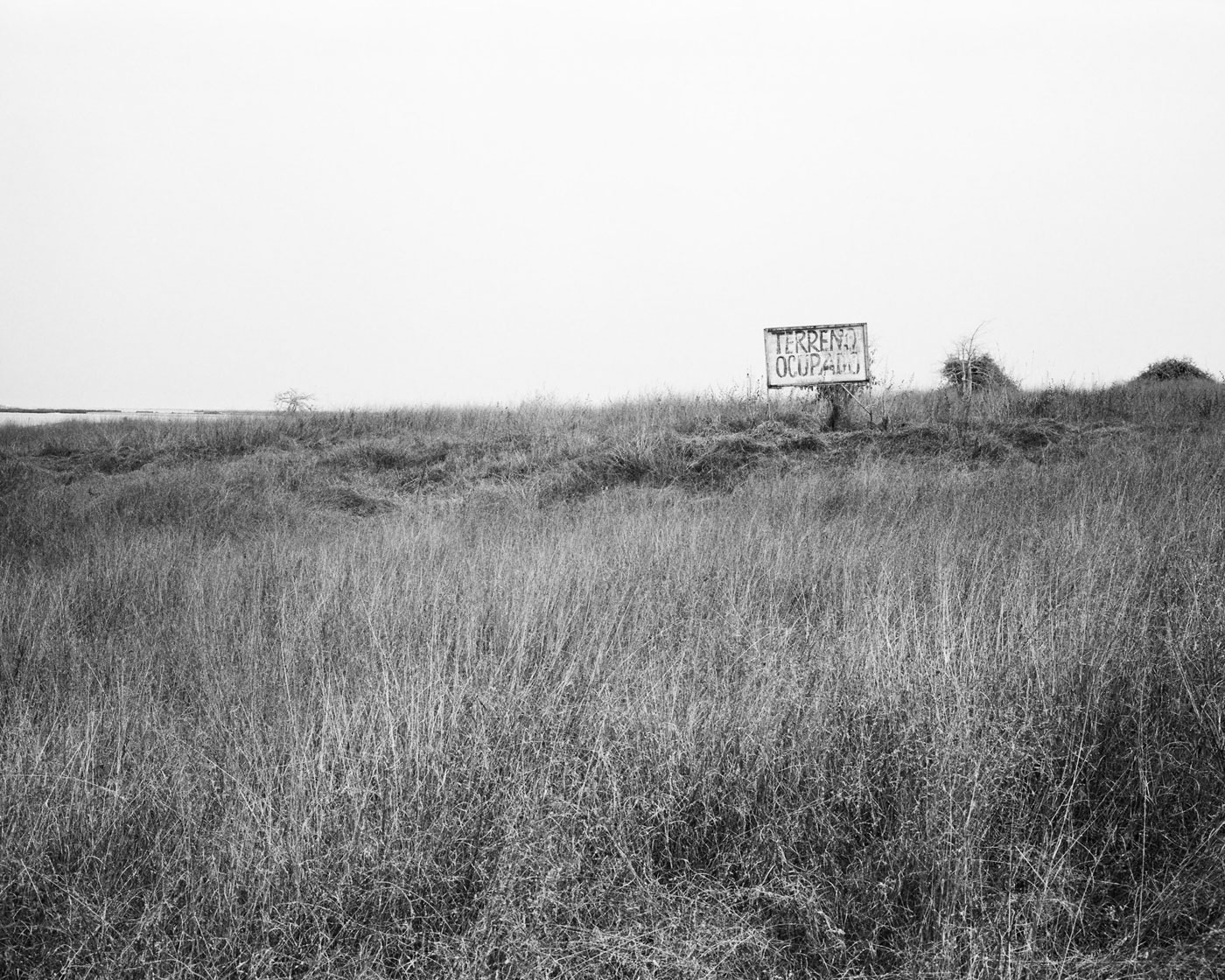
The photograph as unoccupied land

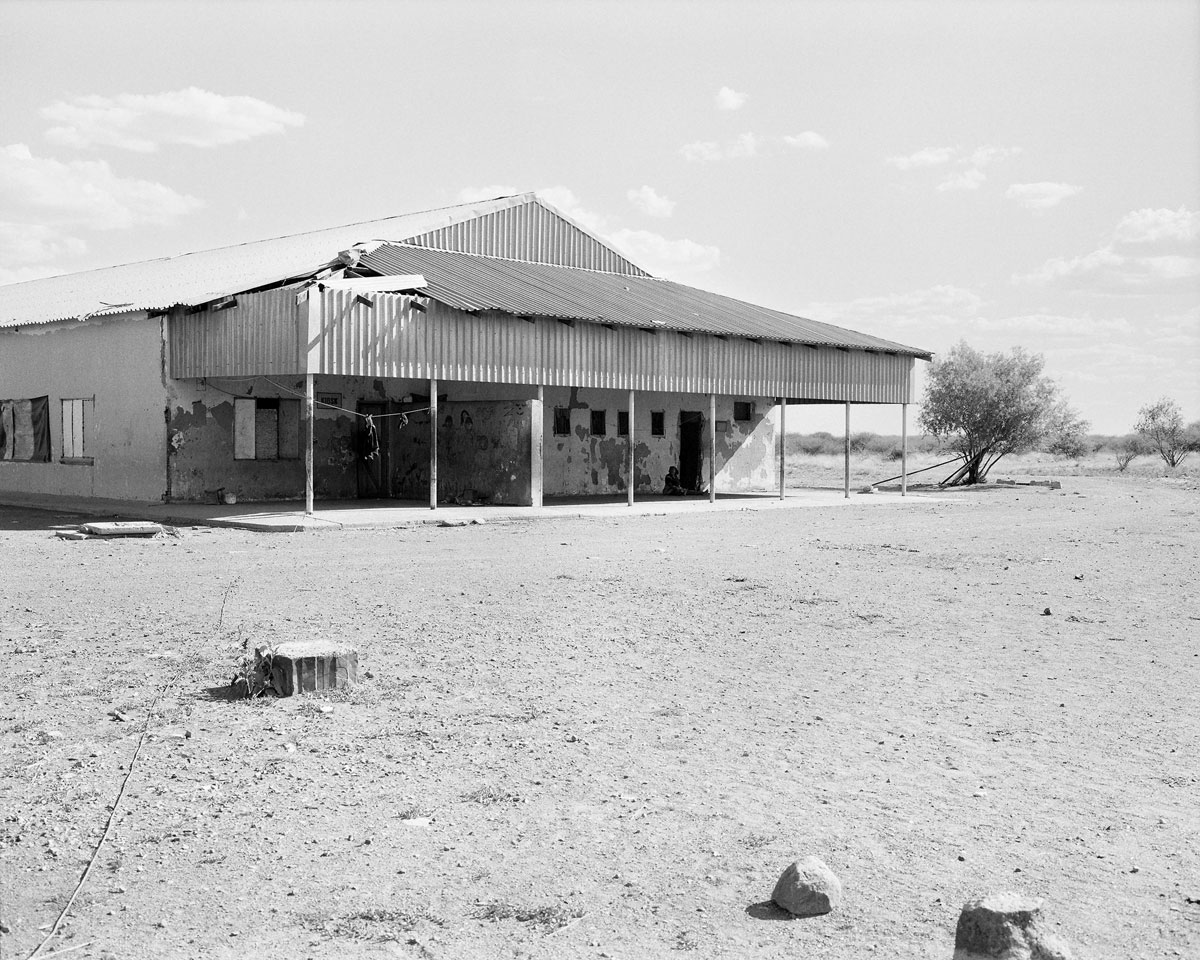
To be frank, I am not enamoured of these photographs. They seem to be conceptual ideas masquerading as documentary photographs that evidence a lazy way of seeing the world, one in which the untold narrative has become an empty spectacle. The story, such as it is, is only narrativised by the accompanying text. If an image cannot stand on its own two feet in and of itself without lines of text to support its supposition, then it is not doing its job properly.

The framing is sloppy and the focus of the images is poor. For example, the focus of Template for digging graves, Pomfret (above) is the shadow at the front of the photograph, where the real focus should have been the template and the graves beyond with their horizontals and verticals. This would have made for a much stronger photograph because the foreground and the background are extraneous to the image.

Ractliffe really needs to look at the documentary photographers of the 19th century to see how it is done. The aftermath of conflict photographs of the American Civil War by photographers such as Matthew Brady, Alexander Gardner and Timothy O’Sullivan (and here I am not talking about the battlefield photographs) have a robust narrative quality that this artist could only ever hope to achieve. Their photographs possess a clear and consistent vision, a deep aesthetic that is emergent, based on transparence, a ruddy darkness and textural ambience – rather than an aesthetic that is superficially descriptive of surfaces.

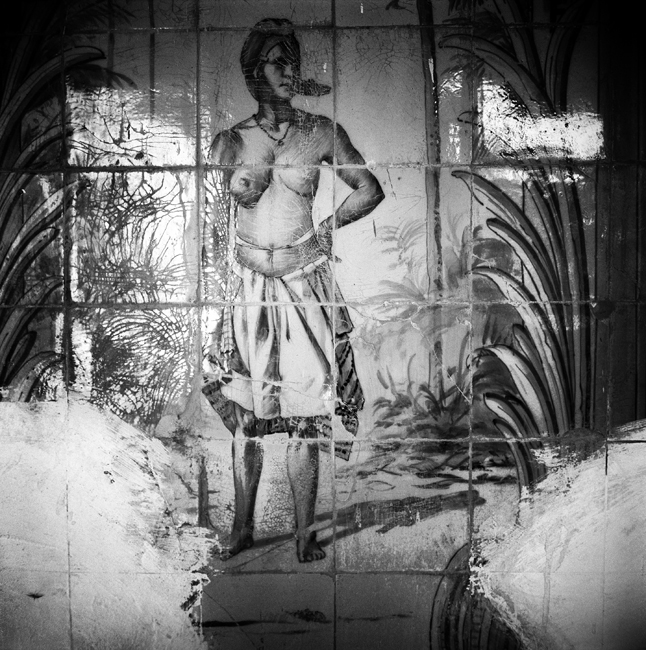
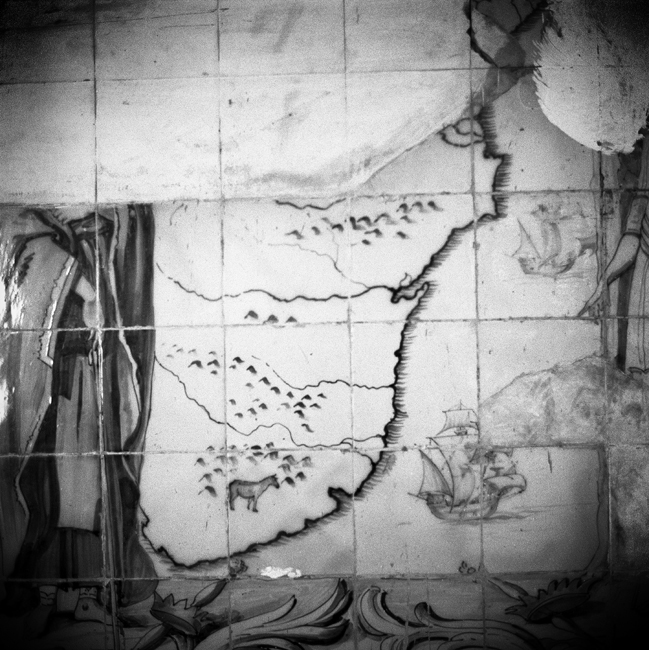
This lack of understanding of the depth of contested place / disputed histories can be no better illustrated than in the diptych The battlefield at Cuito Cuanavale (2009, below) whose photographs really say nothing about what went on here. The photographs are prescriptive (relating to the imposition or enforcement of a rule or method) statements constructed by the artist, with no emotion and little ambience or feeling for subject matter. They are not even very good descriptive photographs of the landscape. Photographs such as Mural depicting Fidel Castro, Agostinho Neto and Leonid Brezhnev, circa 1975, Viriambundo (2009, below) and Details of tiled murals at the Fortaleza De São Miguel, depicting Portuguese explorations in Africa (2007, below) are worse, recording inarticulate artefacts at a level best reserved for student work.

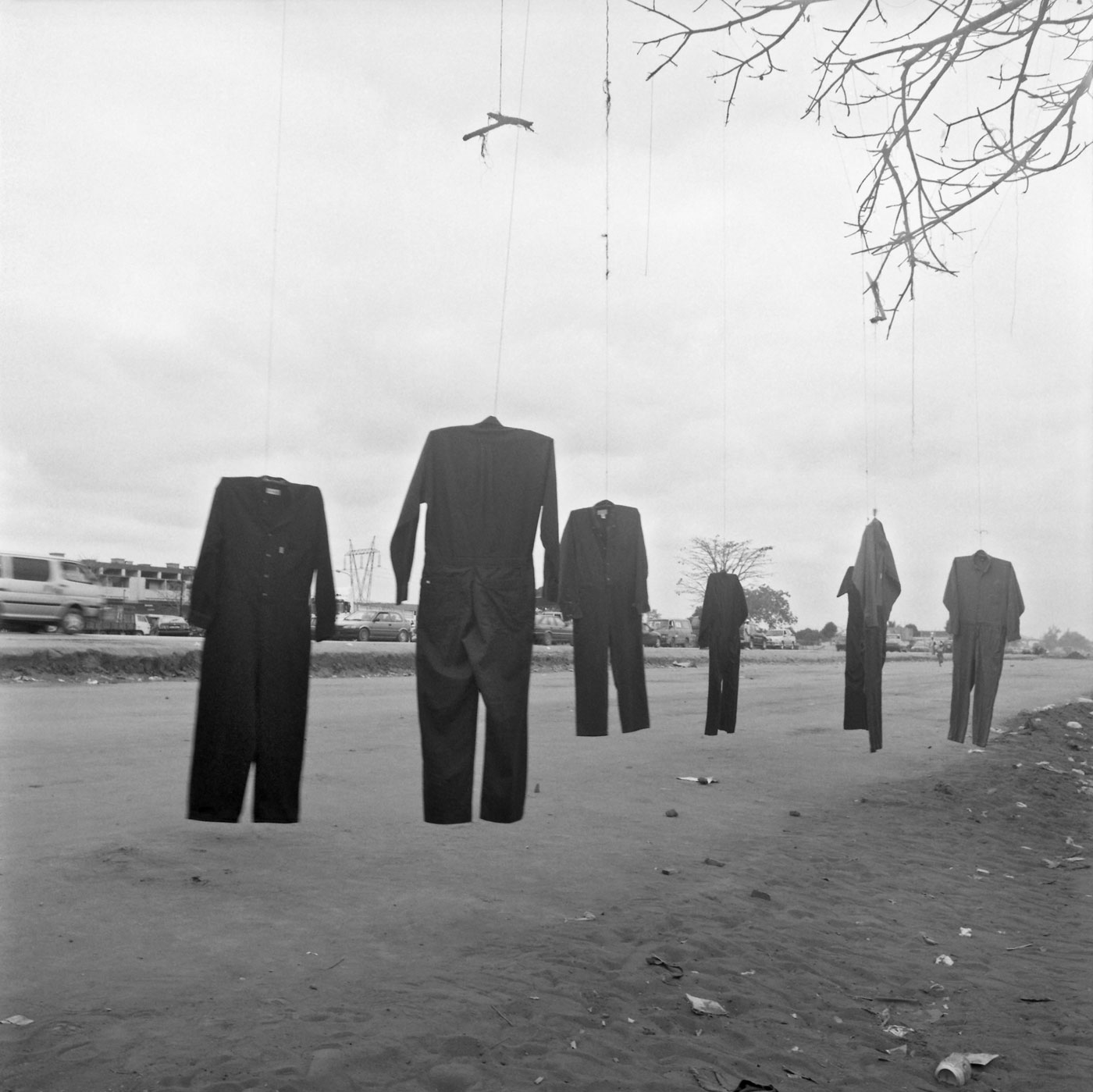
By far the most interesting and powerful photograph is Roadside stall on the way to Viana (2007, below). This photograph is memorable as so many of the other are not, because it possesses a sense of disposition, of alienation, ambience and the weight of history all bound up in those hanging bodies.

Dr Marcus Bunyan


Many thankx to The Metropolitan Museum of Art for allowing me to publish the photographs in the posting. Please click on the photographs for a larger version of the image.


Jo Ractliffe (South African, b. 1961) 'Vacant plot near Atlantico Sul' 2007


Jo Ractliffe (South African, b. 1961)
Vacant plot near Atlantico Sul
2007
From the series Terreno Ocupado
Inkjet print, 2015
On loan from the artist, courtesy Stevenson, Cape Town and Johannesburg
© Jo Ractliffe. Courtesy of Stevenson, Cape Town and Johannesburg


This coarse, grassy landscape appears at first glance to be empty, yet the billboard declaring “Terreno Ocupado” – Portuguese for “occupied land” – reveals this site in Luanda as both active and politically charged. It points to Angola’s long history of occupation and territorial turmoil, from the arrival of Portuguese explorers in 1483 through to the tangled twentieth-century conflicts that spilled over into neighbouring countries. It also points to the contested terrain that is today’s Luanda. With this image, the opening photograph of the first series, Ractliffe sets the scene for her exploration of land, borders, and displacement, themes which thread through all the works featured here.


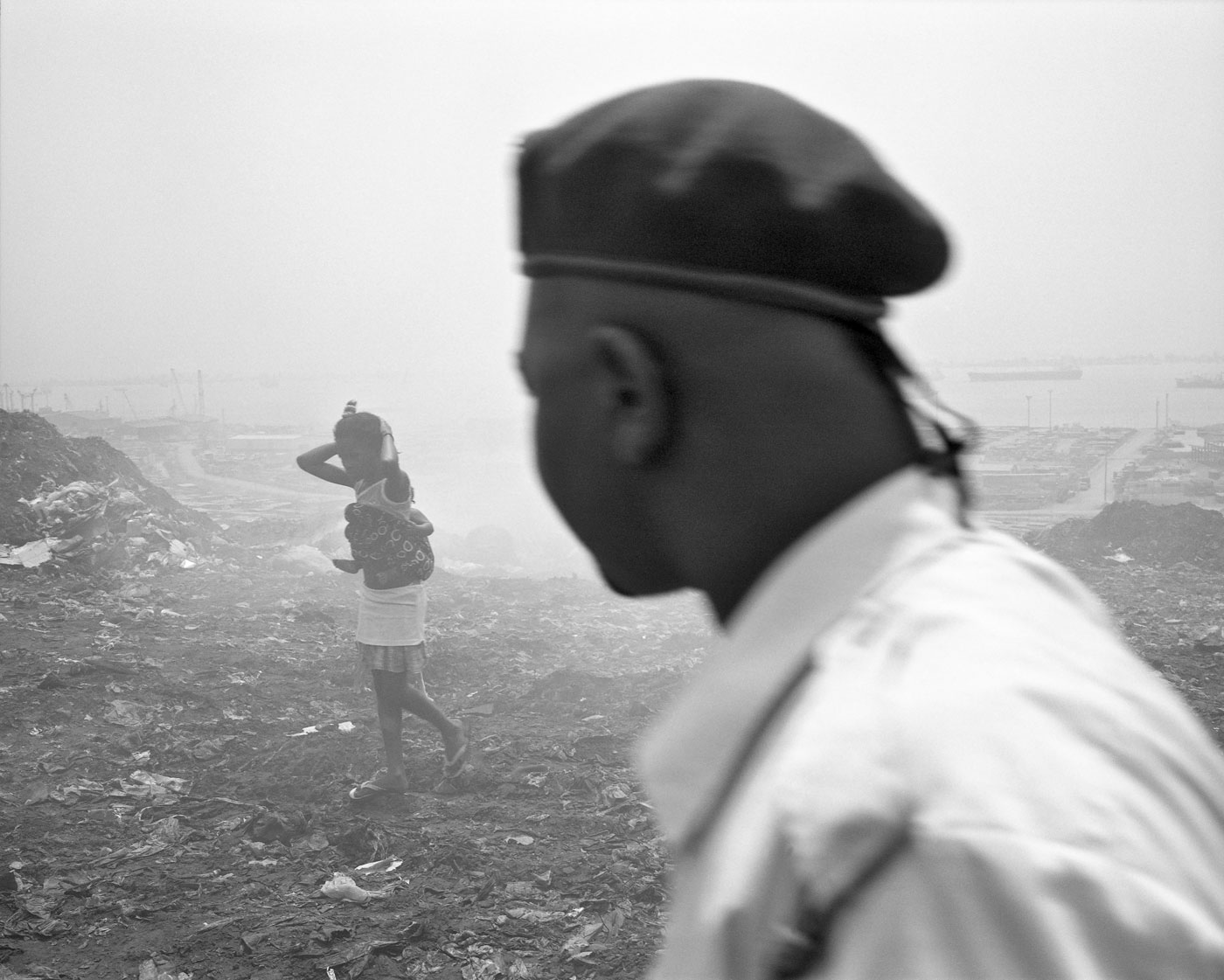
Jo Ractliffe (South African, b. 1961) 'Woman and her baby, Roque Santeiro market' 2007


Jo Ractliffe (South African, b. 1961)
Woman and her baby, Roque Santeiro market
2007
From the series Terreno Ocupado
Inkjet print, 2015
On loan from the artist, courtesy Stevenson, Cape Town and Johannesburg
© Jo Ractliffe. Courtesy of Stevenson, Cape Town and Johannesburg


Conflict between Luanda’s population and its governing elites forms an undercurrent to this photograph of a young woman carrying a baby across litter-strewn ground, observed by a man wearing a military beret. In September 2010, three years after Ractliffe took these photographs and following a protracted dispute between the government and the local community, the Luandan authorities closed down Roque Santeiro and relocated it to a new Chinese-built facility at Panguila, some twelve miles to the north. Although the government cited concerns over insanitary conditions and organised crime, critics argued that the relocation had more to do with repossessing prime real estate for new luxury apartments.


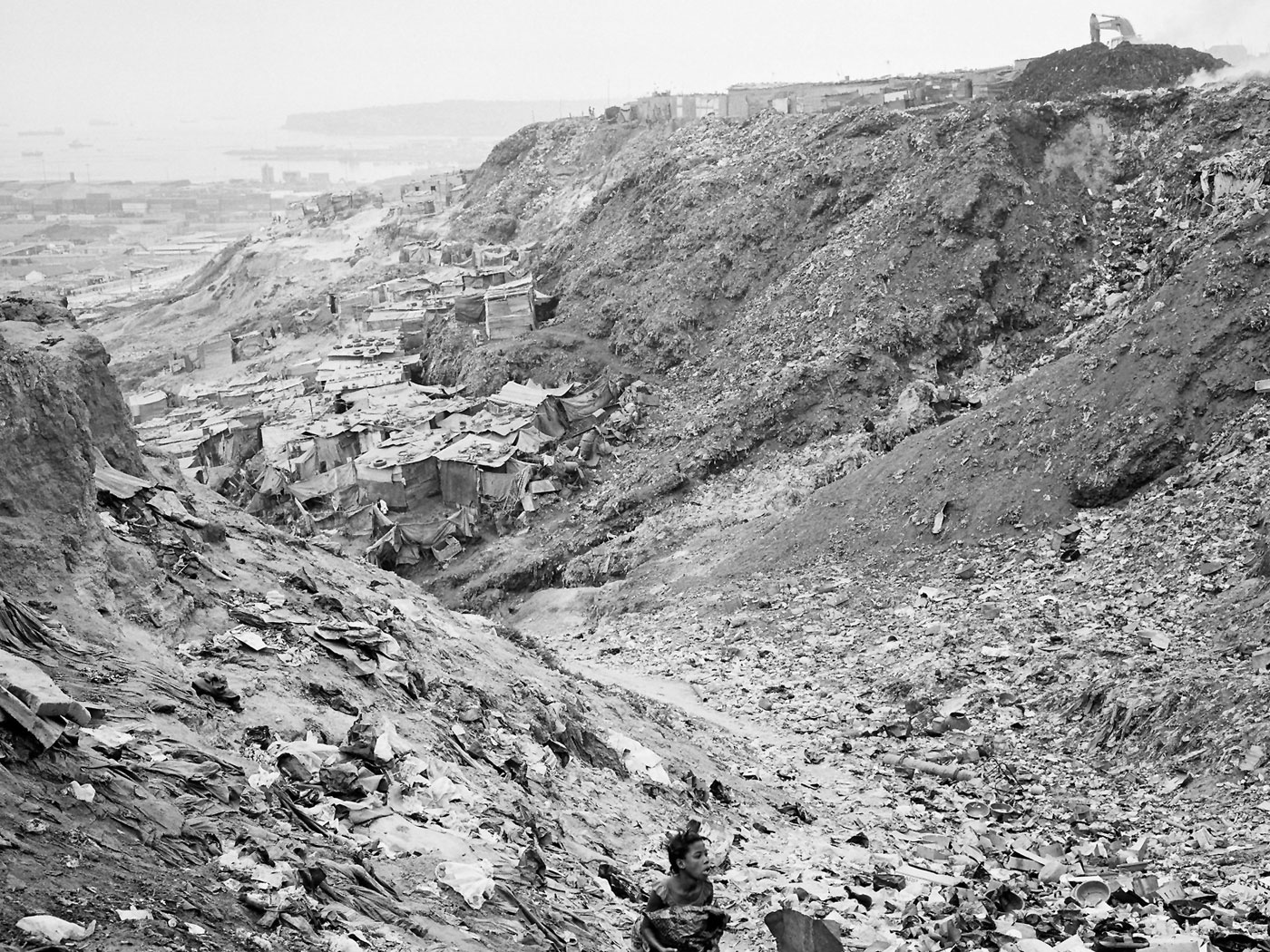
Jo Ractliffe (South African, b. 1961) 'Woman on the footpath from Boa Vista to Roque Santeiro market' 2007


Jo Ractliffe (South African, b. 1961)
Woman on the footpath from Boa Vista to Roque Santeiro market
2007
From the series Terreno Ocupado
Inkjet print, 2015
On loan from the artist, courtesy Stevenson, Cape Town and Johannesburg
© Jo Ractliffe. Courtesy of Stevenson, Cape Town and Johannesburg


Apparently out of breath and clutching a plastic bag, the woman in the foreground of this photograph is making her way up a faintly visible footpath and out of Ractliffe’s field of vision. A digger perches on the cliff top above her, and in the middle distance, a cluster of dwellings clings precariously to the litter-strewn side of the ravine. Boa Vista – “good view” – is one of Luanda’s largest shanty towns, and at the time of this photograph was home to over 50,000 people. Following landslides in 2001 which killed several residents, parts of the neighbourhood were bulldozed and over 4,000 families were evicted from their homes and relocated to tents in other parts of the city while awaiting the construction of their new accommodation.


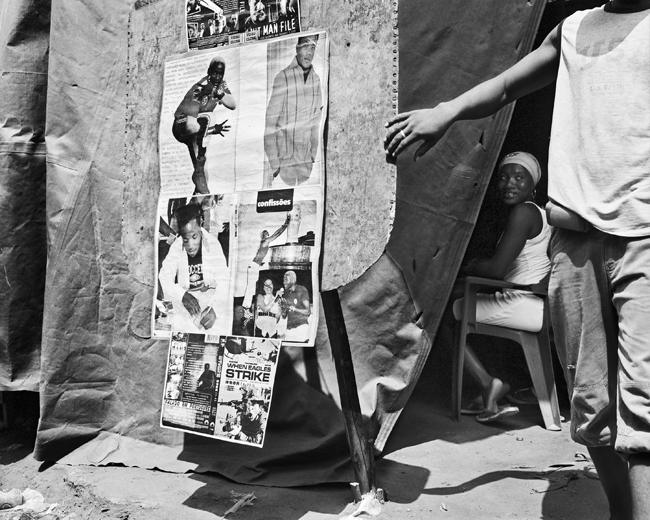
Jo Ractliffe (South African, b. 1961) 'Video club, Roque Santeiro market' 2007


Jo Ractliffe (South African, b. 1961)
Video club, Roque Santeiro market
2007
Inkjet print, 2015
Height: 14 3/16 in. (36cm) Width: 17 11/16 in. (45cm)
On loan from the artist, courtesy Stevenson, Cape Town and Johannesburg
© Jo Ractliffe. Courtesy of Stevenson, Cape Town and Johannesburg


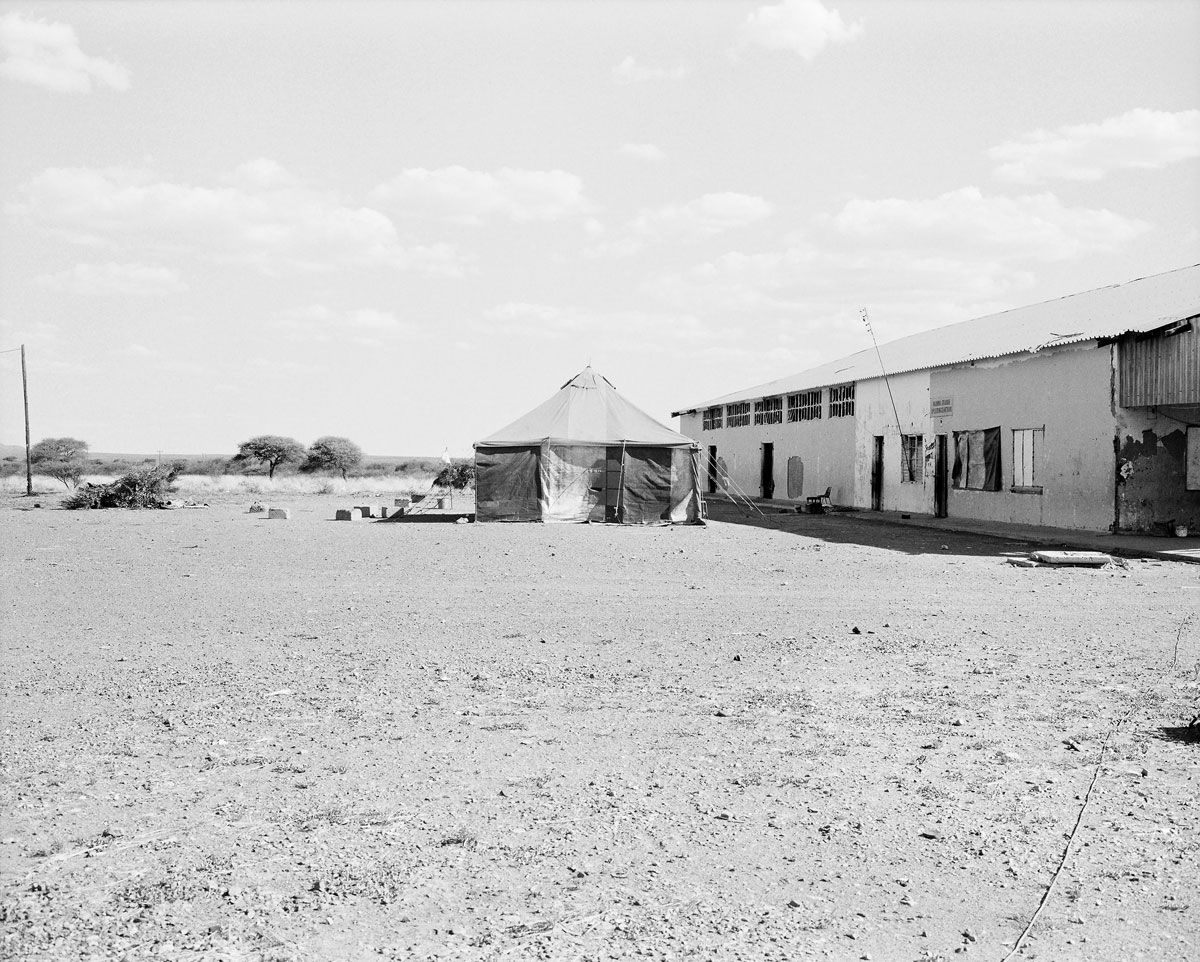
Before its closure in 2010, Roque Santeiro was renowned as the biggest open-air market in sub-Saharan Africa, and the centre of Angola’s informal economy. Established in the 1980s and named after a popular Brazilian soap opera, it flourished during the Angolan Civil War as streams of refugees fled the countryside and came to Luanda, searching for new livelihoods. Everything was for sale in its makeshift stalls, from household items, food, and clothes, to contraband alcohol, cars, and livestock. In this photograph Ractliffe focuses on one of the market’s many video clubs, which were housed in military-style tents and screened action movies on televisions powered by generators.


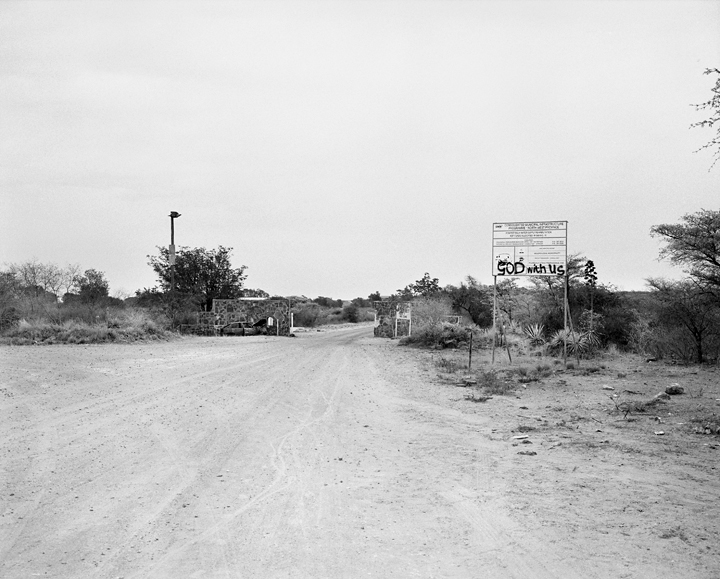
Jo Ractliffe (South African, b. 1961) ''God with us', Pomfret' 2011


Jo Ractliffe (South African, b. 1961)
‘God with us’, Pomfret
2011
Inkjet print, 2015
Height: 17 11/16 in. (45cm) Width: 22 1/16 in. (56cm)
On loan from the artist, courtesy Stevenson, Cape Town and Johannesburg
© Jo Ractliffe. Courtesy of Stevenson, Cape Town and Johannesburg


The abandoned mining town of Pomfret is located in the far north of South Africa, near the border with Botswana. After the closure of its asbestos mine, the town was converted into a military base and used to accommodate 32 Battalion, an elite Special Forces unit made up of Angolan soldiers. When the unit was disbanded in 1993, most of the veterans and their families stayed in Pomfret, living in abject conditions without basic services and under constant threat of eviction. Ractliffe has spoken of finding graves there marked only with “Born Angola”; for the veterans whose paths ended here, death in Pomfret was “the final displacement”.


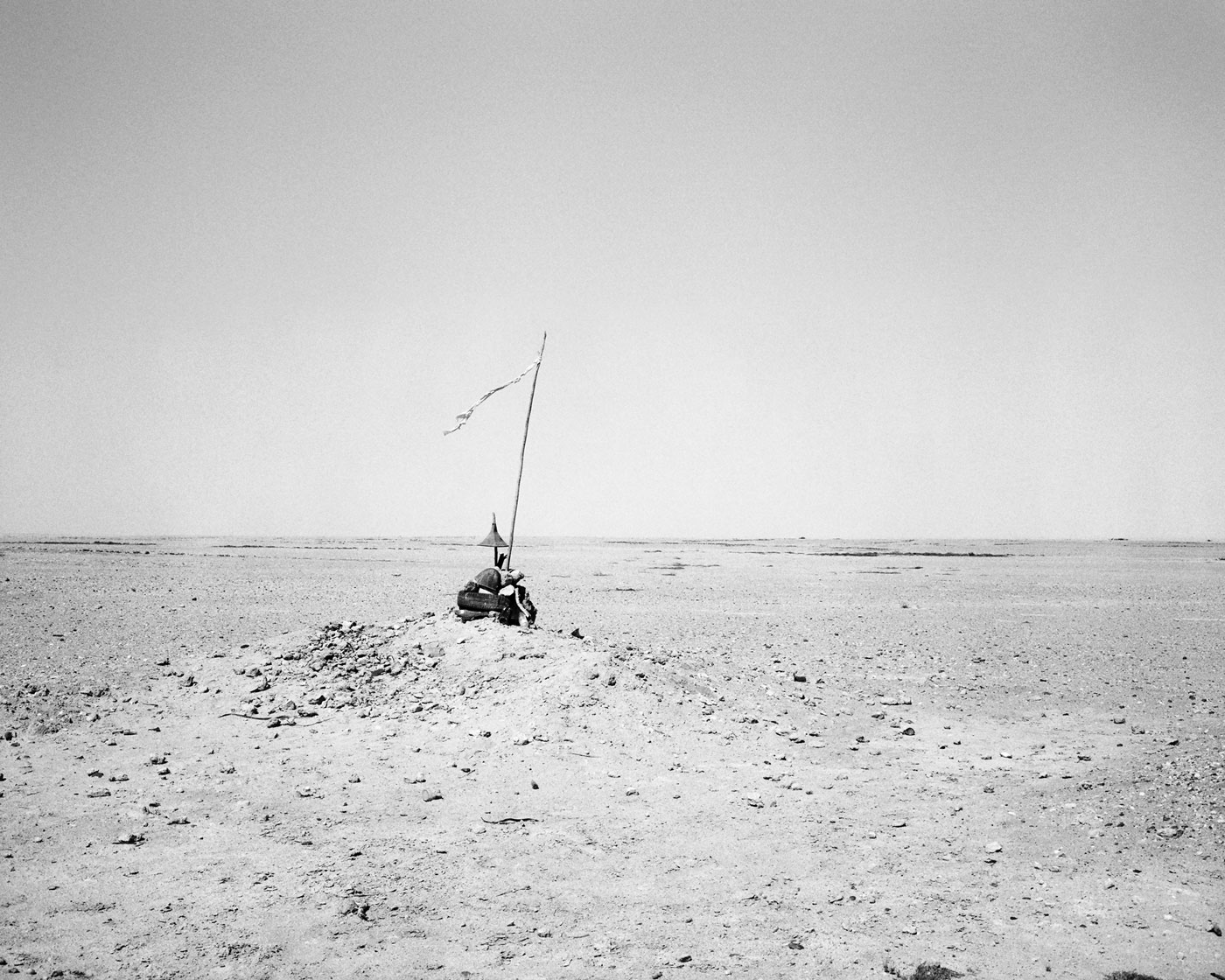
Jo Ractliffe (South African, b. 1961) 'Unidentified memorial in the desert, south of Namibe I' 2009


Jo Ractliffe (South African, b. 1961)
Unidentified memorial in the desert, south of Namibe I
2009
From the series As Terras do Fim do Mundo
Inkjet print, 2015
On loan from the artist, courtesy Stevenson, Cape Town and Johannesburg
© Jo Ractliffe. Courtesy of Stevenson, Cape Town and Johannesburg


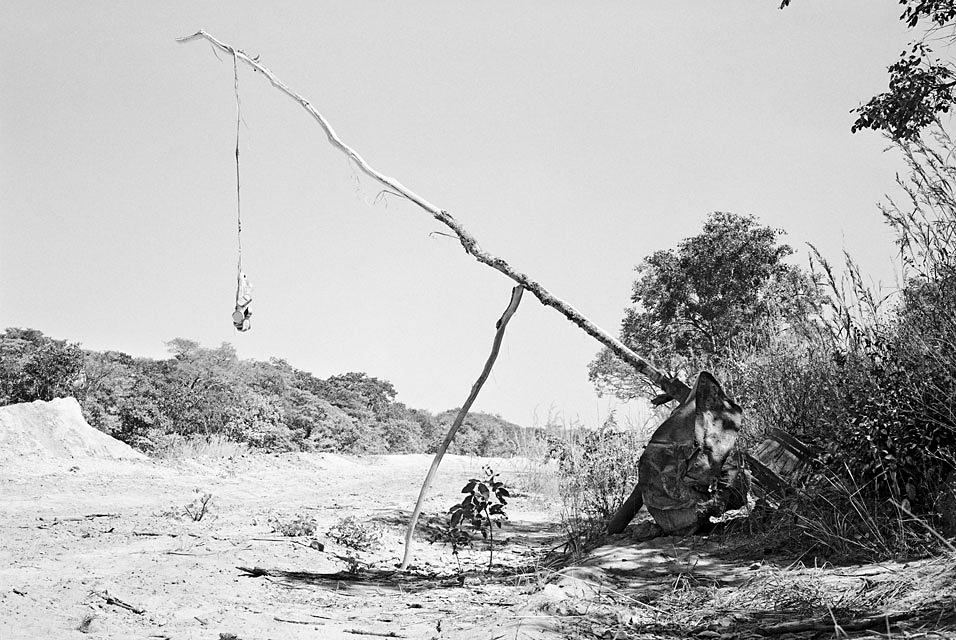
In this photograph, an assemblage of objects perches on a stony outcrop, surrounded by a barren expanse of desert. The long pole protruding from the pile is topped with a ragged banner, announcing the presence of this unusual memorial, but giving little away about its exact significance. Ractliffe took this photograph close to the Cuban base at Namibe on Angola’s southwestern coast, where an extensive network of trenches, bunkers, and anti-aircraft defences is located. As Ractliffe has remarked: “there are some very poignant things in the landscape, like these markers, that seem to say ‘I have been here, people have been here.'”


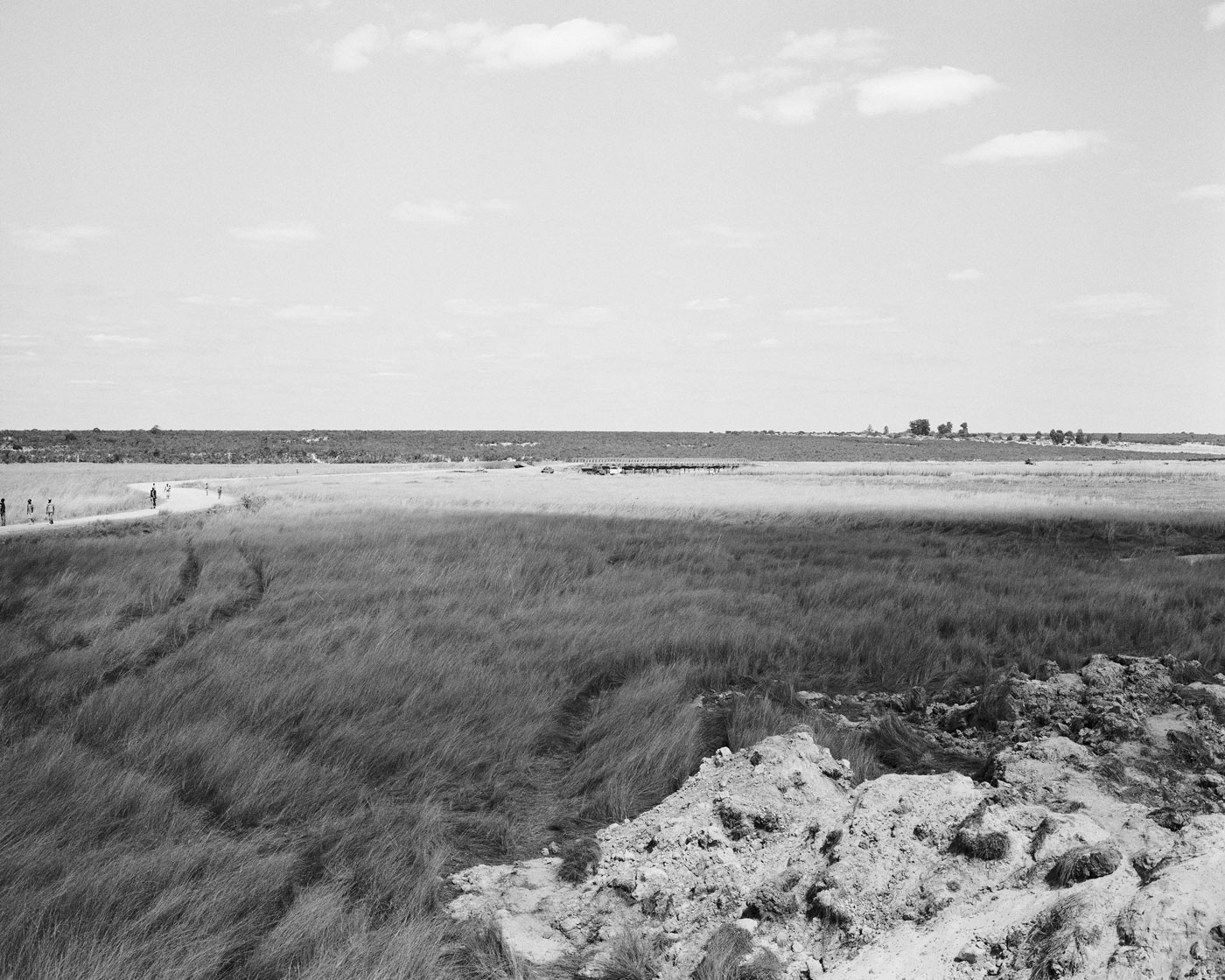
Jo Ractliffe (South African, b. 1961) 'The battlefield at Cuito Cuanavale' 2009 (diptych left)

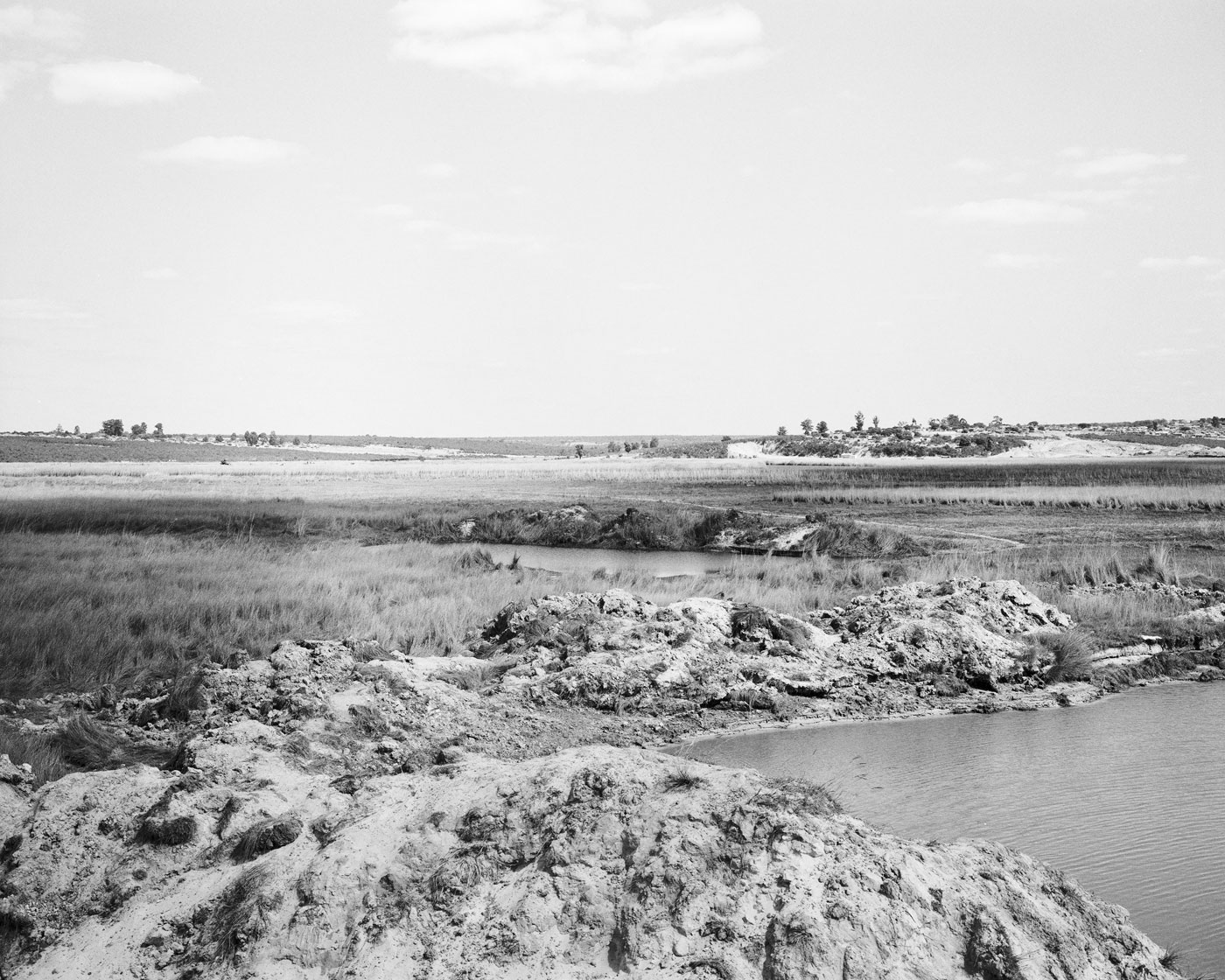
Jo Ractliffe (South African, b. 1961) 'The battlefield at Cuito Cuanavale' 2009 (diptych right)


Jo Ractliffe (South African, b. 1961)
The battlefield at Cuito Cuanavale (diptych left and right)
2009
From the series As Terras do Fim do Mundo
Inkjet prints, 2015
On loan from the artist, courtesy Stevenson, Cape Town and Johannesburg
© Jo Ractliffe. Courtesy of Stevenson, Cape Town and Johannesburg


Reflecting on this diptych, Ractliffe has observed that “Quite often, sites of significance don’t evidence their historical weight.” It is true that the calm landscape – muddy riverbanks weaving through a marsh – together with the small size of these prints belies the huge historical importance of their subject. In 1987-1988, during the Angolan Civil War, Cuito Cuanavale was the site of the biggest battle in Africa since World War II. On one side was the armed wing of Agostinho Neto’s government, supported by their Cuban allies; on the other side was the rebel group UNITA, supported by the South African Defence Force. The outcome of the battle is still widely disputed, with both sides claiming victory.


Jo Ractliffe (South African, b. 1961) 'Thorn tree, Platfontein' 2012


Jo Ractliffe (South African, b. 1961)
Thorn tree, Platfontein
2012
Inkjet print, 2015
Height: 14 3/16 in. (36cm) Width: 17 11/16 in. (45cm)
On loan from the artist, courtesy Stevenson, Cape Town and Johannesburg
© Jo Ractliffe. Courtesy of Stevenson, Cape Town and Johannesburg


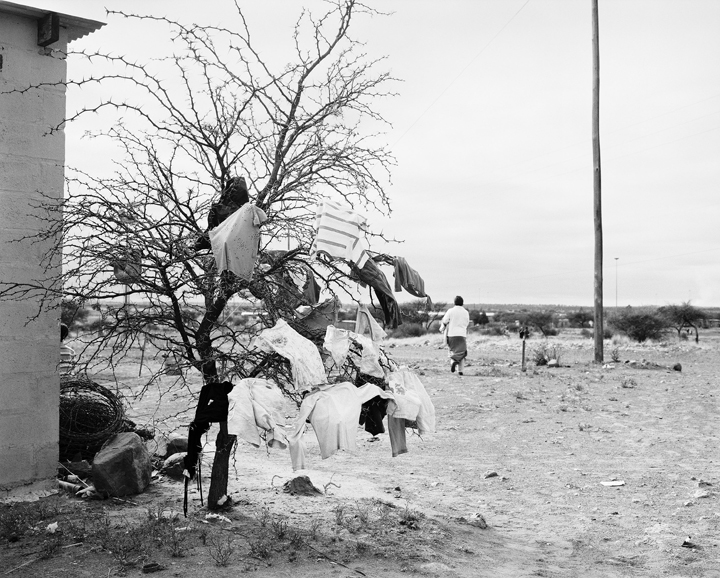
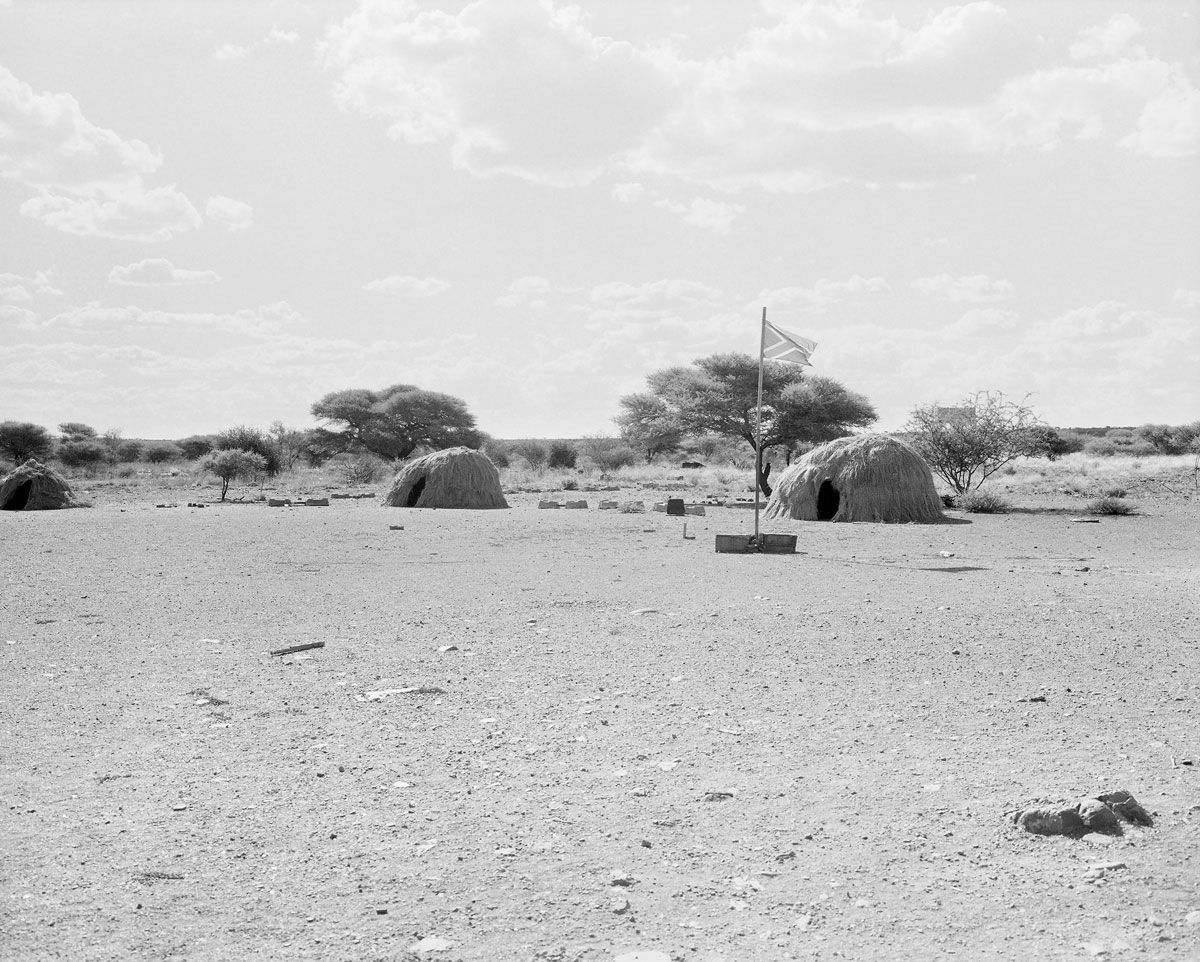
In this photograph and the next one, “Playing soccer with marbles, Platfontein”, the placement of personal objects in a seemingly unforgiving setting hints at the tension between resilience and vulnerability negotiated by the resident community. The settlement of Platfontein is now home to veterans of 31/201 Battalion, a South African Special Forces unit made up of Angolan and Namibian San trackers who became tied up in the independence conflicts in Angola and Namibia. After the conflicts ended, many of the San veterans were relocated to Schmidtsdrift, but had to live in tents for 14 years because of a competing claim on the land from local communities. The veterans ultimately accepted financial compensation, which enabled them to buy land at Platfontein, pictured here.


Jo Ractliffe (South African, b. 1961) 'Playing soccer with marbles, Platfontein' 2012


Jo Ractliffe (South African, b. 1961)
Playing soccer with marbles, Platfontein
2012
Inkjet print, 2015
Height: 10 1/4 in. (26cm) Width: 12 13/16 in. (32.5cm)
On loan from the artist, courtesy Stevenson, Cape Town and Johannesburg
© Jo Ractliffe. Courtesy of Stevenson, Cape Town and Johannesburg


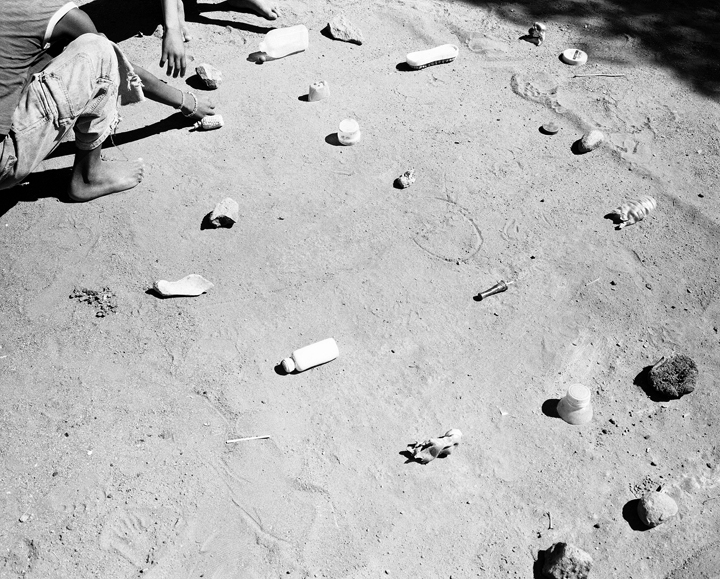
In this photograph and the previous one, “Thorn tree, Platfontein”, the placement of personal objects in a seemingly unforgiving setting hints at the tension between resilience and vulnerability negotiated by the resident community. The settlement of Platfontein is now home to veterans of 31/201 Battalion, a South African Special Forces unit made up of Angolan and Namibian San trackers who became tied up in the independence conflicts in Angola and Namibia. After the conflicts ended, many of the San veterans were relocated to Schmidtsdrift, but had to live in tents for 14 years because of a competing claim on the land from local communities. The veterans ultimately accepted financial compensation, which enabled them to buy land at Platfontein, pictured here.


Jo Ractliffe (South African, b. 1961) 'Veteran soldiers of 'Omega' 31/201 Battalion, Paulo Cassanga and Automover Kakenge, Schmidtsdrift (portrait under instruction)' 2012


Jo Ractliffe (South African, b. 1961)
Veteran soldiers of ‘Omega’ 31/201 Battalion, Paulo Cassanga and Automover Kakenge, Schmidtsdrift (portrait under instruction)
2012
Inkjet print, 2015
Height: 14 3/16 in. (36cm)
Width: 17 11/16 in. (45cm)
On loan from the artist, courtesy Stevenson, Cape Town and Johannesburg
© Jo Ractliffe. Courtesy of Stevenson, Cape Town and Johannesburg


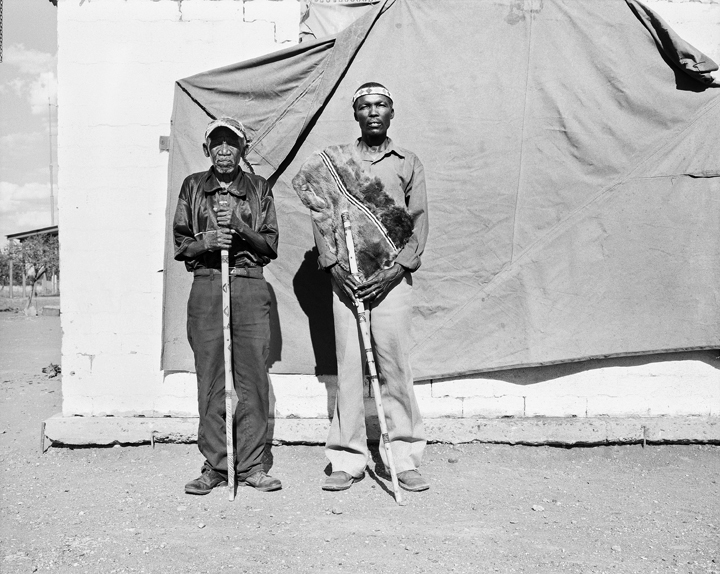
The veterans’ experiences are given added poignancy in this portrait, in which they stand in front of a tarpaulin hanging untidily from a derelict building. Automover Kakenge, standing on the right, is the leader of a group of San veterans who refused to move to Platfontein after their land claim at Schmidtsdrift was unsuccessful. Kakenge has stated that “Schmidtsdrift was the ending for us […]. When we were relocated from Namibia, we had to swear, “South Africa is our land, and our house is here in Schmidtsdrift.” This attachment to the land and buildings at Schmidtsdrift is the endpoint of what Ractliffe refers to as an “epic narrative of displacement”.


Jo Ractliffe (South African, b. 1961) 'On the Road to Cuito Cuanavale I' 2009


Jo Ractliffe (South African, b. 1961)
On the Road to Cuito Cuanavale I
2009
On loan from the artist, courtesy Stevenson, Cape Town and Johannesburg
© Jo Ractliffe. Courtesy of Stevenson, Cape Town and Johannesburg


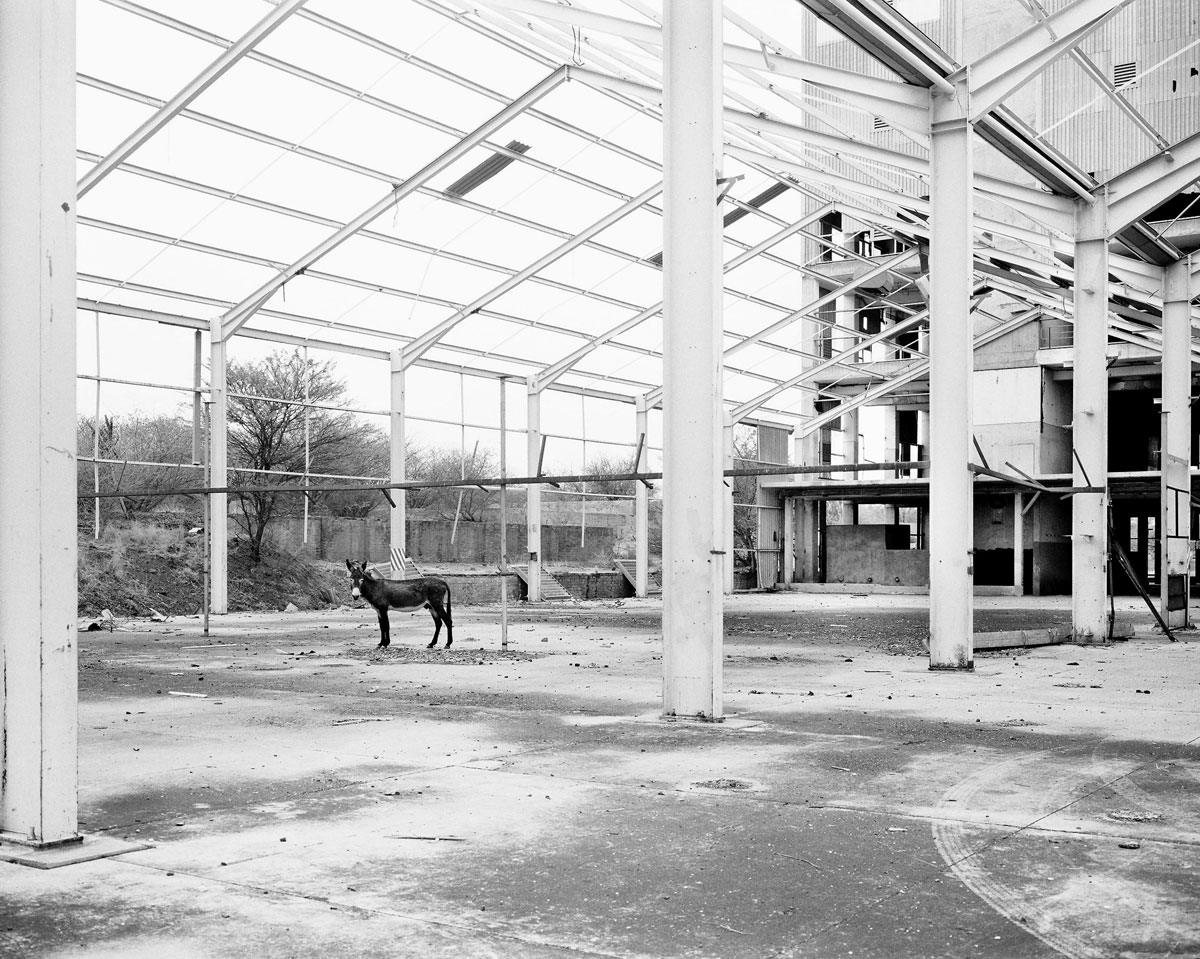
Jo Ractliffe (South African, b. 1961) 'Donkey, Pomfret Asbestos Mine' 2011


Jo Ractliffe (South African, b. 1961)
Donkey, Pomfret Asbestos Mine
2011
From the series The Borderlands
Inkjet print, 2015
On loan from the artist, courtesy Stevenson, Cape Town and Johannesburg
© Jo Ractliffe. Courtesy of Stevenson, Cape Town and Johannesburg


The Aftermath of Conflict: Jo Ractliffe’s Photographs of Angola and South Africa at The Metropolitan Museum of Art beginning August 24 features 23 works produced over the past 10 years by South African artist Jo Ractliffe (born 1961). The photographs examine the landscapes of Angola and South Africa as sites of conflict and contention. Focusing on the aftermath of the Angolan Civil War and the intertwined conflict known in South Africa as the “Border War,” her photographs address themes of dispossession, history, memory, and erasure. The exhibition highlights Ractliffe’s engagement with the land and structures of Angola’s capital, Luanda, as well as with places in the Angolan and South African countryside where unmarked mass graves, minefields, and former military testing sites reveal the complex traces of the past in the present.

The 23 works on loan from the artist include single images, diptychs, and triptychs selected from three photographic series: Terreno Ocupado (2007), As Terras do Fim do Mundo (2010), and The Borderlands (2013). In Terreno Ocupado, Ractliffe establishes the city of Luanda as a multilayered place of both historical dispute and present-day struggle. Photographs highlighting the Portuguese colonial occupation of Angola and its imprint on the built environment appear alongside works depicting the often harsh economic conditions of Luanda today. By focusing on the structural instability of the city’s shanty towns, as well as the longer history of political instability threading through their foundations, these photographs question what it means for land to be occupied, abandoned, and struggled over.

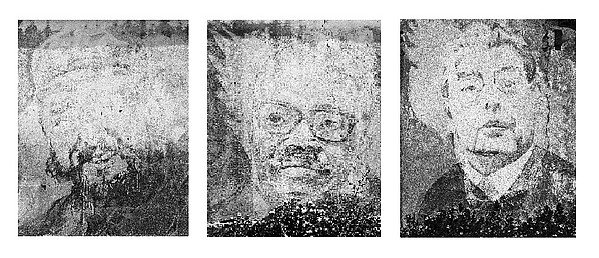
The works selected from 2010’s As Terras do Fim do Mundo highlight traces of the Border War, a conflict fought in rural Angola and present-day Namibia between South Africa and its allies on one side and, on the other, the exiled Namibian liberation movement, the Angolan government, and their allies. For this series, Ractliffe traveled alongside ex-soldiers returning to the desolate places where they had fought. The images produced on these trips include photographs of unmarked mass graves, minefields, and other often-inconspicuous signs of past conflict, showing how landscape can function as a repository of histories and memories and yet not be apparent at first glance. Most of the photographs in this series appear devoid of human presence, but in a triptych featuring mural representations of the conflict’s three key political leaders – Fidel Castro, Agostinho Neto, and Leonid Brezhnev – Ractliffe points more directly to notions of individual agency, culpability, and experience.

For her most recent series, The Borderlands, Ractliffe sought out sites in South Africa that were intricately connected to the history of the Border War and photographed their inhabitants amid their surroundings. The people she photographed, often the subjects of forced relocation and living in precarious conditions, exist at the intersection of the region’s troubled history and challenging present. Works from this series show how histories of violence and dispossession under apartheid intersect with these militarised landscapes.

The Aftermath of Conflict has been organised to coincide with the special exhibition Kongo: Power and Majesty, which focuses on works created by artists in present-day Angola between the 16th and 19th centuries (on view at the Metropolitan Museum September 17, 2015 – January 3, 2016). The landscapes captured by Ractliffe consider a more recent chapter of Angola’s history. The Aftermath of Conflict: Jo Ractliffe’s Photographs of Angola and South Africa is curated by Yaëlle Biro, Associate Curator in the Department of Africa, Oceania, and the Americas at the Metropolitan Museum, together with Dr Evelyn Owen, the 2013-2015 Mellon Curatorial Fellow at The Africa Center, New York, in collaboration with the Museum’s Department of Modern and Contemporary Art and Department of Photographs.

Text from The Metropolitan Museum of Art


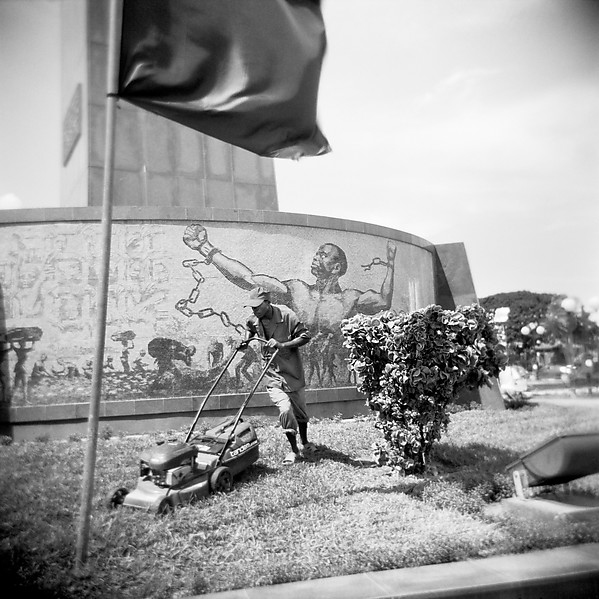
Jo Ractliffe (South African, b. 1961) 'Man maintaining the lawn of the Monumento de Agostinho Neto' 2007


Jo Ractliffe (South African, b. 1961)
Man maintaining the lawn of the Monumento de Agostinho Neto
2007
Inkjet print, 2015
Height: 13 3/4 in. (35cm) Width: 13 3/4 in. (35cm)
On loan from the artist, courtesy Stevenson, Cape Town and Johannesburg
© Jo Ractliffe. Courtesy of Stevenson, Cape Town and Johannesburg


This monument to Angola’s first president Agostinho Neto (1922-1979) was erected in 2001-2002 as a gift from North Korea. Neto, a doctor and poet, was a founder of the MPLA (People’s Movement for the Liberation of Angola) and led the party during Angola’s struggle for independence from Portugal. When the Portuguese withdrew from Angola on November 11, 1975, with help from Cuba and in the face of competing anti-colonial factions, the MPLA seized control of Luanda and Neto became president. He went on to cultivate closer ties with the Soviet Union and other communist states. In this photograph, Ractliffe contrasts the heroic figure symbolising freedom from colonialism shown on the monument’s pedestal with the everyday heroism of a man pushing a heavy lawnmower.


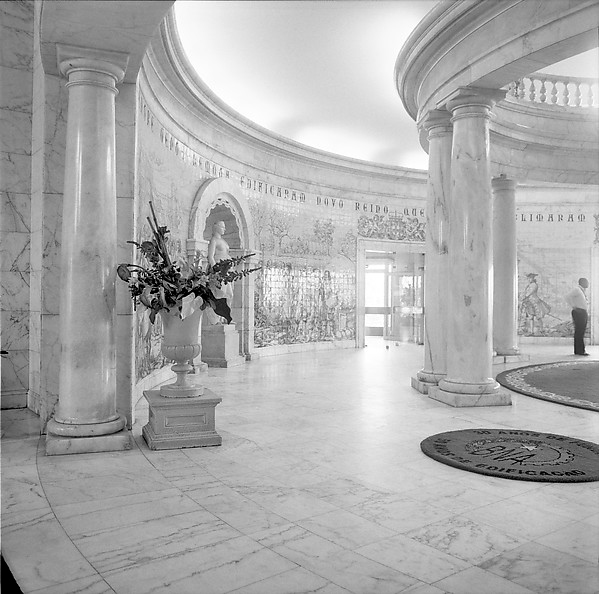
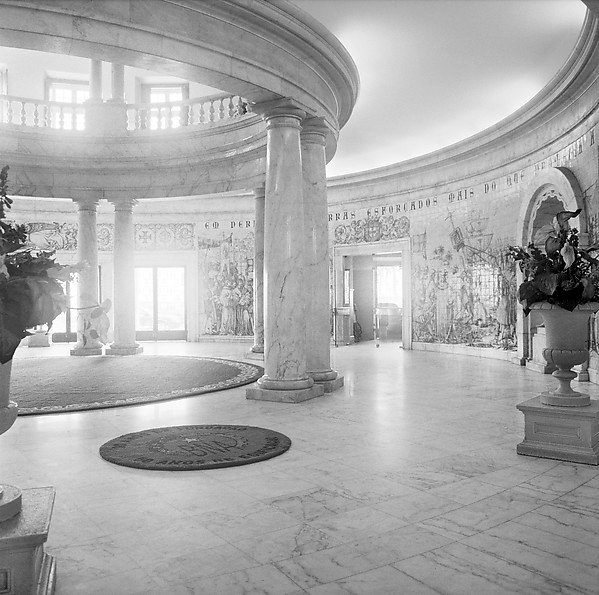
Jo Ractliffe (South African, b. 1961) Banco Nacional de Angola 2007 (diptych left)

Jo Ractliffe (South African, b. 1961) Banco Nacional de Angola 2007 (diptych right)


Jo Ractliffe (South African, b. 1961)
Banco Nacional de Angola (diptych left and right)
2007
Inkjet prints, 2015
Height: 17 11/16 in. (45cm) Width: 17 11/16 in. (45cm)
On loan from the artist, courtesy Stevenson, Cape Town and Johannesburg
© Jo Ractliffe. Courtesy of Stevenson, Cape Town and Johannesburg


The National Bank of Angola building was designed by Portuguese architect Vasco Regaleira and inaugurated in 1956 by Portuguese president Francisco Lopes. The building’s pink exterior, with its imposing dome and colonnade, was intended to fit in with other colonial-style buildings in Luanda. The bank’s lavish décor provides a dramatic contrast to many of Ractliffe’s other photographs of the city, especially the marble atrium, which features tiled murals portraying the arrival of the Portuguese in Angola. In the image to the right (bottom above), Portuguese explorers are depicted disembarking from their ship and erecting a padrão; these large limestone markers were inscribed with the Portuguese coat of arms and positioned at key locations along the coast by Portuguese navigator Diogo Cão in 1483. An original padrão is currently on view in the exhibition Kongo: Power and Majesty.


Jo Ractliffe (South African, b. 1961) 'Roadside stall on the way to Viana' 2007


Jo Ractliffe (South African, b. 1961)
Roadside stall on the way to Viana
2007
From the series Terreno Ocupado
Inkjet print, 2015
On loan from the artist, courtesy Stevenson, Cape Town and Johannesburg
© Jo Ractliffe. Courtesy of Stevenson, Cape Town and Johannesburg


In this photograph and the next one, “Wreck of a Chinese ship at Ilha”, stretches of bare ground in and around Luanda form the backdrop to ghostly signs of economic activity. Workmen’s overalls dangle from a tree at a roadside stall next to a taxi rank, and a grounded ship basks on a deserted beach while other vessels float offshore. Before it capsized in the mid-2000s, this ship transported and housed Chinese workers drawn to Angola by the many Chinese-run infrastructure projects in the country. These images reflect Angola’s diverse economy where a globalised workforce and the informal sector both play important roles, yet the absence of the workers themselves is striking.


Jo Ractliffe (South African, b. 1961) 'Details of tiled murals at the Fortaleza De São Miguel, depicting Portuguese explorations in Africa 2' 2007


Jo Ractliffe (South African, b. 1961)
Details of tiled murals at the Fortaleza De São Miguel, depicting Portuguese explorations in Africa 2
2007
Inkjet print, 2015
Height: 13 3/4 in. (35cm)
Width: 13 3/4 in. (35cm)
On loan from the artist, courtesy Stevenson, Cape Town and Johannesburg
© Jo Ractliffe. Courtesy of Stevenson, Cape Town and Johannesburg


Jo Ractliffe (South African, b. 1961) 'Details of tiled murals at the Fortaleza De São Miguel, depicting Portuguese explorations in Africa 4' 2007


Jo Ractliffe (South African, b. 1961)
Details of tiled murals at the Fortaleza De São Miguel, depicting Portuguese explorations in Africa 4
2007
Inkjet print, 2015
Height: 13 3/4 in. (35cm) Width: 13 3/4 in. (35cm)
On loan from the artist, courtesy Stevenson, Cape Town and Johannesburg
© Jo Ractliffe. Courtesy of Stevenson, Cape Town and Johannesburg


This photograph and the previous one were taken inside the Fortaleza de São Miguel, a fort originally built in 1576 by Paulo Dias de Novais, the explorer who “founded” Luanda. It later became the administrative heart of the Portuguese colony of Angola in its important role as a trading centre and slaving hub. In 1938 the fort was transformed into the home of the Museum of Angola, and the tiled murals shown here were commissioned at this time. Depicting the flora, fauna and history of Angola, these cobalt-blue 18th-century style tiles were inspired by early modern European prints depicting the Kongo and Angola kingdoms, and represented an attempt to legitimise the ongoing Portuguese presence in the country. Sources included Olfert Dapper’s 1668 “Description of Africa” from which the map fragment shown here is drawn.


Jo Ractliffe (South African, b. 1961) Decommissioned military outpost, Schmidtsdrift 2012 (triptych left)

Jo Ractliffe (South African, b. 1961) Decommissioned military outpost, Schmidtsdrift 2012 (triptych middle)

Jo Ractliffe (South African, b. 1961) Decommissioned military outpost, Schmidtsdrift 2012 (triptych right)


Jo Ractliffe (South African, b. 1961)
Decommissioned military outpost, Schmidtsdrift (triptych left, middle and right)
2012
From the series The Borderlands
Inkjet prints, 2015
On loan from the artist, courtesy Stevenson, Cape Town and Johannesburg
© Jo Ractliffe. Courtesy of Stevenson, Cape Town and Johannesburg


In this triptych, Ractliffe’s focal point is a ghostly ensemble of deserted military buildings. Schmidtsdrift’s original inhabitants were forcibly relocated in the 1950s-1970s under the apartheid regime’s policy of racial segregation. From 1974 the emptied settlement was used as a military training base by the South African Defence Force, which was fighting against the exiled Namibian liberation movement and the Angolan army in a conflict later referred to in South Africa as the “Border War”. Now that the war is over, the decommissioned buildings remain, testifying to the region’s past conflicts and histories of forced relocation.


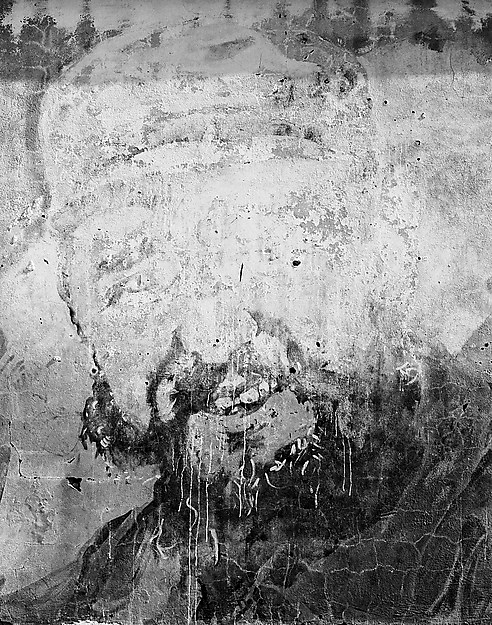
Jo Ractliffe (South African, b. 1961) 'Mural depicting Fidel Castro, Agostinho Neto and Leonid Brezhnev, circa 1975, Viriambundo' 2009

Jo Ractliffe (South African, b. 1961) Mural depicting Fidel Castro, Agostinho Neto and Leonid Brezhnev, circa 1975, Viriambundo 2009 (detail)

Jo Ractliffe (South African, b. 1961) Mural depicting Fidel Castro, Agostinho Neto and Leonid Brezhnev, circa 1975, Viriambundo 2009 (detail)

Jo Ractliffe (South African, b. 1961) Mural depicting Fidel Castro, Agostinho Neto and Leonid Brezhnev, circa 1975, Viriambundo 2009 (detail)


Jo Ractliffe (South African, b. 1961)
Mural depicting Fidel Castro, Agostinho Neto and Leonid Brezhnev, circa 1975, Viriambundo (details)
2009
Inkjet prints, 2015
Height: 15 3/4 in. (40cm) Width: 19 11/16 in. (50cm)
On loan from the artist, courtesy Stevenson, Cape Town and Johannesburg
© Jo Ractliffe. Courtesy of Stevenson, Cape Town and Johannesburg


The central figure of Agostinho Neto, Angola’s anti-colonial leader and president from 1975-79, is flanked by Cuban revolutionary Fidel Castro on the left, and Soviet leader Leonid Brezhnev on the right. This mural personifies the threats of African Nationalism and Communism that propelled South Africa to become involved in the Border War. It highlights the fact that the Angolan Civil War was also a Cold War battleground, with Cuba and the Soviet Union on the side of Neto’s party, the MPLA (People’s Movement for the Liberation of Angola), and South Africa and the United States supporting UNITA (National Union for the Total Independence of Angola). Here, all three men still command a presence despite their faded, cartoon-like rendering.


The Metropolitan Museum of Art
1000 Fifth Avenue at 82nd Street
New York, New York 10028-0198
Phone: 212-535-7710

Opening hours:
Sunday – Tuesday, and Thursday: 10am – 5pm
Friday and Saturday: 10am – 9pm
Closed Wednesday

The Metropolitan Museum of Art website

LIKE ART BLART ON FACEBOOK

Back to top

Exhibition: ‘Portraits and Power: People, Politics and Structures’ at Centro di Cultura Contemporanea Strozzina – Fondazione Palazzo Strozzi, Florence

Exhibition dates: 1st October 2010 – 23rd January, 2011


Many thankx to the Centro di Cultura Contemporanea Strozzina for allowing me to publish the photographs in the posting. All text comes from the Centro di Cultura Contemporanea Strozzina website. Please click on the photographs for a larger version of the image.


Installation view of the exhibition 'Portraits and Power: People, Politics and Structures' at Centro di Cultura Contemporanea Strozzina - Fondazione Palazzo Strozzi, Florence

Installation view of the exhibition 'Portraits and Power: People, Politics and Structures' at Centro di Cultura Contemporanea Strozzina - Fondazione Palazzo Strozzi, Florence


Installation view of the exhibition Portraits and Power: People, Politics and Structures at Centro di Cultura Contemporanea Strozzina – Fondazione Palazzo Strozzi, Florence with the work of Rineke Dijkstra at right


Portraits and Power explores portraiture and the representation of political, economical and social power in the contemporary world through the works of contemporary artists. Portraits of famous political figures, investigations into the lifestyle of the social elite, as well as inquiries into the power structures of international institutions.

The exhibition explores its theme from three main standpoints: it analyses power as an expression of the charisma of those individuals who have become icons or symbols of their age; it probes the power of institutions and social models that either represent themselves or are represented in a critical light; and it investigates the hidden mechanisms of powerful authorities.

Portraits and Power is a project of the CCC Strozzina, with the consultancy of Peter Funnell (National Portrait Gallery, London), Walter Guadagnini (“UniCredit & Art” project) and Roberta Valtorta (Museum of Contemporary Photography, Cinisello Balsamo) coordinated by Franziska Nori (CCCS, Firenze).

Text from the Centro di Cultura Contemporanea Strozzina website [Online] Cited 02/02/2020


Tina Barney (American, b. 1945) 'The Ancestor' 2001 from the exhibition 'Portraits and Power: People, Politics and Structures' at Centro di Cultura Contemporanea Strozzina - Fondazione Palazzo Strozzi, Florence


Tina Barney (American, b. 1945)
The Ancestor
2001
C-print
Courtesy the artist and Janet Borden Inc., New York


Tina Barney (American, b. 1945) 'The Brocade Walls' 2004 from the exhibition 'Portraits and Power: People, Politics and Structures' at Centro di Cultura Contemporanea Strozzina - Fondazione Palazzo Strozzi, Florence


Tina Barney (American, b. 1945)
The Brocade Walls
2004
C-print
Courtesy the artist and Janet Borden Inc., New York


Installation view of the exhibition 'Portraits and Power: People, Politics and Structures' at Centro di Cultura Contemporanea Strozzina – Fondazione Palazzo Strozzi, Florence showing the work of Tina Barney


Installation view of the exhibition Portraits and Power: People, Politics and Structures at Centro di Cultura Contemporanea Strozzina – Fondazione Palazzo Strozzi, Florence showing the work of Tina Barney


The characters Tina Barney portrays are the representatives of a social class that normally exercises careful control over the circulation of pictures of its members, whether in the form of family photographs or official portraits, which are often published on the pages of glossy magazines. She is one of the first photographers to have made artistic use of this kind of representation. Hers is not merely the gaze of an onlooker, but that of a trusted person, who has personal relationships with her subjects. What she is interested in is not so much the idea of displaying the wealth of these families, but that of analysing social and family dynamics – such as the ambivalent relationship between children and parents. Her work is conceived as a means to improve self-understanding.

The people portrayed all come from families educated in the awareness of their own social role: discipline, self-control and rigour are features to be observed in all the subjects photographed, and they share the same high level of composure. For the series entitled The Europeans, which was produced over a period of about eight years, the author was introduced by one circle of friends to another, and thus given the opportunity to portray Italian nobles, Austrian bankers and landowners, proud representatives of the wealthy Spanish bourgeoisie, and English gentlemen in their sophisticated dwellings. Neither the formal way of dressing nor the furnishings can be traced back to any particular fashion: Tina Barney seeks to produce timeless pictures that at first sight will appear closer to traditional painting than to contemporary photography. Tina Barney creates her portraits through a careful observation of people in their everyday lives; to capture transient moments she asks her subjects to repeat something in front of the camera in such a way as to fix them. Her work tool is a fixed, large-size camera; an extended time exposure and high resolution enable her to render the details of each setting in detail. The figures portrayed have a rigid and formal countenance, which makes them appear markedly detached from one another, even though it is often brothers and sisters or parents and children who are photographed together: “this is the best that we can do. This inability to show physical affection is in our heritage”.

Tina Barney’s photographs give a sense of the fleetingness of their relationships behind the mask of self-controlled bearing. The artist thus unveils the game of social roles and attitudes conducted by her subjects, a veritable Theater of Manners (to quote the title of one of her most famous series) which demands enough sensitivity on the viewers’ part for them to focus on those details in the pictures that render hidden and non-immediately obvious features visible.

Since the mid-1970s, Tina Barney has been focusing her work on the portrayal of the privileged exponents of New York and New England high society, seen either in their own homes or on certain special occasions. The style of the pictures ranges from that of tableaux vivant to that of genre paintings, drawing expressive force from the interaction between wealthy settings and the people who move about in them.


Tina Barney (American, b. 1945) 'The Granddaughter' 2004 from the exhibition 'Portraits and Power: People, Politics and Structures' at Centro di Cultura Contemporanea Strozzina - Fondazione Palazzo Strozzi, Florence


Tina Barney (American, b. 1945)
The Granddaughter
2004
C-print
Courtesy the artist and Janet Borden Inc., New York


Installation view of the exhibition 'Portraits and Power: People, Politics and Structures' at Centro di Cultura Contemporanea Strozzina - Fondazione Palazzo Strozzi, Florence showing the work of Jim Dow


Installation view of the exhibition Portraits and Power: People, Politics and Structures at Centro di Cultura Contemporanea Strozzina – Fondazione Palazzo Strozzi, Florence showing the work of Jim Dow


Jim Dow (American, b. 1942) 'Library Metropolitan Club, New York' 1999 / 2010 from the exhibition 'Portraits and Power: People, Politics and Structures' at Centro di Cultura Contemporanea Strozzina - Fondazione Palazzo Strozzi, Florence


Jim Dow (American, b. 1942)
Library Metropolitan Club, New York
1999 / 2010
Chromogenic colour print
Courtesy the artist, Janet Borden, Inc., New York


Jim Dow (American, b. 1942) 'Dining Room, Morgan Library, New York' 1999 / 2010 from the exhibition 'Portraits and Power: People, Politics and Structures' at Centro di Cultura Contemporanea Strozzina - Fondazione Palazzo Strozzi, Florence


Jim Dow (American, b. 1942)
Dining Room, Morgan Library, New York
1999 / 2010
Chromogenic colour print
Courtesy the artist, Janet Borden, Inc., New York


By taking shots that are as objective as possible and completely devoid of any human presence, Dow gives a concentrated and authentic view of the architecture, furnishings and frameworks of these backdrops of life. “My interest in photography centres on its capacity for exact description. I use photography to try to record the manifestations of human ingenuity and spirit still remaining in our country’s everyday landscape.” For one of his most recent series, Dow has been able to make his way into some of the most exclusive private circles of New York City. He selected circles that are still active and have a long and significant history behind, such as the renowned Metropolitan Club, which was founded in 1891 by John Pierpont Morgan, and once listed James Roosevelt and William K. Vanderbilt among its most illustrious members. Most of these circles require strict adherence to rules consolidated by tradition. Only those introduced to the club by one of its members can join it, a practice that contributes to keep it a kind of network; a specific commission will then consider whether the candidate is fit for acceptance. Though there are over twenty circles of this kind in New York, outsiders will rarely notice their presence. While they no longer exercise the kind of political influence they used to as seats of power and decision making bodies, these clubs are now undergoing a new renaissance. An increasing number of politicians and businessmen are choosing to meet in their secluded rooms, which public opinion often perceives as places of intrigue and the setting for secret appointments of various kinds. With his descriptive and comparative photographs, Dow is giving a face to these exclusive meeting places, inviting viewers to join him in admiring the timeless opulence of their rooms. Architecture is the “primary and most powerful form of mass-communication”; at the same time, it is a mirror for power and its strategies, for the consolidation of authority and its effects on those who exercise it. “Architecture is power. The powerful build precisely because they are powerful. Yet architecture is also an expression of the capability and resoluteness – as well as resolve – of the powerful. Politicians intentionally exploit architecture to seduce, impress, and intimidate.” (Deyan Sudjic, The Edifice Complex: How the Rich and Powerful Shape the World, 2006).

American photographer Jim Dow approaches places as meeting points bearing visible traces of people’s mutual interactions. In different photographic series, the artist has portrayed American barbecue joints, pie and mash shops in London, tango halls in Buenos Aires, the workplaces of farmers, tinsmiths and iron-smiths, and baseball stadiums from one coast of the US to the other.


Clegg & Guttmann (Michael Clegg and Martin Guttmann) 'Grand Master' 1985 from the exhibition 'Portraits and Power: People, Politics and Structures' at Centro di Cultura Contemporanea Strozzina - Fondazione Palazzo Strozzi, Florence


Clegg & Guttmann (Michael Clegg and Martin Guttmann)
Grand Master
1985
Cibachrome
Courtesy Galerie Christian Nagel, Cologne, Berlin, Antwerp


For Grand Master, part of a photographic series produced in the 1980s, Clegg & Guttmann asked an actor to display certain poses characteristic of power, presenting him as the representative of a non-specified institution. The background of the image consists in a fictional architectural scenario – one simply simulated by using photographed space – the artificial nature of which is revealed by certain incongruities in the lighting effects. What is central here, once more, is the reflection offered on the controlled and never spontaneous construction of an image of power.

The tension conveyed by Clegg & Guttmann’s works springs from the subtle gap characterising the artists’ relationship with tradition. Their classical and apparently affirmative representations of people with power should be interpreted, within the context of their career spanning several decades, as different ways of visualising an analytical and deconstructive practice engaging with the mechanisms of authority.


Installation view of the exhibition 'Portraits and Power: People, Politics and Structures' at Centro di Cultura Contemporanea Strozzina - Fondazione Palazzo Strozzi, Florence showing the work of Clegg & Guttmann


Installation view of the exhibition Portraits and Power: People, Politics and Structures at Centro di Cultura Contemporanea Strozzina – Fondazione Palazzo Strozzi, Florence showing the work of Clegg & Guttmann


The CCCS – Centro di Cultura Contemporanea Strozzina – Fondazione Palazzo Strozzi, Florence, will be staging an exhibition entitled Portraits and Power: People, Politics and Structures, from 1 October 2010 to 23 January 2011, which will run concurrently with the retrospective devoted to Bronzino, the undisputed master of the Mannerist portrait, on Palazzo Strozzi’s piano nobile.

The exhibition, based on an original project by the CCCS in consultation with Peter Funnell (curator and director of research programmes at the National Portrait Gallery in London), Walter Guadagnini (chairman of the “UniCredit & Art” project’s scientific committee) and Roberta Valtorta (director of the Cinisello Balsamo Museum of Contemporary Photography) and coordinated by Franziska Nori (director of the CCCS), will show the work of international artists and collectives such as Tina Barney, Christoph Brech, Bureau d’études, Fabio Cifariello Ciardi, Clegg & Guttmann, Nick Danziger, Rineke Dijkstra, Jim Dow, Francesco Jodice, Annie Leibovitz, Helmut Newton, Trevor Paglen, Martin Parr, Wang Qingsong, Daniela Rossell, Jules Spinatsch, Hiroshi Sugimoto, and The Yes Men – who have all proved capable of developing a critical analysis of the portrayal and depiction of political, economic and social power in the media.

The exhibition explores its theme from two main standpoints: it analyses power as an expression of the charisma of those individuals who have become icons or symbols of their age; and it probes the power of institutions and social models that either represent themselves or are represented in a critical light.

The role played by images has grown to such an extent that it has led to the predominant emergence of their value not only in terms of portrayal but also of the successful establishment of power. The works of art on display bear witness not only to the self-referential strategies of power, but also to the different approaches artists adopt in deconstructing or chipping away at the images that represent social, economic and political power in a way that can not only bolster a leadership but that can also undermine its authority.

The National Portrait Gallery in London will be contributing works by three famous international photographers that explore the image of political authority. The series devoted to Queen Elizabeth II by Annie Leibovitz evinces a celebrated contemporary artist’s dialogue with the great tradition of official portraiture, and the cycle entitled Blair at War by Nick Danziger gives an extraordinary vision of Tony Blair’s daily life in the days immediately preceding the outbreak of the war in Iraq. The portrait of Margaret Thatcher by Helmut Newton keeps alive the iconic role of one of the most influential politicians of recent decades despite the fact that her authority had waned.

Clegg & Guttmann show the photographs of three managing directors of the Deutsche Bank. These images, while based on the official portraiture genre, provide the opportunity for a conceptual reflection on the theme of the public presentation of individuals who are at the same time both subject and patron of the work. Christoph Brech portrays a modern patron of the arts in a video that dwells on a detail of the hull of his yacht, Sea Force One, a floating museum filmed from a distance in Venetian waters.

The role of the image not only as representation but also as a tool for the construction or exploration of power is analysed by artists such as Hiroshi Sugimoto, whose Portraits bring to life wax effigies of historical or contemporary political figures through the evocative power of photography, and Rineke Dijkstra whose series of images of a soldier with the French Foreign Legion prompts a reflection on what remains of the individual when he becomes the representative of a military authority. Francesco Jodice, in his video entitled Dubai Citytellers, analyses the development and the social impact of one of the new centres of global economic power.

In the photo triptych Past, Present and Future, Wang Qingsong portrays himself as a bystander, bearing witness to fighters in poses mimicking celebrative and monumental Socialist sculptures, reflecting upon the contradictory nature of the actual power of masses in contemporary China.

Tina Barney records the life and domestic environment of the beau monde, combining the spontaneous feel of a private snapshot with a sophisticated aesthetic approach strongly echoing the world of art and traditional photography. The provocative photo series Ricas y Famosas by Daniela Rossell portrays the taste and excesses of the new super wealthy social oligarchy in Mexico, while Martin Parr’s series entitled Luxury, which is devoted to fashion shows, horse-racing and art fairs in the world’s major capitals, probes the lifestyle of the upper class in a globalised Western world. The pictures of Jim Dow portray the luxurious rooms of the great private social clubs of New York City’s elite, fashionable places that are inaccessible to the general public.

A different critical approach to the theme of power is offered by the French collective Bureau d’études with its project involving mapping the links between political and economic power. The CIA’s secret missions and operations, on the other hand, provide the focus for the work of Trevor Paglen who reconstructs top secret movements and connections. Jules Spinatsch presents a new work taken from his Temporary Discomfort video-photographic series, denouncing the controversial transformation of a place such as the island of La Maddalena in Sardinia into the venue for the G8 summit that never took place. Also on view is the antagonistic activism of The Yes Men, a collective who will be presenting their spectacular media initiative that rocked the image and power of the multinational corporation responsible for the Bhopal environmental catastrophe in India.

Finally, the composer Fabio Cifariello Ciardi uses famous politicians’ public speeches as his raw material for the creation of electroacoustic music that will underline their rhetorical techniques of persuasion.

The exhibition catalogue, published in Italian and English, contains a series of essays by authors from different countries, backgrounds and disciplines, offering the visitor a chance to explore in greater depth the themes addressed by the exhibition.

Press release from the Strozzina website [Online] Cited 02/02/2020


Rineke Dijkstra (Dutch, b. 1959) 'Olivier' Quartier Vienot, Marseille, France, July 21, 2000 from the exhibition 'Portraits and Power: People, Politics and Structures' at Centro di Cultura Contemporanea Strozzina - Fondazione Palazzo Strozzi, Florence


Rineke Dijkstra (Dutch, b. 1959)
Olivier
Quartier Vienot, Marseille, France, July 21, 2000
On loan from The Bank of America Merrill Lynch Collection


Rineke Dijkstra (Dutch, b. 1959) 'Olivier' Quartier Monclar, Djibouti, July 13, 2003 from the exhibition 'Portraits and Power: People, Politics and Structures' at Centro di Cultura Contemporanea Strozzina - Fondazione Palazzo Strozzi, Florence


Rineke Dijkstra (Dutch, b. 1959)
Olivier
Quartier Monclar, Djibouti, July 13, 2003
On loan from The Bank of America Merrill Lynch Collection


A crucial feature of Dijkstra’s photography is her desire to show the true personality of her subjects, as opposed to any simulated one. Up against the contemporary mystifying quality of the Internet and digital manipulation, her images illustrate in a very convincing way how photography is still capable of transcending the surface of subjects to grasp their deeper and constantly evolving identities. Her series feature, for instance, young bullfighters immediately after a bullfight, young mothers with babies born only a few minutes before, and portraits of boys and girls from various parts of the world at the beach. Her work method, whereby subjects are given very few directions and are usually portrayed frontally, leads to the creation of bare and detached pictures in which people display an inevitably fragile and vulnerable air. The Olivier Silva project, which the artist has developed over the course of more than three years, centres on the figure of a young man who in July 2000 voluntarily enrolled in the French Foreign Legion. Dijkstra portrays crucial moments of his intense training in France and Africa – from the day of his enrolment, in Aubagne, near Marseille, to the missions he was sent to fulfil in various parts of the world (Gabon, Ivory Coast and Gibuti) in 2003. The photographs clearly illustrate the metamorphoses the young man underwent over the course of the years: the innocent looking boy becomes an energetic and professional elite soldier enlisted in one of the world’s toughest and most controversial army corps. The centrepiece of the work is the artist’s interest in Olivier as an individual whose personality evolves in the course of his training, as is clearly revealed by his attitude and the look in his eyes, as well as by the very way in which his facial features change. The training imparted in military units of this kind is aimed at annulling the recruit’s personality in order to then recreate it according to new parameters: the youngster draws closer and closer to the prototype of the soldier as we progress from one photograph to the next. Just as all new recruits of the Foreign Legion are assigned a new name and identity, after three years Olivier no longer looks (even physically) like the same person as before. Like an accelerated film sequence, this series shows the dissolution of the original identity of a man subjected to the conditions dictated by an apparatus of power. Every soldier is at the service of the country he fights for and becomes one of its official public representations, embodying its military power. The same power he now wields is that which in a few years has conditioned him – or even produced him, one may say. Through her aesthetically minimalist photographs, Rineke Dijkstra illustrates the paradox of opposition between individual values and those of the community, between identity and conformity.

Rineke Dijkstra has carried out profound research in the field of photographic portraiture. Her subjects are adolescents who are still searching for themselves and who are incapable of acting in front of a camera, as well as adults caught in decisive moments in their personal development. By portraying these subjects, the artist explores the theme of identity and its representation.


Martin Parr (British, b. 1952) 'France. Paris. Haute Couture' 2007 from the exhibition 'Portraits and Power: People, Politics and Structures' at Centro di Cultura Contemporanea Strozzina - Fondazione Palazzo Strozzi, Florence


Martin Parr (British, b. 1952)
France. Paris. Haute Couture
2007
from the series Luxury
Pigment print
© Martin Parr / Magnum Photos


Martin Parr (British, b. 1952) 'England. Epsom. The Derby' 2004 from the exhibition 'Portraits and Power: People, Politics and Structures' at Centro di Cultura Contemporanea Strozzina - Fondazione Palazzo Strozzi, Florence


Martin Parr (British, b. 1952)
England. Epsom. The Derby
2004
from the series Luxury
Pigment print
© Martin Parr / Magnum Photos


Martin Parr (British, b. 1952) 'Russia. Moscow. Fashion Week' 2004 from the exhibition 'Portraits and Power: People, Politics and Structures' at Centro di Cultura Contemporanea Strozzina - Fondazione Palazzo Strozzi, Florence


Martin Parr (British, b. 1952)
Russia. Moscow. Fashion Week
2004
From the series Luxury
Pigment print
© Martin Parr / Magnum Photos


Unlike most of his colleagues, Parr has little interest in the great themes of photographic reporting, such as the documenting of war and poverty. Working around the world, he finds his motifs in everyday life. At the beginning of his career, he focused in particular on the observation of people from lower middle class backgrounds engaged in different activities, in the context of themes such as consumption, communication and leisure. He has left it ambiguous as to whether these pictures of his are charged with critical overtones or intended to serve as a mere means of social documentation. Through this approach to his work, Parr has developed a highly distinctive and almost unmistakable style marked by dazzling colours obtained by the use of flash on top of natural light. Parr takes his camera near people and their social milieus, creating images that appear grotesque or exaggerated at first. Their motifs, which often coincide with moments of everyday life, are shot from unusual perspectives.

The feeling these pictures convey is that of being spontaneous photos, similar to snapshots. Only under closer scrutiny you understand they have been skilfully construed and arranged. While always highly charged and taking widespread social stereotypes as their starting point, Parr’s images are never banal. The perspective they convey stands out for the way in which it takes viewers by surprise and for the ironic detachment with which the photographer turns to his subjects.

According to Parr, his photographs never fail to elicit extreme emotions because they always show some truths: “We are so used to digesting pictures that are pure propaganda, that people are surprised when someone like me shows them images that are closely tied to reality. I, at least, don’t lie”. The photographer’s gaze takes the viewer into his confidence, leading him through the pictures to discover the absurdity of what we deem normal. Gathered in large series regularly published in volumes, these shots transcend the irony of individual images to concentrate on the analysis of a given social milieu.

The Luxury series portrays personages from the international jet set, photographed in different settings around the world – from the Miami Art Fair to horse races in Durban, from polo tournaments in Dubai to the Beijing Auto Show. With these images, Parr has intentionally moved away from his previous subjects to focus on the life of the upper classes: for, as he himself has noted, the main problem the world is facing is not poverty but wealth – excessive development and prosperity. These photographs offer the perspective of an external, noninvolved observer, whose gaze is drawn towards minor details that usually find no place in the common representations of these events.

The centrepieces of these photos are the superficial clichés that the people participating in the events adopt as tokens of their upper-class identity. The pictures fix moments in which this enactment reveals itself to be so fragile or so exaggerated that the people involved become extras in a comedy – one that the photographer’s eye has fallen upon, finding interest not in individuals as such, but in their belonging to a given social system with all its rules and values.

Martin Parr describes himself as a “chronicler of our times”. In his photographic series he records the behaviour of people of different social classes in different contexts, searching not so much for mutual differences as for what brings human beings together when they find themselves in certain roles.


Nick Danziger (British, b. 1958) 'Helicopter Flight from RAF Lyneham to Battersea, 3 April 2003' from the exhibition 'Portraits and Power: People, Politics and Structures' at Centro di Cultura Contemporanea Strozzina - Fondazione Palazzo Strozzi, Florence


Nick Danziger (British, b. 1958)
Helicopter Flight from RAF Lyneham to Battersea, 3 April 2003

Bromide print
Courtesy National Portrait Gallery, London
© Nick Danziger


This opportunity had arisen thanks to The Saturday Times Magazine, which had launched a project to produce a special report on the occasion of Blair’s fiftieth birthday, one based not on official photographs but on a way of perceiving and depicting power from the point of view of everyday life – the interior of private and usually inaccessible places, removed from the conventional and more distinctly representational ones. These were the very days in which Blair was facing one of the most challenging decisions of his mandate: that concerning Great Britain’s intervention in the Second Gulf War on the side of the United States.

Danziger was able to document moments and scenes that could otherwise never have been made visible, capturing apparently insignificant moments that actually express all the underlying tensions and dynamics of those crucial days in 2003. On his first day of work, 14 March, Danziger was in Blair’s so called “den” – the Prime Minister’s private workroom in Downing Street. While engaged in a telephone call with Palestinian leader Yasser Arafat, Blair is shown in a non-conventional and informal, rather than simply official, pose. A mirror here gives us a glimpse of Alastair Campbell, the Prime Minister’s ever-present spin doctor, and the person responsible for his public image. This reflection becomes a sort of picture within the picture, a reminder of the assemblage of Danziger’s photographic documents, which are never created by chance or artlessly, but always follow from a conscious decision on the photographer’s part.

Danziger seems to be providing an almost intimate depiction of power, one that catches its subjects unawares. Yet it is worth recalling that the Blair government had developed a very careful and well-thought strategy for controlling its own public identity. New Labour’s promotion of an image of its Prime Minister as a young man from next door and of its own political class as one close to ordinary people has been a central feature of its political platform – a way of making a break after the long years of Conservatism under Margaret Thatcher and John Major.

The power of Danziger’s photographs lies in their ability to suggest the moments preceding and following the one portrayed, as illustrated for instance by the pictures of the Prime Minister’s transfer by plane, or the conversation held by a group of politicians outside Blair’s cabinet as they wait for the imminent war decisions to be made. In these pictures the outside world is always cut off; still, as critic John Berger has noted, the importance of photographs lies precisely in their ability to show things they do not directly portray.

Danziger himself bears witness to this when he writes that “in some of the pictures, from where the Prime Minister is sitting, he could hear people shouting ‘stop the war’ outside”. Power censors what might damage or shed doubt upon the reassuring appearance of a politician, and always seeks to portray itself in a manner useful for its own preservation.

The work of photojournalist Nick Danziger features videos and photographs in a documentary style, which often accompany the diaries he writes during his many trips around the world – from Bosnia to Afghanistan, Great Britain to Brazil, and so on. Between March and April 2003, Danziger and journalist Peter Stothard spent thirty days in close contact with the then Prime Minister Tony Blair and his entourage.


Installation view of the exhibition 'Portraits and Power: People, Politics and Structures' at Centro di Cultura Contemporanea Strozzina - Fondazione Palazzo Strozzi, Florence showing the work of Hiroshi Sugimoto


Installation view of the exhibition Portraits and Power: People, Politics and Structures at Centro di Cultura Contemporanea Strozzina – Fondazione Palazzo Strozzi, Florence showing the work of Hiroshi Sugimoto


The Portraits series was first developed in 1999, starting from a portrait of King Henry VIII of England inspired by the work of Dutch painter Hans Holbein. Sugimoto’s self-professed aim was to become “the first sixteenth-century photographer.” The series then continued with different subjects, including famous contemporary figures who have entered the collective imagination, such as the Cuban lider máximo Fidel Castro and Pope John Paul II.

Sugimoto’s works are not portraits of the original subjects, but of wax sculptures reproducing them in the most hyper-realist way possible. The figures are illumined by a source of direct light and strongly stand out against a black background in an extremely theatrical way, imitating poses typical of the characters they represent, while removing them from all context and thus emphasising their nature as icons rather than human beings.

For these works Sugimoto has not made use of the 50 x 60 cm format that is typical of him. Yet, they stand in continuity with the artist’s unique reflection upon the nature of photography and its relation to history and time. Here he embarks upon a reflection on portraiture and the process whereby an image is translated using different media, emphasising the problematic “realistic effect” of photographic reproduction.

An attentive gaze will notice small disproportions in the various parts of the subjects’ bodies or strange lighting effects due to the way in which light reflects on wax as opposed to real skin. Still, these pictures invite us to look at them as we would other photographs. Thinking, that is, about the genuine subjects they portray, something that paradoxically makes them “more real” than the wax statues that constitute their actual subjects. Different levels of reproduction are at play here: from the original subject to an initial photograph that served as a model for the wax statue that Sugimoto then portrayed in his photographic work. Our gaze will strongly be drawn towards the extraordinary elegance and aesthetic refinement of these works, which reveal the uncommon technical abilities of Sugimoto, marked as they are by the endless range of white, grey and black shades typical of him. Despite all this, his works remain emotionally cold: they consist in conceptual reflections upon the very notion of portrait and its political and cultural value as an icon of the characters it represents, and explicitly forgo any realist view of the individuals they take as their subjects. The artist seems to be causing all sense of natural time to collapse – in such a way as to stress that of absolute time. He attains a balance between life and death that is characteristic of photography but also of portraiture, whereby what counts is not the reality or the life of a subject, but the latter’s value as an image in itself, beyond time and everyday life.

Hiroshi Sugimoto’s photographs convey a conceptual attitude aimed at stripping images down to their bare essence, thus emphasising the primacy of the idea over the object portrayed. His famous marine landscapes and dioramas express a view of photography as a sort of time machine – a way of preserving or constructing memories and emotions.


Hiroshi Sugimoto (Japan, b. 1948) Pope John Paul II 1999 (installation view)


Hiroshi Sugimoto (Japan, b. 1948)
Pope John Paul II (installation view)
1999
Black and white photograph
Courtesy Rosa e Gilberto Sandretto
© Hiroshi Sugimoto


Hiroshi Sugimoto (Japan, b. 1948) 'Pope John Paul II' 1999 from the exhibition 'Portraits and Power: People, Politics and Structures' at Centro di Cultura Contemporanea Strozzina - Fondazione Palazzo Strozzi, Florence


Hiroshi Sugimoto (Japan, b. 1948)
Pope John Paul II
1999
Black and white photograph
Courtesy Rosa e Gilberto Sandretto
© Hiroshi Sugimoto


Hiroshi Sugimoto (Japan, b. 1948) 'Fidel Castro' 1999 (installation view)


Hiroshi Sugimoto (Japan, b. 1948)
Fidel Castro (installation view)
1999
Black and white photograph
Courtesy Sonnabend Gallery, New York
© Hiroshi Sugimoto


Hiroshi Sugimoto (Japan, b. 1948) 'Fidel Castro' 1999 from the exhibition 'Portraits and Power: People, Politics and Structures' at Centro di Cultura Contemporanea Strozzina - Fondazione Palazzo Strozzi, Florence


Hiroshi Sugimoto (Japan, b. 1948)
Fidel Castro
1999
Black and white photograph
Courtesy Sonnabend Gallery, New York
© Hiroshi Sugimoto


Centre for Contemporary Culture Strozzina
Palazzo Strozzi, Piazza Strozzi, Firenze

Strozinna website

LIKE ART BLART ON FACEBOOK

Back to top