Exhibition: ‘Fazal Sheikh: Thirst | Exposure | In Place’ at the Denver Art Museum

Exhibition dates: 10th March – 20th October, 2024

Curators: Curator of Photography, Eric Paddock, in collaboration with Kimberly Roberts, Denver Art Museum Curatorial Associate, and Lauren Thompson, Senior Interpretive Specialist
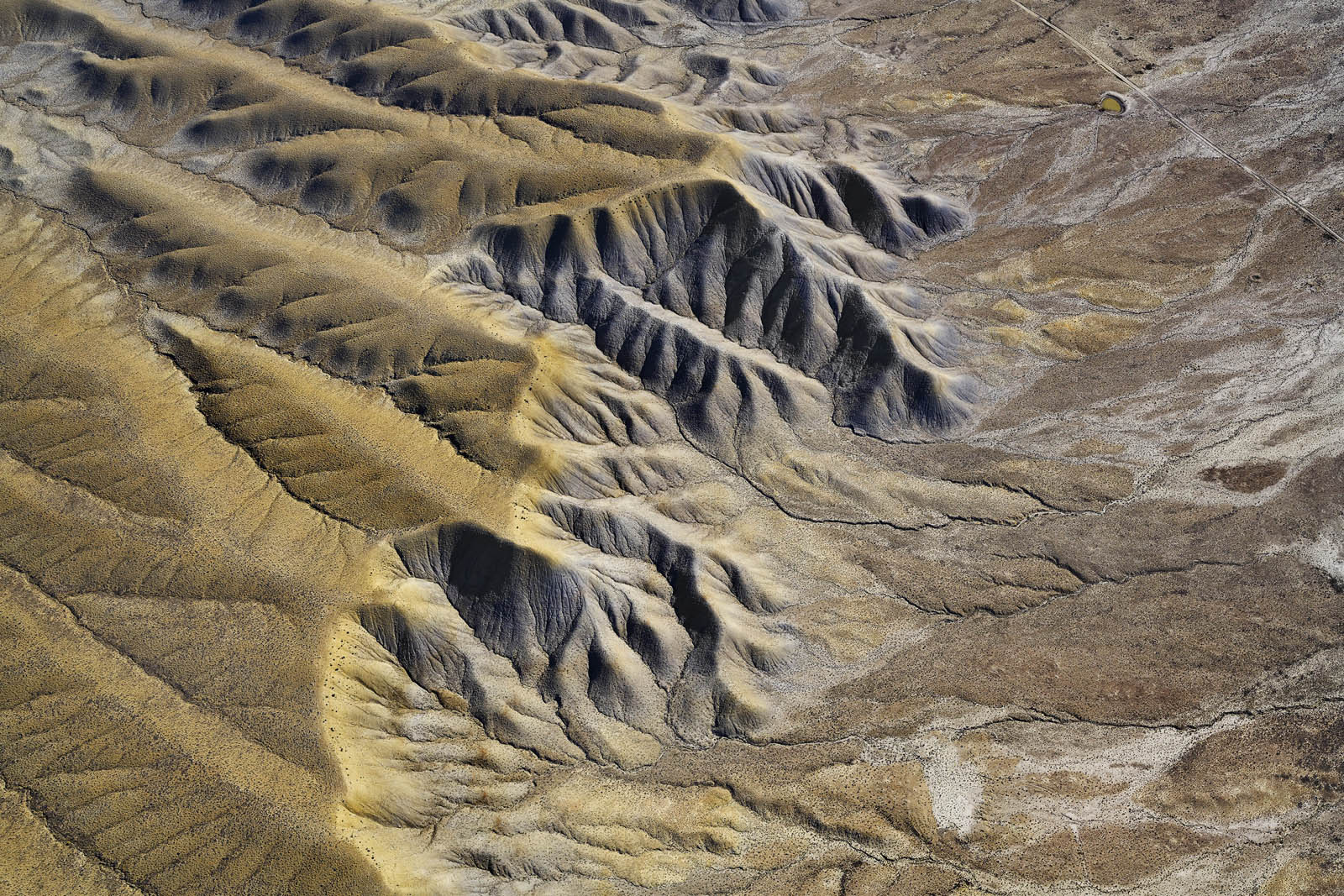
 

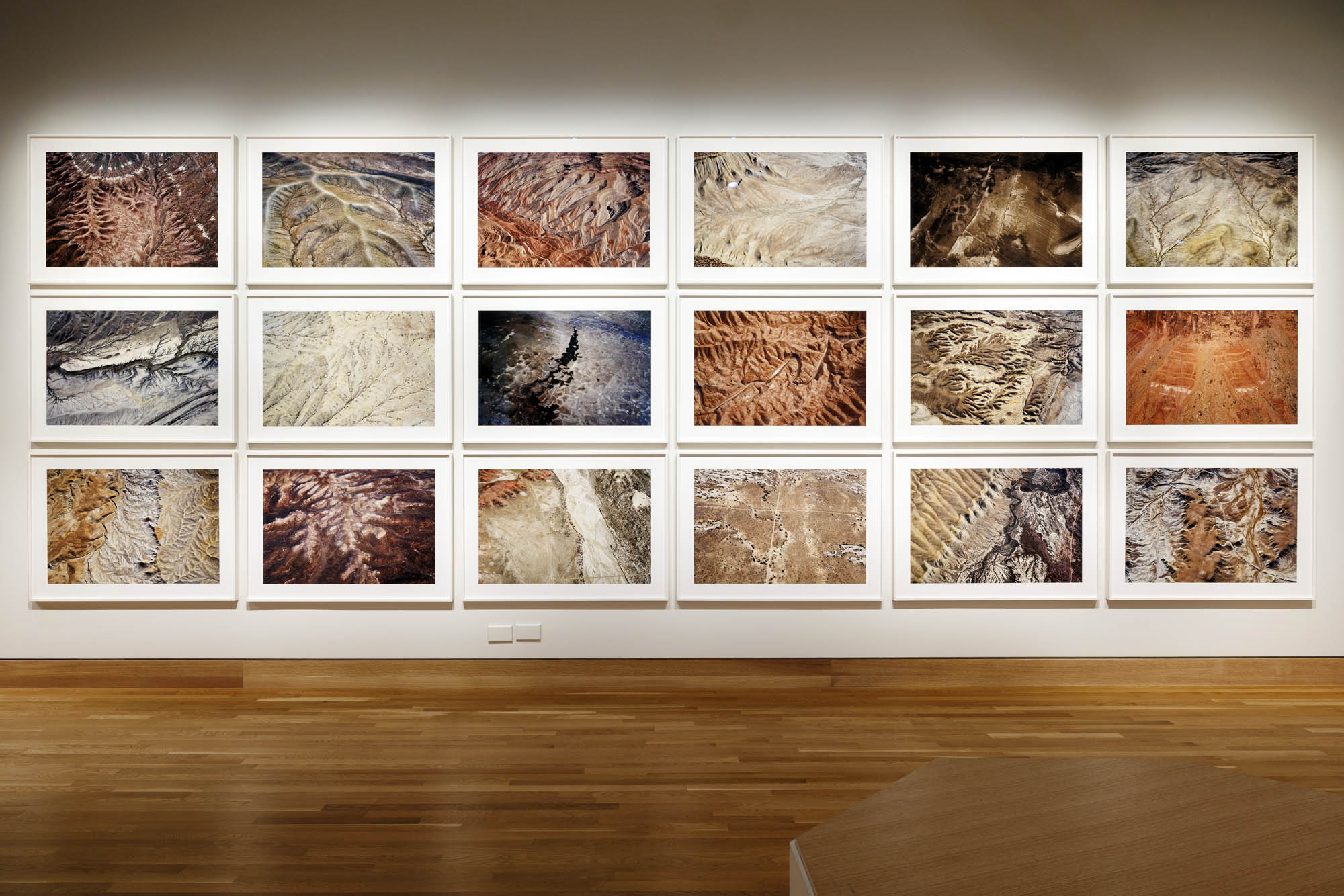
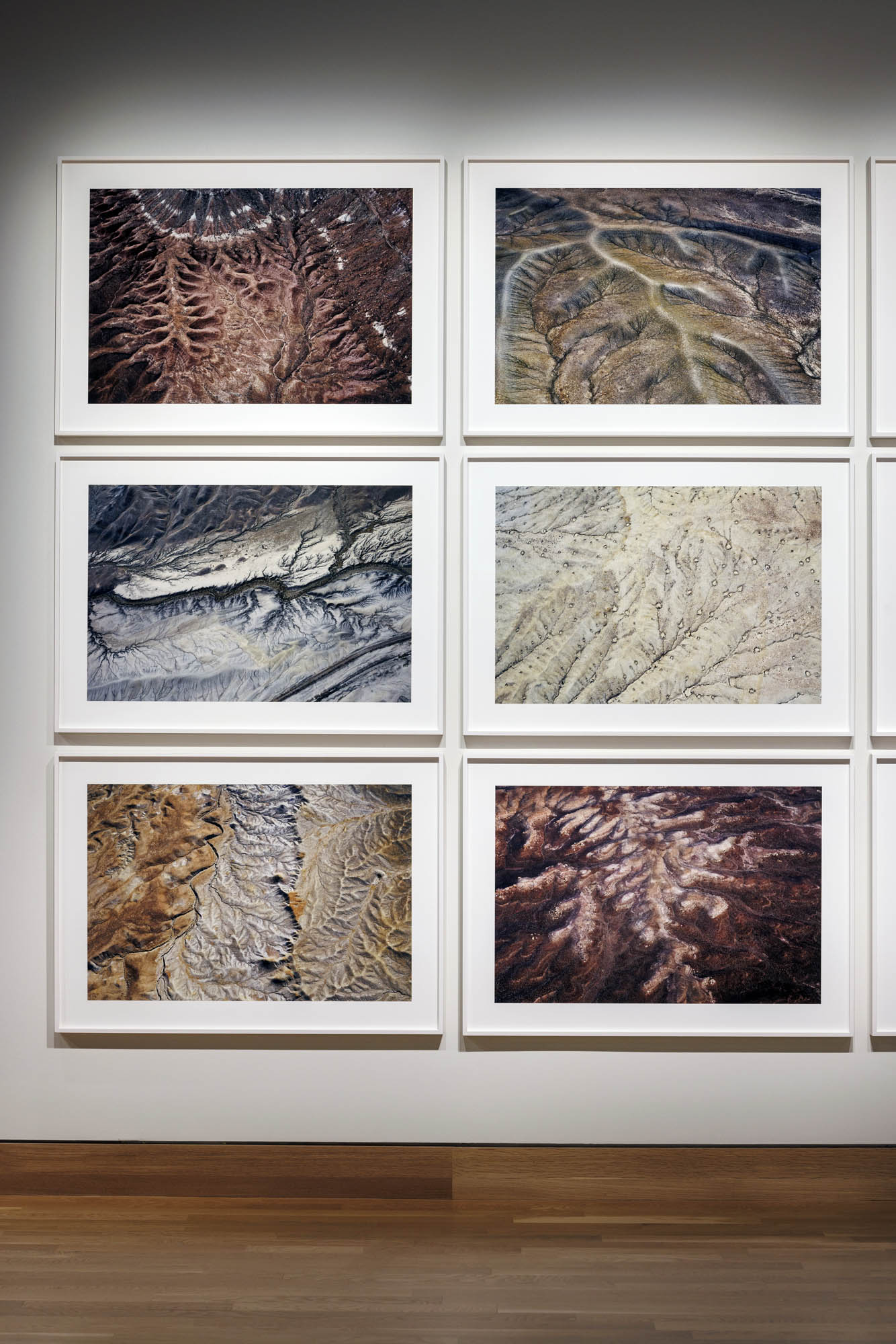
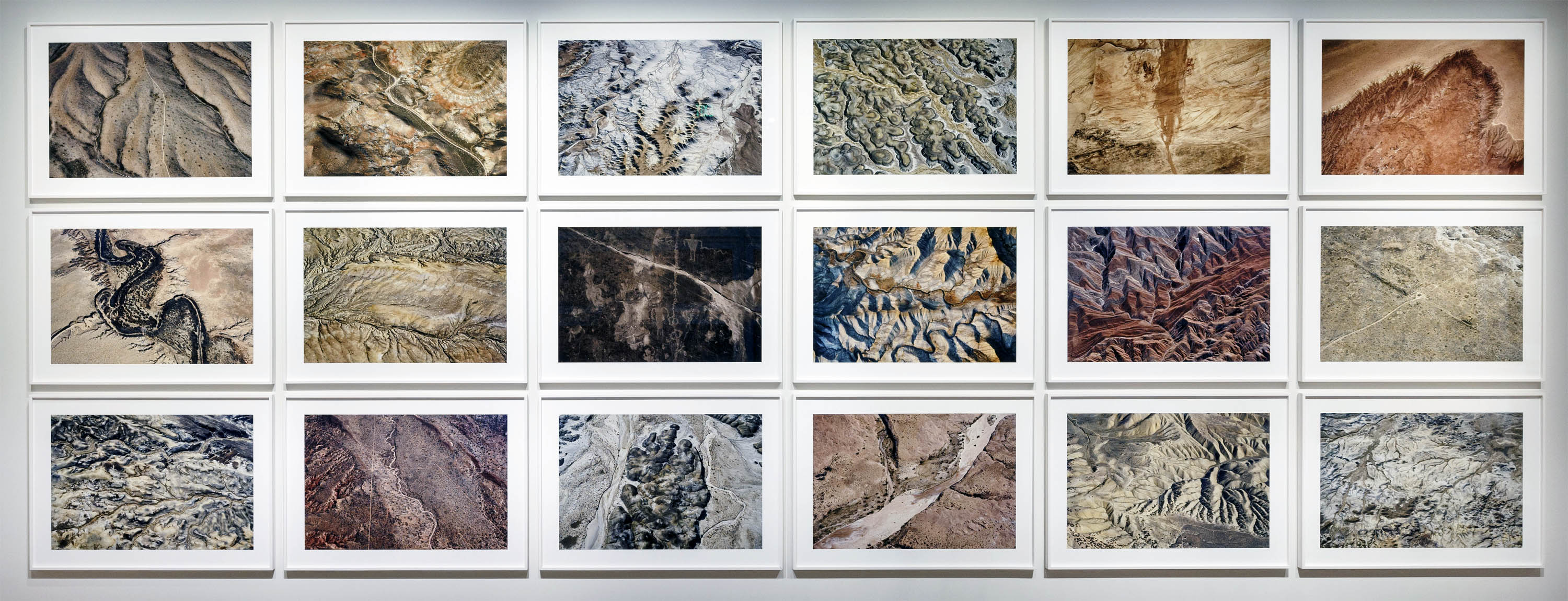
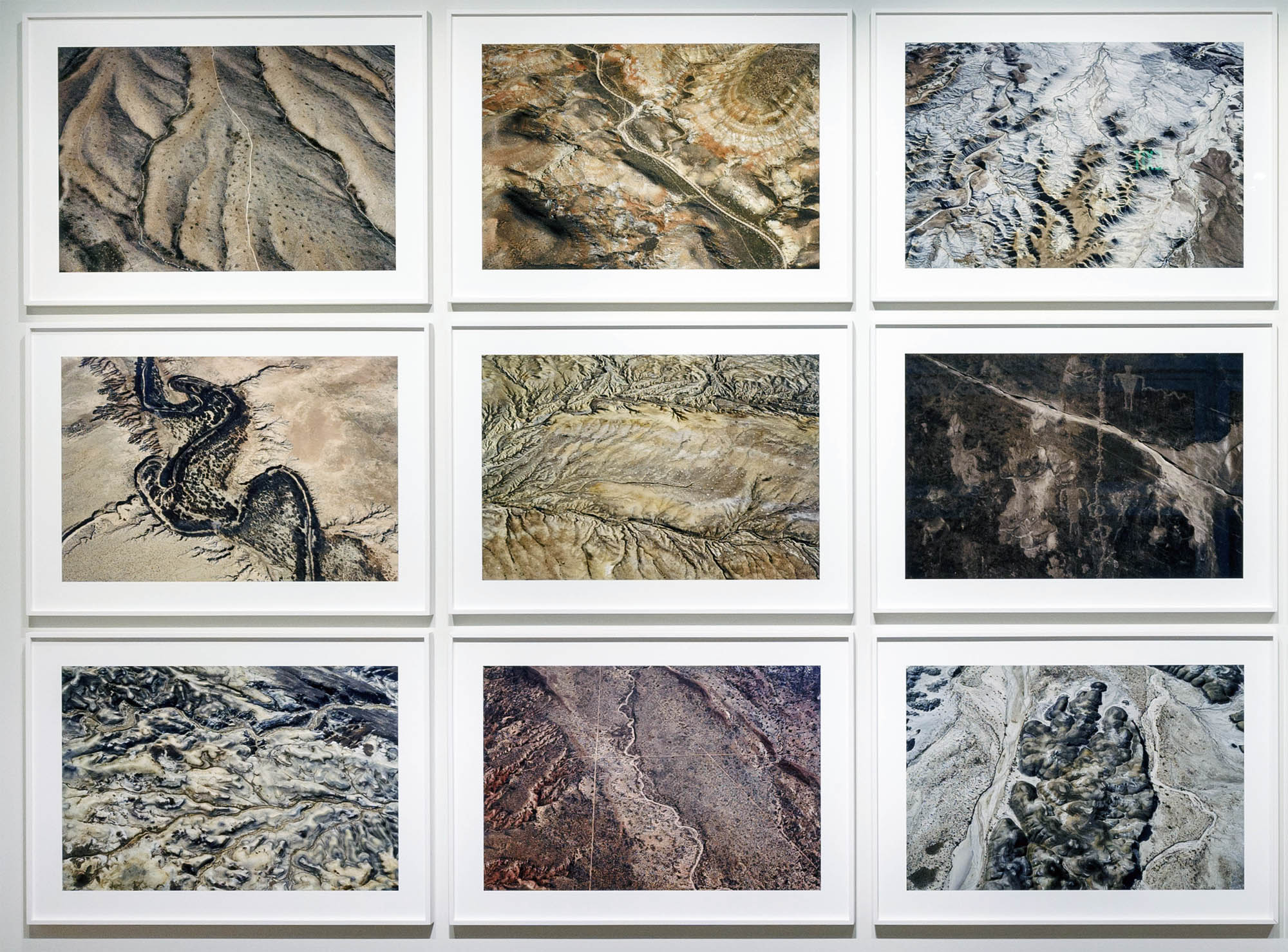
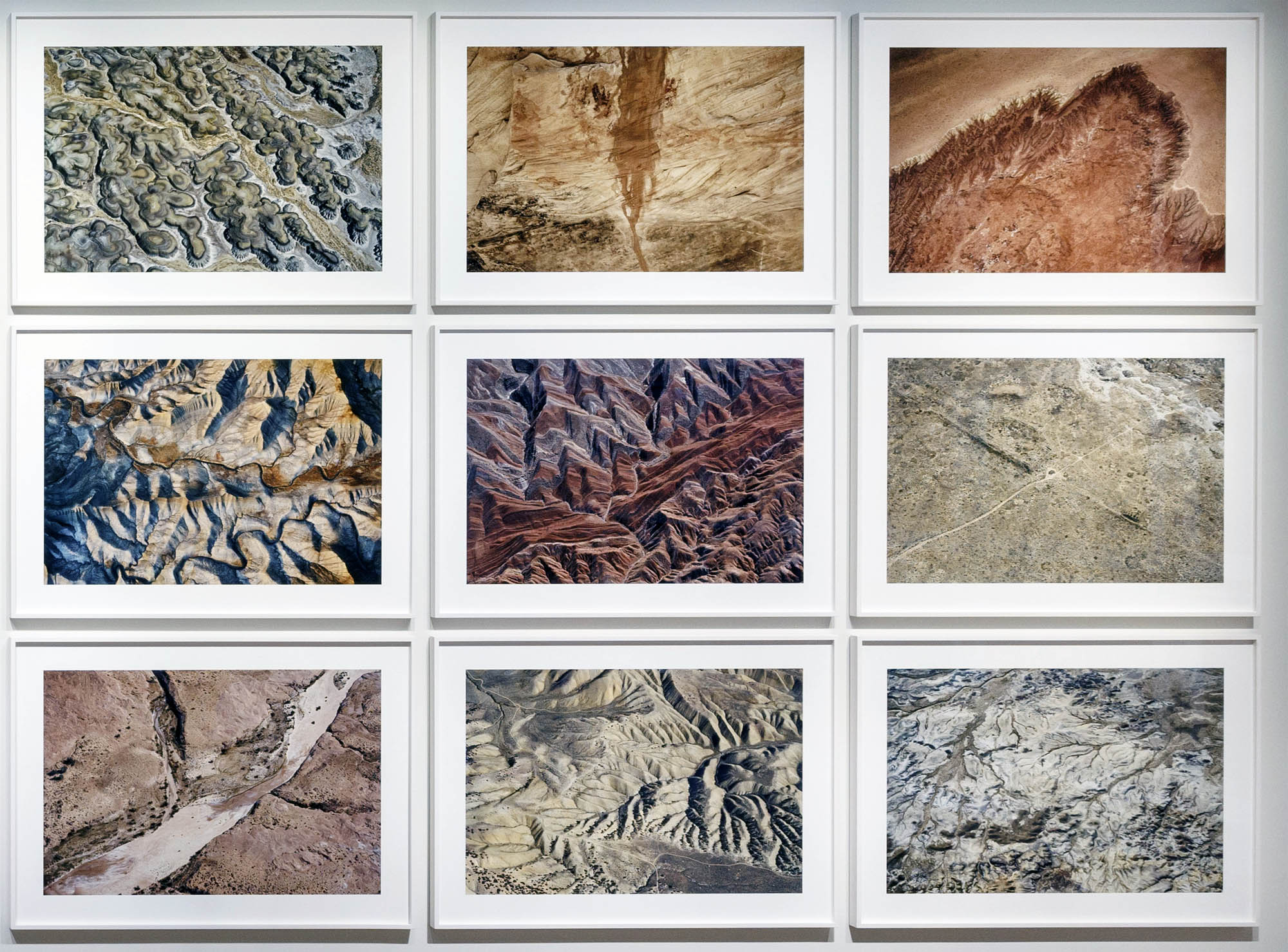
Fazal Sheikh (American, b. 1965) From the installation 'In Place (Utah, Arizona, and New Mexico, Four Corners Region)' 2017-2020


Fazal Sheikh (American, b. 1965)
From the installation In Place (Utah, Arizona, and New Mexico, Four Corners Region)
2017-2020
Pigmented inkjet print
© and courtesy Fazal Sheikh


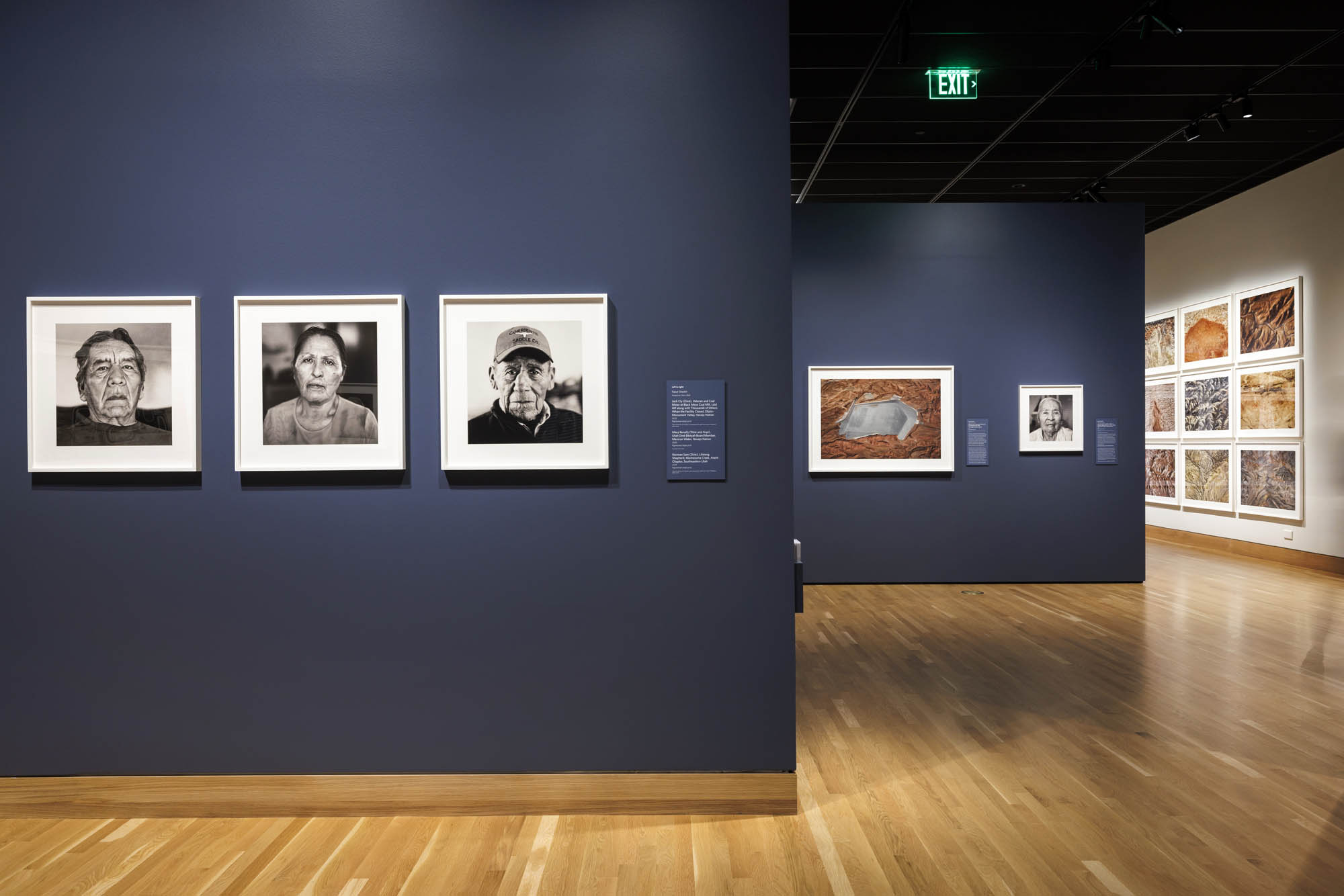
There are some stunning photographs in this exhibition but their “formula” is well known – aerial photographs of the blighted landscape etched by both geological and human forces (a la Edward Burtynsky, Richard Woldendorp et al) paired with objective, frontal “dead pan” portrait photographs (a la Thomas Ruff, Rineke Dijkstra et al), both forms of topographical mapping (of the land and of the face… as is the regulated presentation) – images which attempt to interrogate “the impact of uranium, coal, oil, and natural-gas extraction on the American Southwest and its Indigenous inhabitants.”

This is strong work but it begs the question: what fresh insight are these photographs giving us into the object of the photographers attention, other than the specifics of “American Southwest” and “Indigenous inhabitants” which turn out to be conceptually and visually generic? Is it necessary for everything to be new again or can work such as this stand in its own right and not just be an echo of what has come before. For the general public the work might seem fresh and new but for the informed observer this is well trodden, indeed trampled ground.

The press release states that “The project reflects on the resilience of Indigenous people in the face of threats to the culture, spirituality, and health.” I don’t feel that with these photographs. Where is the art that expresses through a partnership with the photographer the eloquent, unique voice of the Indigenous inhabitants of this ancestral landscape, its spirit and its fire?

As with any art please make up your own mind.

Dr Marcus Bunyan


Many thankx to the Denver Art Museum for allowing me to publish the photographs in the posting. Please click on the photographs for a larger version of the image.
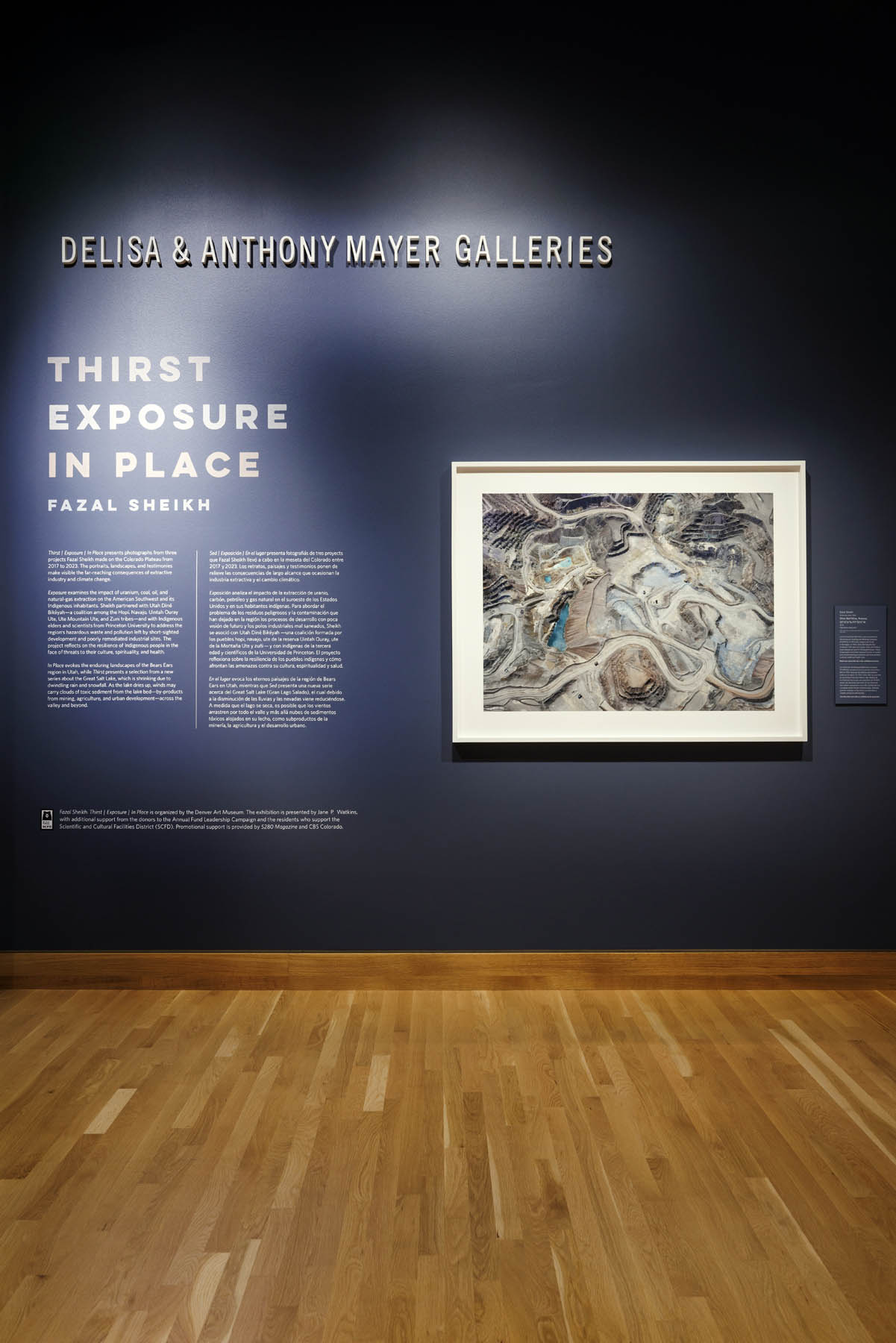


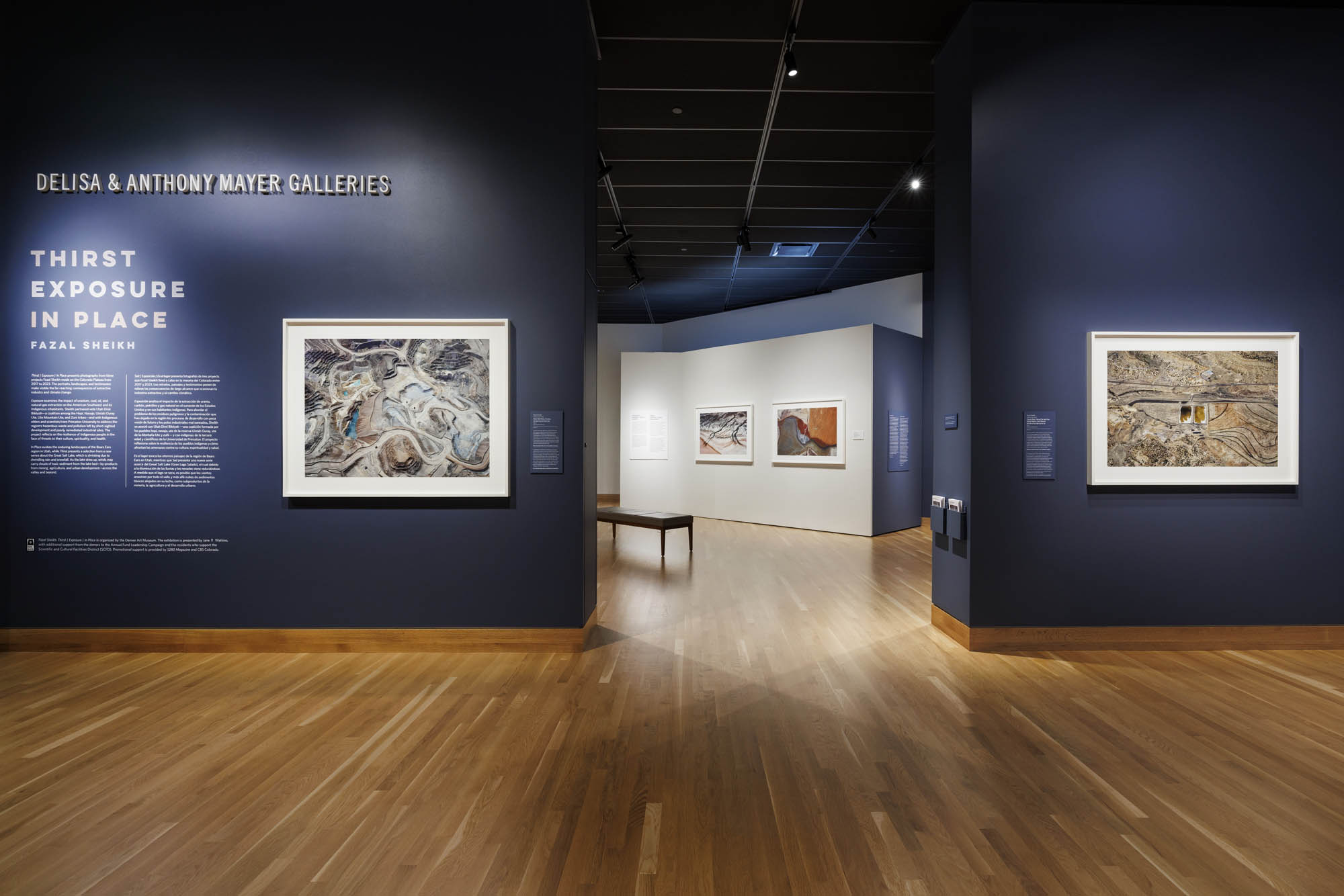
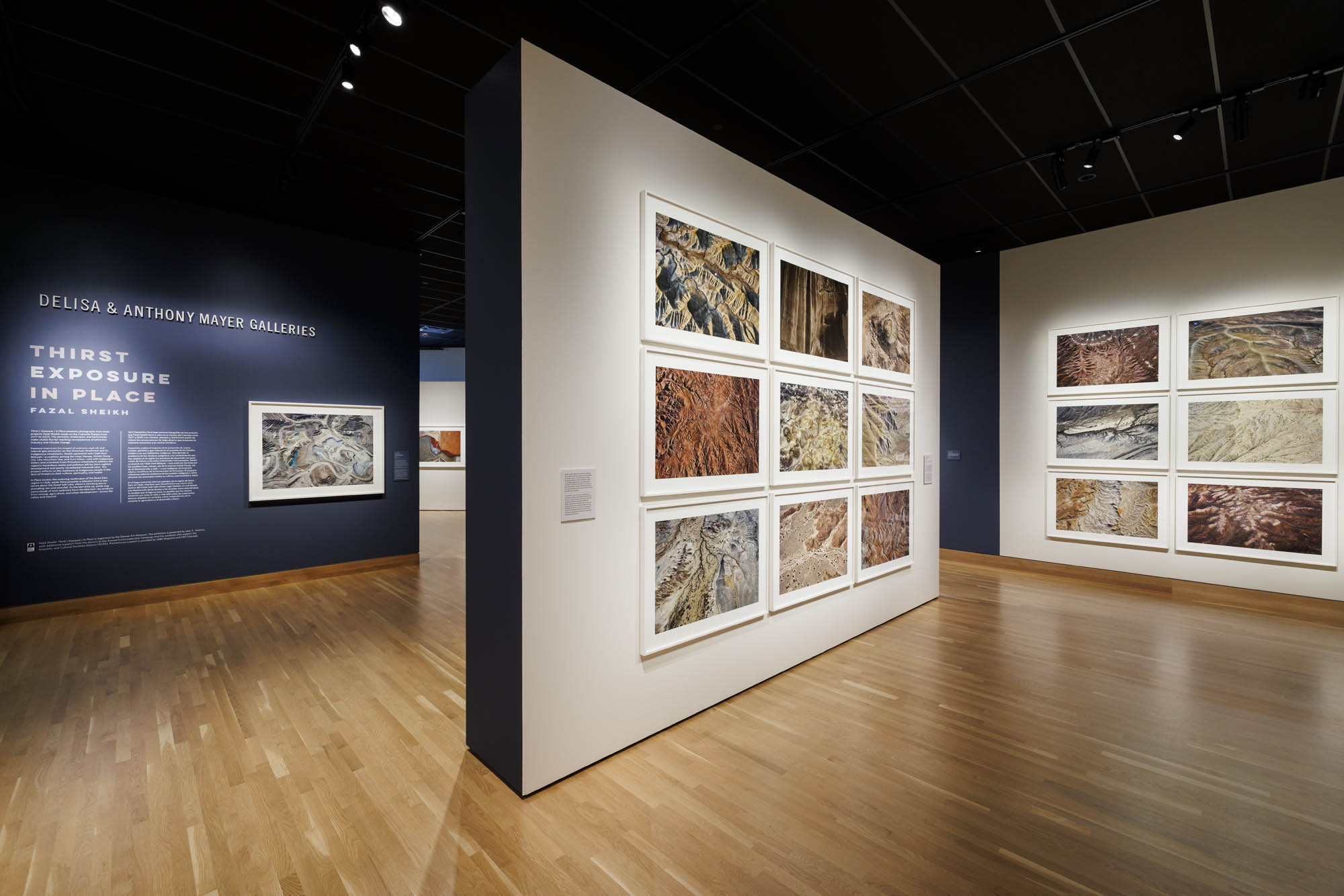
Installation view of the exhibition 'Fazal Sheikh: Thirst | Exposure | In Place' at the Denver Art Museum showing the opening wall text

Installation view of the exhibition 'Fazal Sheikh: Thirst | Exposure | In Place' at the Denver Art Museum showing the opening wall text


Installation views of the exhibition Fazal Sheikh: Thirst | Exposure | In Place at the Denver Art Museum showing the opening wall text (below)


Thirst | Exposure | In Place presents photographs from three projects Fazal Sheikh made on the Colorado Plateau from 2017 to 2023. The portraits, landscapes, and testimonies make visible the far-reaching consequences of extractive industry and climate change.

Exposure examines the impact of uranium, coal, oil, and natural-gas extraction on the American Southwest and its Indigenous inhabitants. Sheikh partnered with Utah Dine Bikeyah – a coalition among the Hopi, Navajo, Uintah Ouray Ute, Ute Mountain Ute, and Zuni tribes – and with Indigenous elders and scientists form Princeton University to address the region’s hazardous waste and pollution left by short-sighted development and poorly remediated industrial sites. The project reflects on the resilience of Indigenous people in the face of threats to the culture, spirituality, and health.

In place evokes the enduring landscape of the Bears Ears region in Utah, while Thirst presents a selection from a new series about the Great Salt Lake, which is shrinking due to dwindling rain and snowfall. As the lake dries up, winds may carry clouds of toxic sediment from the lake bed – by-products from mining, agriculture, and urban development – across the valley and beyond.

Opening wall text from the exhibition


Denver Art Museum Talk with Fazal Sheikh March 9, 2024

Photographer Fazal Sheikh speaks about his recent work in the Four Corners region and at the Great Salt Lake, in connection with his exhibition Fazal Sheikh: Thirst | Exposure | In Place. His photographs address the consequences of industrial land use, engage questions about water use and climate change, and reflect on the ongoing relationship between people and nature. Sheikh discusses the origin of each series, his immersion in the landscapes and communities he photographed, and his collaborations with writers, scientists, and Indigenous community members that are woven throughout this work.

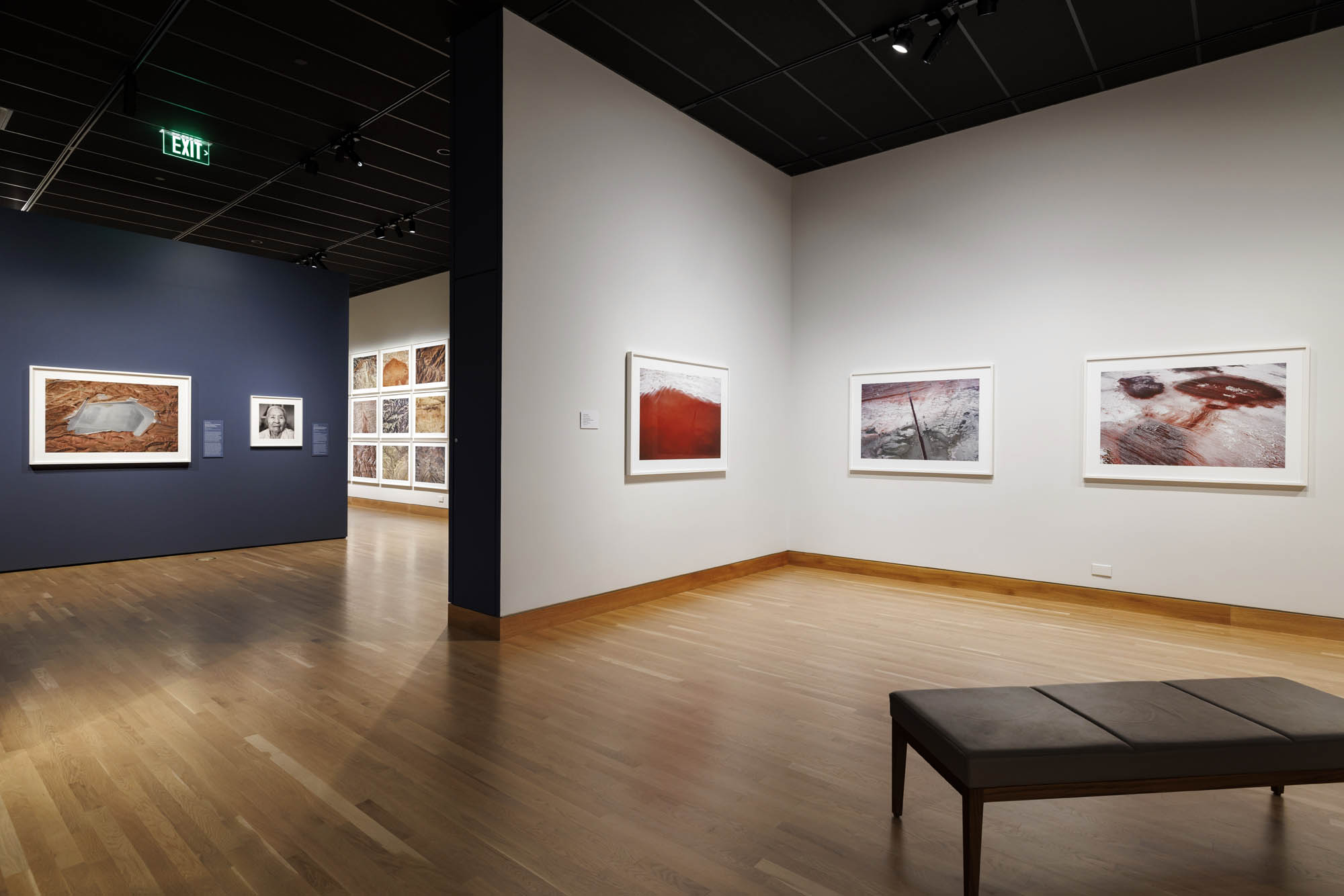
 

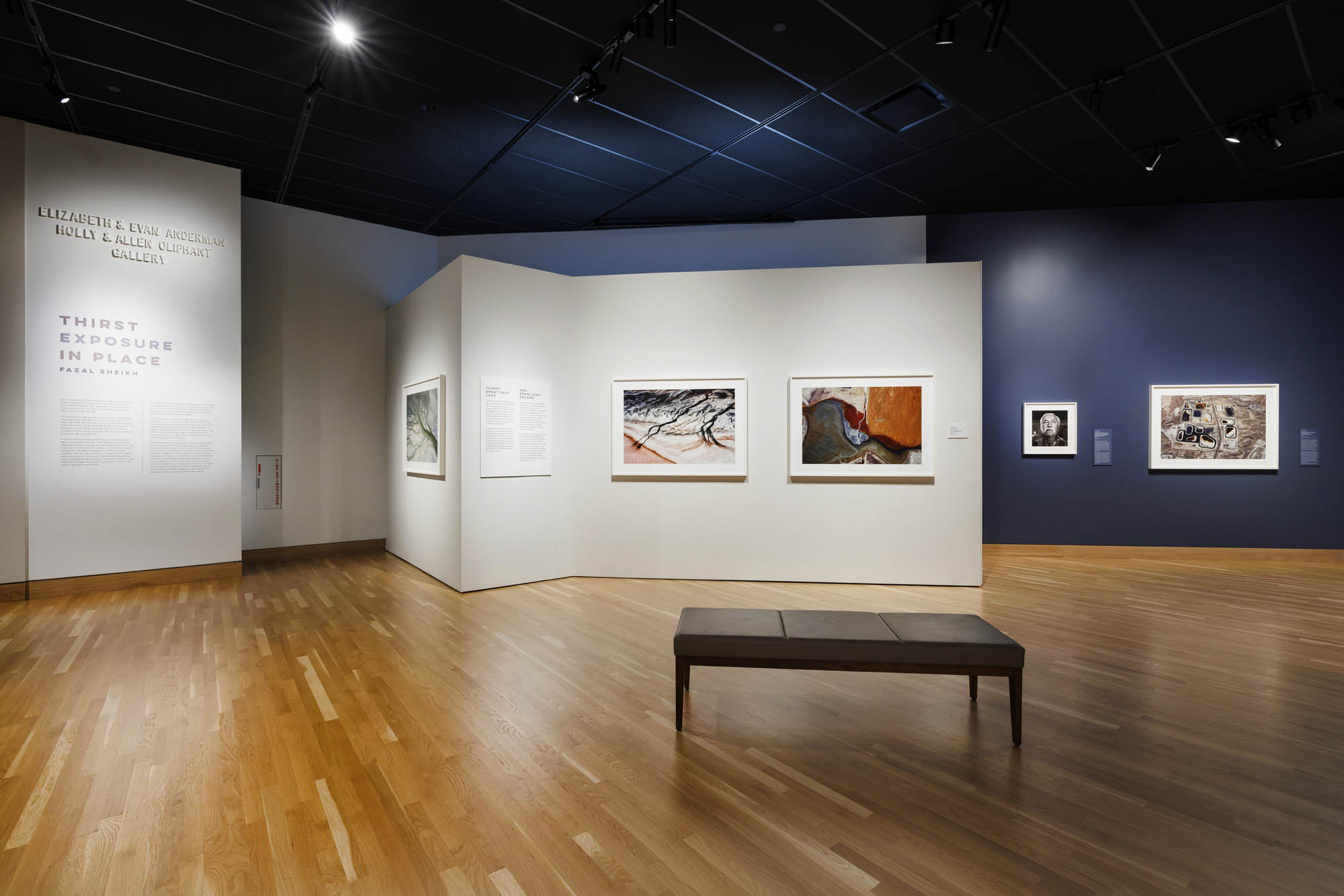
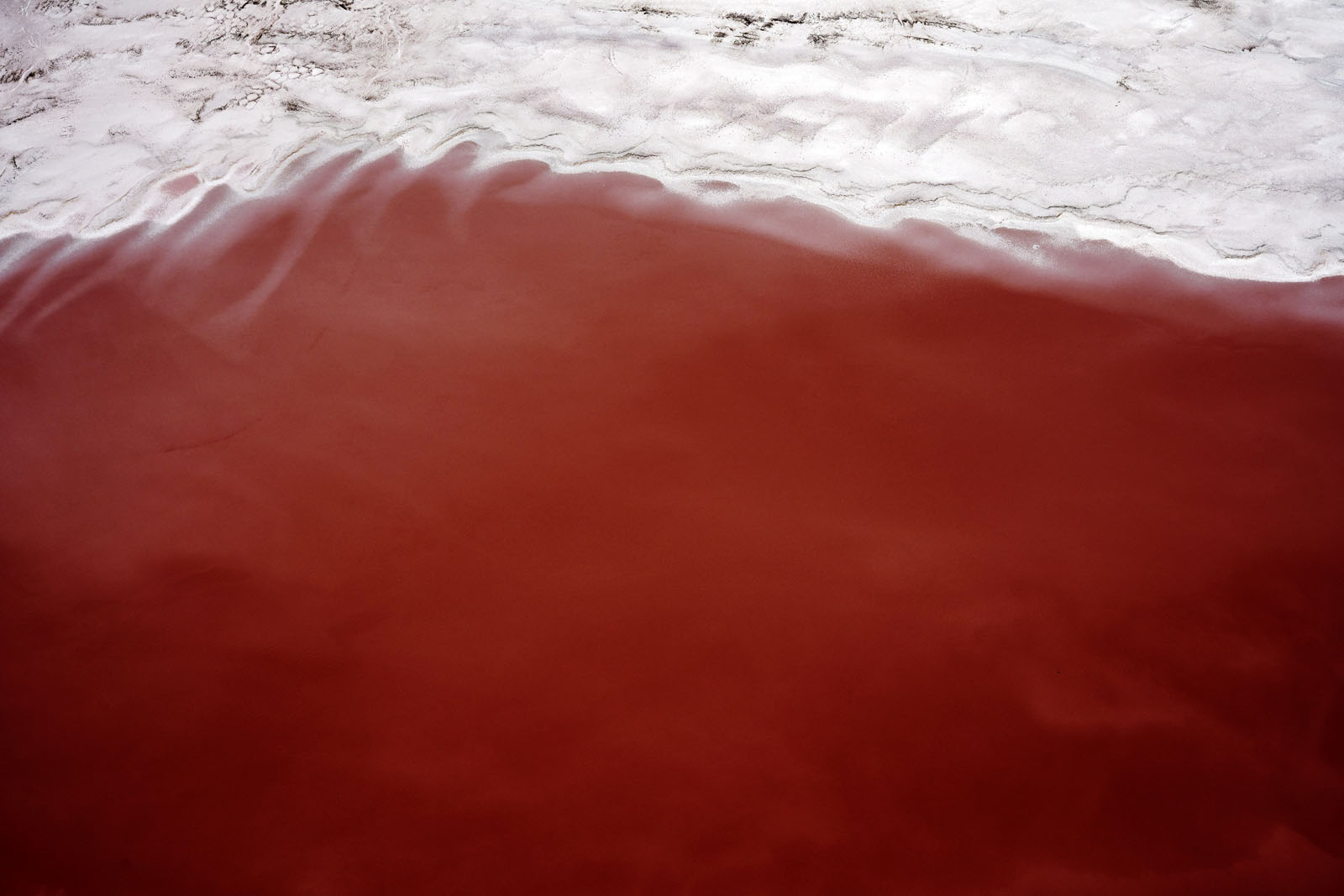
Installation view of the exhibition 'Fazal Sheikh: Thirst | Exposure | In Place' at the Denver Art Museum showing work from the series 'Thirst: Great Salt Lake' 2022

Installation view of the exhibition 'Fazal Sheikh: Thirst | Exposure | In Place' at the Denver Art Museum showing work from the series 'Thirst: Great Salt Lake' 2022

Installation view of the exhibition 'Fazal Sheikh: Thirst | Exposure | In Place' at the Denver Art Museum showing work from the series 'Thirst: Great Salt Lake' 2022

Installation view of the exhibition 'Fazal Sheikh: Thirst | Exposure | In Place' at the Denver Art Museum showing work from the series 'Thirst: Great Salt Lake' 2022


Installation view of the exhibition Fazal Sheikh: Thirst | Exposure | In Place at the Denver Art Museum showing work from the series Thirst: Great Salt Lake 2022


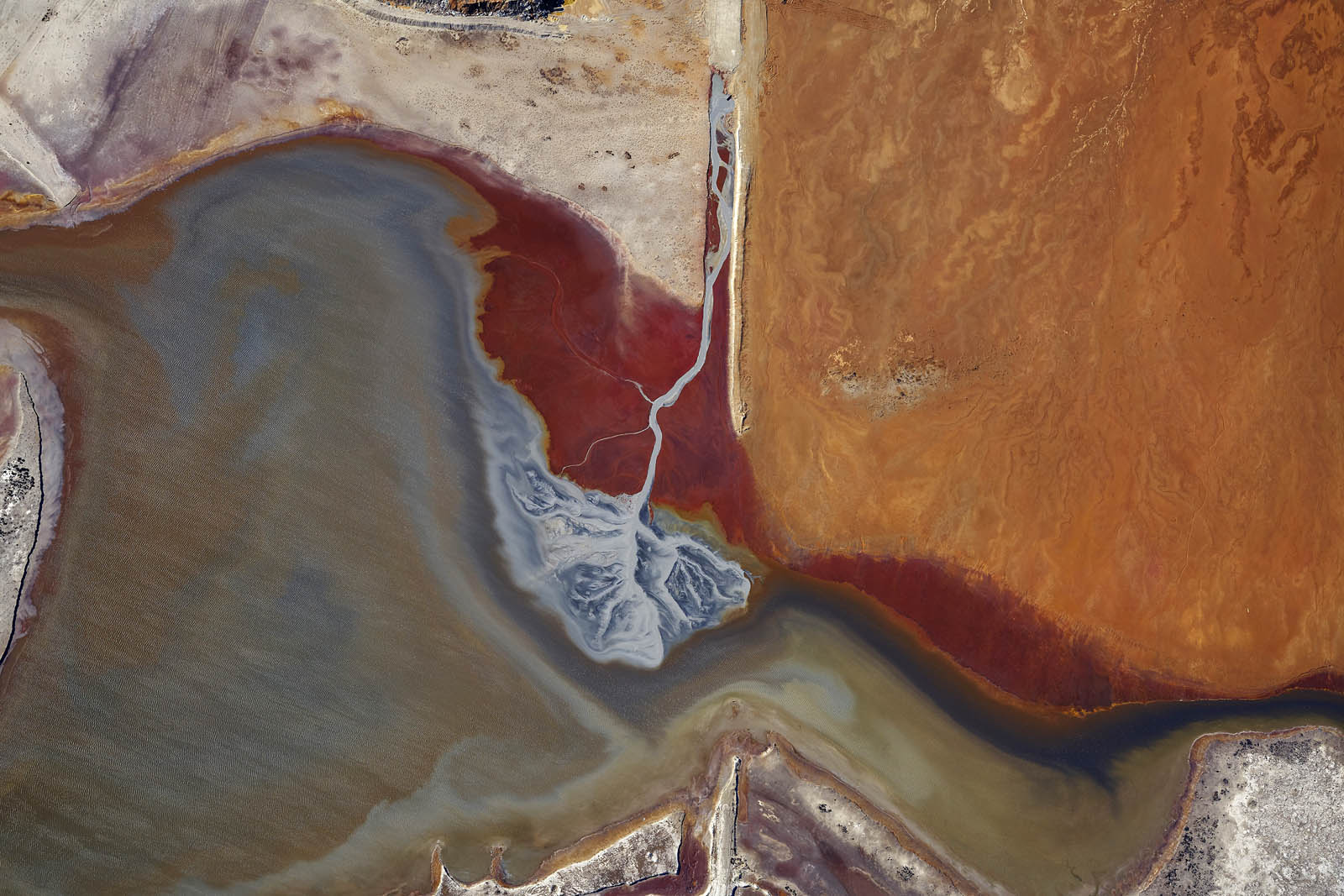
Fazal Sheikh (American, b. 1965) From the series 'Thirst: Great Salt Lake' November 2022


Fazal Sheikh (American, b. 1965)
From the series Thirst: Great Salt Lake
November 2022
Pigmented inkjet print
© and courtesy Fazal Sheikh


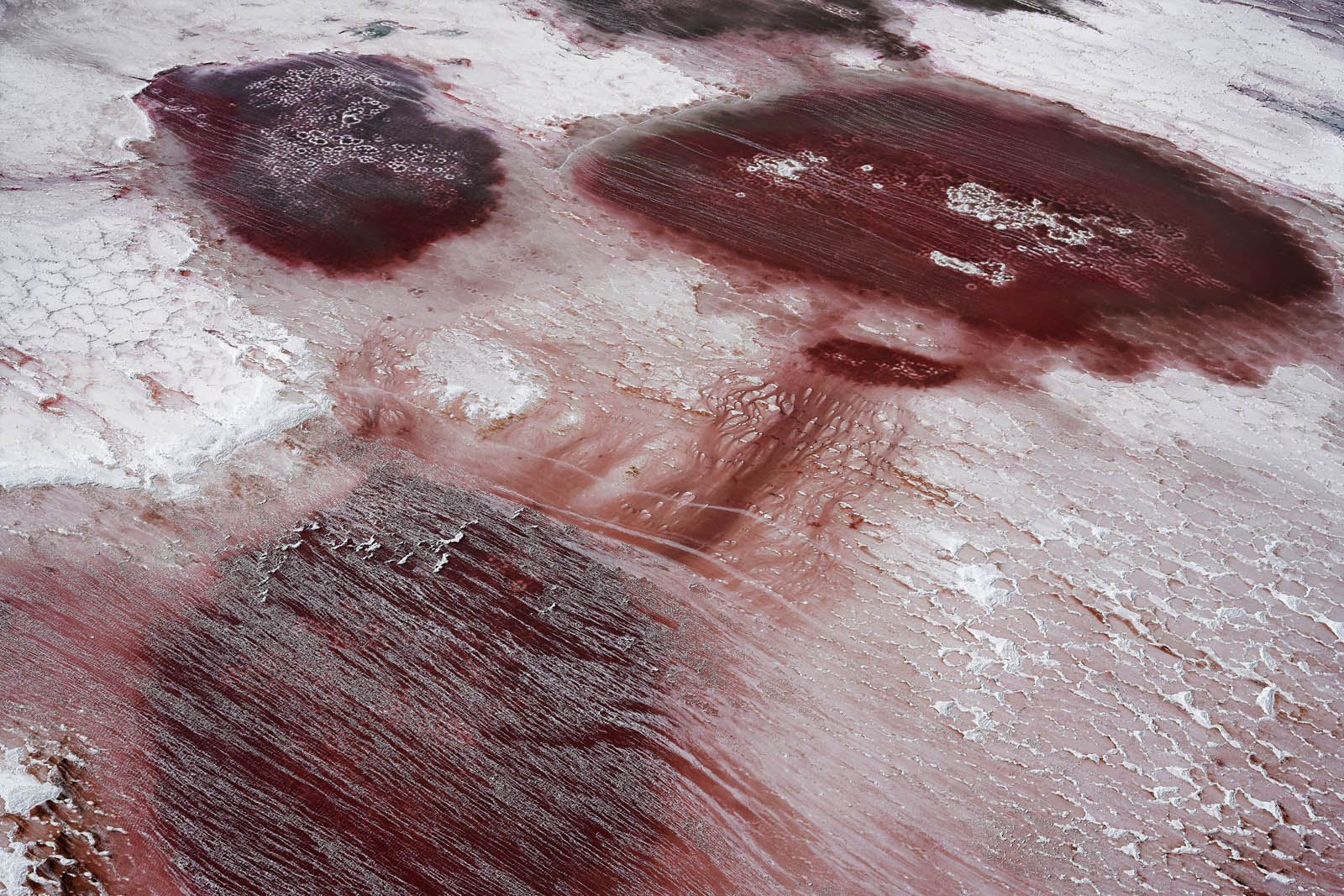
Fazal Sheikh (American, b. 1965) From the series 'Thirst: Great Salt Lake' November 2022


Fazal Sheikh (American, b. 1965)
From the series Thirst: Great Salt Lake
November 2022
Pigmented inkjet print
© and courtesy Fazal Sheikh


Fazal Sheikh (American, b. 1965) From the series 'Thirst: Great Salt Lake' November 2022


Fazal Sheikh (American, b. 1965)
From the series Thirst: Great Salt Lake
November 2022
Pigmented inkjet print
© and courtesy Fazal Sheikh


Fazal Sheikh (American, b. 1965) From the series 'Thirst: Great Salt Lake' November 2022November 2022


Fazal Sheikh (American, b. 1965)
From the series Thirst: Great Salt Lake
November 2022
Pigmented inkjet print
© and courtesy Fazal Sheikh


Fazal Sheikh: Thirst | Exposure | In Place is an exhibition created from three projects photographer Fazal Sheikh made on the Colorado Plateau from 2017 to early 2023. Sheikh’s portraits and landscapes shed light on the far-reaching consequences of extractive industry and climate change.

Born in 1965 in New York City, Sheikh creates images of displaced communities and marginalised people that prompt awareness of the world beyond the museum. The photographs in Thirst ǀ Exposure ǀ In Place expose indelible marks on the Colorado Plateau and American Southwest landscape that have been etched by both geological and human forces. Through this beautiful and sometimes frightening new work, Sheikh encourages viewers to witness the consequences of the past and imagine the shape of the future.

The exhibition presents Sheikh’s recent work in three interrelated sections: Thirst is a new series of aerial photographs that document the decline of the Great Salt Lake in northeast Utah, which is shrinking due to overconsumption and dwindling rain and snowfall. Exposure examines the impacts of uranium, coal, oil and natural-gas extraction on the American Southwest and on its Indigenous inhabitants. In Place evokes the enduring landscapes of the Bears Ears region in Utah, bringing Sheikh’s photographs together with contributions from scientists and Indigenous communities in and around Bears Ears in southeastern Utah.

Visitors will reflect upon the transformation – and often devastation – of these landscapes in the context of the past, present and future, while considering the juxtaposition of beauty and catastrophe, as well as intimate, human-scale stories and those spanning vast geological eras and changes.

Text from the Denver Art Museum website


Installation view of the exhibition 'Fazal Sheikh: Thirst | Exposure | In Place' at the Denver Art Museum

Installation view of the exhibition 'Fazal Sheikh: Thirst | Exposure | In Place' at the Denver Art Museum showing work from the series 'Exposure' 2019 

Installation view of the exhibition 'Fazal Sheikh: Thirst | Exposure | In Place' at the Denver Art Museum showing work from the series 'Exposure' 2019 

Installation view of the exhibition 'Fazal Sheikh: Thirst | Exposure | In Place' at the Denver Art Museum showing work from the series 'Exposure' 2019 


Installation view of the exhibition Fazal Sheikh: Thirst | Exposure | In Place at the Denver Art Museum showing work from the series Exposure 2019


Fazal Sheikh (American, b. 1965) 'Mexican Hat Uranium Mill Disposal Cell, Mexican Hat, Utah, 37°8'0.88"N/109°52'28"W' From the series 'Exposure' 2017


Fazal Sheikh (American, b. 1965)
Mexican Hat Uranium Mill Disposal Cell, Mexican Hat, Utah, 37°8’0.88″N/109°52’28″W
From the series Exposure 2017
Pigmented inkjet print
Yale University Art Gallery, purchased with a gift from Jane P. Watkins, M.P.H. 1979
Image courtesy and © Fazal Sheikh


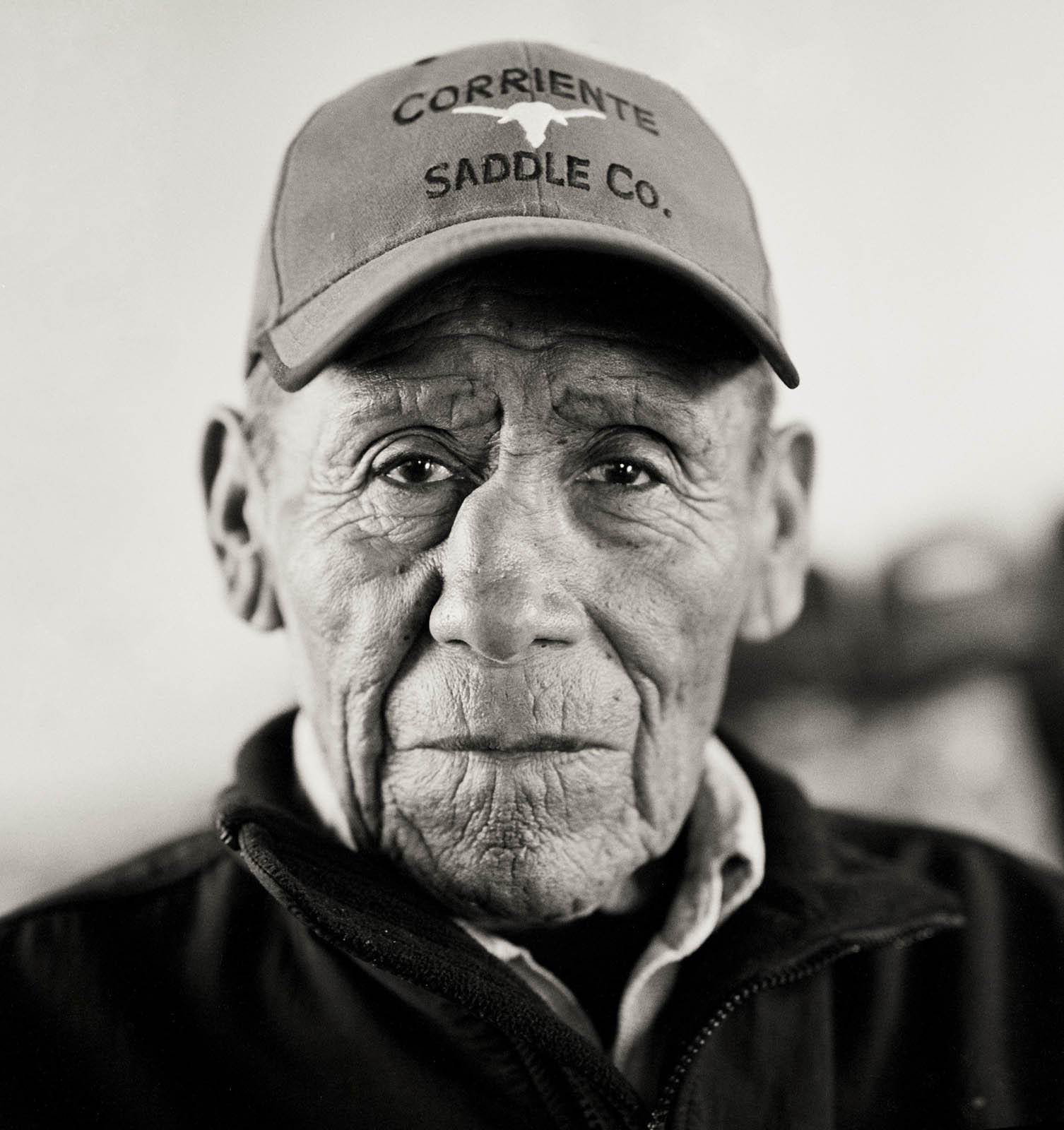
Fazal Sheikh (American, b. 1965) 'Norman Sam (Diné), Lifelong Shepherd, Montezuma Creek, Aneth Chapter, Southeastern Utah' From the series 'Exposure' 2019


Fazal Sheikh (American, b. 1965)
Norman Sam (Diné), Lifelong Shepherd, Montezuma Creek, Aneth Chapter, Southeastern Utah
From the series Exposure 2019
Pigmented inkjet print. Yale University Art Gallery, purchased with a gift from Jane P. Watkins, M.P.H. 1979
Image courtesy and © Fazal Sheikh


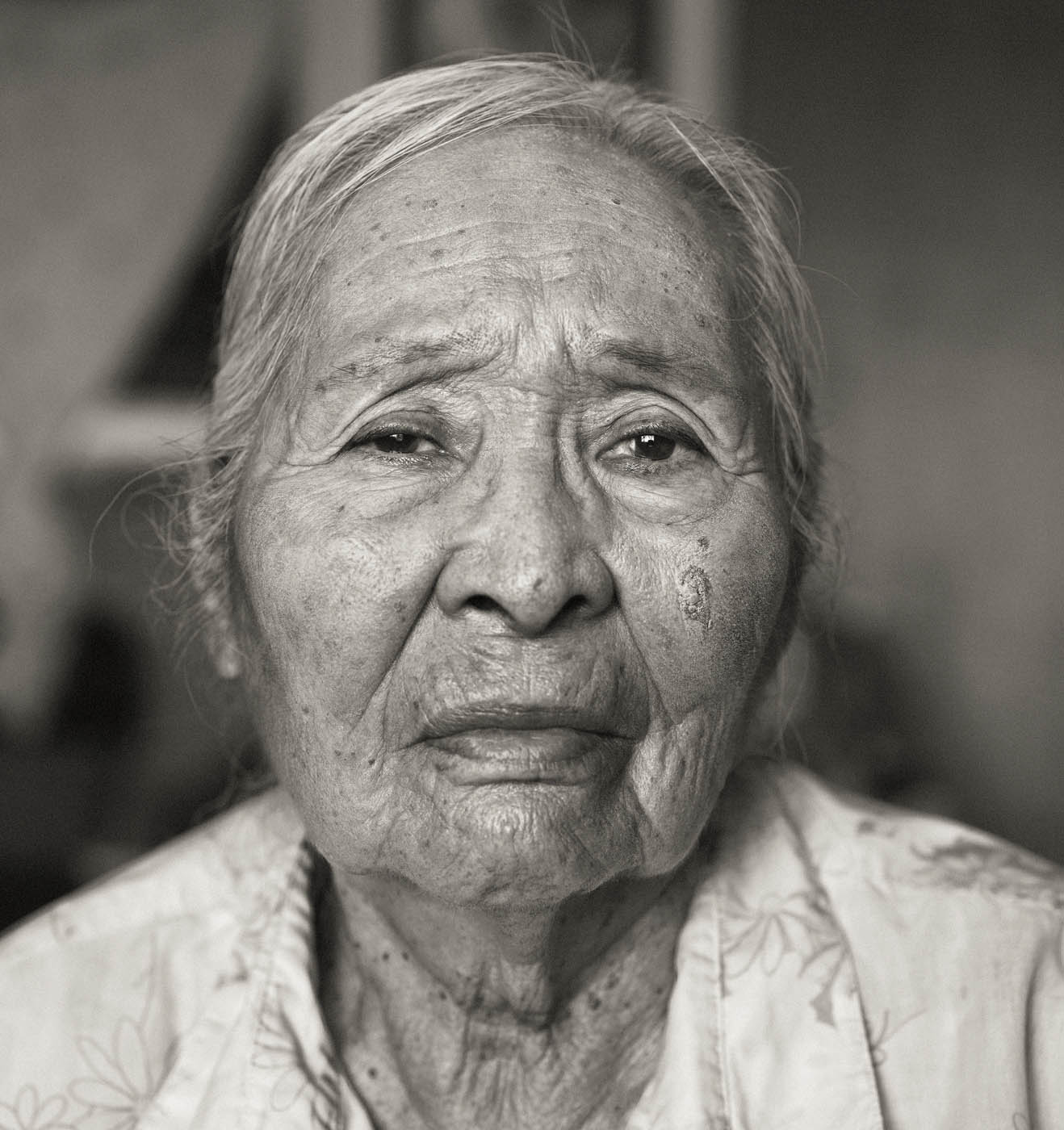
Fazal Sheikh (American, b. 1965) 'Lola Yellowman (Diné), Widow of Uranium Miner John Guy, Cane Valley–Monument Valley, Navajo Nation' From the series 'Exposure' 2019


Fazal Sheikh (American, b. 1965)
Lola Yellowman (Diné), Widow of Uranium Miner John Guy, Cane Valley–Monument Valley, Navajo Nation
From the series Exposure 2019
Pigmented inkjet print
Yale University Art Gallery, purchased with a gift from Jane P. Watkins, M.P.H. 1979
Image courtesy and © Fazal Sheikh


Lola Yellowman’s Testimony

“The medicine men told our men not to work in the mines, that it was dangerous, but the men needed to support their families and had no choice … My husband, John Guy, worked in the mines like my father. He would arrive home during his lunch break with his clothes caked in uranium dust, and I cleaned those clothes in our home every day. The children played on the tailings pile, but no one from the company ever told us the dangers they were being exposed to.”

Wall text from the exhibition


Fazal Sheikh (American, b. 1965) 'Chapita Wells Oil and Gas Field, Uintah Range, Utah, 40°4'10"N/109°27'26"W' From the series 'Exposure' 2017


Fazal Sheikh (American, b. 1965)
Chapita Wells Oil and Gas Field, Uintah Range, Utah, 40°4’10″N/109°27’26″W
From the series Exposure 2017
Pigmented inkjet print
Yale University Art Gallery, purchased with a gift from Jane P. Watkins, M.P.H. 1979
Image courtesy and © Fazal Sheikh


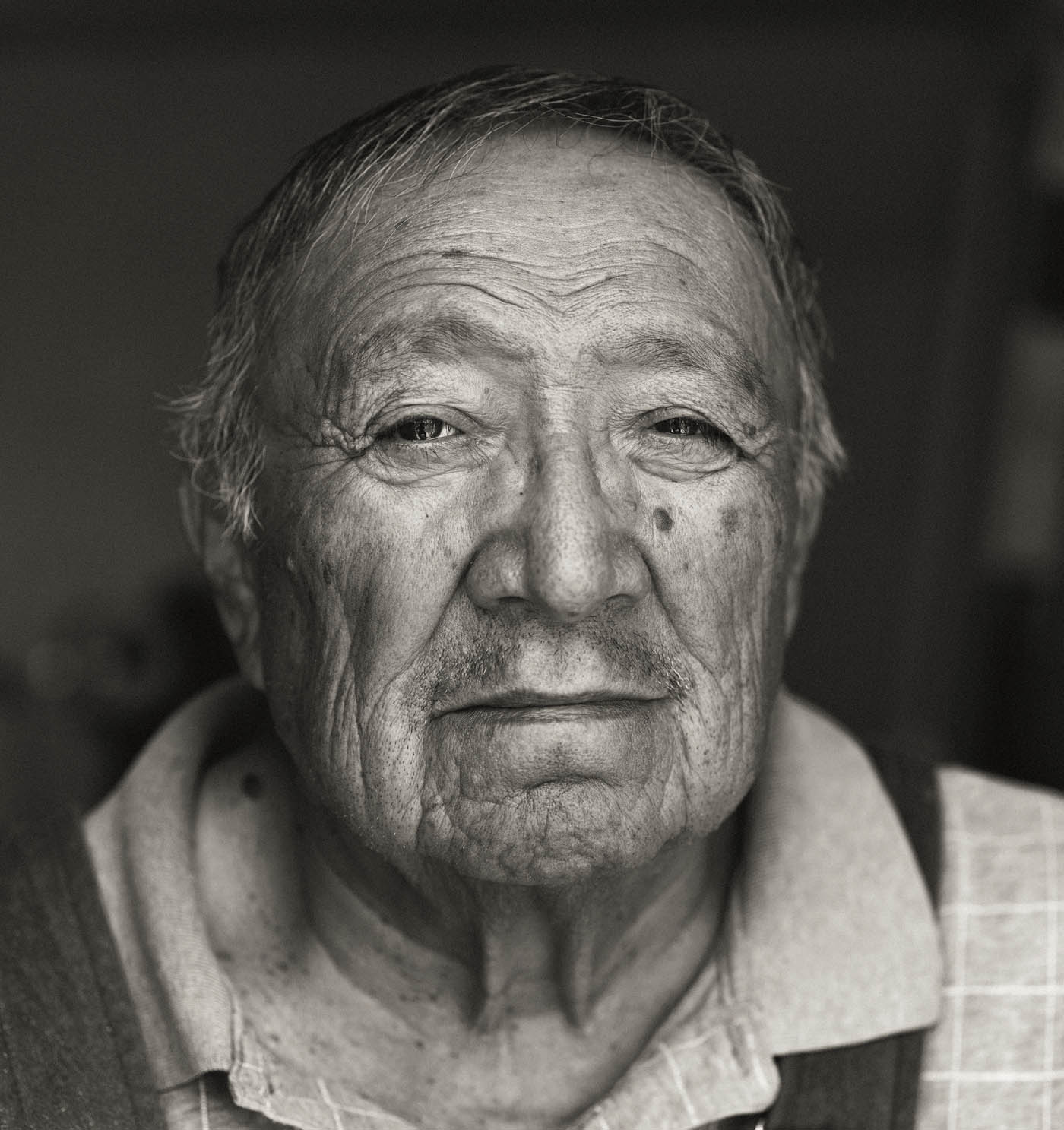
Fazal Sheikh (American, b. 1965) 'Jonah Yellowman (Diné), Spiritual Advisor to Utah Diné Bikéyah, Cane Valley – Monument Valley, Navajo Nation' From the series 'Exposure' 2022


Fazal Sheikh (American, b. 1965)
Jonah Yellowman (Diné), Spiritual Advisor to Utah Diné Bikéyah, Cane Valley – Monument Valley, Navajo Nation
From the series Exposure 2022
Pigmented inkjet print
Image courtesy and © Fazal Sheikh


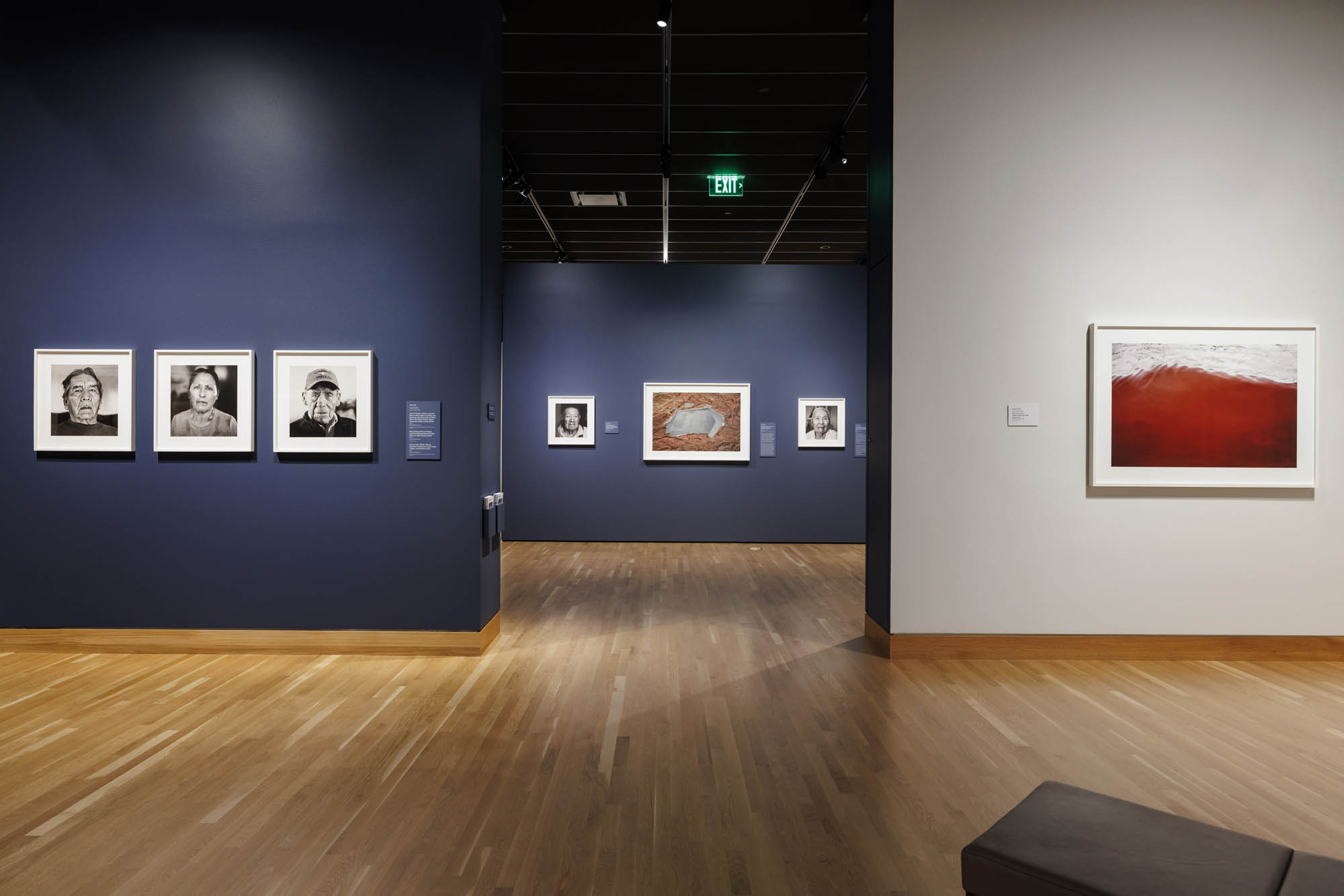
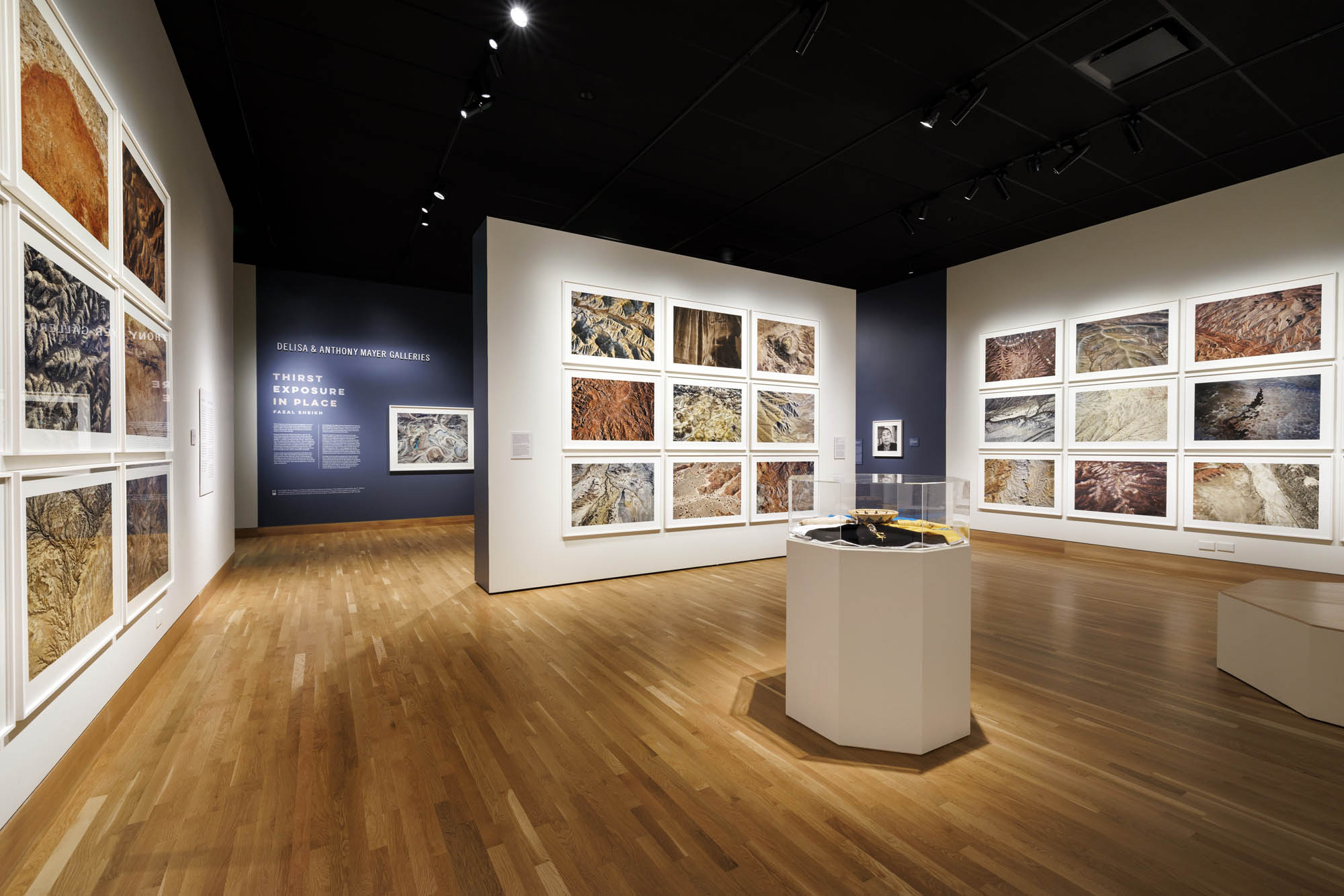
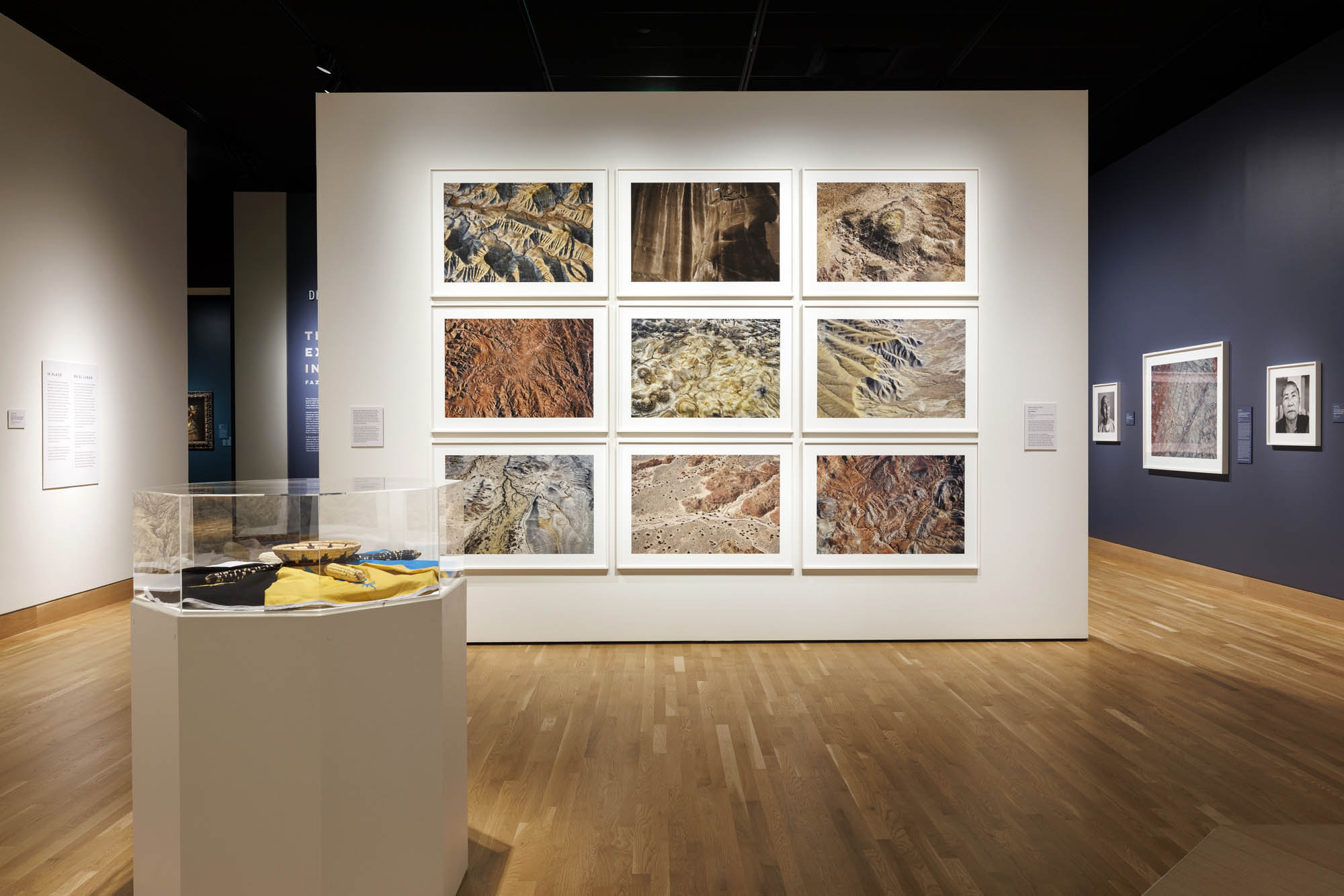
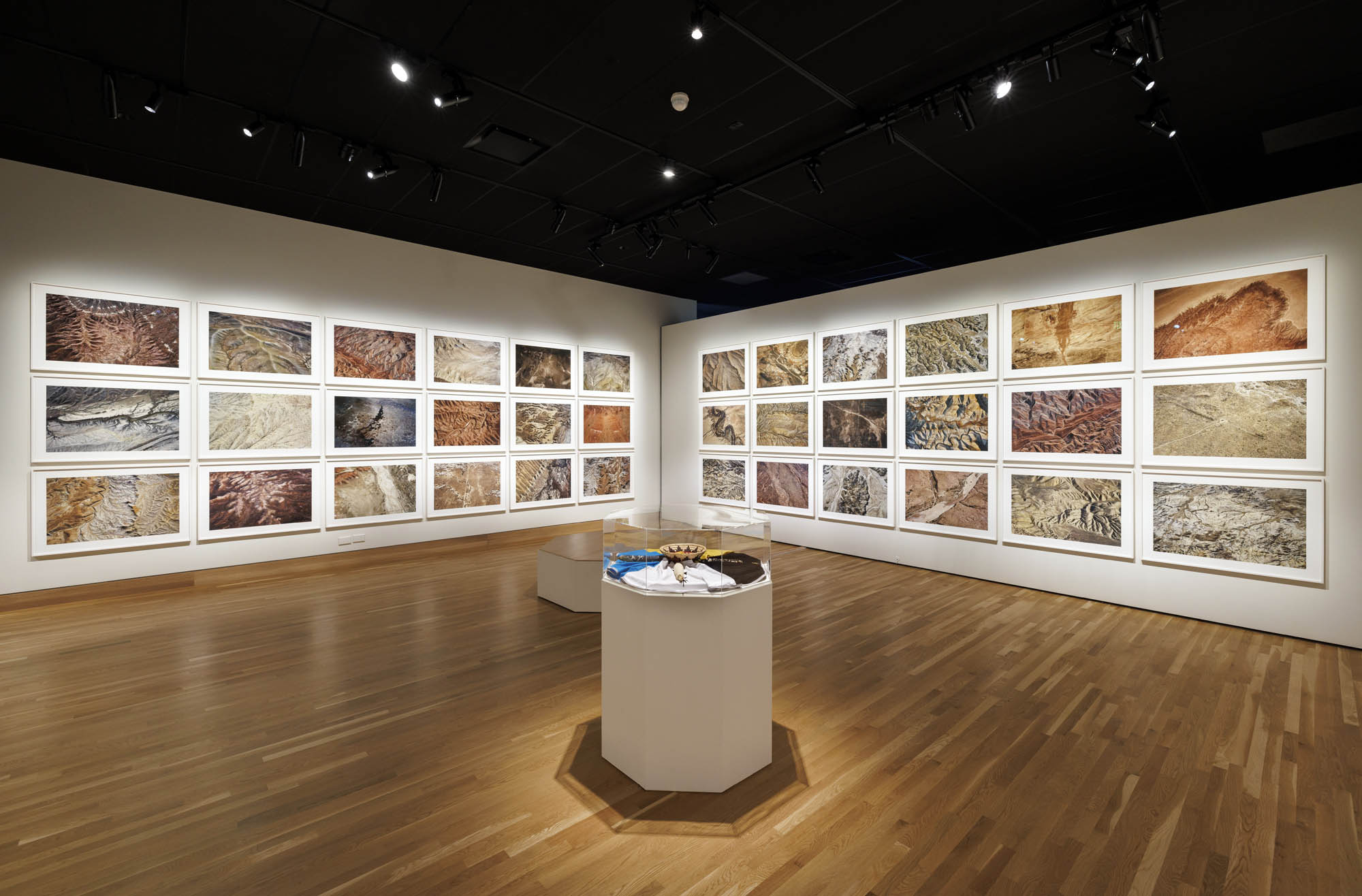
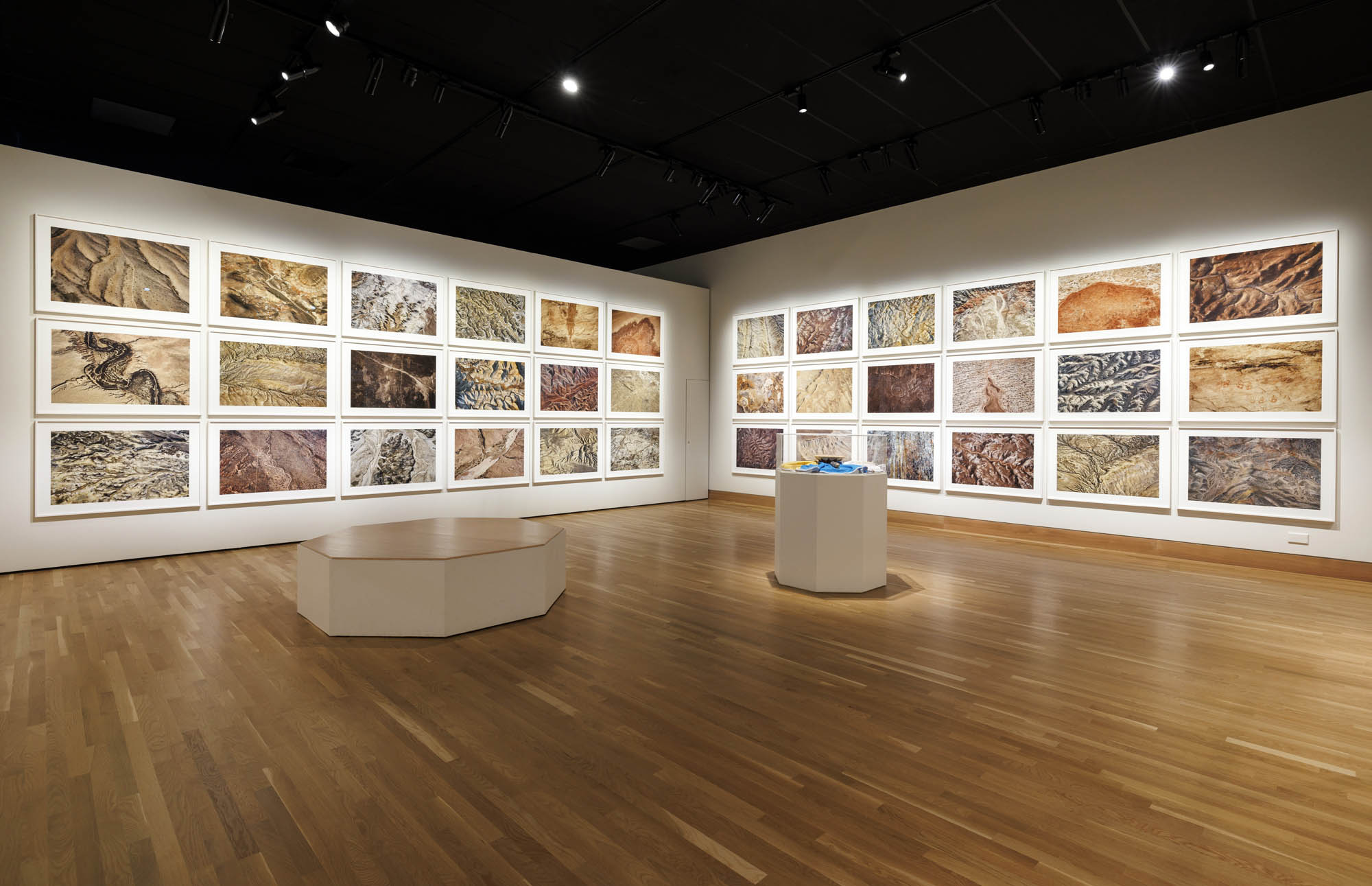
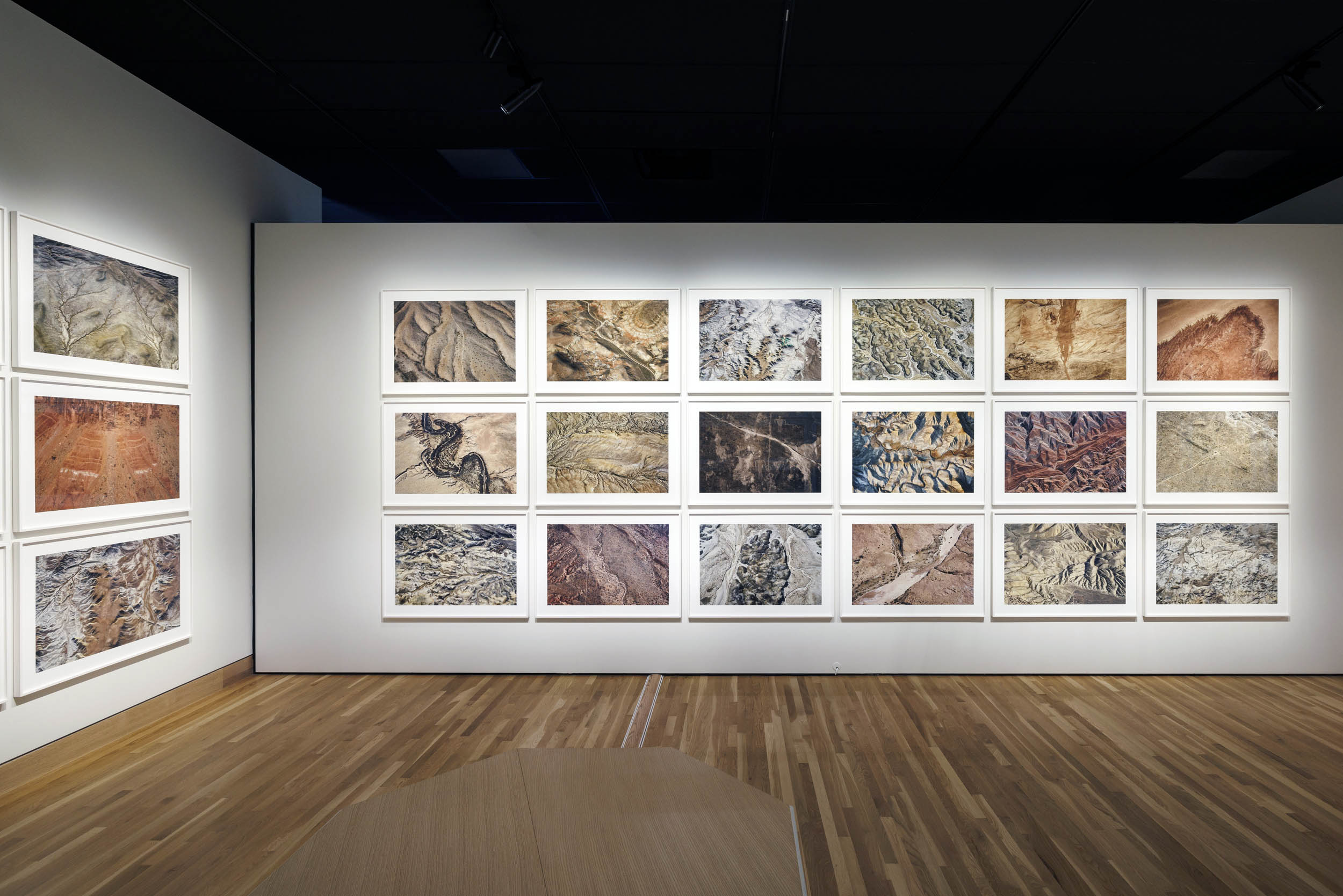
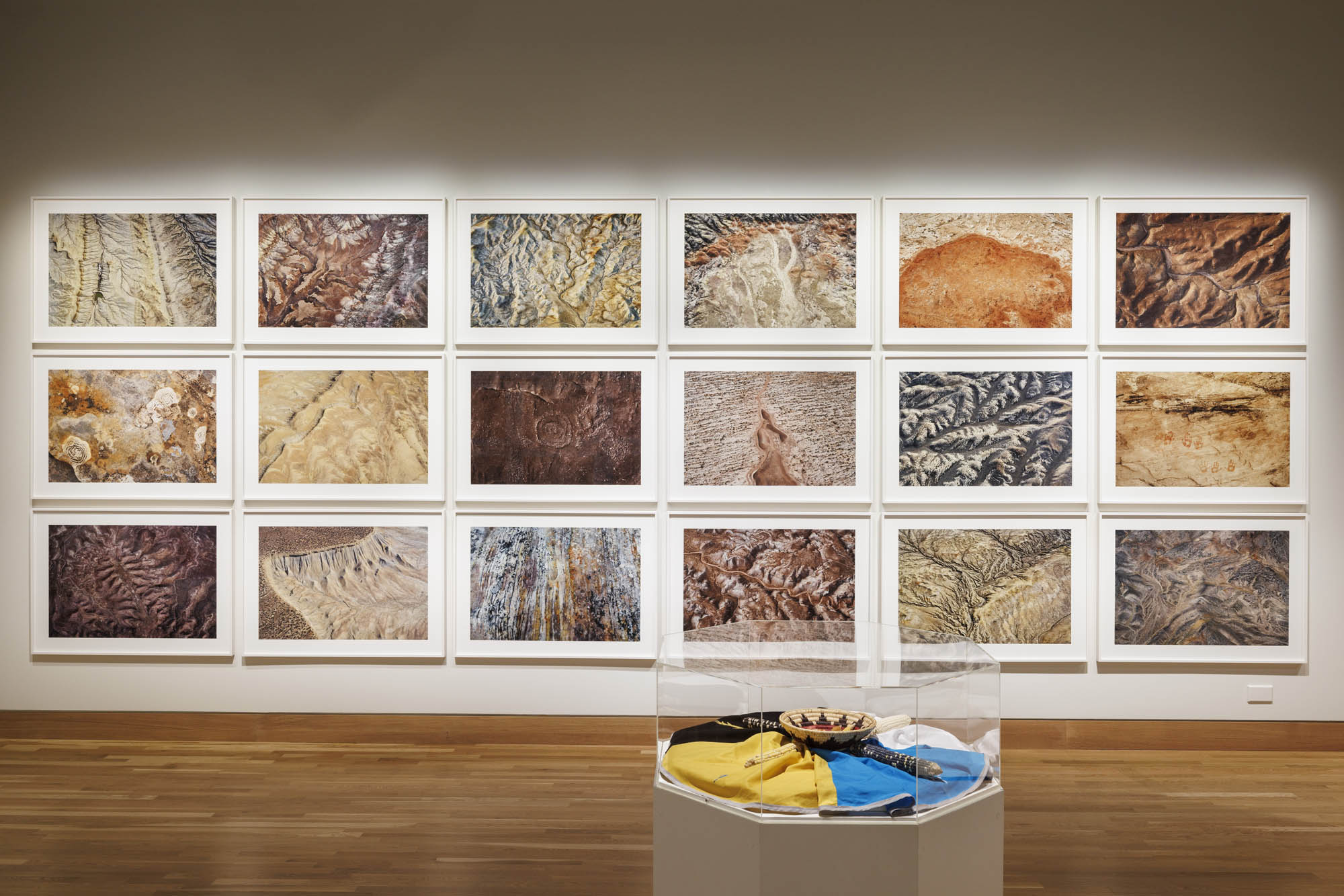
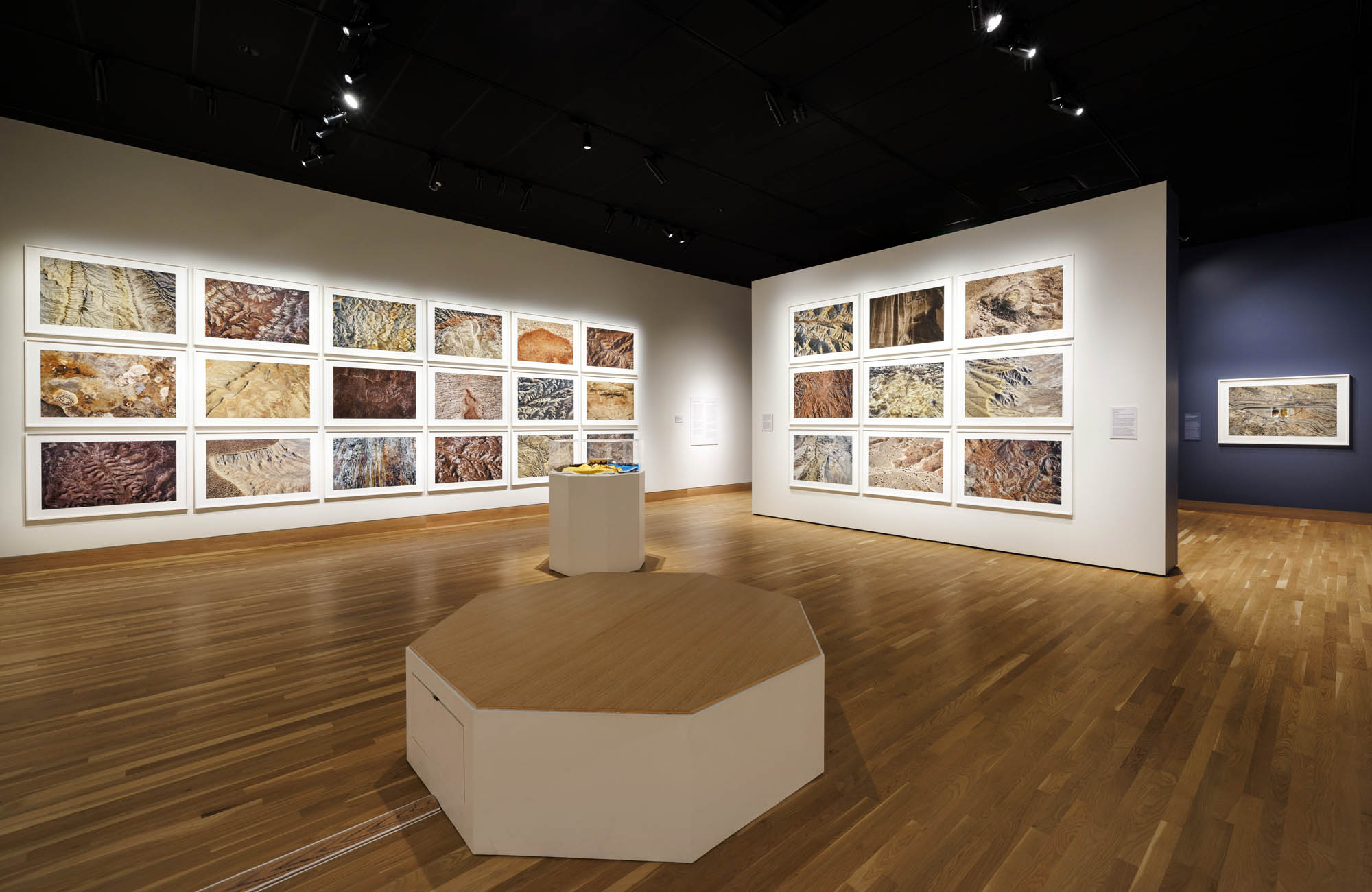
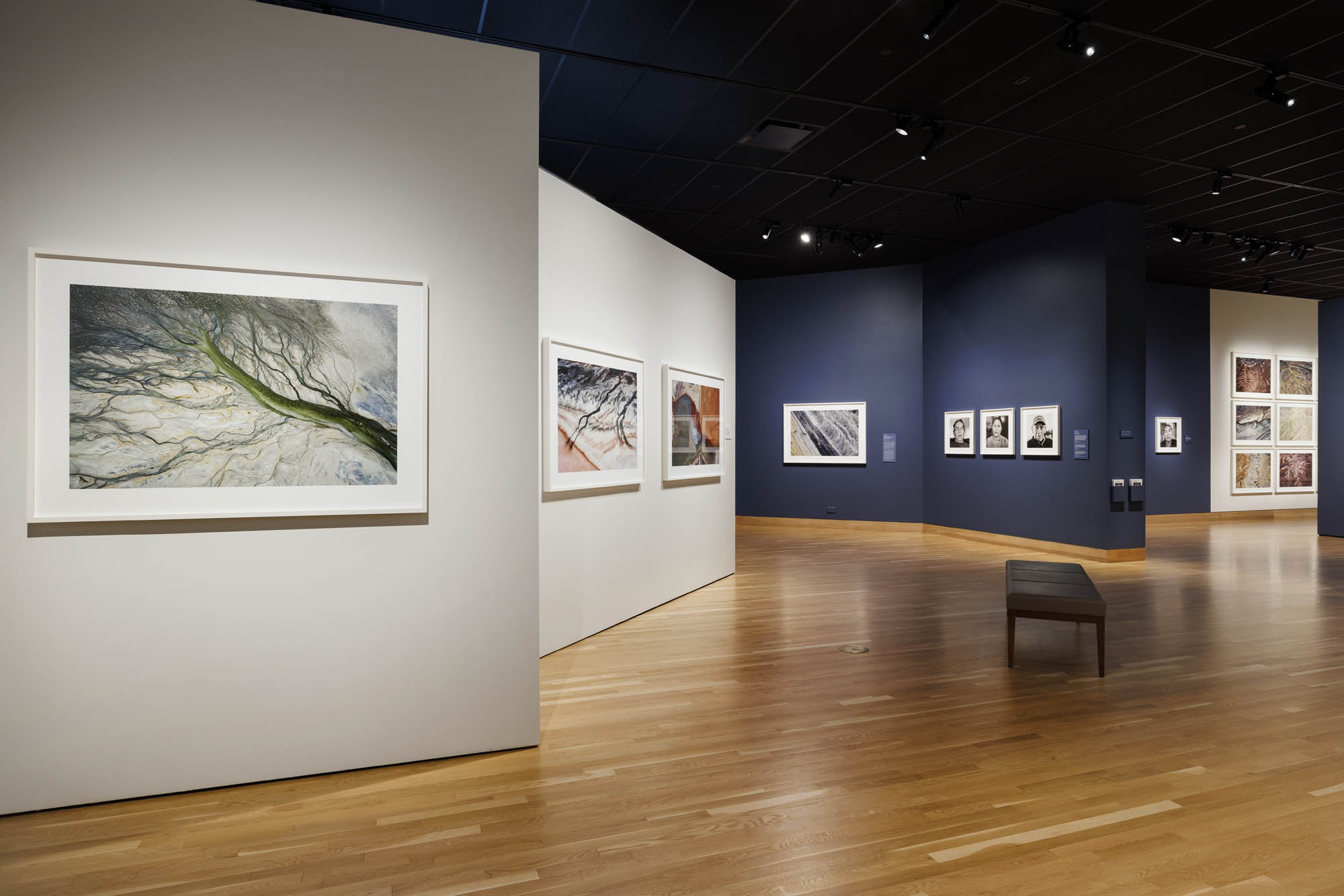
Installation view of the exhibition 'Fazal Sheikh: Thirst | Exposure | In Place' at the Denver Art Museum showing work from the series 'In Place (Utah, Arizona, and New Mexico, Four Corners Region)' 2017-2020

Installation view of the exhibition 'Fazal Sheikh: Thirst | Exposure | In Place' at the Denver Art Museum showing work from the series 'In Place (Utah, Arizona, and New Mexico, Four Corners Region)' 2017-2020

Installation view of the exhibition 'Fazal Sheikh: Thirst | Exposure | In Place' at the Denver Art Museum showing work from the series 'In Place (Utah, Arizona, and New Mexico, Four Corners Region)' 2017-2020

Installation view of the exhibition 'Fazal Sheikh: Thirst | Exposure | In Place' at the Denver Art Museum showing work from the series 'In Place (Utah, Arizona, and New Mexico, Four Corners Region)' 2017-2020

Installation view of the exhibition 'Fazal Sheikh: Thirst | Exposure | In Place' at the Denver Art Museum showing work from the series 'In Place (Utah, Arizona, and New Mexico, Four Corners Region)' 2017-2020

Installation view of the exhibition 'Fazal Sheikh: Thirst | Exposure | In Place' at the Denver Art Museum showing work from the series 'In Place (Utah, Arizona, and New Mexico, Four Corners Region)' 2017-2020

Installation view of the exhibition 'Fazal Sheikh: Thirst | Exposure | In Place' at the Denver Art Museum showing work from the series 'In Place (Utah, Arizona, and New Mexico, Four Corners Region)' 2017-2020

Installation view of the exhibition 'Fazal Sheikh: Thirst | Exposure | In Place' at the Denver Art Museum showing work from the series 'In Place (Utah, Arizona, and New Mexico, Four Corners Region)' 2017-2020

Installation view of the exhibition 'Fazal Sheikh: Thirst | Exposure | In Place' at the Denver Art Museum showing work from the series 'In Place (Utah, Arizona, and New Mexico, Four Corners Region)' 2017-2020

Installation view of the exhibition 'Fazal Sheikh: Thirst | Exposure | In Place' at the Denver Art Museum showing work from the series 'In Place (Utah, Arizona, and New Mexico, Four Corners Region)' 2017-2020

Installation view of the exhibition 'Fazal Sheikh: Thirst | Exposure | In Place' at the Denver Art Museum showing work from the series 'In Place (Utah, Arizona, and New Mexico, Four Corners Region)' 2017-2020Installation view of the exhibition 'Fazal Sheikh: Thirst | Exposure | In Place' at the Denver Art Museum showing work from the series 'In Place (Utah, Arizona, and New Mexico, Four Corners Region)' 2017-2020

Installation view of the exhibition 'Fazal Sheikh: Thirst | Exposure | In Place' at the Denver Art Museum showing work from the series 'In Place (Utah, Arizona, and New Mexico, Four Corners Region)' 2017-2020

Installation view of the exhibition 'Fazal Sheikh: Thirst | Exposure | In Place' at the Denver Art Museum showing work from the series 'In Place (Utah, Arizona, and New Mexico, Four Corners Region)' 2017-2020


Installation view of the exhibition Fazal Sheikh: Thirst | Exposure | In Place at the Denver Art Museum showing work from the series In Place (Utah, Arizona, and New Mexico, Four Corners Region), 2017-2020


The Denver Art Museum (DAM) presents Fazal Sheikh: Thirst | Exposure | In Place, an exhibition created from three projects photographer Fazal Sheikh made on the Colorado Plateau from 2017 to early 2023. Sheikh’s portraits and landscapes shed light on the far-reaching consequences of extractive industry and climate change. Thirst Ç€ Exposure Ç€ In Place will open March 10, 2024, and will be on view through October 20, 2024, in the museum’s Photography galleries, located on level 6 of the Martin Building, and will be included with general admission.

Born in 1965 in New York City, Sheikh creates images of displaced communities and marginalised people that prompt awareness of the world beyond the museum. The photographs in Thirst ǀ Exposure ǀ In Place expose indelible marks on the Colorado Plateau and American Southwest landscape that have been etched by both geological and human forces. Through this beautiful and sometimes frightening new work, Sheikh encourages viewers to witness the consequences of the past and imagine the shape of the future.

“Through expansive aerial shots and intimate portraits, Fazal Sheikh documents these regions and their people with solidarity and honesty,” said Christoph Heinrich, Frederick and Jan Mayer Director of the Denver Art Museum. “The Colorado Plateau is a region deeply impacted by climate change and economic development. This exhibition offers a nuanced view into the past, present and future lives of its inhabitants.”

Sheikh is best known for his deeply humane photographs of refugees and migrants displaced by war and famine. Focusing on the United States for the first time, Sheikh explores how Indigenous people and the lands they call home have been affected by industrial growth and government policy.

“The aerial photographs in this exhibition remind us of the great age and natural beauty of the Colorado Plateau,” said Eric Paddock, Curator of Photography at the DAM and curator of this exhibition for Denver. “They create an awareness of deep human and geological time and raise questions about the future of the region. In that context, Sheikh’s portraits and accompanying text affirm local communities’ need to protect their sacred spaces and encourage wider recognition of that need.”

The DAM exhibition presents Sheikh’s recent work in three interrelated sections:

Thirst is a new series of aerial photographs that document the decline of the Great Salt Lake in northeast Utah, which is shrinking due to overconsumption and dwindling rain and snowfall. As the lake dries up, winds carry clouds of toxic sediment – by-products from mining, agriculture and urban development – from the lakebed, across the valley and beyond.

Exposure examines the impacts of uranium, coal, oil and natural-gas extraction on the American Southwest and on its Indigenous inhabitants. Sheikh partnered with Utah Diné Bikéyah – a coalition among the Hopi, Navajo, Uintah Ouray Ute, Ute Mountain Ute and Zuni tribes – and with Indigenous elders and scientists from Princeton University – to address hazardous waste and pollution left across the region by short-sighted development and poorly remediated industrial sites. The project reflects on the resilience of Indigenous people in the face of threats to their culture, spirituality and health.

In Place evokes the enduring landscapes of the Bears Ears region in Utah, bringing Sheikh’s photographs together with contributions from scientists and Indigenous communities in and around Bears Ears in southeastern Utah. Visitors are surrounded by images made at a close distance and from high in the air. Sixty-three large colour photographs show the tremendous geological variety and the long cultural continuities of the Four Corners region.

Visitors will reflect upon the transformation – and often devastation – of these landscapes in the context of the past, present and future, while considering the juxtaposition of beauty and catastrophe, as well as intimate, human-scale stories and those spanning vast geological eras and changes.

Jonah Yellowman, spiritual advisor for the Utah Diné Bikéyah intertribal coalition and one of its founding members, will present an offering that represents his Navajo (Diné) spirituality and a deep connection to the land. This offering will be present in the gallery during the run of the exhibition.

Sound recordings taken from seismometer readings by University of Utah geologist Jeffrey Ralston Moore will resonate throughout the gallery space. They represent the otherwise inaudible vibrations of rock formations on the Colorado Plateau.

Taken together, the photographs and collaborations in Thirst | Exposure | In Place lay bare the indelible marks etched on the landscape by geological and human forces. Sheikh asks us to witness the consequences of what has passed and imagine what is yet to come.

Sheikh will speak about his recent work in the Four Corners region and at the Great Salt Lake, in connection with his exhibition in a lecture event at the DAM on March 9, 11am – 12pm. The lecture will take place in the Sharp Auditorium, in the lower level of the museum’s Hamilton Building. Sheikh will discuss the origin of each series, his immersion in the landscapes and communities he photographed and his collaborations with writers, scientists and Indigenous community members that are woven throughout this work. This exhibition follows the Denver Art Museum’s 2017 presentation of Common Ground: Photographs by Fazal Sheikh, 1989-2013.
Fazal Sheikh: Thirst | Exposure | In Place is organised by the Denver Art Museum. The exhibition is presented by Jane Watkins, with additional support from the donors to the Annual Fund Leadership Campaign and the residents who support the Scientific and Cultural Facilities District (SCFD). Promotional support is provided by 5280 Magazine and CBS Colorado.

The exhibition was curated in Denver by Curator of Photography, Eric Paddock, in collaboration with Kimberly Roberts, Denver Art Museum Curatorial Associate, and Lauren Thompson, Senior Interpretive Specialist.


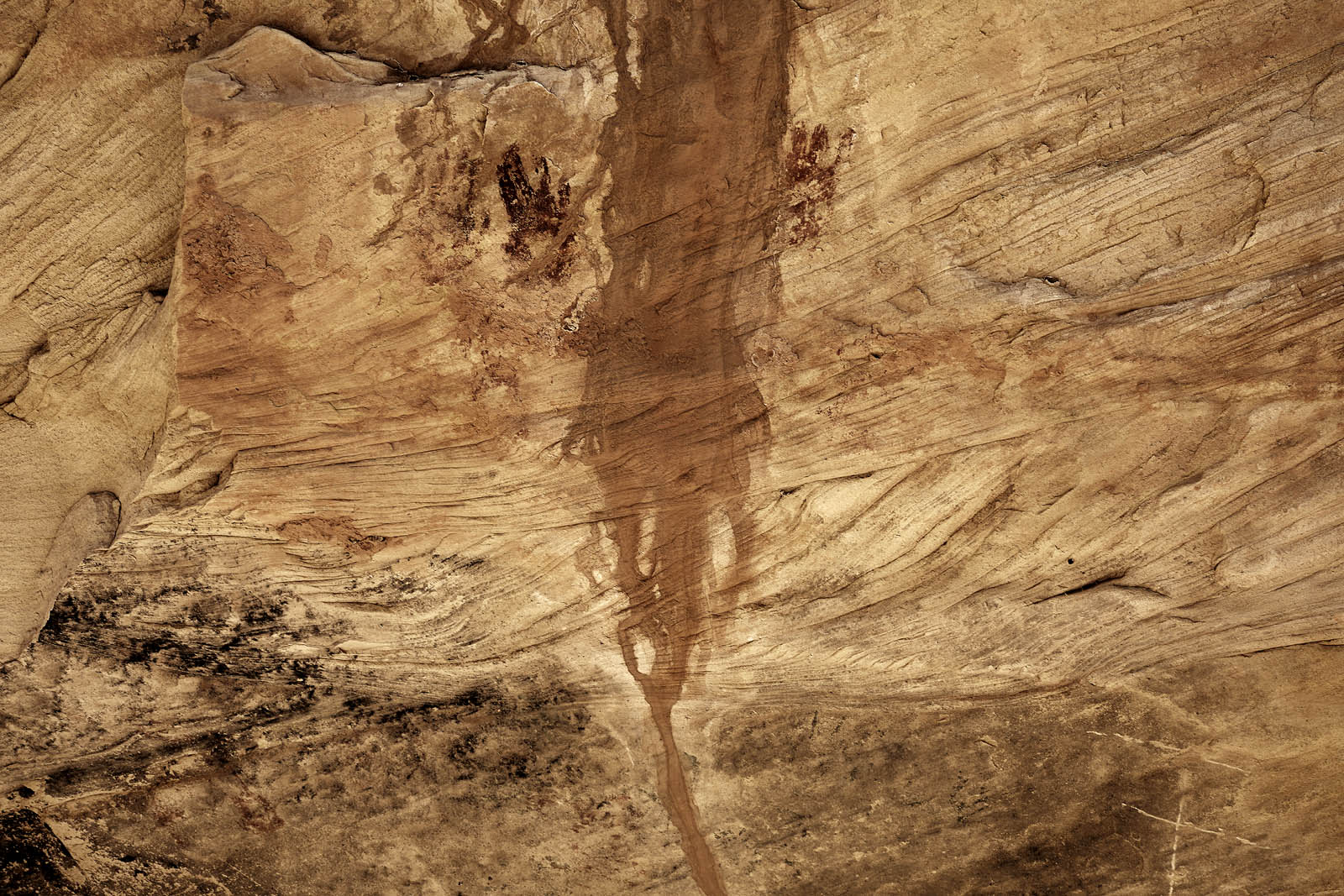
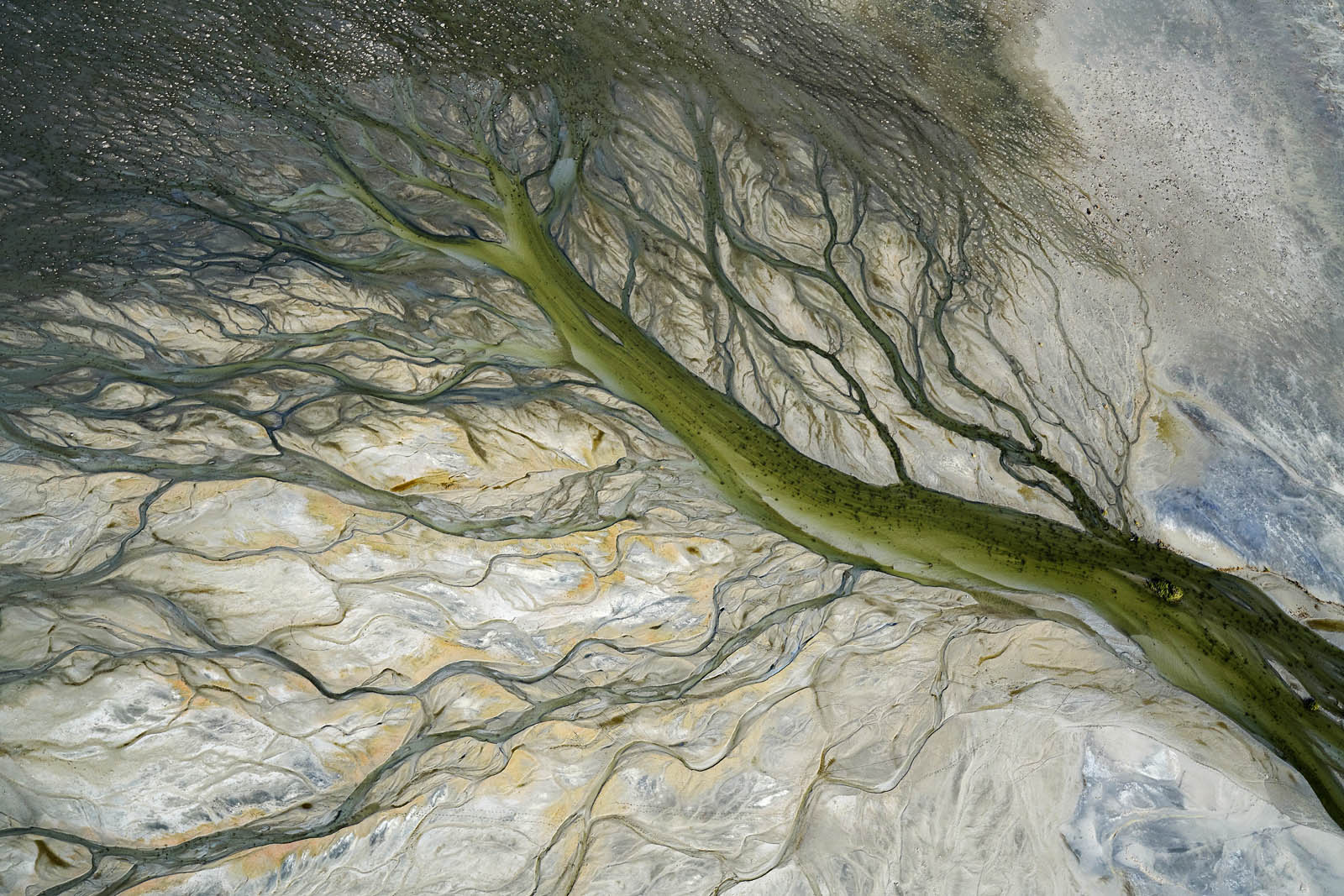
Fazal Sheikh (American, b. 1965) From the installation 'In Place (Utah, Arizona, and New Mexico, Four Corners Region)' 2017-2020


Fazal Sheikh (American, b. 1965)
From the installation In Place (Utah, Arizona, and New Mexico, Four Corners Region)
2017-2020
Pigmented inkjet print
© and courtesy Fazal Sheikh
 

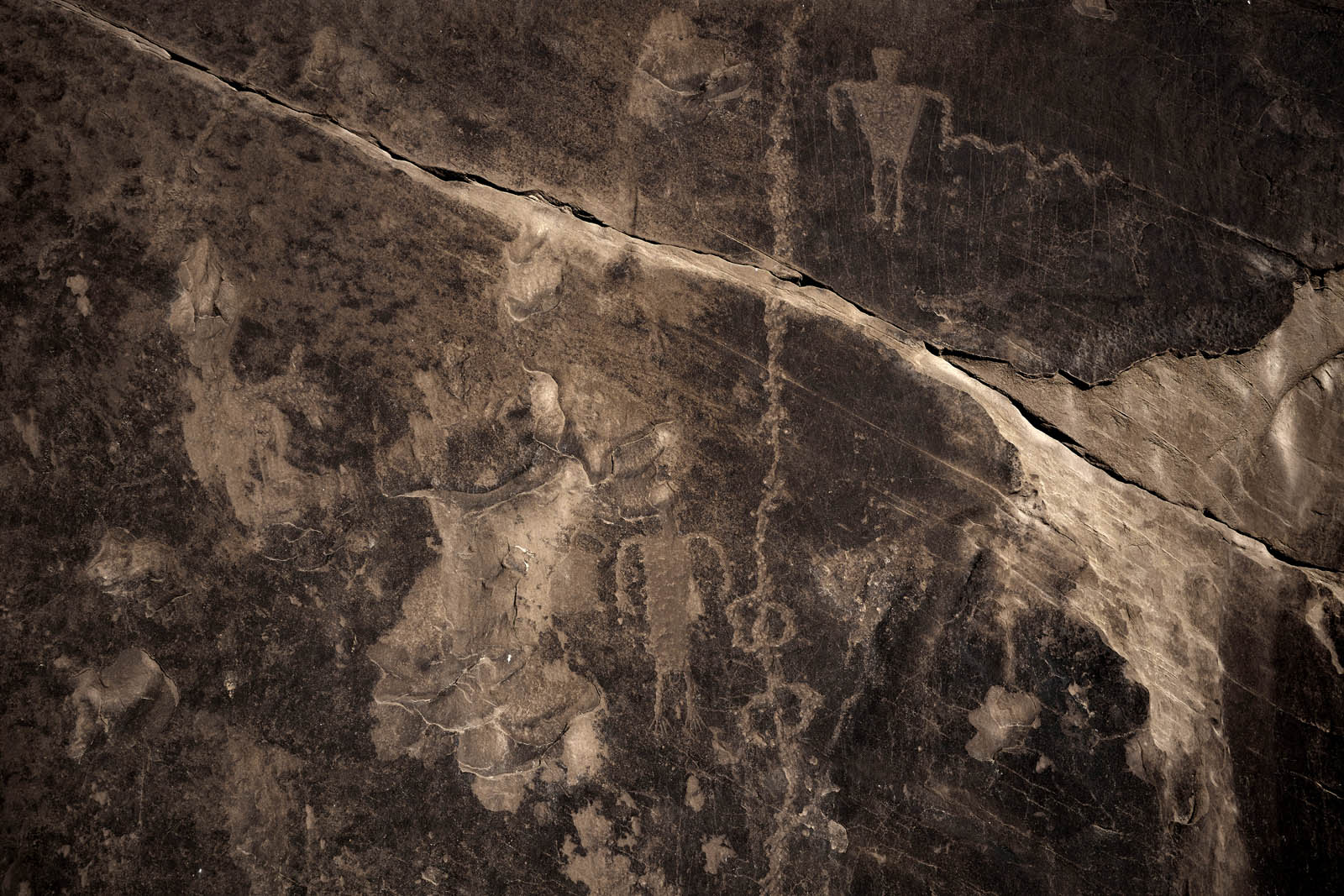
Fazal Sheikh (American, b. 1965) From the installation 'In Place (Utah, Arizona, and New Mexico, Four Corners Region)' 2017-2020


Fazal Sheikh (American, b. 1965)
From the installation In Place (Utah, Arizona, and New Mexico, Four Corners Region)
2017-2020
Pigmented inkjet print
© and courtesy Fazal Sheikh
 

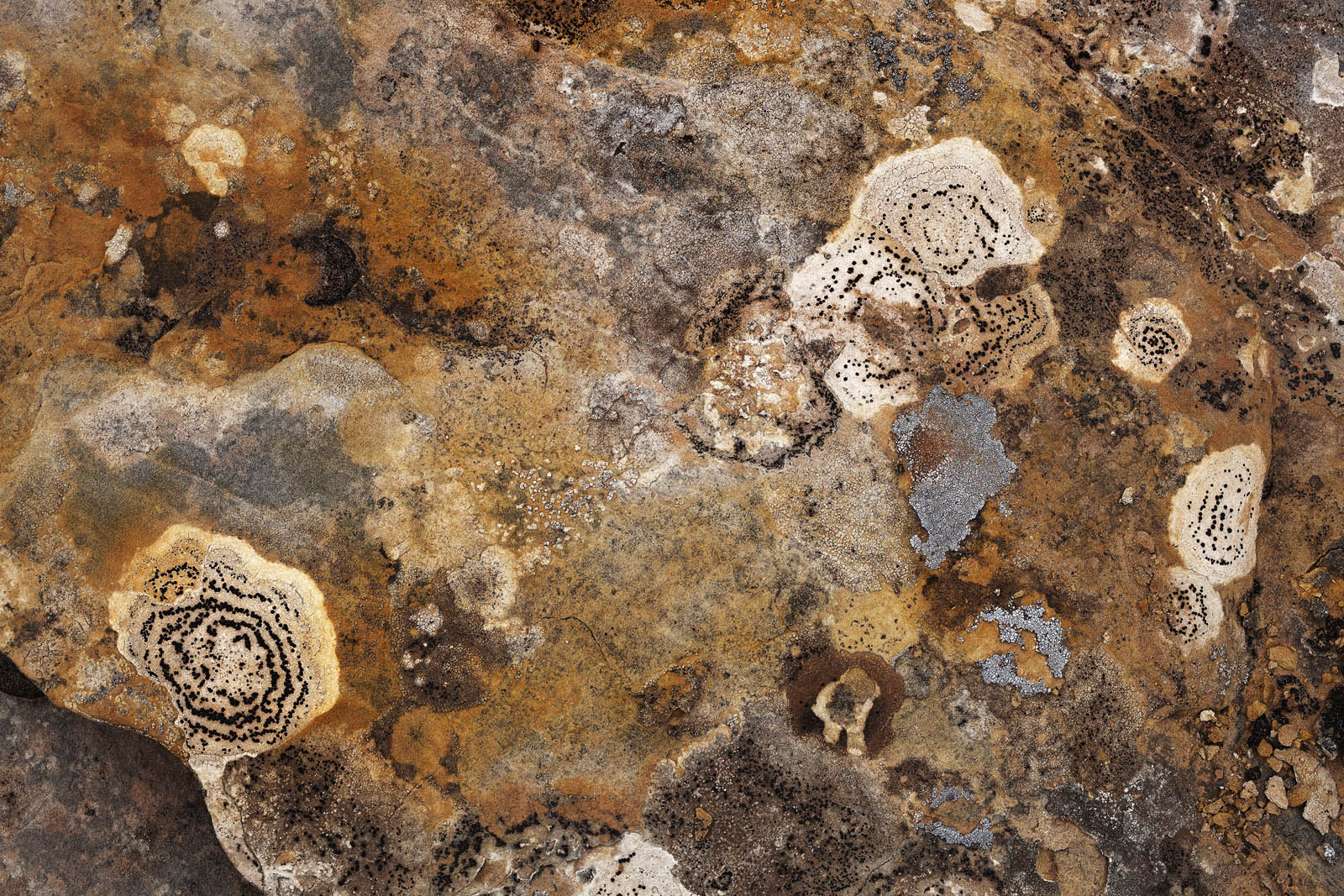
Fazal Sheikh (American, b. 1965) From the installation 'In Place (Utah, Arizona, and New Mexico, Four Corners Region)' 2017-2020


Fazal Sheikh (American, b. 1965)
From the installation In Place (Utah, Arizona, and New Mexico, Four Corners Region)
2017-2020
Pigmented inkjet print
© and courtesy Fazal Sheikh


Denver Art Museum
100 W 14th Ave Pkwy,
Denver, CO 80204, United States
Phone: (720) 865-5000

Opening hours:
Open daily from 10am – 5pm, 10am – 8pm on Tuesdays

Denver Art Museum website

LIKE ART BLART ON FACEBOOK

Back to top

Exhibition: ‘Recent Acquisitions in Focus: Latent Narratives’ at the J. Paul Getty Museum, Getty Centre, Los Angeles

Exhibition dates: 13th September, 2016 – 29th January, 2017

Curator: Virginia Heckert, head of the Getty Museum’s Department of Photographs


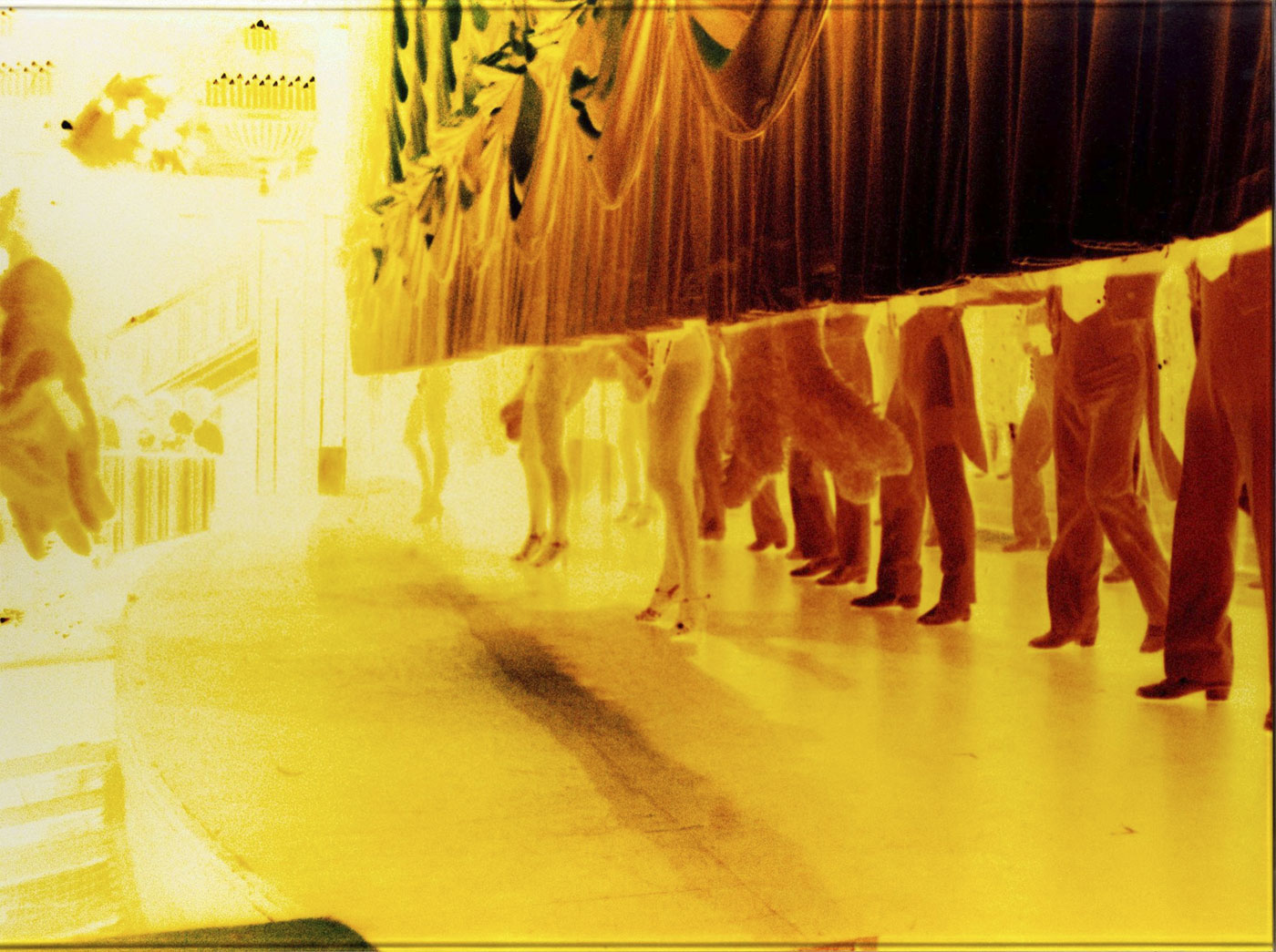
William Leavitt (American, b. 1941) 'Innuendo' Negative 1995; print about 2008 from the exhibition 'Recent Acquisitions in Focus: Latent Narratives' at the J. Paul Getty Museum, Getty Centre, Los Angeles, Sept 2016 - Jan 2017


William Leavitt (American, b. 1941)
Innuendo
Negative 1995; print about 2008
Gelatin silver print
27.9 x 35.5cm (11 x 14 in.)
The J. Paul Getty Museum, Los Angeles
© William Leavitt


Again, telling stories with pictures…

Lyrical, ambiguous juxtapositions abound.

Hand, clock, motel, scream, bird, body, river, stairs, hand.

Latent = (of a quality or state) existing but not yet developed or manifest; hidden or concealed.

Unresolved. Interchangeable.

Dr Marcus Bunyan


Many thankx to the J. Paul Getty Museum for allowing me to publish the photographs in the posting. Please click on the photographs for a larger version of the image.


“This exhibition features multipart photographic works by four contemporary artists: William Leavitt, Liza Ryan, Fazal Sheikh, and Whitney Hubbs. Juxtaposing images of people, places, and things, the works present fragmentary, enigmatic narratives that nonetheless establish a powerful, almost palpable atmosphere or mood. When sequenced by the artist in a specific order, the images recall storyboards used for motion pictures. When excerpted from a larger series, they suggest a stream-of-consciousness meditation on a theme.

By providing the visual cues or markers of stories still to be played out, these photographs encourage visitors to participate in completing the narratives. On view for the first time at the Getty, all the works in the exhibition are recent acquisitions drawn from the Museum’s permanent collection. Several were donated or purchased with funds provided by our donors, whom we would like to thank for their generosity.”

Text from the J. Paul Getty Museum


William Leavitt (American, b. 1941) 'Spectral Analysis' Negative 1977; print about 2008 from the exhibition 'Recent Acquisitions in Focus: Latent Narratives' at the J. Paul Getty Museum, Getty Centre, Los Angeles, Sept 2016 - Jan 2017


William Leavitt (American, b. 1941)
Spectral Analysis
Negative 1977; print about 2008
Chromogenic print
Framed: 42.9 x 154.6cm (16 7/8 x 60 7/8 in.)
The J. Paul Getty Museum, Los Angeles
© William Leavitt


William Leavitt (American, b. 1941)

Based in Los Angeles, Leavitt is closely tied to West Coast Conceptualism, and frequently references L.A.’s entertainment industry and vernacular culture in his work, which includes performance, installation, sculpture, painting, and photography. Spectral Analysis (1977) is a triptych of photographs based on his one-act play of the same name, which featured a man and woman in conversation within a set furnished with a starburst light fixture, a sofa, a side table with a portable television, and a long beige curtain into which a rainbow of colour is projected. The four photographs of Innuendo (1995) depict the lobby of an apartment building, a painting of a fountain, a painting of a motel in East L.A., and a circular UFO-like construction made of PVC pipe. These images provide the loose structure of a narrative that moves unseen actors from one location to the next, suggesting the atmosphere of film noir.


Liza Ryan (American, b. 1965) 'Spill' 2009


Liza Ryan (American, b. 1965)
Spill
2009
Inkjet print
Panel: 30.8 x 175.3 x 4.4cm (12 1/8 x 43 3/4 x 1 3/4 in.)
The J. Paul Getty Museum, Los Angeles
Gift of Manfred Heiting in honour of Hanna Wise Heiting
© Liza Ryan


Liza Ryan (American, b. 1965) 'Spill' 2009


Liza Ryan (American, b. 1965)
Spill
2009
Inkjet print
Panel: 30.8 x 161.6 x 4.4cm (12 1/8 x 63 5/8 x 1 3/4 in.)
The J. Paul Getty Museum, Los Angeles
Gift of Manfred Heiting in honour of Hanna Wise Heiting
© Liza Ryan


Liza Ryan (American, b. 1965)

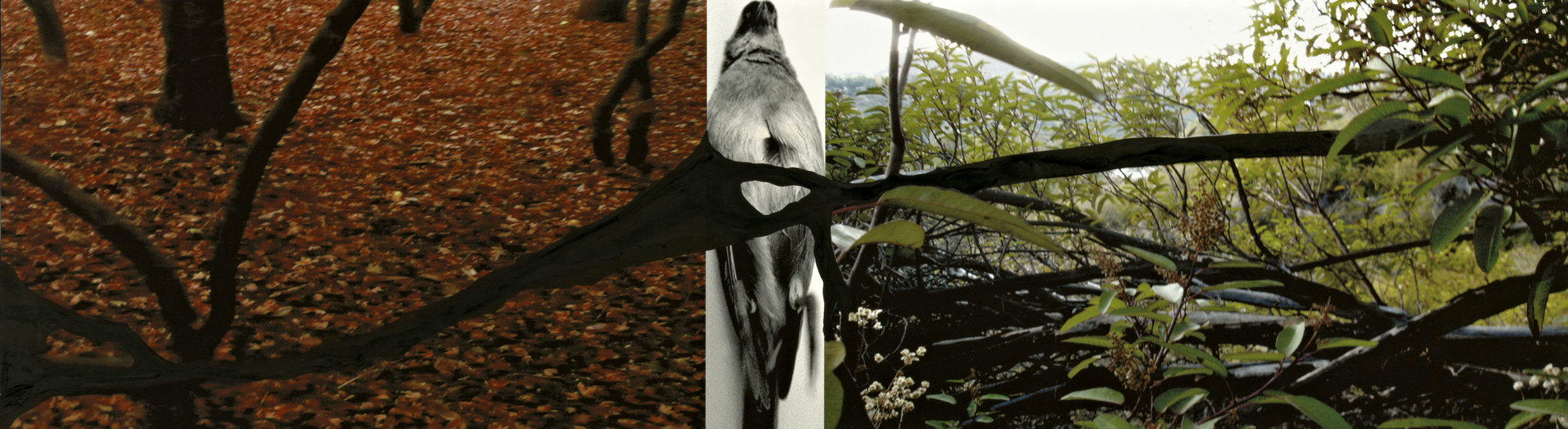
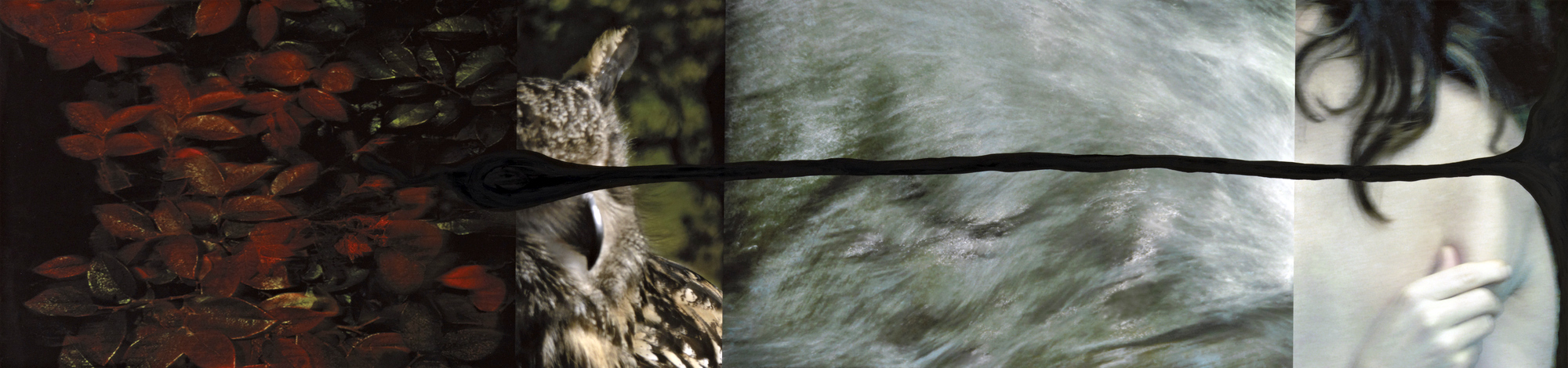
Working primarily in photography and video, Ryan often incorporates references from literature, poetry, and film to introduce additional layers of meaning. By cutting, collaging, and grouping her photographs and installing them in a manner that borrows from sculpture, she establishes evocative associative relationships between multiple images. Measuring thirty feet in length, Spill (2009) is a running band of cinematic narrative that alternates images of the human body and nature. Ryan poured India ink onto the surface of the prints, coaxing the pigment into a continuous, organic line that links the 23 frames as it wends its way from a primal scream at far left to an intimate touch at right.


Liza Ryan (American, b. 1965) 'Spill' 2009


Liza Ryan (American, b. 1965)
Spill
2009
Inkjet print
Panel: 30.8 x 111.1 x 4.4cm (12 1/8 x 69 x 1 3/4 in.)
The J. Paul Getty Museum, Los Angeles
Gift of Manfred Heiting in honour of Hanna Wise Heiting
© Liza Ryan


Liza Ryan (American, b. 1965) 'Spill' 2009


Liza Ryan (American, b. 1965)
Spill
2009
Inkjet print
Panel: 30.8 x 184.2 x 4.4cm (12 1/8 x 61 1/2 x 1 3/4 in.)
The J. Paul Getty Museum, Los Angeles
Gift of Manfred Heiting in honour of Hanna Wise Heiting
© Liza Ryan


Liza Ryan (American, b. 1965) 'Spill' 2009


Liza Ryan (American, b. 1965)
Spill
2009
Inkjet print
Panel: 30.8 x 156.2 x 4.4cm (12 1/8 x 51 3/8 x 1 3/4 in.)
The J. Paul Getty Museum, Los Angeles
Gift of Manfred Heiting in honour of Hanna Wise Heiting
© Liza Ryan


Liza Ryan (American, b. 1965) 'Spill' 2009


Liza Ryan (American, b. 1965)
Spill
2009
Inkjet print
Panel: 30.8 x 130.5 x 4.4cm (12 1/8 x 51 3/8 x 1 3/4 in.)
The J. Paul Getty Museum, Los Angeles
Gift of Manfred Heiting in honour of Hanna Wise Heiting
© Liza Ryan


A painting of a motel in East Los Angeles. A primal scream. A funeral bier. A woman crouching in a bed of shrubs. These ambiguous images are each components within larger photographic works that juxtapose images of people, places, and things to present fragmentary, enigmatic narratives. Recent Acquisitions in Focus: Latent Narratives, on view September 13, 2016 – January 29, 2017 at the J. Paul Getty Museum, Getty Center, presents works by contemporary artists William Leavitt (American, born 1941), Liza Ryan (American, born 1965), Fazal Sheikh (American, born 1964), and Whitney Hubbs (American, born 1977). By providing the visual cues or markers of stories still to be played out, the works in the exhibition establish a powerful atmosphere and mood, and encourage viewers to take part in completing the narrative. On view at the Getty Museum for the first time since acquired, many of the works in the exhibition were donated or purchased with funds provided by donors.

“The Museum’s ‘In Focus’ gallery has generally been used to provide a thematic cross section of our photographs collection. This exhibition represents a slight departure in that it covers several recent acquisitions by artists of different generations, all of whom share an interest in telling stories with pictures,” explains Timothy Potts, director of the J. Paul Getty Museum. “These works are mostly non-linear narratives that require close attention to symbolism, mood, and seemingly insignificant details that create an overall story. In much the same way as pieces of a puzzle create a complete image, these multi-part works are reminiscent of storyboards used in motion pictures to provide an outline of a visual narrative that still needs to be played out.”

Press release from the J. Paul Getty Museum


Fazal Sheikh (American, b. 1964) 'Ether' 2008 - 2011


Fazal Sheikh (American, b. 1964)
Ether
2008-2011
Inkjet print
Image: 13.3 x 20cm (5 1/4 x 7 7/8 in.)
Mount: 39.4 x 28cm (15 1/2 x 11 in.)
The J. Paul Getty Museum, Los Angeles
Purchased with funds provided by Joseph Cohen
© Fazal Sheikh


Fazal Sheikh (American, b. 1964)

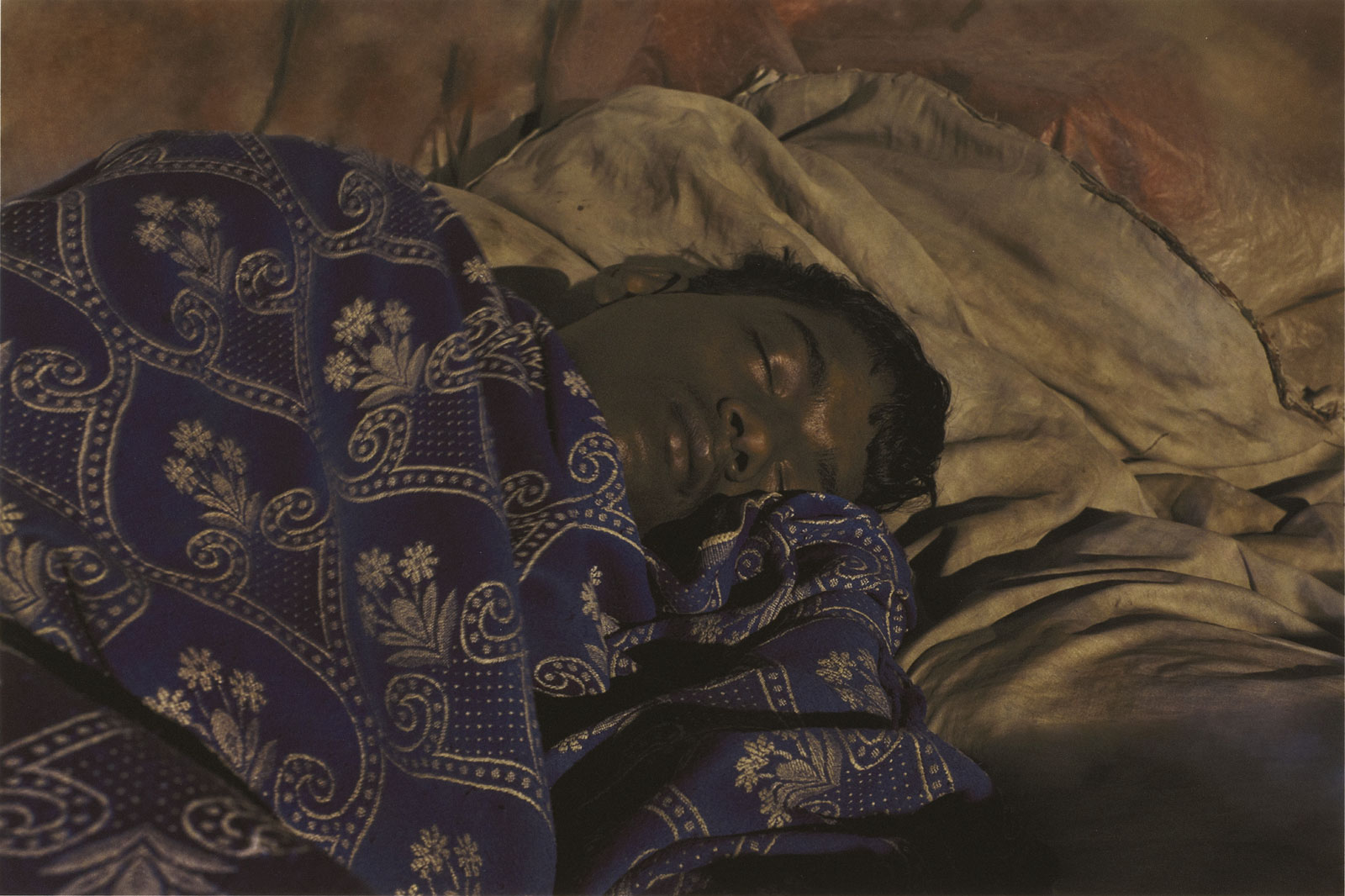
Fazal Sheikh is best-known for documenting displaced communities all over the world. Executed in black and white with a large-format camera, his photographs typically portray the victims of human rights violations and social injustices, serving as a call to action. For the series Ether (2008-2011), Sheikh traveled to Varanasi (also known as Benares, Banaras, or Kashi), a city located on the banks of the Ganges River in northern India. Hindu pilgrims bring their deceased to this holy site for cremation, believing that the soul will ascend to heaven and be freed from the eternal cycle of reincarnation. Rendered in luminous, jewel-like tones, these photographs (his first images in colour) highlight the vulnerability of subjects captured in the still of night or during early morning hours. Excerpted from the larger series, the four images presented – a sleeping man, sleeping dogs, a funeral bier, and burning embers – suggest the narrative progression of a pilgrimage. Collectively they can be seen as a meditation on the cyclical nature of life, as well as on the universal yet elusive experience of dreams.


Fazal Sheikh (American, b. 1964) 'Ether' 2008-2011


Fazal Sheikh (American, b. 1964)
Ether
2008-2011
Inkjet print
Image: 13.3 x 20cm (5 1/4 x 7 7/8 in.)
Mount: 39.4 x 28cm (15 1/2 x 11 in.)
The J. Paul Getty Museum, Los Angeles
Purchased with funds provided by Joseph Cohen
© Fazal Sheikh


Whitney Hubbs (American, b. 1977) 'Untitled (Hair)' 2012


Whitney Hubbs (American, b. 1977)
Untitled (Hair)
2012
Gelatin silver print
Sheet: 50.8 x 60.9cm (20 x 24 in.)
Framed: 51.1 x 61.3cm (20 1/8 x 24 1/8 in.)
The J. Paul Getty Museum, Los Angeles
Purchased in part with funds provided by Leslie, Judith, and Gabrielle Schreyer
© Whitney Hubbs


Whitney Hubbs (American, b. 1977) 'Untitled (Stairs)' 2012


Whitney Hubbs (American, b. 1977)
Untitled (Stairs)
2012
Gelatin silver print
Sheet: 47 x 59.7cm (18 1/2 x 23 1/2 in.)
Framed: 48 x 60.7cm (18 7/8 x 23 7/8 in.)
The J. Paul Getty Museum, Los Angeles
Purchased in part with funds provided by Leslie, Judith, and Gabrielle Schreyer
© Whitney Hubbs


Whitney Hubbs (American, b. 1977) 'Untitled (Baby)' 2012


Whitney Hubbs (American, b. 1977)
Untitled (Baby)
2012
Gelatin silver print
Sheet: 50.8 x 60.9cm (20 x 24 in.)
Framed: 51.4 x 61.6cm (20 1/4 x 24 1/4 in.)
The J. Paul Getty Museum, Los Angeles
Gift of the artist and M+B, Los Angeles
© Whitney Hubbs


Whitney Hubbs (American, b. 1977)

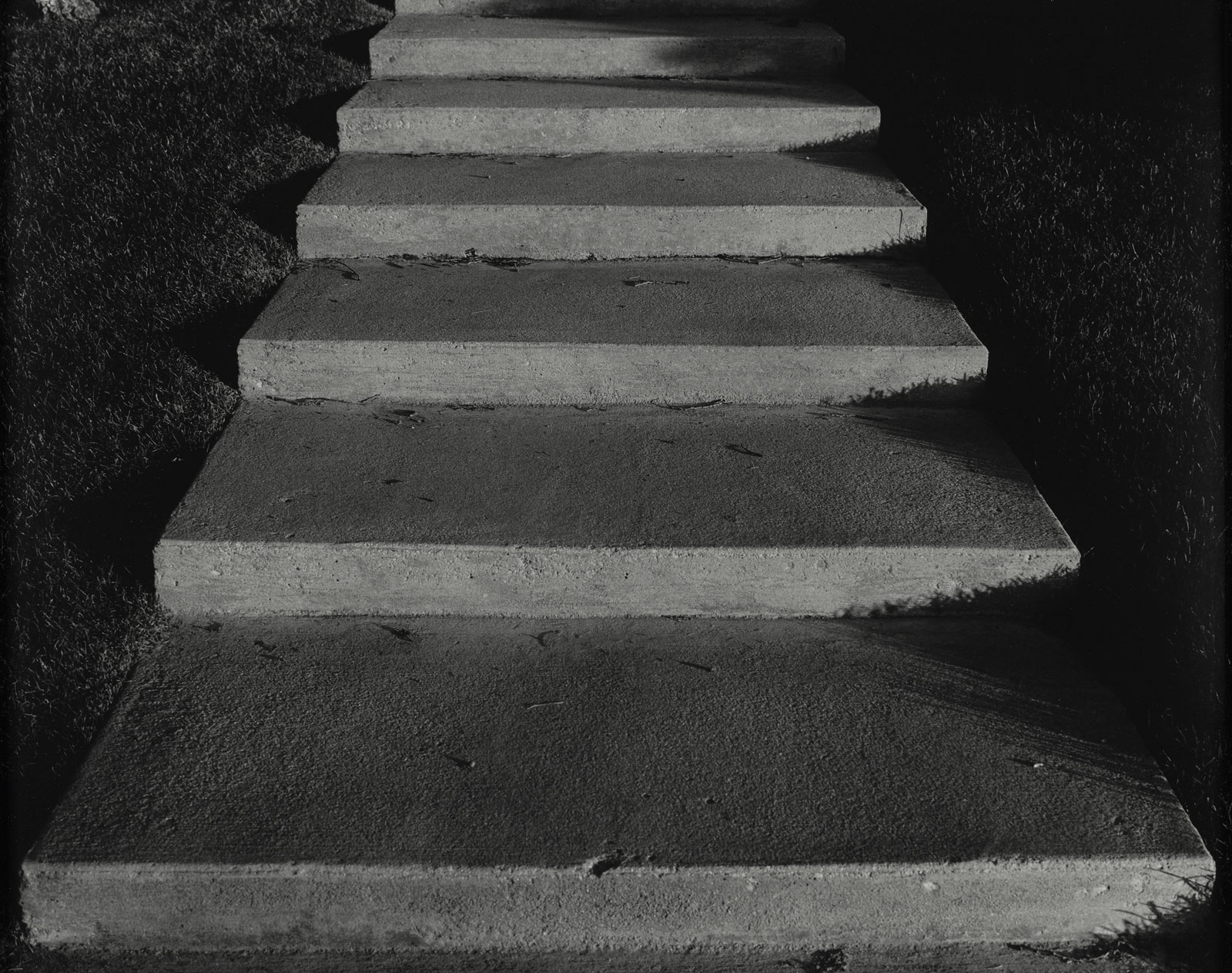
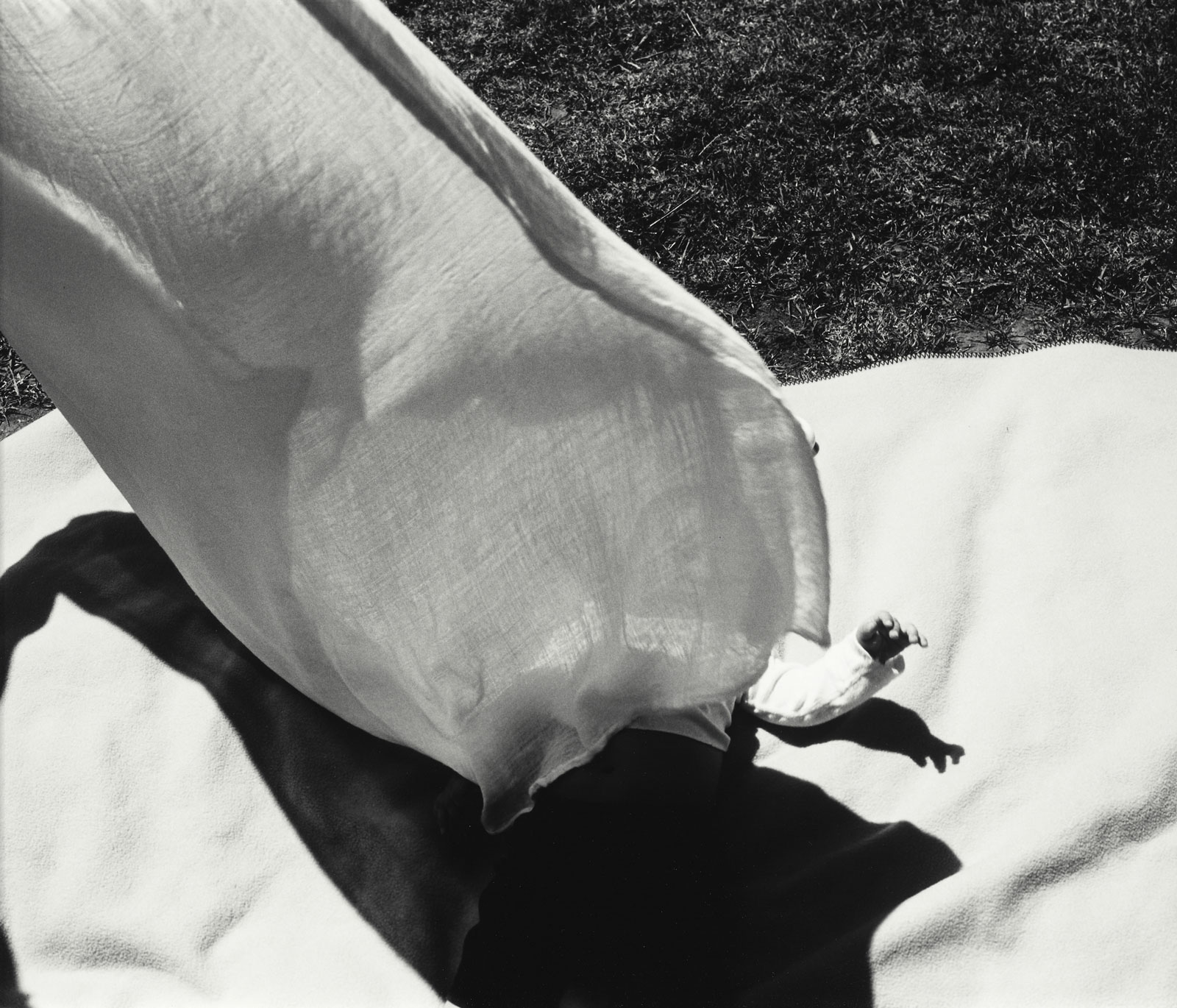
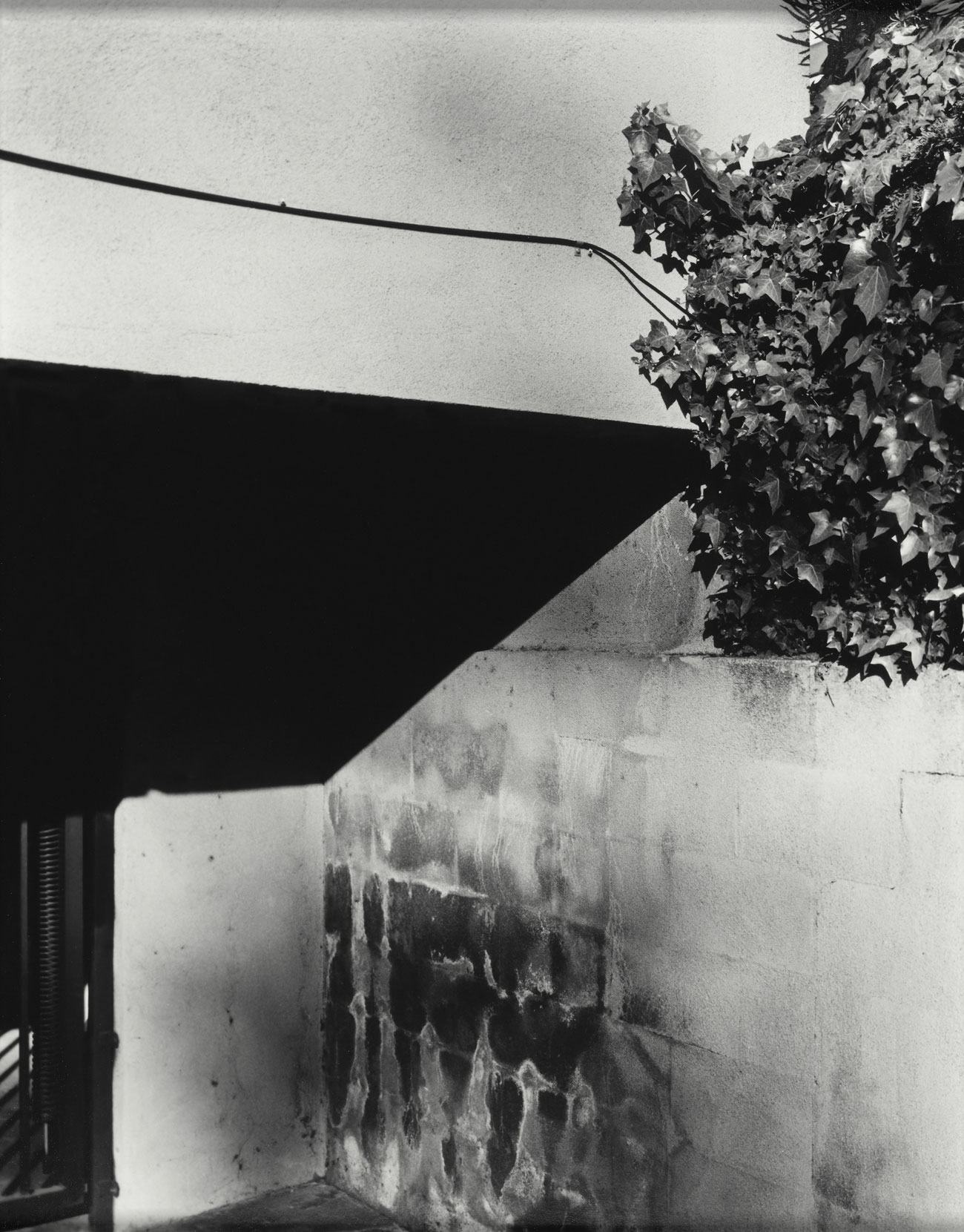
Hubbs’s installations of richly detailed gelatin silver prints in various sizes create lyrical but ambiguous juxtapositions. Citing music as an important influence, Hubbs is more interested in establishing a mood than in conveying a clear-cut narrative. The five images in the exhibition – a rock formation, a building entry, a set of stairs, a woman crouching in a bed of shrubs, and a baby lying on a blanket – are taken from the series The Song Itself Is Already a Skip (2012). The title of the work was inspired by a passage of text by French philosopher Gilles Deleuze (1925-1995) that discusses the oscillation between order and chaos. The deep blacks of Hubbs’s meticulously printed photographs lend ominous overtones to her dreamlike imagery.

“The idea of a latent narrative is particularly pertinent to photographic images, which remain invisible to us between the moment of exposure and the moment of development,” says Virginia Heckert, head of the Getty Museum’s Department of Photographs and curator of the exhibition. “As much as we might want to know what the artist intended by bringing together diverse images, it is equally interesting to see how viewers interpret the relationship between images and bring to life their own narratives.”

Press release from the J. Paul Getty Museum


Whitney Hubbs (American, b. 1977) 'Untitled (Entryway)' 2012


Whitney Hubbs (American, b. 1977)
Untitled (Entryway)
2012
Gelatin silver print
Sheet: 34.3 x 27 cm (13 1/2 x 10 5/8 in.)
Framed: 35.6 x 27.9 cm (14 x 11 in.)
The J. Paul Getty Museum, Los Angeles
Purchased in part with funds provided by Leslie, Judith, and Gabrielle Schreyer
© Whitney Hubbs


The J. Paul Getty Museum
1200 Getty Center Drive
Los Angeles, California 90049

Opening hours:
Daily 10am – 5.30pm

The J. Paul Getty Museum website

LIKE ART BLART ON FACEBOOK

Back to top

Exhibition: ‘Now You See It: Photography and Concealment’ at the Metropolitan Museum of Art, New York

Exhibition dates: 31st March – 1st September 2014


Many thankx to the Metropolitan Museum of Art for allowing me to publish the photographs in the posting. Please click on the photographs for a larger version of the image.


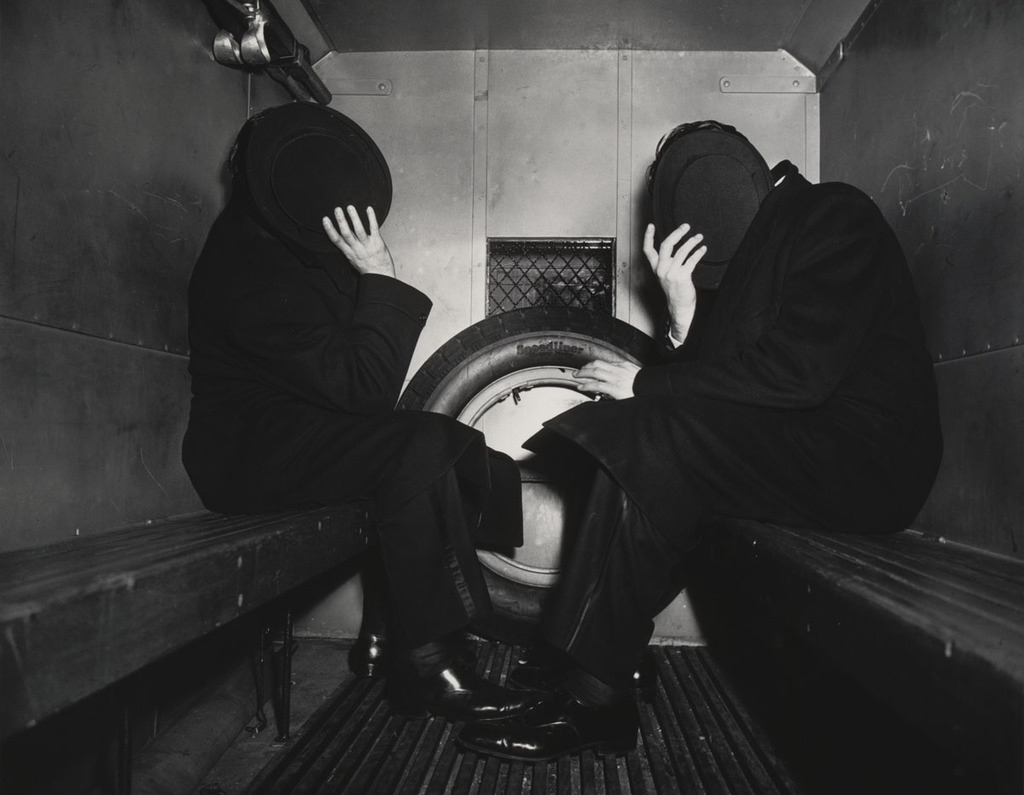
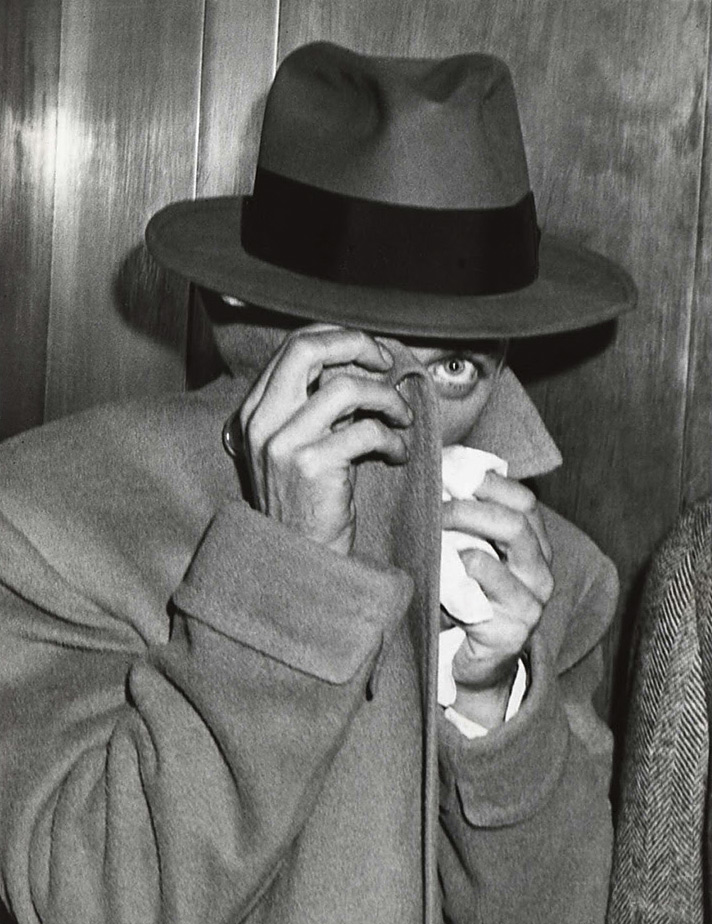
Weegee (American, born Ukraine (Austria), Złoczów (Zolochiv) 1899-1968 New York) 'Charles Sodokoff and Arthur Webber Use Their Top Hats to Hide Their Faces' January 27, 1942, printed c. 1983


Weegee (American born Ukraine (Austria), Złoczów (Zolochiv) 1899-1968 New York)
Charles Sodokoff and Arthur Webber Use Their Top Hats to Hide Their Faces
January 27, 1942, printed c. 1983
Gelatin silver print
31.8 x 41.4cm (12 1/2 x 16 5/16 in.)
Gift of Aaron and Jessica Rose, 1983
Rights and Reproduction: © Weegee / International Center of Photography


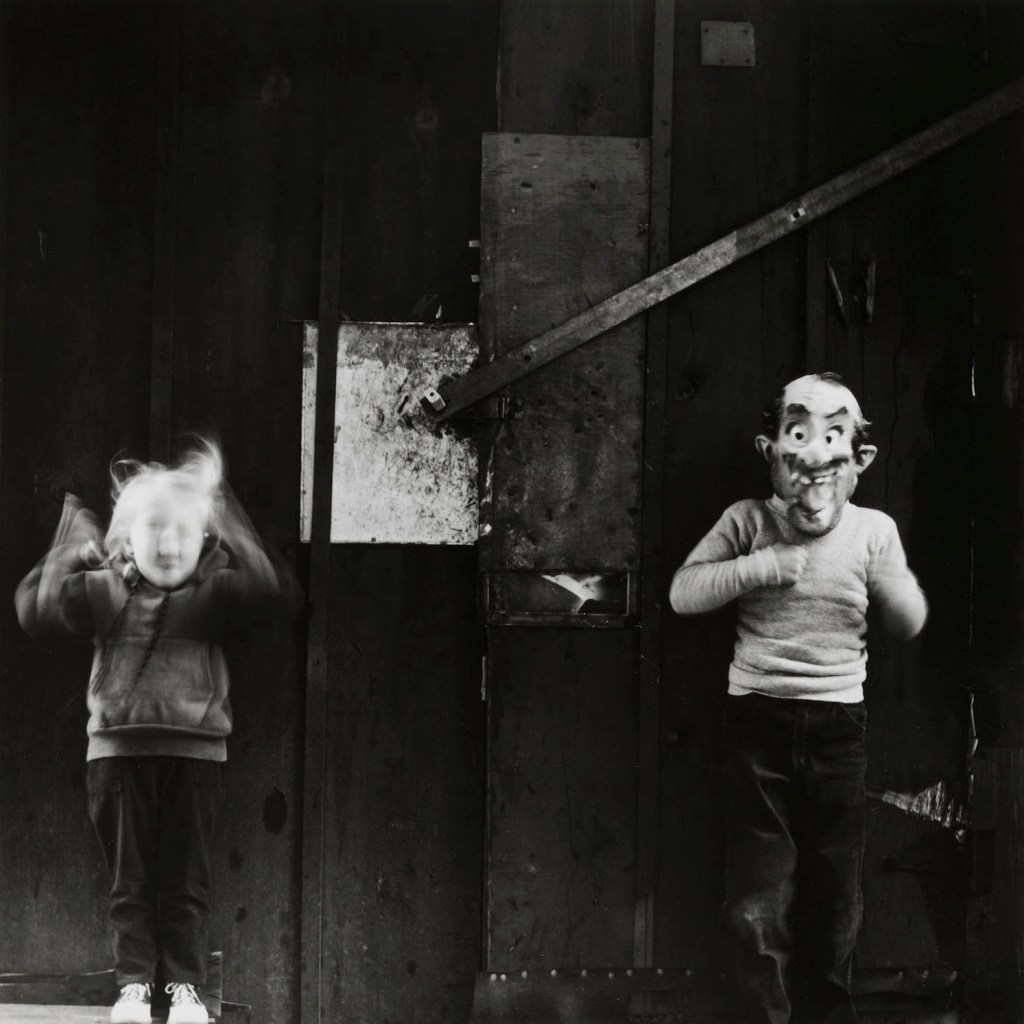
Ralph Eugene Meatyard (American, 1925-1972) 'Occasion for Diriment' 1962


Ralph Eugene Meatyard (American, 1925-1972)
Occasion for Diriment
1962
Gelatin silver print
18.0 x 18.7cm (7 1/16 x 7 3/8 in.)
Rogers Fund, 1967
© The Estate of Ralph Eugene Meatyard, Courtesy Fraenkel Gallery, San Francisco


Ralph Eugene Meatyard was a photographer and optician who spent the last two decades of his life in Lexington, Kentucky, producing an eccentric body of work at some remove from the photographic mainstream. He often posed his family and friends in enigmatic tableaux with props such as dolls and rubber masks, imbuing his images with a haunting Surrealist sensibility. The curious title of this photograph stems from Meatyard’s passion for odd names, puns, and peculiar words and phrases. Diriment is a made-up word, a Lewis Carroll-like compound of “dire” and “merriment” that suggests a mood of high-spirited fun and hilarity fraught with anxious undertones.


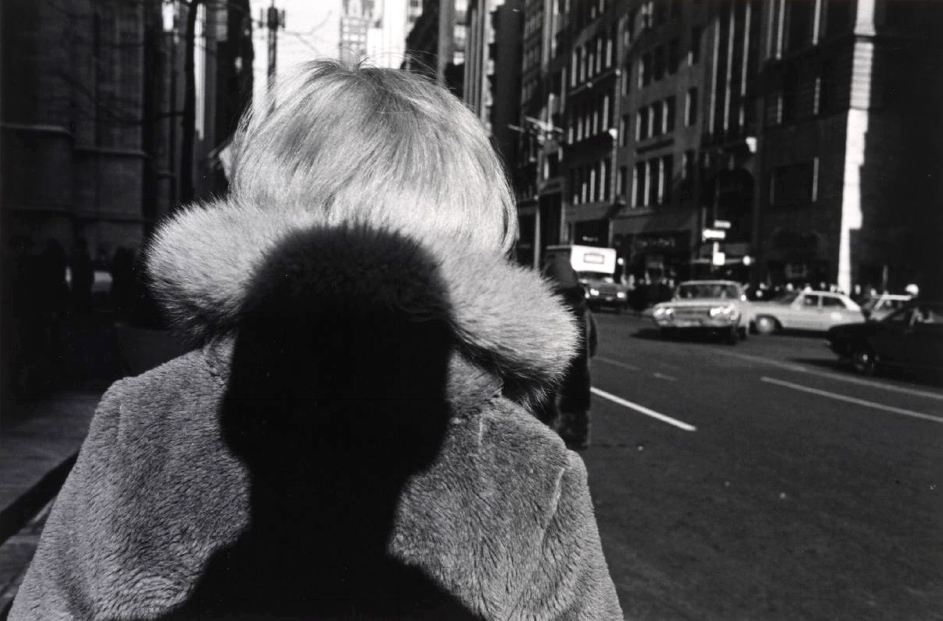
Lee Friedlander (American, born Aberdeen, Washington, 1934) 'Shadow, New York City' 1966, printed 1973


Lee Friedlander (American born Aberdeen, Washington, 1934)
Shadow, New York City
1966, printed 1973
Gelatin silver print
16.0 x 24.1cm (6 5/16 x 9 1/2 in.)
Purchase, The Horace W. Goldsmith Foundation Gift, through Joyce and Robert Menschel, 1990


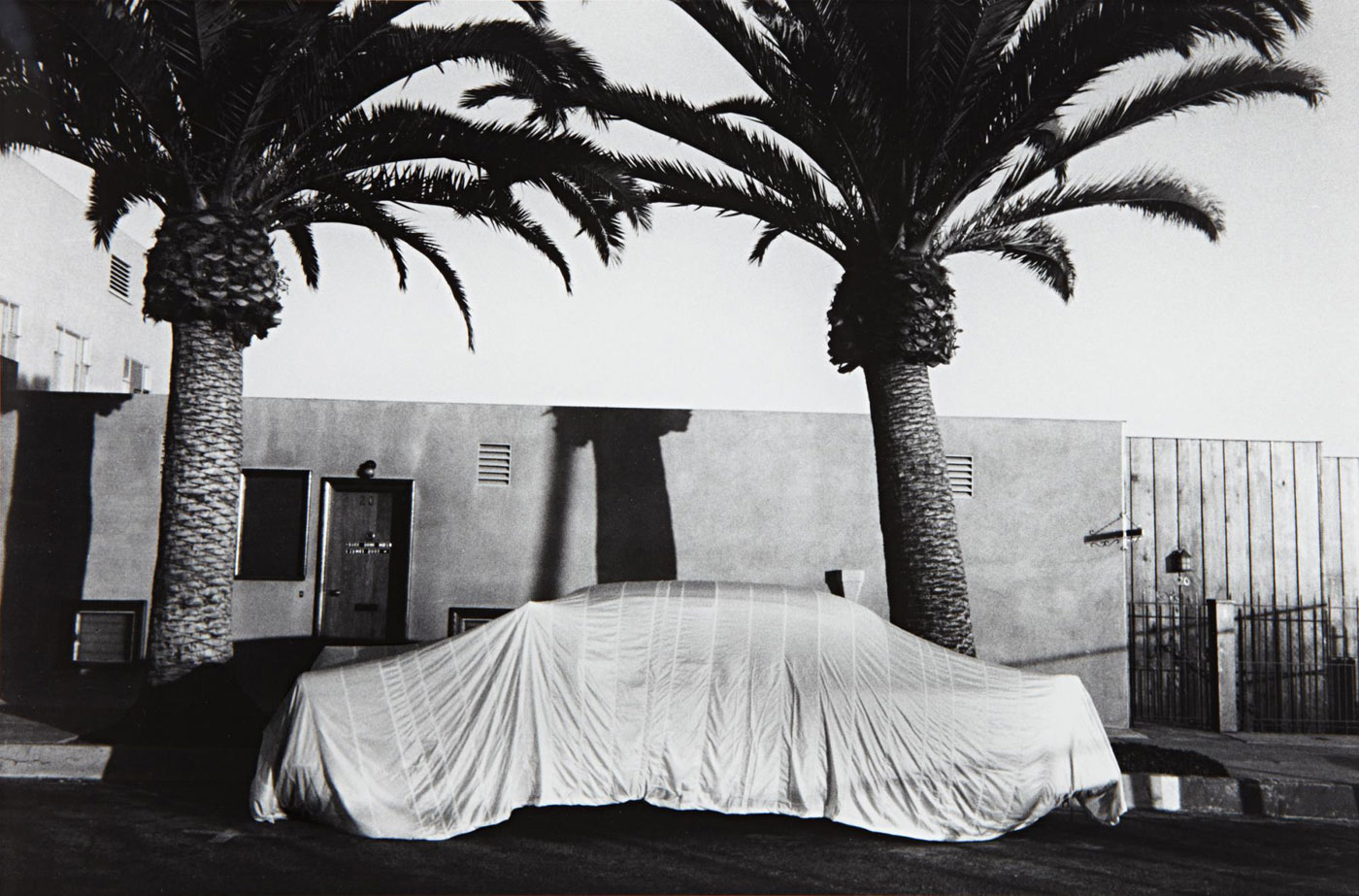
Robert Frank (American, born Zurich, 1924) 'Covered Car - Long Beach, California' 1955


Robert Frank (American born Zurich, 1924-2019)
Covered Car – Long Beach, California
1955
Gelatin silver print
21.4 x 32.7cm (8 7/16 x 12 7/8 in.)
Gilman Collection, Purchase, Ann Tenenbaum and Thomas H. Lee Gift, 2005


Photography is a medium prized for its capacity to expose, lay bare, make visible. For many artists, the camera is, above all, a tool for revealing what would otherwise remain unnoticed. As Diane Arbus once said: “I really believe there are things which nobody would see unless I photographed them.” At the root of this artistic impulse is a keen fascination with that which is hidden, obscure, or hitherto unseen. This exhibition presents a selection of contemporary photographs and video from the permanent collection that variously explores the medium’s dynamic interplay between concealment and revelation.

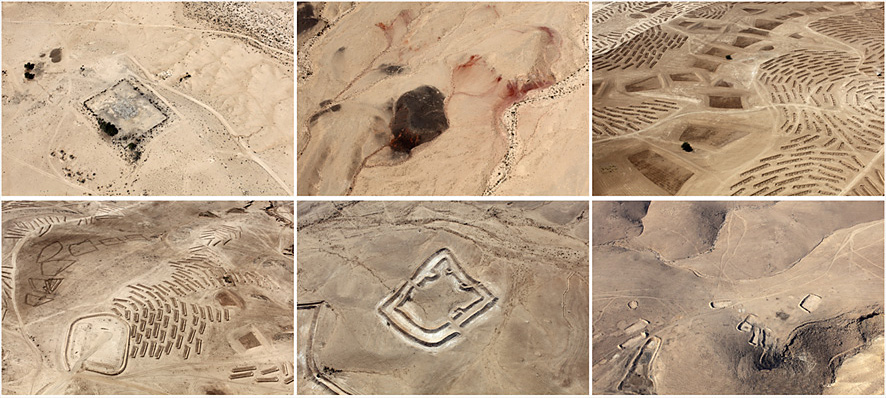
Some of the artists featured here use the camera to reveal subjects or places ordinarily hidden, as in Vera Lutter’s majestic view of the interior of a Pepsi-Cola bottling plant or Miguel Rio Branco’s lush image of a tapestry’s seamy underside. Others address instances of geopolitical obfuscation: Fazal Sheikh’s aerial photographs of the Negev desert in southern Israel record the traces of Bedouin villages that have been transformed into forests or farmland, while Mishka Henner collects images of stylishly censored high-security sites on Google Earth. In Vault (2011), Thomas Demand takes his inspiration from current events, meticulously re-creating a storeroom in which thirty missing works of art were discovered during a recent police raid.

The tension between publicity and privacy – the simultaneous desire to be looked at and to evade the merciless gaze of the camera – animates the work of artists as diverse as Arbus, Lutz Bacher, Jack Pierson, and Taryn Simon. In her video, The Nightingale (2003), Grace Ndiritu explores the tradition of the veil and its complex poetics of exposure and effacement. Complementing the contemporary works on view is a selection of earlier photographs in which the primary subject is hidden or obscured – a brief anthology of playfulness, shame, and seduction.


Fazal Sheikh (American, born 1965) 'Desert Bloom' (various numbers) 2011


Fazal Sheikh (American, b. 1965)
Desert Bloom (various numbers)
2011
Excerpt from the Erasure Trilogy
Inkjet print
Image: 40 × 60cm (15 3/4 × 23 5/8 in.) Sheet: 52.1 × 72.1cm (20 1/2 × 28 3/8 in.)
Frame: 73.7 × 53.3cm (29 × 21 in.)
Purchase, Jane P. Watkins Gift, 2013


In 2011 the French photographer Frederic Brenner invited eleven prominent photographers to spend six months in residence in Israel and the Occupied Territories, or West Bank, to explore the area’s complexity and to create bodies of work that might broaden and reframe the conversation about the region. Among those invited was Sheikh, an artist best known for his sensitive black-and-white portraits of people living in displaced and marginalised communities around the world. Sheikh’s project takes the form of a trilogy titled Erasure, of which Desert Bloom is the central part. The images were made during several months of flying above the Negev desert and are intended to articulate the rapid transformation of the region. On the one hand, they invoke the Israeli endeavour to “make the desert bloom,” and on the other, they reveal traces of the Negev’s history: the construction of towns for the Bedouin, the natural erosion of the land, the demolition of local dwellings, the remains of military installations, the afforestation campaigns of the Jewish National Fund (JNF), and the transformation of nomadic desert regions into farmland.


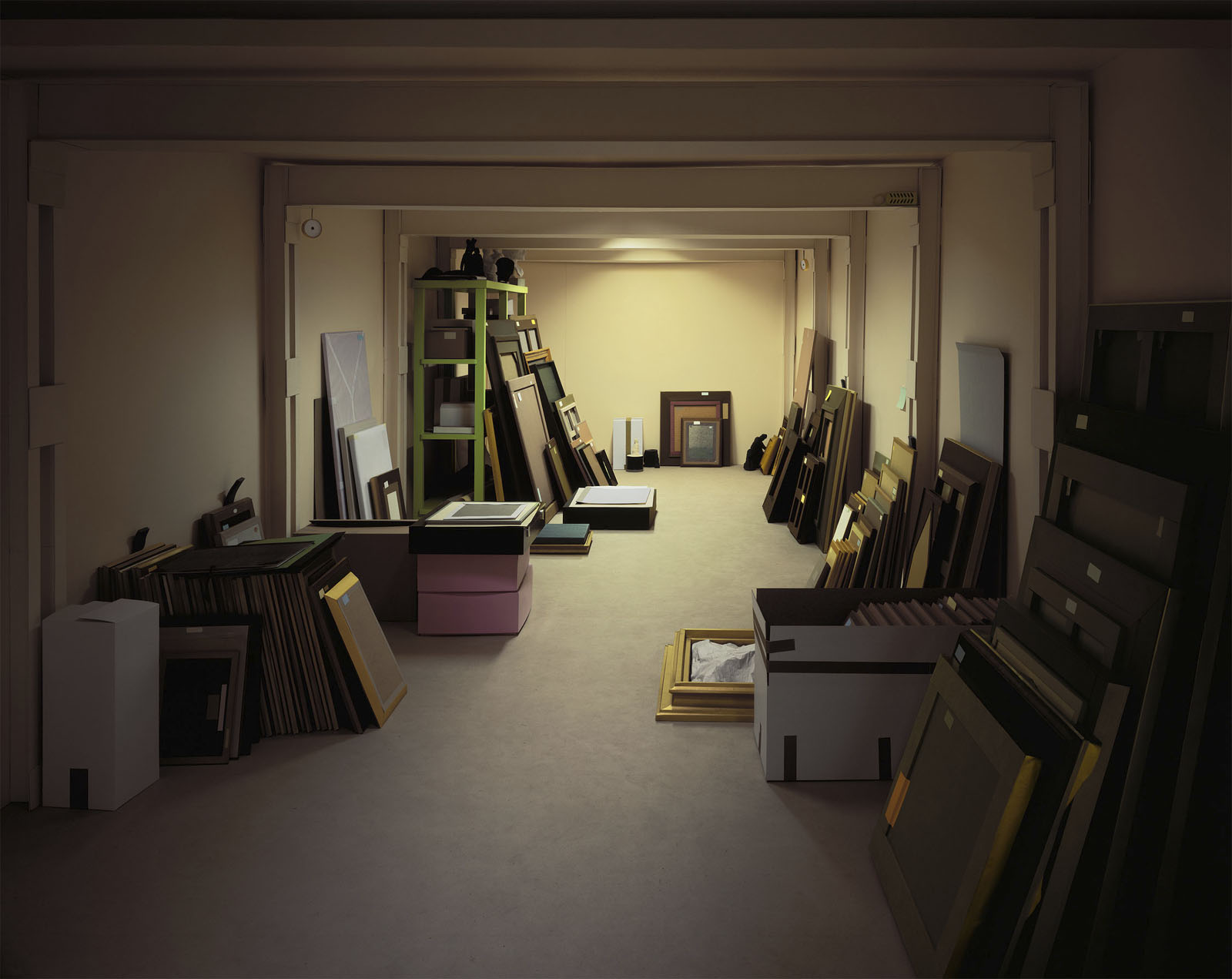
Thomas Demand (German, b. 1964) 'Vault' 2012


Thomas Demand (German, b. 1964)
Vault
2012
Chromogenic print
220 x 276.9cm (86 5/8 x 109 in.)
Purchase, Louis V. Bell Fund; Alfred Stieglitz Society, The Fledgling Fund, through Diana Barrett and Robert Vila, Joseph M. and Barbara Cohen Foundation Inc. and Hideyuki Osawa Gifts, 2013
© Thomas Demand / Artist’s Rights Society (ARS), New York


Demand’s photographs of the paper constructions he builds in his studio are typically based on photographs related to politically charged real-world events. He begins with an existing image, usually culled from the news media, which he translates into a three-dimensional life-sized model made of coloured paper and cardboard. The models are then carefully lit and photographed, after which they are destroyed. Three times removed from the scenes they depict, Demand’s works are masterpieces of pictorial ambiguity that occupy a mesmerising middle ground between reality and artifice.

Vault is based on a police photograph of a storeroom at the Wildenstein Institute in Paris, where thirty paintings and sculptures that had been missing for decades were discovered during a police raid in 2011. The missing artworks belong to the heirs of a French Jewish family displaced during the Holocaust. In Demand’s picture, as in the photograph on which it is based, the framed paintings – which include works by Degas, Manet, and Morisot – are turned to face the walls and remain tantalisingly hidden from view.


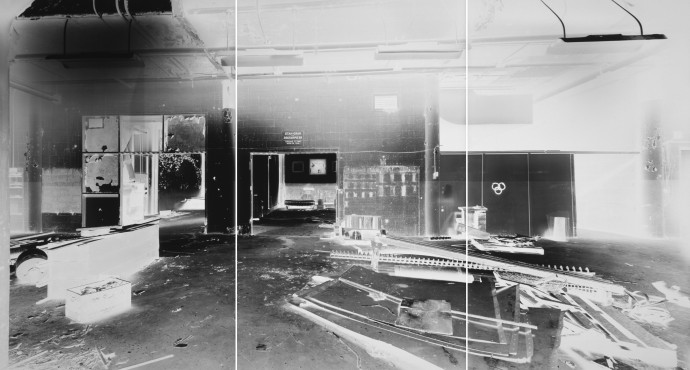
Vera Lutter (German, born Kaiserslautern, 1960) 'Pepsi Cola Interior II: July 6-13, 2000' 2000


Vera Lutter (German, b. 1960)
Pepsi Cola Interior II: July 6-13, 2000
2000
Gelatin silver print
Overall installation: 90 3/4 in. × 14 ft. 3/4 in. (230.5 × 428.6cm)
Sheet (A): 90 in. × 55 3/4 in. (228.6 × 141.6cm)
Sheet (B): 90 in. × 55 3/4 in. (228.6 × 141.6cm)
Sheet (C): 90 in. × 55 3/4 in. (228.6 × 141.6cm)
Frame (each): 90 3/4 × 56 1/4 in. (230.5 × 142.9cm)
Purchase, Joseph M. and Barbara Cohen Foundation Inc. Gift, 2001
© Vera Lutter


While the basis for Lutter’s technique – the camera obscura – is older than photography itself, her images and subject matter are wholly modern. This enormous negative print was made inside a room-sized pinhole camera that Lutter built in a derelict Pepsi-Cola bottling plant on the East River in Hunters Point, Queens. After pinning three huge sheets of photographic paper opposite the camera’s pinhole aperture, she worked inside the camera to monitor and manipulate the light during the weeklong exposure. The bottling plant itself closed in 1999 and was later demolished.


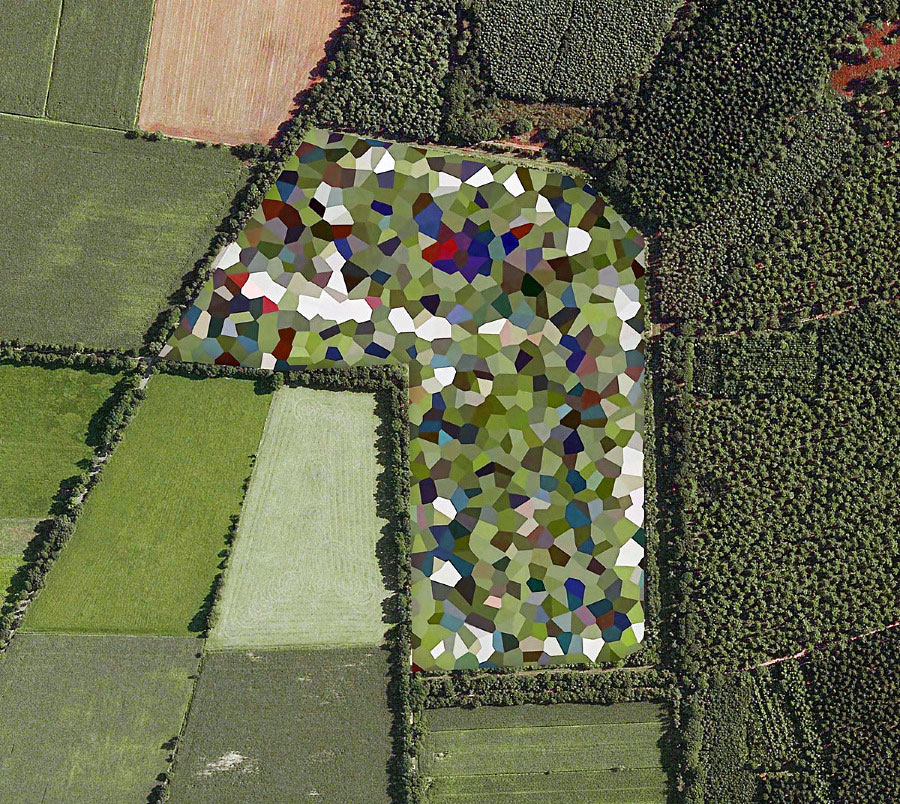
Mishka Henner (British, b. 1976) 'Staphorst Ammunition Depot, Overijssel' 2011, printed 2014


Mishka Henner (British, b. 1976)
Staphorst Ammunition Depot, Overijssel
2011, printed 2014
From the series Dutch Landscapes
Inkjet print
31 1/2 × 35 7/16 in. (80 × 90cm)
Purchase, Vital Projects Fund Inc. Gift, through Joyce and Robert Menschel, 2014
© Mishka Henner


In his “Dutch Landscapes” series, Henner selects and reproduces images of the Netherlands found on Google Earth. The multicoloured shapes punctuating these landscapes were created not by the artist but at the behest of the Dutch government. When Google Earth was introduced in 2005, satellite imagery of the entire planet became freely accessible to anyone with an Internet connection. This sudden visibility created concerns among many governments, who required Google – or its image suppliers – to obscure the details of sites deemed vital to national security. While most nations employed standard techniques, such as blurring, pixilation, or digital cloning, the Dutch chose to conceal hundreds of sites – including royal palaces, army barracks, and fuel depots – with bold, multicoloured polygons. “There is of course an absurdity to these censored images,” Henner has written, “since their overt, bold and graphic nature only draws attention to the very sites that are meant to be hidden. Yet this contradiction seems perfectly apt for the absurd fear of terror that has come to dominate the cultural landscape of the last decade.”


Now You See It: Photography and Concealment, an installation of 25 works at The Metropolitan Museum of Art, focuses on the dynamic interplay between concealment and revelation in contemporary photography and video art. The featured works, all from the Museum’s Department of Photographs, range from a late 19th-century photograph by Pierre-Louis Pierson to a recently acquired work by Thomas Demand.

The installation presents works by artists who use the camera to reveal subjects or places ordinarily hidden from view, as well as works that explore broader themes of secrecy and obscured or partial vision. A highlight of Now You See It is Thomas Demand’s photograph Vault (2012). The image is based on a police photograph of a storeroom at the Wildenstein Institute in Paris, where 30 paintings and sculptures that had been missing for decades were discovered during a police raid in 2011. In Demand’s picture, as in the photograph on which it is based, the framed art works are turned to face the walls, remaining tantalisingly hidden from view. Other highlights include Vera Lutter’s haunting view of the seldom seen interior of the Pepsi Cola bottling plant in Queens, New York, Pepsi Cola Interior II: July 6-13 (2000), and Fazal Sheikh’s Desert Bloom (2011), a series of aerial photographs of the Negev desert. In Grace Nditru’s acclaimed video The Nightingale (2003), the artist explores the tradition of the veil and its complex associations of exposure and effacement. Accompanied by a recording of the Senegalese singer Baaba Maal, Ndiritu evokes a rapid-fire series of cultural references as she performs a hypnotic, Scheherazade-like series of gestures and movements with a piece of fabric, swiftly transforming it from turban to blindfold, and do-rag to noose to niqab. The tension between publicity and privacy, inherent in the field of photography, is explored in works by artists as diverse as Diane Arbus, Lutz Bacher, Jack Pierson, and Taryn Simon. The 20th-century photographs on view present the theme of concealment in a literal way and include Weegee’s Charles Sodokoff and Arthur Webber Use Their Top Hats to Hide Their Faces (January 27, 1942) and Helen Levitt’s Kids in a Box, on the Street, New York City (c. 1942).

Now You See It: Photography and Concealment is organised by Mia Fineman, Associate Curator in the Department of Photographs at The Metropolitan Museum of Art.


Helen Levitt (American, 1913-2009) [Kids in a Box, on the Street, New York City] c. 1942


Helen Levitt (American, 1913-2009)
[Kids in a Box, on the Street, New York City]
c. 1942
Gelatin silver print
Image approx.: 9 × 6 in. (22.9 × 15.2cm)
Promised Gift of Mrs. Robert O. Levitt
© Estate of Helen Levitt


Helen Levitt (American, 1913-2009) [Kids on the Street Playing Hide and Seek, New York City] c. 1942


Helen Levitt (American, 1913-2009)
[Kids on the Street Playing Hide and Seek, New York City]
c. 1942
Gelatin silver print
9 3/4 × 6 3/4 in. (24.8 × 17.1cm)
Promised Gift of Mrs. Robert O. Levitt
© Estate of Helen Levitt


Attributed to Juliette Alexandre-Bisson (French, 1861-1956) [Birth of Ectoplasm During Séance with the Medium Eva C.] 1919-1920


Attributed to Juliette Alexandre-Bisson (French, 1861-1956)
[Birth of Ectoplasm During Séance with the Medium Eva C.]
1919-1920
Gelatin silver print
11.8 x 8.9cm (4 5/8 x 3 1/2 in.)
Gilman Collection, Purchase, The Howard Gilman Foundation Gift, 2001


Bill Wasilevich (American, active 1940s) 'Jimmy "One Eye" Collins After Arraignment' 1946


Bill Wasilevich (American, active 1940s)
Jimmy “One Eye” Collins After Arraignment
1946
Gelatin silver print
18.6 x 14.4cm (7 5/16 x 5 11/16 in.)
Twentieth-Century Photography Fund, 2008
© Steve Schapiro/Corbis


Grace Ndiritu (British, born 1976)
The Nightingale
2003
Video
Gift of the artist, 2009
© 2003 Grace Ndiritu, Courtesy Grace Ndiritu and LUX, London


Before a camera fixed on her face and neck and accompanied by a recording of the Senegalese singer Baaba Maal, Ndiritu performs a hypnotic, Scheherazade-like series of gestures and movements with a piece of fabric, swiftly transforming it from turban to blindfold, from do-rag to noose to niqab. Both jubilant and unsettling, the video evokes a rapid-fire series of cultural references, counterposing the enforced modesty of the Islamic world with Western fantasies of exoticism. Ndiritu, who studied textiles at the Winchester School of Art, acquired this simple red-and-white scarf while traveling in India and carried it with her as a talisman through years of global exploration.


Jack Pierson (American, b. 1960) 'The Lonely Life' 1992


Jack Pierson (American, b. 1960)
The Lonely Life
1992
Chromogenic print
Frame: 76.2 × 101.6cm (30 × 40 in.)
Purchase, The Horace W. Goldsmith Foundation Gift, through Joyce and Robert Menschel, 2000
© Jack Pierson


In 1994, Pierson was invited by the Whitney Museum of American Art to show his photographs alongside a group of works by Edward Hopper (1882-1967) that the artist selected from their vast holdings. Like Hopper, Pierson creates works that are inherently cinematic in their scope and effects; both are primarily concerned with mood, atmosphere, and exhibit a particularly urban kind of melancholy. His greatest asset, however, is an almost overwhelmingly lush palette, which he uses to depict objects of desire or scenes that are unabashedly sensual and emotional. An excellent example of the artist’s high-key chromaticism, The Lonely Life describes the unique brand of loneliness shared by the performer and the fan, both of whom (like Pierson) are doomed to experience existence solely through the intoxications of art.


Pierre-Louis Pierson (French, 1822-1913) 'Scherzo di Follia' 1861-1867, printed c. 1930


Pierre-Louis Pierson (French, 1822-1913)
Scherzo di Follia
1861-1867, printed c. 1930
Gelatin silver print from glass negative
39.8 x 29.8cm (15 11/16 x 11 3/4 in.)
Gilman Collection, Gift of The Howard Gilman Foundation, 2005


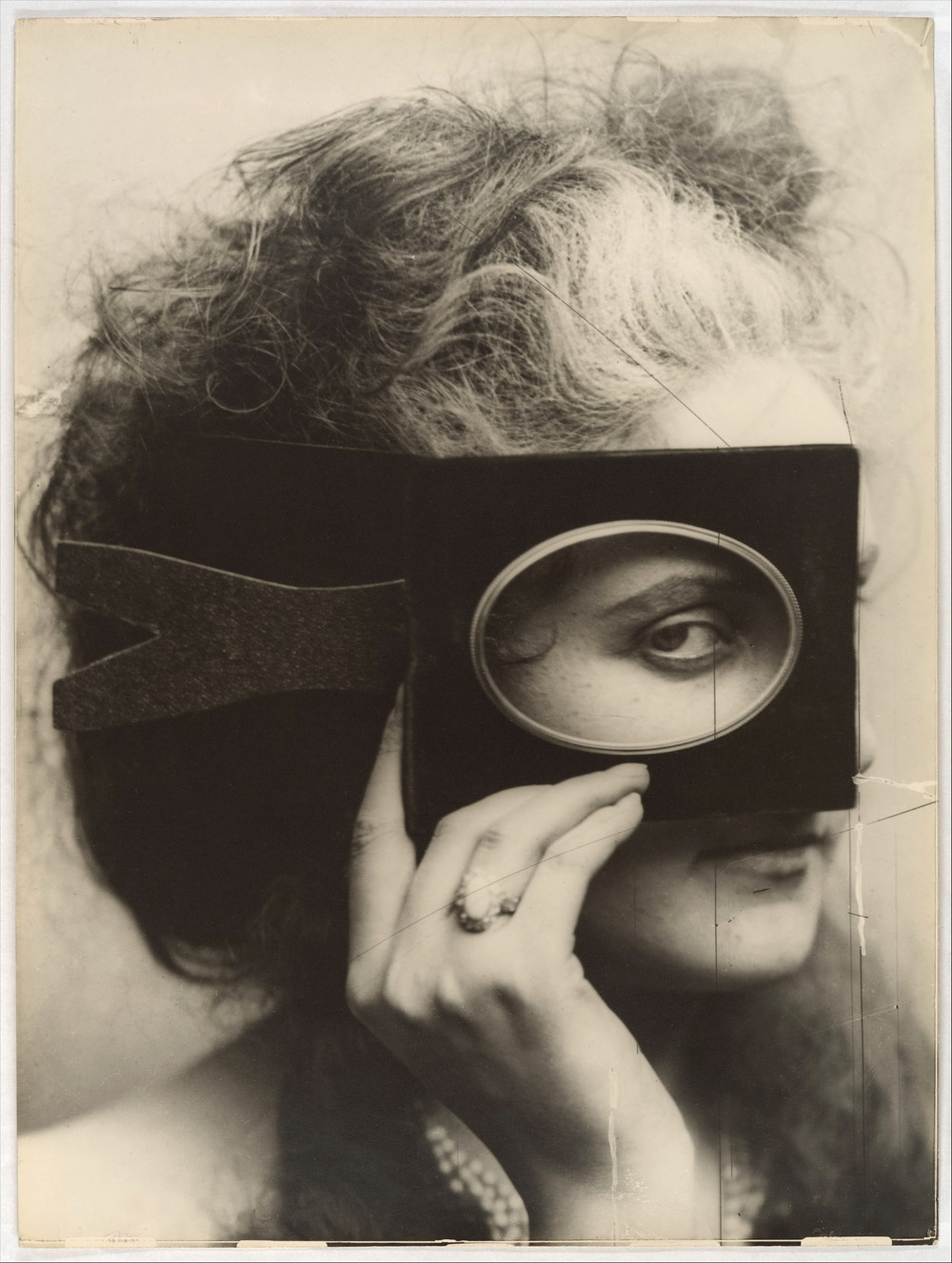
Virginia Oldoini, Countess Verasis de Castiglione (1837-1899), created a sensation when she appeared on the social scene in Paris in 1855, having been sent by the Italian statesman Cavour to secretly win Napoleon III over to the cause of Italian unity by “any means she chose.” Within months, the statuesque beauty was the mistress of Napoleon III and a much-talked-about ornament of the lavish balls so prevalent during the period. After the fall of the Second Empire in 1870, she led an increasingly secluded existence, which gave rise to fantastic speculation about her affairs. As the years went by, her mental stability declined and she ventured out only at night, shrouded in veils.

The countess’s raging narcissism found in photography the perfect ally; Pierre-Louis Pierson produced over seven hundred different images of her. In a reversal of roles, the sitter would direct every aspect of the picture, from the angle of the shot to the lighting, using the photographer as a mere tool in her pursuit of self-promotion and self-expression.


The Metropolitan Museum of Art
1000 Fifth Avenue at 82nd Street
New York, New York 10028-0198
Phone: 212-535-7710

Opening hours:
Sunday – Tuesday and Thursday 10am – 5pm
Friday and Saturday 10am – 9pm
Closed Wednesday

The Metropolitan Museum of Art website

LIKE ART BLART ON FACEBOOK

Back to top

Conference: ‘What is Real? Photography and the Politics of Truth’ at The International Center of Photography

November 2008


Fazal Sheikh (American, b. 1965) 'The Victor Weeps: Afghanistan (Abdul Aziz holding a photograph of his brother, Mula Abdul Hakim)' 1997


Fazal Sheikh (American, b. 1965)
The Victor Weeps: Afghanistan (Abdul Aziz holding a photograph of his brother, Mula Abdul Hakim)
1997


Conference

What is Real? Photography and the Politics of Truth

This conference brings together renowned photographers, artists, writers, curators, and scholars in a series of panels and conversations:

– Redefining Documentary: The State of Documentary Photography Today
– Art versus Document: An (Un)comfortable Union?
– Public/Private: Community in the Digital Age
– Who Needs Truth Anyway? The Uses and Ethics of Documentary

Participants include Ariella Azoulay, Geoffrey Batchen, Nayland Blake, Okwui Enwezor, Thomas Keenan, Thomas Y. Levin, Maria Lind, Susan Meiselas, Walid Raad, Martha Rosler, Brian Wallis, and others.


The International Center of Photography
Presents A Two-Day Symposium
to Examine The Changing Nature of Documentary Practice.

Friday December 12th 2008 6 – 10pm
Saturday December 13th 2008 9 – 5pm

The Times Center
242 West 41st Street
New York City

The International Center of Photography website

LIKE ART BLART ON FACEBOOK

Back to top