Exhibition: ‘Girls In Our Town: Women in the Shadow of ‘The Magnificent Empire’, Florina Prefecture & Region, Macedonia Greece 1900-1917, 2017′ at William Mora Galleries, Melbourne

Exhibition dates: 13th July – 27th July, 2017
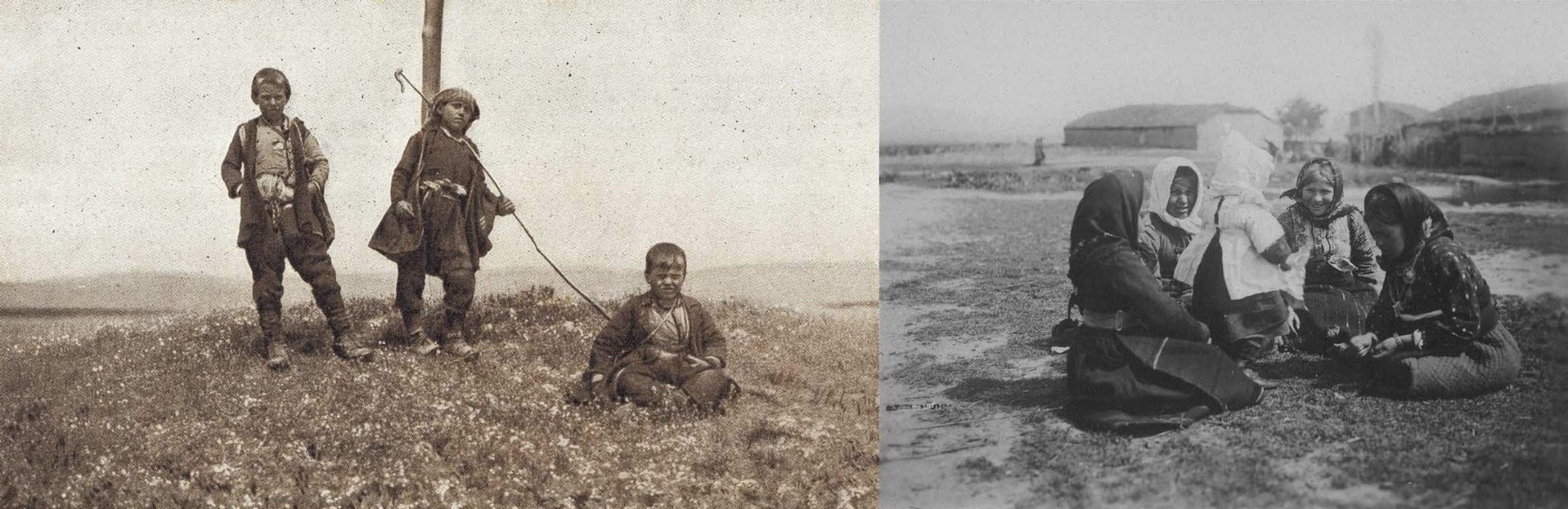


Elizabeth Gertsakis (Australian, b. 1954) 'Children Playing' 2017 (detail) from the exhibition 'Girls In Our Town: Women in the Shadow of 'The Magnificent Empire', Florina Prefecture & Region, Macedonia Greece 1900-1917, 2017' at William Mora Galleries, Melbourne, July 2017


Elizabeth Gertsakis (Australian, b. 1954)
Children Playing (detail)
2017
Digital prints on metallic silver acrylic
39 x 163cm


Conquering Orientalism

A beautiful, sensitive, sensual even, exhibition by the wonderful Elizabeth Gertsakis at William Mora Galleries. The artist forms a living relationship with early images of women and children from the Prefecture of Florina – mostly taken from that most vernacular form of photograph, the postcard – something that was sold as souvenir to the tourist trade, or posted to loved ones overseas.

Gertsakis identifies with their ethnicities and beliefs and physical appearances, transmuting their identities and narratives by printing these ephemeral objects on steel, that most durable of substances, which makes them shine under the gallery lights. The photographs both transcend time and transcend the physicality of the actual photograph… making their hidden histories a precious, and contemporary, thing. Like their protagonists, the steel makes the images and the people in them hardy enough to survive the vicissitudes thrust upon these communal people.

Gertsakis observes, “My voice is in placing myself between the present and the past as it has been generated by the cameras of others.” Beautifully enunciated. With her deep familial roots in the area – one that endured nearly five hundred years of Islamic rule and culture, as well as multiple ethnic communities and religions; Christian Greeks, Slavs, Bulgarians, Jews, Turkic and Albanian Moslems, Vlachs and Gypsies – Gertsakis creates witness and testament to her own communal familial past.

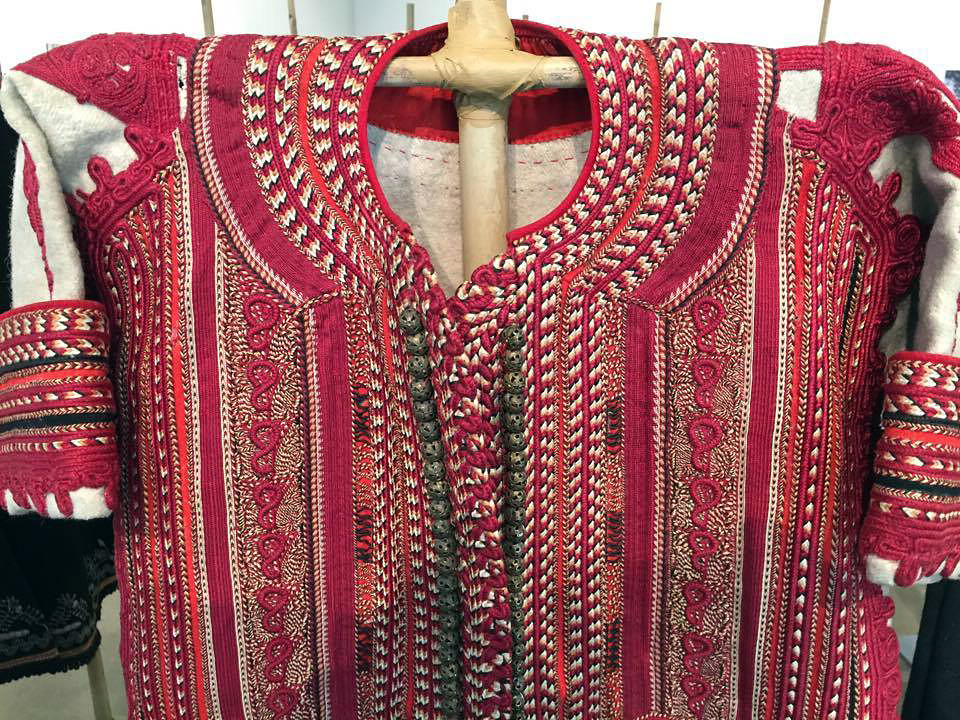
The rare and unique costumes come from the artists personal collection and when I was in the gallery space there seemed to be this electricity flowing between the images and the cloth. It was almost as though the people in the photographs were dancing again, were speaking to us today of their trials and tribulations, of their energy to survive the turmoil of the first decades of the 20th century.

Elizabeth is first generation… her father and grandfather and grandmothers… were those people…. exactly as they appear. They survived the yoke of the oppressor and conquered Orientalism. These are their valuable, inspiring stories, beautifully told.

Dr Marcus Bunyan


Many thankx to William Mora Galleries and Elizabeth Gertsakis for allowing me to publish the photographs in the posting. Please click on the photographs for a larger version of the image. All installation photographs © Marcus Bunyan and Elizabeth Gertsakis


Installation view of the exhibition 'Girls In Our Town: Women in the Shadow of 'The Magnificent Empire' Florina Prefecture & Region, Macedonia Greece 1900-1917, 2017' by Elizabeth Gertsakis at William Mora Galleries, Richmond


Installation view of the exhibition Girls In Our Town: Women in the Shadow of ‘The Magnificent Empire’ Florina Prefecture & Region, Macedonia Greece 1900-1917, 2017 by Elizabeth Gertsakis at William Mora Galleries, Richmond
Photo: Marcus Bunyan
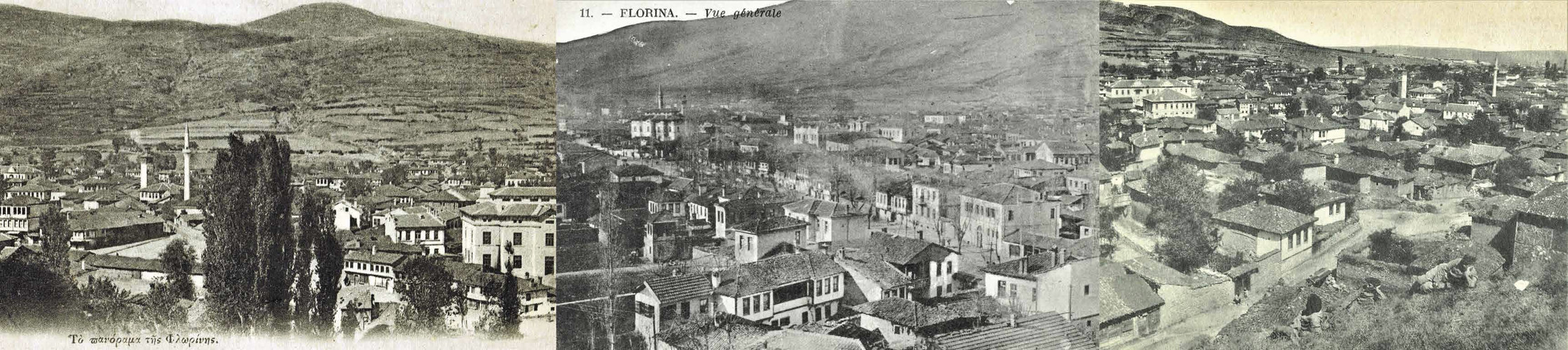
 

Elizabeth Gertsakis (Australian, b. 1954) 'Florina' 2017 from the exhibition 'Girls In Our Town: Women in the Shadow of 'The Magnificent Empire', Florina Prefecture & Region, Macedonia Greece 1900-1917, 2017' at William Mora Galleries, Melbourne, July 2017


Elizabeth Gertsakis (Australian, b. 1954)
Florina
2017
Digital prints on metallic silver acrylic
39 x 174cm


Elizabeth Gertsakis (Australian, b. 1954) 'Dancing Macedonian Girls' 2017


Elizabeth Gertsakis (Australian, b. 1954)
Dancing Macedonian Girls
2017
Digital prints on metallic silver acrylic
39 x 136cm


Installation view of the exhibition 'Girls In Our Town: Women in the Shadow of 'The Magnificent Empire' Florina Prefecture & Region, Macedonia Greece 1900-1917, 2017' by Elizabeth Gertsakis at William Mora Galleries, Richmond


Installation view of the exhibition Girls In Our Town: Women in the Shadow of ‘The Magnificent Empire’ Florina Prefecture & Region, Macedonia Greece 1900-1917, 2017 by Elizabeth Gertsakis at William Mora Galleries, Richmond
Photo: Marcus Bunyan
 

Installation view of the exhibition 'Girls In Our Town: Women in the Shadow of 'The Magnificent Empire' Florina Prefecture & Region, Macedonia Greece 1900-1917, 2017' by Elizabeth Gertsakis at William Mora Galleries, Richmond


Installation view of the exhibition Girls In Our Town: Women in the Shadow of ‘The Magnificent Empire’ Florina Prefecture & Region, Macedonia Greece 1900-1917, 2017 by Elizabeth Gertsakis at William Mora Galleries, Richmond
Photo: Marcus Bunyan


I was born in the town of Florina, Macedonia, Greece. This town is in the top north western part of Greece adjacent to Albania, FYROM and Bulgaria. My family migrated to Australia in 1954 and I was educated in Australia

Florina was an oriental (ανατολικό) town belonging to the Ottoman Empire which controlled Greece from 1453 to 1922; the people of Florina were a mesh of multiple ethnic communities and religions; Christian Greeks, Slavs, Bulgarians, Jews, Turkic and Albanian Moslems, Vlachs and Gypsies. These religious groups lived and worked together in close proximity. Florina was a typical Balkan town in the later stages of the decline of Ottoman rule in the Balkans.

From 1903-1918, and including World War One (1914) and the Greco-Turkish War of 1919-1922 the entire northern territories of the Graeco-Balkan Peninsula (including Serbia) suffered great population losses through wars, cataclysmic population displacements (ethnic cleansing) and population exchanges. Refugee diaspora was moving in all directions, across from east to west in both directions. This vast political re-construction of Europe and the Balkans may have initially started from wars of revolutionary independence from the Ottomans, and subsequent internal Balkan expansionist claims to new territory, but it was the conflagration of the First World War that irreversibly rocked its cultural foundations for the future, beyond any political value in the creation of new national states in the Balkans and Asia Minor.

This history of diaspora and displacement laid down a new pattern for the twentieth century and into the twenty first century; a set of historical problems that had and continue to have irreversible impact on the function of community memory in relation to identity experienced by each succeeding wave of refugees and migrants who abandon everything in the simple need to escape and to survive.

I have chosen to highlight the consequences of cultural uprooting on memory and identity through the images of women from Florina, taken by various known and unknown photographers in the period from 1900-1918. These photographs were taken by people who may have had commercial or political intentions in the first instance but the resulting image does not always remain in the control of its original maker. Gender is important in this exhibition because it has been traditionally the female that carries the symbolic function of ritual and memory in relation to culture and identity, and ultimately, the idea and meaning of where belonging and home is. In other words the responsibility falls on the refugee and migrant woman if there is any question or ambivalence or sense of lack. This responsibility remains a constant memorial and cognitive challenge to the psyche of the female survivor, refugee and migrant.

I have used archival photographic images and reconfigured them to create a narrative representing difference. They have been extracted from their solitary sources from commercial photography, press photography and the archives of the Photographic Section of the French Army (Campaign d’Orient 1916-1918).

The installations invite entry into unknown individual histories and emphasis shared past communal lives even though there were multiple political differences and historical consequences. The original images were the result of various kinds of personal and spatial exploitation, both desired and undesired. Photography as a commercial technology played a profound role in the identification and changing of the global meaning of identity that resulted from death during war, disruption and the re-allocation of populations.

Today this usage of images of diaspora continues in the same way via 24/7 news and the internet. I feel it is important to examine female representation during times of crisis and trauma. My desire is that this exhibition encourages multiple narratives and a focus on recognition and justice for minorities internationally and in Australia, as well as the recognition and diversity of individual authenticity. Within the stereotype I look for authenticity, not for any kind of ethnic purity; and I know this is the case both within multicultural as well as the liberal concerns for justice and human rights issues in regard to minorities in contemporary art. As a woman it is the moment when, through my life in art, history and photography, that I accepted the bequest of my own historically difficult position as being the reality of my own identity.

Elizabeth Gertsakis, July 2017
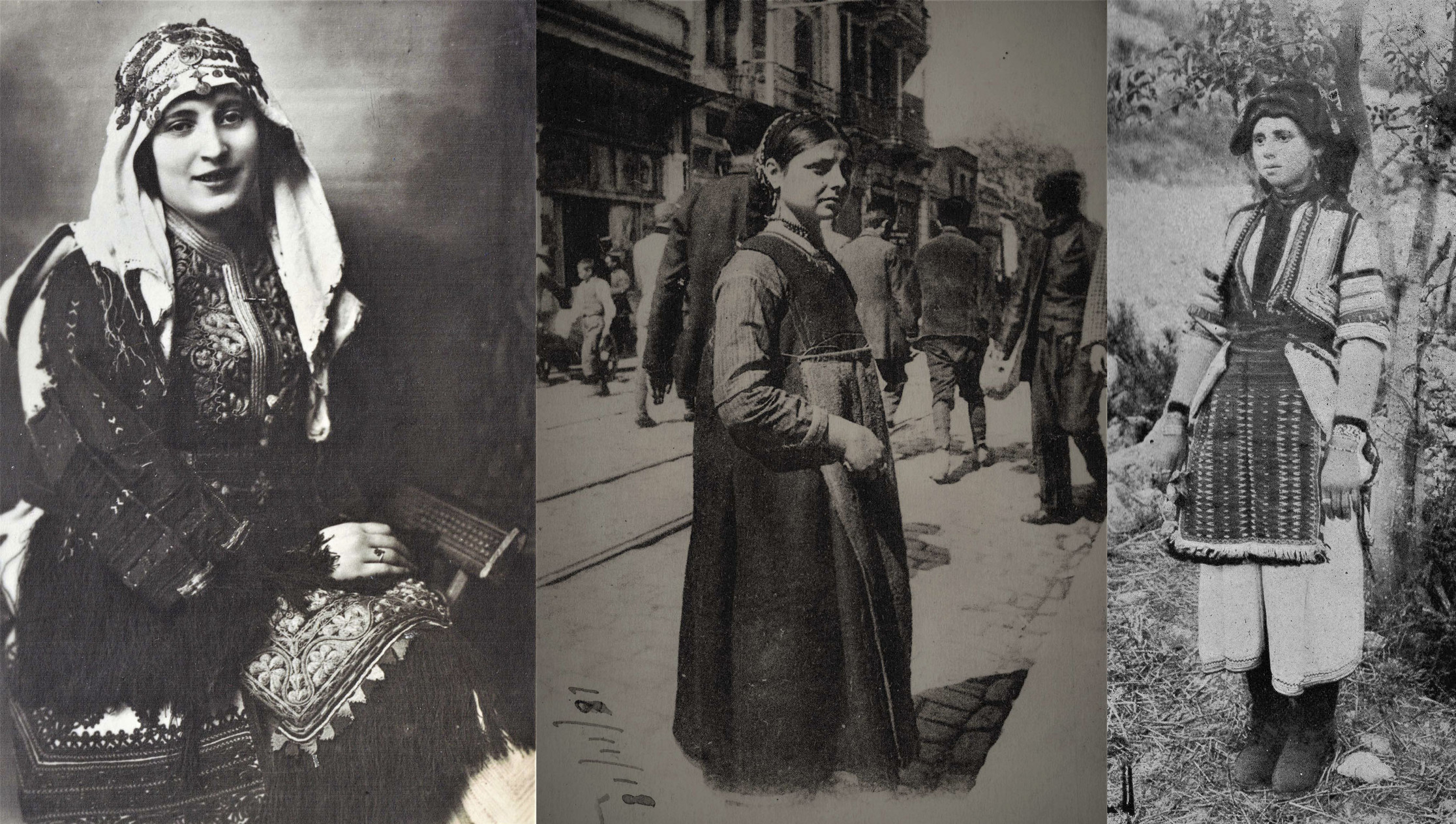
 

Elizabeth Gertsakis (Australian, b. 1954) 'Lerinki' 2017


Elizabeth Gertsakis (Australian, b. 1954)
Lerinki
2017
Digital prints on metallic silver acrylic
39 x 72cm
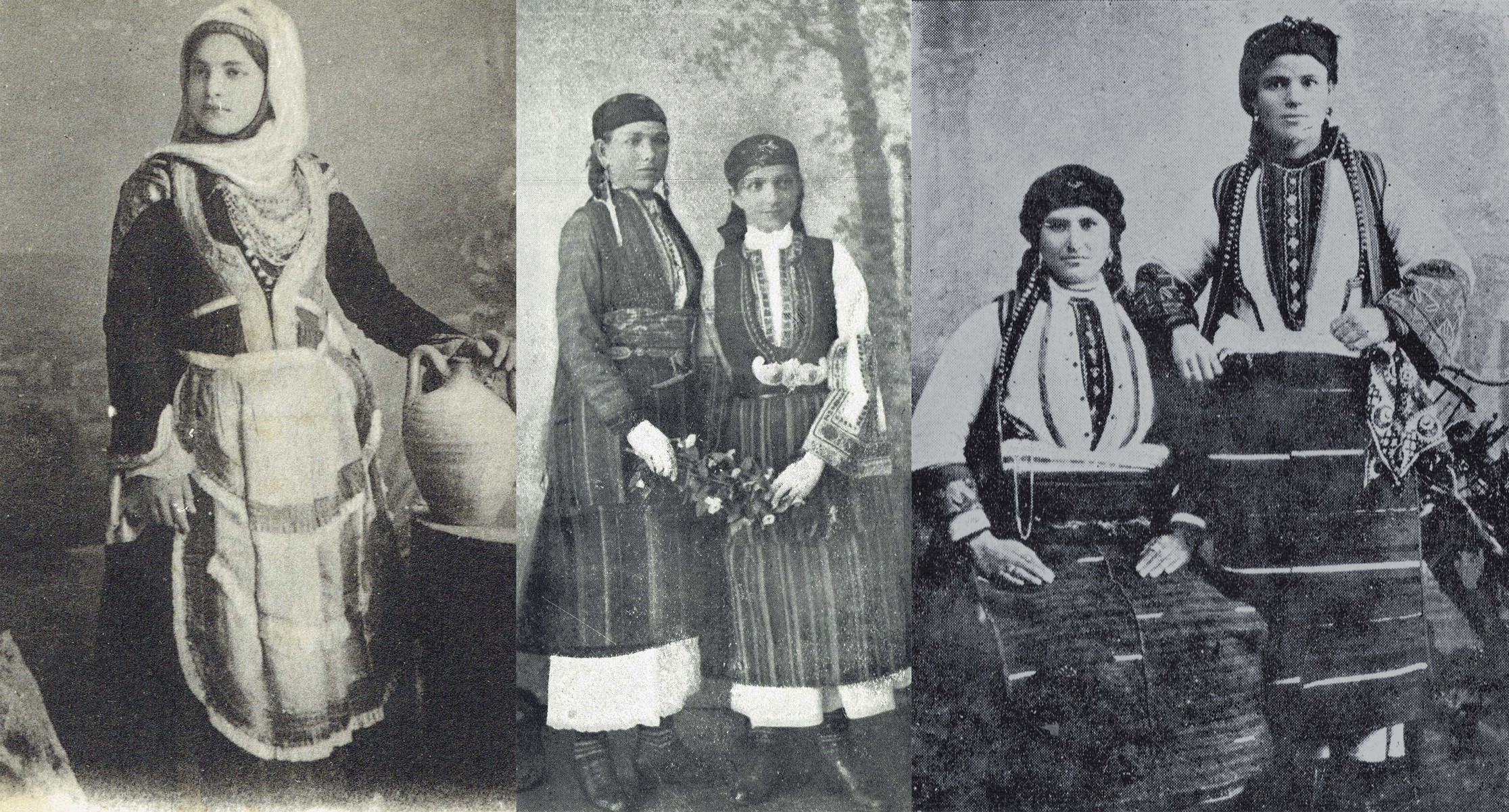
 

Elizabeth Gertsakis (Australian, b. 1954) 'Beautiful Macedonians' 2017


Elizabeth Gertsakis (Australian, b. 1954)
Beautiful Macedonians
2017
Digital prints on metallic silver acrylic
39 x 68cm


Elizabeth Gertsakis (Australian, b. 1954) 'Noli Me Tangere' (Don't Touch Me) 2017


Elizabeth Gertsakis (Australian, b. 1954)
Noli Me Tangere (Don’t Touch Me)
2017
Digital prints on metallic silver acrylic
60 x 91cm


William Mora Galleries
60 Tanner St, Richmond VIC 3121, Australia
Phone: +61 3 9429 1199

Opening hours:
Wednesday – Friday 10am – 4pm or by appointment
William Mora Galleries website

LIKE ART BLART ON FACEBOOK

Back to top

Sculpture: ‘Entropa’ by David Cerny on view at the European Council building in Brussels, Belgium

Date: 16th January 2009


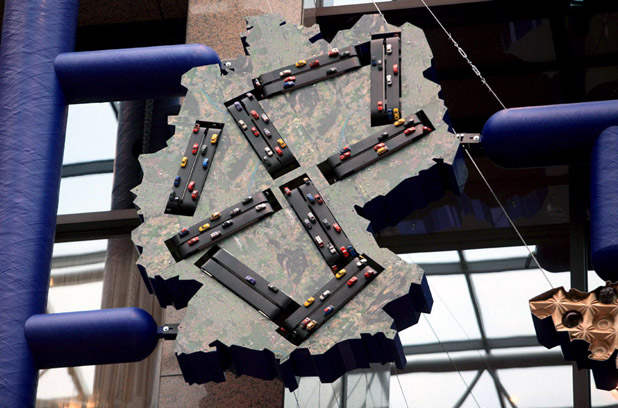
David Cerný (Czech, b. 1967) 'Entropa' 2009


David Cerný (Czech, b. 1967)
Entropa
2009


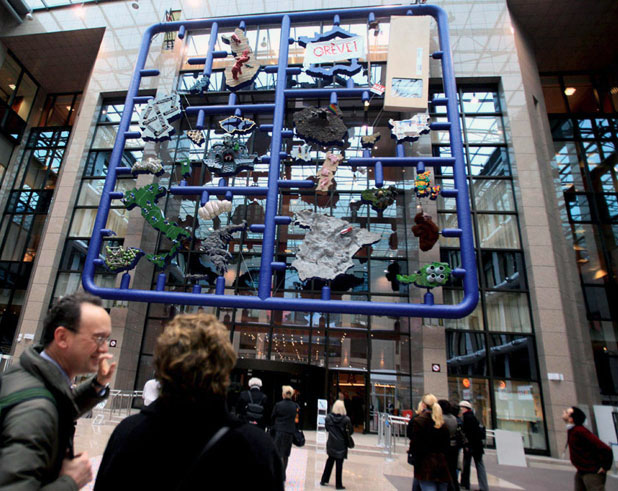
The idea was simple but good. So effective that he convinced the presidency of the European Council, which this semester is headed by the Czech Republic, to give its blessing and the 500,000 Euros needed to finance it. Czech artist David Cerný promised the following: a collaboration between 27 artists from the European Community who would put forth their vision from their own countries. France was portrayed as a labor strike, Spain as a slab of concrete and Italy into a soccer field … Belgium appears as a chocolate box, Denmark constructed with Lego and the map of Sweden below a box that looks like the ones Ikea uses.

The only problem is that behind this work of art, which has caused great controversy reducing Greece to a huge fire, Romania into a Dracula castle, there is only one creative mind, that of David Cerný. Cerný, who also invented 26 false names of European artists that had supposedly collaborated with him, recognises that he knew the truth would come out and says that economic restrictions and lack of time motivated him to do the whole work by himself.

Czech Deputy Prime Minister, Alexandr Vondra, has confessed feeling “surprisingly sorry” after discovering that the only author of Entropa is Cerný and not 27 artists, as had been stipulated in the contract with the artist.

“David Cerný is the only person responsible for not fulfilling his commitment”, said Vondra, who added that the Czech presidency is analysing what to do with the installation, which has already been placed at the Justus Lipsius building of the EU Council building and which was supposed to be inaugurated on Thursday.

Meanwhile, Cerný, known for his sculptures such as Freud hanging in the middle of the streets in Prague or for painting a rose on a Soviet tank, has laughed all along and said that he wanted to prove “that Europe could laugh at itself”.

Cerný, who also invented 26 false names of European artists that had supposedly collaborated with him, recognises that he knew the truth would come out and says that economic restrictions and lack of time motivated him to do the whole work by himself.

Text from the ArtDaily.org website


The installation consists of a giant jigsaw map – or a kind of plastic frame which keeps the elements of a miniature model in place – with a “cliché and stereotype” of each one of the EU’s 27 member states. Each country was announced to be sculptured by a different national artist.

You you can see Polish priests lifting the flag of the gay movement, a clear reference to the iconic image of the American soldiers planting the Stars and Stripes on Iwo Jima. France is pointedly represented by a map of France covered with the inscription “Strike!” The Netherlands have sunk beneath the sea with only minarets of mosques appearing above the surface…

When the EU officials saw the work and felt offended, Czech Deputy Prime Minister Vonda firstly defended the project as a way of confronting prejudice and “a space for the free expression of artists from 27 countries.” At least, this was his reaction before they found out it is all one big hoax of Czech art David Czerny, who made the sculpture entirely on his own.”

Text from the Servaas in Shanghai blog [Online] Cited 15/01/2009


David Cerný (Czech, b. 1967) 'Entropa' 2009 (detail)


David Cerný (Czech, b. 1967)
Entropa (detail)
2009


Europe is unified by its history, culture and, in recent years, also by a jointly created political structure. More or less diverse countries are intertwined by a network of multi-dimensional relationships that, in effect, results in an intricate whole. From within, we tend to focus on the differences between the individual European countries. These differences include thousands of important and unimportant things ranging from geographical situation to gastronomy and everyday habits.

The EU puzzle is both a metaphor and a celebration of this diversity. It comprises the building blocks oft he political, economic and cultural relationships with which we ‘toy’ but which will be passed on to our children. The task of today is to create building blocks with the best possible characteristics.

Self-reflection, critical thinking and the capacity to perceive oneself as well as the outside world with a sense of immunity are the hallmarks of European thinking. This art project that originated on the occasion of Czech Presidency of the Council of the European Union attempts to present Europe as a whole from the perspectives of 27 artists from the individual EU Member States. Their projects share the playful analysis of national stereotypes as well as original characteristics of the individual cultural identities.

That much is stated in an official booklet of the Czech Ministry of Foreign Affairs. However Entropa is not a real pan-European work by artists-provocateurs, but a mystification. At first glance, it looks like a project to decorate official space, which has degenerated to an unhindered display of national traumas and complexes. Individual states in the European Union puzzle are presented by non-existent artists. They have their names, artificially created identities, and some have their own Web sites. Each of them is the author of a text explaining their motivation to take part in the common project. That all was created by David Cerny, Kristof Kintera and Tomas Pospiszyl, with the help of a large team of colleagues from the Czech Republic and abroad.

The original intention was indeed to ask 27 European artists for participation. But it became apparent that this plan cannot be realised, due to time, production, and financial constraints. The team therefore, without the knowledge of the Ministry of Foreign Affairs, decided to create fictitious artists who would represent various European national and artistic stereotypes. We apologise to Prime Minister Mirek Topolanek, Deputy Prime Minister Alexandr Vondra, Minister Karel Schwarzenberg and their departments that we did not inform them of the true state of affairs and thus misguided them. We did not want them to bear the responsibility for this kind of politically incorrect satire. We knew the truth would come out. But before that we wanted to find out if Europe is able to laugh at itself.

At the beginning stood the question: What do we really know about Europe? We have information about some states, we only know various tourist clichés about others. We know basically nothing about several of them. The art works, by artificially constructed artists from the 27 EU countries, show how difficult and fragmented Europe as a whole can seem from the perspective of the Czech Republic. We do not want to insult anybody, just point at the difficulty of communication without having the ability of being ironic.

Grotesque hyperbole and mystification belongs among the trademarks of Czech culture and creating false identities is one of the strategies of contemporary art. The images of individual parts of Entropa use artistic techniques often characterised by provocation. The piece thus also lampoons the socially activist art that balances on  the verge between would-be controversial attacks on national character and undisturbing decoration of an official space. We believe that the environment of Brussels is capable of  ironic self-reflection, we believe in the sense of humour of European nations and their representatives.

Text from the David Cerny website. No longer available online


LIKE ART BLART ON FACEBOOK

Back to top

Europeana: connecting cultural heritage – digital paintings, books, films and archives

November 2008


Europeana – the European digital library, museum and archive


Europeana – the European digital library, museum and archive – is a project that began in July 2007. The website gives users direct access to some 2 million digital objects, including film material, photos, paintings, sounds, maps, manuscripts, books, newspapers and archival papers.

The digital content will be selected from that which is already digitised and available in Europe’s museums, libraries, archives and audio-visual collections. The website aims to have representative content from all four of these cultural heritage domains, and also to have a broad range of content from across Europe. The interface will be multilingual. Initially, this may mean that it is available in French, English and German, but the intention is to develop the number of languages available following the launch.”


Europeana collections website

LIKE ART BLART ON FACEBOOK

Back to top