Co-curators: Hripsimé Visser, former curator at Stedelijk Museum, Foam curator Claartje van Dijk, and exhibition designer Jeroen de Vries, in collaboration with NIOD Institute
Marius Meijboom (Dutch, 1911-1998) Hunger Winter February 1945 Marius Meijboom / Niod
Iconic photo of Henkie Holvast from the Jordaan, 9 years old
Resist!
The photograph of Henkie Holvast (February 1945, above) is an example of the famine the Nazis inflicted on the general population of the Netherlands during the last year of the Second World War.
I’ll leave you to make the correlation between these historical events and what is happening in Gaza today … and to understand the hypocrisy and evil of contemporary acts.
Like the photojournalists that are being targeted and killed for reporting the truth of the situation in Gaza, so these photographers would have been killed by the Nazis for photographing the occupation of the Netherlands if they had been caught.
“Verzet! Verzet!” (Resist! Resist!)
Dr Marcus Bunyan
Many thankx to Foam, Amsterdam for allowing me to publish the photographs in the posting. Please click on the photographs for a larger version of the image.
“The exhibition The Underground Camera captures the hunger and hardship in Amsterdam during the final year of World War II, but also sheds light on the untold stories behind the images, offering fresh perspectives.”
“Verzet! Verzet!” (Resist! Resist!) is spray painted boldly on a public wall, confronting the public in Cas Oorthuys’s Verzetsleuzen op een schuilbunker Kwakersplein (Resistance slogans on a bunker at Kwakersplein), taken in Amsterdam between 1944-1945. In many ways this image serves as a visual manifesto for The Underground Camera, the new exhibition at Foam Amsterdam, articulating the collective’s commitment to resistance, subversion, and the political potential of the photographic image.
The Underground Camera, a group of Amsterdam based photographers, made the life-threatening and courageous decision to photograph the Nazi occupation of Holland, specifically the famine of 1944-45 in Amsterdam as a result of the Nazis blocking food transport. The photographers, recruited by members of the Dutch resistance, were tasked with making the unseen visible. The intention was to inform the Dutch government working in exile in London to advocate for food drops on their behalf while also documenting the conditions of the occupation, creating evidence in the event the Nazis would be held accountable. A general ban on photography was implemented in 1944 by the occupation, so The Underground Camera followed through with illegal acts carried out discreetly, often hiding the cameras under their garments.
Not only was participating in illegal acts under the Nazi occupation dangerous, but being associated with the resistance otten carried dire consequences. By highlighting the potential fatality of the mission, its dangerous conditions, and the equipment that was difficult to obtain at the time and often poor quality, Foam’s exhibit allows the audience to witness a quiet rebellion. A rebellion that is often overlooked not only in the history of photography, but in history as a whole.
With this exhibit, the courageous and inspiring group finally gets their time of recognition.
The Underground Camera, initially known as the more unassuming ‘Nederland Archief’ (Netherlands Archive), significantly contributed to the retelling of history regarding Germany’s occupation during the war, viewing the camera as both a witness and a weapon. The idea of the camera as a weapon is underscored by many academic discourses surrounding documentary war photography. A camera has the potential to become a tool of war whose target is completely dependent on the intention of the one shooting, but in this case of the camera has actively deconstructed propaganda while also holding the occupiers accountable.
There are many unknowns when it comes to this group. Who were the participating photographers, were any were caught, how were they organised, how did they operate, etc. This exhibition is giving them deserved institutional and academic recognition and advocates for their story to be told. The Underground Camera is an incredible show not only because it offers rare glimpses into the realities of war, but because the photographs are a product of courageous resilience.
Foam presents The Underground Camera, an exhibition that features work from Dutch photographers who captured the consequences of the German occupation during the 1944-45 ‘famine winter’ in Amsterdam.
The exhibition The Underground Camera is inspired by the celebrations of Amsterdam’s 750th anniversary and 80 years of liberation.
With their photographs, The Underground Camera group made a significant contribution to the image of the Second World War. The photographers were recruited by members of the resistance, with the aim of informing the Dutch government in London. They worked independently and under the dangerous conditions of an occupied city, with hard-to-obtain, often poor-quality equipment. The exhibition provides an impressive picture of the consequences of hunger and cold in the dismantled Amsterdam at the end of the war.
The group of photographers included Cas Oorthuys, Emmy Andriesse, Charles Breijer, Kryn Taconis, and Ad Windig, among others.
Charles Breijer (Dutch, 1914-2011) Charles Breijer photographs a German-requisitioned building near Vondelpark from his bicycle bag. He inadvertently captures his own shadow Spring 1945 Charles Breijer / Netherlands Photo Museum (NFM)
German guard post in front of the Kriegsmarine building at Emmaplein in Amsterdam. Visible in the foreground is the shadow of photographer Charles Breijer, operating his Rolleiflex camera from his pannier.
Charles Breijer (Dutch, 1914-2011) Andrea Domburg distracts bystanders while Margreet Meijboom-Van Konijnenburg takes the photo from her bag Nd Charles Breijer / Netherlands Photo Museum
Charles Breijer (Dutch, 1914-2011) Margreet Meijboom-van Konijnenbrug (right) demonstrates photographing from a shopping bag. Andrea Domburg, in a nurse’s uniform, accompanies her to keep an eye on the surroundings Nd Charles Breijer / Netherlands Photo Museum
In honour of Amsterdam’s 750th jubilee and the 80th remembrance of the Netherlands’ liberation, Foam presents The Underground Camera (De Ondergedoken Camera). The exhibition showcases images captured by the group of photographers who came to be known by the same name. They photographed the harsh realities of Amsterdam during the ‘Hunger Winter’ of 1944-1945, offering a rare glimpse into the courageous missions of the resistance group and their role in documenting the Nazi occupation. The exhibition features work by renowned Dutch photographers such as Cas Oorthuys, Charles Breijer and Emmy Andriesse.
The resistance group was led by Fritz Kahlenberg and Tonny van Renterghem. In November 1944, when the German administration banned public photography, they – alongside a network of fourteen photographers – worked in secrecy to document the occupation and the resistance. Their efforts, carried out at great personal risk, preserved a crucial visual record of this era. Kahlenberg, a German Jewish filmmaker who had migrated to Amsterdam in 1933, was involved in the forgery of identity cards for the resistance. Van Renterghem had a military background and was also actively involved in resistance work. Although he was not a photographer himself, he played a crucial role in the coordination between The Underground Camera and other resistance groups. The images taken by the photographers of The Underground Camera were intended to be smuggled to London to convince the Dutch government in exile of the need for Allied food droppings in the Netherlands. Today, the photos provide a realistic perspective of daily life in Amsterdam during the last months of the German occupation.
The historical material of the group was stored in various Dutch collections in the form of negatives, original photo prints, albums and picture books. The exhibition sheds light on topics such as the Hunger Winter, the resistance, the illegal press, instances of sabotage, the transport of weapons and the liberation by the Allied Forces.
The Underground Camera is the result of a close collaboration with the NIOD Institute for War, Holocaust and Genocide Studies. A publication by the same name, written by NIOD-researchers René Kok and Erik Somers, will be released in March 2025. The exhibition has been co-curated by Hripsimé Visser, former curator of photography at Stedelijk Museum Amsterdam, in collaboration with exhibition designer Jeroen de Vries.
The Mayor of Amsterdam, Femke Halsema, will open the exhibition at Foam.
The exhibition The Underground Camera is part of a research trajectory within Foam’s artistic programme, launched in early 2024 under the title The Camera as a Weapon, which included a pop-up exhibition of the same name and a symposium. In a time marked by conflict, Foam poses the question: what can photography do? Through this research line – which also includes the exhibition Sakir Khader – Yawm al-Firak – the museum responds to current events by presenting artistic practices in which the camera is used as a weapon. In light of the national observance of Remembrance Day on 4 May and the national celebration of Liberation Day on 5 May, het Amsterdams 4 en 5 mei comité, in collaboration with Foam en NIOD, will also present an exhibition. This public exhibition will be shown from 29th of April until the 6th of May on the Museumplein.
About The Underground Camera
Kahlenberg and Van Renterghem, the driving forces behind the operation, instructed a group of photographers from their main location at the Michelangelostraat 36 in Amsterdam South from where they oversaw their resistance activities. Many of the The Underground Camera photographers would later become internationally renowned. They concealed their cameras in handbags and jackets in order for them to take the pictures unnoticed. Many used Rolleiflex cameras which had a viewfinder on top, making it easier to take pictures from hip height. Given the danger of being involved in organised resistance, the photographers did not know who else was part of the collective and worked under neutral names such as ‘Netherlands Archive’ (‘Nederlands Archief’) and ‘Central Imagery Archive’ (‘Centraal Beeldarchief’). Just a few weeks after the liberation, in early June 1945, a selection of work was showcased in the exhibition The Underground Camera located in the studio of the photographer Marius Meijboom at the Keizersgracht in Amsterdam. The exhibition brought national recognition for The Underground Camera’s work, leading the group to officially adopt this name. Now, 80 years later, their legacy returns in a new exhibition along the same canal.
UNESCO included The Underground Camera in its Dutch Memory of the World Register, making it the first photographic legacy ever to receive this prestigious distinction.
The Underground Camera consisted of Tonny van Renterghem (1919-2009), Fritz Kahlenberg (1916-1996), Emmy Andriesse (1914-1953), Carel Blazer (1911-1980), Charles Breijer (1914-2011), Cornelis Holtzapffel (1916-1984), Ingeborg Kahlenberg-Wallheimer (1920-1996), Boris Kowadlo (1912-1959), Frits Lemaire (1921-2005), Marius Meijboom (1911-1998), Margreet Meijboom-van Konijnenburg (1910-onbekend), Cas Oorthuys (1908-1975), Hans Sibbelee (1915-2003), Ben Steenkamp (1917-1967), Ad Windig (1912-1996) and Krijn Taconis (1918-1979). Taconis was the first Dutch person to become a member of renowned international photography collective Magnum.
Press release from Foam
Margaretha van Konijnenburg (1910 – d.) Bicycle raid on the Weteringplantsoen in Amsterdam Autumn 1944
Hans Sibbelee (Dutch, 1915-2003) Children on Sarphatistraat remove the impregnated wooden blocks from between the tram rails, for the stove March 1945
The photographer took the photo from under his jacket
Krijn Taconis (Dutch, 1918-1979) Police officers guarding food supplies in the Amsterdam harbour to prevent looting will receive an extra meal Nd Krijn Taconis / Niod
Emmy Andriesse (Dutch, 1914-1953) On the way to the soup kitchen Nd BBWO2 / Leiden University Library
Emmy Andriesse (Dutch, 1914-1953) A man and a woman find some coal remains at the Weesperpoort station in Amsterdam Spring 1945
Emmy Andriesse (Dutch, 1914-1953) A boy eats a meal from a soup kitchen Nd
H.R. Kettner (Dutch, 1916 – d.) The distribution of groceries became increasingly difficult, resulting in long lines in front of, among other places, the Wijnbergh & Co. store on Middenweg Nd
Other photographs by The Underground Camera photographers
Emmy Andriesse (Dutch, 1914-1953) Amsterdam tijdens de hongerwinter (Amsterdam during the hunger winter) [1944-1945] Published 1947 Bound volume Closed: 29.21 x 22.86cm (11 1/2 x 9 in.) Open: 29.21 x 44.45cm (11 1/2 x 17 1/2 in.) National Gallery of Art Library, David K.E. Bruce Fund
Emmy Andriesse (Dutch, 1914-1953)
Emmy Eugenie Andriesse (Dutch, 1914-1953) was a Dutch photographer best known for her work with the Underground Camera group (De Ondergedoken Camera [nl]) during World War II. …
War years and the ‘Underground Camera’
In June 1941 Andriesse married graphic designer and visual artist Dick Elffers (a gentile with whom she had two sons, one who died young), but as a Jew during the Nazi occupation Andriesse was no longer able to publish and she was forced into hiding. At the end of 1944, with the assistance of the anthropologist Arie de Froe [nl] she forged an identity card and re-engaged in everyday life, joining a group of photographers, including Cas Oorthuys and Charles Breijer, working clandestinely as De Ondergedoken Camera. The photos that Andriesse made under very difficult conditions of famine in Amsterdam, include Boy with pan, The Gravedigger and Kattenburg Children are documents of hunger, poverty and misery during the occupation in the “winter of hunger” of 1944-1945.
Post-war
After the war, she became a fashion photographer and was an associate and mentor of Ed van der Elsken. She participated in the group show Photo ’48 and in 1952, together with Carel Blazer [nl], Eva Besnyö and Cas Oorthuys, the exhibition Photographie, both in Amsterdam’s Stedelijk Museum. Edward Steichen chose her 1947 portrait of a staid and elderly Dutch couple for the section ‘we two form a multitude’ in the Museum of Modern Art world-touring The Family of Man that was seen by an audience of 9 million. More recently (October 2006 – January 2007) she was included in a display of Twentieth Century European photography at the Barbican Art Gallery, London.
Andriesse’s last commission, the book The World of Van Gogh – published posthumously in 1953 – was not yet complete when she became ill and after a long battle with cancer, died at the age of 39.
Emmy Andriesse (Dutch, 1914-1953) Amsterdam tijdens de hongerwinter (Amsterdam during the hunger winter) (detail) 1947 Bound volume Closed: 29.21 x 22.86cm (11 1/2 x 9 in.) Open: 29.21 x 44.45cm (11 1/2 x 17 1/2 in.) National Gallery of Art Library, David K.E. Bruce Fund
Steeds grauwer werd het beeld de steden. Schoeisel en kleding raakten totaal versleten.
The image of the cities became increasingly grey. Footwear and clothing became totally worn out.
Emmy Andriesse (Dutch, 1914-1953) Amsterdam tijdens de hongerwinter (Amsterdam during the hunger winter) (detail) 1947 Bound volume Closed: 29.21 x 22.86cm (11 1/2 x 9 in.) Open: 29.21 x 44.45cm (11 1/2 x 17 1/2 in.) National Gallery of Art Library, David K.E. Bruce Fund
De etalages waren leeg of toonden alleen vervangingsmiddelen.
The shop windows were empty or only showed substitutes.
Curator: The exhibition is curated by Andrea Nelson, associate curator in the department of photographs, National Gallery of Art, Washington.
Marvin Breckinridge Patterson (American, 1905-2002) Frontier Nursing Service, Kentucky 1937 Gelatin silver print Sheet (trimmed to image): 24.2 x 18.8cm (9 1/2 x 7 3/8 in.) Frame: 50.8 x 40.64cm (20 x 16 in.) Frame (outer): 53.34 x 43.18cm (21 x 17 in.) National Gallery of Art, Washington, Gift of Marvin Breckinridge Patterson
The first of a humungous three-part posting on this archaeological exhibition.
Combined with the posting I did on this exhibition when it was on view at The Metropolitan Museum of Art, this three-part posting will include over 160 new images from the exhibition… meaning a combined total over the four postings of over 200 images with biographical information.
This has been a mammoth effort to construct these postings but so worthwhile!
Many thankx to the National Gallery of Art for allowing me to publish the photographs in the posting. Please click on the photographs for a larger version of the image.
Renata Bracksieck (German, 1900-1992) Karnevalslichter (Carnival Lights) 1920s-1930s Gelatin silver print sheet (trimmed to image): 23.8 x 17.8cm (9 3/8 x 7 in.) Frame: 50.8 x 40.64cm (20 x 16 in.) Frame (outer): 55.25 x 45.09cm (21 3/4 x 17 3/4 in.) National Gallery of Art, Washington, Patrons’ Permanent Fund
Renata Bracksieck (German, 1900-1992) was trained as a fashion designer at Christoph Drecoll’s in Berlin, and afterwards ran her own successful fashion studio in Bremen. She started taking photographs in 1929, but had been experimenting with and assisting her close friend and future husband Werner Rohde before. Her photographs were featured in the international exhibition Das Lichtbild in Munich in 1930. In 1937 she married Werner Rohde and subsequently was called Renata Bracksieck-Rohde. After he returned from a POW camp in 1945, they moved to the artist colony Worpswede near the city of Bremen, where they continued to live until their deaths.
Text from the Kicken Berlin website
Lotte Jacobi (American, 1896-1990) Lieselotte Felger, die Wespentaille in dem Tanz, der Kreisel, Berlin (Lieselotte Felger as “Die Wespentaille” in the Dance “Der Kreisel,” Berlin) 1931 Gelatin silver print sheet (trimmed to image): 25.2 x 20.2cm (9 15/16 x 7 15/16 in.) Frame: 50.8 x 40.64cm (20 x 16 in.) Frame (outer): 53.34 x 43.18cm (21 x 17 in.) National Gallery of Art, Washington, Patrons’ Permanent Fund
Lotte Jacobi (August 17, 1896 – May 6, 1990) was a leading American portrait photographer and photojournalist, known for her high-contrast black-and-white portrait photography, characterised by intimate, sometimes dramatic, sometimes idiosyncratic and often definitive humanist depictions of both ordinary people in the United States and Europe and some of the most important artists, thinkers and activists of the 20th century.
Yva (Else Ernestine Neuländer-Simon) (German, 1900-1944) Ohne Titel (Schmuck) (Untitled (Jewellery)) c. 1930 Gelatin silver print Image/sheet: 22.7 x 16.2 cm (8 15/16 x 6 3/8 in.) Frame: 45.72 x 35.56 cm (18 x 14 in.) Frame (outer): 50.17 x 40.01 cm (19 3/4 x 15 3/4 in.) National Gallery of Art, Washington, Patrons’ Permanent Fund
Yva (26 January 1900 – 31 December 1944) was the professional pseudonym of Else Ernestine Neuländer-Simon who was a German Jewish photographer renowned for her dreamlike, multiple exposed images. She became a leading photographer in Berlin during the Weimar Republic.
When the Nazi Party came to power, she was forced into working as a radiographer. She was deported by the Gestapo in 1942 and murdered, probably in the Majdanek concentration camp during World War II.
Yva (Else Ernestine Neuländer-Simon) (German, 1900-1944) Ohne Titel (Schmuck) (Untitled (Jewellery)) c. 1930 Gelatin silver print Image: 19.05 x 15.24cm (7 1/2 x 6 in.) Frame: 45.72 x 35.56cm (18 x 14 in.) Frame (outer): 50.17 x 40.01cm (19 3/4 x 15 3/4 in.) National Gallery of Art, Washington, Corcoran Collection Gift of the Women’s Committee of the Corcoran Gallery of Art, Brenda and Robert Edelson Collection
Ilse Bing (German, 1899-1998) Study for “Salut de Schiaparelli” (Lily Perfume), Paris 1934 Gelatin silver print Overall: 28.2 x 22.3cm (11 1/8 x 8 3/4 in.) Frame: 50.8 x 40.64cm (20 x 16 in.) Frame (outer): 53.34 x 43.18cm (21 x 17 in.) National Gallery of Art, Washington, Gift of Ilse Bing Wolff
During the 1920s, the iconic New Woman was splashed across the pages of magazines and projected on the silver screen. As a global phenomenon, she embodied an ideal of female empowerment based on real women making revolutionary changes in life and art. Featuring more than 120 photographers from over 20 countries, the groundbreaking exhibition, The New Woman Behind the Camera, explores the diverse “new” women who embraced photography as a mode of professional and personal expression from the 1920s to the 1950s. The first exhibition to take an international approach to the subject, it examines how women brought their own perspectives to artistic experimentation, studio portraiture, fashion and advertising work, scenes of urban life, ethnography, and photojournalism, profoundly shaping the medium during a time of tremendous social and political change. Accompanied by a fully illustrated catalogue, this landmark exhibition will be on view from October 31, 2021 through January 30, 2022, in the West Building of the National Gallery of Art, Washington. It was previously on view at The Metropolitan Museum of Art, New York, from July 2 through October 3, 2021.
In an era when traditional definitions of womanhood were being questioned, women’s lives were a mix of emancipating and confining experiences that varied by country. Many women around the world found the camera to be a means of independence as they sought to redefine their positions in society and expand their rights. This exhibition presents a geographically, culturally, and artistically diverse range of practitioners to advance new conversations about the history of modern photography and the continual struggle of women to gain creative agency and self-representation.
“This innovative exhibition reevaluates the history of modern photography through the lens of the New Woman, a feminist ideal that emerged at the end of the 19th century and spread globally during the first half of the 20th century,” said Kaywin Feldman, director, National Gallery of Art. “The transnational realities of modernism visualised in photography by women such as Lola Álvarez Bravo, Berenice Abbott, Claude Cahun, Germaine Krull, Dorothea Lange, Niu Weiyu, Tsuneko Sasamoto, and Homai Vyarawalla offer us an opportunity to better understand the present by becoming more fully informed of the past.”
About the exhibition
This landmark exhibition critically examines the extraordinary impact women had on the practice of photography worldwide from the 1920s to the 1950s. It presents the work of over 120 international photographers who took part in a dramatic expansion of the medium propelled by artistic creativity, technological innovation, and the rise of the printed press. Photographers such as Berenice Abbott, Ilse Bing, Lola Álvarez Bravo, Madame d’Ora, Florence Henri, Elizaveta Ignatovich, Germaine Krull, Dorothea Lange, Dora Maar, Niu Weiyu, Eslanda Goode Robeson, Tsuneko Sasamoto, Gerda Taro, and Homai Vyarawalla, among many others, emerged at a tumultuous moment in history that was profoundly shaped by two world wars, a global economic depression, struggles for decolonisation, and the rise of fascism and communism. Against the odds, these women were at the forefront of experimentation with the camera and produced invaluable visual testimony that reflects both their personal experiences and the extraordinary social and political transformations of the era.
Organised thematically in eight galleries, The New Woman Behind the Camera illustrates women’s groundbreaking work in modern photography, exploring their innovations in the fields of social documentary, avant-garde experimentation, commercial studio practice, photojournalism, ethnography, and the recording of sports, dance, and fashion. By evoking the global phenomenon of the New Woman, the exhibition seeks to reevaluate the history of photography and advance new and more inclusive conversations on the contributions of female photographers.
Known by different names, from nouvelle femme and neue Frau to modan gāru and xin nüxing, the New Woman was easy to recognise but hard to define. Fashionably dressed with her hair bobbed, the self-assured cosmopolitan New Woman was arguably more than a marketable image. She was a contested symbol of liberation from traditional gender roles. Revealing how women photographers from around the world gave rise to and embodied the quintessential New Woman even as they critiqued the popular construction of the role, the exhibition opens with a group of compelling portraits and self-portraits. In these works, women defined their positions as professionals and artists during a time when they were seeking greater personal rights and freedoms.
For many women, the camera became an effective tool for self-determination as well as a source of income. With better access to education and a newfound independence, female photographers emerged as a major force in studio photography. From running successful businesses in Berlin, Buenos Aires, London, and Vienna, to earning recognition as one of the first professional female photographers in their home country, women around the world, including Karimeh Abbud, Steffi Brandl, Trude Fleischmann, Annemarie Heinrich, Eiko Yamazawa, and Madame Yevonde, reinvigorated studio practice. A collaborative space where both sitters and photographers negotiated gender, race, and cultural difference, the portrait studio was also vitally important to African American communities which sought to represent and define themselves within a society that continued to be plagued by racism. Photography studios run by Black women, such as Florestine Perrault Collins and Winifred Hall Allen, thrived throughout the United States, and not only preserved likenesses and memories, but also constructed a counter narrative to the stereotyping images that circulated in the mass media.
With the invention of smaller lightweight cameras, a growing number of women photographers found that the camera’s portability created new avenues of discovery outside the studio. In stunning photographs of the city, photographers such as Alice Brill, Rebecca Lepkoff, Helen Levitt, Lisette Model, Genevieve Naylor, and Tazue Satō Matsunaga used their artistic vision to capture the exhilarating modern world around them. They depicted everyday life, spontaneous encounters on the street, and soaring architectural views in places like Bombay (now Mumbai), New York, Paris, São Paulo, and Tokyo, revealing the multiplicity of urban experience. Many incorporated the newest photographic techniques to convey the energy of the city, and the exhibition continues with a gallery focused on those radical formal approaches that came to define modern photography. Through techniques like photomontage, photograms, sharp contrasts of light and shadow, extreme cropping, and dizzying camera angles, women including Aenne Biermann, Imogen Cunningham, Dora Maar, Tina Modotti, Lucia Moholy, and Cami Stone pushed the boundaries of the medium.
Women also produced dynamic pictures of the modern body, including innovative nude studies as well as sport and dance photography. Around the world, participation in spectator and team sports increased along with membership in fitness and hygiene reform movements. New concepts concerning health and sexuality along with new attitudes in movement and dress emphasised the body as a central site of experiencing modernity. On view are luminous works by photographers Laure Albin Guillot, Yvonne Chevalier, Florence Henri, and Jeanne Mandello who reimagined the traditional genre of the nude. Photographs by Irene Bayer-Hecht and Liselotte Grschebina highlight joyous play and gymnastic exercise, while Charlotte Rudolph, Ilse Bing, Trude Fleischmann, and Lotte Jacobi made breathtaking images of dancers in motion, revealing the body as artistic medium.
During the modern period, a growing number of women pursued professional photographic careers and traveled widely for the first time. Many took photographs that documented their experiences abroad and interactions with other cultures as they engaged in formal and informal ethnographic projects. The exhibition continues with a selection of photographs and photobooks by women, mainly from Europe and the United States, that reveal a diversity of perspectives and approaches. Gender provided some of these photographers with unusual access and the drive to challenge discriminatory practices, while others were not exempt from portraying stereotypical views. Publications by Jette Bang, Hélène Hoppenot, Ella Maillart, Anna Riwkin, Eslanda Goode Robeson, and Ellen Thorbecke exemplify how photographically illustrated books and magazines were an influential form of communication about travel and ethnography during the modern period. Other works on display include those by Denise Bellon and Ré Soupault, who traveled to foreign countries on assignment for magazines and photo agencies seeking ethnographic and newsworthy photographs, and those by Marjorie Content and Laura Gilpin, who worked on their own in the southwestern United States.
The New Woman – both as a mass-circulating image and as a social phenomenon – was confirmed by the explosion of photographs found in popular fashion and lifestyle magazines. Fashion and advertising photography allowed many women to gain unprecedented access to the public sphere, establish relative economic independence, and attain autonomous professional success. Producing a rich visual language where events and ideas were expressed directly in pictures, illustrated fashion magazines such as Die Dame, Harper’s Bazaar, and Vogue became an important venue for photographic experimentation by women for a female readership. Photographers producing original views of women’s modernity include Lillian Bassman, Ilse Bing, Louise Dahl-Wolfe, Toni Frissell, Toni von Horn, Frances McLaughlin-Gill, ringl + pit, Margaret Watkins, Caroline Whiting Fellows, and Yva.
The rise of the picture press also established photojournalism and social documentary as dominant forms of visual expression during the modern period. Ignited by the effects of a global economic crisis and growing political and social unrest, numerous women photographers including Lucy Ashjian, Margaret Bourke-White, Kati Horna, Elizaveta Ignatovich, Kata Kálmán, Dorothea Lange, and Hansel Mieth engaged a wide public with gripping images. So-called soft topics such as “women and children,” “the family,” and “the home front” were more often assigned to female photojournalists than to their male counterparts. The exhibition asks viewers to question the effect of having women behind the camera in these settings. Pictures produced during the war, from combat photography by Galina Sanko and Gerda Taro to images of the Blitz in London by Thérèse Bonney and the Tuskegee airmen by Toni Frissell, are also featured. At the war’s end, haunting images by Lee Miller of the opening of Nazi concentration camps and celebratory images of the victory parade of Allied Forces in New Delhi by Homai Vyarawalla made way for the transition to the complexities of the postwar era, including images of daily life in US-occupied Japan by Tsuneko Sasamoto and the newly formed People’s Republic of China by Hou Bo and Niu Weiyu.
The New Woman Behind the Camera acknowledges that women are a diverse group whose identities are defined not exclusively by gender but rather by a host of variable factors. It contends that gender is an important aspect in understanding their lives and work and provides a useful framework for analysis to reveal how photography by women has powerfully shaped our understanding of modern life.
Exhibition catalog
Published by the National Gallery of Art, Washington and distributed by DelMonico Books | D.A.P., this groundbreaking, richly illustrated 288-page catalog examines the diverse women whose work profoundly marked the medium of photography from the 1920s to the 1950s. The book – featuring over 120 international photographers, including Lola Álvarez Bravo, Elizaveta Ignatovich, Germaine Krull, Dorothea Lange, Tsuneko Sasamoto, and Homai Vyarawalla – reevaluates the history of modern photography through the lens of the iconic New Woman. Inclusive scholarly essays introduce readers to these important photographers and question the past assumptions about gender in the history of photography. Contributors include Andrea Nelson, associate curator in the department of photographs, National Gallery of Art; Elizabeth Cronin, assistant curator of photography in the Miriam and Ira D. Wallach Division of Art, Prints, and Photographs, New York Public Library; Mia Fineman, curator in the department of photographs, Metropolitan Museum of Art; Mila Ganeva, professor of German in the department of German, Russian, Asian, and Middle Eastern languages and cultures, Miami University, Ohio; Kristen Gresh, Estrellita and Yousuf Karsh Senior Curator of Photographs, Museum of Fine Arts, Boston; Elizabeth Otto, professor of modern and contemporary art history, University at Buffalo (The State University of New York); and Kim Sichel, associate professor in the department of the history of art and architecture at Boston University; biographies of the photographers by Kara Felt, Andrew W. Mellon postdoctoral fellow in the department of photographs, National Gallery of Art.
Press release from the National Gallery of Art
Olga Máté (Hungarian, 1878-1961) Horgász-stég (Fisherman’s Dock) c. 1930 Gelatin silver print Overall: 22.38 x 17.46cm (8 13/16 x 6 7/8 in.) Frame: 45.72 x 35.56cm (18 x 14 in.) Frame (outer): 48.26 x 38.1cm (19 x 15 in.) National Gallery of Art, Washington, Patrons’ Permanent Fund
Olga Máté (1878-1961) was one of the first women Hungarian photographers, most known for her portraits. She was known for her lighting techniques and used lighted backgrounds to enhance her portraits and still life compositions. In 1912 she won a gold medal in Stuttgart at an international photography exhibit. Perhaps her best-known images are portraits she took of Mihály Babits and Margit Kaffka. She was also an early suffragist in Hungary and during the Hungarian White Terror assisted several intellectuals in their escapes.
Kata Kálmán (Hungarian, 1909-1978) Weisz Ernö 23 éves gyári munkás, Budapest (Ernö Weisz, 23-Year-Old Factory Worker, Budapest) 1932, printed before 1955 Gelatin silver print image: 24.2 x 17.6cm (9 1/2 x 6 15/16 in.) Frame: 45.72 x 35.56cm (18 x 14 in.) Frame (outer): 48.26 x 38.1cm (19 x 15 in.) National Gallery of Art, Washington, Patrons’ Permanent Fund
Marianne Brandt (German, 1893-1983) Ohne Titel (Untitled) 1930 Photomontage on paper Overall: 65 x 50.1cm (25 9/16 x 19 3/4 in.) Frame: 89.22 x 73.98 x 4.13cm (35 1/8 x 29 1/8 x 1 5/8 in.) National Gallery of Art, Washington, Gift of Pepita Milmore Memorial Fund, R. K. Mellon Family Foundation, and Thomas Walther
Marianne Brandt (1 October 1893 – 18 June 1983) was a German painter, sculptor, photographer, metalsmith, and designer who studied at the Bauhaus art school in Weimar and later became head of the Bauhaus Metall-Werkstatt (Metal Workshop) in Dessau in 1927. Today, Brandt’s designs for household objects such as lamps, ashtrays and teapots are considered timeless examples of modern industrial design. She also created photomontages. …
Brandt is also remembered as a pioneering photographer. She created experimental still-life compositions, but it is her series of self-portraits which are particularly striking. These often represent her as a strong and independent New Woman of the Bauhaus; other examples show her face and body distorted across the curved and mirrored surfaces of metal balls, creating a blended image of herself and her primary medium at the Bauhaus. Brandt was one of few women at Bauhaus who distanced herself from the fields considered more feminine at the time such as weaving or pottery.
Rosalie Gwathmey (American, 1908-2001) Tobacco Picker, Rocky Mount, North Carolina 1943 Gelatin silver print Image: 25.56 x 34.13cm (10 1/16 x 13 7/16 in.) Frame: 40.64 x 50.8cm (16 x 20 in.) Frame (outer): 43.18 x 53.34cm (17 x 21 in.) National Gallery of Art, Washington, Gift of Mary and Dan Solomon and Patrons’ Permanent Fund
Rosalie Gwathmey or Rosalie Hook (September 15, 1908 – February 12, 2001) was an American painter and photographer known for her photos of black southern communities around her hometown of Charlotte, North Carolina. …
Her photography was known for capturing the lives of residents of Southern African American communities. She focused on black life in her home of Charlotte and Rocky Mount, North Carolina. She photographed many of the black sharecroppers and southern townscapes that became the basis of her husband’s paintings. While Rosalie’s social documentary photographs offer no stylistic revolution, her life and art reflect significant issues relating to politics and race relations in the United States during the 1940s. While in the Photo League, she worked with many radical photographers of the era: Paul Strand, Aaron Siskind, Sid Grossman, Dorothea Lange, Bernice Abbott, Lizette Modell, Walter Rosenblum, Dan Weiner, and Lou Stettner.
Marjorie Content (1895-1984) was an American photographer from New York City active in modernist social and artistic circles. Her photographs were rarely published and never exhibited in her lifetime. Since the late 20th century, collectors and art historians have taken renewed interest in her work. Her photographs have been collected by the Metropolitan Museum of Art and the Chrysler Museum of Art; her work has been the subject of several solo exhibitions.
She was married several times, including for a short period to Harold Loeb, a writer and the editor of the avant-garde journal, Broom. Her marriage to writer Jean Toomer in 1934 lasted more than 30 years, to his death. …
Photographic years (1926-1935)
Content began serious photography while married to her second husband, the painter Michael Carr. She used a 3+1⁄4 × 4+1⁄4 inch Graflex, and, after 1932, a 5×7 inch Graflex as well. Despite reports that Stieglitz taught her developing techniques, some scholars believe it was her friend Consuelo Kanaga. Content sometimes worked in Kanaga’s darkroom.
Her travels in the West and Southwest with painter Gordon Grant influenced her style toward a more formalist aesthetic. She briefly worked for the Bureau of Indian Affairs photographing rural Native American life. She married a third time, to Leon Fleischman.
In the 1930s Content was also close to painter Georgia O’Keeffe. In 1933 she traveled with her to Bermuda to nurse her through a depression. The following year, she drove with her to New Mexico, where O’Keefe had settled. Other close friends of this period included Stieglitz, Ridge, Sherwood Anderson, Paul Rosenfeld, and Margaret Naumburg, at whose Walden School in New York City both of her children were educated.
Madame d’Ora (Austrian, 1881-1963) Mariette Pachhofer (later Mariette Lydis) 1921 Gelatin silver print image: 21.9 x 13.9cm (8 5/8 x 5 1/2 in.) Mount: 38.7 x 26.4cm (15 1/4 x 10 3/8 in.) Frame: 40.64 x 50.8cm (16 x 20 in.) Frame (outer): 44.45 x 54.61cm (17 1/2 x 21 1/2 in.) National Gallery of Art, Washington, Robert B. Menschel and the Vital Projects Fund and the R. K. Mellon Family Foundation
Madame d’Ora (Austrian, 1881-1963)
Dora Philippine Kallmus (20 March 1881 – 28 October 1963), also known as Madame D’Ora or Madame d’Ora, was an Austrian fashion and portrait photographer.
Dora Philippine Kallmus was born in Vienna, Austria, in 1881 to a Jewish family. Her father was a lawyer. Her sister, Anna, was born in 1878 and deported in 1941 during the Holocaust. Although her mother, Malvine (née Sonnenberg), died when she was young, her family remained an important source of emotional and financial support throughout her career.
She became interested in the photography field while assisting the son of the painter Hans Makart, and in 1905 she was the first woman to be admitted to theory courses at the Graphische Lehr- und Versuchsanstalt (Graphic Training Institute). That same year she became a member of the Association of Austrian photographers. At that time she was also the first woman allowed to study theory at the Graphischen Lehr- und Versuchsanstalt, which in 1908 granted women access to other courses in photography.
In 1907, she established her own studio with Arthur Benda in Vienna called the Atelier d’Ora or Madame D’Ora-Benda. The name was based on the pseudonym “Madame d’Ora”, which she used professionally. D’ora and Benda operated a summer studio from 1921 to 1926 in Karlsbad, Germany, and opened another gallery in Paris in 1925. She was represented by Schostal Photo Agency (Agentur Schostal) and it was her intervention that saved the agency’s owner after his arrest by the Nazis, enabling him to flee to Paris from Vienna.
Her subjects included Josephine Baker, Coco Chanel, Tamara de Lempicka, Alban Berg, Maurice Chevalier, Colette, and other dancers, actors, painters, and writers.
Alma Ruth Lavenson (May 20, 1897, in San Francisco – September 19, 1989 in Piedmont, California) was an American photographer of the early 20th century. She worked with and was a close friend of Ansel Adams, Imogen Cunningham, Edward Weston and other photographic masters of the period.
Rogi André (French born Hungary, 1900-1970) Dora Maar 1941 Gelatin silver print Image: 17 x 11.9cm (6 11/16 x 4 11/16 in.) Mount: 28 x 20cm (11 x 7 7/8 in.) Frame: 45.72 x 35.56cm (18 x 14 in.) rame (outer): 49.53 x 39.37cm (19 1/2 x 15 1/2 in.) National Gallery of Art, Washington, Robert B. Menschel and the Vital Projects Fund
Rogi André (born Rozsa Klein, 10 August 1900, Budapest – 11 April 1970, Paris) was a Hungarian-born French photographer and artist. She was the first wife of André Kertész. …
In 1935, the photographer and theoretician of photography Emmanuel Sougez, writing in the journal Arts et Métiers Graphique compared the photography of Rogi André and that of Laure Albin Guillot, and criticised the former for posing her subjects in their environment. Some critics have noted in her portraits an influence of Cubism, for example in the portrait of Dora Maar (c. 1940) in which she creates a geometric composition using the play of shadows and lights.
Anna Barna (Hungarian, 1901-1964) Leskelodo (Onlooker) 1930s Gelatin silver print Image: 22.6 x 16.9cm (8 7/8 x 6 5/8 in.) Frame: 45.72 x 35.56cm (18 x 14 in.) Frame (outer): 48.26 x 38.1cm (19 x 15 in.) National Gallery of Art, Washington, Robert B. Menschel and the Vital Projects Fund
Behind the Camera
Women actively participated in the development of photography soon after its inception in the 19th century. Yet it was in the 1920s, after the seismic disruptions of World War I, that women entered the field of photography in force. Aided by advances in technology and mass communications, along with growing access to training and acceptance of their presence in the workplace, women around the world made an indelible mark on the growth and diversification of the medium. They brought innovation to a range of photographic disciplines, from avant-garde experimentation and commercial studio practice to social documentary, photojournalism, ethnography, and the recording of sports, dance, and fashion.
The New Woman
A global phenomenon, the New Woman of the 1920s embodied an ideal of female empowerment based on real women making revolutionary changes in life and art. Her image – a woman with bobbed hair, stylish dress, and a confident stride – was a staple of newspapers and magazines first in Europe and the United States and soon in China, Japan, India, Australia, and elsewhere. A symbol of the pursuit of liberation from traditional gender roles, the New Woman in her many guises represented women who faced a mix of opportunities and obstacles that varied from country to country. The camera became a powerful means for female photographers to assert their self-determination and redefine their position in society. Producing compelling portraits, including self-portraits featuring the artist with her camera, they established their roles as professionals and artists.
The Studio
Commercial studio photography was an important pathway for many women to forge a professional career and to earn their own income. Running successful businesses in small towns and major cities from Buenos Aires to Berlin and Istanbul, women reinvigorated the genre of portraiture. In the studio, both sitters and photographers navigated gender, race, and cultural difference; those run by women presented a different dynamic. For example, Black women operated studios in Chicago, New Orleans, and elsewhere in the United States, where they not only preserved likenesses and memories, but also constructed a counter narrative to racist images then circulating in the mass media.
The City
The availability of smaller, lightweight cameras and the increasing freedom to move about cities on their own spurred a number of women photographers to explore the diversity of the urban experience beyond the studio walls. Using their creative vision to capture the vibrant modern world around them, women living and working in Bombay (now Mumbai), London, New York, Paris, São Paulo, Tokyo, and beyond photographed soaring architecture and spontaneous encounters on the street.
Avant-Garde Experiments
Creative formal approaches – photomontage, photograms, sharp contrasts of light and shadow, unconventional cropping, extreme close-ups, and dizzying camera angles – came to define photography during this period. Women incorporated these cutting-edge techniques to produce works that conveyed the movement and energy of modern life. Although often overshadowed by their male partners and colleagues, women photographers were integral in shaping an avant-garde visual language that promoted new ways of seeing and experiencing the world.
Modern Bodies
Beginning in the 1920s, new concepts concerning health and sexuality, along with changing attitudes about movement and dress, emphasised the human body as a central site of experiencing modernity. Women photographers produced incisive visions of liberated modern bodies, from pioneering photographs of the nude to exuberant pictures of sport and dance. Photographs of joyous play and gymnastic exercise, as well as images of dancers in motion, celebrate the body as artistic medium.
Ethnographic Approaches
During this modern period, numerous women pursued professional photographic careers and traveled extensively for the first time. Many took photographs that documented their experiences abroad in Africa, China, Afghanistan, and elsewhere, while others engaged in more formal ethnographic projects. Some women with access to domains that were off limits to their male counterparts produced intimate portraits of female subjects. While gender may have afforded these photographers special connections to certain communities, it did not exempt some, especially those from Europe and the United States, from producing stereotypical views that reinforced hierarchical concepts of race and ethnocentrism.
Fashion and Advertising
Images splashed across the pages of popular fashion and lifestyle magazines vividly defined the New Woman. The unprecedented demand for fashion and advertising photographs between the world wars provided exceptional employment opportunities for fashion reporters, models, and photographers alike, allowing women to emerge as active agents in the profession. Cultivating the tastes of newly empowered female consumers, fashion and advertising photography provided a space where women could experiment with pictures intended for a predominantly female readership.
Social Documentary
Galvanised by the effects of a global economic crisis and the growing political and social unrest that began in the 1930s, numerous women photographers produced arresting images of the human condition. Whether working for government agencies or independently, women contributed to the visual record of the Depression and the events leading up to World War II. From images of breadlines and worker demonstrations to forced migration and internment, women photographers helped to expose dire conditions and shaped what would become known as social documentary photography.
Reportage
The rise of the picture press established photojournalism as a dominant form of visual expression during a period shaped by two world wars. Women photographers conveyed an inclusive view of worldwide economic depression, struggles for decolonisation in Africa, and the rise of fascism and communism in Europe and the Soviet Union. They often received the “soft assignments” of photographing women and children, families, and the home front, but some women risked their lives close to the front lines. Images of concentration camps and victory parades made way for the complexities of the postwar era, as seen in pictures of daily life in US-occupied Japan and the newly formed People’s Republic of China.
The photographers whose works are in The New Woman Behind the Camera represent just some of the many women around the world who were at the forefront of experimenting with the camera. They produced invaluable visual testimony that reflected both their personal experiences and the extraordinary social and political transformations of the early 20th century. Together, they changed the history of modern photography.
Text from the National Gallery of Art website
Constance Stuart Larrabee (English, 1914-2000) Johannesburg Social Center, South Africa 1948, printed later Gelatin silver print Sheet: 50.8 x 40.48cm (20 x 15 15/16 in.) Image: 43.18 x 37.94cm (17 x 14 15/16 in.) Frame: 60.96 x 50.8cm (24 x 20 in.) Frame (outer): 62.23 x 52.07cm (24 1/2 x 20 1/2 in.) National Gallery of Art, Washington, Corcoran Collection (Museum Purchase)
Constance Stuart Larrabee (English, 1914-2000)
Constance Stuart Larrabee (7 August 1914 – 27 July 2000) was an English photographer best known for her images of South Africa and her photo-journalism on Europe during World War II. She was South Africa’s first female war correspondent. …
Career
On her return to South Africa in 1936 she established the Constance Stuart Portrait Studio in Pretoria. She became a renowned portraitist, and photographed many of the leading statesmen, generals, artists, writers, society and theatrical personalities of that period. In 1946 she opened a second studio in Johannesburg.
Between 1937 and 1949 Stuart developed her lifelong interest in recording and exhibiting the vanishing ethnic cultures of South Africa: the Ndebele, Bushmen, Lobedu, Zulu, Swazi, Sotho and Transkei peoples. Some of them she took during the visit of the British Royals to South Africa in 1947. Stuart was the official photographer of the royal tour, and while traveling throughout Basutoland (Lesotho), Swaziland and Bechuanaland (Botswana), which were at the time the three British protectorates in South Africa. She photographed tribal people dressed up for the occasion in their native costumes. She exhibited these photographs, and many like them in Preotria, Johannesburg and Cape Town, which led to her appointment as South Africa’s first woman war correspondent for Libertas magazine. Between 1945 and 1955 she served in Egypt, Italy, France and England, attached to the American 7th Army and the South African 6th Division in the Italian Apennines. Although she had only been hired to photograph the South African troops in the army, Stuart went well beyond her assignment. She photographed the American, French, British and Canadian troops as well as her South African countrymen. She also photographed the civilians the soldiers met on the way to Germany, and she photographed the devastated villages, towns and cities in their path. As a female war correspondent Stuart was often held back from the front for days, and as she was billeted separately from her male co-workers the facilities available to her were often uncomfortable. She took all the difficulties in stride, accepting them as part of the war, and quickly gained the respect of the people around her. One co-worker wrote: ‘Constance Stuart… has made a fine art of getting around the fronts. She has seen more of war than any other woman I have met.’
Although she was not permitted to keep a diary on the front, she compiled her photographic notes and letters into a memoir named Jeep Trek, published in 1946.
When she returned to South Africa in 1945 she travelled throughout the country exhibiting many of these photographs, as well as her depictions of South African tribal people. In 1948, the National Party came to power in South Africa and instituted a policy of strict racial segregation. The following year, Stuart left South Africa for America.
Constance Stuart Larrabee (English, 1914-2000) Untitled (Collaborators, St. Tropez, France) 1944 Gelatin silver print, printed later Image: 39.53 x 38.1cm (15 9/16 x 15 in.) Sheet: 50.32 x 40.48cm (19 13/16 x 15 15/16 in.) Frame: 60.96 x 50.8 cm (24 x 20 in.) Frame (outer): 62.23 x 52.07cm (24 1/2 x 20 1/2 in.) National Gallery of Art, Washington, Corcoran Collection Gift of the Artist, Constance Stuart Larrabee WWII Collection
Margaret De Patta (American, 1903-1964) Untitled 1939 Gelatin silver print Image: 17.8 x 21.9cm (7 x 8 5/8 in.) Frame: 40.64 x 50.8cm (16 x 20 in.) Frame (outer): 53.34 x 43.18cm (21 x 17 in.) National Gallery of Art, Washington, Alfred H. Moses and Fern M. Schad Fund
“I find work problems as set for myself fall into these main directions: space articulation, movement to a purpose, visual explorations with transparencies, reflective surfaces, negative positive relationships, structures and new materials. A single piece may incorporate one or many of these ideas. Problems common to sculpture and architecture are inherent in jewellery design, i.e. – space, form, tension, organic structure, scale, texture, interpenetration, superimposition and economy of means – each necessary element playing its role in a unified entity.”
~ Margaret De Patta (Design Quarterly #33)
Cami Stone (Belgian, 1892-1975) Ohne Titel (Nachtaufnahme, Berlin) (Untitled (Night shot, Berlin)) c. 1929 Gelatin silver print Image: 9.5 x 14cm (3 3/4 x 5 1/2 in.) Frame: 30.48 x 40.64cm (12 x 16 in.) Frame (outer): 33.02 x 43.18cm (13 x 17 in.) National Gallery of Art, Washington, Alfred H. Moses and Fern M. Schad Fund
Ringl and Pit were the childhood nicknames of Grete Stern (Ringl) and Ellen Auerbach (Pit). Together, they established a photography studio in 1930 in Berlin. Both studied privately with Walter Peterhans, a photography instructor at the Bauhaus, whose promulgation of a highly rationalized style of advertising photography – one that signified “machine made” in its emphasis on sleek form and graphic design – was proposed as a solution to the question of art’s role in industrial society. …
In their representation of the “modern woman,” a new social type emerging out of the political upheaval of the Weimar Republic, the duo employed visual strategies subversive to traditional conceptions of woman. Often using mannequins, wigs, and other symbols of femininity, Stern and Auerbach worked to question the artifice and masquerade of feminine identity.
Ellen Auerbach and Grete Stern met as private students of Bauhaus professor Walter Peterhans. Stern took over Peterhans’s studio in 1929, and the following year Stern and Auerbach formed the studio foto ringl + pit. “Ringl” and “Pit” were their respective childhood nicknames.
“I frivoled and she was serious,” Auerbach recalled of their personalities in the partnership. ringl + pit specialised in advertising photography, and their photographs redefined the image of women in advertising. Their work came to define the “new women” that emerged in the 1910s and 20s, as women gained the right to vote and entered the work force in increasing numbers. Their partnership ended when they both emigrated in 1933.
Márta Aczél (Hungarian, 1909-1997) Cím nélkül (Tál) (Untitled (Bowl)) 1935 Gelatin silver print Image: 23.3 x 17.2cm (9 3/16 x 6 3/4 in.) Sheet: 23.8 x 17.5cm (9 3/8 x 6 7/8 in.) Frame: 45.72 x 35.56cm (18 x 14 in.) Frame (outer): 48.26 x 38.1 cm (19 x 15 in.) National Gallery of Art, Washington, Alfred H. Moses and Fern M. Schad Fund
Born in Budapest in 1909. Educated in a private school Receives a degree in history of arts and German literature at the University of Frankfurt. Returns to Hungary in 1935. Jzsef Pcsi invites her to his private school. Although she did photography prior to that time, Pcsi’s school is a turning point in her life. Not only does the famous photographer teach her the technique but also influences her intellectually. At that time a substantial part of her advertising work and object photographs are made; she also she starts to exhibit her photographs. In 1936 she meets her future husband, György Kreilisheim. Magazines publish articles about their travels illustrated with her photos. After an apprenticeship exam Márta Aczél works for two years as an assistant to Elemérn Marsovszky (Fot Ada). She passes her master exam at Angelo’s. In 1950 starts working for Iparterv, and subsequently deals with industrial photography. At that time she travels widely across the whole country.
Anonymous text from the Luminous-Lint website [Online] Cited 25/11/2021
Margaret Watkins (1884-1969) was a Canadian photographer who is remembered for her innovative contributions to advertising photography. She lived a life of rebellion, rejection of tradition, and individual heroism; she never married, she was a successful career woman in a time when women stayed at home, and she exhibited eroticism and feminism in her art and writing.
Career
Watkins opened a studio in Greenwich Village, New York City, and in 1920 became editor of the annual publication Pictorial Photography in America. She worked successfully as an advertising photographer for Macy’s and the J. Walter Thompson Company and Fairfax, becoming one of the first women photographers to contribute to advertising agencies. She also produced landscapes, portraits, nudes and still lifes. While teaching at the Clarence White school from 1916 to 1928, her students included Margaret Bourke-White, Laura Gilpin, Paul Outerbridge, Ralph Steiner and Doris Ulmann.
One of the earliest art photographers in advertising, her images of everyday objects set new standards of acceptability. From 1928, when she was based in Glasgow, she embarked on street photography in Russia, Germany and France, specialising in store fronts and displays.
Watkins died in Glasgow, Scotland in 1969, largely forgotten as a photographer.
Legacy
Watkins legacy exists in her exemplary work left behind, but also her example as an independent, successful woman. The Queen’s Quarterly suggests her life is an inspiration for single women, who are fulfilled by their careers, rather than the traditional gender roles women face of fulfilment through marrying and having children.
Aenne Biermann (German, 1898-1933) Ohne Titel (Anthurium) (Untitled (Anthurium)) 1927 Gelatin silver print Image: 37.7 x 48.6cm (14 13/16 x 19 1/8 in.) Frame: 55.88 x 66.04cm (22 x 26 in.) Frame (outer): 60.33 x 70.49cm (23 3/4 x 27 3/4 in.) National Gallery of Art, Washington, Alfred H. Moses and Fern M. Schad Fund
Aenne Biermann (German, 1898-1933)
Aenne Biermann (March 8, 1898 – January 14, 1933), born Anna Sibilla Sternfeld, was a German photographer of Ashkenazi origin. She was one of the major proponents of New Objectivity, a significant art movement that developed in Germany in the 1920s.
Career
Biermann was a self-taught photographer. Her first subjects were her two children, Helga and Gershon. The majority of Biermann’s photographs were shot between 1925 and 1933. Gradually she became one of the major proponents of New Objectivity, an important art movement in the Weimar Republic. Her work became internationally known in the late 1920s, when it was part of every major exhibition of German photography.
Major exhibitions of her work include the Munich Kunstkabinett, the Deutscher Werkbund and the exhibition of Folkwang Museum in 1929. Other important exhibitions include the exhibition entitled Das Lichtbild held in Munich in 1930 and the 1931 exhibition at the Palace of Fine Arts (French: Palais des Beaux Arts) in Brussels. Since 1992 the Museum of Gera has held an annual contest for the Aenne Biermann Prize for Contemporary German Photography, which is one of the most important events of its kind in Germany.
Louise Dahl-Wolfe (November 19, 1895 – December 11, 1989) was an American photographer. She is known primarily for her work for Harper’s Bazaar, in association with fashion editor Diana Vreeland. …
Style
Among the celebrated fashion photographers of the 20th century, Louise Dahl-Wolfe was an innovator and influencer who significantly contributed to the fashion world. She was most widely known for her work with Harper’s Bazaar. Dahl-Wolfe was considered a pioneer of the ‘female gaze’ in the fashion industry. Dahl-Wolfe created the new image of American women during the World War II. They were strong and independent. Dahl-Wolfe often shot on location and outdoors, bringing her models out of the studio and to exotic locales such as Tunisia, Cuba and South America. Her models pose candidly, almost as if Dahl-Wolfe had just walked in on them. Dahl-Wolf innovatively used colour in photography and mainly concerned with the qualities of natural lighting, composition, and balance. Her methodology in using natural sunlight and shooting outdoors became the industry standard even now. …
“She is the most important woman, fashion photographer of the first half of the 20th century,” according to photographic expert Terrence Pepper and for Valerie Steele, the vitality and dynamism in Dahl-Wolfe’s work “were a big part of the rise of the American look.”
Genevieve Naylor (American, 1915-1989) Models wearing suits by Carolyn Schnurer 1945-1946 Gelatin silver print Image: 27.4 x 25.2cm (10 13/16 x 9 15/16 in.) Mount: 50.5 x 25.2cm (19 7/8 x 9 15/16 in.) Frame: 55.88 x 40.64cm (22 x 16 in.) Frame (outer): 58.42 x 43.18cm (23 x 17 in.) National Gallery of Art, Washington, Gift of Peter Rezniko
Genevieve Naylor (American, 1915-1989)
Genevieve Naylor (February 2, 1915 – July 21, 1989) was an American photographer and photojournalist, best known for her photographs of Brazil and as Eleanor Roosevelt’s personal photographer.
Career
At the age of 22, in 1937, Naylor was chosen by Holger Cahill of the Works Progress Administration (WPA) as a photographer for the Harlem Arts Center. She also worked for the WPA in New Hampshire, Pennsylvania, Washington D.C., and New York. She then worked for the Associated press and was one of the first women photojournalists to be hired by any American news wire services.
In 1940, Genevieve Naylor was assigned by the U.S. State department as part of a team to travel to Brazil. In an effort to further and strengthen the anti-Nazi relationship between the United States and Brazil and to promote mutual cultural awareness, the U.S. Office of Inter-American Affairs, under the leadership of Nelson Rockefeller, created a team of notable Americans that included Orson Welles, Errol Flynn, and Walt Disney. Genevieve Naylor and her partner (and later husband) Misha Reznikoff arrived in Brazil in October, 1940, where he showed his paintings while Miss Naylor took photographs. Naylor’s assignment was to document Brazil’s progress toward becoming a modern nation, capture images that would boost war-time morale, foster cultural interchange, and promote the Allied cause. But Naylor, with her energetic and outgoing personality, soon ventured into other milieus, taking photographs of Brazilian workers jammed into trams, school children, religious and street festivals, and various aspects of everyday lives. Because it was war time, film was rationed, and Naylor’s equipment was modest. She had neither flash nor studio lights and had to carefully choose her shots, balancing spontaneity with careful composition. Of her work, nearly 1,350 photos survived and were preserved. After her return to the states in 1943, Naylor become only the second woman photographer to be given a one-woman show when her work was exhibited by New York’s Museum of Modern Art.
Naylor later spent 15 years as a photographer with Harper’s Bazaar and from 1944 to 1980 was a freelance photographer for Vogue, McCall’s, Town and Country, Life, Look, Saturday Evening Post, Women’s Home Companion, Cosmopolitan, Fortune, Collier’s, Glamour, Good Housekeeping, Vanity Fair, Elle, Ladies’ Home Journal, Redbook, House Beautiful, Holiday, Mademoiselle, American Home, Seventeen, Better Homes and Gardens, Charm, Bride’s, amongst others. She was a war time photographer, covering parts of the Korean War for Look magazine.
Naylor’s work has been included in numerous group exhibitions in the United States, the UK, and Europe. The most recent, The New Women Behind the Camera 2021-2022, opened at The Metropolitan Museum of Art, in the summer of 2021, and will continue into 2022 at The National Gallery of Art in Washington, D.C. Her historic alliance with Brazil continues in 2022 with the SESC 24 de Maio, Sao Paulo, exhibition, Raio-Que-O-Parta: Modern Fictions in Brazil.
Olive Cotton (Australian, 1911-2003) Teacup Ballet 1935 Gelatin silver print Image: 40.64 x 30.48cm (16 x 12 in.) Frame (outer): 53.34 x 45.72 x 4.45cm (21 x 18 x 1 3/4 in.) The Sir Elton John Photography Collection
Olive Cotton (Australian, 1911-2003)
Olive Cotton (11 July 1911 – 27 September 2003) was a pioneering Australian modernist female photographer of the 1930s and 1940s working in Sydney. Cotton became a national “name” with a retrospective and touring exhibition 50 years later in 1985. A book of her life and work, published by the National Library of Australia, came out in 1995. Cotton captured her childhood friend Max Dupain from the sidelines at photoshoots, e.g. “Fashion shot, Cronulla Sandhills, circa 1937” and made several portraits of him. Dupain was Cotton’s first husband. …
Style
During the 1930s Cotton developed mastery using the ‘Pictorial’ style of photography popular at the time and also incorporated a very modern style approach. Cotton’s photography was personal in feeling with an appreciation of certain qualities of light in the surroundings. From mid-1934 until 1940 she worked as Max Dupain’s assistant in his largely commercial studio in Bond Street, Sydney, where she developed a very personal approach which concentrated on capturing the play of light on inanimate objects and in nature. She would often use her Rolleiflex camera to secure unposed reactions while Max set up the lighting for a portrait. Her style soon became distinguishable from that of other modernist photographers’ of her time.
Signature photographs
Tea cup ballet (1935) was photographed in the studio after Cotton had bought some inexpensive china from Woolworth’s to replace the old chipped studio crockery. In it she used a technique of back of the lighting to cast bold shadows towards the viewer to express a dance theme between the shapes of the tea cups, their saucers and their shadows. It was exhibited locally at the time and in the London Salon of Photography in 1935. It has become Cotton’s signature image and was acknowledged on a stamp commemorating 150 years of photography in Australia in 1991. Tea cup ballet features on the cover of the book Olive Cotton: Photographer published by the National Library of Australia in 1995.
Caroline Whiting Fellows (American, 1905-1989) Untitled (Vermouth and rye) 1930s Dye imbibition print Image: 21.6 x 17cm (8 1/2 x 6 11/16 in.) Mount: 27 x 22.2cm (10 5/8 x 8 3/4 in.) Frame: 45.72 x 35.56cm (18 x 14 in.) Frame (outer): 48.26 x 38.1cm (19 x 15 in.) National Gallery of Art, Washington, Gift of Isabell VanMerlin
Trude Fleischmann (American born Austria, 1895-1990) Toni Birkmeyer-Ballett in “Cancan,” Wien (Toni Birkmeyer Ballet Company in “Cancan,” Vienna) c. 1930 Gelatin silver print Image: 19.05 x 17.46cm (7 1/2 x 6 7/8 in.) Mat: 45.72 x 35.56cm (18 x 14 in.) Frame: 45.72 x 35.56cm (18 x 14 in.) Frame (outer): 48.26 x 38.1cm (19 x 15 in.) Michael Mattis and Judith Hochberg
Trude Fleischmann (American born Austria, 1895-1990)
Trude Fleischmann (22 December 1895 – 21 January 1990) was an Austrian-born American photographer. After becoming a notable society photographer in Vienna in the 1920s, she re-established her business in New York in 1940. …
Early life
Born in Vienna in December 1895, Fleischmann was the second of three children in a well-to-do Jewish family. After matriculating from high school, she spent a semester studying art history in Paris followed by three years of photography at the Lehr- und Versuchsanstalt für Photographie und Reproduktionsverfahren in Vienna. She then worked for a short period as an apprentice in Dora Kallmus’ fashionable Atelier d’Ora and for a longer period for photographer Hermann Schieberth. In 1919, she joined the Photographische Gesellschaft in Wien (Vienna Photographic Society).
Career
In 1920, at the age of 25, Fleischmann opened her own studio close to Vienna’s city hall. Her glass plates benefitted from her careful use of diffuse artificial light. Photographing music and theatre celebrities, her work was published in journals such as Die Bühne, Moderne Welt, ‘Welt und Mode and Uhu. She was represented by Schostal Photo Agency (Agentur Schostal). In addition to portraits of Karl Kraus and Adolf Loos, in 1925 she took a nude series of the dancer Claire Bauroff which the police confiscated when the images were displayed at a Berlin theatre, bringing her international fame. Fleischmann also did much to encourage other women to become professional photographers.
With the Anschluss in 1938, Fleischmann was forced to leave the country. She moved first to Paris, then to London and finally, together with her former student and companion Helen Post, in April 1939 to New York. In 1940, she opened a studio on West 56th Street next to Carnegie Hall which she ran with Frank Elmer who had also emigrated from Vienna. In addition to scenes of New York City, she photographed celebrities and notable immigrants including Albert Einstein, Eleanor Roosevelt, Oskar Kokoschka, Lotte Lehmann, Otto von Habsburg, Count Richard von Coudenhove-Kalergi and Arturo Toscanini. She also worked as a fashion photographer, contributing to magazines such as Vogue. She established a close friendship with the photographer Lisette Model.
Wynn Richards (American, 1888-1960) Preparing Yarn for Weaving 1948 Collage of gelatin silver prints Sheet: 24 x 20.9cm (9 7/16 x 8 1/4 in.) Mount: 34.8 x 25.7cm (13 11/16 x 10 1/8 in.) Frame: 45.72 x 35.88cm (18 x 14 1/8 in.) Frame (outer): 48.26 x 38.74cm (19 x 15 1/8 in.) Prints and Photographs Division, Library of Congress, Washington, D.C.
Richards trained as a Pictorialist in 1918 and 1919 at the Clarence White School of Photography in New York City, and then operated a portrait studio in her hometown of Greenville, Mississippi. After centuries of looking to Europe for cultural leadership, America was developing its own forms of creative expression and New York City was emerging as the centre of that movement. In 1922 Richards relocated there and soon found work at Vogue magazine.
After World War I, people showed little interest in the quality of illusion characteristic of the Pictorialist aesthetic. Sharp-focus and artificial lighting were replacing the soft-focus, available-light style she learned initially. With course work in advertising photography at the White School in 1924, Richards broke ground as one of the very first women in a newly emerging area of fashion photography. Richards not only successfully bridged the Pictorialist and Modernist movements but rose to the top of her field and remained there for more than 25 years. …
Richards’s established a career when few professional photography opportunities existed for women. She entered her profession just as formal education and institutional frameworks for fashion photographers began to operate in New York. Even so, she felt forced to choose between being a wife, mother, and social leader or a woman with a career. Richards made a lifelong commitment to photography – not just as a career, but as an art form.
Through her work with schools and professional organisations, Richards helped advance the concept of careers for women. Although she dropped from popular view in the last quarter of the twentieth century, Richards’ photographs are being rediscovered through exhibitions and the art photography market.
Beverly W. Brannan, Curator of Photography, Prints & Photographs Division. “Wynn Richards (1888-1960),” on the Library of Congress website 2013 updated 2015 [Online] Cited 26/11/2021
Frances McLaughlin-Gill (1919-2014) was an American photographer and the first female fashion photographer under contract with Vogue. After two decades in the fashion industry, she worked as an independent film producer for a decade making commercials and films. One of her films won the Gold Medal at the 1969 International Films and TV Festival of New York. In her later career, she published several collections both with her sister and in collaboration with other authors.
Frances McLaughlin-Gill (American, 1919-2014) Untitled (Toni Frissell photographing three models at a fashion shoot with her husband and daughter in the foreground) c. 1940 Gelatin silver print Sheet: 27.3 x 26cm (10 3/4 x 10 1/4 in.) Mat: 50.8 x 40.64cm (20 x 16 in.) Frame: 50.8 x 40.64cm (20 x 16 in.) Frame (outer): 53.34 x 43.18cm (21 x 17 in.) Toni Frissell Collection, Prints and Photographs Division, Library of Congress, Washington, D.C.
Anna Riwkin (Swedish born Russia, 1908-1970) Nomads of the North 1950 Bound volume Open: 27.94 x 44.45cm (11 x 17 1/2 in.) Mount: 3.02 x 43.82 x 28.26cm (1 3/16 x 17 1/4 x 11 1/8 in.) National Gallery of Art Library, Gift of the Department of Photographs
Anna Riwkin (Swedish born Russia, 1908-1970)
Anna Riwkin-Brick or just Anna Riwkin (Surazh, Chernigov Governorate, Russia 23 June [O.S. 10 June] 1908 – Tel Aviv 19 December 1970) was a Russian-born Swedish photographer. …
Riwkin-Brick contributed significantly to the growing use of photographs in children’s picture-books, a genre that developed in the second half of the century.
In 1950, with the aim of promoting tolerance by introducing children from different countries to each other’s lives, and international understanding through children’s literature that would also be read by adults, Riwkin-Brick was commissioned by the UNESCO to make a photo book about the Sami people. She persuaded Elly Jannes, a journalist for the journal Vi, to write the text for Vandrande by (‘Wandering Village’, also released as ‘Nomads of the North’), published in 1950. Anna Riwkin-Brick took many photos of a Sami family’s little girl Elle Kari that were not included in the Vandrande by edition, and Elly Jannes suggested they make another photo book about Elle Kari and to aim it at a child audience which was published in 1951.
It was the first Swedish picturebook with photos of everyday life of a child in a continuous story, and the first of many such books that the photographer was to make. It was a success. Translated into eighteen languages in editions with high print runs; 25,000 copies were printed for the first edition released in Germany, the United Kingdom, and the United States.
Annelise Kretschmer (1903-1987) was a German portrait photographer. Kretschmer is best known for her depictions of women in Germany in the early 20th century and is credited with helping construct the ‘Neue Frau’ or New Woman image of modern femininity.
Berenice Abbott (American, 1898-1991) Vanderbilt Avenue from East 46th Street October 9, 1935 Gelatin silver print Overall: 23.7 x 16.5cm (9 5/16 x 6 1/2 in.) Frame: 50.8 x 40.64cm (20 x 16 in.) Frame (outer): 53.34 x 43.18cm (21 x 17 in.) National Gallery of Art, Washington, The Marvin Breckinridge Patterson Fund and Robert B. Menschel Fund
Berenice Abbott (American, 1898-1991) Janet Flanner 1927 Gelatin silver print Sheet: 22.6 x 17.2cm (8 7/8 x 6 3/4 in.) Mat: 45.72 x 35.56cm (18 x 14 in.) Frame: 45.72 x 35.56cm (18 x 14 in.) Frame (outer): 49.53 x 39.37cm (19 1/2 x 15 1/2 in.) Prints and Photographs Division, Library of Congress, Washington, D.C. Berenice Abbott / Masters Collection / Getty Images
Emmy Andriesse (Dutch, 1914-1953) Amsterdam tijdens de hongerwinter (Amsterdam during the hunger winter) [1944-1945] Published 1947 Bound volume Closed: 29.21 x 22.86cm (11 1/2 x 9 in.) Open: 29.21 x 44.45cm (11 1/2 x 17 1/2 in.) National Gallery of Art Library, David K.E. Bruce Fund
Emmy Andriesse (Dutch, 1914-1953)
Emmy Eugenie Andriesse (Dutch, 1914-1953) was a Dutch photographer best known for her work with the Underground Camera group (De Ondergedoken Camera [nl]) during World War II. …
War years and the ‘Underground Camera’
In June 1941 Andriesse married graphic designer and visual artist Dick Elffers (a gentile with whom she had two sons, one who died young), but as a Jew during the Nazi occupation Andriesse was no longer able to publish and she was forced into hiding. At the end of 1944, with the assistance of the anthropologist Arie de Froe [nl] she forged an identity card and re-engaged in everyday life, joining a group of photographers, including Cas Oorthuys and Charles Breijer, working clandestinely as De Ondergedoken Camera. The photos that Andriesse made under very difficult conditions of famine in Amsterdam, include Boy with pan, The Gravedigger and Kattenburg Children are documents of hunger, poverty and misery during the occupation in the “winter of hunger” of 1944-1945.
Post-war
After the war, she became a fashion photographer and was an associate and mentor of Ed van der Elsken. She participated in the group show Photo ’48 and in 1952, together with Carel Blazer [nl], Eva Besnyö and Cas Oorthuys, the exhibition Photographie, both in Amsterdam’s Stedelijk Museum. Edward Steichen chose her 1947 portrait of a staid and elderly Dutch couple for the section ‘we two form a multitude’ in the Museum of Modern Art world-touring The Family of Man that was seen by an audience of 9 million. More recently (October 2006 – January 2007) she was included in a display of Twentieth Century European photography at the Barbican Art Gallery, London.
Andriesse’s last commission, the book The World of Van Gogh – published posthumously in 1953 – was not yet complete when she became ill and after a long battle with cancer, died at the age of 39.
Emmy Andriesse (Dutch, 1914-1953) Amsterdam tijdens de hongerwinter (Amsterdam during the hunger winter) (detail) 1947 Bound volume Closed: 29.21 x 22.86cm (11 1/2 x 9 in.) Open: 29.21 x 44.45cm (11 1/2 x 17 1/2 in.) National Gallery of Art Library, David K.E. Bruce Fund
Steeds grauwer werd het beeld de steden. Schoeisel en kleding raakten totaal versleten.
The image of the cities became increasingly grey. Footwear and clothing became totally worn out.
Emmy Andriesse (Dutch, 1914-1953) Amsterdam tijdens de hongerwinter (Amsterdam during the hunger winter) (detail) 1947 Bound volume Closed: 29.21 x 22.86cm (11 1/2 x 9 in.) Open: 29.21 x 44.45cm (11 1/2 x 17 1/2 in.) National Gallery of Art Library, David K.E. Bruce Fund
De etalages waren leeg of toonden alleen vervangingsmiddelen.
The shop windows were empty or only showed substitutes.
National Gallery of Art National Mall between 3rd and 7th Streets Constitution Avenue NW, Washington

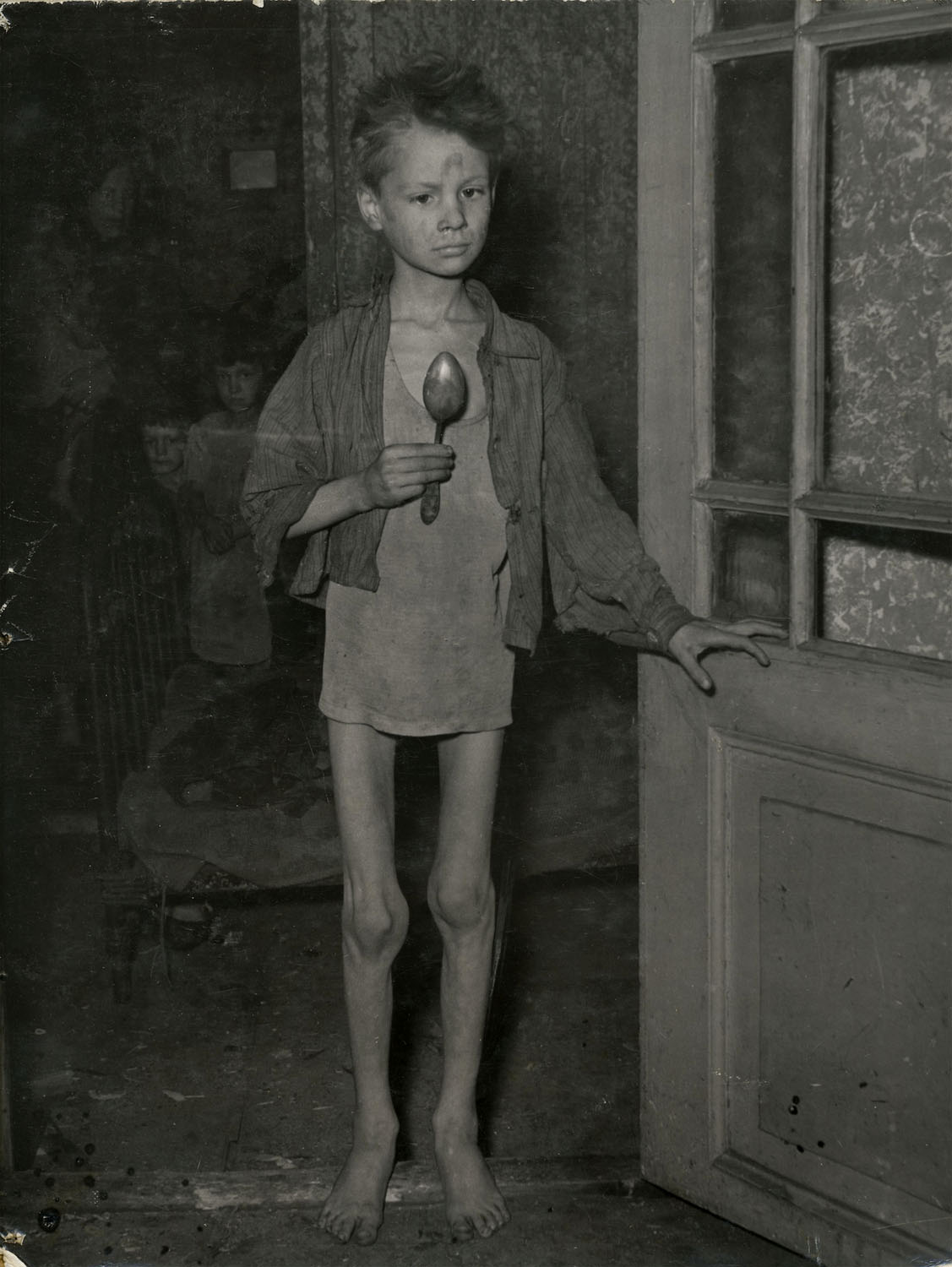
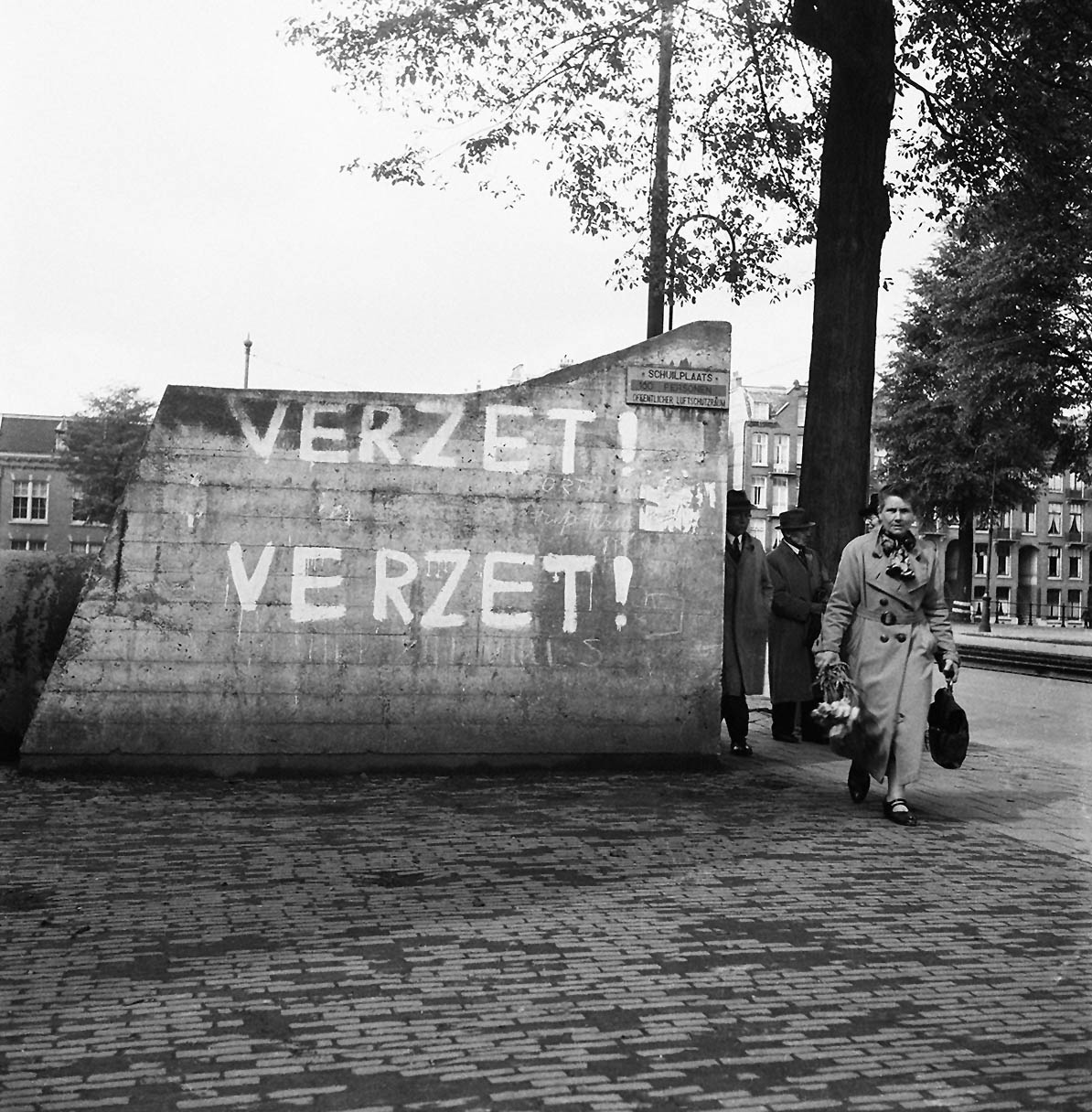
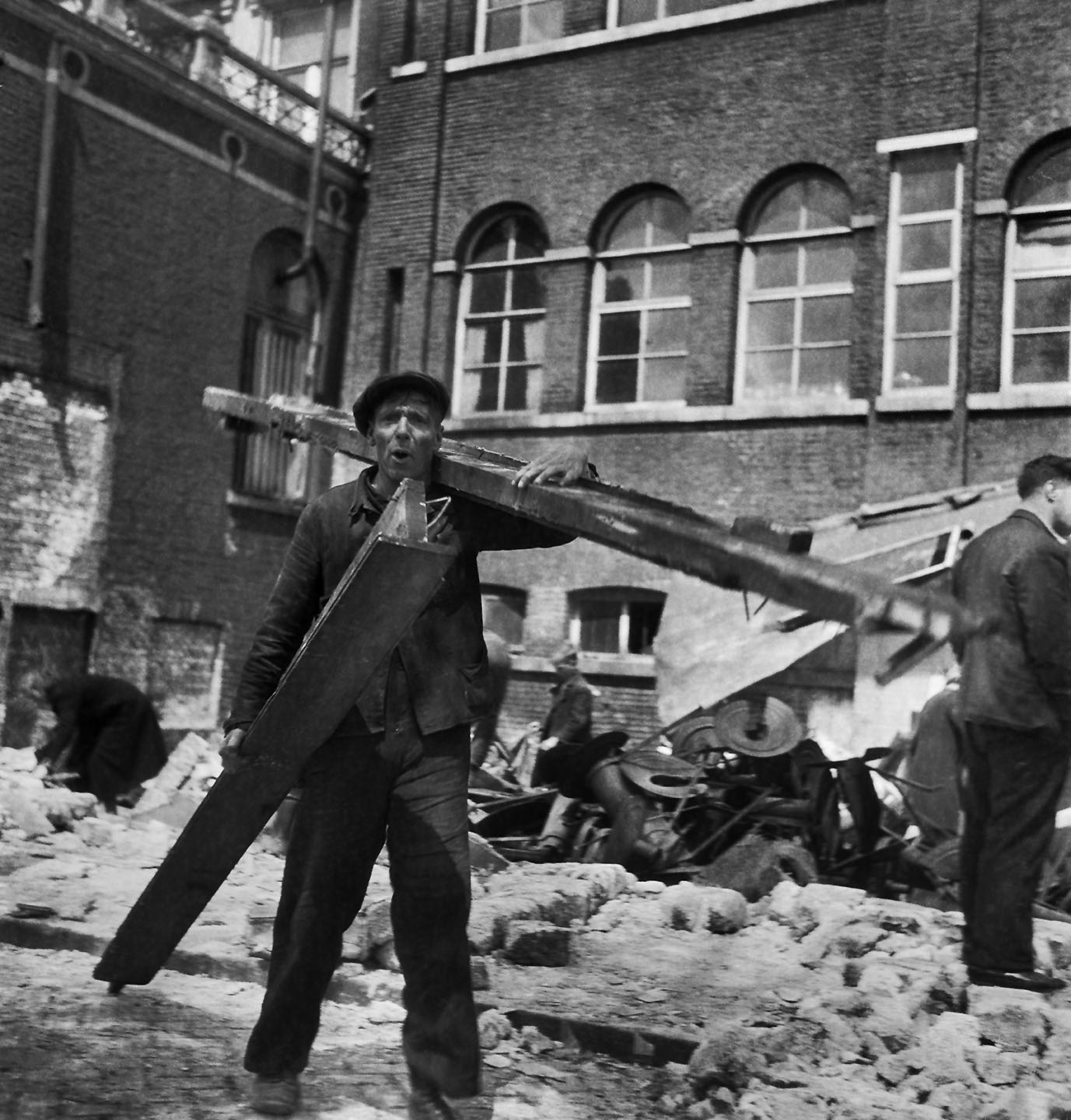
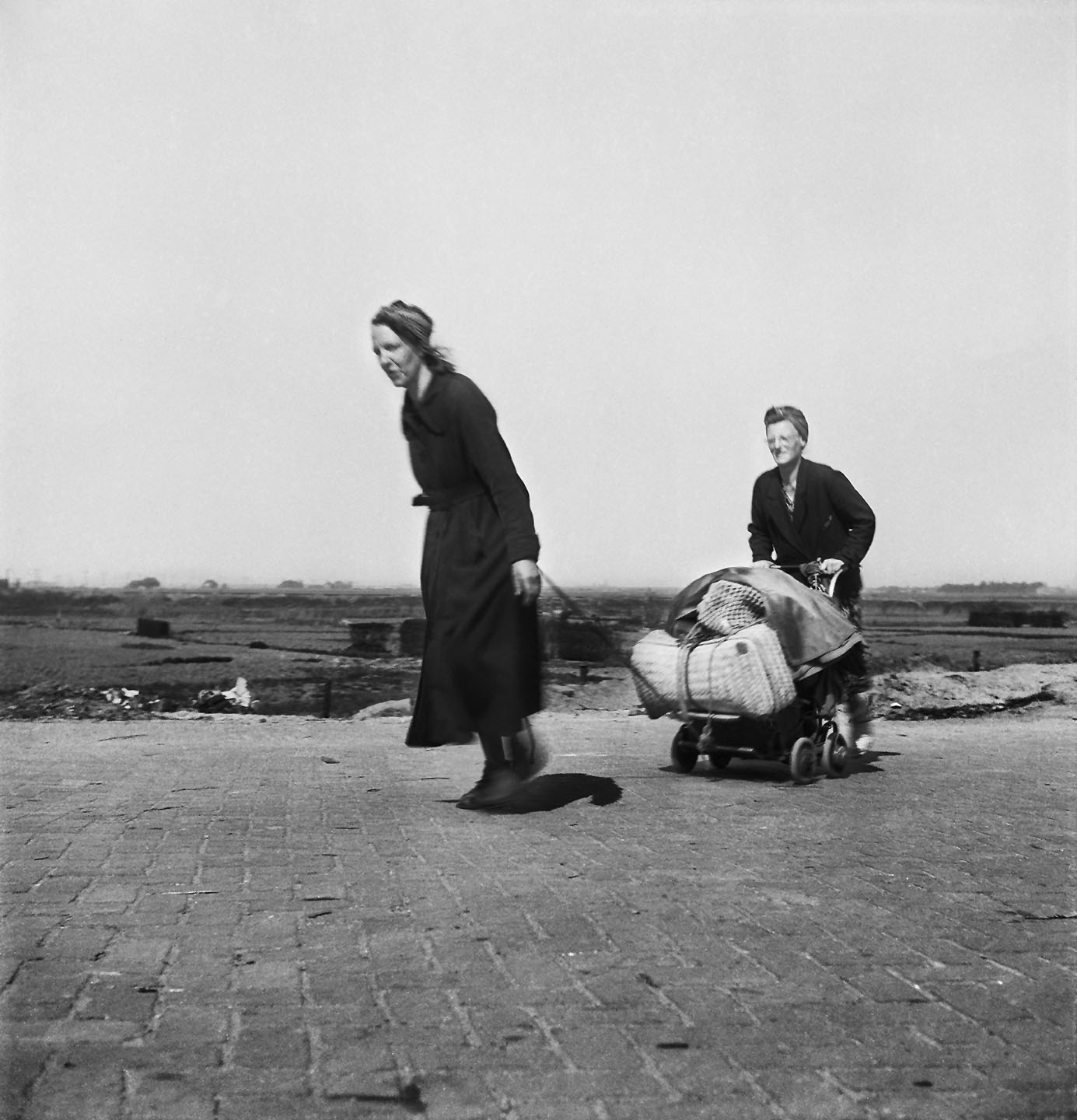
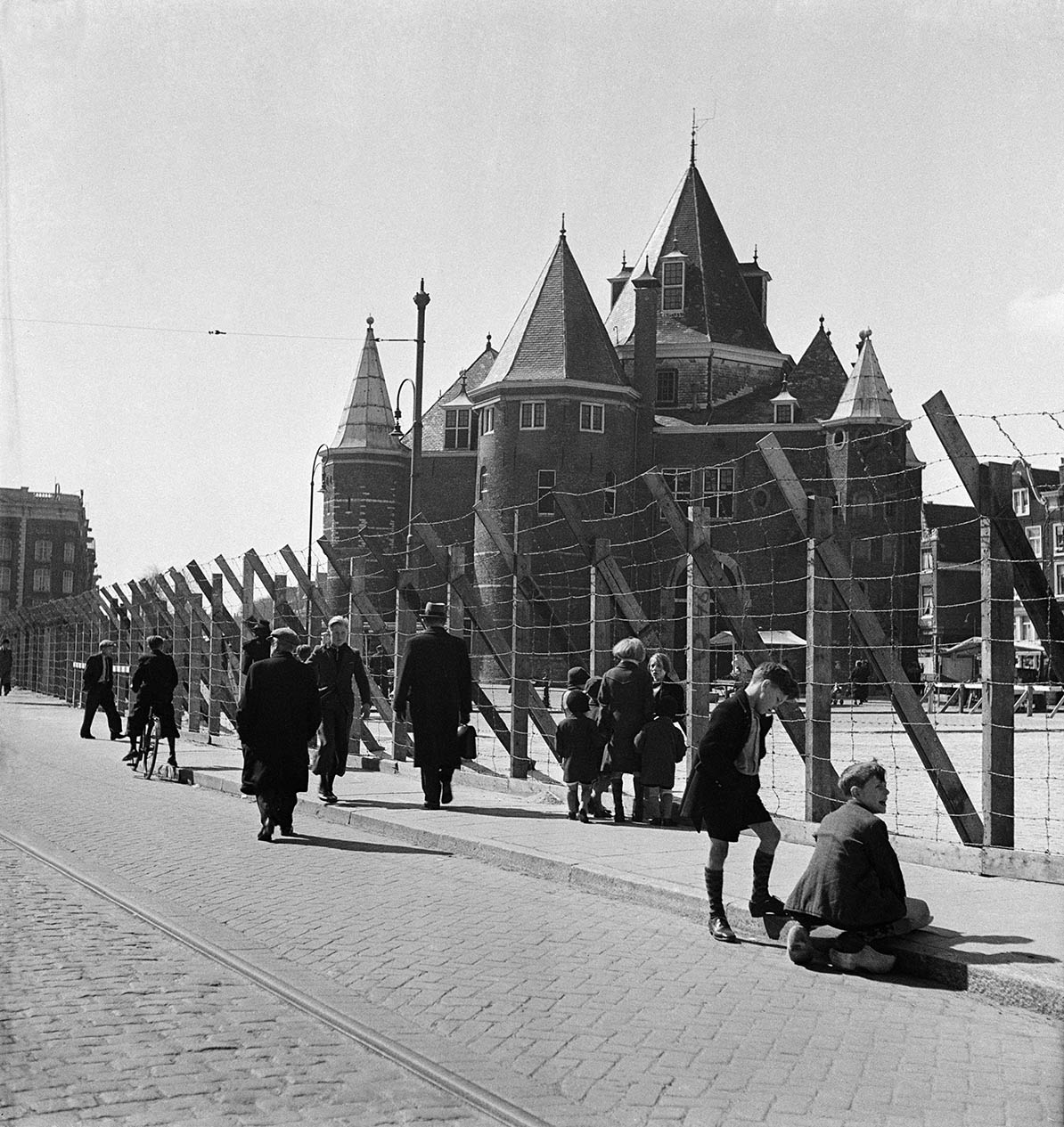
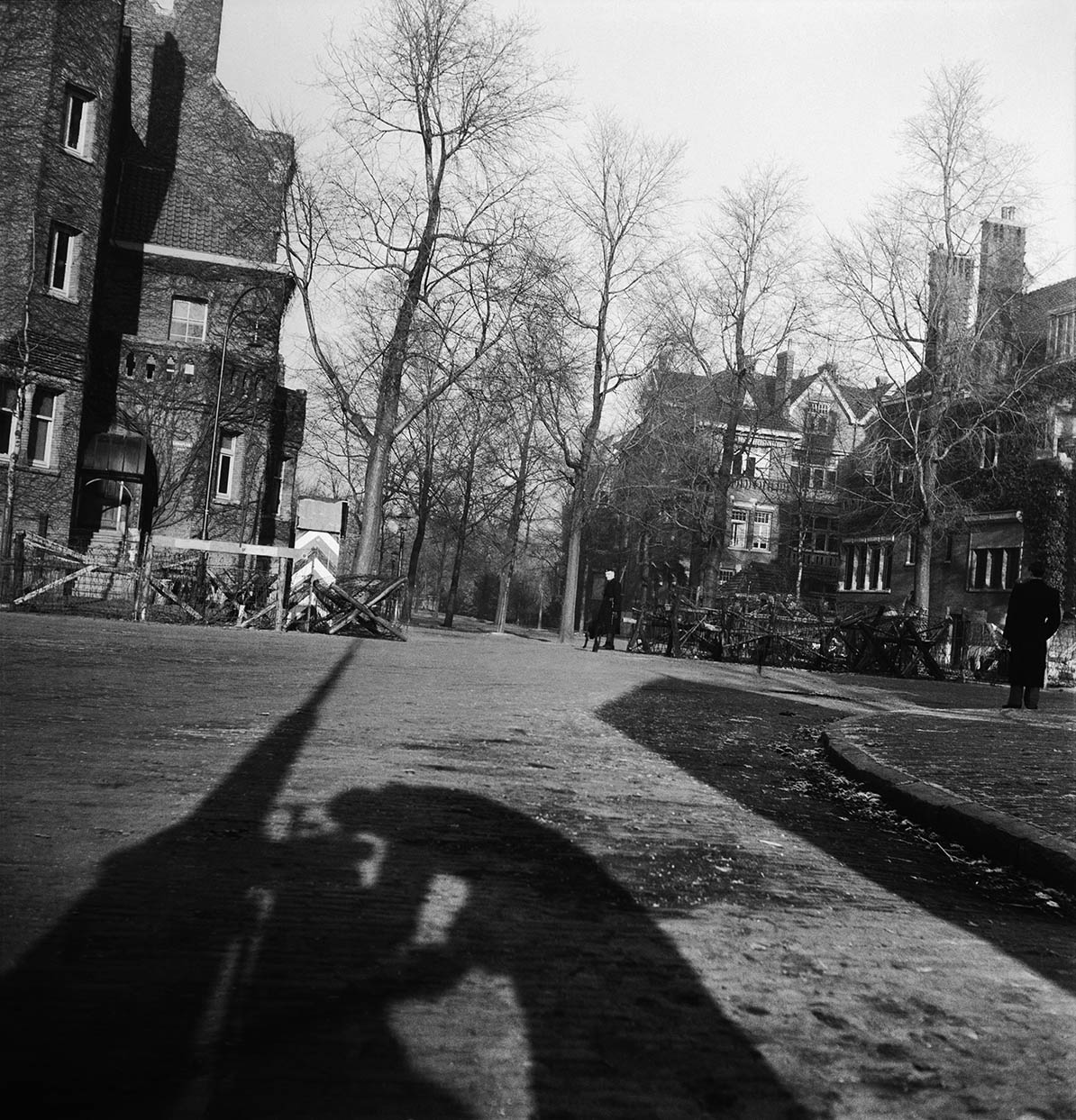
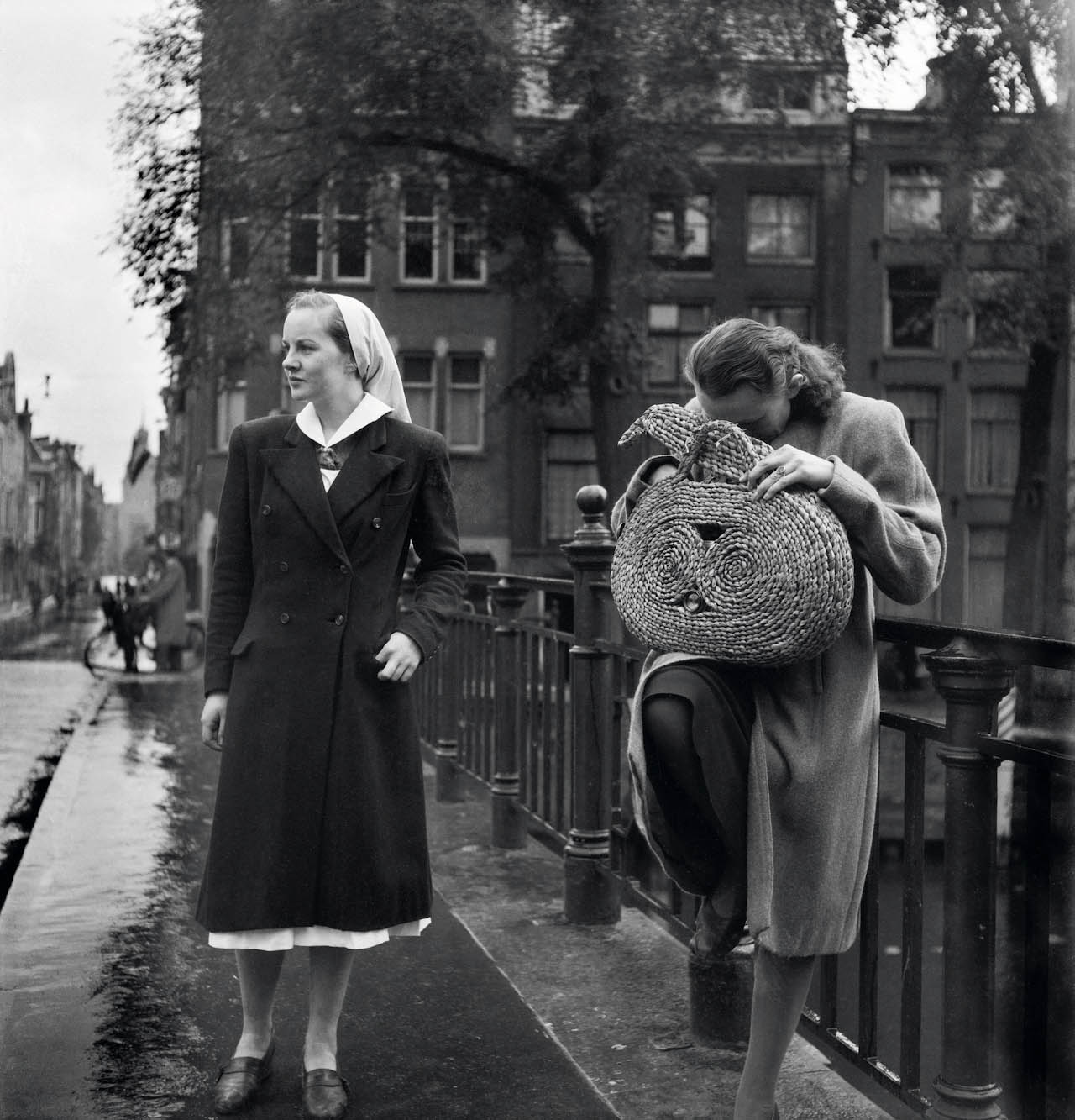
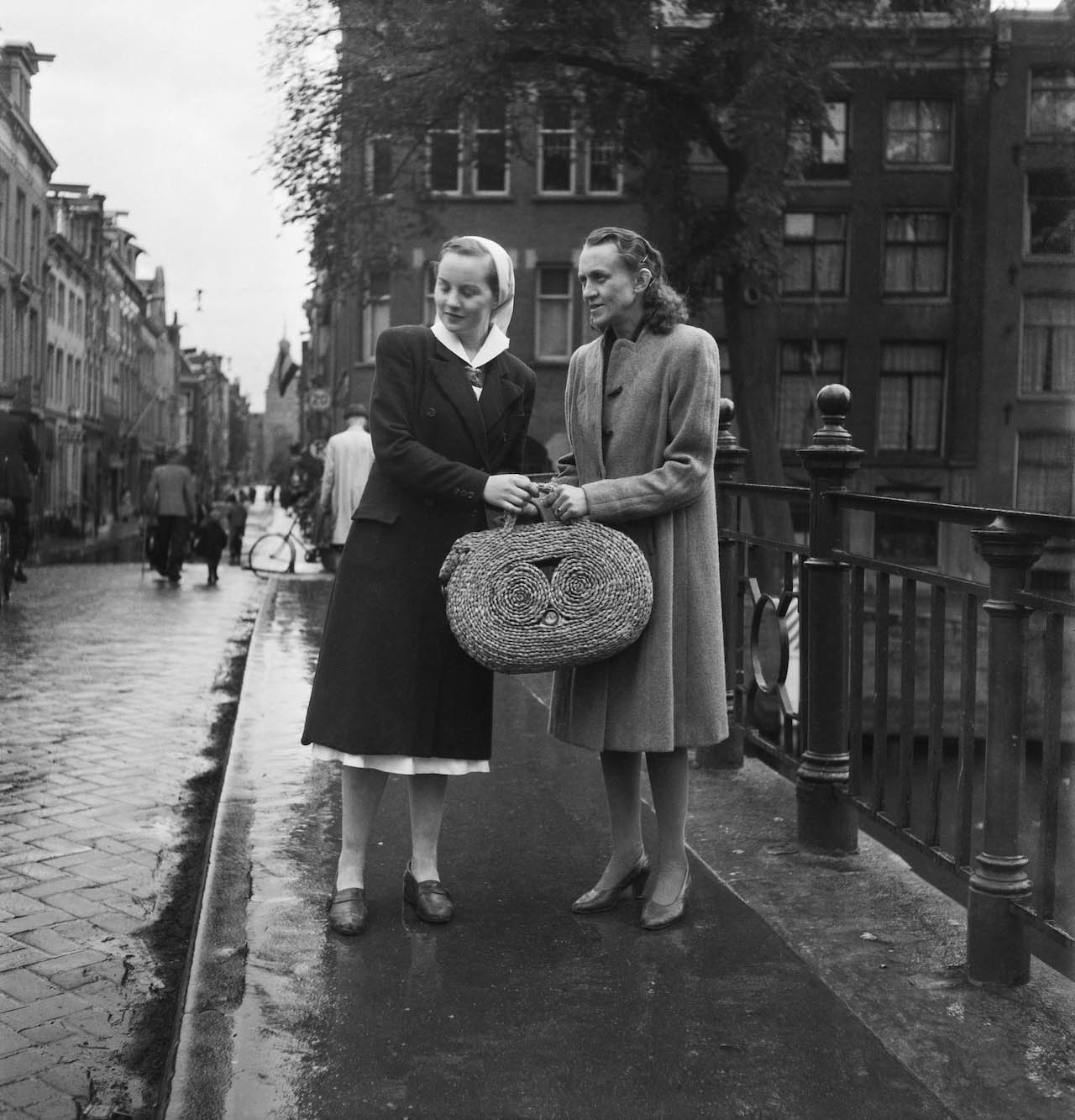
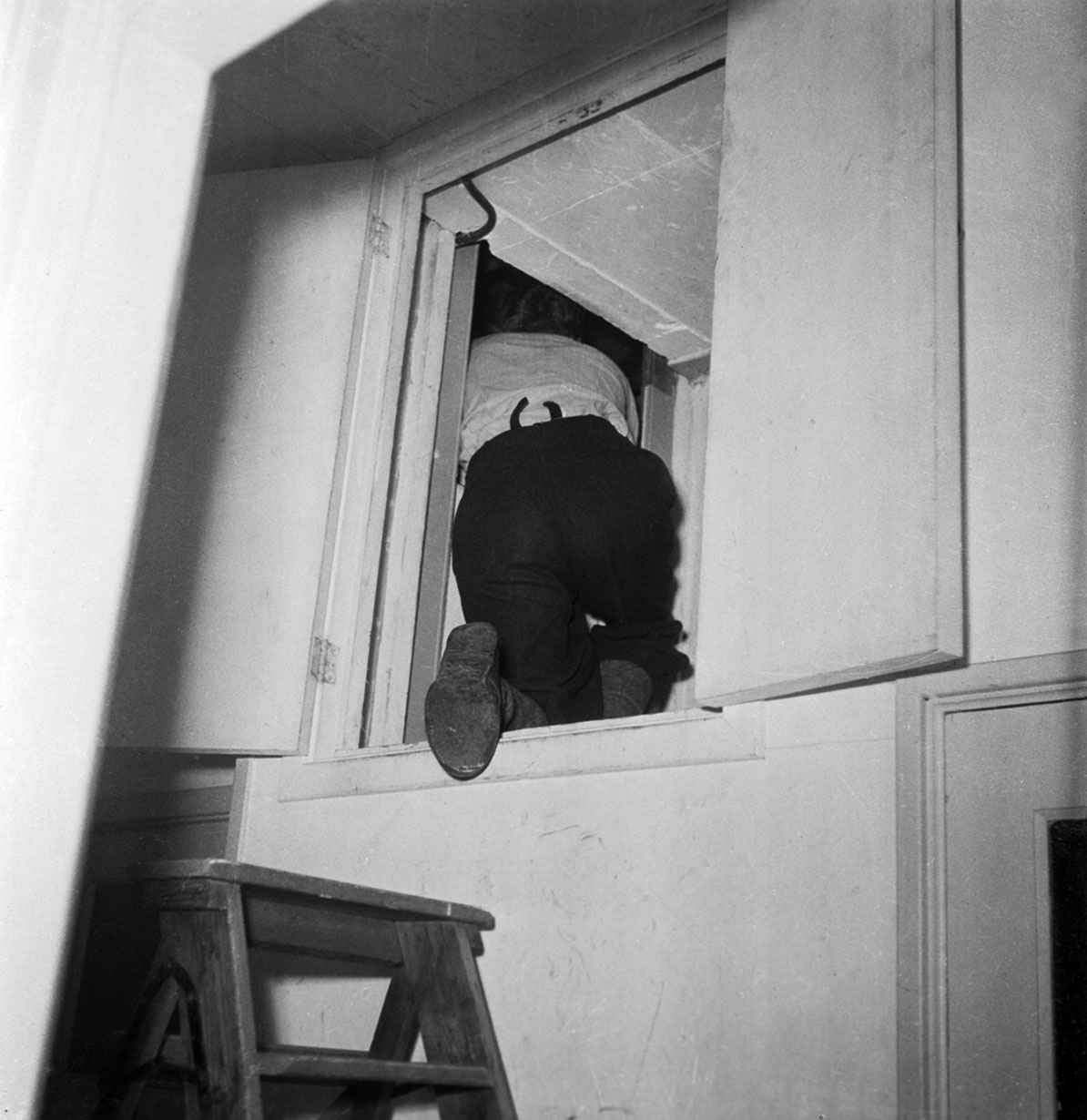
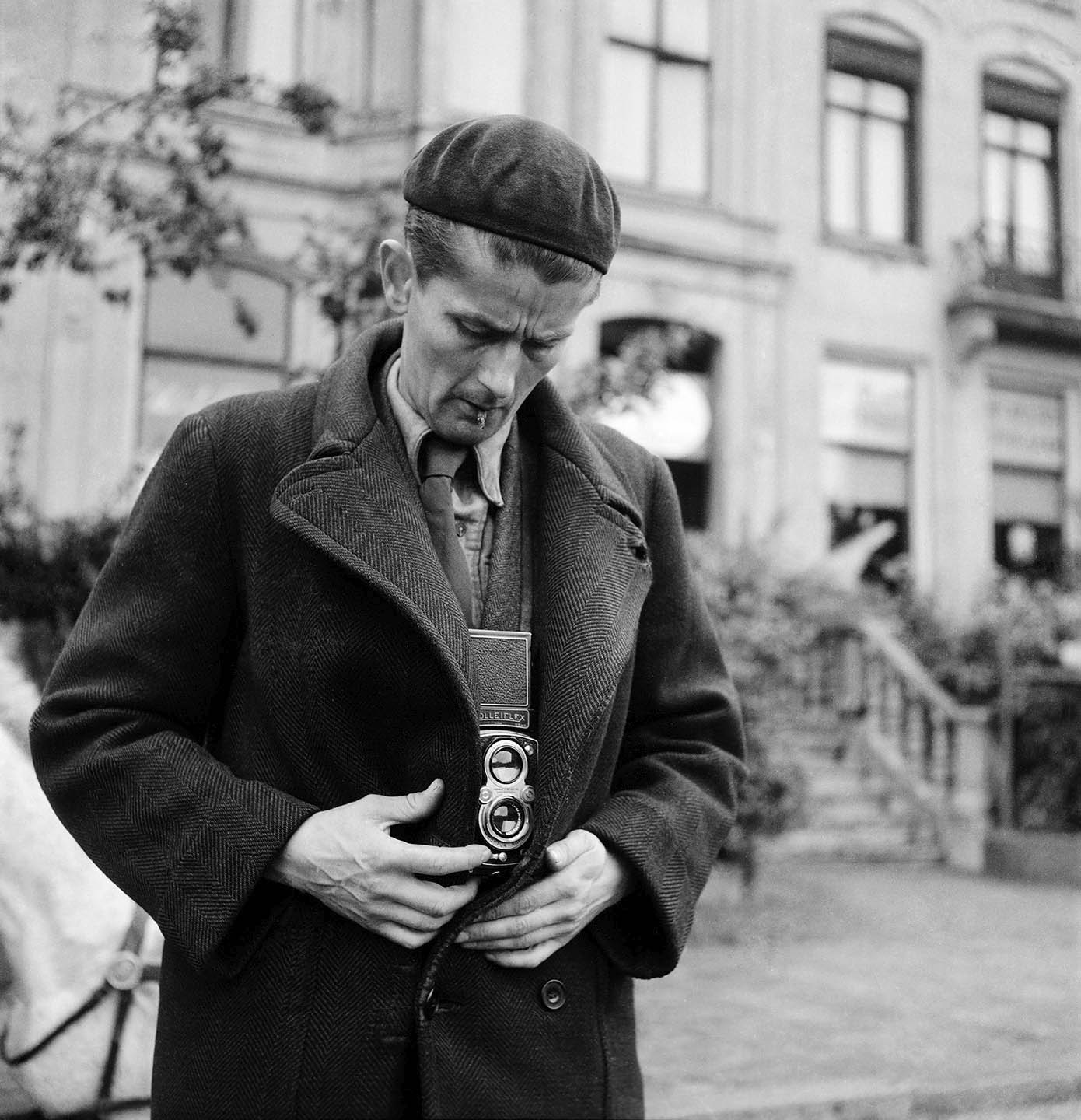
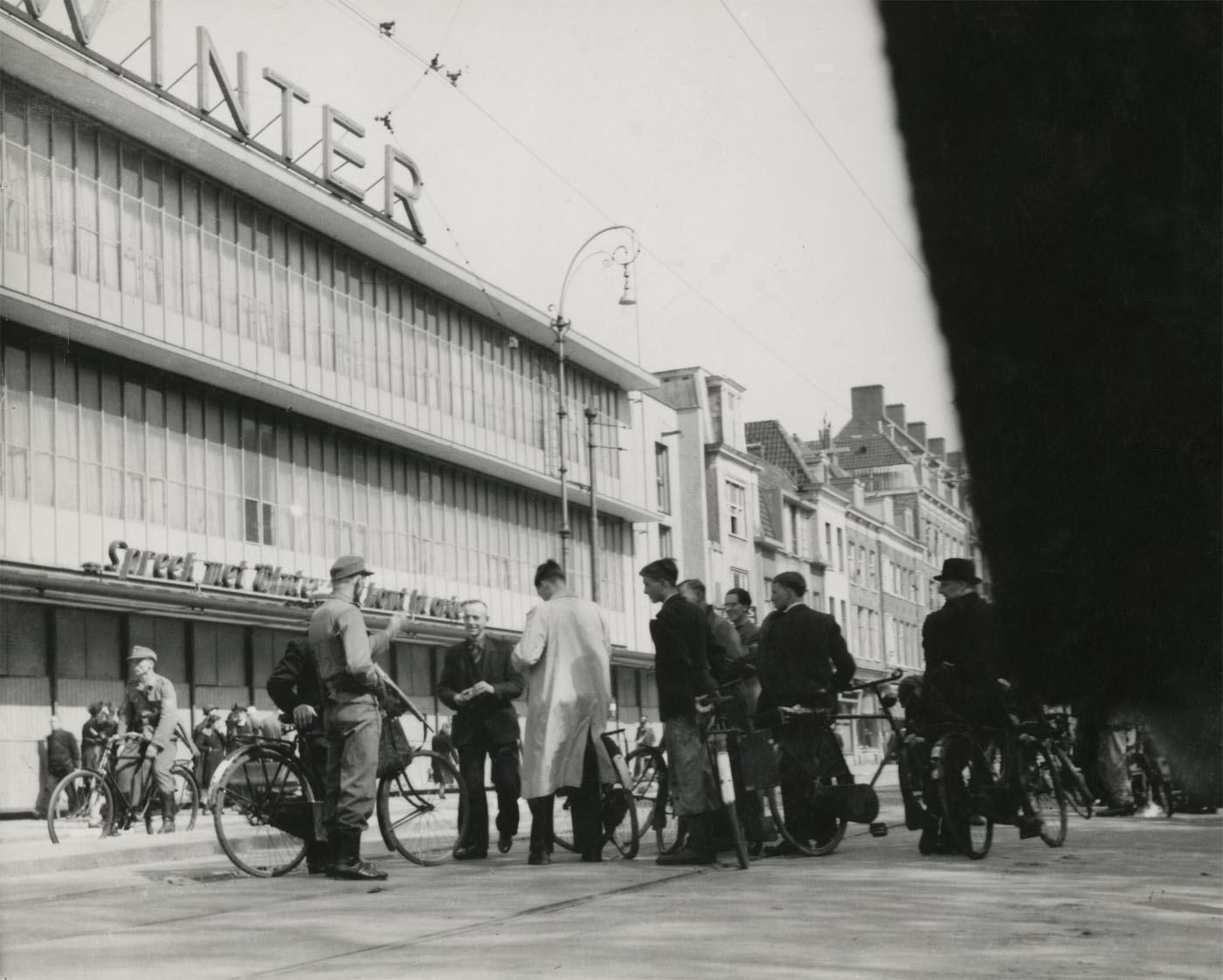
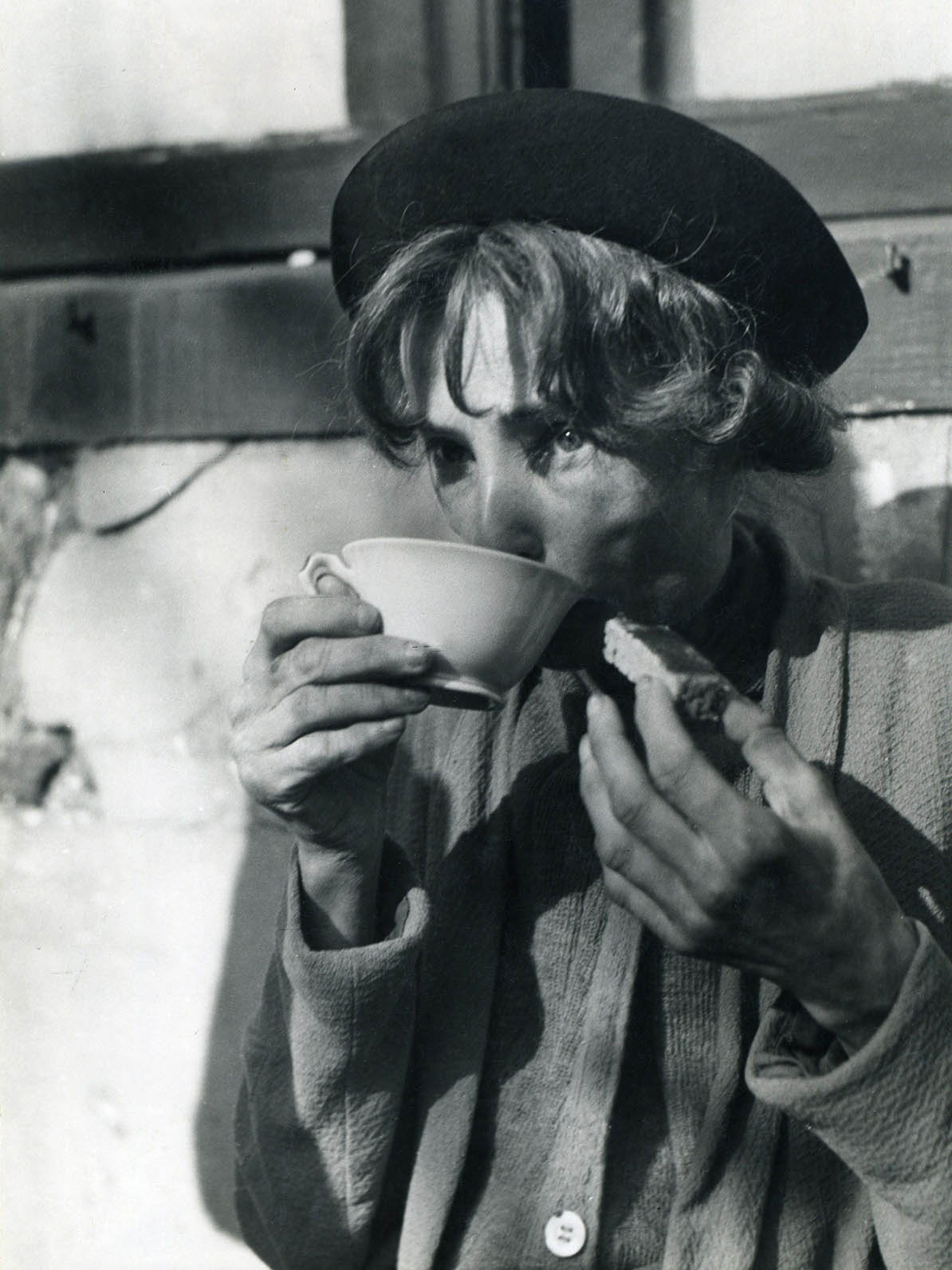
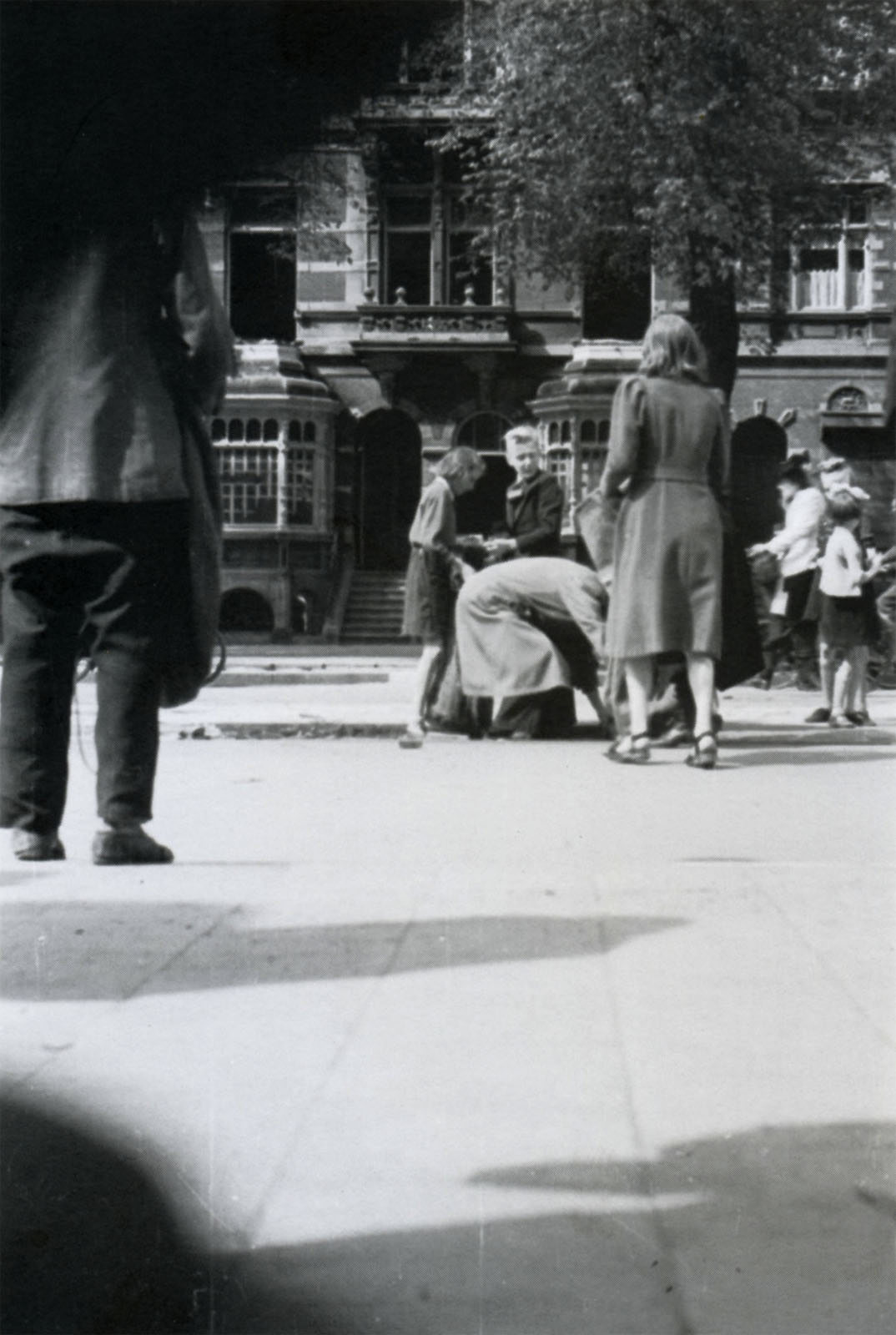
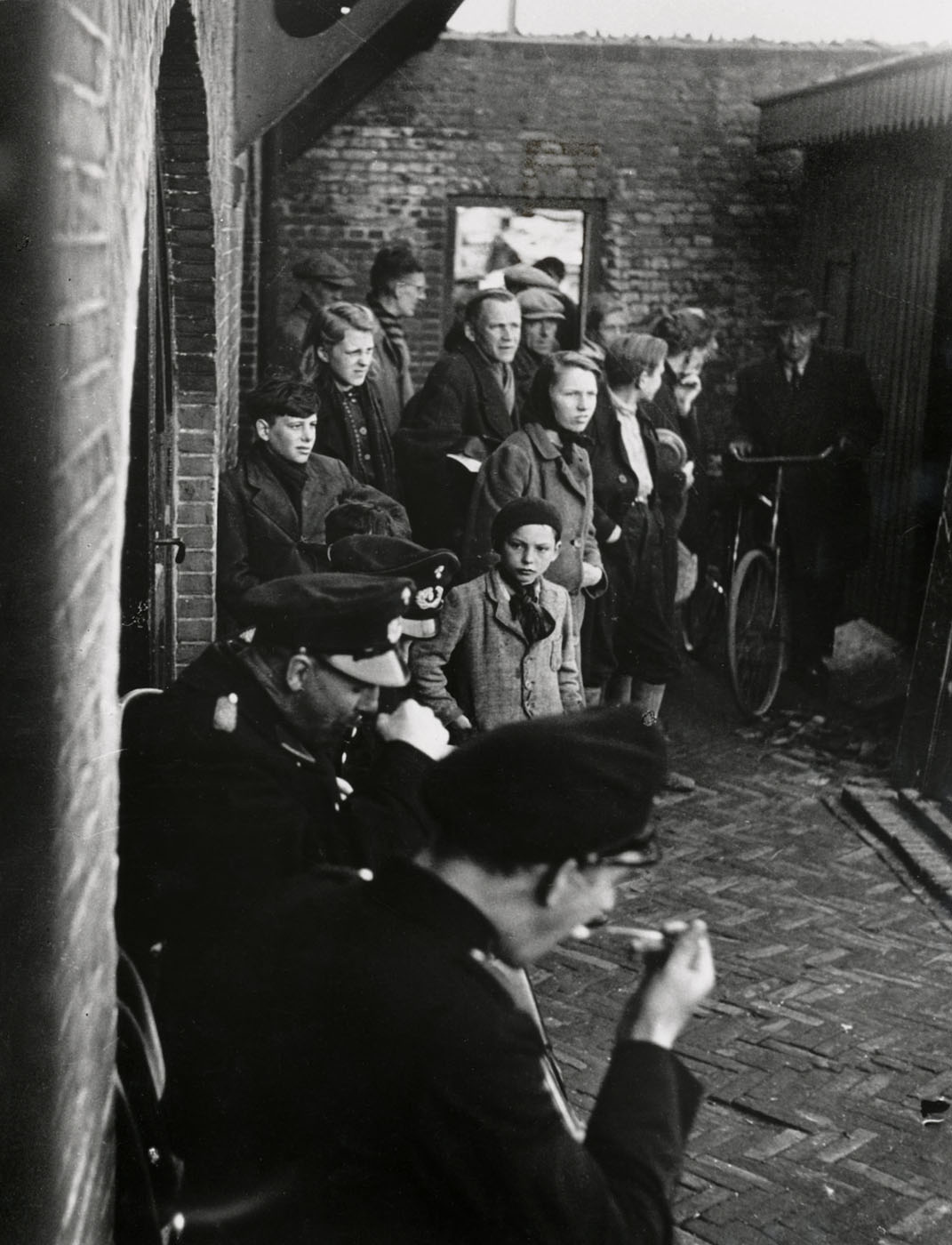
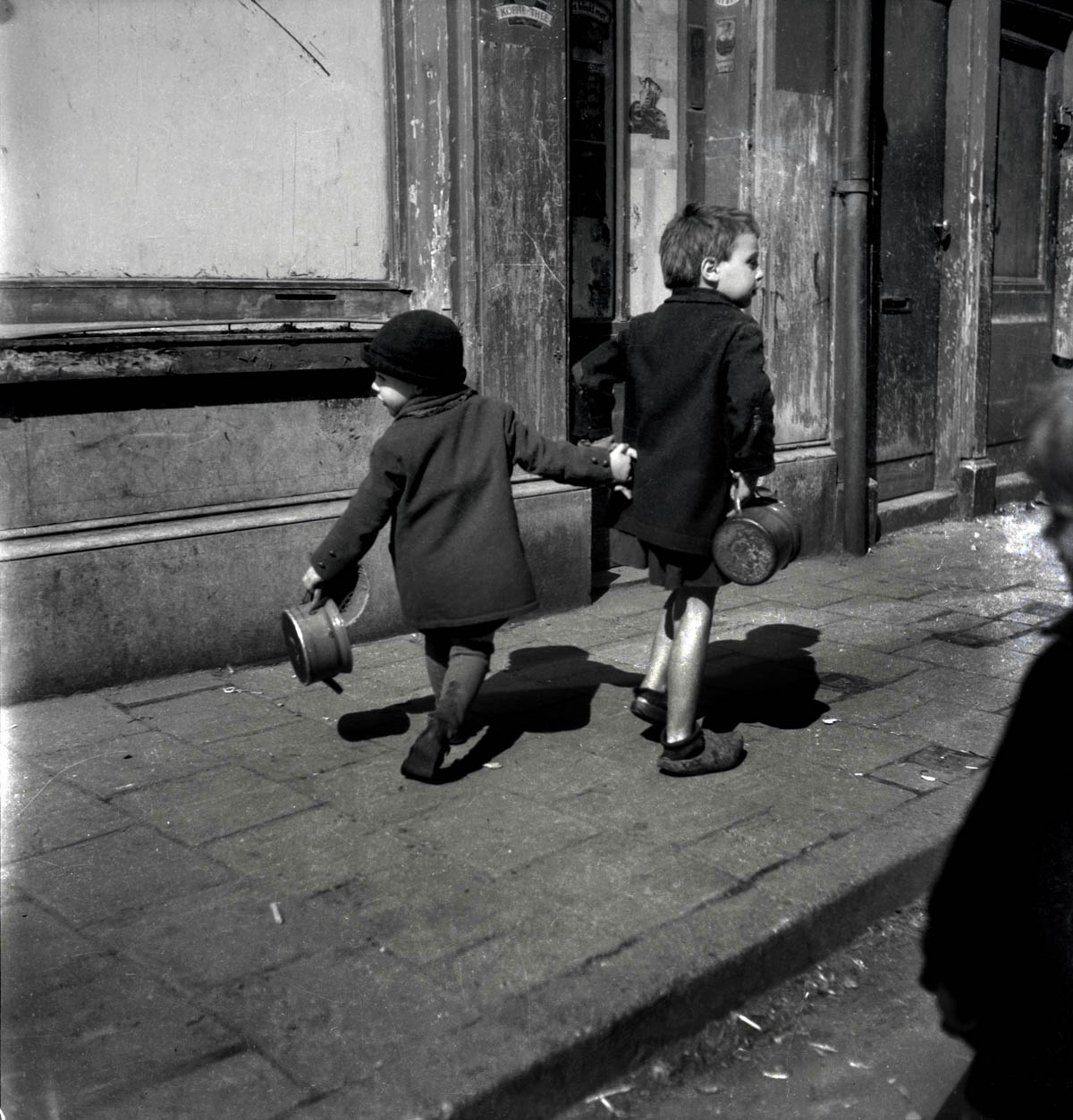
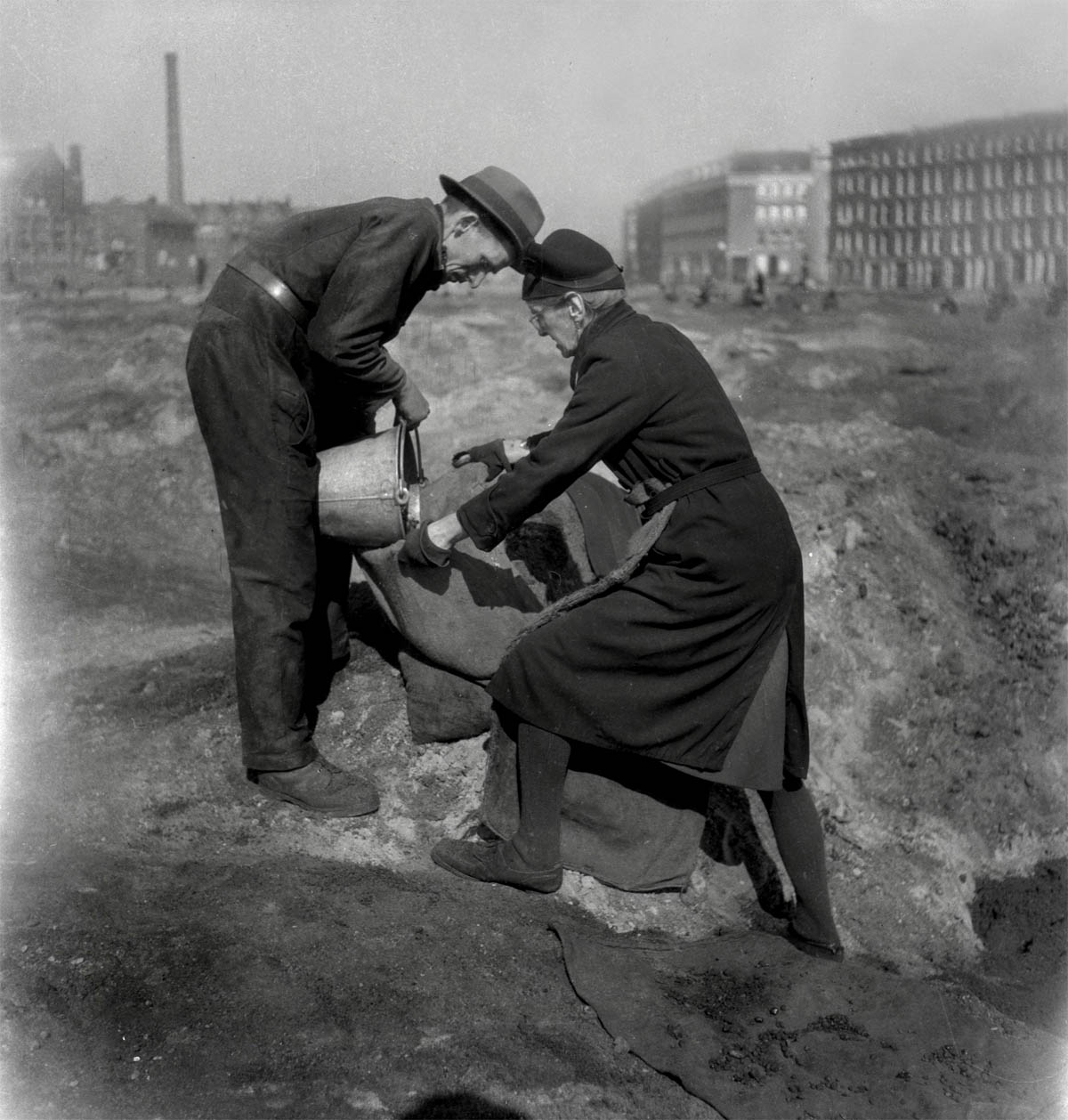
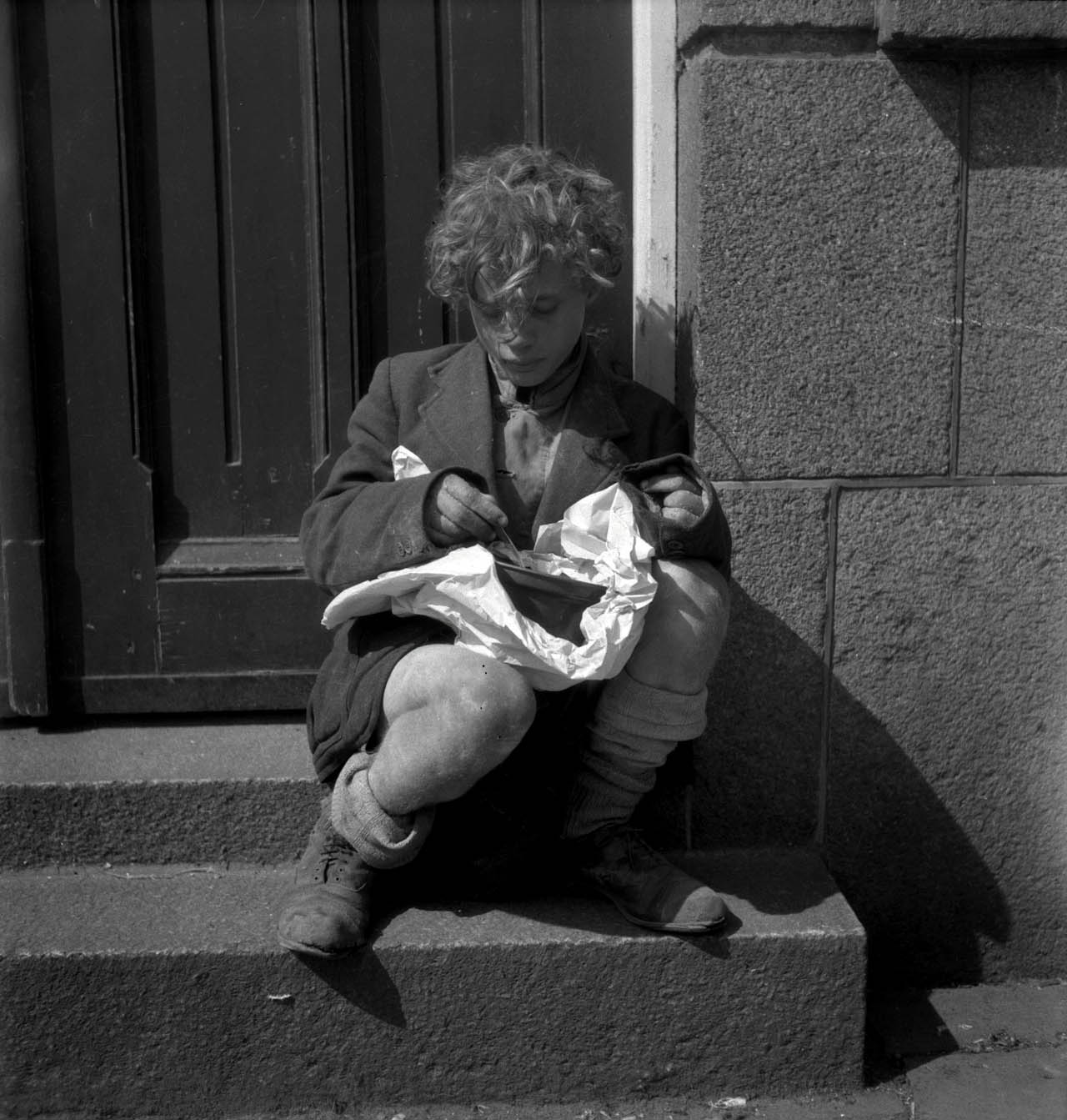
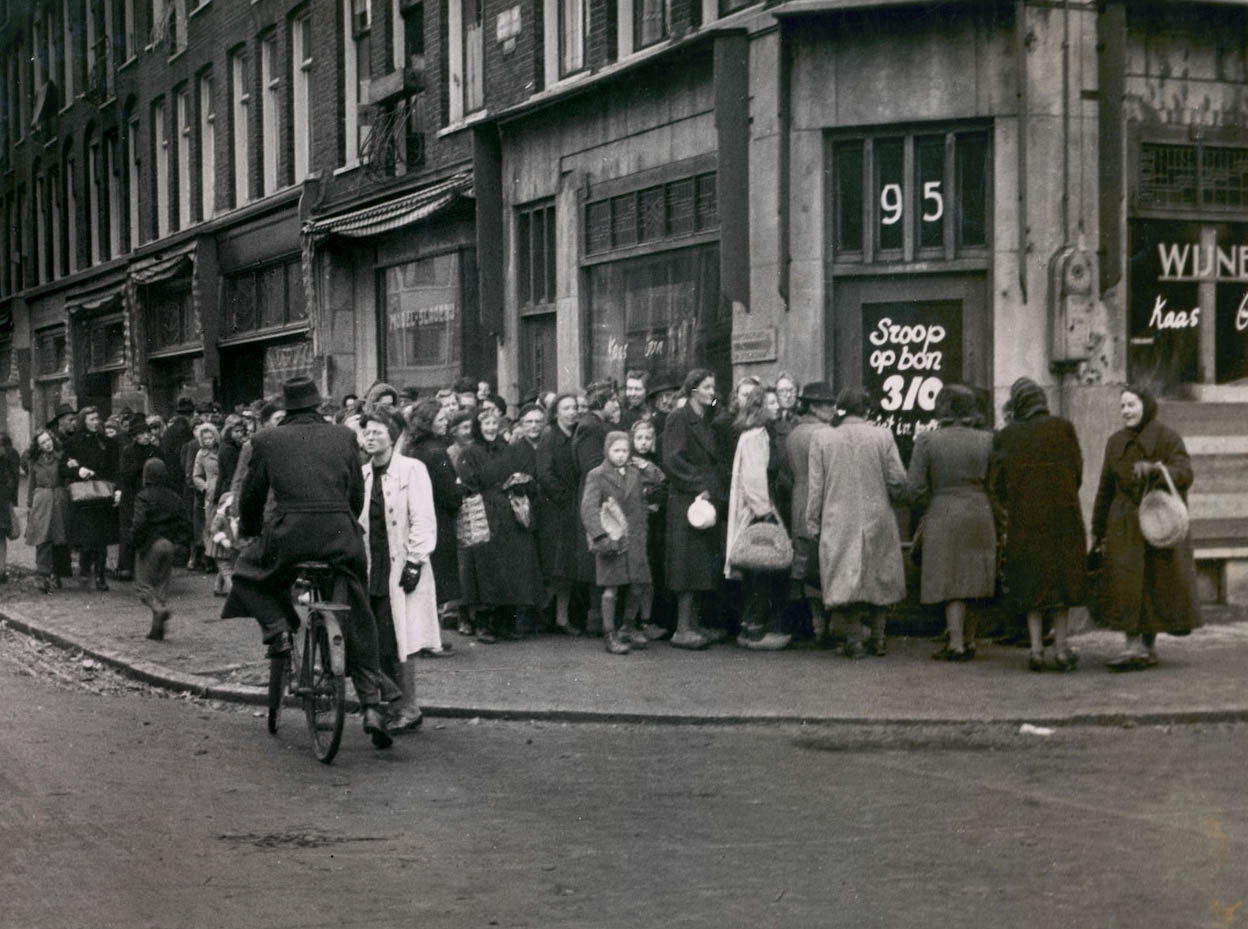
![Emmy Andriesse (Dutch, 1914-1953) 'Amsterdam tijdens de hongerwinter' (Amsterdam during the hunger winter) [1944-1945] book published 1947](https://artblart.com/wp-content/uploads/2021/11/5280-082-small.jpg "Emmy Andriesse (Dutch, 1914-1953) 'Amsterdam tijdens de hongerwinter' (Amsterdam during the hunger winter) [1944-1945] book published 1947")
![Emmy Andriesse (Dutch, 1914-1953) 'Amsterdam tijdens de hongerwinter' (Amsterdam during the hunger winter) [1944-1945] book published 1947 (detail)](https://artblart.com/wp-content/uploads/2021/11/5280-082-detail1.jpg "Emmy Andriesse (Dutch, 1914-1953) 'Amsterdam tijdens de hongerwinter' (Amsterdam during the hunger winter) [1944-1945] book published 1947 (detail)")
![Emmy Andriesse (Dutch, 1914-1953) 'Amsterdam tijdens de hongerwinter' (Amsterdam during the hunger winter) [1944-1945] book published 1947 (detail)](https://artblart.com/wp-content/uploads/2021/11/5280-082-detail2.jpg "Emmy Andriesse (Dutch, 1914-1953) 'Amsterdam tijdens de hongerwinter' (Amsterdam during the hunger winter) [1944-1945] book published 1947 (detail)")


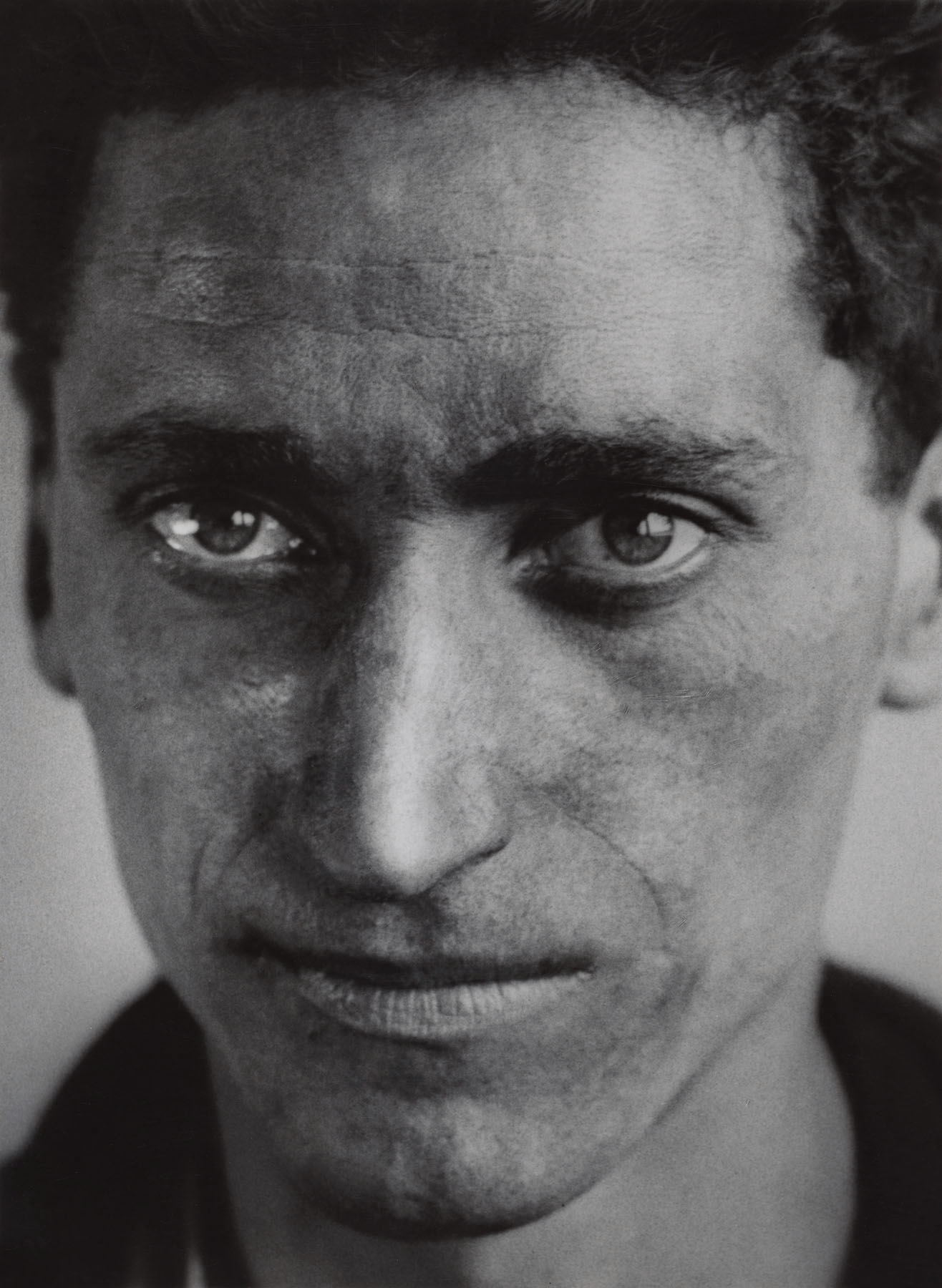


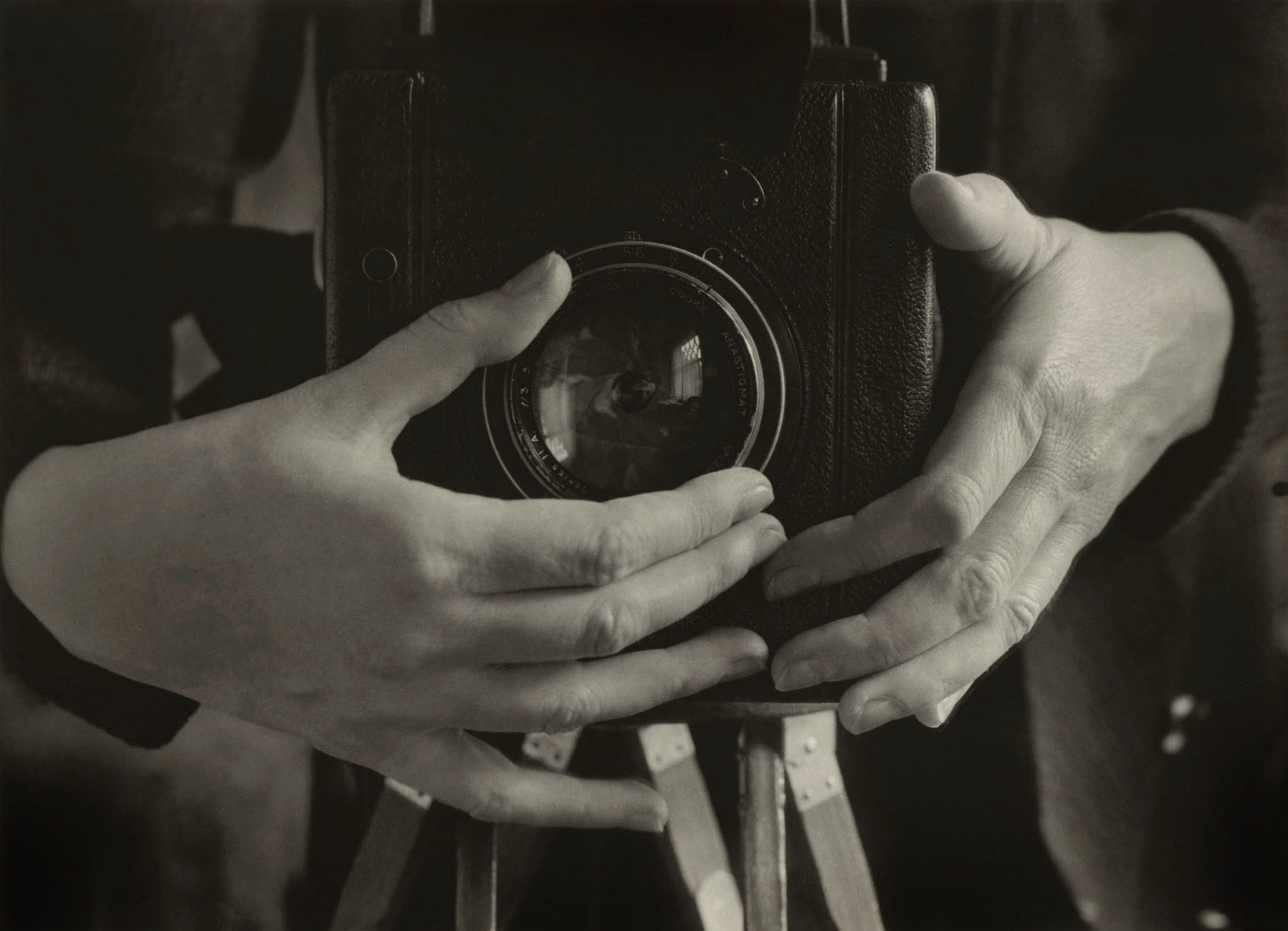
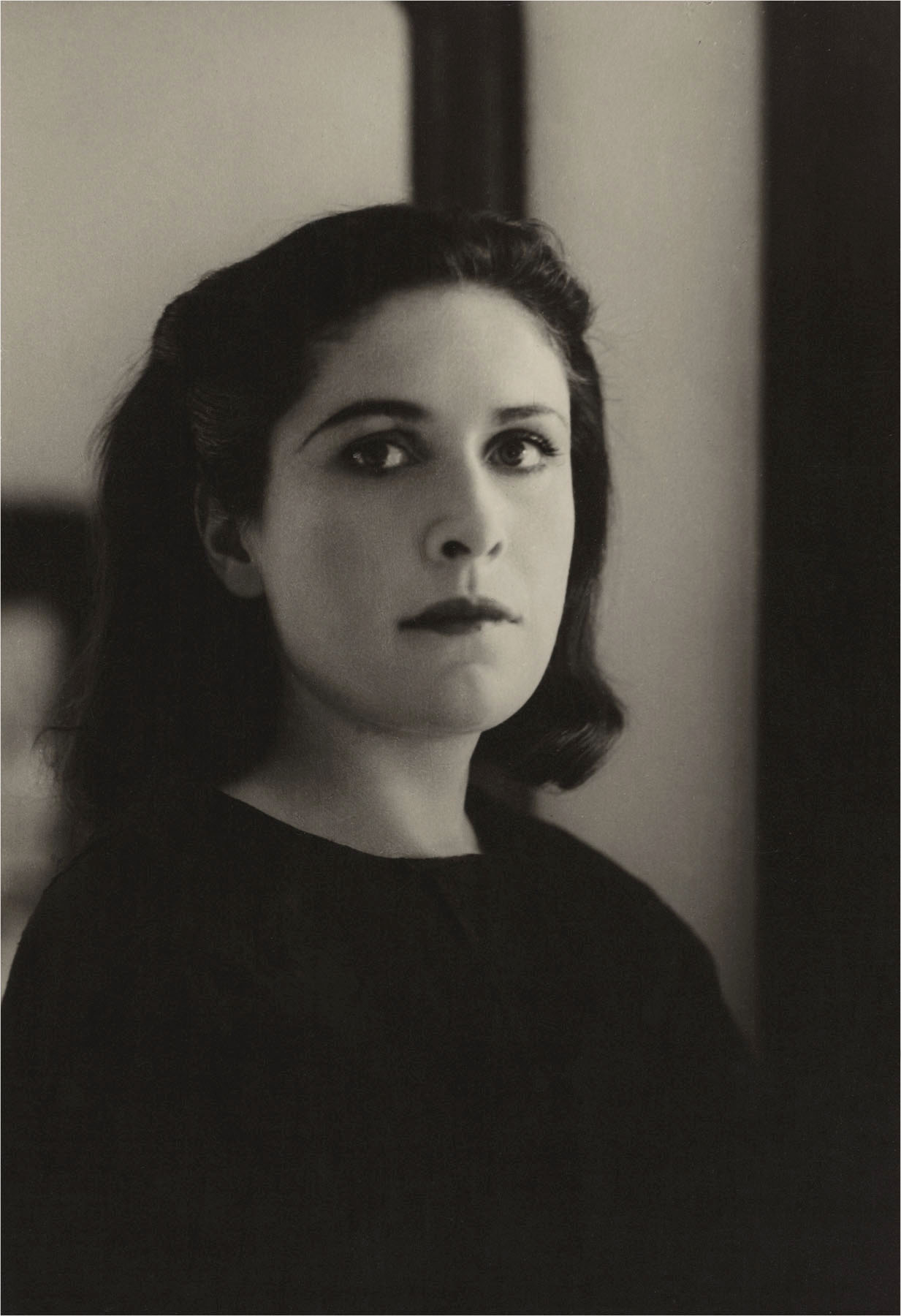


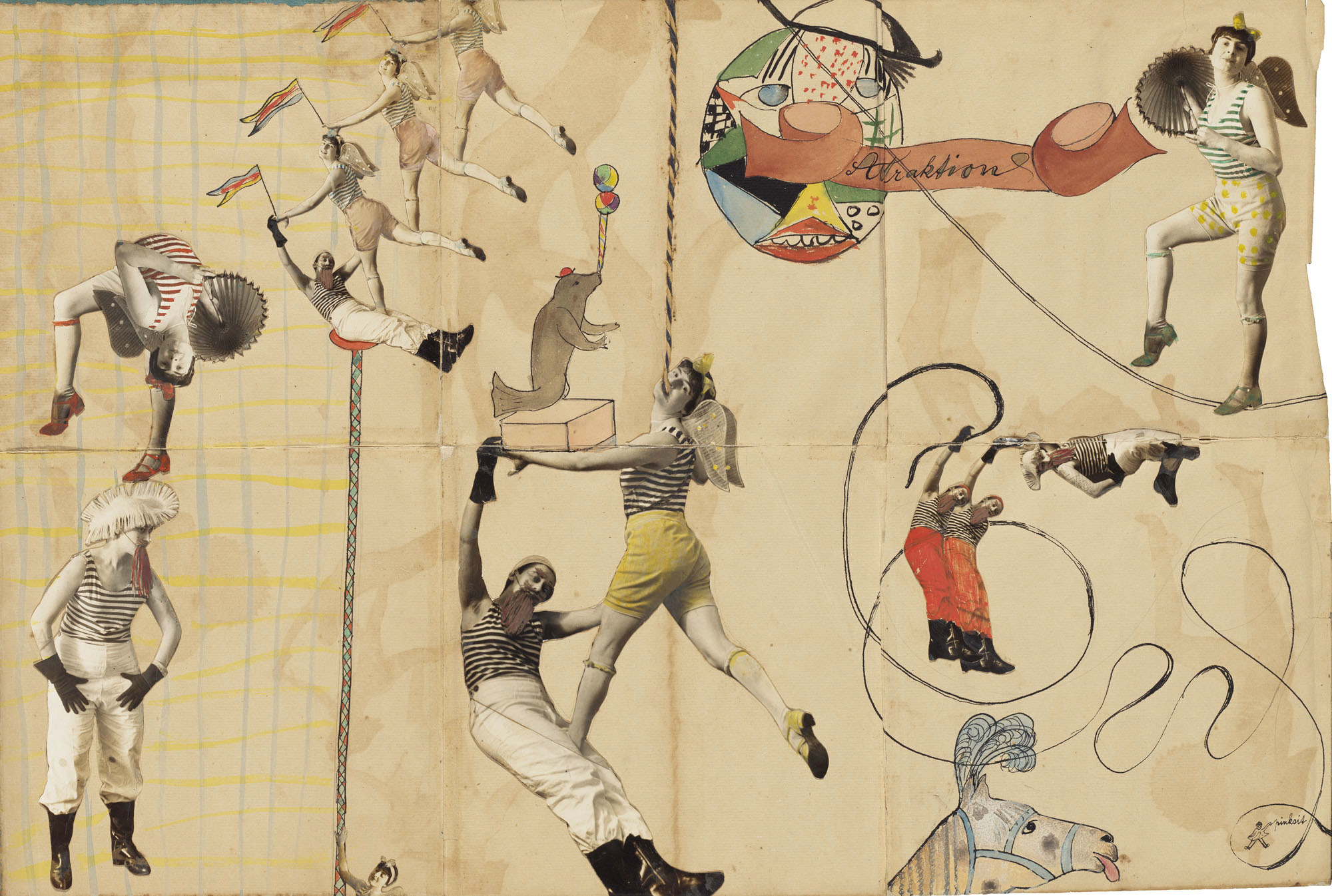


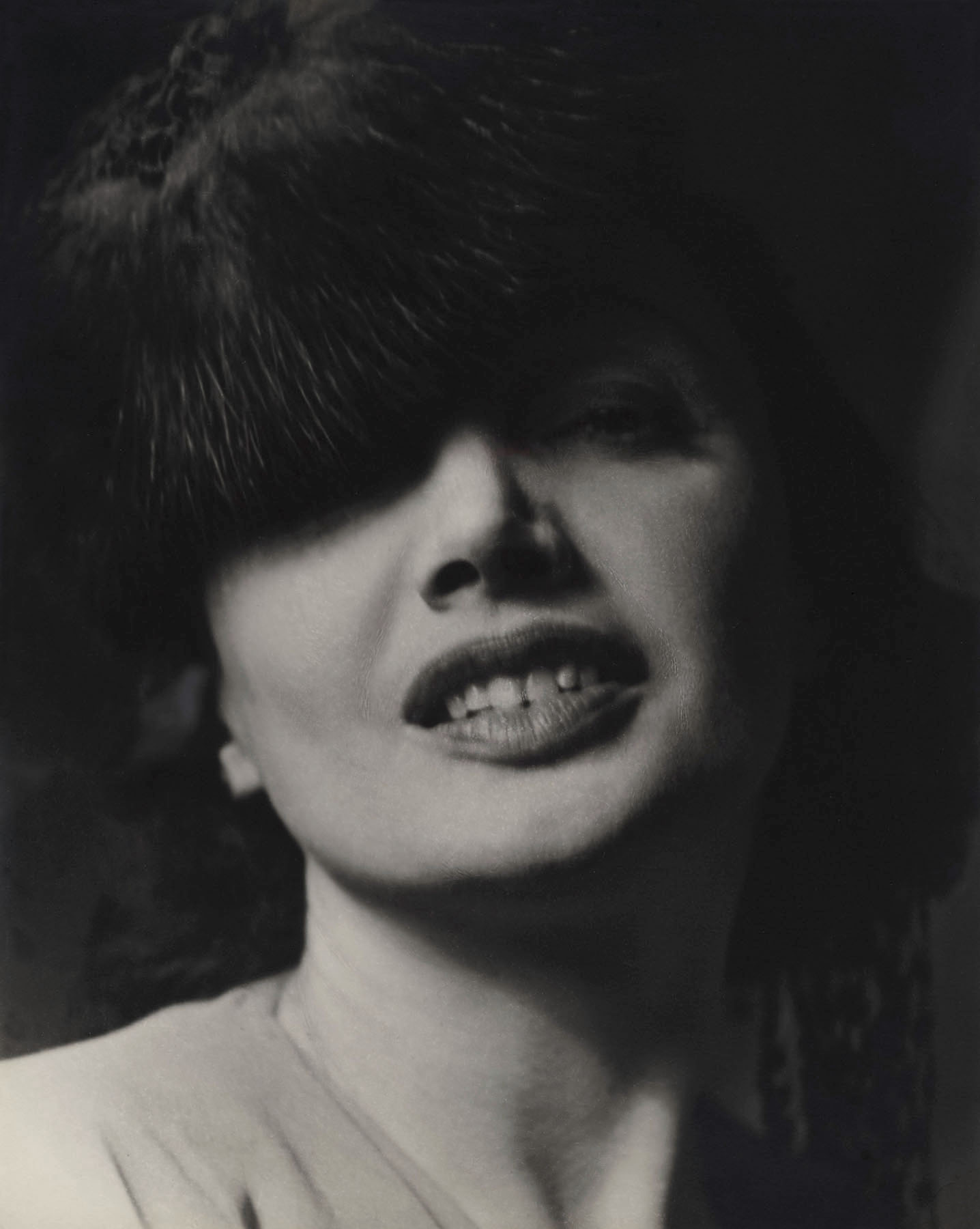


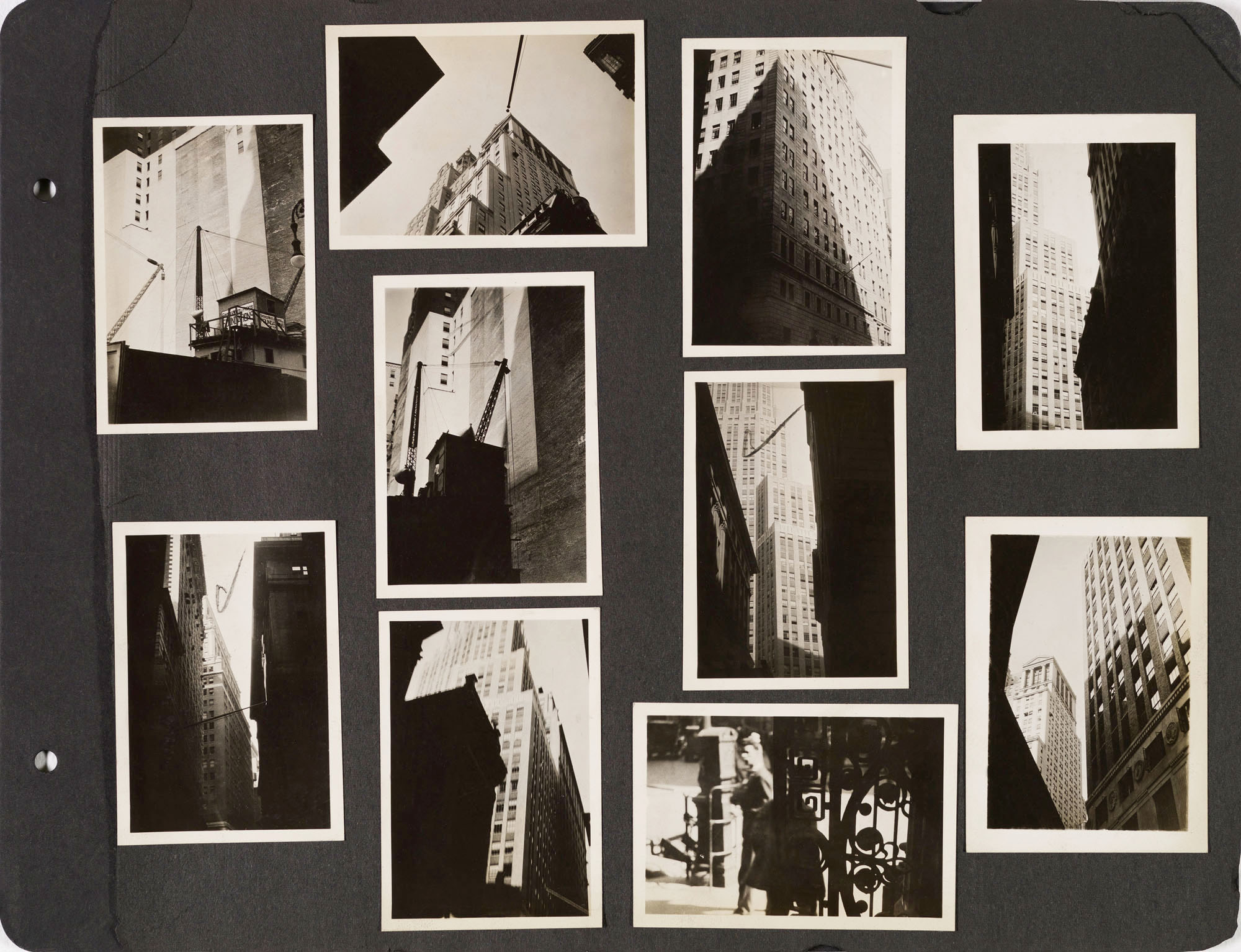


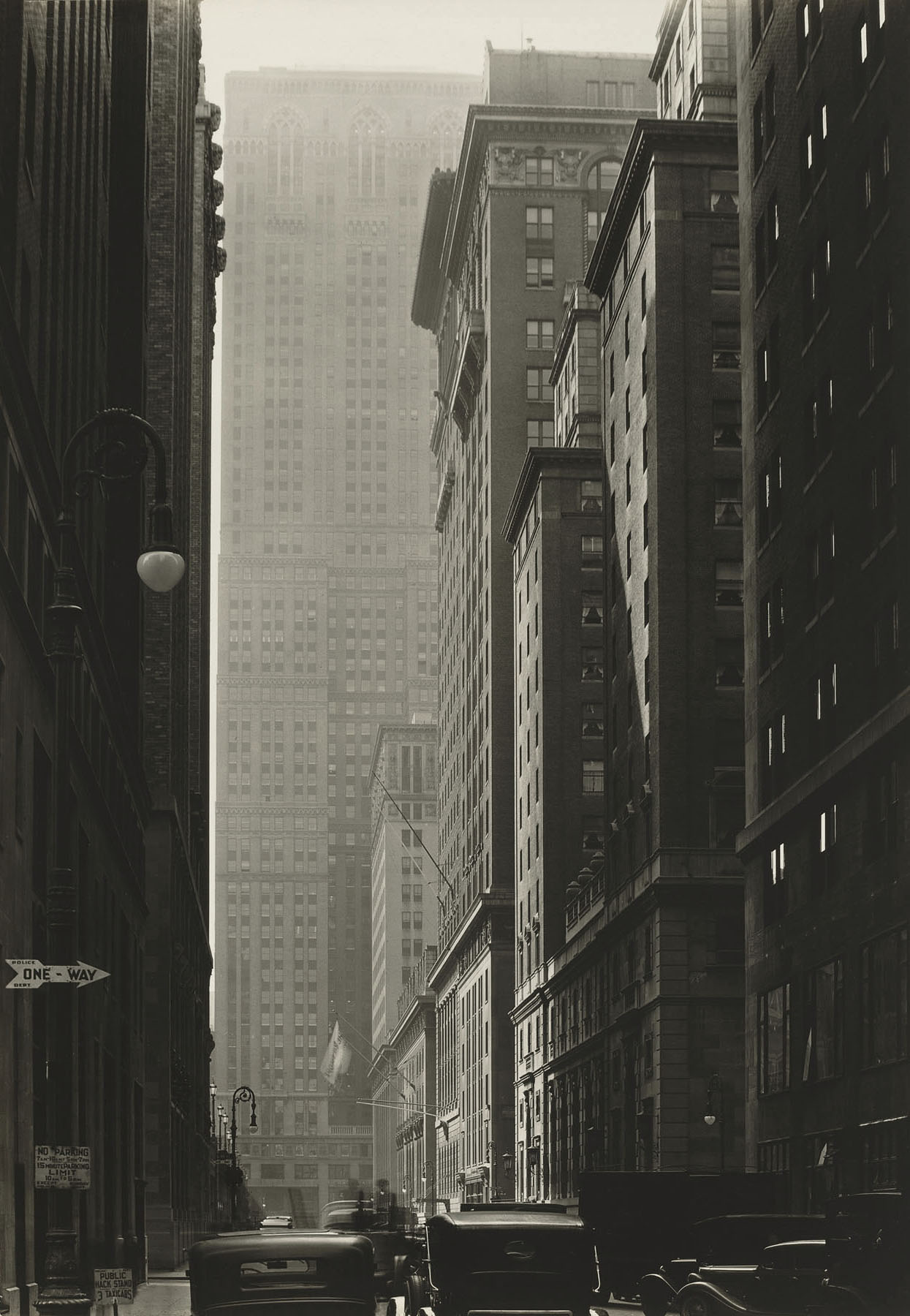


 Art Blart _ art and cultural memory archive
You must be logged in to post a comment.