Exhibition: ‘Dawoud Bey: Street Portraits’ at the Denver Art Museum

Exhibition dates: 17th November, 2024 – 11th May, 2025

Curator: Eric Paddock, Curator of Photography at Denver Art Museum


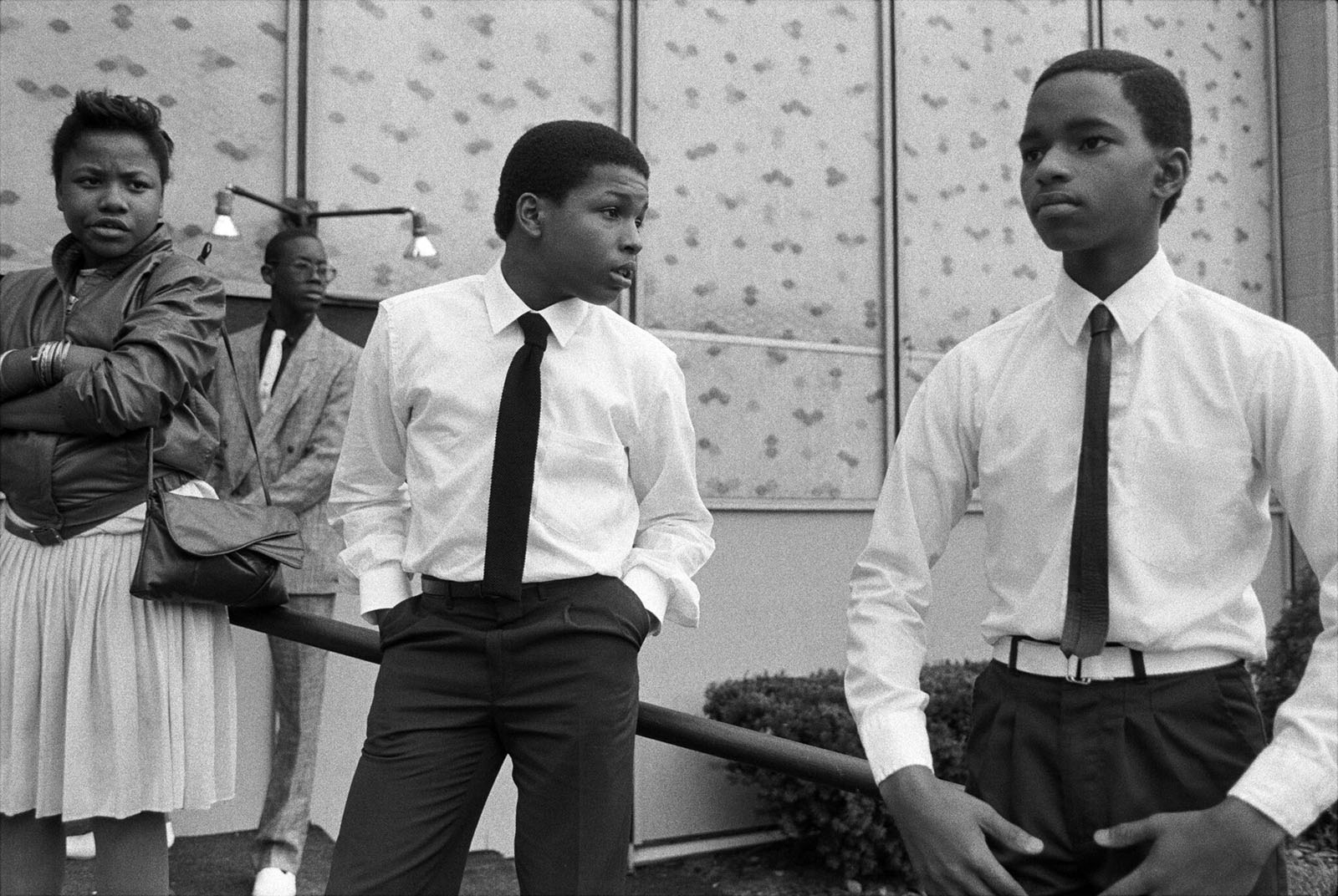
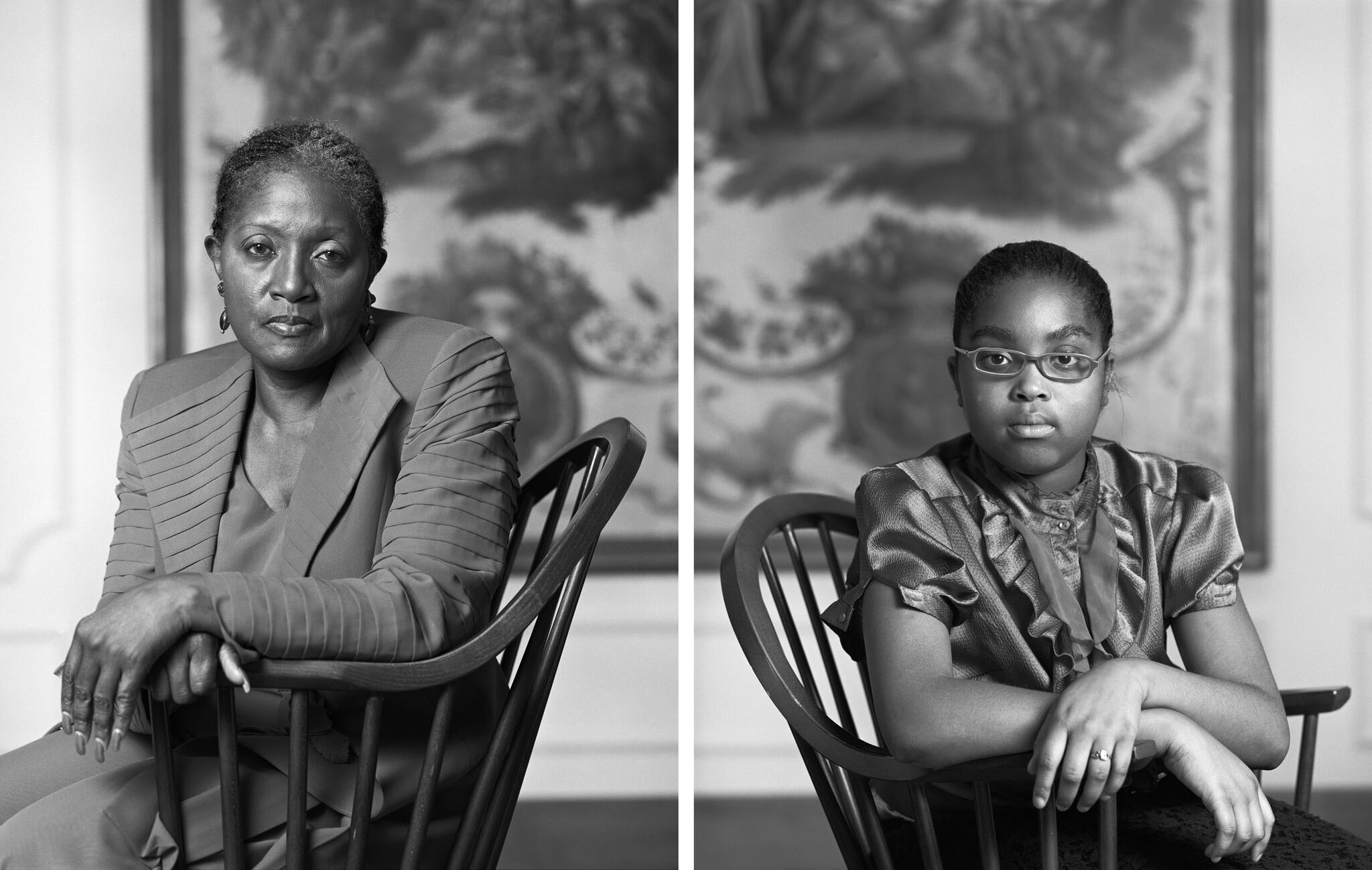
Dawoud Bey (American, b. 1953) 'Two Girls from a Marching Band, Harlem, NY' 1990


Dawoud Bey (American, b. 1953)
Two Girls from a Marching Band, Harlem, NY
1990
Pigment print
Courtesy the artist and Stephen Daiter Gallery, Chicago
Ā© Dawoud Bey


Street cred

I have posted twice before on Art Blart on Dawoud Bey’s An American Project exhibition – once when it was at the High Museum of Art (November 2020 – March 2021) and then the Whitney Museum of American Art (April – October, 2021)

I waxed lyrical about his photographs which I greatly admire.

“From formal to informal portraiture, through conceptual “bodies”, Bey’s work visualises Black American history in the present moment, not by using the trope of reusing colonial photographs or memorabilia, but by presenting afresh the history of injustice enacted on a people and a culture, picturing their ongoing pain and disenfranchisement – in the here and now – through powerful and deeply political photographs…

From his early street photographs through the later large format Polaroid work and on to the conceptual series, Bey’s photographs have an engaging directness and candour to them. There are no photographic or subjective histrionics here, just immensely rich social documentary photographs that speak truth to subject. The subjects stare directly at the camera and reveal themselves with a poignant honesty.”

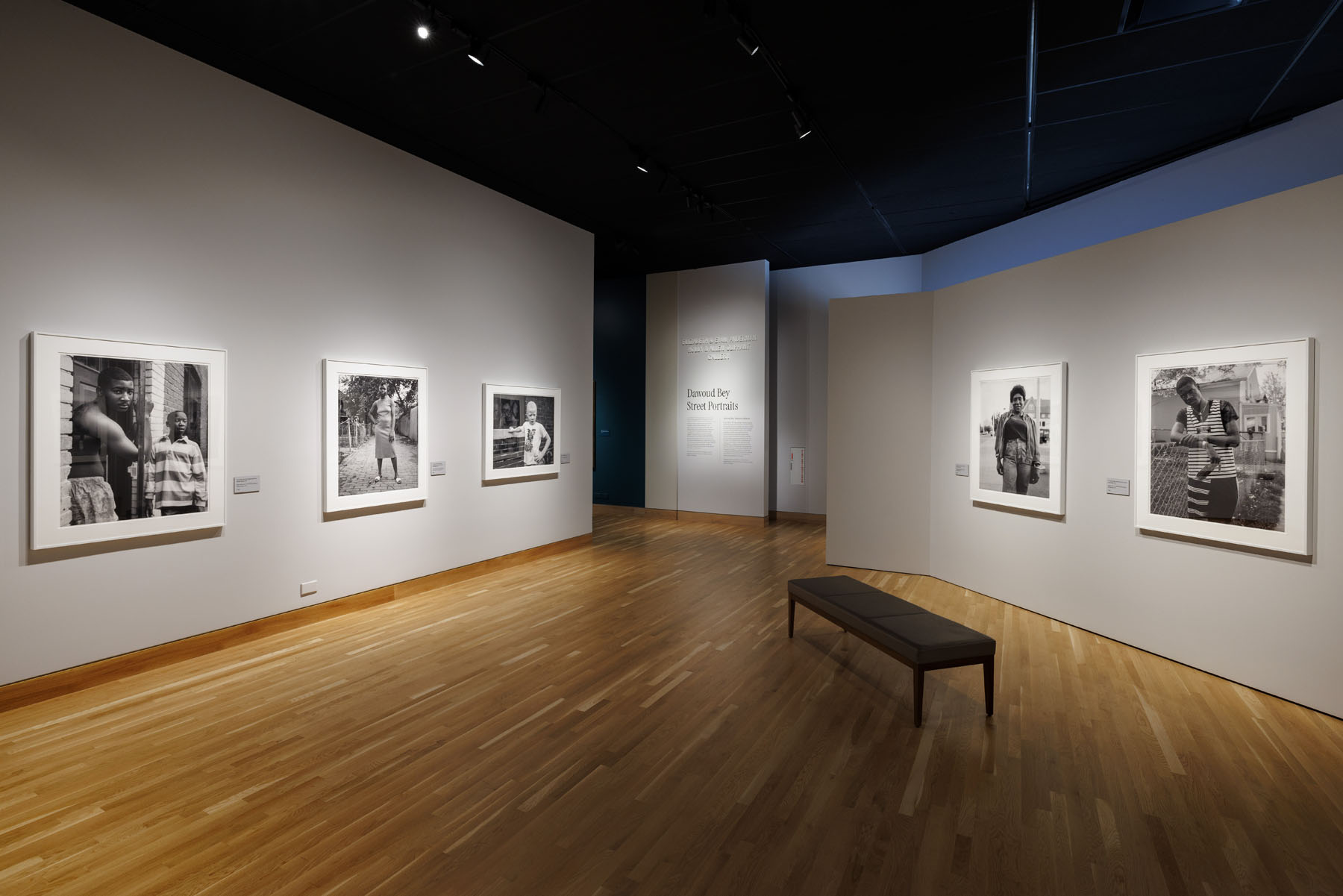
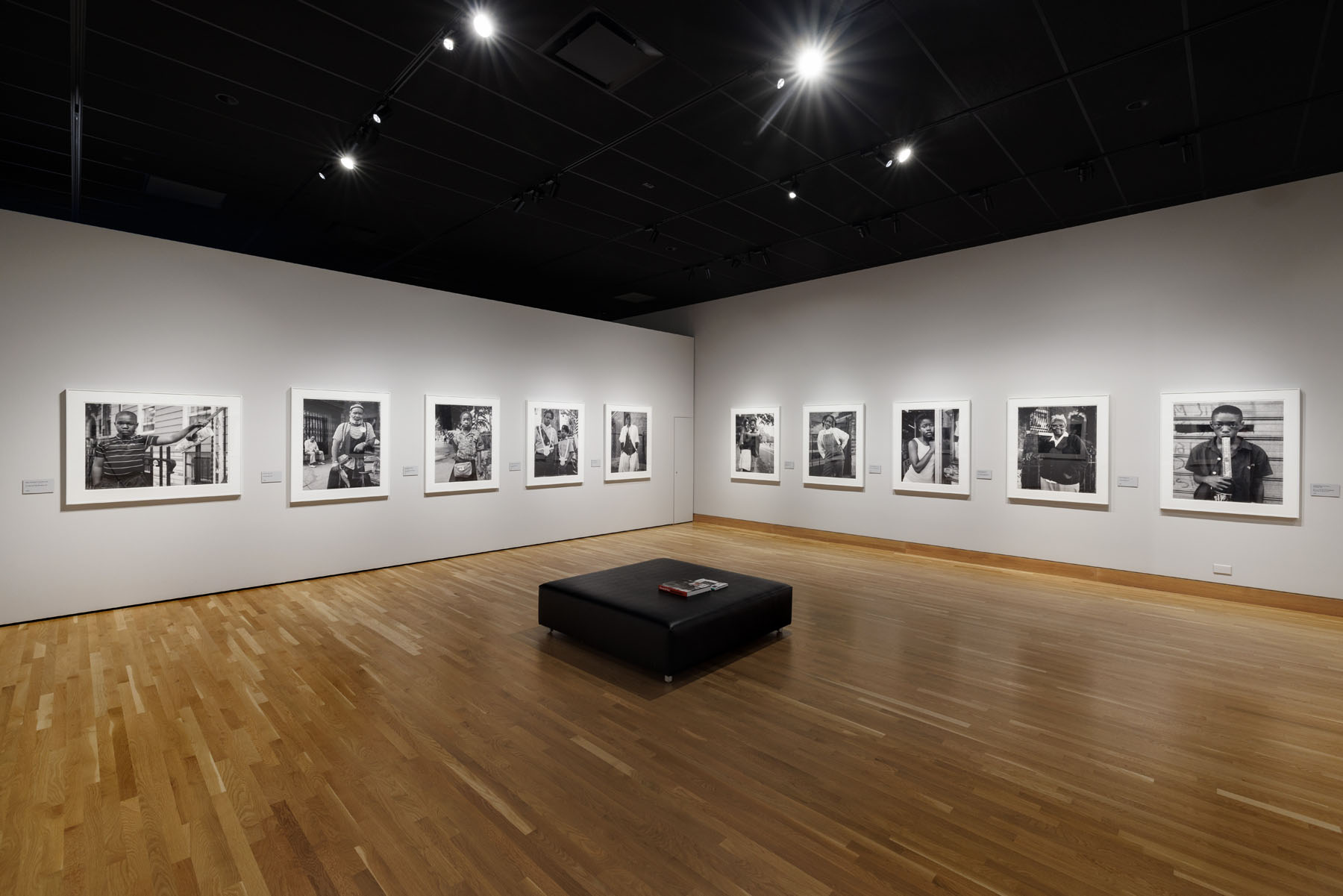
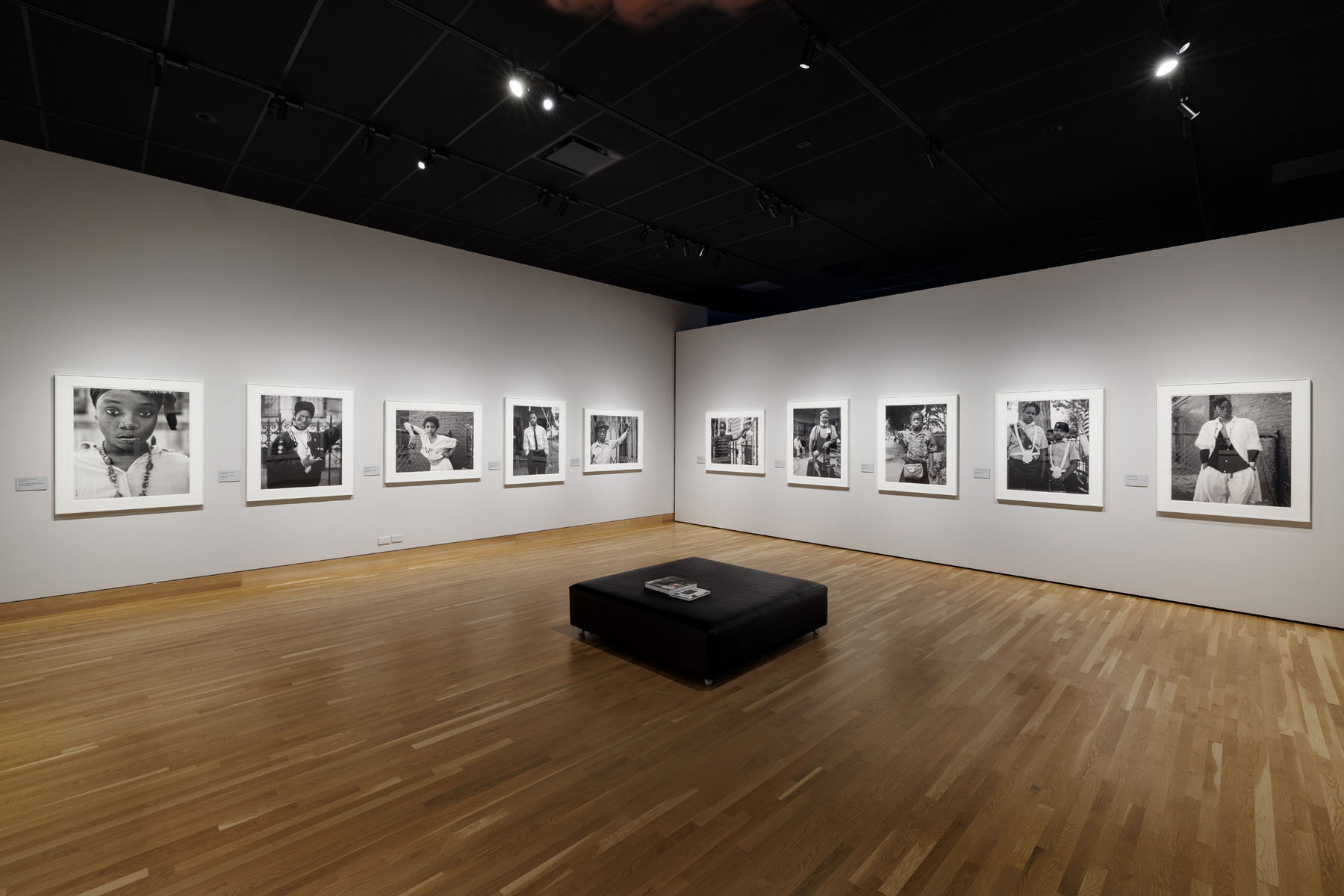
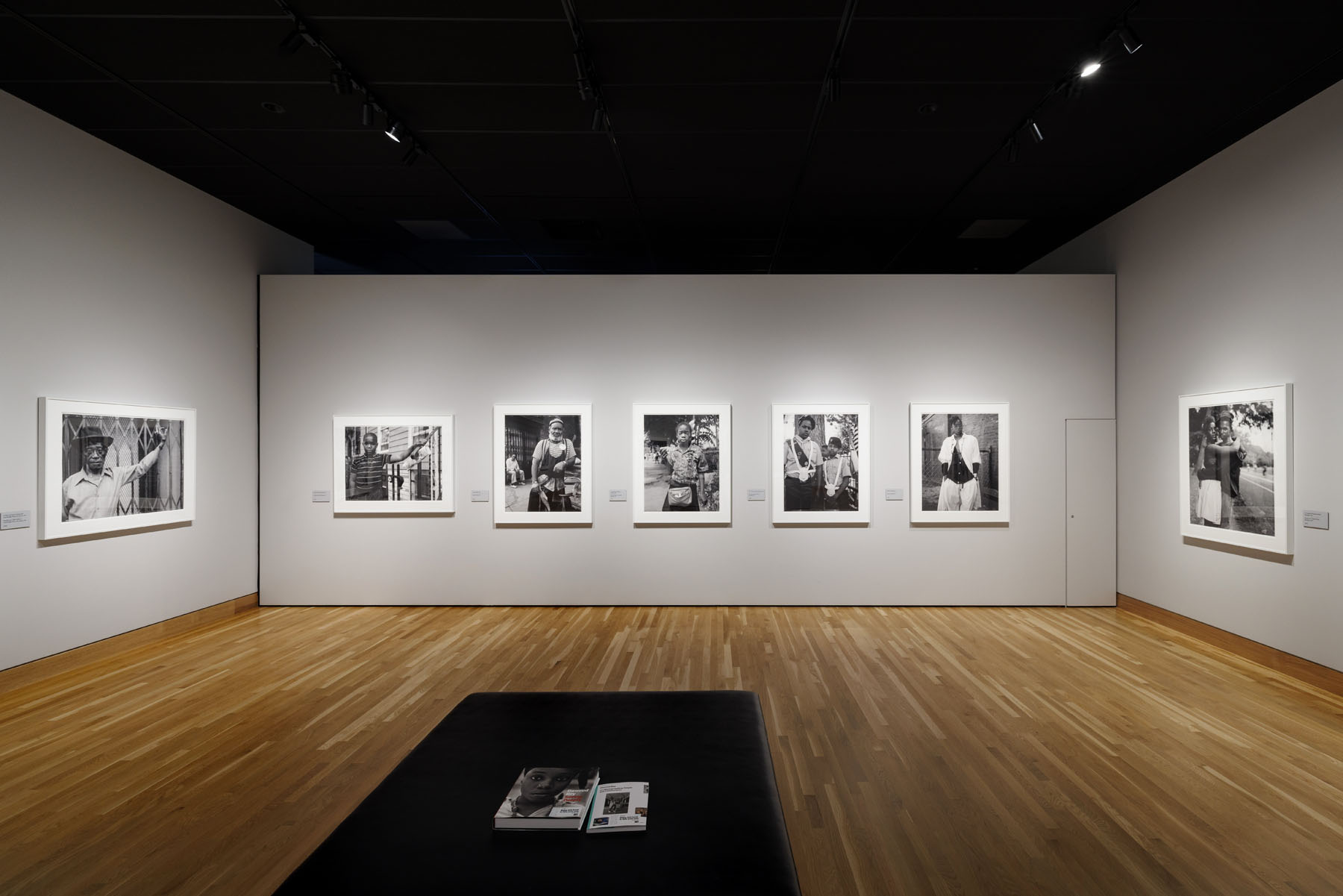
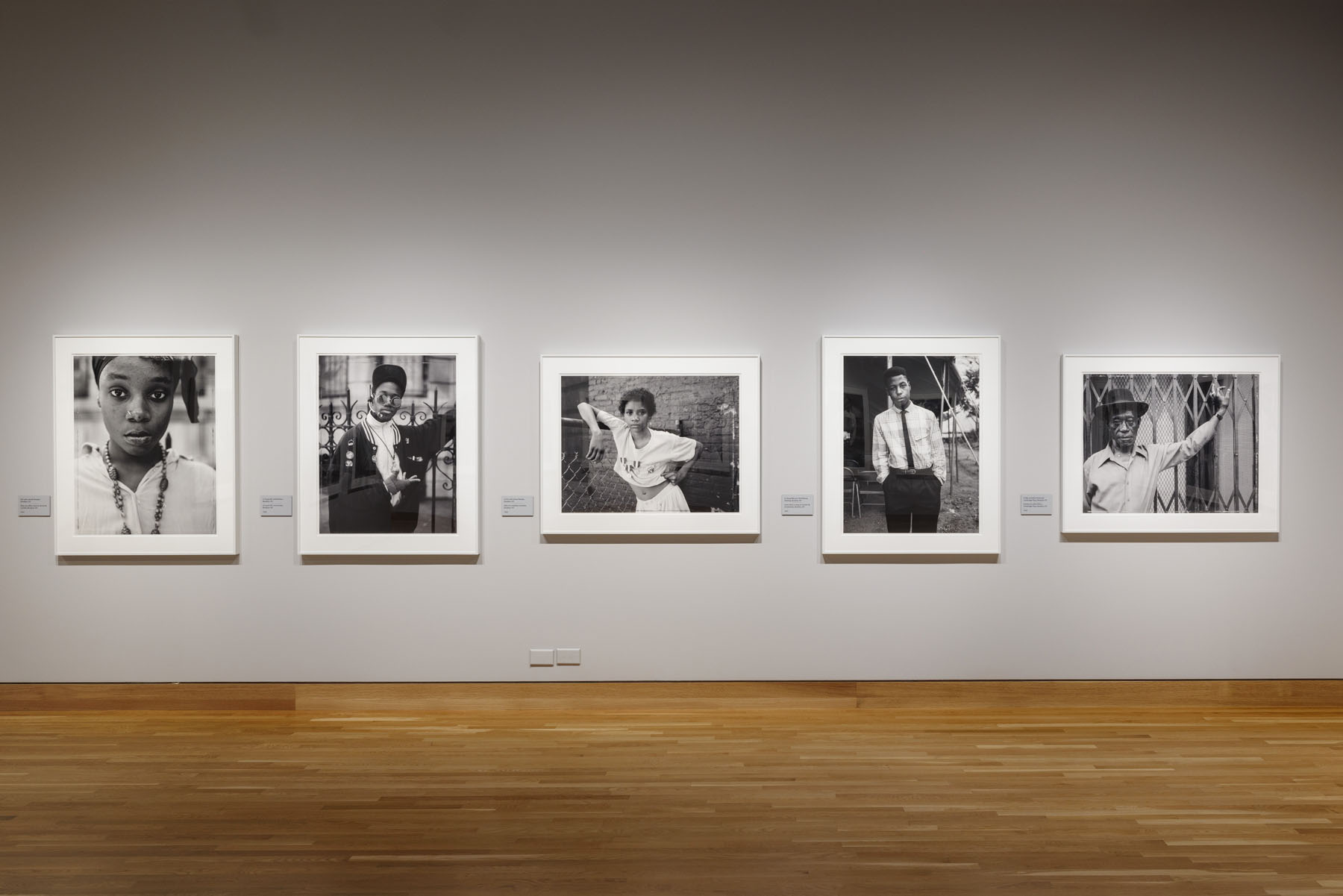
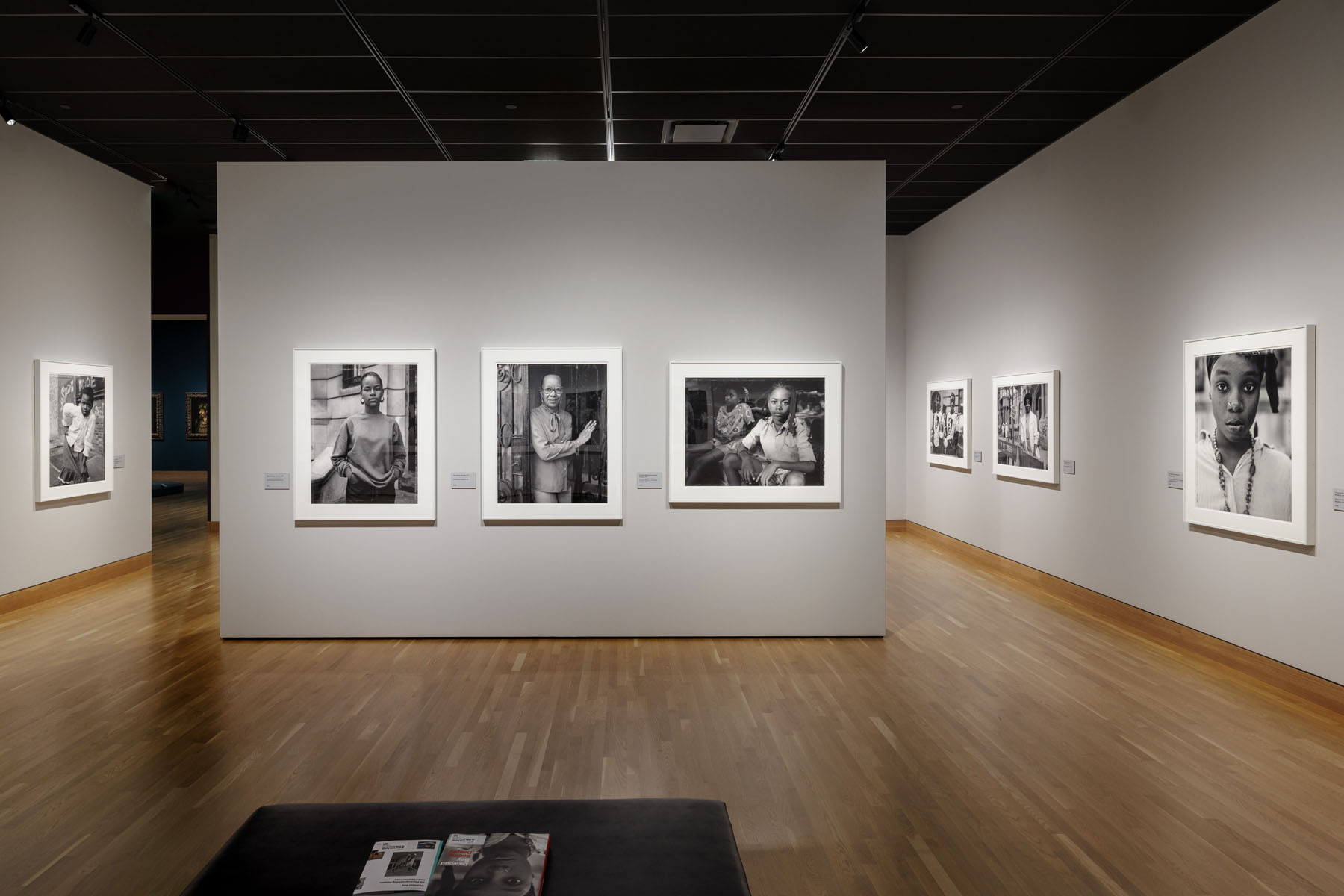
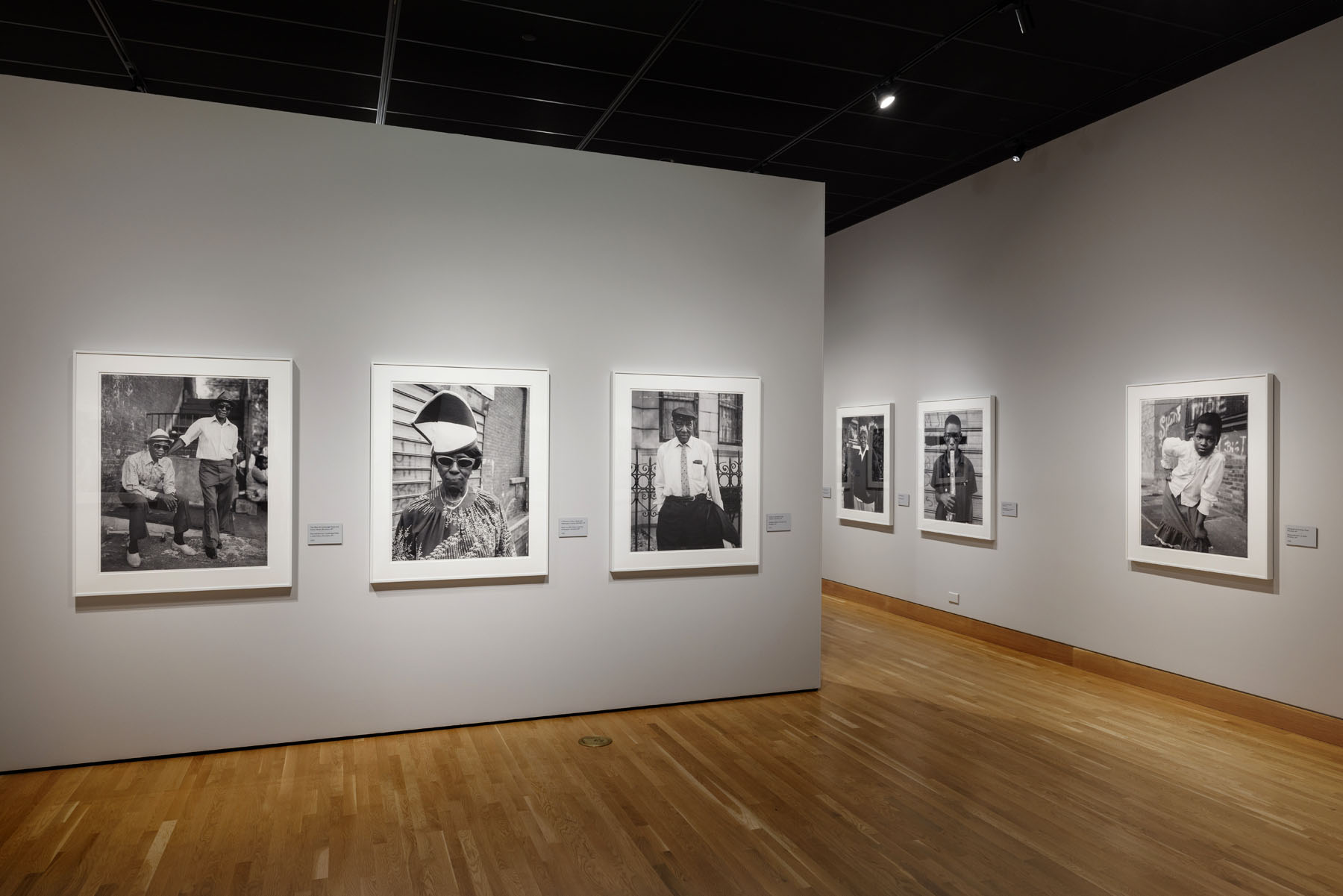
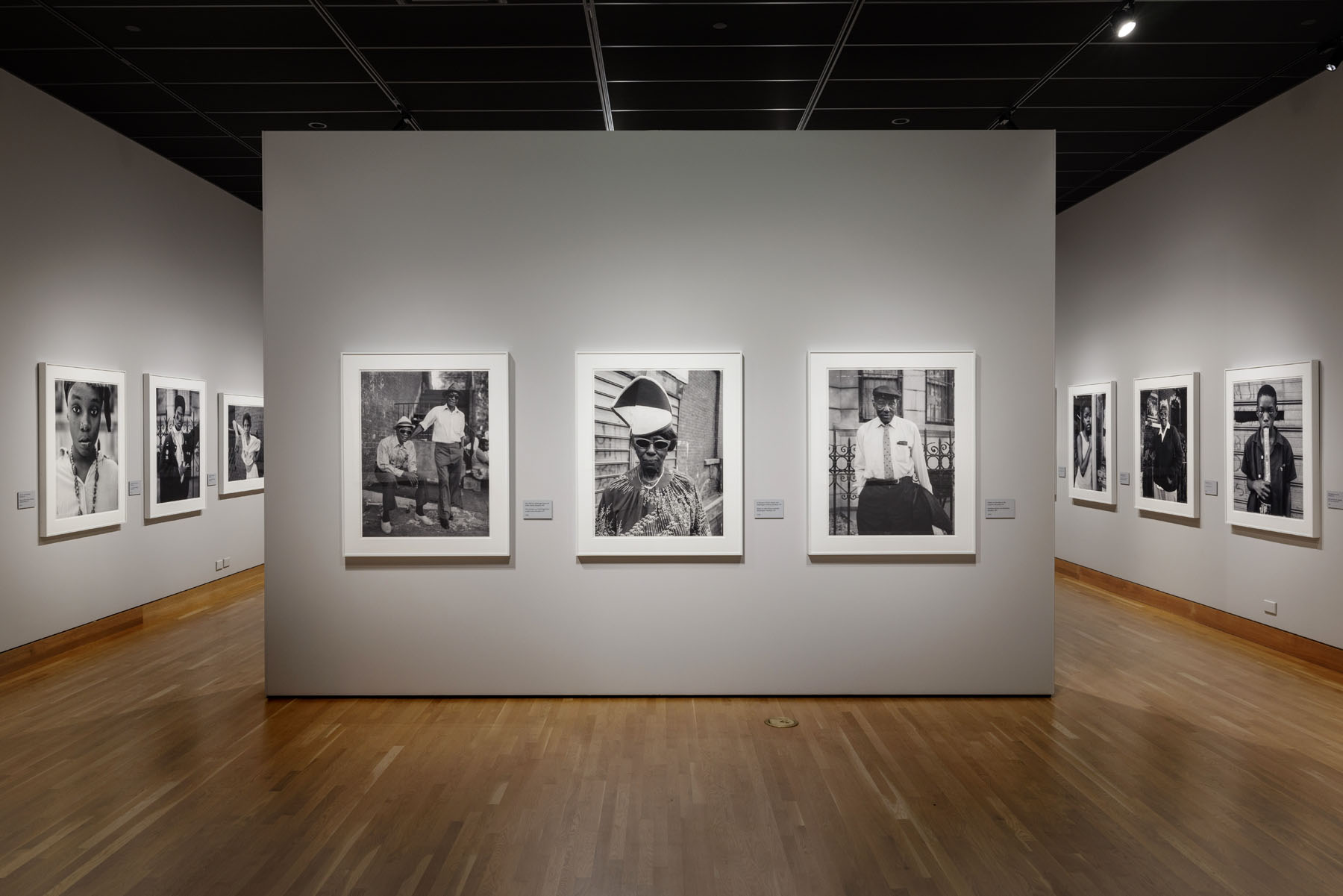
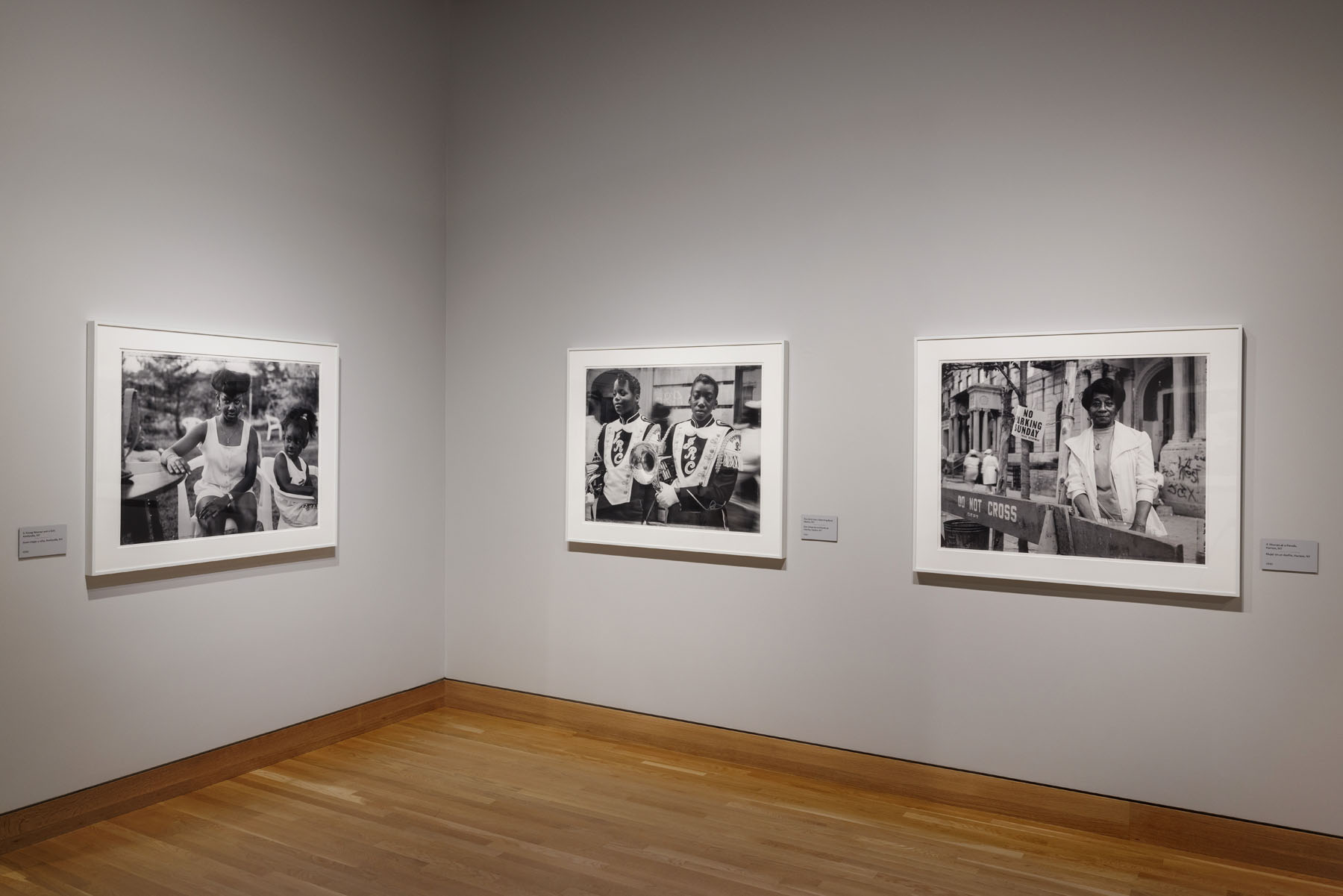
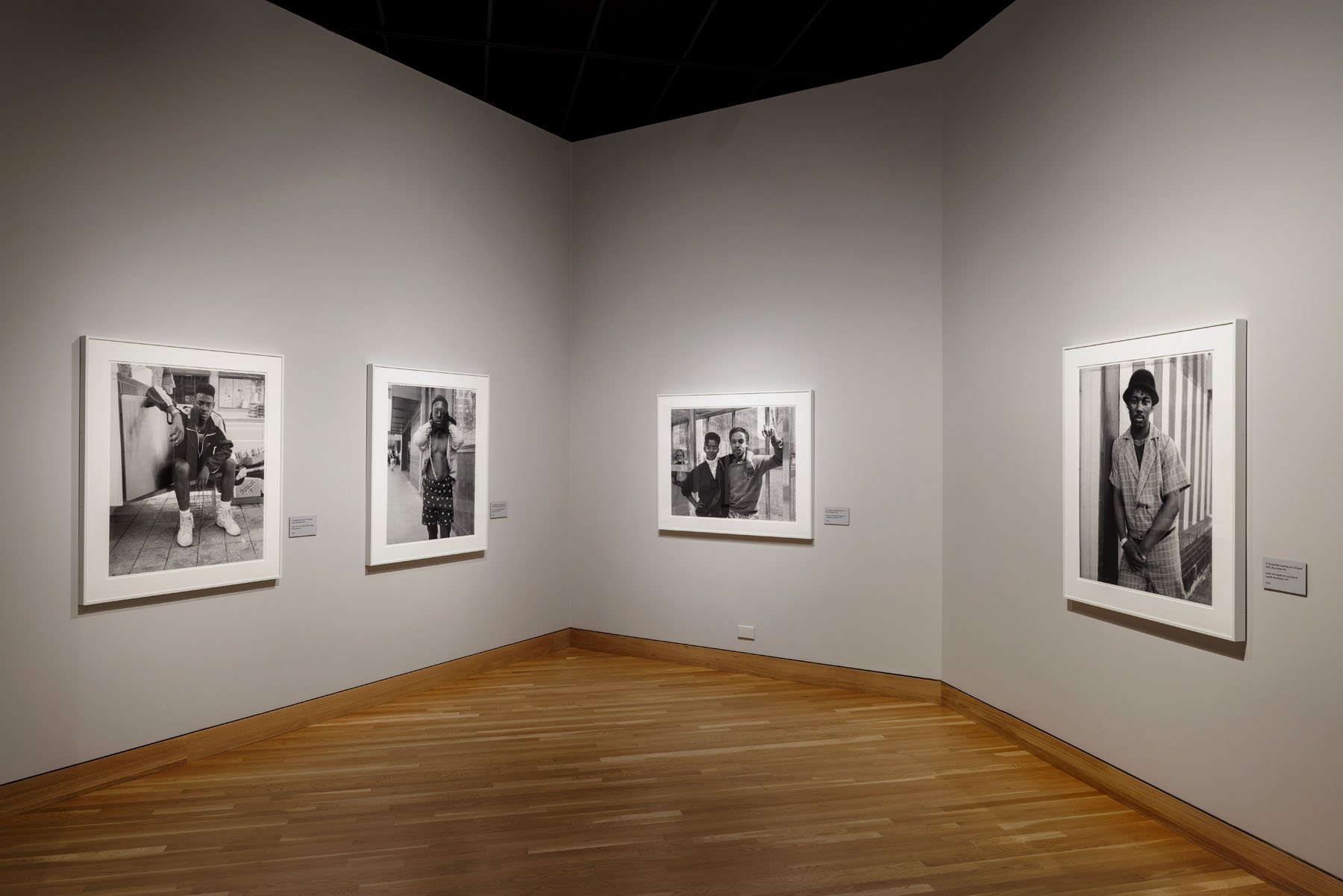
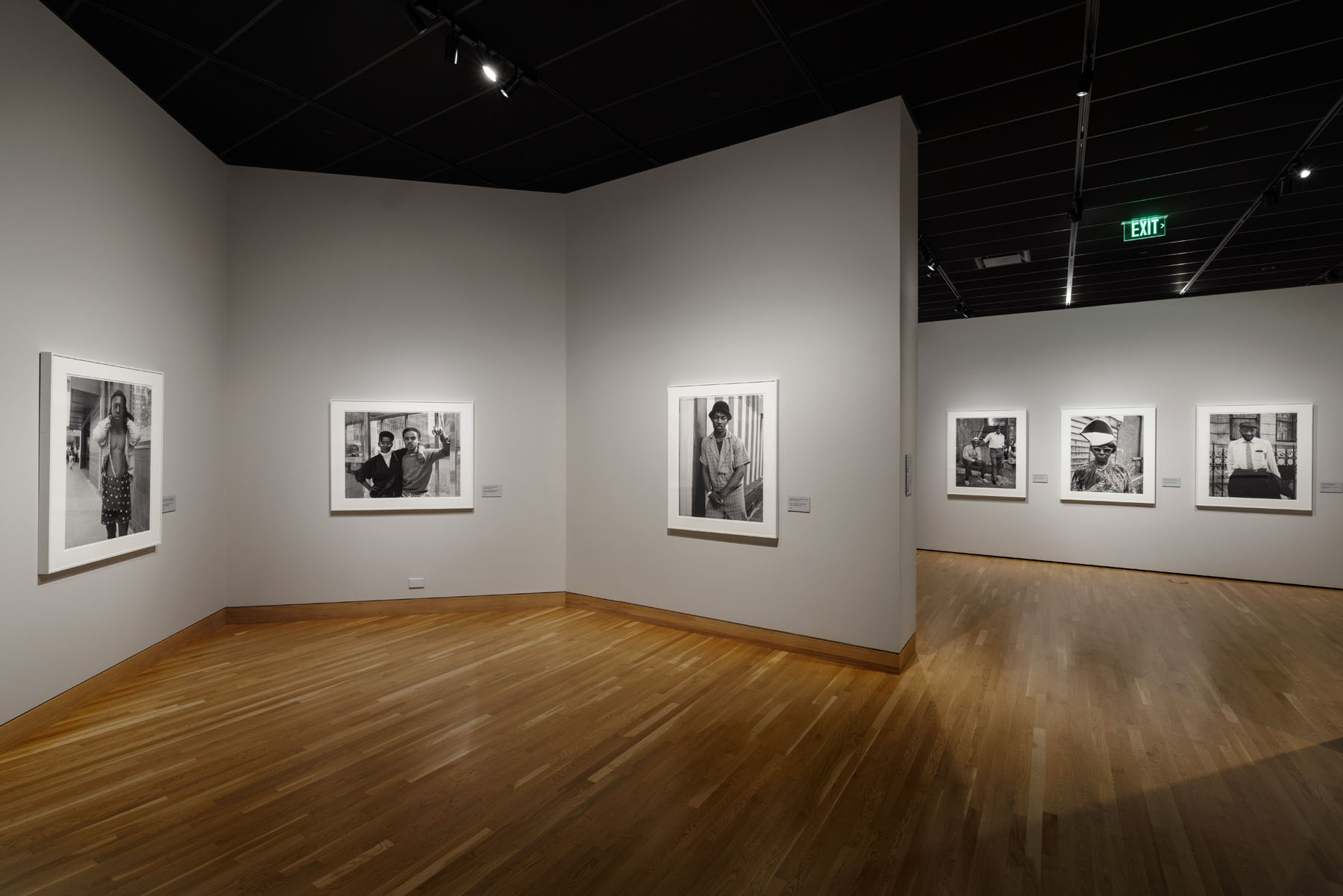
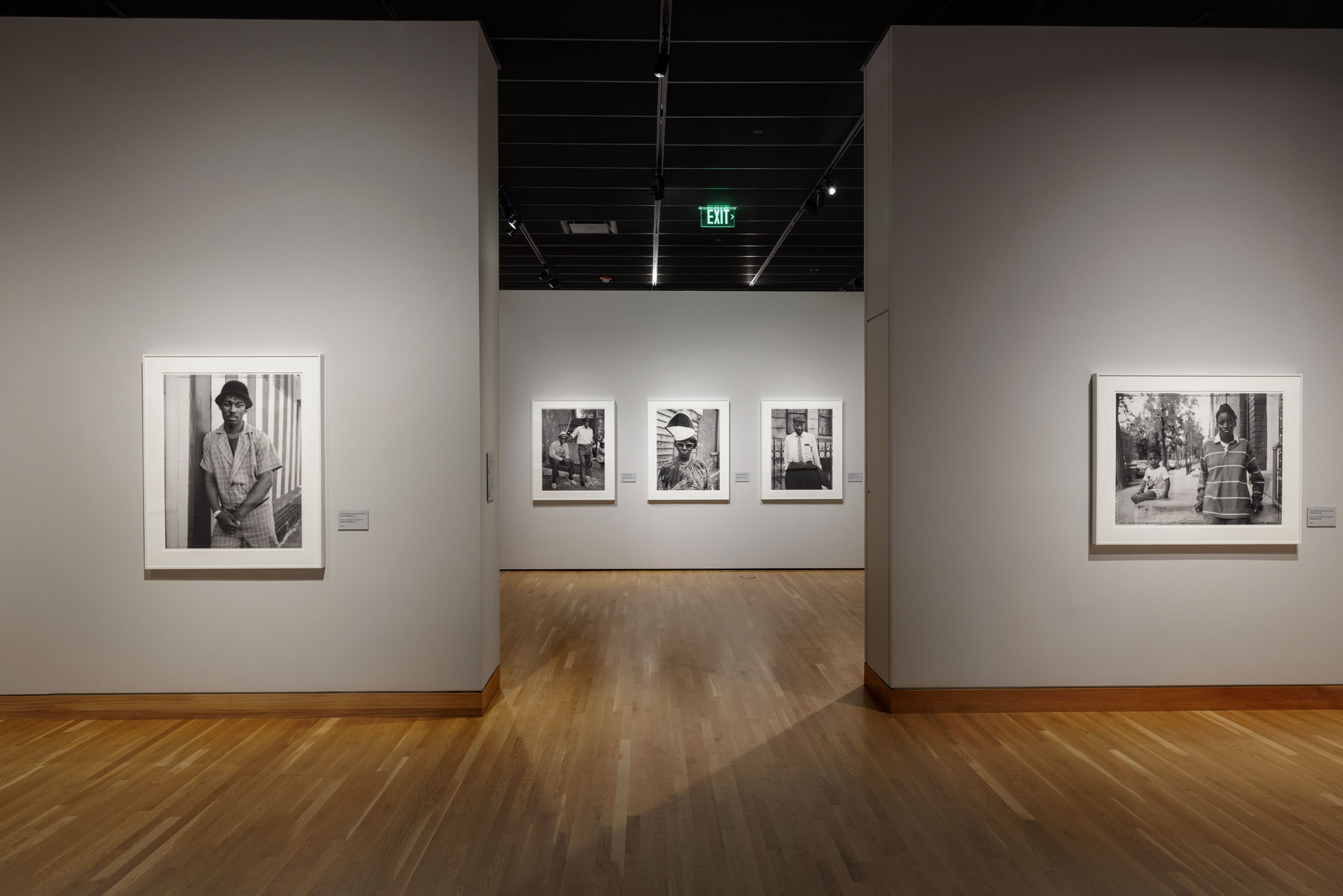
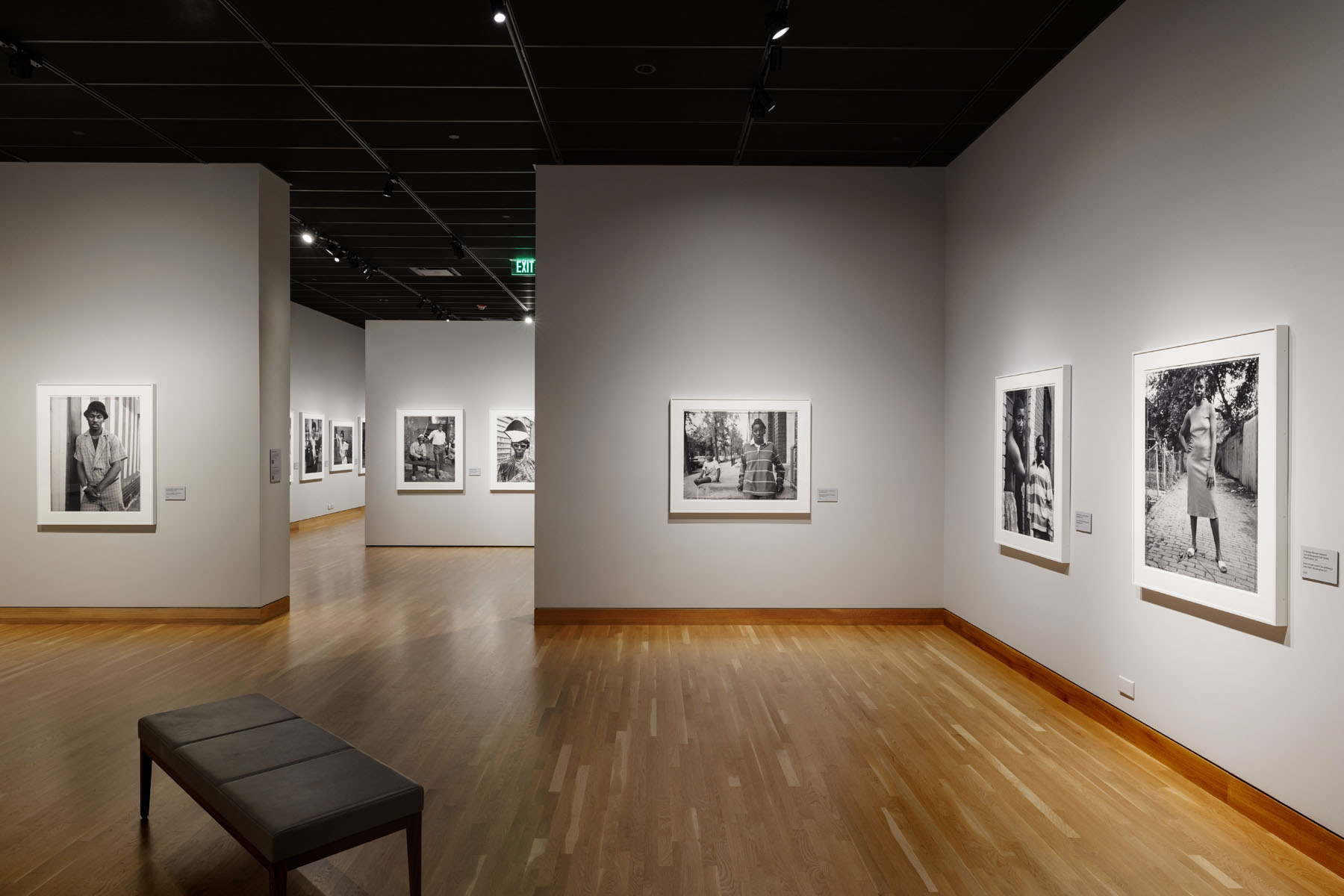
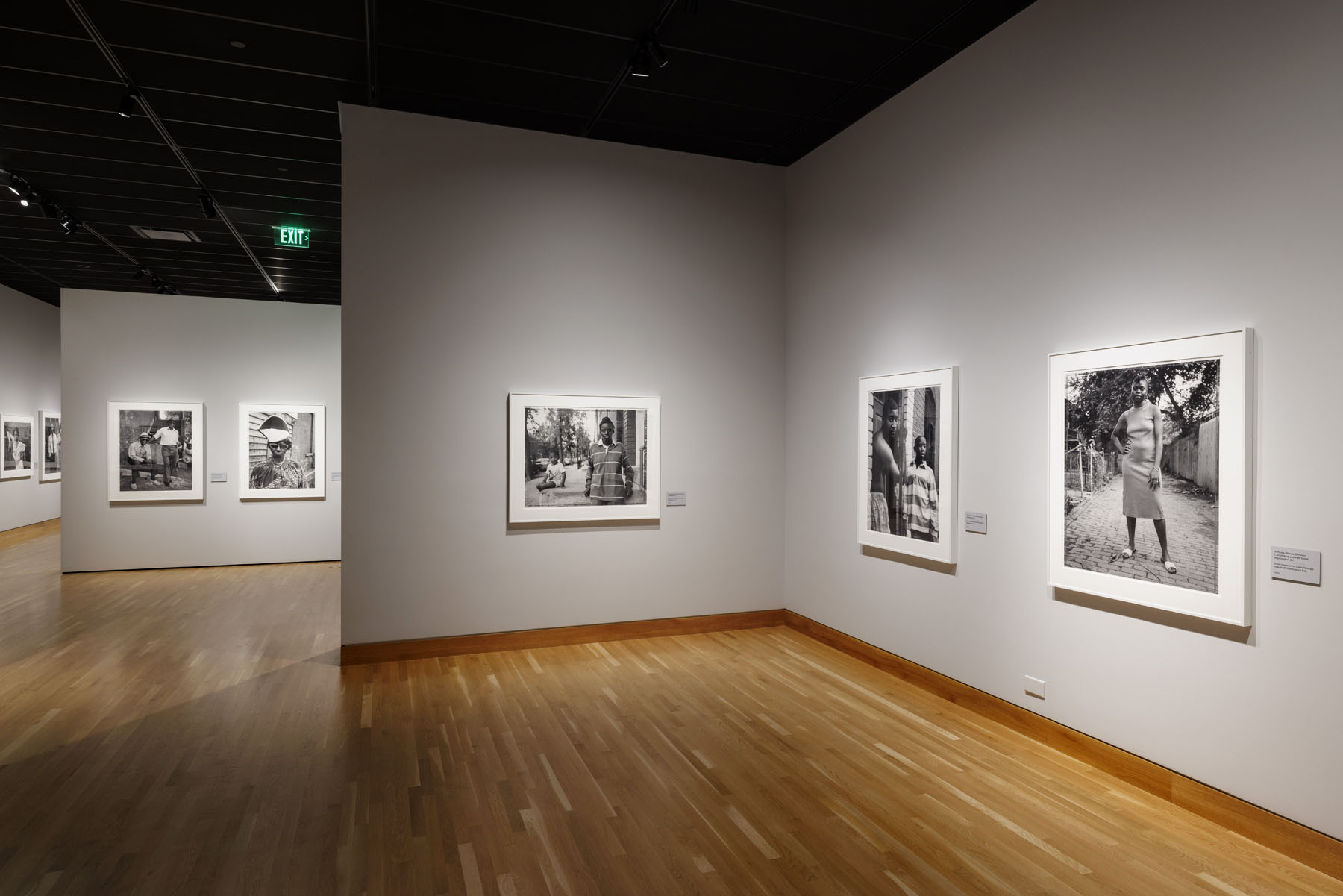
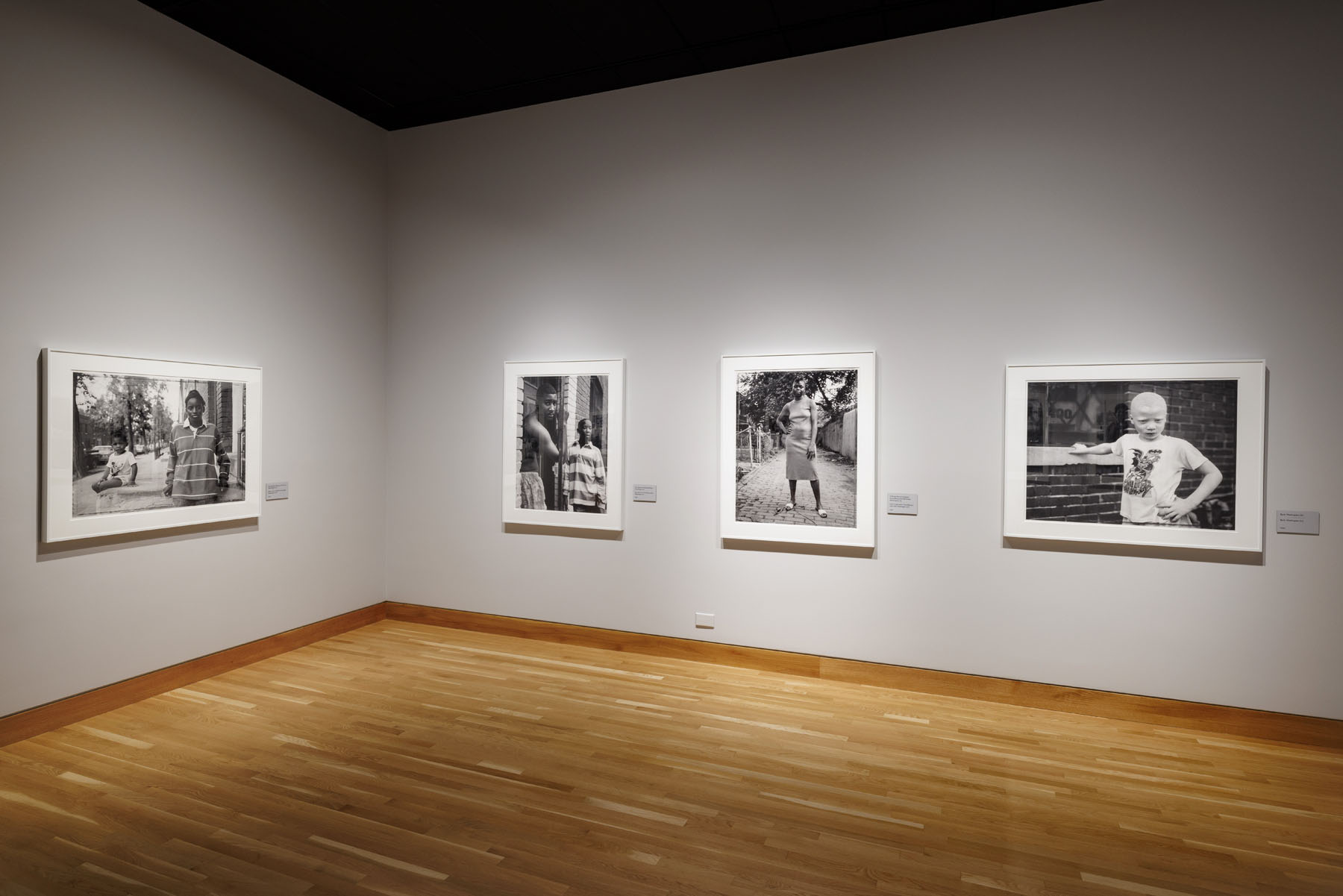
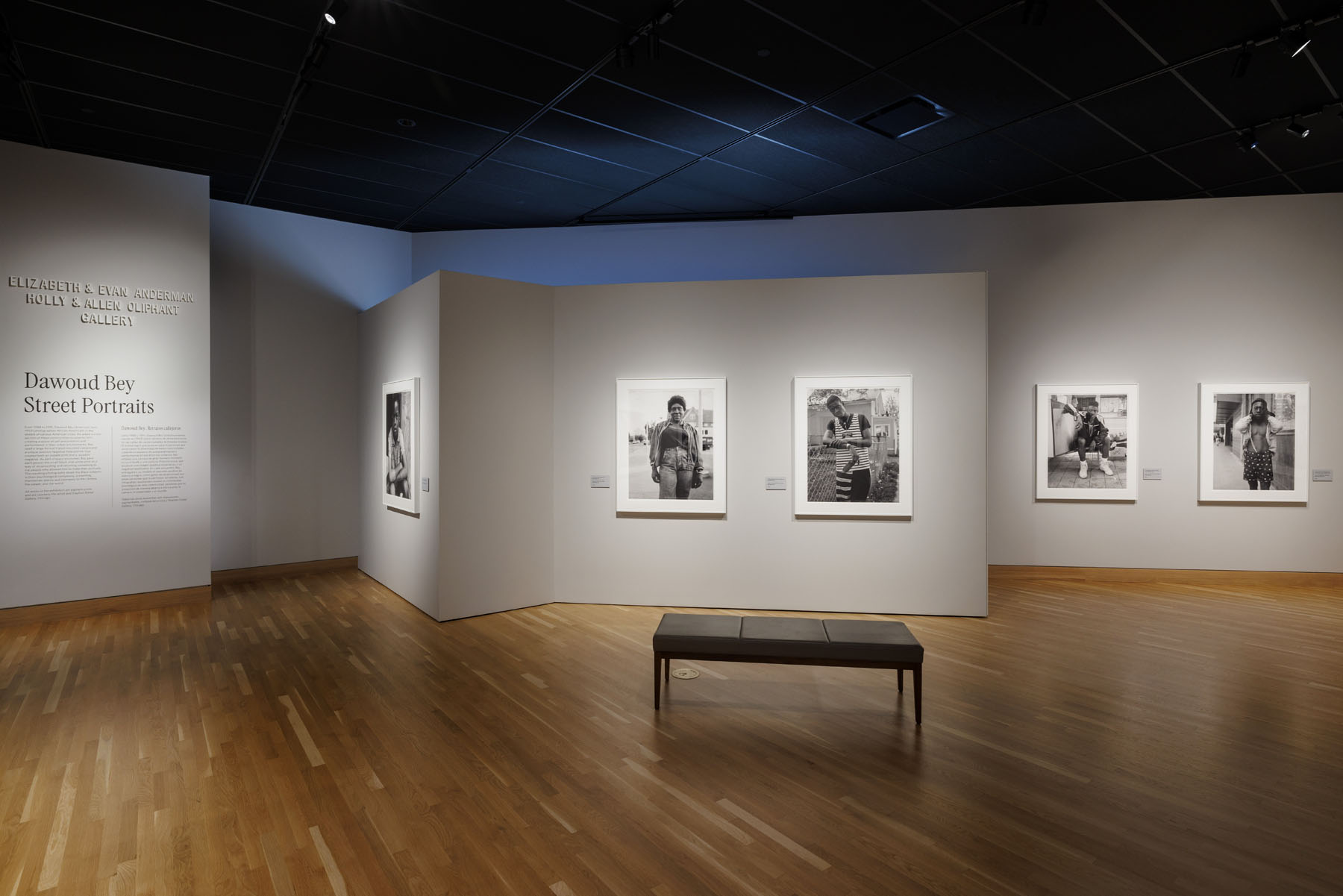
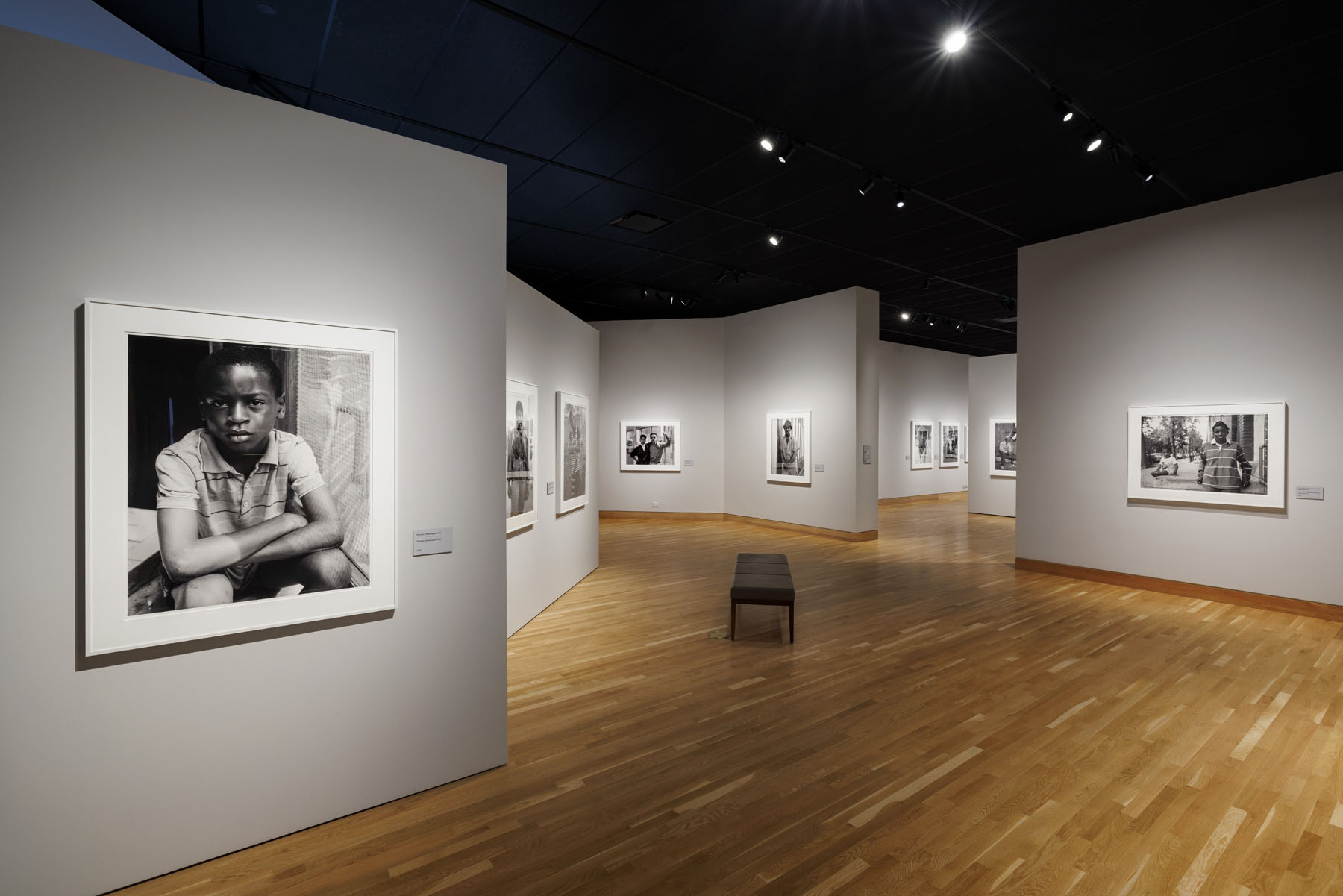
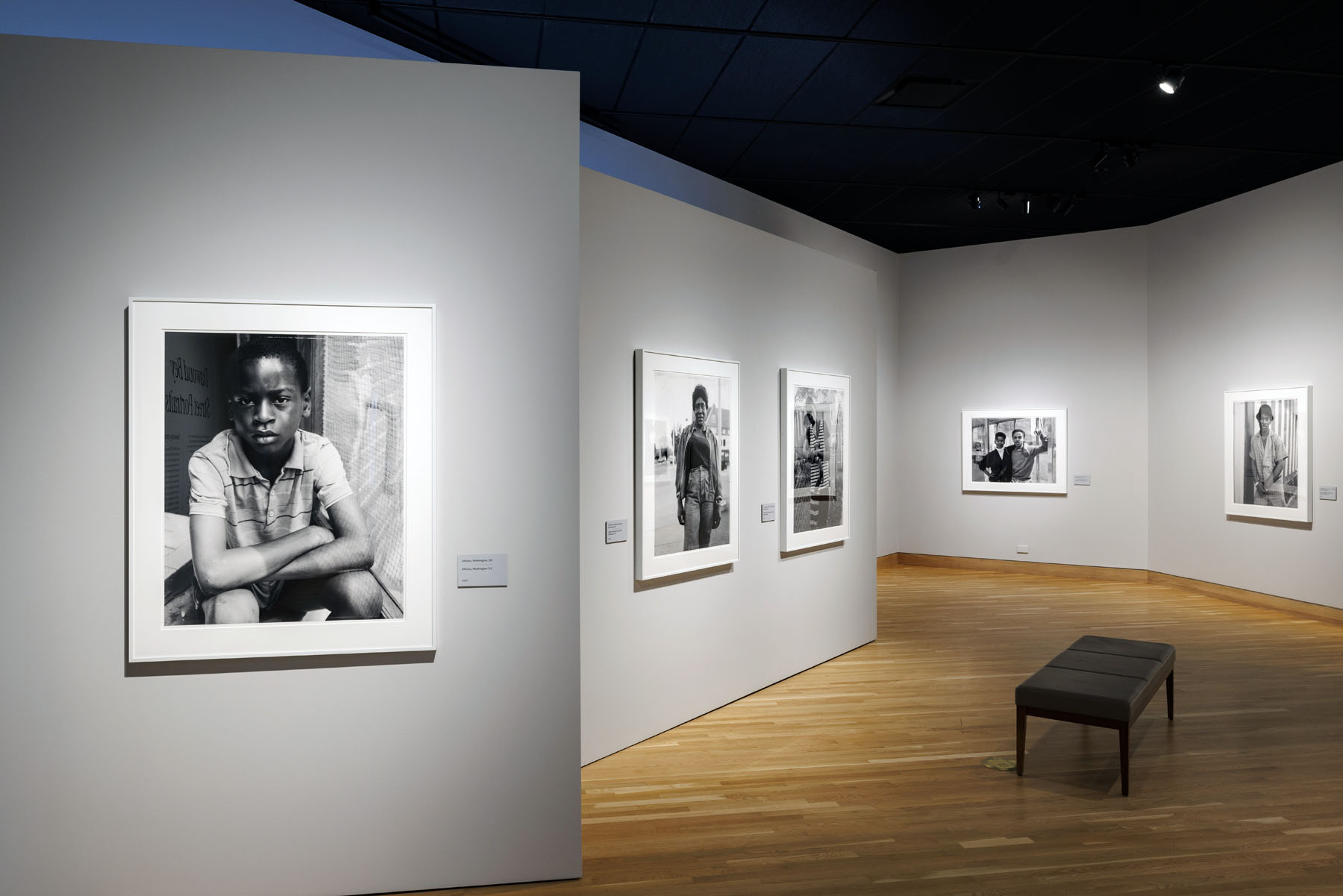
If you look at the installation photographs of both postings you will notice the small-scale prints of his notable black and white large-format (4 Ɨ 5-inch) camera and Polaroid Type 55 film photographs. But in this exhibition, Dawoud Bey: Street Portraits at the Denver Art Museum, Bey has used the large format negatives “to make large-scale, highly detailed prints that could be enlarged to create monumental portraits.”

To my eye and mind, these monumental portraits simply don’t work … on many levels.

Firstly, the size seems totally inappropriate as a form of theatre (for that is what Bey is making them at this size) and as a photographic document to the honest representation of these people – to me, completely at odds with the spirit of the subject being captured.

Secondly – and remembering that I have not seen the exhibition or walked through it but I am using the numerous installation photographs as my guide – there seems to be little flow to the images, installed as they are cheek by jowl, on the line, with no groupings or spacing, facing off against each other, face after face – with seemingly no understanding by curator or artist of Minor White’s idea of ice/fire, or the space between, the frisson that is generated between two or more images, in conversation, in sequence. Even the lines of sight between exhibition spaces leave little to be discovered afresh.

I have never understood this need for “monumentalism” in contemporary photography especially when the work does not need it and the energy of the work does not support it.

The advent of digital printing and large scale printers have enabled the production of gigantic contemporary photographs. “Large-scale photography challenges traditional notions of what constitutes a photograph and can be seen as a way to engage with the history of painting and cinema… Large-scale photography allows artists to explore the relationship between the overall composition and the individual details within the image. This can create a sense of both macro and micro, where the viewer can zoom in and out to appreciate different aspects of the image… Large-scale photography is used by many artists to explore themes related to identity, technology, consumerism, and environmental issues. The size of the prints can be a way to amplify these themes and create a more impactful visual statement. Large-scale photographs are well-suited for exhibition spaces where they can be displayed in a way that maximizes their impact. The large size of the prints can also create a sense of awe and wonder for the viewer.” (Generative AI on Google)

“In the 1990s, the group most commonly associated with large-scale photography, and in many ways responsible for the worldwide popularity of the technique, were the students of Bernd and Hilla Becher at the Kunstakademie Düsseldorf, including Thomas StruthAndreas GurskyCandida Hƶfer, and Thomas Ruff.” (Artsy website) With the work of artist’s such as Jeff Wall or Gregory Crewdson we become immersed in their cinematically constructed, staged fantasy worlds through the sheer scale of the photographs. With the gigantic portraits of Thomas Ruff it is not so much about the individual persona in the photograph as their every pore, a scientific examination of the surface micro death contained within every image.

Of course, I understand the desire for large photographs in creating a sense of immersion and exploring themes related to scale, power, identity and the human experience … but I don’t necessarily agree with the conditions of their becoming, nor do I think scale necessarily works for every photographic image. A photograph can be printed so that it has many sizes where it “speaks” to you and the viewer, but not every size works. I vividly remember seeing the exhibition Richard Avedon People at The Ian Potter Museum of Art, Melbourne in 2015 and observing that Avedon’s reaction to the ever expanding size of postmodern “gigantic” photography were floor to ceiling photographs, vertiginous overblown edifices which fell as flat as a tack.

I get the same feeling here.

Impact not intimacy, (visually) overwhelming not (visually) engaging.

Fundamentally, these “monumental” photographs by Dawoud Bey are no longer “street portraits” for they lack the intimacy and intensity of that style, becoming something rather less … beguiling, in the process.

Dr Marcus Bunyan


Many thankx to the Denver Art Museum for allowing me to publish the photographs in the posting. Please click on the photographs for a larger version of the image.
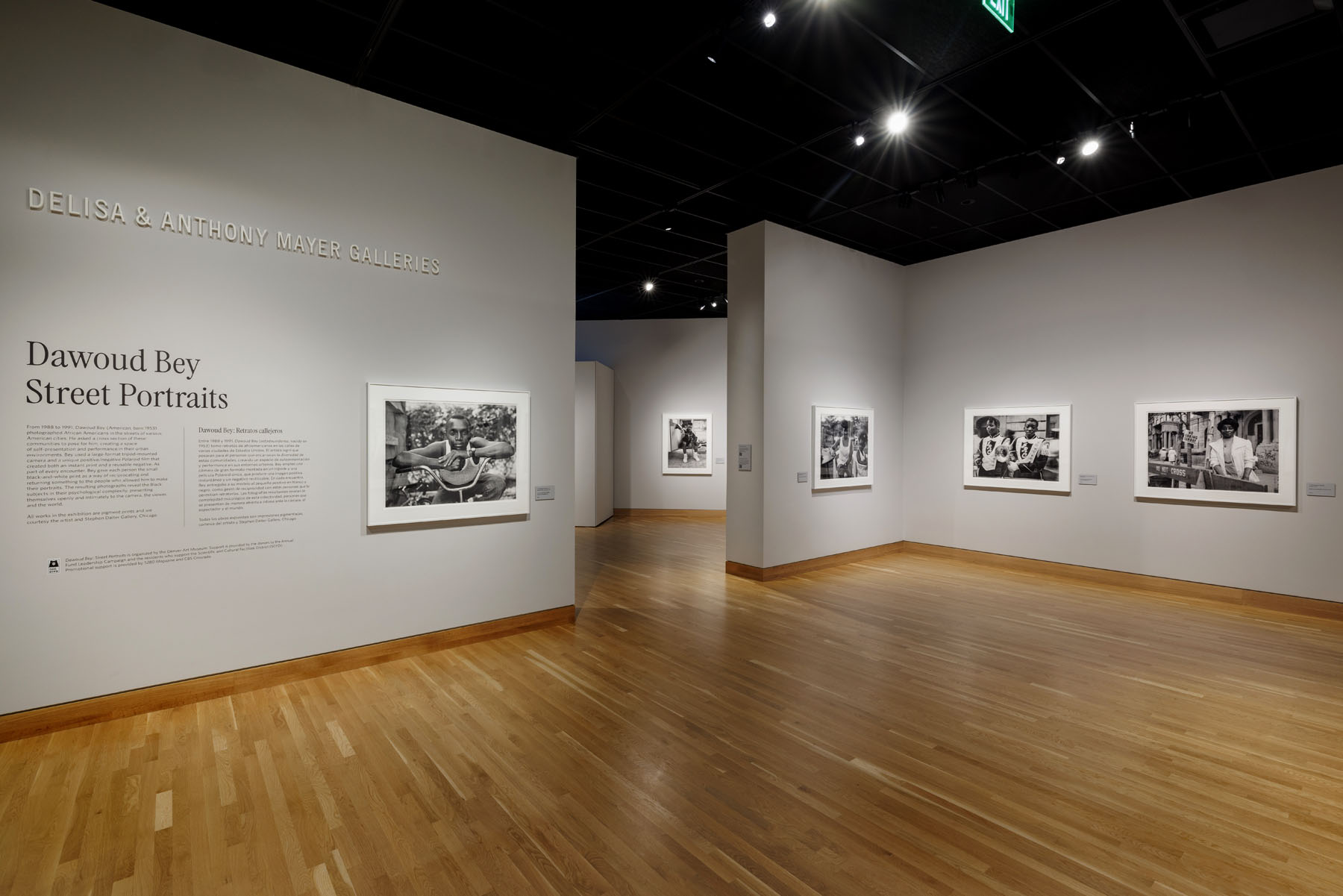
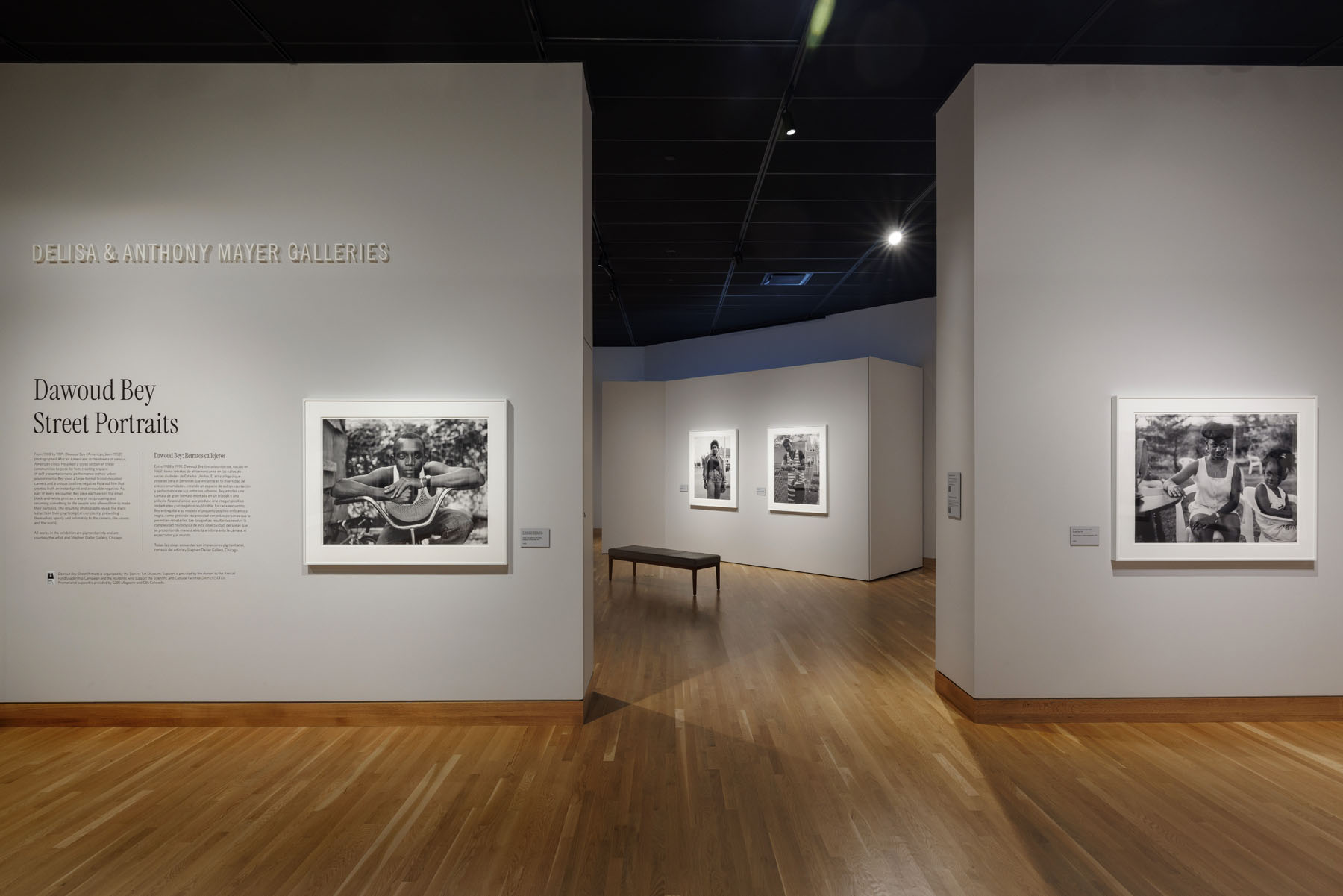


Installation view of the exhibition 'Dawoud Bey: Street Portraits' at the Denver Art Museum


Installation views of the exhibition Dawoud Bey: Street Portraits at the Denver Art Museum


From 1988 to 1991, Dawoud Bey (American, born 1953) photographed African Americans in the streets of various American cities. He asked a cross section of these communities to pose for him, creating a space of self-presentation and performance in their urban environments. Bey used a large format tripod-mounted camera and a unique positive/negative Polaroid film that created both an instant print and a reusable negative. As part of every encounter, Bey gave each person the small black-and-white print as a way of reciprocating and returning something to the people who allowed him to make their portraits. The resulting photographs reveal the Black subjects in their psychological complexity, presenting themselves openly and intimately to the camera, the viewer, and the world.


Installation view of the exhibition 'Dawoud Bey: Street Portraits' at the Denver Art Museum


Installation views of the exhibition Dawoud Bey: Street Portraits at the Denver Art Museum


Dawoud Bey: Street Portraits is the first standalone museum show to explore a transformational phase of the celebrated photographer and 2017 MacArthur Fellow Dawoud Bey’s work. The show features 37 portraits he made between 1988 and 1991, when he collaborated with Black Americans of all ages whom he met on the streets of various American cities. He asked a cross section of people in these communities to pose for him, creating a space of self-presentation and performance in their urban environments.

Bey used a large format tripod-mounted camera and a unique positive/negative Polaroid film that created both an instant print and a reusable negative. Bey considers photography an ethical practice that requires collaboration with his subjects. As part of every encounter, he gave each person a small black-and-white Polaroid print as a way of reciprocating and returning something to the people who allowed him to make their portrait.

Street Portraits is organised by the community the photographs were made in: Brooklyn; Washington, D.C.; Rochester; Amityville; and Harlem. Bey defies racial stereotypes by encouraging Black people to present themselves openly and intimately to the camera, the viewer, and the world.

Text from the Denver Art Museum website


Dawoud Bey (American, b. 1953) 'A Young Man Resting on an Exercise Bike, Amityville, NY' 1988


Dawoud Bey (American, b. 1953)
A Young Man Resting on an Exercise Bike, Amityville, NY
1988
Pigment print
Courtesy the artist and Stephen Daiter Gallery, Chicago
Ā© Dawoud Bey


Dawoud Bey (American, b. 1953)
'Sunshine Bracey and Friend, Brooklyn, NY' 1990


Dawoud Bey (American, b. 1953)
Sunshine Bracey and Friend, Brooklyn, NY
1990
Pigment print
Courtesy the artist and Stephen Daiter Gallery, Chicago
Ā© Dawoud Bey


Dawoud Bey (American, b. 1953)
'A Girl with School Medals, Brooklyn, NY' 1988


Dawoud Bey (American, b. 1953)
A Girl with School Medals, Brooklyn, NY
1988
Pigment print
Courtesy the artist and Stephen Daiter Gallery, Chicago
Ā© Dawoud Bey


Dawoud Bey (American, b. 1953)
'A Couple at a Main Street Bus Stop, Rochester, NY' 1989


Dawoud Bey (American, b. 1953)
A Couple at a Main Street Bus Stop, Rochester, NY
1989
Pigment print
Courtesy the artist and Stephen Daiter Gallery, Chicago
Ā© Dawoud Bey


Dawoud Bey (American, b. 1953)
'A Young Woman and a Girl, Amityville, NY'
1988


Dawoud Bey (American, b. 1953)
A Young Woman and a Girl, Amityville, NY
1988
Pigment print
Courtesy the artist and Stephen Daiter Gallery, Chicago
Ā© Dawoud Bey


Dawoud Bey (American, b. 1953)
'Peg's Grandson, Brooklyn, NY' 1988


Dawoud Bey (American, b. 1953)
Peg’s Grandson, Brooklyn, NY
1988
Pigment print
Courtesy the artist and Stephen Daiter Gallery, Chicago
Ā© Dawoud Bey


Dawoud Bey (American, b. 1953)
'Peg, Brooklyn, NY' 1988


Dawoud Bey (American, b. 1953)
Peg, Brooklyn, NY
1988
Pigment print
Courtesy the artist and Stephen Daiter Gallery, Chicago
Ā© Dawoud Bey


 The Denver Art Museum (DAM) is proud to present Dawoud Bey: Street Portraits, featuring 37 portraits by celebrated photographer and 2017 MacArthur Fellow Dawoud Bey (American, born 1953). 

From 1988 to 1991, Bey collaborated with Black Americans of all ages whom he met on the streets of various American cities. He asked a cross section of people in these communities to pose for him, creating a space of self-presentation and performance in their urban environments. 

“We’re pleased to present the first standalone museum show of this important work,” said Eric Paddock, Curator of Photography for DAM. “Dawoud Bey’s Street Portraits mark a turning point where the deliberate, closely observed portraits he had been making with a handheld camera began to contain what he has called ‘the kind of lush physical description’ he wanted his pictures to convey – and that is a consistent part of all the work he has made since. The slower process of working with a camera on a tripod invited collaboration between the artist and his subjects, making each picture both an experiment and a discovery.” 

Bey used a large format tripod-mounted camera and a unique positive/negative Polaroid film that created both an instant print and a reusable negative. Bey considers photography an ethical practice that requires collaboration between the artist and his subjects. As part of every encounter, he gave each person a small black-and-white Polaroid print as a way of reciprocating and returning something to the people who allowed him to make their portrait. 

The exhibition is organised by the community the photographs were taken in: Brooklyn; Washington, D.C.; Rochester; Amityville; and Harlem. Defying racial stereotypes, the resulting photographs reveal the Black subjects in all of their psychologically rich complexity, presenting themselves openly and intimately to the camera, the viewer, and the world. 

Press release from the Denver Art Museum


Dawoud Bey (American, b. 1953)
'Mrs. Bracey, Brooklyn, NY' 1988


Dawoud Bey (American, b. 1953)
Mrs. Bracey, Brooklyn, NY
1988
Pigment print
Courtesy the artist and Stephen Daiter Gallery, Chicago
Ā© Dawoud Bey


Dawoud Bey (American, b. 1953)
'A Young Man Leaning on a Striped Wall' 1989


Dawoud Bey (American, b. 1953)
A Young Man Leaning on a Striped Wall
1989
Pigment print
Courtesy the artist and Stephen Daiter Gallery, Chicago
Ā© Dawoud Bey


Dawoud Bey (American, b. 1953)
'A Young Man in a Bandana and Swimming Trunks, Rochester, NY' 1989


Dawoud Bey (American, b. 1953)
A Young Man in a Bandana and Swimming Trunks, Rochester, NY
1989
Pigment print
Courtesy the artist and Stephen Daiter Gallery, Chicago
Ā© Dawoud Bey


Dawoud Bey (American, b. 1953)
'A Young Man with His Hotdog Cart, Rochester, NY' 1989


Dawoud Bey (American, b. 1953)
A Young Man with His Hotdog Cart, Rochester, NY
1989
Pigment print
Courtesy the artist and Stephen Daiter Gallery, Chicago
Ā© Dawoud Bey


Dawoud Bey (American, b. 1953)
Two Boys on 'Carrollsburg Place, Washington, DC' 1989


Dawoud Bey (American, b. 1953)
Two Boys on Carrollsburg Place, Washington, DC
1989
Pigment print
Courtesy the artist and Stephen Daiter Gallery, Chicago
Ā© Dawoud Bey


Dawoud Bey (American, b. 1953) 'Young Man at a Tent Revival, Brooklyn, NY' 1989, printed 2019


Dawoud Bey (American, b. 1953)
A Young Man at a Tent Revival Meeting, Brooklyn, NY
1989
Pigment print
Courtesy the artist and Stephen Daiter Gallery, Chicago
Ā© Dawoud Bey


Dawoud Bey (American, b. 1953) 'A Boy Eating a Foxy Pop, Brooklyn, NY' 1988, printed 2019


Dawoud Bey (American, b. 1953)
A Boy Eating a Foxy Pop, Brooklyn, NY
1988
Pigment print
Courtesy the artist and Stephen Daiter Gallery, Chicago
Ā© Dawoud Bey


Dawoud Bey (American, b. 1953) 'A Cute Couple in Prospect Park, Brooklyn, NY' 1990


Dawoud Bey (American, b. 1953)
A Cute Couple in Prospect Park, Brooklyn, NY
1990
Pigment print
Courtesy the artist and Stephen Daiter Gallery, Chicago
Ā© Dawoud Bey


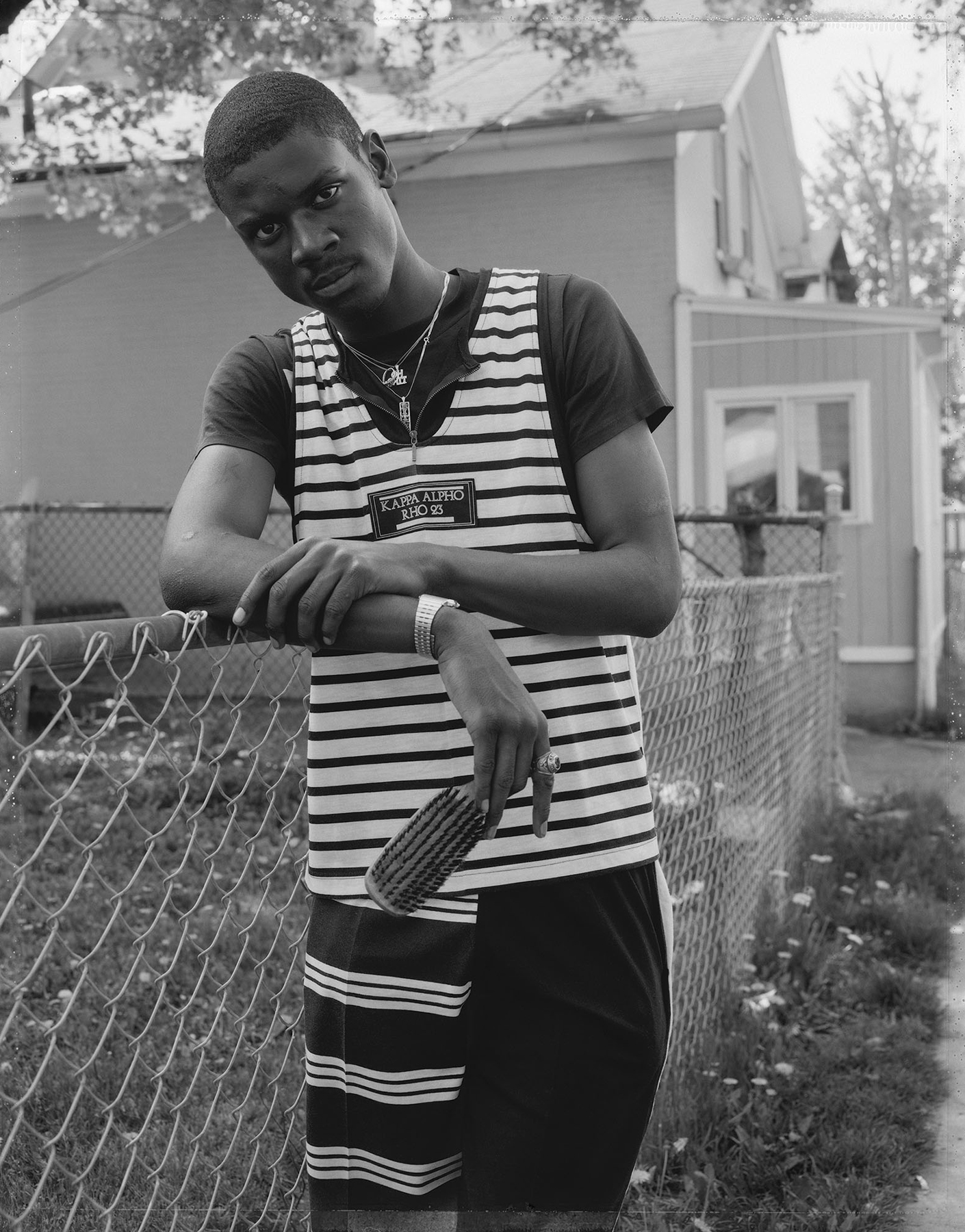
Dawoud Bey (American, b. 1953) 'A Young Man with His Hair Brush, Rochester, NY' 1989


Dawoud Bey (American, b. 1953)
A Young Man with His Hair Brush, Rochester, NY
1989
Pigment print
Courtesy the artist and Stephen Daiter Gallery, Chicago
Ā© Dawoud Bey


Dawoud Bey (American, b. 1953) 'A Woman Wearing Denim, Rochester, NY' 1989


Dawoud Bey (American, b. 1953)
A Woman Wearing Denim, Rochester, NY
1989
Pigment print
Courtesy the artist and Stephen Daiter Gallery, Chicago
Ā© Dawoud Bey


Dawoud Bey (American, b. 1953) 'A Woman at Fulton Street and Washington Avenue, Brooklyn, NY, 1988' 1988


Dawoud Bey (American, b. 1953)
A Woman at Fulton Street and Washington Avenue, Brooklyn, NY, 1988
1988
Pigment print
Courtesy the artist and Stephen Daiter Gallery, Chicago
Ā© Dawoud Bey


Denver Art Museum
100 W 14th Ave Pkwy,
Denver, CO 80204, United States
Phone: (720) 865-5000

Opening hours:
Open daily from 10am – 5pm, 10am – 8pm on Tuesdays

Denver Art Museum website

LIKE ART BLART ON FACEBOOK

Back to top

Exhibition: ‘Dawoud Bey: An American Project’ at the Whitney Museum of American Art, New York

Exhibition dates: 17th April – 3rd October, 2021


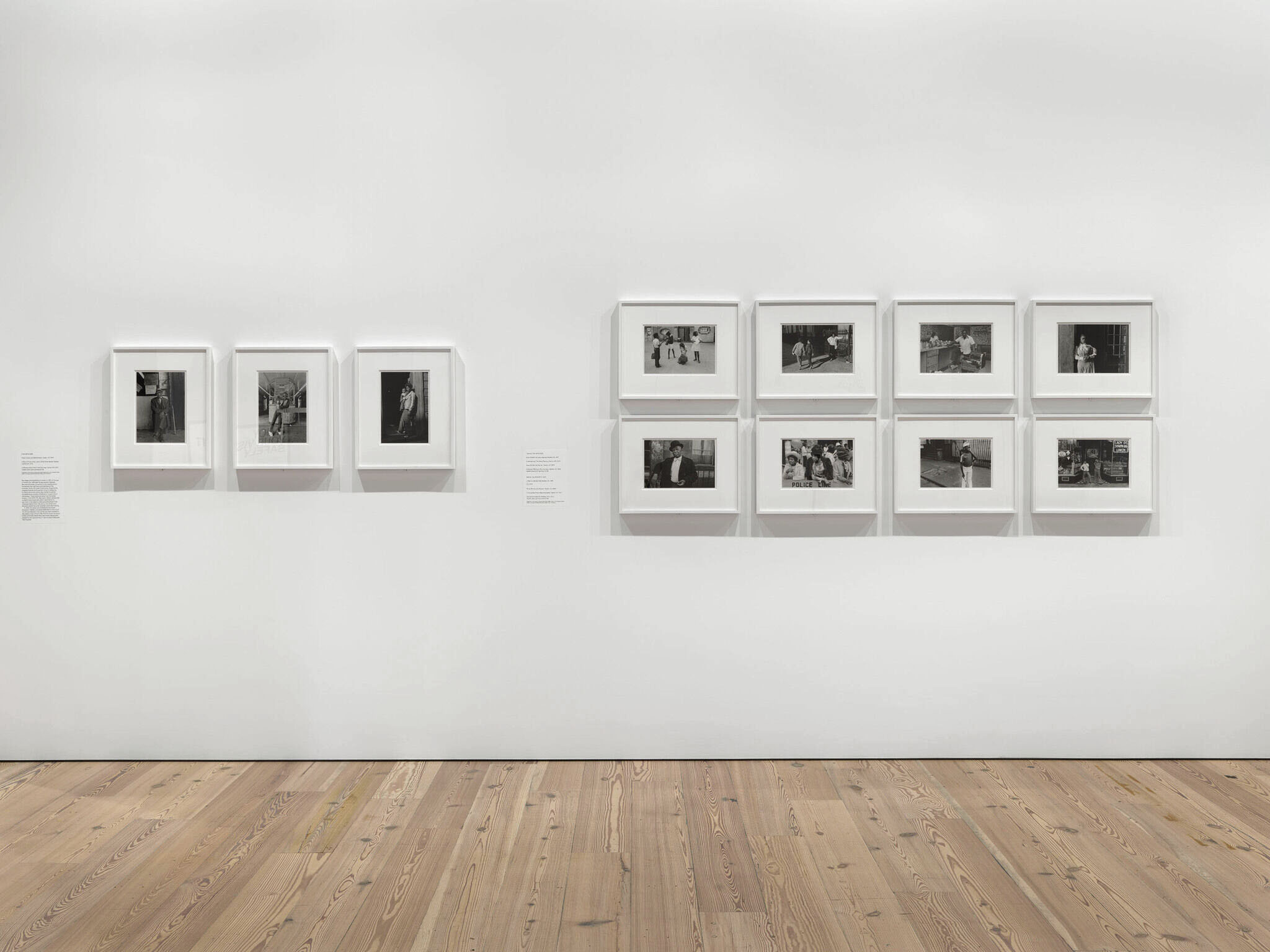
Installation view ofĀ 'Dawoud Bey: An American Project'Ā (Whitney Museum of American Art, New York, April 17-October 3, 2021)

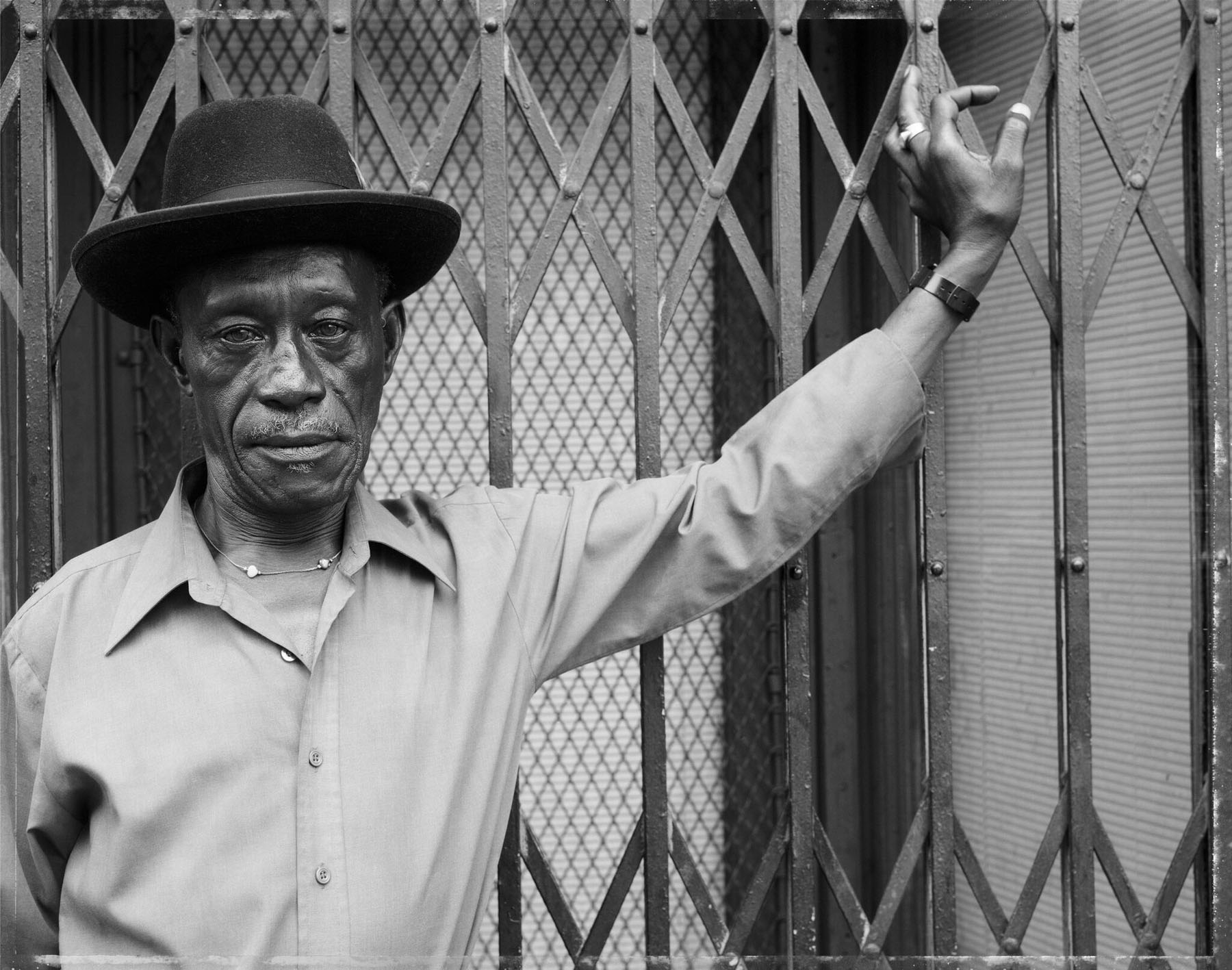
Installation view ofĀ 'Dawoud Bey: An American Project'Ā (Whitney Museum of American Art, New York, April 17-October 3, 2021) showing from left to right: Fresh Coons and Wild Rabbits, Harlem, NY, 1975;Ā A Boy in Front of the Loew's 125th Street Movie Theater, Harlem, NY, 1976;Ā A Woman and a Child in the Doorway, Harlem, NY, 1975; Clockwise, from top left:Ā Four Children at Lenox Avenue, Harlem, NY, 1977;Ā A Woman and Two Boys Passing, Harlem, NY, 1978;Ā Deas McNeil, the Barber, Harlem, NY, 1976;Ā A Woman Waiting in the Doorway, Harlem, NY, 1976;Ā Two Girls at Lady D's, Harlem, NY, c. 1976;Ā A Young Boy from a Marching Band, Harlem, NY, 1977;Ā Three Women at a Parade, Harlem, NY, 1978;Ā A Man in a Bowler Hat, Harlem, NY, 1976


Installation view of Dawoud Bey: An American Project (Whitney Museum of American Art, New York, April 17 – October 3, 2021). From left to right: Fresh Coons and Wild Rabbits, Harlem, NY, 1975; A Boy in Front of the Loew’s 125th Street Movie Theater, Harlem, NY, 1976; A Woman and a Child in the Doorway, Harlem, NY, 1975; Clockwise, from top left: Four Children at Lenox Avenue, Harlem, NY, 1977; A Woman and Two Boys Passing, Harlem, NY, 1978; Deas McNeil, the Barber, Harlem, NY, 1976; A Woman Waiting in the Doorway, Harlem, NY, 1976; Two Girls at Lady D’s, Harlem, NY, c. 1976; A Young Boy from a Marching Band, Harlem, NY, 1977; Three Women at a Parade, Harlem, NY, 1978; A Man in a Bowler Hat, Harlem, NY, 1976. Photograph by Ron Amstutz


To fit it in with other exhibitions closing soon, a mid-week posting on this strong exhibition – Dawoud Bey: An American Project – this time at the Whitney Museum of American Art, with further media images, audio and installation photographs. The first posting with my comments about the exhibition was at the High Museum of Art.

Dr Marcus Bunyan


Many thankx to the Whitney Museum of American Art for allowing me to publish the photographs in the posting. Please click on the photographs for a larger version of the image.
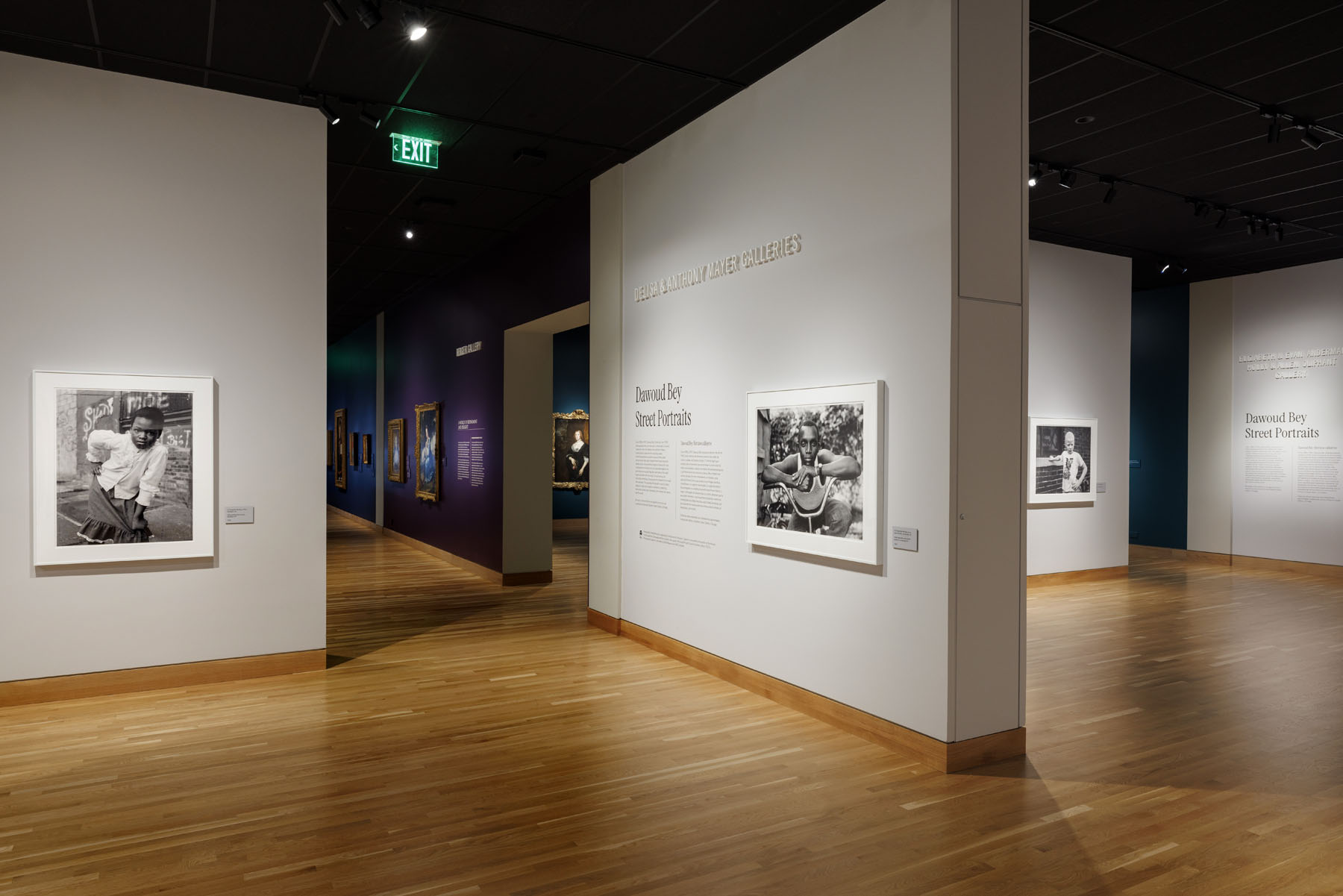


Dawoud Bey: An American Project

Since the mid-1970s, Dawoud Bey (b. 1953) has worked to expand upon what photography can and should be. Insisting that it is an ethical practice requiring collaboration with his subjects, he creates poignant meditations on visibility, power, and race. Bey chronicles communities and histories that have been largely underrepresented or even unseen, and his work lends renewed urgency to an enduring conversation about what it means to represent America with a camera.

Spanning from his earliest street portraits in Harlem to his most recent series imagining an escape from slavery on the Underground Railroad, Dawoud Bey: An American Project attests to the artist’s profound engagement with the Black subject. He is deeply committed to the craft of photography, drawing on the medium’s specific tools, processes, and materials to amplify the formal, aesthetic, and conceptual goals of each body of work. Bey views photography not only as a form of personal expression but as an act of political responsibility, emphasising the necessary and ongoing work of artists and institutions to break down obstacles to access, convene communities, and open dialogues.

Dawoud Bey: An American Project is co-organised by the Whitney Museum of American Art and the San Francisco Museum of Modern Art. The exhibition is co-curated by Elisabeth Sherman, Assistant Curator at the Whitney, and Corey Keller, Curator of Photography at SFMOMA.


Room 800 Introduction


Dawoud Bey (American, b. 1953) 'Two Girls at Lady D's, Harlem, NY' c. 1976, printed 2019 from the exhibition Exhibition: 'Dawoud Bey: An American Project' at the Whitney Museum of American Art, New York, April - Oct, 2021


Dawoud Bey (American, b. 1953)
Two Girls at Lady D’s, Harlem, NY
c. 1976, printed 2019
From Harlem, U.S.A.
Gelatin silver print
11 Ɨ 14 in. (27.9 Ɨ 35.6cm)
Collection of the artist; courtesy the artist and Sean Kelly Gallery, New York; Stephen Daiter Gallery, Chicago; and Rena Bransten Gallery, San Francisco
Image courtesy the artist and Stephen Daiter Gallery, Chicago
Ā© Dawoud Bey


Dawoud Bey (American, b. 1953) 'Four Children at Lenox Avenue, Harlem, NY' 1977, printed 2019 from the exhibition Exhibition: 'Dawoud Bey: An American Project' at the Whitney Museum of American Art, New York, April - Oct, 2021


Dawoud Bey (American, b. 1953)
Four Children at Lenox Avenue, Harlem, NY
1977, printed 2019
From Harlem, U.S.A.
Gelatin silver print
11 Ɨ 14 in. (27.9 Ɨ 35.6cm)
Collection of the artist; courtesy Sean Kelly Gallery, New York; Stephen Daiter Gallery, Chicago; and Rena Bransten Gallery, San Francisco
Ā© Dawoud Bey


1

Harlem, U.S.A.

Bey began photographing in Harlem in 1975, at the age of twenty-two. Although he was raised in Queens, Bey was intimately connected to the neighbourhood: his parents had met there, and members of his extended family still made it their home. Drawn to the neighbourhood as both a symbol of and a wellspring for Black American culture, Bey wanted to portray its residents as complex individuals in images free of stereotype. These works all come from the series Harlem, U.S.A. (1975-1979).

Bey used a 35mm camera with a slightly wide-angle lens, which required him to get close to his subjects while grounding them in the cityscape behind them. His set-up was nimble and discreet, and let the artist carefully control the framing. In 1979, the series was exhibited at the Studio Museum in Harlem, a museum dedicated to the arts of the African diaspora. Even at this very early moment in his career, it was critical to Bey that the works be shown in the community where they were made, allowing the people he was representing to have access to the work they inspired.


Dawoud Bey (American, b. 1953) 'A Woman Waiting in the Doorway, Harlem, NY' 1977, printed 2019


Dawoud Bey (American, b. 1953)
A Woman Waiting in the Doorway, Harlem, NY
1977, printed 2019
From Harlem, U.S.A.
Gelatin silver print
14 Ɨ 11 in. overall (35.6 Ɨ 27.9cm)
Collection of the artist; courtesy Sean Kelly Gallery, New York; Stephen Daiter Gallery, Chicago; and Rena Bransten Gallery, San Francisco
Ā© Dawoud Bey


Dawoud Bey (American, b. 1953) 'Four Teenagers after Church Service, Syracuse, NY' 1985, printed 2019


Dawoud Bey (American, b. 1953)
Four Teenagers after Church Service, Syracuse, NY
1985, printed 2019
Gelatin silver print
20 Ɨ 24 in. (50.8 Ɨ 61cm)
Collection of the artist; courtesy Sean Kelly Gallery, New York
Stephen Daiter Gallery, Chicago; and Rena Bransten Gallery, San Francisco
Ā© Dawoud Bey


Installation view ofĀ 'Dawoud Bey: An American Project'Ā (Whitney Museum of American Art, New York, April 17-October 3, 2021) showing clockwise, from top left: Two Boys, Syracuse, NY, 1985;Ā A Young Man with a Bus Transfer, Syracuse, NY, 1985;Ā Two Boys at a Syracuse Handball Court, Syracuse, NY, 1985;Ā Car in Backyard, Syracuse, NY, 1985;Ā A Young Woman Waiting for the Bus, Syracuse, NY, 1985;Ā A Young Man at the Bus Stop, Syracuse, NY, 1985;Ā Four Teenagers After Church Service, Syracuse, NY, 1985;Ā Combing Hair, Syracuse, NY, 1986;Ā Clothes Drying on the Line, Syracuse, NY, 1985;Ā A Woman and Three Children, Syracuse, NY, 1985


Installation view of Dawoud Bey: An American Project (Whitney Museum of American Art, New York, April 17 – October 3, 2021). Clockwise, from top left: Two Boys, Syracuse, NY, 1985; A Young Man with a Bus Transfer, Syracuse, NY, 1985; Two Boys at a Syracuse Handball Court, Syracuse, NY, 1985; Car in Backyard, Syracuse, NY, 1985; A Young Woman Waiting for the Bus, Syracuse, NY, 1985; A Young Man at the Bus Stop, Syracuse, NY, 1985; Four Teenagers After Church Service, Syracuse, NY, 1985; Combing Hair, Syracuse, NY, 1986; Clothes Drying on the Line, Syracuse, NY, 1985; A Woman and Three Children, Syracuse, NY, 1985. Photograph by Ron Amstutz


Dawoud Bey (American, b. 1953) 'Clothes Drying on the Line, Syracuse, NY' 1985, printed 2019


Dawoud Bey (American, b. 1953)
Clothes Drying on the Line, Syracuse, NY
1985, printed 2019
Gelatin silver print
20 Ɨ 24 in. (50.8 Ɨ 61cm)
Collection of the artist; courtesy Sean Kelly Gallery, New York
Stephen Daiter Gallery, Chicago; and Rena Bransten Gallery, San Francisco
Image courtesy the artist and Stephen Daiter Gallery, Chicago
Ā© Dawoud Bey


2

Syracuse, NY

For much of the 1980s Bey continued to use the same slightly wide-angle lens and 35mm camera that he had used to make Harlem, U.S.A. Increasingly attuned to the formal and expressive geometries of the camera’s rectangular frame, he explored new ways to make use of shadow and light to help define a dynamic and improvisational composition. These aesthetic choices were deeply informed by the photographers he knew and studied, most importantly Roy DeCarava (1919-2009).

In 1985 Bey had a residency at Light Work in Syracuse, New York. Residencies and the projects that grew out of them would become a key aspect of his career, allowing him to focus on one place or organisation and incorporate that specificity into his work. In this series of photographs made in Syracuse, Bey portrays the city’s Black community. He noted: “It was a deliberate choice to foreground the Black subject in those photographs, giving them a place not only in my pictures … but on the wall[s] of galleries and museums when that work was exhibited.”


Dawoud Bey (American, b. 1953) 'A Young Woman Waiting for the Bus, Syracuse, NY' 1985, printed 2019


Dawoud Bey (American, b. 1953)
A Young Woman Waiting for the Bus, Syracuse, NY
1985, printed 2019
Gelatin silver print
20 Ɨ 24 in. (50.8 Ɨ 61cm)
Collection of the artist; courtesy Sean Kelly Gallery, New York; Stephen Daiter Gallery, Chicago; and Rena Bransten Gallery, San Francisco
Ā© Dawoud Bey


Ask a Curator: Dawoud Bey: An American Project

Join assistant curator Elisabeth Sherman and curatorial assistant Ambika Trasi for an overview of the exhibition Dawoud Bey: An American Project. For more than four decades, Dawoud Bey has used the camera to create poignant meditations on visibility, power, and race, chronicling communities and histories that have largely been underrepresented or even unseen. The exhibition traces continuities across Bey’s major series, from his earliest street portraits in Harlem through his most recent project imagining an escape from slavery on the Underground Railroad.


Installation view ofĀ 'Dawoud Bey: An American Project'Ā (Whitney Museum of American Art, New York, April 17-October 3, 2021) showing from left to right: A Couple in Prospect Park, Brooklyn, NY, 1990;Ā A Woman at Fulton Street and Washington Avenue, Brooklyn, NY, 1988;Ā A Man at Fulton Street and Cambridge Place, Brooklyn, NY, 1988;Ā A Young Man Resting on an Exercise Bike, Amityville, NY, 1988;Ā Max, Celia, Ramon, and Candida, New York, NY, 1992;Ā Martina and Rhonda, Chicago, IL, 1993


Installation view of Dawoud Bey: An American Project (Whitney Museum of American Art, New York, April 17 – October 3, 2021). From left to right: A Couple in Prospect Park, Brooklyn, NY, 1990; A Woman at Fulton Street and Washington Avenue, Brooklyn, NY, 1988; A Man at Fulton Street and Cambridge Place, Brooklyn, NY, 1988; A Young Man Resting on an Exercise Bike, Amityville, NY, 1988; Max, Celia, Ramon, and Candida, New York, NY, 1992; Martina and Rhonda, Chicago, IL, 1993. Photograph by Ron Amstutz


Dawoud Bey (American, b. 1953) 'A Man at Fulton Street and Cambridge Place, Brooklyn, NY' 1988, printed 2019


Dawoud Bey (American, b. 1953)
A Man at Fulton Street and Cambridge Place, Brooklyn, NY
1988, printed 2019
Pigmented inkjet print
30 Ɨ 40 in. (76.2 Ɨ 101.6cm)
Collection of the artist; courtesy Sean Kelly Gallery, New York; Stephen Daiter Gallery, Chicago; and Rena Bransten Gallery, San Francisco
Ā© Dawoud Bey


3

Type 55 Polaroid Street Portraits

After more than a decade of using a handheld 35mm camera, in 1988 Bey chose to slow down his process, moving to a larger and more conspicuous tripod-mounted 4 × 5-inch-format camera to make this series of street portraits. Like many other photographers working at that time, Bey was increasingly concerned with the ethics of traditional street photography, “which privileged the photographer at the expense of the subject,” and sought more equitable, reciprocal relationships with his sitters.

He began openly approaching strangers he wished to photograph in order to give “the Black subjects [a space] to assert themselves and their presence in the world, with their gaze meeting the viewer’s on equal footing.” He used Polaroid Type 55 film, which produced both instant pictures that he gave to the sitters and negatives that could be used later to make additional prints. Printing technologies have advanced in the decades since Bey made the photographs; the images here have been reprinted at nearly life-size, realising his original intention of creating a more heightened encounter between subject and viewer.


Dawoud Bey (American, b. 1953) 'A Boy Eating a Foxy Pop, Brooklyn, NY' 1988, printed 2019


Dawoud Bey (American, b. 1953)
A Boy Eating a Foxy Pop, Brooklyn, NY
1988, printed 2019
Pigmented inkjet print
40 Ɨ 30 in. (101.6 Ɨ 76.2cm)
Collection of the artist; courtesy Sean Kelly Gallery, New York; Stephen Daiter Gallery, Chicago; and Rena Bransten Gallery, San Francisco
Ā© Dawoud Bey


Room 803 Young Man at a Tent Revival, Brooklyn, NY


Dawoud Bey (American, b. 1953) 'Young Man at a Tent Revival, Brooklyn, NY' 1989, printed 2019


Dawoud Bey (American, b. 1953)
Young Man at a Tent Revival, Brooklyn, NY
1989, printed 2019
Pigmented inkjet print
40 Ɨ 30 in. (101.6 Ɨ 76.2cm)
Courtesy the artist and Sean Kelly Gallery, New York; Stephen Daiter Gallery, Chicago; and Rena Bransten Gallery, San Francisco
Ā© Dawoud Bey


Installation view ofĀ 'Dawoud Bey: An American Project'Ā (Whitney Museum of American Art, New York, April 17-October 3, 2021) showing from left to right: (clockwise, from top left) Two Boys, Syracuse, NY, 1985;Ā A Young Man with a Bus Transfer, Syracuse, NY, 1985;Ā Two Boys at a Syracuse Handball Court, Syracuse, NY, 1985;Ā Car in Backyard, Syracuse, NY, 1985;Ā A Young Woman Waiting for the Bus, Syracuse, NY, 1985;Ā A Young Man at the Bus Stop, Syracuse, NY, 1985;Ā Four Teenagers After Church Service, Syracuse, NY, 1985;Ā Combing Hair, Syracuse, NY, 1986;Ā Clothes Drying on the Line, Syracuse, NY, 1985;Ā A Woman and Three Children, Syracuse, NY, 1985;Ā Kenosha II, 1996;Ā Hilary and Taro, Chicago, IL, 1992;Ā A Girl with School Medals, Brooklyn, NY, 1988;Ā A Boy Eating a Foxy Pop, Brooklyn, NY, 1988;Ā A Girl with a Knife Nosepin, Brooklyn, NY, 1990


Installation view of Dawoud Bey: An American Project (Whitney Museum of American Art, New York, April 17 – October 3, 2021). From left to right: (clockwise, from top left) Two Boys, Syracuse, NY, 1985; A Young Man with a Bus Transfer, Syracuse, NY, 1985; Two Boys at a Syracuse Handball Court, Syracuse, NY, 1985; Car in Backyard, Syracuse, NY, 1985; A Young Woman Waiting for the Bus, Syracuse, NY, 1985; A Young Man at the Bus Stop, Syracuse, NY, 1985; Four Teenagers After Church Service, Syracuse, NY, 1985; Combing Hair, Syracuse, NY, 1986; Clothes Drying on the Line, Syracuse, NY, 1985; A Woman and Three Children, Syracuse, NY, 1985; Kenosha II, 1996; Hilary and Taro, Chicago, IL, 1992; A Girl with School Medals, Brooklyn, NY, 1988; A Boy Eating a Foxy Pop, Brooklyn, NY, 1988; A Girl with a Knife Nosepin, Brooklyn, NY, 1990. Photograph by Ron Amstutz


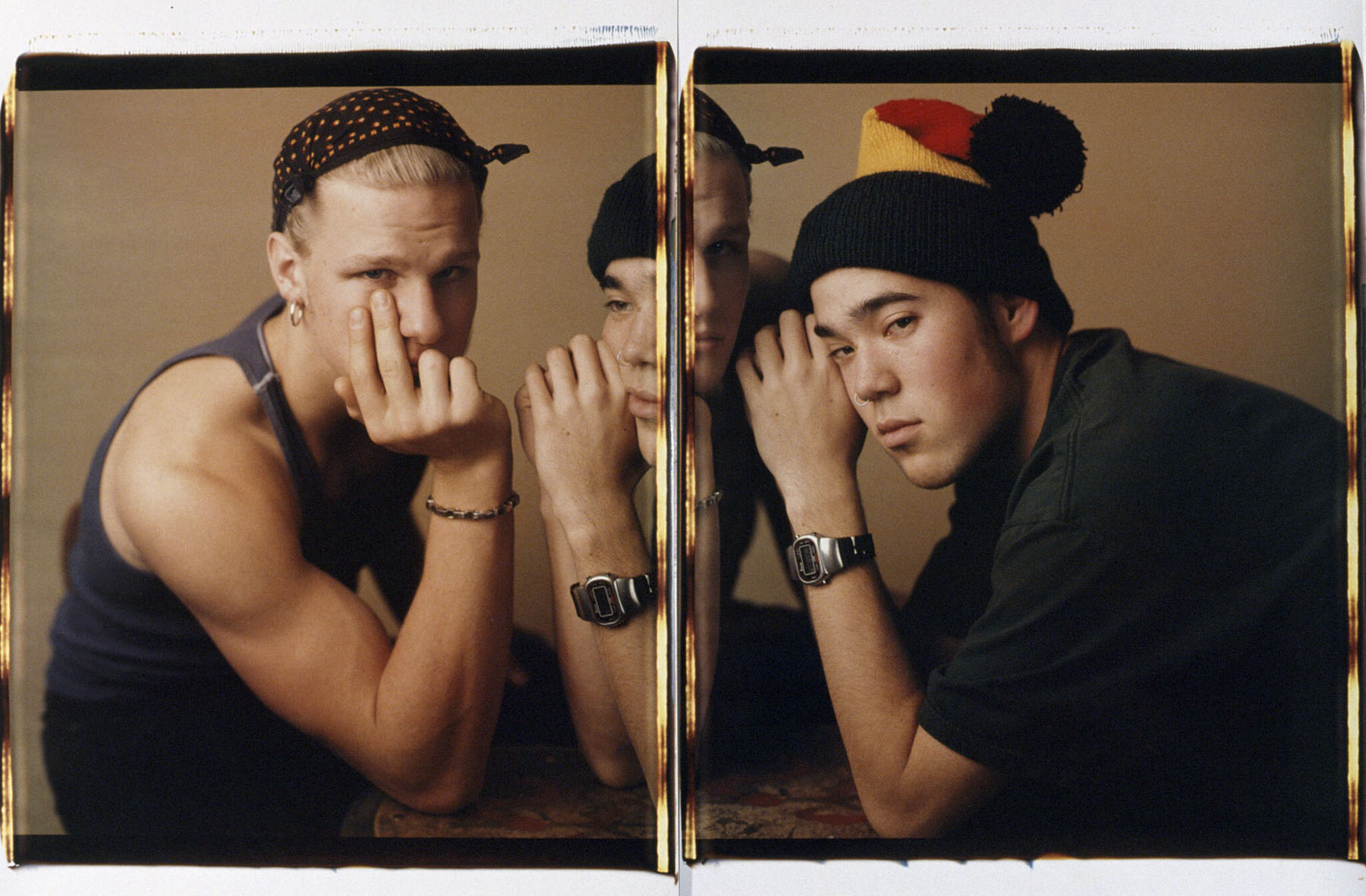
Dawoud Bey (American, b. 1953) 'Hilary and Taro, Chicago, IL' 1992


Dawoud Bey (American, b. 1953)
Hilary and Taro, Chicago, IL
1992
Two dye diffusion transfer prints (Polaroids)
30 1/8 Ɨ 44 in. overall (76.5 Ɨ 111.8cm)
Whitney Museum of American Art; purchase, with funds from the Photography Committee
Ā© Dawoud Bey


Dawoud Bey (American, b. 1953) 'Max, Celia, Ramon and Candida, New York, NY' 1992


Dawoud Bey (American, b. 1953)
Max, Celia, Ramon and Candida, New York, NY
1992
Three dye diffusion transfer prints (Polaroid)
30 Ɨ 67 7/8 in. overall (76.2 Ɨ 167.64cm)
Collection of Candida Alvarez
Ā© Dawoud Bey


4

20 Ɨ 24 Polaroids

In 1991, Bey began using the 20 × 24-inch camera that the Polaroid Corporation made available to artists through its Artist Support Program. The camera was gargantuan and cumbersome – more than two hundred pounds and over six feet tall and five feet wide – and required two people to operate it, the photographer and a technician. Unlike the chance, and often brief, encounters with his subjects outside when using a 35mm camera, the Polaroid camera studio sessions offered Bey the opportunity to orchestrate all the conditions of the image and to have a more contemplative and sustained engagement with each sitter.

His earliest subjects were his artist friends; later he photographed teenagers that he met through a series of residencies at high schools and museums around the country. Over the course of Bey’s eight-year engagement with the 20 × 24-inch Polaroid camera, he increasingly explored the possibilities of multi-panel portraiture as a way of conveying a sense of the length of a portrait session as well as acknowledging the reality that no one image can fully portray an individual’s complexity.


Room 804 Lorna, New York, NY


Dawoud Bey (American, b. 1953) 'Lorna, New York, NY' 1992


Dawoud Bey (American, b. 1953)
Lorna, New York, NY
1992
Two dye diffusion transfer prints (Polaroid)
30 Ɨ 44 in. overall (76.2 Ɨ 111.76cm)
Collection of Eileen Harris Norton
Ā© Dawoud Bey


Dawoud Bey (American, b. 1953) 'Martina and Rhonda, Chicago, IL' 1993


Dawoud Bey (American, b. 1953)
Martina and Rhonda, Chicago, IL
1993
Six dye diffusion transfer prints (Polaroid)
48 Ɨ 60 in. overall (121.9 Ɨ 152.4cm)
Whitney Museum of American Art; gift of Eric Ceputis and David W. Williams
Ā© Dawoud Bey


Reimagining History: Dawoud Bey in conversation with Jason Moran and Sarah M. Broom

On the occasion of the exhibition Dawoud Bey: An American Project, this conversation brings Dawoud Bey together with artist and musician Jason Moran and writer Sarah M. Broom to discuss their shared interest in specific histories and shared memories as the ground for their respective practices.

Inspired by Bey’s The Birmingham Project (2012) – a tribute to the victims of the 16th Street Baptist Church bombing in Birmingham, AL, in 1963 – and Night Coming Tenderly, Black (2019), which imagines the flight of enslaved Black Americans along the final leg of the Underground Railroad, the three speakers reflect on how an artwork can become an act of commemoration and radical reinvention.

Jason Moran is an interdisciplinary artist, musician, and composer who draws on and celebrates the history of Black music and musicians such as James Reese Europe, Thelonious Monk, and Fats Waller, among others.

Sarah M. Broom is the author of The Yellow House, a memoir that weaves the story of her family in New Orleans across multiple generations.


Installation view ofĀ 'Dawoud Bey: An American Project'Ā (Whitney Museum of American Art, New York, April 17-October 3, 2021) showing from left to right, from Class Pictures:Ā Kevin, Phillips Academy, Andover, MA, 2005;Ā Simone, Kenwood Academy, Chicago, IL, 2003;Ā Danny, Fashion Industries High School, New York, NY, 2006


Installation view of Dawoud Bey: An American Project (Whitney Museum of American Art, New York, April 17 – October 3, 2021). From left to right, from Class PicturesKevin, Phillips Academy, Andover, MA, 2005; Simone, Kenwood Academy, Chicago, IL, 2003; Danny, Fashion Industries High School, New York, NY, 2006. Photograph by Ron Amstutz


Dawoud Bey (American, b. 1953) 'Kevin, Phillips Academy, Andover, MA' 2005


Dawoud Bey (American, b. 1953)
Kevin, Phillips Academy, Andover, MA
2005
From Class Pictures
Pigmented inkjet print
40 Ɨ 32 in. (101.6 Ɨ 81.3cm)
Collection of the artist; courtesy Sean Kelly Gallery, New York; Stephen Daiter Gallery, Chicago; and Rena Bransten Gallery, San Francisco
Ā© Dawoud Bey


5

Class Pictures

Bey has long understood that the act of representation – as well as the corollary act of being seen – is both powerful and political. In Class Pictures (1992-2006) he once again turned his attention to teenagers, a population he felt was underrepresented and misjudged, seen either as “socially problematic or as engines for a certain consumerism.” The series originated during a residency at the Smart Museum of Art in Chicago, where Bey began working with local high-school students; during residencies at other museums and schools around the country, he expanded the project to capture a geographically and socioeconomically diverse slice of American adolescence.

Working in empty classrooms between class periods, Bey made careful and tender formal colour portraits of teens. He then invited them to write brief autobiographical statements to accompany their images, giving his subjects voice as well as visibility. Many of the residencies also included a curatorial project with the students using works in the museums’ collections. While the photographs and texts are what remain of these projects, it is the collaborative undertaking that Bey considers the work of Class Pictures.


Dawoud Bey (American, b. 1953) 'Jordan, School of the Arts, San Francisco, CA' 2006


Dawoud Bey (American, b. 1953)
Jordan, School of the Arts, San Francisco, CA
2006
From Class Pictures
Pigmented inkjet print
40 Ɨ 32 in. (101.6 Ɨ 81.3cm)
Collection of the artist; courtesy Sean Kelly Gallery, New York; Stephen Daiter Gallery, Chicago; and Rena Bransten Gallery, San Francisco
Ā© Dawoud Bey


Dawoud Bey (American, b. 1953) 'Omar, Phillips Academy, Andover, MA' 2005, printed 2019


Dawoud Bey (American, b. 1953)
Omar, Phillips Academy, Andover, MA
2005, printed 2019
From Class Pictures
Pigmented inkjet print
40 Ɨ 32 in. (101.6 Ɨ 81.3cm)
Collection of the artist; courtesy Sean Kelly Gallery, New York; Stephen Daiter Gallery, Chicago; and Rena Bransten Gallery, San Francisco
Ā© Dawoud Bey


Room 805 Omar, Phillips Academy, Andover, MA


Dawoud Bey (American, b. 1953) 'Omar, Phillips Academy, Andover, MA' 2005, printed 2019


Dawoud Bey (American, b. 1953)
Omar, Phillips Academy, Andover, MA (detail)
2005, printed 2019
From Class Pictures
Pigmented inkjet print
40 Ɨ 32 in. (101.6 Ɨ 81.3cm)
Collection of the artist; courtesy Sean Kelly Gallery, New York; Stephen Daiter Gallery, Chicago; and Rena Bransten Gallery, San Francisco
Ā© Dawoud Bey


Dawoud Bey (American, b. 1953) 'Braxton McKinney and Lavone Thomas, Birmingham, AL' 2012


Dawoud Bey (American, b. 1953)
Braxton McKinney and Lavone Thomas, Birmingham, AL
2012
From The Birmingham Project
Pigmented inkjet prints
40 Ɨ 32 in. each (101.6 Ɨ 81.3cm each)
Rennie Collection, Vancouver
Ā© Dawoud Bey


6

The Birmingham Project

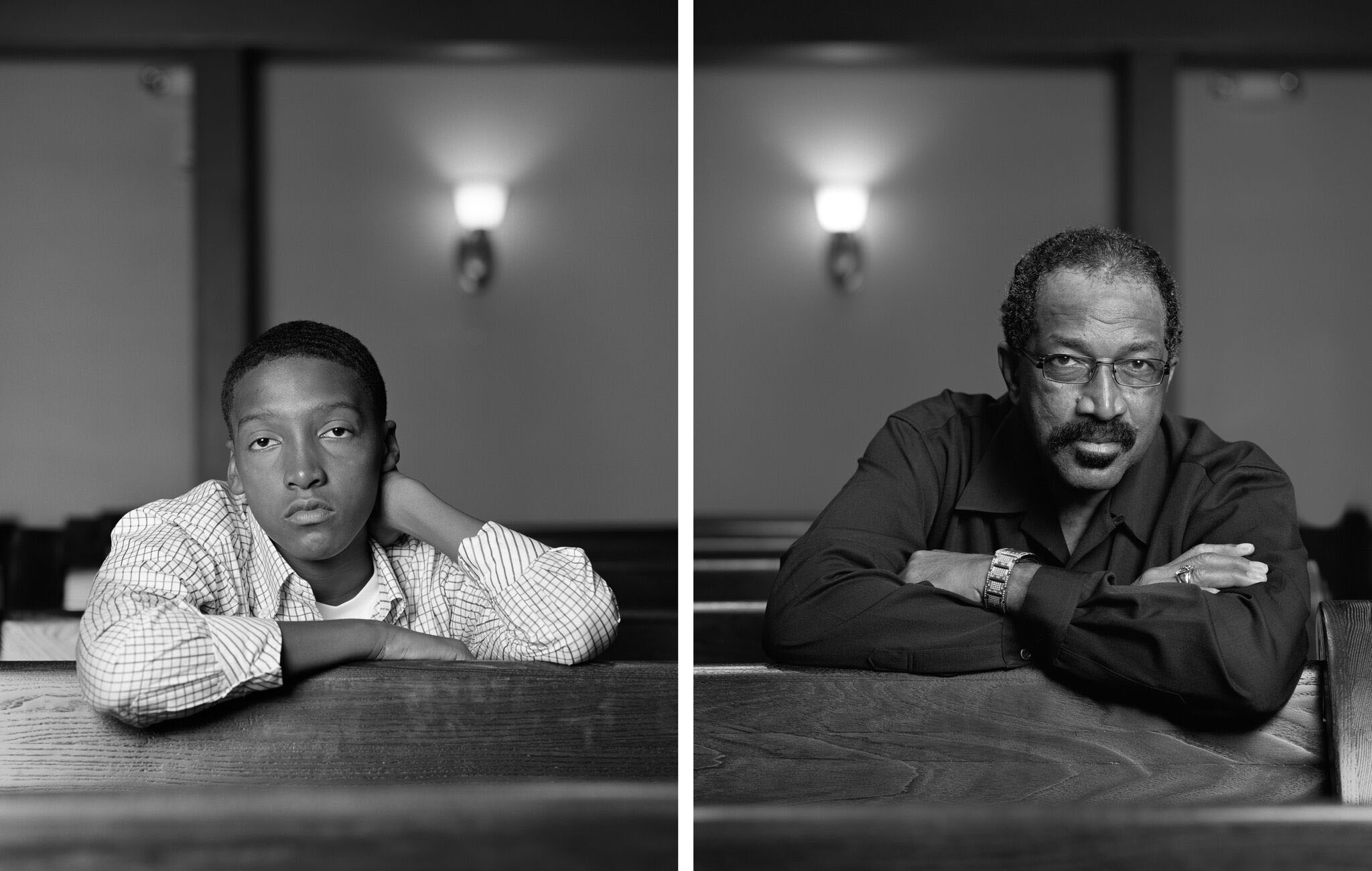
On September 15, 1963, the Ku Klux Klan bombed the 16th Street Baptist Church in Birmingham, Alabama, murdering four Black girls – Addie Mae Collins, Denise McNair, Carole Robertson, and Cynthia Wesley – inside. Two Black boys – Johnny Robinson and Virgil Ware – were also killed in racially motivated violence later that day. Bey’s series The Birmingham Project (2012) commemorated the fiftieth anniversary of this horrific event. The artist made formal portraits of Birmingham residents, pairing children the same ages as the victims with adults fifty years older – the ages the victims would have been had they lived.

Bey said of the experience making these works: “To think of someone striking such a young life down with impunity is a renewed horror each time a young person sits in front of my camera. To see the older men and women, having lived rich full lives, reminds me constantly of the tragically abbreviated lives of those six young people.” Bey made the portraits in two locations: Bethel Baptist Church, an early headquarters for the civil rights movement in Birmingham, and the Birmingham Museum of Art, which in 1963 was a segregated space that admitted Black visitors only one day a week. The resulting works both honour the tragic loss of the six children and make plain the continued impact of violence, trauma, and racism.


Dawoud Bey (American, b. 1953) 'Betty Selvage and Faith Speights, Birmingham, AL' 2012


Dawoud Bey (American, b. 1953)
Betty Selvage and Faith Speights, Birmingham, AL
2012
From The Birmingham Project
Pigmented inkjet prints
40 Ɨ 32 in. each (101.6 Ɨ 81.3cm each)
Rennie Collection, Vancouver
Ā© Dawoud Bey


Installation view ofĀ 'Dawoud Bey: An American Project'Ā (Whitney Museum of American Art, New York, April 17-October 3, 2021) showing grom left to right, from The Birmingham Project: Braxton McKinney and Lavon Thomas, 2012;Ā Betty Selvage and Faith Speights, 2012;Ā Jean Shamburger and Kyrian McDaniel, 2012


Installation view of Dawoud Bey: An American Project (Whitney Museum of American Art, New York, April 17 – October 3, 2021). From left to right, from The Birmingham Project: Braxton McKinney and Lavon Thomas, 2012; Betty Selvage and Faith Speights, 2012; Jean Shamburger and Kyrian McDaniel, 2012. Photograph by Ron Amstutz


Installation view ofĀ 'Dawoud Bey: An American Project'Ā (Whitney Museum of American Art, New York, April 17-October 3, 2021) showing 'Mathis Menefee and Cassandra Griffin', fromĀ 'The Birmingham Project', 2012


Installation view of Dawoud Bey: An American Project (Whitney Museum of American Art, New York, April 17 – October 3, 2021). Mathis Menefee and Cassandra Griffin, from The Birmingham Project, 2012. Photograph by Ron Amstutz


Room 103 Mathis Menefee and Cassandra Griffin


Dawoud Bey (American, b. 1953) 'Mathis Menefee and Cassandra Griffin, Birmingham, AL' 2012


Dawoud Bey (American, b. 1953)
Mathis Menefee and Cassandra Griffin, Birmingham, AL
2012
From The Birmingham Project
Pigmented inkjet prints
40 Ɨ 64 in. each (101.6 Ɨ 162.56cm each)
Rennie Collection, Vancouver
Ā© Dawoud Bey


Dawoud Bey (American, b. 1953) 'West 124th Street and Lenox Avenue, NY' 2016, printed 2019


Dawoud Bey (American, b. 1953)
West 124th Street and Lenox Avenue, NY
2016, printed 2019
From Harlem Redux
Pigmented inkjet print
40 3/8 Ɨ 48 1/4 Ɨ 2 in. overall (102.6 Ɨ 122.6 Ɨ 5.1cm)
Collection of the artist; courtesy Sean Kelly Gallery, New York; Stephen Daiter Gallery, Chicago; and Rena Bransten Gallery, San Francisco
Ā© Dawoud Bey


7

Harlem Redux

In 2014, Bey began the series of which this work is a part, Harlem Redux. It marked a return to the neighbourhood, where four decades earlier he had made his first critically acclaimed body of work, Harlem, U.S.A. If the earlier series is a love letter to the historic epicentre of Black community and culture in the United States, Harlem Redux (2014-17) is an incisive and elegiac look at its recent, rapid transformation and gentrification. Bey used a medium-format camera and made the pictures large scale and in colour, techniques common to contemporary photography practices, in order to signal that these changes are taking place now, and not in a historical moment.

This series commemorates sites of cultural significance in Harlem – such as the legendary jazz club the Lenox Lounge, which was demolished not long after Bey’s photograph was made – and makes evident the impacts of otherwise invisible socioeconomic forces. In his words, Harlem is now a neighbourhood “increasingly defined by a sense of ‘erase and replace’, wherein pieces of social and cultural history, along with memory itself, are routinely discarded.”


Dawoud Bey (American, b. 1953) 'Young Man, West 127th Street, Harlem, NY' 2015, printed 2019


Dawoud Bey (American, b. 1953)
Young Man, West 127th Street, Harlem, NY
2015, printed 2019
From Harlem Redux
Pigmented inkjet print
40 3/8 Ɨ 48 1/4 Ɨ 2 in. overall (102.6 Ɨ 122.6 Ɨ 5.1cm)
Collection of the artist; courtesy Sean Kelly Gallery, New York; Stephen Daiter Gallery, Chicago; and Rena Bransten Gallery, San Francisco
Ā© Dawoud Bey


Room 801 Girls, Ornaments, and Vacant Lot


Dawoud Bey (American, b. 1953) 'Girls, Ornaments, and Vacant Lot, NY' 2016, printed 2019


Dawoud Bey (American, b. 1953)
Girls, Ornaments, and Vacant Lot, NY
2016, printed 2019
From Harlem Redux
Pigmented inkjet print
40 3/8 Ɨ 48 1/4 Ɨ 2 in. (102.6 Ɨ 122.6 Ɨ 5.1cm)
Collection of the artist; courtesy Sean Kelly Gallery, New York; Stephen Daiter Gallery, Chicago; and Rena Bransten Gallery, San Francisco
Ā© Dawoud Bey


Dawoud Bey (American, b. 1953) 'Untitled #21 (Farmhouse and Picket Fence II)' 2017


Dawoud Bey (American, b. 1953)
Untitled #21 (Farmhouse and Picket Fence II)
2017
from Night Coming Tenderly, Black
Gelatin silver print
44 Ɨ 54 5/8 in. (111.8 Ɨ 138.7cm)
Whitney Museum of American Art, New York; purchase, with funds from the Photography Committee, in honour of Sondra Gilman
Ā© Dawoud Bey


8

Night Coming Tenderly, Black

Bey’s most recent work imagines the flight of enslaved Black Americans along the leg of the Underground Railroad that operated in Ohio – the last fifty or so miles before they reached the vast expanse of Lake Erie, on the other side of which lay Canada, and freedom. As a covert network of safe houses and churches, the sites of the Underground Railroad were by necessity secret. Bey’s photographs suggest the experience of the journey and the landscapes and buildings that may have provided protection along the way. Night Coming Tenderly, Black (2017) marks the first time in his career that Bey turned completely to landscape photography, removing the presence of the figure entirely.

Nonetheless, the images imply the perspective of the individuals whose invisibility was requisite for their safety. Their large scale and rich black tones invite the viewer to engage their own body in the act of looking, taking time for their eyes to adjust and moving around to register the entirety of each image. The series pays homage to two Black American artists, the photographer Roy DeCarava and the poet Langston Hughes. DeCarava’s influence can be seen in the lush and protective darkness of the prints, while the project’s title is drawn from the final couplet of Hughes’s “Dream Variations”: “Night coming tenderly / Black like me.”


Dawoud Bey (American, b. 1953) 'Untitled #24 (At Lake Erie)' 2017


Dawoud Bey (American, b. 1953)
Untitled #24 (At Lake Erie)
2017
from Night Coming Tenderly, Black
Gelatin silver print
48 Ɨ 55 in. (121.9 Ɨ 139.7cm)
Whitney Museum of American Art, New York; purchase, with funds from the Photography Committee, in honour of Sondra Gilman
Ā© Dawoud Bey


Room 806 Untitled #25 (Lake Erie and Sky)


Dawoud Bey (American, b. 1953) 'Untitled #25 (Lake Erie and Sky)' 2017


Dawoud Bey (American, b. 1953)
Untitled #25 (Lake Erie and Sky)
2017
From Night Coming Tenderly, Black
Gelatin silver print
44 Ɨ 55 in. (111.8 Ɨ 139.7cm)
San Francisco Museum of Modern Art; Accessions Committee Fund purchase
Ā© Dawoud Bey


Whitney Museum of American Art
99 Gansevoort Street
New York, NY 10014
Phone: (212) 570-3600

Opening hours:
Mondays: 10.30am – 6pm
Tuesdays: Closed
Wednesdays, Thursdays, Saturdays and Sundays: 10.30am – 6pm
Friday: 10.30am – 10pm

Whitney Museum of American Art website

LIKE ART BLART ON FACEBOOK

Back to top