Exhibition: ‘Joel-Peter Witkin – Photographs 1980-2016’ at William Mora Galleries, Melbourne

Exhibition dates: 3rd – 25th August, 2017


Joel-Peter Witkin (American, 1939-) 'Arms Broken By A Window, New Mexico' 1980 from the exhibition 'Joel-Peter Witkin – Photographs 1980-2016' at William Mora Galleries, Melbourne, August 2017


Joel-Peter Witkin (American, b. 1939)
Arms Broken By A Window, New Mexico
1980
Tirage argentique
64 x 64cm
Courtesy Baudoin Lebon and William Mora Galleries
© Joel-Peter Witkin


“I think this whole conversation can be compressed into one thing. It’s that life is joyous and wonderful and it’s meant for us to grow as individuals, as citizens, as human beings and spirits. The terrible thing is that we have a choice and usually the negative choice is the easy way. That’s what we regret because we know we’ve harmed and we’re not meant to harm. We’re meant to heal and grow and share and if I had a knife at my neck or a gun to my head I’d say the same thing.”


Joel-Peter Witkin


Magical momenti mori

This will be short and sweet because I am on holiday in Europe.

It was a privilege to visit William Mora Galleries to see the first ever exhibition in Australia of the work of the renowned American photographer Joel-Peter Witkin. To be able to spend time with these photographic constructions in such a tranquil space truly was a blessing.

While it is possible to read all sorts of influences into the work – running from Diane Arbus (masks) through Surrealism, collage and homages to still-life “Vanitas” style paintings from the 1600s, the ‘Storyville’ prostitue photos of E.J. Bellocq, carte-de-visite and the conversant arched form of the window cut-outs of Victorian photo albums, mythological themes, ars moriendi (“The Art of Dying”), post-mortem photography, et al – what makes Witkin’s photographs so unique is that they could only, ever, be the work of this artist. When you look at these beautiful photographs they bear his unmistakable signature.

Witkin is able to construct in a performative space placed before the lens, engaging narratives which often have an allusive mystery embedded in them. I for one do not pretend to understand all that is going on within the images in terms of their symbolism – but this is not necessary. What I can feel is the profound love and affection that the artist has towards his subjects and his craft. Witkin is not afraid: of life, of death, of ambiguities of sexuality, identity and disability, that confront each and every one of us throughout life. He is not afraid to make bold moves in his art, scratching into the surface of the negative, bleaching into the print, collaging over the top of the base print, never afraid of high key moments in the mise-en-scène, all to create the affect that he wants in order to tell the story. He directs his imagination through the presence and physicality of the final print.

Witkin’s allegories, his mediations on the universality of death as memento mori, or meme/n/to (a meme is an element of a culture or system of behaviour passed from one individual to another, as in the multiple rituals of death) mori, remind people of the fragility of their lives and how vain are the glories of earthly life. His imaginative renditions posit this: no matter one’s station in life, the Dance of Death unites us all.

Dr Marcus Bunyan


Many thankx to Anna and William Mora for allowing me to publish the photographs in the posting. All installation photographs © Dr Marcus Bunyan, William Mora Galleries, Melbourne and the artist. Please click on the photographs for a larger version of the image.


A sudden blow: the great wings beating still
Above the staggering girl, her thighs caressed
By the dark webs, her nape caught in his bill,
He holds her helpless breast upon his breast.

How can those terrified vague fingers push
The feathered glory from her loosening thighs?
And how can body, laid in that white rush,
But feel the strange heart beating where it lies?

A shudder in the loins engenders there
The broken wall, the burning roof and tower
And Agamemnon dead.
Being so caught up,
So mastered by the brute blood of the air,
Did she put on his knowledge with his power
Before the indifferent beak could let her drop?


W. B. Yeats (1865-1939)
‘Leda and the Swan’
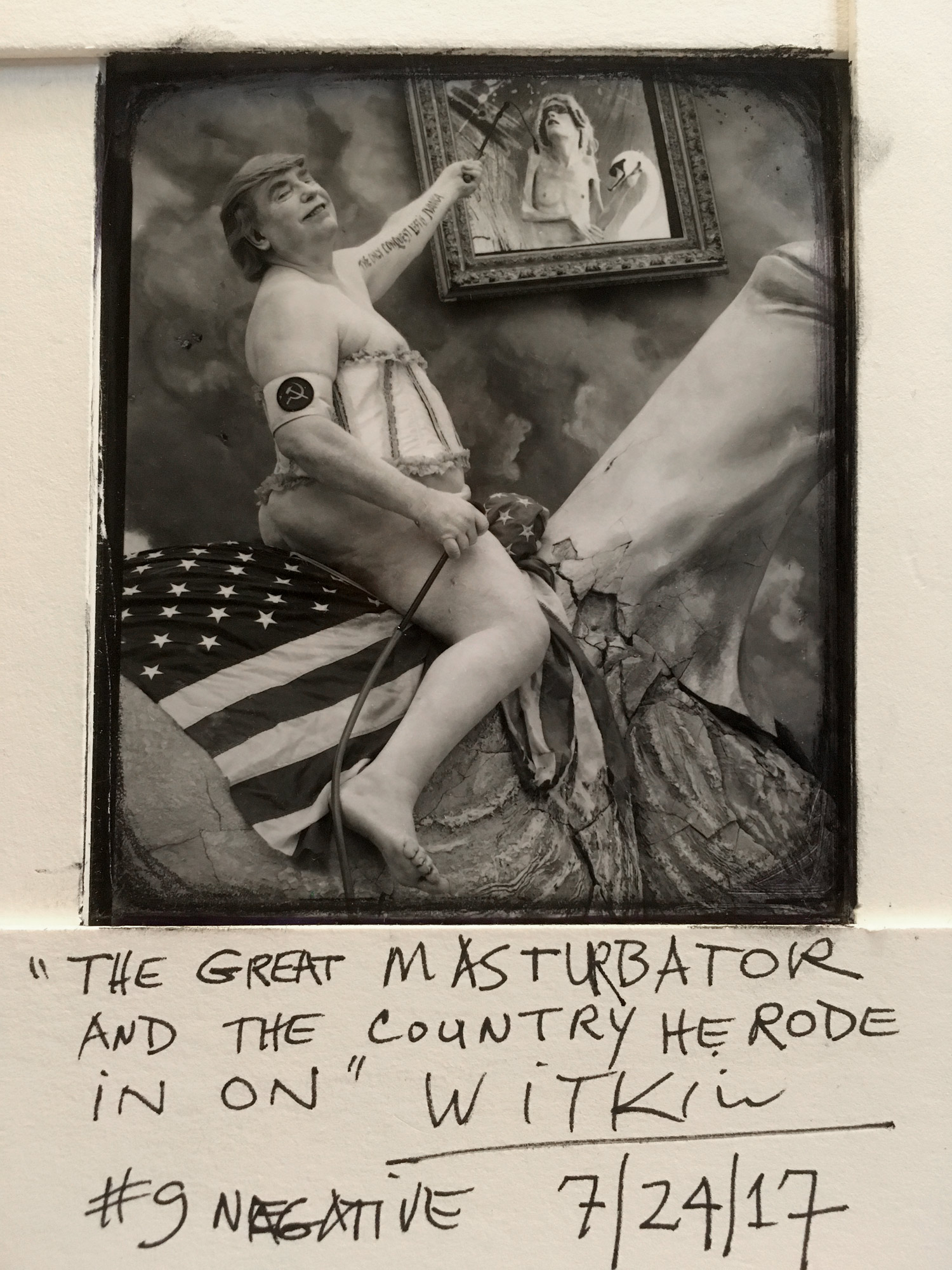


Joel-Peter Witkin (American, b. 1939) 'The Great Masturbator And The Country He Rode In On, New Mexico' 2017 from the exhibition 'Joel-Peter Witkin – Photographs 1980-2016' at William Mora Galleries, Melbourne, August 2017


Joel-Peter Witkin (American, b. 1939)
The Great Masturbator And The Country He Rode In On, New Mexico
2017
Tirage argentique
35 x 32cm
Courtesy Baudoin Lebon and William Mora Galleries
© Joel-Peter Witkin


“Trump is a child living in a narcissistic hollow man – with the power to destroy the world…

Trump is not qualified to be President. His election to that office represents the ignorance of the American electorate and the corruption of our political representatives. Ours is not an intellectual culture in which thought and reason are unselfishly presented. It is a “Pop Culture” of materialistic escapism which has elected an autocratic, draft dodging, corrupt business man, who has made this country the laughing stock of the world.

The Great Masturbator And The Country He Rode In On took several months to create. The Trump model was willing to pose nude. In his right hand is the nuclear button. On his extended left arm is written: “The Only Conquest Left Is Ivanka.” On his right arm, he is wearing the symbol of Communism, the secret agenda Russia is promoting today under Putin. And for reasons yet unknown, all of us look forward to know why Trump is Putin’s marionette.

I made this photograph because I am involved in mankind. As a citizen of this formally great country, and as an artist, I made this photograph to help defeat the Republican party in the 2018 elections for its cowardice in putting their party ahead of their country. Where are our elected leaders, the Lincoln’s, the Kennedy’s of today? Where are our citizen’s hero’s, the César Chávez’s, the Martin Luther King’s, the Rosa Parks of today?

What ever happened to morality, courage and integrity?”

Joel-Peter Witkin


Installation photographs
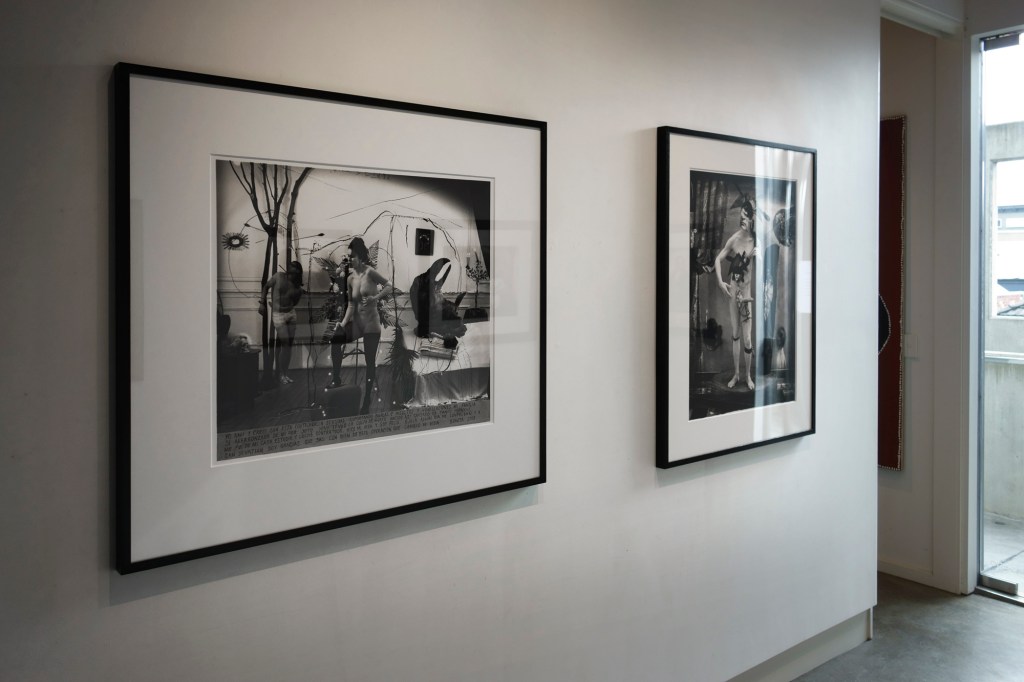


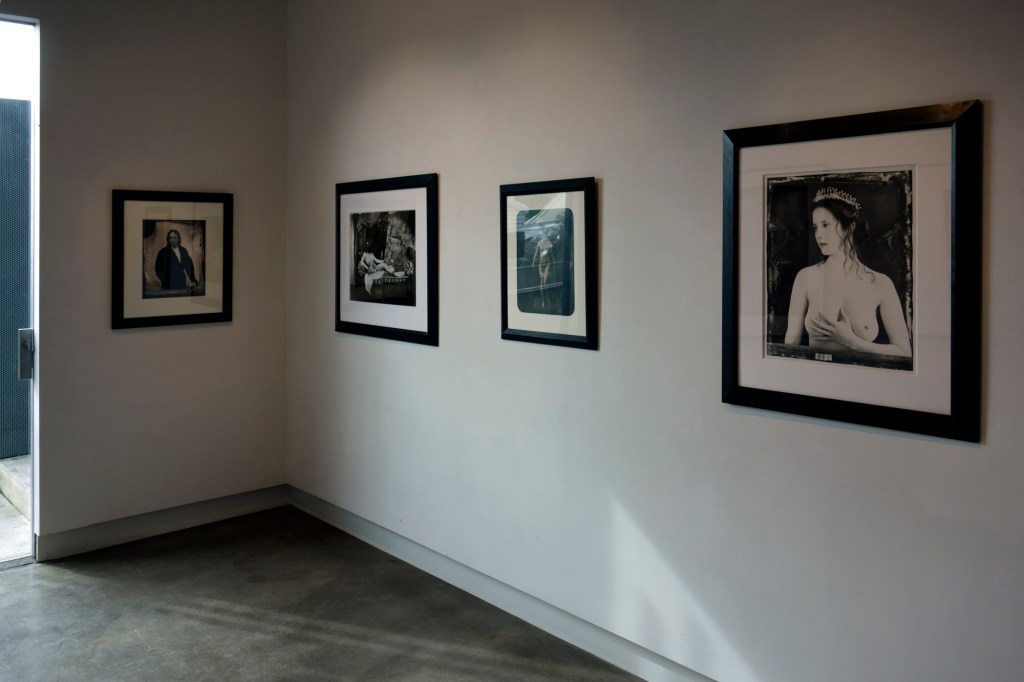
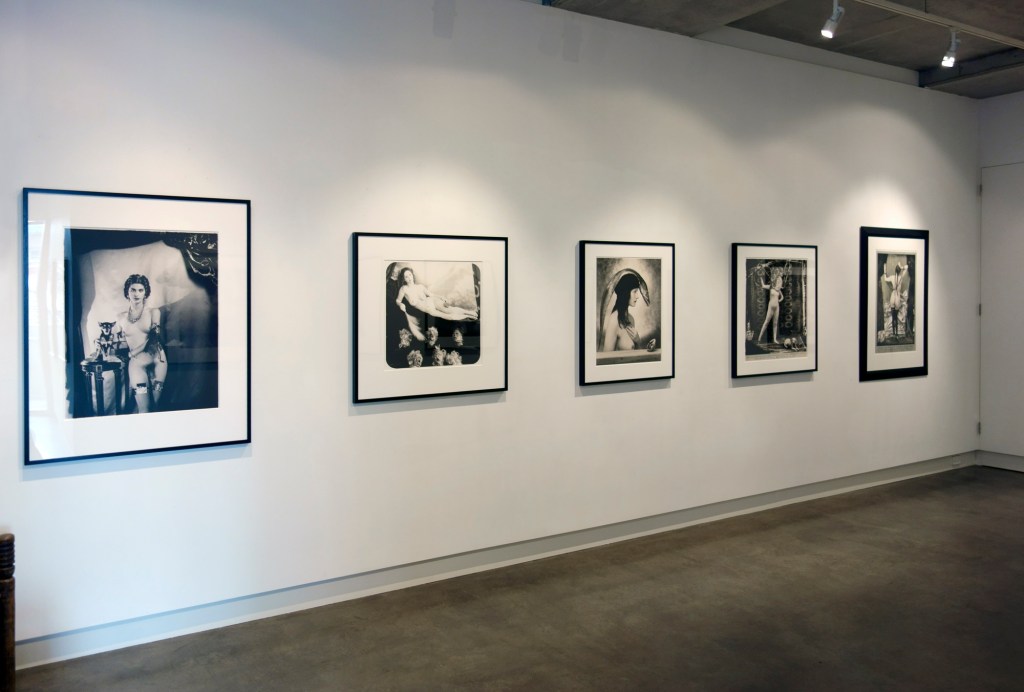
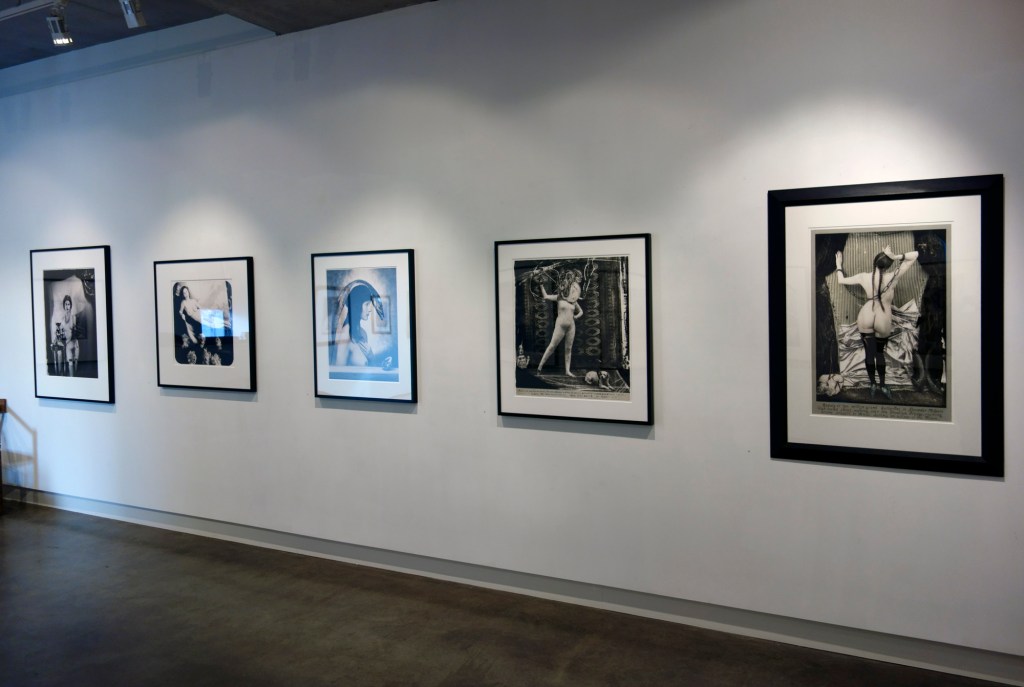
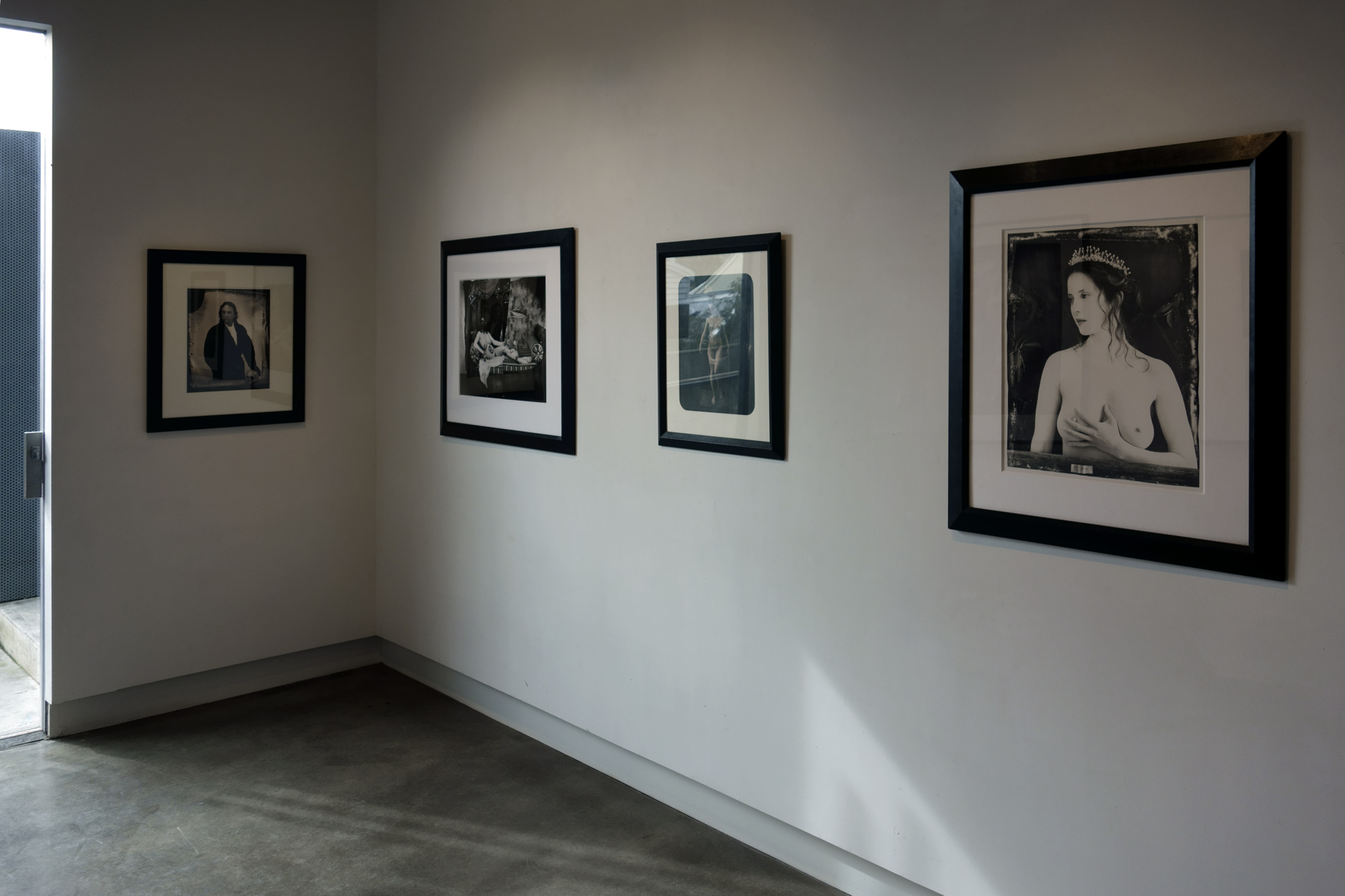
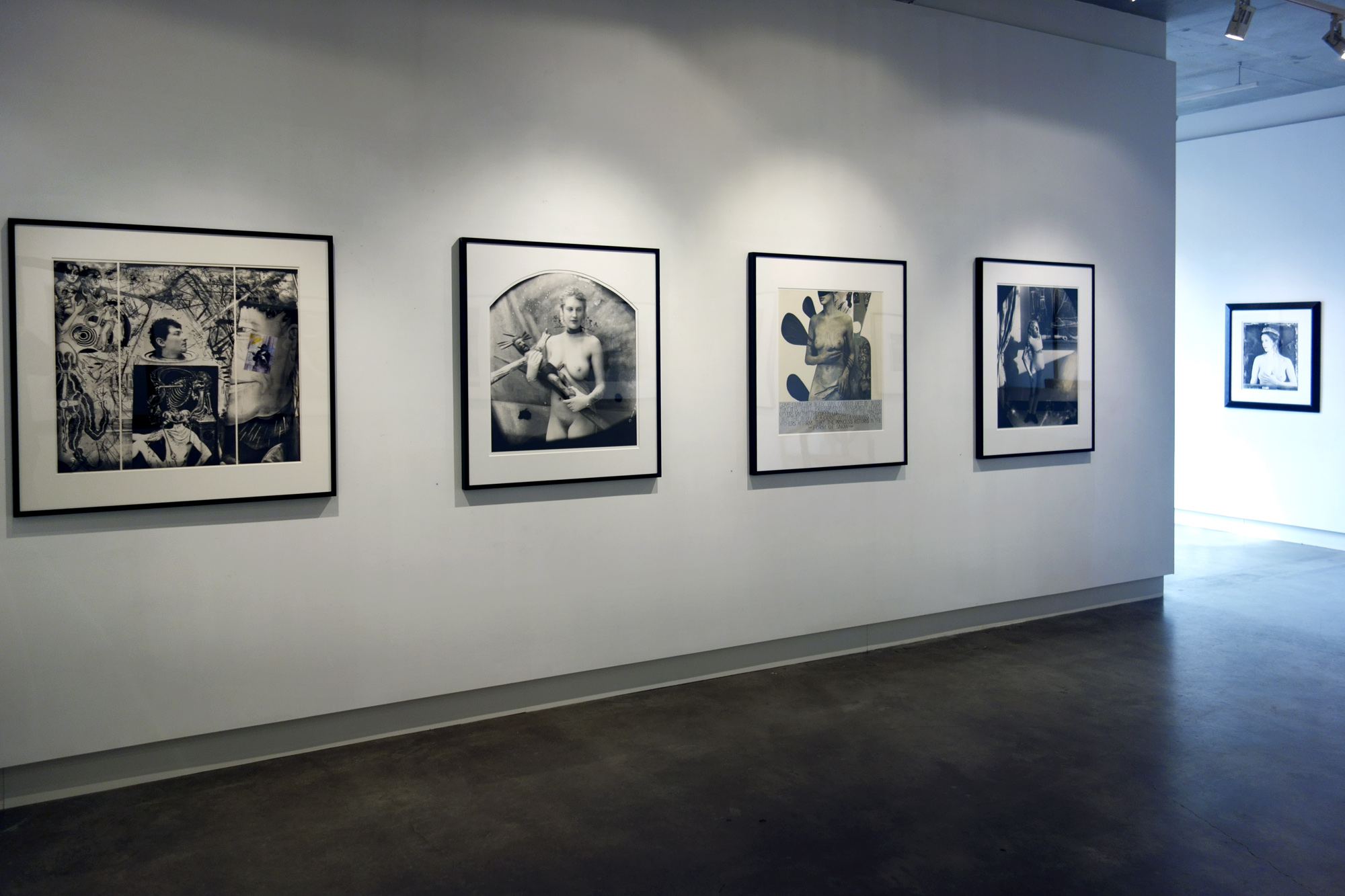
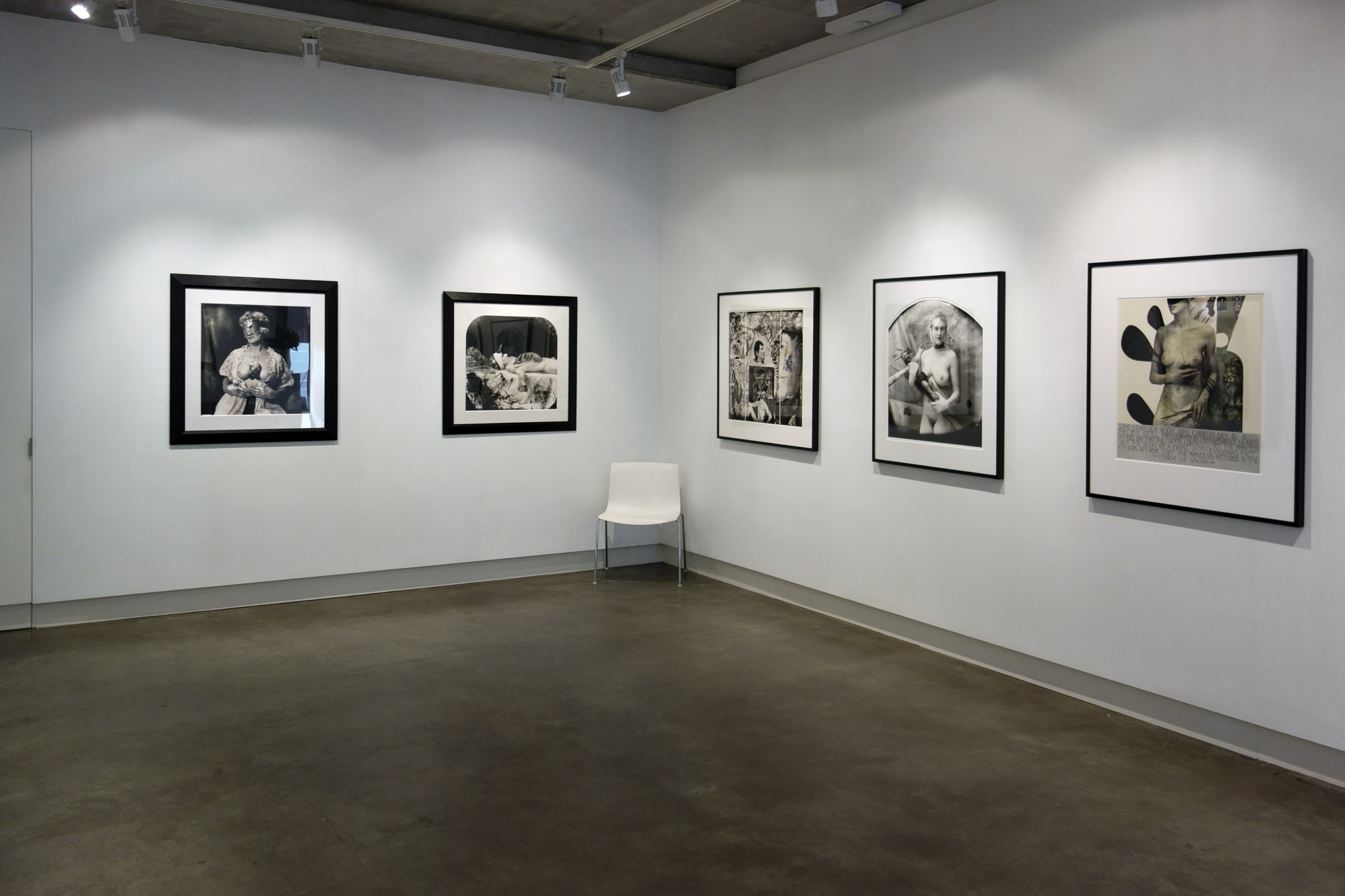
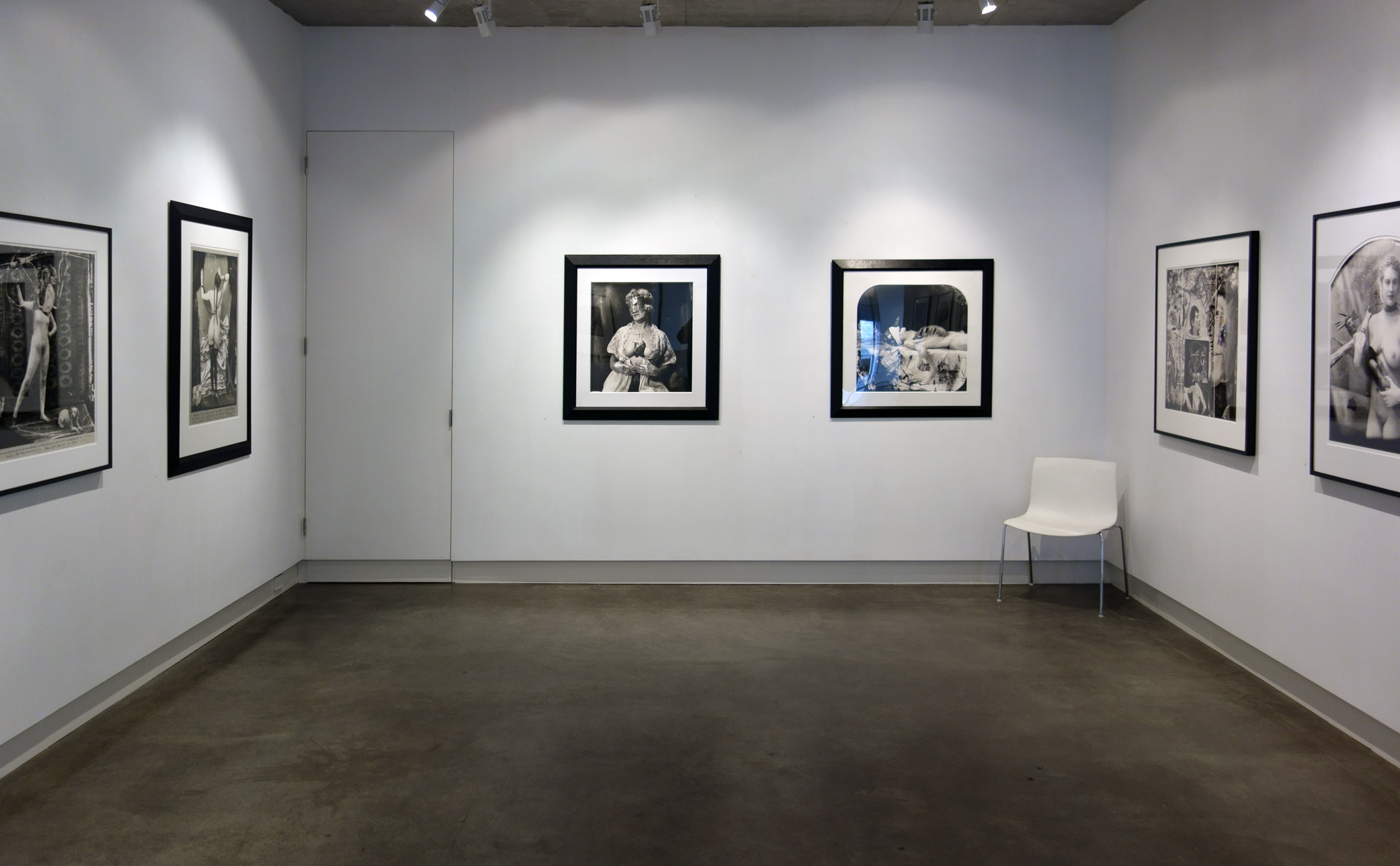
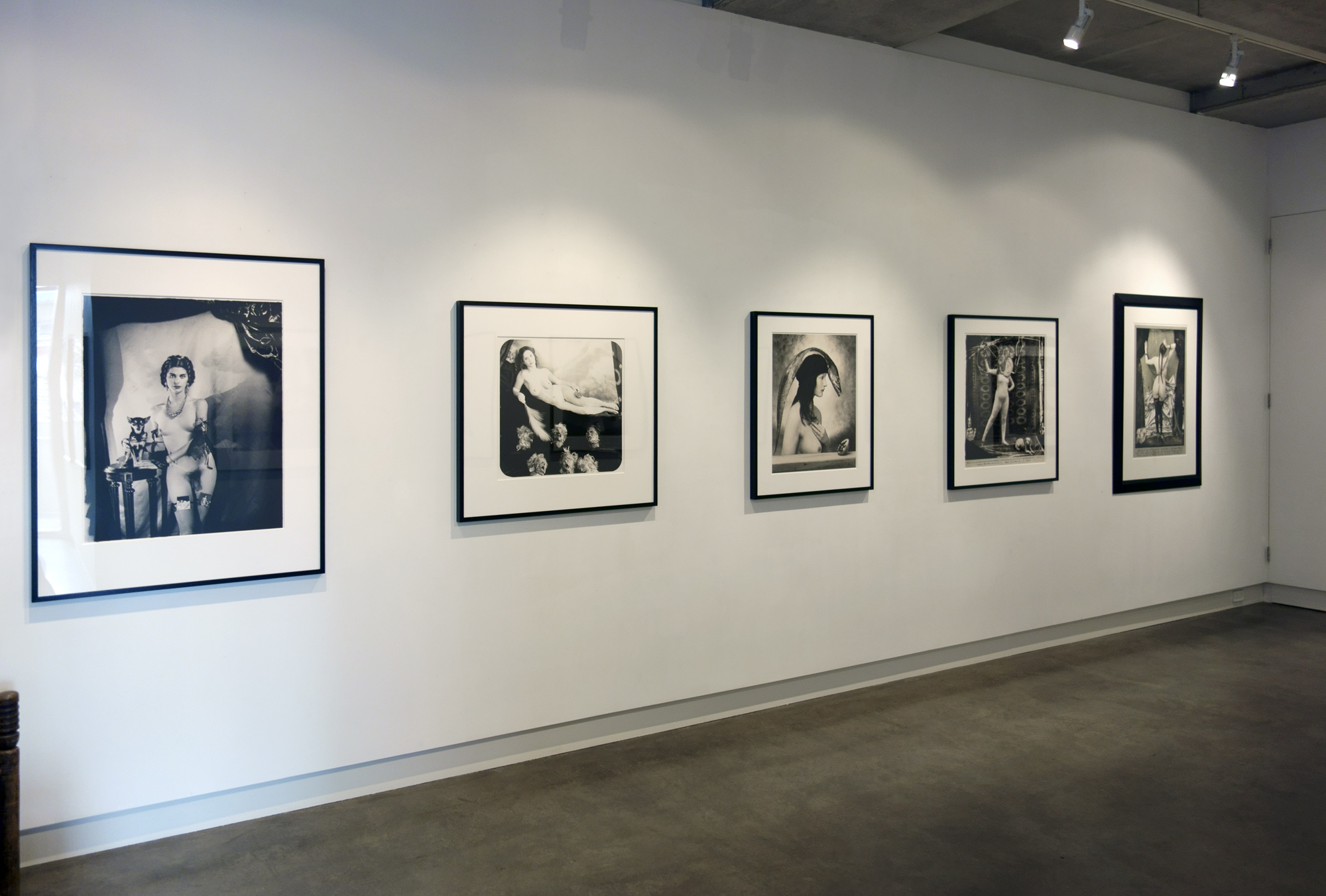
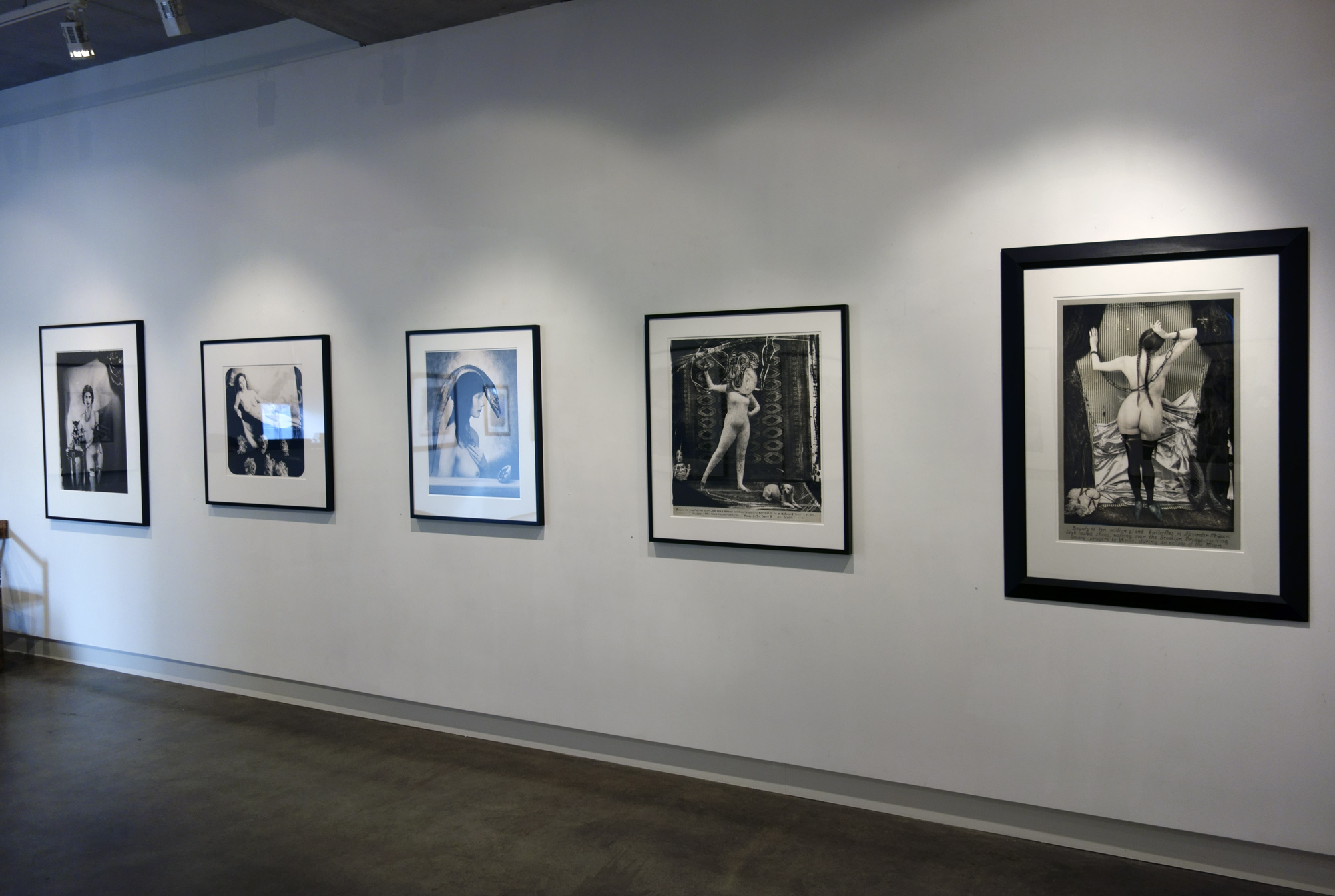
Installation view of the exhibition 'Joel-Peter Witkin - Photographs 1980-2016' at William Mora Galleries, Melbourne

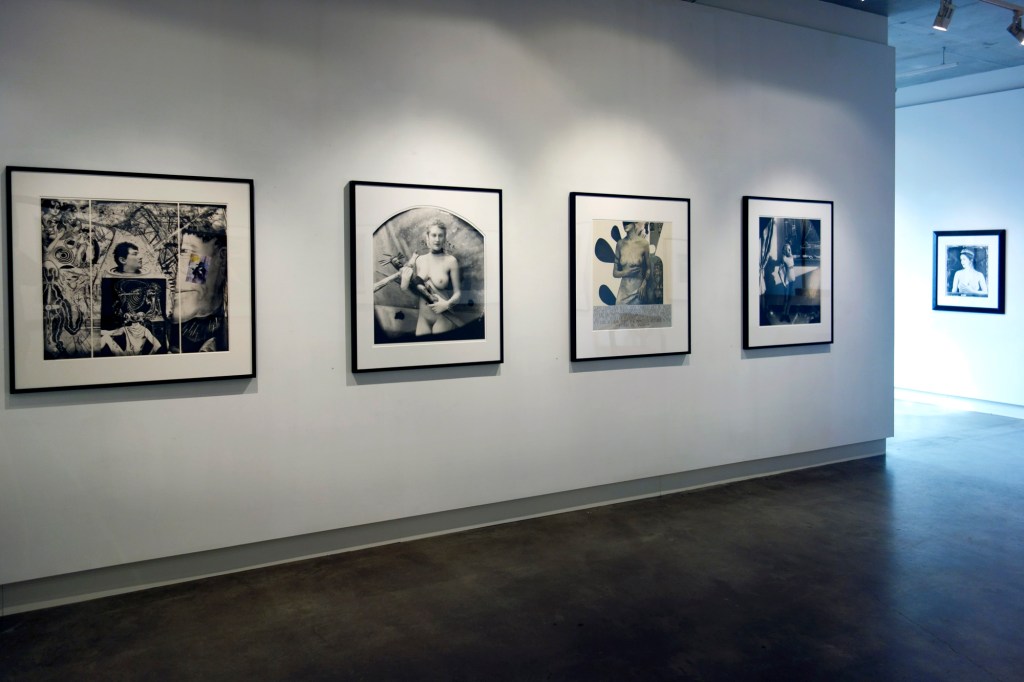
Installation view of the exhibition 'Joel-Peter Witkin - Photographs 1980-2016' at William Mora Galleries, Melbourne

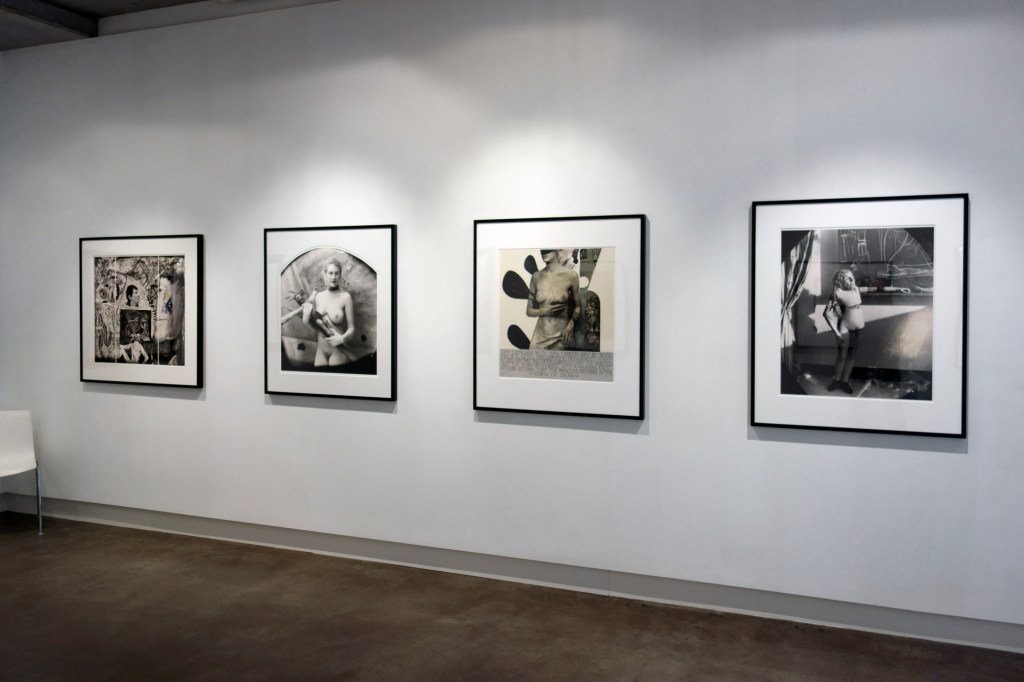
Installation view of the exhibition 'Joel-Peter Witkin - Photographs 1980-2016' at William Mora Galleries, Melbourne

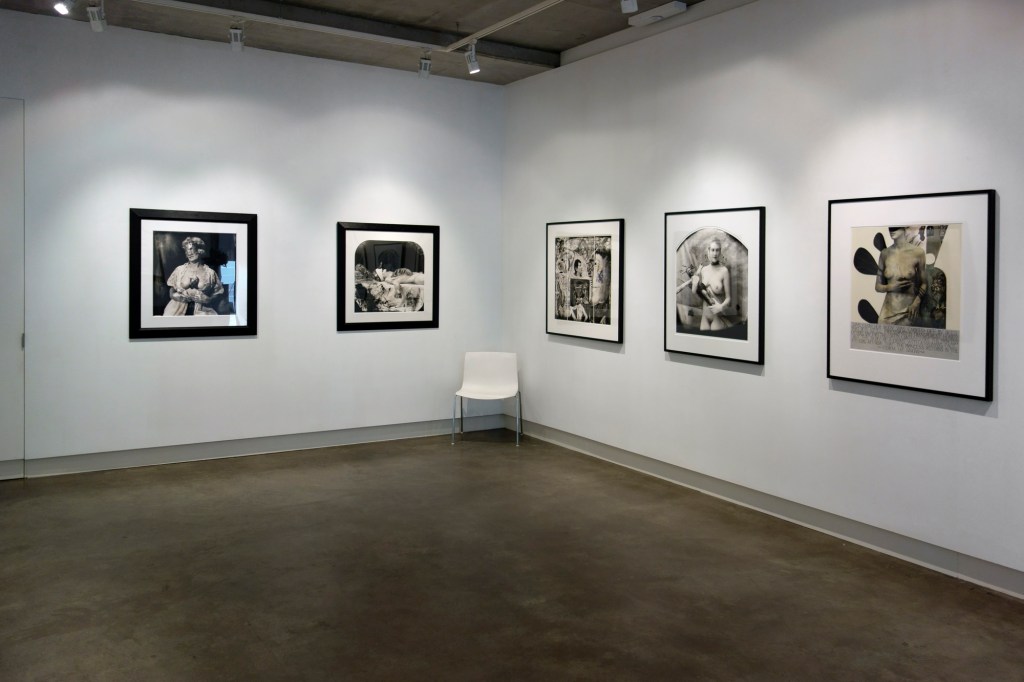
Installation view of the exhibition 'Joel-Peter Witkin - Photographs 1980-2016' at William Mora Galleries, Melbourne

Installation view of the exhibition 'Joel-Peter Witkin - Photographs 1980-2016' at William Mora Galleries, Melbourne

Installation view of the exhibition 'Joel-Peter Witkin - Photographs 1980-2016' at William Mora Galleries, Melbourne

Installation view of the exhibition 'Joel-Peter Witkin - Photographs 1980-2016' at William Mora Galleries, Melbourne

Installation view of the exhibition 'Joel-Peter Witkin - Photographs 1980-2016' at William Mora Galleries, Melbourne


Installation views of the exhibition Joel-Peter Witkin – Photographs 1980-2016 at William Mora Galleries, Melbourne
© Dr Marcus Bunyan, William Mora Galleries, Melbourne and the artist
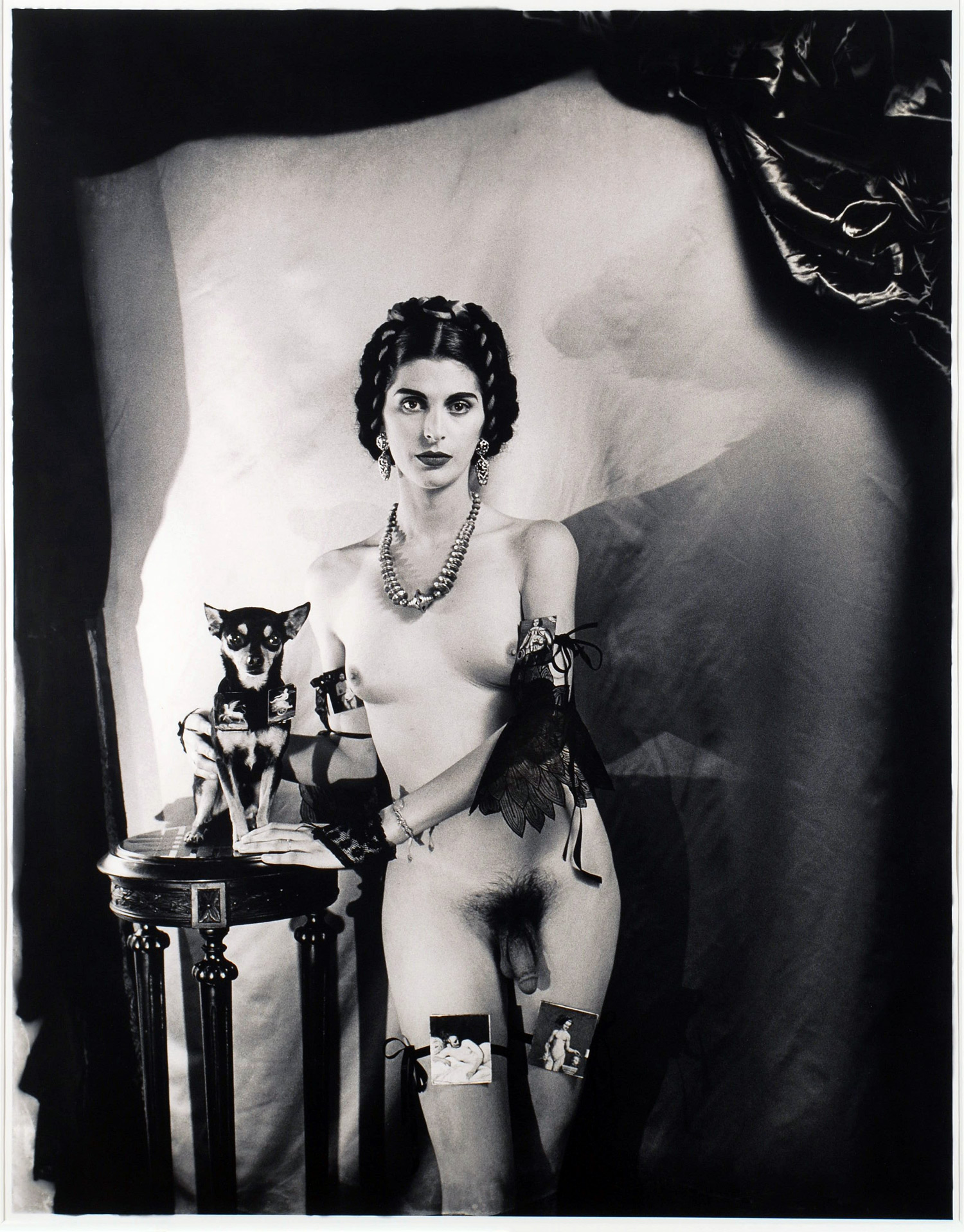
 

Joel-Peter Witkin (American, b. 1939) 'Man With Dog, Mexico' 1990


Joel-Peter Witkin (American, b. 1939)
Man With Dog, Mexico
1990
Tirage argentique
95 x 72cm
Courtesy Baudoin Lebon and William Mora Galleries
© Joel-Peter Witkin


Joel-Peter Witkin (American, b. 1939) 'Self Portrait Reminiscent As A Self Portrait As A Vanity' 1995


Joel-Peter Witkin (American, b. 1939)
Self Portrait Reminiscent As A Self Portrait As A Vanity
1995
Tirage argentique
42 x 34cm
Courtesy Baudoin Lebon and William Mora Galleries
© Joel-Peter Witkin
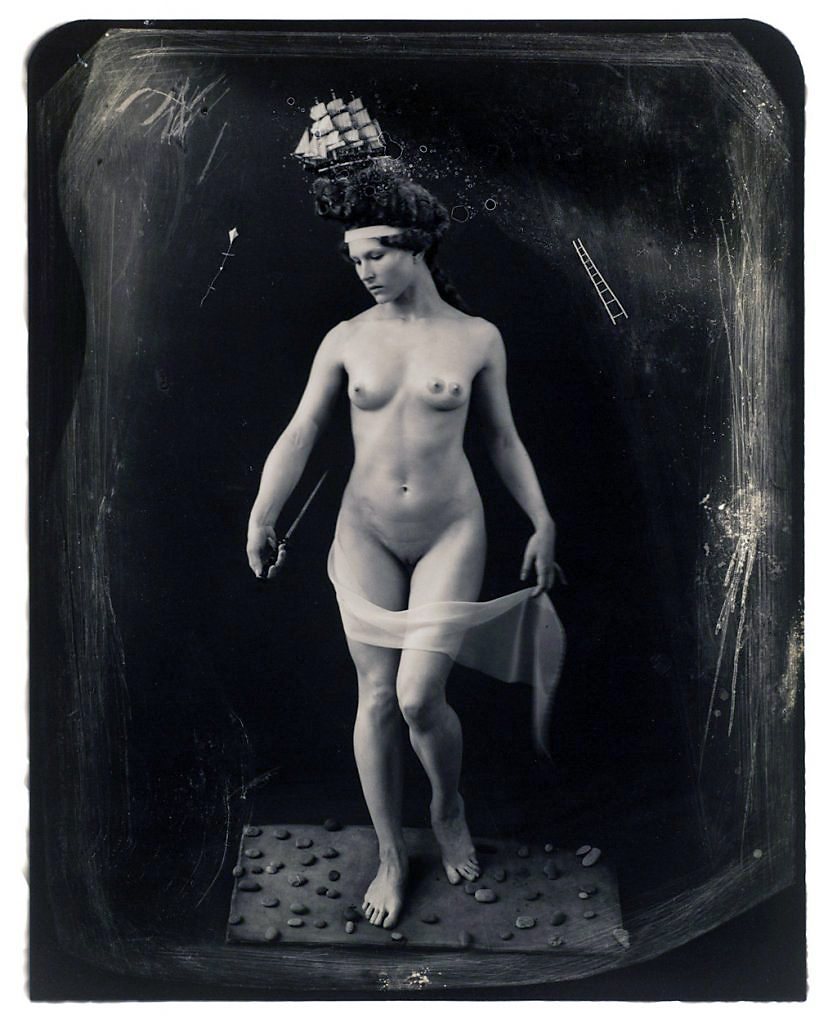
 

Joel-Peter Witkin (American, b. 1939) 'Beauty Had Three Nipples' 1998


Joel-Peter Witkin (American, b. 1939)
Beauty Had Three Nipples
1998
Tirage argentique
55 x 63cm
Courtesy Baudoin Lebon and William Mora Galleries
© Joel-Peter Witkin
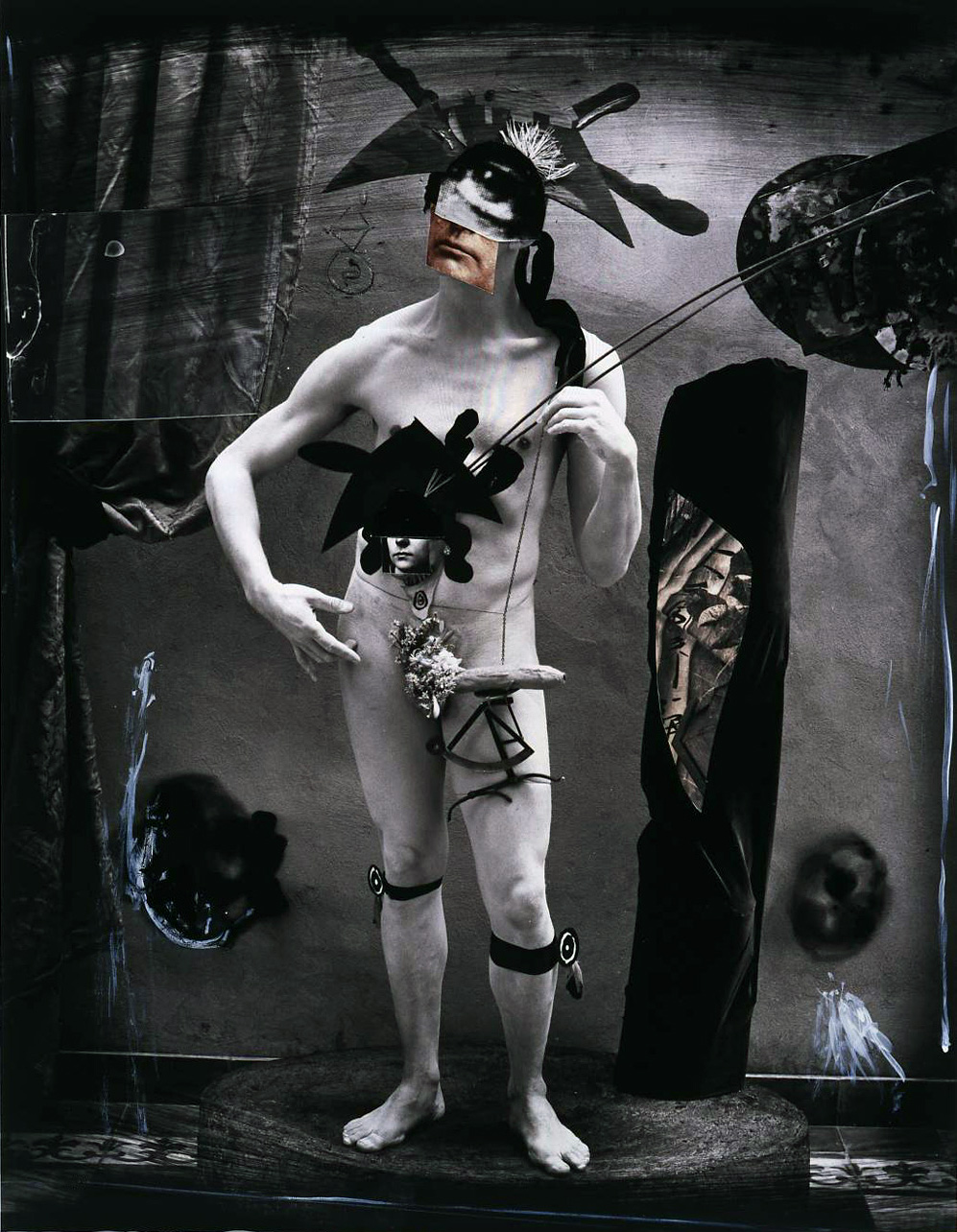
 

Joel-Peter Witkin (American, b. 1939) 'Monsieur Baguette As Orpheo' 2004


Joel-Peter Witkin (American, b. 1939)
Monsieur Baguette As Orpheo
2004
Tirage argentique
72 x 65cm
Courtesy Baudoin Lebon and William Mora Galleries
© Joel-Peter Witkin


Orpheus is a legendary musician, poet, and prophet in ancient Greek religion and myth. The major stories about him are centred on his ability to charm all living things and even stones with his music, his attempt to retrieve his wife, Eurydice, from the underworld, and his death at the hands of those who could not hear his divine music. As an archetype of the inspired singer, Orpheus is one of the most significant figures in the reception of classical mythology in Western culture, portrayed or alluded to in countless forms of art and popular culture including poetry, film, opera, music, and painting.


Joel-Peter Witkin (American, b. 1939) 'Mother Of The Future' 2004


Joel-Peter Witkin (American, b. 1939)
Mother Of The Future
2004
Tirage argentique
67 x 76cm
Courtesy Baudoin Lebon and William Mora Galleries
© Joel-Peter Witkin
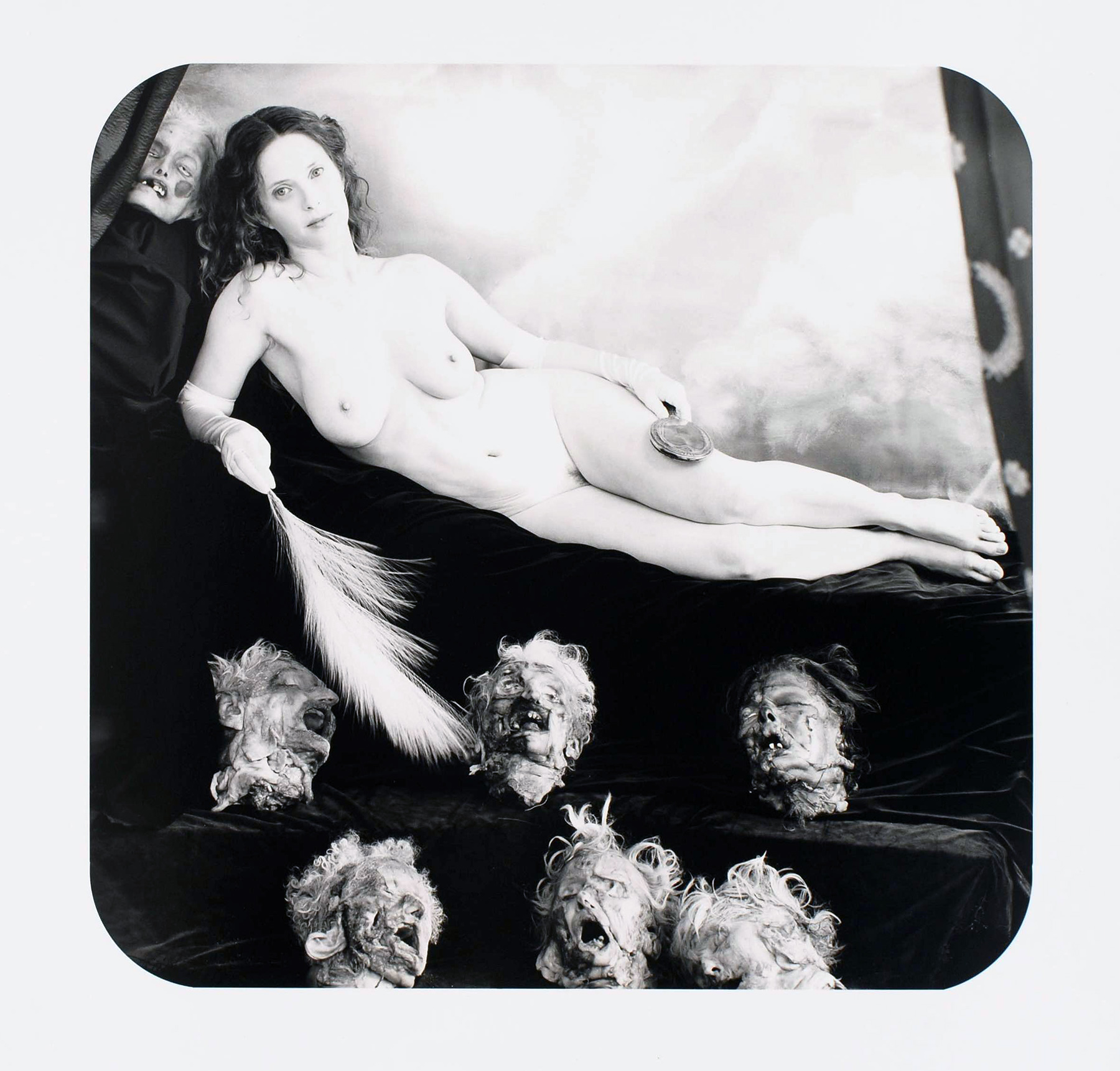
 

Joel-Peter Witkin (American, b. 1939) 'Ars Moriendi' 2007


Joel-Peter Witkin (American, b. 1939)
Ars Moriendi
2007
Tirage argentique
66 x 71cm
Courtesy Baudoin Lebon and William Mora Galleries
© Joel-Peter Witkin


“It happened on a Sunday when my mother was escorting my twin brother and me down the steps of the tenement where we lived. We were going to church. While walking down the hallway to the entrance of the building, we heard an incredible crash mixed with screaming and cries for help. The accident involved three cars, all with families in them. Somehow, in the confusion, I was no longer holding my mother’s hand. At the place where I stood at the curb, I could see something rolling from one of the overturned cars. It stopped at the curb where I stood. It was the head of a little girl. I bent down to touch the face, to speak to it – but before I could touch it someone carried me away.”


Joel-Peter Witkin


Ars Moriendi

The Ars moriendi (“The Art of Dying”) are two related Latin texts dating from about 1415 and 1450 which offer advice on the protocols and procedures of a good death, explaining how to “die well” according to Christian precepts of the late Middle Ages. It was written within the historical context of the effects of the macabre horrors of the Black Death 60 years earlier and consequent social upheavals of the 15th century. It was very popular, translated into most West European languages, and was the first in a western literary tradition of guides to death and dying. There was originally a “long version” and a later “short version” containing eleven woodcut pictures as instructive images which could be easily explained and memorised. …

Ars moriendi consists of six chapters:

1/ The first chapter explains that dying has a good side, and serves to console the dying man that death is not something to be afraid of

2/ The second chapter outlines the five temptations that beset a dying man, and how to avoid them. These are lack of faith, despair, impatience, spiritual pride and avarice

3/ The third chapter lists the seven questions to ask a dying man, along with consolation available to him through the redemptive powers of Christ’s love

4/ The fourth chapter expresses the need to imitate Christ’s life

5/ The fifth chapter addresses the friends and family, outlining the general rules of behaviour at the deathbed

6/ The sixth chapter includes appropriate prayers to be said for a dying man

Allegorically the images depicted the contest between angels and demons over the fate of the dying man. In his dying agony his soul emerges from his mouth to be received by one of a band of angels. Common themes portrayed by illustrators include skeletons, the Last Judgement, corpses, and the forces of good and evil battling over souls.

Text from Wikipedia website
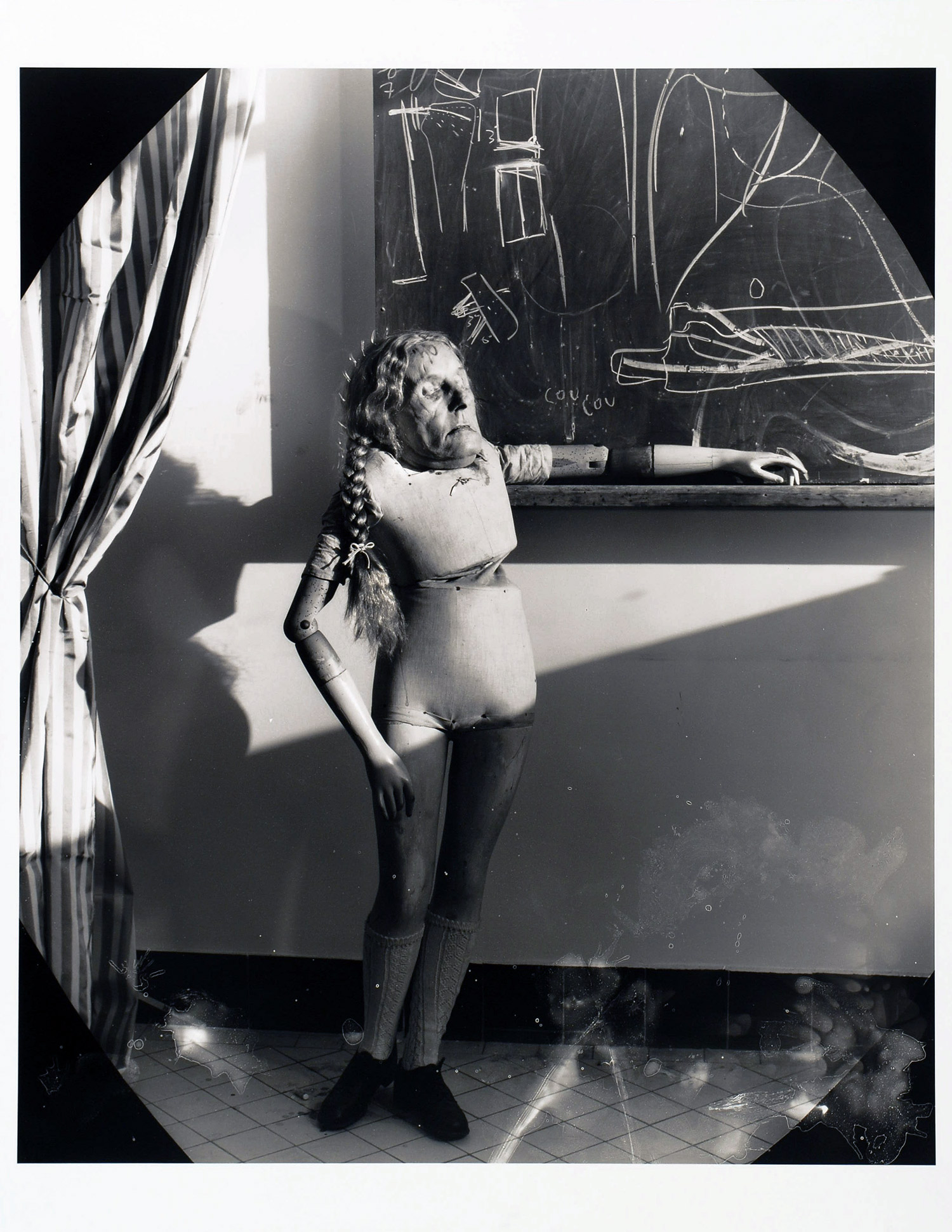
 

Joel-Peter Witkin (American, b. 1939) 'Bad Student' 2007


Joel-Peter Witkin (American, b. 1939)
Bad Student
2007
Tirage argentique
86 x 70cm
Courtesy Baudoin Lebon and William Mora Galleries
© Joel-Peter Witkin


Joel-Peter Witkin (American, b. 1939) 'Myself As A Dead Clown' 2007


Joel-Peter Witkin (American, b. 1939)
Myself As A Dead Clown
2007
Tirage argentique
93 x 99cm
Courtesy Baudoin Lebon and William Mora Galleries
© Joel-Peter Witkin


Joel-Peter Witkin (American, b. 1939) 'La Giovanissima' 2007


Joel-Peter Witkin (American, b. 1939)
La Giovanissima
2007
Tirage argentique
87 x 76cm
Courtesy Baudoin Lebon and William Mora Galleries
© Joel-Peter Witkin
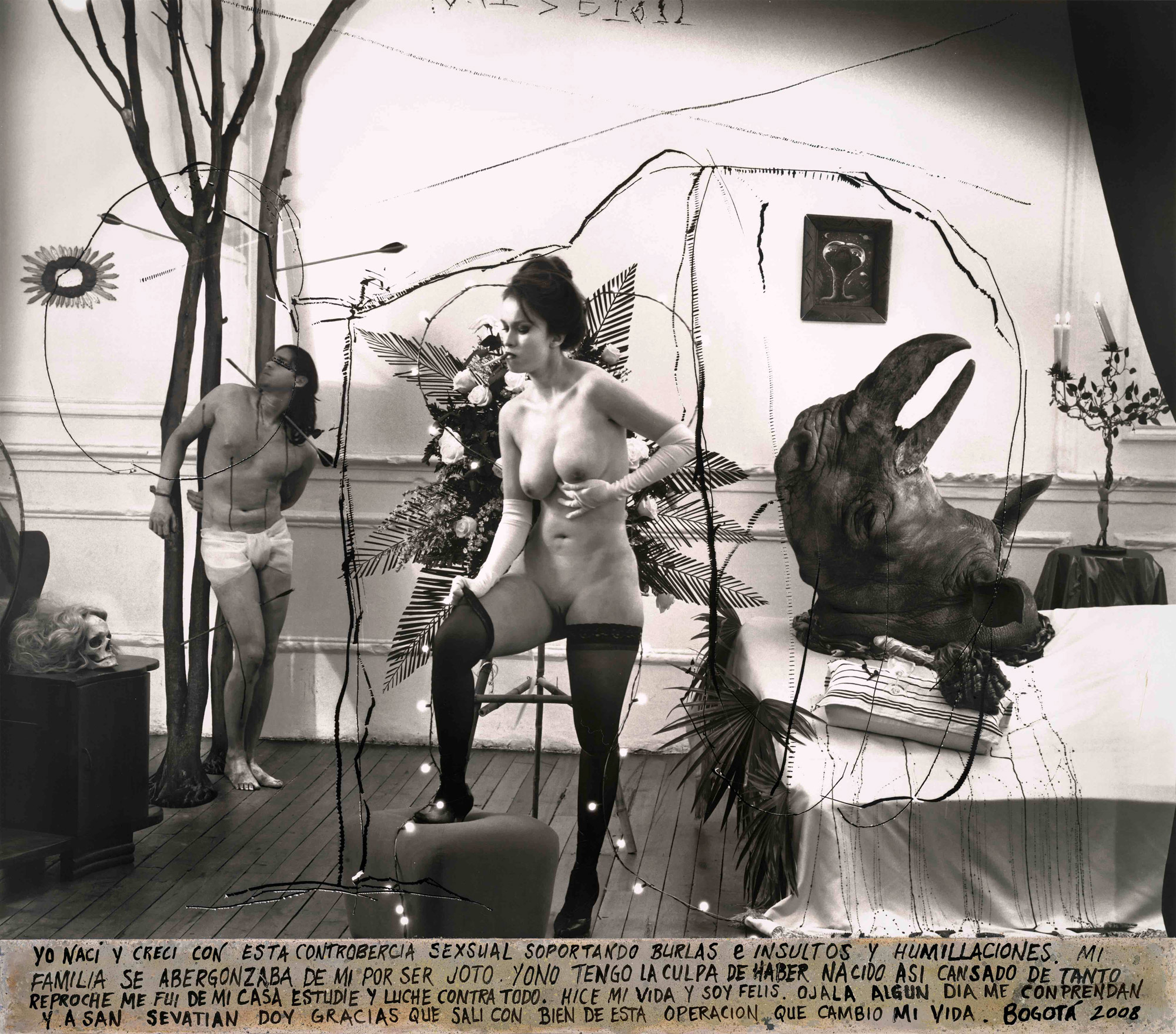
 

Joel-Peter Witkin (American, b. 1939) 'The Scale, Bogota' 2008


Joel-Peter Witkin (American, b. 1939)
The Scale, Bogota
2008
Tirage argentique
77 x 88cm
Courtesy Baudoin Lebon and William Mora Galleries
© Joel-Peter Witkin


I was born and grew up with this sexual controversy enduring ridicule and insults and humiliations. My family took advantage of me for being joto. And I’m not to blame for being born so tired of so much reproach I left my house to study and fight against everything. I made my life and I’m happy. I hope you catch me sometime and to Saint Sebastian I thank that I left with the good of this operation that changed my life. Bogota 2008
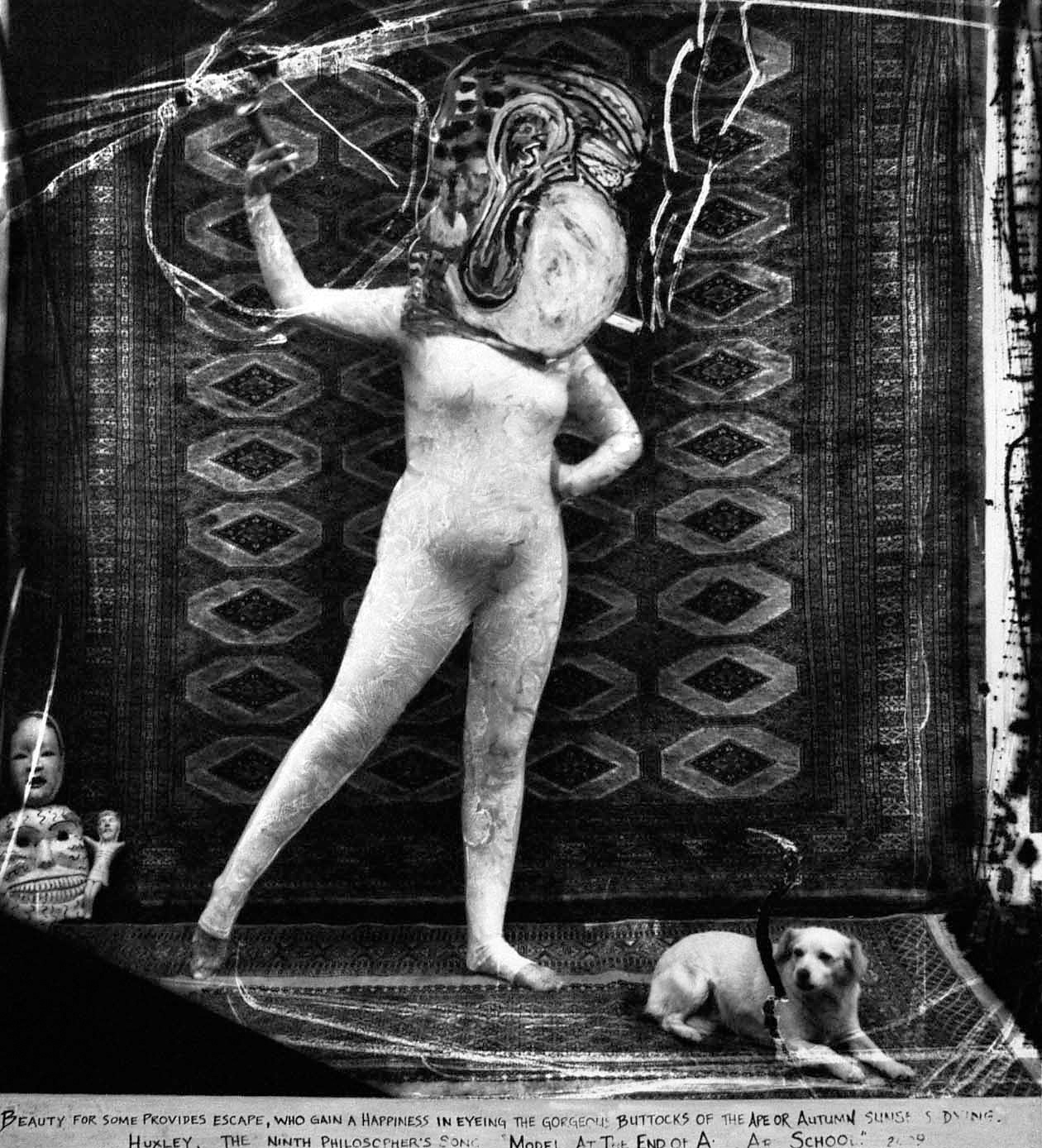
 

Joel-Peter Witkin (American, 1939-) 'Model At The End Of Art School' 2009


Joel-Peter Witkin (American, b. 1939)
Model At The End Of Art School
2009
Tirage argentique
72 x 65cm
Courtesy Baudoin Lebon and William Mora Galleries
© Joel-Peter Witkin


Beauty for some provides escape,
Who gain a happiness in eyeing
The gorgeous buttocks of the ape
Or Autumn sunsets exquisitely dying.

Julian Huxley (1887-1975)
Ninth Philosopher’s Song (1920)
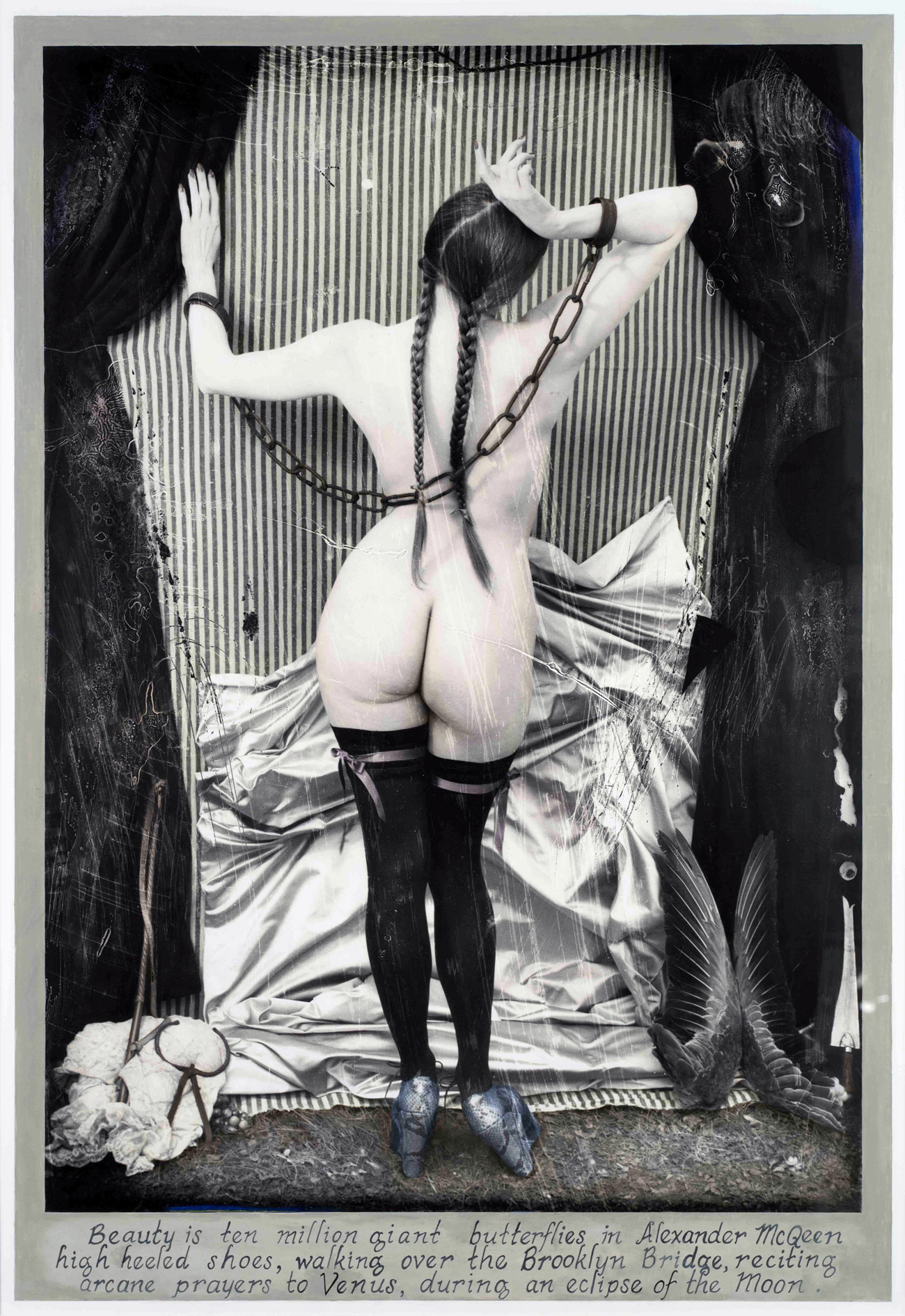
 

Joel-Peter Witkin (American, b. 1939) 'The Paris Triad : Venus in Chains, Paris' 2010


Joel-Peter Witkin (American, b. 1939)
The Paris Triad: Venus in Chains, Paris
2010
Tirage argentique
123 x 95cm
Courtesy Baudoin Lebon and William Mora Galleries
© Joel-Peter Witkin


Joel-Peter Witkin (American, b. 1939) 'The Green Princess, Paris' 2011


Joel-Peter Witkin (American, b. 1939)
The Green Princess, Paris
2011
Tirage argentique
82 x 73cm
Courtesy Baudoin Lebon and William Mora Galleries
© Joel-Peter Witkin
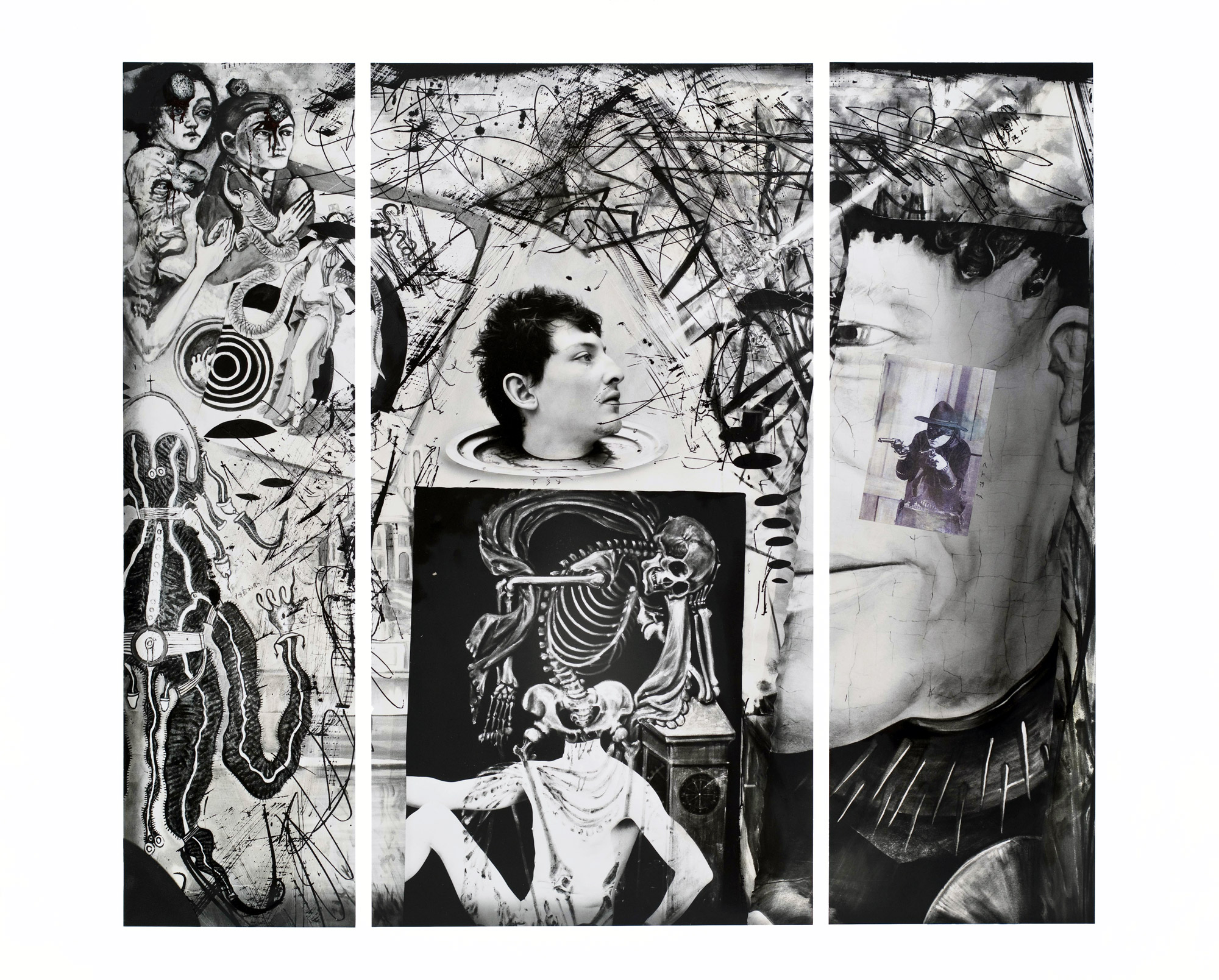
 

Joel-Peter Witkin (American, b. 1939) 'A History Of The White World' 2011


Joel-Peter Witkin (American, b. 1939)
A History Of The White World
2011
Tirage argentique
67 x 76cm
Courtesy Baudoin Lebon and William Mora Galleries
© Joel-Peter Witkin
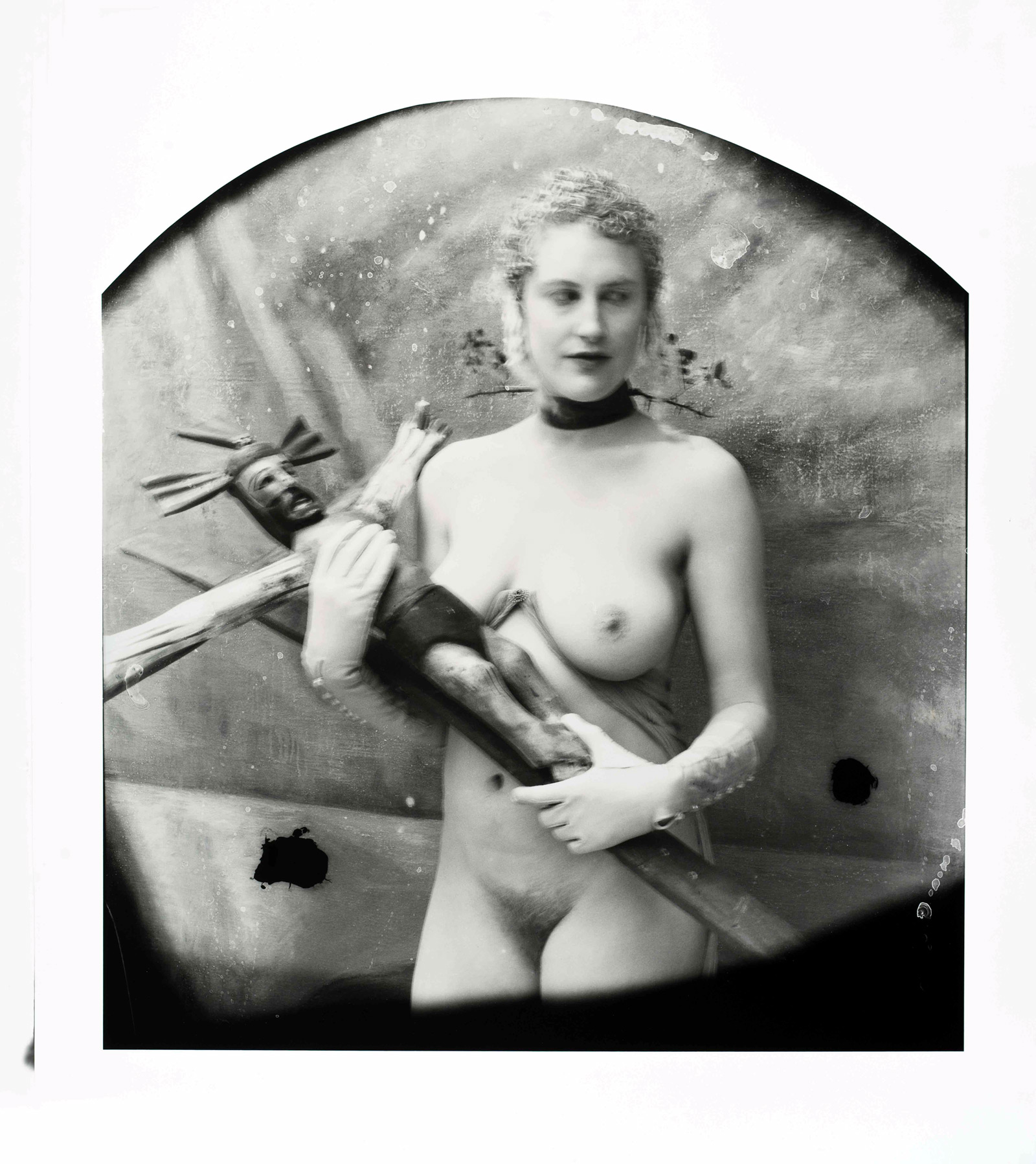
 

Joel-Peter Witkin (American, b. 1939) 'Presenter Of The End Of Time Award' 2013


Joel-Peter Witkin (American, b. 1939)
Presenter Of The End Of Time Award
2013
Tirage argentique
113 x 103cm
Courtesy Baudoin Lebon and William Mora Galleries
© Joel-Peter Witkin


Joel-Peter Witkin (American, b. 1939) 'Imperfect Thirst' 2016


Joel-Peter Witkin (American, b. 1939)
Imperfect Thirst
2016
Tirage argentique
67 x 54cm
Courtesy Baudoin Lebon and William Mora Galleries
© Joel-Peter Witkin


The symbolism of food and drink [in European painting 1400-1800] has roots in classical literature. Fruits, nuts, herbs, and grain are discussed in treatises on farming and natural history, and appear widely in mythology as attributes of gods and goddesses – grapes for Bacchus, god of wine; a sheaf of corn or wheat for Ceres, the grain goddess – and in metaphors for virtue and vice. Early religious writings such as the Bible and the Apocrypha, and Christian texts of the Middle Ages and Renaissance are also rich in this imagery, often borrowing from pagan symbolism and occasionally supplanting it. The pomegranate, for example, is depicted in mythological paintings as an attribute of Venus and a symbol of desire, fertility – because of its many seeds – and marriage, but appears as frequently in sacred images of the Virgin and Child. There are several legends of the pomegranate’s creation, contributing to its symbolic potency; according to one, it grew out of blood streaming from the wounded genitals of the lustful Acdestis. The pomegranate is perhaps best known, however, for its fateful role in the myth of Proserpina. Ovid tells in the Metamorphoses of Proserpina’s abduction by Pluto, ruler of the Underworld. Proserpina’s mother, Ceres, secured her release from Hades, but, before leaving Proserpina, ate the seeds from a pomegranate and, because she had consumed food in the Underworld, was compelled to spend part of every year there. Proserpina’s cyclical descent to Hades and rise to Earth was believed to bring about the changing of seasons, and the pomegranate was thus seen as a symbol of resurrection and immortality.

Jennifer Meagher. “Food and Drink in European Painting, 1400-1800,” on The Met website [Online] Cited 06/08/2017


William Mora Galleries
60 Tanner Street, Richmond
Victoria, Australia 3121

Opening hours:
Wednesday – Friday 10am – 4pm

William Mora Galleries website

LIKE ART BLART ON FACEBOOK

Back to top

Exhibition: ‘Josef Koudelka: Nationality Doubtful’ at the Art Institute of Chicago

Exhibition dates: 7th June – 14th September 2014


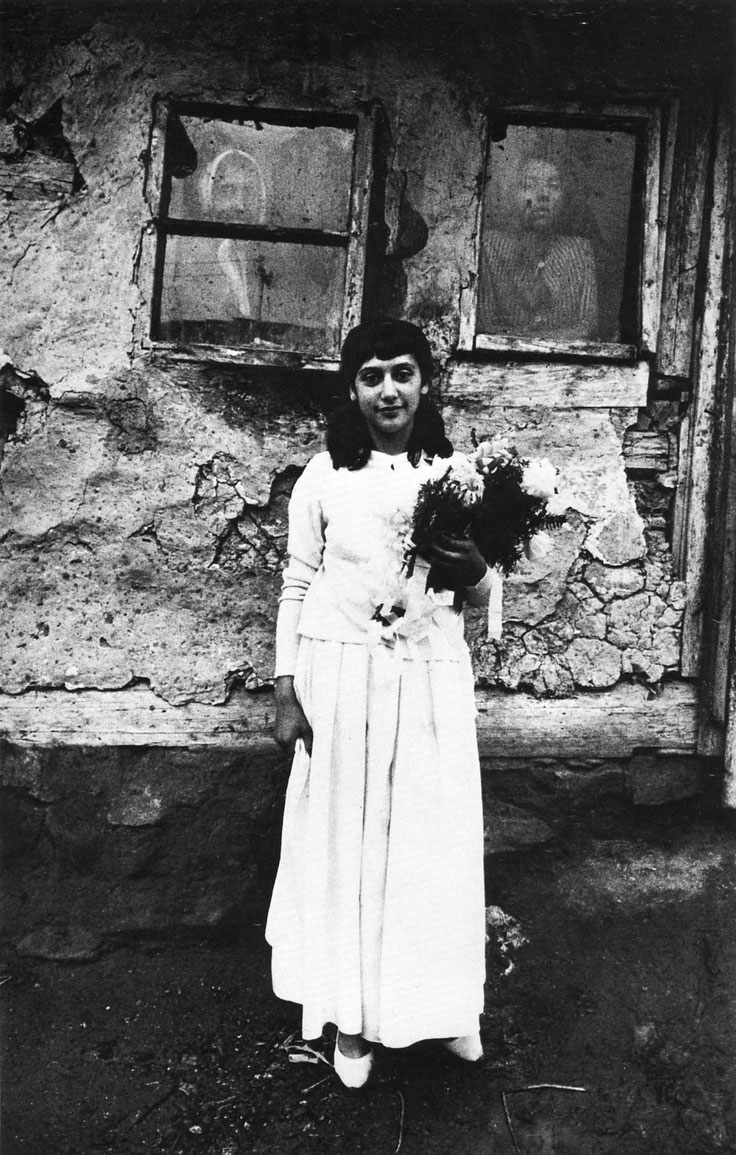
Josef Koudelka (Czech-French, b. 1938) 'Czechoslovakia (Kadañ)' 1963, printed 1967


Josef Koudelka (Czech-French, b. 1938)
Czechoslovakia (Kadañ)
1963, printed 1967
from the series Gypsies
The Art Institute of Chicago, restricted gift of Artworkers Retirement Society
© Josef Koudelka/Magnum Photos. Courtesy of Pace/MacGill Gallery, New York


One of the greats – mainly for his series Gypsies, Invasion and Exiles.

Powerful images: strong, honest, respectful, beautifully composed but above all gritty, gritty, gritty. There is a dark radiance here, an ether/reality, as though the air was heavy with melancholy, emotion, loss, violence, isolation and, sometimes, love. No wonder he describes his work as a “theater of the real.” Humanism, and photography at its most essential.

Dr Marcus Bunyan


Many thankx to the Art Institute of Chicago for allowing me to publish the photographs in the posting. Please click on the photographs for a larger version of the image.


“I try to be a photographer. I cannot talk. I am not interested in talking. If I have anything to say, it may be found in my images. I am not interested in talking about things, explaining about the whys and the hows. I do not mind showing my images, but not so much my contact sheets. I mainly work from small test prints. I often look at them, sometimes for a long time. I pin them to the wall, I compare them to make up my mind, be sure of my choices. I let others tell me what they mean. [To Robert Delpire] My photographs, you know them. You have published them, you have exhibited them, then you can tell whether they mean something or not.”

“There is still an enormous amount of hostility and racial prejudice towards Roma, especially in Eastern Europe, but not just there. It does not matter on which political spectrum you are, left or right, it is very universal, people are often very discriminatory against them.”


Josef Koudelka


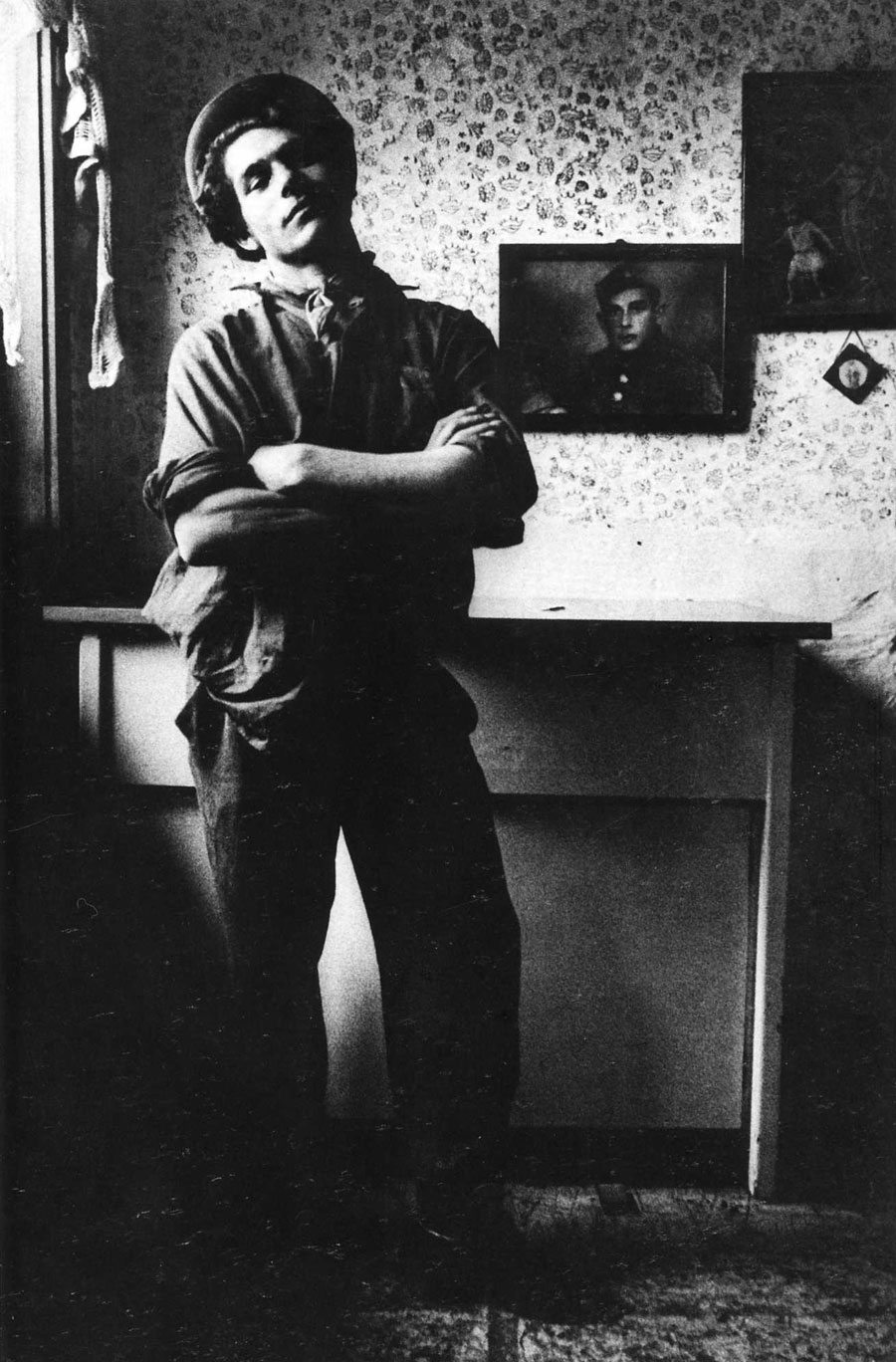
Josef Koudelka (Czech-French, b. 1938) 'Romania' 1968, printed 1980s


Josef Koudelka (Czech-French, b. 1938)
Romania
1968, printed 1980s
from the series Gypsies
The Art Institute of Chicago, promised gift of Robin and Sandy Stuart
© Josef Koudelka/Magnum Photos. Courtesy of Pace/MacGill Gallery, New York


Czech-born French artist Josef Koudelka belongs in the firmament of classic photographers working today. Honoured with the French Prix Nadar (1978), the Hasselblad Prize (1992), and the International Center of Photography Infinity Award (2004), Koudelka is also a leading member of the world-renowned photo agency Magnum. This exhibition, his first retrospective in the United States since 1988, is also the first museum show ever to emphasise his original vintage prints, period books, magazines, and significant unpublished materials.

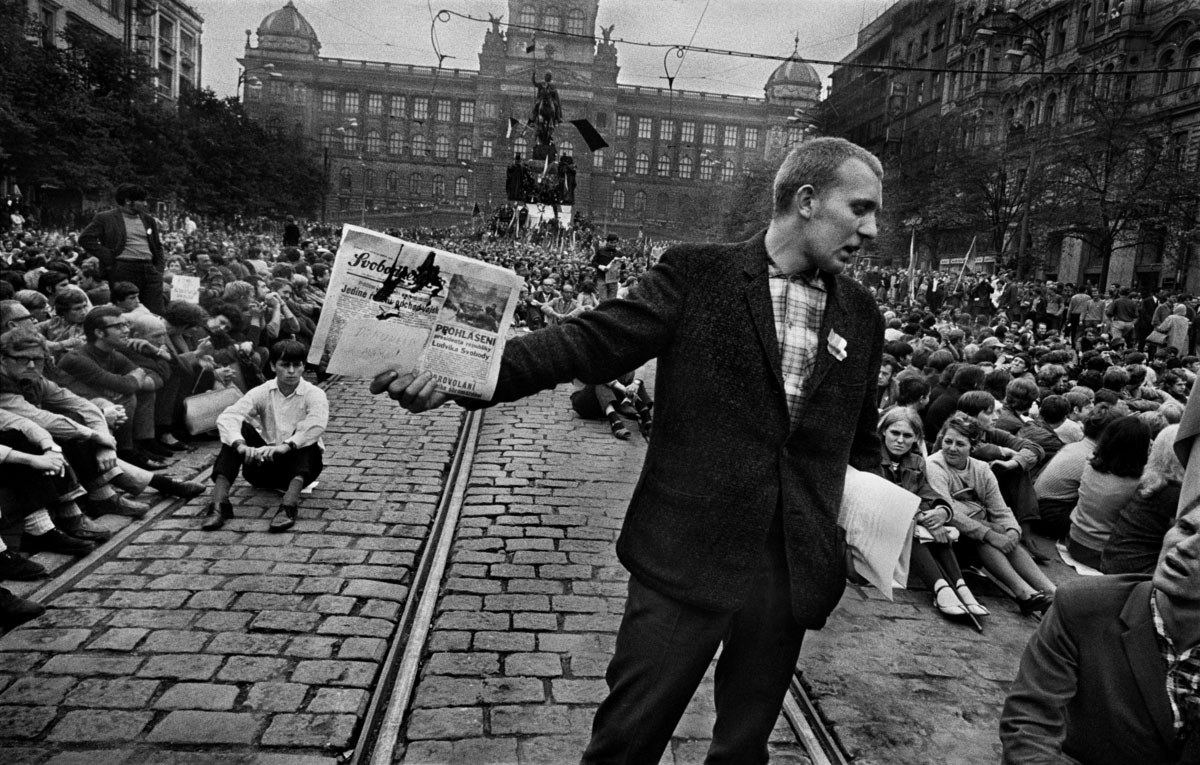
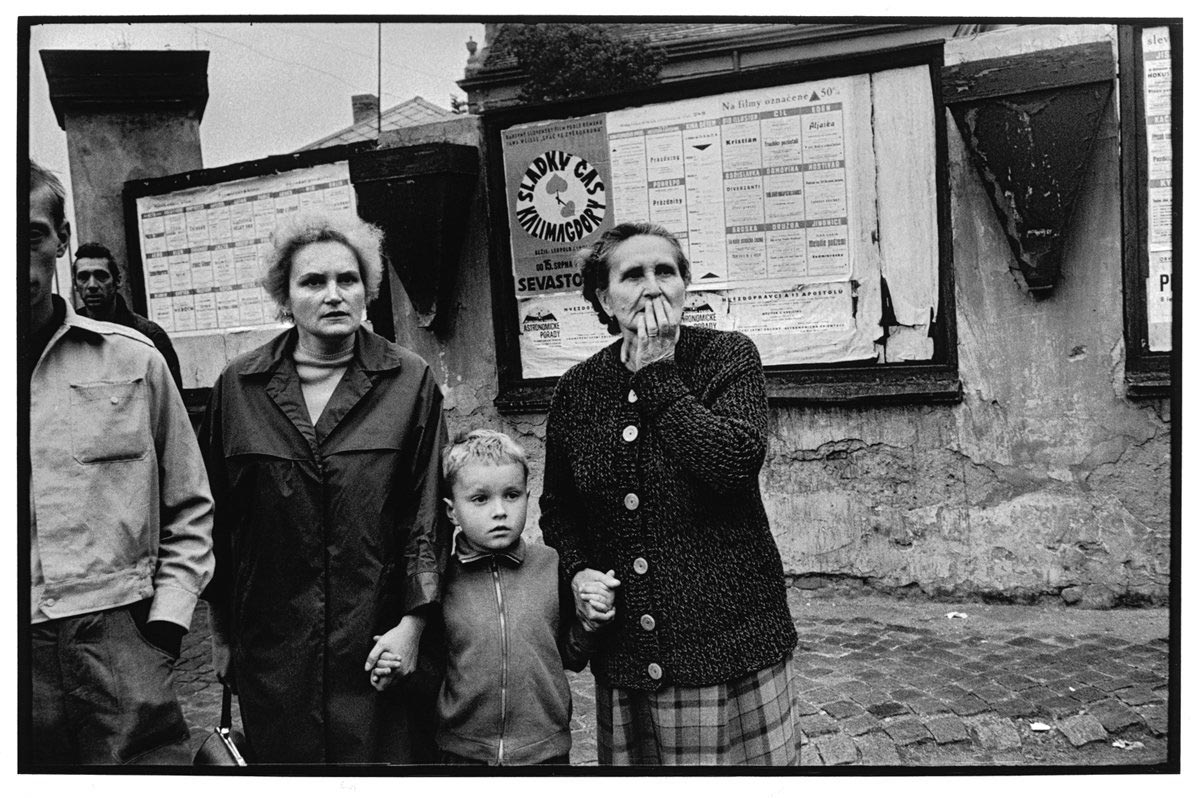
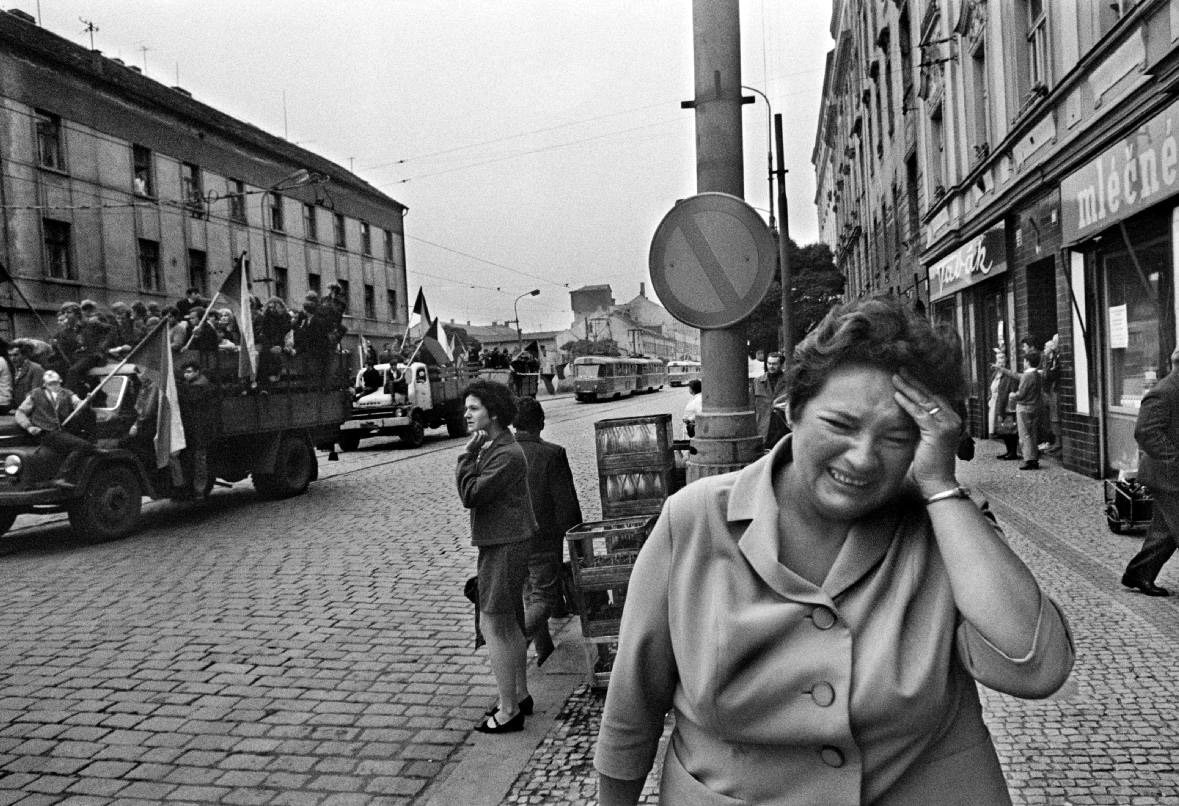
Koudelka became famous in anonymity through the worldwide publication of his daring photographs of the Soviet-led invasion of Prague in August 1968. Just 30 years old at the time, Koudelka had already worked for a decade, principally on Gypsies, for which he visited Roma populations for weeks at a time in his home country and later abroad over the course of years. This ambitious series beautifully combines a sense of modern history with timeless humanism.

Choosing exile to avoid reprisals for his Invasion photographs, Koudelka travelled throughout Europe during the 1970s and 1980s, camping at village festivals from spring through fall and then printing in wintertime. His photographs of those decades became the series Exiles. Since the late 1980s Koudelka has made panoramic landscape photographs in areas massively shaped by industry, territorial conflict, or – in the case of the Mediterranean rim – the persistence of Classical civilisation.

Tracing this long and impressive career, this exhibition draws on Koudelka’s extensive holdings of his own work and on recent major acquisitions by the Art Institute, including the complete surviving contents of the debut presentation of Gypsies in 1967 (22 photographs), as well as ten Invasion images printed by the photographer just weeks after the event. Also on display are early experimental and theatre photographs and some of the photographer’s beautifully produced books – which stretch dozens of feet when unfolded. A fully illustrated catalogue accompanies the exhibition, which after its debut at the Art Institute travels to the J. Paul Getty Museum, Los Angeles, and Fundación MAPFRE, Madrid.

Text from the Art Institute of Chicago website


Gypsies exists as an invaluable documentation of a people during a tumultuous time in their history. From an image of a trio of suited musicians engrossed in their instruments, to stirring portraits of families in cramped living conditions, the photoessay is both a testament to the strength of Roma culture and a stark document of the realities of these people’s lives. Having fully immersed himself in the project, Koudelka’s work presents an unbiased and honest portrait of a community whose nomadic way of life has been contested throughout history.

Anonymous text from the Magnum Photos website [Online] Cited 15/06/2021


Josef Koudelka (Czech-French, b. 1938) 'Festival of gypsy music. Straznice, Czechoslovakia' 1966


Josef Koudelka (Czech-French, b. 1938)
Festival of gypsy music. Straznice, Czechoslovakia
1966
from the series Gypsies


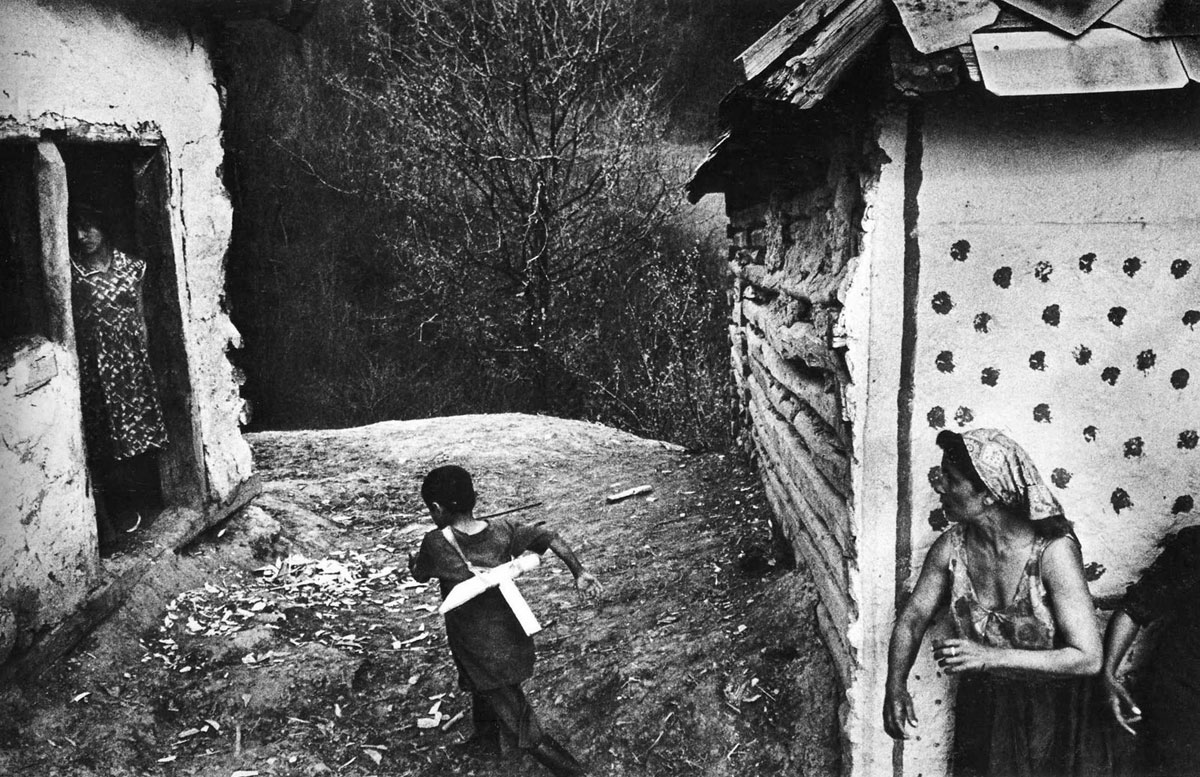
Josef Koudelka (Czech-French, b. 1938) 'Slovakia' 1967


Josef Koudelka (Czech-French, b. 1938)
Slovakia
1967
From the series Gypsies


Josef Koudelka (Czech-French, b. 1938) 'Slovakia' 1967


Josef Koudelka (Czech-French, b. 1938)
Slovakia
1967
From the series Gypsies


Josef Koudelka (Czech-French, b. 1938) 'Reconstruction of a homicide. In the foreground: a young gypsy suspected of being guilty. Jarabina, Czechoslovakia' 1963


Josef Koudelka (Czech-French, b. 1938)
Reconstruction of a homicide. In the foreground: a young gypsy suspected of being guilty. Jarabina, Czechoslovakia
1963
From the series Gypsies


Josef Koudelka (Czech-French, b. 1938) 'Jarabina, Czechoslovakia' 1963. Various images from the series 'Gypsies'


Josef Koudelka (Czech-French, b. 1938)
Jarabina, Czechoslovakia
1963
From the series Gypsies


Josef Koudelka (Czech-French, b. 1938) 'Slovakia' 1963


Josef Koudelka (Czech-French, b. 1938)
Slovakia
1963
From the series Gypsies


Josef Koudelka (Czech-French, b. 1938) 'Velka Lomnica, Slovakia, Czechoslovakia' 1963


Josef Koudelka (Czech-French, b. 1938)
Velka Lomnica, Slovakia, Czechoslovakia
1963
From the series Gypsies


Josef Koudelka (Czech-French, b. 1938) 'Velka Lomnica, Slovakia, Czechoslovakia' 1966


Josef Koudelka (Czech-French, b. 1938)
Velka Lomnica, Slovakia, Czechoslovakia
1966
From the series Gypsies


Josef Koudelka (Czech-French, b. 1938) 'Slovakia. Zehra' 1967


Josef Koudelka (Czech-French, b. 1938)
Slovakia. Zehra
1967
From the series Gypsies


Josef Koudelka (Czech-French, b. 1938) 'Gypsy. Okres Poprad, Slovakia, Czechoslovakia' 1967


Josef Koudelka (Czech-French, b. 1938)
Gypsy. Okres Poprad, Slovakia, Czechoslovakia
1967
From the series Gypsies


Josef Koudelka (Czech-French, b. 1938) Various images from the series 'Gypsies'


Josef Koudelka (Czech-French, b. 1938) Various images from the series 'Gypsies'


Josef Koudelka (Czech-French, b. 1938) Various images from the series 'Gypsies'


Josef Koudelka (Czech-French, b. 1938) Various images from the series 'Gypsies'


Josef Koudelka (Czech-French, b. 1938) Various images from the series 'Gypsies'


Josef Koudelka (Czech-French, b. 1938)
Images from the series Gypsies
Book printed 1975; new Aperture edition 2011


Josef Koudelka (Czech-French, b. 1938) 'Spain' 1971


Josef Koudelka (Czech-French, b. 1938)
Spain
1971
From the series Gypsies


Aperture’s new edition of Koudelka: Gypsies (2011) rekindles the energy and astonishment of this foundational body of work by master photographer Josef Koudelka. Lavishly printed in a unique quadratone mix by artisanal printer Gerhard Steidl, it offers an expanded look at Cikáni (Czech for “gypsies” ) – 109 photographs of Roma society taken between 1962 and 1971 in then-Czechoslovakia (Bohemia, Moravia and Slovakia), Romania, Hungary, France and Spain. The design and edit for this volume revisits the artist’s original intention for the work, and is based on a maquette originally prepared in 1968 by Koudelka and graphic designer Milan Kopriva. Koudelka intended to publish the work in Prague, but was forced to flee Czechoslovakia, landing eventually in Paris. In 1975, Robert Delpire, Aperture and Koudelka collaborated to publish Gitans, la fin du voyage (Gypsies, in the English-language edition), a selection of 60 photographs taken in various Roma settlements around East Slovakia.


Josef Koudelka (Czech-French, b. 1938) 'Spain' 1971 'Slovakia (Rakúsy)' 1966, printed 1967


Josef Koudelka (Czech-French, b. 1938)
Slovakia (Rakúsy)
1966, printed 1967
From the series Gypsies
The Art Institute of Chicago, restricted gift of Sandy and Robin Stuart and Photography Gala Fund
© Josef Koudelka/Magnum Photos. Courtesy of Pace/MacGill Gallery, New York.


The unforgettable photographs of acclaimed Czech-born, French photographer Josef Koudelka (b. 1938), including eyewitness images of the 1968 Soviet-led invasion of Czechoslovakia, have not been shown at a major U.S. museum since 1988. These documentary works as well as extensive selections from the photographer’s work going back to 1958 – including his renowned series Gypsies, Exiles, and a variety of recent panoramic photographs – will feature in the major retrospective exhibition Josef Koudelka: Nationality Doubtful, from June 7 through September 14, 2014. It is the first museum show ever to emphasise Koudelka’s original vintage prints, period publications and unpublished study materials.

Josef Koudelka: Nationality Doubtful, which takes place in the Abbott (182-4) and Bucksbaum (188) galleries on the ground floor of the Modern Wing, draws primarily on Koudelka’s extensive holdings of his own work. For decades, the photographer has exhibited new and recent prints of images that have grown iconic through frequent exhibitions and reproductions, while holding back the earliest, vintage prints – until now. For example, over the years there have been more than one dozen solo exhibitions of Gypsies and numerous reprints of the book of the same name, which has appeared in two editions and six languages. Among the rarities that will be included in Josef Koudelka: Nationality Doubtful is the only surviving maquette for the first book version of Gypsies, which Koudelka had to leave unfinished at his exile from Prague in 1970.

Koudelka’s habit of revisiting past projects while simultaneously advancing into new territory will be squarely on view in Josef Koudelka: Nationality Doubtful. Twenty-two original photographs from the very first show of Gypsies, held in Prague in 1967, will be displayed for the first time since that date. In an adjacent room, a different selection from the series, printed at a different size and in another way, will also be shown. Similarly, extremely rare vintage prints of Invasion, made and circulated anonymously to the press directly following the Soviet invasion of Czechoslovakia, will be shown alongside much larger prints commissioned soon after the fall of the Berlin Wall in 1989, when Koudelka returned from exile and had his first post-Soviet exhibition in Prague.

Also on display will be selections from his early experimental photographs and years of work with Prague theatre companies, made during the flowering of the Czech stage and cinema in the 1960s.

Koudelka was born in a small Moravian town in 1938 and moved to Prague, then the capital of Czechoslovakia, in the 1950s. He studied aeronautical engineering while practicing photography obsessively from 1958; in 1966, he turned full-time to a photographic career. Already in 1961, Koudelka had begun his most ambitious life project, Gypsies, for which he visited Roma populations for weeks at a time, principally in Slovakia. The rigorously humanist pictures became his calling card at home and internationally in the later 1960s after being published in the Swiss magazine Camera and shown to curators and photography representatives around Western Europe and the United States. Meanwhile, Koudelka’s Invasion photographs became famous after they appeared worldwide to commemorate the first anniversary of the events of August 1968. Worried about reprisals even though the images had been published anonymously, Koudelka chose to leave his country in May 1970.

In exile Koudelka adopted a semi-nomadic existence. He followed village festivals, pilgrimages, and Roma gatherings throughout the United Kingdom (his country of asylum in the 1970s), Spain, Italy, and France (his principal residence from 1981, and country of citizenship from 1986), photographing throughout the year and printing largely in wintertime. The world-famous photography agency Magnum, which had stewarded publication of the Invasion photographs, became Koudelka’s home base and as he says his “family.” Koudelka’s photographs of these years were gathered together in 1988 as Exiles, which will also be part of the exhibition.

Since the late 1980s Koudelka has made panoramic landscape photographs in areas massively shaped by industry, territorial conflict, or – in the case of the Mediterranean rim – the persistence of Classical civilisation. The final gallery of Josef Koudelka: Nationality Doubtful will showcase six of these mural-size black-and-white images, as well as three of the impressive accordion-fold books that Koudelka has made of them since 1989, some of which stretch to more than 100 feet long.

Despite his peripatetic life, Koudelka’s moving and stunning photographs have made him one of the most sought-after figures in print and at exhibition. Honoured with the French Prix Nadar (1978), the Hasselblad Prize (1992), and the International Center of Photography Infinity Award (2004), Koudelka remains today a leading member of Magnum.

A fully illustrated catalogue accompanies the exhibition, overseen closely by the artist and designed by the Czech firm Najbrt Studio. Edited by Matthew S. Witkovsky, the Richard and Ellen Sandor Chair and Curator of Photography at the Art Institute, the book provides extensive new information on Koudelka’s formative years in Prague during the thaw of the 1960s, as well as the first complete history of Gypsies, its twists and turns from 1961 through 2011. Amanda Maddox, assistant curator of photographs at the J. Paul Getty Museum, which has co-organised the exhibition, provides fresh knowledge on Koudelka’s underrepresented decade in England and the UK. Stuart Alexander and Gilles Tiberghien, two longtime friends of the photographer, have contributed illuminating essays on Koudelka’s years in France and his fascination for panoramic landscape, respectively.

Press release from the Art Institute of Chicago


Josef Koudelka (Czech-French, b. 1938) 'France' 1987


Josef Koudelka (Czech-French, b. 1938)
France
1987


Josef Koudelka (Czech-French, b. 1938) 'Lisbon, Portugal' 1975


Josef Koudelka (Czech-French, b. 1938)
Lisbon, Portugal
1975


Josef Koudelka (Czech-French, b. 1938) 'Lisbon, Portugal' 1975 'Ireland' 1972, printed 1987/88


Josef Koudelka (Czech-French, b. 1938)
Ireland
1972, printed 1987/88
From the series Exiles
© Josef Koudelka/Magnum Photos. Courtesy of Pace/MacGill Gallery, New York


Josef Koudelka (Czech-French, b. 1938) 'Spain' 1975


Josef Koudelka (Czech-French, b. 1938)
Spain
1975


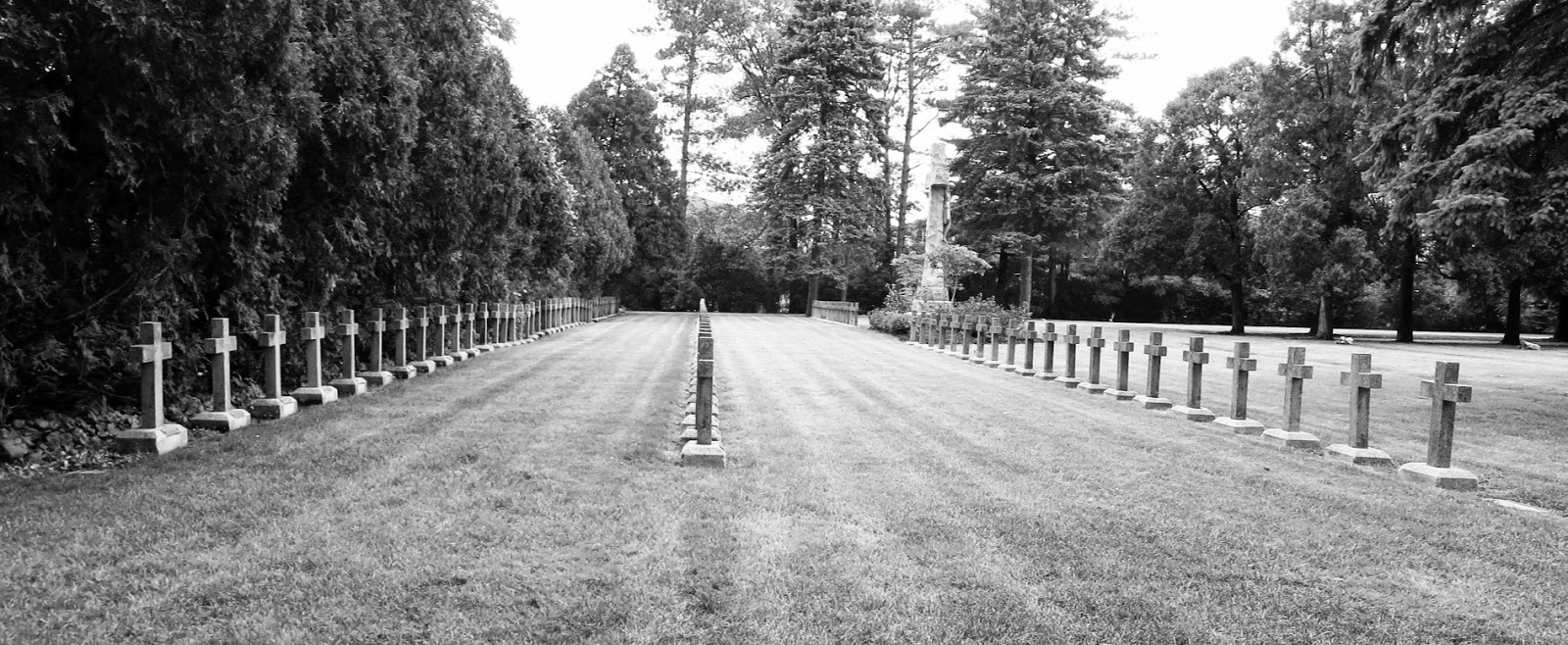
Josef Koudelka (Czech-French, b. 1938) 'St. Procopius Abbey graveyard, Lisle' Nd


Josef Koudelka (Czech-French, b. 1938)
St. Procopius Abbey graveyard, Lisle
Nd


Josef Koudelka (Czech-French, b. 1938) 'Poland' 1958


Josef Koudelka (Czech-French, b. 1938)
Poland
1958
The Art Institute of Chicago, Photography Gala Fund and restricted gift of John A. Bross
© Josef Koudelka/Magnum Photos. Courtesy of Pace/MacGill Gallery, New York


Drama was an important part of Koudelka’s early career: In a literal sense, because he worked for a theatre magazine in the ’60s, creating fantastically emotive images, but also because theatricality was, and still is, deeply embedded in the photographer’s world view. The week in 1968 when young Czechoslovakians stood up against invading Soviet forces occurred when he was working as a stage photographer, and so it became not only a tragedy but also a drama to be recorded. Likewise, his “Gypsies” series, created in the same period, is described by Koudelka as a “theater of the real.”

Through dynamic composition and juxtaposition, Koudelka’s work challenges us to differentiate between spectacle and reality, and while there is no positive indication that one is valued over the other, this is not at all the same as the disbelief in reality that is characteristic of postmodernism. As he puts it, “You form the world in your viewfinder, but at the same time the world forms you.”

In a sense, Koudelka does not want us to become too comfortable with his works as definitive statements. Instead, he crops bodies in images abruptly; we often see people cut off at the knees or ankles, visually and figuratively separating them from the Earth. In other works, disembodied arms and legs jut into the space of the photograph, making scenes surreal and reminding us that whatever coherency the composition has, we can never see the whole picture of what’s really going on. Even with the more poetic and purposefully aesthetic panorama prints of his later “Chaos” series – monumental testaments to the violence we enact both on the natural world and upon each other – through the pitted insistence of film grain and the lack of bright tones or highlights, we are not permitted redemption through “art” or the creation of “beautiful” objects.

In this respect Koudelka’s work, in its celebration of the imperfect, has more in common with the aesthetics of the haiku poet Basho, or the tea master Sen no Rikyu, than with the luscious highly detailed colour images that largely dominate the world of contemporary art photography.”

John L. Tran. “Josef Koudelka: the theatrics of life” on The Japan Times website 18 December 2013 [Online] Cited 15/06/2021


Josef Koudelka (Czech-French, b. 1938) 'Untitled (Student on tank, eyes crossed out)' 1968


Josef Koudelka (Czech-French, b. 1938)
Untitled (Student on tank, eyes crossed out)
1968
From the series Invasion
© Josef Koudelka/Magnum Photos. Courtesy of Pace/MacGill Gallery, New York


Josef Koudelka (Czech-French, b. 1938) 'Invasion by Warsaw Pact troops in front of the Radio headquarters. Prague, Czechoslovakia' 1968


Josef Koudelka (Czech-French, b. 1938)
Invasion by Warsaw Pact troops in front of the Radio headquarters. Prague, Czechoslovakia
1968
From the series Invasion
© Josef Koudelka/Magnum Photos. Courtesy of Pace/MacGill Gallery, New York


Josef Koudelka (Czech-French, b. 1938) 'Untitled' Various images from the series 'Invasion'


Josef Koudelka (Czech-French, b. 1938) 'Untitled' Various images from the series 'Invasion'


Josef Koudelka (Czech-French, b. 1938) 'Untitled' Various images from the series 'Invasion'


Josef Koudelka (Czech-French, b. 1938) 'Untitled' Various images from the series 'Invasion'


Josef Koudelka (Czech-French, b. 1938) 'Untitled' Various images from the series 'Invasion'


Josef Koudelka (Czech-French, b. 1938)
Untitled
Images from the series Invasion
1968


The Art Institute of Chicago
111 South Michigan Avenue
Chicago, Illinois 60603-6404
Phone: (312) 443-3600

Opening hours:
Thursday – Monday 10am – 11pm
Closed Tuesday and Wednesday

The Art Institute of Chicago website

LIKE ART BLART ON FACEBOOK

Back to top