Exhibition: ‘Night Fever. Designing Club Culture 1960 – Today’ at the Vitra Design Museum, Basel, Germany

Exhibition dates: 17th March – 9th September, 2018


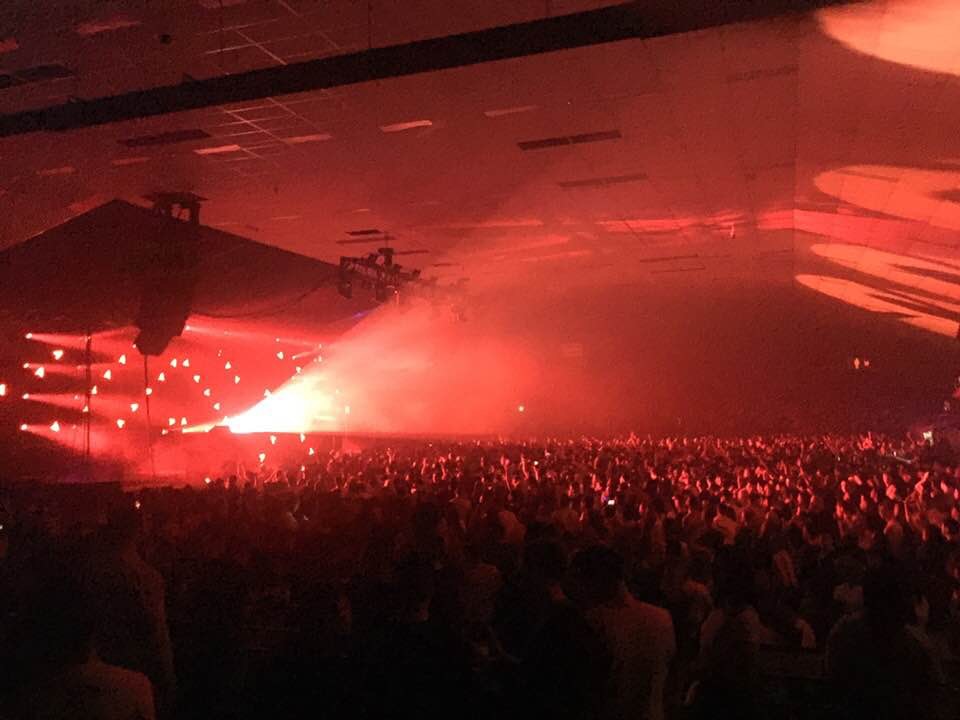
Marcus Bunyan. 'Armin van Buuren at Festival Hall, Melbourne' 2018

Marcus Bunyan. 'Armin van Buuren at Festival Hall, Melbourne' 2018

Marcus Bunyan. 'Armin van Buuren at Festival Hall, Melbourne' 2018


Photographs of Armin van Buuren’s set at Festival Hall, Melbourne, 21 April 2018
© Marcus Bunyan


Last track, one of the hardest of Armin van Buuren’s set at Festival Hall, Melbourne, 21 April 2018
© Marcus Bunyan


I have been to so many clubs in my life I have lost count!

I started going to clubs in 1975 when I came out as a gay man – a year before disco hit, with Sylvester’s You Make Me Feel Mighty Real, the first (gay) superstar of disco. What a star he was. I danced on revolving turntables with lights underneath, just like in the movie Saturday Night Fever, dressed in my army gear for uniform night at Scandals nightclub in Soho, London. Adams club, in Leicester Square, was also a favourite gay nightclub haunt.

I remember dancing to a 17 minute extended version of Donna Summer’s MacArthur Park several times a night at the Pan Club in Luton; and going to Bang on Tottenham Court Road on a Monday and Thursday night to hear the latest releases from the USA. Heaven nightclub (still going), the largest gay nightclub in Europe at the time, was a particular favourite. All around the world, Ibiza, America, Amsterdam, Berlin, etc… I have partied, and still do, in clubs. Night fever for a night owl, one who loves do dance, loves music and life.

After disco came High NRG where we used to dance for hours on the dance floor at Heaven on pure adrenaline, only coming off the dance floor to have a drink of water. New romantics, punk, and soul, techno and trance (my favourite) followed. I am a recovering trance addict. So many memories, so many people, good times and tunes – Black Box, Gloria Gaynor, Barry White, David Bowie, Grace Jones, the list goes on and on.

While this posting shows the design of some amazing clubs, and some photographs of the people who inhabited them, what it cannot capture is the atmosphere of a place. The most important thing in any club are… the people; the music; the lighting; and the DJs.

Without all four working together it doesn’t matter how good the design of a club, it will fail. You can have the most minimal lighting but the most electric atmosphere if the vibe is there: a congress of like-minded people who love dance music, who commune together on the dance floor and in the club, all having a good time. The DJ’s orchestrate this secular celebration of spirit. They can take you up, bring you around, twist you inside out. The modern temple of love, light and healing. Party hard, party on.

Dr Marcus Bunyan


Many thankx to the Vitra Design Museum for allowing me to publish the photographs in the posting. Please click on the photographs for a larger version of the image.


Palladium, New York, 1985 from the exhibition 'Night Fever. Designing Club Culture 1960 – Today' at the Vitra Design Museum, Basel, Germany, March - Sept, 2018


Palladium, New York
1985
Architect: Arata Isozaki, mural by Keith Haring
© Timothy Hursley, Garvey|Simon Gallery New York


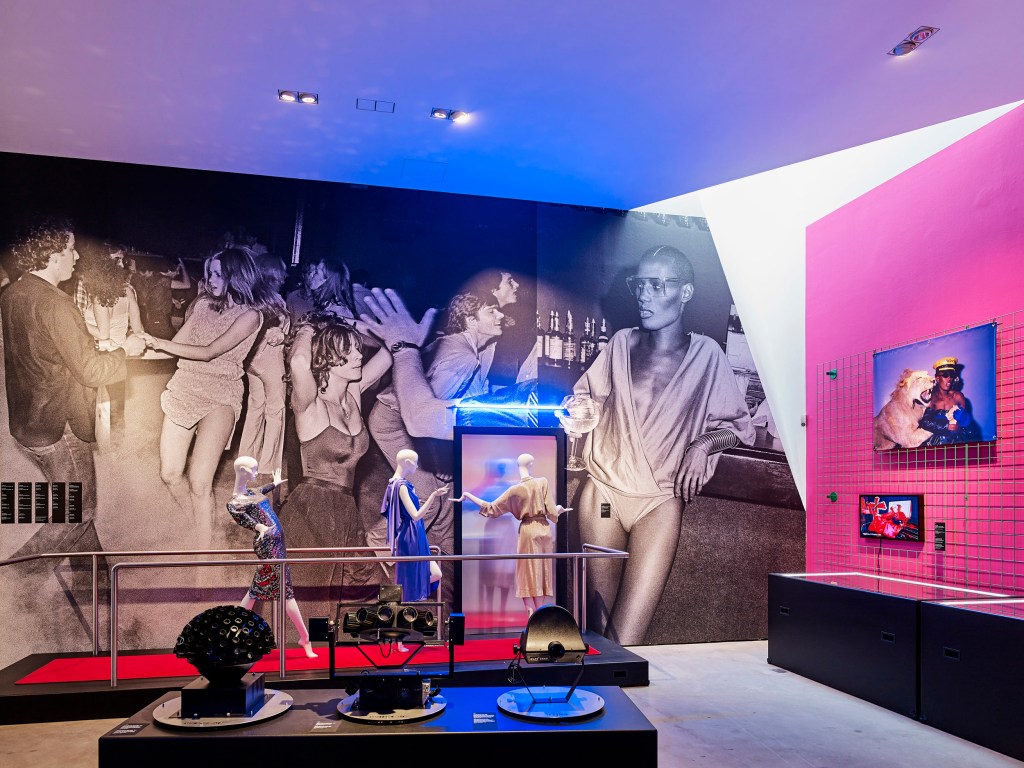
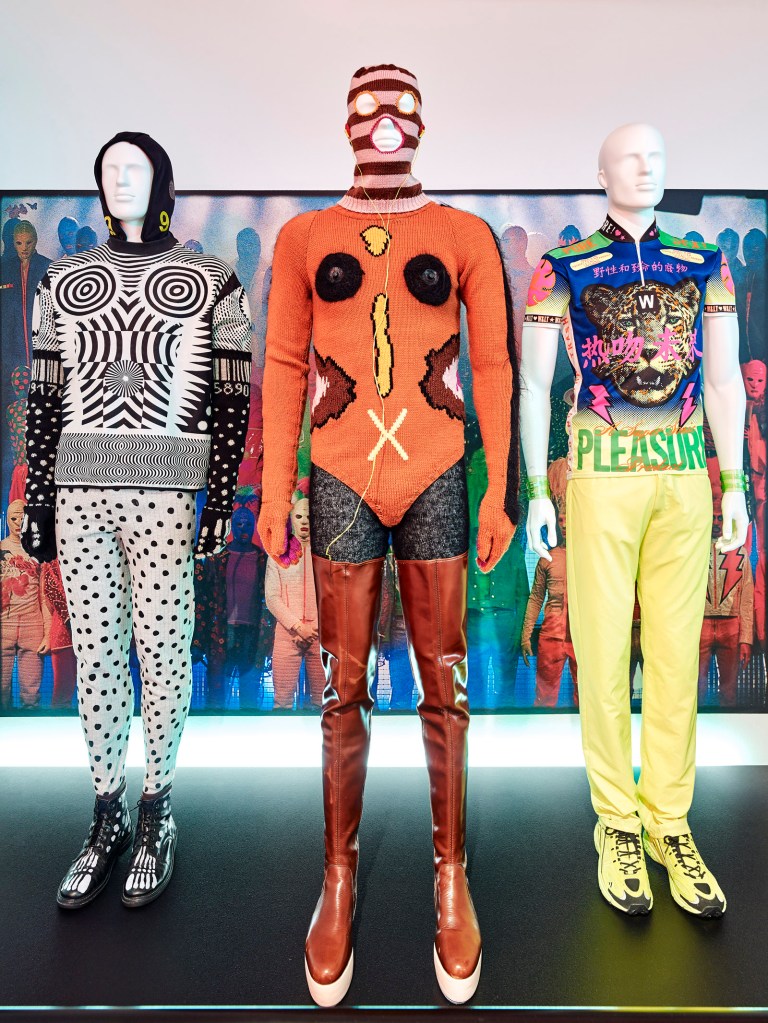
Installation view of the exhibition 'Night Fever. Designing Club Culture 1960 - Today' at the Vitra Design Museum 2018


Installation view of the exhibition Night Fever. Designing Club Culture 1960 – Today, at the Vitra Design Museum 2018
© Vitra Design Museum
Photo: Mark Niedermann


An evening at the Space Electronic, Florence, 1971 from the exhibition 'Night Fever. Designing Club Culture 1960 – Today' at the Vitra Design Museum, Basel, Germany, March - Sept, 2018


An evening at the Space Electronic
Florence, 1971
Interior Design: Gruppo 9999
Photo: Carlo Caldini
© Gruppo 9999


Discotheque Flash Back, Borgo San Dalmazzo c. 1972 from the exhibition 'Night Fever. Designing Club Culture 1960 – Today' at the Vitra Design Museum, Basel, Germany, March - Sept, 2018


Discotheque Flash Back
Borgo San Dalmazzo c. 1972
Interior Design: Studio65
© Paolo Mussat Sartor


Nightclub Les Bains Douches, Paris, 1990


Nightclub Les Bains Douches
Paris, 1990
Interior Design: Philippe Starck
© Foc Kan


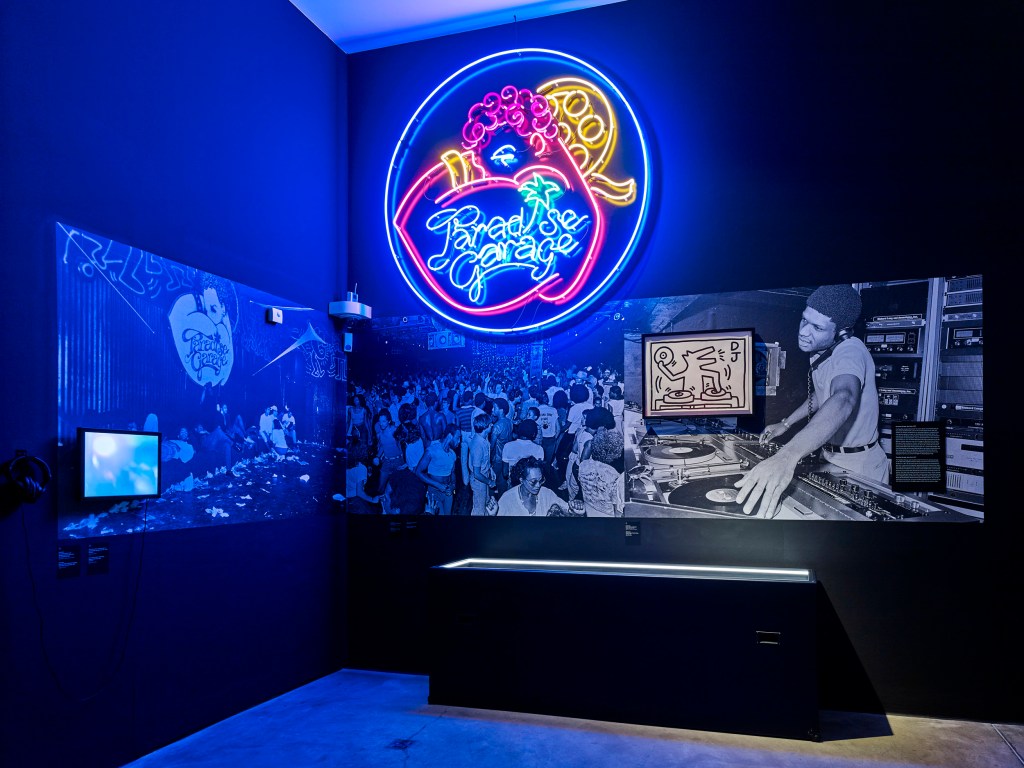
DJ Larry Levan in Paradise Garage, New York, 1979


DJ Larry Levan in Paradise Garage
New York, 1979
© Bill Bernstein, David Hill Gallery, London


Guests in Conversation on a Sofa, Studio 54, New York, 1979


Guests in Conversation on a Sofa, Studio 54
New York, 1979
© Bill Bernstein, David Hill Gallery, London


Akoaki. 'Mobile DJ Booth, The Mothership' Detroit, 2014


Akoaki
Mobile DJ Booth, The Mothership
Detroit, 2014
© Akoaki
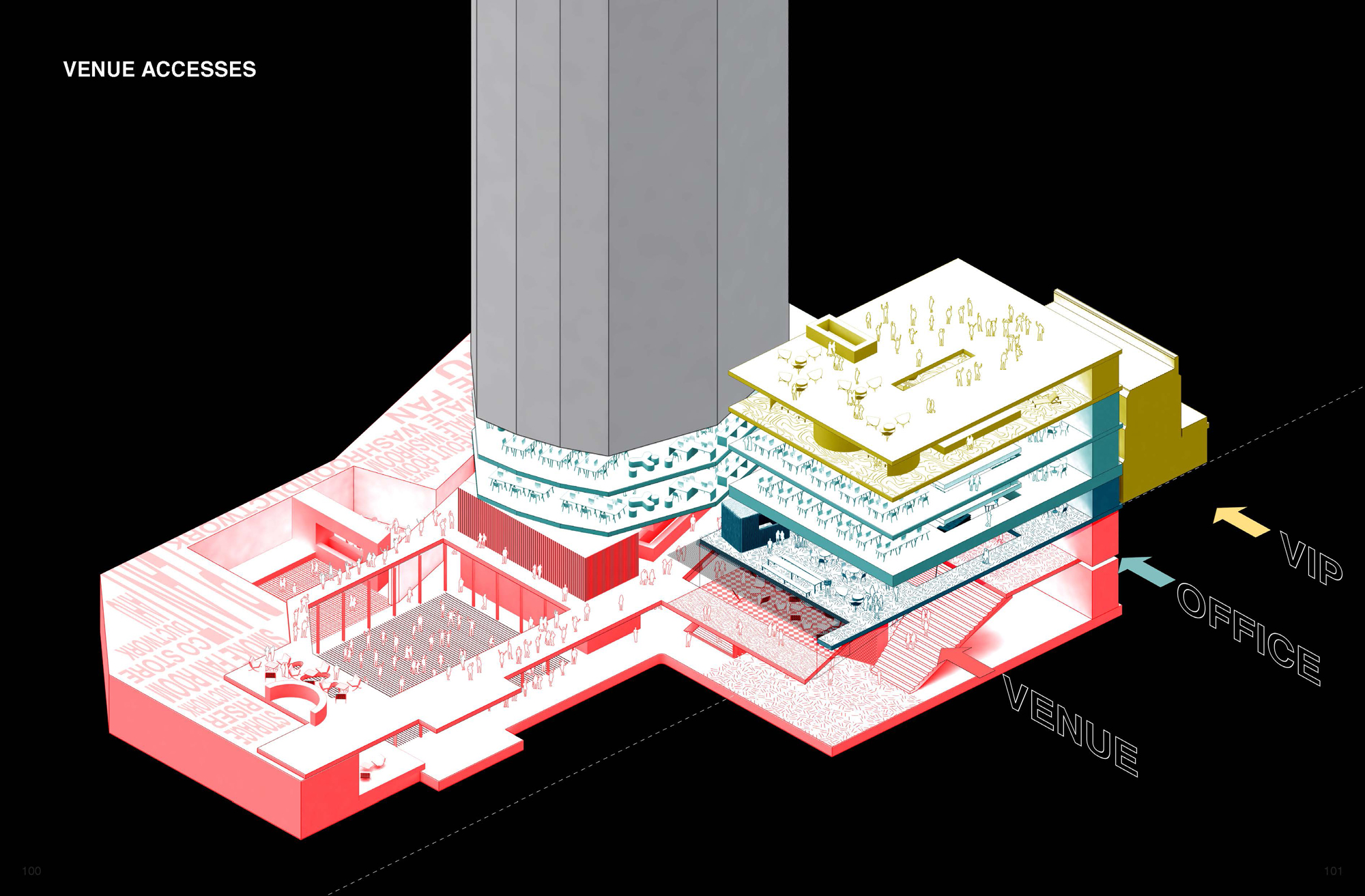
 

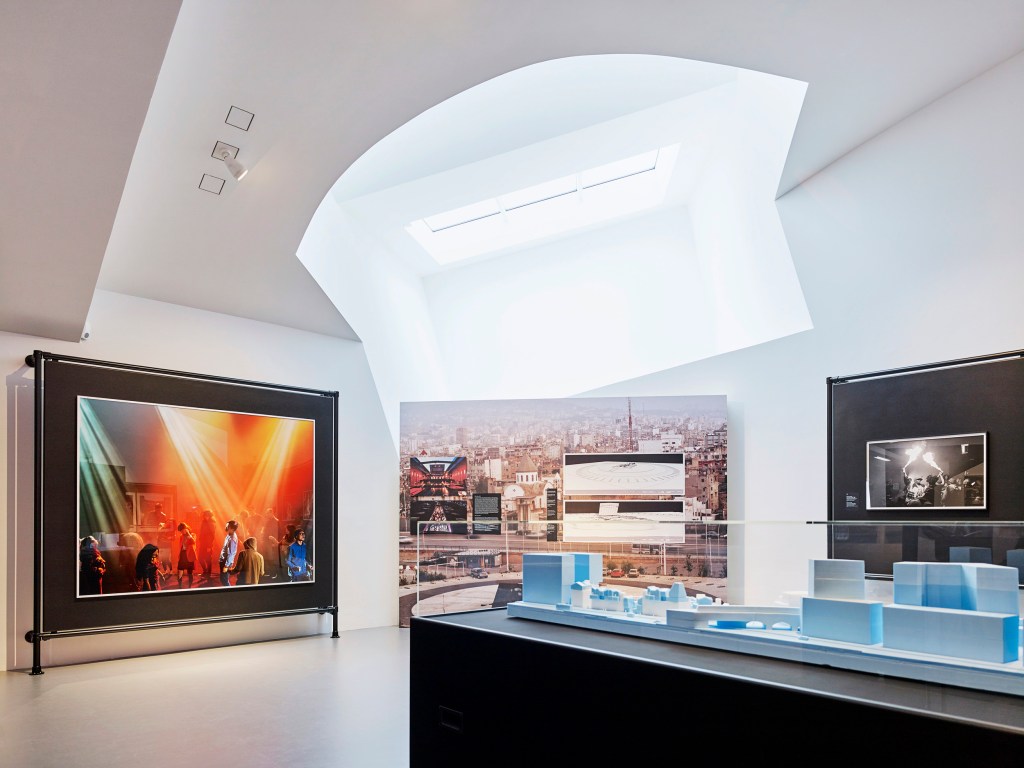
OMA/Rem Koolhaas. 'Isometric Plan Ministry of Sound II' London, 2015


OMA/Rem Koolhaas
Isometric Plan Ministry of Sound II
London, 2015
© OMA


'Newcastle Stage at Horst Arts & Music Festival' Belgium, 2017


Newcastle Stage at Horst Arts & Music Festival
Belgium, 2017
Architects: Assemble
© Jeroen Verrecht


Diane Alexander White. 'The backlash against disco peaked at the Disco Demolotion Night at Comiskey Park, Chicago, in the summer 1979'


Diane Alexander White
The backlash against disco peaked at the Disco Demolotion Night at Comiskey Park, Chicago, in the summer 1979
July 12, 1979
Silver gelatin print
© Diane Alexander White Photography
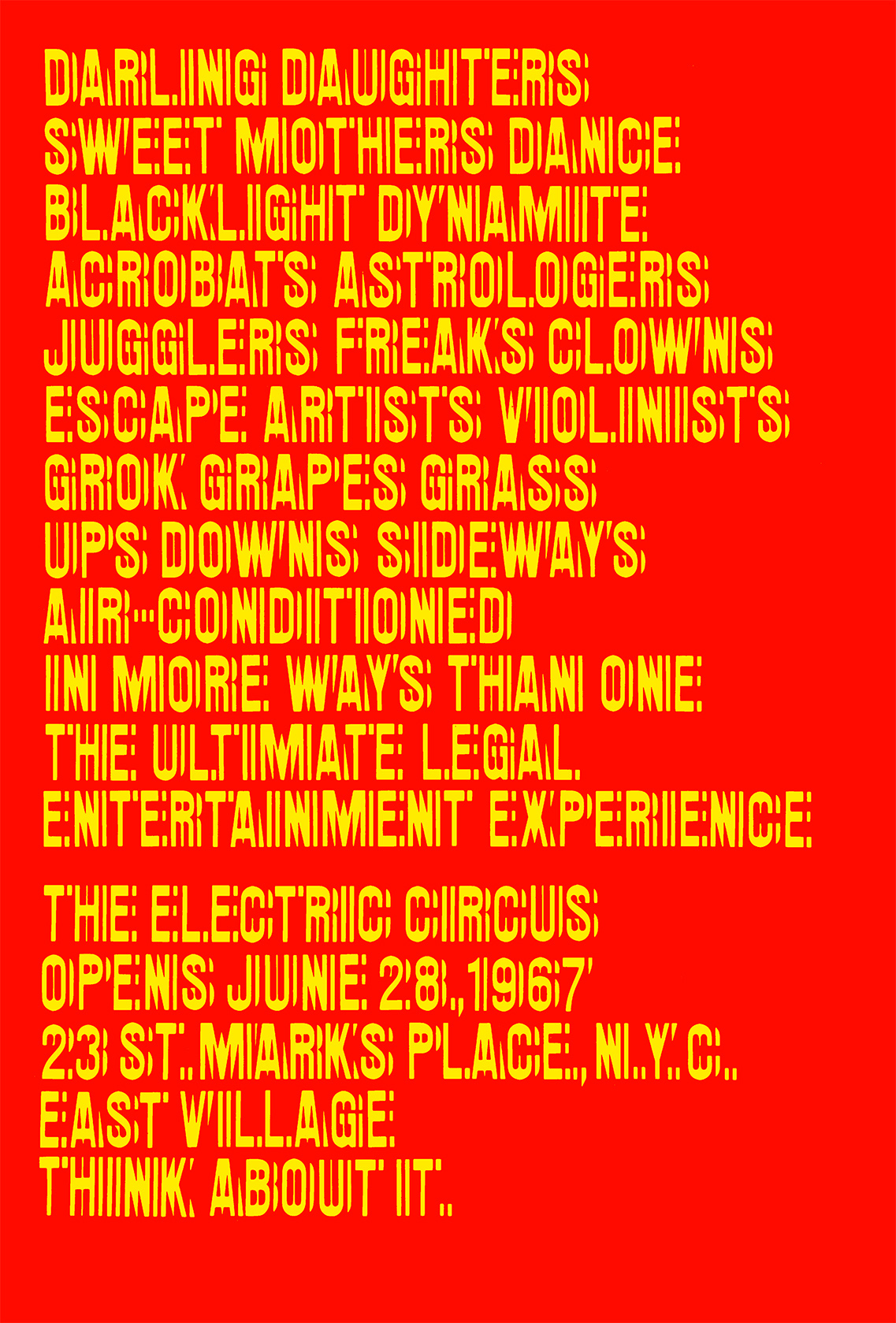
 

'Poster for the Nightclub The Electric Circus' New York, 1967


Poster for the Nightclub The Electric Circus
New York, 1967
Design: Chermayeff & Geismar
© Ivan Chermayeff and Tom Geismar


'Poster for the Discotheque Flash Back' Borgo San Dalmazzo, 1972


Poster for the Discotheque Flash Back
Borgo San Dalmazzo, 1972
Design: Gianni Arnaudo / Studio65


Hasse Persson. 'Calvin Klein Party' 1978


Hasse Persson (Swedish, b. 1942)
Calvin Klein Party
1978
© Hasse Persson


Bill Bernstein. 'Dance floor at Xenon' New York, 1979


Bill Bernstein (American, b. 1950)
Dance floor at Xenon
New York, 1979
© Bill Bernstein / David Hill Gallery, London
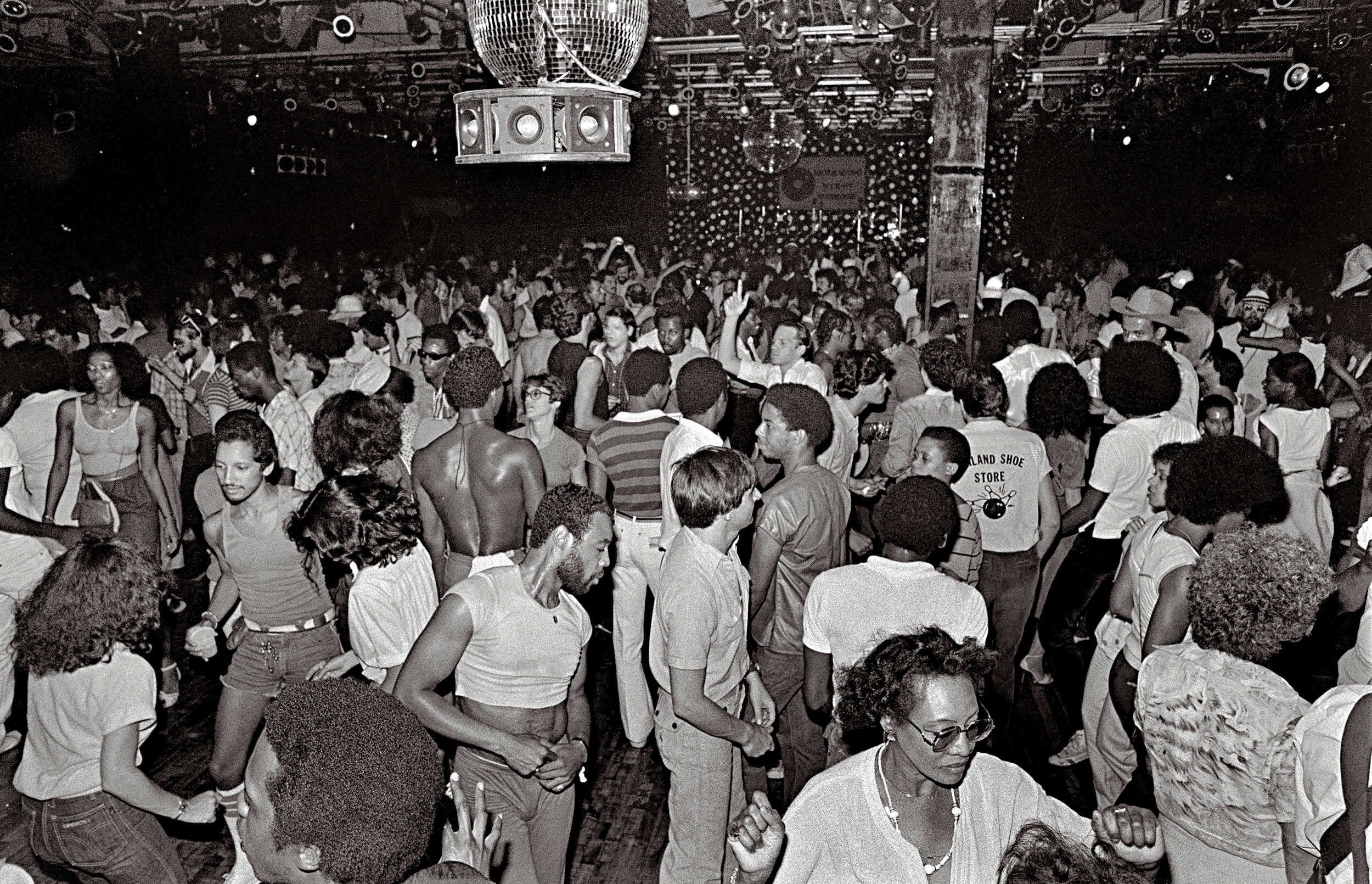
 

'Dance floor at Paradise Garage' New York, 1978


Dance floor at Paradise Garage
New York, 1978
© Bill Bernstein / David Hill Gallery, London


'Trojan, Nichola and Leigh Bowery at Taboo' 1985


Trojan, Nichola and Leigh Bowery at Taboo
1985
© Dave Swindells


Musa N. Nxumalo. 'Wake Up, Kick Ass and Repeat!' 2017


Musa N. Nxumalo (South African, b. 1986)
Wake Up, Kick Ass and Repeat!
Photograph from the series 16 Shots
2017
© Musa N. Nxumalo / Courtesy of SMAC Gallery, Johannesburg


Volker Hinz. 'Grace Jones at "Confinement" theme, Area' New York, 1984


Volker Hinz (German, b. 1947)
Grace Jones at “Confinement” theme, Area
New York, 1984
© Volker Hinz


'Keith Haring in front of his contribution to Art theme' Nd


Keith Haring in front of his contribution to Art theme
Nd
© Volker Hinz
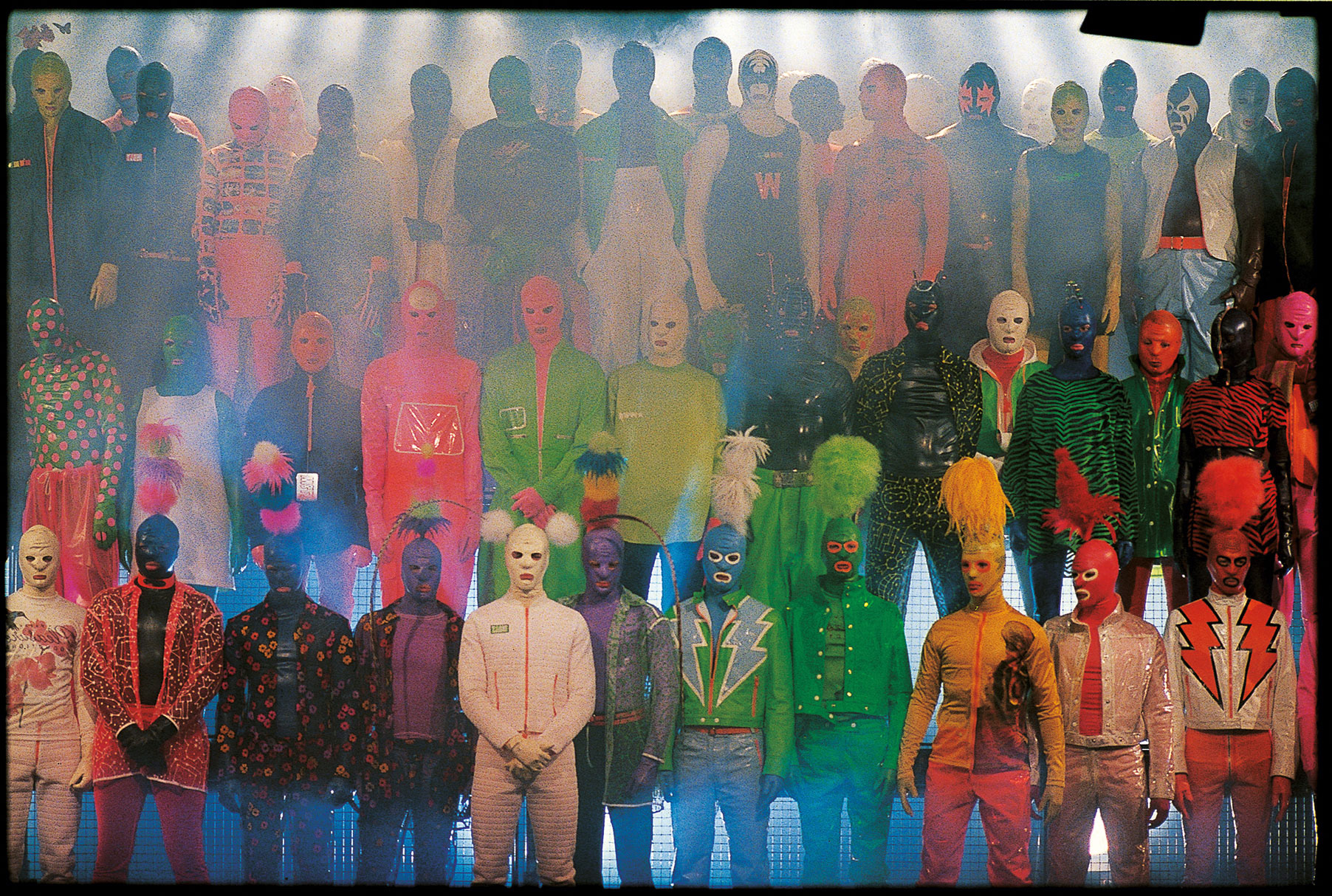
 

Walter Van Beirendonck. 'Fashion show of Wild & Lethal Trash (W.&L.T.) collection for Mustang Jeans' Fall / Winter 1995/9


Walter Van Beirendonck (Belgium, b. 1957)
Fashion show of Wild & Lethal Trash (W.&L.T.) collection for Mustang Jeans
Fall / Winter 1995/9
© Dan Lecca / Courtesy of Mustang Jeans


Chen Wei. 'In the Waves #1' 2013


Chen Wei (Chinese, b. 1980)
In the Waves #1
2013
© Chen Wei / Courtesy of LEO XU PROJECTS, Shanghai


Despacio Sound System, New Century Hall, Manchester International Festival July 2013


Despacio Sound System, New Century Hall, Manchester International Festival
July 2013
© Rod Lewis


Interior view of Haçienda, Manchester Nd


Interior view of Haçienda, Manchester
Nd
Courtesy of Ben Kelly


Bureau A. 'DJ booth inside The Club, Lisbon Architecture Triennale' 2016


Bureau A
DJ booth inside The Club, Lisbon Architecture Triennale
2016
© Mariana Lopes


Gruppo UFO. 'Bamba Issa, Night Shelter for the Beach Rescue Camels' 1969


Gruppo UFO
Bamba Issa, Night Shelter for the Beach Rescue Camels
Bamba Issa, 1969
© Photo: Carlo Bachi / Courtesy of Gruppo UFO


'Interior view of Tresor' Berlin 1996/97


Interior view of Tresor, Berlin
1996/97
© Gustav Volker Heuss


Martin Eberle. 'Tresor außen' Berlin, 1996


Martin Eberle
Tresor außen
Berlin, 1996
From the series Temporary Spaces
© Martin Eberle


Gianni Arnaudo. 'Aliko chair, designed for Flash Back' 1972


Gianni Arnaudo (Italian, b. 1947)
Aliko chair, designed for Flash Back
Borgo San Dalmazzo, Italy, 1972
Gufram
© Andreas Sütterlin / Courtesy of Gianni Arnaudo


Roger Tallon. 'Swivel Chair Module 400 for the (unrealised) Nightclub Le Garage' Paris, 1965


Roger Tallon (French, 1929-2011)
Swivel Chair Module 400 for the (unrealised) Nightclub Le Garage
Paris, 1965
© Vitra Design Museum
Photo: Thomas Dix


Vincent Rosenblatt. 'Tecnobrega #093' Tupinambá, 2016


Vincent Rosenblatt (French lives Brazil, b. 1972)
Tecnobrega #093
Tupinambá, 2016
From the series Tecnobrega – The Religion of Soundmachines
Metropoles Club, Belém do Pará, Brazil
Inkjet print on Baryta paper (2018)
100 x 66cm
© Vincent Rosenblatt


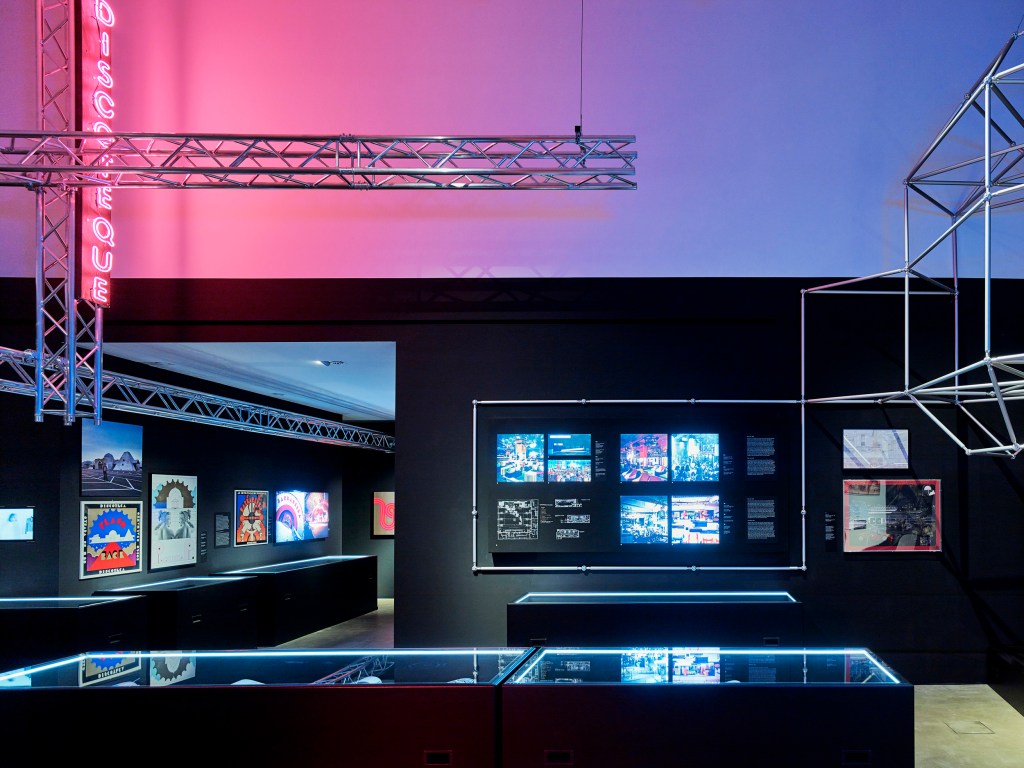
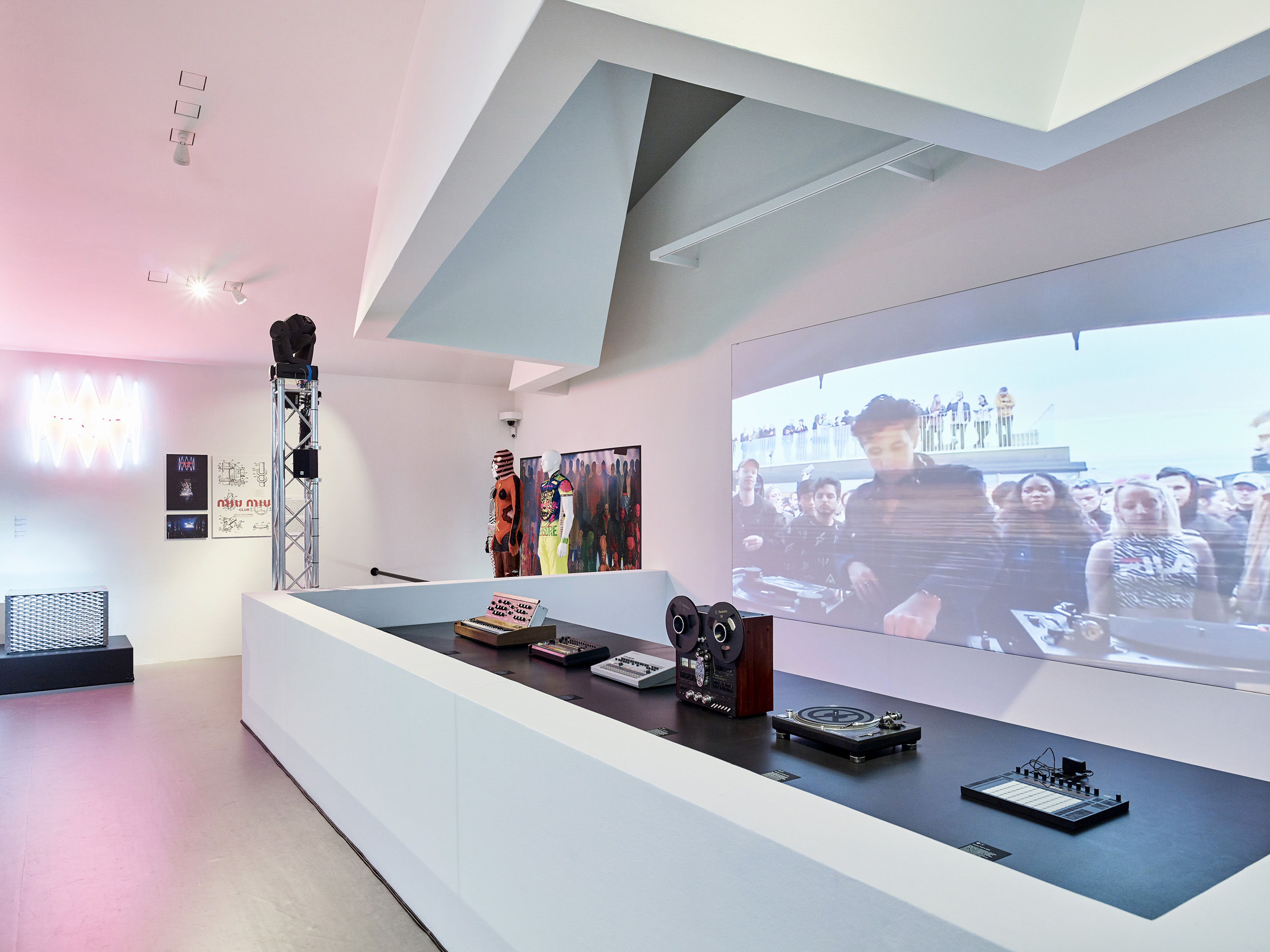
The nightclub is one of the most important design spaces in contemporary culture. Since the 1960s, nightclubs have been epicentres of pop culture, distinct spaces of nocturnal leisure providing architects and designers all over the world with opportunities and inspiration. Night Fever. Designing Club Culture 1960 – Today offers the first large-scale examination of the relationship between club culture and design, from past to present. The exhibition presents nightclubs as spaces that merge architecture and interior design with sound, light, fashion, graphics, and visual effects to create a modern Gesamtkunstwerk. Examples range from Italian clubs of the 1960s created by the protagonists of Radical Design to the legendary Studio 54 where Andy Warhol was a regular, from the Haçienda in Manchester designed by Ben Kelly to more recent concepts by the OMA architecture studio for the Ministry of Sound in London. The exhibits on display range from films and vintage photographs to posters, flyers, and fashion, but also include contemporary works by photographers and artists such as Mark Leckey, Chen Wei, and Musa N. Nxumalo. A spatial installation with music and light effects takes visitors on a fascinating journey through a world of glamour and subcultures – always in search of the night that never ends.

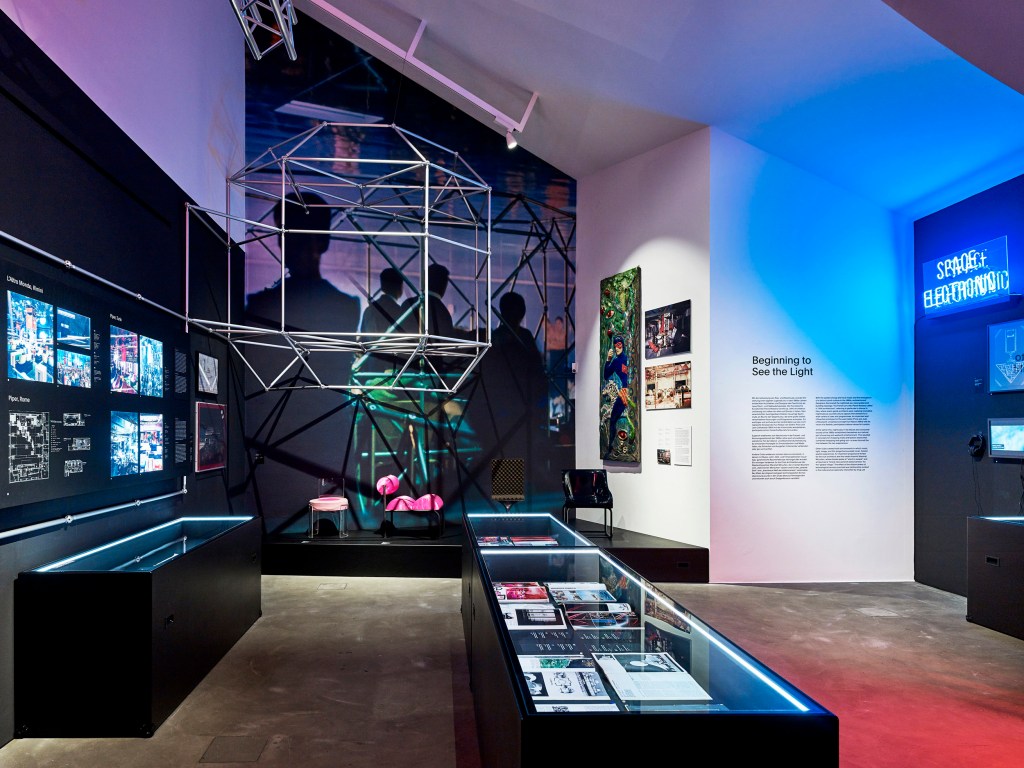
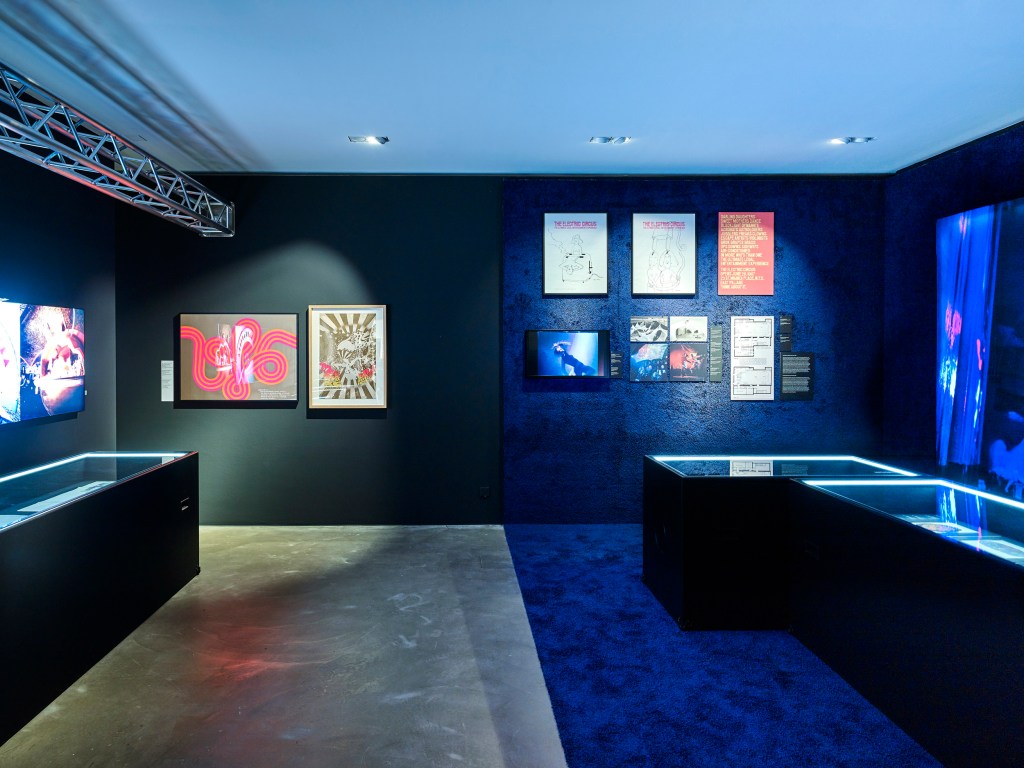
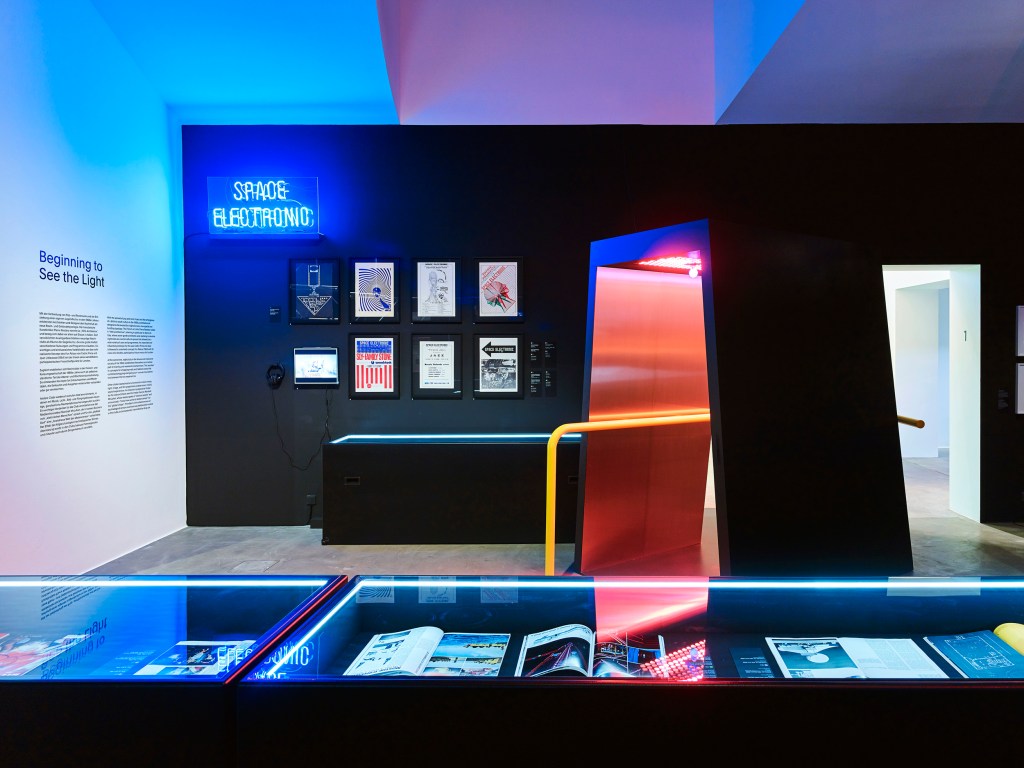
Night Fever opens with the 1960s, exploring the emergence of nightclubs as spaces for experimentation with interior design, new media, and alternative lifestyles. The Electric Circus (1967) in New York, for example, was designed as a countercultural venue by architect Charles Forberg while renowned graphic designers Chermayeff & Geismar created its distinctive logo and font. Its multidisciplinary approach influenced many clubs in Europe, including Space Electronic (1969) in Florence. Designed by the collective Gruppo 9999, this was one of several nightclubs associated with Italy’s Radical Design avant-garde. The same goes for Piper in Turin (1966), a club designed by Giorgio Ceretti, Pietro Derossi, and Riccardo Rosso as a multifunctional space with a modular interior suitable for concerts, happenings, and experimental theatre as well as dancing. Gruppo UFO’s Bamba Issa (1969), a beach club in Forte dei Marmi, was another highly histrionic venue, its themed interior completely overhauled for every summer of its three years of existence.

With the rise of disco in the 1970s, club culture gained a new momentum. Dance music developed into a genre of its own and the dance floor emerged as a stage for individual and collective performance, with fashion designers such as Halston and Stephen Burrows providing the perfect outfits to perform and shine. New York’s Studio 54, founded by Ian Schrager and Steve Rubell in 1977 and designed by Scott Bromley and Ron Doud, soon became a celebrity favourite. Only two years later, the movie Saturday Night Fever marked the apex of Disco’s commercialisation, which in turn sparked a backlash with homophobic and racist overtones that peaked at the Disco Demolition Night staged at a baseball stadium in Chicago.

Around the same time, places in New York’s thriving nightlife like the Mudd Club (1978) and Area (1983) offered artists new spaces to merge the club scene and the arts and launched the careers of artists like Keith Haring and Jean-Michel Basquiat. In early 1980s London, meanwhile, clubs like Blitz and Taboo brought forth the New Romantic music and fashion movement, with wild child Vivienne Westwood a frequent guest at Michael and Gerlinde Costiff’s Kinky Gerlinky club night. But it was in Manchester that architect and designer Ben Kelly created the post-industrial cathedral of rave, The Haçienda (1982), from where Acid House conquered the UK. House and Techno were arguably the last great dance music movements to define a generation of clubs and ravers. They reached Berlin in the early 1990s just after the fall of the wall, when disused and derelict spaces became available for clubs like Tresor (1991); more than a decade later, the notorious Berghain (2004) was established in a former heating plant, demonstrating yet again how a vibrant club scene can flourish in the cracks of the urban fabric, on empty lots and in vacant buildings.

Developments have become ever more complex since the early 2000s. On the one hand, club culture is thriving and evolving as it is adopted by global brands and music festivals; on the other, many nightclubs have been pushed out of the city or survive merely as sad historical monuments and modern ruins of a hedonistic past. At the same time, a new generation of architects is addressing the nightclub typology. The architectural firm OMA, founded by Rem Koolhaas, has developed a proposal for a twenty-first-century Ministry of Sound II for London, while Detroit-based designers Akoaki have created a mobile DJ booth called The Mothership to promote their hometown’s rich club heritage.

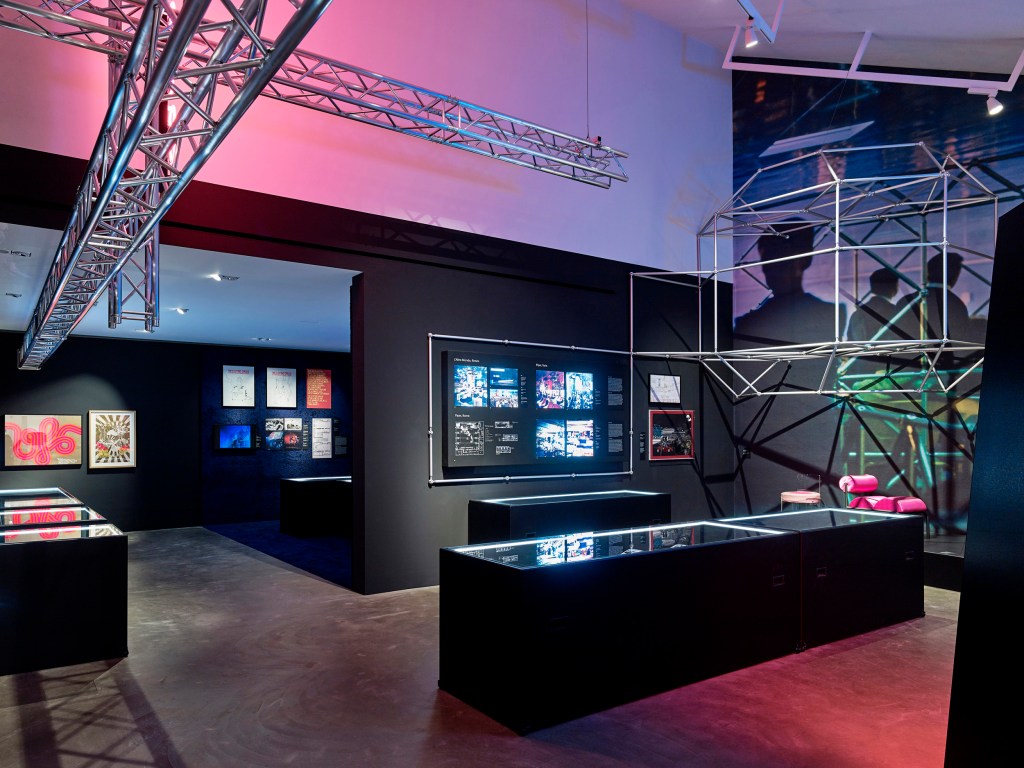
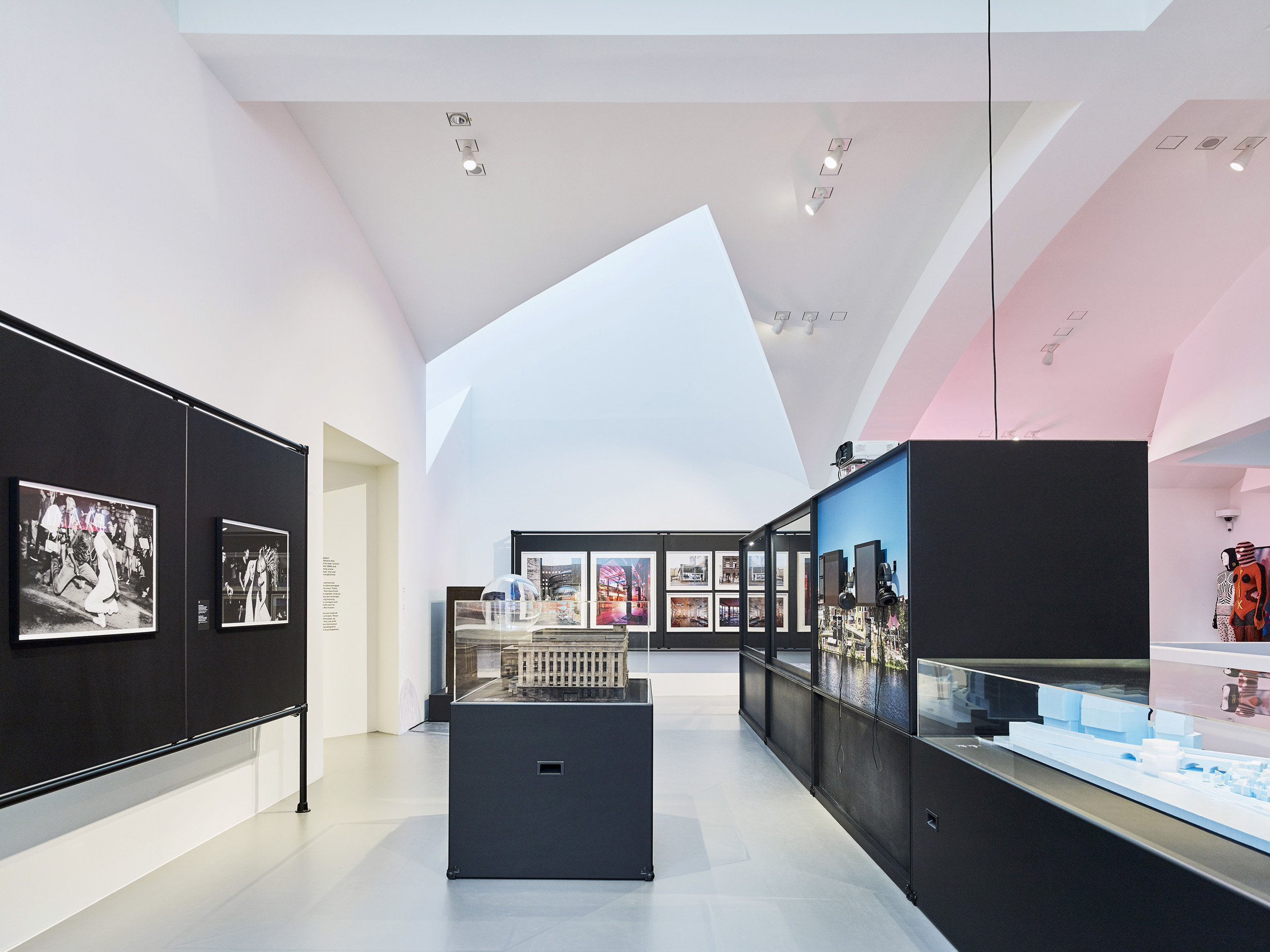
Based on extensive research and featuring many exhibits never before displayed in a museum, Night Fever brings together a wide range of material, from furniture to graphic design, architectural models to art, film and photography to fashion. The exhibition takes visitors through a fascinating nocturnal world that provides a vital contrast to the rules and routines of our everyday life.

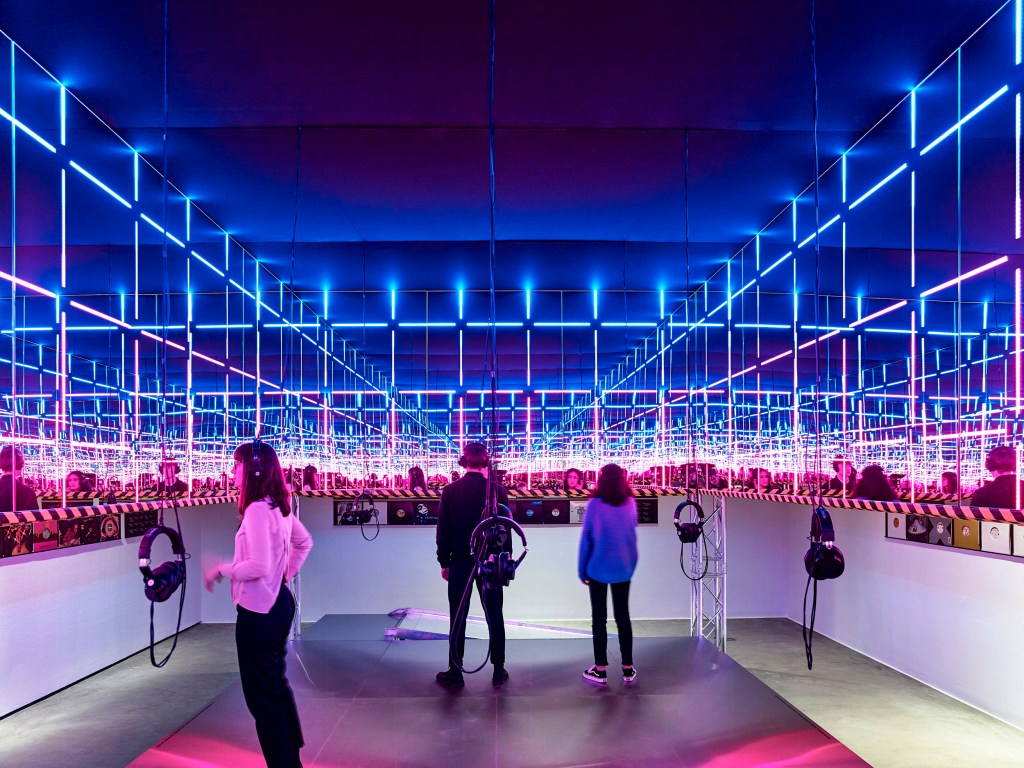
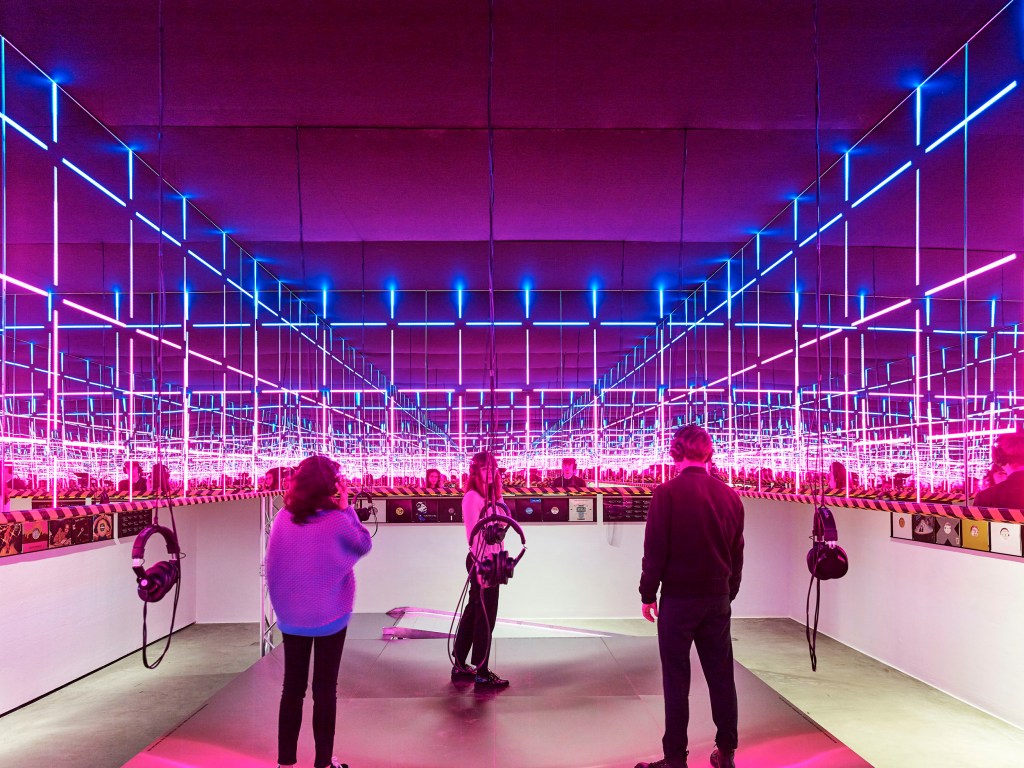
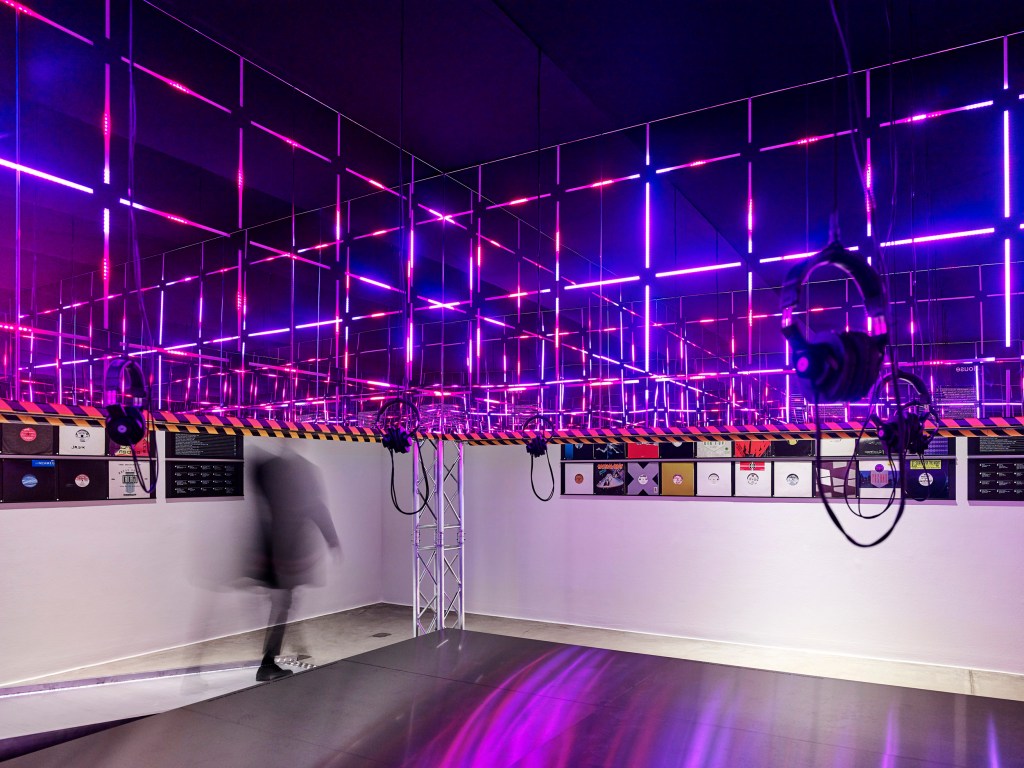
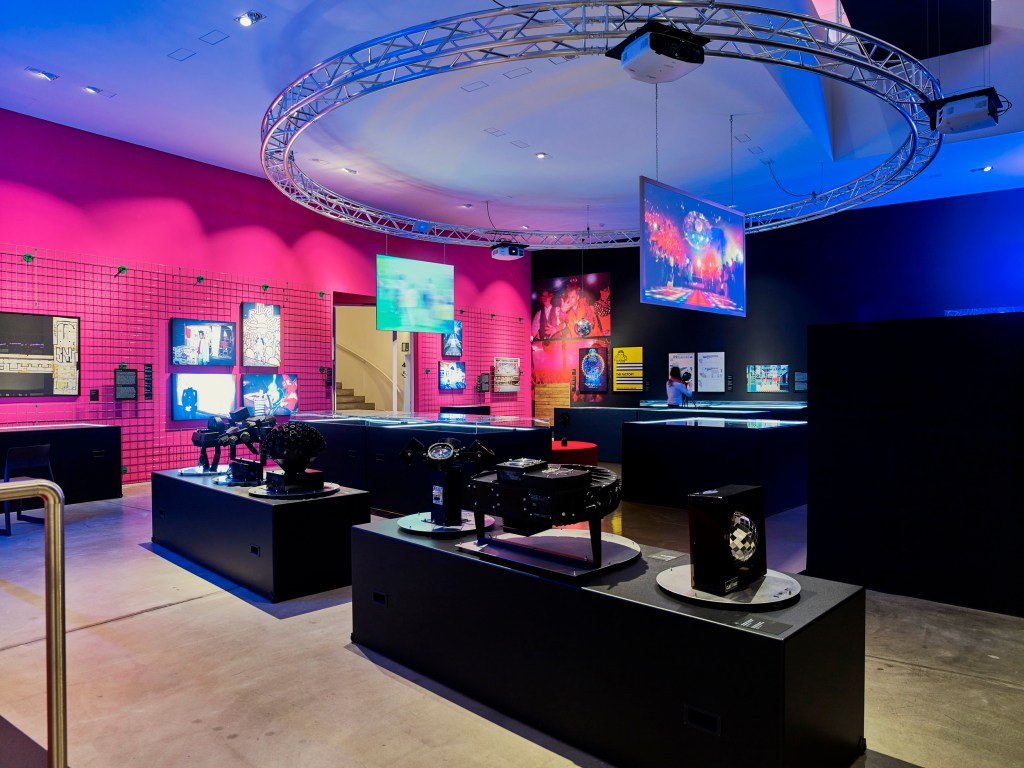
While the exhibition basically follows a chronological concept, a music and light installation created specially by exhibition designer Konstantin Grcic and lighting designer Matthias Singer offers visitors the opportunity to experience all the many facets of nightclub design, from visual effects to sounds and sensations. A display of record covers, ranging from Peter Saville’s designs for Factory Records to Grace Jones’s album cover Nightclubbing, underlines the significant relationship between music and design in club culture. The multidisciplinary exhibition reveals the nightclub as much more than a dance bar or a music venue; it is an immersive environment for intense experiences.

Represented artists, designers and architects (extract): François Dallegret, Gruppo 9999, Halston, Keith Haring, Arata Isozaki, Grace Jones, Ben Kelly, Bernard Khoury, Miu Miu, OMA (Office for Metropolitan Architecture), Peter Saville, Studio65, Roger Tallon, Walter Van Beirendonck, Andy Warhol

Represented clubs (extract): The Electric Circus, New York, 1967 Space Electronic, Florenz, 1969 Il Grifoncino, Bolzano, 1969 Studio 54, New York, 1977 Paradise Garage, New York, 1977 Le Palace, Paris, 1978 The Saint, New York, 1980 The Haçienda, Manchester, 1982 Area, New York, 1983 Palladium, New York, 1985 Tresor, Berlin, 1991 B018, Beirut, 1998 Berghain, Berlin, 2004

Press release from the Vitra Design Museum
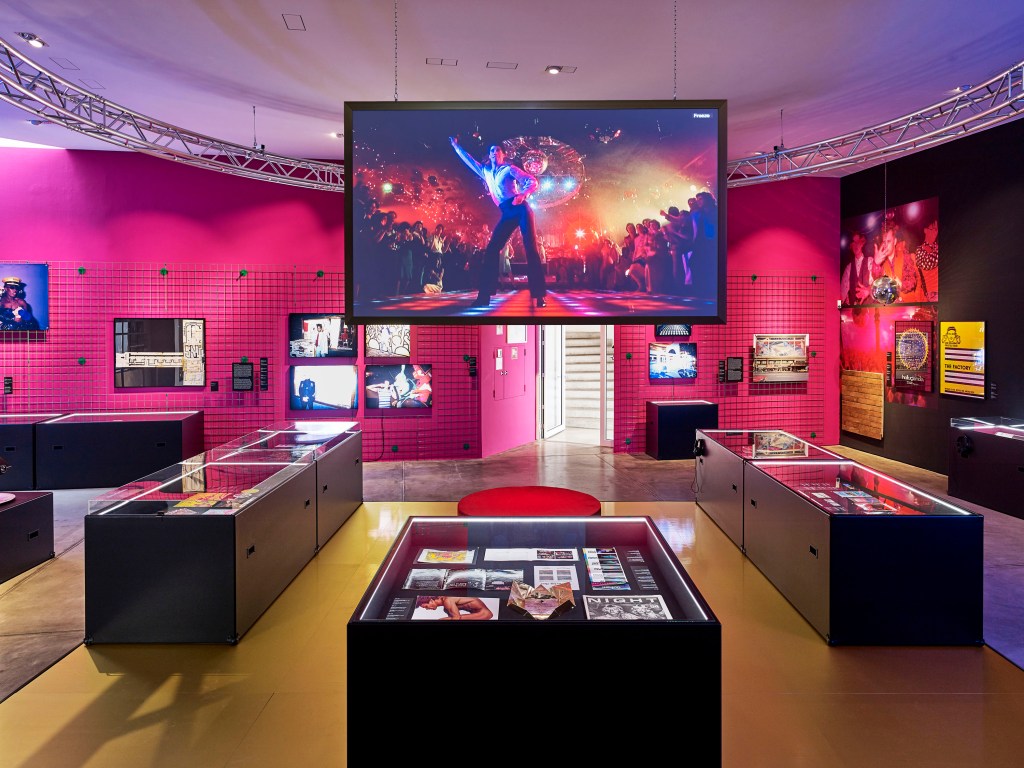


Installation view of the exhibition 'Night Fever. Designing Club Culture 1960 - Today' at the Vitra Design Museum 2018
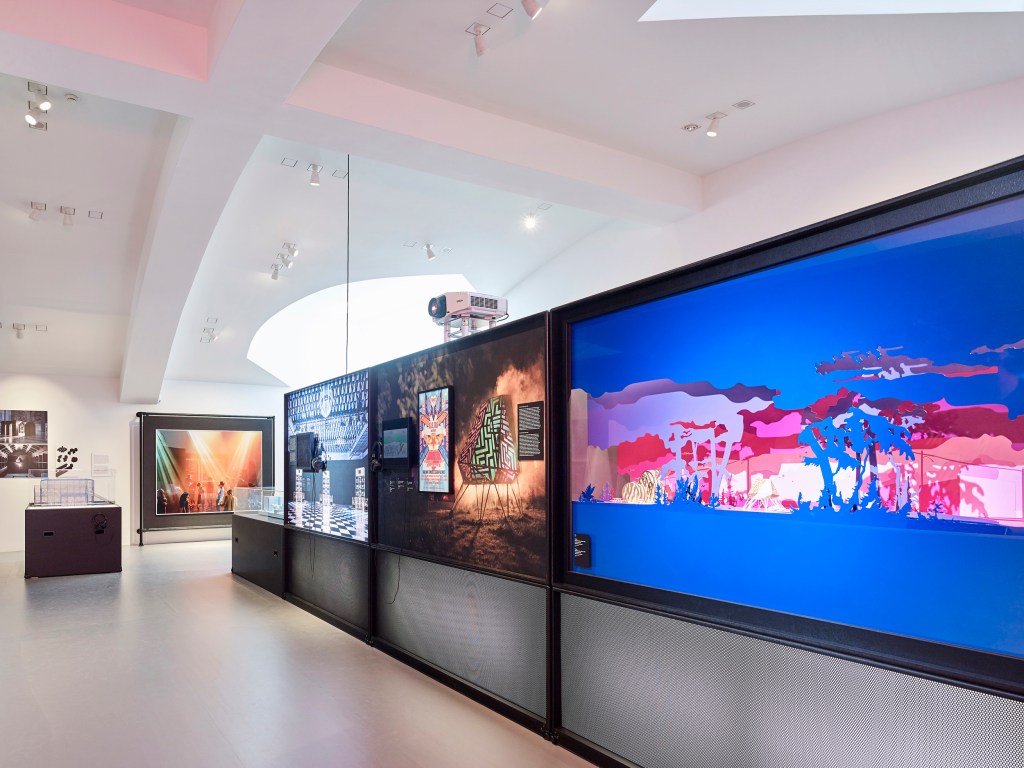
Installation view of the exhibition 'Night Fever. Designing Club Culture 1960 - Today' at the Vitra Design Museum 2018
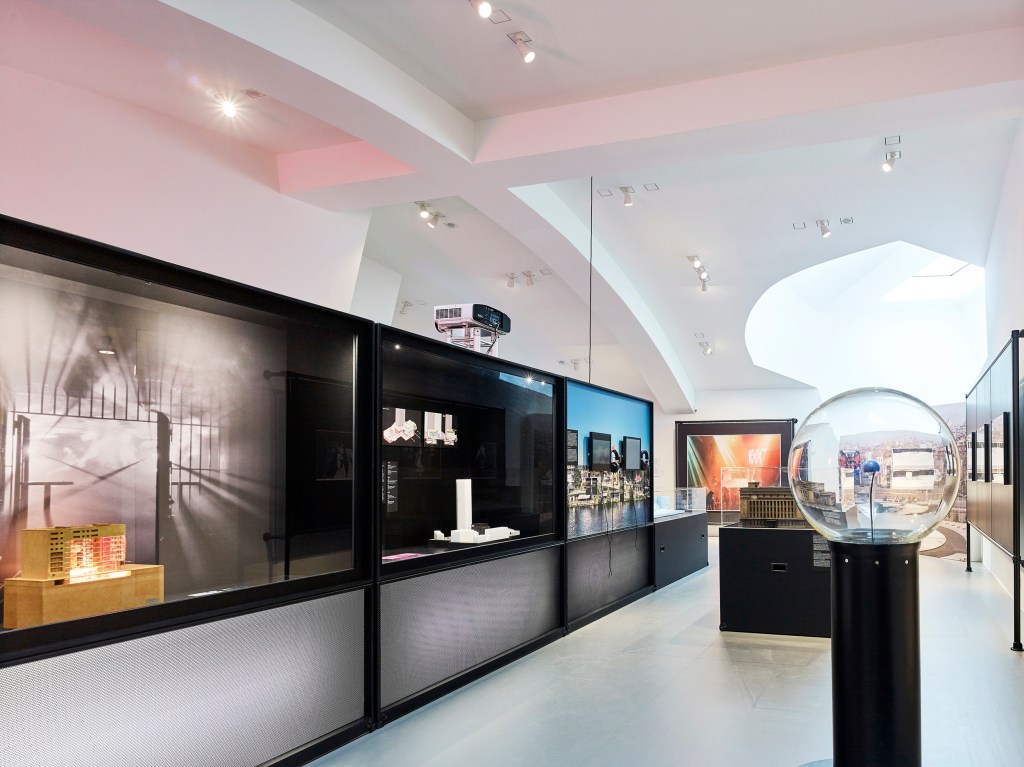
Installation view of the exhibition 'Night Fever. Designing Club Culture 1960 - Today' at the Vitra Design Museum 2018
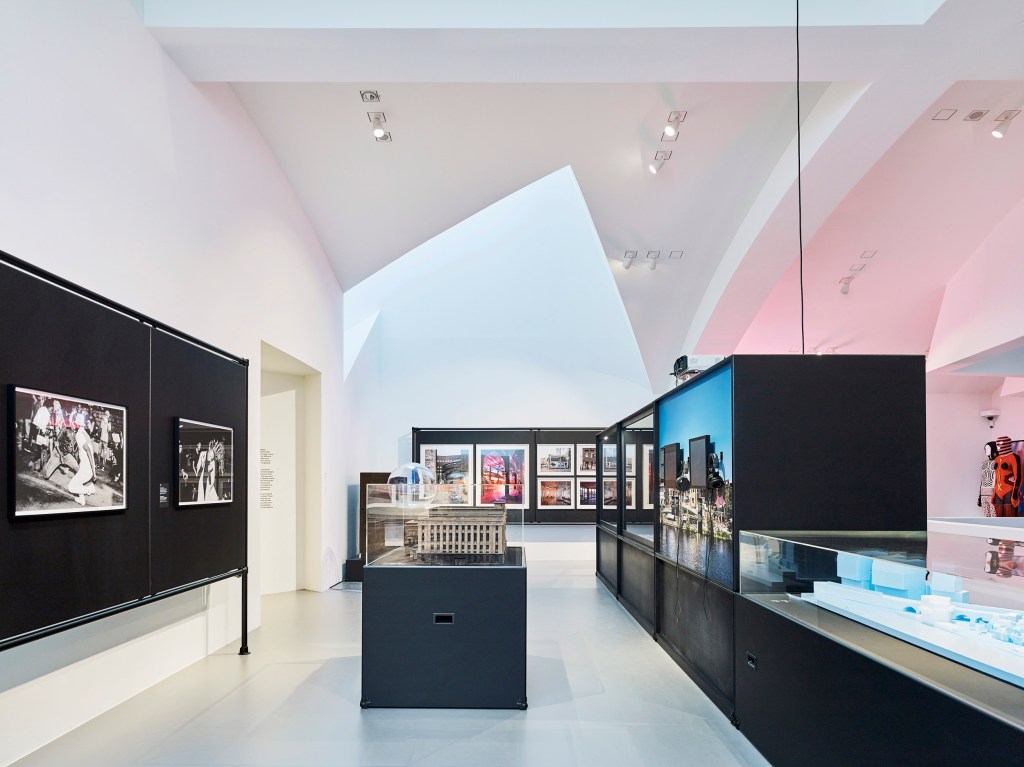
Installation view of the exhibition 'Night Fever. Designing Club Culture 1960 - Today' at the Vitra Design Museum 2018
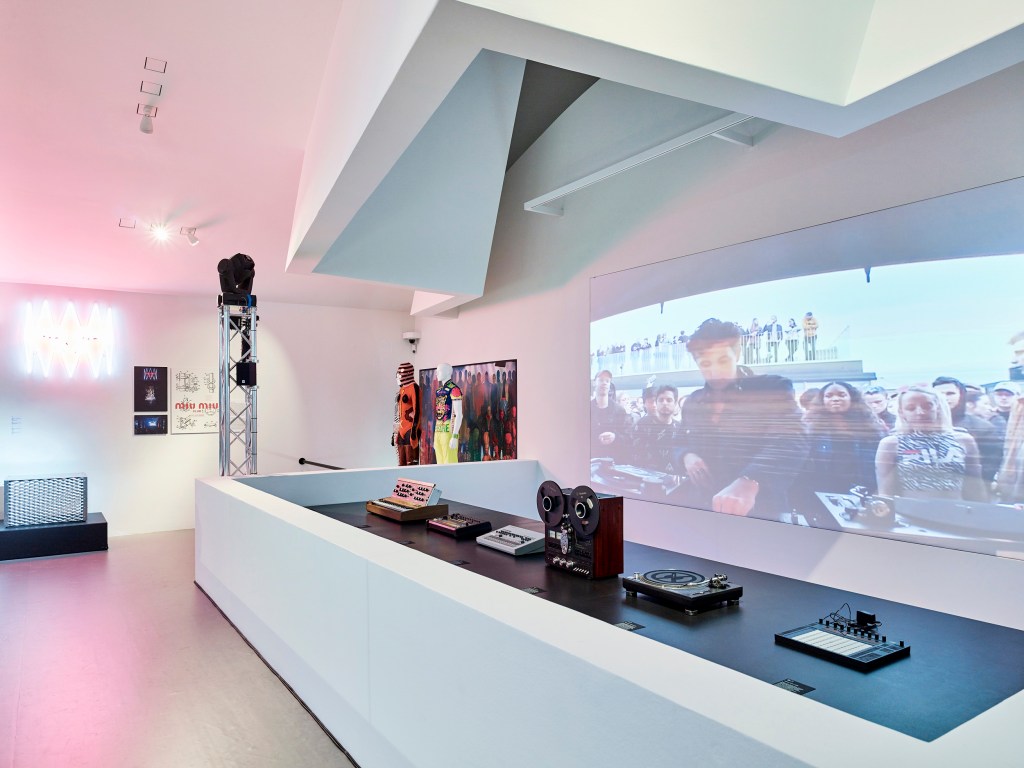
Installation view of the exhibition 'Night Fever. Designing Club Culture 1960 - Today' at the Vitra Design Museum 2018
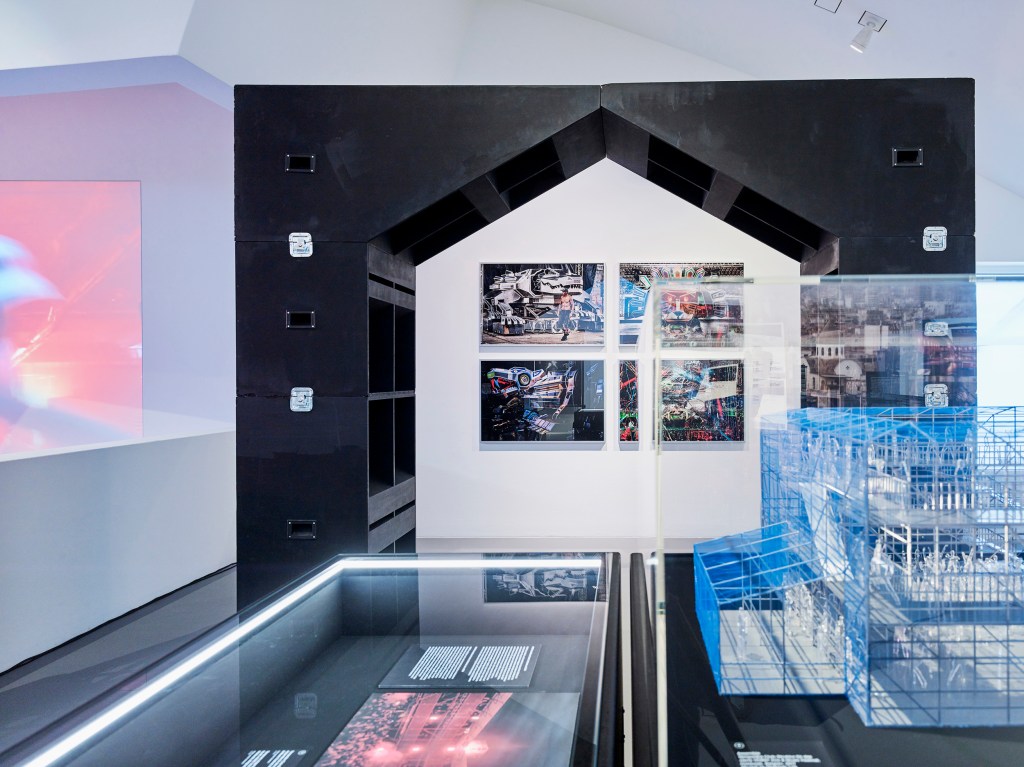
Installation view of the exhibition 'Night Fever. Designing Club Culture 1960 - Today' at the Vitra Design Museum 2018
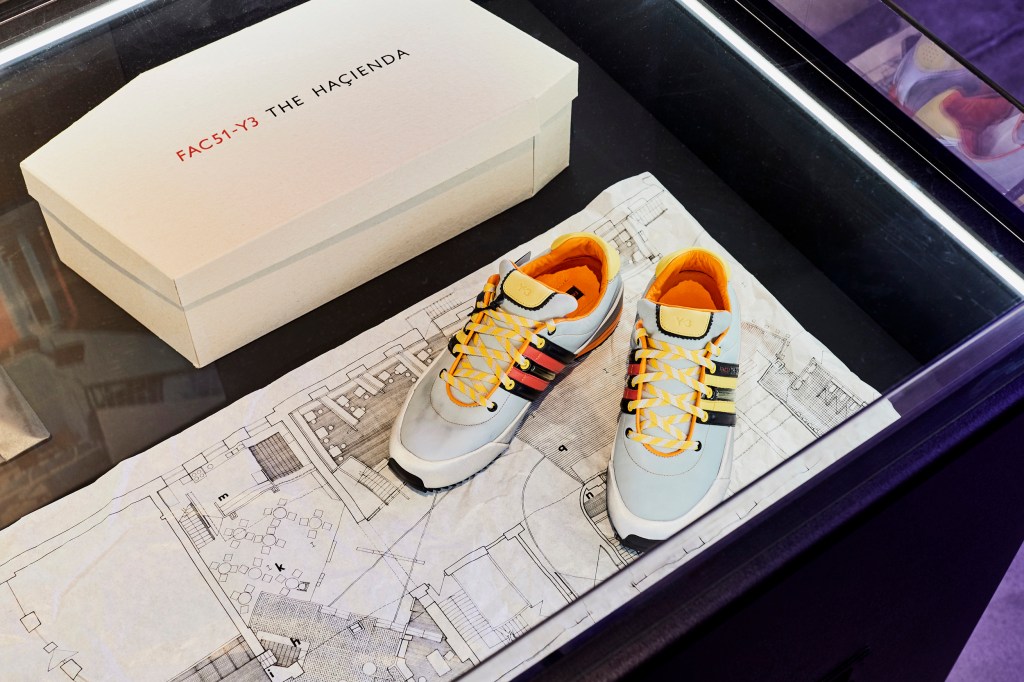
Installation view of the exhibition 'Night Fever. Designing Club Culture 1960 - Today' at the Vitra Design Museum 2018
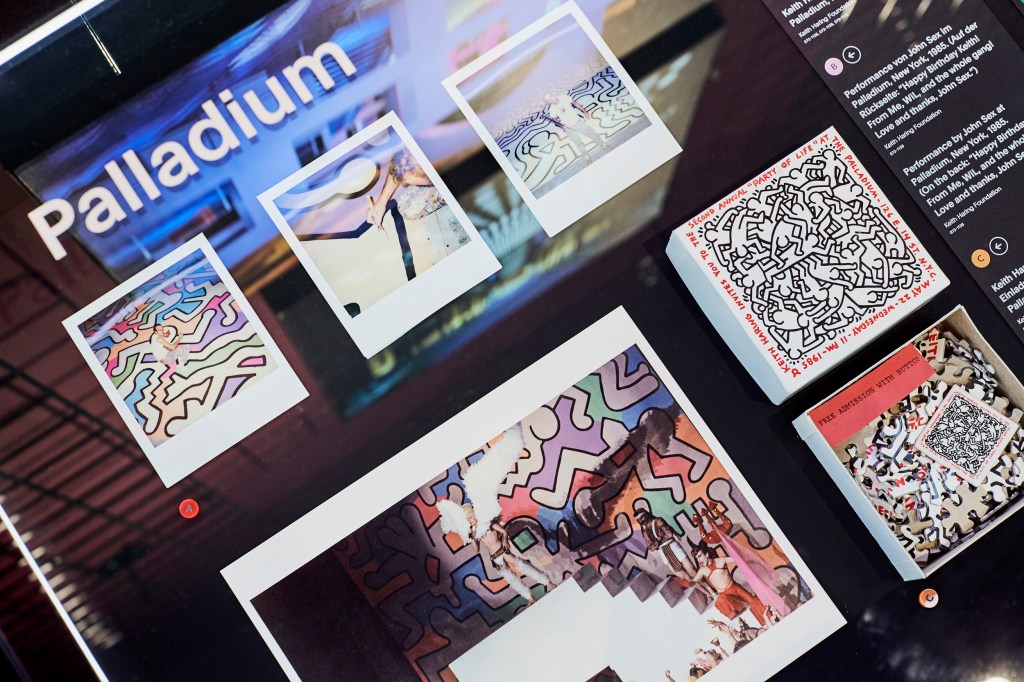
Installation view of the exhibition 'Night Fever. Designing Club Culture 1960 - Today' at the Vitra Design Museum 2018
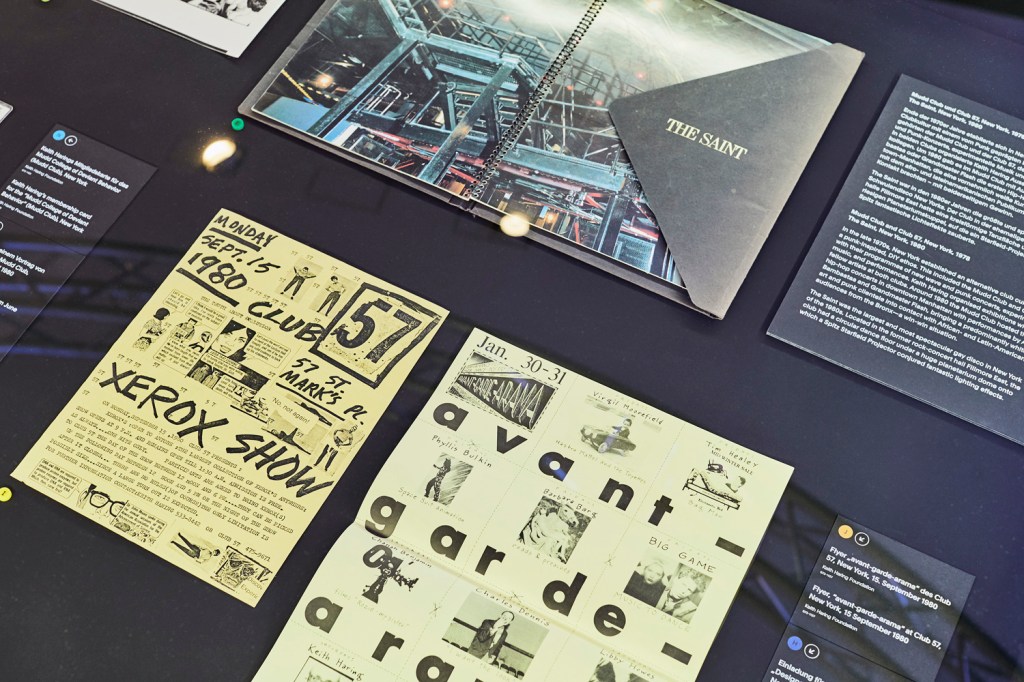
Installation view of the exhibition 'Night Fever. Designing Club Culture 1960 - Today' at the Vitra Design Museum 2018

Installation view of the exhibition 'Night Fever. Designing Club Culture 1960 - Today' at the Vitra Design Museum 2018

Installation view of the exhibition 'Night Fever. Designing Club Culture 1960 - Today' at the Vitra Design Museum 2018

Installation view of the exhibition 'Night Fever. Designing Club Culture 1960 - Today' at the Vitra Design Museum 2018

Installation view of the exhibition 'Night Fever. Designing Club Culture 1960 - Today' at the Vitra Design Museum 2018

Installation view of the exhibition 'Night Fever. Designing Club Culture 1960 - Today' at the Vitra Design Museum 2018

Installation view of the exhibition 'Night Fever. Designing Club Culture 1960 - Today' at the Vitra Design Museum 2018

Installation view of the exhibition 'Night Fever. Designing Club Culture 1960 - Today' at the Vitra Design Museum 2018
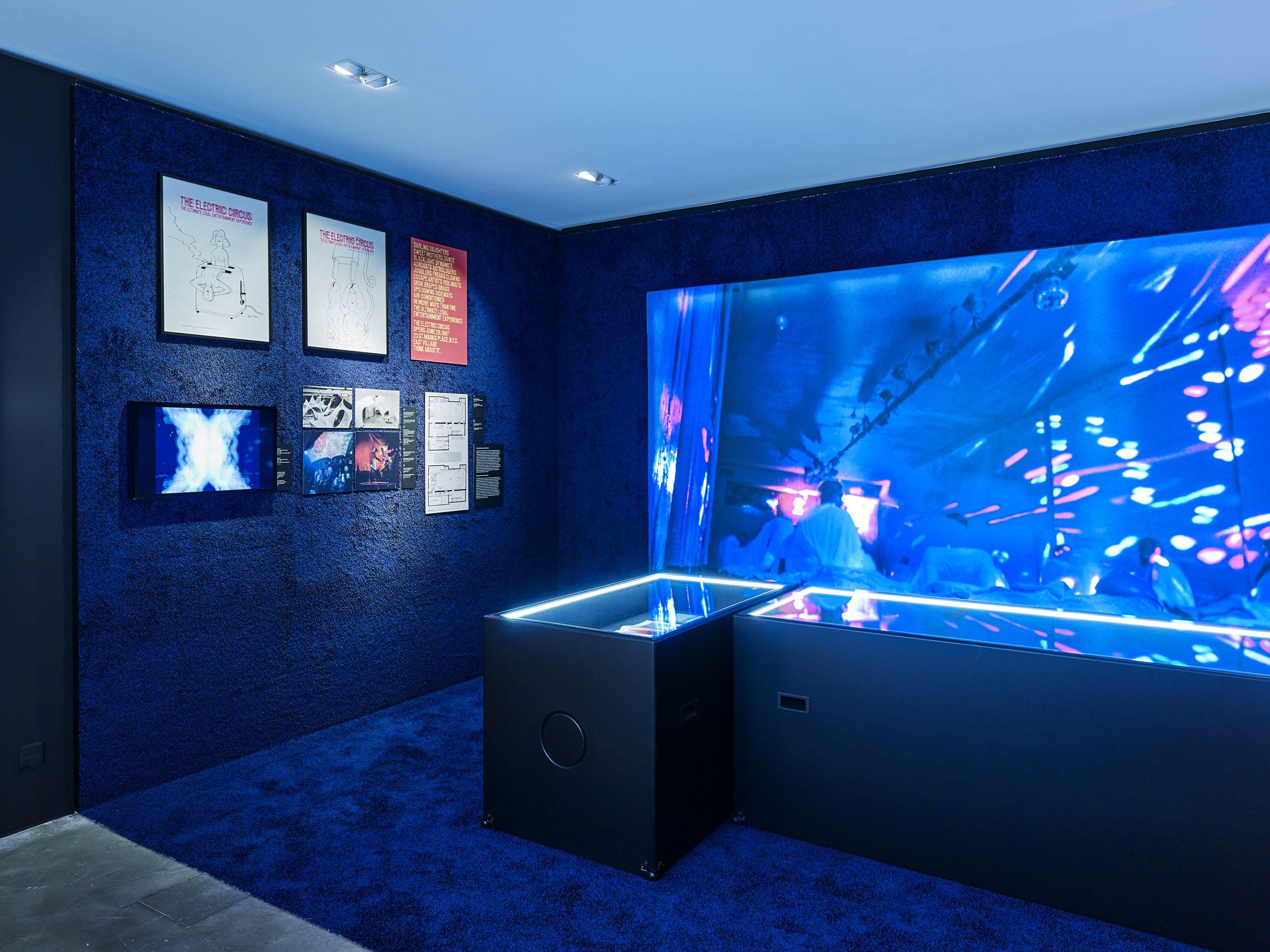
Installation view of the exhibition 'Night Fever. Designing Club Culture 1960 - Today' at the Vitra Design Museum 2018

Installation view of the exhibition 'Night Fever. Designing Club Culture 1960 - Today' at the Vitra Design Museum 2018

Installation view of the exhibition 'Night Fever. Designing Club Culture 1960 - Today' at the Vitra Design Museum 2018

Installation view of the exhibition 'Night Fever. Designing Club Culture 1960 - Today' at the Vitra Design Museum 2018

Installation view of the exhibition 'Night Fever. Designing Club Culture 1960 - Today' at the Vitra Design Museum 2018

Installation view of the exhibition 'Night Fever. Designing Club Culture 1960 - Today' at the Vitra Design Museum 2018


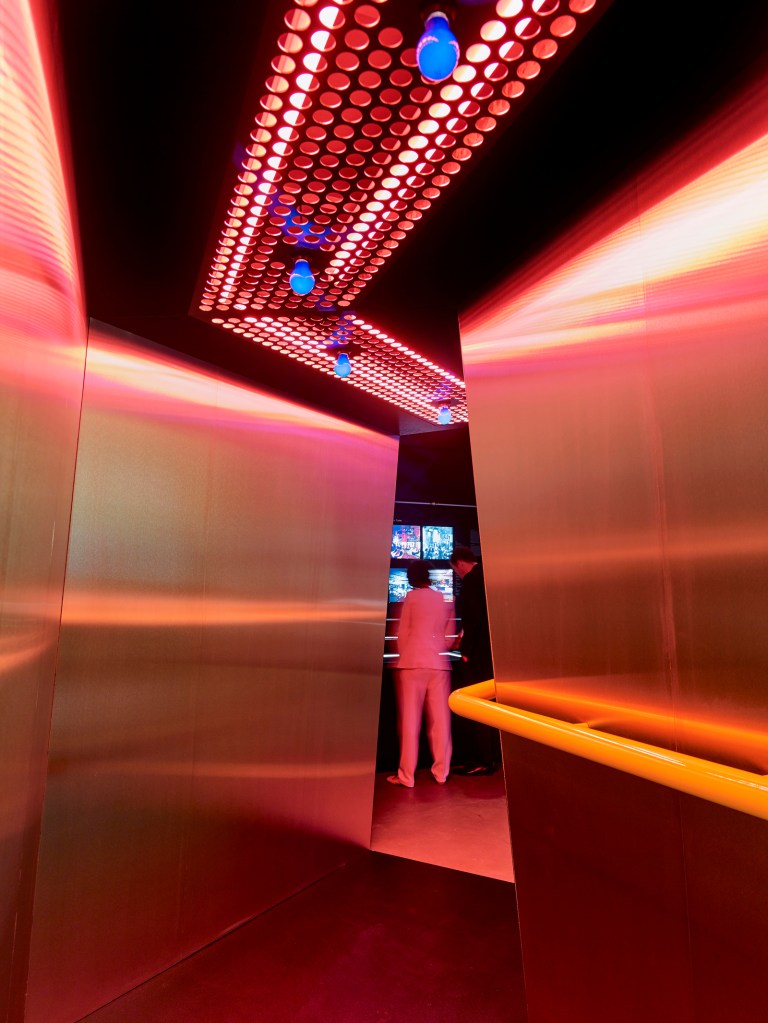
Installation views of the exhibition Night Fever. Designing Club Culture 1960 – Today, at the Vitra Design Museum 2018
© Vitra Design Museum
Photos: Mark Niedermann


Vitra Design Museum
Charles-Eames-Strase 2 79576
Weil am Rhein/Basel Germany
Phone: +49.7621.702.3200

Opening hours:
Daily 10am – 5pm

Vitra Design Museum website

LIKE ART BLART ON FACEBOOK

Back to top

Exhibition: ‘The Polaroid Project’ at the Museum für Kunst und Gewerbe Hamburg

Exhibition dates: 16th March – 17th June, 2018


Anna Reynolds. 'Marcus / Mutilation of the Soul' October 1992


Anna Reynolds
Marcus / Mutilation of the soul
October 1992
Phillip Institute, Melbourne
Polaroid


I love Polaroid photography. As “instant” photography it can have immediacy, but it can also be used for conceptual work as can be see in this posting. You can manipulate the image while it is still developing, and you can also later reclaim the negative from the Polaroid itself, providing a useful scannable or printable negative for further experimentation.

The idea of “instant” photography bemuses me. Nothing is ever “instant”. For example, in the Polaroid image of me above (and in all of the images below), there was thought, an idea, a process, and imagination going on well before the photograph was taken, and during its development (the manipulation of the Polaroid around the figure). Even a simple, vernacular photograph of a family scene contains the fact that the person behind the camera made a conscious decision to capture something that they saw, and press the shutter at a particular moment. It is never a “snapshot” for the process of taking a photograph is always a sub / conscious, imaginative, exclamation of choice.

So there is this space and time of in/decision; there is also the space and time of waiting (and manipulating if so desired) for the Polaroid to develop. That is the magical part for me… to see the image develop not in the drip tray of the darkroom, but holding the image in your hand, watching it emerge from the ether right in front of your eyes. Instant no, unforgettable, yes.

Dr Marcus Bunyan


Many thankx to the Museum für Kunst und Gewerbe Hamburg for allowing me to publish the photographs in the posting. Please click on the photographs for a larger version of the image.


The Polaroid Project will shed light on the broad aesthetic spectrum made possible by the groundbreaking technology of instant photography, showcasing around 220 works by over 100 artists. Polaroid – a brand that has long since become a legend – revolutionised photography in a way that can still be felt today and which lives on in photo apps and on Instagram. The exhibition was developed by the Foundation for the Exhibition of Photography, Minneapolis / New York / Paris / Lausanne, the MIT Museum in Cambridge (Massachusetts), and WestLicht. Schauplatz für Fotografie (Vienna), in cooperation with MKG, and will be shown at numerous international museums.


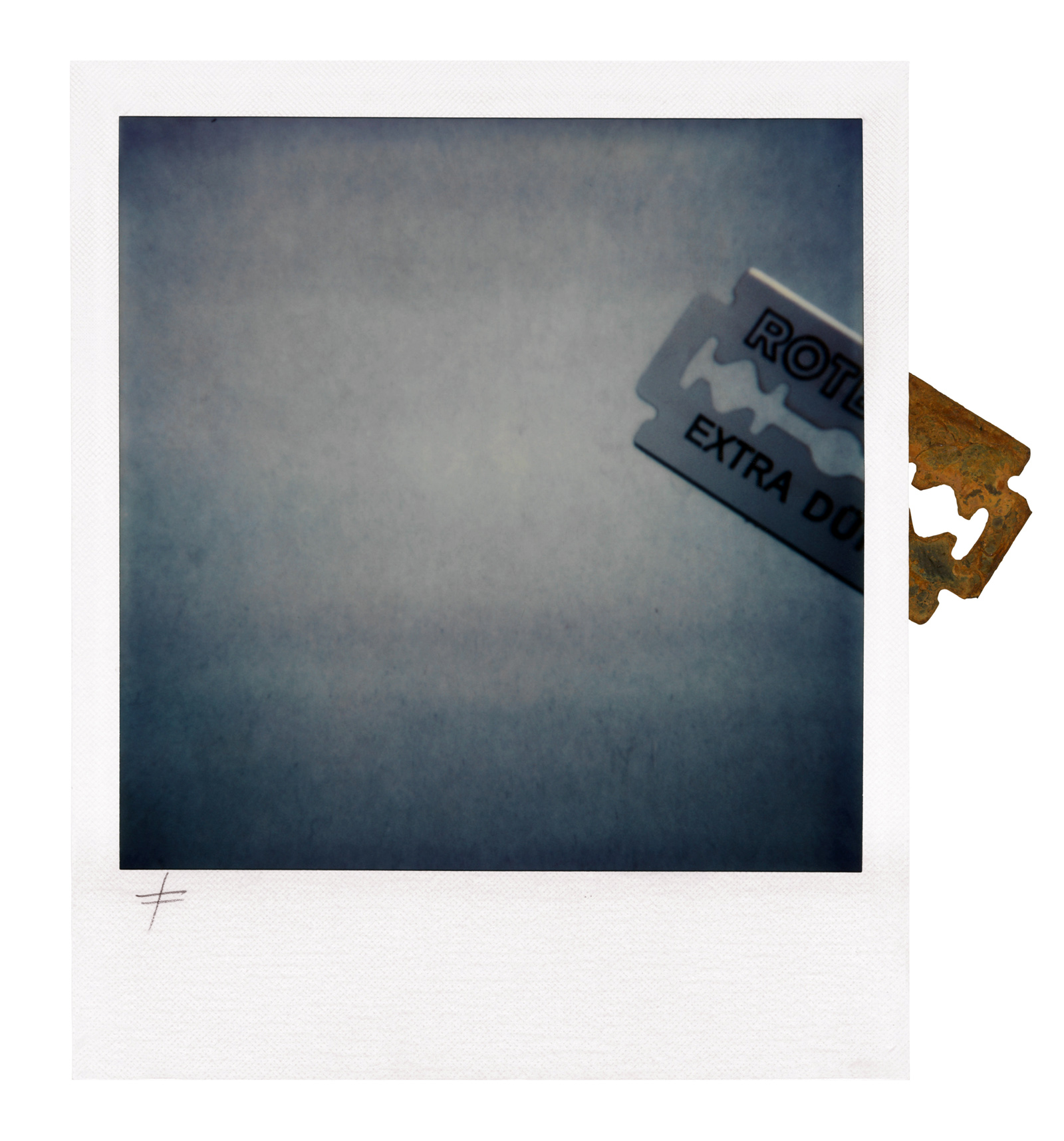
James Nitsch. 'Razor Blade' 1976 from the exhibition 'The Polaroid Project' at the Museum für Kunst und Gewerbe Hamburg, March - June, 2017


James Nitsch
Razor Blade
1976
Polaroid SX-70 assemblage with razor blade
10.7 x 8.8cm
© James Nitsch


Guy Bourdin (French, 1928-1991) 'Charles Jourdan' 1978 from the exhibition 'The Polaroid Project' at the Museum für Kunst und Gewerbe Hamburg, March - June, 2017


Guy Bourdin (French, 1928-1991)
Charles Jourdan 1978
1978
C-Print
88.9 x 116.8cm
© The Guy Bourdin Estate 2017 / Courtesy of Louise Alexander Gallery


André Kertész (Hungarian, 1894-1985) 'August 13' 1979


André Kertész (Hungarian, 1894-1985)
August 13, 1979
1979
Polaroid SX-70
10.7 x 8.8cm
© The Estate of André Kertész, courtesy Stephen Bulger Gallery


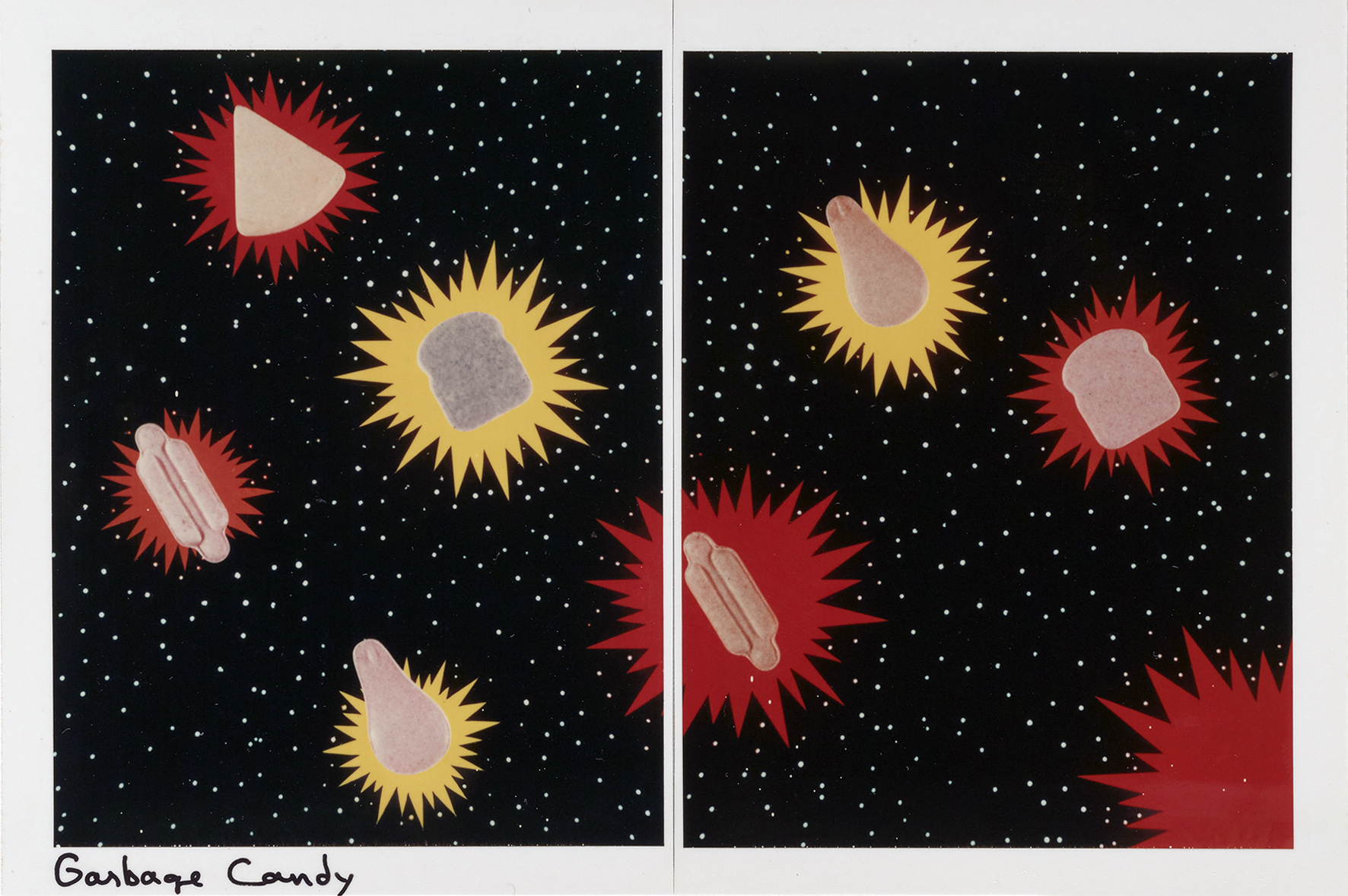
Victor Landweber (American, b. 1943) 'Garbage Candy' 1979


Victor Landweber (American, b. 1943)
Garbage Candy
1979
Polaroid Polacolor Type 669 composite, bound in a book
10.8 x 16.1cm
© Victor Landweber, Collection Center for Creative Photography, The University of Arizona


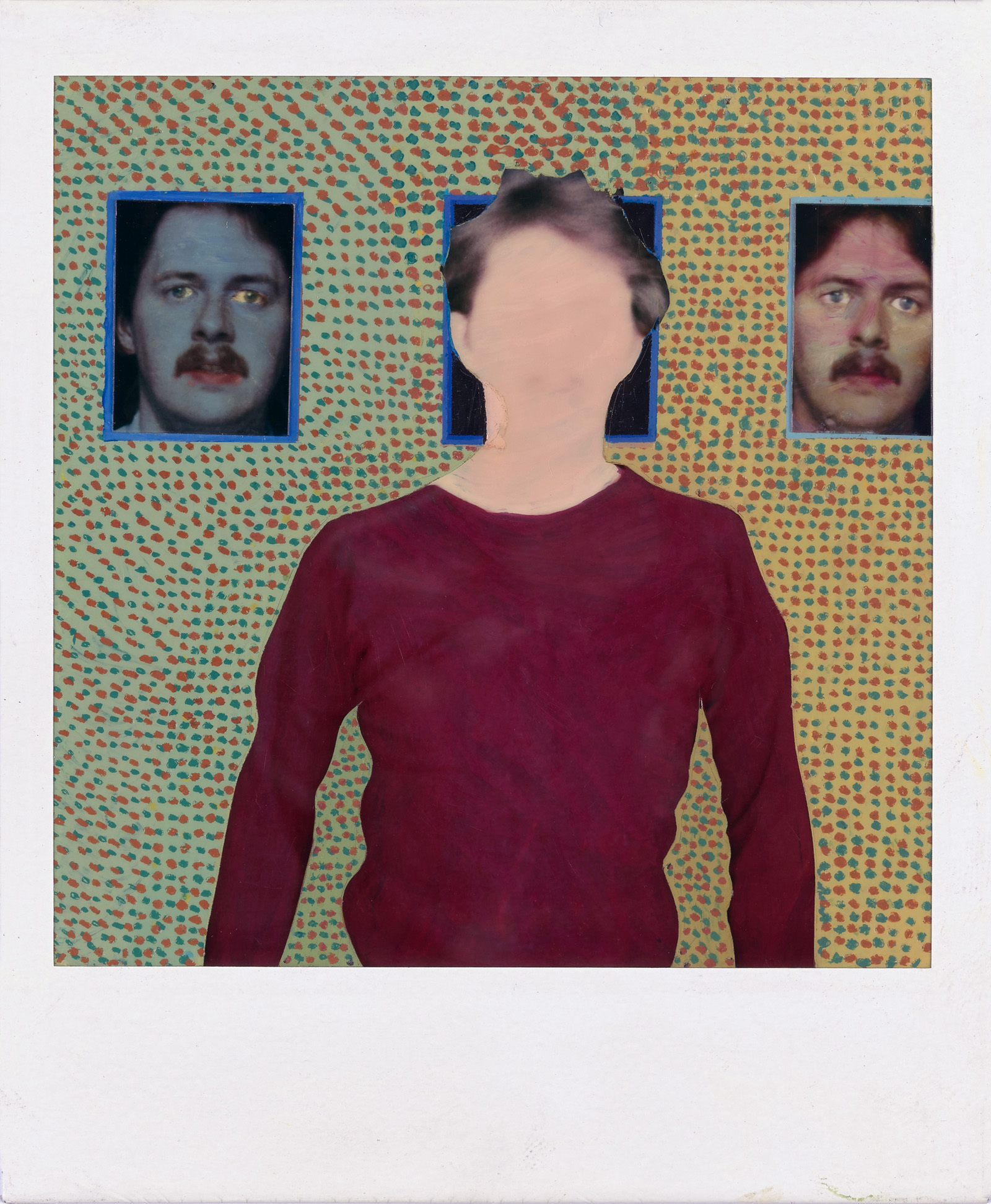
Bruce Charlesworth (American, b. 1950) 'Untitled' 1979


Bruce Charlesworth (American, b. 1950)
Untitled
1979
Hand-painted Polaroid SX-70
10.7 x 8.8cm
© Bruce Charlesworth 1979


Barbara Crane (American, 1928-2019) 'Private Views' 1981


Barbara Crane (American, 1928-2019)
Private Views
1981
Polaroid Polacolor 4×5 Type 58
10.2 x 12.7cm
© Barbara Crane


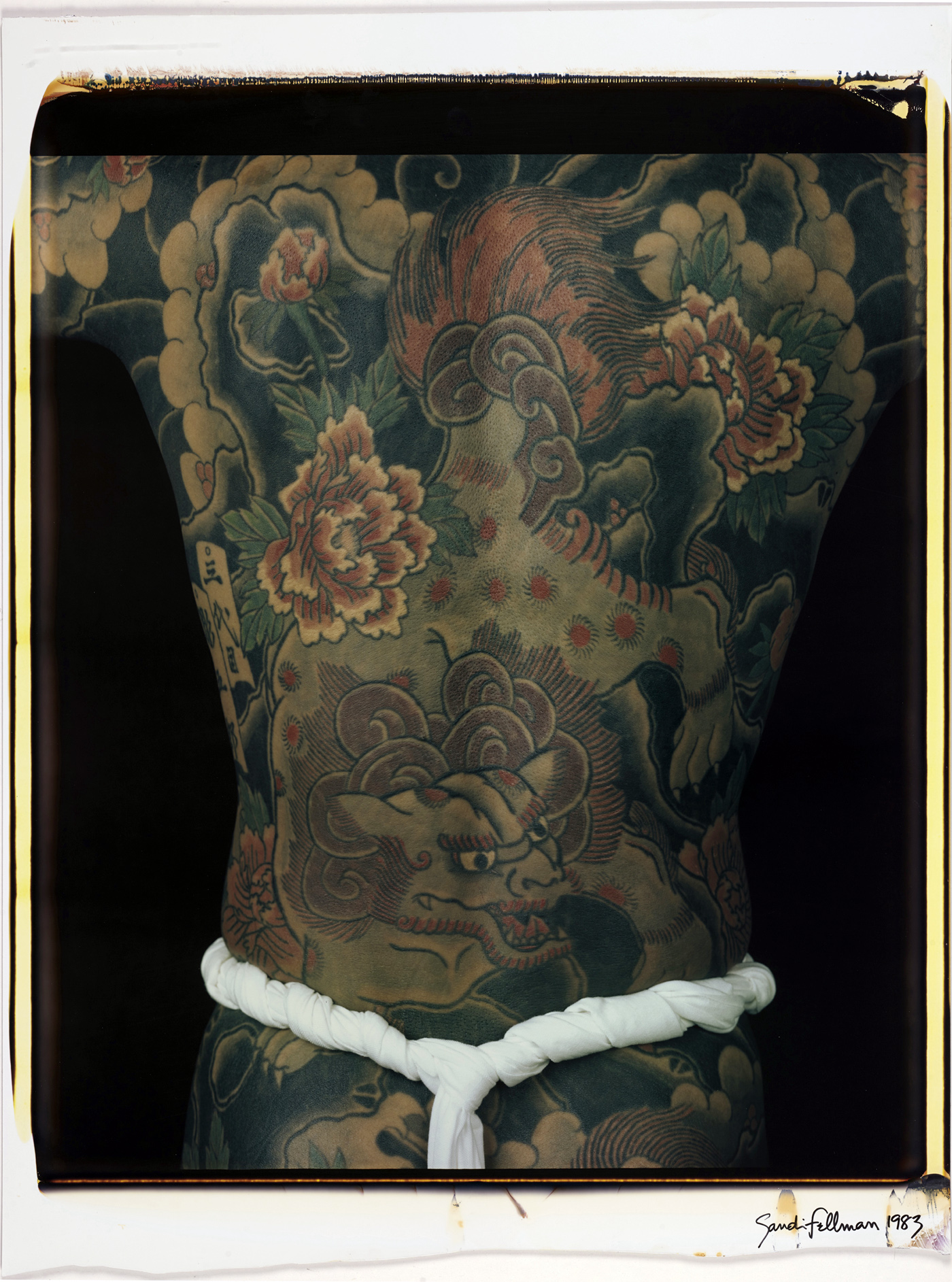
Sandi Fellman (American, b. 1952) 'Grey Lion, Tokyo, Japan' 1983


Sandi Fellman (American, b. 1952)
Grey Lion, Tokyo, Japan
1983
Polaroid 20 x 24 Polacolor
73.7 x 56cm
© Sandi Fellman


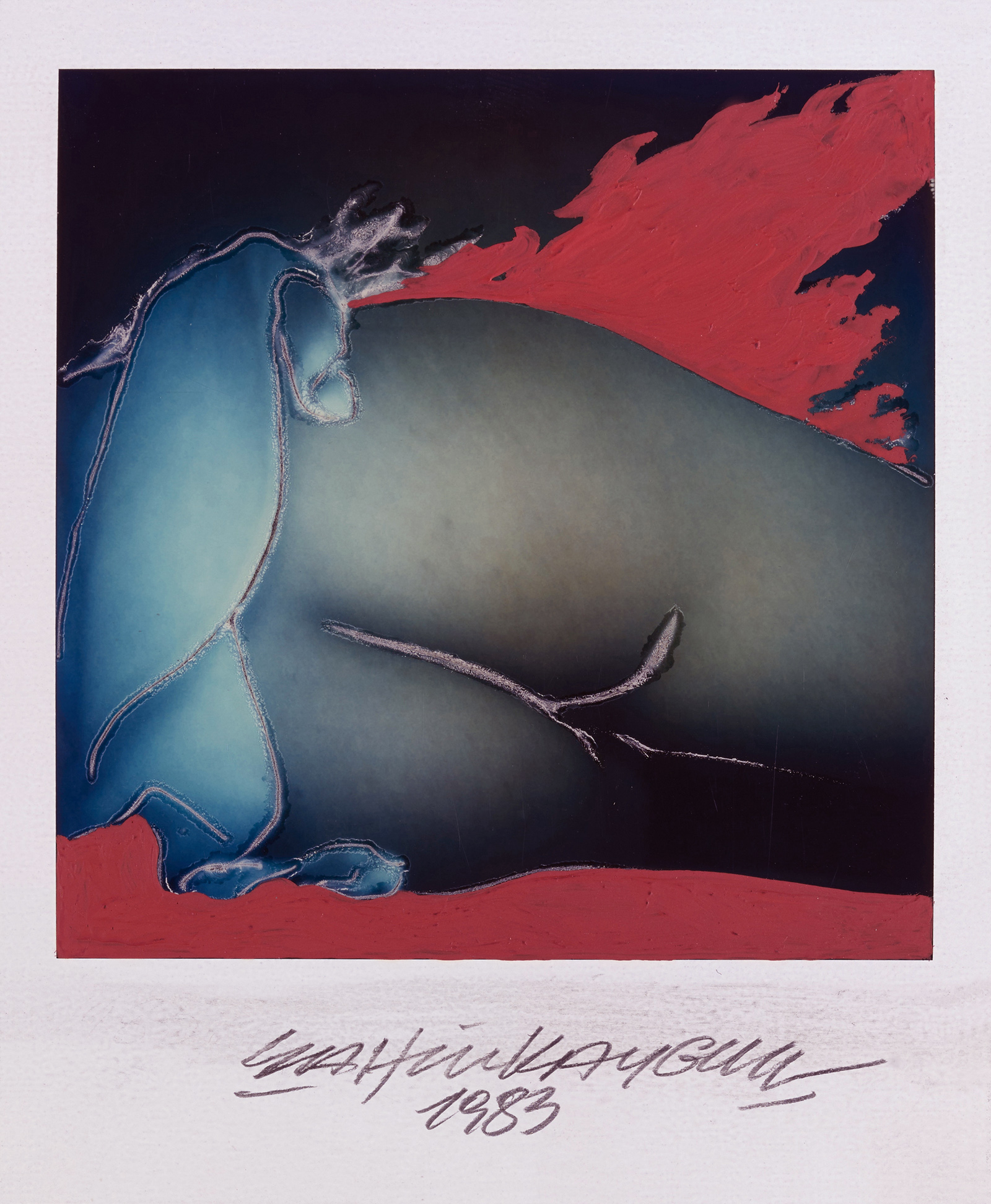
Şahin Kaygun (Turkish, 1951-1992) 'Buttock' 1983


Şahin Kaygun (Turkish, 1951-1992)
Buttock
1983
Hand coloured, manipulated Polaroid Type 600 High Speed
10.7 x 8.8cm
© Şahin Kaygun


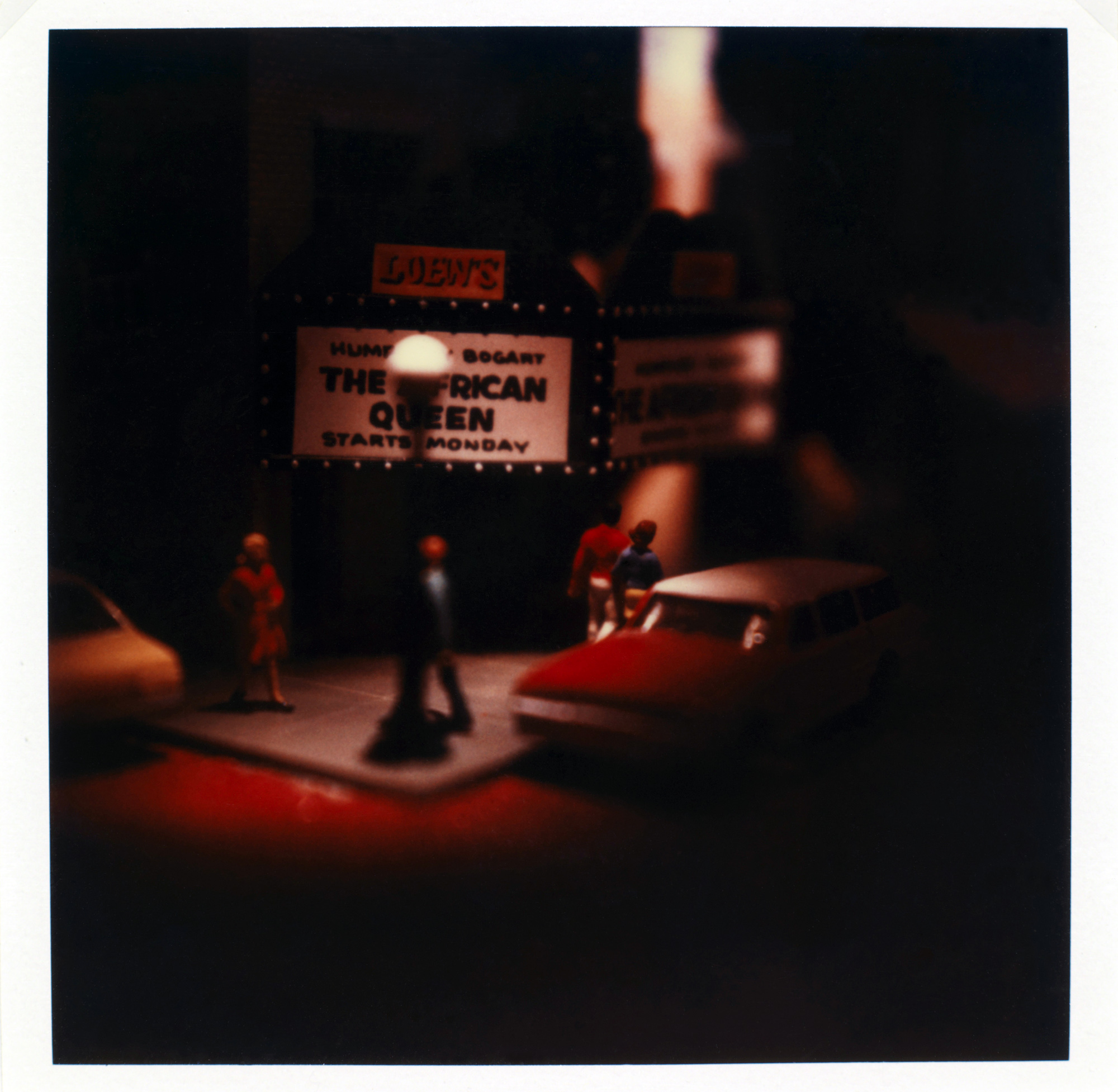
David Levinthal (American, b. 1949) 'Untitled' 1983-1985


David Levinthal (American, b. 1949)
Untitled from the series Modern Romance
1983-1985
Polaroid SX-70
10.7 x 8.8cm
© David Levinthal, ARS, NY and DACS, London 2017


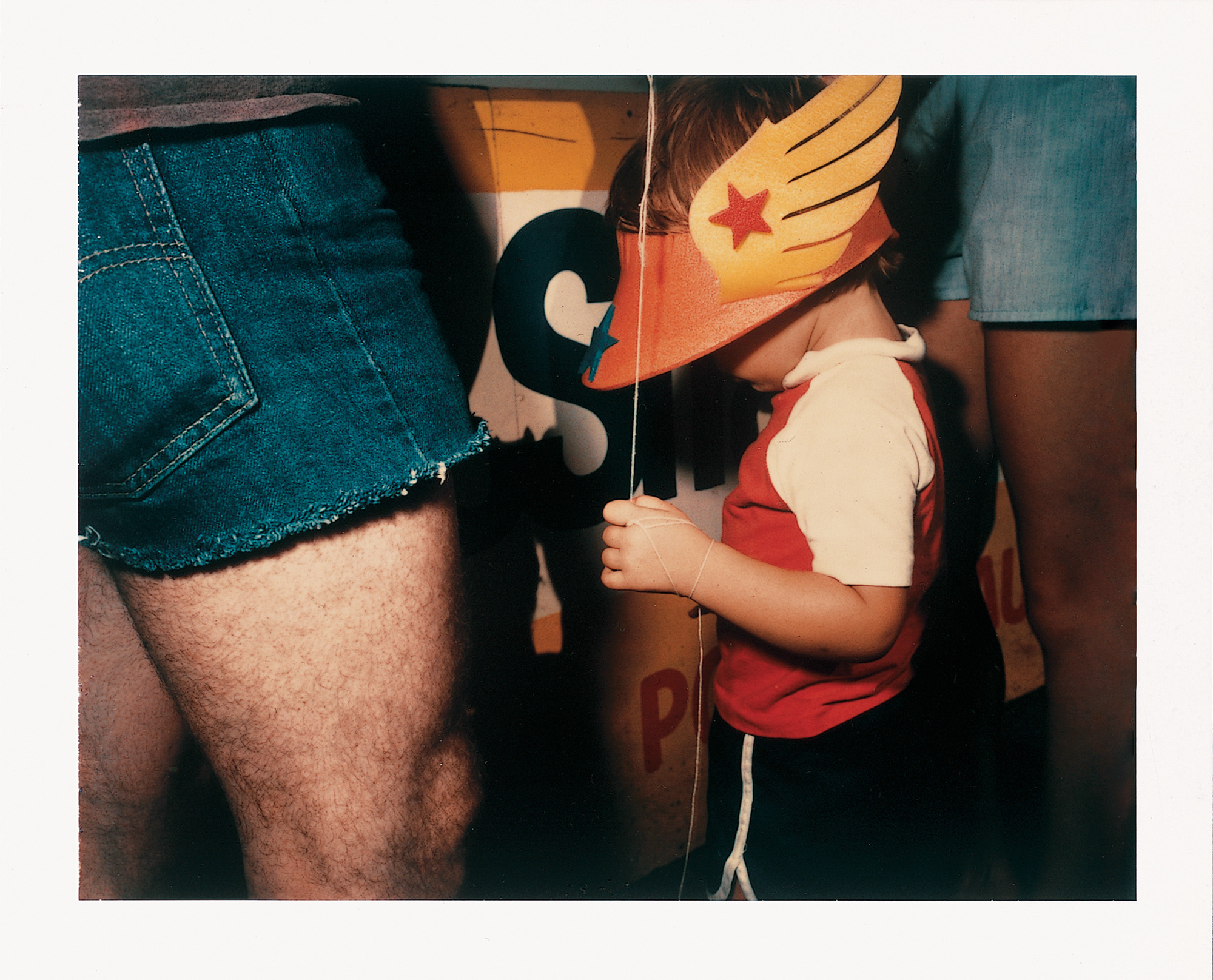
In the exhibition The Polaroid Project, the Museum für Kunst und Gewerbe Hamburg presents for the first time the full scope of the phenomenon of the Polaroid photograph. Based on some 220 photos by over 100 artists, as well as 90 camera models and prototypes, the show sheds light on the whole aesthetic spectrum of instant photography and on the innovative technology that made this visual revolution possible. Polaroid stands for a technology, an industry, a company, and its products. Presented to the public for the first time in 1947 by Edwin Land in New York, instant camera film made the photo lab superfluous. As if by magic, the picture gradually appears before the eyes of the photographer and subject. Polaroid – a brand that has long since attained legendary status – thus transformed our handling of photography in a way that is still pervasive today, living on in photo apps and Instagram. In the heyday of the company in the mid-20th century, Polaroid sold its cameras and film to millions of amateurs and professionals. The technical and aesthetic qualities of the new medium, and above all the immediacy and spontaneity of the photos, made it an exciting field of experimentation for artists as well.

Polaroid itself has worked closely with photographers from the start. One of the earliest advisors to Edwin Land, inventor and founder of the Polaroid Corporation, was Ansel Adams, the godfather of American landscape photography. In its Artist Support Program, the company provides film and cameras to both established figures and nascent talents in the art and photography scene. In return, it receives not only feedback on its products but also selected works for the company collection. For artists, the inventions from Land’s company offer a playground for their own discoveries, one that provides fresh inspiration for their photography. It thus came about that the exponents of Pop Art – chief among them Andy Warhol – raised the status of the Polaroid photo to a whole new level with their excessive use of the medium, securing for it a place in the artistic sphere.

Press release from the Museum für Kunst und Gewerbe Hamburg


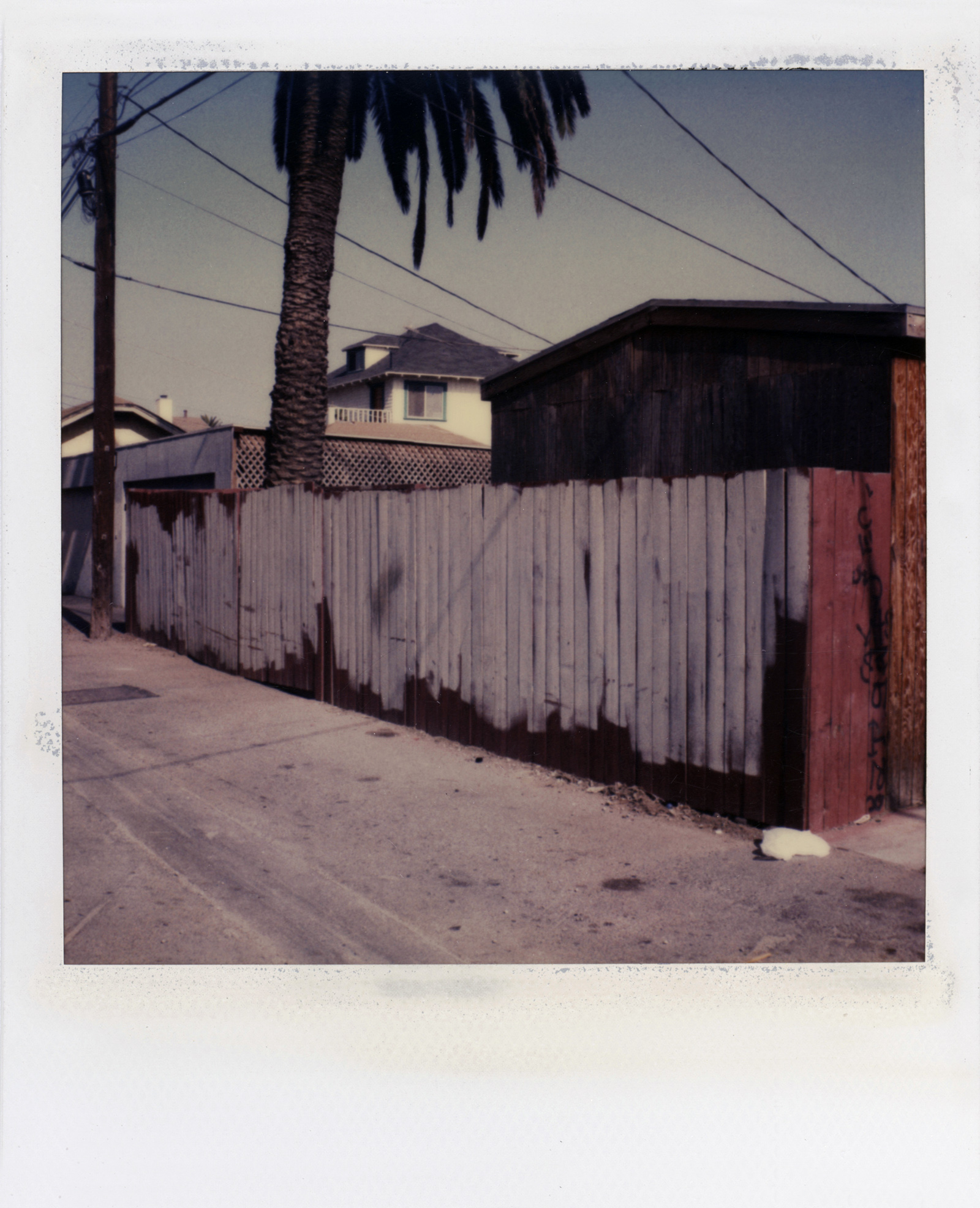
Dennis Hopper (American, 1936-2010) 'Los Angeles, Back Alley' 1987


Dennis Hopper (American, 1936-2010)
Los Angeles, Back Alley
1987
Polaroid SX-70
10.7 x 8.8cm
© Dennis Hopper, Courtesy of The Hopper Art Trust


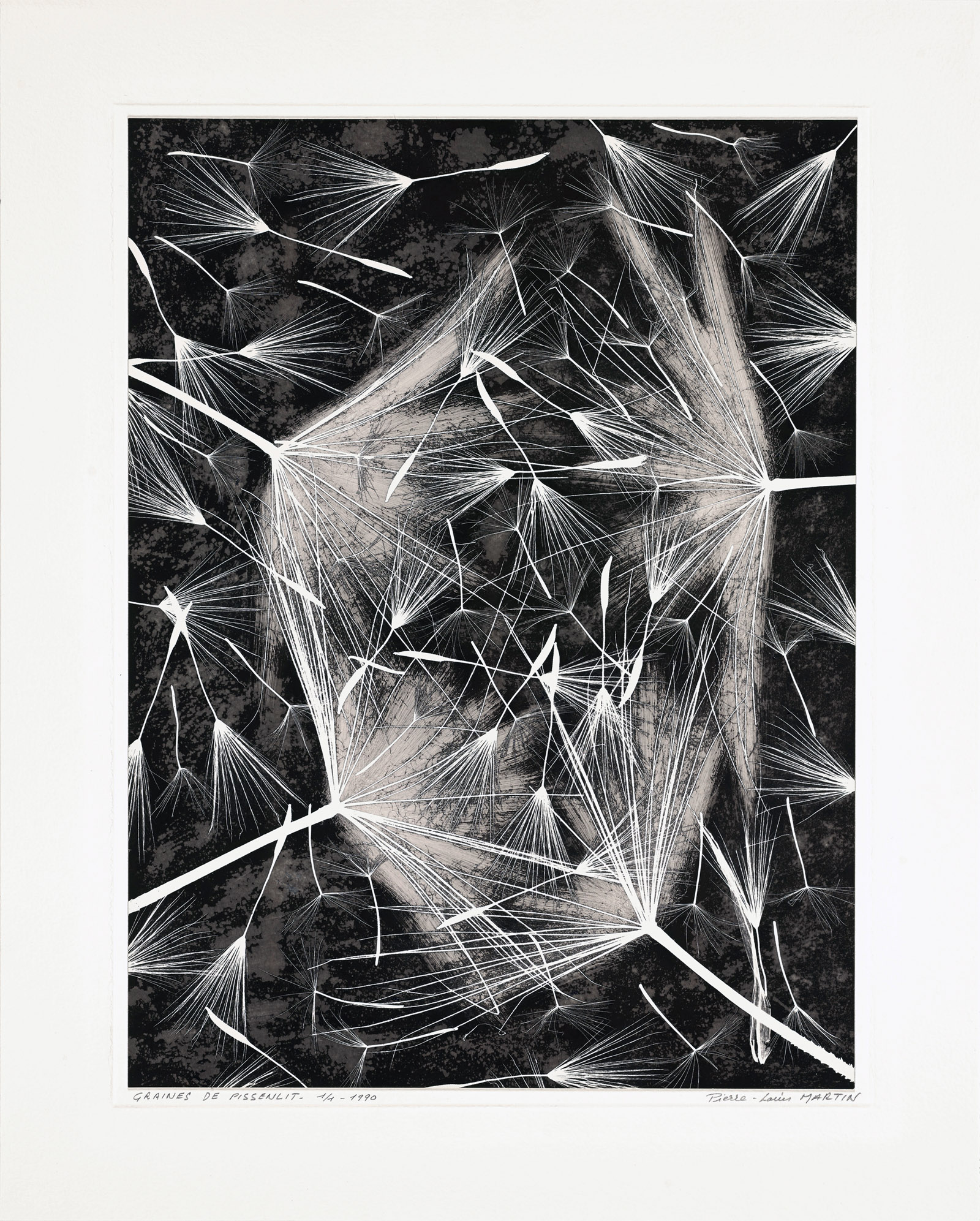
Pierre-Louis Martin. 'Graines de Pissenlit' 1990


Pierre-Louis Martin
Graines de Pissenlit
1990
Gelatin silver print from Polaroid-Film Type 55
48.9 x 40cm
© Pierre-Louis Martin


Shelby Lee Adams (American, b. 1950) 'Esther and Bee Jay' 1991


Shelby Lee Adams (American, b. 1950)
Esther and Bee Jay
1991
Polaroid Polapan 4×5 Type 52
12.7 x 10.2cm
© Shelby Lee Adams


Kunihiro Shinohara (Japanese, b. 1948) 'Cosmic #9' 1993-2000


Kunihiro Shinohara (Japanese, b. 1948)
Cosmic #9
1993-2000
Inkjet print from Polaroid-Film Type 55
29.8 x 22.3cm
© Kunihiro Shinohara


Mark Klett (American, b. 1952) 'Contemplating the View at Muley Point, Utah' 1994


Mark Klett (American, b. 1952)
Contemplating the View at Muley Point, Utah
1994
Gelatin silver print from Polaroid-Film Type 55
40.6 x 50.8cm
© Mark Klett


Ellen Carey (American, b. 1952) 'Pulls (CMY)' 1997


Ellen Carey (American, b. 1952)
Pulls (CMY)
1997
Polaroid 20 x 24 Polacolor-Montage
210.8 x 167.6cm
© Ellen Carey, Jayne H. Baum Gallery, NYC, NY and M+B Gallery, LA, CA


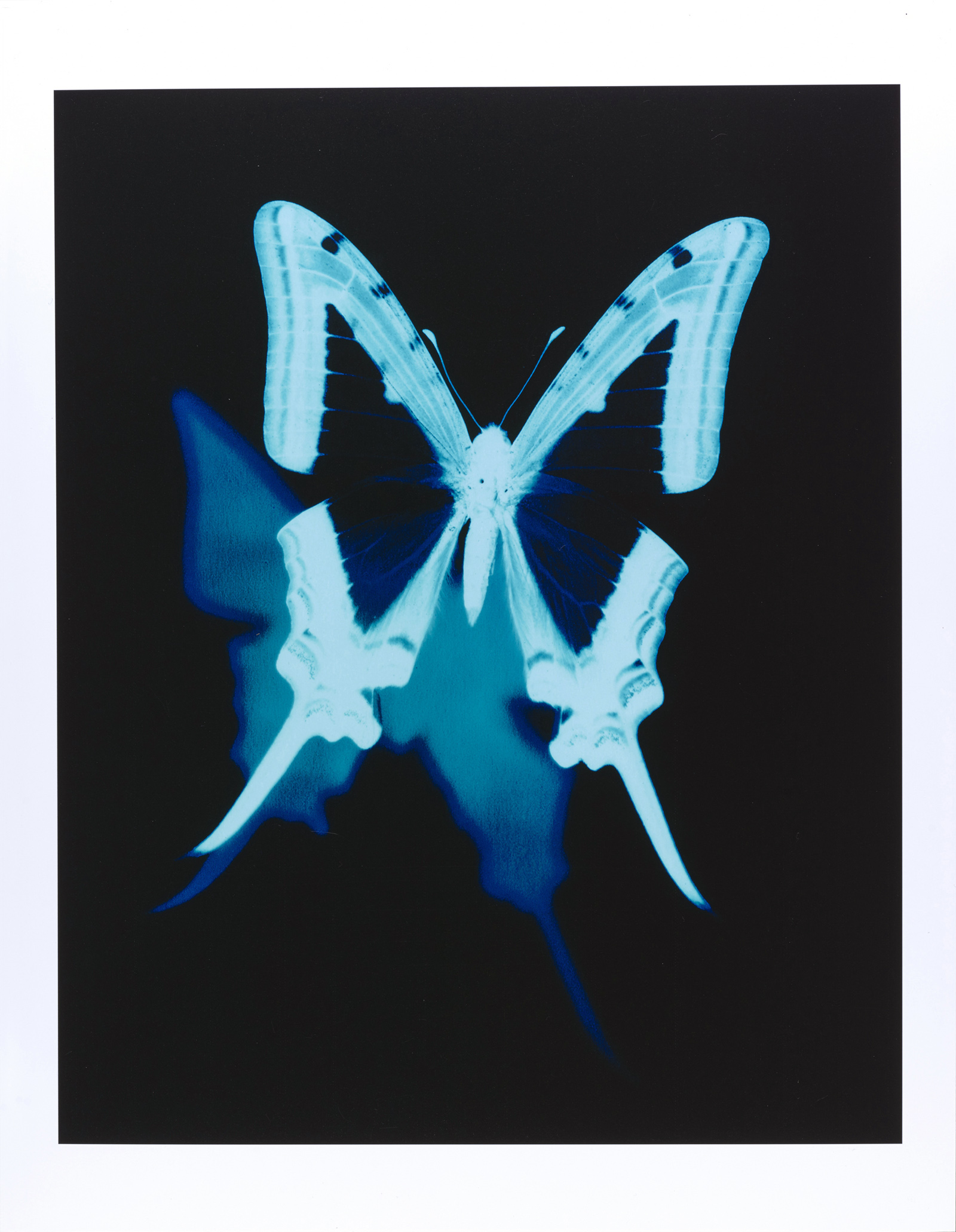
Timothy White (American, b. 1956) 'Untitled' 1998


Timothy White (American, b. 1956)
Untitled
1998
Inkjet print from Polaroid-Film Type 665
50.8 x 40.6cm
© Timothy White


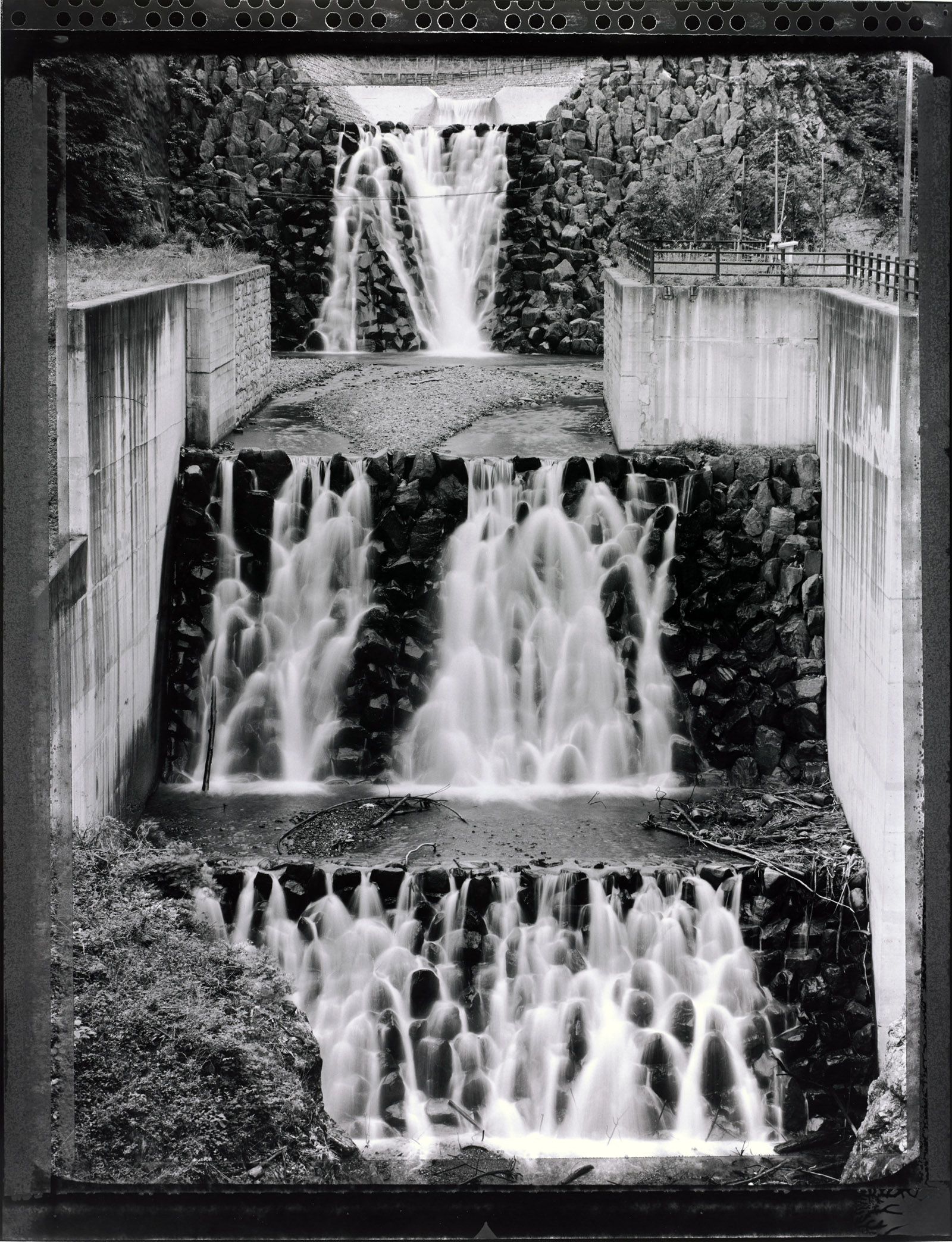
Toshio Shibata (Japanese, b. 1949) 'Untitled (# 228)' 2003


Toshio Shibata (Japanese, b. 1949)
Untitled (#228)
2003
Gelatin silver print from Polaroid-Film, Type 55
61 x 50.8cm
© Toshio Shibata


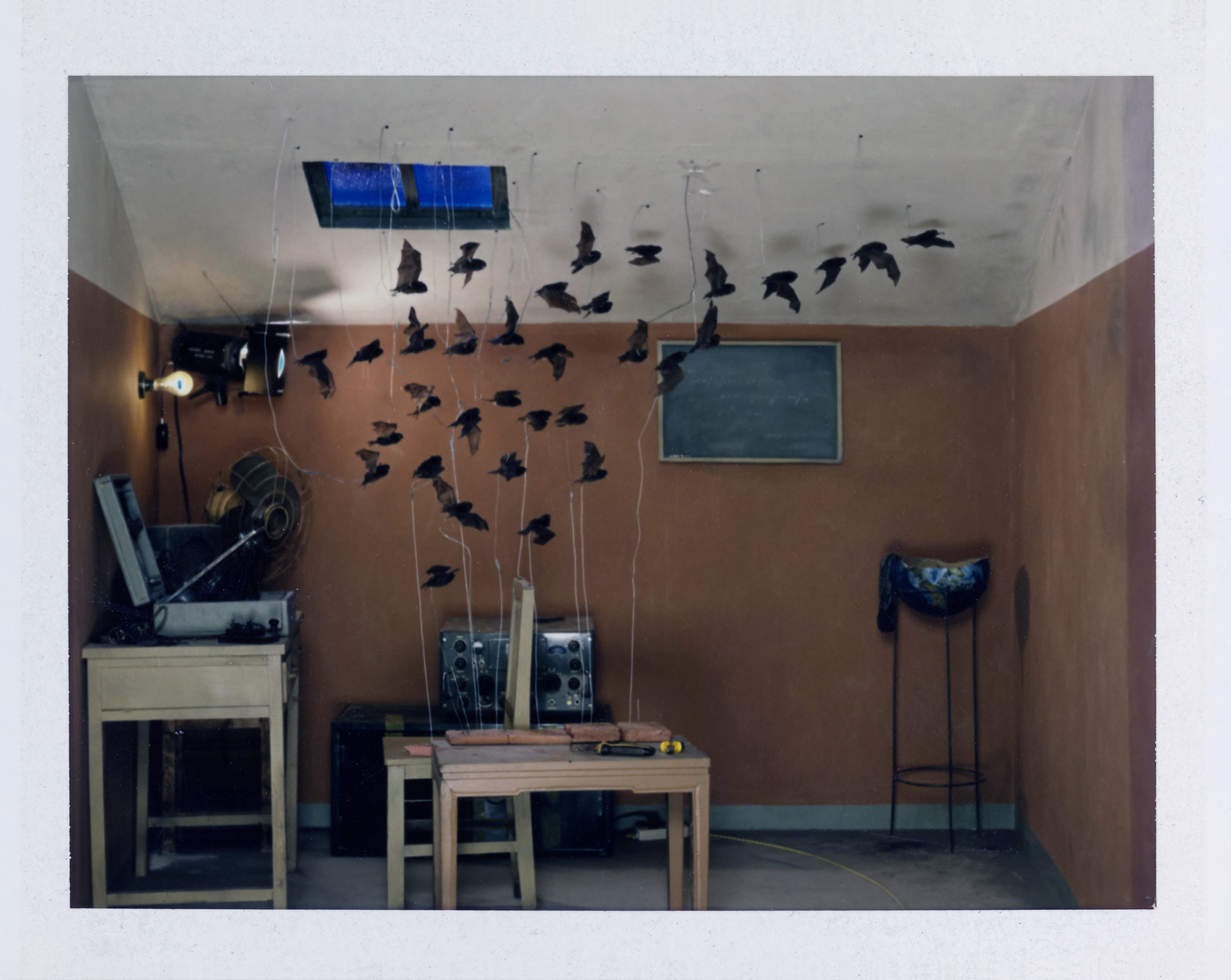
Chen Wei (Chinese, b. 1980) 'Everlasting Radio Wave-Test #5' 2008


Chen Wei (Chinese, b. 1980)
Everlasting Radio Wave-Test #5
2008
Fujifilm FP-100C
8.5 x 10.8cm
© Chen Wei


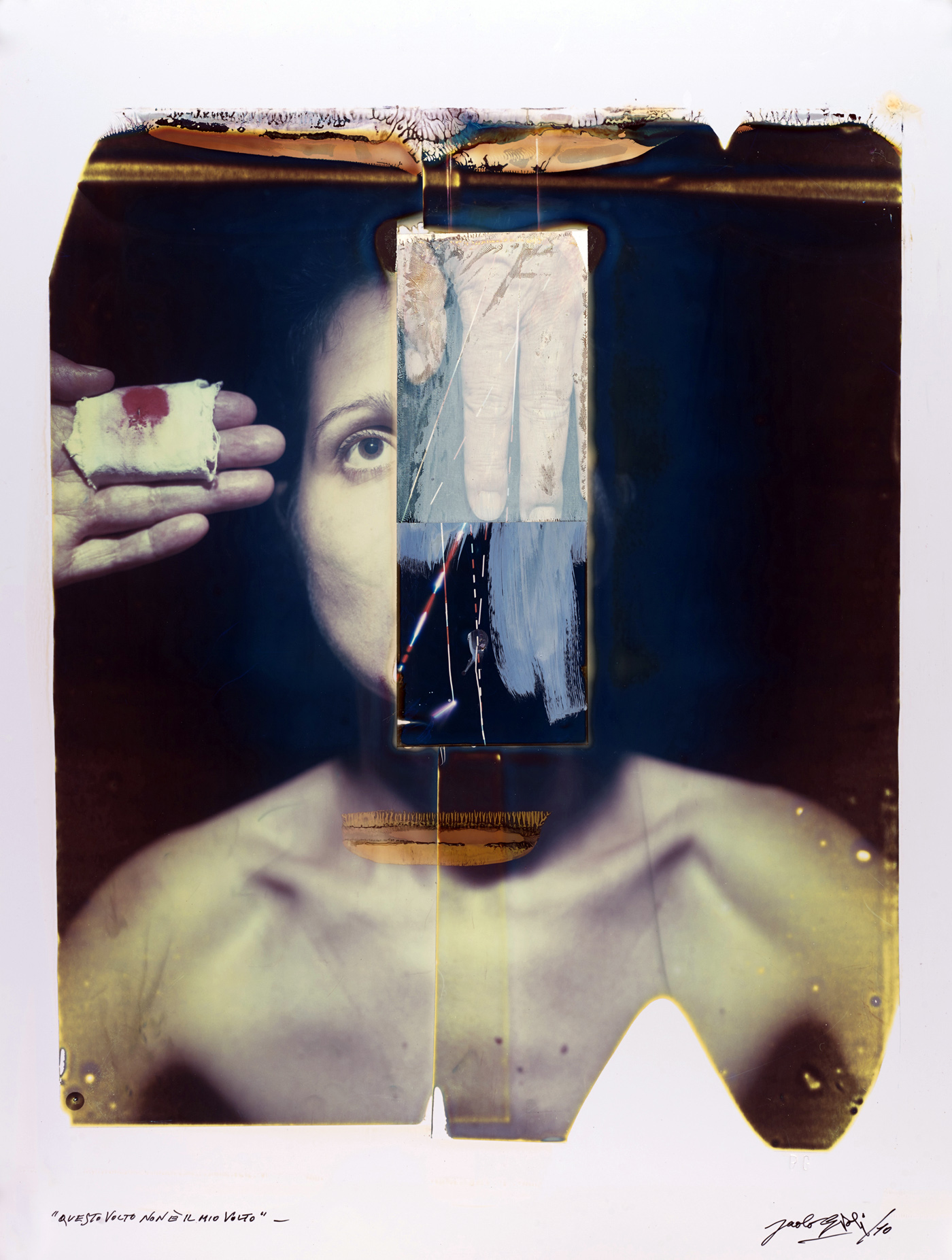
Paolo Gioli (Italian, 1942-2022) 'This Is Not My Face' 2010


Paolo Gioli (Italian, 1942-2022)
Questo volto non è il mio volto (This Face Is Not My Face)
2010
Polaroid 20 x 24 Polacolor and Polacolor transfer on acrylic
71 x 55cm
© Paolo Gioli


Museum für Kunst und Gewerbe Hamburg
Steintorplatz, 20099 Hamburg

Opening hours:
Tuesday to Sunday 10am – 6pm
Thursday 10am – 9pm
Closed Mondays

Museum fur Kunst und Gewerbe Hamburg website

LIKE ART BLART ON FACEBOOK

Back to top