Following further discussions my research can now take place. As you may recall the research question is, did the Charles Marville photographs that were exhibited at the Melbourne International Exhibition in 1880 influence the work of Melbourne photographers – Charles Nettleton, JW Lindt and Nicholas Caire.
The plan is that I research the photographs of Marville, Nettleton, Lindt and Caire online and then visit the Library to view the original prints. The Library have very helpfully sent me records of the visitors book to the 1880 exhibition and noted that Caire, Lindt and Nettleton exhibited photographs and won awards at the 1880-1881 exhibition.
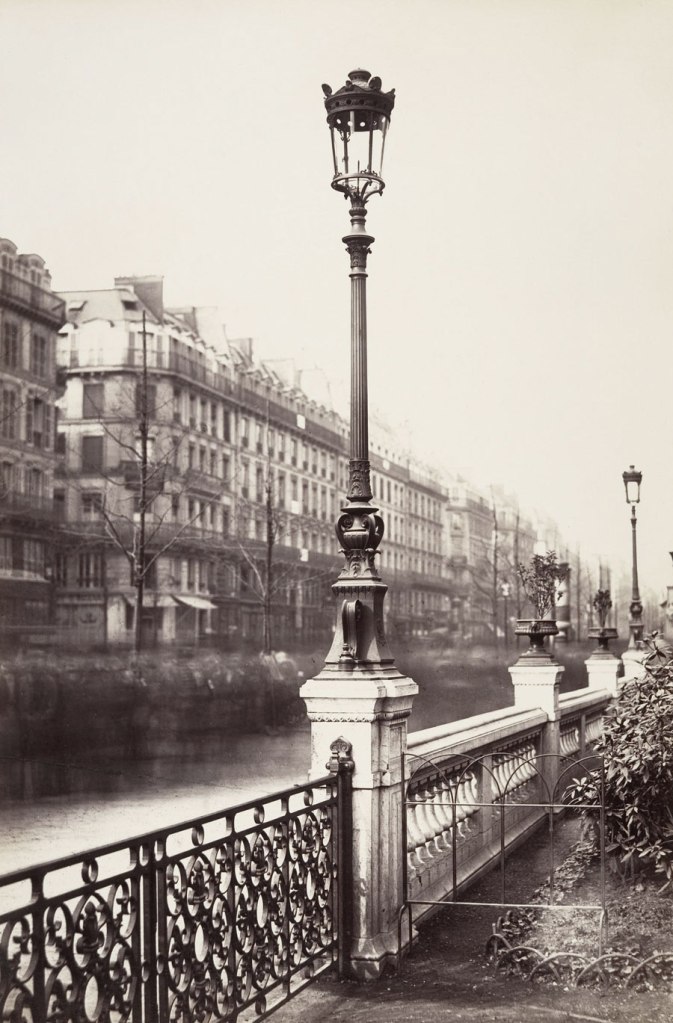
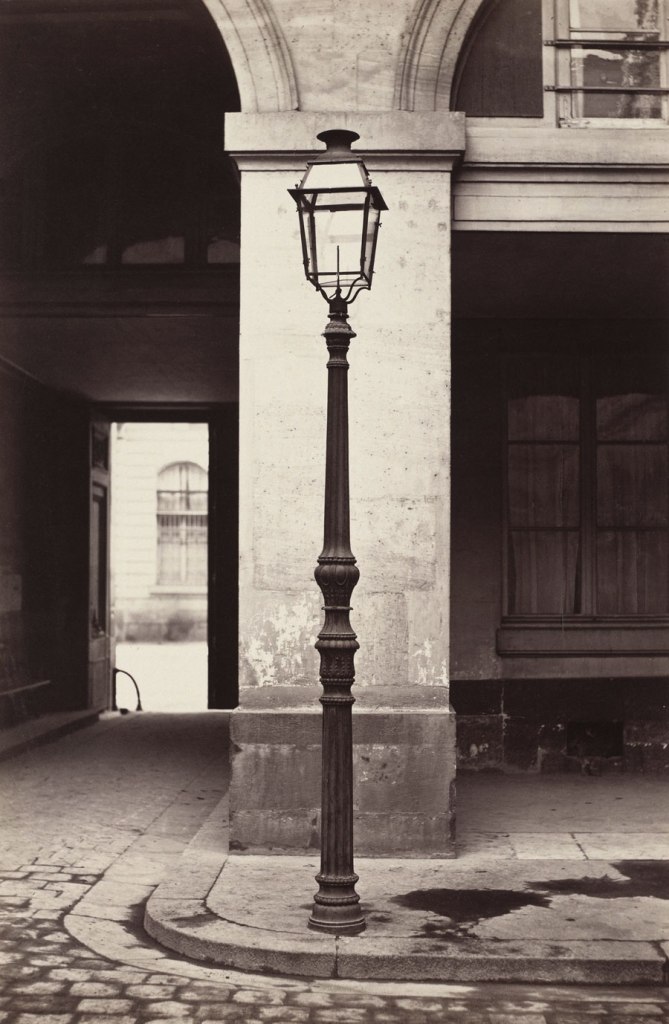
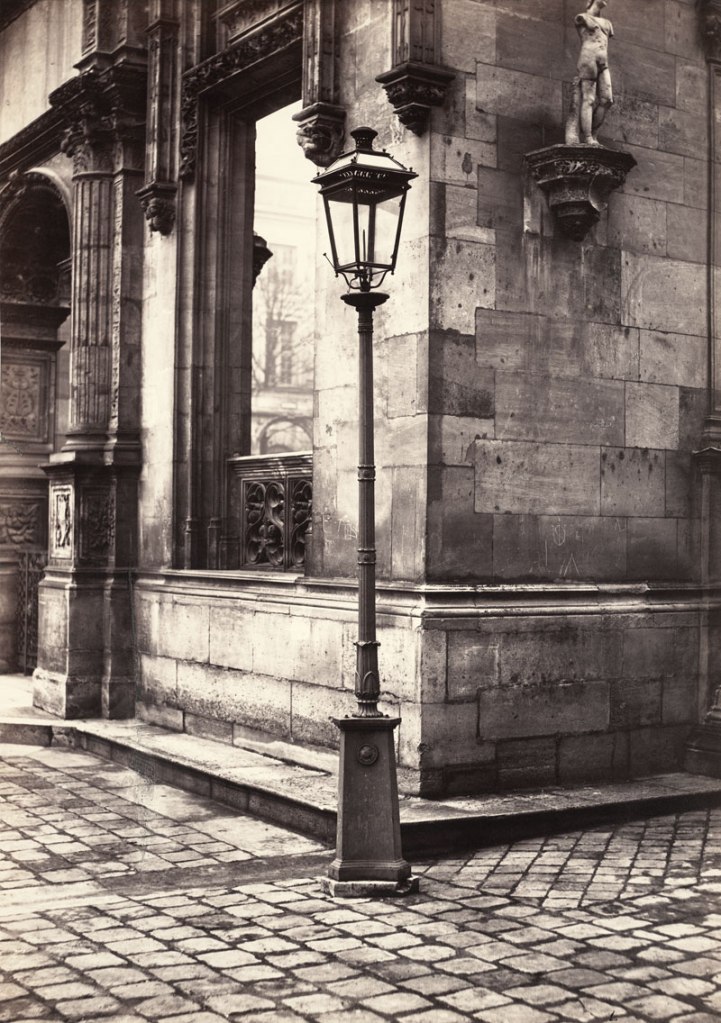
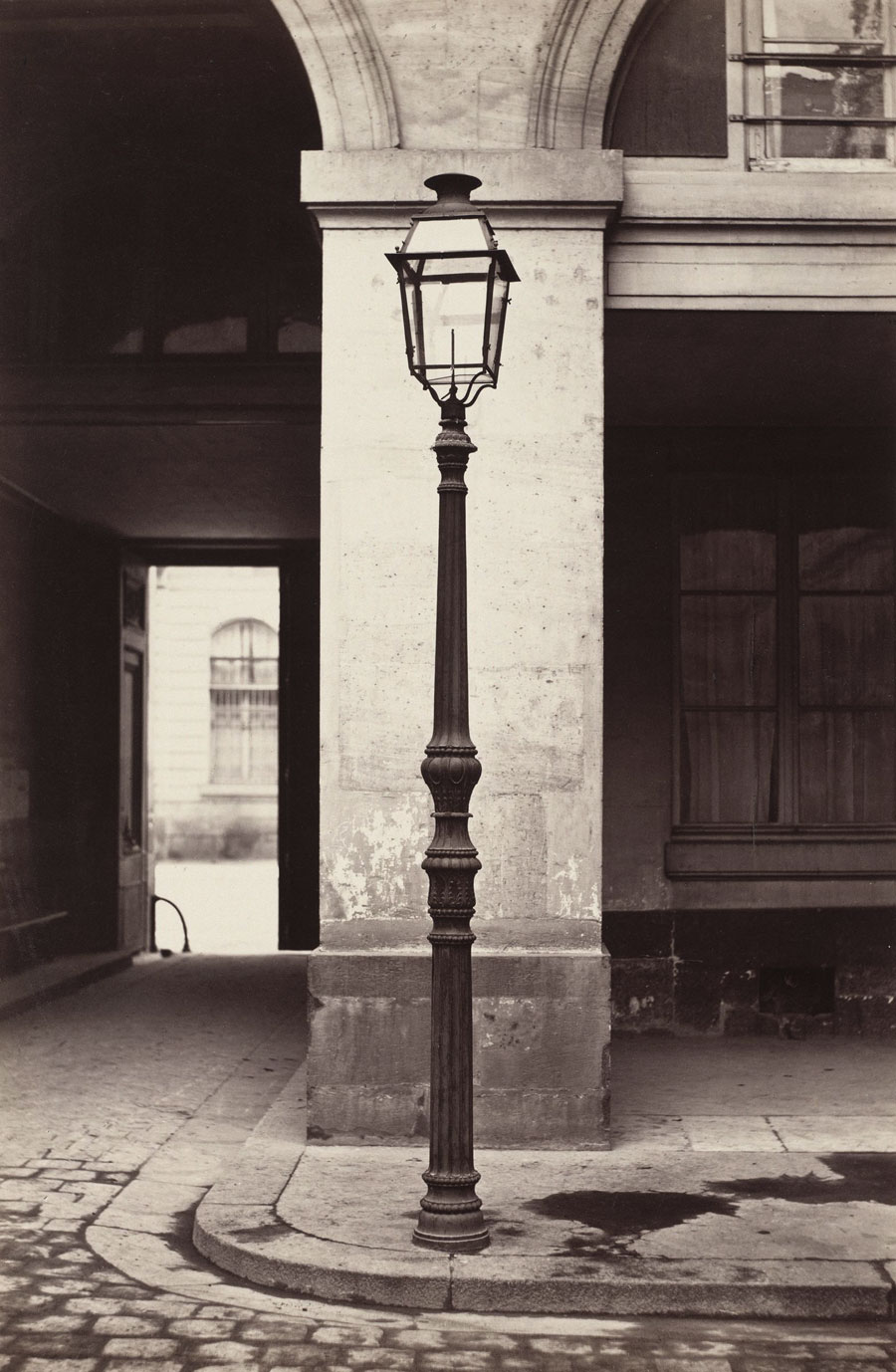
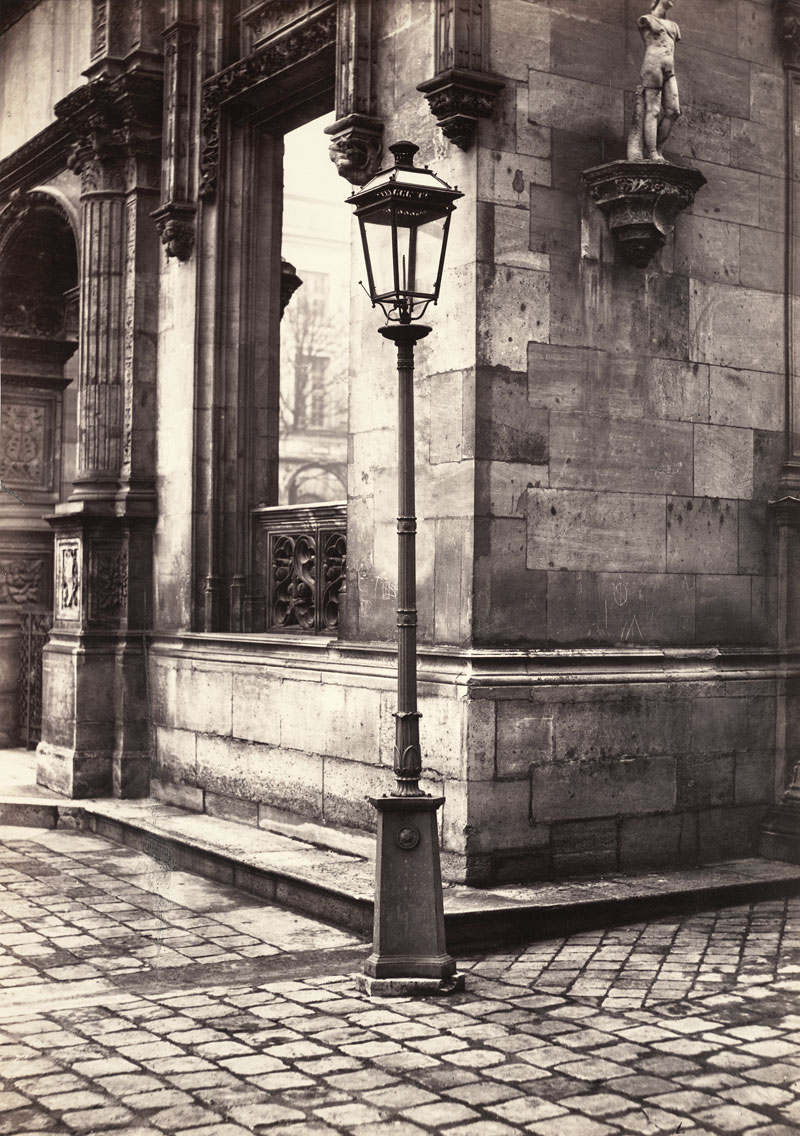
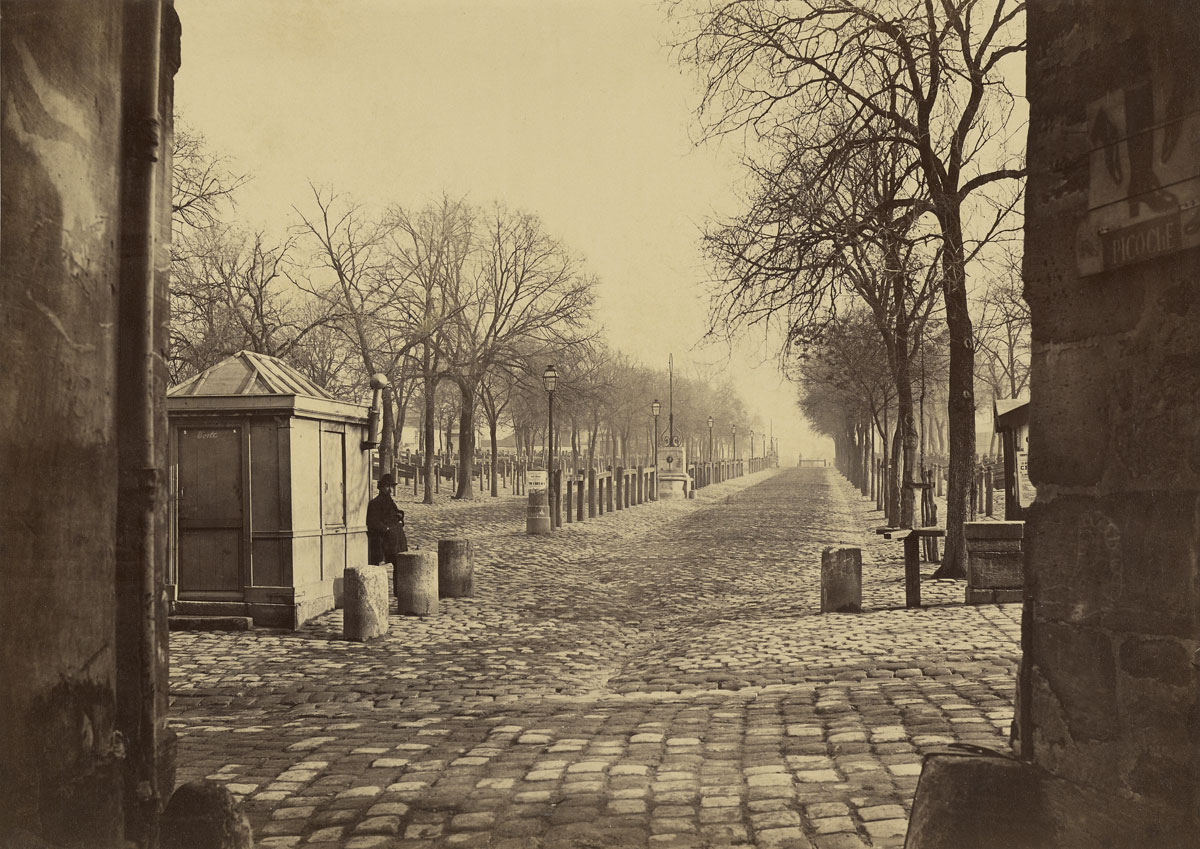
Further, here are some more glorious images from the touring Charles Marville exhibition, this time at The Metropolitan Museum of Art, New York. The tonality of the prints is incredible, as is the subtle placement of the camera to obtain a unique perspective of the city. The almost modernist take on the lamppost as sculptural object, with the dead centre placement allowing the surrounding environment to flow around the verticality of the post, is breathtaking.
Dr Marcus Bunyan
Many thankx to The Metropolitan Museum of Art for allowing me to publish the photographs in the posting. Please click on the photographs for a larger version of the image.
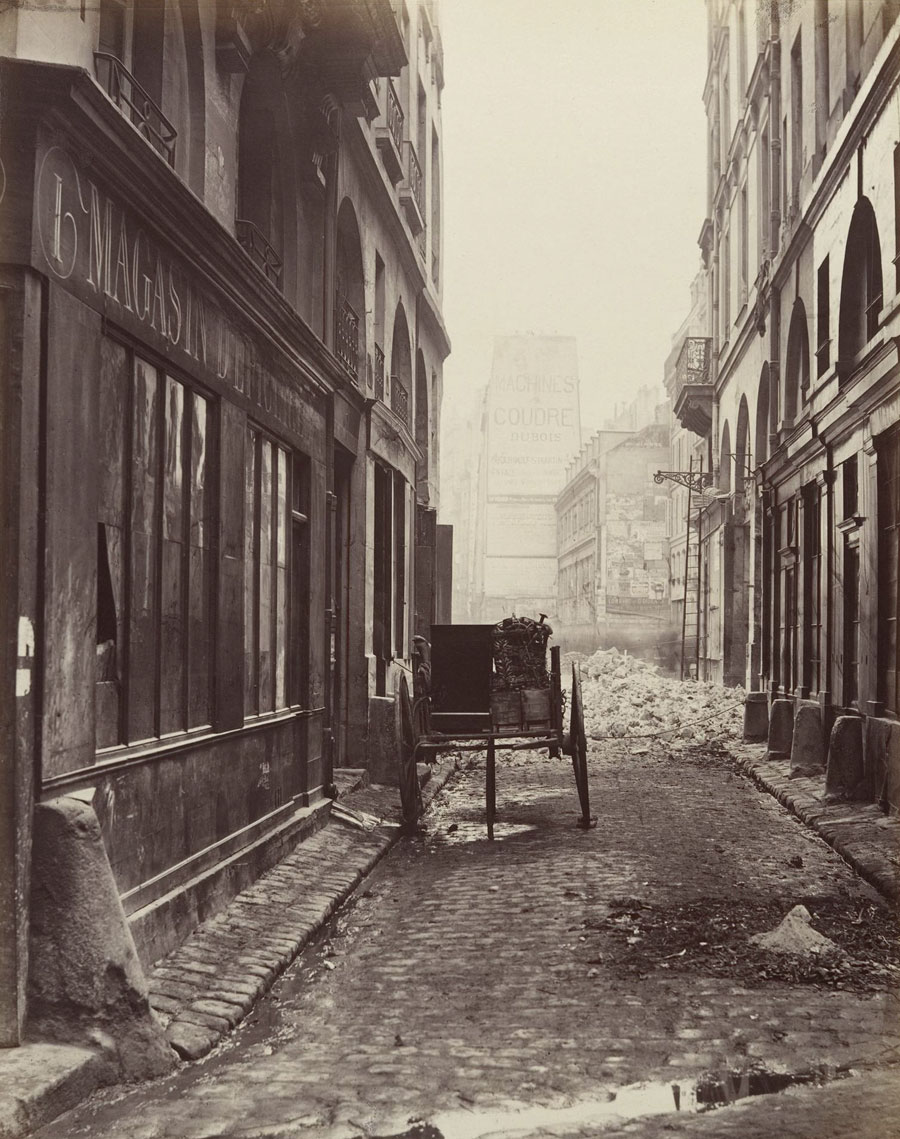
Charles Marville (French, 1813-1879) Rue de Constantine (Fourth Arrondissement) 1866 Albumen silver print from glass negative 27.3 x 36.8cm (10 3/4 x 14 1/2 in.) The Horace W. Goldsmith Foundation Gift, through Joyce and Robert Menschel, 1986 The Metropolitan Museum of Art, New York
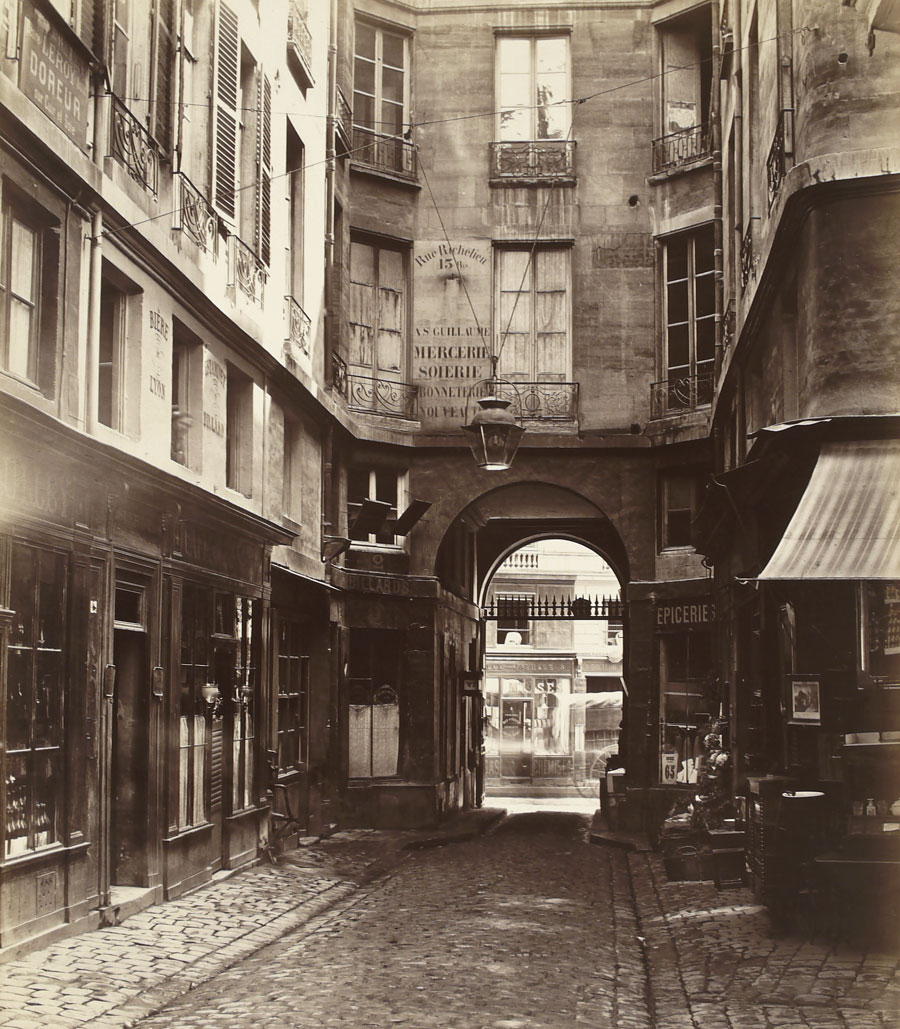
Charles Marville (French, 1813-1879) Passage Saint-Guillaume toward the rue Richilieu (First Arrondissement) 1863-1865 Albumen silver print from glass negative 31.91 x 27.62cm (12 9/16 x 10 7/8 in.) Joy of Giving Something, Inc.
Widely acknowledged as one of the most talented photographers of the 19th century, Charles Marville (French, 1813-1879) was commissioned by the city of Paris to document both the picturesque, medieval streets of old Paris and the broad boulevards and grand public structures that Baron Georges-Eugène Haussmann built in their place for Emperor Napoleon III. Charles Marville: Photographer of Paris at The Metropolitan Museum of Art presents a selection of around 100 of his photographs.
Marville achieved moderate success as an illustrator of books and magazines early in his career. It was not until 1850 that he shifted course and took up photography – a medium that had been introduced just 11 years earlier. His poetic urban views, detailed architectural studies, and picturesque landscapes quickly garnered praise. Although he made photographs throughout France, Germany, and Italy, it was his native city – especially its monuments, churches, bridges, and gardens – that provided the artist with his greatest and most enduring source of inspiration.
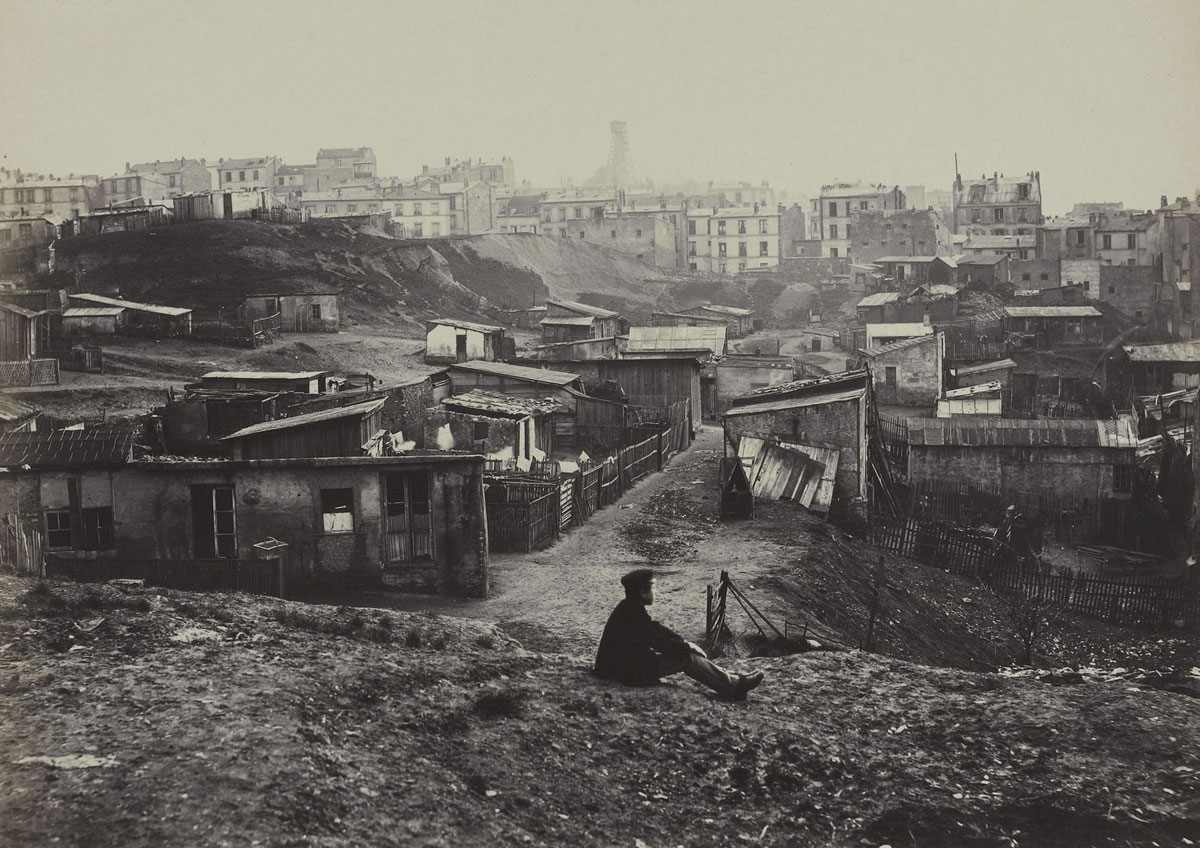
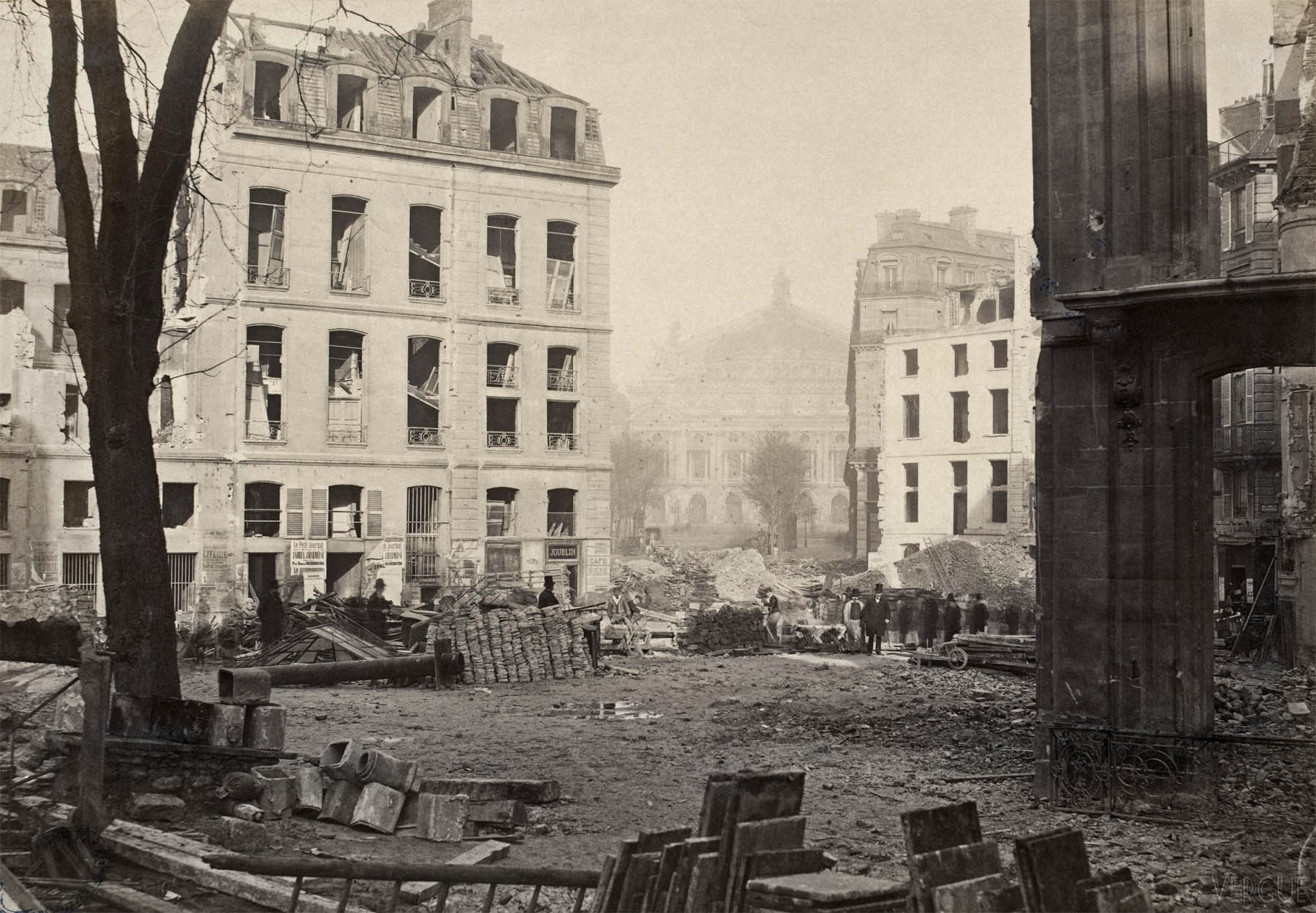
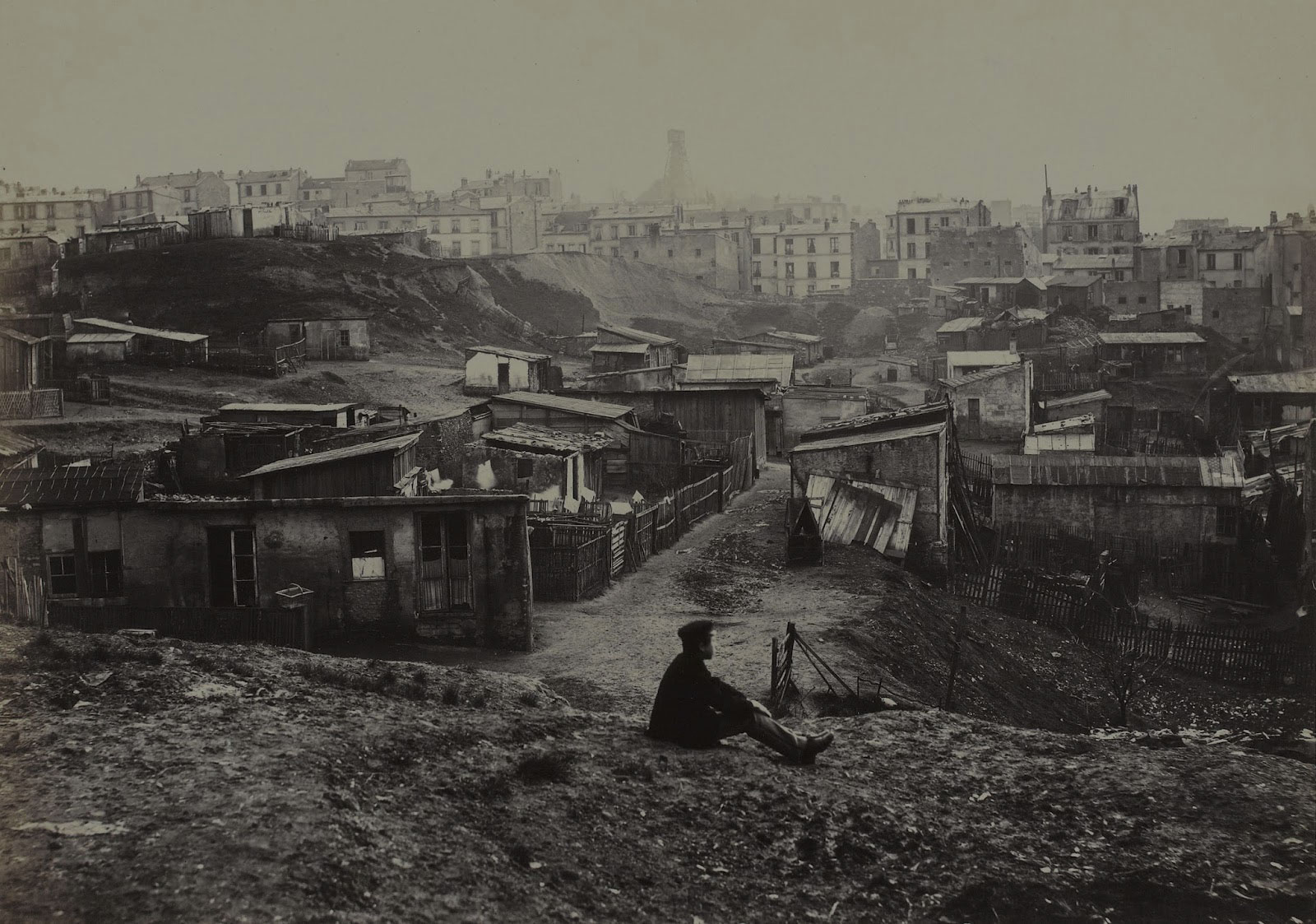
By the end of the 1850s, Marville had established a reputation as an accomplished and versatile photographer. From 1862, as official photographer for the city of Paris, he documented aspects of the radical modernisation program that had been launched by Emperor Napoleon III and his chief urban planner, Baron Georges-Eugène Haussmann. In this capacity, Marville photographed the city’s oldest quarters, and especially the narrow, winding streets slated for demolition. Even as he recorded the disappearance of Old Paris, Marville turned his camera on the new city that had begun to emerge. Many of his photographs celebrate its glamour and comforts, while other views of the city’s desolate outskirts attest to the unsettling social and physical changes wrought by rapid modernisation.
Haussmann not only redrew the map of Paris, he transformed the urban experience by commissioning and installing tens of thousands of pieces of street furniture, kiosks, Morris columns for posting advertisements, pissoirs, garden gates, and, above all, some twenty thousand gas lamps. By the time he stepped down as prefect in 1870, Paris was no longer a place where residents dared to go out at night only if accompanied by armed men carrying lanterns. Taken as a whole, Marville’s photographs of Paris stand as one of the earliest and most powerful explorations of urban transformation on a grand scale.
By the time of his death, Marville had fallen into relative obscurity, with much of his work stored in municipal or state archives. This exhibition, which marks the bicentennial of Marville’s birth, explores the full trajectory of the artist’s photographic career and brings to light the extraordinary beauty and historical significance of his art.
Related Installation
Concurrent with Charles Marville: Photographer of Paris, a related installation in the adjacent Howard Gilman Gallery will be on view at the Metropolitan Museum. Paris as Muse: Photography, 1840s-1930s (January 27-May 4, 2014) celebrates the first 100 years of photography in Paris and features some 40 photographs, all drawn from the Museum’s collection. The installation focuses primarily on architectural views, street scenes, and interiors. It explores the physical shape and texture of Paris and how artists have found poetic ways to record through the camera its essential qualities.
Press release from The Metropolitan Museum of Art
Charles Marville (French, 1813-1879) Arts et Métiers (Ancien Modèle) 1864 Albumen silver print from glass negative 36.6 x 24.1cm (14 7/16 x 9 1/2 in.) Purchase, Alfred Stieglitz Society Gifts, 2007 The Metropolitan Museum of Art, New York
Charles Marville (French, 1813-1879) Hôtel de la Marine 1864-1870 Albumen silver print from glass negative 36.2 x 23.5cm (14 1/4 x 9 1/4 in.) National Gallery of Art, Washington, Diana and Mallory Walker Fund
Charles Marville (French, 1813-1879) Lamppost, Entrance to the École des Beaux-Arts c. 1870 Albumen silver print from glass negative 35.6 x 25.4cm (14 x 10 in.) Collection W. Bruce and Delaney H. Lundberg
Charles Marville (French, 1813-1879) Spire of Notre Dame, Viollet-le-Duc, Architect 1859-1860 Albumen silver print from glass negative 49.5 x 36.5cm (19 1/2 x 14 3/8 in.) The AIA/AAF Collection, Prints and Photographs Division, Library of Congress, Washington D.C.
Charles Marville (French, 1813-1879) Rue Estienne from the rue Boucher (First Arrondissement) 1862-1865 Albumen silver print from glass negative 34.3 x 27.1cm (13 1/2 x 10 11/16 in.) Gilman Collection, Purchase, Mr. and Mrs. Henry R. Kravis Gift, 2005 The Metropolitan Museum of Art, New York
Charles Marville (French, 1813-1879) Rue de la Bûcherie from the cul de sac Saint-Ambroise (Fifth Arrondissement) 1866-1868 Albumen silver print from glass negative 32 x 27.1cm (12 5/8 x 10 11/16 in.) National Gallery of Art, Washington, Horace W. Goldsmith Foundation through Robert and Joyce Menschel
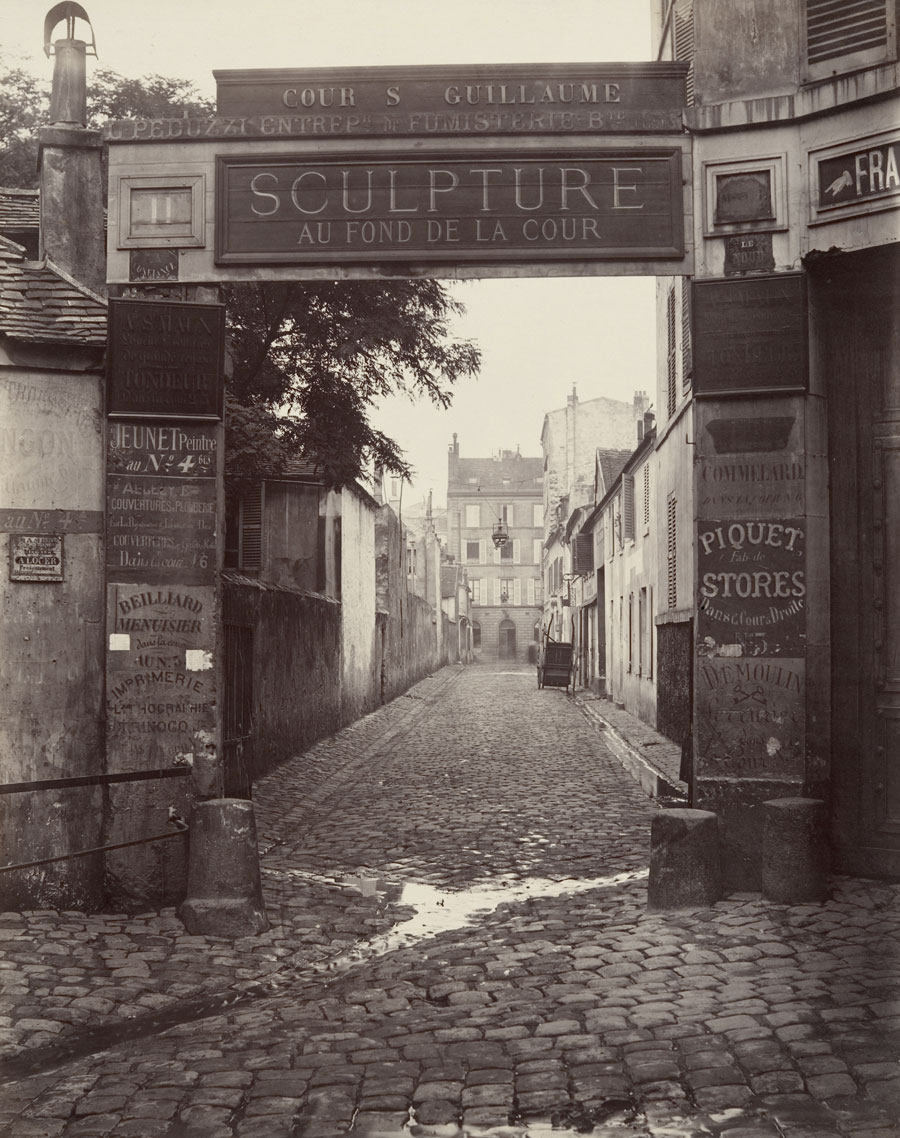
Charles Marville (French, 1813-1879) Cour Saint-Guillaume (Ninth Arrondissement) 1866-1867 Albumen silver print from glass negative 34.2 x 27.2cm (13 7/16 x 10 11/16 in.) Gilman Collection, Purchase, Alfred Stieglitz Society Gifts, 2005 The Metropolitan Museum of Art, New York
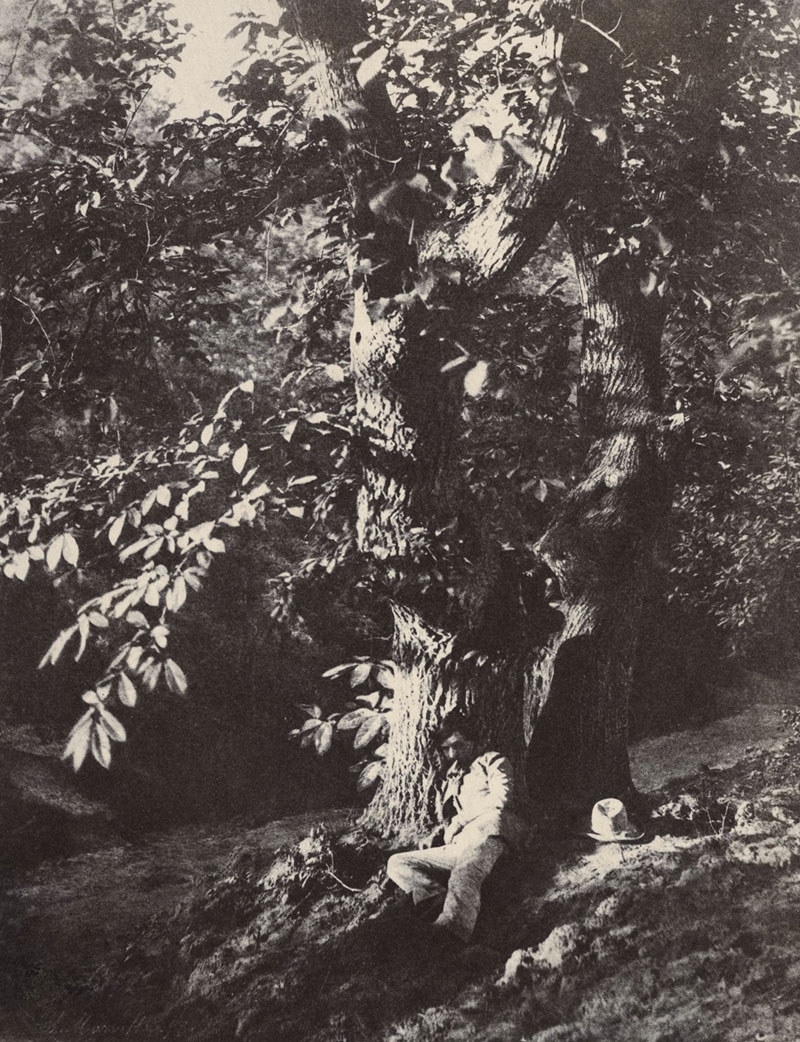
Charles Marville (French, 1813-1879) Man Reclining beneath a Chestnut Tree c. 1853 Salted paper print from paper negative 20.9 x 16.2cm (8 1/4 x 6 3/8 in.) Harris Brisbane Dick Fund, 1946 The Metropolitan Museum of Art, New York
The Metropolitan Museum of Art 1000 Fifth Avenue at 82nd Street New York, New York 10028-0198 Phone: 212-535-7710
Opening hours: Sunday – Tuesday and Thursday: 10am – 5pm Friday and Saturday: 10am – 9pm Closed Wednesday
Exhibition dates: 29th September 2013 – 5th January 2014
Curator: Sarah Kennel, Associate Curator of Photographs at the National Gallery of Art
Charles Marville (French, 1813-1879) Marché aux chevaux (Horse Market) (fifth arrondissement) c. 1867 Albumen print from collodion negative Image: 26.2 x 36.8cm (10 5/16 x 14 1/2 in.) The J. Paul Getty Museum, Los Angeles
The French photographer Charles Marville (1813-1879) is rapidly becoming a favourite of mine. In fact, I have just ordered Charles Marville: Photographer of Paris by Sarah Kennel from Amazon – a book that comes highly recommended – and I am eagerly awaiting its arrival.
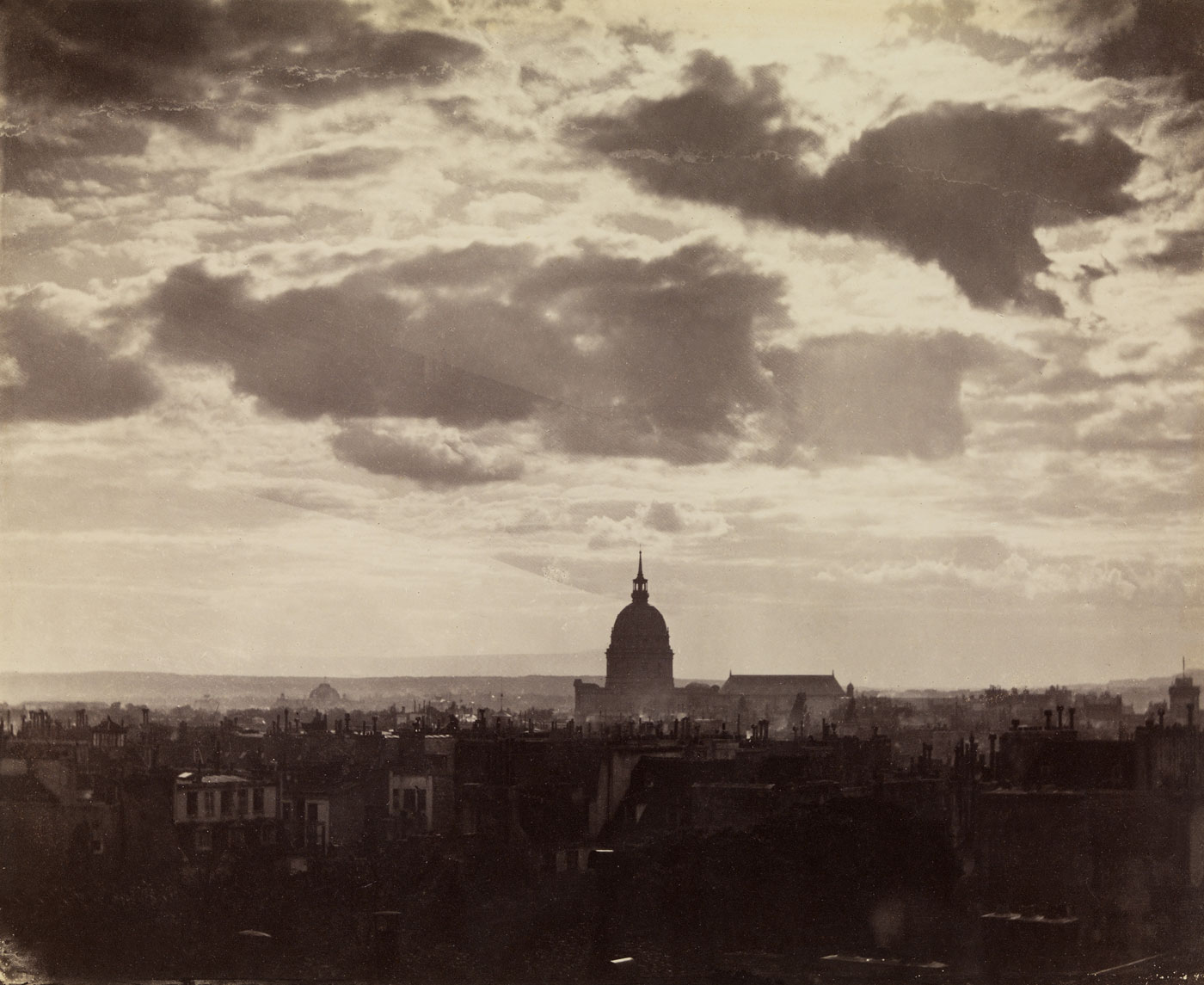
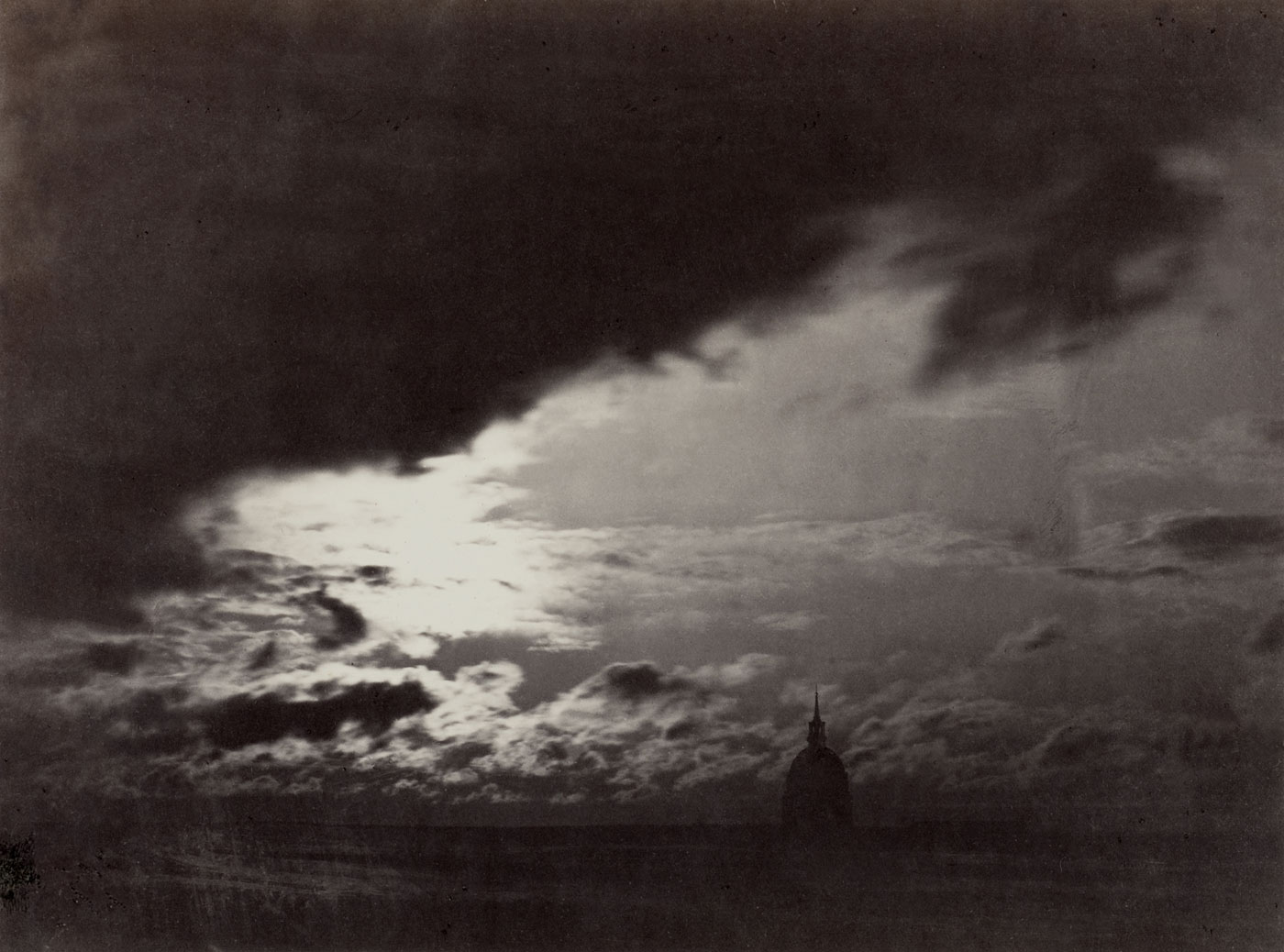
Charles Marville “is primarily known for documenting the transformation of Paris from a medieval city to a modern one, through a series of images of old neighbourhoods lost due to urban renewal… Marville’s earliest works were salted paper prints made from paper negatives – soft, high-contrast images not far removed in feeling from the pioneering, somewhat primitive photographs of William Henry Fox Talbot. As photographic technology advanced, Marville shifted to glass negatives that allowed far more visual precision, particularly in the architectural and streetscape images that compose the largest portion of the National Gallery of Art’s retrospective. By the late 1870s, shortly before his death, Marville’s compositions began to presage the more modernist approaches Alfred Stieglitz would pursue just a few years later. (At one point, Marville even experimented with abstracted cloud images, decades before Stieglitz’s famous “equivalents.”).” (Louis Jacobson. “Reviewed: Charles Marbille at the National Gallery of Art,” on the Washington City Newspaper blog 22nd October 2013 [Online] Cited 19/01/2021)
Marville can be seen as the precursor to Eugène Atget (1857-1927). Atget would have been in his twenties when Marville was in the last few years of his life. It is interesting to speculate whether the two ever met? (and if they did what they would have talked about!) Atget would have been aware of the older photographers’ work, work that has been criticised for its lack of social consciousness and artistic feeling.
“Comparing Atget’s work with that of his best-known predecessor, Charles Marville (1816-1879), demonstrates another of Atget’s artistic contributions. Marville had been commissioned to make a comprehensive documentation of the vast districts of old housing that were to be demolished as part of Napoleon III’s plan to transform Paris into a modern capital. Marville’s photographs do not linger over any particular building, warm to its charm or embrace its artistic qualities. Instead (perhaps because these buildings were slated for destruction anyway), Marville chose a position from which he could see straight to the end of even the most narrow, winding street, enabling him to photograph the maximum number of structures with one shot.” (Gerald M. Panter. “Atget in Historical Perspective” [Online] Cited 01/01/2014. No longer available online)
This is to denigrate the work of Marville. His photographs possess more subtly than Atget’s and they sing a different song. To me, Marville’s photographs are like a Bach fugue while Atget’s photographs are a Mozart sonata. Both have different resonances, no less valuable one from the other. It is as if Atget looked at the work of Marville and thought: how can I do this my way, in my own voice and he then proceeded to “turn up the volume” – by changing the angle and perspective of the camera, by moving horse and cart into more prominent positions, by focusing on details and ghosts. But Marville is no less a master than Atget. You only have to look at the photographs to realise what great sensitivity to subject matter he possessed, what a unique voice this artist had.
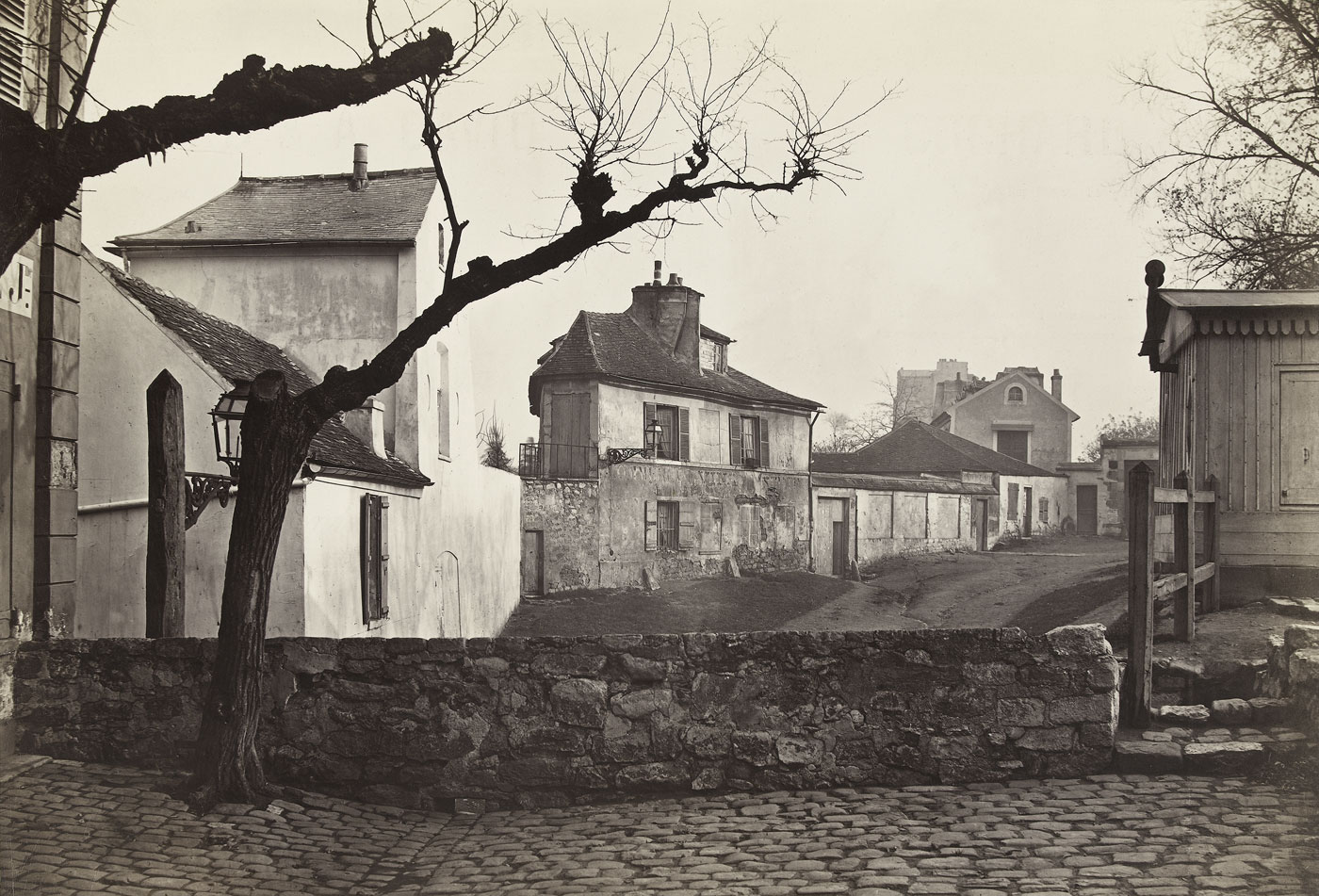
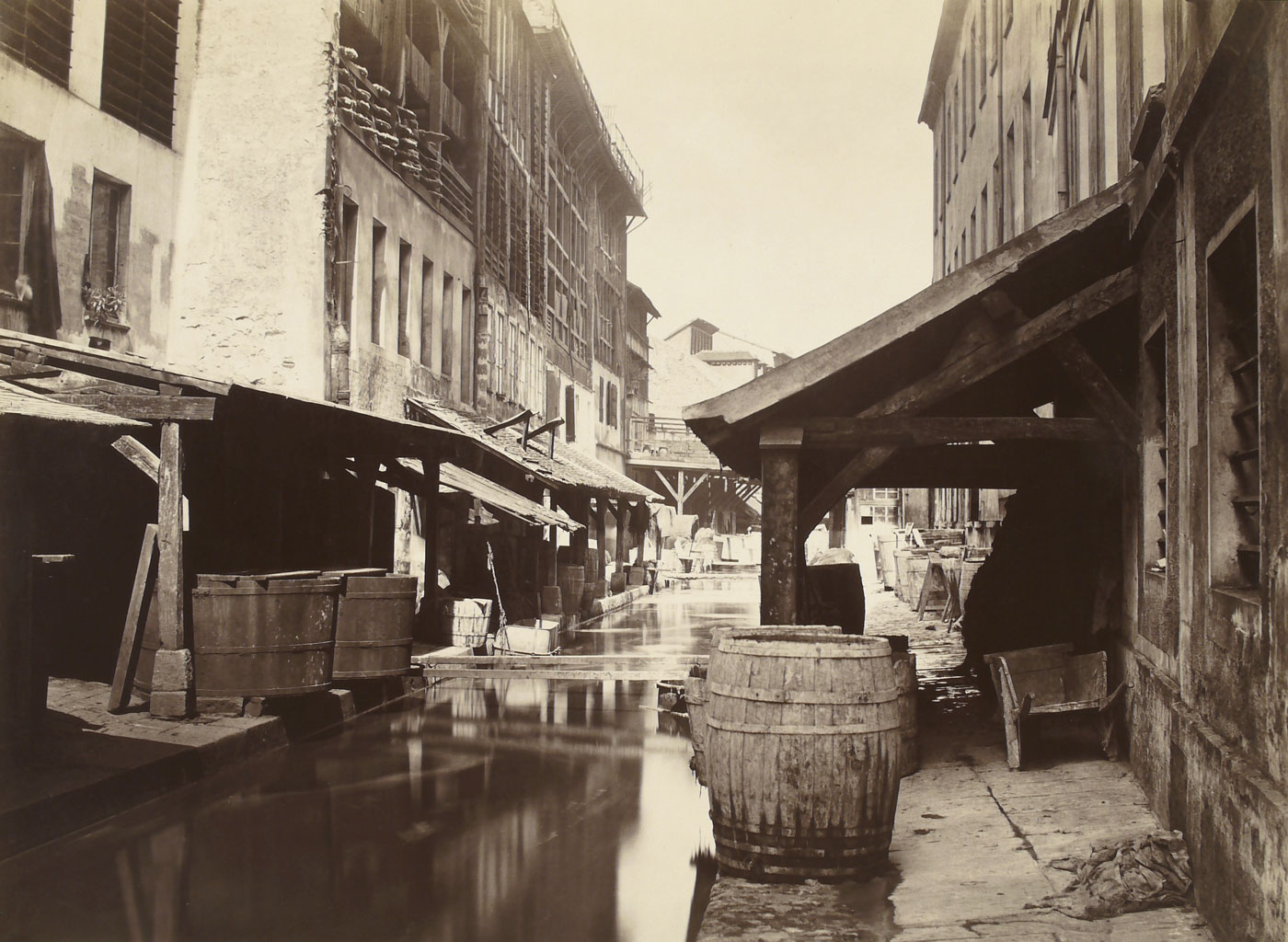
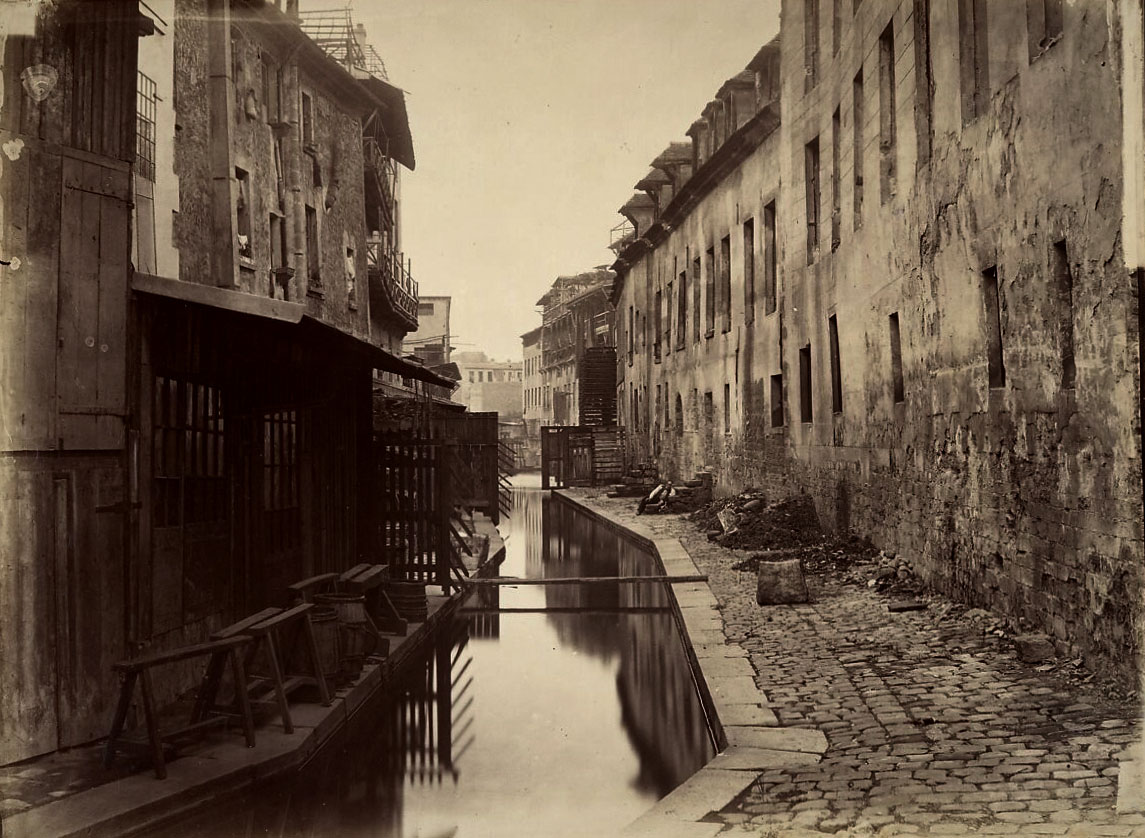
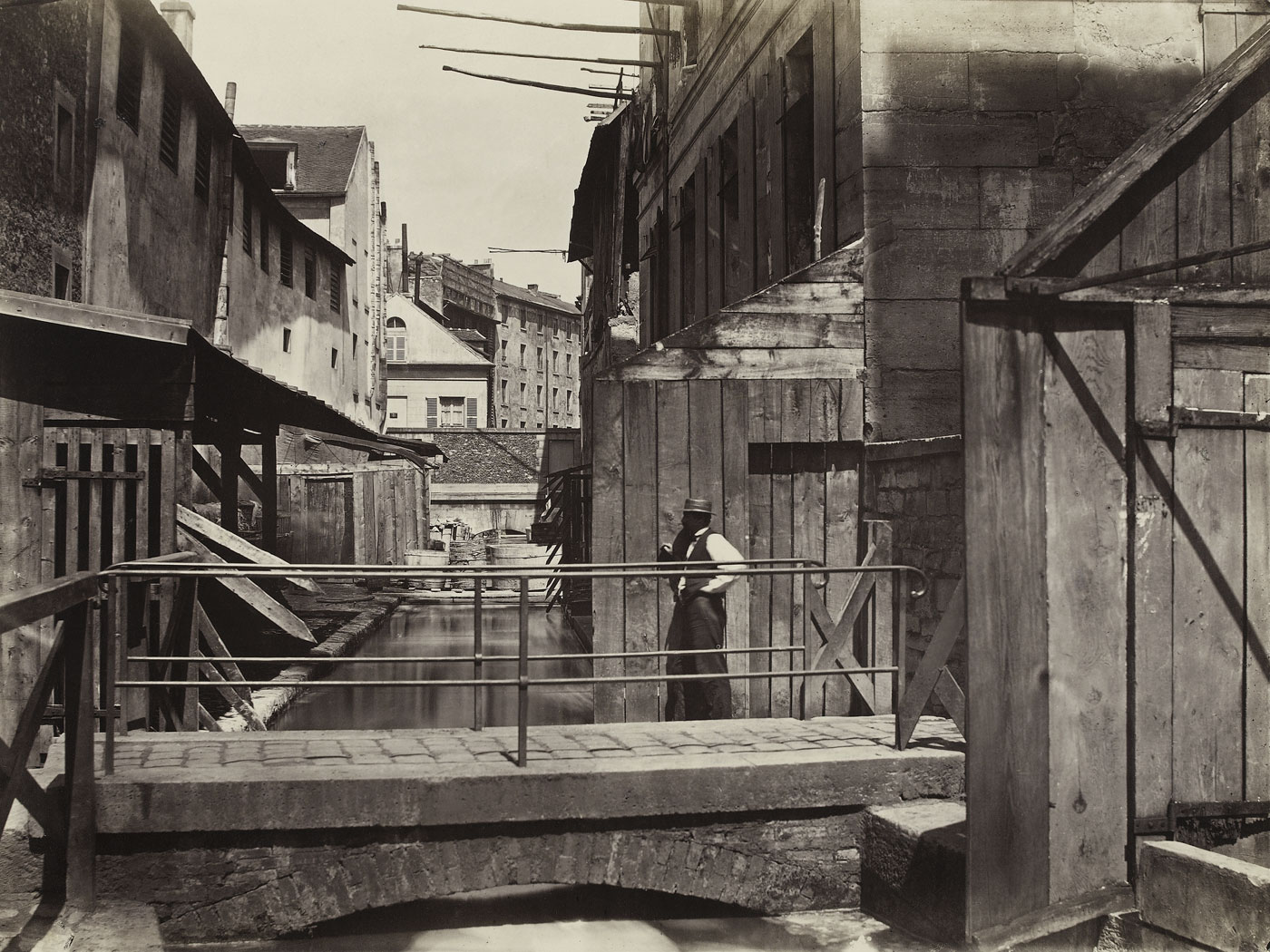
Look at the amazing construction of the picture plane in numerous images in this posting. The wall that blocks the way in Impasse de l’Essai from the Horse Market (c. 1868, below) and the pictures elegiac atmosphere, tensioned by the post mimicking the tree at the left hand side and the threatening, dark, brooding forms of both trees overhanging the rooftops of the houses. The three photographs The Bièvre River (fifth arrondissement) (2 images) and Banks of the Bièvre River at the Bottom of the rue des Gobelins (all 1862, below) where the artist leads the eye of the viewer into the image using water, then partially blocks the line of sight into the distance by barrels and posts, shadows and reflections, at the same time limiting the sky to a small section so that the viewer’s eyes have some escape route out of the image. The last image Bièvre River at the Bottom of the rue des Gobelins is almost Cezanne-like in it’s flattening and fracturing of the image plane into modernist shapes. Atget could never have taken photographs like these. They are true masterpieces.
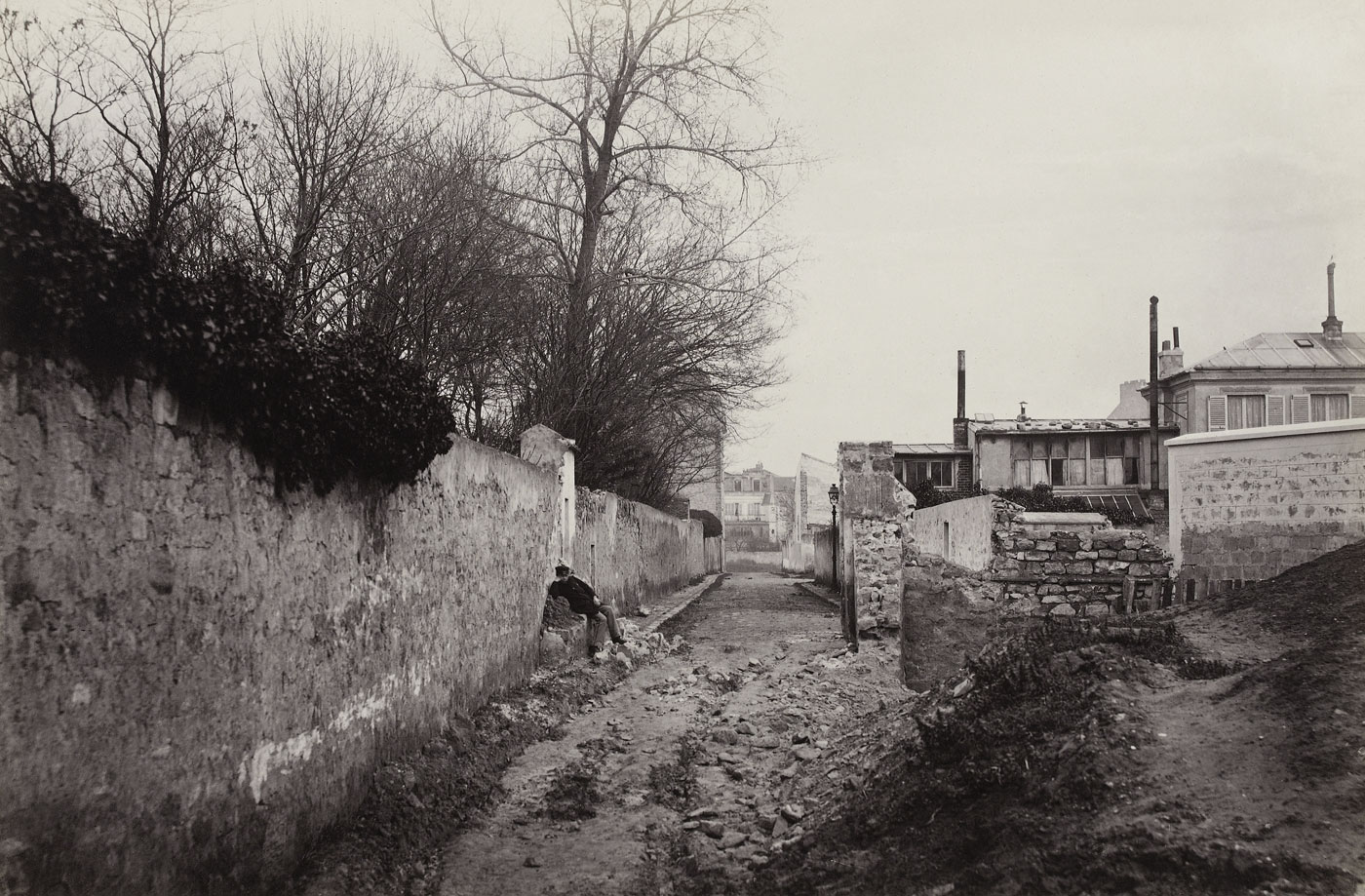
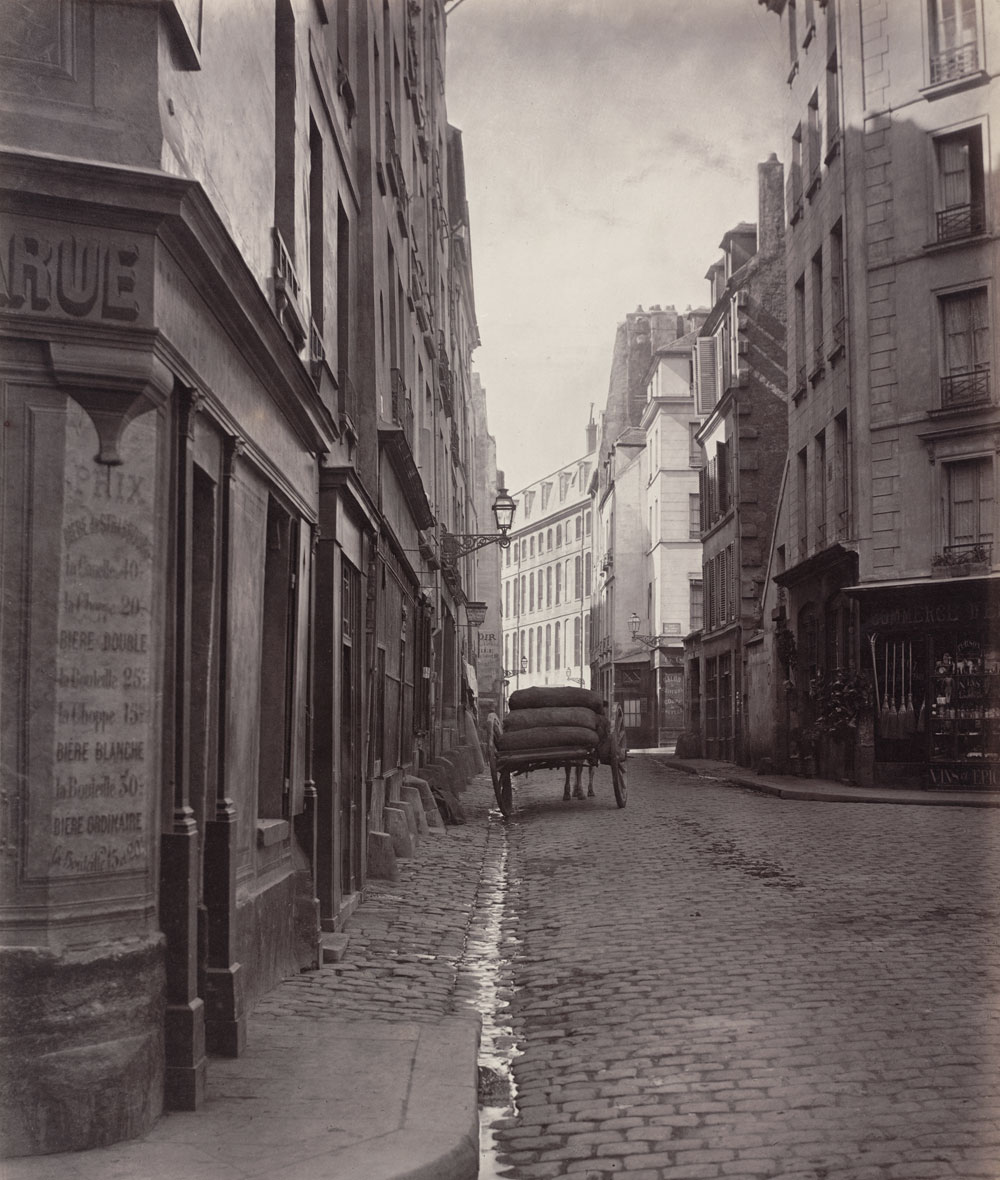
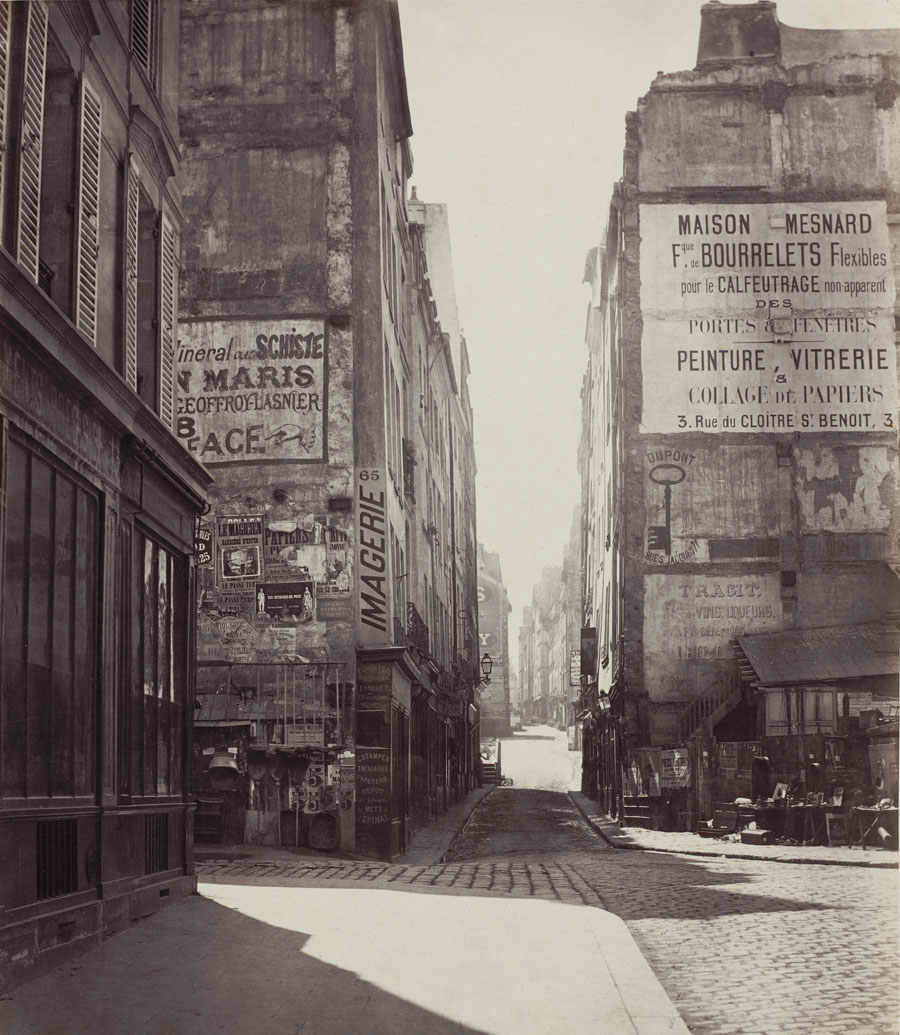
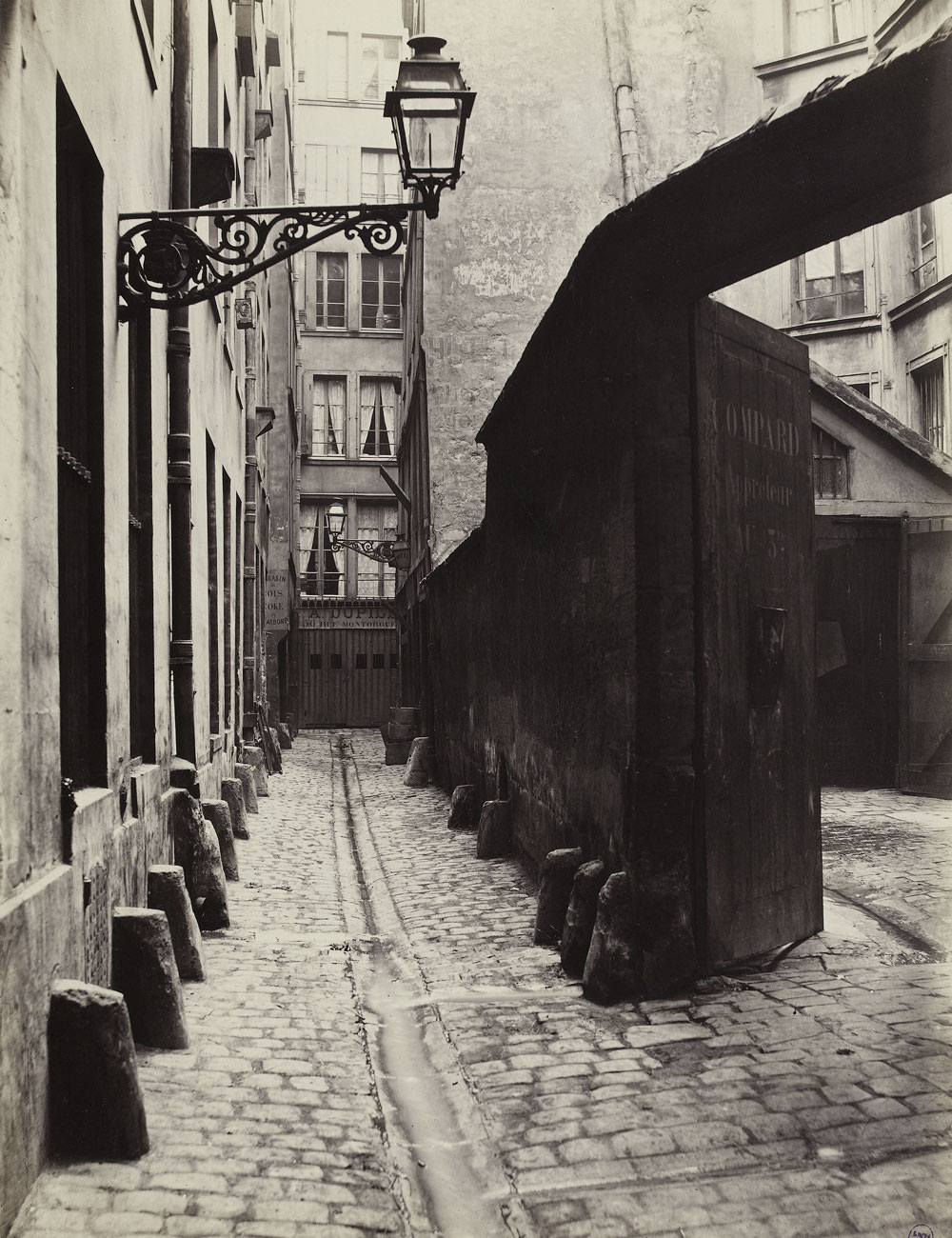
The last five images of city streets in the posting are also illuminating. While they are more frontal than many of Atget’s street photographs, with a longer vista and vanishing point, there is something about them that adds an indelible serenity to the scene. Maybe it’s the foreshortened walls lingering into the distance, the carts, the light, the shadows. Look at the very last photograph, Impasse de la Bouteille (de la rue Montorgeuil) (1865-1868, below) and notice the wonderful two vanishing points and the immense darkness of the intervening wall as it pushes its way into the image, the blackness of this intervention. Incredible.
As John Szarkowski has observed, “In the wet-plate days of Atget’s great predecessor Charles Marville photographed the streets of Old Paris, street by street. In those old streets that still existed a generation later, Atget repeated the work building by building, sometimes door by door, sometimes door knocker by door knocker. He reworked the ore with a finer screen, and sifted out a different precious metal.” (John Szarkowski. Eugène Atget. Museum of Modern Art, 2000, p. 15)
Both Marville and Atget are precious metals. For that we are eternally grateful.
Dr Marcus Bunyan
Many thankx to the National Gallery of Art, Washington for allowing me to publish the photographs in the posting. Please click on the photographs for a larger version of the image.
Charles Marville (French, 1813-1879) Gardens of the Bagatelle under Construction 1858-1862 Albumenised salted paper print from collodion negative Image: 26 x 36cm (10 1/4 x 14 3/16 in.) Paula and Robert Hershkowitz
Charles Marville (French, 1813-1879) Impasse de l’Essai (du marché aux chevaux) (Impasse de l’Essai from the Horse Market) (fifth arrondissement) c. 1868 Albumen print from collodion negative Image: 24.5 x 36.5cm (9 5/8 x 14 3/8 in.) Ville de Paris – Bibliothèque de l’Hôtel de Ville (BHdV)
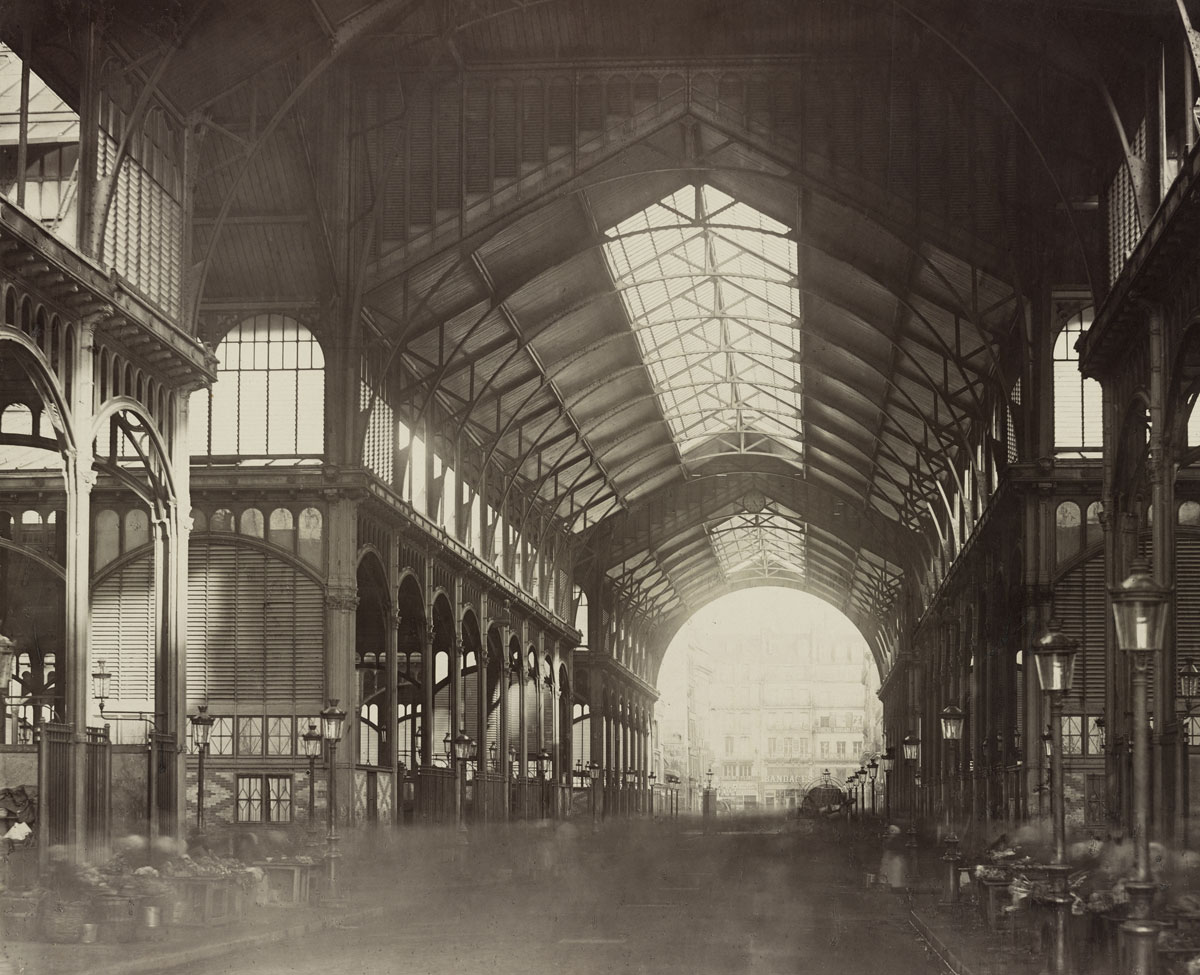
Charles Marville (French, 1813-1879) Interior of Les Halles Centrales 1874 Albumen print from collodion negative Image: 31.8 x 39.2cm (12 1/2 x 15 7/16 in.) The AIA/AAF Collection, Prints and Photographs Division, Library of Congress, Washington D.C.
Charles Marville (French, 1813-1879) The Bièvre River (fifth arrondissement) c. 1862 Albumen print from collodion negative Image: 26.67 x 37.47cm (10 1/2 x 14 3/4 in.) Joy of Giving Something, Inc.
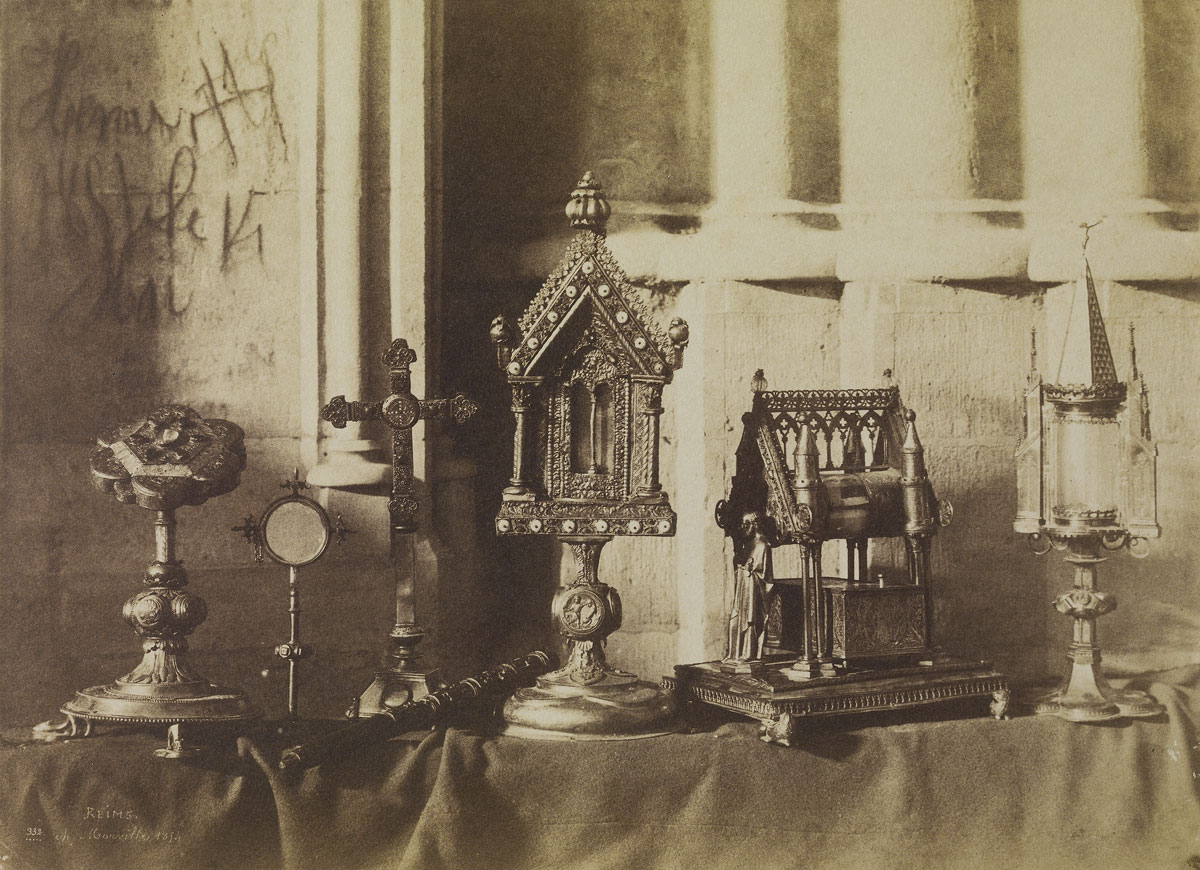
Charles Marville (French, 1813-1879) Treasury of Reims Cathedral 1854 Salted paper print from paper negative 23.1 x 34.5cm (9 1/8 x 13 9/16 in.) Private Collection
Charles Marville (French, 1813-1879) Cloud Study, Paris 1856-1857 Albumen print from collodion negative Image: 15.4 x 25.7cm (6 1/16 x 10 1/8 in.) Sheet: 31 x 43.4cm (12 3/16 x 17 1/16 in.) Wilson Centre for Photography, London
The first exhibition in the United States and the very first scholarly catalogue on the accomplished 19th-century French photographer Charles Marville will explore the beauty, variety, and historical poignancy of Marville’s art. On view at the National Gallery of Art, Washington, from September 29, 2013, through January 5, 2014, Charles Marville: Photographer of Paris will include 99 photographs and three albums that represent the artist’s entire career, from his exquisite city scenes and landscape studies made across Europe in the early 1850s to his compelling photographs of Paris both before and after many of its medieval streets were razed to make way for the broad boulevards, parks, and monumental buildings we have come to associate with the City of Light. The accompanying exhibition catalogue will present recently discovered, groundbreaking scholarship informing Marville’s art and his biography.
“Although his photographs of Paris on the brink of modernity are widely hailed as among the most accomplished ever made of that city, Marville himself has long remained an enigma to art historians,” said Earl A. Powell III, director, National Gallery of Art. “We are thrilled to present this new look at the art and life of Marville and are deeply grateful to lenders, both public and private, for making this landmark show possible.”
Forty-one of the 102 works presented in the exhibition are on loan from the Musée Carnavalet, Paris. Conservation and preparation of the loans from the Musée Carnavalet has been undertaken by the Atelier de Restauration et de Conservation des Photographies de la Ville de Paris (ARCP).
Recent Discoveries
Marville has long remained a mystery partly because documents that would shed light on his biography were thought to have disappeared in a fire that consumed Paris’ city hall in 1871. The whereabouts of other documentation was simply unknown. However, new research has helped curator Sarah Kennel and exhibition researcher Daniel Catan reconstruct Marville’s personal and professional biography.
The son of a tailor and laundress, Charles-François Bossu was born in Paris 1813. In a double act of self-invention, he jettisoned his given name (bossu means hunchback in French) around 1832, at the moment he became an artist. He embarked upon a career as an illustrator in the early 1830s but turned to the young discipline of photography in 1850. Although he continued to be known as Marville until his death in 1879, he never formally changed his name, which is the reason many of the legal documents pertaining to his life have gone unnoticed for decades. The exhibition catalogue establishes Marville’s biography, including his parentage and his relationship with a lifelong companion, and uncovers many significant details that illuminate the evolution and circumstances of his career.
The Exhibition and Artist’s Background
A talented and prolific artist lauded for his rigorously composed, beautifully detailed prints, Marville was commissioned in the early 1860s to record the city of Paris in transition. He soon became known as the official photographer of Paris and produced one of the earliest photographic series documenting urbanisation. He continues to be recognised as one of the most accomplished photographers in the history of the medium.
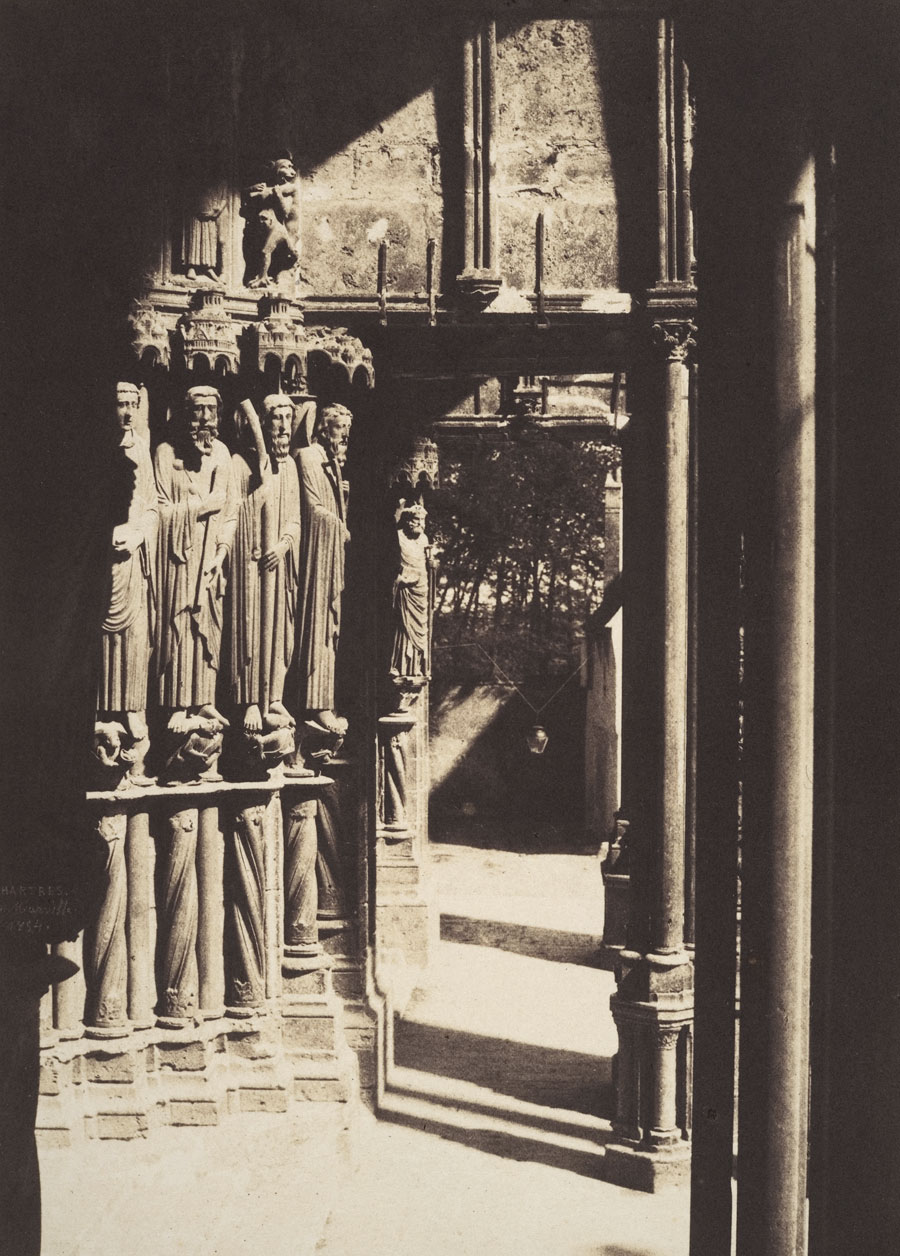
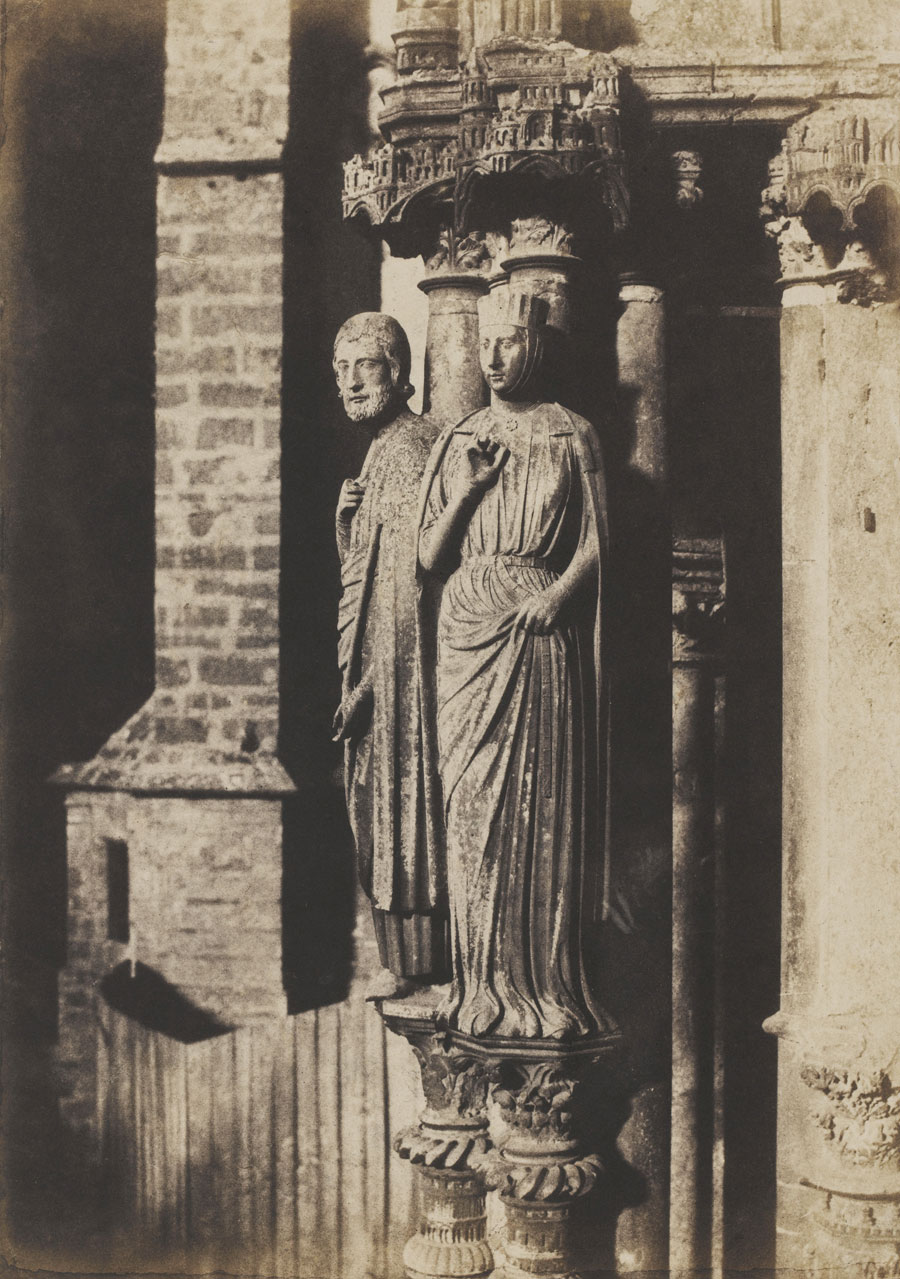
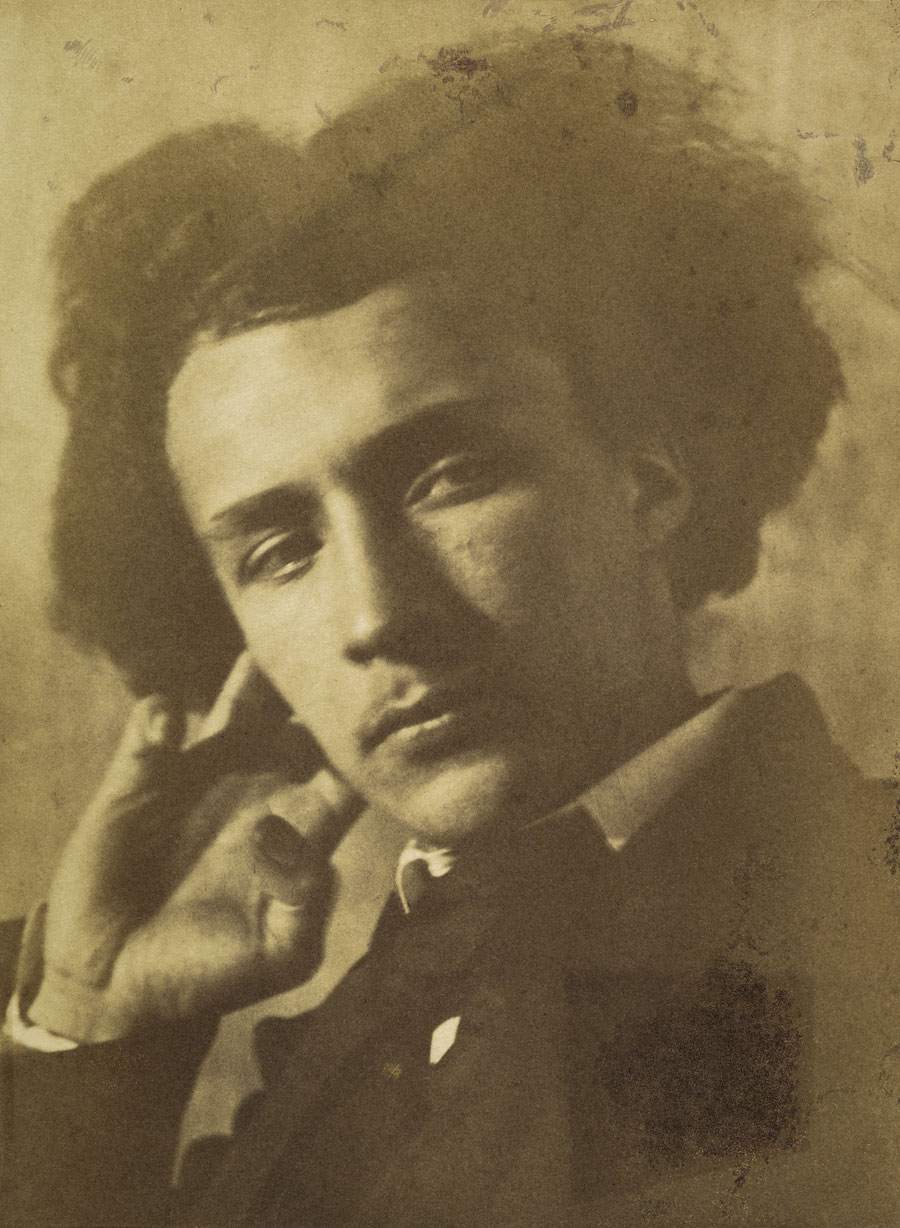
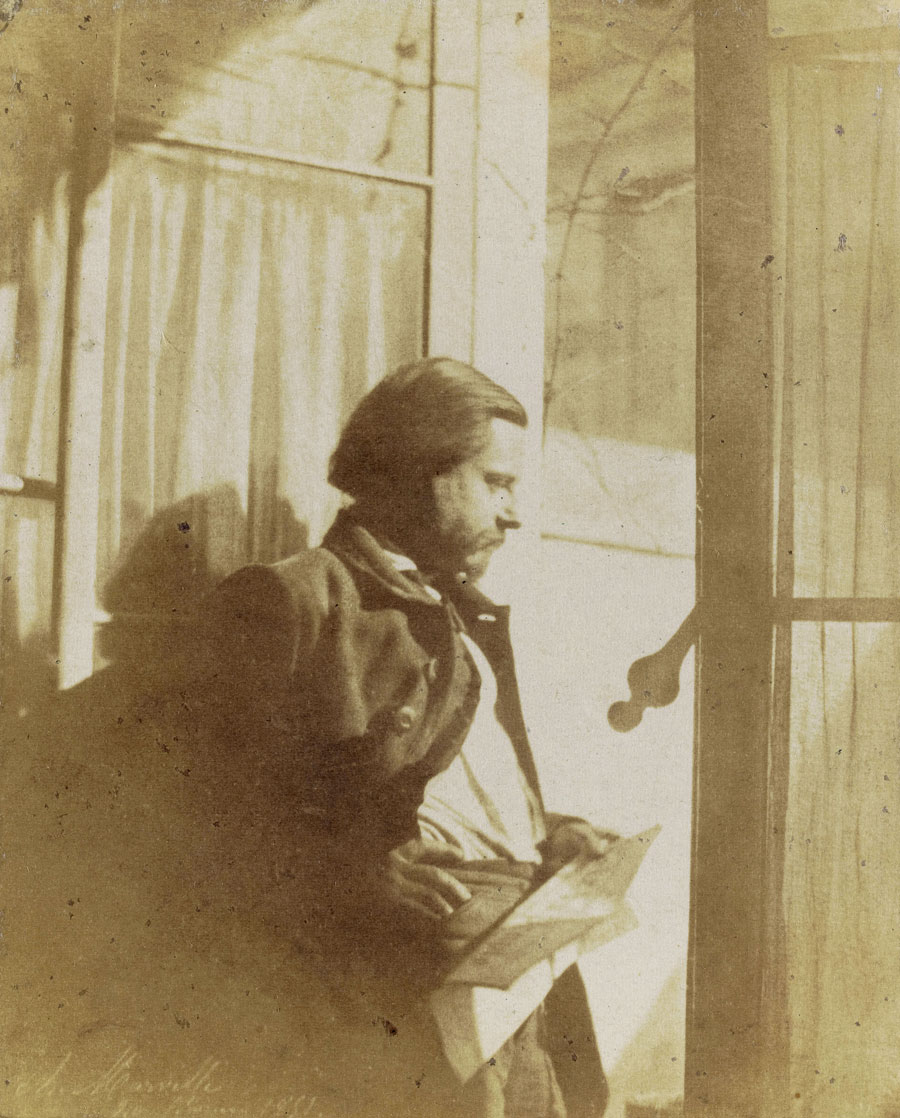
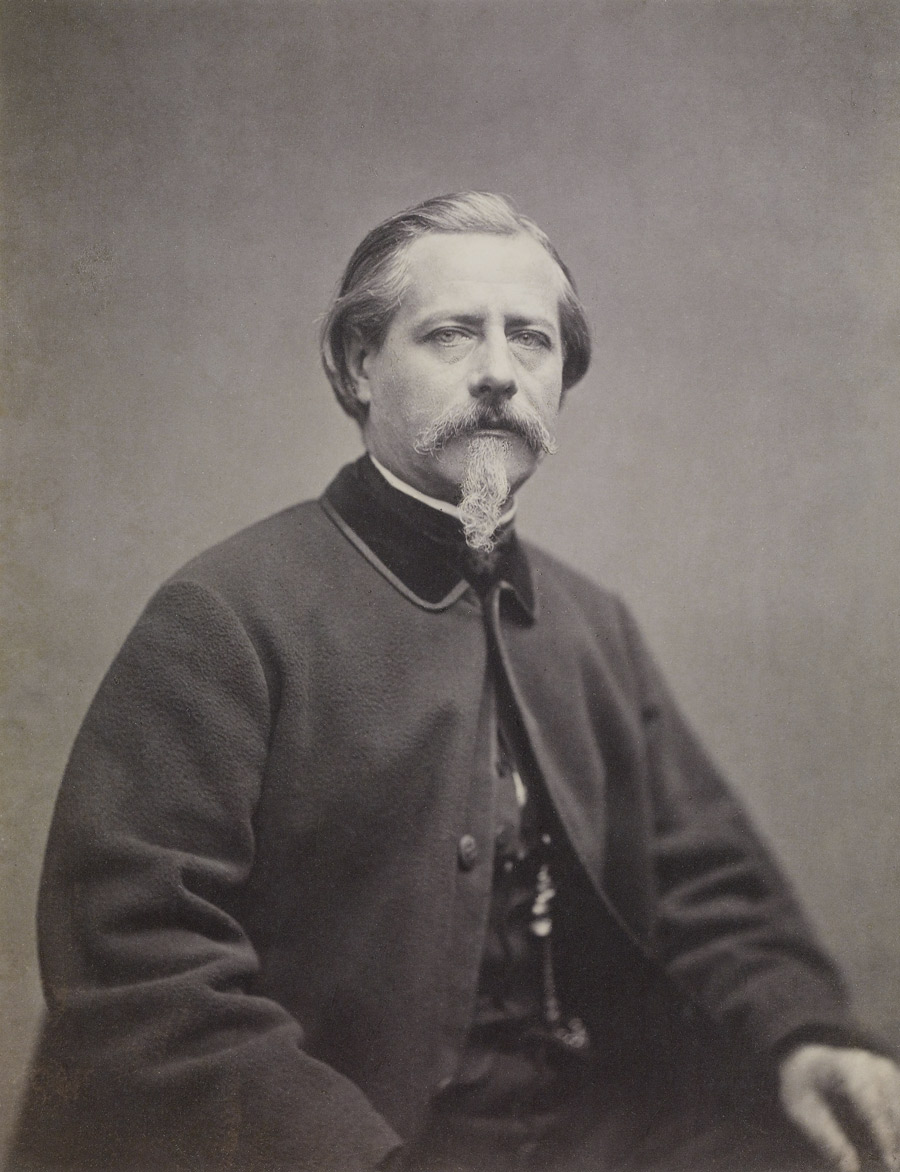
Charles Marville: Photographer of Paris offers an overview of the artist’s photographic career, beginning with a compelling series of intimate self-portraits and portraits of friends and colleagues that provide a fascinating window into Marville’s personal life and professional ties, and serve as an introduction to the exhibition. Starting in 1850, Marville travelled throughout France and Germany, using the paper negative process with great skill to create beautiful landscapes, cityscapes, studies of sculpture, and striking architectural photographs. Many of these works were included in albums produced by the pioneering publisher Louis-Désiré Blanquart-Evrard. The quantity and quality of the photographs used by the publisher serve as both a testament to Marville’s skill and an indication that his training as an illustrator prepared him exceptionally well for this new pictorial enterprise of photographic documentation.
In the mid-1850s, Marville adopted the collodion negative process and undertook a series of sky and cloud studies, made from the rooftop of his Parisian studio. More rapid and sensitive than the paper negative process, the collodion negative process enabled the photographer to capture delicate, luminous cloud formations on the city’s horizon and made him one of the first artists successfully to photograph clouds. At the same time, Marville expanded his practice by honing in on two lucrative areas: reproductions of works of art and architectural photographs. He excelled at both and assumed the title and related privileges of photographer to the Louvre while he also documented building and renovation projects in Paris and the provinces for prominent French architects, including Eugène Viollet-le-Duc.
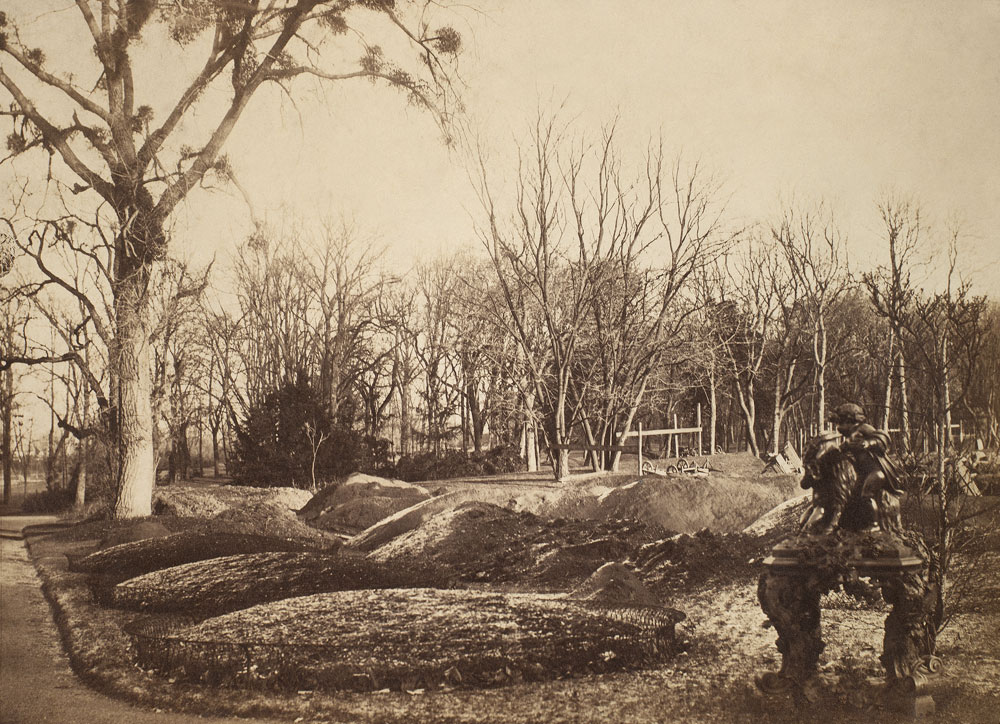
In 1858, Marville was commissioned by the city of Paris to photograph the newly refurbished Bois de Boulogne, a royal park on the edge of Paris that had been transformed under the emperor Napoleon III into a site of bourgeois leisure and pleasure. Arguably his first important body of work that was conceived and executed as a systematic series, the Bois de Boulogne series would influence his best-known work, the Old Paris photographs. Commissioned by Paris’ agency on historic works (under the aegis of urban planner Georges-Eugène Baron Haussmann) in the early 1860s, Marville made more than 425 photographs of the narrow streets and crumbling buildings of the premodern city at the very moment they were threatened by demolition. Known as the Old Paris album, the photographs are captivating for their seamless integration of artistic sensibility and intense devotion to maximum visual clarity. In many cases they serve as the only visual record of sites that have long since vanished.
The exhibition closes with an exploration of the emergence of modern Paris through Marville’s photographs. Even before completing the Old Paris series, Marville began to photograph the city that was coming into being, from massive construction projects, renovated churches, and broad boulevards to a host of modern conveniences, such as the elegant new gas lamps and the poetically named vespasiennes (public urinals) that cemented Paris’ reputation in the 1860s as the most modern city in the world. Marville also explored the city’s edges, where desolate stretches of half-finished construction suggest the physical displacements and psychic costs of modernisation. Sharp-edged, beautifully detailed, and brilliantly composed, Marville’s photographs of the French capital as at once glamorous and alienating do not simply document change but in their very form shape the visual rhetoric of modern Paris.
Press release from the National Gallery of Art website
Charles Marville (French, 1813-1879) Cathédrale de Chartres, Grandes Figures des pilastres du portail septentrional (Chartres Cathedral, Columnar Figures, Northern Portal) 1854 Salted paper print from paper negative Image: 36 x 25.6cm (14 3/16 x 10 1/16 in.) The Museum of Modern Art, New York, Gift of Paul F. Walter
Charles Marville (French, 1813-1879) Self-Portrait at a Window, February 20, 1851 1851 Salted paper print from paper negative Image: 14.29 x 11.4cm (5 5/8 x 4 1/2 in.) Support: 32.2 x 24.5cm (12 11/16 x 9 5/8 in.) Mat: 53 x 40.5cm (20 7/8 x 15 15/16 in.) Musée d’Orsay, Paris
Charles Marville (French, 1813-1879) Self-Portrait 1861 Albumen print from collodion negative Image: 23.5 x 18.3cm (9 1/4 x 7 3/16 in.) Collection Debuisson
Charles Marville (French, 1813-1879) Rue de la Bûcherie, from the cul de sac Saint-Ambroise (fifth arrondissement) 1866-1868 Albumen print from collodion negative Image: 32 x 27.1cm (12 5/8 x 10 11/16 in.) National Gallery of Art, Washington, Horace W. Goldsmith Foundation through Robert and Joyce Menschel
Charles Marville (French, 1813-1879) Rue Saint-Jacques (fifth arrondissement) 1865-1866 Albumen print from collodion negative Image: 30.8 x 27cm (12 1/8 x 10 5/8 in.) National Gallery of Art, Washington, Horace W. Goldsmith Foundation through Robert and Joyce Menschel
Charles Marville (French, 1813-1879) Cour Saint-Guillaume (ninth arrondissement) 1866-1867 Albumen print from collodion negative Image: 34.2 x 27.2cm (13 7/16 x 10 11/16 in.) Lent by The Metropolitan Museum of Art, Gilman Collection, Purchase, Alfred Stieglitz Society Gifts, 2005
Charles Marville (French, 1813-1879) Passage Saint-Guillaume (vers la rue Richelieu) (first arrondissement) 1863-1865 Albumen print from collodion negative Image: 31.91 x 27.62cm (12 9/16 x 10 7/8 in.) Joy of Giving Something, Inc.
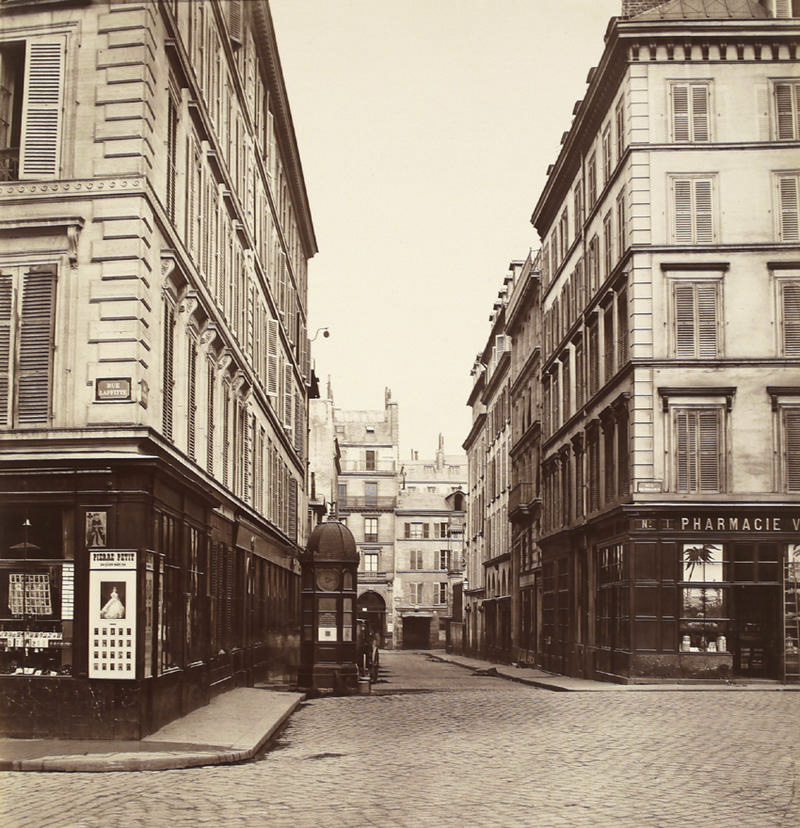
Charles Marville (French, 1813-1879) Rue Ollivier (vers la rue Saint-Georges) (ninth arrondissement) c. 1868 Albumen print from collodion negative Image: 28.6 x 27.6cm (11 1/4 x 10 7/8 in.) Joy of Giving Something, Inc.







 Art Blart _ art and cultural memory archive
You must be logged in to post a comment.