Exhibition: ‘Dawoud Bey & Carrie Mae Weems: In Dialogue’ at the J. Paul Getty Museum, Los Angeles

Exhibition dates: 4th April – 9th July, 2023


Dawoud Bey (American, b. 1953) 'Two Women at a Parade' 1978 from the exhibition 'Dawoud Bey & Carrie Mae Weems: In Dialogue' at the J. Paul Getty Museum, Los Angeles, April-  July, 2023


Dawoud Bey (American, b. 1953)
Two Women at a Parade
1978
Gelatin silver print
Grand Rapids Art Museum, Michigan Museum purchase
© Dawoud Bey
Courtesy of Stephen Daiter Gallery


Engaging each other in light

Dialogue: Old English dialogas (plural), from Latin from Greek dialogos, from dia ‘through’ + logos ‘word’

“As we define it, dialogue is “a communicative process in which people with different perspectives seek understanding.” To be in dialogue means that participants are not only engaging each other in light of their different views, but they are also striving to achieve a degree of mutual understanding.”

Jason Combs. “What is Dialogue?” on the University of Dayton website Monday October 28, 2019 [Online] Cited 01/07/2023


Short and sweet because I’m not feeling well.

What an inspired pairing for an exhibition. “Each [artist] addresses race, class, representation, and systems of power in their work, creating photographic series grounded in Black history and realities that speak to the human condition.”

From street-based photographs of everyday life to conceptual excavations of Black Histories, they produce incisive thought provoking works “that intermingle past and present, referenc[ing] African Americans whose lives and stories have been co-opted or lost.”

I love them both for their commitment to and passion for life in all its different forms. Bringing people together. Expressing a degree of mutual understanding.

#BlackLivesMatter #AllLivesMatter

Dr Marcus Bunyan


Many thankx to the J. Paul Getty Museum for allowing me to publish the photographs in the posting. Please click on the photographs for a larger version of the image.


Dawoud Bey and Carrie Mae Weems have been friends and colleagues for more than 40 years. Each addresses race, class, representation, and systems of power in their work, creating photographic series grounded in Black history and realities that speak to the human condition. This exhibition sheds light on their unique trajectories and modes of presentation, and their shared consciousness and principles. Organised by the Grand Rapids Art Museum.
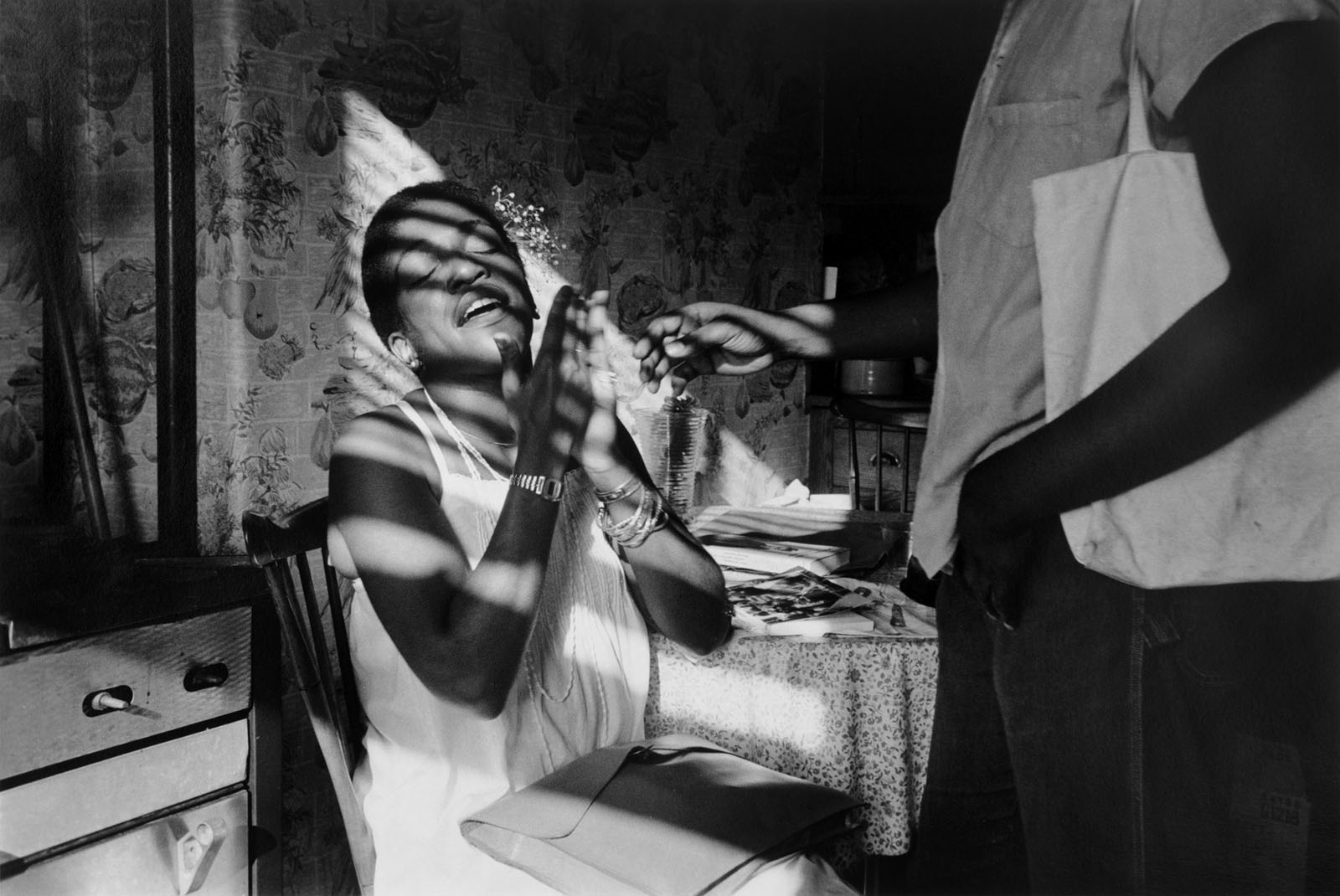
 

Dawoud Bey (American, b. 1953) 'The Woman in the Light, Harlem, NY' 1980 from the exhibition 'Dawoud Bey & Carrie Mae Weems: In Dialogue' at the J. Paul Getty Museum, Los Angeles, April-  July, 2023


Dawoud Bey (American, b. 1953)
The Woman in the Light, Harlem, NY
1980
Gelatin silver print
© Dawoud Bey
Courtesy of Stephen Daiter Gallery


Dawoud Bey (American, b. 1953) 'Self and Shadow, New York, NY' 1980 from the exhibition 'Dawoud Bey & Carrie Mae Weems: In Dialogue' at the J. Paul Getty Museum, Los Angeles, April-  July, 2023


Dawoud Bey (American, b. 1953)
Self and Shadow, New York, NY
1980
Gelatin silver print
© Dawoud Bey
Courtesy of Stephen Daiter Gallery


Dawoud Bey (American, b. 1953) 'A Young Man Resting on an Exercise Bike, Amityville, NY' 1988


Dawoud Bey (American, b. 1953)
A Young Man Resting on an Exercise Bike, Amityville, NY
1988
Gelatin silver print
© Dawoud Bey
Courtesy of Stephen Daiter Gallery


Dawoud Bey (American, b. 1953) 'Couple in Prospect Park, Brooklyn, NY' 1990


Dawoud Bey (American, b. 1953)
Couple in Prospect Park, Brooklyn, NY
1990
Gelatin silver print Getty Museum
© Dawoud Bey


In 1976 I had been making photographs for a couple of years. I had certainly been looking at a lot more photographs than I had actually made. From looking at photographs in books and magazines and going to exhibitions of pictures by Mike Disfarmer at MoMA, Richard Avedon at Marlborough, and haunting whatever other places there were to see photographs in New York in the early 1970s, I had begun to educate myself, with the intent of adding something to the conversation through my own pictures.

The artist Janet Henry, who was from the same Jamaica, Queens neighborhood that I lived in, had gotten a job in the Education Department at the Studio Museum in Harlem, then located above a Kentucky Fried Chicken on 125th Street and Fifth Avenue in a large second floor loft space. When Frank Stewart, the museum’s staff photographer and photo teacher, left to do a commissioned project in Cuba, Janet called me and asked if I would take over the class. On the first day of class a few students straggled in. One of them, a seemingly shy woman with big expressive eyes, introduced herself, “Hi, my name is Carrie. Do you think I could be a photographer?” she asked, holding her Leica camera in her hand. That began what has now been 33 years of friendship and camaraderie with one of the most brilliant people I know.

From the very beginning, Carrie Mae Weems has had a sharp intelligence that was looking for a way into the world. From her early documentary photographs to the more expansive and materially varied recent works, she has consistently set out to visually define the world on her own terms and to redefine for all of us the nature of the world that we are in. After all these years I still anticipate her work with a fresh sense of wonderment, knowing that her restless search for the deeper meaning of things will yield a continuing rich trove of objects and images. On a Sunday morning in May I called from my home in Chicago to reconnect with my dear friend while she was traveling in Seville, Spain.

Dawoud Bey quoted in “Carrie Mae Weems by Dawoud Bey,” on the BOMB Magazine website July 1, 2009 [Online] Cited 18/06/2023


Dawoud Bey (American, b. 1953) 'Taneesha' 1999


Dawoud Bey (American, b. 1953)
Taneesha
1999
Dye diffusion prints
Collection of Jack and Sandra Guthman
© Dawoud Bey
Courtesy of Stephen Daiter Gallery


Dawoud Bey (American, b. 1953) 'The Birmingham Project: Wallace Simmons and Eric Allums' 2012


Dawoud Bey (American, b. 1953)
The Birmingham Project: Wallace Simmons and Eric Allums
2012
Inkjet prints
Rennie Collection, Vancouver
© Dawoud Bey
Courtesy of Stephen Daiter Gallery


Dawoud Bey (American, b. 1953) 'The Birmingham Project: Taylor Falls and Deborah Hackworth' 2012


Dawoud Bey (American, b. 1953)
The Birmingham Project: Taylor Falls and Deborah Hackworth
2012
Inkjet prints
Rennie Collection, Vancouver
© Dawoud Bey
Courtesy of Stephen Daiter Gallery
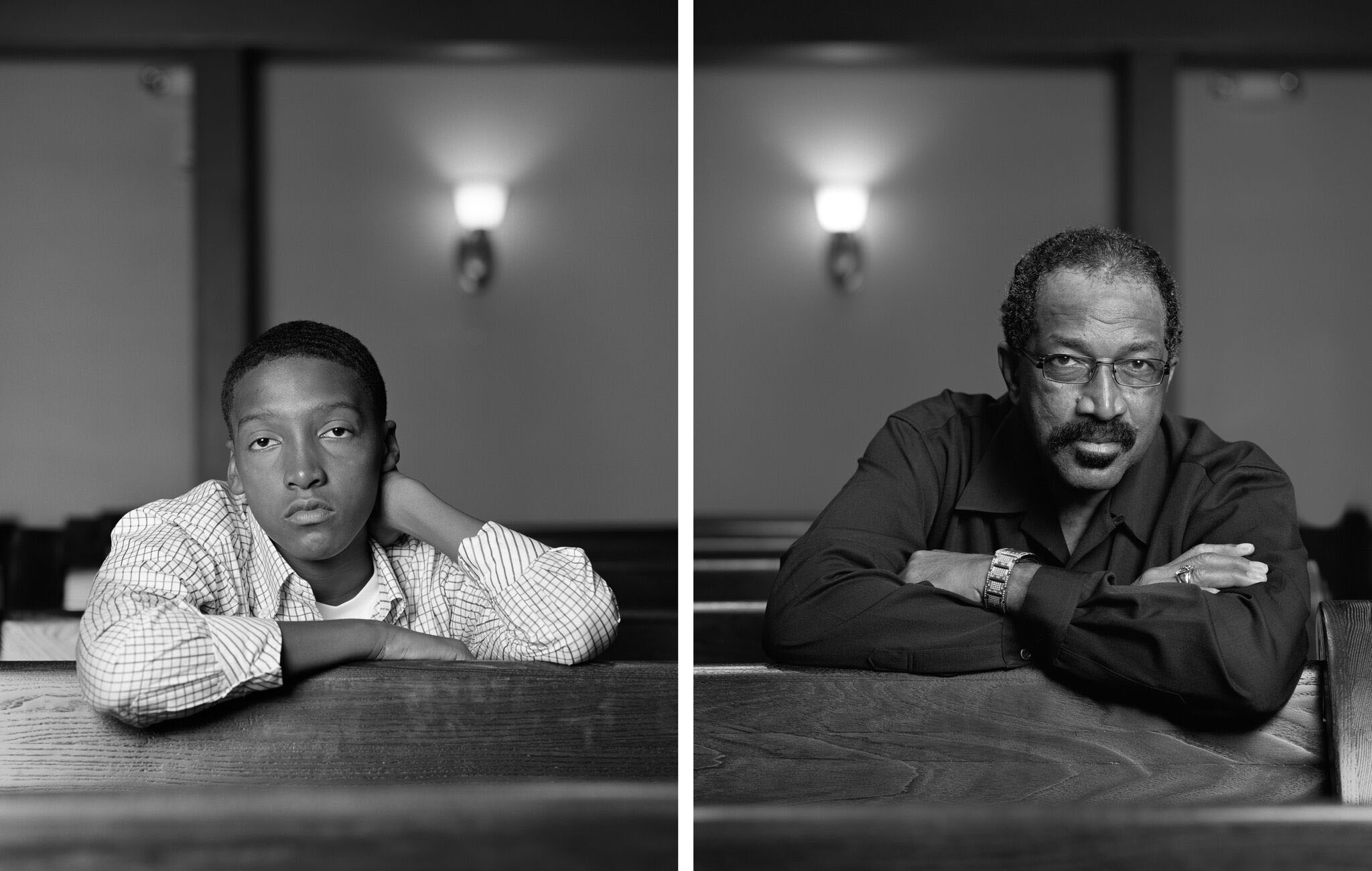
 

Dawoud Bey (American, b. 1953) 'Braxton McKinney and Lavone Thomas, Birmingham, AL' 2012


Dawoud Bey (American, b. 1953)
The Birmingham Project: Braxton McKinney and Lavone Thomas
2012
Inkjet prints
Rennie Collection, Vancouver
© Dawoud Bey
Courtesy of Stephen Daiter Gallery
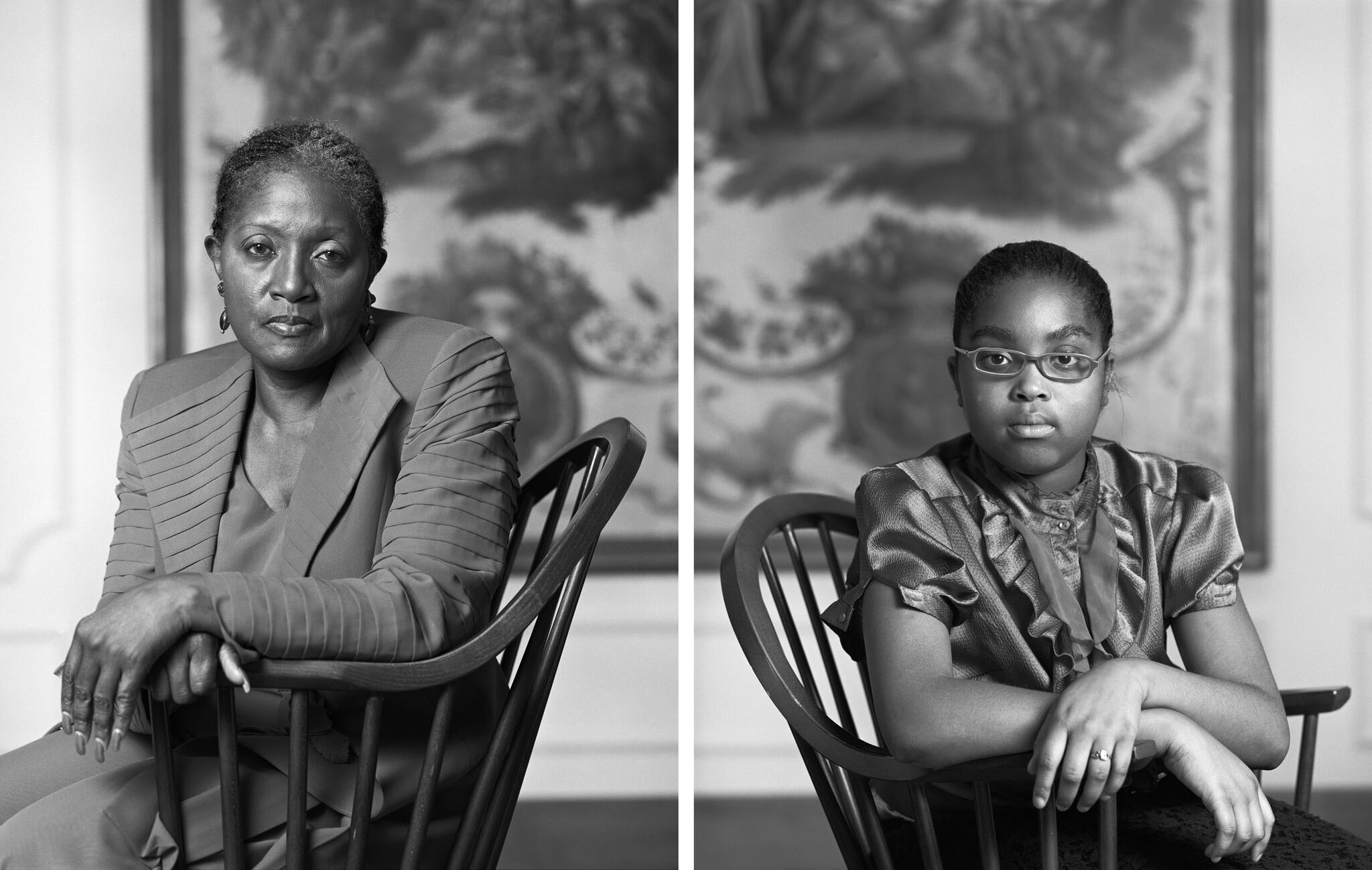
 

Dawoud Bey (American, b. 1953) 'Betty Selvage and Faith Speights, Birmingham, AL' 2012


Dawoud Bey (American, b. 1953)
The Birmingham Project: Betty Selvage and Faith Speights
2012
Inkjet prints
Rennie Collection, Vancouver
© Dawoud Bey
Courtesy of Stephen Daiter Gallery


Dawoud Bey (American, b. 1953) 'Boy on Skateboard, Harlem, NY' 2014


Dawoud Bey (American, b. 1953)
Boy on Skateboard, Harlem, NY
2014
Inkjet print
© Dawoud Bey
Courtesy of Stephen Daiter Gallery
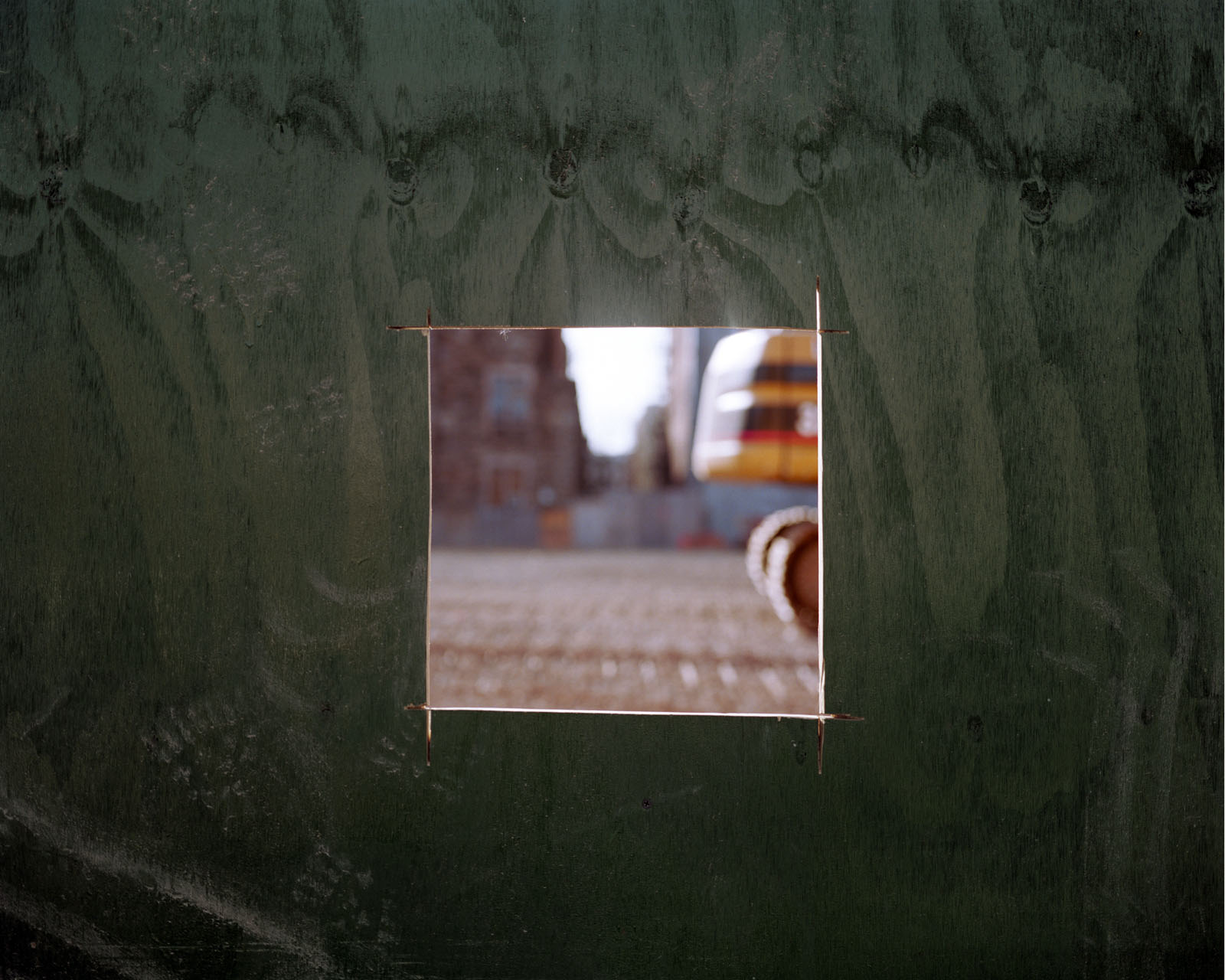
 

Dawoud Bey (American, b. 1953) 'Former Renaissance Ballroom Site, Harlem, NY' 2015


Dawoud Bey (American, b. 1953)
Former Renaissance Ballroom Site, Harlem, NY
2015
Inkjet print
© Dawoud Bey
Courtesy of Stephen Daiter Gallery


Dawoud Bey (American, b. 1953) 'Untitled #15 (Forest with Small Trees)' 2017


Dawoud Bey (American, b. 1953)
Untitled #15 (Forest with Small Trees)
2017
Gelatin silver print
Getty Museum, purchased with funds provided by the Photographs Council
© Dawoud Bey


Since meeting at the Studio Museum in Harlem in 1977, Dawoud Bey and Carrie Mae Weems have been intellectual colleagues and companions.

From the outset of their careers, both have operated from a deep social commitment to participate in, describe, and define culture. In seeking to express themselves fully, each has expanded possibilities within photography and video to address their chosen subjects.

Dawoud Bey & Carrie Mae Weems: In Dialogue, on view April 4 through July 9, 2023, brings together for the first time a focused selection of work from a period of over 40 years by two of today’s most important and influential photo-based artists. Each grapples with issues of race, class, and representation in their work, making art grounded in the experiences and realities of Black Americans while also speaking to the broader human condition.

“The Museum’s Department of Photographs has made great strides in recent years in building an exhibitions program that highlights more expansive narratives of photographic history,” says Timothy Potts, Maria Hummer-Tuttle and Robert Tuttle Director of the J. Paul Getty Museum. “Dawoud Bey and Carrie Mae Weems are two artists who reframe American traumas that have been ignored or simplified in the national historical record. We are proud to showcase their work in dialogue with one another.”

Jim Ganz, senior curator of photographs, adds, “These artists are two of the most dynamic and insightful of our time. As presented in this extraordinary exhibition, their eloquent dialogue gives unique perspective on their shared concerns as image makers.”

Dawoud Bey (American, born 1953) creates photographs that focus on individuals, communities, and important but often overlooked American histories. His carefully composed images convey the dignity and rich inner lives of his subjects. Carrie Mae Weems (American, born 1953) first gained recognition in the 1980s for exploring identity, race, power, and history, themes that still fuel her art. Over her career, Weems has turned increasingly to staged photography and the use of text to heighten the emotional intensity of her work.

This exhibition is divided into five sections, starting with early pictures that both artists made in the photodocumentary tradition and followed by ambitious, groundbreaking explorations of the medium as it developed technologically and artistically. The exhibition then focuses on how both artists moved beyond candid pictures of everyday life and began making larger scale work that is more planned than spontaneous. Bey’s portraiture evolved from street-based glimpses of the world made with a handheld camera to portraits that are formal but intimate, in which his subjects appear at ease and engage directly with the lens. With her Kitchen Table Series, Weems transitioned from representing real people in their natural environments to creating staged photo essays. For each artist, the techniques developed in this period became the foundation for future projects.

In Resurrecting Black Histories, each artist addresses the 19th century and its legacies in distinctive ways. Bey’s carefully composed landscapes evoke the experience of fleeing along the Underground Railroad, the clandestine network that helped enslaved people escape the South. Weems, by incorporating texts that intermingle past and present, references African Americans whose lives and stories have been co-opted or lost.

In Memorial & Requiem, Bey and Weems reference traumatic 20th-century events. They worked with community partners to stage scenes meant to reinvigorate discussion of the American legacy of racial violence. Each photographer also created a related video, bringing their own sensibility – Bey’s searching, intimate gaze; Weems’ choreographed social commentary – to the moving image, using sequencing and sound to deepen engagement with American history.

The exhibition ends with Revelation in the Landscape, where both Bey and Weems contemplate the built environments in which we live and how those spaces affect our perceptions of the world and ourselves. Bey returns to the Harlem neighbourhoods he photographed in the late 1970s, tracking the changes wrought by gentrification. Weems photographs imposing sites in Rome, inserting herself into historical places imbued with power and legacy. Both series reveal the economic and institutional forces that shape daily life.

In conjunction with the exhibition Getty has created a community program inspired by the exhibition, L.A.: In Dialogue. This program brings Dawoud Bey & Carrie Mae Weems: In Dialogue to a wider Los Angeles community, furthering the influence of the two artists and introducing their work to a new generation of artists and viewers. The artist-led program will host educational workshops for local teens and young adult photographers, and will teach participants techniques in black-and-white photography and the artistic practice of capturing portraiture and place. They will explore themes from the exhibition, collaborate with peers, and explore their local communities: Culver City (Black Image Center), South L.A. (LA Commons), Downtown L.A. (Inner-City Arts), and Venice Beach (Venice Arts). This program will result in a satellite exhibition that will open in June 2023.

Related programming includes Dawoud Bey and Carrie Mae Weems in Conversation on Tuesday, April 4 at 4pm. That evening at 7pm, the Museum presents master saxophonist David Murray in concert with his newly formed quartet as part of the exhibition programming.

Press release from the J. Paul Getty Museum


Carrie Mae Weems (American, b. 1953) 'First Self Portrait' 1975 from the exhibition 'Dawoud Bey & Carrie Mae Weems: In Dialogue' at the J. Paul Getty Museum, Los Angeles, April-  July, 2023


Carrie Mae Weems (American, b. 1953)
First Self Portrait
1975
Gelatin silver print
© Carrie Mae Weems
Courtesy of the artist and Jack Shainman Gallery, New York
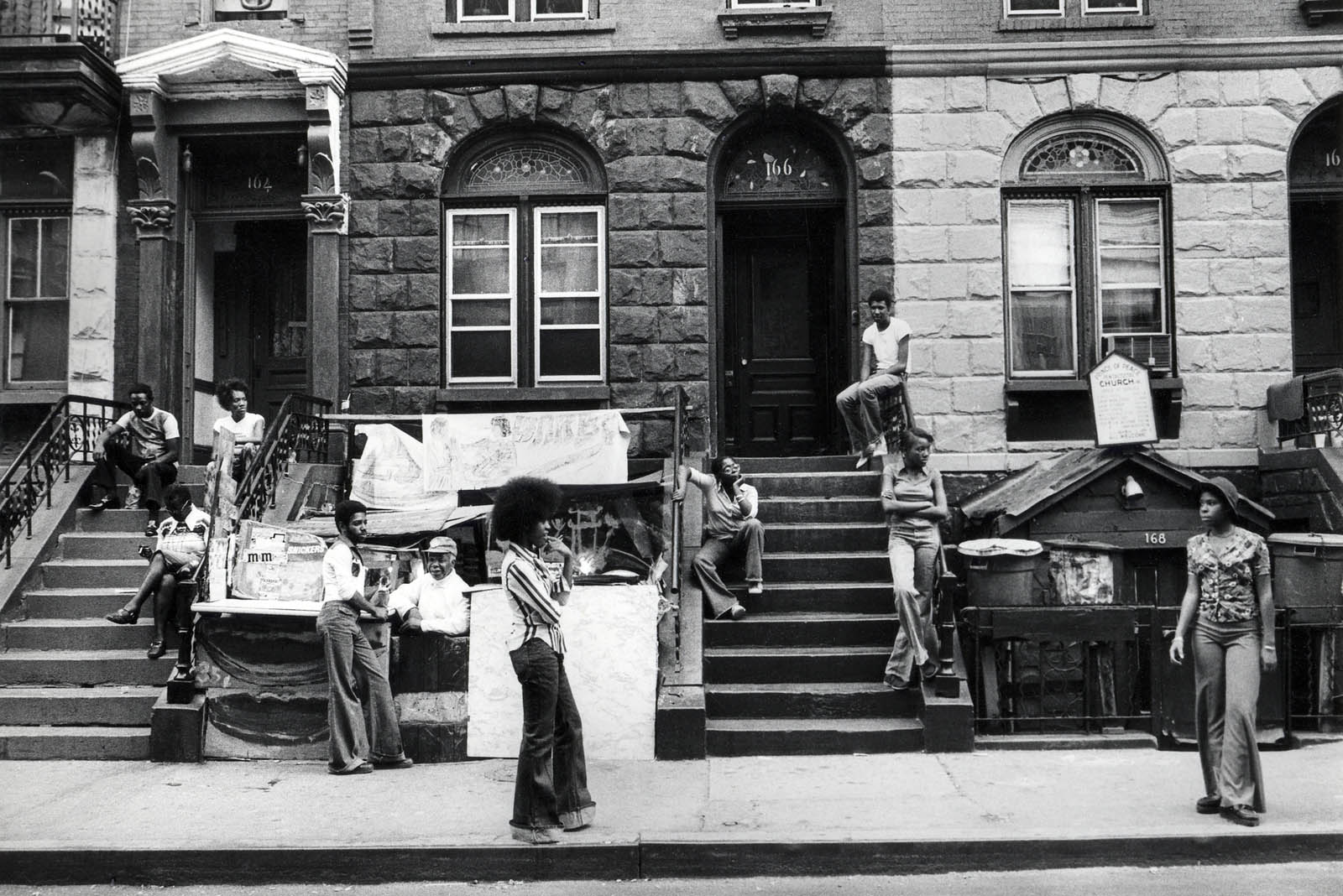
 

Carrie Mae Weems (American, b. 1953) 'Harlem Street' 1976-1977 from the exhibition 'Dawoud Bey & Carrie Mae Weems: In Dialogue' at the J. Paul Getty Museum, Los Angeles, April-  July, 2023


Carrie Mae Weems (American, b. 1953)
Harlem Street
1976-1977
Gelatin silver print
© Carrie Mae Weems
Courtesy of the artist and Jack Shainman Gallery, New York


Carrie Mae Weems (American, b. 1953) 'Woman in Shorts, Boardwalk, Santa Monica' 1980-1982


Carrie Mae Weems (American, b. 1953)
Woman in Shorts, Boardwalk, Santa Monica
1980-1982
Gelatin silver print
© Carrie Mae Weems
Courtesy of the artist and Jack Shainman Gallery, New York
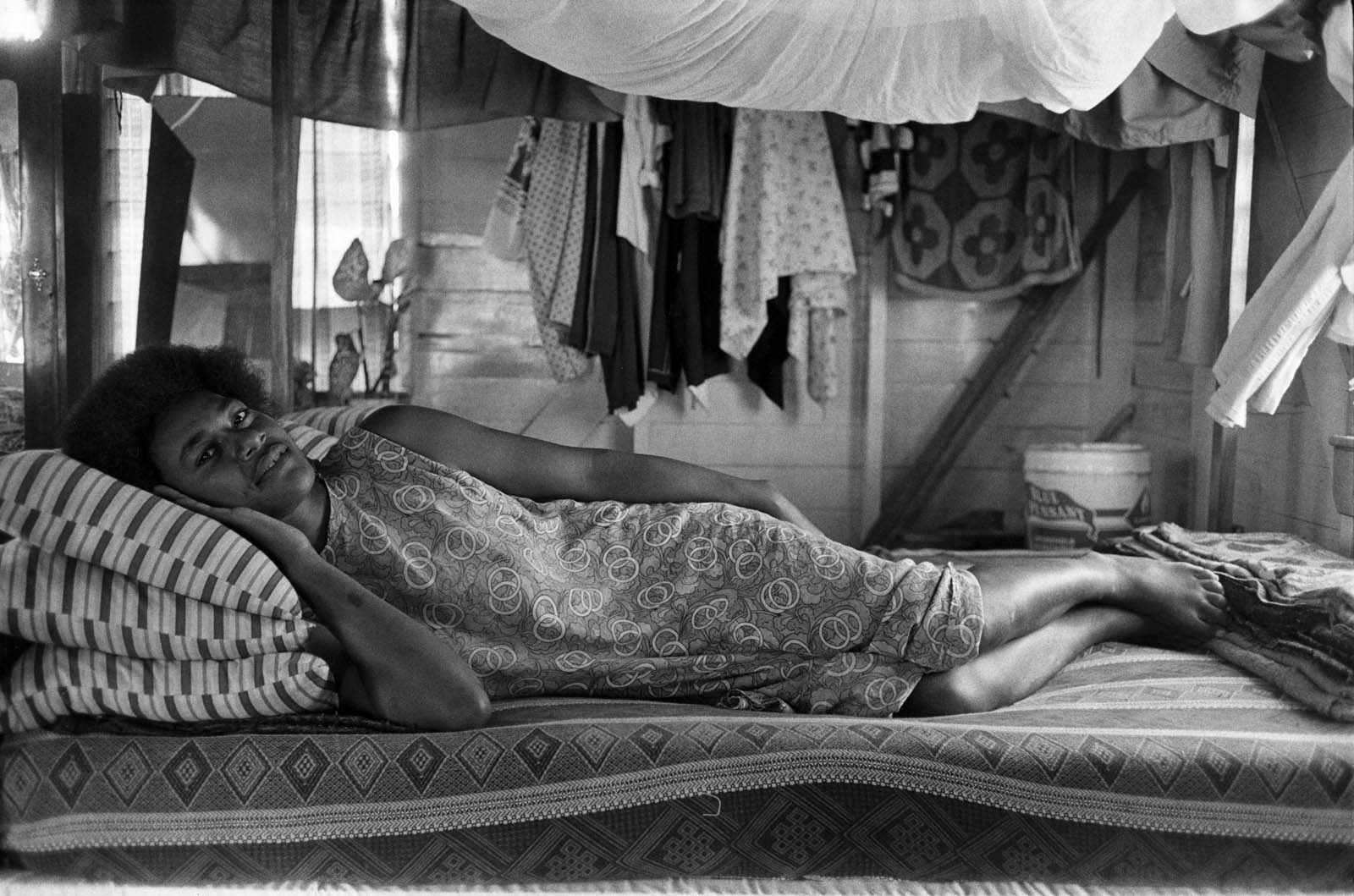
 

Carrie Mae Weems (American, b. 1953) 'Reclining Girl, Fiji' 1982-1983


Carrie Mae Weems (American, b. 1953)
Reclining Girl, Fiji
1982-1983
Gelatin silver print
© Carrie Mae Weems
Courtesy of the artist and Jack Shainman Gallery, New York


Carrie Mae Weems (American, b. 1953) 'Untitled (Woman and daughter with children)' 1990


Carrie Mae Weems (American, b. 1953)
Untitled (Woman and daughter with children)
1990
Gelatin silver print
© Carrie Mae Weems
Courtesy of the artist and Jack Shainman Gallery, New York


Carrie Mae Weems (American, b. 1953) 'Untitled (Woman standing alone)' 1990


Carrie Mae Weems (American, b. 1953)
Untitled (Woman standing alone)
1990
Gelatin silver print
© Carrie Mae Weems
Courtesy of the artist and Jack Shainman Gallery, New York


Carrie Mae Weems (American, b. 1953) 'Untitled (Woman and Daughter with Makeup)' 1990


Carrie Mae Weems (American, b. 1953)
Untitled (Woman and Daughter with Makeup)
1990
Gelatin silver print
© Carrie Mae Weems
Courtesy of the artist and Jack Shainman Gallery, New York


Carrie Mae Weems (American, b. 1953) 'See No Evil' 1991


Carrie Mae Weems (American, b. 1953)
See No Evil
1991
Dye diffusion print (Polaroid Polacolor)
61 × 50.5cm (24 × 19 7/8 in.)
The J. Paul Getty Museum, Los Angeles, Gift of Daniel Greenberg and Susan Steinhauser
© Carrie Mae Weems


Carrie Mae Weems (American, b. 1953) 'Road Sign' 1991-1992


Carrie Mae Weems (American, b. 1953)
Road Sign
1991-1992
Gelatin silver print
© Carrie Mae Weems
Courtesy of the artist and Jack Shainman Gallery, New York


Carrie Mae Weems (American, b. 1953) 'Untitled (Ebo Landing)' 1992


Carrie Mae Weems (American, b. 1953)
Untitled (Ebo Landing)
1992
Two gelatin silver prints and one screenprinted text panel
© Carrie Mae Weems
Courtesy of the artist and Jack Shainman Gallery, New York


Carrie Mae Weems (American, b. 1953) 'You Became a Scientific Profile / An Anthropological Debate / A Negroid Type / A Photographic Subject' 1995-1996


Carrie Mae Weems (American, b. 1953)
You Became a Scientific Profile / An Anthropological Debate / A Negroid Type / A Photographic Subject
1995-1996
From From Here I Saw What Happened and I Cried
© Carrie Mae Weems
Courtesy of the artist and Jack Shainman Gallery, New York


Carrie Mae Weems (American, b. 1953) 'The Edge of Time – Ancient Rome' 2006


Carrie Mae Weems (American, b. 1953)
The Edge of Time – Ancient Rome
2006
Chromogenic print
© Carrie Mae Weems


Carrie Mae Weems (American, b. 1953) 'The Tragedy of Hiroshima' 2008


Carrie Mae Weems (American, b. 1953)
The Tragedy of Hiroshima
2008
Inkjet print
© Carrie Mae Weems
Courtesy of the artist and Jack Shainman Gallery, New York


The pose of the figures, other than the obvious reference to the Pieta, reminds me of that famous and most moving Eugene W. Smith photograph Tomoko and Mother in the Bath (1971)


The J. Paul Getty Museum
1200 Getty Center Drive
Los Angeles, California 90049

Opening hours:
Daily 10am – 5pm

The J. Paul Getty Museum website

LIKE ART BLACK ON FACEBOOK

Back to top

Exhibition: ‘Distance and Desire: Encounters with the African Archive Part II’ at The Walther Collection, Neu-Ulm, Germany

Exhibition dates: 9th June 9 2013 – 17th May 2015


Sammy Baloji (Congolese, b. 1978) 'Untitled 7' 2006


Sammy Baloji (Congolese, b. 1978)
Untitled 7
2006
From Mémoires


This is the last in my trilogy of postings on exhibitions titled Distance and Desire which have featured African art from The Walther Collection, this time focusing on contemporary art.

It is quite instructive to compare this posting with the last, the exhibition My Country, I Still Call Australia Home: Contemporary Art from Black Australia at The Gallery of Modern Art (GOMA), Brisbane. I feel (a critical word) that there is a completely different atmosphere to most of this contemporary art when compared to the Australian iteration. Despite both groups surviving horrendous experiences and the ongoing memories of those acts, there seems to be a lightness of spirit to most of the contemporary African art, a delightful irony, a self deprecating humour, a less backward looking sadness than evidenced in the Australian work.

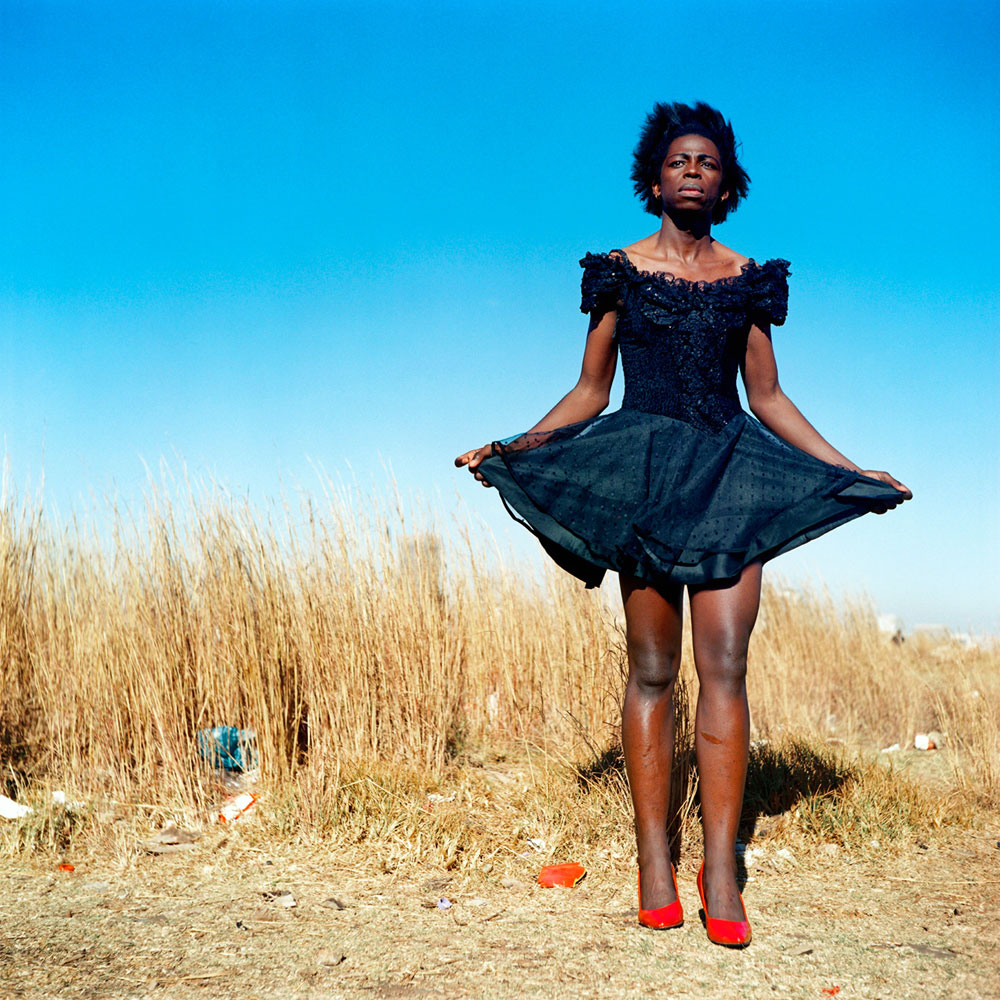
Of course there are intense moments when contemporary artists mine (and that is an appropriate word, for many Africans worked in servitude in the mines during the Apartheid period) the colonial archive, such as Carrie Mae Weems blood red tondos, You Became a Scientific Profile / An Anthropological Debate / A Negroid Type / A Photographic Subject (1995-1996, below) but what is more in evidence here is a dramatic sense of fashion and the performative and playful manner in which contemporary African identities are explored coupled with a strength in the representation of these identities. These are strong, forthright individuals not hidden off camera or dressed up in European dreamings imagin(in)g utopian “what ifs”; not the obvious crosses on black chests or deleted, delineated faces made of gum blossoms – but vital, alive, present human beings. While both groups of artists use traditional symbology to explore issues of identity and representation, the Australian version often seems dragged down by the portrayed dichotomy between past and present, traditional and contemporary / subversive, as though there must always be a reckoning, a longing, a sadness constantly reiterated in / with the past.

Dr Marcus Bunyan


Many thankx to The Walther Collection for allowing me to publish the photographs in the posting. Please click on the photographs for a larger version of the image. All images Courtesy of The Walther Collection.


Part II: Contemporary Reconfigurations


Pieter Hugo (South African, b. 1976) 'Nandipha Mntambo, Cape Town' 2012


Pieter Hugo (South African, b. 1976)
Nandipha Mntambo, Cape Town
2012
From There’s a Place in Hell for Me and My Friends


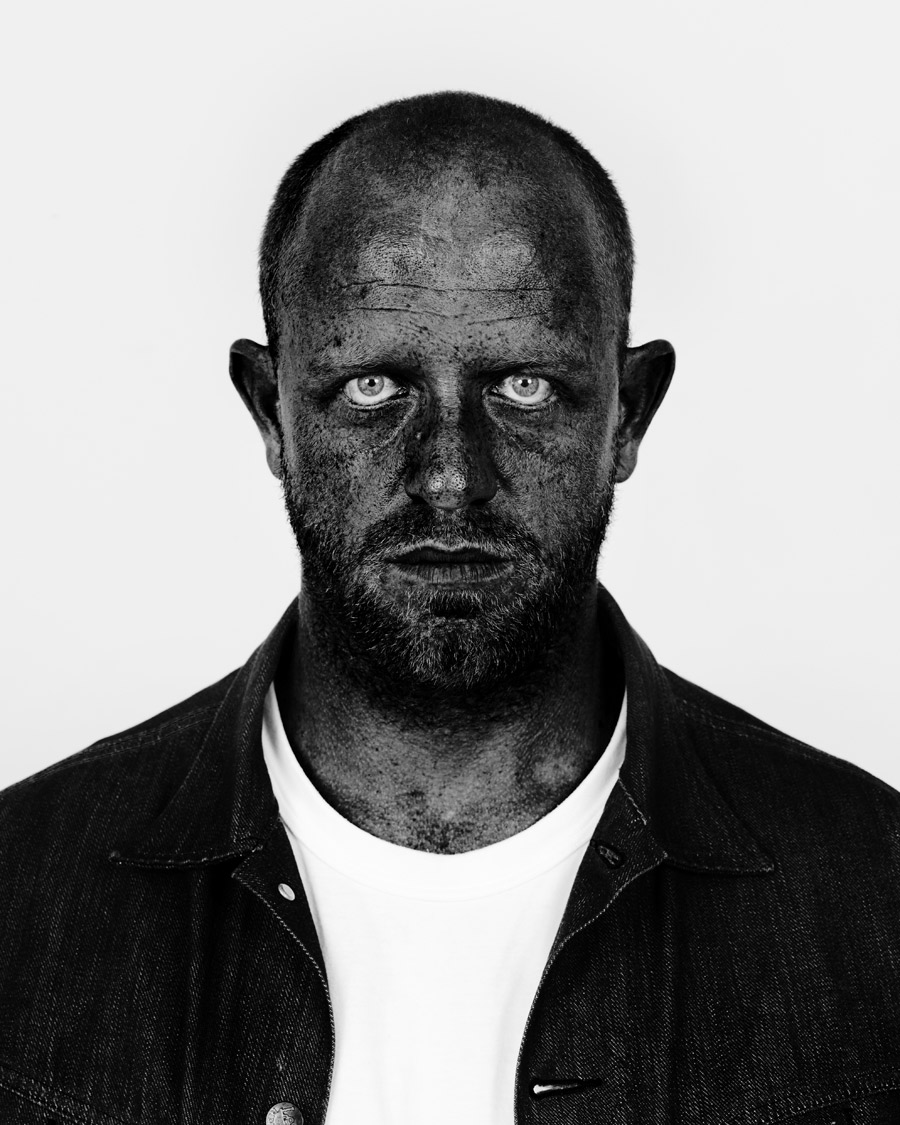
Pieter Hugo’s There’s a Place in Hell for Me and My Friends is a series of close-up portraits of the artist and his friends, all of whom call South Africa home. Through a digital process of converting colour images to black and white while manipulating the colour channels, Hugo emphasises the pigment (melanin) in his sitters’ skins so they appear heavily marked by blemishes and sun damage. The resulting portraits are the antithesis of the airbrushed images that determine the canons of beauty in popular culture, and expose the contradictions of racial distinctions based on skin colour. As the critic Aaron Schuman writes, “although at first glance we may look ‘black’ or ‘white’, the components that remain ‘active’ beneath the surface consist of a much broader spectrum. What superficially appears to divide us is in fact something that we all share, and like these photographs, we are not merely black and white – we are red, yellow, brown, and so on; we are all, in fact, coloured.

Text from the Stevenson Gallery website [Online] Cited 01/10/2013 no longer available online


Sabelo Mlangeni (South African, b. 1980) 'Outside King Mswati's palace' 2011


Sabelo Mlangeni (South African, b. 1980)
Outside King Mswati’s palace
2011
From Iimbali


Sabelo Mlangeni (South African, b. 1980) 'Imbali' 2011


Sabelo Mlangeni (South African, b. 1980)
Imbali
2011
From Iimbali


David Goldblatt (South African, 1930-2018) 'Mineworkers in their hostel, Western Deep Levels, Carletonville' 1970


David Goldblatt (South African, 1930-2018)
Mineworkers in their hostel, Western Deep Levels, Carletonville
1970


Pieter Hugo (South African, b. 1976) 'Yasser Booley, Cape Town' 2011


Pieter Hugo (South African, b. 1976)
Yasser Booley, Cape Town
2011
From There’s a Place in Hell for Me and My Friends


Pieter Hugo (South African, b. 1976) 'Pieter Hugo, Cape Town' 2011


Pieter Hugo (South African, b. 1976)
Pieter Hugo, Cape Town
2011
From There’s a Place in Hell for Me and My Friends


Pieter Hugo (South African, b. 1976) 'Themba Tshabalala, Cape Town' 2011


Pieter Hugo (South African, b. 1976)
Themba Tshabalala, Cape Town
2011
From There’s a Place in Hell for Me and My Friends


Guy Tillim (South African, b. 1962) 'Mai Mai militia in training near Beni, eastern DRC, for immediate deployment with the APC (Armée Populaire du Congo), the army of the RCD-KIS-ML - Portraits I and II' December 2002

Guy Tillim (South African, b. 1962) 'Mai Mai militia in training near Beni, eastern DRC, for immediate deployment with the APC (Armée Populaire du Congo), the army of the RCD-KIS-ML - Portraits I and II' December 2002


Guy Tillim (South African, b. 1962)
Mai Mai militia in training near Beni, eastern DRC, for immediate deployment with the APC (Armée Populaire du Congo), the army of the RCD-KIS-ML – Portraits I and II
December 2002


Sabelo Mlangeni (South African, b. 1980) 'Lwazi Mtshali, "Bigboy"' 2009


Sabelo Mlangeni (South African, b. 1980)
Lwazi Mtshali, “Bigboy”
2009
From Country Girls


Sabelo Mlangeni (South African, b. 1980) 'Xolani Ngayi, eStanela' 2009


Sabelo Mlangeni (South African, b. 1980)
Xolani Ngayi, eStanela
2009
From Country Girls


Zanele Muholi (South African, b. 1972) 'Amogelang Senokwane, District Six, Cape Town' 2009


Zanele Muholi (South African, b. 1972)
Amogelang Senokwane, District Six, Cape Town
2009
From Faces and Phases


Zanele Muholi (South African, b. 1972) 'Sishipo Ndzuzo, Embekweni, Paarl' 2009


Zanele Muholi (South African, b. 1972)
Sishipo Ndzuzo, Embekweni, Paarl
2009
From Faces and Phases


The Walther Collection is pleased to announce Part II of Distance and Desire: Encounters with the African Archive, a three-part exhibition series curated by Tamar Garb. “Contemporary Reconfigurations” offers new perspectives on the African photographic archive, reimagining its diverse histories and changing meanings. The exhibition centres on photography and video by African and African American artists who engage critically with the archive through parody, appropriation, and reenactment.

Carrie Mae Weems introduces the themes of “Contemporary Reconfigurations” with her powerful series From Here I Saw What Happened And I Cried, a revision of nineteenth and twentieth-century anthropometric photographs of African Americans, overlaid with texts by the artist. Sammy Baloji, Candice Breitz, Zwelethu Mthethwa, and Zanele Muholi rethink the ethnographic archive in large-scale colour prints, while Samuel Fosso and Philip Kwame Apagya create exuberant studio portraiture.

Sabelo Mlangeni’s black and white photo-essay, Imbali, documents the reed dances of KwaZulu-Natal, showing the display of virgins vying to be chosen as brides. Pieter Hugo’s series There’s a Place in Hell for Me and My Friends examines ethnicity and skin tonalities through anthropological mug shots. Working in video, Berni Searle performs as a statuesque deity engaged in domestic labor in “Snow White,” and Andrew Putter gives an indigenous voice to the effigy of Marie van Riebeeck, wife of the first Dutch settler in the area known today as Cape Town, in “Secretly I Will Love You More.”

For this group of artists, a stereotype or ethnographic vision in one era may provide material for quotation, irreverent reworking, or satirical performance in another. Illustrating how the African archive – broadly understood as an accumulation of representations, images, and objects – figures in selected contemporary lens-based practices, the exhibition stages a dialogue between the distance of the past and the desiring gaze of the present.

Press release from The Walther Collection website


Zwelethu Mthethwa (South African, b. 1960) 'Untitled' 2010


Zwelethu Mthethwa (South African, b. 1960)
Untitled
2010
From The Brave Ones
Courtesy of Jack Shainman Gallery, New York


Samuel Fosso (Cameroonian, b. 1962) 'La femme américaine libérée des années 70' 1997


Samuel Fosso (Cameroonian, b. 1962)
La femme américaine libérée des années 70
1997


Samuel Fosso (Cameroonian, b. 1962) 'Le Chef qui a vendu l'Afrique aux colons' 1997


Samuel Fosso (Cameroonian, b. 1962)
Le Chef qui a vendu l’Afrique aux colons
1997


Zanele Muholi (South African, b. 1972) 'Miss D'vine I' 2007


Zanele Muholi (South African, b. 1972)
Miss D’vine I
2007


Zanele Muholi (South African, b. 1972) 'Miss D'vine II' 2007


Zanele Muholi (South African, b. 1972)
Miss D’vine II
2007


Candice Breitz (South African, b. 1972) 'Ghost Series #9' 1994-1996


Candice Breitz (South African, b. 1972)
Ghost Series #9
1994-1996


Candice Breitz (South African, b. 1972) 'Ghost Series #4' 1994-1996


Candice Breitz (South African, b. 1972)
Ghost Series #4
1994-1996


Carrie Mae Weems (American, b. 1953) 'You Became a Scientific Profile / An Anthropological Debate / A Negroid Type / A Photographic Subject' 1995-1996


Carrie Mae Weems (American, b. 1953)
You Became a Scientific Profile / An Anthropological Debate / A Negroid Type / A Photographic Subject
1995-1996
From From Here I Saw What Happened and I Cried
Courtesy of Jack Shainman Gallery, New York


Andrew Putter (South African, b. 1965) 'Secretly I Will Love You More' 2007 (video still)


Andrew Putter (South African, b. 1965)
Secretly I Will Love You More (video still)
2007
Courtesy of the artist and Stevenson, Cape Town and Johannesburg


Sue Williamson (South African, b. 1941) 'Helen Joseph' 1983


Sue Williamson (South African, b. 1941)
Helen Joseph
1983
from A Few South Africans


Helen Beatrice Joseph (née Fennell) (8 April 1905 – 25 December 1992) was a South African anti-apartheid activist.

Helen Joseph was born in Eastbourne near Midhurst West Sussex, England and graduated from King’s College London, in 1927. After working as a teacher in India for three years, Helen came to South Africa in 1931, where she met and married a dentist, Billie Joseph. In 1951 Helen took a job with the Garment Workers Union, led by Solly Sachs. She was a founder member of the Congress of Democrats, and one of the leaders who read out clauses of the Freedom Charter at the Congress of the People in Kliptown in 1955. Appalled by the plight of black women, she was pivotal in the formation of the Federation of South African Women and with the organisation’s leadership, spearheaded a march of 20,000 women to the Union Buildings in Pretoria to protest against pass laws on August 9, 1956. This day is still celebrated as South Africa’s Women’s Day.

She was a defendant at the 1956 Treason Trial. She was arrested on a charge of high treason in December 1956, then banned in 1957. The treason trial dragged on for four years but she was acquitted in 1961. In spite of her acquittal, in 13 October 1962, Helen became the first person to be placed under house arrest under the Sabotage Act that had just been introduced by the apartheid government. She narrowly escaped death more than once, surviving bullets shot through her bedroom and a bomb wired to her front gate. Her last banning order was lifted when she was 80 years old. Helen had no children of her own, but frequently stood in loco parentis for the children of comrades in prison or in exile. Among the children who spent time in her care were Winnie and Nelson Mandela’s daughters Zinzi and Zenani and Bram Fischer’s daughter Ilsa. Helen Joseph died on the 25 December 1992 at the age of 87.

Text from Wikipedia website


Sue Williamson (South African, b. 1941) 'Miriam Makeba' 1987


Sue Williamson (South African, b. 1941)
Miriam Makeba
1987
From A Few South Africans


Miriam Makeba (4 March 1932 – 9 November 2008), nicknamed Mama Africa, was a Grammy Award-winning South African singer and civil rights activist.

In the 1960s, she was the first artist from Africa to popularise African music around the world. She is best known for the song “Pata Pata”, first recorded in 1957 and released in the U.S. in 1967. She recorded and toured with many popular artists, such as Harry Belafonte, Paul Simon, and her former husband Hugh Masekela. Makeba campaigned against the South African system of apartheid. The South African government responded by revoking her passport in 1960 and her citizenship and right of return in 1963. As the apartheid system crumbled she returned home for the first time in 1990. Makeba died of a heart attack on 9 November 2008 after performing in a concert in Italy organised to support writer Roberto Saviano in his stand against the Camorra, a mafia-like organisation local to the region of Campania.

Text from Wikipedia website


Kudzanai Chiurai (Zimbabwean, b. 1981) 'The Black President' 2009


Kudzanai Chiurai (Zimbabwean, b. 1981)
The Black President
2009


Zanele Muholi (South African, b. 1972) 'Ms Le Sishi I, Glebelands, Durban' January 2010


Zanele Muholi (South African, b. 1972)
Ms Le Sishi I, Glebelands, Durban
January 2010
From Beulahs (Beauties)


Zanele Muholi (South African, b. 1972) 'Martin Machapa' 2006


Zanele Muholi (South African, b. 1972)
Martin Machapa
2006
From Beulahs (Beauties)


Philip Kwame Apagya (Ghanaian, b. 1958) 'Come on Board' 2000


Philip Kwame Apagya (Ghanaian, b. 1958)
Come on Board
2000


Philip Kwame Apagya (Ghanaian, b. 1958) 'After the Funeral' 1998


Philip Kwame Apagya (Ghanaian, b. 1958)
After the Funeral
1998


The Walther Collection
Reichenauer Strasse 21
89233 Neu-Ulm, Germany

Opening hours:
Thurs – Sunday by appointment and with guided tour only
Public tours Saturday and Sunday at 3pm by appointment only

The Walther Collection website

LIKE ART BLART ON FACEBOOK

Back to top