Exhibition: ‘Ricky Swallow: The Bricoleur’ at The Ian Potter Centre, NGV Australia, Melbourne

Exhibition dates: 16th October, 2009 – 28th February, 2010
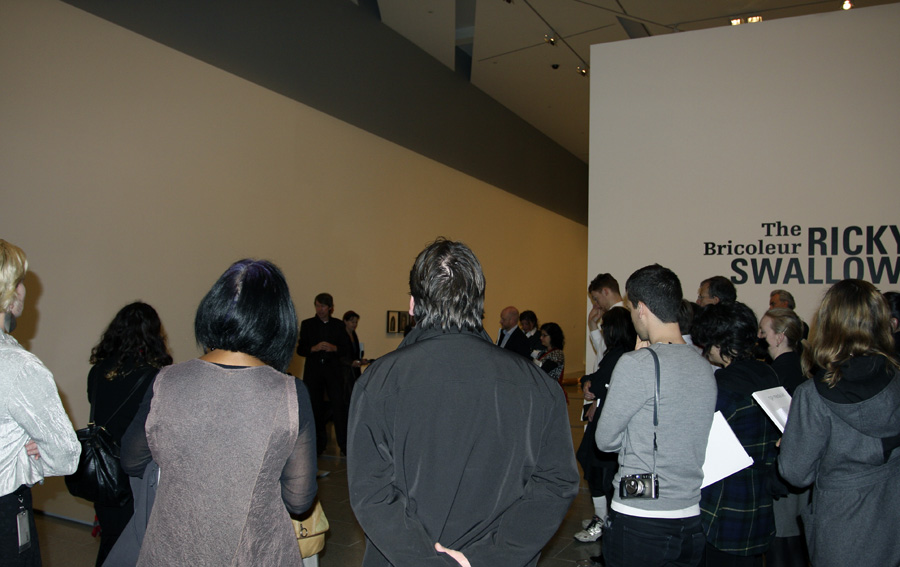
 

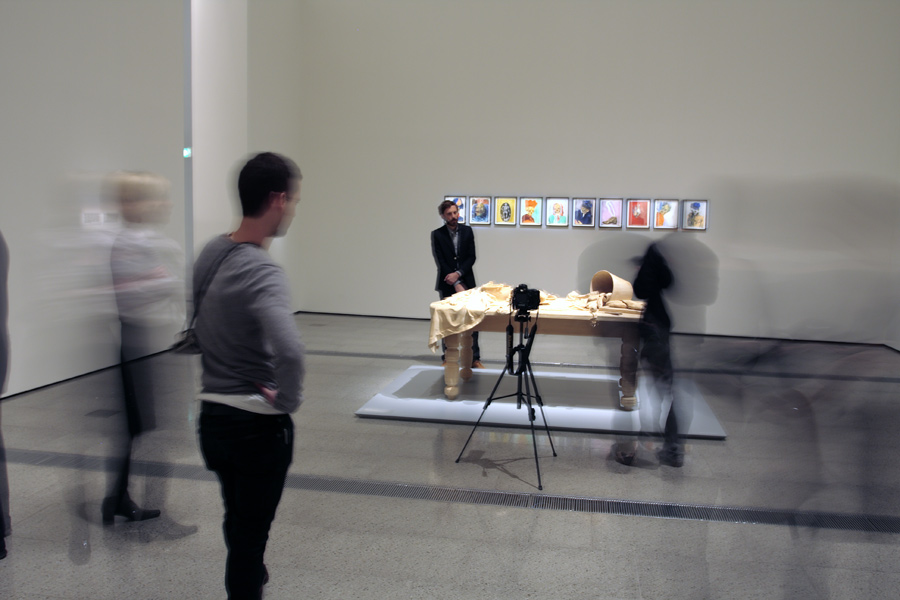
Media crowd at the Ricky Swallow exhibition 'The Bricoleur' at NGV Australia


Media crowd at the Ricky Swallow exhibition The Bricoleur at NGV Australia with Alex Baker, Senior Curator, Contemporary Art, NGV fourth from left with clasped hands.
Photo: Marcus Bunyan


Hot off the press straight to you here at Art Blart!

Photographs of the exhibition Ricky Swallow: The Bricoleur at the National Gallery of Victoria Australia, Federation Square. The photographs are in the chronological order that I took them, walking through the three spaces of the exhibition. A spare, visually minimalist aesthetic to the show, where every vanitas, every mark (in)forms the work as transcendent momenti mori. Review to follow.

Many thankx to Sue, Alison, Jemma and the team for the usual excellent job and for allowing me to document the exhibition. Please click on the photographs for a larger version of the image. All photographs © Marcus Bunyan


“I’ve always been interested in how an object can be remembered and how that memory can be sustained and directed sculpturally, pulling things in and out of time, passing objects through the studio as a kind of filter returning them as new forms.”


Ricky Swallow


Ricky Swallow (Australian, b. 1974) 'The Bricoleur' 2006 from the exhibition 'Ricky Swallow: The Bricoleur' at The Ian Potter Centre, NGV Australia, Melbourne, Oct 2009 - Feb 2010


Ricky Swallow (Australian, b. 1974)
The Bricoleur
2006
Jelutong
48 x 9.75 x 9.75 inches
Photo: Marcus Bunyan


Ricky Swallow (Australian, b. 1974) 'Unbroken Ways (for Derek Bailey)' 2006 from the exhibition 'Ricky Swallow: The Bricoleur' at The Ian Potter Centre, NGV Australia, Melbourne, Oct 2009 - Feb 2010


Ricky Swallow (Australian, b. 1974)
Unbroken Ways (for Derek Bailey)
2006
English Limewood
5 x 30 x 7 inches
Photo: Marcus Bunyan


Ricky Swallow (Australian, b. 1974) 'One Nation Underground' 2007


Ricky Swallow (Australian, b. 1974)
One Nation Underground
2007
Photo: Marcus Bunyan


Ricky Swallow (Australian, b. 1974) 'One Nation Underground' 2007  (detail)


Ricky Swallow (Australian, b. 1974)
One Nation Underground (detail)
2007
Photo: Marcus Bunyan


Ricky Swallow (Australian, b. 1974) 'Tusk' 2007


Ricky Swallow (Australian, b. 1974)
Tusk
2007
Bronze with white patina, brass fixtures
19.75 x 41.25 x 2.25 inches
Photo: Marcus Bunyan


Ricky Swallow (Australian, b. 1974) 'Tusk' 2007 (detail)


Ricky Swallow (Australian, b. 1974)
Tusk (detail)
2007
Bronze with white patina, brass fixtures
19.75 x 41.25 x 2.25 inches
Photo: Marcus Bunyan


Ricky Swallow (Australian, b. 1974) 'Rehearsal for Retirement' 2008 (detail)


Ricky Swallow (Australian, b. 1974)
Rehearsal for Retirement (detail)
2008
English Lime Wood, Poplar
Photo: Marcus Bunyan


Ricky Swallow (Australian, b. 1974) 'Rehearsal for Retirement' 2008 (detail)


Ricky Swallow (Australian, b. 1974)
Rehearsal for Retirement (detail)
2008
English Lime Wood, Poplar
Photo: Marcus Bunyan


Ricky Swallow (Australian, b. 1974) 'Bowman’s record' 2008 (detail)


Ricky Swallow (Australian, b. 1974)
Bowman’s record (detail)
2008
Bronze
Photo: Marcus Bunyan


Ricky Swallow (Australian, b. 1974) 'Bowman’s record' 2008 (detail)


Ricky Swallow (Australian, b. 1974)
Bowman’s record (detail)
2008
Bronze
Photo: Marcus Bunyan


Ricky Swallow’s sculptures address fundamental issues that lie at the core of who we are. Things have lives. We are our things. We are things. When all is said and done it is our things – our material possessions – that outlive us. Anyone who has lost a family member or close friend knows this: what we have before us once that person is gone are the possessions that formed a life. Just as we are defined and represented by the things that we collect over time, we are ultimately objects ourselves. When we are dead and decomposed what remains are our bones, another type of object. And then there is social science. Archaeology, a subfield of anthropology, is entirely based on piecing together narratives of human relations based on material culture, that is, objects both whole and fragmentary. It may seem obvious but it is worth stressing here that our understanding of cultures from the distant past, those that originated before the advent of writing, is entirely based on the study of objects and skeletal remains. Swallow’s art addresses these basic yet enduring notions and reminds us of our deep symbiotic relationship to the stuff of daily life.

Like the bricoleur put into popular usage by anthropologist Claude Levi-Strauss in his seminal book The Savage Mind, Ricky Swallow creates works of art often based on objects from his immediate surroundings. His method, however, is more of a second order bricolage: his sculptures are not assemblages of found objects, but rather elegantly crafted things. Hand carved from wood or plaster or cast in bronze, these humble objects are transformed into memorials to both the quotidian and the passage of time.

Still life

The still life has been an important touchstone throughout Swallow’s recent practice as it is an inspired vehicle for the exploration of how meaning is generated by objects. Several sculptures in the exhibition reference the still-life tradition in which Swallow updates and personalises this time-honoured genre, in particular the vanitas paintings of 17th century Holland. Vanitas still lifes, through an assortment of objects that had recognisable symbolism to a 17th-century viewer, functioned as allegories on the futility of pleasure and the inevitably of death. Swallow’s embrace of still life convention, however, is non-didactic, secular and open-ended. Swallow is not obsessed by death. On the contrary, his focus on objects is about salvaging them from the dust bin of history and honouring their continued resonance in his life.

Killing time, 2003-2004, and Salad days, 2005, depict animals that Swallow and his family either found or caught when he was young and best highlight how the artist reclaims the still life genre to explore personal narrative. Killing time, which depicts a bounty of fish and crustaceans spread across a table modelled after the Swallow family kitchen table of the artist’s youth, is rife with autobiographical association. It not only references an object from Swallow’s past, but also the profession of his father, a fisherman, and the fact that Swallow was raised by the sea. Salad days is another autobiographical work depicting a range of animals such as birds, a rabbit, mice and a fox skull. Like many boys growing up in rural environments, Swallow recalls shooting magpies, encountering nesting birds in his garage or discovering dead lizards or trapping live ones in an attempt to keep them as pets.

While not an overt still life, History of holding, 2007, suggests the genre in its fragmentary depiction of a musical instrument and the appearance of a lemon with falling rind. The hand holding / presenting a peeled lemon as the rind winds around the wrist in bracelet-like fashion is based on a cast of Swallow’s own hand, insinuating himself into this antiquated tradition. It is as if Swallow is announcing to us his deep interest in the temporality of objects through the presentation of the peeled lemon, which symbolises the passing of time and also appears in Killing time. The second component of History of holding is a sculptural interpretation of the Woodstock music festival icon designed by Arthur Skolnick in 1969, which still circulates today. History of holding, then, also references music, a leitmotif in Swallow’s art that appears both within the work itself, and also through Swallow’s use of titles.

Body fragments

Tusk, 2007 among several other works in the exhibition, explores the theme of body as fragment. Much has been discussed about Swallow’s use of the skeleton as a form rich in meaning within both the traditions of art history as well as popular culture (references range from the Medieval dance macabre and the memento mori of the still life tradition to the skeleton in rock music and skateboard art iconography). Tusk represents two skeletal arms with the hands clasped together in eternal union. A poignant work, Tusk is a meditation on permanence: the permanence of the human body even after death; the permanence of the union between two people, related in the fusion of the hands into that timeless symbol of love, the heart.

Watercolours: atmospheric presentations, mummies, music, homage

Swallow calls his watercolours “atmospheric presentations”, in contradistinction to his obviously more physical sculptures, and he sees them as respites from the intensity of labour and time invested in the sculptural work. They also permit experimentation in ways that sculpture simply does not allow. One nation underground, 2007, is a collection of images based on rock / folk musicians, several who had associations to 1960s Southern California, Swallow’s current home. Most of the subjects Swallow has illustrated in this work are now deceased; several experienced wide recognition only after their deaths. Like many of his sculptures, this group of watercolours tenderly painted with an air of nostalgia has the sensibility of a memorial – or as Swallow has called it “a modest monument”. The title of the work is based on a record album by another under-heralded rock band from the 1960s, Pearls Before Swine, and is a prime example of Swallow’s belief in the importance of titles to the viewing experience as clues or layers of meaning. In this case, the title hints at the quasi-cult status of the musicians and singers depicted. The featured musicians are Chris Bell (Big Star), Karen Dalton (a folk singer), Tim Buckley (legendary singer whose style spanned several genres and father to the late Jeff Buckley), Denny Doherty (The Mamas & the Papas ), Judee Sill (folk singer), Brian Jones (Rolling Stones), Arthur Lee (Love), John Phillips (The Mamas & the Papas ), Skip Spence (Jefferson Airplane and Moby Grape) and Phil Ochs (folk singer).

Text from the National Gallery of Victoria website [Online] Cited 15/10/2010


Installation view of 'Ricky Swallow: The Bricoleur' second room at NGV Australia

Installation view of 'Ricky Swallow: The Bricoleur' second room at NGV Australia


Installation views of Ricky Swallow: The Bricoleur second space at NGV Australia
Photos: Marcus Bunyan


Ricky Swallow (Australian, b. 1974) 'Caravan' 2008 (detail)


Ricky Swallow (Australian, b. 1974)
Caravan (detail)
2008
Bronze
Photo: Marcus Bunyan


Ricky Swallow (Australian, b. 1974) 'Salad days' c. 2005


Ricky Swallow (Australian, b. 1974)
Salad days
c. 2005
Photo: Marcus Bunyan


Ricky Swallow (Australian, b. 1974) 'Killing time' 2003-2004


Ricky Swallow (Australian, b. 1974)
Killing time
2003-2004
Photo: Marcus Bunyan


Ricky Swallow (Australian, b. 1974) 'Killing time' 2003-2004 (detail)


Ricky Swallow (Australian, b. 1974)
Killing time (detail)
2003-2004
Photo: Marcus Bunyan


Ricky Swallow (Australian, b. 1974) 'Killing time' 2003-2004


Ricky Swallow (Australian, b. 1974)
Killing time
2003-2004
Photo: Marcus Bunyan


Ricky Swallow (Australian, b. 1974) 'Killing time' 2003-2004 (detail)


Ricky Swallow (Australian, b. 1974)
Killing time (detail)
2003-2004
Photo: Marcus Bunyan


A new exhibition featuring the work of internationally renowned Australian artist Ricky Swallow will open at The Ian Potter Centre: NGV Australia on 16 October 2009.

Ricky Swallow: The Bricoleur is the artist’s first major exhibition in Australia since 2006. This exhibition will feature several of the artist’s well‐known intricately detailed, carved wooden sculptures as well as a range of new sculptural works in wood, bronze and plaster. The exhibition will also showcase two large groups of watercolours, an aspect of Swallow’s practice that is not as well known as his trademark works.

Salad days (2005) and Killing time (2003-2004), which were featured in the 2005 Venice Biennale and are considered Swallow icons, will strike a familiar chord with Melbourne audiences.

Sculptures completed over the past year include bronze balloons on which bronze barnacles seamlessly cling (Caravan, 2008); a series of cast bronze archery targets (Bowman’s Record, 2008) that look like desecrated minimalist paintings; and carved wooden sculpture of a human skull inside what looks like a paper bag (Fig 1, 2008).

A highlight of the show will be Swallow’s watercolour, One Nation Underground (2007), recently acquired by the NGV. The work presents a collection of images based on 1960s musicians including Tim Buckley, Denny Doherty, Brian Jones and John Phillips.

Alex Baker, Senior Curator, Contemporary Art, NGV said the works in this exhibition explore the themes of life and death, time and its passing, mortality and immortality.

“Swallow’s art investigates how memory is distilled within the objects of daily life. His work addresses the fundamental issues that lie at the core of who we are, reminding us of our deep symbiotic relationship to the stuff of everyday life.”

“The exhibition’s title The Bricoleur refers to the kind of activities performed by a handyman or tinkerer, someone who makes creative use of whatever might be at hand. The Bricoleur is also the title of one of the sculptures in the exhibition, which depicts a forlorn houseplant with a sneaker wedged between its branches,” said Mr Baker.

Gerard Vaughan, Director, NGV, said this exhibition reinforces the NGV’s commitment to exhibiting and collecting world‐class contemporary art.

“The NGV has enjoyed a long and successful relationship with Ricky Swallow, exhibiting and acquiring a number of his works over the years. His detailed and exquisitely crafted replicas of commonplace objects never fail to inspire visitors to the Gallery.”

Ricky Swallow was born in Victoria in 1974 and currently lives and works in Los Angeles, California. His career has enjoyed a meteoric rise since winning the NGV’s prestigious Contempora5 art prize in 1999. Since then, Swallow has exhibited in the UK, Europe and the United States, and represented Australia at the 2005 Venice Biennale.”

Press release from the NGV website [Online] Cited 10/10/2009. No longer available online


Ricky Swallow facing the media behind his work 'Killing time' (2003-2004)

Ricky Swallow facing the media behind his work 'Killing time' (2003-2004)


Ricky Swallow facing the media behind his work Killing time (2003-2004)
Photos: Marcus Bunyan


The Ian Potter Centre: NGV Australia Federation Square
Corner of Russell and 
Flinders Streets, Melbourne

Opening hours:
Open daily 10am – 5pm

National Gallery of Victoria website

LIKE ART BLART ON FACEBOOK

Back to top

Review: ‘Sweet Complicity’ by eX de Medici at Karen Woodbury Gallery, Richmond, Melbourne

Exhibition dates: 30th September – 24th October, 2009


eX de Medici (Australia, b. 1959) 'Tooth and claw' 2009 from the exhibition 'Sweet Complicity' by eX de Medici at Karen Woodbury Gallery, Richmond, Melbourne, Sept - Oct, 2009


eX de Medici (Australia, b. 1959)
Tooth and claw
2009
Pen, ink and mica on archival paper
114.0 x 521.0cm


Is it sinful to say that an Armalite rifle can be voluptuously seductive? Not in the hands of artist eX de Medici!

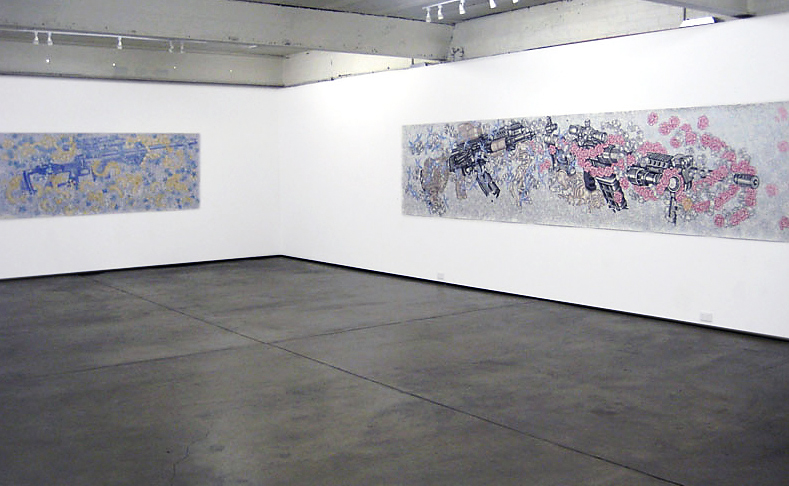
Taking a variety of contemporary military high-powered weapons (Armalite AR30 Tactical .308 Sniper, Modified AK 47, Blackwater AR15, Patriot Ordinance P45 .223 for example) eX de Medici’s armaments have a steely presence softened and consumed by multitudinous garlands of traditional tattoo ‘flash’ iconography (flowers, skulls, bows, stars, Chinese dragons, waves and swallows repeated in Escher-like patterns) and contorted skeletons. Using individual colour palettes for each of the three large pen, ink and mica on paper works in the exhibition, eX subverts the masculine symbology of gun culture and decomposes it within an ornamentation of deathly desire – new compositions in the dance of death: ‘U hurt me Baby, U Fkd me up gd, the hole tht u made (cross) me Ded …’

In other less skilled artist’s hands the subject matter could become cliched and trite but here de Medici balances the disparate elements in her compositions and brings the subject matter alive – sinuously jumping off the paper, entwining the viewer in their delicious ironies, all of us sweetly complicit in the terror war (send more meat, send more meat!), fighting tooth and nail to keep urban realities at arm’s length. The dark desires that these works contain possess an aesthetic beauty that swallows us up so that we, too, become ‘Barbarians All’. Highly recommended!

Dr Marcus Bunyan


Many thankx to Karen Woodbury Gallery for allowing me to publish the art work in the posting. Please click on some of the photographs for a larger version of the image.


eX de Medici (Australia, b. 1959) 'Tooth and Claw' 2009 (detail) from the exhibition 'Sweet Complicity' by eX de Medici at Karen Woodbury Gallery, Richmond, Melbourne, Sept - Oct, 2009


eX de Medici (Australia, b. 1959)
Tooth and claw (detail)
2009
Pen, ink and mica on archival paper
114.0 x 521.0cm


eX de Medici (Australia, b. 1959) 'Tooth and claw' 2009 (detail)

eX de Medici (Australia, b. 1959) 'Tooth and claw' 2009 (detail)


eX de Medici (Australia, b. 1959)
Tooth and claw (details)
2009
Pen, ink and mica on archival paper
114.0 x 521.0cm


Installation view of 'Sweet Complicity' by eX de Medici at Karen Woodbury Gallery, Melbourne showing at left, 'Send more meat' (2009) and at right, 'Tooth and claw' (2009)


Installation view of Sweet Complicity by eX de Medici at Karen Woodbury Gallery, Melbourne showing at left, Send more meat (2009) and at right, Tooth and claw (2009)
Photo: Marcus Bunyan


eX de Medici (Australia, b. 1959) 'Send more meat' 2009


eX de Medici (Australia, b. 1959)
Send more meat
2009
Pen, ink and mica on archival paper


eX de Medici (Australia, b. 1959) 'Send more meat' 2009 (detail)


eX de Medici (Australia, b. 1959)
Send more meat (detail)
2009
Pen, ink and mica on archival paper


Sweet complicity is eX de Medici’s first and much anticipated exhibition at Karen Woodbury Gallery. The exhibition will comprise of three monumental pen, ink and mica works on archival paper. These works examine recurring themes in her practice such as power, war, death and violence via a decorative feminine veneer and aesthetic.

The recurrent use of symbolism in the form of weapons, skulls and garlands in her work re-appear with the addition of Chinese imagery (Imperial golden dragons, China’s five-pointed star, and the use of chrysanthemums). These potent works display a latent interest in scientific illustration and allude to de Medici’s characteristic stylised tattoo motifs that stems from her work as a tattooist. The almost obsessive repetition of pattern and immense detailing display eX’s dedication to her practice through the strong mental and physical commitment required to complete such awe-inspiring artworks that seduce the viewer.

There is an unmistaken polemic tone in de Medici’s practice that cannot be ignored. Different cultures, identities, actions and consequences are represented and centred on objects of warfare, allowing for disguised and layered political and moral statements.

de Medici lives and produces much of her work in the nation’s capital Canberra. Streams of influences inform the work; Canberra’s political and physical agendas, research resourced from various national institutions such as the CSIRO Entomological and Taxonomy Division, the National Library of Australia and the Australian War Memorial. She has recently returned from the Solomon Islands where she was chosen as an official war artist.

Text from the Karen Woodbury Gallery website [Online] Cited 05/10/2009. No longer available online


The defining theme in eX de Medici’s paintings is a consistent interrogation of power. The notion of ‘the personal’ doesn’t interest the artist. Instead she investigates authority and dissent through paintings of guns, surveillance devices and gas masks.


eX de Medici (Australia, b. 1959) 'American Sex/Funky Beat Machine' 2009


eX de Medici (Australia, b. 1959)
American Sex/Funky Beat Machine
2009
Pen, ink and mica on archival paper
Diptych, 114.0 x 249.0cm


eX de Medici (Australia, b. 1959) 'American Sex/Funky Beat Machine' 2009 (detail)


eX de Medici (Australia, b. 1959)
American Sex/Funky Beat Machine (detail)
2009
Pen, ink and mica on archival paper
Diptych, 114.0 x 249.0cm


Karen Woodbury Gallery

This gallery is now closed.

LIKE ART BLART ON FACEBOOK

Back to top

Review: ‘Between Lines’ by Kim Lawler at fortyfive downstairs, Flinders Lane, Melbourne

Exhibition dates: 29th September – 10th October, 2009

Curator: Amy Barclay


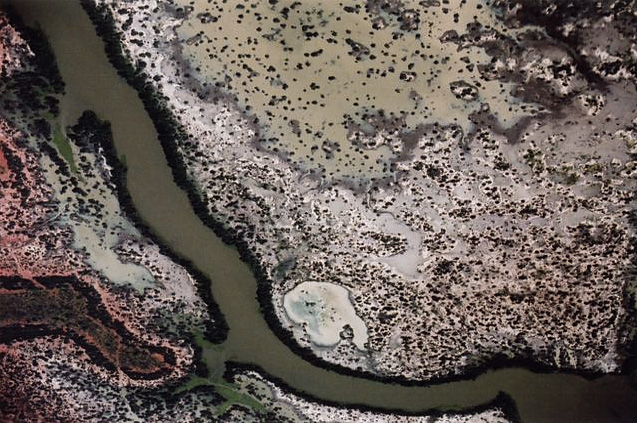
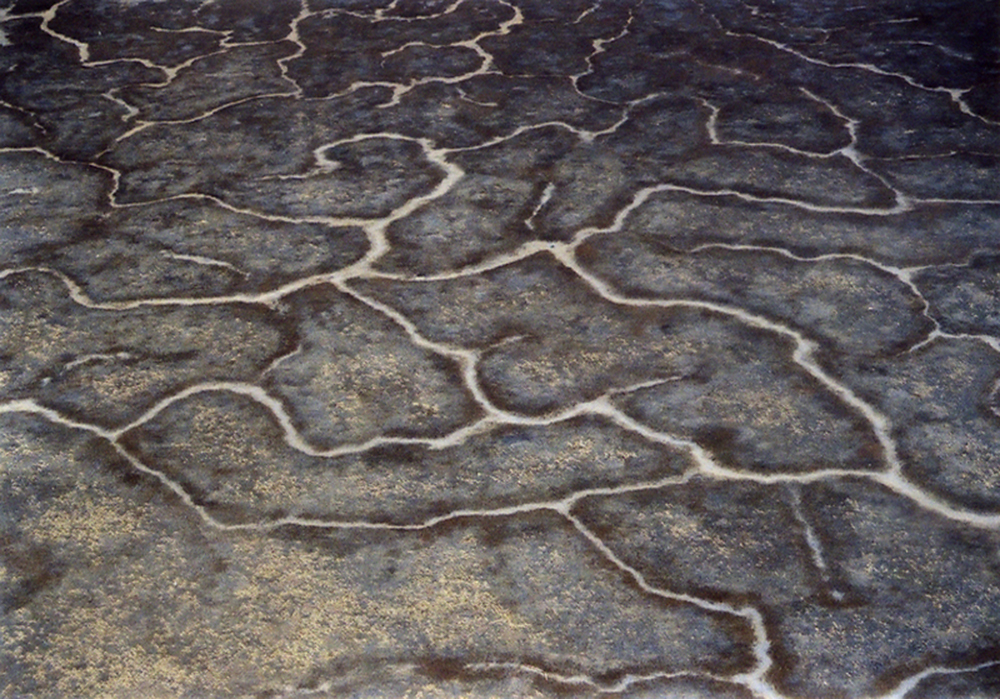
Kim Lawler (Australian) 'Between Lines' #4 2009 from the exhibition 'Between Lines' by Kim Lawler at fortyfive downstairs, Flinders Lane, Melbourne, Sept - Oct, 2022


Kim Lawler (Australian)
Between Lines #4
Aerial Photograph, Great Sandy Desert, Western Australia
2009


I finally made it to Kim Lawler’s exhibition Between Lines at fortyfive downstairs, Flinders Lane, Melbourne and, in many ways, the trip was well worth it. Lawler presents 12 prints from her eponymous series, aerial photographs taken over Western Australia.

Eschewing the essentially topographic state promoted in the “New Topographics: Photographs of a Man-Altered Landscape” of 1975 that have influenced so many photographers in recent decades (including the hyper-real photographs of the West Australian landscape by Edward Burtynsky where there is an emotional distance between the photograph and the viewer), Lawler instead mines the depths of abstraction in landscape photography.

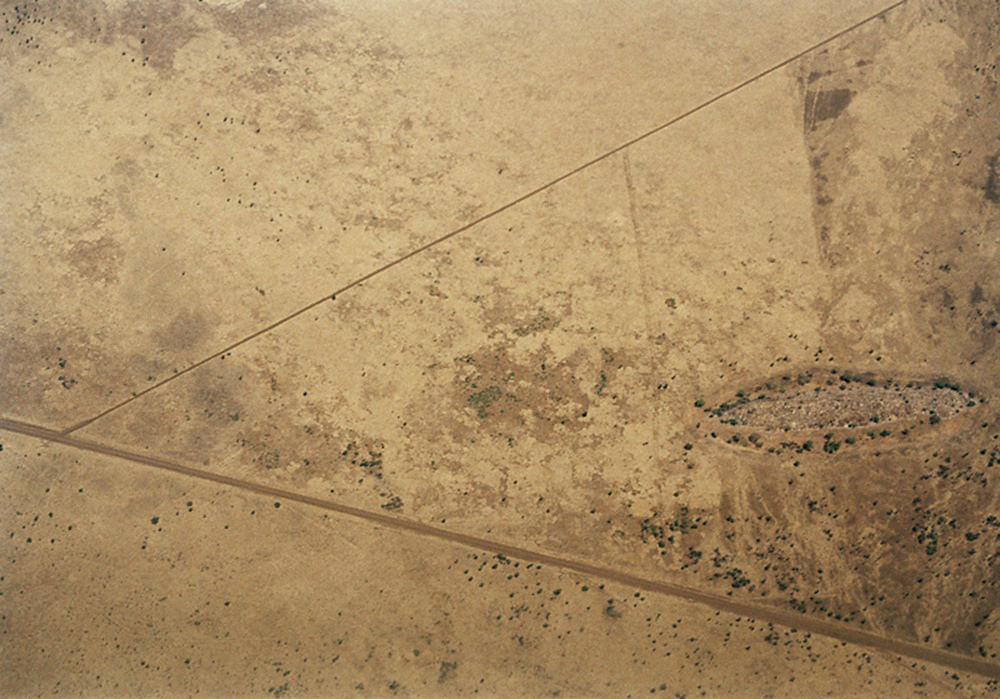
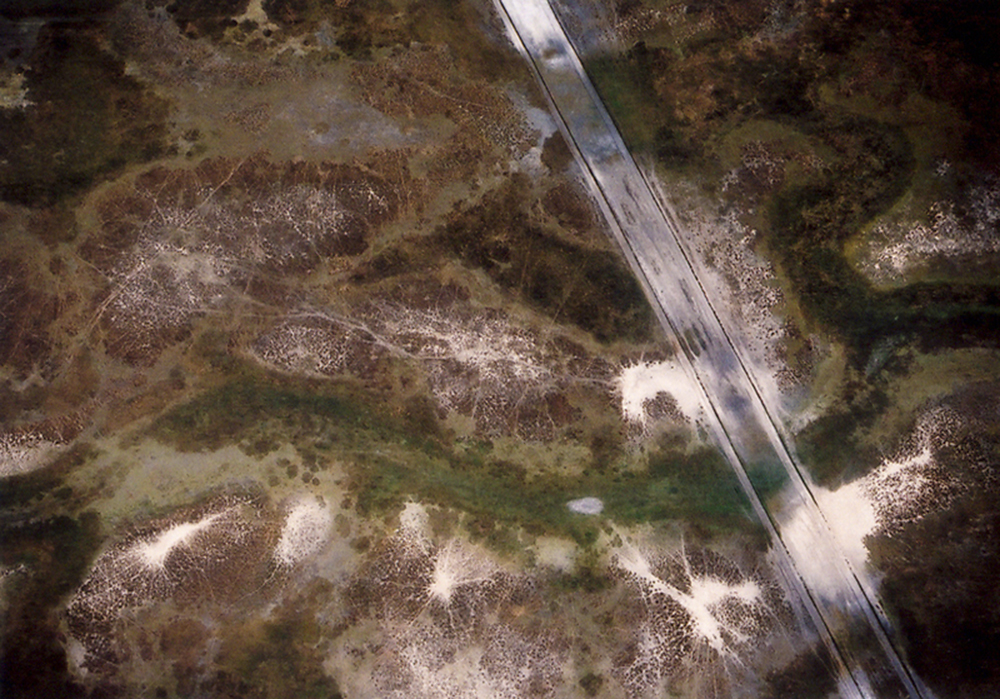
These are visceral photographs – in #4 the river and surrounds almost become vascular and cellular; in #13 the synapses and electrons infiltrate the highway reminding me of bomb craters from a Second World War landscape. In #7 the shrubs, unlike the precision of the New Topographics, become feckless dots, the landing strip a scar on the body; in #12 the toxic unsutured wound bleeds across the surface of the skin, white scar tissue surrounding it.

In these atypical mappings Lawler employs a taxonomy of disorder. The photographs are very soft in focus, soft in printing, big in the grain of the film and there is very little depth of field employed – in other words there is really nothing in focus at all, nothing that the eye and the mind can fix on. These are interstitial spaces (i.e. gaps between spaces full of structure or matter) and the title Between Lines is entirely appropriate for the work. The photographs contain beautiful textures, colours, surfaces.

This is their strength but also their weakness. The eye and the mind longs for something to hold onto, perhaps just a small fraction of the image to be in focus, so that the disorder plays off the order (for one cannot exist without the other!). Mutation only exists if their is something to mutate against. The other two small problems I had with the work were a matter of semantics and others may disagree – personally I found the size of the prints neither here nor there and they could have done with being about 2-3 inches larger and the white frames were too heavy. That is a funny thing to say about contemporary white frames, that they are too heavy for the work, but this is entirely possible: the moulding was too thick and the depth of the box frames to deep for my liking, detracting from the print itself and making the works darker than they needed to be.

Overall then an excellent exhibition that offers a positive variation on the cliched narrative of aerial photography of the Australian outback, one that questions the munificence of human habitation of the body and of the earth.

Dr Marcus Bunyan


Many thankx to fortyfive downstairs for allowing me to publish the photographs in the posting. Please click on the photographs for a larger version of the image.


Kim Lawler (Australian) 'Between Lines #7 (Landing Strip)' 2009 from the exhibition 'Between Lines' by Kim Lawler at fortyfive downstairs, Flinders Lane, Melbourne, Sept - Oct, 2022


Kim Lawler (Australian)
Between Lines #7 (Landing Strip)
Aerial Photograph, Great Sandy Desert, Western Australia
2009


Kim Lawler (Australian) 'Between Lines #8' 2009


Kim Lawler (Australian)
Between Lines #8 (Jones Soak, position approximate)
Aerial Photograph, Great Sandy Desert, Western Australia
2009


“Beyond romance or nostalgia, Lawler’s lucid visual studies reveal the aesthetic beauty of the stories being written and rewritten onto this responsive and at times fragile environment.”

~ Amy Barclay, curator


Between Lines comprises a series of aerial photographs taken in the Kimberley, far north Western Australia. This remote area is embedded with stories of Indigenous and non-Indigenous inhabitants, transitory visitors and scarred by multinational companies resource development. The artist, Kim Lawler, is concerned with markings, both natural and constructed, that tell stories of places, transitions and interruptions that occur within the landscape.

Between Lines is informed by Lawler’s experience of living in these regions and local perspectives on the displacement of people and their consequential relationship to the land that has taken place. It is also informed by the opposing qualities of abandon and connection that occur as the stories within these landscapes continue to unfold.

Competing demands for natural resources, and the resulting impact upon transitional landscapes, resonate with the stories of many generations of people that continue to flow through or inhabit each region. Attuned to the markings on these landscapes, it is these residual narratives ‘Between Lines’ seeks to record.

The imagery seen in Between Lines extends from Lawler’s previous artwork that interrogated additional Kimberley locations including: the remote Buccaneer Archipelago; the isolated far northern reaches of the Kimberley Coastline; Cockatoo Island iron ore mine and resort and; inland regions such as Warmun Aboriginal Community on the periphery of the Great Sandy Desert.

“Lawler’s eye is arrested by markings, natural and constructed, that trace and recount places, transitions and interruptions; the signifiers of change in a landscape millions of years old.”

Amy Barclay, curator

Text from the fortyfive downstairs website


Kim Lawler (Australian) 'Between Lines #12' 2009


Kim Lawler (Australian)
Between Lines #12
Joseph Bonaparte Gulf, Northern Kimberley, Western Australia
2009


Kim Lawler (Australian) 'Between Lines #13' 2009


Kim Lawler (Australian)
Between Lines #13
Great Northern Highway, Kimberley, Western Australia
2009


Kim Lawler (Australian) 'Between Lines #16' 2009


Kim Lawler (Australian)
Between Lines #16
Cockatoo Island Cyanide Settling Pool, Yampi Sound, Western Australia
2009


fortyfive downstairs
45, Flinders Lane
Melbourne 3000

Opening hours:
Tuesday – Friday 12 – 6pm
Saturday 12 – 4pm

fortyfive downstairs website

Kim Lawler website

LIKE ART BLART ON FACEBOOK

Back to top

Review: ‘Slow Down, You Move Too Fast’ by Kirra Jamison at Sophie Gannon Gallery, Richmond, Melbourne

Exhibition dates: 22nd September – 17th October, 2009


Kirra Jamison (Australian) 'Livin' on a prayer' 2009 from the exhibition 'Slow Down, You Move Too Fast' by Kirra Jamison at Sophie Gannon Gallery, Richmond, Melbourne, Sept - Oct, 2009


Kirra Jamison (Australian)
Livin’ on a prayer
2009
Gouache, pen and vinyl on paper
160 x 114cm


Hit, Hit, Hit with a Miss

Although all the work in this exhibition is dated 2009 this exhibition can fairly easily be divided into what seems to be two separate bodies of work: the excellent gouache, pen and vinyl works of paper and the ‘other’ less successful large paintings of owls and raccoons and the smaller paintings of hanging flowers and tree branches on dark purple ground.

The latter large and small paintings fail to hit the spot with the exception of Belong to me (2009, below) which has visual and conceptual links to the works on paper, the twin bodies dissolving into a kaleidoscopic dream-like effervescence of life. The paintings of the owl (Last star, 2009 below), raccoons (Can you see my aura 2009, below) together with another fairytale painting With a roof of flint and a floor of chalk (2009) fail to communicate a shared vision being disparate items that conceptually don’t seem to hang well together. They lack a certain spark, that revelatory presence and appear flat both physically and metaphorically.

On the flip side of the equation are works that are physically complex, conceptually robust and simply beautiful in their execution: no wonder so many of them have sold already! Using basic graphic patterns repeated and inverted (Jamison has an interest in graphics fostered through textile design), Jamison constructs fantasy worlds, fairytales on paper. In Livin’ on a prayer (2009, above) we have a splendid Carnival of the Animals as monkeys and creatures inhabit a boat sprouting flowers riding upon a sea made of flowers. In Willow weep 2 (2009, above) the tree of life is inhabited by creatures and a human figure (see halfway up on the right-hand side). In Future’s lovecraft (2009, below) incredible creatures again inhabit the imagined biospheric carnivalesque worlds. As Russian theorist Mikhail Bakhtin notes,

“The carnival offers the chance to have a new outlook on the world, to realise the relative nature of all that exists, and to enter a completely new order of things.”1

Here the new order of things is a thing of beauty to behold; the works draw you in with their colour and detail, their presence. I can’t wait to see what possibilities unfold next for the artist from this starting point for this is the very beginning of the path, a scratching of the surface of what is possible with this technique and themes. It is almost like an emotional texture, the breathe of cool air on your lungs in the early morning mist. I await developments with interest!

Dr Marcus Bunyan


1/ Bakhtin, Mikhail. Rabelais and his World (trans. Hélène Iswolsky). Bloomington: Indiana University Press, 1984, p. 34.


Many thankx to Sophie Gannon Gallery for allowing me to publish the art work in the posting. Please click on the photographs for a larger version of the image.


Kirra Jamison (Australian) 'Willow weep 2' 2009 from the exhibition 'Slow Down, You Move Too Fast' by Kirra Jamison at Sophie Gannon Gallery, Richmond, Melbourne, Sept - Oct, 2009


Kirra Jamison (Australian)
Willow weep 2
2009
Gouache and vinyl on paper
160 x 114cm


Kirra Jamison (Australian) 'Future's lovecraft' 2009


Kirra Jamison (Australian)
Future’s lovecraft
2009
Gouache and vinyl on paper
160 x 114cm


Installation view of 'Slow down, don't run so fast' by Kirra Jamison at Sophie Gannon Gallery, Richmond


Installation view of Slow down, you move too fast by Kirra Jamison at Sophie Gannon Gallery, Richmond
Photo: Marcus Bunyan


Kirra Jamison (Australian) 'Belong to me (after Delaunay)' 2009


Kirra Jamison (Australian)
Belong to me (after Delaunay)
2009
Acrylic, gouache and pen on canvas
220 x 183cm


Kirra Jamison (Australian) 'Last Star' 2009


Kirra Jamison (Australian)
Last Star
2009
Acrylic, gouache, pen and ink on canvas
185 x 153cm


Kirra Jamison (Australian) 'Can you see my aura?' 2009


Kirra Jamison (Australian)
Can you see my aura?
2009


Sophie Gannon Gallery
2, Albert Street, Richmond, Melbourne
Phone: +61 3 9421 0857

Opening hours:
Tuesday – Saturday 11am – 5pm

Sophie Gannon Gallery website

LIKE ART BLART ON FACEBOOK

Back to top

Review: ‘Diction’ by Stormie Mills at Helen Gory Galerie, Prahran, Melbourne

16th September – 10th October, 2009


Stormie Mills (Australian, b. 1969) 'Some days all my shadow are behind me' 2009 from the exhibition 'Diction' by Stormie Mills at Helen Gory Galerie, Prahran, Melbourne, Sept - Oct, 2009


Stormie Mills (Australian, b. 1969)
Some days all my shadows are behind me
2009
Acrylic, spray paint and dirt on canvas
1370 mm x 1620 mm


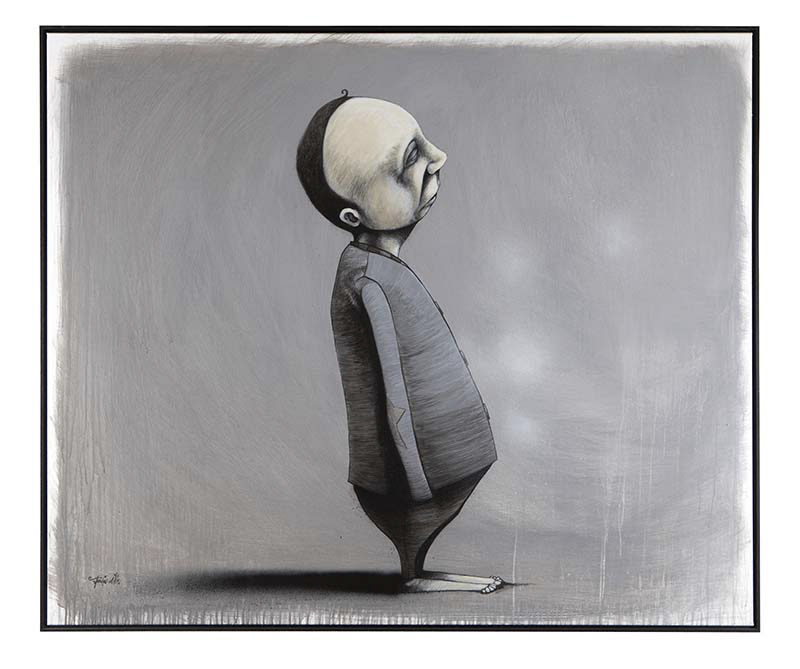
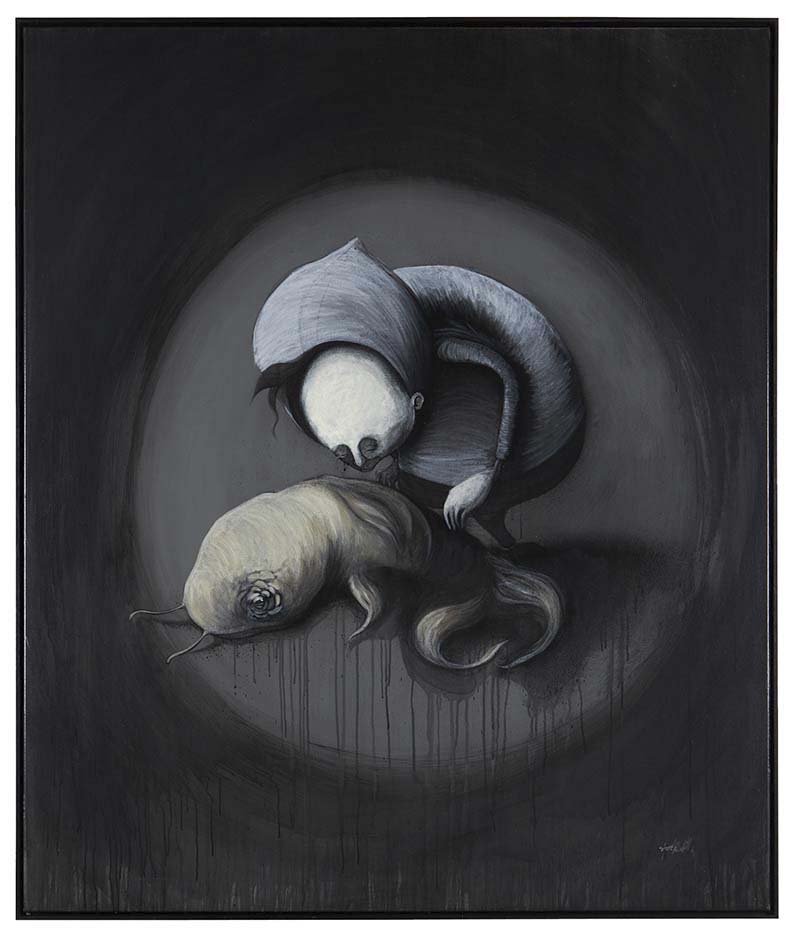
This is a hit and miss show by Stormie Mills at Helen Gory Galerie in Prahran, Melbourne. Some pieces (mainly the smaller paintings) work incredibly well whilst others (mainly the larger paintings such as There is an unkroken continuity and Here I stand) fail to inspire, laden as they are with much dourness and lacking a lightness of touch.

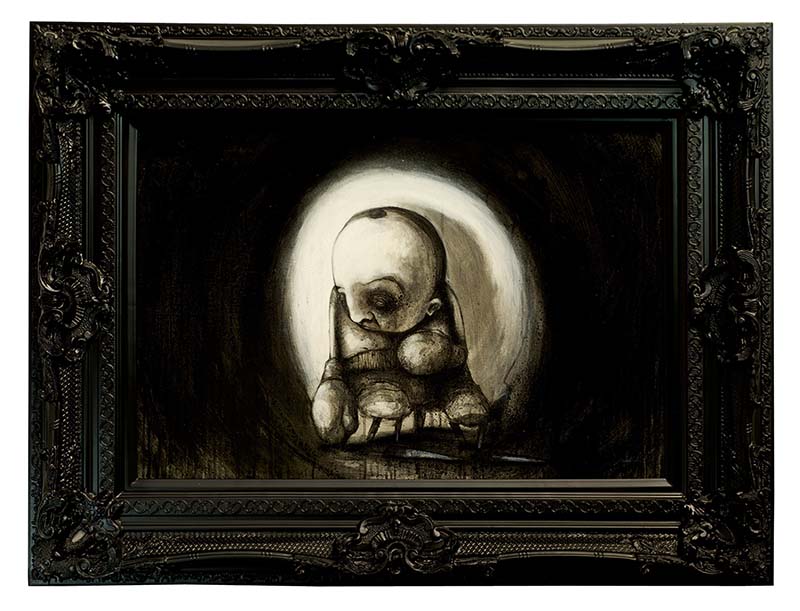
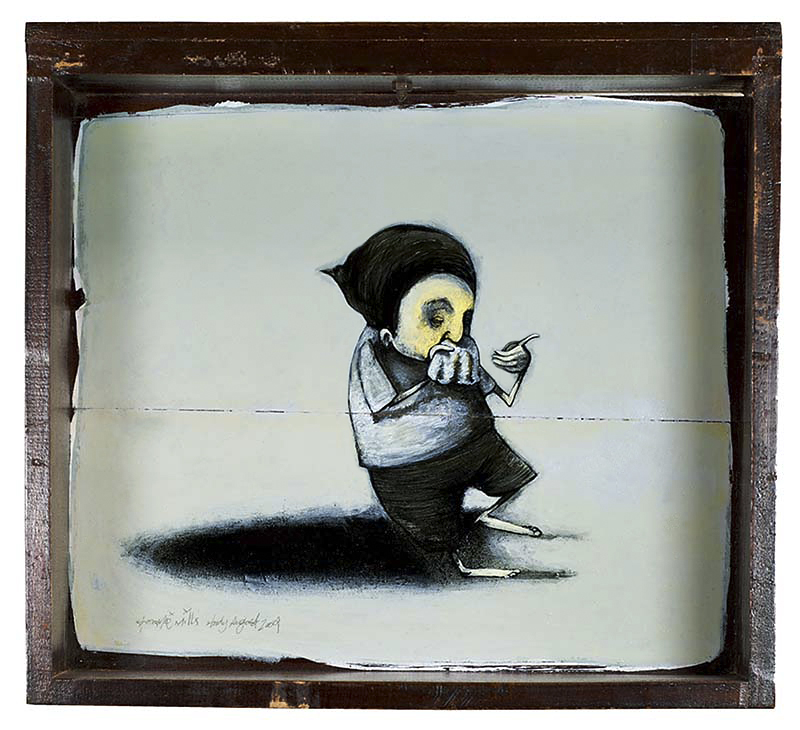
Mills’ uses a palette of greys, blacks and whites to create layered, dripping contextless backgrounds against which his characters tell their prophetic stories. His laconic figures offer a knowing stoicism, surviving everything the world throws at them. The best work made me chuckle at their delicious ironies: I feel how the character is in Some days all my shadows are behind me (2009, above). Not yet ready to quit (2009, below) portrays a boxer slumped on his stool surrounded in a halo of white paint. The heavy remarkably wax-like black carved frame reminds me of Victorian mourning frames and works well with the sentiment proposed by the painting: again I feel a direct response. Elsewhere the use of these heavy black frames less suit the works, even overpower the delicacy of some of the paintings (for example in Fabrique de Pain and Summer Solitude (both 2009)).

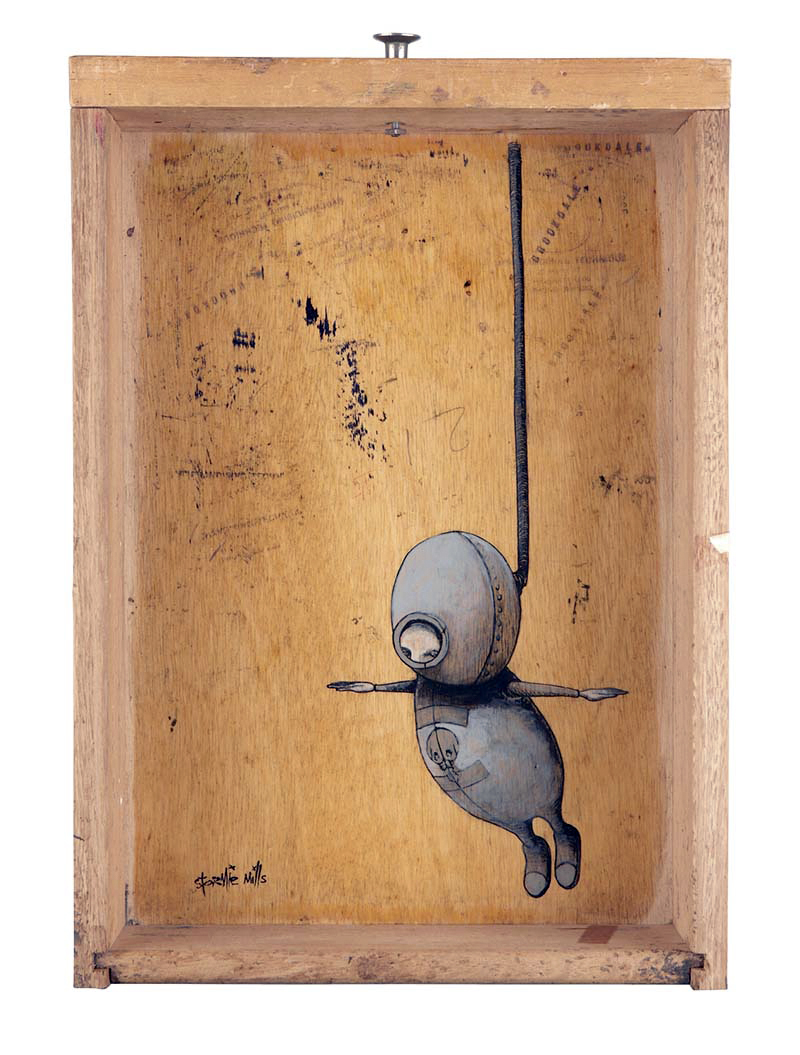
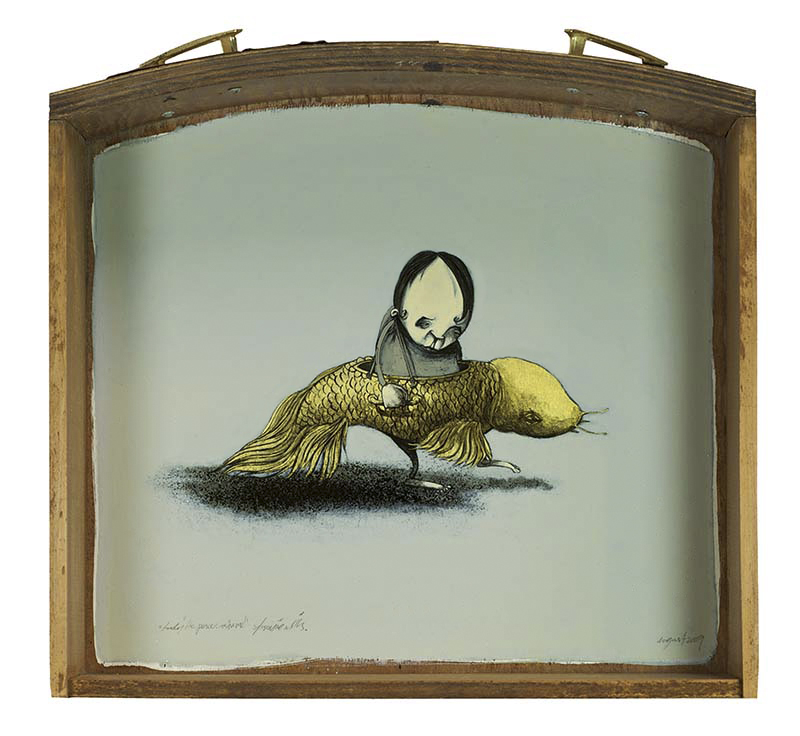
The best grouping in the exhibition are eight works painted on the bottom of old drawers, complete with handles and hung together (three of which are pictured below). This cohesion of concept, painting and intensities seems to bring all the ideas together in a satisfying whole, the characters trapped by the four walls of the drawers, insulated in their contextless worlds. I adored 5 fathoms for the simplicity of it’s design and execution, the use of the box reminding me of the work of Joseph Cornell and the drawing Banksy at one and the same time. Here in this work there is a generosity of spirit which some of the other work lacks, a balance between dark and light, empathy and hope.

Overall some interesting work that had me thinking and feeling but ultimately failed to convince with their melancholic melange.

Dr Marcus Bunyan


Many thankx to Helen Gory Galerie for allowing me to publish the art work in the posting. Please click on the photographs for a larger version of the image.


Stormie Mills (Australian, b. 1969) 'Not yet ready to quit' 2009 from the exhibition 'Diction' by Stormie Mills at Helen Gory Galerie, Prahran, Melbourne, Sept - Oct, 2009


Stormie Mills (Australian, b. 1969)
Not yet ready to quit
2009
Acrylic, spray paint and dirt on canvas
610 mm x 920 mm


Stormie Mills (Australian, b. 1969) 'Come on mate, Get up' 2009 from the exhibition 'Diction' by Stormie Mills at Helen Gory Galerie, Prahran, Melbourne, Sept - Oct, 2009


Stormie Mills (Australian, b. 1969)
Come on mate, Get up
2009
Acrylic, spray paint and dirt on canvas
1630 mm x 1370 mm


Stormie Mills (Australian, b. 1969) '5 fathoms' 2009


Stormie Mills (Australian, b. 1969)
5 fathoms
2009
Mixed media on found object
400 mm x 280 mm x 100 mm


Stormie Mills (Australian, b. 1969) The pesca costume' 2009


Stormie Mills (Australian, b. 1969)
The pesca costume
2009
Mixed media on found object
450 mm x 480 mm x 130 mm


Stormie Mills (Australian, b. 1969) 'Wiping the smile from his face' 2009


Stormie Mills (Australian, b. 1969)
Wiping the smile from his face
2009
Mixed media on found object
360 mm x 390 mm x 100 mm


Helen Gory Galerie

This gallery is now closed.

LIKE ART BLART ON FACEBOOK

Back to top

Review: ‘Scenes’ by David Noonan at the Australian Centre for Contemporary Art (ACCA), Melbourne

Exhibition dates: 15th August – 27th September, 2009

Commissioning Curator: Juliana Engberg
Coordinating Curator: Charlotte Day


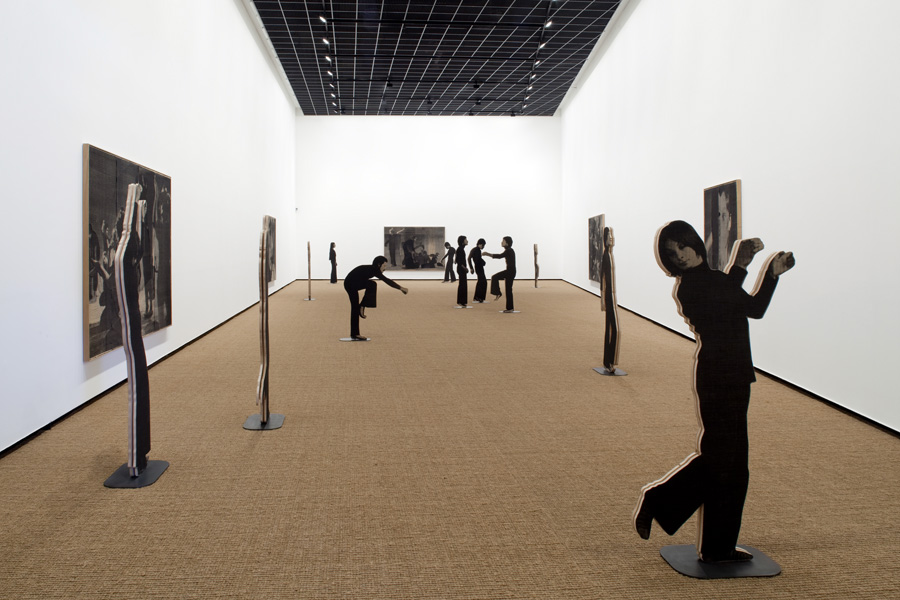
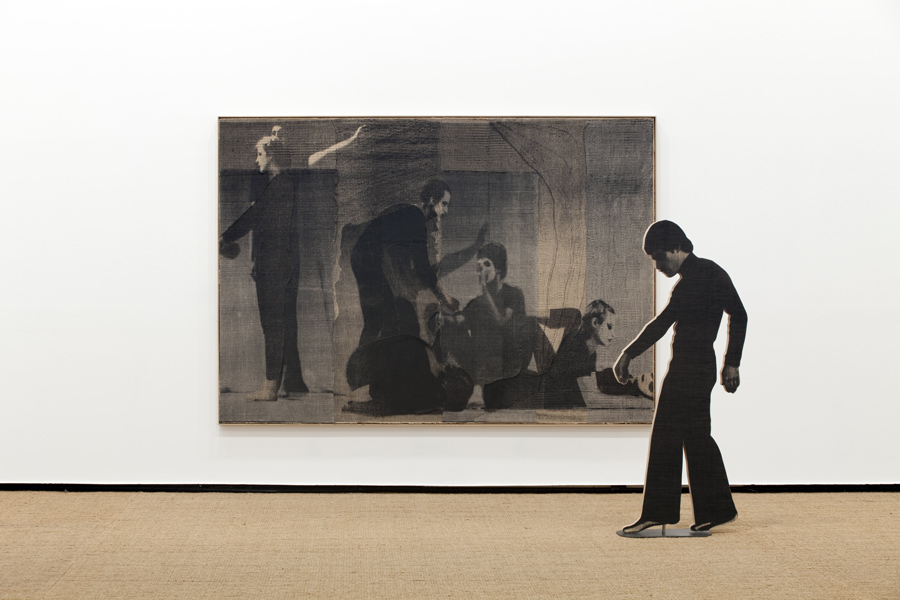
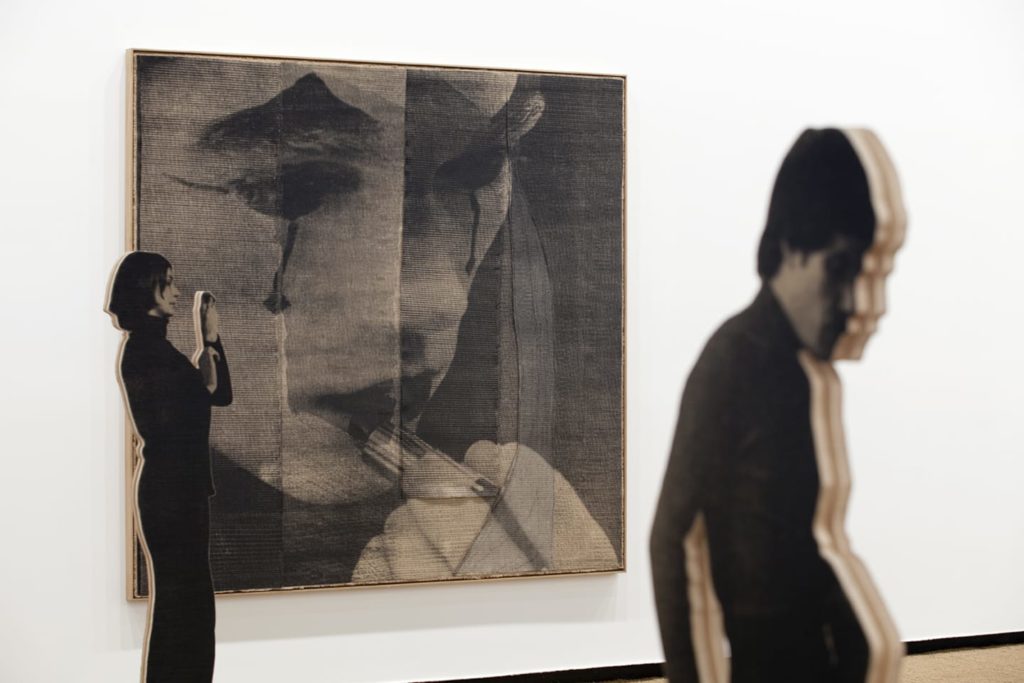
Installation view of 'Scenes' by David Noonan at ACCA


Installation view of Scenes by David Noonan at ACCA
Photo: Marcus Bunyan


Thoughts

Limited colour palette of ochres, whites, browns and blacks.

Rough texture of floor covered in Jute under the feet.

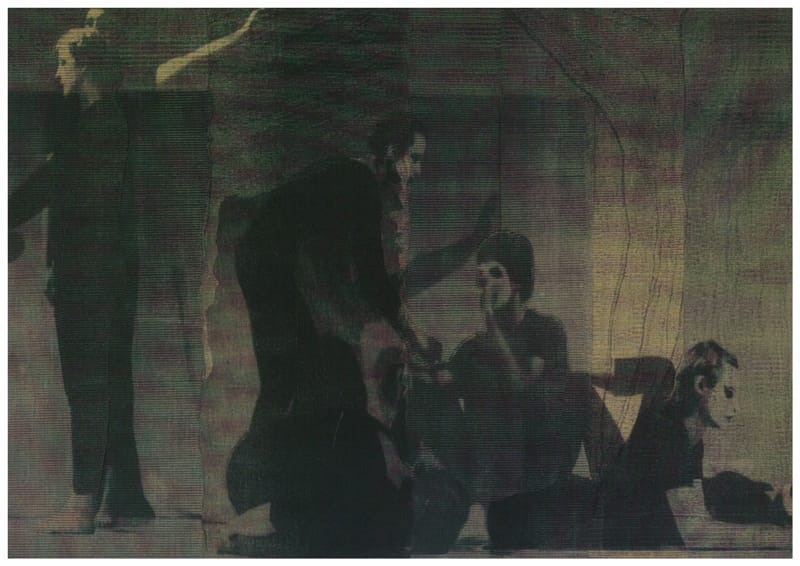
Layered, collaged print media figures roughly printed on canvas – elements of abstraction, elements of figuration.

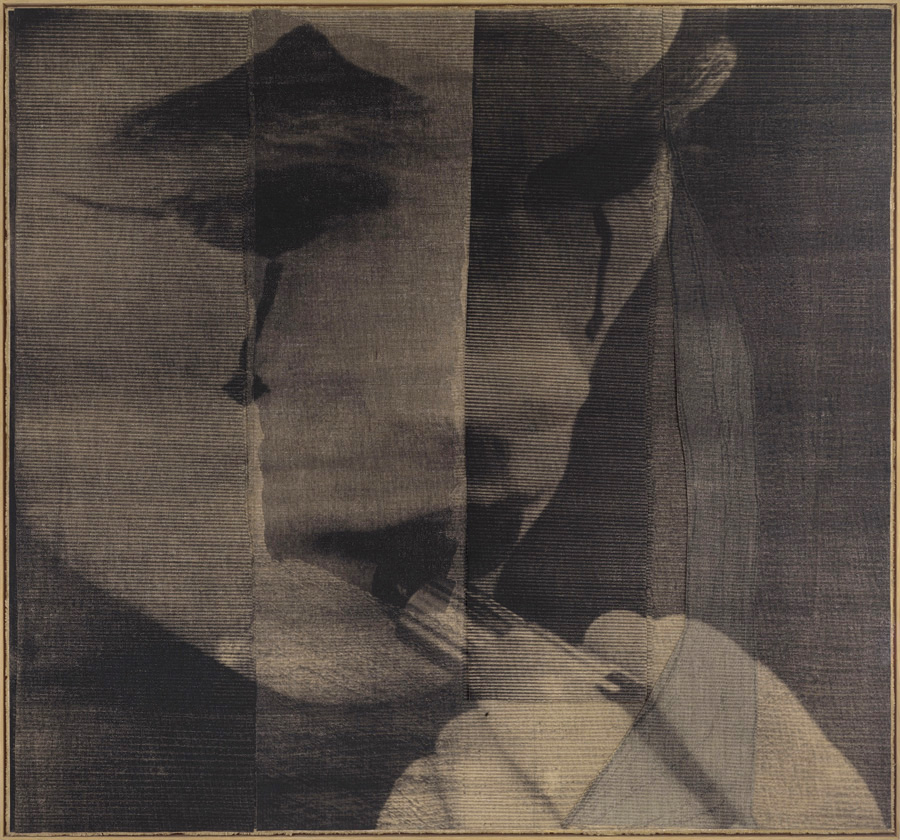
The ‘paintings’ are magnificent; stripped and striped collages. Faces missing, dark eyes. There is something almost Rembrandt-esque about the constructed images, their layering, like Rembrandt’s Night Watch (1642) – but then the performance element kicks in – the makeup, the lipstick, the tragic / comedic faces.

Mannequin, doll-like cut-out figures, flat but with some volume inhabiting the tableaux vivant.

Twelve standing figures in different attitudes – a feeling of dancing figures frozen on stage, very Japanese Noh theater. Spatially the grouping and use of space within the gallery is excellent – like frozen mime.

The figures move in waves, rising and falling both in the standing figures and within the images on the wall.

Looking into the gallery is like looking through a picture window onto a stage set (see above image).

“The fracturing of identity, the distortion of the binaries of light and dark, absence/presence in spatio-temporal environments.

The performance as ritual challenging a regularized and constrained repetition of norms.” (Judith Butler).

Excellent, thought provoking exhibition.

Dr Marcus Bunyan


Many thankx to ACCA for allowing me to publish the photographs in the posting. Please click on the photographs for a larger version of the image.


Photograph from 'Scenes' by David Noonan (installation view)


Installation view of 'Scenes' by David Noonan at ACCA


Installation views of Scenes by David Noonan at ACCA
Photos: Marcus Bunyan


Noonan often works with found photographic imagery taken from performance manuals, textile patterns and archive photographs to make densely layered montages. These works at once suggest specific moments in time and invoke disorientating a-temporal spaces in which myriad possible narratives emerge. The large-scale canvases framing this exhibition depict scenes of role-playing, gesturing characters, and masked figures set within stage-like spaces. Printed on coarsely woven jute, collaged fabric elements applied to the surface of the canvases further signal the cutting and splicing of images.

Noonan’s new suite of figurative sculptures, comprise life size wooden silhouettes faced with printed images of characters performing choreographed movements. While the figurative image suggests a body in space, the works’ two dimensional cut-out supports insist on an overriding flatness which lends them an architectural quality – as stand-ins for actual performers and as a means by which to physically navigate the exhibition space.

Press release from the Chisenhale Gallery website [Online] Cited 20/09/2009. No longer available online


For the Helen Macpherson Smith Commission, he will bring the characters depicted in his signature collage works off the wall and onto an imagined ‘stage’. Several life-size, wooden cut-out figures will inhabit the ACCA exhibition gallery, frozen in choreographed movements.

Noonan’s dancing figures will be framed by several large-scale canvas works, printed photographic and film imagery gleaned from performance manuals, textile patterns and interior books. Printed on coarse woven jute, he cuts, slices and montages images together constructing compositions that hover between two and three dimensionality, positive and negative space, past and present, stasis and action.

“‘Scenes’ recalls the experimental workshops and youth-focused exuberance of a more optimistic era, coinciding with the artists own childhood in the 1970s” says curator Charlotte Day. “With these new works, Noonan re-introduces the idea of ritual, of creating a temporal space beyond reason that is filled with both danger and hope.”

David Noonan (Australian, b. 1969) is the fifth recipient of the Helen Macpherson Smith Commission, one of the most significant and generous commissions in Australia. The partnership between ACCA and the Helen Macpherson Smith Trust offers Victorian artists the opportunity to create an ambitious new work of art, accompanied by an exhibition in ACCA’s exhibition hall.

Press release from the ACCA website [Online] Cited 20/09/2009. No longer available online


David Noonan returned to Melbourne with this significant project which extended his abiding interest in time and space. Using ACCA’s large room as a field of encounter, he created an ensemble of works in 2 and 3 dimensions that make purposeful use of the audience’s own navigation through the gallery. Visitors walking between David’s free-standing figures performed like time travellers in a landscape that had been paused. His enigmatic wall based works appeared to trap momentary scenes in a layered time warp.

This major commission allowed for an ambitious project by a Victorian artist who had reached a significant platform in their own practice. Elements of the commission were gifted to a Victorian regional gallery. In this case the recipient was Bendigo Art Gallery.

Text from the ACCA website [Online] Cited 24/04/2019


Photograph from 'Scenes' by David Noonan at ACCA (installation view)


Installation view of 'Scenes' by David Noonan at ACCA


Installation views of Scenes by David Noonan at ACCA
Photos: Marcus Bunyan


Australia Centre for Contemporary Art (ACCA)
111 Sturt Street, Southbank, Victoria 3006, Australia
Phone: 03 9697 9999

Opening Hours:
Tuesday to Friday 10am – 5pm
Weekends & Public Holidays 11am – 5pm
Open all public holidays except Christmas Day and Good Friday

ACCA website

LIKE ART BLART ON FACEBOOK

Back to top

Review: ‘Ivy’ photographs by Jane Burton at Karen Woodbury Gallery, Richmond, Melbourne

Exhibition dates: 2nd September – 26th September, 2009


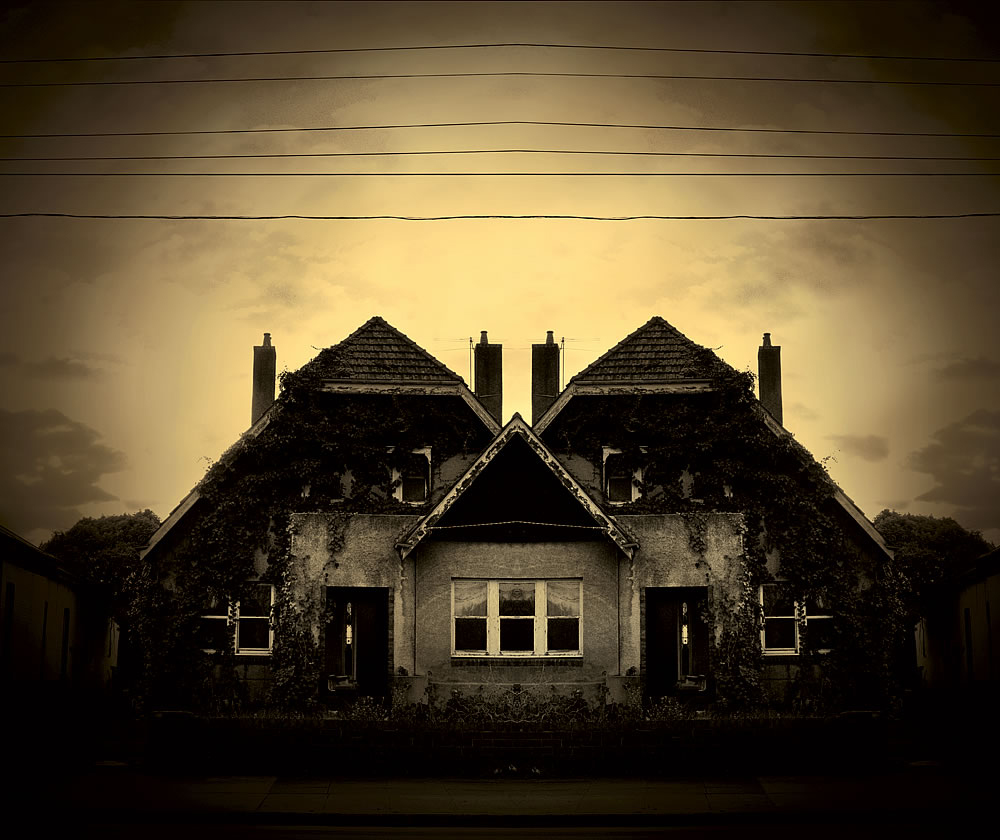
Jane Burton (Australian, b. 1966) 'Ivy #1' 2009 from the exhibition 'Ivy' photographs by Jane Burton at Karen Woodbury Gallery, Richmond, Melbourne, Sept, 2009


Jane Burton (Australian, b. 1966)
Ivy #1
2009
Pigment print
89 x 75cm


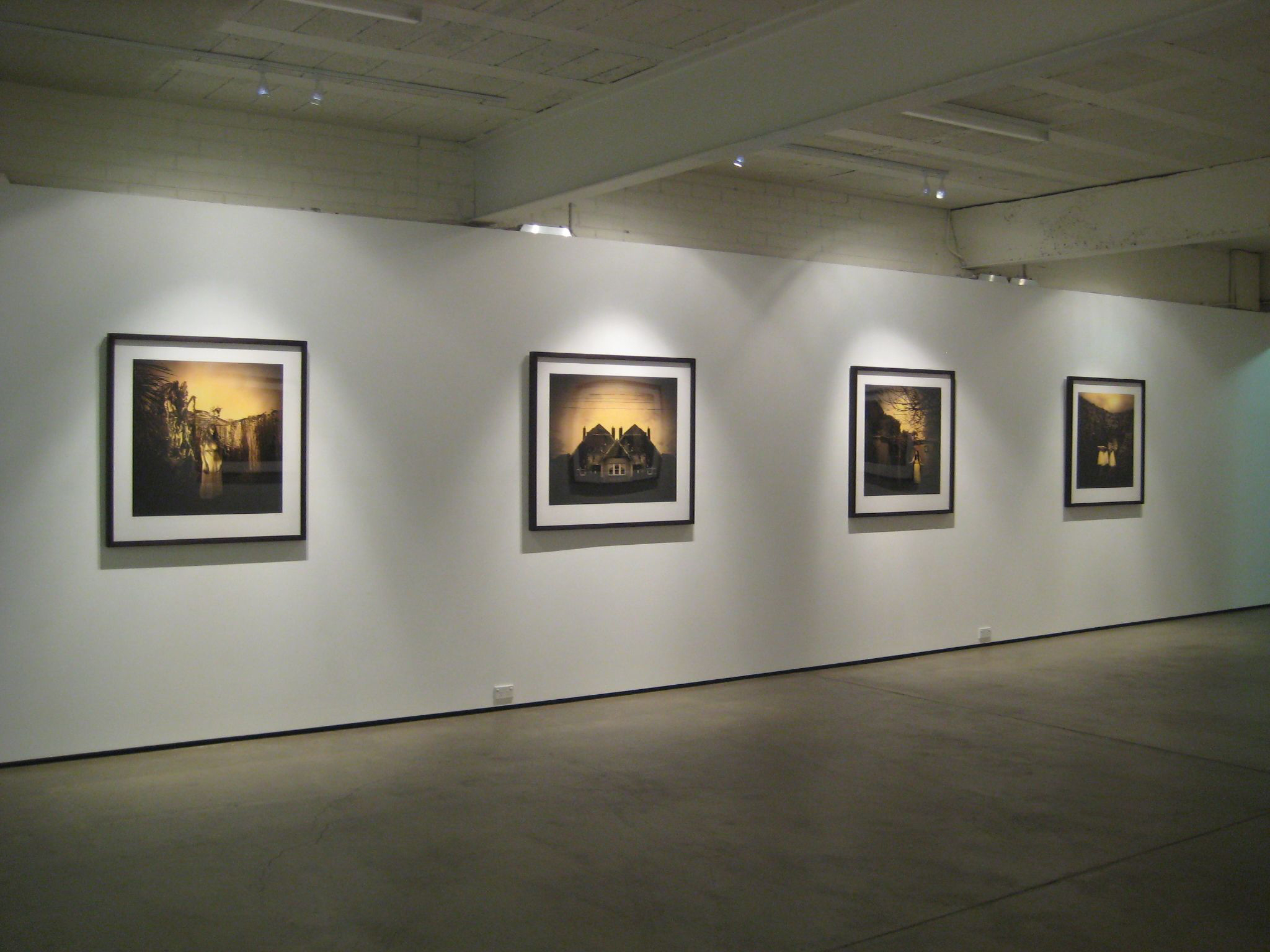
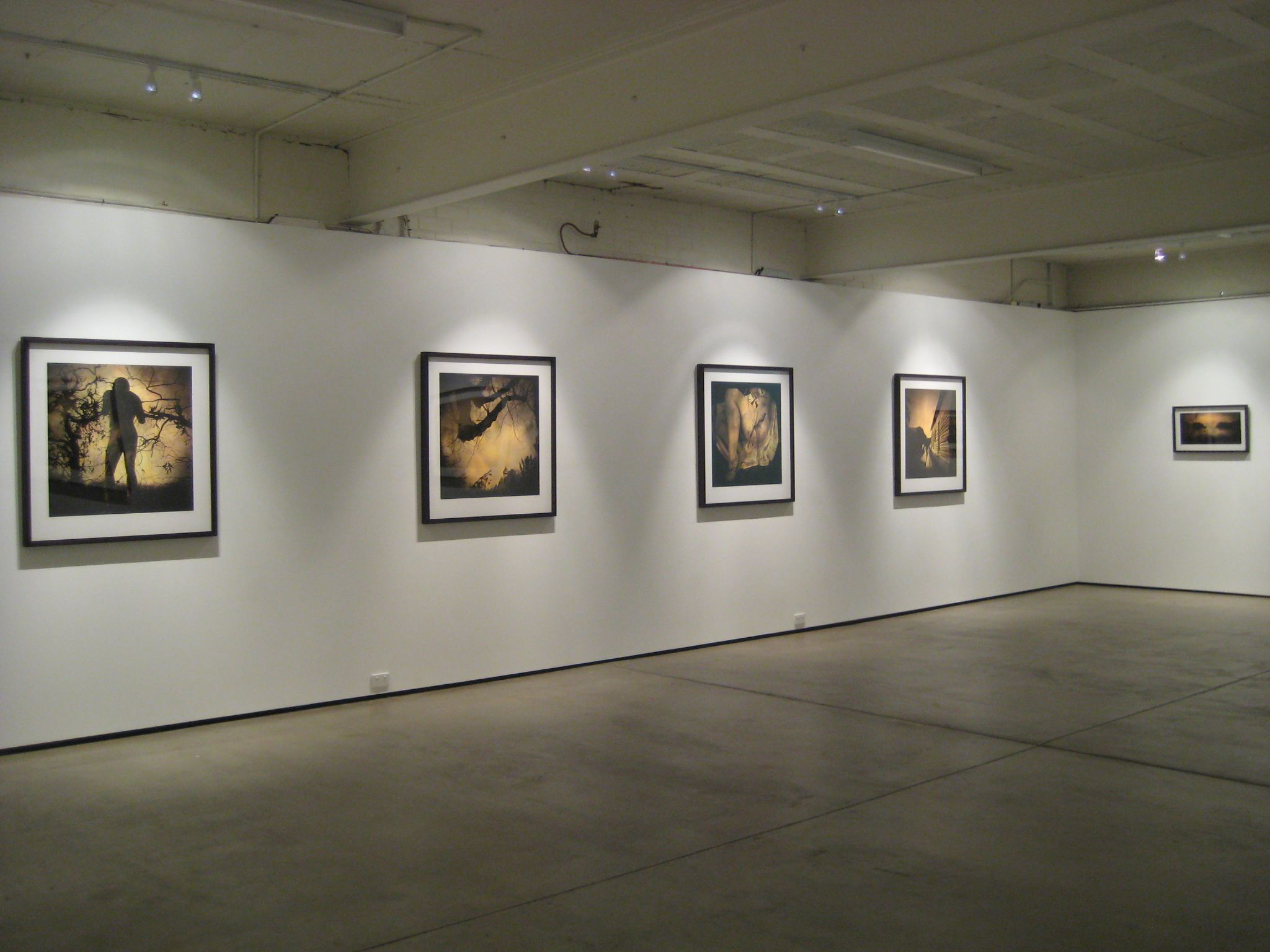
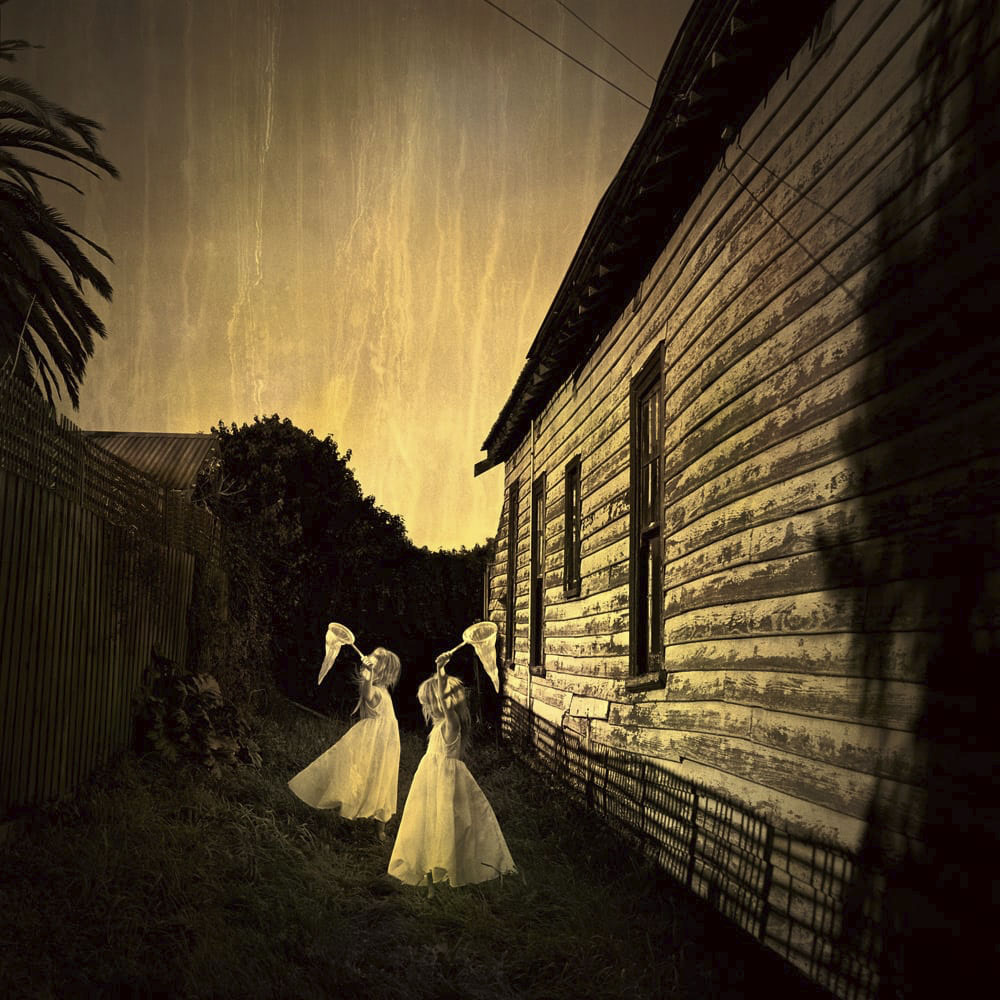
This is another outstanding body of photographic work on display in Melbourne. Featuring 10 large and 2 small sepia toned, vignetted pigment prints Burton’s work creates dark enchanted worlds of faceless female figures placed in the built environment that balance (meta)physical light and shade creating ambiguous narratives of innocence tinged with a darker edge.

The eponymous photograph Ivy #1 (above) is the seminal image of the series: a dark brooding house, hunched down positioned low in the photographic space, covered in ivy with black windows and dark eves has an ominous almost impenetrable presence and sets the tone for the rest of the work.

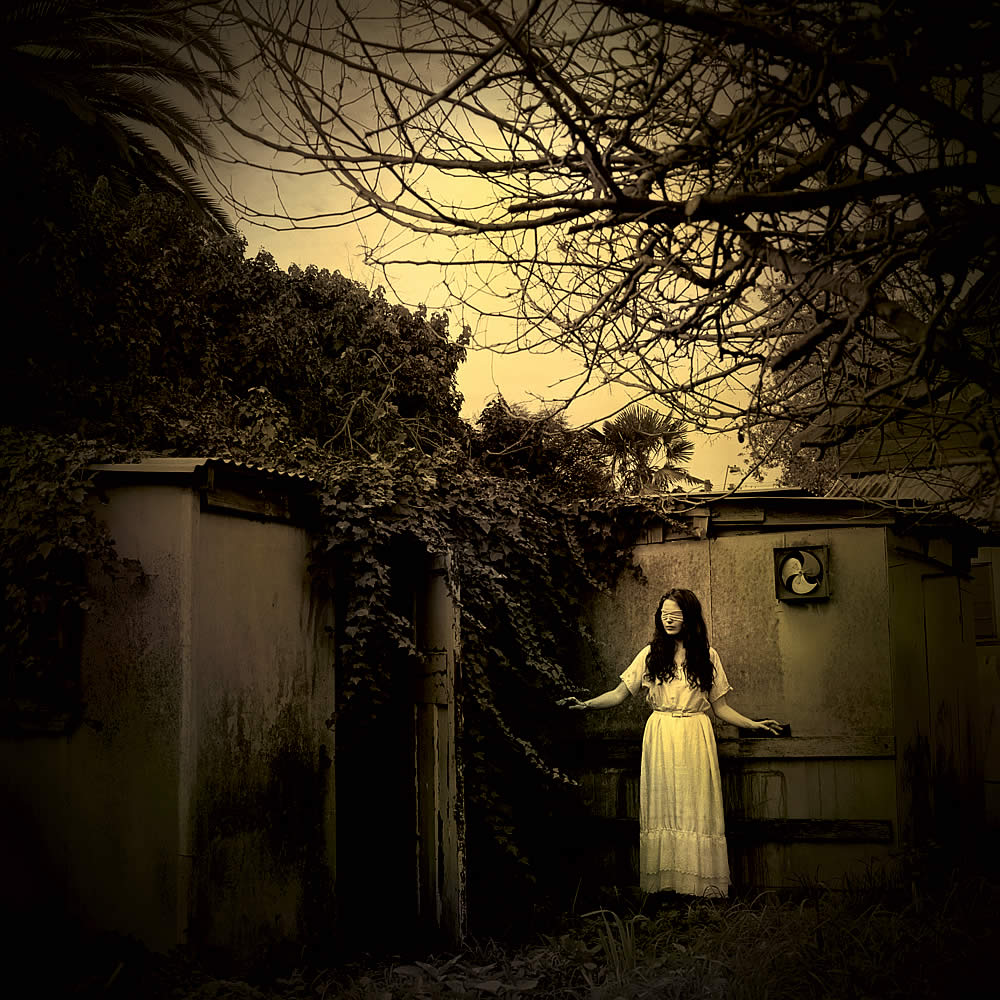
There are wonderful references to the history of photography if one cares to look (not simply generic references to Victorian daguerreotypes, postcards and family photographs). Ivy #2 (below) is a powerful photograph where the female figure is blindfolded, unable to see the encroaching tumescence of vegetation that surrounds and is about to engulf her. The placement of the hands is exquisite – unsure, reaching out, doubting her surroundings – with the 3-bladed fan hovering behind ready to devour the unwary. This photograph has resonances of the magical photographs of the garden by the Czech photographer Josef Sudek.

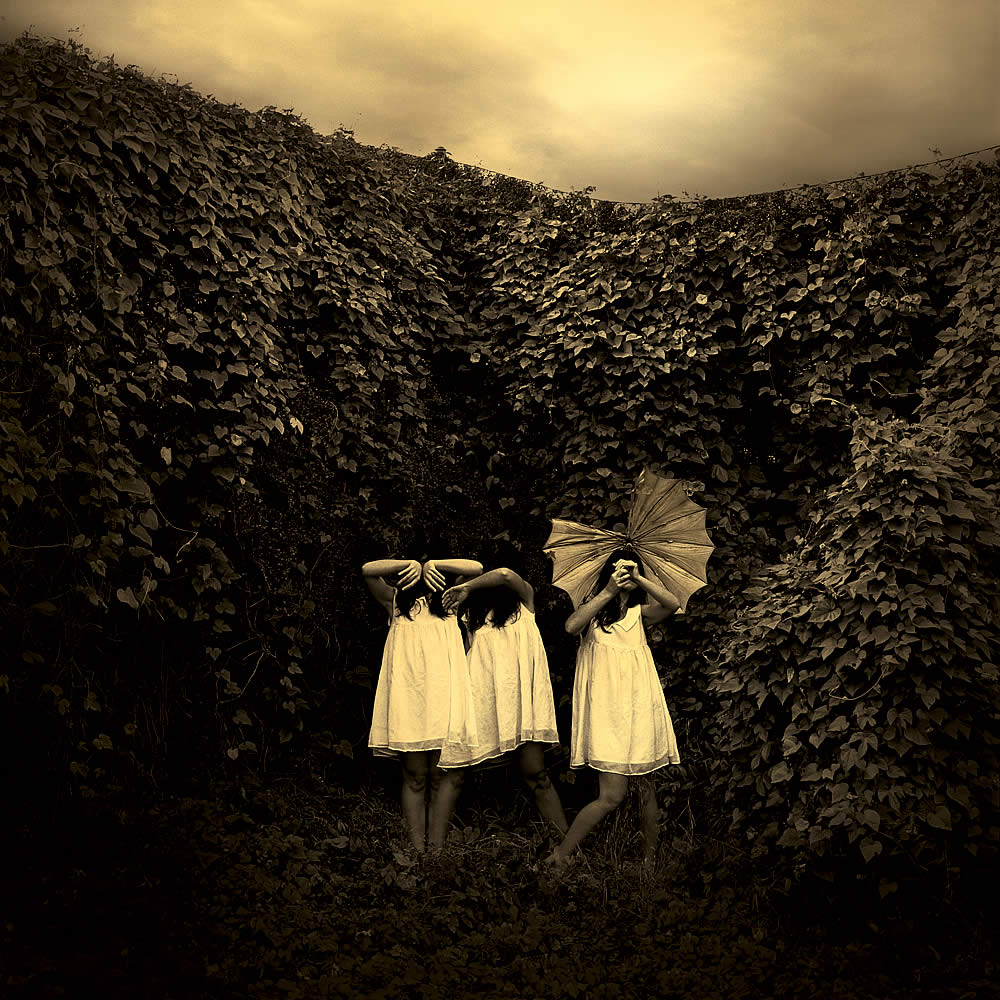
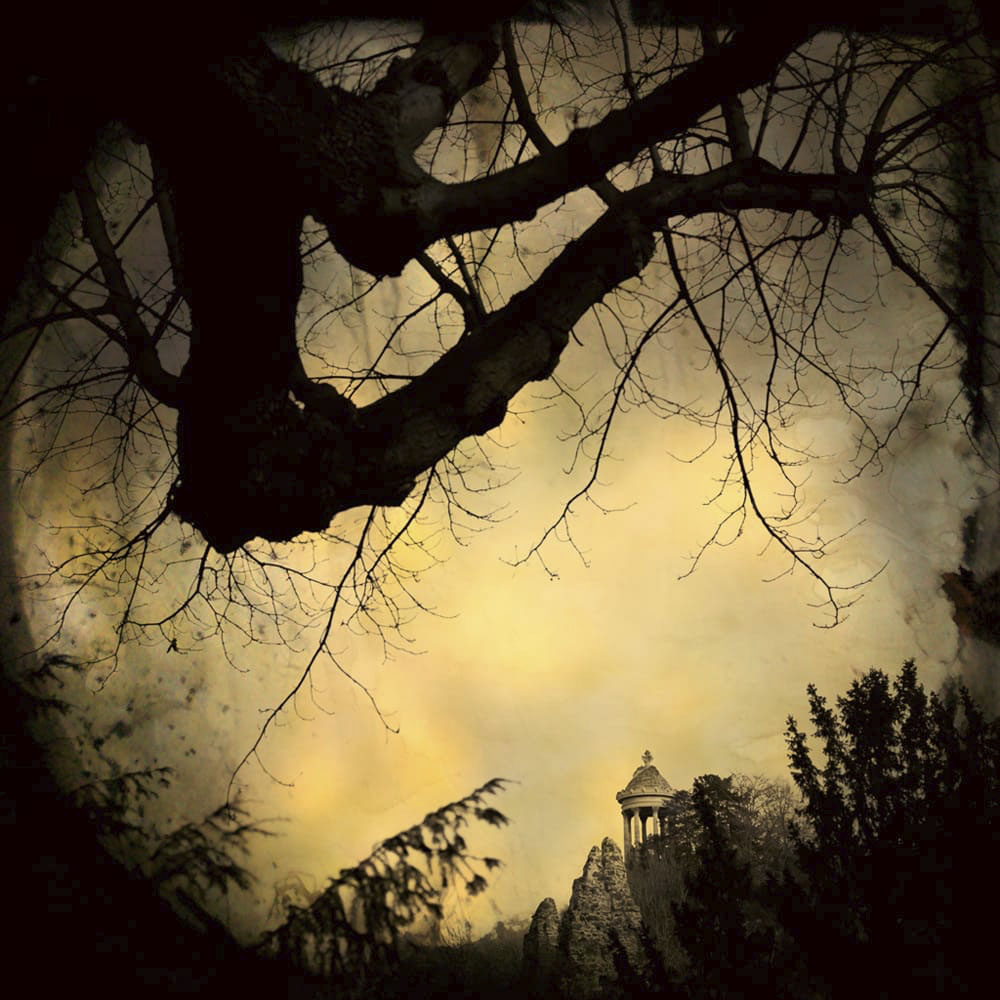
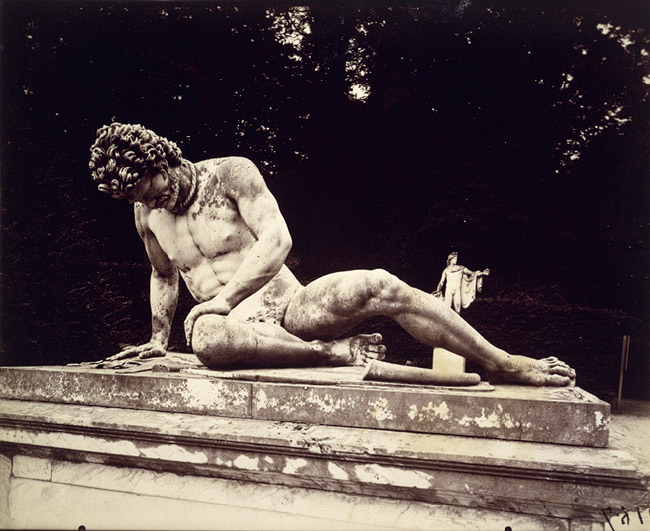
Ivy #3 (below) has echoes of the work of the American photographer Ralph Eugene Meatyard and his placement of masked people within built environments. In Burton’s photograph the broken umbrella becomes like insect wings, the faceless whiteness of the three-legged and three-armed creature cocooned among the overhanging predatory ivy, the luminescent sky offering the possibility of redemption. Other photographs such as Ivy #6 (below) and Ivy #7 with their wonderful colours, depth of field, heavy shadows and elegiac romantic feel have references to Eugene Atget and his photographs of the parks of Versailles (see photograph below).

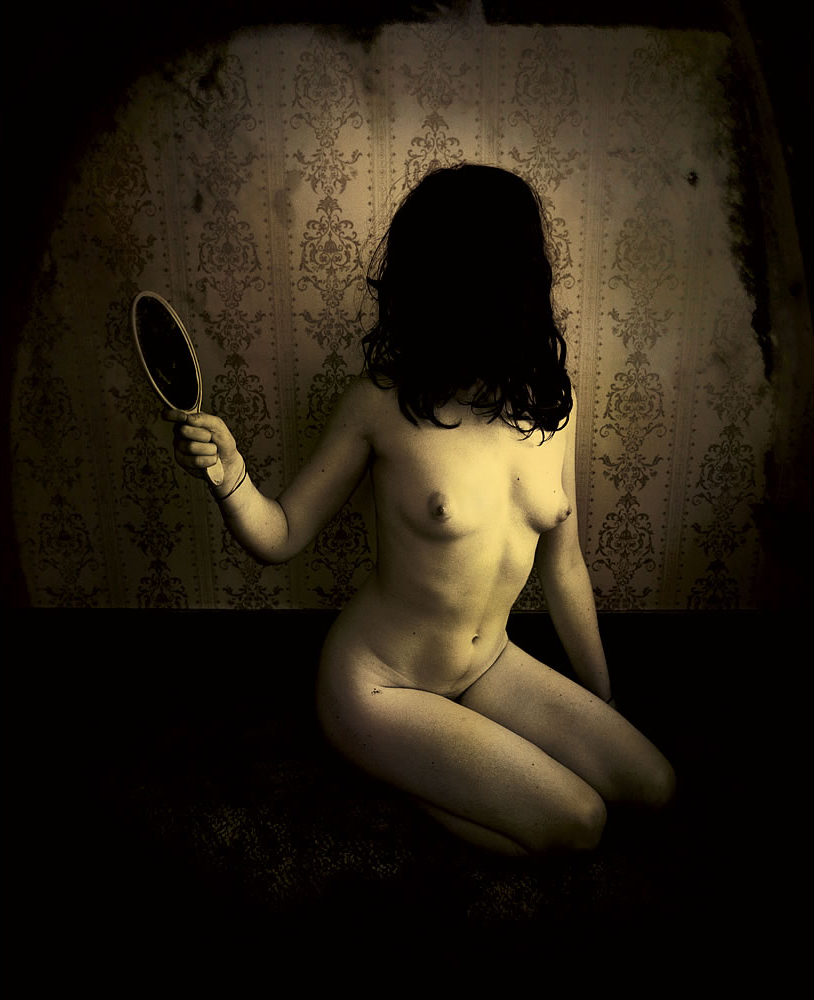
Still further references to the history of photography can be found in the photographs Ivy #9 and Ivy #10 (below). In Ivy #9 the intersection of the two female bodies through double exposure forms a slippage in (photographic) reality and the disappearance of original identity in the layering of the photographs and into the empty non-reflection of the mirror. This non-reflection is confirmed in Ivy #10 where the faceless nude woman holds a mirror with no reflection. These photographs remind me of the photographs of New Orleans prostitutes in the early years of the 20th century by the photographer Bellocq with their masked faces and the ornamentation of the wallpaper behind the figures (see below).

I feel that in these photographs with their facelessness and the non-reflection of the mirror investigate notions of ‘Theoria’ – a Greek emphasis on the vision or contemplation of God where theoria is the lifting up of the individual out of time and space and created being and through contemplative prayer into the presence of God.1 In fact the whole series of photographs can be understood through this conceptualisation – not just remembrances of past time, not a blind contemplation on existence but a lifting up out of time and space into the an’other’ dark but enlightening presence.

The greatest wonder of this series is that the photographs magically reveal themselves again and again over time. Despite (or because of) the references to other artists, the beauty of Burton’s work is that she has made it her own. The photographs have her signature, her voice as an artist and it is an informed voice; this just makes the resonances, the vibrations of energy within the work all the more potent and absorbing. I loved them.

Dr Marcus Bunyan


Many thankx to Karen Woodbury Gallery for allowing me to publish the photographs in the posting. Please click on the photographs for a larger version of the image.


Installation view of 'Ivy' by Jane Burton at Karen Woodbury Gallery, Melbourne

Installation view of 'Ivy' by Jane Burton at Karen Woodbury Gallery, Melbourne


Installation views of Ivy by Jane Burton at Karen Woodbury Gallery, Melbourne
Photos: Marcus Bunyan


Jane Burton (Australian, b. 1966) 'Ivy #2' 2009 from the exhibition 'Ivy' photographs by Jane Burton at Karen Woodbury Gallery, Richmond, Melbourne, Sept, 2009


Jane Burton (Australian, b. 1966)
Ivy #2
2009
Pigment print
75 x 75cm


Jane Burton (Australian, b. 1966) 'Ivy #3' 2009 from the exhibition 'Ivy' photographs by Jane Burton at Karen Woodbury Gallery, Richmond, Melbourne, Sept, 2009


Jane Burton (Australian, b. 1966)
Ivy #3
2009
Pigment print
75 x 75cm


Jane Burton (Australian, b. 1966) 'Ivy #5' 2009


Jane Burton (Australian, b. 1966)
Ivy #5
2009
Pigment print
75 x 75cm


Jane Burton (Australian, b. 1966) 'Ivy #7' 2009


Jane Burton (Australian, b. 1966)
Ivy #7
2009
Pigment print
75 x 75cm


Jane Burton’s exhibition, Ivy comprises a series of photographs captured in black and white. The final prints are rendered with a sepia, peach-champagne tone, with many displaying a mottled hand-coloured effect in faded pastels of pink and green. These works hope to suggest an era past, perhaps Victorian. The imagery is evocative of old picture postcards from Europe and old photographs from the pages of family albums.

Central to the series is an image of a house covered with ivy. Depicted as dark and malevolent, the house is ‘haunted’ by the traces and stains of family history, habitation, and the buried secrets of all that occurred within.

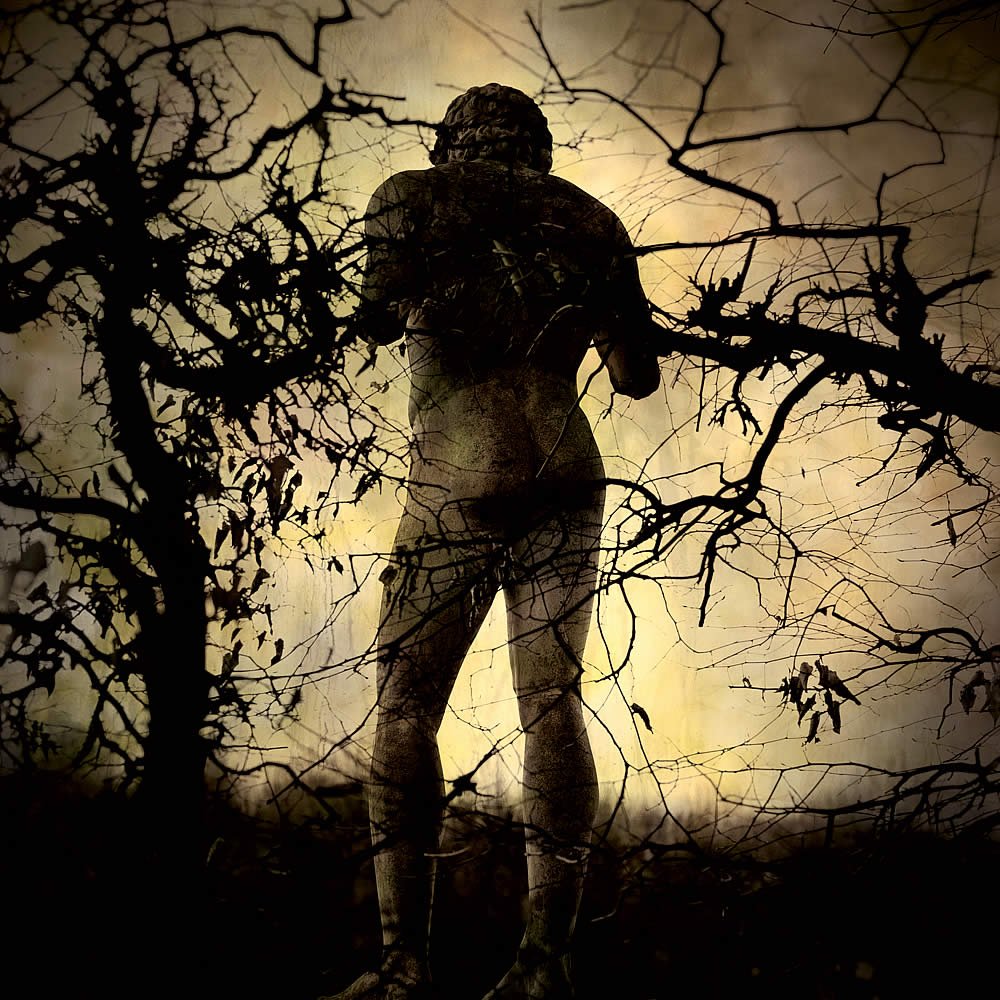
Anonymous female figures are seen in garden settings where the foliage is rampant and encroaching and the shadows deep. There is an air of enchantment perceived with unspecified darker edge. The figures are innocent and playful. The viewer is asked to question if the and girls aware of the camera capturing their activity? Are the poses staged or caught spontaneously. In another photograph, a dilapidated male statue stands broken and armless, the texture of stone worn, and bruised with dark lichen and moss.

In the interior photographs, several nudes are depicted in the style of 19th century French daguerreotype photographs. These vignetted images display women against wall-papered backdrops with theatrical props reminiscent of earlier works by Burton such as the series ‘The other side’ (2003). Posed suggestively for the camera and the viewer’s gaze, the subjects themselves are faceless, their own gaze and features hidden behind dark hair. The surface and texture of these particular works suggests the patina of decay and the damage and wear of time.

Text from the Karen Woodbury Gallery website [Online] Cited 20/09/2009. No longer available online


E. J. Bellocq (American, 1873-1949) 'Untitled [prostitute of Storyville, New Orleans]' 1912


E. J. Bellocq (American, 1873-1949)
Untitled [prostitute of Storyville, New Orleans]
1912


Jane Burton (Australian, b. 1966) 'Ivy #10' 2009


Jane Burton (Australian, b. 1966)
Ivy #10
2009
Pigment print


Eugene Atget (French, 1857-1927) 'Versailles, France' 1923


Eugene Atget (French, 1857-1927)
Versailles, France
1923
Albumen print


Jane Burton (Australian, b. 1966) 'Ivy #6' 2009


Jane Burton (Australian, b. 1966)
Ivy #6
2009
Pigment print
75 x 75cm


Karen Woodbury Gallery

This gallery has now closed.

Jane Burton website

LIKE ART BLART ON FACEBOOK

Back to top

Review: ‘Climbing the Walls and Other Actions’ by Clare Rae at the Centre for Contemporary Photography, Fitzroy, Melbourne

Exhibition dates: 7th August – 27th September, 2009


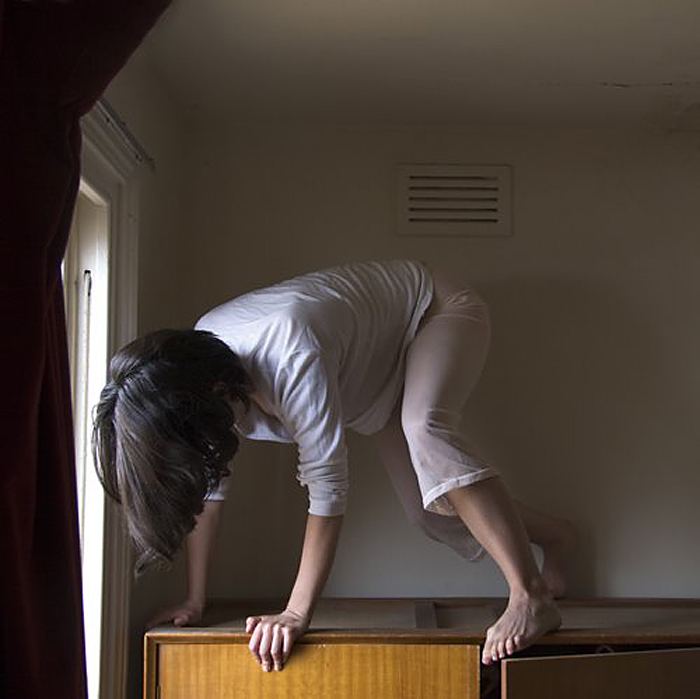
Clare Rae (Australian, b. 1981) 'Untitled' from the series 'Climbing the Walls and Other Actions' 2009 from the exhibition 'Climbing the Walls and Other Actions' by Clare Rae at the Centre for Contemporary Photography, Fitzroy, Melbourne, August - Sept, 2009


Clare Rae (Australian, b. 1981)
Untitled
2009
From the series Climbing the Walls and Other Actions
Pigment print on Museo Crane Silver Rag
50 x 50cm


“To withdraw into one’s corner is undoubtedly a meager expression. But despite its meagerness, it has numerous images, some, perhaps, of great antiquity, images that are psychologically primitive. At times, the simpler the image, the vaster the dreams.”


Gaston Bachelard.1


Usually I am not a great fan of ‘faceless’ photography as I call it but this series of work, Climbing the Walls and Other Actions (2009) by the artist Clare Rae is even better than the series by Tracey Moffatt in the previous review.

Exploring activities of the female body in closed domestic spaces these psychologically intense photographs push the physical boundaries of play through the navigation of space. As a child has little awareness about the inherent dangers of a seemingly benign environment so Rae’s self-portraits turn the lens on her conceptualisation of the inner child at play and the activating of the body in and through space. As the artist herself says, “the way children negotiate their surroundings and respond with an unharnessed spatial awareness, which I find really interesting when applied to the adult body.”2

Continuing the themes from the last review, that of spaces of intimacy and reverberation, these photographs offer us fragmentary dialectics that subvert the unity of the archetype, the unity of the body in space. Here the (in)action of the photographic freeze balances the tenuous positions of the body: a re-balancing of both interior and exterior space.

As Noel Arnaud writes, “Je suis l’espace ou je suis” (I am the space where I am). Further, Bachelard notes “… by changing space, by leaving the space of one’s usual sensibilities, one enters into communication with a space that is psychically innovating.”3

In these photographs action is opposed with stillness, danger opposed with suspension; the boundaries of space, both of the body and the environment, the interior and the exterior, memory and dream, are changed.

Space seems to open up and grow with these actions to become poetic space – and the simplicity of the images aids and abets the vastness of our dreams. This change of concrete space does not change our place, but our nature. Here the mapping of self in space, our existence, our exist-stance (to have being in a specified place whether material or spiritual), is challenged in the most beautiful way by these walls and actions, by these creatures, ambiguities, photographs.

Henri Lefebvre insightfully observes, “… each living body is space and has space: it produces itself in space and it also produces that space.”4

I am the (sublime) space where I am, that surrounds me with countless presences.

Dr Marcus Bunyan


1/ Bachelard, Gaston. The Poetics of Space. Boston: Beacon Press, 1969, p. 137

2/ Email from the artist 7th September, 2009

3/ Bachelard, Gaston. The Poetics of Space. Boston: Beacon Press, 1969, p. 206

4/ Lefebvre, Henri. The Production of Space. Oxford: Basil Blackwell, 1974, p. 170


    All images by Clare Rae from the series Climbing the Walls and Other Actions 2009. Many thankx to Clare for allowing me to publish them.


    Clare Rae (Australian, b. 1981) 'Untitled' from the series 'Climbing the Walls and Other Actions' 2009 from the exhibition 'Climbing the Walls and Other Actions' by Clare Rae at the Centre for Contemporary Photography, Fitzroy, Melbourne, August - Sept, 2009


    Clare Rae (Australian, b. 1981)
    Untitled
    2009
    From the series Climbing the Walls and Other Actions
    Pigment print on Museo Crane Silver Rag
    50 x 50cm


    Clare Rae (Australian, b. 1981) 'Untitled' from the series 'Climbing the Walls and Other Actions' 2009 from the exhibition 'Climbing the Walls and Other Actions' by Clare Rae at the Centre for Contemporary Photography, Fitzroy, Melbourne, August - Sept, 2009


    Clare Rae (Australian, b. 1981)
    Untitled
    2009
    From the series Climbing the Walls and Other Actions
    Pigment print on Museo Crane Silver Rag
    50 x 50cm


    Clare Rae (Australian, b. 1981) 'Untitled' from the series 'Climbing the Walls and Other Actions' 2009


    Clare Rae (Australian, b. 1981)
    Untitled
    2009
    From the series Climbing the Walls and Other Actions
    Pigment print on Museo Crane Silver Rag
    50 x 50cm


    Climbing the Walls and Other Actions is primarily concerned with visually representing my experience of femininity, whilst also exploring aspects of representation that relate to feminism. The project considers the relationship between the body and space by including formal elements within each frame such as windows and corners. Through a sequence of precarious poses I explore my relationship with femininity, an approach born of frustration. I use the body to promote ideas of discomfort and awkwardness, resisting the passivity inherent in traditional representations of femininity. The images attempt to de-stabilise the figure, drawing tension from the potential dangers the body faces in these positions. Whilst the actions taking place are not in themselves particularly dangerous, the work demonstrates a gentle testing of physical boundaries and limitations via a child-like exploration of the physical environment.

    Text from the Centre for Contemporary Photography website [Online] Cited 15/09/2009. No longer available online


    Clare Rae (Australian, b. 1981) 'Untitled' from the series 'Climbing the Walls and Other Actions' 2009


    Clare Rae (Australian, b. 1981)
    Untitled
    2009
    From the series Climbing the Walls and Other Actions
    Pigment print on Museo Crane Silver Rag
    50 x 50cm


    Clare Rae (Australian, b. 1981) 'Untitled' from the series 'Climbing the Walls and Other Actions' 2009


    Clare Rae (Australian, b. 1981)
    Untitled
    2009
    From the series Climbing the Walls and Other Actions
    Pigment print on Museo Crane Silver Rag
    50 x 50cm


    Centre for Contemporary Photography
    Level 2, Perry St Building
    Collingwood Yards, Collingwood
    Victoria 3066

    Opening hours:
    Wednesday – Saturday 11am – 5pm
    Clare Rae website

    Centre for Contemporary Photography website

    LIKE ART BLART ON FACEBOOK

    Back to top

    Review: ‘First Jobs’ by Tracey Moffatt at Centre for Contemporary Photography, Fitzroy, Melbourne

    Exhibition dates: 7th August – 27th September, 2009


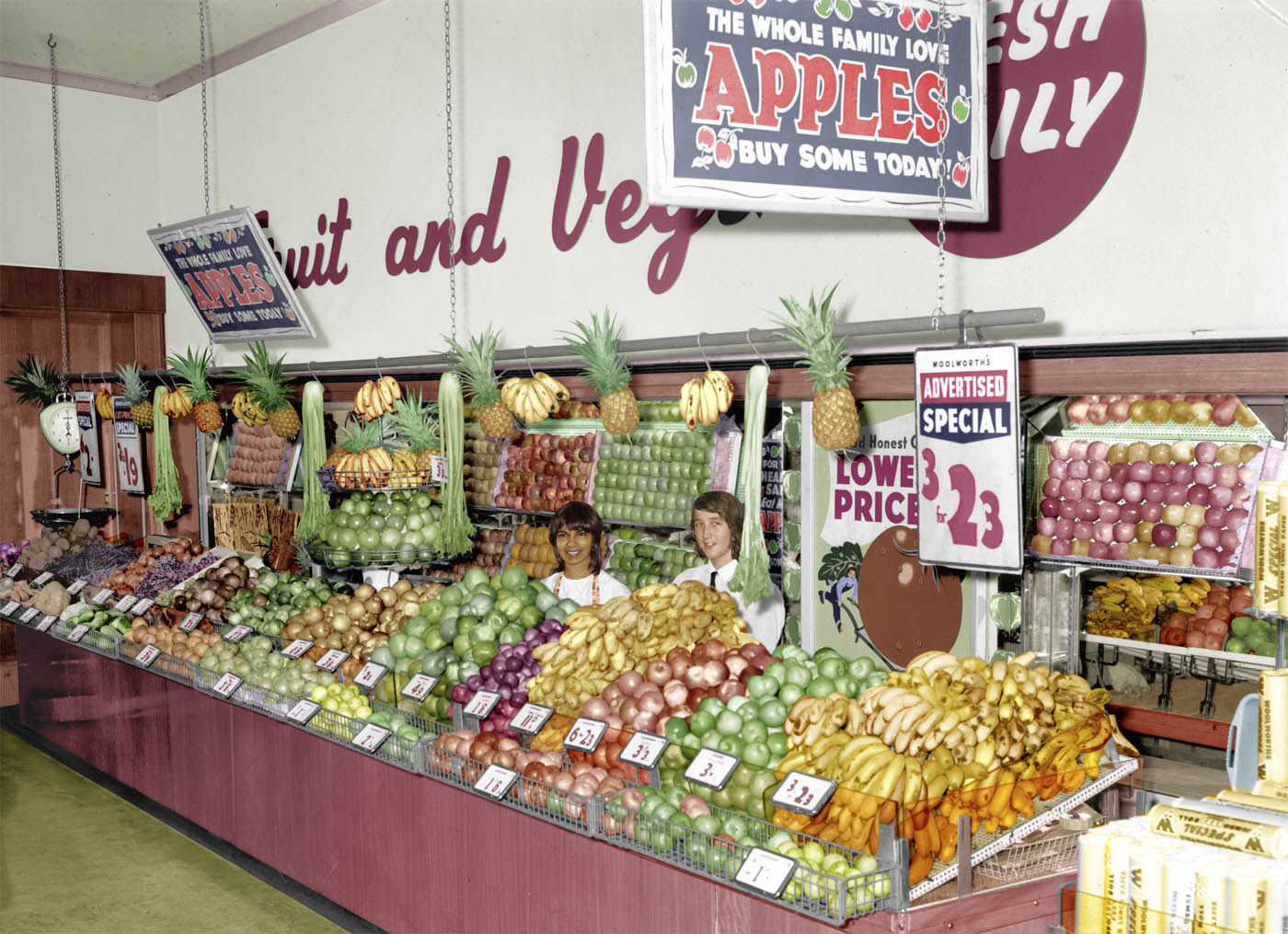
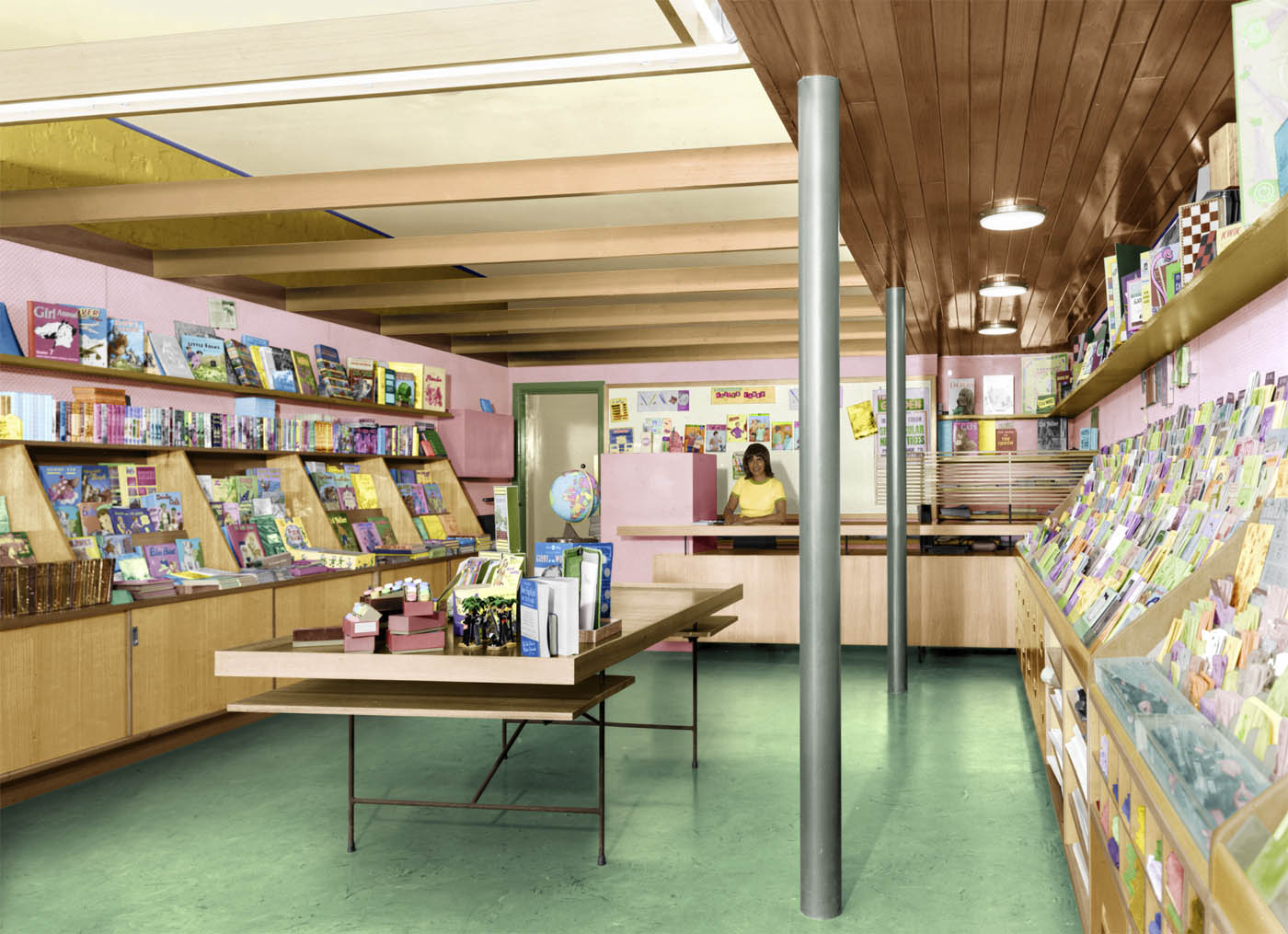
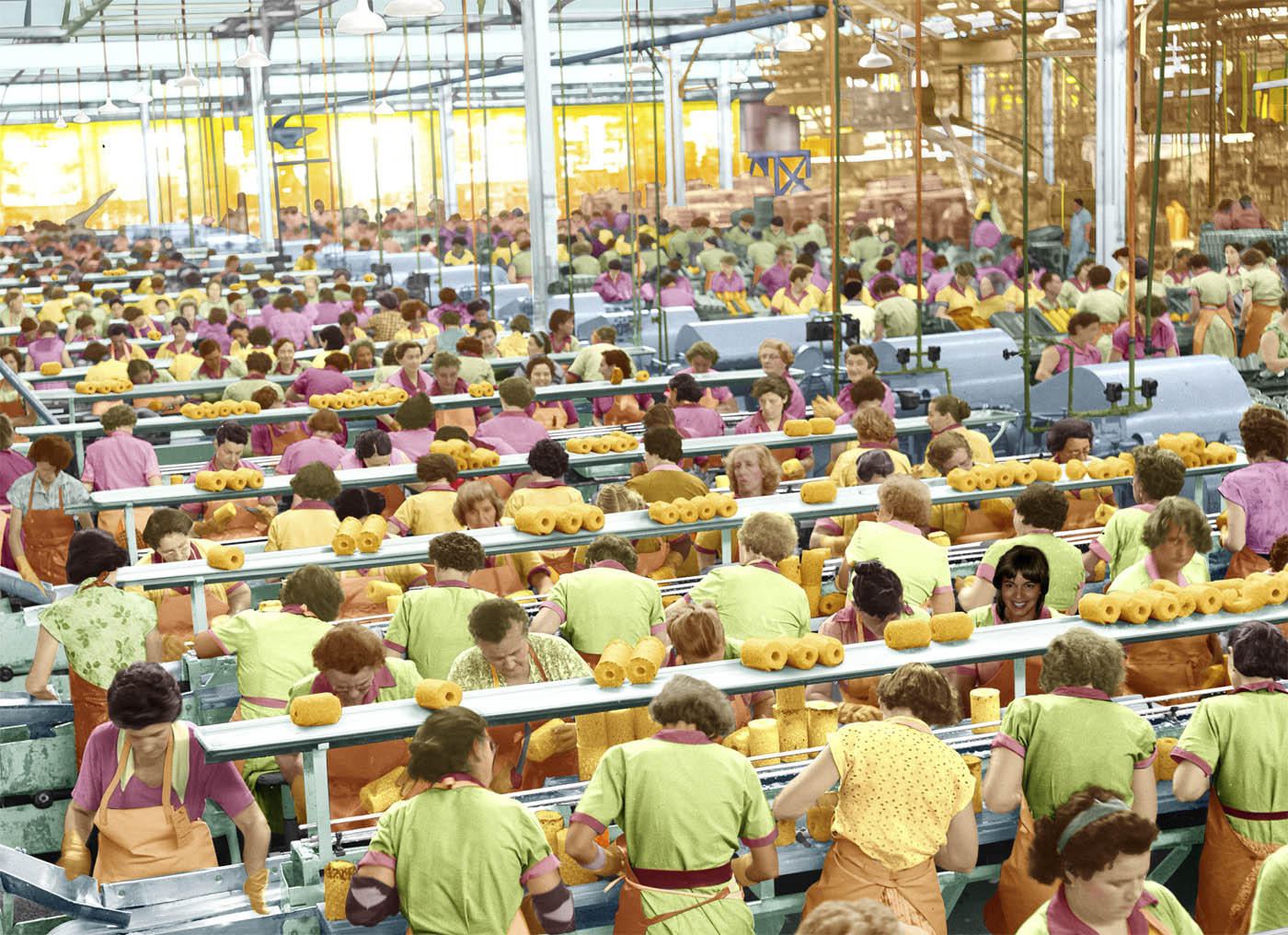
    Tracey Moffat (Australian, b. 1960) 'First Jobs, Fruit Market' 1975 from the exhibition 'First Jobs' by Tracey Moffatt at Centre for Contemporary Photography, Fitzroy, Melbourne, August - Sept, 2009


    Tracey Moffat (Australian, b. 1960)
    First Jobs, Fruit Market
    1975
    Archival pigments on rice paper with gel medium
    71 × 91.5cm


    There are some wonderful bodies of photographic work on show around Melbourne at the moment and this is one of them.

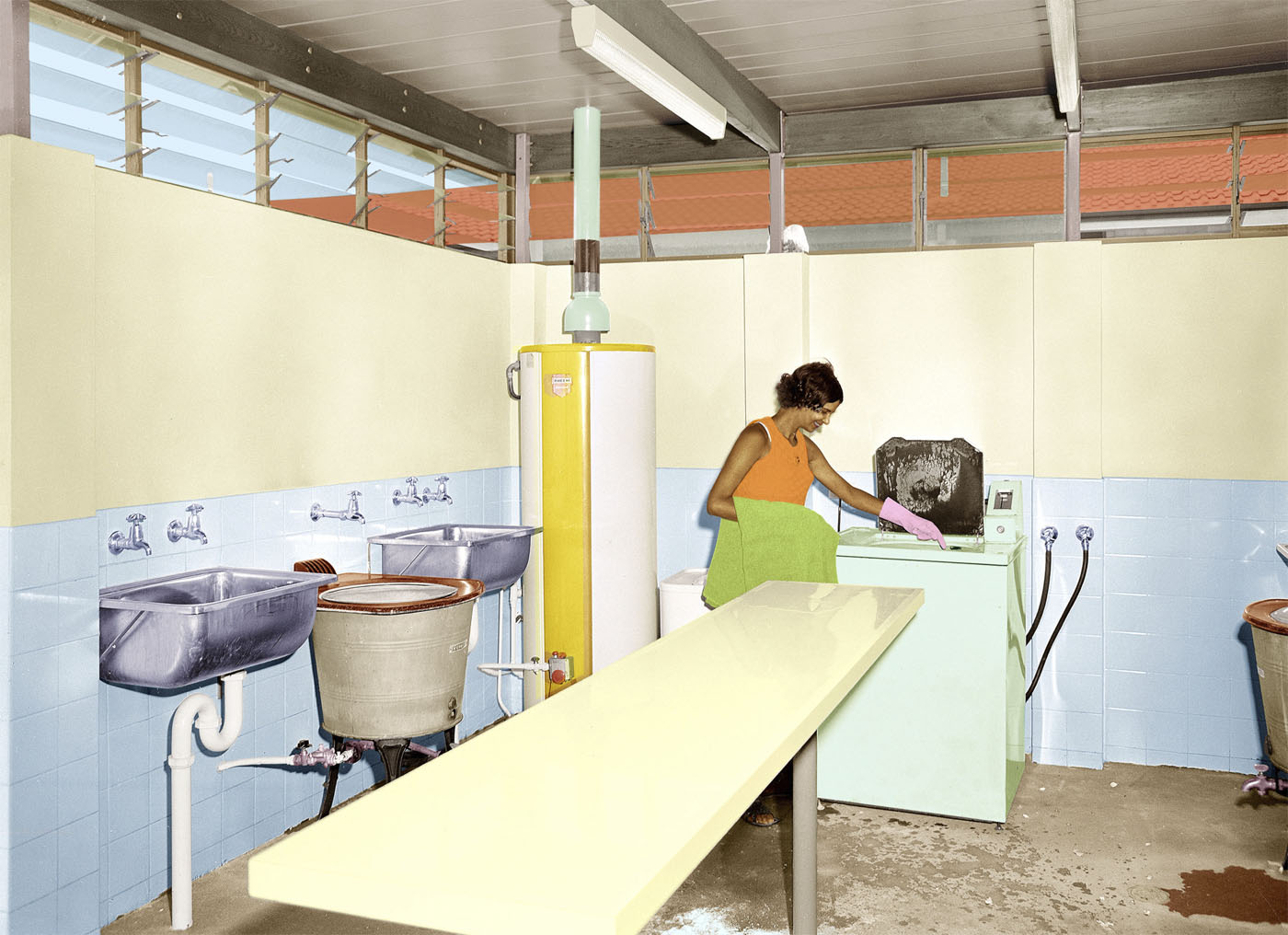
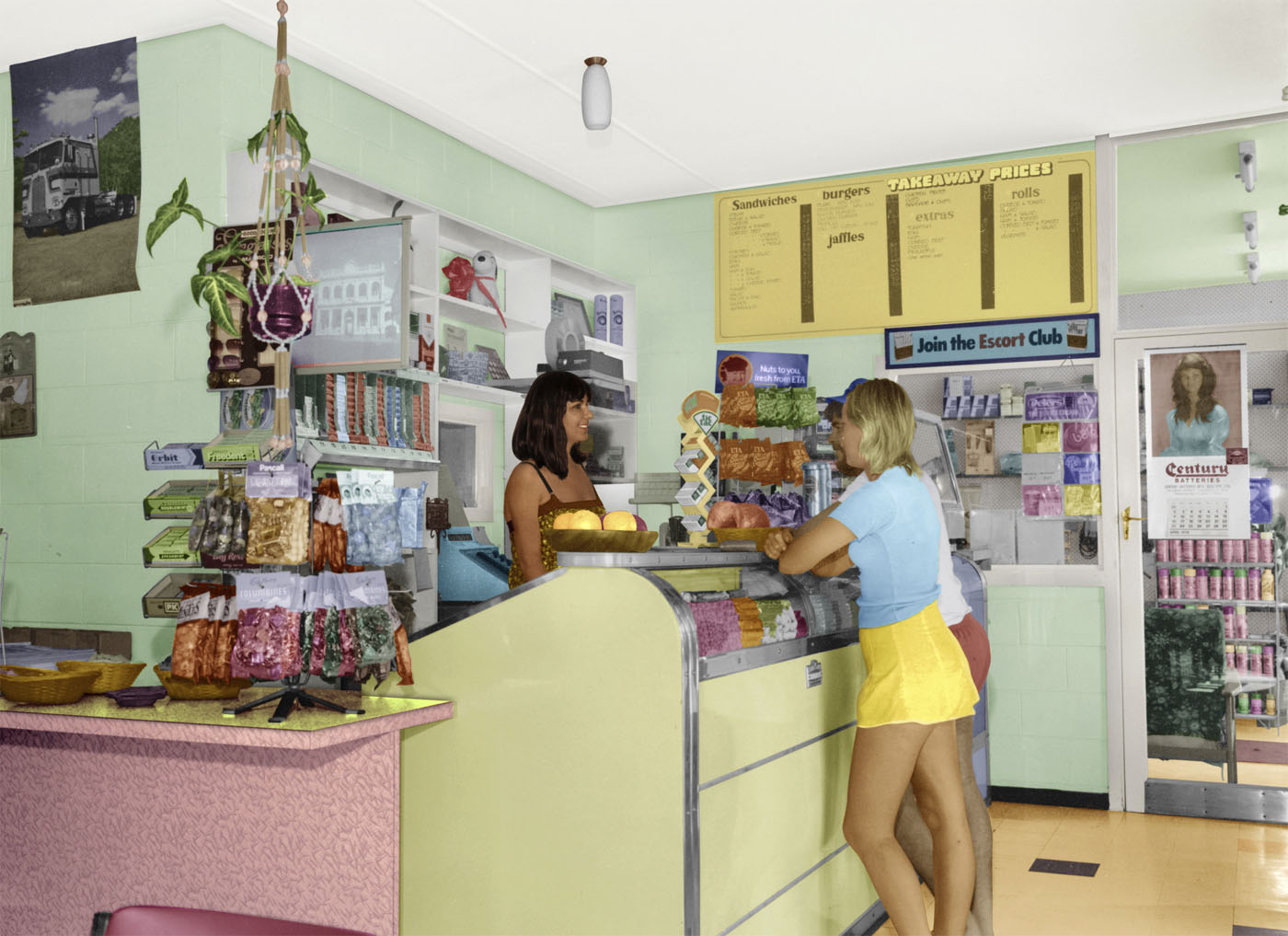
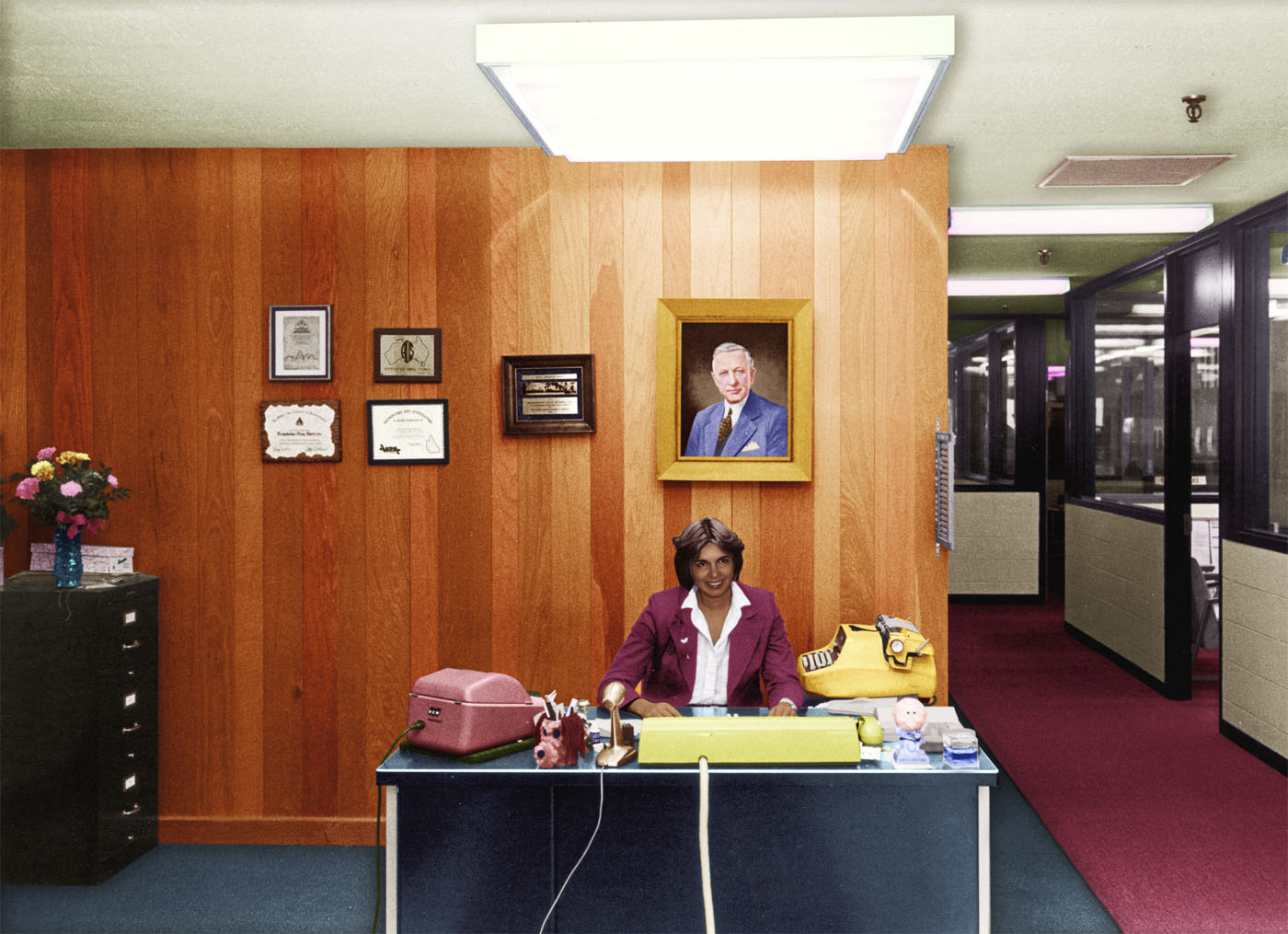
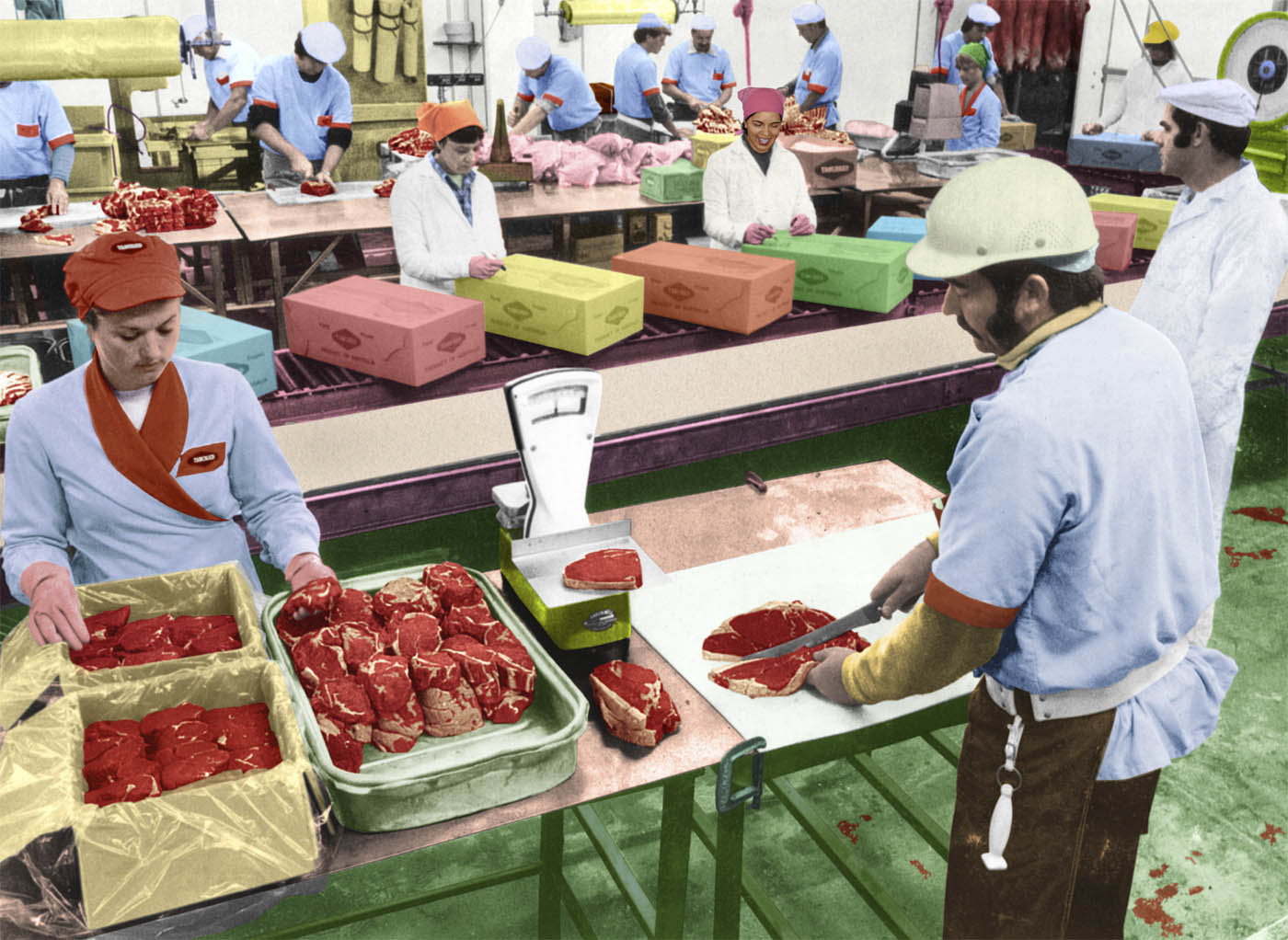
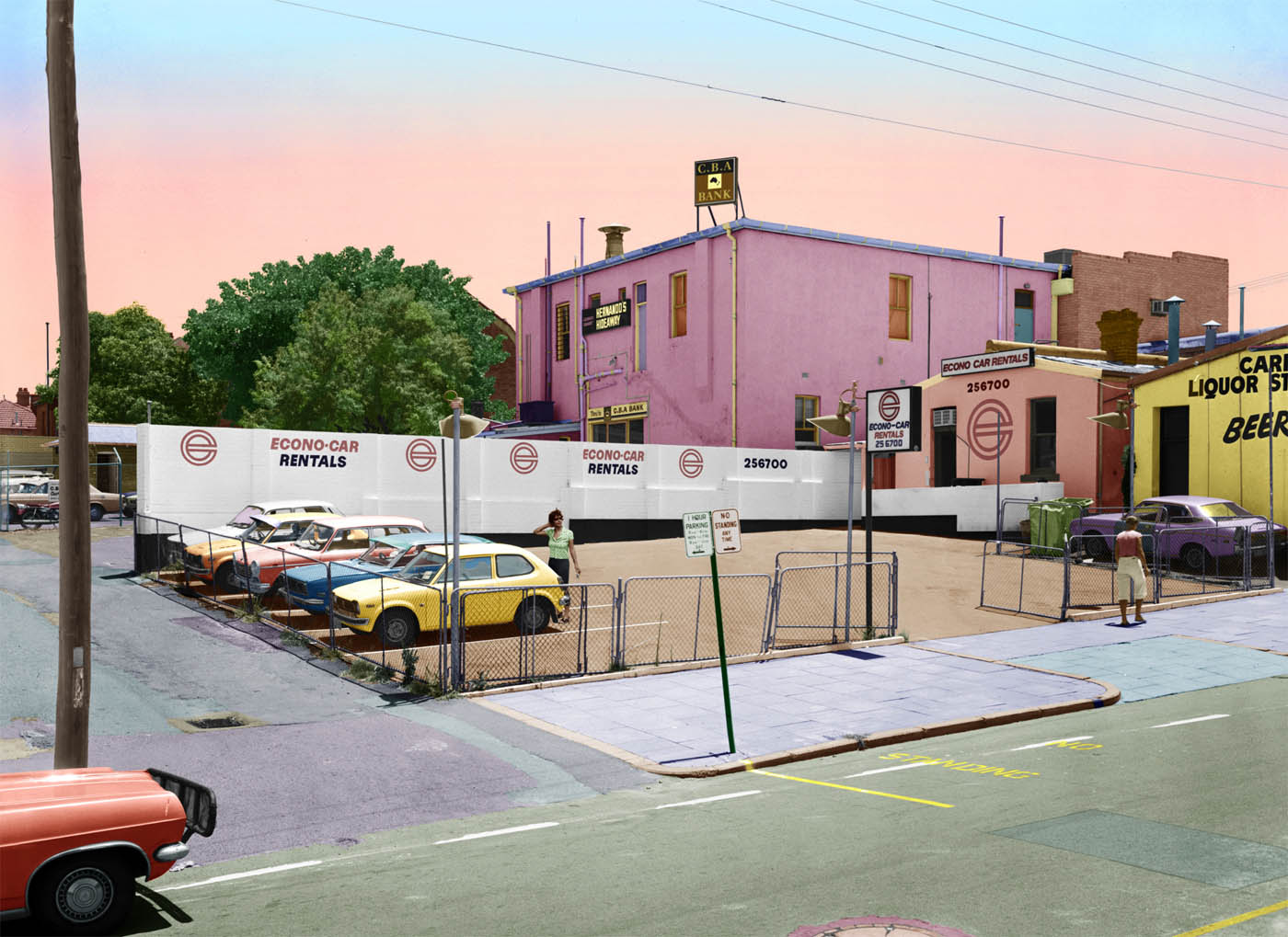
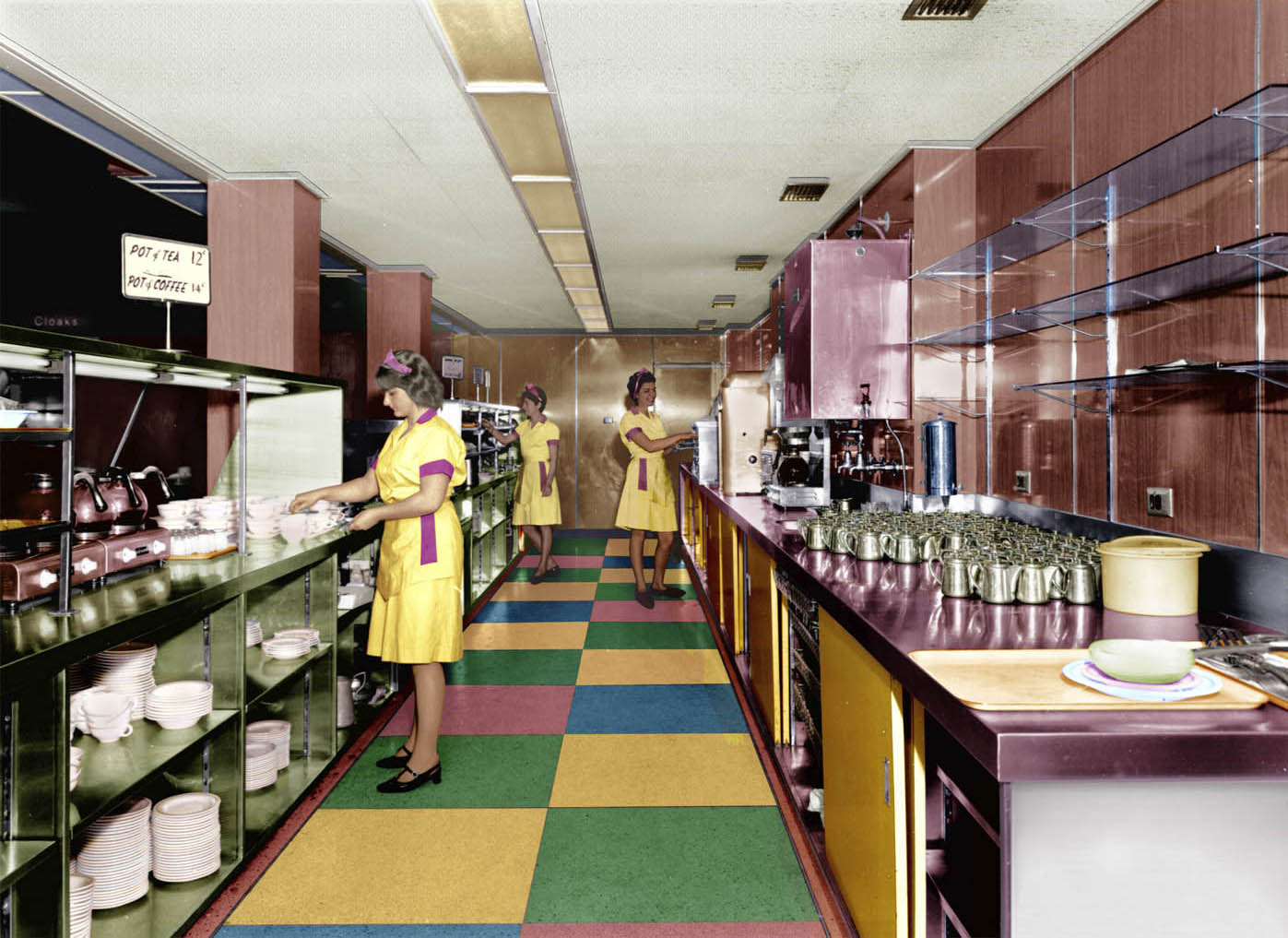
    Featuring twelve archival pigment on rice paper with gel medium prints, Tracey Moffatt’s series First Jobs (2008) is a knockout. Images of the artist are inserted into found photographs which are then “hand coloured” (like old postcards) in Photoshop. Moffatt’s series conceptualises the early jobs that she had to do to survive – investigating the banality of the jobs, the value of friendships that were formed coupled with an implicit understanding of the dictum ‘work is life’.

    Moffatt’s images hark back to the White Australia policy of the 1950s and the home and living books of that period. With their hyper-real colours, strange coloured skies, green washing machines and purple tarmac Moffatt amps up the voltage of these images and subverts their idealisation. Here is the re-presentation of the physical and spatial isolation of the figure (store clerk / housekeeper) or the sublimation of the usually female figure into the amorphous mass of the whole (meat packing / pineapple cannery) in quintessentially Australian environments. Here also is comment on the nature of a patriarchal society – the smiling receptionist sitting under the portrait of her male boss, awaiting his command.

    The spaces of these photographs seem to (literally) consume the artist and her remembrance of these jobs. Despite her smiling face in each of the images we implicitly understand the banality of the jobs for we have done them ourselves. We know these spaces intimately: the spaces inhabit us as much as we inhabit them. As the viewer we experience the being of these images, their reverberation, where the two kinds of space – the space of intimacy and the world space – blend.1

    The only sour note of the series comes not in the work itself but in the accompanying artist statement (see below). In this churlish expose of the ‘woe is me, I’m a full time artist and isn’t it so difficult to be a full time artist’ variety, Moffatt complains about the miserable voices in her head and about having to get up off the couch because she is the only person able to make the work and the money. Oh to be so lucky to actually make a living as a full time artist and have the time and space to be creative 7 days a week! Would I have her situation anytime soon? Ha, um, yes.

    Dr Marcus Bunyan


    1/ Bachelard, Gaston. The Poetics of Space. Boston: Beacon Press, 1969, p. 203.


      Many thankx to the Centre for Contemporary Photography for allowing me to publish the photographs in the posting.


      Tracey Moffat (Australian, b. 1960) 'First Jobs, Housekeeper' 1975 from the exhibition 'First Jobs' by Tracey Moffatt at Centre for Contemporary Photography, Fitzroy, Melbourne, August - Sept, 2009


      Tracey Moffat (Australian, b. 1960)
      First Jobs, Housekeeper
      1975
      Archival pigments on rice paper with gel medium
      71 × 91.5cm


      Tracey Moffat (Australian, b. 1960) 'First Jobs, Store Clerk' 1975 from the exhibition 'First Jobs' by Tracey Moffatt at Centre for Contemporary Photography, Fitzroy, Melbourne, August - Sept, 2009


      Tracey Moffat (Australian, b. 1960)
      First Jobs, Store Clerk
      1975
      Archival pigments on rice paper with gel medium
      71 × 91.5cm


      Tracey Moffat (Australian, b. 1960) 'First Jobs, Corner Store' 1977


      Tracey Moffat (Australian, b. 1960)
      First Jobs, Corner Store
      1977
      Archival pigments on rice paper with gel medium
      71 × 91.5cm


      Tracey Moffat (Australian, b. 1960) 'First Jobs, Receptionist' 1977


      Tracey Moffat (Australian, b. 1960)
      First Jobs, Receptionist
      1977
      Archival pigments on rice paper with gel medium
      71 × 91.5cm


      Tracey Moffat (Australian, b. 1960) 'First Jobs, Meat Packing' 1978


      Tracey Moffat (Australian, b. 1960)
      First Jobs, Meat Packing
      1978
      Archival pigments on rice paper with gel medium
      71 × 91.5cm


      Over the years my friends and I joke about our dreadful past jobs. Jobs we worked as teenagers and young students. Awful jobs that we would rather forget about such as cleaning out the local cinema after a screening of The Exorcist in 1974.

      When I was a kid I always had jobs and I always made my own money whether it was receiving a dollar for pulling up the weeds in the yard or baby sitting for neighbours or working at the local green grocers. The thing about making a bit of your own cash was that you could buy your own clothes and not have to wear the clothes that your mother picked out.

      In 1978 at seventeen I worked in factories peeling pineapples. I also packed meat and shelled prawns. Such back breaking labour was exhausting but the money was good.  After one year I saved enough money to travel to Europe and backpacked around for nine months. Then in 1980 I went to art school in Brisbane but continued part-time work as a waitress to pay for art materials.

      After art school I was desperate for money to pay the rent and I worked many jobs. Some were: scrubbing floors in a women’s refuge, washing dishes in a canteen and parking cars in a car park beneath a restaurant called Dirty Dicks (I had no driver’s licence, but the patrons were always drunk and didn’t care.)

      I am resentful and appalled at the work I had to do to survive. I hold a grudge towards rich kids who never had to slave like I did. Secretly though I’m proud of myself. When I think of those early years I realise that I was learning to be tough and work whether I liked it or not. I put my head down and was forced to be productive. I was learning how to get on with other people and learning to handle a boss. These days I do nothing but make art and have exhibitions. Being an artist feels like being on a permanent but jittery holiday in comparison to those early working days. Now I sleep in until 9.30am and press the ‘ignore’ button on my phone if I don’t feel like talking to anyone. But, as Bette Davis put it, it is ‘The Lonely Life’. You have come up with the ideas and make them happen. No-one else is going to do it for you.

      But I remember the good things about the factory floor. Walking into work everyday and saying hi to people you knew, there was a camaraderie. The work was mindless but it didn’t mean that your mind couldn’t go places. Then there was knock-off time. The bell would ring and you would be out the door with a wad of cash in your hand and not a care in the world.

      In being a full-time artist there never is any knock-off time. There’s always a nagging, miserable voice of ideas in your head and you MUST get up off the sofa and produce work. The bell never rings and you never know where your next buck is coming from. Your mind is constantly wound up. You’re never really physically tired not like when you had a real honest job. But would I go back to working in a factory just to get good a night’s sleep? Ha, um, no.”

      Tracey Moffatt, 
New York 2008

      Press release from Roslyn Oxley9 Gallery [Online] Cited 23/04/2019


      Tracey Moffat (Australian, b. 1960) 'First Jobs, Pineapple Cannery' 1978


      Tracey Moffat (Australian, b. 1960)
      First Jobs, Pineapple Cannery
      1978
      Archival pigments on rice paper with gel medium
      71 × 91.5 cm


      Tracey Moffat (Australian, b. 1960) 'First Jobs, Parking Cars' 1981


      Tracey Moffat (Australian, b. 1960)
      First Jobs, Parking Cars
      1981
      Archival pigments on rice paper with gel medium
      71 × 91.5cm


      Tracey Moffat (Australian, b. 1960) 'First Jobs, Canteen' 1984


      Tracey Moffat (Australian, b. 1960)
      First Jobs, Canteen
      1984
      Archival pigments on rice paper with gel medium
      71 × 91.5cm


      Centre for Contemporary Photography
      Level 2, Perry St Building
      Collingwood Yards, Collingwood
      Victoria 3066

      Opening hours:
      Wednesday – Saturday 11am – 5pm
      Centre for Contemporary Photography website

      LIKE ART BLART ON FACEBOOK

      Back to top

      Review: ‘All the Little Pieces’ by Lyndal Hargrave at Anita Traverso Gallery, Richmond, Melbourne

      Exhibition dates: 3rd September – 3rd October, 2009


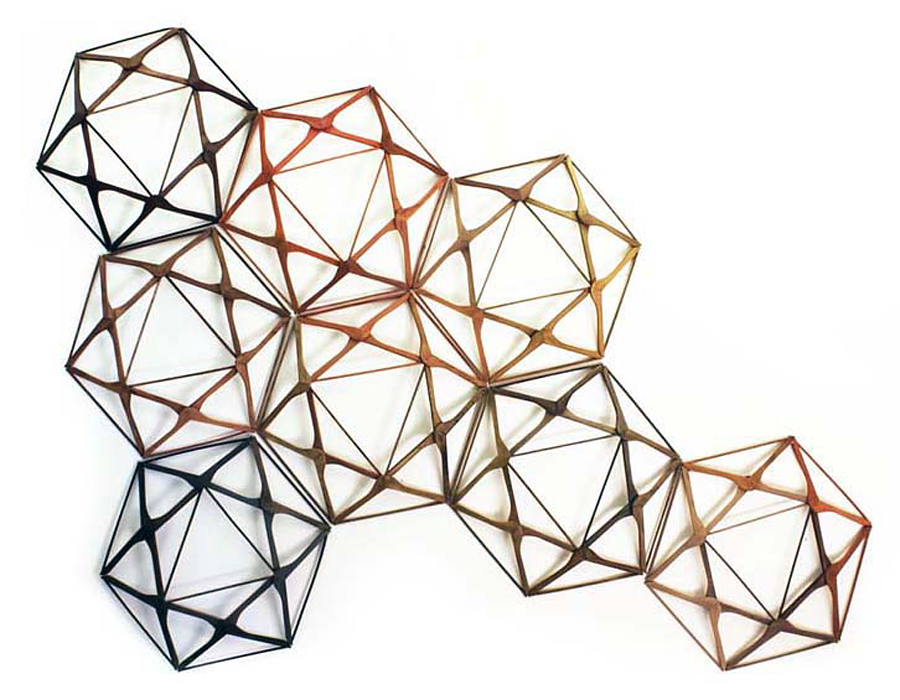
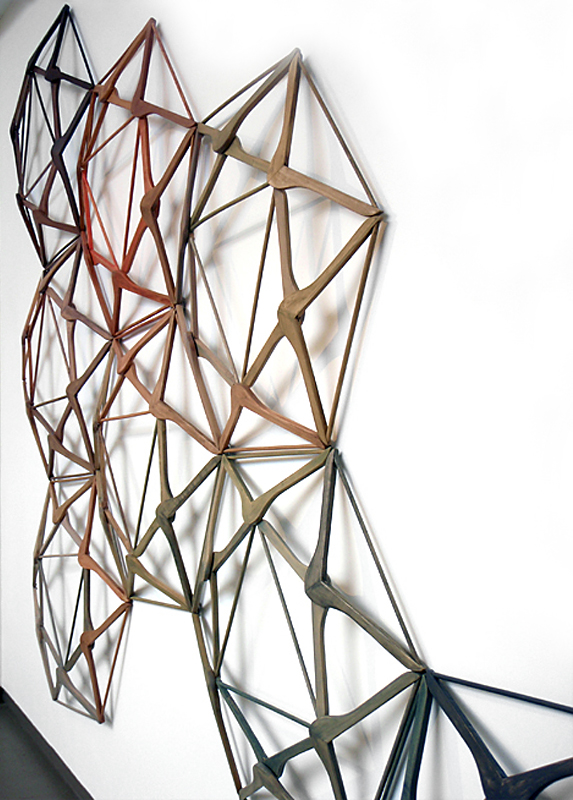
      Lyndal Hargrave (Australia, b. 1959) 'Sacred Geometry' 2009 from the exhibition 'All the Little Pieces' by Lyndal Hargrave at Anita Traverso Gallery, Richmond, Melbourne, Sept - Oct, 2009
       

      Lyndal Hargrave (Australia, b. 1959)
      Sacred Geometry
      2009
      Acrylic painted timber coat hangers, screws, staples
      180 x 170cm
      Photo: Marcus Bunyan


      This is a mixed bag of an exhibition by Lyndal Hargrave at Anita Traverso Gallery in Richmond, Melbourne.

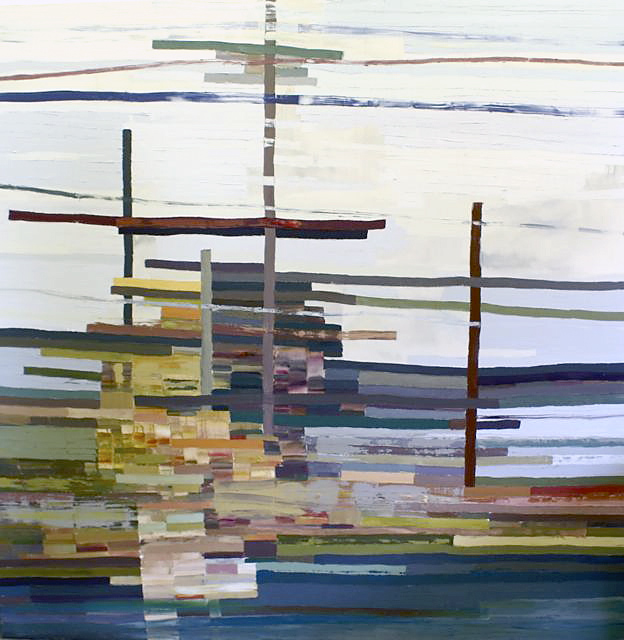
      Despite one outstanding painting Breathing Space (2009, see below), the view from the back of the artist’s house onto a jetty with attendant wooden posts and sky, the other paintings are the weakest elements of the exhibition, lacking the strength and resonance of the sculptural work.

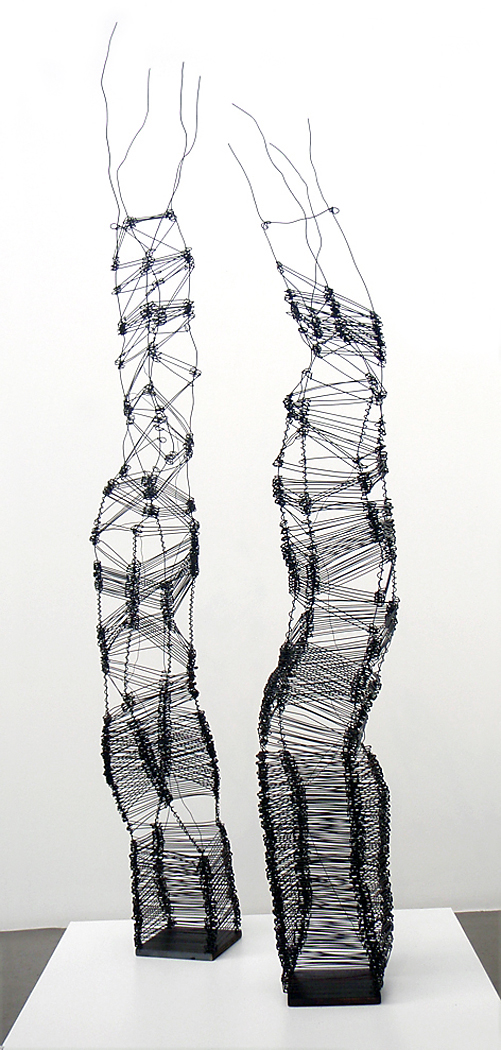
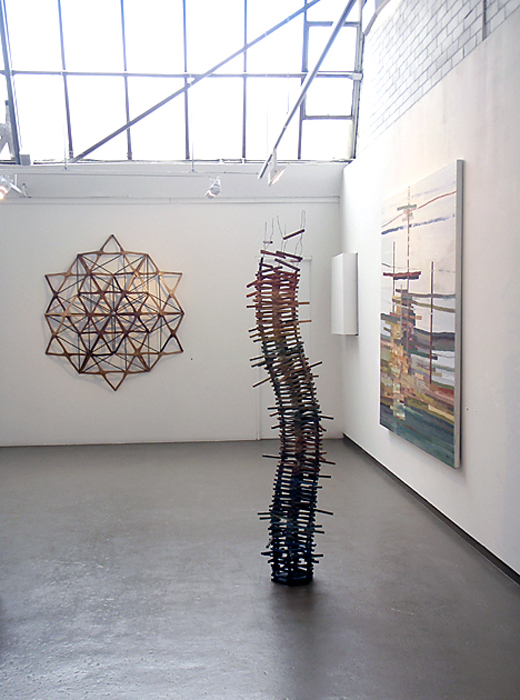
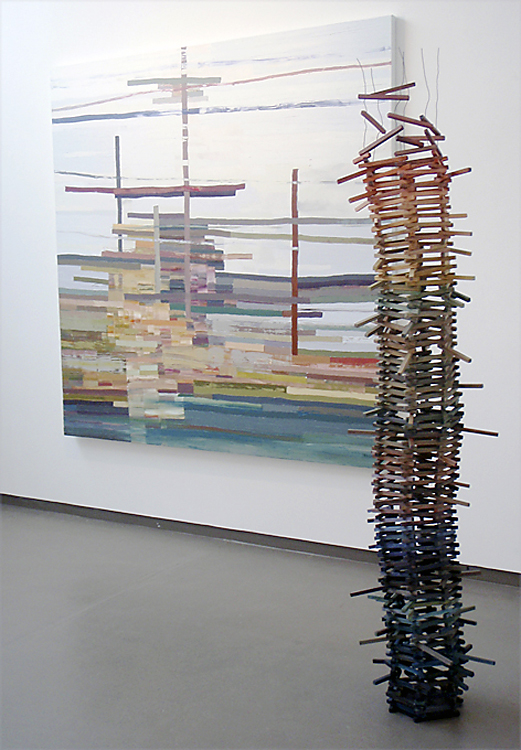
      The two standing towers, Hairpin Dragons I & II and Jacob’s Ladder (both 2009, see below) are stronger work, Jacobs Ladder imitating the form of the painting Breathing Space in three-dimensional Cuisenaire-type coloured rods (see the installation photograph of the two pieces below).

      The best pieces in the exhibition are the wall mounted geometric, mandala-like sculptures made of wooden coat hangers. Delicately shifting patterns take the micro cellular form and make it macro, their patterns of construction offering a pleasing visual balance that is both complex, layered and innovative at one and the same time. As explorations of the notion of the universal structure, the golden ratio, they reward repeated viewing.

      As the exhibition stands there are too many little pieces to make a holistic whole. Perhaps an exhibition solely of the towers or geometric pieces would have been stronger. I look forward to seeing how the geometric pieces (d)evolve in future work. Will the structures break down and reassemble in other marvellous incantations? I hope so!

      Dr Marcus Bunyan


      Many thankx to Anita Traverso Gallery for allowing me to publish the art work in the posting. Please click on some of the photographs for a larger version of the image.


      Lyndal Hargrave (Australia, b. 1959) 'Arabesque' 2009 from the exhibition 'All the Little Pieces' by Lyndal Hargrave at Anita Traverso Gallery, Richmond, Melbourne, Sept - Oct, 2009


      Lyndal Hargrave (Australia, b. 1959)
      Arabesque
      2009
      Acrylic painted timber coat hangers, screws, staples
      200 x 360cm
      Photo: Marcus Bunyan


      Lyndal Hargrave (Australia, b. 1959) 'Arabesque' 2009 (detail)


      Lyndal Hargrave (Australia, b. 1959)
      Arabesque (detail)
      2009
      Acrylic painted timber coat hangers, screws, staples
      200 x 360cm
      Photo: Marcus Bunyan


      Lyndal Hargrave (Australia, b. 1959) 'Hairpin Dragons I & II' 2009


      Lyndal Hargrave (Australia, b. 1959)
      Hairpin Dragons I & II
      2009
      Wire, formply
      170 x 15cm (varying)
      Photo: Marcus Bunyan


      “It is a constant idea of mine that behind the cotton wool (of daily reality) is hidden a pattern, that we – I mean all human beings – are connected with this: that the whole world is a work of art; that we are parts of the work of art.”

      ~ Virginia Woolf


      For as long as I can remember, my art practice has served as a filter between the outside world and my inside world. I realise now that the act of making the artwork informs my ideas rather than the other way round. Working intuitively results in a continuous stream of surprises that in retrospect mirror the pressing issues surrounding me at that time.

      In All the Little Pieces my fascination with patterns of construction from micro to macro and natural to man-made continues. My work explores the gap between order and chaos and helps me to understand the meaning of balance.

      Using mundane found objects, my sculptures probe the possibility of re-invention through the way the componentry of human habitation can be re-configured to offer us a new way of seeing and experiencing our world.

      It is this process of metamorphosis that is at the centre of my investigation: how life forms make the transition from one state to another – tree to timber to tower or talisman; why some systems remain strong and others crumble.

      Overarching my work is the notion of universal structure and the geometry that has informed our evolution from molecule to macro-system.”

      Lyndal Hargrave 2009

      Text from the Anita Traverso Gallery website


      Lyndal Hargrave (Australia, b. 1959) 'Whirlpool Galaxy' (2009) and 'The Samarian Star' (2009)


      Lyndal Hargrave (Australia, b. 1959)
      Whirlpool Galaxy and The Samarian Star
      2009
      Acrylic painted timber coat hangers, screws, staples
      Photo: Marcus Bunyan


      Installation view of Lyndal Hargrave exhibition at Anita Traverso Gallery, Melbourne


      Installation view of the Lyndal Hargrave exhibition at Anita Traverso Gallery
      Photo: Marcus Bunyan


      Photograph showing the relationship of form between the work 'Jacob’s Ladder' (2009) and the painting 'Breathing Space' (2009)


      Photograph showing the relationship of form and colour between the work Jacob’s Ladder (2009) and the painting Breathing Space (2009)
      Photo: Marcus Bunyan


      Lyndal Hargrave (Australia, b. 1959) 'Breathing Space' 2009


      Lyndal Hargrave (Australia, b. 1959)
      Breathing Space
      2009
      Oil on canvas
      200 x 200cm


      Anita Traverso Gallery

      The physical gallery has now closed.

      PO Box 7001, Hawthorn North 3122
      Phone: 0408 534 034
      Email: art@anitatraversogallery.com.au

      Anita Traverso Gallery website

      LIKE ART BLART ON FACEBOOK

      Back to top