Exhibition: ‘Ernest Cole: House of Bondage’ at Foam, Amsterdam

Exhibition dates: 27th January – 14th June, 2023

Trigger warning: this exhibition contains historic images and text that can be experienced as disturbing or offensive


Ernest Cole (South African, 1940-1990) 'Pensive tribesmen, newly recruited to mine labour, awaiting processing and assignment' 1960-1966 from the exhibition 'Ernest Cole: House of Bondage' at Foam, Amsterdam, Jan - June, 2023


Ernest Cole (South African, 1940-1990)
Pensive tribesmen, newly recruited to mine labour, awaiting processing and assignment
1960-1966
From House of Bondage Period
Courtesy of the Hasselblad Foundation, Gothenburg, Sweden
© The Ernest Cole Family Trust


“Cole – Photographer”

Upon his tomb is inscribed this epitaph: “Cole – Photographer”

‘Photographer’ could have had the prefix: ethical, conscientious, brave, magnificent. But there is no need… Ernest Cole was a photographer.

Cole fled South Africa in 1966 in order to publish his seminal book about living under apartheid, House of Bondage (1967), and then lived a nomadic existence around the world until his death, never returning to the country of his birth.

I feel so sad that this legend of photography died penniless and living rough on the streets of New York in 1990.

But then I rejoice in the photographs that he left us. For (unlike so many photographs) they are memorable. They make us remember that we must respect each other – through an ability to see a person as he is, to be aware of his unique individuality.

“Respect is not fear and awe, it denotes, in accordance with the root of the word (respicere = to look at), the ability to see a person as he is, to be aware of his unique individuality. Respect means the concern that the other person should grow and unfold as he is. Respect, thus, implies the absence of exploitation … It is clear respect is possible only if I have achieved independence; if I can stand and walk without needing crutches, without having to dominate and exploit anyone else. Respect exists only on the basis of freedom … To respect a person is not possible without knowing him; care and responsibility would be blind if they were not guided by knowledge. Knowledge would be empty if it were not motivated by concern. There are many layers of knowledge; the knowledge which is an aspect of love is one which does not stay at the periphery, but penetrates to the core. It is possible only when I can transcend the concern for myself and see the other person in his own terms.”1


Respect exists only on the basis of freedom … and love.

Dr Marcus Bunyan


1/ Erich Fromm. The Art of Loving. London: Allen and Unwin, 1957, pp. 28-29.

For more information please read my 2013 paper ‘Ernest Cole: Journeys through photojournalism, social documentary photography and art’ which investigates the trajectory of the work of Ernest Cole in order to understand how it developed under the influence of the South African Apartheid system. (2,316 words)

For more photographs from House of Bondage please see the Moderna Museet website.


Many thankx to FOAM for allowing me to publish the photographs in the posting. Many thankx to my friend and fellow artist Drager Meurtant for visiting the exhbition for me and allowing me to publish his photographs of the exhibition in the posting. Please click on the photographs for a larger version of the image.


“I knew what I must do. I would show the world what the white South African had done to the black.”


Ernest Cole


“Cole was born Ernest Levi Tsoloane Kole in 1940, to a working-class Black family in a Black township outside the city of Pretoria. Growing into that society he came to know, with a depth of understanding that only belonging could bring, both its richness and the hardship and humiliation imposed by apartheid. As a boy he photographed people in the township for a shilling a time. By the age of eighteen he had begun to work as a photojournalist, and within a few years he was deeply committed to his essay on what it meant to be Black under apartheid. At age twenty-six, to escape the Security Police and to publish his seminal book, House of Bondage, he went into bitter and destructive exile. Cancer killed him in 1990. Apartheid destroyed him.”


David Goldblatt


Foam x Aperture: Celebrating the Legacy of Ernest Cole

For the current exhibition House of Bondage by Ernest Cole, Foam has joined forces with Aperture to host a special online event celebrating the enduring legacy of Ernest Cole (1940-1990). During the evening, a distinguished panel of experts will share their insights and reflections on Cole’s powerful photographic work, which captured the brutal realities of apartheid-era South Africa, exposing the dehumanising effects of racial oppression in the daily life of black South Africans.


The Mines


Installation view of the exhibition 'Ernest Cole: House of Bondage' at Foam, Amsterdam showing at left, Cole's 'Pensive tribesmen, newly recruited to mine labour, awaiting processing and assignment' (1960-1966)


Installation view of the exhibition Ernest Cole: House of Bondage at Foam, Amsterdam showing at left, Cole’s Pensive tribesmen, newly recruited to mine labour, awaiting processing and assignment (1960-1966, above)


Ernest Cole. 'After processing they wait at railroad station for transportation to mine. Identity tag on wrist shows shipment of labor to which man is assigned' 1960-1966 from the exhibition 'Ernest Cole: House of Bondage' at Foam, Amsterdam, Jan - June, 2023


Ernest Cole (South African, 1940-1990)
After processing they wait at railroad station for transportation to mine. Identity tag on wrist shows shipment of labor to which man is assigned
1960-1966
Gelatin silver print
8 11/16 x 12 5/8 in. (22 x 32cm)
Courtesy of the Hasselblad Foundation, Gothenburg, Sweden
© The Ernest Cole Family Trust


Ernest Cole (South African, 1940-1990) 'Miner sleeps on concrete slab, must supply own bedding' 1960-1966 (installation view)


Ernest Cole (South African, 1940-1990)
Miner sleeps on concrete slab, must supply own bedding (installation view)
1960-1966
Gelatin silver print
On loan from Magnum Photos
© The Ernest Cole Family Trust
Photo: Drager Meurtant


Caption from House of Bondage


Installation view of the exhibition 'Ernest Cole: House of Bondage' at Foam, Amsterdam showing at right an Untitled image from Cole's 'House of Bondage' (1960-1966)


Installation view of the exhibition Ernest Cole: House of Bondage at Foam, Amsterdam showing at right an Untitled image from Cole’s House of Bondage (1960-1966, below)


Ernest Cole (South African, 1940-1990) 'Untitled' 1960-1966 From the series 'House of Bondage' from the exhibition 'Ernest Cole: House of Bondage' at Foam, Amsterdam, Jan - June, 2023


Ernest Cole (South African, 1940-1990)
Untitled (South Africa 1960s)
1960-1966
From House of Bondage Period
Courtesy of the Hasselblad Foundation, Gothenburg, Sweden
© The Ernest Cole Family Trust


Installation view of the exhibition 'Ernest Cole: House of Bondage' at Foam, Amsterdam


Installation view of the exhibition Ernest Cole: House of Bondage at Foam, Amsterdam


Foam proudly presents the first overview of the work of South African photographer Ernest Cole. The exhibition includes parts of his archive, which had long been considered lost. The overview was assembled in collaboration with the Ernest Cole Family Trust, which in 2017 secured control of Cole’s archive. Restless and tenacious, yet dedicated and empathetic. It is difficult to define the enigmatic South African photographer Ernest Cole (1940-1990). He is celebrated for his tireless documentation of Black lives in South Africa under apartheid: a regime of institutionalised racial segregation that was in effect from 1948 to the early 1990s.

As one of the first Black freelance photographers, Cole offered with his work an unprecedented view from the inside. Born in a township, Cole experienced the strains of apartheid first-hand. By having himself reclassified from ‘black’ to ‘coloured’, he managed to access places where most South Africans were banned. He risked his life exposing the grim reality of racial segregation, by documenting miners inside the mines, police controls and the demolition of townships, among others.

Cole lived a nomadic life, exiled from his native South Africa for his photographic publication House of Bondage (1967). The chapters from this book form the narrative for this exhibition. The book openly denounced the apartheid regime and was promptly banned in South Africa. In risk of arrest, Cole had gone into exile in 1966. He would never return to South Africa again.

Living between Sweden and the United States, Cole continued to document Black lives in the wake of the Civil Rights Movement. However, being Black and stateless proved debilitating there too, and a publication of his American work would never materialise. Towards the end of his life, Cole became increasingly disillusioned and reportedly started living on the streets of New York. He died at age 49 from pancreatic cancer. Much of Cole’s work had been considered lost, until the rediscovery of 60,000 negatives and contact sheets in the safety deposit boxes of a Swedish bank in 2017.

Besides (colour) images from his time in America, the archive contains unpublished photographs and contact sheets from House of Bondage. The exhibition in Foam is the first large scale overview of Cole’s work to include parts of his retrieved archive.

About the exhibition

As one of the first Black freelance photographers, Cole offered with his work an unprecedented view from the inside. Born in a township, Cole experienced the strains of apartheid first-hand. By having himself reclassified from ‘black’ to ‘coloured’, he managed to access places where most South Africans were banned. He risked his life exposing the grim reality of racial segregation, by documenting miners inside the mines, police controls and the demolition of townships, among others.

This exhibition shows the rediscovery of 60,000 negatives and contact sheets in the safety deposit boxes of a Swedish bank in 2017. Besides (colour) images from his time in America, the archive contains unpublished photographs and contact sheets from House of Bondage. The exhibition in Foam is the first large scale overview of Cole’s work to include parts of his retrieved archive.

The photographs in this exhibition were taken between 1958-1966, unless stated otherwise. All contact sheets are modern prints from scans. Original titles and text from House of Bondage are in quotation marks or italics. The exhibition pens in tandem with the launch of two volumes published by Aperture: the first a republication of House of Bondage, the second presenting US work for the first time in history.

This exhibition was made in collaboration with the Ernest Cole Family Trust and Magnum Photos.

Press release from Foam


Installation view of the exhibition 'Ernest Cole: House of Bondage' at Foam, Amsterdam showing in the background at left the section of the exhibition entitled 'Banishment'


Installation view of the exhibition Ernest Cole: House of Bondage at Foam, Amsterdam showing in the background at left the section of the exhibition entitled ‘Banishment’


Banishment

Cole secretly visited Frenchdale, a remote government detention camp. Its inhabitants were banished without trial, on account of their political views. Cole recorded the basis conditions under which they lived in exile, sometimes for decades. Cole’s presence in the camp was unauthorised, and he recalls having to hide from the police during his stay. When he left, he was relieved. “For them and infinity of unremarkable days stretched ahead. For me the frightful nothingness of Frenchdale was about to end (…) ironically, as I re-entered the restricted black life of Johannesburg, I felt free.”

Wall text from the exhibition


Ernest Cole (South African, 1940-1990) 'Piet falls asleep with Bible on his face, Africans say: "When the Europeans came, they had the Bible. Now we have the Bible, and they have our land".' 1960-1966 from the exhibition 'Ernest Cole: House of Bondage' at Foam, Amsterdam, Jan - June, 2023


Ernest Cole (South African, 1940-1990)
Piet falls asleep with Bible on his face, Africans say: “When the Europeans came, they had the Bible. Now we have the Bible, and they have our land.”
1960-1966
From House of Bondage Period
Courtesy of the Hasselblad Foundation, Gothenburg, Sweden
© The Ernest Cole Family Trust


Caption from House of Bondage


Ernest Cole (South African, 1940-1990) 'Frenchdale banishment camp: twelve huts with nothing around them but miles of barren veldt' 1960-1966 (installation view)


Ernest Cole (South African, 1940-1990)
Frenchdale banishment camp: twelve huts with nothing around them but miles of barren veldt
1960-1966
Vintage print
From House of Bondage Period
On loan from the Arpad A Busson Foundation
© The Ernest Cole Family Trust
Photo: Drager Meurtant


Caption from House of Bondage


Education for Servitude

Cole’s anger about apartheid education is inescapable in his chapter ‘Education for Servitude’, for which he visited various Bantu schools. His images and handwritten notes from a visit to a school in Vlakfontein in 1965 testify to overly crowded and understaffed classrooms in which children are studying to be “educated for servitude”.⁠

Wall text from the exhibition


Installation view of the exhibition 'Ernest Cole: House of Bondage' at Foam, Amsterdam

Installation view of the exhibition 'Ernest Cole: House of Bondage' at Foam, Amsterdam showing photographs from the section 'Education for Servitude': in the image at left, Cole's 'Earnest boy' (1960-1966); and at right, 'Teacher toward end of her day in school, South Africa' (1960-1966)


Installation views of the exhibition Ernest Cole: House of Bondage at Foam, Amsterdam showing photographs from the section ‘Education for Servitude’: in the bottom image at left, Cole’s Earnest boy (1960-1966, below); and at right, Teacher toward end of her day in school, South Africa (1960-1966, below)


Ernest Cole (South African, 1940-1990) 'Earnest boy squats on haunches and strains to follow lesson in heat of packed classroom, South Africa' 1960-1966 from the exhibition 'Ernest Cole: House of Bondage' at Foam, Amsterdam, Jan - June, 2023


Ernest Cole (South African, 1940-1990)
Earnest boy squats on haunches and strains to follow lesson in heat of packed classroom, South Africa
1960-1966
From House of Bondage Period
Courtesy of the Hasselblad Foundation, Gothenburg, Sweden
© The Ernest Cole Family Trust


Ernest Cole (South African, 1940-1990) 'Teacher toward end of her day in school, South Africa' 1960-1966


Ernest Cole (South African, 1940-1990)
Teacher toward end of her day in school, South Africa
1960-1966
From House of Bondage Period
Courtesy of the Hasselblad Foundation, Gothenburg, Sweden
© The Ernest Cole Family Trust


Ernest Cole (South African, 1940-1990) 'SOUTH AFRICA. 1960s. Students kneel on floor to write. Government is casual about furnishing schools for blacks' 1960-1966


Ernest Cole (South African, 1940-1990)
SOUTH AFRICA. 1960s. Students kneel on floor to write. Government is casual about furnishing schools for blacks
1960-1966
From House of Bondage Period
Courtesy of the Hasselblad Foundation, Gothenburg, Sweden
© The Ernest Cole Family Trust


Ernest Cole (South African, 1940-1990) 'Untitled (Education for Servitude)' 1960-1966 (installation view)


Ernest Cole (South African, 1940-1990)
Teacher is stifling with one her two daily sessions of one hundred students each (installation view)
1960-1966
From House of Bondage Period
© The Ernest Cole Family Trust
Photo: Drager Meurtant


Caption from House of Bondage


Black Spots


Installation view of the exhibition 'Ernest Cole: House of Bondage' at Foam, Amsterdam showing photographs and contact sheets from Cole's series 'Black Spots' from Cole's 'House of Bondage'

Installation view of the exhibition 'Ernest Cole: House of Bondage' at Foam, Amsterdam showing photographs and contact sheets from Cole's series 'Black Spots' from Cole's 'House of Bondage'


Installation views of the exhibition Ernest Cole: House of Bondage at Foam, Amsterdam showing photographs and contact sheets from Cole’s series Black Spots from Cole’s House of Bondage (see photographs below)


Installation view of the exhibition 'Ernest Cole: House of Bondage' at Foam, Amsterdam showing photographs and contact sheets from Cole's series 'Black Spots' from Cole's 'House of Bondage'


Installation view of the exhibition Ernest Cole: House of Bondage at Foam, Amsterdam showing photographs and contact sheets from Cole’s series Black Spots from Cole’s House of Bondage
Photo: Drager Meurtant


Ernest Cole (South African, 1940-1990) 'Untitled (Black Spots)' 1960-1966 (installation view)


Ernest Cole (South African, 1940-1990)
Untitled (Black Spots) (installation view)
1960-1966
Vintage print
From House of Bondage Period
On loan from the Arpad A Busson Foundation
© The Ernest Cole Family Trust
Photo: Drager Meurtant


Ernest Cole (South African, 1940-1990) 'African township is bulldozed out of existence to make way for white expansion (Black Spots)' 1960-1966


Ernest Cole (South African, 1940-1990)
African township is bulldozed out of existence to make way for white expansion (Black Spots) (installation view)
1960-1966
Vintage print
From House of Bondage Period
© The Ernest Cole Family Trust
Photo: Drager Meurtant


“African township is bulldozed out of existence to make way for white expansion. Government trucks will move residents and their few possessions to matchbox houses in new locations, usually in remote areas, perhaps not even named on the map. Even to live there, families must qualify. People at right did not, and thus have not only had their homes razed, but have nowhere to go.”

Caption from House of Bondage


Ernest Cole (South African, 1940-1990) 'With older children in school and mothers at work, baby bay-minders are common sight on African township streets' 1960-1966 (installation view)


Ernest Cole (South African, 1940-1990)
With older children in school and mothers at work, baby bay-minders are common sight on African township streets (installation view)
1966 or before
Vintage print
From House of Bondage Period
On loan from the Arpad A Busson Foundation
© The Ernest Cole Family Trust
Photo: Drager Meurtant


Caption from House of Bondage
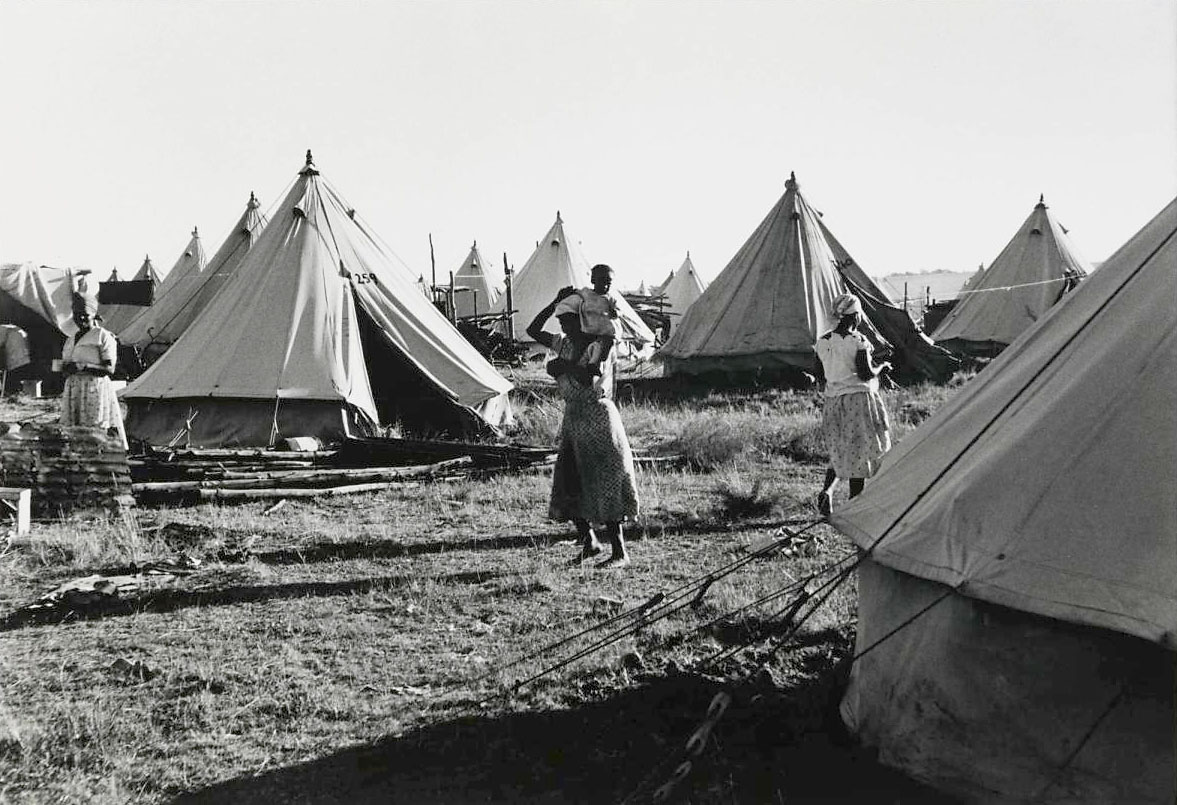
 

Ernest Cole (South African, 1940-1990) 'SOUTH AFRICA. 1960s. Black Spots' 1960-1966


Ernest Cole (South African, 1940-1990)
SOUTH AFRICA. 1960s. Black Spots
1960-1966
From House of Bondage Period
Courtesy of the Hasselblad Foundation, Gothenburg, Sweden
© The Ernest Cole Family Trust


Ernest Cole (South African, 1940-1990) 'SOUTH AFRICA. 1960s. Black Spots' 1960-1966


Ernest Cole (South African, 1940-1990)
SOUTH AFRICA. 1960s. Black Spots
1960-1966
From House of Bondage Period
Courtesy of the Hasselblad Foundation, Gothenburg, Sweden
© The Ernest Cole Family Trust


Ernest Cole (South African, 1940-1990) 'SOUTH AFRICA. Mamelodi. 1960s. Typical location has acres of identical four-room houses on nameless streets. Many are hours by train from city jobs' 1960-1966


Ernest Cole (South African, 1940-1990)
SOUTH AFRICA. Mamelodi. 1960s. Typical location has acres of identical four-room houses on nameless streets. Many are hours by train from city jobs
1960-1966
From House of Bondage Period
Courtesy of the Hasselblad Foundation, Gothenburg, Sweden
© The Ernest Cole Family Trust


Ernest Cole (South African, 1940-1990) 'SOUTH AFRICA. 1960s. After a few drinks, young mother begins to sag' 1960-1966


Ernest Cole (South African, 1940-1990)
SOUTH AFRICA. 1960s. After a few drinks, young mother begins to sag
1960-1966
From House of Bondage Period
Courtesy of the Hasselblad Foundation, Gothenburg, Sweden
© The Ernest Cole Family Trust


Ernest Cole (South African, 1940-1990) 'Until the Government went into the business of selling liquor to Africans, it was illegal for them to drink' 1960-1966 (installation view)


Ernest Cole (South African, 1940-1990)
Until the Government went into the business of selling liquor to Africans, it was illegal for them to drink. They did drink, however, in placed called shebeens, where many still prefer to gather. In a shebeen, oil can containing potent liquor is passed from man to man; jokingly they call it “crude oil.” (installation view)
1960-1966
Vintage print
From House of Bondage Period
On loan from the Arpad A Busson Foundation
© The Ernest Cole Family Trust
Photo: Drager Meurtant


Caption from the House of Bondage


Ernest Cole (South African, 1940-1990) 'Atmosphere of the shebeens is free, in contrast to that of regimented Government beer halls' 1960-1966 (installation view)


Ernest Cole (South African, 1940-1990)
Atmosphere of the shebeens is free, in contrast to that of regimented Government beer halls (installation view)
1960-1966
Vintage print
From House of Bondage Period
On loan from the Arpad A Busson Foundation
© The Ernest Cole Family Trust
Photo: Drager Meurtant


Caption from the House of Bondage


Installation view of the exhibition 'Ernest Cole: House of Bondage' at Foam, Amsterdam

Installation view of the exhibition 'Ernest Cole: House of Bondage' at Foam, Amsterdam


Installation views of the exhibition Ernest Cole: House of Bondage at Foam, Amsterdam
Photos: Drager Meurtant


Ernest Cole (South African, 1940-1990) 'SOUTH AFRICA. 1960s' 1960-1966


Ernest Cole (South African, 1940-1990)
SOUTH AFRICA. 1960s. Servants are not forbidden to love. Woman holding child said, “I love this child, though she’ll grow up to treat me just like her mother does. Now she is innocent.”
1960-1966
From House of Bondage Period
Courtesy of the Hasselblad Foundation, Gothenburg, Sweden
© The Ernest Cole Family Trust


Nightmare Rides


Installation view of the exhibition 'Ernest Cole: House of Bondage' at Foam, Amsterdam showing 'Nightmare Rides' (1960-1966) from the 'House of Bondage' Period


Installation view of the exhibition Ernest Cole: House of Bondage at Foam, Amsterdam showing Nightmare Rides (1960-1966, all below) from the House of Bondage Period
Photo: Drager Meurtant


Encouraged by his boss Jürgen Schadeberg, and inspired by other photographers at Drum – such as Peter Magubane, Bob Gosani and Alf Kumalo – Cole became one of South Africa’s first Black freelance photojournalists. Working in Johannesburg but not being allowed to live there, he commuted to the office by train. The platforms and carriages were segregated and overcrowded leading to bizarre situations that inspired the series ‘Nightmare Rides’. The item was commissioned by the Rand Daily Mail and first published in the Netherlands in 1962 as Mensen als vee [People as Cattle] in Katholieke Illustratie.

Wall text from the exhibition


Ernest Cole (South African, 1940-1990) 'Untitled (Nightmare Rides)' 1960-1966 (installation view)


Ernest Cole (South African, 1940-1990)
Untitled (Nightmare Rides) (installation view)
1960-1966
From House of Bondage Period
© The Ernest Cole Family Trust
Photo: Drager Meurtant


Ernest Cole (South African, 1940-1990) 'Untitled (Nightmare Rides)' 1960-1966 (installation view)


Ernest Cole (South African, 1940-1990)
Untitled (Nightmare Rides) (installation view)
1960-1966
From House of Bondage Period
© The Ernest Cole Family Trust
Photo: Drager Meurtant


Ernest Cole (South African, 1940-1990) 'Untitled (Nightmare Rides)' 1960-1966 (installation view)


Ernest Cole (South African, 1940-1990)
Untitled (Nightmare Rides) (installation view)
1960-1966
From House of Bondage Period
© The Ernest Cole Family Trust
Photo: Drager Meurtant


“Twice each day, at the morning and evening rush hours, the segregated station platforms are a bizarre sight. At one end, a few white trailers stand about, surrounded by space. At the other, a dense mass of Africans is congregated, crowded and compressed.”

~ Ernest Cole


Ernest Cole (South African, 1940-1990) 'SOUTH AFRICA. 1960s. Africans throng Johannesburg station platform during late afternoon rush hour. The train accelerates with its load of clinging passengers. They ride like this through rain and cold, some for the entire journey' 1960-1966


Ernest Cole (South African, 1940-1990)
SOUTH AFRICA. 1960s. Africans throng Johannesburg station platform during late afternoon rush hour. The train accelerates with its load of clinging passengers. They ride like this through rain and cold, some for the entire journey
1960-1966
From House of Bondage Period
Courtesy of the Hasselblad Foundation, Gothenburg, Sweden
© The Ernest Cole Family Trust


Ernest Cole (South African, 1940-1990) 'All stand packed together on the floor and seats' 1960-1966 (installation view)


Ernest Cole (South African, 1940-1990)
All stand packed together on the floor and seats (installation view)
1960-1966
From House of Bondage Period
Vintage print
On loan from the Arpad A Busson Foundation
© The Ernest Cole Family Trust
Photo: Drager Meurtant


Installation view of the exhibition 'Ernest Cole: House of Bondage' at Foam, Amsterdam

Installation view of the exhibition 'Ernest Cole: House of Bondage' at Foam, Amsterdam

Installation view of the exhibition 'Ernest Cole: House of Bondage' at Foam, Amsterdam showing in the bottom image at right, 'Untitled (Police and Passes)' (1960-1966) from the 'House of Bondage' Period


Installation views of the exhibition Ernest Cole: House of Bondage at Foam, Amsterdam showing in the bottom image at right, Untitled (Police and Passes) (1960-1966, below) from the House of Bondage Period
Photos: Drager Meurtant


Police and Passes


Ernest Cole (South African, 1940-1990) 'SOUTH AFRICA. 1960s. These boys were caught trespassing in a white area' 1960-1966


Ernest Cole (South African, 1940-1990)
SOUTH AFRICA. 1960s. These boys were caught trespassing in a white area
1960-1966
From House of Bondage Period
Courtesy of the Hasselblad Foundation, Gothenburg, Sweden
© The Ernest Cole Family Trust


Ernest Cole (South African, 1940-1990) 'SOUTH AFRICA. 1960s. A pass raid outside Johannesburg station. Every African had to show his pass before being allowed to go about his business. Sometimes these police checks broadened into body and belongings searches' 1960-1966


Ernest Cole (South African, 1940-1990)
SOUTH AFRICA. 1960s. A pass raid outside Johannesburg station. Every African had to show his pass before being allowed to go about his business. Sometimes these police checks broadened into body and belongings searches
1960-1966
From House of Bondage Period
Courtesy of the Hasselblad Foundation, Gothenburg, Sweden
© The Ernest Cole Family Trust


Ernest Cole (South African, 1940-1990) 'Untitled (Police and Passes)' 1960-1966


Ernest Cole (South African, 1940-1990)
Untitled (Police and Passes)
1960-1966
From House of Bondage Period
© The Ernest Cole Family Trust


“The standard by which the police operate is cruelly simple. To them every black man is a criminal suspect. In a technical sense, the police are not far off the mark to be so suspicious. The laws of apartheid are a far-reaching tangle of restrictions, reaching so deeply into everyday life that it is a rare African who does not violate some law.”

~ Ernest Cole


Ernest Cole (South African, 1940-1990) Caption unknown 1960-1966 (installation view)


Ernest Cole (South African, 1940-1990)
Caption unknown (For Whites Only) (installation view)
1960-1966
Vintage print
On loan from the Arpad A Busson Foundation
© The Ernest Cole Family Trust
Photo: Drager Meurtant


(According to Cole’s colleague Struan Robertson, Johannesburg city benches were for white people only and were so inscribed)


Ernest Cole (South African, 1940-1990) 'New York City' 1971


Ernest Cole (South African, 1940-1990)
New York City
1971
Courtesy of the Hasselblad Foundation, Gothenburg, Sweden
© The Ernest Cole Family Trust


Ernest Cole (South African, 1940-1990) 'Harlem, New York City' 1971


Ernest Cole (South African, 1940-1990)
Harlem, New York City
1971
Courtesy of the Hasselblad Foundation, Gothenburg, Sweden
© The Ernest Cole Family Trust


More photographs from Ernest Cole’s House of Bondage


Ernest Cole (South African, 1940-1990) '"Penny, baas, please baas, I hungry…" This plaint is part of nightly scene in Golden City, as black boys beg from whites. They may be thrown a coin or, as here, they may get slapped in the face' 1960-1966


Ernest Cole (South African, 1940-1990)
“Penny, baas, please baas, I hungry…” This plaint is part of nightly scene in Golden City, as black boys beg from whites. They may be thrown a coin or, as here, they may get slapped in the face
1960-1966
[Caption from House of Bondage]
From House of Bondage Period
© The Ernest Cole Family Trust Courtesy of the Hasselblad Foundation, Gothenburg, Sweden


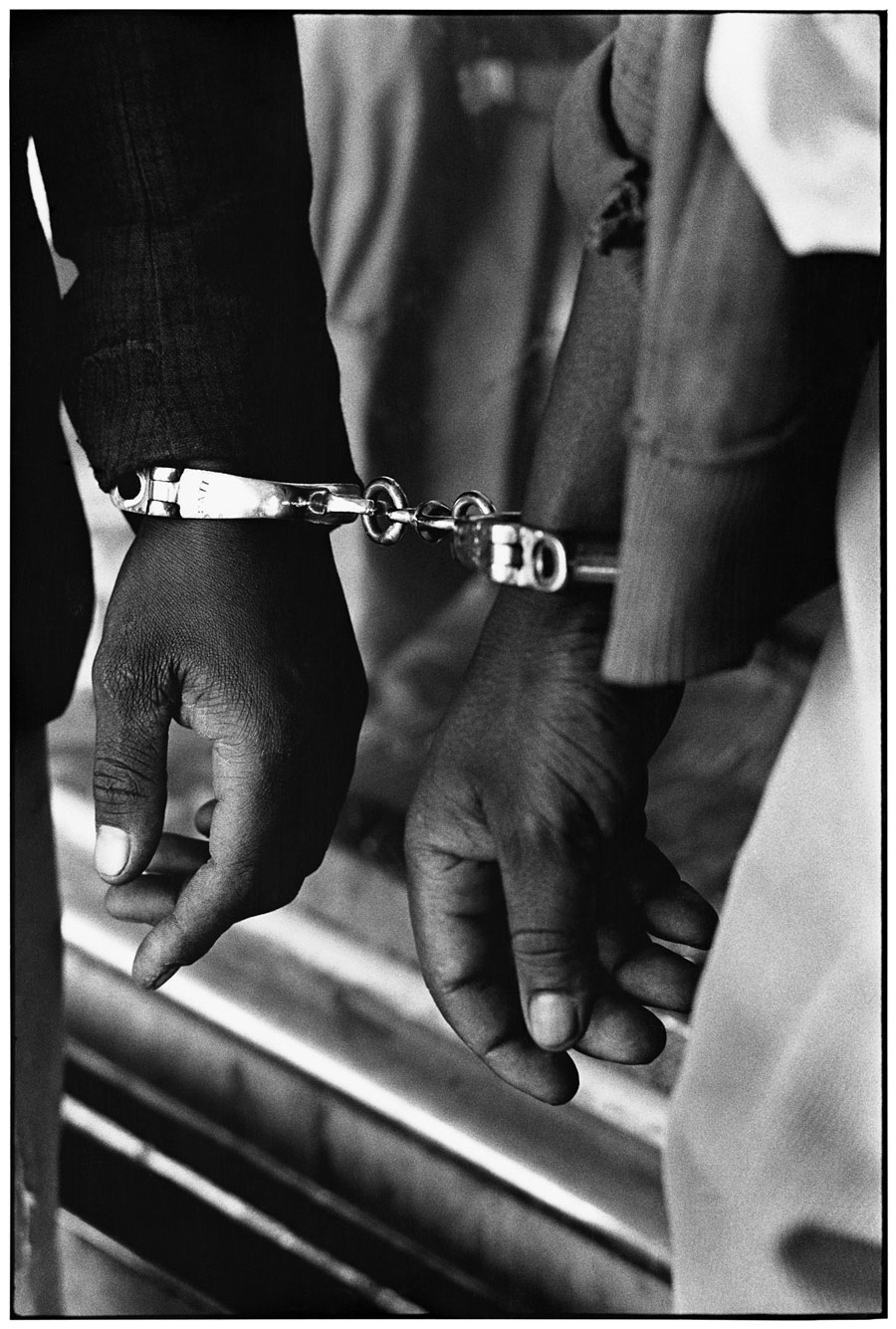
Ernest Cole (South African, 1940-1990) 'Handcuffed blacks were arrested for being in white area illegally' 1960-1966


Ernest Cole (South African, 1940-1990)
Handcuffed blacks were arrested for being in white area illegally
1960-1966
[Caption from House of Bondage]
From House of Bondage Period
© The Ernest Cole Family Trust Courtesy of the Hasselblad Foundation, Gothenburg, Sweden


Ernest Cole (South African, 1940-1990) 'A student who said he was going to fetch his textbook is pulled in. To prove he was still in school he showed his fountain pen and ink-stained fingers. But that was not enough; in long pants he looked older than sixteen' 1960-1966


Ernest Cole (South African, 1940-1990)
A student who said he was going to fetch his textbook is pulled in. To prove he was still in school he showed his fountain pen and ink-stained fingers. But that was not enough; in long pants he looked older than sixteen
1960-1966
Gelatin silver print
8 11/16 x 12 5/8 in. (22 cm x 32cm)
Courtesy of the Hasselblad Foundation, Gothenburg, Sweden
© The Ernest Cole Family Trust


Ernest Cole. 'Africans throng Johannesburg station platform during late afternoon rush' 1960-1966


Ernest Cole (South African, 1940-1990)
Africans throng Johannesburg station platform during late afternoon rush
1960-1966
Gelatin silver print
8 11/16 x 12 5/8 in. (22 x 32cm)
Courtesy of the Hasselblad Foundation, Gothenburg, Sweden
© The Ernest Cole Family Trust


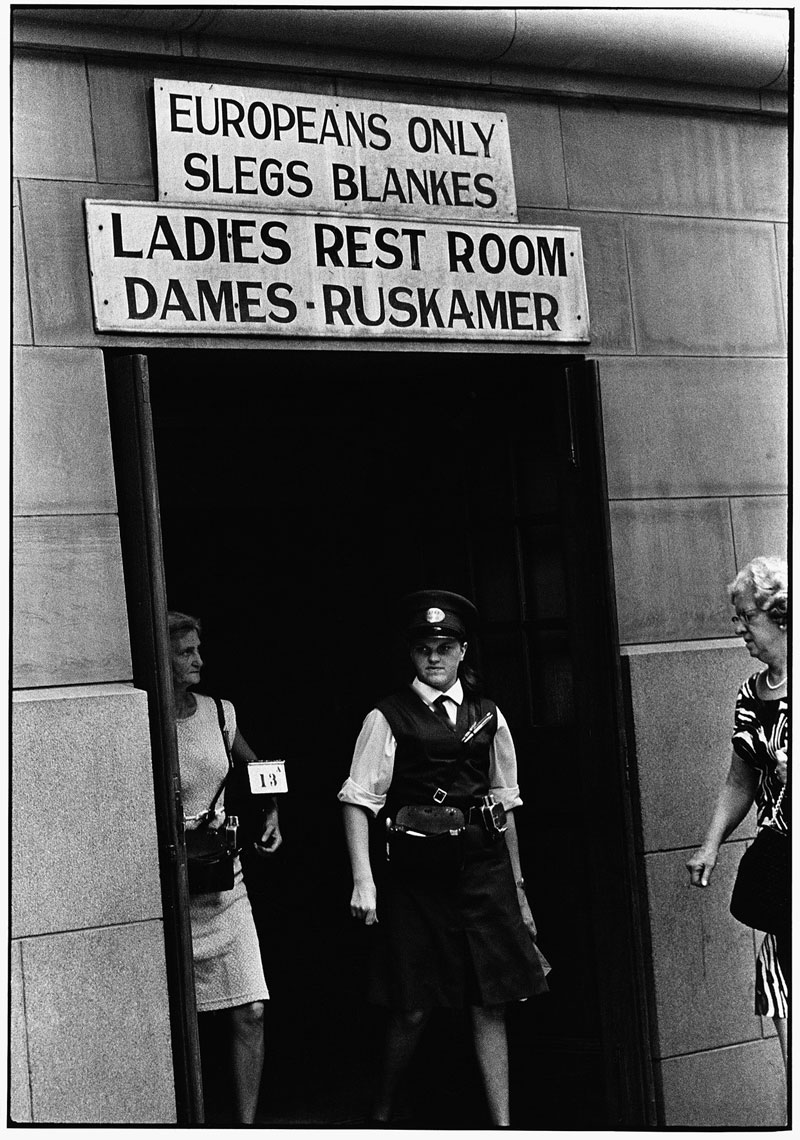
Ernest Cole (South African, 1940-1990) 'Untitled (White Washroom)' 1960-1966


Ernest Cole (South African, 1940-1990)
Untitled (White Washroom)
1960-1966
Gelatin silver print
12 5/8 x 8 11/16 in. (32 x 22cm)
Courtesy of the Hasselblad Foundation, Gothenburg, Sweden
© The Ernest Cole Family Trust


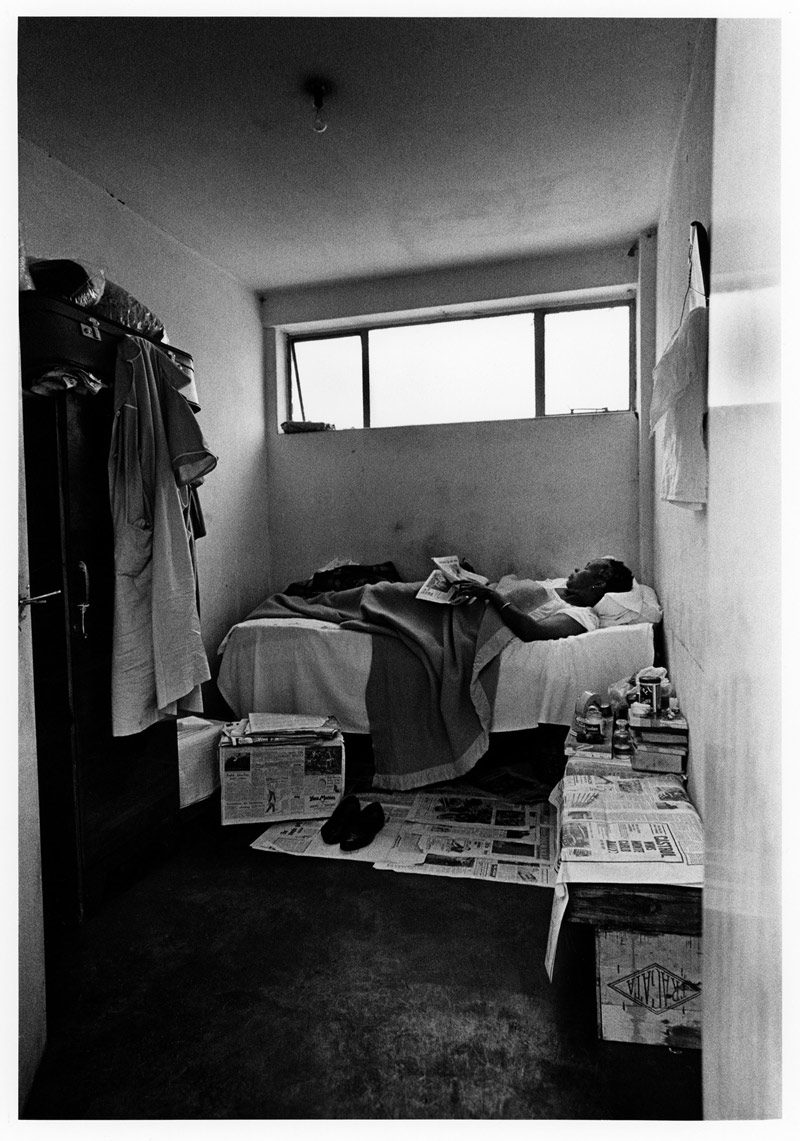
Ernest Cole (South African, 1940-1990) 'Newspapers are her carpet, fruit crates her chairs and table' 1960-1966


Ernest Cole (South African, 1940-1990)
Newspapers are her carpet, fruit crates her chairs and table
1960-1966
Gelatin silver print
12 5/8 x 8 11/16 in. (32 x 22cm)
Courtesy of the Hasselblad Foundation, Gothenburg, Sweden
© The Ernest Cole Family Trust


Foam
Keizersgracht 609
1017 DS Amsterdam
The Netherlands
Phone: + 31 20 5516500

Opening hours:
Monday – Wednesday 10am – 6pm
Thursday – Friday 10am – 9pm
Sat – Sun 10am – 6pm

Foam website

LIKE ART BLART ON FACEBOOK

Back to top

Exhibition: ‘Rise and Fall of Apartheid: Photography and the Bureaucracy of Everyday Life’ at Haus der Kunst, Munich

Exhibition dates: 15th February – 26th May 2013


Eli Weinberg (South African born Latvia, 1908-1981) 'Crowd near the Drill Hall on the opening day of the Treason Trial, Johannesburg, 19. December 1956' 1956


Eli Weinberg (South African born Latvia, 1908-1981)
Crowd near the Drill Hall on the opening day of the Treason Trial, Johannesburg, 19. December 1956
1956
Times Media Collection, Museum Africa, Johannesburg


NEVER AGAIN!


Many thankx to Haus der Kunst for allowing me to publish the photographs in the posting. Please click on the photographs for a larger version of the image.


Gille de Vlieg (South African born England, b. 1940) 'Coffins at the mass funeral held in KwaThema, Gauteng, July 23, 1985' 1985


Gille de Vlieg (South African born England, b. 1940)
Coffins at the mass funeral held in KwaThema, Gauteng, July 23, 1985
1985


Gille de Vlieg (born 26 July 1940) is a photographer and anti-apartheid activist. She was born in England and moved to South Africa with her mother when she was 3 years old. During apartheid she was a member of both the Black Sash and one of the few women members of the Afrapix photography collective. Her images have been published in newspapers, magazines and books nationally and internationally. Unlike many of her counterparts, de Vlieg received little public acclaim for her work up until recently. About her work, she says, “I wanted to make a contribution to an alternative view of South Africa, a view not seen on the South African TV screen then.” Her images cover the following topics: land removals, rural lifestyle, township lifestyle, gender lifestyle, United Democratic Front (UDF), anti-harassment campaign, police violence, protests against death penalty, funerals, Black Sash, protests against incorporation into Bophuthatswana; Release Mandela Campaign, End Conscription Campaign (ECC), conscientious objectors, African National Congress (ANC) Welcome Home Rally, Day of the Vow (Geloftedag), street children, and homeless people.

Text from the Wikipedia website


Gille de Vlieg (South African born England, b. 1940) 'Pauline Moloise (mother of Ben), two women & Winnie Madikizela Mandela mourn at the Memorial Service for Benjamin Moloise, who was hanged earlier that morning. Khotso House, Johannesburg, October 18, 1985' 1985


Gille de Vlieg (South African born England, b. 1940)
Pauline Moloise (mother of Ben), two women & Winnie Madikizela Mandela mourn at the Memorial Service for Benjamin Moloise, who was hanged earlier that morning. Khotso House, Johannesburg, October 18, 1985
1985


“All the armies that ever marched, all the parliaments that ever sat, have not affected the life of man on earth as that one solitary life… I am proud of what I am… The storm of oppression will be followed by the rain of my blood. I am proud to give my life, my one solitary life.”


Moloise, Benjamin (18 October 1985). “All the armies that ever marched”. Weekly Mail. p. 1


Malesela Benjamin Moloise (c.  1955 – 18 October 1985) was a South African poet and political activist who came to international attention following his arrest and subsequent execution by the government of South Africa. From Soweto, Moloise worked as an upholsterer before turning to poetry during his time on death row. In 1983, Moloise was arrested for the 1982 murder of Phillipus Selepe, a black security policeman who assisted in capturing three African National Congress (ANC) members. Although he initially confessed to the murder, he later retracted the statement during his trial. Moloise’s death sentence sparked national and international outrage and was seen as emblematic of South Africa’s brutal crackdown on anti-apartheid activists.

Throughout Moloise’s trial, allegations arose about the legitimacy of the evidence against him, the veracity of his confession, and the overall fairness of the process. Following a refusal of clemency or retrial by President P. W. Botha, Moloise was executed in 1985. His execution sparked riots in Johannesburg, protests in major world cities, and a flurry of diplomatic condemnations. The legacy of Moloise’s life, death, and anti-apartheid poems penned during his time on death row transcended South Africa, manifesting in global displays of solidarity and streets named in his honor.

Text from the Wikipedia website


Jodi Bieber (South African, b. 1966) 'Protest against Chris Hani's assassination' 1993


Jodi Bieber (South African, b. 1966)
Protest against Chris Hani’s assassination
1993
© Goodman Gallery Johannesburg


Chris Hani (28 June 1942 – 10 April 1993), born Martin Thembisile Hani SSA, SBS, CLS, DMG, MMS, was the leader of the South African Communist Party and chief of staff of uMkhonto we Sizwe, the armed wing of the African National Congress (ANC). He was a fierce opponent of the apartheid government, and was assassinated by Janusz Waluś, a Polish immigrant and sympathiser of the Conservative opposition on 10 April 1993, during the unrest preceding the transition to democracy.

Text from the Wikipedia website


Complex, vivid, evocative, and dramatic, Rise and Fall of Apartheid: Photography and the Bureaucracy of Everyday Life represents the most comprehensive exhibition of its kind, attempting to formulate an understanding of apartheid’s legacy in South Africa through visual records. These images responded to the procedures and processes of the apartheid state from its beginning in 1948 to the first non-racial democratic elections that attended its demise in 1994. Featuring more than 600 documentary photographs, artworks, films, newsreel footage, books, magazines, and assorted archival documents, the exhibition will fill more than 2,000 square meters of the East Wing of Haus der Kunst. Starting in the entrance gallery (where two film clips are juxtaposed; one from 1948 showing the victorious Afrikaner National Party’s celebration rally, and another of President F. W. De Klerk in February 1990 announcing Nelson Mandela’s release from prison) the exhibition offers an absorbing exploration of one of the twentieth century’s most contentious historical eras.

The exhibition highlights the different strategies adopted by photographers and artists; from social documentary to reportage, photo essays to artistic appropriation of press and archival material. Through these polysemic images, the exhibition embarks on a tour of how photographers and artists think with pictures, the questions these images pose, and the issues of social justice, resistance, civil rights and the actions of opposition to apartheid raise. In so doing, The Rise and Fall of Apartheid brings together many iconic photographs that have rarely been shown before, to propose a fresh historical overview of the photographic and artistic responses to apartheid.

A fundamental argument of the exhibition is that the rise of the Afrikaner National Party to political power and its introduction of apartheid as the legal foundation of governance in 1948 changed the country’s pictorial perception from a “relatively benign colonial space based on racial segregation to a highly contested space in which the majority of the population struggled for equality, democratic representation, and civil rights” (Okwui Enwezor). From the moment apartheid was introduced, photographers in South Africa were immediately aware of how these changes taking place in politics and society accordingly affected photography’s visual language: The medium was transformed from a purely anthropological tool into a social instrument. No one photographed the struggle against apartheid better, more critically, and incisively than South African photographers. For that reason, with the notable exception of a few Western photographers and artists, including Ian Berry, Dan Weiner, Margaret Bourke-White, Hans Haacke, Adrian Piper, and others, the works in the exhibition are overwhelmingly produced by South African photographers.

Resisting the easy dichotomy of victims and oppressors, the photographers’ images present the reading of an evolving dynamic of repression and resistance. Ranging in approach between “engaged” photography of photo essays to the “struggle” photography of social documentary which was aligned with activism, to photojournalistic reportage, the photographers did not only show African citizens as victims, but more importantly as agents of their own emancipation. Included in the exhibition are seminal works by Leon Levson, Eli Weinberg, David Goldblatt and members of Drum magazine, such as Peter Magubane, Jürgen Schadeberg, Alf Kumalo, Bob Gosani, G.R. Naidoo, and others in the 1950s. Also represented are the investigative street photography of Ernest Cole and George Hallett in the 1960s, the reportage of Sam Nzima, Noel Watson, and protest images of the Black Consciousness movement, and student marches in the 1970s to those of the Afrapix Collective in the 1980s, as well as reportages by the members of the so-called Bang Bang Club in the 1990s. The exhibition concludes with works by a younger generation of South African photographers, such as Sabelo Mlangeni and Thabiso Sekgale, and the collective Center for Historical Reenactments, whose projects offer subtle reappraisals of the after effects of apartheid still felt today.

These South African photographers represented a clear political belief. They were opponents of the apartheid regime, and they employed photography as an instrument to overcome it. The independent photo agency Afrapix, founded in 1982 by Omar Badsha and Paul Weinberg, saw itself as a group of “cultural workers”. They believed political convictions came first, and that photography, like writing or acting, was part of the anti-apartheid movement. This attitude was supported by photographers such as Peter McKenzie, who – at a cultural conference organised by the ANC (African National Congress) in Gabarone, Botswana in 1982 – argued that the work of cultural producers is necessarily part of the struggle against apartheid. McKenzie’s argument stood in sharp contrast to that of David Goldblatt, who had the opinion that photographers should report on events with as much inner distance as they can muster.

On the other end of the spectrum, the so-called “struggle” or “frontline photography” is characterised by immediacy, giving the impression of being in the middle of the action. “If you want a picture, you get that picture, under all circumstances” was the leitmotif of one of the leading figures, Peter Magubane.

The photographs’ subjects are different historical events. These include the “Treason Trial” of 1956-1961, which ended with the acquittal of 156 anti-apartheid activists, including Nelson Mandela; the Sharpeville massacre of 1960, in which police shot 69 demonstrators dead; Mandela’s release in 1990 after 27 years in prison; and the civil war between opposing political factions during the 1994 election. Yet this exhibition is not a history of apartheid itself. Instead it aims to critically interrogate the normative symbols and signs of the photographic and visual responses to apartheid. For example, ritualised gestures were also part of the apartheid imagery. The “thumbs up” as a sign of solidarity among activists belonged to the movement’s nonviolent start when civil disobedience and strikes were still regarded as effective agents. After the Sharpeville massacre of 1960, the resistance became militarised. The cherished “thumbs up” was transformed into the upraised fist, the general symbol of black power. Since the burial of the Sharpeville massacre’s victims, black South Africans expressed their sense of community and identity at funerals. Their public mourning thus became a ritualised form of mass mobilisation and defiance.

From the ordinary and mundane to the bureaucratic and institutional, the corrosive effects of the apartheid system on everyday life are explored in the multiplicity of public signage that drew demarcating lines of segregation between whites, Africans, and non-Europeans. For example, Ernest Cole engaged in a sustained study of apartheid signage at train stations, banks, buses, taxi ranks, and throughout the streets of cities like Johannesburg and Pretoria in the early to mid-1960s. Another exemplary image is a photo from 1956 taken by Peter Magubane. It draws attention to the fact that racial segregation restricted movement in both private and public space. The image shows a young white girl sitting on a bench with the inscription “Europeans only” as her black nanny strokes her neck, but must do so from the back bench.

However, the everyday was not limited to the humiliations of policed segregation. “Drum” magazine, one of the most important media outlets for African social life, combined the gritty realism of reportage and the fantasy of normality in the self-constructions of non-European dandies, beauty queens, and the exuberance of township life. Its pages offered images of entertainment, representations of leisure, cultural events, and celebrity portraits. The magazine encompassed a full range of motifs, from relentless documentary photography to fashion shoots, dance revues, and concerts. Through the magazine, photographs found an audience that was politically sensitive and attentive; it also gave South African photographers the opportunity to exchange ideas with colleagues from other African countries, India, and Europe for the first time.

In 1990, the interest of the international press was focused on Mandela’s imminent release. Photographs from South Africa had finally prepared the ground for the participation of world opinion in shaping the country’s future. In this context, the exhibition also asks whether photography can help inform the political face of the world.

Press release from the Haus der Kunst website


Jurgen Schadeberg (South African born Germany, 1931-2020) 'The 29 ANC Women’s League women are being arrested by the police for demonstrating against the permit laws, which prohibited them from entering townships without a permit, 26th August 1952' 1952


Jurgen Schadeberg (South African born Germany, 1931-2020)
The 29 ANC Women’s League women are being arrested by the police for demonstrating against the permit laws, which prohibited them from entering townships without a permit, 26th August 1952
1952
Courtesy the artist


Jurgen Schadeberg (South African born Germany, 1931-2020) '20 defiance campaign Leaders appear in the Johannesburg Magistrates Court on a charge of contravening the Suppression of Communism Act, August 26, 1952' 1952


Jurgen Schadeberg (South African born Germany, 1931-2020)
20 defiance campaign Leaders appear in the Johannesburg Magistrates Court on a charge of contravening the Suppression of Communism Act, August 26, 1952
1952
Courtesy the artist


Jurgen Schadeberg (South African born Germany, 1931-2020) 'Nelson Mandela, Treason Trial' 1958


Jurgen Schadeberg (South African born Germany, 1931-2020)
Nelson Mandela, Treason Trial
1958
Courtesy the artist


Eli Weinberg (South African born Latvia, 1908-1981) 'Nelson Mandela portrait wearing traditional beads and a bed spread. Hiding out from the police during his period as the "black pimpernel," 1961' 1961


Eli Weinberg (South African born Latvia, 1908-1981)
Nelson Mandela portrait wearing traditional beads and a bed spread. Hiding out from the police during his period as the “black pimpernel,” 1961
1961
Courtesy of IDAFSA


Ranjith Kally (South African, 1925-2017) 'Chief Albert Luthuli, former President General of the African National Congress, Rector of Glasgow University and 1960 Nobel Peace Prize Winner, gagged by the government from having any of his words published in his country, confined to small area around his home near Stanger in Natal, April 1964' 1964


Ranjith Kally (South African, 1925-2017)
Chief Albert Luthuli, former President General of the African National Congress, Rector of Glasgow University and 1960 Nobel Peace Prize Winner, gagged by the government from having any of his words published in his country, confined to small area around his home near Stanger in Natal, April 1964
1964
© Bailey’s Archives


Greame Williams (South African, b. 1961) 'Nelson Mandela and Winnie Mandela as he is released from the Victor Vester Prison' 1990


Greame Williams (South African, b. 1961)
Nelson Mandela and Winnie Mandela as he is released from the Victor Vester Prison
1990
Courtesy the artist
© Greame Williams


Haus der Kunst
Prinzregentenstraße 1
80538 Munich
Germany
Phone: +49 89 21127 113

Opening hours:
Monday, Wednesday  -  Sunday 10 am  -  8pm
Thursday 10am  -  10pm
Closed Tuesdays

Haus der Kunst website

LIKE ART BLART ON FACEBOOK

Back to top

Exhibition: ‘South Africa in Apartheid and After: David Goldblatt, Ernest Cole, Billy Monk’ at the San Francisco Museum of Modern Art (SFMOMA)

Exhibition dates: 1st December 2012 – 5th March 2013


Ernest Cole (South African, 1940-1990) 'A student who said he was going to fetch his textbook is pulled in. To prove he was still in school he showed his fountain pen and ink-stained fingers. But that was not enough; in long pants he looked older than sixteen' 1960–1966


Ernest Cole (South African, 1940-1990)
A student who said he was going to fetch his textbook is pulled in. To prove he was still in school he showed his fountain pen and ink-stained fingers. But that was not enough; in long pants he looked older than sixteen
1960-1966
Gelatin silver print
8 11/16 x 12 5/8 in. (22 cm x 32cm)
Courtesy of the Hasselblad Foundation, Gothenburg, Sweden
© The Ernest Cole Family Trust


It is the work of Billy Monk that is most impressive in this posting. Photographed in the rowdy Cape Town nightclub The Catacombs in the 1960s, Monk’s photographs of the racially mixed clientele portray them in extraordinary intimacy in all their states of joy and sadness. While his protagonists take centre stage within his photographs there is a wonderful spatial openness to Monk’s 35mm flash images photographed with a slightly wide angle 35mm lens. Monk does not fill the pictorial frame; he allows his images to breathe. Witness (and that is what he did) the moment of stasis before kiss of The Catacombs, 30 September 1967 (below), the intensity of the man’s passionate embrace, gaze, the sublime distance between bottle at right and bottle top, the image replete with blank, contextless wall behind. There is passion and hilarity here coupled with a feeling of infinite sadness – the squashed faces of The Catacombs, 31 July 1967, the convivial happiness of the couple in The Catacombs, 5 February 1968 (he with his stained trouser leg) counterbalanced by the desolate looking man behind them and the mute expression on the trapped go-go dancers face in The Balalaika, December 1969 as the man reaches his hand through the bars towards her.

Observe the masterpiece that is The Catacombs, 21 November 1967 (below). The cheap Formica bench top and empty Coca-Cola bottle with straw, a half smoked cigarette pointing out of the photograph at bottom right. If the cigarette wasn’t there the image would fall away in that corner: it HAS to be there, and Monk’s eye knew it. The women, standing, singing? holding two bottles of liquor in her out thrust arms, her eyes and hair mimicking the patterns of the painted Medusa behind her. And the young man dressed in jacket and time, one arm outstretched and resting on the bench, the other resting curled up next to his mouth and cheek. It’s his look that gets you – she, declamatory; he, lost in melancholic reverie, with the troubles of the world on his shoulders totally oblivious to her performance. The emotional distance between the two, as the distance between his resting hand and the empty Coke bottle, is enormous, insurmountable. Such a profound and troubling image of a society in hedonistic denial. His look is the look of loneliness, anguish and despair.

These photographs that are the eye of Billy Monk, these slivers of possibility, should not be regarded as a “what if he had lived” sliver, but the silver possibility of what he did see when he was alive. They are a celebration of his informed eye and a recognition of his undoubted talent. I am moved by their pathos and humanity.

Dr Marcus Bunyan


Many thankx to the San Francisco Museum of Modern Art for allowing me to publish the text and photographs in the posting. Please click on the photographs for a larger version of the image.


“We were insiders, all three of us: Ernest Cole, Billy Monk, and me. We each photographed from the inside what we most intimately knew.

Cole was born Ernest Levi Tsoloane Kole in 1940, to a working-class Black family in a Black township outside the city of Pretoria. Growing into that society he came to know, with a depth of understanding that only belonging could bring, both its richness and the hardship and humiliation imposed by apartheid. As a boy he photographed people in the township for a shilling a time. By the age of eighteen he had begun to work as a photojournalist, and within a few years he was deeply committed to his essay on what it meant to be Black under apartheid. At age twenty-six, to escape the Security Police and to publish his seminal book, House of Bondage, he went into bitter and destructive exile. Cancer killed him in 1990. Apartheid destroyed him.

Billy Monk’s photographs have the frank and warm intimacy that comes to someone who was completely trusted by his subjects. They are of a tiny splinter of another way of being: a place in apartheid South Africa of neither Black nor White but of somewhere not quite in between. Not quite, because while Blacks would not have gained participatory entrance to the Catacombs nightclub, people “of colour” did, and mixed there freely with Whites. It was a question of bending the law – within limits. Here you were judged not by your conformity with the pathological rigidities of Calvinism gone mad, but by your immersion in the conviviality of brandy and Coke. We will never know what might have become of the eye of Billy Monk, for in 1982 he died at age forty-five in a brawl while on his way to the first exhibition of his work. He has left us what the photographer Paul Graham might describe as a sliver of possibility.

My series In Boksburg tells of what it meant to be White in a middle-class South African community during the years of apartheid. It was a place of quiet respectability such as might be found in innumerable towns around the world. Except that Blacks were not of it. They were the largest component of its population; they served it, traded with it, received charity from it, and were ruled, rewarded, and punished by its precepts. Some, on occasion, were its privileged guests. But all who went there did so by permit or invitation, never by right. White and Black: locked into a system of manic control and profound immorality. Simply to draw breath was to be complicit. Heroism or emigration seemed to offer the only escape.

That’s how it was and is no longer.”


David Goldblatt


Ernest Cole (South African, 1940-1990) 'After processing they wait at railroad station for transportation to mine. Identity tag on wrist shows shipment of labor to which man is assigned' 1960-1966


Ernest Cole (South African, 1940-1990)
After processing they wait at railroad station for transportation to mine. Identity tag on wrist shows shipment of labor to which man is assigned
1960-1966
Gelatin silver print
8 11/16 x 12 5/8 in. (22 x 32cm)
Courtesy of the Hasselblad Foundation, Gothenburg, Sweden
© The Ernest Cole Family Trust
 

Ernest Cole (South African, 1940-1990) 'Africans throng Johannesburg station platform during late afternoon rush' 1960–1966


Ernest Cole (South African, 1940-1990)
Africans throng Johannesburg station platform during late afternoon rush
1960-1966
Gelatin silver print
8 11/16 x 12 5/8 in. (22 x 32cm)
Courtesy of the Hasselblad Foundation, Gothenburg, Sweden
© The Ernest Cole Family Trust


Ernest Cole (South African, 1940-1990) 'Every African must show his pass before being allowed to go about his business. Sometimes check broadens into search of a man's person and belongings' 1960-1966


Ernest Cole (South African, 1940-1990)
Every African must show his pass before being allowed to go about his business. Sometimes check broadens into search of a man’s person and belongings
1960-1966
Gelatin silver print
8 11/16 x 12 5/8 in. (22 x 32cm)
Courtesy of the Hasselblad Foundation, Gothenburg, Sweden
© The Ernest Cole Family Trust


Ernest Cole (South African, 1940-1990) 'Untitled [White Washroom]' 1960-1966


Ernest Cole (South African, 1940-1990)
Untitled [White Washroom]
1960-1966
Gelatin silver print
12 5/8 x 8 11/16 in. (32 x 22cm)
Courtesy of the Hasselblad Foundation, Gothenburg, Sweden
© The Ernest Cole Family Trust


Ernest Cole (South African, 1940-1990) 'Newspapers are her carpet, fruit crates her chairs and table' 1960-1966


Ernest Cole (South African, 1940-1990)
Newspapers are her carpet, fruit crates her chairs and table
1960-1966
Gelatin silver print
12 5/8 x 8 11/16 in. (32 x 22cm)
Courtesy of the Hasselblad Foundation, Gothenburg, Sweden
© The Ernest Cole Family Trust


From December 1, 2012, through March 5, 2013, the San Francisco Museum of Modern Art (SFMOMA) presents South Africa in Apartheid and After: David Goldblatt, Ernest Cole, Billy Monk, featuring work by three photographers that illuminates a rich and diverse photographic tradition as well as a vital, difficult, and contested period in the history of South Africa. The exhibition continues the museum’s longstanding commitment to documentary photography, showcasing the greatest breadth of each artist’s work ever shown in San Francisco, and in the U.S. for Cole and Monk. Organised by Sandra S. Phillips, SFMOMA’s senior curator of photography, South Africa in Apartheid and After brings together more than 120 photographs.

“South Africa is proving to be a very fertile and active area for contemporary photography, to which David Goldblatt’s contributions and longstanding concerns have contributed significantly,” notes Phillips. “With this show we hope to show some of this rich and varied activity.”

The internationally recognised artist David Goldblatt (1930-2018) has created an immense and powerful body of work depicting his native South Africa for a half century. The exhibition features photographs from Goldblatt’s early project In Boksburg (1982), which portrays a suburban white community near Johannesburg shaped by what the artist calls “white dreams and white proprieties.” Losing its distinctiveness in the accelerated growth of development, Boksburg could almost be mistaken for American suburbia in Goldblatt’s pictures, made in 1979 and 1980. In them, the quaintness of small-town life in South Africa is startlingly set against the increasing entrenchment of racial inequality in the country under apartheid.

Offering multiple perspectives on South Africa during this period, the work of Ernest Cole and Billy Monk are presented in the exhibition at Goldblatt’s suggestion. Adding an important dimension to Goldblatt’s Boksburg project is the work of Cole (1940-1990), a black South African photographer who documented the other side of the racial divide until he was forced to leave his country in 1966. The following year, his project was published in the United States as the book, House of Bondage, and immediately banned in South Africa; this major critique of apartheid has hardly been seen in his own country. In 2006, Goldblatt received the Hasselblad Award and became aware of Cole’s original, uncropped prints. Goldblatt was instrumental in helping bring Cole’s work to international prominence, assisting in organising a retrospective tour of the work, and championing an accompanying book project, Ernest Cole Photographer (2010). Selected works from the publication are included in the SFMOMA exhibition, featuring pictures that are eloquent, tragic, and deeply humane without a trace of sensationalism. Billy Monk (1937-1982) was a gregarious self-taught photographer who worked as a bouncer in the rowdy Cape Town nightclub The Catacombs in the 1960s. His work, recovered and reprinted posthumously by South African photographer Jac de Villiers, exists as a raw and beautiful record of the port city’s racially mixed population. These three groups of pictures are complemented by a selection of Goldblatt’s post-apartheid photographs, including large colour triptychs of beautiful and sober yet hopeful records of an imperfect, still evolving democracy.

The work of all three photographers are also featured in the exhibition Rise and Fall of Apartheid: Photography and the Bureaucracy of Everyday Life at the International Center of Photography, New York (September 14, 2012 – January 6, 2013), and Goldblatt and Cole are included in Everything Was Moving: Photography from the 60s and 70s at Barbican Art Gallery, London (September 13, 2012 – January 13, 2013).


David Goldblatt

Born in Randfontein, South Africa, Goldblatt first started photographing his native country in 1948, the same year the National Party came to power and instituted the policy of apartheid. Since then, he has devoted himself to documenting the South African people, landscape, and cities. Goldblatt photographed exclusively in black and white until the late 1990s. Following the end of apartheid and South Africa’s democratic elections in 1994, he looked for new expressive possibilities for his work and turned to colour and digital photography. This transition only took place after developments in scanning and printing technology allowed Goldblatt to achieve the same sense of depth in his colour work as in his black and white photographs.

In 1989 Goldblatt founded the Market Photography Workshop in Johannesburg with “the object of teaching visual literacy and photographic skills to young people, with particular emphasis on those disadvantaged by apartheid,” he has said. In 1998 he was the first South African to be given a solo exhibition at the Museum of Modern Art (MoMA), New York. That year, the retrospective David Goldblatt, Fifty-one Years began its international tour, traveling to New York, Barcelona, Rotterdam, Lisbon, Oxford, Brussels, Munich, and Johannesburg. He was also one of the few South African artists to exhibit at Documenta 11 (2002) and Documenta 12 (2007) in Kassel, Germany. In addition to numerous other solo and group exhibitions, Goldblatt was featured recently in solo shows at the New Museum (2009), the Jewish Museum (2010) in New York – which also traveled to the South African Jewish Museum – and the Victoria and Albert Museum (2011).

Ernest Cole

Cole left school at 16 as the Bantu education for black South Africans during apartheid prepared them only for menial jobs. Essentially self taught, Cole worked early on as a layout and darkroom assistant for Drum Magazine, a publication loosely inspired by Life magazine and directed toward the native African population. Cole was relatively mobile due to his racial reclassification as “coloured,” the designation for mixed race, that likely stemmed from his ability to speak Afrikaans, the language of Afrikaners. However, Cole was closely surveilled and had to photograph covertly, so he always worked at the risk of being arrested and jailed. He believed passionately in his mission to tell the world in photographs what it was like and what it meant to be black under apartheid, and identified intimately with his own people in photographs. With imaginative daring, courage, and compassion, he portrayed the full range of experience of black people as they negotiated their lives through apartheid.

In 1966, Cole decided to leave South Africa with a dream of making a book; House of Bondage was eventually published in the U.S. in 1967. The book, and Cole himself, were immediately banned in South Africa, and Cole passed away after more than 23 years of painful exile, never returning to his home country and leaving no known negatives and few prints of his monumental work. Tio fotografer, an association of Swedish photographers with whom Cole worked from 1970 to 1975 while living in Stockholm, received a collection of his prints, and these were later donated to the Hasselblad Foundation in Sweden.When David Goldblatt received the Hasselblad award in 2006, he viewed the works and then collaborated with the foundation to bring Cole’s work to light. Many of the prints were shown publicly for the first time in the traveling 2010 retrospective Ernest Cole Photographer, which offered new insights to the complex interaction between Cole’s unflinching revelations of apartheid at work and the power, yet subtlety and even elegance, of his photographic perspective. Ernest Cole Photographer has only been seen in South Africa and Sweden. Approximately one-third of Cole’s photographs on view in the SFMOMA exhibition have never been shown before.

Billy Monk

Using a Pentax camera with 35mm lens, Monk photographed the nightclub revellers of The Catacombs and sold the prints to his subjects. His close friendships with many of the people in the pictures allowed him to photograph them with extraordinary intimacy in all their states of joy and sadness. His pictures of nightlife seem carefree and far away from the scars and segregation of apartheid that fractured this society in the daylight.

In 1969, Monk stopped taking photographs at the club. A decade later his contact sheets and negatives were discovered in a studio by photographer Jac de Villiers, who recognised the significance of his work and arranged the first exhibition of Monk’s work in 1982 at the Market Gallery in Johannesburg. Monk could not attend the opening, and two weeks later, en route to seeing the exhibition, he was tragically shot dead in a fight. From 2010 to 2011, De Villiers revisited Monk’s contact sheets and curated an exhibition at the  Stevenson Gallery in Cape Town, including works that had never been shown before, accompanied by a publication.

Press release from the SFMOMA website


Billy Monk (South African, 1937-1982) 'The Catacombs, 30 September 1967' 1967


Billy Monk (South African, 1937-1982)
The Catacombs, 30 September 1967
1967, printed 2011
Gelatin silver print
10 1/16 x 14 15/16 in. (25.56 x 37.94cm)
Collection SFMOMA, Accessions Committee Fund purchase
© Estate of Billy Monk


Billy Monk (South African, 1937-1982) 'The Catacombs, 31 July 1967' 1967


Billy Monk (South African, 1937-1982)
The Catacombs, 31 July 1967
1967, printed 2011
Gelatin silver print; 11 x 16 in. (27.94 x 40.64cm)
Courtesy of Stevenson, Cape Town and Johannesburg
© Estate of Billy Monk


Billy Monk (South African, 1937-1982) 'The Catacombs, 5 February 1968' 1968


Billy Monk (South African, 1937-1982)
The Catacombs, 5 February 1968
1968, printed 2011
Gelatin silver print
11 x 16 in. (27.94 x 40.64cm)
Courtesy of Stevenson, Cape Town and Johannesburg
© Estate of Billy Monk


Billy Monk (South African, 1937-1982) 'The Catacombs, 1968' 1968


Billy Monk (South African, 1937-1982)
The Catacombs, 1968
1968, printed 2011
Gelatin silver print
11 x 16 in. (27.94 x 40.64cm)
Collection SFMOMA, Accessions Committee Fund purchase
© Estate of Billy Monk


Billy Monk (South African, 1937-1982) 'The Balalaika, December 1969' 1969


Billy Monk (South African, 1937-1982)
The Balalaika, December 1969
1969, printed 2011
Gelatin silver print
16 x 11 in. (40.64 x 27.94cm)
Courtesy of Stevenson, Cape Town and Johannesburg
© Estate of Billy Monk


Billy Monk (South African, 1937-1982) 'The Catacombs, 21 November 1967' 1967


Billy Monk (South African, 1937-1982)
The Catacombs, 21 November 1967
1967, printed 2011
Gelatin silver print
15 x 10 in. (38.1 x 25.4cm)
Collection SFMOMA, Accessions Committee Fund purchase
© Estate of Billy Monk


David Goldblatt (South African, 1930-2018) 'At a meeting of Voortrekkers in the suburb of Witfield' 1979-1980


David Goldblatt (South African, 1930-2018)
At a meeting of Voortrekkers in the suburb of Witfield
1979-1980
Gelatin silver print
14 9/16 x 14 9/16 in. (37 x 37cm)
Courtesy of the artist and Goodman Gallery, South Africa
© David Goldblatt


David Goldblatt (South African, 1930-2018) 'Eyesight testing at the Vosloorus Eye Clinic of the Boksburg Lions Club' 1980


David Goldblatt (South African, 1930-2018)
Eyesight testing at the Vosloorus Eye Clinic of the Boksburg Lions Club
1980
Gelatin silver print
19 11/16 x 19 11/16 in. (50 x 50cm)
Courtesy of the artist and Goodman Gallery, South Africa
© David Goldblatt


David Goldblatt (South African, 1930-2018) 'Saturday afternoon in Sunward Park' 1979


David Goldblatt (South African, 1930-2018)
Saturday afternoon in Sunward Park
1979
Gelatin silver print
6 7/8 x 6 7/8 in. (17.5 x 17.5cm)
Collection SFMOMA, purchase through a gift of Mark McCain and the Accessions Committee Fund
© David Goldblatt


San Francisco Museum of Modern Art
151 Third Street
San Francisco, CA 94103

Opening hours:
Monday – Tuesday: 10am – 5pm
Wednesday: Closed
Thursday: 1 – 8pm
Fri – Sun: 10am – 5pm

San Francisco Museum of Modern Art website

LIKE ART BLART ON FACEBOOK

Back to top