A magnificent installation from one of the world’s great photographers.
Why this artist is not having sell out retrospectives at MoMA New York, Centre Georges Pompidou Paris or the Tate in London is beyond me. Is it because of continuing cultural cringe, or the fact that he’s not as well known in Europe and America?
Their loss is our gain.
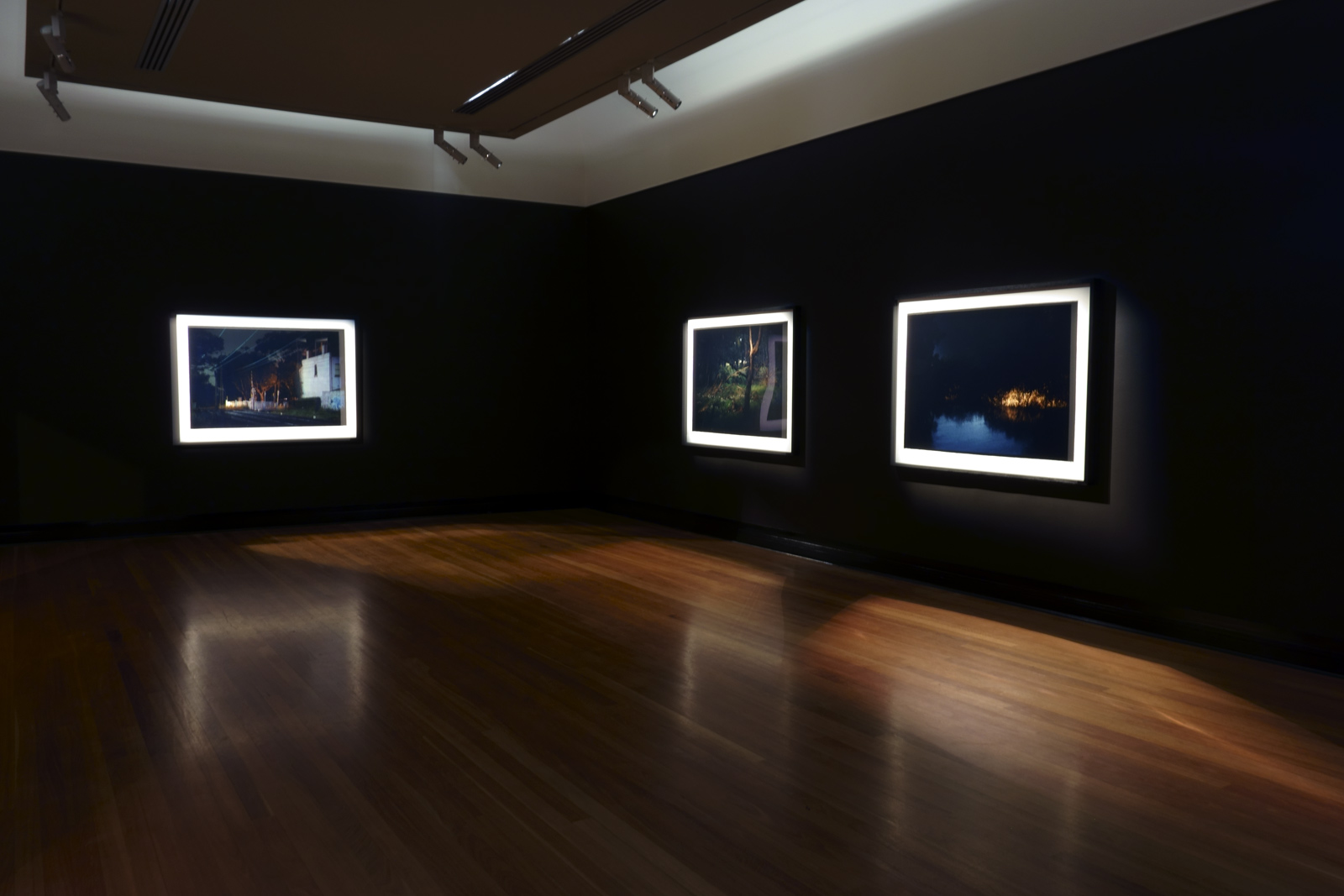
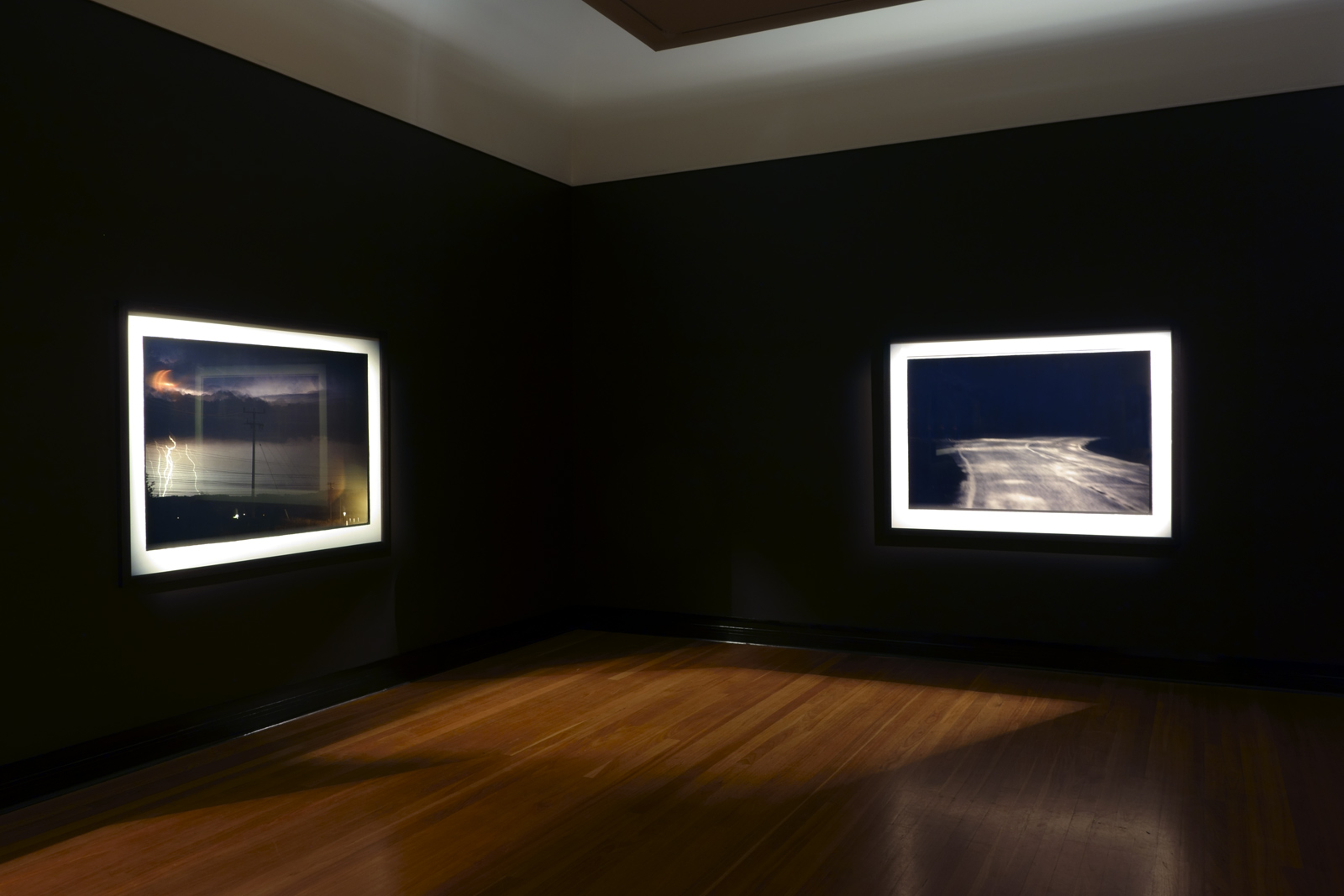
The darkened room contains only eight images beautifully lit to create a wondrous, enveloping atmosphere. Henson’s night photographs emit light as though a result of the excitation of atoms by energy – the energy of the mind transferred to the light of place. A luminescence of thought is imaged in the photograph through the emission of light … produced not so much by physiological or electromagnetic processes as much as by a culturally informed mind that seems to bring forth its own light. And behold there is light.
As that eminent photographer Minor White used to opine when asked for technical information on his photographs in the back of popular American photography monthlies: for technical information the camera was creatively used.
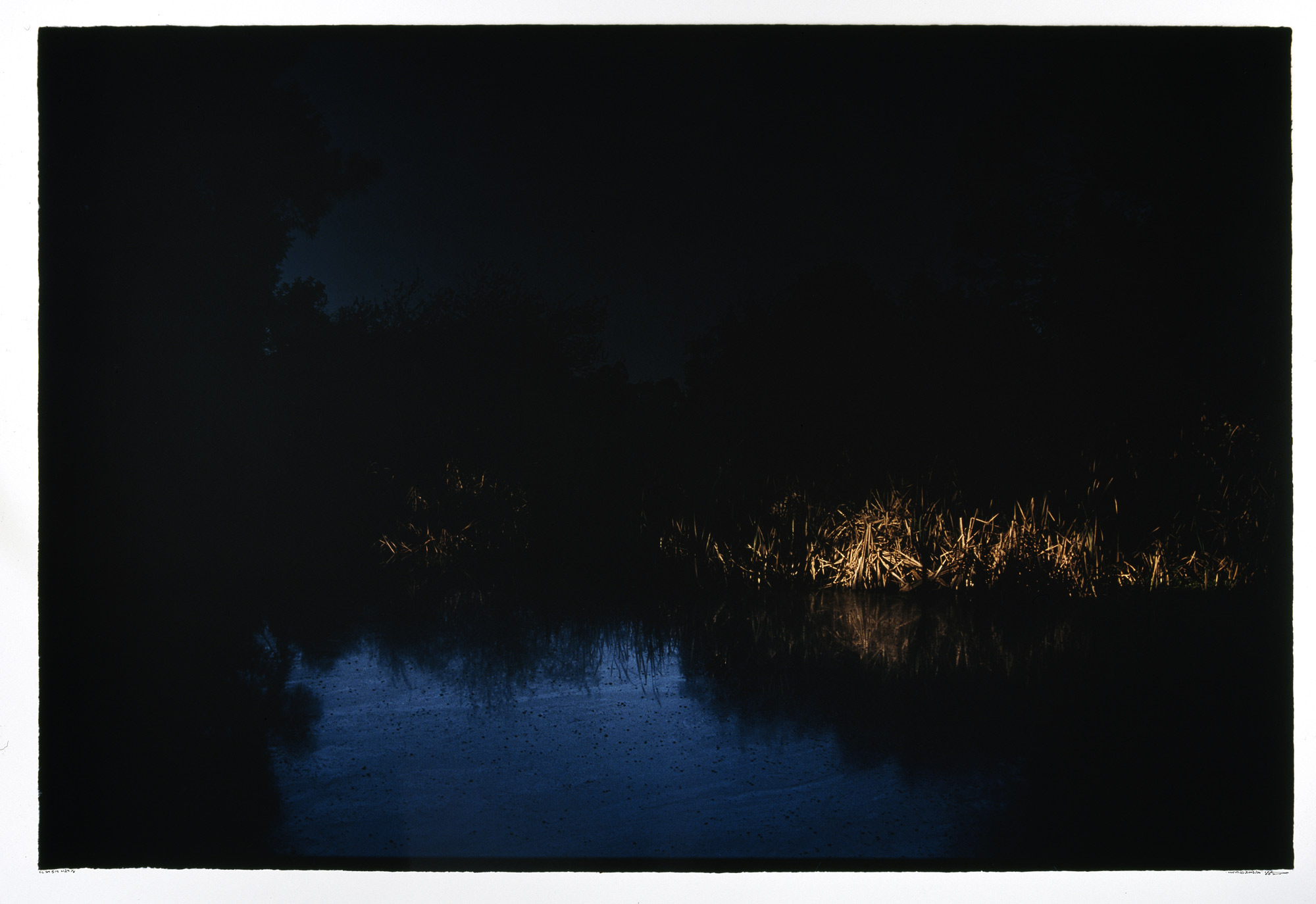
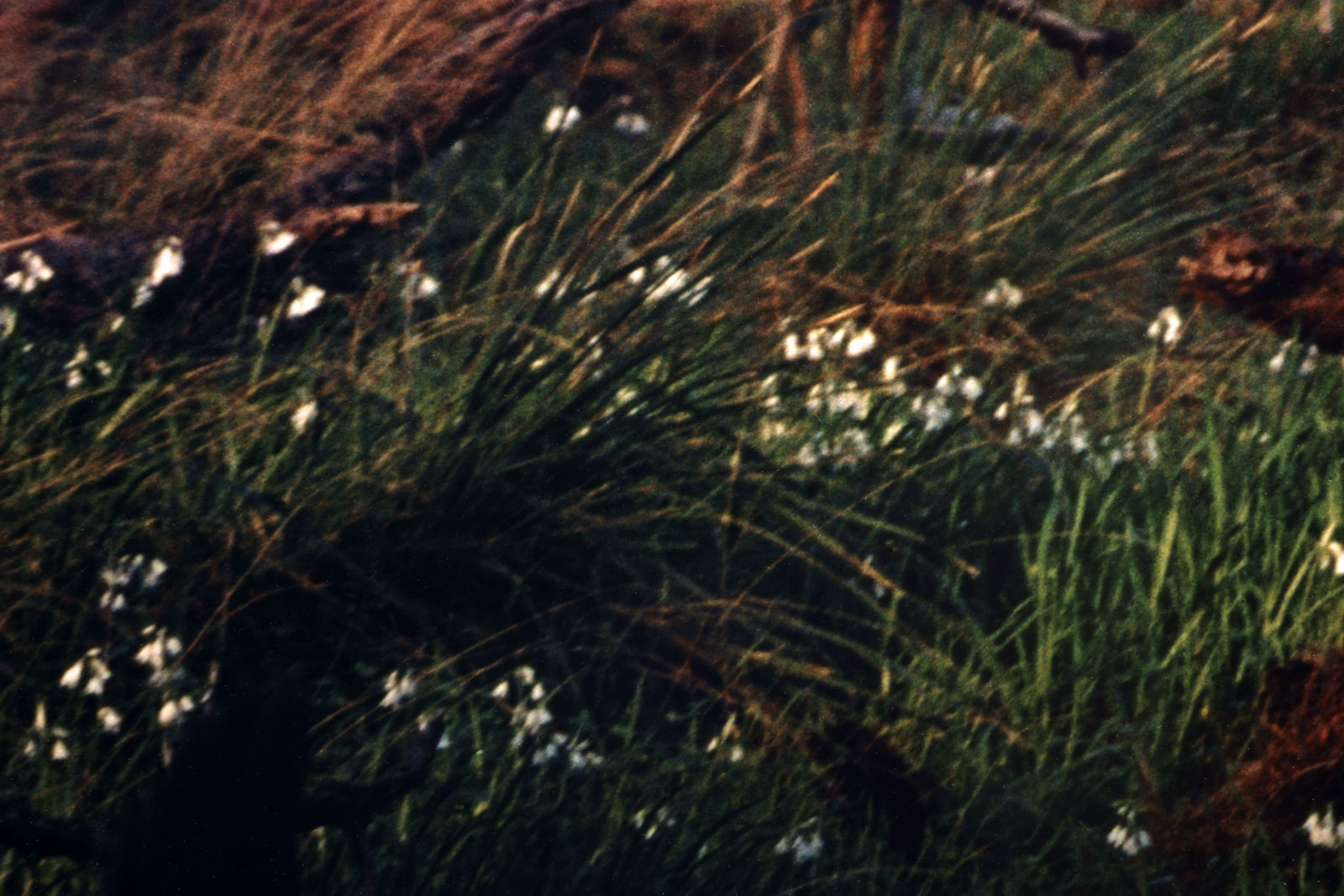
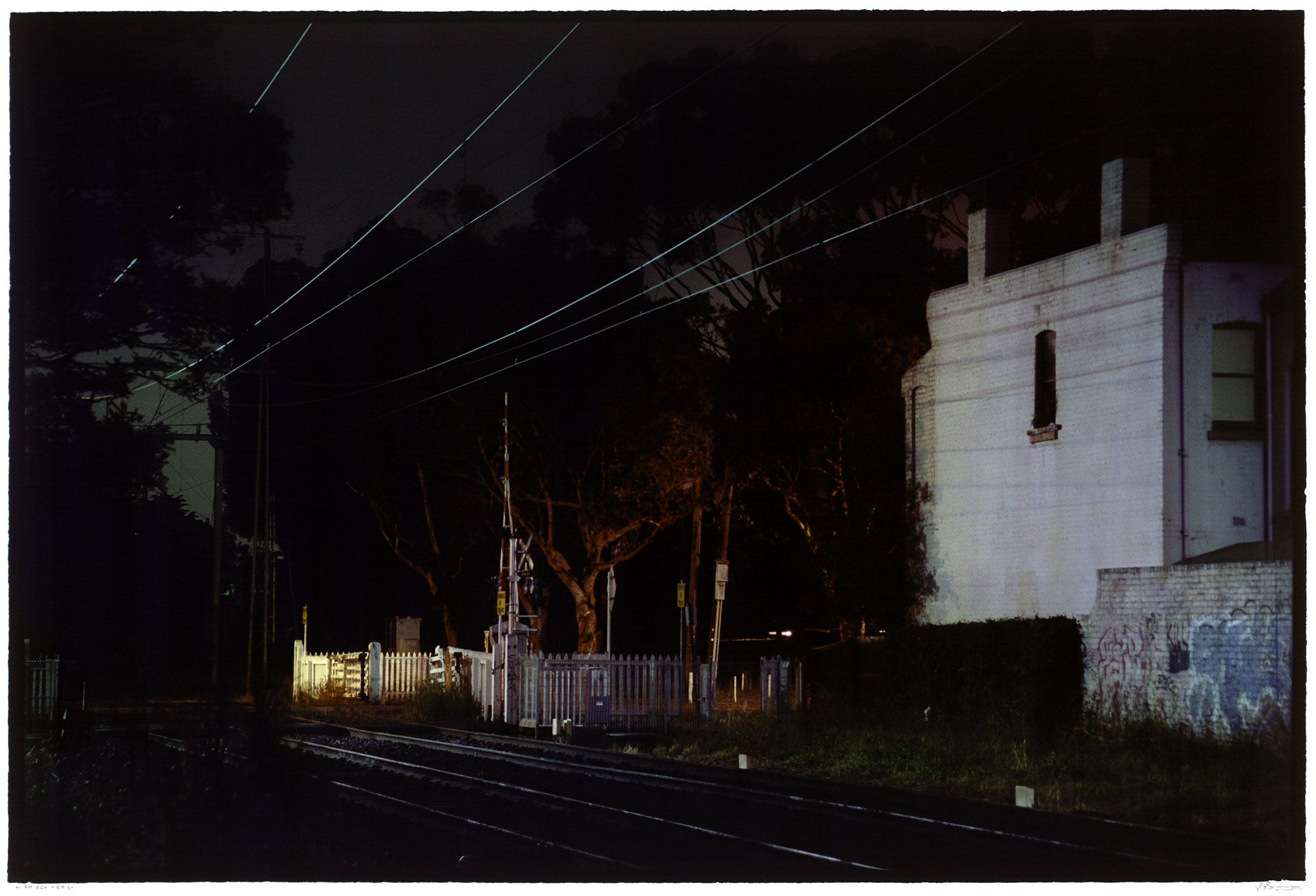
For me, these are not images of ethereal malevolence or Australian anxiety about our environment and the ominous ordinary. They do not possess that feeling at all. These pictures are about an understanding and contemplation of light and place, a process which is in balance one with the other. Yes, the transient nature of earthly existence but more than that. The soft details of flowers in the grass, or the spatter of rain on water, not noticed until you really look at the image; or the shadow of a truck on a bridge underpass. In my mind I know where this is, in Gipps Street, Abbottsford near the train bridge… or so I believe in my imagination. All of these photographs have a feeling of a subtle vibration of energy in the universe. There is no malevolence here.
My only criticism of this, the first photographic exhibition at Castlemaine Art Gallery, is that there is not enough of it. There needed to be more of the work. It just felt a little light on. Another gallery was needed to make the installation experience fully enveloping. Having said that, congratulations must go to the artist and to gallery who are putting on some amazing exhibitions in the heart of regional Victoria.
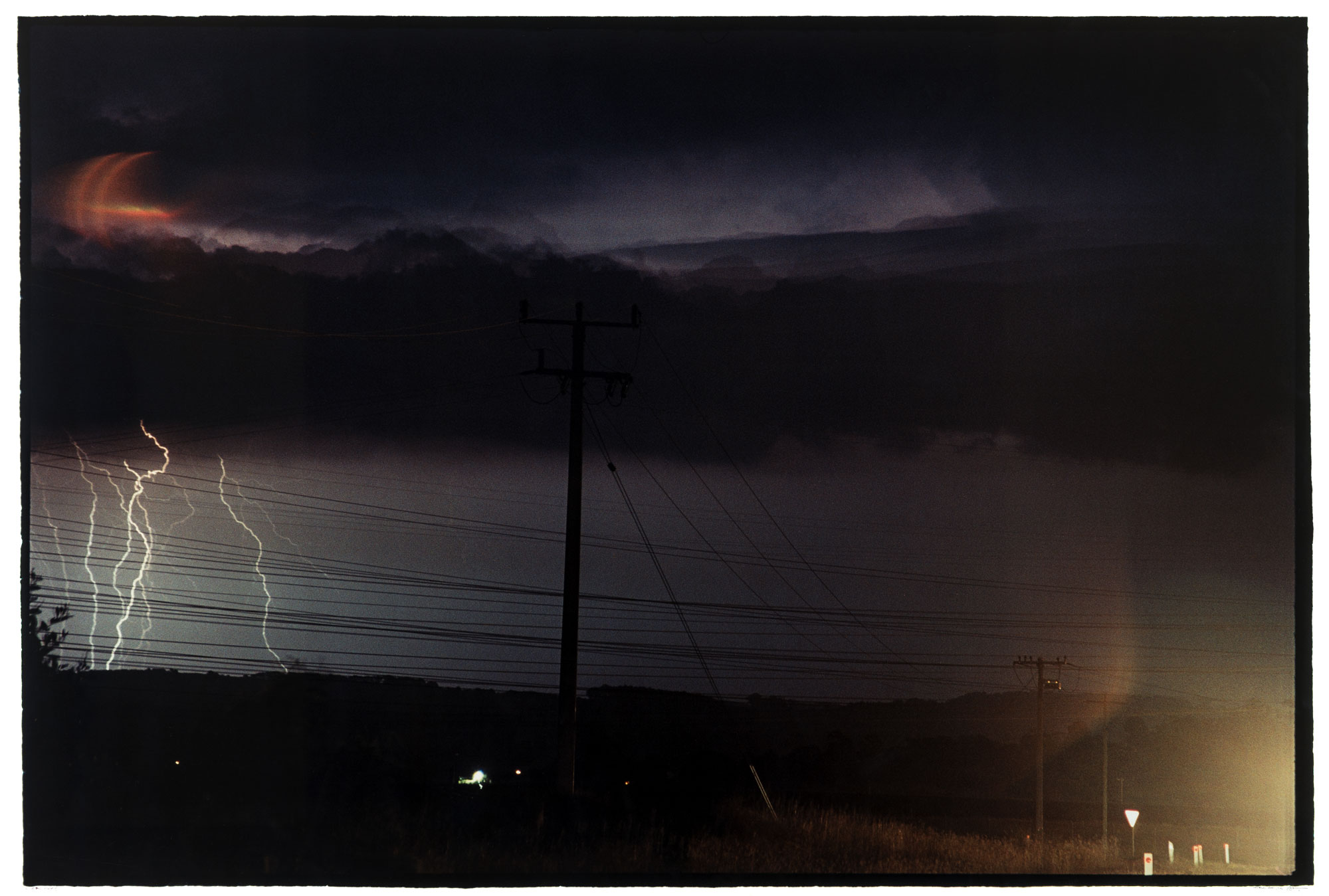
Bill Henson (Australian, b. 1955) Untitled #9 2005/2006 2005-2006 CL SH541 N2 Type C photograph 127 x 180cm (sheet) Courtesy of the artist and Roslyn Oxley9 Gallery, Sydney
Bill Henson (Australian, b. 1955) Untitled #9 2005/2006 (detail) 2005-2006 CL SH541 N2 Type C photograph 127 x 180cm (sheet) Courtesy of the artist and Roslyn Oxley9 Gallery, Sydney
Bill Henson (Australian, b. 1955) Untitled #21 2005-2006 (detail) 2005-2006 CL SH541 N2 Type C photograph 127 x 180cm
Bill Henson (Australian, b. 1955) Untitled 1999-2000 1999-2000 Type C photograph 103.8 x 154.0cm (image) 126.8 x 179.9cm (sheet) National Gallery of Victoria, Melbourne Purchased with funds from the Victorian Foundation for Living Australian Artists, 2005 (2005.501) Courtesy of the artist and Roslyn Oxley9 Gallery, Sydney
“Our current exhibition, Bill Henson: Landscapes captures the haunting convergence of opposites; two worlds, darkness and light.
These dreamlike pictures pursue the Romantic project by engulfing the viewer in the urban or semi-rural sublime. Through these landscapes, we are immersed in a realm which offers an otherworldly view of the transient nature of earthly existence. The inky depths of the encroaching natural environment suggest a dark abyss, an ethereal malevolence that relates to both the artistic conventions of Renaissance landscape painting and, a uniquely Australian anxiety about our environment and the ominous ordinary.”
Text from the Castlemaine Art Gallery Facebook page
Bill Henson (Australian, b. 1955) Untitled #28 (detail) 1998 Type C photograph 104 × 154cm
Bill Henson (Australian, b. 1955) Untitled #48 (detail) 1998/1999/2000 Type C photograph 127 × 180cm
Castlemaine Art Gallery and Historical Museum 14 Lyttleton Street (PO Box 248) Castlemaine, Vic 3450 Australia Phone: (03) 5472 2292 Email:info@castlemainegallery.com
Max Dupain (Australian, 1911-1992) Embassy of Australia, Paris, France 1978 Silver gelatin print
A good friend of mine, Joyce Evans (who should know what she is talking about) observed to me that you cannot look at Dupain’s photographs of Paris without first looking at his commissioned photographs of the then new Embassy of Australia in Paris.
Unfortunately, I could only find one photograph online to show to you, Embassy of Australia, Paris, France (1978, above), but you get the idea.
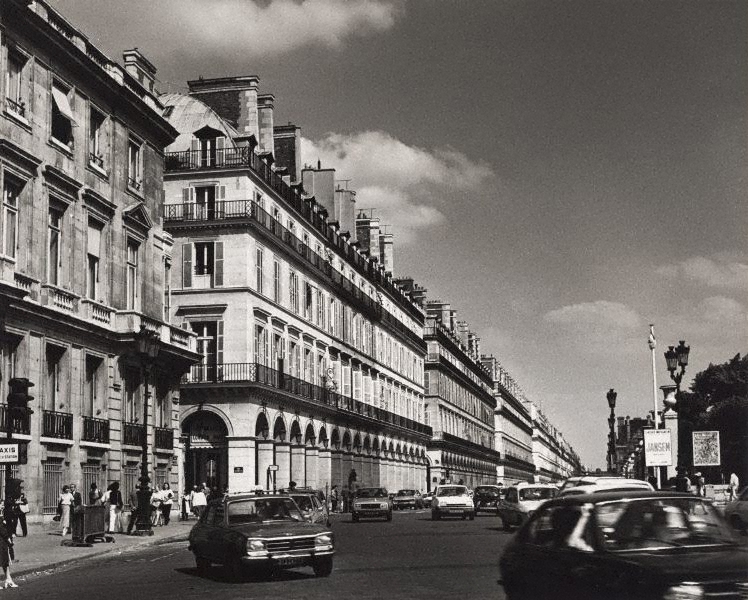
Dupain’s The Paris ‘private’ series were taken during a couple of days off that he had from the commissioned job. Basically they are tourist photographs, a record of things Dupain wanted to see in Paris on one of his few overseas trips. Most of them are disappointing images, serviceable but disappointing.
Having studied Eugène Atget I expected more from Dupain. In these photographs he tends to shoot obliquely into the object of his attention, directing the lead in and vanishing point(s) within the image. For example, in Untitled (the balustrade of Pont Alexandre III) and Untitled (Pont Alexandre III with sculptural balustrade) (both 1978, below), Dupain allows the bridge parapet to lead the eye into the image, while the vanishing point is positioned at far right. Neither are very successful as formal compositions.
The same can be said of Untitled (statue of Maréchal Joffre, Place Joffre, Champ-de-Mars) (1978, below) with the vanishing point this time at the left of the image. More successful is Dupains’s Untitled (staircase to the park, looking toward Bassin des Serruriers, Domaine de Chantilly) (1978, below) with its foreshortened out of focus entrance, geometric planes and multiple exit points – but then he goes and spoils it with the simplistic Untitled (staircase and statue of Anne de Montmorency 1886 by Paul Dubois, Domaine de Chantilly) (1978, below) taken at the same location.
The best image from the series is undoubtedly Untitled (the statue of Christ at the portal of La Sainte-Chapelle) (1978, below) with its restrained and refined aesthetic. A beautiful image and a wondrous space. The photograph of the people at the Eiffel Tower is also a cracker.
As I said at the beginning, these are tourist art photographs of Paris, but they could have been so much more.
Dr Marcus Bunyan
Many thankx to The Art Gallery of New South Wales for allowing me to publish the photographs in the posting. Please click on the photographs for a larger version of the image.
Max Dupain (Australian, 1911-1992) is one of the leading figures of 20th-century Australian photography. The group of 21 photographs in his Paris ‘private’ series was taken when he travelled to Paris in 1978 with architect Harry Seidler to photograph the Australian Embassy, designed by Seidler. The series consists of transcendent photographs of Paris. Dupain had studied the work of Eugène Atget, and there is a similar enigmatic atmosphere to be found in Dupain’s examination of the city. Primarily depicting 18th- to 19th-century landmarks such as the ornate Alexandre III bridge, the Grand Palais and Chantilly, this compilation offers a view of the city and its environs shaped by layers of history, mythology and art.
Given to the Gallery by Penelope Seidler in memory of her husband and the photographer, this portfolio is shown alongside other photographs of made and natural structures by Dupain from the 1930s to the 1980s.
“I like to involve myself in, maybe, a small area geographically and work it out, as simple as that” said Max Dupain in a 1991 interview.1 During his lifetime the photographer visited only three countries outside of Australia. His 1978 trip to Paris was made together with architect Harry Seidler, whose newly built Australian embassy building Dupain was commissioned to document. The long professional association between the architect and the photographer stretched back to the early 1950s, soon after Seidler’s arrival in Australia. Dupain, through his expressive architectural photographs, was closely involved in popularising the modernist aesthetic espoused by Seidler’s starkly functional buildings.
Conversely, the set of 21 photographs of Paris which Dupain compiled and presented to Seidler as a personal gift, does not contain any images of modern architecture. Primarily depicting 18-19th century landmarks such as the ornate Alexandre III bridge, the Grand Palais and Versailles this compilation offers a view of the city and its environs shaped by layers of history, mythology and art. Dupain was nonetheless well read in modern French culture and aware of photographers such as Eugène Atget and Henri Cartier-Bresson.
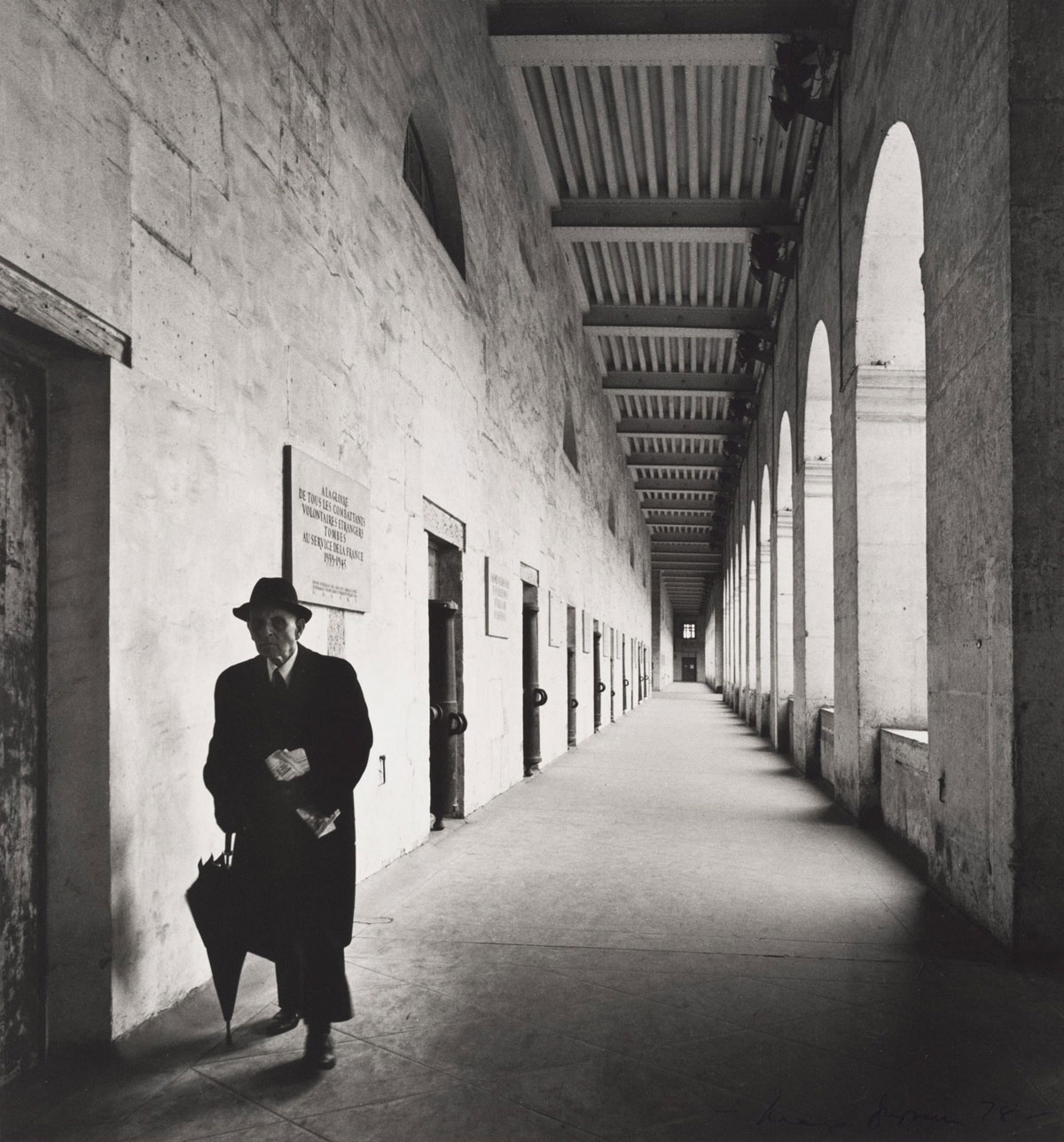
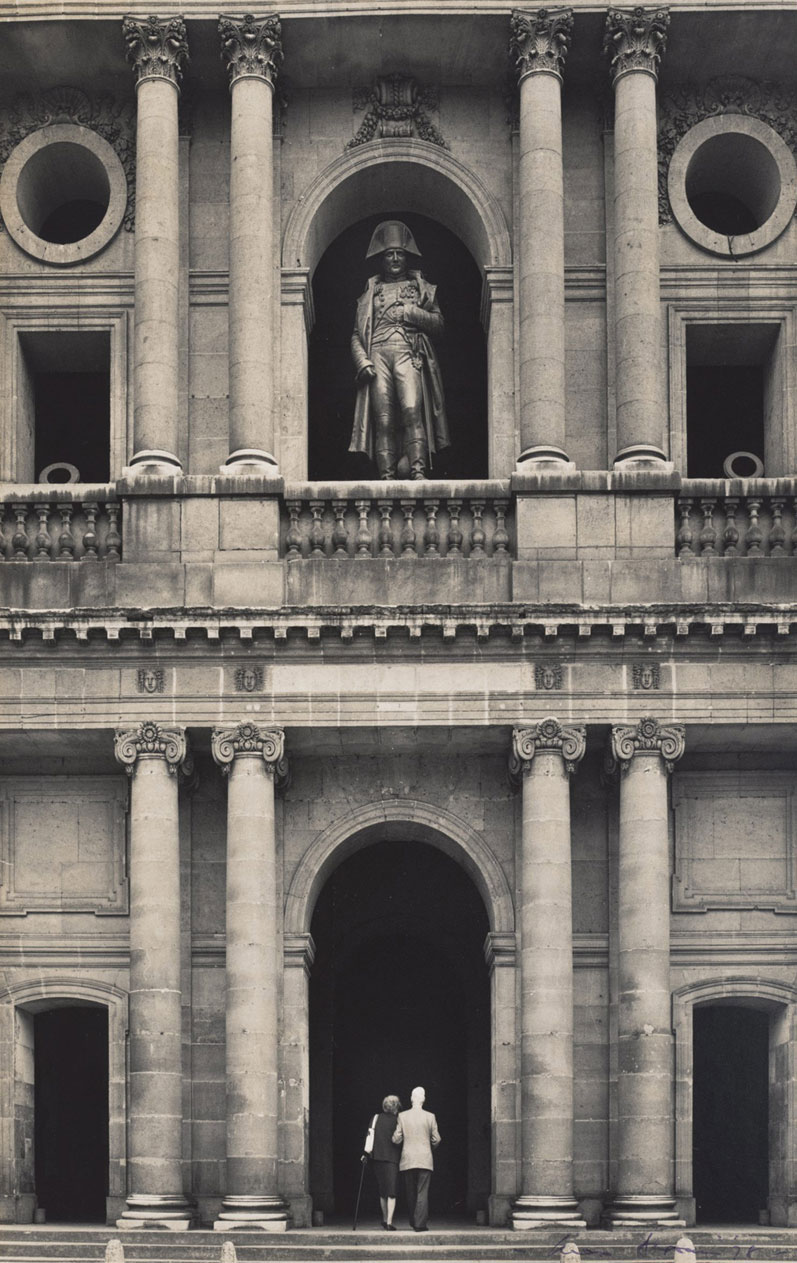
The Parisian images vary from pure architectural studies to compositions with an almost literary scope. They demonstrate Dupain’s signature trait of combining the formal and social aspects of photography. In some of the works, Dupain gives classical architecture the same reductive treatment he brought to modern buildings. Stripped of embellishments, these photographs bring to the fore the essence of order, logic and harmony which lies at the core of classicism. The presence of human figures in photographs such as that of Napoleon’s statue on the balcony of Les Invalides adds a dramatic element to the compositions. Dupain wanted “to extract every ounce of content from any exciting form and I want to give life to the inanimate.”2 Time and the built environment converge in this personal ode to Paris, manifesting the incessant flow of life and the connectedness of past with the present.
1/ Max Dupain interviewed by Helen Ennis in Max Dupain: Photographs, National Gallery of Australia, Canberra, 1991, p. 13 2/ Max Dupain, “Max Dupain – modernist”, exhibition catalogue, State library of NSW, Sydney, 2007, p. 9
Text from the Art Gallery of New South Wales website
An exhibition of 36 photographs – 21 of which were taken in Paris in 1978 by one of Australia’s most well-known photographers, Max Dupain (1911-92) – will go on display at the Art Gallery of New South Wales. Donated to the Gallery by Penelope Seidler in 2012, this will be the first time the Paris ‘private’ series portfolio will have ever been seen publicly. Max Dupain had gifted these works to renowned architect Harry Seidler and in a handwritten note he wrote:
I owe you so much. For nearly twenty five years I have dwelt on your philosophy of architecture. We register alike about clear thinking, logic of application, poetry of form etc etc. [sic] I have tremendous regard for architecture as a stabilising force in this turbulent society and I think my best work will ultimately show the significance of this by virtue of the photographed form thrown up by architecture and by engineering.
Dupain made the trip to Paris, his second outside Australia and his first to Europe, to accompany his long-time colleague and friend, Harry Seidler (1923-2006). Dupain’s task was to photograph the Australian Embassy there, which Seidler had designed (completed 1977). The pair were not only friends but shared a deep appreciation for form and light, for the modernist curves in space that can be created both architecturally and photographically.
Dupain explored many monuments around Paris. These impressions of a place he was seeing for the first time reveal his exploration of a new city and its sites, varying from formal compositions of photographic space, such as the image of Napoleon’s statue on the balcony of Les Invalides, to more personal or candid moments, as with the group of people captured beneath the Eiffel Tower. Many photographs depict 18th- and 19th-century landmarks such as the ornate Alexandre III bridge, the Grand Palais and Chantilly; the compilation offers a view of Paris and its environs shaped by layers of history, mythology and art.
Despite the diversity of subject matter across the 21 images, Dupain always maintained his signature poise and rigour, appreciation of the way light interacts with the objects it touches, and attention to the composition of photographic space through a play of scale.
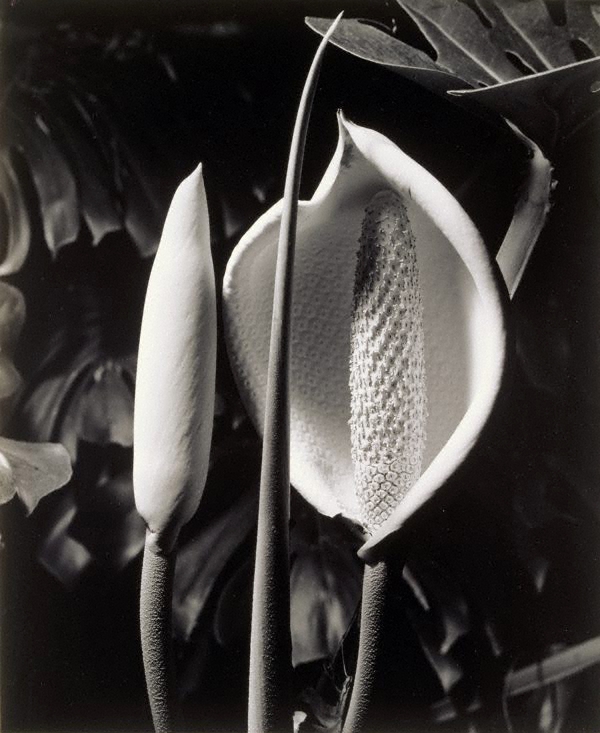
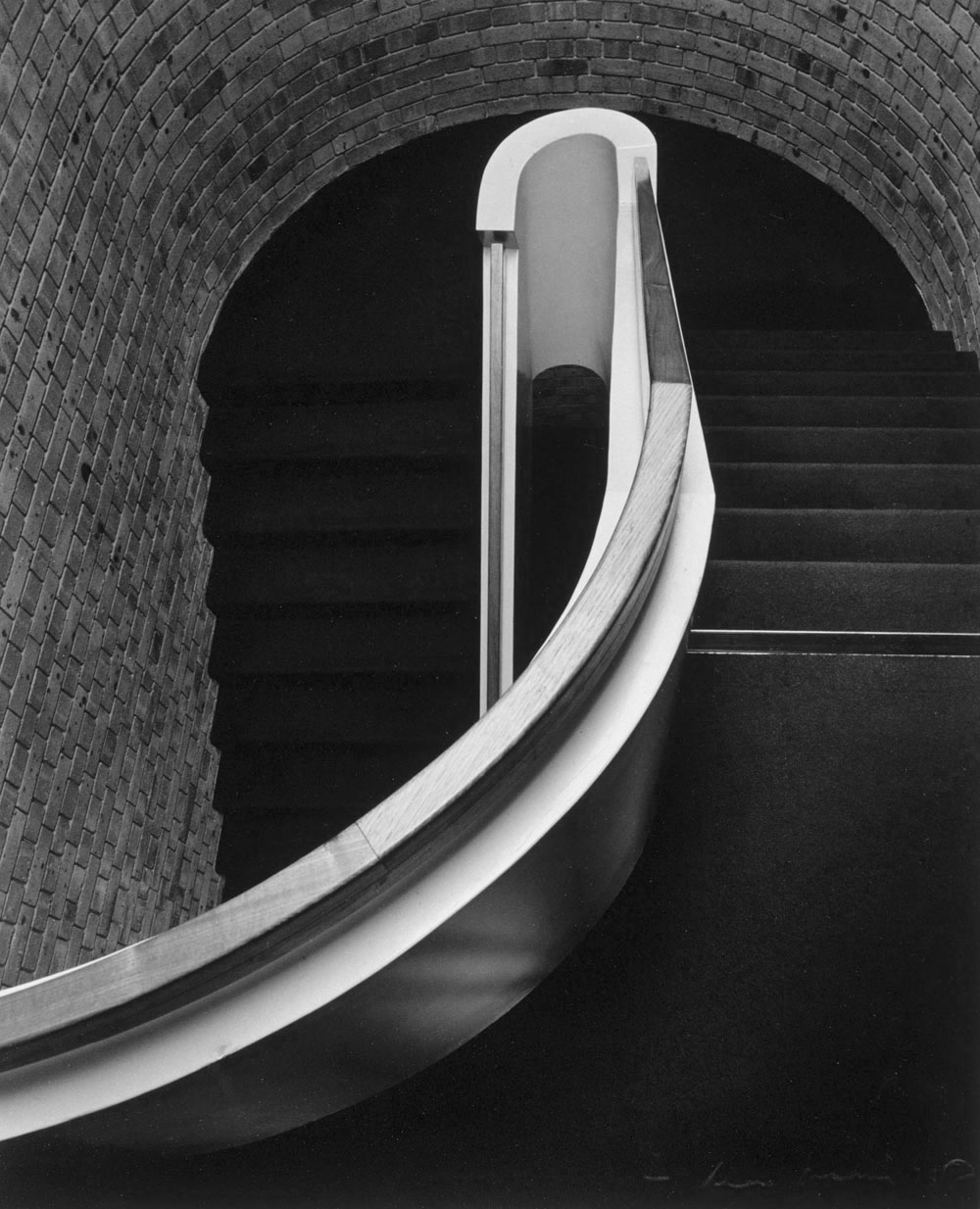
In addition to the Paris ‘private’ series, 15 of Dupain’s photographs of architectural and botanical forms will be on display. Almost all are taken in and around Sydney; some of the flowers are from Dupain’s Castlecrag garden and iconic Sydney buildings such as the Opera House are included. These images cover 50 years of the photographer’s practice from 1933 to 1983, and indicate his enduring appreciation for the order, logic and harmony which lie at the core of classicism, the movement that produced many of the iconic Parisian monuments he saw, and for the modernism which Seidler endorsed through his work.
Press release from the AGNSW website
Max Dupain (Born Australia 1911, died 1992) Pyrmont silos 1933, printed later Gelatin silver photograph Purchased 1976
Pyrmont silos is one of a number of photographs that Dupain took of these constructions in the 1930s. In all cases Dupain examined the silos from a modernist perspective, emphasising their monumentality from low viewpoints under a bright cloudless sky. Additionally, his use of strong shadows to emphasise the forms of the silos and the lack of human figures celebrates the built structure as well as providing no sense of scale. Another photograph by Dupain in the AGNSW collection was taken through a car windscreen so that the machinery of transport merges explicitly with industrialisation into a complex hard-edge image of views and mirror reflections. There were no skyscrapers in Sydney until the late 1930s so the silos, Walter Burley Griffin’s incinerators and the Sydney Harbour Bridge were the major points of reference for those interested in depicting modern expressions of engineering and industrial power.
Dupain was the first Australian photographer to embrace modernism. One of his photographs of the silos was roundly criticised when shown to the New South Wales Photographic Society but Dupain forged on regardless with his reading, thinking and experimentation. Some Australian painting and writing had embraced modernist principles in the 1920s, but as late as 1938 Dupain was writing to the Sydney Morning Herald:
“Great art has always been contemporary in spirit. Today we feel the surge of aesthetic exploration along abstract lines, the social economic order impinging itself on art, the repudiation of the ‘truth to nature criterion’ … We sadly need the creative courage of Man Ray, the original thought of Moholy-Nagy, and the dynamic realism of Edouard [sic] Steichen.”1














 Art Blart _ art and cultural memory archive
You must be logged in to post a comment.