Exhibition: ‘Samuel Fosso’ at the Museum der Moderne Salzburg

Exhibition dates: 22nd October, 2022 – 10th April, 2023

Curator: Jürgen Tabor
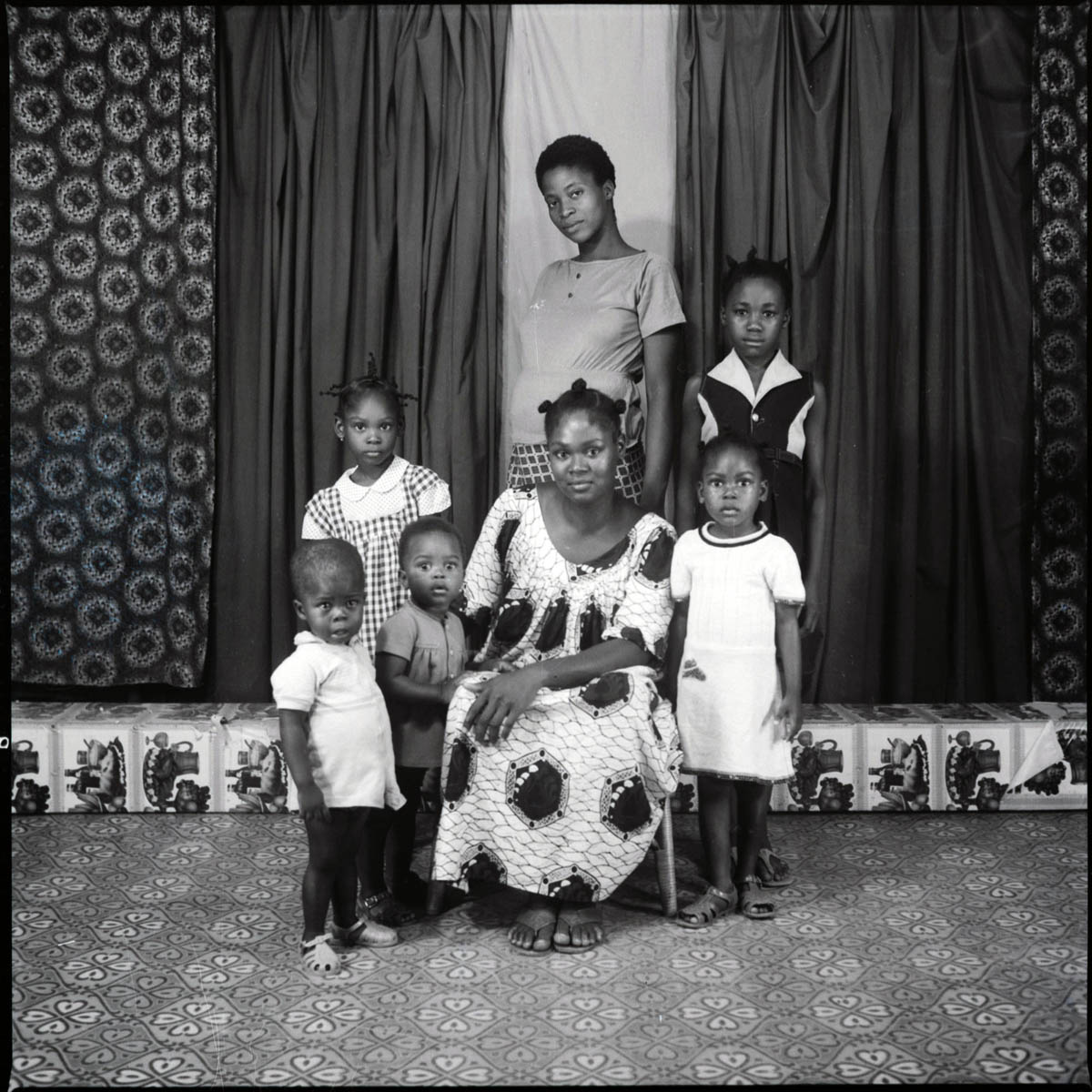
 

Samuel Fosso (Nigerian born Cameroon, b. 1962) 'Archives from Studio Photo National, Samuel Fosso's studio in Bangui' Nd from the exhibition 'Samuel Fosso' at the Museum der Moderne Salzburg, Oct 2022 - April 2023


Samuel Fosso (Nigerian born Cameroon, b. 1962)
Archives from Studio Photo National, Samuel Fosso’s studio in Bangui
Nd
© Samuel Fosso 
courtesy Jean-Marc Patras / Paris


Another exhibition on this wonderful artist with additional photographs… one of four large exhibitions that have take place recently in Europe and America. The other three being:

Samuel Fosso: The Man with a Thousand Faces at the Walther Collection, Germany, May – November 2022
Samuel Fosso: Affirmative Acts at the Princeton University Art Museum, November 2022 – January 2023
Samuel Fosso: African Spirits at the Menil Collection, Houston, August 2022 – January 2023

A well deserved flavour of the year!

Dr Marcus Bunyan


Many thankx to the Museum der Moderne Salzburg for allowing me to publish the photographs in the posting. Please click on the photographs for a larger version of the image.
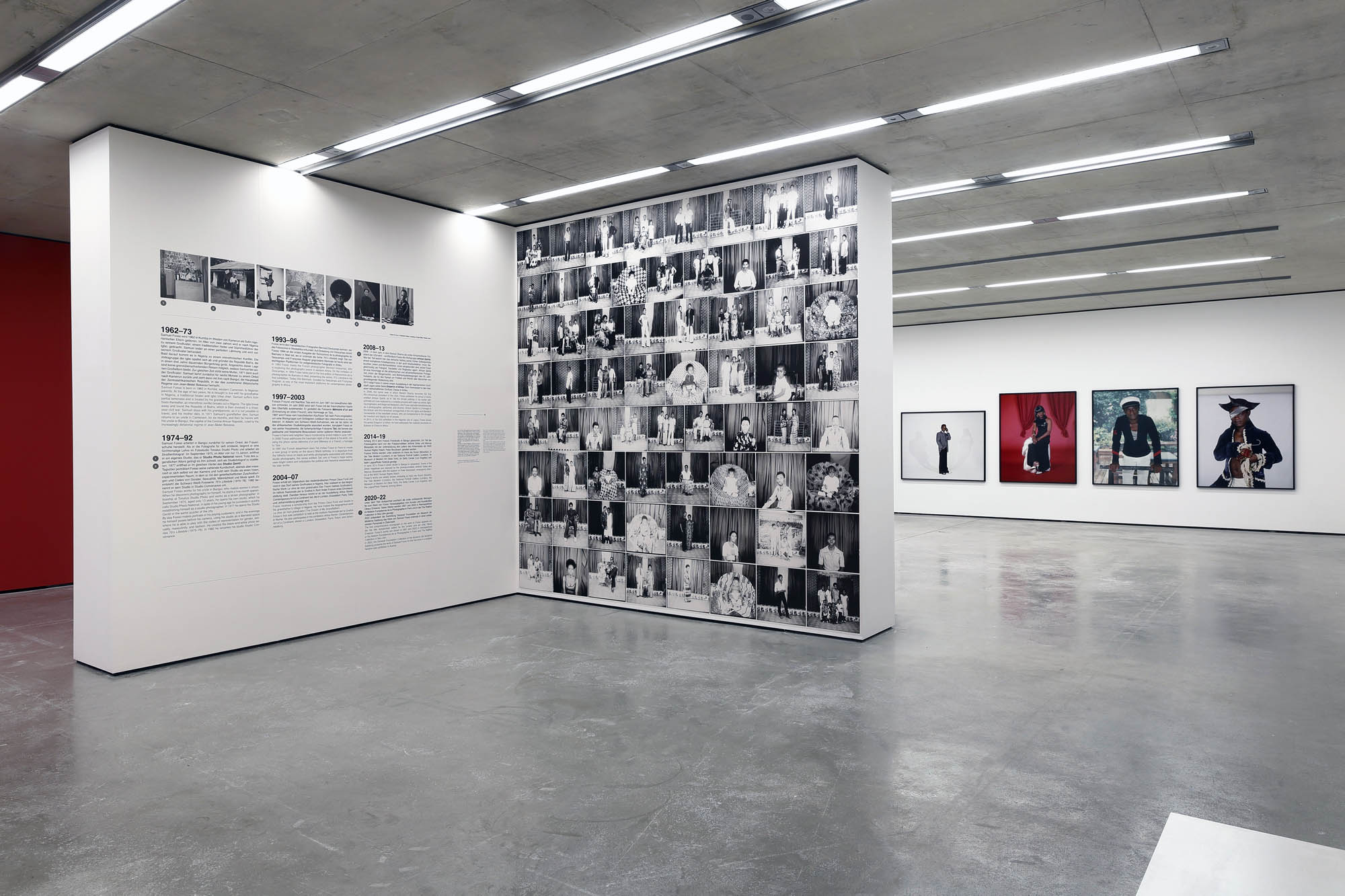


Installation view of the exhibition 'Samuel Fosso' at the Museum der Moderne Salzburg showing at left, photographs from the Archives from Studio Photo National


Installation view of the exhibition Samuel Fosso at the Museum der Moderne Salzburg showing at left, photographs from the Archives from Studio Photo National
Photo: Rainer Iglar
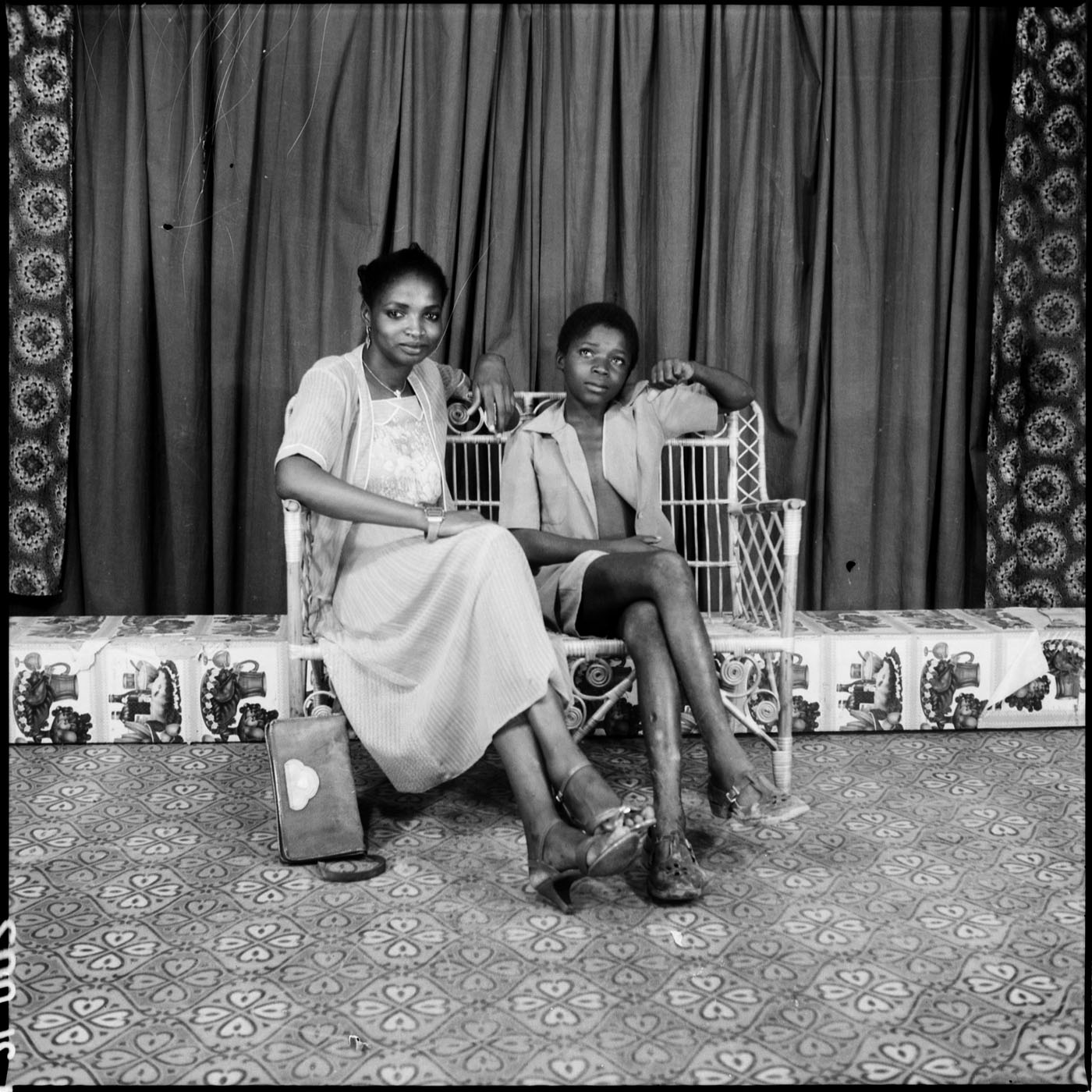
 

Samuel Fosso (Nigerian born Cameroon, b. 1962) 'Archives from Studio Photo National, Samuel Fosso's studio in Bangui' Nd from the exhibition 'Samuel Fosso' at the Museum der Moderne Salzburg, Oct 2022 - April 2023


Samuel Fosso (Nigerian born Cameroon, b. 1962)
Archives from Studio Photo National, Samuel Fosso’s studio in Bangui
Nd
© Samuel Fosso 
courtesy Jean-Marc Patras / Paris
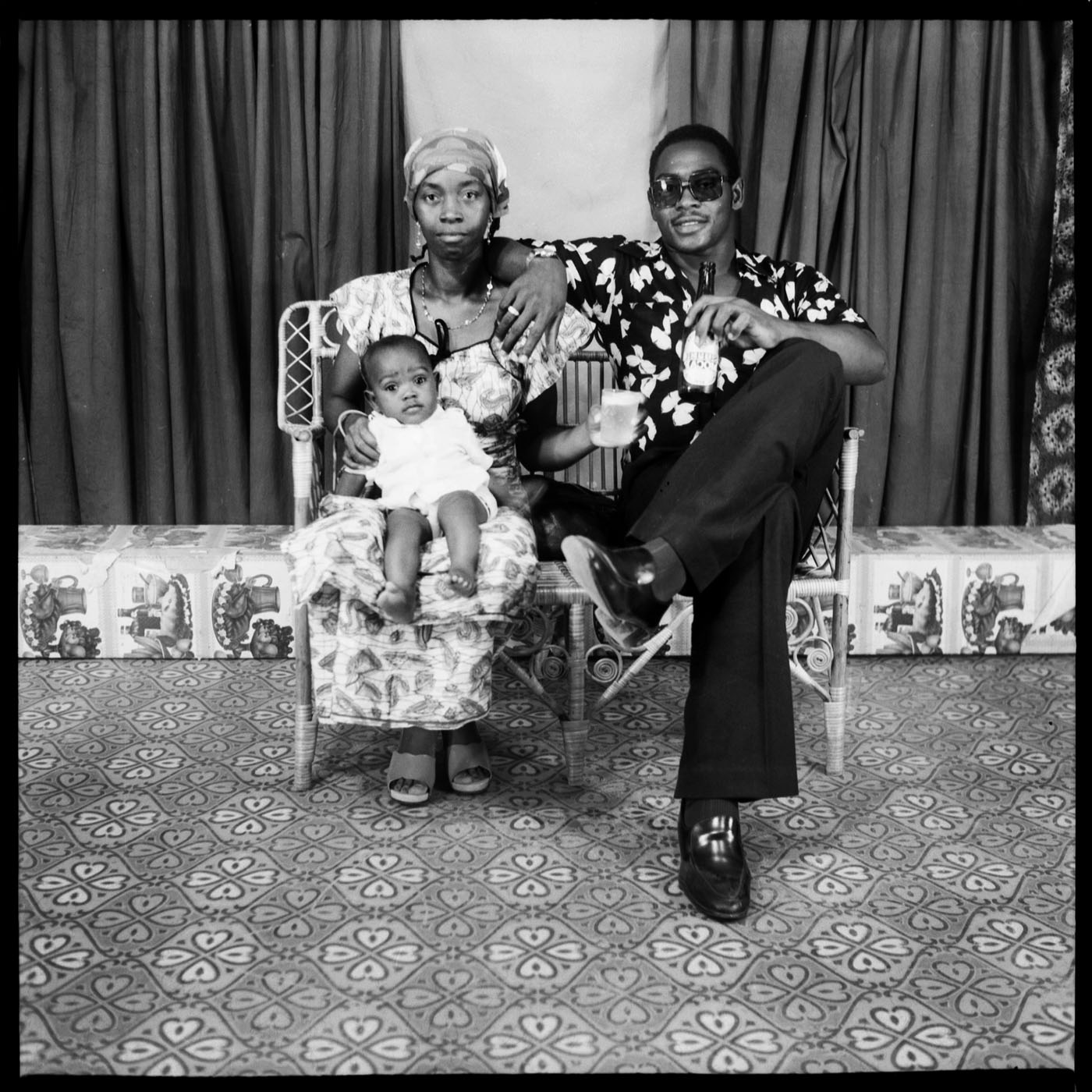
 

Samuel Fosso (Nigerian born Cameroon, b. 1962) 'Archives from Studio Photo National, Samuel Fosso's studio in Bangui' Nd from the exhibition 'Samuel Fosso' at the Museum der Moderne Salzburg, Oct 2022 - April 2023


Samuel Fosso (Nigerian born Cameroon, b. 1962)
Archives from Studio Photo National, Samuel Fosso’s studio in Bangui
Nd
© Samuel Fosso 
courtesy Jean-Marc Patras / Paris
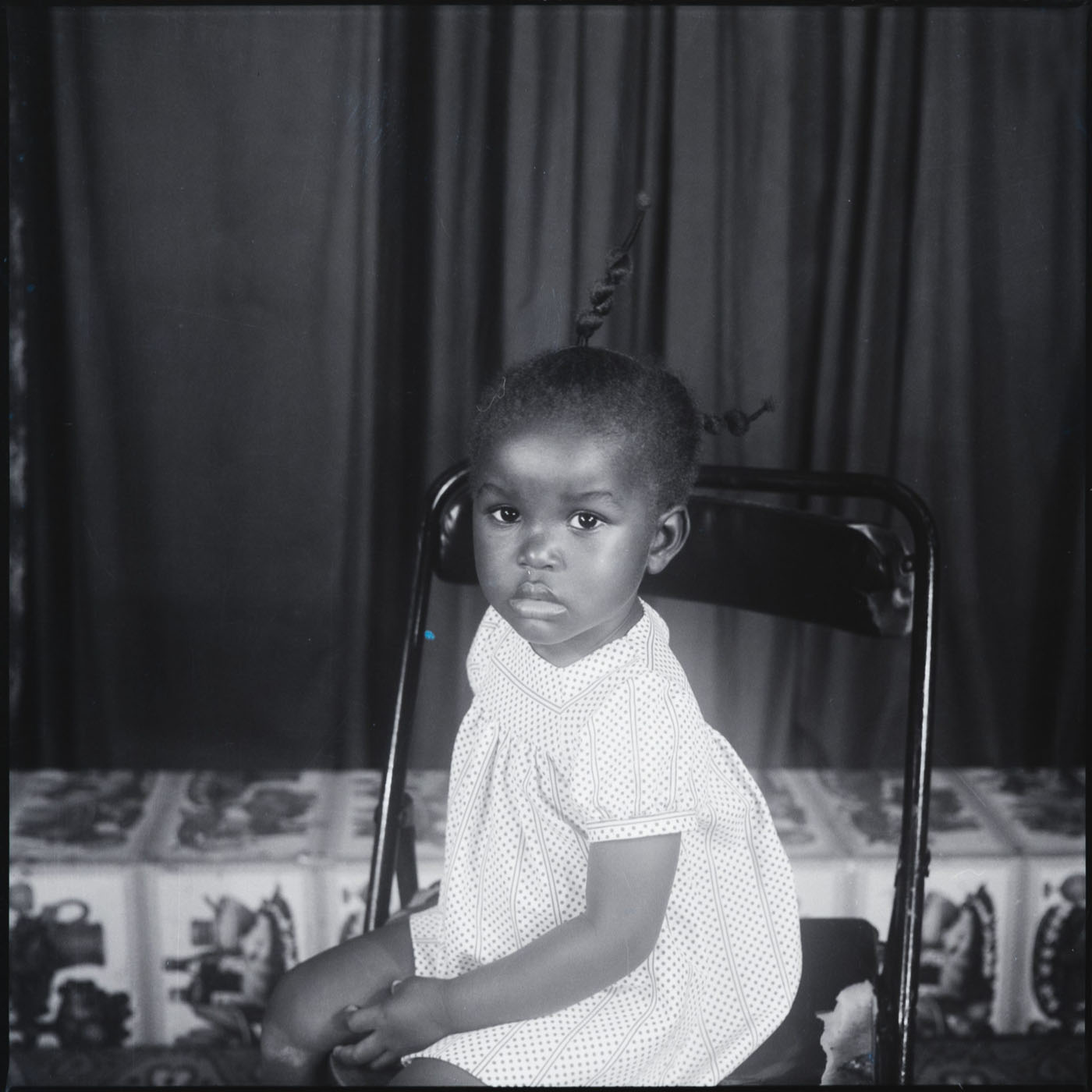
 

Samuel Fosso (Nigerian born Cameroon, b. 1962) 'Archives from Studio Photo National, Samuel Fosso's studio in Bangui' Nd


Samuel Fosso (Nigerian born Cameroon, b. 1962)
Archives from Studio Photo National, Samuel Fosso’s studio in Bangui
Nd
© Samuel Fosso 
courtesy Jean-Marc Patras / Paris
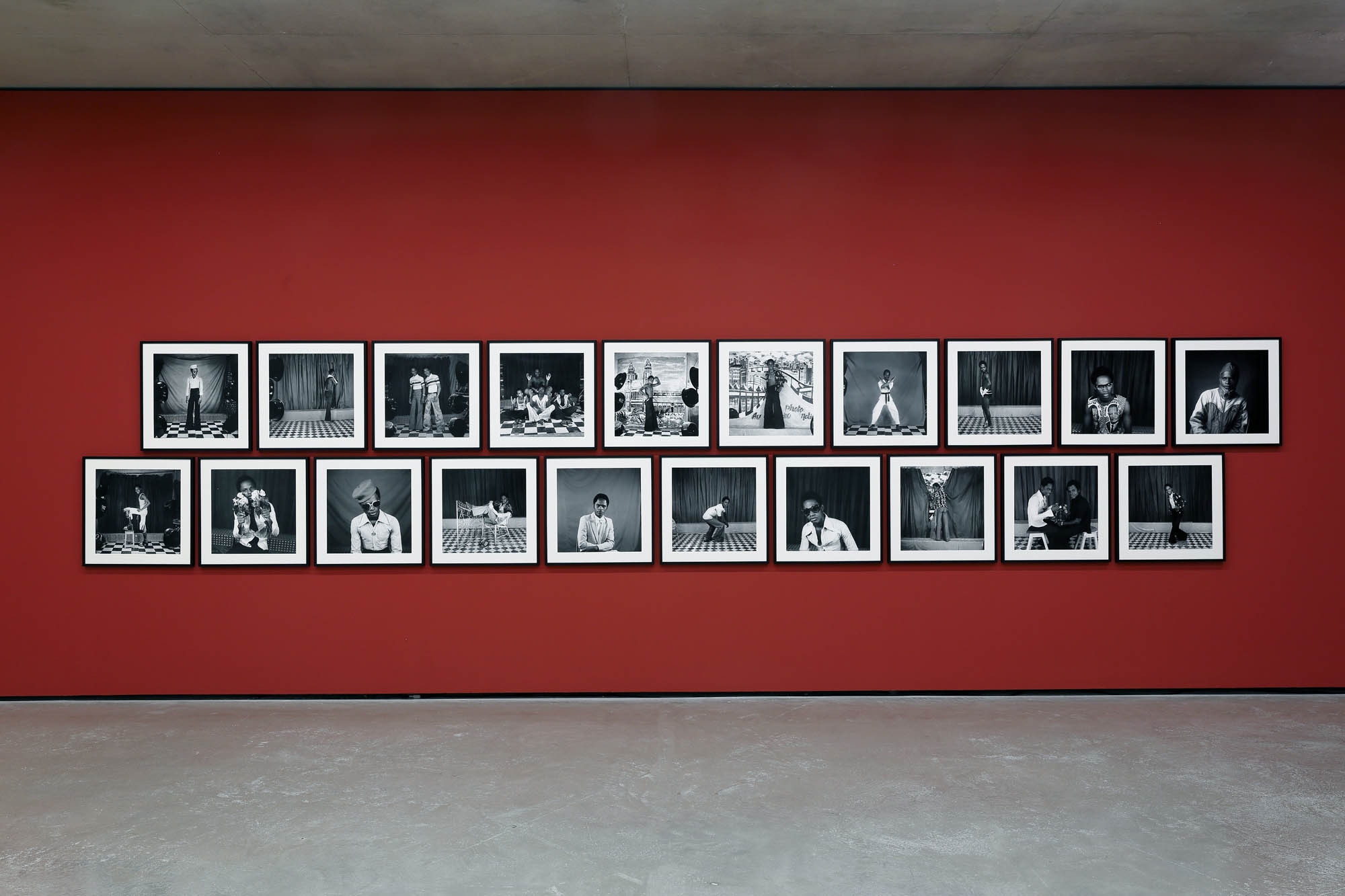
 

Installation view of the exhibition 'Samuel Fosso' at the Museum der Moderne Salzburg showing photographs from the series '70's Lifestyle'


Installation view of the exhibition Samuel Fosso at the Museum der Moderne Salzburg showing photographs from the series 70’s Lifestyle
Photo: Rainer Iglar
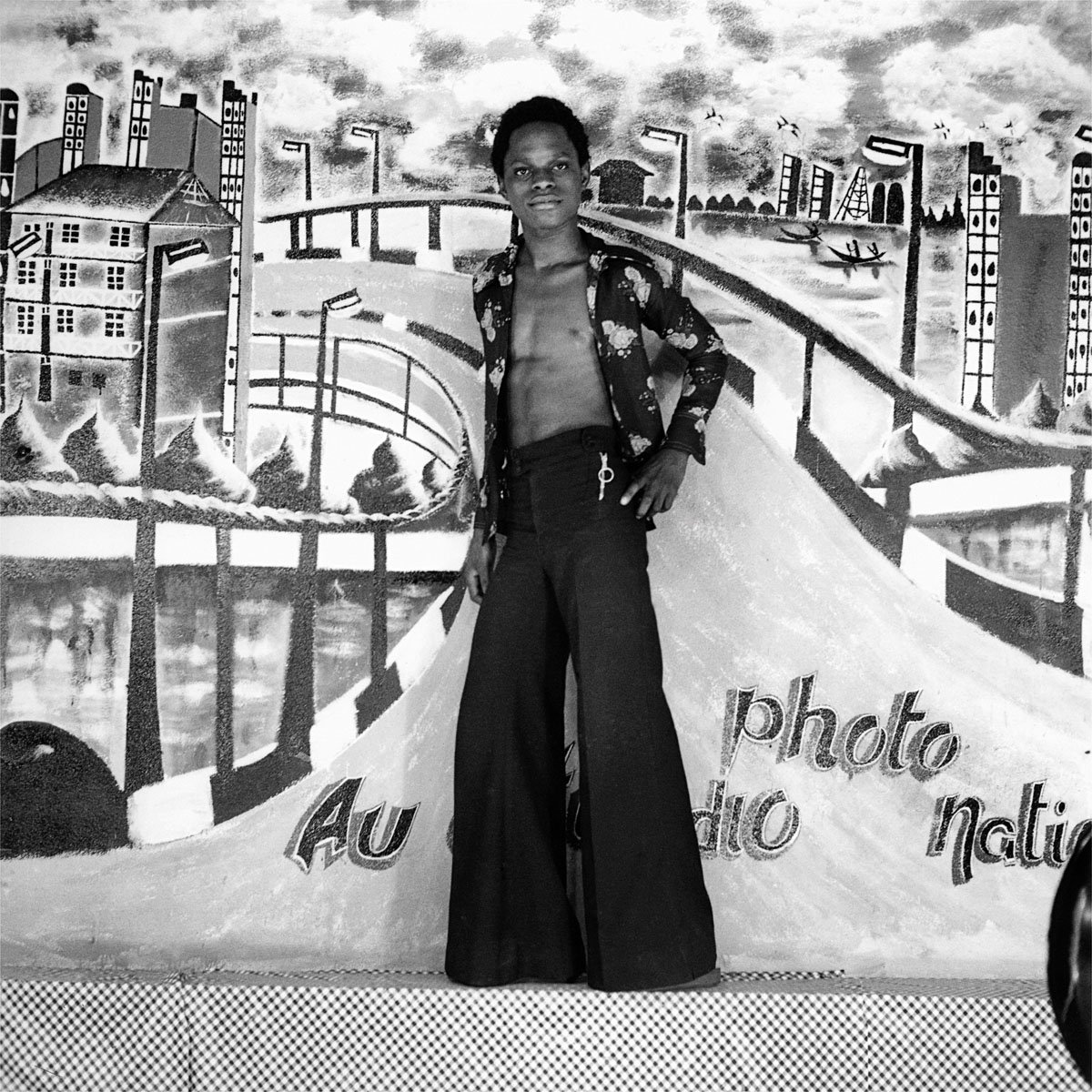
 

Samuel Fosso (Nigerian born Cameroon, b. 1962) '70's Lifestyle' 1974-1978


Samuel Fosso (Nigerian born Cameroon, b. 1962)
70’s Lifestyle
1974-1978
Gelatin silver print
© Samuel Fosso, courtesy of Jean Marc Patras, Paris
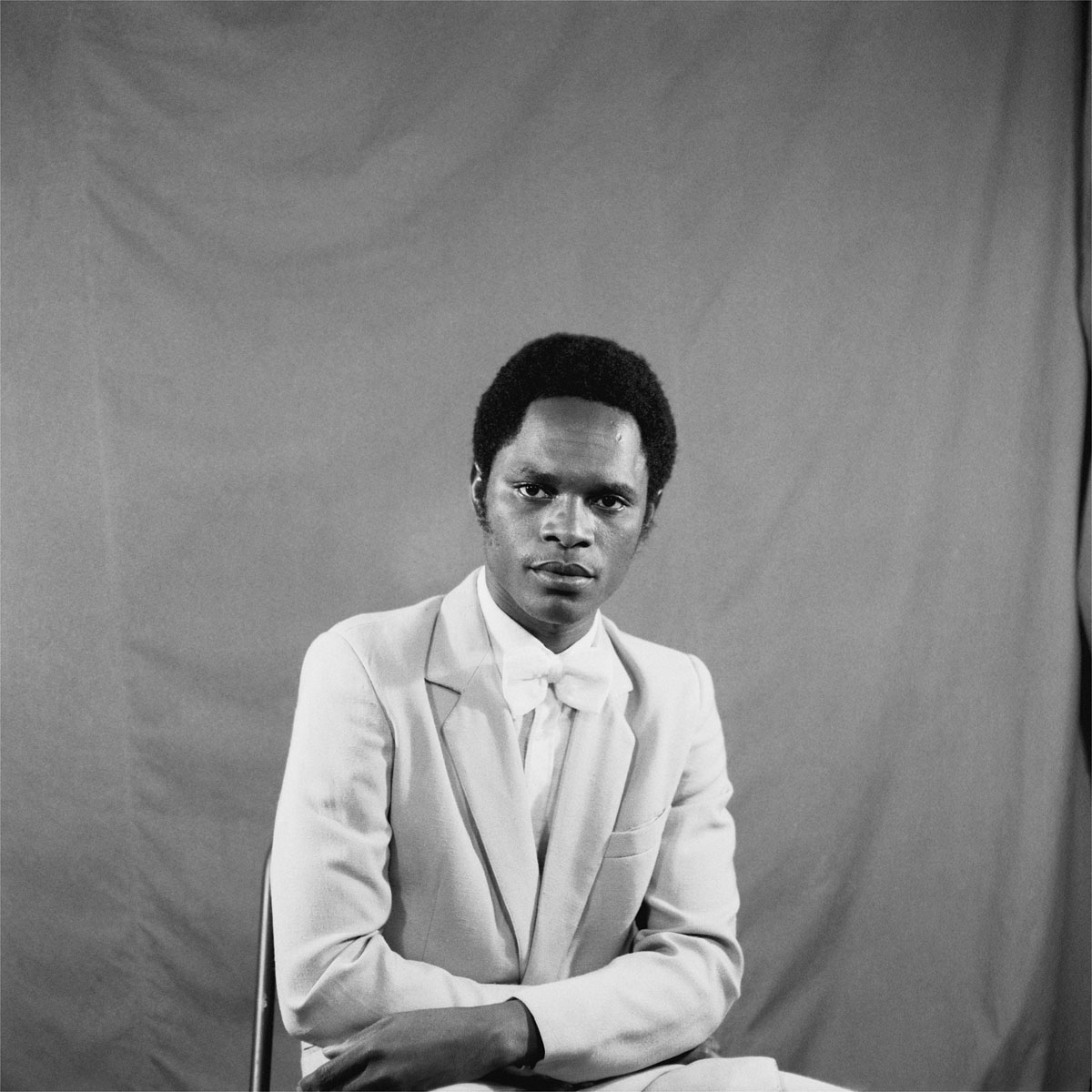
 

Samuel Fosso (Nigerian born Cameroon, b. 1962) '70's Lifestyle' 1974-1978


Samuel Fosso (Nigerian born Cameroon, b. 1962)
70’s Lifestyle
1974-1978
Gelatin silver print
© Samuel Fosso, courtesy of Jean Marc Patras, Paris
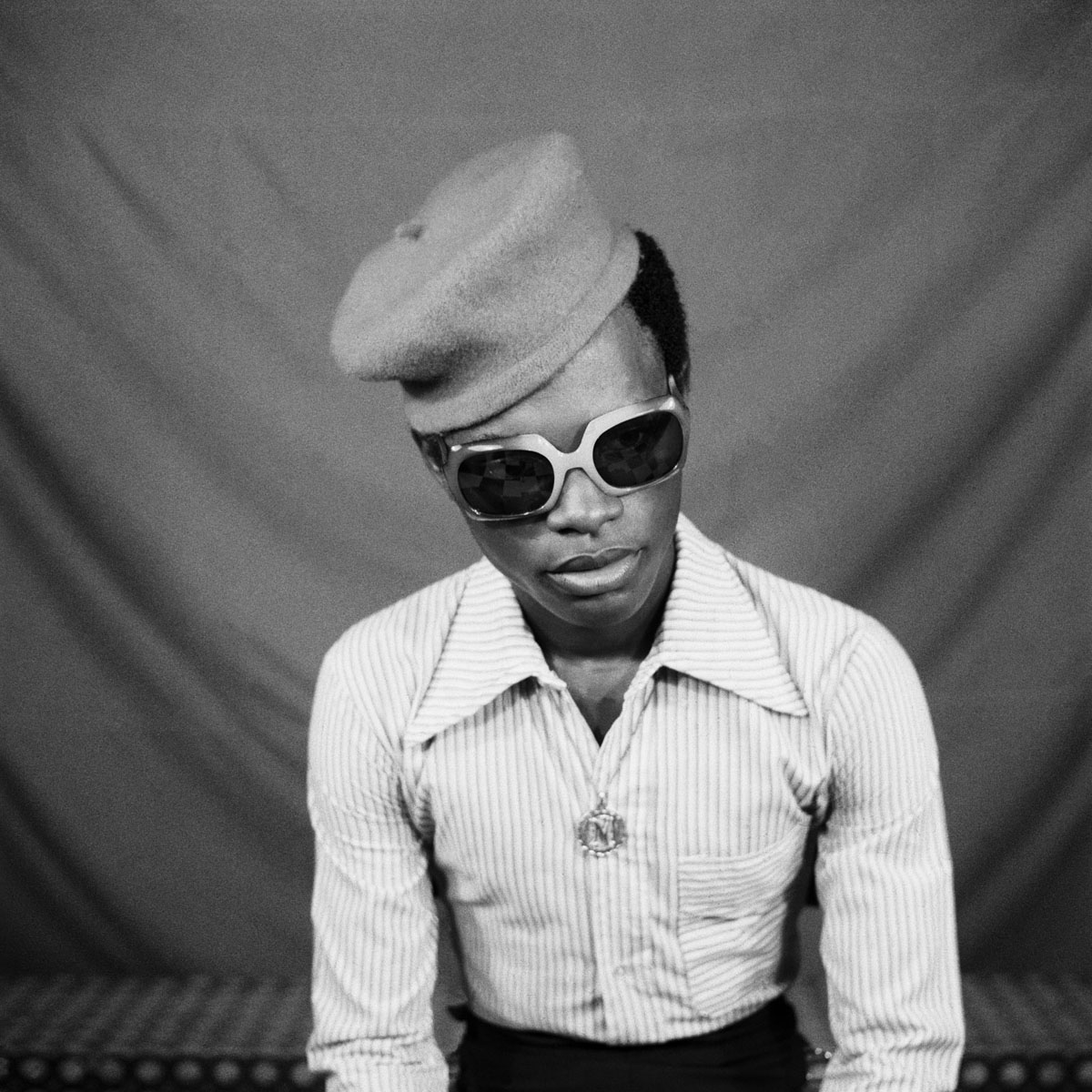
 

Samuel Fosso (Nigerian born Cameroon, b. 1962) '70's Lifestyle' 1974-1978 


Samuel Fosso (Nigerian born Cameroon, b. 1962)
70’s Lifestyle
1974-1978
Gelatin silver print
© Samuel Fosso, courtesy of Jean Marc Patras, Paris


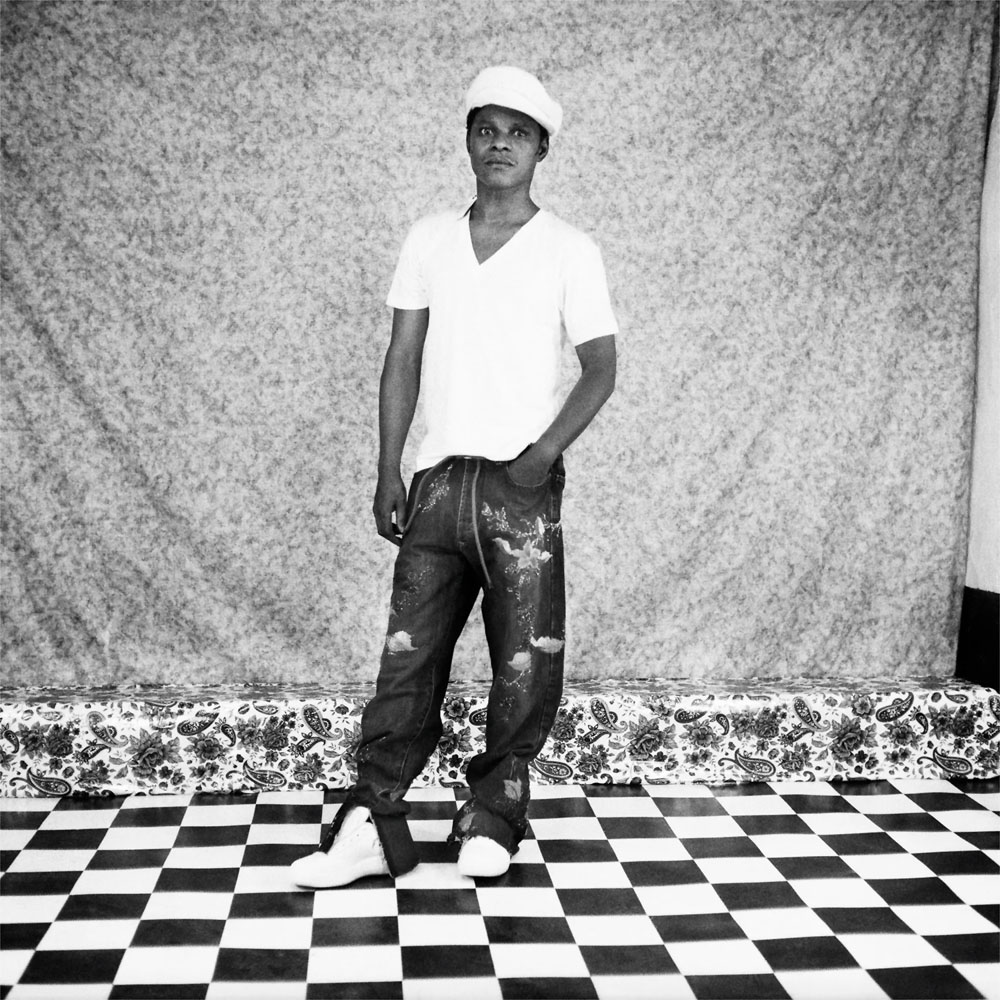
Samuel Fosso (Cameroonian, b. 1962) 'Self-portrait' 1975-1977


Samuel Fosso (Nigerian born Cameroon, b. 1962)
70’s Lifestyle
1974-1978
Gelatin silver print
© Samuel Fosso, courtesy of Jean Marc Patras, Paris
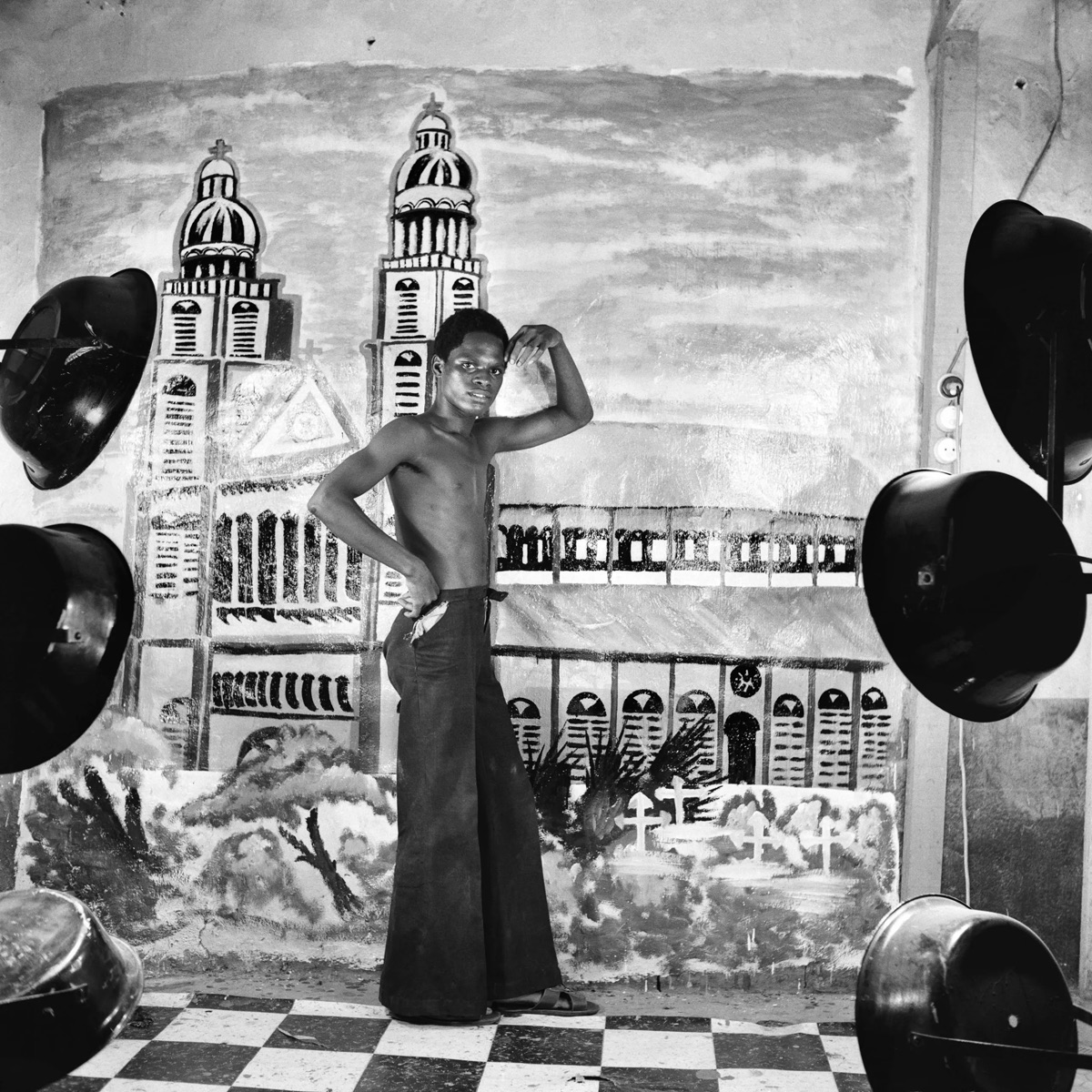
 

Samuel Fosso (Nigerian born Cameroon, b. 1962) 70's Lifestyle 1974-1978


Samuel Fosso (Nigerian born Cameroon, b. 1962)
70’s Lifestyle
1974-1978
Gelatin silver print
© Samuel Fosso, courtesy of Jean Marc Patras, Paris
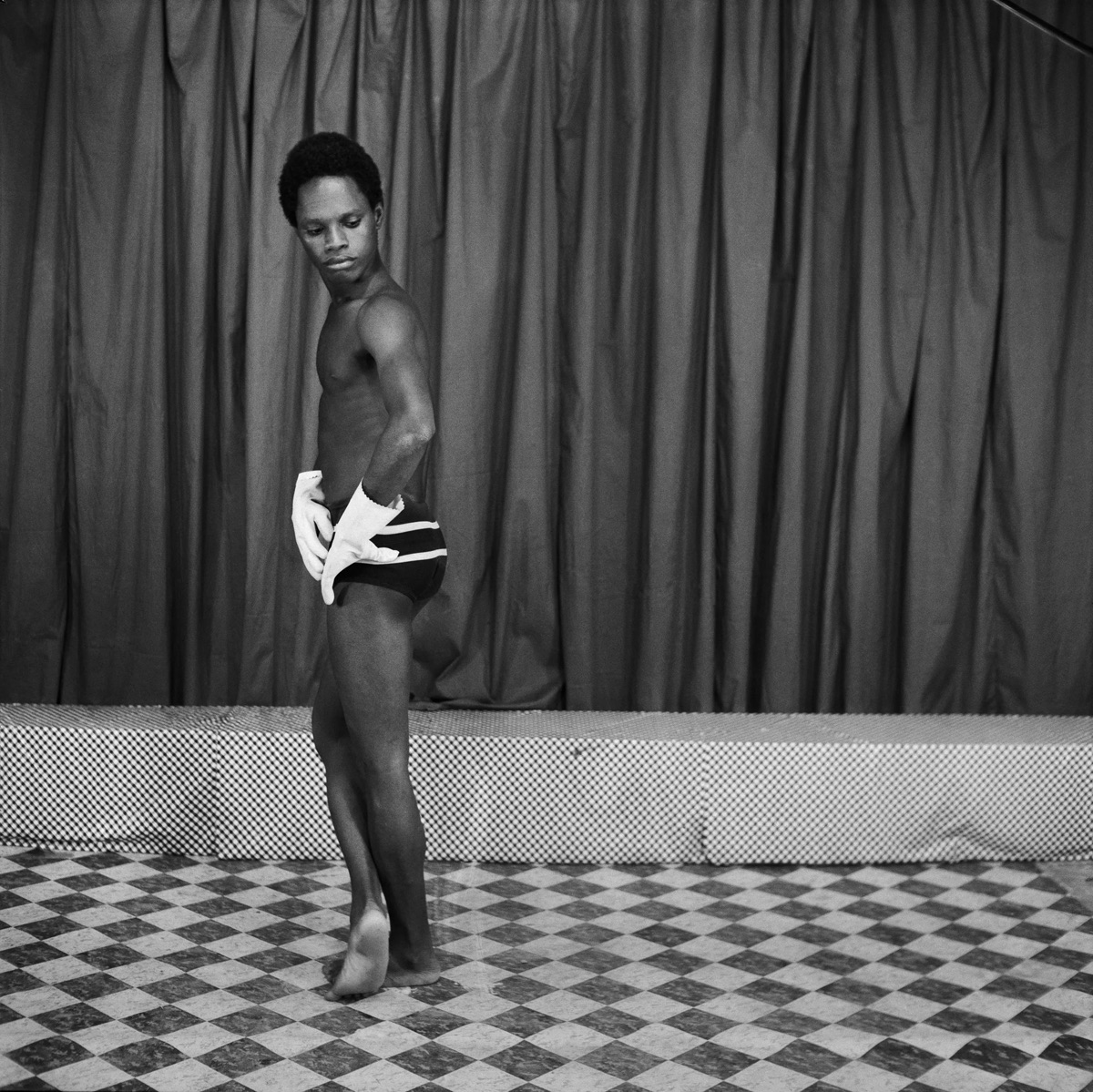
 

Samuel Fosso (Nigerian born Cameroon, b. 1962) 70's Lifestyle 1974-1978


Samuel Fosso (Nigerian born Cameroon, b. 1962)
70’s Lifestyle
1974-1978
Gelatin silver print
© Samuel Fosso, courtesy of Jean Marc Patras, Paris


Introduction

Samuel Fosso (Kumba, CM, 1962 – Bangui, CF; Paris, FR) is one of the most renowned African photographers working today. He has been a key innovator in the great tradition of African studio photography since the mid-1970s, developing and successively refining a distinctive form of explicitly theatrical self-portraiture. Fosso’s self-portraits blend photography with performance and intertwine autobiographical themes and conceptions of the self with political and historical perspectives. The works articulate the complexity and diversity of contemporary identities and explore the relations between Africa and the East and West in the era of post-colonialism and globalisation.

Organised by the Generali Foundation at the Museum der Moderne Salzburg, the retrospective presents a selection from Samuel Fosso’s most important bodies of work. It is the first major exhibition of Fosso’s art in Austria and one of his first solo shows in the German-speaking countries.

Featuring elaborate makeup and lavish costumes, props, and sets, Fosso’s autofictional self-portraits are not so much self-dramatisations as self-transformations. He slips into roles and borrows identities – from pivotal figures in history as well as social archetypes, many of them with deep roots in the globally networked visual memory. Embodying these icons and representations, he interrogates their impact on media, society, and politics, casting himself as a surrogate and catalyst. Fosso’s self-portraits are highly artificial scenic productions on the stage of the photography studio, where he is photographer, performer, and director in one. With analytical acumen and acting skills, he deftly exposes and undercuts social codes around bodies, attire, poses, facial expressions, and gazes and collective assignments of identity based on gender, sexual orientation, and ethnic and social background.

After a brief apprenticeship, Fosso opened his own studio for portrait photography in 1975, when he was thirteen. His business success rested on his flair for fashion and aesthetics and his talent for encouraging his clients to show off their personal style. Having spent his workday taking portraits of paying customers, he switched to the other side of the camera in the evening: taking inspiration from West African and African-American music, youth culture, and political rebellion, he donned tight shirts, extravagant bell-bottoms, platform shoes, and offbeat props to stage himself in unconventional and unconstrained poses. The result was Fosso’s early series of experimental black-and-white self-portraits now known under the title 70’s Lifestyle (1975-1978).

For many years, he shared his self-portraits only with private audiences. At the initiative of the French photographer Bernard Descamps, they made their public debut in 1994 at the inaugural Bamako Encounters – African Biennial of Photography. The self-portraits added an important aspect to the tradition of West African studio photography, which garnered considerable attention in the 1990s. In 70’s Lifestyle, Fosso limns an alternative vision of masculinity by playfully subverting conventions concerning the depiction of bodies, gender, and sexuality. Sustained by a newfound self-confidence, Fosso’s self-portraits reflect a search for fresh conceptions of identity after the early period of postcolonial transformation in the 1960s; they are also a gesture of emancipation from the suffering he experienced as a refugee in Nigeria and under the repressive Bokassa regime in the Central African Republic. Artistic aspects such as theatricality and the appropriation of media imagery that Fosso develops in 70’s Lifestyle become constants in his work.

In 1997, Tati, a French department-store chain, commissioned Fosso to conceive a new body of works. Fosso developed a series of self-portraits in bold colours, some of which became iconic. Hewing to his characteristic style of elaborate and meticulously thought-through masquerade, disguises, and sceneries, now laced with an unmistakable penchant for satire, the Tati series shows him alternating between a number of controversial identities. For instance, he impersonates archetypes of African as well as Western societies like the tribal chieftain, the golfer, and the “liberated” African-American woman. The series’ centrepiece, Le Chef (qui a vendu l’Afrique aux colons) (The Chief [Who Sold Africa to the Colonists]), is both a tribute to African tribal leaders and a critique of the temptations of power in the age of European colonialism.

In later series such as African Spirits (2008) and Emperor of Africa (2003), Fosso’s work takes on a more pronounced political edge. In African Spirits, he embodies historic protagonists of the pan-African independence and civil rights movement including Angela Davis, Patrice Lumumba, Haile Selassie, Martin Luther King Jr., and Muhammad Ali. The large-format self-portraits reenact historic pictures from magazines and newspapers. The satirical-critical element of Tati gives way to a thoroughly serious process of identification: bringing his protagonists to life, Fosso not merely draws a connection between their legacy and his own experience, he seems to positively fuse with them in the strikingly convincing impersonations. The portraits in African Spirits pay homage to the campaigners for civil rights and colonial independence while also suggesting their extraordinary gift for self-dramatisation and media savvy, which helped them frame and disseminate their political ideals.

In the series Emperor of Africa, Fosso grapples with the complexities of the power differential between China and Africa by casting himself in the role of the controversial Chinese revolutionary and Communist Party leader Mao Zedong. In his reenactments, Fosso portrays Mao not only as a liberator, but also as a symbol of a modern imperialism. African leaders initially welcomed China’s growing economic and cultural presence, but the exercise of the power that came with this presence has increasingly prompted concerns. “As a performer, Fosso is both subject and questioner, the man behind the mask, interrogating the imperial and the postcolonial in equal measure.” (Olu Oguibe)

Born in Cameroon, Samuel Fosso spent the first part of his childhood in Nigeria. After the Biafran War, he moved to Bangui, the capital of the Central African Republic. Having completed a brief apprenticeship, the teenaged Fosso opened his own studio for portrait photography in Bangui in 1975, a business he ran until 2014. That year, his home was ransacked during an armed conflict in the Central African Republic, and the photographic archive of his commercial studio was destroyed; some of the material was later reconstructed. The artist lives and works in Bangui, Central African Republic, and Paris, France.

Text from the Museum der Moderne Salzburg
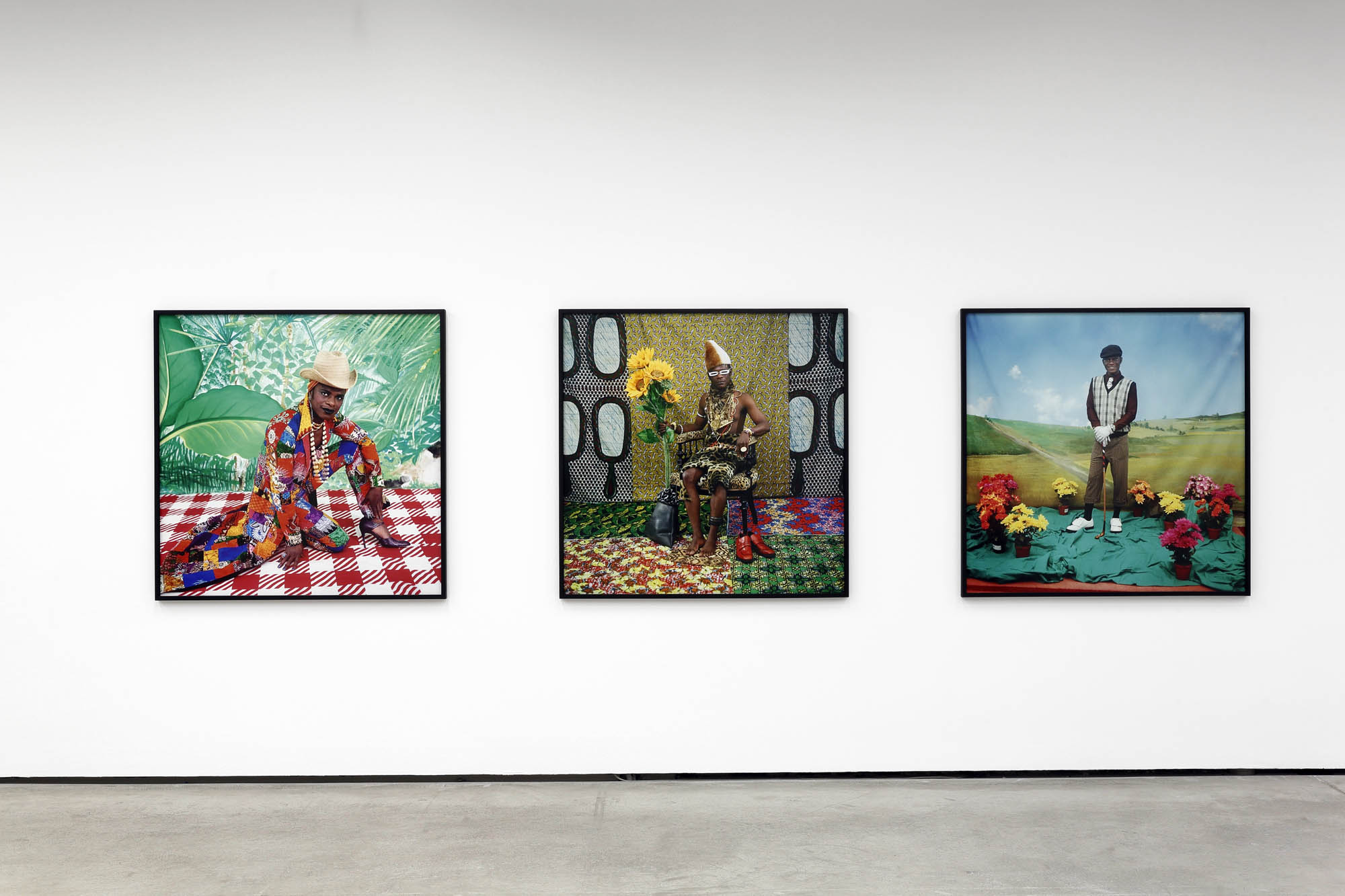
 

Installation view of the exhibition 'Samuel Fosso' at the Museum der Moderne Salzburg showing photographs from the series 'Tati'


Installation view of the exhibition Samuel Fosso at the Museum der Moderne Salzburg showing photographs from the series Tati
Photo: Rainer Iglar


Samuel Fosso (Nigerian born Cameroon, b. 1962) 'La femme américaine libérée des années 70' (The Liberated American Woman of the 1970s) 1997


Samuel Fosso (Nigerian born Cameroon, b. 1962)
La femme américaine libérée des années 70 (The Liberated American Woman of the 1970s)
1997
From the series Tati
Chromogenic print
© Samuel Fosso, courtesy of Jean Marc Patras, Paris
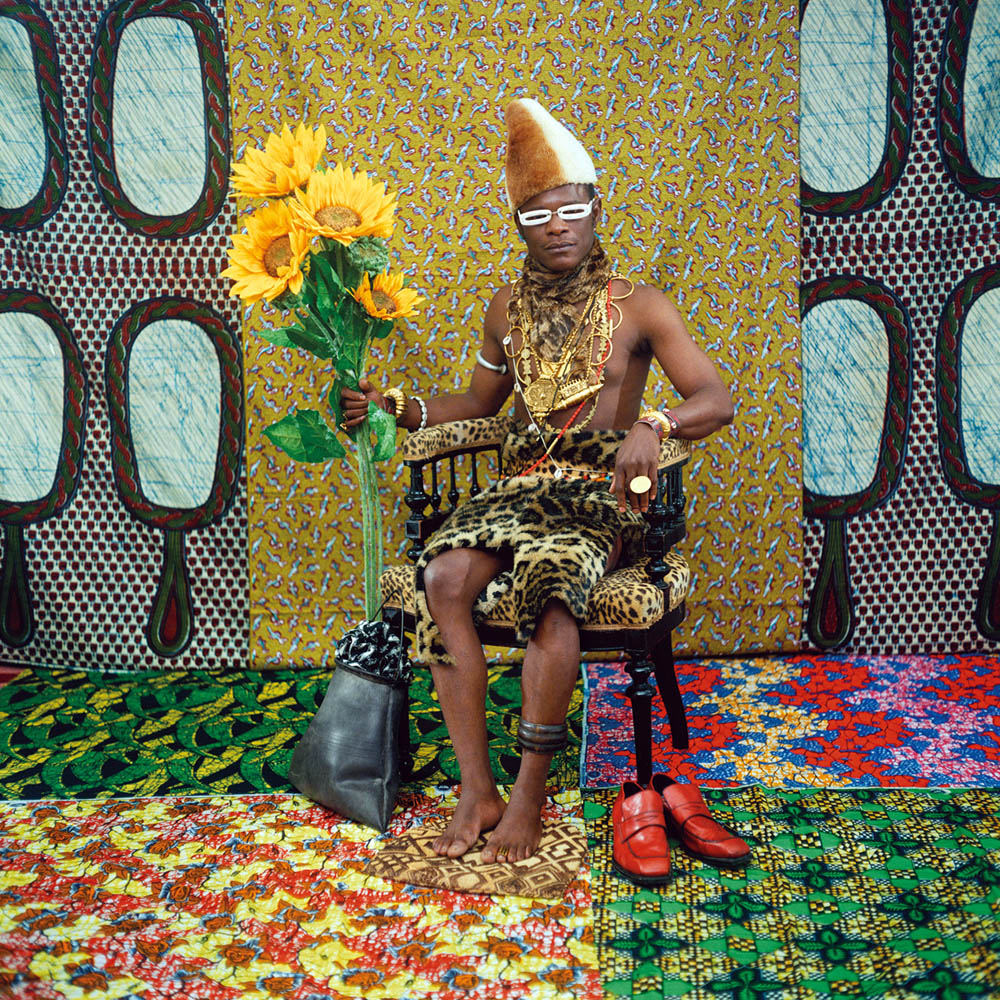
 

Samuel Fosso (Nigerian born Cameroon, b. 1962) 'The Chief (who sold Africa to the Colonists)' 1997


Samuel Fosso (Nigerian born Cameroon, b. 1962)
The Chief (who sold Africa to the Colonists)
1997
From the series Tati
Chromogenic print
© Samuel Fosso, Generali Foundation Collection – Permanent Loan to the Museum der Moderne Salzburg


Samuel Fosso (Nigerian born Cameroon, b. 1962) 'The Golfer' 1997


Samuel Fosso (Nigerian born Cameroon, b. 1962)
The Golfer
1997
From the series Tati
Chromogenic print
© Samuel Fosso, courtesy of Jean Marc Patras, Paris
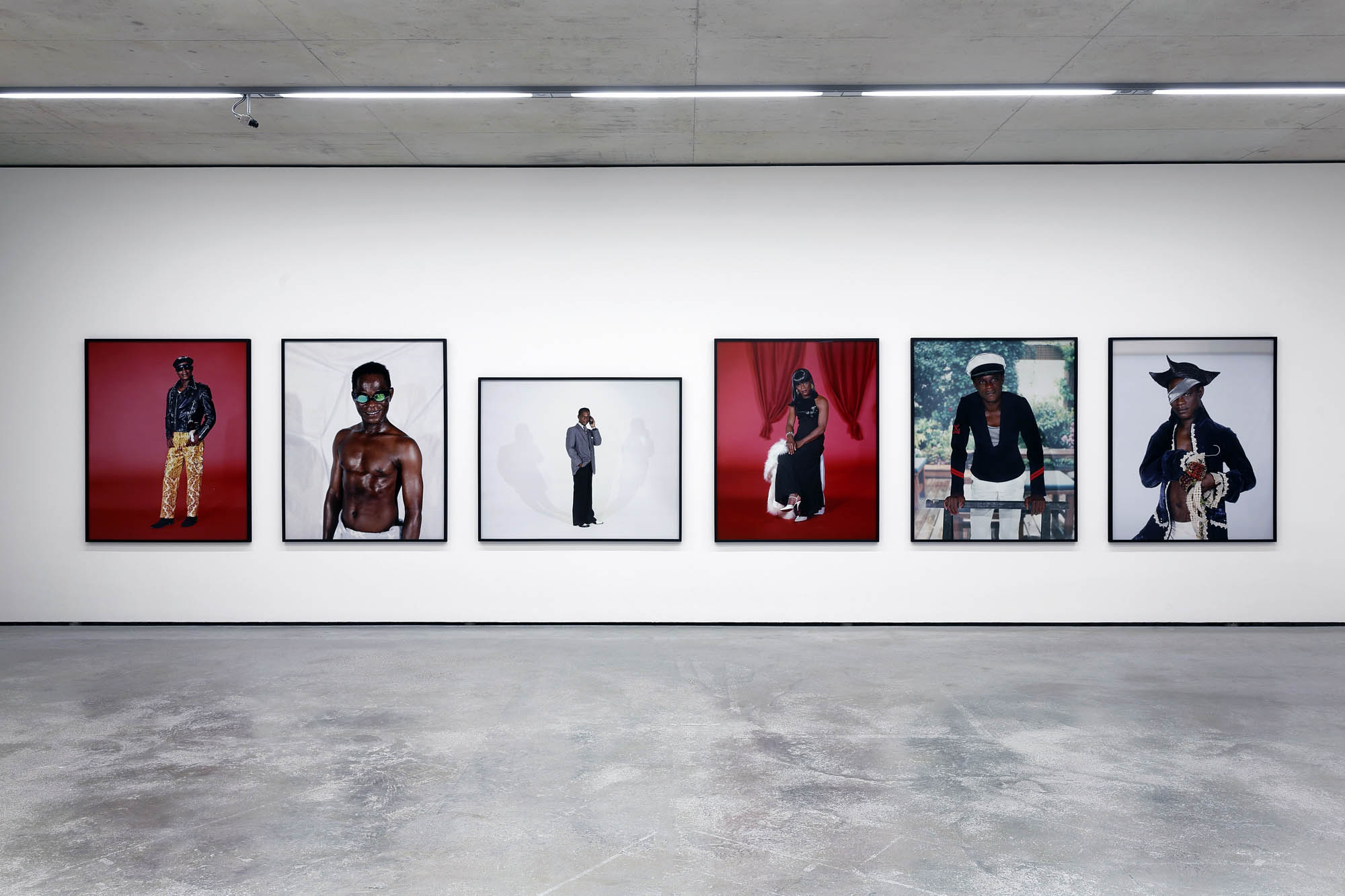
 

Installation view of the exhibition 'Samuel Fosso' at the Museum der Moderne Salzburg showing photographs from the series 'Tati'


Installation view of the exhibition Samuel Fosso at the Museum der Moderne Salzburg showing photographs from the series Tati
Photo: Rainer Iglar


Samuel Fosso (Nigerian born Cameroon, b. 1962) 'Le Rocker' (The Rocker) 1997


Samuel Fosso (Nigerian born Cameroon, b. 1962)
Le Rocker (The Rocker)
1997
From the series Tati
Chromogenic print
© Samuel Fosso, courtesy of Jean Marc Patras, Paris
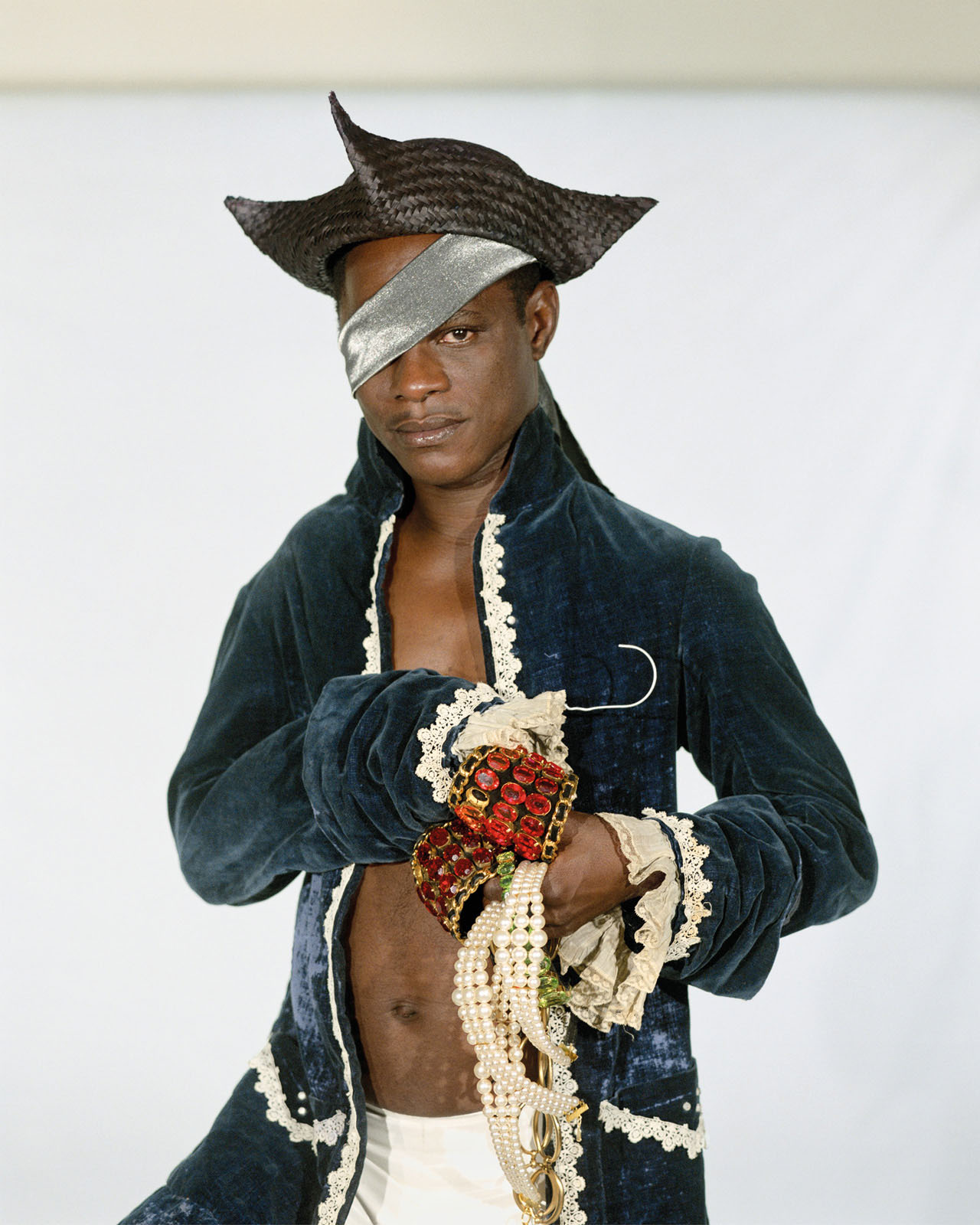
 

Samuel Fosso (Nigerian born Cameroon, b. 1962) 'Le Pirat' (The Pirate) 1997


Samuel Fosso (Nigerian born Cameroon, b. 1962)
Le Pirat (The Pirate)
1997
From the series Tati
Chromogenic print
© Samuel Fosso, courtesy of Jean Marc Patras, Paris
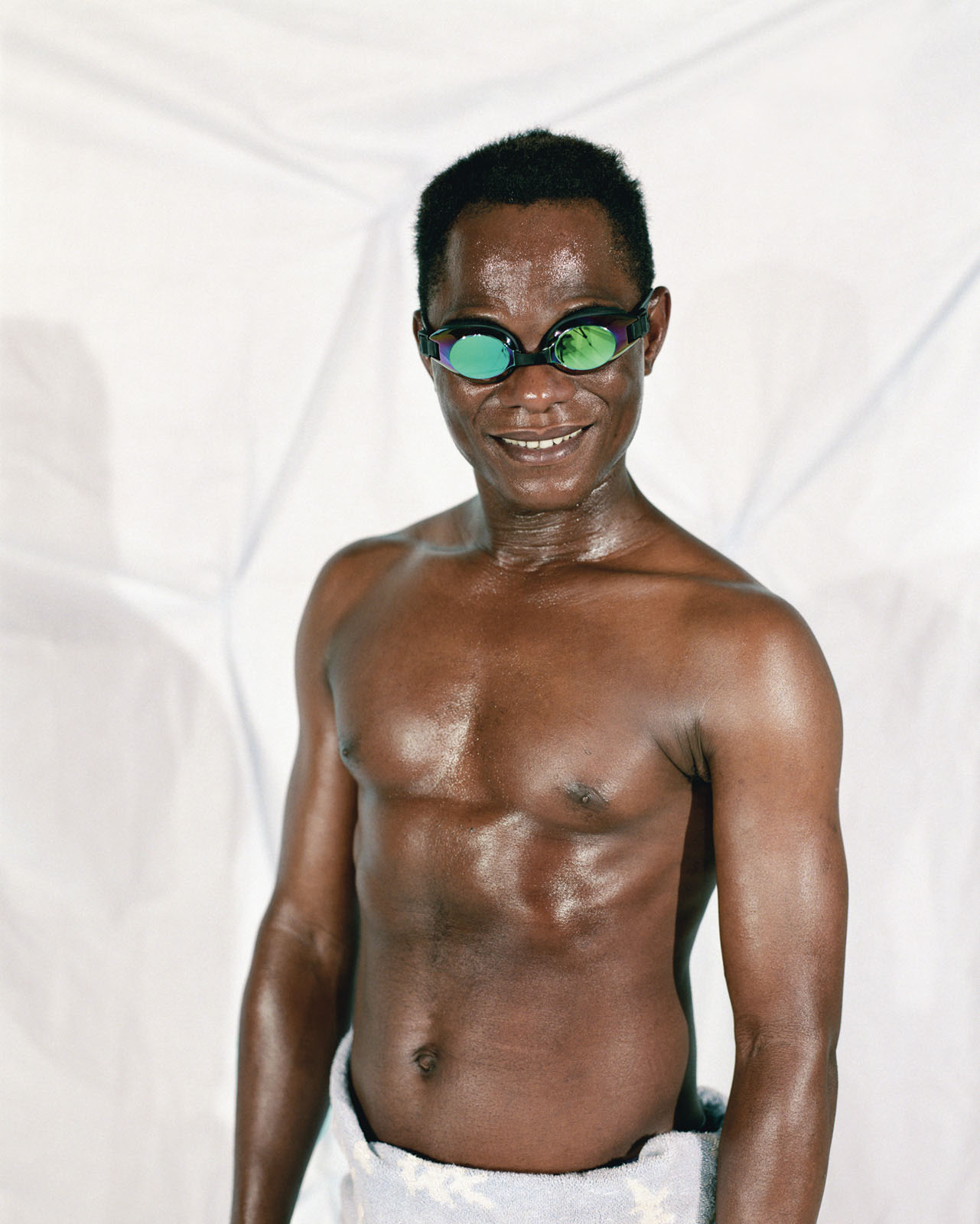
 

Samuel Fosso (Nigerian born Cameroon, b. 1962) 'Le sauveteur' (The Lifeguard) 1997


Samuel Fosso (Nigerian born Cameroon, b. 1962)
Le sauveteur (The Lifeguard)
1997
From the series Tati
Chromogenic print
© Samuel Fosso, courtesy of Jean Marc Patras, Paris
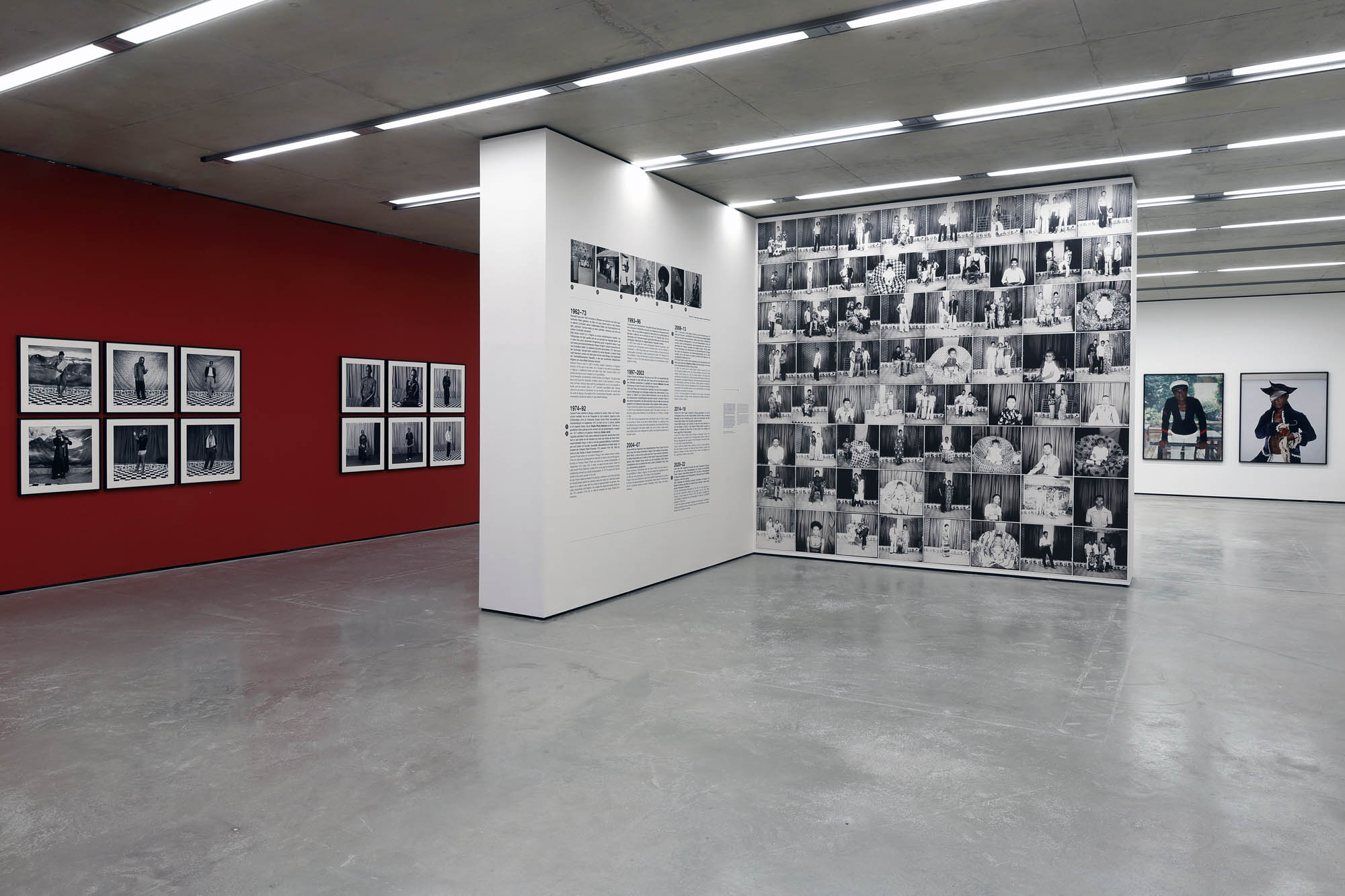
 

Installation view of the exhibition 'Samuel Fosso' at the Museum der Moderne Salzburg showing at left, photographs from the series 'Fosso Fashion', 1999; in the centre, photographs from the 'Archives from Studio Photo National'; and at right, photographs from the series 'Tati' 1997


Installation view of the exhibition Samuel Fosso at the Museum der Moderne Salzburg showing at left, photographs from the series Fosso Fashion, 1999; in the centre, photographs from the Archives from Studio Photo National; and at right, photographs from the series Tati 1997
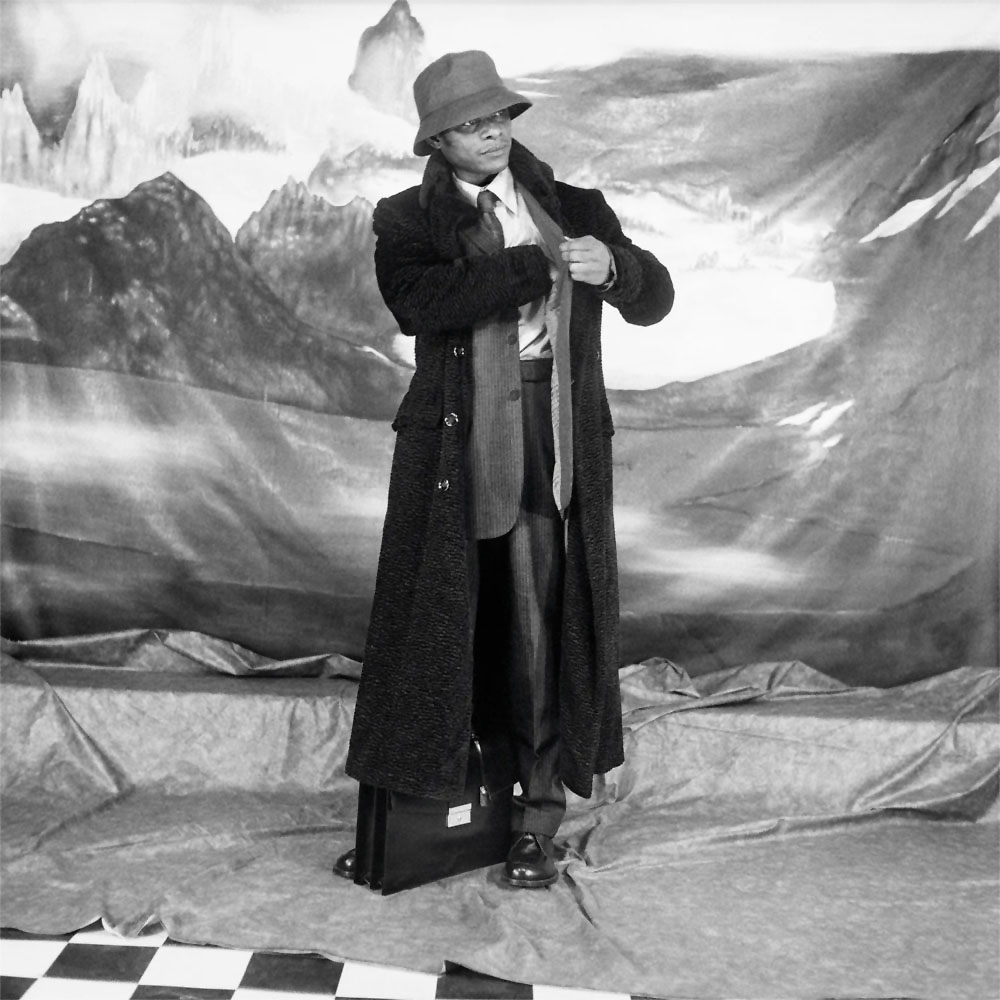
 

Samuel Fosso (Nigerian born Cameroon, b. 1962) 'Self-portrait' 1999


Samuel Fosso (Nigerian born Cameroon, b. 1962)
Self-portrait
1999
From the series Fosso Fashion, 1999
© Samuel Fosso courtesy Jean-Marc Patras / Paris
 

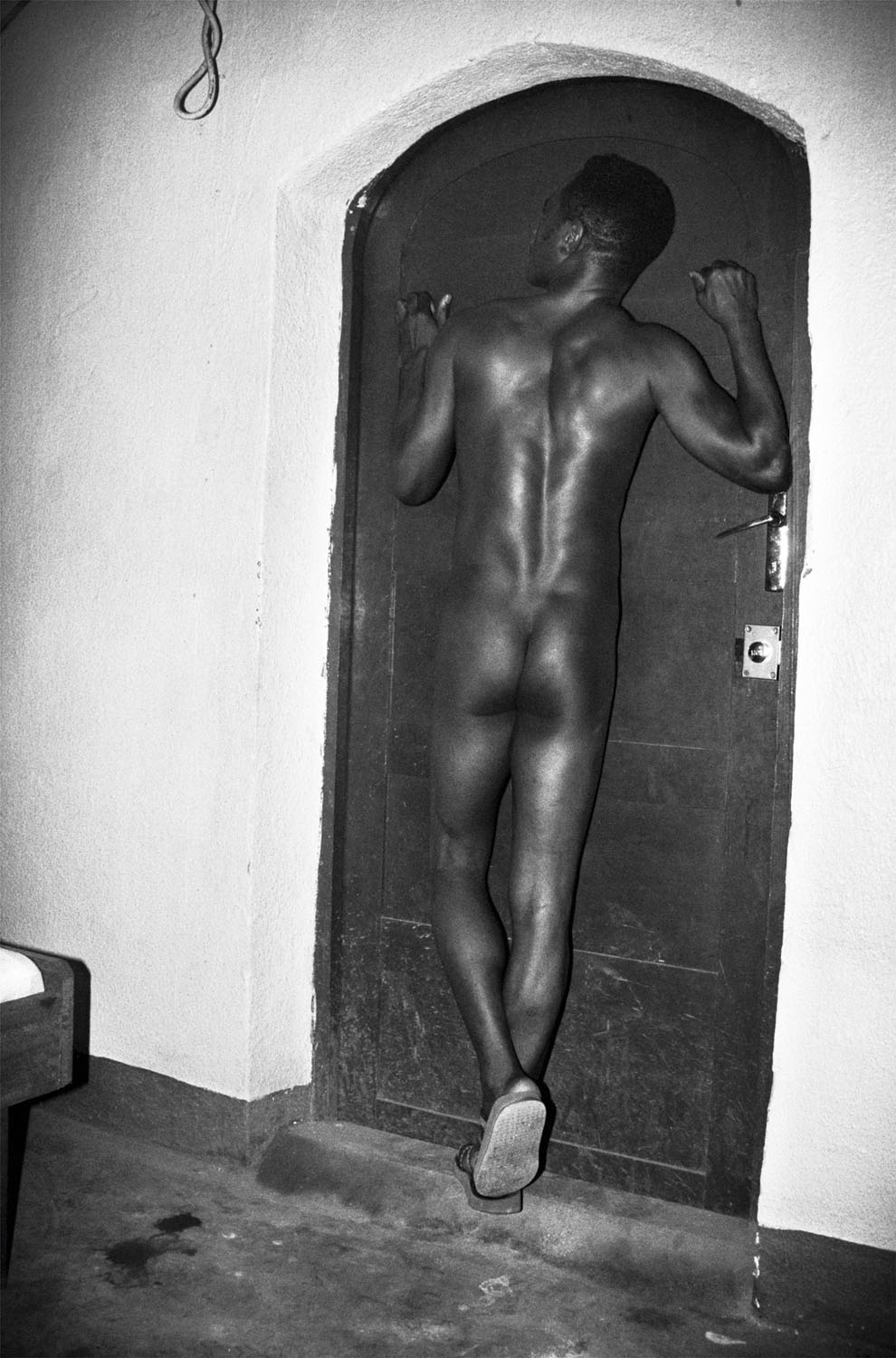
Samuel Fosso (Nigerian born Cameroon, b. 1962) 'Self-portrait' 1999


Samuel Fosso (Nigerian born Cameroon, b. 1962)
Self-portrait
1999
From the series Fosso Fashion, 1999
© Samuel Fosso courtesy Jean-Marc Patras / Paris
 

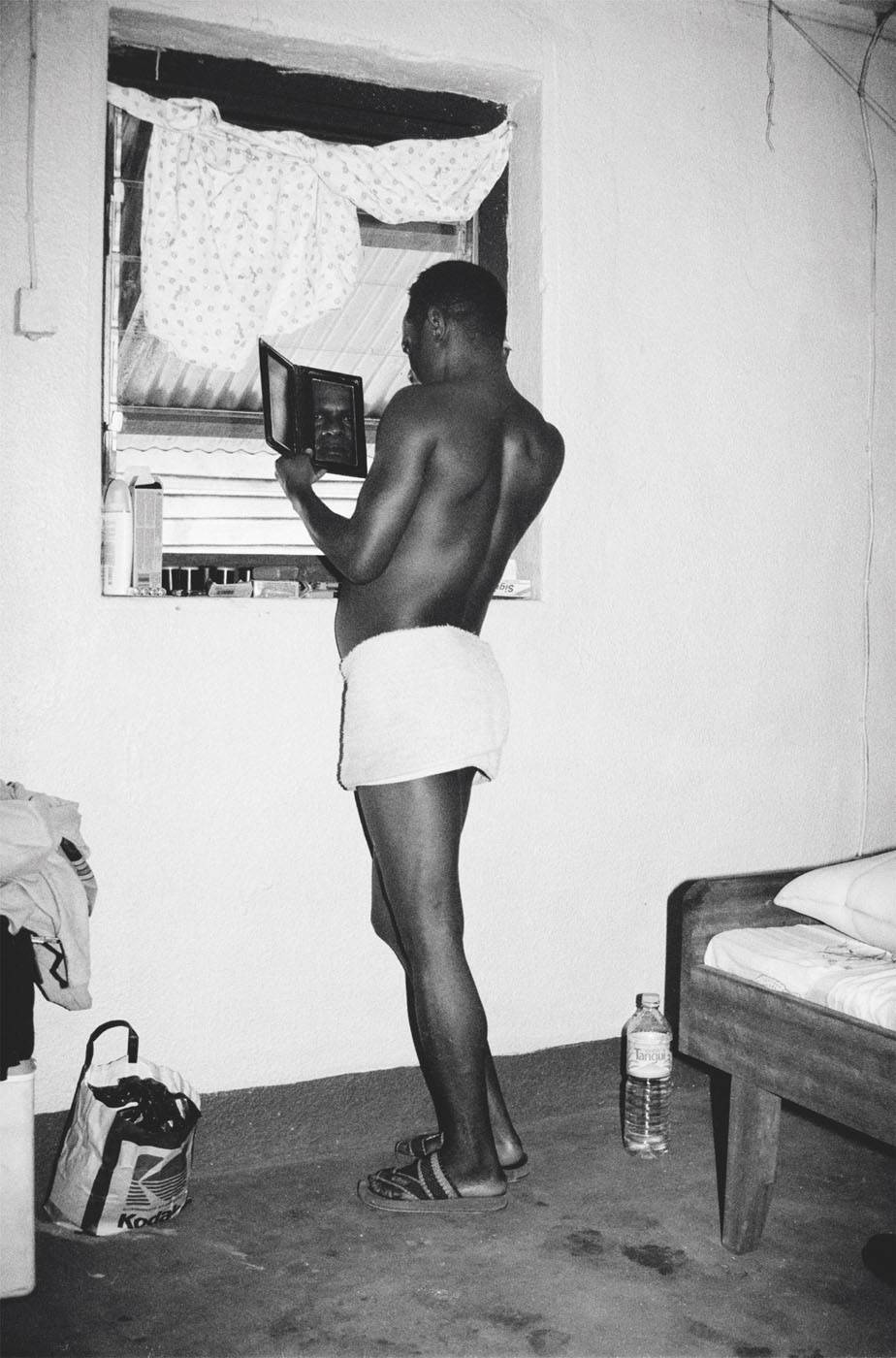
Samuel Fosso (Nigerian born Cameroon, b. 1962) 'Mémoire d'un ami' 2000


Samuel Fosso (Nigerian born Cameroon, b. 1962)
Mémoire d’un ami (Memory of a friend)
2000
Gelatin silver print
© Samuel Fosso, courtesy of Jean Marc Patras, Paris
 

Samuel Fosso (Nigerian born Cameroon, b. 1962) 'Mémoire d'un ami' 2000


Samuel Fosso (Nigerian born Cameroon, b. 1962)
Mémoire d’un ami
2000
Gelatin silver print
© Samuel Fosso, courtesy of Jean Marc Patras, Paris
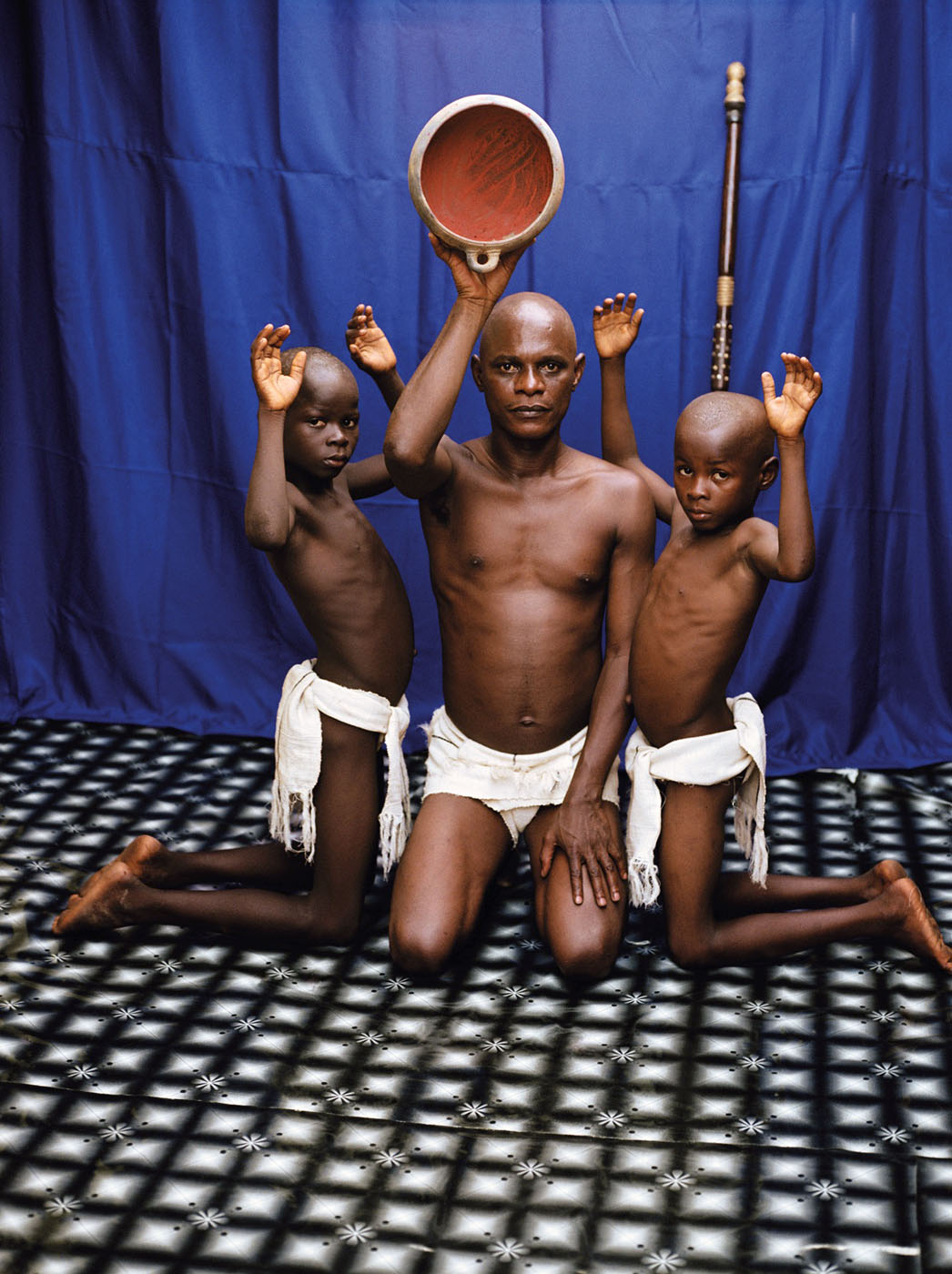
 

Samuel Fosso (Nigerian born Cameroon, b. 1962) 'Le rêve de mon grand-père' 2003


Samuel Fosso (Nigerian born Cameroon, b. 1962)
Le rêve de mon grand-père (My grandfather’s dream)
2003
Chromogenic print
© Samuel Fosso, courtesy of Jean Marc Patras, Paris
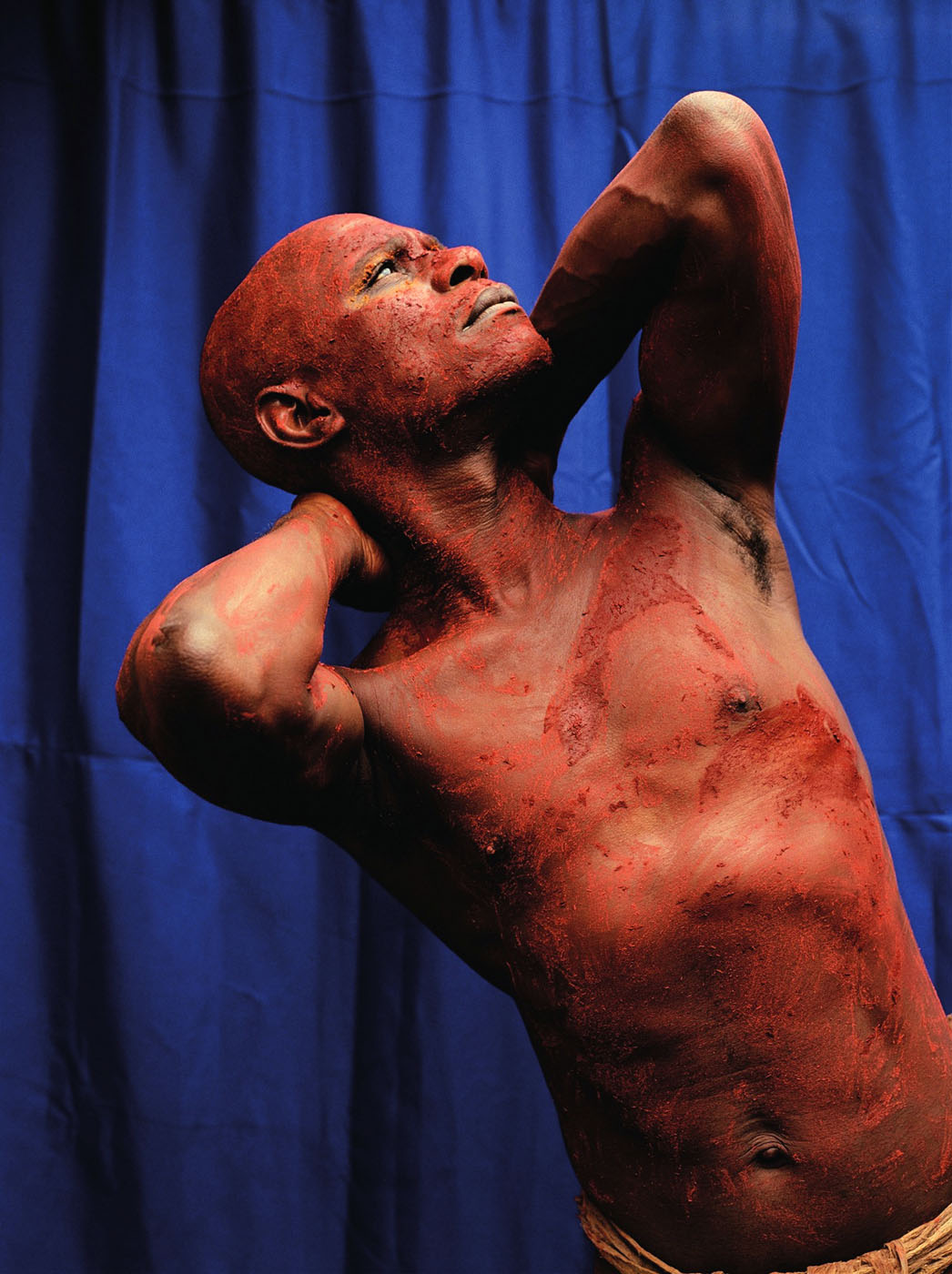
 

Samuel Fosso (Nigerian born Cameroon, b. 1962) 'Le rêve de mon grand-père' 2003


Samuel Fosso (Nigerian born Cameroon, b. 1962)
Le rêve de mon grand-père (My grandfather’s dream)
2003
Chromogenic print
© Samuel Fosso, courtesy of Jean Marc Patras, Paris
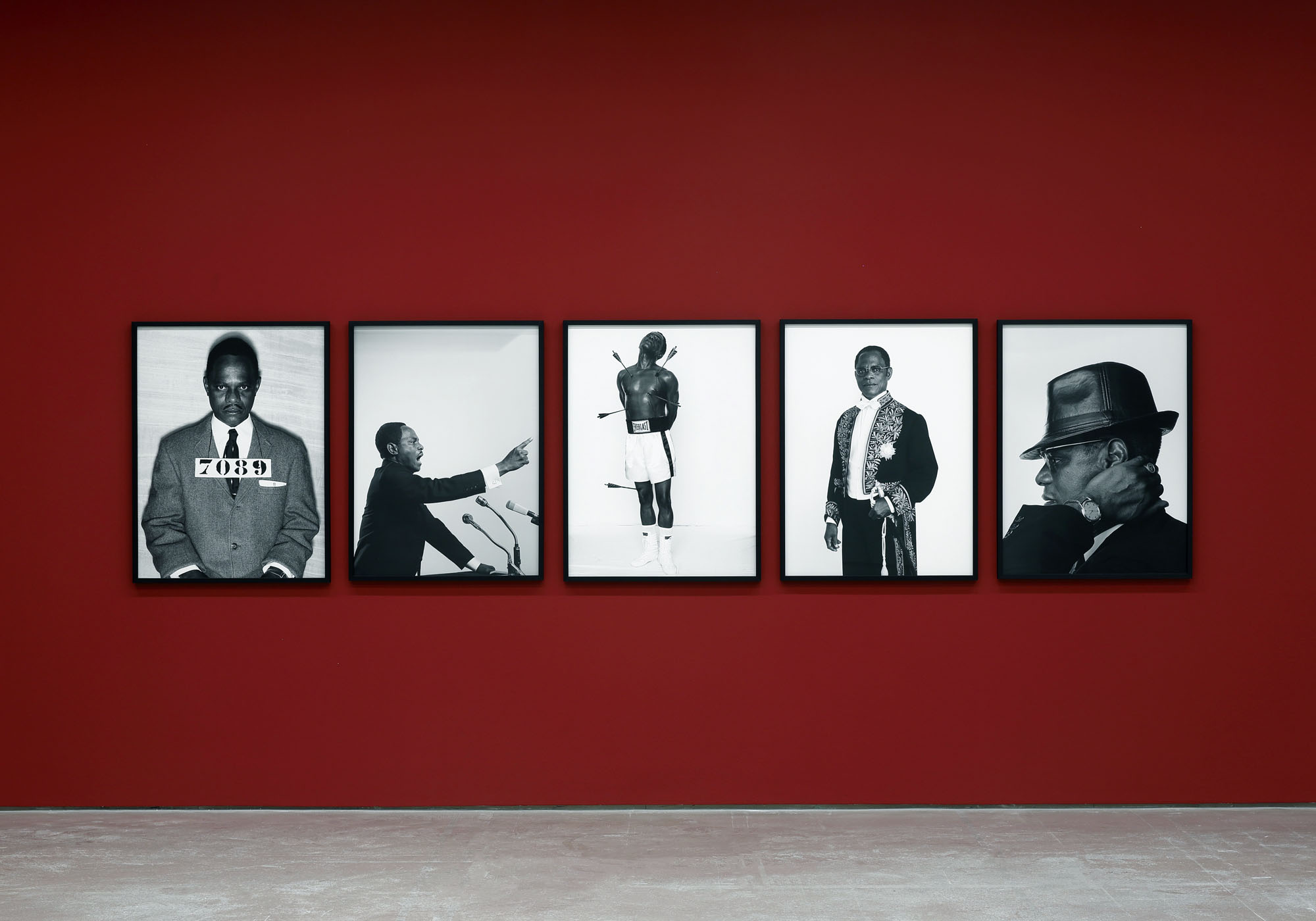
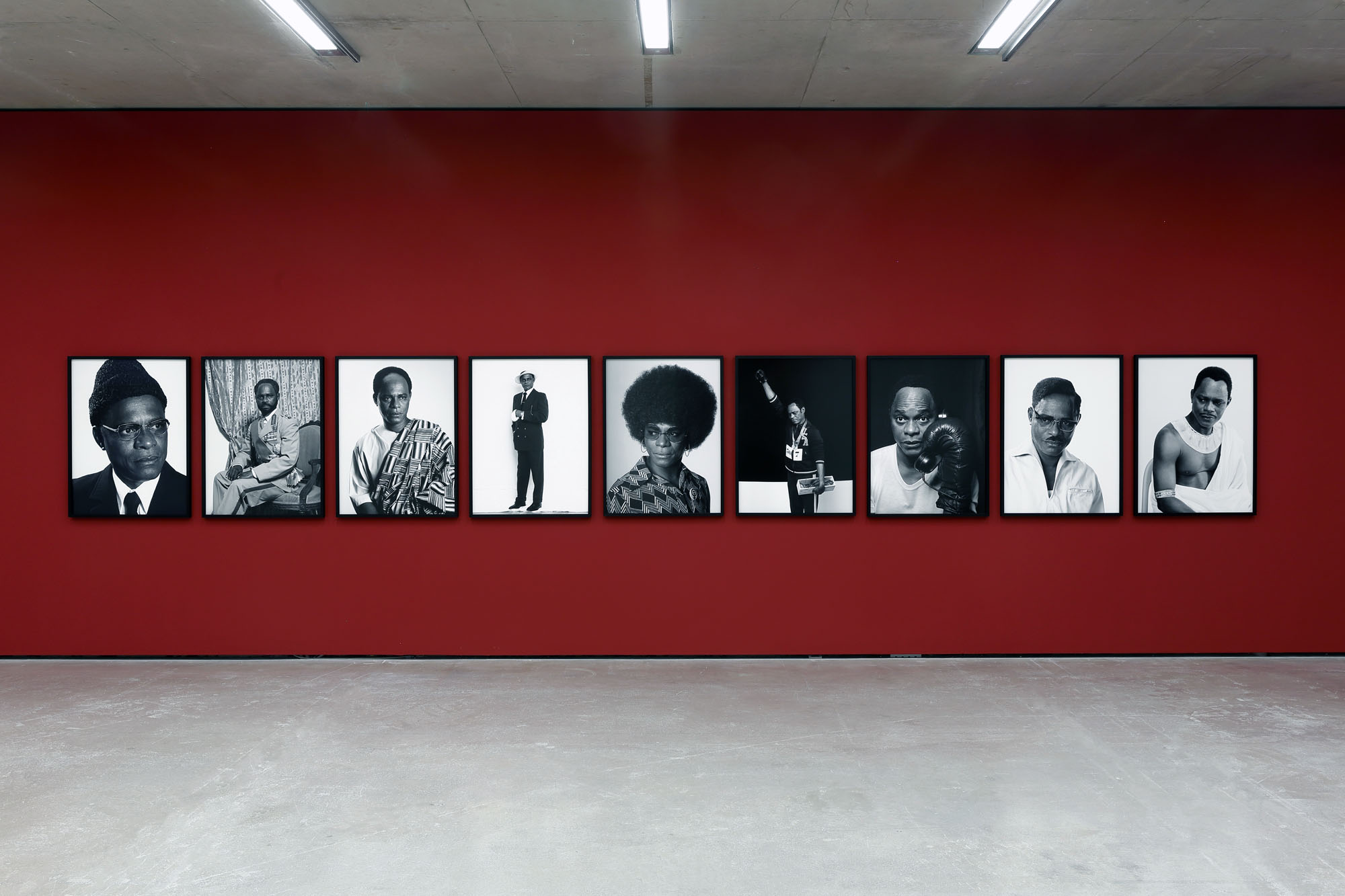
 

Installation view of the exhibition 'Samuel Fosso' at the Museum der Moderne Salzburg showing photographs from the series 'African Spirits'

Installation view of the exhibition 'Samuel Fosso' at the Museum der Moderne Salzburg showing photographs from the series 'African Spirits'


Installation views of the exhibition Samuel Fosso at the Museum der Moderne Salzburg showing photographs from the series African Spirits
Photo: Rainer Iglar
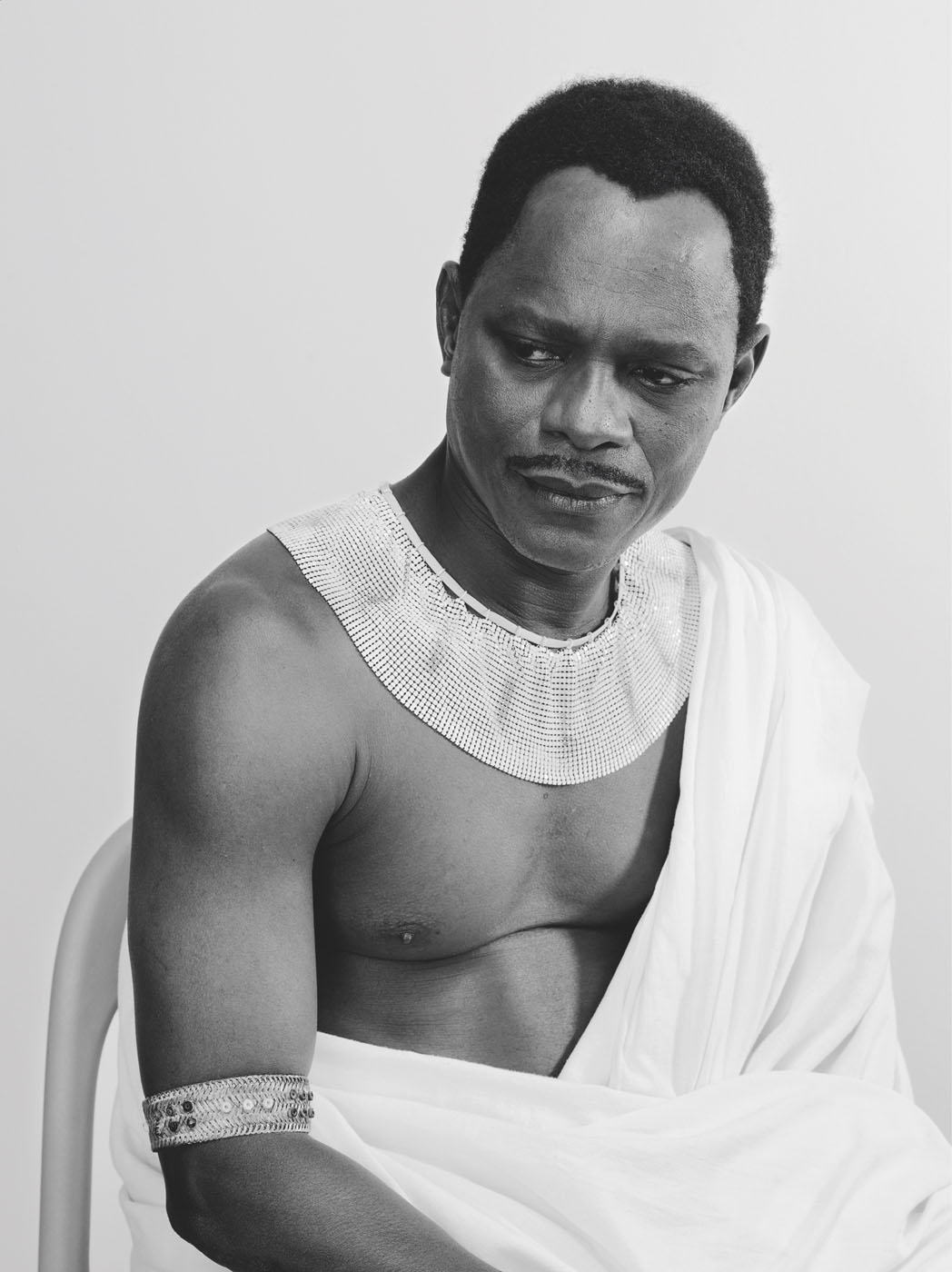
 

Samuel Fosso (Nigerian born Cameroon, b. 1962) 'African Spirits (Nelson Mandela)' 2008


Samuel Fosso (Nigerian born Cameroon, b. 1962)
African Spirits (Nelson Mandela)
2008
Gelatin silver print
© Samuel Fosso, courtesy of Jean Marc Patras, Paris


Samuel Fosso (Nigerian born Cameroon, b. 1962) 'African Spirits (Angela Davis)' 2008


Samuel Fosso (Nigerian born Cameroon, b. 1962)
African Spirits (Angela Davis)
2008
Gelatin silver print
© Samuel Fosso, courtesy of Jean Marc Patras, Paris


Samuel Fosso (Nigerian born Cameroon, b. 1962) 'Self-Portrait (Malcolm X)' 2008


Samuel Fosso (Nigerian born Cameroon, b. 1962)
African Spirits (Malcolm X)
2008
Gelatin silver print
© Samuel Fosso, courtesy of Jean Marc Patras, Paris


Samuel Fosso (Nigerian born Cameroon, b. 1962) 'Self-Portrait (Muhammad Ali)' 2008


Samuel Fosso (Nigerian born Cameroon, b. 1962)
African Spirits (Muhammad Ali)
2008
Gelatin silver print
© Samuel Fosso, courtesy of Jean Marc Patras, Paris
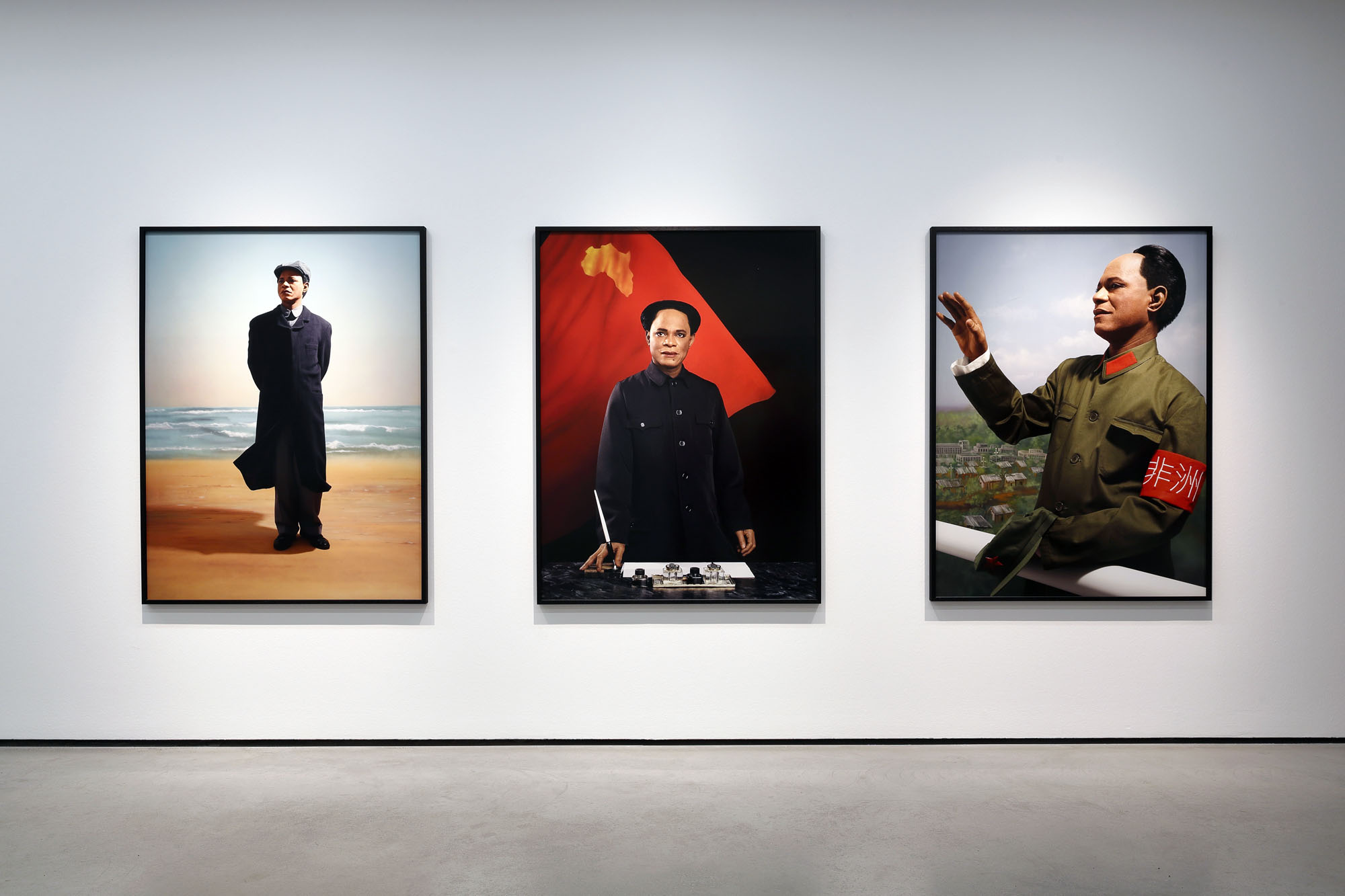
 

Installation view of the exhibition 'Samuel Fosso' at the Museum der Moderne Salzburg showing photographs from the series 'Emperor of Africa'


Installation view of the exhibition Samuel Fosso at the Museum der Moderne Salzburg showing photographs from the series Emperor of Africa
Photo: Rainer Iglar


Samuel Fosso (Nigerian born Cameroon, b. 1962) 'Emperor of Africa' 2013


Samuel Fosso (Nigerian born Cameroon, b. 1962)
Emperor of Africa
2013
From the series Emperor of Africa
Chromogenic print
© Samuel Fosso, courtesy of Jean Marc Patras, Paris
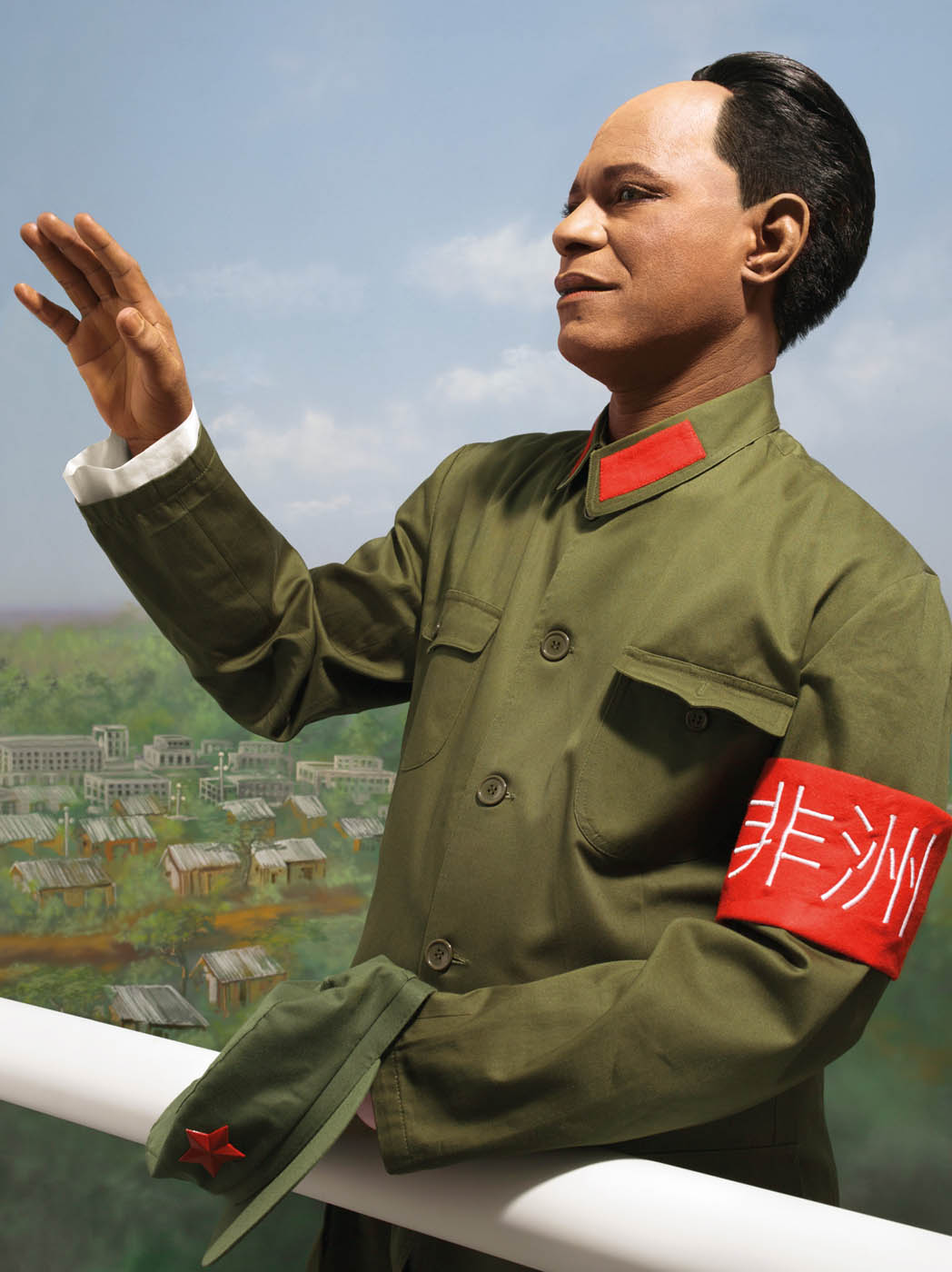
 

Samuel Fosso (Nigerian born Cameroon, b. 1962) 'Emperor of Africa' 2013


Samuel Fosso (Nigerian born Cameroon, b. 1962)
Emperor of Africa
2013
From the series Emperor of Africa
Chromogenic print
© Samuel Fosso, courtesy of Jean Marc Patras, Paris
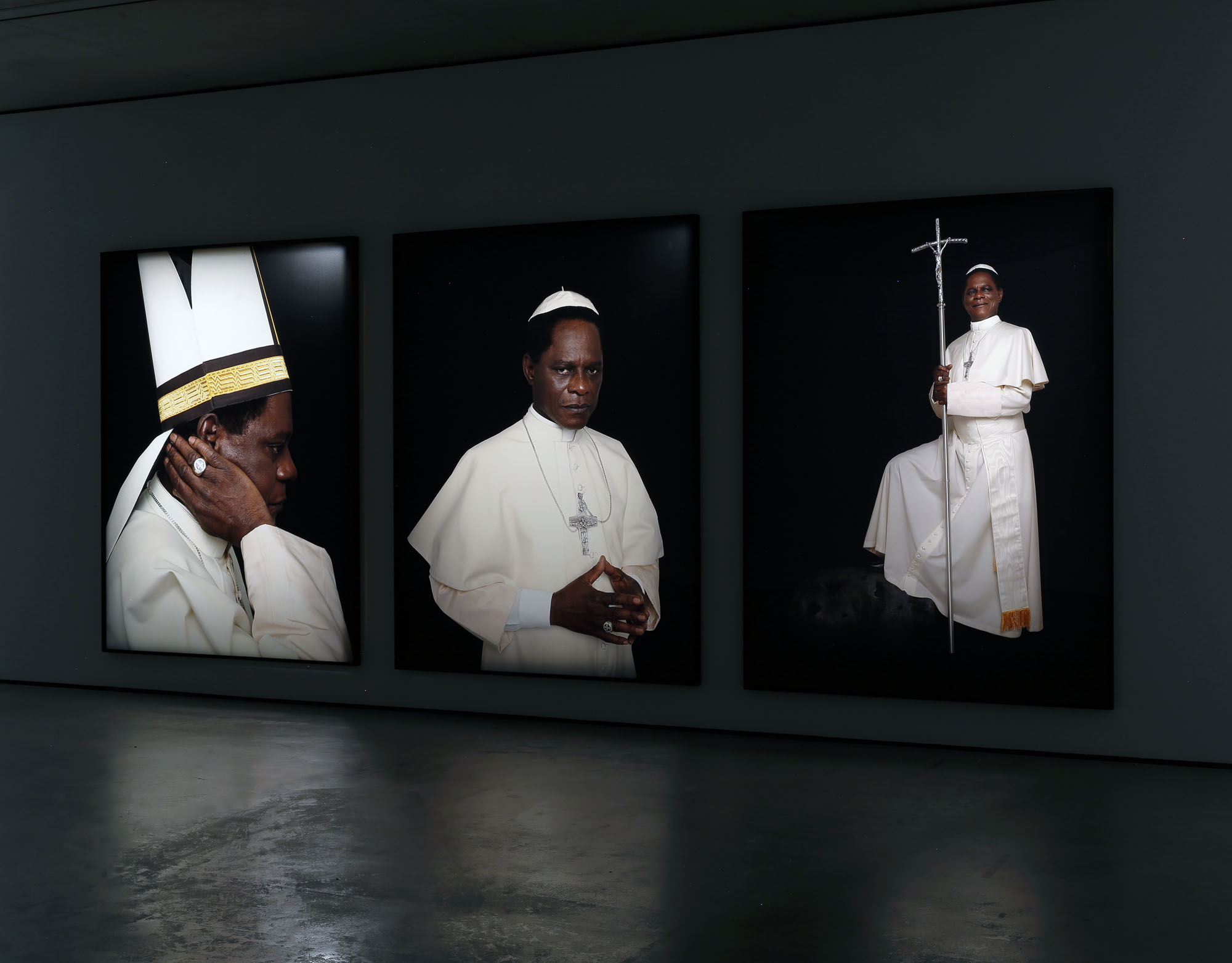
 

Installation view of the exhibition 'Samuel Fosso' at the Museum der Moderne Salzburg showing photographs from the series 'Black Pope'


Installation view of the exhibition Samuel Fosso at the Museum der Moderne Salzburg showing photographs from the series Black Pope
Photo: Rainer Iglar
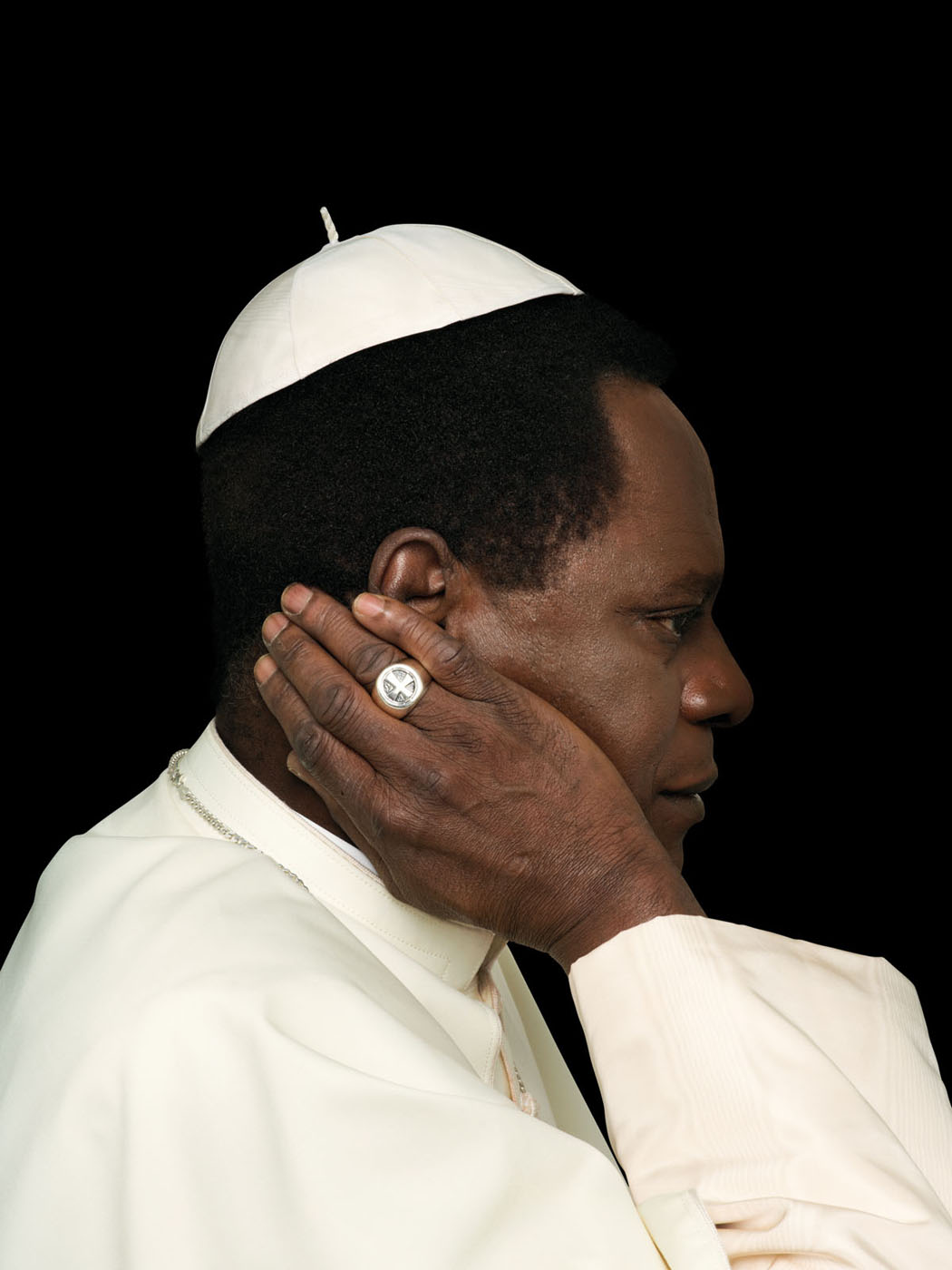
 

Samuel Fosso (Nigerian born Cameroon, b. 1962) 'Black Pope' 2017


Samuel Fosso (Nigerian born Cameroon, b. 1962)
Black Pope
2017
Chromogenic print
© Samuel Fosso, courtesy of Jean Marc Patras, Paris
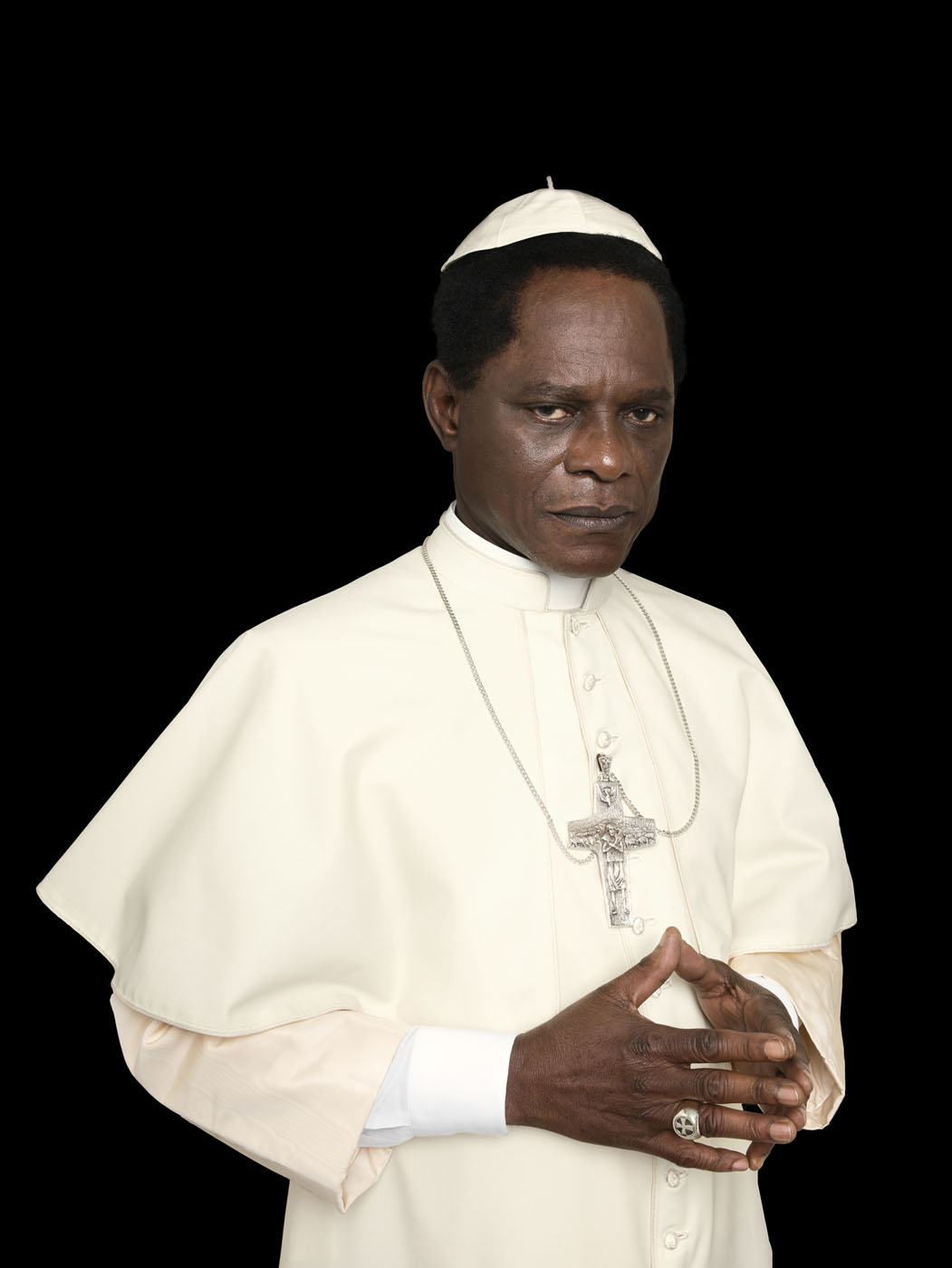
 

Samuel Fosso (Nigerian born Cameroon, b. 1962) 'Black Pope' 2017


Samuel Fosso (Nigerian born Cameroon, b. 1962)
Black Pope
2017
Chromogenic print
© Samuel Fosso, courtesy of Jean Marc Patras, Paris


Museum der Moderne Salzburg
Mönchsberg 32
5020 Salzburg, Austria
Phone: +43 662 842220

Opening hours:
Tuesday – Sunday: 10am – 6pm
Wednesday: 10am – 8pm
Monday: closed

Museum der Moderne Salzburg website

LIKE ART BLART ON FACEBOOK

Back to top

Exhibition: ‘Yasumasa Morimura: Theater of the Self’ at The Andy Warhol Museum, Pittsburgh, Pennsylvania

Exhibition dates: 6th October 2013 – 12th January 2014


Yasumasa Morimura (Japanese, b. 1951) 'To My Little Sister: for Cindy Sherman' 1998


Yasumasa Morimura (Japanese, b. 1951)
To My Little Sister: for Cindy Sherman
1998
Ilfochrome print mounted on aluminium
55 x 31 inches
Private Collection, New York


Cindy Sherman, eat your actress out…

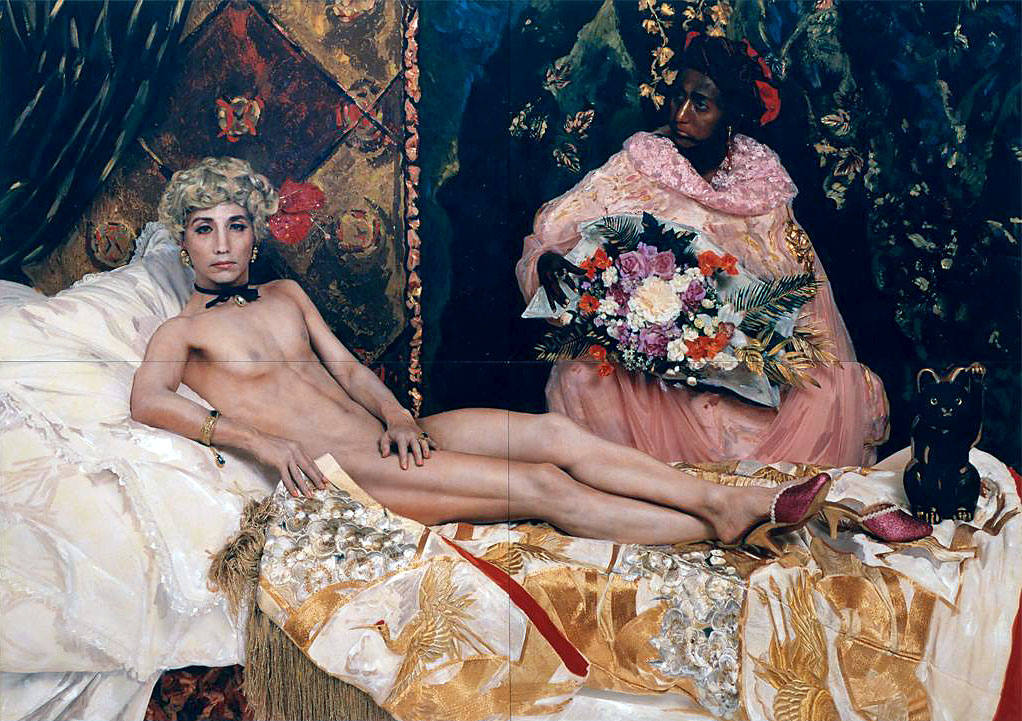
A fascinating, erudite analysis of the difference between Edouard Manet’s Olympia and Yasumasa Morimura’s Futago can be found on the seemingly anonymous Hoegen: Thoughts About Gender, Sex And Sexuality web page (excerpt below). If you can find an author’s name it would be appreciated!

Dr Marcus Bunyan


Many thankx to The Andy Warhol Museum for allowing me to publish the photographs in the posting. Please click on the photographs for a larger version of the image.


Yasumasa Morimura (Japanese, b. 1951) 'Portrait (Futago)' 1988


Yasumasa Morimura (Japanese, b. 1951)
Portrait (Futago)
1988
Colour photograph
82 3/4 x 118 inches
Carnegie Museum of Art, Pittsburgh; A.W. Mellon Acquisition Endowment Fund, 92.108


In Anne D’Alleva’s article concerning reception theory, she draws upon several scholars of art and literature to discuss the importance of not only the artist, but also of the viewer. She discusses the symbiotic relationship that must exist and the merits of the ideal viewer. The two artworks that she mentions to support her arguments are Edouard Manet’s Olympia and Ysumasa Morimura’s Futago. These two artworks are prime examples of works that establish an ideal viewer, or viewers, as well as a mirror stage. These two theories assist the art historian to go beyond the biography of the artist and question the relationship of the image and it’s audience.

Just as Wolfgang Iser believes there is an implied reader for literature, one must believe that there is an implied viewer of Edouard Manet’s Olympia and a different implied viewer for Yasumasa Morimura’s Futago (114). In the case of Manet’s Olympia, one might believe the ideal implied viewer is a white and wealthy man of the upper class. This ideal viewer would appreciate, or maybe question, the bold gaze of Olympia, and possibly even recognize her as the popular courtesan (116)…

The ideal viewer for Morimura’s photograph is not as easy to define.  One might make the presumption that Morimura desires the same ideal viewer of Manet, so that they can simply see the work differently. Also, one could assume that he intended his painting to be viewed by Asian, upper class homosexuals who have seen Manet’s Olymia and want to connect on a more personal level. Either of these audiences may be ideal.

According to Ernest Kris, art “requires the participation of both artist and spectator.” (110) Therefore, there must be something that establishes a relationship of the ideal viewer and the photograph of Yasumasa Morimura. Since it is a photograph, and not a painting, there is a humanistic connection that is not present in Manet’s Olympia that ultimately assists the creation of an image-audience relationship. The gaze is not a representation of a gaze but the actual gaze of Morimura establishing a deeper relationship with the ideal viewer of the artist and subject. Since the ideal audience is harder to define for Morimura’s photograph, the establishing element of the relationship between the ideal viewer and the artwork are also hard to define. If the ideal viewer is exactly that of Manet’s: a white, wealthy, upper-class man, then the “shock factor” of the image is multiplied. The ideal viewer has just begun to accept this shocking image of a nude female daring to look at her viewer when Morimura decided to change the race, gender, and possibly the sexual orientation of the subject of the artwork. This assumption, however, provides that the viewer come with “pre-understanding” as described by Roman Ingarden (113); in this case, a memory of Manet’s Olympia. If one assumes that this image is meant for the common man, this relationship is established through the use of photography, the universal and common way to capture images. If one assumes the connection between the inclusive group of Asian, male, homosexuals, then the establishment of the relationship is directly associated with the subject and artist…

The reception theory of Ernest Gombrich states the importance of perception is clearly prevalent within these works (113). The artists have taken their own interpretations of these works, but one must value the fact that their ideal viewers can be similar and have similar perceptions. The differences of their individual perceptions provide for the differences between their viewers. However, the perception of the viewer, whether ideal or not, is the ultimate reflection of the artwork in the culture.

Clearly, the mirror stage is present in these two images. The viewer does not seem to view their self in the artwork directly, but they do feel a connection to the work. Morimura most definitely used Manet’s Olympia as a basis image for his Futago. Although some details are incongruous, the overall effect of Futago is a mirrored image of the whole self of Olympia. There are several differences in these paintings that one may attribute to race and gender that affect the dynamics of the mirror effect. Most obviously, Morimura, who was his own subject in his photographic rendition of Manet’s Olympia, is a man. This affects the mirror image of the body. He is leaner, has no curves and is more muscular. Also, his race affects skin color as well as the some of the details of the picture. He has clearly chosen a kimono to replace the intricate shawl, and a seated, waving cat to replace standing one – both of these depictions have significance in Asian culture (116). Cultural implications are evident.

Overall, these two images reflect Anne D’Avelia’s idea that that two similar artworks can have two different implied viewers. Also, they can mirror each other in certain respects, but diverge in others. These help reinforce D’Avelia notes that gender, expression, details, and race, all play roles in developing the image-audience relationship. They also reflect our class work exploring the troubling of gender norms and the gaze.

Anonymous. “Olympia vs. Futago,” in the article ‘Hoegen: Thoughts about Gender, Sex and Sexuality’ on the Fairfield University website [Online] Cited 19/01/2021


Yasumasa Morimura (Japanese, b. 1951) 'Doublonnage (Marcel)' 1988


Yasumasa Morimura (Japanese, b. 1951)
Doublonnage (Marcel)
1988
Colour photograph
59 x 47 1/4 inches
Private Collection, New York


Art History

Yasumasa Morimura’s reprisals of European masterpieces are, at once, acts of homage and parody. Painstakingly realised, his photographic reconstructions of paintings by Leonardo da Vinci, Johannes Vermeer, Rembrandt van Rijn and Edouard Manet, among others, bring compositional questions together with those pertaining to race, gender and sexuality. In doing so, they reveal both the aesthetics and the politics embedded in the art historical canon.

Actresses

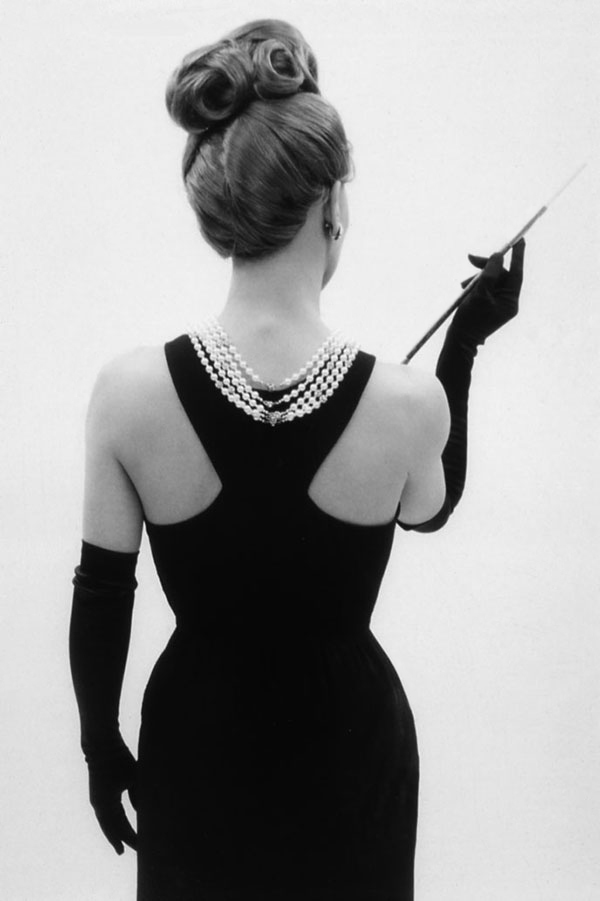
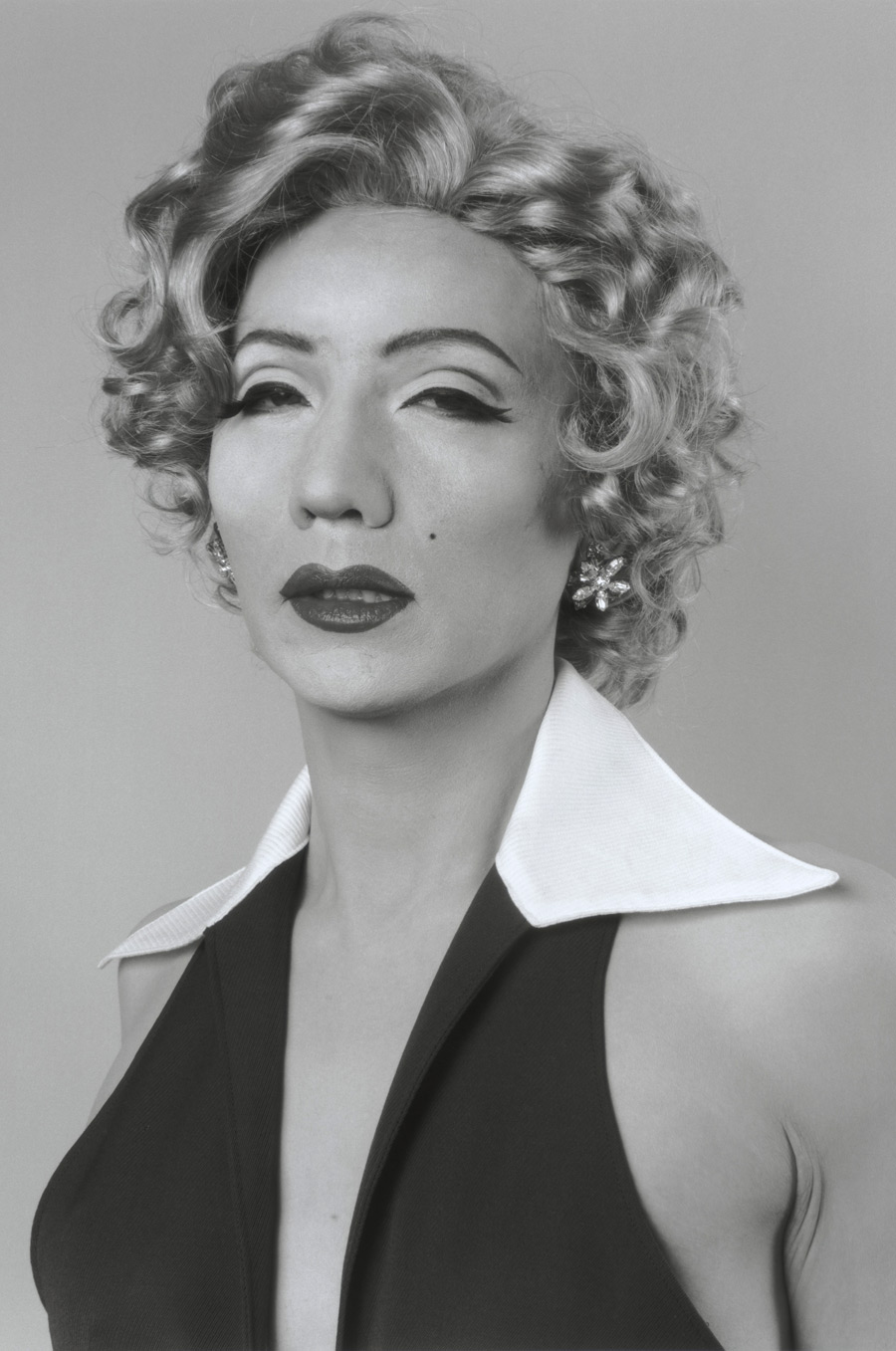
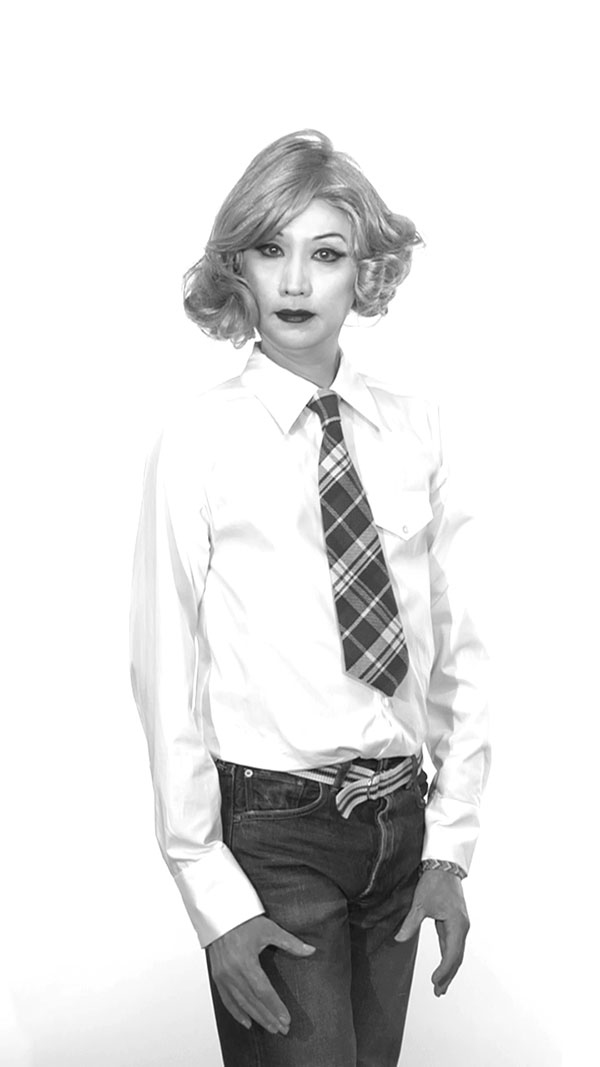
This section of the exhibition focuses on Morimura’s restaging of scenes from award winning films featuring Marlene Dietrich, Audrey Hepburn, Liza Minnelli, Jodie Foster and many others. It is notable that the artist’s impersonations are not anonymous but well-known stars, archetypes of Hollywood’s leading ladies. As stated in their titles, each work is a self-portrait and together they propose a range of possibilities for the artist’s own identity. Morimura has stated, “My own self-definition includes this entire zone of possibilities. When I apply this way of thinking to making a self-portrait, it becomes what I call an ‘open self-portrait.’


Yasumasa Morimura (Japanese, b. 1951) 'M's Self-portrait No.15' 1995


Yasumasa Morimura (Japanese, b. 1951)
M’s Self-portrait No.15
1995
Gelatin silver print
18 1/2 x 21 1/4 inches (framed)
Collection of the artist, on deposit at the Toyota Municipal Museum of Art


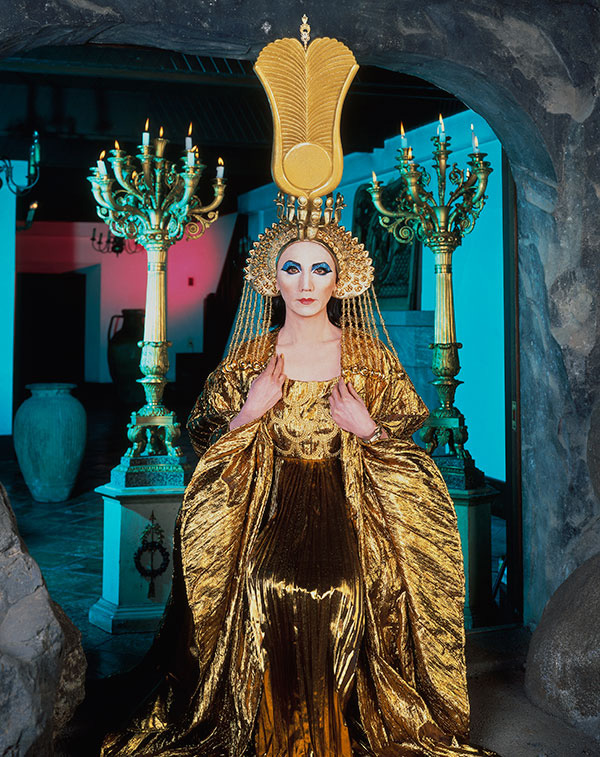
Yasumasa Morimura (Japanese, b. 1951) 'Self-portrait (Actress)/after Elizabeth Taylor 1' 1996


Yasumasa Morimura (Japanese, b. 1951)
Self-portrait (Actress)/after Elizabeth Taylor 1
1996
Ilfochrome print mounted to plexiglass
47 1/4 x 37 1/4 inches
Courtesy of the artist and Luhring Augustine, New York


Yasumasa Morimura (Japanese, b. 1951) 'M's self-portrait No. 56/B 9 (or "as Marilyn Monroe")' 1996


Yasumasa Morimura (Japanese, b. 1951)
M’s self-portrait No. 56/B 9 (or “as Marilyn Monroe”)
1996
Gelatin silver print
Edition 6 of 10
11 3/4 x 14 inches


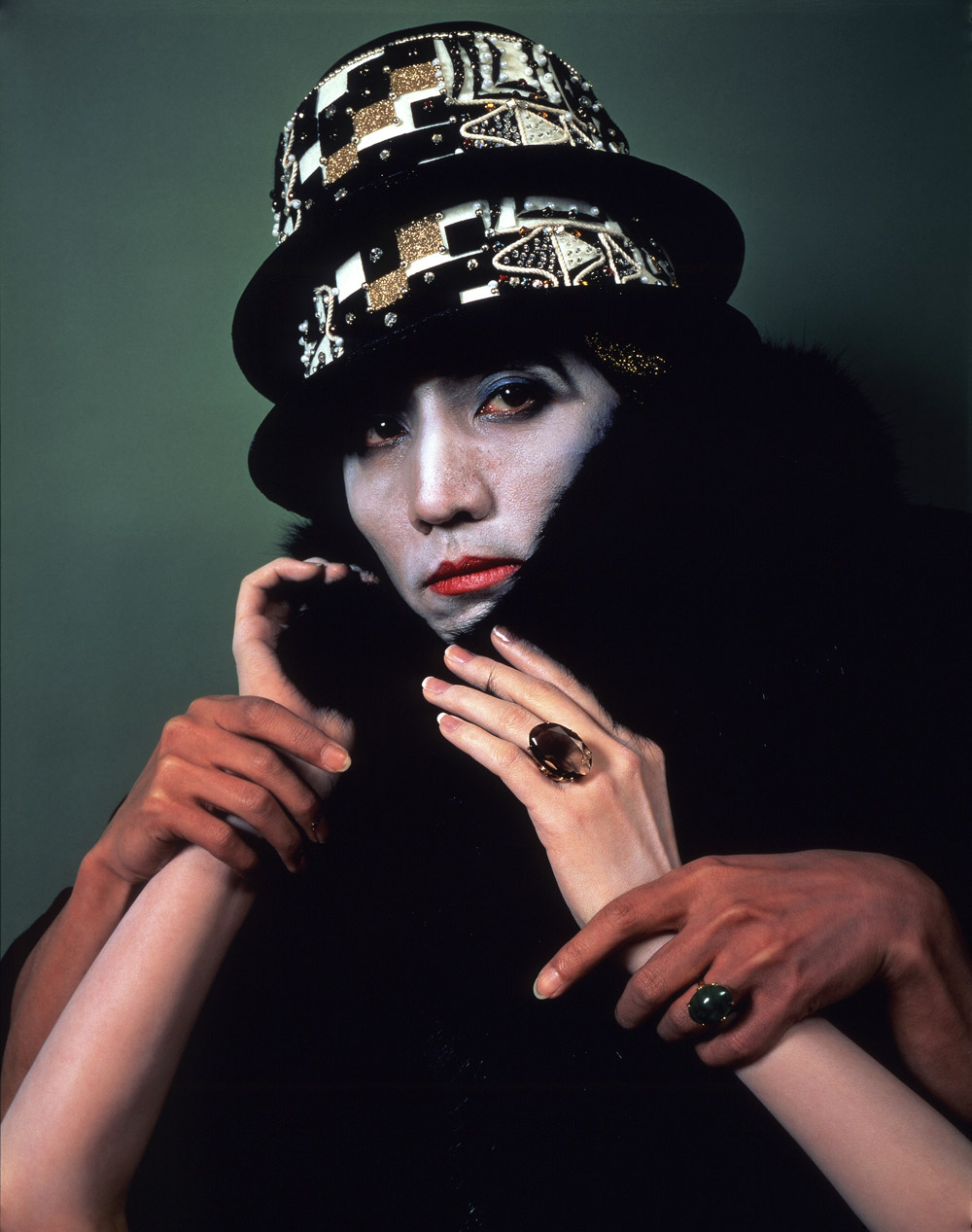
For more than three decades Japanese artist Yasumasa Morimura has forged an extraordinary body of work that reimagines the visual culture of the West, as well as that of his native Japan. Whether portraying Elizabeth Taylor, Mao Zedong or Andy Warhol, Morimura’s iconic images examine the practice of photography while also claiming a space for the self in historical narratives. The artist inserts himself as the subject(s) in all of his works. The exhibition, Yasumasa Morimura: Theater of the Self, is a retrospective of Morimura’s 30 year career covering his fascination with the self-portrait, celebrity, gay and transgendered life, art history, and popular culture align him closely with the work of Andy Warhol. Morimura has described himself as Warhol’s “conceptual son.”

Developed in close collaboration with the artist, the exhibition focuses on three important bodies of work: his celebrated “Art History” photographs in which he painstakingly restages European masterpieces; “Requiem” in which Morimura recreates iconic photographs relating to political and cultural life; and the “Actors” series in which he assumes the personae of Hollywood luminaries such as Marilyn Monroe, Elvis Presley and Audrey Hepburn.

Milton Fine Curator of Art, Nicholas Chambers states, “Including almost 100 images, many of which have never before been seen in the United States, Theater of the Self offers audiences an in-depth view of Morimura’s work. His pictures reveal a sophisticated form of engagement with the worlds of celebrity, art and the mass media that is at once celebration and critique, homage and parody, and has the effect of questioning the nature of the individual’s relationship to culture-at-large.””

Press release from The Warhol website


Requiem

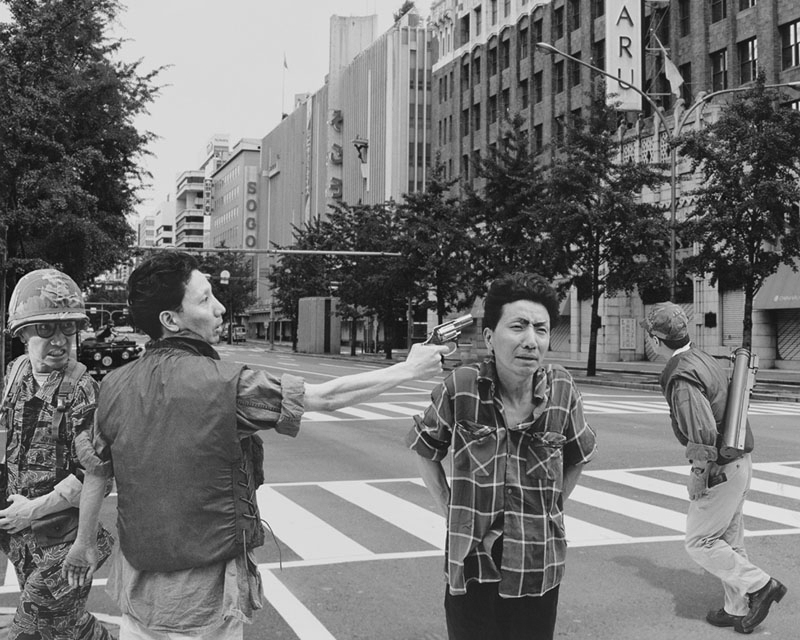
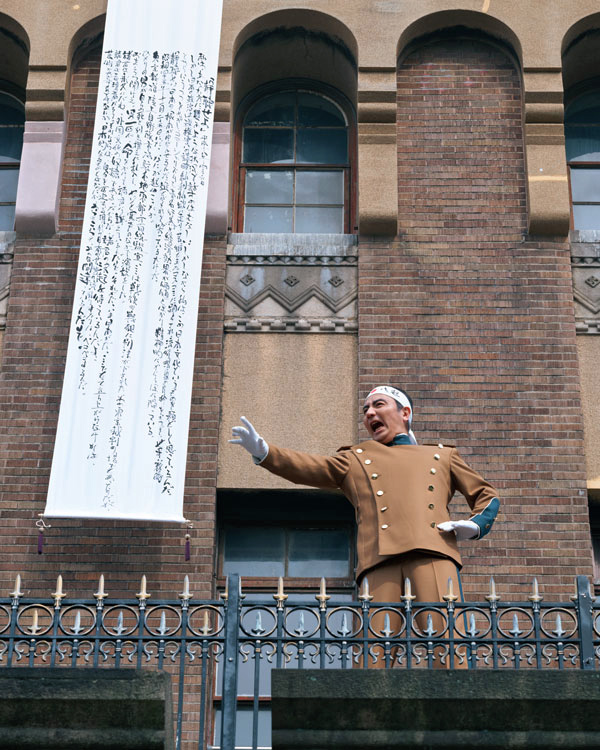
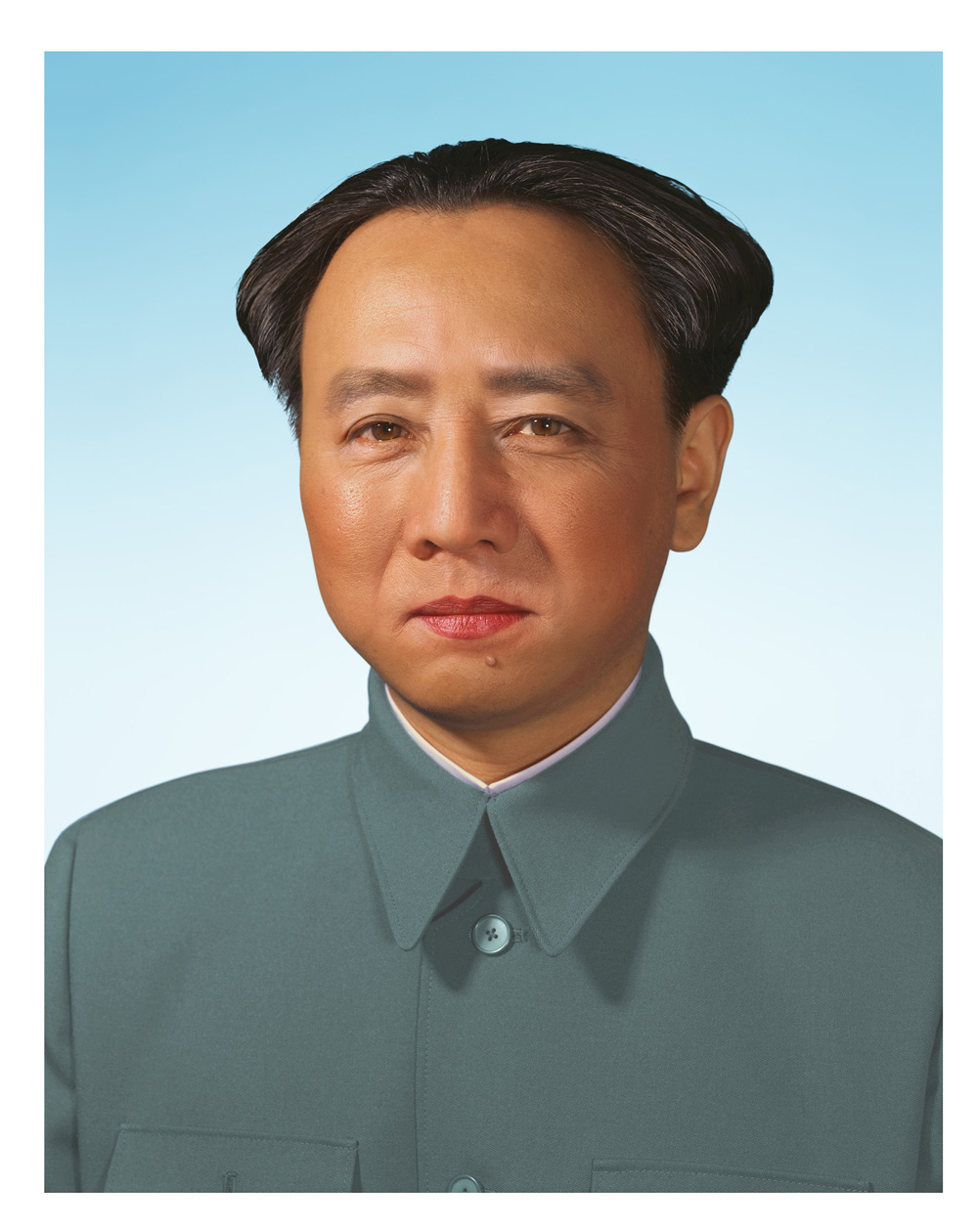
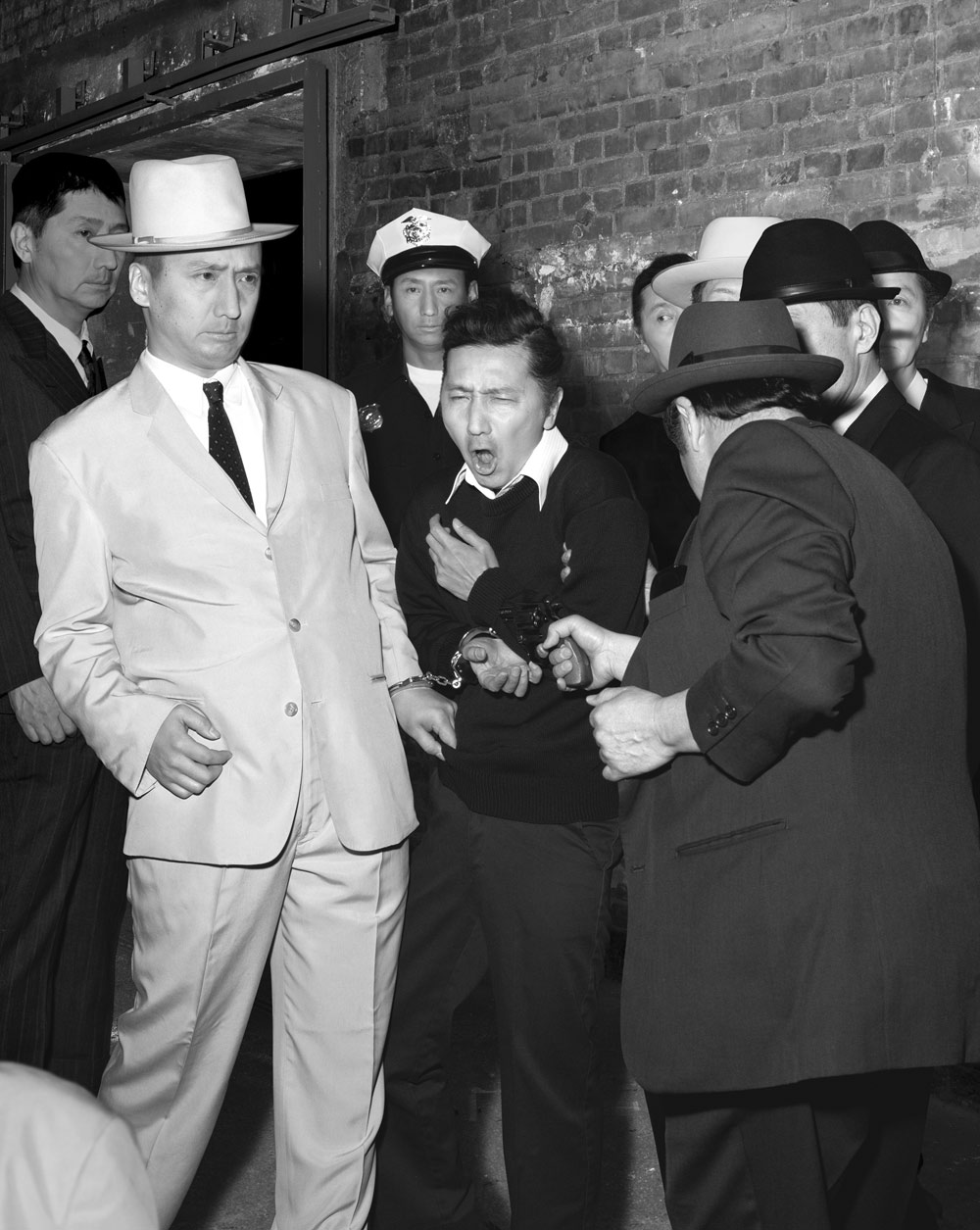
The artworks comprising the Requiem Series are derived from photographic sources and depict prominent masculine figures in moments of triumph or transition. Substituting himself for ideologues, dictators and creative thinkers, Morimura reflects on what these figures represent for the broader culture and on the role of photography in celebrating, demonising or memorialising them.


Yasumasa Morimura (Japanese, b. 1951) 'A Requiem: Vietnam War 1968-1991' 1991-2006


Yasumasa Morimura (Japanese, b. 1951)
A Requiem: Vietnam War 1968-1991
1991-2006
Gelatin silver print


Yasumasa Morimura (Japanese, b. 1951) 'A Requiem: Theater of Creativity / Andy Warhol in Motion' 2010


Yasumasa Morimura (Japanese, b. 1951)
A Requiem: Theater of Creativity / Andy Warhol in Motion
2010
Digital video, black and white, silent, 3:58 minutes
Collection of the artist


Yasumasa Morimura (Japanese, b. 1951) 'A Requiem: Mishima 1970' 2006


Yasumasa Morimura (Japanese, b. 1951)
A Requiem: Mishima 1970
2006
Digital video, colour, sound, 7:42 minutes
Courtesy of the artist and Luhring Augustine, New York


Yasumasa Morimura (Japanese, b. 1951) 'A Requiem: Red Dream/ Mao' 2007


Yasumasa Morimura (Japanese, b. 1951)
A Requiem: Red Dream / Mao
2007
C- print mounted on alpolic
59 x 47 1/4 inches
Courtesy of the artist and Luhring Augustine, New York


Yasumasa Morimura (Japanese, b. 1951) 'A Requiem: Oswald, 1963' 2006


Yasumasa Morimura (Japanese, b. 1951)
A Requiem: Oswald, 1963
2006
Gelatin silver print
Courtesy of the artist and Luhring Augustine, New York


The Andy Warhol Museum
117 Sandusky Street
Pittsburgh, PA 15212-5890
Phone: 412.237.8300

Opening hours:
Wednesday – Monday 10am – 5pm
Tuesday closed

The Andy Warhol Museum website

LIKE ART BLART ON FACBEOOK

Back to top