Exhibition: ‘A Memorial Exhibition in Tom Garver’s Memory of O. Winston Link’s Photographs’ at the Jane Lutnick Fine Arts Center, Haverford College, Haverford, PA

Exhibition Dates: 3rd June – 7th December, 2024
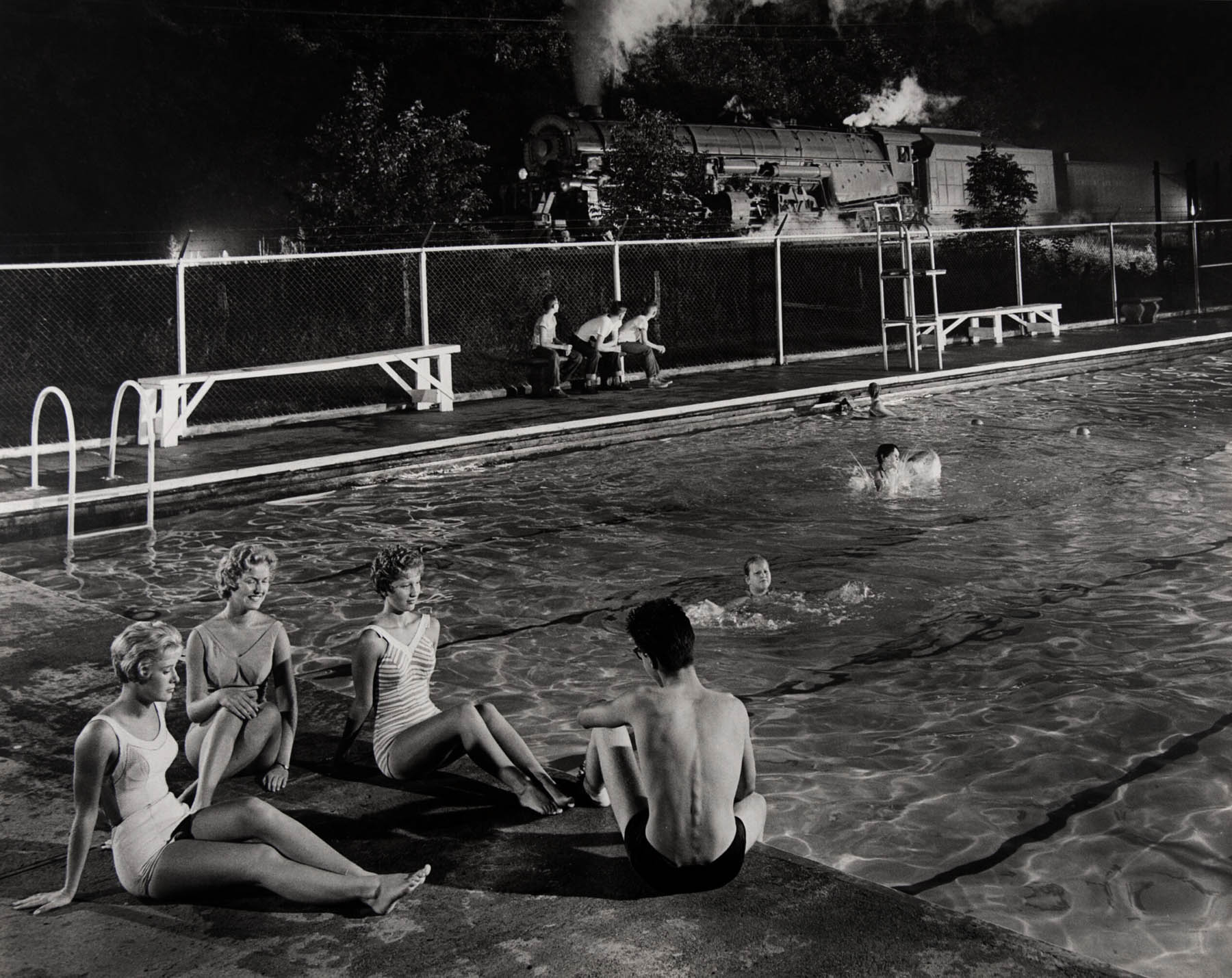
 

O. Winston Link (American, 1914-2001) 'Swimming pool, Welch, West Virginia' 1958, printed c. 1987 from the exhibition 'A Memorial Exhibition in Tom Garver's Memory of O. Winston Link's Photographs' at the Jane Lutnick Fine Arts Center


O. Winston Link (American, 1914-2001)
Swimming pool, Welch, West Virginia
1958, printed c. 1987
Gelatin silver print


What a pleasure it is to present the work of the renowned American photographer O. Winston Link (1914-2001) on this archive. I’ve only ever posted on one exhibition of his work before, way back in 2009.

I’ve always loved steam trains ever since I was denied a Hornby train set as a kid. I love their scale, design, colour, noise, smell … and their muscularity. As a machine emerging from the early days of the Industrial Revolution there is something so essential and raw about them.

Link’s elaborately staged, choreographed even, large format photographs in which he employs large banks of synchronised flash lights to capture the locomotives in action, mainly at night – have a visceral effect on me, stirring up deep passions for this primordial machine.

Link’s previsualisation was strong. As Tom Garver observes, “Winston Link innately possessed what has been called photographic vision, the ability to visualise photographs before they are created and to recognise in the process that what one sees, no matter how interesting, does not necessarily translate into an interesting photograph.”

It was Link’s ability to capture the spirit and essence of the tableaux vivants, the “living picture”, that brings these static scenes alive. You can almost reach out and touch these Jurassic trains, these workhorses trundling through small American communities. Again, Tom Garver insightfully notes that “there was this great intense spirit to really document and record this, to capture it. I think what I didn’t realise is how much we were capturing a whole way of life that was disappearing. Not only steam locomotives versus diesel locomotives but this isolated small town individualised kind of America that was vanishing.”

The spirit of the thing itself.

As Minor White says in one of his ‘Three Canons’:

Be still with yourself
Until the object of your attention
Affirms your presence


Then you look at magnificent photographs such as Locomotive Driving Wheels (1955, printed 1993?, below) with its low perspective of the enormous wheels and the light falling on the metal; the dark, disturbing creatures in Coaling Locomotives, (Puff of Steam) Shaffers Crossing Yards, Roanoke, Virginia (1955, below) like fire breathing dragons; or the incongruous sight of the train as big as the buildings and running right next to them in Main Line on Main Street, North Fork, West Virginia, August 29, 1958 (1958, printed 1997, below) – and you go… YES!

This artist gets it. He gets he gets it he gets it. And he has the skill and this really great intense spirit and the dedication to apply that skill and spirit… in order to capture the presence of these vanishing machines and worlds.

O. Winston Link … thank you.

Dr Marcus Bunyan


Many thankx to the Jane Lutnick Fine Arts Center, Haverford College for allowing me to publish the photographs in the posting. Please click on the photographs for a larger version of the image.


“I can’t move the sun – and it’s always in the wrong place – and I can’t even move the tracks, so I had to create my own environment through lighting.”


O. Winston Link


“Winston’s spirit so imbued the project that it was never really work. It was such a pleasure, there was also that kind of tingle that this was high adventure. You know, you had to get it. There were times when we would be absolutely exhausted, I remember once, we arrived at a place to tape record in this case, we got there at six and discovered that the train had left at five, we got there the next day at five and discovered it had left at four, we got there at four and that time it didn’t come until midnight. So, we sat there and waited and talked about what we were doing and about life and how it was changing and the many varieties of architecture and construction and the quality of things, how they were disappearing. So, there was this great intense spirit to really document and record this, to capture it. I think what I didn’t realise is how much we were capturing a whole way of life that was disappearing. Not only steam locomotives versus diesel locomotives but this isolated small town individualised kind of America that was vanishing.”


Tom Garver, Curator and Museum Director, a former assistant for Link’s photo projects.
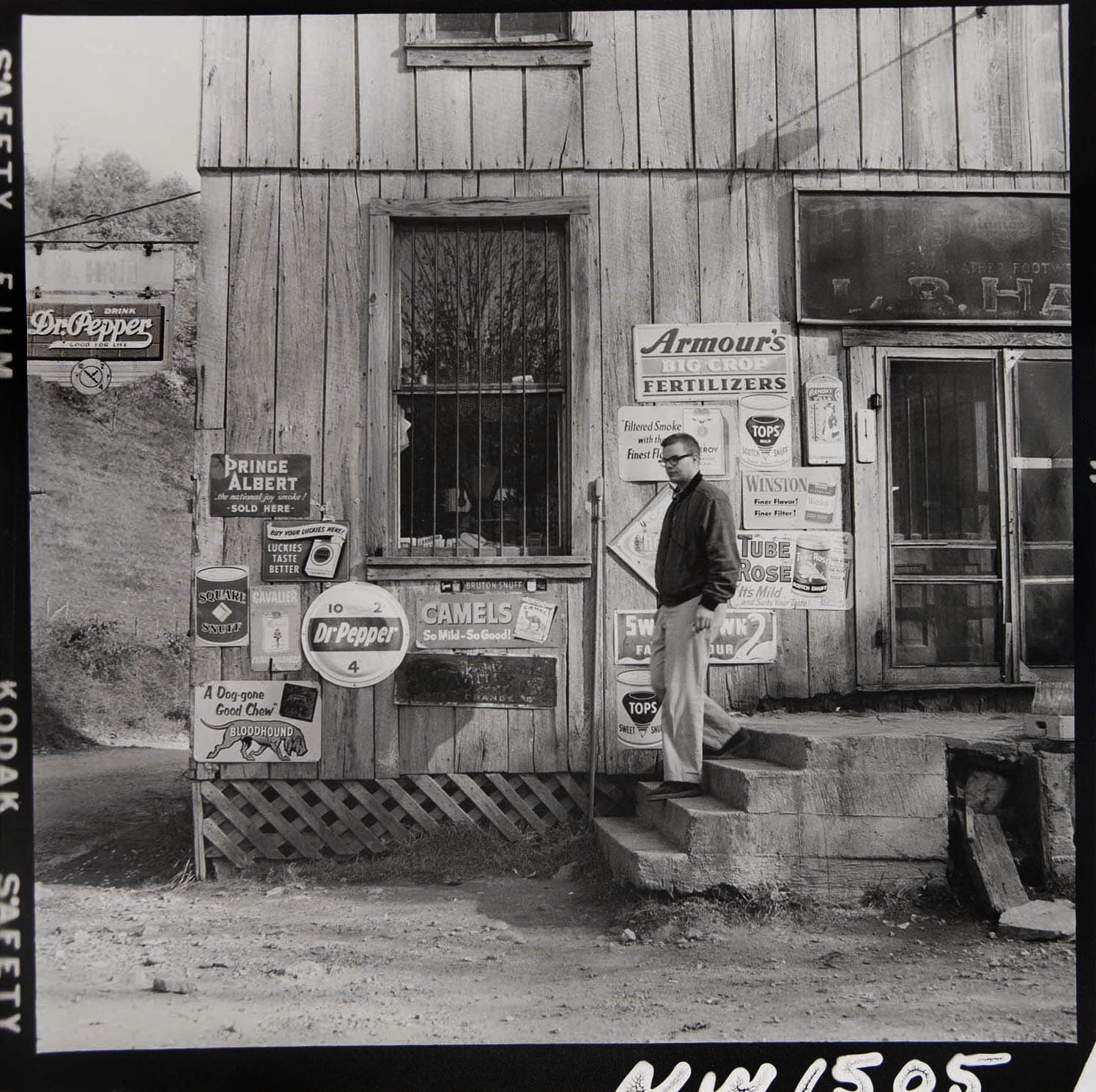


O. Winston Link (American, 1914-2001) 'Tom Garver at the General Store, Husk (Nella), North Carolina, 1957' 1957


O. Winston Link (American, 1914-2001)
Tom Garver at the General Store, Husk (Nella), North Carolina, 1957
1957
Gelatin silver print


O. Winston Link (American, 1914-2001) 'Haverford Chemistry Lecture' 1952


O. Winston Link (American, 1914-2001)
Haverford Chemistry Lecture
1952
Gelatin silver print


O. Winston Link (American, 1914-2001) 'Locomotive Driving Wheels' 1955, printed 1993? from the exhibition 'A Memorial Exhibition in Tom Garver's Memory of O. Winston Link's Photographs' at the Jane Lutnick Fine Arts Center


O. Winston Link (American, 1914-2001)
Locomotive Driving Wheels
1955, printed 1993?
Gelatin silver print
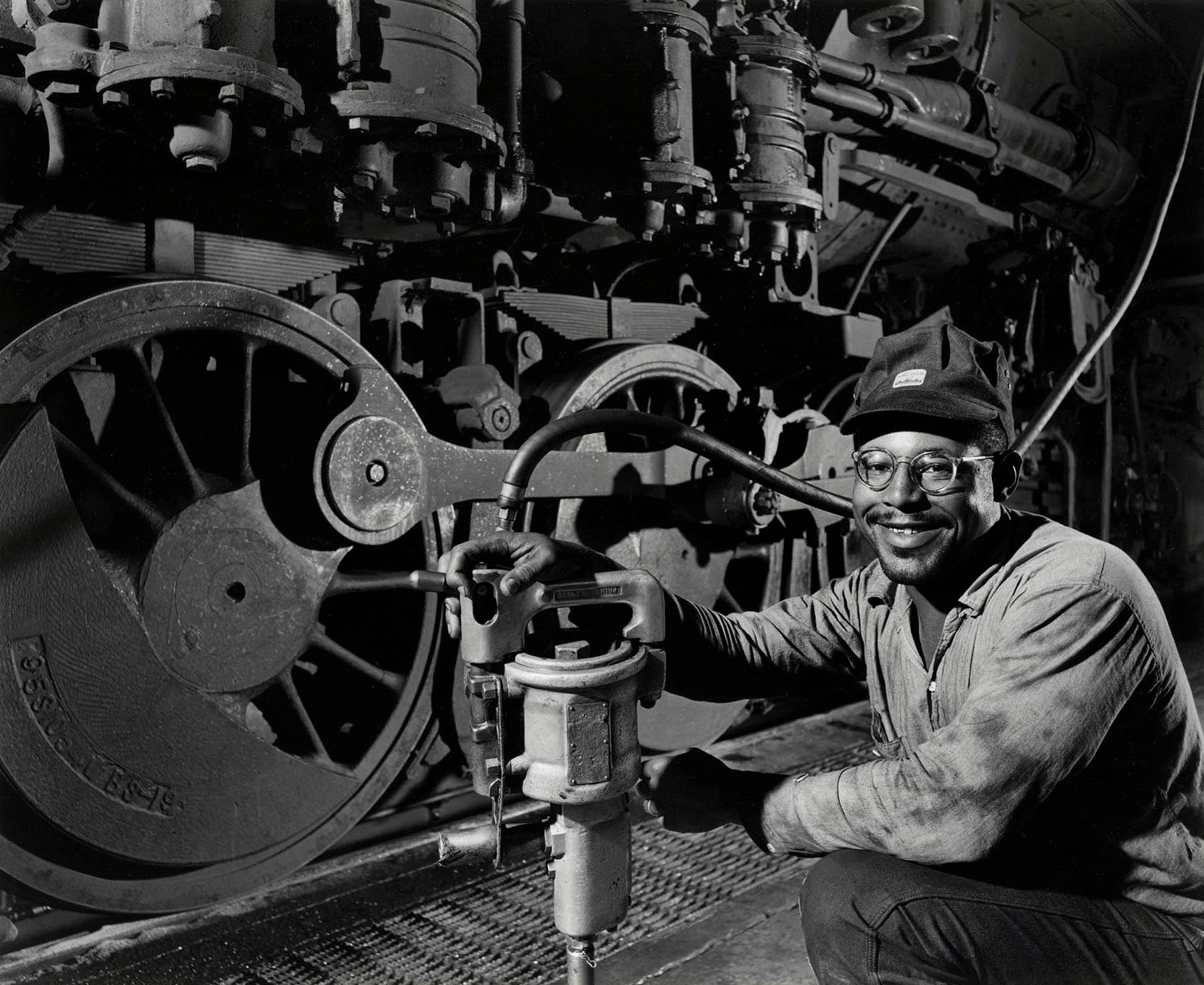
 

O. Winston Link (American, 1914-2001) 'J. O. Hayden with His Grease Gun, Bluefield Lubritorium' 1955 from the exhibition 'A Memorial Exhibition in Tom Garver's Memory of O. Winston Link's Photographs' at the Jane Lutnick Fine Arts Center


O. Winston Link (American, 1914-2001)
J. O. Hayden with His Grease Gun, Bluefield Lubritorium
1955
Gelatin silver print
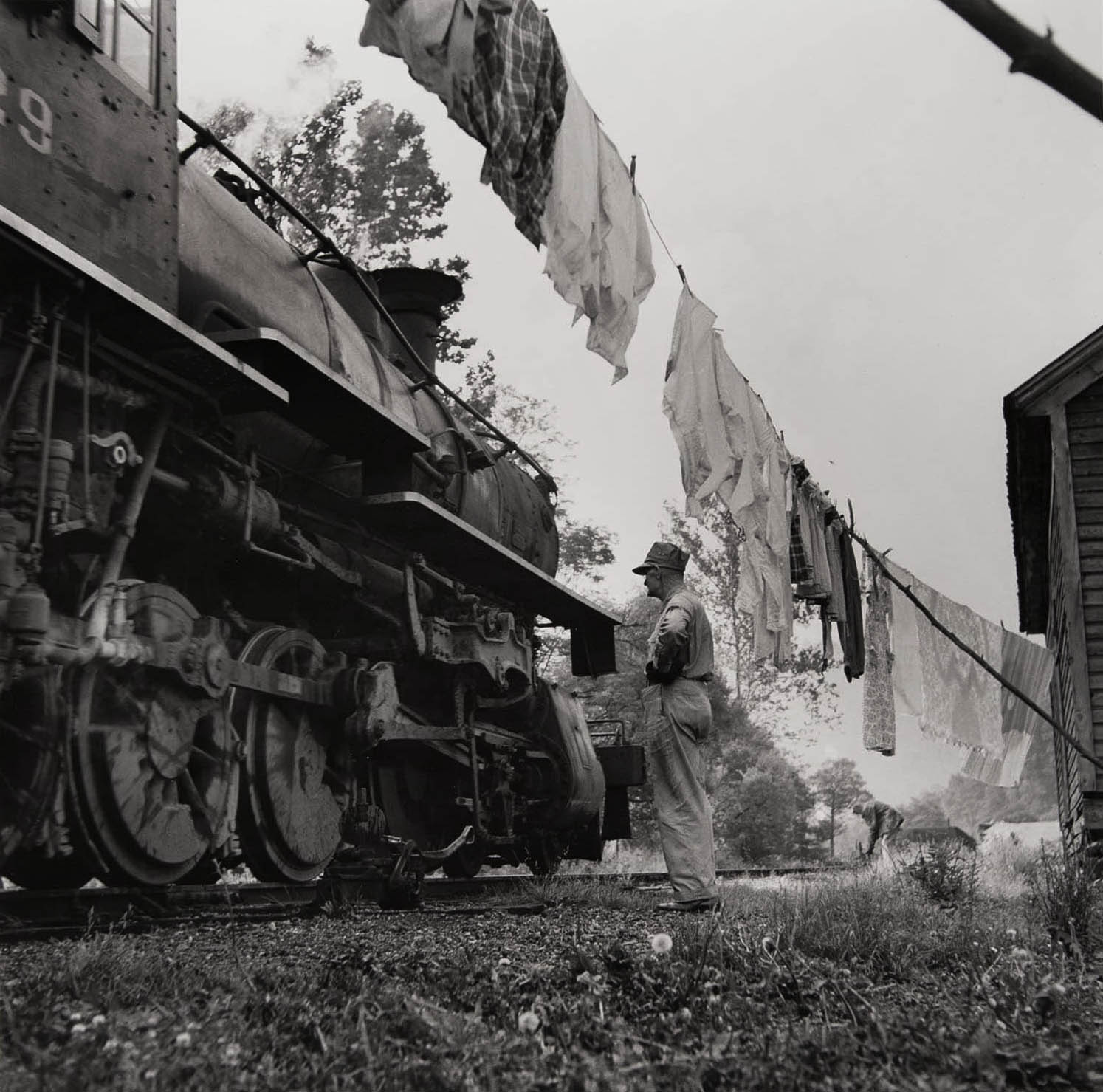
 

O. Winston Link (American, 1914-2001) 'Ralph White, Abingdon Branch Train Conductor, and Laundry on the Line, Damascus' 1955


O. Winston Link (American, 1914-2001)
Ralph White, Abingdon Branch Train Conductor, and Laundry on the Line, Damascus
1955
Gelatin silver print


O. Winston Link (American, 1914-2001) 'Coaling Locomotives, (Puff of Steam) Shaffers Crossing Yards, Roanoke, Virginia' 1955


O. Winston Link (American, 1914-2001)
Coaling Locomotives, (Puff of Steam) Shaffers Crossing Yards, Roanoke, Virginia
1955
Gelatin silver print


The exhibition consists of photographs by O. Winston Link (1914-2001) of steam locomotion on the Norfolk and Western Railroad from 1955 to 1960 and photographs taken by Link in 1952 of Haverford College for publicity purposes. Thomas “Tom” Haskell Garver (1934-2023) Haverford class of 1956 first met Link in 1952. Garver recalled that first meeting like this. “Link, a New York photographer, created admissions brochure photos at Haverford in 1952. After graduation, I was studying in New York City and worked part time for him for about a year. This included three trips with Winston to work on his documentation of the last years of steam powered railroading.”

Garver, an accomplished museum administrator and curator, stepped in when Link needed a friend and supporter. Forty years after Garver first met Link his life was marred by tragedy. Conchita Mendoza Link, his second wife, who also was her husband’s agent, fabricated a story that Link suffered from Alzheimer’s Disease in an attempt to steal from Link payments for his work. Mrs. Link was also found to have stolen many of Link’s negatives and prints from which she pocketed the money from their sale. Mrs. Link was criminally charged, found guilty, and sentenced to prison in 1996. Garver began to assist again Link by becoming his business agent. After Link’s death Garver became the organising curator of the O. Winston Link Museum in Roanoke, Virginia. The Last Steam Railroad in North America, published in 1995 by Harry N. Abrams, Inc. and authored by Garver is the definitive publication on Link and his photography.

Garver wrote in the book: “These photographs are, in every way, works of art,” … “Winston Link innately possessed what has been called photographic vision, the ability to visualise photographs before they are created and to recognise in the process that what one sees, no matter how interesting, does not necessarily translate into an interesting photograph. The thing photographed and a photograph of it are coequal neither in interest, nor in appearance.” Garver’s efforts were instrumental on so many levels in gaining recognition for Link’s photographs as they are now recognised as some of the greatest photographs of the 20th century.

Tom Garver was a great supporter of Haverford College in all manner of ways. As an active member of the class of 1956 with each reunion cycle he compiled Class of 1956 Collective Biography. Furthermore, in his case, that also meant contributing hundreds of art photographs to the Fine Art Photography Collection. Manuscripts including letters from Paul Strand and George Segal and documentary photographs of American scenes by Charles Currier, who was the subject of Garver’s Master’s thesis to further support Special Collections at Haverford. Among this bounty of collections of photographs are a choice selection of O. Winston Link’s black and white, and colour photographs. This exhibition is a fitting memorial to a loyal and generous alumnus.

Text from the Jane Lutnick Fine Arts Center, Haverford College website


O. Winston Link (American, 1914-2001) 'Hotshot Eastbound, Iaeger, West Virginia, 1956' 1956, printed 2001 from the exhibition 'A Memorial Exhibition in Tom Garver's Memory of O. Winston Link's Photographs' at the Jane Lutnick Fine Arts Center


O. Winston Link (American, 1914-2001)
Hotshot Eastbound, Iaeger, West Virginia, 1956
1956, printed 2001
Gelatin silver print


O. Winston Link (American, 1914-2001) 'Archie Stover, Crossing Watchman' 1956


O. Winston Link (American, 1914-2001)
Archie Stover, Crossing Watchman
1956
Gelatin silver print
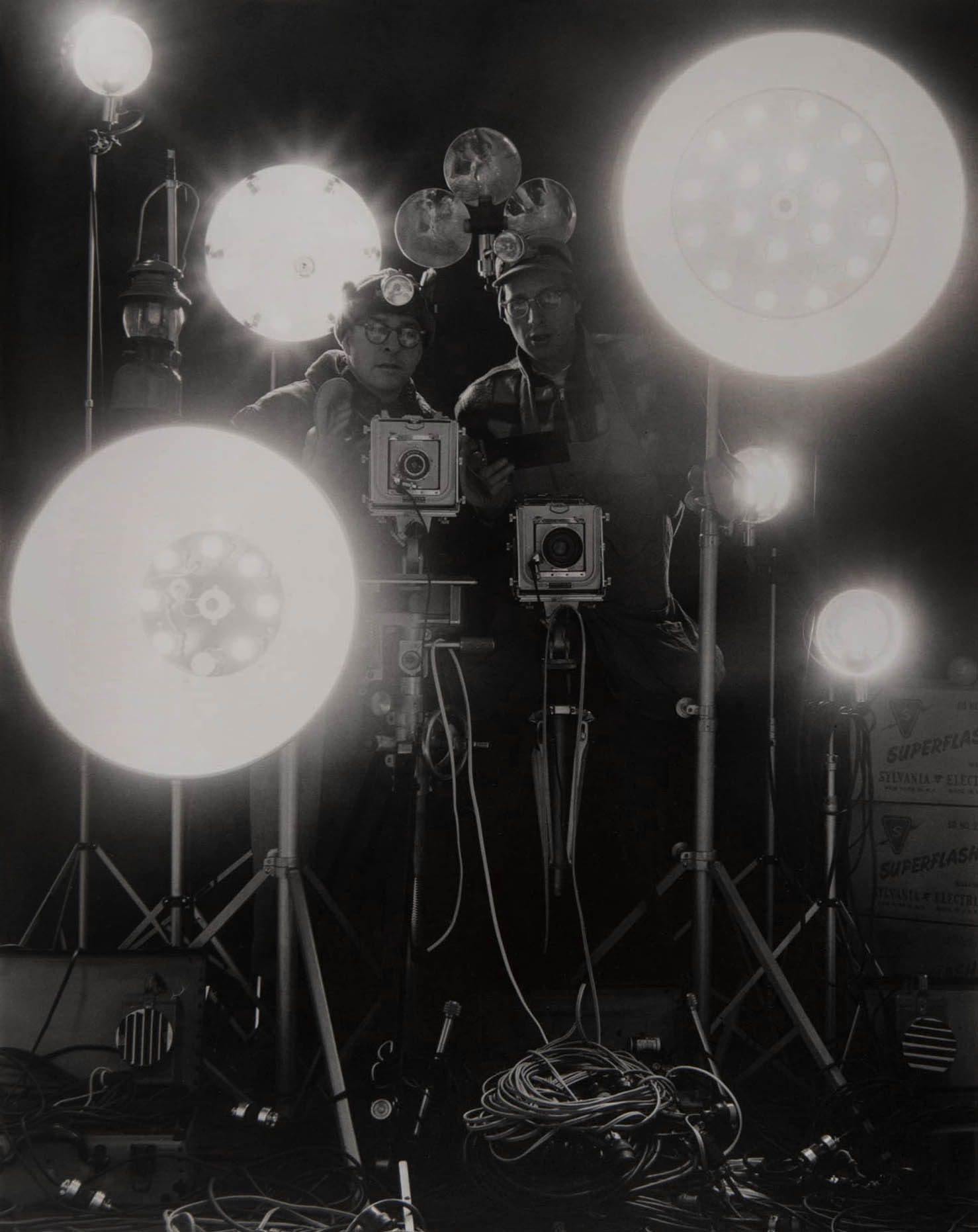
 

O. Winston Link (American, 1914-2001) 'Winston Link, George Thom and Night Flash Equipment: All Flashbulbs Firing' 1956


O. Winston Link (American, 1914-2001)
Winston Link, George Thom and Night Flash Equipment: All Flashbulbs Firing
1956
Gelatin silver print


Preserving the Golden Age of Railroads

In the 1950s, O. Winston Link, a photographer with an astute affinity for technical photography and a fond fascination with trains, set out to record the last steam locomotives operating in the country. After contacting the Norfolk and Western Railway and gaining access to the company’s premises, Link would begin recording the last surviving fleet of locomotives against the night sky, preserving the golden age of railroads and the remaining vestiges of American 20th-century industry. …

Staunton, Virginia

In 1955, O. Winston Link would begin exploring a series of photographs that would have a lasting impact on the medium’s history. After accepting a job that would take him to Staunton, Virginia, Link noticed the Norfolk and Western Railway, the last major steam railroad in the country. The company was ceasing operations as an industry-wide change from steam to diesel was in effect. Link was further impressed by the human connection to the railroad, a thread of sparsely spread communities that lived near the tracks. The photographer noticed not only the facilities and locomotives but the trackside communities that were profoundly immersed with the steam locomotives and rail transportation.

From 1955 to 1960, Winston Link returned to Virginia around 20 times. He photographed the clouds of steam and massive steel bodies of the locomotives passing through the Virginian and Appalachian communities, documenting some of the last days of the steam engine. In this unique quest, Link traveled by night covering a large swath of area, from Virginia and North Carolina to Maryland. With his preference for capturing the locomotives at night and prior experience with highly technical photographs for corporate clients, Link had the aptitude to develop a unique flash photography system. His unique system rigged flashbulbs, sometimes up to 80 of them, to fire simultaneously and allow the camera to capture the high-speed trains moving past his frame at night. As to why he chose to take his pictures at night, the photographer notedly said:

“I can’t move the sun – and it’s always in the wrong place – and I can’t even move the tracks, so I had to create my own environment through lighting.” ~ O. Winston Link


O. Winston Link’s perseverance in recording the nightly locomotives that passed Appalachia made him a pioneer not only for his subject matter but also as a trailblazer in night photography. Most likely inspired by his legendary predecessor, the Hungarian-French photographer Brassai, who captured the underbelly of Paris by night, Winston Link’s contributions to the preservation of American history helped chronicle these once, one-of-a-kind towns. Whether at the drive-in, splashing in the river below a railway bridge, pumping gas trackside by a passing locomotive, or directing a train through the quiet night of the rural countryside, Link’s pictures conserve small towns, whose lives revolved around the coming and going of steam engines. Through the rising pillars of steam, the sounds of bells and whistles announcing the arrival of the steam engines, and the camaraderie of community members in his pictures, Winston Link preserves a romantic, golden age of American railroads. When asked what about steam engines he found so appealing, Link said:

“I guess it’s because of the places they go. They’re always going through some mountains, through the valleys, and through the rivers, and forests, it’s always country. And I’ve lived in New York City, in Manhattan and Brooklyn, where you didn’t have anything like that. So, it’s always great to get on a train and take a long trip. I suppose that’s part of it. And the sounds that it makes, the smells that it has. It has a bell in it, it has air pumps, and it has valves that are releasing shots of steam every now and then. It has a turbo, which has a whine to it. It has a beautiful whistle, the old steam engines had different whistles, all had different characteristics and different sounds. And they had smells from hot grease and oil, the smell of coal smoked, the soft coal, has a nice smell to it as long as you don’t get it blasted in the face, as long as you’re far away from it, its Ok. It’s things like that. The sound of the wheels, the sound of the drivers, you can tell exactly what’s happening to the engine, and how fast its going, if the rods are lose, it makes different sounds. So, it has all these characteristics. The diesel engine is great, it’s very efficient, there’s nothing like them but, it’ll never replace a steam engine.” ~ O. Winston Link, 1980s


Holden Luntz. “O. Winston Link’s Birmingham Special, Rural Retreat, Virginia,” on the Holden Luntz Gallery website October 12, 2012 [Online] Cited 11/10/2024
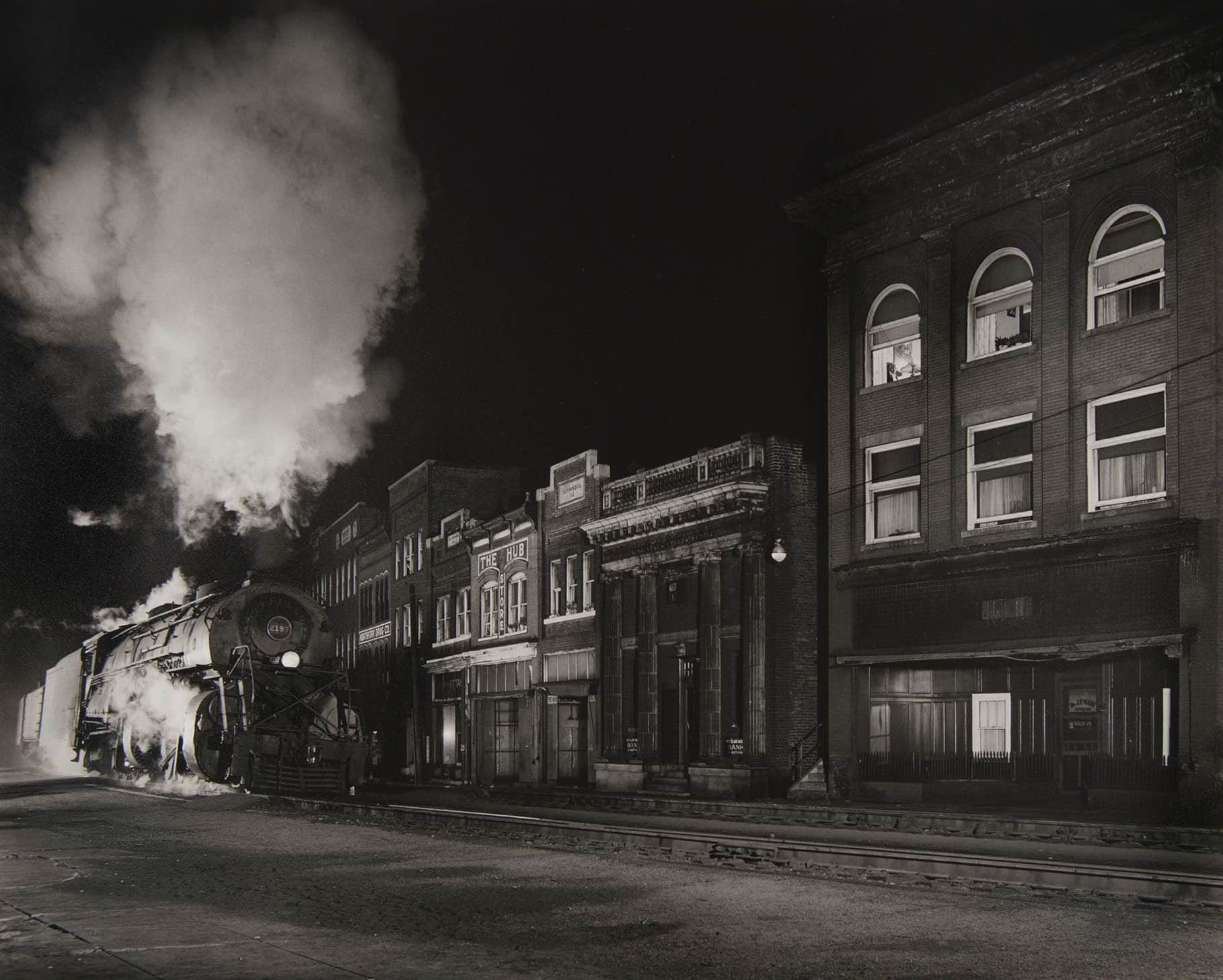
 

O. Winston Link (American, 1914-2001) 'Main Line on Main Street, North Fork, West Virginia, August 29, 1958' 1958, printed 1997


O. Winston Link (American, 1914-2001)
Main Line on Main Street, North Fork, West Virginia, August 29, 1958
1958, printed 1997
Gelatin silver print
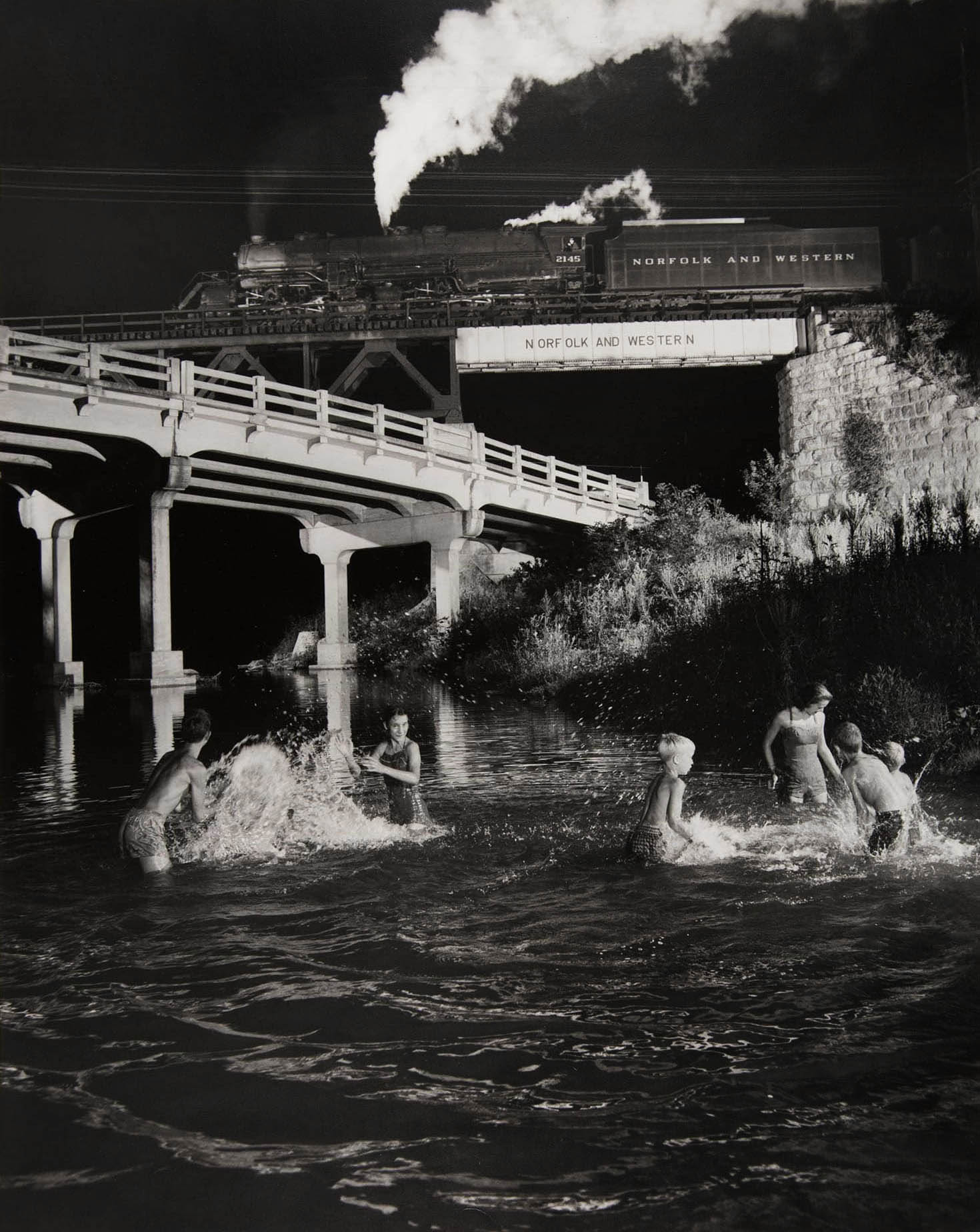
 

O. Winston Link (American, 1914-2001) 'Hawksbill Creek Swimming Hole, Luray, Virginia, 1956' 1956


O. Winston Link (American, 1914-2001)
Hawksbill Creek Swimming Hole, Luray, Virginia, 1956
1956
Gelatin silver print


Further O. Winston Link photographs from the Norfolk and Western Railroad


O. Winston Link (American, 1914-2001) 'Y-6 Locomotive on the Turntable, Shaffers Crossing Yards, Roanoke, Virginia' 1955, printed 1994


O. Winston Link (American, 1914-2001)
Y-6 Locomotive on the Turntable, Shaffers Crossing Yards, Roanoke, Virginia
1955, printed 1994
Gelatin silver print


O. Winston Link (American, 1914-2001) 'Norfolk and Western Railway' 1955


O. Winston Link (American, 1914-2001)
Norfolk and Western Railway
1955
Gelatin silver print


O. Winston Link (American, 1914-2001) 'Locomotive 261' 1955


O. Winston Link (American, 1914-2001)
Locomotive 261
1955
Gelatin silver print
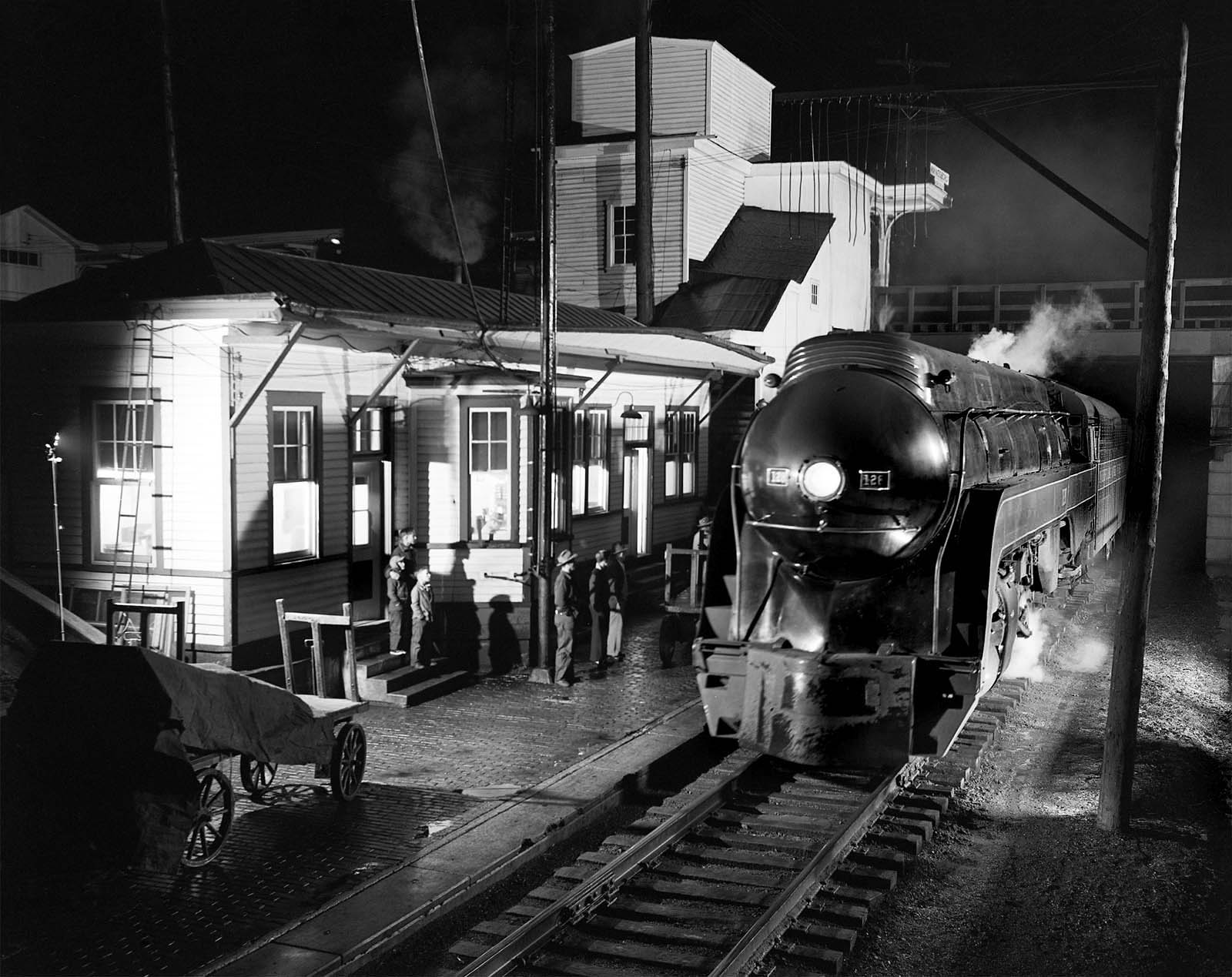
 

O. Winston Link (American, 1914-2001) 'Train #2 arrives at the Waynesboro Station, Waynesboro, Virgnia, April 14, 1955' 1955, printed 1996


O. Winston Link (American, 1914-2001)
Train #2 arrives at the Waynesboro Station, Waynesboro, Virgnia, April 14, 1955
1955, printed 1996
Gelatin silver print
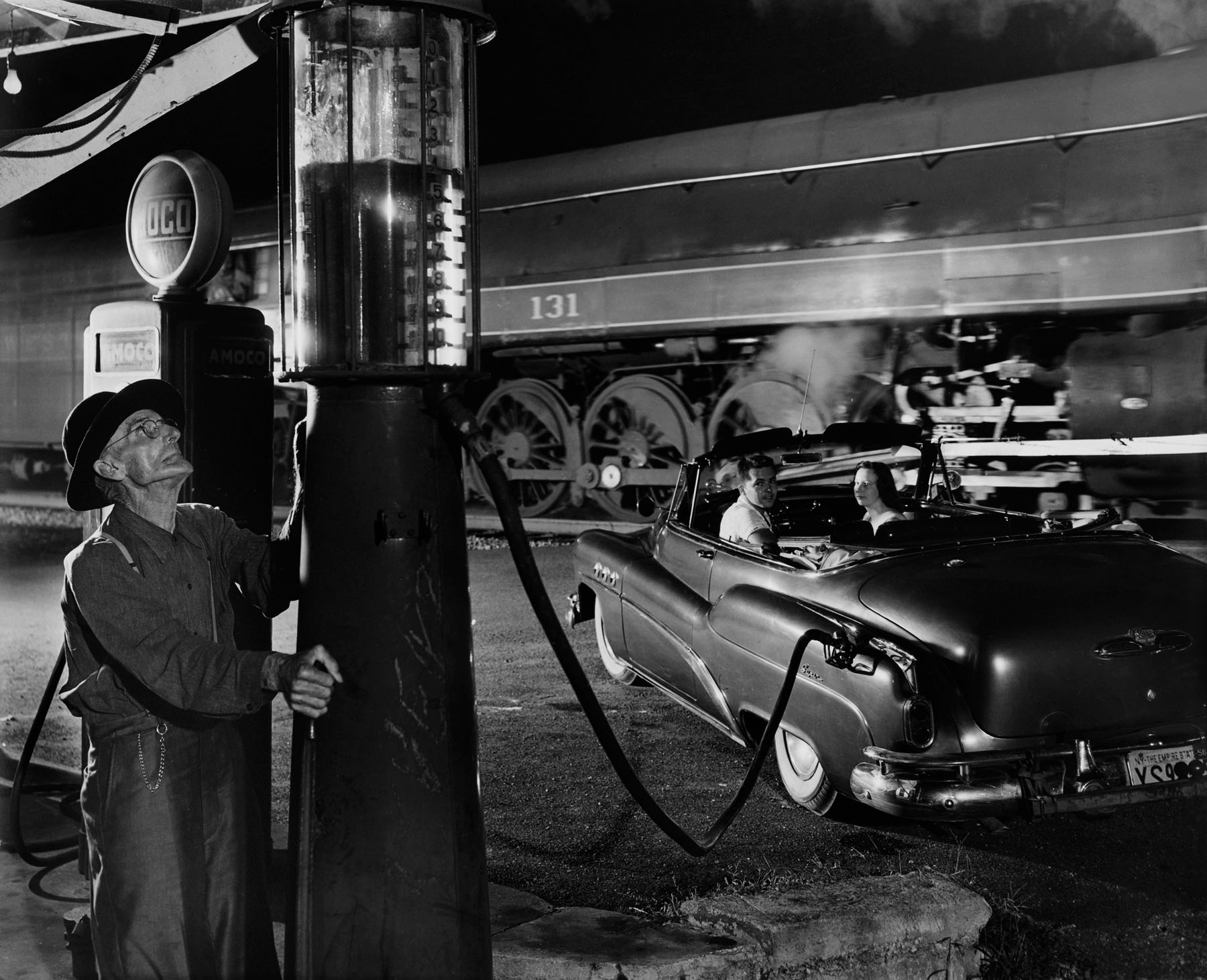
 

O. Winston Link (American, 1914-2001) 'Sometimes the Electricity Fails, Vesuvius, Virginia, 1956' 1956, printed 1988


O. Winston Link (American, 1914-2001)
Sometimes the Electricity Fails, Vesuvius, Virginia, 1956
1956, printed 1988
Gelatin silver print
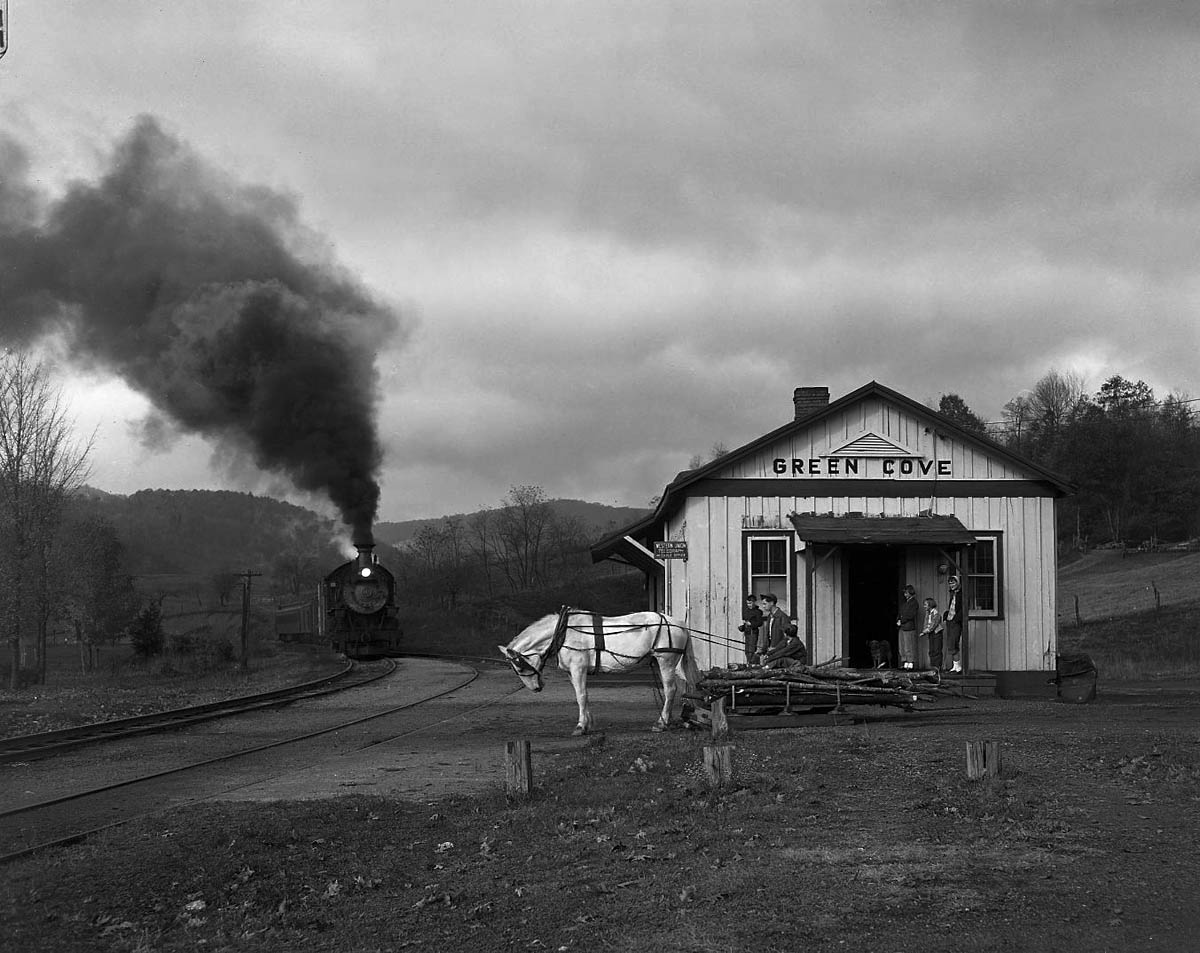
 

O. Winston Link (American, 1914-2001) 'Maud Bows to the Virginia Creeper' 1956


O. Winston Link (American, 1914-2001)
Maud Bows to the Virginia Creeper
1956
Gelatin silver print
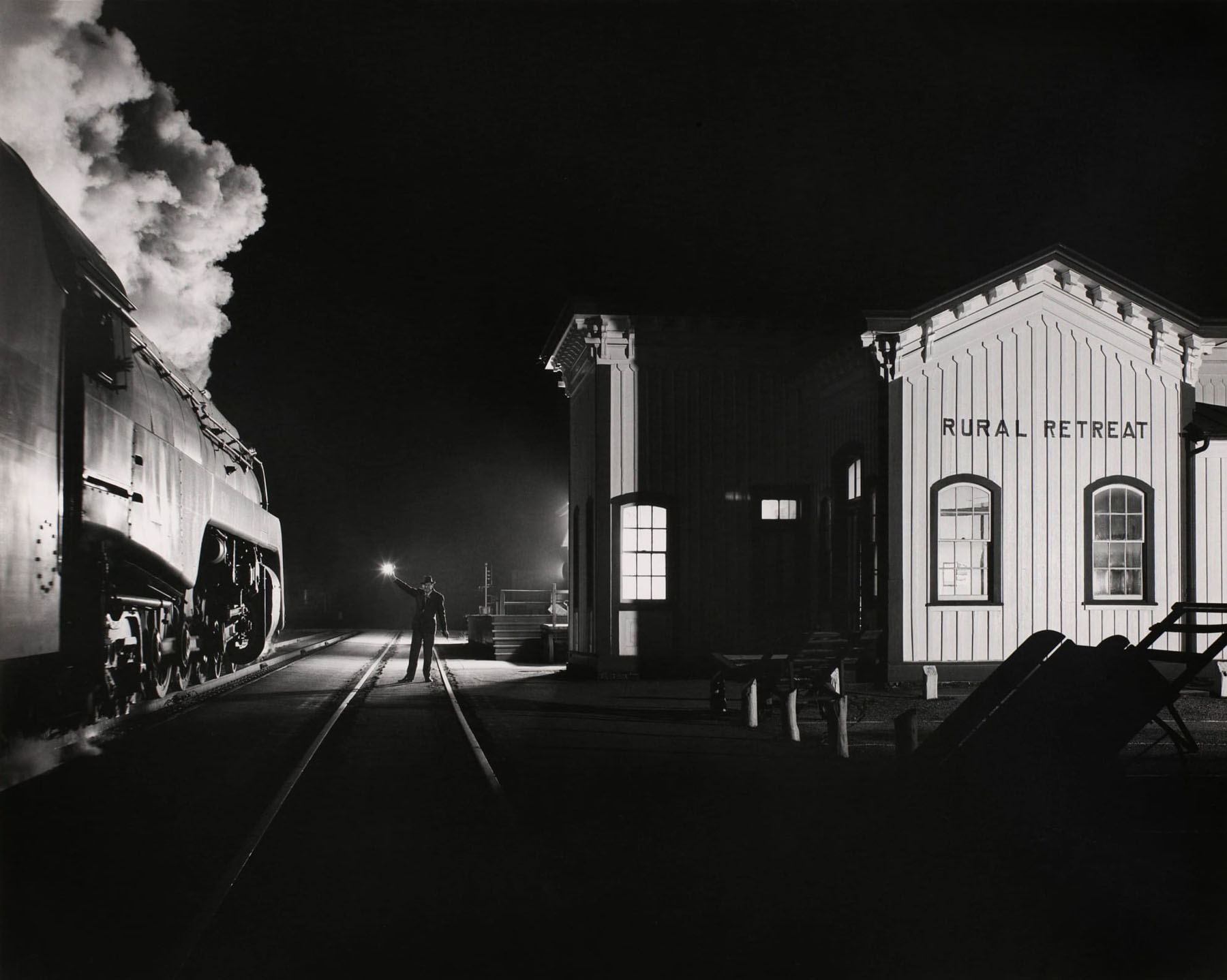
 

O. Winston Link (American, 1914-2001) 'Birmingham Special, Rural Retreat, Virginia, 1957' 1957, printed 1986


O. Winston Link (American, 1914-2001)
Birmingham Special, Rural Retreat, Virginia, 1957
1957, printed 1986
Gelatin silver print
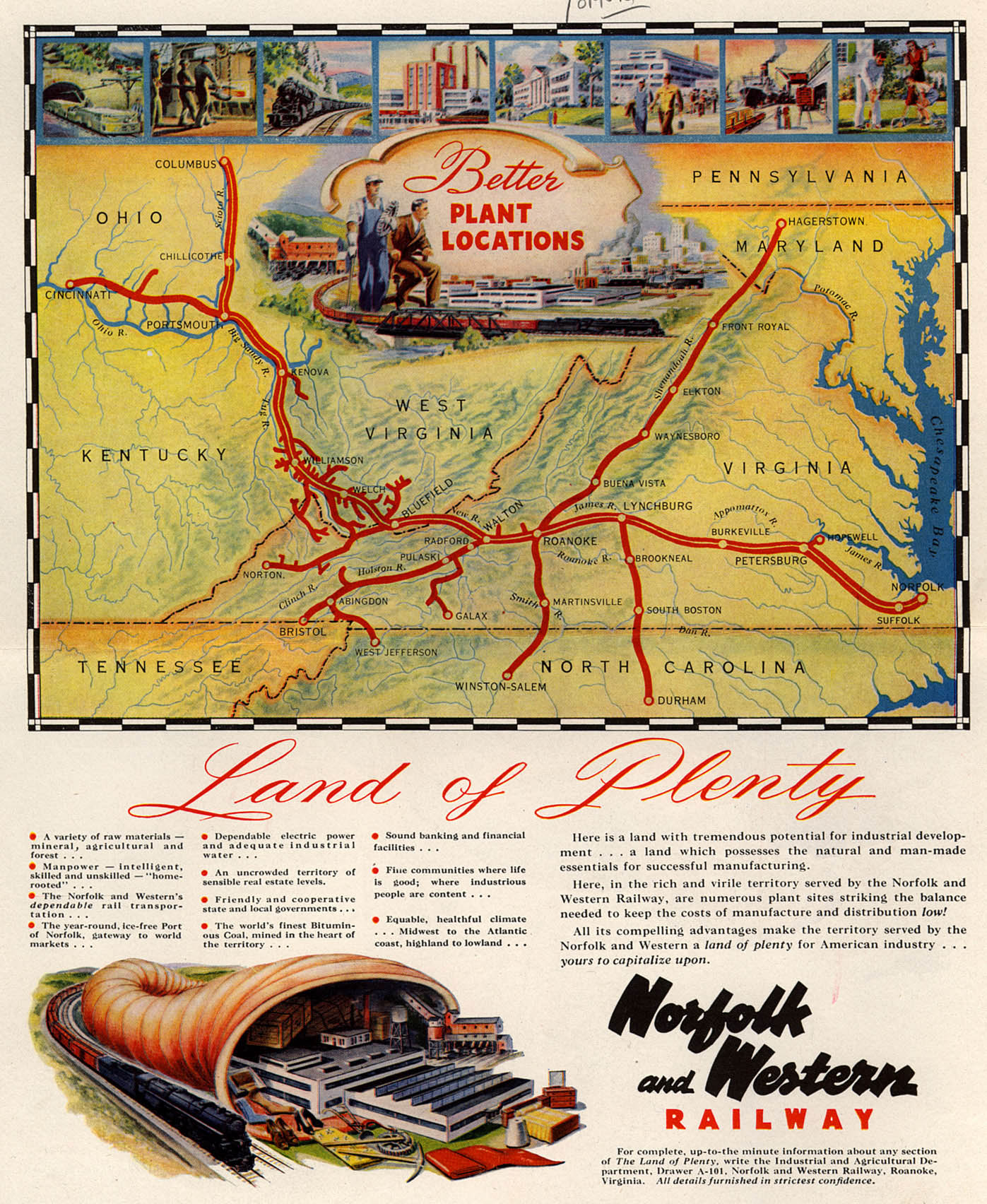
 

'1948 Norfolk and Western Railway - Land of Plenty Norfolk and Western magazine ad with system map' 1948


1948 Norfolk and Western Railway – Land of Plenty
Norfolk and Western magazine ad with system map
1948
Duke University Libraries
Public domain


Haverford College
370 Lancaster Avenue, Haverford, PA 19041

Monday – Friday, 9am – 5pm
Weekends, Noon – 5pm

Haverford College website

LIKE ART BLART ON FACEBOOK

Back to top

Exhibition: ‘Brett Weston: Significant Details’ at Pasadena Museum of California Art

Exhibition dates: 17th April – 11th September, 2016

Curator: Erin Aitali, PMCA Director of Exhibitions and Registrar


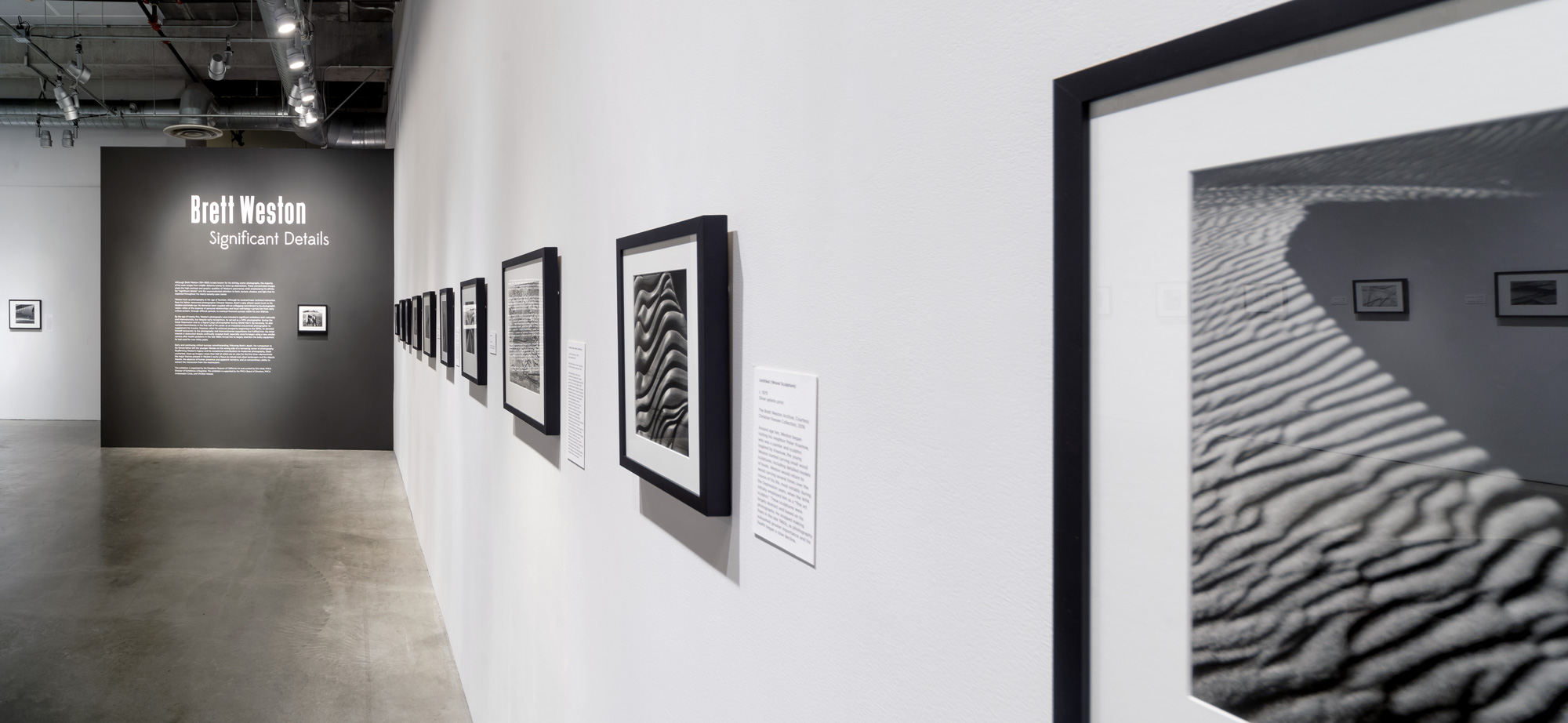
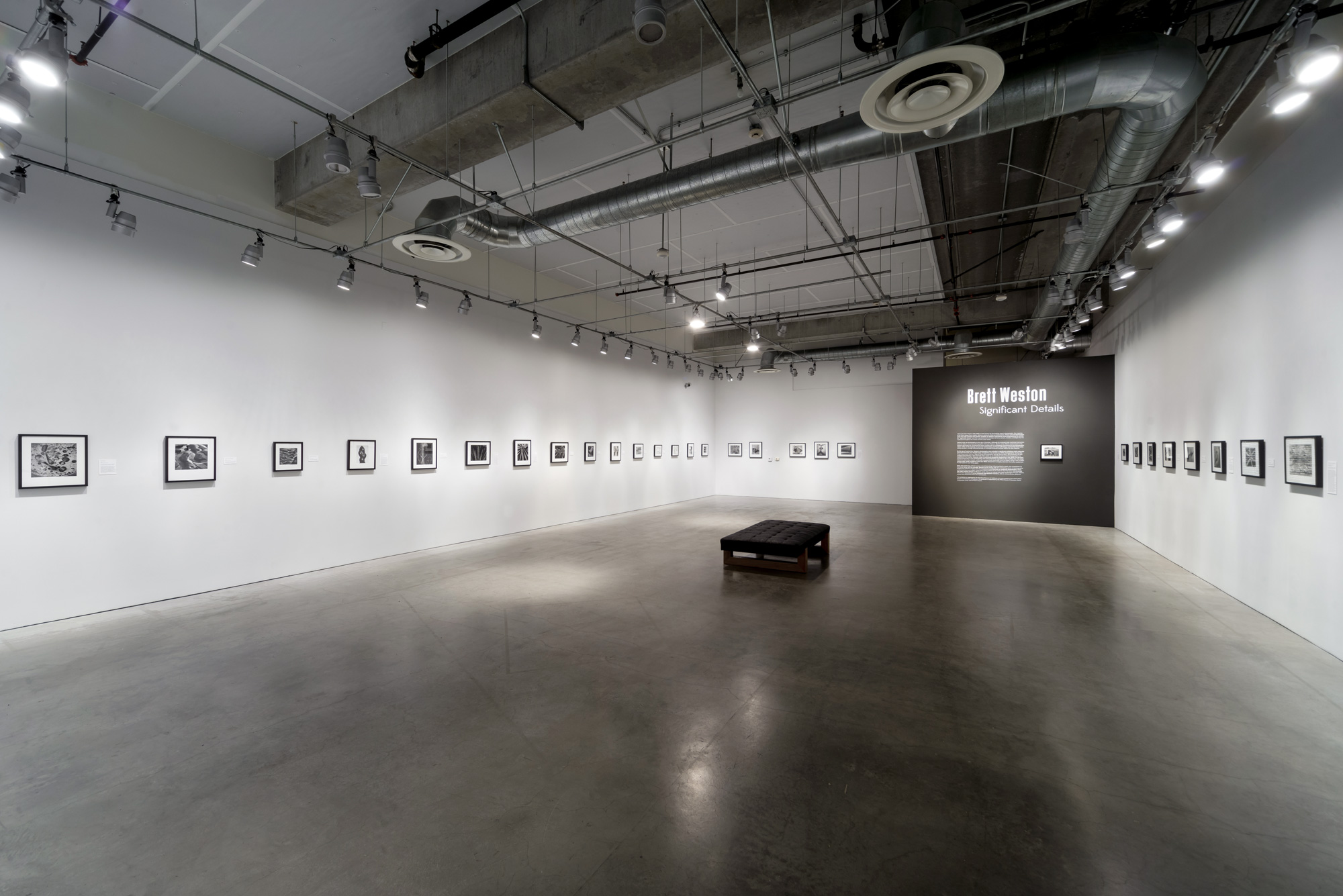
Installation view of the exhibition 'Brett Weston: Significant Details' at the Pasadena Museum of California Art


Installation photographs of the exhibition Brett Weston: Significant Details at the Pasadena Museum of California Art
Photos: © 2016 Don Milici


If your subject is essentially unrecognisable – a defining characteristic of many of Weston’s photographs – devoid of sentimentality, featuring an explosion of geometry as a form of Western expressionism, able to extract the microcosm from the macrocosm through an absence of human presence and apparent narrative – then your previsualisation must be spot on otherwise you loose clear focus as to just what it is you are trying to communicate. It’s all very well being obsessed with capturing the intricacies and rhythms of form, light and shadow, visual poetry in photography, but if that obsession has no ‘feeling’ outcome then you are doomed to failure.

Imagine (if you can) that master of documentary realism Eugène Atget placing his camera in just the wrong position for one of his photographs. The tripod just a little too low, the position a metre to the left of where it should have been. The resulting image would not feel like an Atget, the angles would not feel right, the mixture of objective and subjective would not be present, the magic of his photographs – recognisably his photographs – would be missing. What Atget does so convincingly is to combine the aesthetic with the documentary or representational. As G.H. Saxon Mills observes in his essay ‘Modern photography’ ‘”modern” photography means photography whose aim is partly or wholly aesthetic, as opposed to photography which is merely documentary or representational.’ Atget proves that both were possible within the same frame.

This is not the case with the photographs by Brett Weston in this posting. Although I have commented elsewhere on this website that, “Brett Weston’s pictures are ageing well – the decorative aesthetic seems to have more currency today than previously when the values of his father were predominant,” and admired the reductive minimalism of his photographs … this is not the case with these ‘significant details’. In this instance they are just representation, poor relations to the photographs of Minor White and Aaron Siskind.

I think that the best of his work is very fine – a sort of celebration of all that had gone before with a layer of super-fineness added. However he made many images that were a bit like a preacher rather than an artist. In some of his portfolios the choice of images is just plain weird, catering to the market rather than taking the chance to make a powerful statement. And photography aficionados remain unconvinced by his work, shying away from collecting it. Perhaps they know, or feel a lack of something, some spirit or other, or a seeming unevenness in the quality of his artistic production.

Perhaps it is his printing, which is a bit “Kodak meets EW” in the darkroom (even as his father entrusted him with printing some of his negatives). Weston achieved his good results because he was a careful craftsman, not an experimenter. Someone, I forget who, said that you never looked at his work when desperate for sustenance – and I think a lot of “connoisseurs” think that – and in a Brett Weston you can too often argue yourself out of the celebration. There is a certain dourness that is hard to overcome. I challenge you, now, to say one meaningful thing about any of the images presented here. They take you nowhere. They are either too tightly cropped (that lack of true previsualisation / placing the camera in the wrong position / lack of context) or rely on pattern and representation, and only that, to do the heavy lifting.

My feeling about his work is that he saw and felt many great things that he used in his work – but at the final hurdle, his implementation was always handled a little directly, or not a well as might have been… or is sometimes absent. Perhaps it’s just his viewpoint which seems to be too limited in a psychological sense. If Atget had photographed the city without those magnificent tripod positions and understanding of space, then they would have been dead. That’s how BW’s work sometimes feels. Instead of the space feeling larger than the camera can contain, on occasions his photographs feel enclosed and stilted.

Weston said, “There are a million choices for shot. At its simplest, photography is very complex. So I try to keep it simple and focus on things I can master.”

Sometimes, keeping things simple does not result in preternatural outcomes.

Dr Marcus Bunyan


Many thankx to the Pasadena Museum of California Art for allowing me to publish the photographs in the posting. Please click on the photographs for a larger version of the image.


“My father was driven and so am I. You’re ruthless. You brush off your friends and women. He was much kinder than me. I don’t verbalize well and I don’t socialize much. Too time consuming. And I’m not a good salesman of my work. I love people, but they can be a drain. Some are stimulating; some are leeches. So I seek people on my own terms. Most artists are loners. I guess they have to be.”


Brett Weston


“Weston isn’t really a nature photographer… He was obsessed with capturing the intricacies and rhythms of form, light and shadow. Weston is as fascinated by close-ups of the exfoliating bark of a bristlecone pine or the spikes of a Joshua Tree as he is with the visual poetry of peeling paint on the side-panel of a rusted out truck.”


Jeffrey St. Clair. “A Natural Eye,” on the Counter Punch website, May 25, 2012 [Online] Cited 01/10/2021


Installation view of the exhibition 'Brett Weston: Significant Details' at the Pasadena Museum of California Art

Installation view of the exhibition 'Brett Weston: Significant Details' at the Pasadena Museum of California Art


Installation photographs of the exhibition Brett Weston: Significant Details at the Pasadena Museum of California Art
Photos: © 2016 Don Milici


Although Brett Weston (1911-1993) is best known for his striking scenic photographs, the majority of his work ranges from middle-distance scenes to close-up abstractions. These concentrated images share the high-contrast and graphic qualities of Weston’s panoramas while emphasising his affinity for “significant details” and the unprecedented attention to form, texture, shadow, and light that he explored throughout his nearly-seventy-year career.

Weston took up photography at the age of fourteen. Although he received basic technical instruction from his father, renowned photographer Edward Weston, Brett’s early efforts owed much to his intuition and innate eye. His elemental talent coupled with an unflagging commitment to his photographic vision – often at the expense of personal relationships and fiscal well-being – carried him from early critical acclaim, through difficult periods, to eventual financial success within his own lifetime.

By the age of twenty-five, Weston’s photographs were included in significant exhibitions both nationally and internationally, but despite early recognition he served as a WPA photographer during the Great Depression and as a Signal Corps photographer during World War II. By necessity, he also worked intermittently in the first half of his career as an industrial and portrait photographer. However, when he achieved prosperity beginning in the 1970s, he devoted himself exclusively to the photography and intercontinental expeditions that fulfilled him. His initial interest in abstracted details continually revealed itself, especially once he began using a new, smaller camera after health problems in the late 1960s forced him to abandon the bulky equipment he had used for over thirty years.

Early and continuing critical success notwithstanding, following Brett’s death, the comparison to his famed father left the younger Weston on the wrong side of a narrowing modern canon of photography. Reaffirming Weston’s legacy and his exceptional contributions to modernist photography, these uncharted, close-up images – more than half of which are on view for the first time – demonstrate the major themes present in Weston’s work: a focus on natural and urban landscapes and the objects therein, the absence of human presence and apparent narrative, and an extraordinary ability to extract the microcosm from the macrocosm.

Introduction text from the exhibition


Brett Weston (American, 1911-1993) 'Untitled (Worm Wood, California)' c. 1937 (printed c. 1970) from the exhibition 'Brett Weston: Significant Details' at Pasadena Museum of California Art, April - Sept, 2016


Brett Weston (American, 1911-1993)
Worm Wood, California
c. 1937 (printed c. 1970)
Silver gelatin print
10 1/2 x 13 3/4 inches
The Brett Weston Archive
Courtesy Christian Keesee Collection, 2016


Although Weston’s wife Cicely provided the couple with a steady income, she became pregnant with the pair’s first (and only) child in 1937, providing Weston impetus to generate additional means of support. Hoping to replicate the financial success of Ansel Adams’s portfolio of limited edition original photographs, Weston produced one of his own. His first portfolio San Francisco (1937) consisted of twelve 8 x 10 original prints. Unlike the photograph Staircase, San Francisco (1928) included in this exhibition, the portfolio photos were panoramic vistas. However, without the robust support of a collector like Albert Bender, who both promoted and purchased enough of Adams’s portfolios to assure commercial success, Weston didn’t profit from his portfolio. He lacked not only the promotional skills and collector base but also refused gallery sales owing to his deep distrust and outrage at their commissions.


Brett Weston (American, 1911-1993) 'Wood' 1972 from the exhibition 'Brett Weston: Significant Details' at Pasadena Museum of California Art, April - Sept, 2016


Brett Weston (American, 1911-1993)
Wood
1972
Silver gelatin print
7 1/2 x 8 5/8 inches
The Brett Weston Archive
Courtesy Christian Keesee Collection, 2016


One of the most celebrated and prolific photographers of the twentieth century, Brett Weston (1911-1993) is best known for his striking scenic images, yet the bulk of his work ranges from middle-distance scenes to closeup abstractions. The Pasadena Museum of California Art (PMCA) is proud to present Brett Weston: Significant Details, the first museum exhibition to focus on Weston’s close-up photography. The works – over half of which are on view for the first time – share the high-contrast and graphic qualities of Weston’s panoramic photographs while emphasising the “significant details,” the tendency toward abstraction and extremes in tonality that Weston explored through his nearly 60-year career. The exhibition further contextualises Weston within the pivotal Group f/64 and highlights how intuition and a dedication to photography in its purest form guided his practice.

Although the teaching of his father, famed modernist photographer Edward Weston, was invaluable and his influence undeniable, Weston’s practice was largely shaped by instinct and informal training. He took up photography at the age of 14 when, on an extended trip to Mexico with his father, he started photographing the crew of the SS Oaxaca with the elder Weston’s Graflex camera. This trip also coincided with the end of his formal education; he was enrolled at an English-speaking school, but dropped out within two weeks. While in Mexico, Weston became part of the modernist mileu, socialising with and viewing the work of some of the greatest artists of the time, including David Siqueiros, Diego Rivera, and José Clemente Orozco.

Weston’s professional entry into the world of photography occurred during a shift from the East Coast Pictorialists and their accentuation of romantic effects to the West Coast photographic movement, which coalesced with Group f/64 and their sharp images that captured daily life. Like the members of Group f/64, which included Edward Weston and Ansel Adams, Brett Weston focused primarily on two types of images: close-ups and the scenic view. However, Weston’s approach was distinct, tending toward highly graphic images, with intense areas of dark and highlights, rather than mid-grey tones used by many, including his father.

By the age of 25, Weston’s work had been included in the landmark international photography exhibition Film und Foto and in a solo exhibition at the M. H. de Young Museum in San Francisco. Though he received critical acclaim and  his reputation grew, Weston remained dedicated to art for art’s sake and to creating pure, elemental photographs. He was a simple man and used the same equipment for most of his career. However, when health problems forced him to switch to a smaller camera – the Rollei – in 1968, he further experimented with close-up photographs, and his work became even more intent on exploring specific details and abstract qualities. In Torn Leaf, Hawaii (1978, below), for example, the brittle, curling leaf appears monumental on a black ground. It exists as a singular object, not fully contained within the composition, and the size is indeterminable without context.

The uncharted, close-up images that are the focus of Significant Details demonstrate the major themes present in Weston’s work: a play on scale, the absence of the human presence, and a refrain from imposed order. This exhibition features approximately 40 works taken over a period of 55 years, ranging from 1929 to 1984, and brings to the forefront the unprecedented attention to form, texture, shadow, and light that was the distinctive characteristic of Weston’s oeuvre.

Press release from the Pasadena Museum of California Art


Brett Weston (American, 1911-1993) 'Wall, Europe' 1971


Brett Weston (American, 1911-1993)
Wall, Europe
1971
Silver gelatin print
8 x 10 inches
The Brett Weston Archive
Courtesy Christian Keesee Collection, 2016


In 1971 Brett returned to Europe for the third time. While there, he captured both abstract images, like this one, and panoramas. Notably, this trip resulted in the photograph of Holland Canal, which Weston grew to hate, despite its commercial success or perhaps because of it, “I’m so sick of the thing but people love it. I could retire on sales of this print alone. I’d hate to tell you how many of these I’ve printed.” Although this scenic print wasn’t the legacy Weston desired for himself, it led to an overall increased attention from collectors interested in his work, including his abstractions.


Brett Weston (American, 1911-1993) 'Untitled (Cracked Mud, High Sierra, California)' 1960


Brett Weston (American, 1911-1993)
Cracked Mud, High Sierra, California
1960
Silver gelatin print
8 x 10 inches
The Brett Weston Archive
Courtesy Christian Keesee Collection, 2016


Direct evidence of human presence was rare in Weston’s photos. But here, two playful sets of handprints on the mud provide scale, which would otherwise be indeterminable in the image.


Brett Weston (American, 1911-1993) 'Electrical Towers, Metal' c. 1975


Brett Weston (American, 1911-1993)
Electrical Towers, Metal
c. 1975
Silver gelatin print
8 x 10 inches
The Brett Weston Archive
Courtesy Christian Keesee Collection, 2016


Brett Weston: Significant Details

Brett Weston, born in 1911 in Tropico, CA (now Glendale), took up photography at the age of fourteen while on an extended trip to Mexico with his father, famed photographer Edward Weston. In Mexico for just over a year, his time there was pivotal in many ways, not only marking the start of his photography career, but also the end of his formal education. His father allowed him to drop out of the international school after two short weeks and provided the younger Weston with basic instructions in photography. Still, Brett relied heavily on his innate sensibilities toward form and tonality, evident in Tin Roof, Mexico, an early photograph from 1926 featuring a cropped view of a jagged roofline with dramatic dark shadows splitting the image. Weston also benefited from a social education of sorts. Through connections of his father’s mistress, photographer Tina Modotti, Weston became a part of the Mexican modernist milieu, socialising with and viewing the work of some of the greatest artists of the time, including Frida Kahlo, Diego Rivera, José Clemente Orozco, and David Alfaro Siqueiros.

During his nearly-seventy-year career, Weston’s talent and unique vision developed into two related types of works, panoramic landscapes and abstracted close-ups. The image most associated with Weston was and probably still is Holland Canal from 1971. The photograph of a tree-lined canal with still water reflecting a flawless image of the surrounding landscape is sensual and magnificently balanced. However, the photographer bemoaned his connection to this particular work and its extreme popularity saying, “I’m so sick of the thing, but people love it.” Although this print and other panoramic images, such as Mendenhall Glacier, Alaska (1973), came to typify his work in the public’s mind, the bulk of Weston’s photographs range from middle-distance scenes to close-ups, which became increasingly abstract beginning in the 1950s. Brett Weston: Significant Details focuses on the close-up works that epitomise his unique and unwavering vision. These images share the high-contrast and graphic qualities of Weston’s well-known scenic photographs while emphasising what the photography historian Beaumont Newhall characterised as his affinity for “significant details.” Weston applied this penchant for details to natural and urban environments alike. Another early image, Stairway, Grandview Park, San Francisco from 1928, offers a fragmented view of a San Francisco stairwell. Without context, the unpopulated image’s narrative possibilities are limited; instead, the emphasis is on the orderly, graphic form of the staircase.

From the beginning of his career, Weston’s work was celebrated by institutions and peers. The year following Stairway, Weston’s work was included in the landmark 1929 German photography exhibition Film und Foto, and the early 1930s saw his association with Group f/64, a distinctly West Coast movement of “straight” photographers (as opposed to the East Coast Pictorialist tradition, which was waning at this time) that comprised Ansel Adams, Imogen Cunningham, Edward Weston, and others. Brett’s work appeared in their 1932 inaugural exhibition at the M.H. de Young Memorial Museum in San Francisco. The following year, both San Francisco Stairway and Tin Roofs (presumably the same works discussed in this essay) were included with forty-three other photographs in a solo exhibition at the de Young.

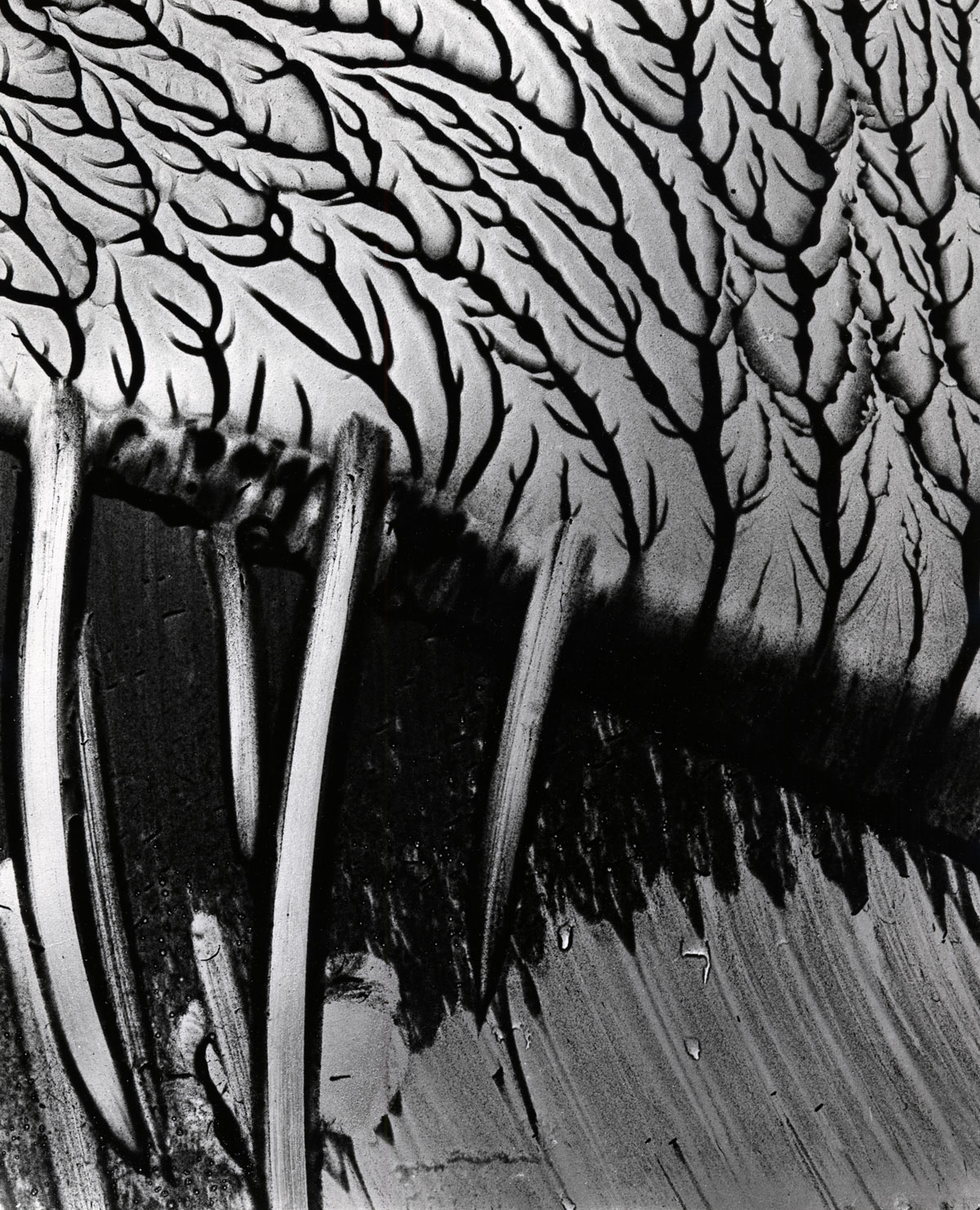
Although Weston saw early success with his work included in major exhibitions, this did not translate into a steady income. Like most artists during the Great Depression, the Federal Art Project – a branch of the Works Progress Administration – employed Weston, first as a sculptor and then later as a photographer. He quit the FAP in December of 1936 after about two and half years because he had no passion for the documentary nature of the work and it impinged upon time for his personal projects, something that he could not bear for long. Throughout the thirties and forties, he worked intermittently – and discontentedly – as a portrait and industrial photographer to stave off poverty and support his daughter who was born in 1938. In complete contrast to the realistic, documentary style of his FAP and commissioned works, an untitled photograph from 1937 is an extreme close-up of paint that is almost organic in appearance, with leaf-like veins in the upper portion of the image. The subject is essentially unrecognisable, which is a defining characteristic of many of Weston’s photographs.

The slim Depression years segued into the tumultuousness of World War II, during which Weston served in the US Army before a much-requested transfer to the US Signal Corps stationed him to work as a photographer in New York. At the end of the war, when Brett returned to Carmel, CA, where the Weston family had made their long-time home, he found his father beginning to show marked symptoms of Parkinson’s disease, which would increasingly debilitate the elder Weston in the last decade of his life. Before Edward’s death in 1958, he enlisted his sons Brett and Cole and a small group of trusted assistants to secure his lasting legacy by making thousands of prints under his supervision. In addition to printing work for his father, during this time, Brett also worked on his Guggenheim fellowship project and his second and third portfolios, White Sands (1949) and New York (1954).

Besides photographing the beaches of Carmel, one of which was dubbed “Weston Beach,” Brett also traveled up and down the California coast countless times over the decades. He repeatedly returned to capture the dunes of Oceano, and these images range from sweeping vistas to striking abstractions. An image from 1952, Dune, Oceano, although not technically a detail, falls into the latter category. The dunes appear wave-like and swirling, and a dark, somewhat-menacing shadow at the centre – similar to the roofline image taken in Mexico – provides graphic force. Jellyfish, California, another beach image, taken in 1967, is a close-up of one of the bulbous marine animals washed ashore. In contrast to the ethereal and weightless appearance jellyfish take underwater, it looks monumental and grotesquely beautiful. The curving form expands beyond the picture’s boundaries and in place of luminescence is a gradation of pure white reflections to jet-black striated patterns on the bell.

Although the tendency to work close-up had always been present in Weston’s work, it became much more pronounced and obvious after health issues necessitated a change in camera equipment. For over thirty years, Weston worked with a large format 8 x 10 camera and preferred contact prints (versus enlarging from smaller negatives). However, a heart attack in 1967 and an ongoing battle with angina forced Weston to switch to a smaller camera because he could no longer manage the bulky equipment. In 1968, he began using the Rollei SL-66 almost exclusively. The camera used roll film that produced small, square negatives and allowed the artist to work close-up with ease. As a result, his work became even more intent on exploring specific elements and abstract qualities. Sand and Kelp from around 1970 is a lyrical example of this. Individual grains of sand are visible and marked by traces of implied movement, both in the dancing shadows of the kelp and the trailing patterns lightly indented into the surface.

While Weston had traveled steadily and as often as he could afford to in his younger years – expeditions that included Europe, Japan, the Pacific Northwest, Baja California, and Mexico – his later years were spent primarily in Hawaii. The tropical climate was beneficial for his health, and the varied terrain provided limitless visual appeal. In 1979, the photographer purchased land there on the slopes of a volcanic mountain. He became especially engrossed with the lava formations and the verdant and spectacular plant life, which he photographed until his death in 1993.

Weston achieved, within his lifetime, the recognition and financial comforts of a highly esteemed photographer. Even so, following his death, Brett’s reputation was eclipsed in favour of his father, due in part to the notion that there wasn’t room for two Westons in the canon of modernist photography. The 2008 exhibition Out of the Shadow (Oklahoma City Museum of Art and The Phillips Collection) and his biography A Restless Eye (2011) have begun to remedy this situation. Significant Details furthers that work by centring on the uncharted, closeup images that characterise Weston’s innate and distinctive eye. These photographs reveal the major themes present in his oeuvre: a focus on natural and urban landscapes and the objects therein, the absence of human presence and apparent narrative, and an extraordinary ability to extract the microcosm from the macrocosm.

Erin Aitali, Director of Exhibitions and Registrar


Brett Weston (American, 1911-1993) 'Broken Glass, California' 1954


Brett Weston (American, 1911-1993)
Broken Glass, California
1954
Silver gelatin print
8 x 10 inches
The Brett Weston Archive
Courtesy Christian Keesee Collection, 2016


Brett Weston (American, 1911-1993) 'Torn Leaf, Hawaii' 1978


Brett Weston (American, 1911-1993)
Torn Leaf, Hawaii
1978
Silver gelatin print
10 3/4 x 12 inches
The Brett Weston Archive
Courtesy Christian Keesee Collection, 2016


Brett Weston (American, 1911-1993) 'Jellyfish, California' 1967


Brett Weston (American, 1911-1993)
Jellyfish, California
1967
Silver gelatin print
7 5/8 x 9 5/8 inches
The Brett Weston Archive
Courtesy Christian Keesee Collection, 2016


Brett Weston (American, 1911-1993) 'Cracked Paint' 1937 (printed later)


Brett Weston (American, 1911-1993)
Cracked Paint
1937 (printed later)
Silver gelatin print
12 1/2 x 10 1/8 inches
The Brett Weston Archive
Courtesy Christian Keesee Collection, 2016


Like Broken Glass, California (1954, above), this image of cracked paint is an extreme close-up to the point that the subject is indistinguishable. Instead pure form becomes the focus. This intense focus also characterises Weston’s approach to life; he prioritised his photography above all else, often at the expense of both financial stability and personal relationships (he was married four times and had countless lovers).

In 1937 Weston was living with his first wife, Cicely, in San Francisco who was employed as a violinist in the WPA symphony. Weston had recently quit the WPA because, as he explained in a letter to his father in December 1936, “It has been a good thing in many ways but after 2 1/2 years I feel that I have had enough experience of this kind. I feared it was beginning to tell on me as well as my work. I would rather divorce, starve, anything, than have this happen. The actual work I’ve been doing for the work program has been child’s play but the sacrifice of one’s priceless days… has become too much.”


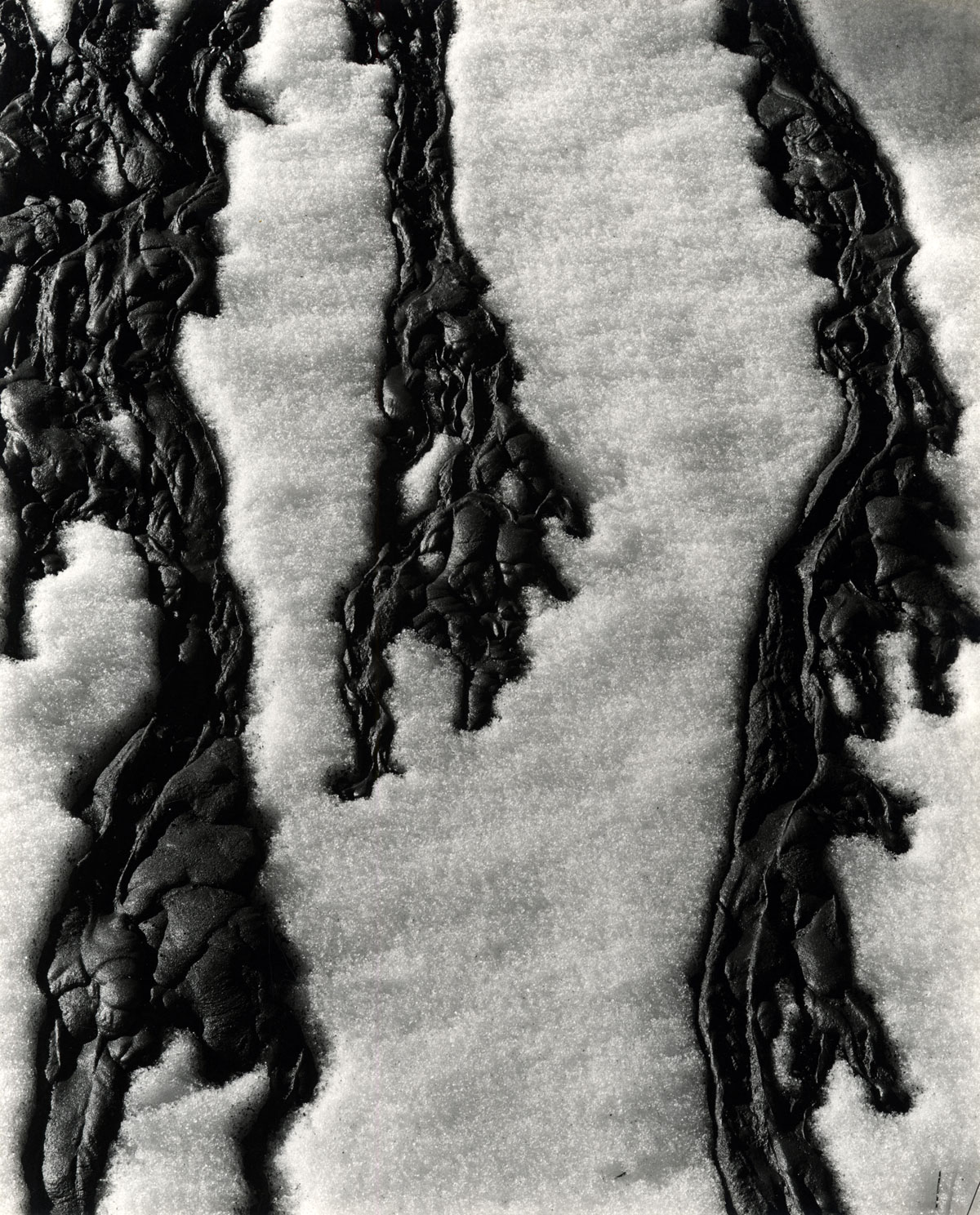
Brett Weston (American, 1911-1993) 'Snow' 1954


Brett Weston (American, 1911-1993)
Snow
1954
Silver gelatin print
9 1/2 x 7 5/8 inches
The Brett Weston Archive
Courtesy Christian Keesee Collection, 2016


Pasadena Museum of California Art

This museum closed in October 2018

LIKE ART BLART ON FACEBOOK

Back to top