Exhibition: ‘Modernités. Photographie brésilienne (1940-1964)’ at the Fondation Calouste Gulbenkian, Paris

Exhibition dates: 6th May – 26th July 2015

Curators: Antonio Pinto Ribeiro, Ludger Derenthal and Samuel Titan Jr.


Thomaz Farkas (Hungarian-Brazilian, 1924-2011) 'Monumental steps of the gallery Prestes Maia, São Paulo' 1946


Thomaz Farkas (Hungarian-Brazilian, 1924-2011)
Monumental steps of the gallery Prestes Maia, São Paulo
Escalier monumental de la Galerie Prestes Maia, São Paulo

1946
Gelatin Silver photograph
Courtesy of the artist and the Instituto Moreira Salles


Another exhibition on an unusual subject that this website likes supporting: this time Brazilian photography, of which I know very little.

The feeling I get from the photographs in this posting is of an overwhelming interest in avant-garde, urban photography and humanist photography. The standout is the work of José Medeiros (1921-1990), especially the two photographs of an initiation ritual in Salvador. Their force majeure, their irresistible compulsion (presence, ritual), composition and complexity stand them head and shoulders above any of the other works in the posting.

Dr Marcus Bunyan


Many thankx to the Fondation Calouste Gulbenkian for allowing me to publish the photographs in the posting. Please click on the photographs for a larger version of the image.
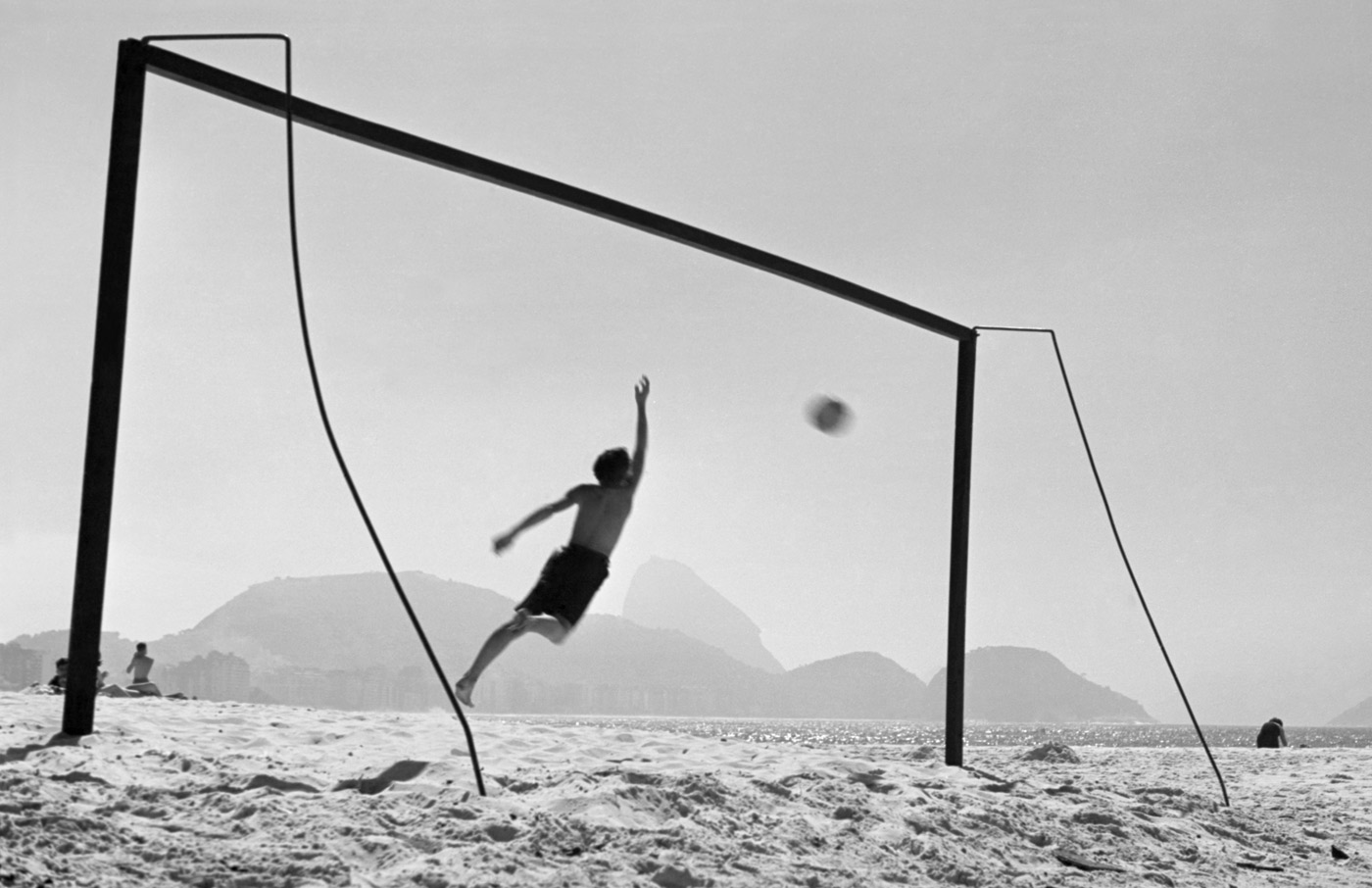


Thomaz Farkas (Hungarian-Brazilian, 1924-2011) 'Copacabana Beach, Rio de Janeiro' 1947


Thomaz Farkas (Hungarian-Brazilian, 1924-2011)
Copacabana Beach, Rio de Janeiro
Plage de Copacabana, Rio de Janeiro

1947
Gelatin Silver photograph
Courtesy of the artist and the Instituto Moreira Salles

 

Thomaz Farkas (Hungarian-Brazilian, 1924-2011) 'Tiles, São Paulo' 1945


Thomaz Farkas (Hungarian-Brazilian, 1924-2011)
Tiles, São Paulo
Tuiles, São Paulo

1945
Gelatin Silver photograph
Courtesy of the artist and the Instituto Moreira Salles

 

Thomaz Farkas (Hungarian-Brazilian, 1924-2011) 'Interior façade of the building São Borja, Rio de Janeiro' c. 1945


Thomaz Farkas (Hungarian-Brazilian, 1924-2011)
Interior façade of the building São Borja, Rio de Janeiro
Façade intérieure du bâtiment São Borja, Rio de Janeiro

c. 1945
Gelatin Silver photograph
Courtesy of the artist and the Instituto Moreira Salles
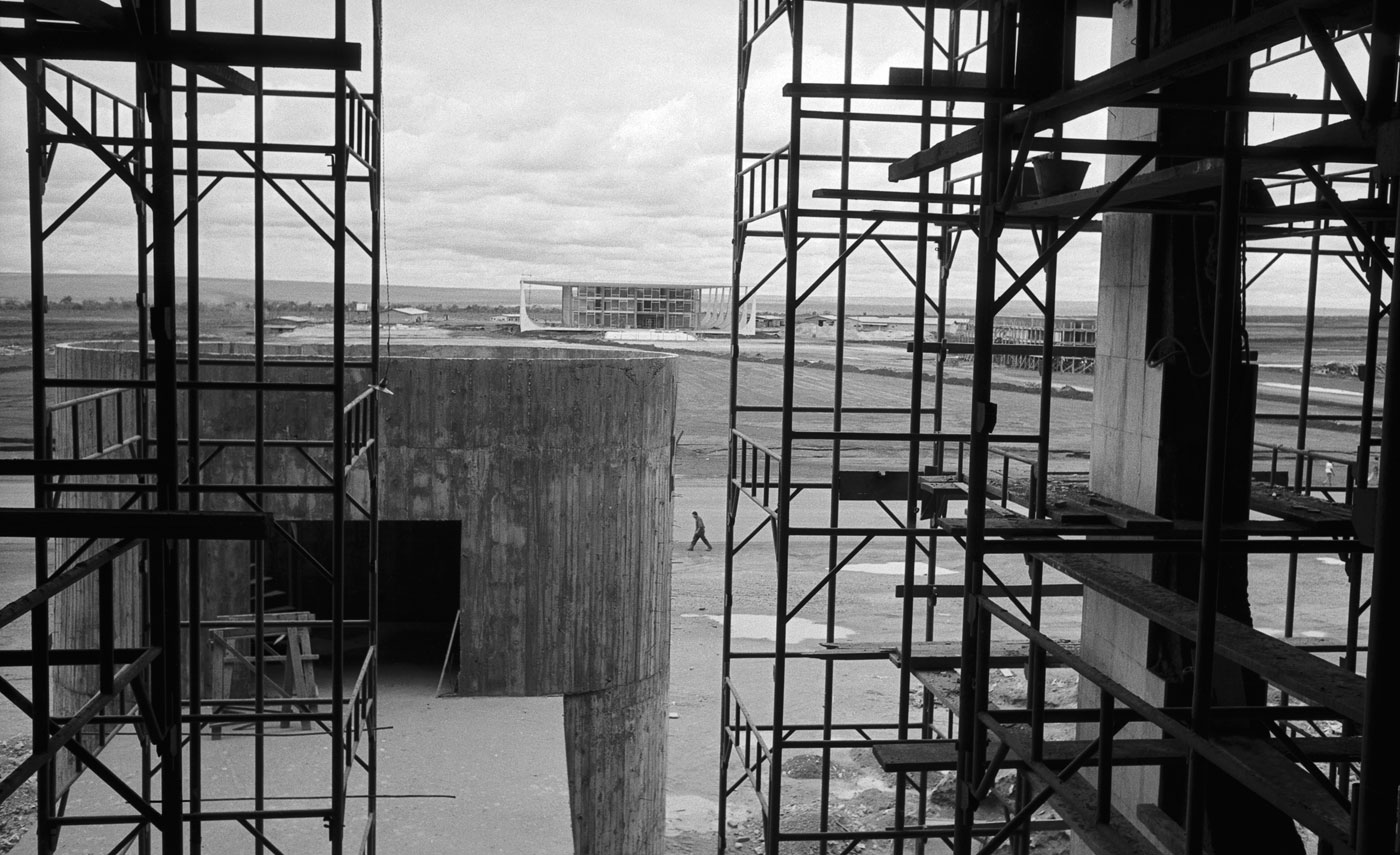
 

Thomaz Farkas (Hungarian-Brazilian, 1924-2011) 'Construction Site, Brasília' c. 1958


Thomaz Farkas (Hungarian-Brazilian, 1924-2011)
Construction Site, Brasília
Chantier de construction, Brasília
c. 1958
Gelatin Silver photograph
Courtesy of the artist and the Instituto Moreira Salles
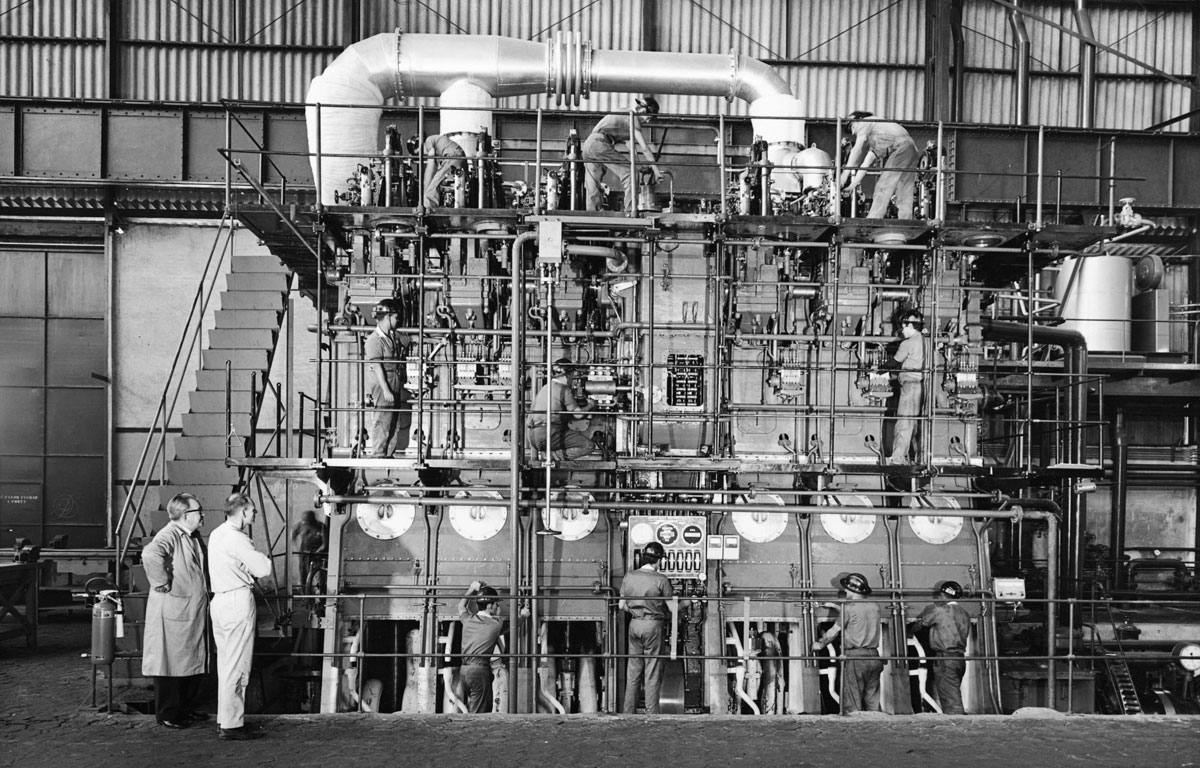
 

Hans Gunter Flieg (Brazilian, b. 1923) 'Construction engines in Villares plant, São Caetano do Sul, São Paulo' 1960


Hans Gunter Flieg (Brazilian, b. 1923)
Construction engines in Villares plant, São Caetano do Sul, São Paulo
Construction de moteurs à l’usine Villares, São Caetano do Sul, São Paulo

1960
Contemporary digital print
Courtesy of the artist and the Instituto Moreira Salles
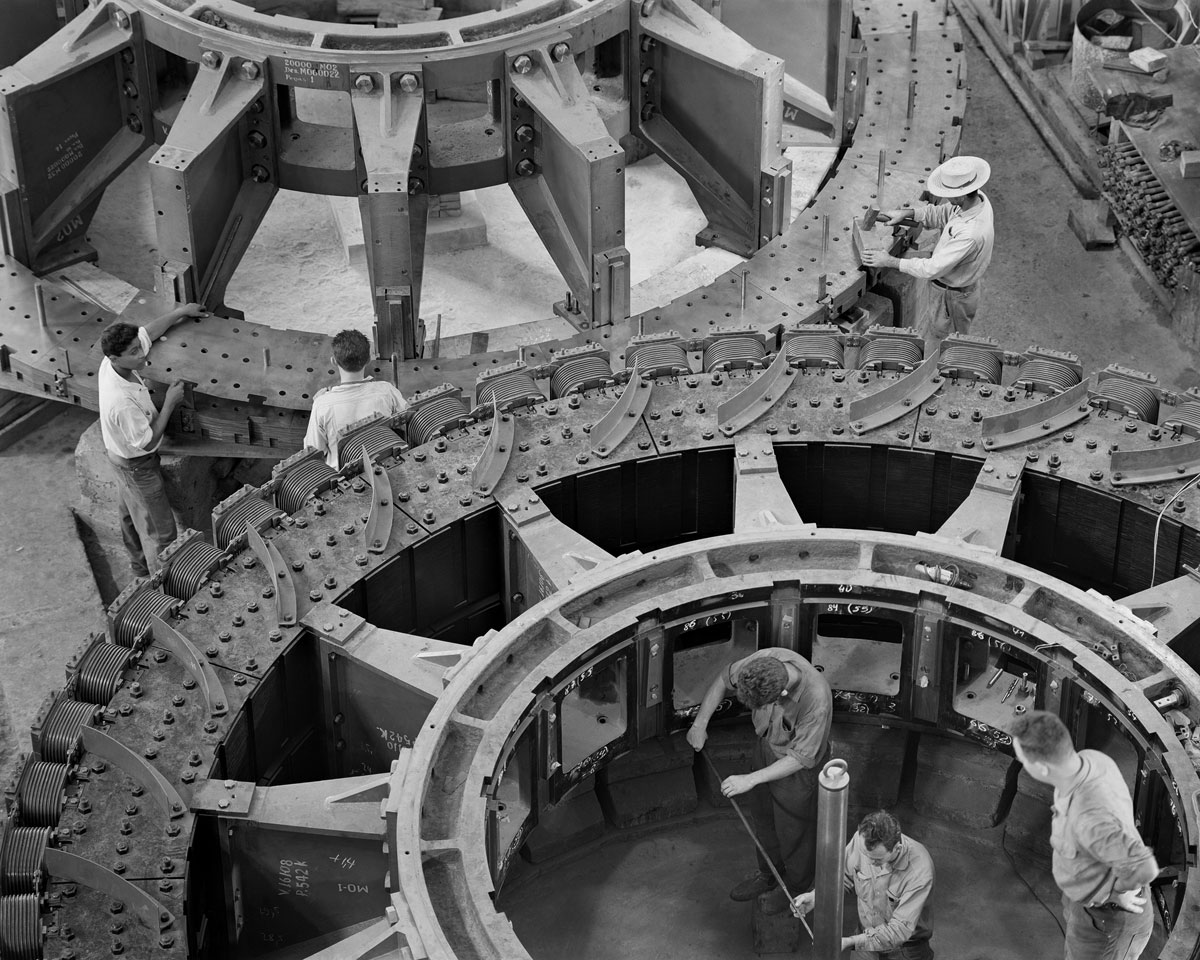
 

Hans Gunter Flieg (Brazilian, b. 1923) 'Brown Boveri Electric Industry S / A Osasco, São Paulo' c. 1960


Hans Gunter Flieg (Brazilian, b. 1923)
Brown Boveri Electric Industry S / A Osasco, São Paulo
Industrie Electrique Brown Boveri S/A Osasco, São Paulo

c. 1960
Contemporary silver gelatin print
Courtesy of the artist and the Instituto Moreira Salles


Hans Gunter Flieg (Brazilian, b. 1923) 'Mercedes Benz booth at the International Exhibition of Industry and Commerce São Cristóvão (project Henri Maluf), Rio de Janeiro' 1960


Hans Gunter Flieg (Brazilian, b. 1923)
Mercedes Benz booth at the International Exhibition of Industry and Commerce São Cristóvão (project Henri Maluf), Rio de Janeiro
Stand de Mercedes Benz lors de l’Exposition internationale d’industrie et de commerce de São Cristovão (projet de Henri Maluf), Rio de Janeiro

1960
Contemporary silver gelatin print
Courtesy of the artist and the Instituto Moreira Salles


Hans Gunter Flieg (Brazilian, b. 1923) 'Eletroradiobras Store (architectural project Majer Botkowski), São Paulo' c. 1956


Hans Gunter Flieg (Brazilian, b. 1923)
Eletroradiobras Store (architectural project Majer Botkowski), São Paulo
Magasin Eletroradiobras (projet architectural de Majer Botkowski), São Paulo

c. 1956
Contemporary silver gelatin print
Courtesy of the artist and the Instituto Moreira Salles


History has taught us that cosmopolitism, people’s mobility and globalised artistic movements are not necessarily recent phenomenons. The exhibition titled Modernités. Photographie brésilienne (1940-1964) aims to demonstrate how contemporaneity does not emerge from a void but is built via continuities and ruptures. At the beginning of the 1940s, during the Second World War, Brazil was a destination of choice for thousands of emigrants. The country went through a unique modernisation process affecting all sectors of Brazilian society.

The exhibition explores this extraordinary transformation through the eyes of four photographers with very different styles and sensibilities. Marcel Gautherot (1910-1996) was a Parisian from a working class background who greatly admired Le Corbusier and Mies van der Rohe’s work; he had access to Brasília as early as 1958, thanks to his friendship with Oscar Niemeyer. Hans Gunter Flieg (1923) fled nazism as a German Jew and came to Brazil in 1939 where he specialised in photographing industries. Thomas Farkas (1924-2011), a Hungarian who emigrated to Brazil, is probably the most well-known of these four photographers, and the most avant-garde of this group since he was interested in photography as a work of art from a very young age. Finally, José Medeiros (1921-1990), a photojournalist who was born in a poor State with very little cultural tradition, had learnt photography by working with the Carioca newspapers. He was attentive to the changes and ruptures in all the social classes.

This exhibition allows the perception of a moment in history: the untouched Amazonia, the beaches and daily life in Rio de Janeiro, as well as the carnival, football, African religions and their initiation rituals, river ports and the Northern fishermen, industries and factories, baroque churches, Indian tribes, mechanical machinery, popular festivals, modernist buildings and Brasília, the new capital. These wide ranging themes sketch a portrait of Brazil during a particular era that ended with the beginning of the military dictatorship in 1964. Through the lens of these four artists whose practices and origins were so diverse, we can also anticipate notions of alterity and cosmopolitism that define our world today.”

Press release from the Fondation Calouste Gulbenkian website


Modernités. Photographie brésilienne (1940-1964)


Marcel Gautherot (Brazilian born France, 1910-1996) 'Maracanã Stadium, Rio de Janeiro' c. 1967


Marcel Gautherot (Brazilian born France, 1910-1996)
Maracanã Stadium, Rio de Janeiro
Stade du Maracanã, Rio de Janeiro

c. 1967
Contemporary silver gelatin print
Courtesy of the artist and the Instituto Moreira Salles


“Photographs by Marcel Gautherot present with pungent and sharp clarity the contrast between the apparent purity of geometric shapes and the modes of rustic and manual labour… ”


Luiz Renato Martina


Marcel Gautherot (1910-96) was a great master of twentieth-century photography, best known for his documentation in some three-thousand images of the construction of the Brazilian capital city Brasilia from 1958 to 1960. Nevertheless, his work remains relatively little known. Even those who are familiar with his beautiful photographs of the construction of Oscar Niemeyer’s Brasilia may be surprised to learn that he produced such a large and strikingly diverse body of work.

The first book to look back on Gautherot’s entire career, Marcel Gautherot: The Monograph takes readers through the architect and photographer’s time as an apprentice in Paris, where he attended evening classes and took an ardent interest in Esprit Nouveau and the Bauhaus, as well as their proponents, including Walter Gropius, Ludwig Mies van der Rohe, and Le Corbusier. In the 1930s, Gautherot abandoned his studies in architecture to follow his passion for photography. This led him to travel extensively, and he eventually came to live and work in the city of Rio de Janeiro, where he was welcomed by a circle of artists and intellectuals who became important figures in Brazilian culture, including the architects Oscar Niemeyer and Roberto Burle Marx.

Text from the Amazon website
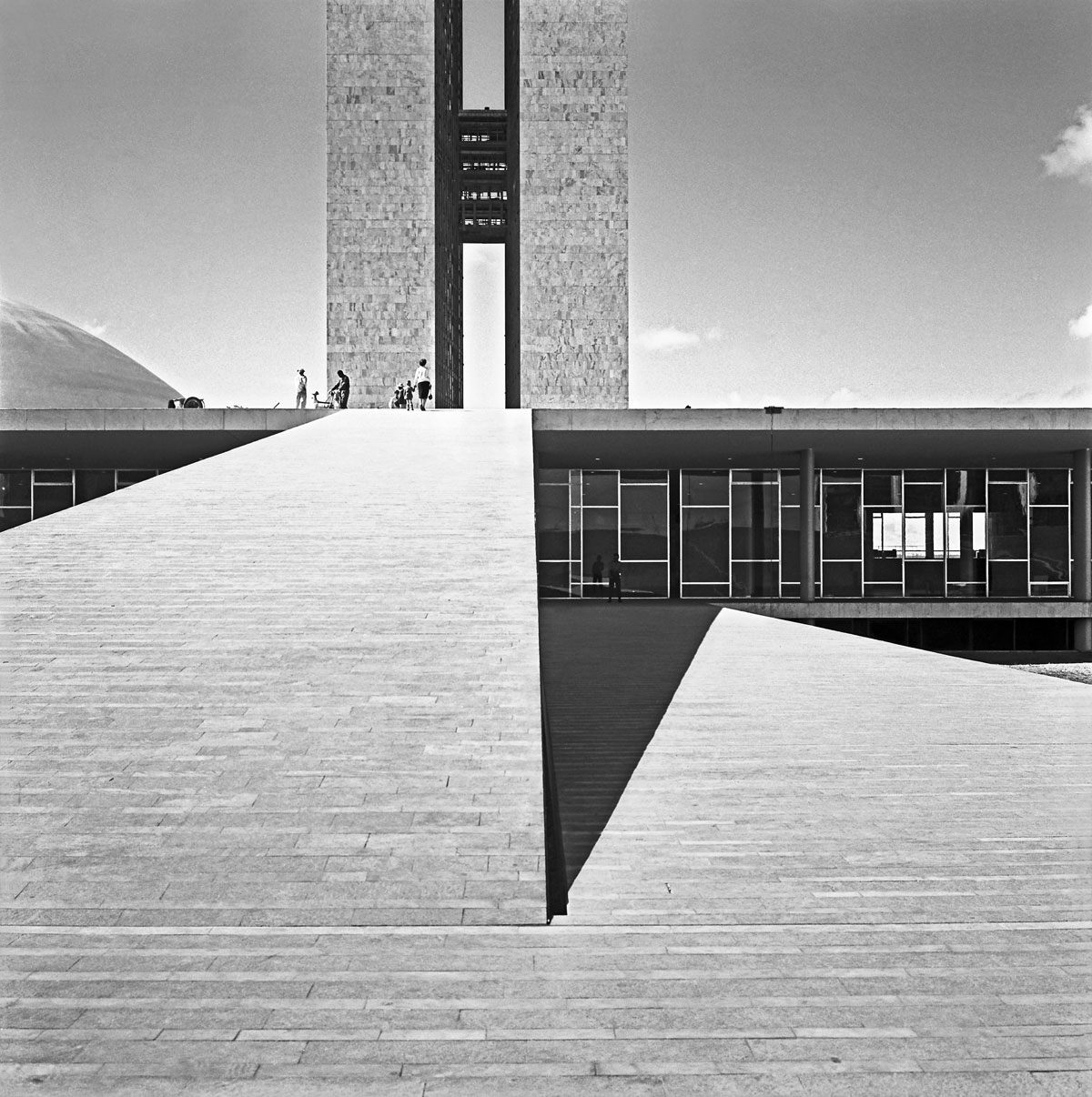
 

Marcel Gautherot (Brazilian born France, 1910-1996) 'Palace of the National Congress, Brasília' 1960


Marcel Gautherot (Brazilian born France, 1910-1996)
Palace of the National Congress, Brasília
Palais du Congrès National, Brasília

1960
Contemporary silver gelatin print
Courtesy of the artist and the Instituto Moreira Salles
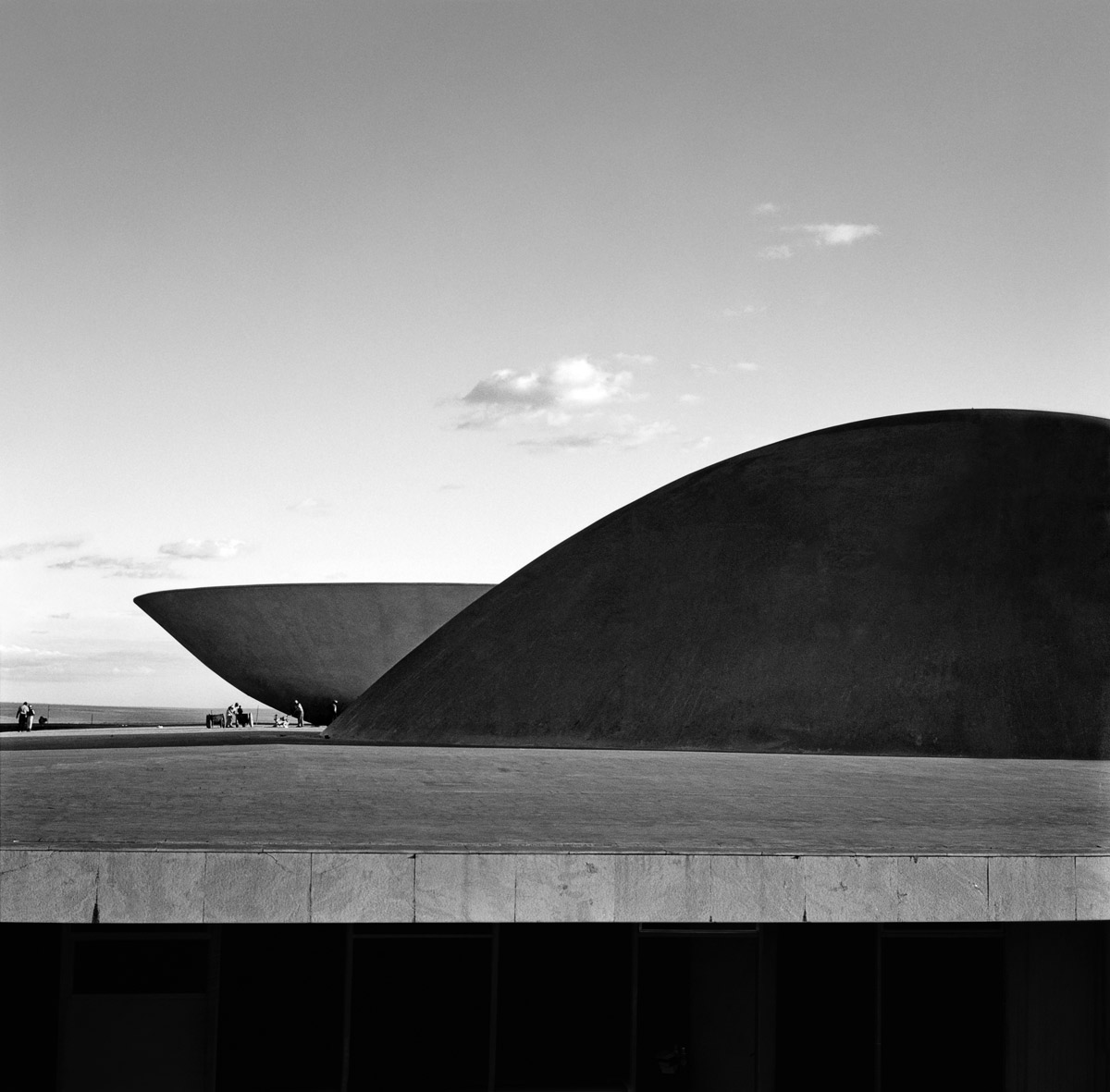
 

Marcel Gautherot (Brazilian born France, 1910-1996) 'Palace of the National Congress, Brasília' 1960


Marcel Gautherot (Brazilian born France, 1910-1996)
Palace of the National Congress, Brasília
Palais du Congrès National, Brasília

1960
Contemporary silver gelatin print
Courtesy of the artist and the Instituto Moreira Salles
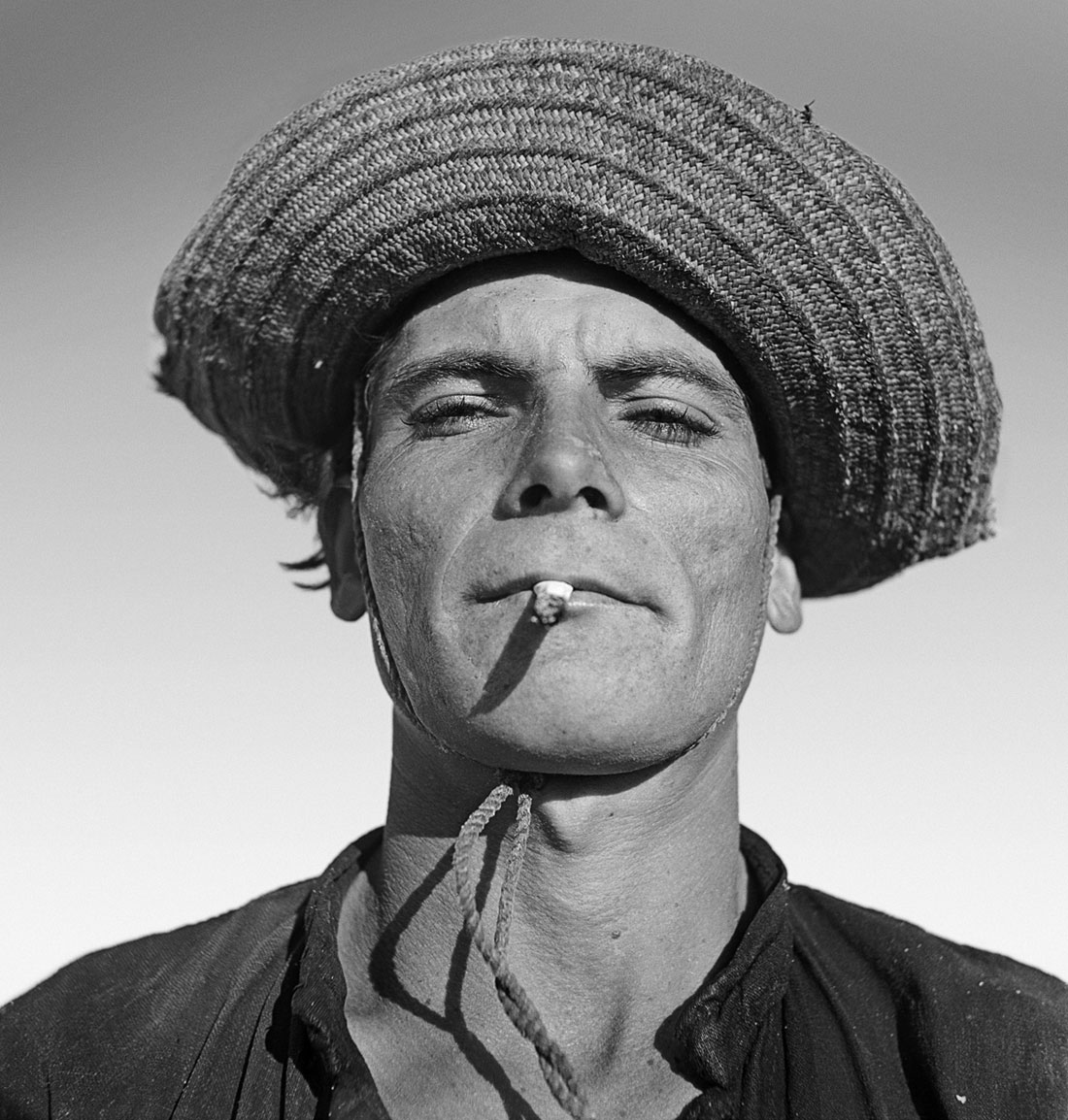
 

Marcel Gautherot (Brazilian born France, 1910-1996) 'Jangadeiro, Aquiraz Ceará' 1950


Marcel Gautherot (Brazilian born France, 1910-1996)
Jangadeiro, Aquiraz Ceará
Jangadeiro, Aquiraz Etat du Ceará

1950
Contemporary silver gelatin print
Courtesy of the artist and the Instituto Moreira Salles
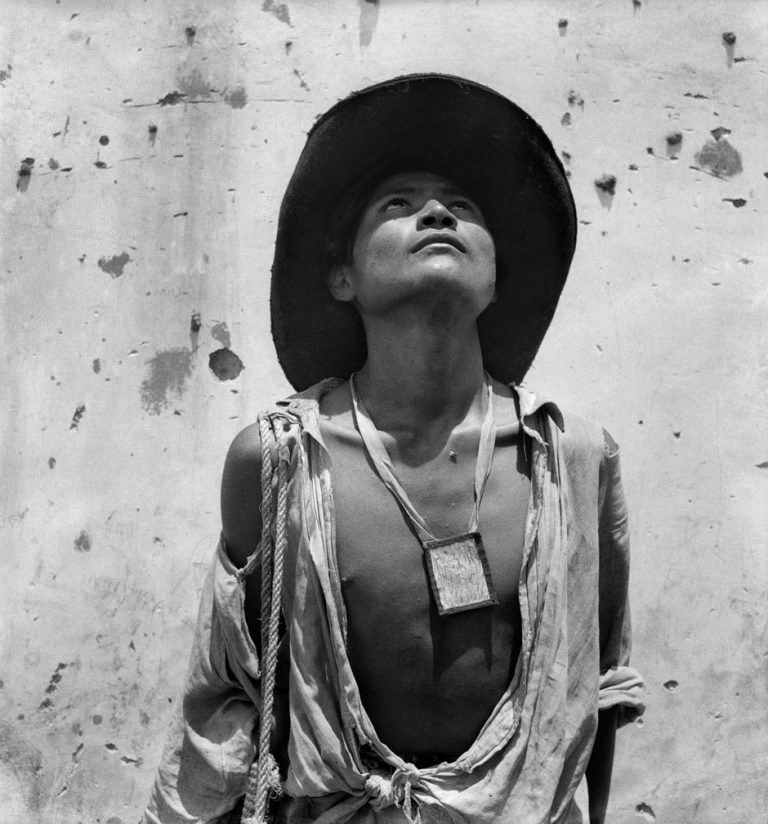
 

Marcel Gautherot (Brazilian born France, 1910-1996) 'Indian' México, 1936-1937


Marcel Gautherot (Brazilian born France, 1910-1996)
Indian
México, 1936-1937
Contemporary silver gelatin print
Courtesy of the artist and the Instituto Moreira Salles
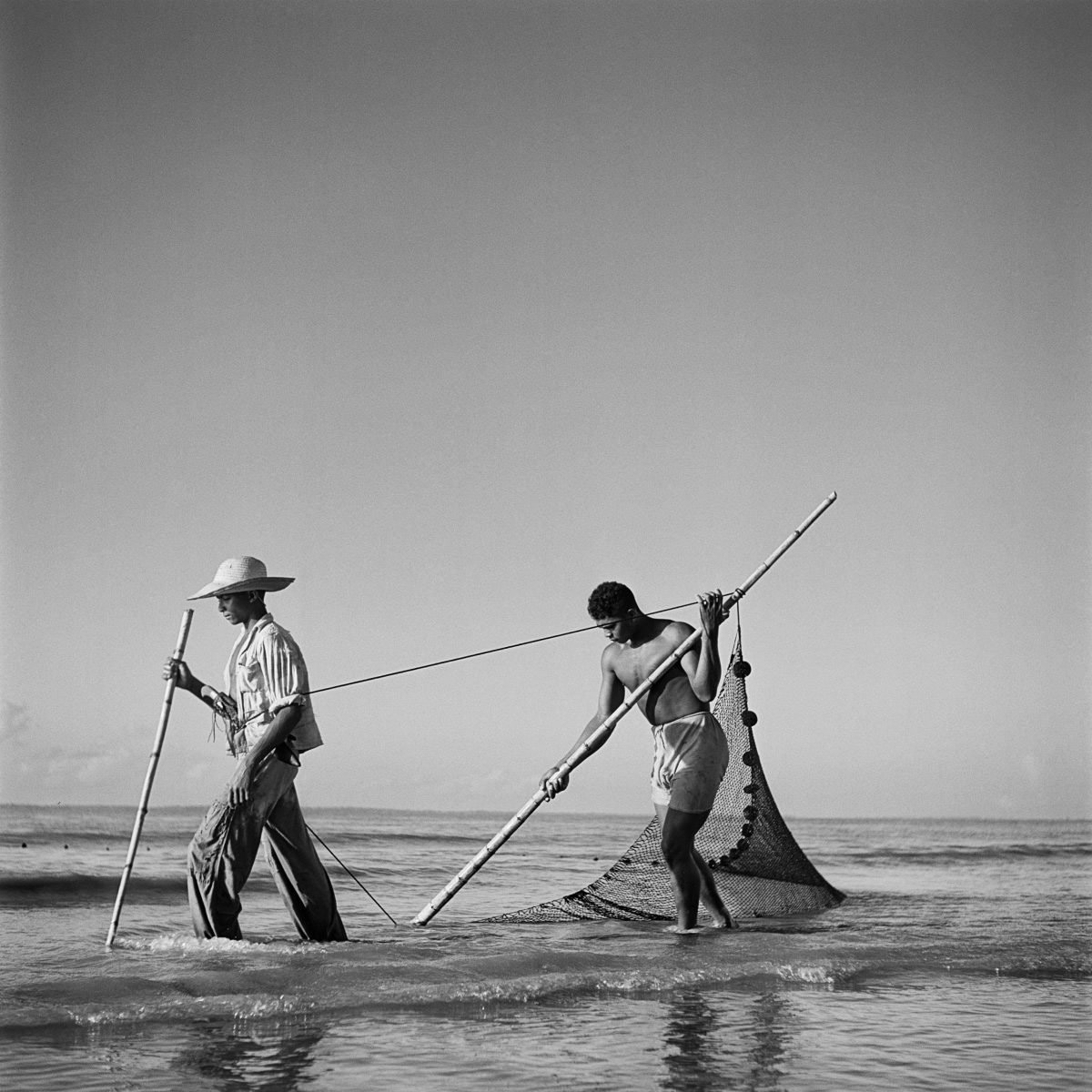
 

Marcel Gautherot (Brazilian born France, 1910-1996) 'Fishermen at Ilha Mexiana, Chaves, PA. Brazil' c. 1943


Marcel Gautherot (Brazilian born France, 1910-1996)
Fishermen at Ilha Mexiana, Chaves, PA. Brazil
c. 1943
Contemporary silver gelatin print
Courtesy of the artist and the Instituto Moreira Salles
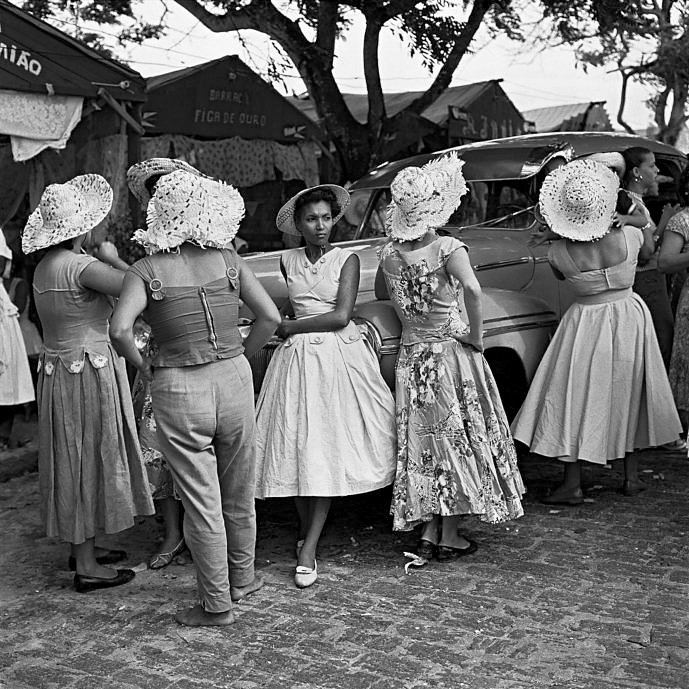
 

Marcel Gautherot (Brazilian born France, 1910-1996) 'Festivities in the Ribeira district, Salvador' c. 1958


Marcel Gautherot (Brazilian born France, 1910-1996)
Festivities in the Ribeira district, Salvador
c. 1958
Contemporary silver gelatin print
Courtesy of the artist and the Instituto Moreira Salles
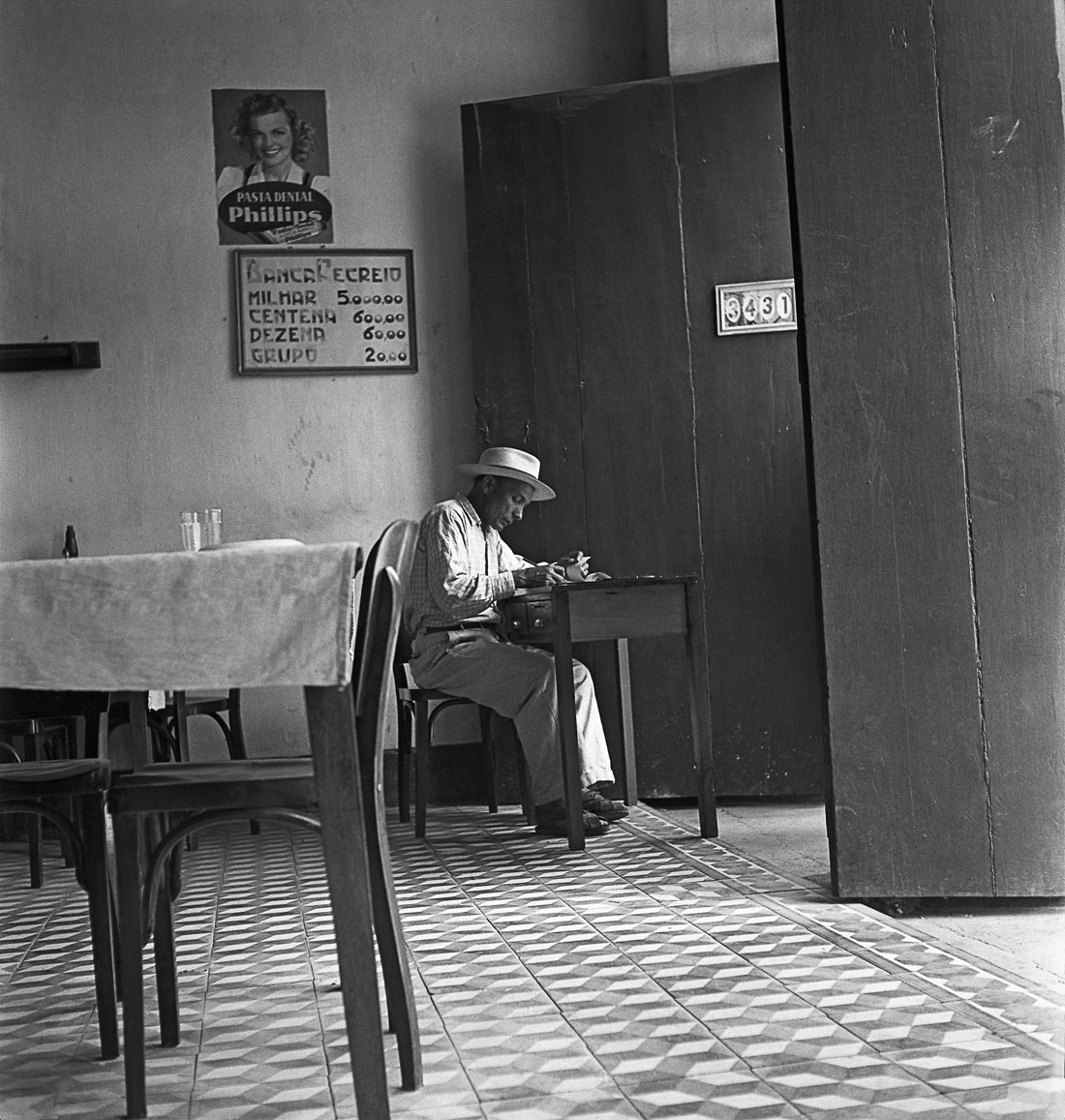
 

José Medeiros (Brazilian, 1921-1990) 'Man sitting in a cafe, probably in Northeast Brazil' Nd


José Medeiros (Brazilian, 1921-1990)
Man sitting in a cafe, probably in Northeast Brazil
Homme assis dans un café, probablement dans le Nordeste

Nd
Contemporary silver gelatin print
Courtesy of the artist and the Instituto Moreira Salles


José Medeiros (Brazilian, 1921-1990)

José Medeiros was a Brazilian reporter-photographer and director of photography, born in 1921 in Teresina, in the Sertão of Northeastern Brazil, and died in 1990 in L’Aquila, Italy. He is considered a master of photojournalism in his country.

He was born in 1921, and was the oldest of five children. He had a brother and three sisters. He was twelve years old when his father, an art enthusiast and amateur photographer, taught him photographic development and printing. He began to photograph family friends using a Fox Kodak donated by his godfather. With the money he earned, he bought a German camera in 9 x 12 format from his father. His first commission was to photograph a local politician, but the mission was cut short.

His family moved to Rio in 1939. He was eighteen and enrolled in a preparatory course to enter university and study architecture. He was not received at the university, so he continued to do photography and set up a shooting studio in his apartment in parallel with a job in the postal service and then in the national coffee department. He began to make portraits of important artists of the time and became known for this work. He was quickly offered contracts for the reviews Tabu, Rio and Sombra. He resigned from public service and married in 1948.

He is one of the first photographers to have met, in 1949, the populations of Xavantes Indians, most of whom had never been in contact with the rest of Brazil. In 1956, he met the French photographer Jean Manzon who integrated him into the team of the illustrated newspaper O Cruzeiro for which he would collaborate for fifteen years. This magazine is innovative in the place given to photography, like its colleagues Life and Paris Match.

His work reflects the many facets and transformations of Brazilian society in the 1940s and 1950s.

In 1962, he left O Cruzeiro to found a photographic agency with photographer Flávio Damm. From the 1960s, José Medeiros also had an important cinematographic career as director of photography and worked for the most prestigious filmmakers of the Brazilian Cinema Novo. Director Glauber Rocha considers that “he is the only one who has known how to translate Brazilian light.”

While participating in a 1990 Brazilian culture festival in the Italian city of L’Aquila, José Medeiros died of a heart attack at the age of 69.

The photographic work of José Medeiros, which has more than 20,000 photos, is kept at the Instituto Moreira Salles in Rio de Janeiro.

Text translated from the French Wikipedia website

 

José Medeiros (Brazilian, 1921-1990) 'Carnival in the nightclub Au Bon Gourmet, Rio de Janeiro' 1952


José Medeiros (Brazilian, 1921-1990)
Carnival in the nightclub Au Bon Gourmet, Rio de Janeiro
Carnaval dans la boîte Au Bon Gourmet, Rio de Janeiro

1952
Contemporary silver gelatin print
Courtesy of the artist and the Instituto Moreira Salles

 

José Medeiros (Brazilian, 1921-1990) 'Novice during the initiation ritual of the holy daughters, Salvador' 1951


José Medeiros (Brazilian, 1921-1990)
Novice during the initiation ritual of the holy daughters, Salvador
Novice pendant le rituel d’initiation des filles-de-saint, Salvador

1951
Contemporary silver gelatin print
Courtesy of the artist and the Instituto Moreira Salles
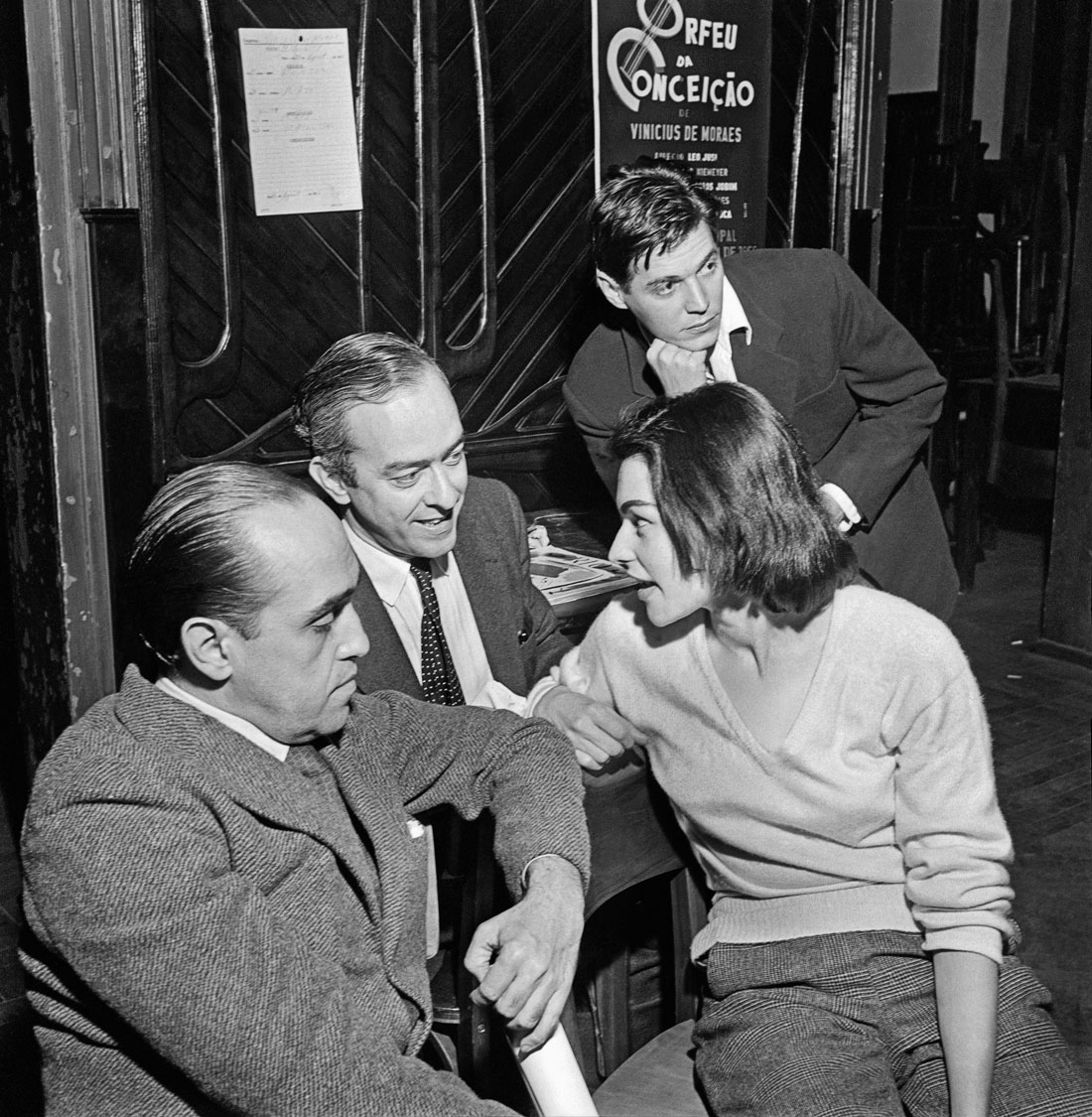
 

José Medeiros (Brazilian, 1921-1990) 'Oscar Niemeyer, Vinicius de Moraes, his wife Lila and Tom Jobim Bôscoli (background), behind the scenes of the first performance of Orfeu da Conceição, Rio de Janeiro' 1956


José Medeiros (Brazilian, 1921-1990)
Oscar Niemeyer, Vinicius de Moraes, his wife Lila and Tom Jobim Bôscoli (background), behind the scenes of the first performance of Orfeu da Conceição, Rio de Janeiro
Oscar Niemeyer, Vinicius de Moraes, son épouse Lila Bôscoli et Tom Jobim (au fond), dans les coulisses de la première représentation de Orfeu da Conceição , Rio de Janeiro

1956
Contemporary silver gelatin print
Courtesy of the artist and the Instituto Moreira Salles
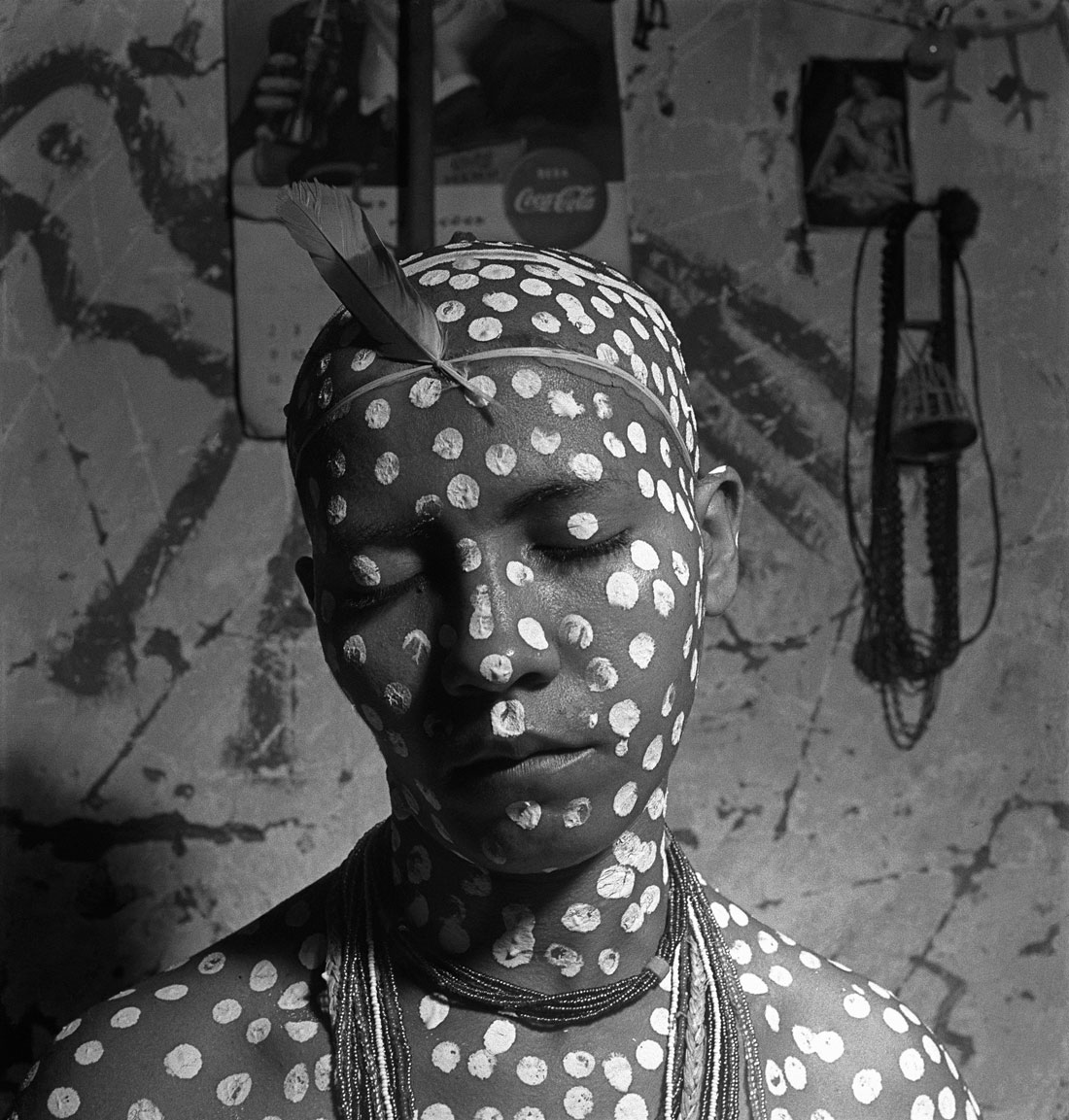
 

José Medeiros (Brazilian, 1921-1990) 'Novice painted with white dots that allude to Oxalá, the god of creation, and with red feathers (ekodidé), the initiation ritual, Salvador' 1951


José Medeiros (Brazilian, 1921-1990)
Novice painted with white dots that allude to Oxalá, the god of creation, and with red feathers (ekodidé), the initiation ritual, Salvador
Novice peinte de points blancs qui font référence à Oxalá, dieu de la création, elle porte la plume rouge (ekodidé) du rituel d’initiation, Salavador

1951
Contemporary silver gelatin print
Courtesy of the artist and the Instituto Moreira Salles
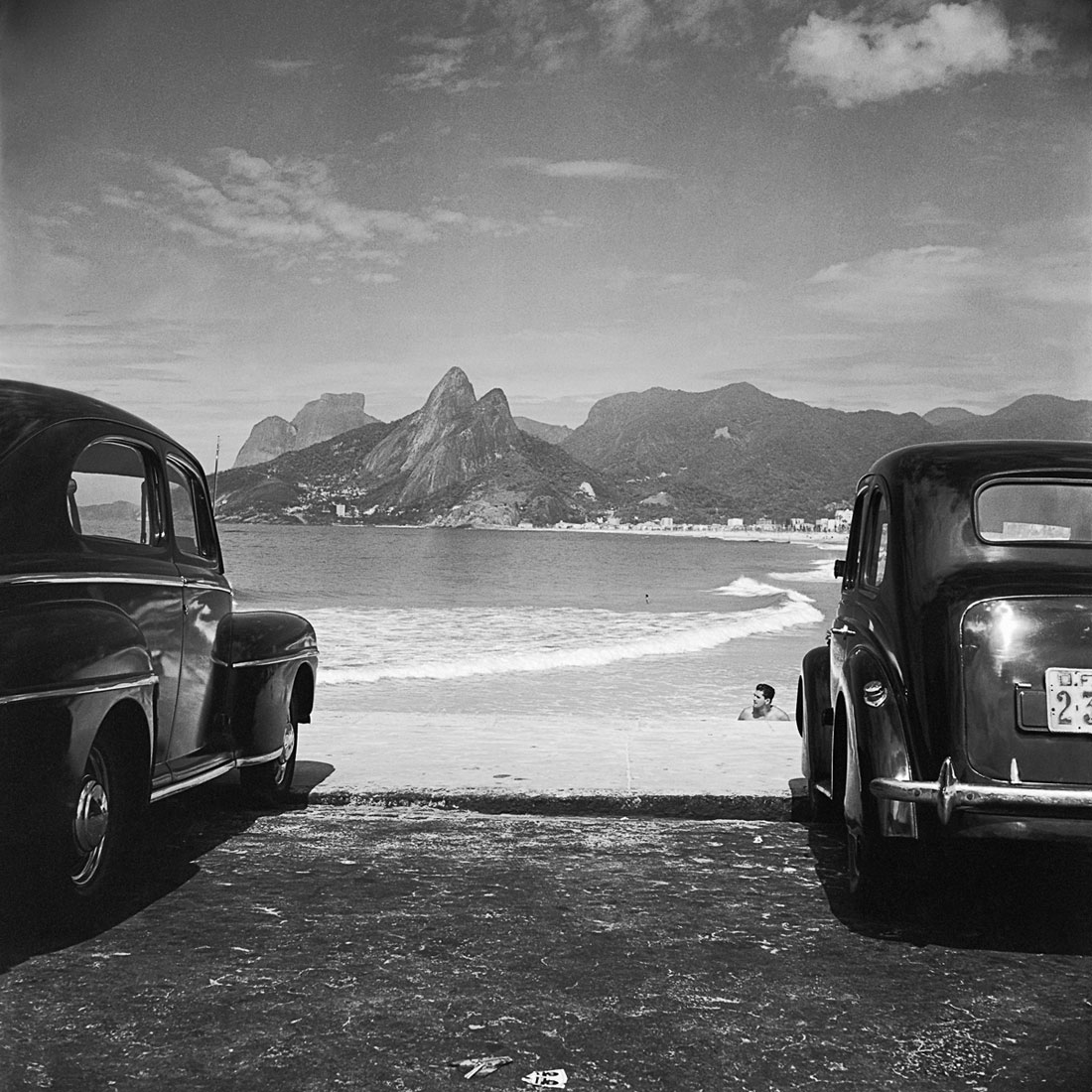
 

José Medeiros (Brazilian, 1921-1990) 'Pedra da Gávea, Morro dos Dois Irmãos and the beaches of Ipanema and of Leblon, Rio de Janeiro' c. 1955


José Medeiros (Brazilian, 1921-1990)
Pedra da Gávea, Morro dos Dois Irmãos and the beaches of Ipanema and of Leblon, Rio de Janeiro
c. 1955
Contemporary silver gelatin print
Courtesy of the artist and the Instituto Moreira Salles
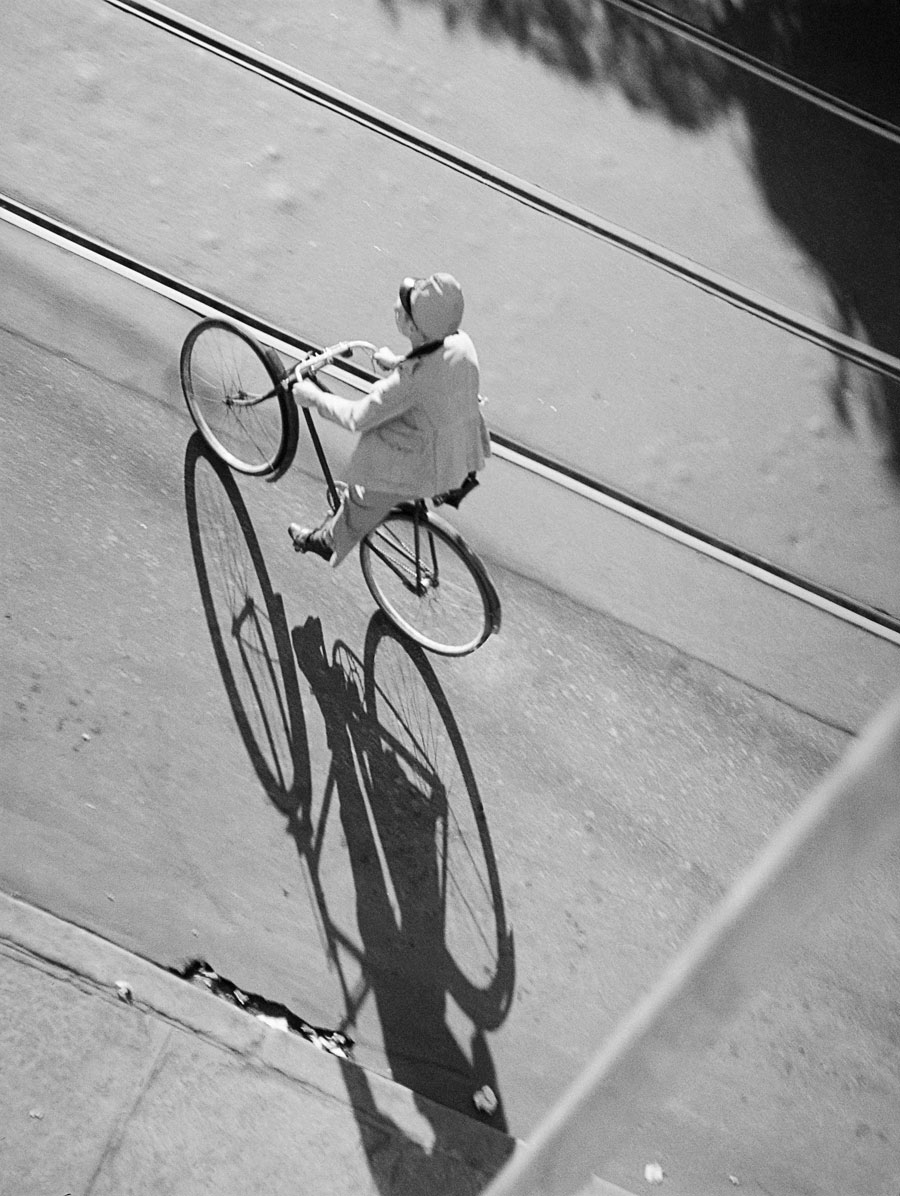
 

José Medeiros (Brazilian, 1921-1990) 'Woman on a bicycle crossing the railroad tracks, Rio de Janeiro' 1942


José Medeiros (Brazilian, 1921-1990)
Woman on a bicycle crossing the railroad tracks, Rio de Janeiro
Femme à vélo traversant les rails du tramway, Rio de Janeiro 

1942
Contemporary silver gelatin print
Courtesy of the artist and the Instituto Moreira Salles


Fondation Calouste Gulbenkian – Délégation en France
54, Bd Raspail
75006 Paris

Opening hours:
Monday, Wednesday, Thursday and Friday from 9am – 6pm
Saturday and Sunday from 11am – 6pm
Closed Tuesday

Fondation Calouste Gulbenkian website

LIKE ART BLART ON FACEBOOK

Back to top

Exhibition: ‘The Art of the Automobile: Masterpieces of the Ralph Lauren Collection’ at The Arts Décoratifs Museum, Paris

Exhibition dates: 28th April – 28th August 2011


Many thankx to The Arts Décoratifs Museum for allowing me to publish the photographs in the posting. Please click on the images for a larger version of the image.


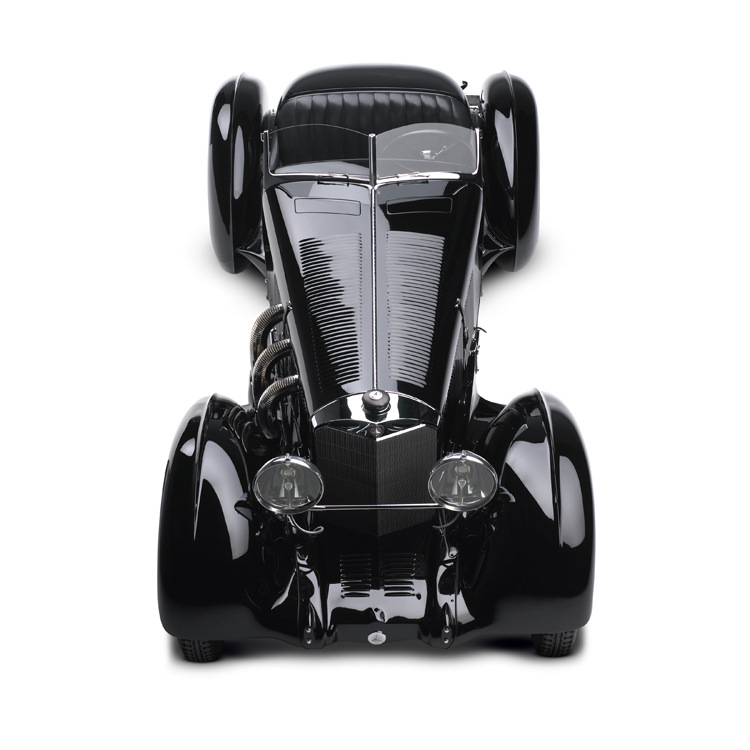
Mercedes Benz SSK “Count Trossi”, 1930


Mercedes Benz SSK “Count Trossi”
1930
Ralph Lauren collection
© Photo Michael Furman


The notion of line in a car echoes that of the perfectly harmonious line of trajectory. The design is never far from this line, even in those coachworks designed without drawing boards, of which some of the most marvellous examples are seen here. It is interesting to see that in the French language at least, cars have taken on board the concept of ligne (or “line”), a word with many meanings. Yet the term ligne, taken in the sense that it is used nowadays in reference to coachwork, is classified by French lexicographer Littré within the sphere of fine art, and defined by him as: “the general effect produced by the coming together and combination of different parties of either a natural object or a composition.” The natural development of language thus shows us the relationship between cars and fine art.


Excerpt from the catalog, Editions Les Arts Décoratifs, Paris 2011


In 1970, Les Arts Décoratifs presented a selection of competition cars, “Bolides Design.” To compile the exhibition, a special jury was assembled, featuring designers Joe Colombo, Roger Tallon and Pio Manzu, and the artists Jean-Paul Riopelle, Jean Tinguely and Victor Vasarely, as well as Robert Delpire and François Mathey. The jury chose the models with the idea of the car as a design object, a work of art, showing that “art and technique, each at their own level, are the expression of man and his relationship with design.”

The Ralph Lauren collection can be seen from the same perspective. Patiently assembled over several decades by the fashion designer in a quest for speed and performance, it includes some of the most extraordinary jewels in the crown of European automobile history, with beauty as its common denominator.

Within the collection are some of the most elegant and innovative cars in automotive history, from the “Blower” Bentley (1929), the Ferrari 250 GTO (1962), the famous Mercedes 300 SL (1955) and the unforgettable Jaguar “D type,” whose shark fin blazed a triumphant trail at Le Mans in 1955, 1956 and 1957. But the grand tourer, the Bugatti Atlantic (1938) of which only four models were produced, represents the ultimate in luxury while showcasing the evolution of styles and techniques on the road. Each of these exceptional vehicles was designed as a masterpiece blending technological innovation and boldness of style.

For its first presentation in Europe, the Ralph Lauren collection will be put on display by Jean-Michel Wilmotte, who has opted for an intimate visual approach as these vehicles stand out both for their overall design and detail, as well as for bodywork, chassis and engines.

The kinetic and sound of the vehicles will be reproduced by means of several films and recordings. A seminar on automobile design will also be held during the exhibition.

Press release from The Arts Décoratifs Museum website


Mercedes Benz SSK “Count Trossi”, 1930


Mercedes Benz SSK “Count Trossi”
1930
Ralph Lauren collection
© Photo Michael Furman


Chassis number SSK 36038, currently owned by Ralph Lauren, remained unsold by the Mercedes-Benz factory in 1928, but was then sent out to Japan in 1930, before being brought back to Europe. This car was put together by the young British coach builder, Willy White, based on a design suggested by its aristocratic owner-cum-industrialist, Count Carlo Felice Trossi, himself a racing driver. The SSK, the archetypal Mercedes of the 1920s, built on a short chassis, is dominated by a colossal hood with a trio of exhaust pipes emerging from each side – a hood encompassing over half the car’s length with a radiator projecting out front as a windbreak. Its flamboyant rear end, dramatically tapered, adds a touch of civility to this extraordinary model, contrasting with the hieratic image of its front end. The supercharging gives the Mercedes SSK its fiery temperament, as well as the legendary noise of its seven litre straight 6 cylinder engine producing 300 CV and enabling a flat-out speed of 235kph!


Bugatti 57 SC Atlantic, 1938


Bugatti 57 SC Atlantic, 1938


Bugatti 57 SC Atlantic
1938
Collection Ralph Lauren
© Photo Michael Furman


According to Paul Bracq, “the Atlantic is a monument in the history of French coach building! More than any other car, it expresses a French-Italian look. An incredible sense of lightness is given off by this sculpture.” Powered by a straight 8 cylinder engine fitted with twin overhead camshafts and a compressor, this beauty is also incredibly fast, capable of reaching 200 kph. As the aluminium alloy used for the coachwork did not lend itself to shaping and soldering, Jean Bugatti was obliged to make the wings and roof in two parts and then assemble them with rivets. His talent lay precisely in the art of transforming this inconvenient technique into a stylistic advantage. Power and speed are suggested by the doors which are cut out of the roof and the ellipsoidal windows reminiscent of airplanes. Chassis number 57591 was the last of the four examples originally produced, a masterpiece embodying sport and luxury at their height – in short, the automobile exception.


Alfa Romeo 8C 2900 Mille Miglia, 1938


Alfa Romeo 8C 2900 Mille Miglia
1938
Collection Ralph Lauren
© Photo Michael Furman


This racing model fitted out with a straight 8 cylinder 2.9 litre engine with twin overhead camshafts supercharged by two compressors is equipped with fully independent suspension and a four speed rear transaxle. The whole thing is perfectly balanced, resulting in the most extraordinary roadholding. The hydraulic brakes are an additional bonus, enabling it to outclass its rivals at over 185 kph. The Turin factory called upon Carrozzeria Touring to design a small series of four two-seater roadsters intended to take part in the 1938 Mille Miglia, the first example of which is the car exhibited here. Driven by the Pintacuda-Mambelli team, the car came in an incredible second under the number 142. The tear drop shaped wings add the final touch to this extraordinary car which is considered to be one of the most prestigious pre-War Grand Touring Alfa Romeos.


Ferrari 375 Plus, 1954


Ferrari 375 Plus
1954
Collection Ralph Lauren
© Photo Michael Furman


The Ferrari known as the 375 Plus was an extrapolation of the Type 375 MM, a model powered by a V12 engine with three carburettors, a gearbox with four speeds plus reverse that increased its engine size to nearly 5 litres, giving it more power and enabling it to reach 340 CV, and attain 250 kph. Because Ferrari did not have its own design department, the 375 Plus, an absolute masterpiece, was created by highly qualified, talented artisans under the guidance of Pinin Farina, Ferrari’s official coach builder. Only five examples of the Type 375 Plus were made, including a spyder version which won the Le Mans 24 Hours in 1954. Ralph Lauren’s car, chassis number 0398 AM – the last of the series – left the factory in 1954 and had a relatively illustrious career in Argentina, often driven by Valiente.


Jaguar XKD, 1955


Jaguar XKD
1955
Collection Ralph Lauren
© Photo Michael Furman


In order to find a worthy successor to the brilliant Jaguar Type XKC, winner on two occasions of the Le Mans 24 Hours, the aeronautic aerodynamicist Malcolm Sayer came up with a non-conformist vehicle. The D-Type has a long hood with no radiator grille, opening away from the block and a slender, extremely graceful rear, easily recognisable thanks to the highly original fin that extends the driver’s head-rest, providing greater stability at high speeds. With the classic straight 6 cylinder 3.4 litre engine, the D-Type, built on a monocoque structure, also has disk brakes. The “long-nosed” version (only 10 examples of which left the factory, including Ralph Lauren’s 505/601) gained an additional 15 kph at maximum speed, pushing it to 260 kph. No other car from the 1950s embodies speed better than this Jaguar D, with three consecutive victories in the Le Mans 24 Hours between 1955 and 1957 and another at Nurburgring in 1956. It was the most successful racing car of its generation.


Jaguar XKSS, 1958


Jaguar XKSS
1958
Collection Ralph Lauren
© Photo Michael Furman


Following on from Jaguar’s magnificent victories in the 1955 and 1956 Le Mans 24 Hours, demand from its enthusiastic clients was such that the company decided to make a road version of the XKD (straight 6 cylinder 3.4 litre engine with a 250 CV output capable of propelling the car to nearly 250 kph) which was named the XKSS. Principally aimed at the American market, it differed from the racing model in having a windscreen, a convertible roof, bumpers and a more civilised interior, and the famous fin was removed. Only 16 examples were constructed between January and February 1957, and a further two examples of the D-Type were transformed by the factory in 1958. Ralph Lauren’s car is one of these, created from the XKD 533 in 1956. It participated in the Six Heures du Forez in 1957, driven by Monnoyeur and Dupuy, finishing 7th, behind a fleet of Jaguar Ds which took the three first places.


Ferrari 250 Testa Rossa, 1958


Ferrari 250 Testa Rossa
1958
Collection Ralph Lauren
© Photo Michael Furman


The 250 Testa Rossa (red head) owes its name to the red camshaft covers of its V12 3 litre engine. Made by Carrozzeria Scaglietti, adapted from a design by Pinin Farina introducing a torpedo shaped body, the car had a headrest that stuck out above the bodywork and integrated headlights behind protruding Plexiglas protection. The very particular line of this vehicle proved to be primarily functional, rather than aesthetic. Indeed, the originality of the pontoon fenders enabled the wheels to remain partially uncovered, to allow for a sufficient supply of cold air to the drum brakes. Equipped with a light body that allowed it to attain 270 kph, its 300 CV engine carried it to victory on numerous occasions, including in the Le Mans 24 Hours in 1958, 1960 and 1961. Ralph Lauren’s car is the 14th of 34 similar examples produced by Ferrari.


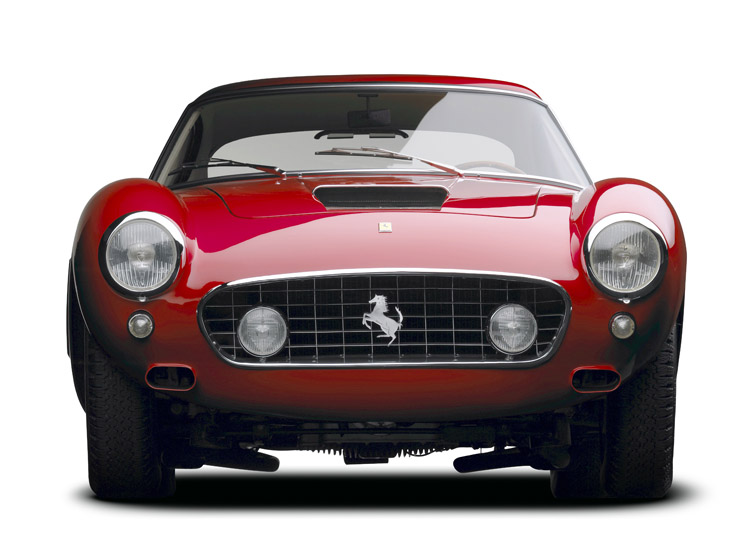
Ferrari 250 GT Berlinetta SWB, 1960


Ferrari 250 GT Berlinetta SWB
1960
Collection Ralph Lauren
© Photo Michael Furman


While the name 250 GT appeared in the Maranello catalog in 1955, the 1959 Paris Motor Show presented a short chassis Berlinetta version, with a wheelbase 20 cms shorter than other versions of the line – a thoroughbred equipped for the road, with aluminium coachwork designed by Pinin Farina and made in the Scaglietti workshops in Modena. Compared to the grand tourer version, intended for road use, the racing version was devoid of all luxury interior trimmings and bumpers, but equipped with disk brakes and a 280 CV engine that enabled this flagship model to masterfully dominate the legendary Tour de France automobile for three consecutive seasons (1960-1962) and the GT category of the Le Mans 24 Hours. Its sensual line, unequalled handling and performance (250kph), and list of victories, all combined to make the short chassis 250 GT Berlinetta one of Ferrari’s most popular models. Ralph Lauren’s car was the 31st example to leave the factory out of the 165 produced.


Ferrari 250 GTO, 1962


Ferrari 250 GTO
1962
Collection Ralph Lauren
© Photo Michael Furman


Designed in the utmost secrecy, the 250 GTO is considered by aficionados today to be the quintessential vintage Ferrari model, both technically and aesthetically, embodying one of the most famous and most expensive sports cars of all time. This Grand Tourer, of which only 39 examples were produced, clocked up an impressive list of victories, including the International Championship for GT Manufacturers in 1962, 1963 and 1964, thanks to its V12 300 CV engine situated up front, but also because of the lightness of its aluminium body, enabling it to attain 280 kph flat out! With its Scaglietti coachwork and its long hood, stocky cockpit and truncated rear, it symbolised the Grand Tourer par excellence. Ralph Lauren’s car was the 21st out of 36 Series I GTOs produced, and won many races driven by Pedro and Ricardo Rodriguez, Roger Penske, Augie Pabst and Richie Ginther.


The Arts Décoratifs Museum
107 rue de Rivoli
75001 Paris
Phone: +33 01 44 55 57 50

Open Tuesday to Sunday 11am – 6pm

The Arts Décoratifs Museum website

LIKE ART BLART ON FACEBOOK

Back to top