
Exhibition dates: 8th June – 17th October, 2010
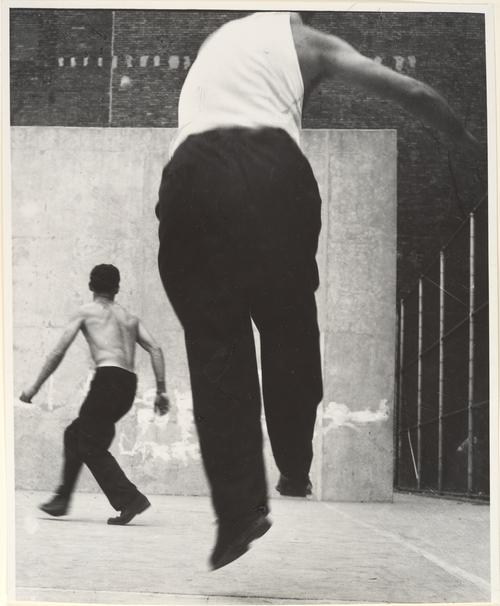
Leon Levinstein (American, 1910-1988)
Handball Players, Lower East Side, NY
c. 1950s-1960s
Gelatin silver print
Purchase, The Horace W. Goldsmith Foundation Gift, through Joyce and Robert Menschel, 1987
© Howard Greenberg Gallery
Although taken in the same city at around the same period as the work of Helen Levitt, these photographs by Leon Levinstein have less formality in their composition and definitely possess a more eclectic style evidenced by the dissection and placement of bodies within the image frame. This is not to denigrate either artist but merely to observe how two great photographers can see the same city in totally different ways. In both previsualisation was strong, the camera freezing what is placed before the lens in a balletic display that captured “just what you see.”
Dr Marcus Bunyan
Many thankx to The Metropolitan Museum of Art, New York for allowing me to publish the photographs in the posting.

Leon Levinstein (American, 1910-1988)
Nuclear Protest, Wall Street
1970s
Gelatin silver print
Gift of Gary Davis, 2009
© Howard Greenberg Gallery

Leon Levinstein (American, 1910-1988)
Street Scene: Elderly Man Walking with Cane, New York City
1970s
Gelatin silver print
Gift of Gary Davis, 2009
© Howard Greenberg Gallery

Leon Levinstein (American, 1910-1988)
Street Scene: Woman in Blonde Wig and Tight Dress, New York City
1960s
Gelatin silver print
Gift of Gary Davis, 2009
© Howard Greenberg Gallery
![Leon Levinstein (American, 1910-1988) 'Untitled [Head of Man with Hat and Cigar]' c. 1960 from the exhibition 'Hipsters, Hustlers, and Handball Players: Leon Levinstein's New York Photographs, 1950-1980' at The Metropolitan Museum of Art, New York, June - October, 2010](https://artblart.com/wp-content/uploads/2010/09/leon-levinstein-head-of-man-with-hat-and-cigar.jpg "Leon Levinstein (American, 1910-1988) 'Untitled [Head of Man with Hat and Cigar]' c. 1960 from the exhibition 'Hipsters, Hustlers, and Handball Players: Leon Levinstein's New York Photographs, 1950-1980' at The Metropolitan Museum of Art, New York, June - October, 2010")
Leon Levinstein (American, 1910-1988)
Untitled [Head of Man with Hat and Cigar]
c. 1960
Gelatin silver print
27.8 x 33.3cm (10 15/16 x 13 1/8 in.)
Stewart S. MacDermott Fund, 1986
A master of classic American street photography, Leon Levinstein (American, 1910-1988) is best known for his candid and unsentimental black-and-white figure studies made in New York City neighborhoods from Times Square and the Lower East Side to Coney Island. From June 8 through October 17, 2010, The Metropolitan Museum of Art presents Hipsters, Hustlers, and Handball Players: Leon Levinstein’s New York Photographs, 1950-1980. This exhibition, drawn exclusively from the Metropolitan’s collection, features 44 photographs that reflect Levinstein’s fearless approach to the medium. Levinstein’s graphic virtuosity – seen in raw, expressive gestures and seemingly monumental bodies – is balanced by an unusual compassion for his off-beat subjects from the demimonde.
Born in West Virginia in 1910, Levinstein moved to New York in 1946 and spent the next 35 years obsessively photographing strangers on the streets of his adopted home. Early in his career, Levinstein was quoted in Photography Annual 1955: “In my photographs I want to look at life – at the commonplace things as if I just turned a corner and ran into them for the first time.” With daring and dedication to his subject, Levinstein captured the denizens of New York City at extremely close range. He used his superb sense of composition to frame the faces, flesh, poses, and movements of his fellow city dwellers in their myriad guises: sunbathers, young couples, children, businessmen, beggars, prostitutes, proselytisers, society ladies, and characters of all stripes.
Although he was a life-long loner, Levinstein was mentored and supported by Alexey Brodovitch, artistic director of Harper’s Bazaar, and Edward Steichen, the eminent photographer and curator at The Museum of Modern Art in New York, both of whom recognised his unique talent in the medium of photography. He was also greatly influenced by workshops led by the distinguished photographer and teacher Sid Grossman.
In the 1950s and 1960s, Levinstein’s work appeared frequently in photography magazines and books alongside that of his peers, such as Robert Frank, Richard Avedon, and Diane Arbus. Nonetheless, he rarely worked on assignment, as they often did; nor did he ever produce his own book of photographs. Instead, he worked as a graphic designer and devoted his evenings and weekends to photography. In 1975, Levinstein received a grant from the Guggenheim Foundation to “photograph as wide a spectrum of the American scene as my experience and vision will allow… I want my photographs to be spontaneous rather than contrived.” Despite this recognition of his achievement, he never seemed able to fit into the commercial photography market that emerged in the 1970s and 1980s, and consequently, his powerful body of work continues to be known mainly by other photographers and by specialists in the field.
Press release from The Metropolitan Museum of Art website [Online] Cited 28/09/2010 no longer available online
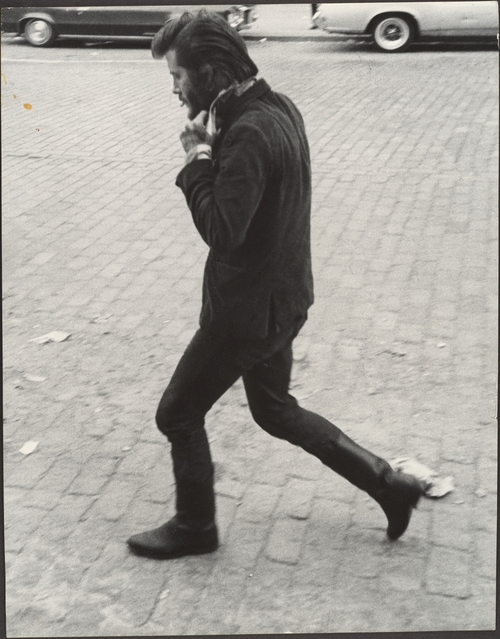
Leon Levinstein (American, 1910-1988)
Street Scene: Man in Boots Walking and Adjusting His Collar, New York City
c. 1960s-1970s
Gelatin silver print
Gift of Gary Davis, 2007
© Howard Greenberg Gallery
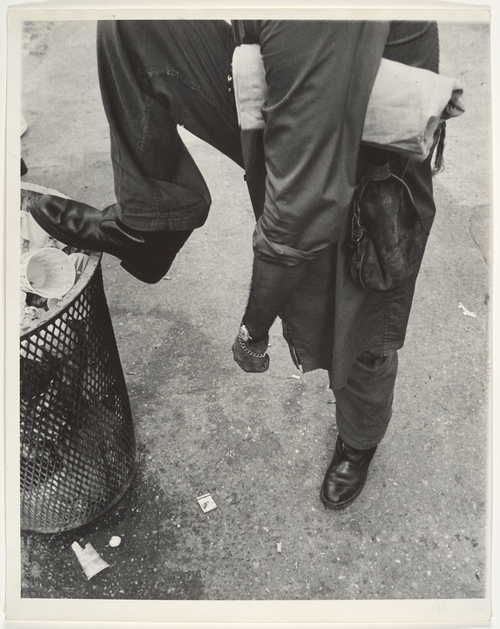
Leon Levinstein (American, 1910-1988)
Street Scene: Man Resting Foot on Lip of Trashcan, New York City
1970s
Gelatin silver print
Gift of Gary Davis, 2009
© Howard Greenberg Gallery
That idea of authenticity, ineffably captured as a decisive instance on a strip of light-sensitive celluloid, was ridden out of town a long time ago by postmodern theorists and certainly seems quaint today, but its power, as fixed in black and white by Levinstein, is undeniable. His mtier was a kind of reductivist monumentality, in which he captured his subjects – ordinary New Yorkers going about their business – in close-up, a technique commonly associated with cinema, to create images that were at once abstract and pregnant with narrative.
Like Weegee and Diane Arbus, Levinstein had a taste for the offbeat and grotesque (he often zeroed in on corpulent pedestrians; midsections and backsides, absent any trace of individuality, were a frequent motif). Also like them, he could be accused of engaging in a form of slumming. But he was less interested in abjection than he was in grandeur, and in this respect, the people in his photos are imbued with a sculptural nobility that simply doesn’t exist in the work of either Weegee or Arbus. More often than not, the “hipsters, hustlers and handball players” of the show’s title loom into the lens, crowding out background details. We get only fragments of the metropolis around them: a bit of stoop or curbstone, or a patch of sand out at Coney Island. Yet the pictures themselves express a sense of velocity, of lives hurtling toward some destiny that’s as heroic as it is bleak. What’s remarkable about Levinstein is that his framing – both epic and destabilising – stands in for the pitiless dynamic of New York itself.
Howard Halle. “Hipsters, Hustlers, and Handball Players: Leon Levinstein’s New York Photographs, 1950-1980,” on the Time Out New York website, Monday June 14, 2010 [Online] Cited 26/12/2019 no longer available online

Leon Levinstein (American, 1910-1988)
Street Scene: Woman in Striped Dress on Stoop, New York City
1970s
Gelatin silver print
Gift of Gary Davis, 2007
© Howard Greenberg Gallery
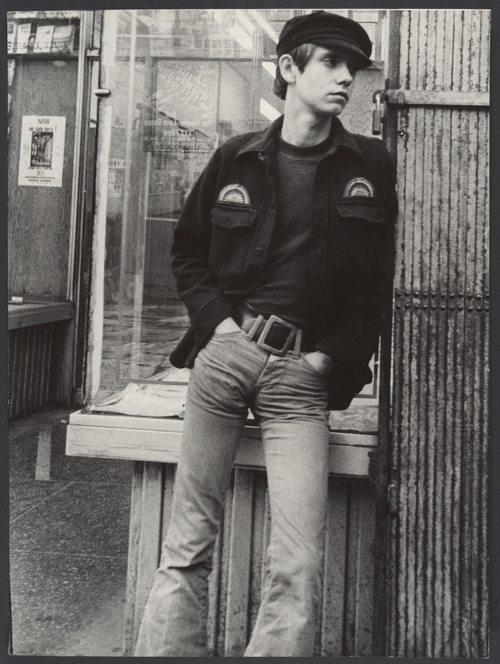
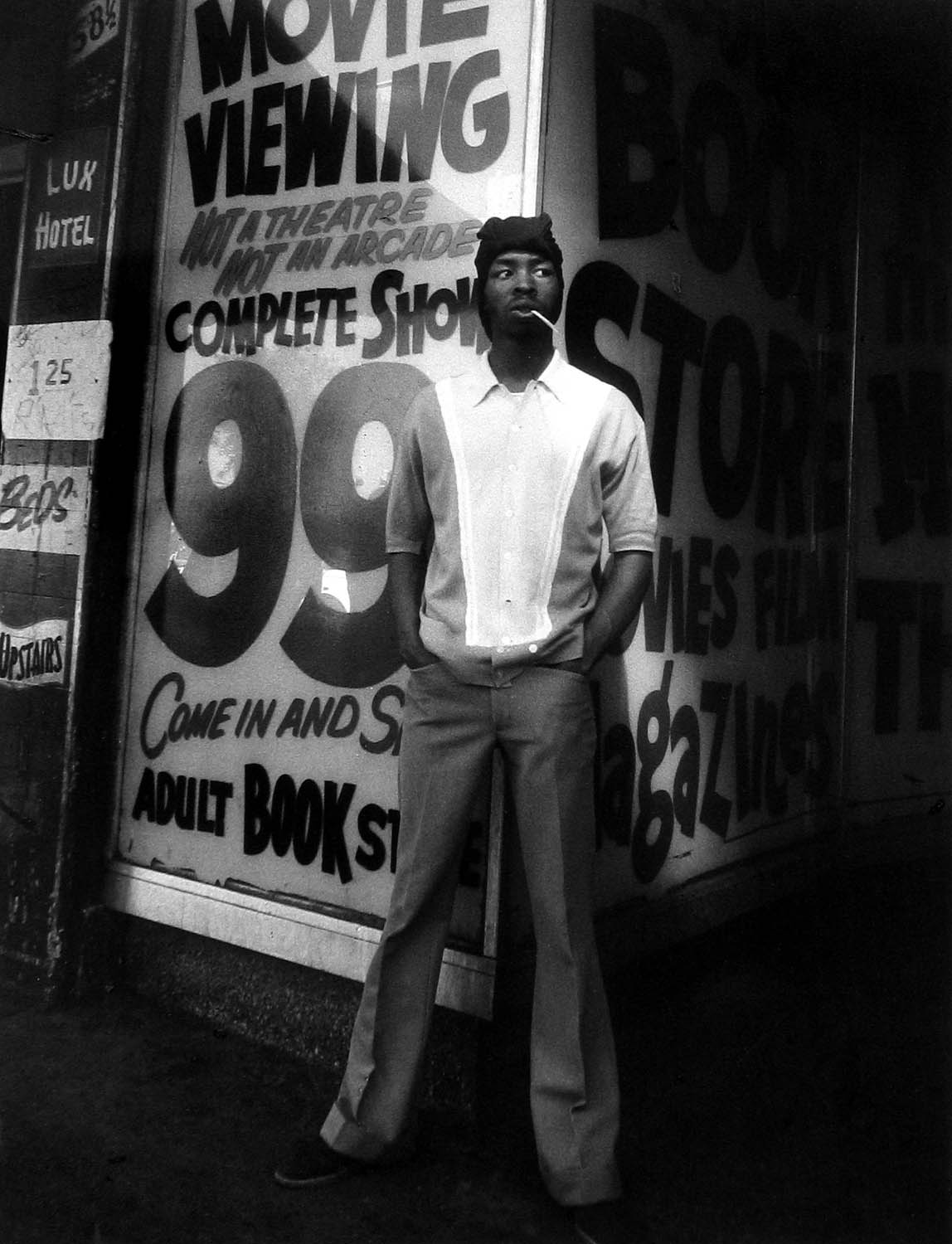
Leon Levinstein (American, 1910-1988)
Street Scene: Young Man Leaning against Shopfront Window, New York City?
1972
Gelatin silver print
Gift of Gary Davis, 2008
© Howard Greenberg Gallery

Leon Levinstein (American, 1910-1988)
Untitled
New York City, 1960s-1970s
Gelatin silver print
34.5 x 25.8cm (13 9/16 x 10 3/16)
© Howard Greenberg Gallery
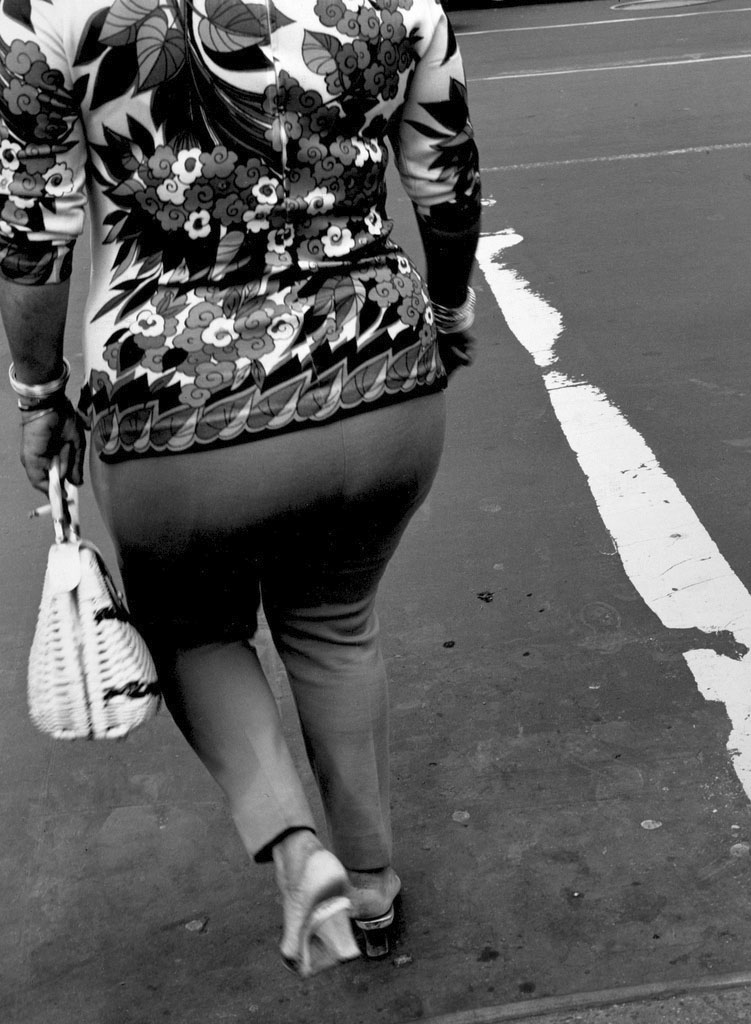
Leon Levinstein (American, 1910-1988)
Untitled
New York City, 1960s-1970s
Gelatin silver print
35.5 x 26.3cm (14 x 10 3/8 in.)
© Howard Greenberg Gallery
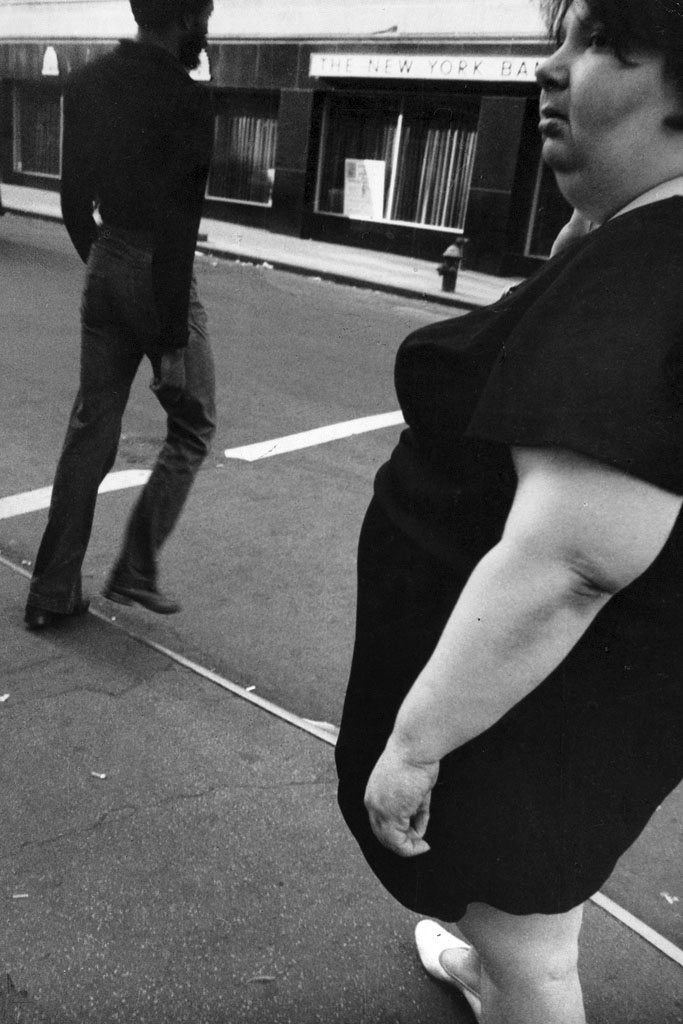
Leon Levinstein (American, 1910-1988)
Untitled
New York City, 1960s-1970s
Gelatin silver print
34.5 x 25.8cm (13 9/16 x 10 3/16 in.)
© Howard Greenberg Gallery
I think Levinstein’s gift lay in his ability to capture the essence of New York’s rough, funky cool (particularly in the 1960s and 1970s), without getting overly sentimental or kitchy. Nearly all of his images were taken at close range, often cropping out unneeded heads and body parts, focusing on overlooked subjects and elemental gestures found on the city’s streets and sidewalks. His compositions are often angled and dark, and he was particularly adept at capturing the nuances of clothing and fashion as worn by New York’s imperfect and eclectic masses, finding the hidden joy in a bold pattern, a wide collar or a tight fitting pair of shorts. The pictures are tough, edgy, sometimes harsh, and always refreshingly real.
As you look more closely at these candid pictures, Levinstein’s talent for making the common look uncommon shines through. He finds earthy wonder in a foot perched on a wire trash can, a sweat stained tank top, 70s-era moustaches, a grey pinstripe suit, bulging stomachs and belts, a man fluffing his afro in a window, eating corn on the cob on the beach, tattoos, an overcoat with shiny buttons, kissing on a stoop, and a groovy floral blouse paired with tight leggings. He seems to have been fond of backs and sides, abstracting his subjects into fragments of movement or pose, paring them down into types and moments that were representative of something larger in society.
Loring Knoblauch. “Hipsters, Hustlers, and Handball Players: Leon Levinstein’s New York Photographs, 1950-1980 @Met,” on the Collector Daily website, July 23, 2010 [Online] Cited 21/03/2025
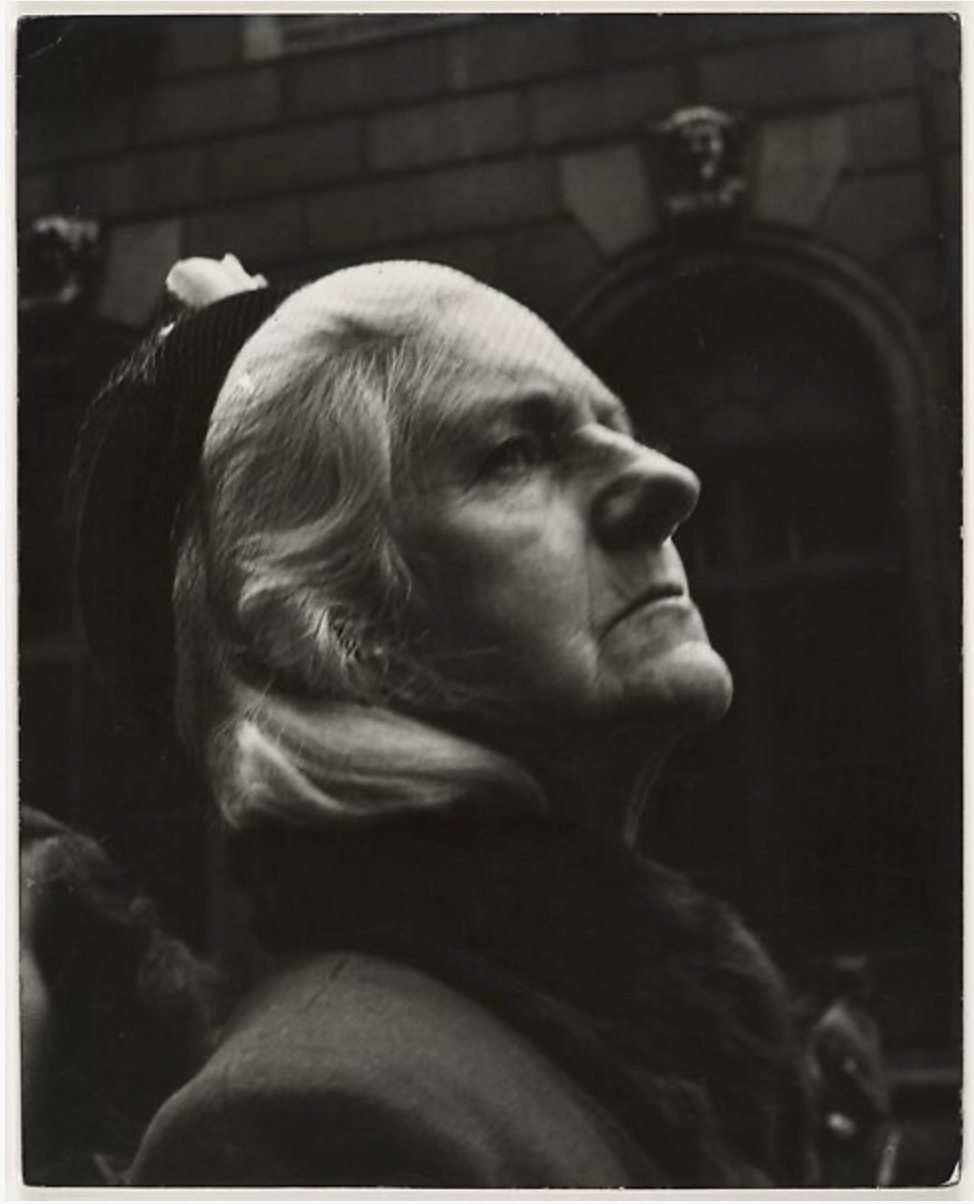
Leon Levinstein (American, 1910-1988)
54th Street, New York
1950s
Gelatin silver print
34.9 x 27.9 cm (13 3/4 x 11 in.)
Gift of Gary Davis, 2009
![Leon Levinstein (American, 1910-1988) 'Untitled [Beach Scene: Woman Wearing Paper Bag Hat, Coney Island, New York]' 1950s](https://artblart.com/wp-content/uploads/2010/09/leon-levinstein-beach-scene.jpg "Leon Levinstein (American, 1910-1988) 'Untitled [Beach Scene: Woman Wearing Paper Bag Hat, Coney Island, New York]' 1950s")
Leon Levinstein (American, 1910-1988)
Untitled [Beach Scene: Woman Wearing Paper Bag Hat, Coney Island, New York]
1950s
Gelatin silver print
35.4 x 28.1cm (13 15/16 x 11 1/16 in.)
Gift of Gary Davis, 2009
© Howard Greenberg Gallery
Leon Levinstein (American, 1910-1988)
Coney Island
1955
Gelatin silver print
© Howard Greenberg Gallery
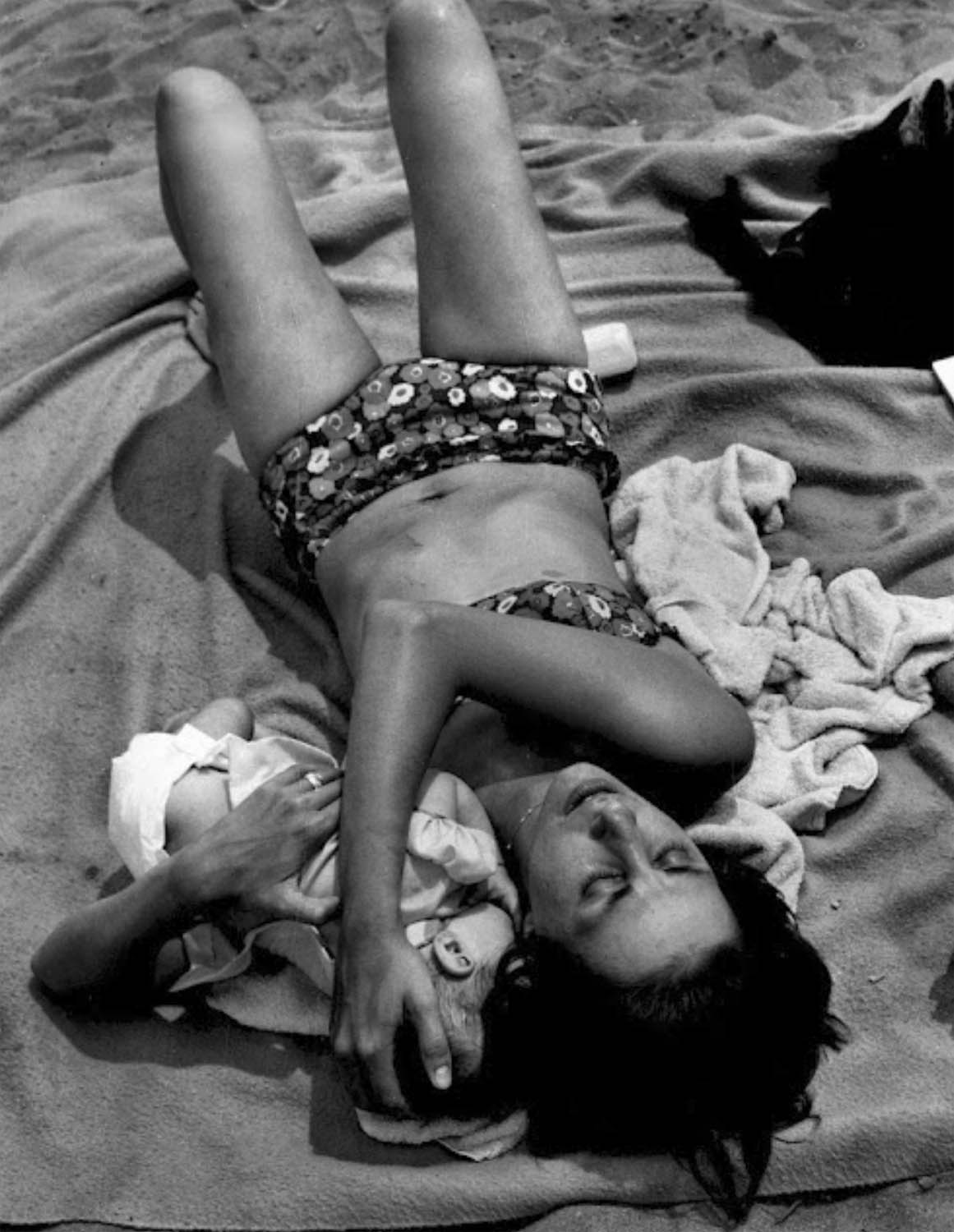
Leon Levinstein (American, 1910-1988)
Untitled
Coney Island, 1960s
Gelatin silver print
35.5 x 28.1cm (14 x 11 1/16 in.)
© Howard Greenberg Gallery
The Metropolitan Museum of Art
1000 Fifth Avenue at 82nd Street
New York, New York 10028-0198
Information: 212-535-7710
Opening hours:
Sunday – Tuesday and Thursday: 10am – 5pm
Friday and Saturday: 10am – 9pm
Closed Wednesday
 Art Blart _ art and cultural memory archive
You must be logged in to post a comment.