
Exhibition dates: 18th January – 5th May 2013
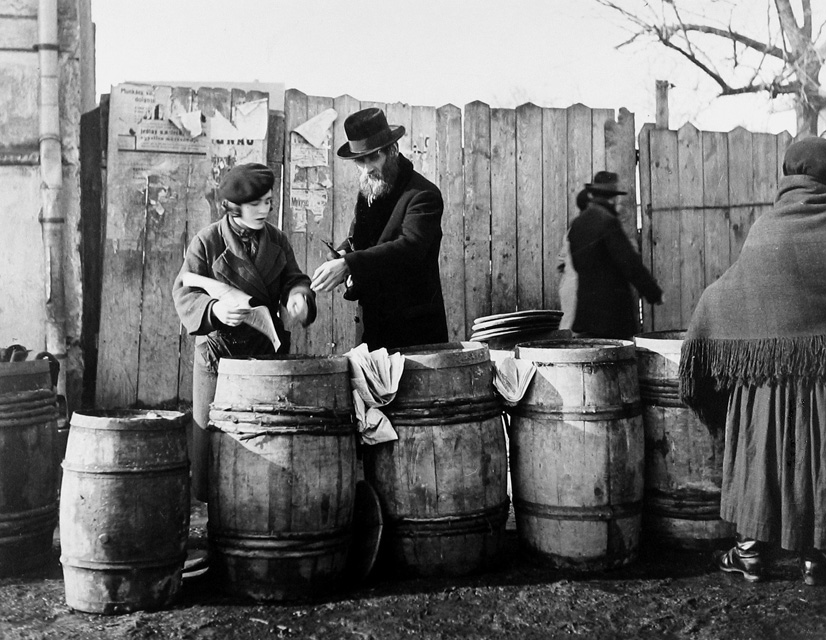
Roman Vishniac (Russian-American, 1897-1990)
Herring for the traditional third meal of Shabbath, Mukachevo
1937-1938
Gelatin silver print
10 1/2 x 13 3/8 inches
Courtesy International Center of Photography
© Mara Vishniac Kohn
“By repositioning Vishniac’s iconic photographs of Eastern Europe within the broader tradition of social documentary photography, and introducing recently discovered and radically diverse bodies of work, this exhibition stakes Vishniac’s claim as a modern master.”
ICP Adjunct Curator Maya Benton
Rediscovered! Rediscovered? Surely, such a splendid artist as Vishniac has never been away…
Revealing “a compositional acuity, inventiveness, and surprising stylistic range” – in other words traces of Josef Sudek, Walker Evans, Rodchenko and New Photography – Vishniac’s best work is a record of its troubled time: a photographic record of Jewish life in Eastern Europe between the two World Wars. What the viewing public must be made aware of is the curatorial reinterpretation of his work, seeking as it does to solidify his place “among the 20th century’s most accomplished photographers.”
While some of the work on view may be new, the claims of curator Maya Benton (above) must be observed with a good deal of scepticism. What we need to understand is how his photographs are being interpreted across a range of frames of reference – from photojournalism, to social documentary photography and art – in order, as Maya Benton says, to “reposition” his iconic photographs within the broader tradition of social documentary photography. This repositioning is a form of re/visioning of an artist’s work to place it in a different context or frame of reference in order to increase its significance; or, by exclusion (as in the case of the S/M photographs by Robert Mapplethorpe that have been occluded by the Mapplethorpe Foundation), another context, make the work of an artist more socially palatable than would otherwise be the case.
The interpretation of Vishniac’s photographs becomes problematic depending on what frame of reference one applies to them and how their interpretation is negotiated between multiple, fluid points of view. Repositioning an artist’s work within a broader context changes the nature of the interpretation of that artist’s work and raises the pertinent question: who is repositioning this work and for what reason(s); who is pushing that agenda and curatorial barrow (in Benton’s case it is because she wants Vishniac’s work to be seen as that of a modern master, to make the credibility of the exhibition and the artist more than it possibly is). What we must be fully aware of is the time and place in which Vishniac made the work and the conditions for its initial reception, not some stake in the ground claim of modern mastership.
Vishniac’s photographs frame the historical discourse of the end of Jewish culture in Eastern Europe and the rise of Fascism in Germany with erudition – for the past, present and future. Any other claims to eclecticism, applying different “repositioning” in particular cases, seems inelegant and shows a lack of consistency in clear thinking. When you really look at his work there is a sensitivity to the human condition in his work that is outstanding, coupled with a clear compositional structure and use of chiaroscuro. He was an excellent visual artist who had strong previsualisation that is evidenced in the prints. These photographs make insightful comment on the surrounding culture at the time of their production. Nothing more grandiose need be said.
Dr Marcus Bunyan
Many thankx to the ICP for allowing me to publish the photographs in the posting. Please click on the photographs for another version of the image.
![Roman Vishniac (Russian-American, 1897-1990) 'Untitled [Jewish schoolchildren, Mukacevo]' c. 1935-1938](https://artblart.com/wp-content/uploads/2013/04/vishniac_jewish-school-children-web.jpg "Roman Vishniac (Russian-American, 1897-1990) 'Untitled [Jewish schoolchildren, Mukacevo]' c. 1935-1938")
Roman Vishniac (Russian-American, 1897-1990)
Untitled [Jewish schoolchildren, Mukacevo]
c. 1935-1938
Gelatin silver print
Courtesy International Center of Photography
© Mara Vishniac Kohn
![Roman Vishniac (Russian-American, 1897-1990) '[Boys admiring a motorcycle, Brandenburg, outskirts of Berlin]' 1929 - early 1930s (printed 2012)](https://artblart.com/wp-content/uploads/2014/08/vishniac-boys-admiring-a-motorbike.jpg "Roman Vishniac (Russian-American, 1897-1990) '[Boys admiring a motorcycle, Brandenburg, outskirts of Berlin]' 1929 - early 1930s (printed 2012)")
Roman Vishniac (Russian-American, 1897-1990)
[Boys admiring a motorcycle, Brandenburg, outskirts of Berlin]
1929 – early 1930s (printed 2012)
12 x 11 1/2 in. (30.5 x 29.2cm)
Gelatin silver print
Courtesy International Center of Photography
© Mara Vishniac Kohn
![Roman Vishniac (Russian-American, 1897-1990) 'Untitled [Boy with kindling in basement dwelling, Krochmalna Street, Warsaw]' c. 1935-1938](https://artblart.com/wp-content/uploads/2013/04/vishniac_boy-with-kindling-in-basement-dwelling-web.jpg "Roman Vishniac (Russian-American, 1897-1990) 'Untitled [Boy with kindling in basement dwelling, Krochmalna Street, Warsaw]' c. 1935-1938")
Roman Vishniac (Russian-American, 1897-1990)
Untitled [Boy with kindling in basement dwelling, Krochmalna Street, Warsaw]
c. 1935-1938
Gelatin silver print
Courtesy International Center of Photography
© Mara Vishniac Kohn
![Roman Vishniac (Russian-American, 1897-1990) 'Untitled [Interior of the Anhalter Bahnhof, a railway terminus near Potsdamer Platz, Berlin]' late 1920s - early 1930s](https://artblart.com/wp-content/uploads/2013/04/vishniac_interior-of-the-anhalter-bahnhof-web.jpg "Roman Vishniac (Russian-American, 1897-1990) 'Untitled [Interior of the Anhalter Bahnhof, a railway terminus near Potsdamer Platz, Berlin]' late 1920s - early 1930s")
Roman Vishniac (Russian-American, 1897-1990)
Untitled [Interior of the Anhalter Bahnhof, a railway terminus near Potsdamer Platz, Berlin]
Late 1920s – early 1930s
Gelatin silver print
Courtesy International Center of Photography
© Mara Vishniac Kohn
Roman Vishniac Rediscovered, on view at the International Center of Photography (1133 Avenue of the Americas at 43rd Street) January 18 – May 5, 2013, brings together four decades of work by a remarkably versatile and innovative photographer. The exhibition includes recently discovered vintage prints, moving film footage, personal correspondence, and exhibition prints made from Vishniac’s recently digitised negatives. His complex and visionary work, much of which is shown here for the first time, reveals a compositional acuity, inventiveness, and surprising stylistic range that solidifies his place among the 20th century’s most accomplished photographers.
Vishniac created the most widely recognised and reproduced photographic record of Jewish life in Eastern Europe between the two World Wars. Yet only a fraction of his work was published during his lifetime, most notably in A Vanished World (1983). Over the course of his career, Vishniac witnessed the sweeping artistic and photographic innovation of Weimar Berlin, the ominous rise to Nazi power in Germany, the final years of Jewish life in Eastern Europe, and immigrant life in America during and after the war.
“By repositioning Vishniac’s iconic photographs of Eastern Europe within the broader tradition of social documentary photography, and introducing recently discovered and radically diverse bodies of work, this exhibition stakes Vishniac’s claim as a modern master,” said ICP Adjunct Curator Maya Benton, who organised the exhibition.
Born in 1897 to a wealthy Russian-Jewish family, Vishniac immigrated to Berlin in 1920 in the aftermath of the Russian Revolution. As an amateur photographer, he took to the streets with his camera throughout the 1920s and ’30s, offering astute, often humorous visual commentary on his adopted city and experimented with new and modern approaches to framing and composition. Documenting the rise of Nazi power, he focused his lens on the signs of oppression and doom that soon formed the backdrop of his Berlin street photography. From 1935 to 1938, while living in Berlin and working as a biologist and science photographer, he was commissioned by the American Jewish Joint Distribution Committee (JDC), then the world’s largest Jewish relief organisation, to photograph impoverished Jewish communities in Central and Eastern Europe. On New Year’s Day, 1941, he arrived in New York and soon opened a portrait studio. At the same time, he began documenting American Jewish communal and immigrant life and established himself as a pioneer in the field of photomicroscopy. In 1947, Vishniac returned to Europe and documented Jewish displaced persons camps and the ruins of Berlin. During this time, he also recorded the efforts of Holocaust survivors to rebuild their lives, and the work of the JDC and other Jewish relief organisations in providing them with aid and emigration assistance.
Roman Vishniac Rediscovered is a comprehensive reappraisal of Vishniac’s total photographic output, from the early years in Berlin through the postwar period. The exhibition also includes a slideshow of 100 colour science transparencies – digitised for the first time – of Vishniac’s microphotoscopy, taken from the early 1950s to the late 1970s. In addition to the exhibition, a primary task of the archive is to make this work available for research, in partnership with the United States Holocaust Memorial Museum.
Press release from the ICP website
Sections of the exhibition
~ Introduction: Roman Vishniac Rediscovered
~ Berlin Street Photography, 1920s-30s
~ Nazi Rise to Power in Germany, 1933-1938
~ German Jewish Relief and Community Organizations, Berlin, mid- to late 1930s
~ Jewish Life in Eastern Europe, c. 1935-38
~ Werkdorp Nieuwesluis Agrarian Training Camp, Wieringermeer, The Netherlands, c. 1938
~ Travel, Refuge, and Internment in France: Paris, Nice, and Marseille, c. 1939
~ Portrait Studio and Nightclubs, America, 1941 – early 1950s
~ YIVO Exhibitions in New York, January 1944 and January 1945
~ Immigrants and Refugees, New York, 1941 – early 1950s
~ “The Face of America at War”: New York, 1941-1944
~ Jewish Community Life, New York, 1941 – early 1950s
~ Berlin in Ruins, 1947
~ Refugees and Displaced Persons Camps, Germany and France, 1947
~ Scientific Work and Photomicroscopy, America, early 1950s – late 1970s
~ Vishniac’s Scrapbook
![Roman Vishniac (Russian-American, 1897-1990) 'Untitled [Street scene with swastika flag in background, Berlin]' c. 1935-36](https://artblart.com/wp-content/uploads/2013/04/vishniac_street-scene-with-swastika-flag-in-background-web.jpg "Roman Vishniac (Russian-American, 1897-1990) 'Untitled [Street scene with swastika flag in background, Berlin]' c. 1935-36")
Roman Vishniac (Russian-American, 1897-1990)
Untitled [Street scene with swastika flag in background, Berlin]
c. 1935-1936
Gelatin silver print
Courtesy International Center of Photography
© Mara Vishniac Kohn
![Roman Vishniac (Russian-American, 1897-1990) 'Untitled [Nazi Storm Troopers marching next to the Arsenal in front of the Berlin Cathedral]' c. 1935](https://artblart.com/wp-content/uploads/2013/04/vishniac_nazi-storm-troopers-web.jpg "Roman Vishniac (Russian-American, 1897-1990) 'Untitled [Nazi Storm Troopers marching next to the Arsenal in front of the Berlin Cathedral]' c. 1935")
Roman Vishniac (Russian-American, 1897-1990)
Untitled [Nazi Storm Troopers marching next to the Arsenal in front of the Berlin Cathedral]
c. 1935
Gelatin silver print
Courtesy International Center of Photography
© Mara Vishniac Kohn
![Roman Vishniac (Russian-American, 1897-1990) 'Untitled [Beach dwellers in the afternoon, Nice, France]' c. 1939](https://artblart.com/wp-content/uploads/2013/04/vishniac_beach-dwellers-web.jpg "Roman Vishniac (Russian-American, 1897-1990) 'Untitled [Beach dwellers in the afternoon, Nice, France]' c. 1939")
Roman Vishniac (Russian-American, 1897-1990)
Untitled [Beach dwellers in the afternoon, Nice, France]
c. 1939
Gelatin silver print
Courtesy International Center of Photography
© Mara Vishniac Kohn
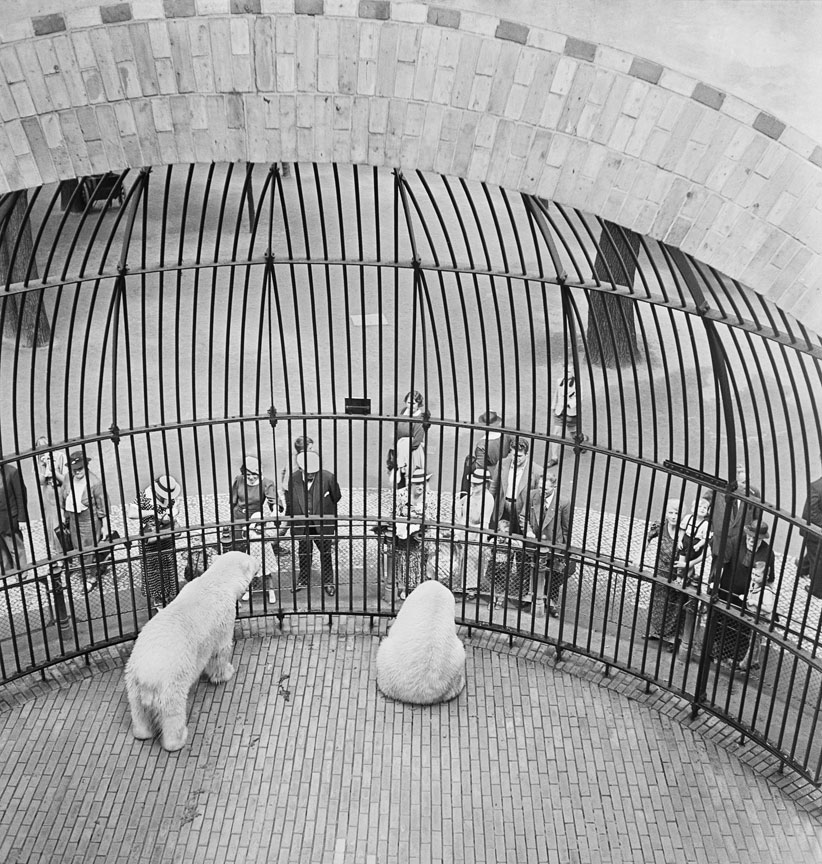
Roman Vishniac (Russian-American, 1897-1990)
People behind bars, Berlin Zoo
Early 1930s
Gelatin silver print
Courtesy International Center of Photography
© Mara Vishniac Kohn
![Roman Vishniac (Russian-American, 1897-1990) 'Untitled [Zionist youth building a school and foundry while learning construction techniques, Werkdorp Nieuwesluis, Wieringermeer, The Netherlands]' 1939](https://artblart.com/wp-content/uploads/2013/04/vishniac_zionist-youth-building-a-school-web.jpg "Roman Vishniac (Russian-American, 1897-1990) 'Untitled [Zionist youth building a school and foundry while learning construction techniques, Werkdorp Nieuwesluis, Wieringermeer, The Netherlands]' 1939")
Roman Vishniac (Russian-American, 1897-1990)
Untitled [Zionist youth building a school and foundry while learning construction techniques, Werkdorp Nieuwesluis, Wieringermeer, The Netherlands]
1939
Gelatin silver print
Courtesy International Center of Photography
© Mara Vishniac Kohn
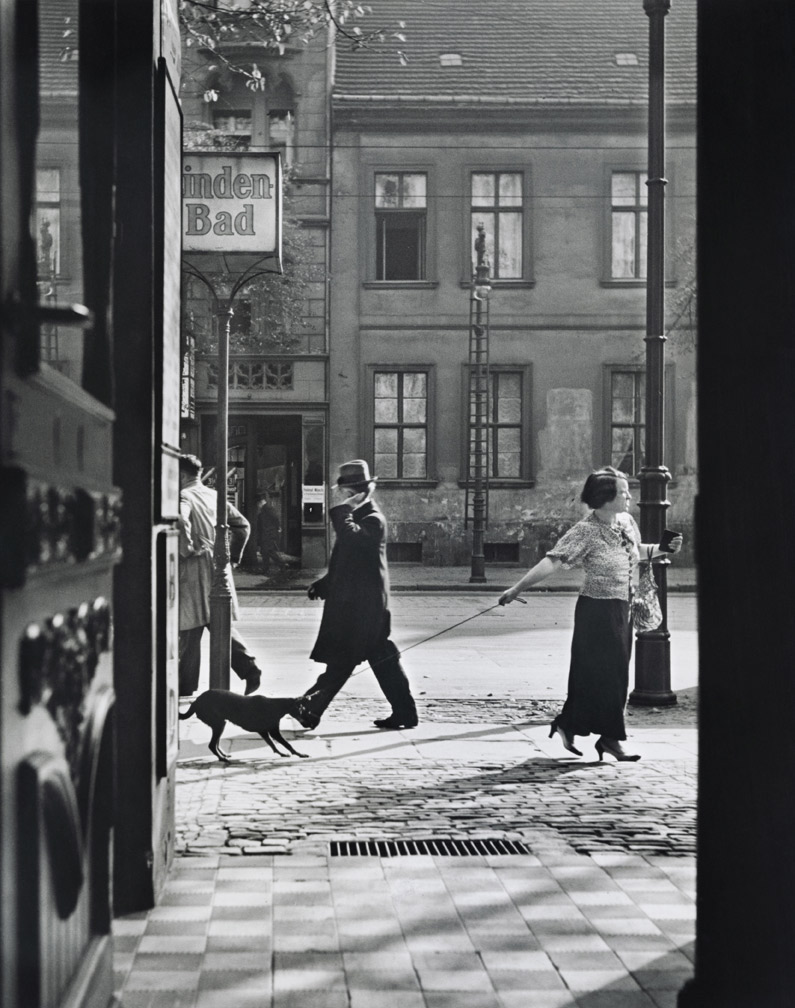
Roman Vishniac (Russian-American, 1897-1990)
Recalcitrance
Berlin, 1926
Gelatin silver print
Courtesy International Center of Photography
© Mara Vishniac Kohn

Roman Vishniac (Russian-American, 1897-1990)
Father taking his son to the first day of cheder
1937-1938
Gelatin silver print
Image (paper): 3 1/2 x 3 1/2 in. (8.9 x 8.9cm)
Courtesy International Center of Photography
© Mara Vishniac Kohn
![Roman Vishniac (Russian-American, 1897-1990) '[Vishniac's daughter Mara posing in front of an election poster for Hindenburg and Hitler that reads "The Marshal and the Corporal: Fight with Us for Peace and Equal Rights," Wilmersdorf, Berlin]' 1933](https://artblart.com/wp-content/uploads/2014/08/icp_vishniac_pressimage_3-web.jpg "Roman Vishniac (Russian-American, 1897-1990) '[Vishniac's daughter Mara posing in front of an election poster for Hindenburg and Hitler that reads \"The Marshal and the Corporal: Fight with Us for Peace and Equal Rights,\" Wilmersdorf, Berlin]' 1933")
Roman Vishniac (Russian-American, 1897-1990)
[Vishniac’s daughter Mara posing in front of an election poster for Hindenburg and Hitler that reads “The Marshal and the Corporal: Fight with Us for Peace and Equal Rights,” Wilmersdorf, Berlin]
1933
Gelatin silver print
12 1/8 x 15 11/16 in. (30.8 x 39.8cm)
Courtesy International Center of Photography
© Mara Vishniac Kohn
Vishniac’s daughter Mara, age seven, was photographed standing in front of this 1933 poster celebrating Hitler’s recent appointment as German chancellor. The poster advertises a plebiscite to permit withdrawal from the League of Nations and Geneva Disarmament Conference, which restricted Germany’s ability to develop a military. Other posters include the slogans “Mothers, fight for your children!,” “The coming generation accuses you!,” and “In 8 months… 2,250,000 countrymen able to put food on the table. Bolshevism destroyed. Sectionalism overcome. A kingdom and order of cleanliness built… Those are the achievements of Hitler’s rule…”
Label text from the exhibition

Roman Vishniac (Russian-American, 1897-1990)
Children playing on a street lined with swastika flags
mid-1930s
Gelatin silver print
12 x 11 3/8 in. (30.5 x 29cm)
Courtesy International Center of Photography
© Mara Vishniac Kohn

Roman Vishniac (Russian-American, 1897-1990)
Window washer balancing on a ladder, Berlin
mid-1930s
Gelatin silver print
11 3/8 x 9 in. (29 x 22.9cm)
Courtesy International Center of Photography
© Mara Vishniac Kohn
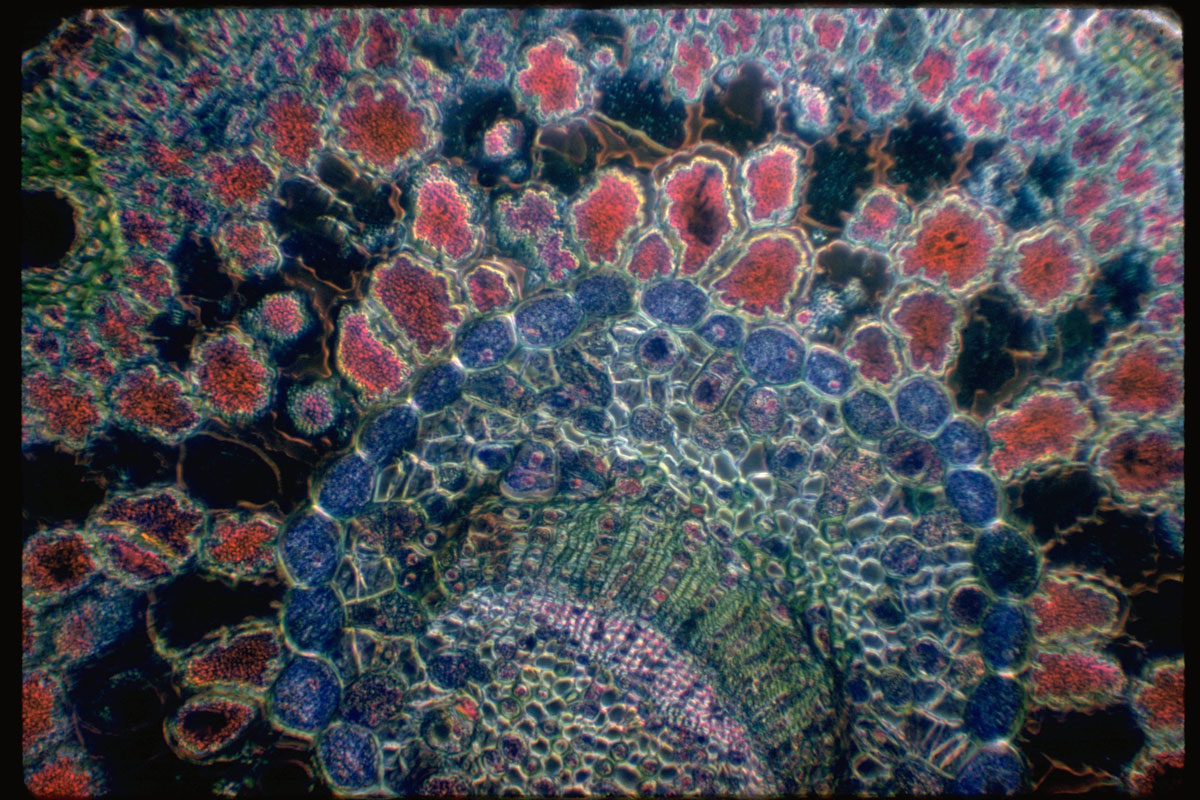
Roman Vishniac (Russian-American, 1897-1990)
Cross section of a pine needle
Early 1950s – late 1970s
Digital file from colour transparency
Courtesy International Center of Photography
© Mara Vishniac Kohn
International Center of Photography
79 Essex Street, New York, NY 10002
between Delancey Street and Broome Street
Opening hours:
Wednesday – Monday 11am – 7pm
Closed Tuesdays
 Art Blart _ art and cultural memory archive
You must be logged in to post a comment.