
Exhibition dates: 29th October 2011 – 22nd January 2012
Many thankx to The Art Institute of Chicago for allowing me to publish the photographs in the posting. Please click on the photographs for a larger version of the image.
![Artist unknown (American). '[Three women]' c. 1930s](https://artblart.com/wp-content/uploads/2012/01/artist-unknown-c.-1930s.jpg "Artist unknown (American). '[Three women]' c. 1930s")
Artist unknown (American)
[Three women]
c. 1930s
Gelatin silver print
8.9 x 14.7cm
The Art Institute of Chicago, Gift of Peter J. Cohen

Artist unknown (American)
The Three Graces
c. 1930s
Gelatin silver print
The Art Institute of Chicago, Gift of Peter J. Cohen
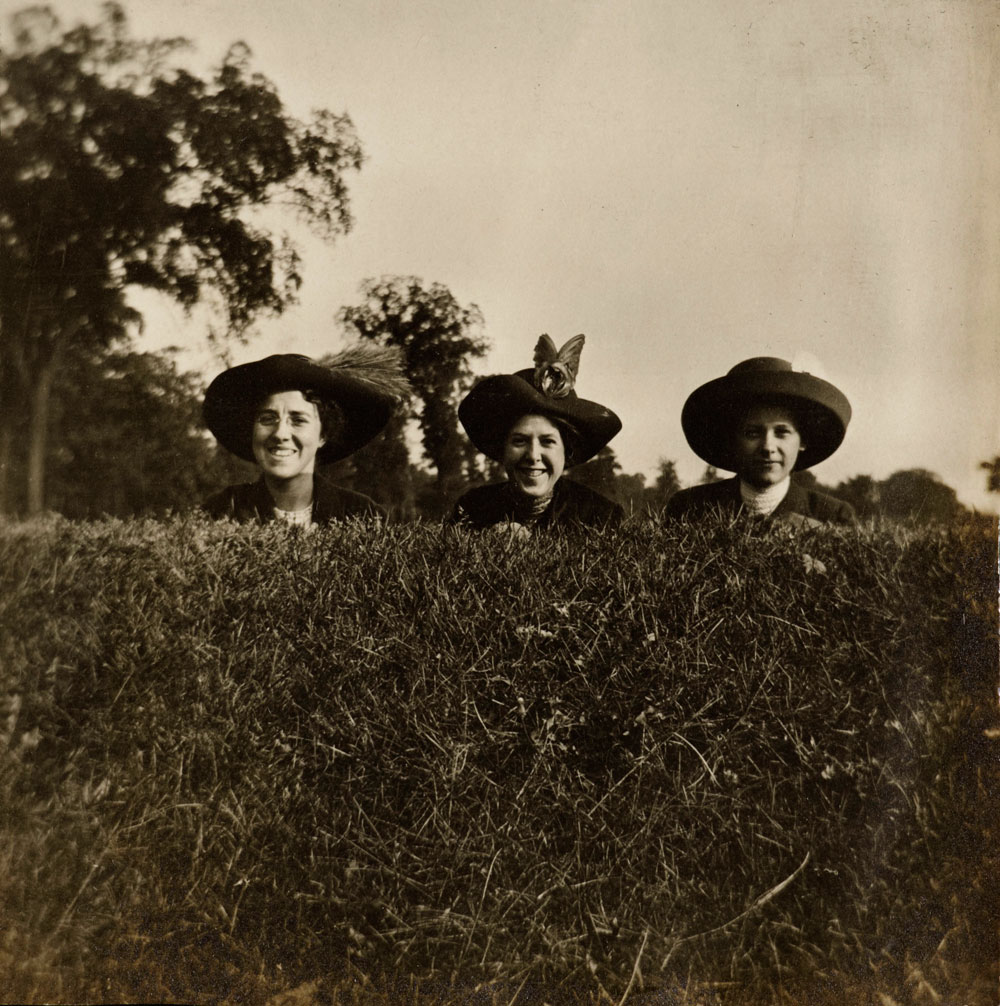
Artist unknown (American)
Look Pleasant
c. 1910s
Gelatin silver print
8.9 x 8.6cm
The Art Institute of Chicago, Gift of Peter J. Cohen
![Artist unknown (American). '[Three women]' c. 1910s](https://artblart.com/wp-content/uploads/2012/01/artist-unknown-c.-1910s.jpg "Artist unknown (American). '[Three women]' c. 1910s")
Artist unknown (American)
[Three women]
c. 1910s
Gelatin silver print
11.6 x 6.8cm
The Art Institute of Chicago, Gift of Peter J. Cohen
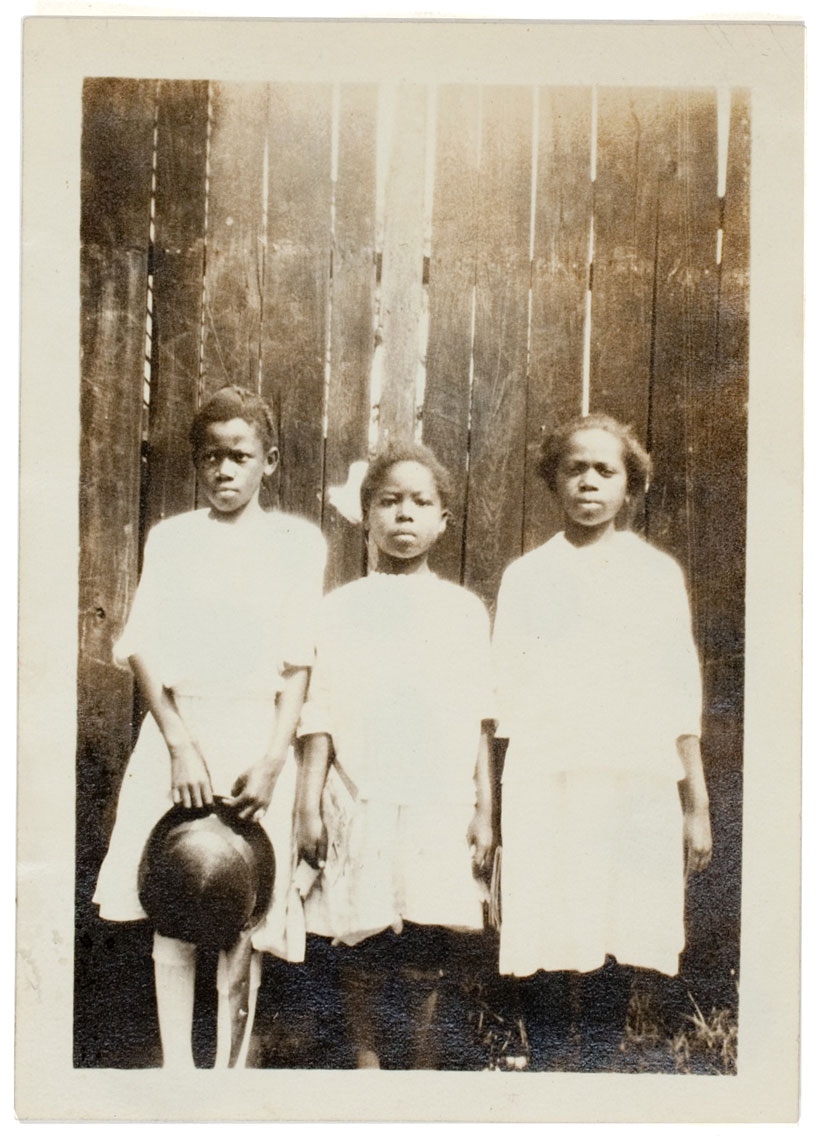
Artist unknown (American)
Untitled
1910/1940
Image: 7.7 × 5.2cm (3 1/16 × 2 1/16 in.)
Paper: 8.6 × 6.1 cm (3 7/16 × 2 7/16 in.)
The Art Institute of Chicago, Gift of Peter J. Cohen
After George Eastman introduced the handheld Kodak #1 camera in 1888, amateurs made millions of snapshots depicting friends and family, travels, and festive occasions such as weddings. Even while solidifying such thoroughly conventional behaviours, amateur photography developed a new pictorial language that privileged immediacy, spontaneity, and accident. Career photographers and art historians – but also antiques vendors and flea-market shoppers – have long recognised the value of the “snapshot aesthetic.” The rise of social media and smartphones in recent years has effectively ended the era of the snapshot as both a printed photograph and an image for a private audience.
Text from the Art Institute of Chicago website
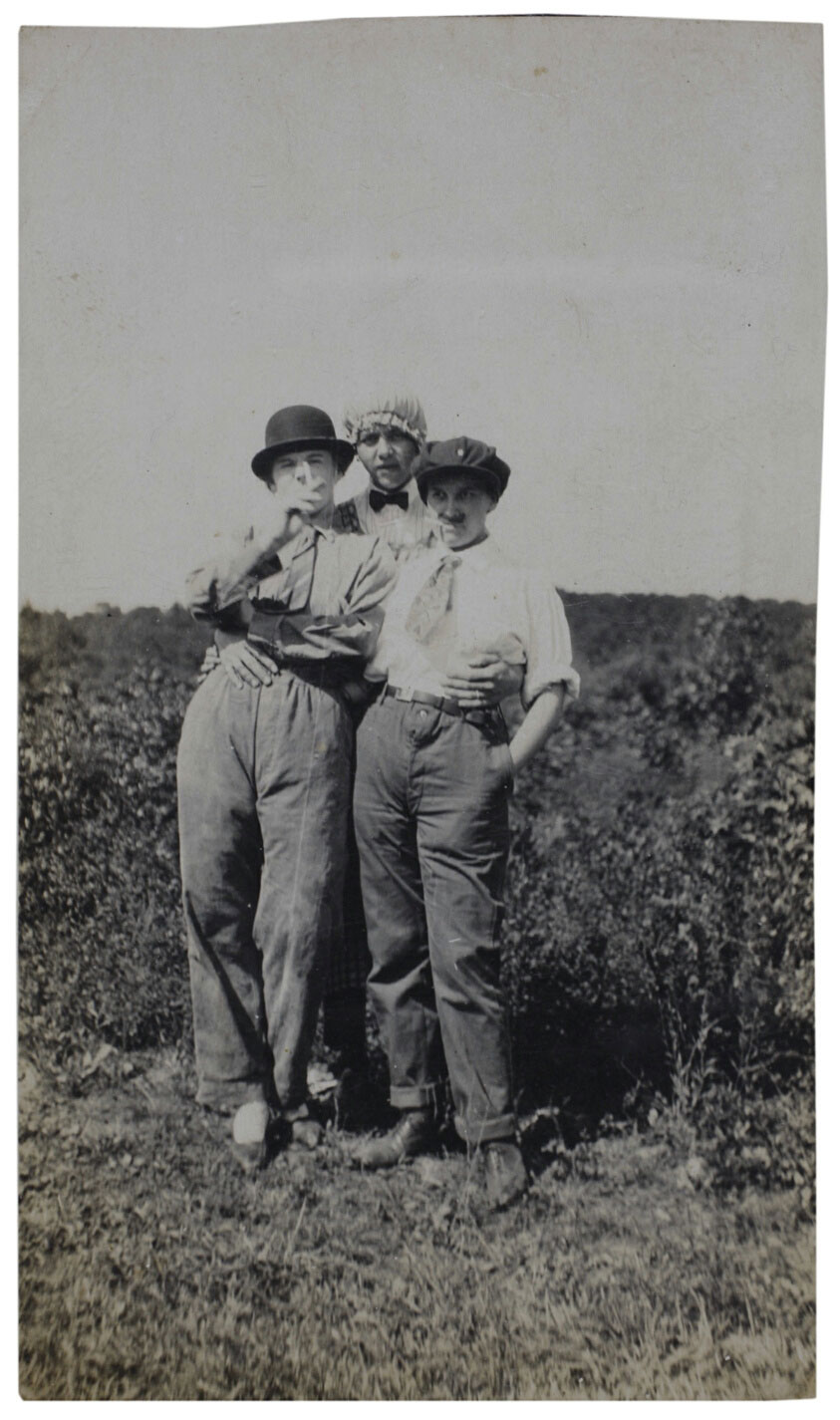
Artist unknown (American)
Untitled (Summer, Aug, 1920)
1920
Gelatin silver print
13.9 × 8.3cm (5 1/2 × 3 5/16 in.)
The Art Institute of Chicago, Gift of Peter J. Cohen
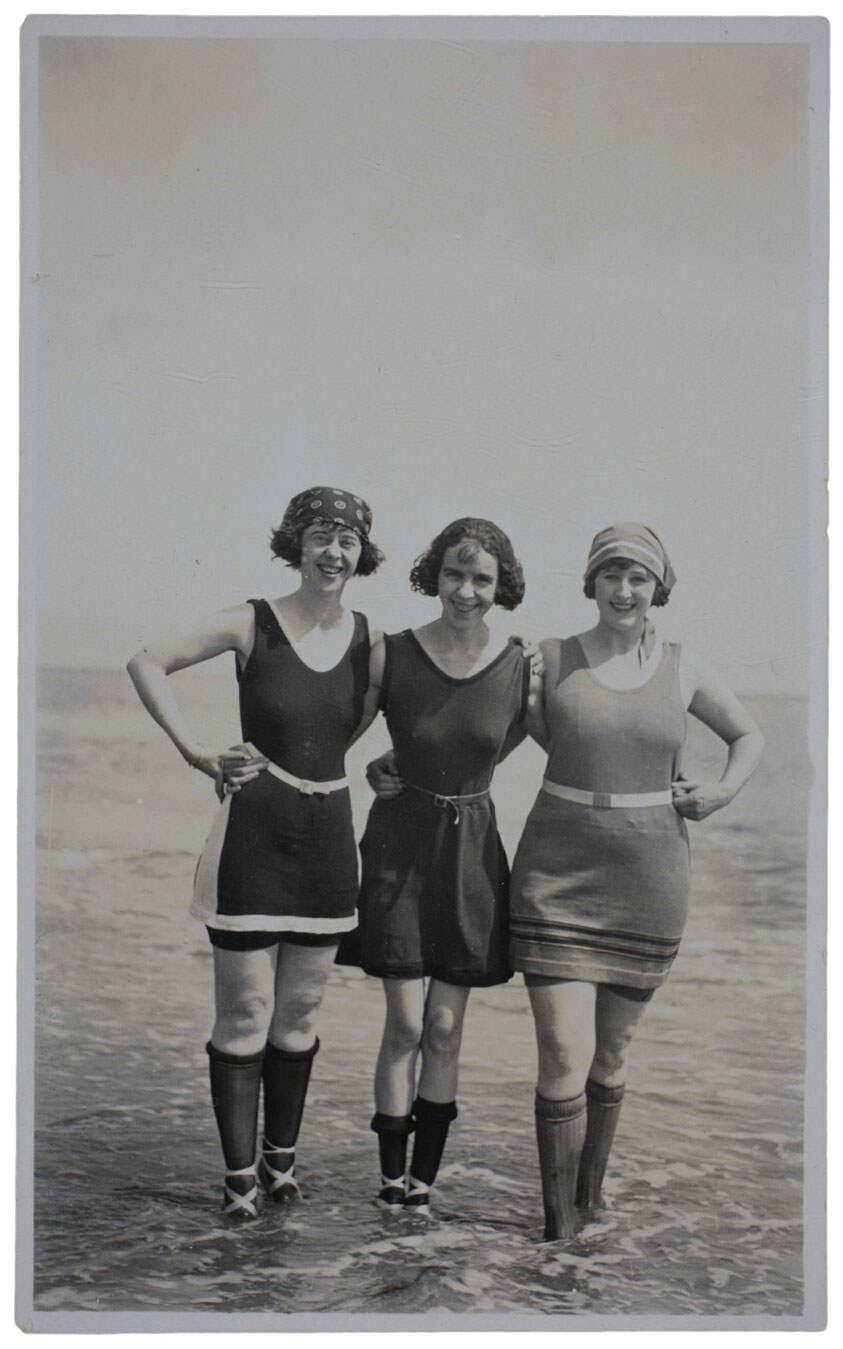
Artist unknown (American)
Untitled
c. 1920-1929
Gelatin silver print
13.7 × 8.5cm (5 7/16 × 3 3/8 in.)
The Art Institute of Chicago, Gift of Peter J. Cohen
This exhibition explores the early years of vernacular photography through graceful snapshots of female trios. Displaying more than 500 “found” images the exhibition features photographs of celebrations, vacations, and gatherings of family and friends are taken and kept with the aim of preserving moments in life for future generations. What happens, however, when a snapshot becomes an image “type” – transferred into the hands of a collector and folded into a broader cultural history?
This subject is explored in the Art Institute of Chicago’s The Three Graces – on view October 29, 2011, through January 22, 2012, in the museum’s Photography Galleries 3 and 4. The exhibition, featuring a private collection of more than 500 anonymous images depicting female trios, spans nearly a century of female role-playing for the camera. These mostly American “found” photographs, spanning from the 1890s to the 1970s, collectively reveal a great deal about the evolving ritual of women’s self-presentation, a theme already idealised in Classical culture with depictions of “The Three Graces.”
New York collector Peter J. Cohen, who has spent decades scouring flea markets, shops, and galleries in search of rare amateur photographs, amassed this image collection and gave it its title. Cohen was struck by the frequency of images featuring female trios, and had the wit to identify in them a playful echo of the Greek muses Aglaia, Euphrosyne, and Thalia, who are said to personify beauty, charm, and grace in both nature and humanity. Cohen owns some 20,000 anonymous snapshots spanning from the late 19th century until the 1970s. He has organised his mountainous holdings according to many classifications, among them “Double Exposures,” “Up on The Roof,” and “Dangerous Women.”
For Art Institute exhibition coordinator Michal Raz-Russo, who also authored the accompanying book, the “three graces” theme serves as a frame through which to chart shifts and continuities in women’s self-understanding across nearly a century. The 1888 introduction of the Kodak #1 camera and the 1900 debut of the Kodak Brownie made photography immensely popular, with much of the marketing was directed at women. Modern life and leisure in the 1920s coincided with the arrival of smaller cameras, faster film speeds, and automatic exposures; women of the expanding middle class became practiced at self-portraiture while vacationing or camping on their own. Later, in the mid-20th century, a clear convergence can be seen between women’s self-portraits and ideals of womanhood promulgated in films and glossy magazines. Throughout this history, men are clearly at work too, convincing women to participate in erotic poses according to another set of visual models. While the varieties of picturing and self-picturing are complex, The Three Graces demonstrates that women worked to define themselves as social beings through photography.
Visitors to the exhibition can find information on individual snapshots – gleaned from inscriptions and the clues provided by clothing and setting – at a special computer kiosk located in the gallery.
Press release from The Art Institute of Chicago website
![Artist unknown (American). '[Three Women]' c. 1920s](https://artblart.com/wp-content/uploads/2012/01/artist-unknown-c.-1920s.jpg "Artist unknown (American). '[Three Women]' c. 1920s")
Artist unknown (American)
[Three Women]
c. 1920s
Gelatin silver print
13.5 x 8.3cm
The Art Institute of Chicago, Gift of Peter J. Cohen
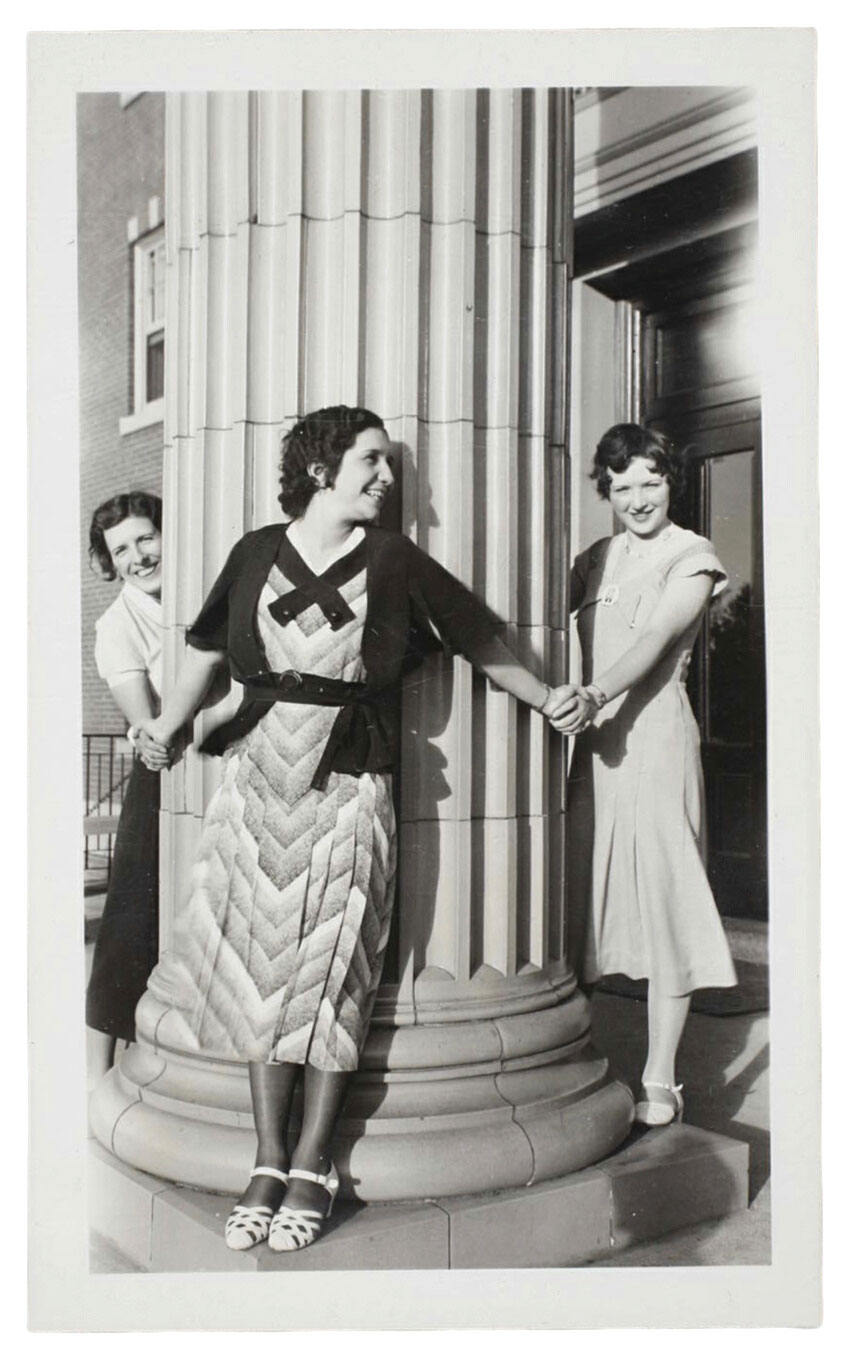
Unknown Maker (American)
Untitled (Stamped Clyde Banks Photo Services, Crystal Sheer, Aug 5 1932)
1930-1939
Gelatin silver print
Paper: 11.7 × 7.1cm (4 5/8 × 2 13/16 in.)
The Art Institute of Chicago, Gift of Peter J. Cohen
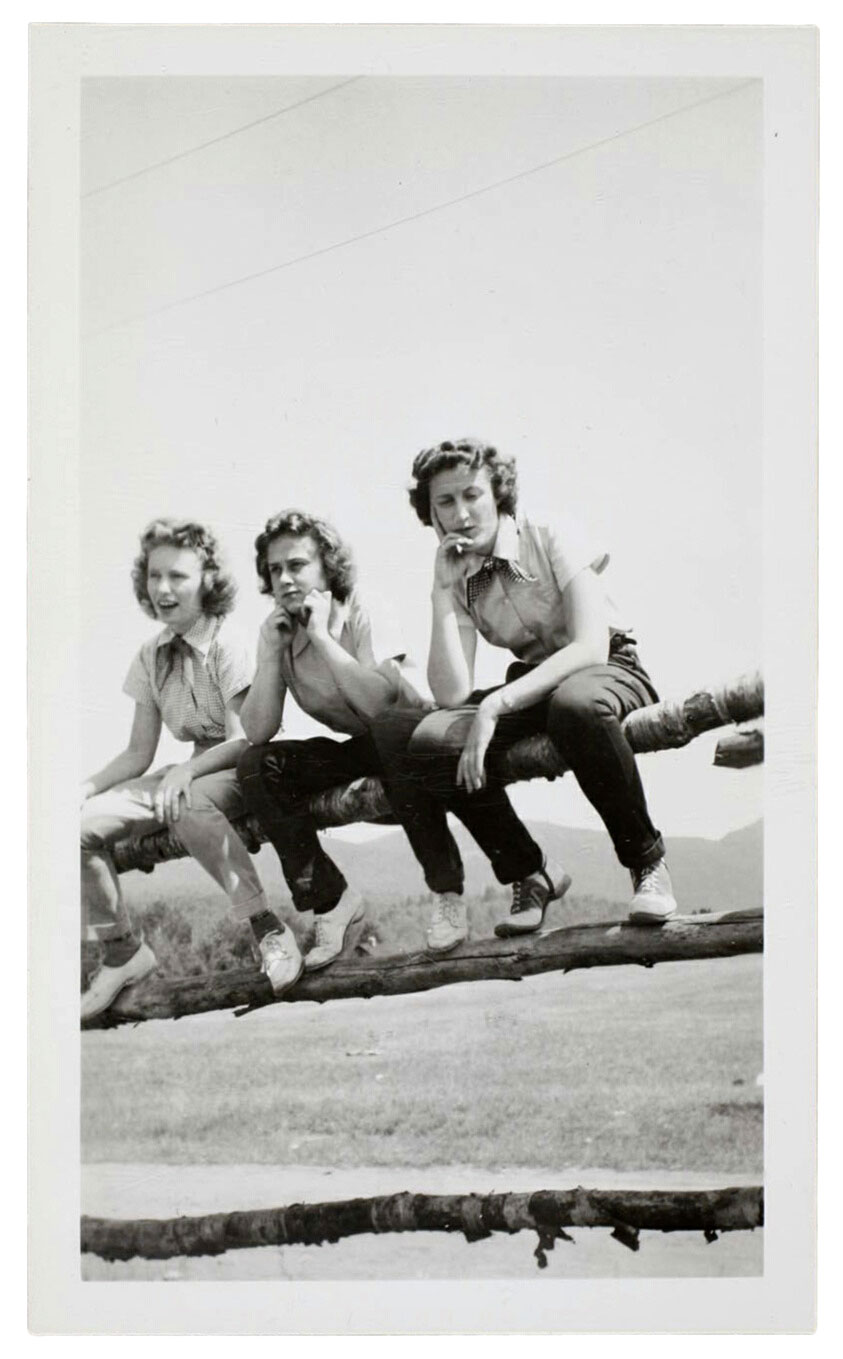
Unknown Maker (American)
Untitled (Stony Creek Dude Ranch, July 1939, stamped Certified, Master Photo Finishers of America, Fountain Photo Service, May 15 1940)
Made 1939
Gelatin silver print
Paper: 11.6 × 7cm (4 5/8 × 2 13/16 in.)
The Art Institute of Chicago, Gift of Peter J. Cohen
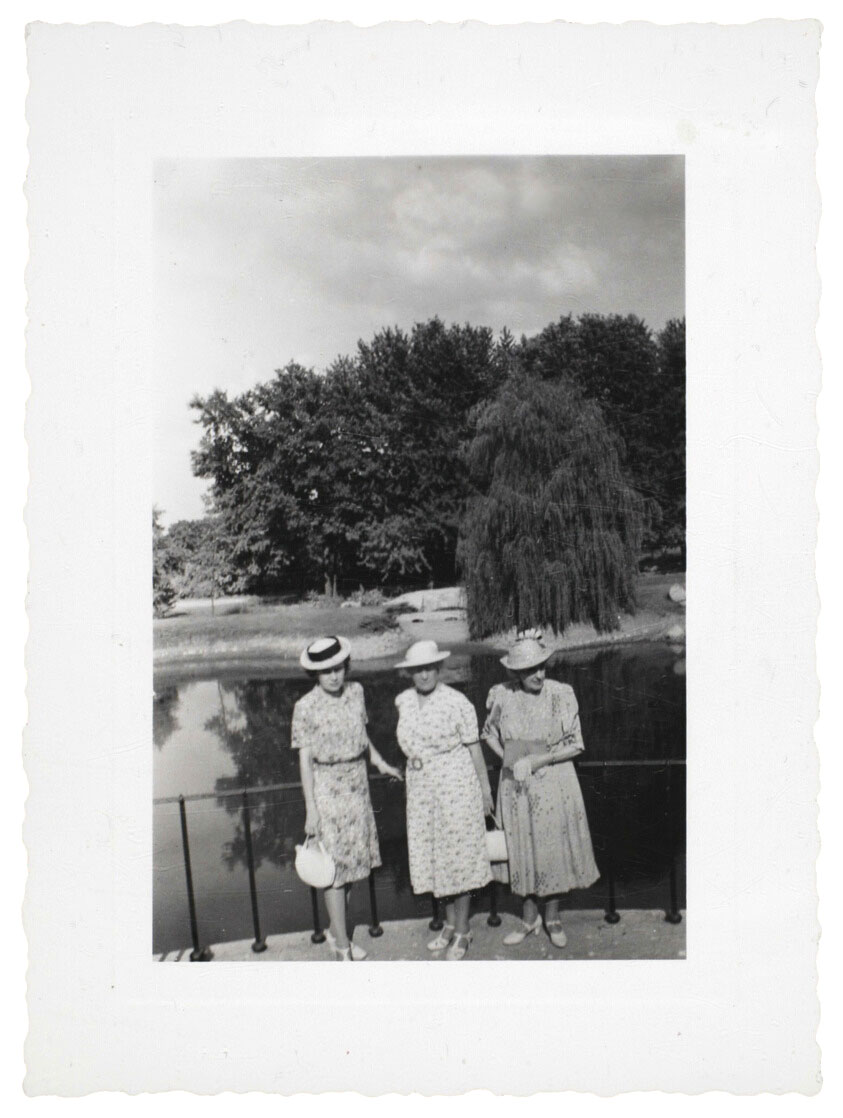
Unknown Maker (American)
Untitled (Stamped Master Photo Finishers of America, Service and Quality, Kay Tone 10 Point Process, Certified Reg. U.S. Pat Off., Caton Photo Co., Detroit, Michigan, Sep 11 1939)
Printed 1939
Gelatin silver print
Paper: 10.7 × 7.9cm (4 1/4 × 3 1/8 in.)
The Art Institute of Chicago, Gift of Peter J. Cohen
![Artist unknown (American). '[Three Women]' c. 1940s](https://artblart.com/wp-content/uploads/2012/01/artist-unknown-c.-1940s.jpg "Artist unknown (American). '[Three Women]' c. 1940s")
Artist unknown (American)
[Three Women]
c. 1940s
Gelatin silver print
11.7 x 7cm
The Art Institute of Chicago, Gift of Peter J. Cohen
![Artist unknown (American). '[Three Women and a photographer]' c. 1940s](https://artblart.com/wp-content/uploads/2012/01/artist-unknown-c.-1940s-b.jpg "Artist unknown (American). '[Three Women and a photographer]' c. 1940s")
Artist unknown (American)
[Three Women and a photographer]
c. 1940s
Gelatin silver print
12.2 x 7.6cm
The Art Institute of Chicago, Gift of Peter J. Cohen
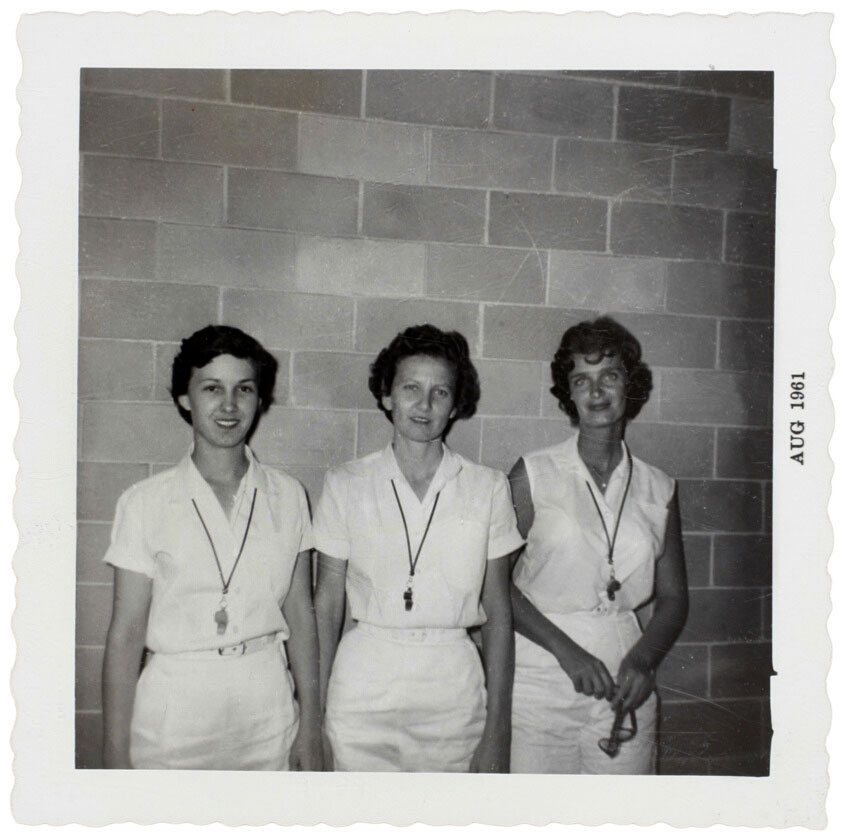
Unknown Maker (American)
Untitled (Gym Teachers Linda “Sissy” House, Sarah Beth Jordan, Seanne Livingston, 9th Grade)
Printed 1961
Gelatin silver print
Paper: 9 × 9 cm (3 9/16 × 3 9/16 in.)
The Art Institute of Chicago, Gift of Peter J. Cohen
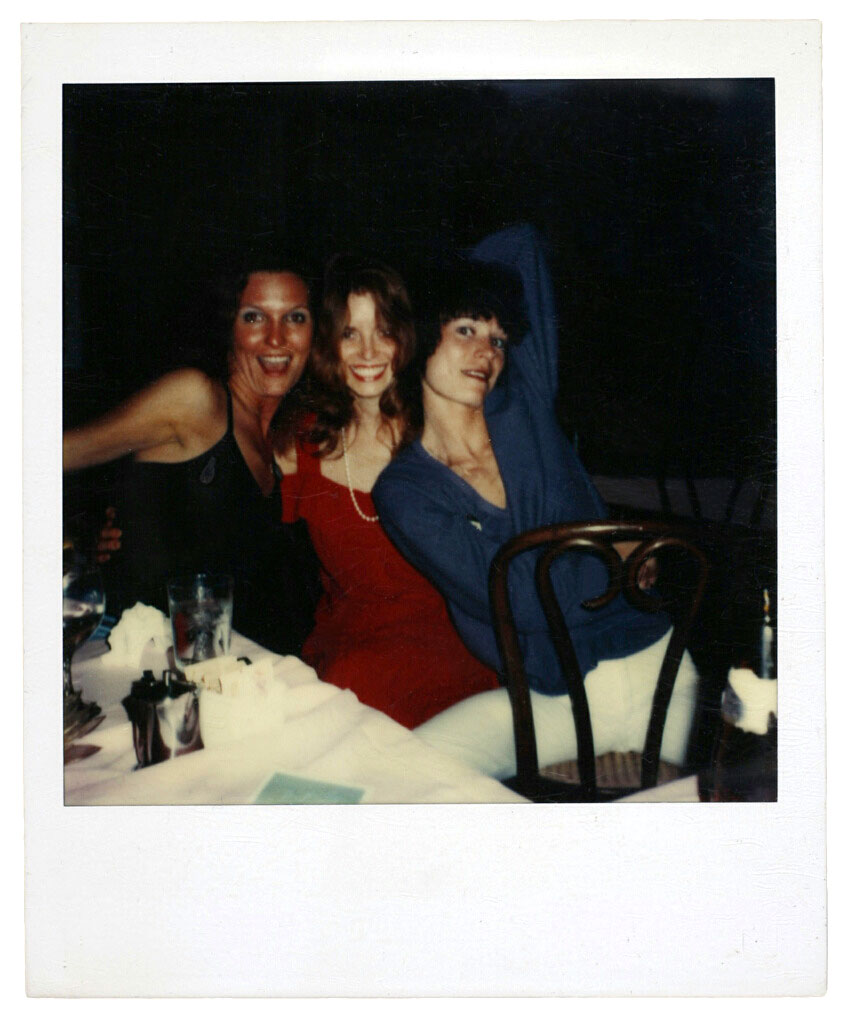
Unknown Maker (American)
Untitled
1960-1969
Internal dye diffusion transfer print
Paper: 10.8 × 8.9cm (4 5/16 × 3 9/16 in.)
The Art Institute of Chicago, Gift of Peter J. Cohen
![Martin M. Homburger (American, active mid-20th century) 'Untitled [Three women]' 1967](https://artblart.com/wp-content/uploads/2012/01/homburger-three-women.jpg "Martin M. Homburger (American, active mid-20th century) 'Untitled [Three women]' 1967")
Martin M. Homburger (American, active mid-20th century)
Untitled [Three women]
1967
Chromogenic print
Image: 11.7 × 9.2cm (4 5/8 × 3 5/8 in.)
Paper: 12.7 × 10.2cm (5 × 4 1/16 in.)
The Art Institute of Chicago, Gift of Peter J. Cohen

Unknown Maker (American)
Untitled
Printed 1968
Chromogenic print
Paper: 9 × 8.6cm (3 9/16 × 3 7/16 in.)
The Art Institute of Chicago, Gift of Peter J. Cohen
![Artist unknown (American). '[Three Women]' c. 1930s](https://artblart.com/wp-content/uploads/2012/01/artist-unknown-c.-1930s-b.jpg "Artist unknown (American). '[Three Women]' c. 1930s")
Artist unknown (American)
[Three Women]
c. 1930s
Gelatin silver print
14.5 x 8.7cm
The Art Institute of Chicago, Gift of Peter J. Cohen
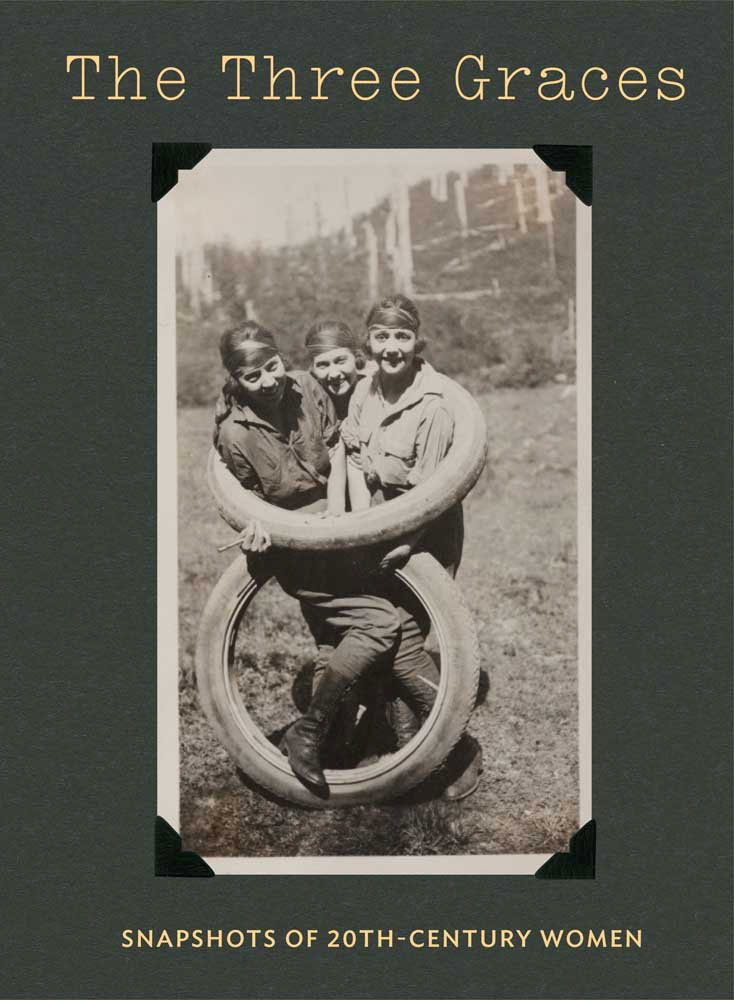
The Three Graces: Snapshots of Twentieth-Century Women book cover
Hardcover – November 29, 2011
Featuring an amazing treasure trove of unpublished images, this intriguing and entertaining book looks at how women explored their identity through popular photography in the 20th century
Snapshots preserve more than individual likeness and memory. Photographs of celebrations, vacations, and gatherings of family and friends are collected with the aim of constructing and preserving a personal identity for future generations. What happens, however, when a snapshot is subsequently discarded or displaced and becomes merely an “anonymous” image? This and many other questions are discussed in this fascinating selection of anonymous images depicting three women. Presumably all taken by nonprofessionals, these snapshots were acquired over time by a private collector interested in their eclectic yet familiar details, who named the grouping after the iconic Greco-Roman motif.
In traditional western iconography, the Three Graces personify beauty, charm, and grace in both nature and humanity. In the 150 snapshots assembled here, the remarkable consistency of confidence and poise projected by the trios of women – in varied settings, in various states of dress/undress, and over a period of more than fifty years – reveals the formal and behavioral conventions that evolved as photography’s popularity skyrocketed among amateurs. To this end, the iconography of The Three Graces provides a framework for understanding the generational differences and cultural influences that shaped women’s self-presentation in front of the camera in the first half of the 20th century.
Text from the Amazon website
The Art Institute of Chicago
111 South Michigan Avenue
Chicago, Illinois 60603-6404
Phone: (312) 443-3600
Opening hours:
Thursday – Monday 11am – 5pm
Closed Tuesdays and Wednesdays
 Art Blart _ art and cultural memory archive
You must be logged in to post a comment.