
Exhibition dates: 3rd May – 12th October, 2025
Curator: Barbara Engelbach

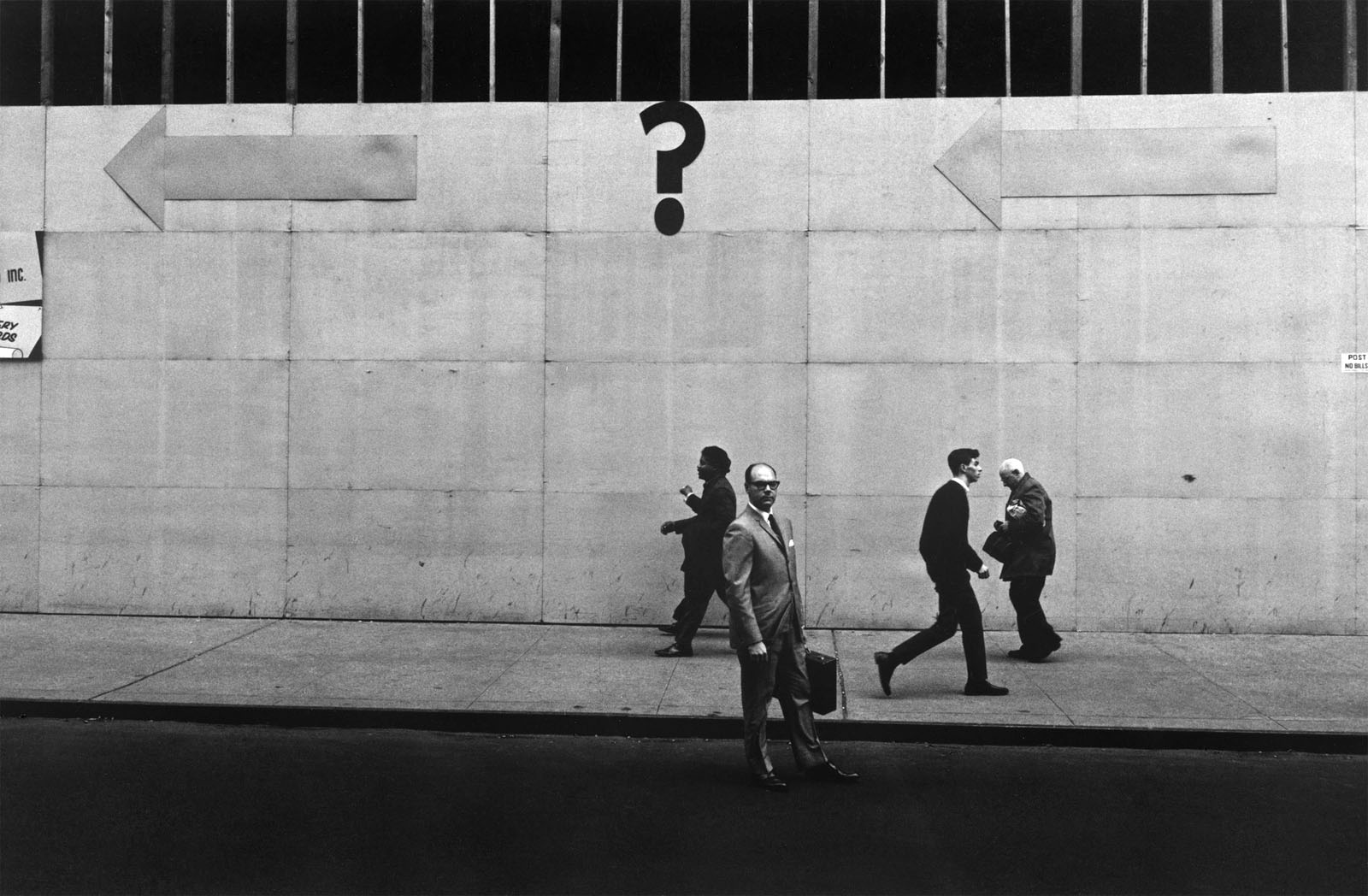
Lee Friedlander (American, b. 1934)
New York City
1966
Gelatin silver paper, print after 1966
22 x 32.9cm
Museum Ludwig, Köln
© Lee Friedlander, courtesy Fraenkel Gallery, San Francisco and Luhring Augustine, New York and Luhring Augustine, New York
Repro: Historisches Archiv mit Rheinischem Bildarchiv
I know and greatly admire the presence and directness of legendary American photographer Lee Friedlander’s photographs containing fractured planes within the image construction.
I know and appreciate (if not admire) the immediacy and in your face obstinacy (shoot at all costs!) of American photographer Garry Winogrand’s photographs.
What I didn’t know was the excellent 1980s social documentary and humanist work of the American photographer Joseph Rodríguez – for me, the unexpected hero of this exhibition.
Rodríguez’s moody, high contrast photographs of humanity and street scenes pictured from behind the wheel of his taxi in New York proffer an intuitive, empathetic and subjective view of the city and its people at a time of great economic and social upheaval.
“The photographs in the Taxi series are a significant document of the 1980s in New York, a period marked by economic and social upheaval and the AIDS crisis. On his journeys crisscrossing the city, Rodríguez does not depict despair,
but rather shows people maintaining their dignity in the face of difficult and uncertain times.” (Text from Museum Ludwig)
Uncertain times, uncertain angles and perspectives, uncertain light give rise to a powerful body of work made certain by the talent of an impressive photographer. Glorious work.
Dr Marcus Bunyan
Many thankx to Museum Ludwig for allowing me to publish the photographs in the posting. Please click on the photographs for a larger version of the image.
Lee Friedlander (American, b. 1934)
New York City
1962
Gelatin silver paper, print after 1962
22 x 32.9cm
Museum Ludwig, Köln
© Lee Friedlander, courtesy Fraenkel Gallery, San Francisco and Luhring Augustine, New York
Repro: Historisches Archiv mit Rheinischem Bildarchiv

Lee Friedlander (American, b. 1934)
New York City
1963
Gelatin silver paper, print after 1963
22 x 32.9cm
Museum Ludwig, Köln
© Lee Friedlander, courtesy Fraenkel Gallery, San Francisco and Luhring Augustine, New York and Luhring Augustine, New York
Repro: Historisches Archiv mit Rheinischem Bildarchiv
Lee Friedlander
(*1934 in Aberdeen, Washington, lives and works in New York City, New York)
Lee Friedlander began photographing at the age of fourteen and studied under Edward Kaminski at the Art Center School in Los Angeles until 1955. In 1956, he moved to New York, where he met Diane Arbus, Robert Frank, and Garry Winogrand. As early as the end of the 1950s, he made his first photographic forays into the streets of New York. His often humorous photographs reveal the complexity of American society, which he documented in thoughtful compositions.
In 1962, Friedlander photographed a parade in which American President John F. Kennedy also participated. His interest, however, was not in the event itself, but in the fleeting moments on the sidelines. One of the photographs taken that day shows a waiter and a boy attentively gazing out the window of a café. Upon closer inspection, it becomes clear that the crowd behind them is actually a reflection of the audience gathered outside for the parade. Due to the reflection, the café’s advertising signs also appear to be on the same plane as the signs on the opposite side of the street. Such interweaving of perspectives through reflections, as well as picture-in-picture constructions and unusual cropping, characterize Friedlander’s work of the 1960s. By focusing his camera on the often unnoticed details of daily life, capturing them with precise focus and exposure, he found a new way to depict contemporary America. His own presence, as a reflection or a shadow, in many of these images draws attention to the process of photography itself.
Friedlander does not create complete series. Each shot stands on its own as a “sharp and crudely amusing, bitterly comic observation” (Walker Evans). He initially used a Leica 35mm, whose wide angle he valued. In the early 1990s, he discovered the depth of field of the Hasselblad camera, which he also used to photograph the suburban towns of San Angelo, Texas. His subjects remained the same, only he continually reinvented them. In the 1990s, Friedlander created his photographs of flower stems trapped in glass containers and surrounded by a veil of condensation, transforming a sober detail of everyday life into a contemporary memento mori – a reminder of transience. The self-portraits, which unvarnishedly depict his ageing body, date from the same period.
Text from Museum Ludwig translated by Google Translate
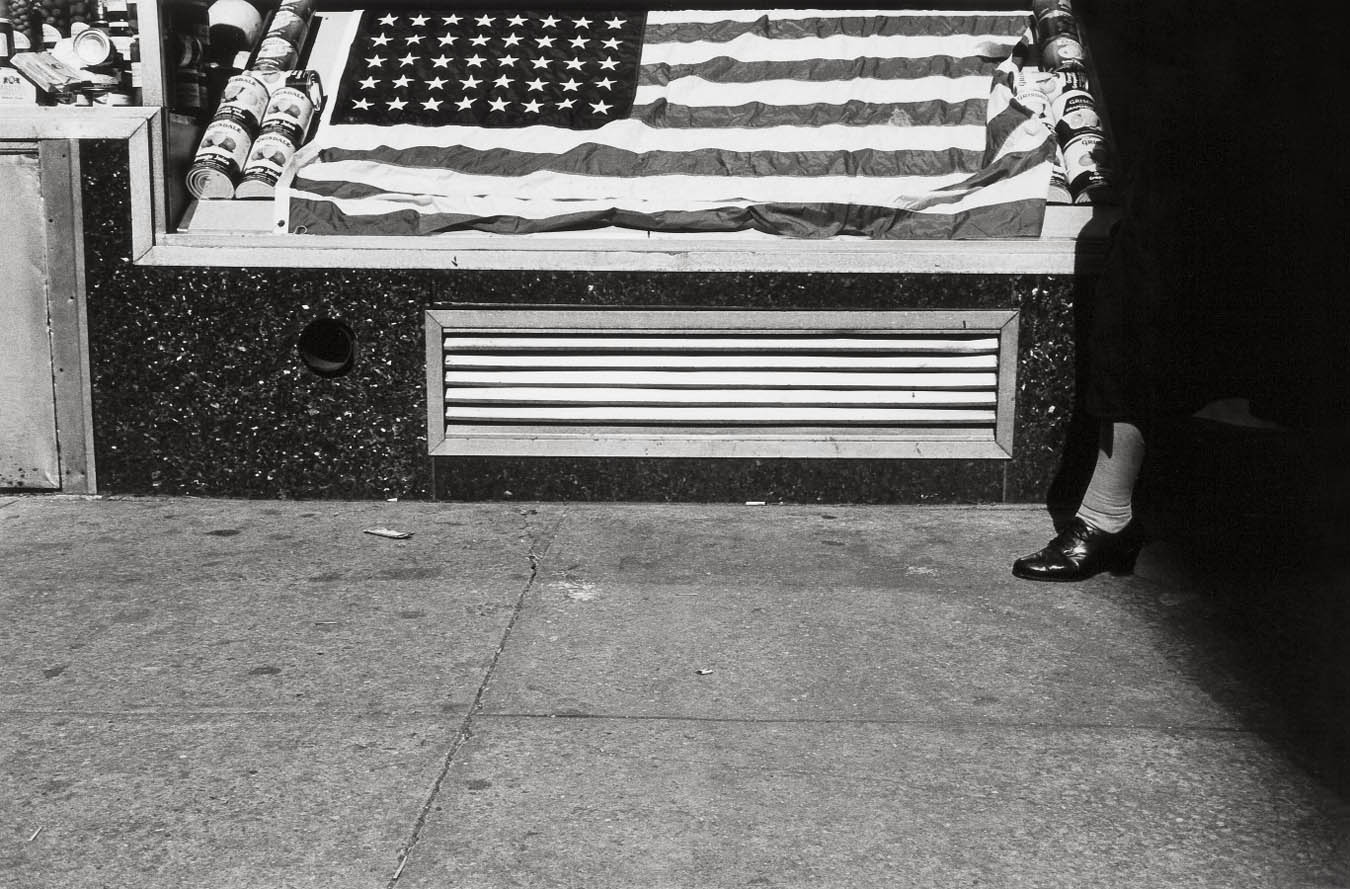
Lee Friedlander (American, b. 1934)
New York City
1965
Gelatin silver paper, print after 1965
22 x 32.9cm
Museum Ludwig, Köln
© Lee Friedlander, courtesy Fraenkel Gallery, San Francisco and Luhring Augustine, New York and Luhring Augustine, New York
Repro: Historisches Archiv mit Rheinischem Bildarchiv

Lee Friedlander (American, b. 1934)
Philadelphia, PA
1965
Gelatin silver paper, print after 1965
20.5 x 30.6cm
Museum Ludwig, Köln
© Lee Friedlander, courtesy Fraenkel Gallery, San Francisco and Luhring Augustine, New York
Repro: Historisches Archiv mit Rheinischem Bildarchiv
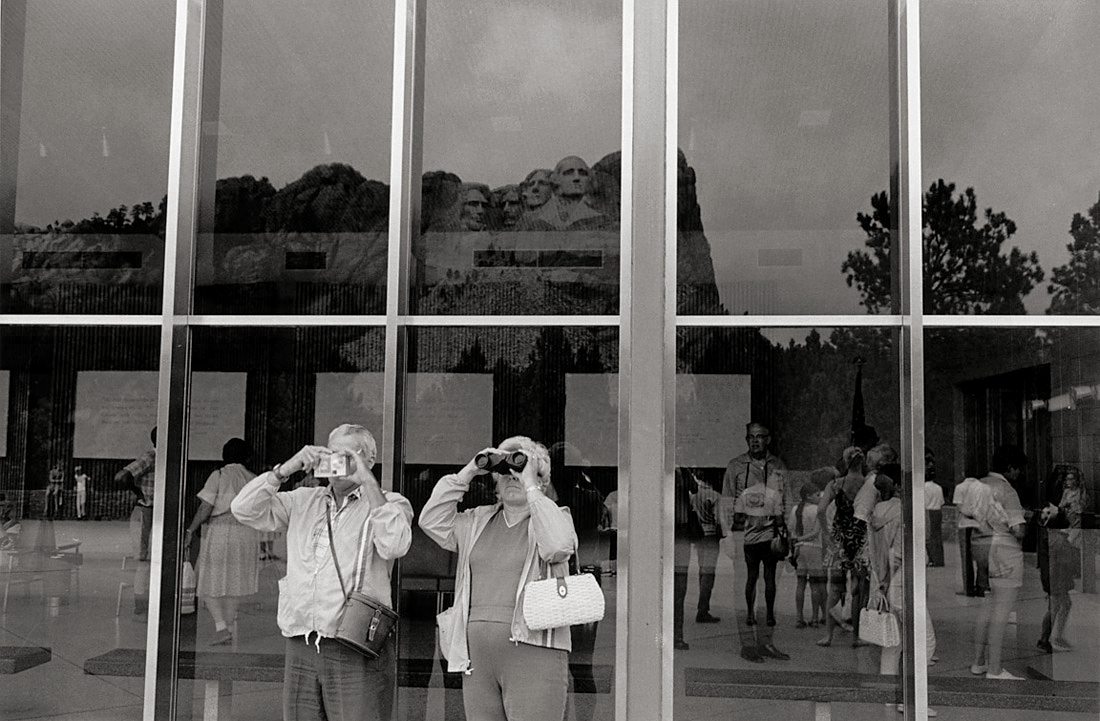
Lee Friedlander (American, b. 1934)
Mount Rushmore
1969
Gelatin silver paper, print after 1969
22 x 32.9cm
Museum Ludwig, Köln
© Lee Friedlander, courtesy Fraenkel Gallery, San Francisco and Luhring Augustine, New York and Luhring Augustine, New York
Repro: Historisches Archiv mit Rheinischem Bildarchiv
The street life of cities has always been a fascinating subject for photographers, who have approached it in a variety of ways, from candid images documenting urban unrest to portraits that shine a spotlight on individuals. Since the nineteenth century, cities and photography have been directly linked through the idea of modernity. With the introduction of compact cameras such as the Leica, street photography developed into its own genre in the mid-twentieth century. Small-format cameras gave photographers greater flexibility and enabled them to respond quickly while remaining discrete. They explored public space without obtruding and, in contrast to staged photography, captured candid and spontaneous moments that had previously been considered unworthy photographic subjects. Influenced by Henri Cartier-Bresson’s concept of the “decisive moment,” these photographers sought to capture the fleeting instant when light, composition, and subject aligned to convey the significance of an event.
This exhibition in the Photography Rooms at the Museum Ludwig is dedicated to three protagonists from two generations of street photography: Garry Winogrand (b. 1928 in New York, d. 1984), Lee Friedlander (b. 1934 in Aberdeen, Washington, based in New York), and Joseph Rodríguez (b. 1951 in Brooklyn, based in New York). Despite all three photographers sharing the same subject matter, each one pursues a singular approach that produces distinct results. Iconic photographs from the 1960s to the 1980s are displayed alongside lesser-known examples from each photographer’s oeuvre. All of the works on display were included in donations made by the Bartenbach Family in 2015 and Volker Heinen in 2018, or have been acquired by the Museum Ludwig since 2001.
The landmark exhibition New Documents at the Museum of Modern Art in New York in 1967 helped launch the careers of Winogrand and Friedlander. Their striking photographs broke with visual conventions, such as a level horizon line or a centred main subject. Winogrand frequently tilted his viewfinder, producing skewed horizon lines that offer a new view of reality and make his images appear spontaneous, as does his purposeful use of blurriness, overexposure, underexposure, and backlighting. Friedlander, in turn, created compositions in which the viewer’s gaze is hindered by obstructions, such as shadows, signs, architectural elements, and streetlights, or is disoriented by reflections.
Winogrand and Friedlander, who are represented in the exhibition with twenty images each, both use photography in a self-reflective way that brings the formal aspects of photography to the fore. This encourages an analytical gaze, producing an emotional distance between the viewer and the subject, which often results in ambivalent images where the intention of the photographer remains unclear. Winogrand and Friedlander each developed their own distinct style, embracing originality and authorship by merging documentary photography and personal expression. While they attempted to distance themselves from photojournalism and social documentary photography, eschewing event-based, narrative-focused, and emotionally charged imagery, Rodriguez’s work deliberately engages with these genres. He aspires to give visibility to marginalised people by communicating with his subjects and attempting to tell their stories. Many of his photographs are accompanied by short commentaries that provide information about the context in which each image was created. Rodríguez’s pictures employ unusual perspectives and surprising compositions, and his use of reflections emphasises the subjectivity of the photographer’s empathic gaze beyond the momentariness of the shot. The exhibition features around twenty photographs from his Taxi series.
This is the first exhibition in the new Photography Rooms at the Museum Ludwig, centrally located on the second floor.
Text / press release from the Museum Ludwig website
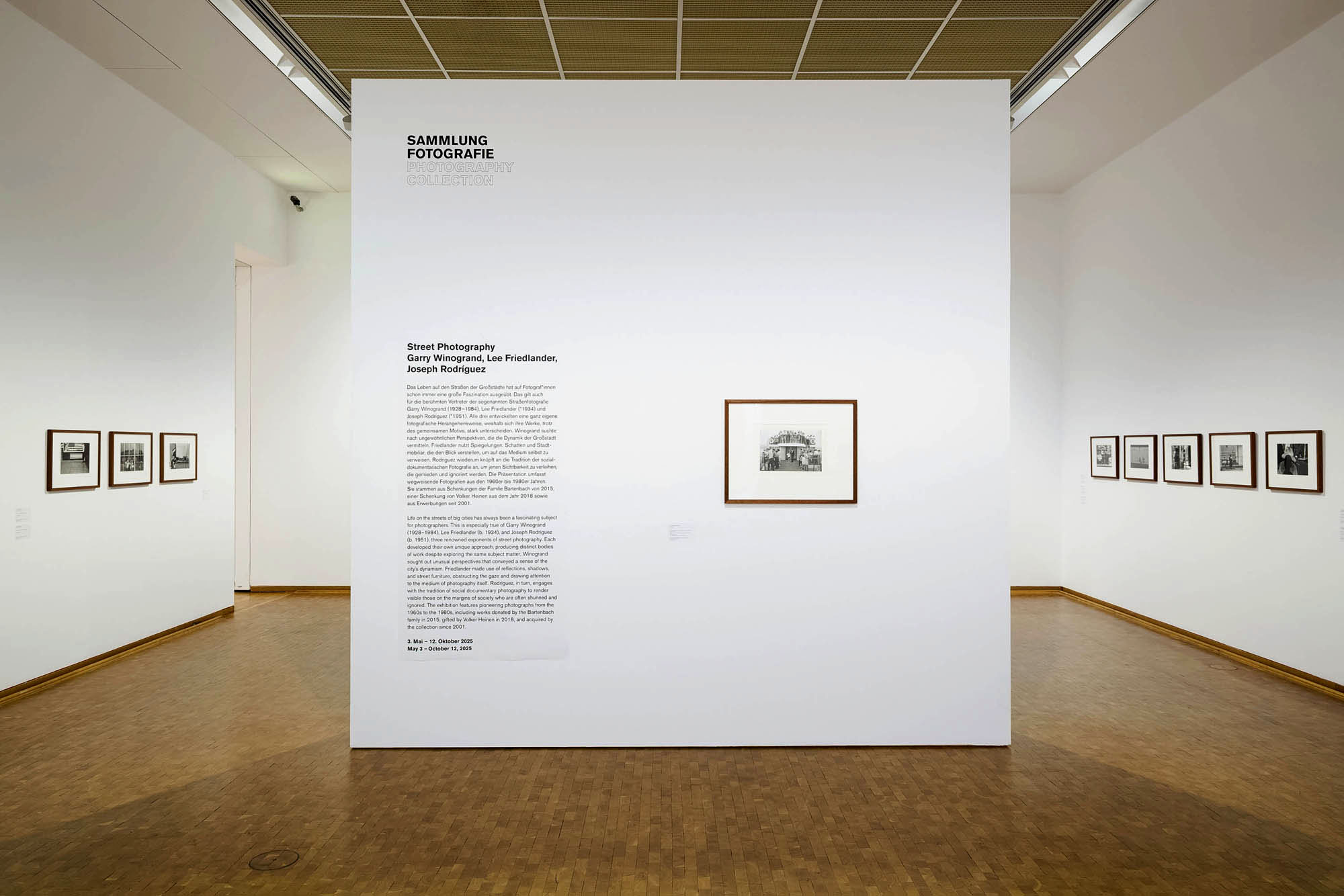
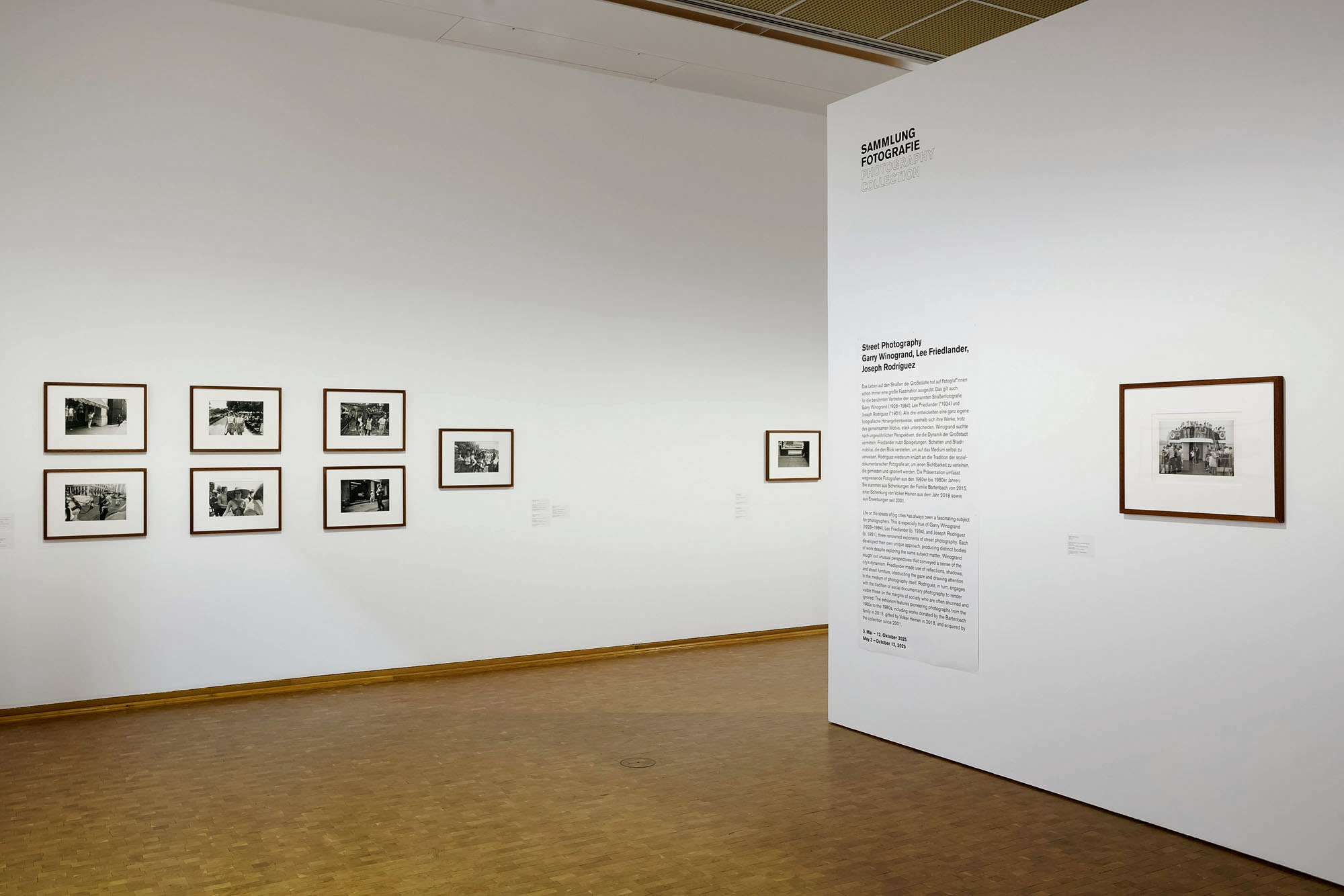
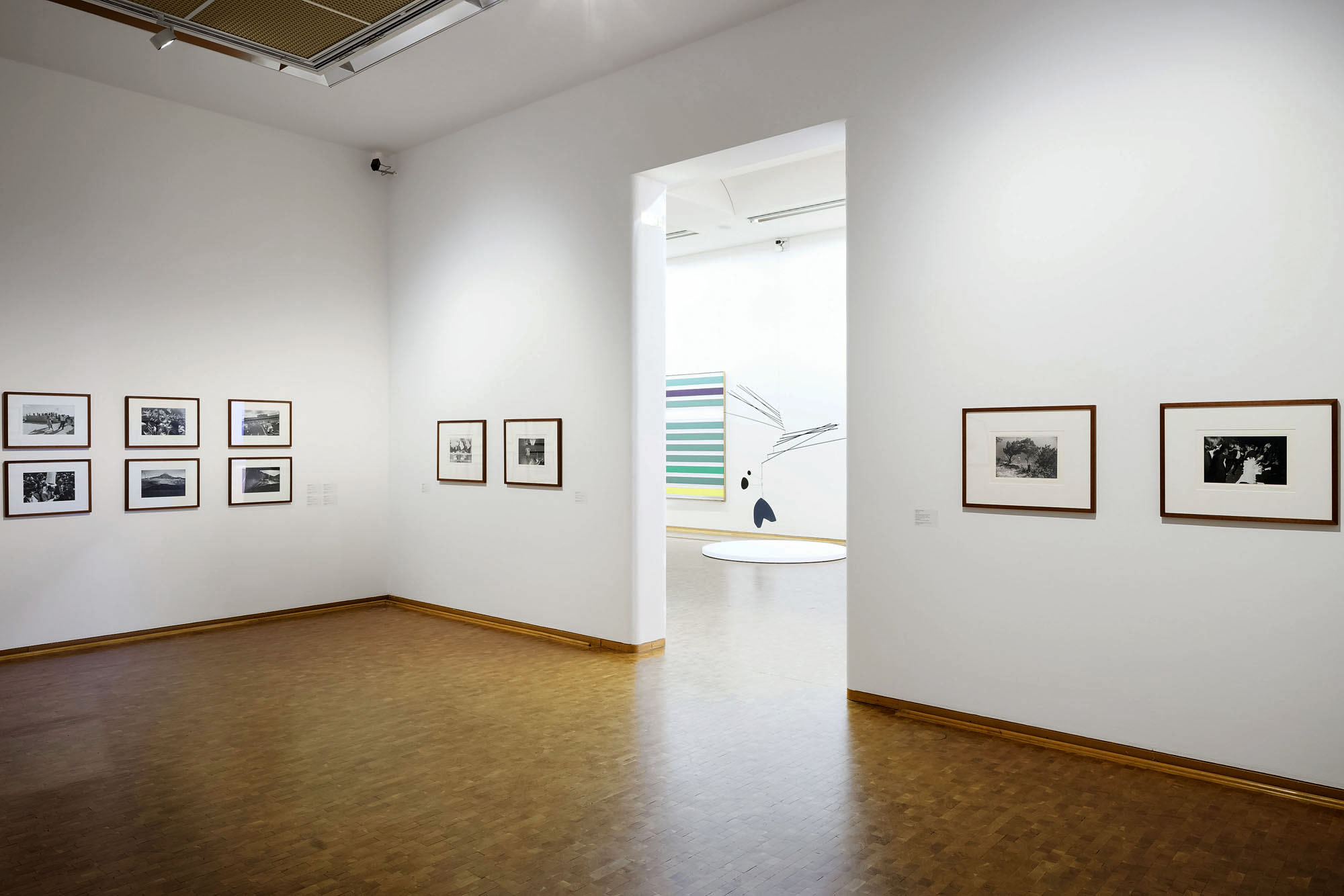
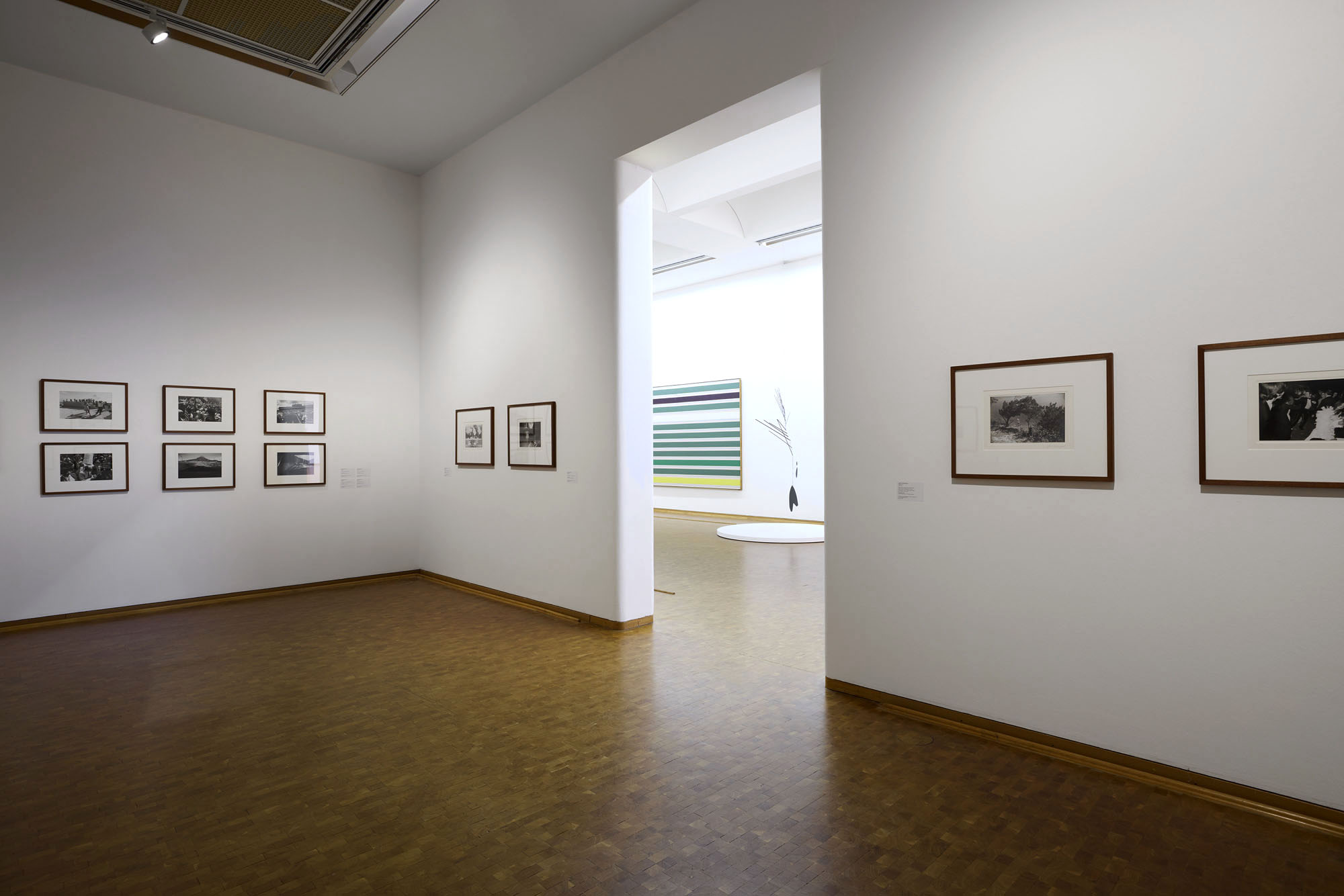
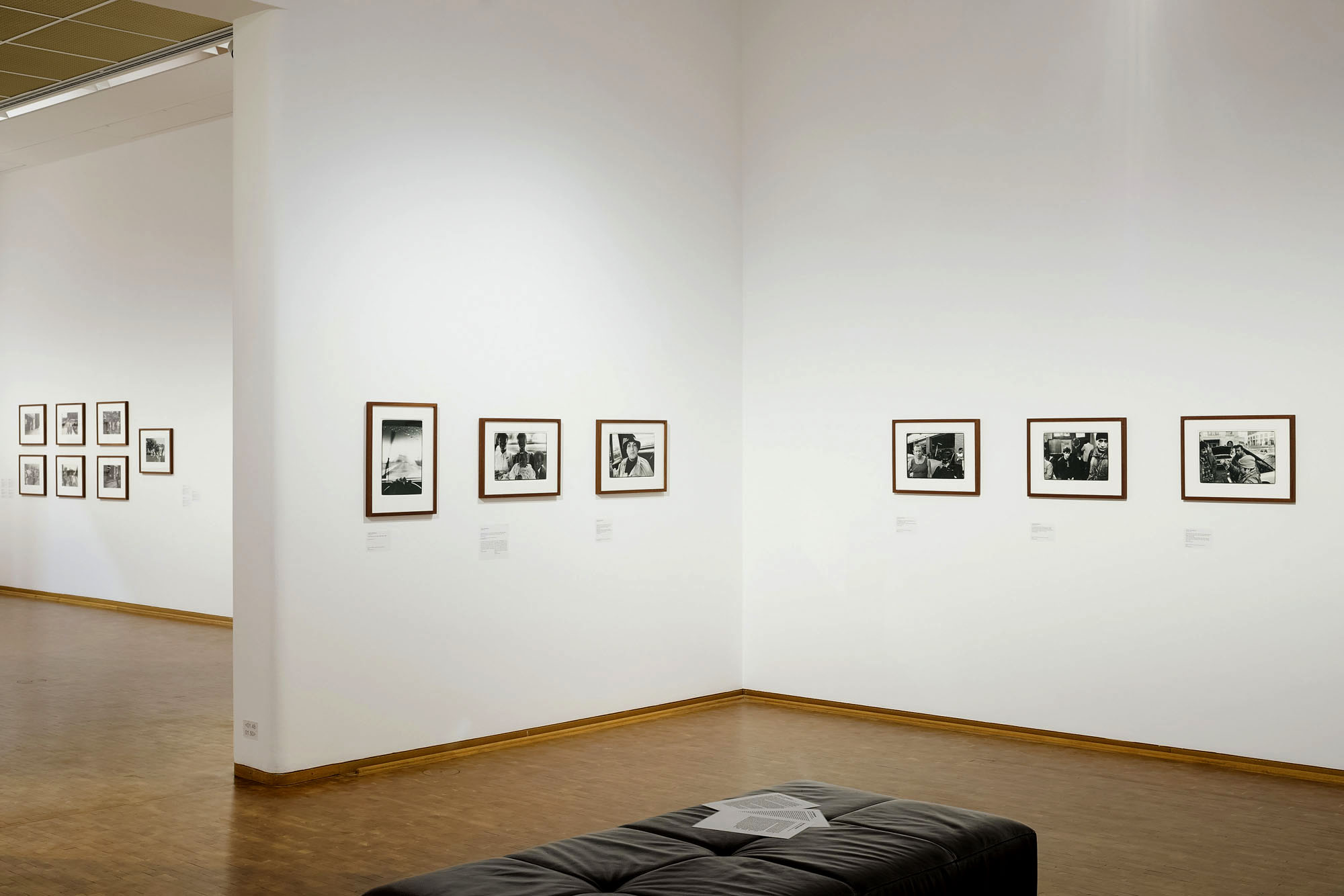
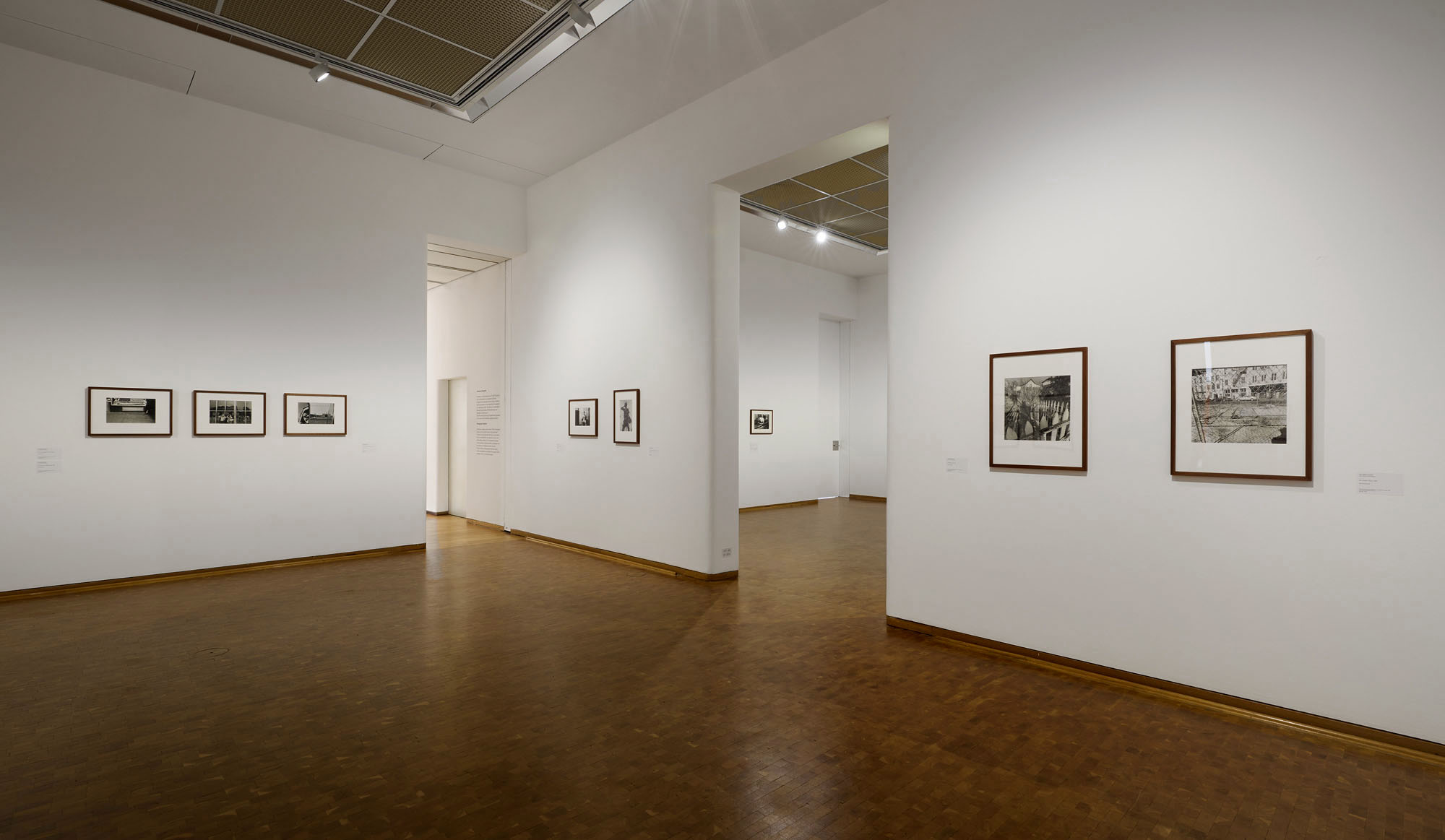
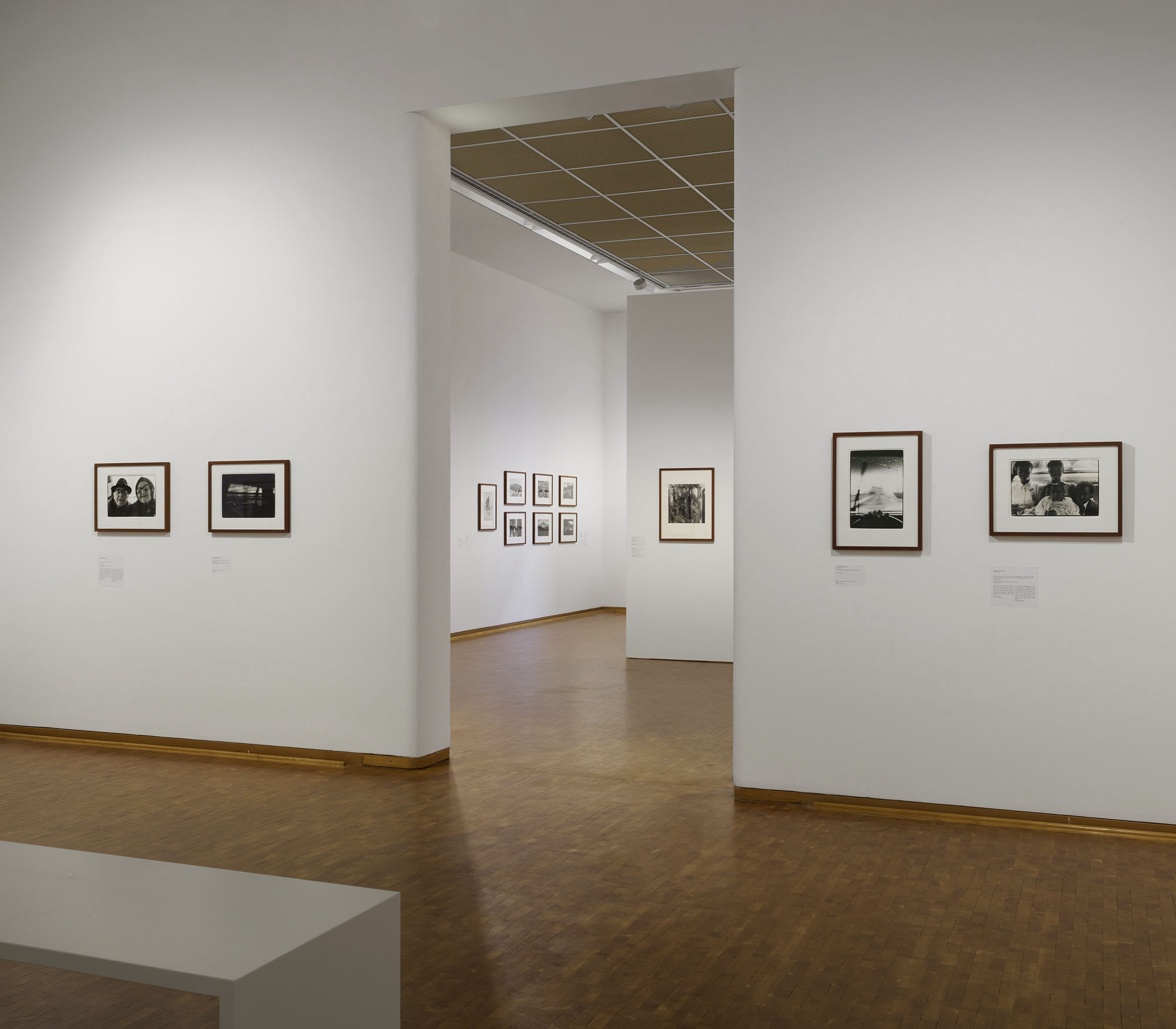
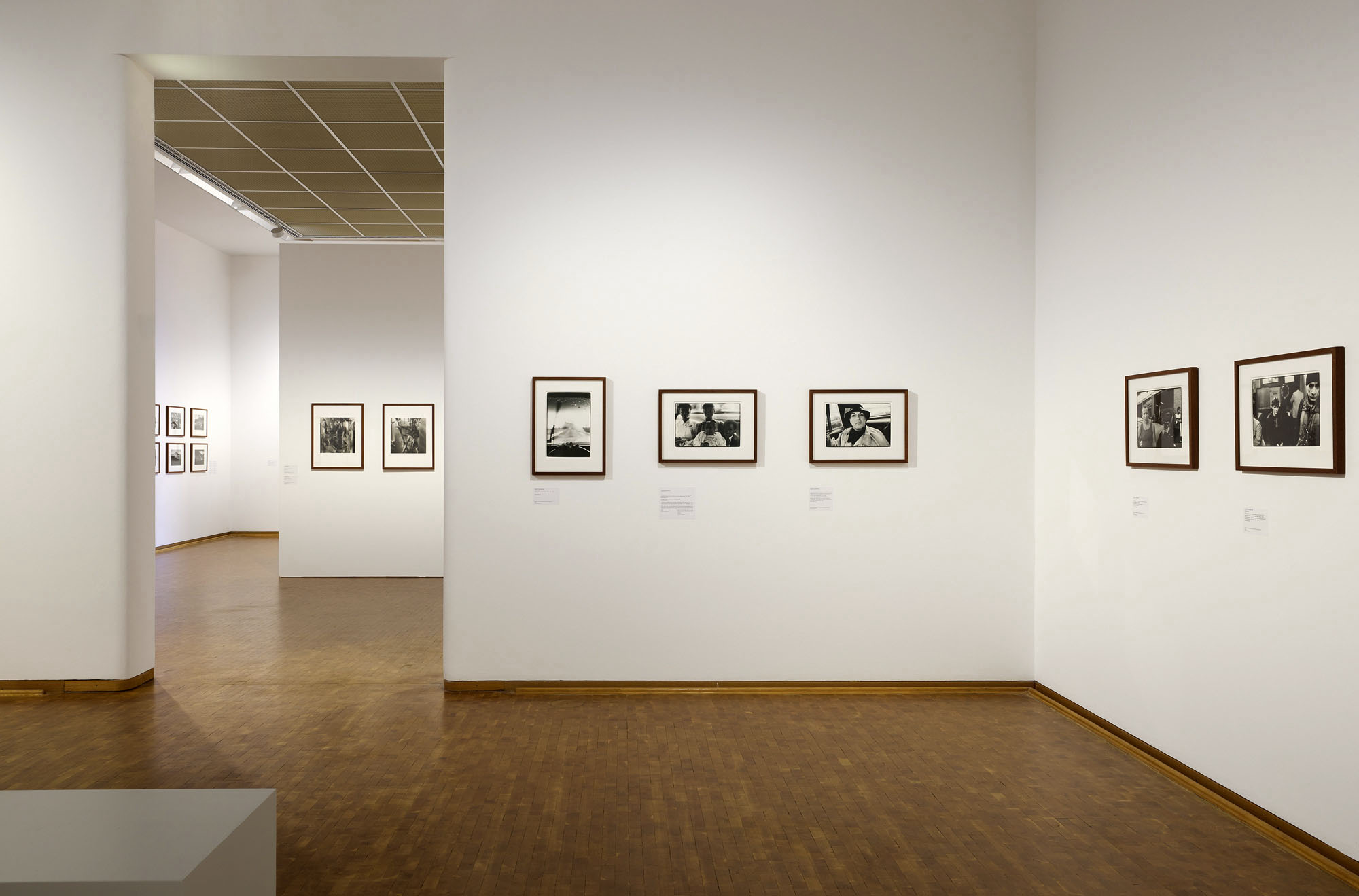
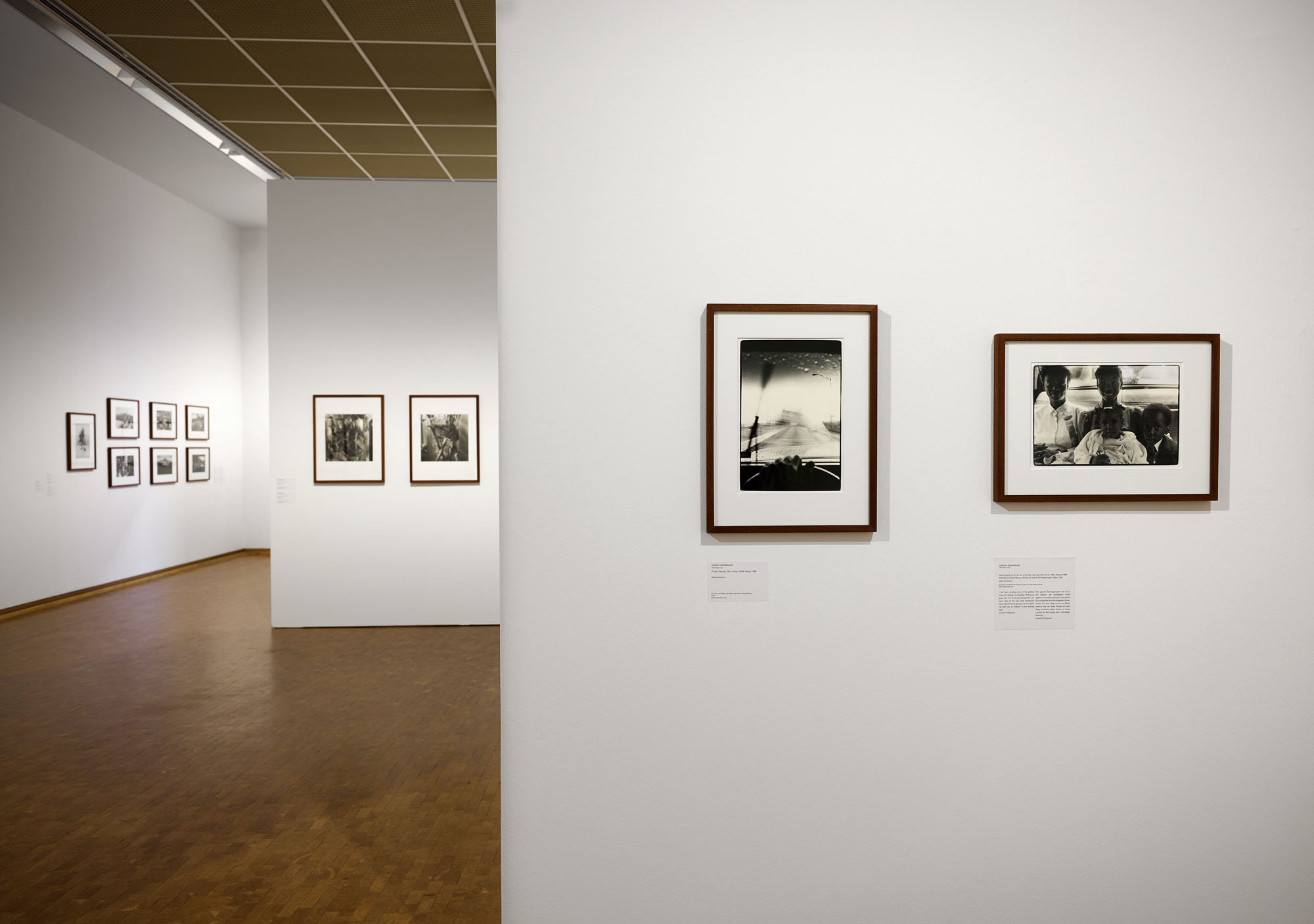
Installation views of the exhibition Street Photography. Lee Friedlander, Joseph Rodríguez, Garry Winogrand at Museum Ludwig, Cologne, May – October, 2025
Photo: Historisches Archiv mit Rheinischem Bildarchiv/Vincent Quack
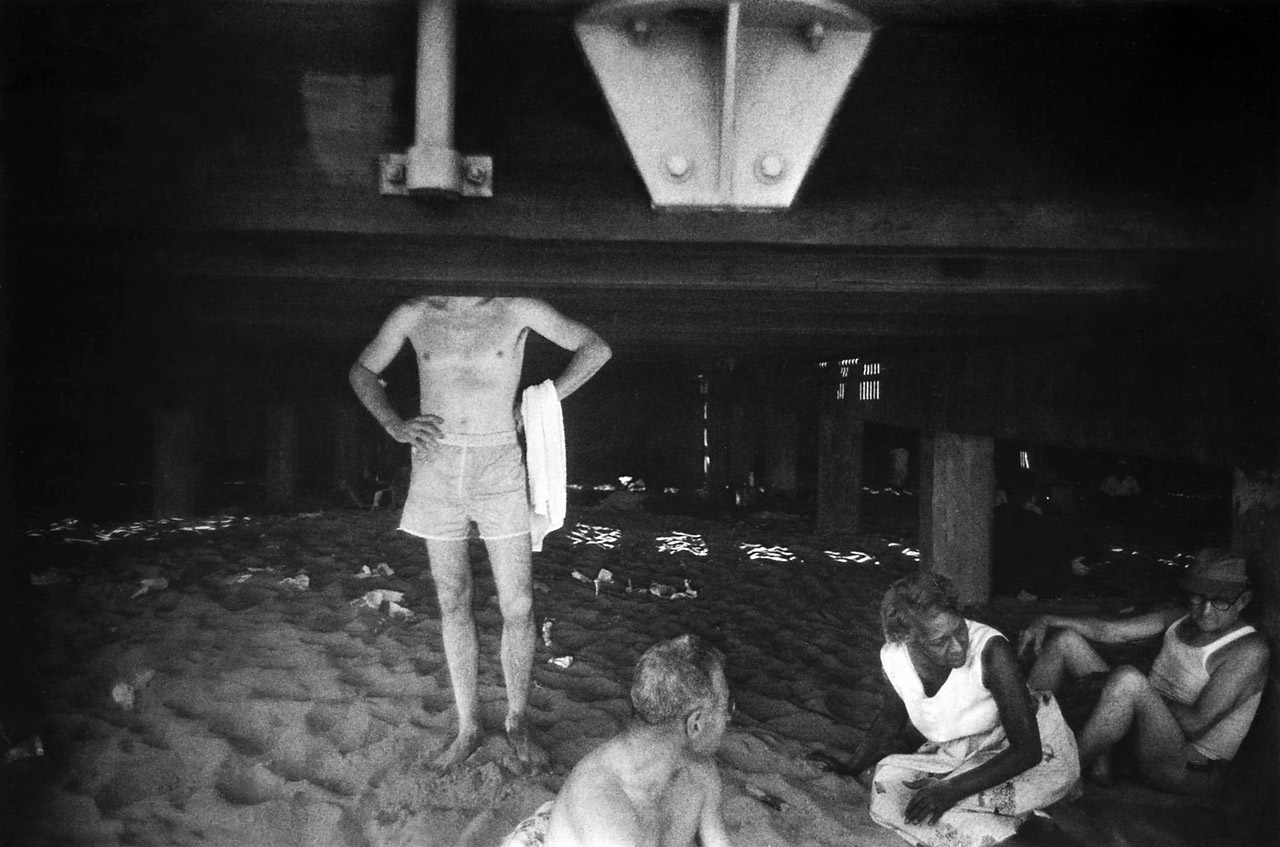
Garry Winogrand (American, 1928-1984)
Coney Island, New York
1952
Gelatin silver paper, print after 1973
21.7 x 32.6cm
© The Estate of Garry Winogrand/Courtesy Fraenkel Gallery, San Francisco
Repro: Historisches Archiv mit Rheinischem Bildarchiv

Garry Winogrand (American, 1928-1984)
Utah
1964
Gelatin silver paper, print after 1978
23 x 34cm
© The Estate of Garry Winogrand/Courtesy Fraenkel Gallery, San Francisco
Repro: Historisches Archiv mit Rheinischem Bildarchiv
Garry Winogrand
(*1928 in New York City, New York, d. 1984)
For many years, Garry Winogrand found his subjects right on his doorstep, on the streets of his birthplace and longtime home, New York. Whether they depict individuals or groups of people, his photographs are characterised by a special dynamism, which is also the result of the unusual perspectives of his shots. Often chaotic, sometimes surreal, the images tell stories from everyday life in the big city, but also from mass events such as sporting events or political demonstrations.
Winogrand distanced himself from both the social documentary photography popular in the 1930s and 1940s and from photojournalism, with which he himself earned his living for a long time. He was concerned with shifting the perspective from the object of the photograph to the camera: “I photograph to find out what things look like when photographed.” In his photographs, Winogrand found a formal equivalent for the diverging social forces of the 1960s. He captured passersby on the streets and public squares with a wide-angle lens in such a way that the horizons tilted and a clear center of gravity was missing. His photographs of women in public often deviated from this principle. He dedicated the book Women are Beautiful to this motif, which he returned to repeatedly throughout his career, in 1975. In another project, beginning in 1969, he focused on the media world in order to – as he put it – “study the events produced in the news.” With a distanced perspective, Winogrand captured press conferences, demonstrations, open-air festivals, and the hustle and bustle of the art world – the spectacles and pseudo-events of a society in transition.
Text from Museum Ludwig translated by Google Translate
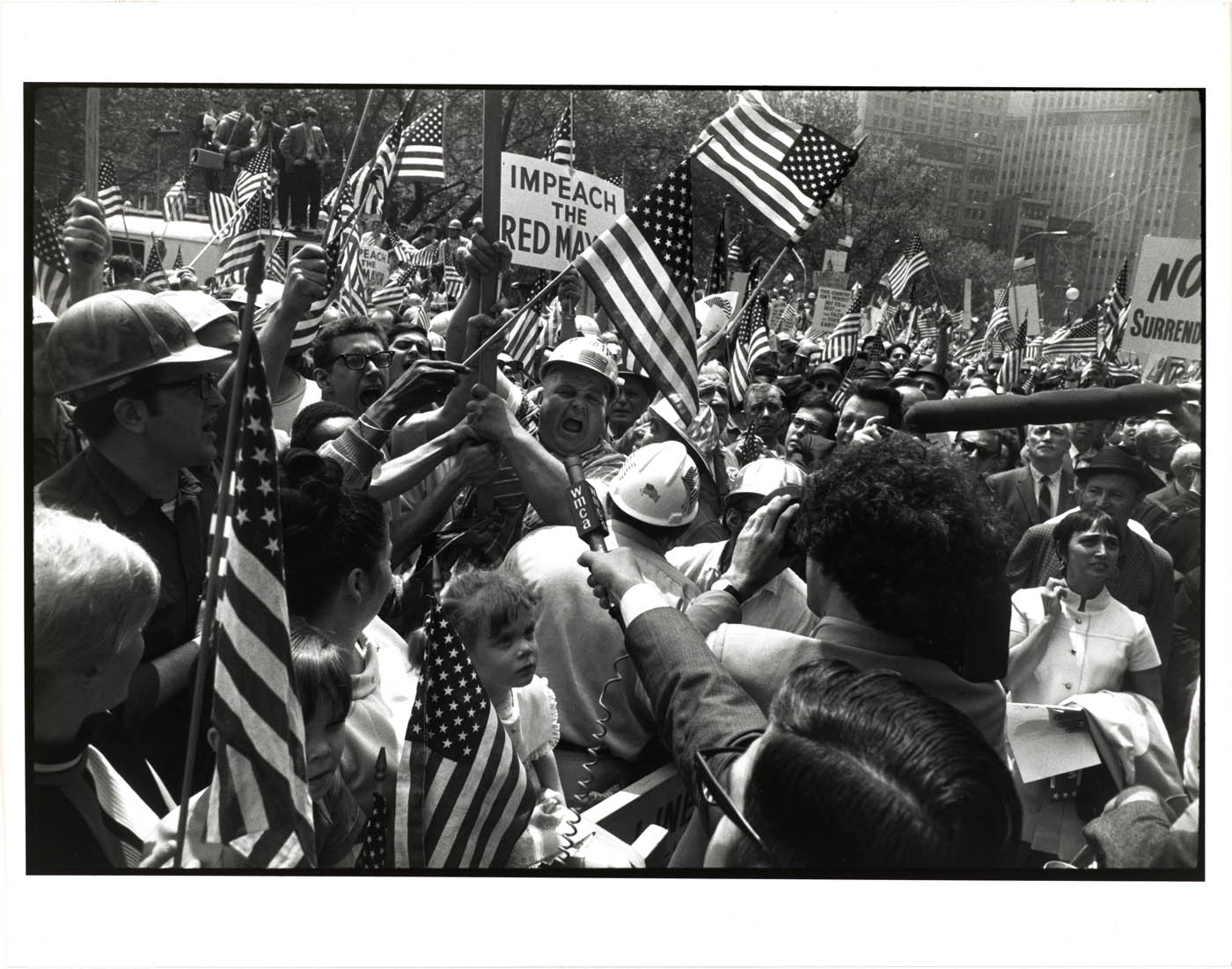
Garry Winogrand (American, 1928-1984)
New York City
1969
Gelatin silver paper, print after 1978
22.9 x 34.2cm
© The Estate of Garry Winogrand/Courtesy Fraenkel Gallery, San Francisco
Repro: Historisches Archiv mit Rheinischem Bildarchiv
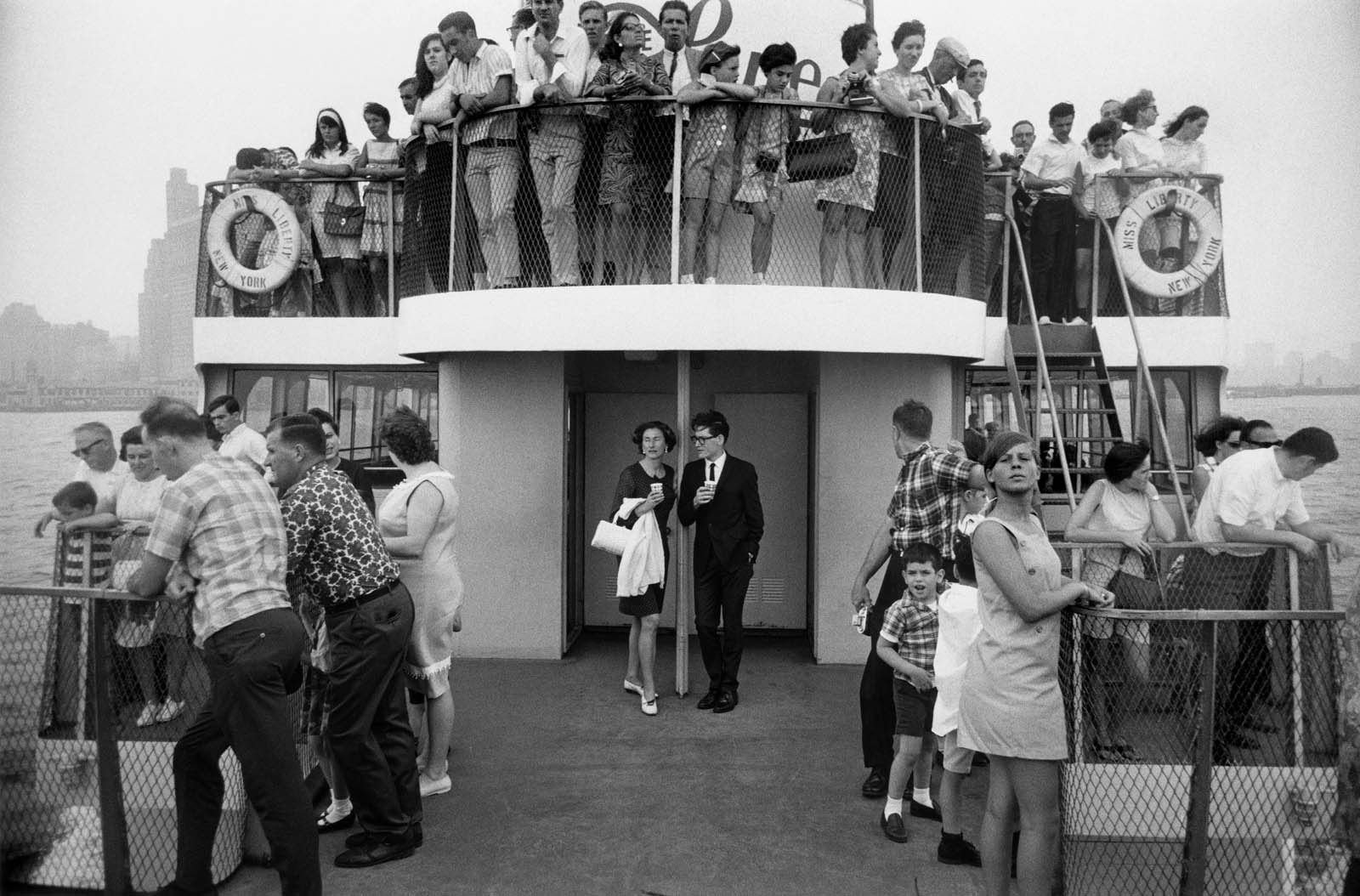
Garry Winogrand (American, 1928-1984)
Circle Line Statue of Liberty Ferry, New York
1971
Gelatin silver paper, print after 1973
21.7 x 32.4cm
© The Estate of Garry Winogrand/Courtesy Fraenkel Gallery, San Francisco
Repro: Historisches Archiv mit Rheinischem Bildarchiv
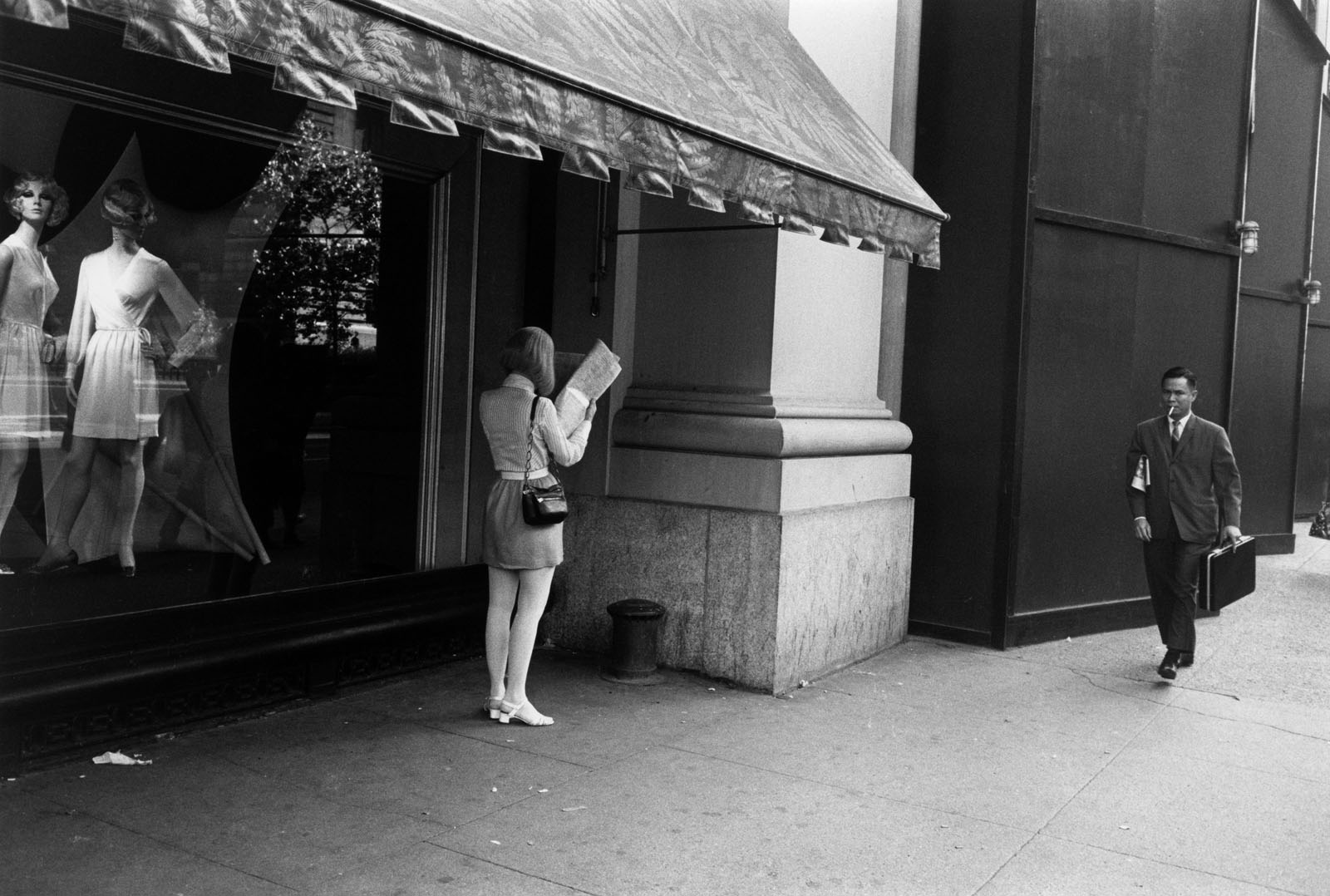
Garry Winogrand (American, 1928-1984)
Untitled, from: Women are Beautiful
1970
Gelatin silver paper, print after 1981
21.7 x 32.4cm
© The Estate of Garry Winogrand/Courtesy Fraenkel Gallery, San Francisco
Repro: Historisches Archiv mit Rheinischem Bildarchiv
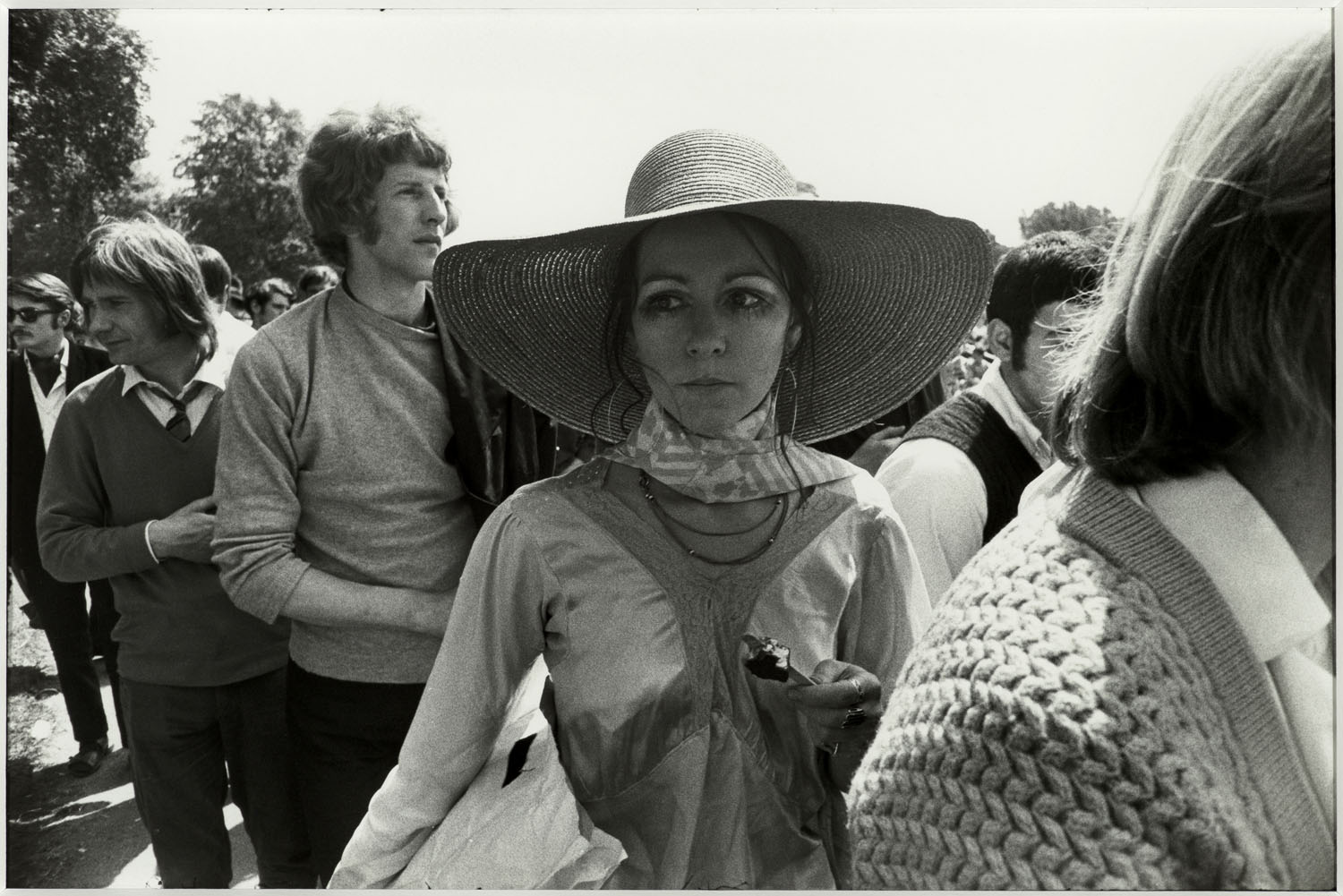
Garry Winogrand (American, 1928-1984)
Untitled, from: Women are Beautiful
1973
Gelatin silver paper, print after 1973
21.7 x 32.4cm
© The Estate of Garry Winogrand/Courtesy Fraenkel Gallery, San Francisco
Repro: Historisches Archiv mit Rheinischem Bildarchiv
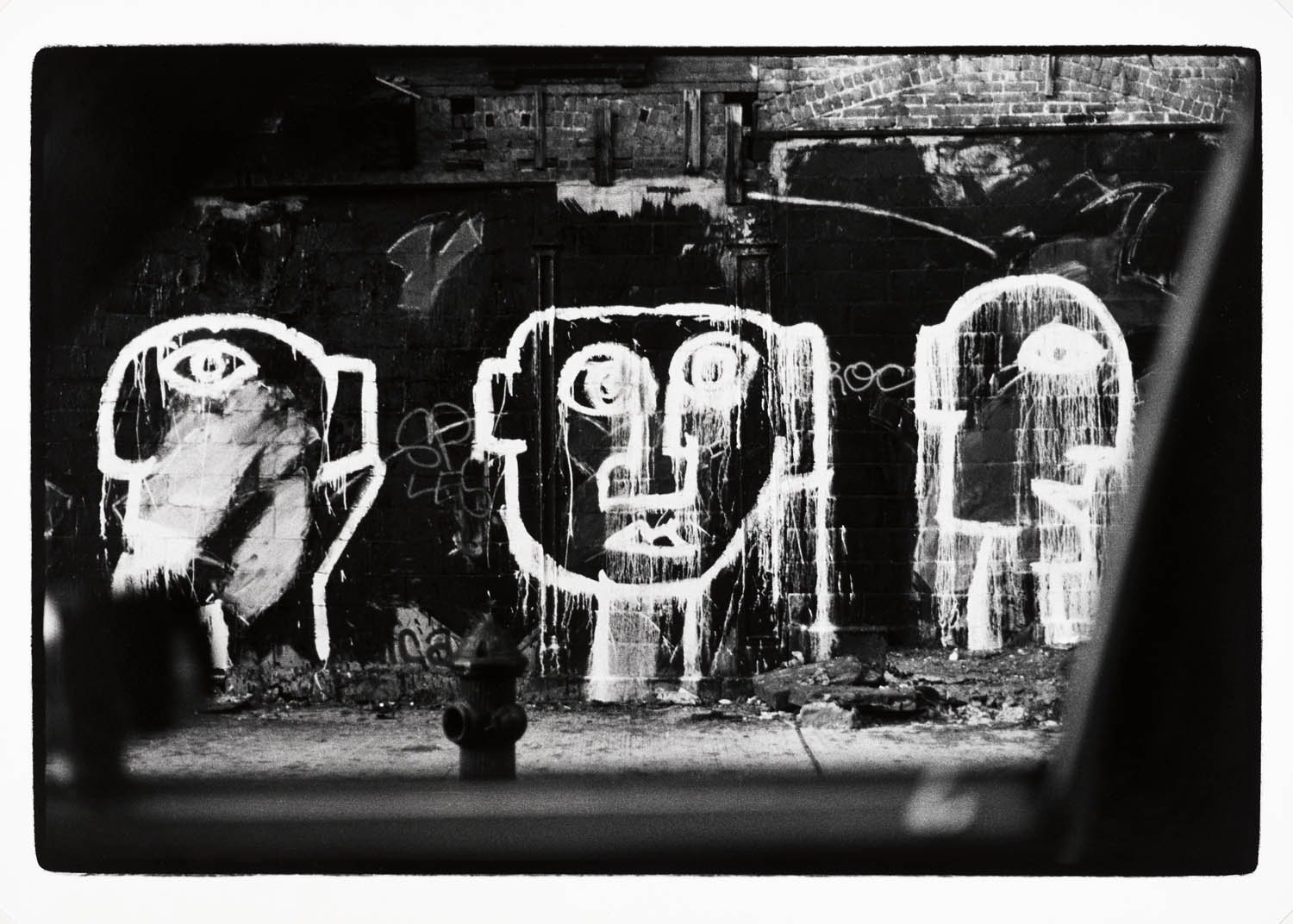
Joseph Rodríguez (American, b. 1952)
East Village, New York
1984
Gelatin silver paper, print after 1988
25.3 x 37.4cm
© Joseph Rodríguez, Courtesy Galerie Bene Taschen
Repro: Historisches Archiv mit Rheinischem Bildarchiv
“When I drove a cab, my taxi cab was a rolling psychology office. Everybody had something to say. Sometimes it’s just light conversation like the weather or kids. Baseball. But then you get all kinds of incredible stories. I was learning the foundations of humanism in my cab.”
Joseph Rodríguez
“To drive a cab back then, you either had to have a death wish or come to the job with a biography that inured you to the danger or graced you with such intuitive empathy/curiosity that to see and hear and sometimes engage with the cavalcade of humanity sliding in and out of your backseat trumped the nightly game of Russian roulette.”
Richard Price penned these poignant words that open photographer Joseph Rodríguez’s book, Taxi: Journey Through My Windows 1977-1987
Joseph Rodríguez
(*1951 in Brooklyn, New York City, New York, lives and works there)
Joseph Rodríguez was a teenager when street photography was celebrated in New York with exhibitions such as New Documents at the Museum of Modern Art, which also brought Friedlander and Winogrand to the fore. Rodríguez studied graphic design and photography at the School of Visual Arts in New York and the New York City Technical College. In 1985, he graduated with a degree in photojournalism and documentary photography from the International Center for Photography in New York. During his studies, he worked as a taxi driver, photographing his passengers and street scenes from behind the wheel. The exhibited works are from the Taxi series. They document, on the one hand, Rodríguez’s work as a taxi driver, who has to try to secure well-paid long-distance rides to earn a living and cover the costs of his hired taxi. During his twelve-hour shifts, Rodríguez captures city life in the various neighborhoods at different times of day, from nightlife to the busy hours of the day. His shots of passersby in the rearview mirror, of a sunrise, or of someone urinating in public who believes they are unobserved, testify to the fleeting nature of the moment. Rodríguez also engages directly with his passengers. His portraits convey the openness and respect with which he treats them. Rodríguez sees himself in the tradition of social documentary photography. He advocates the goal of giving visibility to those who are overlooked. He often adds short comments to his images that shed light on what is being photographed. He also uses unusual perspectives, surprising crops, and reflections. However, these emphasize the subjectivity of his empathetic gaze beyond the momentary nature of the moment.
The photographs in the Taxi series are a significant document of the 1980s in New York, a period marked by economic and social upheaval and the AIDS crisis. On his journeys crisscrossing the city, Rodríguez does not depict despair,
but rather shows people maintaining their dignity in the face of difficult and uncertain times.
Text from Museum Ludwig translated by Google Translate
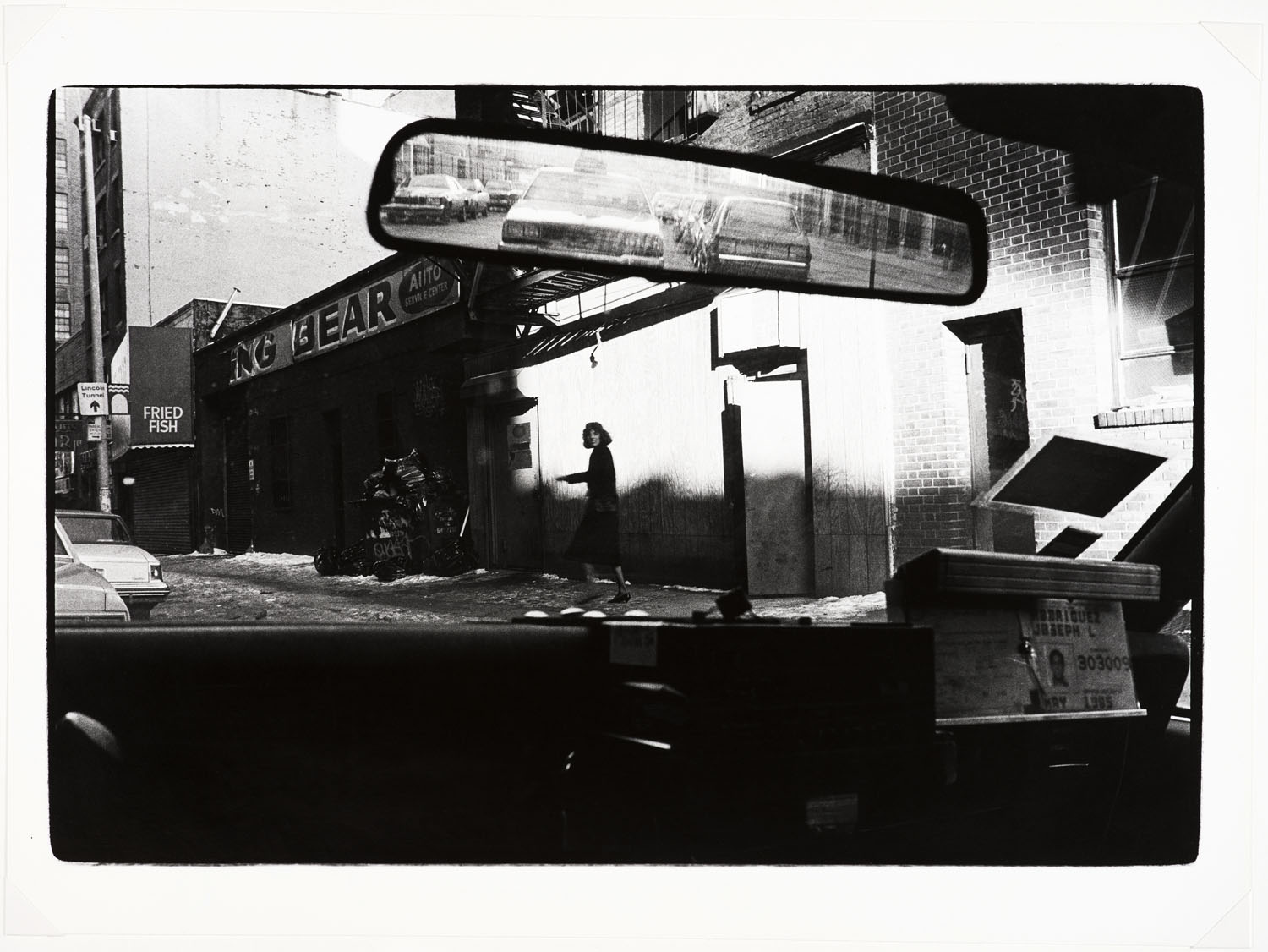
Joseph Rodríguez (American, b. 1952)
220 West Houston Street, New York
1984
Gelatin silver paper, print after 1988
25.3 x 37.2cm
© Joseph Rodríguez, Courtesy Galerie Bene Taschen
Repro: Historisches Archiv mit Rheinischem Bildarchiv
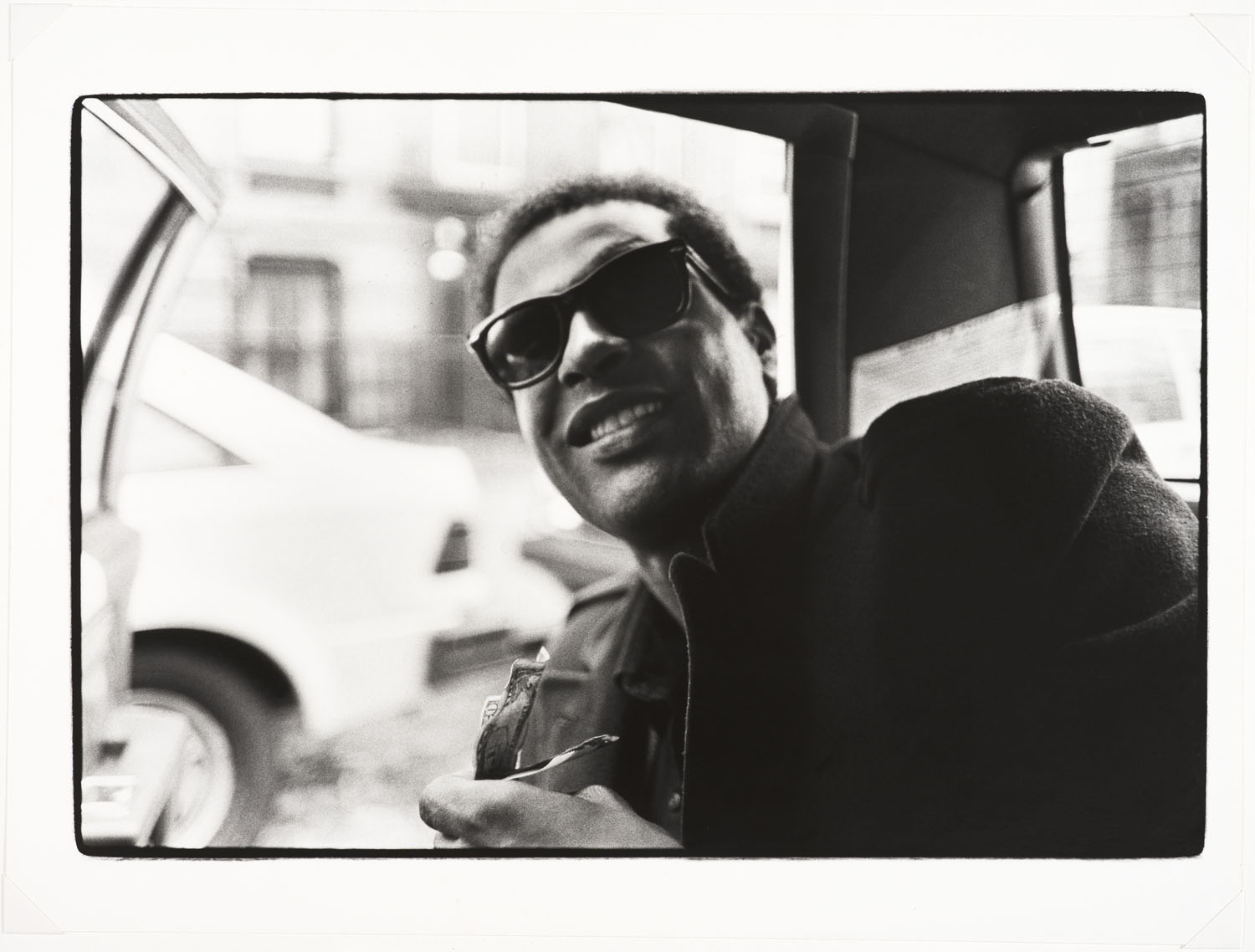
Joseph Rodríguez (American, b. 1952)
I picked him up at a club and I took him to Brooklyn. He was a happy camper, New York
1984
Gelatin silver paper, print after 1988
24.8 x 36.8cm
© Joseph Rodríguez, Courtesy Galerie Bene Taschen
Repro: Historisches Archiv mit Rheinischem Bildarchiv

Joseph Rodríguez (American, b. 1952)
At the Garage, my cab broke down, New York
1984
Gelatin silver paper, print after 1988
25.3 x 37.5cm
© Joseph Rodríguez, Courtesy Galerie Bene Taschen
Repro: Historisches Archiv mit Rheinischem Bildarchiv
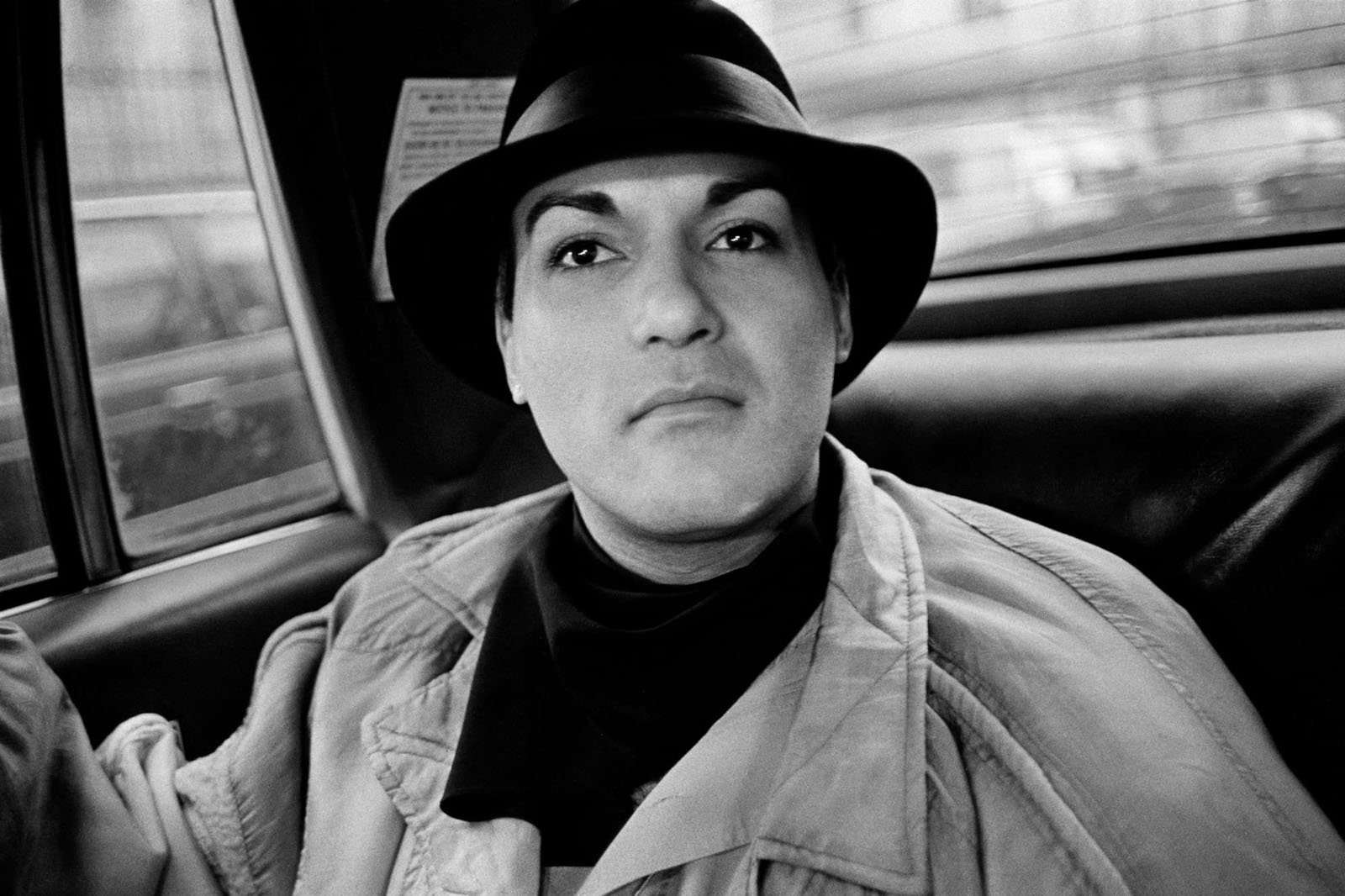
Joseph Rodríguez (American, b. 1952)
Meatpacking District, I picked him up from one of the clubs. He was a drag performer and I was taking him home to Brooklyn, New York
1984
Gelatin silver paper, print after 1988
24.8 x 36.6cm
© Joseph Rodriguez, Courtesy Galerie Bene Taschen
Repro: Historisches Archiv mit Rheinischem Bildarchiv
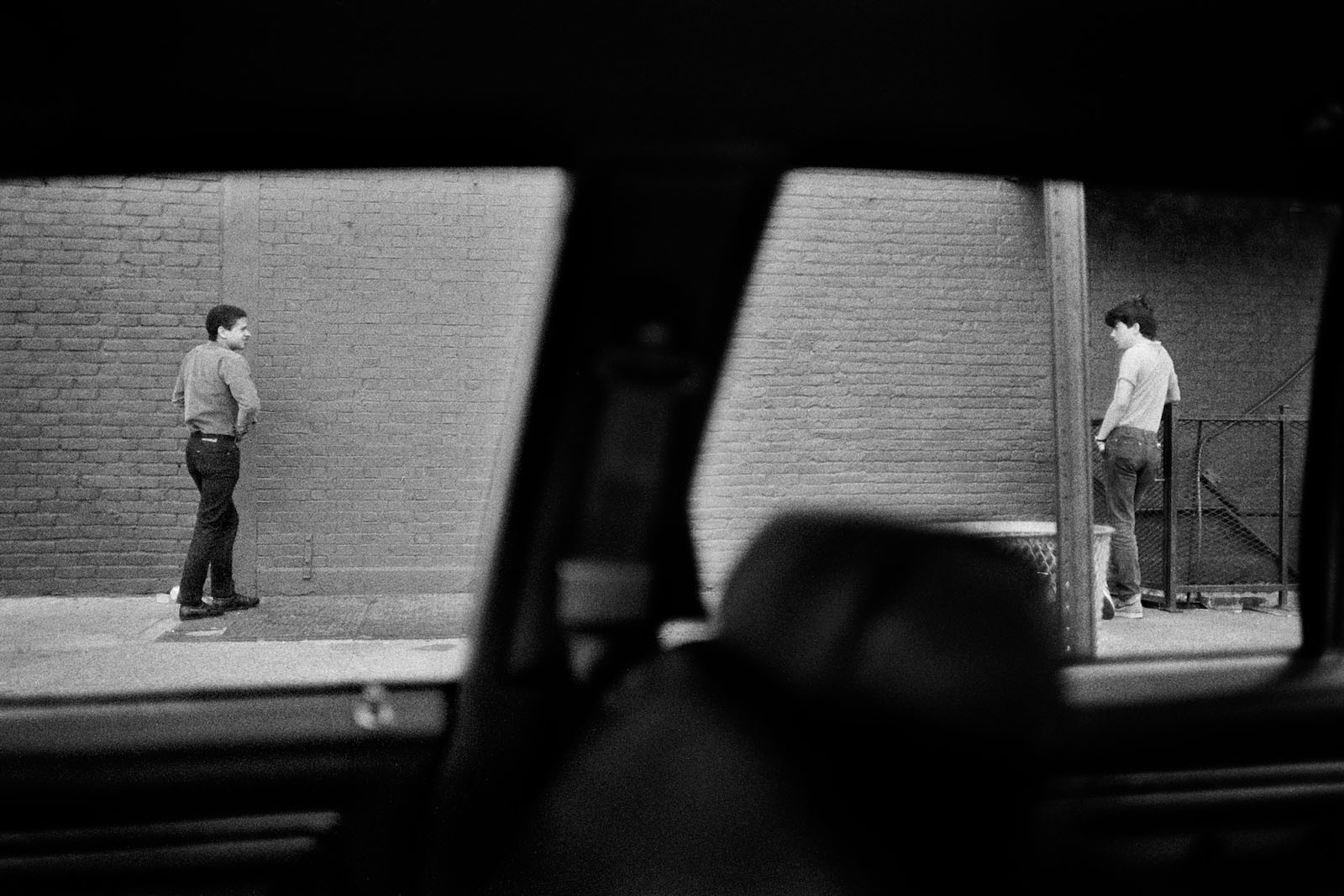
Joseph Rodríguez (American, b. 1952)
Greenwich Village, The Anvil, New Jersey
1984
Gelatin silver paper, print after 1988
25.0 x 36.8cm
© Joseph Rodríguez, Courtesy Galerie Bene Taschen
Repro: Historisches Archiv mit Rheinischem Bildarchiv
“14th Street & West Side Highway. That’s the back of the Anvil. These guys would come outside to take a leak. And of course they’re having a conversation, so who knows what happened after that.” ~ Joseph Rodríguez
The Anvil was a gay BDSM after-hours sex club located at 500 West 14th Street, Manhattan, New York City, that operated from 1974 to 1985.

Joseph Rodríguez (American, b. 1952)
Pulaski Skyway, New Jersey
1984
Gelatin silver paper, print after 1988
24.8 x 36.8cm
© Joseph Rodríguez, Courtesy Galerie Bene Taschen
Repro: Historisches Archiv mit Rheinischem Bildarchiv
Museum Ludwig
Heinrich-Böll-Platz, 50667 Köln, Germany
Opening hours:
Tuesday through Sunday: 10am – 6pm
 Art Blart _ art and cultural memory archive
You must be logged in to post a comment.