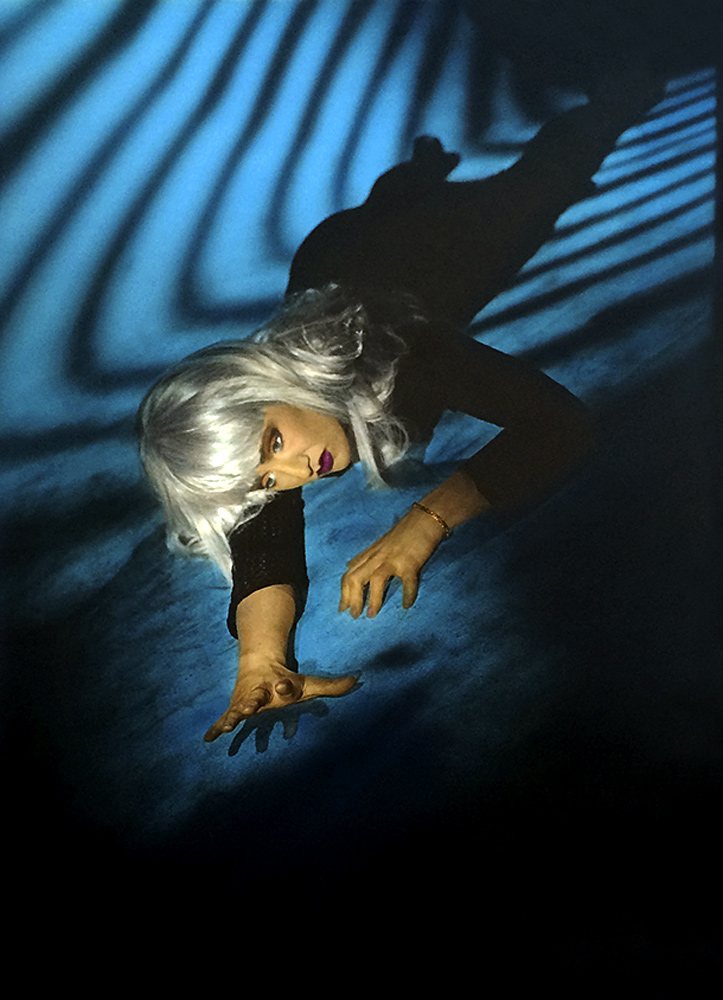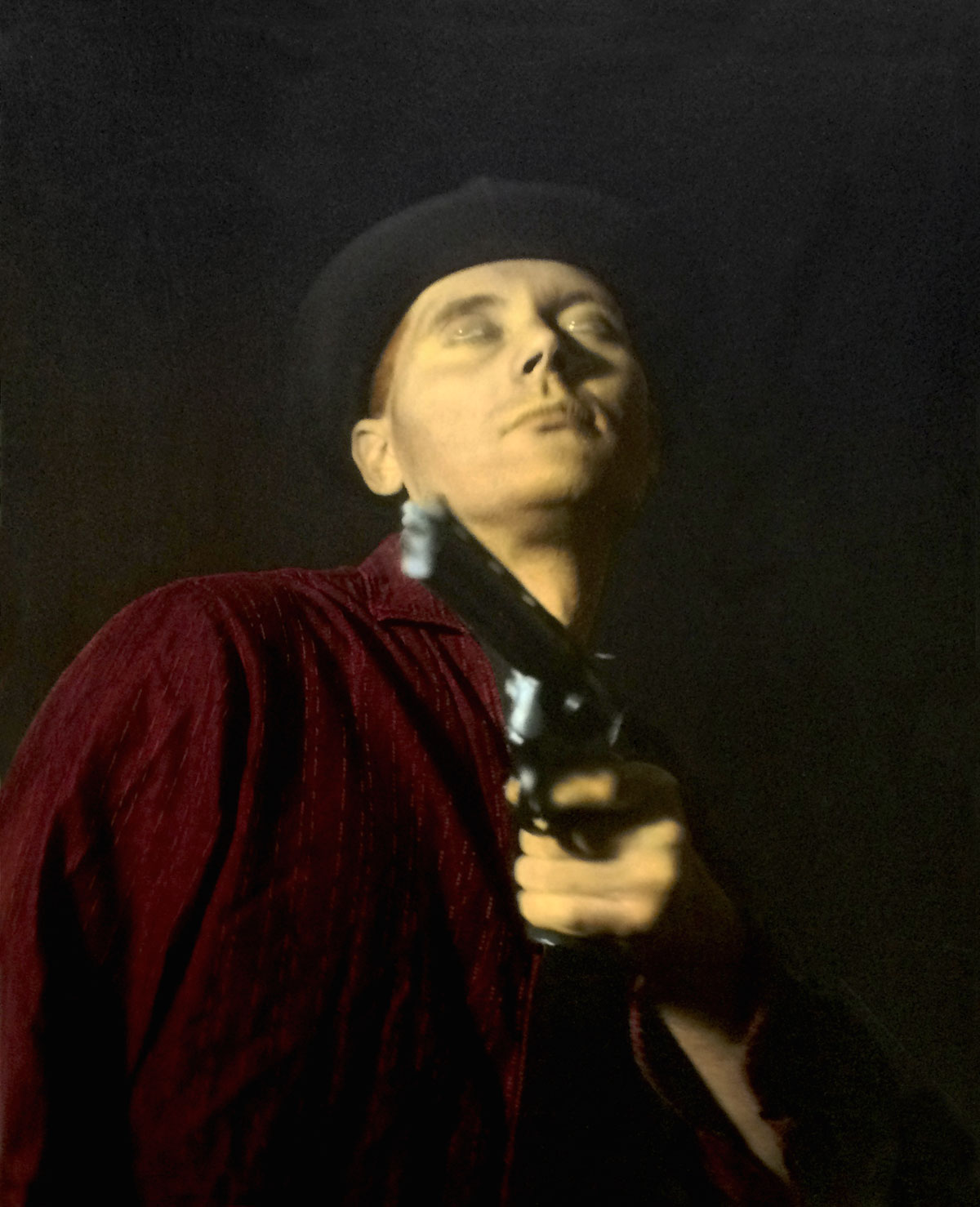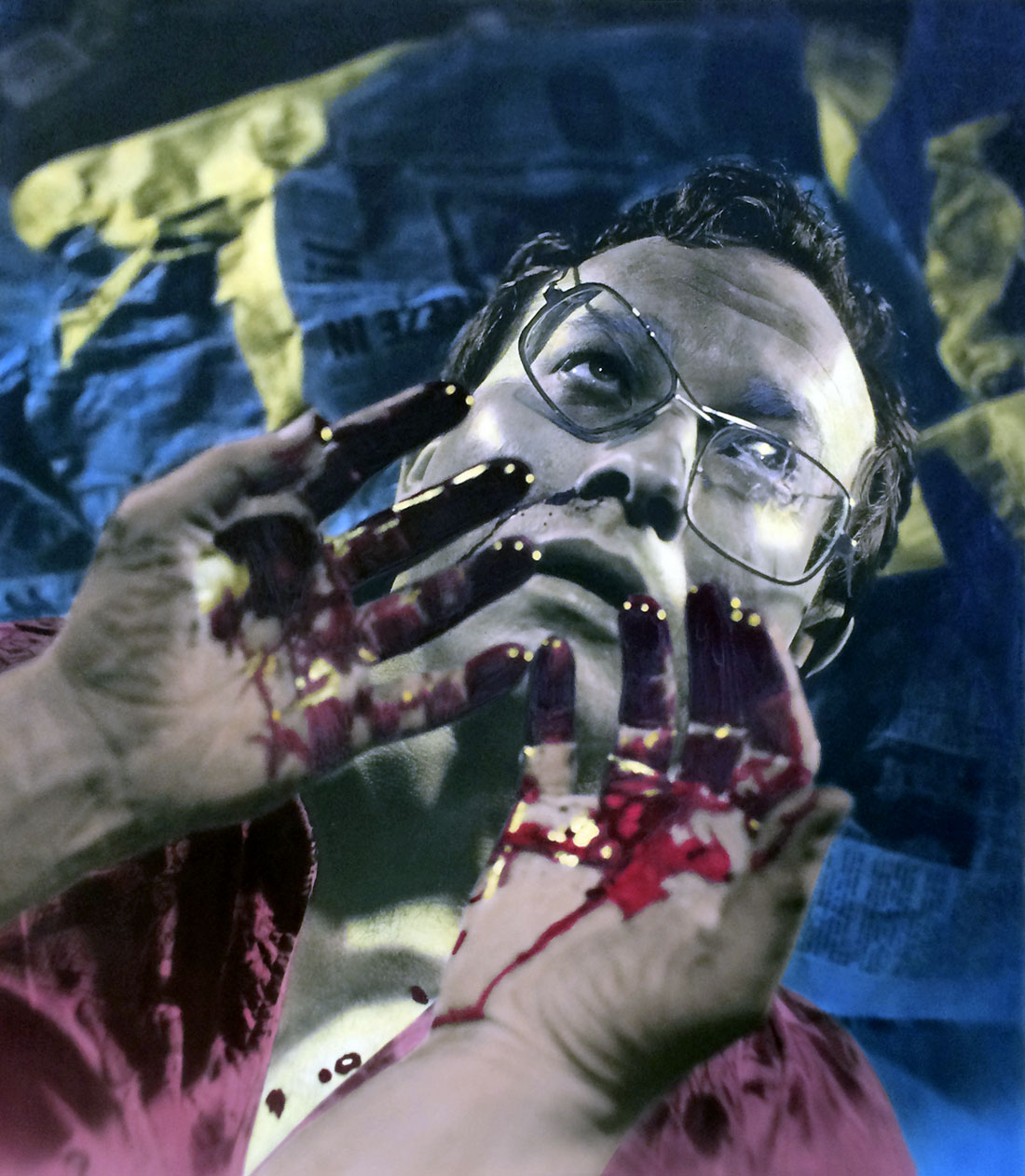
Photographs: Japan through Western Eyes – Felice Beato and Baron Raimund von Stillfried

September 2023


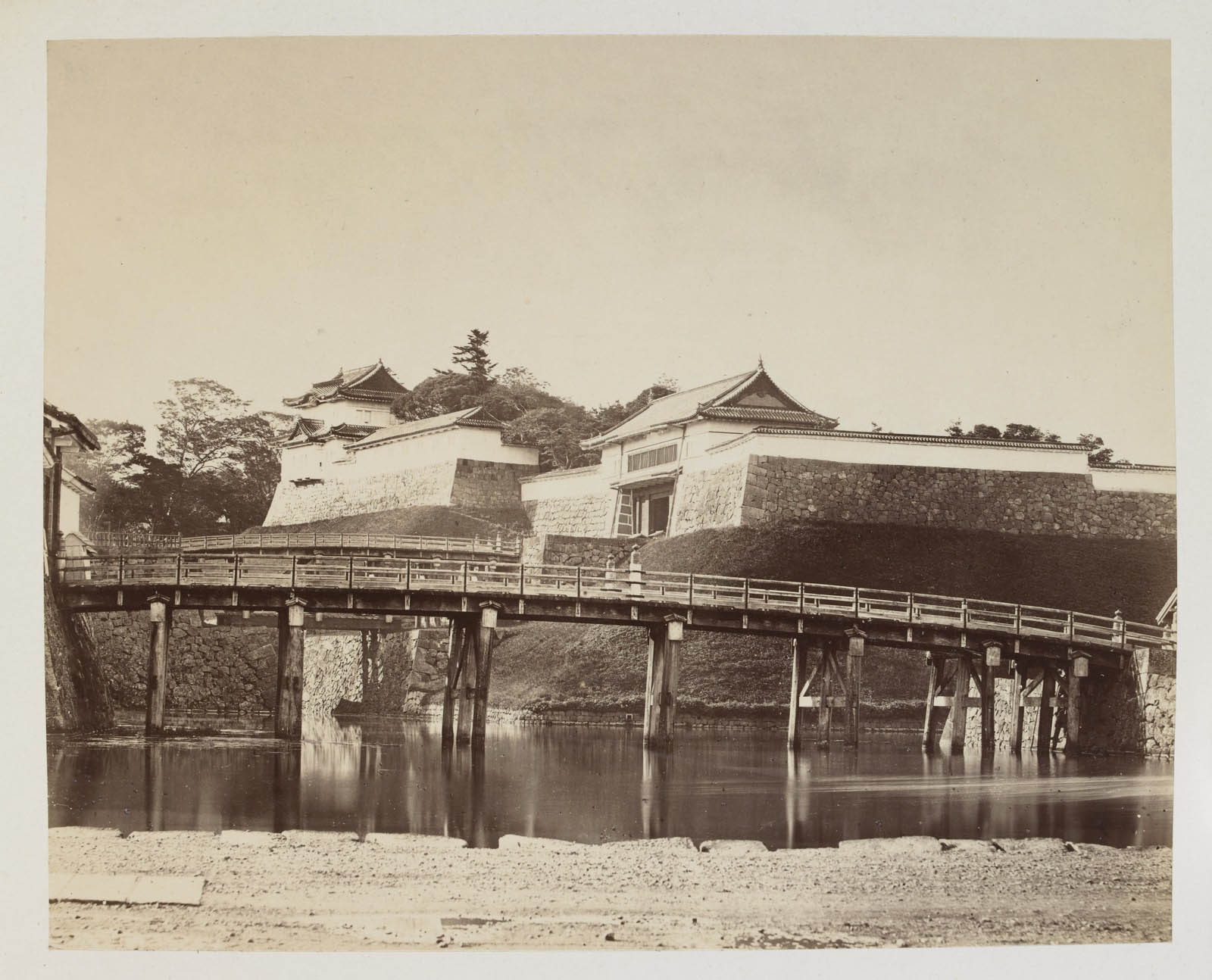
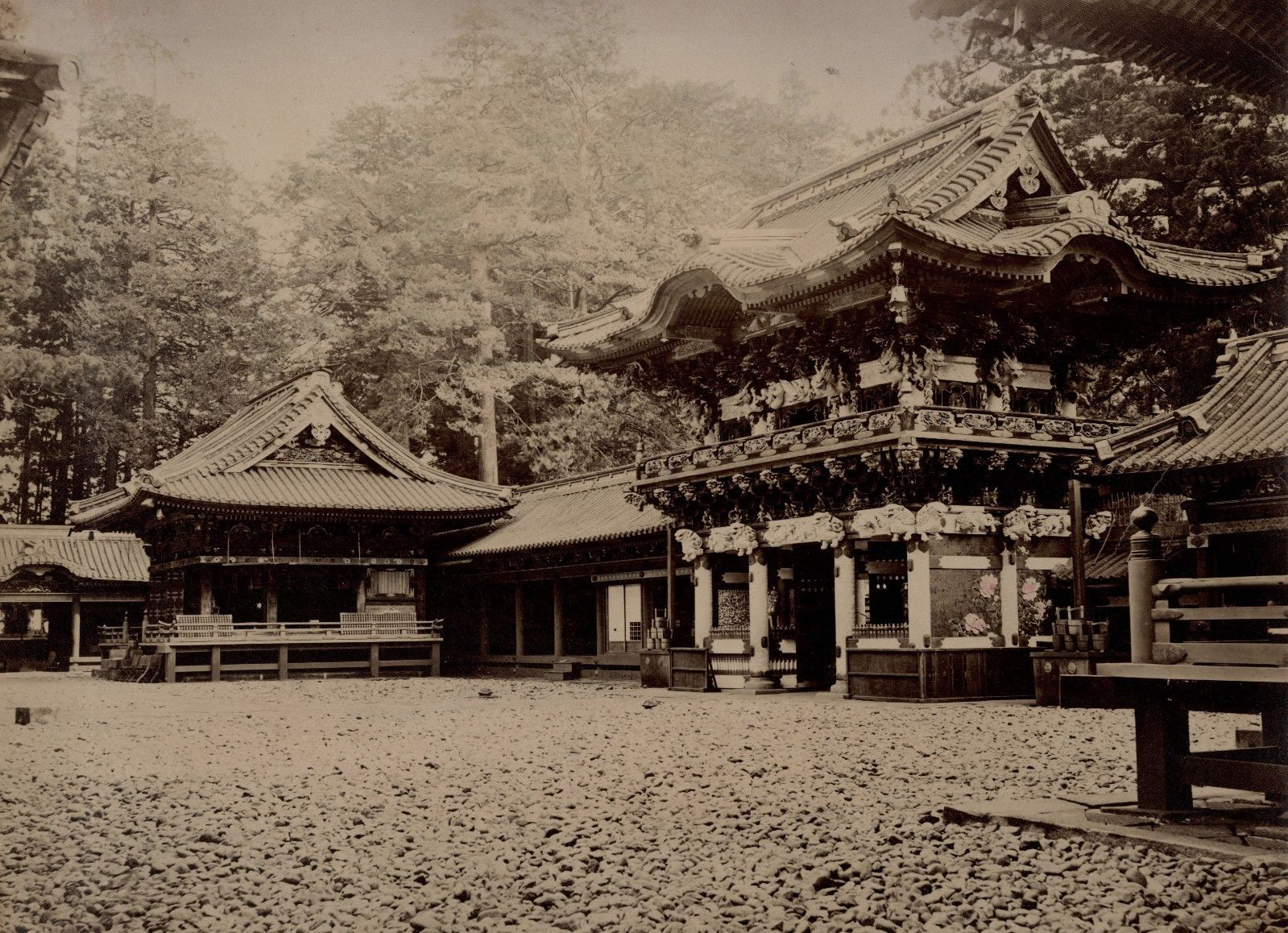
Felice Beato (Italian-British, 1832-1909) 'Shiba Temple, Japan' c 1870 from 'Japan through Western Eyes – Felice Beato and Baron Raimund von Stillfried'


Felice Beato (Italian-British, 1832-1909)
Shiba Temple, Japan
c. 1870
Albumen silver print from wet collodion glass-plate negative


After the latest burst of exhibition postings there seems to be a paucity of exhibitions that I would like to post on until the end of the year… and as I have been pushing it pretty hard lately and not feeling so well (needing a hip replacement), now is the time to take things a little easier.

While the photographs taken by Felice Beato and Baron Raimund von Stillfried of Japanese culture and landscape portray a Western, romanticised, exoticised, staged and persistently Eurocentric view of Japan (linked to Edward Said’s concept of “Orientalism” which denotes the exaggeration of difference, the presumption of Western superiority, and the application of clichéd analytical models for perceiving the “Oriental”, namely those societies and peoples who inhabit the places of Asia, North Africa, and the Middle East world) … there is no doubting the sheer beauty of some of the photographs and the dignity of the sitters.

As such the photographs remain valuable documents of a time far removed from present day Japan but linking Japanese culture to long past ancestors and ways of life.

Dr Marcus Bunyan


Please click on the photographs for a larger version of the image.
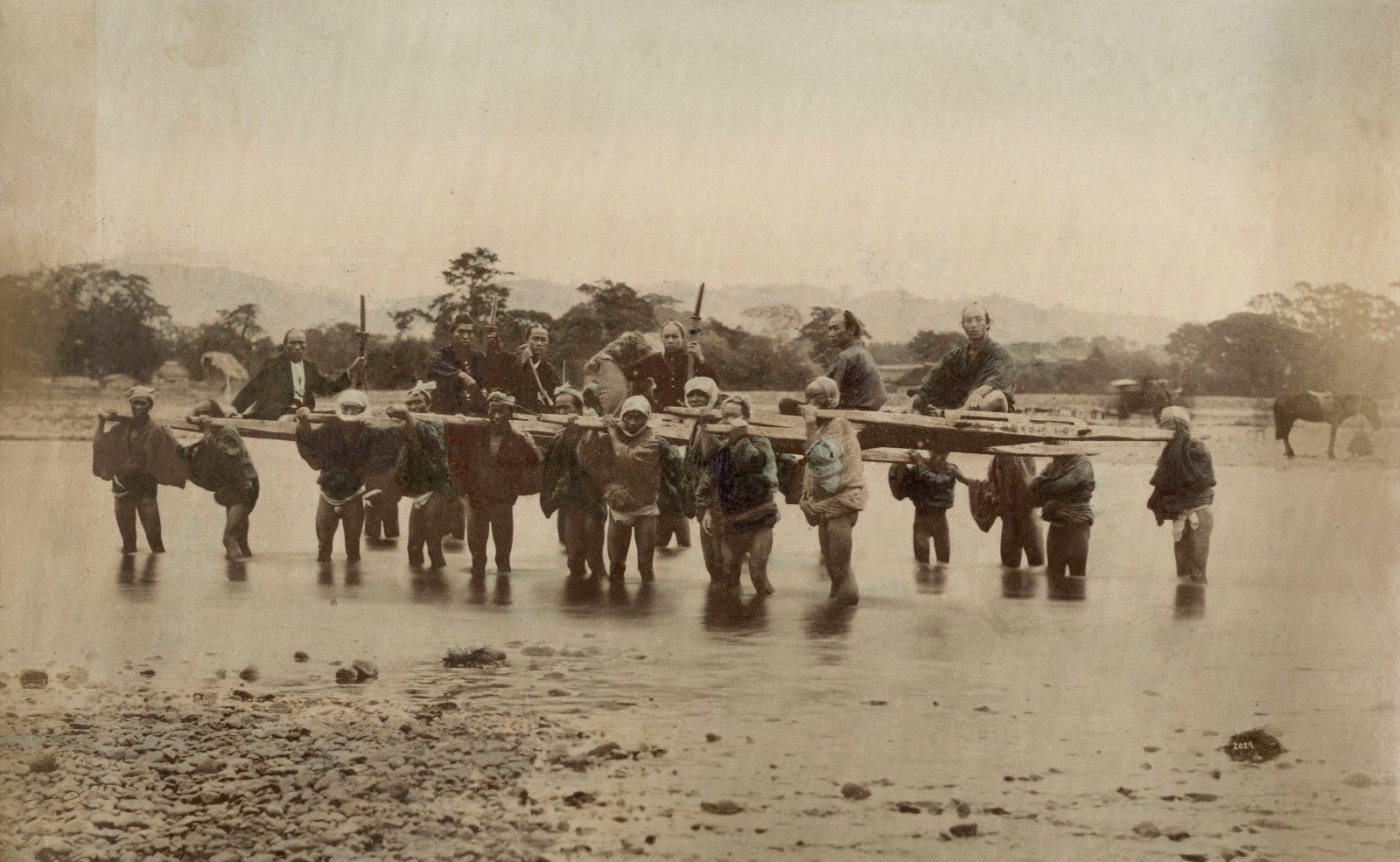


Felice Beato (Italian-British, 1832-1909) ‘The Ford at Sakawa Nagawa, Japan’ c. 1870 from 'Japan through Western Eyes – Felice Beato and Baron Raimund von Stillfried'


Felice Beato (Italian-British, 1832-1909)
The Ford at Sakawa Nagawa, Japan
c. 1870
Hand-coloured albumen silver print from wet collodion glass-plate negative
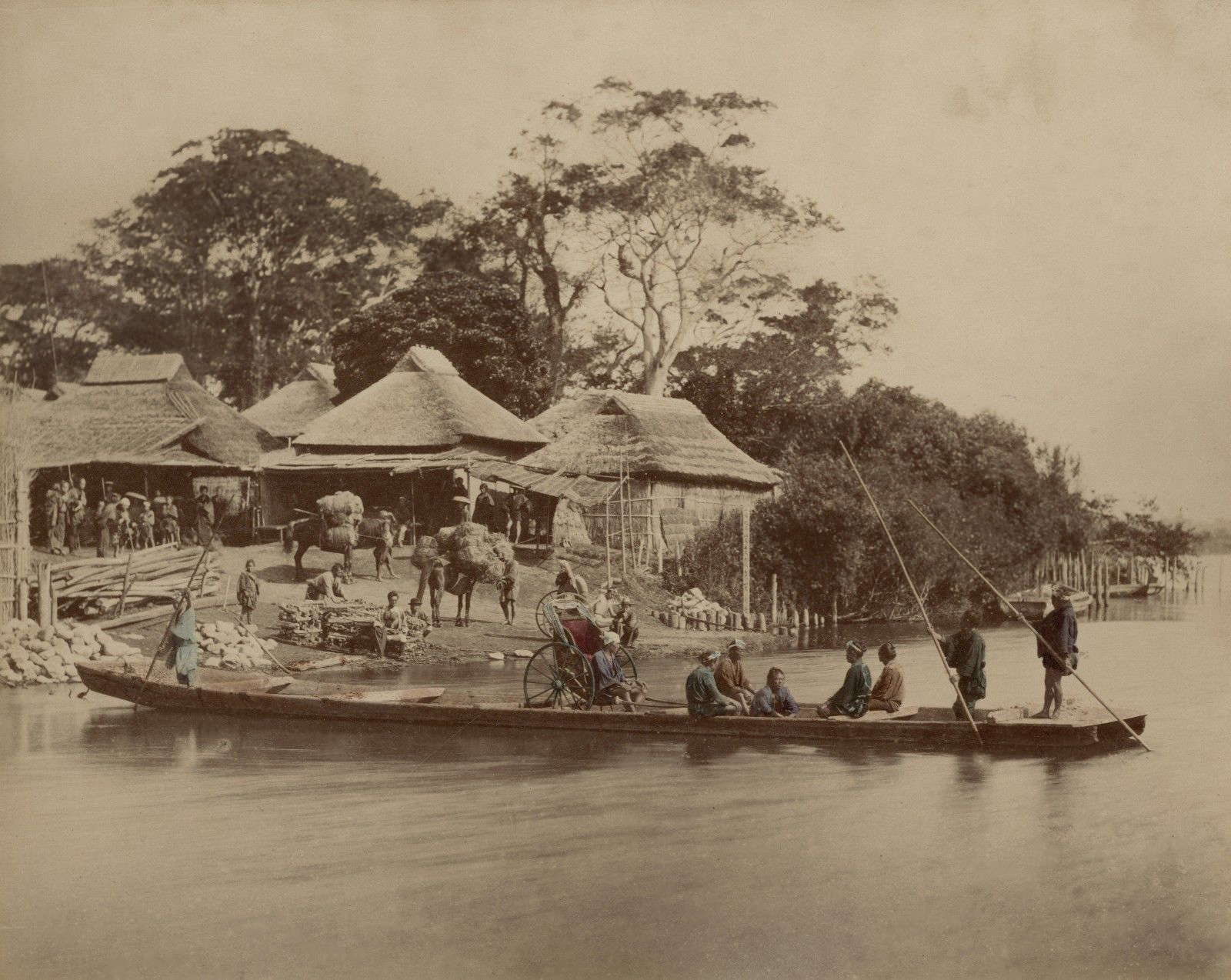
 

Felice Beato (Italian-British, 1832-1909) 'Ferry boat, Japan' c. 1870 from 'Japan through Western Eyes – Felice Beato and Baron Raimund von Stillfried'


Felice Beato (Italian-British, 1832-1909)
Ferry boat, Japan
c. 1870
Hand coloured albumen silver print from wet collodion glass-plate negative
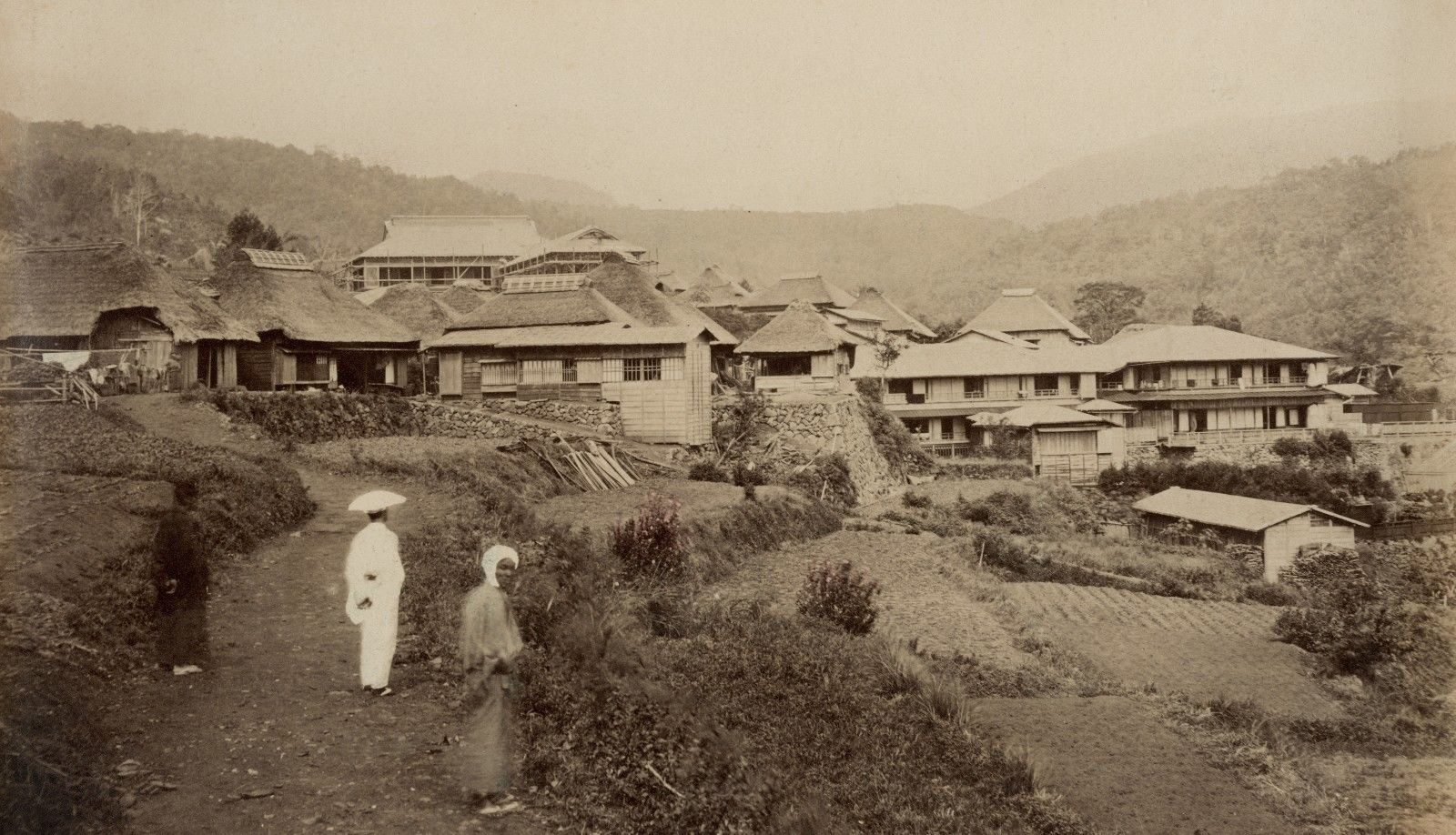
 

Felice Beato (Italian-British, 1832-1909) 'Miyanoshita Onsen, Japan' c. 1870


Felice Beato (Italian-British, 1832-1909)
Miyanoshita Onsen, Japan
c. 1870
Albumen silver print from wet collodion glass-plate negative
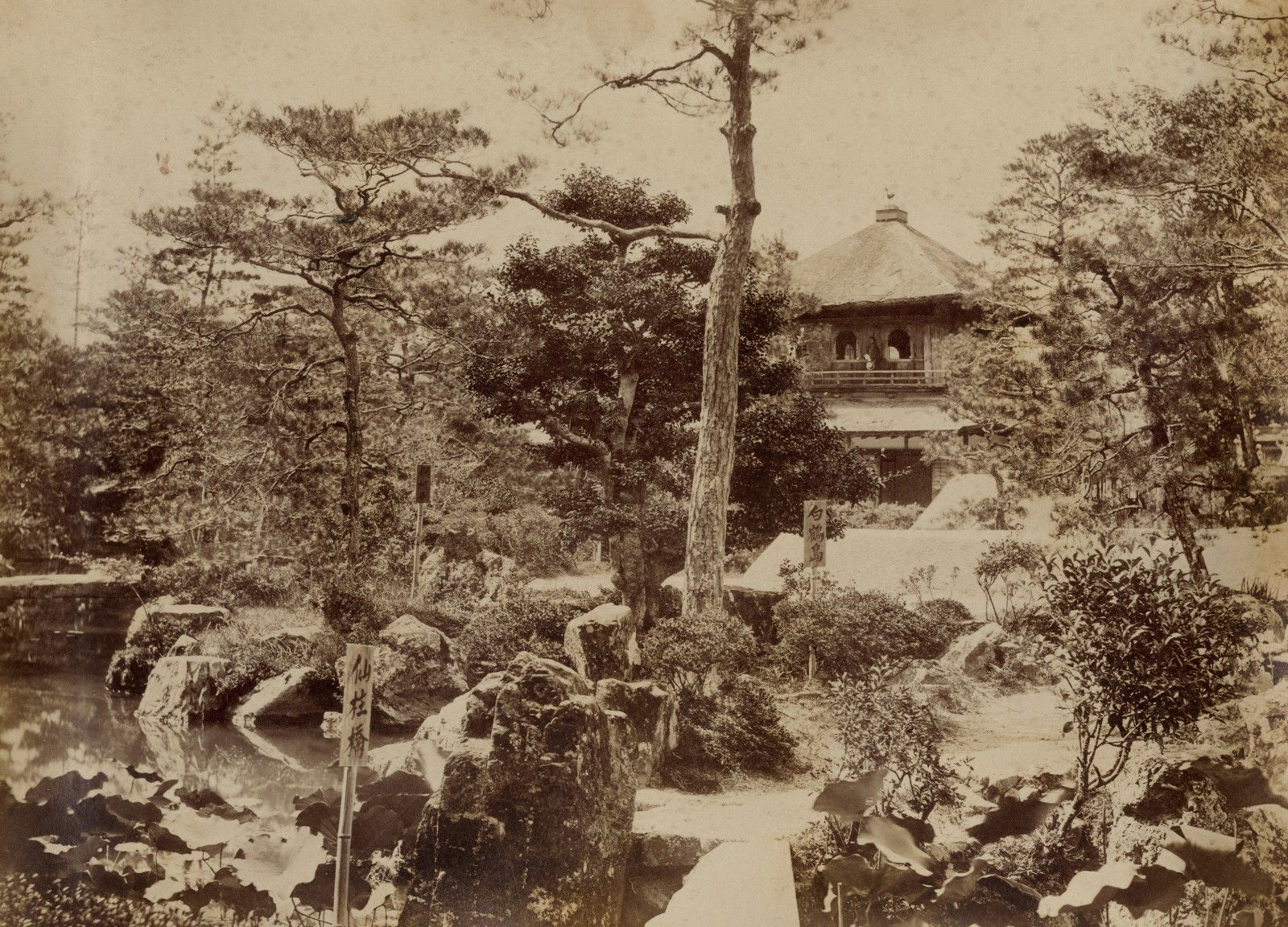
 

Felice Beato (Italian-British, 1832-1909) 'Garden, Japan' c. 1870


Felice Beato (Italian-British, 1832-1909)
Garden, Japan
c. 1870
Albumen silver print from wet collodion glass-plate negative
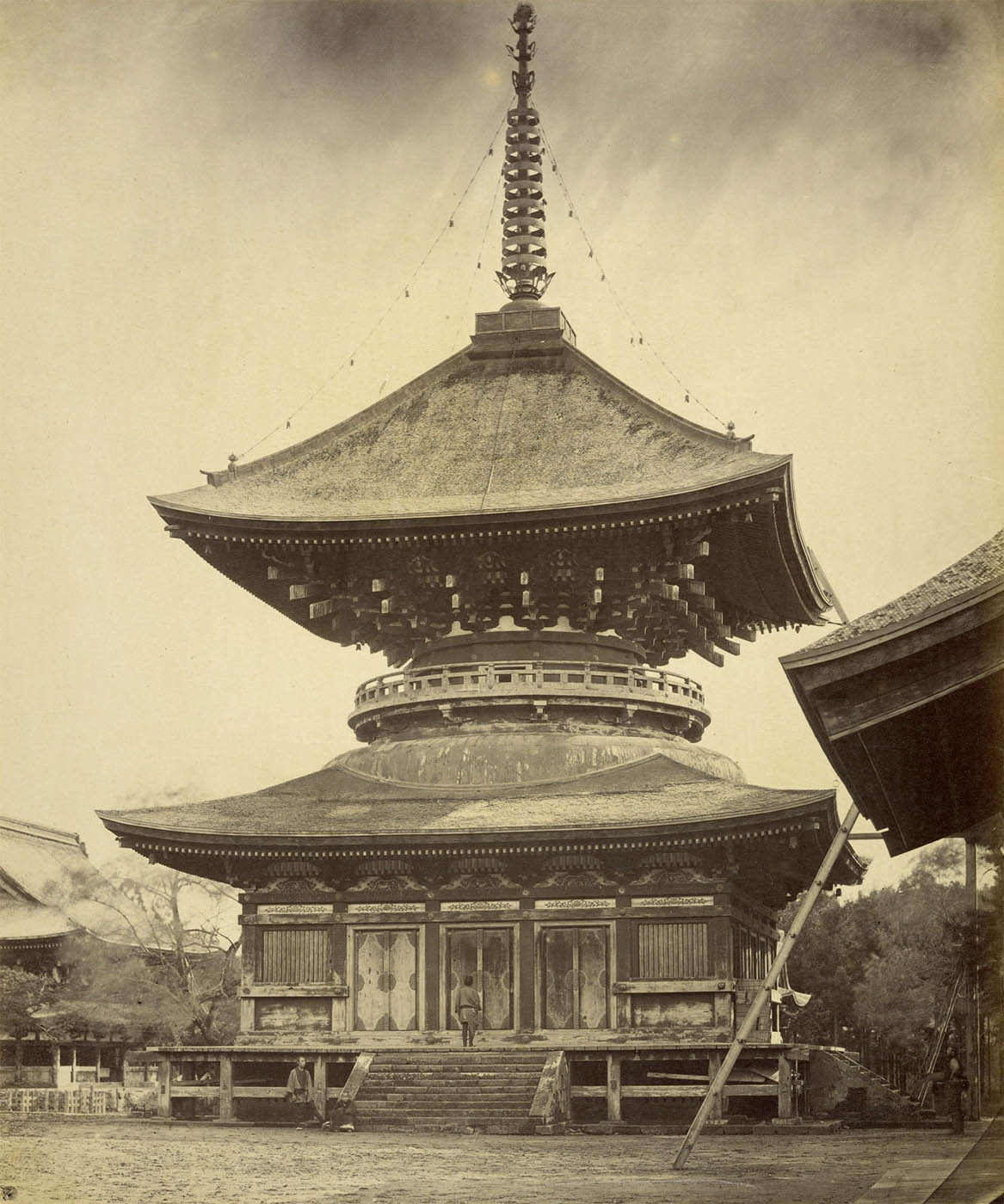
 

Felice Beato (Italian-British, 1832-1909) 'Single-storied Pagoda, Hachiman Shrine, Kamakura' 1867-1868


Felice Beato (Italian-British, 1832-1909)
Single-storied Pagoda, Hachiman Shrine, Kamakura
1867-1868
Albumen silver print from wet collodion glass-plate negative
Getty Center
Public domain
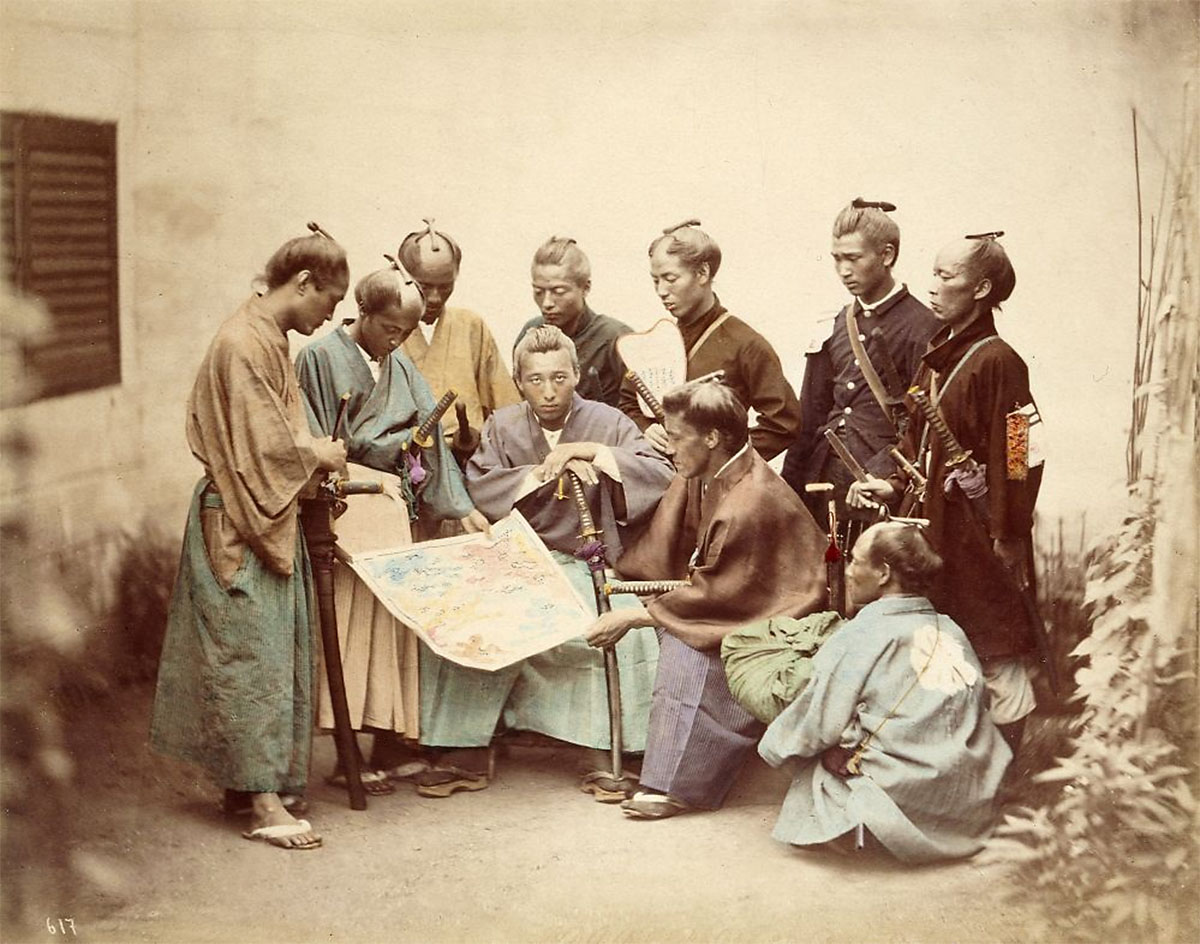
 

Felice Beato (Italian-British, 1832-1909) 'Samurai of the Satsuma Clan, during the Boshin War period (1868-1869)' 1860s


Felice Beato (Italian-British, 1832-1909)
Samurai of the Satsuma Clan, during the Boshin War period (1868-1869)
1860s
Hand-coloured albumen silver print from wet collodion glass-plate negative
Public domain
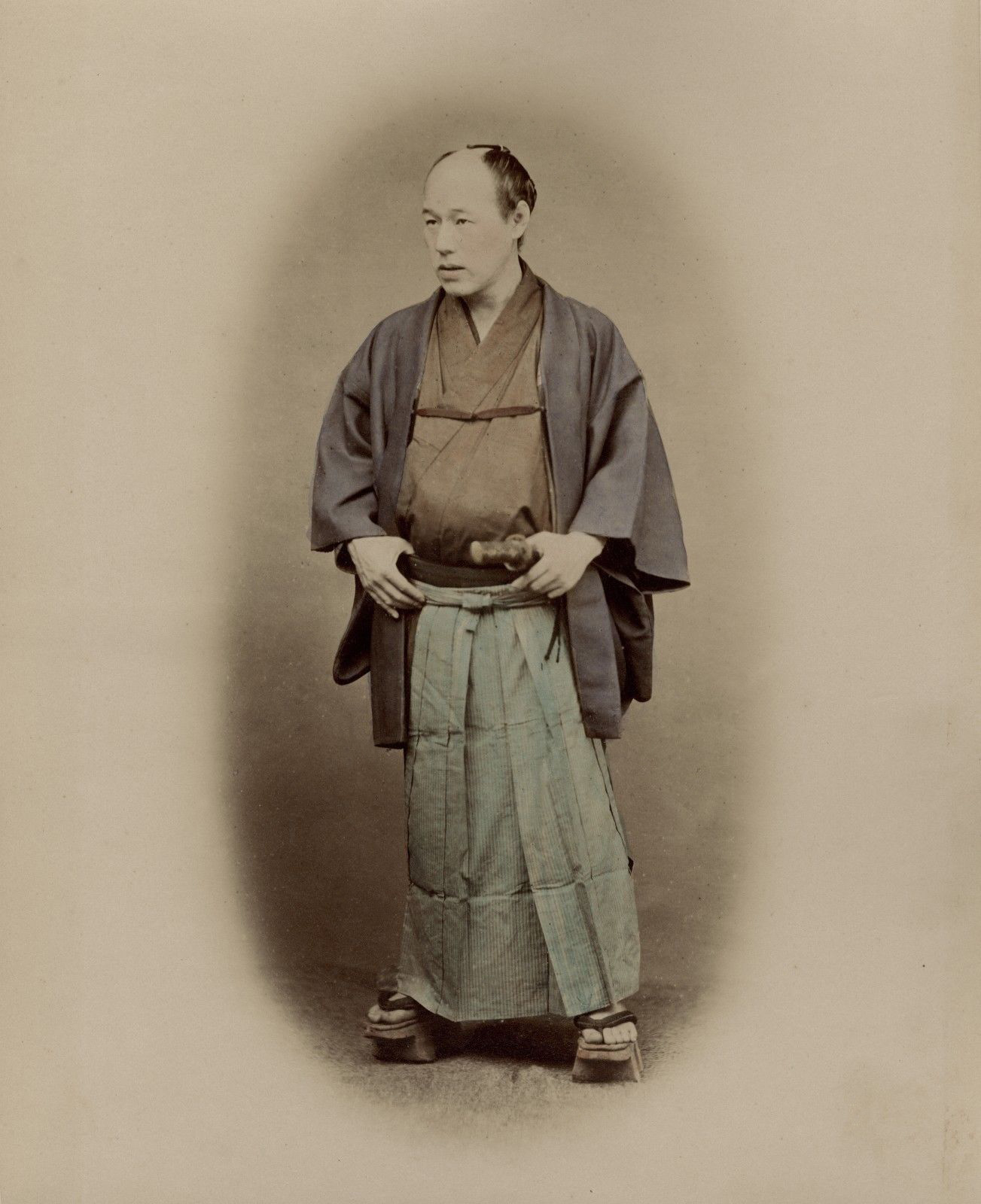
 

Felice Beato (Italian-British, 1832-1909) 'Noble in dress, Japan' c. 1870


Felice Beato (Italian-British, 1832-1909)
Noble in dress, Japan
c. 1870
Hand-coloured albumen silver print from wet collodion glass-plate negative
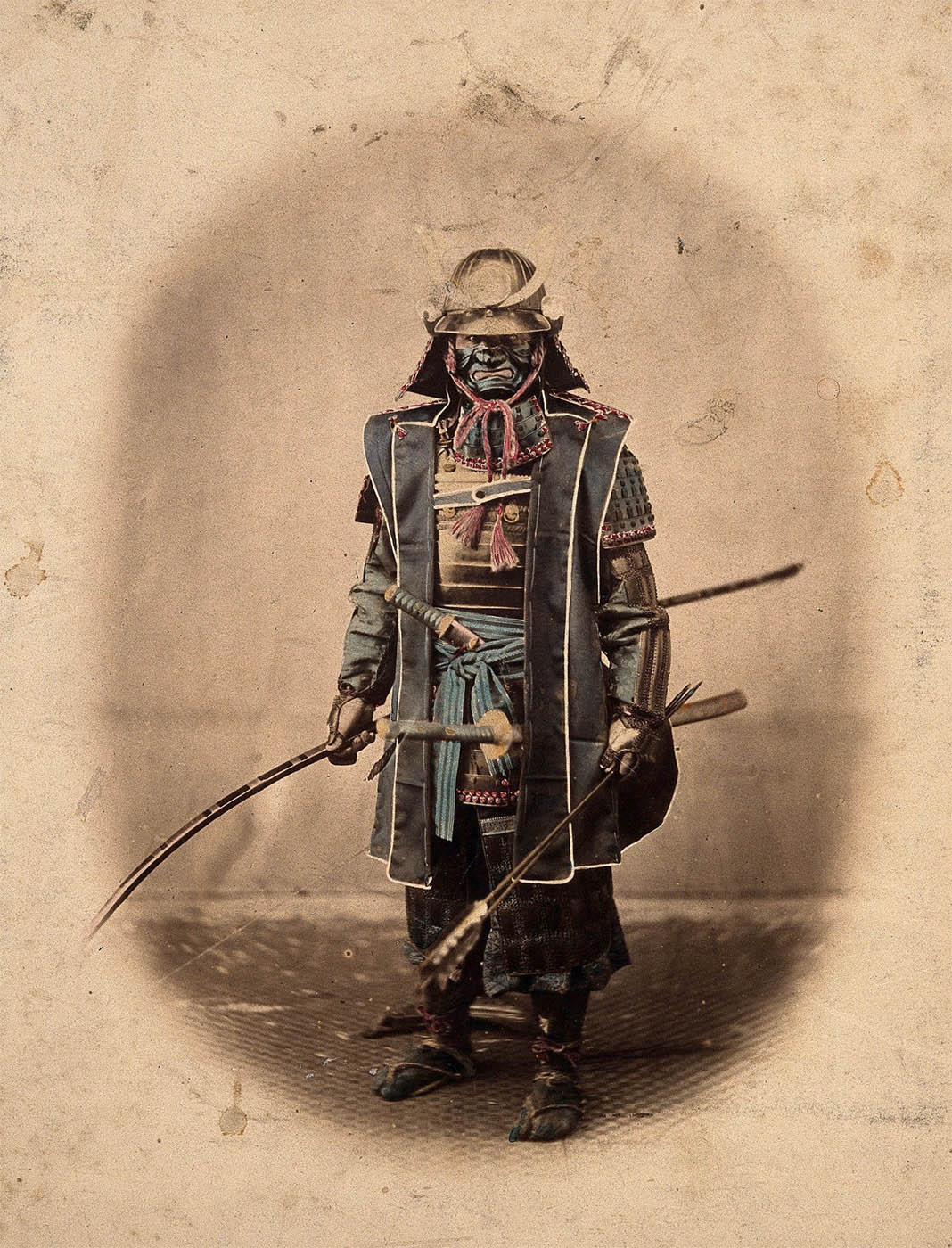
 

Felice Beato (Italian-British, 1832-1909) 'Koboto Santaro, a Japanese military commander, wearing traditional armour' c. 1868


Felice Beato (Italian-British, 1832-1909)
Koboto Santaro, a Japanese military commander, wearing traditional armour
c. 1868
Hand-coloured albumen silver print from wet collodion glass-plate negative
Wellcome Library
Public domain
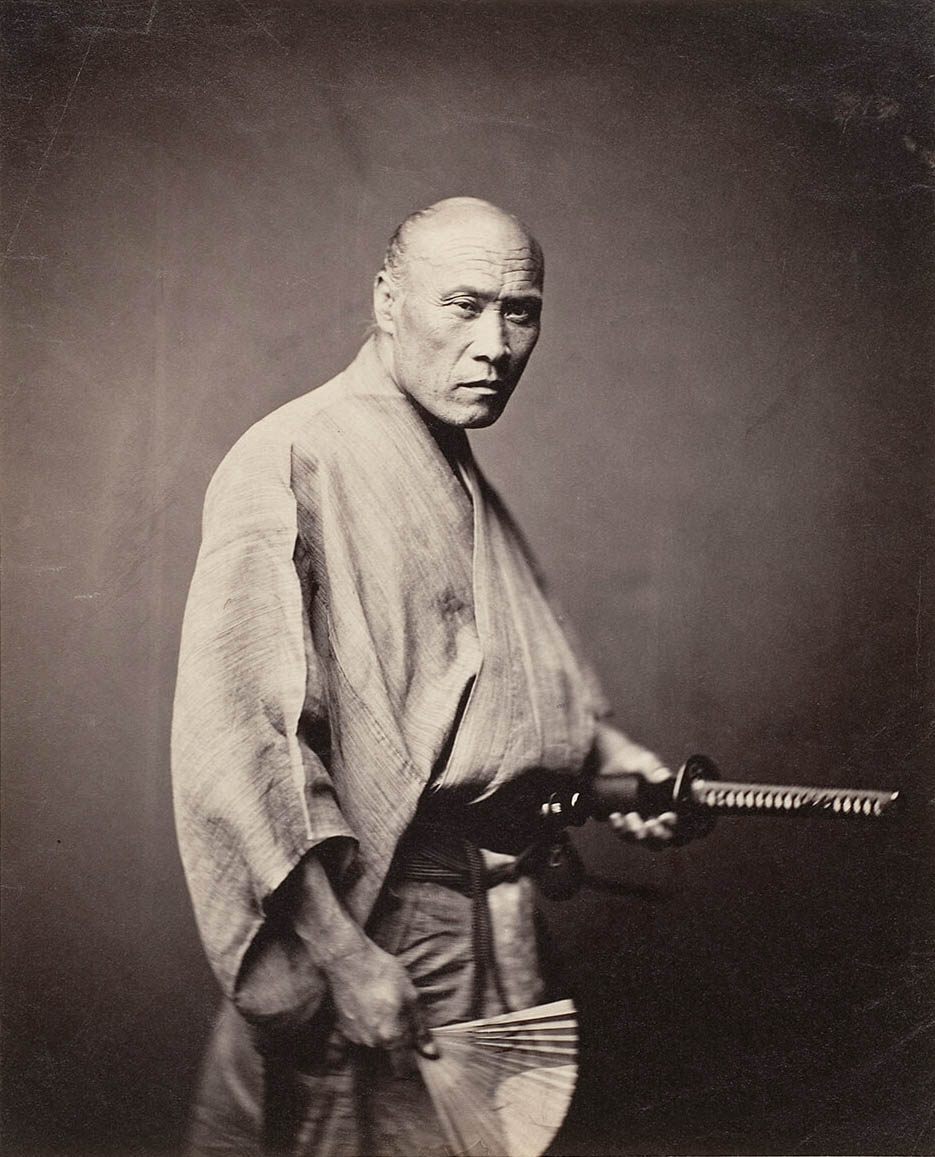
 

Felice Beato (Italian-British, 1832-1909) 'Samurai, Yokohama' 1864-1865


Felice Beato (Italian-British, 1832-1909)
Samurai, Yokohama
1864-1865
Albumen silver print from wet collodion glass-plate negative
Gilman Collection, Metropolitan Museum of Art
Purchase, Robert Rosenkranz Gift 2005
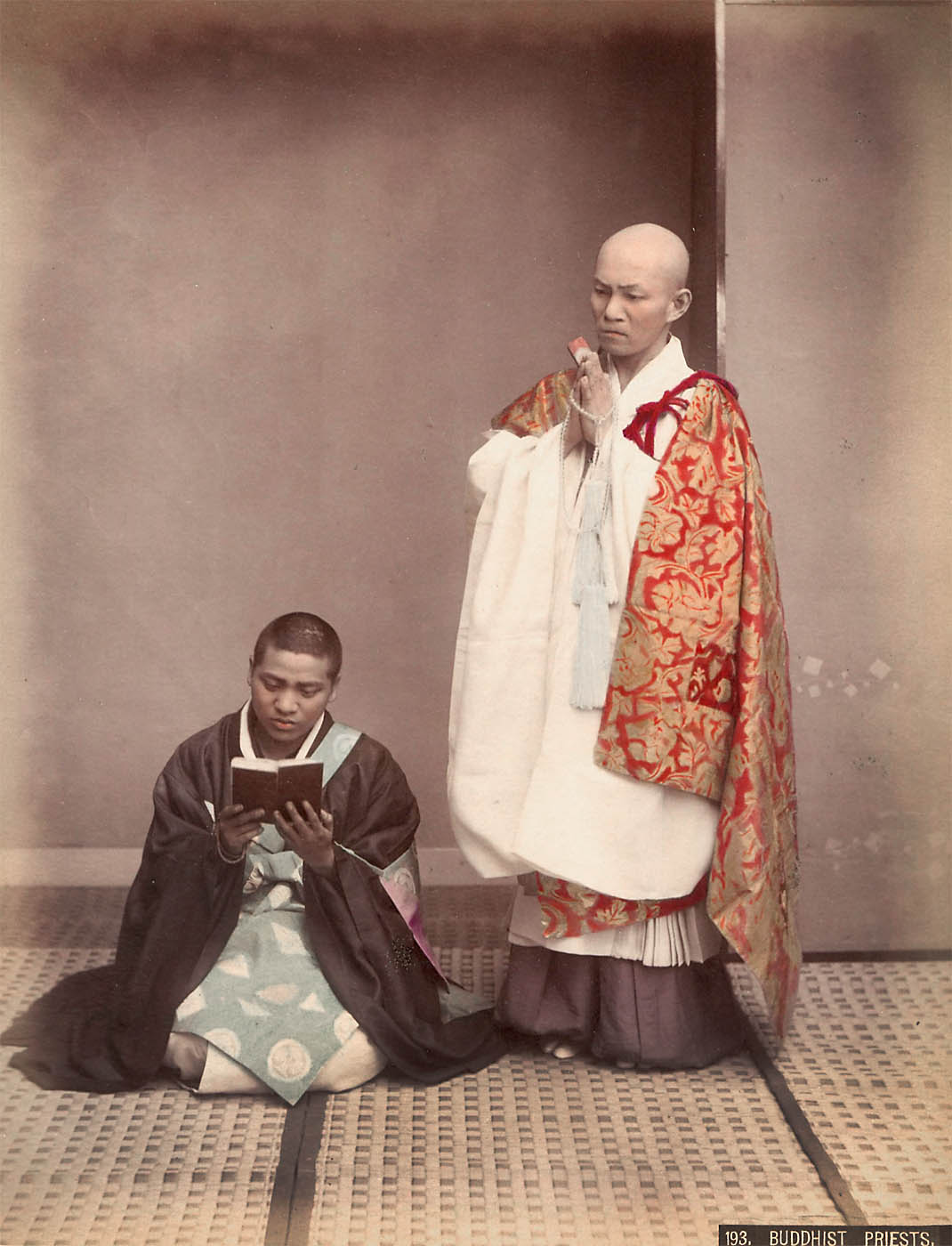
 

Felice Beato (Italian-British, 1832-1909) 'Buddhist Priests' 1870s


Felice Beato (Italian-British, 1832-1909)
Buddhist Priests
1870s
Hand-coloured albumen silver print from wet collodion glass-plate negative
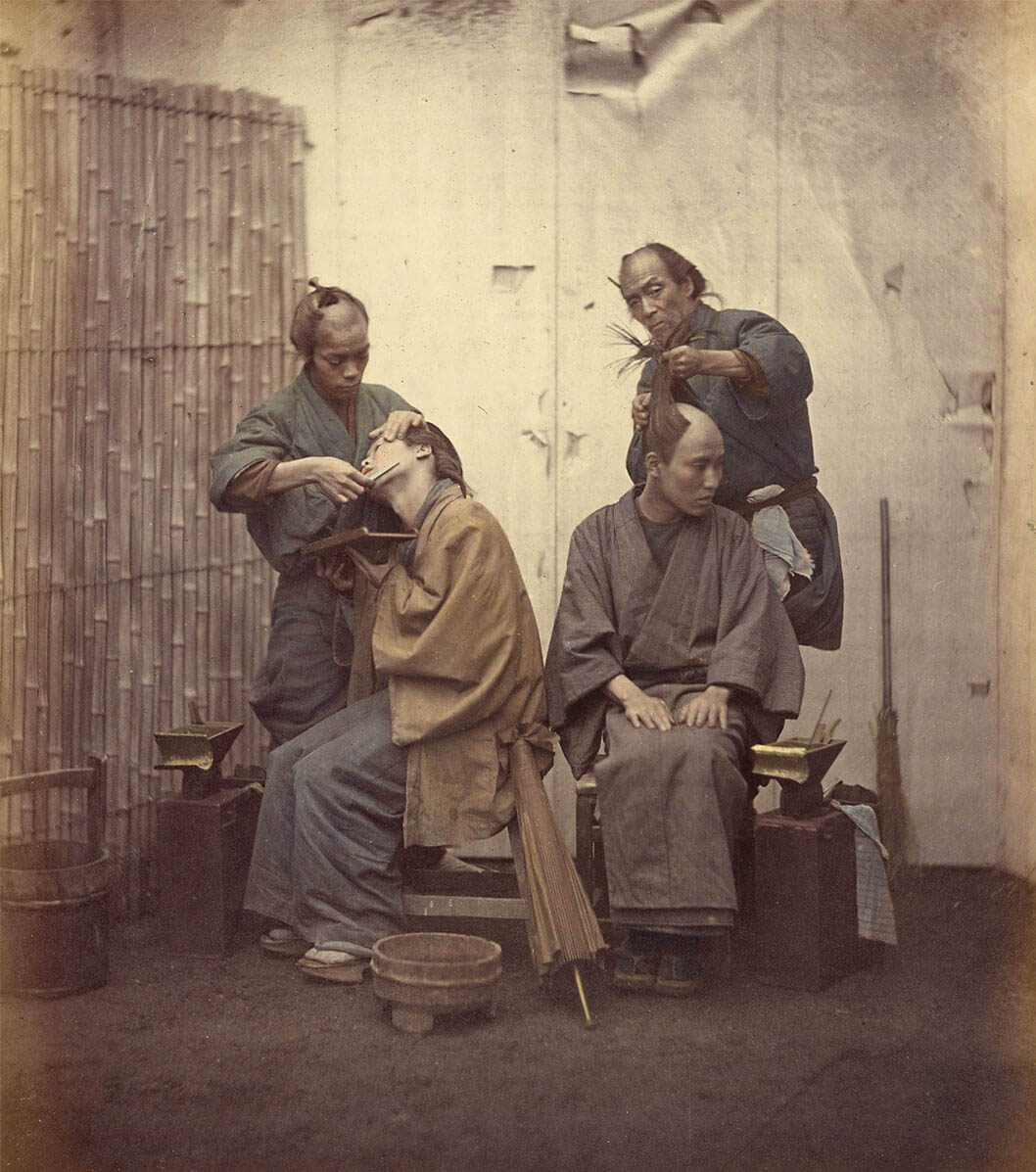
 

Felice Beato (Italian-British, 1832-1909) 'Barbers' 1868


Felice Beato (Italian-British, 1832-1909)
Barbers
1868
Hand-coloured albumen silver print from wet collodion glass-plate negative
Getty Center
Public domain
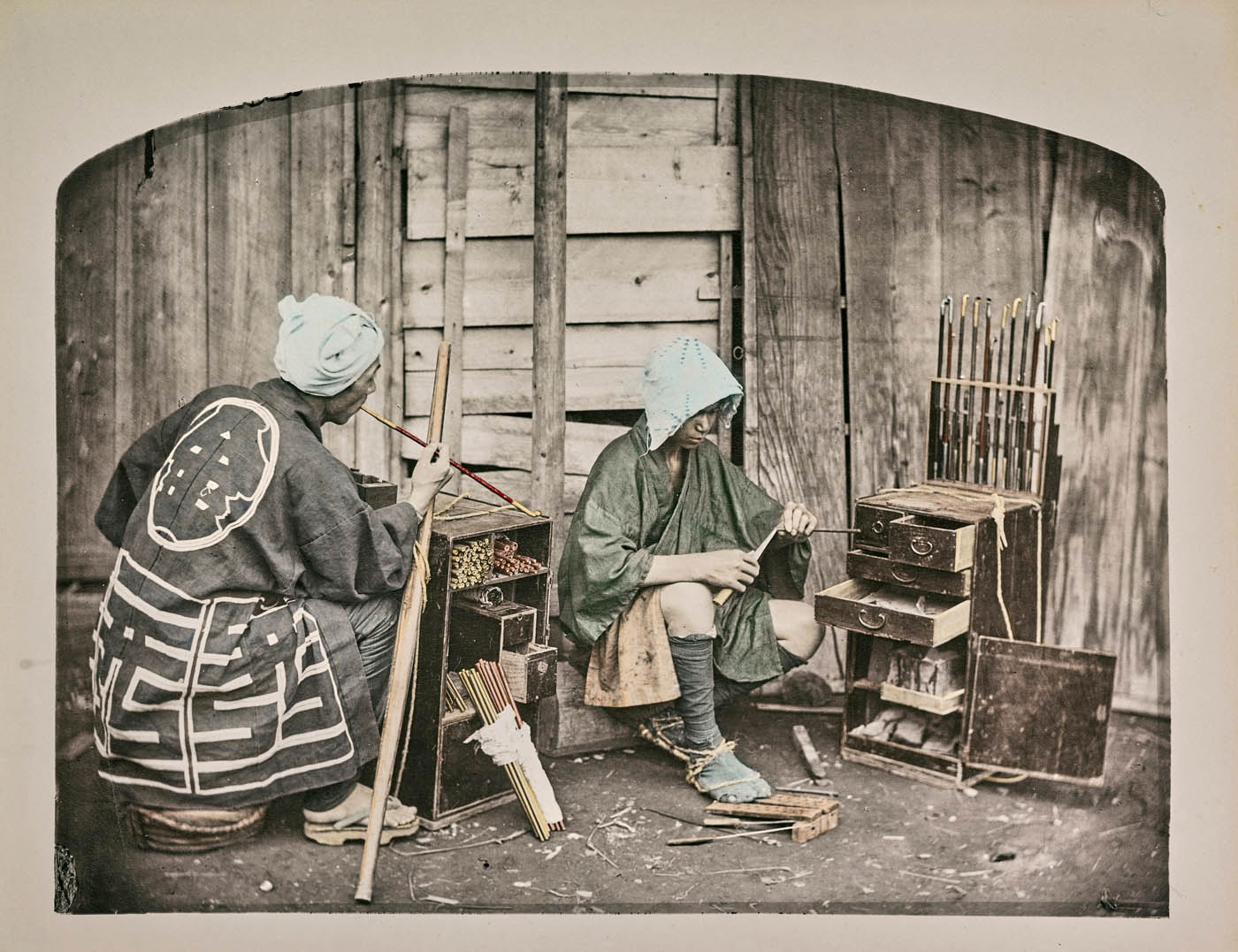
 

Felice Beato (Italian-British, 1832-1909) 'Pipe makers' 1870s


Felice Beato (Italian-British, 1832-1909)
Pipe makers
1870s
Hand-coloured albumen silver print from wet collodion glass-plate negative
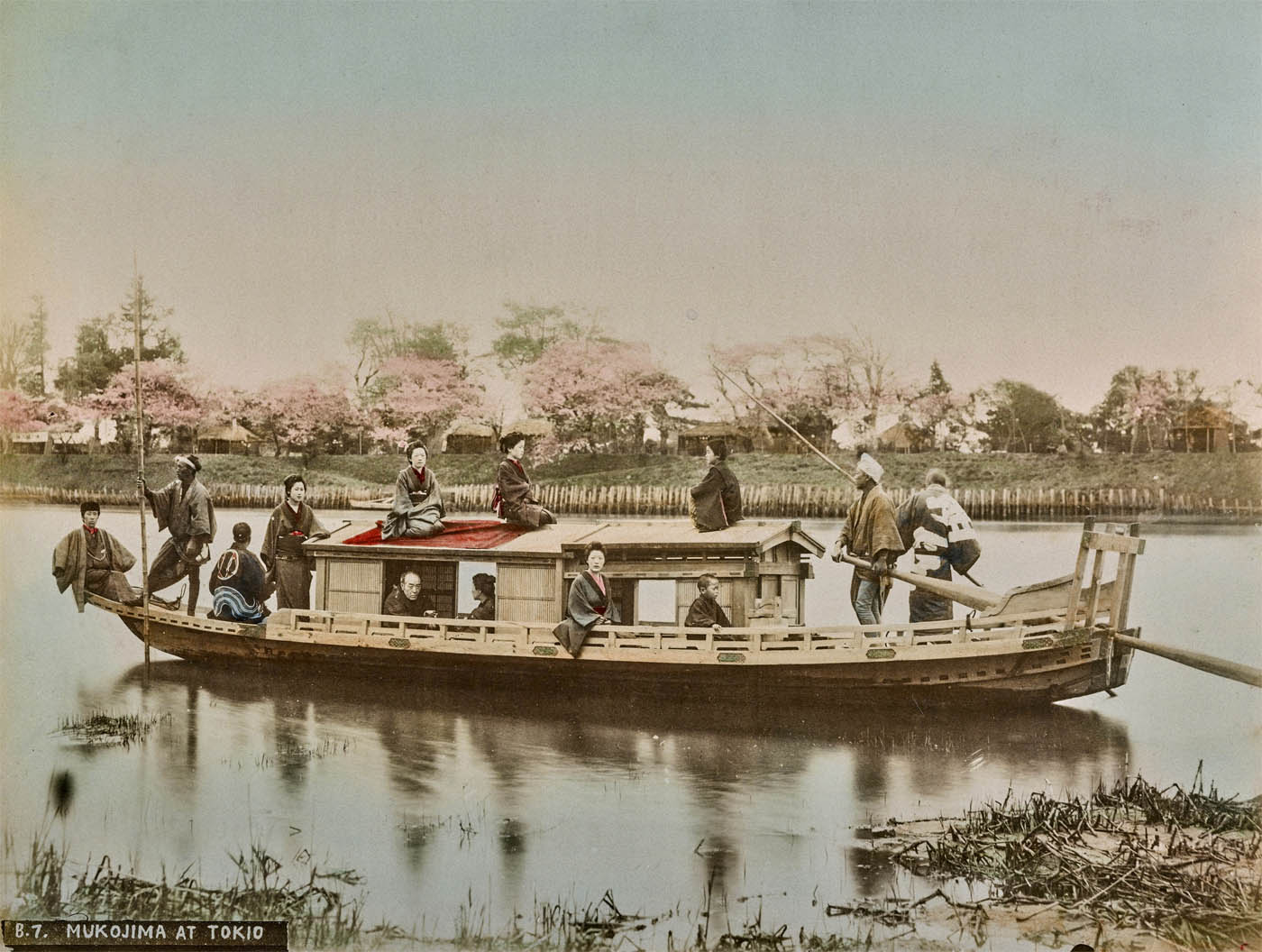
 

Felice Beato (Italian-British, 1832-1909) 'Mukojima, Tokyo' 1870s


Felice Beato (Italian-British, 1832-1909)
Mukojima, Tokyo
1870s
Hand-coloured albumen silver print from wet collodion glass-plate negative
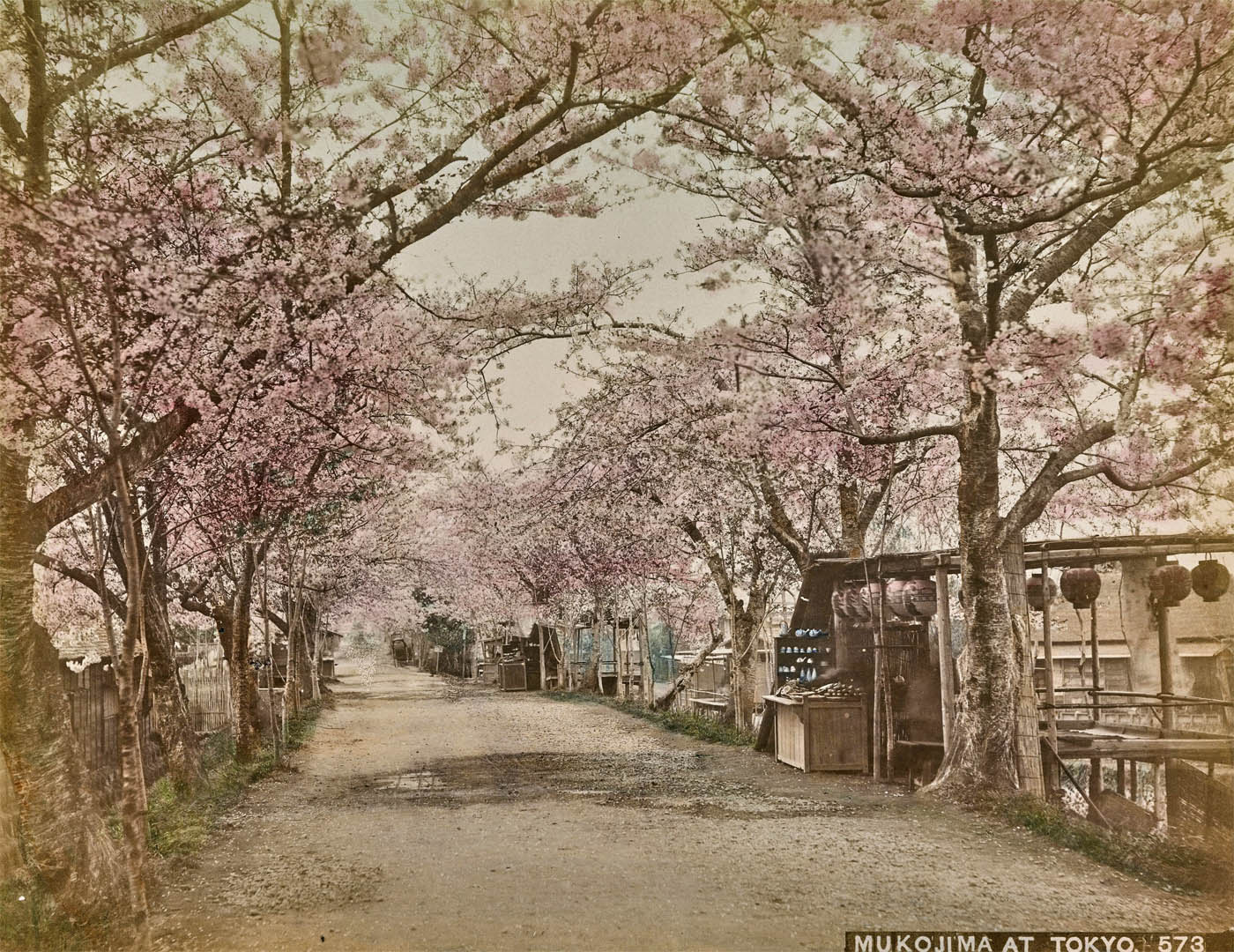
 

Felice Beato (Italian-British, 1832-1909) 'Mukojima, Tokyo' 1870s


Felice Beato (Italian-British, 1832-1909)
Mukojima, Tokyo
1870s
Hand-coloured albumen silver print from wet collodion glass-plate negative
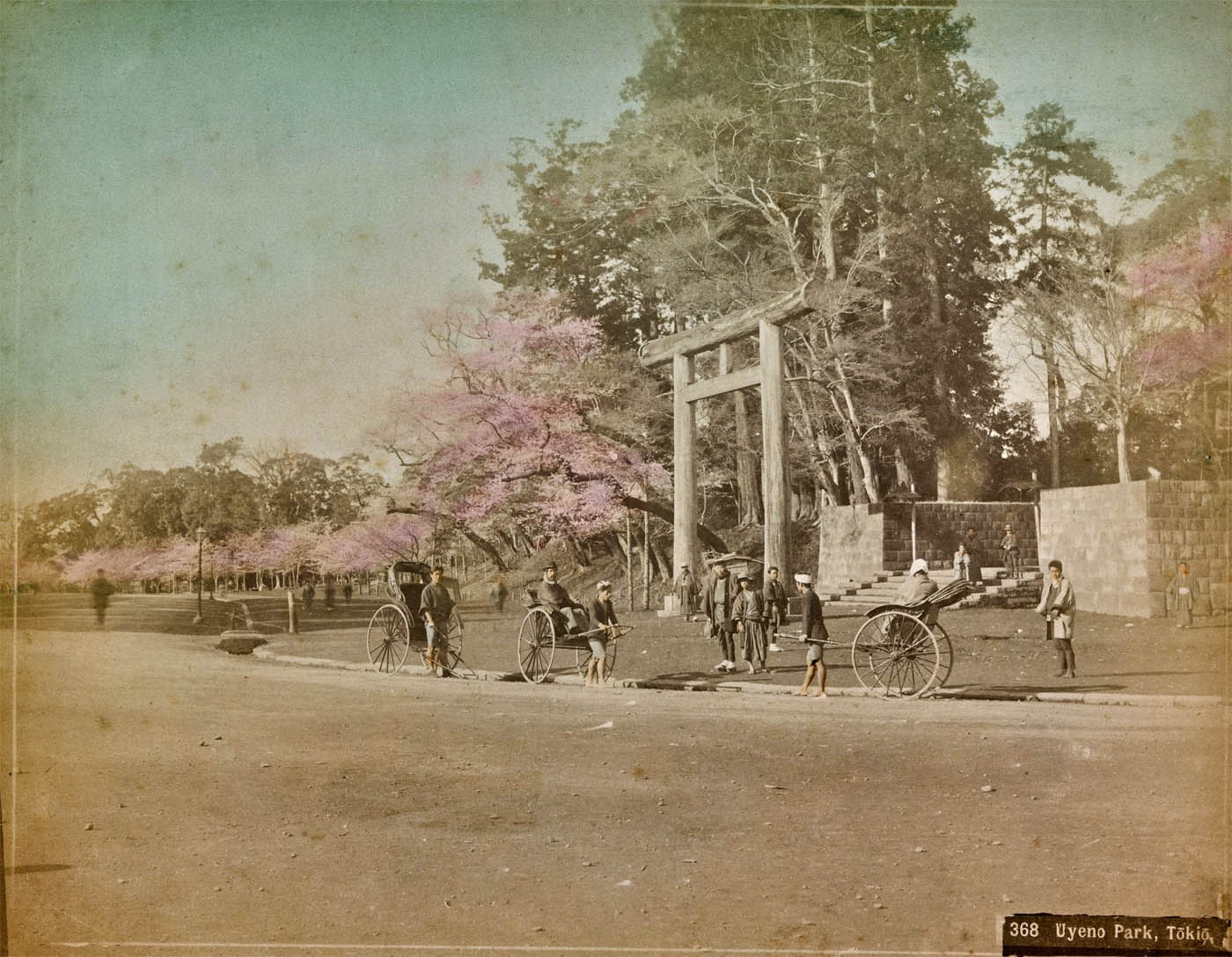
 

Felice Beato (Italian-British, 1832-1909) 'Uyeno Park, Tokyo' 1870s


Felice Beato (Italian-British, 1832-1909)
Uyeno Park, Tokyo
1870s
Hand-coloured albumen silver print from wet collodion glass-plate negative


Felice Beato

Felice Beato (1832-1909), also known as Felix Beato, was an Italian-British photographer. He was one of the first people to take photographs in East Asia and one of the first war photographers. He is noted for his genre works, portraits, and views and panoramas of the architecture and landscapes of Asia and the Mediterranean region. Beato’s travels gave him the opportunity to create images of countries, people, and events that were unfamiliar and remote to most people in Europe and North America. His work provides images of such events as the Indian Rebellion of 1857 and the Second Opium War, and represents the first substantial body of photojournalism. He influenced other photographers, and his influence in Japan, where he taught and worked with numerous other photographers and artists, was particularly deep and lasting.

Early life and identity

A death certificate discovered in 2009 shows that Beato was born in Venice in 1832 and died on 29 January 1909 in Florence. The death certificate also indicates that he was a British subject and a bachelor. It is likely that early in his life Beato and his family moved to Corfu, at the time part of the British protectorate of the Ionian Islands, and so Beato was a British subject.

Because of the existence of a number of photographs signed “Felice Antonio Beato” and “Felice A. Beato”, it was long assumed that there was one photographer who somehow photographed at the same time in places as distant as Egypt and Japan. In 1983 it was shown by Chantal Edel that “Felice Antonio Beato” represented two brothers, Felice Beato and Antonio Beato, who sometimes worked together, sharing a signature. The confusion arising from the signatures continues to cause problems in identifying which of the two photographers was the creator of a given image.

Japan

By 1863 Beato had moved to Yokohama, Japan, joining Charles Wirgman, with whom he had travelled from Bombay to Hong Kong. The two formed and maintained a partnership called “Beato & Wirgman, Artists and Photographers” during the years 1864-1867, one of the earliest and most important commercial studios in Japan. Wirgman again produced illustrations derived from Beato’s photographs, while Beato photographed some of Wirgman’s sketches and other works. (Beato’s photographs were also used for engravings within Aimé Humbert’s Le Japon illustré and other works.) Beato’s Japanese photographs include portraits, genre works, landscapes, cityscapes, and a series of photographs documenting the scenery and sites along the Tōkaidō Road, the latter series recalling the ukiyo-e [17th-19th century woodblock prints and paintings] of Hiroshige and Hokusai. During this period, foreign access to (and within) the country was greatly restricted by the Tokugawa shogunate. Accompanying ambassadorial delegations and taking any other opportunities created by his personal popularity and close relationship with the British military, Beato reached areas of Japan where few westerners had ventured, and in addition to conventionally pleasing subjects sought sensational and macabre subject matter such as heads on display after decapitation. His images are remarkable not only for their quality, but also for their rarity as photographic views of Edo period Japan.

The greater part of Beato’s work in Japan contrasted strongly with his earlier work in India and China, which “had underlined and even celebrated conflict and the triumph of British imperial might”. Aside from the Portrait of Prince Kung, any appearances of Chinese people in Beato’s earlier work had been peripheral (minor, blurred, or both) or as corpses. With the exception of his work in September 1864 as an official photographer on the British military expedition to Shimonoseki, Beato was eager to portray Japanese people, and did so uncondescendingly, even showing them as defiant in the face of the elevated status of westerners.

Beato was very active while in Japan. In 1865 he produced a number of dated views of Nagasaki and its surroundings. From 1866 he was often caricatured in Japan Punch, which was founded and edited by Wirgman. In an October 1866 fire that destroyed much of Yokohama, Beato lost his studio and many, perhaps all, of his negatives.

While Beato was the first photographer in Japan to sell albums of his works, he quickly recognised their full commercial potential. By around 1870 their sale had become the mainstay of his business. Although the customer would select the content of earlier albums, Beato moved towards albums of his own selection. It was probably Beato who introduced to photography in Japan the double concept of views and costumes / manners, an approach common in photography of the Mediterranean. By 1868 Beato had readied two volumes of photographs, “Native Types”, containing 100 portraits and genre works, and “Views of Japan”, containing 98 landscapes and cityscapes.

Many of the photographs in Beato’s albums were hand-coloured, a technique that in his studio successfully applied the refined skills of Japanese watercolourists and woodblock printmakers to European photography.

Since about the time of the ending of his partnership with Wirgman in 1869, Beato attempted to retire from the work of a photographer, instead attempting other ventures and delegating photographic work to others within his own studio in Yokohama, “F. Beato & Co., Photographers”, which he ran with an assistant named H. Woollett and four Japanese photographers and four Japanese artists. Kusakabe Kimbei was probably one of Beato’s artist-assistants before becoming a photographer in his own right. These other ventures failed, but Beato’s photographic skills and personal popularity ensured that he could successfully return to work as a photographer.

In 1871 Beato served as official photographer with the United States naval expedition of Admiral Rodgers to Korea. Although it is possible that an unidentified Frenchman photographed Korea during the 1866 invasion of Ganghwa Island, Beato’s photographs are the earliest of Korea whose provenance is clear.

Beato’s business ventures in Japan were numerous. He owned land and several studios, was a property consultant, had a financial interest in the Grand Hotel of Yokohama, and was a dealer in imported carpets and women’s bags, among other things. He also appeared in court on several occasions, variously as plaintiff, defendant, and witness. On 6 August 1873 Beato was appointed Consul General for Greece in Japan.

In 1877 Beato sold most of his stock to the firm Stillfried & Andersen, who then moved into his studio. In turn, Stillfried & Andersen sold the stock to Adolfo Farsari in 1885. Following the sale to Stillfried & Andersen, Beato apparently retired for some years from photography, concentrating on his parallel career as a financial speculator and trader. On 29 November 1884 he left Japan, ultimately landing in Port Said, Egypt. It was reported in a Japanese newspaper that he had lost all his money on the Yokohama silver exchange.

Death and legacy

Although Beato was previously believed to have died in Rangoon or Mandalay in 1905 or 1906, his death certificate, discovered in 2009, indicates that he died on 29 January 1909 in Florence, Italy.

Whether acknowledged as his own work, sold as Stillfried & Andersen’s, or encountered as anonymous engravings, Beato’s work had a major impact:

For over fifty years into the early twentieth century, Beato’s photographs of Asia constituted the standard imagery of travel diaries, illustrated newspapers, and other published accounts, and thus helped shape “Western” notions of several Asian societies.

Photographic techniques

Photographs of the 19th century often now show the limitations of the technology used, yet Beato managed to successfully work within and even transcend those limitations. He predominantly produced albumen silver prints from wet collodion glass-plate negatives.

Beato pioneered and refined the techniques of hand-colouring photographs and making panoramas. He may have started hand-colouring photographs at the suggestion of Wirgman, or he may have seen the hand-coloured photographs made by partners Charles Parker and William Parke Andrew. Whatever the inspiration, Beato’s coloured landscapes are delicate and naturalistic and his coloured portraits, more strongly coloured than the landscapes, are appraised as excellent.

Text from the Wikipedia website
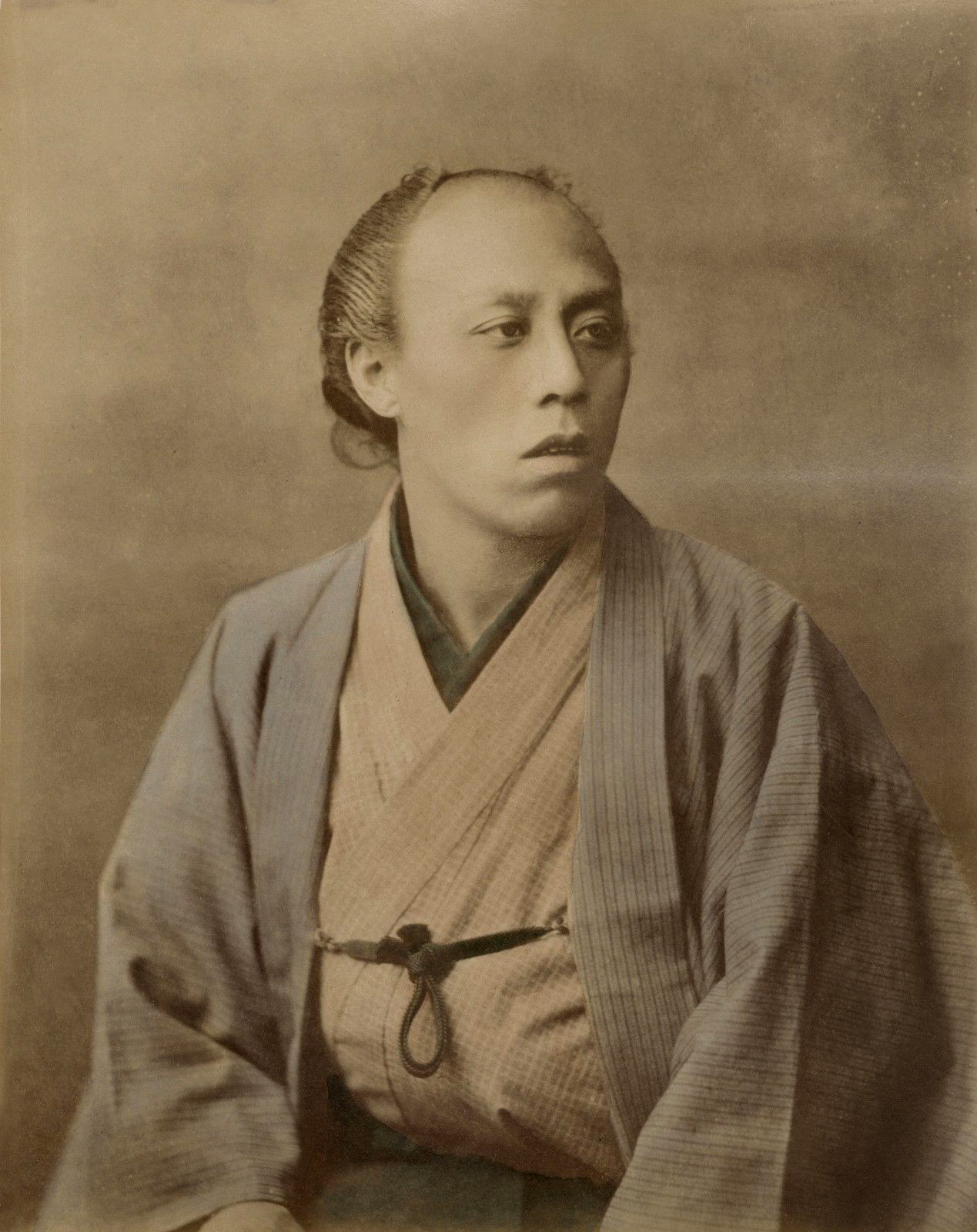
 

Baron Raimund von Stillfried (Austrian, 1839-1911) 'Akindo, Japan' c. 1870


Baron Raimund von Stillfried (Austrian, 1839-1911)
Akindo, Japan
c. 1870
Hand coloured albumen silver print from wet collodion glass-plate negative
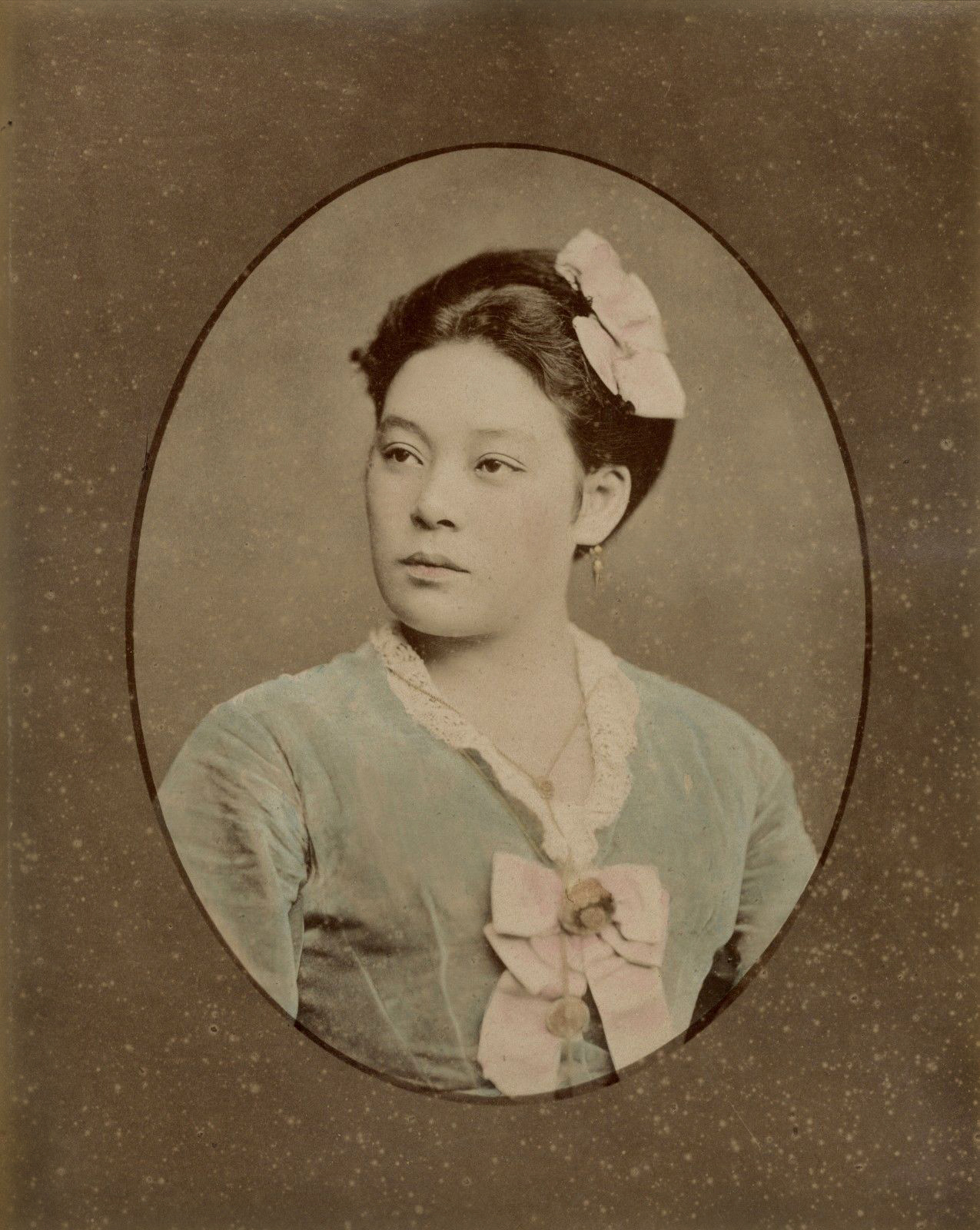
 

Baron Raimund von Stillfried (Austrian, 1839-1911) 'Middle-class Woman, Japan' c. 1870


Baron Raimund von Stillfried (Austrian, 1839-1911)
Middle-class Woman, Japan
c-1870
Hand coloured albumen silver print from wet collodion glass-plate negative
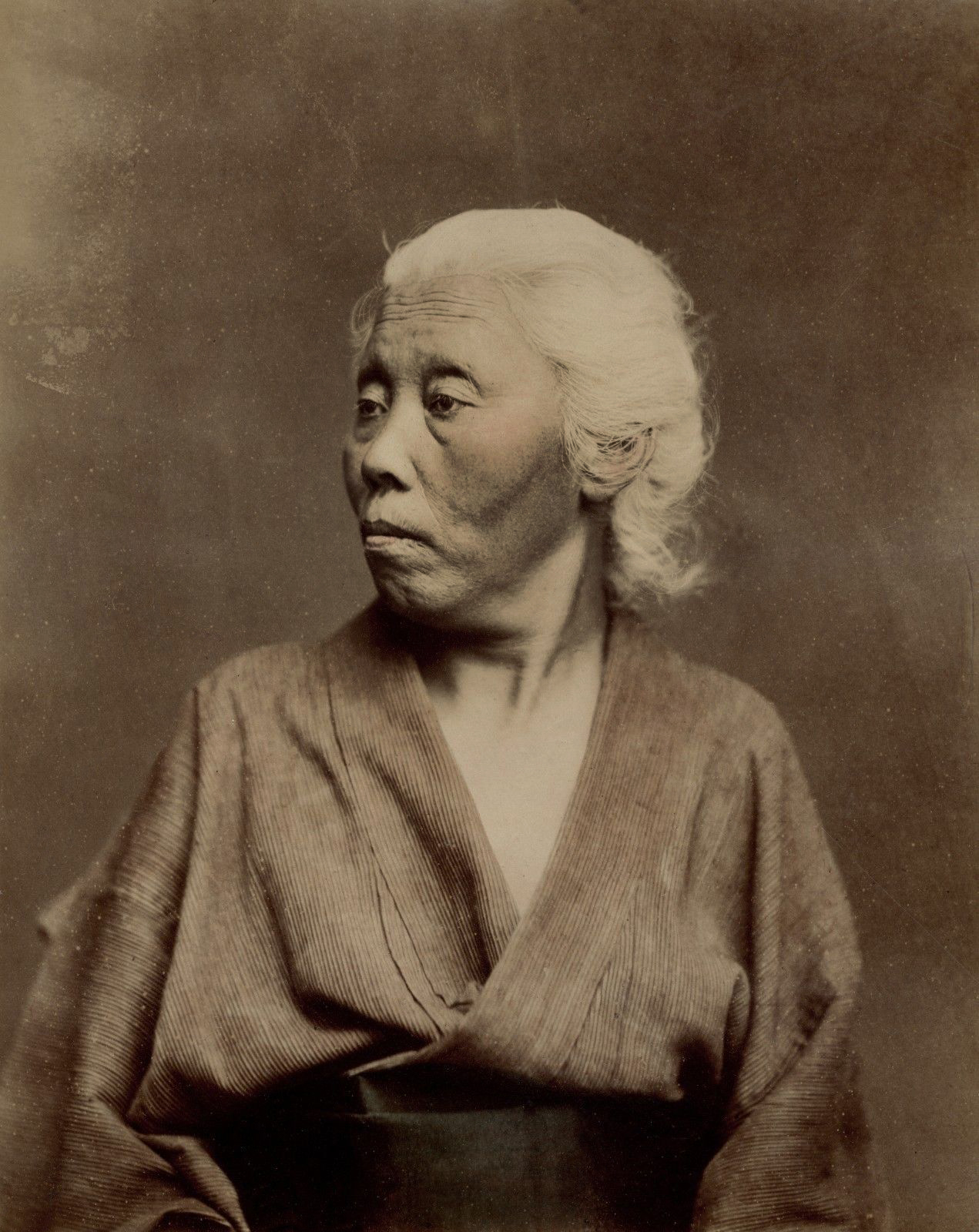
 

Baron Raimund von Stillfried (Austrian, 1839-1911) 'Obasan, Japan' c. 1870


Baron Raimund von Stillfried (Austrian, 1839-1911)
Obasan, Japan
c. 1870
Hand coloured albumen silver print from wet collodion glass-plate negative
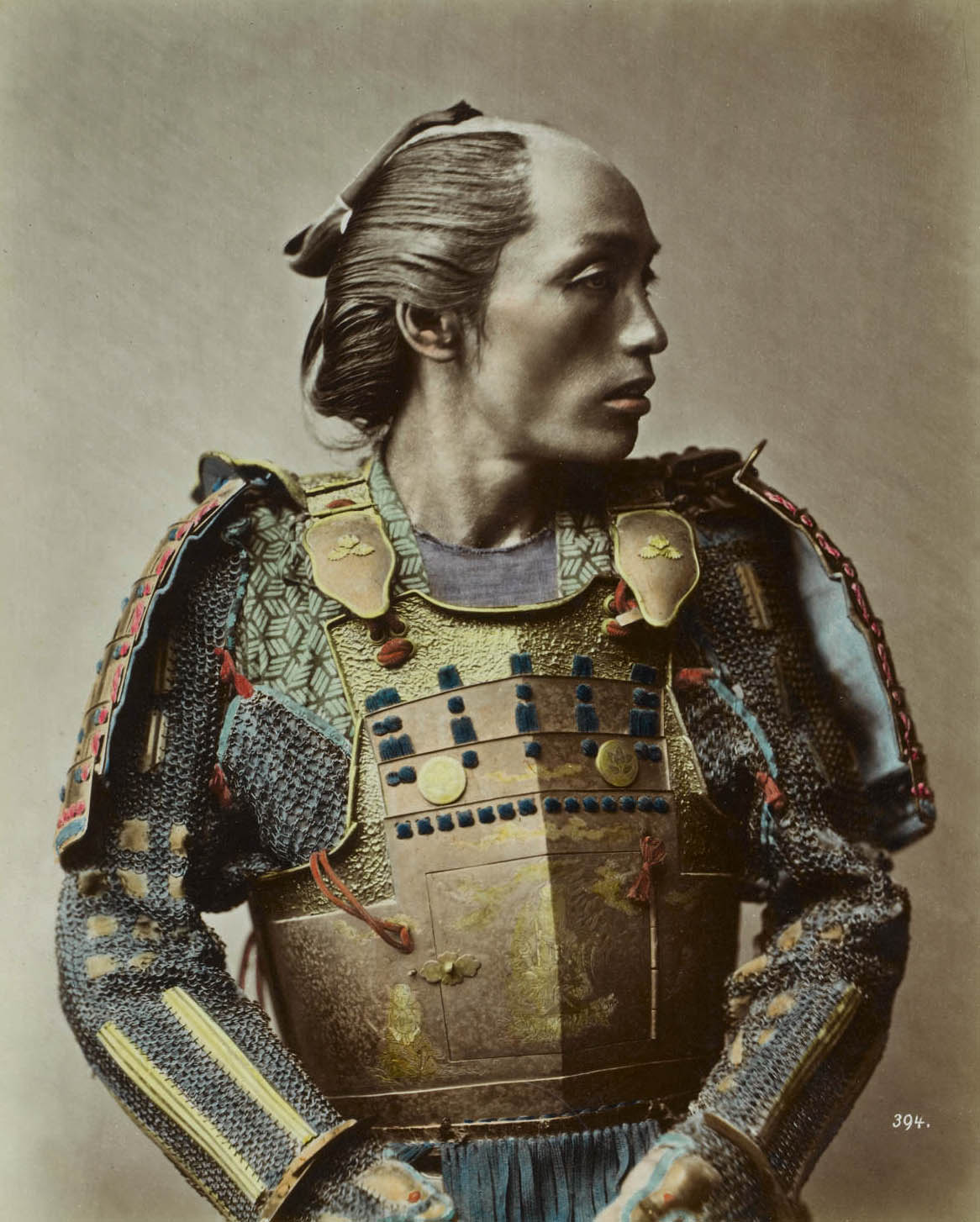
 

Baron Raimund von Stillfried (Austrian, 1839-1911) 'Japanese man in armour' 1881


Baron Raimund von Stillfried (Austrian, 1839-1911)
Japanese man in armour
1881
Hand coloured albumen silver print from wet collodion glass-plate negative
Art and Design Library
Public domain


A portrait of a Japanese soldier from the waist up. He is standing facing his left whilst wearing ornate armour consisting of a chest plate and chainmail undershirt. His hair is swept back and is dressed in a topknot.

This item is part of a collection of prints from the studio of Baron Franz von Stillfried-Ratenicz, an Austrian photographer practising in Japan in the late 1870’s. Von Stillfried ran a studio in Yokohama at the same time as his brother Raimund, who was also known as ‘Baron Stillfried’. This caused a great deal of confusion with the local residents and visitors to Japan in the Meiji Period, and with art historians today.

This album, which dates from 1879-1883, comprises 67 separate mounted prints presented in a lacquerware box. Albums of this kind were popular among foreign tourists, who frequently selected the individual prints they wished to include from the studio’s collection. Many of these albumen prints were hand tinted. This was a laborious process for which von Stillfried employed, at the height of his success, a substantial number of Japanese workers.

Text from the Wikipedia website
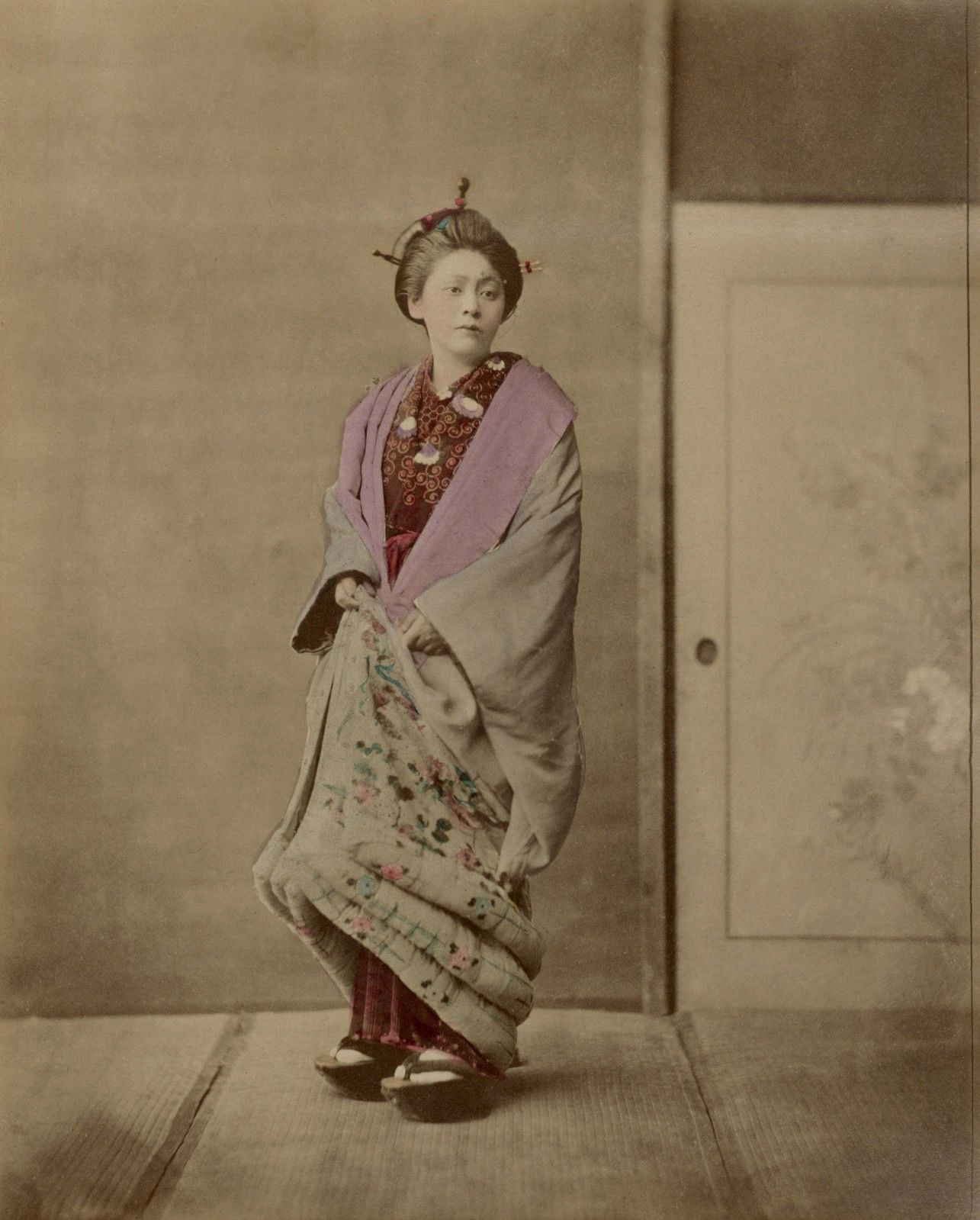
 

Baron Raimund von Stillfried (Austrian, 1839-1911) 'Woman, Japan' c. 1870


Baron Raimund von Stillfried (Austrian, 1839-1911)
Woman, Japan
c. 1870
Hand coloured albumen silver print from wet collodion glass-plate negative


Baron Raimund von Stillfried, also known as Baron Raimund von Stillfried-Rathenitz (6 August 1839, in Komotau – 12 August 1911, in Vienna), was an Austrian photographer.

He was son of Baron (Freiherr) August Wilhelm Stillfried von Rathenitz (d. 1806) and Countess Maria Anna Johanna Theresia Walburge Clam-Martinitz (1802-1874).

After leaving his military career, Stillfried moved to Yokohama, Japan and opened a photographic studio called Stillfried & Co. which operated until 1875. In 1875, Stillfried formed a partnership with Hermann Andersen and the studio was renamed, Stillfried & Andersen (also known as the Japan Photographic Association). This studio operated until 1885. In 1877, Stillfried & Andersen bought the studio and stock of Felice Beato. In the late 1870s, Stillfried visited and photographed in Dalmatia, Bosnia, and Greece. In addition to his own photographic endeavours, Stillfried trained many Japanese photographers. In 1886, Stillfried sold the majority of his stock to his protégé, the Japanese photographer Kusakabe Kimbei, he then left Japan.

He left Japan forever in 1881. After travelling to Vladivostock, Hong Kong and Bangkok, he eventually settled in Vienna in 1883. He also received an Imperial and Royal Warrant of Appointment as photographer (k.u.k. Hof-Photograph).

Text from the Wikipedia website
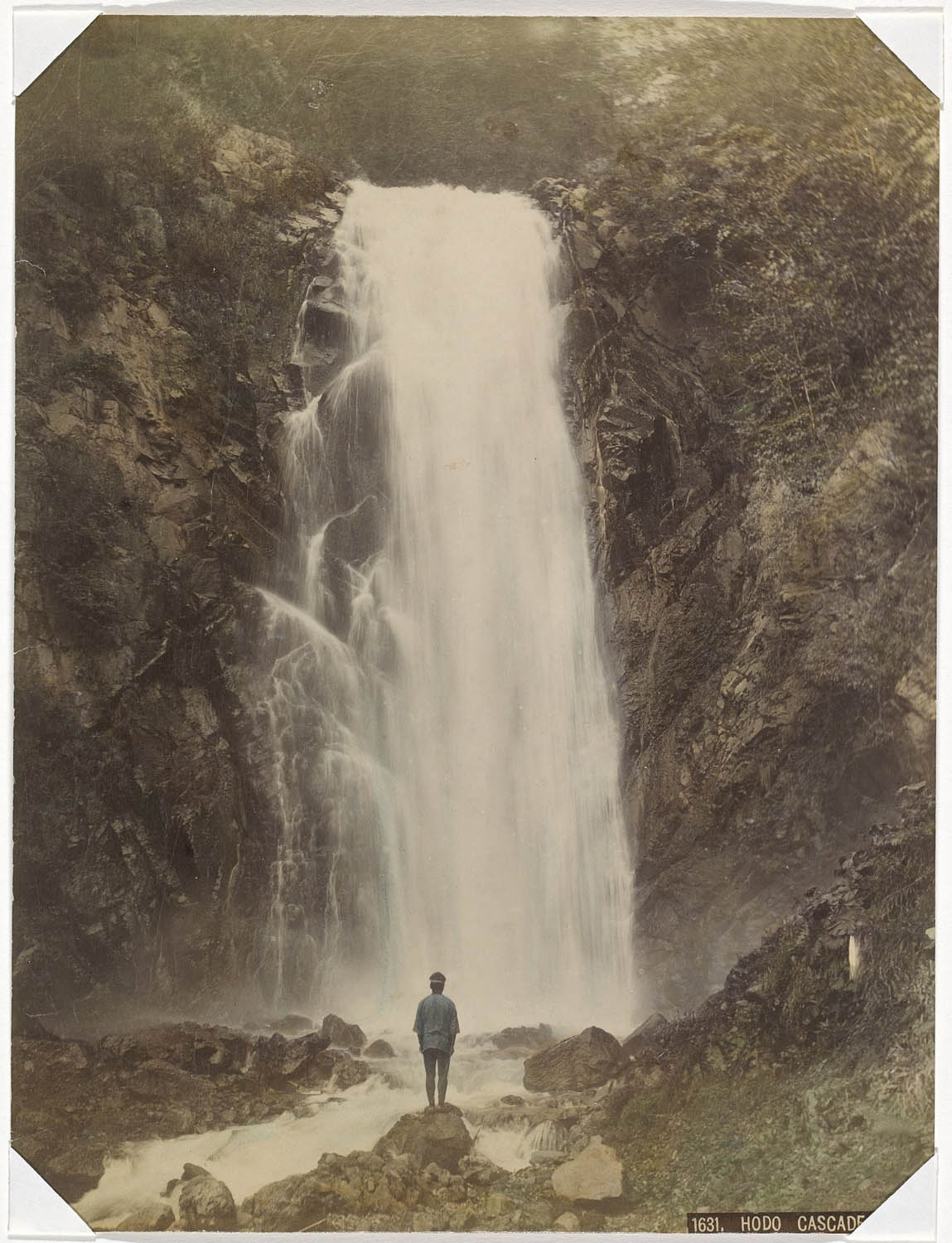
 

Baron Raimund von Stillfried (Austrian, 1839-1911) 'Hodo Falls at Nikko, Tochigi' between 1871 and 1885


Baron Raimund von Stillfried (Austrian, 1839-1911)
Hodo Falls at Nikko, Tochigi
between 1871 and 1885
Hand coloured albumen silver print from wet collodion glass-plate negative
Rijksmuseum
Public domain
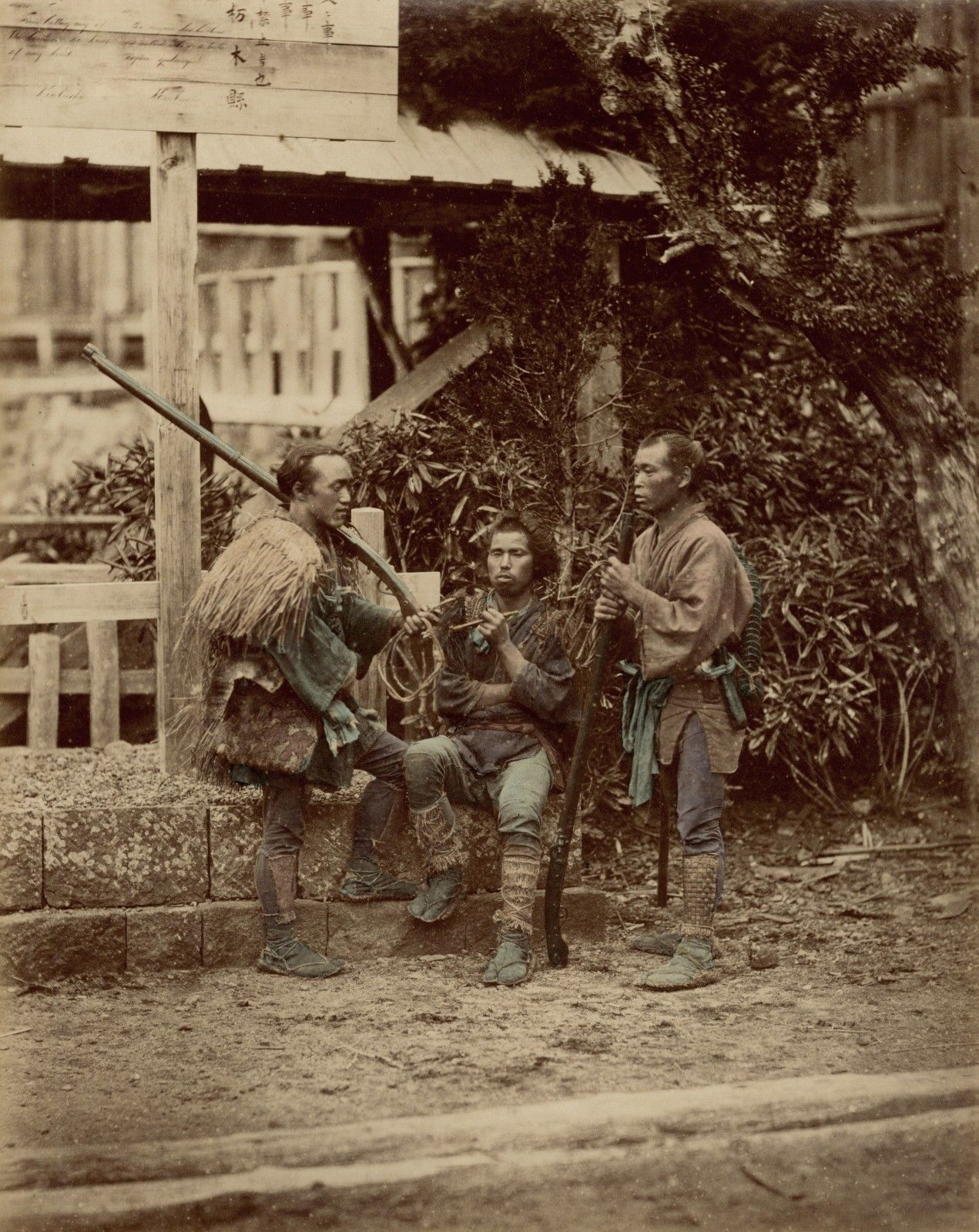
 

Baron Raimund von Stillfried (Austrian, 1839-1911) 'Group of men, Japan' c. 1870


Baron Raimund von Stillfried (Austrian, 1839-1911)
Group of men, Japan
c. 1870
Hand coloured albumen silver print from wet collodion glass-plate negative
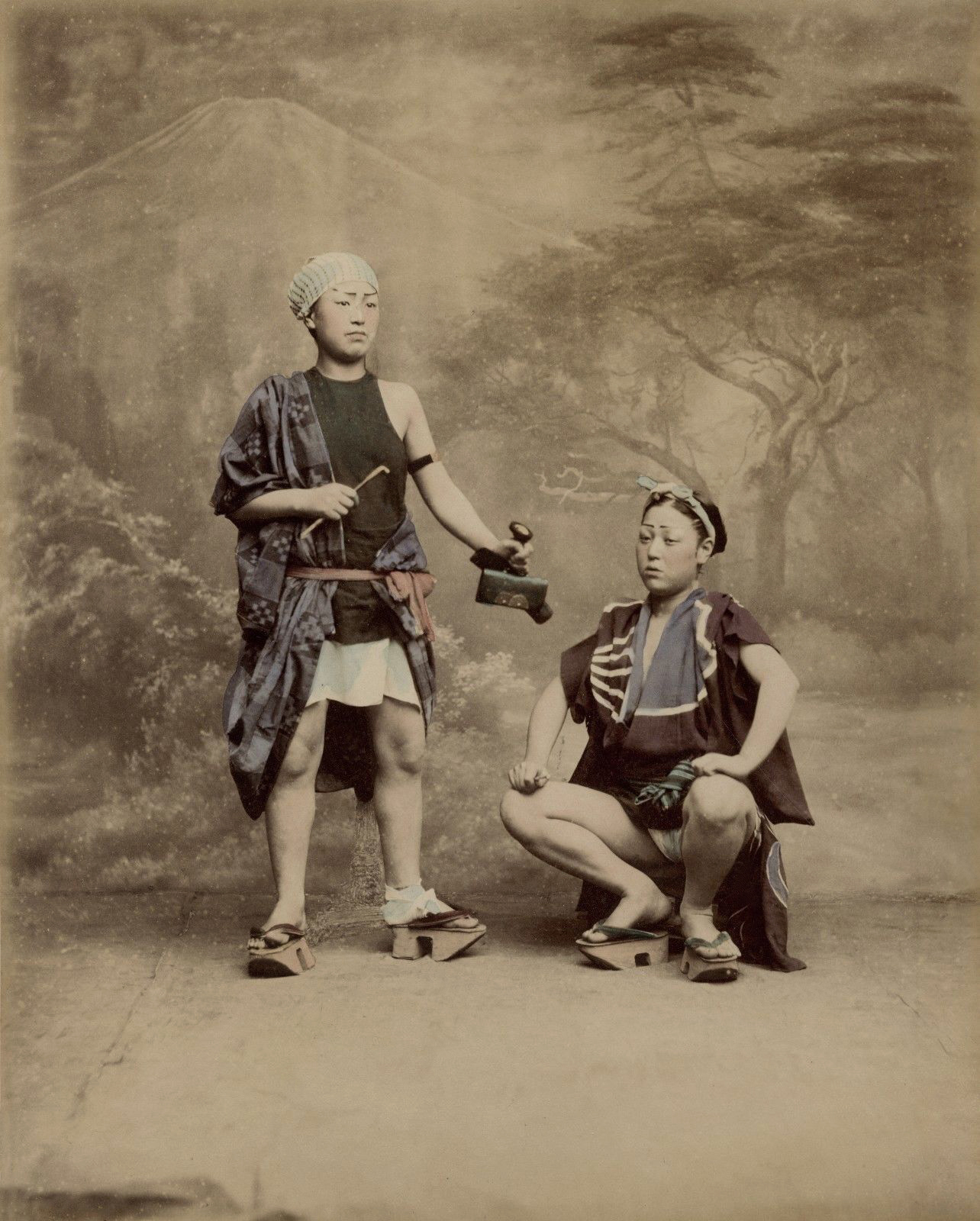
 

Baron Raimund von Stillfried (Austrian, 1839-1911) 'Minzoku, Japan' c. 1870


Baron Raimund von Stillfried (Austrian, 1839-1911)
Minzoku, Japan
c. 1870
Hand coloured albumen silver print from wet collodion glass-plate negative
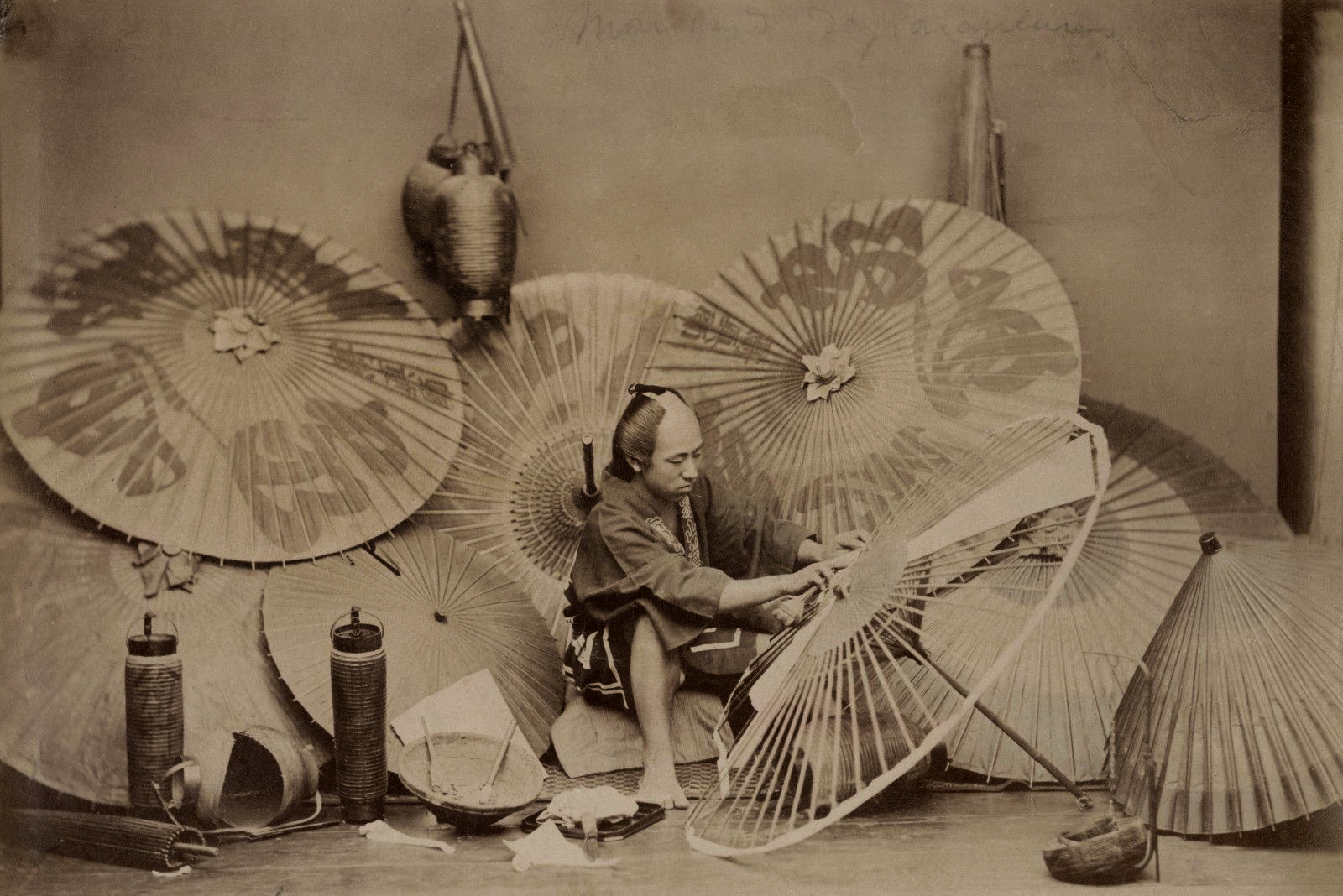
 

Baron Raimund von Stillfried (Austrian, 1839-1911) 'Umbrella maker, Japan' c. 1870


Baron Raimund von Stillfried (Austrian, 1839-1911)
Umbrella maker, Japan
c. 1870
Hand coloured albumen silver print from wet collodion glass-plate negative
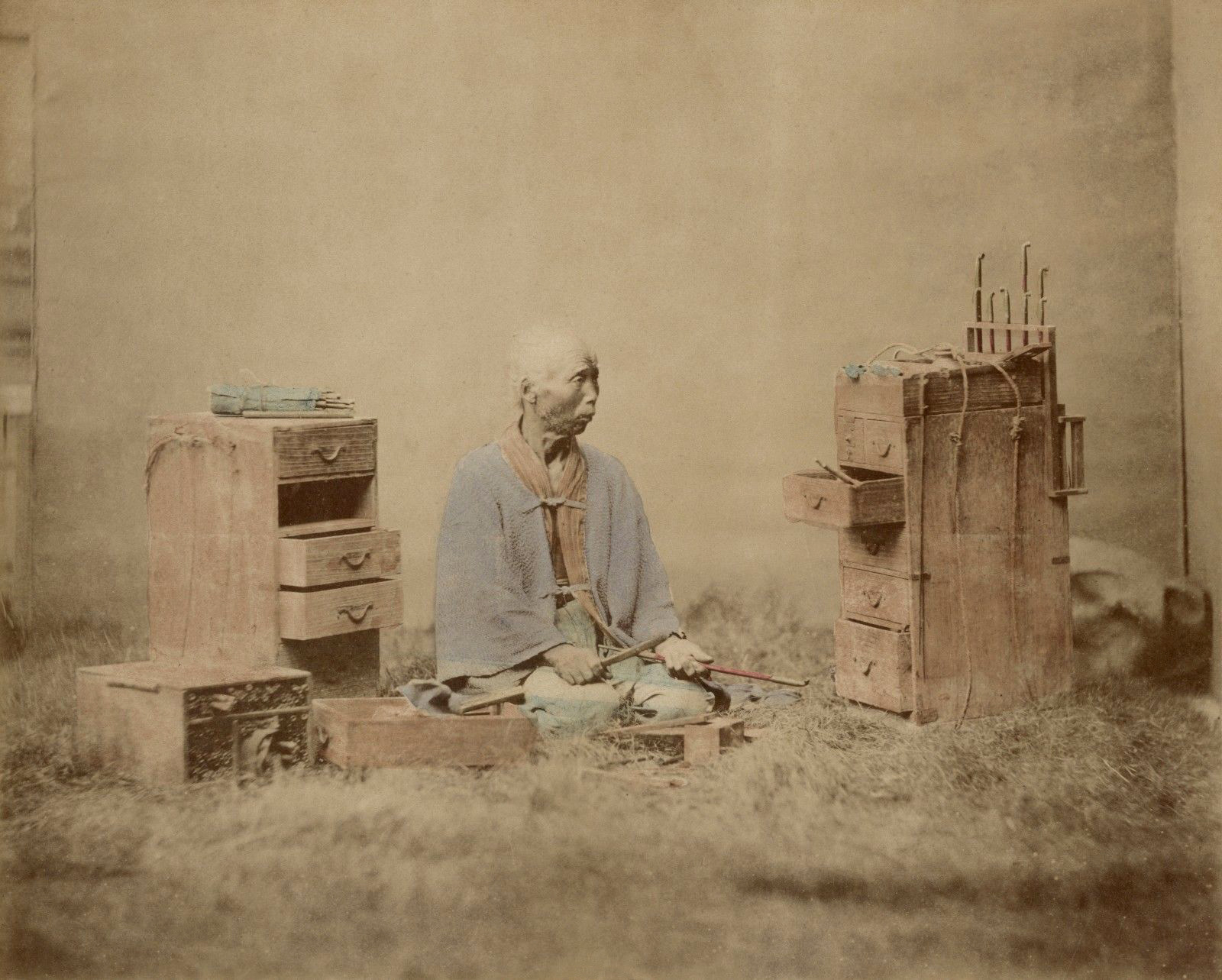
 

Baron Raimund von Stillfried (Austrian, 1839-1911) 'Pipe maker, Japan' c. 1870


Baron Raimund von Stillfried (Austrian, 1839-1911)
Pipe maker, Japan
c. 1870
Hand coloured albumen silver print from wet collodion glass-plate negative
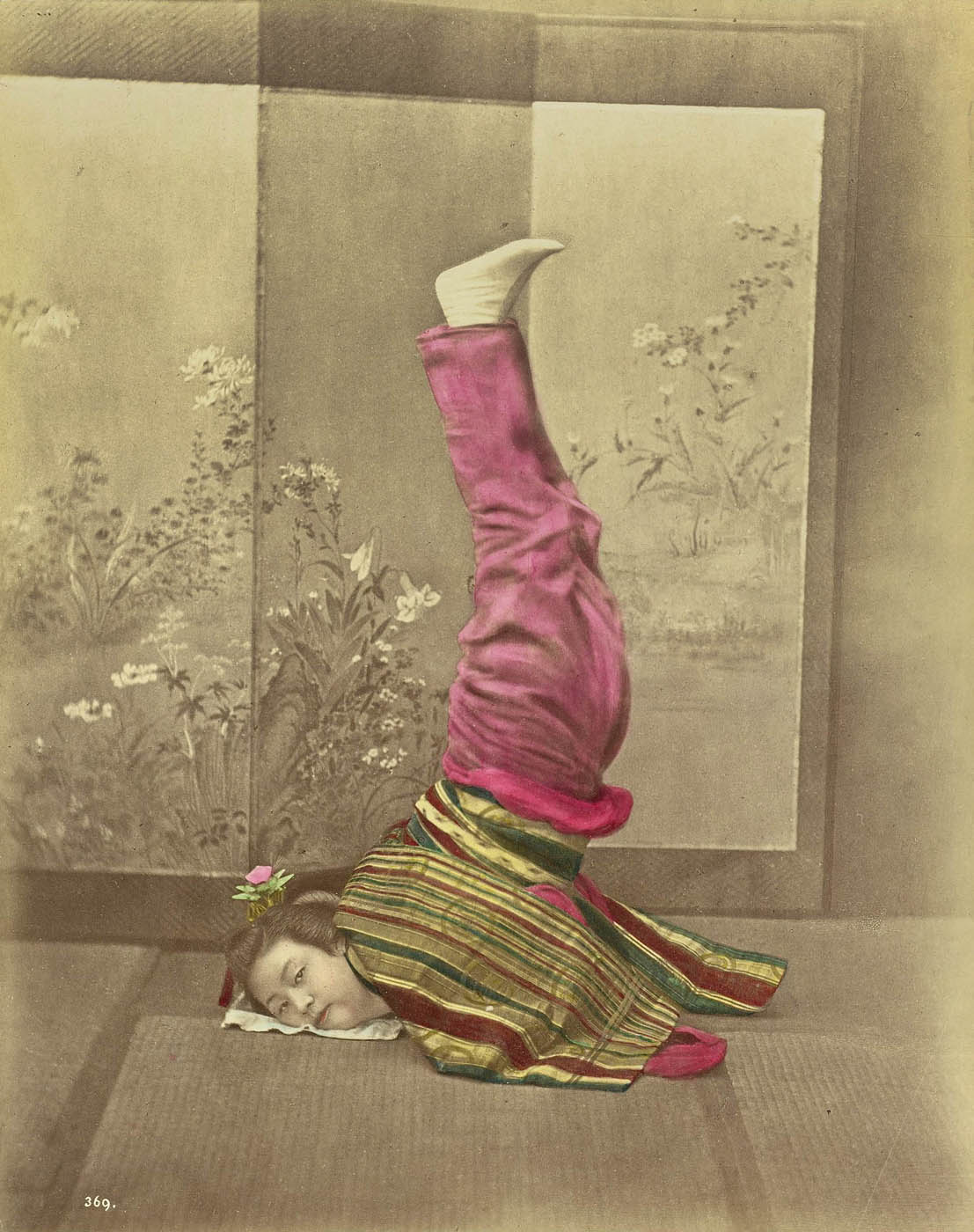
 

Baron Raimund von Stillfried (Austrian, 1839-1911) 'Japanese woman on her head' between 1871 and 1885


Baron Raimund von Stillfried (Austrian, 1839-1911)
Japanese woman on her head
between 1871 and 1885
Hand coloured albumen silver print from wet collodion glass-plate negative
Rijksmuseum
Public domain
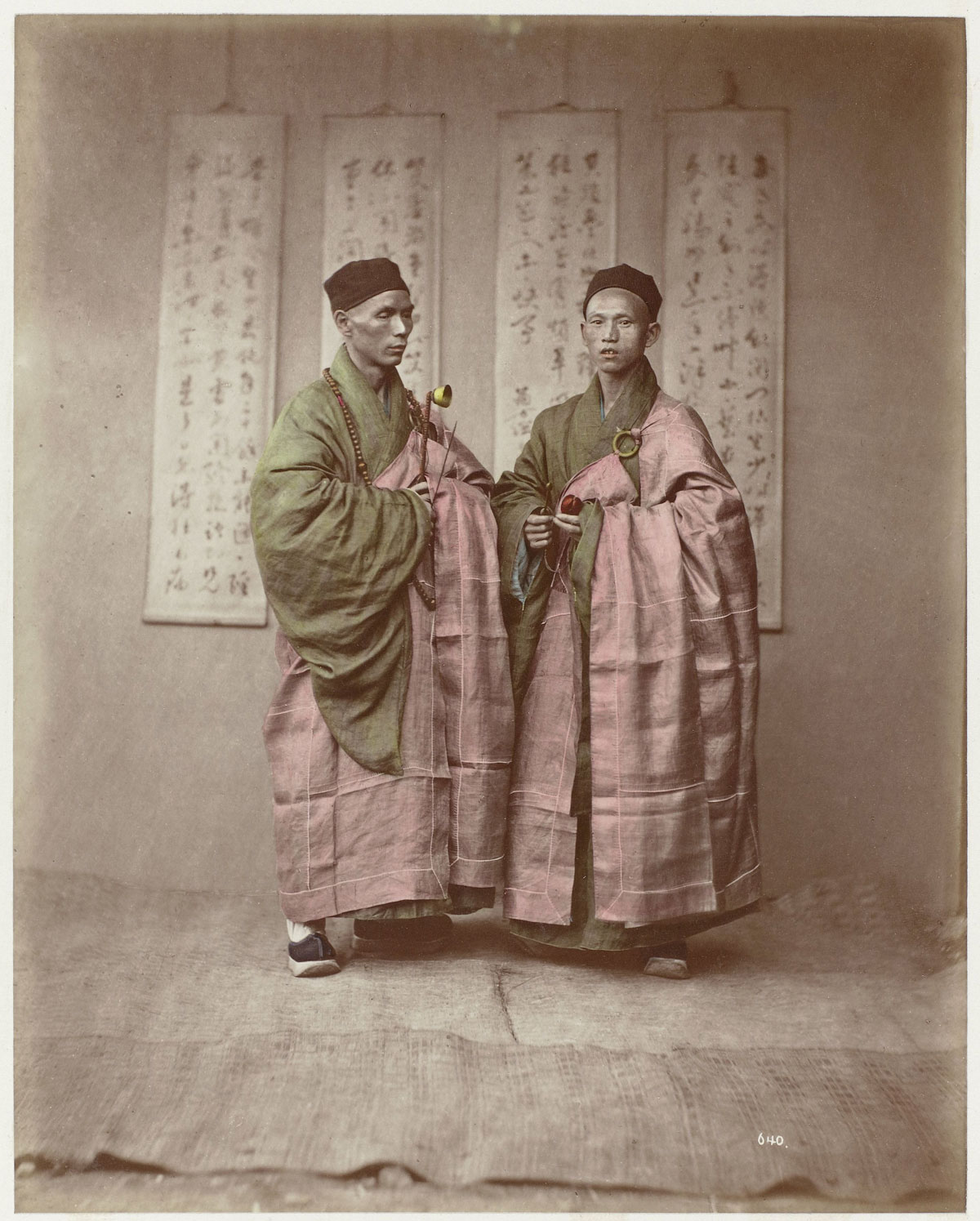
 

Attributed to Baron Raimund von Stillfried und Ratenitz. 'Portrait of two Chinese Buddhist monks with rosary, bell and slit drum' 1875


Baron Raimund von Stillfried (Austrian, 1839-1911)
Portrait of two Buddhist monks with rosary, bell and slit drum
c. 1875
Hand coloured albumen silver print from wet collodion glass-plate negative
Rijksmuseum
Public domain
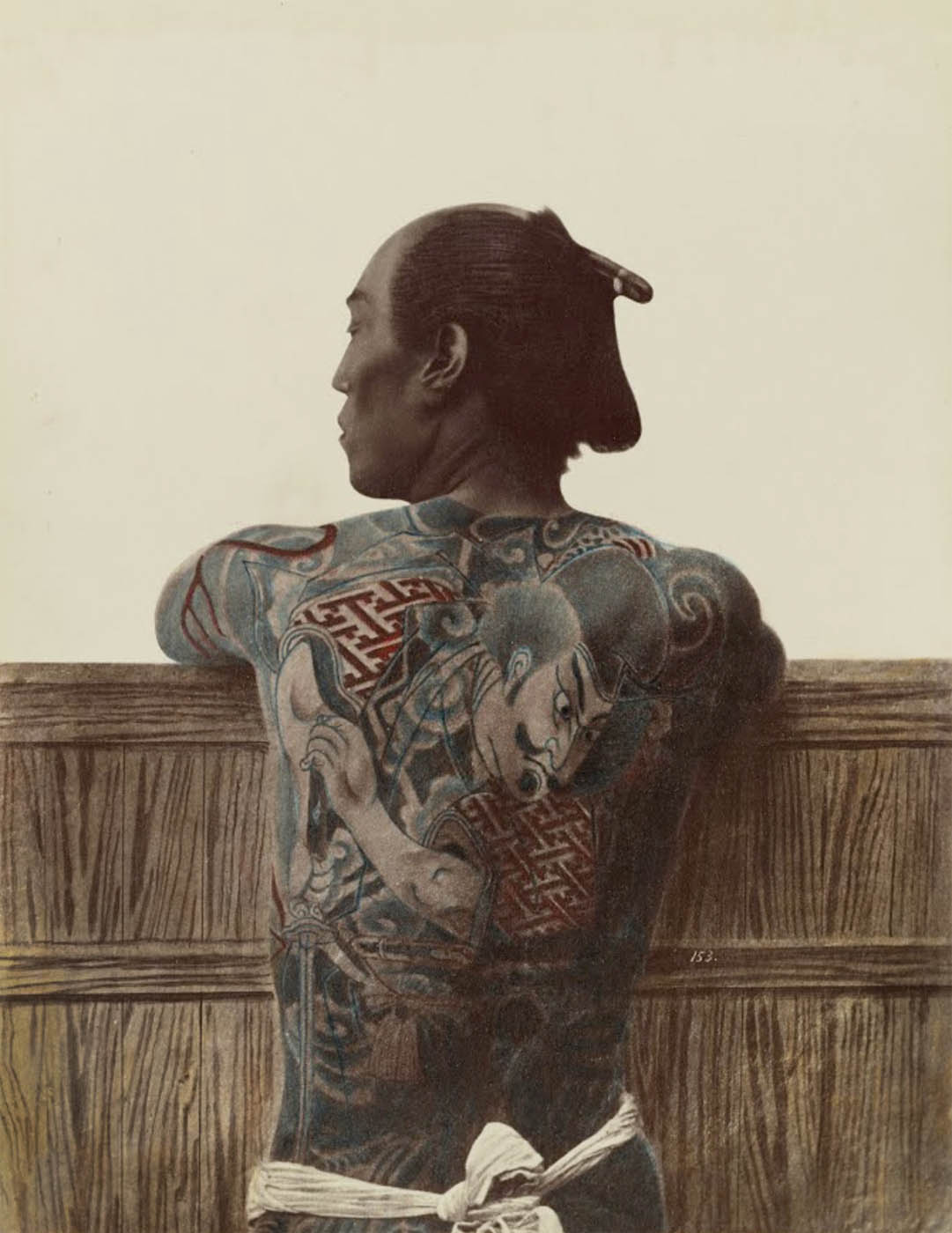
 

Kusakabe Kimbei (Japanese, 1841-1934) and Baron Raimund von Stillfried (Austrian, 1839-1911) 'Japanese Tattoo' between 1870 and 1899


Kusakabe Kimbei (Japanese, 1841-1934) and Baron Raimund von Stillfried (Austrian, 1839-1911)
Japanese Tattoo
between 1870 and 1899
Height: 26cm (10.2 in)
Width: 20cm (7.8 in)
Getty Center
Public domain
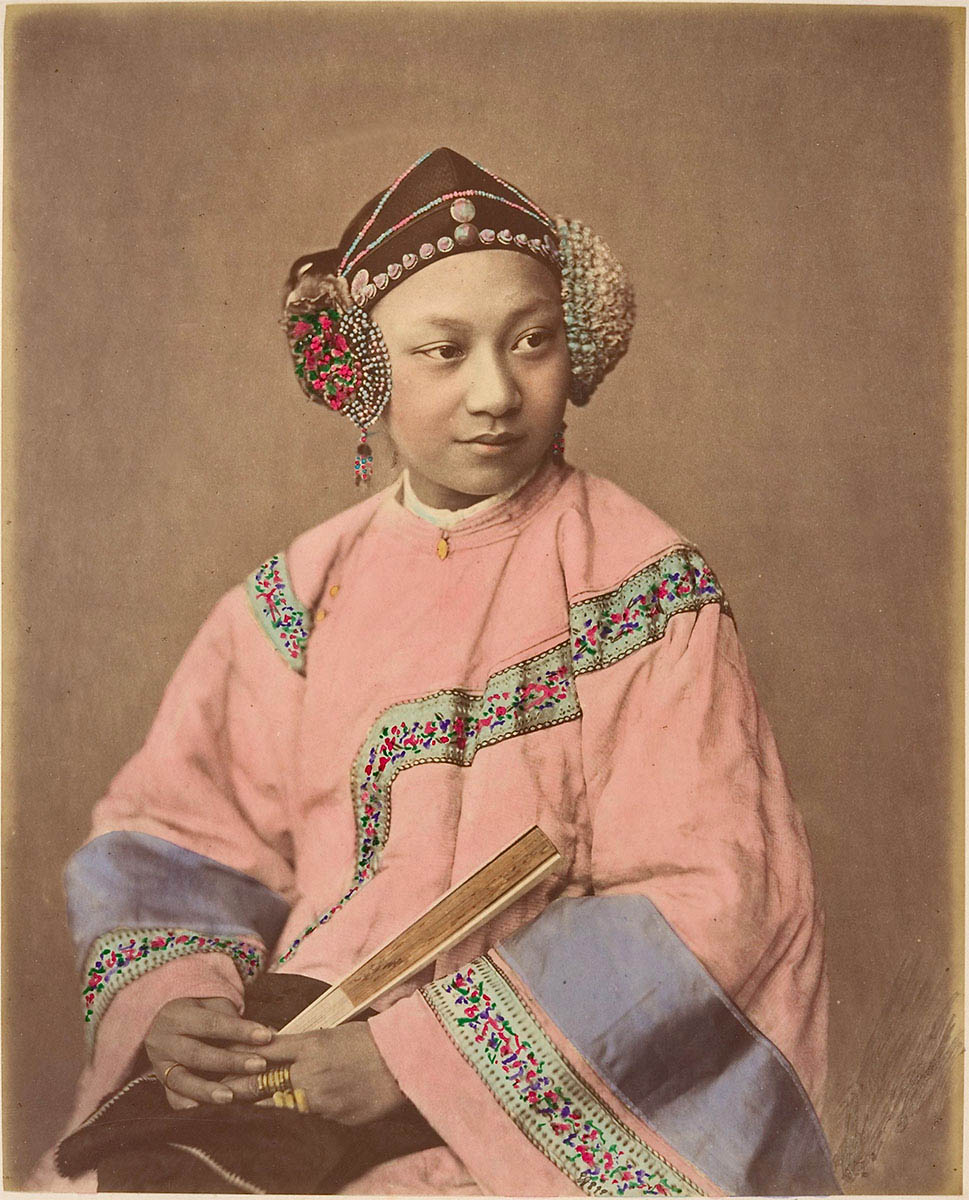
 

Baron Raimund von Stillfried (Austrian, 1839-1911) 'Fille de Sootchow (Suzhou Girl)' 1870s


Baron Raimund von Stillfried (Austrian, 1839-1911)
Fille de Sootchow (Suzhou Girl)
1870s
Albumen silver print from glass negative with applied colour
Metropolitan Museum of Art, Gilman Collection
Museum Purchase 2005
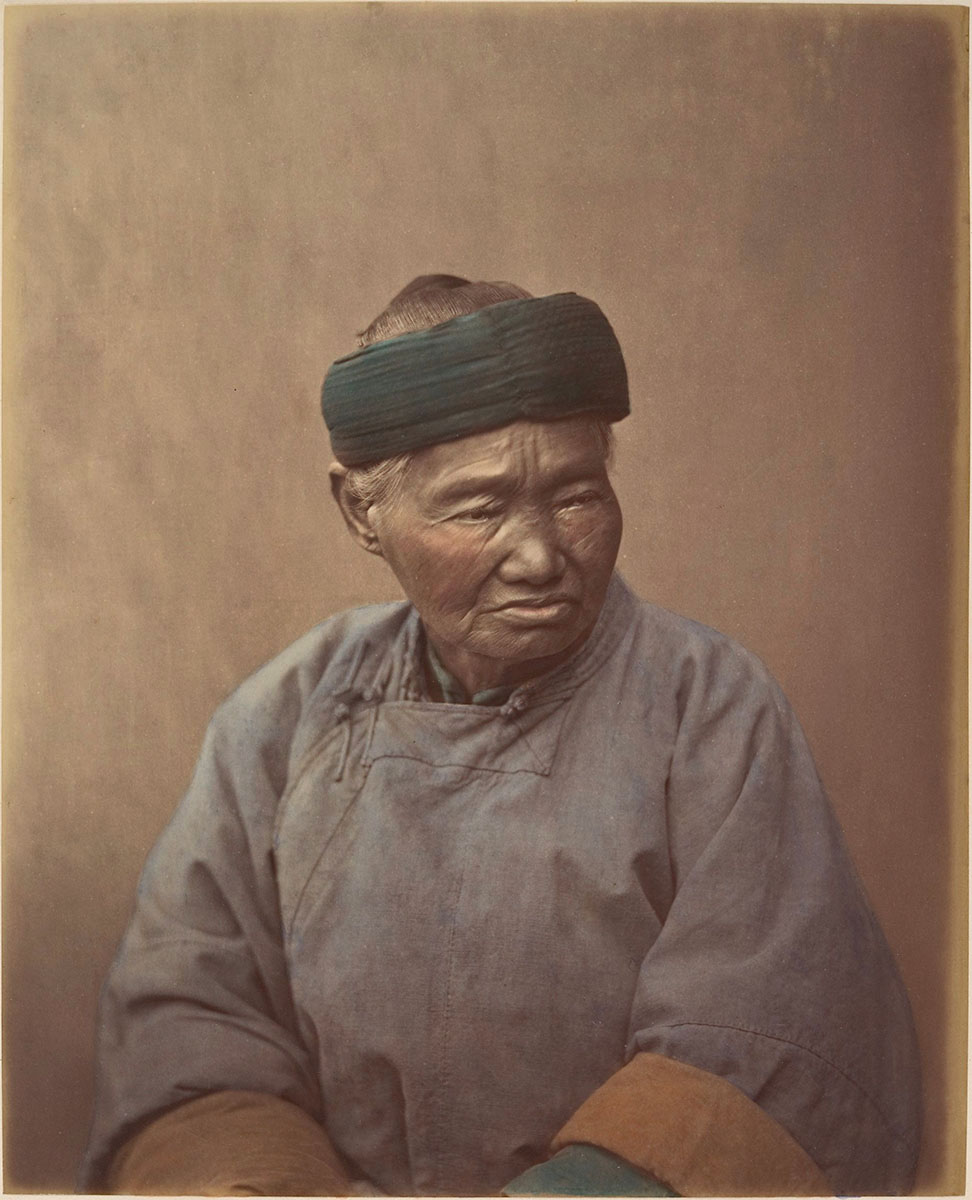
 

Baron Raimund von Stillfried (Austrian, 1839-1911) 'Portrait of an Old Chinese Woman' 1870s


Baron Raimund von Stillfried (Austrian, 1839-1911)
Portrait of an Old Chinese Woman
1870s
Albumen silver print from glass negative with applied colour
Metropolitan Museum of Art, Gilman Collection
Museum Purchase 2005
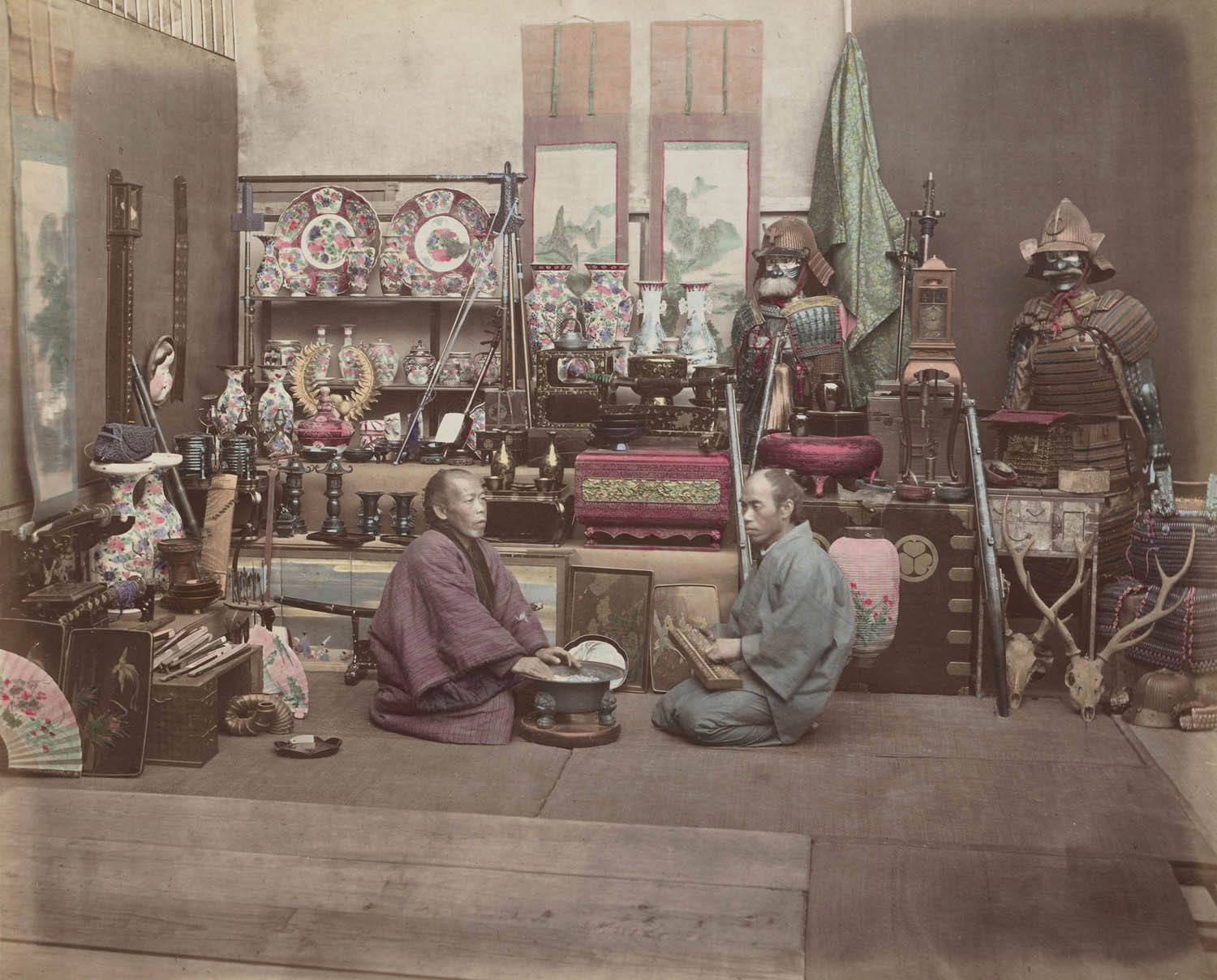
 

Baron Raimund von Stillfried (Austrian, 1839-1911) 'Courios Shop' c. 1875


Baron Raimund von Stillfried (Austrian, 1839-1911)
Courios Shop
c. 1875
Hand-coloured albumen silver print from glass negative
Pictures Collection, State Library of Victoria
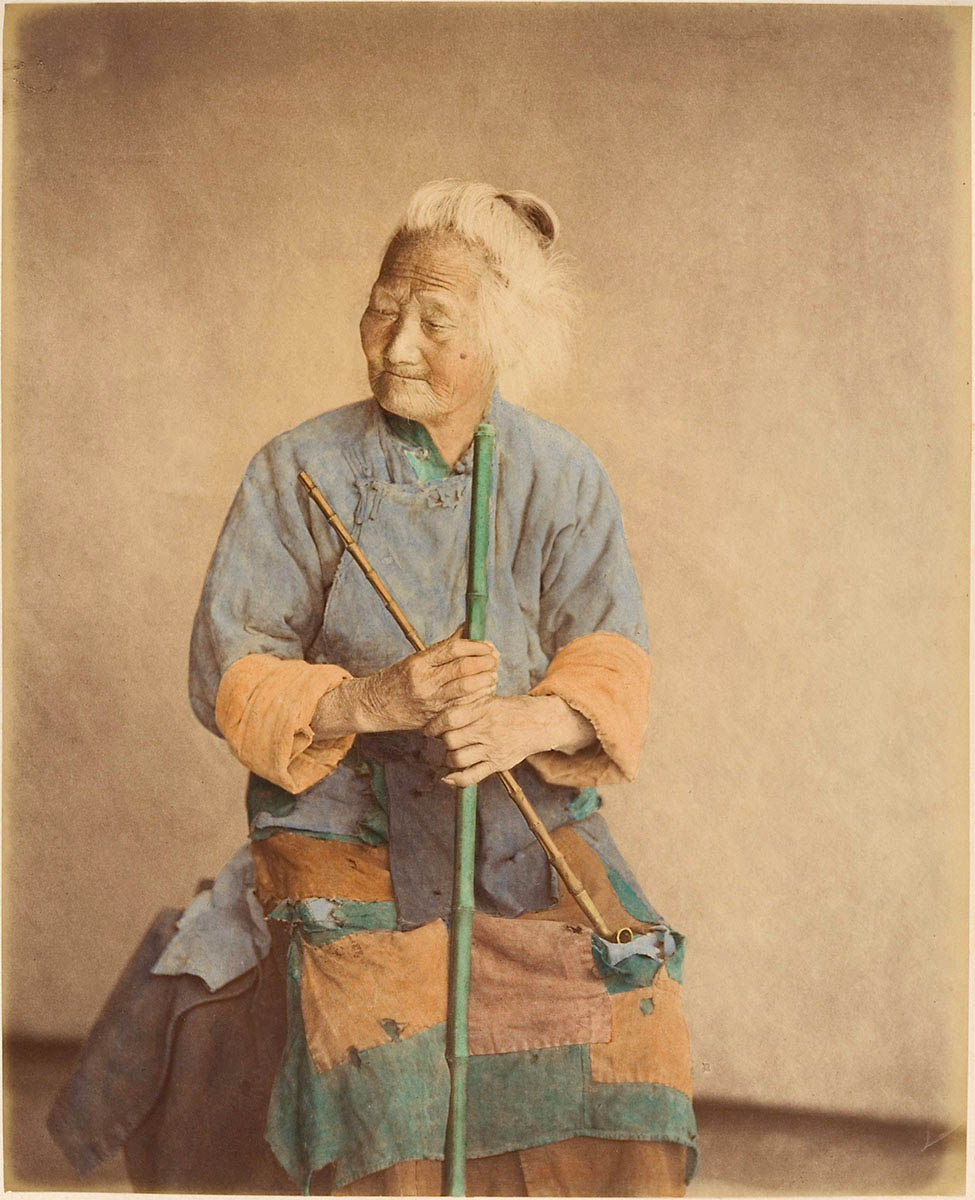
 

Baron Raimund von Stillfried (Austrian, 1839-1911) 'Old beggar' 1870s


Baron Raimund von Stillfried (Austrian, 1839-1911)
Old beggar
1870s
Albumen silver print from glass negative with applied colour
Metropolitan Museum of Art, Gilman Collection
Museum Purchase 2005
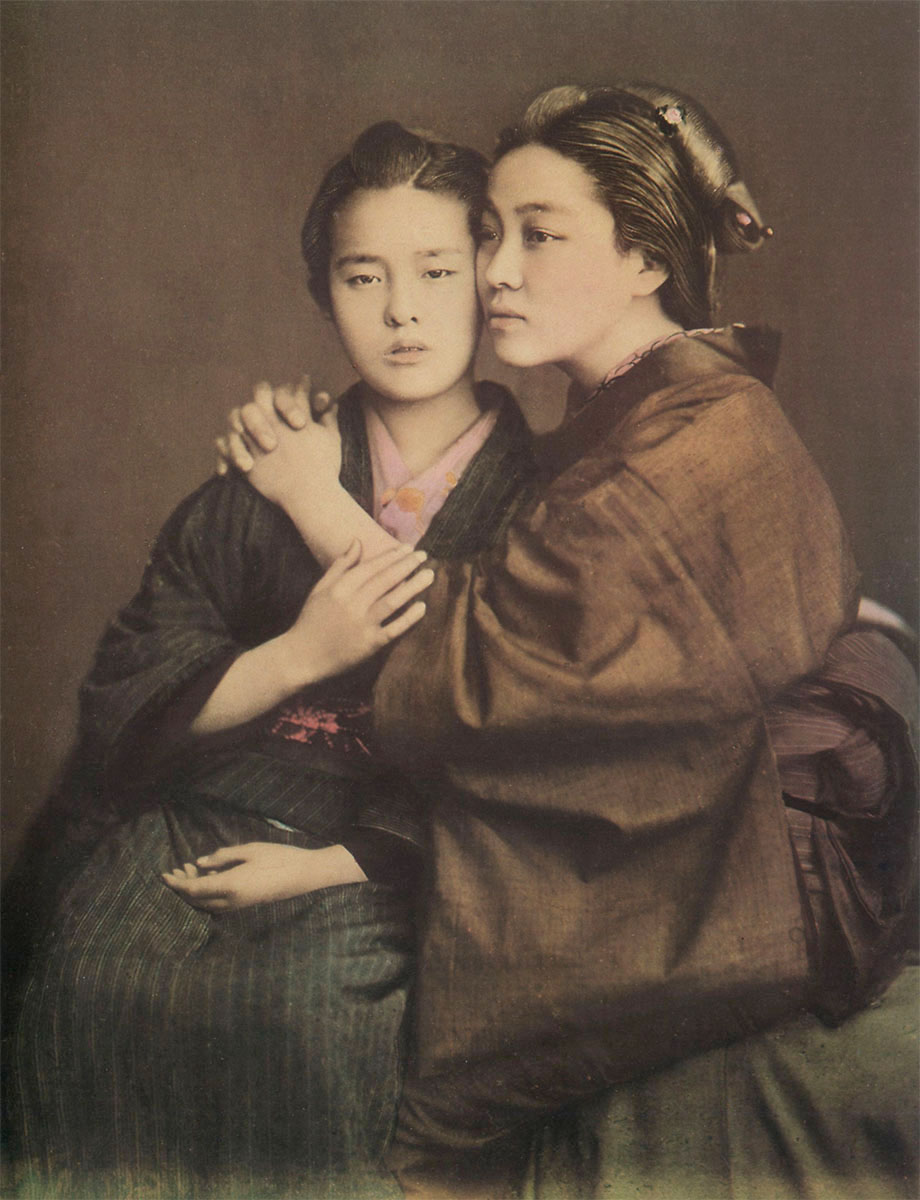
 

Baron Raimund von Stillfried (Austrian, 1839-1911) 'Double portrait' c. 1880


Baron Raimund von Stillfried (Austrian, 1839-1911)
Double portrait
c. 1880
Albumen silver print from glass negative with applied colour
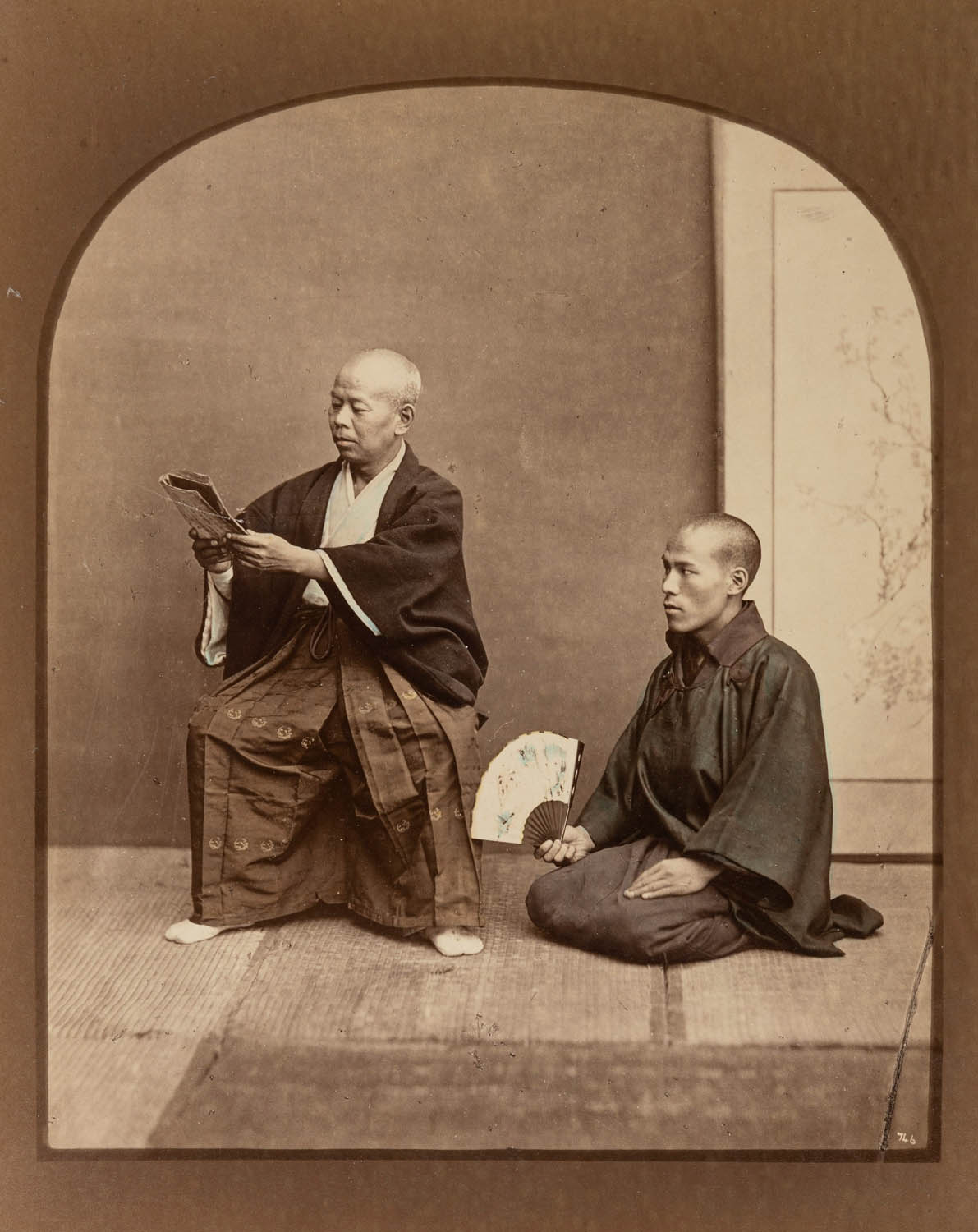
 

Baron Raimund von Stillfried (Austrian, 1839-1911) 'Untitled (Accountant with newspaper and his servant with folding fan)' 1870s


Baron Raimund von Stillfried (Austrian, 1839-1911)
Untitled (Accountant with newspaper and his servant with folding fan)
1870s
Albumen silver print from glass negative with applied colour
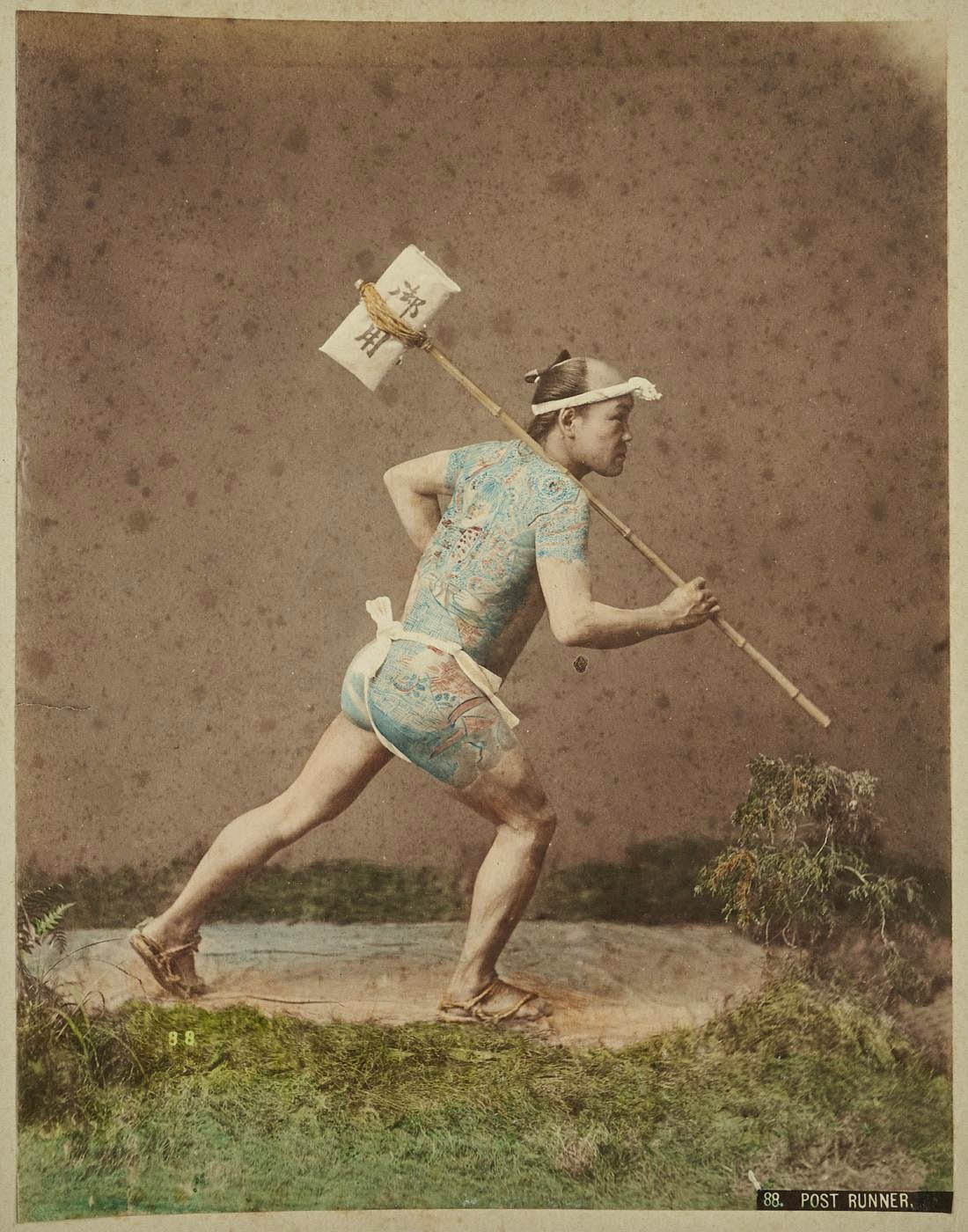
 

Baron Raimund von Stillfried (Austrian, 1839-1911) 'Portrait of Irezumi Tattooed man – Post Runner' 1880-1890


Baron Raimund von Stillfried (Austrian, 1839-1911)
Portrait of Irezumi Tattooed man – Post Runner
1880-1890
Albumen silver print from glass negative with applied colour
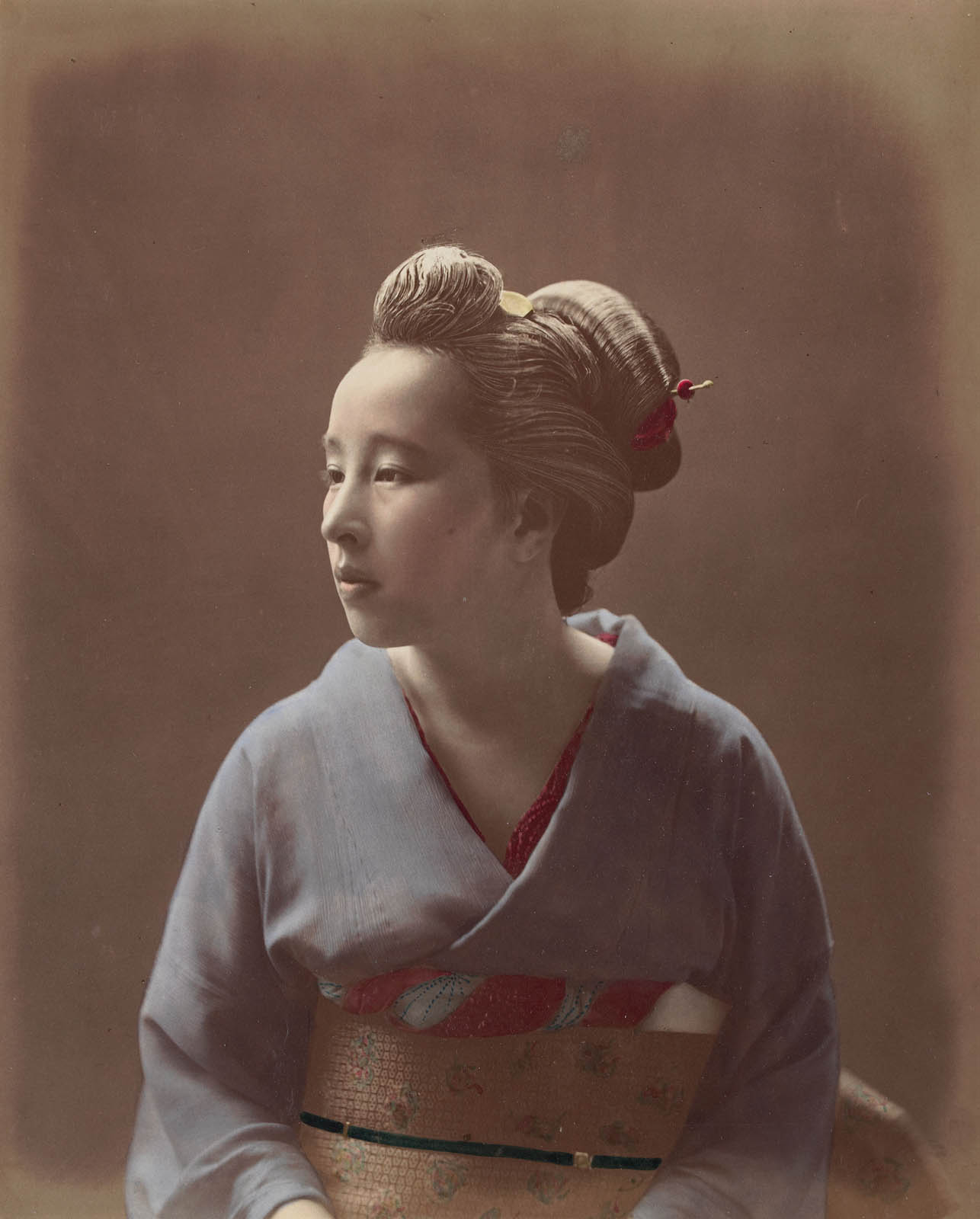
 

Baron Raimund von Stillfried (Austrian, 1839-1911) 'Young Lady' c. 1875


Baron Raimund von Stillfried (Austrian, 1839-1911)
Young Lady
c. 1875
From Views and Costumes of Japan, c. 1876
Hand-coloured albumen silver photograph
23.8 × 19.1cm
La Trobe Picture Collection, State Library of Victoria


Baron Raimund von Stillfried (Austrian, 1839-1911) and Uchida Kuichi (Japanese, 1844-1875) 'Untitled [The Fishmonger]' 1870s


Baron Raimund von Stillfried (Austrian, 1839-1911) and Uchida Kuichi (Japanese, 1844-1875)
Untitled [The Fishmonger]
1870s
Hand-coloured albumen silver photograph
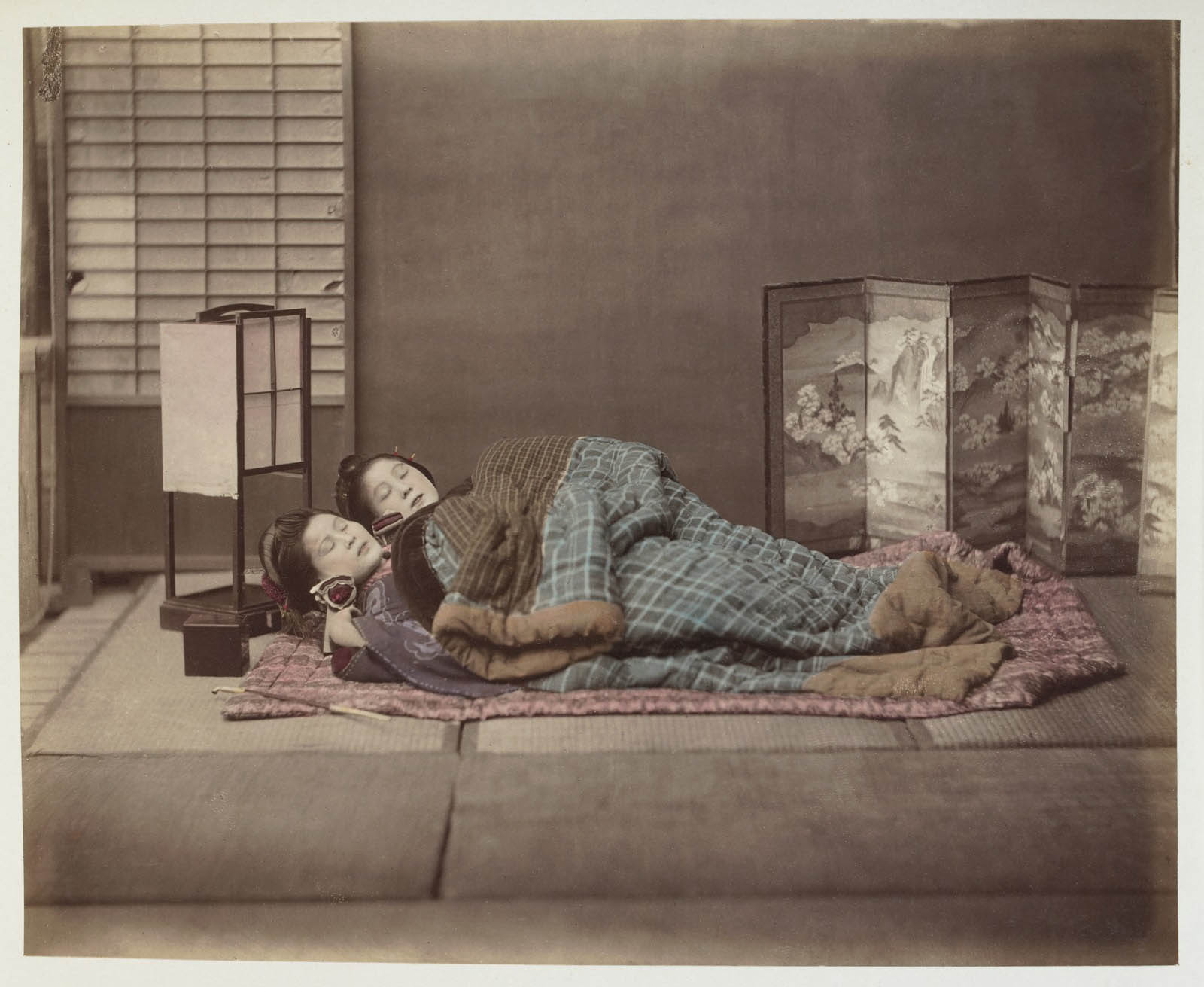
 

Baron Raimund von Stillfried (Austrian, 1839-1911) 'Sleeping beauties' 1876


Baron Raimund von Stillfried (Austrian, 1839-1911)
Sleeping beauties
1876
From Views and Costumes of Japan, c. 1876
Hand-coloured albumen silver print from glass negative
Pictures Collection, State Library of Victoria
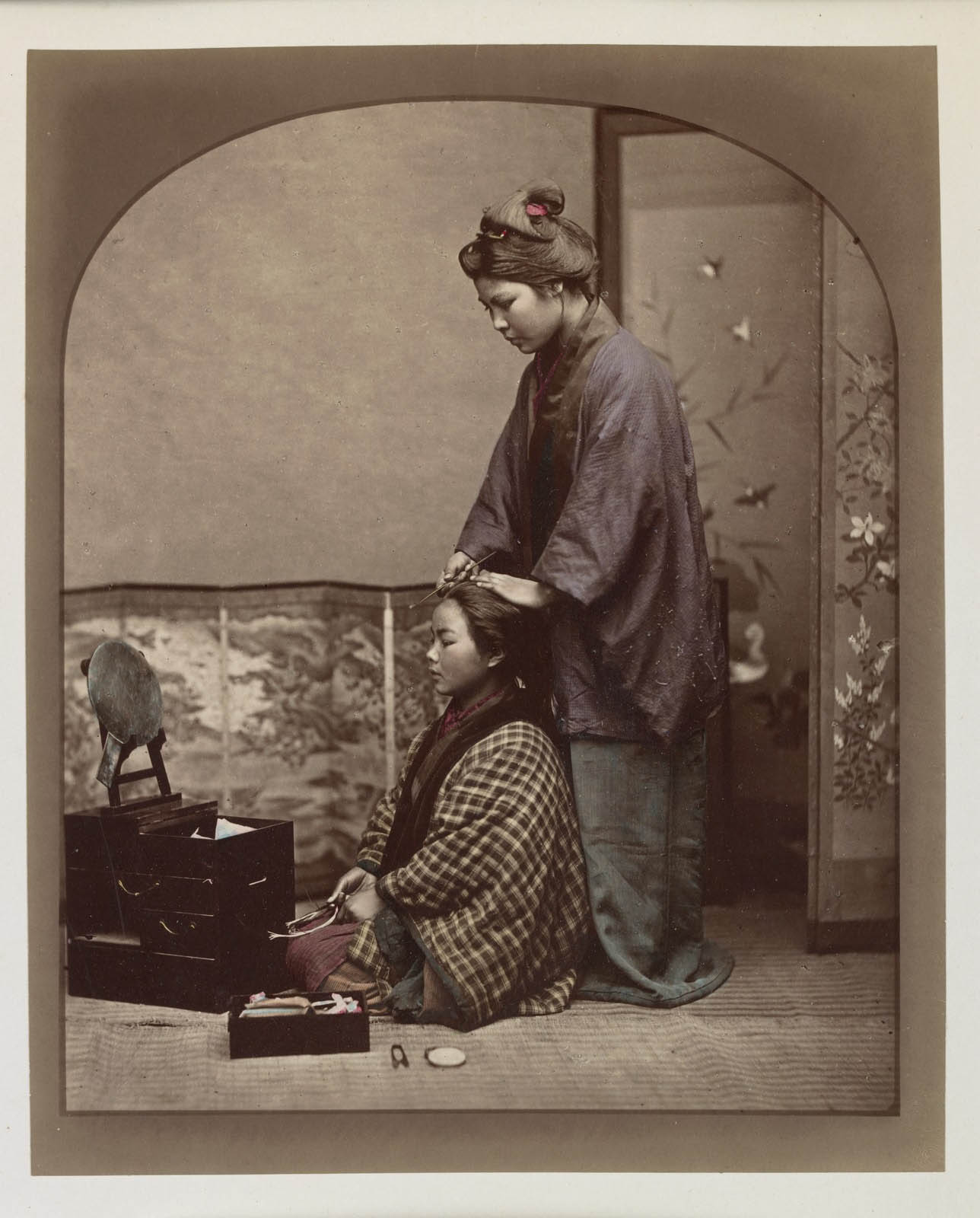
 

Baron Raimund von Stillfried (Austrian, 1839-1911) 'Hairdressing' 1876


Baron Raimund von Stillfried (Austrian, 1839-1911)
Hairdressing
1876
From Views and Costumes of Japan, c. 1876
Hand-coloured albumen silver print from glass negative
Pictures Collection, State Library of Victoria
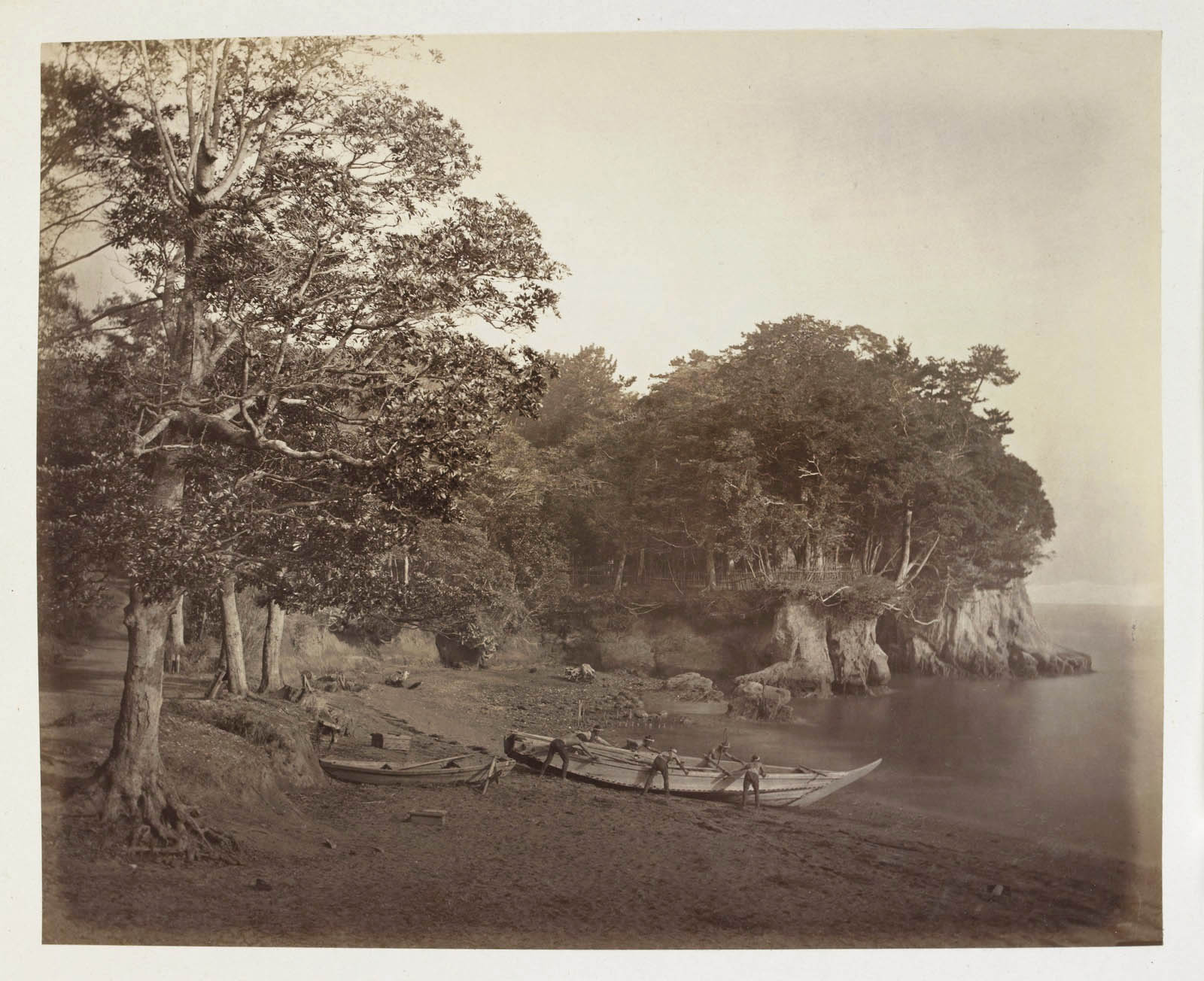
 

Baron Raimund von Stillfried (Austrian, 1839-1911) 'Tomiyoka' 1876


Baron Raimund von Stillfried (Austrian, 1839-1911)
Tomiyoka
1876
From Views and Costumes of Japan, c. 1876
Albumen silver print from glass negative
Pictures Collection, State Library of Victoria
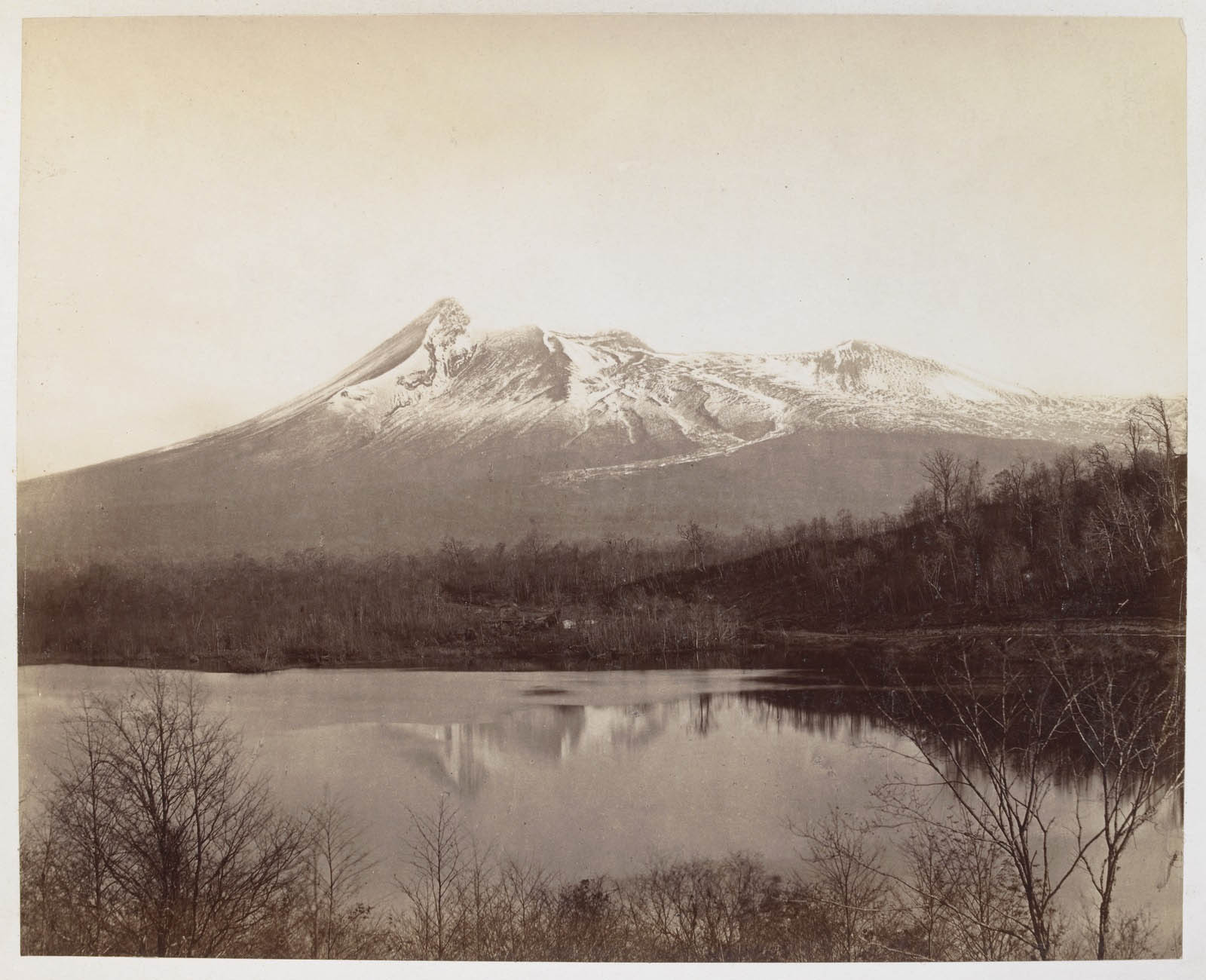
 

Baron Raimund von Stillfried (Austrian, 1839-1911) 'Komagatake Volcano' 1876


Baron Raimund von Stillfried (Austrian, 1839-1911)
Komagatake Volcano
1876
From Views and Costumes of Japan, c. 1876
Albumen silver print from glass negative
Pictures Collection, State Library of Victoria
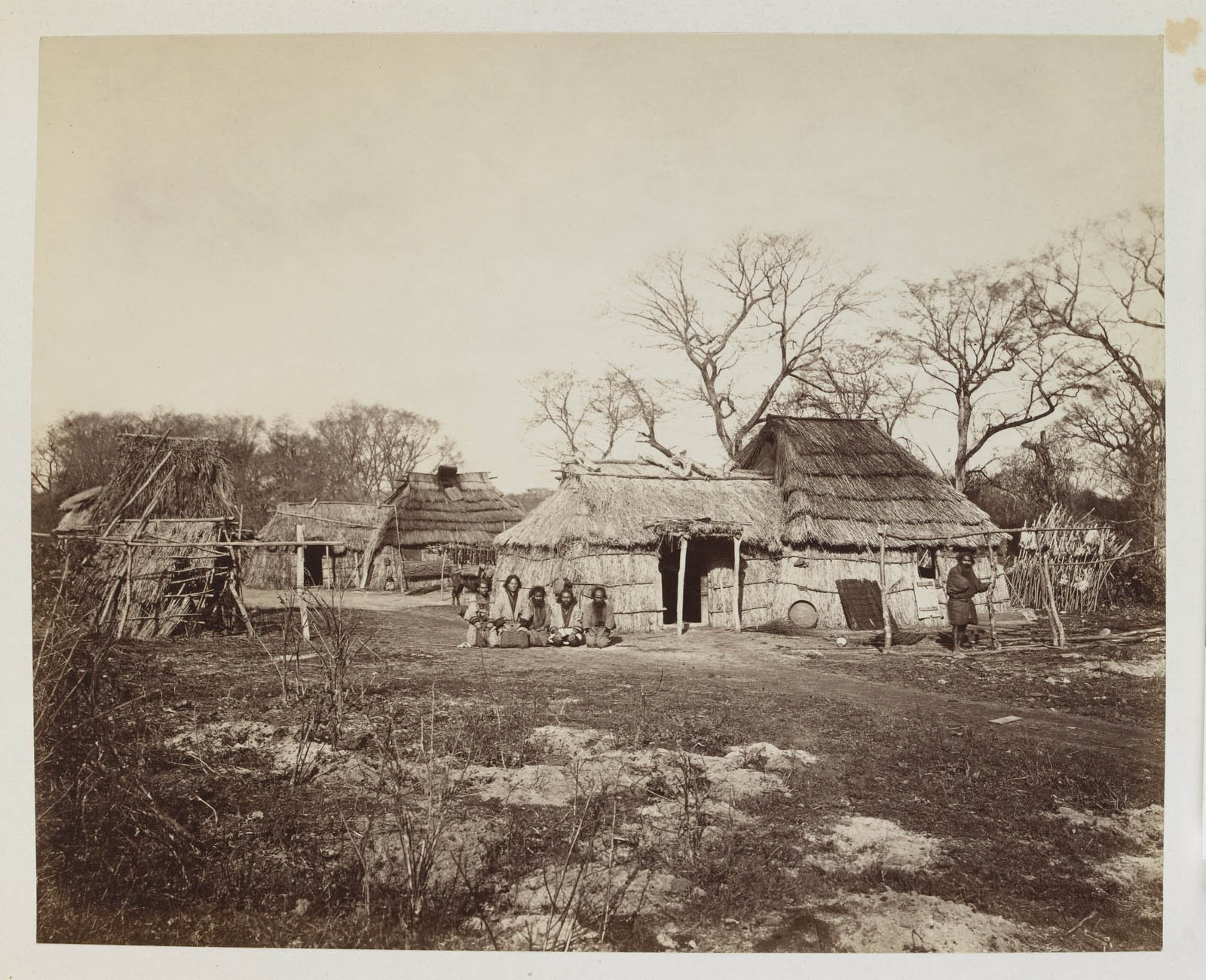
 

Baron Raimund von Stillfried (Austrian, 1839-1911) 'Ainu Village' 1876


Baron Raimund von Stillfried (Austrian, 1839-1911)
Ainu Village
1876
From Views and Costumes of Japan, c. 1876
Albumen silver print from glass negative
Pictures Collection, State Library of Victoria
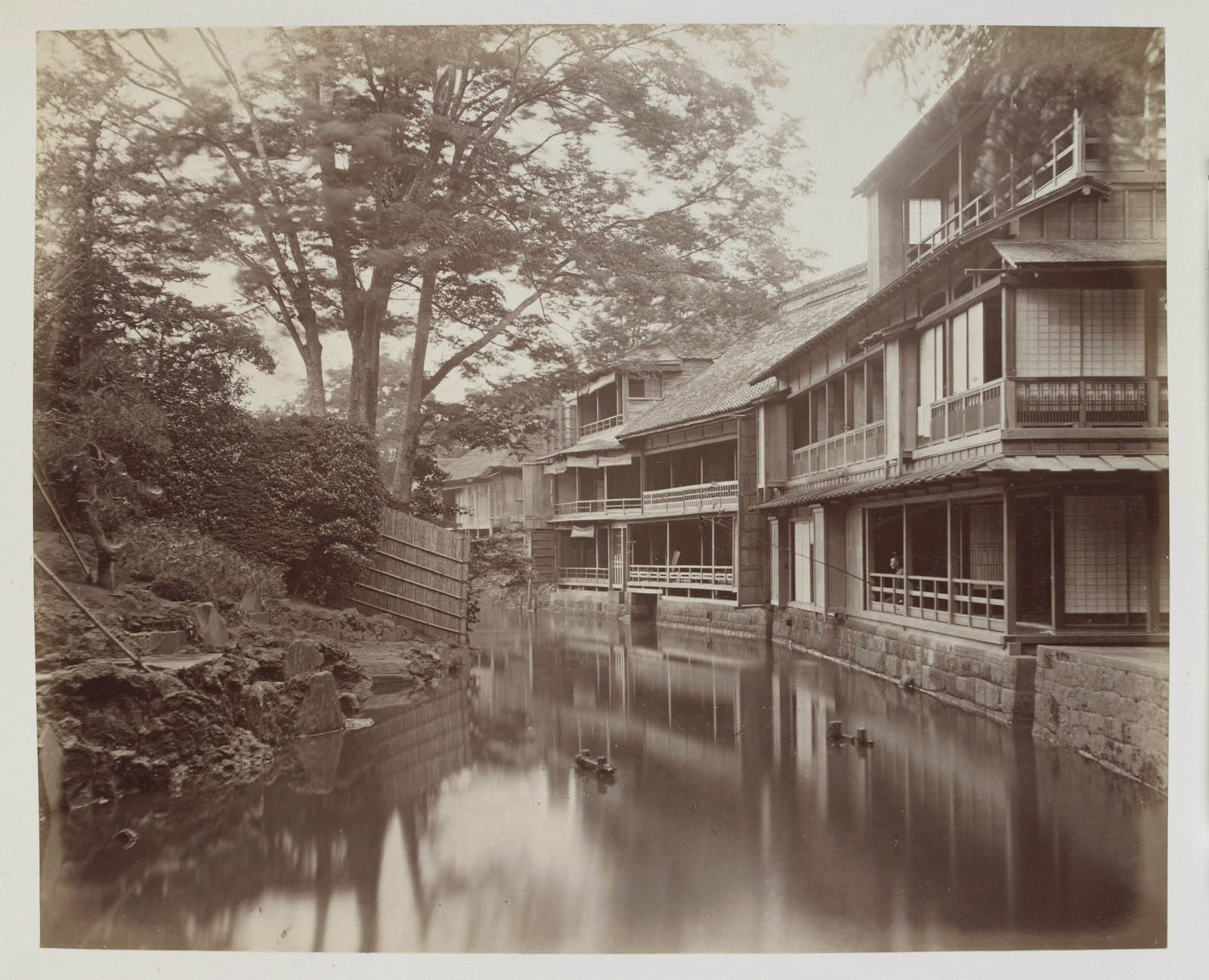
 

Baron Raimund von Stillfried (Austrian, 1839-1911) 'Odji Teahouse' 1876


Baron Raimund von Stillfried (Austrian, 1839-1911)
Odji Teahouse
1876
From Views and Costumes of Japan, c. 1876
Albumen silver print from glass negative
Pictures Collection, State Library of Victoria
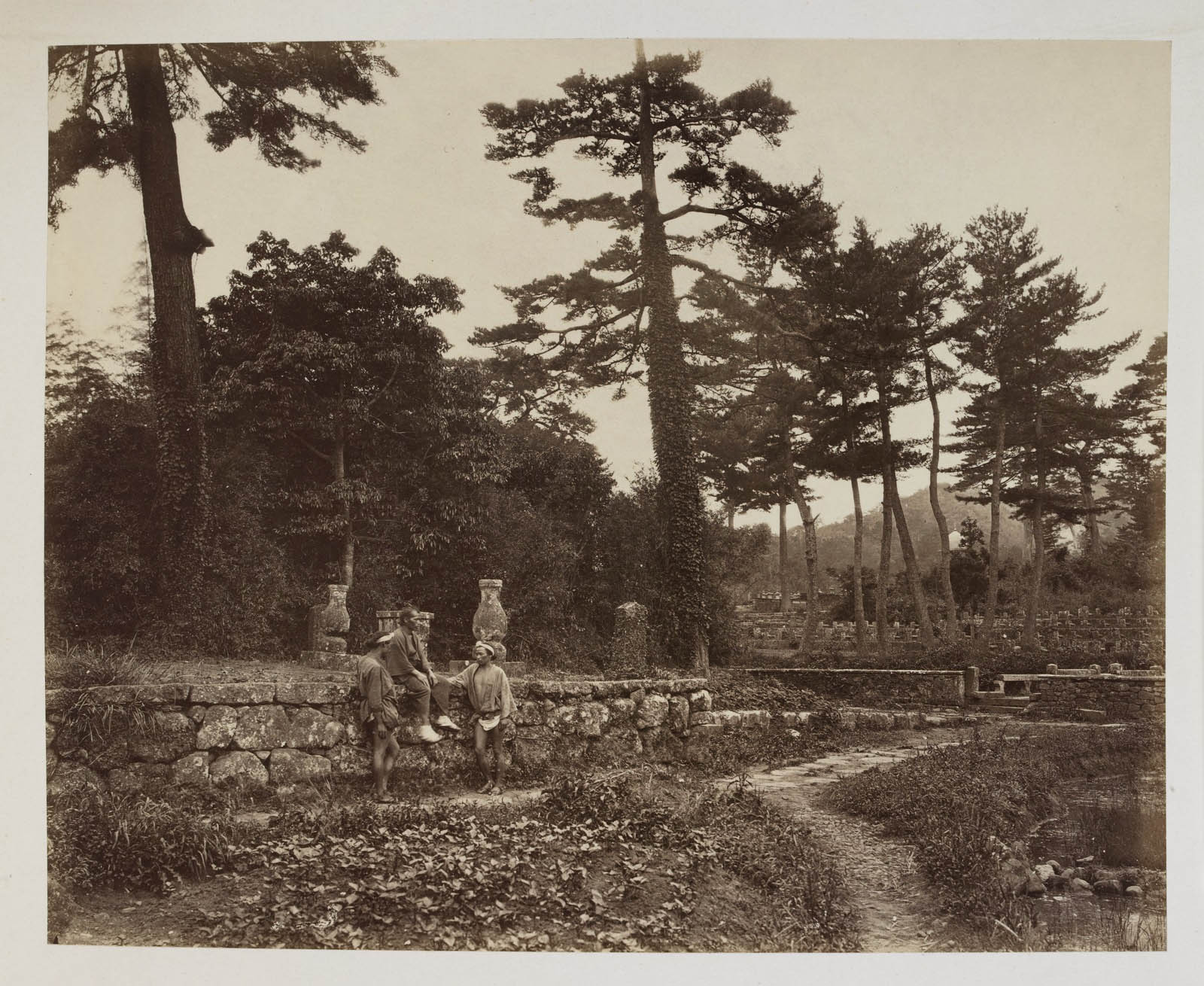
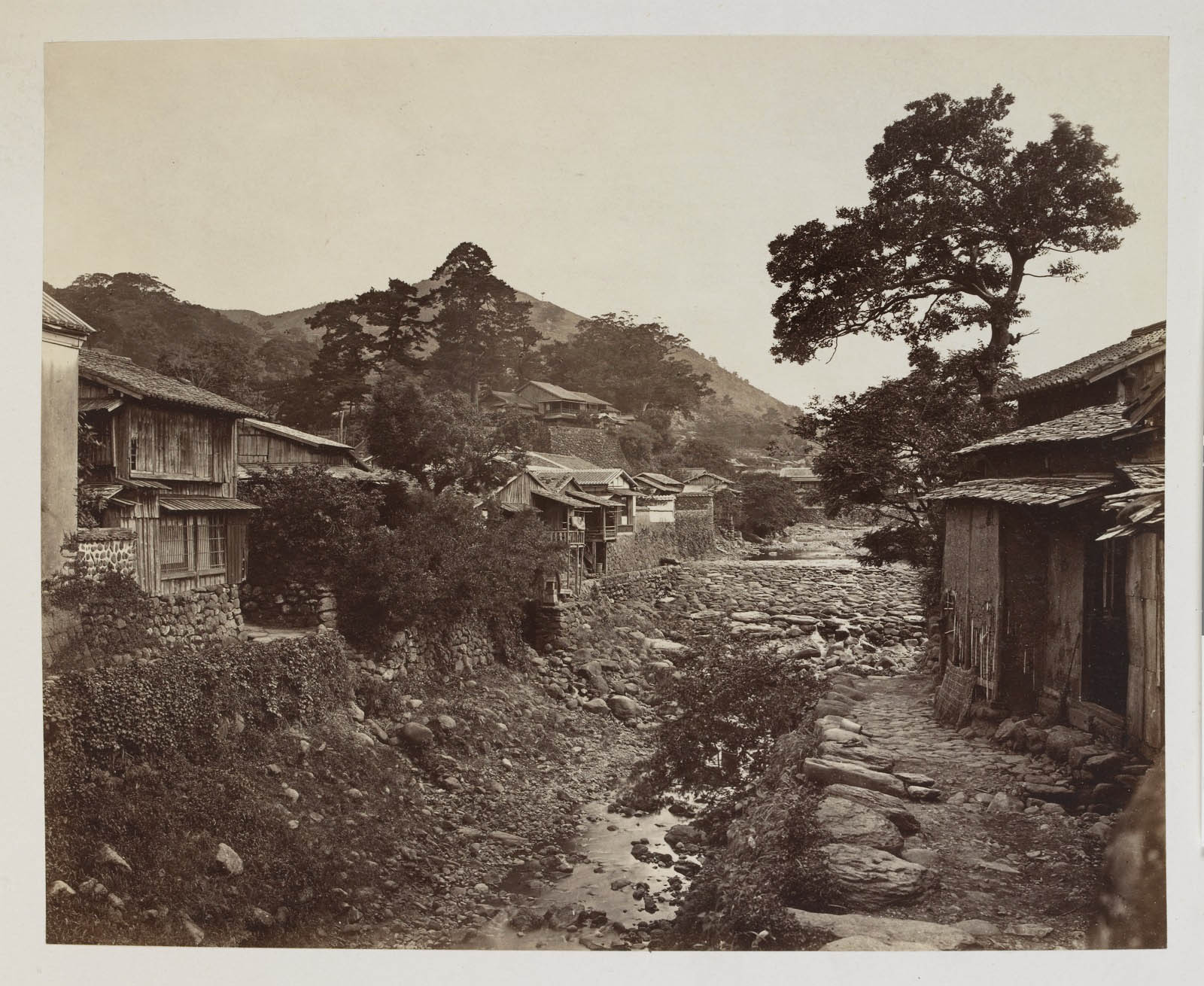
 

Baron Raimund von Stillfried (Austrian, 1839-1911) 'Views of Nagasaki' 1876

Baron Raimund von Stillfried (Austrian, 1839-1911) 'Views of Nagasaki' 1876

Baron Raimund von Stillfried (Austrian, 1839-1911) 'Views of Nagasaki' 1876


Baron Raimund von Stillfried (Austrian, 1839-1911)
Views of Nagasaki, Japan
1876
From Views and Costumes of Japan, c. 1876
Albumen silver print from glass negative
Pictures Collection, State Library of Victoria
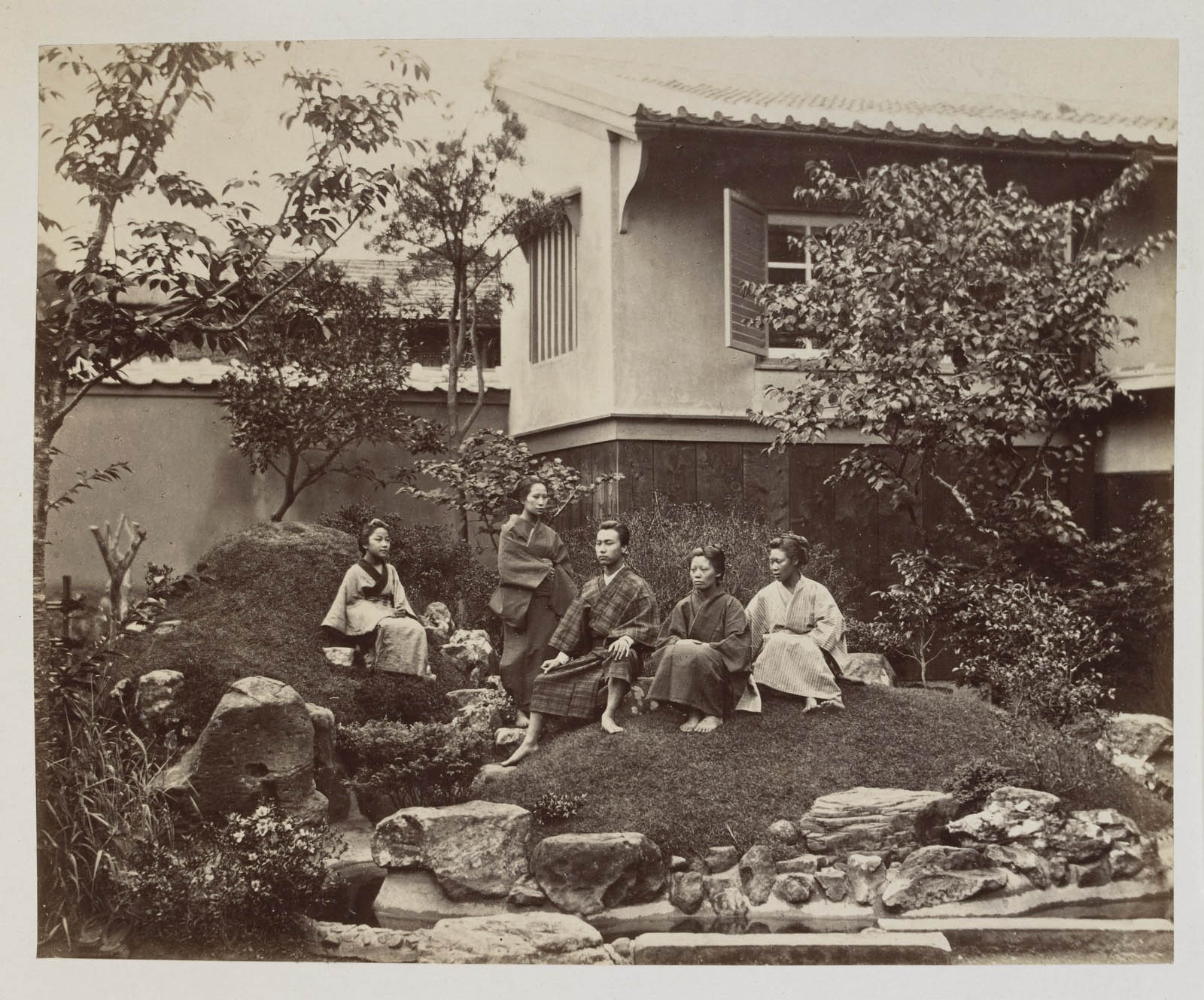
 

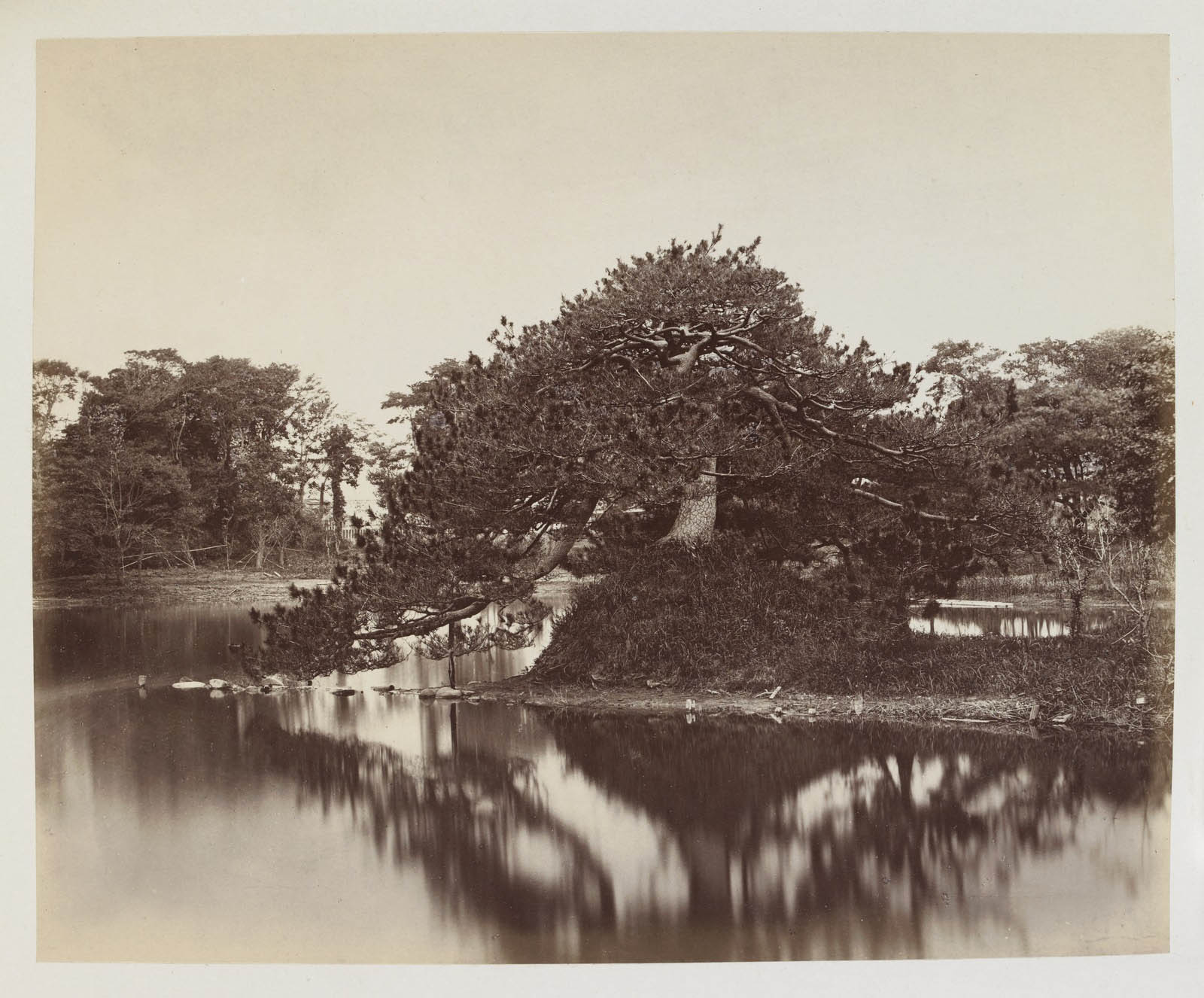
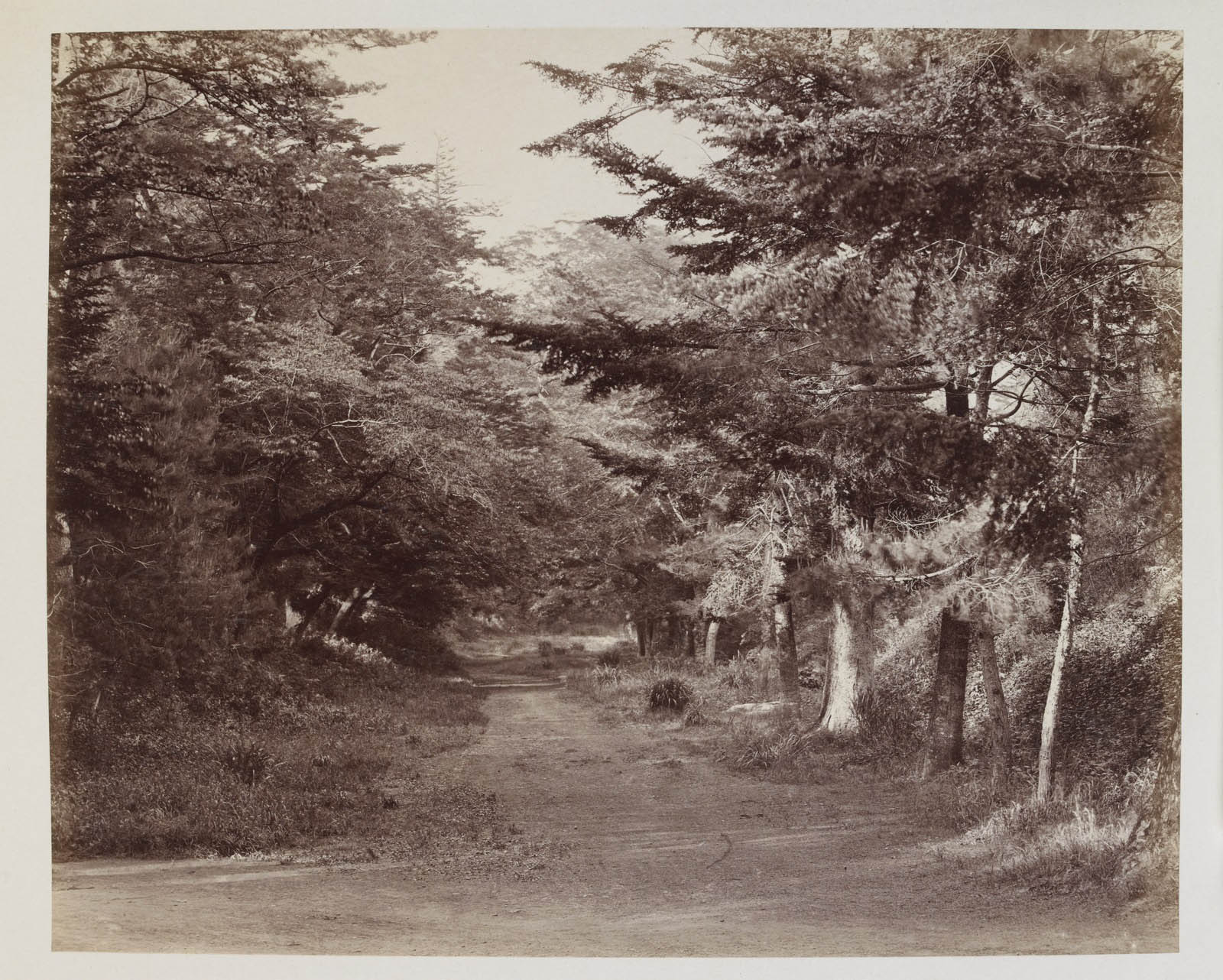
Baron Raimund von Stillfried (Austrian, 1839-1911) 'Views of Tokyo, Japan' 1876

Baron Raimund von Stillfried (Austrian, 1839-1911) 'Views of Tokyo, Japan' 1876

Baron Raimund von Stillfried (Austrian, 1839-1911) 'Views of Tokyo, Japan' 1876


Baron Raimund von Stillfried (Austrian, 1839-1911)
Views of Tokyo, Japan
1876
From Views and Costumes of Japan, c. 1876
Albumen silver print from glass negative
Pictures Collection, State Library of Victoria


LIKE ART BLART ON FACEBOOK

Back to top

Exhibition: ‘Colour my world: handcoloured Australian photography’ at the National Gallery of Australia, Canberra

Exhibition dates: 3rd April – 30th September 2015


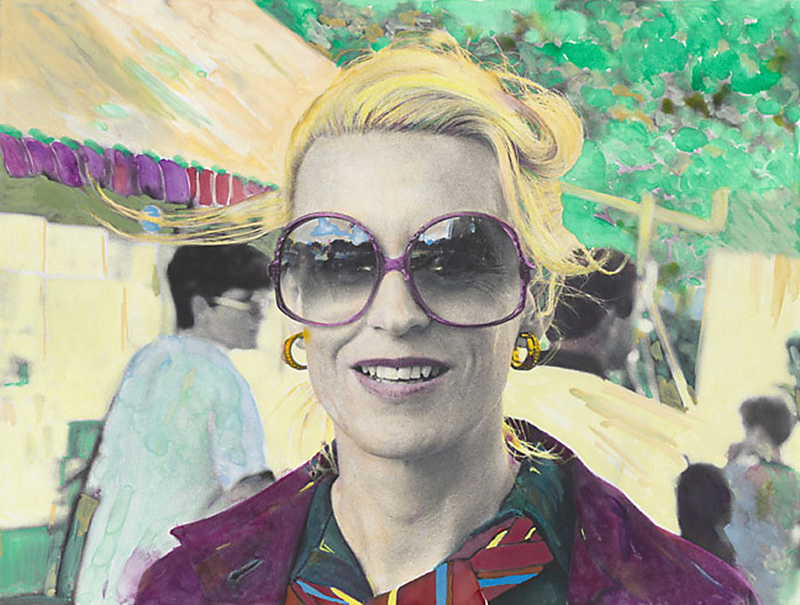
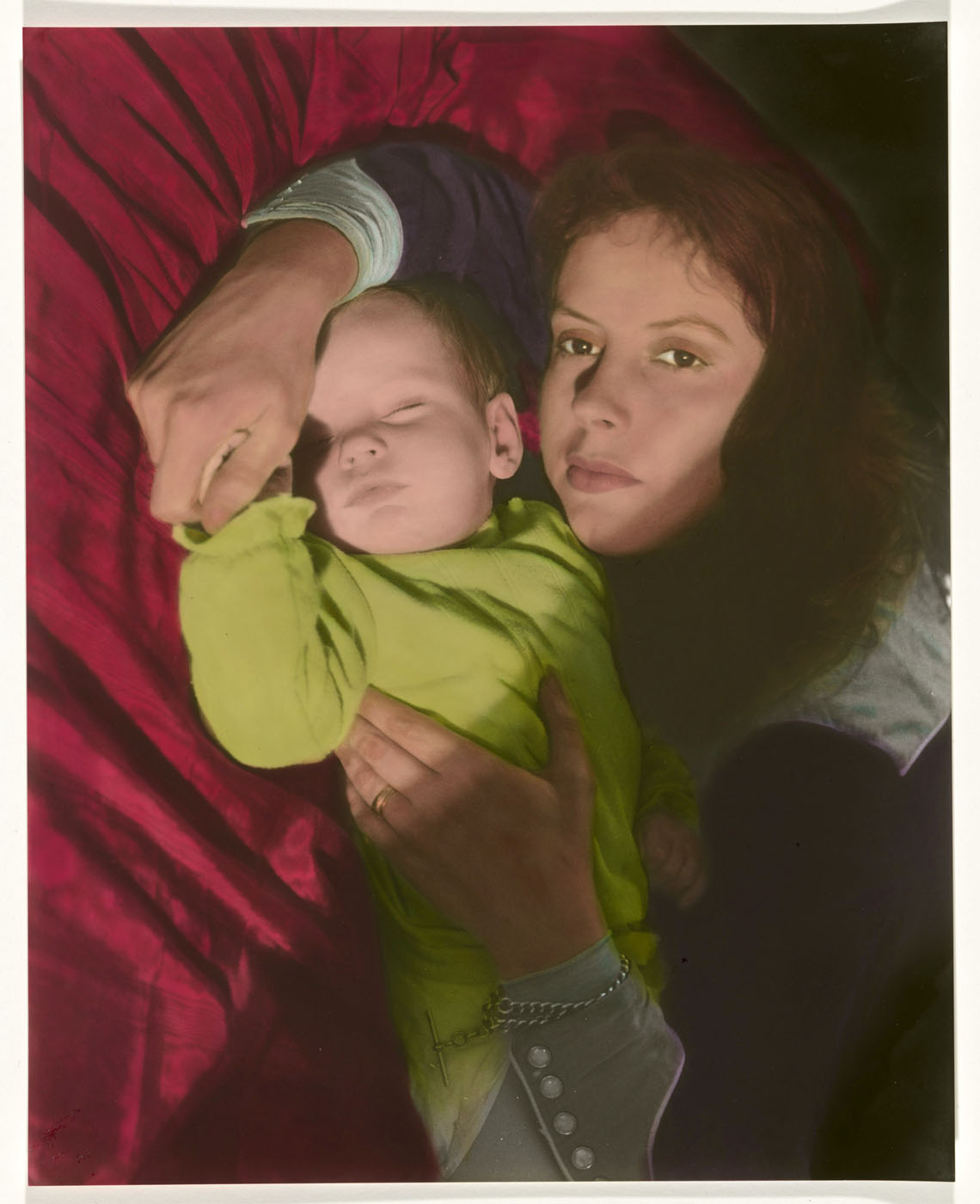
Micky Allan (Australian, b. 1944) 'The prime of life no.3 (blond woman wearing sun glasses)' 1979


Micky Allan (Australian, b. 1944)
The prime of life no.3 (blond woman wearing sun glasses)
1979
From a series of 12 hand coloured photographs Mountain Lagoon, Sydney Blue Mountains, New South Wales 1979
Gelatin silver photograph, hand-coloured in pencil and watercolour
National Gallery of Australia, Canberra, purchased 1981
© Micky Allan


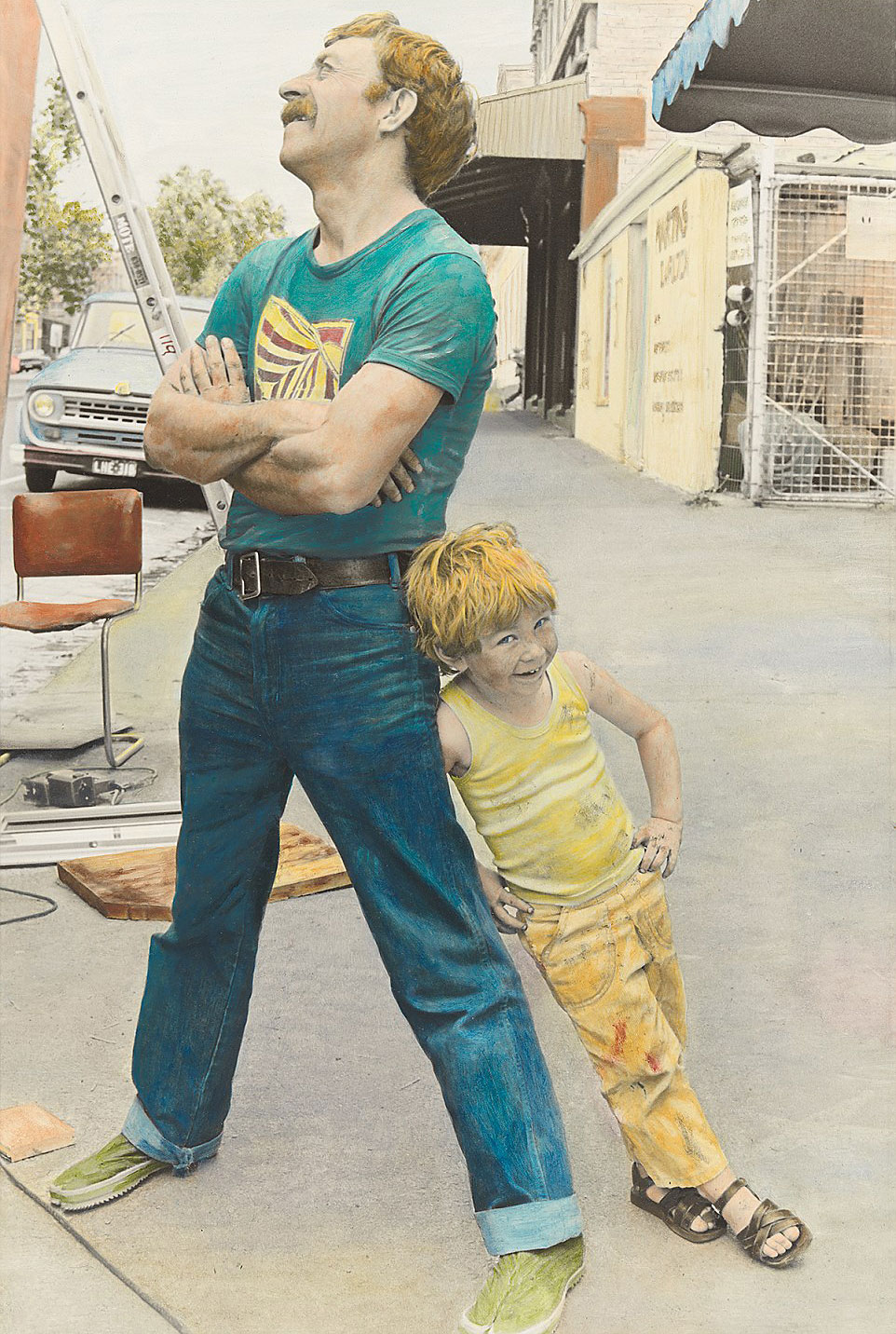
There has always been a history of hand colouring in photography since its very early days – from daguerreotypes, through ambrotypes, cartes de visite, cabinet cards and on to commercial portrait photography from the 1920s-1960s. But I don’t believe there has ever been, in the history of photography, such a concentration of artists (mainly female) hand colouring photographs as in Australia in the 1970s-80s. If I know my history of photography, I would say that this phenomena is unique in its history. It did not occur in Japan, Europe or America at the same time.

The reasons for this explosion of hand colouring in Australia are many and varied. Most of the artist’s knew each other, or knew of each other’s work on the East coast of Australia, and it was a small, tight circle of artists that produced these beautiful photographs. Not many artists were “doing” traditional colour photography, basically because of the instability of the materials (you only have to look at the faded colour photographs of John Cato in the National Gallery of Victoria’s collection) and the cost of the process. Of course feminism was a big influence in Australia at this time but these photographs, represented in this posting by the work of Micky Allan and Ruth Maddison, are so much more than photographs about female emancipation.

Photography in Australia was moving away from commercial studios such as that of Athol Shmith and into art schools and university courses, where there was a cross-over between different disciplines. Most artists had darkrooms in their bathroom or outhouses, or darkrooms were in basements of university buildings. Speaking to artist Micky Allan, she said that these were exciting times. Allan had trained as a painter and brought these skills to the processes of photography. She observes, “There was an affinity to what you were doing, an immediacy of engagement. Taking photographs, the physicality of the print, their magnificent tonal range – which painting could not match – and then hand colouring the resultant prints, a hands on process that turned the images into something else, something different.” There was a cavalier approach to the process but also a learning atmosphere as well. So it was about doing anything that you wanted, you just had to do it.

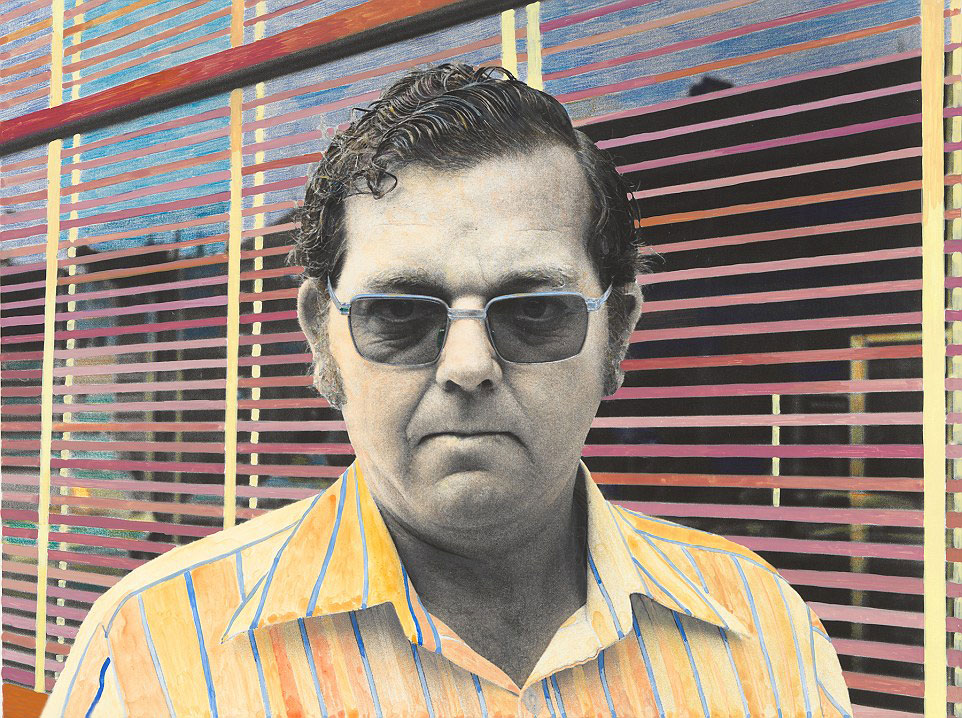
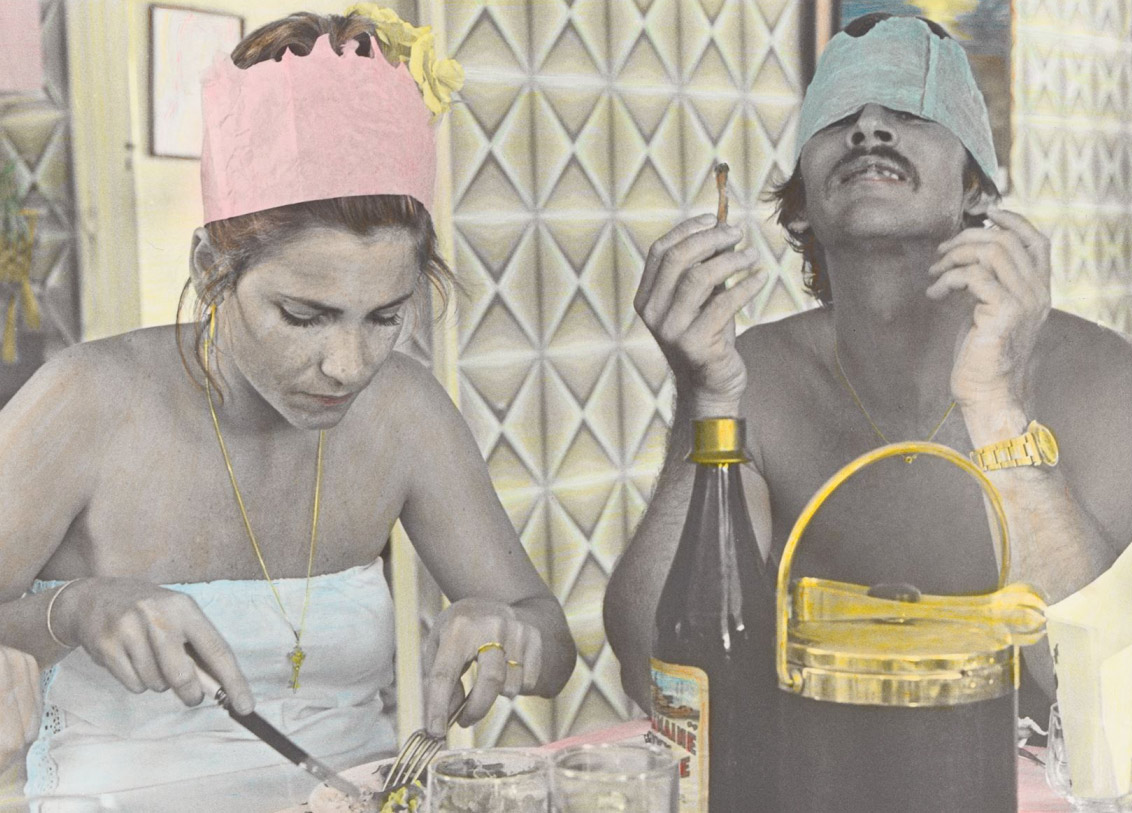
Sue Ford was a big influence, in that she started working in series of work, not just the monolithic, singular fine art print. Perhaps as a reaction against the Americanisation of photography, these artists used vernacular photographs of people and places to investigate ways of being in the world. As Micky Allan observes, “My photography of babies and old people were more than being about domesticity, they were about what babies know when they arrive in the world, and how people react to ageing.” (For examples of Allan’s babies and old people photographs please see the exhibition Photography meets Feminism: Australian Women Photographer 1970s-80s). There was a connection to the print through the physicality of the process of printing and then hand colouring – a double dealing if you like – that emphasised the ordinary can be extraordinary, a process that changed one representation into another. And the results could be subtle (as in the delicate work of Janina Green) or they could be surreal, such as Allan’s The prime of life no.7 (man wearing sun glasses) (1979, below), or they could be both. But they were always stunningly beautiful.

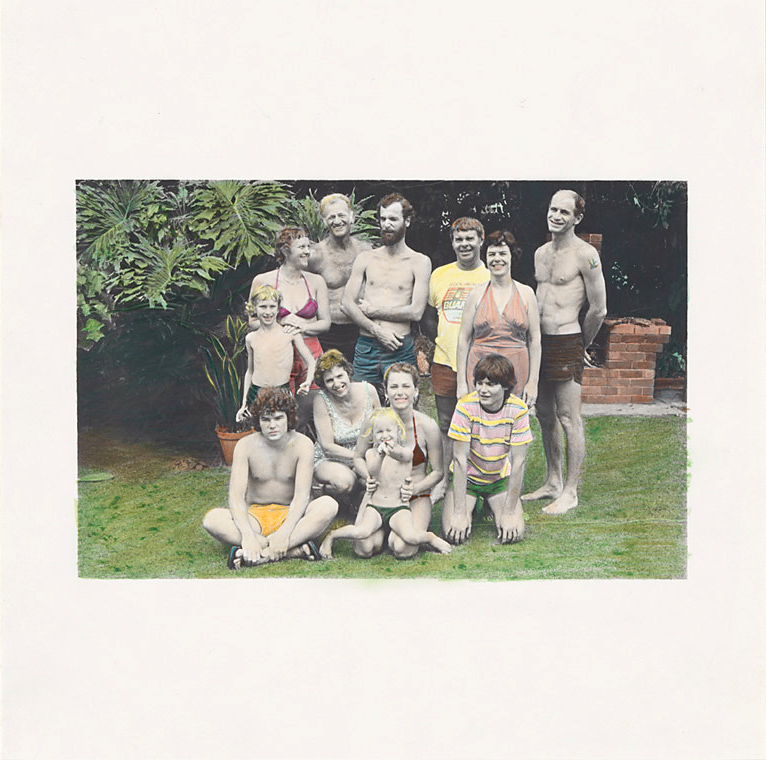
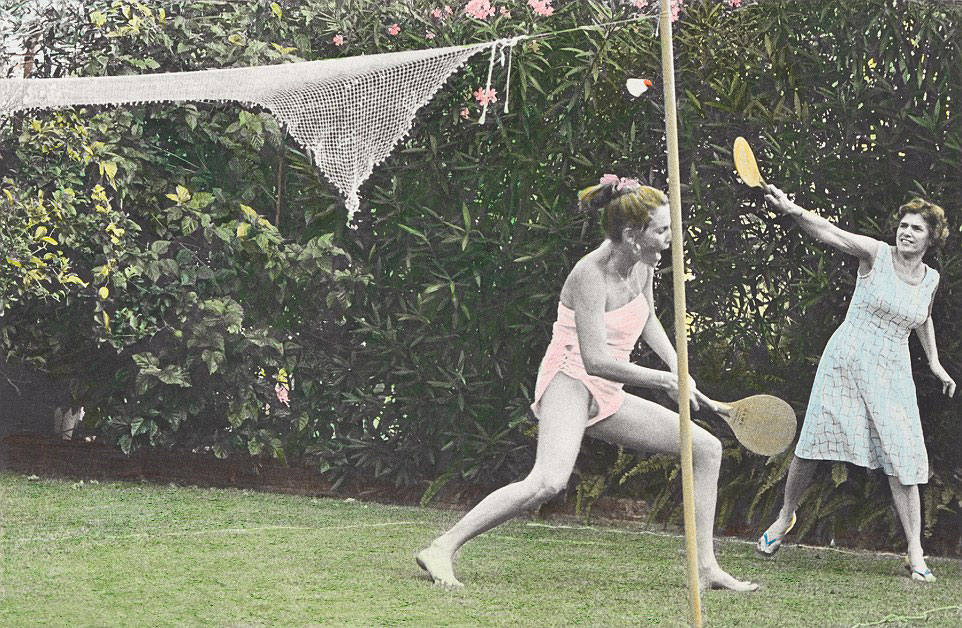
This was a very hands on process, an observation confirmed by artist Ruth Maddison. “The process was like hand watering your garden, an intense exchange and engagement with the object. When I started I was completely untrained, but I loved the process. I just experimented in order to understand what medium does what on what paper surface. There was the beauty of its object and its physicality. I just loved the object.” Her series Christmas holiday with Bob’s family, Mermaid Beach, Queensland (1977/78, below), photographed over Christmas Day and several days afterwards, evidences this magical transformation. Vernacular photographs of a typical Australia Christmas holiday become something else, transformed into beautiful, atypical representations of family, friendship, celebration and life.

So there we have it: domesticity, family, friends, place, being in the world, feminism, craft, experimentation, surrealism, physicality of the object, beauty, representation, series of work and difference… a communion (is that the right word?) of intimate thoughts and feelings, especially on a spiritual level (although the artists probably would not say it) that changed how the they saw, and we see the world. Can you imagine how fresh and alive these images would have been in 1970s Australia? That they still retain that wonder is testament to the sensitivity of the artists, the tactility of the process and our responsiveness to that sense of touch.

Dr Marcus Bunyan


Many thankx to the National Gallery of Australia for allowing me to publish the photographs in the posting. Please click on the photographs for a larger version of the image.


Micky Allan (Australian, b. 1944) 'The prime of life no. 7 (man wearing sun glasses)' 1979


Micky Allan (Australian, b. 1944)
The prime of life no.7 (man wearing sun glasses)
1979
From a series of 12 hand coloured photographs Mountain Lagoon, Sydney Blue Mountains, New South Wales 1979
Gelatin silver photograph, hand-coloured in pencil, colour pencils, watercolour and gouache
32.0 x 42.7cm
National Gallery of Australia, Canberra, purchased 1981
© Micky Allan


Ruth Maddison (Australian, b. 1945) 'Christmas holiday with Bob's family, Mermaid Beach, Queensland' 1977/78


Ruth Maddison (Australian, b. 1945)
Christmas holiday with Bob’s family, Mermaid Beach, Queensland
1977-1978
Gelatin silver photographs, colour dyes, hand-coloured
10.6 x 16.2cm
National Gallery of Australia, Canberra, purchased 1988


Ruth Maddison (Australian, b. 1945) 'Christmas holiday with Bob's family, Mermaid Beach, Queensland' 1977/78


Ruth Maddison (Australian, b. 1945)
Christmas holiday with Bob’s family, Mermaid Beach, Queensland
1977-1978
Gelatin silver photographs, colour dyes, hand-coloured
10.6 x 16.2cm
National Gallery of Australia, Canberra, purchased 1988


Ruth Maddison (Australian, b. 1945) 'Christmas holiday with Bob's family, Mermaid Beach, Queensland' 1977/78


Ruth Maddison (Australian, b. 1945)
Christmas holiday with Bob’s family, Mermaid Beach, Queensland
1977-1978
Gelatin silver photograph, colour pencils, fibre-tipped pen
10.6 x 16.2cm
National Gallery of Australia, Canberra, purchased 1988


Ruth Maddison (Australian, b. 1945) 'Christmas holiday with Bob's family, Mermaid Beach, Queensland' 1977/78


Ruth Maddison (Australian, b. 1945)
Christmas holiday with Bob’s family, Mermaid Beach, Queensland
1977-1978
Gelatin silver photographs, colour dyes, hand-coloured
10.6 x 16.2cm
National Gallery of Australia, Canberra, purchased 1988


Ruth Maddison (Australian, b. 1945) 'Jesse and Roger' 1983


Ruth Maddison (Australian, b. 1945)
Jesse and Roger
1983
From the series Some men
Gelatin silver photograph, colour pigments, hand-coloured
National Gallery of Australia, Canberra, purchased 1983


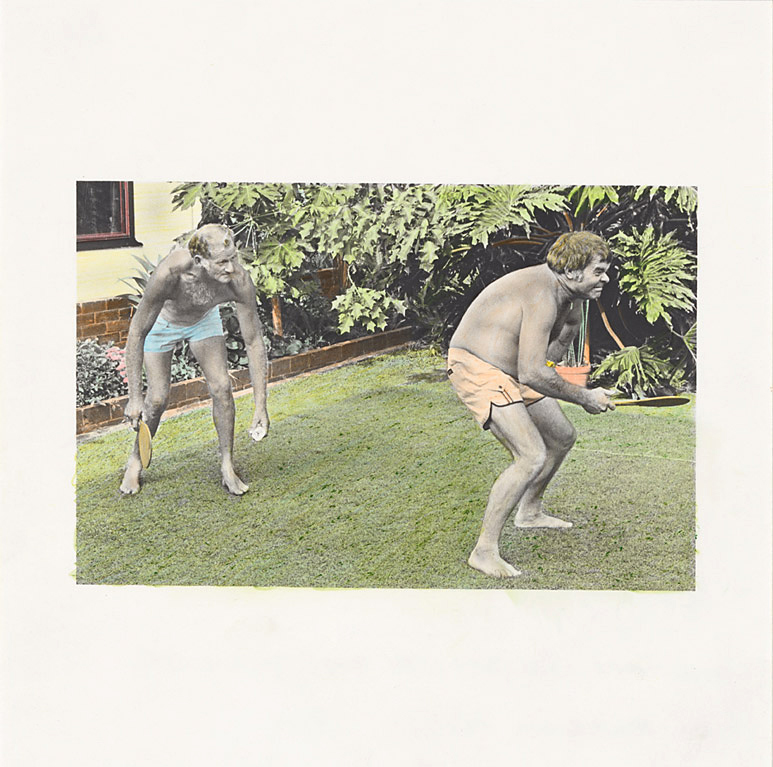
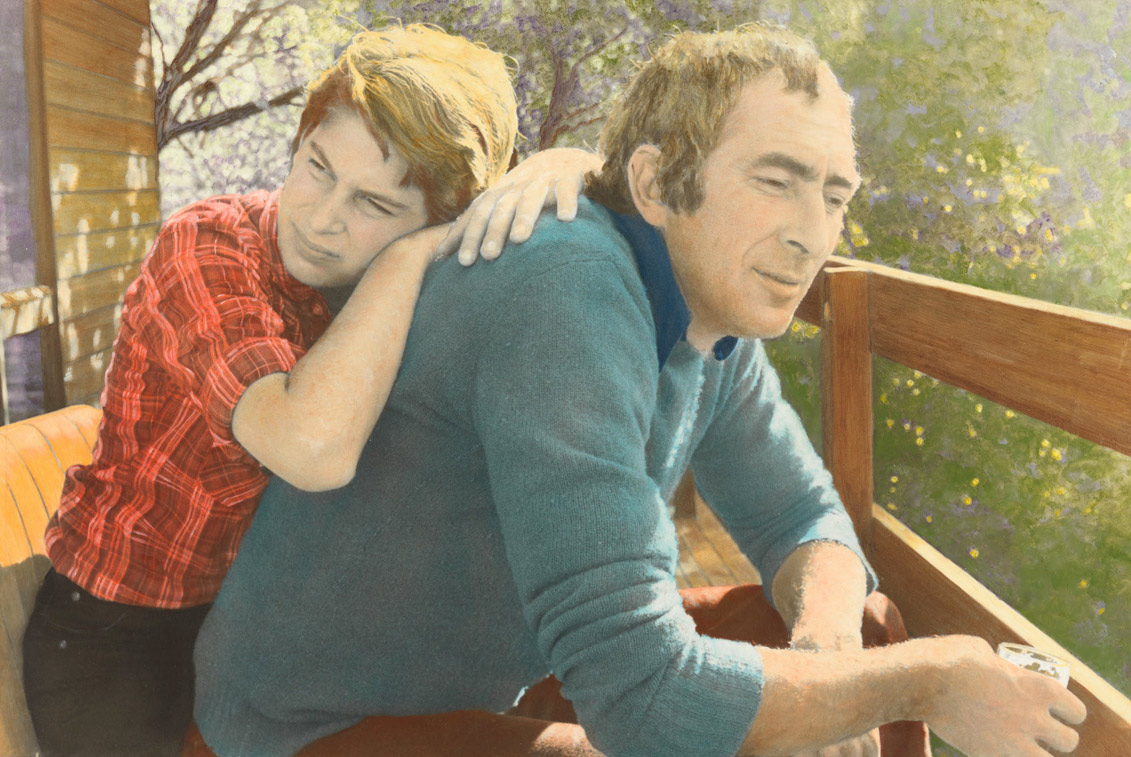
Ruth Maddison (Australian, b. 1945) 'Jim and Gerry' 1983


Ruth Maddison (Australian, b. 1945)
Jim and Gerry
1983
From the series Some men
Gelatin silver photograph, colour pigments, hand-coloured
39.6 x 26.5cm
National Gallery of Australia, Canberra, purchased 1983


Colour my world

Introduction

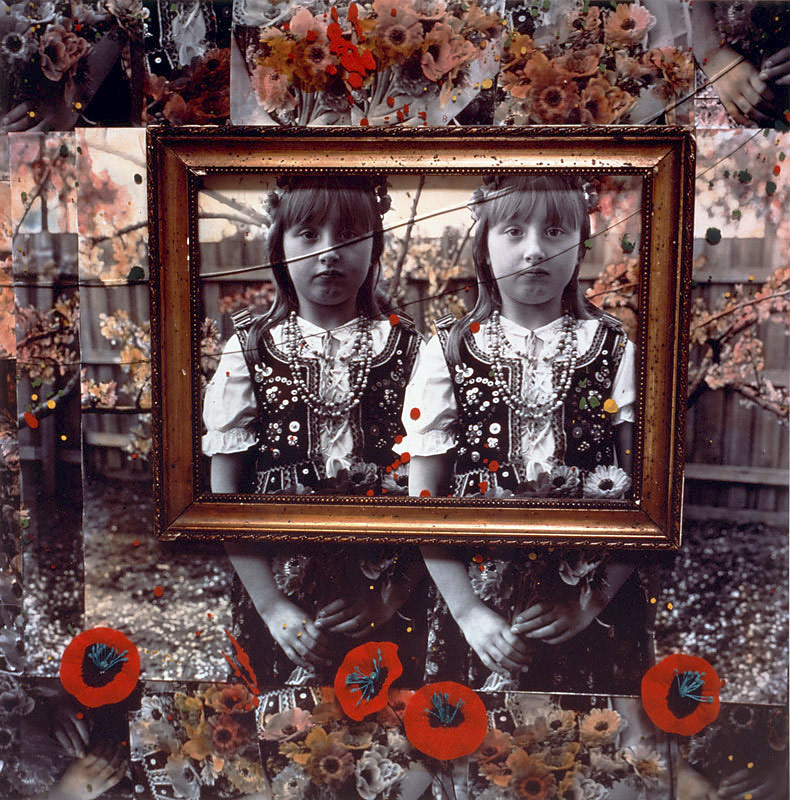
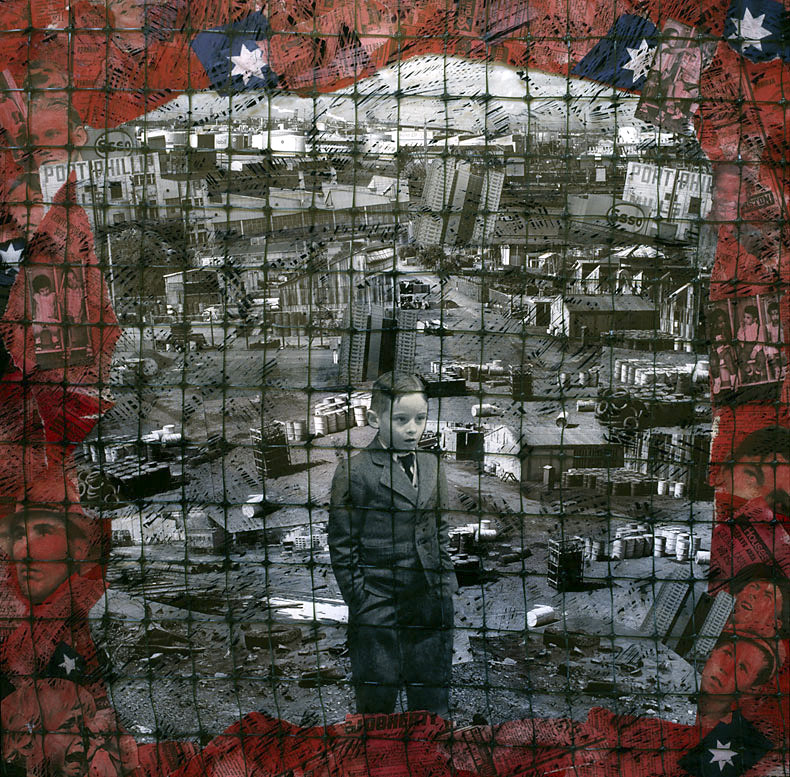
This is the first exhibition dedicated to a significant aspect of recent Australian art: the handcoloured photograph. It draws together new acquisitions and rarely seen works from the collection by Micky Allan, Ruth Maddison, Warren Breninger, Julie Rrap, Janina Green, Christine Barry, Fiona Hall, Miriam Stannage, Robyn Stacey, Nici Cumpston, Lyndell Brown, Charles Green and Jon Cattapan.

The handcolouring of images has a long history in photography. During the infancy of the medium in the mid nineteenth century, the practice of applying paint, dye or other media to a photograph added both lifelike colour to black-and-white pictures and longevity to images that faded quickly. Throughout the nineteenth and early twentieth centuries, handcolouring added economic value and artistic sensibility or corrected photographic mistakes. But, by the middle of the twentieth century, the practice had gone into decline, as photographers sought to maintain and fortify the virtuosity and technical purity of the modernist photographic print.

The 1970s saw a revival of handcolouring among a number of Australian photographers and it remains a significant aspect of contemporary practice. The artists included in this exhibition seek to create a direct connection between their experience and that of the viewer. They challenge the medium’s technical sameness by personalising the print and imbuing it with individuality and uniqueness as well as an intimacy, warmth and fallibility.

Challenging conventions

During much of the twentieth century, photography tended to engage with the medium’s technical integrity. Rhetoric about black-and-white photography’s very particular, direct relationship to the world, its technological origins and its highly idiosyncratic capacity to see the world in new ways positioned it in a conceptual space distinct from other kinds of pictures. With notable exceptions, those who dominated the scene worked in black and white. Colour photography (which was expensive) tended to belong to and be associated with the commercial realms of advertising and fashion.

In this climate, to bring colour into the image through handcolouring was an act of resistance. Anyone who took to their prints with colour pencils and brushes, in effect, disputed the so-called authority of black-and-white photography. And many did just this. For feminist photographers, handcolouring acknowledged the under-recognised history of women’s photographic work by remembering the women who were historically employed by studios as handcolourists.

Colouring by hand personalised the print, itself the product of technological processes, arcane knowledge and chemistry. The handcoloured photograph also created community: it engaged a direct connection between the photographer and his or her subjects, the sensual surface of the print and the viewer, a set of relationships staged and made manifest in the experience of the work itself.

Handcoloured photography as an aesthetic

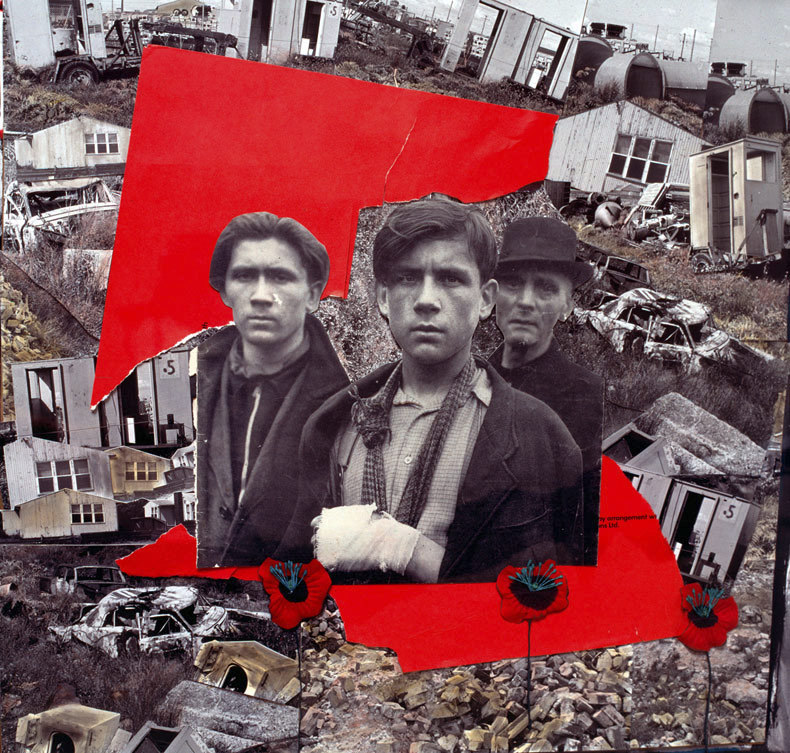
While the disrupted surface of the handcoloured photograph may well have challenged the conventions of ‘classic’ photography during the 1970s, it became one of a set of tools used by artists during the 1980s to explore the medium as a studio practice and to interrogate the conventions of authorship and photographic transparency that had supported modernist photographic practice.

Artists such as Julie Rrap, Fiona Hall and Robyn Stacey created handmade work that presented highly personalised responses to some of the grand themes of Western art and culture. Hall tackled one of Western mythology’s points of origin, the Garden of Eden, in a series of hand-toned pictures that replaced pathos and grand narrative with irony and, through daubs of sepia, the patina of historical significance. Rrap took on art history’s archetypes of femininity and made them her own, while Stacey handcoloured photographs to modify many of the myths of popular culture and Australian history. Rrap’s and Stacey’s handcoloured originals were then rephotographed and printed in colour. By doing so, the works shifted from being unique prints – with references to the handmade, the artist’s studio and the careful rendering of places and times – to being images that resembled those found in the mass media.

Reconnecting with history and objects

Associated with the rapidly expanding use of digital photography in the 1990s and perhaps in response to the immateriality of photography today (images are now mostly taken, stored and shared electronically), we have seen a reconnection with the medium’s history and a return to the photographic object in contemporary practice. Handcolouring draws our attention to materiality and re-introduces tactility to the photographic experience. It also engages community in a very particular way, establishing social ties between makers and between artists and viewers. Handcolouring demonstrates that even though digitisation has impacted significantly on the accessibility and scale of contemporary practice, many of photography’s rituals, motivations and pleasures remain the same.

For the artists included in this exhibition, handcolouring connects them to the history of photography in strategic ways. Nici Cumpston handcolours large-scale landscapes of the Murray-Darling river system as a way of documenting traces of Indigenous occupation and use and of bringing to our attention the decline of the area’s delicately balanced ecosystems. The handcoloured works of collaborators Charles Green, Lyndell Brown and Jon Cattapan remind us that an essential part of the experience of photography has always been the embodied, social experience of it. For Janina Green, the act of handcolouring prints allows her to engage with and remember the medium’s history of cross-cultural innovation.

Wall text (same text on the website)


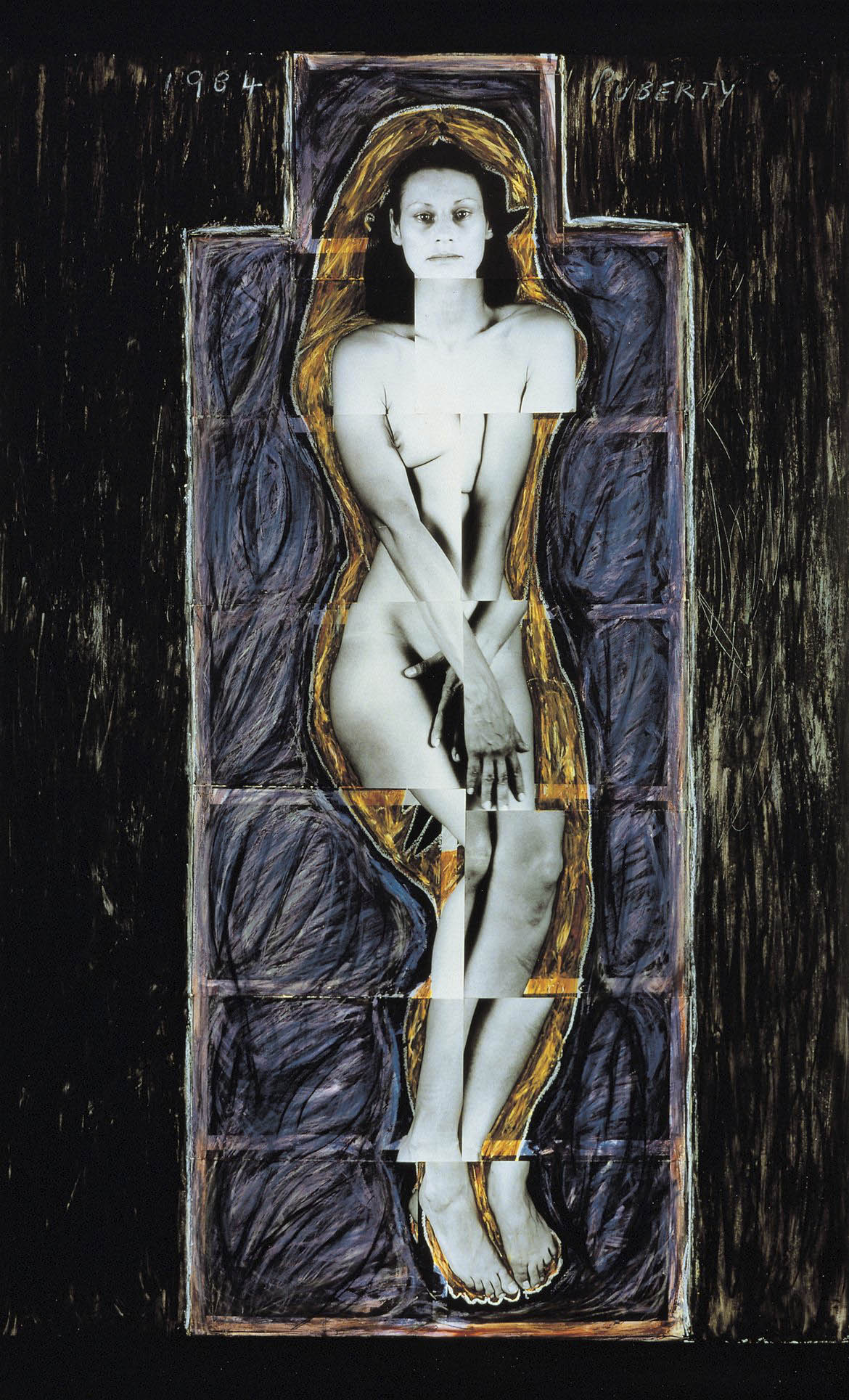
Julie Rrap (born Lismore, New South Wales 1950; lives and works Sydney) 'Puberty' 1984


Julie Rrap (born Lismore, New South Wales 1950; lives and works Sydney)
Puberty
1984
From the series Persona and shadow
Direct positive colour photograph
National Gallery of Australia, Canberra
Kodak (Australasia) Pty Ltd Fund 1984


This photograph is from the series of nine works titled Persona and shadow. Julie Rrap produced this series after visiting a major survey of contemporary art in Berlin (Zeitgeist, 1982) which only included one woman among the 45 artists participating in the exhibition. Rrap responded to this curatorial sexism with a series of self-portraits in which she mimics stereotypical images of women painted by the Norwegian artist Edvard Munch (1863-1944). Each pose refers to a female stereotype employed by Munch: the innocent girl, the mother, the whore, the Madonna, the sister, and so on.

Appropriating the work of other artists is one of the strategies that characterises the work of so-called ‘postmodern’ artists active during the 1980s. The practice of borrowing, quoting and mimicking famous artworks was employed as a way of questioning notions of authenticity. Feminist artists tended to use appropriation to specifically question the authenticity of male representations of females. In more straightforward terms, Rrap reclaims Munch’s clichéd images of women and makes them her own. Rrap ultimately becomes an imposter, stealing her way into these masterpieces of art history, but the remarkable thing about these works is the way that the artist foregrounds the process of reappropriation itself. The procedure of restaging, collage, overpainting, and rephotographing becomes part of the final image, testifying to a do-it-herself politic.


Miriam Stannage (Australian, 1939-2016) 'The flood' from the series 'News from the street' 1984


Miriam Stannage (Australian, 1939-2016)
The flood from the series News from the street
1984
Gelatin silver photograph, colour dye
National Gallery of Australia, Canberra, purchased 1990
© Miriam Stannage


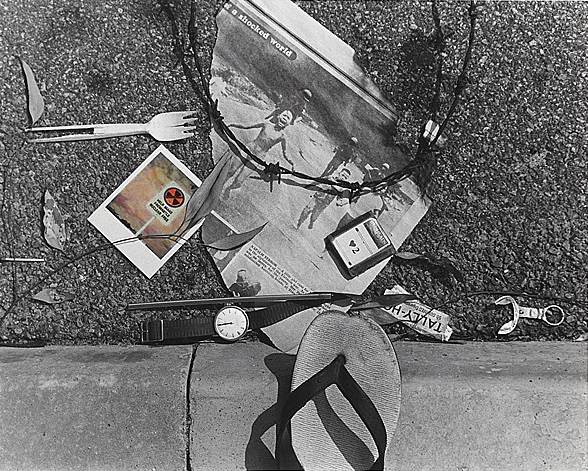
Miriam Stannage (Australian, 1939-2016) 'War' from the series 'News from the street' 1984


Miriam Stannage (Australian, 1939-2016)
War from the series News from the street
1984
Gelatin silver photograph, colour dye
40.6 x 50.8cm
National Gallery of Australia, Canberra, purchased 1990
© Miriam Stannage


Miriam Stannage (1939-2016) was an Australian conceptual artist. She was known for her work in painting, printmaking and photography, and participated in many group and solo exhibitions, receiving several awards over her career. Her work was also featured in two Biennales and two major retrospective exhibitions. …

Throughout her almost 50-year career, Stannage produced a varied and eclectic body of work, encompassing collage, photography, print-making, and text-based works. Stannage first rose to prominence through the 1982 Sydney Biennale and the 1992 Adelaide Biennale, as well as her solo shows at the Art Gallery of Western Australia. She was awarded an honorary doctorate from Curtin University, as well as being declared a ‘State Living Treasure’ in Western Australia. Over the course of her career, Stannage received several awards including the Albany Art Prize, the Georges Invitation Art Prize for drawing and the Power Institute residency at Cité Internationale des Arts in Paris. Seven of Stannage’s works have been featured in the Cruthers Collection of Women’s Art.

Stannage favoured simple structure and minimal use of form in her works, opting instead for text and collaged tableaux. She has been described as having ‘minimalist sensibilities.’

Her subject matter was engaged with contemporary events and news reportage, often utilising and subverting the visual language of newspapers and magazines. While her body of work is extensive, Stannage’s works always maintained their collage aesthetic, and were always founded upon her ongoing exploration of existential themes such as mortality, the spiritual and a quest for the meaning of life. Her work often centres the uncomfortable and emotive, in particular the heightened emotional impacts of conflict, destruction and disasters.

In 2001, following the September 11 attacks, Stannage shifted her focus strictly to the event, making works which spoke to the random nature of terrorist attacks and the interplay of monotony and death. In response to the attacks, she produced a collection of postage stamps which centred on concepts of stilled time, such as a clock face frozen at the moment of impact.

Text from the Wikipedia website


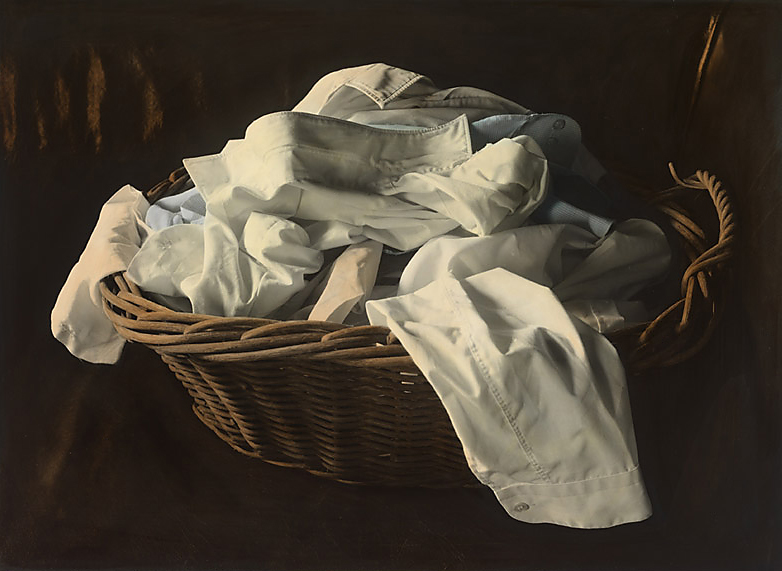
Janina Green (Essen, Germany born 1944; Australia from 1949) 'Untitled' 1988


Janina Green (Essen, Germany born 1944; Australia from 1949)
Untitled [Washing in basket]
1988
Gelatin silver photograph, photo oils
National Gallery of Australia, Canberra, purchased 1989


Janina Green (Essen, Germany born 1944; Australia from 1949) 'Untitled' 1988


Janina Green (Essen, Germany born 1944; Australia from 1949)
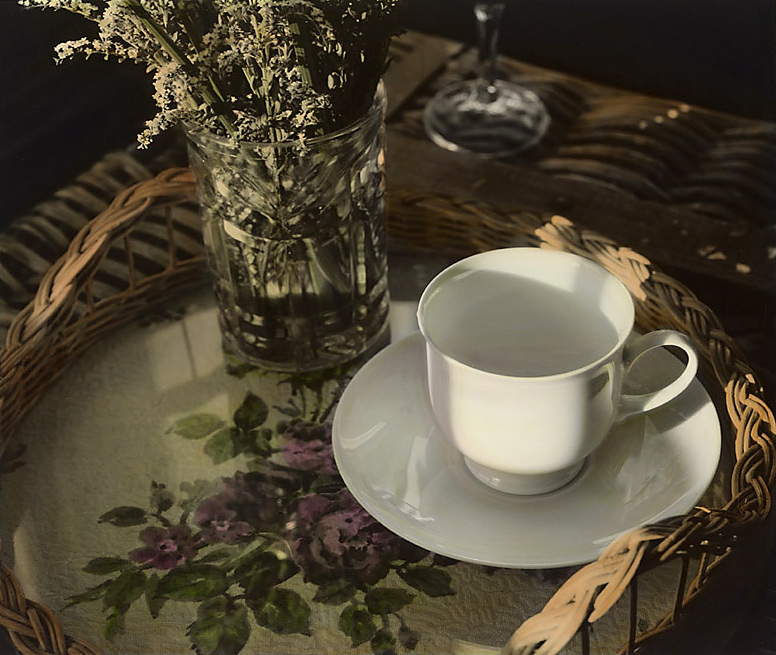
Untitled [White cup on tray]
1988
Gelatin silver photograph, photo oils
National Gallery of Australia, Canberra, purchased 1989


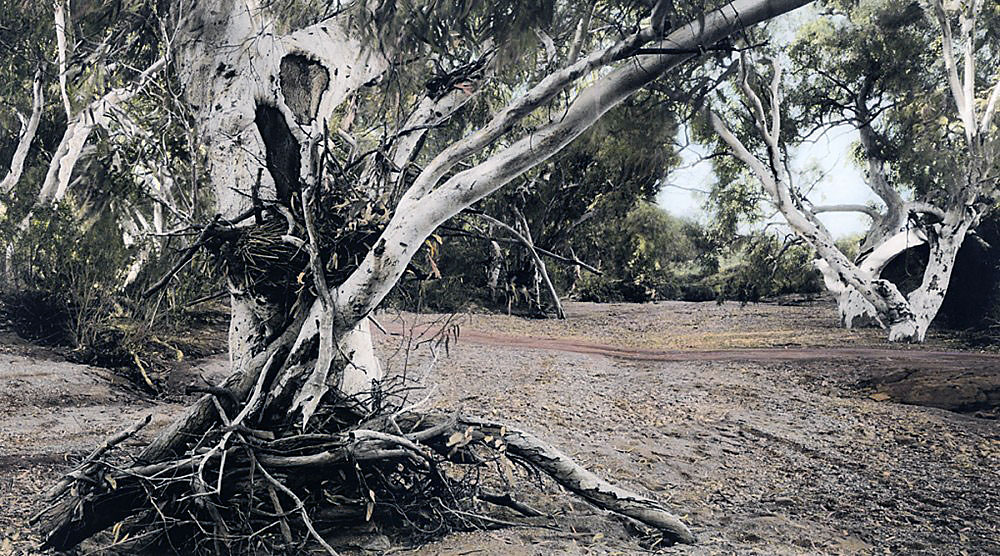
Nici Cumpston. (Barkindji/Paakintji peoples) 'Scar tree, Fowler's Creek' 2011


Nici Cumpston (Australian, b. 1963)
Barkindji/Paakintji peoples
Scar tree, Fowler’s Creek
2011
From the series having-been-there
Archival inkjet print hand coloured with synthetic polymer paint
98 x 177cm
Collection of the artist/Courtesy of the artist


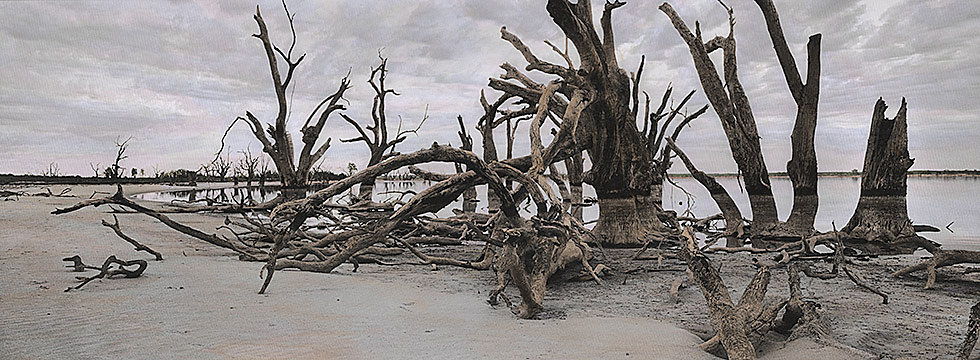
Nici Cumpston (Barkindji/Paakintji peoples) 'Campsite V, Nookamka Lake' 2008


Nici Cumpston (Australian, b. 1963)
Barkindji/Paakintji peoples
Campsite V, Nookamka Lake
2008
Inkjet print on canvas, hand-coloured with pencil and watercolour
77 x 206cm
National Gallery of Australia, Canberra, purchased 2011


The once rich and thriving environment of the Murray and Darling River system with its clear waterways, lush flora and abundant fauna was home to the Barkindji, Muthi Muthi and Nyampa peoples.

The shallow Nookamka Lake (Lake Bonney), which connects to the Murray River in South Australia, is the subject of Nici Cumpston’s recent photographic series. However, the series is not of a lush utopia but of the degradation and erosion that has consumed the lake since the forced irrigation flooding of the waterways in the early 1900s.

When damming ceased in 2007, the water began to subside, slowly revealing the original landscape and the history of human occupation. Cumpston beautifully documents this stark landscape and the demise that salinisation and destructive water management practices have wrought on the people and their lands. Today, the landscape is desolate, scattered with twisted and broken trees stripped of their foliage like majestic sentinels in deathly poses. The trees still bare the scars – although obscured by dark tidelines – where canoes, containers and shields were cut from their trunks.

Cumpston highlights these clues to the area’s original inhabitants through the delicate and precise hand-watercolouring of the printed black-and-white photographs on canvas. She does not aim to replicate the original colours of the landscape, as a colour photograph would, but to interpret it, re-introducing the Aboriginal presence within the landscape – a subtle reconnection to Country and reminder of past cultural practices and knowledge. As the artist says, “I am finding ways to talk about connections to country and to allow people to understand the ongoing connections that Aboriginal people maintain with their traditional lands.”

Tina Baum
Curator, Aboriginal and Torres Strait Islander Art
Art Gallery of New South Wales


Warren Breninger (Australian, b. 1948) 'Expulsion of Eve [No.3]' 1978


Warren Breninger (Australian, b. 1948)
Expulsion of Eve [No.3]
1978
Gelatin silver photograph, chinagraph, decal lettering gelatin silver photograph
49.7 x 36.7cm
Gift of the Philip Morris Arts Grant 1982


Warren Breninger (Australian, b. 1948) 'Expulsion of Eve [No.12]' 1978


Warren Breninger (Australian, b. 1948)
Expulsion of Eve [No.12]
1978
Type C colour photograph, ink, crayon
49.8 x 37cm
Gift of the Philip Morris Arts Grant 1982


Warren Breninger (Australian, b. 1948) 'Expulsion of Eve [No.15]' 1978


Warren Breninger (Australian, b. 1948)
Expulsion of Eve [No.15]
1978
Photograph, gum arabic print, acrylic paint, crayon, pencil
49.8 x 37cm
Gift of the Philip Morris Arts Grant 1982


The Expulsion of Eve series is in essence a single work which the artist returns to continually to develop and re-work the same image. ‘Number 16’, highly indicative of the series, is a photographic image of a young woman, the print having undergone many transformative processes including being cut out, reapplied, incised, worn back, applied with colour, stripped of colour and re-drawn. Interrogating notions of reality, Breninger expresses his personal and artistic concerns relating to ‘the rift between appearances and what is real’; ideas informed by his deep Christian faith.1

His subject, Eve, is not chosen symbolically as a female archetype; rather, the artist reasons, “because I believe in her historically and all humanity is her descendents”.2 Breninger’s Eve, in her features and expression, suggests a presence caught between the worlds of childhood and adulthood, innocence and intent, the temporal and corporeal. While there is a Christ-like surrender in the pose, Breninger’s Eve also has a strong correlation with Edvard Munch’s ‘Madonna’, both visually and in terms of the obsessive process by which the artist revisits the image.

The artist’s belief that ‘cameras create an appetite for ghosts, for vapour, for beings of steam that we can never embrace, that will elude us like every photo does’,3 explains his intrigue with photography’s abilities and limitations in recording the subjective. He continued to develop the work with series III produced in 1990, followed in 1993-94 by series IV, comprising male and female faces.

1/ Breninger W 1983, ‘Art & fulfilment’, self-published artist’s essay p. 1
2/ Warren Breninger in correspondence with Sue Smith, 24 Feb 1984, collection files, Warren Breninger, Queensland Art Gallery, Brisbane
3/ Breninger W 1983, op cit p. 3

© Art Gallery of New South Wales Photography Collection Handbook, 2007


Christine Barry (Australian, b. 1954) 'Packaged Deal' 1986/96


Christine Barry (Australian, b. 1954)
Packaged Deal
1986/1996
From the series Displaced Objects
Direct positive colour photograph/Type C photographic print
50cm x 50cm/127cm x 127cm
National Gallery of Australia, Canberra


Christine Barry (Australian, b. 1954) 'Untitled (Patricia Marczak)' 1986-1987


Christine Barry (Australian, b. 1954)
Untitled (Patricia Marczak)
1986-1987
From the series Displaced Objects
Direct positive colour photograph/Type C photographic print
51.1 x 50.7cm
National Gallery of Australia, Canberra


Christine Barry (Australian, b. 1954) 'Untitled (Self portrait)' 1986


Christine Barry (Australian, b. 1954)
Untitled (Self portrait)
1986
From the series Displaced Objects
Direct positive colour photograph/Type C photographic print
50.8 x 50.7cm
National Gallery of Australia, Canberra


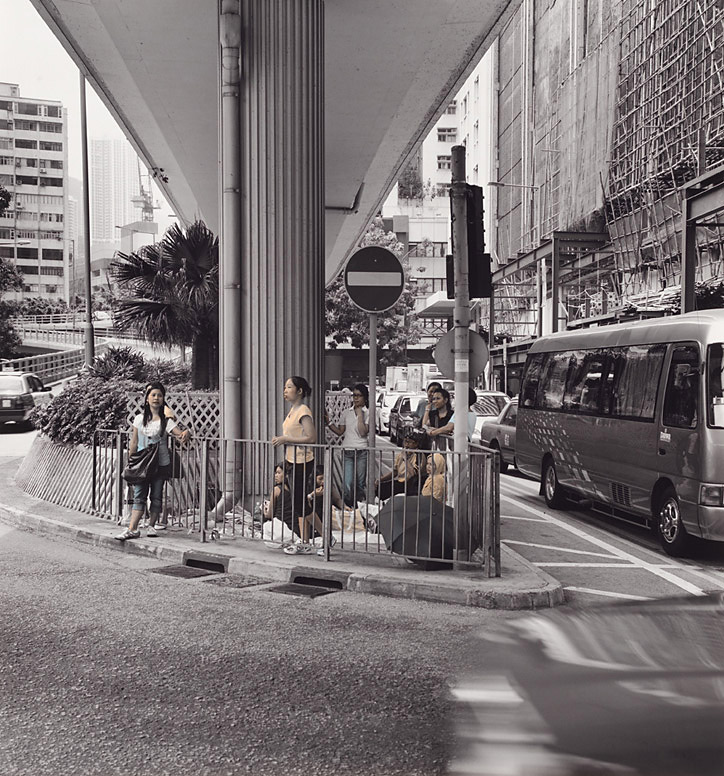
Janina Green (Essen, Germany born 1944; Australia from 1949) 'Maid in Hong Kong #11' 2008


Janina Green (Essen, Germany born 1944; Australia from 1949)
Maid in Hong Kong #11
2008
From the series Maid in Hong Kong
Gelatin silver photograph, colour dyes gelatin silver photograph
Image and sheet 76 x 60cm
Gift of Wilbow Group PTY LTD Donated through the Australian Government’s Cultural Gifts Program
National Gallery of Australia, Canberra


Robyn Stacey (Australian, b. 1952) 'Untitled' 1985-1987


Robyn Stacey (Australian, b. 1952)
Untitled
1985-1987
Gelatin silver photograph, colour dye
Collection of the artist
Courtesy of the artist and Stills Gallery, Sydney


Robyn Stacey (Australian, b. 1952) 'Untitled' 1985-1987


Robyn Stacey (Australian, b. 1952)
Untitled
1985-1987
Gelatin silver photograph, colour dye
Collection of the artist
Courtesy of the artist and Stills Gallery, Sydney


Robyn Stacey (Australian, b. 1952) 'Untitled' 1985-1987


Robyn Stacey (Australian, b. 1952)
Untitled
1985-1987
Gelatin silver photograph, colour dye
Collection of the artist
Courtesy of the artist and Stills Gallery, Sydney


Robyn Stacey (Australian, b. 1952) 'Untitled' 1985-1987


Robyn Stacey (Australian, b. 1952)
Untitled
1985-1987
Gelatin silver photograph, colour dye
Collection of the artist
Courtesy of the artist and Stills Gallery, Sydney


National Gallery of Australia
Parkes Place, Canberra
Australian Capital Territory 2600
Phone: (02) 6240 6411

Opening hours:
Open daily 10.00am – 5.00pm
(closed Christmas day)

National Gallery of Australia website

LIKE ART BLART ON FACEBOOK

Back to top