Exhibition: ‘Cai Guo-Qiang: Falling Back to Earth’ at the Gallery of Modern Art (GOMA), Brisbane

Exhibition dates: 23rd November 2013 – 11th May 2014
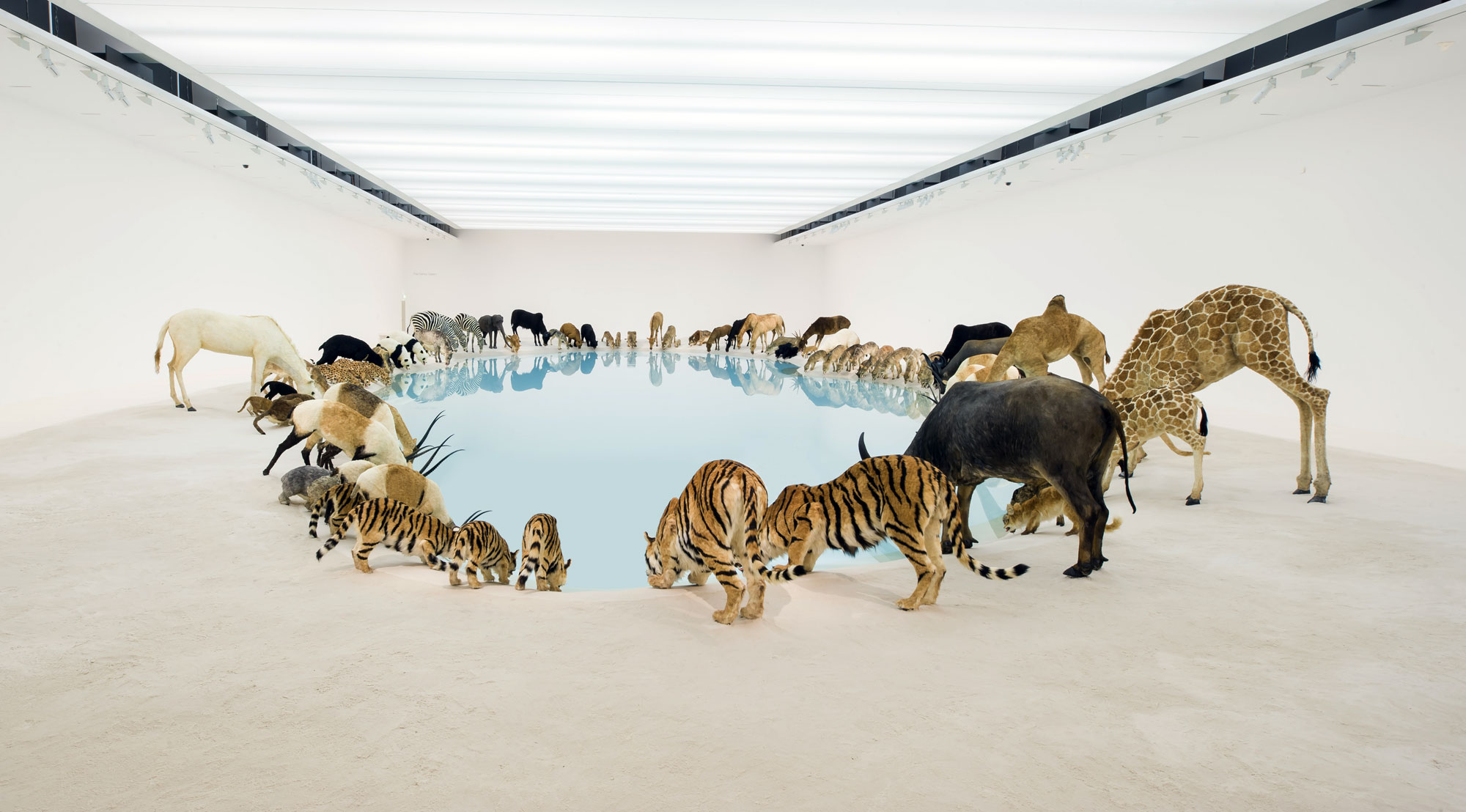
 

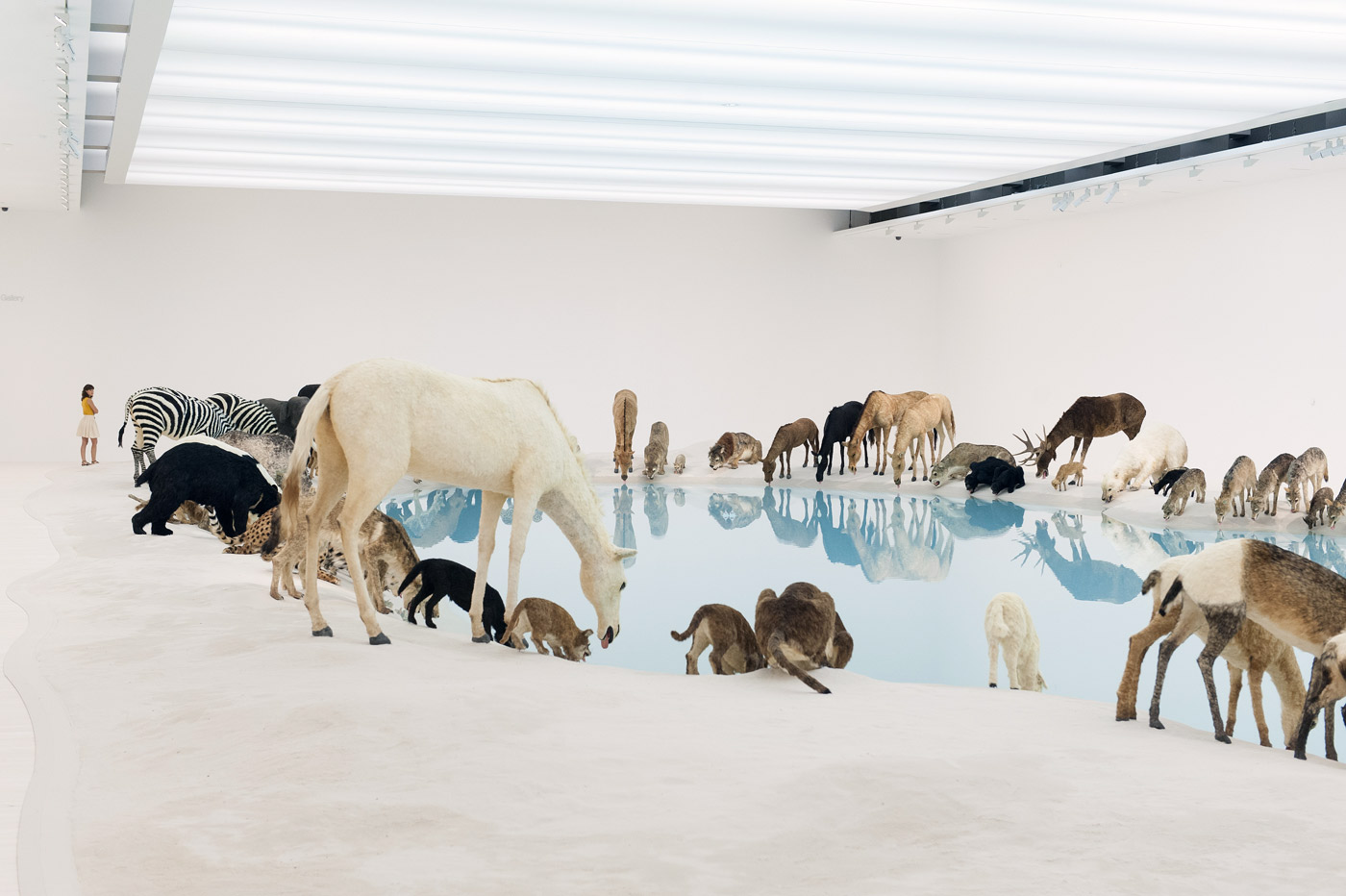
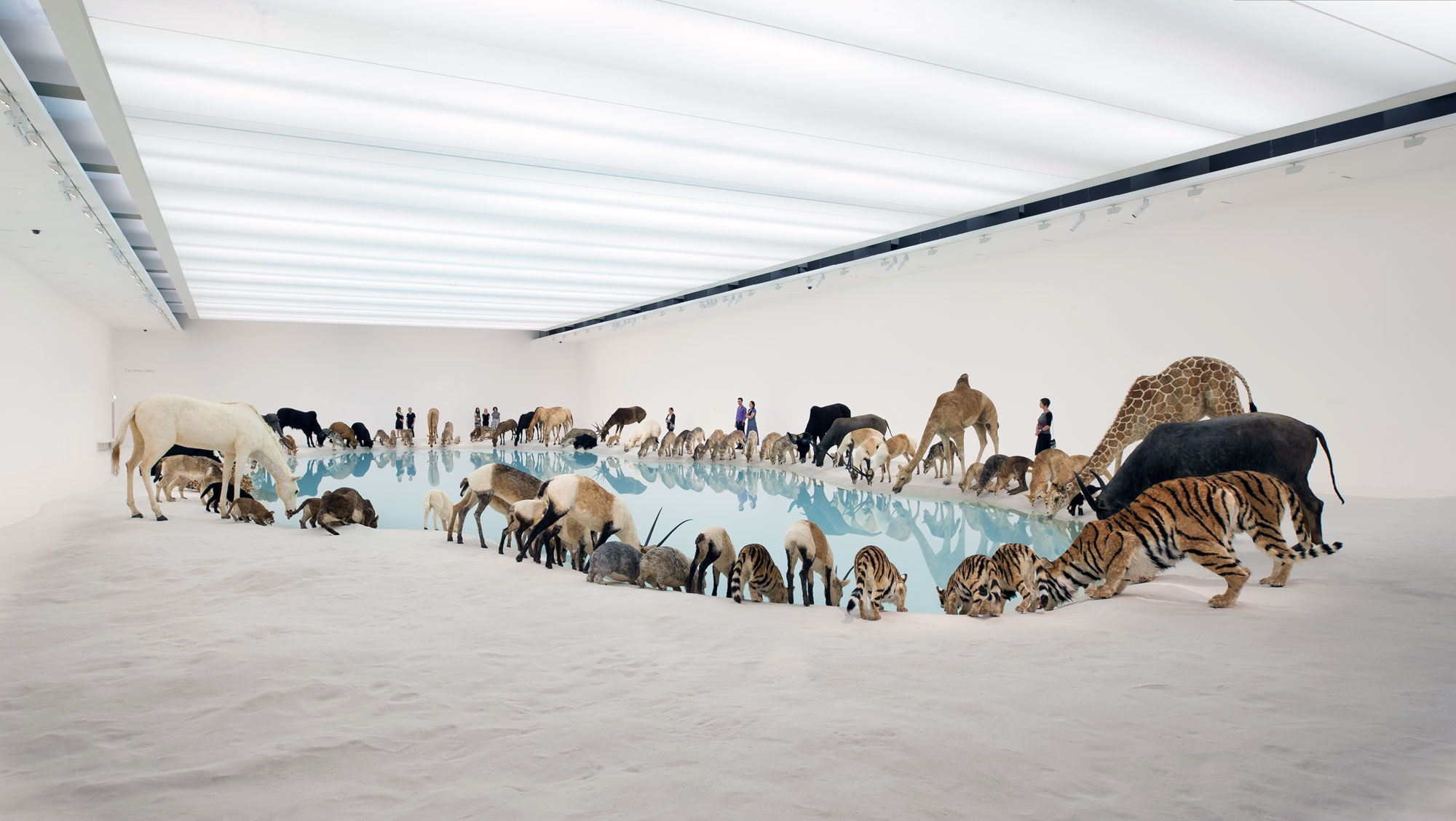
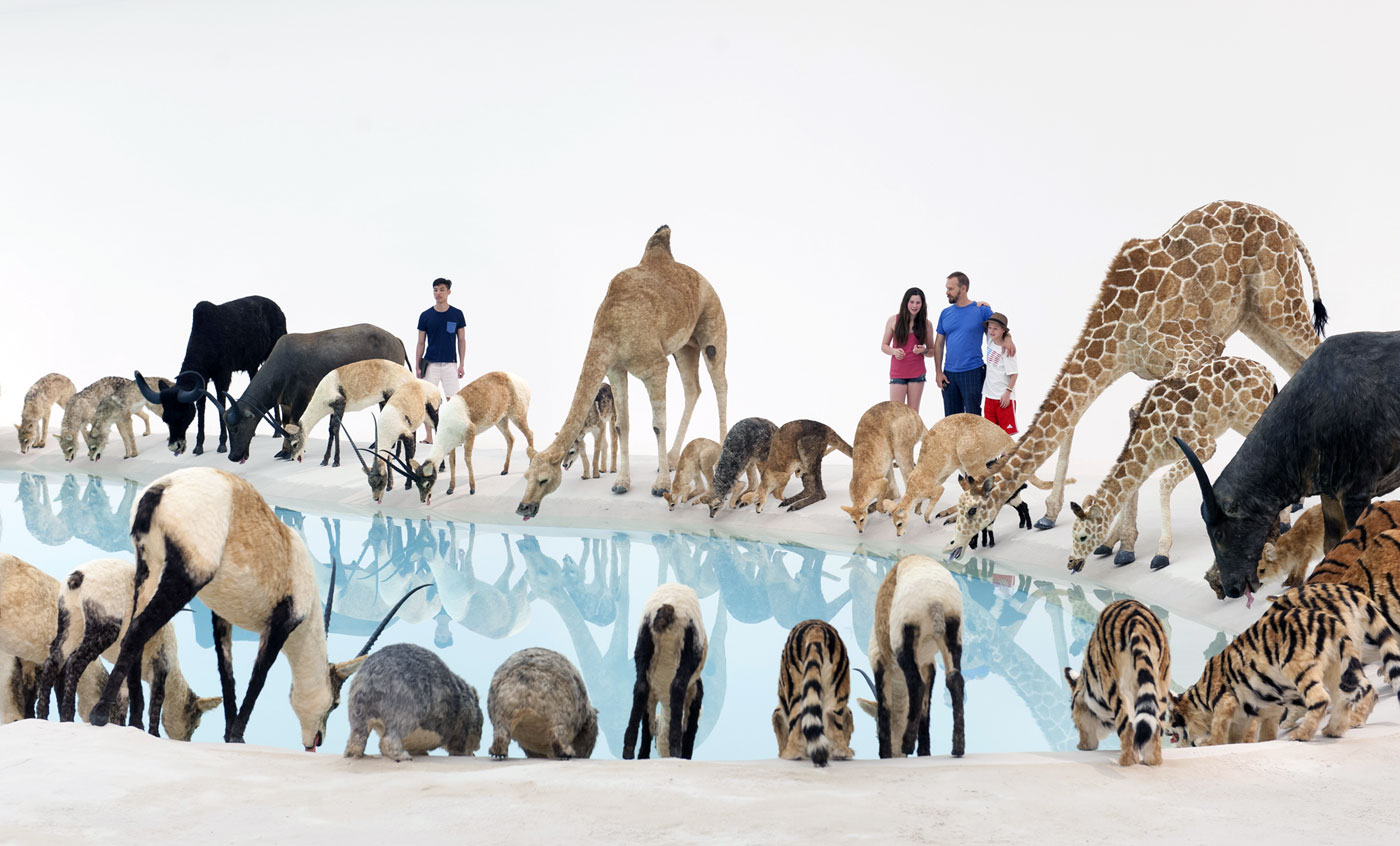
Cai Guo-Qiang (China, b. 1957) 'Heritage' 2013


Cai Guo-Qiang (China, b. 1957)
Heritage
2013
99 life-sized replicas of animals, water, sand, drip mechanism
Installed dimensions variable
Commissioned for the exhibition Falling Back to Earth, 2013
Purchased 2013 with funds from Josephine Ulrick and Win Schubert Diversity Foundation through and with the assistance of the Queensland Art Gallery | Gallery of Modern Art Foundation
Photograph: Queensland Art Gallery | Gallery of Modern Art


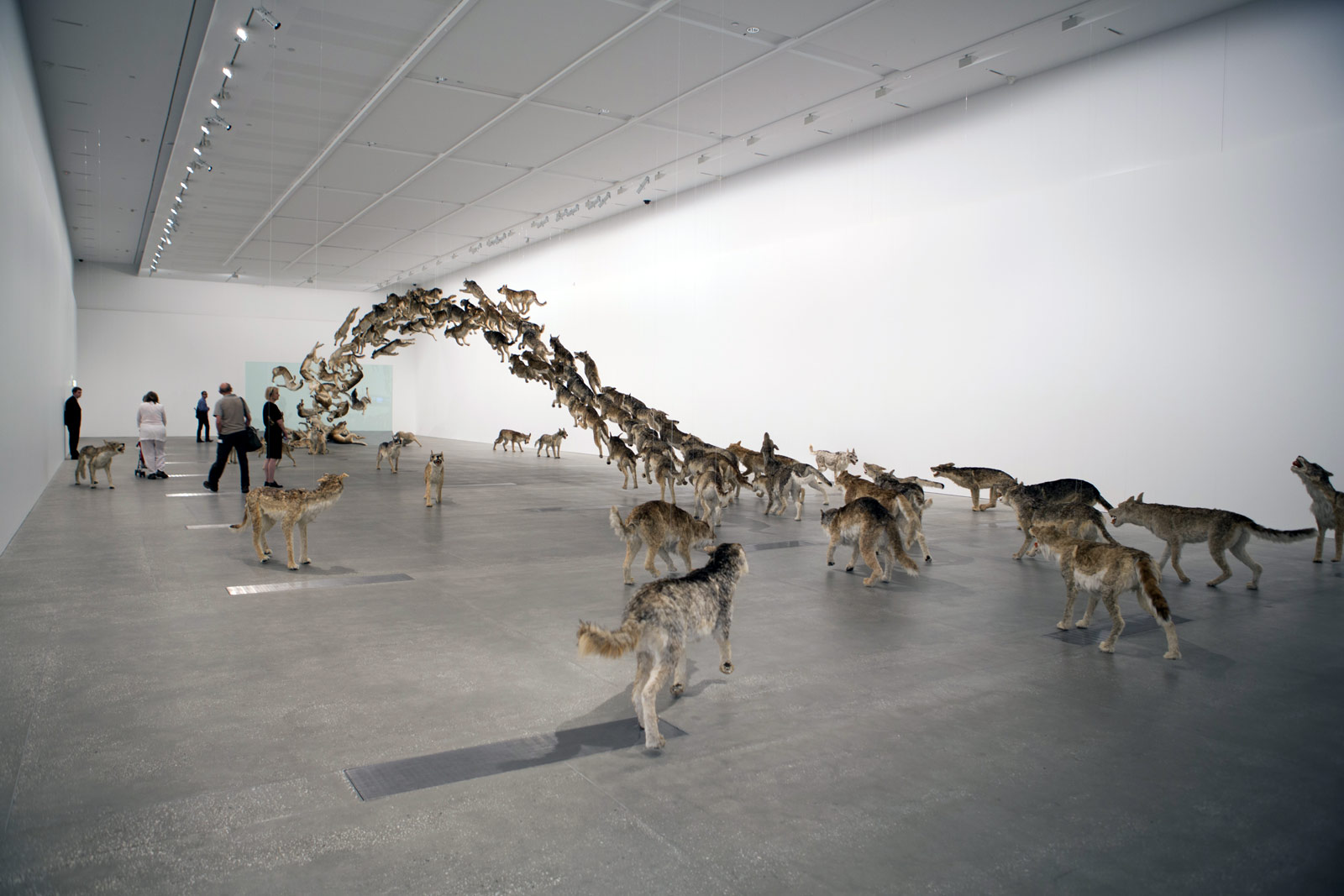
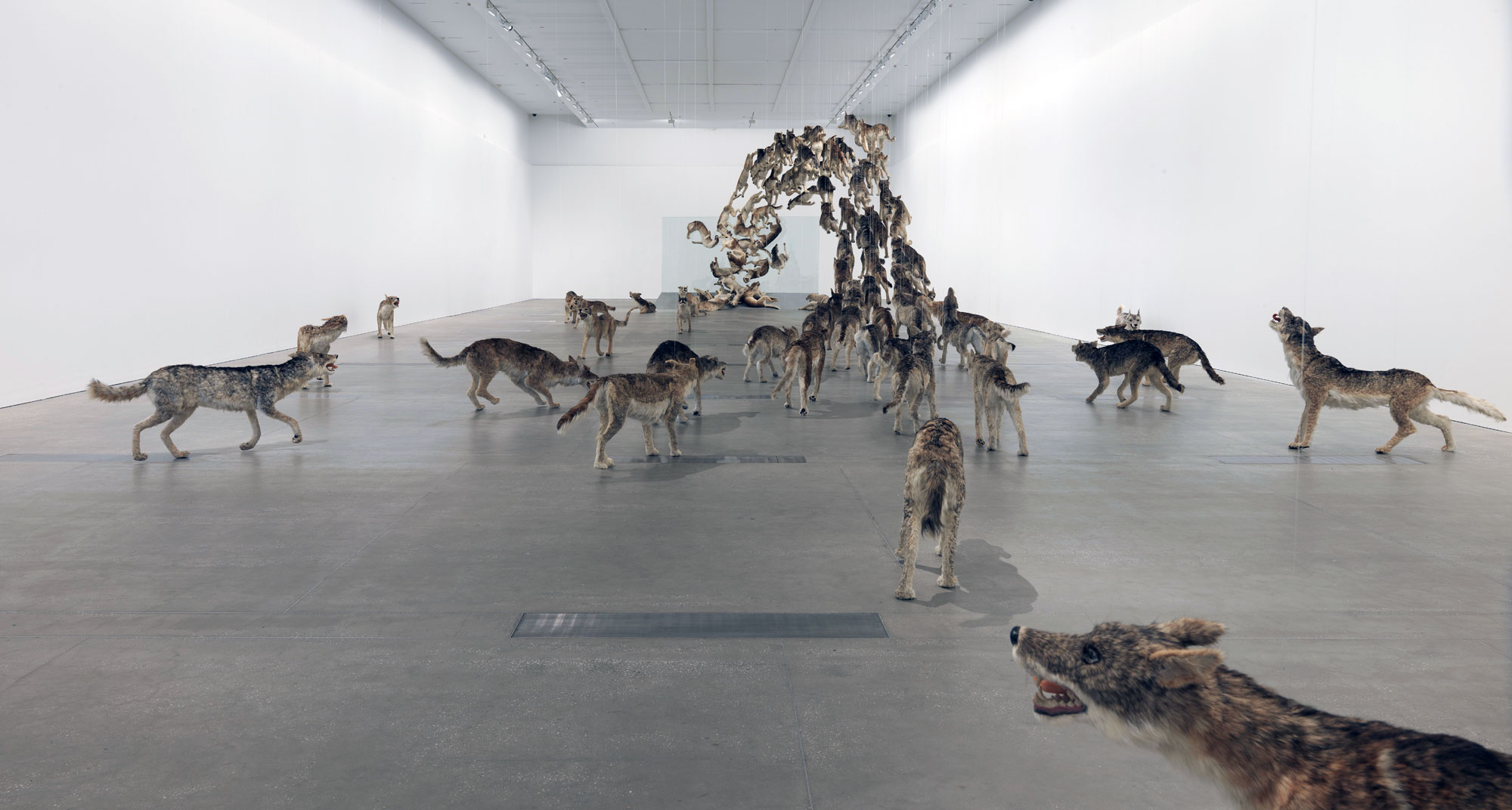
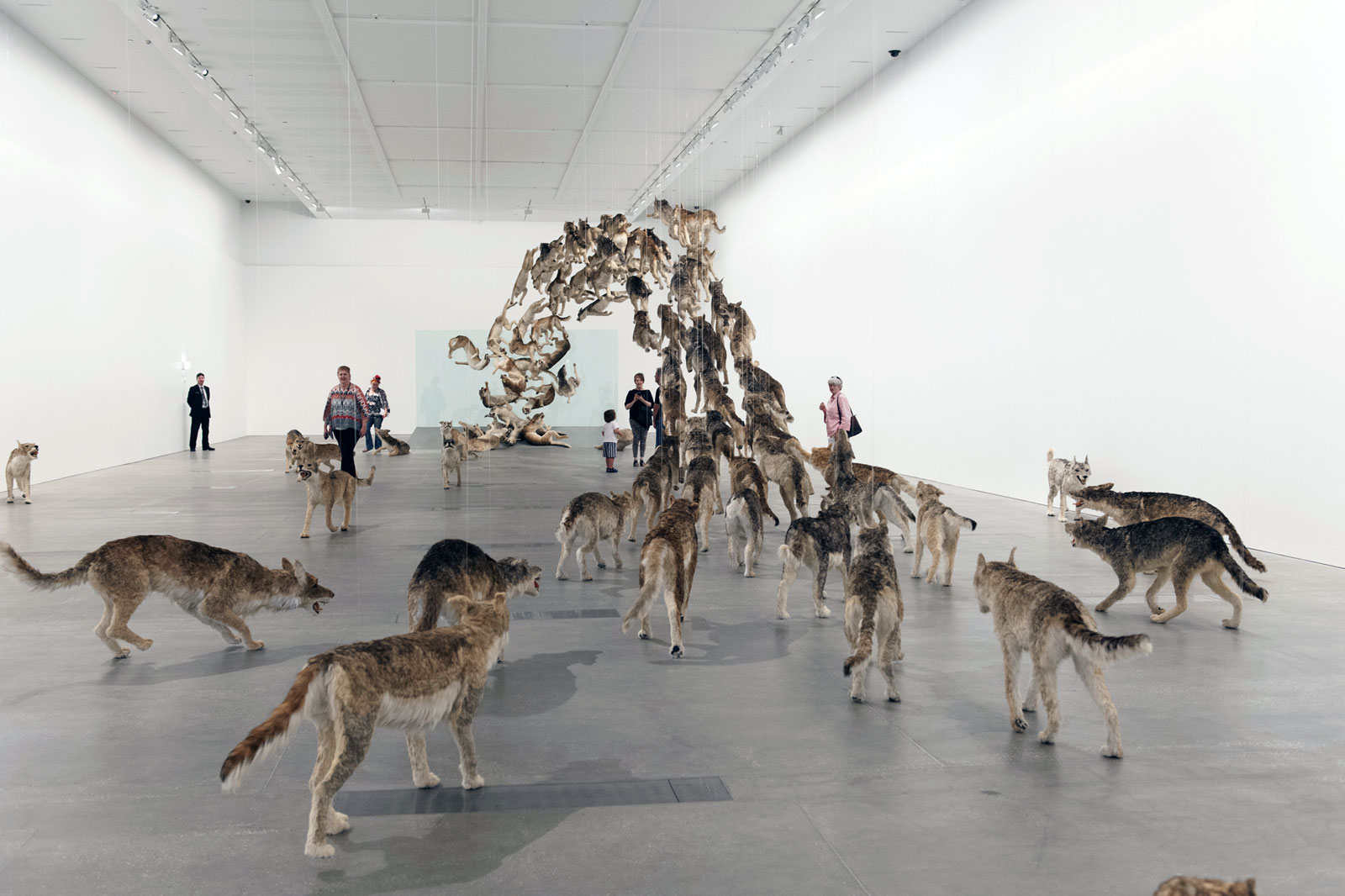
99 wolves a leaping
99 replicas of animals a drinking
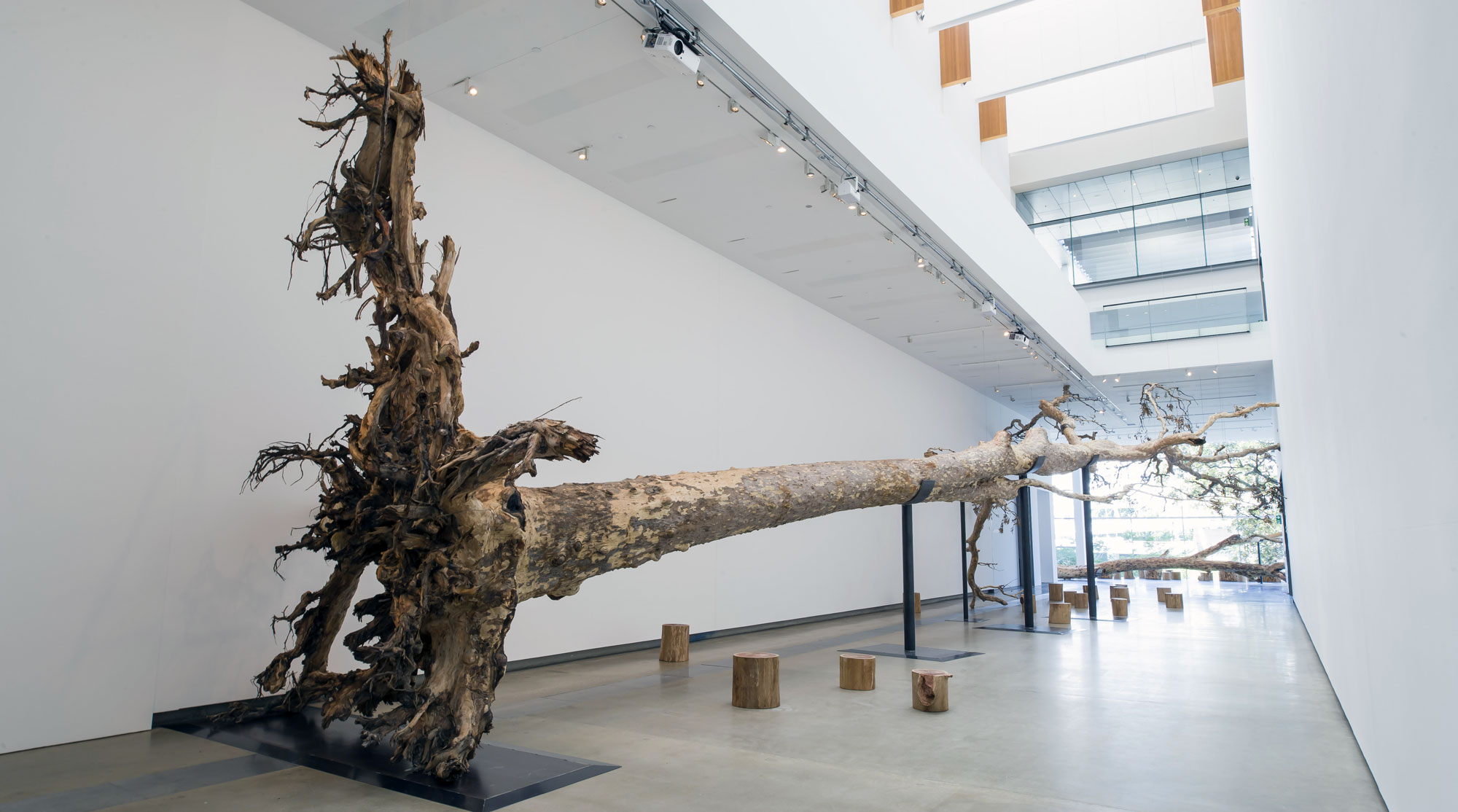
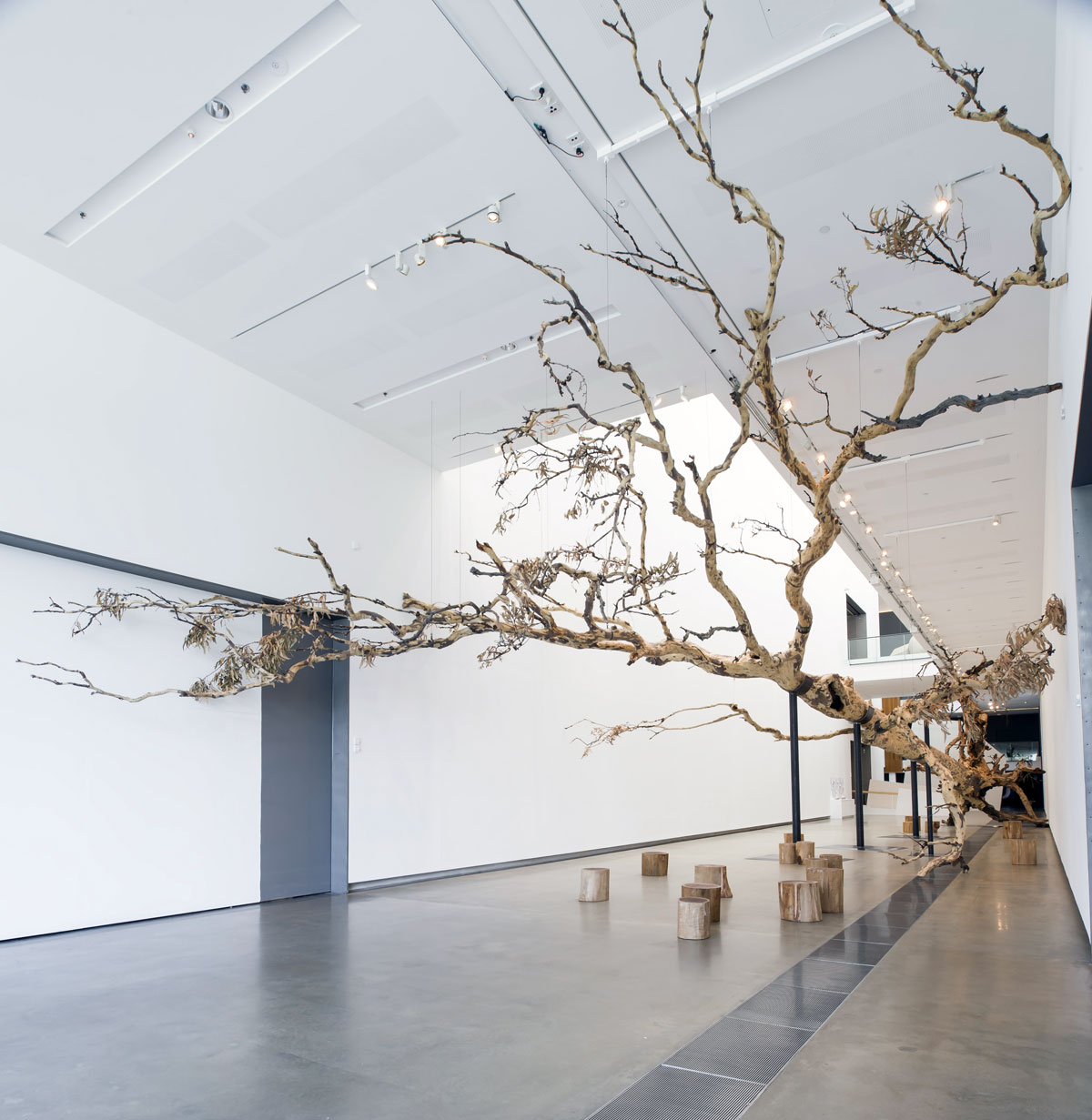
31-metre suspended eucalyptus tree a leaning
170 tonnes of water a seeping
3,000 square metres of GOMA’s ground floor a taking
and not a partridge in a pear tree in sight…

FANTASTIC ART!


Many thankx to the Gallery of Modern Art (GOMA) for allowing me to publish the photographs in the posting. Please click on the photographs for a larger version of the image.
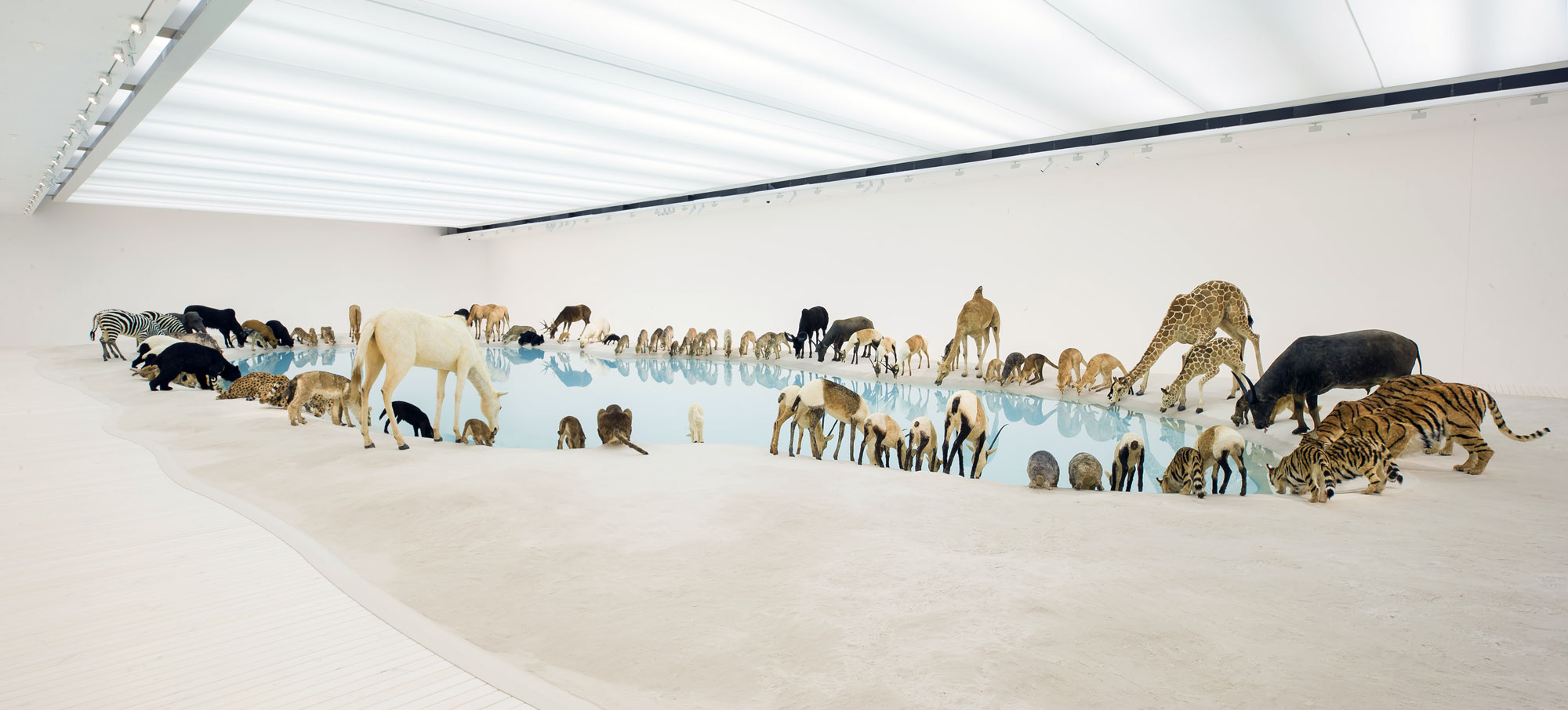
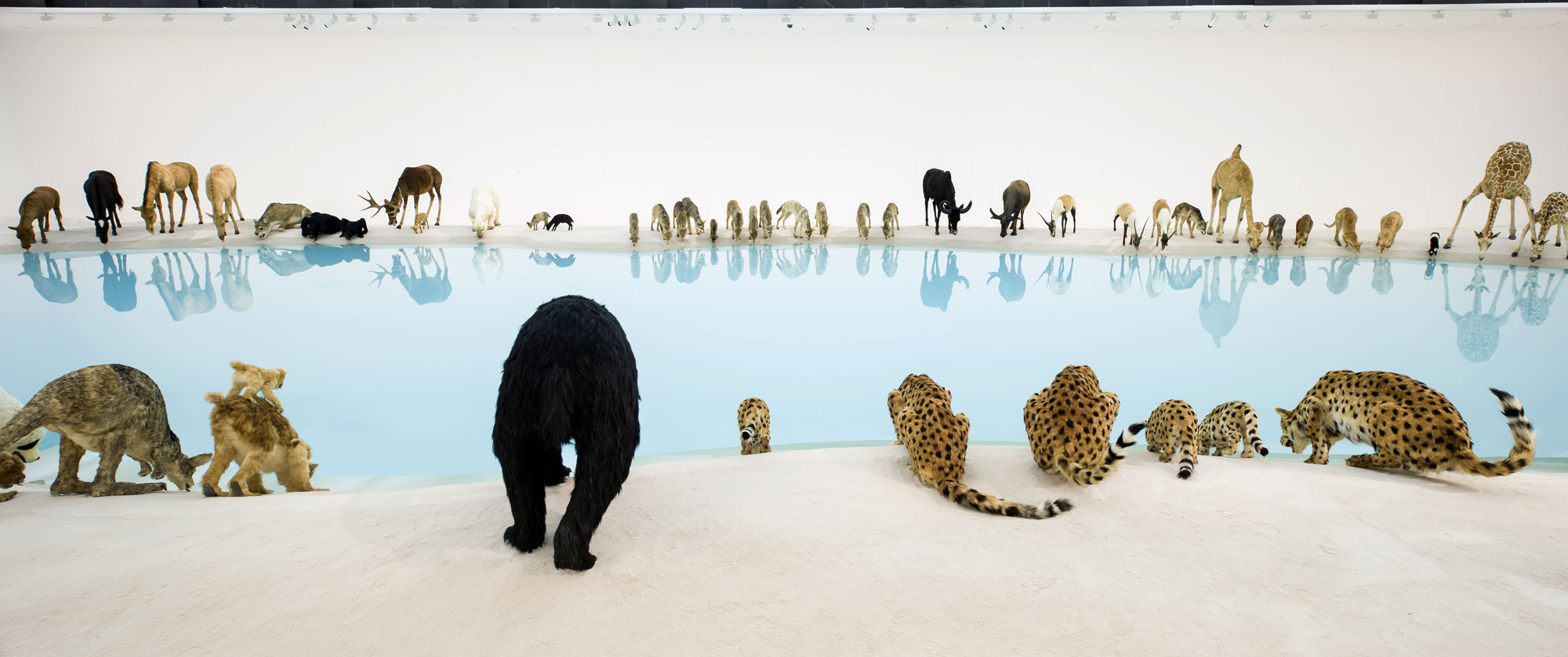


Cai Guo-Qiang (China, b. 1957) 'Heritage' 2013

Cai Guo-Qiang (China b. 1957) 'Heritage' 2013

Cai Guo-Qiang (China b. 1957) 'Heritage' 2013

Cai Guo-Qiang (China b. 1957) 'Heritage' 2013

Cai Guo-Qiang (China b. 1957) 'Heritage' 2013


Cai Guo-Qiang (China, b. 1957)
Heritage
2013
99 life-sized replicas of animals, water, sand, drip mechanism
Installed dimensions variable
Commissioned for the exhibition Falling Back to Earth, 2013
Purchased 2013 with funds from Josephine Ulrick and Win Schubert Diversity Foundation through and with the assistance of the Queensland Art Gallery | Gallery of Modern Art Foundation
Photographs: Queensland Art Gallery | Gallery of Modern Art


Thought-provoking and spectacular new installations inspired by Queensland landscapes will premiere in the first Australian solo exhibition of leading international contemporary artist Cai Guo-Qiang, opening tomorrow at the Gallery of Modern Art (GOMA). Cai Guo-Qiang: Falling Back to Earth, on display from November 23 to May 11, 2014, builds on a longstanding working relationship between the artist and the Gallery, which dates back to Cai’s participation in the Asia Pacific Triennial of Contemporary Art exhibitions in 1996 and 1999.

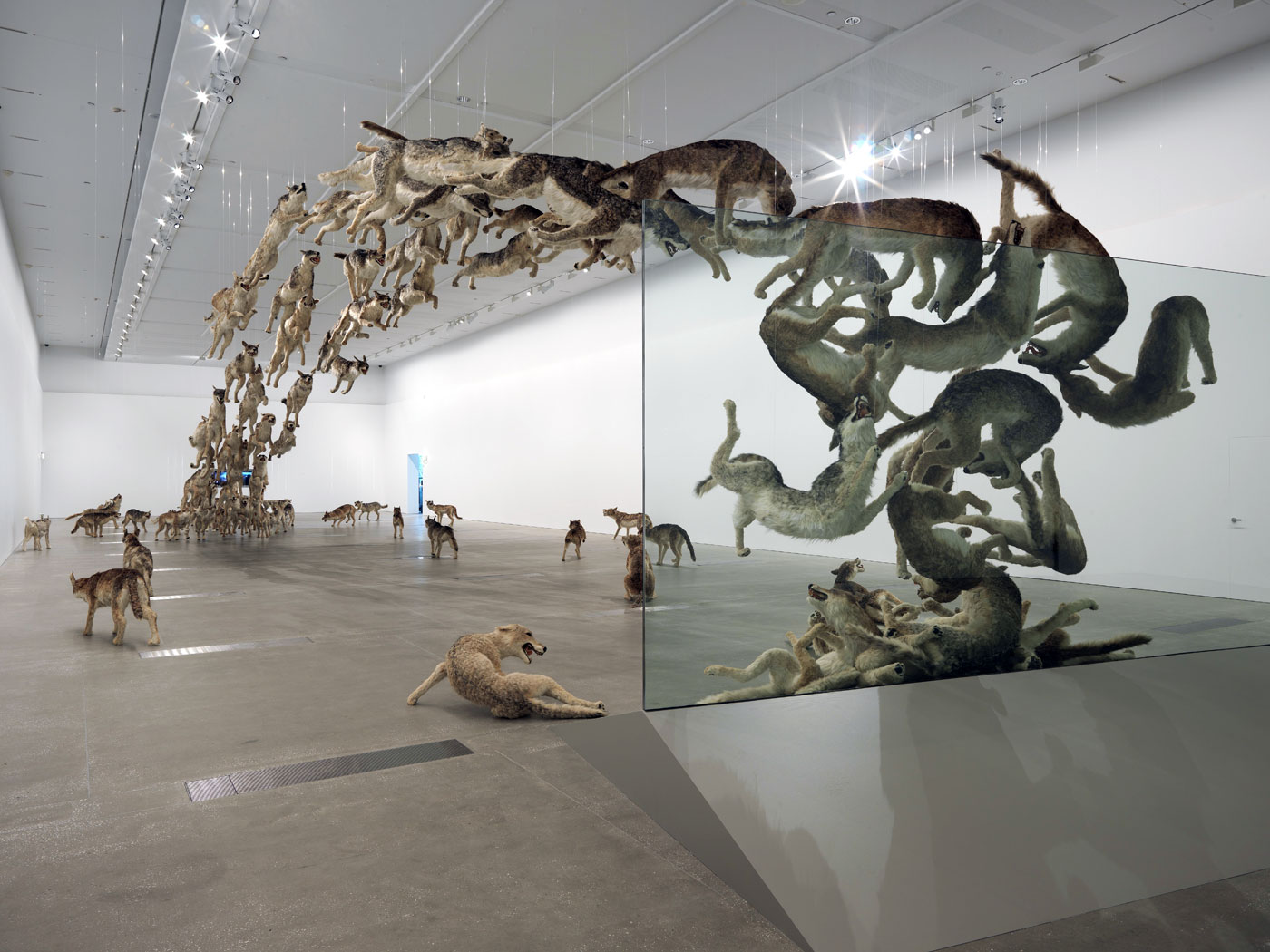
For the first time ever, all 3,000 square metres of GOMA’s ground floor will be dedicated to an exhibition of work by a single living artist. Falling Back to Earth features installations of 99 replicas of animals drinking from a pristine lake; 99 wolves leaping en masse and colliding with a glass wall; a suspended 31-metre eucalyptus tree, creating a space for contemplation; and a tea pavilion where visitors can pause, drink tea, and find out more about the artist and the exhibition. There will also be an interactive installation for children and a chronological display of the artist’s career, with photographs, ephemera, and original art works selected by the artist.

Queensland Art Gallery | Gallery of Modern Art (QAGOMA) Director Chris Saines said Cai Guo-Qiang’s ground-breaking practice over 25 years used unexpected materials to create transformative event-based and social projects. “This exhibition is a significant evolution for one of today’s most compelling and highly respected global artists, realised with a level of ambition unprecedented for an Australian art museum,” Mr Saines said. “Cai is shifting his focus from the cosmos to the Earth and to humanity’s complex relationship with nature, while maintaining his keen eye on both the seen and unseen forces that impact life.”

Cai Guo-Qiang said the exhibition title Falling Back to Earth was inspired by fourth-century poet Tao Yuanming’s well-known prose poem, Ah, homeward bound I go! “The text captures the concept behind the exhibition, and expresses the idea of going home, returning to the harmonious relationship between man and nature, and re-embracing the tranquillity in the landscape,” he said.

Exhibition curator Russell Storer, Curatorial Manager of Asian and Pacific Art, QAGOMA, said the new commissions drew on the striking beauty of Queensland landscapes and the exquisite imagery in historical Chinese painting and poetry, to express concerns regarding the ecological and social issues of our time. “Heritage 2013 is an installation of 99 replicas of animals including pandas, tigers, bears, giraffes and kangaroos, lowering their heads to drink water together from a lake that is surrounded by white sand, evoking the islands of Brisbane’s Moreton Bay,” Mr Storer said. “Seemingly a peaceful gathering of predator and prey, the menagerie of Heritage conveys an almost reverential solemnity, in a lyrical utopian vision loaded with uncertainty. It embodies Cai’s image of a ‘last paradise’ and his awareness of a sense of crisis in contemporary societies across the world.”

The first single artwork to take up the entire 1,100m2 of GOMA’s largest gallery space, Heritage presents animals drinking from a lake filled with 170 tonnes of water, which is viewable from a walkway that circles the entire installation. The Gallery will acquire Heritage thanks to a generous contribution from benefactor Win Schubert, through the Josephine Ulrick and Win Schubert Diversity Foundation with the assistance of the QAGOMA Foundation.

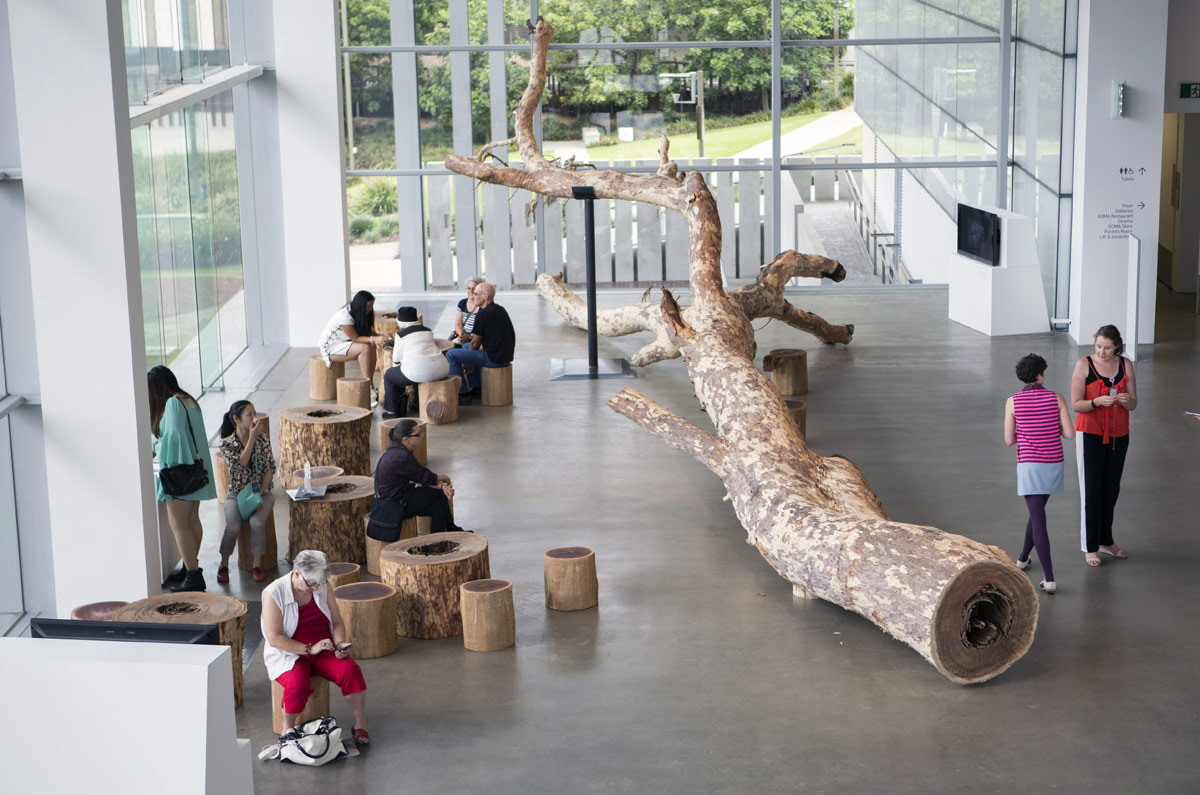
Eucalyptus 2013, a 31-metre tree suspended along GOMA’s central Long Gallery, came from a plantation earmarked for clearing for urban community development. The work was inspired by the ancient trees of Lamington National Park, and creates a meditative, immersive experience for visitors,” Mr Storer said. “Drawing on his history of socially provocative projects, Cai presents Eucalyptus as an unfinished work to be completed by the audience, who are invited to draw and write their ideas on the tree’s past and future. A third major installation, Head On 2006 – Cai’s signature work of 99 life-size sculptures of wolves, which was commissioned by Deutsche Bank, Berlin – is appearing in Australia for the first time.”

In the free interactive installation, Let’s Create an Exhibition with a Boy Named Cai 2013, Cai Guo-Qiang and the QAGOMA Children’s Art Centre invite children to participate, using the artist’s working methods to create their own exhibition through hands-on and multimedia activities, which include an online ‘gunpowder drawing’ making program. An illustrated storybook written by the artist and created in collaboration with the Children’s Art Centre will be available from the QAGOMA Store.

The Tea Pavilion in the River Room invites visitors to pause, rest and reflect on the works in the exhibition. Visitors can sample Tie Guan Yin tea from Cai’s home province of Fujian and watch a documentary created especially for ‘Falling Back to Earth’ to learn more about the processes behind the exhibition. A detailed chronology of Cai’s work, including early works, ephemera, photographs and artefacts selected by the artist from his private collection and the QAGOMA Research Library, will be presented in the GOMA Foyer. The display will offer insights into the artist’s history with QAGOMA and the complexity and risk involved in Cai’s work. The exhibition will be fully documented in a major publication, available in January 2014. The book will feature photography of the new works and essays from leading curators, as well as reflections from Cai Guo-Qiang on his collaboration with children throughout his career.

Cai’s recent solo exhibitions and projects have included the retrospective Cai Guo-Qiang: I Want to Believe, presented at the Solomon R. Guggenheim Museum, New York, the National Art Museum of China in Beijing in 2008 and the Guggenheim Bilbao in 2009. He was Director of Visual and Special Effects for the opening and closing ceremonies of the Beijing Olympics in 2008, and his first exhibition in the Middle East was staged in Doha, Qatar, in 2011. In 2012, the artist appeared in solo exhibitions in Los Angeles, Hangzhou and Copenhagen. His first South American exhibition toured to Brasília, São Paolo and Rio de Janeiro in Brazil in 2013.

Press release from the Gallery of Modern Art website


Cai Guo-Qiang (China b. 1957) 'Tea Pavilion' 2013


Cai Guo-Qiang (China, b. 1957)
Tea Pavilion
2013
Spotted gum (Corymbia maculata), wooden stools, Fujian Tie Guan Yin tea and video documentary
Commissioned for the exhibition Falling Back to Earth, 2013
Photo by Yuyu Chen, courtesy Cai Studio


Cai Guo-Qiang (China b. 1957) 'Eucalyptus' 2013

Cai Guo-Qiang (China b. 1957) 'Eucalyptus' 2013

Cai Guo-Qiang (China b. 1957) 'Eucalyptus' 2013


Cai Guo-Qiang (China, b. 1957)
Eucalyptus
2013
Spotted gum (Corymbia maculata), wooden stools, paper and pencils
Length: 3150cm (approx.)
Commissioned for the exhibition Falling Back to Earth, 2013
Photographs: Queensland Art Gallery | Gallery of Modern Art


Cai Guo-Qiang (China b. 1957) 'Head On' 2006

Cai Guo-Qiang (China b. 1957) 'Head On' 2006

Cai Guo-Qiang (China b. 1957) 'Head On' 2006

Cai Guo-Qiang (China b. 1957) 'Head On' 2006


Cai Guo-Qiang (China b. 1957)
Head On
2006
99 life-sized replicas of wolves and glass wall. Wolves: gauze, resin, and hide
Dimensions variable
Deutsche Bank Collection, commissioned by Deutsche Bank AG
Photographs: Queensland Art Gallery | Gallery of Modern Art


Gallery of Modern Art (GOMA)

The Queensland Art Gallery (QAG) and Gallery of Modern Art (GOMA) are located 150 metres from each other, on the south bank of the Brisbane River. Entrance to both buildings is possible from Stanley Place, and the river front entrance to the Queensland Art Gallery is on Melbourne Street. The Galleries are within easy walking distance to the city centre and South Bank Parklands.

Opening hours:
Daily 10.00am – 5.00pm
Closed Christmas Day, Good Friday, open from 12.00 noon ANZAC Day

Gallery of Modern Art (GOMA) website

LIKE ART BLART ON FACEBOOK

Back to top

Exhibition: ‘My Country, I Still Call Australia Home: Contemporary Art from Black Australia’ at The Gallery of Modern Art (GOMA), Brisbane

Exhibition dates: 1st June – 7th October 2013


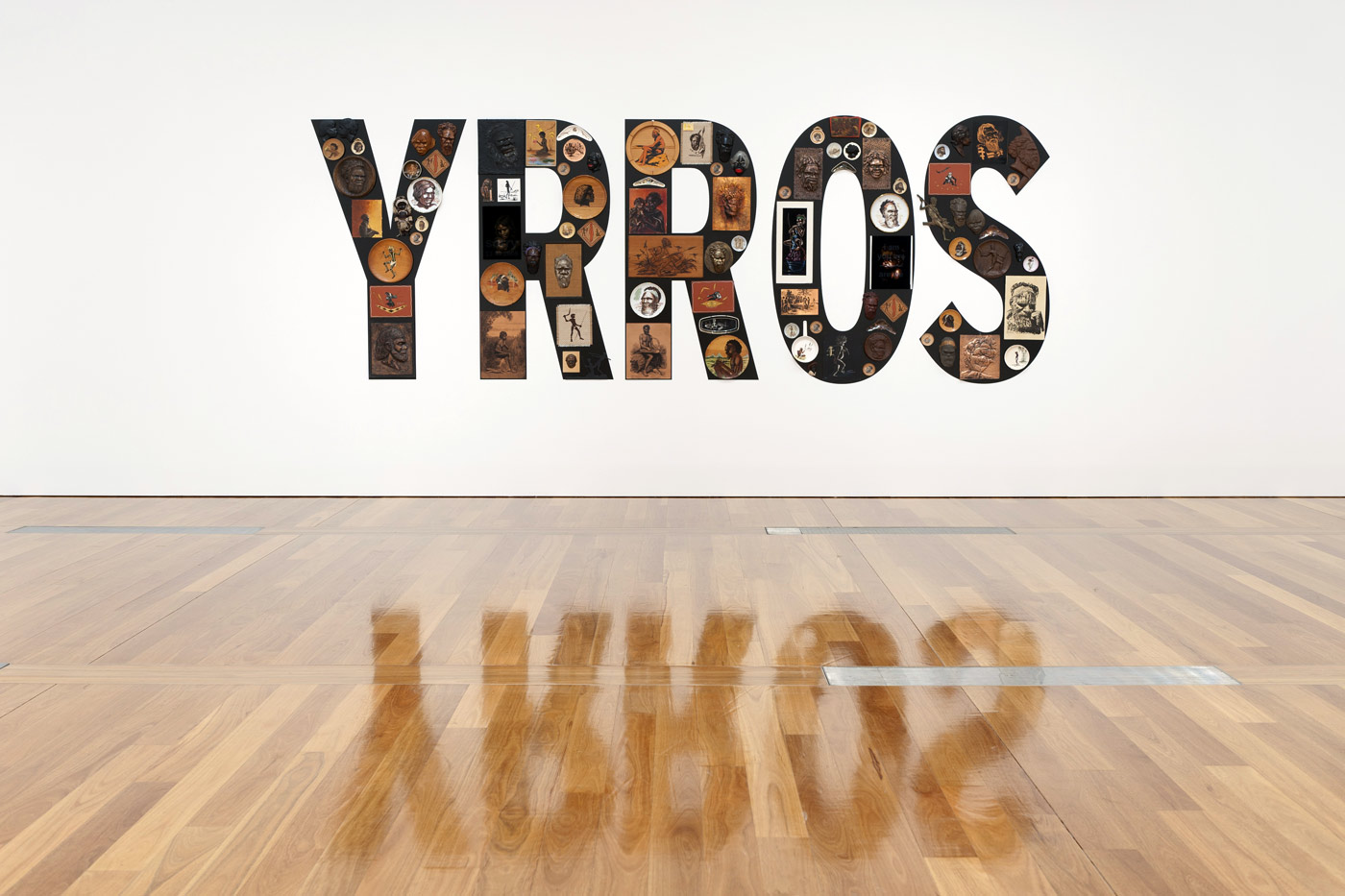
Tony Albert (Australia, Queensland Girramay people b. 1981) Girramay people 'Sorry' 2008


Tony Albert (Australia, Queensland b. 1981)
Girramay people
Sorry
2008
Found kitsch objects applied to vinyl letters
The James C Sourris, AM, Collection. Purchased 2008 with funds from James C Sourris through the Queensland Art Gallery Foundation
Collection: Queensland Art Gallery


R U SORRY?

Do you feel FORGIVEN?

What do I have to feel sorry for
I only arrived here yesterday

I FORGIVE you for all the SADNESS and SORROW that COLONISATION has CAUSED

You gutless wonder

GUILT, GUILTY, GUILTLESS, GUILELESS, GUTLESS


The persistence of memory – how the past lingers and subverts

MEMORY – inflicting more DAMAGE on the already DAMAGED

(TIME) to MOVE ON… Nothing to  see here


Dr Marcus Bunyan


Many thankx to the The Gallery of Modern Art (GOMA) for allowing me to publish the photographs in the posting. Please click on the photographs for a larger version of the image.


Bindi Cole (Australian, Victoria Wathaurung people b. 1975) 'I forgive you' 2012


Bindi Cole (Australian, Victoria b. 1975)
Wathaurung people
I forgive you
2012
Emu feathers on MDF board
Purchased 2012. Queensland Art Gallery Foundation
Collection: Queensland Art Gallery
© Bindi Cole 2012. Licensed by Viscopy, Sydney, 2013


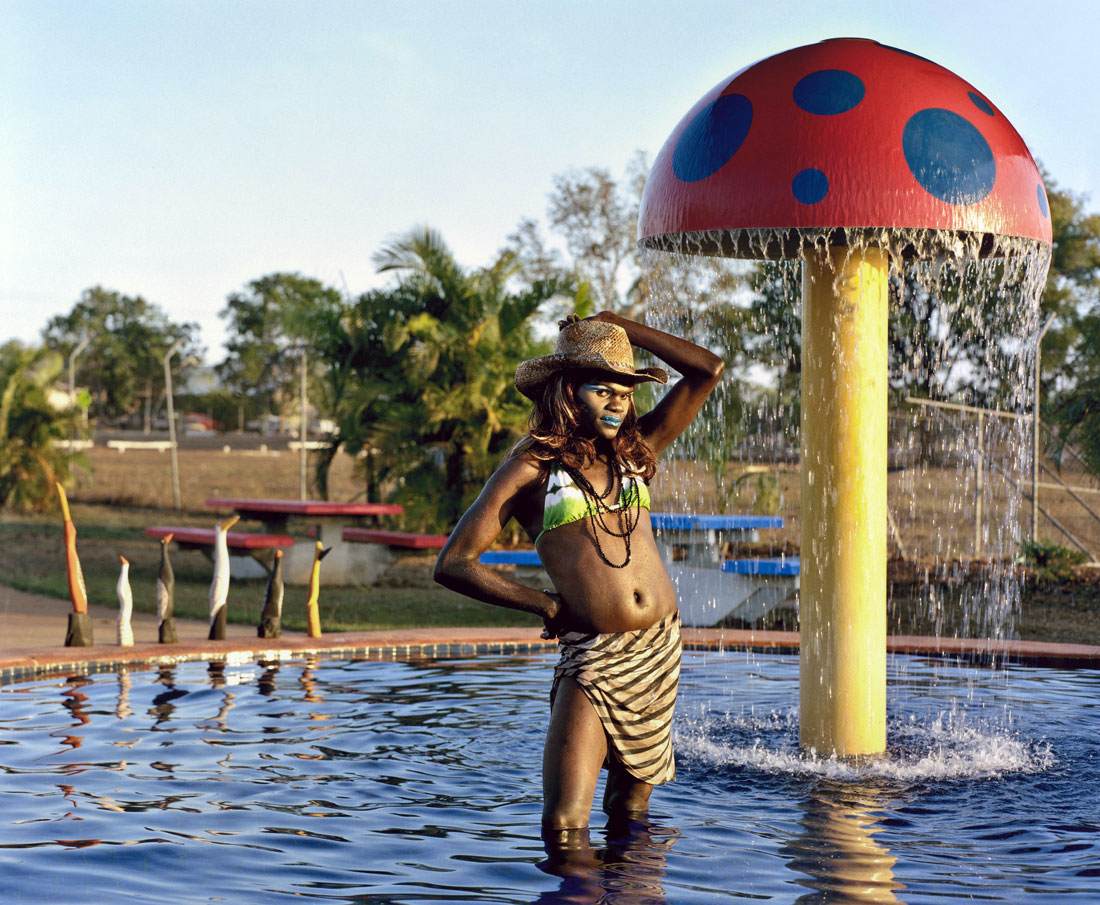
Bindi Cole (Australian, Victoria Wathaurung people b. 1975) 'Crystal' 2009


Bindi Cole (Australian, Victoria b. 1975)
Wathaurung people
Crystal
2009
From the series Sistagirls
Pigment print on Hahnemühle Photo Rag paper
Purchased 2011 with funds from the Bequest of Grace Davies and Nell Davies through the Queensland Art Gallery Foundation
Collection: Queensland Art Gallery
© Bindi Cole 2009. Licensed by Viscopy, Sydney, 2013


~ Review: ‘Sistagirls’ by Bindi Cole at Nellie Castan Gallery, Melbourne, July 2010


Bindi Cole (Australian, Victoria Wathaurung people b. 1975) 'Frederina' 2009


Bindi Cole (Australian, Victoria b. 1975)
Wathaurung people
Frederina
2009
From the series Sistagirls
Pigment print on Hahnemühle Photo Rag paper
Purchased 2011 with funds from the Bequest of Grace Davies and Nell Davies through the Queensland Art Gallery Foundation
Collection: Queensland Art Gallery
© Bindi Cole 2009. Licensed by Viscopy, Sydney, 2013


Arthur Koo-ekka Pambegan Jr (Australian, Queensland Wik-Mungkan people 1936-2010) 'Flying Fox Story Place' 2002-2003


Arthur Koo-ekka Pambegan Jr (Australian, Queensland 1936-2010)
Wik-Mungkan people
Flying Fox Story Place
2002-2003
Carved milkwood (Alstonia muellerana) with synthetic polymer paint and natural pigments
Commissioned 2002 with funds from the Queensland Art Gallery Foundation Grant
Collection: Queensland Art Gallery


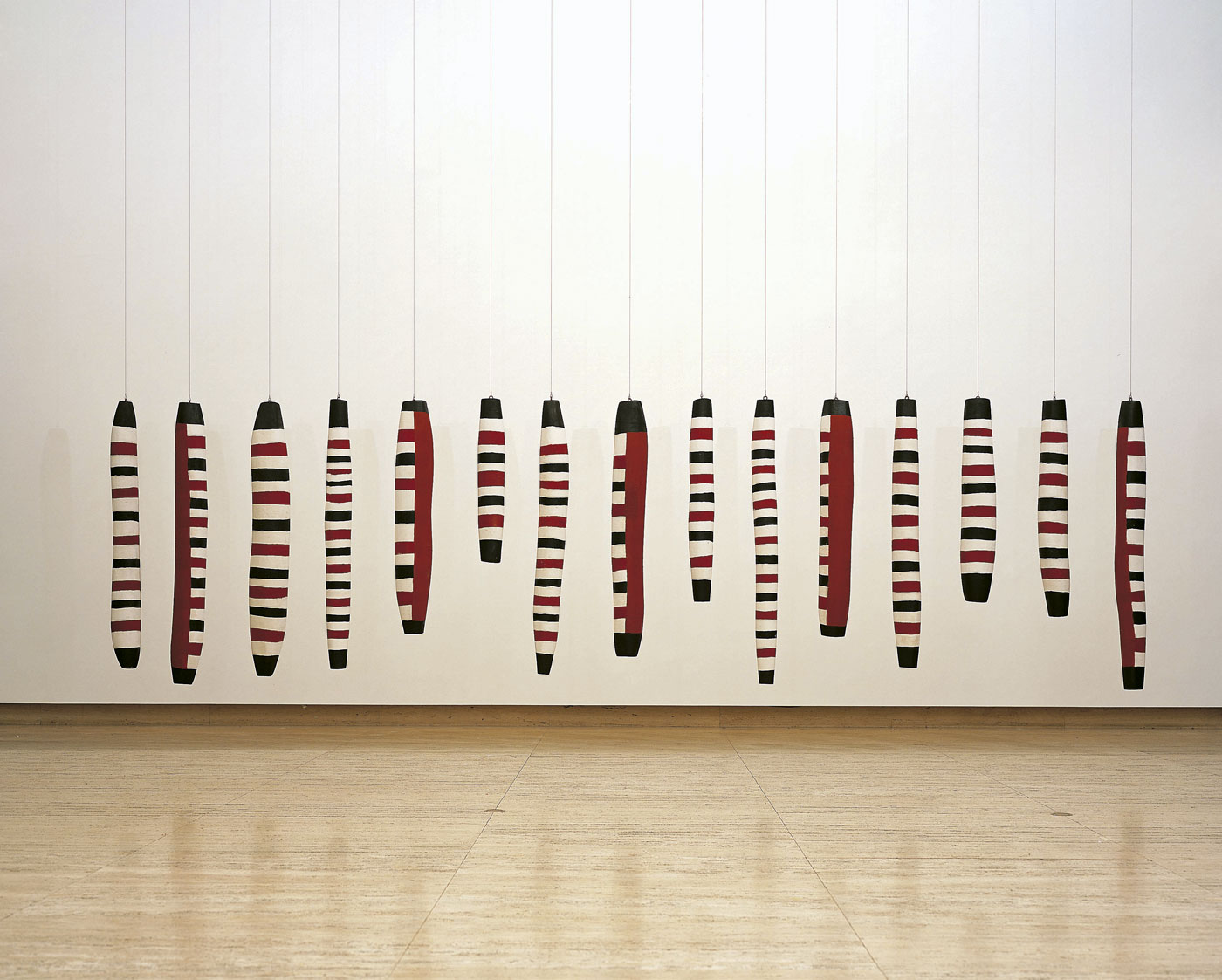
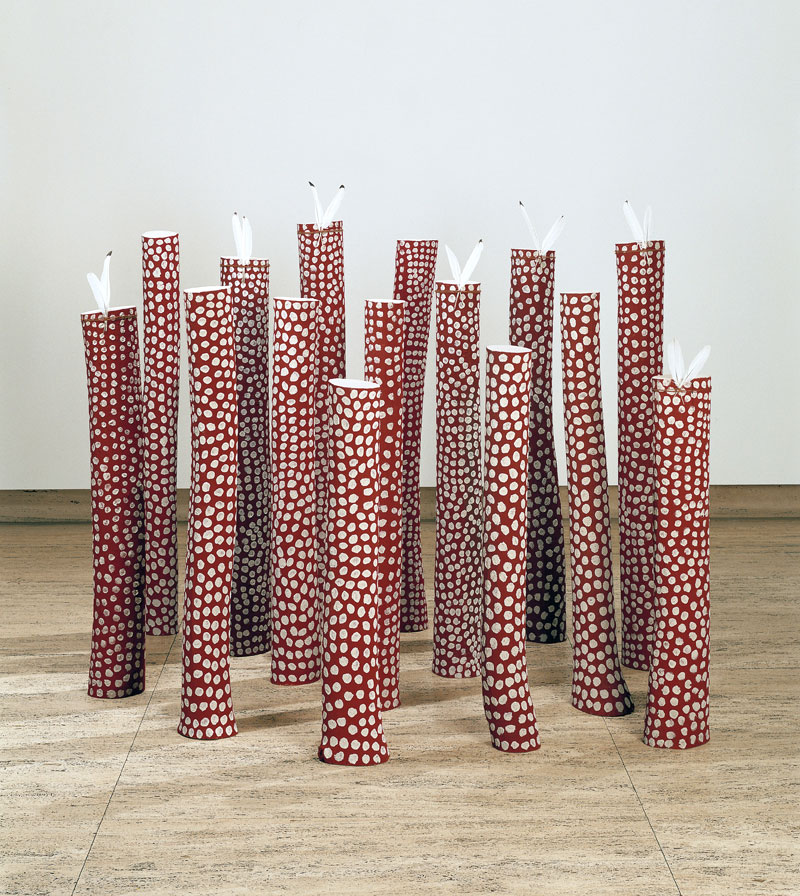
Ron Yunkaporta (Australian, Queensland Wik-Ngathan people b. 1956) 'Thuuth thaa' munth (Law poles)' 2002-2003


Ron Yunkaporta (Australian, Queensland b. 1956)
Wik-Ngathan people
Thuuth thaa’ munth (Law poles)
2002-2003
Cottontree wood (Hibiscus tiliaceus), ibis feathers, bush string with natural pigments
Commissioned 2002 with funds from the Queensland Art Gallery Foundation Grant
Collection: Queensland Art Gallery


Jennifer Mye Jr. (Australian, Queensland Meriam Mir people b. 1984) 'Basket with short handles' 2011


Jennifer Mye Jr. (Australian, Queensland b. 1984)
Meriam Mir people
Basket with short handles
2011
Woven polypropylene tape (blue with Australian flag motif)
Purchased 2011 with funds from Thomas Bradley through the Queensland Art Gallery Foundation


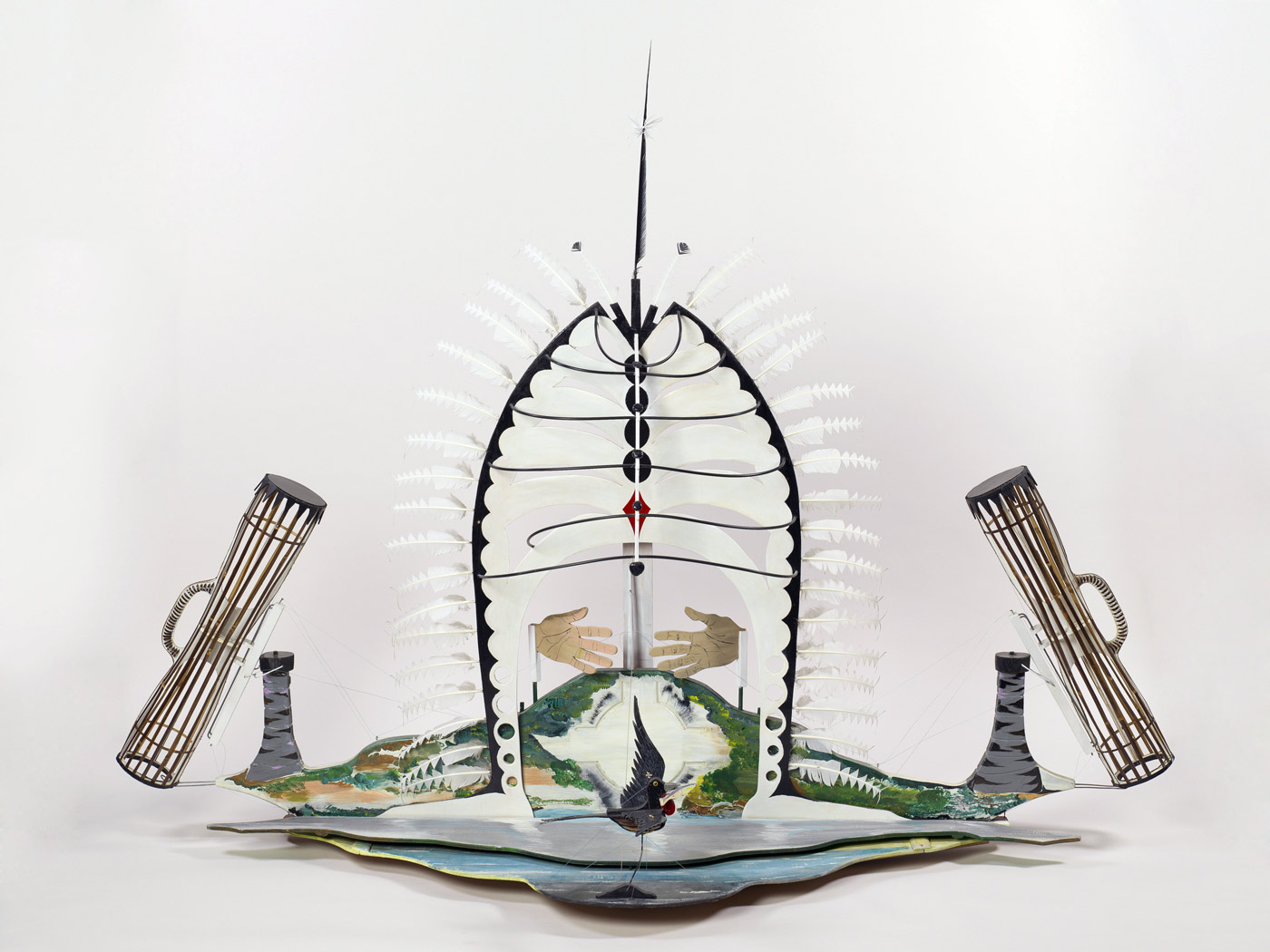
Ken Thaiday Sr (Australian, Queensland Meriam Mir people b. 1950) 'Symbol of the Torres Strait' 2003


Ken Thaiday Sr (Australian, Queensland b. 1950)
Meriam Mir people
Symbol of the Torres Strait
2003
Plywood, synthetic polymer paint, feathers, black bamboo, plastic tubing, fishing line
Purchased 2004 with funds from Corrs Chambers Westgarth through the Queensland Art Gallery Foundation
Collection: Queensland Art Gallery


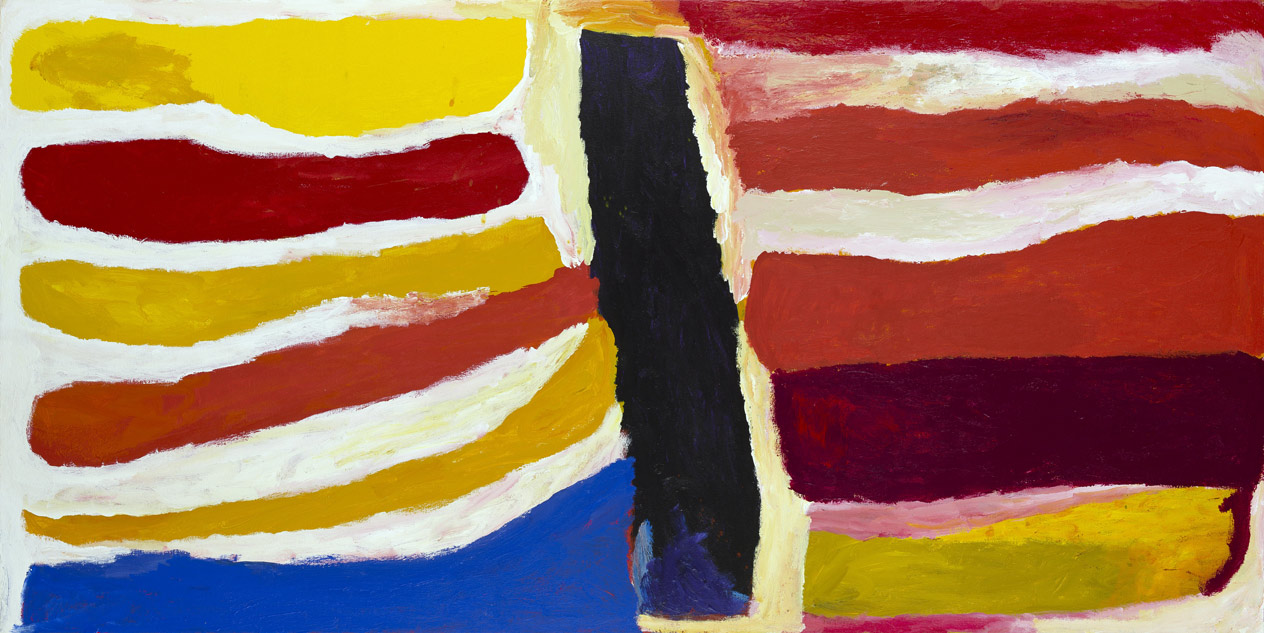
Dinny McDinny (Australian, Northern Territory Marnbaliya people, Balyarrinji skin group c. 1927-2003) 'Kalajangu – Rainbow Dreaming came through Marnbaliya Country' 2003


Dinny McDinny (Australian, Northern Territory c. 1927-2003)
Marnbaliya people, Balyarrinji skin group
Kalajangu – Rainbow Dreaming came through Marnbaliya Country
2003
Synthetic polymer paint on canvas
Purchased 2004
Queensland Art Gallery Foundation
Collection: Queensland Art Gallery


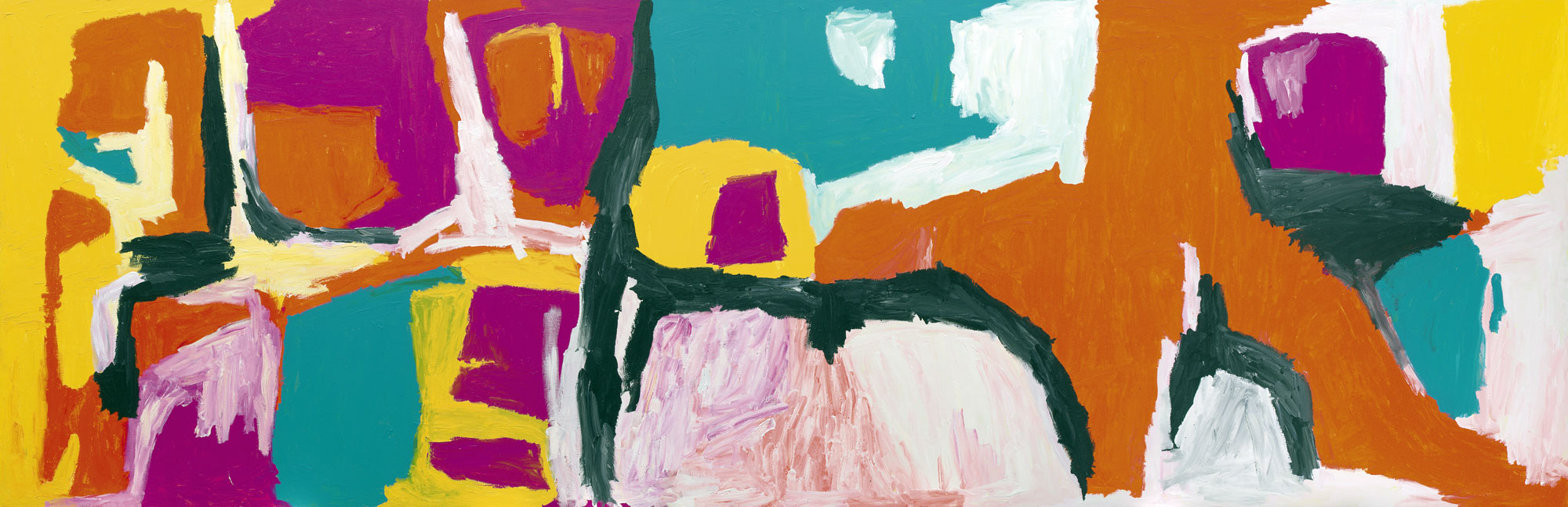
Sally Gabori (Australian, Queensland Kaiadilt people 1924-2015) 'Dibirdibi Country' 2008


Sally Gabori (Australian, Queensland 1924-2015)
Kaiadilt people
Dibirdibi Country
2008
Synthetic polymer paint on linen
Purchased 2008 with funds from Margaret Mittelheuser, AM, and Cathryn Mittelheuser, AM, through the Queensland Art Gallery Foundation
Collection: Queensland Art Gallery
© Sally Gabori 2008. Licensed by Viscopy, Sydney, 2013


Gabori created a body of work, which expressed sensations of life and cultural memory in diaspora, and differed from other known forms of Aboriginal painting, which focused on story-telling. Most of Gabori’s works represent places on Bentinck Island of deep personal significance to the artist: her husband’s place, Dibirdibi Country, her father’s place, Thundi, her own Country, Mirdidingki, and the first outstation, Nyinyilki.

Gabori lived on Bentinck Island in accordance with custom, developing knowledge of Kaiadilt cartography and cosmology, until the entire population was removed to Mornington Island mission by European settlers in 1948.

Text from the NGV website


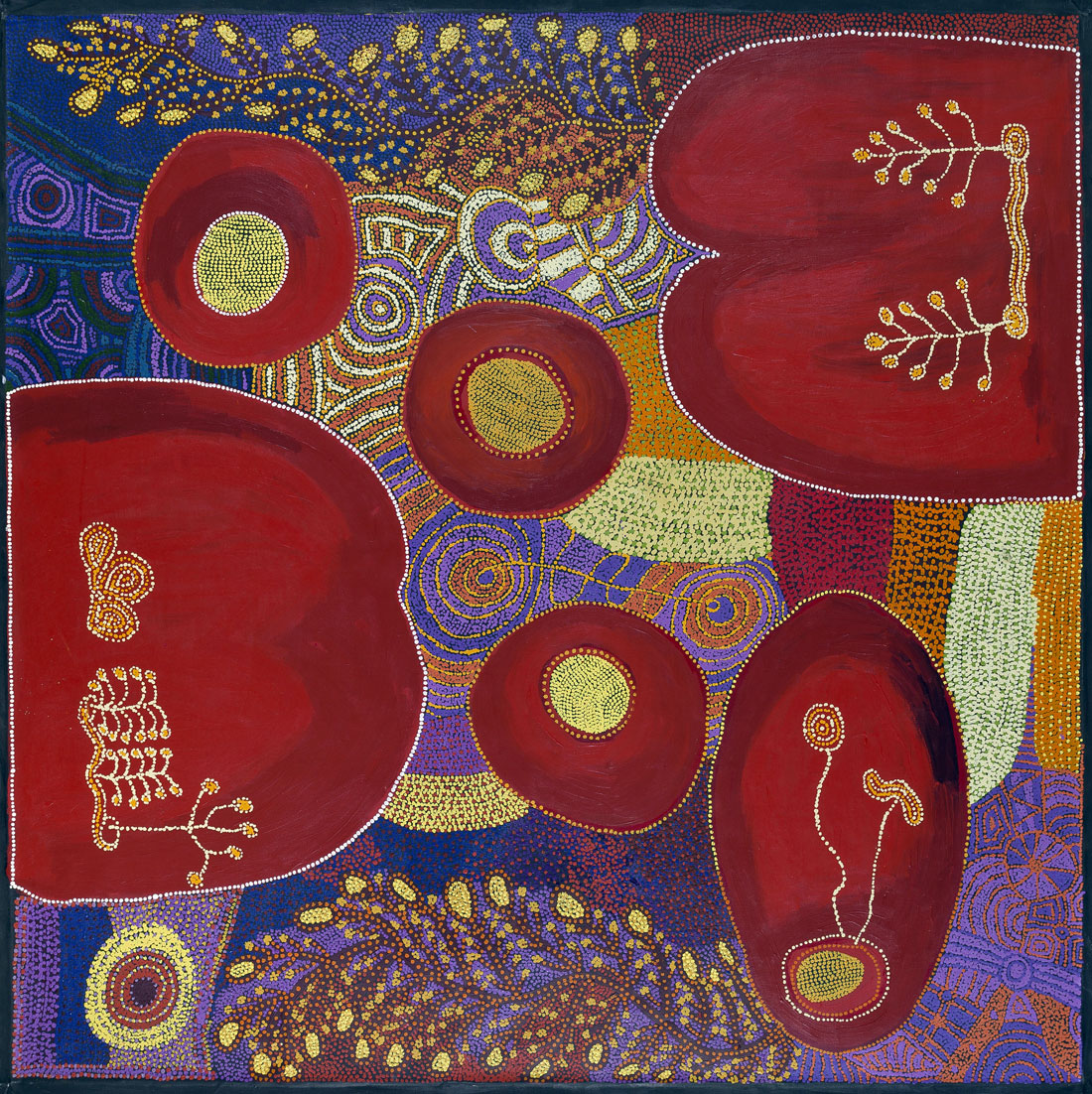
Wakartu Cory Surprise (Australian, Western Australia Walmajarri people 1929-2011) 'Mimpi' 2011


Wakartu Cory Surprise (Australian, Western Australia 1929-2011)
Walmajarri people
Mimpi
2011
Synthetic polymer paint on canvas
Purchased 2012
Queensland Art Gallery
Collection: Queensland Art Gallery
© Wakartu Cory Surprise 2011. Licensed by Viscopy, Sydney, 2013


“When I paint, I think about my country and where I have been travelling across that couontry. I paint from here (points to head-thinking about country) and here (points to breasts, collarbone and shoulder blades which is reference to body painting). I think abut my people the old people and what they told me, I think about jumangkarni (Dreamtime). Nobody taught me how to paint, I put down my own ideas, I saw these palces for my self, I went there with the old people. I paint jiji (sand hills), jumu (soak water), jila (spring), jiwari (rock hole), pamarr (hills and rock country), I think about mangarri (vegetable food) and kuyu (game) from my country and when I was there. Whe I paint I am thinking about law from a long time ago, I am thinking about the country, my country. When I first painted we didn’t get money, nothing. I like painting, its good, I get pamarr (word for rock, stone money) for it, I can buy my food, tyres, fix my car, I give some money to family and I keep some for me.”

~ Wakartu Cory Surprise


Ruby Tjangawa Williamson (Australian, South Australia b. 1940); Nita Williamson (Australian, South Australia b. 1963); Suzanne Armstrong (Australian, South Australia b. 1980); Pitjantjatjara people (Collaborating artists). 'Ngayuku ngura (My country) Puli murpu (Mountain range)' 2012


Ruby Tjangawa Williamson (Australian, South Australia b. 1940)
Pitjantjatjara people
Nita Williamson (Australian, South Australia b. 1963)
Suzanne Armstrong (Australian, South Australia b. 1980)
Pitjantjatjara people (Collaborating artists)
Ngayuku ngura (My country) Puli murpu (Mountain range)
2012
Synthetic polymer paint on linen
Purchased 2012 with funds from Margaret Mittelheuser, AM, and Cathryn Mittelheuser, AM, through the Queensland Art Gallery Foundation
Collection: Queensland Art Gallery


Ruby Tjangawa Williamson is a senior law woman committed to fostering traditional culture. She began painting in 2000. Her distinctive works are acclaimed and she is regarded as one of Amata’s most significant artists. Williamson also weaves tjanpi (desert grass) baskets and makes punu (wood carvings) with pokerwork designs.


My Country, I Still Call Australia Home: Contemporary Art from Black Australia is the Gallery’s largest exhibition of contemporary art by Aboriginal and Torres Strait Islander artists to date. The exhibition examines the strengths of the Gallery’s holdings and explores three central themes – presenting Indigenous views of history (My history), responding to contemporary politics and experiences (My life), and illustrating connections to place (My country).

From paintings and sculptures about ancestral epicentres to photographs and moving-image works that interrogate and challenge the established history of Australia, to installations responding to political and social situations affecting all Australians, the thread that binds these artists is their collective desire to share their experiences and tell their stories.

“Drawing on three decades of research, collaboration and Collection development, My Country, I Still Call Australia Home highlights the connection Aboriginal and Torres Strait Islander artists have with country as both ‘land’ and ‘nation’, and features over 300 works by 116 artists from every state and territory,” Mr Saines said.

“Curated by Bruce McLean, a Wirri / Birri-Gubba man with heritage from the central coast of Qoeensland and the Gallery’s Curator of Indigenous Australian Art, the exhibition gives voice to artists who investigate historical and contemporary political and social issues. Many of these issues and works are confronting and controversial, and we are proud of the role our Gallery plays as a forum for discussion, debate and education.”

Mr Saines said the exhibition was divided in to three broad thematic strands that explore how Aboriginal and Torres Strait Islander artists depict the stories of their communities and highlight contemporary Indigenous experiences in Australia.

Press release from the Gallery of Modern Art (GOMA) website


Michael Cook (Australian, Queensland Bidjara people b. 1968) 'Civilised #13' 2012


Michael Cook (Australian, Queensland b. 1968)
Bidjara people
Civilised #13
2012
Inkjet print on paper
Purchased 2012
Queensland Art Gallery
Collection: Queensland Art Gallery
© The artist


Michael Cook’s works depict an ethereal dreamworld, a timeless place that traverses both the colonial and contemporary worlds and is sustained on ‘what ifs’ and hypotheticals. It is a place of Cook’s own modern Dreaming. His central question is quite simple: what if the British, instead of dismissing Aboriginal society, had taken a more open approach to their culture and knowledge systems? This all-Aboriginal world is a sort of utopia where questions can be posed and answered without the complication of race – there is no black and white, no right or wrong. The figures within them are both conquerors and conquered. Through the use of images of Aboriginal people, often in roles opposite to the stereotypical, Cook ensures that an Aboriginal voice is ever-present.


Fiona Foley (Australian, Queensland/New South Wales Badtjala people, Wondunna clan, Fraser Island b. 1964) 'The Oyster Fishermen #1' 2011


Fiona Foley (Australian, Queensland/New South Wales b. 1964)
Badtjala people, Wondunna clan, Fraser Island
The Oyster Fishermen #1
2011
Inkjet print on Hahnemühle paper
Purchased 2012
Queensland Art Gallery Foundation
Collection: Queensland Art Gallery


Vernon Ah Kee (Australian, Queensland Kuku Yalanji/Waanyi/Yidinyji/GuuguYimithirr people b. 1967) 'Tall Man' 2010 (still)


Vernon Ah Kee (Australian, Queensland b. 1967)
Kuku Yalanji/Waanyi/Yidinyji/GuuguYimithirr people
Tall Man (still)
2010
Four-channel digital video installation from DVD
Purchased 2012
Queensland Art Gallery
Collection: Queensland Art Gallery


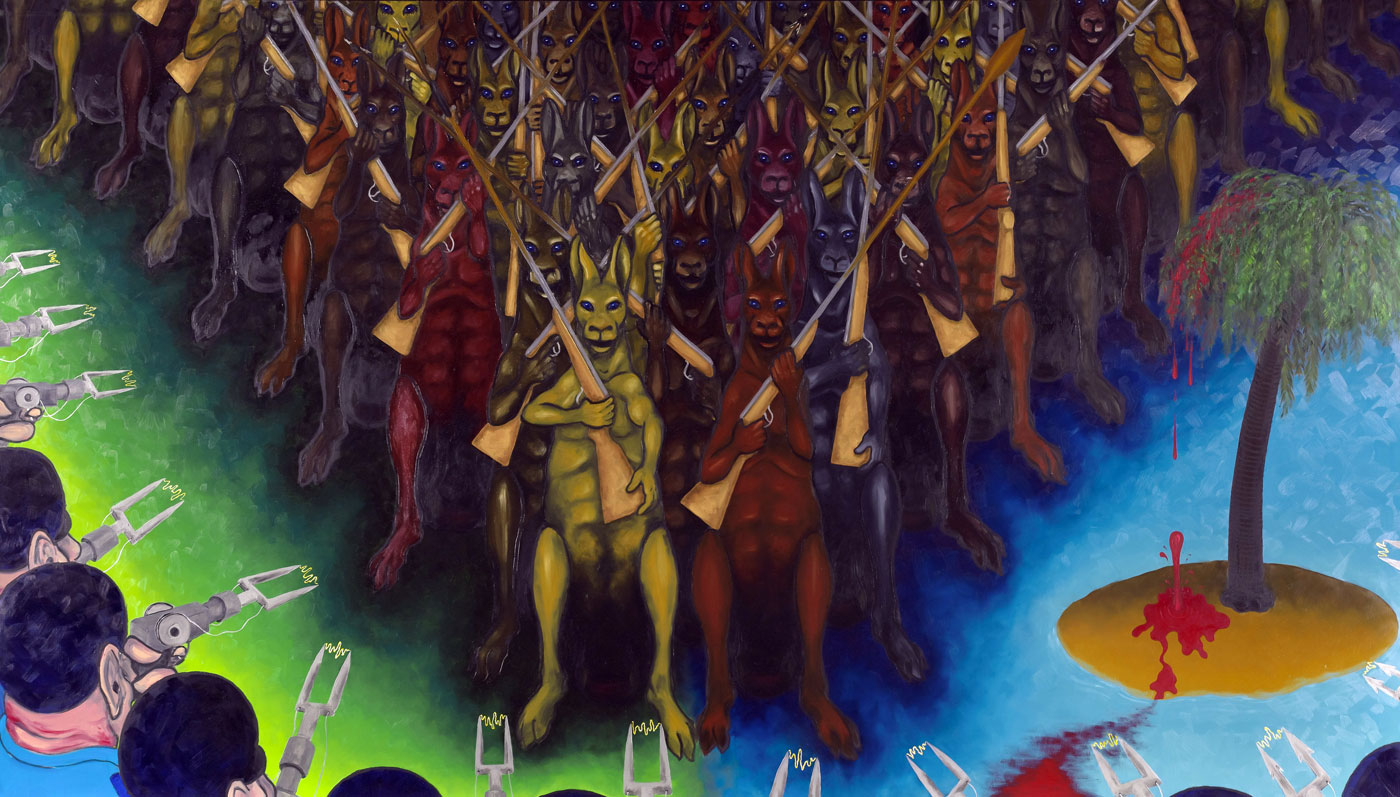
Gordon Hookey (Australian, Queensland/New South Wales Waanyi people b. 1961) 'Blood on the wattle, blood on the palm' 2009


Gordon Hookey (Australian, Queensland/New South Wales b. 1961)
Waanyi people
Blood on the wattle, blood on the palm
2009
Oil on linen
The James C Sourris, AM, Collection
Gift of James C Sourris, AM, through the Queensland Art Gallery Foundation 2012
Donated through the Australian Government’s Cultural Gifts Program
Collection: Queensland Art Gallery


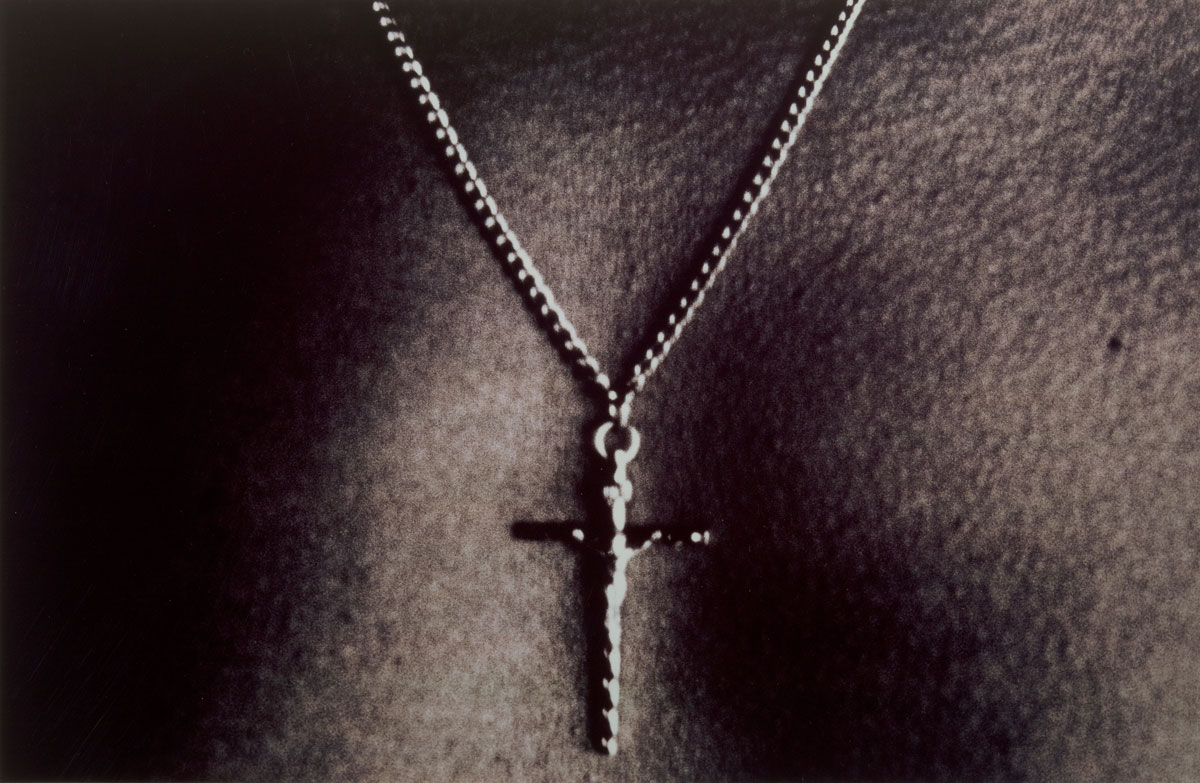
Michael Riley (Australian, New South Wales Kamilaroi/Wiradjuri people 1960-2004) 'Sacrifice (portfolio)' 1993 (detail)


Michael Riley (Australian, New South Wales 1960-2004)
Kamilaroi/Wiradjuri people
Sacrifice (portfolio) (detail)
1993
Colour cibachrome photograph
Purchased 2002
Collection: Queensland Art Gallery


Christian Thompson (Australian, Queensland/New South Wales/Victoria Bidjarra/Kunja people b. 1978) 'Black Gum 2' (from 'Australian Graffiti' series) 2008


Christian Thompson (Australian, Queensland/New South Wales/Victoria b. 1978)
Bidjarra/Kunja people
Black Gum 2 (from Australian Graffiti series)
2008
Type C photograph
Purchased 2008
The Queensland Art Gallery Foundation Grant
Collection: Queensland Art Gallery


Warwick Thornton (Australian, Northern Territory Kaytej people b. 1970) 'Stranded' 2011 (still)


Warwick Thornton (Australian, Northern Territory b. 1970)
Kaytej people
Stranded (still)
2011
3D digital video: 11.06 minutes, colour, sound
Commissioned by the 2011 Adelaide Film Festival Investment Fund
Purchased 2011
Queensland Art Gallery Foundation
Collection: Queensland Art Gallery
© Warwick Thornton. Image courtesy the artist and Stills Gallery


Gallery of Modern Art (GOMA)

The Queensland Art Gallery (QAG) and Gallery of Modern Art (GOMA) are located 150 metres from each other, on the south bank of the Brisbane River. Entrance to both buildings is possible from Stanley Place, and the river front entrance to the Queensland Art Gallery is on Melbourne Street. The Galleries are within easy walking distance to the city centre and South Bank Parklands.

Opening hours:
Daily 10.00am – 5.00pm

Gallery of Modern Art (GOMA) website

LIKE ART BLART ON FACEBOOK

Back to top