Exhibition: ‘Life Dances On: Robert Frank in Dialogue’ at the Museum of Modern Art (MoMA), New York

Exhibition dates: 15th September, 2024 – 11th January, 2025

Curator: Organised by Lucy Gallun, Curator, with Kaitlin Booher, Newhall Fellow, and Casey Li, 12 Month Intern, Department of Photography.


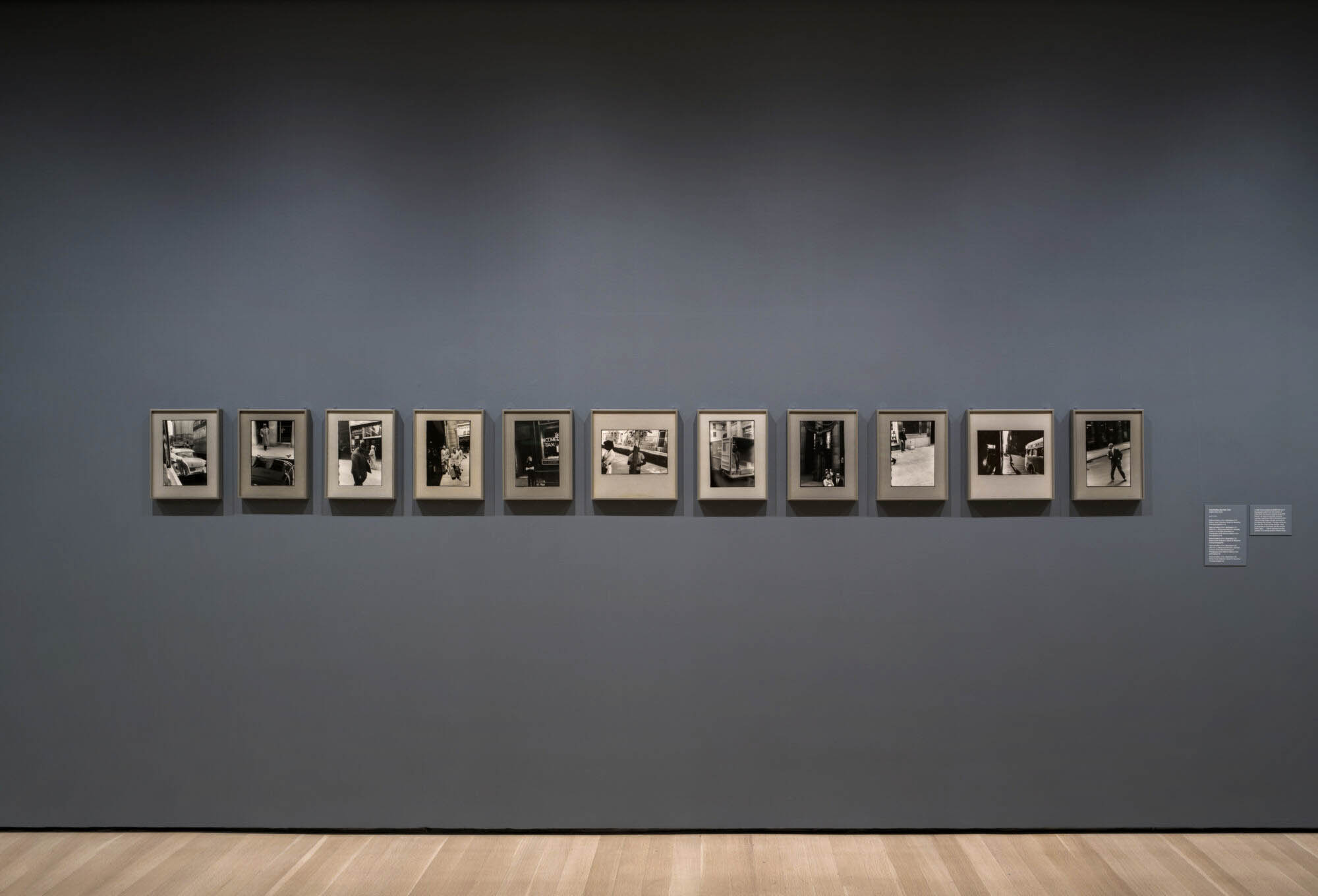
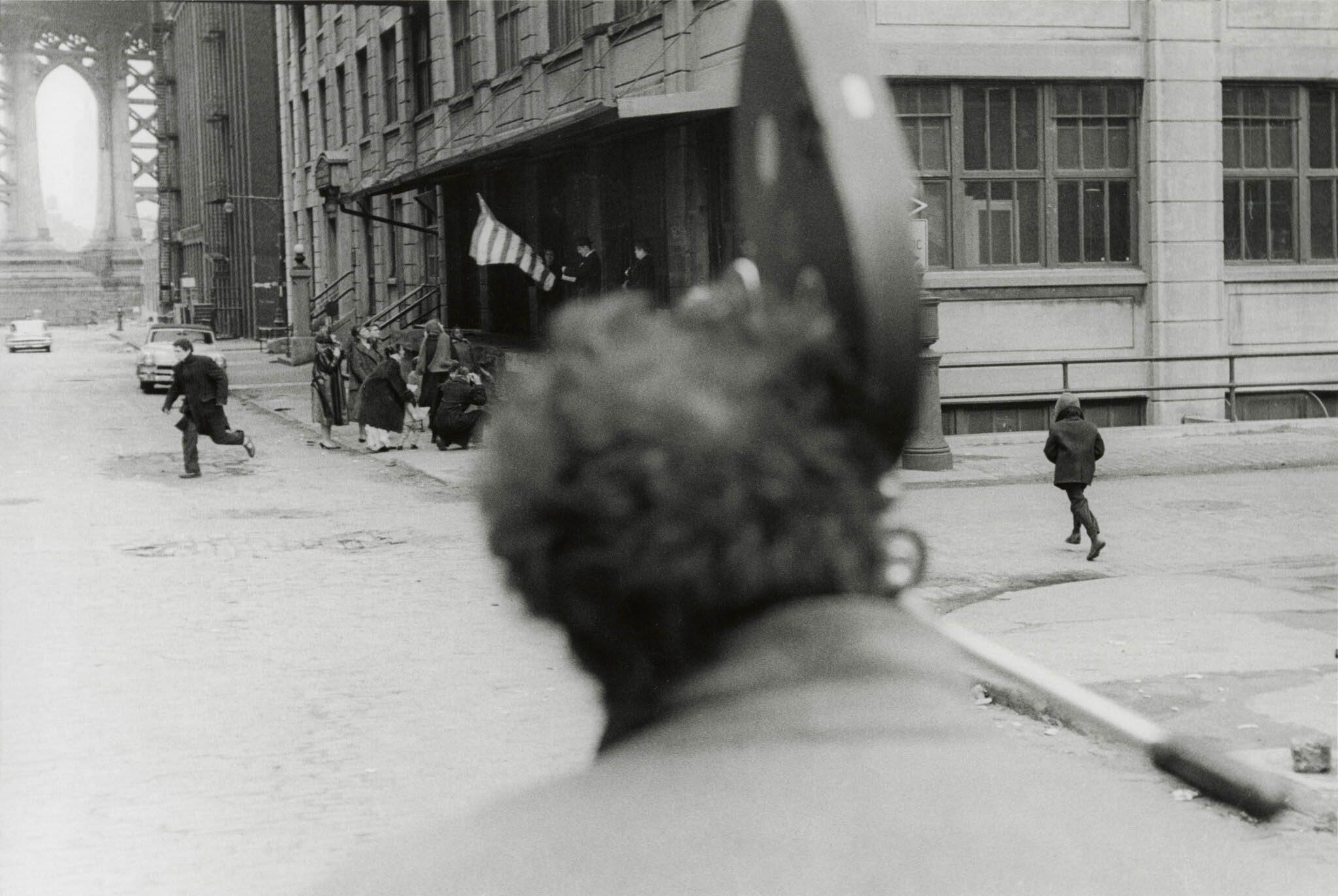
Robert Frank (Swiss-American, 1924-2019) 'From the Bus, New York' 1958 from the exhibition 'Life Dances On: Robert Frank in Dialogue' at the Museum of Modern Art (MoMA), New York


Robert Frank (Swiss-American, 1924-2019)
From the Bus, New York
1958
Gelatin silver print
13 15/16 × 13 1/4″ (35.4 × 33.7cm)
National Gallery of Art, Washington, DC.
Robert Frank Collection, Robert B. Menschel Fund
© 2024 The June Leaf and Robert Frank Foundation


The first posting on a new year…

In front of me I have the sea

While the photographs from his groundbreaking photobook The Americans (1958) have defined the artistic reputation and legacy of Swiss-American photographer Robert Frank and his influence on a later generation of documentary photographers, I am so grateful to the man for not retreating into his shell as so many artists do, finding a style which makes them famous and makes them money and then repeating the formula over and over again ad nauseam.

Frank was ever creative, always exploring new ways of filmic and photographic expression. I admire that. While “his perpetual experimentation and collaborations across various mediums” did not produce another seminal body of work – indeed Arthur Lubow has argued that if the aim of this exhibition is to reposition Frank’s reputation through showcasing six decades of later work the problem being that his genius as a photographer did not carry over into filmmaking1 – no matter!

Frank was not afraid to put himself out there as an artist, challenging himself to see differently, to develop further as an artist and as a human being. As he said, “I think of myself, standing in a world that is never standing still … I’m still in there fighting, alive because I believe in what I’m trying to do now.”

Critical to his new way of seeing after The Americans was Frank’s move beyond a single, static image into combining multiple negatives, images, text together. Recently I again delved through my copy of Frank’s 1972 photobook The Lines of My Hand, which “demonstrates Frank’s particular interest in the visual effects and meaning produced from combinations of images, either within a single photograph or formed by printing multiple negatives together to create a dense montage.” (Text from MoMA)

What’s so striking about the photobook is its tightly packed nature, its pages filled with ideas and images. Frank was using his intuition to construct a new language of photography: multiple, diverse and overlaid perspectives complicit with narratives not external to the self but an internal vision of a felt reality, visions that exist somewhere between documentary and fiction.

Here is abstraction and isolation, loneliness in the dream… the white line eternally disappearing into the distance in 34th Street (1949); tickertape floating in the air in Wall Street (1951); stiff men in bowler hats in City of London (1951) and the lines of the hand in Untitled [The Lines of the Hand] (Paris, 1949-1951, below) with the declaration ‘Sciences and Mysteries’. Sciences and mysteries, realities and abstractions, the known and unknown. The Lines of My Hand are the song lines of Frank’s life, the photographs breathing into existence his innermost thoughts and truths. Who am I? What do I believe in?

“Outside it is snowing, no waves at all. The beach is white, the fence posts are grey. I am looking back into a world gone forever. Thinking of a time that will never return. A book of photographs is looking at me. Twenty-five years of looking for the right road. Post cards from everywhere. If there are any answers I have lost them.” (Opening words from The Lines of My Hand)

“Frank felt trapped by the expectations and pigeonholing that the lionization of “The Americans” induced, and he recoiled in horror at the prospect of repeating himself. Beyond that, he gave various explanations over the years for why he abandoned the 35 mm camera that he brandished like a sorcerer’s wand. He explained that he had lost faith in the capacity of a single photograph to convey the truth. And his search had turned inward. “The truth is the way to reveal something about your life, your thoughts, where you stand,” he said.”2 This turning inwards was facilitated by his move in 1970 with his wife June Leaf to the rural town of Mabou on Cape Breton Island in Nova Scotia, Canada: “what I wanted to photograph was not really what was in front of my eyes but what was inside.”

Personally I don’t think it matters that the later photographs are not as memorable as those in The Americans. What matters is that Frank believed in what he was doing: it was his truth telling. “I am no longer the solitary observer turning away after the click of the shutter,” Frank declared. “Instead I’m trying to recapture what I saw, what I heard and what I feel. What I know!”

Finally, in the film Life Dances On (1980), his wife looks at the camera and asks Frank, “Why do you make these pictures?” In an introduction to the film’s screening, he answered: “Because I am alive.”

Because in front of him he had the sea…

Dr Marcus Bunyan


1/ Arthur Lubow. “‘The Americans’ Made the Photographer Robert Frank a Star. What Came Next?” on The New York Times website Sept. 12, 2024 [Online] Cited 15/12/2024

2/ Ibid.,


Many thanks to MoMA for allowing me to publish the photographs in the posting. Please click on the photographs for a larger version of the image.


Robert Frank (Swiss-American, 1924-2019) 'Untitled [The Lines of the Hand]' Paris, 1949-1951


Robert Frank (Swiss-American, 1924-2019)
Untitled [The Lines of the Hand]
Paris, 1949-1951
Gelatin silver print
© 2024 The June Leaf and Robert Frank Foundation

This photograph as far as I know is not in the exhibition. It is used under fair use conditions for the purposes of education and research.
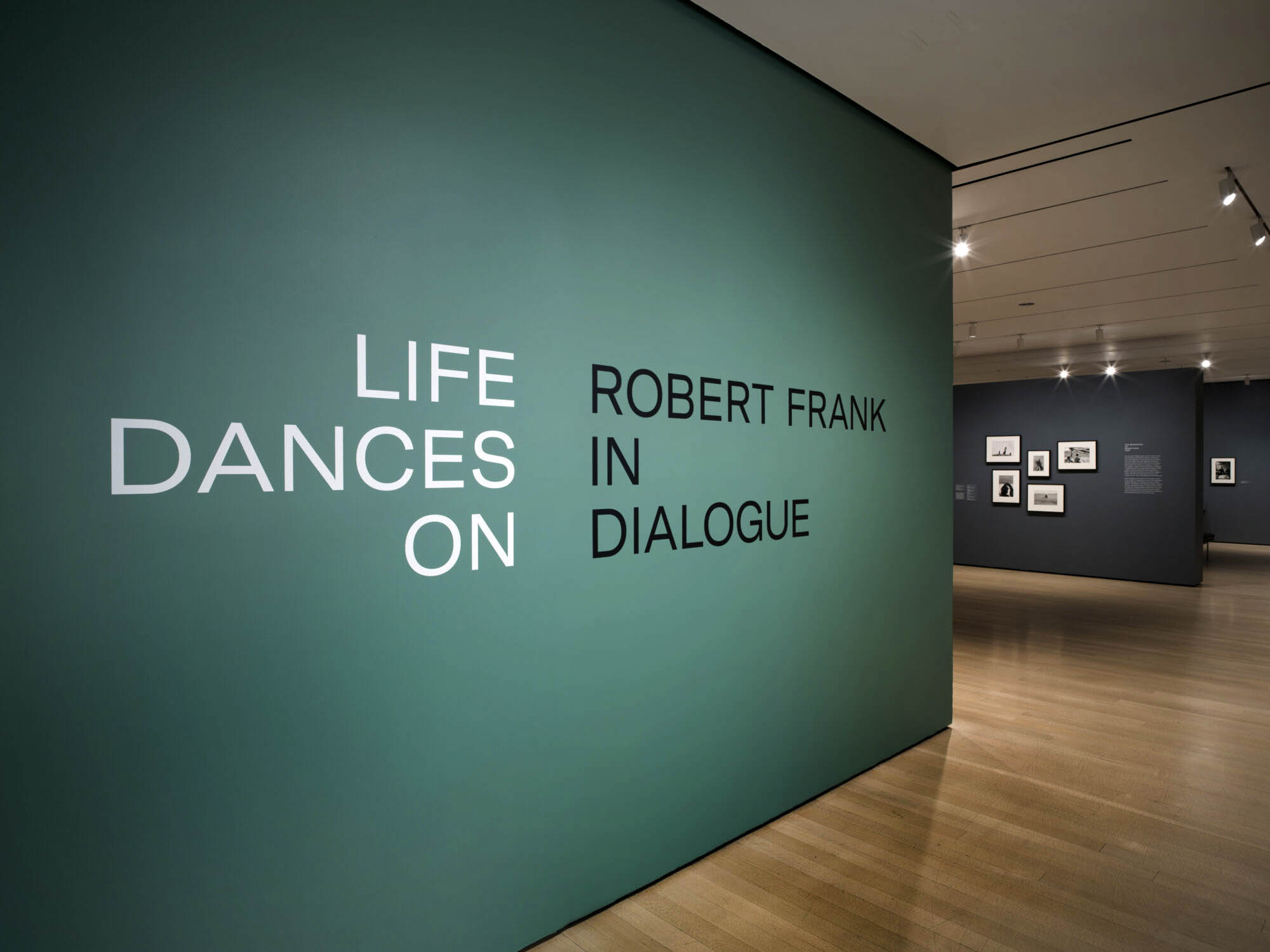
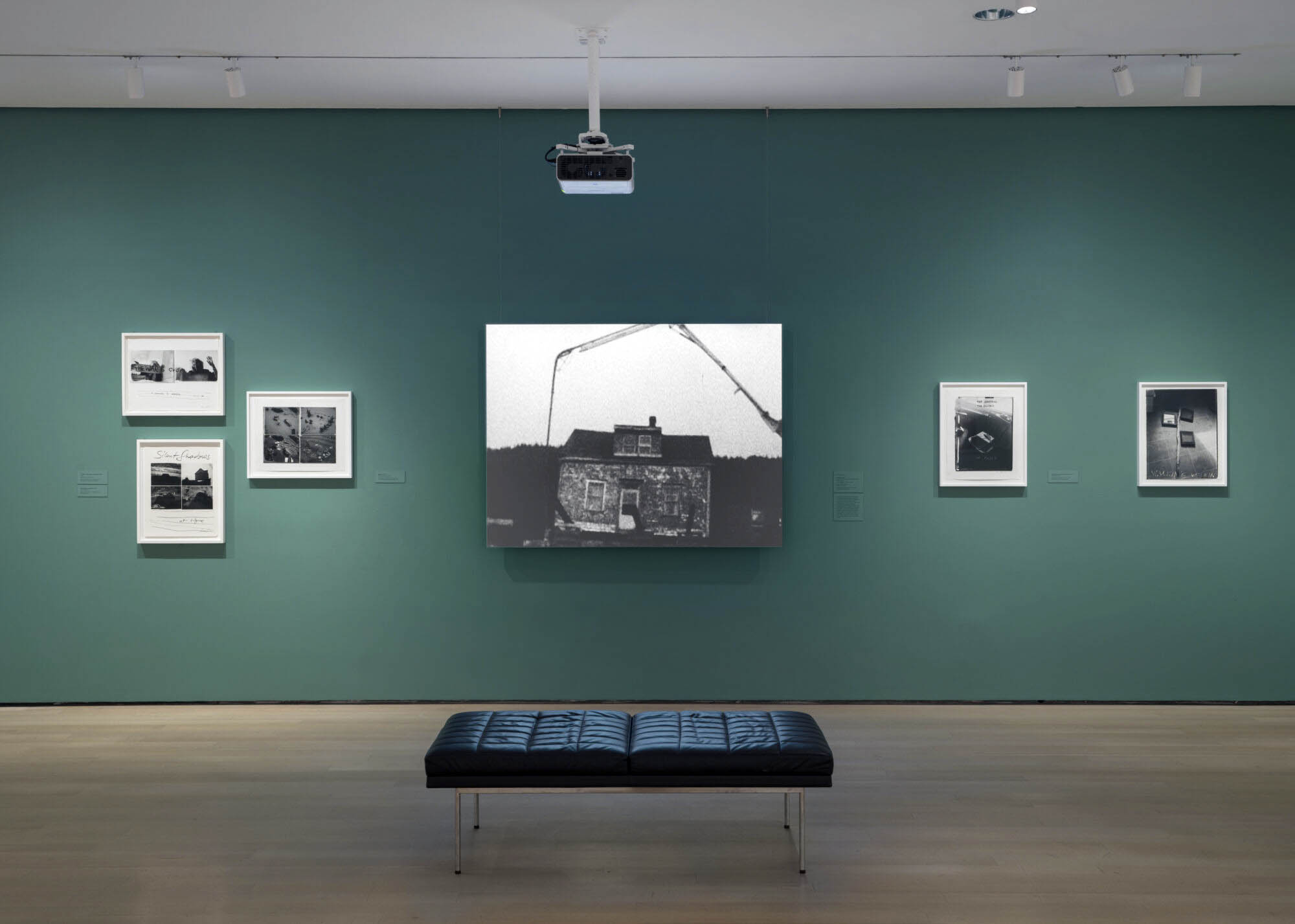
 

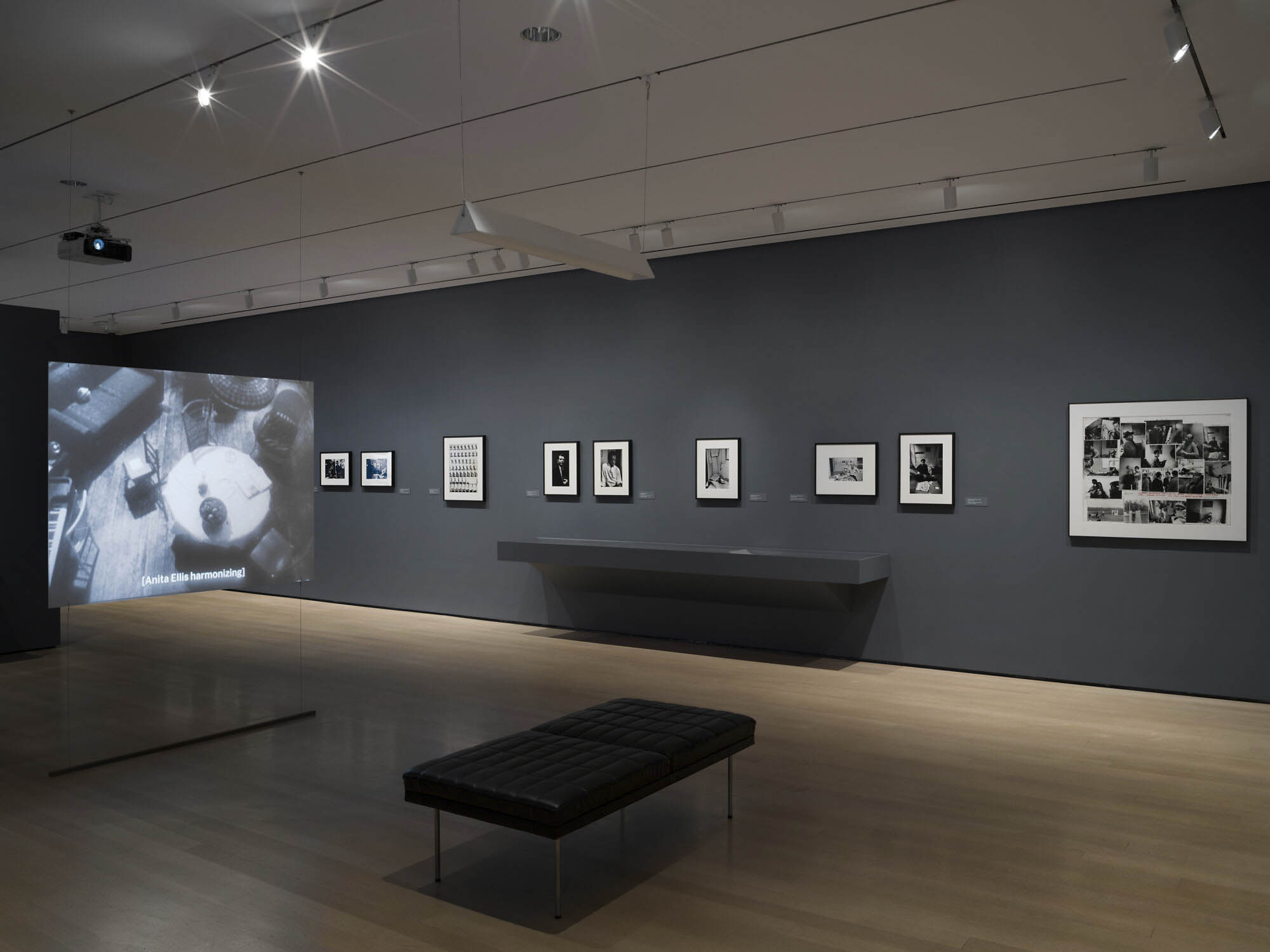
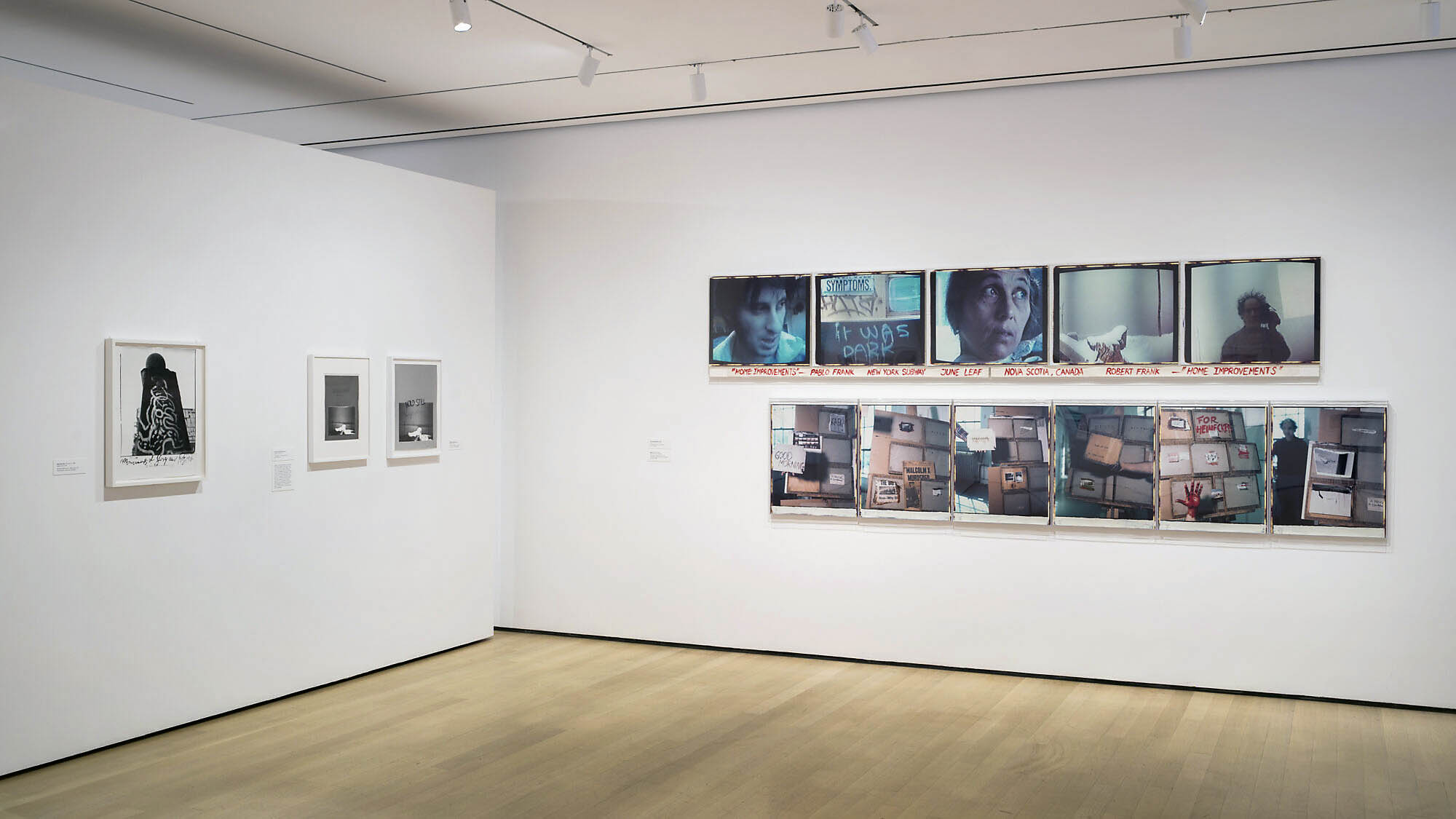
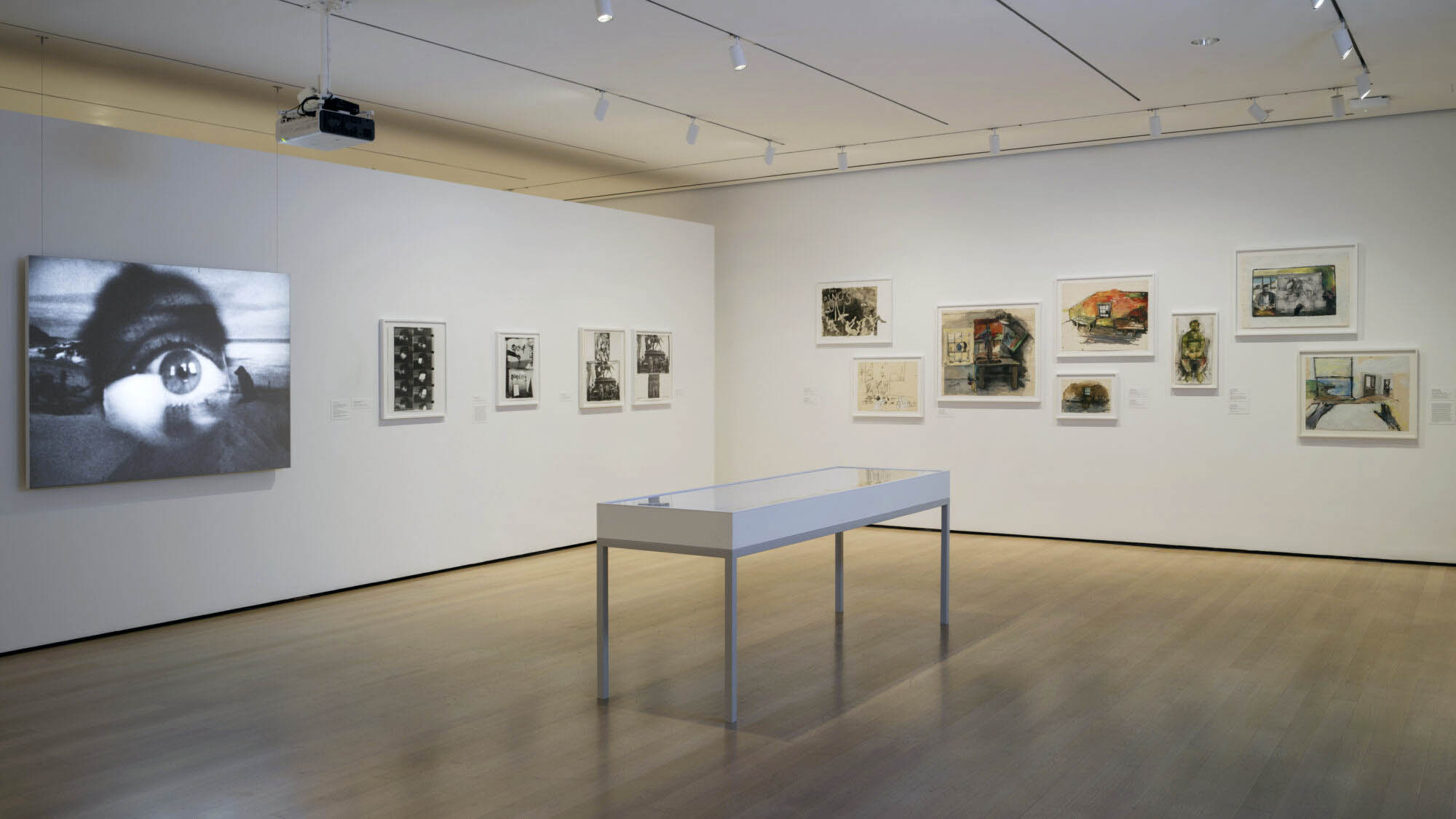
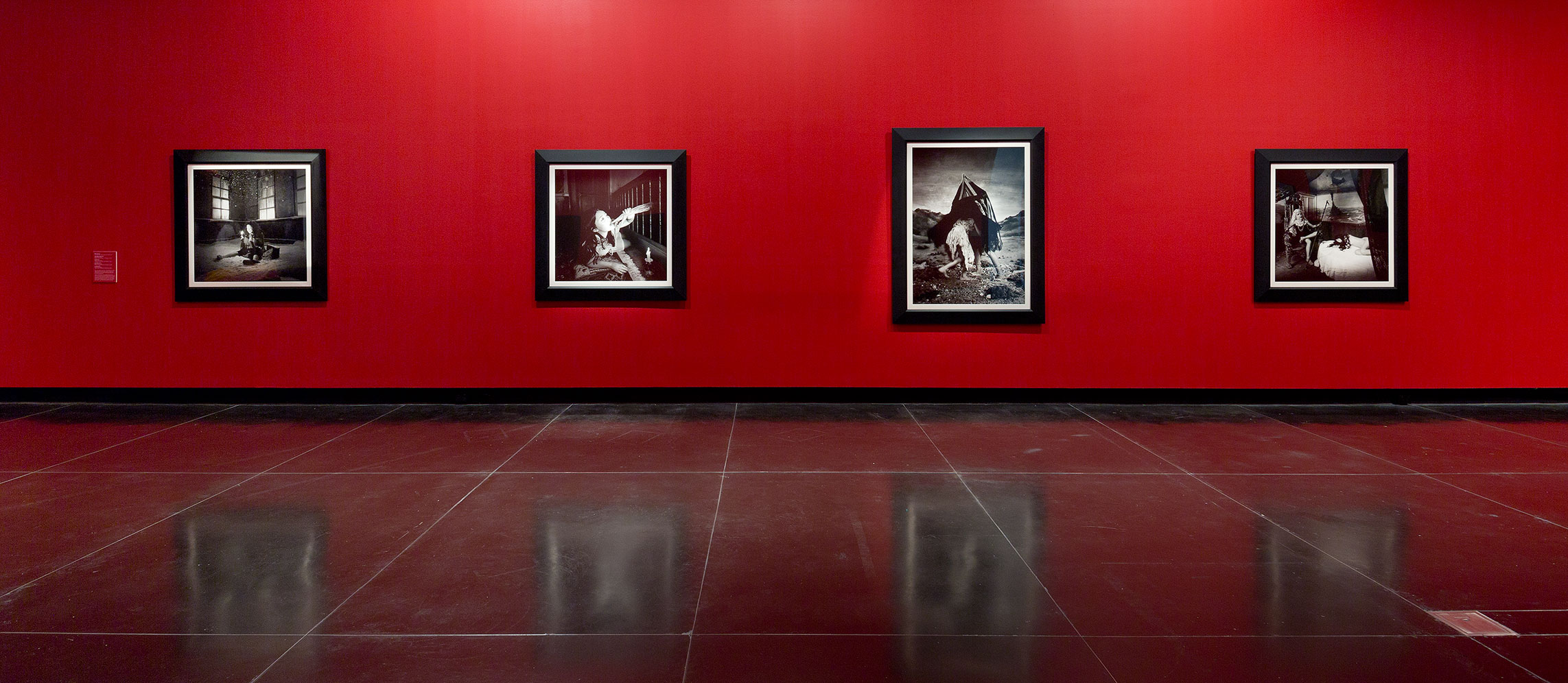
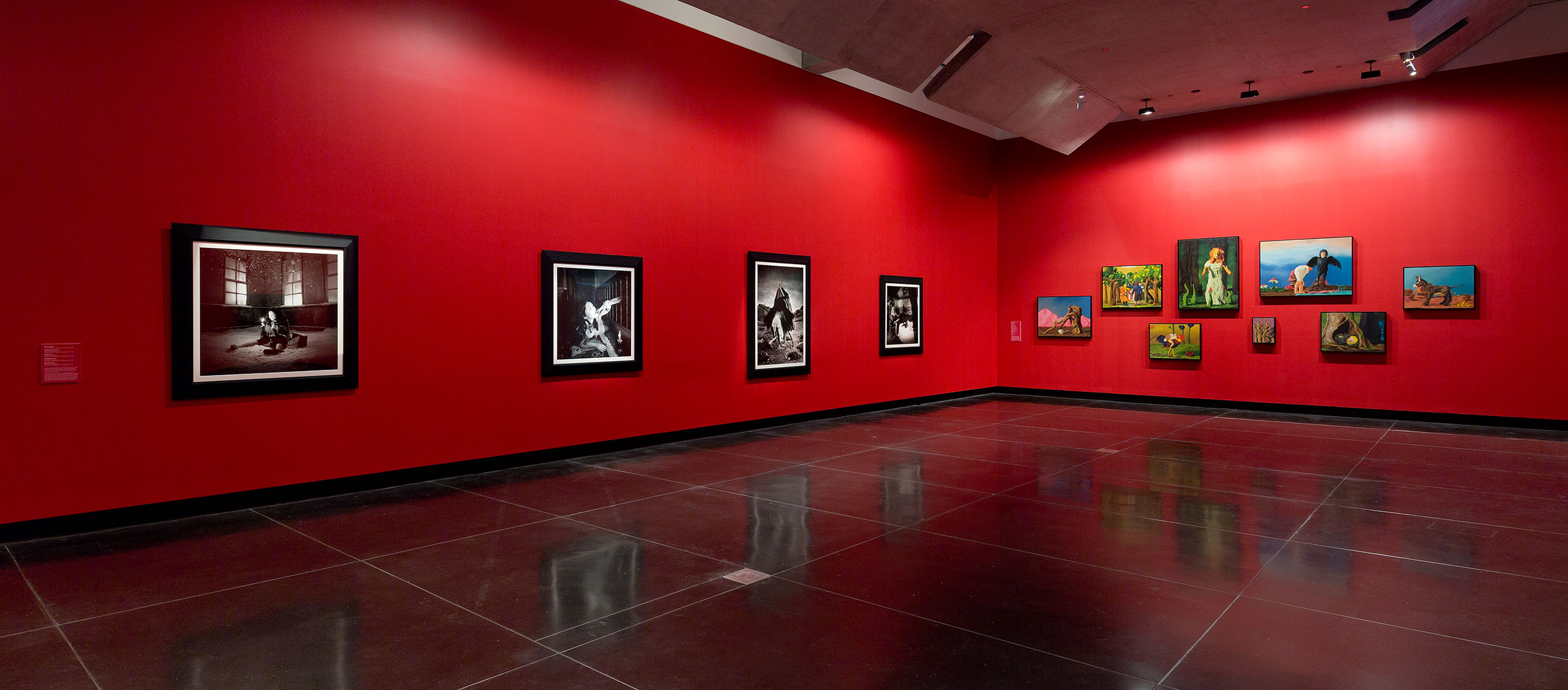
Installation view of the exhibition 'Life Dances On: Robert Frank in Dialogue' at the Museum of Modern Art (MoMA), New York

Installation view of the exhibition 'Life Dances On: Robert Frank in Dialogue' at the Museum of Modern Art (MoMA), New York

Installation view of the exhibition 'Life Dances On: Robert Frank in Dialogue' at the Museum of Modern Art (MoMA), New York

Installation view of the exhibition 'Life Dances On: Robert Frank in Dialogue' at the Museum of Modern Art (MoMA), New York

Installation view of the exhibition 'Life Dances On: Robert Frank in Dialogue' at the Museum of Modern Art (MoMA), New York

Installation view of the exhibition 'Life Dances On: Robert Frank in Dialogue' at the Museum of Modern Art (MoMA), New York


Installation views, Life Dances On: Robert Frank in Dialogue, on view at The Museum of Modern Art, New York, from September 15, 2024, through January 11, 2025
Photos: Jonathan Dorado
© 2024 The Museum of Modern Art, New York


The Museum of Modern Art announces Life Dances On: Robert Frank in Dialogue, an exhibition that will provide new insights into the interdisciplinary and lesser-known aspects of photographer and filmmaker Robert Frank’s expansive career. The exhibition will delve into the six decades that followed Frank’s landmark photobook The Americans (1958) until his death in 2019, highlighting his perpetual experimentation and collaborations across various mediums. Coinciding with the centennial of his birth and taking its name from the artist’s 1980 film, Life Dances On will explore Frank’s artistic and personal dialogues with other artists and with his communities. The exhibition will feature more than 200 objects, including photographs, films, books, and archival materials, drawn from MoMA’s extensive collection alongside significant loans.

Text from the MoMA website
 

Unknown photographer. 'Robert Frank, shown from behind, making "Pull My Daisy"' 1959


Unknown photographer
Robert Frank, shown from behind, making “Pull My Daisy”
1959
John Cohen/John Cohen Irrevocable Trust, via The Museum of Modern Art, NY


Robert Frank (Swiss-American, 1924-2019) 'Pull My Daisy' 1959


Robert Frank (Swiss-American, 1924-2019)
Pull My Daisy
1959
Robert Frank/The June Leaf and Robert Frank Foundation, via the Museum of Modern Art


Pull My Daisy incorporated improvisation by actors, artists and poets.


“I think of myself, standing in a world that is never standing still,” the artist Robert Frank once wrote. “I’m still in there fighting, alive because I believe in what I’m trying to do now.” Life Dances On: Robert Frank in Dialogue – the artist’s first solo exhibition at MoMA – provides a new perspective on his expansive body of work by exploring the six vibrant decades of Frank’s career following the 1958 publication of his landmark photobook, The Americans.

Coinciding with the centennial of Frank’s birth, the exhibition will explore his restless experimentation across mediums including photography, film, and books, as well as his dialogues with other artists and his communities. It will include some 200 works made over 60 years until the artist’s death in 2019, many drawn from MoMA’s extensive collection, as well as materials that have never before been exhibited.

The exhibition borrows its title from Frank’s poignant 1980 film, in which the artist reflects on the individuals who have shaped his outlook. Like much of his work, the film is set in New York City and Cape Breton, Nova Scotia, where he and his wife, the artist June Leaf, moved in 1970. In the film, Leaf looks at the camera and asks Frank, “Why do you make these pictures?” In an introduction to the film’s screening, he answered: “Because I am alive.”

Text from the MoMA website


Robert Frank (Swiss-American, 1924-2019) 'Jack Kerouac' 1959


Robert Frank (Swiss-American, 1924-2019)
Jack Kerouac
1959
Gelatin silver print
10 7/8 x 8 5/16 inches (27.7 x 21.1cm)
National Gallery of Art, Washington, DC.
Robert Frank Collection, Gift of Robert Frank
© 2024 The June Leaf and Robert Frank Foundation
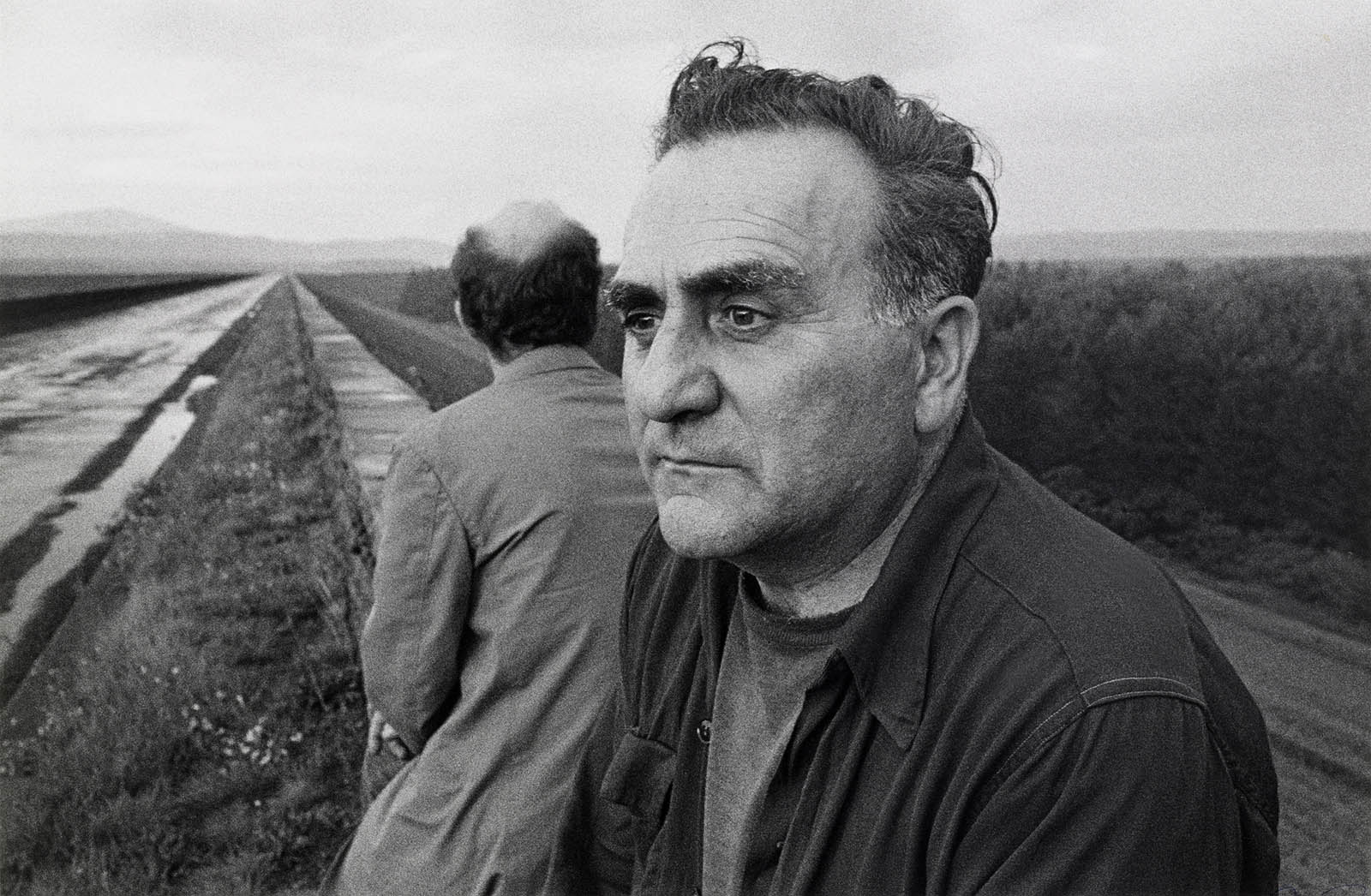
 

Robert Frank (Swiss-American, 1924-2019) 'Marvin Israel and Raoul Hague, Woodstock, New York' 1962 from the exhibition 'Life Dances On: Robert Frank in Dialogue' at the Museum of Modern Art (MoMA), New York


Robert Frank (Swiss-American, 1924-2019)
Marvin Israel and Raoul Hague, Woodstock, New York
1962
Gelatin silver print
11 1/8 × 16 7/8 inches (28.3 × 42.8cm)
The Museum of Modern Art, New York
Gift of the artist
© 2024 The June Leaf and Robert Frank Foundation
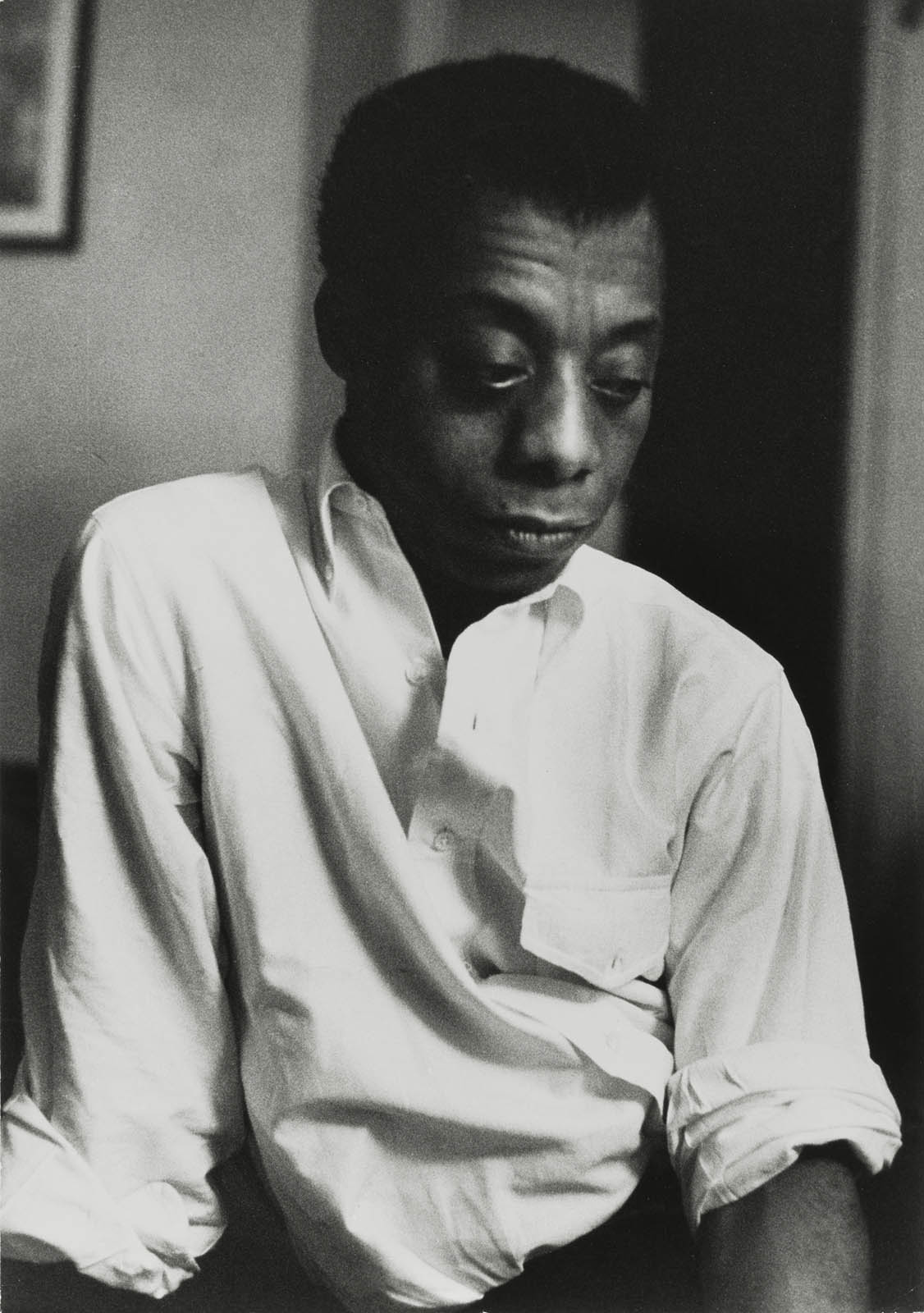
 

Robert Frank (Swiss-American, 1924-2019) 'James Baldwin' c. 1963


Robert Frank (Swiss-American, 1924-2019)
James Baldwin
c. 1963
Gelatin silver print
13 15/16 × 9 13/16 inches (35.4 × 24.9cm)
The Museum of Modern Art, New York
Gift of the artist
© 2024 The June Leaf and Robert Frank Foundation


The Museum of Modern Art presents Life Dances On: Robert Frank in Dialogue, an exhibition that provides new insights into the interdisciplinary and lesser-known aspects of photographer and filmmaker Robert Frank’s expansive career. On view from September 15, 2024, to January 11, 2025, the exhibition delves into the six decades that followed Frank’s landmark photobook The Americans (1958) until his death in 2019, highlighting his perpetual experimentation and collaborations across various mediums. Coinciding with the centennial of the artist’s birth, and taking its name from his 1980 film, Life Dances On explores Frank’s artistic and personal dialogues with other artists and with his communities. The exhibition features more than 250 objects, including photographs, films, books, and archival materials, drawn from MoMA’s extensive collection alongside significant loans. Life Dances On: Robert Frank in Dialogue is organised by Lucy Gallun, Curator, with Kaitlin Booher, Newhall Fellow, and Casey Li, 12 Month Intern, Department of Photography.

“This exhibition offers visitors a fresh perspective on this beloved and influential artist,” said Gallun. “The enormous impact of Frank’s book The Americans meant that he is often remembered as a solo photographer on a road trip, a Swiss artist making pictures of an America that he traversed as an outsider. And yet, in the six decades that followed, Frank continually forged new paths in his work, often in direct artistic conversation with others, and these contributions warrant closer attention. The pictures, films, and books he made in these years are evidence of Frank’s ceaseless creative exploration and observation of life, at once searing and tender.”

Organised loosely chronologically, Life Dances On focuses on the theme of dialogue in Frank’s work and reflects on the significance of individuals who shaped his outlook. Frank’s own words are present throughout the exhibition – in the texts he scrawled directly onto his photographic negatives, in the spoken narrative accompanying his films, and in quotes woven into the exhibition catalogue published by MoMA in conjunction with the exhibition. Also revealed throughout the exhibition is Frank’s innovation across multiple mediums, from his first forays into filmmaking alongside other Beat Generation artists, with films such as Pull My Daisy (1959), to the artist’s books he called “visual diaries,” which he produced almost yearly over the last decade of his life.

By focusing on dialogue and experimentation, the exhibition explores such enduring subjects as artistic inspiration, family, partnership, loss, and memory through the lens of Frank’s own personal traumas and life experiences. Among the works presented in the exhibition is a selection of photographs drawn from Frank’s footage for his 1980 film Life Dances On. These works reflect on the significance of individuals who shaped Frank’s own outlook – in this case, his daughter Andrea and his friend and film collaborator Danny Seymour. Like much of his work, the film finds its setting in Frank’s own communities in New York City and in Cape Breton, Nova Scotia, where he and his wife, the artist June Leaf, moved in 1970. An abundance of material was loaned to the exhibition by the June Leaf and Robert Frank Foundation, including works from the artist’s archives that are shown publicly for the first time, as well as personal artefacts, correspondence, and book maquettes. …

MoMA has been exhibiting Frank’s work since 1950, early in his career. In 1962, the Museum featured Frank’s work in a two-person exhibition alongside photographer Harry Callahan. Since then, the Museum has regularly collected and exhibited his work, and today the Museum’s collection includes over 200 of Frank’s photographs. That collection has been built through important gifts from Robert and Gayle Greenhill in 2013, and more recently, a promised gift to the Museum from Michael Jesselson, comprising a remarkable group of works, many of which are presented at MoMA for the first time in this exhibition. In 2015, the artist made an extraordinary gift of his complete film and video works, spanning the entirety of his career in filmmaking. MoMA’s Department of Film has since been engaged in a multiyear restoration project of these materials. Building upon this significant history with the Museum, Life Dances On: Robert Frank in Dialogue is the first solo exhibition of Robert Frank’s work at MoMA.

Publication

The accompanying publication, edited by Gallun, features photographs, films, books, and archival materials, layered with quotes from Frank on his influences and process. Three scholarly essays, excerpts from previously unpublished video footage, and a rich visual chronology together explore Frank’s ceaseless creative exploration and observation of life. 192 pages, 150 illustrations. Hardcover, $60. ISBN: 978-1-63345-164-3. Published by The Museum of Modern Art, New York

Press release from MoMA


Robert Frank (Swiss-American, 1924-2019) 'Beauty Contest, Chinatown' c. 1968


Robert Frank (Swiss-American, 1924-2019)
Beauty Contest, Chinatown
c. 1968
Robert Frank/The June Leaf and Robert Frank Foundation, via The Museum of Modern Art, NY


Frank collaged multiple prints of news photographers to convey a sense of the frenzy.
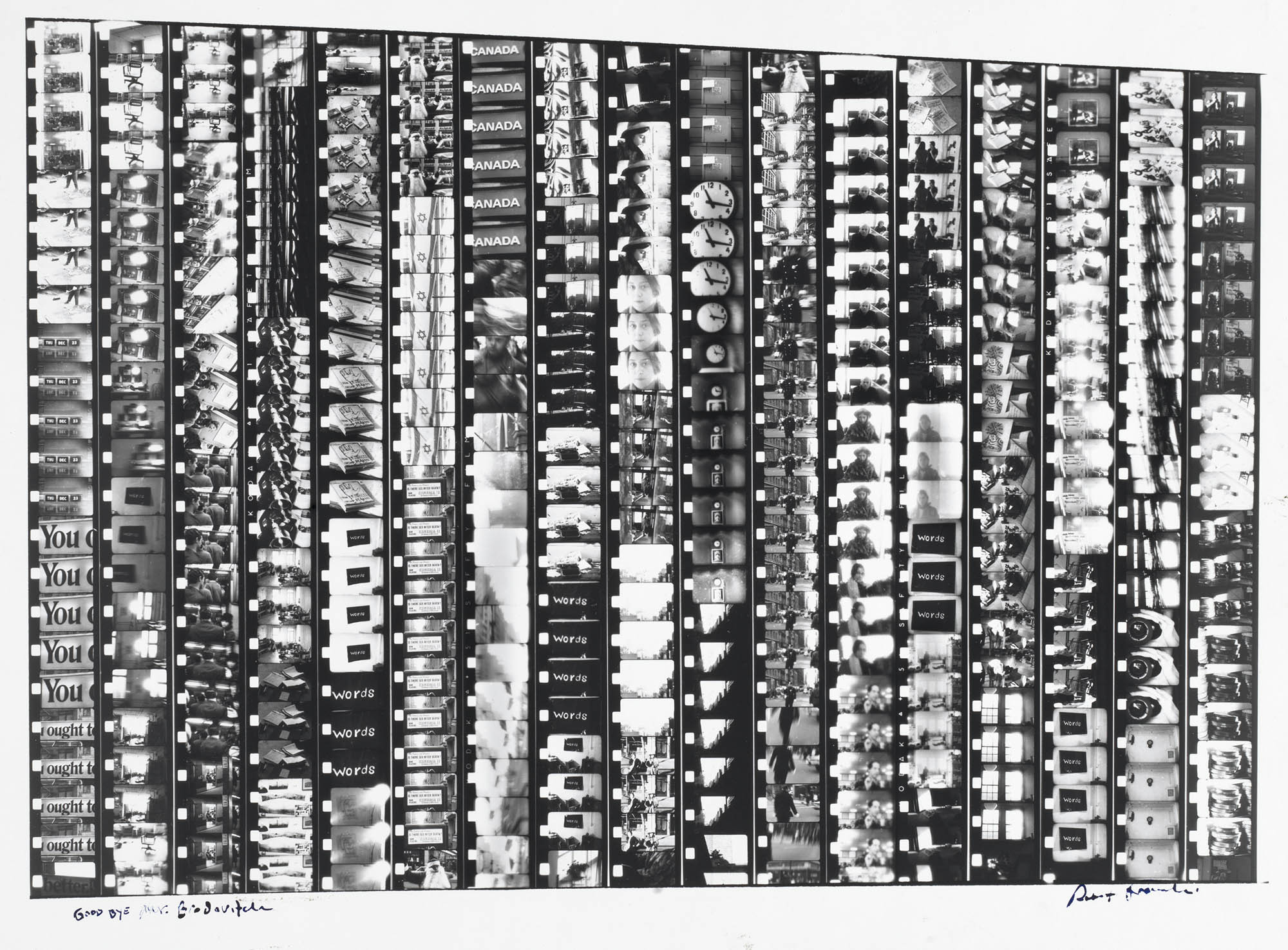
 

Robert Frank (Swiss-American, 1924-2019) 'Goodbye Mr. Brodovitch - I Am Leaving New York' 1971


Robert Frank (Swiss-American, 1924-2019)
Goodbye Mr. Brodovitch – I Am Leaving New York
1971
Gelatin silver print
15 7/8 × 19 15/16 inches (40.3 × 50.6cm)
The Museum of Modern Art, New York
Promised gift of Michael Jesselson
© 2024 The June Leaf and Robert Frank Foundation
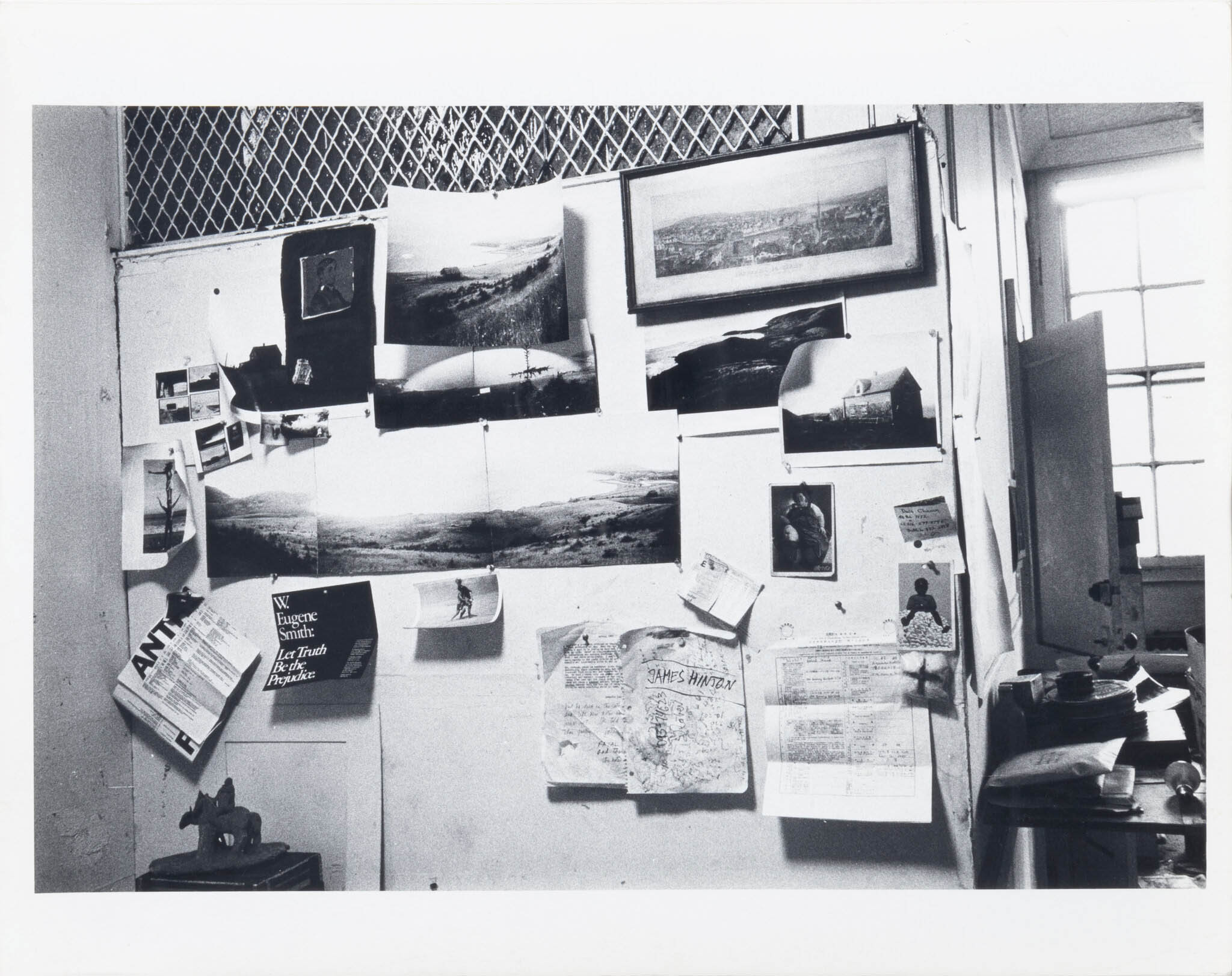
 

Robert Frank (Swiss-American, 1924-2019) 'Untitled (bulletin board)' 1971


Robert Frank (Swiss-American, 1924-2019)
Untitled (bulletin board)
1971
Gelatin silver print
8 7/8 × 13 1/8 inches (22.6 × 33.4cm)
The June Leaf and Robert Frank Foundation
© 2024 The June Leaf and Robert Frank Foundation


When Frank was moving to Nova Scotia, Frank photographed a bulletin board in his East Village loft, making one picture out of many.


The Beginning of Something New

The summer of 1958 marked a shift in Frank’s work. He had already finalised the selection of pictures that would appear in his photobook The Americans. For a new series, Frank photographed passersby from the window of a New York bus as it traversed Fifth Avenue. The pictures – a sequence of frames that appear linked by his own movement – indicated a notable moment of change beyond a single, static image. In 1972 he reflected on their significance: “When I selected the pictures and put them together I knew and I felt that I had come to the end of a chapter. And in it was the beginning of something new.”

Frank was also on the lookout for cinematic scenes. On the night of Independence Day, he photographed revelers sleeping on the beach among the holiday detritus. The stillness of the nighttime images contrasts with the daylit beach scenes he captured of his family on Cape Cod, Massachusetts, where Frank also shot his first film that same summer. Although it would remain unfinished, the film anticipated the collaborative and experimental spirit of his work to come.

The Way These Painters Lived

From his window across a courtyard, Frank could watch the painter Willem de Kooning as he paced in his studio and contemplated his canvas. “I think that the people that influenced me most were the abstractionist painters I met; and what influenced me strongly was the way these painters lived,” Frank said of his time embedded in New York City’s vibrant arts community. “They were people who really believed in what they did. So it reinforced my belief that you could really follow your intuition. … You could photograph what you felt like.”

During these years, Frank continued to earn a living by photographing artists and writers for magazine print commissions, while also embracing the creative challenges of filmmaking alongside photography. His proximity to a diverse group of painters, sculptors, writers, and poets in the late 1950s would lead to boundary-pushing explorations like his first finished film, Pull My Daisy (1959), co-directed with artist Alfred Leslie, and filmed in Leslie’s own loft.

The Truth is Somewhere Between the Documentary and the Fictional

In 1968 Frank premiered his first feature-length film, Me and My Brother, at the Venice Film Festival. Built as a film within a film, the story prompts questions about participation in traditional society and culture, and about what experiences of life are understood as valid. “The truth is somewhere between the documentary and the fictional, and that is what I try to show,” Frank explained. “What is real one moment has become imaginary the next.”

In the late 1960s and early 1970s, as Frank turned his camera toward friends and neighbours, he also captured events of the time – manifested in political protests, music, poetry, and other aspects of social change and counterculture. During this period, Frank contributed cinematography to films directed by others and also spearheaded his own projects, which featured both recognisable figures and everyday folks on the street. In Me and My Brother, one character advises another: “Don’t make a movie about making a movie. MAKE IT. … Wouldn’t it be fantastic if you didn’t even have to have a piece of celluloid between you and what you saw?”

The Lines of My Hand

Frank’s photobook The Lines of My Hand offers a retrospective view of his career up until the date of its publication, in 1972. Pairing text and image, the book begins with early photographs made in Switzerland in the 1940s and ends with montages of film strips from Frank’s films of the 1950s and ’60s. Its title, perhaps a rumination on one’s past and one’s fate, is drawn from a sign pictured in a 1949 photograph of a Paris fortuneteller’s booth, on view here. This section of the exhibition also brings together a selection of older photographs that appear in the first Lustrum edition of the book.

The Lines of My Hand demonstrates Frank’s particular interest in the visual effects and meaning produced from combinations of images, either within a single photograph or formed by printing multiple negatives together to create a dense montage. In later editions, in keeping with his practice of revisiting and rearranging his images, Frank made changes to the photographs and graphic design and updated the book with his most recent works, using photocopies and notebooks to sequence the book’s new iterations.

In Front of Me I Have the Sea

In 1970 Frank and Leaf relocated from New York City to the rural town of Mabou on Cape Breton Island in Nova Scotia, Canada. The photographer Walker Evans, Frank’s friend and mentor, came to visit them soon after at their old fisherman’s cabin overlooking the sea. Evans’s photographs capture the house’s hulking wood stove and the clothesline strung outside it, elements of the couple’s daily routine that also became material for artistic work. Living there, they “learned a completely different rhythm of life.”

In Mabou, Frank’s work shifted its focus, becoming a means of processing his feelings, including profound grief. His change of environment, he acknowledged, had been significant: “All of a sudden you are in the company of something very powerful. … [But] what I wanted to photograph was not really what was in front of my eyes but what was inside.” For Frank, the sea was a dynamic ground against which to measure his life. He reflected, “I have a lot in back of me and that’s a tremendous pull, of what has happened in my life, backward. And in front of me I have the sea.”

There Are Ways of Strengthening the Feeling

In the 1970s, Frank began regularly incorporating an instant print process, commonly known by the brand name Polaroid, into his work. He valued the immediacy of Polaroids, which enabled him to create an image instantly but then consider a work’s full composition over time. “I am no longer the solitary observer turning away after the click of the shutter,” Frank declared. “Instead I’m trying to recapture what I saw, what I heard and what I feel. What I know!”

Throughout the rest of his career, Frank experimented with images by scratching words directly into the negatives and collaborating with printers to enlarge them into bigger prints and combinations. This process became especially significant for him after the sudden death of his daughter, Andrea, late in 1974. Frank began constructing monuments out of wood and materials around him in the landscape, which then figured into photographic memorials. “The Polaroid negative allows me to add that on it if it isn’t in the picture – I can put a word in it, I can combine two pictures – there are ways of strengthening the feeling I have,” Frank described.

The Video Camera Is Like A Pencil

In the early 1980s, Frank started using a Sony Portapak, a portable video camera that allowed him to instantly play back recordings. He could then erase, edit, and add new content on the tape. On video, Frank brought together fragments that at first seem unrelated, but through the choices he made while assembling them, offer a window into his personal preoccupations. Video, he noted, is “like a pencil. You can say things that you could never say with film.”

Home Improvements (1985), Frank’s first work in video, was made between New York City and Mabou. From it, the artist made a new work in which he captured still images of the footage using a large-format Polaroid camera. The resulting photographs feature snippets of found text; portraits of family members; and – in the last image – Frank himself, captured in a reflection behind his camera. “I’m always looking outside, trying to look inside,” Frank narrates in the video. “Trying to say something that’s true. But maybe nothing is really true. Except what’s out there. And what’s out there is always different.”

Memory Helps You – Like Stones In A River Help You To Reach The Shore

In his last decades, Frank’s work centered ever more upon his own life. Instead of travelling and looking outward, he found stories and compositions by panning his camera around his homes. His camera lingered on collected objects: figurines on the windowsill, postcards pinned to the wall, the typewriter on the table, and – always – photographs from years earlier. “I want to use these souvenirs of the past as strange objects from another age,” he once wrote. “They are partly hidden and curiously resonant, bringing information, messages which may or may not be welcome, may or may not be real.”

Frank also collected memories in his “visual diaries,” small, softcover books in which he, with his assistant, the photographer A-chan, arranged new and old pictures in sequences with personal resonance. Toward the end of his life, these photobooks became his main artistic output. Looking back at the souvenirs of his life – the settings in which it had taken place and the people who populated it – was incredibly generative: “Memory helps you,” he mused. “Like stones in a river help you to reach the shore.”

Text from MoMA


Robert Frank (Swiss-American, 1924-2019) 'Cocksucker Blues' 1972


Robert Frank (Swiss-American, 1924-2019)
Cocksucker Blues
1972
Gelatin silver print
19 7/8 × 15 7/8 inches (50.5 × 40.3cm)
The June Leaf and Robert Frank Foundation
© 2024 The June Leaf and Robert Frank Foundation


Robert Frank (Swiss-American, 1924-2019) 'Untitled (from Cocksucker Blues)' 1972


Robert Frank (Swiss-American, 1924-2019)
Untitled (from Cocksucker Blues)
1972
Gelatin silver print
8 × 9 15/16 inches (20.3 × 25.2cm)
The June Leaf and Robert Frank Foundation
© 2024 The June Leaf and Robert Frank Foundation
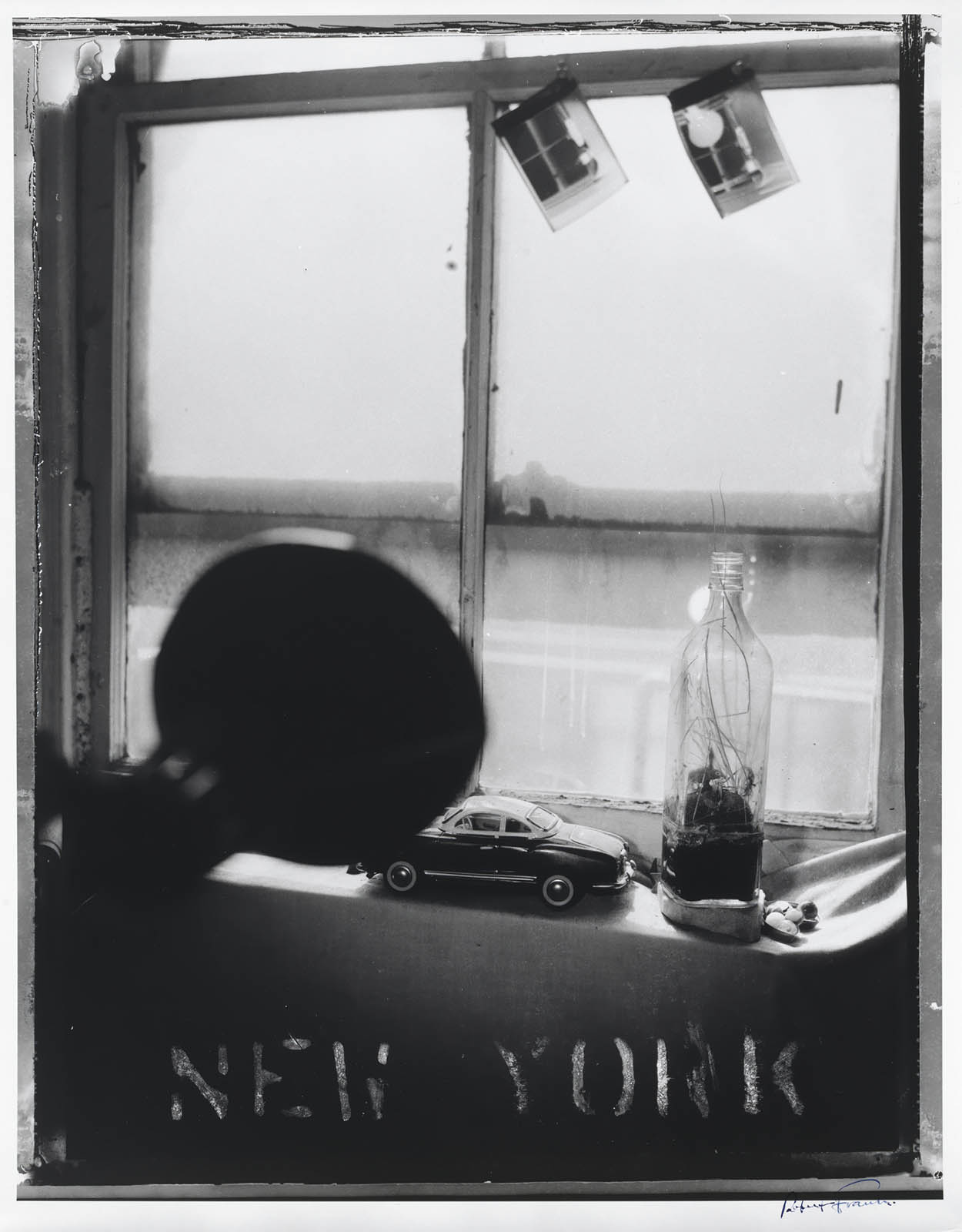
 

Robert Frank (Swiss-American, 1924-2019) 'Pablo's Bottle at Bleecker Street, New York City' 1973


Robert Frank (Swiss-American, 1924-2019)
Pablo’s Bottle at Bleecker Street, New York City
1973
Gelatin silver print
19 13/16 × 15 7/8 inches (50.3 × 40.3cm)
The Museum of Modern Art, New York
Promised gift of Michael Jesselson
© 2024 The June Leaf and Robert Frank Foundation
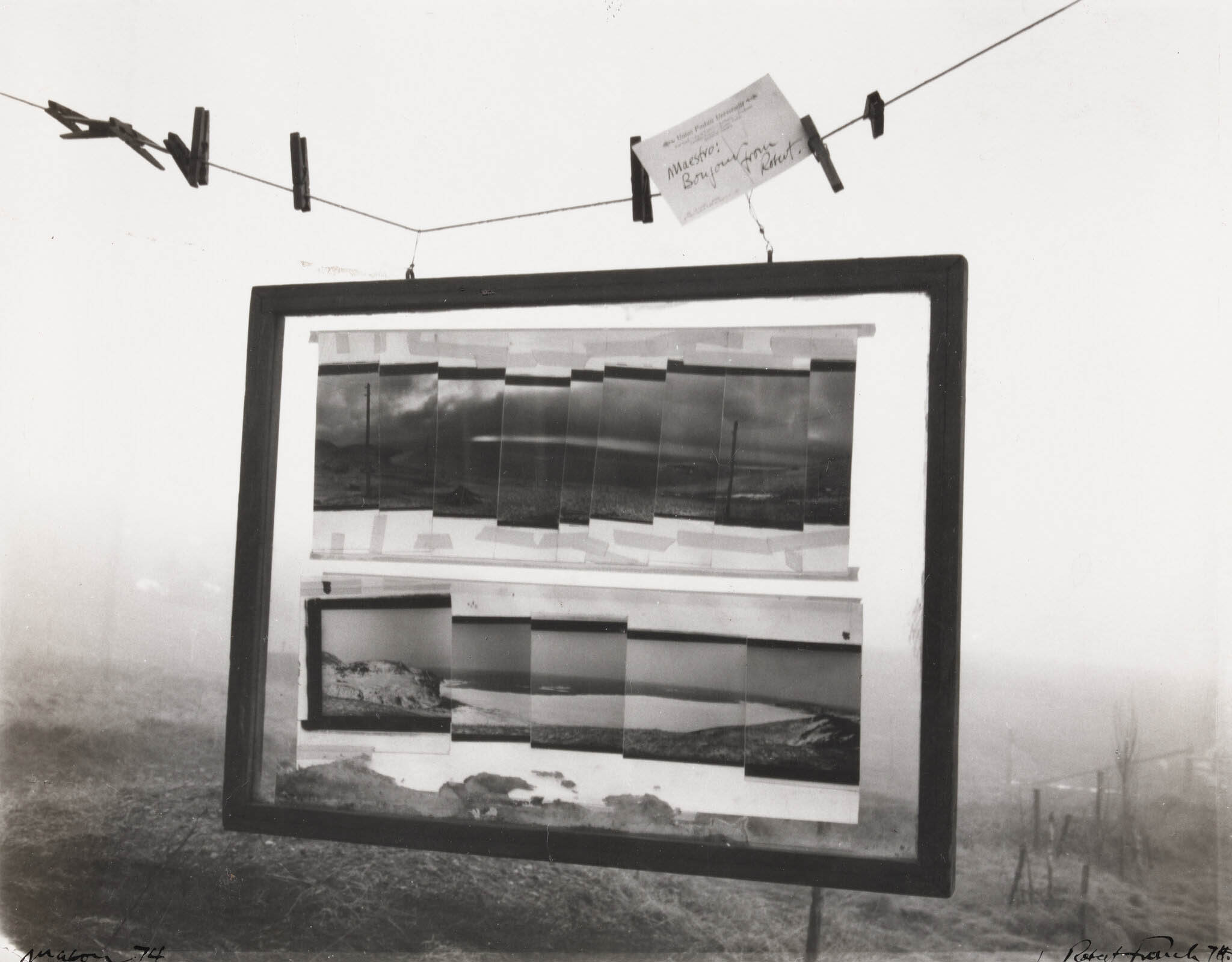
 

Robert Frank (Swiss-American, 1924-2019) 'Bonjour - Maestro, Mabou' 1974 from the exhibition 'Life Dances On: Robert Frank in Dialogue' at the Museum of Modern Art (MoMA), New York


Robert Frank (Swiss-American, 1924-2019)
Bonjour – Maestro, Mabou
1974
Robert Frank/The June Leaf and Robert Frank Foundation, via The Museum of Modern Art, NY


Frank hung an earlier landscape collage from a clothesline in a see-through frame, with the same landscape visible behind it.
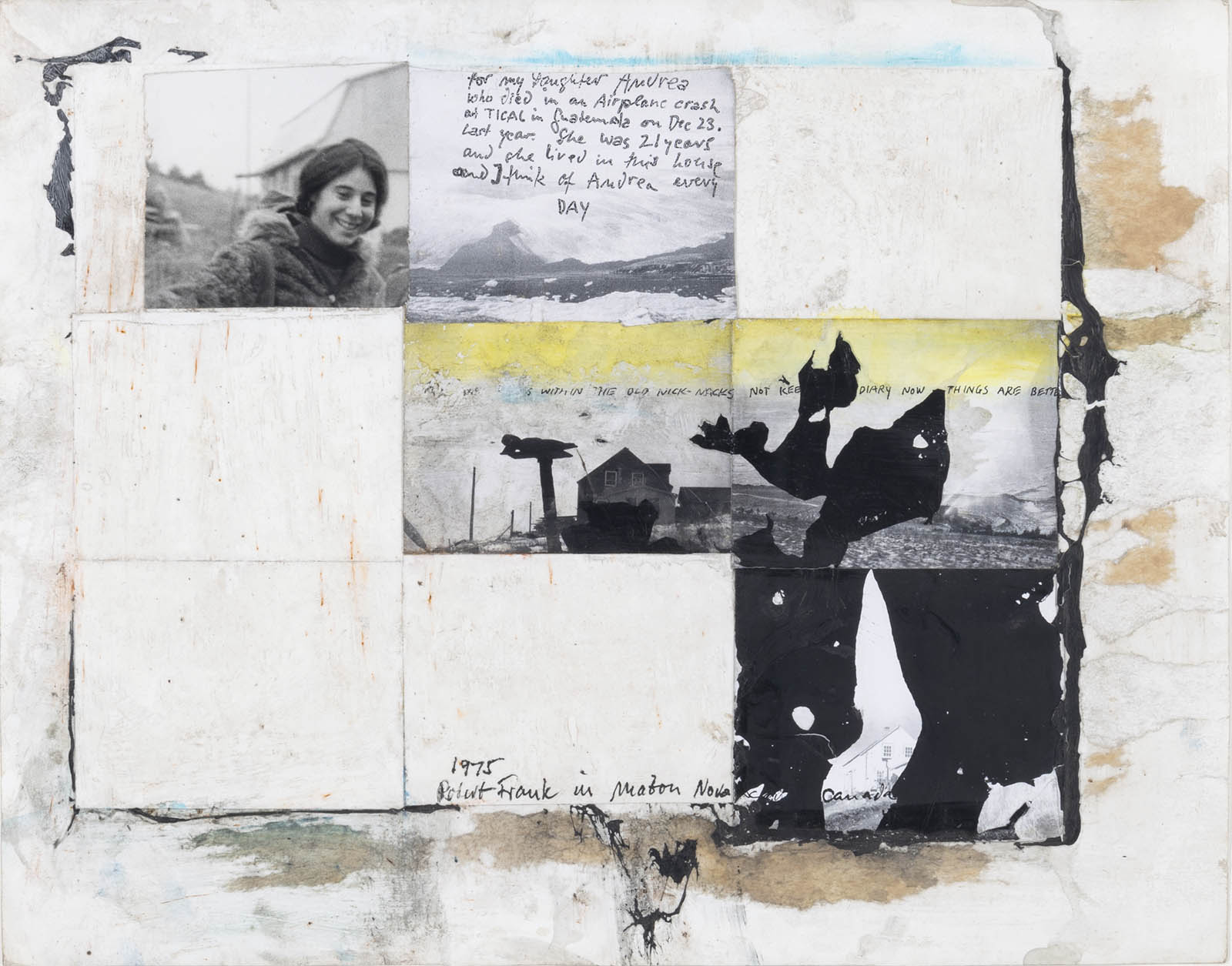
 

Robert Frank (Swiss-American, 1924-2019) 'Andrea' 1975 from the exhibition 'Life Dances On: Robert Frank in Dialogue' at the Museum of Modern Art (MoMA), New York


Robert Frank (Swiss-American, 1924-2019)
Andrea
1975
Five gelatin silver prints and ink on paper
10 15/16 × 13 7/8 inches (27.8 × 35.2cm)
The Museum of Modern Art, NY
Gift of the June Leaf and Robert Frank Foundation in honor of Clément Chéroux and Lucy Gallun
© 2024 The June Leaf and Robert Frank Foundation


After the death of Andrea Frank, his young daughter, in a plane crash, Frank memorialised her in a collage that he embellished with paint and a heartfelt, handwritten message.
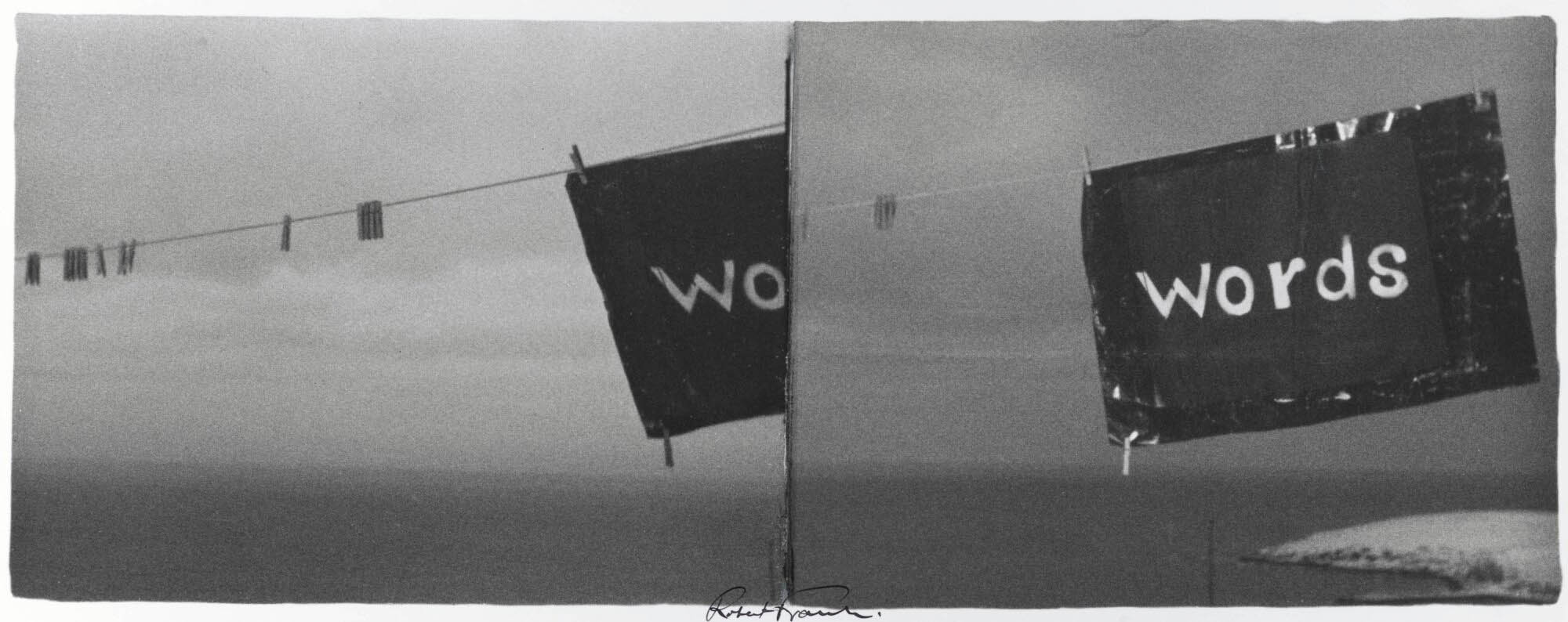
 

Robert Frank (Swiss-American, 1924-2019) 'Mabou' 1977


Robert Frank (Swiss-American, 1924-2019)
Mabou
1977
Gelatin silver print
7 5/16 × 19 5/16 inches (18.5 × 49cm)
The Museum of Modern Art, New York
Gift of Robert and Gayle Greenhill
© 2024 The June Leaf and Robert Frank Foundation


Robert Frank (Swiss-American, 1924-2019) 'Mabou Winter Footage' 1977 from the exhibition 'Life Dances On: Robert Frank in Dialogue' at the Museum of Modern Art (MoMA), New York


Robert Frank (Swiss-American, 1924-2019)
Mabou Winter Footage
1977
Gelatin silver print
23 11/16 × 14 3/4″ (60.1 × 37.5cm)
The Museum of Modern Art, New York. Purchase
© 2024 The June Leaf and Robert Frank Foundation
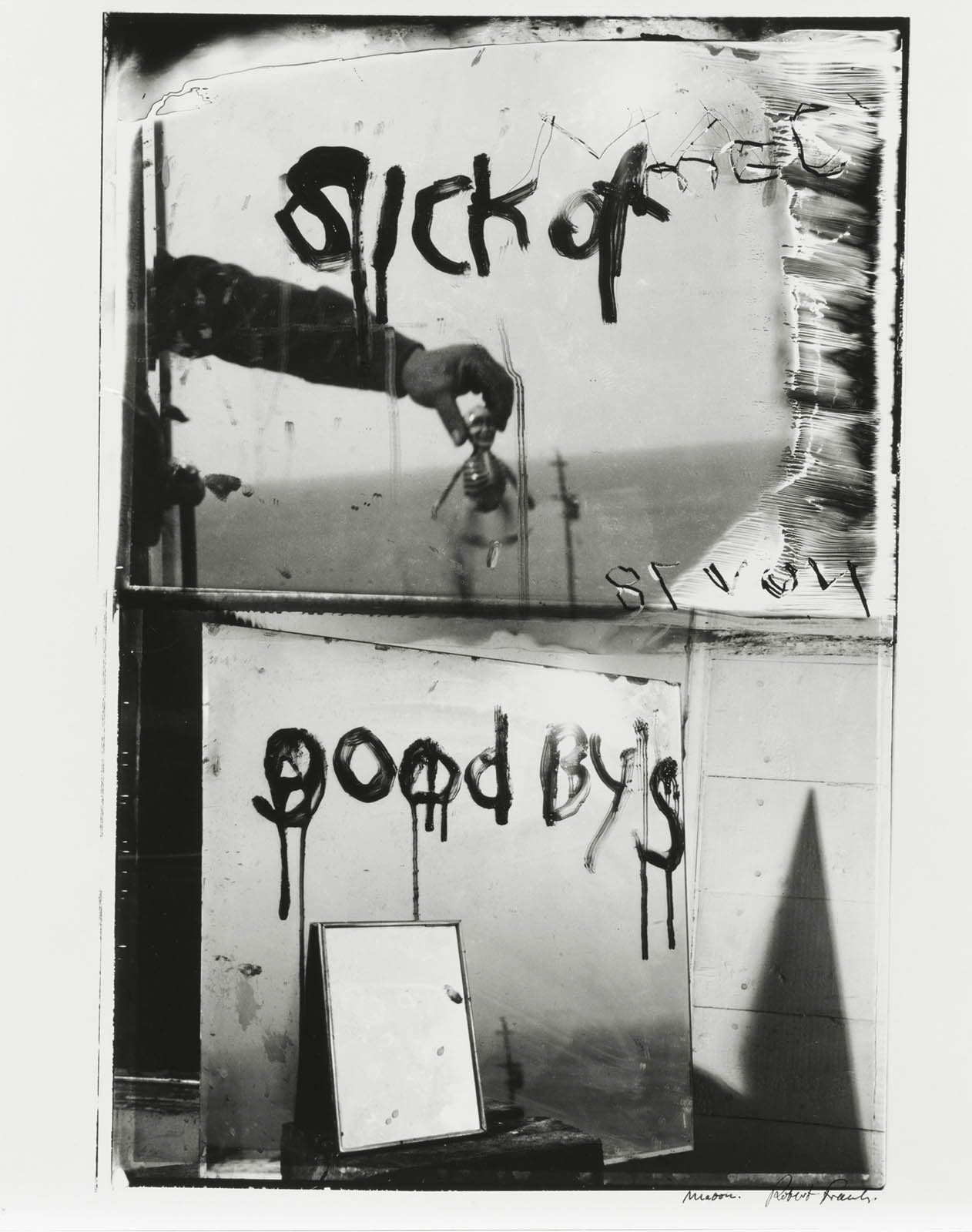
 

Robert Frank (Swiss-American, 1924-2019) 'Sick of Goodby's' 1978 from the exhibition 'Life Dances On: Robert Frank in Dialogue' at the Museum of Modern Art (MoMA), New York


Robert Frank (Swiss-American, 1924-2019)
Sick of Goodby’s
1978
Gelatin silver print
21 15/16 × 12 11/16 inches (55.8 × 32.3cm)
The Museum of Modern Art, New York
Purchase
© 2024 The June Leaf and Robert Frank Foundation
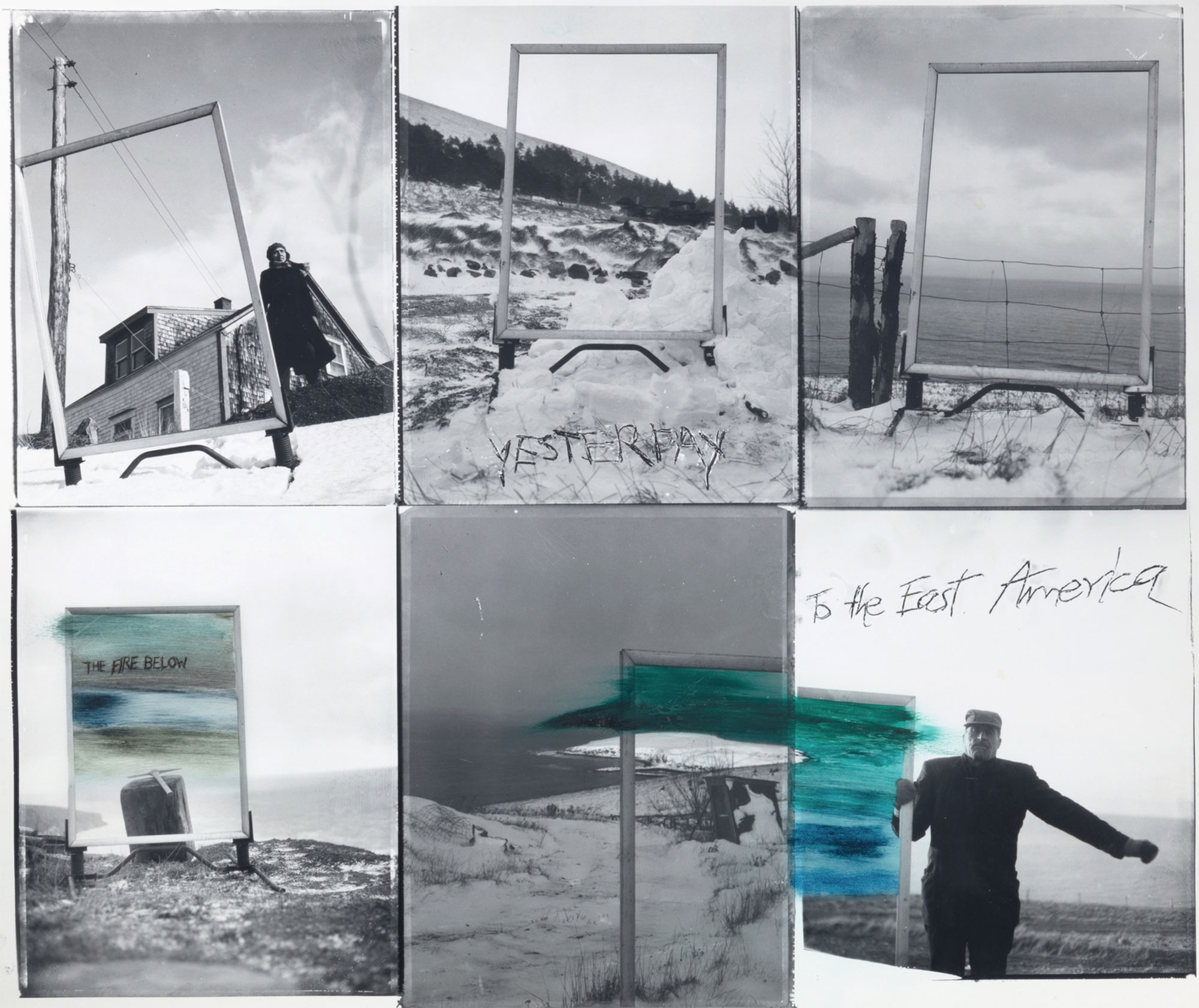
 

Robert Frank (Swiss-American, 1924-2019) 'Fire Below - to the East America, Mabou' 1979


Robert Frank (Swiss-American, 1924-2019)
Fire Below – to the East America, Mabou
1979
19 3/16 × 22 13/16 inches (48.8 × 57.9cm)
Gelatin silver print enlarged from six Polaroid negatives with paint and ink
Gift of the artist, by exchange
© 2024 The June Leaf and Robert Frank Foundation


Robert Frank (Swiss-American, 1924-2019) 'Look Out for Hope, Mabou - New York City' 1979


Robert Frank (Swiss-American, 1924-2019)
Look Out for Hope, Mabou – New York City
1979
Gelatin silver print
23 3/4 × 19 7/8 inches (60.3 × 50.5cm)
The Museum of Modern Art, New York
Promised gift of Michael Jesselson
© 2024 The June Leaf and Robert Frank Foundation


Robert Frank (Swiss-American, 1924-2019) 'Los Angeles - February 4th - I Wake Up - Turn On TV' 1979


Robert Frank (Swiss-American, 1924-2019)
Los Angeles – February 4th – I Wake Up – Turn On TV
1979
Robert Frank/The June Leaf and Robert Frank Foundation, via The Museum of Modern Art, NY


In words and pictures he expressed a forlorn mood in a hotel room.


Robert Frank never recovered from the success of “The Americans.” On its publication in the United States in 1959, the book was initially excoriated as un-American, particularly in the photography magazines, for its sour, disillusioned take on life in this country. The rich looked bored, the poor desperate, the city fathers fatuous, and the flags threadbare or soiled. What’s more, specialists in photography faulted his technique for muddiness, grain and blur.

But in a slow burn, Frank’s willful violation of the conventional rules of photography was understood to serve the purpose of personal expression, and his dissection of national alienation and social divides was deemed prophetic. The smoke blew away, and “The Americans” stood clearly as a towering monument, one of the most important and influential books in the history of photography.

Frank hated that. In the early ’60s, he renounced still photography in favor of filmmaking. When he went back in the ’70s to making photographs – “in the time left over between films or film projects,” as he put it – he eschewed the street photography that had established his reputation. Instead, he mostly made studio or landscape pictures, which he liked to splice together into montages or embellish with scratched and stenciled words.

It’s this late work – if such a rubric can be applied to the six decades of movie, video and photo production that preceded his death at 94 in 2019 – that is the focus of “Life Dances On: Robert Frank in Dialogue,” opening Sunday at the Museum of Modern Art. Curated by Lucy Gallun, the exhibition marks the centenary of Frank’s birth and is his first solo show at MoMA. Although there are some omissions (his return to documentary photography in Beirut in 1991, for example), it presents as eloquent a case as can be made for this later art, often left in the shade by what came before.

Frank felt trapped by the expectations and pigeonholing that the lionization of “The Americans” induced, and he recoiled in horror at the prospect of repeating himself. Beyond that, he gave various explanations over the years for why he abandoned the 35 mm camera that he brandished like a sorcerer’s wand. He explained that he had lost faith in the capacity of a single photograph to convey the truth. And his search had turned inward. “The truth is the way to reveal something about your life, your thoughts, where you stand,” he said. He believed film was a better way to do that.

Film (joined by video in the ’80s) allowed Frank to record his feelings directly. In addition to clips from his movies and videos, the museum is showing “Robert Frank’s Scrapbook Footage,” an assemblage of previously unseen diaristic moving images, stitched together by Frank’s longtime editor, Laura Israel, and art director Alex Bingham – most ambitiously, in a five-screen installation that jumps between shots taken in the house in Mabou, Nova Scotia, and the apartment on Bleecker Street in the East Village in New York that Frank shared with his wife, artist June Leaf, as well as visits he made to his parents in Switzerland (where he was born) and to Russia. Topping it off, MoMA, which received Frank’s entire film and video archive as a gift from the artist, will present a complete motion-picture retrospective, from Nov. 20 to Dec. 11.

The aim is to reposition Frank’s reputation by showcasing the art that occupied most of his life. The trouble is: His genius as a photographer did not carry over to filmmaking. That was evident from the outset. His first completed movie, “Pull My Daisy,” a collaboration with artist Alfred Leslie, incorporated improvisation by the actors within the framework of a rehearsed script. With a voice-over by Jack Kerouac and appearances by Allen Ginsberg, Peter Orlovsky, Gregory Corso and Larry Rivers, the film resonates as a historical document of the Beat movement. As a movie, though, its madcap bohemianism is a clunky, leaden bore. First screened publicly in 1959 on a double bill with John Cassavetes’ similarly improvised “Shadows,” it wilts, woefully dated, when viewed today alongside that other milestone of independent American cinema.

Arthur Lubow. “‘The Americans’ Made the Photographer Robert Frank a Star. What Came Next?” on The New York Times website Sept. 12, 2024 [Online] Cited 15/12/2024
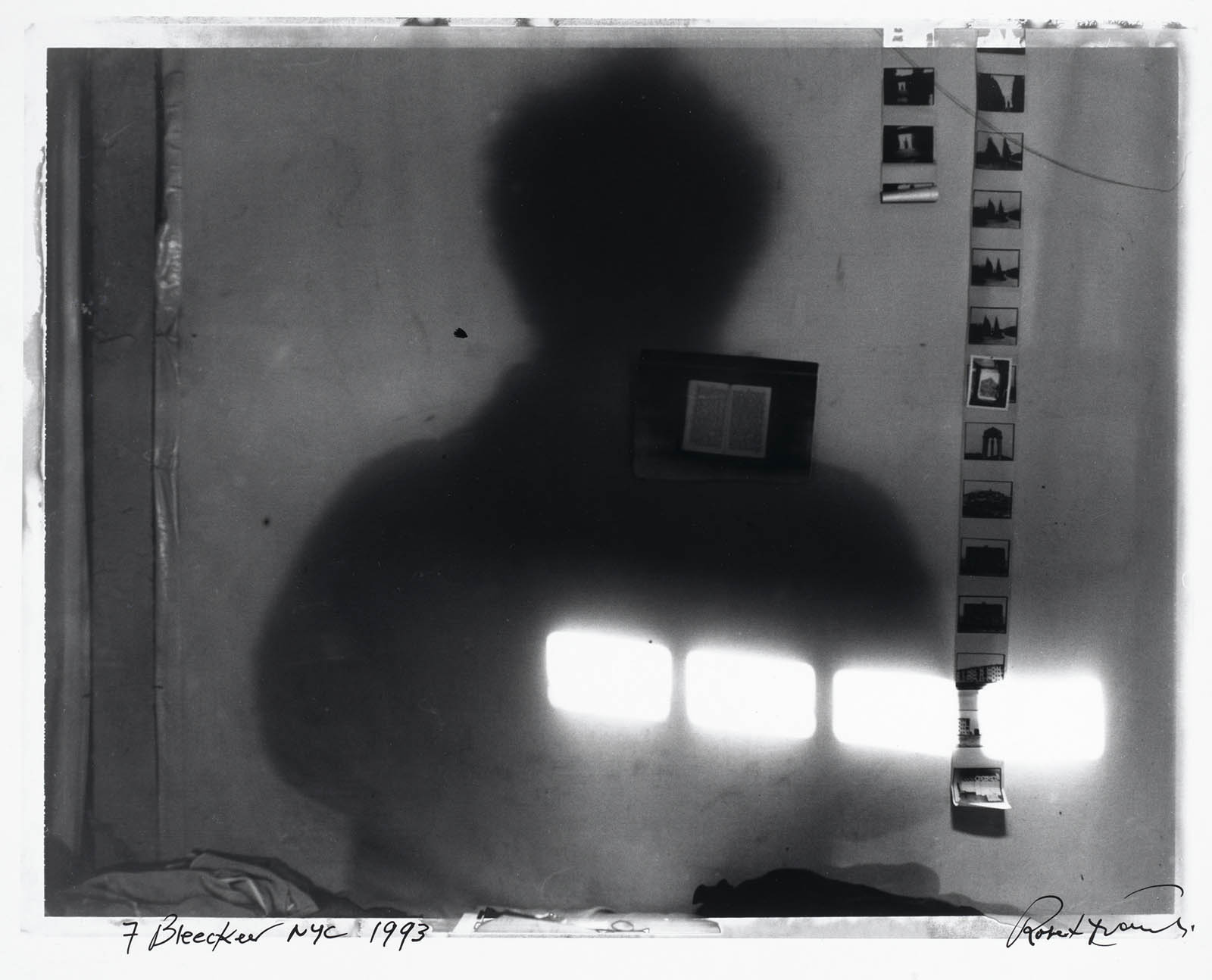
 

Robert Frank (Swiss-American, 1924-2019) 'New York City, 7 Bleecker Street' September 1993


Robert Frank (Swiss-American, 1924-2019)
New York City, 7 Bleecker Street
September 1993
Gelatin silver print
15 15/16 × 19 13/16 inches (40.5 × 50.3cm)
The Museum of Modern Art, New York
Promised gift of Michael Jesselson
© 2024 The June Leaf and Robert Frank Foundation


A self-portrait of the artist, in September 1993. Frank caught himself studying a strip of filmed images.


Robert Frank (Swiss-American, 1924-2019) 'The Suffering, the Silence of Pablo' 1995


Robert Frank (Swiss-American, 1924-2019)
The Suffering, the Silence of Pablo
1995
Robert Frank/June Leaf and Robert Frank Foundation, via Museum of Modern Art, NY


After the suicide of his son, Pablo Frank, the photographer composed this testament to his young, painful life.
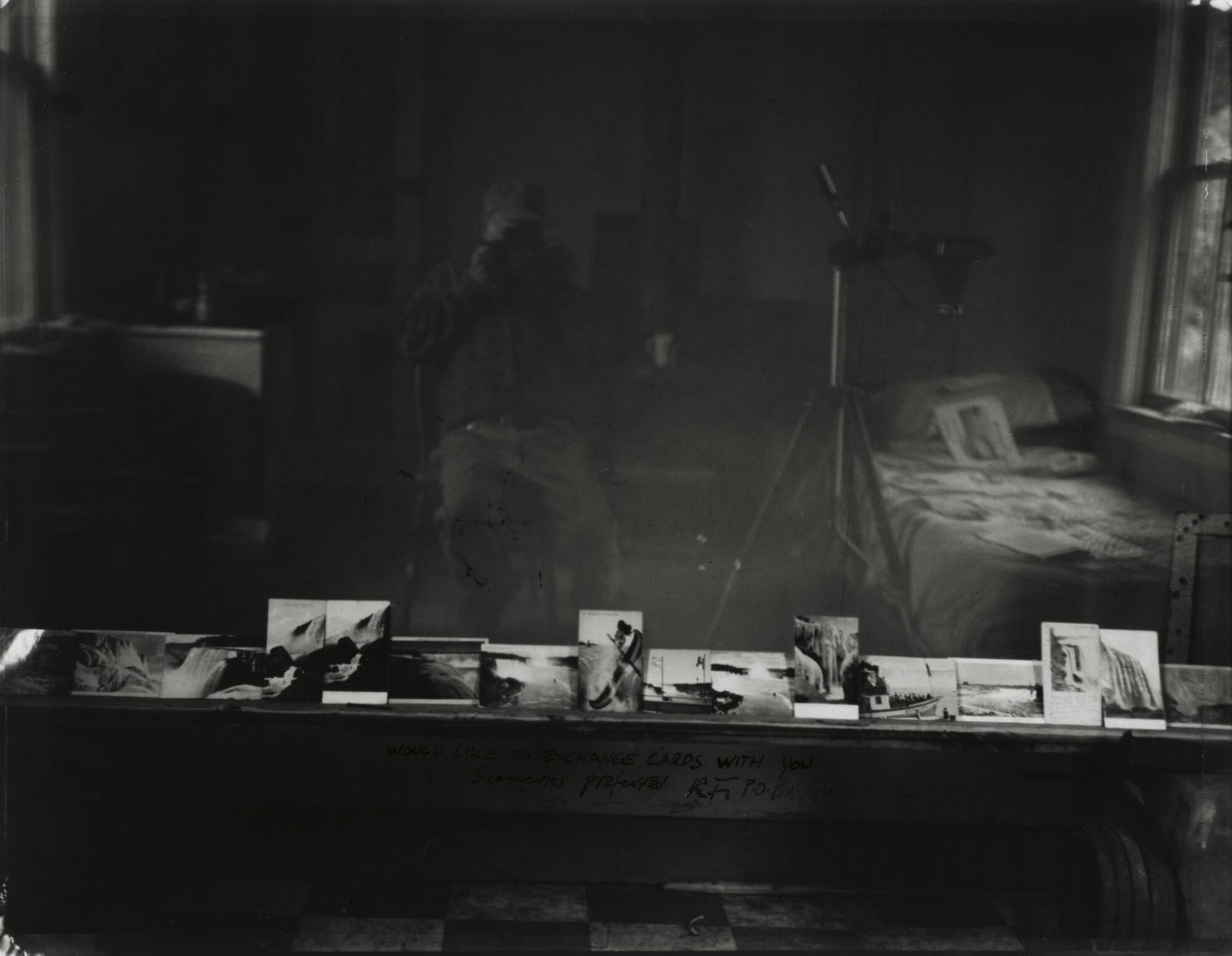
 

Robert Frank (Swiss-American, 1924-2019) 'Would Like to Exchange Cards with You, Souvenirs Preferred' 2002


Robert Frank (Swiss-American, 1924-2019)
Would Like to Exchange Cards with You, Souvenirs Preferred
2002
Gelatin silver print
10 13/16 × 13 7/8 inches (27.4 × 35.2cm)
The Museum of Modern Art, New York
Gift of the artist
© 2024 The June Leaf and Robert Frank Foundation


The Museum of Modern Art
11 West 53 Street
New York, NY 10019
Phone: (212) 708-9400

Opening hours:
10.30am – 5.30pm
Open seven days a week

MoMA website

LIKE ART BLART ON FACEBOOK

Back to top
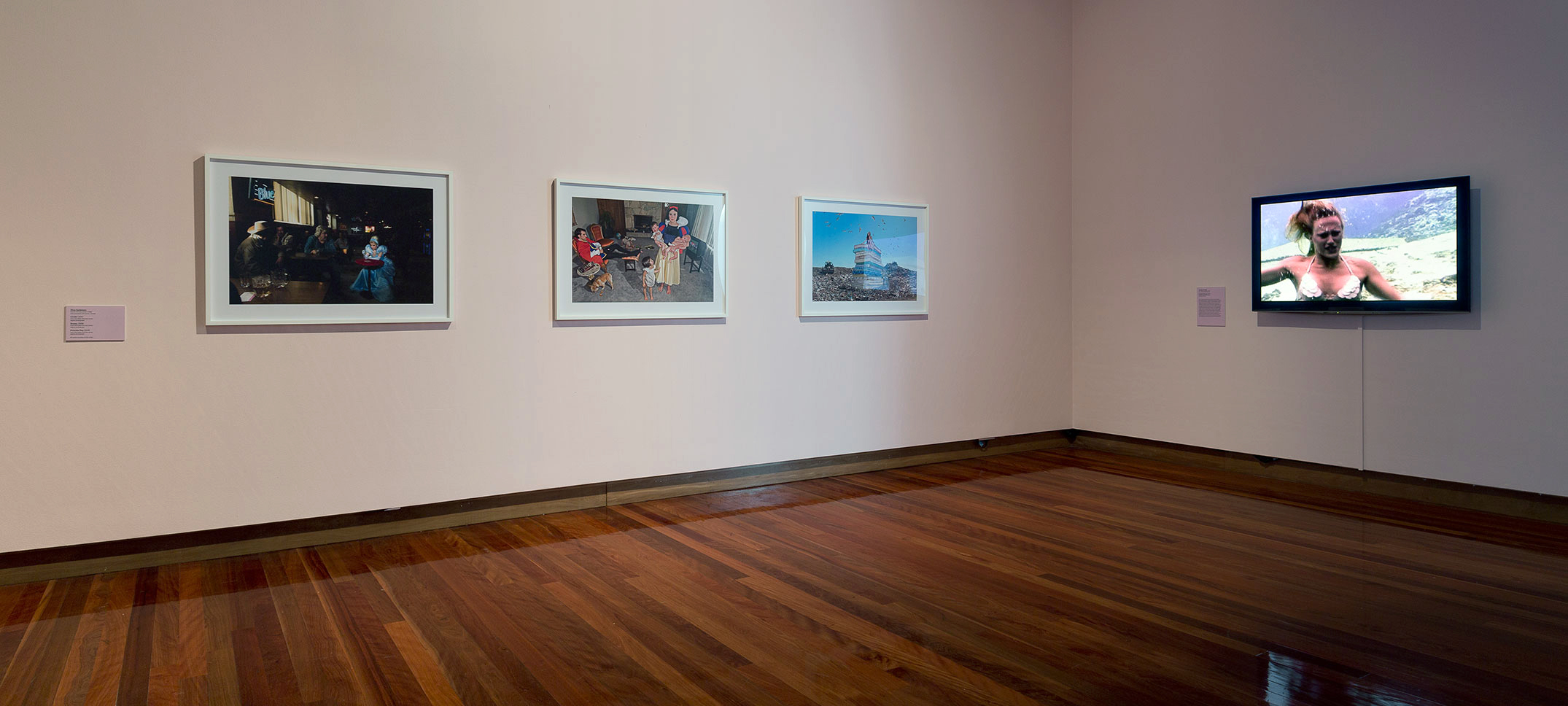
Review: ‘All the better to see you with: Fairy tales transformed’ at The Ian Potter Museum of Art, The University of Melbourne

Exhibition dates: 13th January – 3rd March, 2018

Curator: Samantha Comte

Artists: Broersen and Lukács, Kate Daw, Peter Ellis, Dina Goldstein, Mirando Haz, Vivienne Shark Le Witt, Amanda Marburg, Tracey Moffatt, Polixeni Papapetrou, Patricia Piccinini, Paula Rego, Lotte Reiniger, Allison Schulnik, Sally Smart, Kiki Smith, Kylie Stillman, Tale of Tales, Janaina Tschäpe, Miwa Yanagi, Kara Walker and Zilverster (Goodwin and Hanenbergh).

Review synposis: Simply put, this is the best local exhibition I have seen this year. A must see before it closes.


Polixeni Papapetrou (Australian, 1960-2018) 'Hanging Rock 1900 #3' 2006 from the exhibition 'All the better to see you with: Fairy tales transformed' at The Ian Potter Museum of Art, The University of Melbourne, Jan - March, 2018


Polixeni Papapetrou (Australian, 1960-2018)
Hanging Rock 1900 #3
2006
Pigment ink print
105 x 105cm
Courtesy the artist, Michael Reid Gallery, Sydney + Berlin and Jarvis Dooney Galerie, Berlin


Oh my, what big teeth you have! Wait just a minute, they need a good clean and they’re all crooked and subverted (or a: how well-known stories are turned on their head and b: how real histories become fantasies, and how fantasies are reimagined)


This is going to be the shortest review in the known universe. Just one word

SUPERLATIVE


Every piece of artwork in this extraordinary, quirky, spellbinding exhibition (spread over the three floors of the The Ian Potter Museum of Art at The University of Melbourne) is strong and valuable to the investigation of the overall concept, that of fairy tales transformed.

The hang, the catalogue, and the mix of a: international and local artists; b: historical and contemporary works; and c: animation, video, gaming, sculpture, photography, painting, drawing and other art forms – is dead set, spot on.

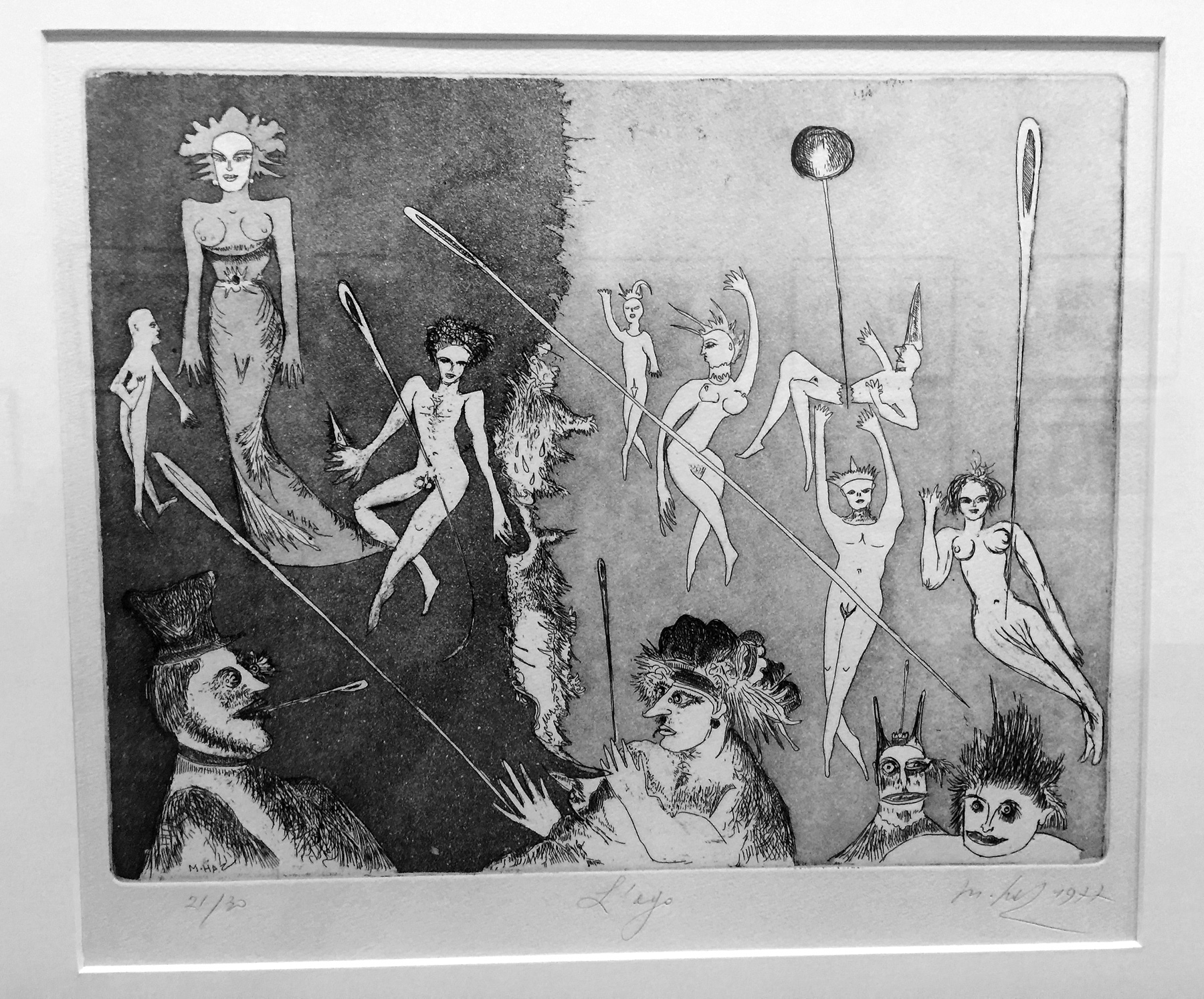
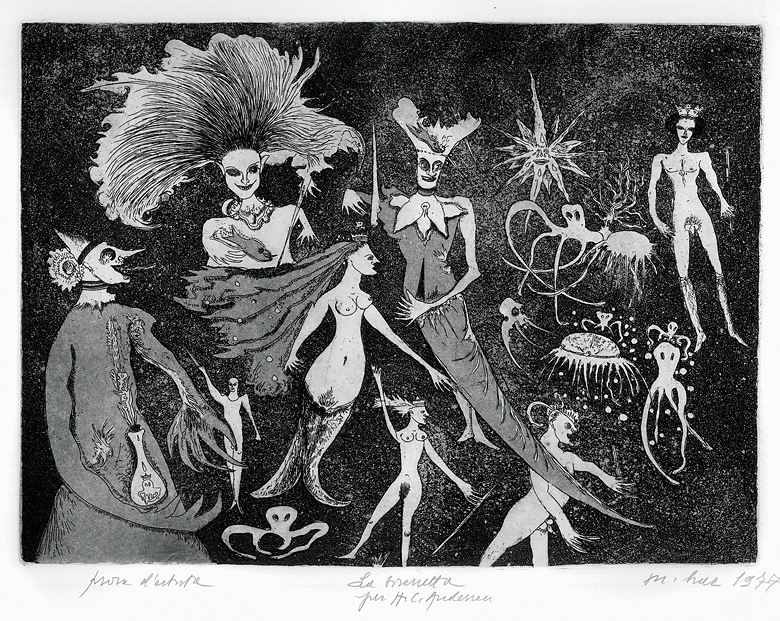
There are too many highlights, but briefly my favourites were the historical animations of Lotte Reiniger; the painting Born by Kiki Smith which adorns the catalogue cover; the theatrical tableaux of Polixeni Papapetrou; the mesmerising video art of Allison Schulnik; and the subversive etchings of both Peter Ellis and Mirando Haz. But really, every single artwork had something interesting and challenging to say about the fabled construction of fairy tales and their place in the mythic imagination, a deviation from the normative, patriarchal telling of tales.

My only regret, that a: there hadn’t been another three floors of the exhibition; b: that there was only one work by Kiki Smith; and c: that there were not another set of disparate voices other than the feminine and black i.e. transgender, gay, disabled – other artists (if they exist?) that were working with this concept.

Simply put, this is the best local exhibition I have seen this year. A must see before it closes.

Dr Marcus Bunyan


Many thankx to The Ian Potter Museum of Art for allowing me to publish the photographs in the posting. Please click on the photographs for a larger version of the image. Installation photographs by Christian Capurro.


All the better to see you with: Fairy tales transformed, the Ian Potter Museum of Art’s 2017 summer show, traces the genre of the fairy tale, exploring its function in contemporary society. The exhibition presents contemporary art work alongside a selection of key historical fairy tale books that provide re-interpretations of the classic fairy tales for a 21st-century context, including Little Red Riding HoodHansel and Gretel and The Little Mermaid.

Ground floor


Installation view of the exhibition 'All the better to see you with: Fairy tales transformed' at The Ian Potter Museum of Art, Melbourne showing the work of Lotte Reiniger with 'Cinderella/Aschenputtel' (1922) at left


Installation view of the exhibition All the better to see you with: Fairy tales transformed at The Ian Potter Museum of Art, Melbourne showing the work of Lotte Reiniger with Cinderella/Aschenputtel (1922) at left


Lotte Reiniger (born 1899, Berlin-Charlottenburg, Germany; died 1981, Dettenhausen, West Germany)
with new music by Karim Al-Zand
Cinderella/Aschenputtel
1922
Silhouette animation film
Primrose Productions
Directed and animated by Lotte Reiniger
Production team: Carl Coch, Louis Hagen, Vivian Milroy Music: Freddie Phillips
12.35 minutes


Lotte Reiniger began making her ground-breaking animations in Berlin during the 1920s. Influenced by early fairy tale illustrations, in particular, Andrew Lang’s The Blue Fairy (1887), Reiniger was attracted to the graphic nature of the imagery but also the compelling complexities of fairy tale narratives. Adapting the art of shadow puppetry, she created more than forty intricately crafted fairy tale films.

In 1935, she left Berlin for England, in response to the unjust treatment of the Jewish people. World War II had an enduring impact on Reiniger’s work and life. For example, when she made Hansel and Gretel, in 1953-1954, she changed the ending of the narrative from the Brothers Grimm original, in which the witch is burnt in the over after being tricked by the children, because the taboo nature of this imagery was understandably too close to the horrors of the Holocaust. From her first film, Reiniger was attracted to the timelessness of fairy tale stories for her animations. Aschenputtel (Cinderella) (1922) was among her first filmic subjects and is amongst the words presented here. While Reiniger belonged to the cinematic avant-garde, working in independent production and experimental film making, her spirit harked back to an earlier age of innocence.

Wall text from the exhibition


The Art of Lotte Reiniger, 1970 | From the Vaults

Lotte Reiniger is known today for her extraordinarily elaborate silhouette animations. Her 1926 feature, “The Adventures of Prince Achmed,” is the oldest surviving full-length animated film. This short documentary provides a fascinating look at Reiniger’s process, offering viewers the opportunity to watch a prolific and pioneering artist at work. Here, she works on two projects: her fantastical short animation, “Papageno” (1935), about the cheerful bird-catcher from Mozart’s opera “The Magic Flute,” along with a dazzling struggle between the Frog Prince and a covetous octopus.

Text from the YouTube website


Installation view of the exhibition 'All the better to see you with: Fairy tales transformed' at The Ian Potter Museum of Art, Melbourne showing the work of Lotte Reiniger (left) and Sally Smart (right)


Installation view of the exhibition All the better to see you with: Fairy tales transformed at The Ian Potter Museum of Art, Melbourne showing the work of Lotte Reiniger (left) and Sally Smart (right)


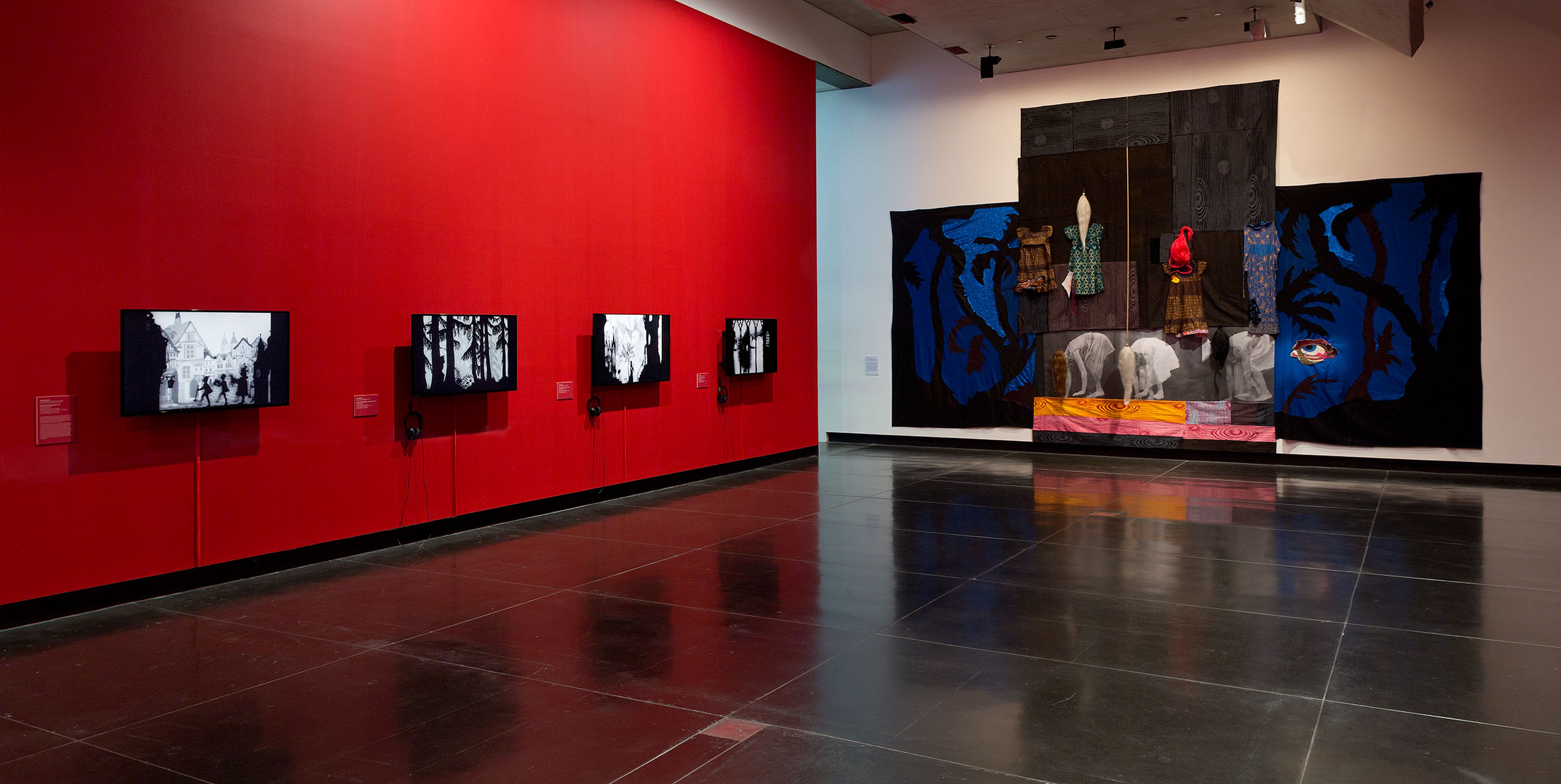
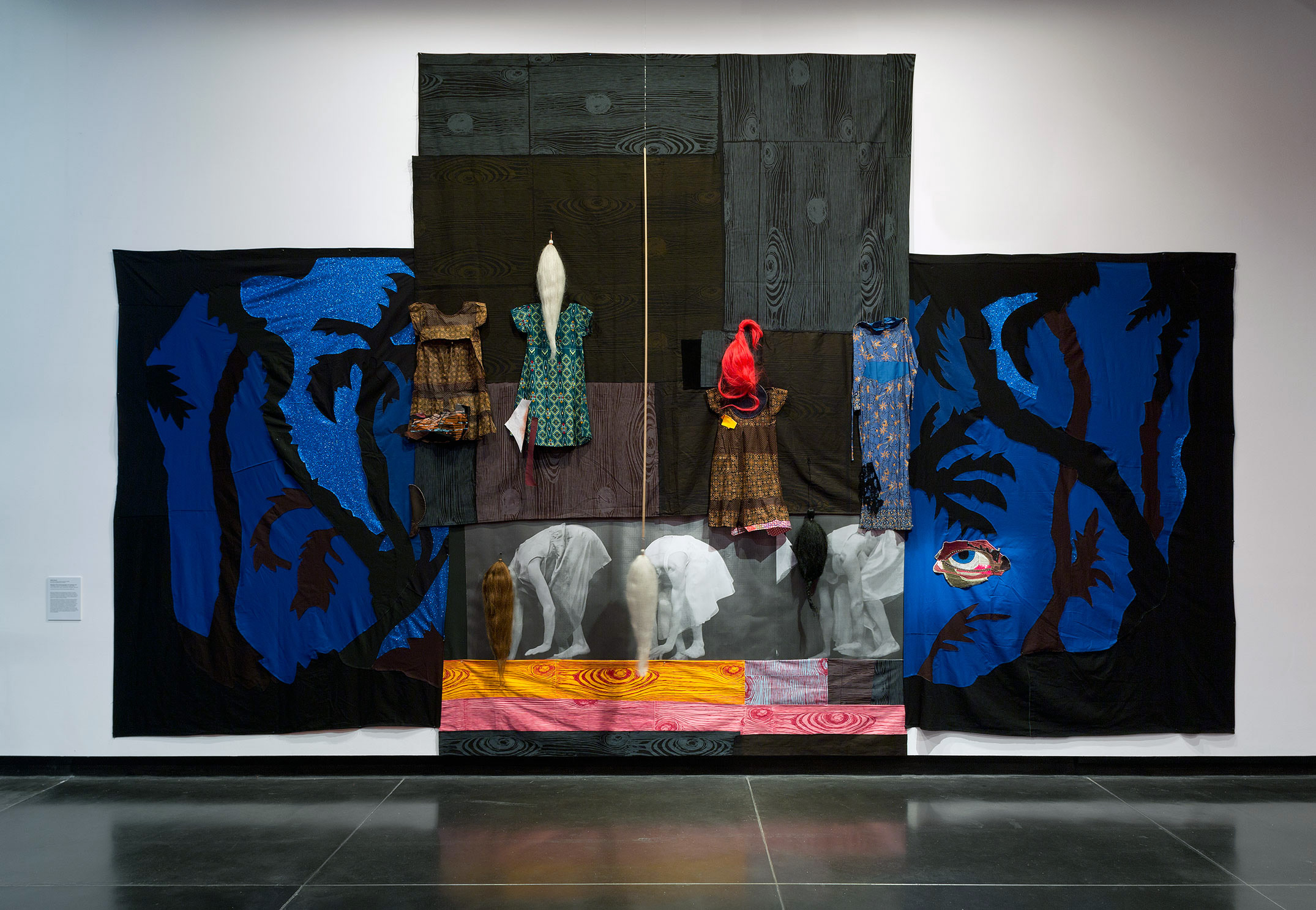
Installation view of the exhibition 'All the better to see you with: Fairy tales transformed' at The Ian Potter Museum of Art, Melbourne showing Sally Smart's work 'Blaubart (The Choreography of Cutting)' 2017


Installation view of the exhibition All the better to see you with: Fairy tales transformed at The Ian Potter Museum of Art, Melbourne showing Sally Smart’s work Blaubart (The Choreography of Cutting) 2017


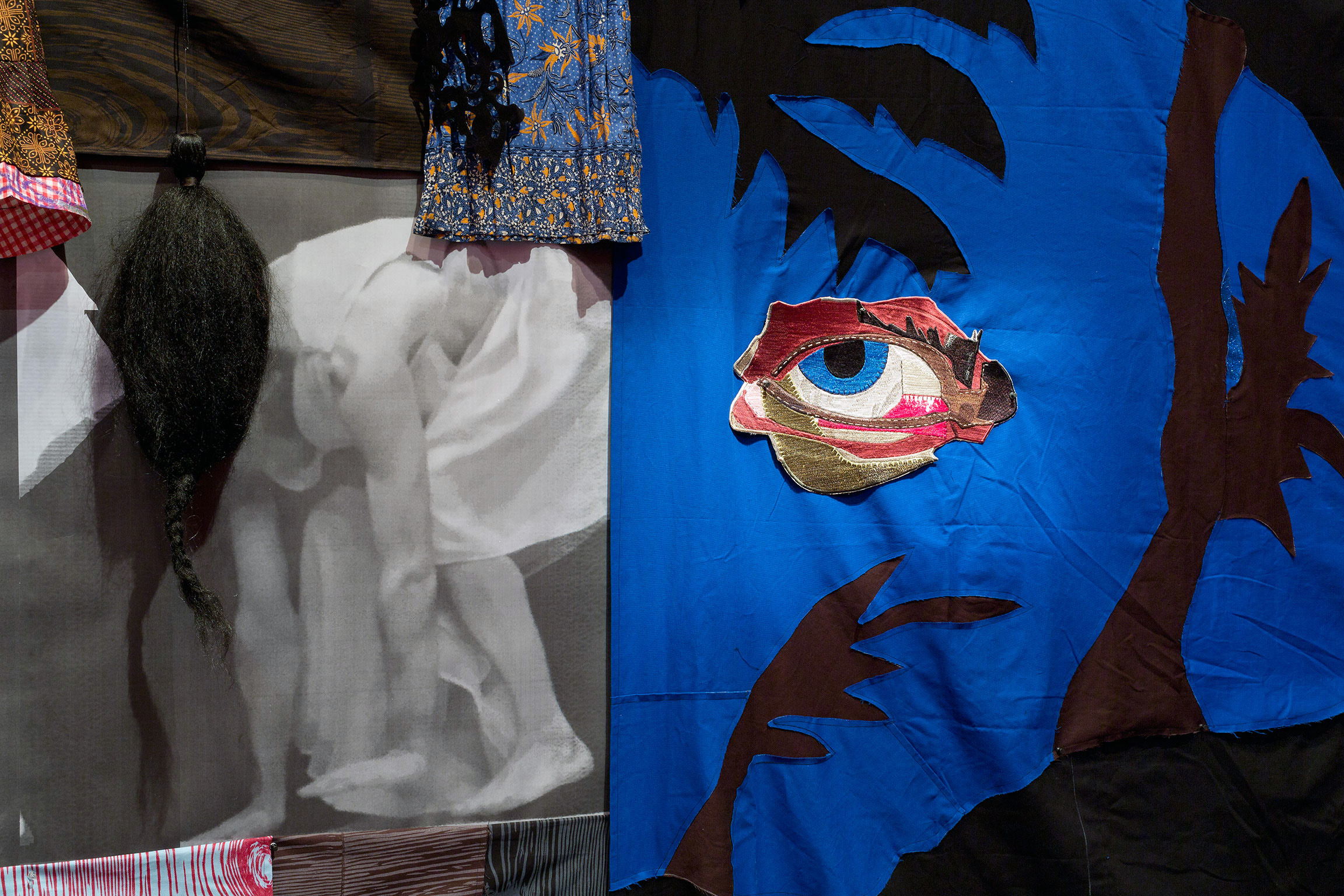
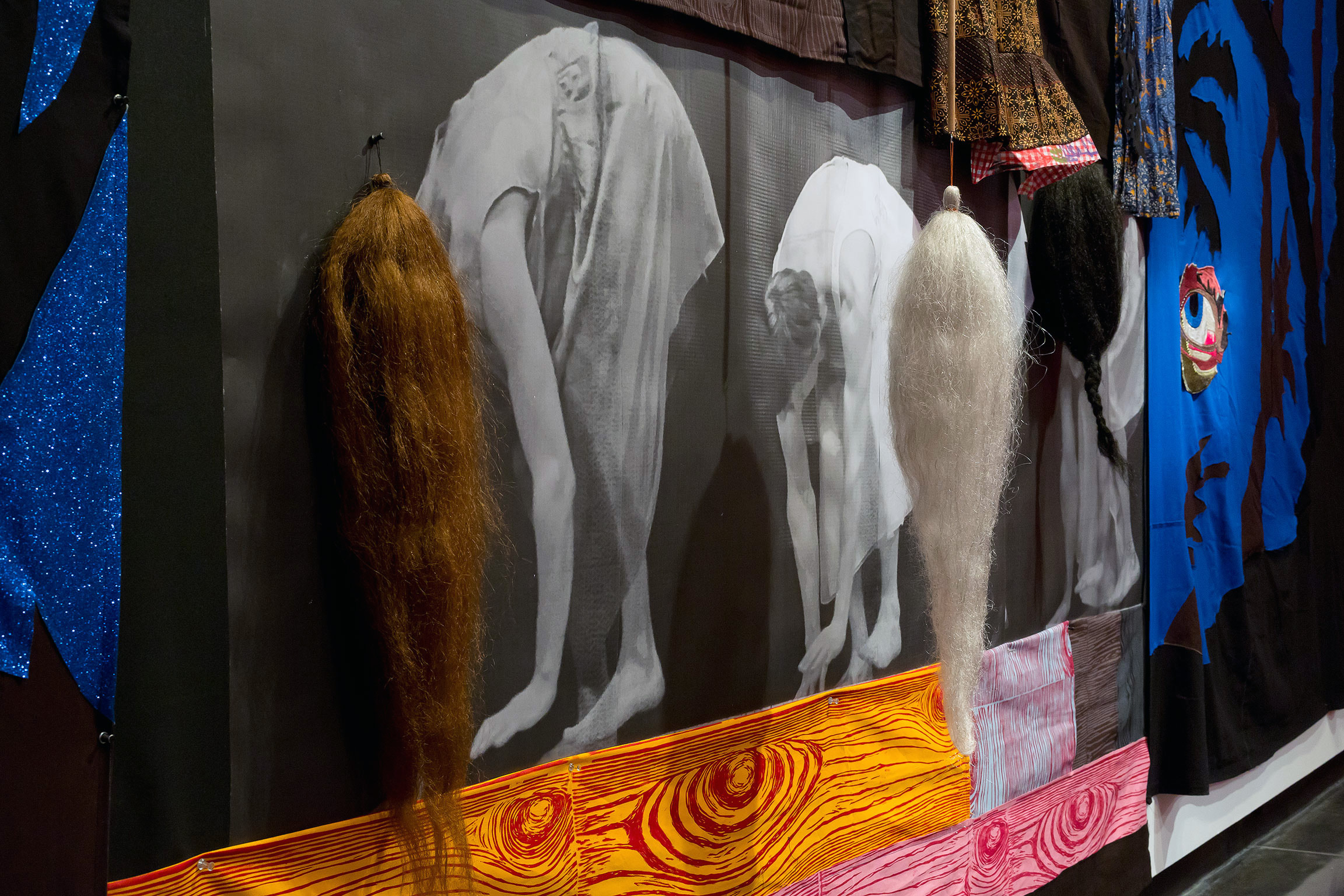
Sally Smart‘s Blaubart (The Choreography of Cutting) is a complex assemblage of elements and ideas that relate to Smart’s recent work on the Russian Fairy tale, Chout (1921) where she found connections to Perrault’s murderous tale of Blue Beard, a lurid story about a noble man who marries numerous women killing each of them and storing their bodies in an underground bloody chamber.

Smart’s work explores this narrative by combining the blue and black silhouetted forms from Lotte Reiniger’s animation of The Adventures of Prince Achmed (1926) with the black and white photographs of a modern dance performance of Blue Beard devised by Pina Bausch, a noted German dance choreographer. In Smart’s dramatic work a series of hanging dresses and wigs stand in for blue beards wives, whose bodies, in the story, were gruesomely hung from hooks. Blue Beard is a story of violence and betrayal that contains one of the most powerful fairy tale symbols, that of the forbidden room and the quest for knowledge. While we often try to make sense of the world through chronological narrative, Smart’s work suggests that it is the disconnected layers of experiences, stories, images and sensations that lead to a rich life of possibility.

Wall text


Sally Smart (born 1960, Quorn, South Australia; lives and works Melbourne, Victoria) 'Blaubart (The Choreography of Cutting)' 2017 (detail)

Sally Smart (born 1960, Quorn, South Australia; lives and works Melbourne, Victoria) 'Blaubart (The Choreography of Cutting)' 2017 (detail)


Sally Smart (born 1960, Quorn, South Australia; lives and works Melbourne, Victoria)
Blaubart (The Choreography of Cutting) (detail)
2017
Mixed media installation
Dimensions variable
Courtesy of the artist and Sarah Scout Presents, Melbourne


Installation view of the exhibition 'All the better to see you with: Fairy tales transformed' at The Ian Potter Museum of Art, Melbourne showing the work of Miwa Yanagi (left to right, 'Little Match Girl' 2004; 'Gretel' 2004; 'Untitled IV' 2004; and 'Erendira' 2004)


Installation view of the exhibition All the better to see you with: Fairy tales transformed at The Ian Potter Museum of Art, Melbourne showing the work of Miwa Yanagi (left to right, Little Match Girl 2004; Gretel 2004; Untitled IV 2004; and Erendira 2004)


Japanese photographer, Miwa Yanagi constructs elaborate and complex images that examine the representation of women in contemporary Japanese society. Her third major series of works, Fairy tales focuses on a key theme, that of the young girl moving into womanhood and her relationship to the older woman.

Recasting the familiar tales of Grimm and Hans Christian Andersen, Yanagi explores the complex relationship between old women and young girls, often presented as the witch and the innocent princess. In this series, Yanagi returns to traditional methods of photography, creating complex backdrops, lighting and costumes. She dresses some of the young girls in wigs, make up and masks to look old and witch-like, creating a strangely unresolved image of an old woman with a young body, playing with the idea of binaries – innocence and heartlessness, maturity and youth.

Wall text from the exhibition


Miwa Yanagi (born in born in 1967 in Kobe, Japan; lives and works in Kyoto, Japan) 'Gretel' 2004


Miwa Yanagi (born in born in 1967 in Kobe, Japan; lives and works in Kyoto, Japan)
Gretel
2004
Gelatin silver print
116 x 116cm (framed)
Collection of the Hara Museum of Contemporary Art


Installation view of the exhibition 'All the better to see you with: Fairy tales transformed' at The Ian Potter Museum of Art, Melbourne showing the work of Amanda Marburg (right) and Miwa Yanagi (left)


Installation view of the exhibition All the better to see you with: Fairy tales transformed at The Ian Potter Museum of Art, Melbourne showing the work of Amanda Marburg (right) and Miwa Yanagi (left)


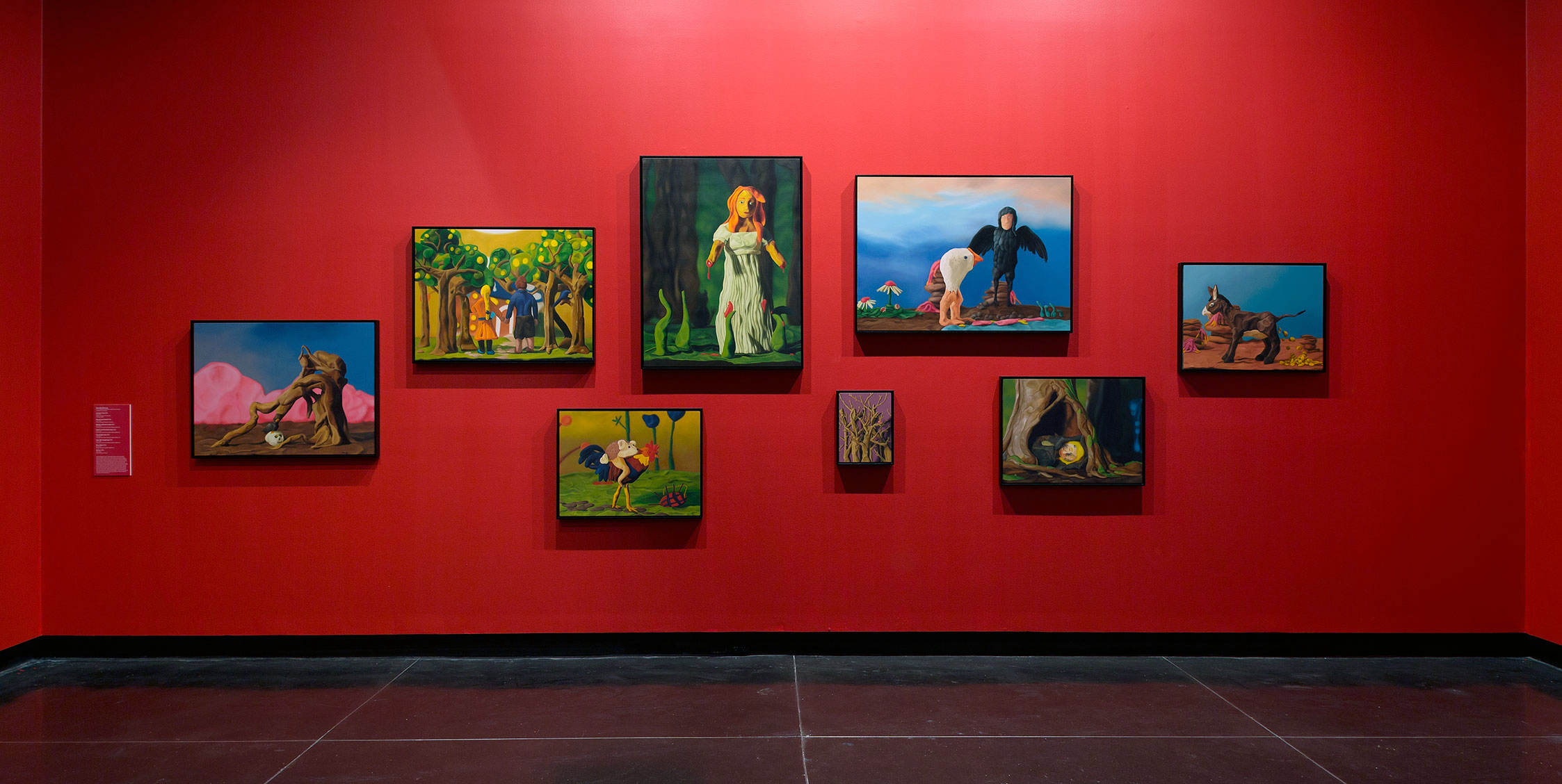
Installation view of the exhibition 'All the better to see you with: Fairy tales transformed' at The Ian Potter Museum of Art, Melbourne showing the work of Amanda Marburg ('Juniper Tree' 2016; 'Hansel and Gretel' 2016; 'Maiden without hands' 2016; 'Death and the Goose boy' 2015; 'The Golden Ass' 2016; 'Hans My Hedgehog' 2016; 'Briar Rose' 2016; and 'All Fur' 2016)


Installation view of the exhibition All the better to see you with: Fairy tales transformed at The Ian Potter Museum of Art, Melbourne showing the work of Amanda Marburg (Juniper Tree 2016; Hansel and Gretel 2016; Maiden without hands 2016; Death and the Goose boy 2015; The Golden Ass 2016; Hans My Hedgehog 2016; Briar Rose 2016; and All Fur 2016)


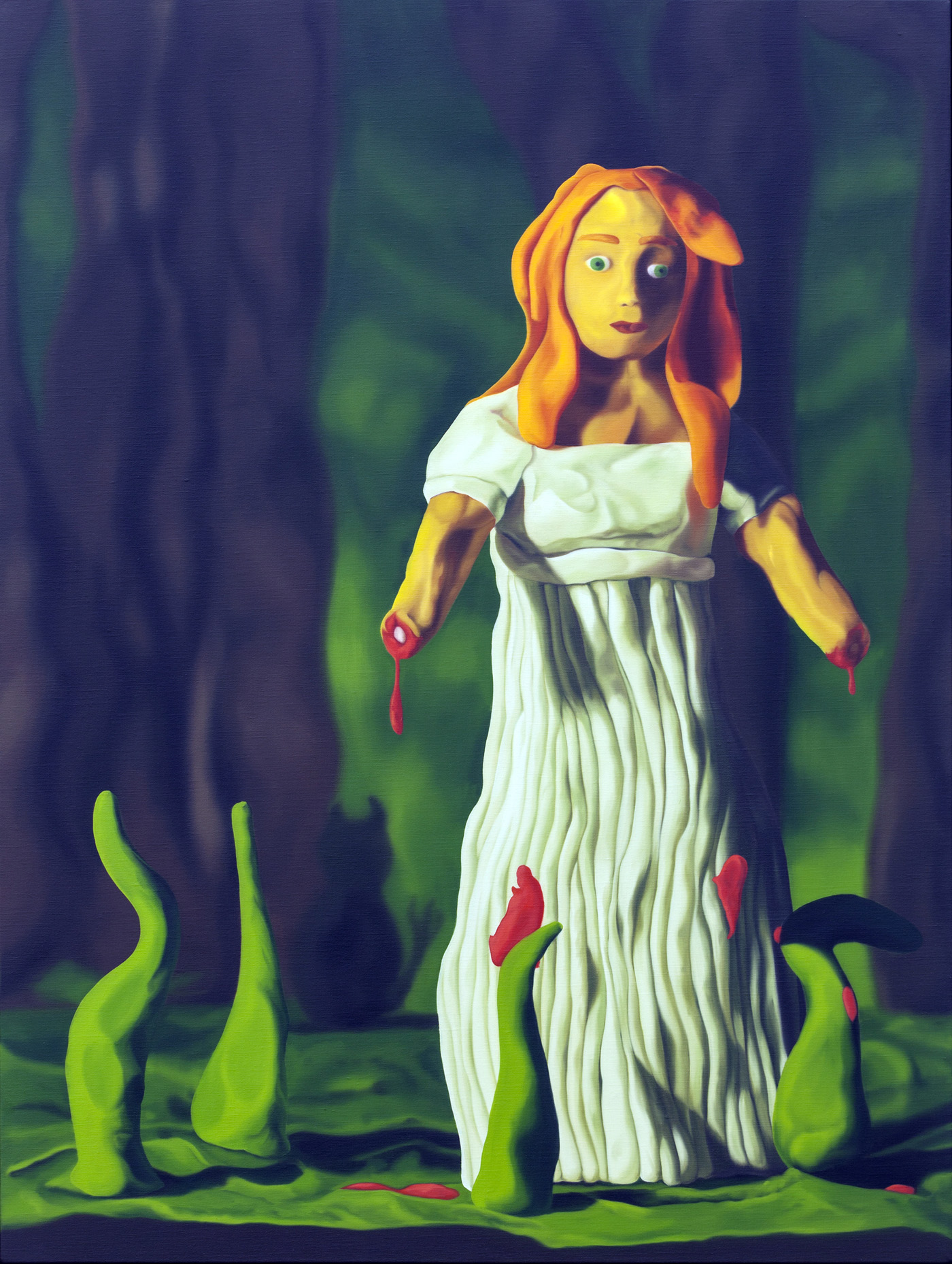
Amanda Marburg has an enduring fascination with the macabre, referencing dark tales from film, literature and art history to create distinctive paintings that often picture sinister and menacing subjects within brightly rendered, plasticine environments. In this body of work, Marburg looks to the famous Brothers Grimm tales, particularly the first edition of Grimm’s Fairy Tales, published in 1812. The brothers were dedicated to collecting largely oral folk tales from their German heritage, and among the first hey collected were narratives that told of the brutal living conditions of the time. In the better known 1857 edition of their Grimm’s Fairy Tales, more than thirty of the original stories have been removed from the earlier publication including ‘Death and the Goose Boy’ and ‘Juniper Tree’. These stories were often cautionary tales that encompassed gritty themes such as cannibalism, murder and child abuse and while they were popular when first published, they were deemed unsuitable for the later edition.

Wall text from the exhibition


Amanda Marburg (born 1976, Melbourne Australia; lives and works in Melbourne, Australia) 'Maiden without hands' 2016


Amanda Marburg (born 1976, Melbourne Australia; lives and works in Melbourne, Australia)
Maiden without hands
2016
Oil on linen
122 x 92cm
Courtesy the artist and Sutton Gallery, Melbourne


Installation view of the exhibition 'All the better to see you with: Fairy tales transformed' at The Ian Potter Museum of Art, Melbourne showing the work of Lotte Reiniger (left), Sally Smart (middle), and Miwa Yanagi (right)


Installation view of the exhibition All the better to see you with: Fairy tales transformed at The Ian Potter Museum of Art, Melbourne showing the work of Lotte Reiniger (left), Sally Smart (middle), and Miwa Yanagi (right)


Broersen and Lukács (Persijn Broersen born in Delft, The Netherlands in 1974 and Margit Lukács, in Amsterdam, The Netherlands in 1973; both live and work in Amsterdam, The Netherlands and Paris, France) 'Mastering Bambi' 2011 (video still)


Broersen and Lukács (Persijn Broersen born in Delft, The Netherlands in 1974 and Margit Lukács, in Amsterdam, The Netherlands in 1973; both live and work in Amsterdam, The Netherlands and Paris, France)
Mastering Bambi (video still)
2011
HD video
12:30 minutes
Courtesy of the artists and Akinci, Amsterdam


Mastering Bambi Preview, 2010 – Persijn Broersen & Margit Lukács from AKINCI Gallery on Vimeo.

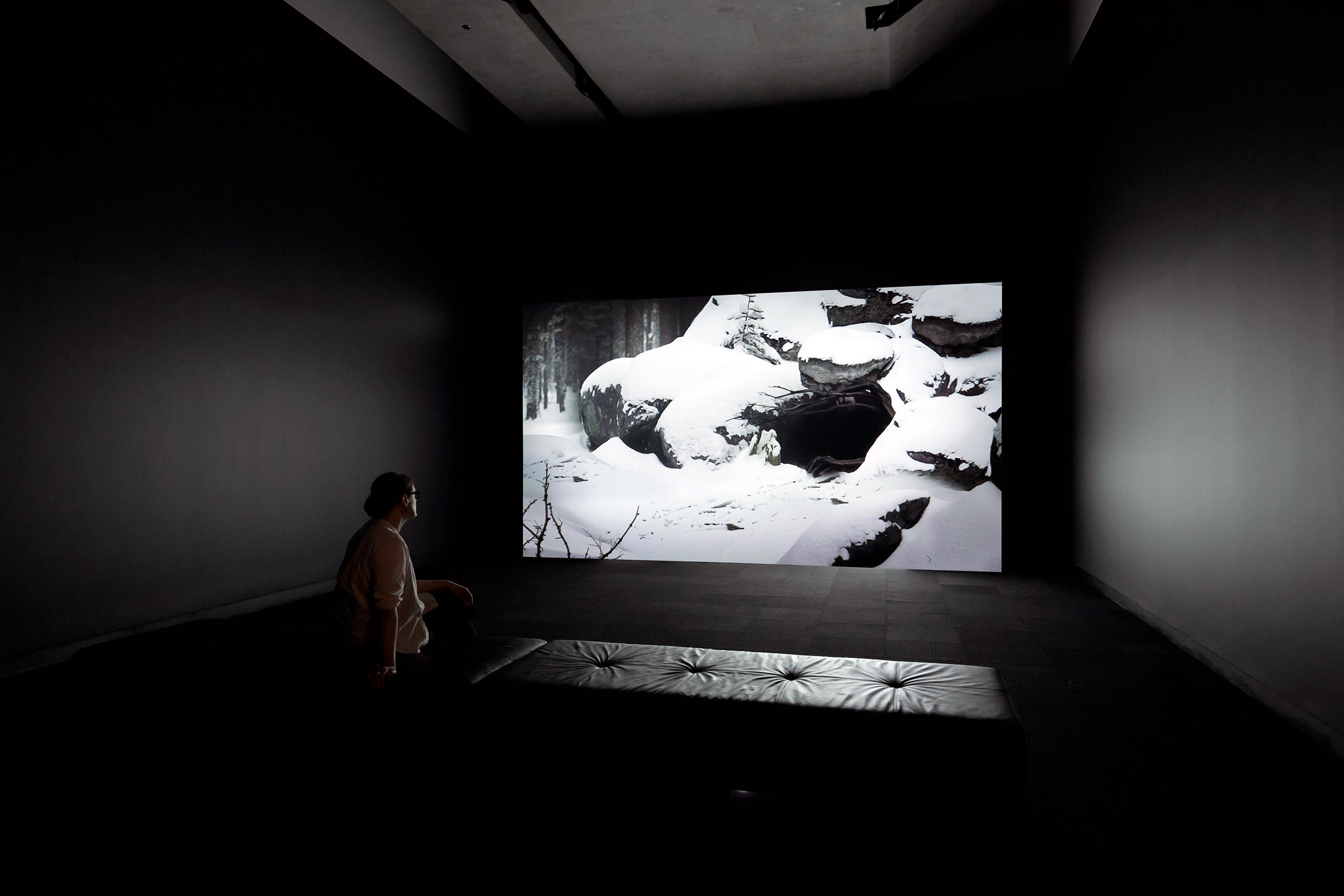
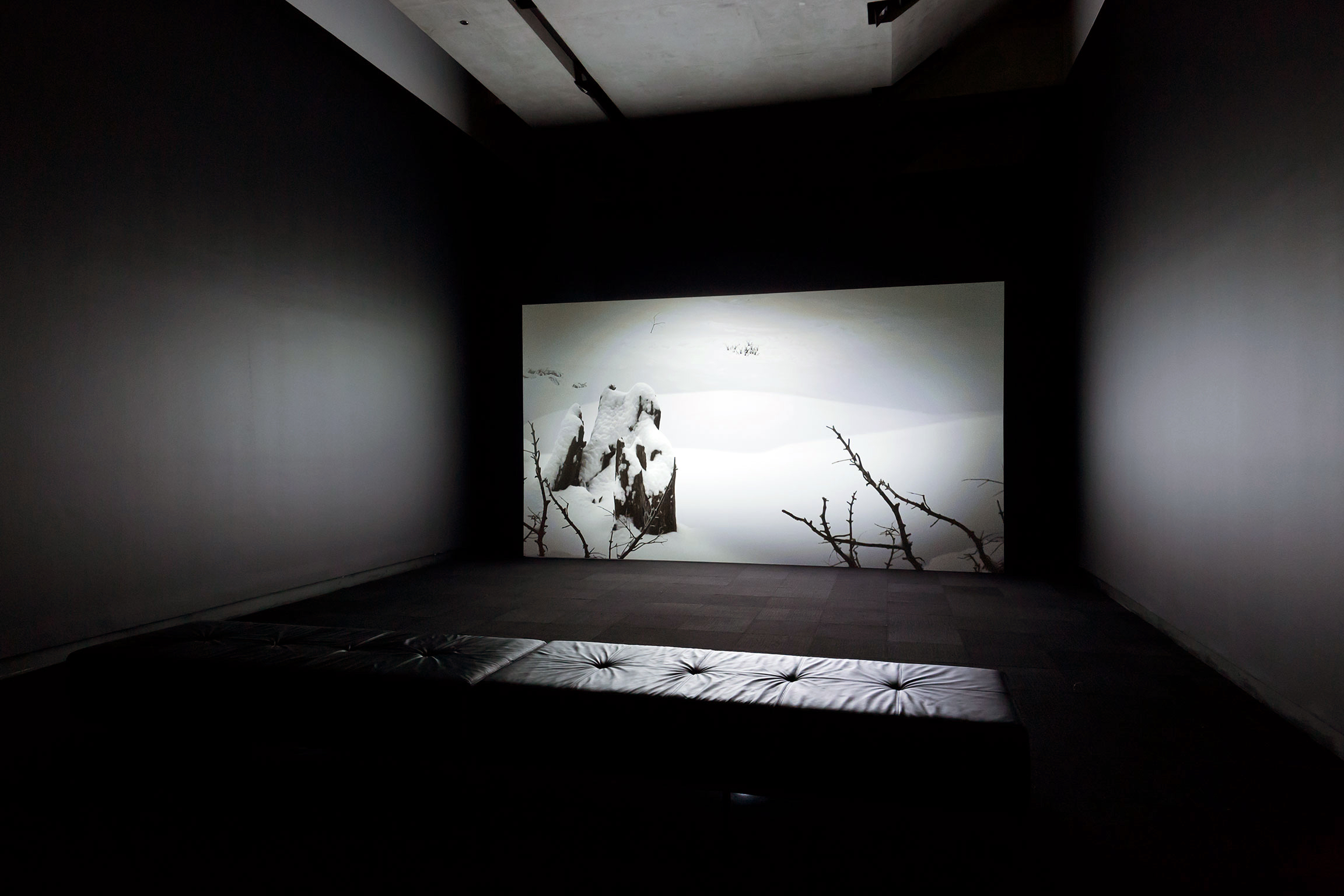
Walt Disney’s 1942 classic animation film Bambi is well known for its distinct main characters – a variety of cute, anthropomorphic animals. However, an important but often overlooked protagonist in the movie is nature itself: the pristine wilderness as the main grid on which Disney structured his ‘Bambi’. One of the first virtual worlds was created here: a world of deceptive realism and harmony, in which man is the only enemy. Disney strived to be true to nature, but he also used nature as a metaphor for human society. In his view, deeply rooted in European romanticism, the wilderness is threatened by civilisation and technology. The forest, therefore, is depicted as a ‘magic well’, the ultimate purifying ‘frontier’, where the inhabitants peacefully coexist. Interestingly, the original 1924 Austrian novel Bambi, A Life in the Woods by Felix Salten (banned in 1936 by Hitler) shows nature (and human society) more as a bleak, Darwinist reality of competition, violence and death.

Broersen and Lukács recreate the model of Disney’s pristine vision, but they strip the forest of its harmonious inhabitants, the animals. What remains is another reality, a constructed and lacking wilderness, where nature becomes the mirror of our own imagination. The soundtrack is made by Berend Dubbe and Gwendolyn Thomas. They’ve reconstructed Bambi’s music, in which they twist and fold the sound in such a way that it reveals the dissonances in the movie.

Text from AKINCI Gallery Vimeo web page


Broersen and Lukács (Persijn Broersen born in Delft, The Netherlands in 1974 and Margit Lukács, in Amsterdam, The Netherlands in 1973; both live and work in Amsterdam, The Netherlands and Paris, France) 'Mastering Bambi' 2011 (video still)


Broersen and Lukács (Persijn Broersen born in Delft, The Netherlands in 1974 and Margit Lukács, in Amsterdam, The Netherlands in 1973; both live and work in Amsterdam, The Netherlands and Paris, France)
Mastering Bambi (video still)
2011
HD video
12:30 minutes
Courtesy of the artists and Akinci, Amsterdam


All the better to see you with: Fairy tales transformed, the Ian Potter Museum of Art’s 2017 summer show, traces the genre of the fairy tale, exploring its function in contemporary society. The exhibition presents contemporary art work alongside a selection of key historical fairy tale books that provide re-interpretations of the classic fairy tales for a 21st-century context, including Little Red Riding HoodHansel and Gretel and The Little Mermaid.

Featuring international and Australian contemporary artists including Kiki Smith, Patricia Piccinini, Amanda Marburg, Miwa Yanagi, Kara Walker, Allison Schulnik, Tracey Moffatt, Paula Rego, Broersen and Lukacs and Peter Ellis, All the better to see you with explores artists’ use of the fairy tale to express social concerns and anxieties surrounding issues such as the abuse of power, injustice and exploitation.

Curator, Samantha Comte said: “Fairy tales help us to articulate the way we might see and challenge such issues and, through transformation, triumph in the end. This exhibition looks at why fairy tales still have the power to attract us, to seduce us, to lure us and stir our imagination.”

A major exhibition across all three levels of the museum, the exhibition will be accompanied by a raft of public and education programs. American artist Kiki Smith uses fairy tales like Little Red Riding Hood as a metaphor to express her feelings about the feminist experience in patriarchal culture. The Portuguese-British artist Paula Rego has constructed the same tale as a feminist farce, with Red Riding Hood’s mother flaunting the wolf ‘s pelt as a stole. Japanese photographer Miwa Yanagi, in her “Fairy Tale” series has created large scale images enacted by children and adolescents in which playfulness and cruelty, fantasy and realism, merge.

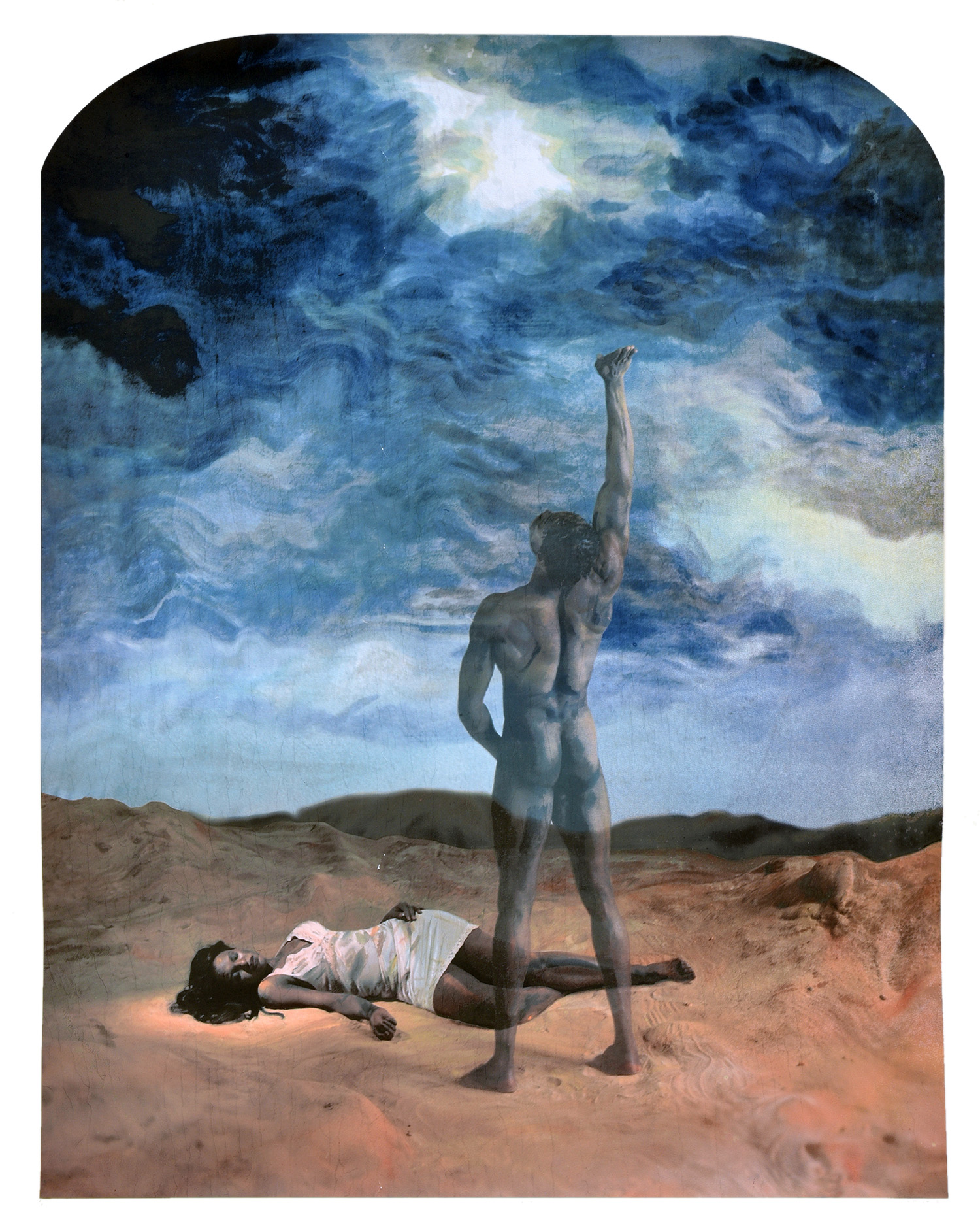
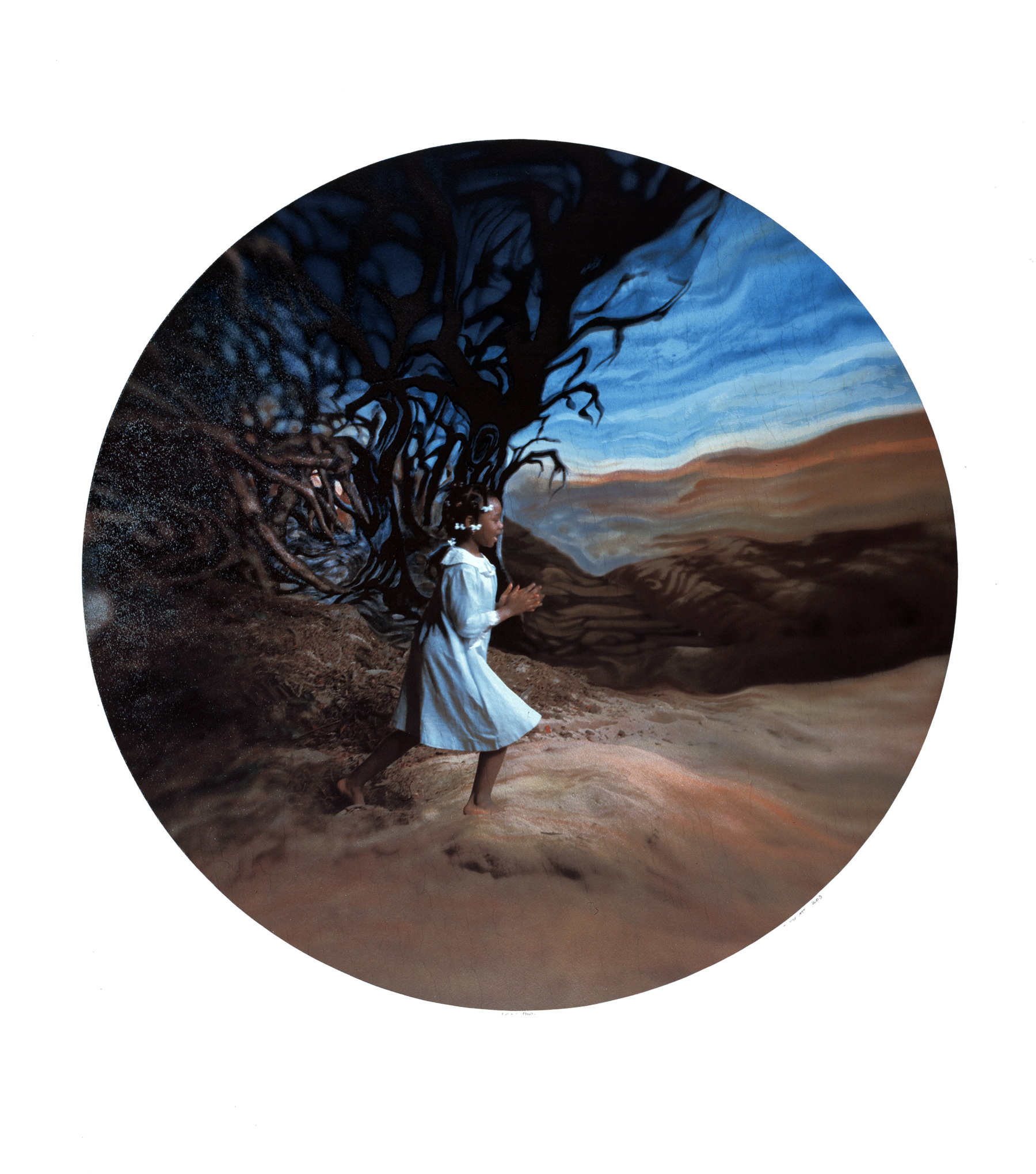
The theme of the lost child in the forest is played out through tales such as Snow White and Hansel and Gretel. Tracey Moffatt’s Invocations series of 13 images is composed of three disjointed narratives about a little girl in a forest, a woman and man in the desert and a foreboding horde of spirits. The little girl lost in the forest is familiar from childhood fairy tales, and the style of these images is reminiscent of Disney movies.

Broersen and Lukacs’ powerful video work, Mastering Bambi depicts the forest as a mysterious, alluring and sinister place. Often the setting of a fairy tale, the forest is used as a metaphor for human psychology. Australian artist Amanda Marburg, in her series How Some Children Played at Slaughtering looks to the stories that both excited and haunted generations of children and adults the infamous Grimm’s fairy tales. The melancholy of Marburg’s subjects is counteracted by her use of bewitching bright colour, which creates fairy tale-like landscapes with deceptive charm.

Fairy tales can comfort and entertain us; they can divert, educate and help shape our sense of the world; they articulate desires and dilemmas, nurture imagination and encapsulate good and evil. All the Better to See You With invites us to delve into this shadowy world of ancient stories through the eyes of a diverse range of artists and art works.

Press release from the Ian Potter Museum of Art


Second floor


Installation view of the exhibition 'All the better to see you with: Fairy tales transformed' at The Ian Potter Museum of Art, Melbourne showing the work of Paula Rego at left; Kylie Stillman's 'Scape' (2017) middle; and Kiki Smith's 'Born' (2002) at right


Installation view of the exhibition All the better to see you with: Fairy tales transformed at The Ian Potter Museum of Art, Melbourne showing the work of Paula Rego at left; Kylie Stillman’s Scape (2017) middle; and Kiki Smith’s Born (2002) at right


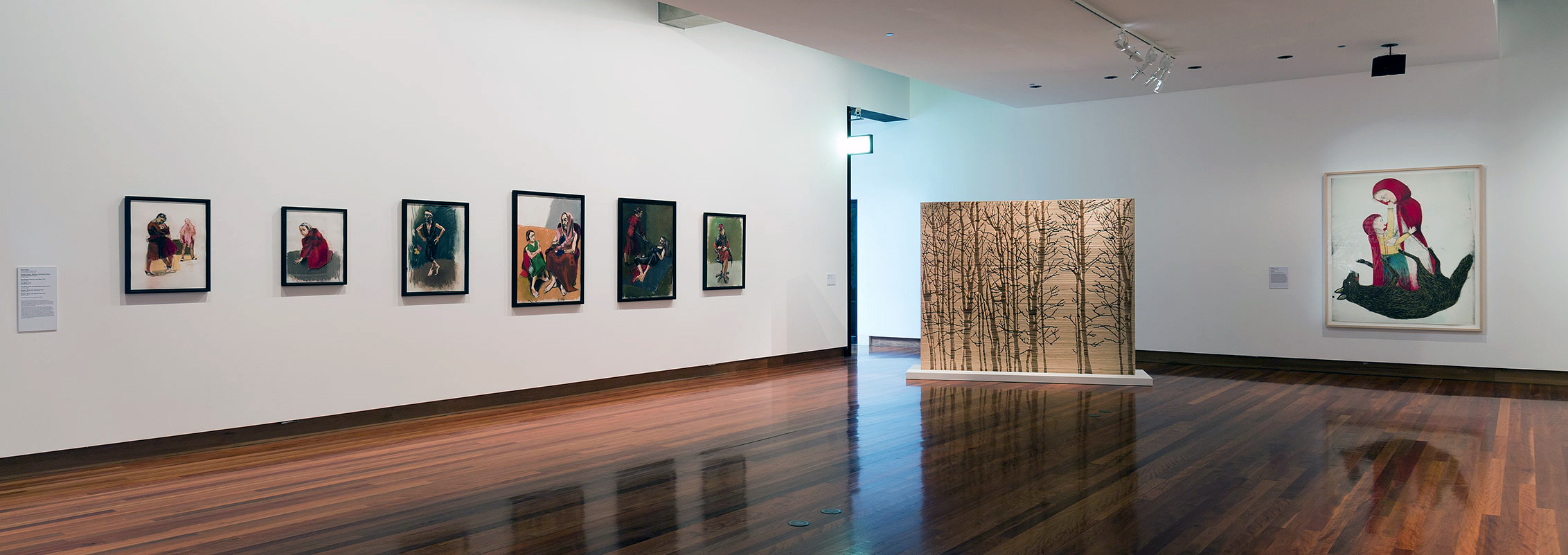
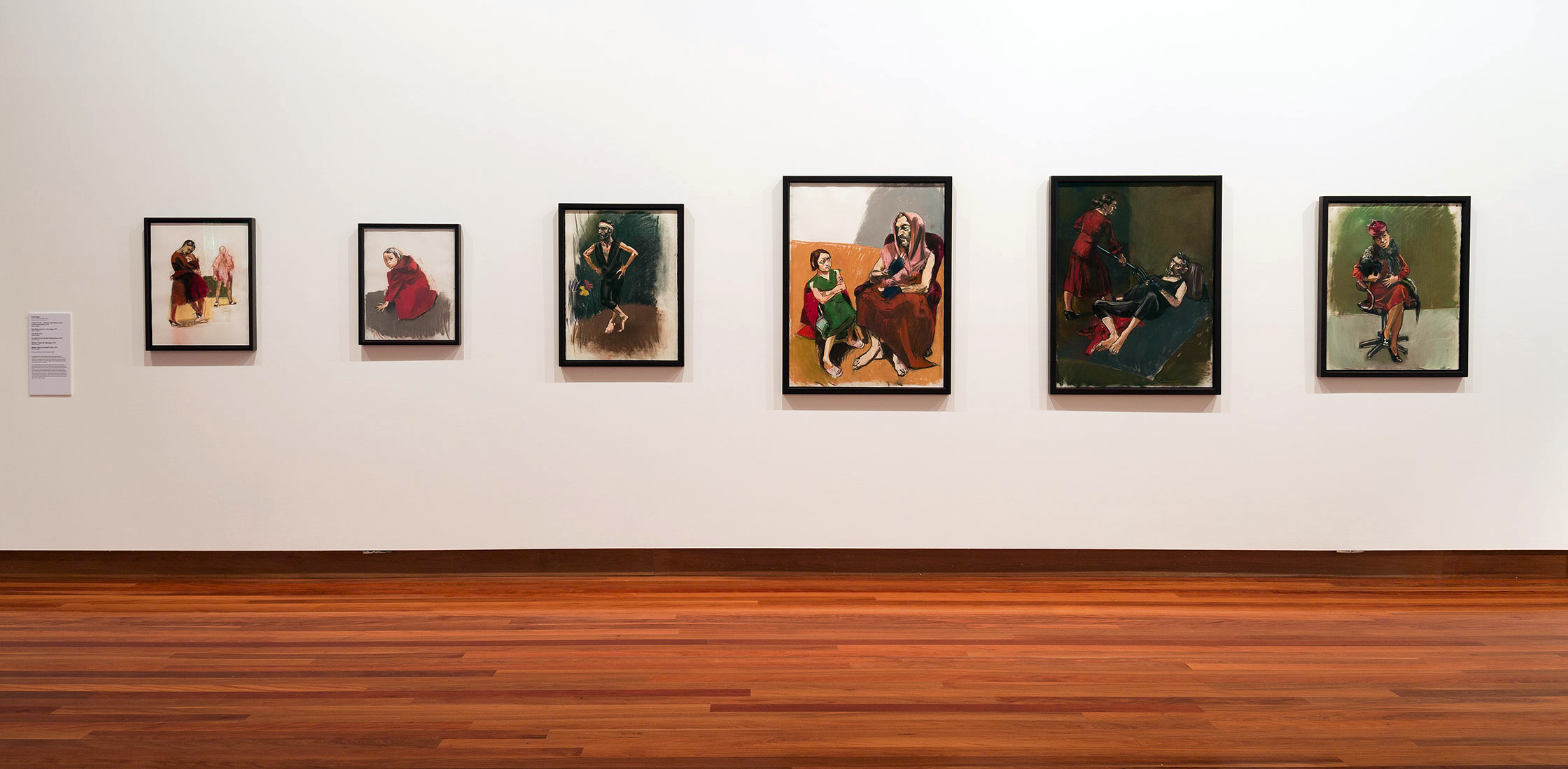
Installation view of the exhibition 'All the better to see you with: Fairy tales transformed' at The Ian Potter Museum of Art, Melbourne showing the work of Paula Rego (from left to right, 'Happy Family - Mother, Red Riding Hood and Grandmother' 2003; 'Red Riding Hood on the Edge' 2003; 'The Wolf' 2003; 'The wolf chats up Red Riding Hood' 2003; 'Mother Takes Her Revenge' 2003; and 'Mother Wears the Wolf's Pelt' 2003)


Installation view of the exhibition All the better to see you with: Fairy tales transformed at The Ian Potter Museum of Art, Melbourne showing the work of Paula Rego (from left to right, Happy Family – Mother, Red Riding Hood and Grandmother, 2003; Red Riding Hood on the Edge, 2003; The Wolf, 2003; The wolf chats up Red Riding Hood, 2003; Mother Takes Her Revenge, 2003; and Mother Wears the Wolf’s Pelt, 2003)


Portuguese born, British based artist Paula Rego subverts traditional folk stories and fairy tales, adapting these narratives to reflect and challenge the values of contemporary society, playing with feminine roles in culturally determined contexts and turning male dominance on its head.

In Little Red Riding Hood (2003), Rego presents an alternative telling of this well-known story. Her suite of paintings is based on Charles Perrault’s version of this fairy tale Le Petit Chaperon Rouge, 1695 in which the girl and the grandmother are eaten by the wolf, rather than the more famous Grimm version in which the girl and the grandmother survive after being rescued by a male protagonist. Rego reshapes the story for a contemporary context, reflecting on current ideas around gender roles in society and casting the mother as a sharply dressed avenger who overcomes the man-wolf without the aid of a male rescuer.

Wall text from the exhibition


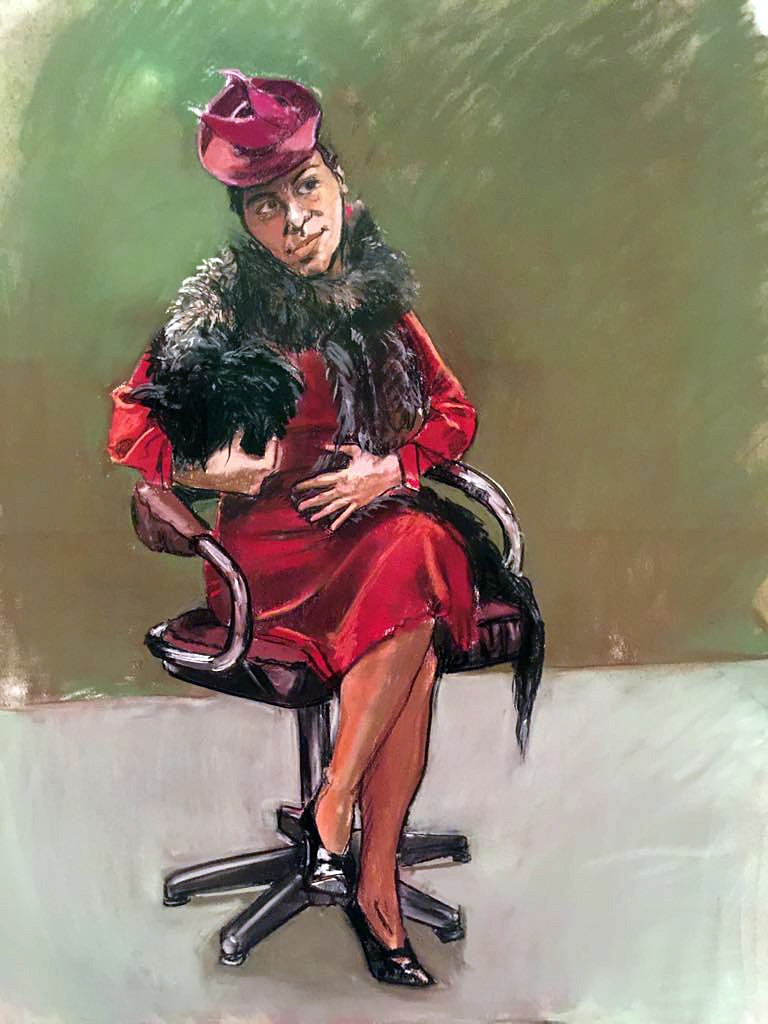
Paula Rego (Portuguese-British, b. 1935) 'The wolf chats up Red Riding Hood' 2003


Paula Rego (Portuguese-British, b. 1935)
The wolf chats up Red Riding Hood
2003
Pastel on paper
104 x 79cm
Collection of Gracie Smart, London
Courtesy Malborough Fine Art, London
© Paula Rego


Paula Rego (Portuguese-British, b. 1935) 'Mother Wears the Wolf's Pelt' 2003


Paula Rego (Portuguese-British, b. 1935)
Mother Wears the Wolf’s Pelt
2003
Pastel on paper
75 x 4 x 92cm
Collection of Gracie Smart, London
Courtesy Malborough Fine Art, London
© Paula Rego
Photo: Marcus Bunyan


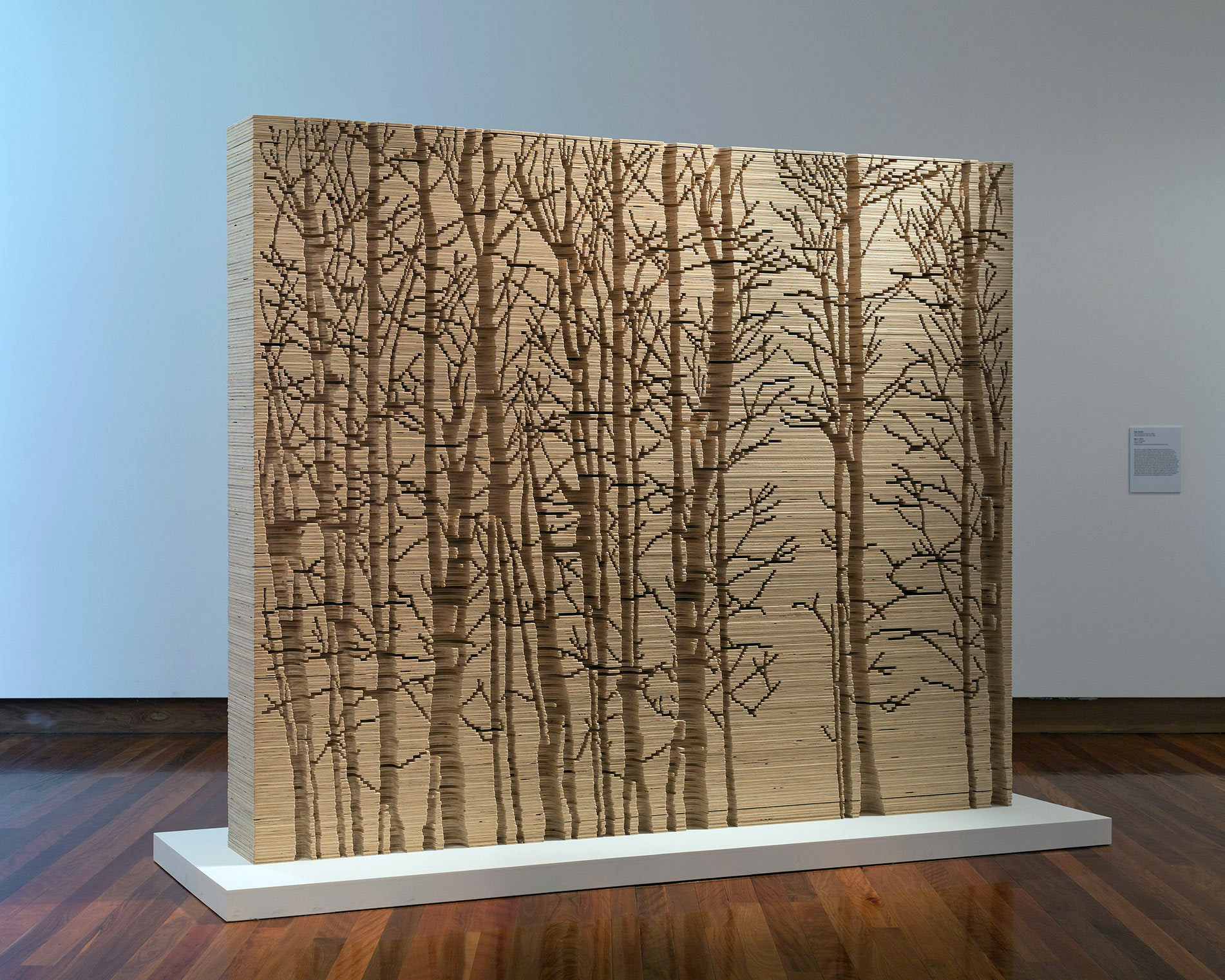
Installation view of the exhibition 'All the better to see you with: Fairy tales transformed' at The Ian Potter Museum of Art, Melbourne showing Kylie Stillman's 'Scape' (2017) at left and Kiki Smith's 'Born' (2002) at right


Installation view of the exhibition All the better to see you with: Fairy tales transformed at The Ian Potter Museum of Art, Melbourne showing Kylie Stillman’s Scape (2017) at left and Kiki Smith’s Born (2002) at right


Kylie Stillman (born in Mordialloc, Victoria, Australia in 1975 lives and works in Melbourne Australia) 'Scape' 2017 (installation view)


Kylie Stillman (born in Mordialloc, Victoria, Australia in 1975 lives and works in Melbourne Australia)
Scape (installation view)
2017
Hand cut plywood
200 x 240 x 30cm
Courtesy of the artist and Utopian Art, Sydney


Kiki Smith (born Nuremberg, Germany 1954; lives and works in USA) 'Born' 2002


Kiki Smith (born Nuremberg, Germany 1954; lives and works in USA)
Born
2002
Lithograph in 12 colours
172.72 x 142.24cm
Edition 28
Published by Universal Limited Art Editions
© Kiki Smith / Universal Limited Art Editions Courtesy of the Artist and PACE Gallery, NY


Kiki Smith‘s practice has been shaped by her enduring interest in the human condition and the natural world. She evocatively reworks representations and imagery found in religion, mythology and folklore. Exploring themes recurrent to her practice such as birth, death and regeneration, in Born (2002) Smith alludes to an idea that has fascinated her for many years, the relationship of animals, particularly wolves and human beings. This illustration of Red Riding Hood and her grandmother emerging from the wolf’s stomach, subverts the story line of this well-known fairy tale, depicting the couple rising from the body of he wolf rather than being consumed by him. The image is simultaneously savage and tender. Significantly the illustrations of the child and the grandmother are, in fact, both portraits of the artist, the depiction of the child’s face is derived from a drawing of Smith as a child. In this work, the two female figures are no longer victims and the wolf is no longer the aggressor. Instead there is a complicity between characters. Smith’s ongoing use of surprising narrative associations allows her to interrogate ideas around gender and identity, providing a disconcerting view of traditional fairy tale narratives.

Wall text from the exhibition


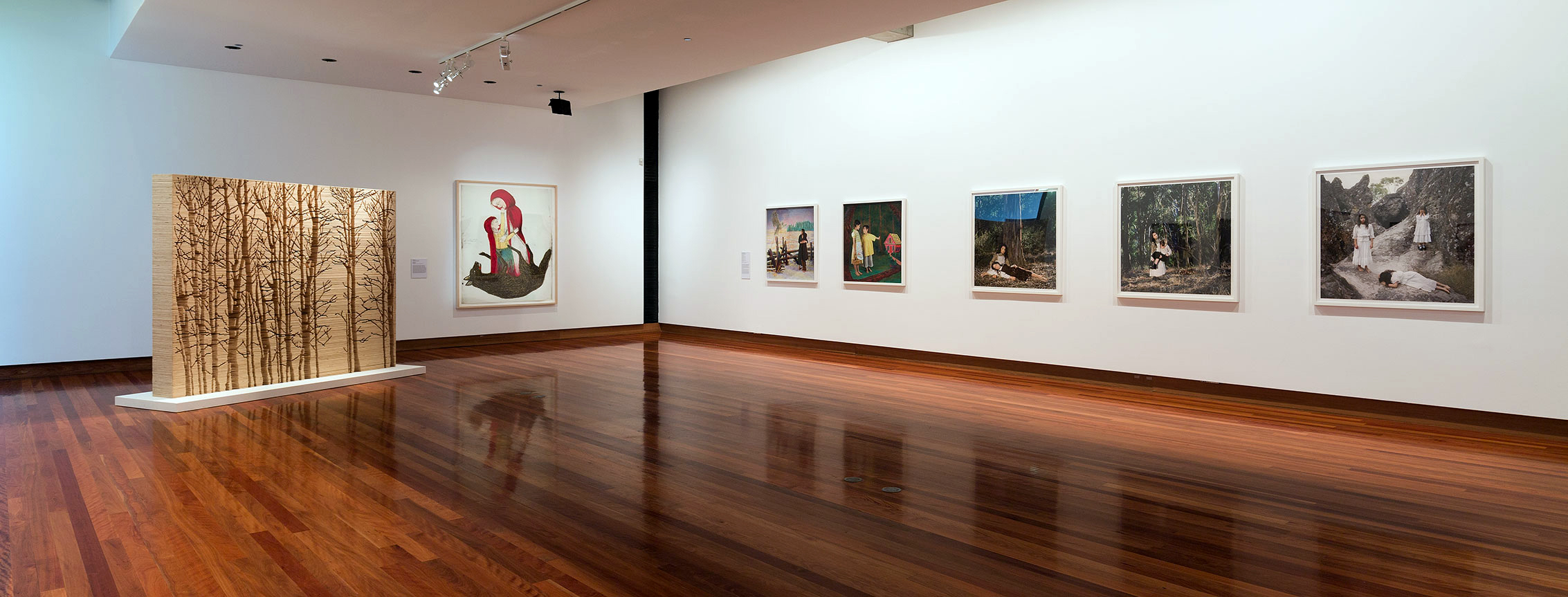
Installation view of the exhibition 'All the better to see you with: Fairy tales transformed' at The Ian Potter Museum of Art, Melbourne showing Kylie Stillman's 'Scape' (2017) at left, Kiki Smith's 'Born' (2002) middle and Polixeni Papapetrou's work at right


Installation view of the exhibition All the better to see you with: Fairy tales transformed at The Ian Potter Museum of Art, Melbourne showing Kylie Stillman’s Scape (2017) at left, Kiki Smith’s Born (2002) middle and Polixeni Papapetrou’s work at right


Polixeni Papapetrou (Australian, 1960-2018) 'The Encounter' 2003


Polixeni Papapetrou (Australian, 1960-2018)
The Encounter
2003
Type C print
100 x 100cm
Courtesy the artist, Michael Reid Gallery, Sydney + Berlin and Jarvis Dooney Galerie, Berlin
Reproduced with permission


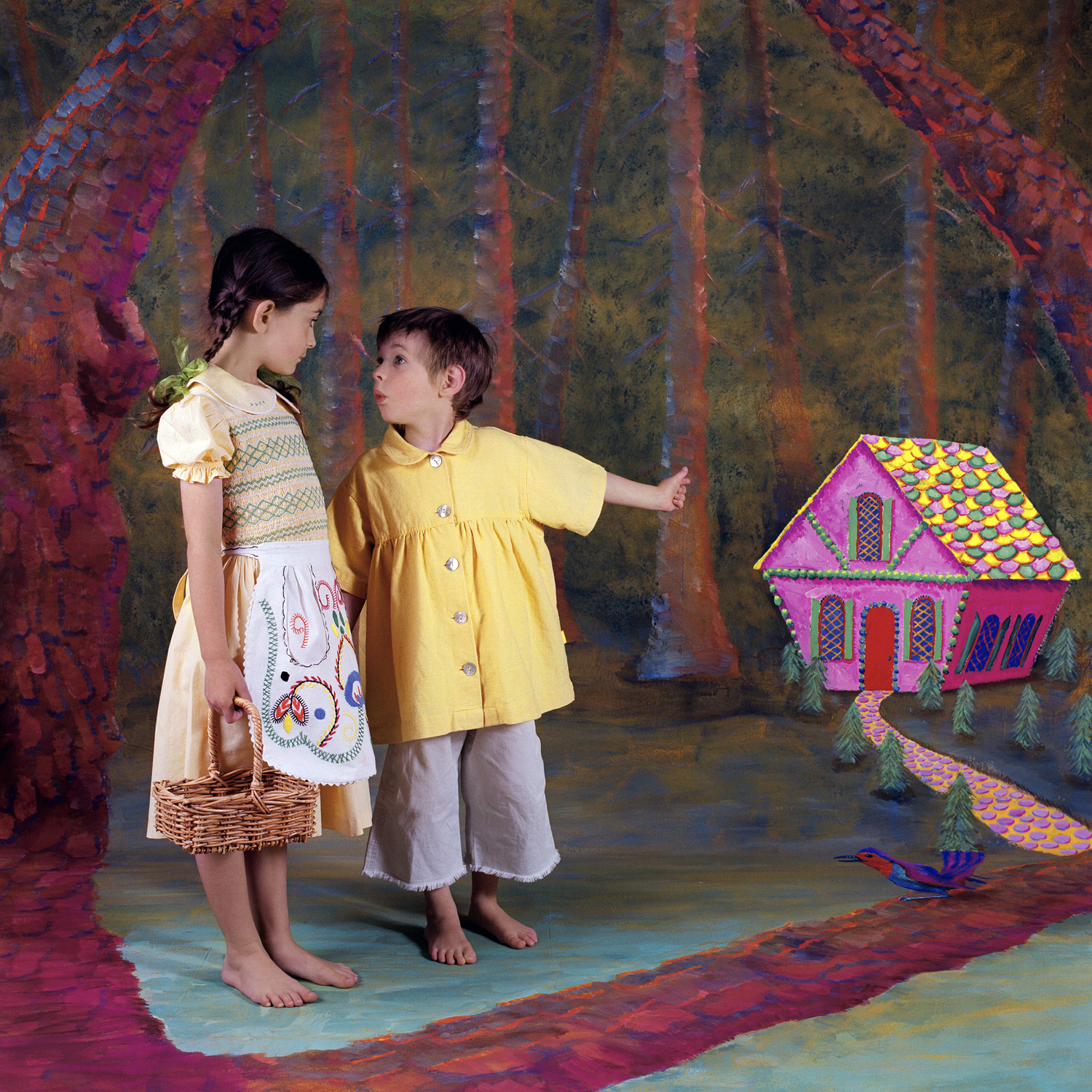
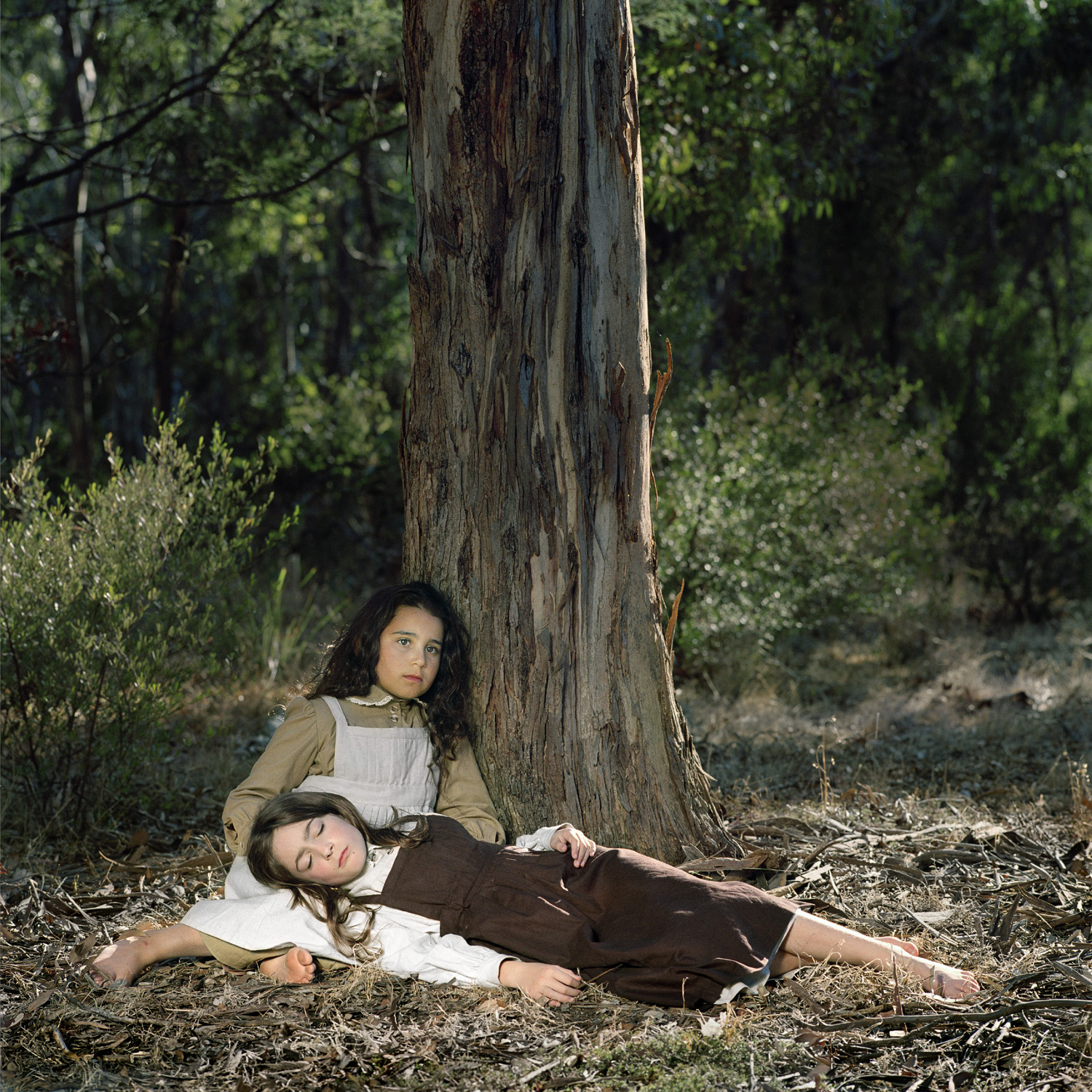
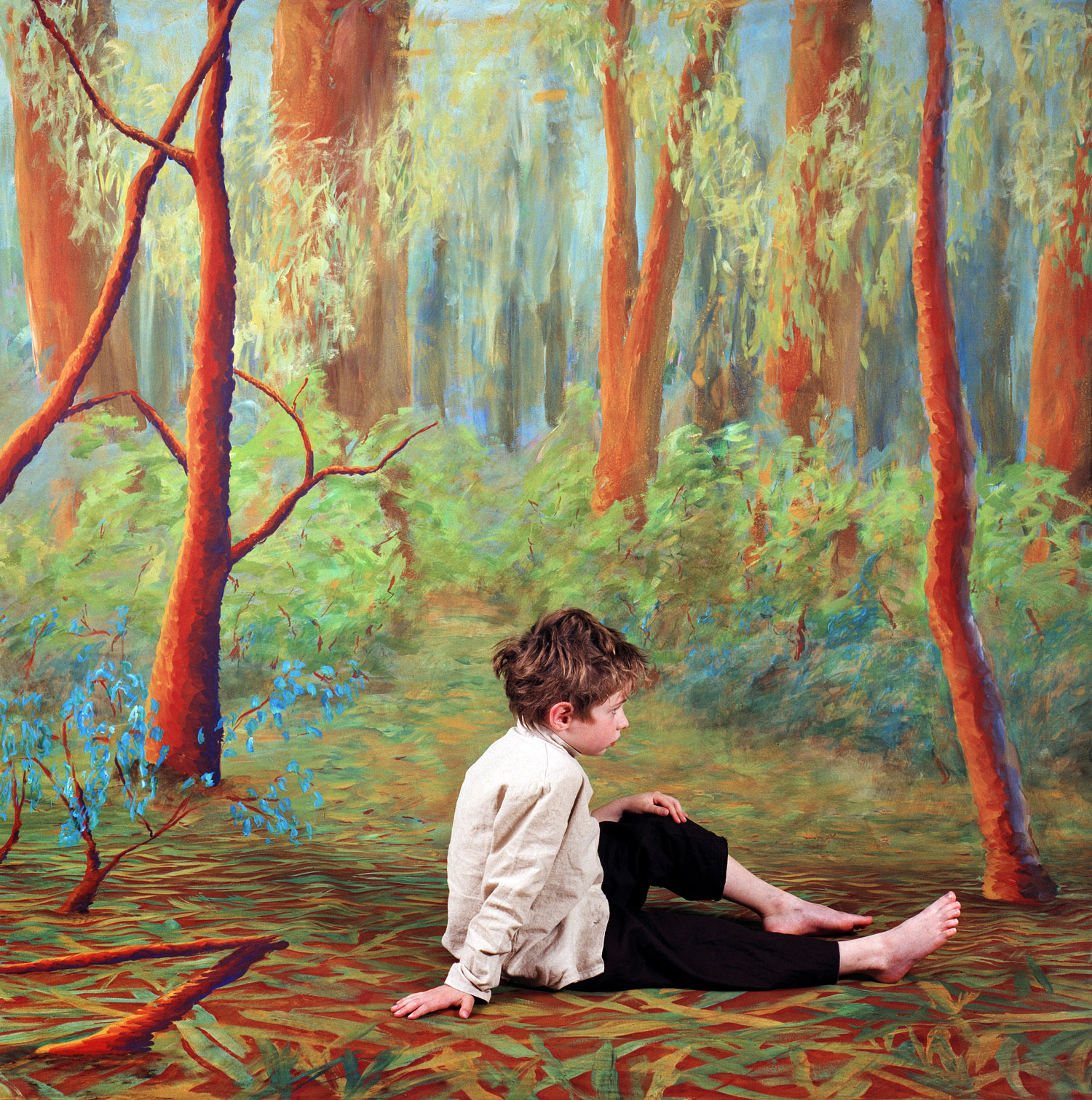
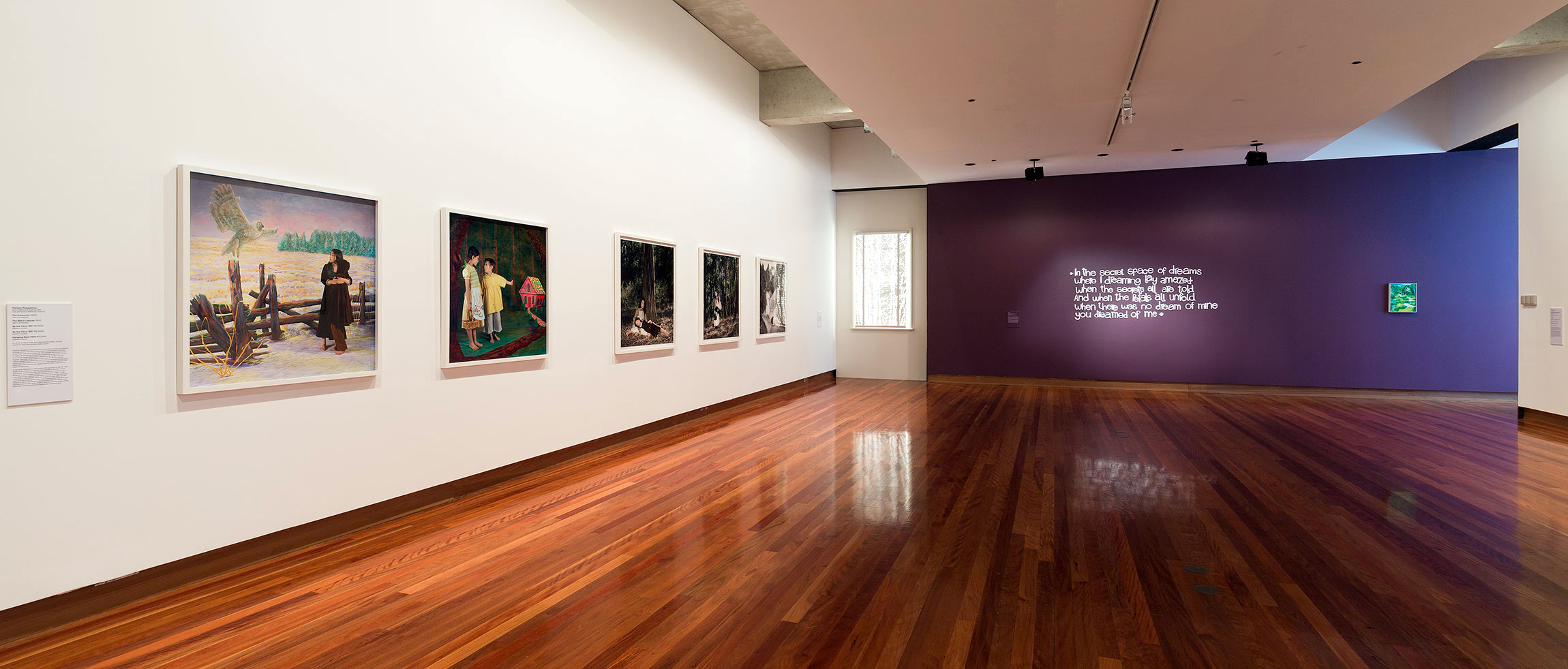
Polixeni Papapetrou was fascinated with costume and disguise throughout her more than thirty years of photographic practice. In her Fairy Tales series (2004-2014), she restages well-known stories in highly theatrical environments, combining recognisable motifs, such as the snowy-white owl in The Encounter (2006) and the brightly coloured candy house in her work The Witch’s House (2003). Papapetrou places her child actors in fantastical landscapes, capturing them performing in front of vividly painted trompe l’oeil backdrops; that evocatively suggest the rich interior world of the child’s imagination.

In her work, Papapetrou also explored the narrative of the lost child, which in the European tradition has a parallel in the tale ‘Hansel and Gretel’. In Australia, the most famous story of children lost in the bush is Joan Lindsay’s Picnic at Hanging Rock (1967), a tale embedded in our cultural imagination through both the novel and subsequent movie (1975). Set on St Valentine’s Day 1900, it is the story of three young girls on the cusp of womanhood disappearing without a trace. Papapetrou’s Hanging Rock 1900 #3 (2006), from the Haunted Country series (2006), captures the eerie quality of the Australian landscape and the hopelessness of the lost girls.

Wall text from the exhibition


Polixeni Papapetrou (Australian, 1960-2018) 'The Witch's House' 2003


Polixeni Papapetrou (Australian, 1960-2018)
The Witch’s House
2003
Type C print
100 x 100cm
Courtesy the artist, Michael Reid Gallery, Sydney + Berlin and Jarvis Dooney Galerie, Berlin
Reproduced with permission


Polixeni Papapetrou (Australian, 1960-2018) 'By the Yarra 1857 #1' 2006


Polixeni Papapetrou (Australian, 1960-2018)
By the Yarra 1857 #1
2006
Pigment ink print
105 x 105cm
Courtesy the artist, Michael Reid Gallery, Sydney + Berlin and Jarvis Dooney Galerie, Berlin
Reproduced with permission


Polixeni Papapetrou (Australian, 1960-2018) 'By the Yarra 1857 #2' 2006


Polixeni Papapetrou (Australian, 1960-2018)
By the Yarra 1857 #2
2006
Pigment ink print
105 x 105cm
Courtesy the artist, Michael Reid Gallery, Sydney + Berlin and Jarvis Dooney Galerie, Berlin
Reproduced with permission


Polixeni Papapetrou (Australian, 1960-2018) 'Lost' 2005


Polixeni Papapetrou (Australian, 1960-2018)
Lost
2005
Type C print
100 x 100cm
Courtesy the artist, Michael Reid Gallery, Sydney + Berlin and Jarvis Dooney Galerie, Berlin
Reproduced with permission


Installation view of the exhibition 'All the better to see you with: Fairy tales transformed' at The Ian Potter Museum of Art, Melbourne showing Polixeni Papapetrou's work at left and Kate Daw's work at centre right


Installation view of the exhibition All the better to see you with: Fairy tales transformed at The Ian Potter Museum of Art, Melbourne showing Polixeni Papapetrou’s work at left and Kate Daw’s work at centre right


Installation view of the exhibition 'All the better to see you with: Fairy tales transformed' at The Ian Potter Museum of Art, Melbourne showing Kate Daw's work 'Lights No Eyes Can See (2)' (2017) at left; the work of Paula Rego middle; and Kylie Stillman's 'Scape' (2017) right


Installation view of the exhibition All the better to see you with: Fairy tales transformed at The Ian Potter Museum of Art, Melbourne showing Kate Daw’s work Lights No Eyes Can See (2) (2017) at left; the work of Paula Rego middle; and Kylie Stillman’s Scape (2017) right


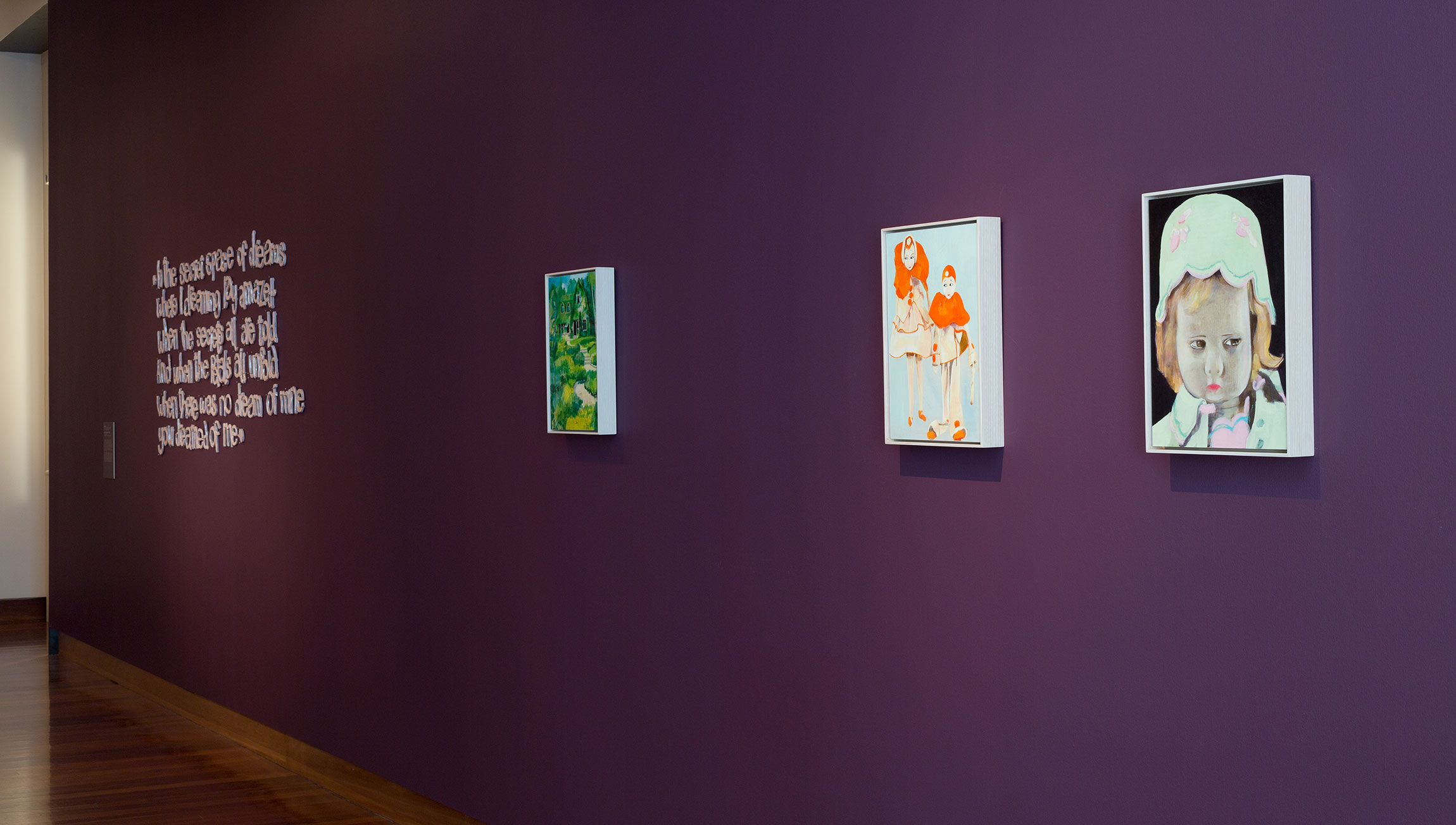
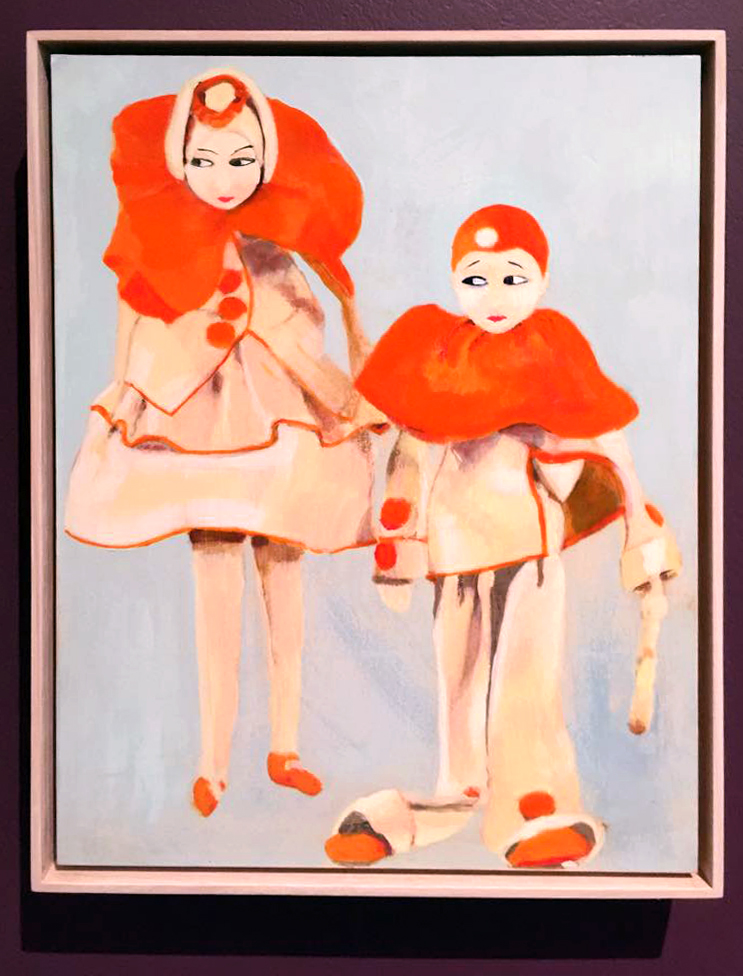
Installation view of the exhibition 'All the better to see you with: Fairy tales transformed' at The Ian Potter Museum of Art, Melbourne showing Kate Daw's work 'Lights No Eyes Can See (2)' (2017) at left, and her paintings 'Arietta's House' (2016), 'Lenci dolls (Lenu and Lila)' (2016), and 'Lenci doll (back to the before)' (2016) left to right


Installation view of the exhibition All the better to see you with: Fairy tales transformed at The Ian Potter Museum of Art, Melbourne showing Kate Daw’s work Lights No Eyes Can See (2) (2017) at left, and her paintings Arietta’s House (2016), Lenci dolls (Lenu and Lila) (2016), and Lenci doll (back to the before) (2016) left to right


Kate Daw (Australian, 1965-2020) 'Lights No Eyes Can See (2)' 2017


Kate Daw (Australian, 1965-2020)
Lights No Eyes Can See (2)
2017
Fired and painted clay dimensions variable
Courtesy the artist and Sarah Scout Presents, Melbourne


Kate Daw‘s practice was shaped by her ongoing interest in authorship, narrative and creative process. Daw’s work for this exhibition Lights No Eyes Can See (2) (2017, above), is one of many iterations that the artist has made: its original lyric form was written as the song ‘Attics of my Life’, in 1970 by Jerry Garcia and Robert Hunter for the rock band The Grateful Dead. In its first iteration Daw reshapes the lyrics into a typed canvas work scaled up to a giant print and a performative iteration in which she asked art students to sing this song at set times of the day.

For this exhibition, Daw transformed an excerpt of the song into a wall piece made in clay. The text describes the dreamy, subconscious space that fairy tales occupy, while the colour and form of the work suggests domestic decoration. Continuously moving between the domestic and the social, the everyday and the imagined, this work reflects Daw’s interest in how we constantly reshape and remake objects, texts and narratives to make sense of the world.

Wall text from the exhibition


Kate Daw. 'Lenci dolls (Lenu and Lila)' 2016 (installation view)


Installation view of Kate Daw’s work Lenci dolls (Lenu and Lila) 2016
Photo: Marcus Bunyan


Installation view of the exhibition 'All the better to see you with: Fairy tales transformed' at The Ian Potter Museum of Art, Melbourne

Installation view of the exhibition 'All the better to see you with: Fairy tales transformed' at The Ian Potter Museum of Art, Melbourne with a still from the video work 'Mound' (2011) by Allison Schulnik at left, and the work of Dina Goldstein from her 'Fallen Princess' series at right


Installation view of the exhibition All the better to see you with: Fairy tales transformed at The Ian Potter Museum of Art, Melbourne with a still from the video work Mound (2011) by Allison Schulnik at left, and the work of Dina Goldstein from her Fallen Princess series at right


Allison Schulnik (born in 1978, San Diego; lives and works in Los Angeles, USA)
Mound
2011
Clay-animated stop motion video
4.24 minutes
Courtesy the artist and Mark Moore Gallery, California


Allison Schulnik (born in 1978, San Diego; lives and works in Los Angeles, USA) 'Mound' 2011 (video still)


Allison Schulnik (born in 1978, San Diego; lives and works in Los Angeles, USA)
Mound (video still)
2011
Clay-animated stop motion video
4.24 minutes
Courtesy the artist and Mark Moore Gallery, California


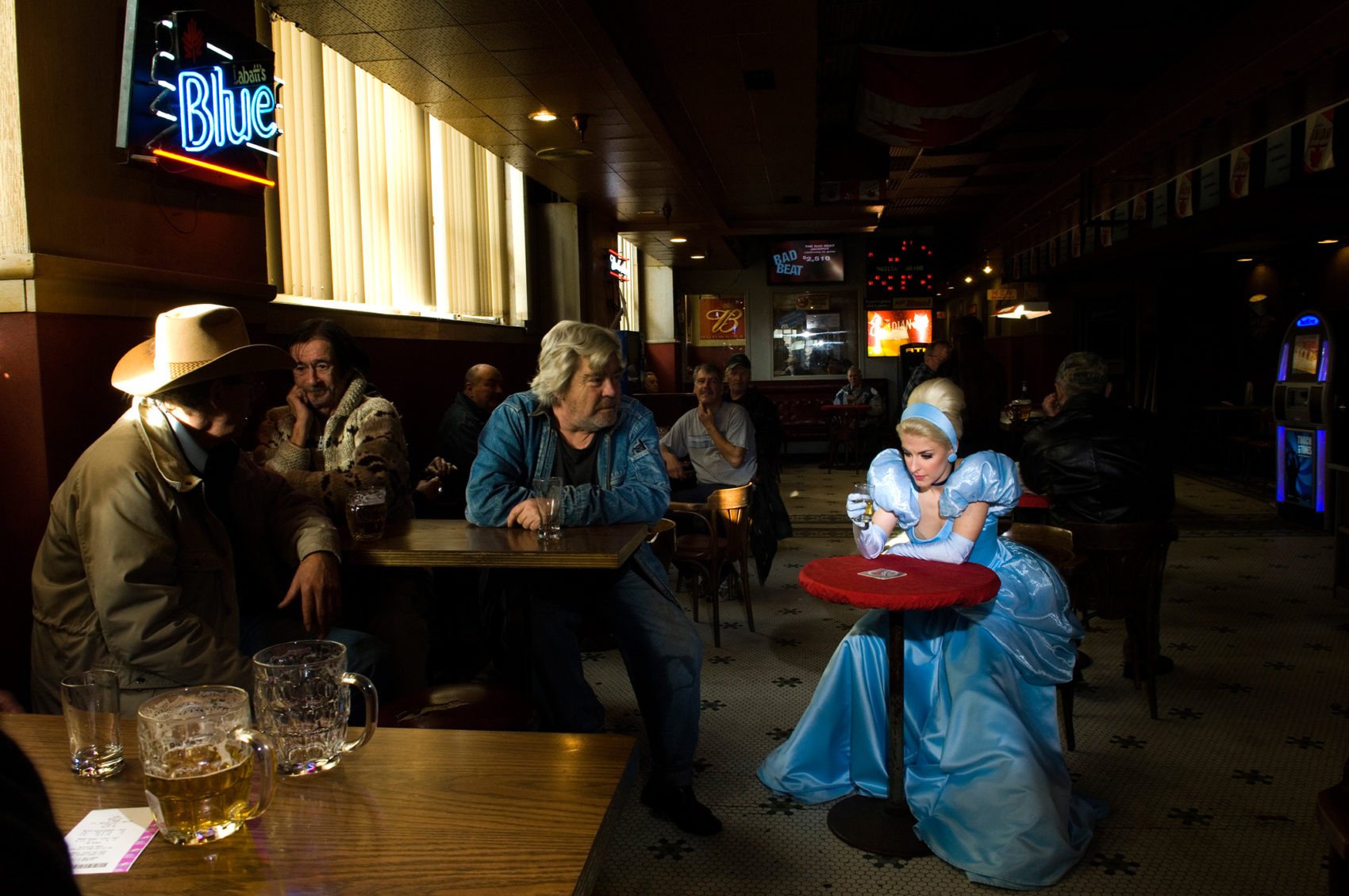
Dina Goldstein (born 1969 in Tel Aviv, Israel; lives and works Vancouver, Canada) 'Cinder' 2007


Dina Goldstein (born 1969 in Tel Aviv, Israel; lives and works Vancouver, Canada)
Cinder
2007
From the Fallen Princess series
Digital photograph
76.2 x 106.7cm
Courtesy of the artist


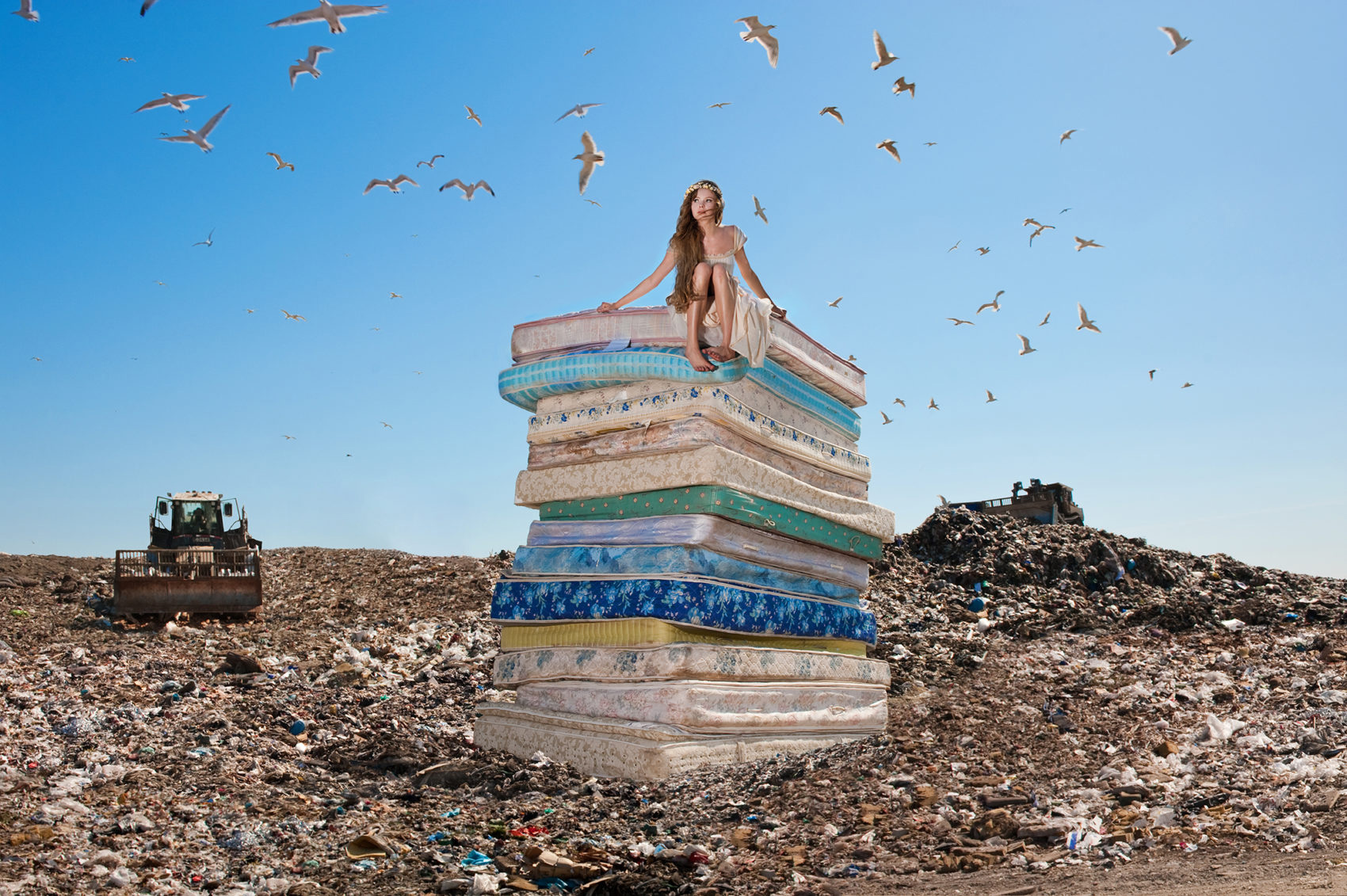
Dina Goldstein (born 1969 in Tel Aviv, Israel; lives and works Vancouver, Canada) 'Princess Pea' 2009


Dina Goldstein (born 1969 in Tel Aviv, Israel; lives and works Vancouver, Canada)
Princess Pea
2009
From the Fallen Princess series
Digital photograph
76.2 x 106.7cm
Courtesy of the artist


Dina Goldstein (born 1969 in Tel Aviv, Israel; lives and works Vancouver, Canada) 'Snowy' 2008


Dina Goldstein (born 1969 in Tel Aviv, Israel; lives and works Vancouver, Canada)
Snowy
2008
From the Fallen Princess series
Digital photograph
76.2 x 106.7cm
Courtesy of the artist


Installation view of the exhibition 'All the better to see you with: Fairy tales transformed' at The Ian Potter Museum of Art, Melbourne showing the work of Dina Goldstein at left, and the video 'Untitled (scream)' by Janaina Tschäpe at right


Installation view of the exhibition All the better to see you with: Fairy tales transformed at The Ian Potter Museum of Art, Melbourne showing the work of Dina Goldstein at left, and the video Untitled (scream) by Janaina Tschäpe at right


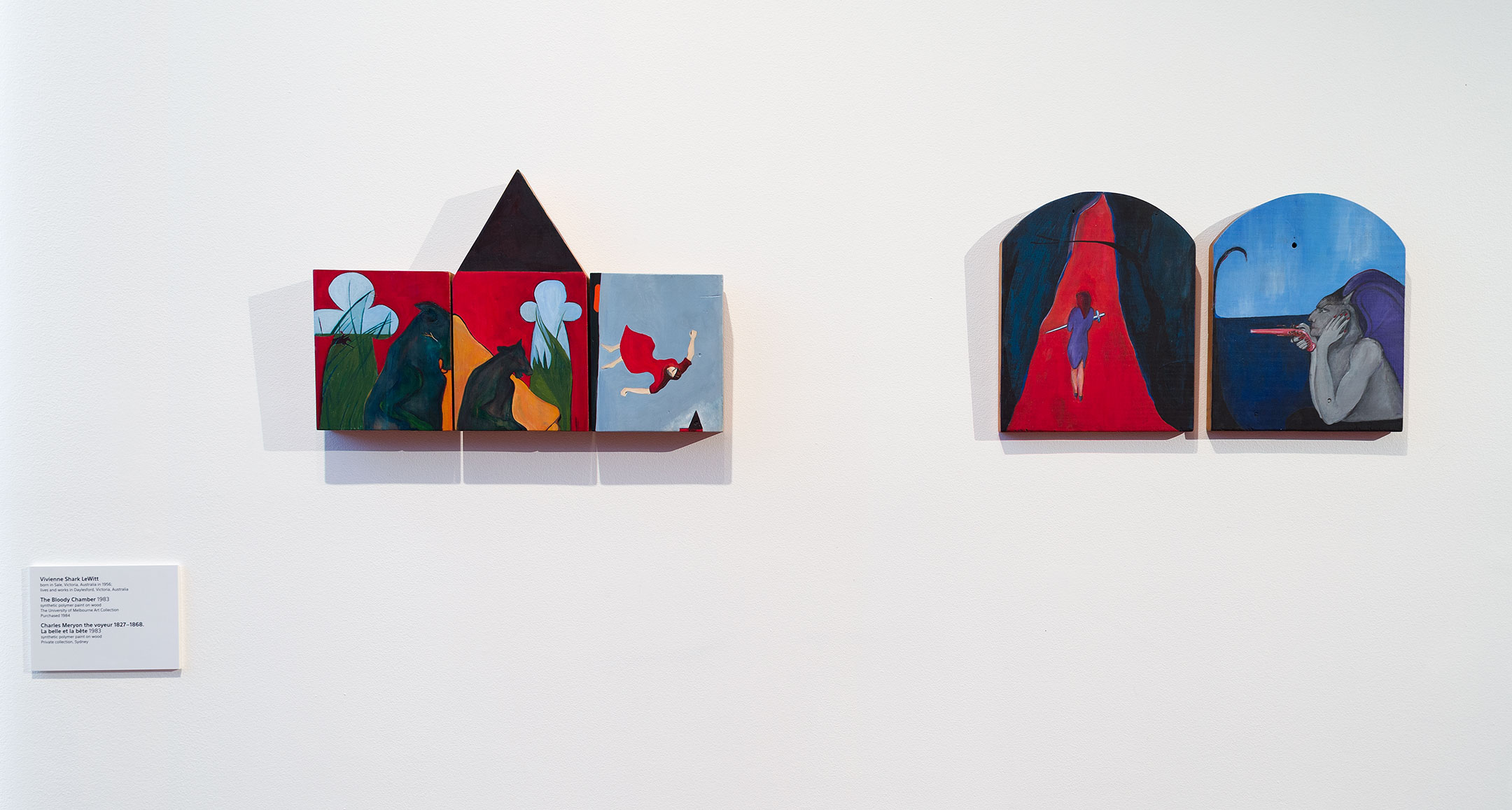
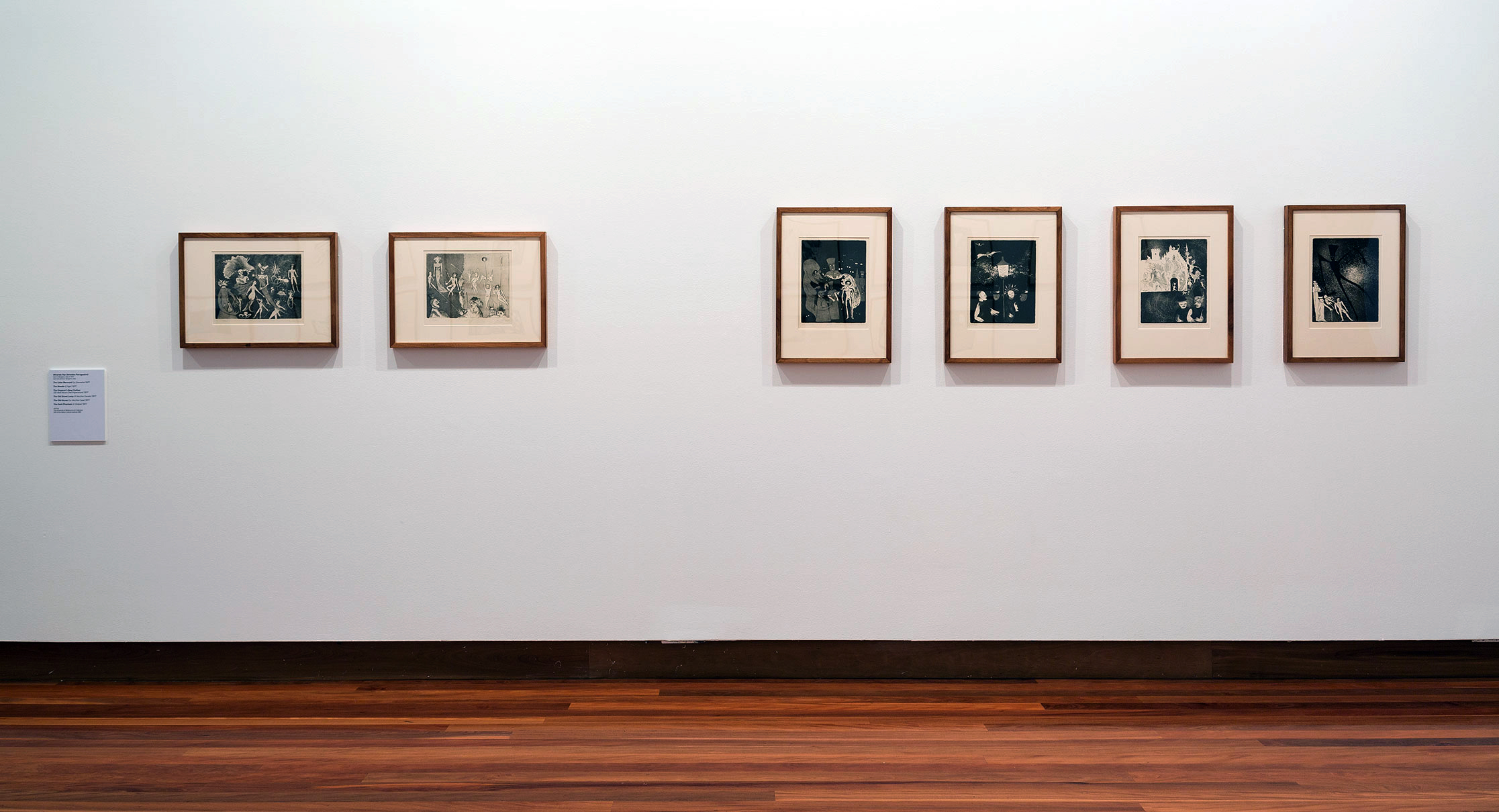
Installation view of the exhibition 'All the better to see you with: Fairy tales transformed' at The Ian Potter Museum of Art, Melbourne showing the work of Vivienne Shark LeWitt (born Sale, Victoria, Australia in 1956; lives and works in Melbourne, Victoria) with 'The Bloody Chamber' (1983) left and 'Charles Meryon the voyeur 1827-1868. La belle et la bête' (1983) right


Installation view of the exhibition All the better to see you with: Fairy tales transformed at The Ian Potter Museum of Art, Melbourne showing the work of Vivienne Shark LeWitt (born Sale, Victoria, Australia in 1956; lives and works in Melbourne, Victoria) with The Bloody Chamber (1983) left and Charles Meryon the voyeur 1827-1868. La belle et la bête (1983) right


Vivienne Shark LeWitt (born Sale, Victoria, Australia in 1956; lives and works in Melbourne, Victoria) 'The Bloody Chamber' 1983 (installation view)


Installation view of Vivienne Shark LeWitt’s The Bloody Chamber 1983
Photo: Marcus Bunyan


Vivienne Shark LeWitt (born Sale, Victoria, Australia in 1956; lives and works in Melbourne, Victoria) 'Charles Meryon the voyeur 1827-1868. La belle et la bête' 1983 (installation view)


Installation view of Vivienne Shark LeWitt’s Charles Meryon the voyeur 1827-1868. La belle et la bête (The Beauty and the Beast) 1983
Photo: Marcus Bunyan


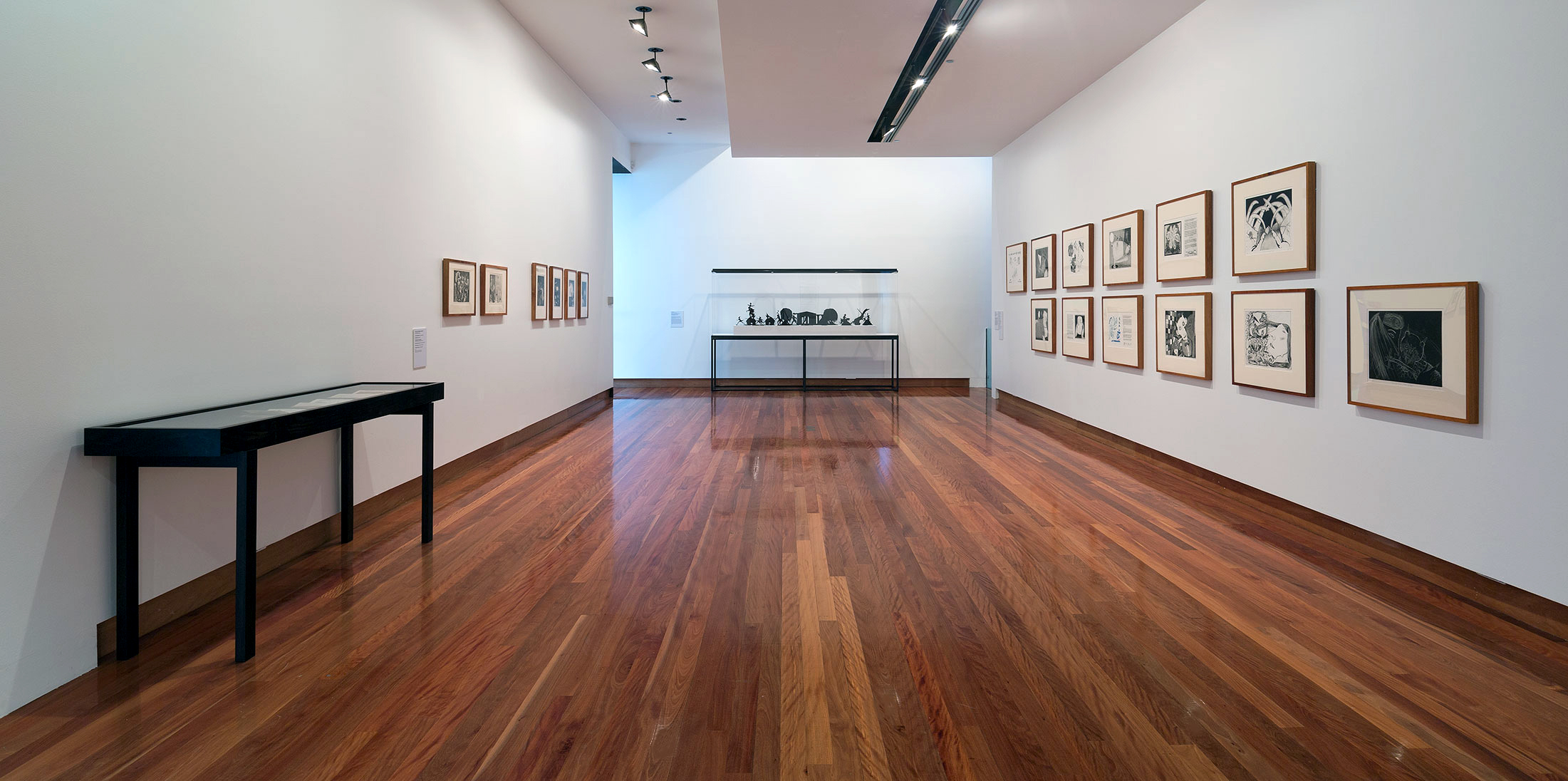
Installation view of the exhibition 'All the better to see you with: Fairy tales transformed' at The Ian Potter Museum of Art, Melbourne

Installation view of the exhibition 'All the better to see you with: Fairy tales transformed' at The Ian Potter Museum of Art, Melbourne

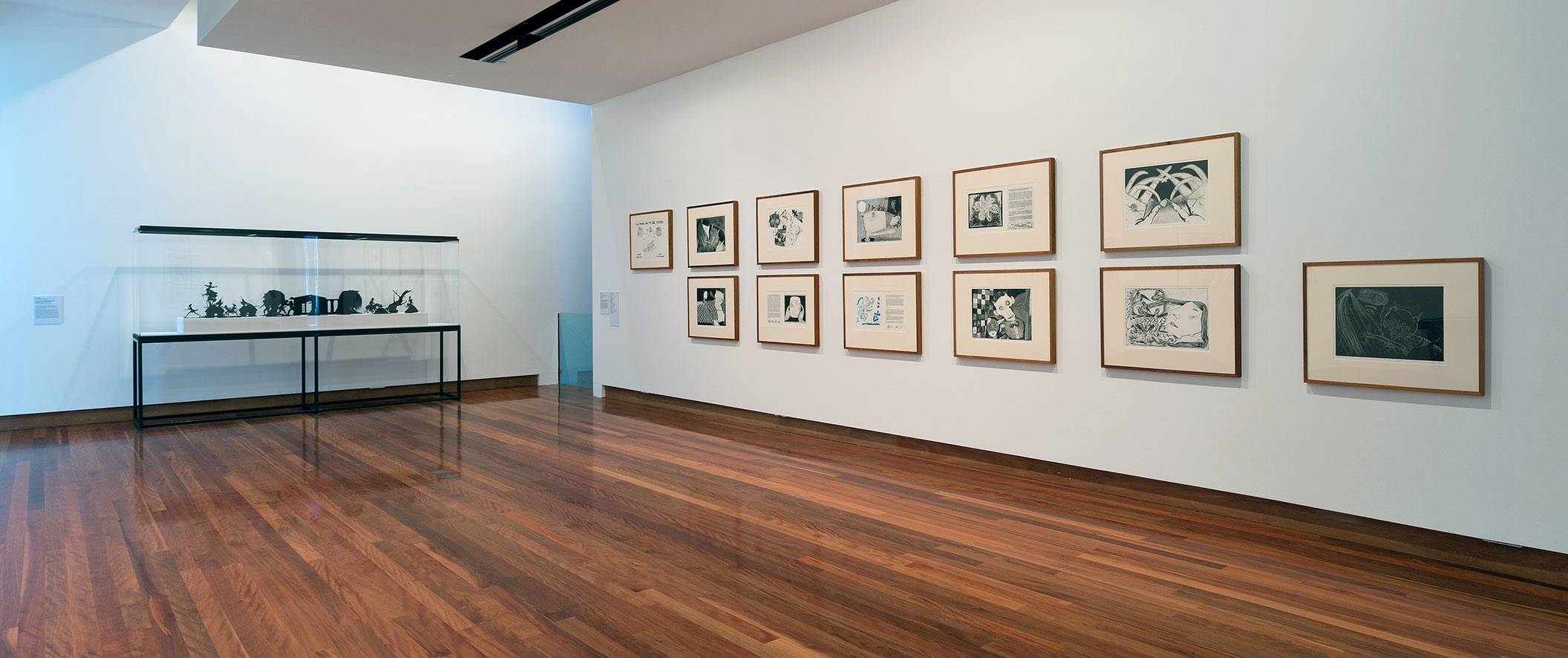
Installation view of the exhibition 'All the better to see you with: Fairy tales transformed' at The Ian Potter Museum of Art, Melbourne showing the work of Kara Walker centre and Peter Ellis right


Installation view of the exhibition All the better to see you with: Fairy tales transformed at The Ian Potter Museum of Art, Melbourne showing the work of Kara Walker centre and Peter Ellis right


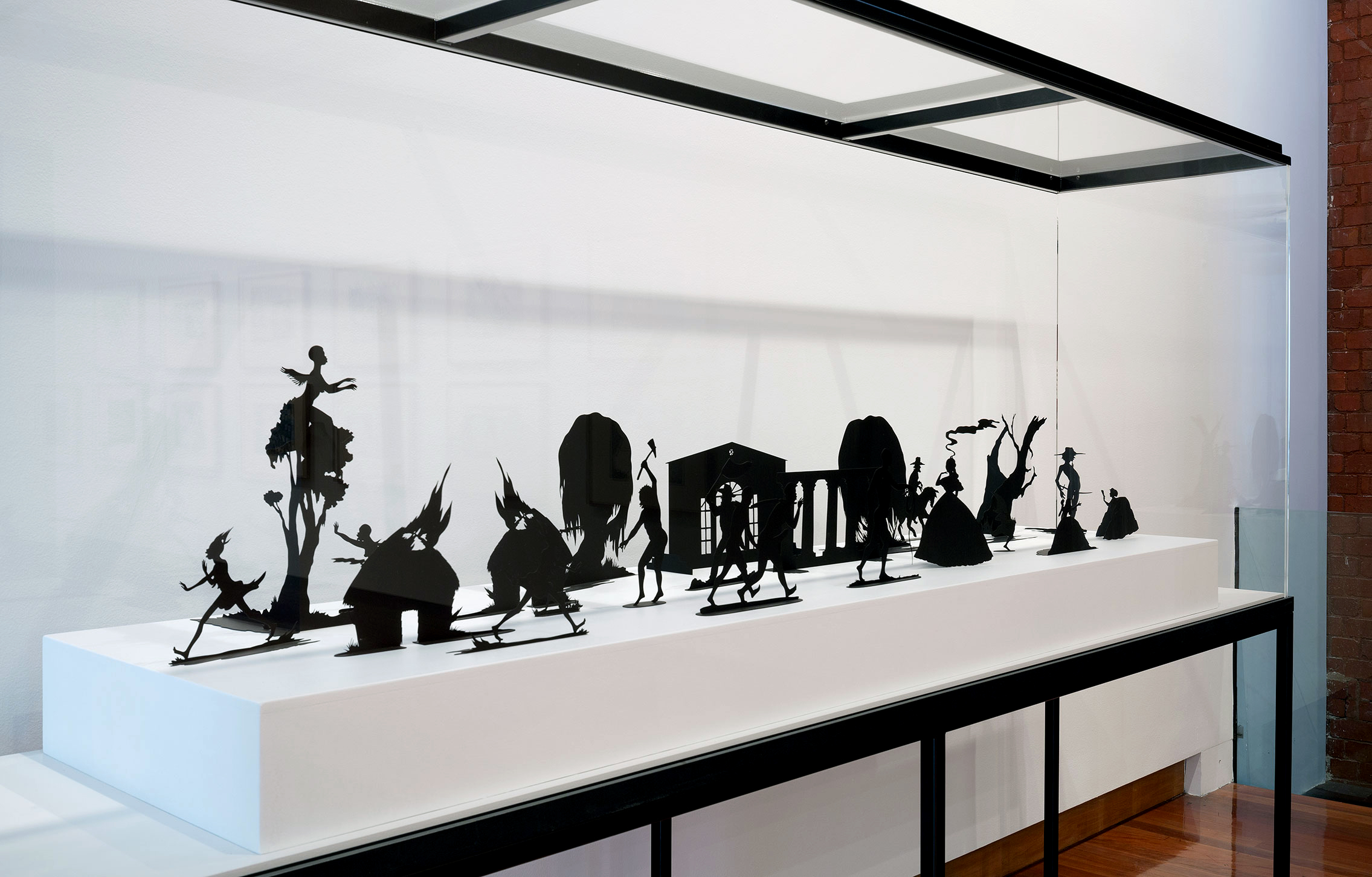
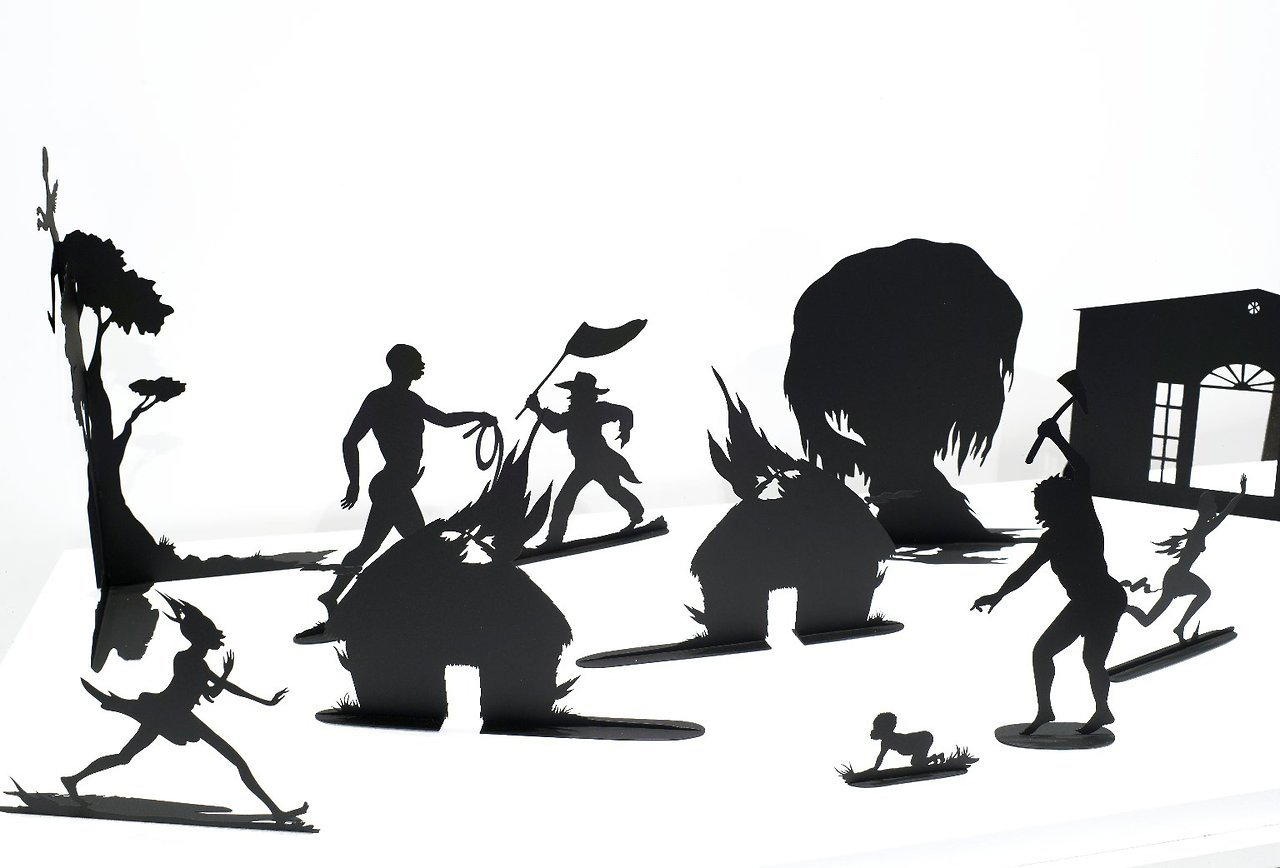
Kara Walker (born in 1969, Stockton, California; lives and works in New York, USA) 'Burning African Village Play Set with Big House and Lynching' 2006 (installation view)


Kara Walker (born in 1969, Stockton, California; lives and works in New York, USA)
Burning African Village Play Set with Big House and Lynching (installation view)
2006
Painted laser cut steel – 22 parts
Dimensions variable (61 x 97.2 x 228.6cm)
Collection of Naomi Milgrom AO, Melbourne


Kara Walker is well known for her investigation of race, gender, sexuality, and violence through her elaborate silhouetted works. Since the early 1990s, Walker has been creating works that present disturbing and often taboo narratives using the disarming iconography of historical fiction.

Through the form of a child’s play set Walker reveals the brutal racism and inequality in American history. Burning African Village Play Set with Big House and Lynching (2006) uses simple cut-out silhouettes to create a series of characters and motifs that occupy a chilling, nightmarish world. Drawing from Civil War imagery of the American south, Walker creates parts for the play set – a plantation mansion, small huts, weeping willows, shackled slaves, Confederate soldiers and southern belles – then arranges these into a narrative. In the artists words, she questions how ‘real histories become fantasies and fairy tales’ and how it is, perversely, that ‘fairy tales sometimes pass for history, for truth’. In this work, Walker suggests histories can be played with – manipulated and parts removed – but also that storytelling can be adapted and reshaped to remember and reimagine the past.

Wall text from the exhibition


Kara Walker (born in 1969, Stockton, California; lives and works in New York, USA) 'Burning African Village Play Set with Big House and Lynching' 2006 (detail)


Kara Walker (born in 1969, Stockton, California; lives and works in New York, USA)
Burning African Village Play Set with Big House and Lynching (detail)
2006
Painted laser cut steel – 22 parts
Dimensions variable (61 x 97.2 x 228.6cm)
Collection of Naomi Milgrom AO, Melbourne


Installation view of the exhibition 'All the better to see you with: Fairy tales transformed' at The Ian Potter Museum of Art, Melbourne showing the work of Kara Walker left and Peter Ellis right


Installation view of the exhibition All the better to see you with: Fairy tales transformed at The Ian Potter Museum of Art, Melbourne showing the work of Kara Walker left and Peter Ellis right


The prince and the bee mistress portfolio 1986

Melbourne based artist, Peter Ellis is a prolific image maker who creates hallucinatory scenes of make-believe animals and human-like creatures. His work takes its inspiration from diverse historical sources including children’s art and literature, detective novels, the legacies of Dada and Surrealism and the transformative qualities of fairy tales.

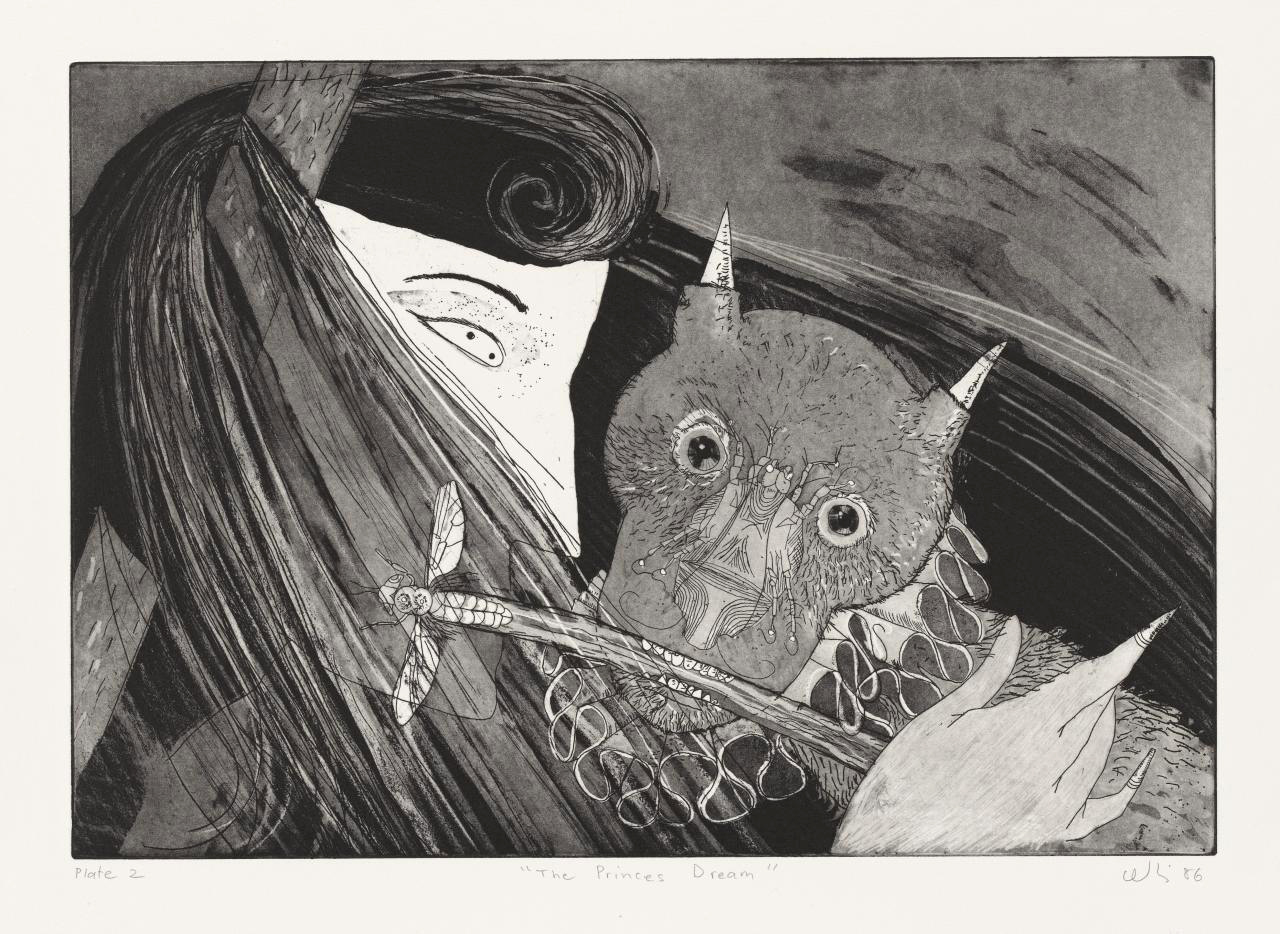
In this narrative etching The Prince and the Bee Mistress (1986), the artist illustrates a contemporary adult fairy tale by writer Tobsha Learner. It’s a surreal Gothic horror tale about the seduction of a young prince who succumbs to the disastrous ‘charms’ of the Bee Mistress. The Bee Mistress is capable of altering and morphing her body, which is comprised of a swarm of bees. Using his encyclopaedic knowledge of animals, objects and images, Ellis creates densely layered configurations of surprising and unsettling forms. This disturbing and perplexing imagery also references traditional fairy tales, with the puppet prince (plate 3) wearing the same costume as Heinrich Hoffmann’s little boy from the 1845 German children’s book Der Struwwelpeter (Shock Haired Peter).

Wall text from the exhibition


Peter Ellis (born 1956 in Sydney, Australia, New South Wales; lives and works in Melbourne Australia) 'The Princes Dream' 1986


Peter Ellis (born 1956 in Sydney, Australia, New South Wales; lives and works in Melbourne Australia)
The Princes Dream
1986
Etching, soft-ground, drypoint, sugar-lift, photo-etching, plate-tone and relief printing
35.2 × 50.6cm (plate) 50.4 × 65.9cm (sheet)
Courtesy of the artist


Peter Ellis (born 1956 in Sydney, Australia, New South Wales; lives and works in Melbourne Australia) 'Dog Screaming' 1986


Peter Ellis (born 1956 in Sydney, Australia, New South Wales; lives and works in Melbourne Australia)
Dog Screaming
1986
Etching, soft-ground, drypoint, sugar-lift, photo-etching, plate-tone and relief printing
35.2 × 50.6cm (plate) 50.4 × 65.9cm (sheet)
Courtesy of the artist


Peter Ellis (born 1956 in Sydney, Australia, New South Wales; lives and works in Melbourne Australia) 'Examining the Bee Sting' 1986


Peter Ellis (born 1956 in Sydney, Australia, New South Wales; lives and works in Melbourne Australia)
Examining the Bee Sting
1986
Etching, soft-ground, drypoint, sugar-lift, photo-etching, plate-tone and relief printing
35.2 × 50.6cm (plate) 50.4 × 65.9cm (sheet)
Courtesy of the artist


Installation view of the exhibition 'All the better to see you with: Fairy tales transformed' at The Ian Potter Museum of Art, Melbourne showing the work of Peter Ellis left and Mirando Haz (Amedeo Pieragostini) right


Installation view of the exhibition All the better to see you with: Fairy tales transformed at The Ian Potter Museum of Art, Melbourne showing the work of Peter Ellis left and Mirando Haz (Amedeo Pieragostini) right


Installation view of the exhibition 'All the better to see you with: Fairy tales transformed' at The Ian Potter Museum of Art, Melbourne showing the work of Mirando Haz (Amedeo Pieragostini), left to right The Little Mermaid (La Sirenetta), The Needle (L'Ago), The Emperor's New Clothes (Gli Abiti Nuovi Dell'Imperatore), The Old Street Lamp (Il Vecchio Fanale), The Old House (La Vecchia Casa) all 1977


Installation view of the exhibition All the better to see you with: Fairy tales transformed at The Ian Potter Museum of Art, Melbourne showing the work of Mirando Haz (Amedeo Pieragostini), left to right The Little Mermaid (La Sirenetta), The Needle (L’Ago), The Emperor’s New Clothes (Gli Abiti Nuovi Dell’Imperatore), The Old Street Lamp (Il Vecchio Fanale), The Old House (La Vecchia Casa) all 1977


Mirando Haz (Amedeo Pieragostini) 'The Needle (L'Ago)' 1977 (installation view)


Installation view of Mirando Haz’s (Amedeo Pieragostini) work The Needle (L’Ago) 1977
Photo: Marcus Bunyan


Mirando Haz (Amedeo Pieragostini) (Italian, 1937-2018) 'The Little Mermaid (La Sirenetta)' 1977


Mirando Haz (Amedeo Pieragostini) (Italian, 1937-2018)
The Little Mermaid (La Sirenetta)
1977
Etching Plate
15.5 x 11.5; sheet 19.0 x 15.3cm
The University of Melbourne Art Collection
Gift of the Italian Cultural Institute 1985
Courtesy of the artist


Installation view of the exhibition 'All the better to see you with: Fairy tales transformed' at The Ian Potter Museum of Art, Melbourne showing the work of Zilverster (Sharon Goodwin born in Dandenong, Australia in 1973 and Irene Hanenbergh born in Erica, The Netherlands in 1966 formed the collaborative art practice Zilverster in 2010. They live and work in Melbourne, Australia) including 'The Table of Moresnet' (2016) at centre


Installation view of the exhibition All the better to see you with: Fairy tales transformed at The Ian Potter Museum of Art, Melbourne showing the work of Zilverster (Sharon Goodwin born in Dandenong, Australia in 1973 and Irene Hanenbergh born in Erica, The Netherlands in 1966 formed the collaborative art practice Zilverster in 2010. They live and work in Melbourne, Australia) including The Table of Moresnet (2016) at centre


Third floor


Installation view of the exhibition 'All the better to see you with: Fairy tales transformed' at The Ian Potter Museum of Art, Melbourne showing Tracey Moffat's 'Invocations' series (2000) (13 framed photo silkscreen works, dimensions variable, Museum of Contemporary Art Australia Collection)

Installation view of the exhibition 'All the better to see you with: Fairy tales transformed' at The Ian Potter Museum of Art, Melbourne showing Tracey Moffat's 'Invocations' series (2000) (13 framed photo silkscreen works, dimensions variable, Museum of Contemporary Art Australia Collection)

Installation view of the exhibition 'All the better to see you with: Fairy tales transformed' at The Ian Potter Museum of Art, Melbourne showing Tracey Moffat's 'Invocations' series (2000) (13 framed photo silkscreen works, dimensions variable, Museum of Contemporary Art Australia Collection)


Installation views of the exhibition All the better to see you with: Fairy tales transformed at The Ian Potter Museum of Art, Melbourne showing Tracey Moffat’s Invocations series (2000) (13 framed photo silkscreen works, dimensions variable, Museum of Contemporary Art Australia Collection)


Tracey Moffat‘s practice deals with the human condition in all its complexities, drawing on the history of cinema, art, photographs as well as popular culture and her own childhood memories to create works that explore themes around power, identity, passion, resistance and survival.

In her Invocations series, Moffatt explores a bizarre fairy tale world, inhabited by witches and spirits, a lost girl in a forest, and a man and woman in the desert battling their nightmares. It is a journey through landscape and scenes found in a rich array of different sources, from early Disney animations, Hitchcock movies such as The Birds, Goya paintings and the disturbing folkloric tales of the Brothers Grimm.

Using her skills as a filmmaker, Moffatt spent a year constructing the sets an directing actors to create each dramatic scene. She then worked with a printer for another year building the richly textured surfaces that give a powerful sense of illusion and otherworldliness to these works. Drawing on archetypal anxieties and fears, the lost child, the teenager yearning for escape and adult passions Moffatt’s Invocations series reveals the struggle for survival and the quest for power in a harsh and threatening environment.

Wall text from the exhibition


Tracey Moffatt (Australian, b. 1960) 'Invocations #5' 2000


Tracey Moffatt (Australian, b. 1960)
Invocations #5
2000
Photo silkscreen
156 x 131.5cm (framed)
Museum of Contemporary Art, donated through the Australian Government’s Cultural Gifts Program by the artist, 2013
Courtesy of the artist and and Roslyn Oxley9 Gallery, Sydney


Tracey Moffatt (Australian, b. 1960) 'Invocations #7' 2000


Tracey Moffatt (Australian, b. 1960)
Invocations #7
2000
Photo silkscreen
156 x 131.5cm (framed)
Museum of Contemporary Art, donated through the Australian Government’s Cultural Gifts Program by the artist, 2013
Courtesy of the artist and and Roslyn Oxley9 Gallery, Sydney


Tracey Moffatt (Australian, b. 1960) 'Invocations #11' 2000


Tracey Moffatt (Australian, b. 1960)
Invocations #11
2000
Photo silkscreen
119 x 105cm (framed)
Museum of Contemporary Art, donated through the Australian Government’s Cultural Gifts Program by the artist, 2013
Courtesy of the artist and and Roslyn Oxley9 Gallery, Sydney


Installation view of the exhibition 'All the better to see you with: Fairy tales transformed' at The Ian Potter Museum of Art, Melbourne showing a still from Allison Schulnik's video 'Eager' (2013-2014) at left, and Patricia Piccinini's 'Still Life with Stem Cells' (2002) at right


Installation view of the exhibition All the better to see you with: Fairy tales transformed at The Ian Potter Museum of Art, Melbourne showing a still from Allison Schulnik’s video Eager (2013-2014) at left, and Patricia Piccinini’s Still Life with Stem Cells (2002) at right


Allison Schulnik (American, b. 1978)
Eager
2013-2014
Clay-animated stop motion video
8.25 minutes
Courtesy the artist and Mark Moore Gallery, California


Allison Schulnik (American, b. 1978) 'Eager' 2013-2014 (video still)


Allison Schulnik (American, b. 1978)
Eager (video still)
2013-2014
Clay-animated stop motion video
8.25 minutes
Courtesy the artist and Mark Moore Gallery, California


Installation view of the exhibition 'All the better to see you with: Fairy tales transformed' at The Ian Potter Museum of Art, Melbourne showing at left, Patricia Piccinini's 'Still Life with Stem Cells' (2002, silicone, polyurethane, human hair, clothing, carpet dimensions variable Monash University Collection), and at right a still from her DVD 'The Gathering' (2007)


Installation view of the exhibition All the better to see you with: Fairy tales transformed at The Ian Potter Museum of Art, Melbourne showing at left, Patricia Piccinini’s Still Life with Stem Cells (2002, silicone, polyurethane, human hair, clothing, carpet dimensions variable Monash University Collection), and at right a still from her DVD The Gathering (2007)


These two works by Patricia Piccinini focus on one of the artists enduring interests, that of children and their ambiguous relationship with the imaginary creates that populate her work.

The child is the central character of most fairy tales, often at the point of transition to adulthood. Many of the tales reflect adult anxieties around this stage of childhood. But children, as both readers and central characters, often welcome fairy tales, as the stories nurture their desire for change and independence, and provide hope in a world that can be harsh and brutal. Children are also more willing to take on the strange and the magical, which we see in Piccinini’s sculptural work Still Life with Stem Cells (2002) in which a young girl is seated on the floor playing with her toys. These are not toys we are familiar with however, they are stem cells scaled up from their microscopic size, and each is different, as stem cell have the unique ability to change into other types of cells. The child is relaxed and happy, willing to take on this unfamiliar new environment. Piccinini re-enchants the world of the child, presenting an alternative narrative of the world we know. Creating possibility and wonder, she uses the fairy tale narrative to suggest new ways to look at issues facing contemporary culture.

In Piccinini’s video work The Gathering (2009) a young girl is lying on the floor of a dark house, asleep or unconscious. We watch with trepidation as furry blobs crawl towards her. Piccinini often depicts children in her work to evoke a sense of vulnerability and innocence, but it is often ambiguous as to who is more vulnerable, the creatures or the child. She confronts us with the strange and sometimes monstrous, just as fairy tales do.

Wall text from the exhibition


Patricia Piccinini (born in Freetown, Sierra Leone in 1965; lives and works in Melbourne, Australia) 'Still Life with Stem Cells' 2002 (photo detail)


Patricia Piccinini
(born in Freetown, Sierra Leone in 1965; lives and works in Melbourne, Australia)
Still Life with Stem Cells (photo detail)
2002
Silicone, polyurethane, human hair, clothing, carpet dimensions variable
Monash University Collection Purchased 2002
Courtesy the artist and Tolarno Galleries, Melbourne; Roslyn Oxley9 Gallery, Sydney; Hosfelt Gallery, San Francisco


The Gathering by Patricia Piccinini from MMAFT on Vimeo.


Patricia Piccinini (born in Freetown, Sierra Leone in 1965; lives and works in Melbourne, Australia)
The Gathering
2009
DVD, 16:9 PAL, stereo
3.30 mins
Courtesy the artist and Tolarno Galleries, Melbourne; Roslyn Oxley9 Gallery, Sydney; Hosfelt Gallery, San Francisco


Auriea Harvey and Michaël Samyn. 'The Path' 2009 (screen capture)


Auriea Harvey and Michaël Samyn (game designers and co-directors of tale of tales) Auriea Harvey was born in Indianapolis, USA in 1971 and Michaël Samyn was born in 1968 in Poperinge, Belgium; they live and work in Ghent, Belgium
The Path (screen capture)
2009
Computer game developed by TALE OF TALES
Music by Jarboe and Kris Force
Courtesy of tale of tales, Belgium


The Ian Potter Museum of Art
The University of Melbourne,
Corner Swanston Street and Masson Road
Parkville, Victoria 3010

Opening hours: Tuesday – Saturday 11am – 5pm

The Ian Potter Museum of Art website

LIKE ART BLART ON FACEBOOK

Back to top