Exhibition: ‘Ishiuchi Miyako: Postwar Shadows’ at the J. Paul Getty Museum, Getty Centre, Los Angeles

Exhibition dates: 6th October 2015 – 21st February 2016

Curator: Amanda Maddox, assistant curator, Department of Photographs, the J. Paul Getty Museum.


Ishiuchi Miyako (Japanese, b. 1947) ‘Yokosuka Story #98’ 1976-1977


Ishiuchi Miyako (Japanese, b. 1947)
Yokosuka Story #98
1976-1977
Gelatin silver print
45.5 x 55.9cm (17 15/16 x 22 in.)
Collection of Yokohama Museum of Art
© Ishiuchi Miyako
Digital file © Yokohama Museum of Art


This is a compelling body of work from Japanese artist Ishiuchi Miyako. I especially like the work from the 1970s period which is, I feel, stronger than the later work from the 1990s onwards. The 1970s work has a biting quality of observation and pathos that the later work somehow lacks. And, more generally, I have always loved Japanese photography from the 1950-70s for these very qualities.

Why you would want print an intimate object like your mother’s lipstick over a metre tall is beyond me… other than to buy into the current fashion in contemporary photographic art, which is to print big. The same goes for some of the photographs of clothing in her latest series ひろしま/ hiroshima (2007, below). From a distance they may like fine, but when you get up close the image would just fall apart. No sense of the intimacy and privacy of the object here … except for the small prints, such as ひろしま/ hiroshima #41 (Kawamuki Eiko) (2007, below) which evidence the delicacy of the object as part of life, history and memory.

But for me it is the essential quality of the earlier work – the large grain, the desperate looking individuals, the unnoticed corners of existence imagined in contrasty, handmade analogue prints – which really strikes at the emotions. The personal interweaved with the political. The brightness of hope mixed with a heavy dash of desolation.

Dr Marcus Bunyan


Many thankx to the J. Paul Getty Museum for allowing me to publish the photographs in the posting. Please click on the photographs for a larger version of the image. All text from the J. Paul Getty Museum press release.


“In the 1970s Ishiuchi Miyako shocked Japan’s male-dominated photography establishment with Yokosuka Story, a gritty, deeply personal project about the city where she spent her childhood and where the United States established a naval base in 1945. Working prodigiously ever since, Ishiuchi has consistently fused the personal and political in her photographs, interweaving her own identity with the complex history of postwar Japan that emerged from the shadows cast by American occupation.

This exhibition is the first in the United States to survey Ishiuchi’s prolific career and will include photographs, books, and objects from her personal archive. Beginning with Yokosuka Story (1977-78), the show traces her extended investigation of life in postwar Japan and culminates with her current series ひろしま/ hiroshima, on view seventy years after the atomic bombing of Hiroshima.”


Ishiuchi Miyako (Japanese, b. 1947) ‘Yokosuka Story #58’ 1976-1977


Ishiuchi Miyako (Japanese, b. 1947)
Yokosuka Story #58
1976-1977
Gelatin silver print
45.5 x 55.9cm (17 15/16 x 22 in.)
Collection of Yokohama Museum of Art
© Ishiuchi Miyako
Digital file © Yokohama Museum of Art


Ishiuchi Miyako (Japanese, b. 1947) ‘Yokosuka Story #62’ 1976-1977


Ishiuchi Miyako (Japanese, b. 1947)
Yokosuka Story #62
1976-1977
Gelatin silver print
45.5 x 55.8cm (17 15/16 x 22 in.)
Collection of Yokohama Museum of Art
© Ishiuchi Miyako
Digital file © Yokohama Museum of Art


Survey exhibition includes Ishiuchi’s series ひろしま/ hiroshima, presented during the 70th anniversary year of the bombing of Hiroshima

The first major exhibition in the United States and the first comprehensive English-language catalogue on celebrated Japanese photographer Ishiuchi Miyako (born Fujikura Yōko in 1947) will showcase the artist’s prolific, groundbreaking career and offer new scholarship on her personal background, her process, and her place in the history of Japanese photography.

On view at the J. Paul Getty Museum, Getty Center from October 6, 2015 – February 21, 2016, Ishiuchi Miyako: Postwar Shadows will feature more than 120 photographs that represent the evolution of the artist’s career, from her landmark series Yokosuka Story (1976-77) that established her as a photographer to her current project ひろしま/ hiroshima (2007-present) in which she presents images of garments and objects that survived the atomic bombing of Hiroshima.

“About eight years ago, the Getty Museum began a concerted effort to expand our East Asian photography holdings and since that time work by Japanese photographers has become an important part of the collection,” explains Timothy Potts, director of the J. Paul Getty Museum. “As part of this effort, the Museum acquired 37 photographs by Ishiuchi, some of them gifts of the artist, which constitute the largest holdings of her work outside Japan.” Potts adds, “Particularly poignant during this 70th anniversary of the bombing of Hiroshima, and shown for the first time in an American institution, is Ishiuchi’s ひろしま/ hiroshima, a delicate and profound series of images depicting objects affected by the atomic blast.”

Born in Kiryū in the aftermath of World War II, Ishiuchi Miyako spent her formative years in Yokosuka, a Japanese city where the United States established an important naval base in 1945. She studied textile design at Tama Art University in Tokyo in the late 1960s before quitting school prior to graduation and ultimately pursuing photography. In 1975 she exhibited her first photographs under her mother’s maiden name, Ishiuchi Miyako, which she adopted as her own.

For the past forty years Ishiuchi has consistently interwoven the personal with the political in her work. Her longstanding engagement with the subject of postwar Japan, specifically the shadows that American occupation and Americanisation cast over her native country following World War II, serves as the organising principle of the exhibition. Across three interconnected yet distinct phases of her career, Ishiuchi explores the depths of her postwar experience.

Early Career: From Yokosuka Story to Yokosuka Again

Shortly after adopting photography as her means of personal expression, Ishiuchi began to take pictures of Yokosuka, where she and her family lived between 1953 and 1966. The prevalence of American culture there had shocked Ishiuchi as a child. Though it informed her love of pop music and denim jeans, it also caused her to harbour fears of the U.S. naval base and develop a hatred of the city. Armed with a camera and fuelled by painful memories, Ishiuchi returned to Yokosuka in the 1970s to address her fears. The act of photographing old haunts, as well as unfamiliar places, proved to be a catharsis. Using money her father had saved for her wedding, Ishiuchi financed the production of prints, as well as the related publication, Yokosuka Story, which she named after the title of a Japanese pop song.

In 1953 Ishiuchi and her family left their home in Kiryū for Yokosuka, a port city with a large U.S. naval base. Shocked by the prevalence of American culture there, she quickly developed fears of the base, its soldiers, and specific neighbourhoods. Harbouring these anxieties for years, Ishiuchi viewed Yokosuka as “a place that I thought I’d never go back to, a city I wouldn’t want to walk in twice” after leaving in 1966.

But Ishiuchi eventually returned on weekends between October 1976 and March 1977 to photograph the city for her first major project. Filled with emotion and fuelled by hatred and dark memories, Ishiuchi traversed the city on foot and by car, chauffeured by her mother who worked as a driver for the U.S. military. Questioned by police multiple times while making this work, Ishiuchi experienced the danger she sensed during childhood.

Using a darkroom she set up in her parents’ home, Ishiuchi printed the photographs on view here for an exhibition at Nikon Salon in Tokyo in 1977. The work features black borders and heavy grain, which represent memories Ishiuchi “coughed up like black phlegm onto hundreds of stark white developing papers.” With money her father reserved for her wedding, Ishiuchi financed the production of prints, as well as the related publication, Yokosuka Story, named after the title of a Japanese pop song.


“With Yokosuka Story, and ultimately the other series she produced at the beginning of her career, Ishiuchi attempted to transfer her emotions and dark memories into the prints through physical means,” says Amanda Maddox, assistant curator of photographs at the Getty Museum and curator of the exhibition. “By carefully controlling how she processed film, and by intentionally printing the photographs with heavy grain and deep black tones, she injected her feelings into the work. She loved working in the darkroom, in part because the tactile nature of processing film and printing photographs related to her training in textile production.”

Interested in blurring the boundary between documentation and fiction, Ishiuchi tested the limits of this approach in her second major series Apartment. Isolating derelict, cheaply constructed apartments that resembled the cramped one-room apartment that her family occupied in Yokosuka, Ishiuchi photographed ramshackle facades, rooms, and interiors of buildings in Tokyo and Yokohama. Despite criticism of the series from other photographers, Ishiuchi ultimately earned the prestigious Ihei Kimura Memorial Photography Award for her book Apartment.

When Ishiuchi exhibited Yokosuka Story at Nikon Salon in 1977, the chairman of the Salon’s steering committee asked about her next project. Without hesitation, she responded “apartments.” Although she had only photographed a few apartment buildings in Yokosuka, Ishiuchi recognised the potential of this subject. For thirteen years she and her family lived in a cheaply constructed postwar building in Yokosuka, inhabiting a tiny apartment with an earthen floor and communal bathroom.

In 1977 Ishiuchi began to seek out similarly derelict apartments in Tokyo and other cities. With the permission of residents, Ishiuchi photographed rooms and interiors in the buildings, occasionally portraying the occupants. Her images inside these cramped quarters reveal the grim condition of each building – peeling paint, dimly lit hallways, and stained walls “steeped in the odour of people who move about” – and suggest many stories housed within these living spaces.

Ishiuchi wanted the disparate interiors featured in Apartment to feel as though one building contained them. Her desire to create a fictitious place – with different apartments from various locations presented together as one residential complex – met with criticism from traditional documentary photographers, but Ishiuchi ultimately earned the prestigious 4th Kimura Ihei Memorial Photography Award for her book Apartment.


Endless Night,
a series that developed as a result of her work on Apartment, features buildings across Japan that formerly functioned as brothels. In 1958 the Japanese government began to enforce an anti-prostitution law, causing many red-light districts to close. Brothels were either abandoned or transformed into inns, hotels, or private accommodations. With memories of walking past a red-light district in Yokosuka on her way to school, Ishiuchi felt a connection to this subject matter and to the women who once inhabited these places, their traces still palpable.

While photographing for Apartment, Ishiuchi sensed something “eerie” inside several buildings. She later discovered that those particular locations had formerly functioned as brothels. In 1958 the Japanese government began to enforce an anti-prostitution law, and as a result many red-light districts closed and some brothels became private accommodations or inns. Growing up in Yokosuka, where she passed through a red-light district on her way to school and where her identity as a woman was shaped by the masculine energy that emanated from the U.S. naval base, Ishiuchi felt particularly drawn to this subject.

Intent on photographing red-light neighbourhoods across Japan, Ishiuchi started in Tokyo and eventually traveled to Sendai and Ishinomaki in northern Japan, as well as to Osaka, Kyoto, and Nara in the Kansai region. Entering these buildings proved an emotional experience for Ishiuchi, which she described as follows: “The space of the entryway froze me, the intruder, in my tracks. Inhaling it, I felt ill, as if I might vomit… Though I had only come to take photographs, all of the women who had once inhabited this room came wafting out from the stains on the walls, the shade under the trees, the shine on the well-tread stairs.”


In 1980 Ishiuchi returned to depict places not represented in Yokosuka Story, targeting locations that terrified her. For this new project she focused on Honchō – the central neighbourhood where the presence of America felt especially concentrated, with the U.S. naval base and EM (Enlisted Men’s) Club located there. For six months Ishiuchi rented an abandoned cabaret on Dobuita Dōri (Gutter Alley). With the help of friends she converted the cabaret into an exhibition space, where she displayed the new work alongside images from Yokosuka Story. She continued to photograph in Yokosuka intermittently until 1990, when the dilapidated EM Club was finally razed. Her final Yokosuka projects, Yokosuka Again, 1980-1990, represents a triumph over the conflicting emotions she possessed toward the city.

Midcareer: On the Body

Following her exhaustive investigation of Yokosuka, Ishiuchi contemplated quitting photography altogether. But as she celebrated her 40th birthday in 1987, she recognised that the traces of time and experience left on her body could inspire new work and spark another phase of her career. For 1·9·4·7, titled after her birth year, she approached friends also born that year and asked to photograph them – specifically their hands and feet. As news of the project spread, Ishiuchi expanded the series to include women she did not know. In intimate, close-up views, Ishiuchi draws attention to the calluses, hangnails, wrinkles, and other imperfections that develop on the skin during a lifetime of activity.

Ultimately Ishiuchi chose to eliminate the facial portraits from the series, enhancing the anonymity of the project, to focus on extremities that are exposed to the world but often overlooked. In intimate, close-up views, she draws attention to the calluses, hangnails, wrinkles, and other imperfections that develop on the body during a lifetime. Ishiuchi includes the occupation of each sitter in captions published in the book 1·9·4·7 but excludes that information in exhibitions. Though the women remain anonymous, their body parts, photographed with great sensitivity, appear very distinct.

Inspired by 1·9·>4·7, Ishiuchi developed many projects that focused on the body as subject. Among the most powerful is Scars, a series she began in 1991 that remains a work in progress. As reminders of past trauma and pain, scars evoke memories that the skin retains on its surface. Ishiuchi regards these marks as battle wounds and symbols of victory. She also likens them to photographs, which serve simultaneously as visible markers of history and triggers of personal memory. For each large-scale print, Ishiuchi provides only the year that a wound was inflicted as well as its cause – such as accident, illness, attempted suicide, or war.

In her book Scars (Tokyo: Sokyū-sha, 2005), Ishiuchi explains her interest in this subject as follows: “Scars themselves carry a story. Stories of how each person was very sad, or very hurt, and it is because the memory remained in the form of the scar that the story can be narrated in words.” As reminders of past trauma and pain, scars are memories inscribed onto the body and retained into the present moment. Yet rather than view scars only as blemishes or manifestations of injury, Ishiuchi perceives them as battle wounds and symbols of victory over possible defeat. She likens them to photographs, which also serve simultaneously as visible markers of history and triggers of personal memory.

Scars developed as a sideline interest when Ishiuchi noticed old wounds on some of the men she photographed for a project called Chromosome XY. The stories associated with each scar are distilled in the titles, but Ishiuchi provides only the year that a wound was inflicted and its cause – such as accident, illness, suicide, and war. Photographing scars since 1991, Ishiuchi believes that some kind of wound – healed or open – exists on every body.


Fascinated by the idea that a Polaroid camera operates as a portable, self-contained darkroom, Ishiuchi often shared Polaroid portraits with sitters immediately after they were produced. Her series Body and Air features some of these Polaroids – fragments of the body – grouped together by sitter. One of the people included in Body and Air is Ishiuchi’s mother; though her mother was camera-shy, she found the playful, interactive nature of this particular project appealing. Her acquiescence to serve as a photographic subject ultimately laid the foundation for Ishiuchi’s next major series.

An essential aspect of Ishiuchi’s photographic process involves work that must occur in the darkroom: developing film and printing negatives. The tactile nature of the medium immediately appealed to her, in part because it related to her training in textile design but also because it offered room to express her emotions via the contrast, grain, and texture she controlled in the print. She has noted that “photographs are my creations. I create them, brooding in the darkroom, immersed in chemicals.”

Recent Projects: Life and Death

Shortly before her mother died in 2000, Ishiuchi began to photograph her skin and face. While select photographs from this period can be found in the series Scars and Body and Air, Ishiuchi eventually generated a project specifically about her mother. Spurred by her decision to photograph her mother’s personal effects rather than simply dispose of them, Ishiuchi created the series Mother’s, in which she includes images of old shoes, girdles, and used lipstick once owned by her mother as well as photographs of her mother’s body made in 2010, soon before her death.

Ishiuchi’s mother died in 2000, about one year after Ishiuchi began photographing her. Unsure if she should keep or dispose of her mother’s personal effects, Ishiuchi decided to photograph them. She taped worn chemises and girdles to the sliding glass door in her parents’ home, allowing the sun to backlight the undergarments when photographed. Old shoes, dentures, used lipstick cases, tattered gloves, and other accessories owned by her mother also feature as subjects. Combining these images with the pictures of her mother made before she died, Ishiuchi generated a somber, gentle portrait with the series Mother’s. When exhibiting this work at the Venice Biennale in 2005, Ishiuchi realised that sharing these intimate views of her mother’s life resonated with many visitors, thus transforming the work from a private expression of sorrow into a powerful, universal eulogy.


The shared experience of trauma as a photographic subject registers most poignantly in Ishiuchi’s current series ひろしま/ hiroshima. Ishiuchi first visited Hiroshima when commissioned to photograph there in 2007. She chose as her principal subjects the artefacts devastated by the U.S. atomic bombing of the city, now housed at the Hiroshima Peace Memorial Museum. Aware that Tōmatsu Shōmei, Tsuchida Hiromi, and others had previously photographed some of the same objects, Ishiuchi nevertheless wanted to photograph this material in order to present it from a different, distinctly feminine perspective. (The title of the series ひろしま/ hiroshima intentionally includes the word Hiroshima in Hiragana, a Japanese writing system that women used extensively in previous eras).

The title of the project, ひろしま / hiroshima, includes the word Hiroshima written in Hiragana, a Japanese writing system that women used extensively in previous eras. Images in this series typically feature objects once owned by women, primarily garments that had been in direct contact with their bodies at the time of the bombing. Ishiuchi sometimes speaks to the objects while photographing them and initially used a light box to illuminate fabrics, conjuring the ghostlike auras of the victims – which the artist reinforces by “floating” the photographs on the walls – and alluding to the “artificial sun” of the bomb. But the effects of irradiation – visible in the holes, stains, and frayed edges – are offset by the fashionable textiles, vibrant colours, and intricate, hand-stitched details. Included in the titles are names of individuals who donated each article to the Peace Memorial Museum, further animating the stories these photographs tell.


Ishiuchi Miyako: Postwar Shadows
is curated by Amanda Maddox, assistant curator, Department of Photographs, the J. Paul Getty Museum. A fully illustrated scholarly catalogue, with essays by Maddox; Itō Hiromi, poet; and Miryam Sas, professor, University of California, Berkeley, accompanies the exhibition.

Text from the press release; indented text from “Ishiuchi Miyako: Postwar Shadows,” published online 2015, The J. Paul Getty Museum, Los Angeles Cited 03/02/2016.


Ishiuchi Miyako (Japanese, b. 1947) ‘Yokosuka Story #61’ 1976-1977


Ishiuchi Miyako (Japanese, b. 1947)
Yokosuka Story #61
1976-1977
Gelatin silver print
45 x 55.3cm (17 11/16 x 21 3/4 in.)
Collection of Yokohama Museum of Art
© Ishiuchi Miyako
Digital file © Yokohama Museum of Art
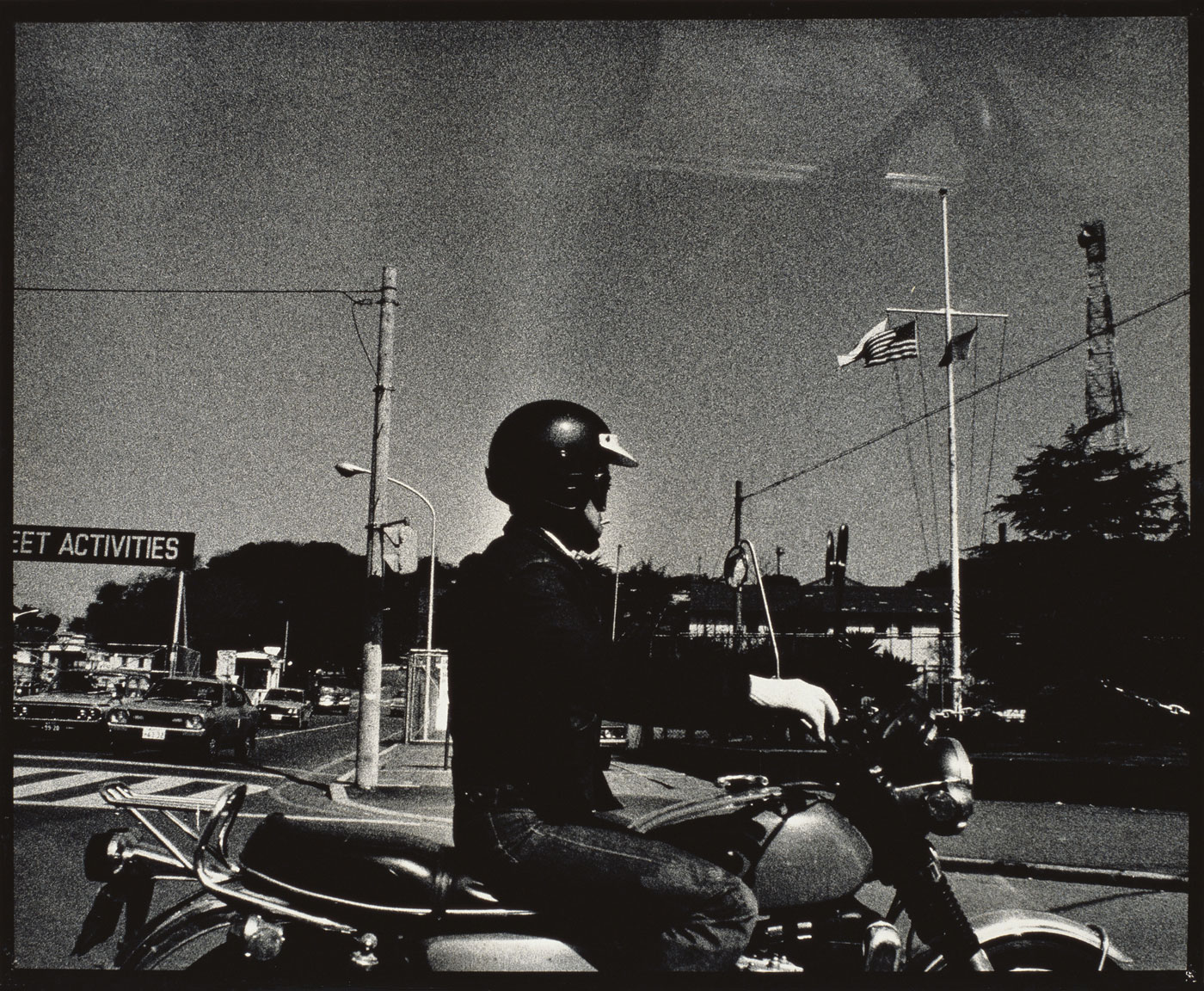
 

Ishiuchi Miyako (Japanese, b. 1947) ‘Yokosuka Story #34’ 1976-1977


Ishiuchi Miyako (Japanese, b. 1947)
Yokosuka Story #34
1976-1977
Gelatin silver print
45.2 x 55.7cm (17 13/16 x 21 15/16 in.)
Collection of Yokohama Museum of Art
© Ishiuchi Miyako
Digital file © Yokohama Museum of Art


Ishiuchi Miyako (Japanese, b. 1947) ‘Yokosuka Story #64’ 1976-1977


Ishiuchi Miyako (Japanese, b. 1947)
Yokosuka Story #64
1976-1977
Gelatin silver print
45.5 x 55.9cm (17 15/16 x 22 in.)
Collection of Yokohama Museum of Art
© Ishiuchi Miyako
Digital file © Yokohama Museum of Art


Ishiuchi Miyako (Japanese, b. 1947) ‘Yokosuka Story #121’ 1976-1977


Ishiuchi Miyako (Japanese, b. 1947)
Yokosuka Story #121
1976-1977
Gelatin silver print
43.7 x 54cm (17 3/16 x 21 1/4 in.)
Collection of Yokohama Museum of Art
© Ishiuchi Miyako
Digital file © Yokohama Museum of Art
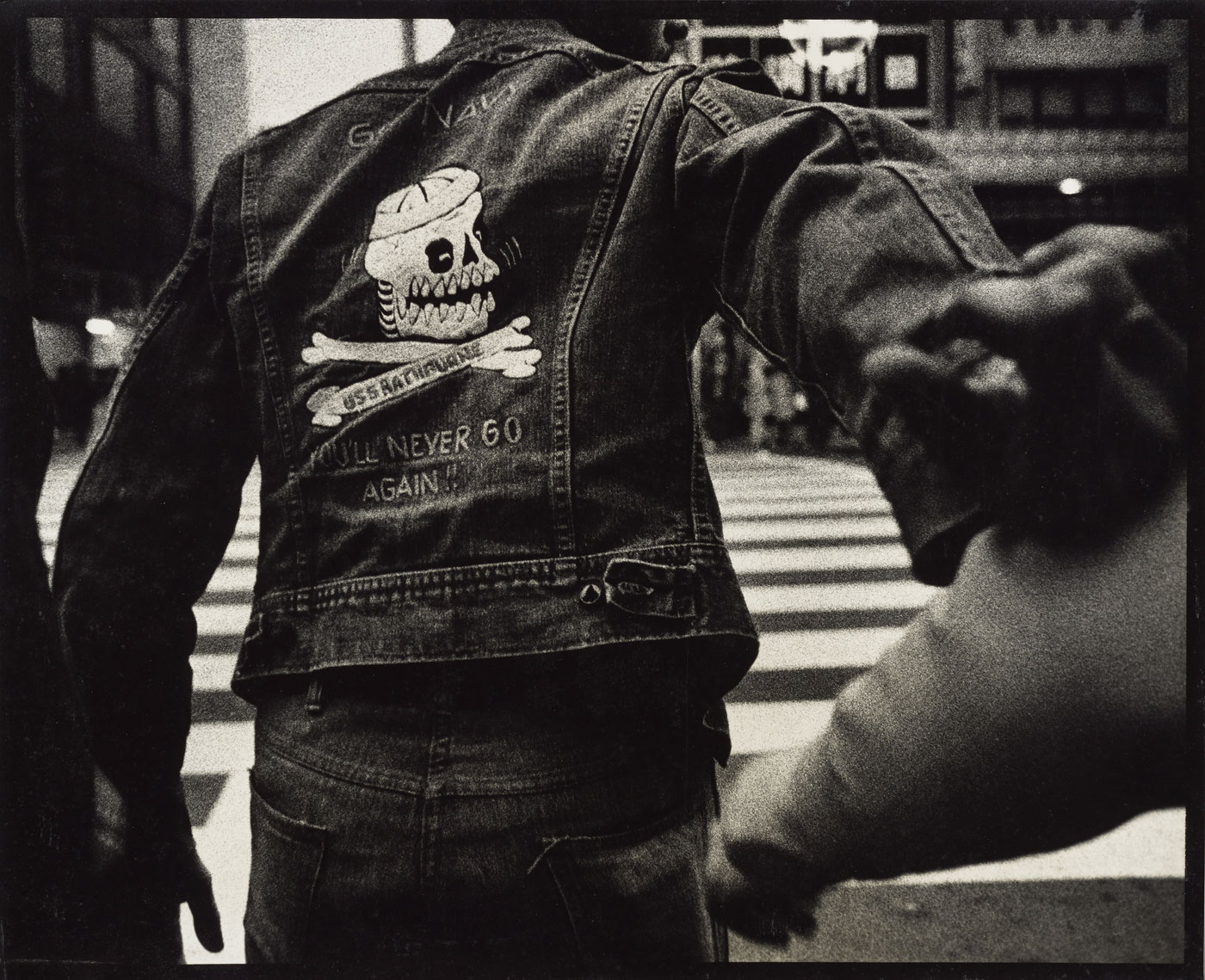
 

Ishiuchi Miyako (Japanese, b. 1947) ‘Yokosuka Story #73’ 1976-1977


Ishiuchi Miyako (Japanese, b. 1947)
Yokosuka Story #73
1976-1977
Gelatin silver print
43.7 x 53.7cm (17 3/16 x 21 1/8 in.)
Collection of Yokohama Museum of Art
© Ishiuchi Miyako
Digital file © Yokohama Museum of Art


Ishiuchi Miyako (Japanese, b. 1947) 'Apartment #1' 1977-1978


Ishiuchi Miyako (Japanese, b. 1947)
Apartment #1
1977-1978
Gelatin silver print
50.5 x 60.3 x 2.5cm (19 7/8 x 23 3/4 x 1 in.)
The J. Paul Getty Museum, Los Angeles, Gift of Ishiuchi Miyako
Courtesy of and © Ishiuchi Miyako


Ishiuchi Miyako (Japanese, b. 1947) 'Apartment #55' 1977-1978


Ishiuchi Miyako (Japanese, b. 1947)
Apartment #55
1977-1978
Gelatin silver print
50.5 x 62.8cm (19 7/8 x 24 3/4 in.)
The J. Paul Getty Museum, Los Angeles, Gift of Ishiuchi Miyako
© Ishiuchi Miyako
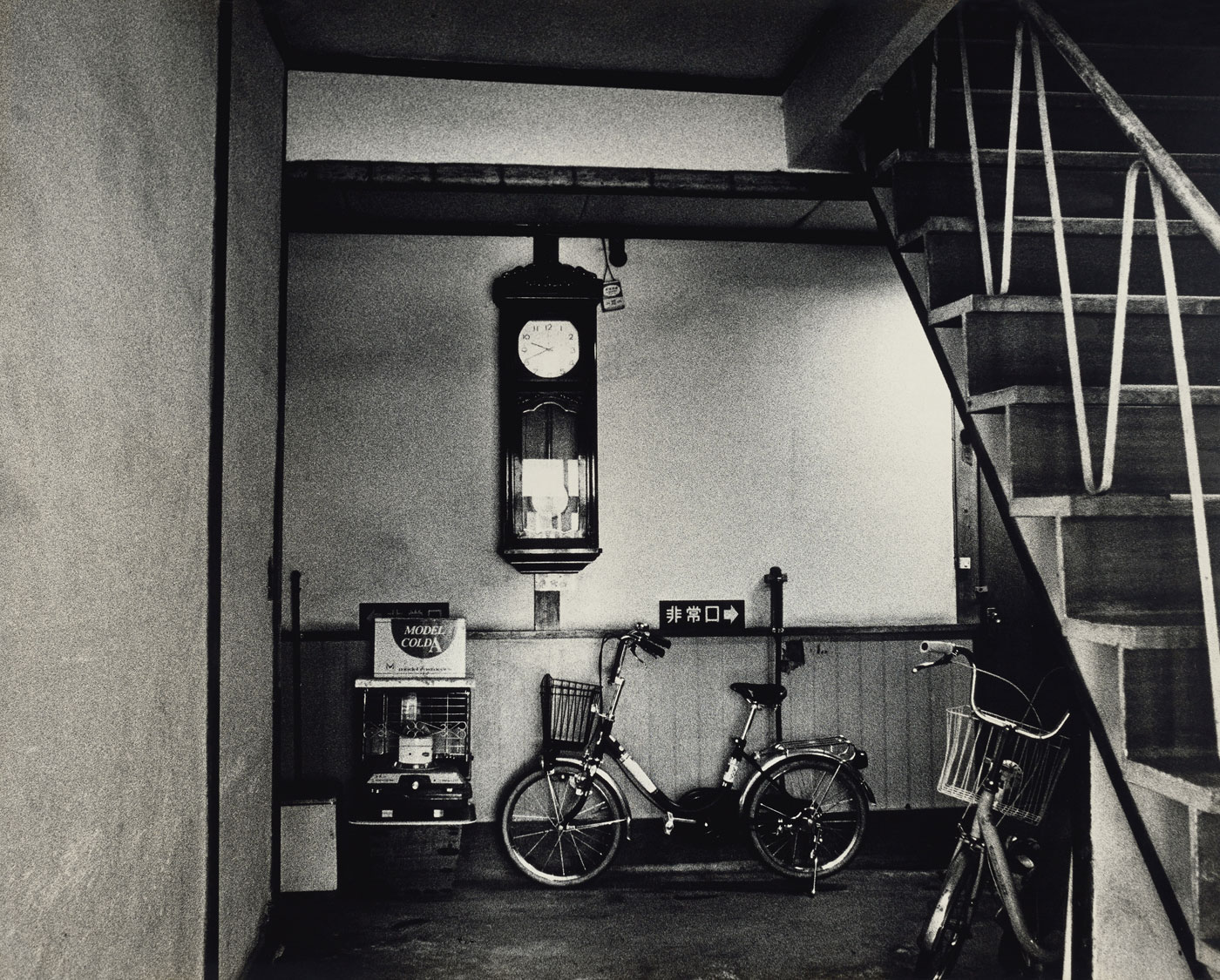
 

Ishiuchi Miyako (Japanese, b. 1947) 'Apartment #47' 1977-1978


Ishiuchi Miyako (Japanese, b. 1947)
Apartment #47
1977-1978
Gelatin silver print
50 x 60 x 2.5cm (19 11/16 x 23 5/8 x 1 in.)
The J. Paul Getty Museum, Los Angeles, Gift of Ishiuchi Miyako
Courtesy of and © Ishiuchi Miyako


Ishiuchi Miyako (Japanese, b. 1947) 'Apartment #19' 1977-1978


Ishiuchi Miyako (Japanese, b. 1947)
Apartment #19
1977-1978
Gelatin silver print
50 x 60 x 2.5cm (19 11/16 x 23 5/8 x 1 in.)
The J. Paul Getty Museum, Los Angeles, Gift of Ishiuchi Miyako
Courtesy of and © Ishiuchi Miyako


Ishiuchi Miyako (Japanese, b. 1947) 'Apartment #10' 1977-1978


Ishiuchi Miyako (Japanese, b. 1947)
Apartment #10
1977-1978
Gelatin silver print
50 x 60cm (19 11/16 x 23 5/8 in.)
The J. Paul Getty Museum, Los Angeles, Gift of Ishiuchi Miyako
Courtesy of and © Ishiuchi Miyako


Ishiuchi Miyako (Japanese, b. 1947) 'Endless Night #2' 1978-1980


Ishiuchi Miyako (Japanese, b. 1947)
Endless Night #2
1978-1980
Gelatin silver print
78.7 x 106.5cm (31 x 41 15/16 in.)
Courtesy of and © Ishiuchi Miyako


Ishiuchi Miyako (Japanese, b. 1947) 'Endless Night #71' 1978-1980


Ishiuchi Miyako (Japanese, b. 1947)
Endless Night #71
1978-1980
Gelatin silver print
78.7 x 106.5cm (31 x 41 15/16 in.)
Courtesy of and © Ishiuchi Miyako
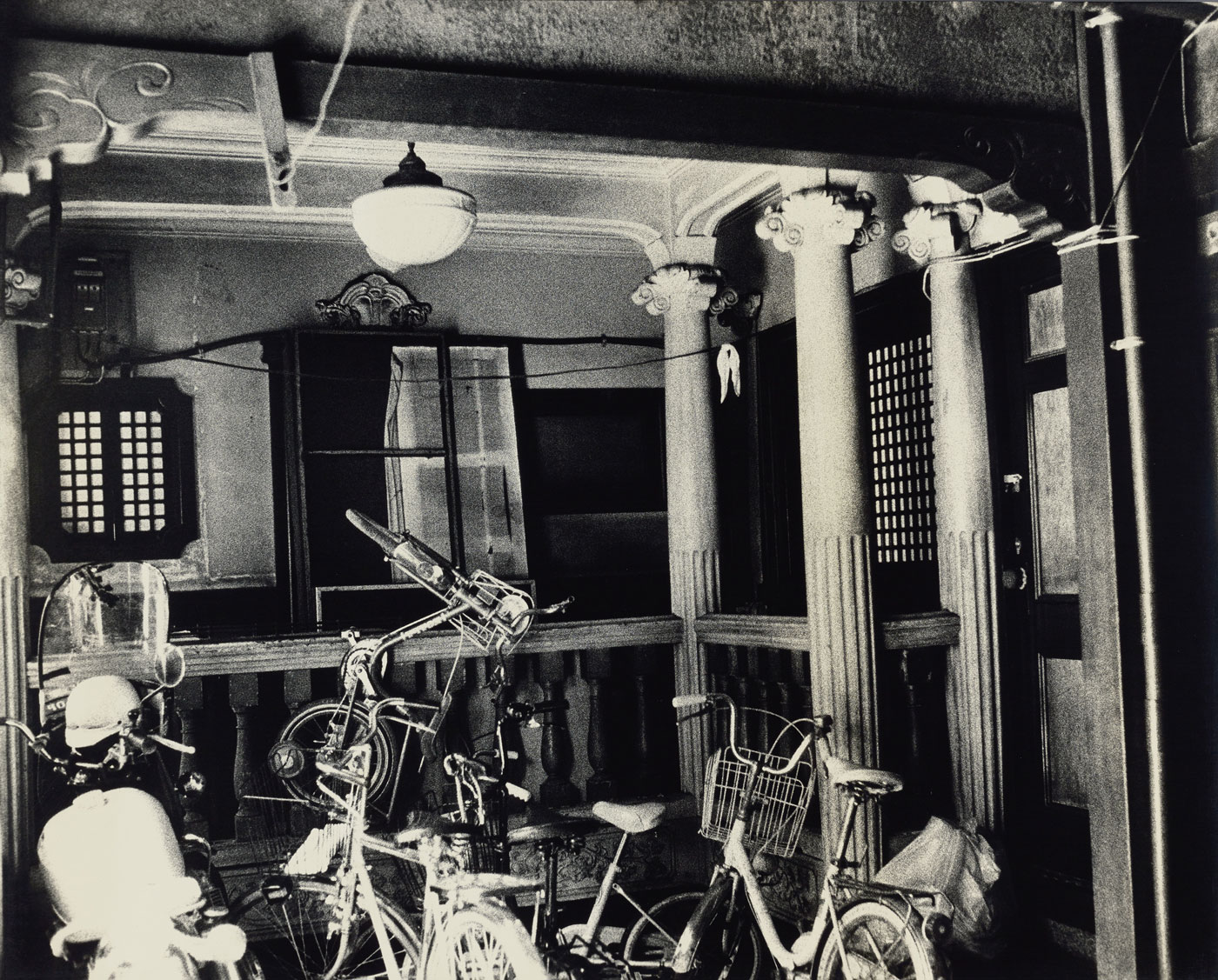
 

Ishiuchi Miyako (Japanese, b. 1947) 'Endless Night #98' 1978-1980


Ishiuchi Miyako (Japanese, b. 1947)
Endless Night #98
1978-1980
Gelatin silver print
50 x 63cm (19 11/16 x 24 13/16 in.)
Courtesy of and © Ishiuchi Miyako


Ishiuchi Miyako (Japanese, b. 1947) 'EM Club #28' 1990


Ishiuchi Miyako (Japanese, b. 1947)
EM Club #28
1990
Gelatin silver print
77.2 x 104.8cm (30 3/8 x 41 1/4 in.)
Courtesy of and © Ishiuchi Miyako


Ishiuchi Miyako (Japanese, b. 1947) '1·9·4·7 #61' 1994


Ishiuchi Miyako (Japanese, b. 1947)
1·9·4·7 #61
1994
Gelatin silver print
39.5 x 54.6cm (15 9/16 x 21 1/2 in.)
The J. Paul Getty Museum, Los Angeles
© Ishiuchi Miyako


Ishiuchi Miyako (Japanese, b. 1947) '1·9·4·7 #15' negative 1988-1989; print 1994


Ishiuchi Miyako (Japanese, b. 1947)
1·9·4·7 #15
1988-1989; print 1994
Gelatin silver print
39.4 x 54.5cm (15 1/2 x 21 7/16 in.)
The J. Paul Getty Museum, Los Angeles, Gift of Ishiuchi Miyako
© Ishiuchi Miyako


Ishiuchi Miyako (Japanese, b. 1947) '1·9·4·7 #11' 1988-1989


Ishiuchi Miyako (Japanese, b. 1947)
1·9·4·7 #11
1988-1989
Gelatin silver print
85.7 x 114.2cm (33 3/4 x 44 15/16 x in.)
Collection of the National Museum of Modern Art, Tokyo
© Ishiuchi Miyako


Ishiuchi Miyako (Japanese, b. 1947) '1·9·4·7 #12' 1988-1989


Ishiuchi Miyako (Japanese, b. 1947)
1·9·4·7 #11
1988-1989
Gelatin silver print
85.7 x 114.2cm (33 3/4 x 44 15/16 x in.)
Collection of the National Museum of Modern Art, Tokyo
© Ishiuchi Miyako
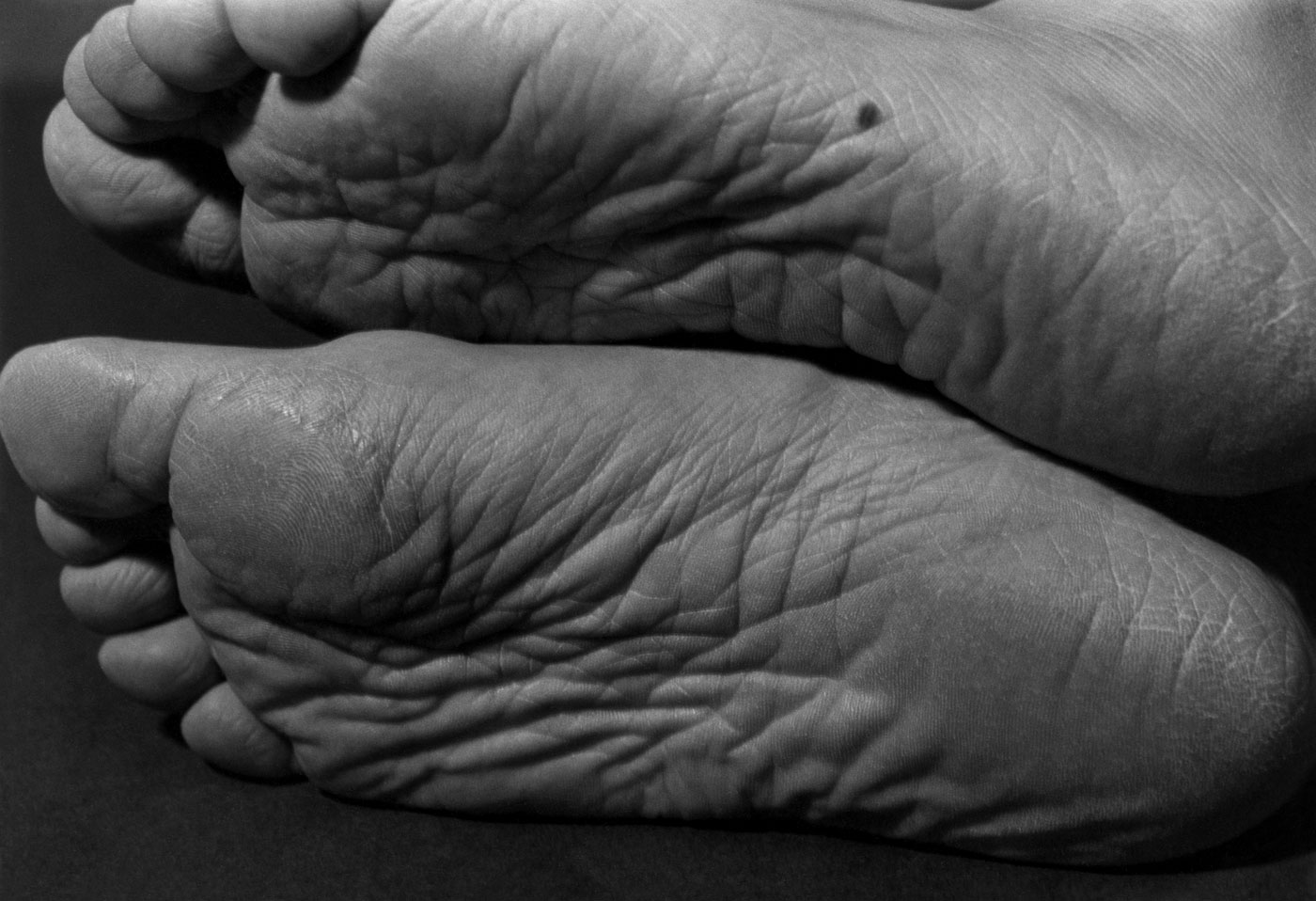
 

Ishiuchi Miyako (Japanese, b. 1947) '1·9·4·7 #49' 1988-1989


Ishiuchi Miyako (Japanese, b. 1947)
1·9·4·7 #49
1988-1989
Gelatin silver print
85.7 x 114.2cm (33 3/4 x 44 15/16 x in.)
Collection of the National Museum of Modern Art, Tokyo
© Ishiuchi Miyako
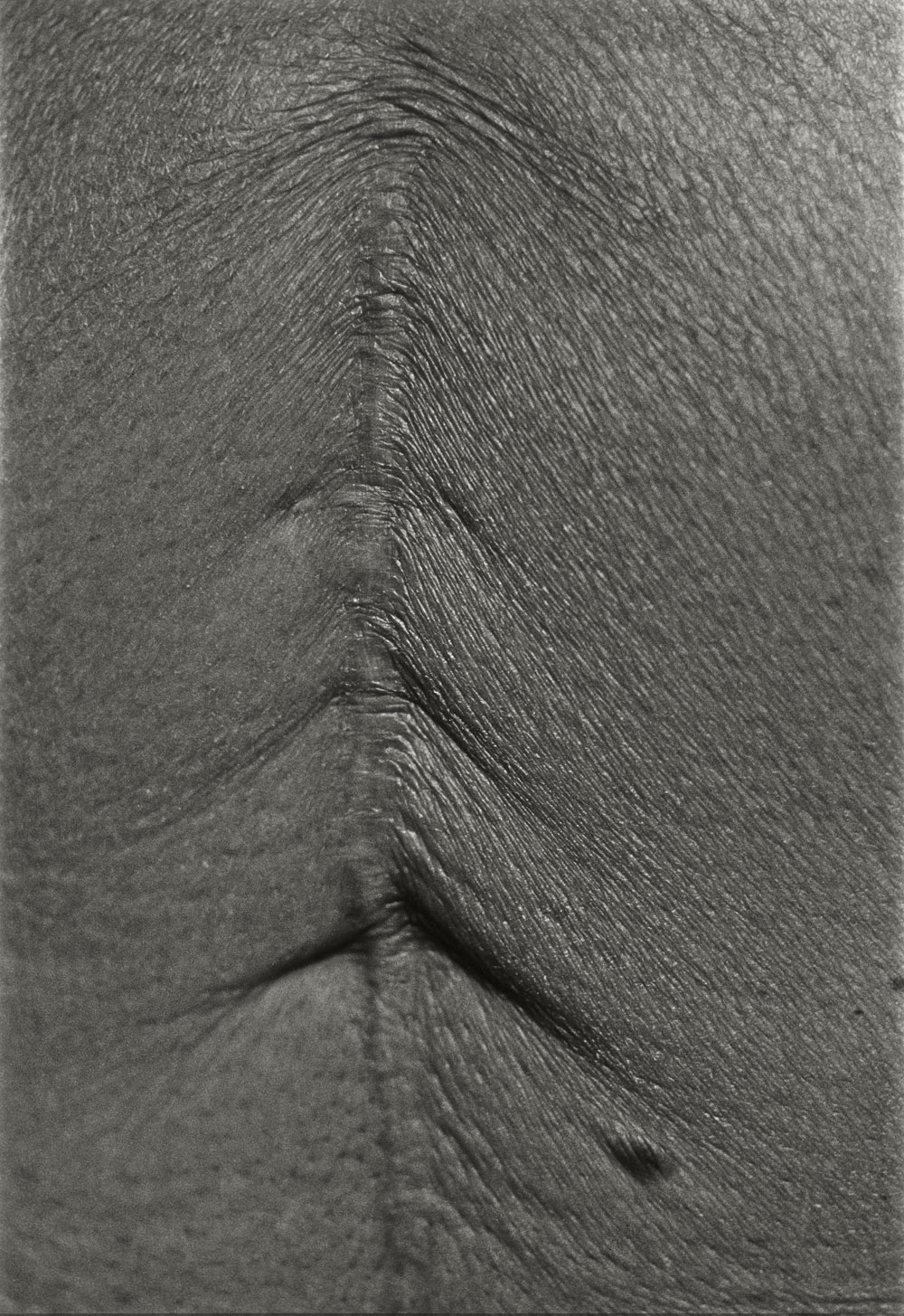
 

Ishiuchi Miyako (Japanese, b. 1947) 'Scars #45 (Illness 1955)' 2000


Ishiuchi Miyako (Japanese, b. 1947)
Scars #45 (Illness 1955)
2000
Gelatin silver print
111 x 76.7cm (43 11/16 x 30 3/16 in.)
Courtesy of and © Ishiuchi Miyako


Ishiuchi Miyako (Japanese, b. 1947) 'Scars #27 (Illness 1977)' 1999


Ishiuchi Miyako (Japanese, b. 1947)
Scars #27 (Illness 1977)
1999
Gelatin silver print
160 x 108cm (63 x 42 1/2 in.)
Collection of the National Museum of Modern Art, Tokyo
© Ishiuchi Miyako
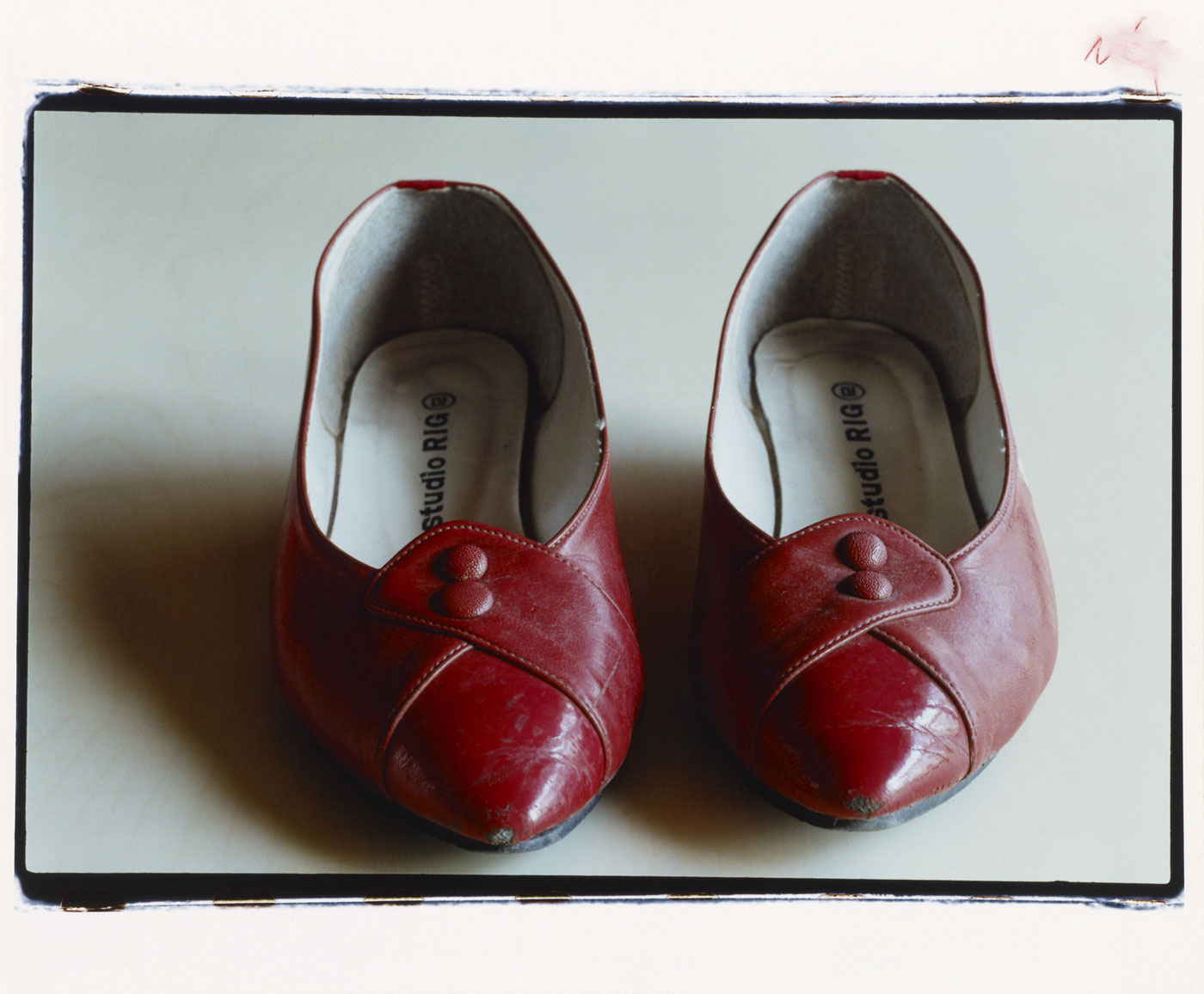
 

Ishiuchi Miyako (Japanese, b. 1947) 'Mother’s #57' 2004


Ishiuchi Miyako (Japanese, b. 1947)
Mother’s #57
2004
Chromogenic print
19.2 x 28.8cm (7 9/16 x 11 5/16 in.)
The J. Paul Getty Museum, Los Angeles
© Ishiuchi Miyako


Ishiuchi Miyako (Japanese, b. 1947) 'Mother’s #35' 2002


Ishiuchi Miyako (Japanese, b. 1947)
Mother’s #35
2002
Chromogenic print
107.5 x 74cm (42 5/16 x 29 1/8 in.)
Courtesy of and © Ishiuchi Miyako
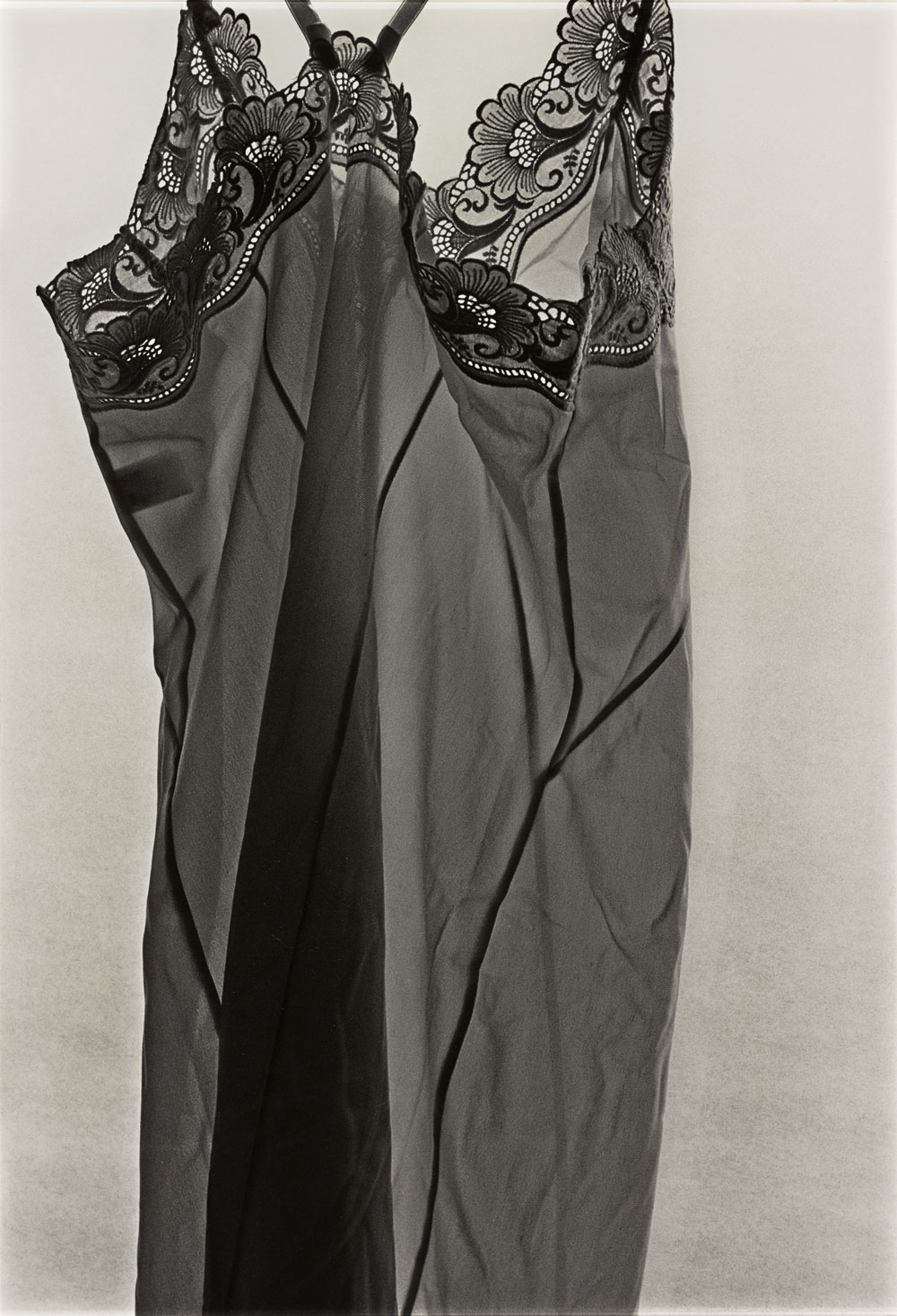
 

Ishiuchi Miyako (Japanese, b. 1947) 'Mother’s #49' 2002


Ishiuchi Miyako (Japanese, b. 1947)
Mother’s #49
2002
Gelatin silver print
107.5 x 74cm (42 5/16 x 29 1/8 in.)
Courtesy of and © Ishiuchi Miyako


Ishiuchi Miyako (Japanese, b. 1947) 'Mother’s #16' 2001


Ishiuchi Miyako (Japanese, b. 1947)
Mother’s #16
2001
Gelatin silver print
Framed: 107.5 x 74cm (42 5/16 x 29 1/8 in.)
Courtesy of and © Ishiuchi Miyako


Ishiuchi Miyako (Japanese, b. 1947) 'ひろしま/hiroshima #69 (Abe Hatsuko)' 2007


Ishiuchi Miyako (Japanese, b. 1947)
ひろしま/hiroshima #69 (Abe Hatsuko)
2007
Chromogenic print
108 x 74cm (42 1/2 x 29 1/8 in.)
The J. Paul Getty Museum, Los Angeles
© Ishiuchi Miyako


Ishiuchi Miyako (Japanese, b. 1947) 'ひろしま/hiroshima #9 (Ogawa Ritsu)' 2007


Ishiuchi Miyako (Japanese, b. 1947)
ひろしま/hiroshima #9 (Ogawa Ritsu)
2007
Chromogenic print
187 x 120cm (73 5/8 x 47 1/4 in.)
Courtesy of and © Ishiuchi Miyako


Ishiuchi Miyako (Japanese, b. 1947) 'ひろしま/hiroshima #33 (Nishimoto Oyuki)' 2007


Ishiuchi Miyako (Japanese, b. 1947)
ひろしま/hiroshima #33 (Nishimoto Oyuki)
2007
Chromogenic print
108 x 74cm (42 1/2 x 29 1/8 in.)
Courtesy of and © Ishiuchi Miyako


Ishiuchi Miyako (Japanese, b. 1947) 'ひろしま/hiroshima #60 (Abe Hatsuko)' 2007


Ishiuchi Miyako (Japanese, b. 1947)
ひろしま/hiroshima #60 (Abe Hatsuko)
2007
Chromogenic print
33.5 x 23cm (13 3/16 x 9 1/16 in.)
Courtesy of and © Ishiuchi Miyako


Ishiuchi Miyako (Japanese, b. 1947) 'ひろしま/hiroshima #97F (Wada Yasuko)' 2010


Ishiuchi Miyako (Japanese, b. 1947)
ひろしま/hiroshima #97F (Wada Yasuko)
2010
Chromogenic print
108 x 74cm (42 1/2 x 29 1/8 in.)
Courtesy of and © Ishiuchi Miyako


Ishiuchi Miyako (Japanese, b. 1947) 'ひろしま/hiroshima #82 (Uesugi Ayako)' 2007


Ishiuchi Miyako (Japanese, b. 1947)
ひろしま/hiroshima #82 (Uesugi Ayako)
2007
Chromogenic print
23 x 33.5cm (9 1/16 x 13 3/16 in.)
Courtesy of and © Ishiuchi Miyako


Ishiuchi Miyako (Japanese, b. 1947) 'ひろしま/hiroshima #41 (Kawamuki Eiko)' 2007


Ishiuchi Miyako (Japanese, b. 1947)
ひろしま/hiroshima #41 (Kawamuki Eiko)
2007
Chromogenic print
23 x 33.5cm (9 1/16 x 13 3/16 in.)
Courtesy of and © Ishiuchi Miyako


The J. Paul Getty Museum
1200 Getty Center Drive
Los Angeles, California 90049

Opening hours:
Daily 10am – 5pm
The J. Paul Getty Museum website

LIKE ART BLART ON FACEBOOK

Back to top

Exhibition: ‘Garden of the East: Photography in Indonesia 1850s-1940s’ at the National Gallery of Australia, Canberra

Exhibition dates: 21st February – 22nd June 2014


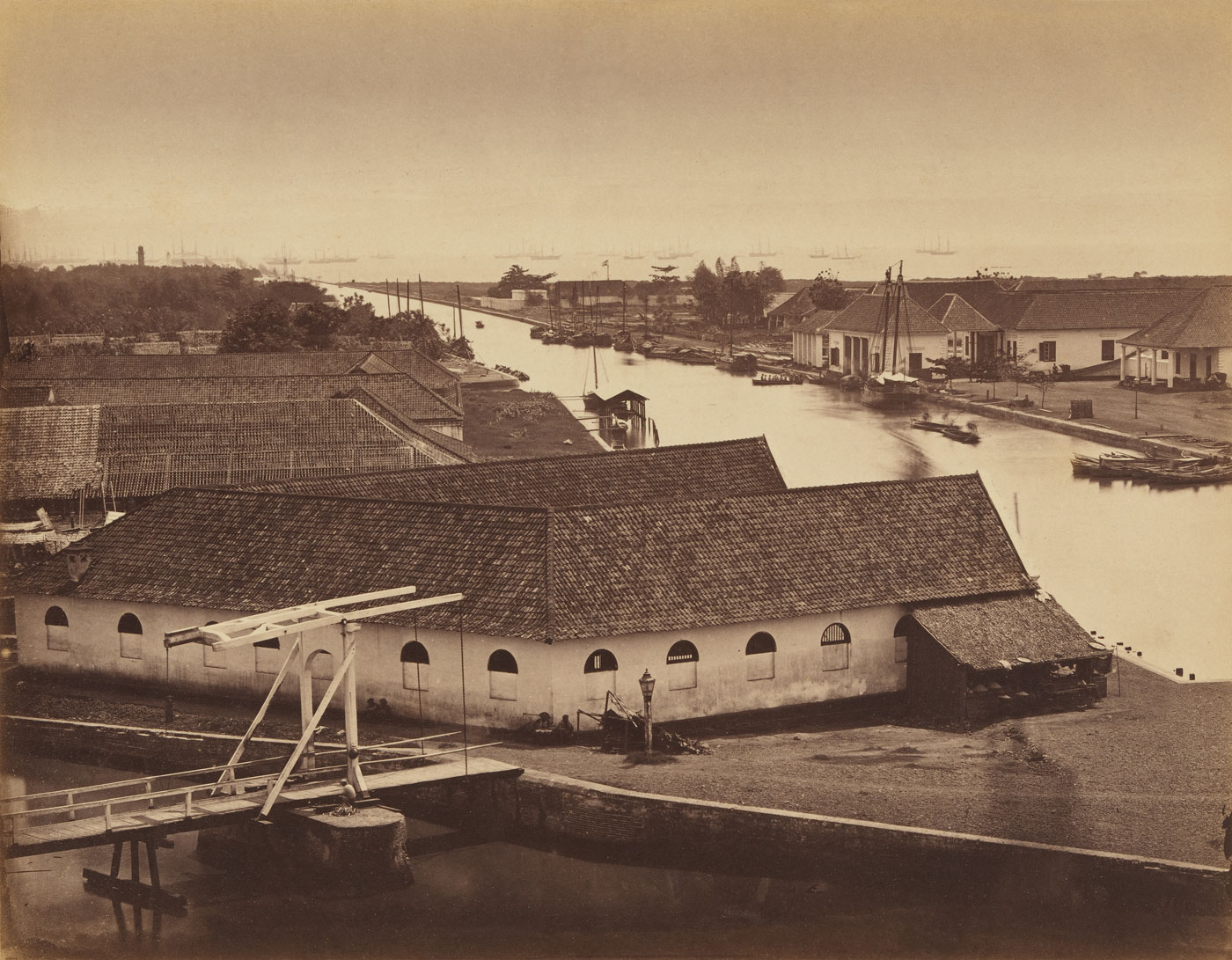
Woodbury & Page (established Jakarta 1857-1900) 'Batavia roadstead' c. 1865


Woodbury & Page (established Jakarta 1857-1900)
Batavia roadstead
c. 1865
Albumen silver photograph
19.4 x 24.5cm
Collection National Gallery of Australia


Dutch East Indies and Indonesian photography, and more broadly Asia-Pacific photography, has been a burgeoning area of interest, research and collecting for some time now. Although this is far from my area of expertise, with the quality of the work shown in this posting, you can understand why. Since 2005, “the National Gallery of Australia’s Asian photographs collection has grown to nearly 8000 and in excess of 6500 prints are from Indonesia.”

Absolutely beautiful tonality to the prints. They seem to have a wonderful stillness to them as well.

On a personal note, Gael Newton, Senior Curator, Photography at the National Gallery of Australia is retiring. I would like to thank her for promoting, researching and writing about all forms of photography over the years and to congratulate her on significantly extending the NGA’s photography collection. A job well done.

Dr Marcus Bunyan


Many thankx to Gael Newton and the National Gallery of Australia for allowing me to publish the photographs in the posting. Please click on the photographs for a larger version of the image.


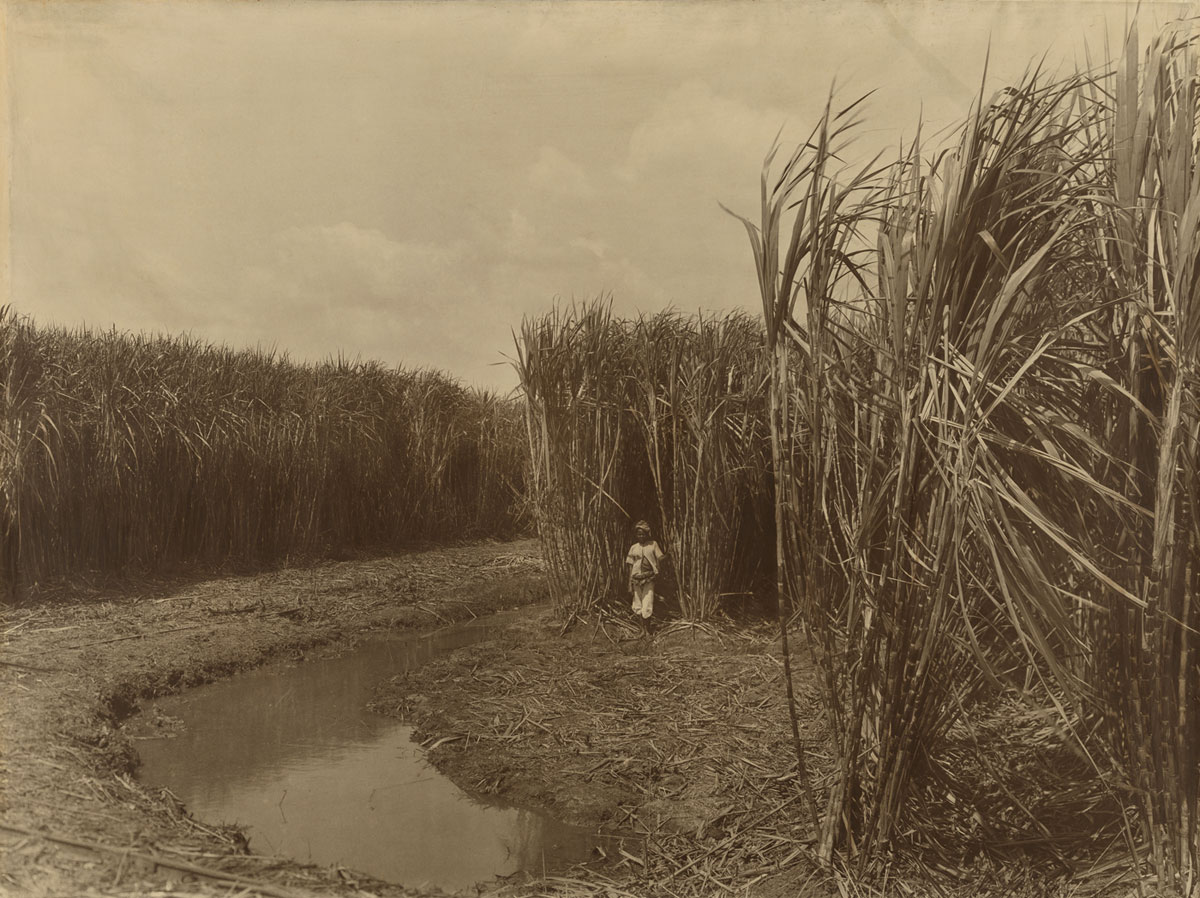
Dirk Huppe (Indonesia, 1867-1931) O Kurkdjian & Co (Established Surabaya, Java 1903-1935) 'Mature canes, fertilized with artificial guano Java Fertilizer Co.,' Semarang 1914


Dirk Huppe (Indonesia, 1867-1931)
O Kurkdjian & Co (Established Surabaya, Java 1903-1935)
Mature canes, fertilized with artificial guano, Java Fertilizer Co.,
Semarang 1914
Carbon print photograph
74.6 x 99.6cm
Collection National Gallery of Australia


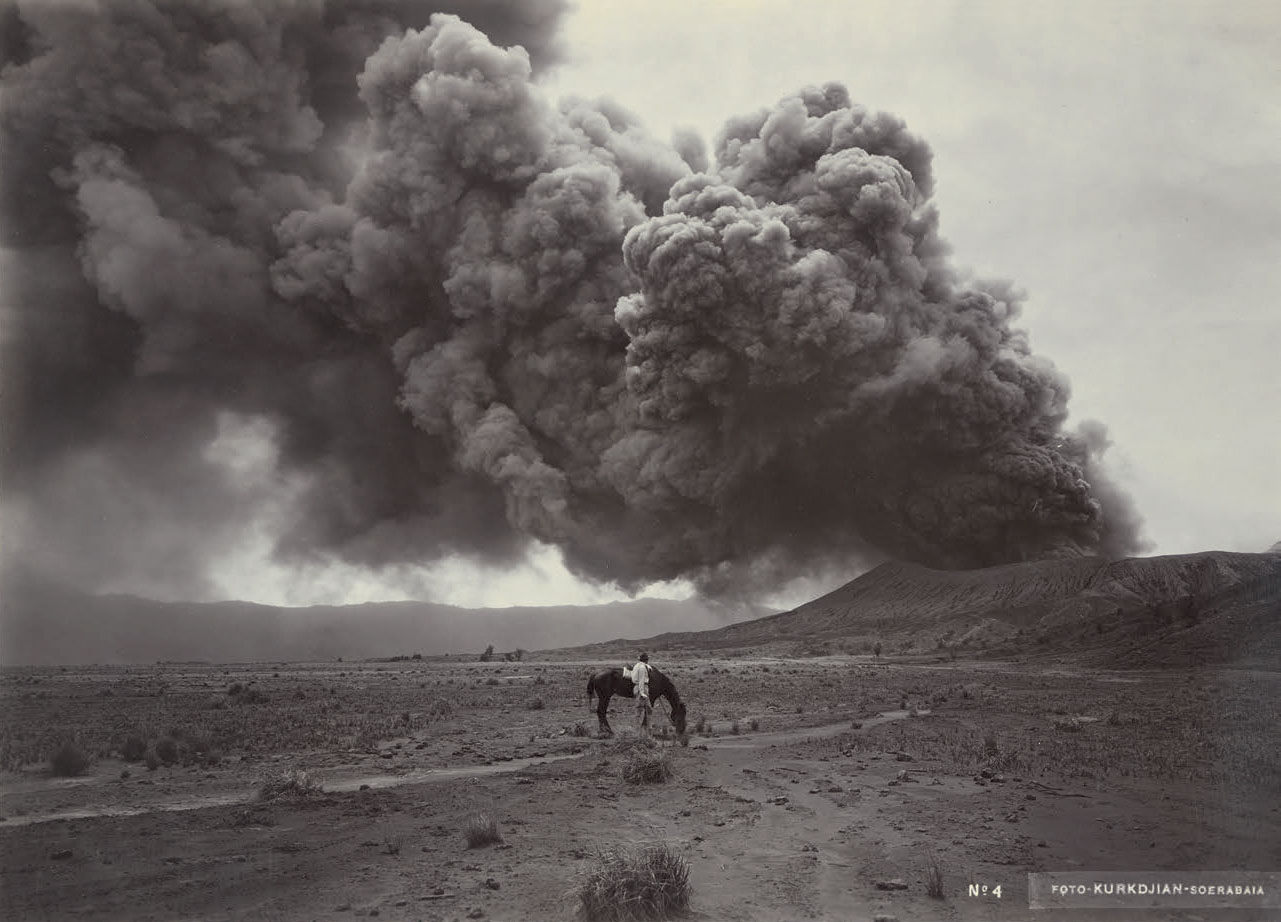
Atelier O Kurkdjian & Co (Established Surabaya, Java 1903-1935) 'Bromo eruption of December' 1915


Atelier O Kurkdjian & Co (Established Surabaya, Java 1903-1935)
Bromo eruption of December
1915
Gelatin silver photograph
17.7 x 24cm
Collection National Gallery of Australia
Purchased 2007


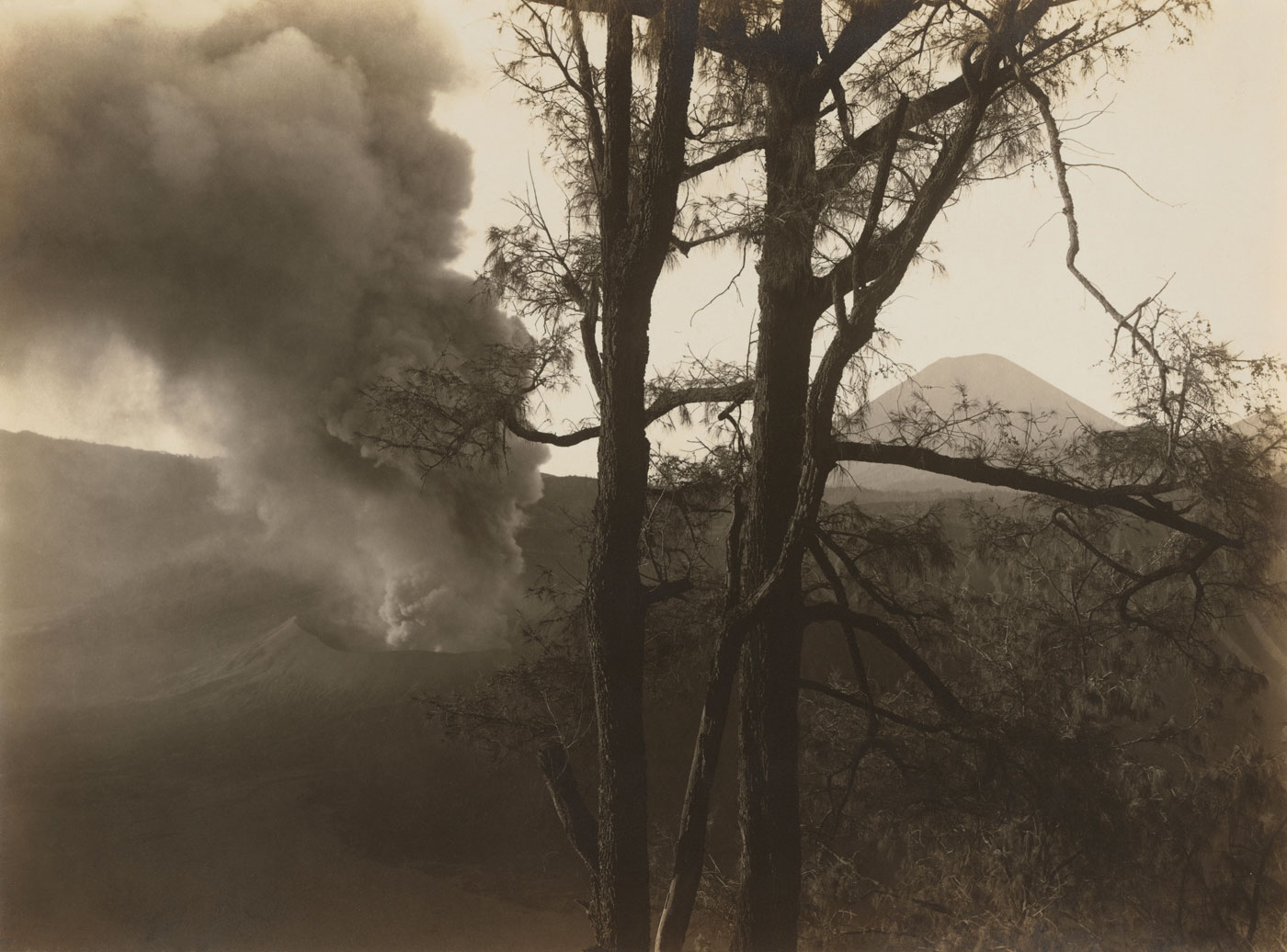
S. Satake (Japanese, working Indonesia 1902 - c. 1937) 'Eruption' Java c. 1930


S. Satake (Japanese, working Indonesia 1902 – c. 1937)
Eruption
Java c. 1930
Gelatin silver photograph
16.2 x 21.8cm
Collection National Gallery of Australia


While Indonesia might be the second most popular destination for outbound Aussies, the history of the Indonesian archipelago’s diverse peoples and the colonial era Dutch East Indies, remains unfamiliar. In particular the rich heritage of photographic images made by the nearly 500 listed photographers at work across the archipelago in the mid 19th – mid 20th century, is poorly known, both in the region and internationally.

The Gallery began building its Indonesian photographic collection in 2006. It is unique in the region: the largest and most comprehensive collection excluding the archives of the Dutch East Indies in the Netherlands. It was not until the late 1850s with the arrival of photographs printed on paper from a master glass negative, that images of Indonesia – the origin of nutmeg, pepper and cloves, much desired in the West – began circulating worldwide.

Australia had a minor role in the history of photography in Indonesia. A pair of young British photographers, Walter Woodbury and James Page (operators of the Woodbury & Page studios located in the Victorian goldfields and Melbourne) arrived in Jakarta in 1857. From around 1900 a trend toward more picturesque views and sympathetic portrayals of indigenous people appeared. Old images were given new life as souvenir prints and sold through hotels and resorts or used for cruise ship brochures.

A particular feature of Garden of the East is the display of family albums. Both amateur and professional images in the Indies were bound in distinctive Japanese or Batik-patterned cloth boards as records of a colonial lifestyle. Hundreds of these once-treasured narratives of now lost people ended up in the Netherlands in the 1970s and 80s in estate sales of former Dutch colonial and Indo (mixed race) family members who had returned or immigrated after the establishment of the Republic of Indonesia in 1945.

Text from the National Gallery of Australia website


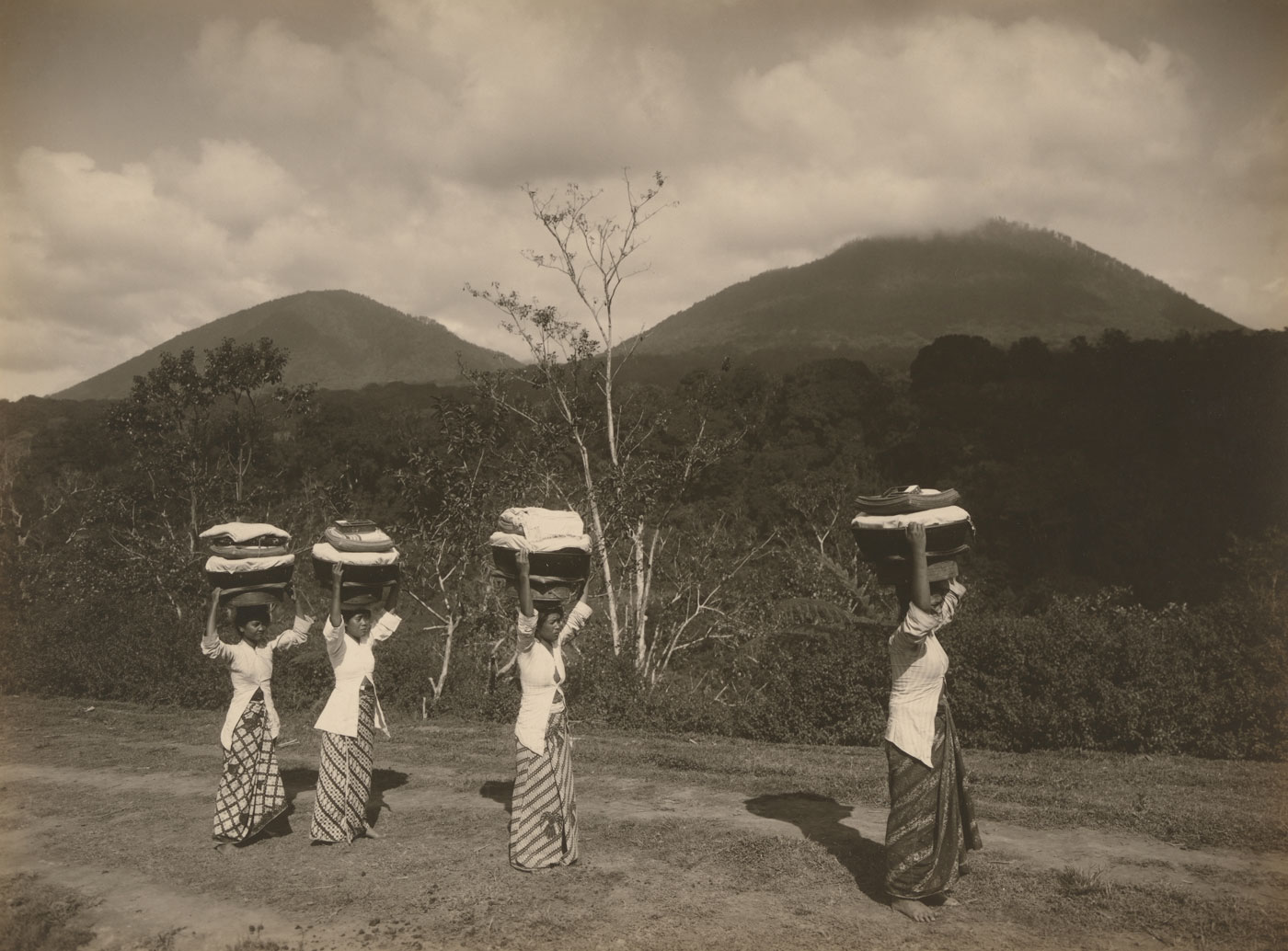
S. Satake (Japanese, working Indonesia 1902 - c. 1937) 'Women on road to Buleleng Bali' c. 1928


S. Satake (Japanese, working Indonesia 1902 – c. 1937)
Women on road to Buleleng
Bali c. 1928
Gelatin silver photograph
16.2 x 22.0cm
Collection National Gallery of Australia


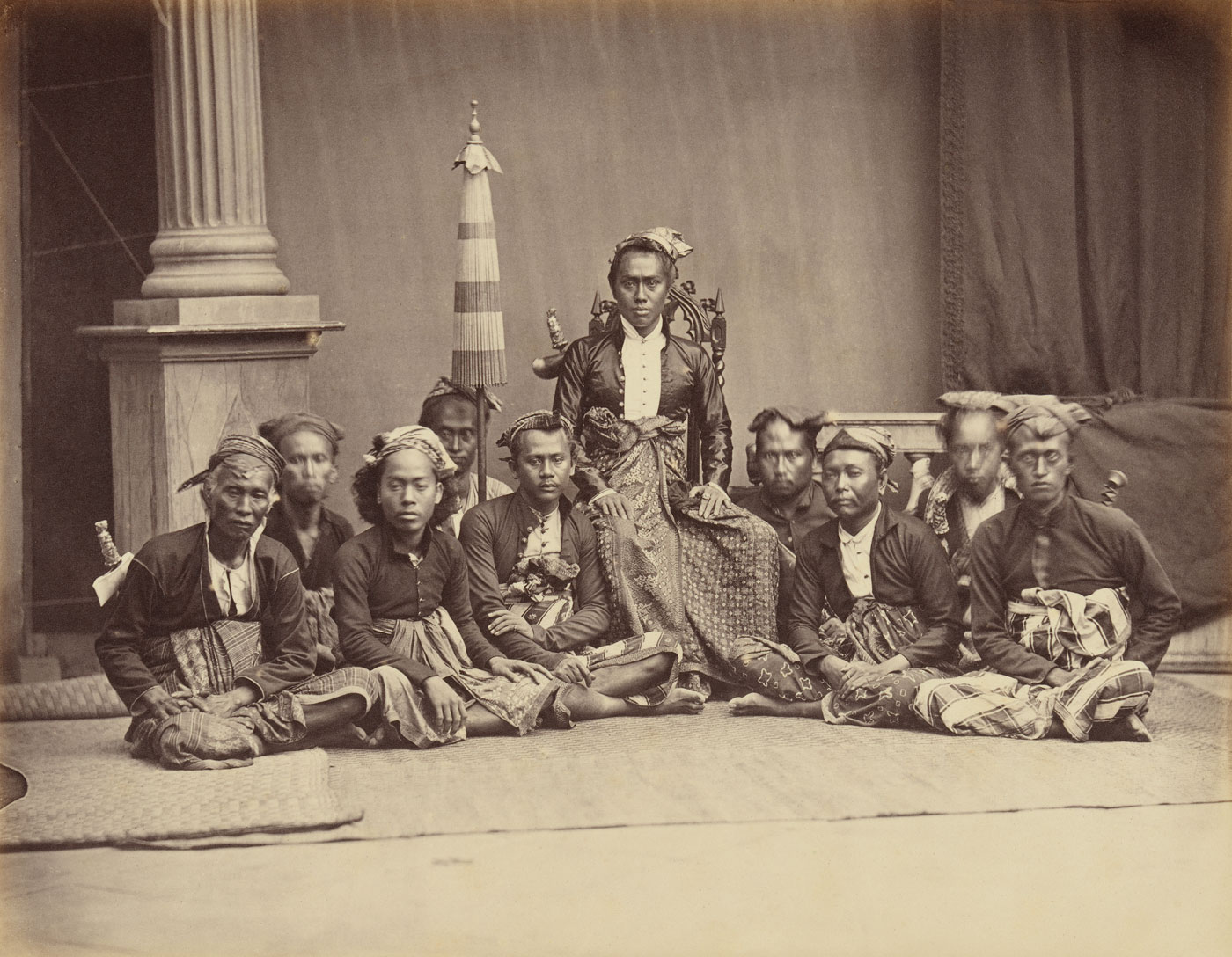
Woodbury & Page (established Jakarta 1857-1900) 'Gusti Ngurah Ketut Jelantik, Prince of Buleleng with his entourage in Jakarta in 1864 on the visit of Governor-General LAJW Sloet van de Beele' 1864


Woodbury & Page (established Jakarta 1857-1900)
Gusti Ngurah Ketut Jelantik, Prince of Buleleng with his entourage in Jakarta in 1864 on the visit of Governor-General LAJW Sloet van de Beele
1864
Albumen silver photograph
Collection National Gallery of Australia


Garden of the East: Photography in Indonesia 1850s-1940s is the first major survey in the southern hemisphere of the photographic art from the period spanning the last century of colonial rule until just prior to the establishment of the Republic of Indonesia in 1945. The exhibition provides the opportunity to view over two hundred and fifty photographs, albums and illustrated books of the photography of this era and provides a unique insight into the people, life and culture of Indonesia. The exhibition and accompanying catalogue reveals much new research and information regarding the rich photographic history of Indonesia. Garden of the East is on display in Canberra only.

The exhibition is comprised of images created by more than one hundred photographers and the majority have never been exhibited publicly before. The works were captured by photographers of all races, making images of the beauty, bounty, antiquities and elaborate cultures of the diverse lands and peoples of the former Dutch East Indies. Among these photographers is the Javanese artist Kassian Céphas, whose genius as a photographer is not widely known at this time, a situation which the National Gallery of Australia hopes to address by growing the collection of holdings from this period and by continuing to stage focused exhibitions such as Garden of the East.

As was the case in other Southeast Asian ports, the most prominent professional photographers at work in colonial Indonesia came from a wide range of European backgrounds until the 1890s, when Chinese photography studios began to dominate. The exhibition focuses on the leading foreign studios of the time, in particular Walter B Woodbury, one of the earliest photographers at work in Australia in the 1850s as well as the Dutch East Indies. However Garden of the East also includes images created by lesser known figures whose work embraced the new art photography styles of the early twentieth century including: George Lewis, the British chief photographer at the Surabaya studio founded by Armenian Ohannes Kurkdjian, the remarkable German amateur photographer Dr Gregor Krause; American adventurer and filmmaker André Roosevelt; and the only woman professional known to have  worked in the period, Thilly Weissenborn, whose works were intertwined with the tourist promotion of Java and Bali in the 1930s. Chinese studios are well-represented, although little is known of their founders and many employed foreign photographers.

Frank Hurley is the sole Australian photographer represented in the exhibition. Hurley is noted as the only Australian known to have worked in Indonesia before the Second World War and toured Java in mid-1913, on commission to promote tourist cruises from Australia to the Indies for the Royal Packet Navigation Company.

“We are delighted to host this exhibition and believe that Australia’s geographic, political and cultural position in the Asia-Pacific region makes it very appropriate that the National Gallery of Australia should celebrate the rich and diverse arts of our region,” said Ron Radford AM, Director, National Gallery of Australia. “A dedicated Asia-Pacific focused policy has been long-held by the Gallery, but it was not until 2005 that we focused on early photographic art of the region. Progress, however, has been rapid and all the photographs in Garden of the East have been recently acquired for the National Gallery’s permanent collection,” he said.

“From a small holding in 2005 of less than two hundred photographs from anywhere in Asia, of which only half a dozen were by any Asian-born photographers, the National Gallery of Australia’s Asian photographs collection has grown to nearly 8000 and in excess of 6500 prints are from Indonesia,” Ron Radford said.

Garden of the East presents images, both historic and homely and is a ‘time travel’ opportunity to visit the Indies through more than two hundred and fifty works on show, made by both professional and amateur family photographers. Images as diverse as the Indonesian archipelago itself, which was once described by nineteenth century travel writers as the Garden of the East,” said Gael Newton, Senior Curator of Photography, National Gallery of Australia and exhibition Curator.

Garden of the East: Photography in Indonesia 1850s-1940s follows the large 2008 survey exhibition Picture Paradise: Asia-Pacific photography 1840s-1940s. This was the first of the new Asia-Pacific collection focus exhibitions. In 2010, the Gallery staged an early photographic portrait exhibition to coincide with a conference hosted in partnership with the Australian National University entitled Facing Asia. A number of other small Asian collection shows have also been held since 2011.

The National Gallery of Australia is delighted to stage this exhibition to coincide with the Focus Country Program, an initiative organised by the Australian Government’s key cultural diplomacy body, the Australia International Cultural Council. The AICC has chosen Indonesia as its Focus Country for 2014 and will organise a series of events across the Indonesian archipelago to promote Australian arts and culture, as well as our credentials in sport, science, education and industry. This exhibition will also mark the 40th anniversary of dialogue relations between Australia and the Association of South East Asian Nations. The National Gallery of Australia is proud to be presenting an exhibition of Indonesian photography in celebration of Australia’s close cultural relations with Indonesia and the Asia-Pacific region.

Press release from the National Gallery of Australia website


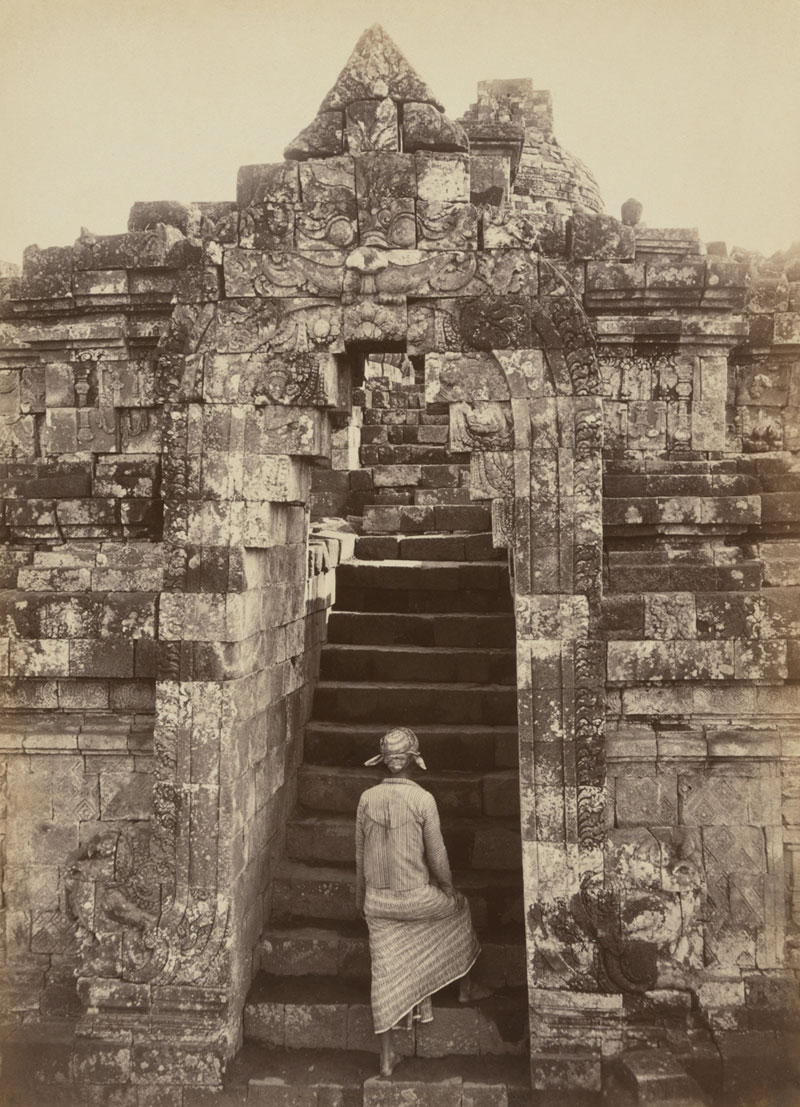
Kassian Céphas (Javanese, 1845-1912) 'Man climbing the front entrance to Borobudur' Central Java 1872


Kassian Céphas (Javanese, 1845-1912)
Man climbing the front entrance to Borobudur
Central Java 1872
Albumen silver photograph
22.2 x 16.1cm
Collection National Gallery of Australia


Kassian Cephas or Kassian Céphas was a Javanese photographer of the court of the Yogyakarta Sultanate. He was the first indigenous person from Indonesia to become a professional photographer and was trained at the request of Sultan Hamengkubuwana VI. After becoming a court photographer in as early 1871, he began working on portrait photography for members of the royal family, as well as documentary work for the Dutch Archaeological Union. Cephas was recognised for his contributions to preserving Java’s cultural heritage through membership in the Royal Netherlands Institute of Southeast Asian and Caribbean Studies and an honorary gold medal of the Order of Orange-Nassau. Cephas and his wife Dina Rakijah raised four children. Their eldest son Sem Cephas continued the family’s photography business until his own death in 1918.

Text from the Wikipedia website


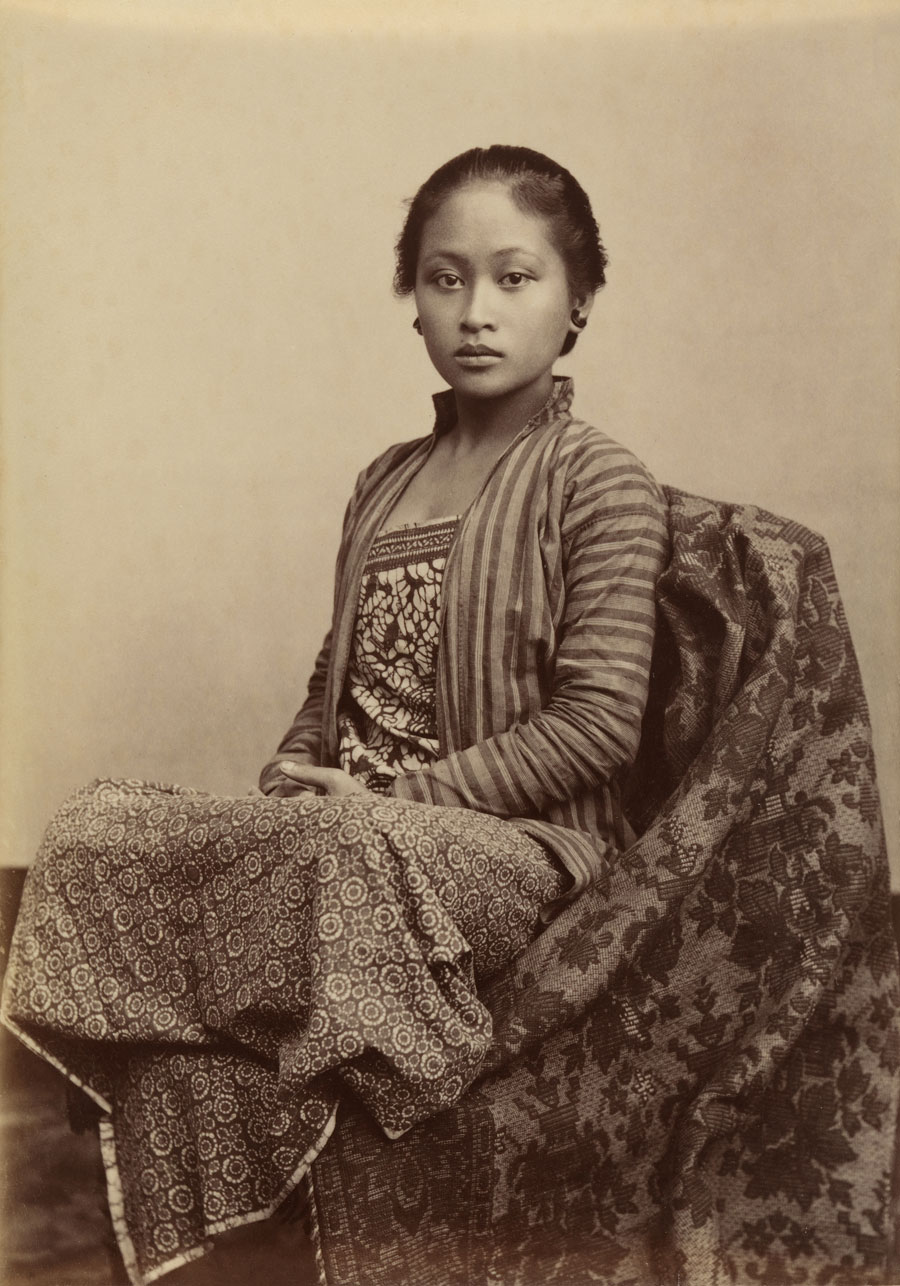
Kassian Céphas (Javanese, 1845-1912) 'Young Javanese woman' c. 1885


Kassian Céphas (Javanese, 1845-1912)
Young Javanese woman
c. 1885
Albumen silver photograph
13.7 x 9.8cm
Collection National Gallery of Australia


Garden of the East: photography in Indonesia 1850s-1940s offers the chance to see images from the last century of colonial rule in the former Dutch East Indies. It includes over two hundred photographs, albums and illustrated books from the Gallery’s extensive collection of photographic art from our nearest Asian neighbour.

Most of the daguerreotype images from the 1840s, the first decade of photography in Indonesia, are lost and can only be glimpsed in reproductions in books and magazines of the mid nineteenth century. It was not until the late 1850s that photographic images of Indonesia – famed origin of exotic spices much desired in the West – began circulating worldwide. British photographers Walter Woodbury and James Page, who arrived in Batavia (Jakarta) from Australia in 1857, established the first studio to disseminate large numbers of views of the country’s lush tropical landscapes and fruits, bustling port cities, indigenous people, exotic dancers, sultans and the then still poorly known Buddhist and Hindu Javanese antiquities of Central Java.

The studios established in the 1870s tended to offer a similar inventory of products, mostly for the resident Europeans, tourists and international markets. The only Javanese photographer of note was Kassian Céphas who began work for the Sultan in Yogyakarta in the early 1870s. In late life, Céphas was widely honoured for his record of Javanese antiquities and Kraton performances, and his full genius can be seen in Garden of the East.

Most of the best known studios at the turn of the century, including those of Armenian O Kurkdjian and German CJ Kleingrothe, were owned and run by Europeans. Chinese-run studios appeared in the 1890s but concentrated on portraiture. Curiously, relatively few photographers in Indonesia were Dutch. From the 1890s onward, the largest studios increasingly served corporate customers in documenting the massive scale of agribusiness, particularly in the golden economic years of the Indies in the early to mid twentieth century. From around 1900, a trend toward more picturesque views and sympathetic portrayals of indigenous people appeared. This was intimately linked to a government sponsored tourist bureau and to styles of Pictorialist art photography that had just emerged as an international movement in Europe and America. As photographic studios passed from owner to owner, old images were given new life as souvenir prints sold at hotels and resorts and as reproductions in cruise-ship brochures.

Amateur camera clubs and Pictorialist photography salons common in Western countries by the 1920s were slower to develop in Asia and largely date to the postwar era. Locals, however, took up elements of art photography. Professionals George Lewis and Thilly Weissenborn (the only woman known from the period) and amateurs Dr Gregor Krause and Arthur de Carvalho put their names on their prints and employed the moody effects and storytelling scenarios of Pictorialist photography. Krause was one of the most influential photographers. He extensively published his 1912 Bali and Borneo images in magazines and in two books in the 1920s and 1930s, inspiring interest in the indigenous life and landscape as well as the sensuous physical beauty of the Balinese people.

Postwar artists and celebrities – including American André Roosevelt, who used smaller handheld cameras – flocked to the country to capture spontaneity and daily life around them, to affirm their view of Bali as a ‘last paradise’ , where art and life were one. In 1941, Gotthard Schuh published Inseln der Götter (Islands of the gods), the first modern large-format photo-essay on Indonesia. While romantic, the collage of images and text in Schuh’s book presented a vital image of the diverse islands, peoples and cultures that were to be united under the flag of the Republic of Indonesia in 1949.

A particular feature of Garden of the East is a selection of family albums bound in distinctive Japanese or Batik patterned cloth boards as records of a colonial lifestyle (for the affluent) in the Indies. Hundreds of these once treasured narratives of now lost people ended up in the Netherlands in the 1970s and 1980s in estate sales of former Dutch colonial and Indo (mixed race) family members who had returned or immigrated after the establishment of the Republic of Indonesia.

Gael Newton. “Princes, Portraits and Panoramas,” in the National Gallery of Australia Artonview 76 Summer 2013, pp. 20-22 [Online] Cited 12/06/2014


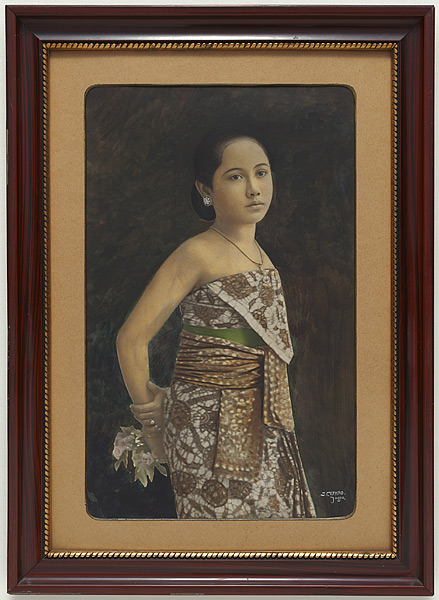
Sem Céphas (Indonesia, 1870-1918) 'Portrait of a Javanese woman' c. 1900


Sem Céphas (Indonesia, 1870-1918)
Portrait of a Javanese woman
c. 1900
Gelatin silver photograph, colour pigment hand painted photograph
image
38.5 x 23.8cm
Purchased 2007
National Gallery of Australia, Canberra


Gotthard Schuh (Swiss, 1897-1969) 'Inseln der Götter' (Islands of the gods) [book cover] 1941


Gotthard Schuh (Swiss, 1897-1969)
Inseln der Götter (Islands of the gods) [book cover]
1941
Hardcover w/dust jacket
154pp, text in German
Plates in photogravure
28.5 x 22.5cm


Gotthard Schuh (December 22, 1897 in Schöneberg near Berlin – December 29, 1969 in Küsnacht, Zurich) was a Swiss photographer, painter and graphic artist.

Photographer

In 1931 his first photos were published in a Zurich magazine and in 1932 he held a photography exhibition in Paris, where he met Picasso, Léger and Braque.

From 1932 he joined the Zürcher Illustrierte under Arnold Kübler, working with Hans Staub and Paul Senn, and until 1937 Schuh also worked freelance for Berliner Illustrirte Zeitung, Paris Match and Life. His assignments during 1938/1939 took him all over Europe and to Indonesia. He and Marga divorced in 1939.

After about ten years as a reporter he became the first picture editor for the Neue Zürcher Zeitung. He and Edwin Arnet created the NZZ supplement Das Wochenende, which showcased Swiss and international photography in addition to his own reportage.

From this period a significant part of his own photographic work illustrated books, of which the most successful was Inseln der Götter published in 1941, the result of his almost 11-month journey through Singapore, Java, Sumatra and Bali, undertaken just before the war. It was a mixture of reportage and self-reflection, with a poetic quality that, though individual images may be read either way, Schuh sometimes valued over documentary authenticity:

“Everyone just depicts what he sees, and everyone just sees what corresponds to his being.”


This is evident in the book Begegnungen which Schuh published in 1956, in which he combined older and more recent images in free association, in accord with the objectives of the ‘Kollegium Schweizerischer Photographen’, the Academy of Swiss Photographers which he founded together with Paul Senn, Walter Läubli, Werner Bischof and Jakob Tuggener, a loose group that promoted an ‘auteur’ emphasis. Their first exhibition in 1951 marked a renewal of photography in Switzerland after the conservatism and nationalism of the war years. Critic Edwin Arnet identified the ethos of the group:

“Their photography has abandoned the sphere of technical experimentation … , the abstract and the avant-garde. It has become more wholesome, concentrating again more on the poetry of real things.”


In 1955 Edward Steichen selected two of Schuh’s photographs for the world-touring Museum of Modern Art exhibition The Family of Man seen by an audience of 9 million. One, taken in Italy, is a stolen image of lovers resting beside their discarded bicycles amongst long summer grass in an olive grove, while the other, taken in Java, shows a boy stretching balletically across the pavement as he plays marbles.

Text from the Wikipedia website


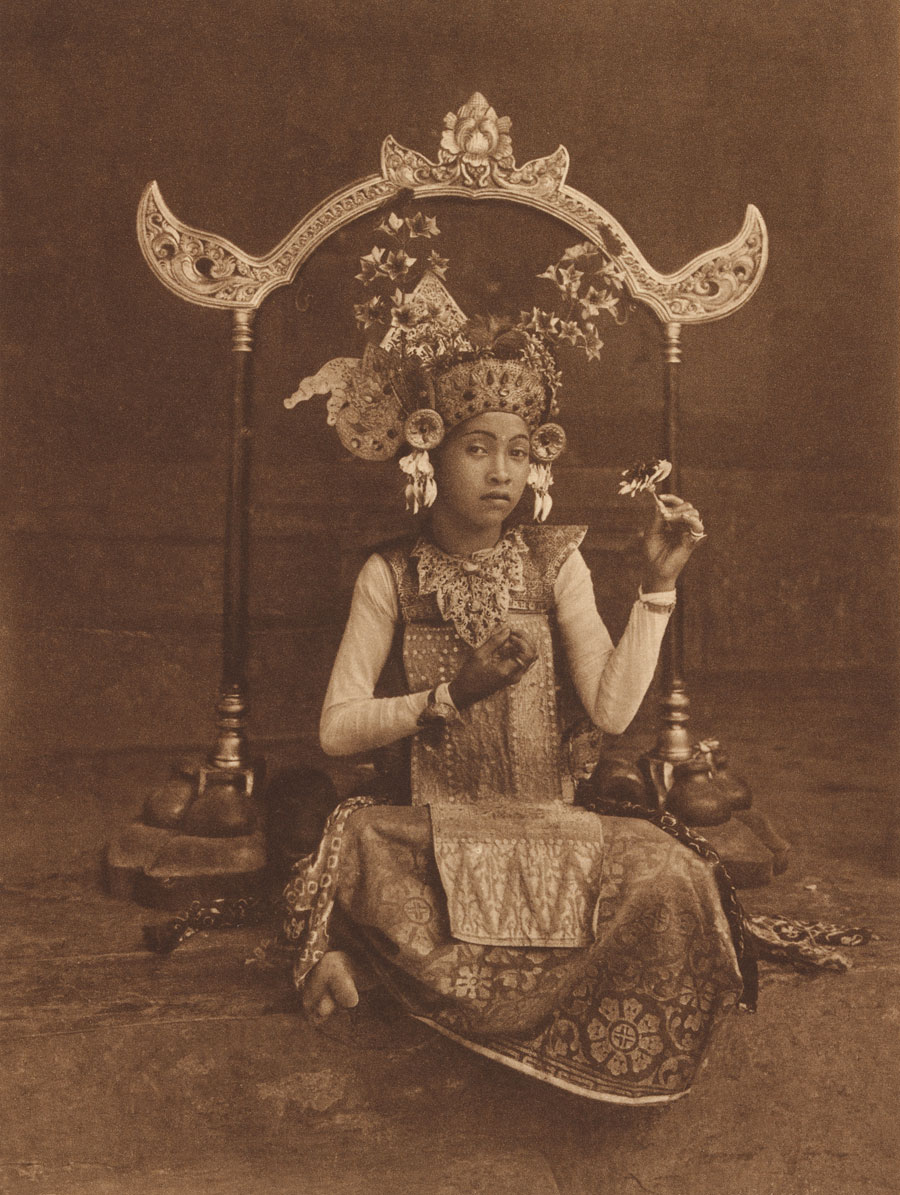
Thilly Weissenborn (Javanese / Indonesian, 1883-1964) 'A dancing-girl of Bali, resting' c. 1925


Thilly Weissenborn (Javanese / Indonesian, 1883-1964)
Indonesia 1902 – Netherlands 1964
A dancing-girl of Bali, resting
c. 1925
Photogravure
21.1 x 15.9cm
Collection National Gallery of Australia


Thilly Weissenborn (1883-1964) was the first professional woman photographer of the former Dutch East Indies and one of the few photographers working in the early 20th century in the area who were Indonesian born. Her works were widely used to expand the newly developed tourism industry of the East Indies.

Early life

Margarethe Mathilde Weissenborn was born on 22 March 1883 or 1889, to Cornelia Emma Angely Lina da Paula (née Roessner) and Hermann Theodor Weissenborn in either Surabaya, or Kediri, on East Java of the Dutch East Indies (now Indonesia). Her parents were German-born, naturalized Dutch citizens and operated a coffee plantation in Kediri. In 1892, her mother returned with Thilly and her siblings to the Netherlands and took up residence in The Hague. They were joined by their father the following year. After five years, the oldest son and the father left for Tanganyika in German East Africa to become planters there. Else, one of Thilly’s older sisters, who had studied photography in Paris, opened a photographic studio in The Hague in 1903, where Thilly began working. In 1912, she left the Netherlands and returned to Java, in the company of her brother Theo to join their brother Oscar, who was living in Bandung.

Career

In 1913, Weissenborn found employment in a prestigious photographic studio in Surabaya which was founded by Onnes Kurkdjian, an Armenian, called Atelier Kurkdjian. The studio was the only agent for Kodak in East Java. Kurkdjian had died by the time Weissenborn arrived and the studio, which employed thirty photographers, was managed by an Englishman, GP Lewis. Weissenborn honed her craft under Lewis’ tutelage learning both photographic and retouching techniques. In 1917, she moved to Garut in West Java and managed a photographic studio GAH Lux in the Garoetsche Apotheek en Handelsvereeniging Company, a pharmacy owned by Denis G. Mulder. Mulder moved to Bandung in 1920 and turned over his property to Weissenborn, who changed the firm name to Foto Lux. In 1930, she established Lux Fotograaf Atelier NV, which she operated for a decade in Garut.

Weissenborn became the first significant woman photographer in Indonesia and was one of the few photographers working in the era who were Indonesian-born. Her works were marked by a lyrical quality and her attempt to capture the idyllic nature of the landscape. She is most known for her photographs of architectural interiors, landscapes, and portraits, which were produced for the burgeoning tourist industry. Some of her works were featured in Dutch tourism guide published in 1922, as Come to Java. Her photographs also made up the majority of the images in Louis Couperus’ work Oostwaarts (Eastward, 1923). Weissenborn travelled throughout the East Indies, and particularly worked in Bali, trying to capture the exotic nature of the islands, while at the same time, retaining the dignity of locals she photographed. Ironically, her images were at times appropriated and used in prurient manners, such as a photograph of two women on a road carrying water, one who has a pot on her head, which was used for a French novel titled L’Île des seins nus (Island of Bare Breasts). In time, her portrait images changed from partially-clad images to the more artistic images of dancing girls. These were featured in such magazines as Inter-Ocean, Sluyter’s Monthly and Tropical Netherlands, which marketed a more civilised Bali to international tourists.

Later life

During World War II, the 16th Army of Japan landed in West Java at the end of February, 1942. After subduing the population, around 30,000 American, Australian, British, Dutch, and Indo-European civilians were transported to civilian internment camps. In 1943, Weissenborn was interned in the Japanese prisoner of war camp Kareës in Bandung. Women and children were kept in the camp until 1945. The town of Garut was destroyed by fire and then in the aftermath of the Indonesian National Revolution, Weissenborn’s studio was completely destroyed and all of her glass negatives were lost in 1947. That same year, she married Nico Wijnmalen and the couple moved to Bandung.

In 1956, the Indonesian government repudiated the remaining terms of the Hague Round Table Conference forcing Weissenborn and Wijnmalen to return to Holland. Weissenborn died 28 October 1964 at Baarn, in Utrecht Province, The Netherlands and is buried in the Baarn New General Cemetery.

Text from the Wikipedia website


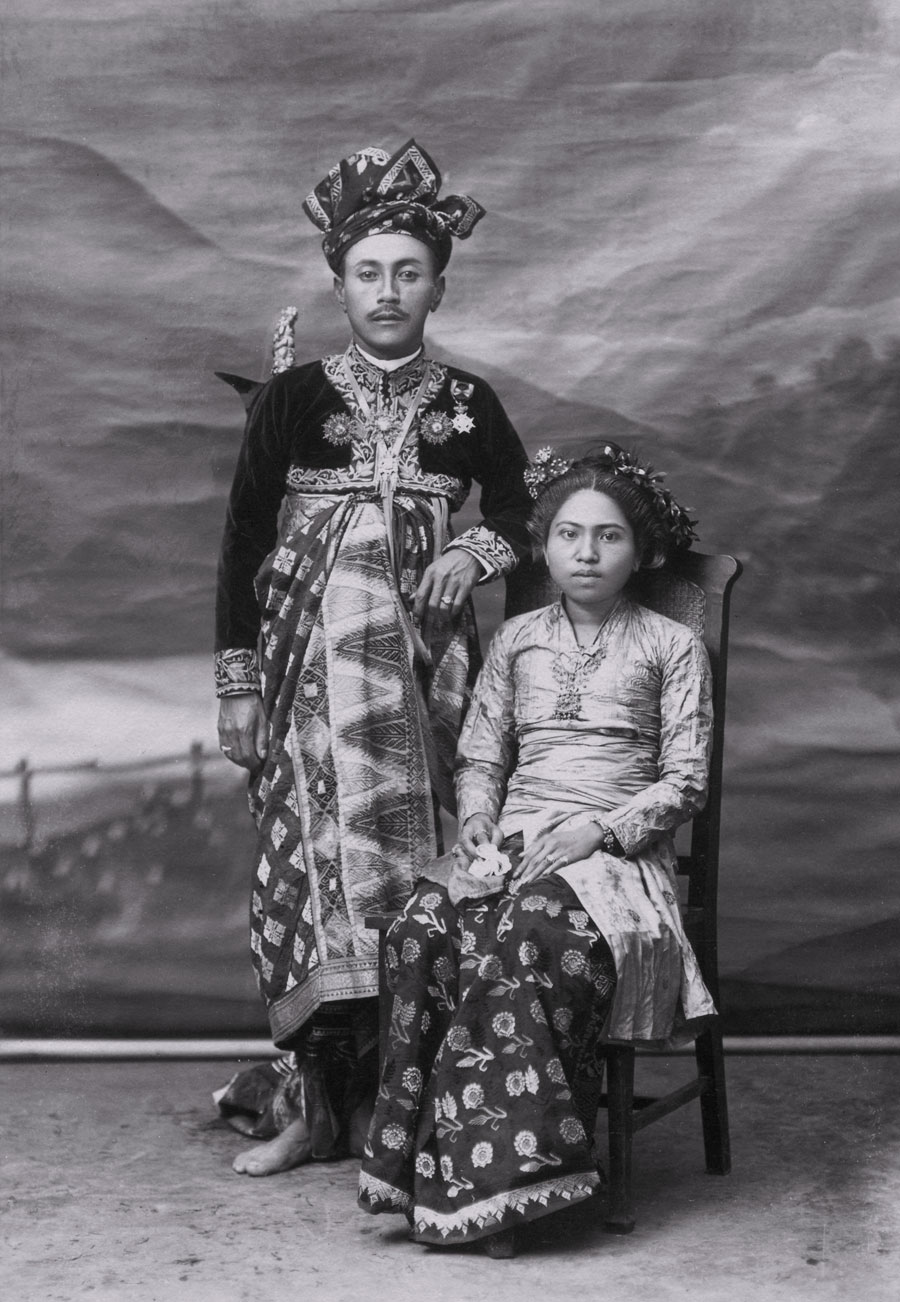
Thilly Weissenborn (Javanese / Indonesian, 1883-1964) (attributed to) 'I Goesti Agoeng Bagoes Djelantik, Anakagoeng Agoeng Negara, Karang Asem' 1931


Thilly Weissenborn (Javanese / Indonesian, 1883-1964) (attributed to)
I Goesti Agoeng Bagoes Djelantik, Anakagoeng Agoeng Negara, Karang Asem
1931
Gelatin silver photgraph
14 x 9.7cm
Collection National Gallery of Australia
Purchased 2006


Unknown photographer. Working Bali 1930s. 'I Goesti Agoeng Bagoes Djelantik, Anakagoeng Agoeng Negara, Karang Asem' Bali 1931


Unknown photographer
Working Bali 1930s
I Goesti Agoeng Bagoes Djelantik, Anakagoeng Agoeng Negara, Karang Asem
Bali 1931
Gelatin silver photograph
14.0 x 9.7cm
Collection National Gallery of Australia


National Gallery of Australia
Parkes Place, Canberra
Australian Capital Territory 2600
Phone: (02) 6240 6411

Opening hours:
Open daily 10.00 am – 5.00 pm
(closed Christmas day)

National Gallery of Australia website

LIKE ART BLART ON FACEBOOK

Back to top