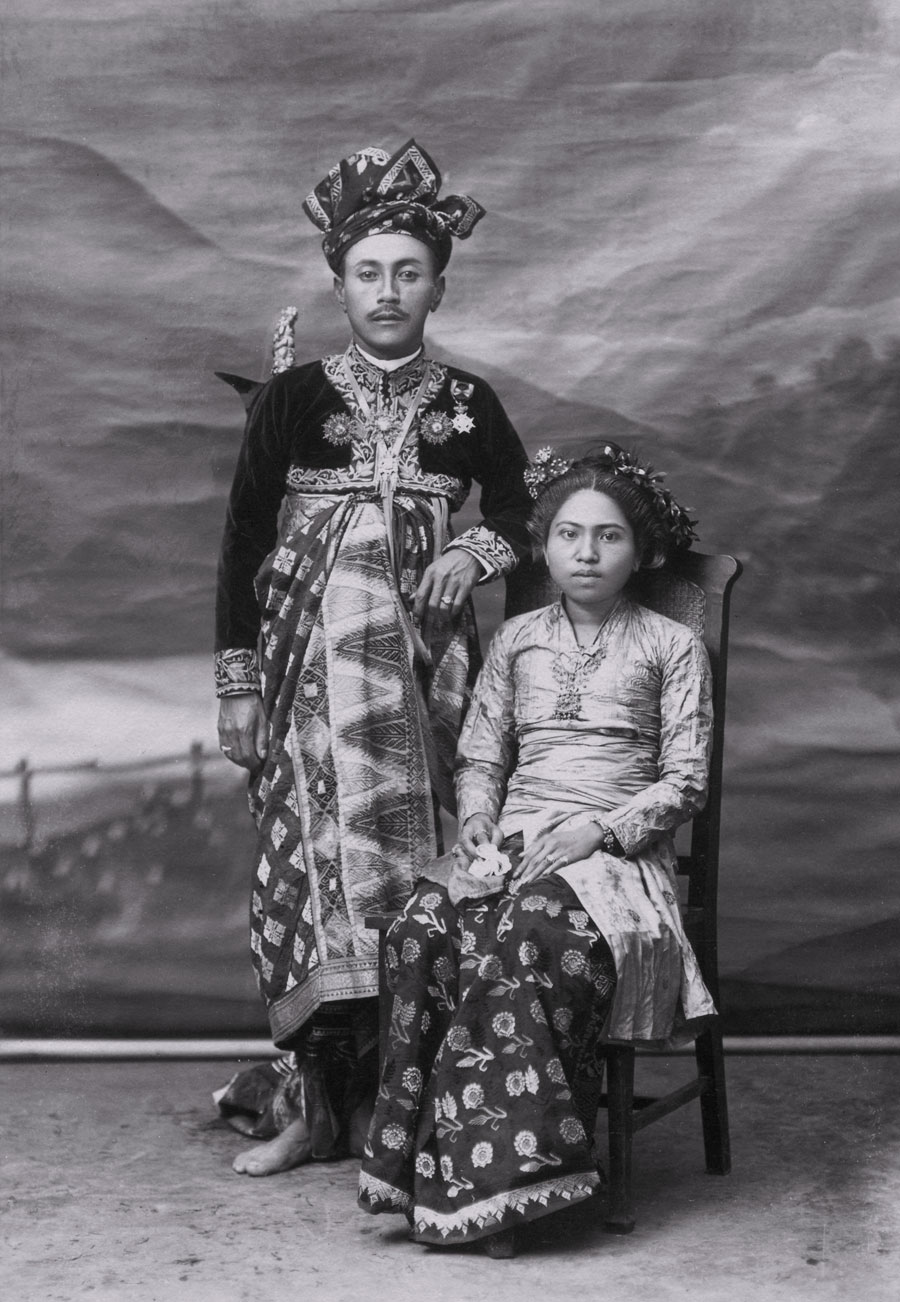
Exhibition: ‘Hidden Connections’ at the Van Abbemuseum, Eindhoven, Holland

Exhibition dates: 27th April, 2025 – 1st June, 2026

Curators: Reggie Baay and Bibi de Vrie
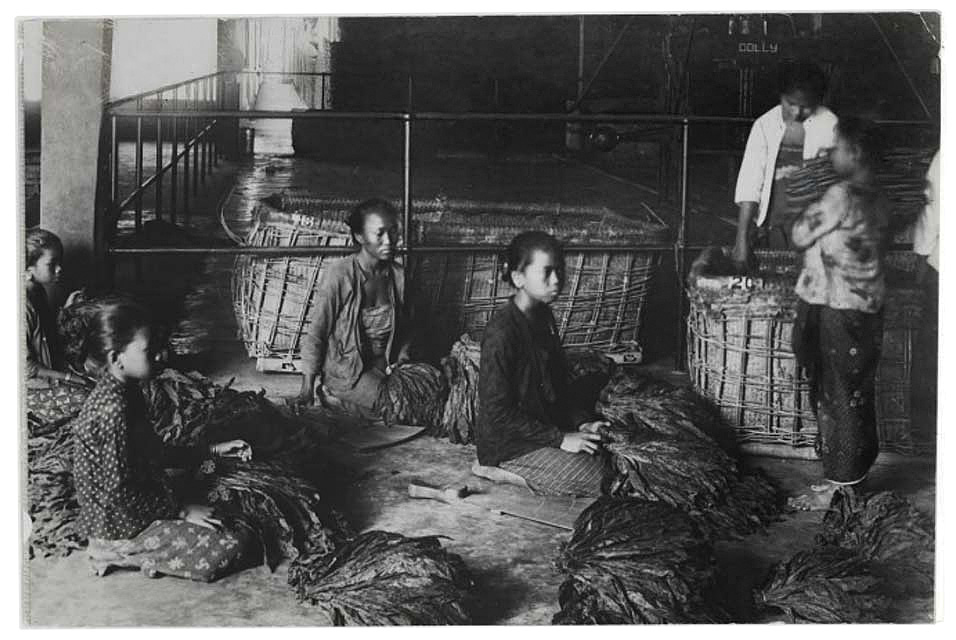
 

Unknown photographer. 'Women sort tobacco leaves by length in a shed at the Tegalsirondo (also Tegalgondo) enterprise near Oengaran south of Semarang' c. 1910 from the exhibition 'Hidden Connections' at the Van Abbemuseum, Eindhoven, Holland, April 2024 - June 2026


Unknown photographer
Women sort tobacco leaves by length in a shed at the Tegalsirondo (also Tegalgondo) enterprise near Oengaran south of Semarang
c. 1910
University Libraries Le


Hidden histories

Exposed (in photographs, in texts)

The effects of colonialism are immediate (slavery, subjugation, exploitation, prison, murder) and pernicious, ongoing in so many obvious, subtle and insidious ways.

“… we must be ever vigilant in understanding the networks of power, dispossession and enslavement that patriarchal societies use to marginalise the poor, the weak, the different for their gain.”1

Dr Marcus Bunyan

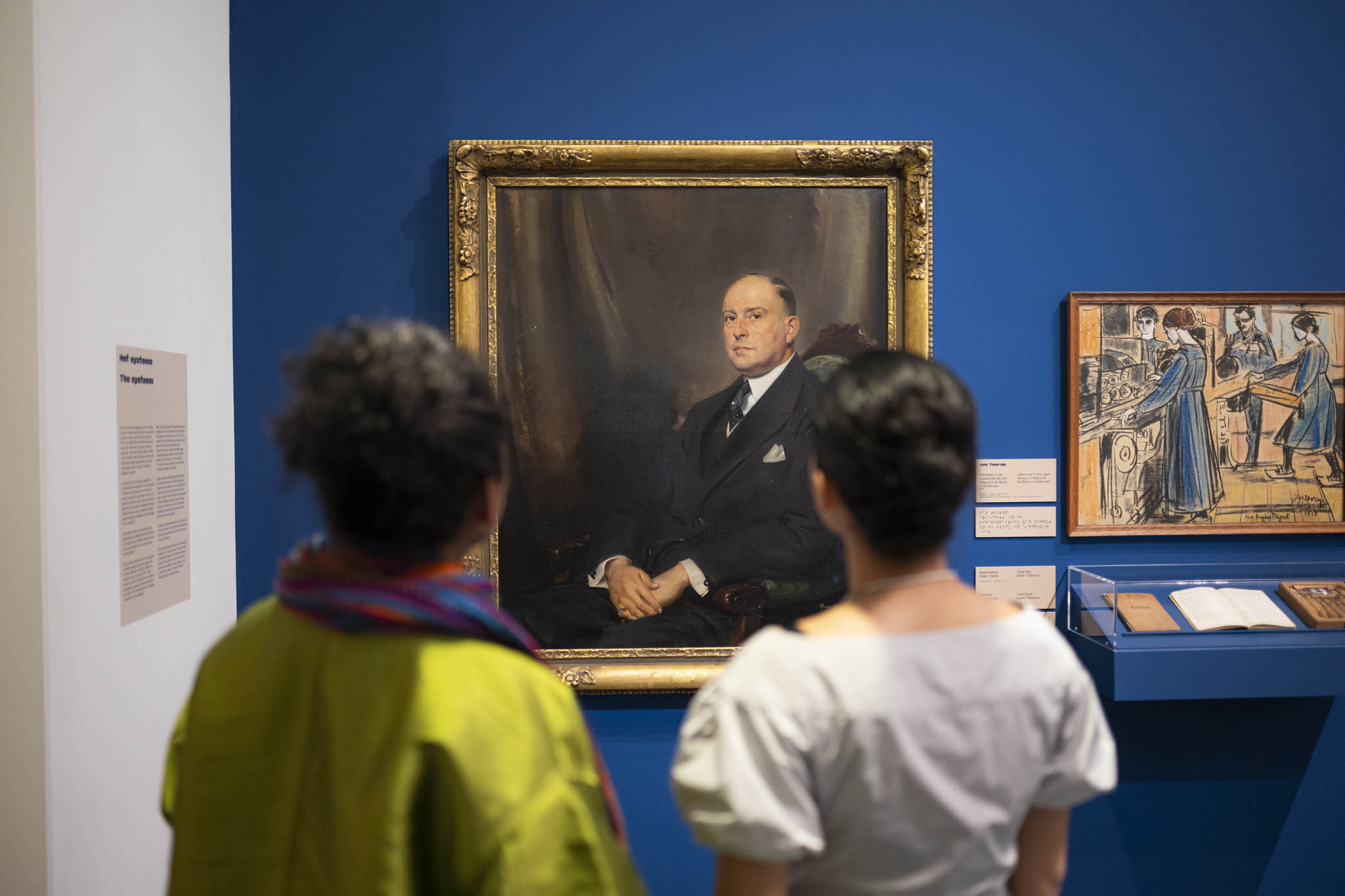
PS. I so dislike Piet van der Hem’s painting of Henri Van Abbe – the self importance of the man, dressed to the nine, staring out at the viewer in all his entitlement, hands clasped over his masculine power even as it radiates through every pore of the painting – the epitome of white hegemonic power. And the museum is named after him …


Sejarah Tersembunyi

Terungkap (dalam foto, dalam teks)

Dampak kolonialisme bersifat langsung (perbudakan, penaklukan, eksploitasi, penjara, pembunuhan) dan merusak, berkelanjutan dalam begitu banyak cara yang nyata, halus, dan licik.

“… kita harus selalu waspada dalam memahami jaringan kekuasaan, perampasan, dan perbudakan yang digunakan masyarakat patriarki untuk meminggirkan kaum miskin, yang lemah, yang berbeda demi keuntungan mereka.”1

Dr. Marcus Bunyan

PS. Saya sangat tidak menyukai lukisan Henri Van Abbe karya Piet van der Hem – sosok pria yang sangat penting, berpakaian rapi, menatap penonton dengan segala keistimewaannya, tangan tergenggam di atas kekuatan maskulinnya, bahkan saat kekuatan itu terpancar melalui setiap pori lukisan – lambang kekuatan hegemoni kulit putih. Dan museum ini dinamai menurut namanya …


1/ Marcus Bunyan. “Hermann Kummler (1863-1949) (compiler) ‘Ethnographic portraits of Indigenous women of Pernambuco and Bahia’ 1861-1862,” on Art Blart, 1st August, 2018


Many thankx to the Van Abbemuseum for allowing me to publish the photographs in the posting. Please click on the photographs for a larger version of the image.


“The horrific history of contract labour in Deli in Sumatra, which forced people to work for western entrepreneurs, seems to have been covered up. Stories of resistance were often not written down but passed on orally instead. This deliberate oppression and denial of the plantation workers and their experiences is still palpable to this very day.”

“Sejarah mengerikan buruh kontrak di Deli, Sumatra, yang memaksa orang bekerja untuk pengusaha Barat, tampaknya telah ditutup-tutupi. Kisah-kisah perlawanan seringkali tidak tertulis, melainkan diwariskan secara lisan. Penindasan dan penyangkalan yang disengaja terhadap para pekerja perkebunan dan pengalaman mereka masih terasa hingga saat ini.”


Press release from the Van Abbemuseum
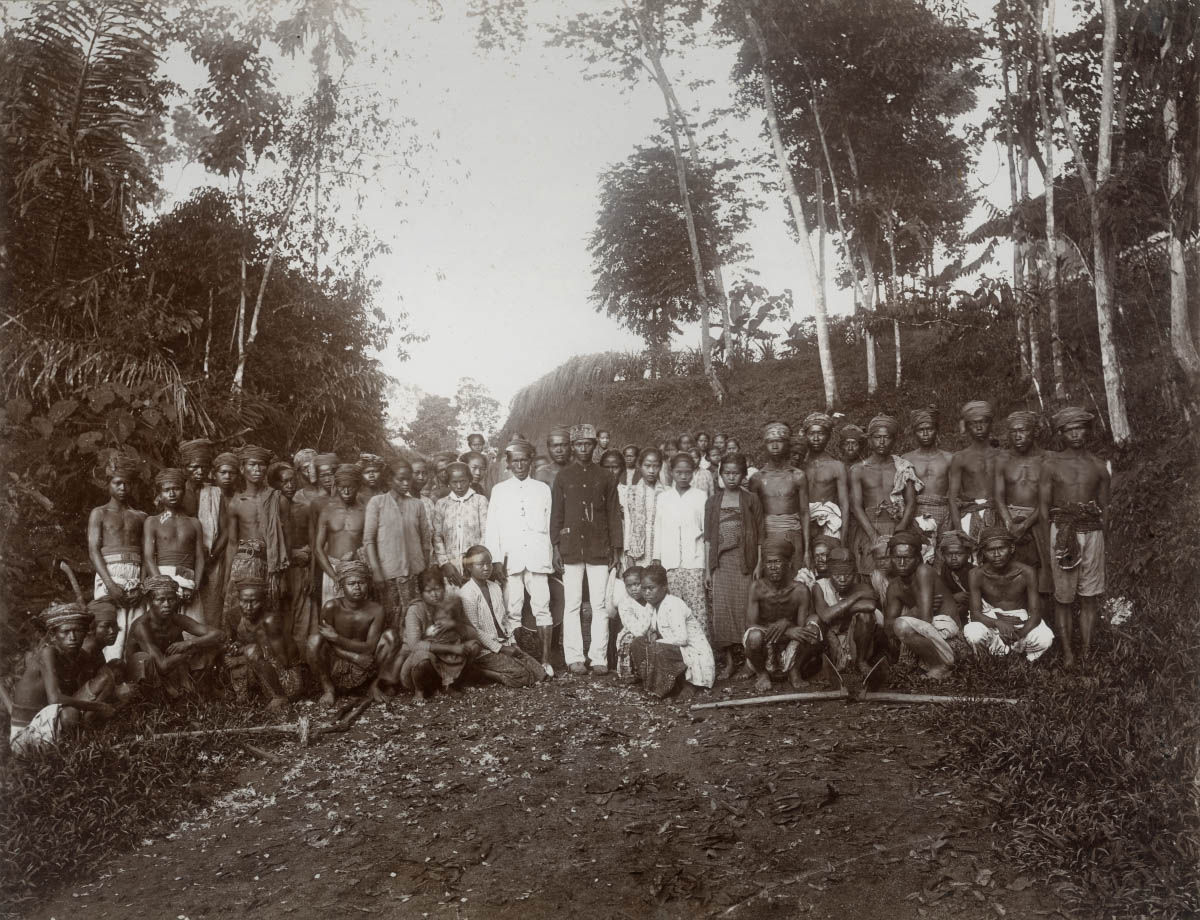


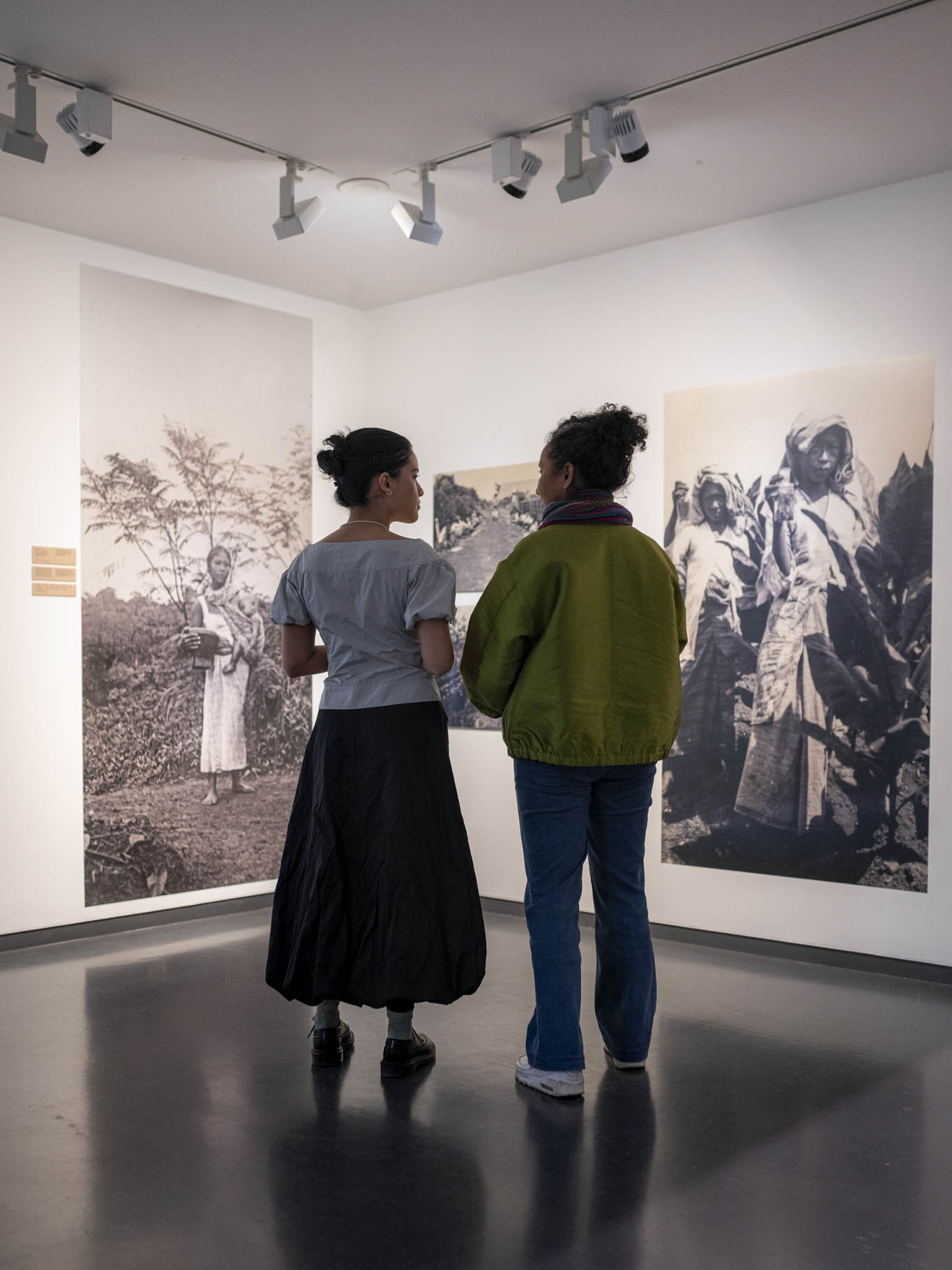
Unknown photographer. 'Workers on a plantation in Deli (now Medan)' c. 1900 from the exhibition 'Hidden Connections' at the Van Abbemuseum, Eindhoven, Holland, April 2024 - June 2026


Unknown photographer
Workers on a plantation in Deli (now Medan)
c. 1900
Photo: Stafhell-Kleingrothe
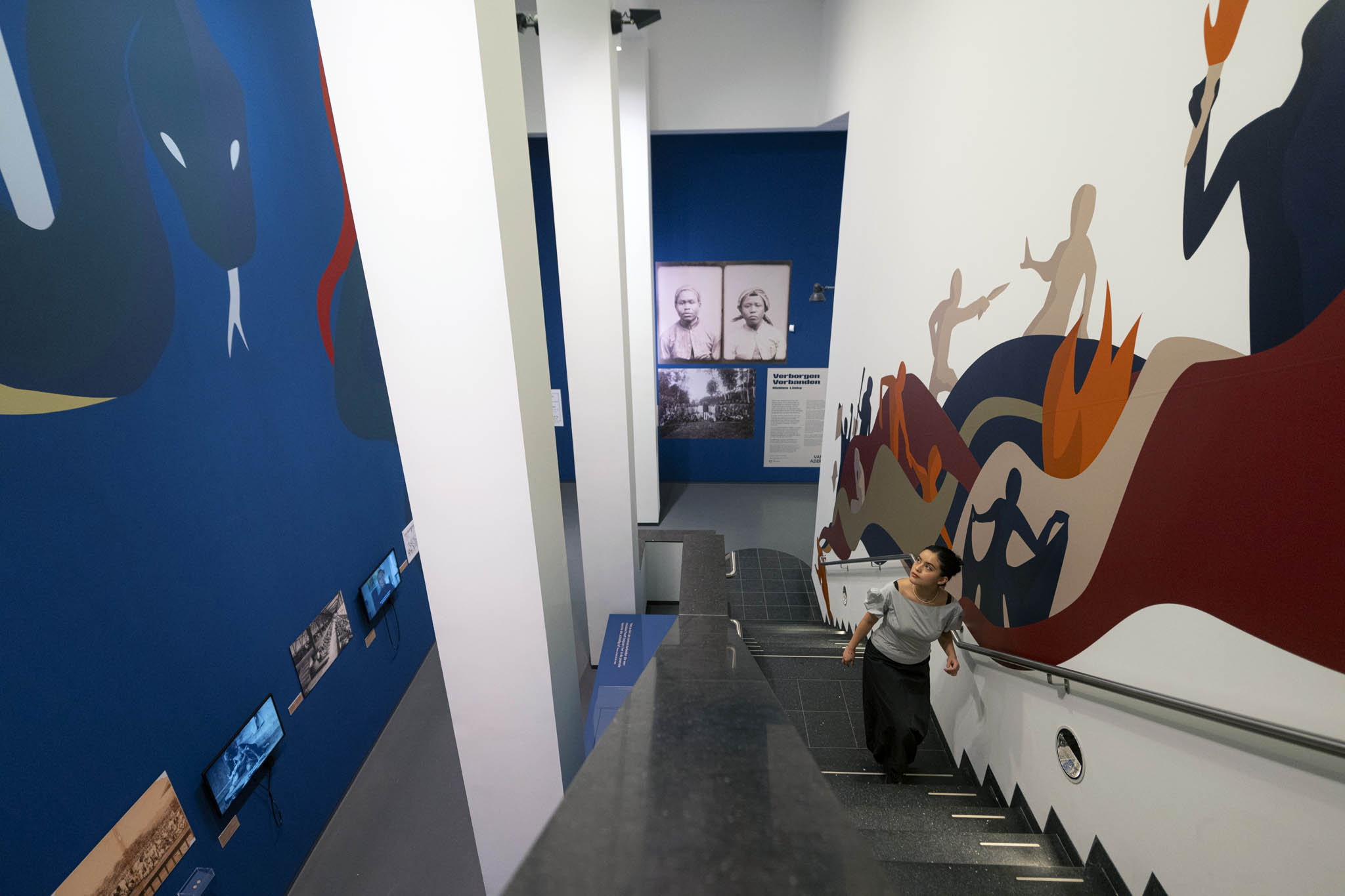
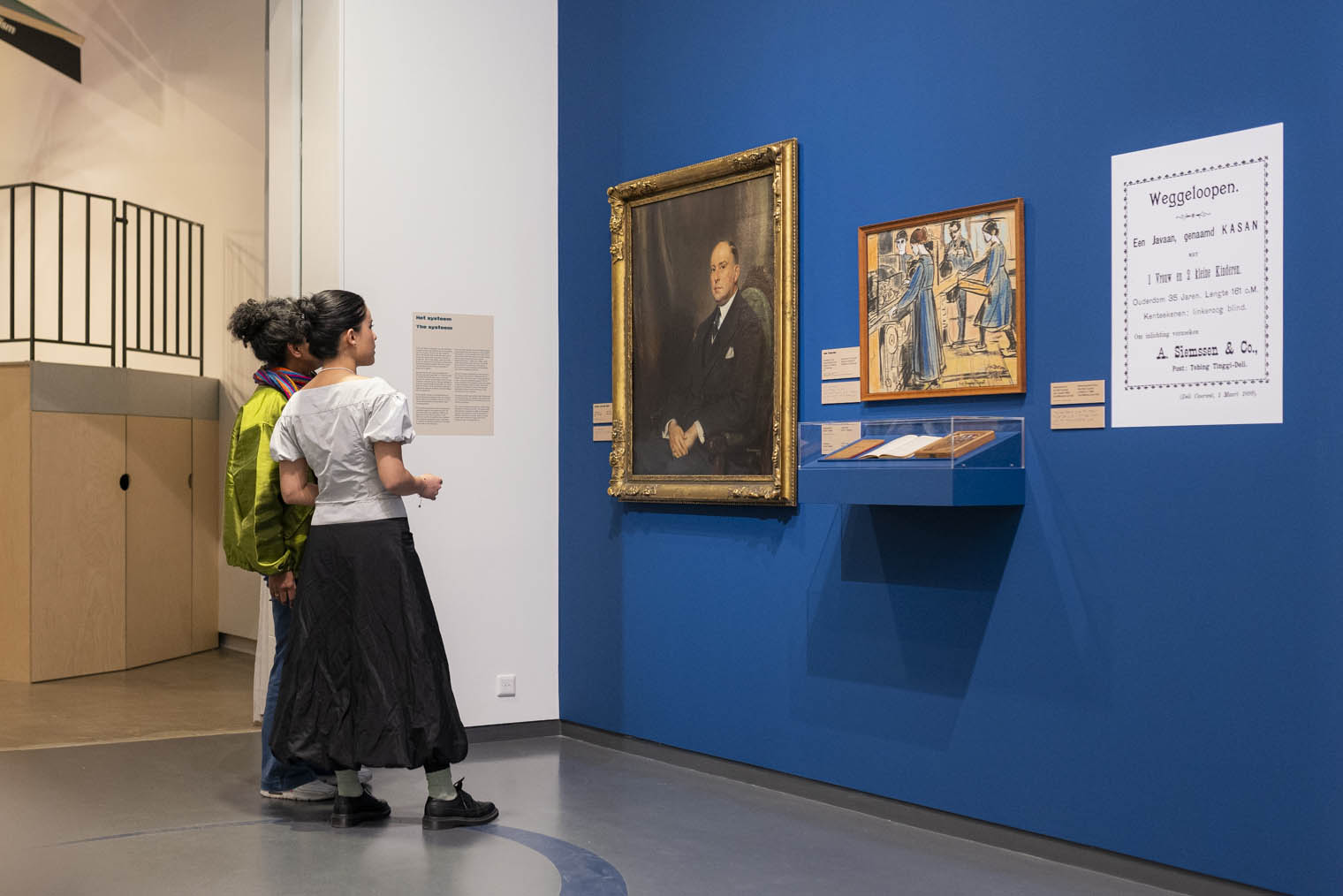
 

Installation view of the exhibition 'Hidden Connections' at the Van Abbemuseum, Eindhoven, Holland


Installation views of the exhibition Hidden Connections at the Van Abbemuseum, Eindhoven, Holland
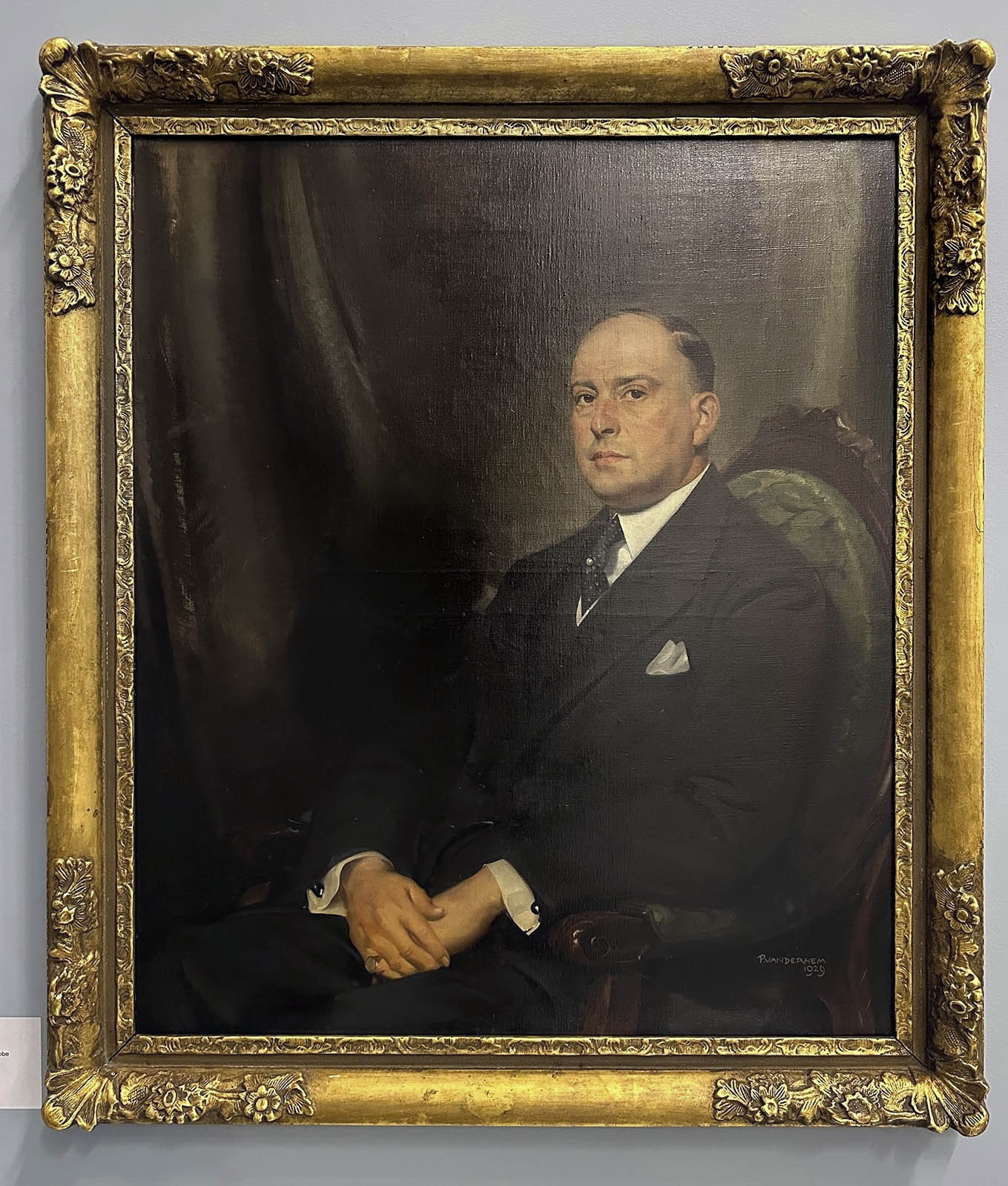
 

Piet van der Hem (Dutch, 1885-1961) 'Henri Van Abbe' 1929


Piet van der Hem (Dutch, 1885-1961)
Henri Van Abbe
1929
Oil on canvas


Why do we know so little about what happened on the plantations in the former Dutch East Indies? The horrific history of contract labour in Deli in Sumatra, which forced people to work for western entrepreneurs, seems to have been covered up. Stories of resistance were often not written down but passed on orally instead. This deliberate oppression and denial of the plantation workers and their experiences is still palpable to this very day. In its multiĀ­-year Hidden Connections research project, the Van Abbemuseum discovers the role it played in the Netherlands’ colonial past. The museum is presenting its research results in an exhibition and podcast and on a heritage platform.

Founder Henri van Abbe

The Van Abbemuseum was named after Henri van Abbe (1880­-1940), the founder of the Karel 1 ­cigar factories, once the second biggest employer in Eindhoven and the surrounding area. The tobacco for Karel 1 cigars was sourced largely from plantations in the Dutch East Indies. Even though Van Abbe was not based in the Dutch East Indies, the tobacco he bought from Deli, on the island of Sumatra, had a big impact on the region and its inhabitants. In 1933, Van Abbe founded a museum for contemporary art, funded partly with money he had made from tobacco. Besides a building, Van Abbe donated 26 paintings from his personal collection, including works by Isaac Israëls, Carel Willink and Jan Sluijters.

Ongoing research

Over the last 10 years, the Van Abbemuseum has become increasingly aware of its roots in the tobacco industry. The donation of the Van Abbe family archive to the museum in 2018 was the starting point for ongoing research into its past. The initial results have been presented in the museum since autumn 2021. This presentation has been expanded to include new work inspired by this research. Why have events on the plantations in Sumatra been kept hidden? And why don’t we know anything about the different forms of resistance to it? Author and historian Reggie Baay has searched Dutch archives for forgotten stories about this period. At the same time, artists and researchers Ferial Affif and Dwihandono Ahmad spoke to descendants of contract workers on the plantations in Deli. Isabelle Britto also did research to find out how much Henri van Abbe could have known about the conditions there.

Hidden stories of resistance

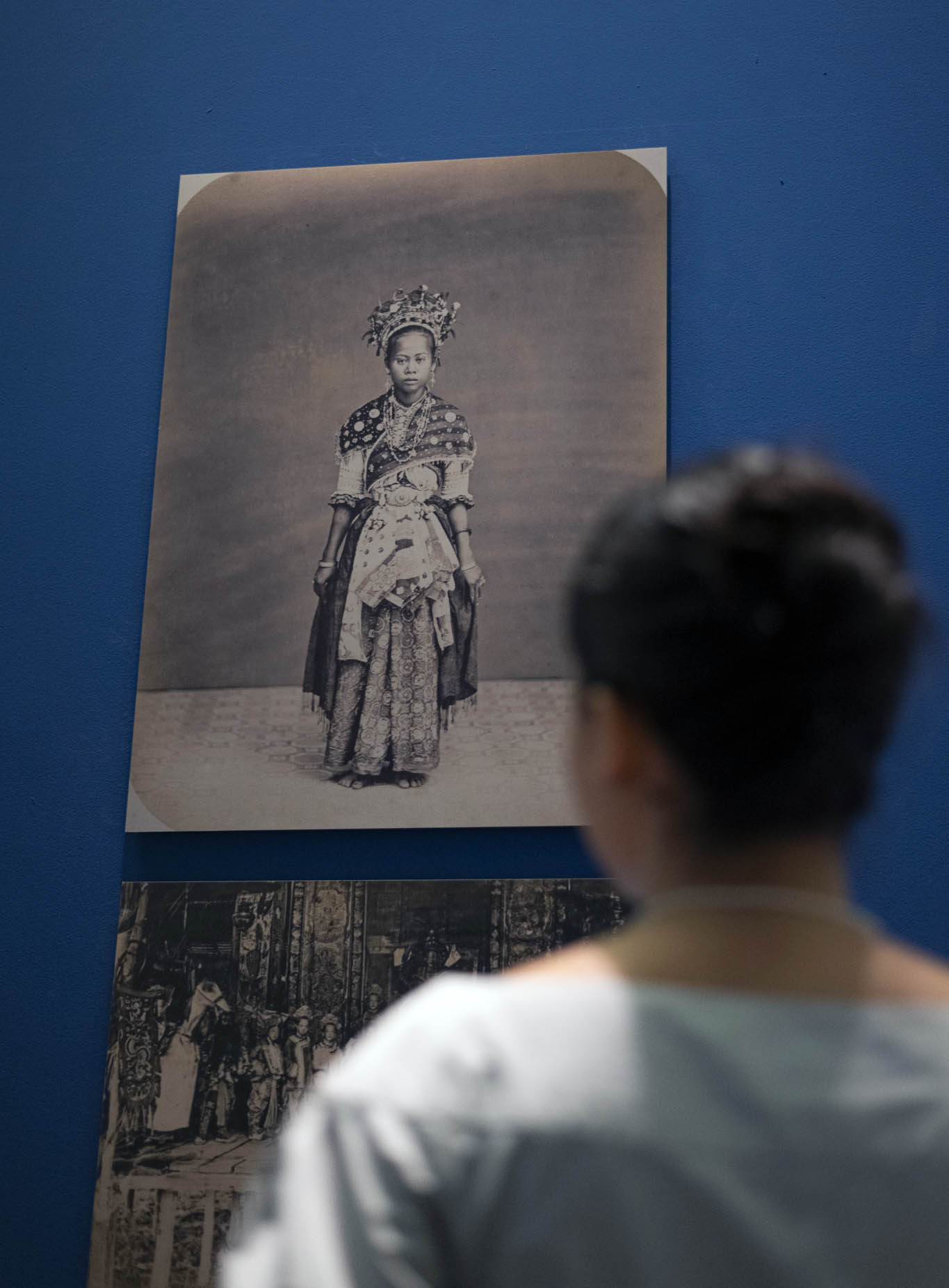
Curators Reggie Baay and Bibi de Vries present the results of the research above in the exhibition Hidden Connections. Archive material, audio and video interviews and illustrations in the exhibition all focus on the perspective of the plantation workers in Deli and their working and living conditions. Graphic designer Gayle TjongĀ­ KimĀ­Sang took inspiration for her huge wall drawings from the inventive ways contract workers chose to express their anger, sadness and warnings. Plantation owners were not always aware of resistance, but if contract workers were caught, they were thrown into prison, abused or even murdered. One form of resistance was the story ‘De Slang van Sumatra’ (which translates as ‘the snake of Sumatra’). This parable warned workers about a manĀ­eating snake on the neighbouring island. After eating its prey, it excreted gold for the Dutch. Another example of resistance was improvisation during theatre and wayang performances. Workers used this opportunity to criticise the western enterprises and sometimes tell (satirical) stories about the plantation owners.

Addition to the Delinking and Relinking collection presentation

The exhibition Hidden Connections is located in the basement of the collection building at the Van Abbemuseum. The longĀ­term Delinking and Relinking collection presentation (2021Ā­-2026) can currently be seen on the three floors above; it allows visitors to experience art by smelling, hearing, feeling and seeing it. Hidden Connections, as the literal and figurative foundation for the multiĀ­-sensory Delinking and Relinking collection presentation, enlighten visitors on the origins of this longĀ­standing display and offer a new perspective on the circumstances in which it was created. This new chapter provides a more complete historiography that includes the contemporary significance of the museum’s colonial past.

Collective memory

The Van Abbemuseum places great importance on the permanent preservation and communication of the stories from its Hidden Connections research. They are part of our cultural heritage and must be findable by and accessible to everyone. With this in mind, the museum is working with Erfgoed Brabant, the province’s knowledge and expertise centre, and is integrating its ongoing research into the platform Koloniale Historie Brabant (a platform on Brabant’s colonial history). The museum also launched a podcast with Reggie Baay and Aldus’ producties. In it, Baay explores why it is we know so little about this colonial past via a search in which he attempts to uncover his own Indonesian family history.

Press release from the Van Abbemuseum
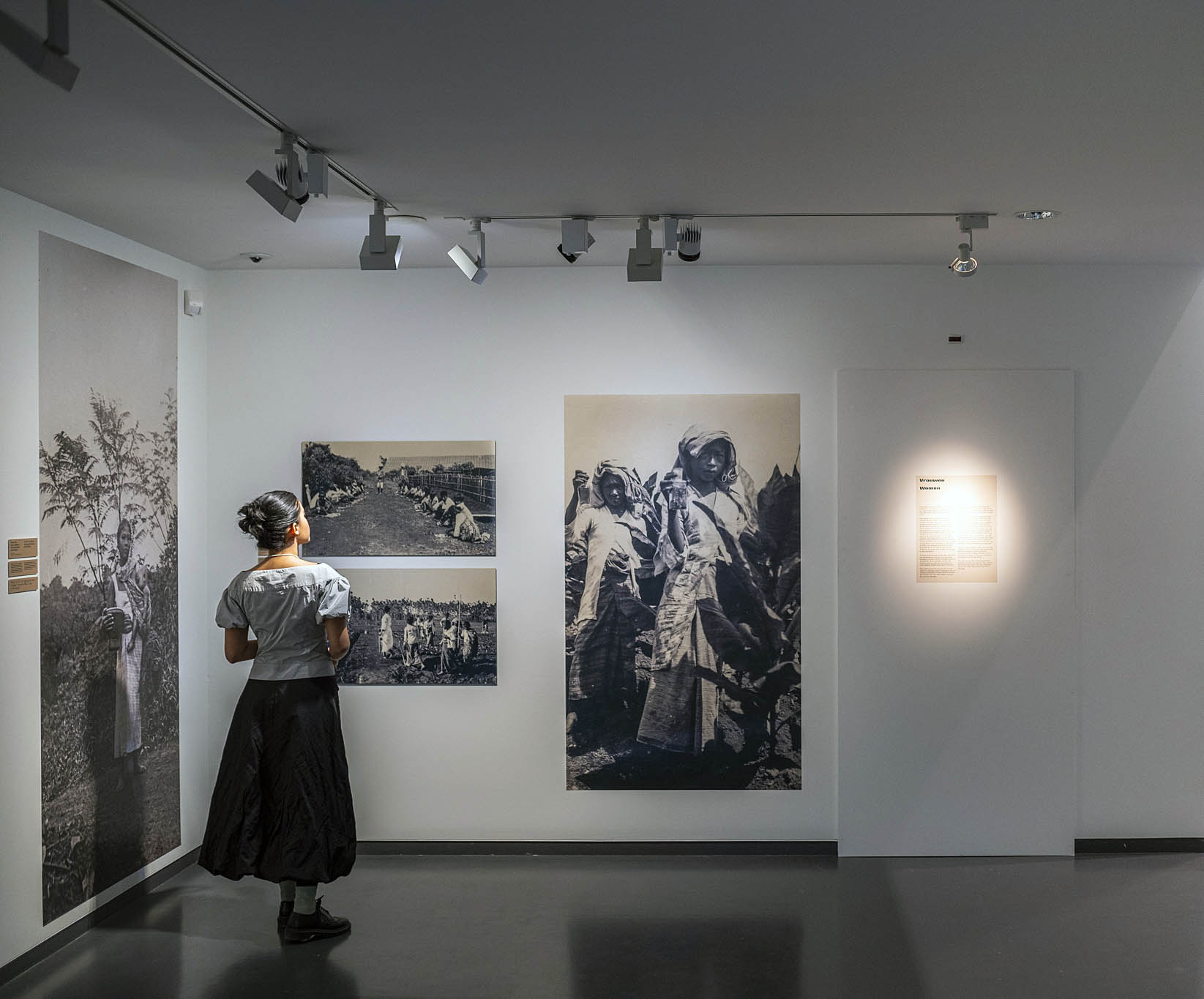
 

Installation view of the exhibition 'Hidden Connections' at the Van Abbemuseum, Eindhoven, Holland


Installation views of the exhibition Hidden Connections at the Van Abbemuseum, Eindhoven, Holland
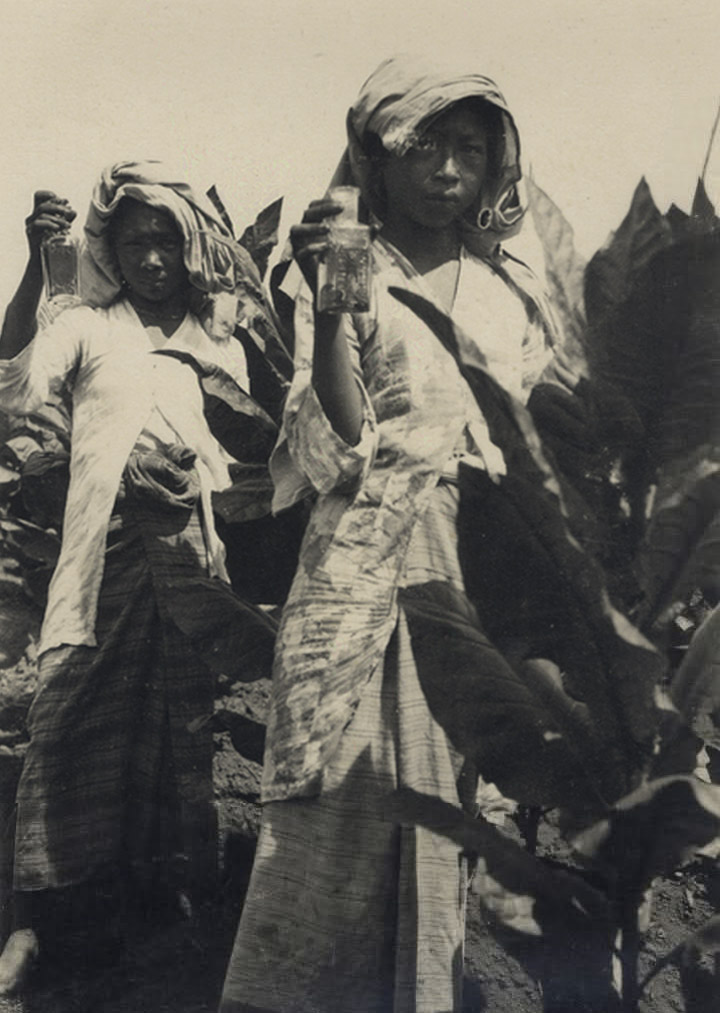
 

Unknown photographer. 'Coolies on a tobacco plantation of the Deli Maatschappij in Deli Shelfmark KITLV Deli Serdang' 1920-1922 from the exhibition 'Hidden Connections' at the Van Abbemuseum, Eindhoven, Holland, April 2024 - June 2026


Unknown photographer
Coolies on a tobacco plantation of the Deli Maatschappij in Deli Shelfmark KITLV Deli Serdang
1920-1922
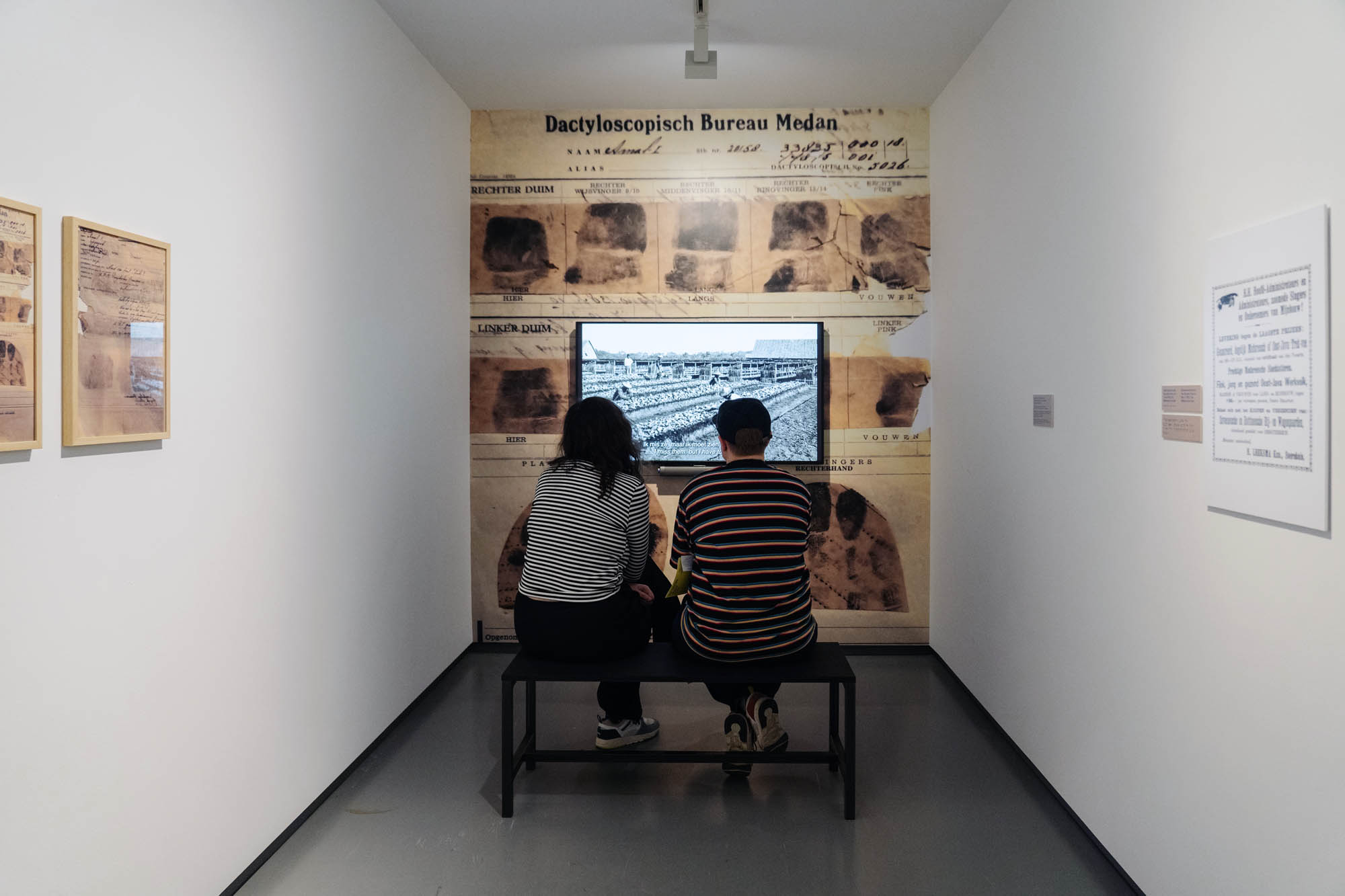
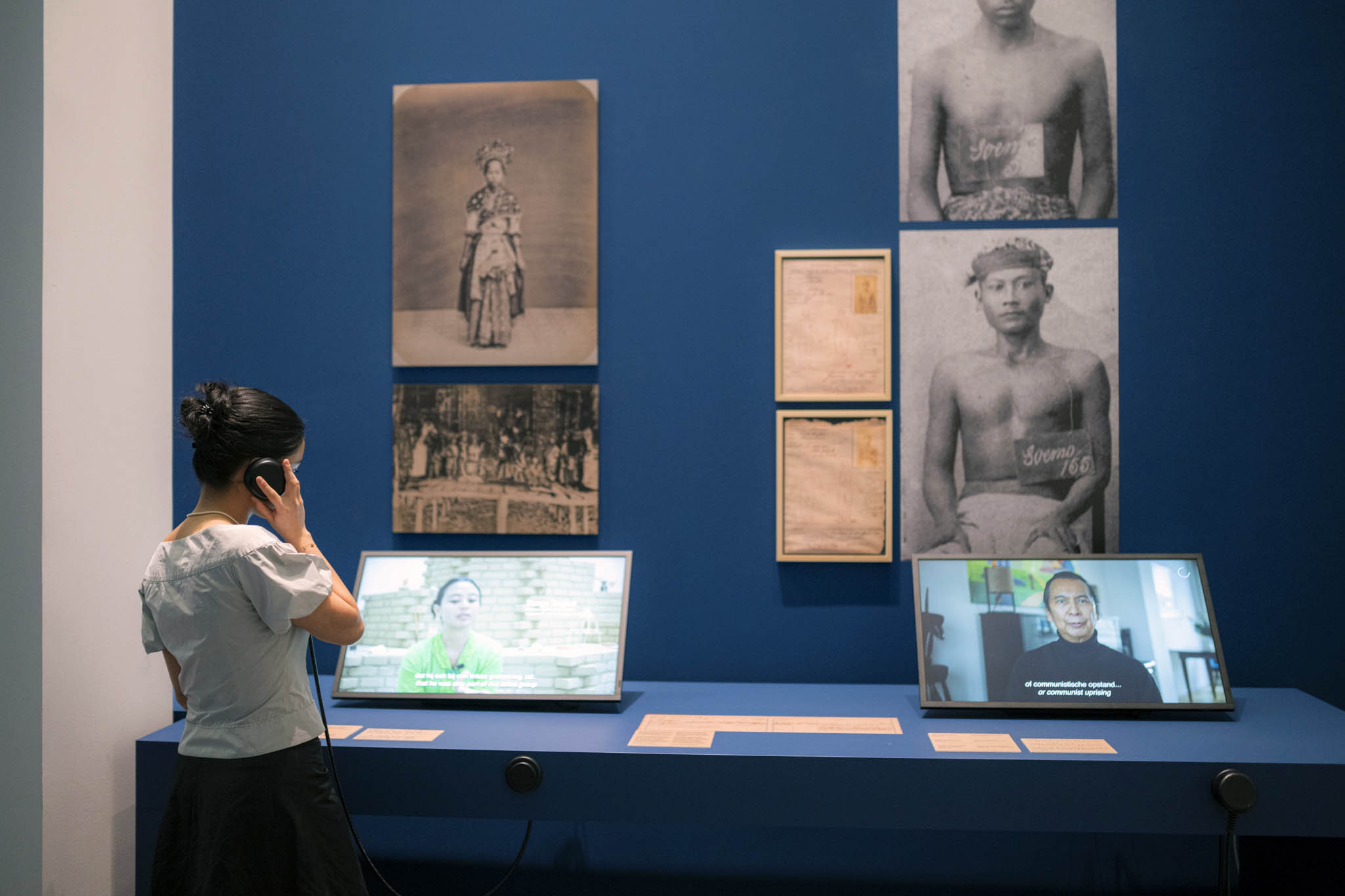
 

Installation view of the exhibition 'Hidden Connections' at the Van Abbemuseum, Eindhoven, Holland. Photo: Almicheal Fraay
Installation view of the exhibition 'Hidden Connections' at the Van Abbemuseum, Eindhoven, Holland


Installation views of the exhibition Hidden Connections at the Van Abbemuseum, Eindhoven, Holland
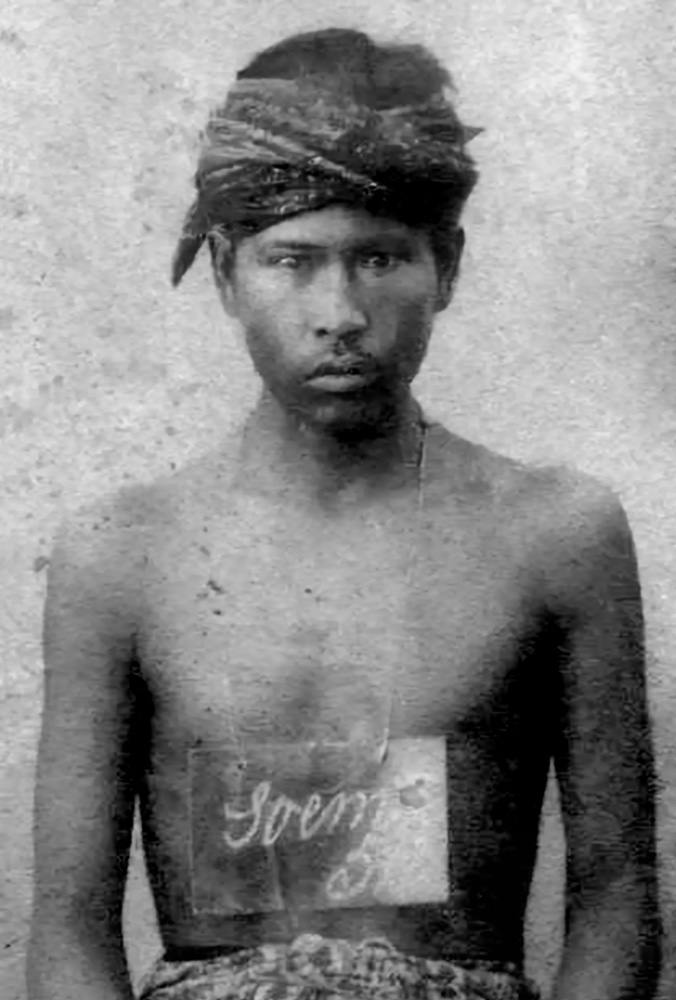
 

'Identification card Soemo' 1907


Identification card Soemo
1907
Loan from the National Archives of Suriname
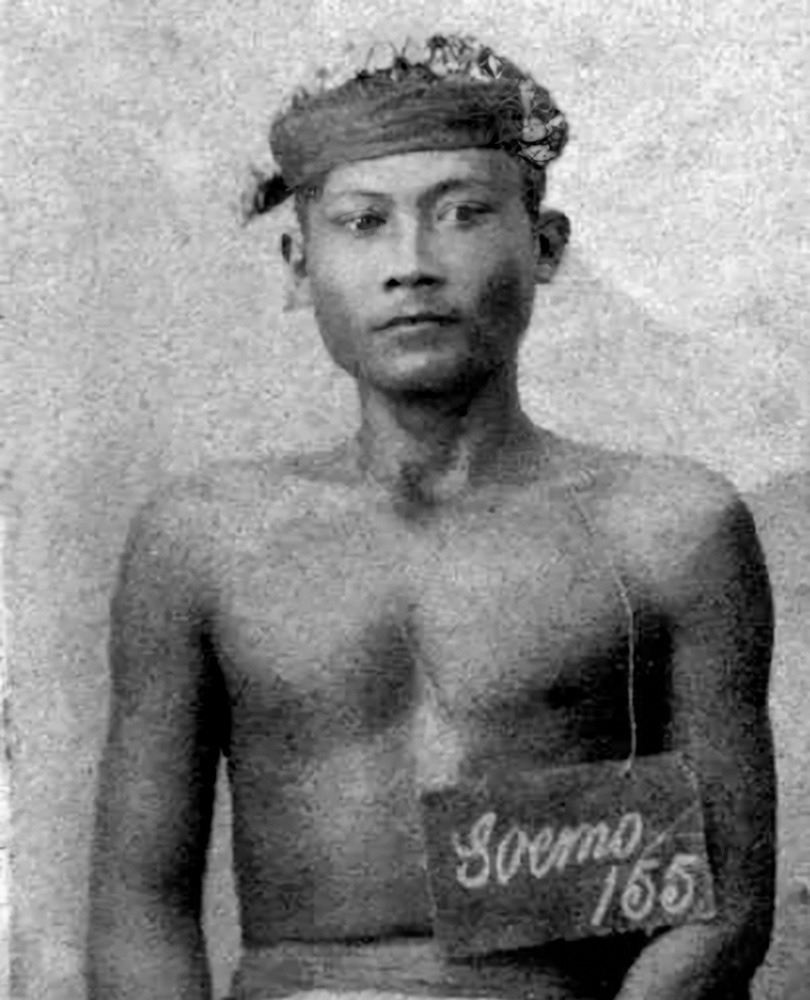


Identification card Soemo
1908
Loan from the National Archives of Suriname


Johan Braakensiek (Dutch, 1848-1940) "The coolie ordinances" in
'De [Groene] Amsterdammer', Date 23 November 1902


Johan Braakensiek (Dutch, 1848-1940)
“The coolie ordinances”
De [Groene] Amsterdammer, Date 23 November 1902


The Coolie Ordinances

From Koi. (To former Minister Cramer): What do you think about that?
Cremer: Yes, we Deli Men [Deli on the island of Sumatra] … prefer to keep quiet about that.

Advertisement from Deli-Courant and the Sumatrapost:

“Emigration, sales and commission office. Telegram address: Esas, Surabaya. Supply: Strong, young, and healthy workers, including Madurese, Javanese, and Sudanese, as well as Chinese, for agricultural and mining companies. Risk of desertion on board at our expense. – We have had the most success with our coolie projects and are willing to send copies of satisfaction reports for review. Also supply: Chinese and Javanese artisans. We undertake to fulfil all possible orders, including for beautiful Madura and Balinese slaughter and draught cattle, at competitive prices.”


Dari Koi. (Kepada mantan Menteri Cramer): Apa pendapat Anda tentang itu?
Cremer: Ya, kami, Deli Men [Deli di Pulau Sumatra] … lebih suka diam tentang itu.

Iklan dari Deli-Courant dan Sumatrapost:

“Kantor emigrasi, penjualan, dan komisi. Alamat Telegram: Esas, Surabaya. Pasokan: Pekerja yang kuat, muda, dan sehat, termasuk orang Madura, Jawa, dan Sudan, serta Tionghoa, untuk perusahaan pertanian dan pertambangan. Risiko desersi di kapal ditanggung oleh kami. – Kami telah meraih kesuksesan terbesar dengan proyek kuli kami dan bersedia mengirimkan salinan laporan kepuasan untuk ditinjau. Juga pasokan: pengrajin Tionghoa dan Jawa. Kami berkomitmen untuk memenuhi semua pesanan yang memungkinkan, termasuk sapi potong dan sapi penarik Madura dan Bali yang indah, dengan harga yang kompetitif.”
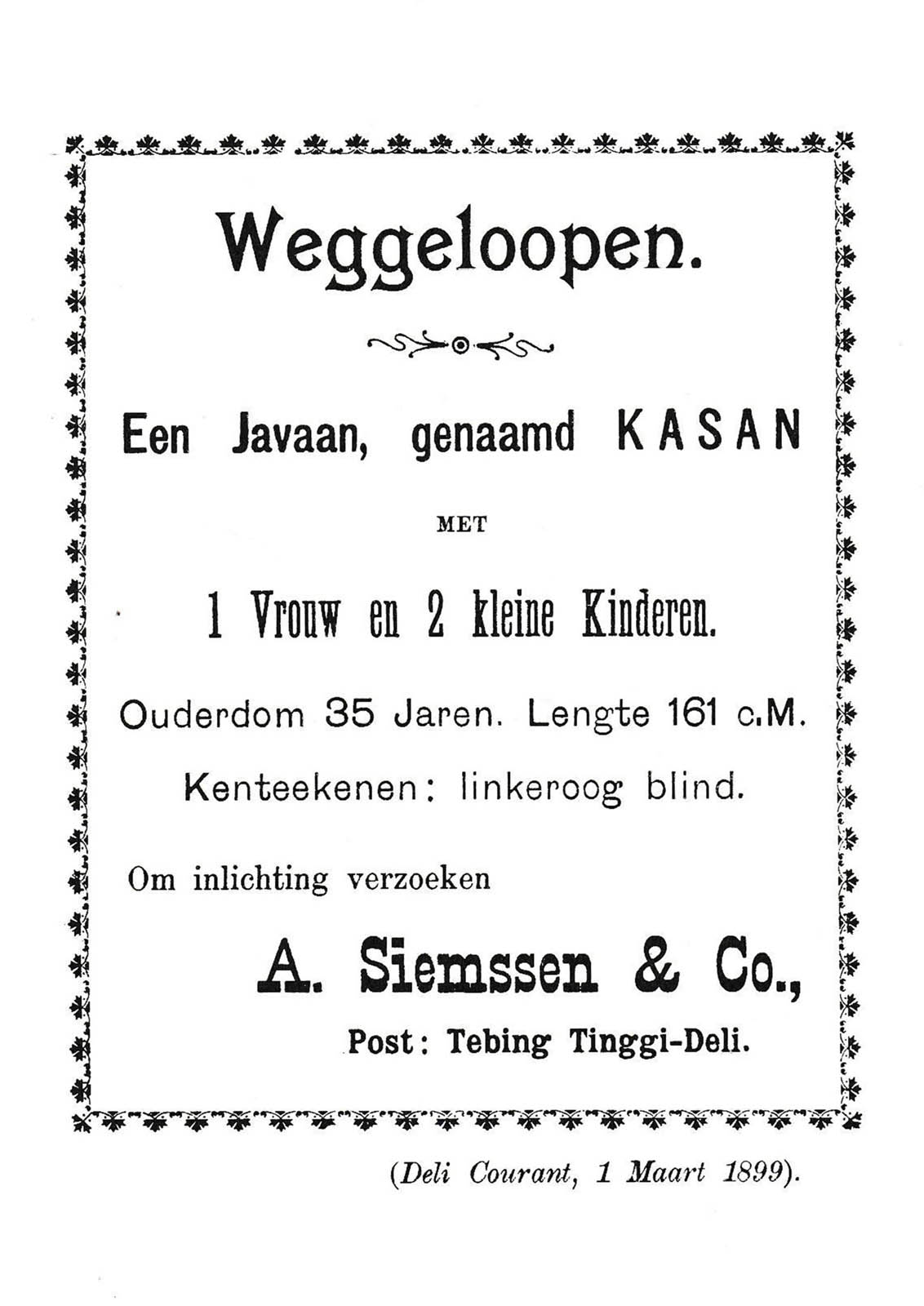
 

Unknown maker. 'Advertisement from the Deli Courant of March 1, 1899'


Unknown maker
Advertisement from the Deli Courant of March 1, 1899
from De Millionenen uit Deli (Private collection), 1902


“Runaway
A Javanese, named Kasan
with
1 wife and 2 small children
Age 35 years, height 161 cm
Signs: left eye blind
Request information
A. Siemssen & Co.,
Post: Tebing Tinggi-Deli”

“Pelarian
Seorang Jawa, bernama Kasan
dengan
1 istri dan 2 anak kecil
Usia 35 tahun, tinggi badan 161 cm
Tanda-tanda: buta mata kiri
Minta informasi
A. Siemssen & Co.,
Pos: Tebing Tinggi-Deli”
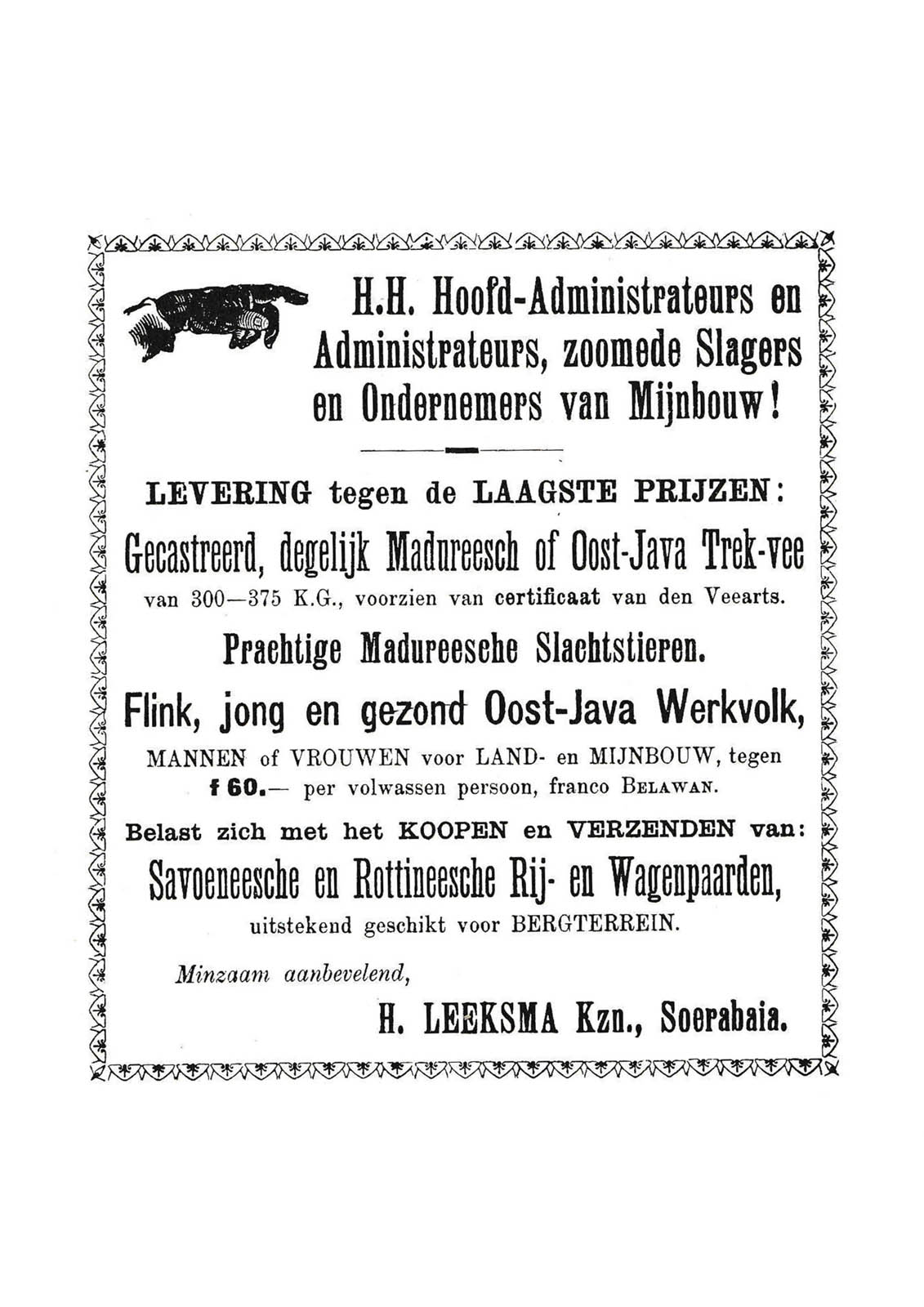
 

Unknown maker. 'Advertisement from the Sumatra-Post of May 7, 1902'


Unknown maker
Advertisement from the Sumatra-Post of May 7, 1902
from De Millionenen uit Deli(Private collection), 1902


H.H. Chief-Administrators and Administrators, also Butchers and Mining Entrepreneurs!
Delivery at the lowest prices:
Castrated, solid Madurese or East Java draught cattle
From 300-375 kg, with veterinary certificate
Beautiful Madurese slaughter bulls
Strong, young, and healthy East Java work force,
Men or women for agriculture and mining, for
60 guilders per adult, free of charge Belawan.
In charge of purchasing and selling:
Savonian and Rottinean riding and carriage horses,
Excellently suited for mountain terrain.
Highly recommended,
H. Leeksma Kzn., Surabaya.”

Yang Mulia Kepala Administrator dan Administrator, juga Tukang Jagal dan Pengusaha Pertambangan!
Pengiriman dengan harga terendah:
Sapi penarik Madura atau Jawa Timur yang dikebiri dan sehat
Berat 300-375 kg, dengan sertifikat dokter hewan
Sapi potong Madura yang cantik
Tenaga kerja Jawa Timur yang kuat, muda, dan sehat,
Pria atau wanita untuk pertanian dan pertambangan, dengan harga
60 gulden per orang dewasa, gratis untuk Belawan.
Bertanggung jawab atas pembelian dan penjualan:
Kuda tunggang dan kereta Savonian dan Rottinean,
Sangat cocok untuk medan pegunungan.
Sangat direkomendasikan,
H. Leeksma Kzn., Surabaya.”


Van Abbemuseum
Stratumsedijk 2 Eindhoven
+31 40 238 10 00

Opening hours:
Tuesday – Sunday from 11am – 5pm
Van Abbemuseum website

LIKE ART BLART ON FACEBOOK

Back to top

Exhibition: ‘Garden of the East: Photography in Indonesia 1850s-1940s’ at the National Gallery of Australia, Canberra

Exhibition dates:Ā 21st February – 22nd June 2014


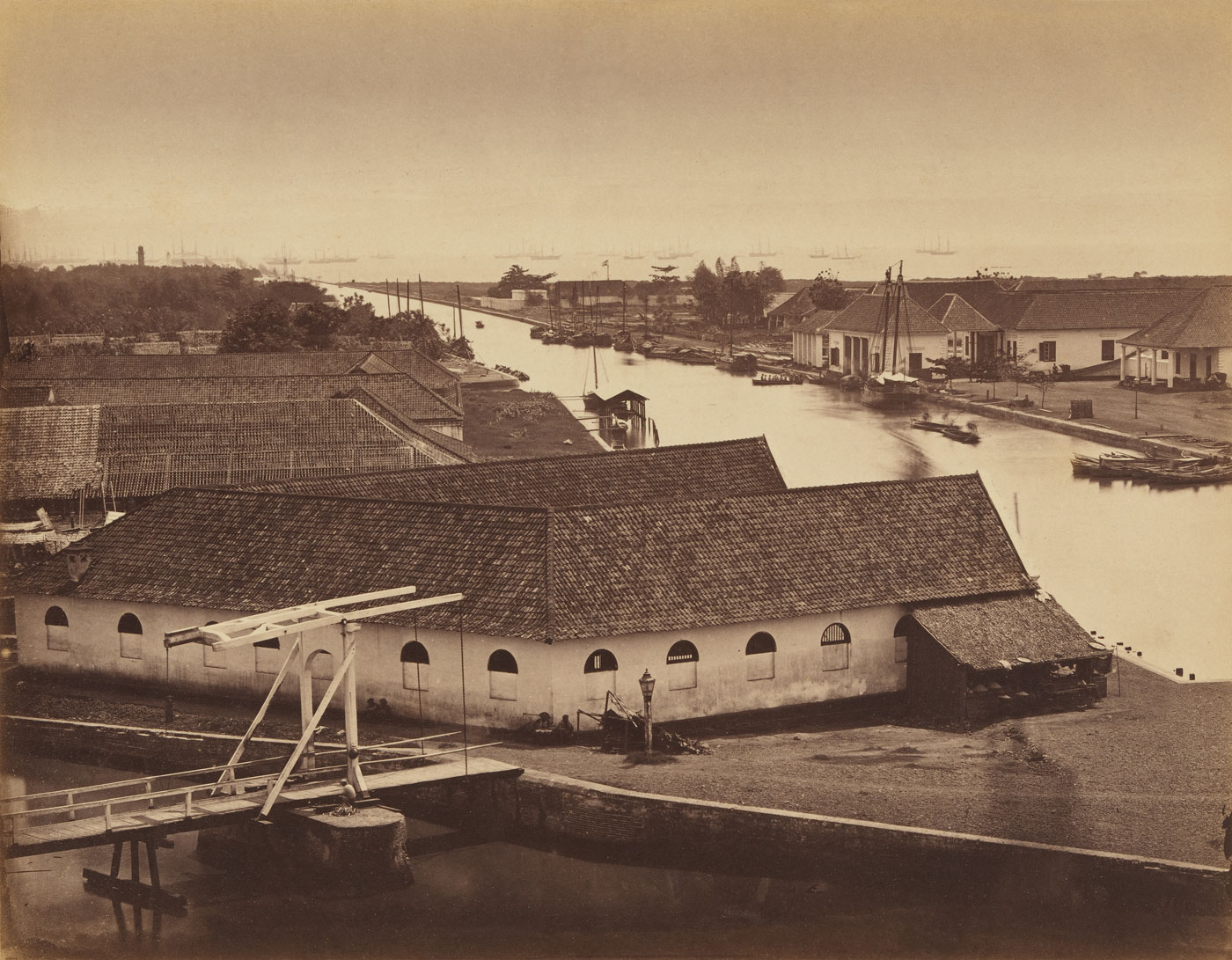
Woodbury & Page (established Jakarta 1857-1900) 'Batavia roadstead' c. 1865


Woodbury & Page (established Jakarta 1857-1900)
Batavia roadstead
c. 1865
Albumen silver photograph
19.4 x 24.5cm
Collection National Gallery of Australia


Dutch East Indies and Indonesian photography, and more broadly Asia-Pacific photography, has been a burgeoning area of interest, research and collecting for some time now. Although this is far from my area of expertise, with the quality of the work shown in this posting, you can understand why. Since 2005, “the National Gallery of Australia’s Asian photographs collection has grown to nearly 8000 and in excess of 6500 prints are from Indonesia.”

Absolutely beautiful tonality to the prints.Ā They seem to have a wonderful stillness to them as well.

On a personal note, Gael Newton, Senior Curator, Photography at the National Gallery of Australia is retiring. I would like to thank her for promoting, researching and writing about all forms of photography over the years and to congratulate her on significantly extending the NGA’s photography collection. A job well done.

Dr Marcus Bunyan


Many thankx to Gael Newton and theĀ National Gallery of Australia for allowing me to publish the photographs in the posting. Please click on the photographs for a larger version of the image.


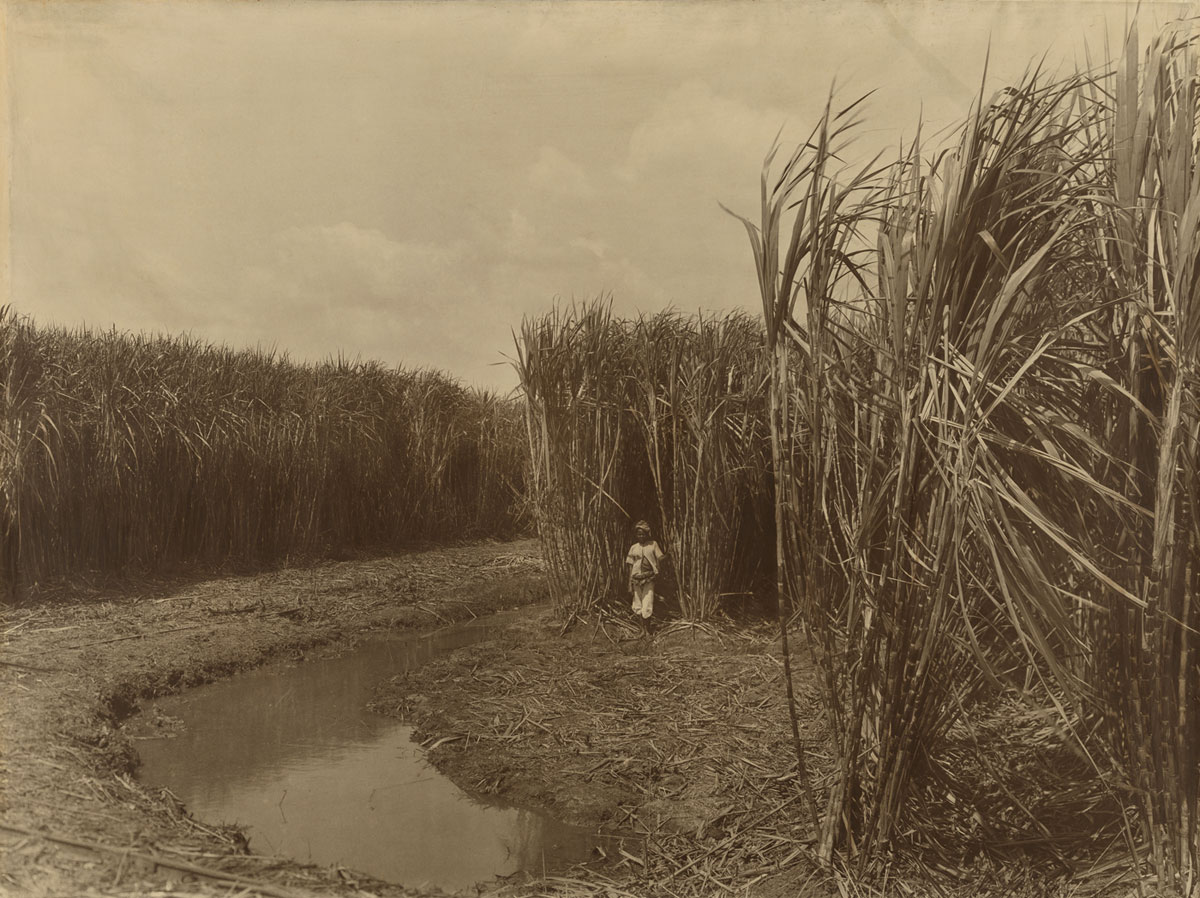
Dirk Huppe (Indonesia, 1867-1931) O Kurkdjian & Co (Established Surabaya, Java 1903-1935) 'Mature canes, fertilized with artificial guano Java Fertilizer Co.,' Semarang 1914


Dirk Huppe (Indonesia, 1867-1931)
O KurkdjianĀ & CoĀ (Established Surabaya, Java 1903-1935)
Mature canes, fertilized with artificial guano,Ā Java Fertilizer Co.,
Semarang 1914
Carbon print photograph
74.6 x 99.6cm
Collection National Gallery of Australia


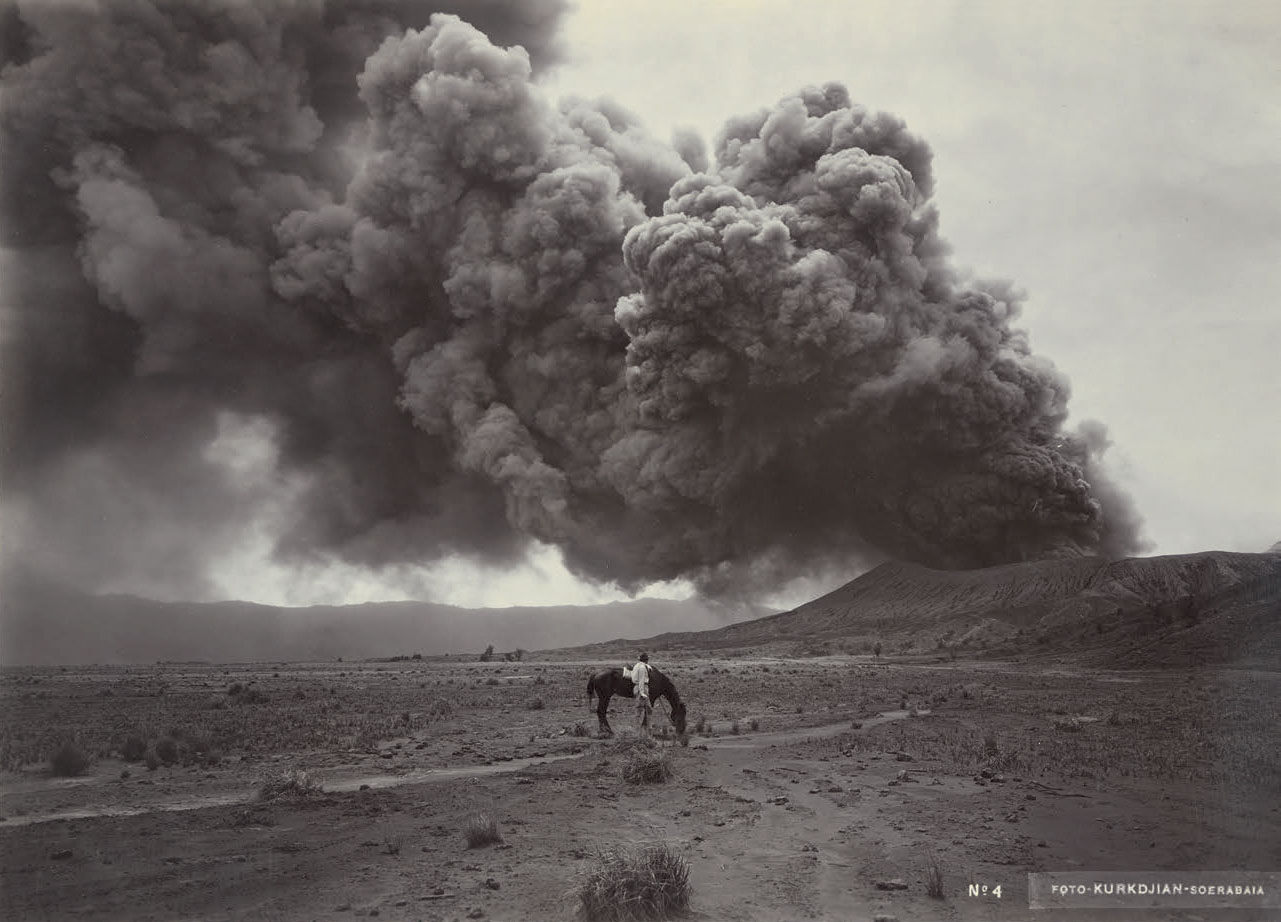
Atelier O Kurkdjian & CoĀ (Established Surabaya, Java 1903-1935) 'Bromo eruption of December' 1915


Atelier O Kurkdjian & CoĀ (Established Surabaya, Java 1903-1935)
Bromo eruption of December
1915
Gelatin silver photograph
17.7 x 24cm
Collection National Gallery of Australia
Purchased 2007


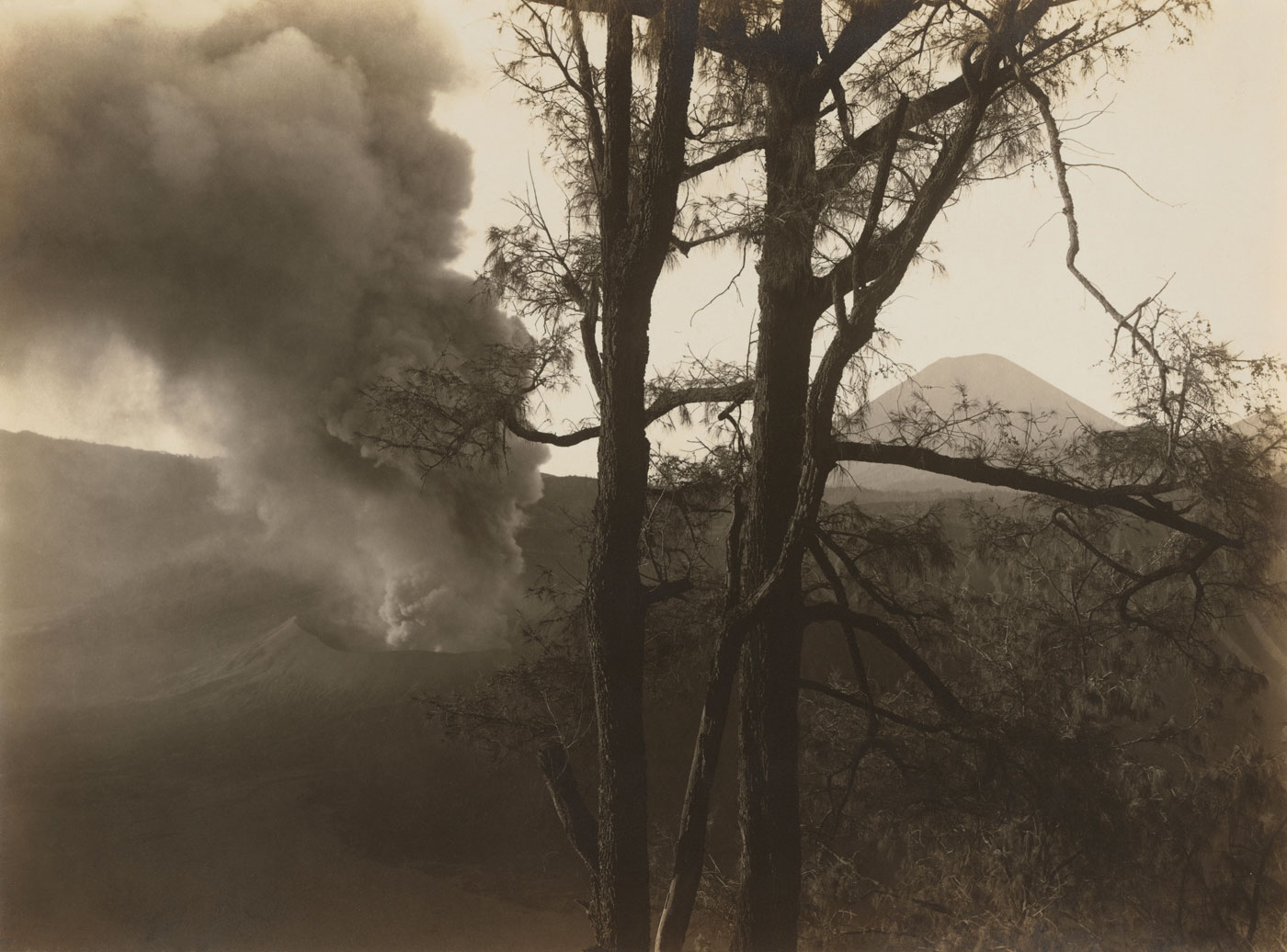
S. Satake (Japanese, working Indonesia 1902 - c. 1937) 'Eruption' Java c. 1930


S. Satake (Japanese, working Indonesia 1902 – c. 1937)
Eruption
Java c. 1930
Gelatin silver photograph
16.2 x 21.8cm
Collection National Gallery of Australia


While Indonesia might be the second most popular destination for outbound Aussies, the history of the Indonesian archipelago’s diverse peoples and the colonial era Dutch East Indies, remains unfamiliar. In particular the rich heritage of photographic images made by the nearly 500 listed photographers at work across the archipelago in the mid 19th – mid 20th century, is poorly known, both in the region and internationally.

The Gallery began building its Indonesian photographic collection in 2006. It is unique in the region: the largest and most comprehensive collection excluding the archives of the Dutch East Indies in the Netherlands. It was not until the late 1850s with the arrival of photographs printed on paper from a master glass negative, that images of Indonesia – the origin of nutmeg, pepper and cloves, much desired in the West – began circulating worldwide.

Australia had a minor role in the history of photography in Indonesia. A pair of young British photographers, Walter Woodbury and James Page (operators of the Woodbury & Page studios located in the Victorian goldfields and Melbourne) arrived in Jakarta in 1857. From around 1900 a trend toward more picturesque views and sympathetic portrayals of indigenous people appeared. Old images were given new life as souvenir prints and sold through hotels and resorts or used for cruise ship brochures.

A particular feature ofĀ Garden of the East is the display of family albums. Both amateur and professional images in the Indies were bound in distinctive Japanese or Batik-patterned cloth boards as records of a colonial lifestyle. Hundreds of these once-treasured narratives of now lost people ended up in the Netherlands in the 1970s and 80s in estate sales of former Dutch colonial and Indo (mixed race) family members who had returned or immigrated after the establishment of the Republic of Indonesia in 1945.

Text from theĀ National Gallery of Australia website


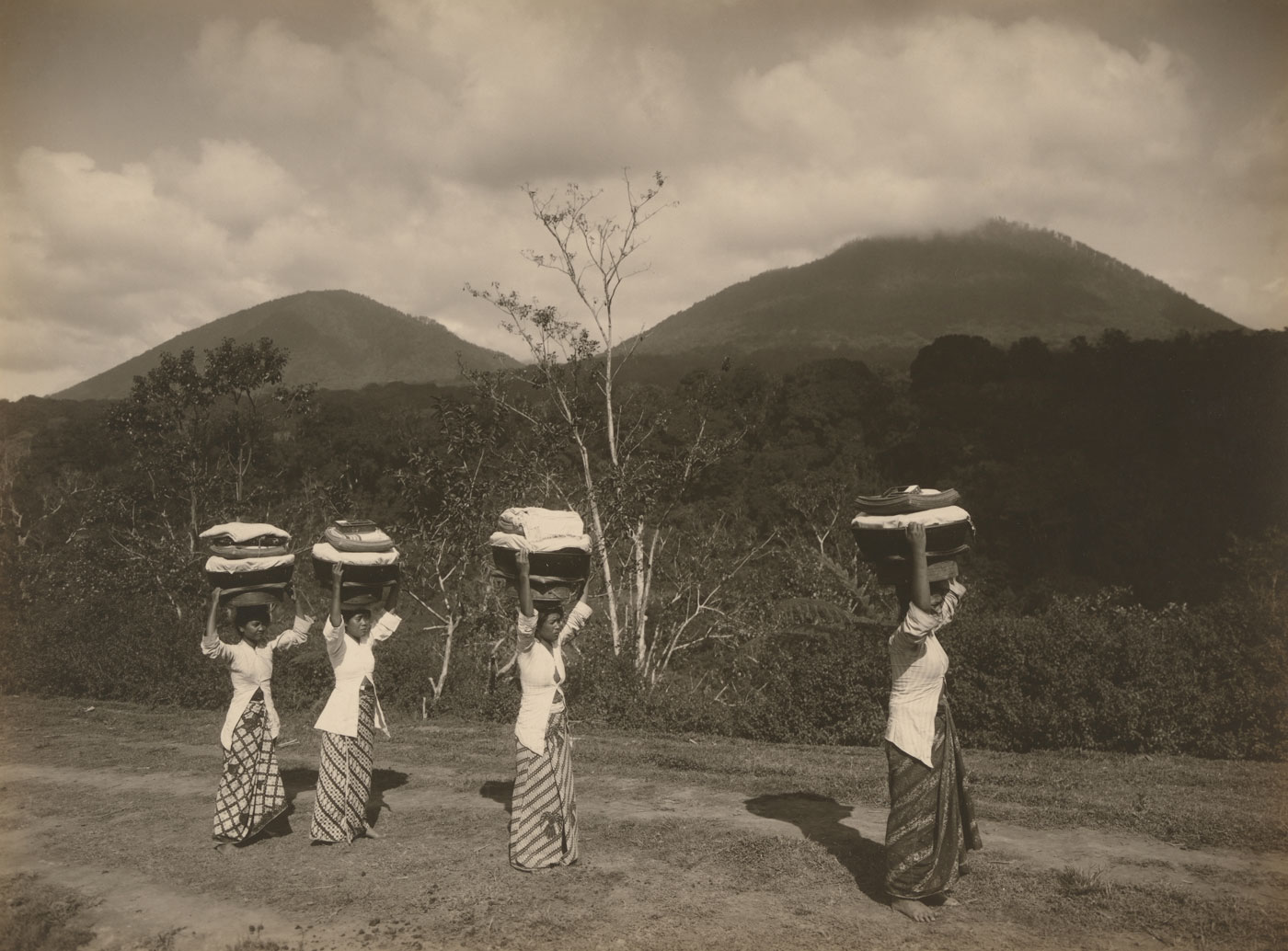
S. Satake (Japanese, working Indonesia 1902 - c. 1937) 'Women on road to Buleleng Bali' c. 1928


S. Satake (Japanese, working Indonesia 1902 – c. 1937)
Women on road to Buleleng
Bali c. 1928
Gelatin silver photograph
16.2 x 22.0cm
Collection National Gallery of Australia


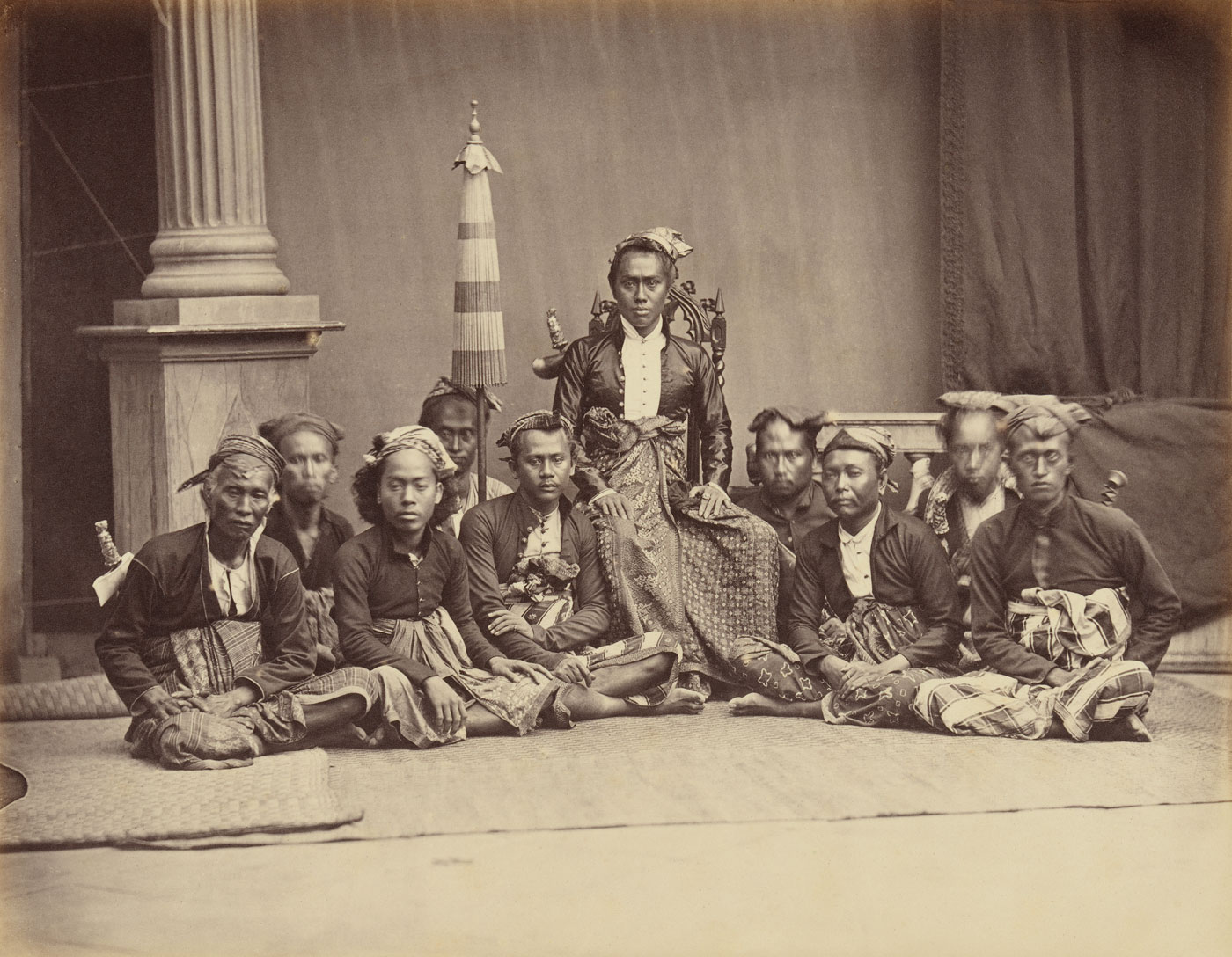
Woodbury & Page (established Jakarta 1857-1900) 'Gusti Ngurah Ketut Jelantik, Prince of Buleleng with his entourage in Jakarta in 1864 on the visit of Governor-General LAJW Sloet van de Beele' 1864


Woodbury & Page (established Jakarta 1857-1900)
Gusti Ngurah Ketut Jelantik, Prince of Buleleng with his entourage in Jakarta in 1864 on the visit of Governor-General LAJW Sloet van de Beele
1864
Albumen silver photograph
Collection National Gallery of Australia


Garden of the East: Photography in Indonesia 1850s-1940s is the first major survey in the southern hemisphere of the photographic art from the period spanning the last century of colonial rule until just prior to the establishment of the Republic of Indonesia in 1945. The exhibition provides the opportunity to view over two hundred and fifty photographs, albums and illustrated books of the photography of this era and provides a unique insight into the people, life and culture of Indonesia. The exhibition and accompanying catalogue reveals much new research and information regarding the rich photographic history of Indonesia. Garden of the East is on display in Canberra only.

The exhibition is comprised of images created by more than one hundred photographers and the majority have never been exhibited publicly before. The works were captured by photographers of all races, making images of the beauty, bounty, antiquities and elaborate cultures of the diverse lands and peoples of the former Dutch East Indies. Among these photographers is the Javanese artist Kassian CƩphas, whose genius as a photographer is not widely known at this time, a situation which the National Gallery of Australia hopes to address by growing the collection of holdings from this period and by continuing to stage focused exhibitions such as Garden of the East.

As was the case in other Southeast Asian ports, the most prominent professional photographers at work in colonial Indonesia came from a wide range of European backgrounds until the 1890s, when Chinese photography studios began to dominate. The exhibition focuses on the leading foreign studios of the time, in particular Walter B Woodbury, one of the earliest photographers at work in Australia in the 1850s as well as the Dutch East Indies. However Garden of the East also includes images created by lesser known figures whose work embraced the new art photography styles of the early twentieth century including: George Lewis, the British chief photographer at the Surabaya studio founded by Armenian Ohannes Kurkdjian, the remarkable German amateur photographer Dr Gregor Krause; American adventurer and filmmaker André Roosevelt; and the only woman professional known to have  worked in the period, Thilly Weissenborn, whose works were intertwined with the tourist promotion of Java and Bali in the 1930s. Chinese studios are well-represented, although little is known of their founders and many employed foreign photographers.

Frank Hurley is the sole Australian photographer represented in the exhibition. Hurley is noted as the only Australian known to have worked in Indonesia before the Second World War and toured Java in mid-1913, on commission to promote tourist cruises from Australia to the Indies for the Royal Packet Navigation Company.

“We are delighted to host this exhibition and believe that Australia’s geographic, political and cultural position in the Asia-Pacific region makes it very appropriate that the National Gallery of Australia should celebrate the rich and diverse arts of our region,” said Ron Radford AM, Director, National Gallery of Australia. “A dedicated Asia-Pacific focused policy has been long-held by the Gallery, but it was not until 2005 that we focused on early photographic art of the region. Progress, however, has been rapid and all the photographs in Garden of the East have been recently acquired for theĀ National Gallery’s permanent collection,” he said.

“From a small holding in 2005 of less than two hundred photographs from anywhere in Asia, of which only half a dozen were by any Asian-born photographers, the National Gallery of Australia’s Asian photographs collection has grown to nearly 8000 and in excess of 6500 prints are from Indonesia,” Ron Radford said.

Garden of the East presents images, both historic and homely and is a ‘time travel’ opportunity to visit the IndiesĀ through more than two hundred and fifty works on show, made by both professional and amateur family photographers. Images as diverse as the Indonesian archipelago itself, which was once described by nineteenth century travel writers as theĀ Garden of the East,” said Gael Newton, Senior Curator of Photography, National Gallery of Australia and exhibition Curator.

Garden of the East: Photography in Indonesia 1850s-1940s follows the large 2008 survey exhibition Picture Paradise: Asia-Pacific photography 1840s-1940s. This was the first of the new Asia-Pacific collection focus exhibitions. In 2010, the Gallery staged an early photographic portrait exhibition to coincide with a conference hosted in partnership with the Australian National University entitled Facing Asia. A number of other small Asian collection shows have also been held since 2011.

The National Gallery of Australia is delighted to stage this exhibition to coincide with the Focus Country Program, an initiative organised by the Australian Government’s key cultural diplomacy body, the Australia International Cultural Council. The AICC has chosen Indonesia as its Focus Country for 2014 and will organise a series of events across the Indonesian archipelago to promote Australian arts and culture, as well as our credentials in sport, science, education and industry. This exhibition will also mark the 40th anniversary of dialogue relations between Australia and the Association of South East Asian Nations. The National Gallery of Australia is proud to be presenting an exhibition of Indonesian photography in celebration of Australia’s close cultural relations with Indonesia and the Asia-Pacific region.

Press release from theĀ National Gallery of Australia website


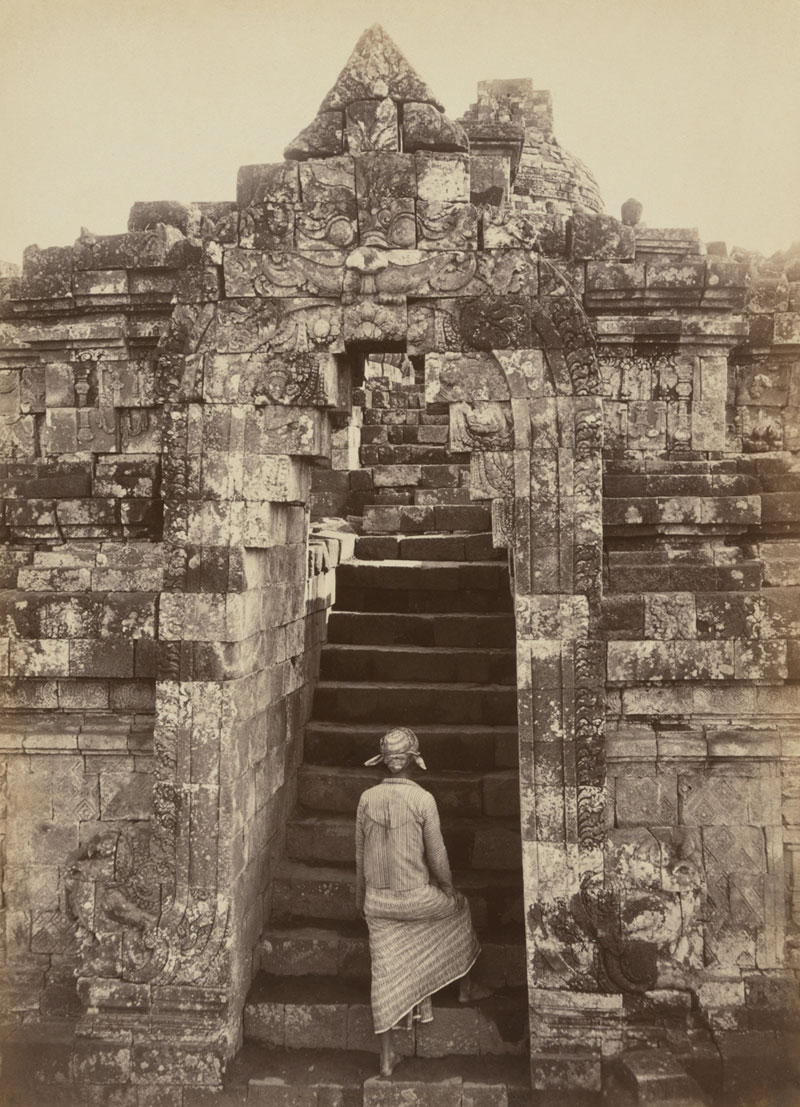
Kassian Céphas (Javanese, 1845-1912) 'Man climbing the front entrance to Borobudur' Central Java 1872


Kassian Céphas (Javanese, 1845-1912)
Man climbing the front entrance to Borobudur
Central Java 1872
Albumen silver photograph
22.2 x 16.1cm
Collection National Gallery of Australia


Kassian Cephas or Kassian CĆ©phas was a Javanese photographer of the court of the Yogyakarta Sultanate. He was the first indigenous person from Indonesia to become a professional photographer and was trained at the request of Sultan Hamengkubuwana VI. After becoming a court photographer in as early 1871, he began working on portrait photography for members of the royal family, as well as documentary work for the Dutch Archaeological Union. Cephas was recognised for his contributions to preserving Java’s cultural heritage through membership in the Royal Netherlands Institute of Southeast Asian and Caribbean Studies and an honorary gold medal of the Order of Orange-Nassau. Cephas and his wife Dina Rakijah raised four children. Their eldest son Sem Cephas continued the family’s photography business until his own death in 1918.

Text from the Wikipedia website


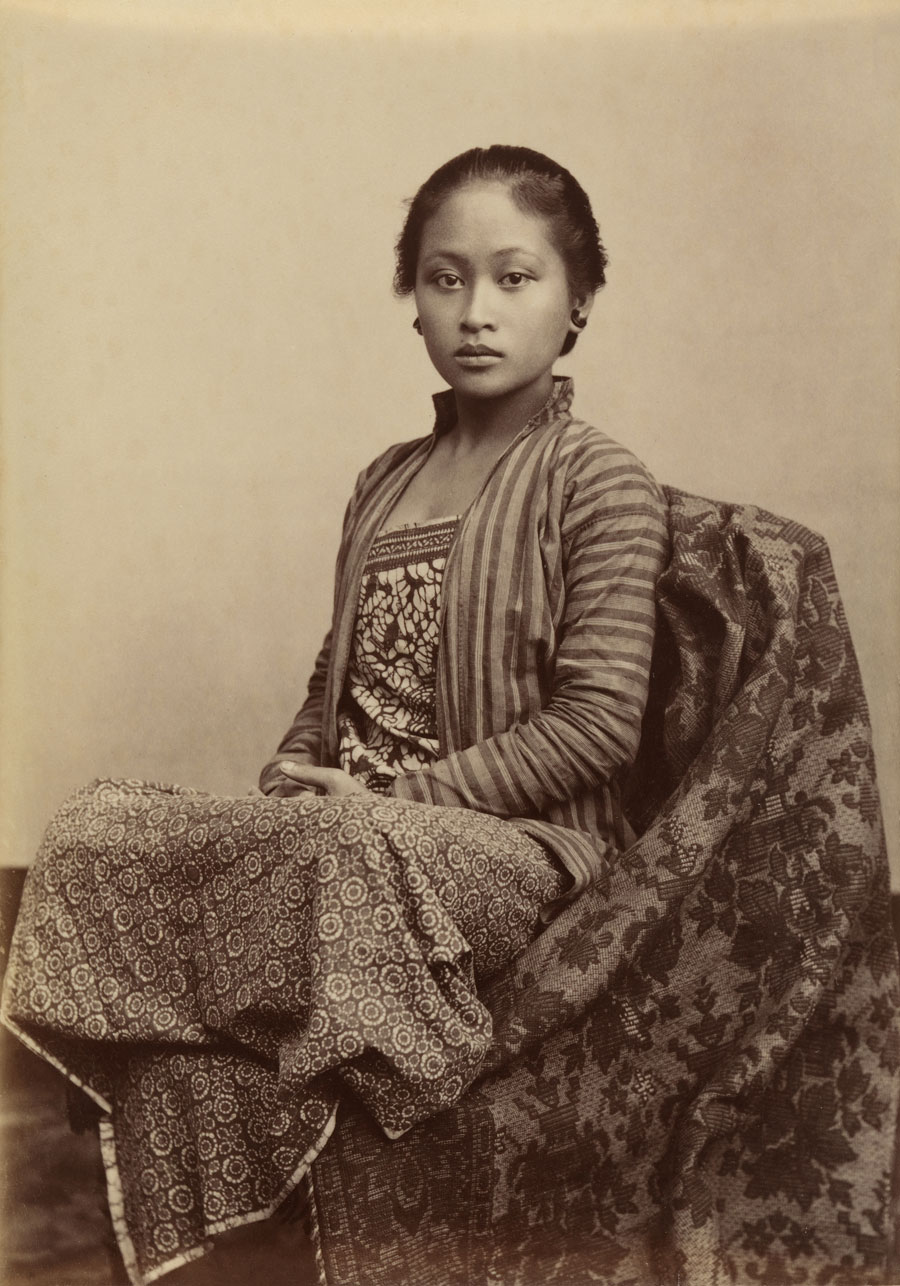
Kassian Céphas (Javanese, 1845-1912) 'Young Javanese woman' c. 1885


Kassian Céphas (Javanese, 1845-1912)
Young Javanese woman
c. 1885
Albumen silver photograph
13.7 x 9.8cm
Collection National Gallery of Australia


Garden of the East: photography in Indonesia 1850s-1940s offers the chance to see images from the last century of colonial rule in the former Dutch East Indies. It includes over two hundred photographs, albums and illustrated books from the Gallery’s extensive collection of photographic art from our nearest Asian neighbour.

Most of the daguerreotype images from the 1840s, the first decade of photography in Indonesia, are lost and can only be glimpsed in reproductions in books and magazines of the mid nineteenth century. It was not until the late 1850s that photographic images of Indonesia – famed origin of exotic spices much desired in the West – began circulating worldwide. British photographers Walter Woodbury and James Page, who arrived in Batavia (Jakarta) from Australia in 1857, established the first studio to disseminate large numbers of views of the country’s lush tropical landscapes and fruits, bustling port cities, indigenous people, exotic dancers, sultans and the then still poorly known Buddhist and Hindu Javanese antiquities of Central Java.

The studios established in the 1870s tended to offer a similar inventory of products, mostly for the resident Europeans, tourists and international markets. The only Javanese photographer of note was Kassian CƩphas who began work for the Sultan in Yogyakarta in the early 1870s. In late life, CƩphas was widely honoured for his record of Javanese antiquities and Kraton performances, and his full genius can be seen in Garden of the East.

Most of the best known studios at the turn of the century, including those of Armenian O Kurkdjian and German CJ Kleingrothe, were owned and run by Europeans. Chinese-run studios appeared in the 1890s but concentrated on portraiture. Curiously, relatively few photographers in Indonesia were Dutch. From the 1890s onward, the largest studios increasingly served corporate customers in documenting the massive scale of agribusiness, particularly in the golden economic years of the Indies in the early to mid twentieth century. From around 1900, a trend toward more picturesque views and sympathetic portrayals of indigenous people appeared. This was intimately linked to a government sponsored tourist bureau and to styles of Pictorialist art photography that had just emerged as an international movement in Europe and America. As photographic studios passed from owner to owner, old images were given new life as souvenir prints sold at hotels and resorts and as reproductions in cruise-ship brochures.

Amateur camera clubs and Pictorialist photography salons common in Western countries by the 1920s were slower to develop in Asia and largely date to the postwar era. Locals, however, took up elements of art photography. Professionals George Lewis and Thilly Weissenborn (the only woman known from the period) and amateurs Dr Gregor Krause and Arthur de Carvalho put their names on their prints and employed the moody effects and storytelling scenarios of Pictorialist photography. Krause was one of the most influential photographers. He extensively published his 1912 Bali and Borneo images in magazines and in two books in the 1920s and 1930s, inspiring interest in the indigenous life and landscape as well as the sensuous physical beauty of the Balinese people.

Postwar artists and celebrities – including American AndrĆ© Roosevelt, who used smaller handheld cameras – flocked to the country to capture spontaneity and daily life around them, to affirm their view of Bali as a ‘last paradise’ā€Š, where art and life were one. In 1941, Gotthard Schuh published Inseln der Gƶtter (Islands of the gods), the first modern large-format photo-essay on Indonesia. While romantic, the collage of images and text in Schuh’s book presented a vital image of the diverse islands, peoples and cultures that were to be united under the flag of the Republic of Indonesia in 1949.

A particular feature of Garden of the East is a selection of family albums bound in distinctive Japanese or Batik patterned cloth boards as records of a colonial lifestyle (for the affluent) in the Indies. Hundreds of these once treasured narratives of now lost people ended up in the Netherlands in the 1970s and 1980s in estate sales of former Dutch colonial and Indo (mixed race) family members who had returned or immigrated after the establishment of the Republic of Indonesia.

Gael Newton. “Princes, Portraits and Panoramas,” in the National Gallery of Australia Artonview 76 Summer 2013, pp. 20-22 [Online] Cited 12/06/2014


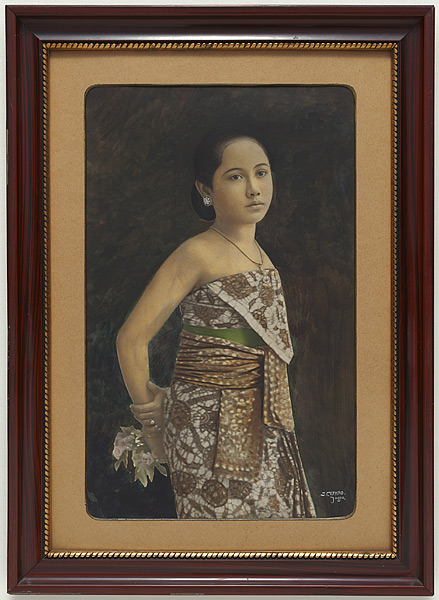
Sem CƩphas (Indonesia, 1870-1918) 'Portrait of a Javanese woman' c. 1900


Sem CƩphas (Indonesia, 1870-1918)
Portrait of a Javanese woman
c. 1900
Gelatin silver photograph, colour pigment hand painted photograph
image
38.5 x 23.8cm
Purchased 2007
National Gallery of Australia, Canberra


Gotthard Schuh (Swiss, 1897-1969) 'Inseln der Gƶtter' (Islands of the gods) [book cover] 1941


Gotthard Schuh (Swiss, 1897-1969)
Inseln der Götter (Islands of the gods) [book cover]
1941
Hardcover w/dust jacket
154pp, text in German
Plates in photogravure
28.5 x 22.5cm


Gotthard Schuh (December 22, 1897 in Schƶneberg near Berlin – December 29, 1969 in Küsnacht, Zurich) was a Swiss photographer, painter and graphic artist.

Photographer

In 1931 his first photos were published in a Zurich magazine and in 1932 he held a photography exhibition in Paris, where he met Picasso, LƩger and Braque.

From 1932 he joined the Zürcher Illustrierte under Arnold Kübler, working with Hans Staub and Paul Senn, and until 1937 Schuh also worked freelance for Berliner Illustrirte Zeitung, Paris Match and Life. His assignments during 1938/1939 took him all over Europe and to Indonesia. He and Marga divorced in 1939.

After about ten years as a reporter he became the first picture editor for the Neue Zürcher Zeitung. He and Edwin Arnet created the NZZ supplement Das Wochenende, which showcased Swiss and international photography in addition to his own reportage.

From this period a significant part of his own photographic work illustrated books, of which the most successful was Inseln der Gƶtter published in 1941, the result of his almost 11-month journey through Singapore, Java, Sumatra and Bali, undertaken just before the war. It was a mixture of reportage and self-reflection, with a poetic quality that, though individual images may be read either way, Schuh sometimes valued over documentary authenticity:

“Everyone just depicts what he sees, and everyone just sees what corresponds to his being.”


This is evident in the book Begegnungen which Schuh published in 1956, in which he combined older and more recent images in free association, in accord with the objectives of the ‘Kollegium Schweizerischer Photographen’, the Academy of Swiss Photographers which he founded together with Paul Senn, Walter LƤubli, Werner Bischof and Jakob Tuggener, a loose group that promoted an ‘auteur’ emphasis. Their first exhibition in 1951 marked a renewal of photography in Switzerland after the conservatism and nationalism of the war years. Critic Edwin Arnet identified the ethos of the group:

“Their photography has abandoned the sphere of technical experimentation … , the abstract and the avant-garde. It has become more wholesome, concentrating again more on the poetry of real things.”


In 1955 Edward Steichen selected two of Schuh’s photographs for the world-touring Museum of Modern Art exhibition The Family of Man seen by an audience of 9 million. One, taken in Italy, is a stolen image of lovers resting beside their discarded bicycles amongst long summer grass in an olive grove, while the other, taken in Java, shows a boy stretching balletically across the pavement as he plays marbles.

Text from the Wikipedia website


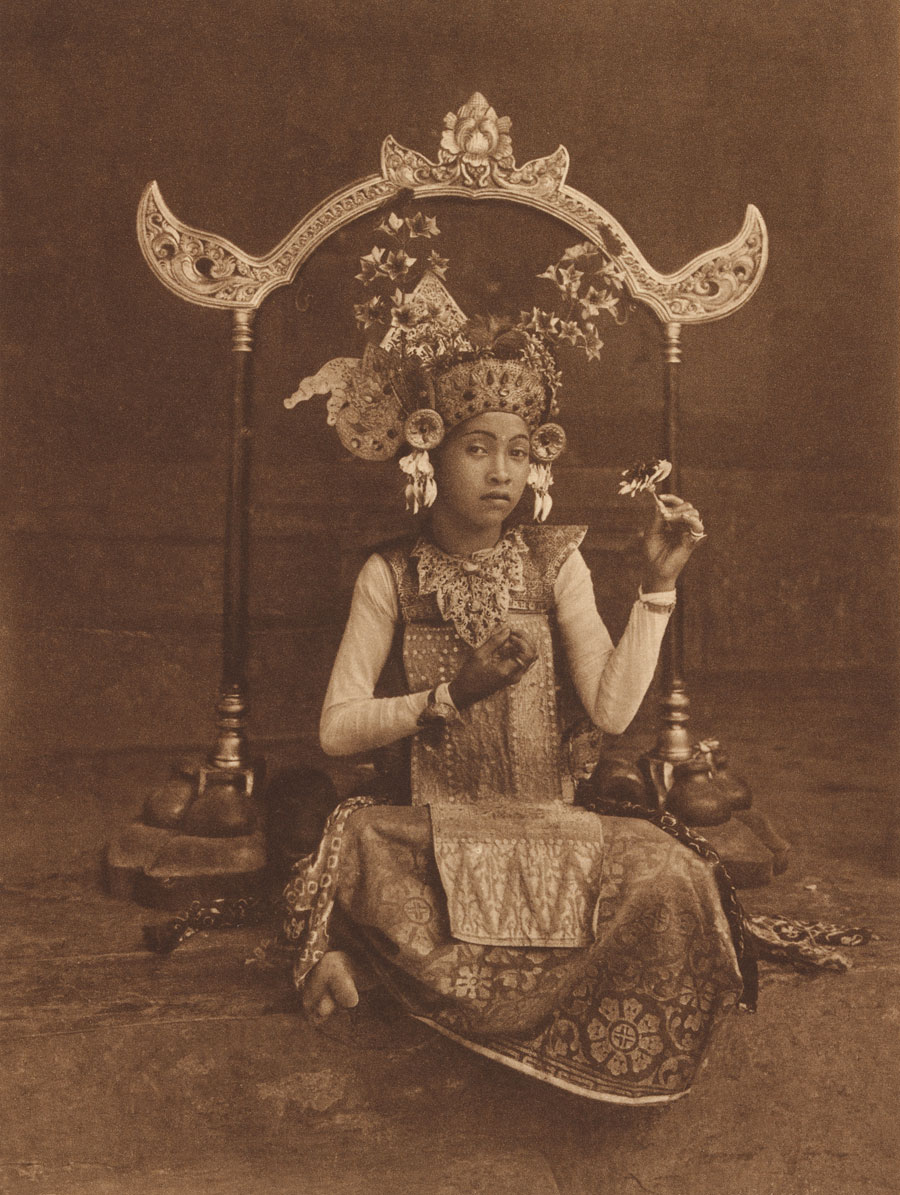
ThillyĀ Weissenborn (Javanese / Indonesian, 1883-1964) 'A dancing-girl of Bali, resting' c. 1925


ThillyĀ Weissenborn (Javanese / Indonesian, 1883-1964)
Indonesia 1902 – Netherlands 1964
A dancing-girl of Bali, resting
c. 1925
Photogravure
21.1 x 15.9cm
Collection National Gallery of Australia


Thilly Weissenborn (1883-1964) was the first professional woman photographer of the former Dutch East Indies and one of the few photographers working in the early 20th century in the area who were Indonesian born. Her works were widely used to expand the newly developed tourism industry of the East Indies.

Early life

Margarethe Mathilde Weissenborn was born on 22 March 1883 or 1889, to Cornelia Emma Angely Lina da Paula (nĆ©e Roessner) and Hermann Theodor Weissenborn in either Surabaya, or Kediri, on East Java of the Dutch East Indies (now Indonesia). Her parents were German-born, naturalized Dutch citizens and operated a coffee plantation in Kediri. In 1892, her mother returned with Thilly and her siblings to the Netherlands and took up residence in The Hague. They were joined by their father the following year. After five years, the oldest son and the father left for Tanganyika in German East Africa to become planters there. Else, one of Thilly’s older sisters, who had studied photography in Paris, opened a photographic studio in The Hague in 1903, where Thilly began working. In 1912, she left the Netherlands and returned to Java, in the company of her brother Theo to join their brother Oscar, who was living in Bandung.

Career

In 1913, Weissenborn found employment in a prestigious photographic studio in Surabaya which was founded by Onnes Kurkdjian, an Armenian, called Atelier Kurkdjian. The studio was the only agent for Kodak in East Java. Kurkdjian had died by the time Weissenborn arrived and the studio, which employed thirty photographers, was managed by an Englishman, GP Lewis. Weissenborn honed her craft under Lewis’ tutelage learning both photographic and retouching techniques. In 1917, she moved to Garut in West Java and managed a photographic studio GAH Lux in the Garoetsche Apotheek en Handelsvereeniging Company, a pharmacy owned by Denis G. Mulder. Mulder moved to Bandung in 1920 and turned over his property to Weissenborn, who changed the firm name to Foto Lux. In 1930, she established Lux Fotograaf Atelier NV, which she operated for a decade in Garut.

Weissenborn became the first significant woman photographer in Indonesia and was one of the few photographers working in the era who were Indonesian-born. Her works were marked by a lyrical quality and her attempt to capture the idyllic nature of the landscape. She is most known for her photographs of architectural interiors, landscapes, and portraits, which were produced for the burgeoning tourist industry. Some of her works were featured in Dutch tourism guide published in 1922, as Come to Java. Her photographs also made up the majority of the images in Louis Couperus’ work Oostwaarts (Eastward, 1923). Weissenborn travelled throughout the East Indies, and particularly worked in Bali, trying to capture the exotic nature of the islands, while at the same time, retaining the dignity of locals she photographed. Ironically, her images were at times appropriated and used in prurient manners, such as a photograph of two women on a road carrying water, one who has a pot on her head, which was used for a French novel titled L’Ǝle des seins nus (Island of Bare Breasts). In time, her portrait images changed from partially-clad images to the more artistic images of dancing girls. These were featured in such magazines as Inter-Ocean, Sluyter’s Monthly and Tropical Netherlands, which marketed a more civilised Bali to international tourists.

Later life

During World War II, the 16th Army of Japan landed in West Java at the end of February, 1942. After subduing the population, around 30,000 American, Australian, British, Dutch, and Indo-European civilians were transported to civilian internment camps. In 1943, Weissenborn was interned in the Japanese prisoner of war camp KareĆ«s in Bandung. Women and children were kept in the camp until 1945. The town of Garut was destroyed by fire and then in the aftermath of the Indonesian National Revolution, Weissenborn’s studio was completely destroyed and all of her glass negatives were lost in 1947. That same year, she married Nico Wijnmalen and the couple moved to Bandung.

In 1956, the Indonesian government repudiated the remaining terms of the Hague Round Table Conference forcing Weissenborn and Wijnmalen to return to Holland. Weissenborn died 28 October 1964 at Baarn, in Utrecht Province, The Netherlands and is buried in the Baarn New General Cemetery.

Text from the Wikipedia website


ThillyĀ Weissenborn (Javanese / Indonesian, 1883-1964) (attributed to) 'I Goesti Agoeng Bagoes Djelantik, Anakagoeng Agoeng Negara, Karang Asem' 1931


ThillyĀ Weissenborn (Javanese / Indonesian, 1883-1964) (attributed to)
I Goesti Agoeng Bagoes Djelantik, Anakagoeng Agoeng Negara, Karang Asem
1931
Gelatin silver photgraph
14 x 9.7cm
Collection National Gallery of Australia
Purchased 2006


Unknown photographer. Working Bali 1930s. 'I Goesti Agoeng Bagoes Djelantik, Anakagoeng Agoeng Negara, Karang Asem' Bali 1931


Unknown photographer
Working Bali 1930s
I Goesti Agoeng Bagoes Djelantik, Anakagoeng Agoeng Negara, Karang Asem
Bali 1931
Gelatin silver photograph
14.0 x 9.7cm
Collection National Gallery of Australia


National Gallery of Australia
Parkes Place, Canberra
Australian Capital Territory 2600
Phone: (02) 6240 6411

Opening hours:
Open daily 10.00 am – 5.00 pm
(closed Christmas day)

National Gallery of Australia website

LIKE ART BLART ON FACEBOOK

Back to top