
Exhibition dates: 29th March – 19th July, 2015
Curators: Barry Bergdoll, Curator, and Patricio del Real, Curatorial Assistant, Department of Architecture and Design, MoMA; Jorge Francisco Liernur, Universidad Torcuato di Tella, Buenos Aires, Argentina; and Carlos Eduardo Comas, Universidade Federal do Rio Grande do Sul, Porto Alegre, Brazil; with the assistance of an advisory committee from across Latin America

Mario Gandelsonas (American born Argentina, b. 1938)
Marta Minujín (Argentine, b. 1943)
Project for Transformador de cuerpos, Buenos Aires
1966
Pencil and ink on paper
28 1/2 × 42″ (72.4 × 106.7cm)
The Museum of Modern Art, New York. Gift of the architects
Dynamic. Evocative. Essential. Surreal. Modern. Beautiful. Intelligent. Futuristic. Transitional. Vernacular (as in architecture concerned with domestic and functional rather than public or monumental buildings). Elitist. Monumental.
Cities in Transition. Urban Laboratories. Utopia. Here’s a posting as visual spectacle.
Dr Marcus Bunyan
Many thankx to MoMA for allowing me to publish the photographs in the posting. Please click on the photographs for a larger version of the image.
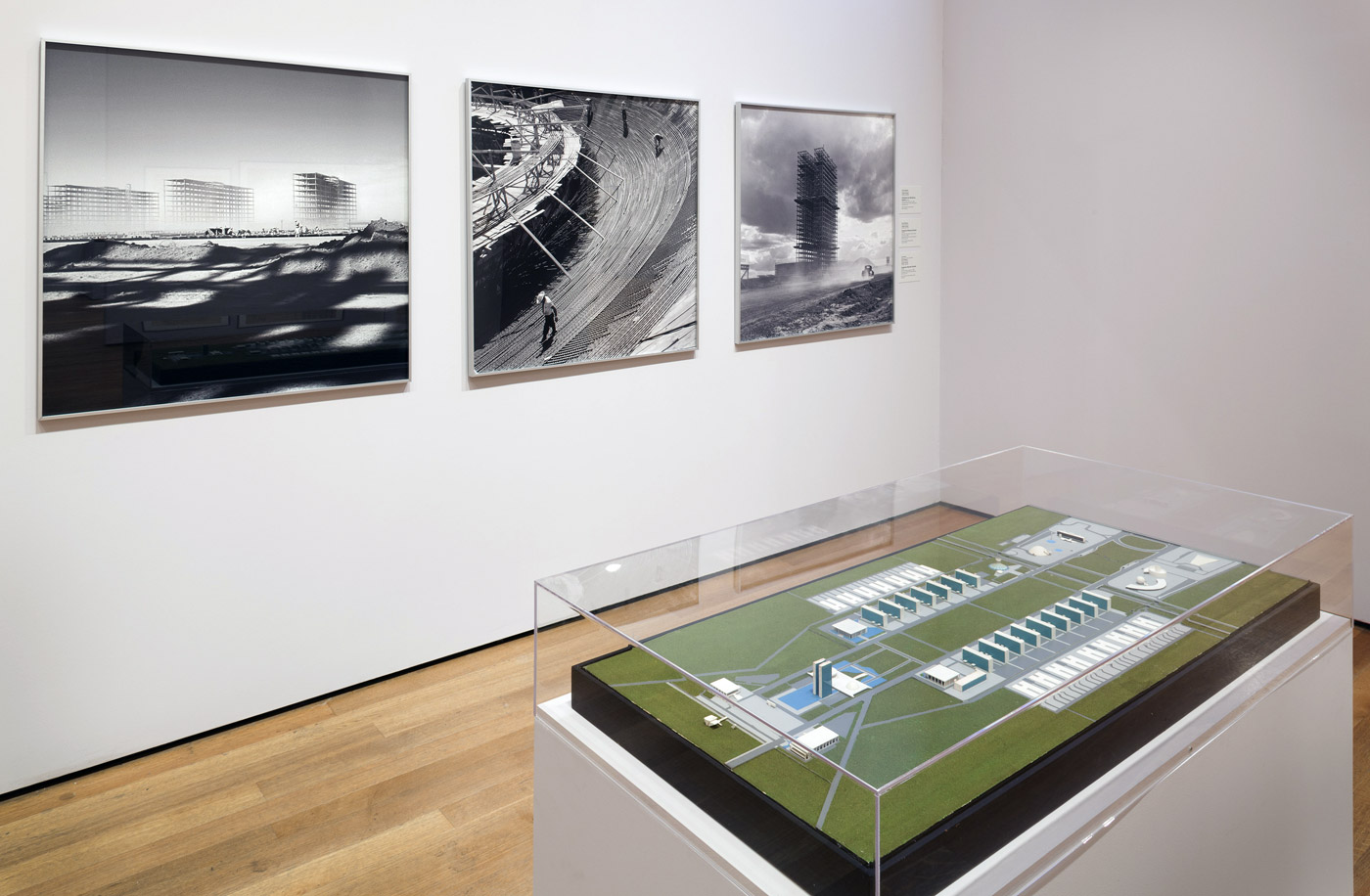
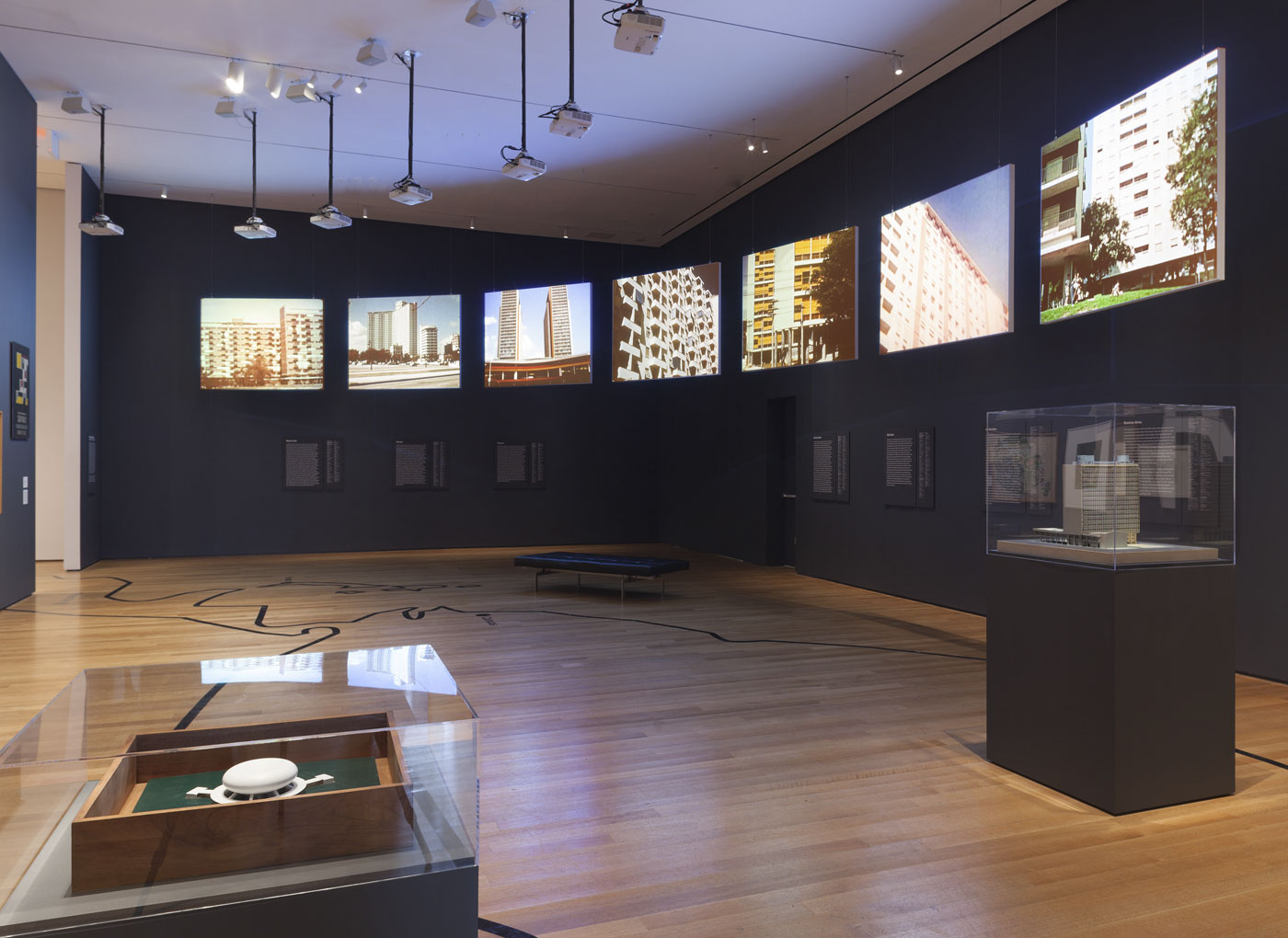
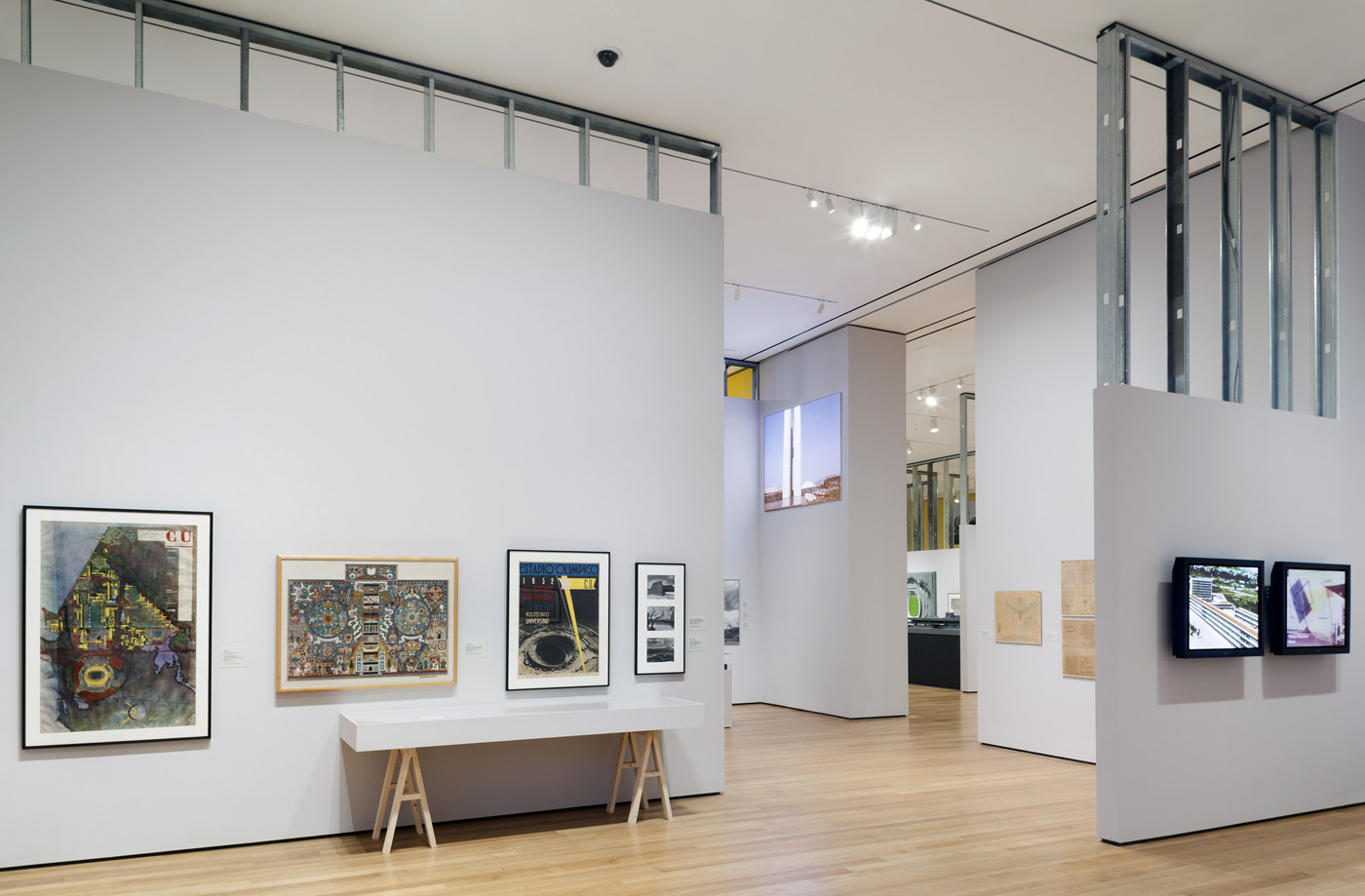


Installation views of Latin America in Construction: Architecture 1955-1980 at The Museum of Modern Art, New York (March 29-July 19, 2015) Photographs by Thomas Griesel
© 2015 The Museum of Modern Art, New York
The unprecedented urbanisation of Latin America after World War II became the catalyst for exceptional architectural innovation. Countries in the region dealt with the challenges of modernisation – from housing rapidly growing city populations to increasing production in the inland territories – even as many were rocked by struggles between democratic and authoritarian regimes. Whole cities, from Brasilia, the new capital of Latin America’s largest country, to Ciudad Guayana, in the Venezuelan interior, were realised with breathtaking speed and became showcases for modernist architectural design. As the Cold War divided the globe into hotly contested zones of influence and the idea of a “third world” emerged, the region became key to the concept of the developing world.
As early as the 1940s, spectacular architectural designs in Brazil had captured attention worldwide. From the mid-1950s on, experimental architectural cultures appeared in a broad range of countries, from Argentina and Chile in the south to Venezuela and Mexico in the north. After the revolution in 1959, Cuba offered a countermodel to capitalist development. New attitudes toward public space, the relationship of building to landscape, and the role of the nation-state led to bold new architectural forms and solutions. Throughout the period architects in Latin America were deeply entwined with developmentalism, the doctrine that the state should promote modernisation and industrialisation in all aspects of life.
Latin America in Construction is itself a construction site of histories of modern architecture in Latin America. Over the last four years the curatorial team has culled archives and architectural offices throughout the region to gather original documents – design and construction drawings, models, photographs, and films – to open for reconsideration the achievements and legacy of this era. New materials have been created for the show: anthologies of period documentary films researched and edited by filmmaker Joey Forsyte, photographs by Leonardo Finotti, and large-scale interpretive models made by student teams at the University of Miami and, under the direction of the group Constructo, at the Pontificia Universidad Católica in Santiago, Chile. The exhibition is intended to challenge the notion of Latin America as a testing ground for ideas and methods devised in Europe and the United States. It brings to light the radical originality of architecture and urban planning in the vast region during a complex quarter century.
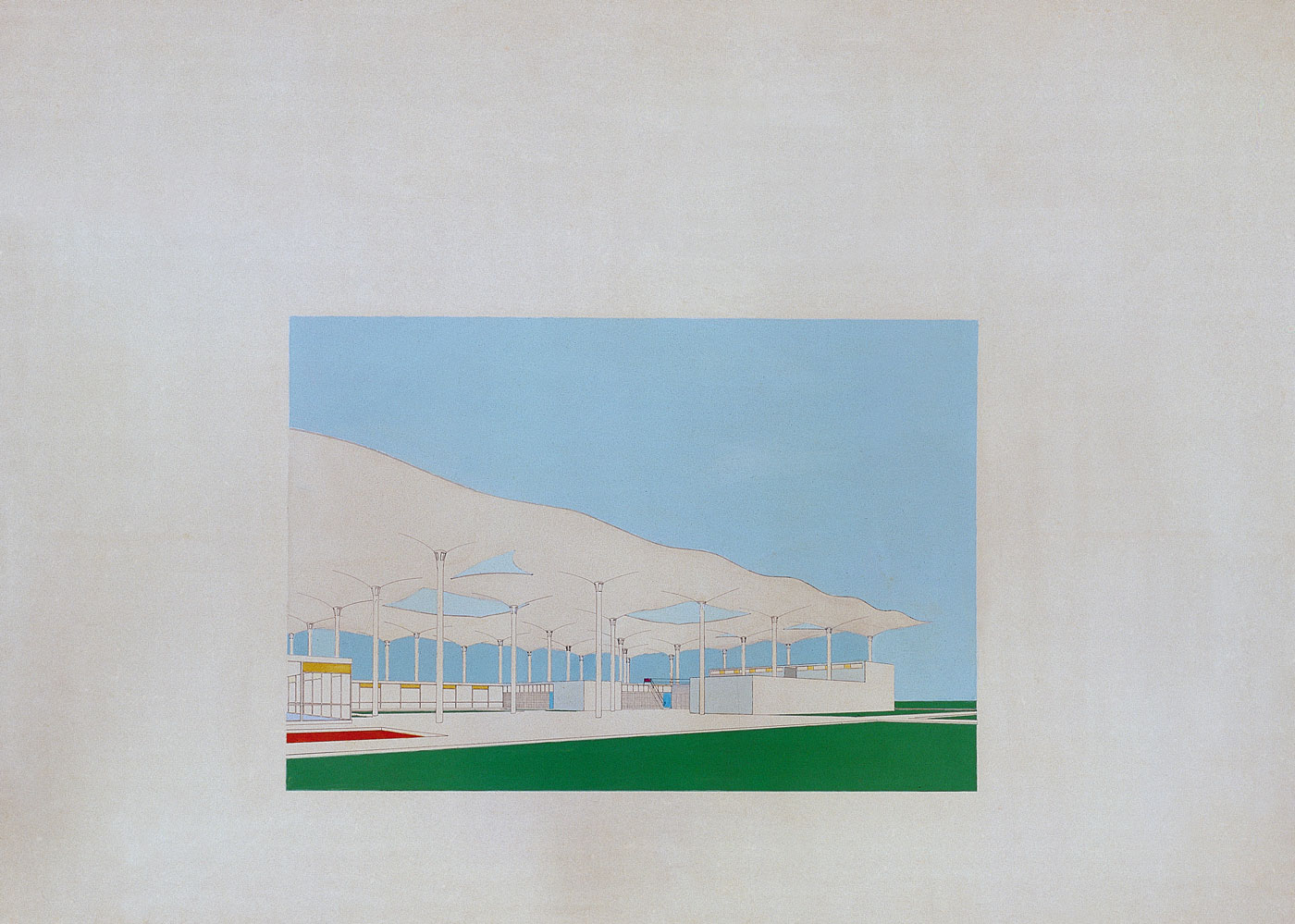
Amancio Williams (Argentinian, 1913-1989)
Hospital, Corrientes, Argentina
1948-1953
Perspective view, 1948
Oil on paper
Unframed: 25 9/16 × 37 5/8″ (65 × 95.5cm)
Amancio Williams Archive
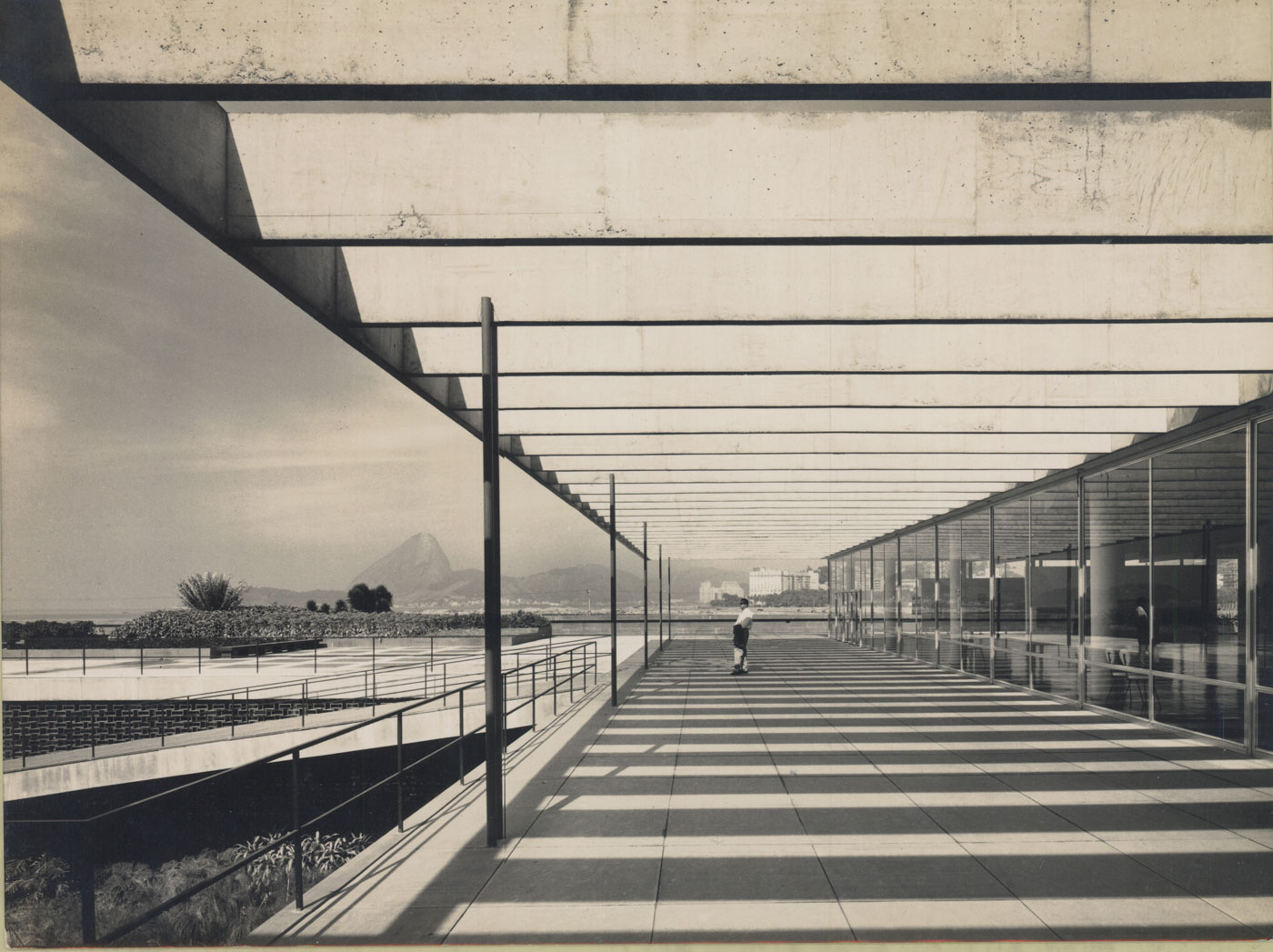
Affonso Eduardo Reidy (Brazilian, 1909-1964)
Museum of Modern Art of Rio de Janeiro (MAM), Rio de Janeiro, Brazil
1934-1947
Gelatin silver photograph
© Núcleo de Documentação e Pesquisa – Faculdade de Arquitetura e Urbanismo da Universidade Federal do Rio de Janeiro
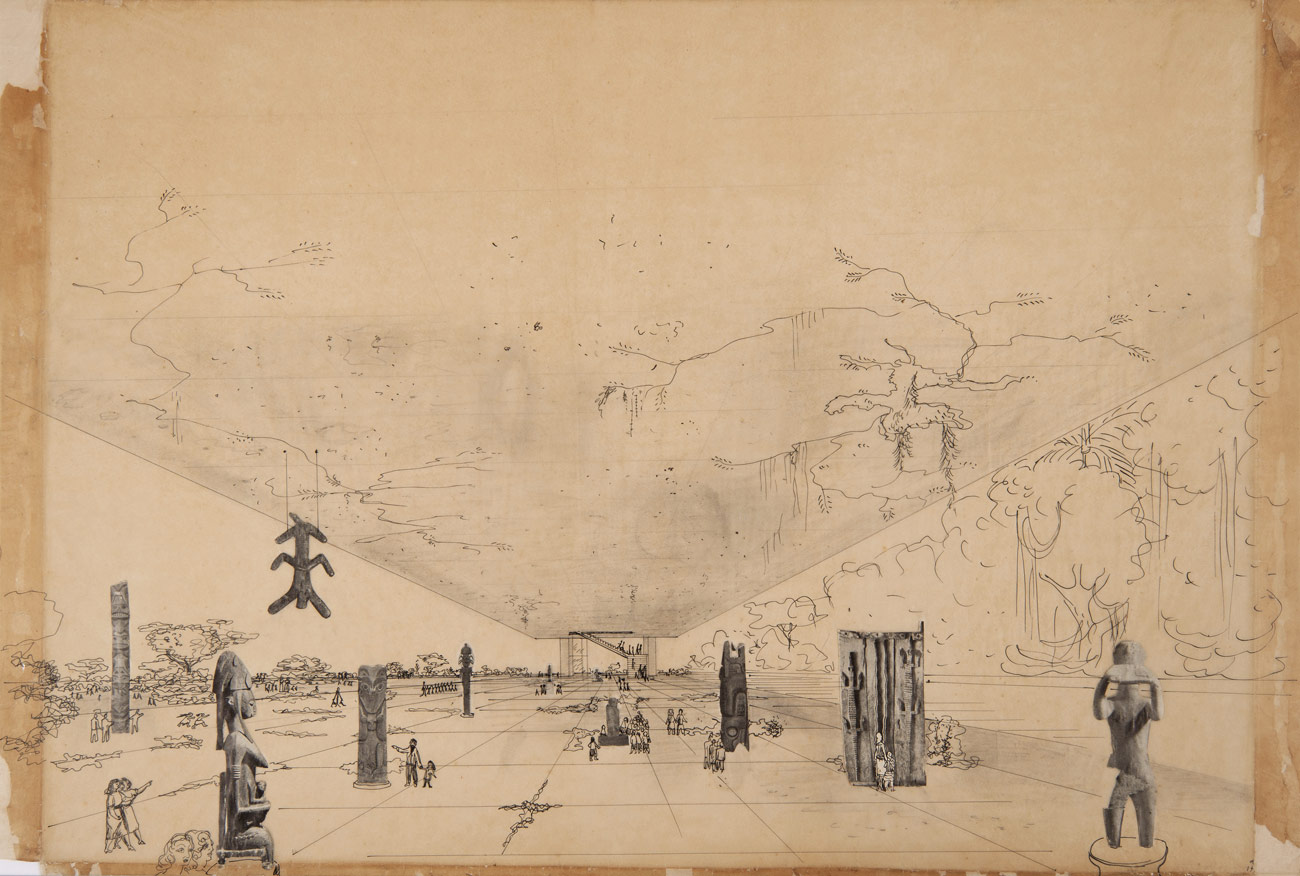
Lina Bo Bardi (Brazilian born Italy, 1914-1992)
São Paulo Museum of Art (MASP), Sao Paulo, Brazil
Nd
Drawing. Graphite, and ink on paper
Unframed: 18 9/16 x 27 1/2″ (47.2 x 69.8cm)
Completed 1968
© Instituto Lina Bo e Pietro Maria Bardi

Rogelio Salmona (Colombian, 1929-2007)
Hernán Vieco (Colombian, 1924-2002)
Social Housing Complex in San Cristobal, Bogotá, Colombia
1963-1966
Gelatin silver photograph
Unframed: 8 × 10″ (20.3 × 25.4cm)
Fundación Rogelio Salmona
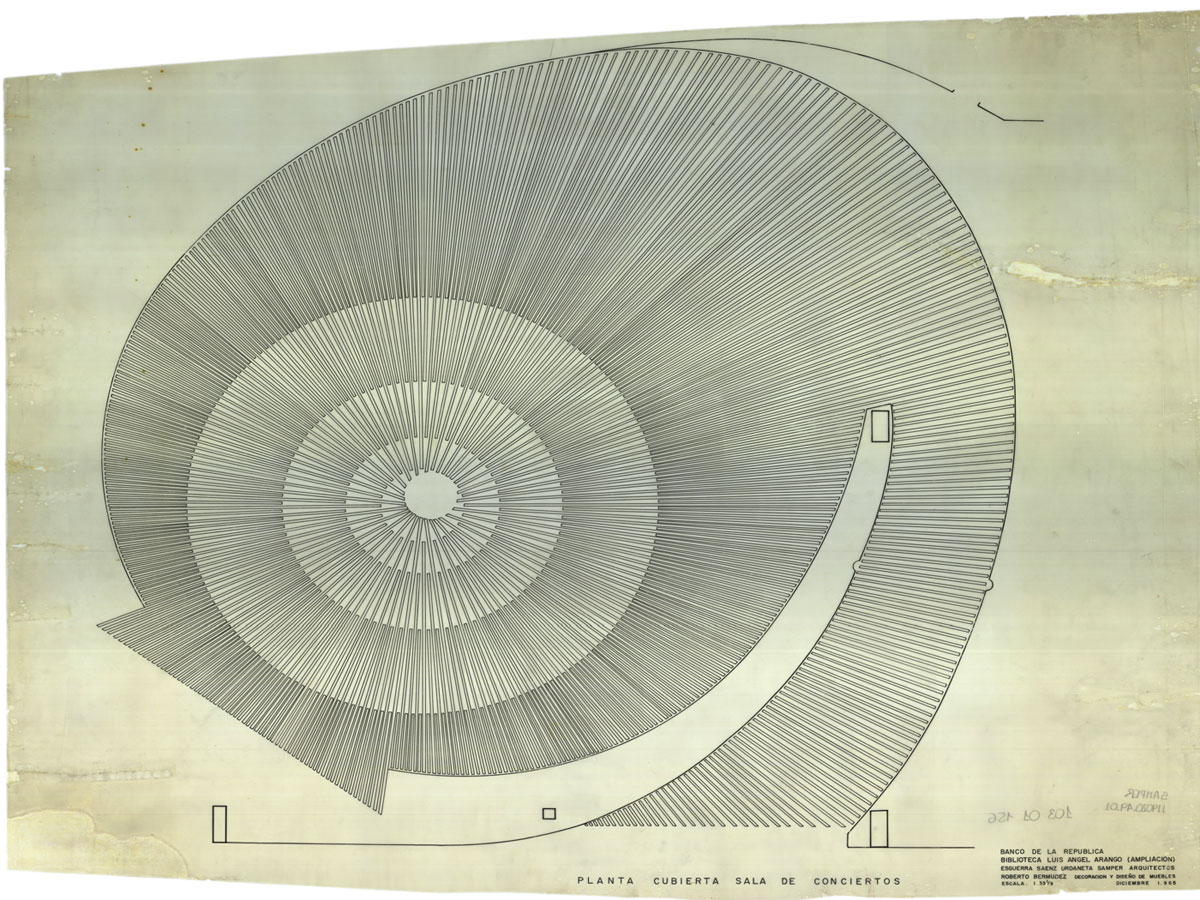
Esguerra Sáenz y Samper
Luis Ángel Arango Library (Biblioteca Luis Ángel Arango), Bogotá, Colombia. Cover plan of concert hall
1965

Vittorio Garatti (Italian, 1927-2023)
Cuba Pavillion, Montreal, Canada
1968
Gelatin silver photograph
© Archivo Vittorio Garatti

Ricardo Porro (Born Cuba, died France 1925-2014)
National School of Plastic Arts, Havana, Cuba
1961-1965
Gelatin silver photograph
© Archivo Vittorio Garatti

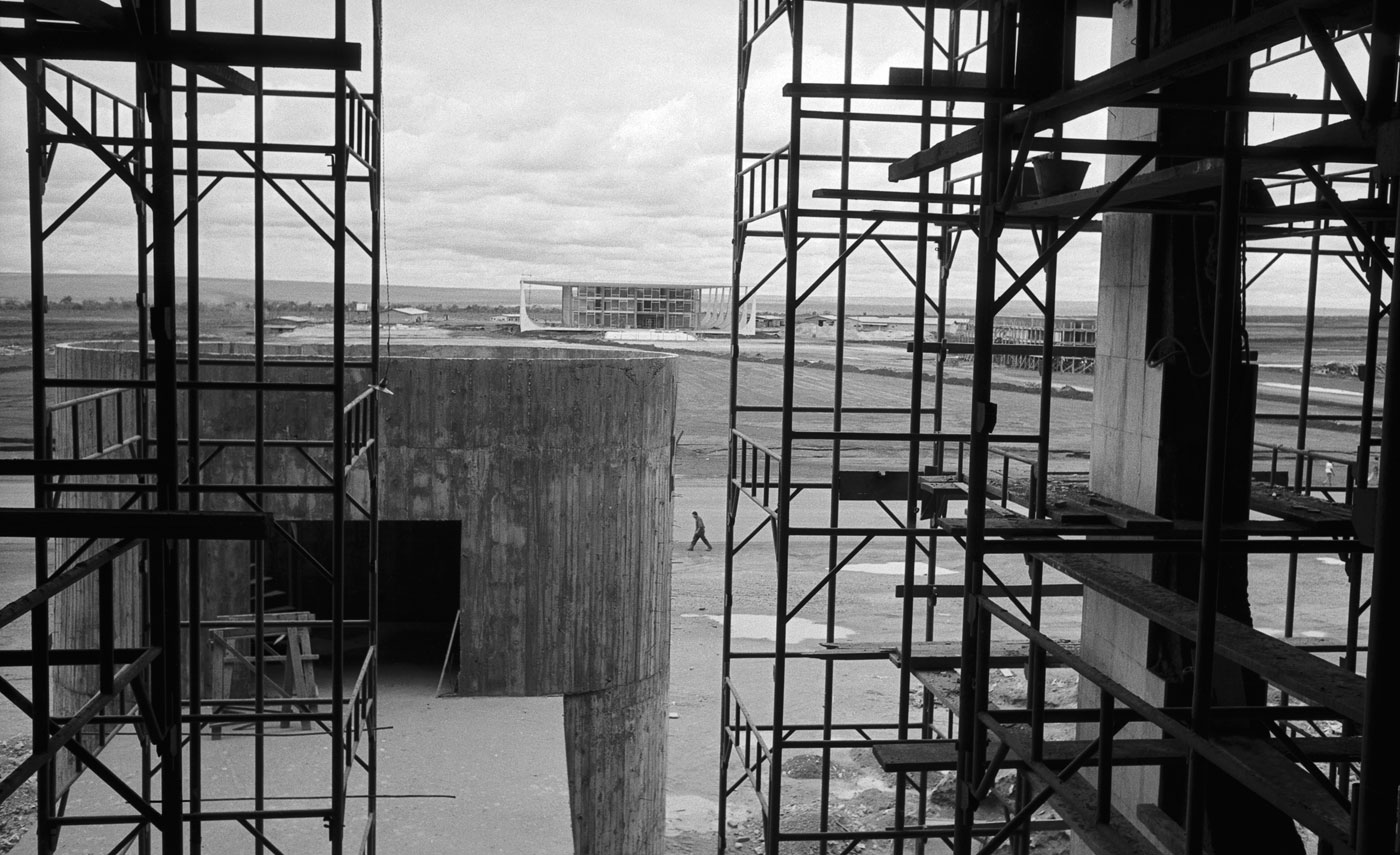
Brasilia under construction, 1957. Geofoto. Arquivo Publico do Distrito Federal
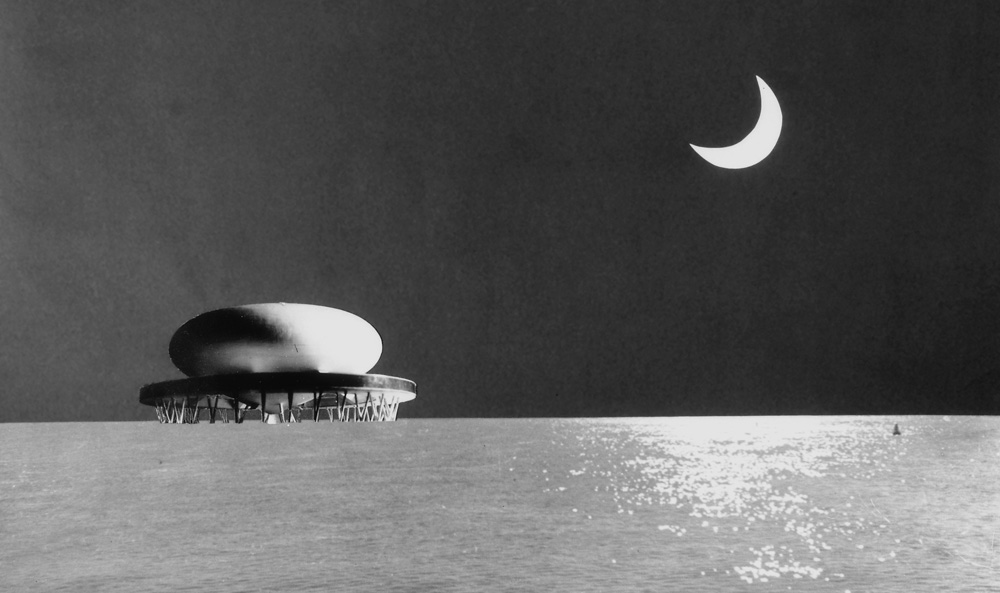
Amancio Williams (Argentine, 1913-1989)
Hall for visual spectacle and sound in space Buenos Aires, Argentina
1942-1953
Photomontage
Unframed: 9 7/16 × 7 1/16″ (24 × 18cm)
Amancio Williams Archive
On the 60th anniversary of its last major survey of modern architecture in Latin America, The Museum of Modern Art returns its focus to the region with Latin America in Construction: Architecture 1955-1980, a complex overview of the positions, debates, and architectural creativity from the Rio Grande to Tierra del Fuego, from Mexico to Cuba to the Southern Cone, between 1955 and 1980. On view March 29 through July 19, 2015, Latin America in Construction is organised by Barry Bergdoll, Curator, and Patricio del Real, Curatorial Assistant, Department of Architecture and Design, MoMA; Jorge Francisco Liernur, Universidad Torcuato di Tella, Buenos Aires, Argentina; and Carlos Eduardo Comas, Universidade Federal do Rio Grande do Sul, Porto Alegre, Brazil; with the assistance of an advisory committee from across Latin America.
In 1955 MoMA staged Latin American Architecture since 1945, a landmark exhibition highlighting a decade of architectural achievements across Latin America. Latin America in Construction focuses on the subsequent quarter-century, a period of self-questioning, exploration, and complex political shifts in all the countries included: Chile, Argentina, Uruguay, Brazil, Peru, Colombia, Venezuela, Mexico, Cuba, the Dominican Republic, and Puerto Rico. During these years Latin American countries created startling works that have never been fully granted their place in accounts of the history of modern architecture. Latin America in Construction brings together, for the first time, more than 500 original works that have largely never been exhibited, even in their home countries. These include architectural drawings and models, vintage photographs, and films from the period collected from architecture and film archives, universities, and architecture offices throughout the region. Highlighting the extent to which the exhibition contributes to new interpretations of Latin American architecture of the period, several research teams – in addition to the invited curators – have worked over the last five years to develop analytical models and compilations of rarely seen film footage. These historical materials will be displayed alongside newly commissioned models intended to highlight the spatial invention of some of the period’s masterworks of architecture, and to underscore the exploration of new forms of public space. Large-scale models of key structures have been commissioned for this exhibition from Constructo, a cultural organisation working with the workshops of the Catholic University of Chile, along with models of buildings and their landscapes fabricated by the University of Miami, and both the exhibition and the catalogue feature a group of new photographs by the Brazilian photographer Leonardo Finotti.
Latin America in Construction begins with some of the most telling architectural projects of the years leading up to 1955 in drawings, models, and photographs, as well as an evocation in period films of the rapidly changing rhythm and physiognomy of urban life in major cities such as Montevideo, Buenos Aires, São Paulo, Rio de Janeiro, Caracas, Mexico City, and Havana. These attest to the region’s breathtaking pace of change, modernisation, and shift toward the metropolis. The exhibition is bookended by these historical films in the first gallery and, in the final gallery, a dynamic display of present-day snapshots of sites in the exhibition, submitted by Instagram users.
Urban Laboratories
Beginning in the late 1940s, planning for new campuses for the national universities of Mexico and Venezuela announced radical new thinking in which a modernist campus became not only a laboratory for new educational ideals, but also a fragment of an ideal future city that would explore themes related to local traditions and climate. The term “Cuidad Universitaria” was born, changing the relationship between university and city. Projects in Latin America in Construction range from the universities at Concepción, in Chile, and Tucámen, in Argentina, to Rio de Janeiro, Brasília, and the National University in Bogotá. From the campus laboratory to the fully realised new city, a section of the exhibition is devoted to one seminal example of modern urban planning in Latin America: Brasília. From 1956 to 1960, Oscar Niemeyer led the newly created Companhia de Urbanização da Nova Capital (NOVACAP) to move the Brazilian capital from Rio de Janeiro to the savanna of the central plateau. In a national competition to plan a city for a half-million inhabitants, the jury selected Lucio Costa’s plan, which is exhibited in Latin America in Construction alongside very different visions from Brazilian architects Villanova Artigas and Rino Levi. Costa’s design was structured around two main axes: one of civic representation, focused on the Plaza of the Three Powers, which would come to feature Niemeyer’s Congress building; the other a bowed axis centered on a complex transportation spine connecting the horizontal spread of the superquadras (urban residential superblocks). The bus terminal was placed at the intersection of the two axes, to be surrounded by the commercial, recreational, and cultural sectors, realising a long-held modernist dream of a city centred on infrastructure and movement.
Cities in Transition
While the spectacular development of Brasília was heralded, transformations of older cities were just as dramatic. The exhibition looks at examples such as Rio de Janeiro, where new relations between monumental public buildings, landscape design, and natural settings were forged in a spectacular redesign recasting the image of the city and its fabled landscape; the creation of a new civic centre at Santa Rosa de la Pampa in Argentina, where architecture helped restructure the administration and the experience of the country’s vast interior; and the recasting of portions of the Chilean coastline at Valparaíso to accommodate an expanded Naval Academy.
Also surveyed are buildings in the late 1950s and early 1960s that created a new permeability between interior and exterior space, eroding traditional boundaries of the public realm. Many of these buildings also have complex incorporation of diverse functions within a great urban block, notably Lucio Costa’s Jockey Club in Rio de Janeiro and the Teatro San Martín in Buenos Aires, which grew to pierce through a block in the city’s grid and incorporate a range of cultural functions. Clorindo Testa’s great Bank of London in Buenos Aires, one of the masterpieces of the period, created an entirely new type of urban building block with its theatrical linking of interior spaces to the public realm of the street and sidewalk. Compelling new ideas for cultural buildings as complex structures – not set apart from the city, but interwoven within it – are also featured, from Lina Bo Bardi’s art museum in São Paulo and Clorindo Testa and Francisco Bullrich’s National Library in Buenos Aires, to Abraham Zabludovsky and Teodoro González de León’s Tamayo Museum in Mexico City.
A look at innovations in architecture for schools throughout Latin America includes Juan O’Gorman’s projects for radically modern elementary schools across Mexico in the early 1930s, new educational buildings and programs built in the early years of the Cuban Revolution, the great open hall of João Batista Vilanova Artigas’s Architectural Faculty in São Paulo, and the intertwining of classroom spaces and a great protected playground in the Belgrano school in Córdoba, Argentina. Latin America in Construction also explores the inventive flourishing of new models of church architecture in many Latin American countries, notably those of Uruguay’s Eladio Dieste; public investment in major stadiums, leading to some of the most impressive structural achievements of advanced engineering; and the development of the coastline of every country in this exhibition, particularly as the rapid expansion of airplane travel transformed spatial relations among and within countries and fuelled the development of tourism.
Housing
After World War II, Latin America emerged as one of the most sustained and innovative regions in terms of state investment and new thinking in housing design. One wall of the exhibition comprises a timeline of important housing initiatives intermixing state sponsored (public) housing with middle-class housing built by the private market. A major example is the United Nations-supported Proyecto Experimental de Vivienda (PREVI; Experimental Housing Project) in Lima, Peru, a neighbourhood of low-cost experimental housing conceived in 1966 by the British architect and planner Peter Land. In contrast to the superblock model, PREVI proposed the development of projects that could be partially built at the outset and then extended over time by the inhabitants as they gained greater resources or changed needs. Rather than a single master plan, Land chose an array of projects, resulting in a neighbourhood with units designed by emerging international talents in middle-income housing, including Christopher Alexander (USA), Kikutaki, Kurokawa, Maki (Japan), Oskar Hansen (Poland), Candilis, Josic, Woods (France), and many others. Land’s original slides are included in the exhibition.
The growing prosperity of the middle class in many Latin American countries ushered in a golden period of design for the individual family house, often combined with innovative garden design. While the emphasis of the exhibition is on public architecture and collective housing, it also includes an array of some of the most innovative and accomplished of the countless examples of architects designing houses for themselves or their family members, with examples by Agustín Hernández Navarro, Paulo Mendes da Rocha, Juan O’Gorman, and Amancio Williams.
Export
While Latin American architectural history has largely been written in terms of the importation of styles and techniques developed in Europe and the United States, Latin America in Construction seeks to bring attention to the internationalisation of many Latin American practices. Beginning with the New York World’s Fair of 1939, exhibitions have played a major role in showcasing the innovative forms and attitudes embodied in much Latin American work. Several examples of Latin American pavilions are featured in the exhibition, including Carlos Raúl Villanueva’s Venezuelan Pavilion for the 1967 Montreal Expo and Eduardo Terrazas’s Mexican Pavilion for the 1968 Triennale di Milano. More permanent and sustained exportations of Latin American architectural expertise are also examined. As countries studied new trade relationships in the realms of economy and politics, architecture in Latin America developed a more international set of practices. Seen as part of the Third World after World War II, Latin America was also an exporter of aid in the form of expertise, buildings, and plans, from Mexico providing schools to countries throughout the world (including Yugoslavia, India, and Indonesia) to Lucio Costa’s design for a new city in Nigeria.
Utopia
As in the rest of the world, in Latin America 20th-century utopian thinking often involved a radical embrace or rejection of the accelerating pace of industrialisation and the national embrace of technology. For some, technologies offered the possibility of conceiving entirely new spatial relations – even the occupation of Antarctica, as seen in a 1981 perspective for Amancio Williams’s Project for La primera ciudad en la Antarida (The first city in Antarctica). For others, technology contained an intrinsic dystopian failure, to be addressed with sharp criticism – as seen in eight collages from the series Collages Sobre la Cuidad, (1966-1970) by the Venezuelan architect Jorge Rigamonti, which reflect on the dark underside of his country’s obsession with the development of its oil economy. A number of archival photographs and materials from the School of Architecture at Valparaíso are also on view, illustrating the school’s radical refusal of the prevailing values of a technological future in the search for an architecture of poetics.
Press release from the MoMA website

Miguel Rodrigo Mazuré (Peruvian, 1926-2014)
Hotel in Machu Picchu, Machu Picchu (Project)
1969
Perspective
© Archivo Miguel Rodrigo Mazuré

Miguel Rodrigo Mazuré (Peruvian, 1926-2014)
Chavez House, Lima
1958
Gelatin silver photograph
© Archivo Miguel Rodrigo Mazuré

Jorge Rigamonti (Venezuelan, 1940-2008)
Caracas Transfer Node 2
1970
Photocollage
9 1/4 × 15″ (23.5 × 38.1cm)
The Museum of Modern Art, New York. Latin American and Caribbean Fund

Augusto H. Álvarez (Mexican, 1914-1995)
Banco del Valle de Mexico, Mexico City, Mexico
1958
Gelatin silver photograph
Unframed: 8 1/4 × 11 11/16″ (21 × 29.7cm)
Archivo de Arquitectos Mexicanos, Facultad de Arquitectura, Universidad Nil Ató d Méi

Enrique de la Mora (Mexican, 1907-1978)
Elite Building Office and Commercial Building Mexico City, Mexico
Nd
Drawing, pencil and sanguine on sketch paper
Unframed: 18 × 24″ (45.7 × 61cm)
Archivo de Arquitectos Mexicanos, Fondo: Enrique de la Mora y Palomar, Ftd d Aitt Uiidd Nil Ató d Méi

Lucio Costa (Brazilian born France, 1902-1998)
Oscar Niemeyer (Brazilian, 1907-2012)
Joaquim Cardozo (Brazilian, 1897-1978)
Project Brasilia, Brasilia, Brazil
1958-1961
c. 1958
Gelatin silver photograph
Unframed: 39 3/8 × 39 3/8″ (100 × 100cm)
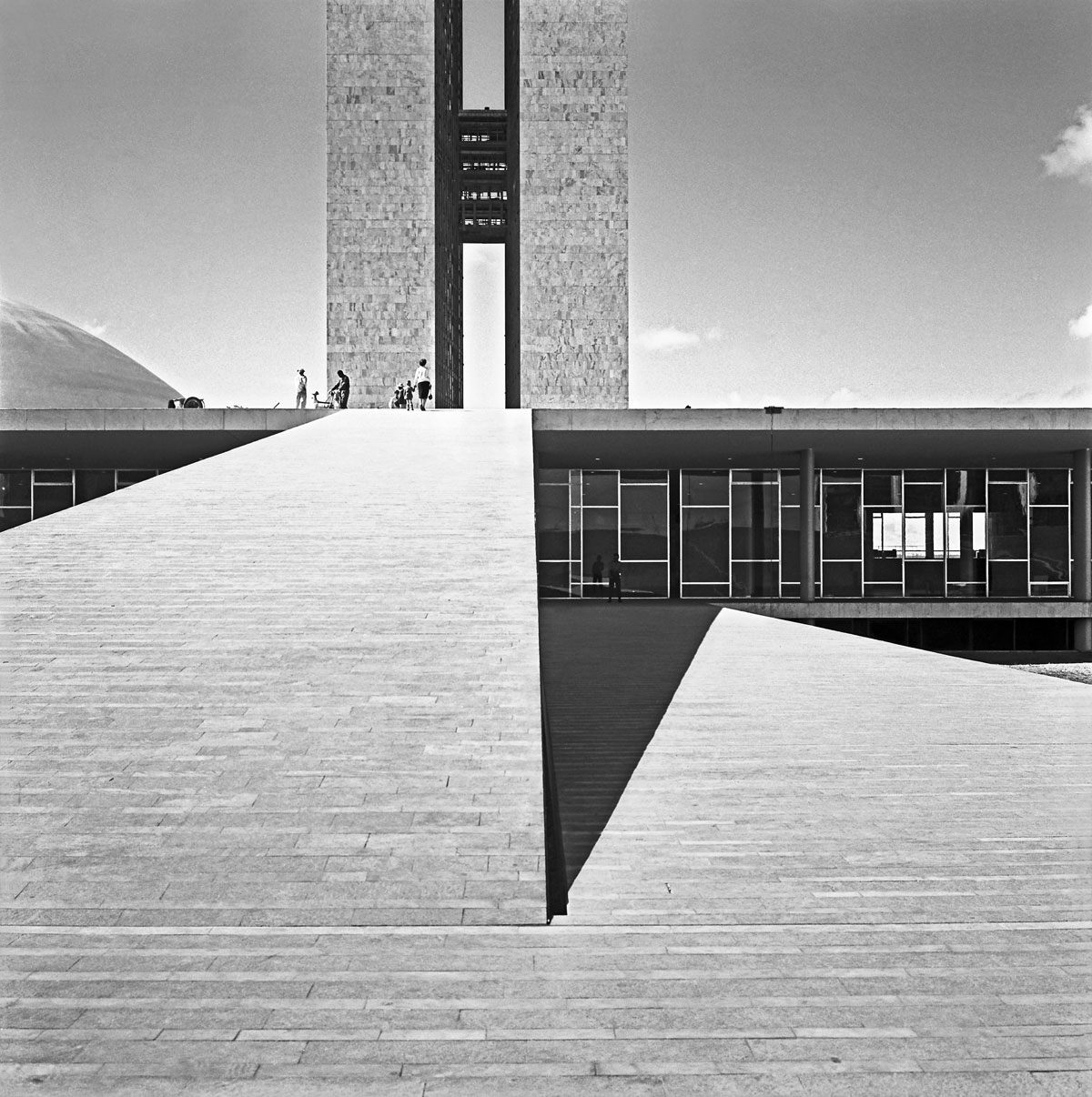
Marcel Gautherot / Instituto Moreira Salles Collection
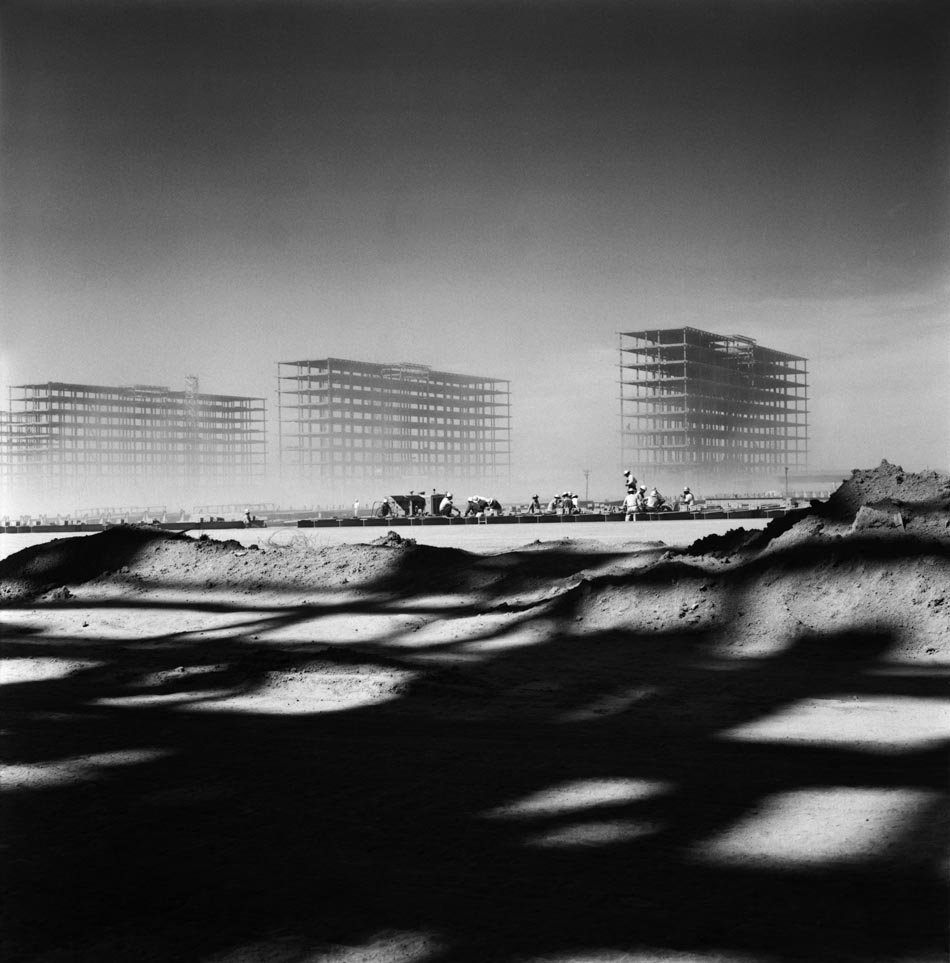
Marcel André Félix Gautherot (Brazilian, 1910-1996)
Ministries under construction Brasilia, Brazil
c. 1958
Gelatin silver photograph
Unframed: 39 3/8 × 39 3/8″ (100 × 100cm)
Marcel Gautherot / Instituto Moreira Salles Collection

Unknown photographer
Oscar Niemeyer. Cathedral Under Construction, Brasilia, Brazil
Nd
Gelatin silver photograph
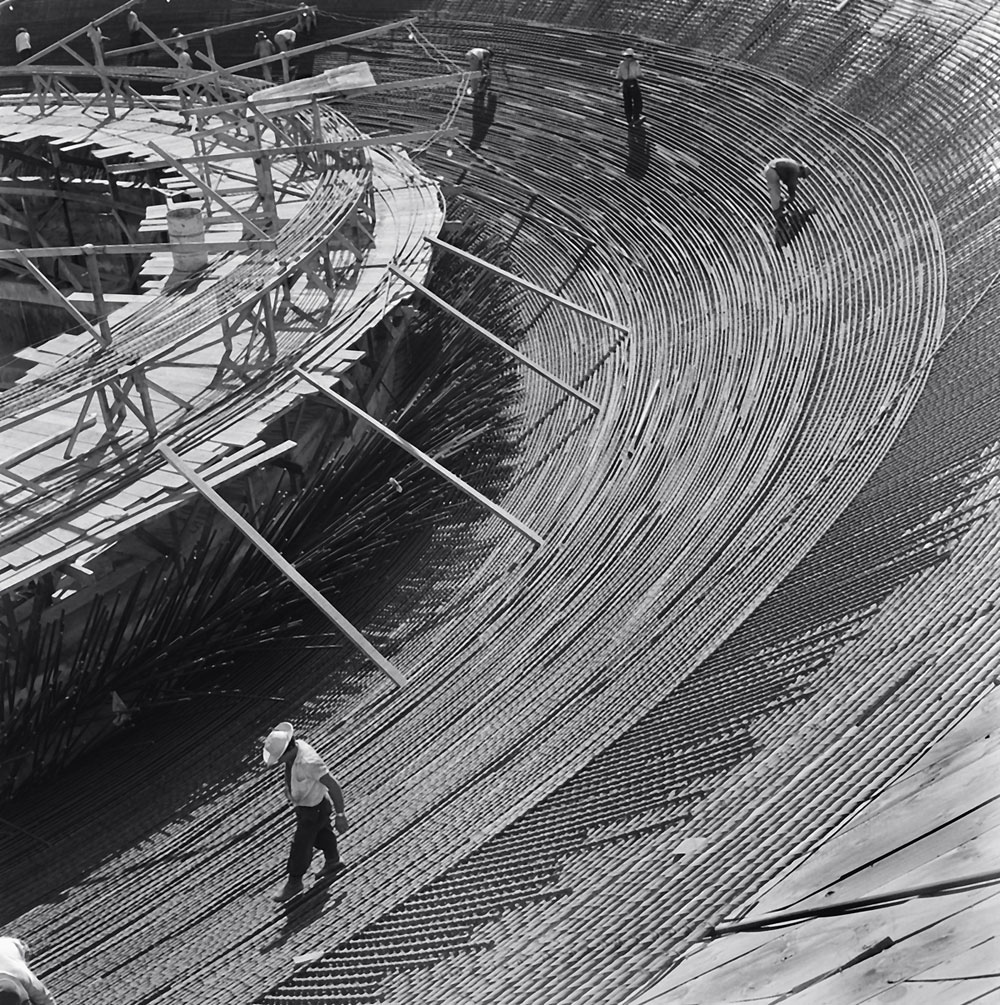
Marcel André Félix Gautherot (Brazilian, 1910-1996)
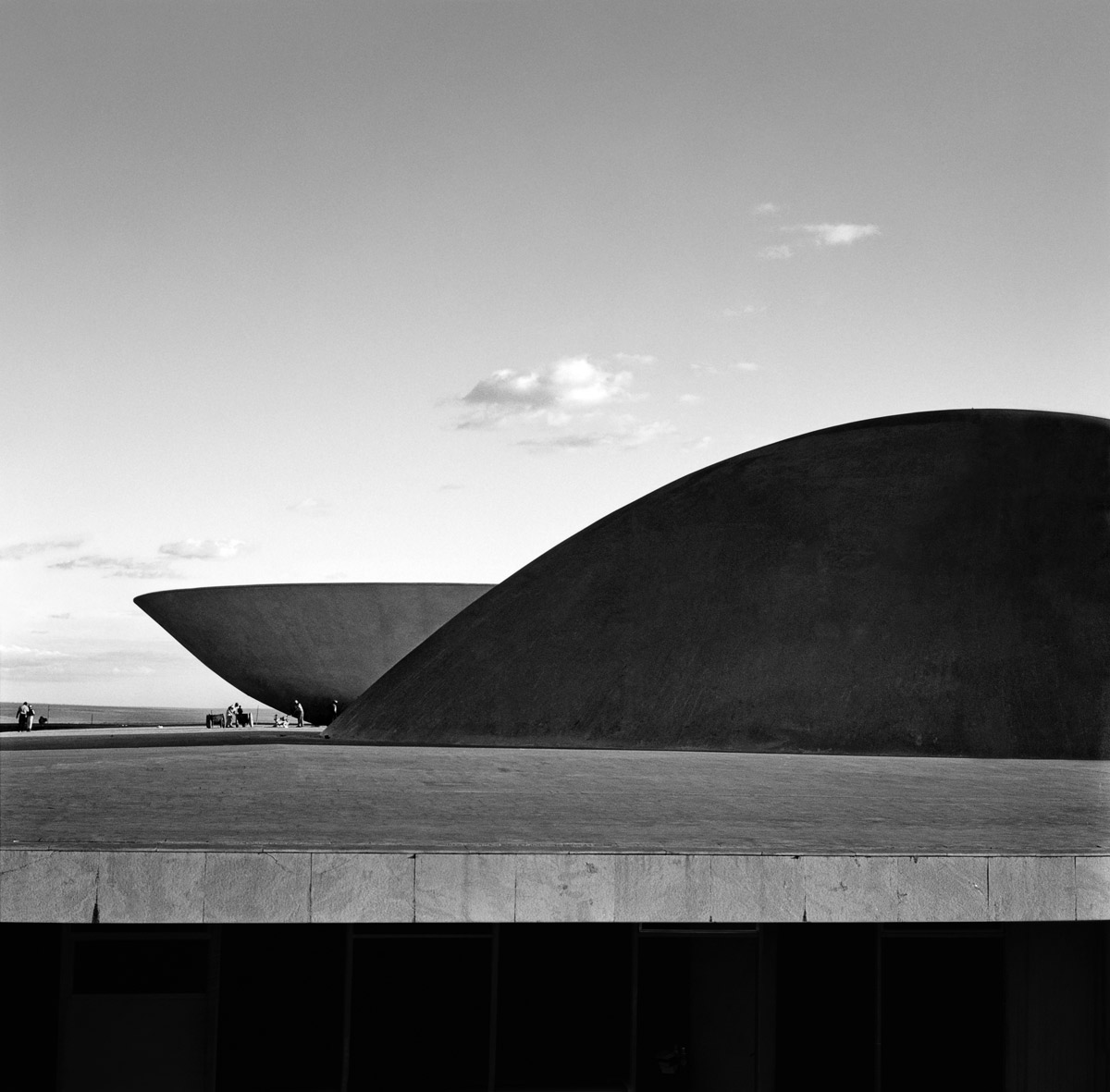
Congresso Nacional, Brasília National Congress Building
1958-1960
View of the inverted dome structure during construction c. 1958
Gelatin silver photograph
Unframed: 39 3/8 × 39 3/8″ (100 × 100cm)
Marcel Gautherot / Instituto Moreira Salles Collection
Brasília
The idea of moving Brazil’s capital from Rio de Janeiro to the central plateau was born in colonial times and a federal district was declared shortly after independence in 1889, but a site for the new city was chosen only in 1955. The following year the newly elected president, Juscelino Kubitschek, declared his intent to have Brazil advance fifty years in five. Oscar Niemeyer was named director of architecture and urbanism for the new city. He built the presidential palace and announced a national competition for an urban plan for a city of half a million inhabitants. From twenty-six entries, the international jury selected Lucio Costa’s plan. Costa’s design was structured around two main axes, one of civic symbolism, terminating in the Praça dos Três Poderes (Plaza of the three powers), the other – with a gentle curve to it – an axis of the daily functions of the city, a highway spine flanked by housing organised in verdant neighbourhood blocks (superquadras). The main bus terminal was placed at the intersection of the two axes, to be surrounded by the commercial, recreational, and cultural sectors, realising a long-held modernist dream of a city centred on infrastructure and movement. Niemeyer’s designs developed along the lines set out by Costa – a great esplanade lined with nearly identical buildings for the ministries and exceptionally sculptural designs for a cathedral, museum, and library. Although far from complete, Brasília was an irreversible reality at its inauguration in 1960.
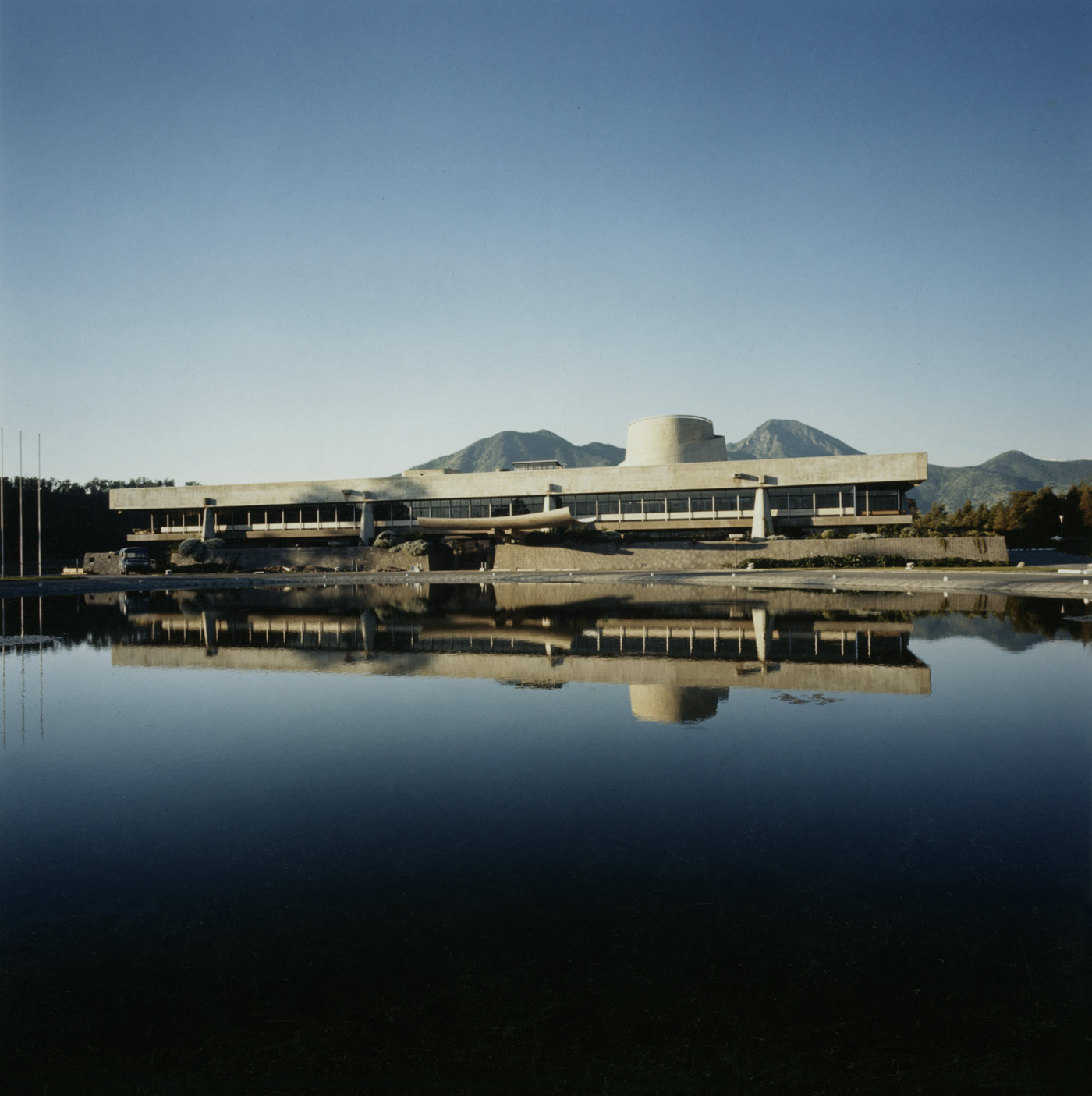
Emilio Duhart (Chilean, 1917-2006)
The United Nations Economic Commission for Latin America and the Caribbean (CEPAL), Santiago, Chile
1962-1966
Courtesy PUC Archivo de Originales
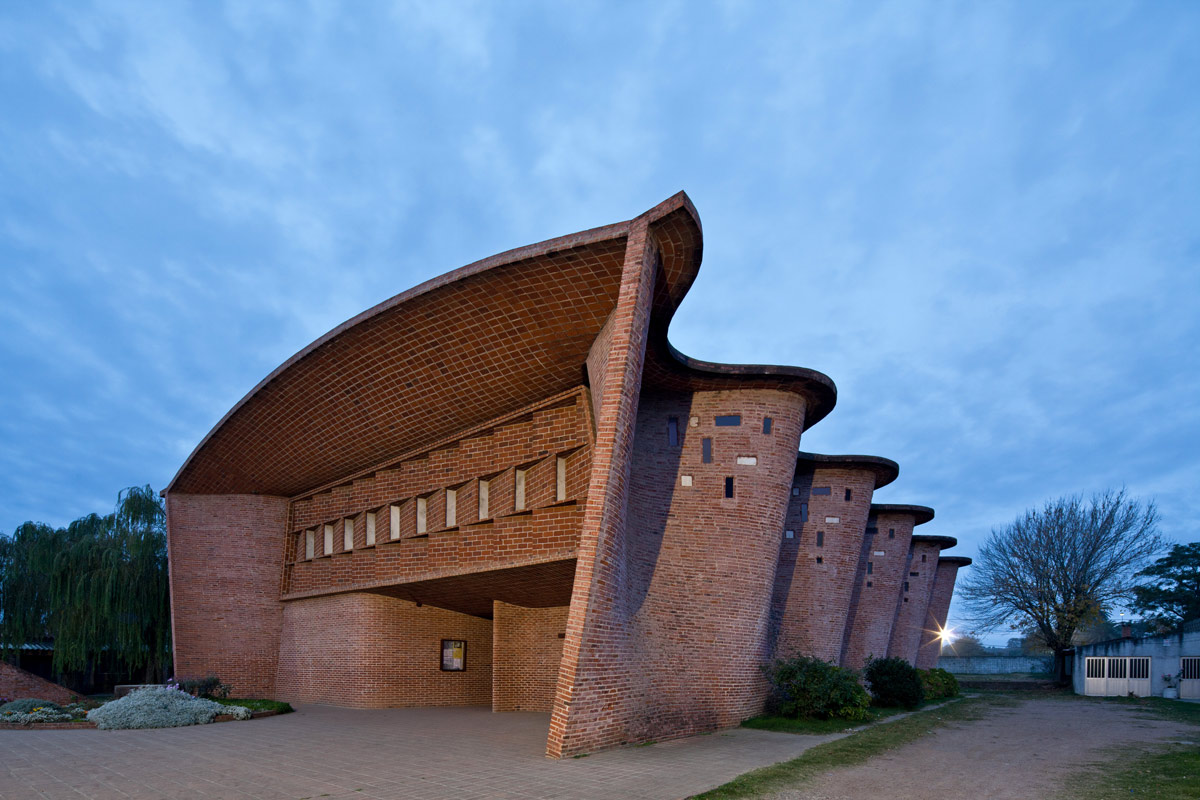
Eladio Dieste (Uruguayan, 1917-2000)
Church in Atlantida, Uruguay
1958
Photograph: Leonardo Finotti © Leonardo Finotti

Marcelo Sassón
Eladio Dieste at Atlantida Church, Uruguay
c. 1959
Gelatin silver photograph
Archivo Dieste y Montañez

Lúcio Costa (Brazilian, 1902-1998) and Oscar Niemeyer (Brazilian, 1907-2012)
Plaza of the three powers, Brasilia, Brazil
1958-1960
Photograph: Leonardo Finotti © Leonardo Finotti
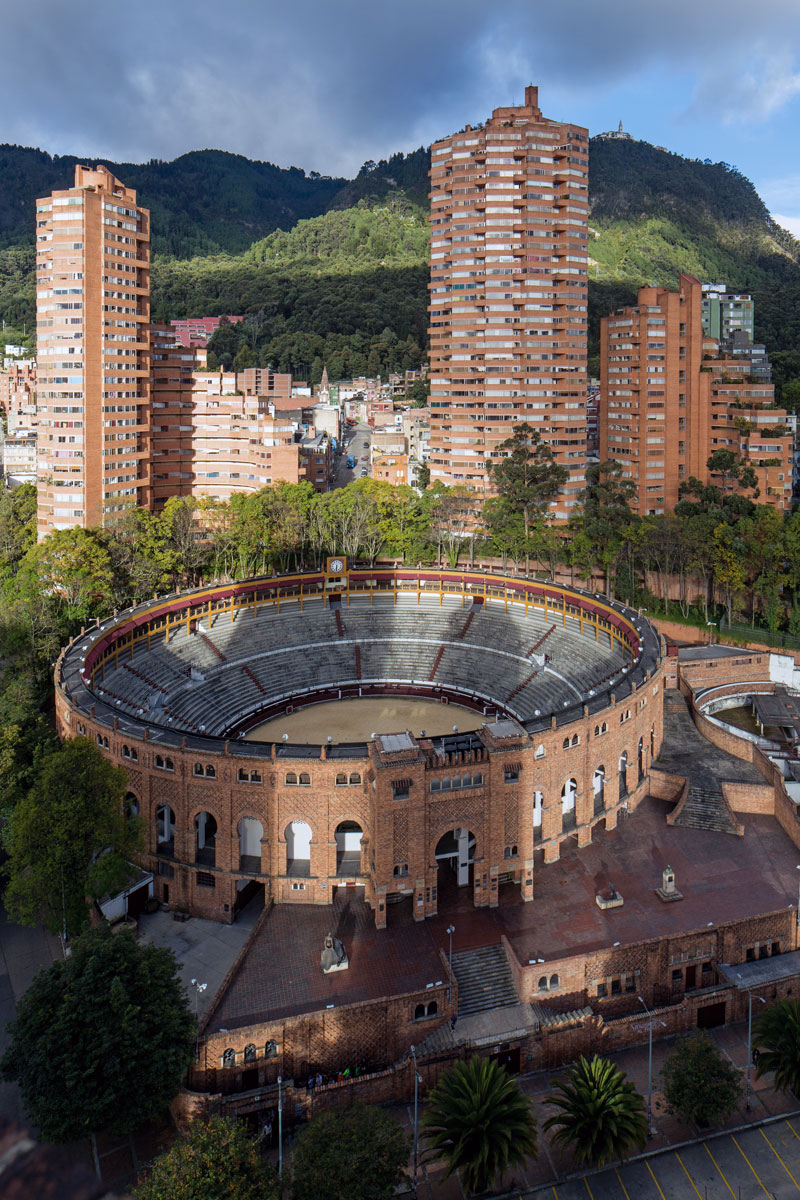
Rogelio Salmona (French Colombian, 1929-2007)
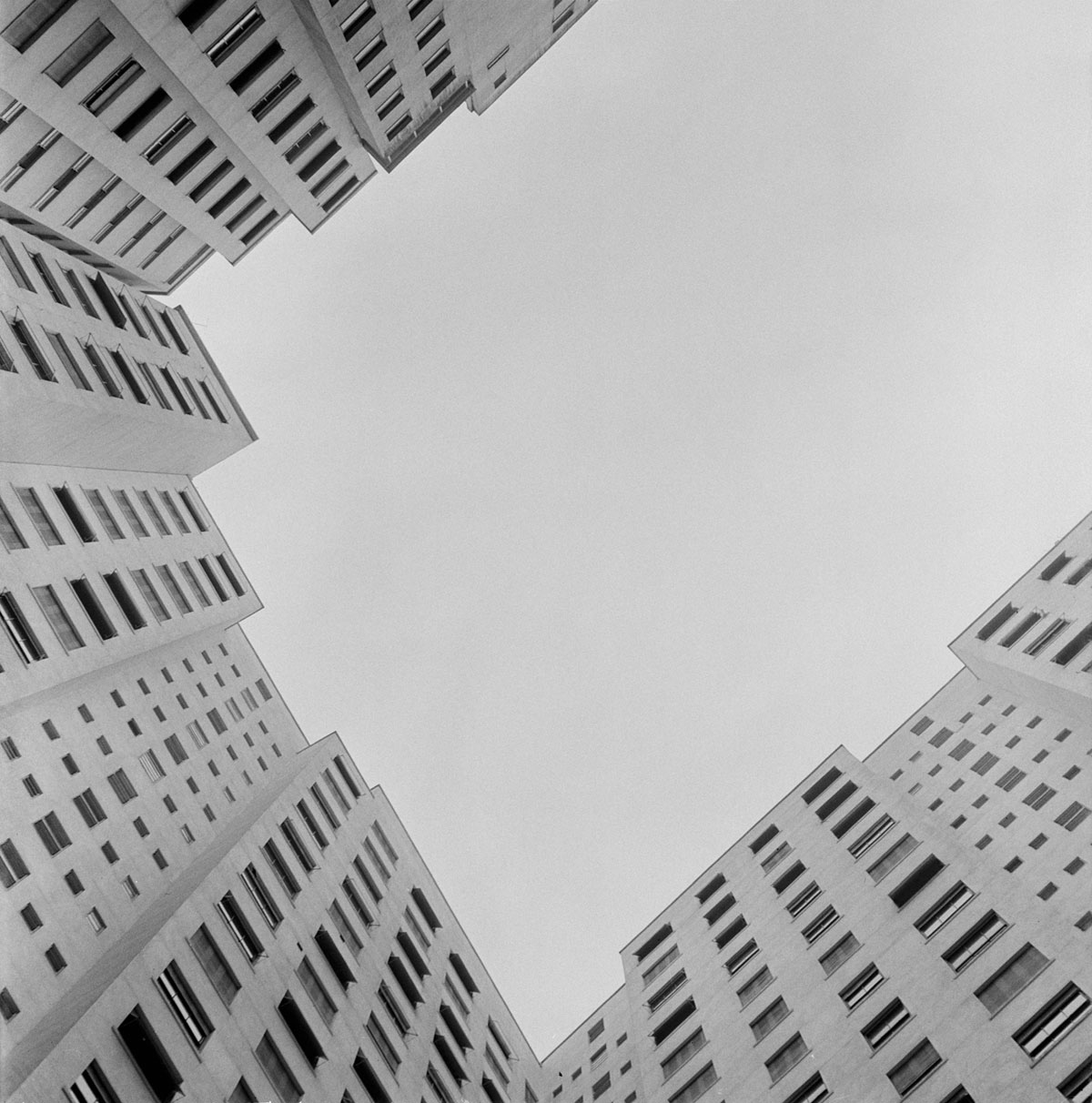
Torres del Parque Residencial Complex, Bogotá, Colombia
1964-1970
Photograph: Leonardo Finotti © Leonardo Finotti
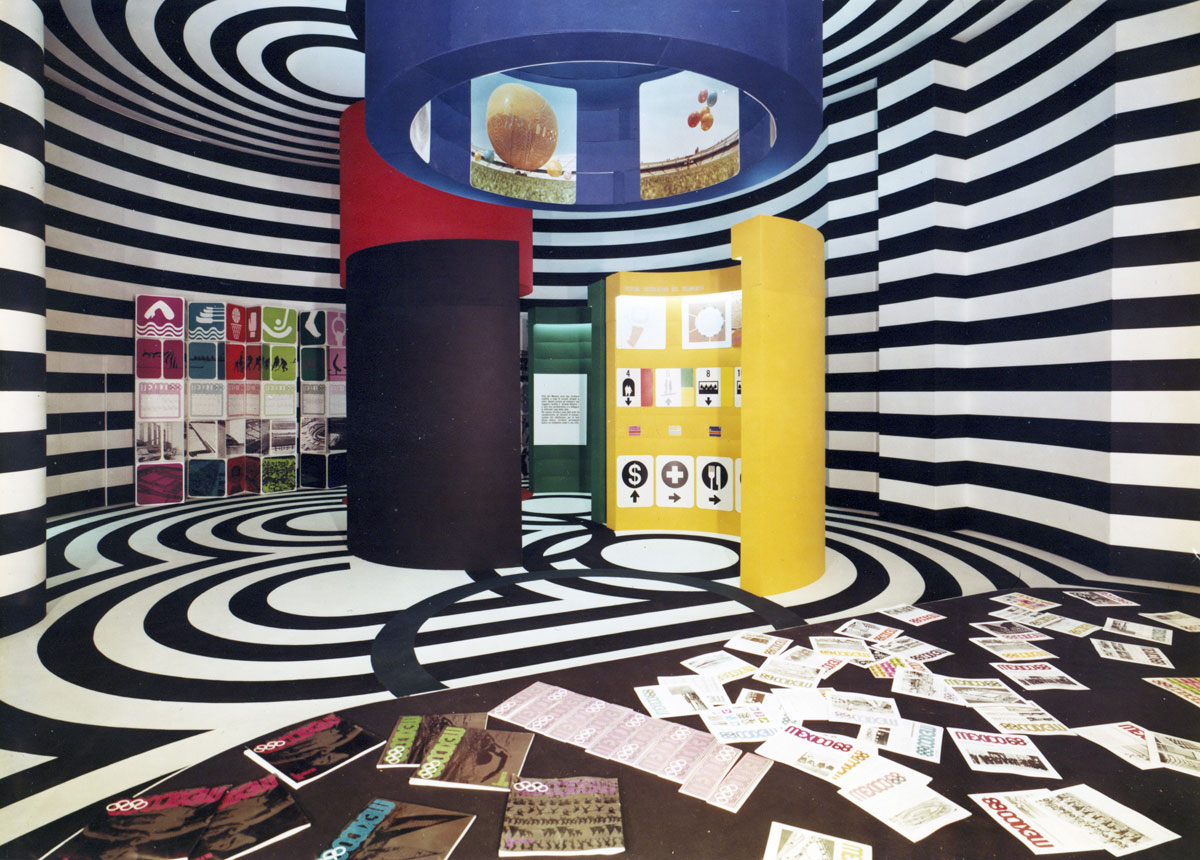
Eduardo Terrazas (Mexican, b. 1936)
Triennale di Milano, Mexican Pavilion
1968
Interior view with design based on Olympic logo by Terrazas and Lance Wyman and printed matter by Beatrice Trueblood
© Eduardo Terrazas Archive

Luis Barragán (Mexican, 1902-1988)
Torres de Satélite (1957), Ciudad Satélite, Mexico City, Perspective view of the towers
Undated
Colour chalk on cardboard
719 x 730mm
Barragán Archives, Barragan Foundation, Switzerland
© 2014 Barragan Foundation, Switzerland / Artists Rights Society (ARS), New York

Juan Sordo Madaleno (Mexican, 1916-1985)
Edificio Palmas 555, Mexico City, Mexico
1975
Gelatin silver photograph
Photograph: Guillermo Zamora
Museum of Modern Art, New York. Gift of Sordo Madaleno Arquitectos

Walter Weberhofer Quintana (Peruvian, 1923-2002)
View of Atlas Building, Lima
1953
Gelatin silver photograph
© Archive Walter Weberhofer

Hermano Martin Corréa, Hermano Gabriel Guarda, Patricio Gross, Raúl Ramirez
Benedictine Monastery Chapel, Santiago, Chile
1964
Gelatin silver photograph
Courtesy PUC Archivo de Originales

Cover of Latin America in Construction: Architecture 1955-1980, published by The Museum of Modern Art, New York
The Museum of Modern Art
11 West 53 Street
New York, NY 10019
Phone: (212) 708-9400
Opening hours:
10.30am – 5.30pm
Open seven days a week




 Art Blart _ art and cultural memory archive
You must be logged in to post a comment.