
Exhibition dates: 1st June – 7th October 2013
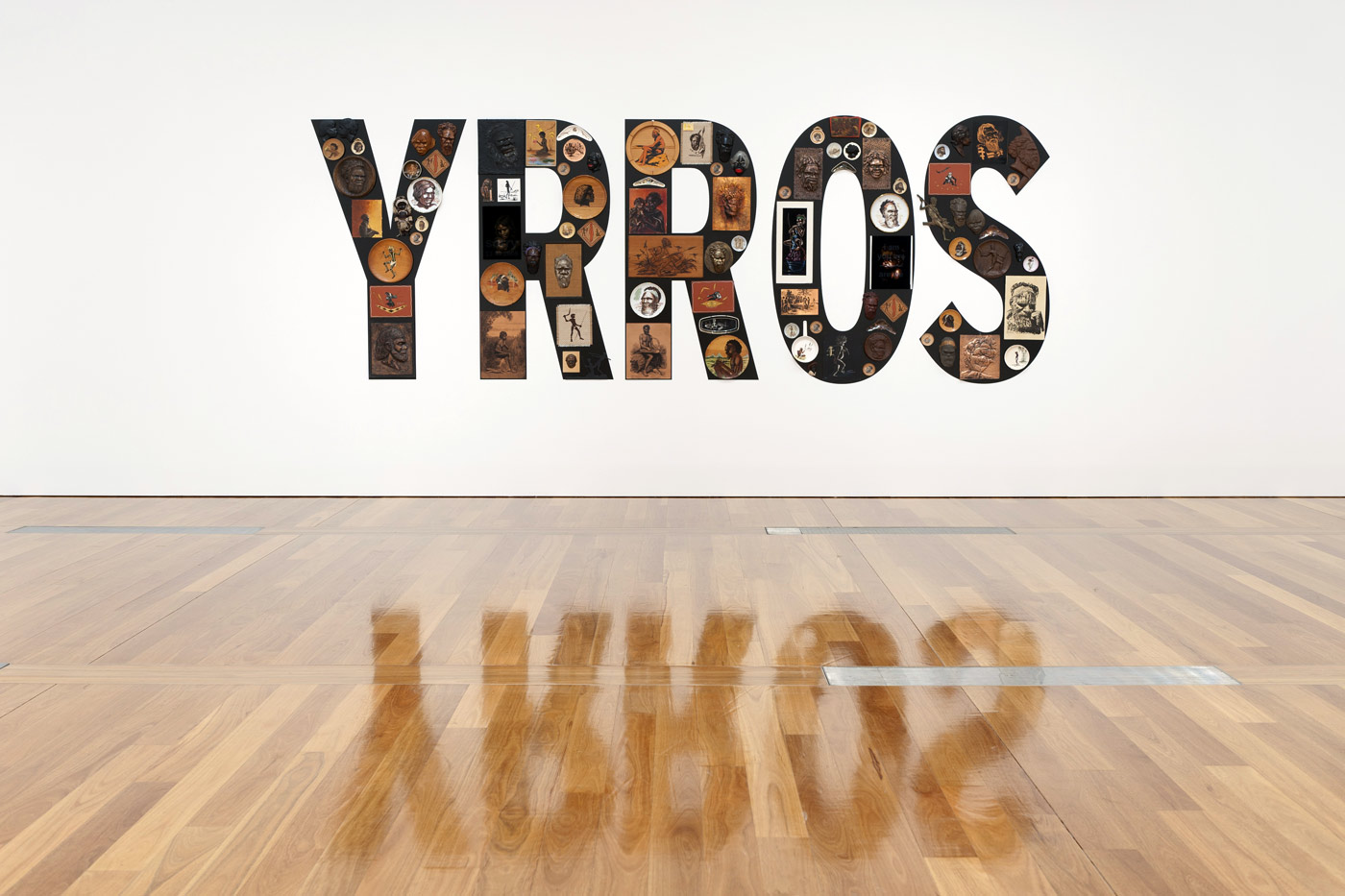
Tony Albert (Australia, Queensland b. 1981)
Girramay people
Sorry
2008
Found kitsch objects applied to vinyl letters
The James C Sourris, AM, Collection. Purchased 2008 with funds from James C Sourris through the Queensland Art Gallery Foundation
Collection: Queensland Art Gallery
R U SORRY?
Do you feel FORGIVEN?
What do I have to feel sorry for
I only arrived here yesterday
I FORGIVE you for all the SADNESS and SORROW that COLONISATION has CAUSED
You gutless wonder
GUILT, GUILTY, GUILTLESS, GUILELESS, GUTLESS
The persistence of memory – how the past lingers and subverts
MEMORY – inflicting more DAMAGE on the already DAMAGED
(TIME) to MOVE ON… Nothing to see here
Dr Marcus Bunyan
Many thankx to the The Gallery of Modern Art (GOMA) for allowing me to publish the photographs in the posting. Please click on the photographs for a larger version of the image.

Bindi Cole (Australian, Victoria b. 1975)
Wathaurung people
I forgive you
2012
Emu feathers on MDF board
Purchased 2012. Queensland Art Gallery Foundation
Collection: Queensland Art Gallery
© Bindi Cole 2012. Licensed by Viscopy, Sydney, 2013

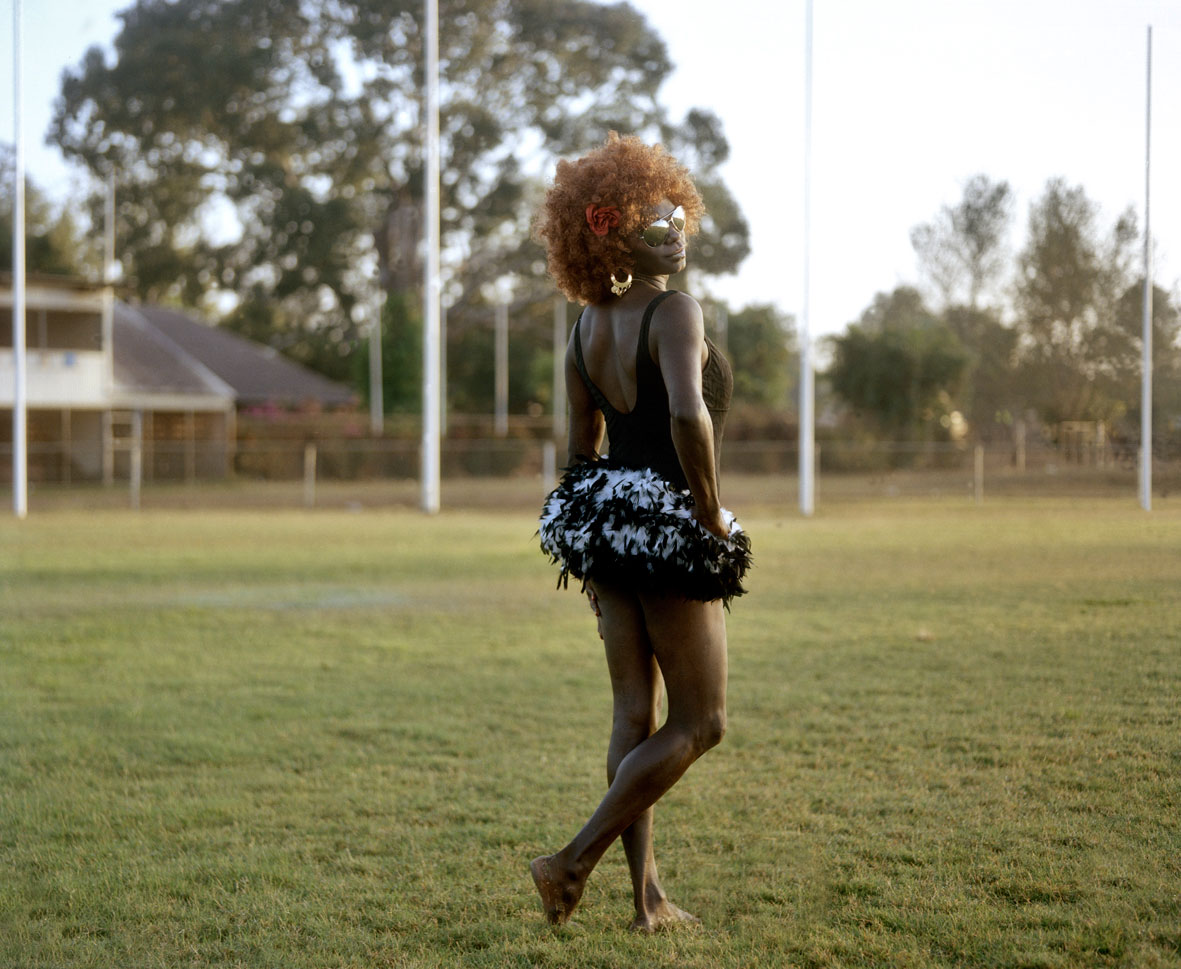
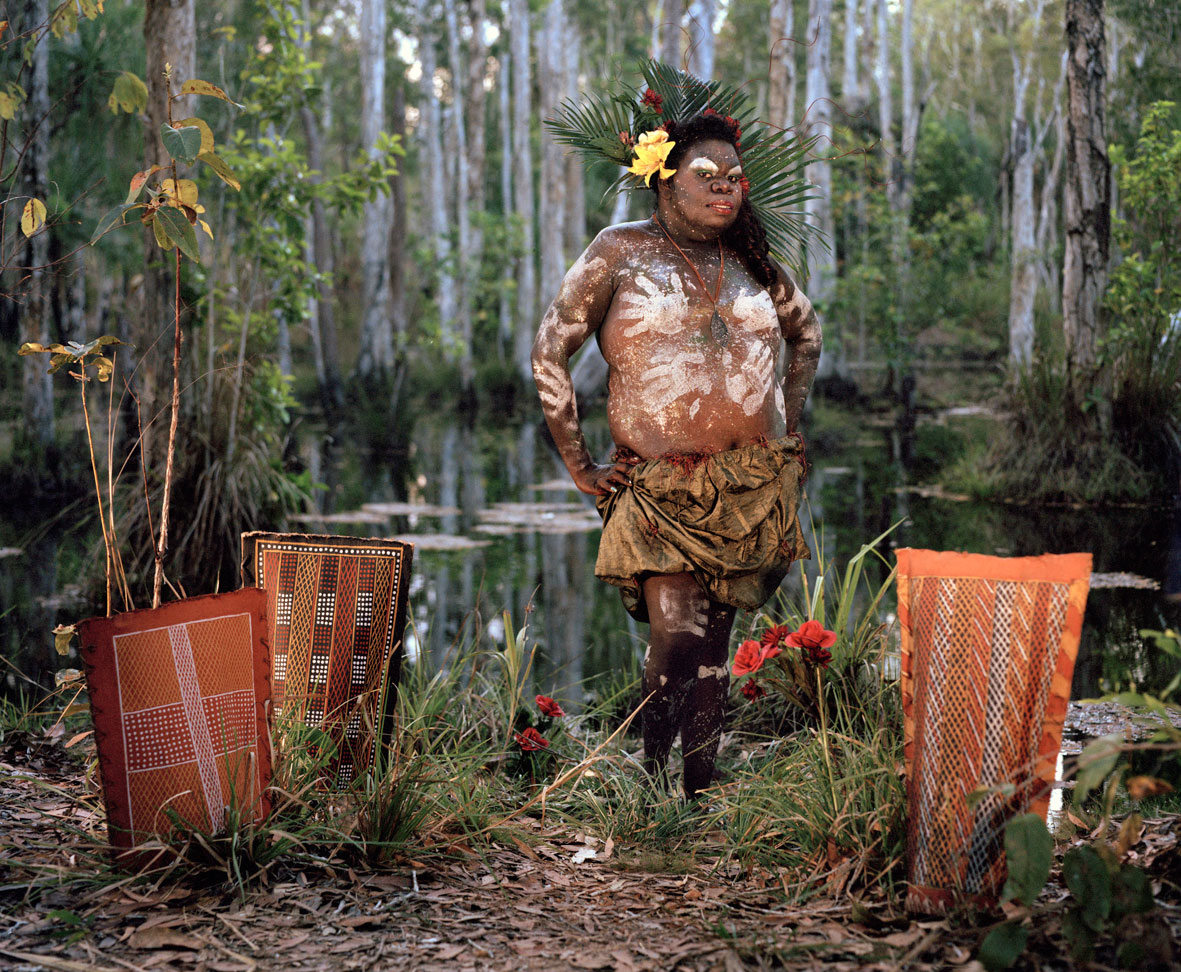
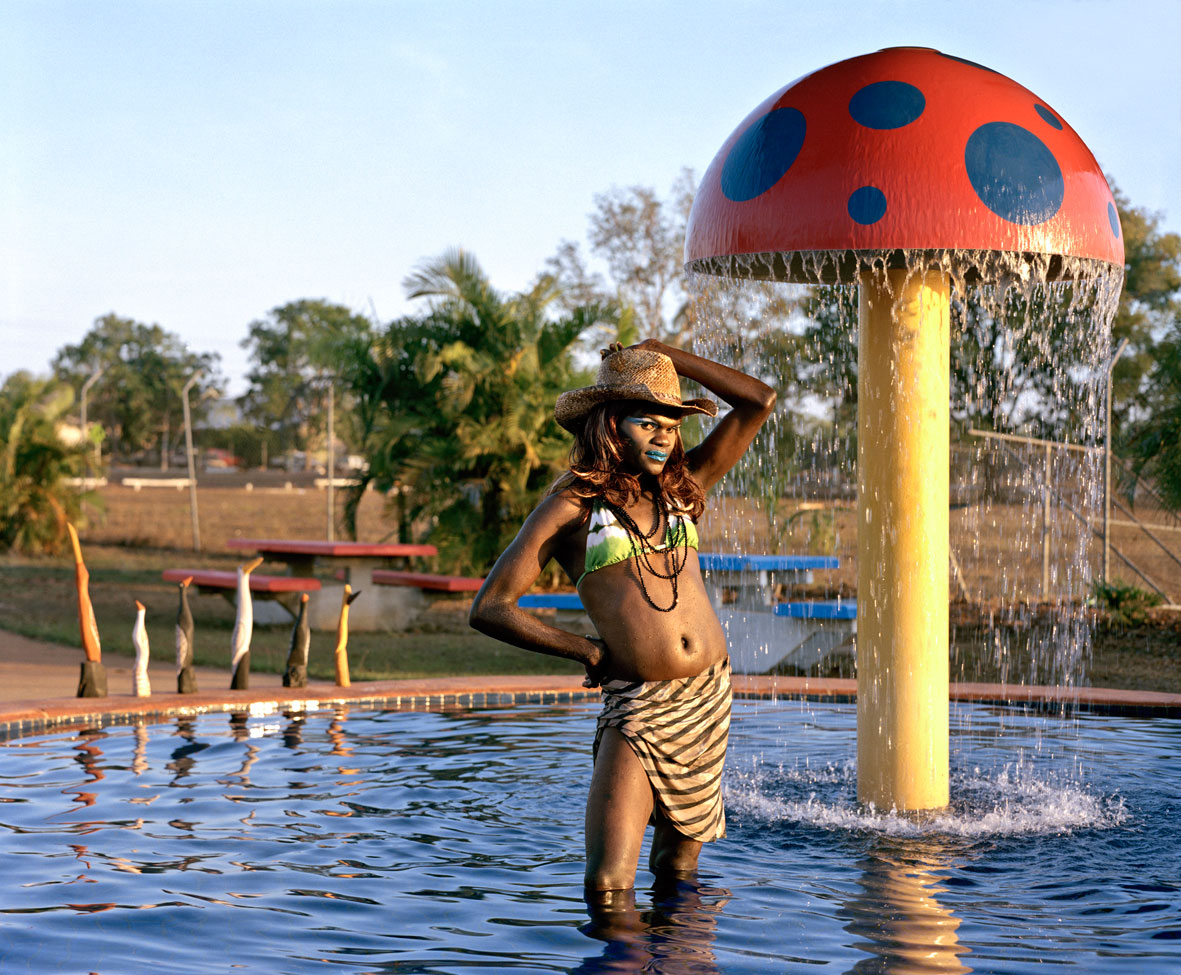
Bindi Cole (Australian, Victoria b. 1975)
Wathaurung people
Crystal
2009
From the series Sistagirls
Pigment print on Hahnemühle Photo Rag paper
Purchased 2011 with funds from the Bequest of Grace Davies and Nell Davies through the Queensland Art Gallery Foundation
Collection: Queensland Art Gallery
© Bindi Cole 2009. Licensed by Viscopy, Sydney, 2013
~ Review: ‘Sistagirls’ by Bindi Cole at Nellie Castan Gallery, Melbourne, July 2010
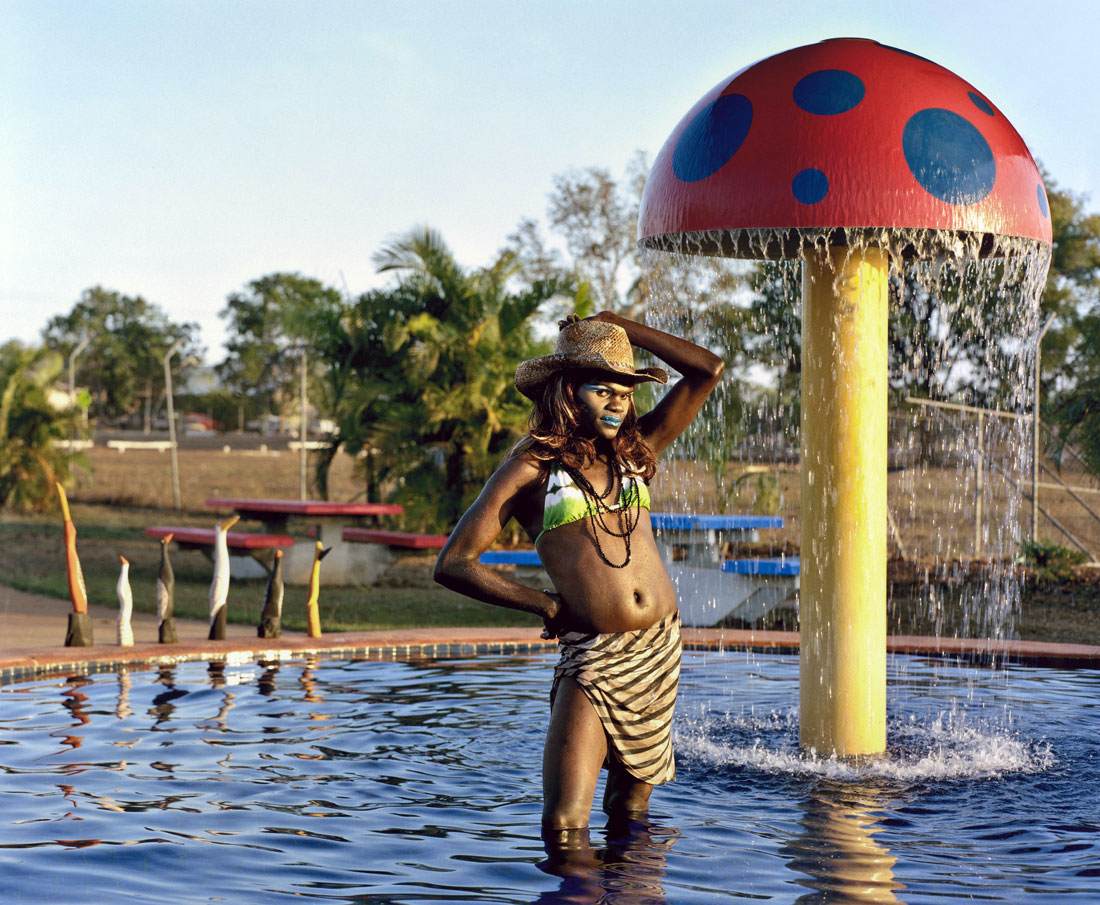
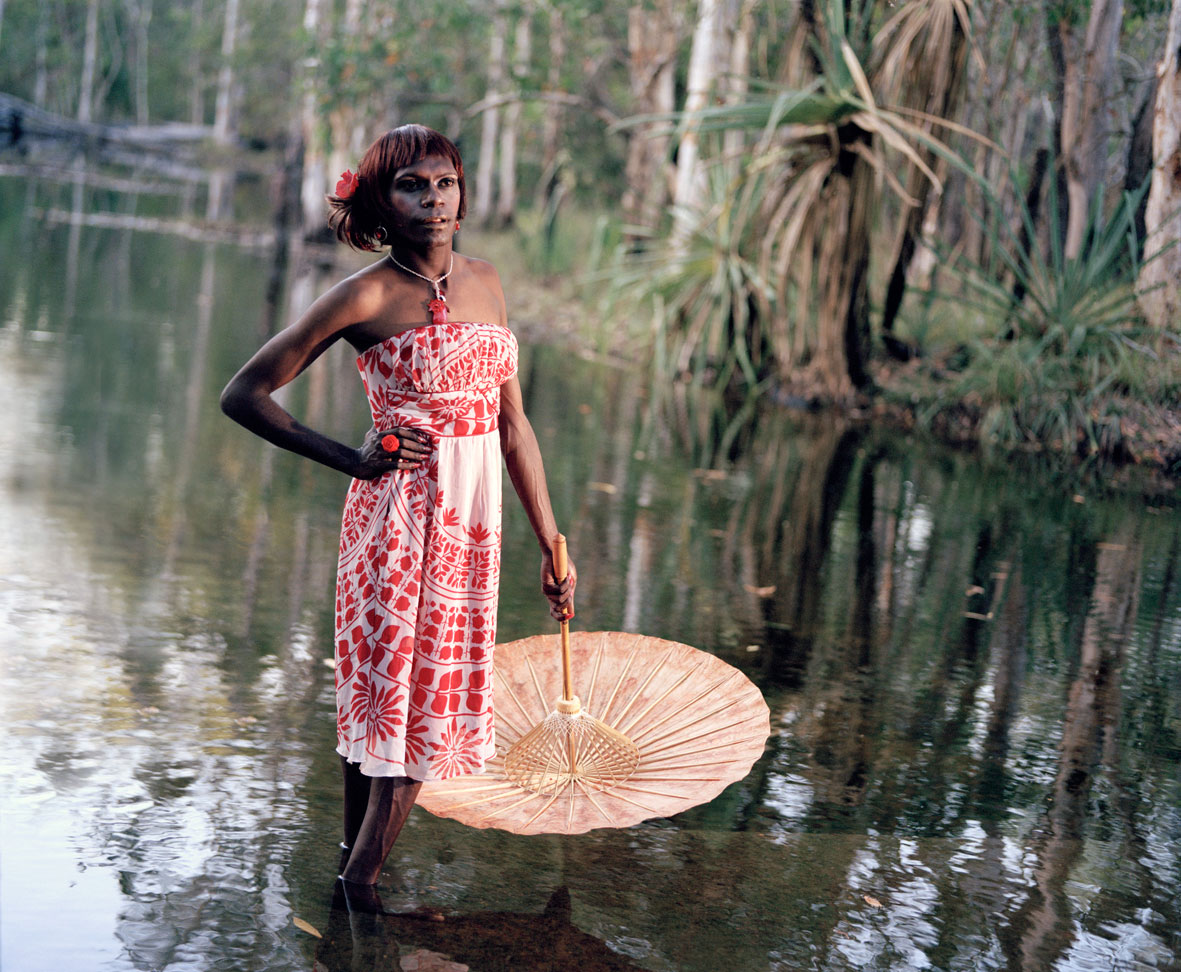
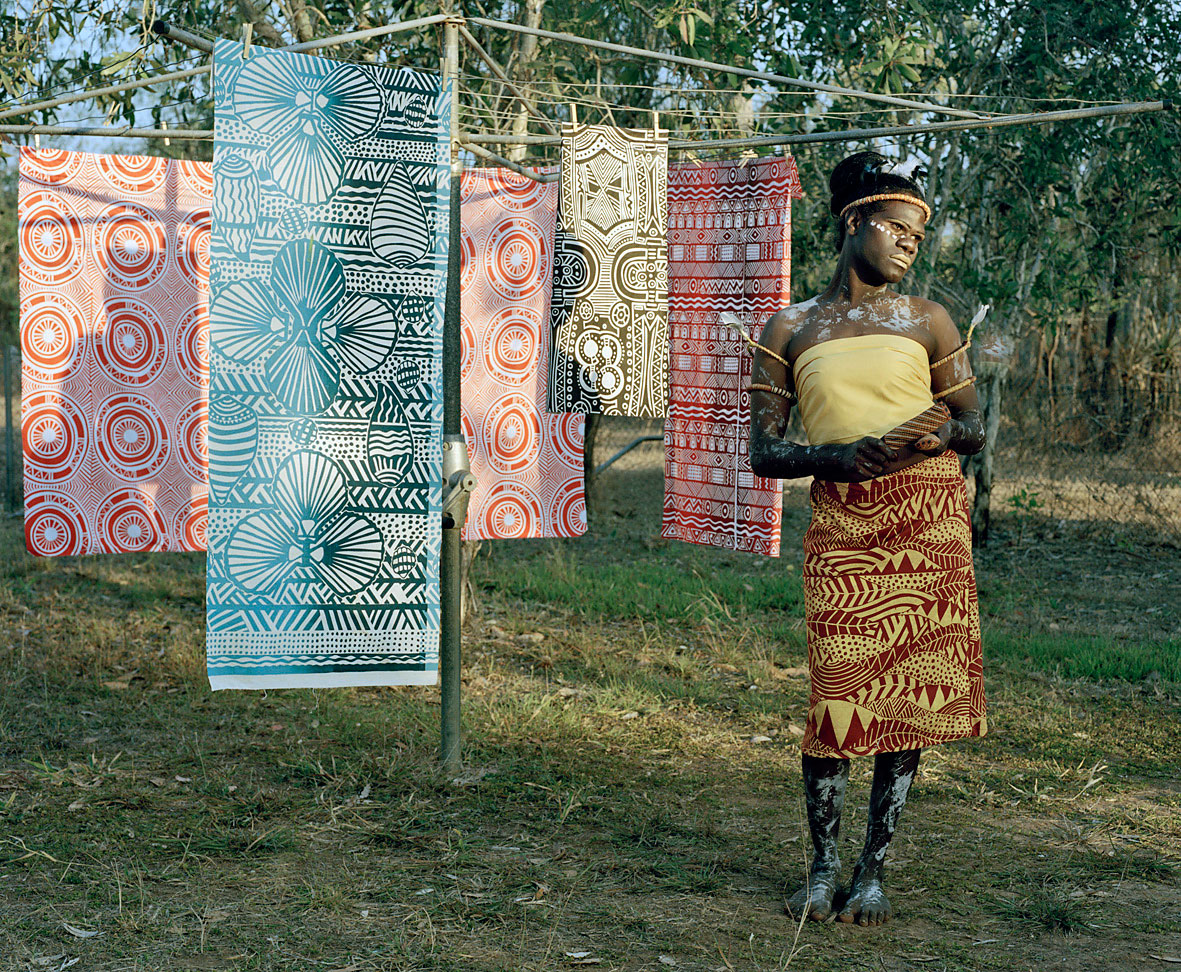
Bindi Cole (Australian, Victoria b. 1975)
Wathaurung people
Frederina
2009
From the series Sistagirls
Pigment print on Hahnemühle Photo Rag paper
Purchased 2011 with funds from the Bequest of Grace Davies and Nell Davies through the Queensland Art Gallery Foundation
Collection: Queensland Art Gallery
© Bindi Cole 2009. Licensed by Viscopy, Sydney, 2013
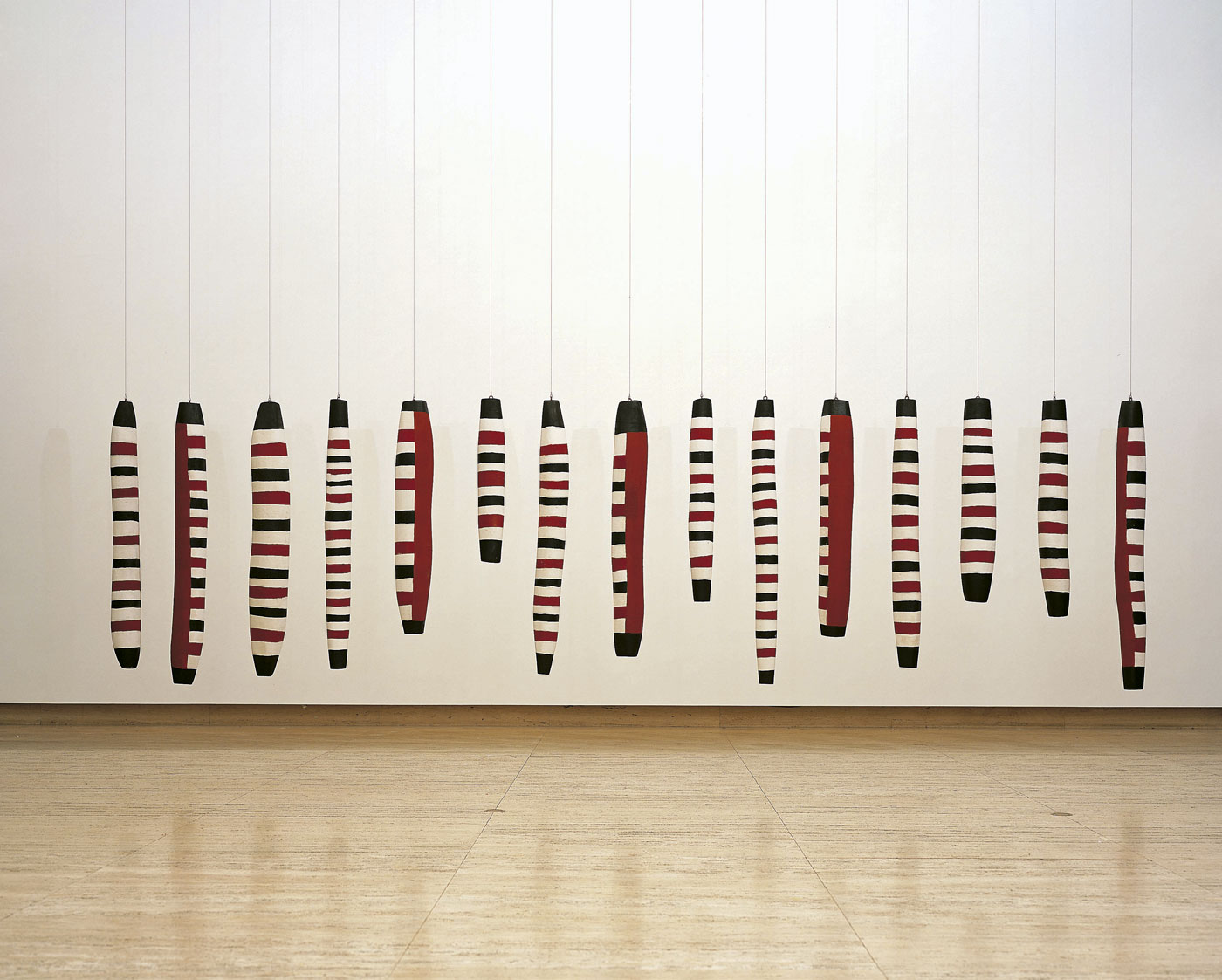
Arthur Koo-ekka Pambegan Jr (Australian, Queensland 1936-2010)
Wik-Mungkan people
Flying Fox Story Place
2002-2003
Carved milkwood (Alstonia muellerana) with synthetic polymer paint and natural pigments
Commissioned 2002 with funds from the Queensland Art Gallery Foundation Grant
Collection: Queensland Art Gallery
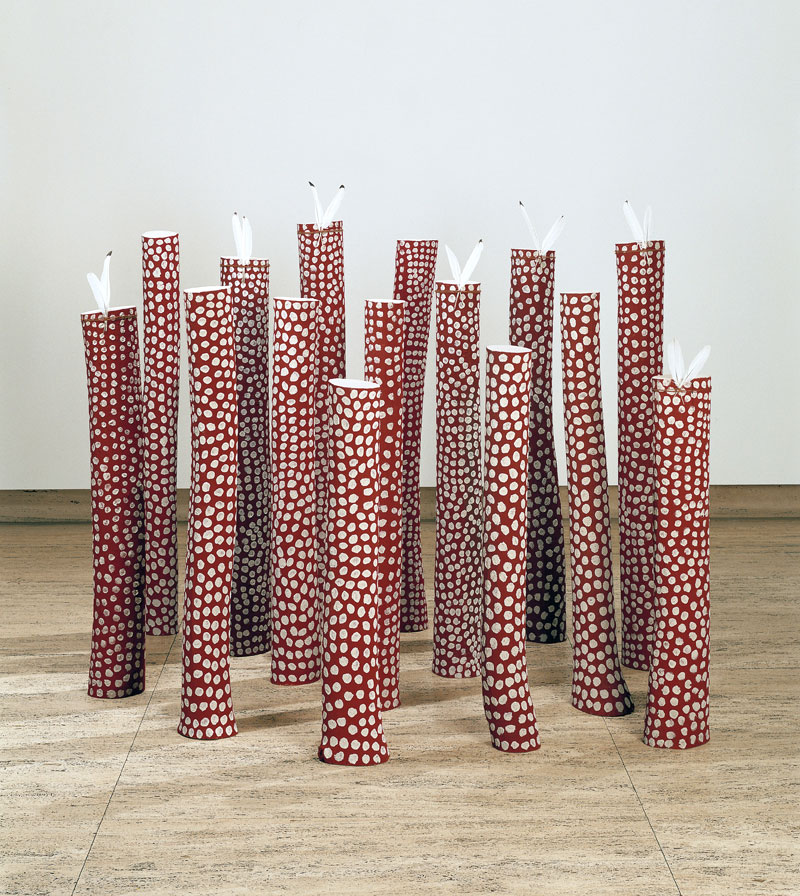
Ron Yunkaporta (Australian, Queensland b. 1956)
Wik-Ngathan people
Thuuth thaa’ munth (Law poles)
2002-2003
Cottontree wood (Hibiscus tiliaceus), ibis feathers, bush string with natural pigments
Commissioned 2002 with funds from the Queensland Art Gallery Foundation Grant
Collection: Queensland Art Gallery

Jennifer Mye Jr. (Australian, Queensland b. 1984)
Meriam Mir people
Basket with short handles
2011
Woven polypropylene tape (blue with Australian flag motif)
Purchased 2011 with funds from Thomas Bradley through the Queensland Art Gallery Foundation
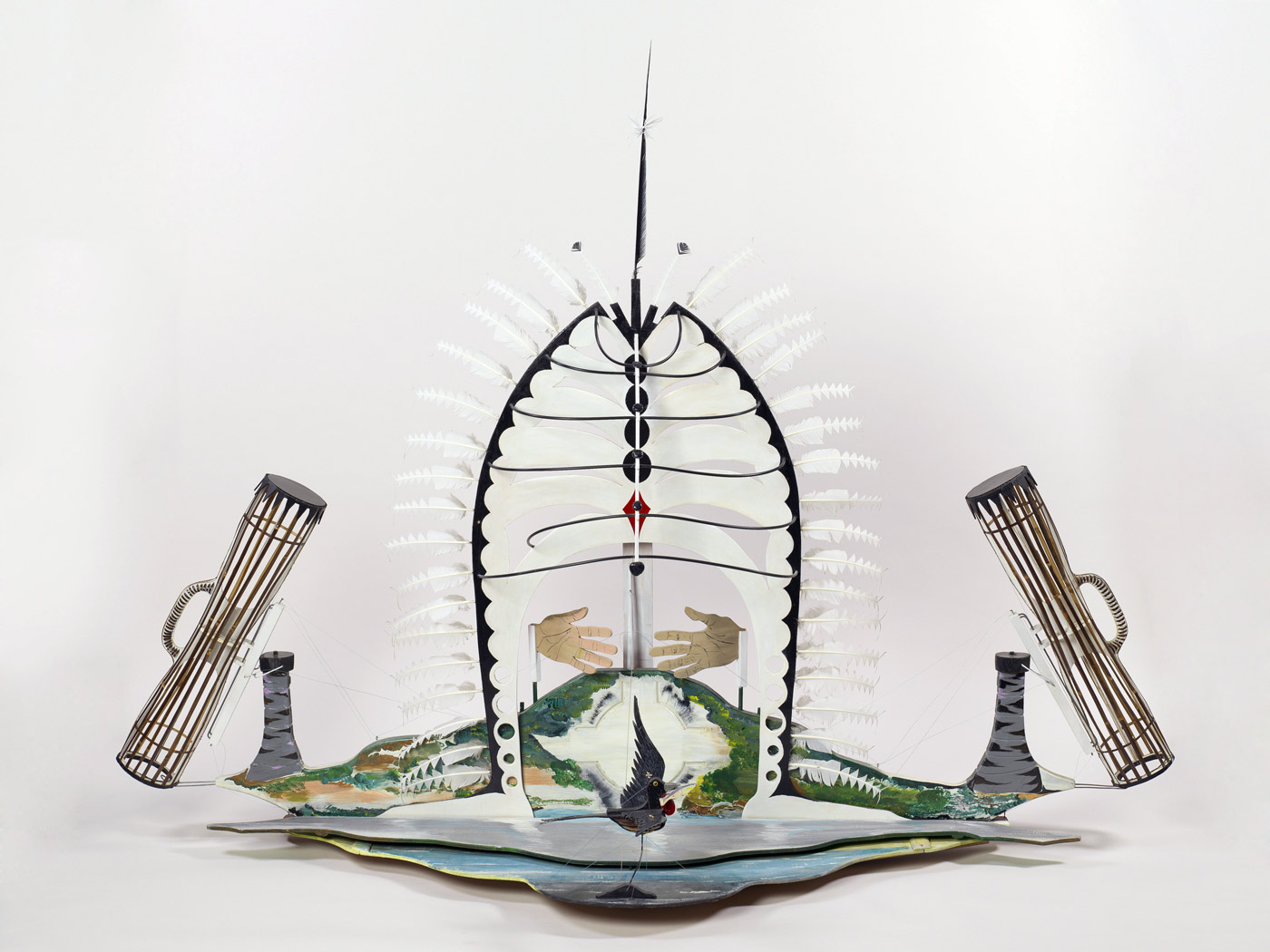
Ken Thaiday Sr (Australian, Queensland b. 1950)
Meriam Mir people
Symbol of the Torres Strait
2003
Plywood, synthetic polymer paint, feathers, black bamboo, plastic tubing, fishing line
Purchased 2004 with funds from Corrs Chambers Westgarth through the Queensland Art Gallery Foundation
Collection: Queensland Art Gallery

Dinny McDinny (Australian, Northern Territory c. 1927-2003)
Marnbaliya people, Balyarrinji skin group
Kalajangu – Rainbow Dreaming came through Marnbaliya Country
2003
Synthetic polymer paint on canvas
Purchased 2004
Queensland Art Gallery Foundation
Collection: Queensland Art Gallery
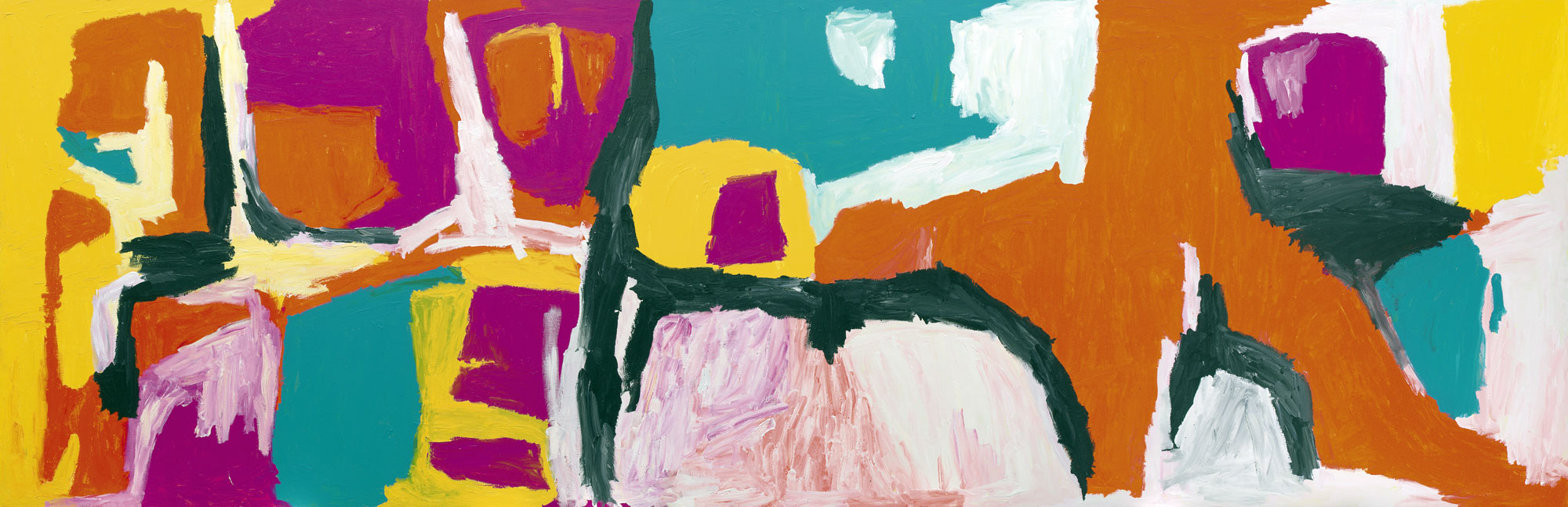
Sally Gabori (Australian, Queensland 1924-2015)
Kaiadilt people
Dibirdibi Country
2008
Synthetic polymer paint on linen
Purchased 2008 with funds from Margaret Mittelheuser, AM, and Cathryn Mittelheuser, AM, through the Queensland Art Gallery Foundation
Collection: Queensland Art Gallery
© Sally Gabori 2008. Licensed by Viscopy, Sydney, 2013
Gabori created a body of work, which expressed sensations of life and cultural memory in diaspora, and differed from other known forms of Aboriginal painting, which focused on story-telling. Most of Gabori’s works represent places on Bentinck Island of deep personal significance to the artist: her husband’s place, Dibirdibi Country, her father’s place, Thundi, her own Country, Mirdidingki, and the first outstation, Nyinyilki.
Gabori lived on Bentinck Island in accordance with custom, developing knowledge of Kaiadilt cartography and cosmology, until the entire population was removed to Mornington Island mission by European settlers in 1948.
Text from the NGV website
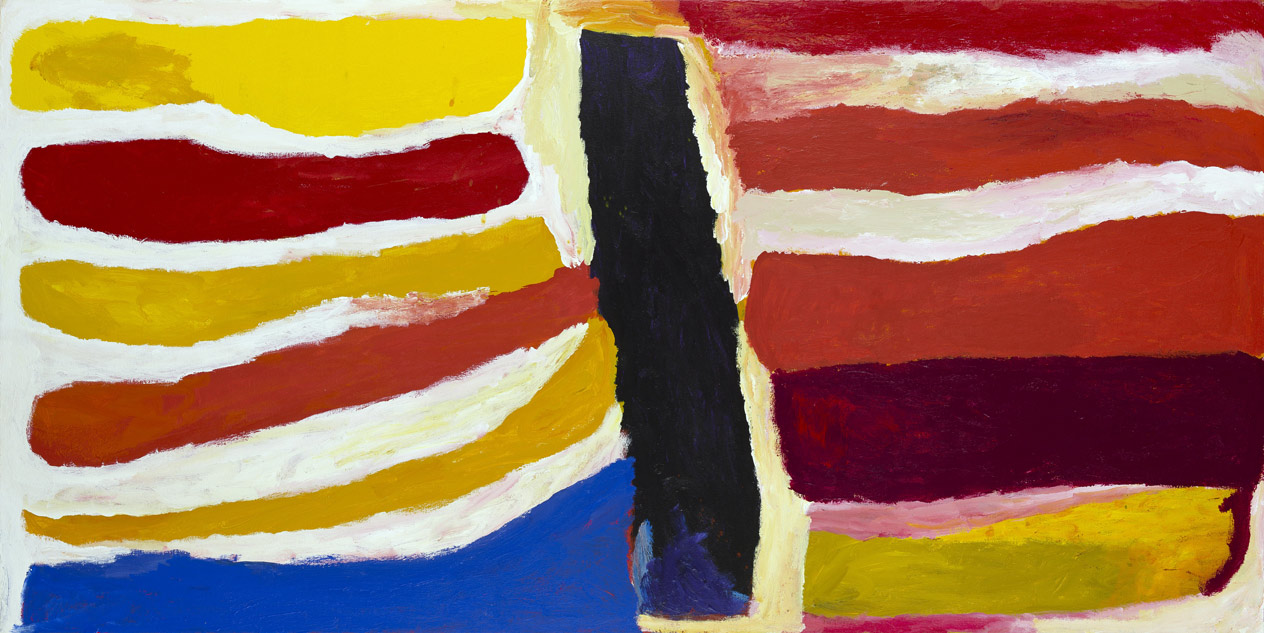
Wakartu Cory Surprise (Australian, Western Australia 1929-2011)
Walmajarri people
Mimpi
2011
Synthetic polymer paint on canvas
Purchased 2012
Queensland Art Gallery
Collection: Queensland Art Gallery
© Wakartu Cory Surprise 2011. Licensed by Viscopy, Sydney, 2013
“When I paint, I think about my country and where I have been travelling across that couontry. I paint from here (points to head-thinking about country) and here (points to breasts, collarbone and shoulder blades which is reference to body painting). I think abut my people the old people and what they told me, I think about jumangkarni (Dreamtime). Nobody taught me how to paint, I put down my own ideas, I saw these palces for my self, I went there with the old people. I paint jiji (sand hills), jumu (soak water), jila (spring), jiwari (rock hole), pamarr (hills and rock country), I think about mangarri (vegetable food) and kuyu (game) from my country and when I was there. Whe I paint I am thinking about law from a long time ago, I am thinking about the country, my country. When I first painted we didn’t get money, nothing. I like painting, its good, I get pamarr (word for rock, stone money) for it, I can buy my food, tyres, fix my car, I give some money to family and I keep some for me.”
~ Wakartu Cory Surprise
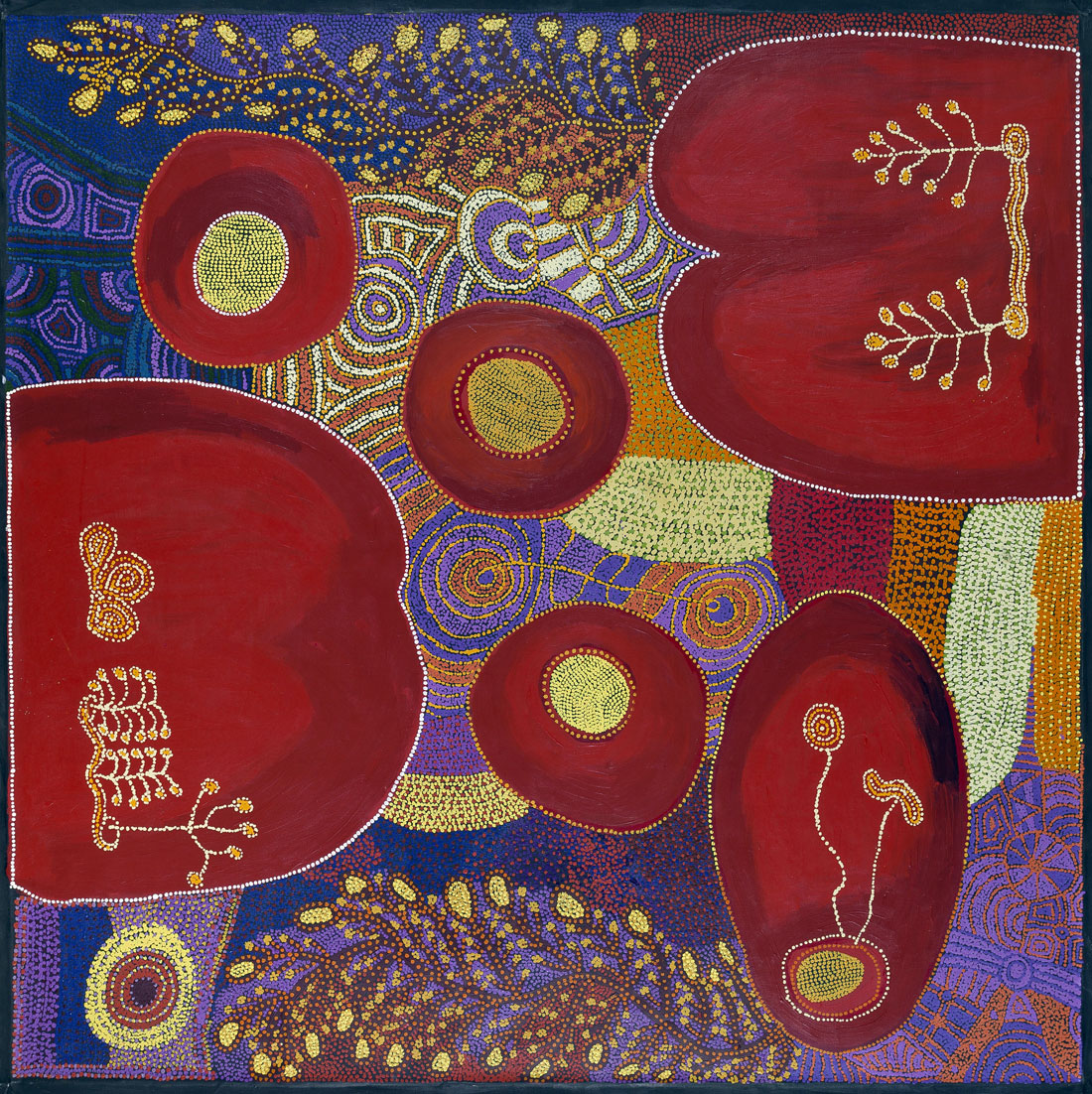
Ruby Tjangawa Williamson (Australian, South Australia b. 1940)
Pitjantjatjara people
Nita Williamson (Australian, South Australia b. 1963)
Suzanne Armstrong (Australian, South Australia b. 1980)
Pitjantjatjara people (Collaborating artists)
Ngayuku ngura (My country) Puli murpu (Mountain range)
2012
Synthetic polymer paint on linen
Purchased 2012 with funds from Margaret Mittelheuser, AM, and Cathryn Mittelheuser, AM, through the Queensland Art Gallery Foundation
Collection: Queensland Art Gallery
Ruby Tjangawa Williamson is a senior law woman committed to fostering traditional culture. She began painting in 2000. Her distinctive works are acclaimed and she is regarded as one of Amata’s most significant artists. Williamson also weaves tjanpi (desert grass) baskets and makes punu (wood carvings) with pokerwork designs.
My Country, I Still Call Australia Home: Contemporary Art from Black Australia is the Gallery’s largest exhibition of contemporary art by Aboriginal and Torres Strait Islander artists to date. The exhibition examines the strengths of the Gallery’s holdings and explores three central themes – presenting Indigenous views of history (My history), responding to contemporary politics and experiences (My life), and illustrating connections to place (My country).
From paintings and sculptures about ancestral epicentres to photographs and moving-image works that interrogate and challenge the established history of Australia, to installations responding to political and social situations affecting all Australians, the thread that binds these artists is their collective desire to share their experiences and tell their stories.
“Drawing on three decades of research, collaboration and Collection development, My Country, I Still Call Australia Home highlights the connection Aboriginal and Torres Strait Islander artists have with country as both ‘land’ and ‘nation’, and features over 300 works by 116 artists from every state and territory,” Mr Saines said.
“Curated by Bruce McLean, a Wirri / Birri-Gubba man with heritage from the central coast of Qoeensland and the Gallery’s Curator of Indigenous Australian Art, the exhibition gives voice to artists who investigate historical and contemporary political and social issues. Many of these issues and works are confronting and controversial, and we are proud of the role our Gallery plays as a forum for discussion, debate and education.”
Mr Saines said the exhibition was divided in to three broad thematic strands that explore how Aboriginal and Torres Strait Islander artists depict the stories of their communities and highlight contemporary Indigenous experiences in Australia.
Press release from the Gallery of Modern Art (GOMA) website

Michael Cook (Australian, Queensland b. 1968)
Bidjara people
Civilised #13
2012
Inkjet print on paper
Purchased 2012
Queensland Art Gallery
Collection: Queensland Art Gallery
© The artist
Michael Cook’s works depict an ethereal dreamworld, a timeless place that traverses both the colonial and contemporary worlds and is sustained on ‘what ifs’ and hypotheticals. It is a place of Cook’s own modern Dreaming. His central question is quite simple: what if the British, instead of dismissing Aboriginal society, had taken a more open approach to their culture and knowledge systems? This all-Aboriginal world is a sort of utopia where questions can be posed and answered without the complication of race – there is no black and white, no right or wrong. The figures within them are both conquerors and conquered. Through the use of images of Aboriginal people, often in roles opposite to the stereotypical, Cook ensures that an Aboriginal voice is ever-present.
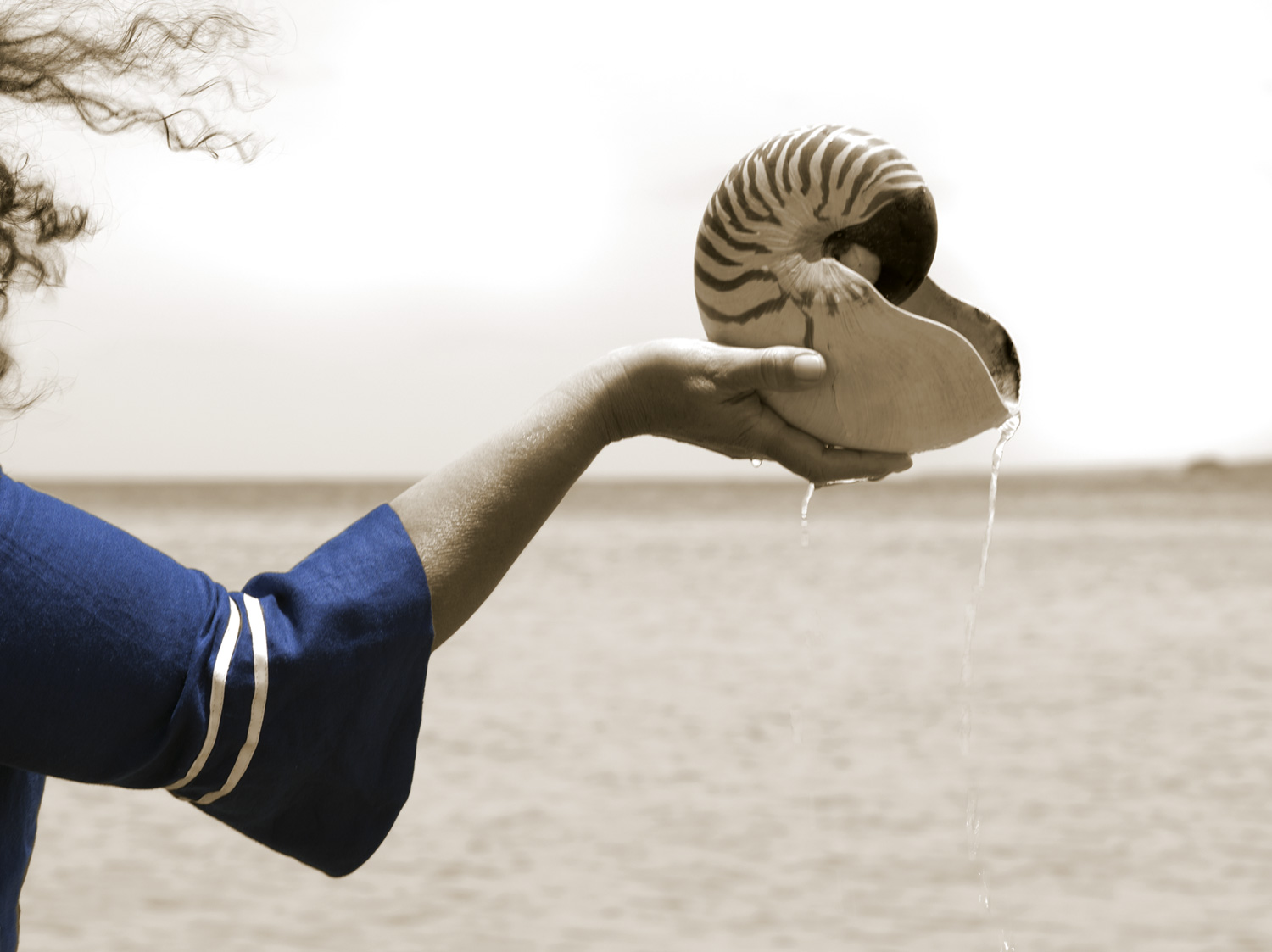
Fiona Foley (Australian, Queensland/New South Wales b. 1964)
Badtjala people, Wondunna clan, Fraser Island
The Oyster Fishermen #1
2011
Inkjet print on Hahnemühle paper
Purchased 2012
Queensland Art Gallery Foundation
Collection: Queensland Art Gallery

Vernon Ah Kee (Australian, Queensland b. 1967)
Kuku Yalanji/Waanyi/Yidinyji/GuuguYimithirr people
Tall Man (still)
2010
Four-channel digital video installation from DVD
Purchased 2012
Queensland Art Gallery
Collection: Queensland Art Gallery
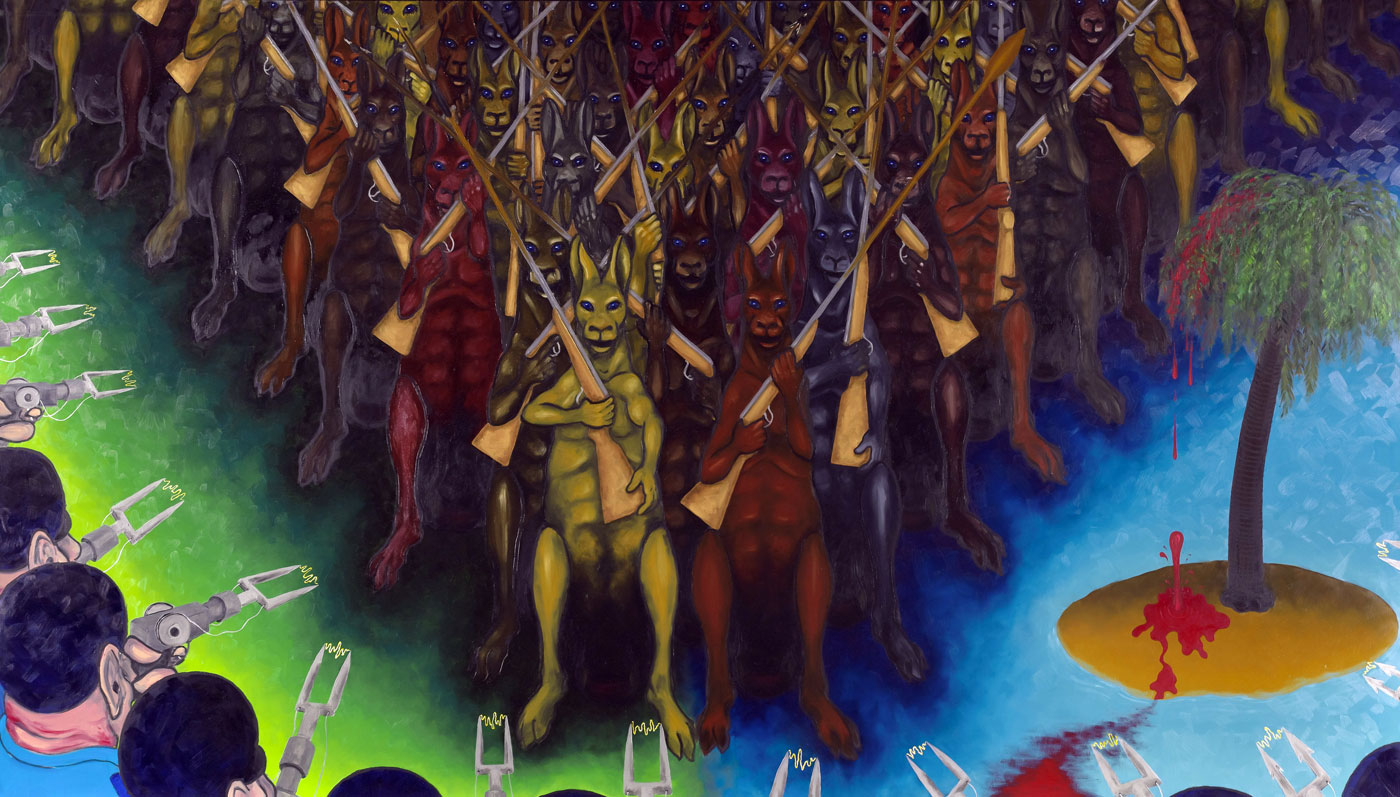
Gordon Hookey (Australian, Queensland/New South Wales b. 1961)
Waanyi people
Blood on the wattle, blood on the palm
2009
Oil on linen
The James C Sourris, AM, Collection
Gift of James C Sourris, AM, through the Queensland Art Gallery Foundation 2012
Donated through the Australian Government’s Cultural Gifts Program
Collection: Queensland Art Gallery
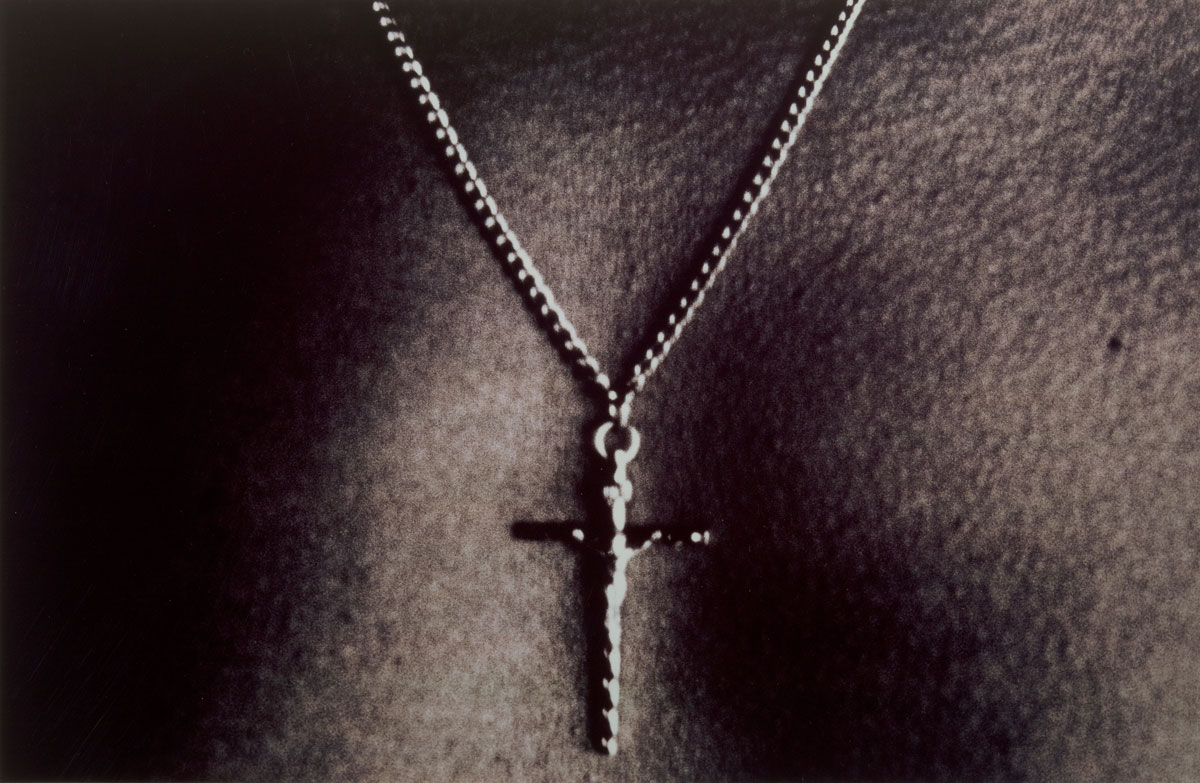
Michael Riley (Australian, New South Wales 1960-2004)
Kamilaroi/Wiradjuri people
Sacrifice (portfolio) (detail)
1993
Colour cibachrome photograph
Purchased 2002
Collection: Queensland Art Gallery

Christian Thompson (Australian, Queensland/New South Wales/Victoria b. 1978)
Bidjarra/Kunja people
Black Gum 2 (from Australian Graffiti series)
2008
Type C photograph
Purchased 2008
The Queensland Art Gallery Foundation Grant
Collection: Queensland Art Gallery

Warwick Thornton (Australian, Northern Territory b. 1970)
Kaytej people
Stranded (still)
2011
3D digital video: 11.06 minutes, colour, sound
Commissioned by the 2011 Adelaide Film Festival Investment Fund
Purchased 2011
Queensland Art Gallery Foundation
Collection: Queensland Art Gallery
© Warwick Thornton. Image courtesy the artist and Stills Gallery
Gallery of Modern Art (GOMA)
The Queensland Art Gallery (QAG) and Gallery of Modern Art (GOMA) are located 150 metres from each other, on the south bank of the Brisbane River. Entrance to both buildings is possible from Stanley Place, and the river front entrance to the Queensland Art Gallery is on Melbourne Street. The Galleries are within easy walking distance to the city centre and South Bank Parklands.
Opening hours:
Daily 10.00am – 5.00pm

 Art Blart _ art and cultural memory archive
You must be logged in to post a comment.