Photographs/menus: K.P.M. ships T.S.S. Nieuw Holland, T.S.S. Nieuw Zeeland and T.S.S. Op Ten Noort 1938-1939

September 2023


T.S.S. Nieuw Holland


Unknown photographer. 'Oud Batavia / Ancient Batavia' April 1938


Unknown photographer
Oud Batavia / Ancient Batavia
April 1938
T.S.S. Nieuw Holland menu. Tuesday October 4th, 1938
K.P.M. line
Rotogravure De Unie
Bifold pamphlet recto


T.S.S. Nieuw Holland luncheon menu. Tuesday October 4th, 1938


T.S.S. Nieuw Holland luncheon menu. Tuesday October 4th, 1938
Commander P.M. Verstelle
K.P.M. line
Bifold pamphlet interior


ephemera n. things that exist or are used or enjoyed for only a short time.


It is incredible that these ephemera(l) menus with their attendant rotogravures (a form of gravure printing of superb contrast and quality) have lasted 85 years, probably stored away in someone’s bookcase, only to be purchased by me in an op shop (charity shop) in Melbourne, Australia just recently.

This is probably the first time these images have seen the light of day and been published for decades… most likely since they were given to the passengers aboard the K.P.M. ships T.S.S. Nieuw Holland, T.S.S. Nieuw Zeeland and T.S.S. Op Ten Noort in 1938-1939.

Information and details on the ships construction are detailed in the posting but I could ascertain nothing about who took the photographs for the menus. In all likelihood the photographs were either a) taken by a (most likely) Dutch photographer employed by the shipping line or b) taken by a Western photographer living in Asia under brief from the shipping line or c) taken by a local photographer under similar direction. Whoever took the photographs (and I believe these images to be the eye of one person) displayed a magnificent understanding of portrait and landscape photography in the Western tradition… whilst also exoticising the Indigenous people and places (with their “heathen tombs”) for consumption – pardon the pun, as the images are on menus – by a Western clientele. Nevertheless the photographs are incredibly beautiful and direct. There is no flim flam here. And in that sense these images remain constant, constant in their historical link to cultures which they depict and valuable as such.

Just imagine being a first class passenger literally only a few months before the outbreak of the Second World War traversing the Java Sea in absolute luxury, wearing black tie, and dining on “stuffed eggs with caviar,” “veal cutlets a la Richelieu,” “larded Calfsliver,” and “Coupe Peche Melba” while being attended to by uniformed waiters! And then on the front cover of your menu (note different photographs on menus from the same day) photographs of barefoot Indigenous people from the various stops that the liner will make on its journey.

However, the status of humans will matter very little in the maelstrom that will engulf the region after the attack by the Japanese on Pearl Harbour in December 1941, for people from Burma through Thailand, Singapore, Malaya, Indonesia, Dutch East Indies, Philippines, and New Guinea and more, and those defending those countries, will all suffer under the yoke of Japanese aggression and brutality. The very waters that these glamorous liners sailed would become the scene of sea battles, death and destruction.

If anybody has any information on the photographer(s) if you could please contact me at bunyanth@netspace.net.au I would be most grateful. Thank you.

Dr Marcus Bunyan

.
Please click on the photographs for a larger version of the image.


Unknown photographer. 'Krugdansers op Nias / War Dancers at Nias' April 1938


Unknown photographer
Krugdansers op Nias / War Dancers at Nias
April 1938
T.S.S. Nieuw Holland menu. Friday September 23rd, 1938
K.P.M. line
Rotogravure De Unie
Bifold pamphlet recto


Nias (Indonesian: Pulau Nias, Nias language: Tanö Niha) (sometimes called Little Sumatra in English) is an island located off the western coast of Sumatra, Indonesia. Nias is also the name of the archipelago (Kepulauan Nias) of which the island is the centre, but also includes the Batu Islands to the south-east and the small Hinako Islands to the west.


Location of Nias, Indonesia


Location of Nias, Indonesia
Public domain


T.S.S. Nieuw Holland luncheon menu. Friday September 23rd, 1938


T.S.S. Nieuw Holland luncheon menu. Friday September 23rd, 1938
Commander P.M. Verstelle
K.P.M. line
Bifold pamphlet interior


Unknown photographer. 'Chineezenwuk in Oud-Batavia / Ancient Batavia – Chinatown' April 1938


Unknown photographer
Chineezenwuk in Oud-Batavia / Ancient Batavia – Chinatown
April 1938
T.S.S. Nieuw Holland menu. Friday September 23rd, 1938
K.P.M. line
Rotogravure De Unie
Bifold pamphlet recto


Old Batavia, the Jewel of Asia

In its heydays in the 16th century, Batavia was known as “The Queen of the East” and “the Jewel of Asia”. Its Sunda Kelapa harbour was abuzz with merchant vessels from Europe, China, India and from throughout the Indonesian archipelago, loading in and sailing away with precious nutmegs, pepper, tea, coffee, ceramics, cloths and other exotic products of the time. The warehouses were stacked with spices, tin and copper. The successful trade in Batavia filled the coffers of the Netherland’s Treasury.

Center of the VOC Dutch East India Company’s administration was the Stadthuis with its wide front plaza, around which were the Court of Justice, banks and other important buildings. Later the city expanded to the west bank of the Ciliwung river, where the Dutch built a fortress, a city wall and canals, outside which was Chinatown and the homes of the indigenous people.

This entire area, covering 1.3 square kilometers is today called the Old Batavia, present day part of North and West Jakarta.

Anonymous. “Old Batavia, the Jewel of Asia,” on the Wonderful Indonesia website Nd [Online] Cited 22/08/2023


T.S.S. Nieuw Holland luncheon menu. Friday September 23rd, 1938


T.S.S. Nieuw Holland luncheon menu. Friday September 23rd, 1938
Commander P.M. Verstelle
K.P.M. line
Bifold pamphlet interior


Unknown photographer. 'Rustschuren in de Toradjalanden / Rice Barns in the Toradja Country' April 1938


Unknown photographer
Rustschuren in de Toradjalanden / Rice Barns in the Toradja Country
April 1938
T.S.S. Nieuw Holland menu. Friday September 23rd, 1938
K.P.M. line
Rotogravure De Unie
Bifold pamphlet recto


The Torajans are an ethnic group indigenous to a mountainous region of South Sulawesi, Indonesia. Their population is approximately 1,100,000, of whom 450,000 live in the regency of Tana Toraja (“Land of Toraja”). Most of the population is Christian, and others are Muslim or have local animist beliefs known as aluk (“the way”). The Indonesian government has recognised this animistic belief as Aluk To Dolo (“Way of the Ancestors”).

The word Toraja comes from the Buginese language term to riaja, meaning “people of the uplands”. The Dutch colonial government named the people Toraja in 1909. Torajans are renowned for their elaborate funeral rites, burial sites carved into rocky cliffs, massive peaked-roof traditional houses known as tongkonan, and colourful wood carvings. Toraja funeral rites are important social events, usually attended by hundreds of people and lasting for several days.

Text from the Wikipedia website


T.S.S. Nieuw Holland luncheon menu. Friday September 23rd, 1938


T.S.S. Nieuw Holland luncheon menu. Friday September 23rd, 1938
Commander P.M. Verstelle
K.P.M. line
Bifold pamphlet interior


Unknown photographer. 'Type van Timor Koepang / Timor Koepang Type' April 1938


Unknown photographer
Type van Timor Koepang / Timor Koepang Type
April 1938
T.S.S. Nieuw Holland menu. Friday September 23rd, 1938
K.P.M. line
Rotogravure De Unie
Bifold pamphlet recto


Kupang (Indonesian: Kota Kupang, Indonesian pronunciation: [ˈkupaŋ]), formerly known as Koepang, is the capital of the Indonesian province of East Nusa Tenggara. At the 2020 Census, it had a population of 442,758; the official estimate as at mid 2022 was 468,913. It is the largest city and port on the island of Timor, and is a part of the Timor Leste – Indonesia – Australia Growth Triangle free trade zone. Geographically, Kupang is the southernmost city in Indonesia.


T.S.S. Nieuw Holland luncheon menu. Friday September 23rd, 1938


T.S.S. Nieuw Holland luncheon menu. Friday September 23rd, 1938
Commander P.M. Verstelle
K.P.M. line
Bifold pamphlet interior


Rotogravure

A printing system using a rotary press with intaglio (a design incised or engraved into a material) cylinders, typically running at high speed and used for long print runs of magazines and stamps.

The rotogravure printing process (commonly shortened to gravure) is a method of intaglio printing. Gravure printing works by applying ink to a substrate with the use of a metal plate that is typically mounted onto a cylinder. This plate is often made of copper or chrome.


Diagram of rotogravure process


Diagram of rotogravure process
CC BY-SA 3.0


Unknown photographer. 'Heidengraf Te Samosir (Toba Meer – Sumatra) / Heathen Tomb at Samosir (Lake Toba – Sumatra)' April 1938


Unknown photographer
Heidengraf Te Samosir (Toba Meer – Sumatra) / Heathen Tomb at Samosir (Lake Toba – Sumatra)
April 1938
T.S.S. Nieuw Holland menu. Sunday September 25th, 1938
K.P.M. line
Rotogravure De Unie
Bifold pamphlet recto


Samosir, or Samosir Island, is a large volcanic island in Lake Toba, located in the north of the island of Sumatra in Indonesia. Administratively, Samosir Island is governed as six of the nine districts within Samosir Regency. The lake and island were formed after the eruption of a super volcano some 75,000 years ago.

Lake Toba (Indonesian: Danau Toba, Toba Batak; romanized: Tao Toba) is a large natural lake in North Sumatra, Indonesia, occupying the caldera of a super volcano. The lake is located in the middle of the northern part of the island of Sumatra, with a surface elevation of about 900 metres (2,953 ft), the lake stretches from 2.88°N 98.52°E to 2.35°N 99.1°E. The lake is about 100 kilometres (62 miles) long, 30 kilometres (19 mi) wide, and up to 505 metres (1,657 ft) deep. It is the largest lake in Indonesia and the largest volcanic lake in the world. Toba Caldera is one of twenty geoparks in Indonesia, and was recognised in July 2020 as one of the UNESCO Global Geoparks.


Bisajunisa. 'Lake Toba, Samosir Island and the surrounding hills taken from Tele Samosir' 17 February 2019 


Bisajunisa
Lake Toba, Samosir Island and the surrounding hills taken from Tele Samosir
17 February 2019


T.S.S. Nieuw Holland luncheon menu. Sunday September 25th, 1938


T.S.S. Nieuw Holland luncheon menu. Sunday September 25th, 1938
Commander P.M. Verstelle
K.P.M. line
Bifold pamphlet interior


Unknown photographer. 'Passer Te Fort de Kock (Sumatra) / Market at Fort De Kock (Sumatra)' April 1938


Unknown photographer
Passer Te Fort de Kock (Sumatra) / Market at Fort De Kock (Sumatra)
April 1938
T.S.S. Nieuw Holland menu. Thursday September 29th, 1938
K.P.M. line
Rotogravure De Unie
Bifold pamphlet recto


Fort de Kock was a 19th-century Dutch sconce fortification established over a hill in Bukittinggi, West Sumatra, Indonesia. Around the fortification, a new settlement grew, which eventually grew into the city of Bukittinggi, the second largest city in West Sumatra. Although the remnants of the mound and some cannons can still be seen, the original buildings on top of the sconce have been demolished.


T.S.S. Nieuw Holland luncheon menu. Thursday September 29th, 1938


T.S.S. Nieuw Holland luncheon menu. Thursday September 29th, 1938
Commander P.M. Verstelle
K.P.M. line
Bifold pamphlet interior


Unknown photographer. 'Vrouwen van Nias / Women of Nias' Nd


Unknown photographer
Vrouwen van Nias / Women of Nias
Nd
T.S.S. Nieuw Holland menu. Friday September 30th, 1938
K.P.M. line
Rotogravure De Unie
Single sheet recto


The Great Barrier Reef. T.S.S. "Nieuw Holland" September 30th, 1938


The Great Barrier Reef. T.S.S. “Nieuw Holland” September 30th, 1938
K.P.M. line
Single sheet verso


Unknown photographer 'Early photograph of the newly built T.S.S. Nieuw Holland' c. 1927-1928


Unknown photographer
Early photograph of the newly built T.S.S. Nieuw Holland
c. 1927-1928
Courtesy of Dr Reuben Goossens


T.S.S. Nieuw Holland, K.P.M. Line

T.S.S. Nieuw Holland was built for KPM (Koninklijke Paketvaart Mij) by the Nederlandsche Scheepsbouw Co (Netherlands Shipbuilding Co) in Amsterdam. She was launched on December 1, 1927. After her completion on April 20 1928, she headed for Asia and commenced regular services from Malaya, via Singapore, Dutch East Indies (today’s Indonesia), to Brisbane, Sydney and Melbourne. Nieuw Holland and her newer sister, T.S.S. Nieuw Zealand, maintained a regular service between Australia and Asia until the outbreak of the war. These two KPM sisters were regarded as two of the most graceful pre-war liners to operate between Australia and Asia, with their magnificently decorated lounges clad with fine timbers featuring elaborate carvings. Their external appearance gave them a casual tropical feel being pained all white and buff to yellow funnels.

In 1940, Nieuw Holland headed for Melbourne where she was modified to become a troop transport ship for up to 1,000 troops. Upon completion she joined the Royal Navy, but she continued to be operated by her Dutch crew. She and T.S.S. Nieuw Zeeland joined regular convoys between Europe and the Middle East, although Nieuw Holland did operate in the Mediterranean and Indian Ocean for a short time. Late in 1941, she received yet another modification but his time in the UK increasing her capacity up to 2,000 troops. Both T.S.S. Nieuw Holland and her sister T.S.S. Nieuw Zealand were part of the November 1942 invasion of North Africa.

Specifications

Built: 1928 by Nederlandsche Scheepsbouw Co, Amsterdam – Yard 187
Engines: 2 Stork steam turbines – 7.500 SHP
Propeller: One
Speed: 15.5 knots
Length: 160.60m – 527ft
Width: 19.00m – 62.30ft
Tonnage: 10.903 GRT – 1958 11.215 GRT
Passengers: 123 First class – 50 Third class passengers
1958 – 155 all first class passengers
Crew: 200
Troops: 1940 – 1,000. 1941 – 2,000

Dr Reuben Goossens. “The KPM Sisters: SS Nieuw Holland – SS Nieuw Zeeland,” on the ssmaritime.com website Nd [Online] Cited 21/08/2023


Unknown photographer. 'Bataksche Vrouw / Batak Woman' April 1938


Unknown photographer
Bataksche Vrouw / Batak Woman
April 1938
T.S.S. Nieuw Holland menu. Saturday October 1st, 1938
K.P.M. line
Rotogravure De Unie
Bifold pamphlet recto


Batak is a collective term used to identify a number of closely related Austronesian ethnic groups predominantly found in North Sumatra, Indonesia, who speak Batak languages. The term is used to include the Karo, Pakpak, Simalungun, Toba, Angkola, and Mandailing ethnic groups. Which are related groups with distinct languages and traditional customs (adat).


T.S.S. Nieuw Holland luncheon menu. Saturday October 1st, 1938


T.S.S. Nieuw Holland luncheon menu. Saturday October 1st, 1938
Commander P.M. Verstelle
K.P.M. line
Bifold pamphlet interior


Unknown photographer. 'Danser van Tanimbar / Dancer from Tanimbar' April 1938


Unknown photographer
Danser van Tanimbar / Dancer from Tanimbar
April 1938
T.S.S. Nieuw Holland menu. Sunday October 2nd, 1938
K.P.M. line
Rotogravure De Unie
Bifold pamphlet recto


The Tanimbar Islands, also called Timur Laut, are a group of about 65 islands in the Maluku province of Indonesia. The largest and most central of the islands is Yamdena; others include Selaru to the southwest of Yamdena, Larat and Fordata to the northeast, Maru and Molu to the north, and Seira, Wuliaru, Selu, Wotap and Makasar to the west. The Indonesian phrase timur laut means “east of the sea” or “northeast”.


Tanimbar Islands in the south of Maluku Islands


Tanimbar Islands in the south of Maluku Islands


T.S.S. Nieuw Holland luncheon menu. Sunday October 2nd, 1938


T.S.S. Nieuw Holland luncheon menu. Sunday October 2nd, 1938
Commander P.M. Verstelle
K.P.M. line
Bifold pamphlet interior


Unknown photographer. 'Prauwen in Oud Batavia / Praos in Ancient Batavia' April 1938


Unknown photographer
Prauwen in Oud Batavia / Praos in Ancient Batavia
April 1938
T.S.S. Nieuw Holland menu. Tuesday October 4th, 1938
K.P.M. line
Rotogravure De Unie
Bifold pamphlet recto


T.S.S. Nieuw Holland dinner menu. Tuesday October 4th, 1938


T.S.S. Nieuw Holland dinner menu. Tuesday October 4th, 1938
Commander P.M. Verstelle
K.P.M. line
Bifold pamphlet interior


Unknown photographer. 'Prauwen in Oud Batavia / Fishing Craft in Ancient Batavia' April 1938


Unknown photographer
Prauwen in Oud Batavia / Fishing Craft in Ancient Batavia
April 1938
T.S.S. Nieuw Holland menu. Wednesday October 5th, 1938
K.P.M. line
Rotogravure De Unie
Bifold pamphlet recto


T.S.S. Nieuw Holland luncheon menu. Wednesday October 5th, 1938


T.S.S. Nieuw Holland luncheon menu. Wednesday October 5th, 1938
Commander P.M. Verstelle
K.P.M. line
Bifold pamphlet interior


T.S.S. Nieuw Zeeland


Unknown photographer. 'Tempel Te Koeboetambahan (Bali) / Temple at Koeboetambahan (Bali)' December 1938


Unknown photographer
Tempel Te Koeboetambahan (Bali) / Temple at Koeboetambahan (Bali)
December 1938
T.S.S. Nieuw Zeeland. Monday 2nd May, 1939
K.P.M. line
Rotogravure De Unie
Bifold pamphlet recto


Kubutambahan is a district in the regency of Buleleng Timur in northern Bali, Indonesia. It contains a number of notable temples such as Pura Meduwe Karang which have been painted in recent years.


T.S.S. Nieuw Zeeland luncheon menu. Monday 2nd May, 1939

T.S.S. Nieuw Zeeland luncheon menu. Monday 2nd May, 1939


T.S.S. Nieuw Zeeland luncheon menu. Monday 2nd May, 1939
Commander C.L. Van Dierendonck
K.P.M. line
Bifold pamphlet interior


Unknown photographer. 'KPM postcard of the T.S.S. Nieuw Zealand' 1929-1939


Unknown photographer
KPM postcard of the T.S.S. Nieuw Zeeland
1928-1939
Courtesy of Dr Reuben Goossens


T.S.S. Nieuw Zeeland, KPM Line

T.S.S. Nieuw Zeeland was launched on January 6 1928 and was completed on April 12 1928. She departed Rotterdam and headed for Asia where she commenced regular services from Malaya, via Singapore, Dutch East Indies (today’s Indonesia), to Brisbane, Sydney and Melbourne. Like her sister the T.S.S. Nieuw Holland, she maintained a regular service between Australia and Asia until the outbreak of the war. Her external appearance had that tropical look which was unusual for that time being pained all white and with her twin buff to yellow funnels. In 1935 due to engine problems, she was fitted with a new set of more efficient turbines at Mij Fijenoord in Rotterdam.

In 1940, with the war having commenced the SS Nieuw Zeeland was stripped of her passenger fittings and refitted into a troop ship in Singapore to accommodate up to 1000 troops and just a small number of passengers. She, like her sister the Nieuw Holland was handed over to the British Royal Navy, but the Dutch crew continued to serve onboard with an additional 43 members. She joined convoys sailing to the Middle East and Europe. Then in 1942 SS Nieuw Zealand was involved in “Operation Torch” being the invasion of North Africa, however, after she had disembarked her troops successfully and was heading homeward and sailing in the Mediterranean, she was suddenly tragically torpedoed by a German U-Boat, number U407, on November 11, 1942, in position 3557′ N-03° E.. With the damage being severe she sunk reasonably fast, but most on board were able to get off the ship, although there were 15 lives lost due to the torpedo explosions and subsequent fires.

Specifications

Built: 1927 by Rotterdamsche DD Mij. Rotterdam – Yard 142c
Engines: 2 x Geared Steam Turbines by Mij Fijennoord – 8,000 SHP
Propeller: One
Speed: 15.5 knots
Length: 160.60m – 527ft
Width: 19.00m – 62.30ft
Tonnage: 10.906 GRT
Passengers: 123 First class – 50 Third class passengers
Crew: 200
As a Troop ship in 1940
Troops: 1,000
Passengers: 14
Crew: 243

Dr Reuben Goossens. “The KPM Sisters: SS Nieuw Holland – SS Nieuw Zeeland,” on the ssmaritime.com website Nd [Online] Cited 21/08/2023


Unknown photographer. 'Raksassa Te Sanoer (Bali) / Temple Guard at Sanoer (Bali)' December 1938


Unknown photographer
Raksassa Te Sanoer (Bali) / Temple Guard at Sanoer (Bali)
December 1938
T.S.S. Nieuw Zeeland. Friday 26th May, 1939
K.P.M. line
Rotogravure De Unie
Bifold pamphlet recto


Sanur is a seaside town in the southeast of the island of Bali, in Indonesia. Its long stretch of beach offers shallow waters. Colourful jukung fishing boats rest on the sand, backed by a paved cycling path. The Pura Blanjong temple is built from coral and has inscriptions dating from the 10th century. Sanoer is a popular tourist destination thanks to its monuments and memorials.


T.S.S. Nieuw Zeeland luncheon menu. Friday 26th May, 1939

T.S.S. Nieuw Zeeland luncheon menu. Friday 26th May, 1939


T.S.S. Nieuw Zeeland luncheon menu. Friday 26th May, 1939
Commander C.L. Van Dierendonck
K.P.M. line
Bifold pamphlet interior


Unknown photographer. 'Lègong-Meisje (Bali) / Lègong Girl (Bali)' December 1938


Unknown photographer
Lègong-Meisje (Bali) / Lègong Girl (Bali)
December 1938
T.S.S. Nieuw Zeeland. Sunday 26th May, 1939
K.P.M. line
Rotogravure De Unie
Bifold pamphlet recto


T.S.S. Nieuw Zeeland luncheon menu. Friday 26th May, 1939

T.S.S. Nieuw Zeeland luncheon menu. Friday 26th May, 1939


T.S.S. Nieuw Zeeland luncheon menu. Friday 26th May, 1939
Commander C.L. Van Dierendonck
K.P.M. line
Bifold pamphlet interior


Unknown photographer. 'Tempel Te Koeboetambahan (Bali) / Temple at Koeboetambahan (Bali)' December 1938


Unknown photographer
Tempel Te Koeboetambahan (Bali) / Temple at Koeboetambahan (Bali)
December 1938
T.S.S. Nieuw Zeeland. Sunday 28th May, 1939
K.P.M. line
Rotogravure De Unie
Bifold pamphlet recto


T.S.S. Nieuw Zeeland luncheon menu. Sunday 28th May, 1939

T.S.S. Nieuw Zeeland luncheon menu. Sunday 28th May, 1939


T.S.S. Nieuw Zeeland luncheon menu. Sunday 28th May, 1939
Commander C.L. Van Dierendonck
K.P.M. line
Bifold pamphlet interior


Unknown photographer. 'Nias-Kruger / Nias' Warrior' December 1938


Unknown photographer
Nias-Kruger / Nias’ Warrior
December 1938
T.S.S. Nieuw Zeeland. Wednesday 31st May, 1939
K.P.M. line
Rotogravure De Unie
Bifold pamphlet recto


T.S.S. Nieuw Zeeland luncheon menu. Wednesday 31st May, 1939

T.S.S. Nieuw Zeeland luncheon menu. Wednesday 31st May, 1939


T.S.S. Nieuw Zeeland luncheon menu. Wednesday 31st May, 1939
Commander C.L. Van Dierendonck
K.P.M. line
Bifold pamphlet interior


T.S.S. Op Ten Noort


Unknown photographer. 'Oude Balinees / Old Type of Bali' December 1938


Unknown photographer
Oude Balinees / Old Type of Bali
December 1938
ss. “op ten NOORT”. Thursday 8th June 1939
K.P.M. line
Rotogravure De Unie
Bifold pamphlet recto


ss. "op ten NOORT" DINNER a la Carte menu. Thursday 8th June 1939

ss. "op ten NOORT" DINNER a la Carte menu. Thursday 8th June 1939


ss. “op ten NOORT” DINNER a la Carte menu. Thursday 8th June 1939
K.P.M.. line
Bifold pamphlet interior


Unknown photographer. 'T.S.S. Op Ten Noort at Circular Quay, Sydney' Nd


Unknown photographer
T.S.S. Op Ten Noort at Circular Quay, Sydney
Nd
Australian National Maritime Museum
Object no. ANMS0047[155]


T.S.S. Op Ten Noort was a 6,076 ton Dutch merchant ship built in 1927 for the Dutch Royal Packet Steam Navigation Company (KPM). It was based in Batavia, Java. The vessel arrived in Sydney on 4 January 1936 and berthed at West Circular Quay, departing just over two weeks later on 20 January.

In 1941, during World War II, Op Ten Noort was taken over by the Royal Netherlands Navy and was refitted as a hospital ship. The vessel was bombed by Japanese aircraft in 1942 and soon after being repaired it came under Japanese control and was renamed Tenno Maru, operating for the Kawasaki Kisen Kaisha Company. In 1944, it was yet again renamed Hikawa Maru and was still used as a hospital ship.

The vessel was scuttled in August 1945 at Wakasa Bay. In 1953, the Dutch Government lodged a claim against the Japanese Government for 700 million yen as compensation. The Japanese Government paid about 100 million yen in compensation to the Dutch Government in 1978.

Text from the Australian National Maritime Museum Flickr website


KPM registered the ship at Batavia, Dutch East Indies, where the company was headquartered. Her code letters were TFCQ. She began her maiden voyage on November 9, 1927. She joined Plancius on the route from Singapore to Tanjung Priok via Bangkok, Saigon, Manila, the Maluku Islands, and Bali. In later years, KPM transferred Plancius and Op Ten Noort to serve the east coast of Java, from Batavia to Deli Serdang Regency via Muntok, Singapore and Belawan.

Her first class cabins each had one or two berths. Her first class public areas included lounges, bars, a smoking room, and a tropical verandah. In 1933 part of her first class accommodation was converted into two two-person de luxe suites with lounge, bedroom, two bathrooms, and private deck (veranda). She had 18 second class cabins, which had either two or four berths. Deck passengers were accommodated on her tween deck, which had a lounge and a cafeteria. In 1934 the call sign PKEA superseded her code letters.

Text from the Wikipedia website


Unknown photographer. 'T.S.S. "Op ten Noort" of the KPM as a passenger ship' Nd


Unknown photographer
T.S.S. “Op ten Noort” of the KPM as a passenger ship
Nd
Public Domain


Unknown photographer. T.S.S. Op Ten Noort, photo taken late twenties early thirties(?), probably in port of Belawan (Medan), Dutch East Indies' c. late 1920s-1930s


Unknown photographer
T.S.S. Op Ten Noort, photo taken late twenties early thirties(?), probably in port of Belawan (Medan), Dutch East Indies
c. late 1920s-1930s
Creative Commons Attribution-Share Alike 4.0 International


LIKE ART BLART ON FACEBOOK

Back to top

Exhibition: ‘Garden of the East: Photography in Indonesia 1850s-1940s’ at the National Gallery of Australia, Canberra

Exhibition dates: 21st February – 22nd June 2014


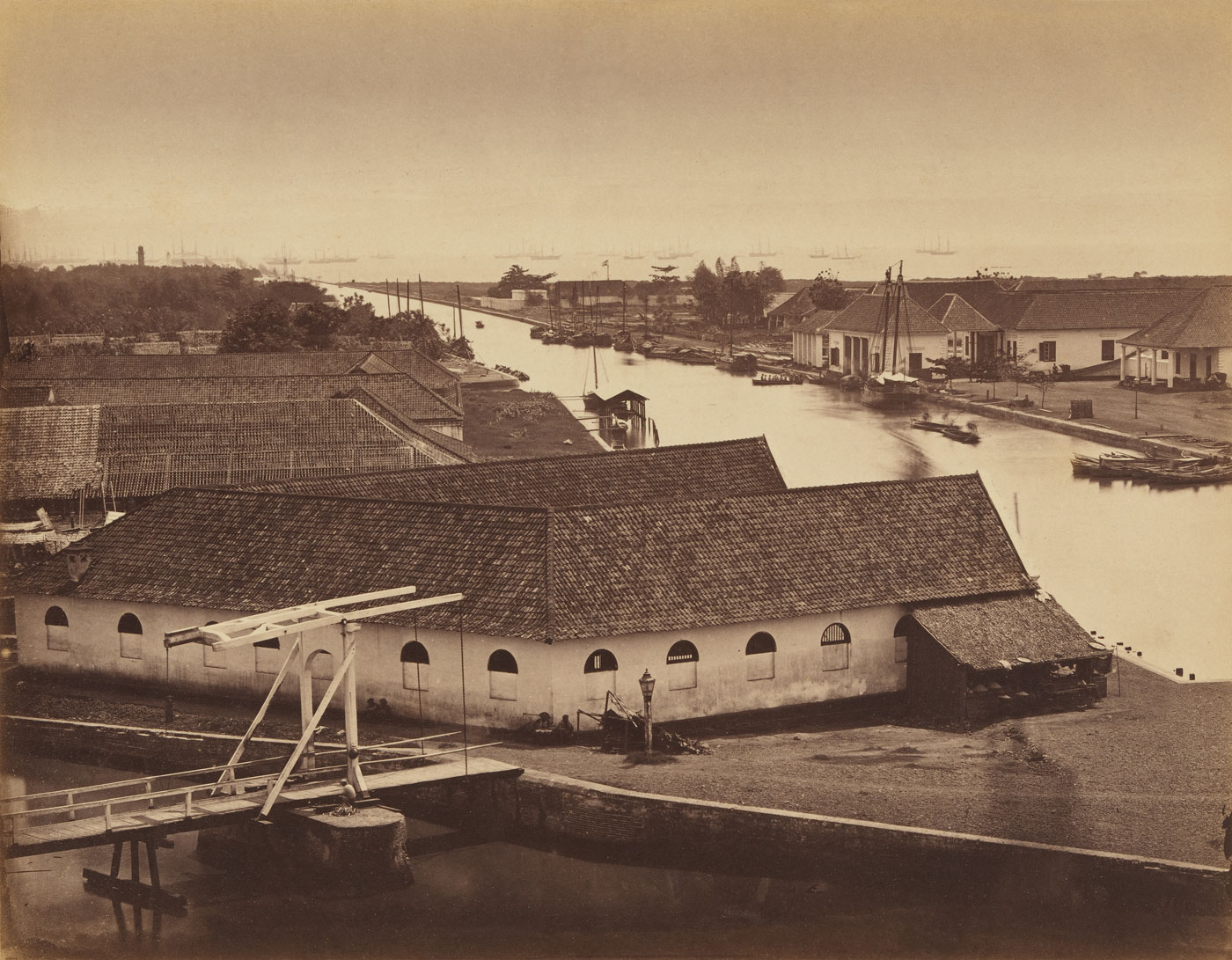
Woodbury & Page (established Jakarta 1857-1900) 'Batavia roadstead' c. 1865


Woodbury & Page (established Jakarta 1857-1900)
Batavia roadstead
c. 1865
Albumen silver photograph
19.4 x 24.5cm
Collection National Gallery of Australia


Dutch East Indies and Indonesian photography, and more broadly Asia-Pacific photography, has been a burgeoning area of interest, research and collecting for some time now. Although this is far from my area of expertise, with the quality of the work shown in this posting, you can understand why. Since 2005, “the National Gallery of Australia’s Asian photographs collection has grown to nearly 8000 and in excess of 6500 prints are from Indonesia.”

Absolutely beautiful tonality to the prints. They seem to have a wonderful stillness to them as well.

On a personal note, Gael Newton, Senior Curator, Photography at the National Gallery of Australia is retiring. I would like to thank her for promoting, researching and writing about all forms of photography over the years and to congratulate her on significantly extending the NGA’s photography collection. A job well done.

Dr Marcus Bunyan


Many thankx to Gael Newton and the National Gallery of Australia for allowing me to publish the photographs in the posting. Please click on the photographs for a larger version of the image.


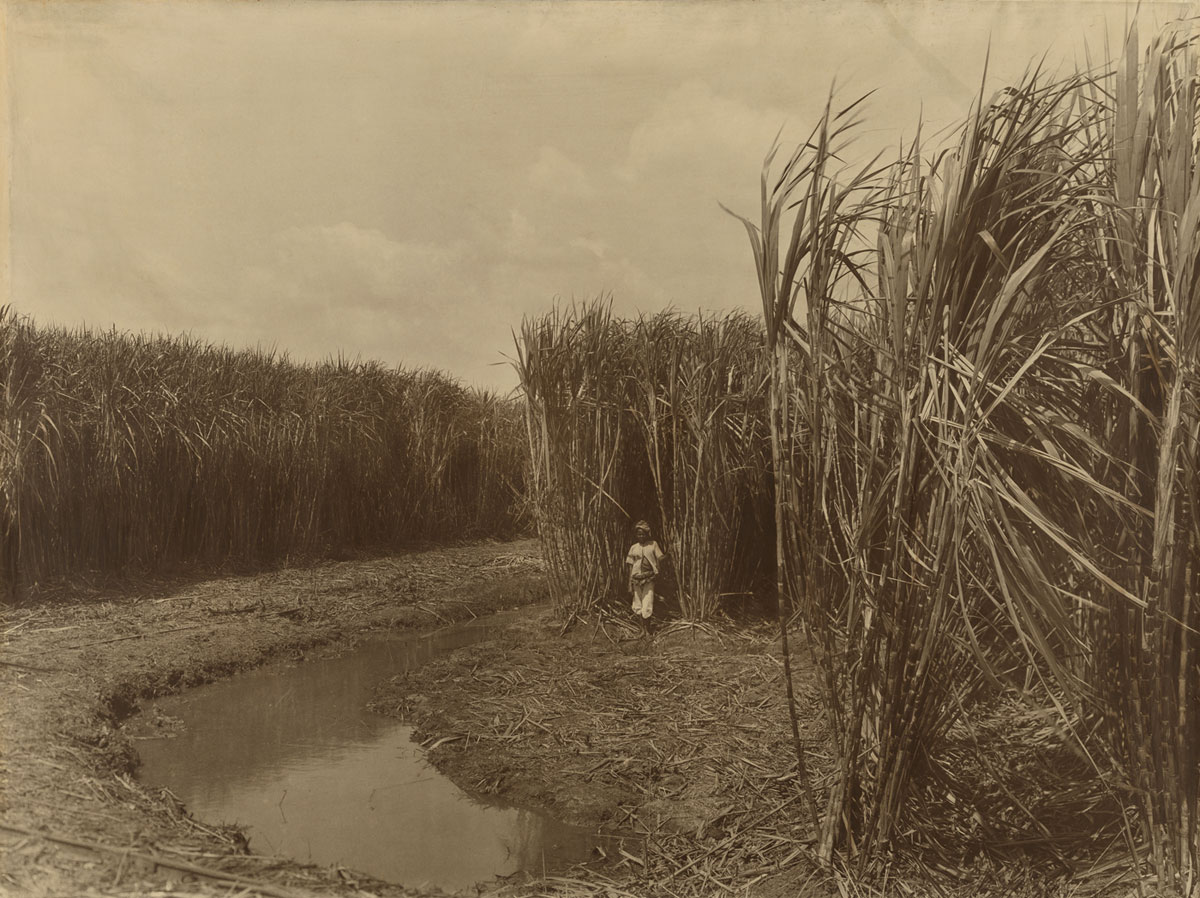
Dirk Huppe (Indonesia, 1867-1931) O Kurkdjian & Co (Established Surabaya, Java 1903-1935) 'Mature canes, fertilized with artificial guano Java Fertilizer Co.,' Semarang 1914


Dirk Huppe (Indonesia, 1867-1931)
O Kurkdjian & Co (Established Surabaya, Java 1903-1935)
Mature canes, fertilized with artificial guano, Java Fertilizer Co.,
Semarang 1914
Carbon print photograph
74.6 x 99.6cm
Collection National Gallery of Australia


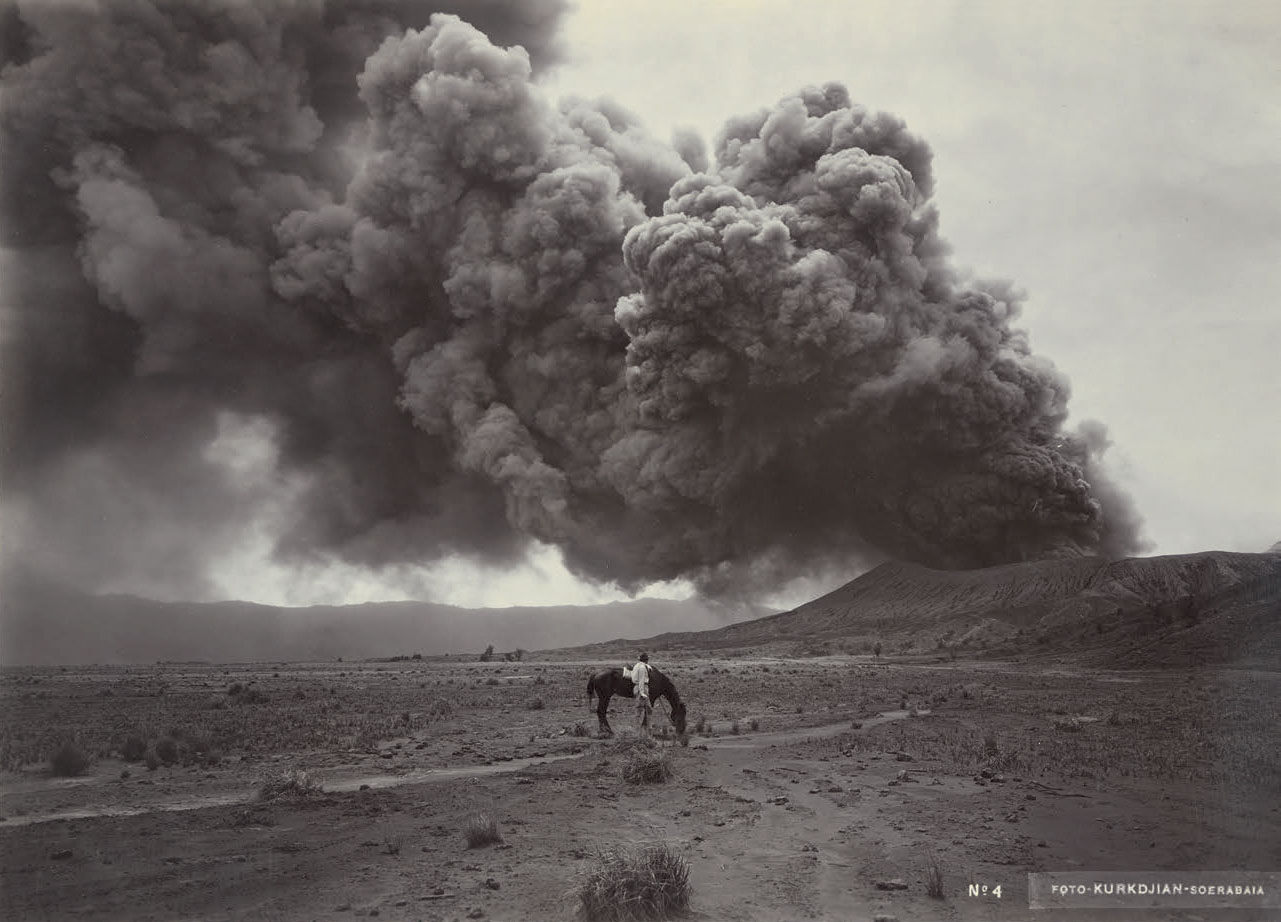
Atelier O Kurkdjian & Co (Established Surabaya, Java 1903-1935) 'Bromo eruption of December' 1915


Atelier O Kurkdjian & Co (Established Surabaya, Java 1903-1935)
Bromo eruption of December
1915
Gelatin silver photograph
17.7 x 24cm
Collection National Gallery of Australia
Purchased 2007


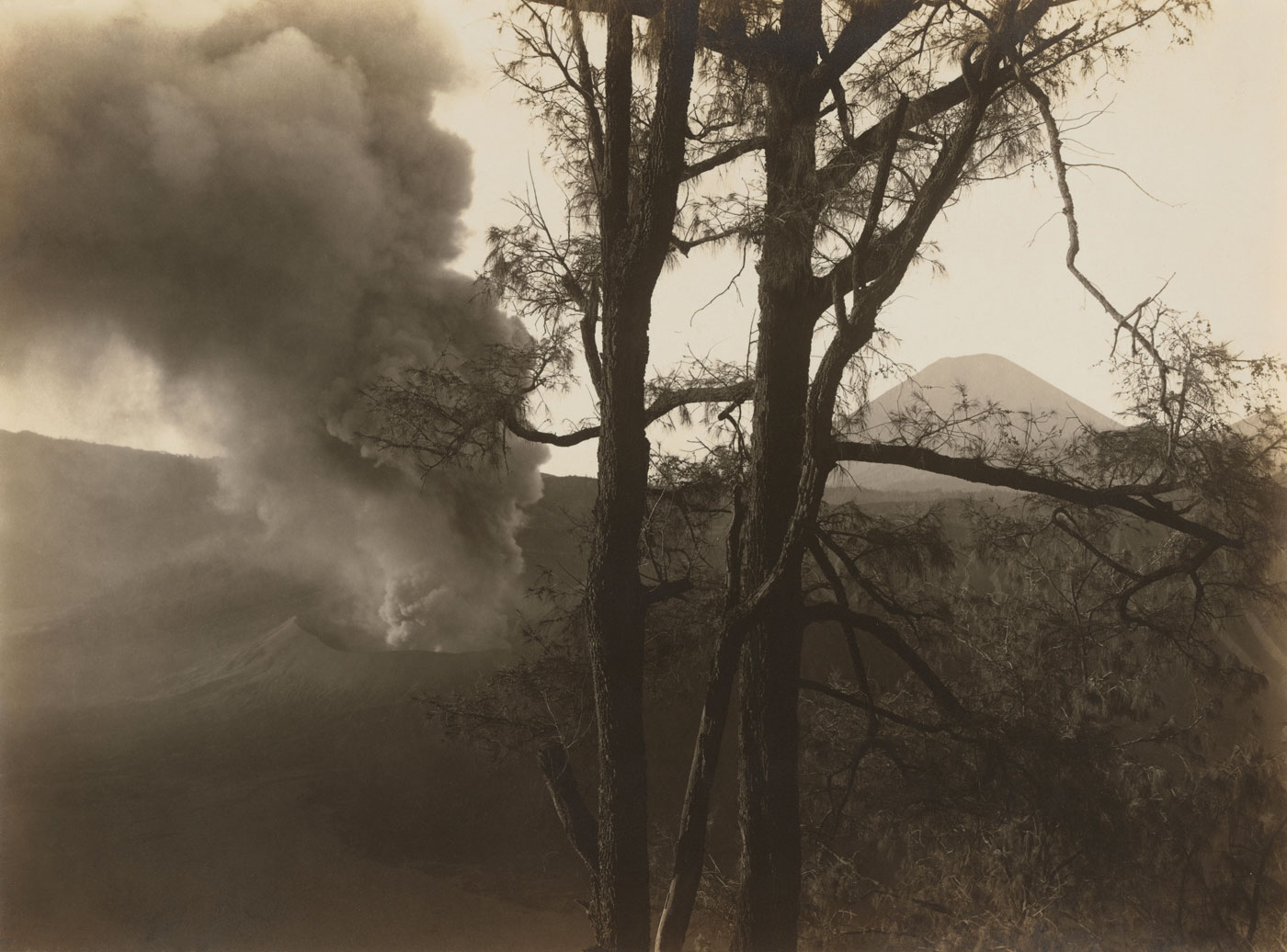
S. Satake (Japanese, working Indonesia 1902 - c. 1937) 'Eruption' Java c. 1930


S. Satake (Japanese, working Indonesia 1902 – c. 1937)
Eruption
Java c. 1930
Gelatin silver photograph
16.2 x 21.8cm
Collection National Gallery of Australia


While Indonesia might be the second most popular destination for outbound Aussies, the history of the Indonesian archipelago’s diverse peoples and the colonial era Dutch East Indies, remains unfamiliar. In particular the rich heritage of photographic images made by the nearly 500 listed photographers at work across the archipelago in the mid 19th – mid 20th century, is poorly known, both in the region and internationally.

The Gallery began building its Indonesian photographic collection in 2006. It is unique in the region: the largest and most comprehensive collection excluding the archives of the Dutch East Indies in the Netherlands. It was not until the late 1850s with the arrival of photographs printed on paper from a master glass negative, that images of Indonesia – the origin of nutmeg, pepper and cloves, much desired in the West – began circulating worldwide.

Australia had a minor role in the history of photography in Indonesia. A pair of young British photographers, Walter Woodbury and James Page (operators of the Woodbury & Page studios located in the Victorian goldfields and Melbourne) arrived in Jakarta in 1857. From around 1900 a trend toward more picturesque views and sympathetic portrayals of indigenous people appeared. Old images were given new life as souvenir prints and sold through hotels and resorts or used for cruise ship brochures.

A particular feature of Garden of the East is the display of family albums. Both amateur and professional images in the Indies were bound in distinctive Japanese or Batik-patterned cloth boards as records of a colonial lifestyle. Hundreds of these once-treasured narratives of now lost people ended up in the Netherlands in the 1970s and 80s in estate sales of former Dutch colonial and Indo (mixed race) family members who had returned or immigrated after the establishment of the Republic of Indonesia in 1945.

Text from the National Gallery of Australia website


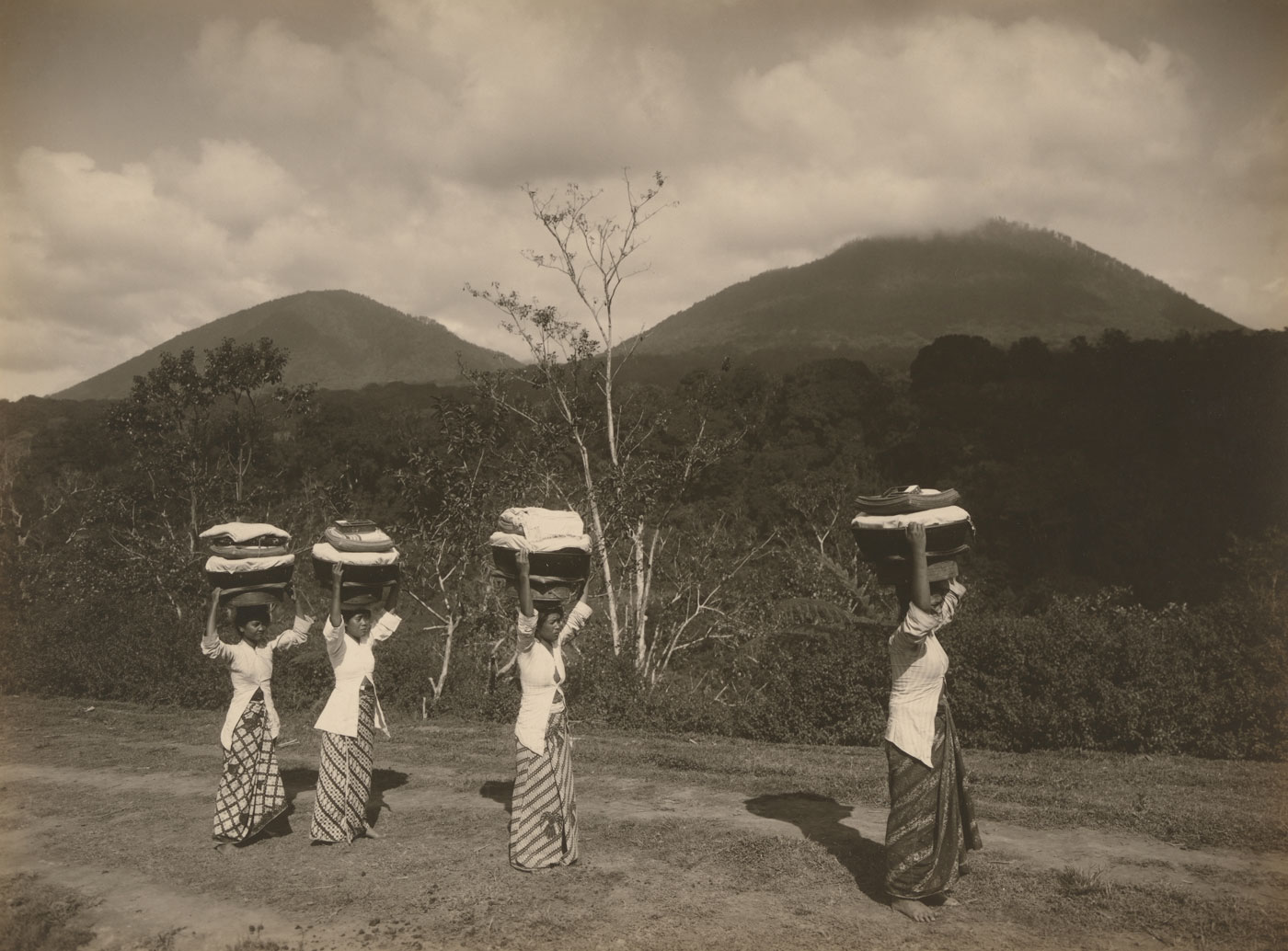
S. Satake (Japanese, working Indonesia 1902 - c. 1937) 'Women on road to Buleleng Bali' c. 1928


S. Satake (Japanese, working Indonesia 1902 – c. 1937)
Women on road to Buleleng
Bali c. 1928
Gelatin silver photograph
16.2 x 22.0cm
Collection National Gallery of Australia


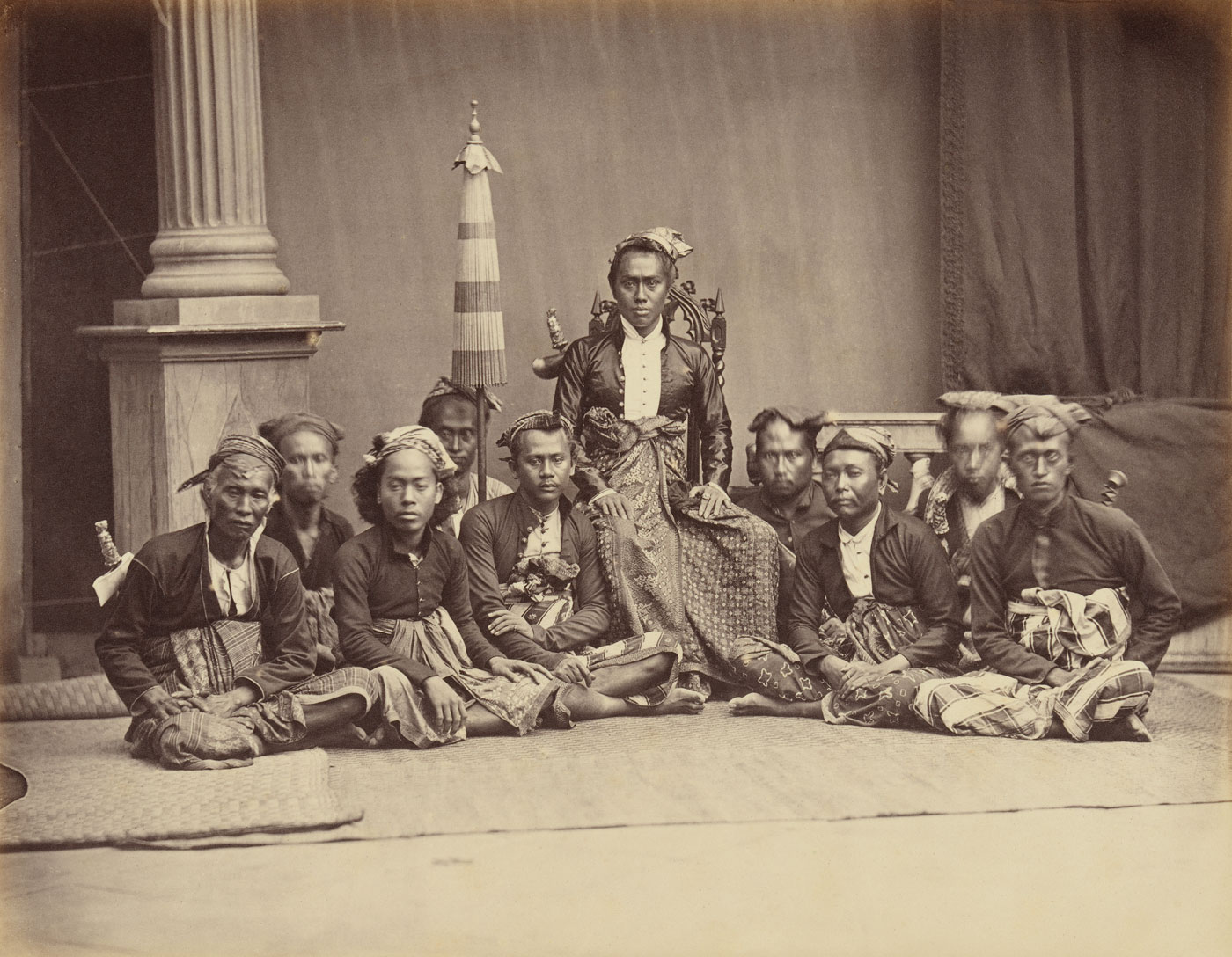
Woodbury & Page (established Jakarta 1857-1900) 'Gusti Ngurah Ketut Jelantik, Prince of Buleleng with his entourage in Jakarta in 1864 on the visit of Governor-General LAJW Sloet van de Beele' 1864


Woodbury & Page (established Jakarta 1857-1900)
Gusti Ngurah Ketut Jelantik, Prince of Buleleng with his entourage in Jakarta in 1864 on the visit of Governor-General LAJW Sloet van de Beele
1864
Albumen silver photograph
Collection National Gallery of Australia


Garden of the East: Photography in Indonesia 1850s-1940s is the first major survey in the southern hemisphere of the photographic art from the period spanning the last century of colonial rule until just prior to the establishment of the Republic of Indonesia in 1945. The exhibition provides the opportunity to view over two hundred and fifty photographs, albums and illustrated books of the photography of this era and provides a unique insight into the people, life and culture of Indonesia. The exhibition and accompanying catalogue reveals much new research and information regarding the rich photographic history of Indonesia. Garden of the East is on display in Canberra only.

The exhibition is comprised of images created by more than one hundred photographers and the majority have never been exhibited publicly before. The works were captured by photographers of all races, making images of the beauty, bounty, antiquities and elaborate cultures of the diverse lands and peoples of the former Dutch East Indies. Among these photographers is the Javanese artist Kassian Céphas, whose genius as a photographer is not widely known at this time, a situation which the National Gallery of Australia hopes to address by growing the collection of holdings from this period and by continuing to stage focused exhibitions such as Garden of the East.

As was the case in other Southeast Asian ports, the most prominent professional photographers at work in colonial Indonesia came from a wide range of European backgrounds until the 1890s, when Chinese photography studios began to dominate. The exhibition focuses on the leading foreign studios of the time, in particular Walter B Woodbury, one of the earliest photographers at work in Australia in the 1850s as well as the Dutch East Indies. However Garden of the East also includes images created by lesser known figures whose work embraced the new art photography styles of the early twentieth century including: George Lewis, the British chief photographer at the Surabaya studio founded by Armenian Ohannes Kurkdjian, the remarkable German amateur photographer Dr Gregor Krause; American adventurer and filmmaker André Roosevelt; and the only woman professional known to have  worked in the period, Thilly Weissenborn, whose works were intertwined with the tourist promotion of Java and Bali in the 1930s. Chinese studios are well-represented, although little is known of their founders and many employed foreign photographers.

Frank Hurley is the sole Australian photographer represented in the exhibition. Hurley is noted as the only Australian known to have worked in Indonesia before the Second World War and toured Java in mid-1913, on commission to promote tourist cruises from Australia to the Indies for the Royal Packet Navigation Company.

“We are delighted to host this exhibition and believe that Australia’s geographic, political and cultural position in the Asia-Pacific region makes it very appropriate that the National Gallery of Australia should celebrate the rich and diverse arts of our region,” said Ron Radford AM, Director, National Gallery of Australia. “A dedicated Asia-Pacific focused policy has been long-held by the Gallery, but it was not until 2005 that we focused on early photographic art of the region. Progress, however, has been rapid and all the photographs in Garden of the East have been recently acquired for the National Gallery’s permanent collection,” he said.

“From a small holding in 2005 of less than two hundred photographs from anywhere in Asia, of which only half a dozen were by any Asian-born photographers, the National Gallery of Australia’s Asian photographs collection has grown to nearly 8000 and in excess of 6500 prints are from Indonesia,” Ron Radford said.

Garden of the East presents images, both historic and homely and is a ‘time travel’ opportunity to visit the Indies through more than two hundred and fifty works on show, made by both professional and amateur family photographers. Images as diverse as the Indonesian archipelago itself, which was once described by nineteenth century travel writers as the Garden of the East,” said Gael Newton, Senior Curator of Photography, National Gallery of Australia and exhibition Curator.

Garden of the East: Photography in Indonesia 1850s-1940s follows the large 2008 survey exhibition Picture Paradise: Asia-Pacific photography 1840s-1940s. This was the first of the new Asia-Pacific collection focus exhibitions. In 2010, the Gallery staged an early photographic portrait exhibition to coincide with a conference hosted in partnership with the Australian National University entitled Facing Asia. A number of other small Asian collection shows have also been held since 2011.

The National Gallery of Australia is delighted to stage this exhibition to coincide with the Focus Country Program, an initiative organised by the Australian Government’s key cultural diplomacy body, the Australia International Cultural Council. The AICC has chosen Indonesia as its Focus Country for 2014 and will organise a series of events across the Indonesian archipelago to promote Australian arts and culture, as well as our credentials in sport, science, education and industry. This exhibition will also mark the 40th anniversary of dialogue relations between Australia and the Association of South East Asian Nations. The National Gallery of Australia is proud to be presenting an exhibition of Indonesian photography in celebration of Australia’s close cultural relations with Indonesia and the Asia-Pacific region.

Press release from the National Gallery of Australia website


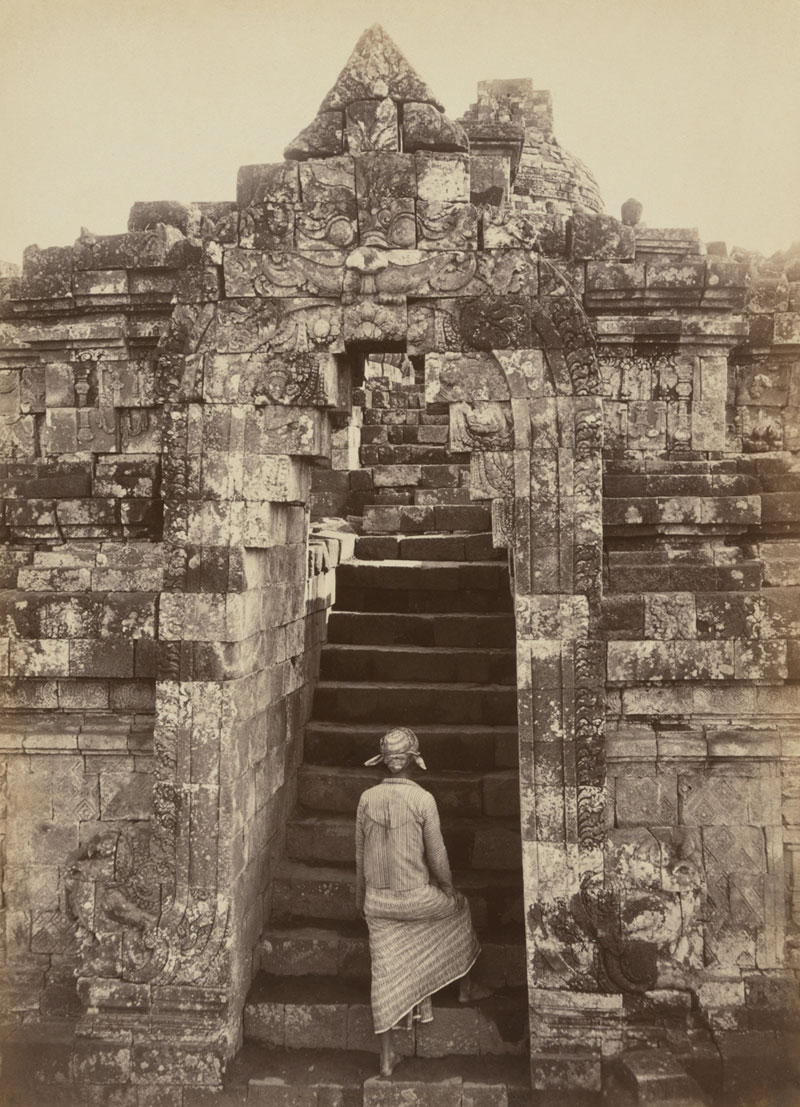
Kassian Céphas (Javanese, 1845-1912) 'Man climbing the front entrance to Borobudur' Central Java 1872


Kassian Céphas (Javanese, 1845-1912)
Man climbing the front entrance to Borobudur
Central Java 1872
Albumen silver photograph
22.2 x 16.1cm
Collection National Gallery of Australia


Kassian Cephas or Kassian Céphas was a Javanese photographer of the court of the Yogyakarta Sultanate. He was the first indigenous person from Indonesia to become a professional photographer and was trained at the request of Sultan Hamengkubuwana VI. After becoming a court photographer in as early 1871, he began working on portrait photography for members of the royal family, as well as documentary work for the Dutch Archaeological Union. Cephas was recognised for his contributions to preserving Java’s cultural heritage through membership in the Royal Netherlands Institute of Southeast Asian and Caribbean Studies and an honorary gold medal of the Order of Orange-Nassau. Cephas and his wife Dina Rakijah raised four children. Their eldest son Sem Cephas continued the family’s photography business until his own death in 1918.

Text from the Wikipedia website


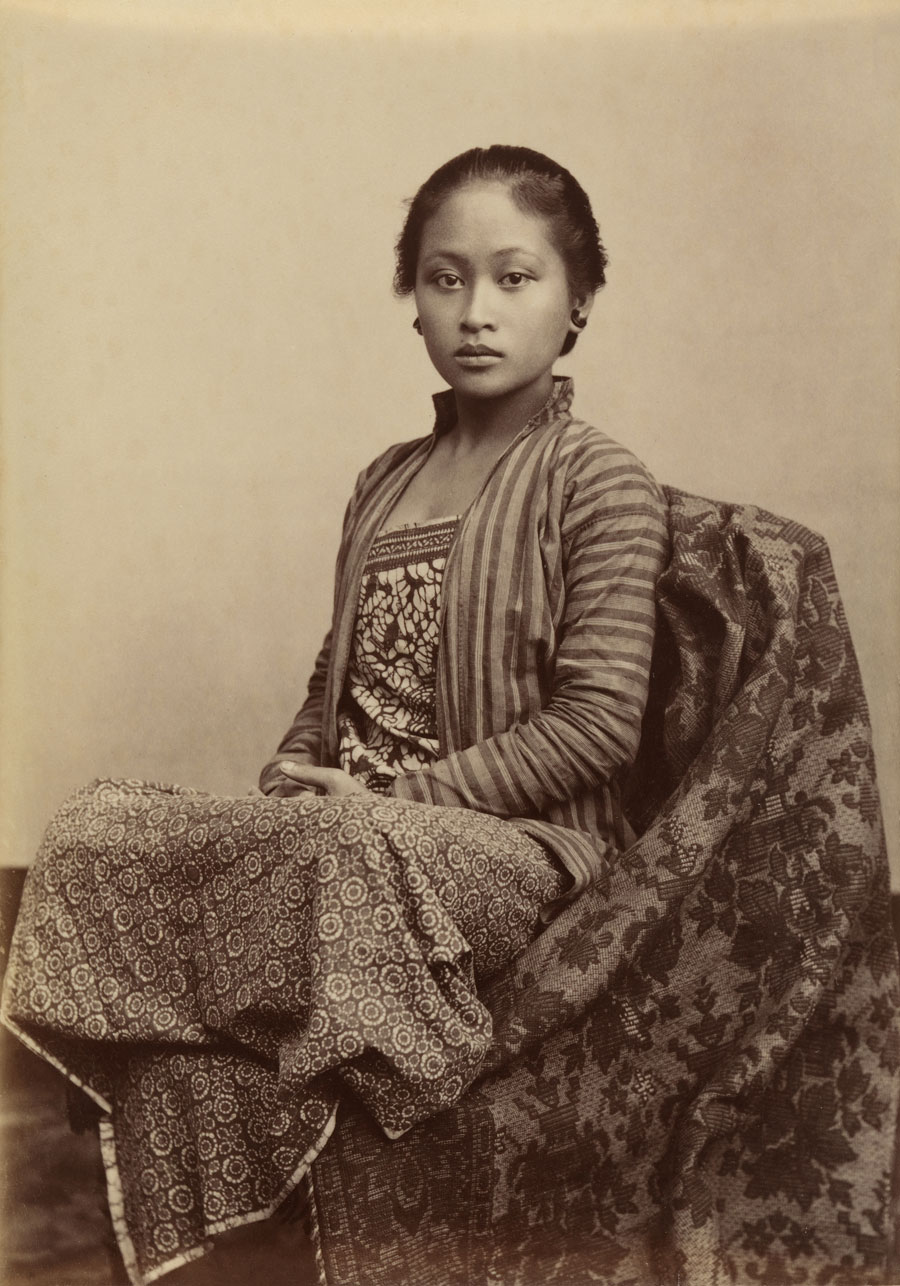
Kassian Céphas (Javanese, 1845-1912) 'Young Javanese woman' c. 1885


Kassian Céphas (Javanese, 1845-1912)
Young Javanese woman
c. 1885
Albumen silver photograph
13.7 x 9.8cm
Collection National Gallery of Australia


Garden of the East: photography in Indonesia 1850s-1940s offers the chance to see images from the last century of colonial rule in the former Dutch East Indies. It includes over two hundred photographs, albums and illustrated books from the Gallery’s extensive collection of photographic art from our nearest Asian neighbour.

Most of the daguerreotype images from the 1840s, the first decade of photography in Indonesia, are lost and can only be glimpsed in reproductions in books and magazines of the mid nineteenth century. It was not until the late 1850s that photographic images of Indonesia – famed origin of exotic spices much desired in the West – began circulating worldwide. British photographers Walter Woodbury and James Page, who arrived in Batavia (Jakarta) from Australia in 1857, established the first studio to disseminate large numbers of views of the country’s lush tropical landscapes and fruits, bustling port cities, indigenous people, exotic dancers, sultans and the then still poorly known Buddhist and Hindu Javanese antiquities of Central Java.

The studios established in the 1870s tended to offer a similar inventory of products, mostly for the resident Europeans, tourists and international markets. The only Javanese photographer of note was Kassian Céphas who began work for the Sultan in Yogyakarta in the early 1870s. In late life, Céphas was widely honoured for his record of Javanese antiquities and Kraton performances, and his full genius can be seen in Garden of the East.

Most of the best known studios at the turn of the century, including those of Armenian O Kurkdjian and German CJ Kleingrothe, were owned and run by Europeans. Chinese-run studios appeared in the 1890s but concentrated on portraiture. Curiously, relatively few photographers in Indonesia were Dutch. From the 1890s onward, the largest studios increasingly served corporate customers in documenting the massive scale of agribusiness, particularly in the golden economic years of the Indies in the early to mid twentieth century. From around 1900, a trend toward more picturesque views and sympathetic portrayals of indigenous people appeared. This was intimately linked to a government sponsored tourist bureau and to styles of Pictorialist art photography that had just emerged as an international movement in Europe and America. As photographic studios passed from owner to owner, old images were given new life as souvenir prints sold at hotels and resorts and as reproductions in cruise-ship brochures.

Amateur camera clubs and Pictorialist photography salons common in Western countries by the 1920s were slower to develop in Asia and largely date to the postwar era. Locals, however, took up elements of art photography. Professionals George Lewis and Thilly Weissenborn (the only woman known from the period) and amateurs Dr Gregor Krause and Arthur de Carvalho put their names on their prints and employed the moody effects and storytelling scenarios of Pictorialist photography. Krause was one of the most influential photographers. He extensively published his 1912 Bali and Borneo images in magazines and in two books in the 1920s and 1930s, inspiring interest in the indigenous life and landscape as well as the sensuous physical beauty of the Balinese people.

Postwar artists and celebrities – including American André Roosevelt, who used smaller handheld cameras – flocked to the country to capture spontaneity and daily life around them, to affirm their view of Bali as a ‘last paradise’ , where art and life were one. In 1941, Gotthard Schuh published Inseln der Götter (Islands of the gods), the first modern large-format photo-essay on Indonesia. While romantic, the collage of images and text in Schuh’s book presented a vital image of the diverse islands, peoples and cultures that were to be united under the flag of the Republic of Indonesia in 1949.

A particular feature of Garden of the East is a selection of family albums bound in distinctive Japanese or Batik patterned cloth boards as records of a colonial lifestyle (for the affluent) in the Indies. Hundreds of these once treasured narratives of now lost people ended up in the Netherlands in the 1970s and 1980s in estate sales of former Dutch colonial and Indo (mixed race) family members who had returned or immigrated after the establishment of the Republic of Indonesia.

Gael Newton. “Princes, Portraits and Panoramas,” in the National Gallery of Australia Artonview 76 Summer 2013, pp. 20-22 [Online] Cited 12/06/2014


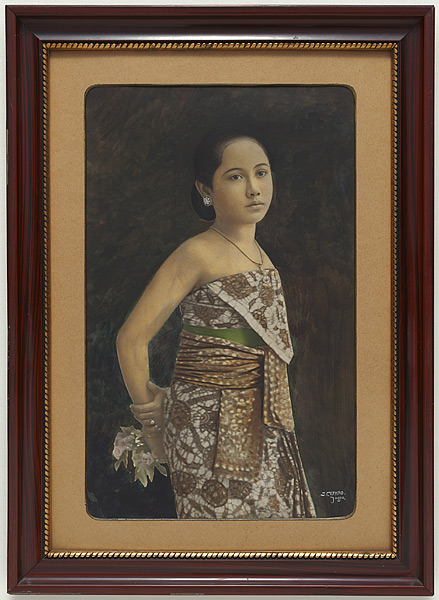
Sem Céphas (Indonesia, 1870-1918) 'Portrait of a Javanese woman' c. 1900


Sem Céphas (Indonesia, 1870-1918)
Portrait of a Javanese woman
c. 1900
Gelatin silver photograph, colour pigment hand painted photograph
image
38.5 x 23.8cm
Purchased 2007
National Gallery of Australia, Canberra


Gotthard Schuh (Swiss, 1897-1969) 'Inseln der Götter' (Islands of the gods) [book cover] 1941


Gotthard Schuh (Swiss, 1897-1969)
Inseln der Götter (Islands of the gods) [book cover]
1941
Hardcover w/dust jacket
154pp, text in German
Plates in photogravure
28.5 x 22.5cm


Gotthard Schuh (December 22, 1897 in Schöneberg near Berlin – December 29, 1969 in Küsnacht, Zurich) was a Swiss photographer, painter and graphic artist.

Photographer

In 1931 his first photos were published in a Zurich magazine and in 1932 he held a photography exhibition in Paris, where he met Picasso, Léger and Braque.

From 1932 he joined the Zürcher Illustrierte under Arnold Kübler, working with Hans Staub and Paul Senn, and until 1937 Schuh also worked freelance for Berliner Illustrirte Zeitung, Paris Match and Life. His assignments during 1938/1939 took him all over Europe and to Indonesia. He and Marga divorced in 1939.

After about ten years as a reporter he became the first picture editor for the Neue Zürcher Zeitung. He and Edwin Arnet created the NZZ supplement Das Wochenende, which showcased Swiss and international photography in addition to his own reportage.

From this period a significant part of his own photographic work illustrated books, of which the most successful was Inseln der Götter published in 1941, the result of his almost 11-month journey through Singapore, Java, Sumatra and Bali, undertaken just before the war. It was a mixture of reportage and self-reflection, with a poetic quality that, though individual images may be read either way, Schuh sometimes valued over documentary authenticity:

“Everyone just depicts what he sees, and everyone just sees what corresponds to his being.”


This is evident in the book Begegnungen which Schuh published in 1956, in which he combined older and more recent images in free association, in accord with the objectives of the ‘Kollegium Schweizerischer Photographen’, the Academy of Swiss Photographers which he founded together with Paul Senn, Walter Läubli, Werner Bischof and Jakob Tuggener, a loose group that promoted an ‘auteur’ emphasis. Their first exhibition in 1951 marked a renewal of photography in Switzerland after the conservatism and nationalism of the war years. Critic Edwin Arnet identified the ethos of the group:

“Their photography has abandoned the sphere of technical experimentation … , the abstract and the avant-garde. It has become more wholesome, concentrating again more on the poetry of real things.”


In 1955 Edward Steichen selected two of Schuh’s photographs for the world-touring Museum of Modern Art exhibition The Family of Man seen by an audience of 9 million. One, taken in Italy, is a stolen image of lovers resting beside their discarded bicycles amongst long summer grass in an olive grove, while the other, taken in Java, shows a boy stretching balletically across the pavement as he plays marbles.

Text from the Wikipedia website


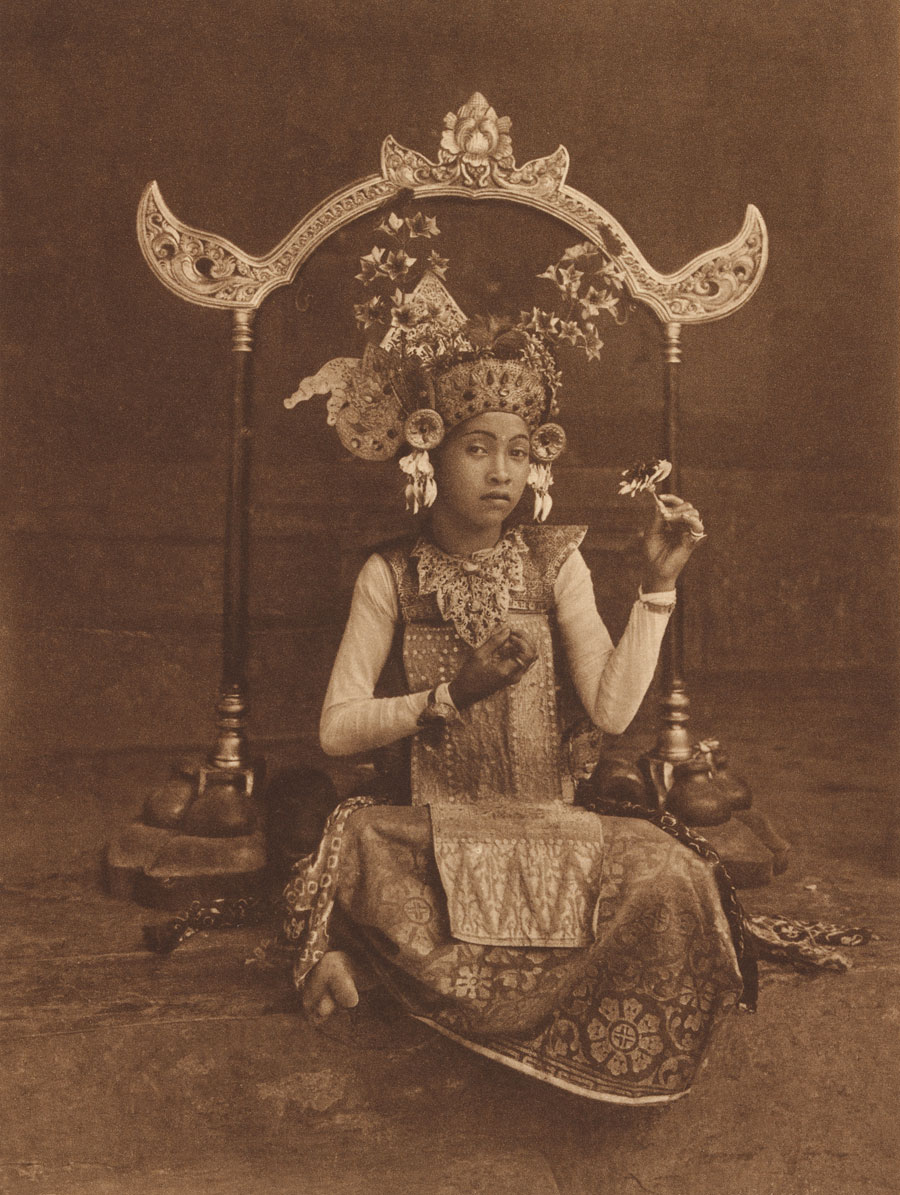
Thilly Weissenborn (Javanese / Indonesian, 1883-1964) 'A dancing-girl of Bali, resting' c. 1925


Thilly Weissenborn (Javanese / Indonesian, 1883-1964)
Indonesia 1902 – Netherlands 1964
A dancing-girl of Bali, resting
c. 1925
Photogravure
21.1 x 15.9cm
Collection National Gallery of Australia


Thilly Weissenborn (1883-1964) was the first professional woman photographer of the former Dutch East Indies and one of the few photographers working in the early 20th century in the area who were Indonesian born. Her works were widely used to expand the newly developed tourism industry of the East Indies.

Early life

Margarethe Mathilde Weissenborn was born on 22 March 1883 or 1889, to Cornelia Emma Angely Lina da Paula (née Roessner) and Hermann Theodor Weissenborn in either Surabaya, or Kediri, on East Java of the Dutch East Indies (now Indonesia). Her parents were German-born, naturalized Dutch citizens and operated a coffee plantation in Kediri. In 1892, her mother returned with Thilly and her siblings to the Netherlands and took up residence in The Hague. They were joined by their father the following year. After five years, the oldest son and the father left for Tanganyika in German East Africa to become planters there. Else, one of Thilly’s older sisters, who had studied photography in Paris, opened a photographic studio in The Hague in 1903, where Thilly began working. In 1912, she left the Netherlands and returned to Java, in the company of her brother Theo to join their brother Oscar, who was living in Bandung.

Career

In 1913, Weissenborn found employment in a prestigious photographic studio in Surabaya which was founded by Onnes Kurkdjian, an Armenian, called Atelier Kurkdjian. The studio was the only agent for Kodak in East Java. Kurkdjian had died by the time Weissenborn arrived and the studio, which employed thirty photographers, was managed by an Englishman, GP Lewis. Weissenborn honed her craft under Lewis’ tutelage learning both photographic and retouching techniques. In 1917, she moved to Garut in West Java and managed a photographic studio GAH Lux in the Garoetsche Apotheek en Handelsvereeniging Company, a pharmacy owned by Denis G. Mulder. Mulder moved to Bandung in 1920 and turned over his property to Weissenborn, who changed the firm name to Foto Lux. In 1930, she established Lux Fotograaf Atelier NV, which she operated for a decade in Garut.

Weissenborn became the first significant woman photographer in Indonesia and was one of the few photographers working in the era who were Indonesian-born. Her works were marked by a lyrical quality and her attempt to capture the idyllic nature of the landscape. She is most known for her photographs of architectural interiors, landscapes, and portraits, which were produced for the burgeoning tourist industry. Some of her works were featured in Dutch tourism guide published in 1922, as Come to Java. Her photographs also made up the majority of the images in Louis Couperus’ work Oostwaarts (Eastward, 1923). Weissenborn travelled throughout the East Indies, and particularly worked in Bali, trying to capture the exotic nature of the islands, while at the same time, retaining the dignity of locals she photographed. Ironically, her images were at times appropriated and used in prurient manners, such as a photograph of two women on a road carrying water, one who has a pot on her head, which was used for a French novel titled L’ÃŽle des seins nus (Island of Bare Breasts). In time, her portrait images changed from partially-clad images to the more artistic images of dancing girls. These were featured in such magazines as Inter-Ocean, Sluyter’s Monthly and Tropical Netherlands, which marketed a more civilised Bali to international tourists.

Later life

During World War II, the 16th Army of Japan landed in West Java at the end of February, 1942. After subduing the population, around 30,000 American, Australian, British, Dutch, and Indo-European civilians were transported to civilian internment camps. In 1943, Weissenborn was interned in the Japanese prisoner of war camp Kareës in Bandung. Women and children were kept in the camp until 1945. The town of Garut was destroyed by fire and then in the aftermath of the Indonesian National Revolution, Weissenborn’s studio was completely destroyed and all of her glass negatives were lost in 1947. That same year, she married Nico Wijnmalen and the couple moved to Bandung.

In 1956, the Indonesian government repudiated the remaining terms of the Hague Round Table Conference forcing Weissenborn and Wijnmalen to return to Holland. Weissenborn died 28 October 1964 at Baarn, in Utrecht Province, The Netherlands and is buried in the Baarn New General Cemetery.

Text from the Wikipedia website


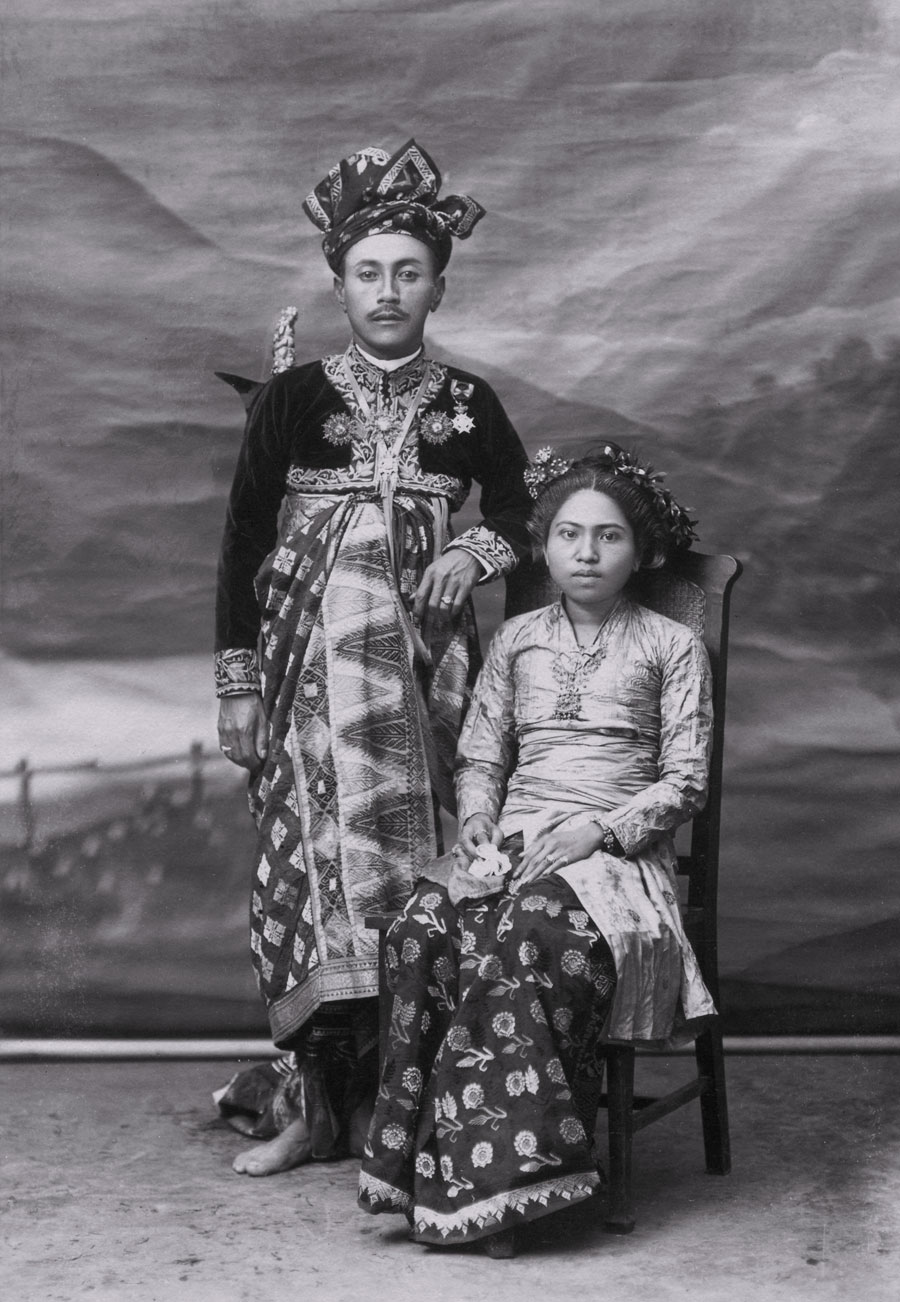
Thilly Weissenborn (Javanese / Indonesian, 1883-1964) (attributed to) 'I Goesti Agoeng Bagoes Djelantik, Anakagoeng Agoeng Negara, Karang Asem' 1931


Thilly Weissenborn (Javanese / Indonesian, 1883-1964) (attributed to)
I Goesti Agoeng Bagoes Djelantik, Anakagoeng Agoeng Negara, Karang Asem
1931
Gelatin silver photgraph
14 x 9.7cm
Collection National Gallery of Australia
Purchased 2006


Unknown photographer. Working Bali 1930s. 'I Goesti Agoeng Bagoes Djelantik, Anakagoeng Agoeng Negara, Karang Asem' Bali 1931


Unknown photographer
Working Bali 1930s
I Goesti Agoeng Bagoes Djelantik, Anakagoeng Agoeng Negara, Karang Asem
Bali 1931
Gelatin silver photograph
14.0 x 9.7cm
Collection National Gallery of Australia


National Gallery of Australia
Parkes Place, Canberra
Australian Capital Territory 2600
Phone: (02) 6240 6411

Opening hours:
Open daily 10.00 am – 5.00 pm
(closed Christmas day)

National Gallery of Australia website

LIKE ART BLART ON FACEBOOK

Back to top