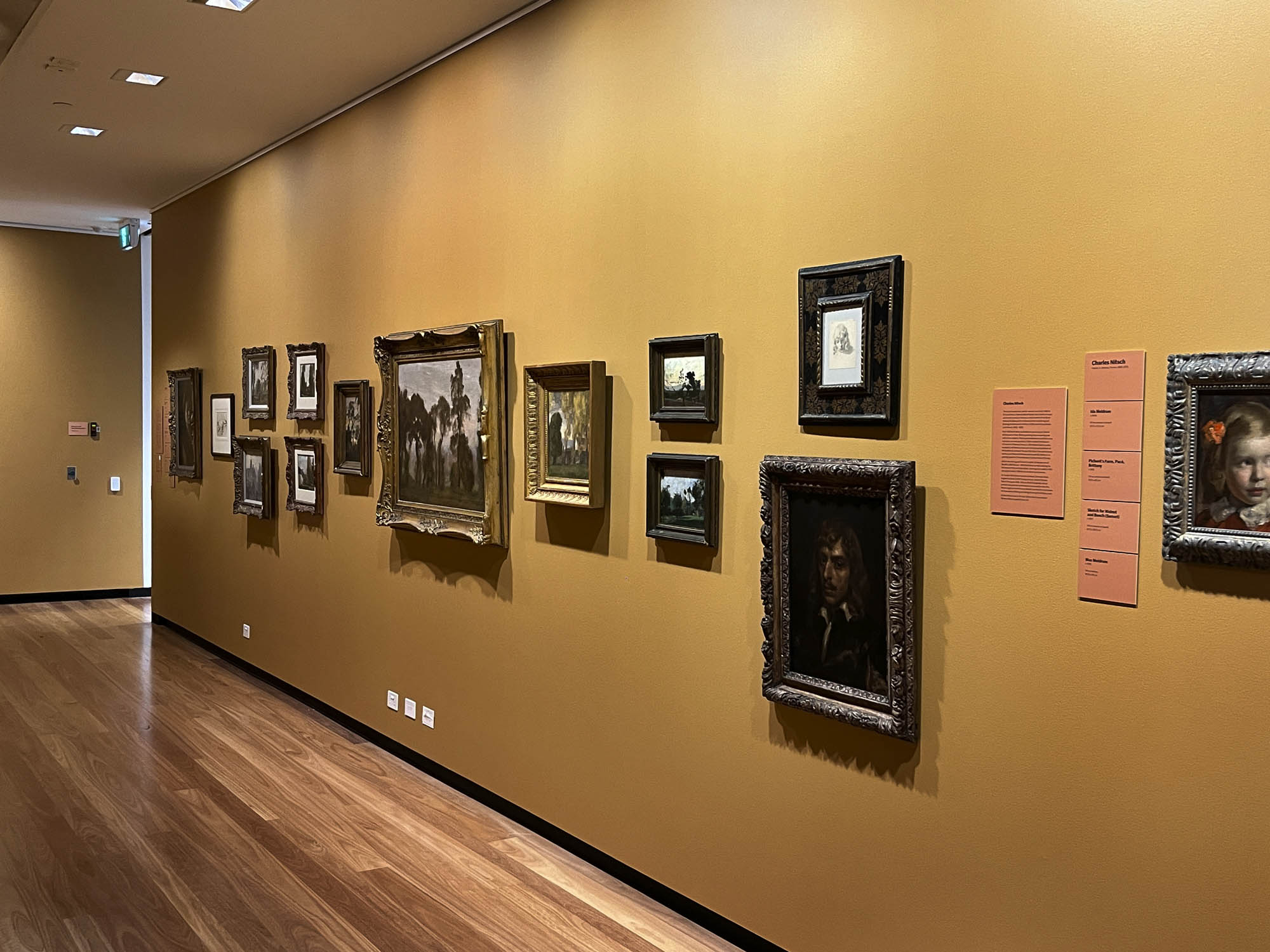
Exhibition: ‘Australian Tonalism: A selection from the John and Peter Perry Collection’ at the Town Hall Gallery, Hawthorn, Melbourne

Exhibition dates: 7th May – 27th July, 2025


Edgar Finlay (Australian, 1893-1974) 'Untitled Streetscape' 1919 from the exhibition 'Australian Tonalism: A selection from the John and Peter Perry Collection' at the Town Hall Gallery, Hawthorn, Melbourne, May - July, 2025


Edgar Finlay (Australian, 1893-1974)
Untitled Streetscape
1919
Oil on board
32.2 x 27.2cm


This is a near perfect exhibition of Australian Tonalist paintings from the John and Peter Perry Collection at the Town Hall Gallery, Hawthorn, Melbourne.

From the beautiful colour of the gallery walls which compliments the art work to the subtle grouping of the paintings to the individual nuances in style of each artist’s work … this is a stunning exhibition which envelops the viewer in the paintings sublime, minimalist intimacies.

From portrait to landscape, from cityscape to still life, I was enraptured by the presence of each painting. Blow Monet or Cezanne, here is Australian colour, context, identity, place, perspective at its suffused finest!

I have always adored the work of Clarice Beckett (Australian, 1887-1935) ever since I saw her paintings at Lauraine Diggins Fine Art way back in 2015, and normally she would be the start of the show … but not here. Here she is surrounded by visions / visionaries of equal stature, led by the redoubtable painter and teacher Max Meldrum (Australian, 1875-1955).

The wall of five of his paintings of trees (see installation photo below) including The Glade, Eltham (c. 1920, below), The Pool (1923, below), The Bottom of the Hill (Eltham Reserve) (1925, below) is one of the most rigorous conceptual investigations into that subject I have seen in Australian painting, yet at the same time I was emotionally moved by their subtle nuances of form, tone and inhabitation. It was as though the artist had internalised the transcendence of his subject.

Believe me when I say that I inhaled the canvases in this exhibition, I breathed their suffused glow.

It was a real privilege to see the exhibition and to be able to construct this post. There are not many reproductions of Australian Tonalist paintings online by many of these artists so here is a record their achievement, and that of John and Peter Perry for having the foresight and perspicacity to collect them.

Enveloped in a pall of opaque density I see clearly.

Dr Marcus Bunyan


Please click on the photographs for a larger version of the image. All installation photographs © Marcus Bunyan
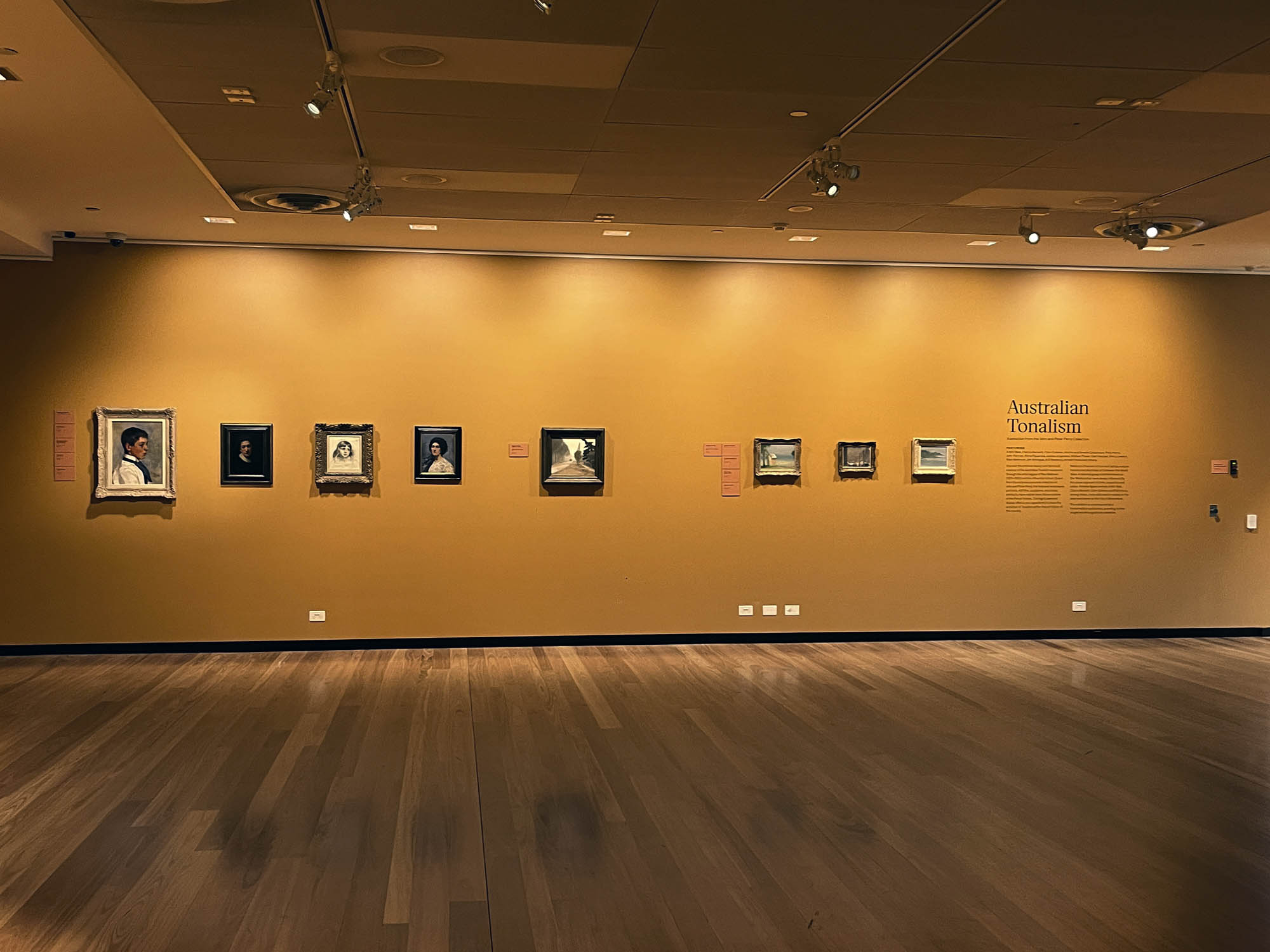


Installation view of the exhibition 'Australian Tonalism: A selection from the John and Peter Perry Collection' at the Town Hall Gallery, Hawthorn, Melbourne, May - July, 2025


Installation view of the exhibition Australian Tonalism: A selection from the John and Peter Perry Collection at the Town Hall Gallery, Hawthorn, Melbourne, May – July, 2025 showing at left, George Coates’ portrait of Max Meldrum, c. 1895 (below); at centre, Edgar Finlay’s Untitled Streetscape 1919 (above); and at right, three paintings by Clarice Beckett (below)


Australian Tonalism

Australian Tonalism is characterised by a particular “misty” or atmospheric quality created by the Meldrum painting method of building “tone on tone”. Tonalism developed from Meldrum’s “Scientific theory of Impressions”; claiming that social decadence had given artists an exaggerated interest in colour and, to their detriment, were paying less attention to tone and proportion. Art, he said, should be a pure science based on optical analysis; its sole purpose being to place on the canvas the first ordered tonal impressions that the eye received. All adornments and narrative and literary references should be rejected.

Tonalism opposed Post-Impressionism and Modernism, and is now regarded as a precursor to Minimalism and Conceptualism. The whole movement had been under fierce controversy and they were without doubt the most unpopular group of artists, in the eyes of most other artists, in the history of Australian art. Influential Melbourne artist and teacher George Bell described Australian Tonalism as a “cult which muffles everything in a pall of opaque density”.

Text from the Wikipedia website


George Coates (Australian, 1869-1930) 'Max Meldrum' c. 1895


George Coates (Australian, 1869-1930)
Max Meldrum
c. 1895
Oil on canvas
49.7 x 39.5cm
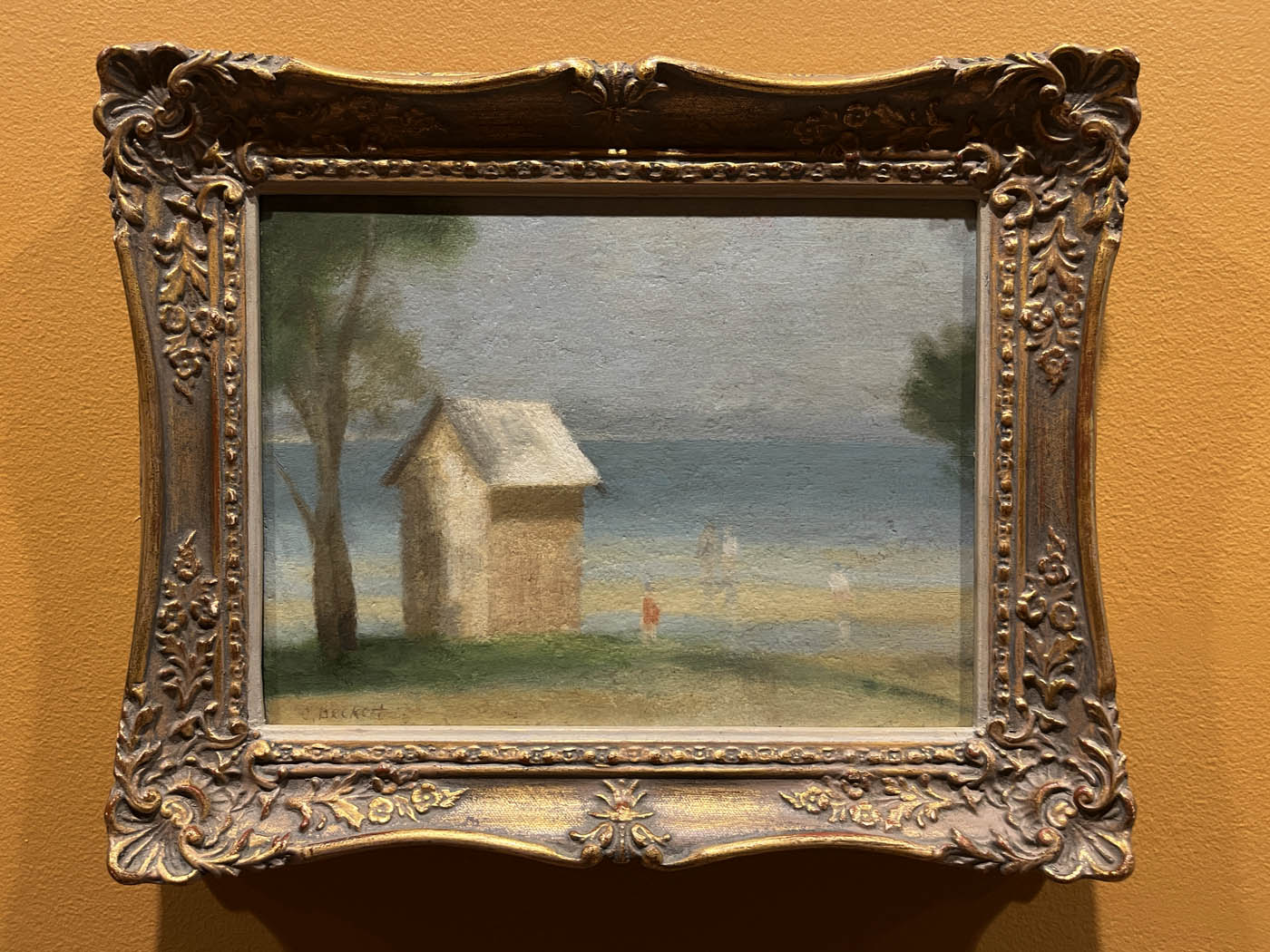
 

Clarice Beckett (Australian, 1887-1935) 'The Solitary Bathing Box' c. 1933


Clarice Beckett (Australian, 1887-1935)
The Solitary Bathing Box
c. 1933
Oil on beaver board
22.7 x 30cm


Clarice Beckett (Australian, 1887-1935) 'Street Scene (Collins Street)' c. 1931


Clarice Beckett (Australian, 1887-1935)
Street Scene (Collins Street)
c. 1931
Oil on canvas board
17.6 x 24cm
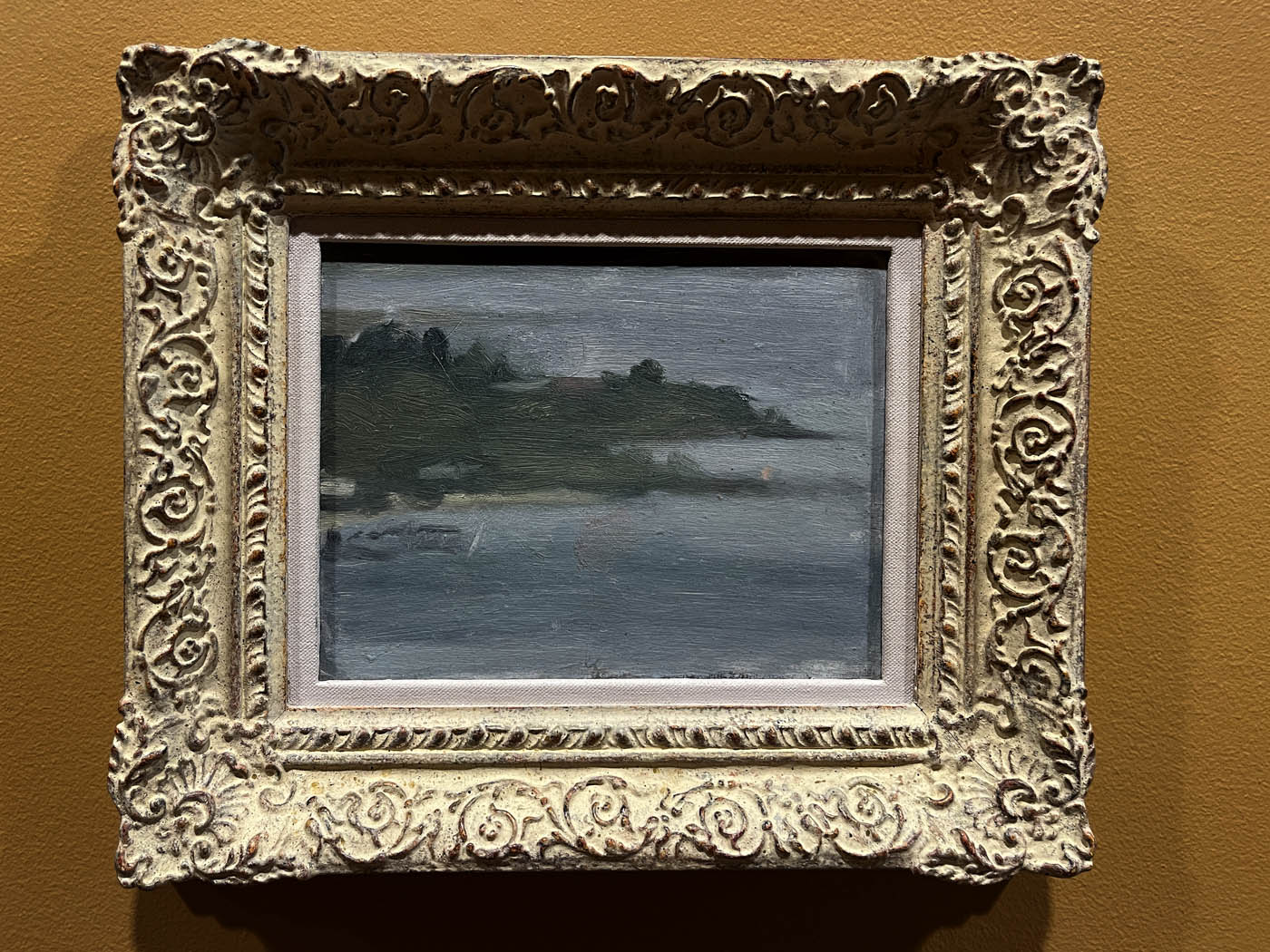
 

Clarice Beckett (Australian, 1887-1935) '(Beaumaris Coast)' c. 1927


Clarice Beckett (Australian, 1887-1935)
(Beaumaris Coast)
c. 1927
Oil on academy board
17.7 x 23.5cm
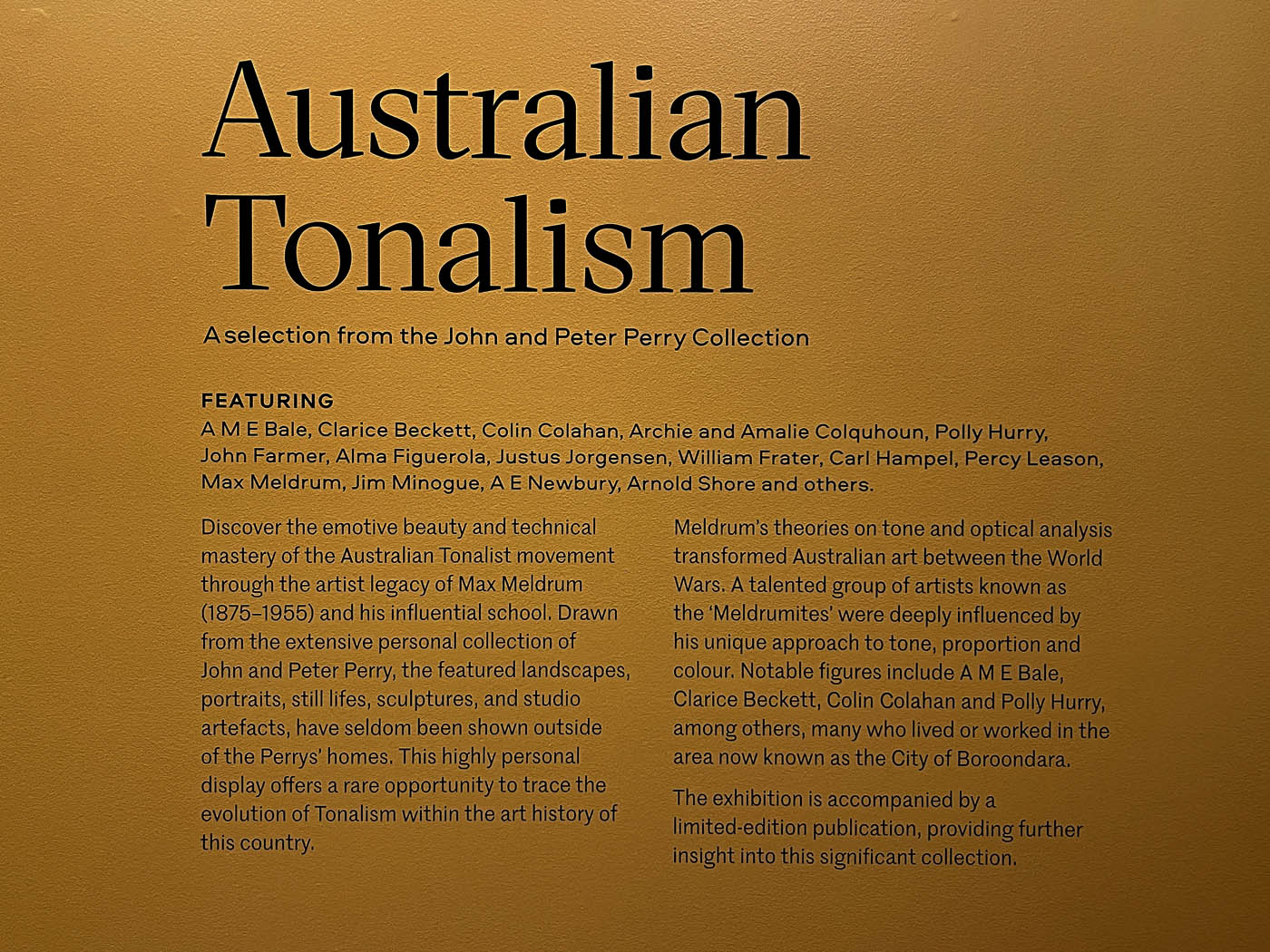
 

'Australian Tonalism' wall text
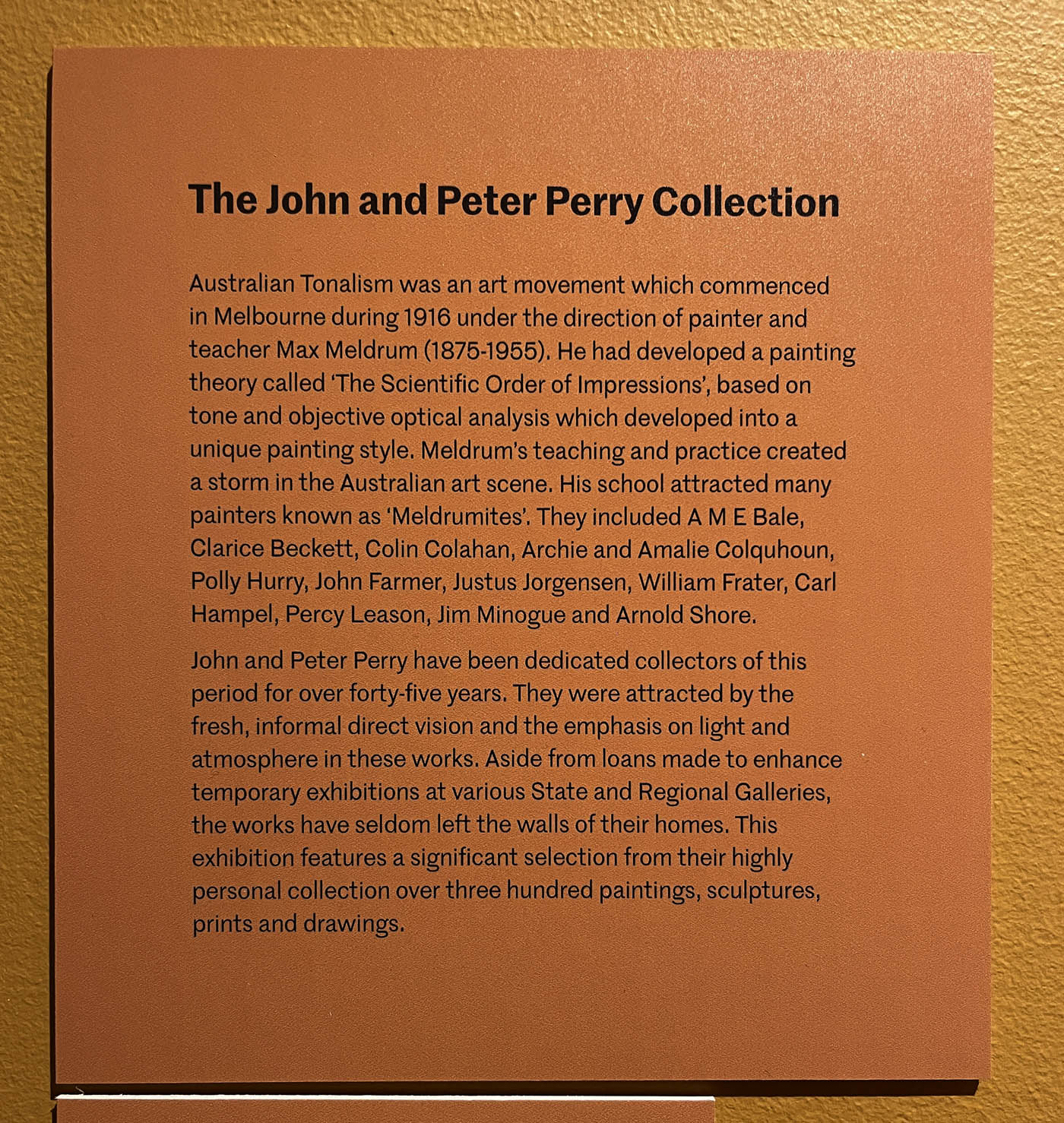
'Australian Tonalism' wall text The John and Peter Perry Collection


Wall text from the exhibition Australian Tonalism: A selection from the John and Peter Perry Collection at the Town Hall Gallery, Hawthorn, Melbourne, May – July, 2025
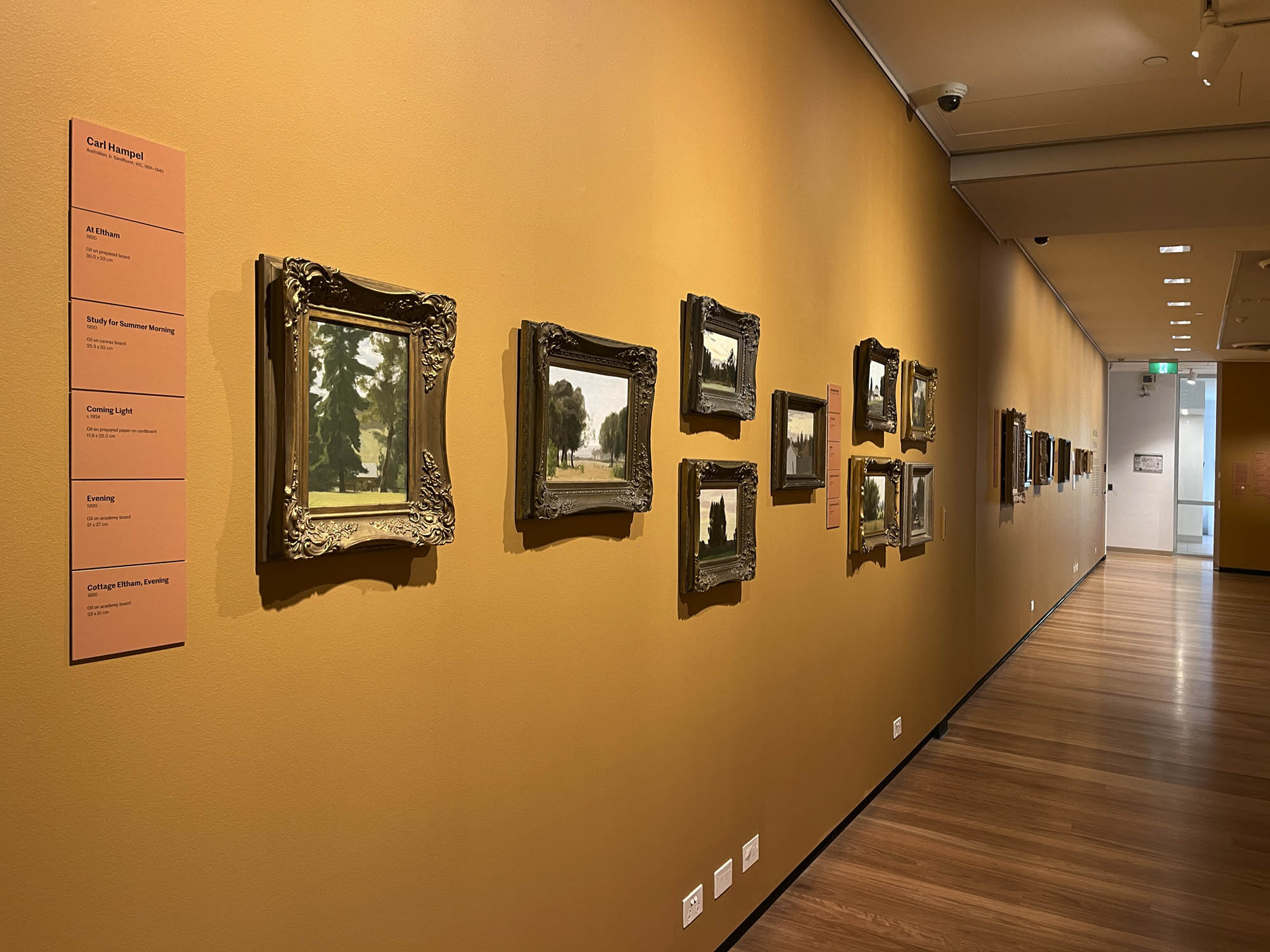
 

Installation view of the exhibition 'Australian Tonalism: A selection from the John and Peter Perry Collection' at the Town Hall Gallery, Hawthorn, Melbourne, May - July, 2025 showing the work of Carl Hampel


Installation view of the exhibition Australian Tonalism: A selection from the John and Peter Perry Collection at the Town Hall Gallery, Hawthorn, Melbourne, May – July, 2025 showing the work of Carl Hampel
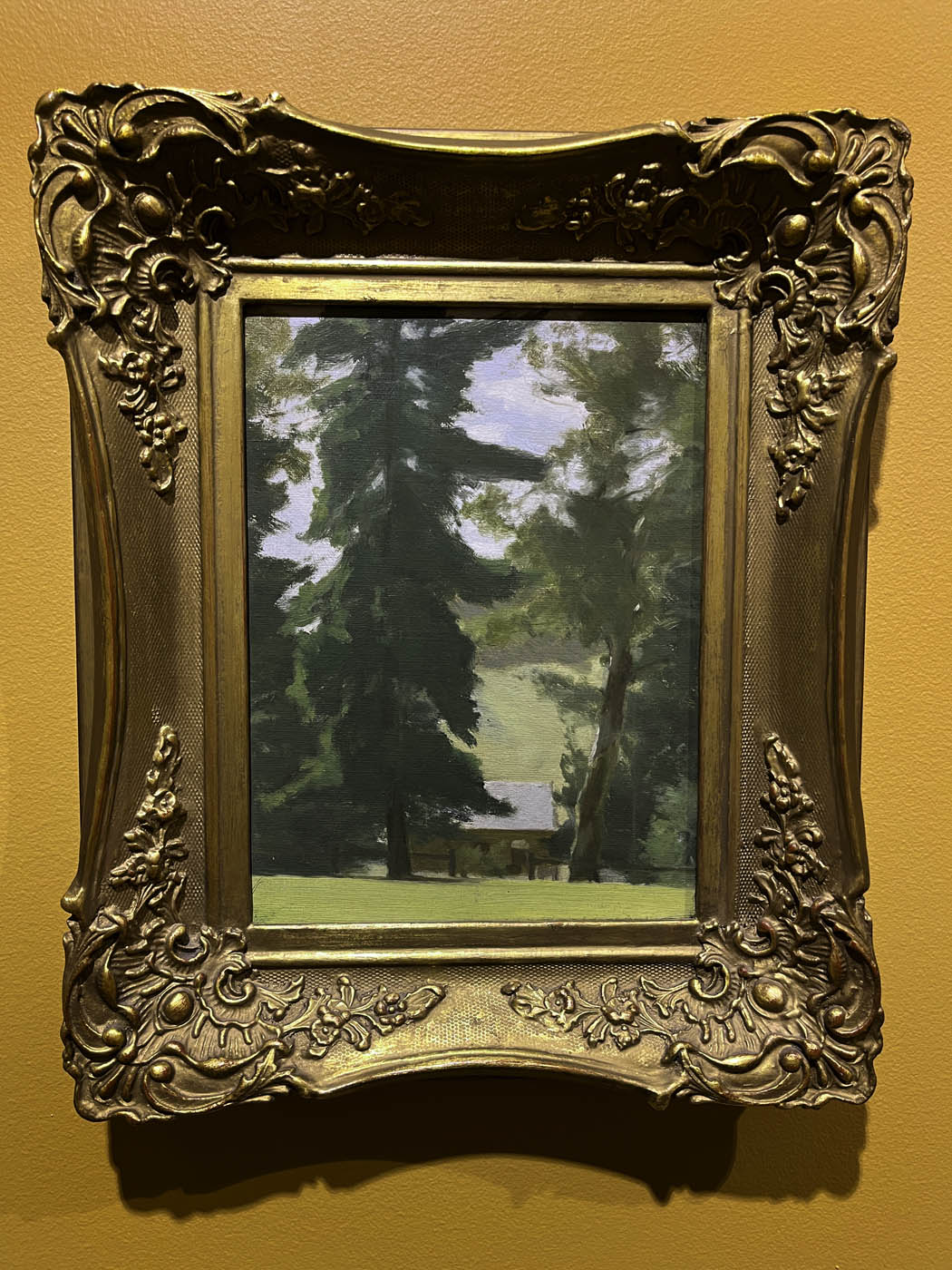
 

Carl Hampel (Australian, 1891-1940) 'At Eltham' 1920 from the exhibition 'Australian Tonalism: A selection from the John and Peter Perry Collection' at the Town Hall Gallery, Hawthorn, Melbourne, May - July, 2025


Carl Hampel (Australian, 1891-1940)
At Eltham
1920
Oil on prepared board
30.5 x 23cm
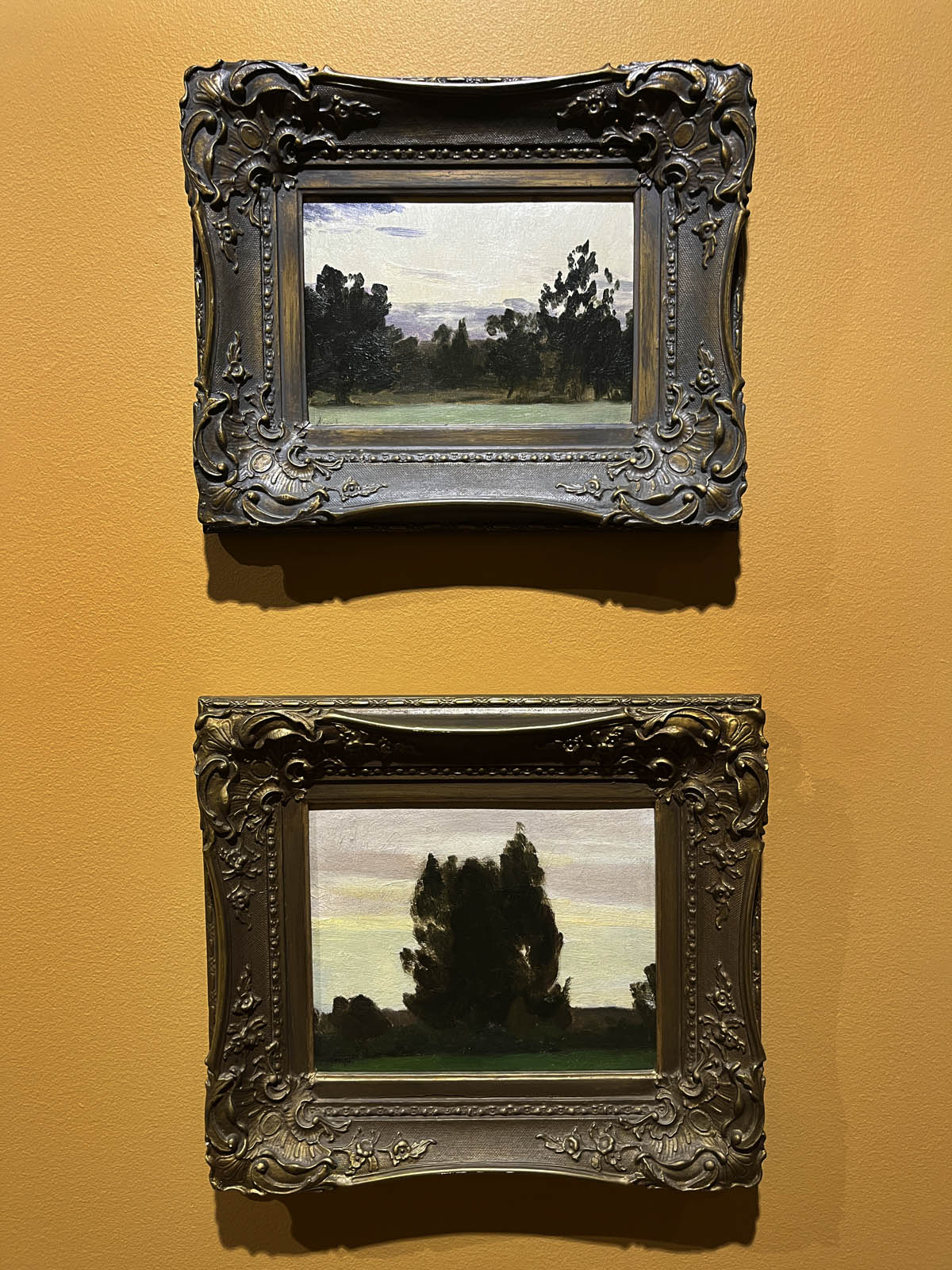
 

Carl Hampel (Australian, 1891-1940) 'Coming Light' c. 1924 and 'Evening' 1920


Carl Hampel (Australian, 1891-1940)
Coming Light
c. 1924
Evening
1920
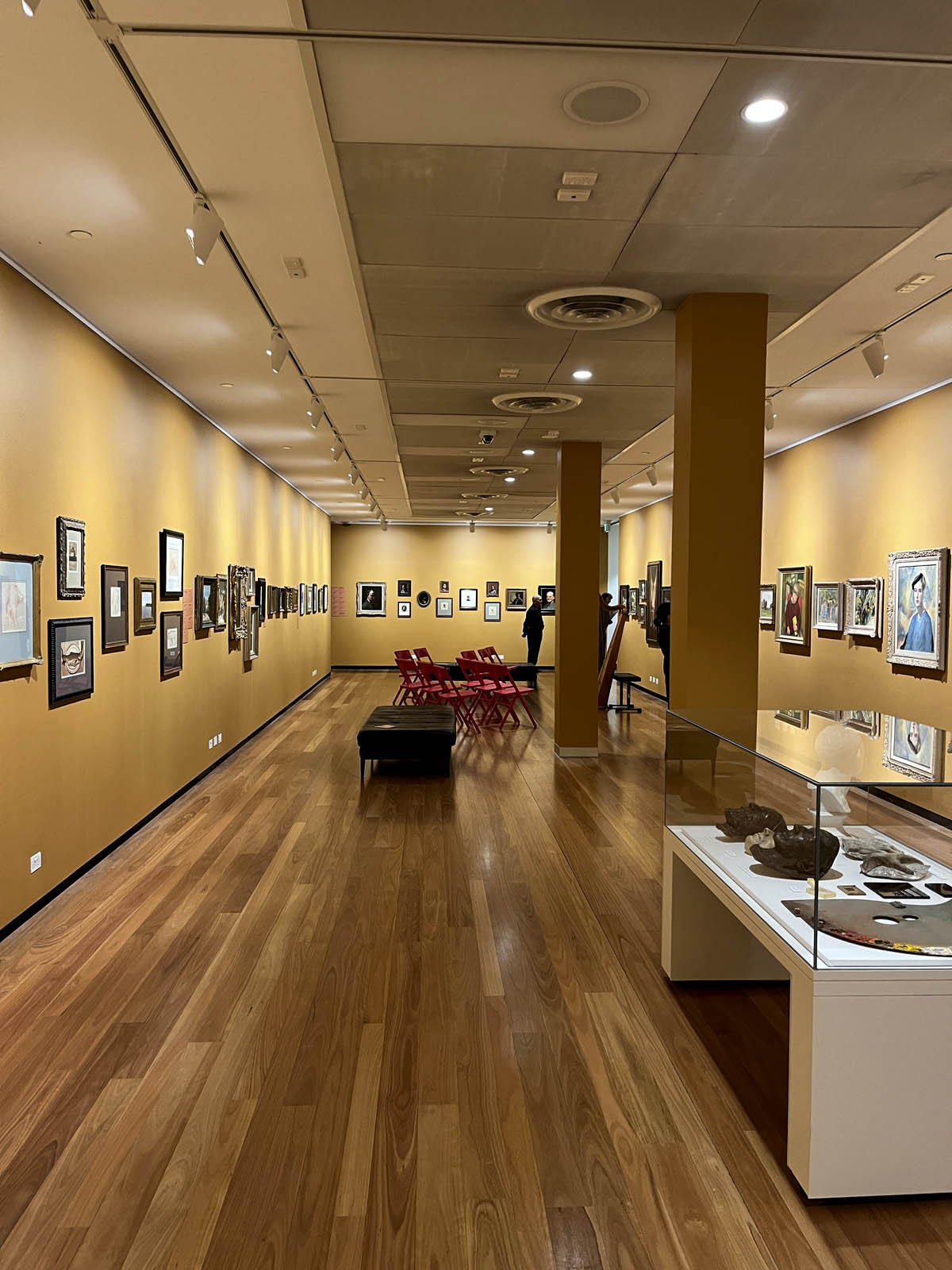
 

Installation view of the exhibition 'Australian Tonalism: A selection from the John and Peter Perry Collection' at the Town Hall Gallery, Hawthorn, Melbourne, May - July, 2025
Installation view of the exhibition 'Australian Tonalism: A selection from the John and Peter Perry Collection' at the Town Hall Gallery, Hawthorn, Melbourne, May - July, 2025 showing at left the work of A E Newbury


Installation view of the exhibition Australian Tonalism: A selection from the John and Peter Perry Collection at the Town Hall Gallery, Hawthorn, Melbourne, May – July, 2025 showing at left in the bottom image the work of A E Newbury


A E Newbury (Australian, 1891-1941) 'White Gum and Pines' 1919; 'Morning Light' 1919; and 'The Old Garden' 1919


A E Newbury (Australian, 1891-1941)
White Gum and Pines
1919
Morning Light
1919
The Old Garden
1919
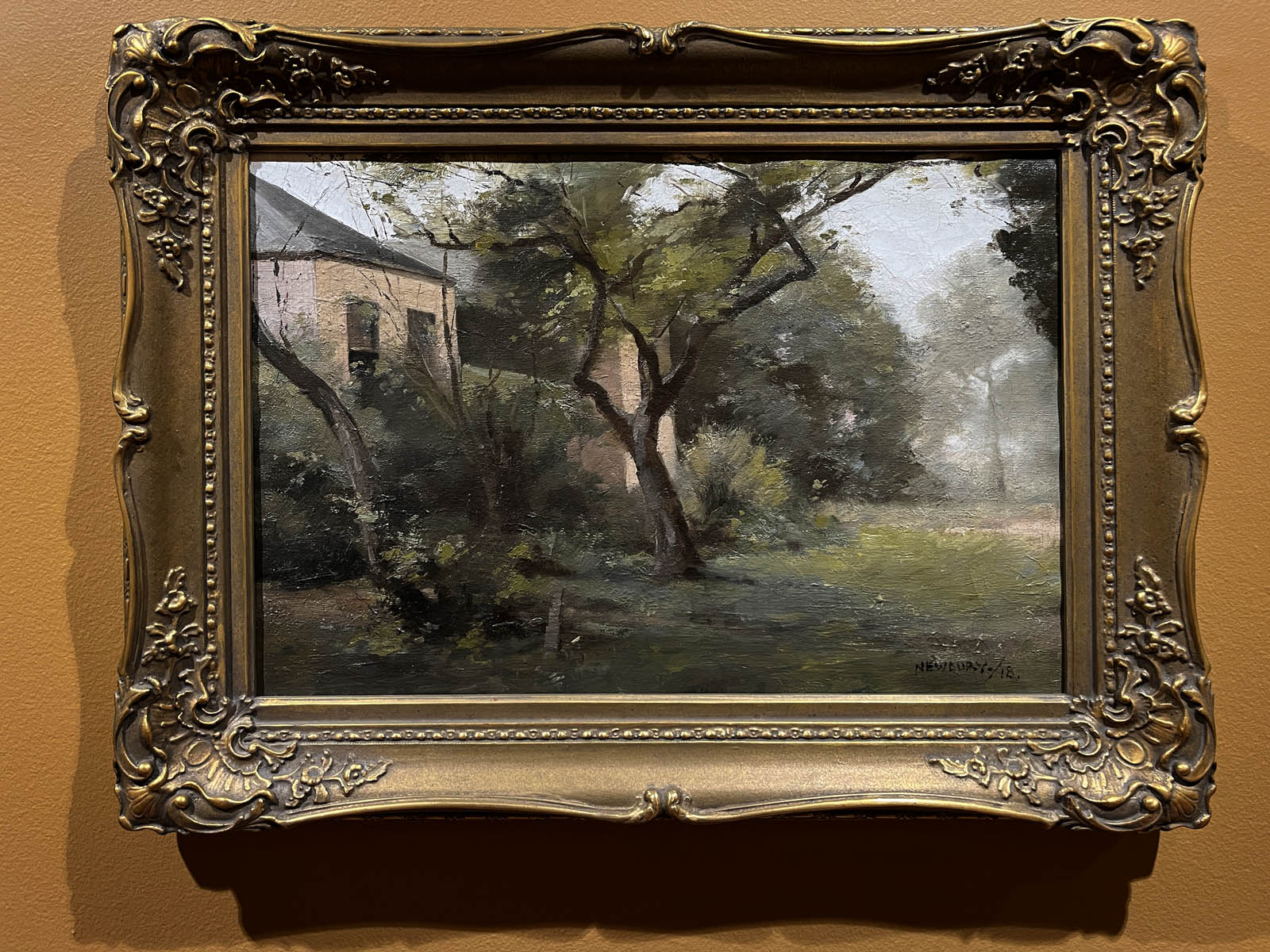
 

A E Newbury (Australian, 1891-1941) 'The Old Garden' 1919


A E Newbury (Australian, 1891-1941)
The Old Garden
1919
Oil on prepared board
30.5 x 23cm


Installation view of the exhibition 'Australian Tonalism: A selection from the John and Peter Perry Collection' at the Town Hall Gallery, Hawthorn, Melbourne, May - July, 2025 showing the work of William Frater


Installation view of the exhibition Australian Tonalism: A selection from the John and Peter Perry Collection at the Town Hall Gallery, Hawthorn, Melbourne, May – July, 2025 showing the work of William Frater
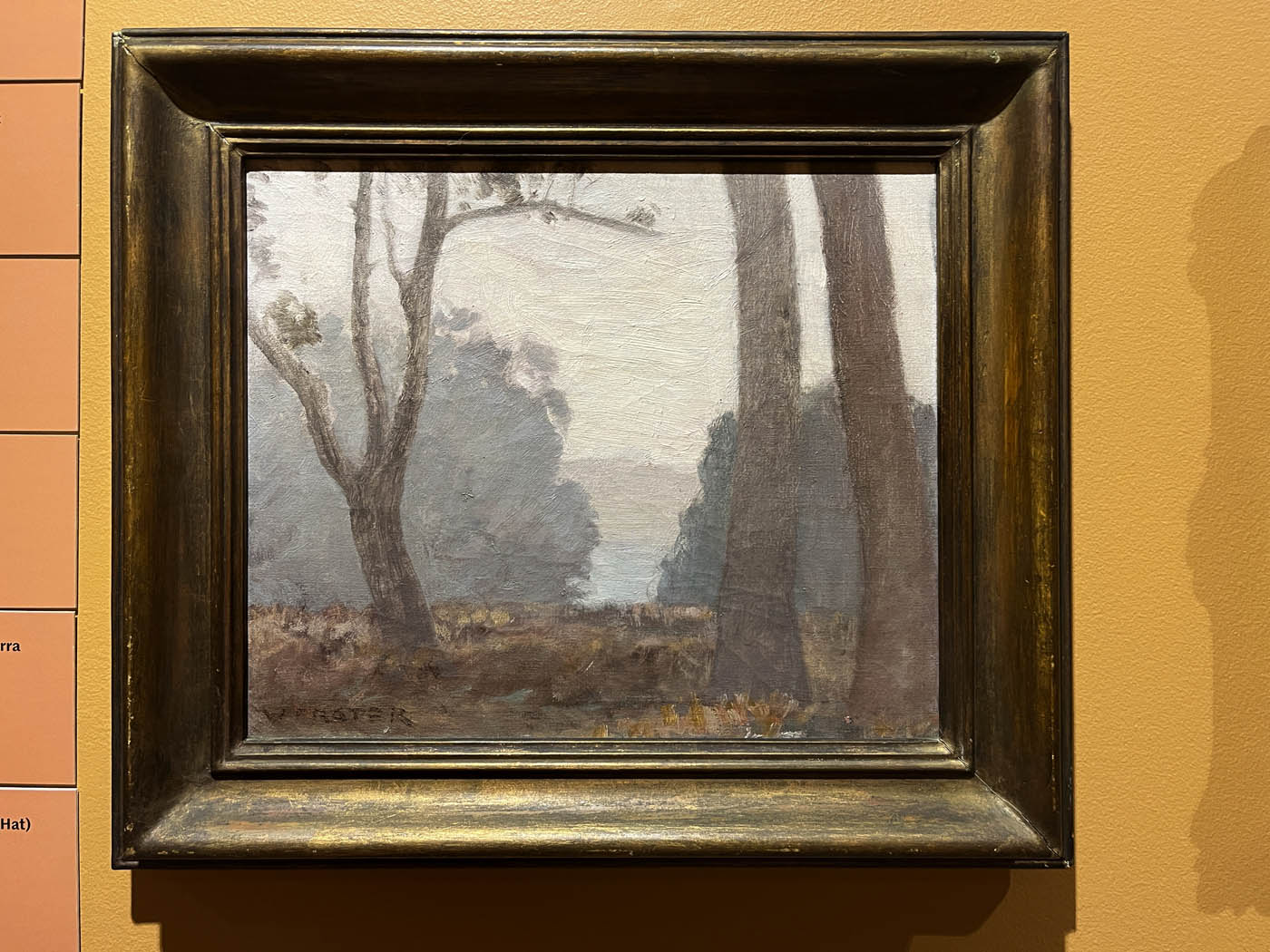
 

William Frater (Scottish, 1890-1974) 'Untitled Landscape' c. 1920


William Frater (Scottish, 1890-1974)
Untitled Landscape
c. 1920
Oil on canvas
30 x 41.5cm
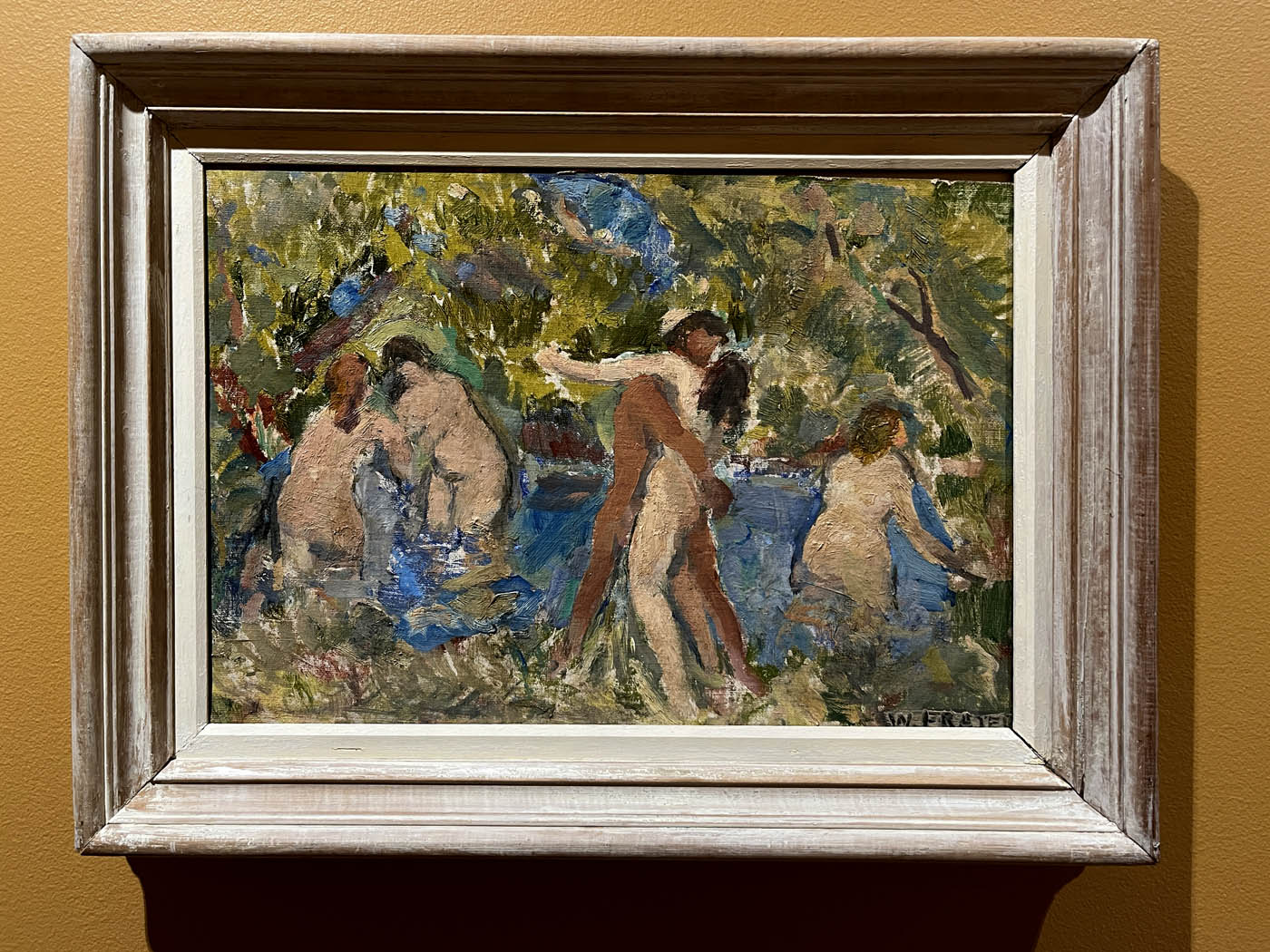
 

William Frater (Scottish, 1890-1974) 'Olympus' c. 1928


William Frater (Scottish, 1890-1974)
Olympus
c. 1928
Oil on canvas on board
32 x 46cm
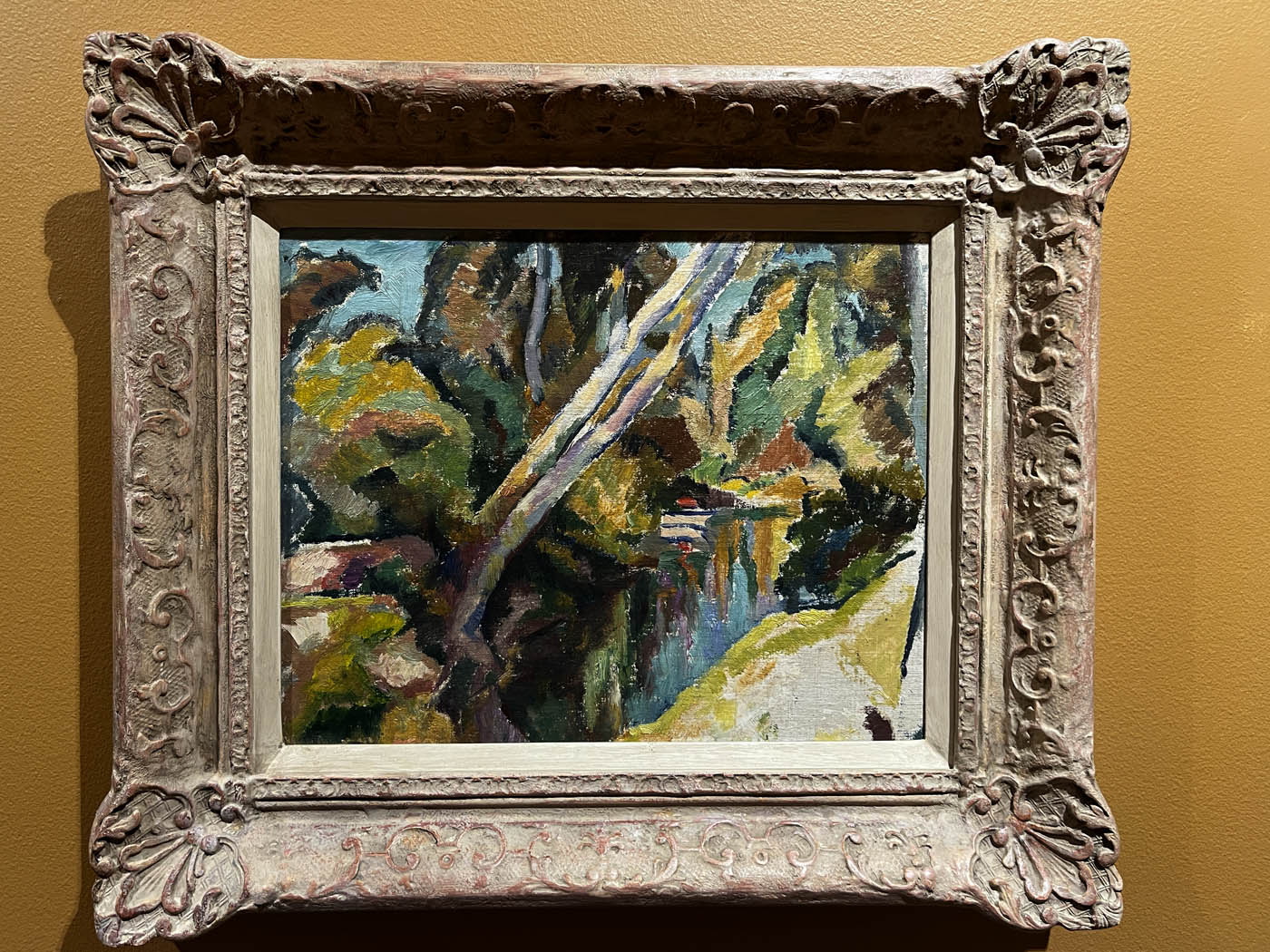
 

William Frater (Scottish, 1890-1974) 'Tree forms on the Yarra' c. 1926


William Frater (Scottish, 1890-1974)
Tree forms on the Yarra
c. 1926
Oil on canvas on board
30.5 x 39cm
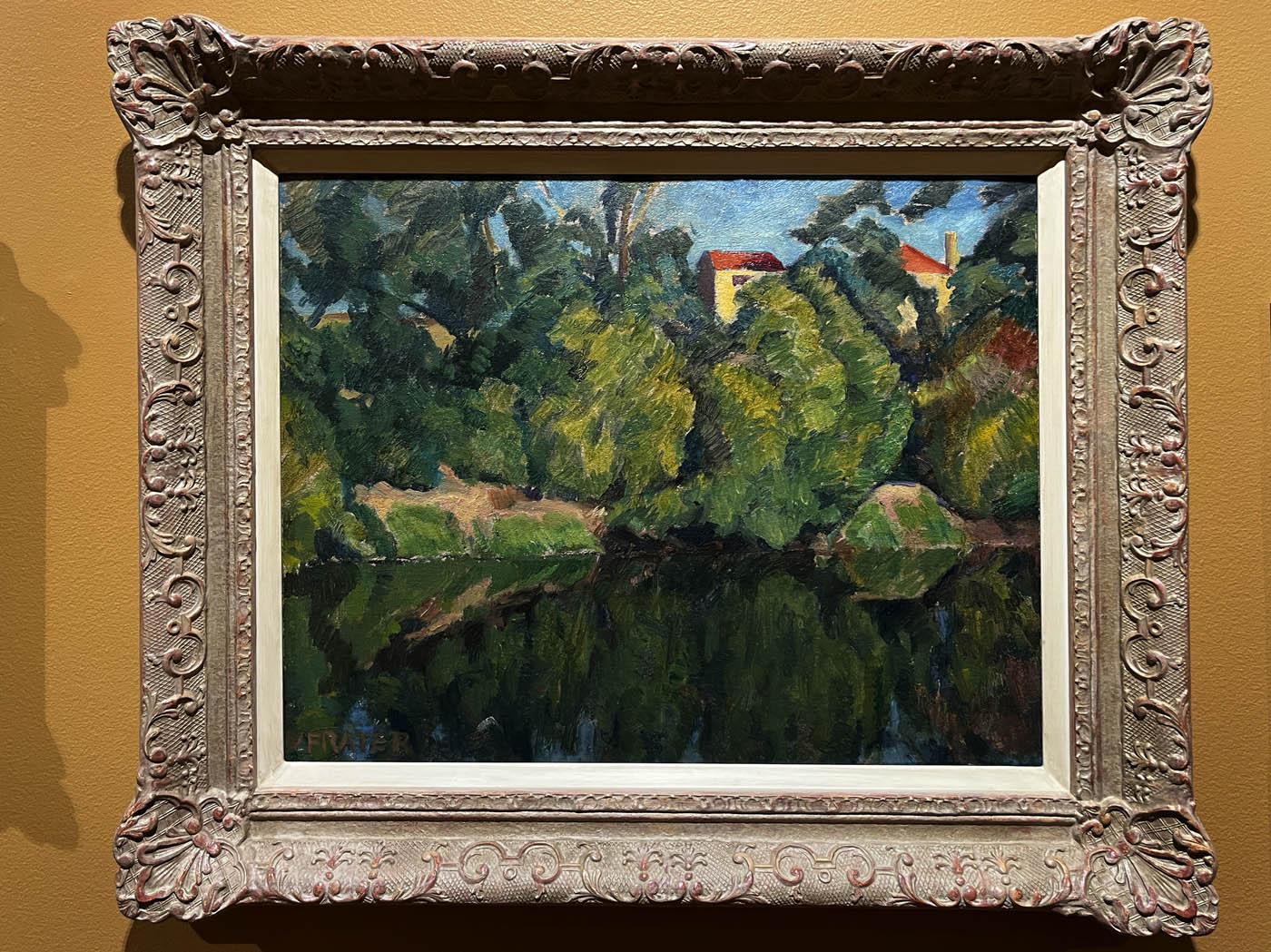
 

William Frater (Scottish, 1890-1974) 'The River (Homage to Cezanne)' 1930


William Frater (Scottish, 1890-1974)
The River (Homage to Cezanne)
1930
Oil on board
43 x 54.5cm

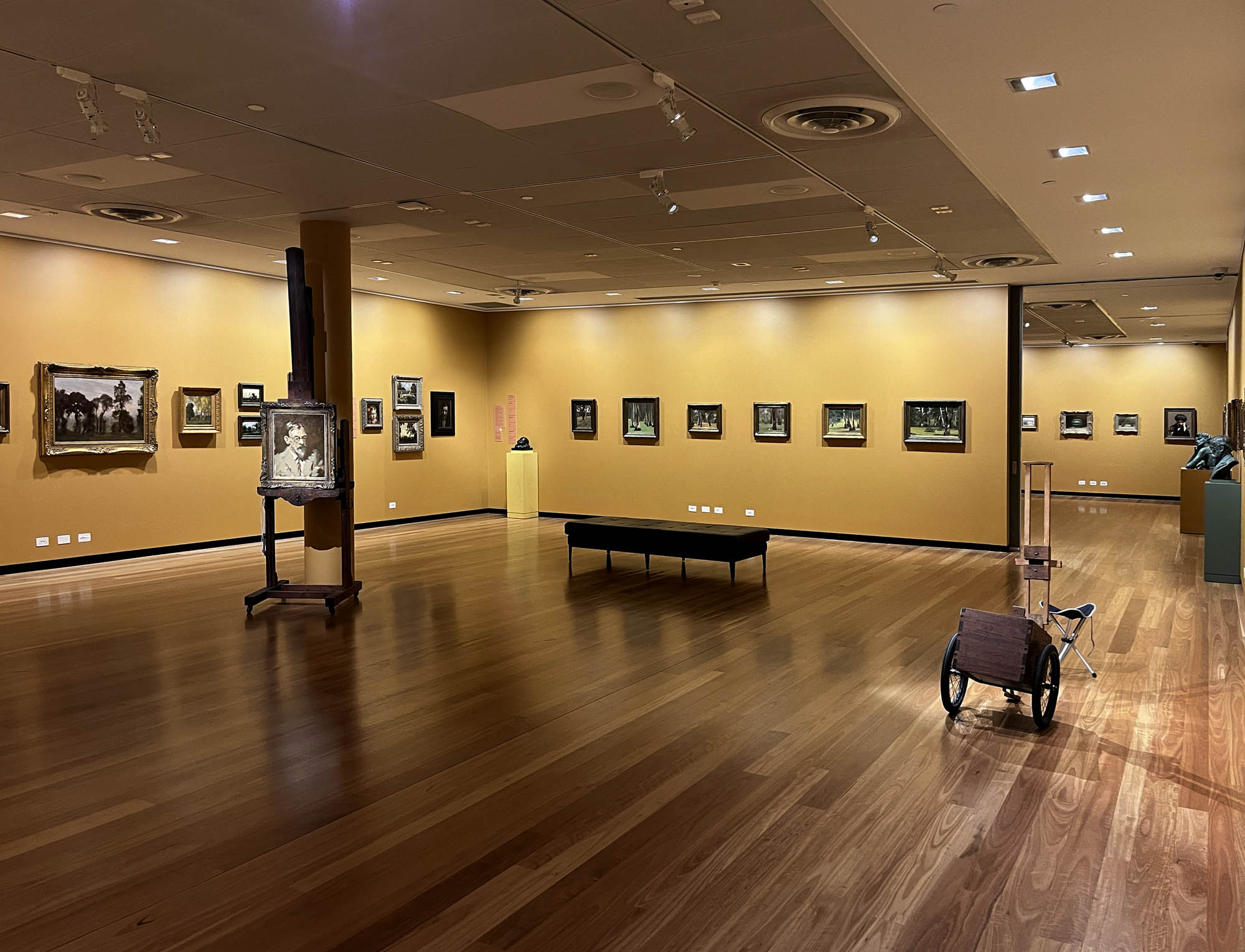
 

Installation view of the exhibition 'Australian Tonalism: A selection from the John and Peter Perry Collection' at the Town Hall Gallery, Hawthorn, Melbourne, May - July, 2025


Installation views of the exhibition Australian Tonalism: A selection from the John and Peter Perry Collection at the Town Hall Gallery, Hawthorn, Melbourne, May – July, 2025


Discover the artistic legacy of Max Meldrum (1875-1955) in this exhibition showcasing the lifelong dedication of John and Peter Perry to collecting works by this pioneering Australian artist and his influential school. Meldrum, a key figure in 20th-century Australian art, revolutionised the painting scene between the two World Wars, creating a distinctive style that has left a lasting imprint on the nation’s artistic landscape. 

The exhibition features a selection of works from a collection of over 320 pieces, including paintings, sculptures, drawings, and etchings. Highlights include landscapes from both France and Australia, still lifes, portraits and animal studies – all embodying the unique approach of Meldrum and his followers. The ‘Meldrumites’ – a talented group of artists such as A M E Bale, Clarice Beckett, Colin Colahan and Polly Hurry – were deeply influenced by Meldrum’s teachings, and their works are also prominently featured. Many of these artists either lived or worked in the area now known as the City of Boroondara. 

Also on display are fascinating studio artifacts, including plaster casts, palettes and photographs, offering a deeper insight into the artists’ creative processes. The exhibition will be accompanied by a limited-edition publication, providing further context and reflection on this significant collection. 

Featuring: A M E Bale, Clarice Beckett, Colin Colahan, Archie and Amalie Colquhoun, Polly Hurry, John Farmer, Alma Figuerola, Justus Jorgensen, William Frater, Carl Hampel, Percy Leason, Max Meldrum, Jim Minogue, A E Newbury, Arnold Shore and others.

Text from the Boroondara Arts website
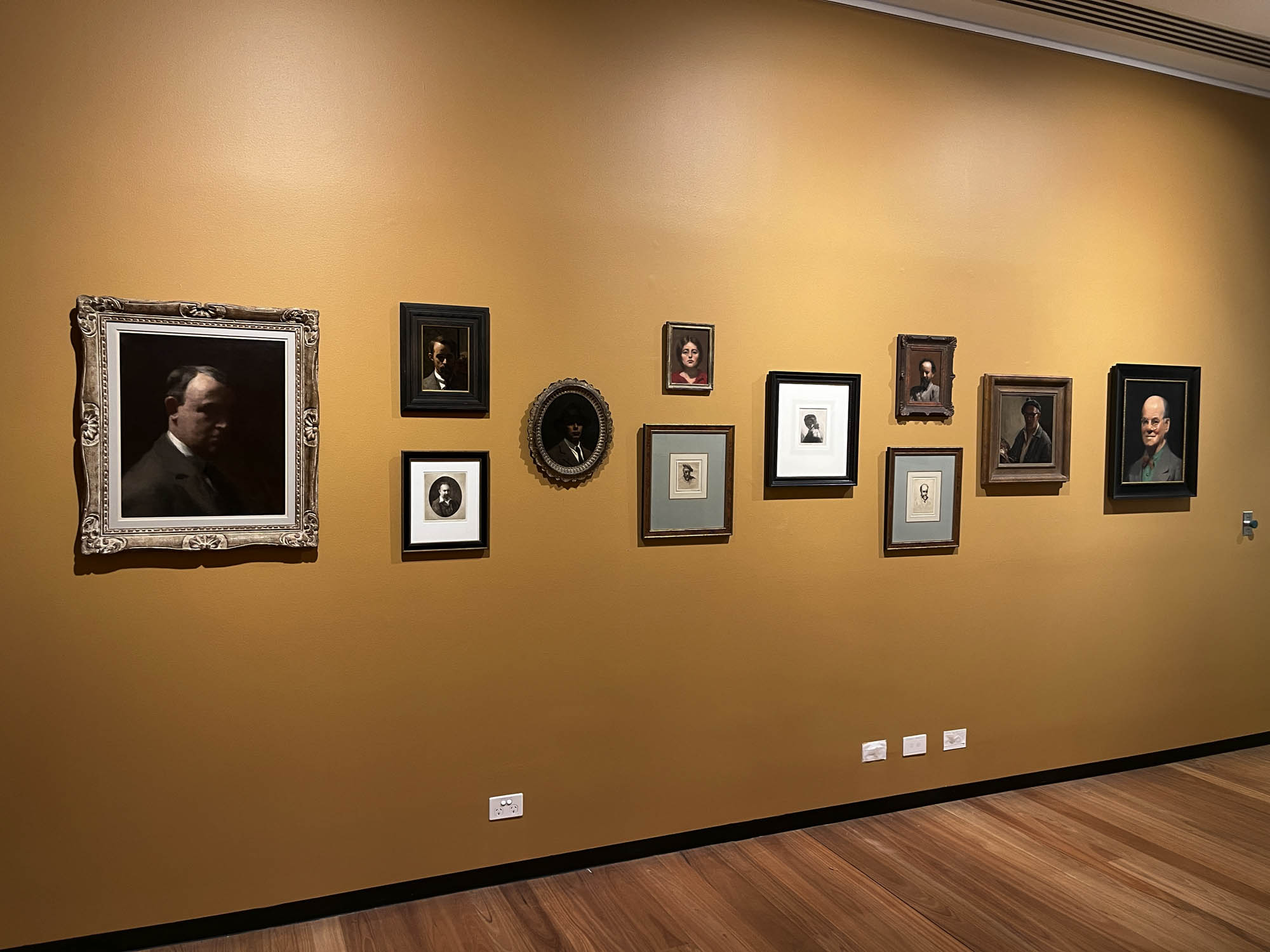
 

Installation view of the exhibition 'Australian Tonalism: A selection from the John and Peter Perry Collection' at the Town Hall Gallery, Hawthorn, Melbourne, May - July, 2025


Installation view of the exhibition Australian Tonalism: A selection from the John and Peter Perry Collection at the Town Hall Gallery, Hawthorn, Melbourne, May – July, 2025
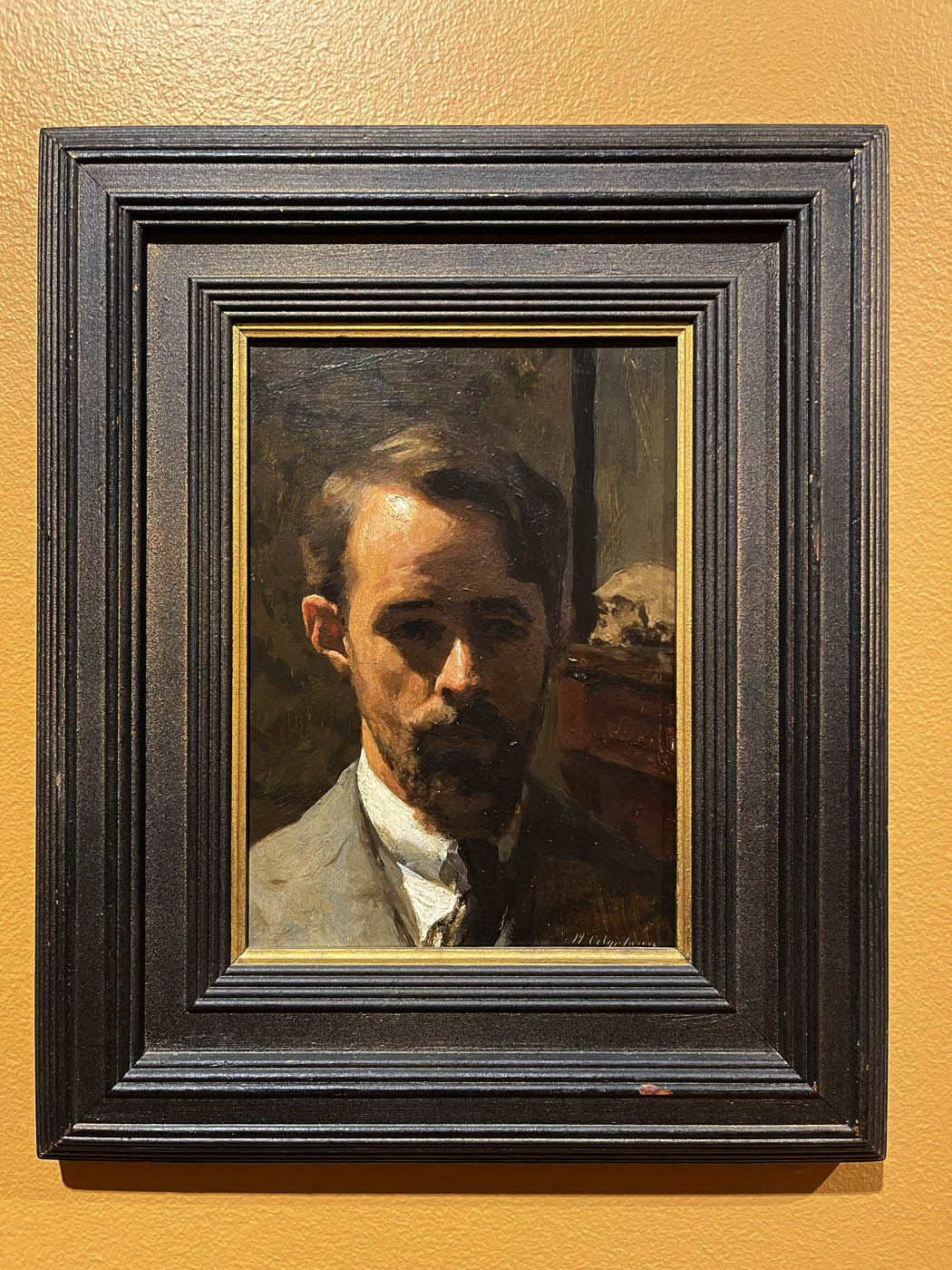
 

A D Colquhoun (Australian, 1894-1983) 'Self Portrait' c. 1922


A D Colquhoun (Australian, 1894-1983)
Self Portrait
c. 1922
Oil on oak panel
21 x 15.8cm
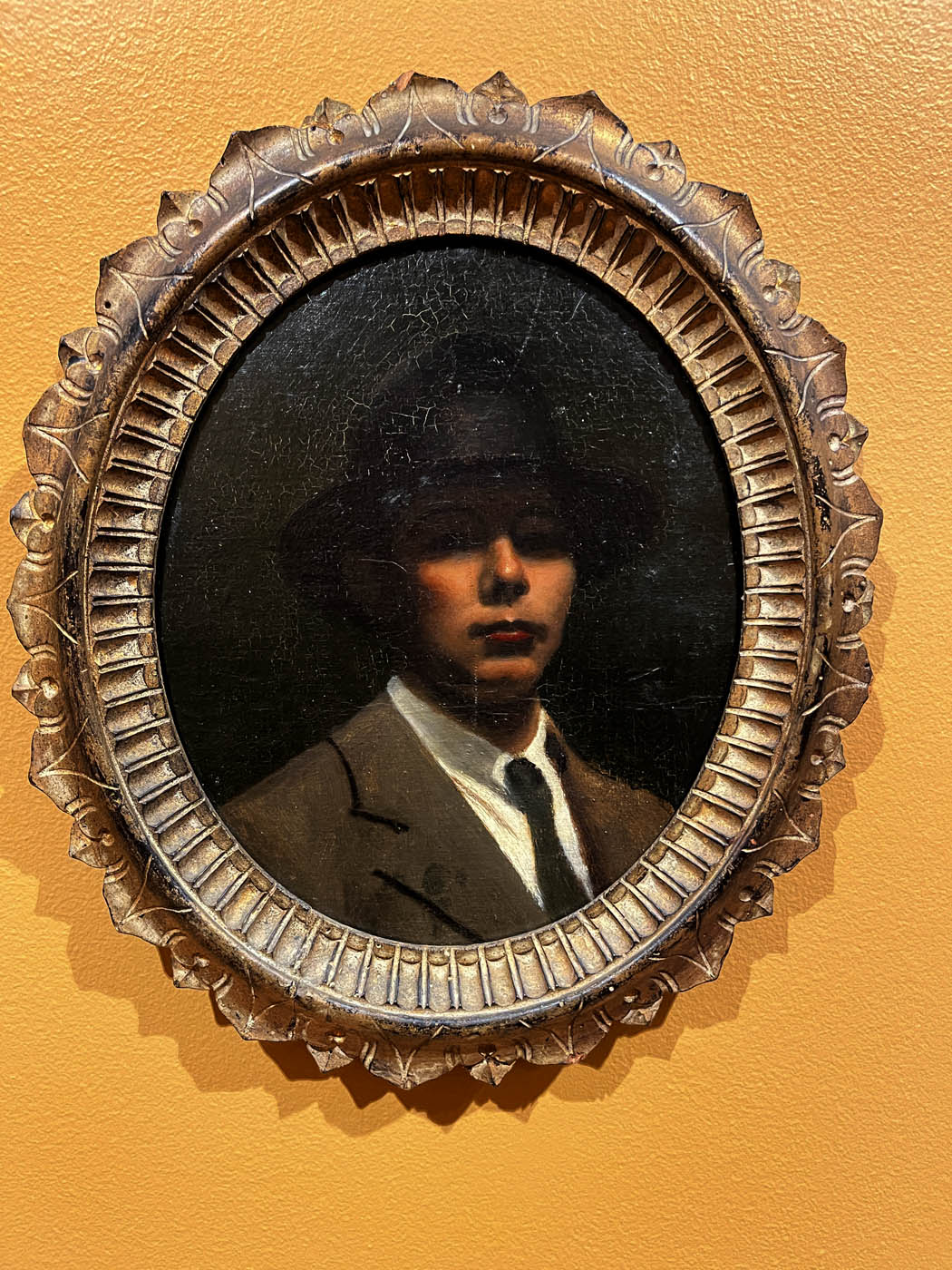
 

L August Cornehls (Australian, 1887-1962) 'Self Portrait' c. 1924


L August Cornehls (Australian, 1887-1962)
Self Portrait
c. 1924
Oil on canvas on cardboard
26.7 x 22cm (oval)
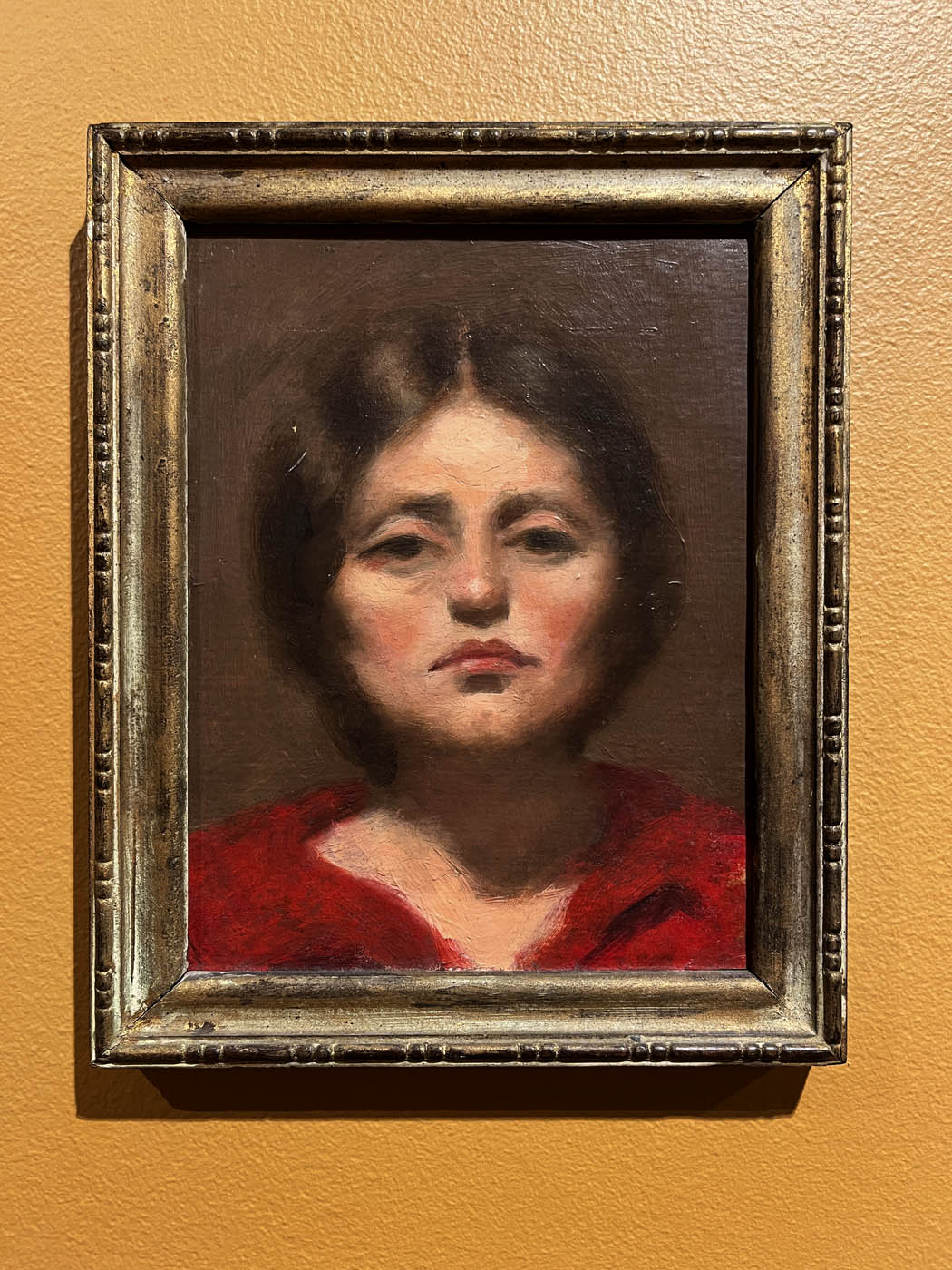
 

Alma Figuerola (Australian, 1902-1970) 'Self Portrait' c. 1926


Alma Figuerola (Australian, 1902-1970)
Self Portrait
c. 1926
Oil on cardboard
19.5 x 15cm
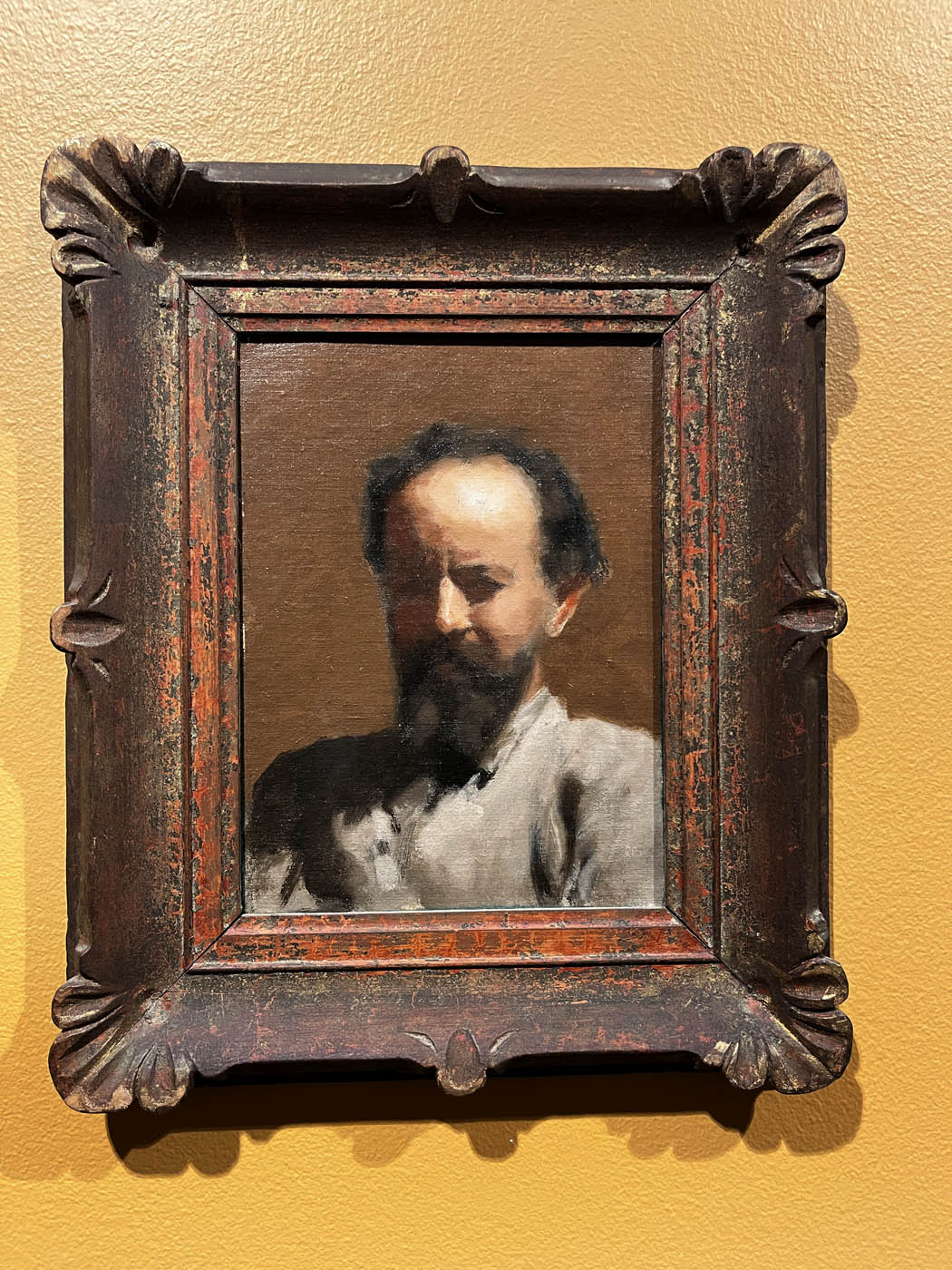
 

John Farmer (Australian, 1897-1989) 'Self portrait' c. 1926


John Farmer (Australian, 1897-1989)
Self portrait
c. 1926
Oil on canvas
20.5 x 15.3cm
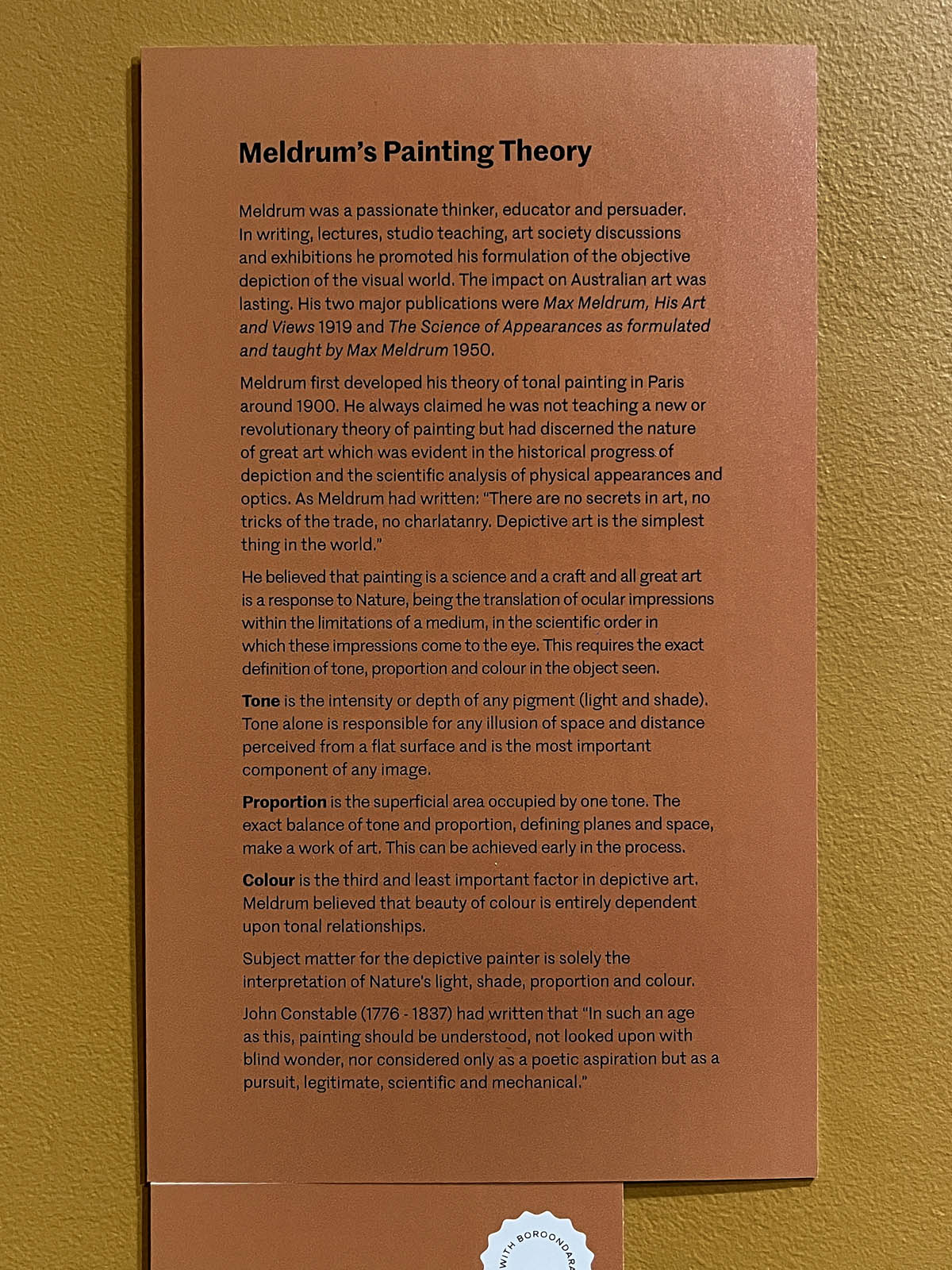
 

'Australian Tonalism' wall text Meldrum's Painting Theory


Australian Tonalism wall text Meldrum’s Painting Theory


Installation view of the exhibition 'Australian Tonalism: A selection from the John and Peter Perry Collection' at the Town Hall Gallery, Hawthorn, Melbourne, May - July, 2025 showing the work of Max Meldrum


Installation views of the exhibition Australian Tonalism: A selection from the John and Peter Perry Collection at the Town Hall Gallery, Hawthorn, Melbourne, May – July, 2025 showing the work of Max Meldrum
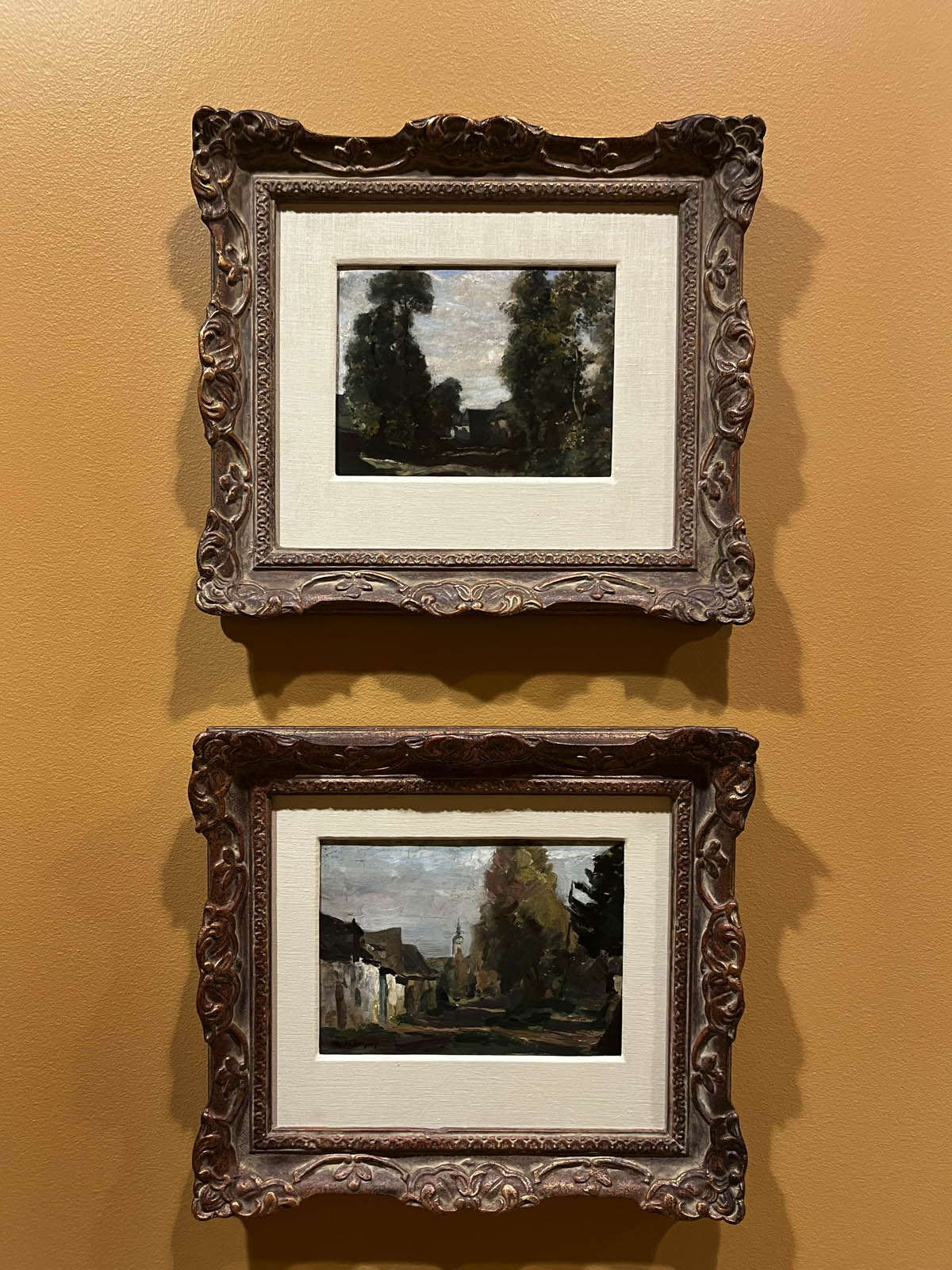
 

Max Meldrum (Scottish, 1875-1955) 'Brume' (Mist) c. 1907 and 'Study, Le Clocher' c. 1908


Max Meldrum (Scottish, 1875-1955)
Brume (Mist)
c. 1907
Study, Le Clocher
c. 1908
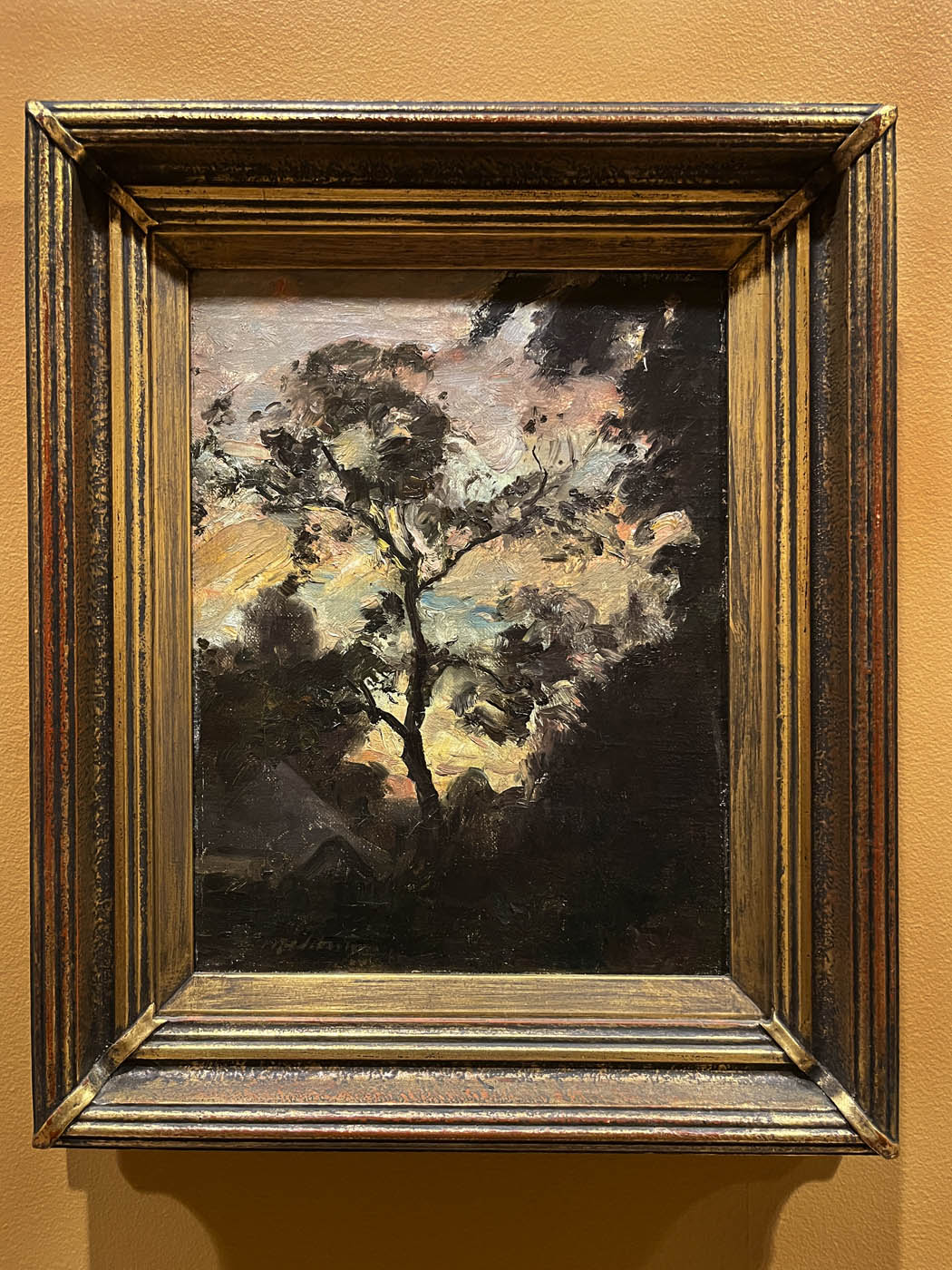
 

Max Meldrum (Scottish, 1875-1955) 'Lever de Soleil' (Sunrise) 1910


Max Meldrum (Scottish, 1875-1955)
Lever de Soleil (Sunrise)
1910
Oil on canvas
35 x 26.8cm
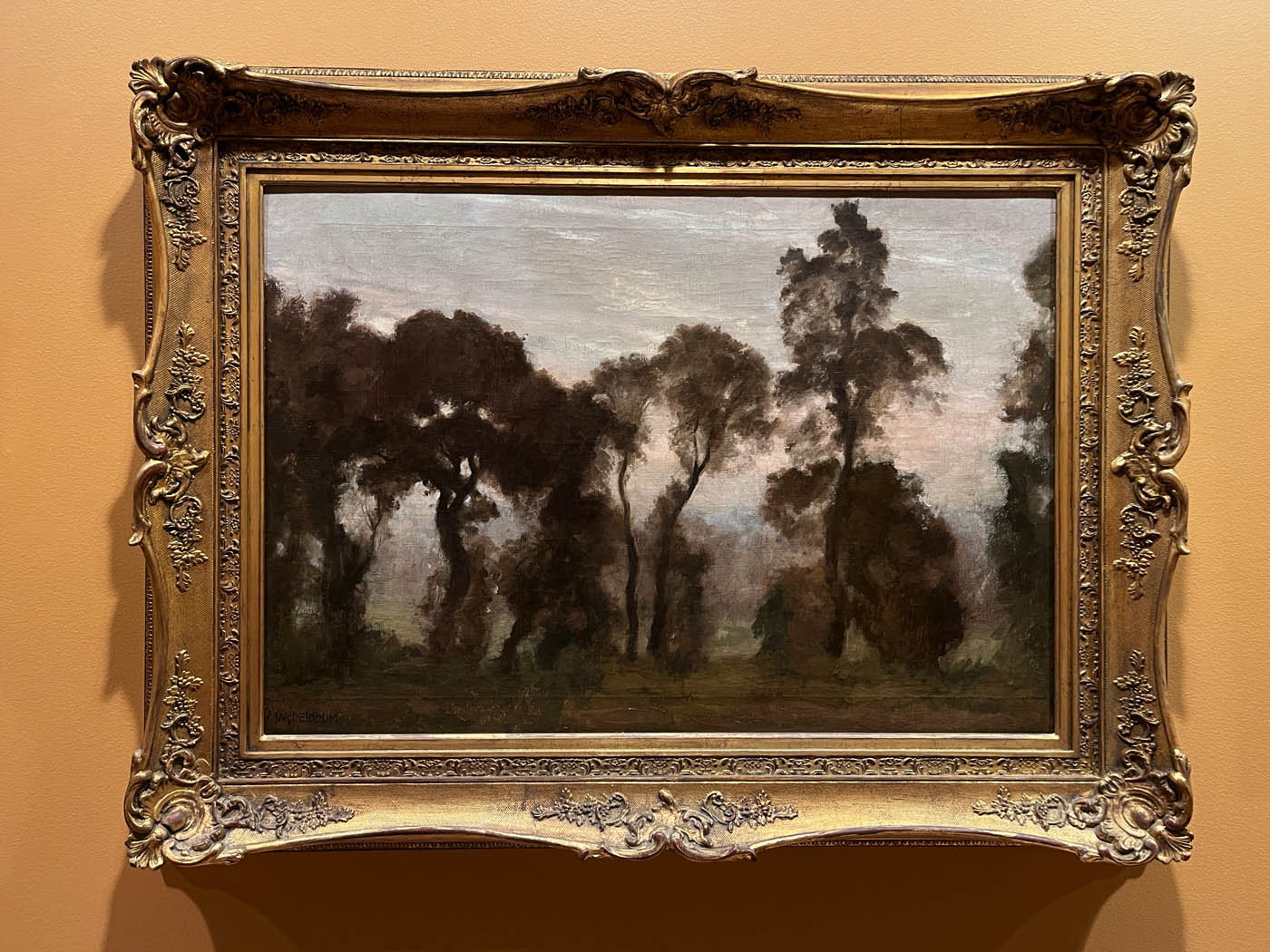
 

Max Meldrum (Scottish, 1875-1955) 'Chene et Peupliers' (Oak Tree and Poplars) c. 1907


Max Meldrum (Scottish, 1875-1955)
Chene et Peupliers (Oak Tree and Poplars)
c. 1907
Oil on canvas
33.5 x 32cm
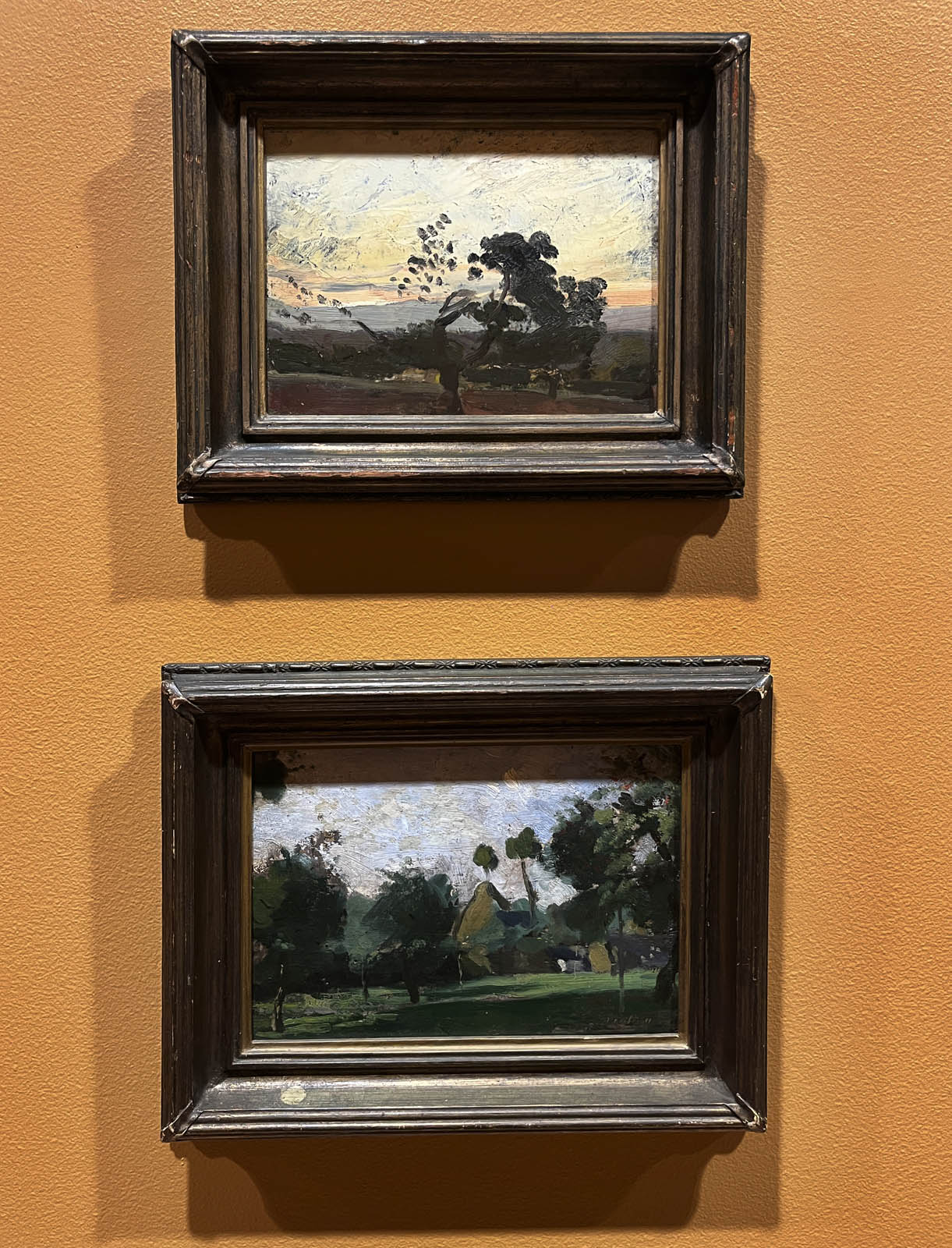
 

Max Meldrum (Scottish, 1875-1955) 'Esquisse' (Sketch) c. 1904 and 'Haystacks, Brittany' c. 1908


Max Meldrum (Scottish, 1875-1955)
Esquisse (Sketch)
c. 1904
Haystacks, Brittany
c. 1908
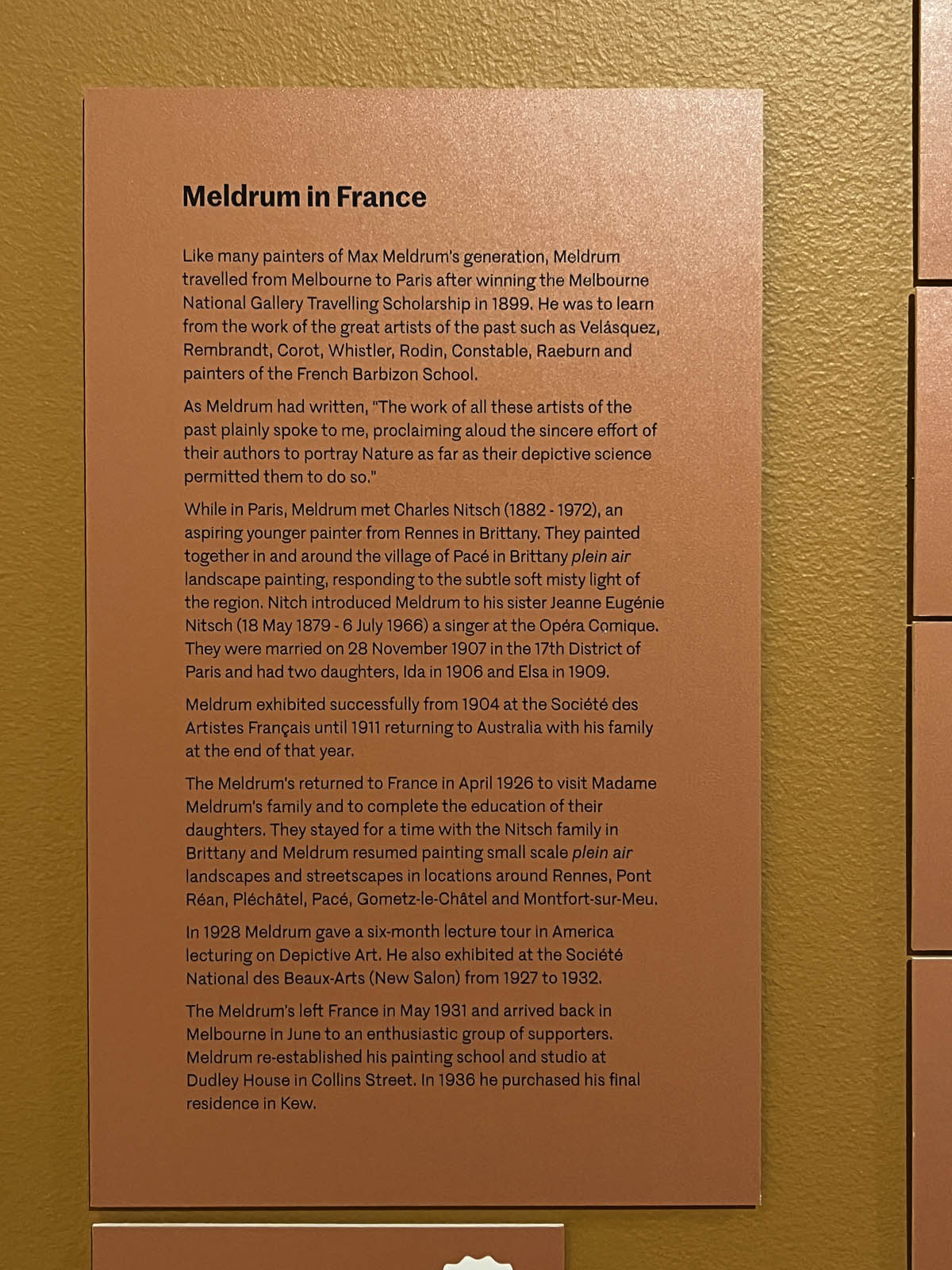
 

'Australian Tonalism' wall text Meldrum in France


Australian Tonalism wall text Meldrum in France
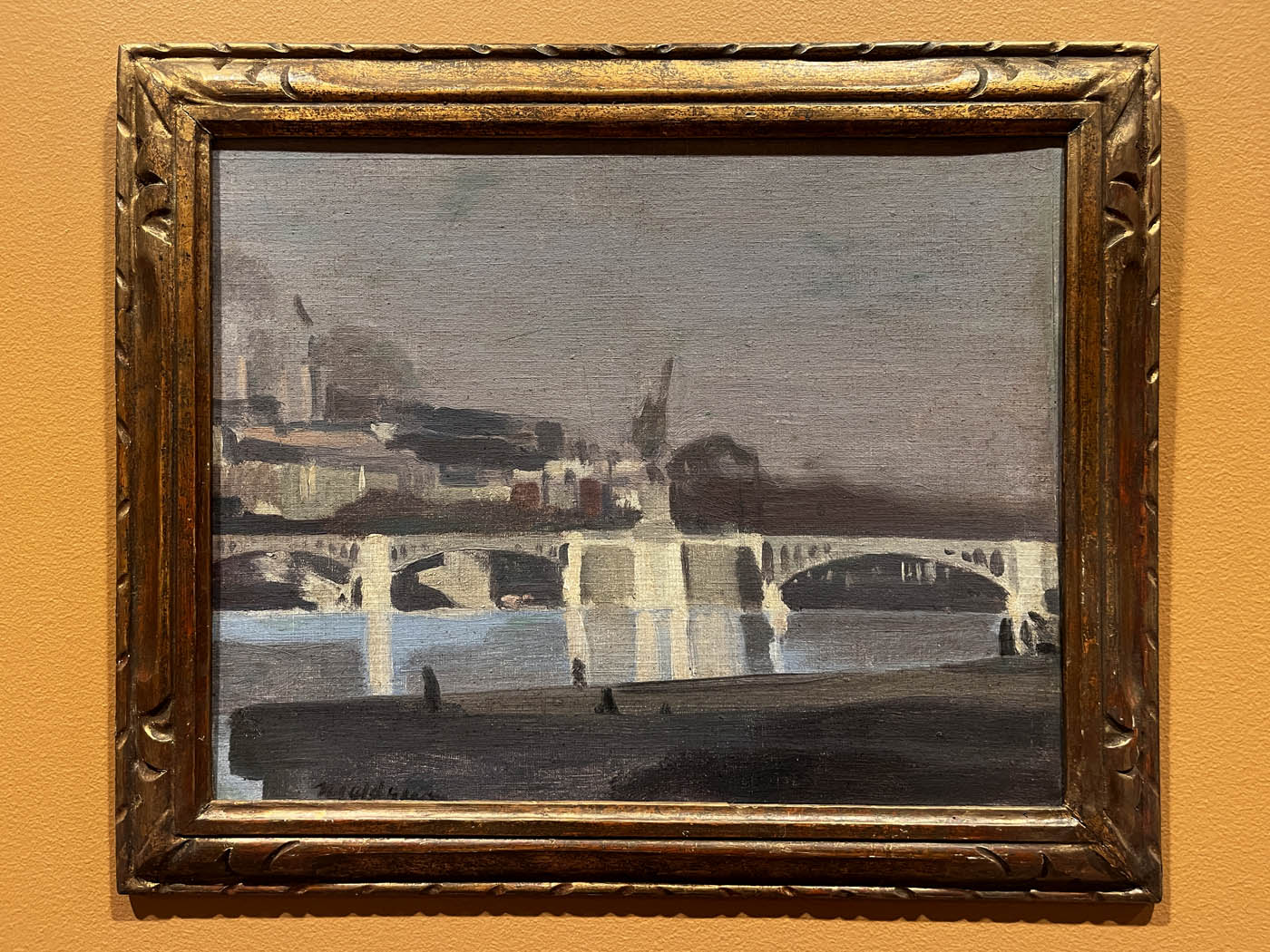
 

Max Meldrum (Scottish, 1875-1955) 'Pont de Grenelle, Paris' 1929


Max Meldrum (Scottish, 1875-1955)
Pont de Grenelle, Paris
1929
Oil on canvas sketching panel
33.3 x 40.5cm
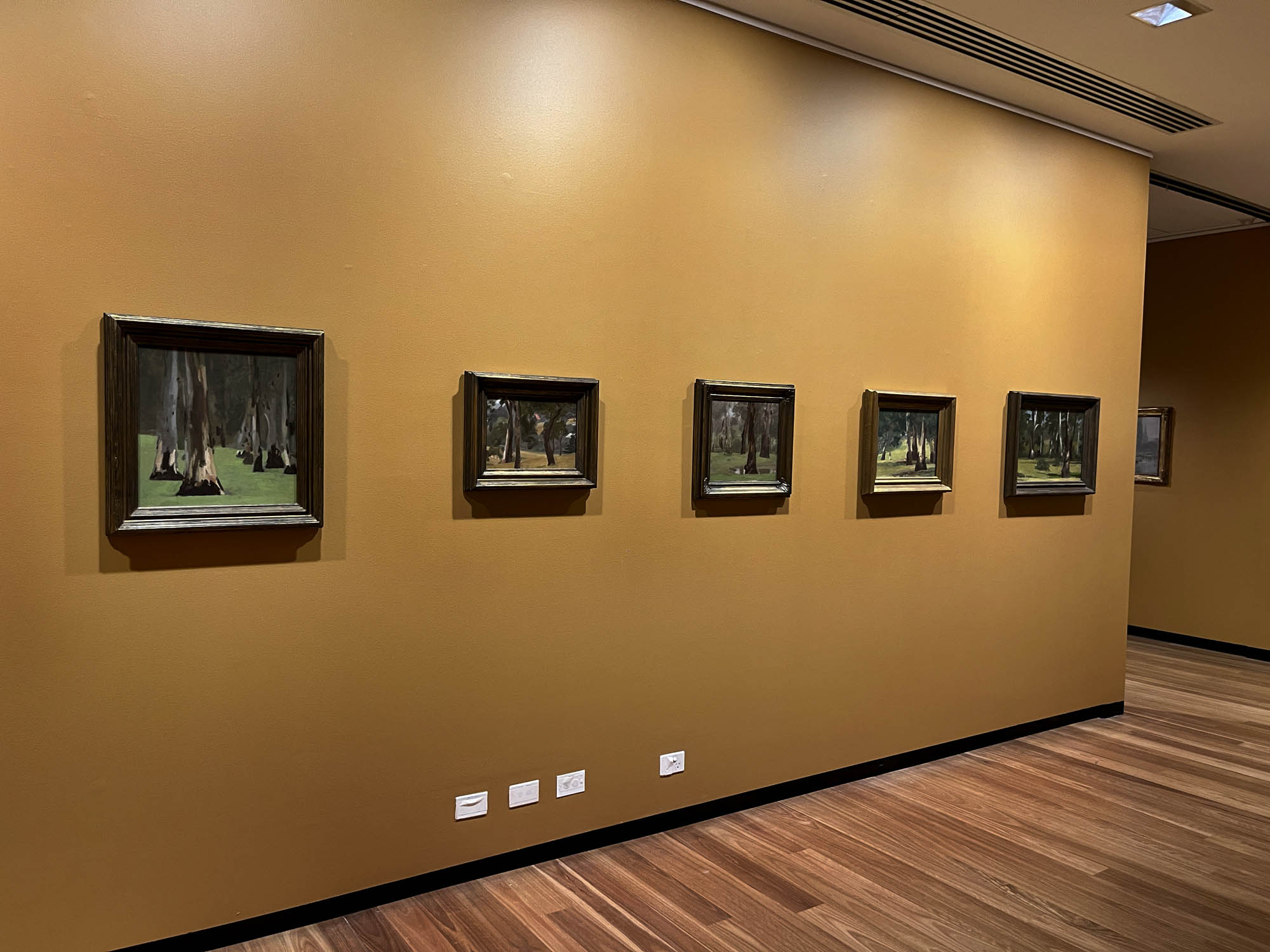
 

Installation view of the exhibition 'Australian Tonalism: A selection from the John and Peter Perry Collection' at the Town Hall Gallery, Hawthorn, Melbourne, May - July, 2025 showing the work of Max Meldrum


Installation view of the exhibition Australian Tonalism: A selection from the John and Peter Perry Collection at the Town Hall Gallery, Hawthorn, Melbourne, May – July, 2025 showing the work of Max Meldrum
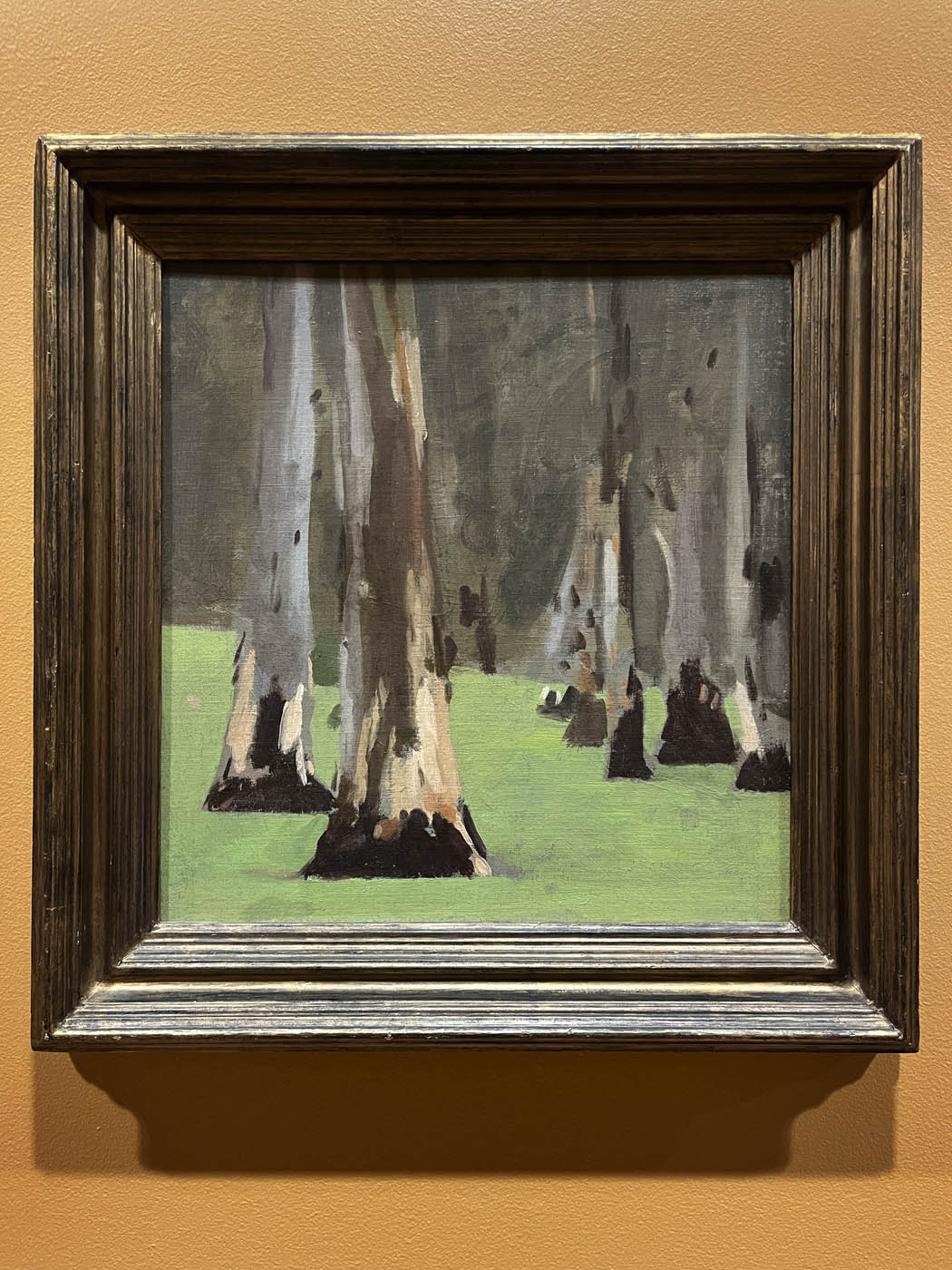
 

Max Meldrum (Scottish, 1875-1955) 'The Glade, Eltham' c. 1920


Max Meldrum (Scottish, 1875-1955)
The Glade, Eltham
c. 1920
Oil on canvas on board
44 x 42cm
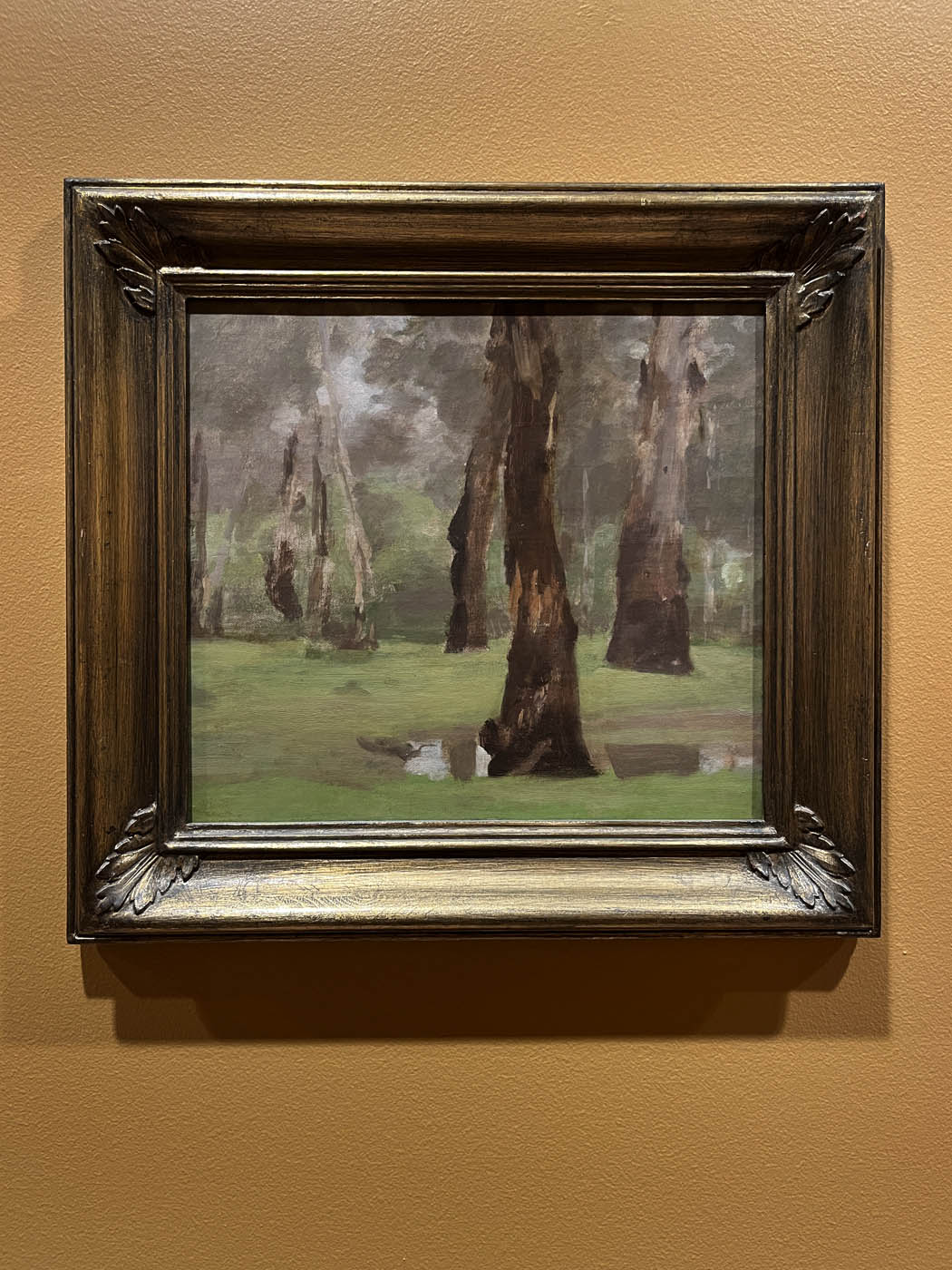
 

Max Meldrum (Scottish, 1875-1955) 'The Pool' 1923


Max Meldrum (Scottish, 1875-1955)
The Pool
1923
Oil on canvas on board
34 x 37.5cm
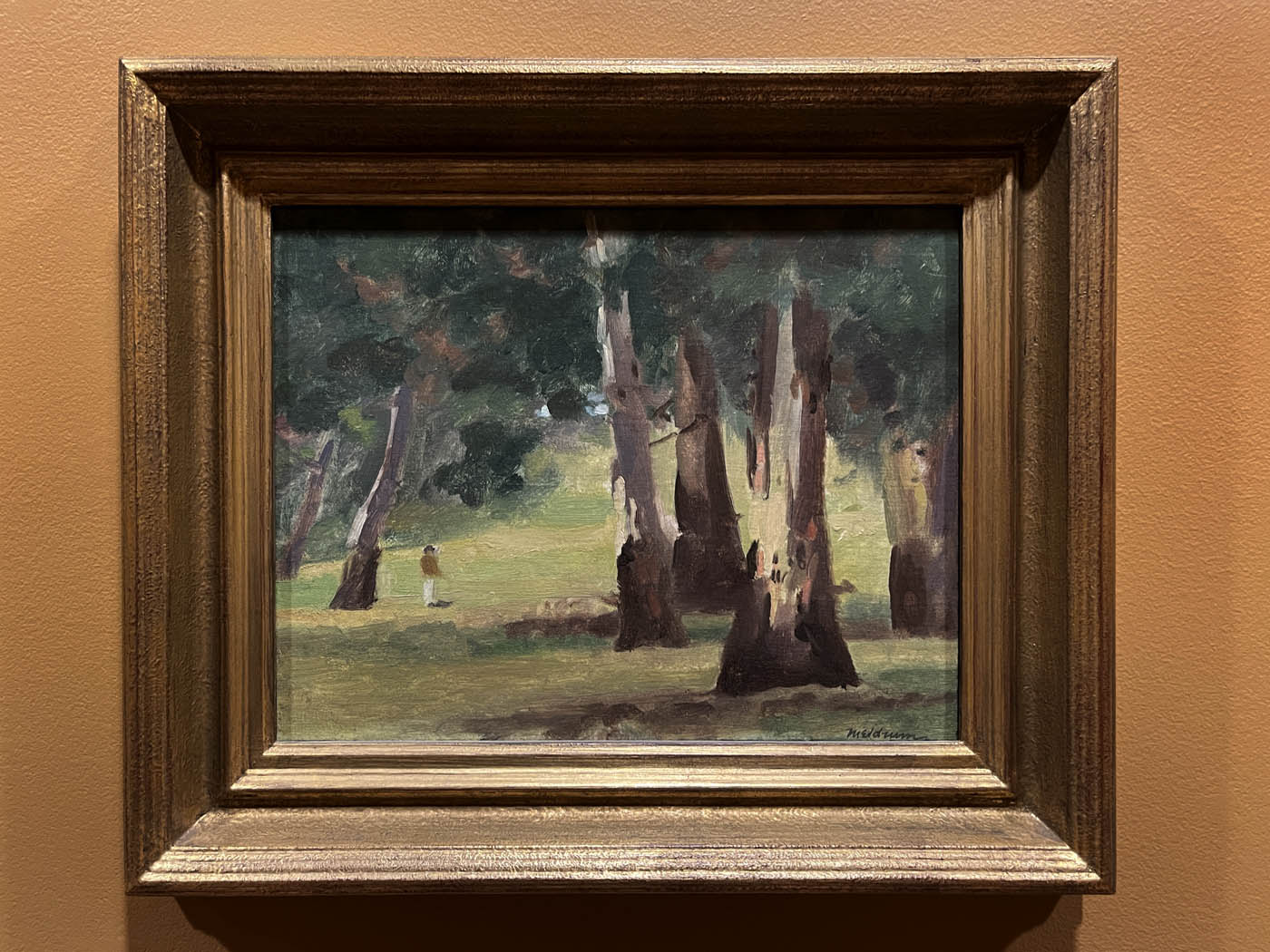
 

Max Meldrum (Scottish, 1875-1955) 'The Bottom of the Hill (Eltham Reserve)' 1925


Max Meldrum (Scottish, 1875-1955)
The Bottom of the Hill (Eltham Reserve)
1925
Oil on canvas on board
32.5 x 42cm
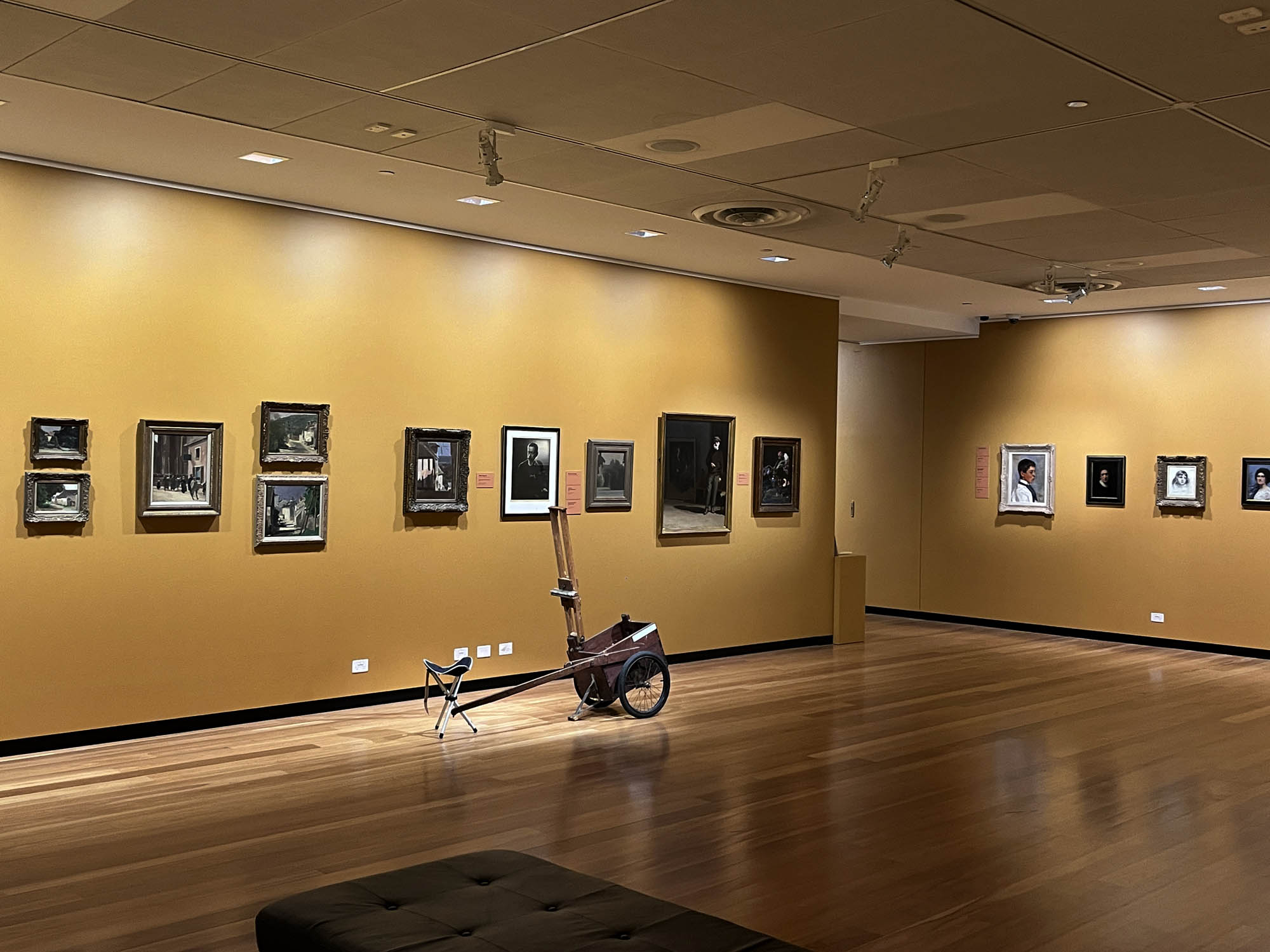
 

Installation view of the exhibition 'Australian Tonalism: A selection from the John and Peter Perry Collection' at the Town Hall Gallery, Hawthorn, Melbourne, May - July, 2025


Installation view of the exhibition Australian Tonalism: A selection from the John and Peter Perry Collection at the Town Hall Gallery, Hawthorn, Melbourne, May – July, 2025
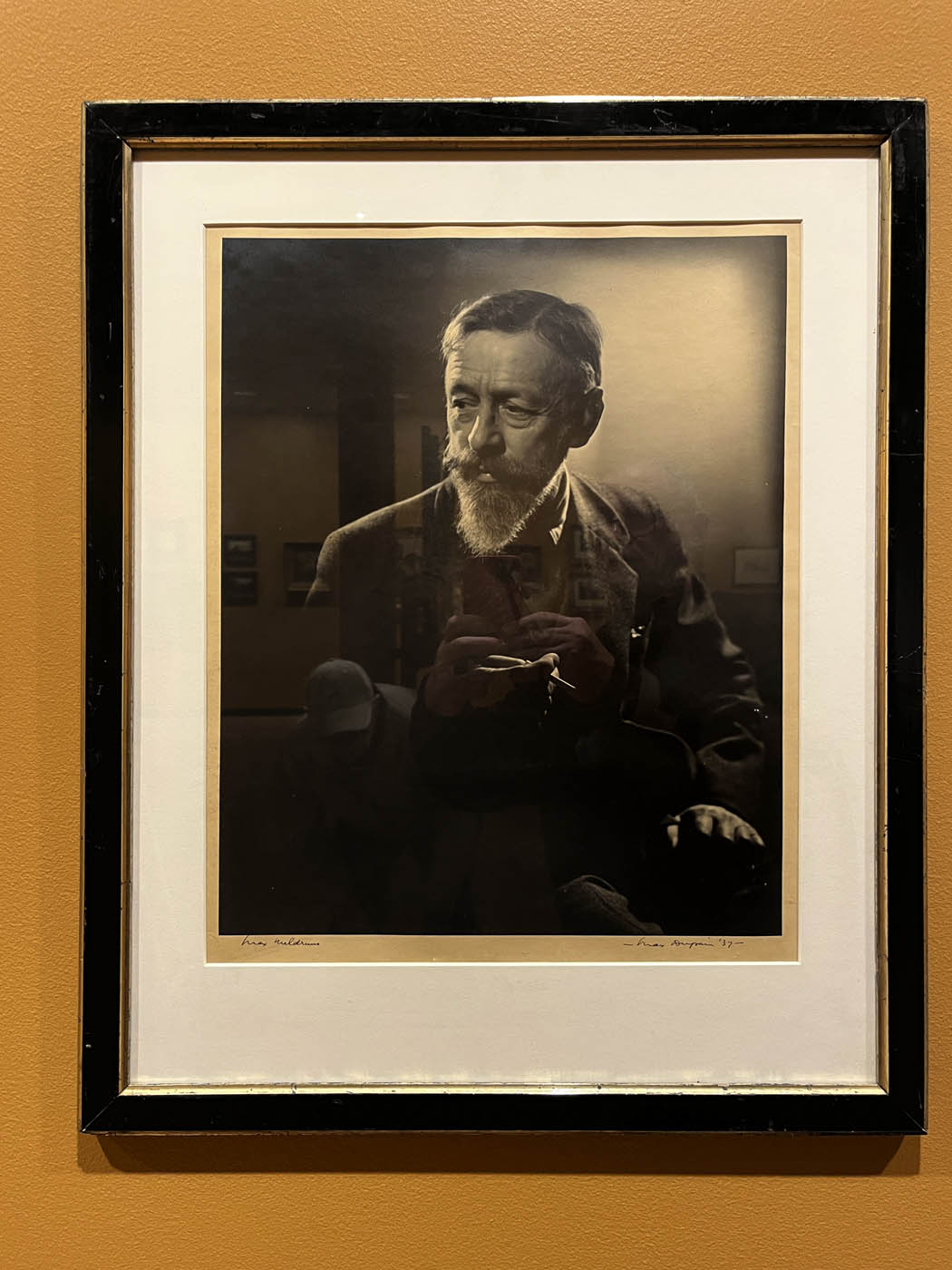
 

Max Dupain (Australian, 1911-1992) 'Photograph of Max Meldrum' 1937


Max Dupain (Australian, 1911-1992)
Photograph of Max Meldrum
1937
Gelatin silver photograph
47.5 x 33.7cm (image)

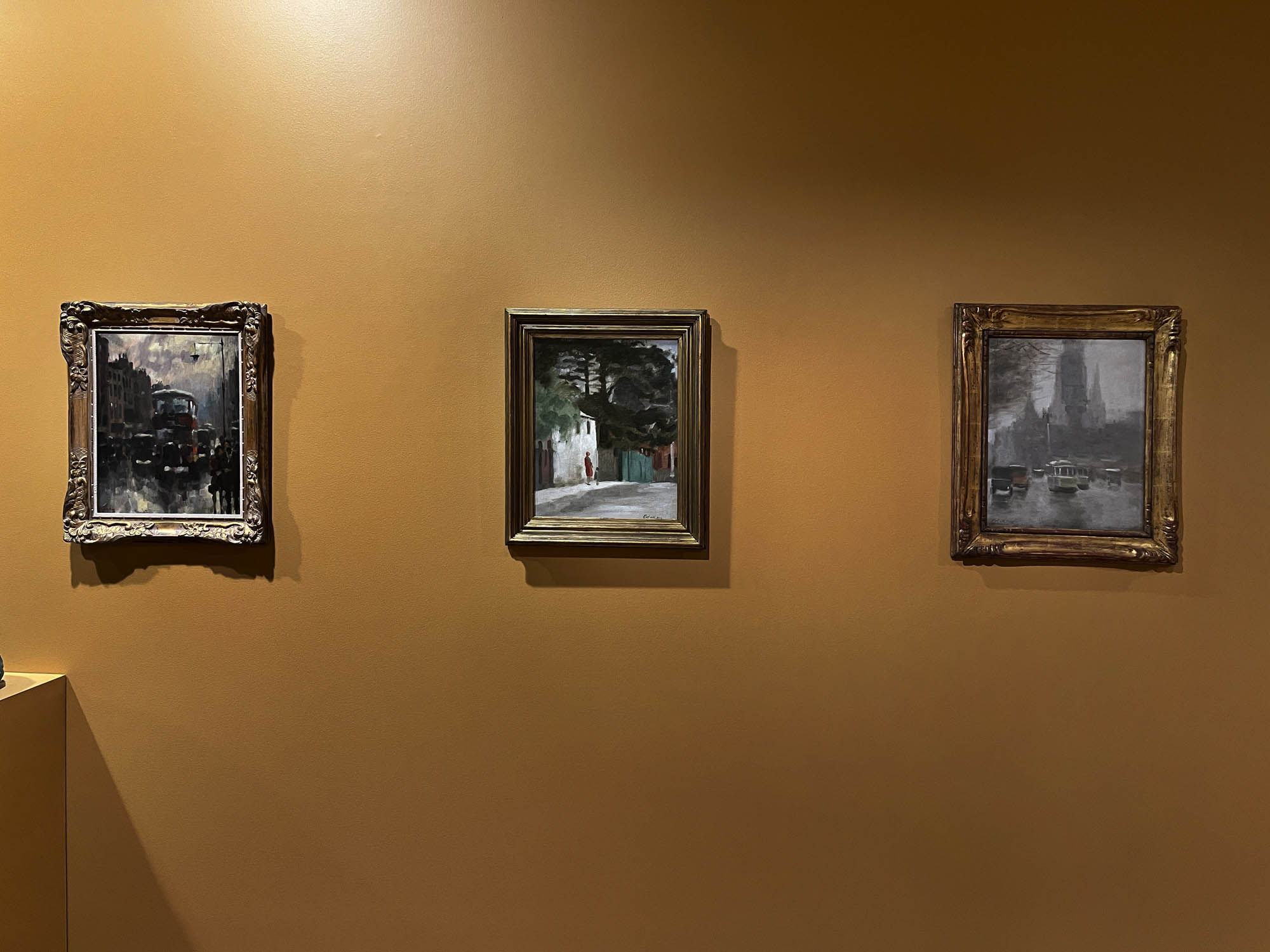
 

Installation view of the exhibition 'Australian Tonalism: A selection from the John and Peter Perry Collection' at the Town Hall Gallery, Hawthorn, Melbourne, May - July, 2025 showing the work of Colin Colahan


Installation views of the exhibition ‘Australian Tonalism: A selection from the John and Peter Perry Collection’ at the Town Hall Gallery, Hawthorn, Melbourne, May – July, 2025 showing the work of Colin Colahan


Colin Colahan (Australian, 1897-1987) 'Bridge Road, Evening' c. 1929


Colin Colahan (Australian, 1897-1987)
Bridge Road, Evening
c. 1929
Oil on linen on board
33 x 40.8cm
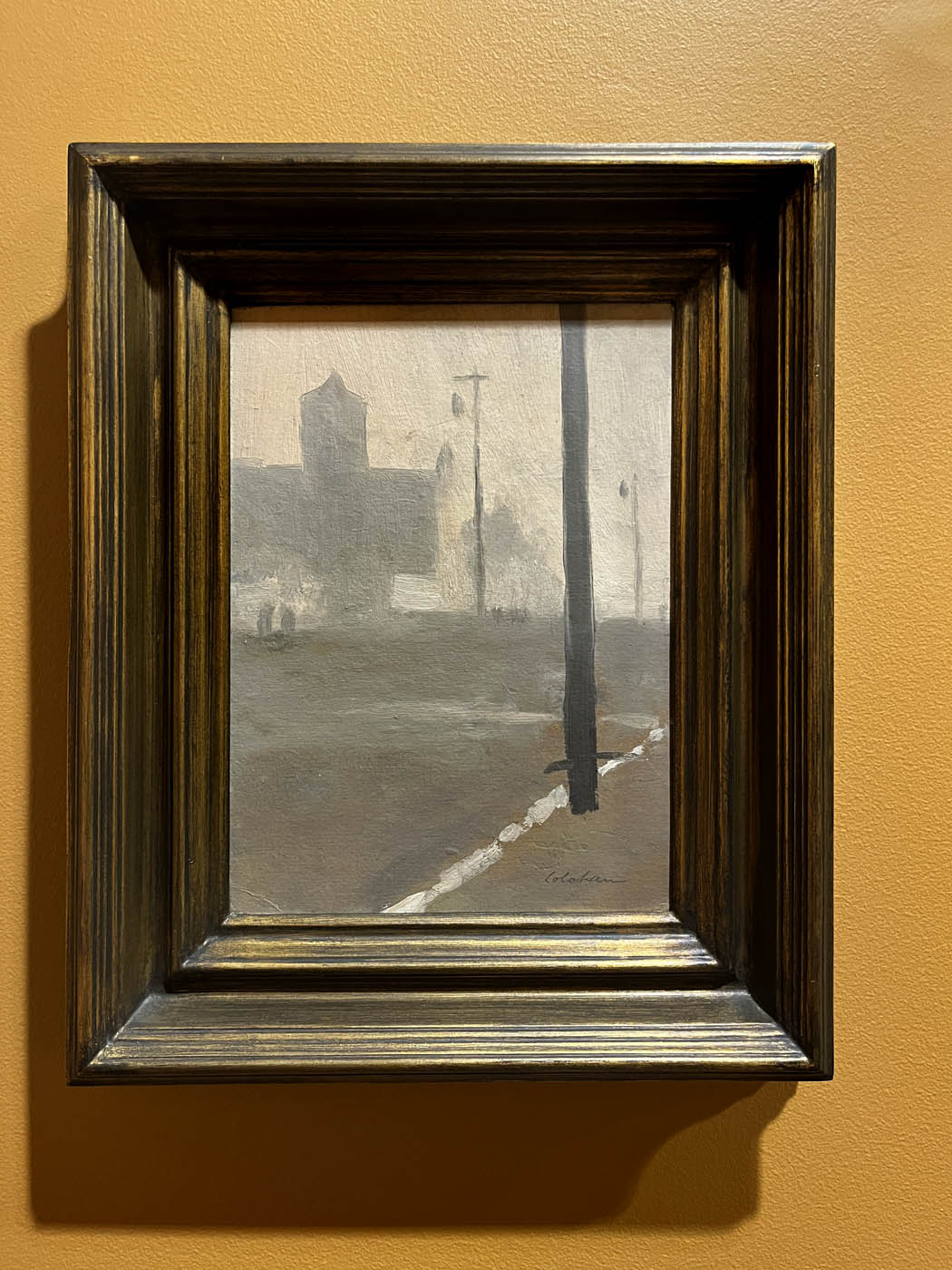
 

Colin Colahan (Australian, 1897-1987) 'Untitled (Streetscape)' 1919


Colin Colahan (Australian, 1897-1987)
Untitled (Streetscape)
1919
Oil on cardboard
32.2 x 23cm
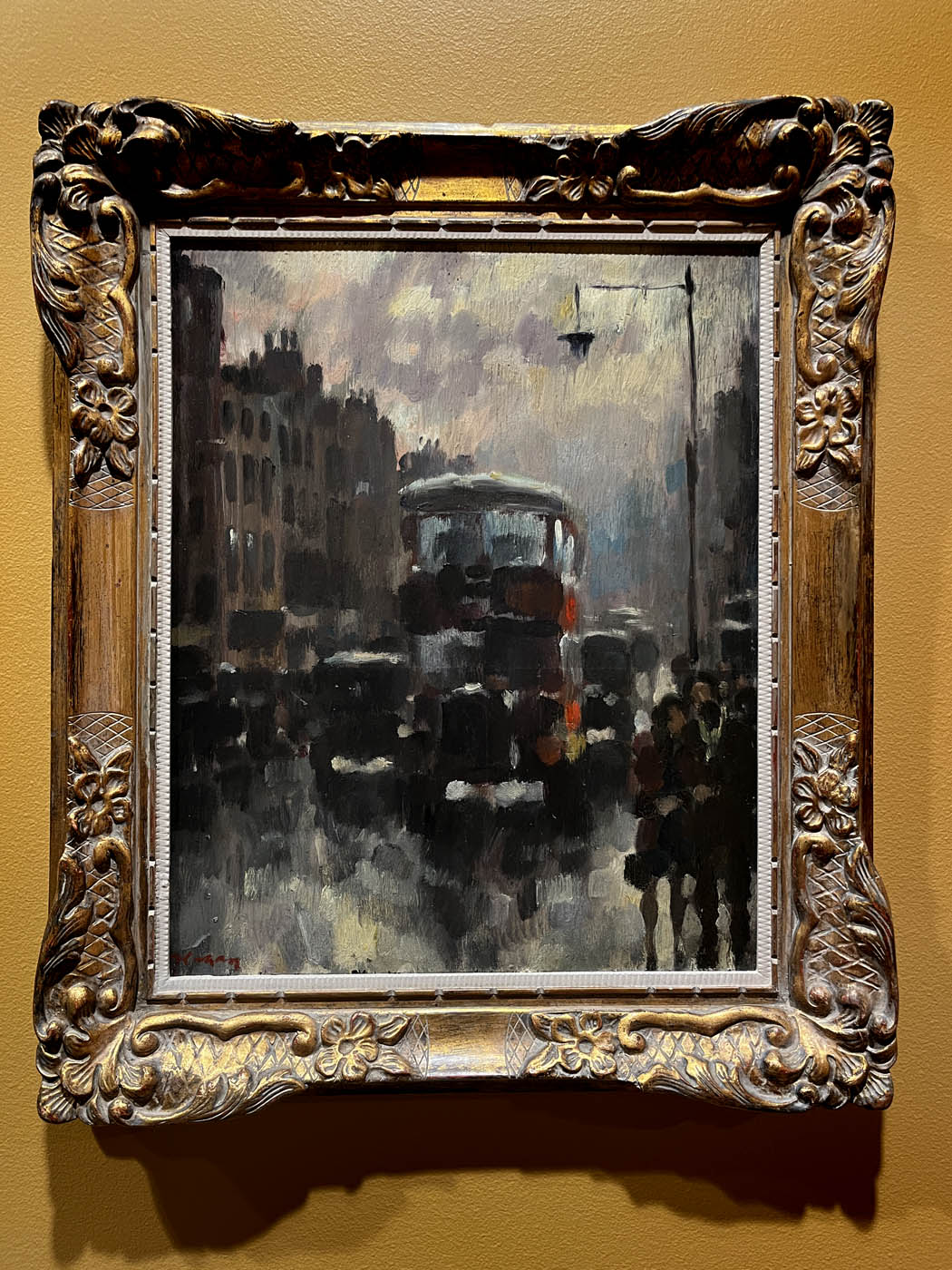
 

Colin Colahan (Australian, 1897-1987) 'Kings Road, Chelsea' 1940


Colin Colahan (Australian, 1897-1987)
Kings Road, Chelsea
1940
Oil on board
46 x 38cm
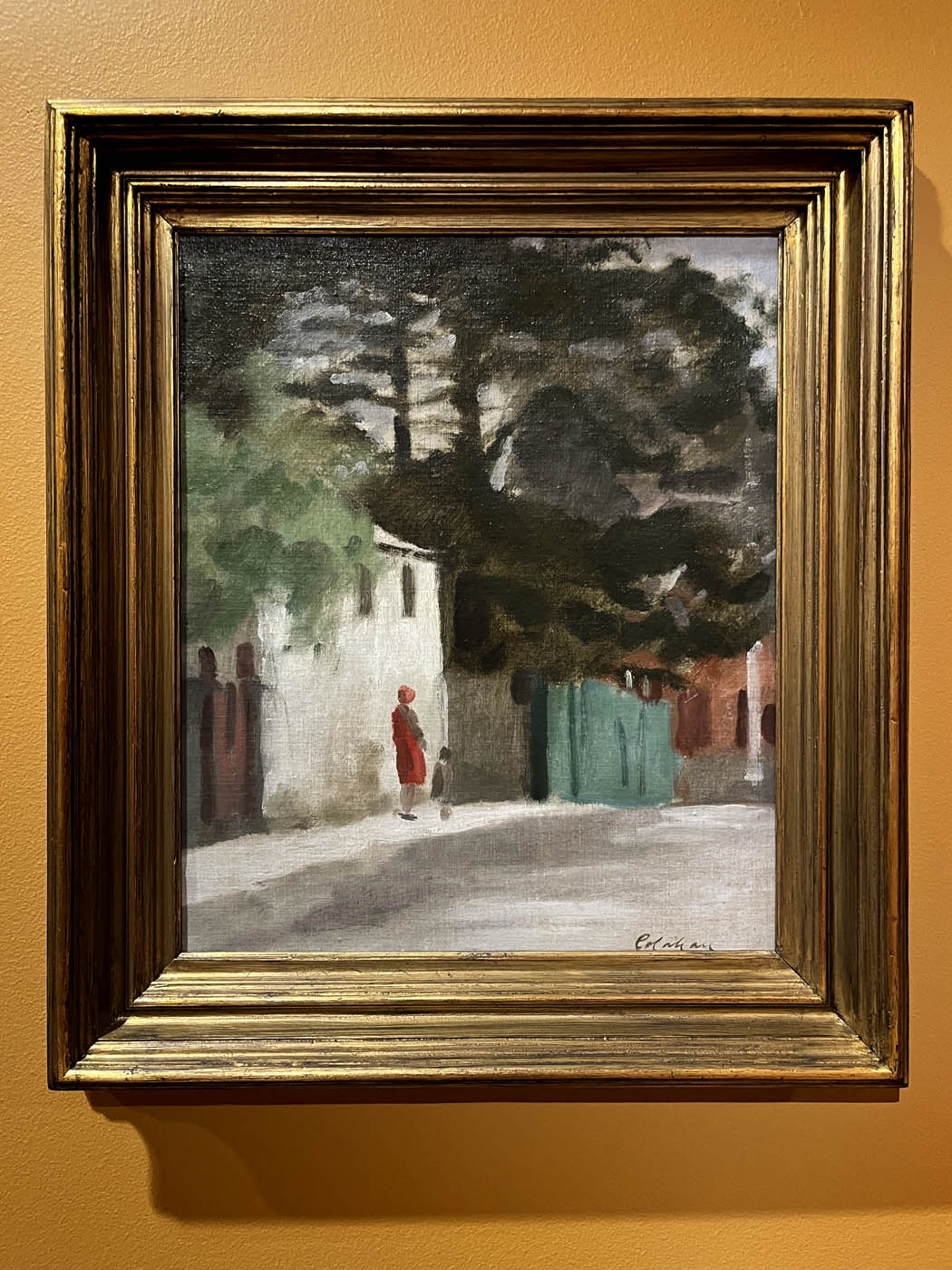
 

Colin Colahan (Australian, 1897-1987) 'The Green Fence' 1930


Colin Colahan (Australian, 1897-1987)
The Green Fence
1930
Oil on canvas on board
45.3 x 38cm


Colin Colahan (Australian, 1897-1987) 'Swanston Street, Melbourne' c. 1930


Colin Colahan (Australian, 1897-1987)
Swanston Street, Melbourne
c. 1930
Oil on canvas on board
45 x 37.7cm
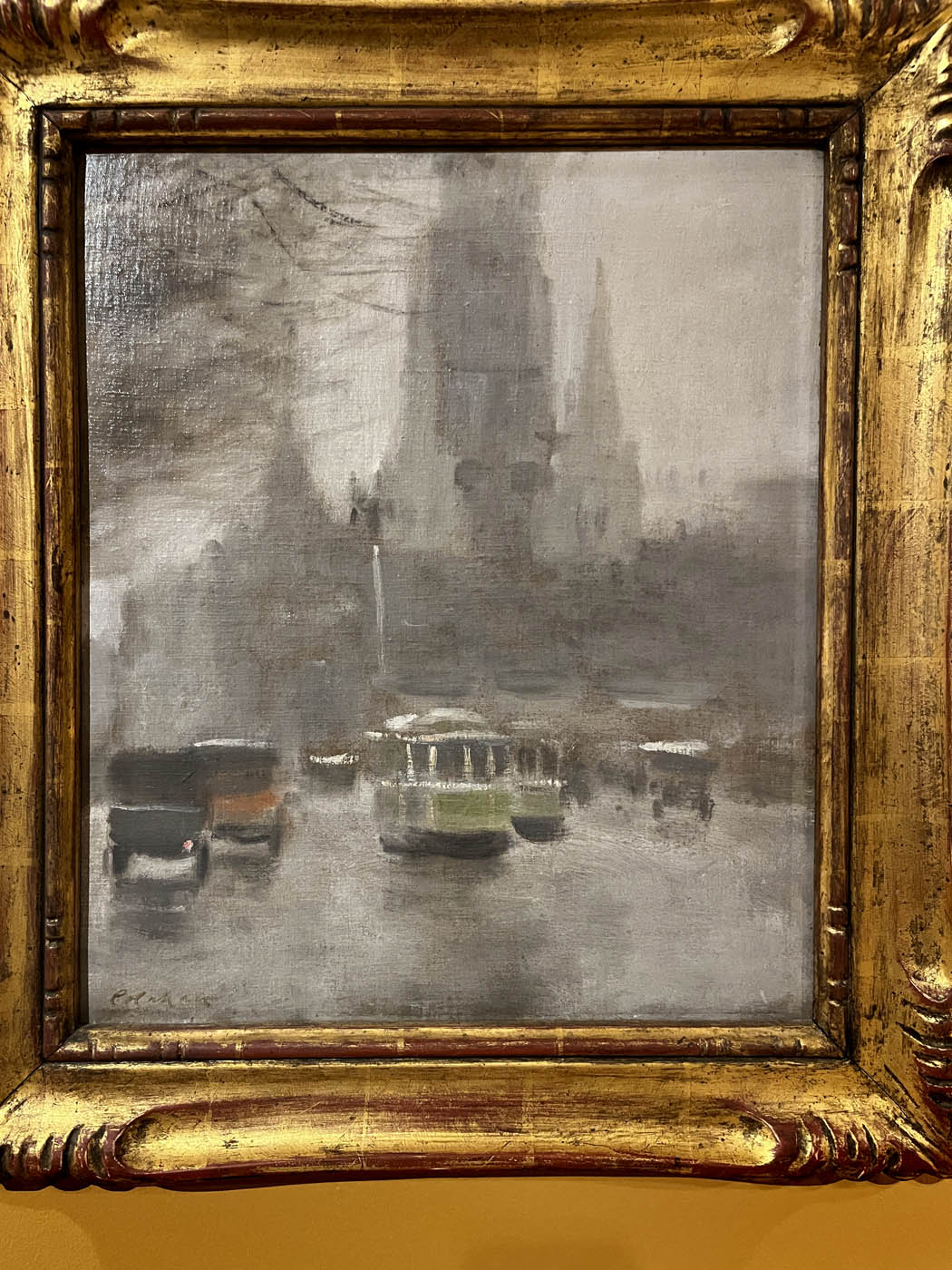
 

Colin Colahan (Australian, 1897-1987) 'Swanston Street, Melbourne' c. 1930 (detail)


Colin Colahan (Australian, 1897-1987)
Swanston Street, Melbourne (detail)
c. 1930
Oil on canvas on board
45 x 37.7cm

Tone, Proportion and Colour: A Brief Overview of the Exhibition

John R. Perry, March 2025

In 1974 Peter and I purchased a small sketch of a Brittany sunset by Max Meldrum. We have continued collecting works by Meldrum and painters associated with him for over forty-five years. Our aim has been to develop a representative, well composed collection of quality work by Australian Tonalists. The emphasis has been on Meldrum’s earlier works and those of his early associates. His work was at its most sensitive and his influence greatest in this period.

We have in this exhibition some of Meldrum’s rare early French landscapes including several by his brother-in-law Charles Nitsch. There are also works which I believe to be the first truly modern Australian paintings, produced at Eltham in 1917. Meldrum developed a simplified approach to his art and two works, The Three Trees (1917) and Cloudy Summer Afternoon, Eltham (1917) illustrate this progress. They give a true sense of space and atmosphere, all the more striking when seen with what a direct and simple means these effects are obtained. These compact and luminous studies show us the first evidence of the painter putting his perceptual theory into practice.

William Frater and Arnold Shore were major figures in the development of the modern movement in Melbourne and are included in this exhibition to illustrate the influence Meldrum had on these two under-appreciated painters…

The works of Clarice Beckett and Polly Hurry are generally one of soft-focus, for these lovers of mist and crepuscular fogs pay homage to the painters Eugene Carriere and James McNeill Whistler. The works of John Farmer, A E Newbury and to some degree Richard McCann, evolved into their respective personal styles which owe more to Camille Corot than to Meldrum. Their landscapes of subtle delicacy and feathery texture elicit many comparisons with the work of the great French Barbizon School painters…

Having both decided early on our collecting paths, that conventional collecting was not for us, we decided to be more objective, learning to appreciated and admire the work of the Australian Tonalists. As our collection grew, we were willing to leave the beat track, avoiding art dealers, art writers and critics, committing ourself to dealing directly with those painters associated with the Tonalist movement.

Like John Constable, Meldrum believed that, “… in such an age as this, painting should be understood, not looked on with blind wonder, nor considered only as a poetic aspiration, but as a pursuit legitimate, scientific and mechanical.”2


John Constable, quoted in The Letters of John Constable, ed. by R.B. Beckett (London: Longmans, Green and Co., 1955), p. 530.
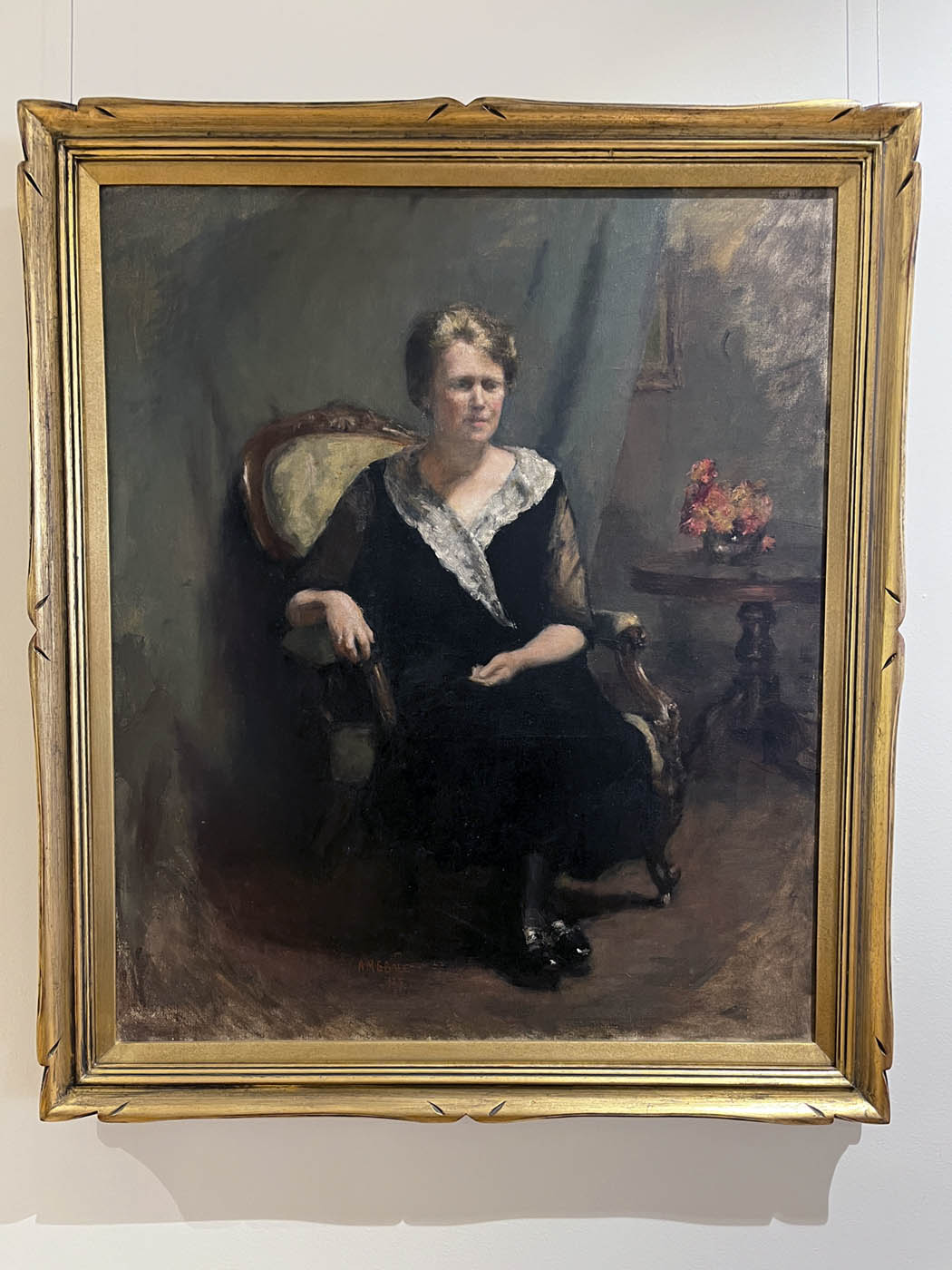
 

Alice Marian Ellen Bale (Australian, 1875-1955) 'Self portrait' 1925


Alice Marian Ellen Bale (Australian, 1875-1955)
Self portrait
1925
Oil on canvas
75 x 62.5cm
Town hall Gallery Collection
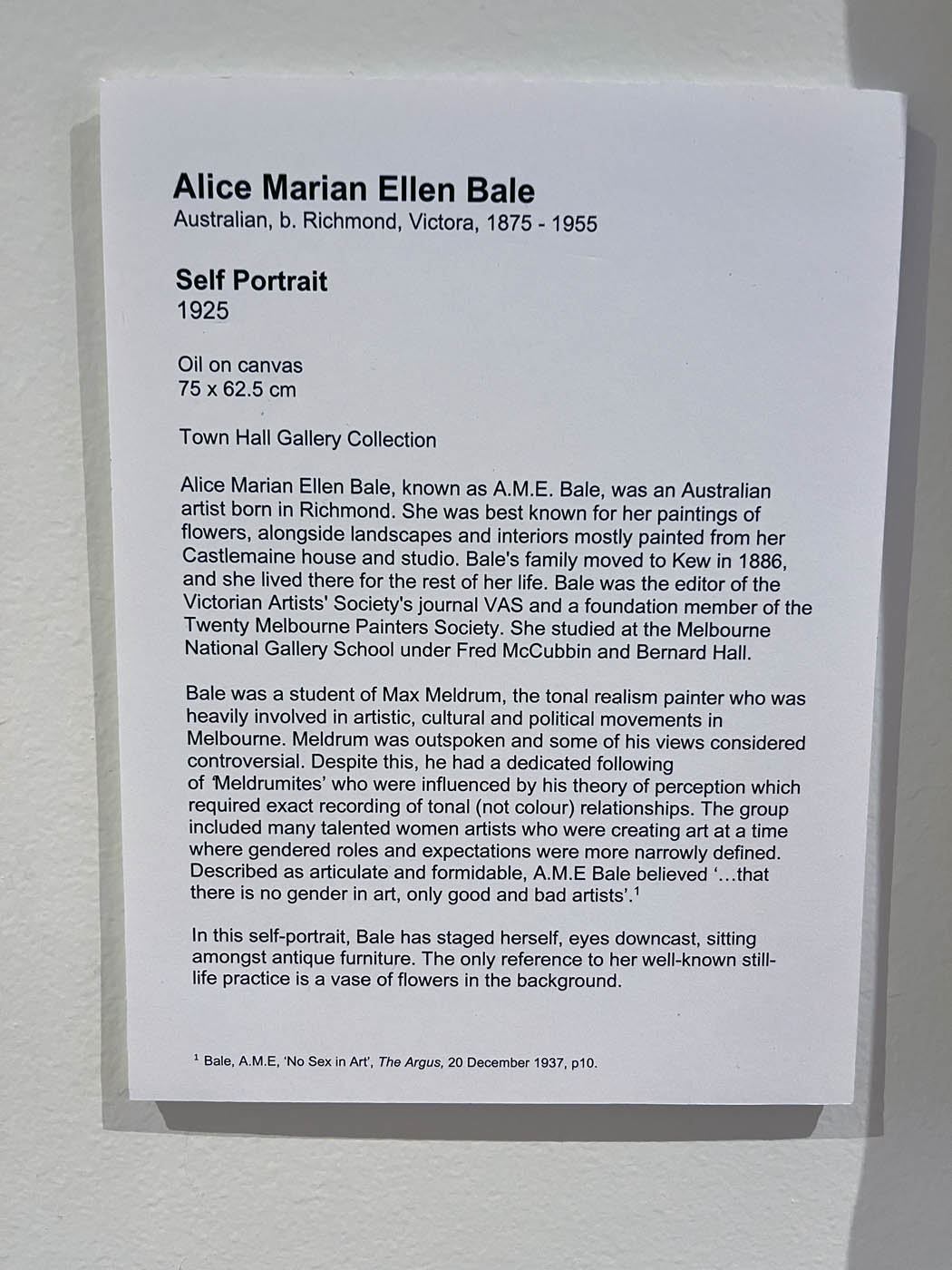
 

'Australian Tonalism' Alice Bale self portrait wall text


Australian Tonalism Alice Bale self portrait wall text
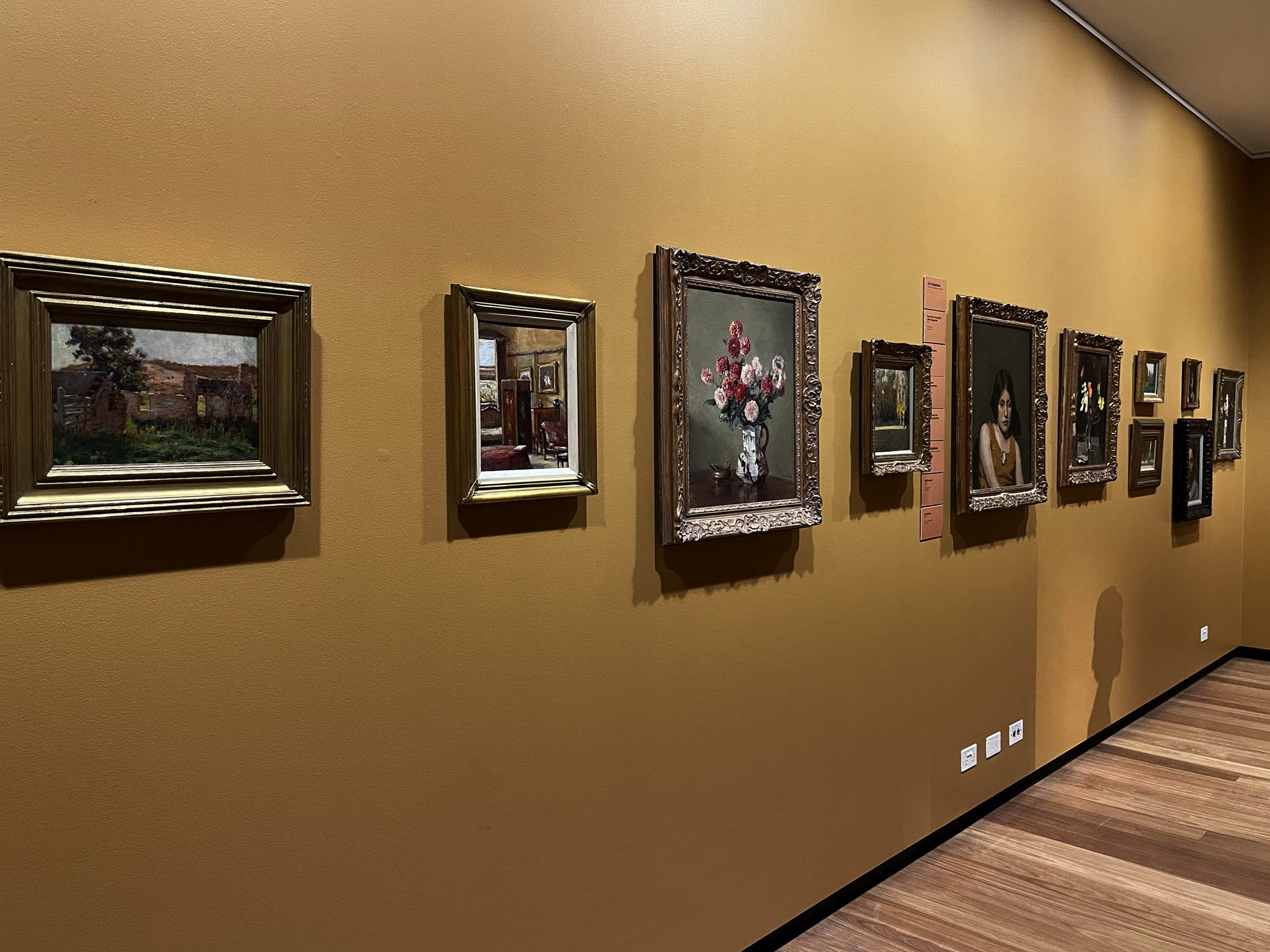
 

Installation view of the exhibition 'Australian Tonalism: A selection from the John and Peter Perry Collection' at the Town Hall Gallery, Hawthorn, Melbourne, May - July, 2025 showing the work of A M E Bale


Installation view of the exhibition Australian Tonalism: A selection from the John and Peter Perry Collection at the Town Hall Gallery, Hawthorn, Melbourne, May – July, 2025 showing the work of A M E Bale
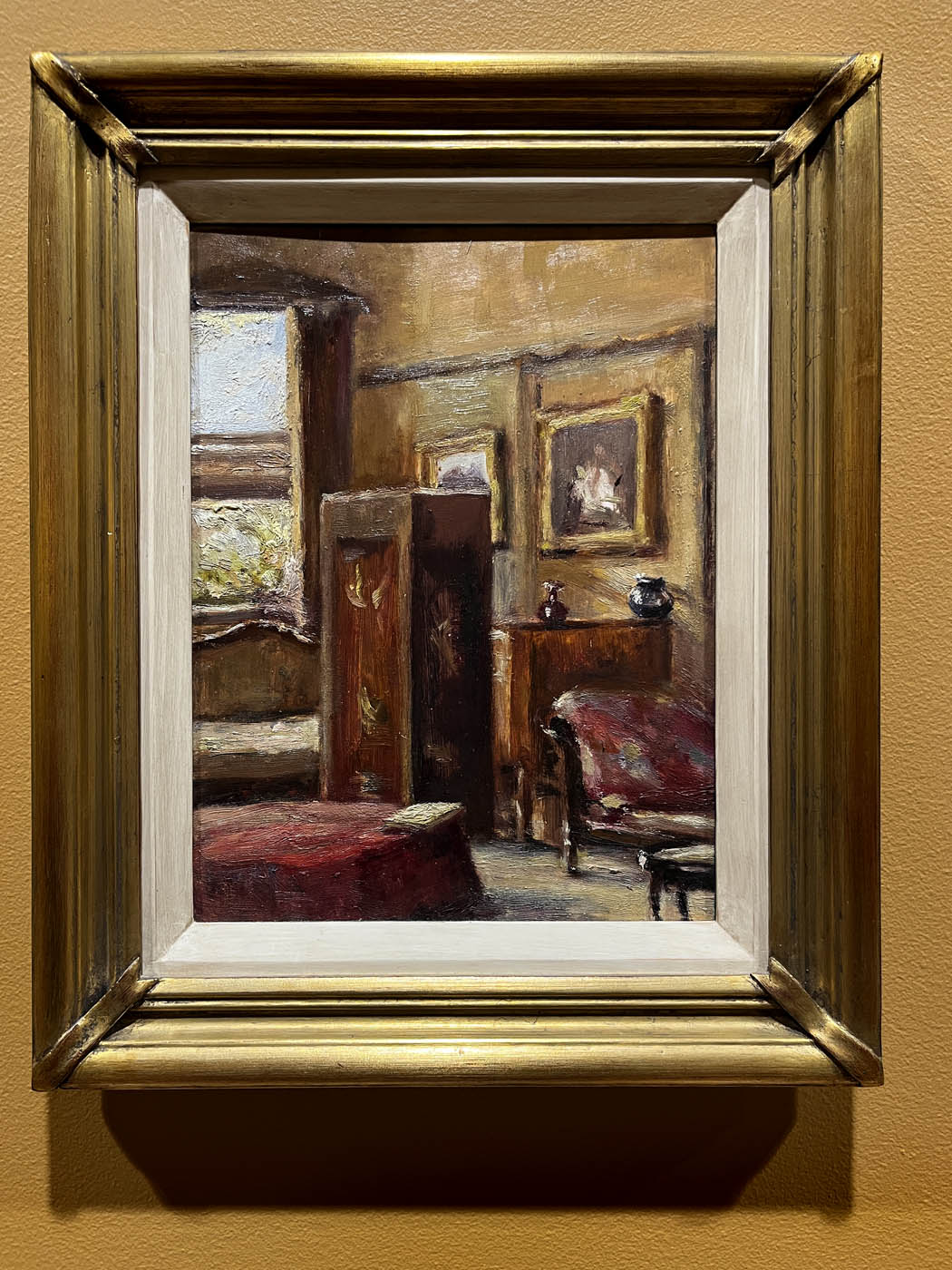
 

A M E Bale (Australian, 1876-1955) 'Interior (83 Walpole Street, Kew)' c. 1928


A M E Bale (Australian, 1876-1955)
Interior (83 Walpole Street, Kew)
c. 1928
Oil on board
31 x 23.5cm
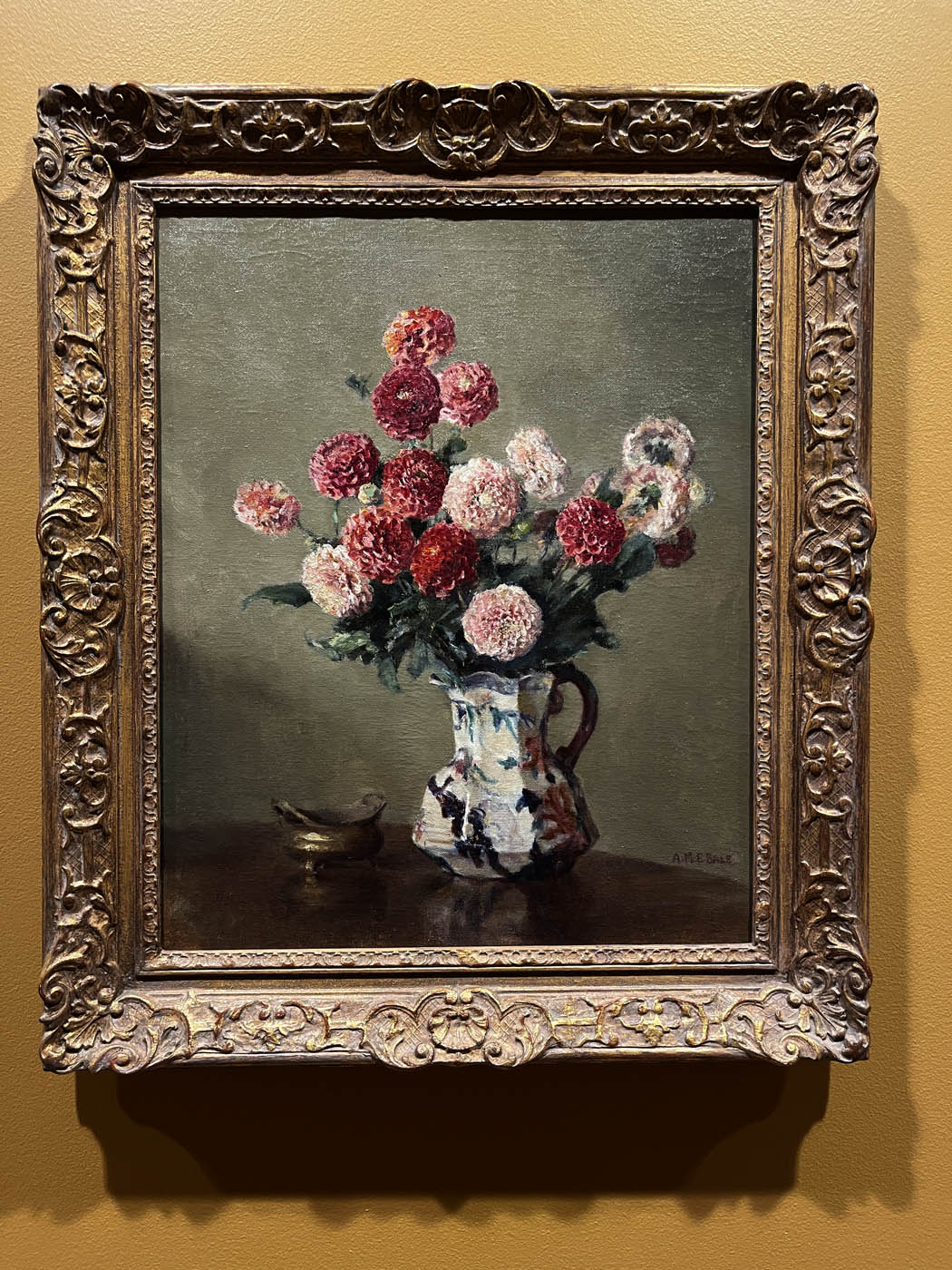
 

A M E Bale (Australian, 1876-1955) 'Pompon Dahlias' c. 1936


A M E Bale (Australian, 1876-1955)
Pompon Dahlias
c. 1936
Oil on canvas
56 x 46cm
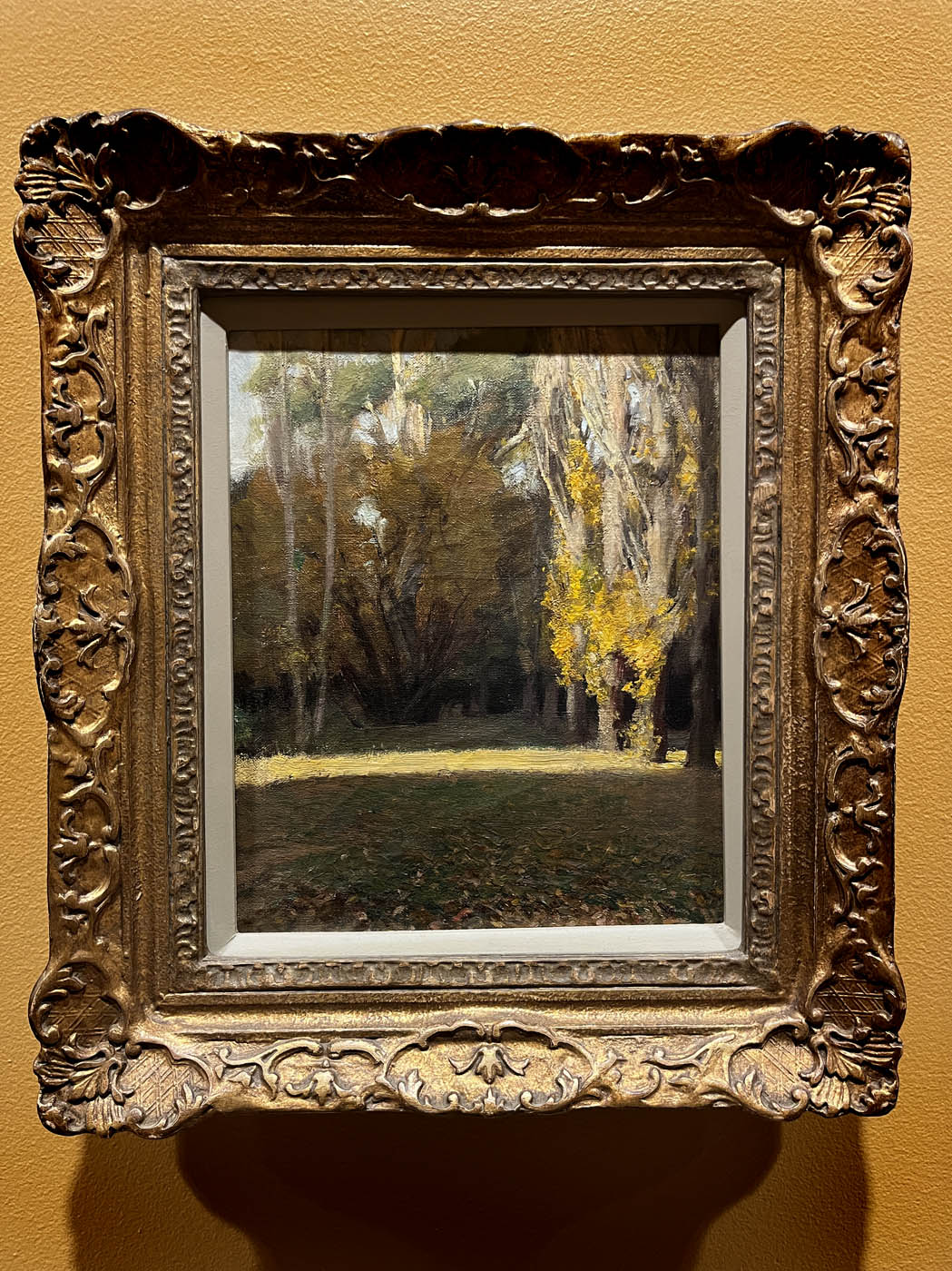
 

A M E Bale (Australian, 1876-1955) 'In Castlemaine Gardens (The Wall of Poplars)' 1922


A M E Bale (Australian, 1876-1955)
In Castlemaine Gardens (The Wall of Poplars)
1922
Oil on canvas
28.5 x 23cm
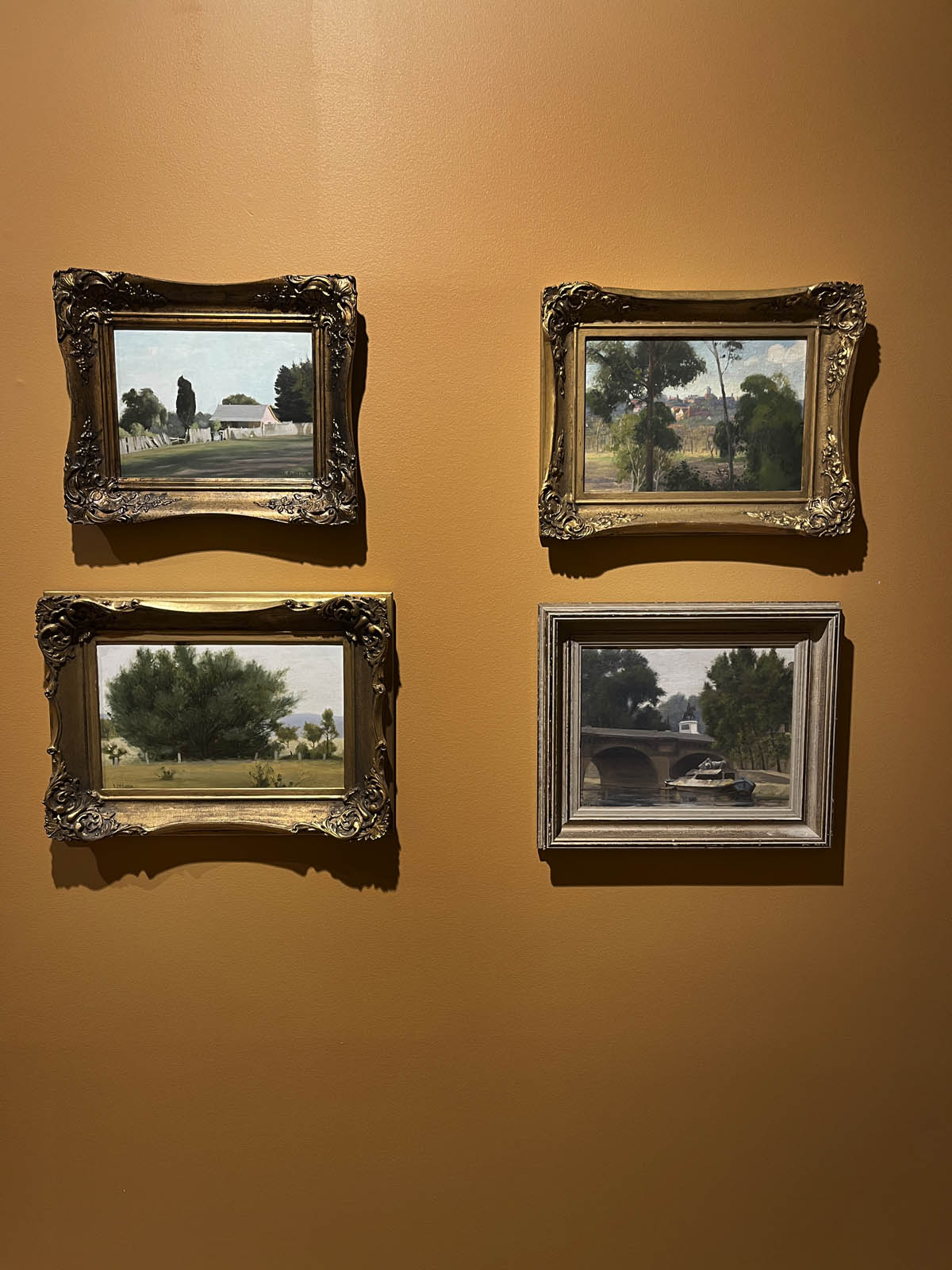
 

Richard McCann (Australian, 1889-1970) 'The Cottage' 1919; 'Eltham' c. 1920; 'Heyington from Hawthorn' 1927; and 'Pont Neuf & Henri IV, Paris' 1924


Richard McCann (Australian, 1889-1970)
The Cottage
1919
Eltham
c. 1920
Heyington from Hawthorn
1927
Pont Neuf & Henri IV, Paris
1924
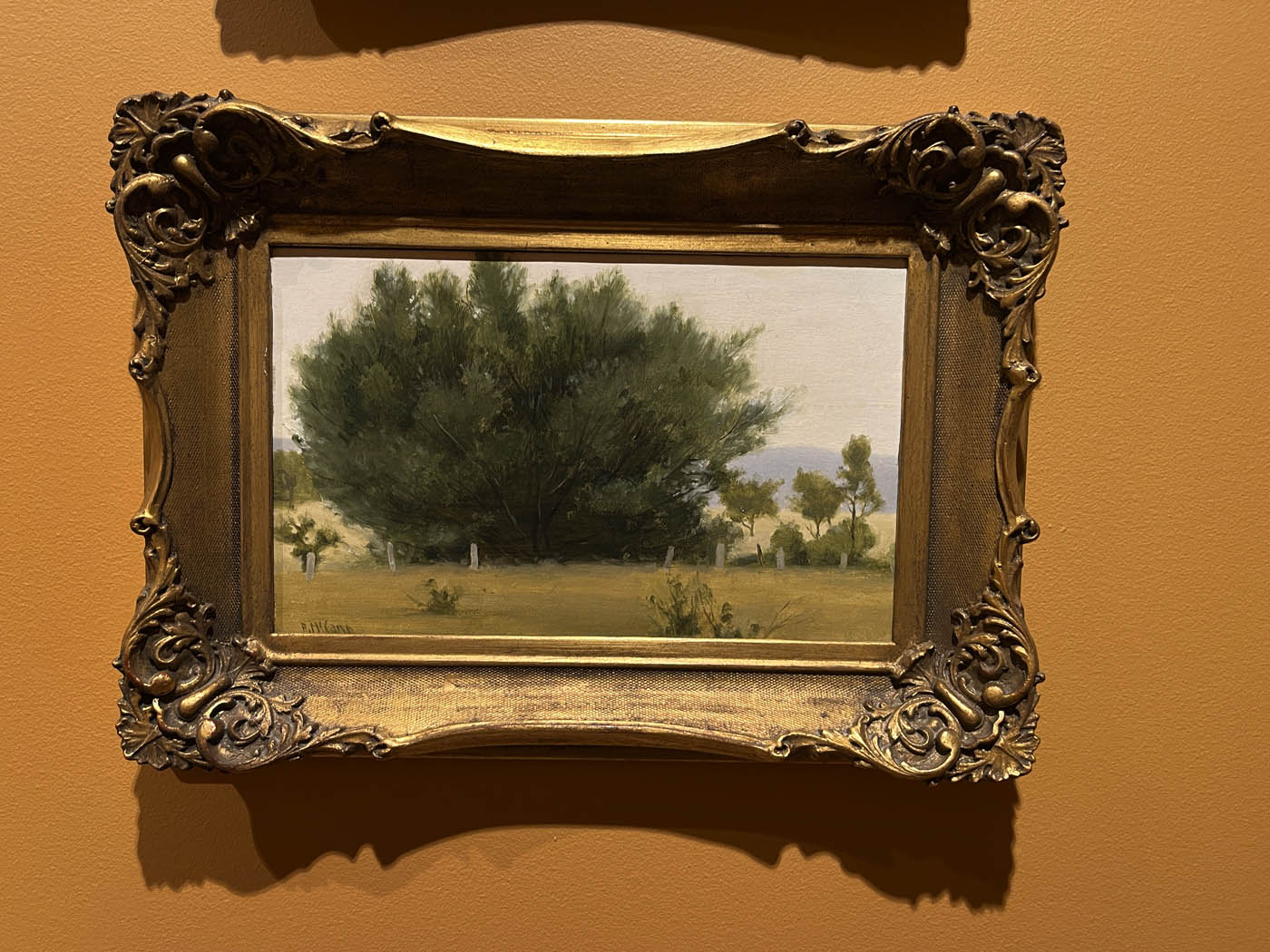
 

Richard McCann (Australian, 1889-1970) 'Eltham' c. 1920


Richard McCann (Australian, 1889-1970)
Eltham
c. 1920
Oil on academy board
24.5 x 39.5cm
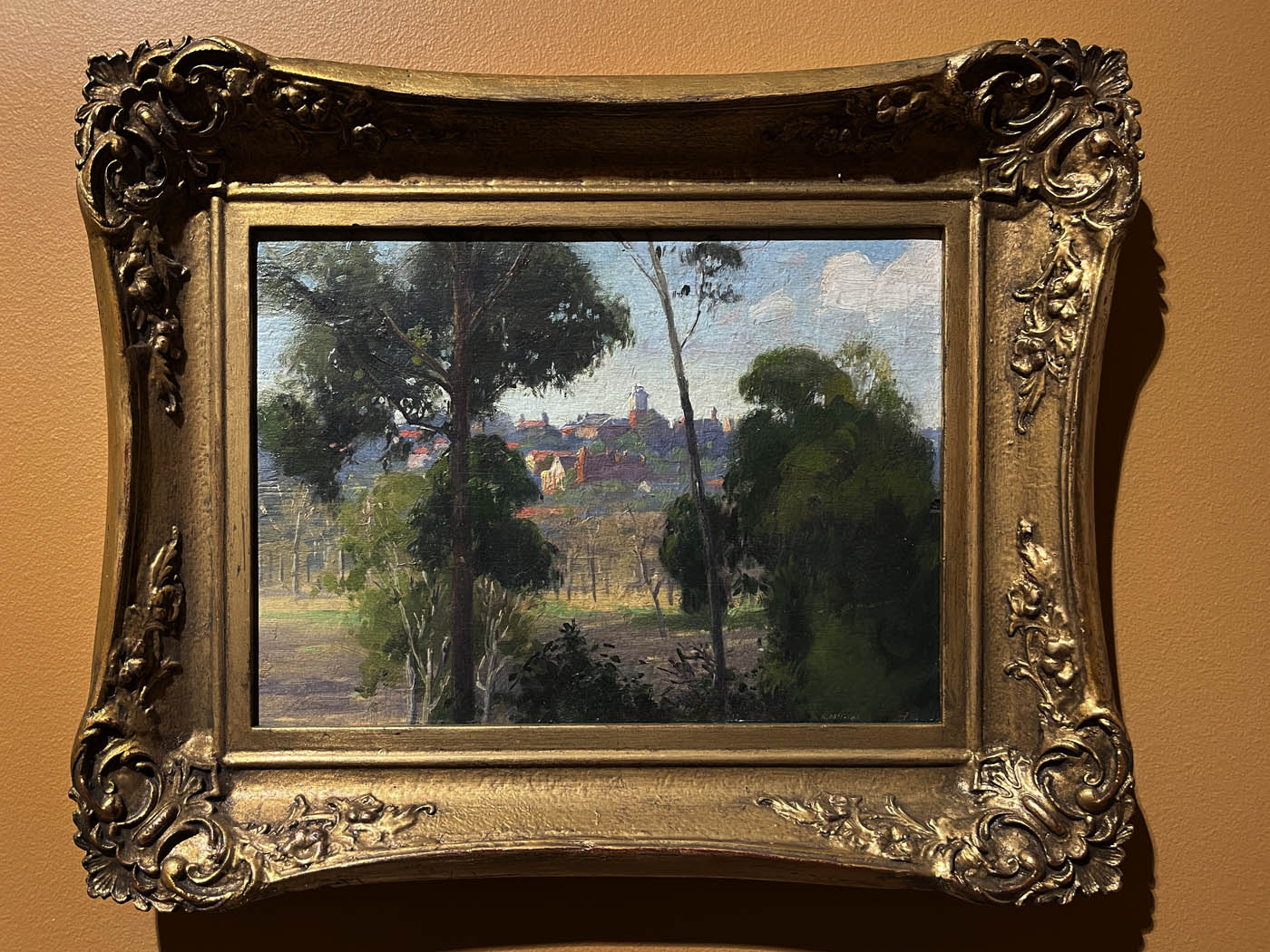
 

Richard McCann (Australian, 1889-1970) 'Heyington from Hawthorn' 1927


Richard McCann (Australian, 1889-1970)
Heyington from Hawthorn
1927
Oil on cedar panel
24 x 35cm
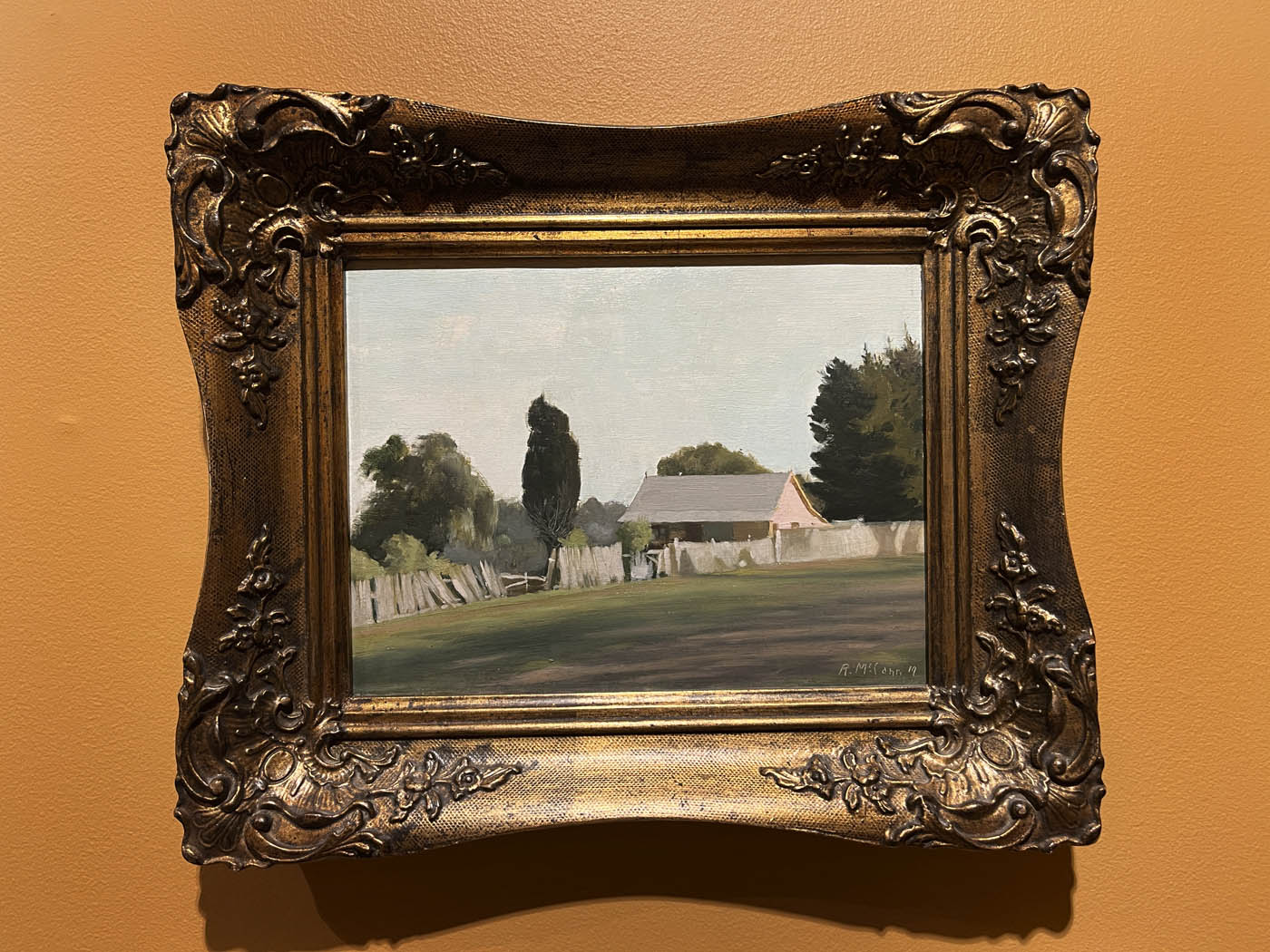
 

Richard McCann (Australian, 1889-1970) 'The Cottage' 1919


Richard McCann (Australian, 1889-1970)
The Cottage
1919
Oil on academy board
24 x 30.5cm
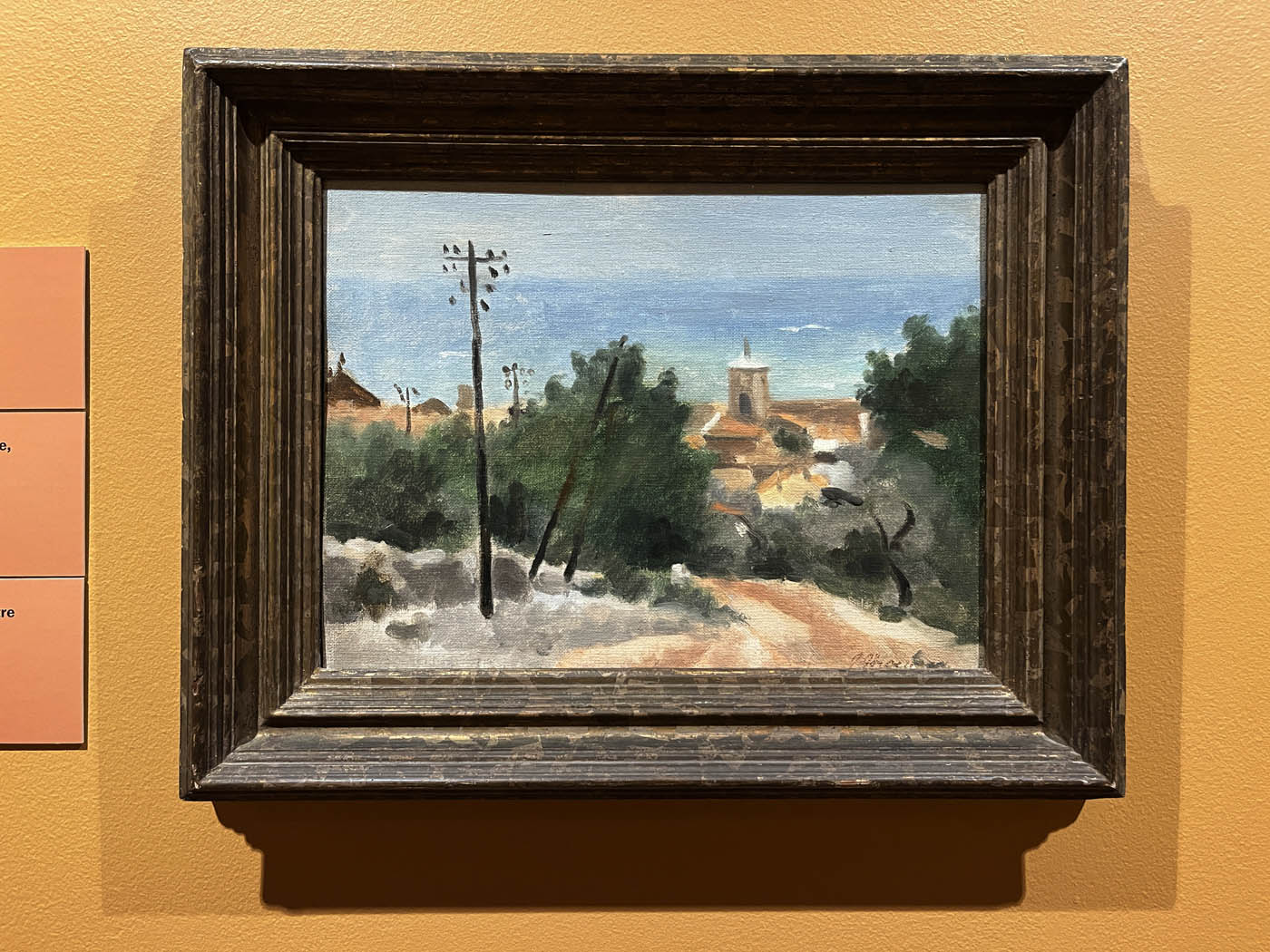
 

Justus Jorgensen (Australian, 1893-1975) 'On the way to Toulon, Cassis' 1927


Justus Jorgensen (Australian, 1893-1975)
On the way to Toulon, Cassis
1927
Oil on canvas on flyboard
32.5 x 40.5cm


Justus Jorgensen (Australian, 1893-1975) 'Cassis' 1927


Justus Jorgensen (Australian, 1893-1975)
Cassis
1927
Oil on canvas on board
40.5 x 33cm


John Rowell (Australian, 1894-1973) 'The Roadway' c. 1920 and William Rowell (Australian, 1898-1946) 'The Barn' 1926


John Rowell (Australian, 1894-1973)
The Roadway
c. 1920
Oil on canvas on flyboard
21.7 x 21.5cm

William Rowell (Australian, 1898-1946)
The Barn
1926
Oil on academy board
28.5 x 30.5cm
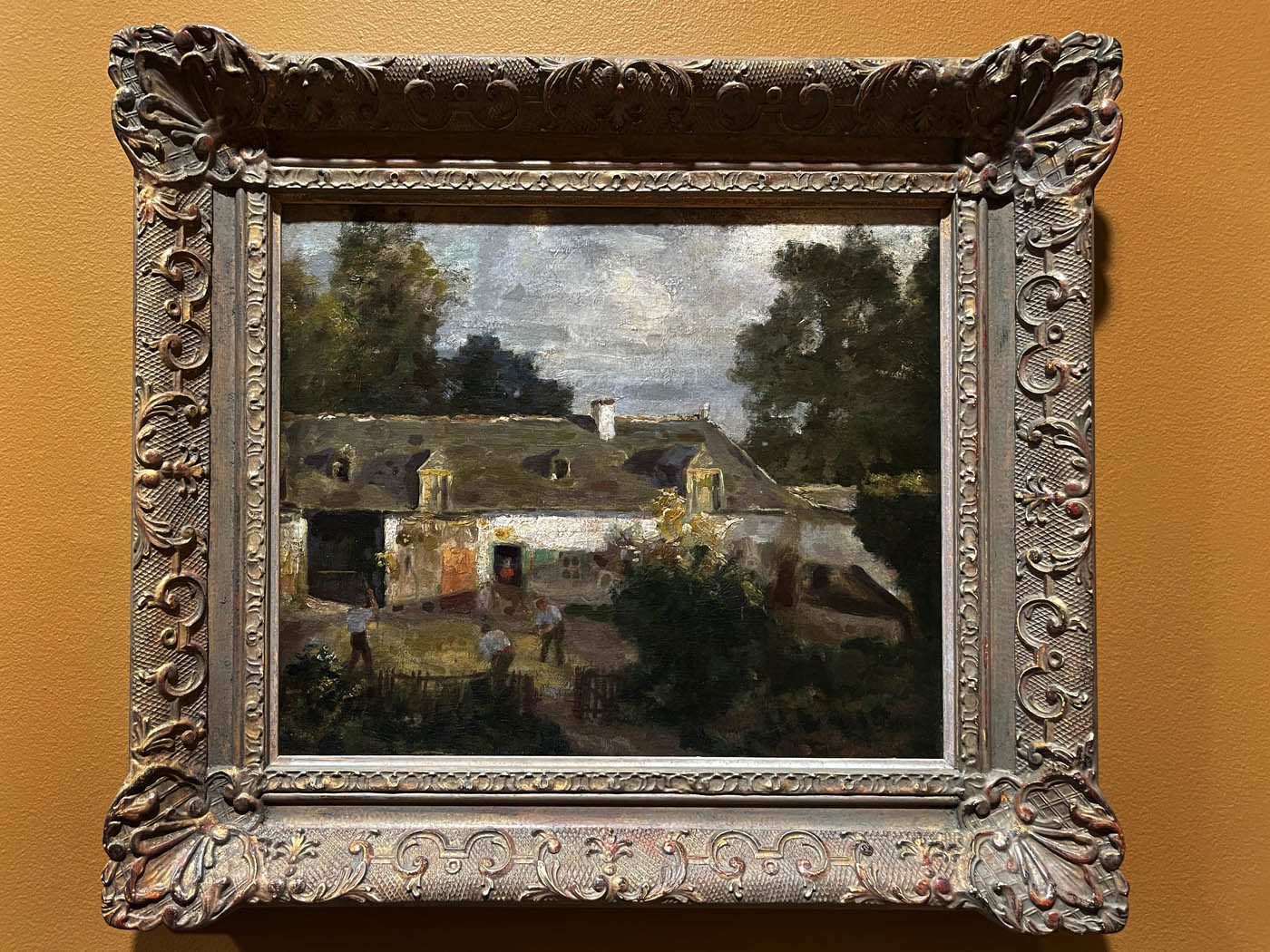
 

Charles Nitsch (French, 1882-1972) 'Picherit's Farm, Pace, Brittany' c. 1910


Charles Nitsch (French, 1882-1972)
Picherit’s Farm, Pace, Brittany
c. 1910
Oil on cotton on board
32.5 x 40cm
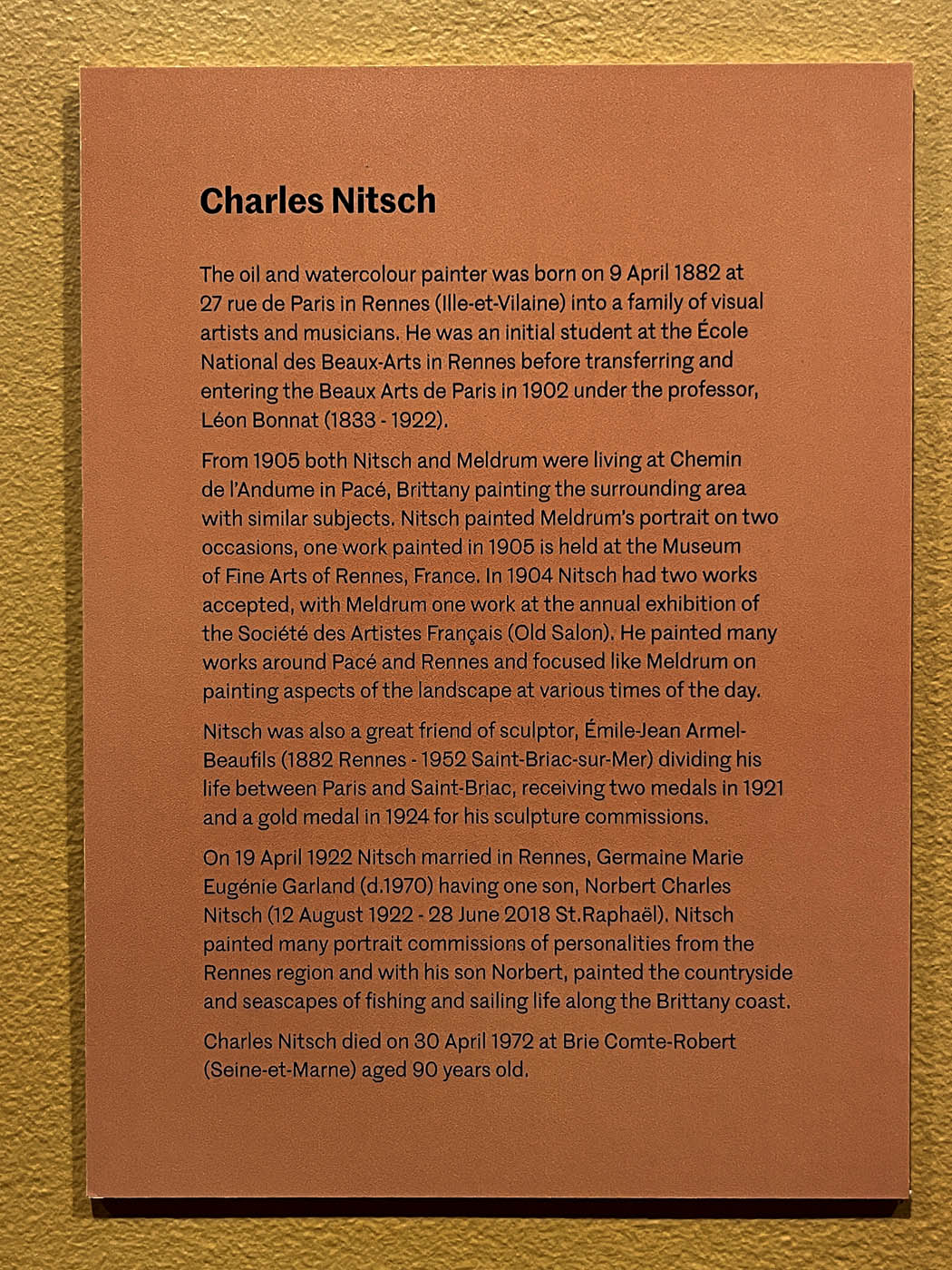
 

'Australian Tonalism' wall text Charles Nitsch


Australian Tonalism wall text Charles Nitsch
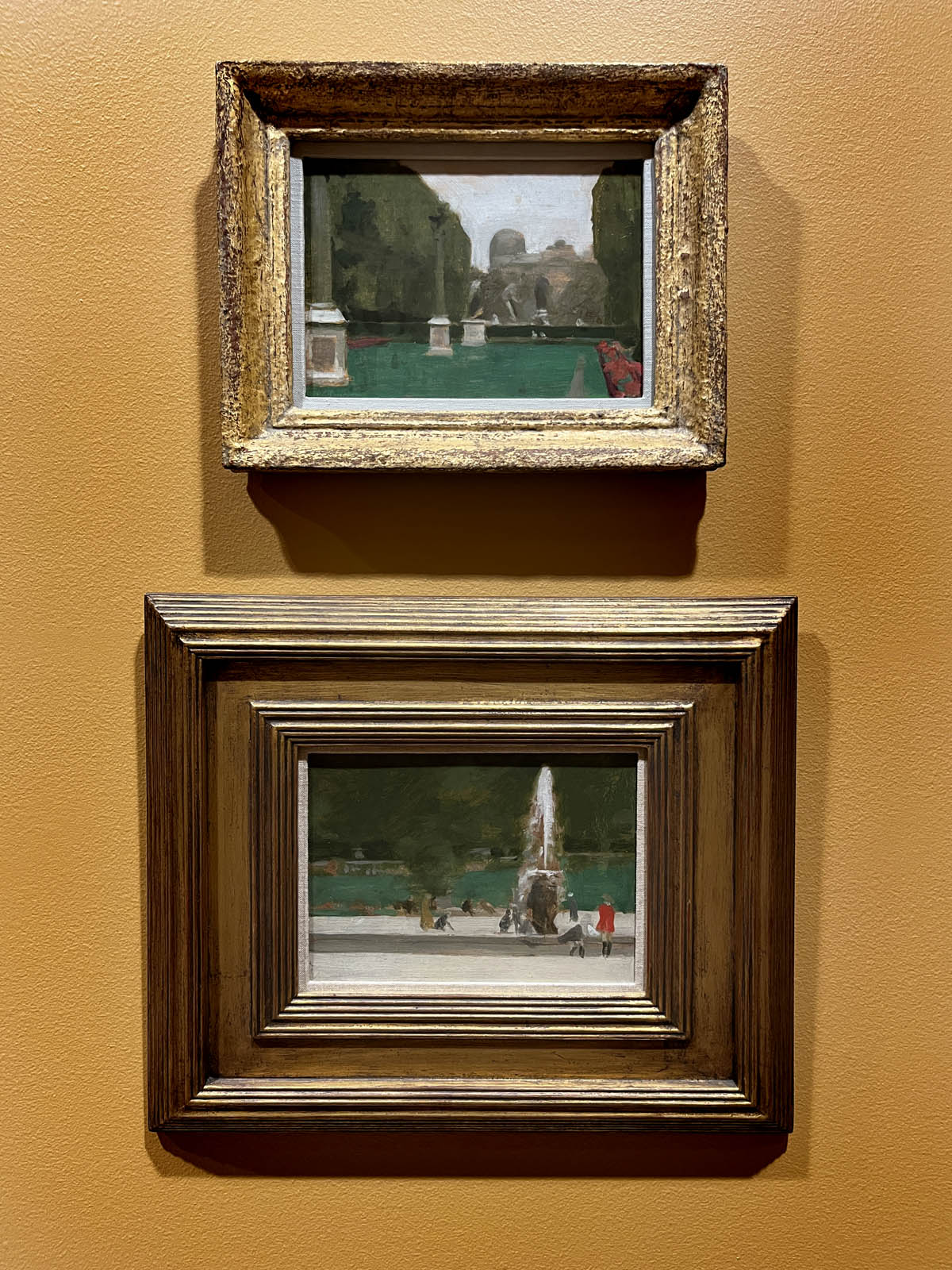
 

A D Colquhoun (Australian, 1894-1983) 'The Avenue de l'Observatoire' 1925 and 'The Fountain in the Luxembourg Gardens' c. 1925


A D Colquhoun (Australian, 1894-1983)
The Avenue de l’Observatoire
1925
The Fountain in the Luxembourg Gardens
c. 1925
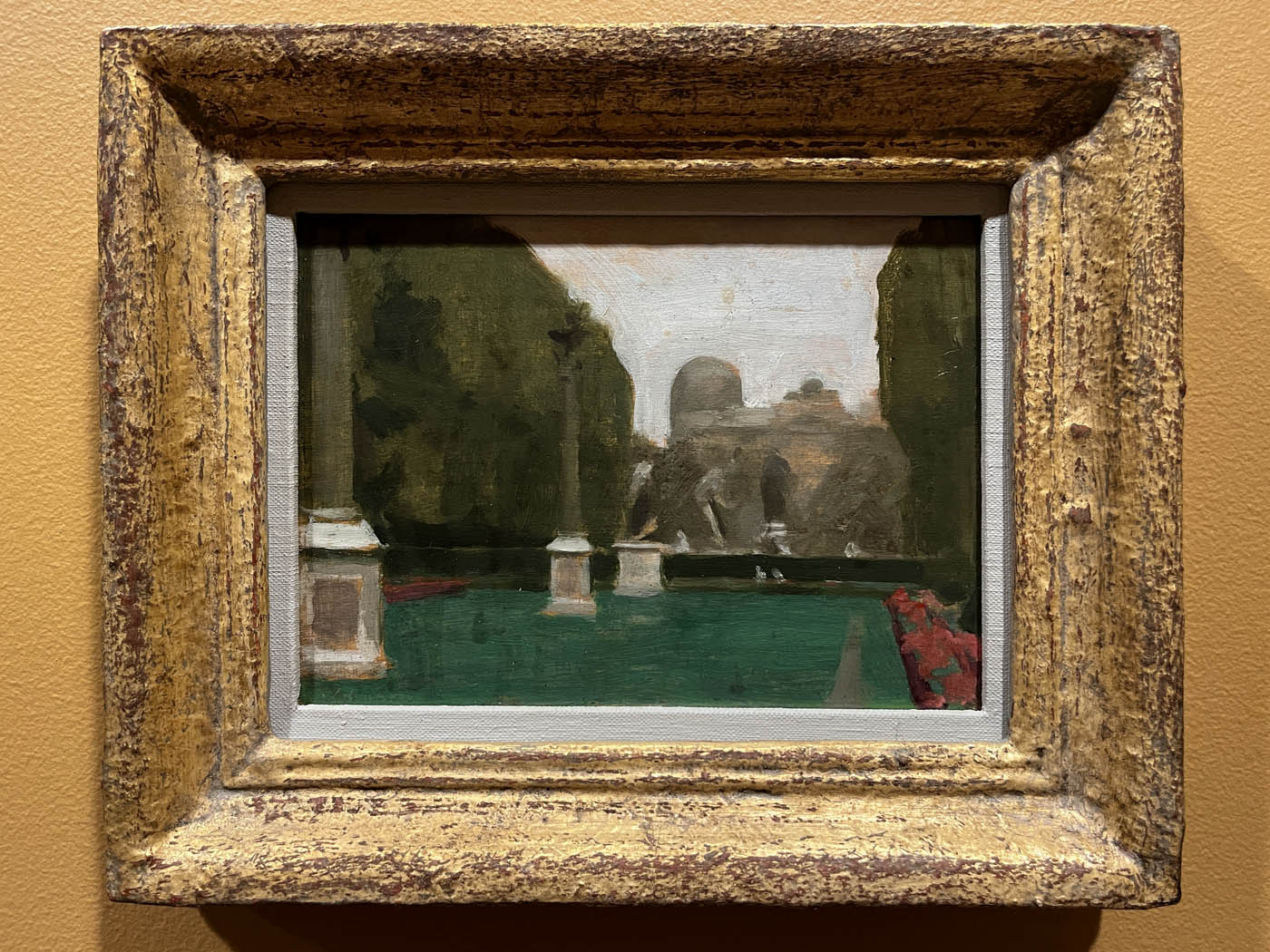
 

A D Colquhoun (Australian, 1894-1983) 'The Avenue de l'Observatoire' 1925


A D Colquhoun (Australian, 1894-1983)
The Avenue de l’Observatoire
1925
Oil on wood panel
16 x 21.6cm
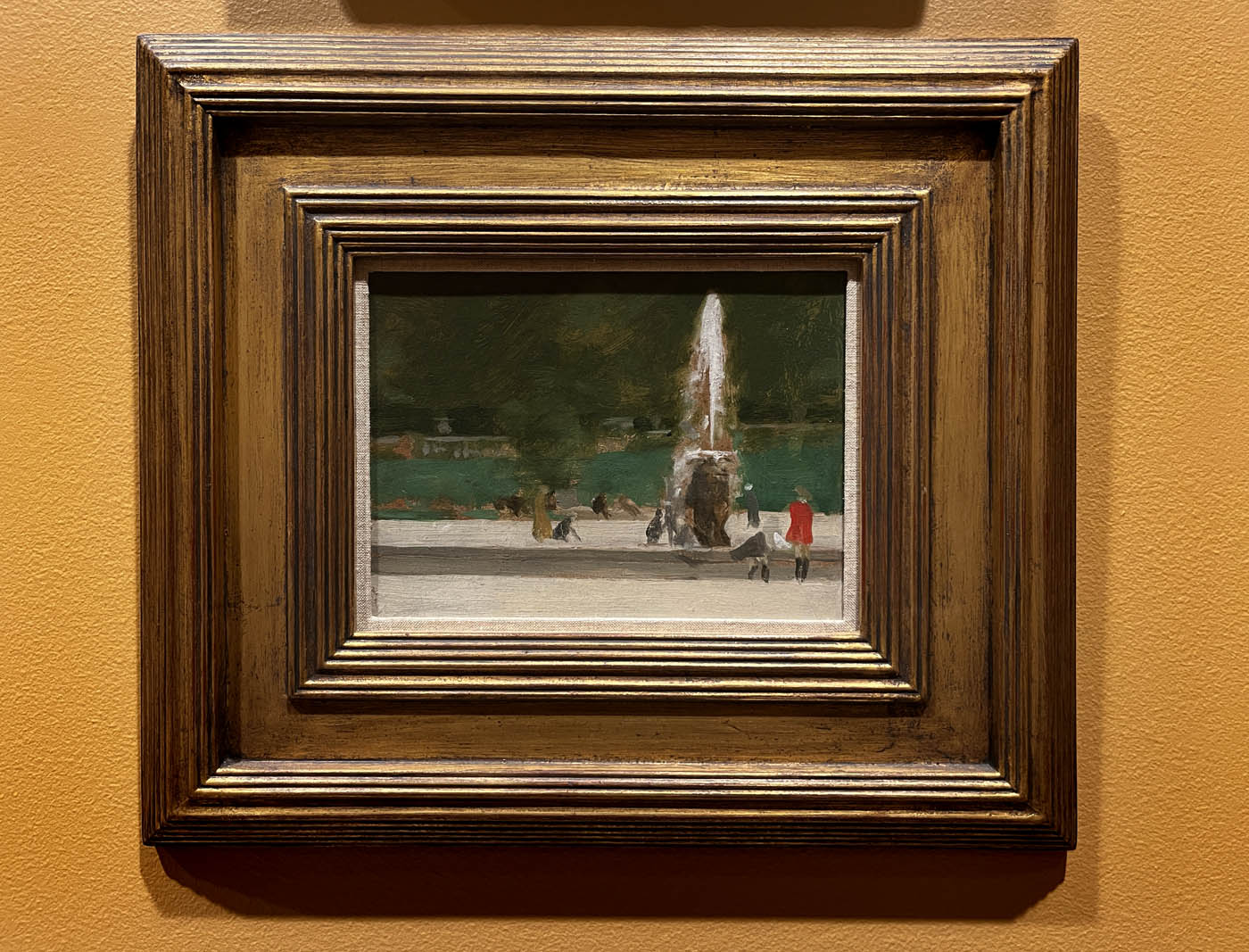
 

A D Colquhoun (Australian, 1894-1983) 'The Fountain in the Luxembourg Gardens' c. 1925


A D Colquhoun (Australian, 1894-1983)
The Fountain in the Luxembourg Gardens
c. 1925
Oil on board
15.8 x 21.5cm
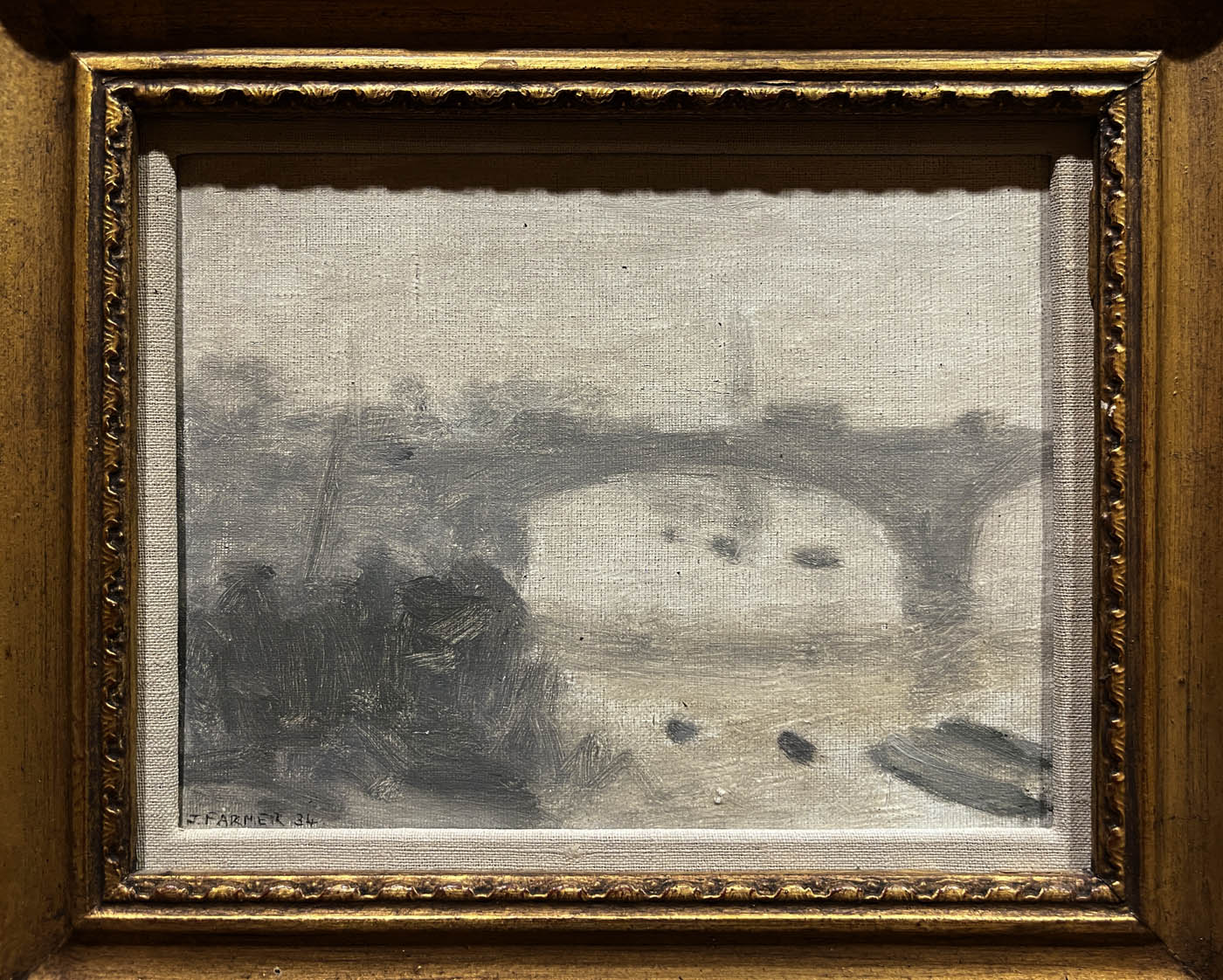
 

John Farmer (Australian, 1897-1989) 'Misty Morning, London' 1934 (detail)


John Farmer (Australian, 1897-1989)
Misty Morning, London (detail)
1934
Oil on canvas on board
19 x 24cm


Town Hall Gallery
360 Burwood Road Hawthorn VIC 3122
Phone: (03) 9278 4770

Opening hours:
Mon to Fri, 9am – 5pm
Saturday, 12pm – 4pm
Boroondara Arts website

LIKE ART BLART ON FACEBOOK

Back to top

Exhibition: ‘Australian Women Artists Between the Wars’ at Lauraine Diggins Fine Art, Melbourne

Exhibition dates: 3rd March – 30th April 2015

Artists: Clarice Beckett, Dorrit Black, Bessie Davidson, Ethel Carrick Fox, Joy Hester, Nora Heysen, Hilda Rix Nicholas, Margaret Preston, Jane Price, Thea Proctor, Kathleen Sauerbier, Grace Cossington Smith, Clara Southern and others.


Clarice Beckett (Australian, 1887-1935) 'Winter Morning, Beaumaris' c. 1927-1931


Clarice Beckett (Australian, 1887-1935)
Winter Morning, Beaumaris
c. 1927-1931
Oil on canvas
39.3 x 55cm


A delightful exhibition on a subject I freely admit that I knew very little about. An intelligent opening speech from Associate Professor Alison Inglis from The University of Melbourne helped me to be more informed about this fascinating period in Australian art history.

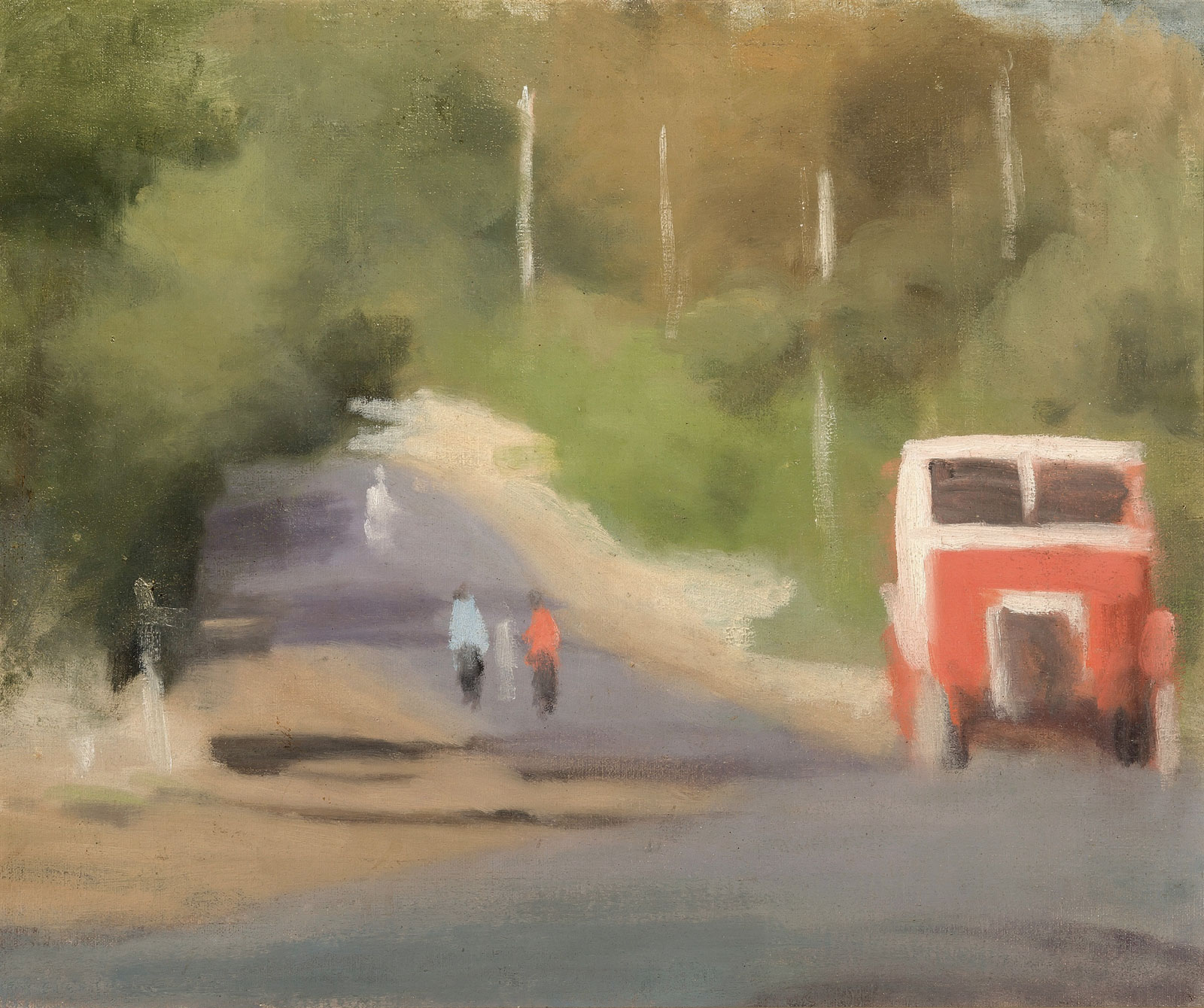
The hero for me in this posting is the work of Clarice Beckett. The atmosphere of her paintings when seen in the flesh is incredible, perfectly capturing the suffused light of the bayside suburbs of Melbourne where she painted. Her impressions are so purposeful and vivid; no extraneous flourish is necessary. Look at the painting The Red Bus for example (below) … the brief almost cartoonish outline of the bus hugs the right hand side of the composition, the red picked up by one of the two people walking in the middle of a road that runs behind the tea-trees that shield the beach from view. Every Australian would understand the symbolic quality of this mythic road.

Shadows are delineated by a few patches of darkness, telegraph poles by four swiftly drawn lines balanced on the left-hand side of the painting by a faint sign post that is almost not there, reinforced spatially by a ghostly white figure further up the painting in the middle of the road. We can almost hear the cicadas song, feel the heat rising from the tarmac, a little breeze rolling in from the sea every now and then. These cultural memories, as annotated by Beckett, will last forever.

Dr Marcus Bunyan


Many thankx to Lauraine Diggins Fine Art for allowing me to publish the text and art work in the posting. Please click on the photographs for a larger version of the art.


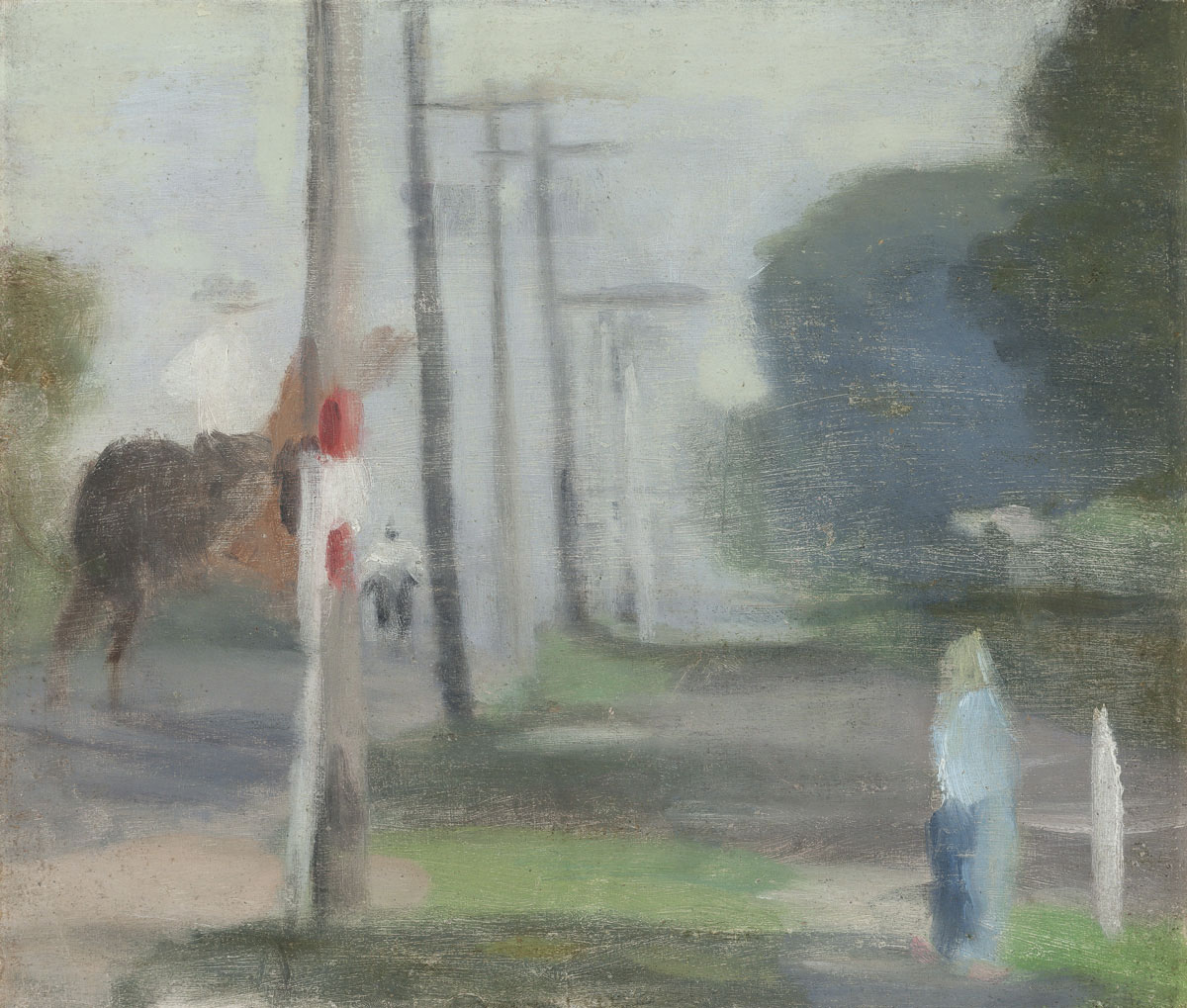
Clarice Beckett (Australian, 1887-1935) 'Morning Ride' Nd


Clarice Beckett (Australian, 1887-1935)
Morning Ride
Nd
Oil on canvas on pulp board
29.5 x 35cm


Clarice Beckett (Australian, 1887-1935)

Clarice Majoribanks Beckett (21 March 1887-7 July 1935) was an Australian painter whose works are featured in the collections of the National Gallery of Australia, National Gallery of Victoria and the Art Gallery of South Australia.

Beckett is recognised as one of Australia’s most important modernist artists. Despite a talent for portraiture and a keen public appreciation for her still lifes, Beckett preferred the solo, outdoor process of painting landscapes. She relentlessly painted sea and beachscapes, rural and suburban scenes, often enveloped in the atmospheric effects of early mornings or evening. Her subjects were often drawn from the Beaumaris area, where she lived for the latter part of her life. She was one of the first of her group to use a painting trolley, or mobile easel to make it easier to paint outdoors in different locations..

Australian Tonalism

Australian Tonalism is characterised by a particular “misty” or atmospheric quality created by the Meldrum painting method of building “tone on tone”. Tonalism developed from Meldrum’s “Scientific theory of Impressions”; claiming that social decadence had given artists an exaggerated interest in colour and, to their detriment, were paying less attention to tone and proportion. Art, he said, should be a pure science based on optical analysis; its sole purpose being to place on the canvas the first ordered tonal impressions that the eye received. All adornments and narrative and literary references should be rejected.

Tonalism opposed Post-Impressionism and Modernism, and is now regarded as a precursor to Minimalism and Conceptualism. The whole movement had been under fierce controversy and they were without doubt the most unpopular group of artists, in the eyes of most other artists, in the history of Australian art. Influential Melbourne artist and teacher George Bell described Australian Tonalism as a “cult which muffles everything in a pall of opaque density”.

While painting the wild sea off Beaumaris during a big storm in 1935, Beckett developed pneumonia and died four days later in a hospital at Sandringham. She was buried in the Cheltenham Memorial Park (Wangara Road) not far from another noted female artist, Mary Vale. She was only 48 when she died, the year after her mother’s death.

Text from the Wikipedia website


Clarice Beckett (Australian, 1887-1935) 'The Red Bus' Nd


Clarice Beckett (Australian, 1887-1935)
The Red Bus
Nd
Oil on canvas on composition board
36.5 x 44cm


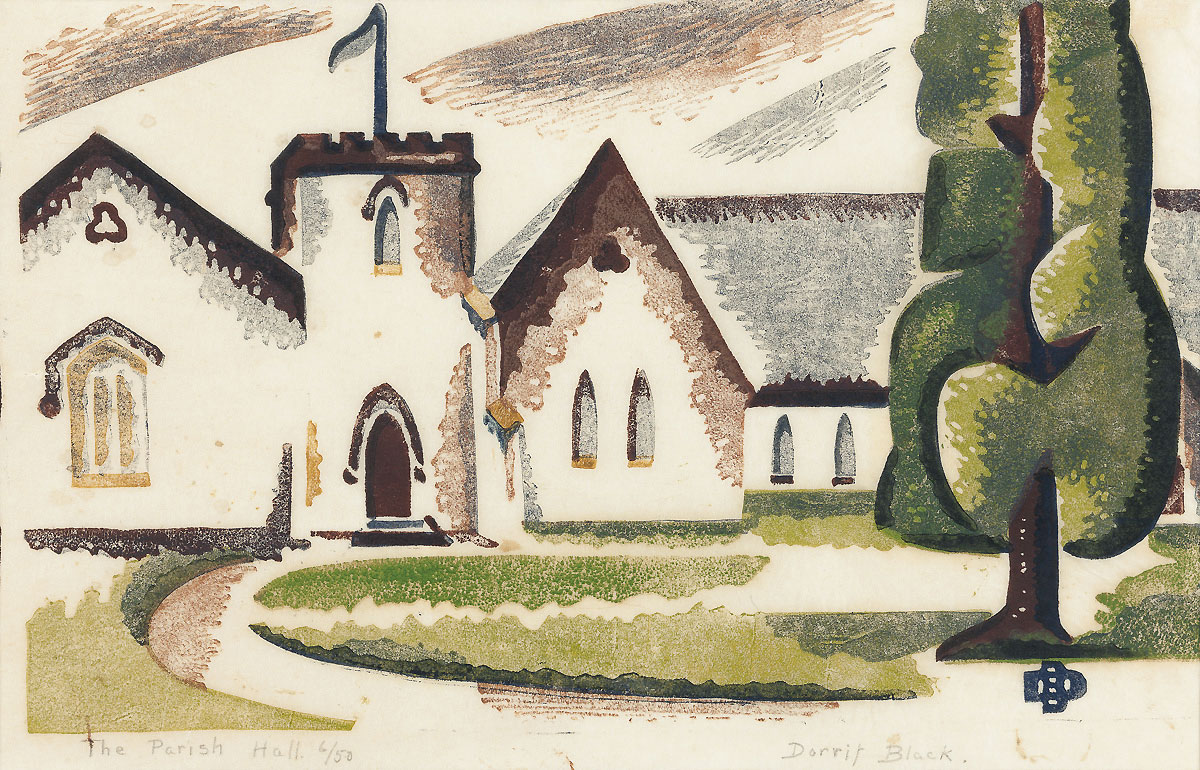
Dorrit Black (Australian, 1891-1951) 'The Parish Hall' 1937


Dorrit Black (Australian, 1891-1951)
The Parish Hall
1937
Coloured linocut
23 x 36cm


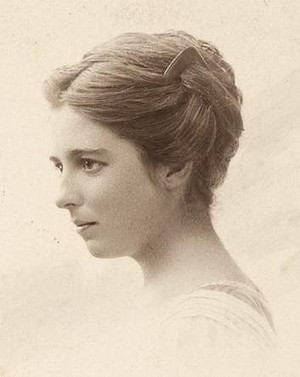
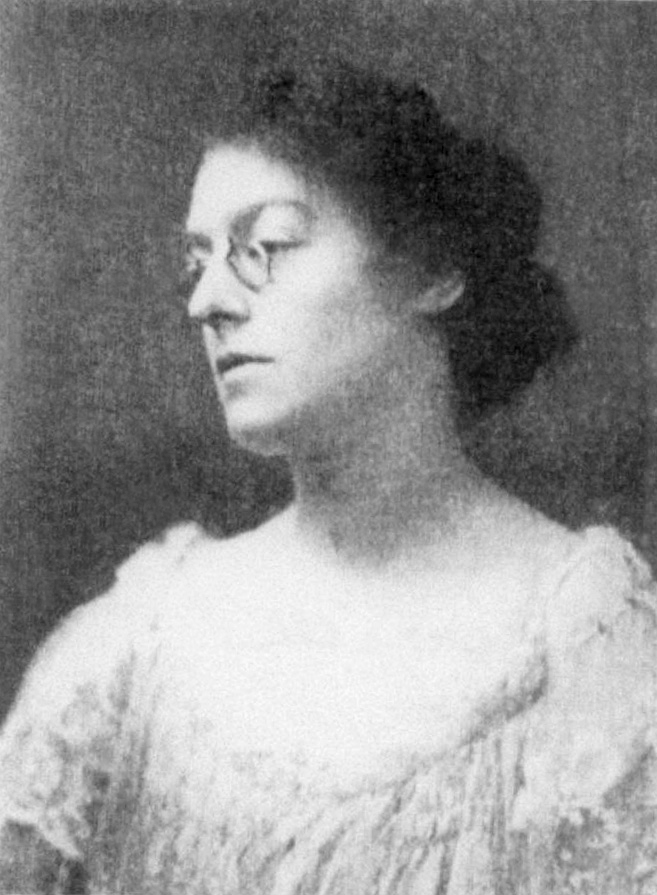
Family archive image of Dorrit Black


“It is the artist’s business to reveal to mankind a new outlook on life and the world.”

Dorrit Black, 1946


It should come as no surprise that Dorothea Foster (Dorrit) Black, like other women artists, would be scorned by the sexist, conservative Australian art establishment during her lifetime. When her life was tragically cut short by a car accident in Adelaide in 1951, artist and critic Ivor Francis’s obituary declared Black was that city’s first and, perhaps least understood “modern” artist.

“She has so consistently been artistically cold-shouldered and ignored since her return here about 20 years ago that it is amazing how she maintained the courage to fight on against so much prejudice and misunderstanding,” he wrote. “… It will be many years before her exceptional talent can be properly appreciated in its right perspective, as it most certainly will be.” …

Black was part of a generation of women, alongside Margaret Preston, Grace Cossington-Smith and Grace Cowley, who took risks by travelling overseas, painting in modernist styles and pursuing artistic careers often against the wishes of their family.

“What decided me to throw in my hand altogether the other day was your declaration that I ought to consider my time as belonging to the family first, leaving my painting for my spare time …” Black wrote in a letter to her brother in 1938. “After more than 20 years of struggling to make an artist of myself, I cannot give it all up and settle down to being nothing but a good sister and daughter.”

“She was a very modern woman which meant she belonged to an age when educated women started to break out of Victorian traditions and become independent and self-determined,” Lock-Weir says.

Black travelled to Europe on three occasions, including a two-year stint beginning in from September 1927 when she studied with printmaker Claude Flight at London’s Grosvenor School of Art, and cubists Andre Lhote and Albert Gleizes in Paris. In the summer of 1928, she travelled to the south of France with Crowley and Anne Dangar, where each painted views of the medieval hillside town of Mirmande. Black returned to Adelaide in 1935 to care for her ailing mother, building a studio-house on the city’s edge at Magill where she mainly painted landscapes of the Adelaide Hills and south coast. She also continued to advocate modern art and taught at the South Australian School of Art, influencing a generation of artists led by Jeffrey Smart and Ruth Tuck.

“Plump, dignified, black-haired and well-groomed, she was regarded as a mother-figure by younger artists,” wrote Ian North in the Australian Dictionary of Biography.

Black’s untimely death in 1951 at the age of 59 left a small legacy of around 130 oil paintings, 159 watercolours, 50 linocuts and a handful of drawings, according to art consultant John Cruthers. “Some painters paint a lot, some paint a little, and then there’s Dorrit.”

Andrew Taylor. “Rescuing the reputation of early Australian modernist Dorrit Black,” on The Sydney Morning Herald website, June 6th 2015 [Online] Cited 24/04/2015


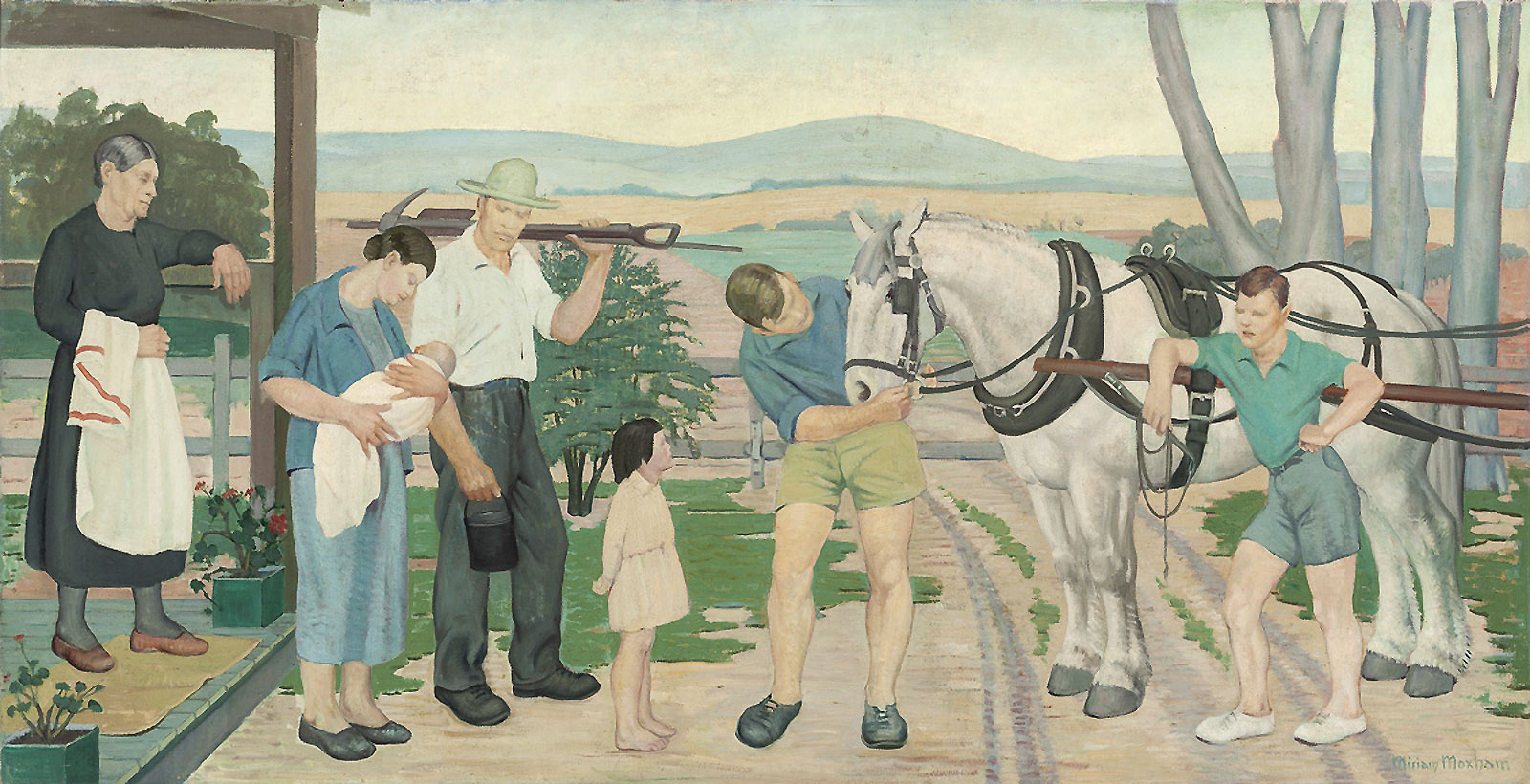
Miriam Moxham (Australian, 1885-1971) 'Country Morning' c.1940


Miriam Moxham (Australian, 1885-1971)
Country Morning
c. 1940
Oil on composition board
94 x 182cm


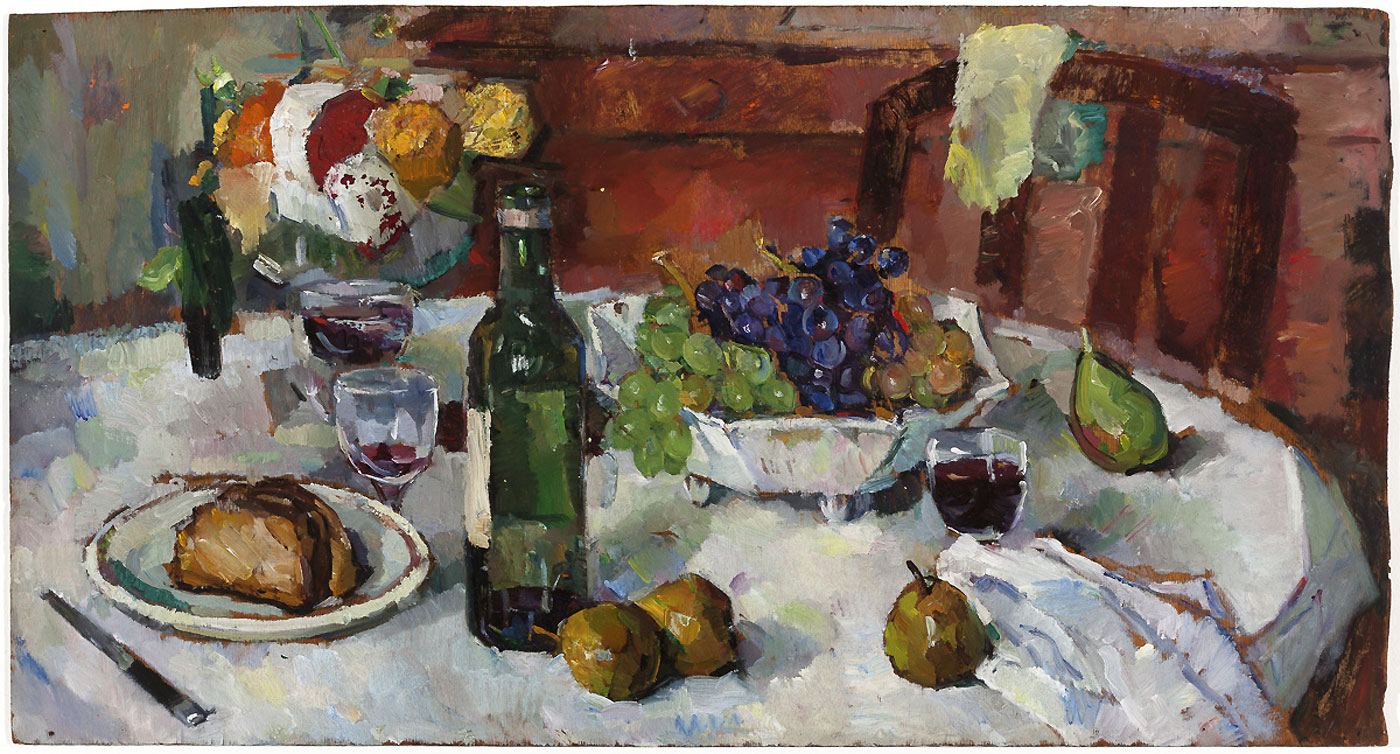
Bessie Davidson (Australian, 1879-1965) 'Autumn Table at Villeneuve' 1935


Bessie Davidson (Australian, 1879-1965)
Autumn Table at Villeneuve
1935
Oil on plywood
44 x 82cm


Bessie Davidson (Australian, 1879-1965)

Bessie Davidson (1879-1965) was an Australian painter known for her impressionist, light-filled landscapes and interiors.

Davidson traveled to Australia to visit family in 1914 and was there when World War I began. She returned to France immediately, where she joined the French Red Cross and served in various military hospitals. During the war, she met the woman who would be her companion for the next two decades, Marguerite Leroy (d. 1938), whose nickname was “Dauphine”.

The postwar period between 1918 and 1920 saw Davidson producing quiet, intimate, loosely impressionistic paintings – mostly interiors, still lives, and portraits – in muted tones. Her style evolved in a more vigorous direction in the 1920s and 1930s, with rich, vibrant, often dramatic colours laid on with a palette knife. In this period her work sold well and was well-received by critics. She traveled around Europe, Russia, and Morocco making outdoor sketches that she used as the basis for paintings later produced in her studio. Her landscapes are notable for their quality of light and sense of atmosphere.

In 1930 Davidson was a founding vice-president of La Société Femmes Artistes Modernes. She was a founding member of the Société Nationale Indépendentes and a member of the Salon d’Automne. In 1931 she was appointed to the French Legion of Honor, in part for her cofounding of the Salon des Tuileries, the only Australian woman to receive that honour up to that time. She exhibited widely with such artists as Mary Cassatt, Tamara de Lempicka, Camille Claudel, and Suzanne Valadon.

Although still a citizen of the British Commonwealth, Davidson decided to stay in France during World War II. She lived with friends in Grenoble, and some sources say that she was a member of the French Resistance. Her paintings from this period are strong, bright, and lively. In 1945, she returned to her old studio in Paris, occasionally spending time at a farm she bought near Rouen. In the postwar period, she painted mostly outdoors on small wood panels. She died at Montparnasse in France in 1965. She was buried in Saint-Saëns, Seine-Maritime.

Text from the Wikipedia website


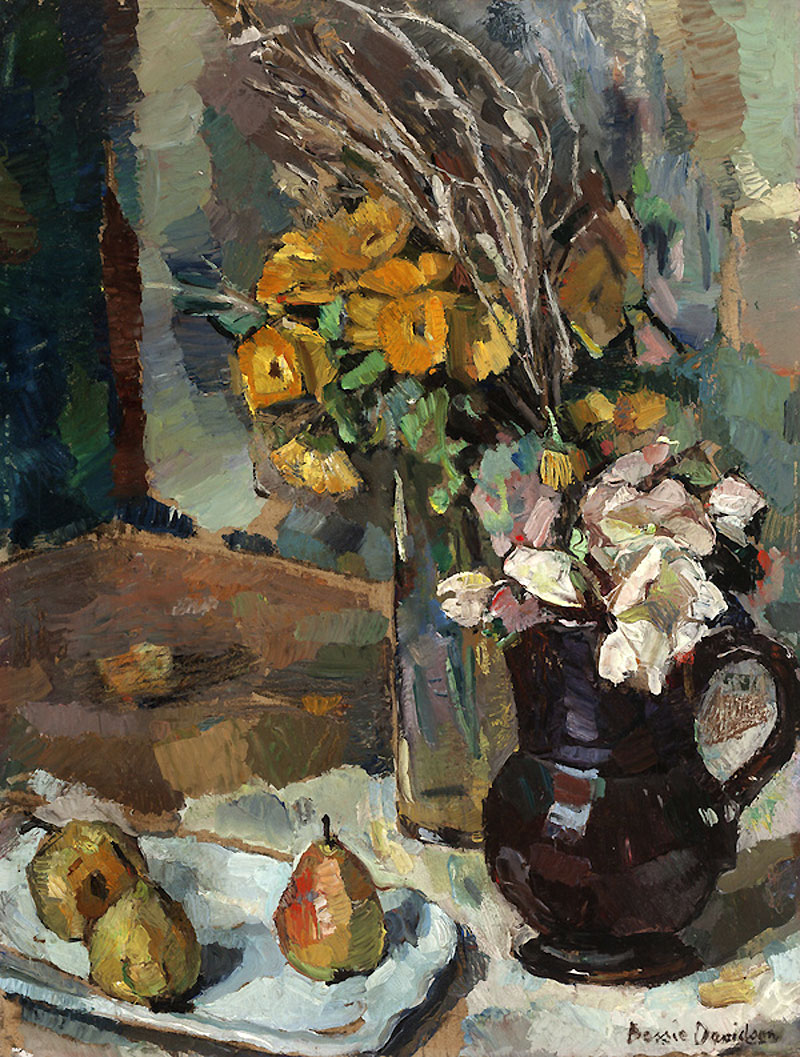
Bessie Davidson (Australian, 1879-1965) 'Still Life with Flowers and Pears' Nd


Bessie Davidson (Australian, 1879-1965)
Still Life with Flowers and Pears
Nd
Oil on cardboard
61 x 46cm


In the period between the wars, Australian women artists were leading the way by challenging traditions and exploring new ideas in art with a focus on colour, form and design, and subjects such as urban culture.

Role models like Jane Price, Jane Sutherland and Clara Southern had provided women with a basis to seriously pursue art as a profession. Circumstances and opportunity1 saw a flourishing of female artists establish a career through dedicated studies at a growing number of art schools, combined with travel overseas and, quite often, financial independence.

Painting en plein air was continued but rather than romanticised landscapes concerned with effects of light, the rise of the modern woman artist painted the landscape familiar to them with an adventurous attitude towards colour: from the buses and telegraph poles of Beckett’s Melbourne bayside suburbs; to the South Australian landscapes of Sauerbier; urban scenes such as Tempe Manning’s Princes Street and the intimate depictions of home or studio as seen in Gurdon’s Under the Window and as favoured by Cossington Smith.

Whilst there was no overall identifying modernist movement, a common experience of nearly all the women represented in this exhibition was travel and studies overseas, particularly to Paris and London,2 where the exposure to influences such as postimpressionism, modernism, futurism, cubism shaped each individual artist’s subsequent style.

Seemingly traditional and feminine subjects such as still life, flowers, intimate interior and leisure scenes and were invigorated through the work of artists such as Proctor (The Sewing Basket); Preston (Flowers) and Davidson, who maintained her career in France.3 Women artists were also exploring more modern and urban subjects, such as Craig’s HMAS Cerberus and the iconic renditions of the building of the Sydney Harbour Bridge.

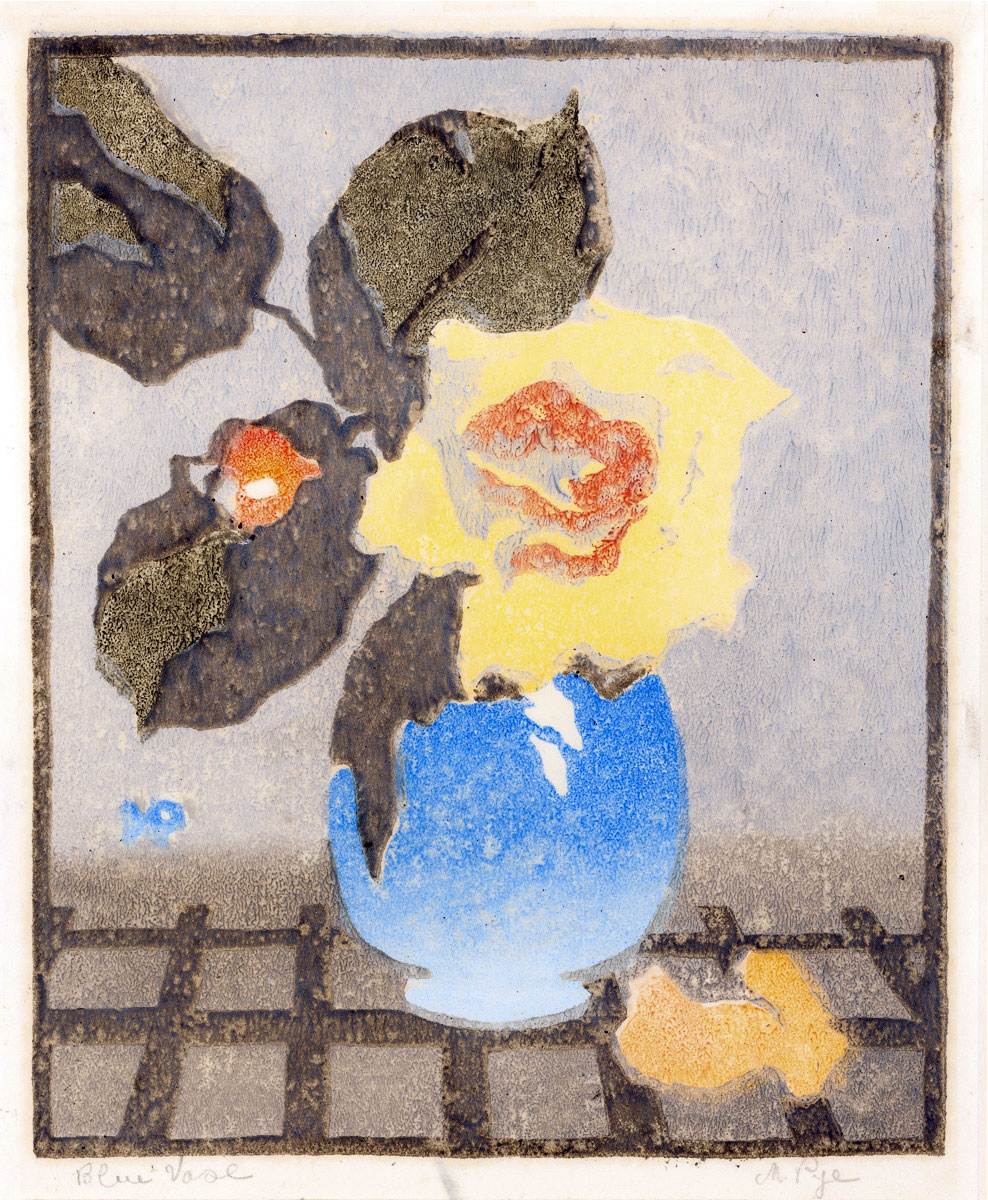
Women artists tackled a wide variety of subjects, including those more accepted in the male domain, and which modern women now inhabited. Rix Nicholas ventured out to capture Australians in remote rural areas as seen in the well-known Fair Musterer (1935, QAG) and as in Boy on a Horse. Nora Heysen was the first woman awarded the Archibald Prize4 and appointed as an official war artist in 1943, as was Sybil Craig in 1945. Printmaking was also a key to the rise of modernism, most effectively by Dorrit Black as seen in The Parish Hall and also by Mabel Pye and Lisette Kohlhagen. Greater commercial and domestic design opportunities were a further important influence, including murals as undertaken by Haxton5 and the frieze-like Country Morning by Moxham.

There is an ever-growing understanding and appreciation of women artists and their influence in shaping Australian art, from ‘lost’ moderns6 to the household names such as Preston and Cossington Smith.

Text from the catalogue to the exhibition

Footnotes

1/ For example, the massive impact of the First World War allowed a shift away from the role of women simply as wife and mother and the economic affluence post-war, prior to the Depression, facilitated the ability to travel and contributed to opportunities for commercial art; the growth of art schools; the rise of domestic decoration.

2/ For example, Black studied in London with Claude Flight 1927 and with Andre Lhote and Albert Gleizes 1927-1929 in Paris; Proctor studied in London with George Lambert in 1903; Sauerbier studied at the Central School of Art in London 1925-1927; Cossington Smith attended the Winchester School of Art in 1912; Crowley studied in Paris 1926-1929; Davidson attended the Academie de la Chaumiere in Paris as did Syme and Rix Nicholas, among other studies in Paris and London; Heysen travelled to England, Paris and Italy; Carrick Fox travelled extensively throughout her life including London, Paris, Spain, Italy, Northern Africa, Australia, Tahiti; Preston travelled to Europe and her work was hung in the Old Salon in 1905.

3/ Davidson was appointed Chevalier de la Legion d’Honneur for Art and Humanity by the French Government in 1931.

4/ Portrait of Madame Elink Schuurman, 1938.

5/ Elaine Haxton was awarded the Sulman Prize (AGNSW) in 1943 for her mural designs.

6/ See Dessmann, J. and Edwards, D., ‘The lost moderns: Tempe Manning, Niel A Gren and Norah Simpson’, Sydney Moderns: Art for a New World, Art Gallery of NSW, 2013.


Sybil Craig (Australian, 1901-1989) '[HMVS Cerberus, Half Moon Bay, Melbourne]' Nd


Sybil Craig (Australian, 1901-1989)
HMVS Cerberus, Half Moon Bay, Melbourne
c. 1927-1928
Oil on paper
44.8 x 49.3cm


HMVS Cerberus (Her Majesty’s Victorian Ship) is a breastwork monitor that served in the Victoria Naval Forces, the Commonwealth Naval Forces (CNF), and the Royal Australian Navy (RAN) between 1871 and 1924. Built for the colony of Victoria under the supervision of Charles Pasley, Cerberus was completed in 1870, and arrived in Port Phillip in 1871, where she spent the rest of her career. In 1924, the monitor was sold for scrap, and was sunk as a breakwater off Half Moon Bay. The wreck became a popular site for scuba diving and picnics over the years, but there was a structural collapse in 1993. Cerberus was sold to the Melbourne Salvage Company for £409 on 23 April 1924, with the buyer to break her up for scrap. The warship was towed from Corio Bay to Williamstown Naval Dockyard on 14 May for disassembly. After the salvage company removed what they could, she was then sold on to the Sandringham council for £150. The monitor was scuttled on 26 September 1926 at Half Moon Bay to serve as a breakwater for the Black Rock Yacht Club.

Sybil Craig studied privately with John Shirlow before attending art school at the National Gallery of Victoria (1924-1931) with Bernard Hall, William McInnes and Charles Wheeler. She also took private classes with George Bell and held her first solo exhibition in 1932 and as well as painting (in oils, watercolours and pastels) she also undertook more graphic work, including prints.

Craig was a founding member of the New Melbourne Art Club and was appointed an official war artist in 1945 (the third woman to be appointed after Nora Heysen and Stella Bowen) and depicted women workers at the munitions factory at Maribyrnong. Her paintings are particularly characterised by her use of colour and strong design. She is represented in key texts covering modern women artists.


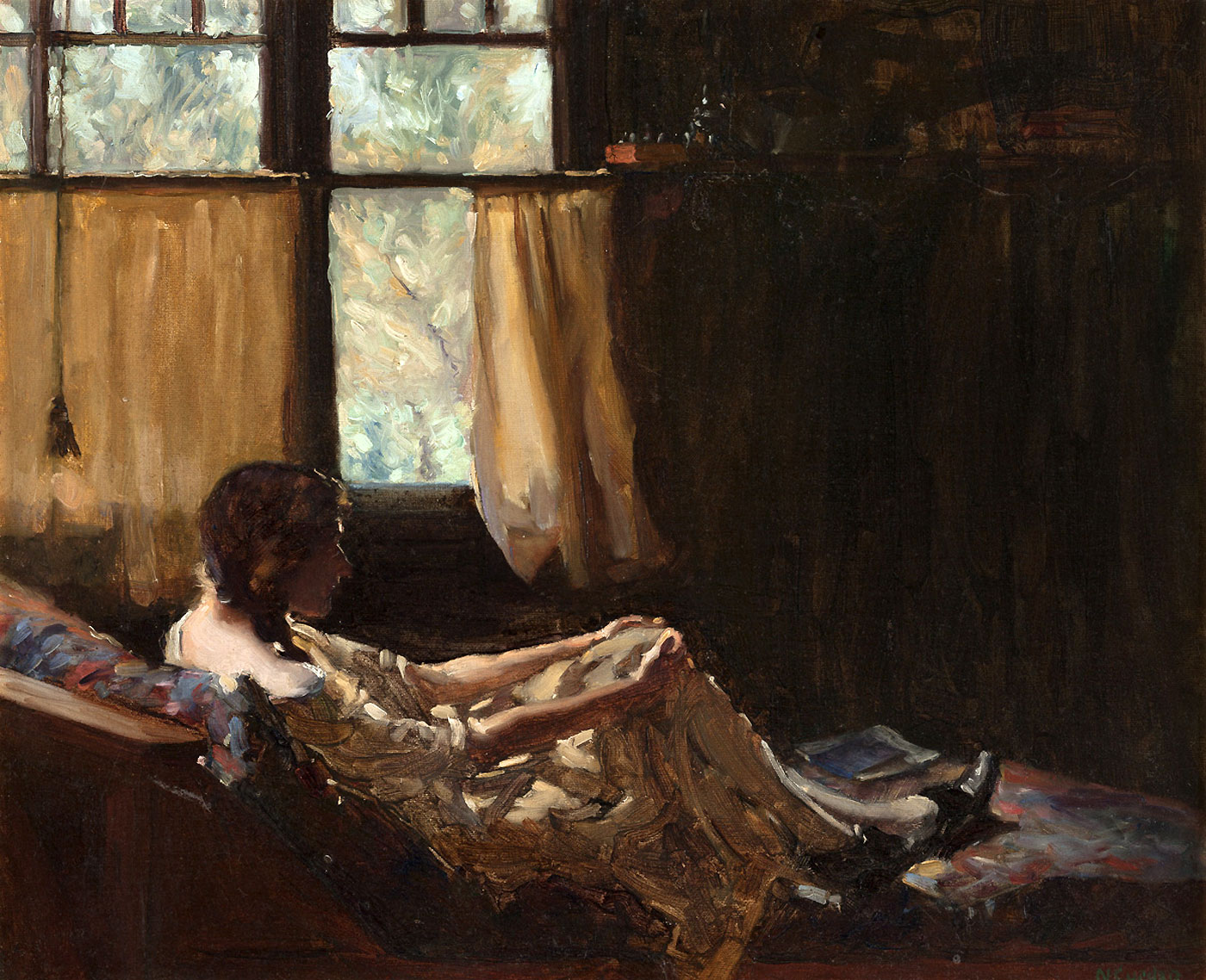
Nora Gurdon (Australian, c. 1881-1974) 'Under the Window' 1922


Nora Gurdon (Australian, c. 1881-1974)
Under the Window
1922
Oil on canvas
44.5 x 54.5cm


Nora Gurdon is well known for her late impressionist landscapes and is also associated with the Heidelberg School with Streeton a frequent guest at her country property. In 1914 Gurdon went to England and during the war nursed for two years at the Le Croisic, France. Streeton was also in Europe working as an official war artist often painting hospital scenes. In 1920 Gurdon returned to Australia and from that time added scenes from domestic life to her painting oeuvre (Peers p. 149). However she remained independent, did not marry, and made further trips to Europe in 1927 and 1937.

She was a member of the Australian Art Association and the Melbourne Society of Women Painters and Sculptors, (MESWAPS) joining as early as 1923. From her country property, Gurdon welcomed many fellow painters. For the members of the MESWAPS ‘successful outdoor painting days were held at the studio of Nora Gurdon in Mount Dandenong’.


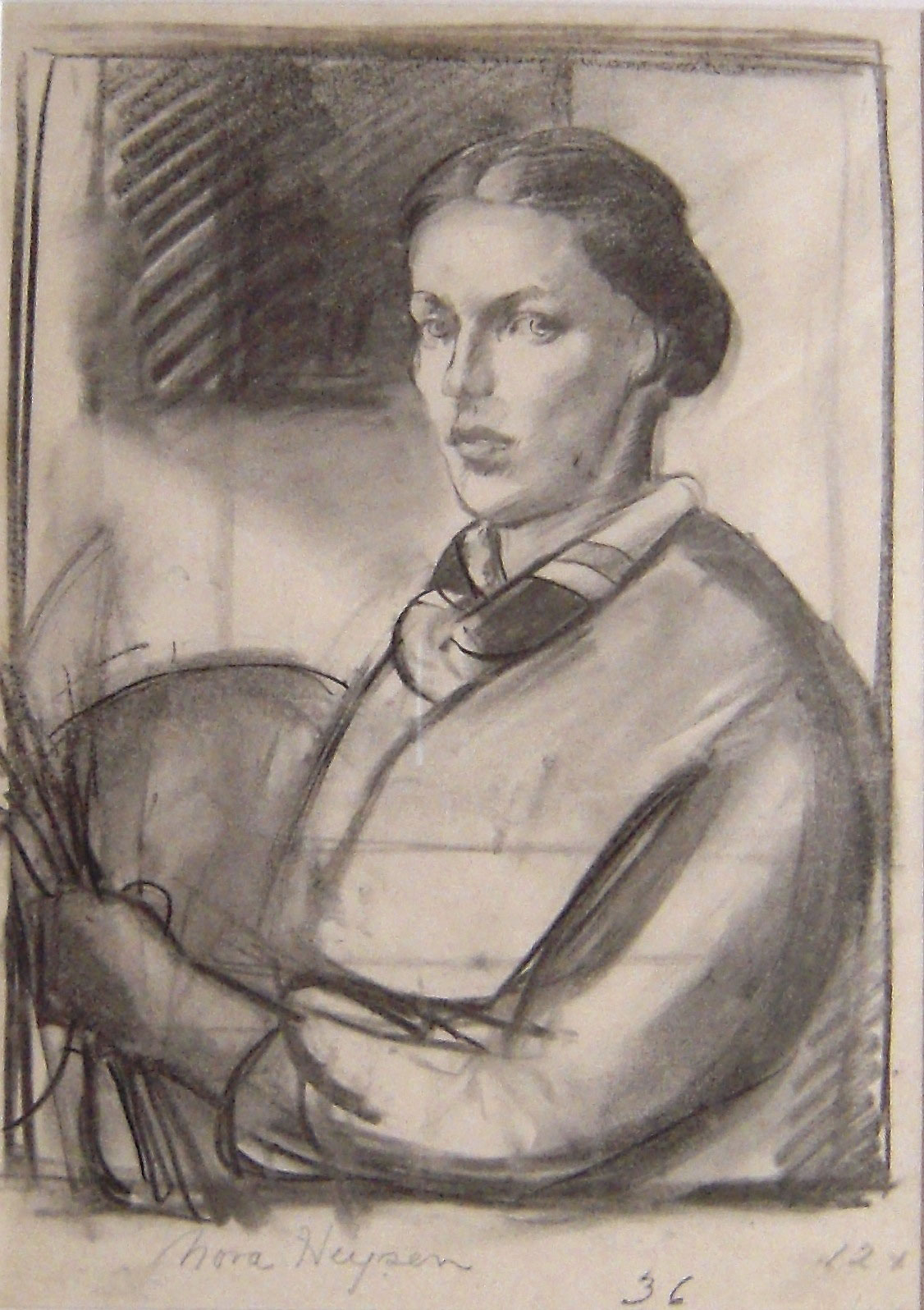
Nora Heysen (Australian, 1911-2003) '(Self Portrait)' 1936


Nora Heysen (Australian, 1911-2003)
Self Portrait
1936
Charcoal on paper
35 x 25cm


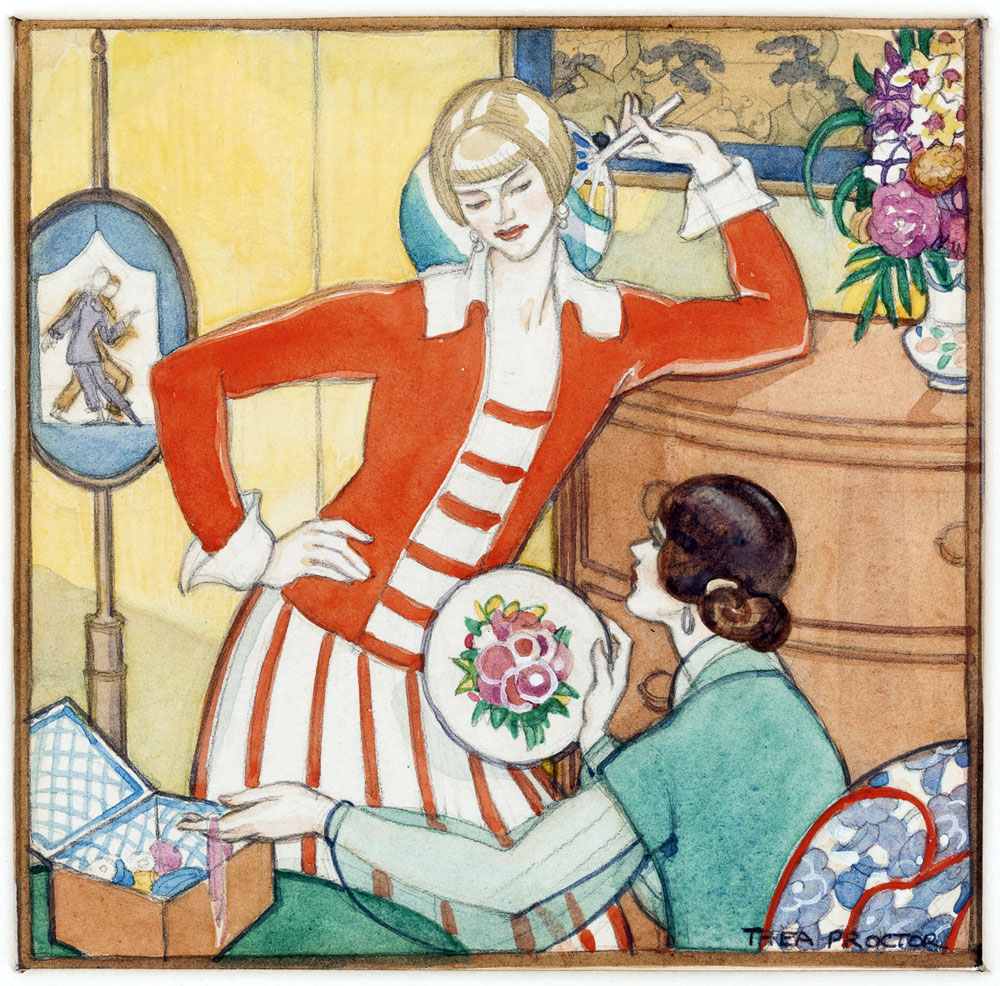
Thea Proctor (Australian, 1879-1966) 'The Sewing Basket' c. 1926


Thea Proctor (Australian, 1879-1966)
The Sewing Basket
c. 1926
Watercolour
13.5 x 14cm


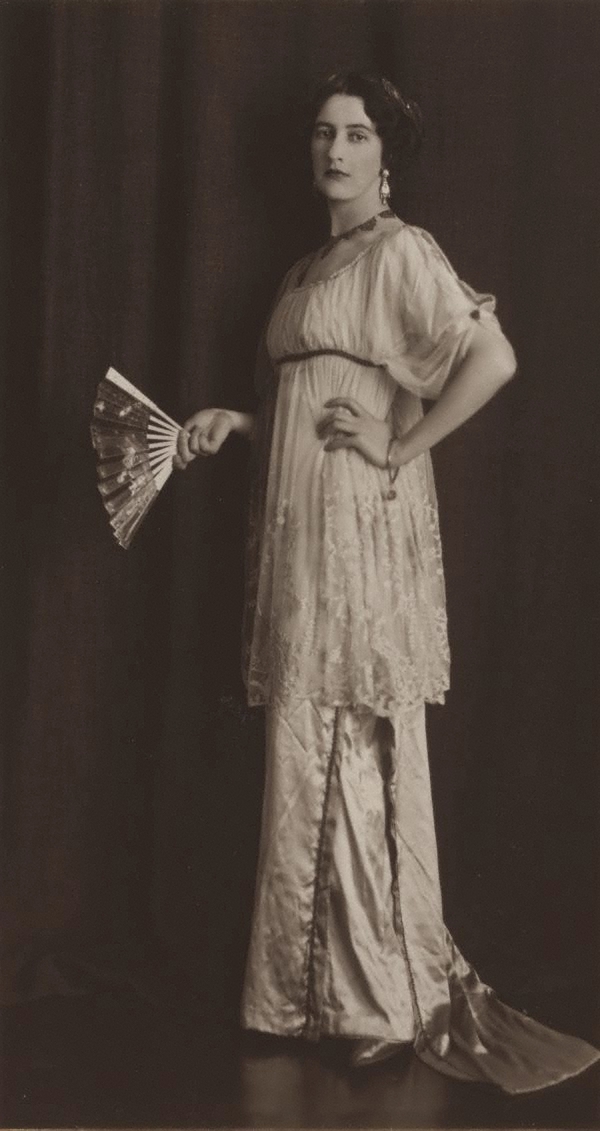
May Moore (New Zealand, Australia 1881-1931) Mina Moore (New Zealand, Australia 1882-1957) 'Thea Proctor' 1912


May Moore (New Zealand, Australia 1881-1931)
Mina Moore (New Zealand, Australia 1882-1957)
Thea Proctor
1912
Gelatin silver photograph, brown tone
18.5 x 10.0cm


“… the portrait of Thea Proctor is brown-toned, although the minimal studio background and the very direct gaze of the subject signals change. Jack Cato wrote of May and Mina that: ‘these enterprising young women were unable to afford the great studio premises filled with light from glass roofs and glass walls that were then the order of the day. By necessity they devised a method of portraiture by using the meagre light from an ordinary window in an ordinary room. It made their work so distinctive.’1 Despite the strong chiaroscuro, Proctor’s face is clear and her gaze direct. Her very upright pose, with her hand on her hip and no props to lean against, is that of a modern woman. Proctor’s dress was made by herself for the going-away party of her relative John Peter Russell in 1912. Other photographs from this shoot were published in The Lone Hand in July 1913 where it was noted that ‘she is singularly free from feminine tremors concerning her own work’.”2

1/ Cato J. (1955), The story of the camera in Australia, Georgian House, Melbourne p. 136
2/ Engledow, S. (2005), ‘The world of Thea Proctor’, The world of Thea Proctor, S. Engledow, A. Sayers and B. Humphries, National Portrait Gallery, Canberra p. 37

© Art Gallery of New South Wales Photography Collection Handbook, 2007


Mabel Pye (Australian, 1894-1982) 'Blue Vase' c. 1936


Mabel Pye (Australian, 1894-1982)
Blue Vase
c. 1936
Coloured linocut
22.7 x 18.7cm


Mabel Pye was a printmaker and painter from Melbourne who studied with Adelaide Perry and Napier Waller under Bernard Hall at the National Gallery School. Mabel introduced the use of linocuts into her work in the early 1930’s with bold colors and lines. Her work encompassed the use of the everyday including landscapes, portraits and still life. Mabel was a member of both the Victorian Art Society from 1918-1941 and also the Melbourne Society of Women Painters and Sculptures from 1920-1950.


Ethel Carrick Fox (1872-1952)


Ethel Carrick Fox (Australian, 1872-1952)


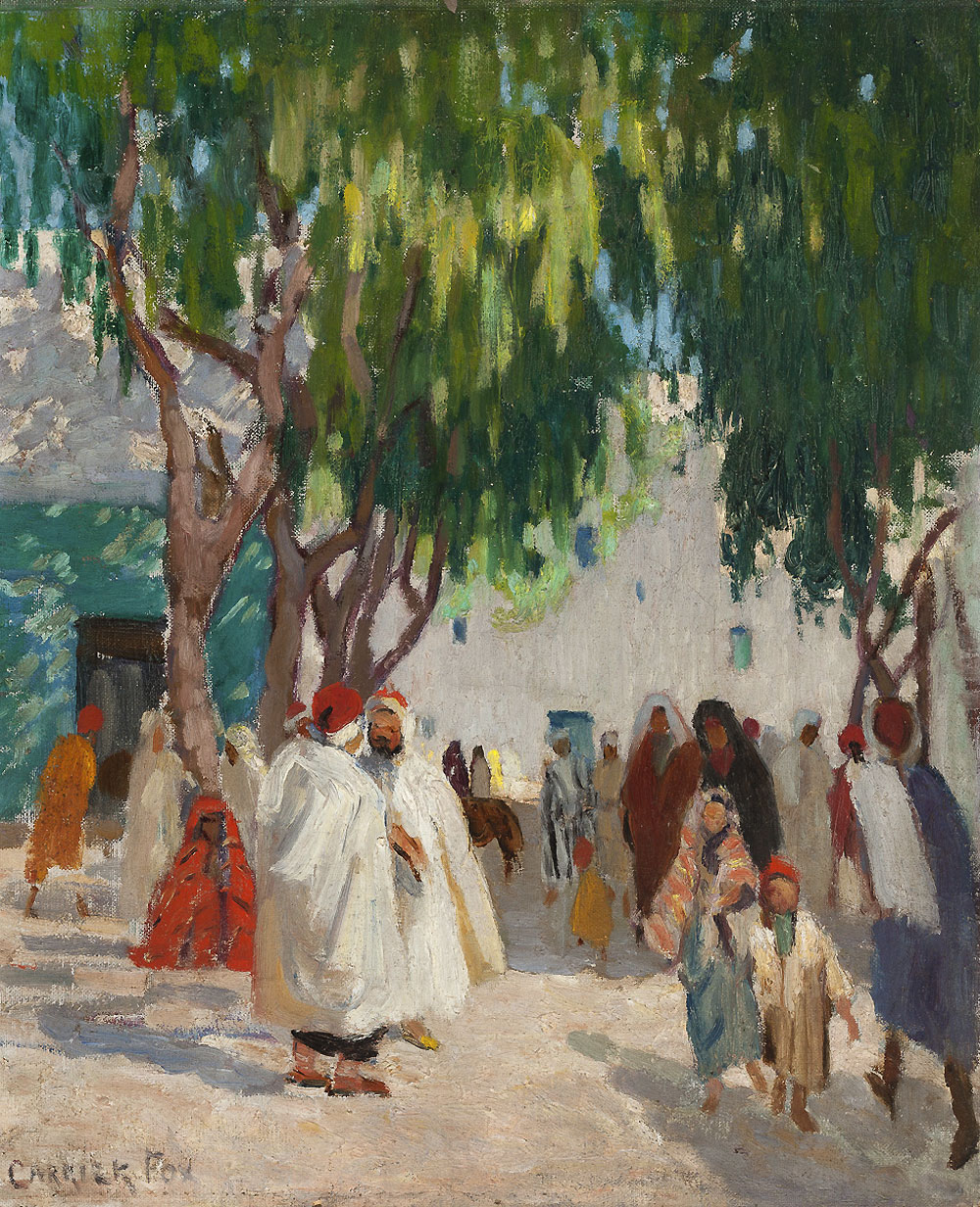
Ethel Carrick Fox (Australian, 1872-1952) (Arabs Walking Down a Street) Nd


Ethel Carrick Fox (Australian, 1872-1952)
Arabs Walking Down a Street
Nd
Oil on canvas
45.7 x 37.9cm


Ethel Carrick Fox (Australian, 1872-1952)

Ethel Carrick Fox (1872-1951) was the wife of painter Emanuel Phillips Fox and a major artist in her own right. Carrick studied at the Slade School. She married E. Phillips Fox in 1905 and moved to Paris. She exhibited at the Salon D’Automne, Royal Academy London, Australian Art Association, Melbourne Society of Women Painters and Sculptors, as well as at solo exhibitions and dual shows with her husband’s work.

She travelled extensively from 1920-1940, and lobbied Australian public gallery directors and curators to buy her husband’s works. During the 1920s she was recommended by the Atelier Grande Chaumiere as a private teacher of still life painting in Paris, and included a number of Australians and Americans in Paris amongst her students. Carrick died in Melbourne in 1951.

Text from the Wikipedia website


Lauraine Diggins Fine Art
Boonwurrung Country
5 Malakoff Street
North Caulfield
Melbourne, Victoria, Australia, 3161
Phone: (61 3) 9509 9855

Opening hours:
Tuesday – Friday 10am – 6pm

Lauraine Diggins Fine Art website

LIKE ART BLART ON FACEBOOK

Back to top