Exhibition: ‘Nineteenth-Century Photography Now’ at the J. Paul Getty Museum, Los Angeles

Exhibition dates: 9th April – 7th July, 2024

Curators: the exhibition is curated by Karen Hellman, former associate curator in the Department of Photographs. Carolyn Peter, assistant curator in the Department of Photographs, Getty Museum, served as organising curator with assistance from Claire L’Heureux, former Department of Photographs graduate intern and Antares Wells, curatorial assistant


At left, Julia Margaret Cameron (British born India, 1815-1879) 'Florence after the Manner of the Old Masters' 1872; and at right, Carrie Mae Weems (American, b. 1953) 'After Manet' 2003


At left, Julia Margaret Cameron (British born India, 1815-1879) Florence after the Manner of the Old Masters 1872; and at right, Carrie Mae Weems (American, b. 1953) After Manet 2003

from the ‘Identity’ section of the exhibition


Magdalene Keaney, curator of the exhibition Francesca Woodman and Julia Margaret Cameron: Portraits to Dream In, observes that the exhibition “poses questions about how we might think in new ways about relationships between 19th and 20th century photographic practice…”

As does this exhibition:

~ Everything emerges from something. One must be “mindful of the origins and essence of photography.” (Moriyama)

~ History often repeats itself in different forms.

~ Memory often returns in fragmentary form.

~ The wisdom and spirit of the past speaks to the practitioners of the future.

Dr Marcus Bunyan


NB: Transubstantiation, an un/explainable change in form, substance, or appearance (from the Latin roots trans, “across or beyond,” and substania, “substance”)


Many thankx to the J. Paul Getty Museum for allowing me to publish the photographs in the website. Please click on the photographs  for a larger version of the image.


The earliest photographs – often associated with small, faded, sepia-toned images – may seem to belong to a bygone era, but many of the conventions established during photography’s earliest years persist today. Organised around five themes dating back to the medium’s beginnings, this exhibition explores nineteenth-century photographs through the work of twenty-one contemporary artists. These interchanges between the first decades of the medium and the most recent invite us to reimagine nineteenth-century photography while exploring its complexities.

Text from the J. Paul Getty Museum website


“Ms. Hellman, a former associate curator, inspired by her work with the Bayard materials, conceived “Nineteenth-Century Photography Now” as a way to access the influence that early photographers still have. The exhibition includes work from the past by 23 named and three anonymous photographers plus an additional 16 included in an album; there are 21 present-day artists. It is organised around five themes: Identity, Time, Spirit, Landscape and Circulation. The picture that serves as an introduction to the show is “Untitled ‘point de vue'” (1827) by Joseph Nicéphore Niépce, a faded heliograph on pewter, that Daido Moriyama keeps a reproduction in his studio; the wall text quotes him saying, “it serves as a gentle daily reminder to be mindful of the origins and essence of photography.” There are two photographs by Mr. Moriyama prompted by Niépce’s bit of primitive technology.”


William Meyers. “Photography’s Past and Present at the Getty Center,” on The Wall Street Journal website May 29, 2024 [Online] Cited 16/06/2024


Julia Margaret Cameron (British born India, 1815-1879) 'Florence after the Manner of the Old Masters' 1872


Julia Margaret Cameron (British born India, 1815-1879)
Florence after the Manner of the Old Masters
1872
Albumen silver print
Image: 34 × 25.6cm (13 3/8 × 10 1/16 in.)
Mount: 43.3 × 32.4cm (17 1/16 × 12 3/4 in.)
The J. Paul Getty Museum, Los Angeles


Portrait of Florence Fisher posing with a rose stem with the leaves attached. She holds the rose in place with one arm folded across her chest.
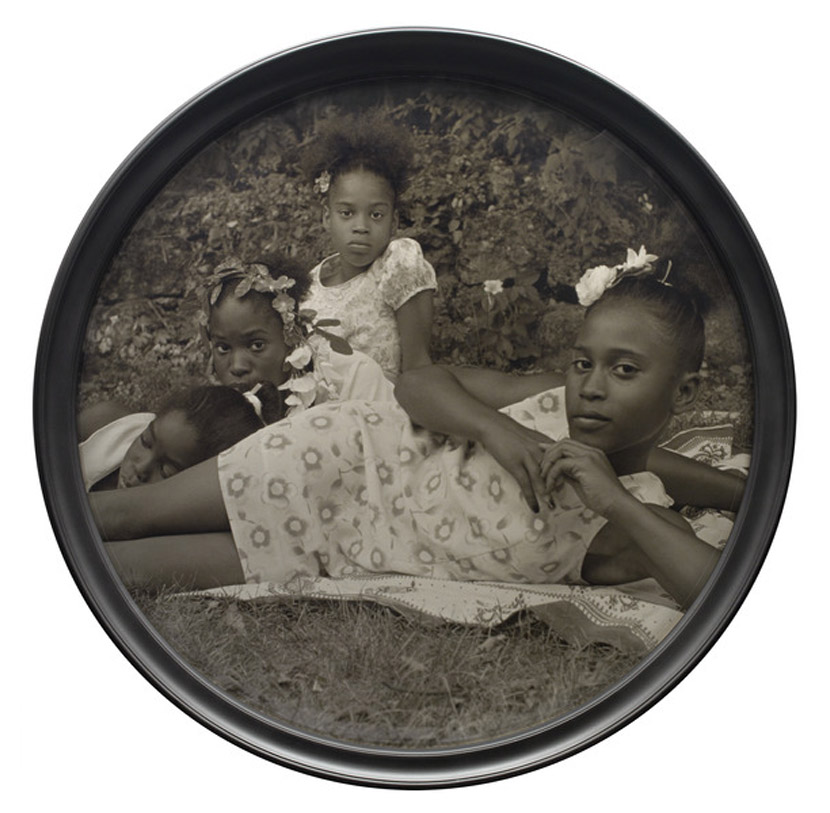
 

Carrie Mae Weems (American, b. 1953) 'After Manet' 2003


Carrie Mae Weems (American, b. 1953)
After Manet
2003
From the series May Days Long Forgotten
Chromogenic print
Object: 84.3cm (33 3/16 in.)
The J. Paul Getty Museum, Los Angeles
© Carrie Mae Weems


The black and white photograph – one from the nine-part series May Days Long Forgotten – depicts four African American girls in summer dresses, with garlands in their hair, reclining on a lawn. The piece is mounted in a circular frame prepared by the artist, and is number five of an edition of eight.


Joseph Nicéphore Niépce (French, 1765-1833) 'Untitled 'point de vue'' 1827


Joseph Nicéphore Niépce (French, 1765-1833)
Untitled ‘point de vue’
1827
Heliograph on pewter
16.7 x 20.3 x .15cm


The invention of photography was announced simultaneously in France and England in 1839, dazzling the public and sending waves of excitement around the world. These astonishing breakthroughs depended upon centuries of developments in chemistry, optics, and the visual arts, accelerating in the decades after 1790. The Niépce Heliograph was made in 1827, during this period of fervent experimentation. It is the earliest photograph produced with the aid of the camera obscura known to survive today.

Text from the Harry Ransom Center website
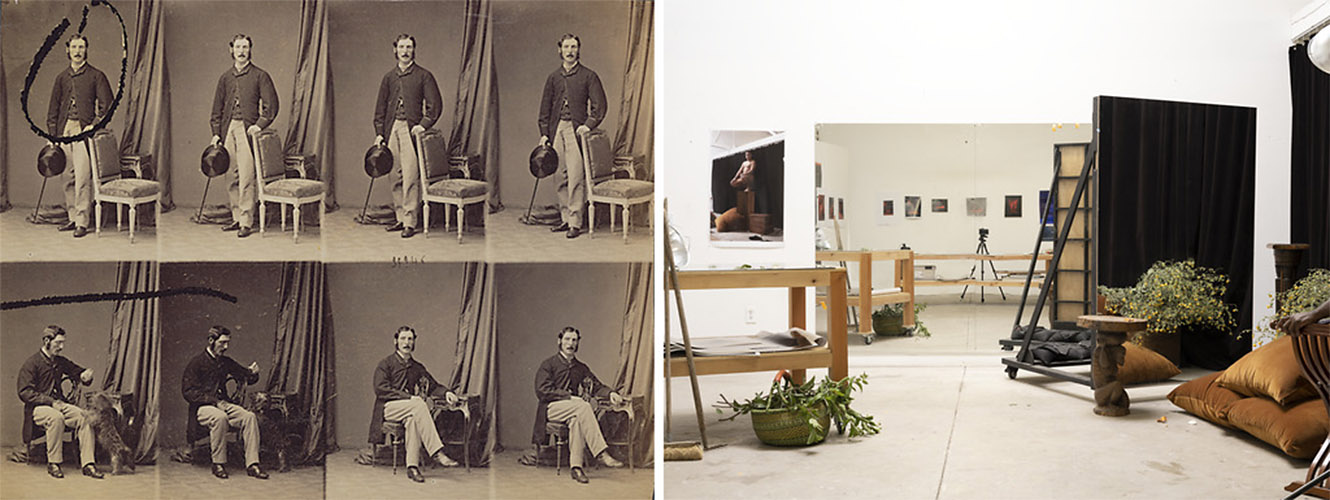
 

At left, André Adolphe-Eugène Disdéri (French, 1819-1889) 'Uncut Sheet of Cartes-de-Visite Portraits', 1860s; and at right, Paul Mpagi Sepuya (American, b. 1982) 'Daylight Studio with Garden Cuttings (_DSF0340)' 2022


At left, André Adolphe-Eugène Disdéri (French, 1819-1889) Uncut Sheet of Cartes-de-Visite Portraits, 1860s; and at right, Paul Mpagi Sepuya (American, b. 1982) Daylight Studio with Garden Cuttings (_DSF0340) 2022


William Henry Fox Talbot (English, 1800-1877) '[A Stem of Delicate Leaves of an Umbrellifer]' probably 1843-1846


William Henry Fox Talbot (English, 1800-1877)
[A Stem of Delicate Leaves of an Umbrellifer]
probably 1843-1846
Photogenic drawing negative
Image: 18.1 × 22.1cm (7 1/8 × 8 11/16 in.)
The J. Paul Getty Museum, Los Angeles


The exceptional boldness of this image conveys a visual impression that at first may seem quite unlike other of William Henry Fox Talbot’s pictures. He made it with the same photogenic drawing process he used for much of his work by placing the stem of leaves directly on top of the prepared paper and then exposing to sunlight without the aid of a camera. Although the original plant was delicate, its sharply delineated white shadow on the rich dark brown background creates a graphic, two-tone effect. The same specimen was used in a slightly different orientation to make a negative that is preserved in one of the family albums formerly at the Fox Talbot Museum in Lacock and now at the British Library, London.

Other visually similar works in Talbot’s oeuvre help us to understand what we are seeing here. Some of them show the interior structure of the plant specimens he photographed, proving that the negatives at first had fuller details. Because the most vulnerable sections of the silver-based images are those that are light in tone, these areas will fade disproportionately faster than the darker parts. In this case, the lightest tones would have been in the interior spaces of the plant, and these at some point faded. It is unlikely that Talbot saw the same picture we see today, at least not when he first made it, but the boldness of the present state reminds us that changes over time can create as well as destroy.

Adapted from Larry Schaaf. William Henry Fox Talbot, In Focus: Photographs from the J. Paul Getty Museum (Los Angeles: Getty Publications, 2002), 68. © 2002 J. Paul Getty Trust


Hiroshi Sugimoto (Japanese, b. 1948) 'A Stem of Delicate Leaves of an Umbrellifer, circa 1843-1846' 2009


Hiroshi Sugimoto (Japanese, b. 1948)
A Stem of Delicate Leaves of an Umbrellifer, circa 1843-1846
2009
Toned gelatin silver print
Image: 93.7 × 74.9cm (36 7/8 × 29 1/2 in.)
The J. Paul Getty Museum, Los Angeles
Gift of the artist
© Hiroshi Sugimoto


“To look at Fox Talbot’s earliest experiments, the blurred and hazy images suffuse the excited anticipation of discovering how light could transfer the shape of things onto paper. … I decided to collect Fox Talbot’s earliest negatives, from a time in photographic history very likely before positive images existed, and print the photographs that not even he saw.”

~ Hiroshi Sugimoto (p. 349, in Hiroshi Sugimoto, Ostfildern-Ruit, 2005)


Hiroshi Sugimoto visited the Getty Museum in 2007 to study the earliest photographs in the collection. After photographing some of William Henry Fox Talbot’s photogenic drawing negatives, he produced large-scale prints and coloured them with toning agents to replicate the hues of the paper negatives. The scale of the enlarged prints reveals the fibers of the original paper, which create delicate patterns embedded in the images.


At left, Herbert Bell et al, '[Amateur World Tour Album, taken with early Kodak cameras, plus purchased travel photographs by various photographers]' (2 page spread); and at right, Stephanie Syjuco (American born Philippines, b. 1974) 'Herbaria' 2021 (detail)


At left, Herbert Bell et al, [Amateur World Tour Album, taken with early Kodak cameras, plus purchased travel photographs by various photographers] (2 page spread); and at right, Stephanie Syjuco (American born Philippines, b. 1974)
Herbaria 2021 (detail)


Herbert Bell (English, 1856-1946) Frederick Nutt Broderick (English, about 1854-1913) Gustave Hermans (Belgian, 1856-1934) Anthony Horner (English, 1853-1923) Michael Horner (English, 1843-1869) C. W. J. Johnson (American, 1833-1903) Léon & Lévy (French, active 1864-1913 or 1920) Léopold Louis Mercier (French, b. 1866) Neurdein Frères (French, founded 1860s, dissolved 1918) Louis Parnard (French, 1840-1893) Alfred Pettitt (English, 1820-1880) Francis Godolphin Osborne Stuart (British born Scotland, 1843-1923) Unknown maker Valentine & Sons (Scottish, founded 1851, dissolved 1910) L. P. Vallée (Canadian, 1837-1905) York and Son J. Kühn (French, active Paris, France 1885 - early 20th century) '[Amateur World Tour Album, taken with early Kodak cameras, plus purchased travel photographs by various photographers]' (2 page spread)


Herbert Bell (English, 1856-1946)
Frederick Nutt Broderick (English, about 1854-1913)
Gustave Hermans (Belgian, 1856-1934)
Anthony Horner (English, 1853-1923)
Michael Horner (English, 1843-1869)
C. W. J. Johnson (American, 1833-1903)
Léon & Lévy (French, active 1864-1913 or 1920)
Léopold Louis Mercier (French, b. 1866)
Neurdein Frères (French, founded 1860s, dissolved 1918)
Louis Parnard (French, 1840-1893)
Alfred Pettitt (English, 1820-1880)
Francis Godolphin Osborne Stuart (British born Scotland, 1843-1923)
Unknown maker
Valentine & Sons (Scottish, founded 1851, dissolved 1910)
L. P. Vallée (Canadian, 1837-1905)
York and Son
J. Kühn (French, active Paris, France 1885 – early 20th century)
[Amateur World Tour Album, taken with early Kodak cameras, plus purchased travel photographs by various photographers] (2 page spread)
Albumen silver print
Closed: 35.4 × 28 × 3.5cm (13 15/16 × 11 × 1 3/8 in.)
The J. Paul Getty Museum, Los Angeles
Google Arts & Culture website


Includes amateur photographs taken with early Kodak cameras, including the original Kodak or Kodak no. 1, and Kodak no. 2 cameras, as well as commercially produced images.


Stephanie Syjuco (American born Philippines, b. 1974) 'Herbaria' 2021 (detail)


Stephanie Syjuco (American born Philippines, b. 1974)
Herbaria (detail)
2021
From the series Pileups
Hand-assembled pigmented inkjet prints on Hahnemühle Baryta
Framed [Outer Dim]: 121.9 × 91.4cm (48 × 36 in.)
The J. Paul Getty Museum, Los Angeles
© Stephanie Syjuco


A collage composed of diverse naturalist archival sources, including photographs of bones, foliage, and crystal formations.


At left, Paul-Marie-Léon Regnard (French, 1850-1927) 'Passionate Ecstatic Position/Expression' 1878; and at right, Laura Larson (American, b. 1965) 'The Mind Is a Muscle' 2019


At left, Paul-Marie-Léon Regnard (French, 1850-1927) Passionate Ecstatic Position/Expression 1878; and at right, Laura Larson (American, b. 1965)
The Mind Is a Muscle 2019
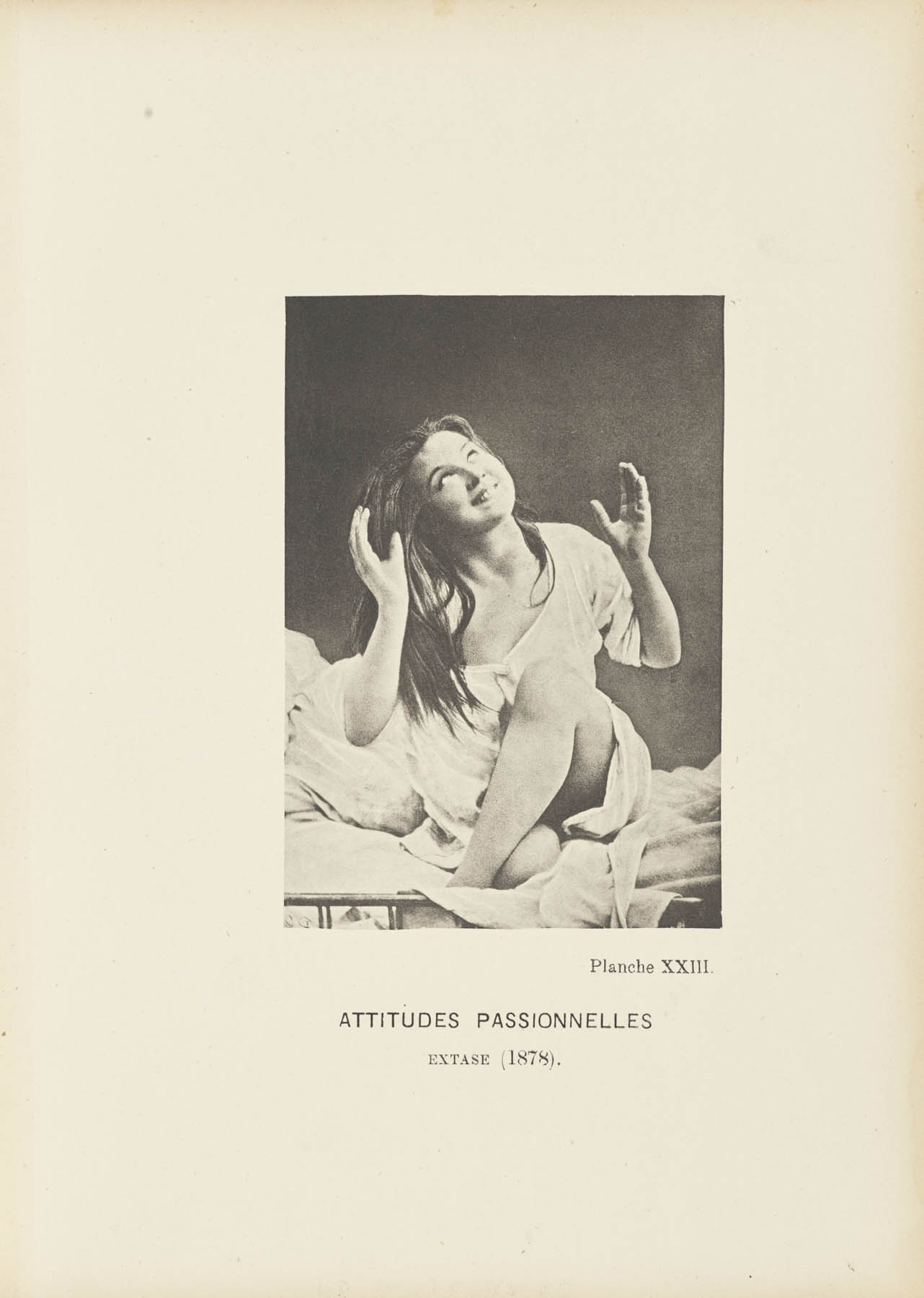
 

Paul-Marie-Léon Regnard (French, 1850-1927) 'Passionate Ecstatic Position/Expression' 1878 Part of 'Iconographie Photographique de la Salpetriere' (Service de M. Charcot)


Paul-Marie-Léon Regnard (French, 1850-1927)
Passionate Ecstatic Position/Expression
1878
Part of Iconographie Photographique de la Salpetriere (Service de M. Charcot)
Photogravure
Image: 10.3 × 7.1cm (4 1/16 × 2 13/16 in.)
The J. Paul Getty Museum, Los Angeles


Laura Larson (American, b. 1965) 'The Mind Is a Muscle' 2019


Laura Larson (American, b. 1965)
The Mind Is a Muscle
2019
from the series City of Incurable Women
Inkjet print
The J. Paul Getty Museum, Los Angeles
Courtesy of and © Laura Larson


At first glance, photographs made in the 19th century may seem like faded relics of an increasingly distant and forgotten age, yet they persist in inspiring, challenging, and resonating with artists today.

Nineteenth-Century Photography Now, on view April 9 through July 7, 2024 at the Getty Center, offers new perspectives on early photography by looking through the lens of contemporary artists who respond directly to their historical themes and subject matter.

“This exhibition provides an opportunity to connect visitors with some of the earliest photographs in the Museum’s collection, now almost two centuries old, via the responses of contemporary makers,” says Timothy Potts, Maria Hummer-Tuttle and Robert Tuttle Director of the J. Paul Getty Museum. “The revelatory ability of early photography to capture images of the world around us still resonates with practitioners today, and bridges between past and present photography are as active and relevant as they have ever been.”

Organised around five themes, dating back to the medium’s beginnings, Identity, Time, Spirit, Landscape, and Circulation, this exhibition explores 19th-century photographs through the work of 21 contemporary artists. Reflecting the inventiveness of early practitioners as well as the more disturbing historical aspects of their era, these interchanges between the first decades of the medium and the most recent invite us to reimagine 19th century photography while exploring its complexities.

In their work, artists Daido Moriyama, Hanako Murakami, and Carrie Mae Weems look back to the invention of photography to convey a sense of how this revolutionary discovery changed people’s perceptions.

As is still the case today, the most popular subjects for the camera in the 19th century were people. In the galleries focused on Identity, Paul Mpagi Sepuya and Myra Greene respond to the complex history of photographic portraiture while Laura Larson, Stephanie Solinas, and Fiona Tan investigate the pseudosciences of the 19th century and how they reinforced stereotypes and identification systems that impact us today.

Photography and Time have been inextricably linked ever since early inventors struggled to permanently fix a fleeting moment on a sheet of paper. This section includes work by Lisa Oppenheim and Liz Deschenes exploring 19th-century photographers’ technical innovations and the ways in which the medium affects our perception of time.

The genre of Spirit photography emerged from the Victorian obsession with death in Europe and North America. Photographers exploited the ability to manipulate photographic images, employing multiple exposures and staged photography to create otherworldly scenes or to summon loved ones back from the dead. In this section, Khadija Saye and Lieko Shiga respond to the possibilities that spirit photography offers in rendering the unseen.

19th-century photographers went to great lengths to make images of remote Landscapes. Government-sponsored surveys and expeditionary programs employed the camera to justify the expansion and to record the resulting military conflicts. Mark Ruwedel, Michelle Stuart, and An-My Lê re-envision some of these same historical landscapes and offer up new ones that bring the past closer to our present.

By the middle of the 19th century, thousands of photographs were in Circulation worldwide, the result of photographers’ ability to reproduce the same image multiple times. Pictures of historical events, tourist destinations, and anthropological expeditions made the world seem more accessible, but with time and distance, they became disconnected from their original contexts. In this section, early photographs appear next to projects that make these historical absences present. Wendy Red Star, Stephanie Syjuco, Ken Gonzales-Day, and Andrea Chung recover what has been lost, calling out the residual effects of the 19th-century photograph on our present knowledge of global cultures and histories.

“Through the works of these visionary contemporary artists, 19th-century photography is not faded and dead but very much alive, an active material that enables us to rethink the medium and our relationship to it,” says Karen Hellman, curator of the exhibition.

Nineteenth-Century Photography Now is curated by Karen Hellman, former associate curator in the Department of Photographs. Carolyn Peter, assistant curator in the Department of Photographs, Getty Museum, served as organising curator with assistance from Claire L’Heureux, former Department of Photographs graduate intern and Antares Wells, curatorial assistant.

Related programming includes Who or What is Missing in Nineteenth-Century Photography?, a discussion featuring artists Laura Larson, Wendy Red Star, and Paul Mpagi Sepuya in a conversation about their artistic practices and how they are engaging with, and critiquing photography from the 19th century, and Art Break: The Precarious Nature of Photography, Society, and Life, June 6, 12pm. Artist Phil Chang talks with curator Carolyn Peter about his series “Unfixed” on view in Nineteenth-Century Photography Now and how an economic crisis and a pandemic inspired him to create photographs that will intentionally fade away to express the fragility of societal systems and life.

Press release from the J. Paul Getty Museum website


Introduction


At left, Maker unknown. 'Kuroda Yasaburo, 50 Years Old' January 6, 1882; and at right, Myra Greene (American, b. 1975) 'Undertone #10' 2017-2018


At left, Maker unknown Kuroda Yasaburo, 50 Years Old January 6, 1882; and at right, Myra Greene (American, b. 1975) Undertone #10 2017-2018


Introduction

The earliest photographs – often associated with small, faded, sepia-toned images – may seem to belong to a bygone era, but many of the conventions established during photography’s earliest years persist today. Organised around five themes dating back to the medium’s beginnings, this exhibition explores nineteenth-century photographs through the work of twenty-one contemporary artists. Reflecting the inventiveness of early practitioners as well as the more disturbing historical aspects of their era, these interchanges between the first decades of the medium and the most recent invite us to reimagine nineteenth-century photography while exploring its complexities.
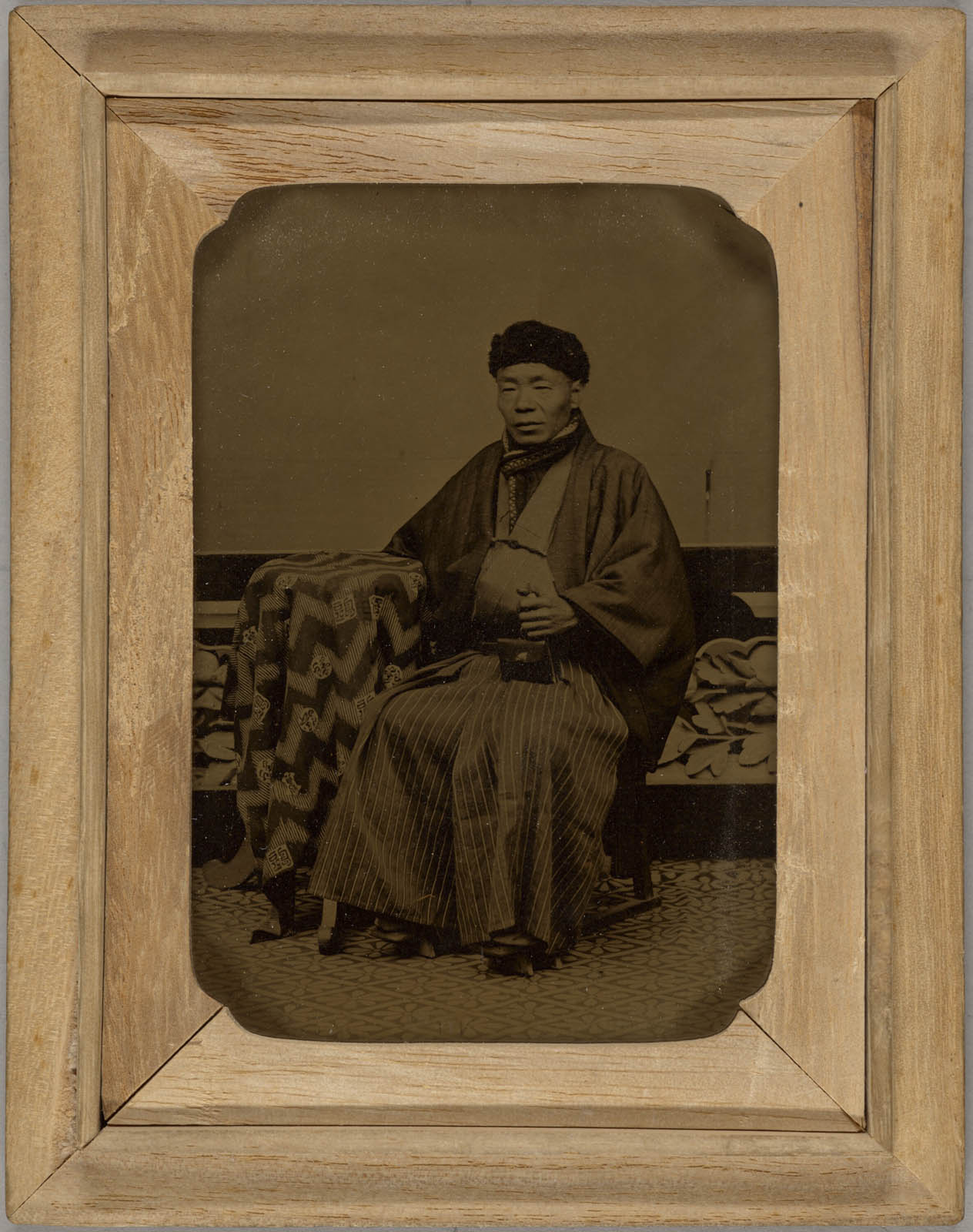
 

Maker unknown. 'Kuroda Yasaburo, 50 Years Old' January 6, 1882


Maker unknown
Kuroda Yasaburo, 50 Years Old
January 6, 1882
Ambrotype
Closed: 11.5 × 9 × 1cm (4 1/2 × 3 9/16 × 3/8 in.)
The J. Paul Getty Museum, Los Angeles
Gift of Virginia Heckert in memory of Gordon Baldwin


Myra Greene (American, b. 1975) 'Undertone #10' 2017-2018


Myra Greene (American, b. 1975)
Undertone #10
2017-2018
Ambrotype
The J. Paul Getty Museum, Los Angeles
© Myra Greene


__________________________________________

Identity


At left, Various makers. 'Pickpockets at the Universal Exposition of 1889' 1889; and at right, Fiona Tan (Indonesia, b. 1966) 'Marie Thiriot' 2021


At left, Various makers Pickpockets at the Universal Exposition of 1889 1889; and at right, Fiona Tan (Indonesia, b. 1966) Marie Thiriot 2021


Fiona Tan (Indonesia, b. 1966) 'Marie Thiriot' 2021


Fiona Tan (Indonesia, b. 1966)
Marie Thiriot
2021
From the series Pickpockets
HD video installation, stereo, flat-screen monitor
Courtesy of the artist and Frith Street Gallery, London
© Fiona Tan
Photo: Frith Street Gallery CC


‘As an artist working almost entirely with time-based and lens-based media, time is one of my major tools … time is both tool with which to shape and chisel and material to fold, distort and configure.’

Fiona Tan (b. 1966, Pekanbaru) explores history and time and our place within them, working within the contested territory of representation. Deeply embedded in all of Tan’s works is her fascination with the mutability of identity, the deceptive nature of representation and the play of memory across time and space in a world increasingly shaped by global culture. She investigates how we represent ourselves and the mechanisms that determine how we interpret the representation of others. …

A testament to Tan’s passion for archives, her video installation Pickpockets (2020) stems from an album of photographs she came across when in residence at the Getty Research Center, Los Angeles. It contained early examples of mugshots taken of pickpockets apprehended at the World’s Fair in Paris in 1889. Fascinated by the subjects of these portraits, their names and countries of origin, and their unknown stories, she invited a group of writers to devise monologues from the point of view of these individuals, which were then performed and recorded by actors.

Anonymous. “Fiona Tan,” on the Frith Street Gallery website Nd [Online] Cited 29/04/2024


[The identity section] has “Affaire Alaux, Faubourg St. Honoré – L’Assassin” (Nov. 2, 1902), a print by Alphonse Bertillon, the inventor of the mug shot, showing the mustached villain full-face and in profile; it is accompanied by over 20 pictures of sites that played a significant role in Bertillon’s life taken in 2012 by Stéphanie Solinas employing a “crime scene” approach.

William Meyers. “Photography’s Past and Present at the Getty Center,” on The Wall Street Journal website May 29, 2024 [Online] Cited 16/06/2024


At left, Attributed to Alphonse Bertillon (French, 1853-1914) 'Affaire Alaux, Faubourg St. Honoré – L'Assassin' November 2, 1902; and at right, Stéphanie Solinas (French, b. 1978) 'Untitled (M. Bertillon) – Two Faces' 2012


At left, Attributed to Alphonse Bertillon (French, 1853-1914) Affaire Alaux, Faubourg St. Honoré – L’Assassin November 2, 1902; and at right, Stéphanie Solinas (French, b. 1978) Untitled (M. Bertillon) – Two Faces 2012


Identity

As is still the case today, the most popular subjects for the camera in the nineteenth century were people. Early commercial portrait photographers set up studios and established standards for posing and props, serving clients who eagerly shared these prized images with family and friends. Other portraits of the time, however, such as the mug shot and studies of female “hysterics,” reinforced questionable forms of objectification. Paul Mpagi Sepuya and Myra Greene respond to the complex history of photographic portraiture. Fiona Tan, Laura Larson, and Stéphanie Solinas investigate the nineteenth century pseudosciences that relied on the perceived accuracy of the new medium.
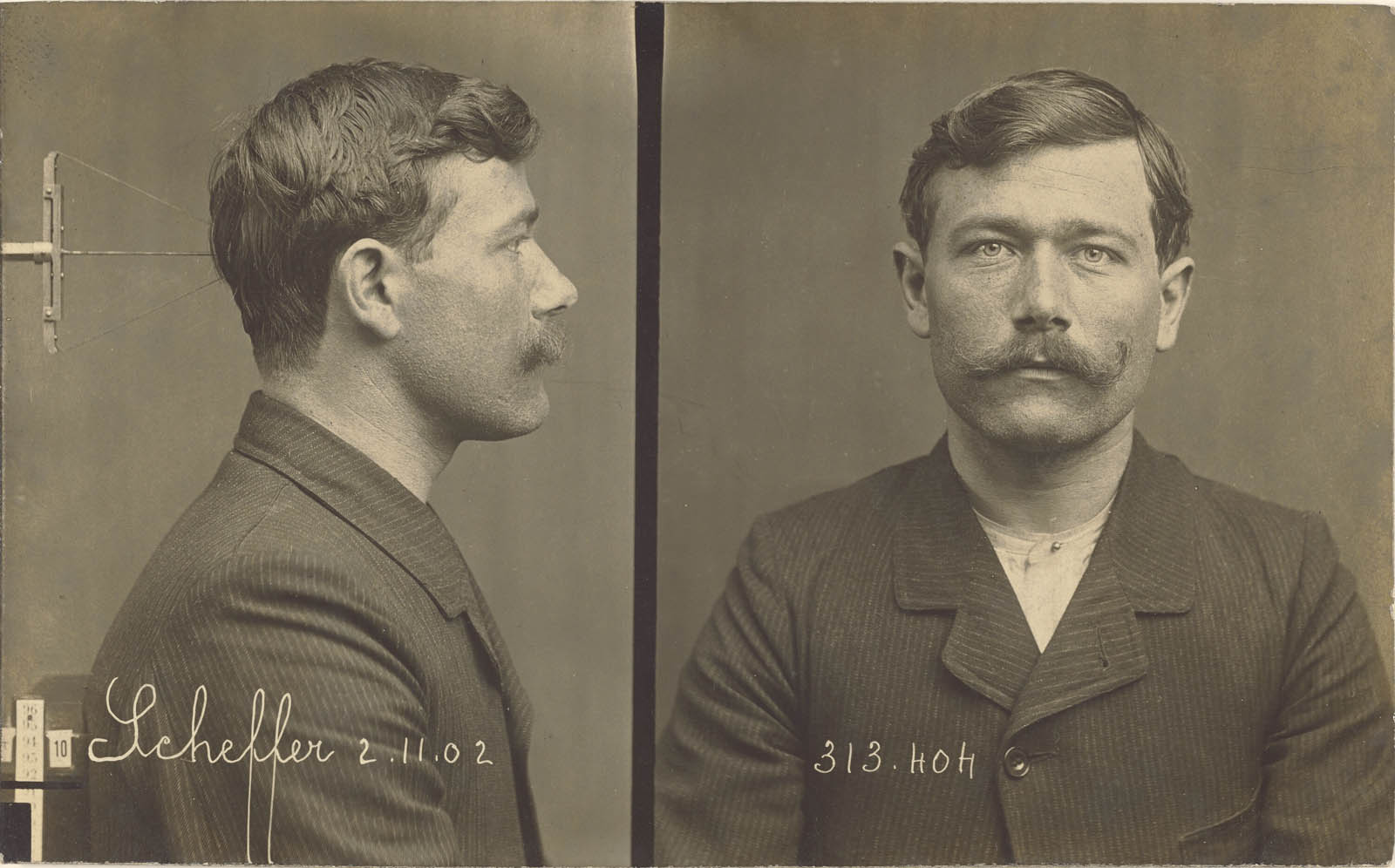
 

Attributed to Alphonse Bertillon (French, 1853-1914) 'Affaire Alaux, Faubourg St. Honoré – L'Assassin' November 2, 1902


Attributed to Alphonse Bertillon (French, 1853-1914)
Affaire Alaux, Faubourg St. Honoré – L’Assassin
November 2, 1902
Gelatin silver print
Image: 7.9 × 12.7cm (3 1/8 × 5 in.)
The J. Paul Getty Museum, Los Angeles


The mugshot of Henri-Léon Scheffer, the man who murdered Joseph Reibel.


CAUGHT BY A FINGER PRINT

A unique piece of detective work has been accomplished in Paris by a retiring scientist. A mysterious murder had been committed. The detectives arrested one wrong man dis charged him, and were preparing .to arrest another when to their chief came the quiet scientist, saying,

“The assassin’s name is Henri Léon Scheffor. Here is his photograph, his description and past record.” M. Cochefert, chief of the police hesitated. “My men know nothing of this person.” he said. “How shall we accuse him ?”

“Arrest him,” insisted the other, “and should he prove to innocent I will pay him 1,000 francs as an indemnity.”

“But what basis have you for your certainty of his guilt ?” asked M. Cochefert.

“Some finger prints he left on a piece of broken glass,” replied the man of science.

It was not necessary to pay the indemnity. He who was thus strangely accused was arrested and confessed his crime. The quiet man of science was M. Alphonse Bertillon, already celebrated as the founder and present chief of tho anthropometric service of tho Paris prefecture of police. Alphonse Bertillon has the gentle, weary smile of the over-worked and nervous student. He speaks mildly, moves softly, like one on his guard against strain and haste, until now and again, his thoughtful face will light up with enthusiasm as he lets himself go. Then his conversation becomes rapid and eloquent ; he runs through books and documents with ardour, pulls down boxes from high shelves, spreads out charts, explains them, performs experiments to illustrate his statements and darts back by a short cut to tho point where he had left off; tho whole man is transformed. Thus we heard the tale of the Accusing Finger Prints.

“A man named Joseph Reibel, porter to tho dentist Allaux, in his apartment and offices in the Rue du Faubourg Saint-Honore, was found choked to death and clumsily tied, lying in his master’s office,” began M. Bertillon. “The place had been looted hastily, closets and drawers being open and their contents tossed about. In particular a handsome cabinet holding a collection of coins was found with its glass door broken and its gold coins absent. There were- practically no clues to the identity of the assassin, the janitress at the street door, having a confused memory as to visitors, which set the detectives on more than one wrong scent. They arrested one man and the papers published his portrait. Then the newspapers at least began to suspect the innocent dentist himself.

“They had taken a flashlight photograph of the office,” continued M. Bertillon. “Looking at that photograph one day, I noticed two glittering little white marks on the edge of the broken glass of the coin cabinet. I asked my self what they could be. They might be defects in the printing ; but, on the other hand their situation suggested that they might be finger prints – and finger-prints are very much in my line ! The thought wore upon me until at last I jumped into a cab and drove to tho place. Examining the edge of the glass I found tho marks to be really finger-marks, and in spite of the thousand chances still in good condition.

“Being composed of tiny quantities of grease and dirt they made the glass slightly opaque, so that they came out bright by contrast in the photograph. Except when looked at in a favourable light they were practically invisible to the naked eye. There were marks of a right-hand thumb in one place and of the same thumb and four fingers in another. I had the two pieces of glass cut out with a diamond. I gave one to a policeman, instructing him to hold it just so, and saw him start off to my office with it in a cab. Then I gave tho other piece to a second policeman, with the same instructions, and started him off in a second cab, so that if an accident should happen to one of the pieces the other might be spared.

“In the workrooms of the anthropometric service I had the finger-marks immediately photographed. At first I admit I did not attach overmuch importance to them. They might be the prints of one of the detectives, or of the dentist Allaux – naturally solicitous of his broken cabinet – or even the finger-prints of M. Cochefert ! One by one I took their finger-prints for comparison. One by one I found that they did not at all correspond with those on the glass. This started me in earnest,” admitted M. Bertillon. “I began to ask myself, if among the thousands of criminals, swindlers and violent and suspicious characters photo-graphed, measured, and, finger-printed yearly by the anthropometric service the author of these finger-prints might not, at some time or other, himself have passed.” Here M. Bertillon called our attention to the thumb mark (“pouce”) of Scheffer, the assassin, Just below his full-face and profile photographs. Though small it was very distinct.

“Look at the central point of that thumb-print,” he exclaimed. “Look where the innermost loop moves up and over a single diagonal. Now jumping two loops from that interior diagonal, towards tho direct left you see a plain little fork in tho third loop. It is the exact reproduction of just such another in the thumb-mark on the broken glass ! Tho next thing was to arrest Scheffer though it took a little time to find him. Here, again, the information obtainable from his ‘fiche’ in the anthropometric service rendered service. It was seen that he had been a native of Aubervilliers (the Paris suburb and had worked in the government match factory. When arrested he confessed, at the same time trying to make out a case of extenuating circumstances. According to his story, Reibel planned that they should simulate a burglary of his master’s premises. They quarrelled over the division of the spoils and Scheffer says he thought he had merely choked his friend into un-consciousness and left him tied – according to original agreement. And all discovered through an accidental finger-print which the assassin had left as an index to the crime. “Science Siftings.”

Anonymous. “Caught by a Finger Print,” in the Balmain Observer and Western Suburbs Advertiser (NSW: 1884-1907), Sat 4 Mar 1905, Page 2 on the Trove website [Online] Cited 29/04/2024

__________________________________________

Time
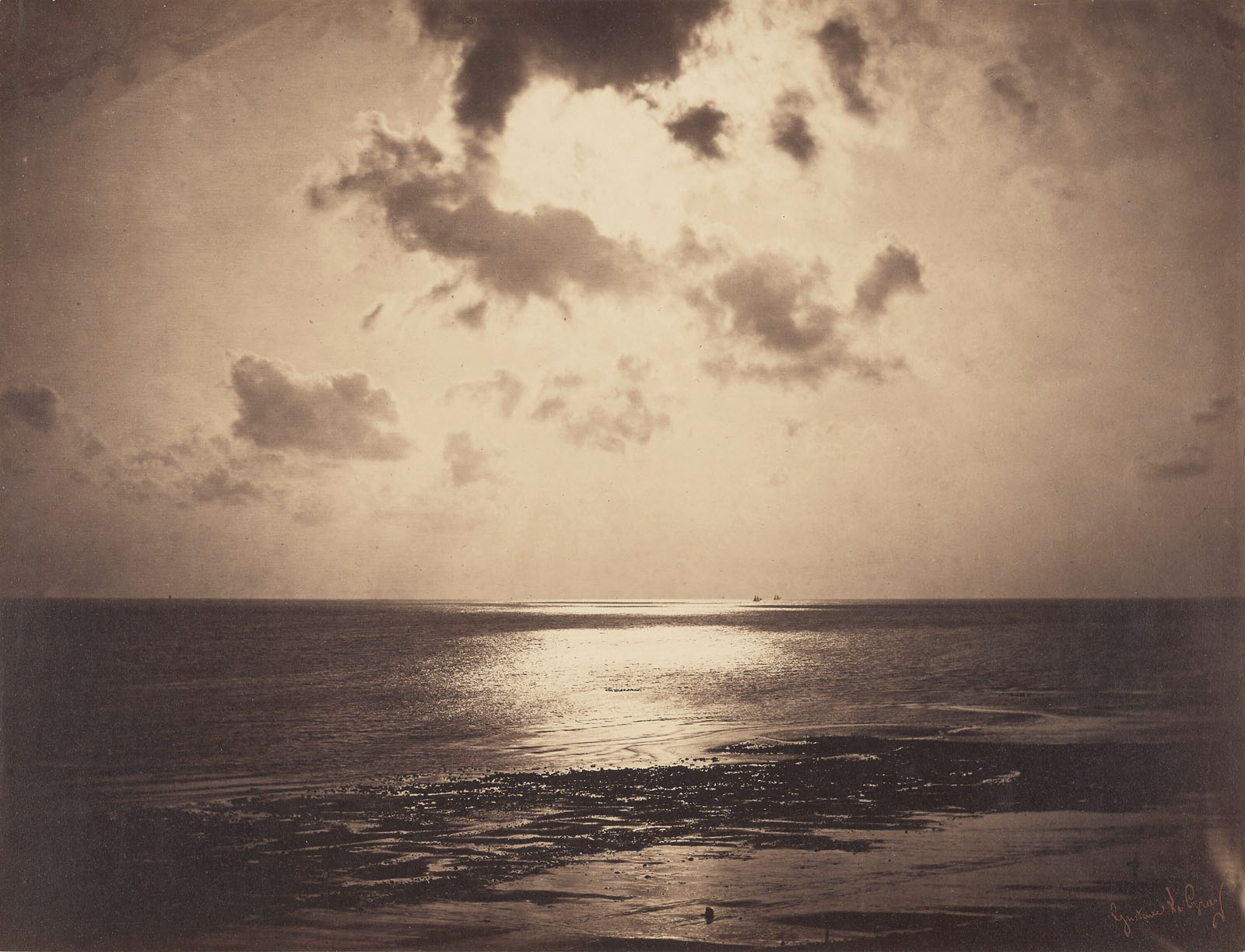
 

Gustave Le Gray (French, 1820-1884) 'An Effect of Sunlight – Ocean No. 23' 1857-1858


Gustave Le Gray (French, 1820-1884)
An Effect of Sunlight – Ocean No. 23
1857-1858
Albumen silver print from glass negatives
12 5/8 × 16 7/16 in.
The J. Paul Getty Museum, Los Angeles


Lisa Oppenheim (American, b. 1975) 'An Effect of Sunlight – Ocean No. 23 (1857/2019)' 2019


Lisa Oppenheim (American, b. 1975)
An Effect of Sunlight – Ocean No. 23 (1857/2019)
2019
Gelatin silver print, exposed to sunlight and toned with silver
Framed [Outer Dim]: 35.6 × 47.7 × 3.7cm (14 × 18 3/4 × 1 7/16 in.)
The J. Paul Getty Museum, Los Angeles
© Lisa Oppenheim


Time

Photography and time have been inextricably linked ever since early inventors such as William Henry Fox Talbot struggled to permanently fix a fleeting moment on a sheet of paper. The development of the camera coincided with new discoveries about how we perceive an instant in time or an object in motion, and people praised photography for its ability to “stop time” and record what the unaided eye could not see. Lisa Oppenheim and Liz Deschenes respond to nineteenth century photographers’ technical innovations and the ways in which the medium affects our perception of time. Phil Chang and Hiroshi Sugimoto address the fate of photographs across minutes or even centuries.


At left, Étienne-Jules Marey (French, 1830-1904) and Michel Berthaud (French, active 1860s-1880s) 'Walking/Running' (La Marche/La Course Rapide) about 1890, published 1893; and at right, Liz Deschenes (American, b. 1966) 'FPS (120)' 2018-2021


At left, Étienne-Jules Marey (French, 1830-1904) and Michel Berthaud (French, active 1860s-1880s) Walking/Running (La Marche/La Course Rapide) about 1890, published 1893; and at right, Liz Deschenes (American, b. 1966) FPS (120) 2018-2021
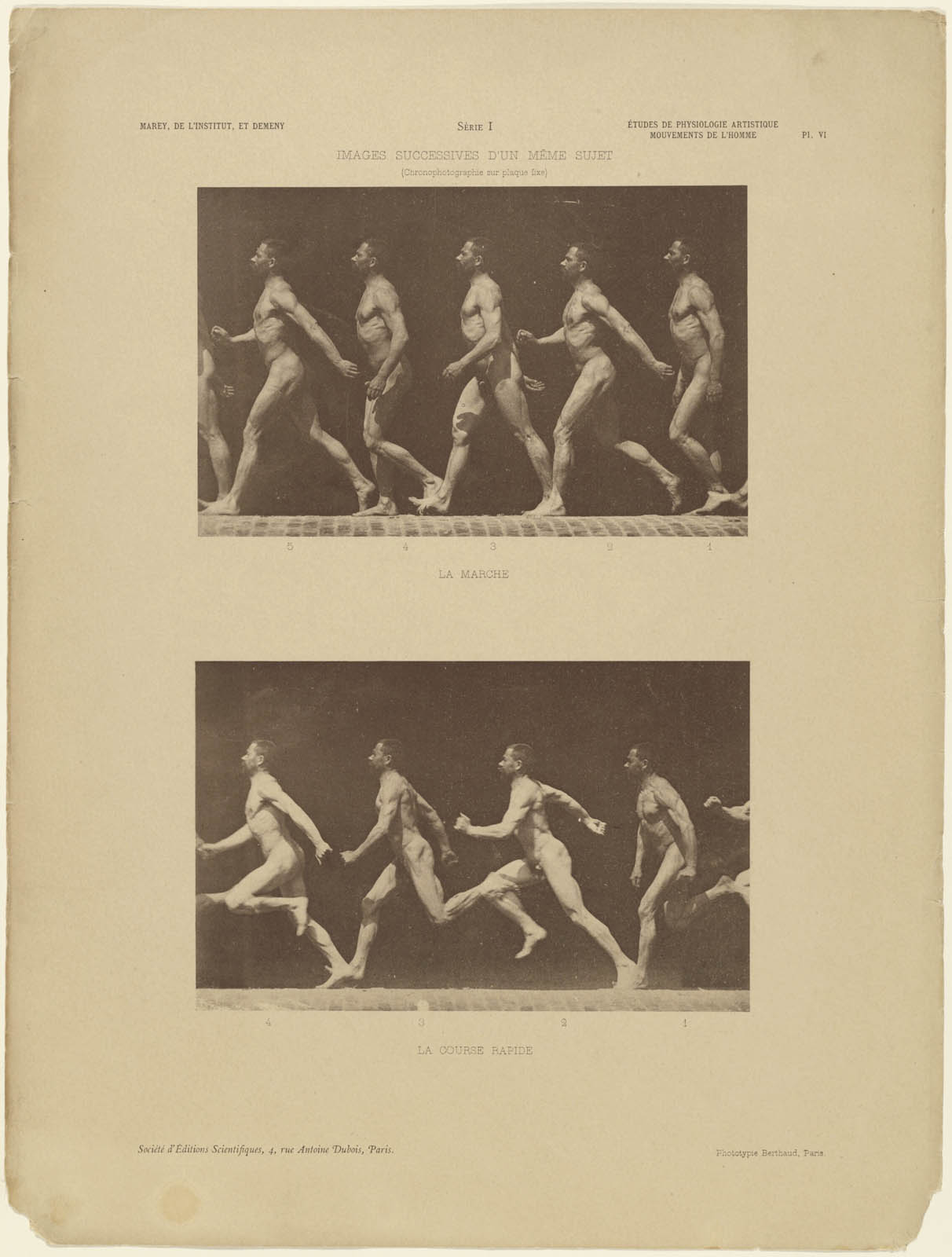
 

Étienne-Jules Marey (French, 1830-1904) and Michel Berthaud (French, active 1860s-1880s) 'Walking/Running' (La Marche/La Course Rapide) about 1890, published 1893


Étienne-Jules Marey (French, 1830-1904) and Michel Berthaud (French, active 1860s-1880s)
Walking/Running (La Marche/La Course Rapide)
about 1890, published 1893
Collotype
Image: 11.3 × 17.6cm (4 7/16 × 6 15/16 in.)
The J. Paul Getty Museum, Los Angeles

__________________________________________

Spirit


At left, William H. Mumler (American, 1832-1884) 'Mrs. Swan' 1869-1878; and at right, Khadija Saye (Gambian-British, b. 1992) 'Nak Bejjen' [Cow's Horn] 2017-2018


At left, William H. Mumler (American, 1832-1884) Mrs. Swan 1869-1878; and at right, Khadija Saye (Gambian-British, b. 1992) Nak Bejjen [Cow’s Horn] 2017-2018


Spirit

The genre of spirit photography – which used photographic tricks to insert ghostly figures among the living – emerged during the nineteenth century from the Victorian obsession with death, séances, and mediums in Europe and North America and from the losses of the Civil War in the United States. Photographers exploited the ability to manipulate photographic images, employing multiple exposures and staged photography to create otherworldly scenes or to summon loved ones back from the dead. Khadija Saye and Lieko Shiga respond to the possibilities that spirit photography offers in rendering the unseen.


William H. Mumler (American, 1832-1884) 'Mrs. Swan' 1869-1878


William H. Mumler (American, 1832-1884)
Mrs. Swan
1869-1878
Albumen silver print
Image: 8.9 × 5.7cm (3 1/2 × 2 1/4 in.)
The J. Paul Getty Museum, Los Angeles
Public domain


Khadija Saye (Gambian-British, b. 1992) 'Nak Bejjen' [Cow's Horn] 2017-2018


Khadija Saye (Gambian-British, b. 1992)
Nak Bejjen [Cow’s Horn]
2017-2018
From the series in this space we breathe
Silkscreen print
The J. Paul Getty Museum, Los Angeles
Purchased with funds provided by the Photographs Council
© Estate of Khadija Saye


At left, Unknown maker (American) '[Seated Woman with "Spirit" of a Young Man]' about 1865-1875; and at right, Lieko Shiga (Japanese, b. 1980) 'Talking with Me' 2005 From the series 'Lilly'


At left, Unknown maker (American) [Seated Woman with “Spirit” of a Young Man] about 1865-1875; and at right, Lieko Shiga (Japanese, b. 1980) Talking with Me 2005 From the series Lilly


Unknown maker (American) '[Seated Woman with "Spirit" of a Young Man]' about 1865-1875


Unknown maker (American)
[Seated Woman with “Spirit” of a Young Man]
about 1865-1875
Tintype
Image: 8.7 × 6.4cm (3 7/16 × 2 1/2 in.)
The J. Paul Getty Museum, Los Angeles
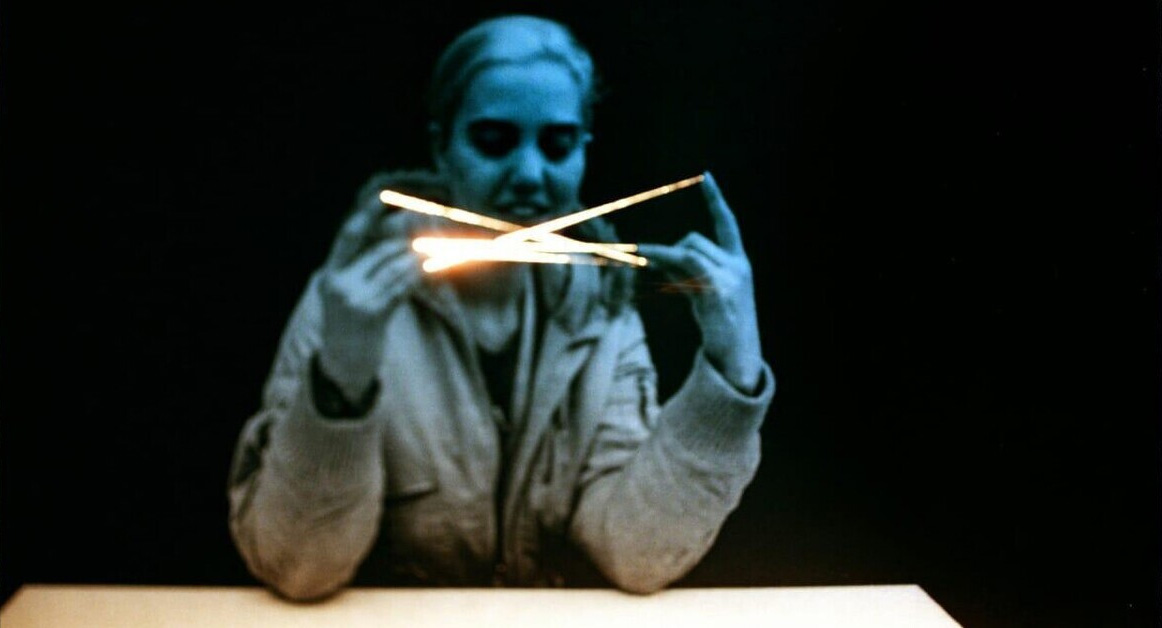
 

Lieko Shiga (Japanese, b. 1980) 'Talking with Me' 2005


Lieko Shiga (Japanese, b. 1980)
Talking with Me
2005
From the series Lilly


‘Lilly’ is a photographic essay that was initiated in 2005 when Lieko Shiga was living in London. During that period she produced a series of images of her neighbours that lived alongside her in a block of East London council flats, drawing techniques and inspiration from paranormal photographs that were popular in the early days of photography. Haunting, mysterious, playful and captured in an array of muted colours, the photographs [are] grouped around different subjects…

Publisher’s Description

__________________________________________

Landscape
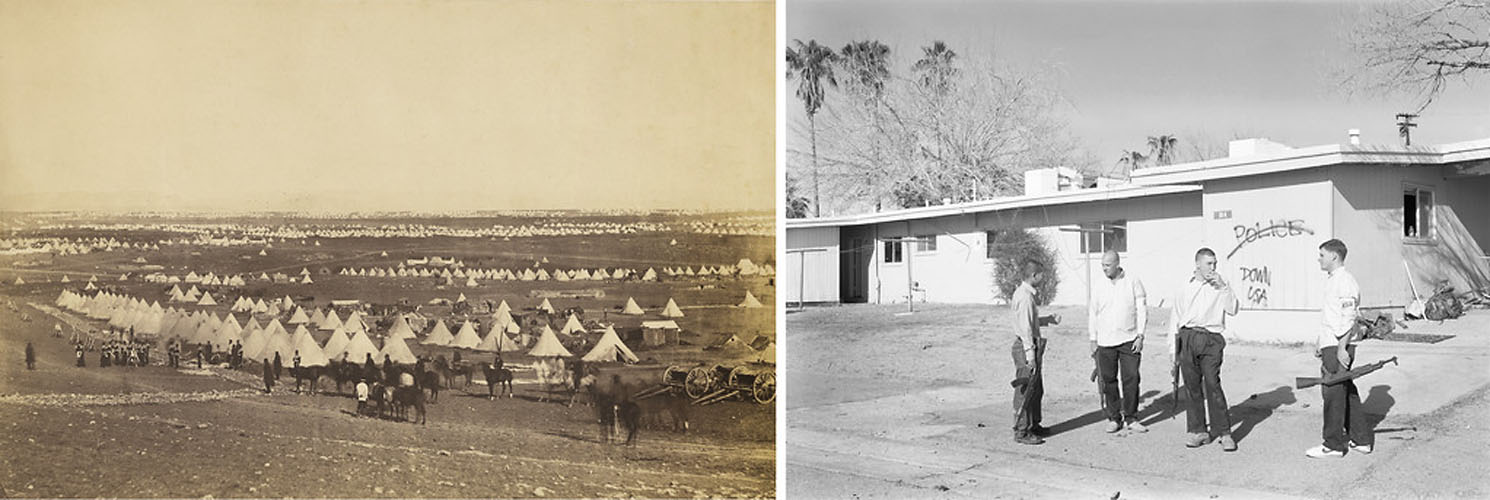
 

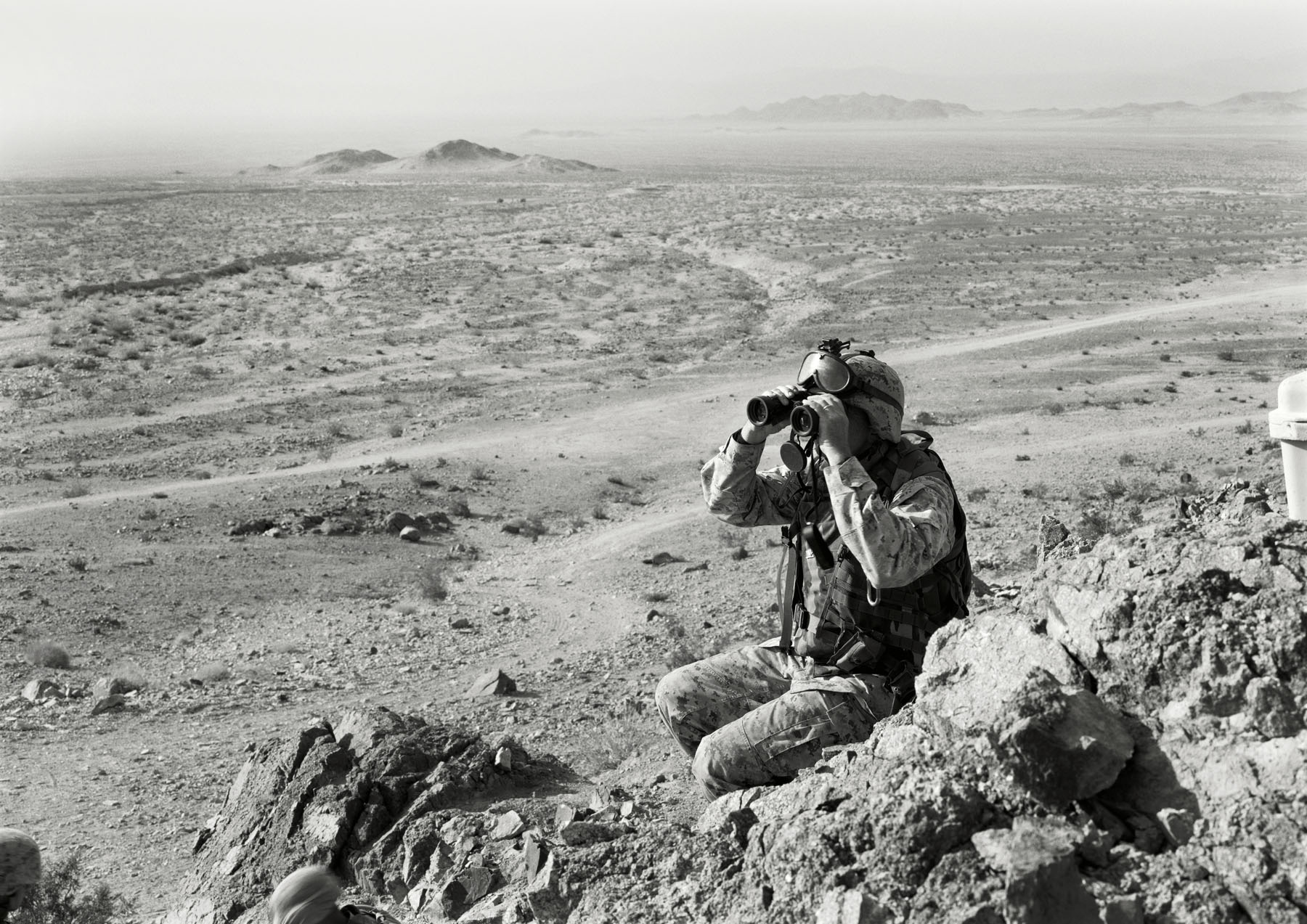
At left, Roger Fenton (English, 1819-1869) 'Plateau of Sebastopol II' 1855; and at right, An-My Lê (Vietnamese American, b. 1960) 'Security and Stabilization Operations, Iraqi Police' 2003-2004


At left, Roger Fenton (English, 1819-1869) Plateau of Sebastopol II 1855; and at right, An-My Lê (Vietnamese American, b. 1960) Security and Stabilization Operations, Iraqi Police 2003-2004
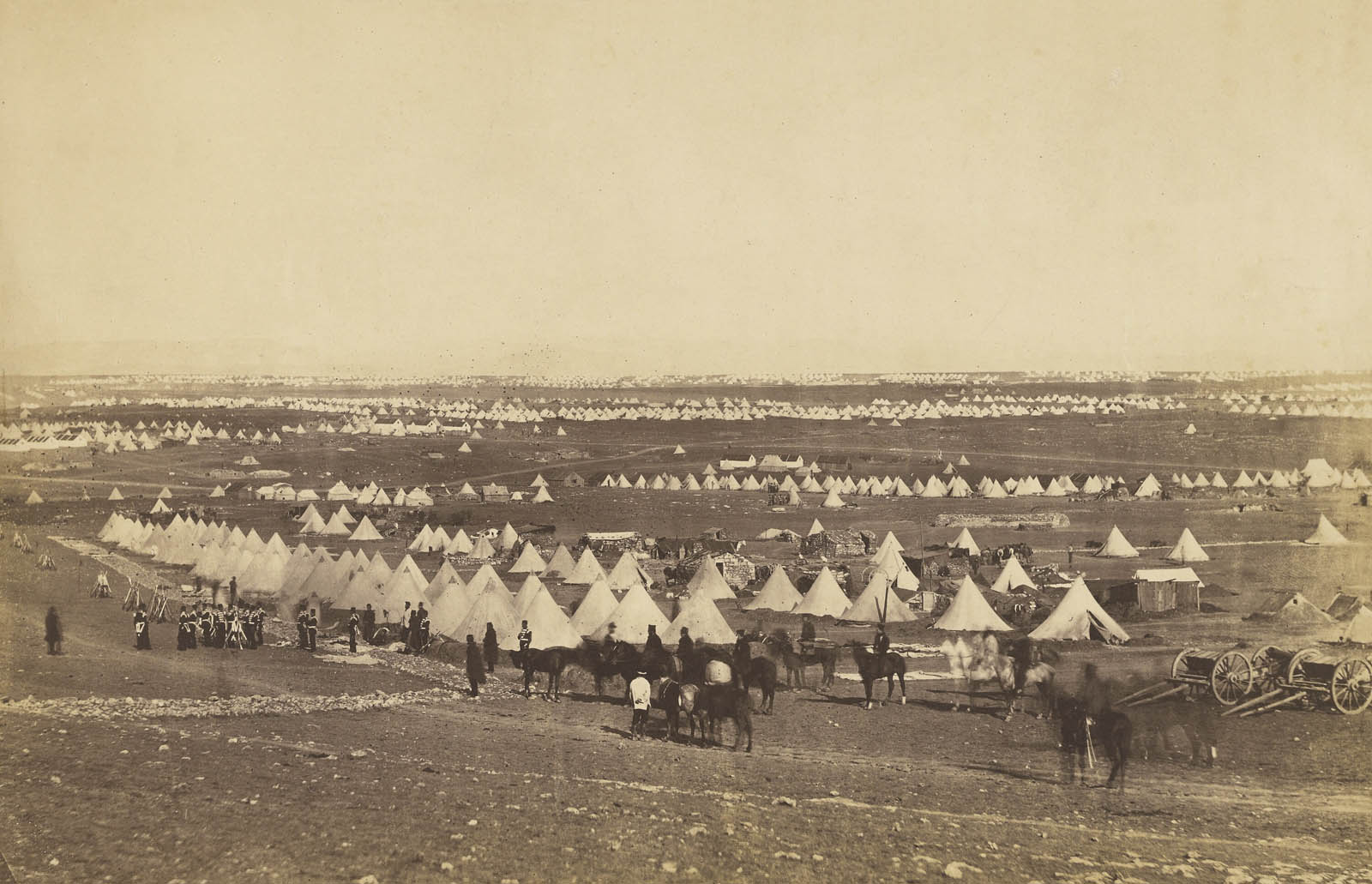
 

Roger Fenton (English, 1819-1869) 'Plateau of Sebastopol II' 1855


Roger Fenton (English, 1819-1869)
Plateau of Sebastopol II
1855
Albumen silver print
Image: 22.2 × 34.4cm (8 3/4 × 13 9/16 in.)
The J. Paul Getty Museum, Los Angeles
Public domain
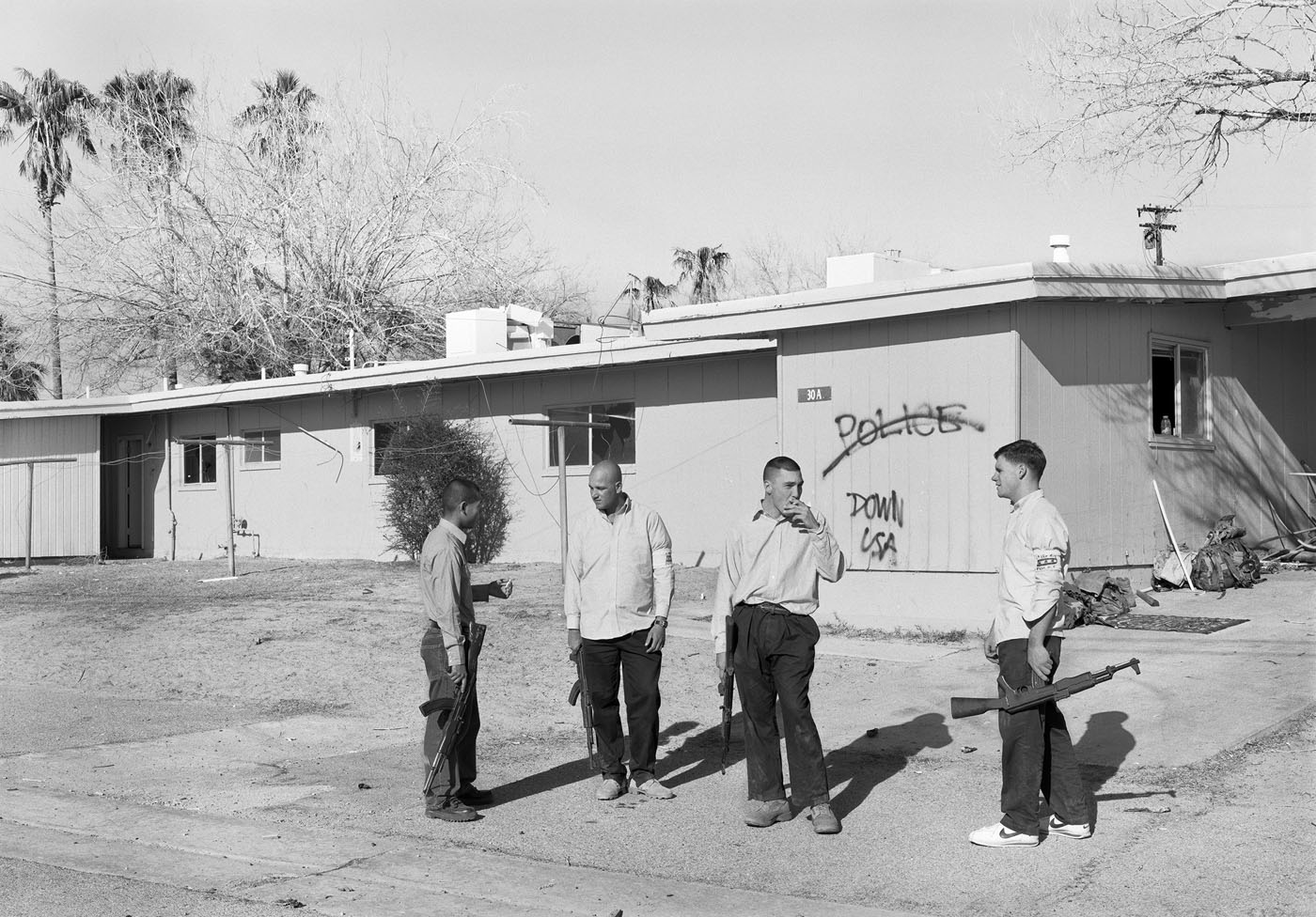
 

An-My Lê (Vietnamese-American, b. 1960) 'Security and Stabilization Operations, Iraqi Police' 2003-2004


An-My Lê (Vietnamese American, b. 1960)
Security and Stabilization Operations, Iraqi Police
2003-2004
From the series 29 Palms
Gelatin silver print
The J. Paul Getty Museum, Los Angeles
Courtesy of the artist and Marian Goodman Gallery
© An-My Lê


Landscape

Nineteenth-century photographers went to great lengths to make images of remote landscapes, which required traveling with large format cameras, glass plates, and chemicals. Ideological forces drove many of these journeys, with the ultimate goal of imperial expansion through industrial development and war. Government sponsored surveys and expeditionary programs employed the camera to justify the expansion and to record the resulting military conflicts. Mark Ruwedel, Michelle Stuart, and An-My Lê re-envision some of these same historical landscapes and offer up new ones that bring the past closer to our present.


At left, Timothy O'Sullivan (American, about 1840-1882) 'Desert Sand Hills Near Sink of Carson, Nevada' 1867; and at right, Michelle Stuart (American, b. 1933) 'Timeless Land' 2021


At left, Timothy O’Sullivan (American, about 1840-1882) Desert Sand Hills Near Sink of Carson, Nevada 1867; and at right, Michelle Stuart (American, b. 1933) Timeless Land 2021
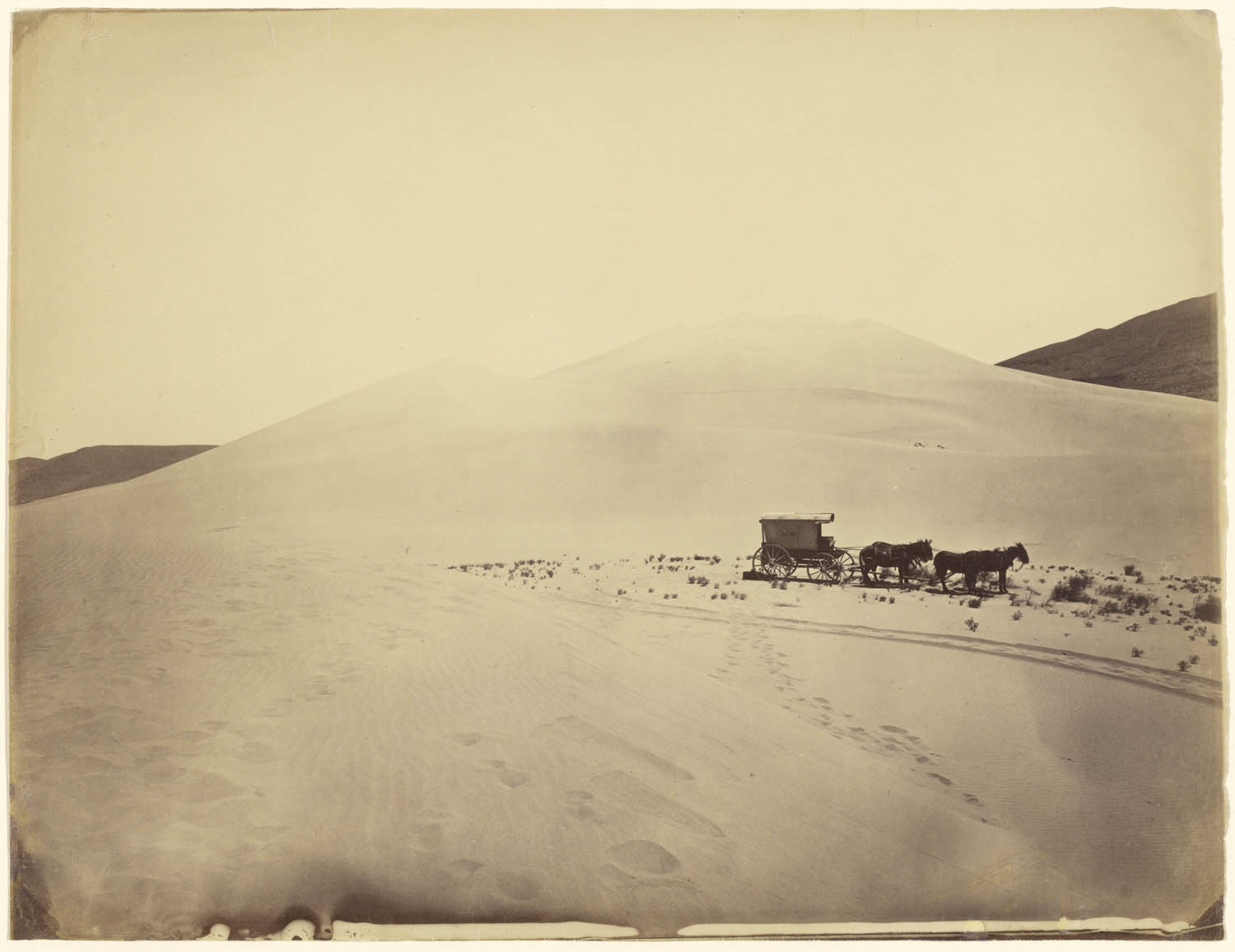
 

Timothy O'Sullivan (American, about 1840-1882) 'Desert Sand Hills Near Sink of Carson, Nevada' 1867


Timothy O’Sullivan (American, about 1840-1882)
Desert Sand Hills Near Sink of Carson, Nevada
1867
Albumen silver print
The J. Paul Getty Museum, Los Angeles
Public domain


Timothy O’Sullivan’s darkroom wagon, pulled by four mules, entered the frame at the right side of the photograph, reached the center of the image, and abruptly U-turned, heading back out of the frame. Footprints leading from the wagon toward the camera reveal the photographer’s path. Made at the Carson Sink in Nevada, this image of shifting sand dunes reveals the patterns of tracks recently reconfigured by the wind. The wagon’s striking presence in this otherwise barren scene dramatises the pioneering experience of exploration and discovery in the wide, uncharted landscapes of the American West.

O’Sullivan’s photographs from the 1867 Geological Exploration of the Fortieth Parallel expedition were intended to provide information for the purpose of expanding railroads and industry, yet they demonstrate his eye for poetic beauty.

Text from the J. Paul Getty Museum website
 

Michelle Stuart (American, b. 1933) 'Timeless Land' 2021


Michelle Stuart (American, b. 1933)
Timeless Land
2021
Ambrotypes
The J. Paul Getty Museum, Los Angeles
Purchased with funds provided by the Photographs Council
© Michelle Stuart


A.J. Russell (American, 1830-1902) 'Embankment No. 3 West of Granite Cannon [Wyoming]' April 1868


A.J. Russell (American, 1830-1902)
Embankment No. 3 West of Granite Cannon [Wyoming]
April 1868
Albumen silver print
Image: 21.9 × 29.4 cm (8 5/8 × 11 9/16 in.)
Mount: 34.1 × 43.1 cm (13 7/16 × 16 15/16 in.)
The J. Paul Getty Museum, Los Angeles


Mark Ruwedel (American/Canadian, b. 1954) 'Union Pacific #67 (after A.J. Russell)' 1996


Mark Ruwedel (American/Canadian, b. 1954)
Union Pacific #67 (after A.J. Russell)
1996
Gelatin silver print
Image: 18.9 × 23.9cm (7 7/16 × 9 7/16 in.)
The J. Paul Getty Museum, Los Angeles
© Mark Ruwedel


Mark Ruwedel’s statement in a wall text notes that “The legacy of nineteenth-century expeditionary photography was most important to me when working on my Westward series.” He cites Timothy O’Sullivan, Alexander Gardner and A.J. Russell. The Landscape section has a print by A.J. Russell, “Embankment No. 3 West of Granite Cannon. [Wyoming]” (April 1868), and seven pictures by Mr. Ruwedel: “Union Pacific #39 (After A.J. Russell)” and “Union Pacific #67 (After A.J. Russell)” (1994 and 1996, respectively) and five others with no specific acknowledgments but clearly influenced by his 19th-century mentors.

William Meyers. “Photography’s Past and Present at the Getty Center,” on The Wall Street Journal website May 29, 2024 [Online] Cited 16/06/2024
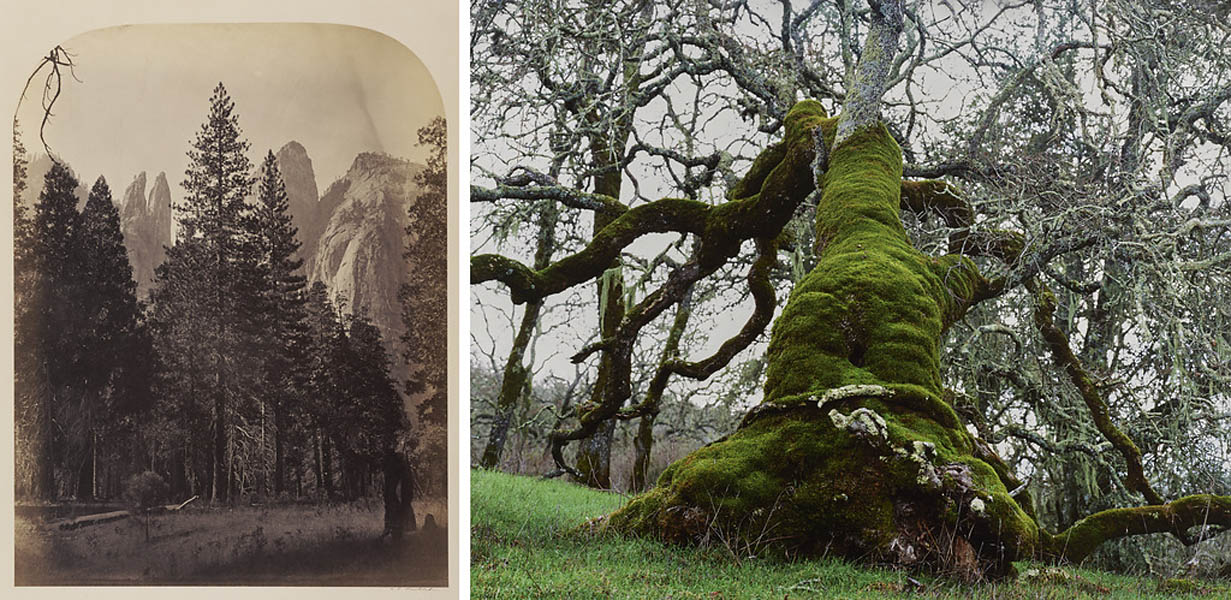
 

At left, Carleton Watkins (American, 1829-1916) 'Cathedral Spires – Yo Semite' 1861; and at right, Ken Gonzales-Day (American, b. 1964) 'At daylight the miserable man was carried to an oak…' Negative 2002; print 2021


At left, Carleton Watkins (American, 1829-1916) Cathedral Spires – Yo Semite 1861; and at right, Ken Gonzales-Day (American, b. 1964) At daylight the miserable man was carried to an oak… Negative 2002; print 2021
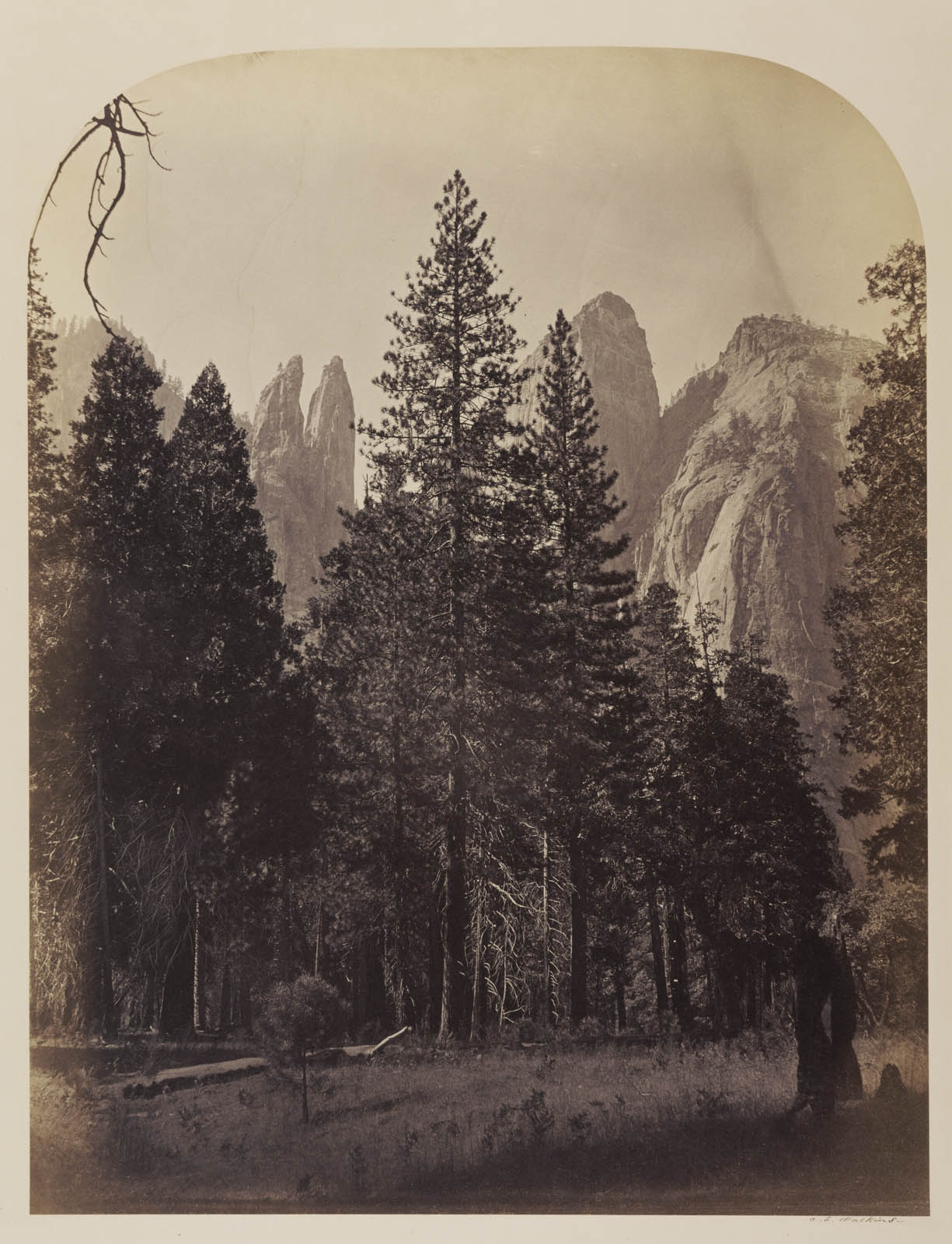
 

Carleton Watkins (American, 1829-1916) 'Cathedral Spires – Yo Semite' 1861


Carleton Watkins (American, 1829-1916)
Cathedral Spires – Yo Semite
1861
Albumen silver print
Image (Dome-Topped): 52.2 × 40.3cm (20 9/16 × 15 7/8 in.)
The J. Paul Getty Museum, Los Angeles


When Carleton Watkins photographed the remote Yosemite wilderness, America was not yet a century old. Conscious of their country’s lack of a national cultural identity, Americans adopted particularly dramatic geologic formations such as Cathedral Spires as their version of ancient ruins and soaring Gothic churches. The great pine tree in the foreground here became another form of this uniquely American history. Watkins’s images helped define America’s preference for landscape views depicting rugged wilderness and celebrating spectacular landforms on the grandest of scales.
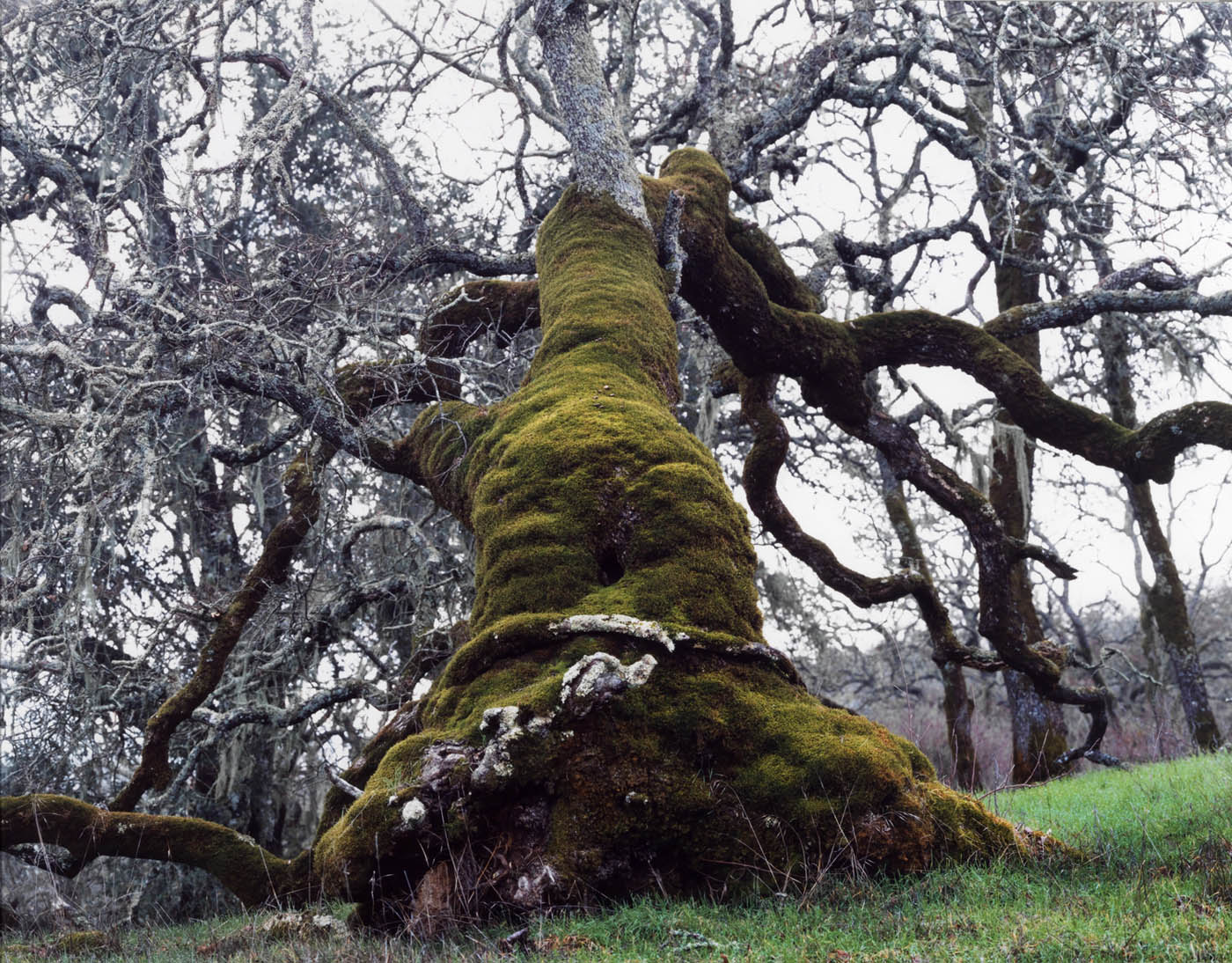
 

Ken Gonzales-Day (American, b. 1964) 'At daylight the miserable man was carried to an oak…' Negative 2002; print 2021


Ken Gonzales-Day (American, b. 1964)
At daylight the miserable man was carried to an oak…
Negative 2002; print 2021
From the series Searching for California’s Hang Trees
Pigment print
Image: 92.7 × 117.5cm (36 1/2 × 46 1/4 in.)
© Ken Gonzales-Day

This print: Smithsonian American Art Museum, Museum purchase through the Luisita L. and Franz H. Denghausen Endowment


Through meticulous research, Gonzales-Day documented approximately 350 lynching incidents that occurred in California between 1850 and 1935, most of which involved victims of Mexican descent. To create the series Searching for California Hang Trees, the artist visited many of these sites and captured the likeness of trees that may have borne witness to these events. Gonzales-Day’s landscapes unearth traces of this little-known history.

Our America: The Latino Presence in American Art, 2013

__________________________________________

Circulation


Charles M. Bell (American, 1848-1893) 'Manulitó, Chief of the Navajos' 1874


Charles M. Bell (American, 1848-1893)
Manulitó, Chief of the Navajos
1874
Albumen silver print
Image (Arched): 18.4 × 14.9cm (7 1/4 × 5 7/8 in.)
The J. Paul Getty Museum, Los Angeles
Public domain
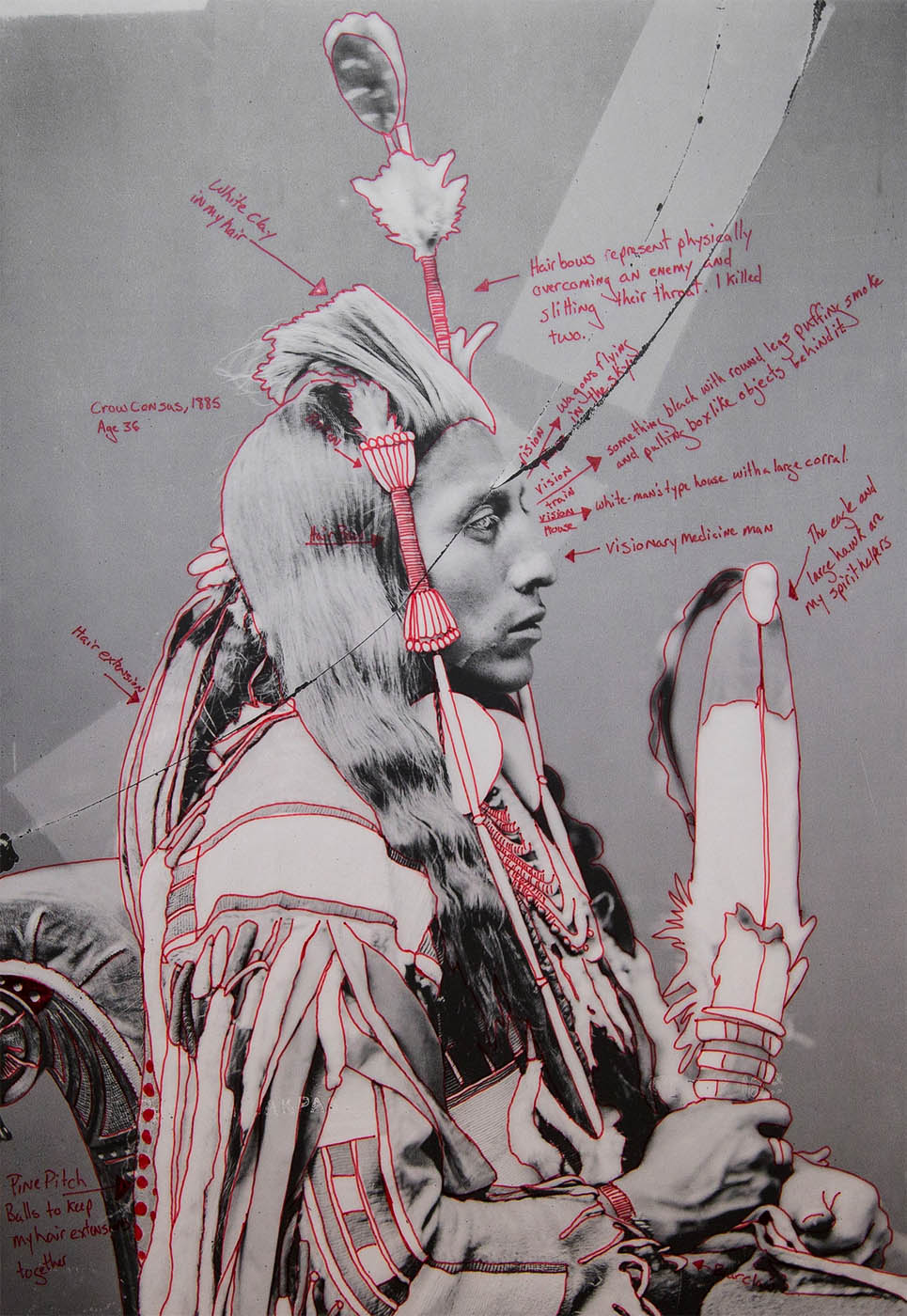
 

Wendy Red Star (American/Apsáalooke, b. 1981) 'Peelatchiwaaxpáash / Medicine Crow (Raven)' 2014


Wendy Red Star (American/Apsáalooke, b. 1981)
Peelatchiwaaxpáash / Medicine Crow (Raven)
2014
From the series Crow Peace Delegation
Inkjet print
Nasher Museum of Art at Duke University
Museum purchase with funds provided by Jennifer McCracken New and Jason G. New
© Wendy Red Star
Image courtesy of the Nasher Museum of Art


Artist-manipulated digitally reproduced photograph by C.M. (Charles Milton) Bell, National Anthropological Archives, Smithsonian Institution, 24 x 16 9/20 inches


Circulation

By the middle of the nineteenth century, thousands of photographs were in circulation worldwide, the result of photographers’ ability to reproduce the same image multiple times. Pictures of historical events, tourist destinations, and anthropological expeditions made the world seem more accessible, but with time and distance, they became disconnected from their original contexts. Many eventually ended up in archives (including at Getty). Early photographs appear next to projects that make these historical absences present. Wendy Red Star, Stephanie Syjuco, Ken Gonzales-Day, and Andrea Chung recover what has been lost, calling out the residual effects of the nineteenth-century photograph on our present knowledge of global cultures and histories.

Text from the J. Paul Getty Museum
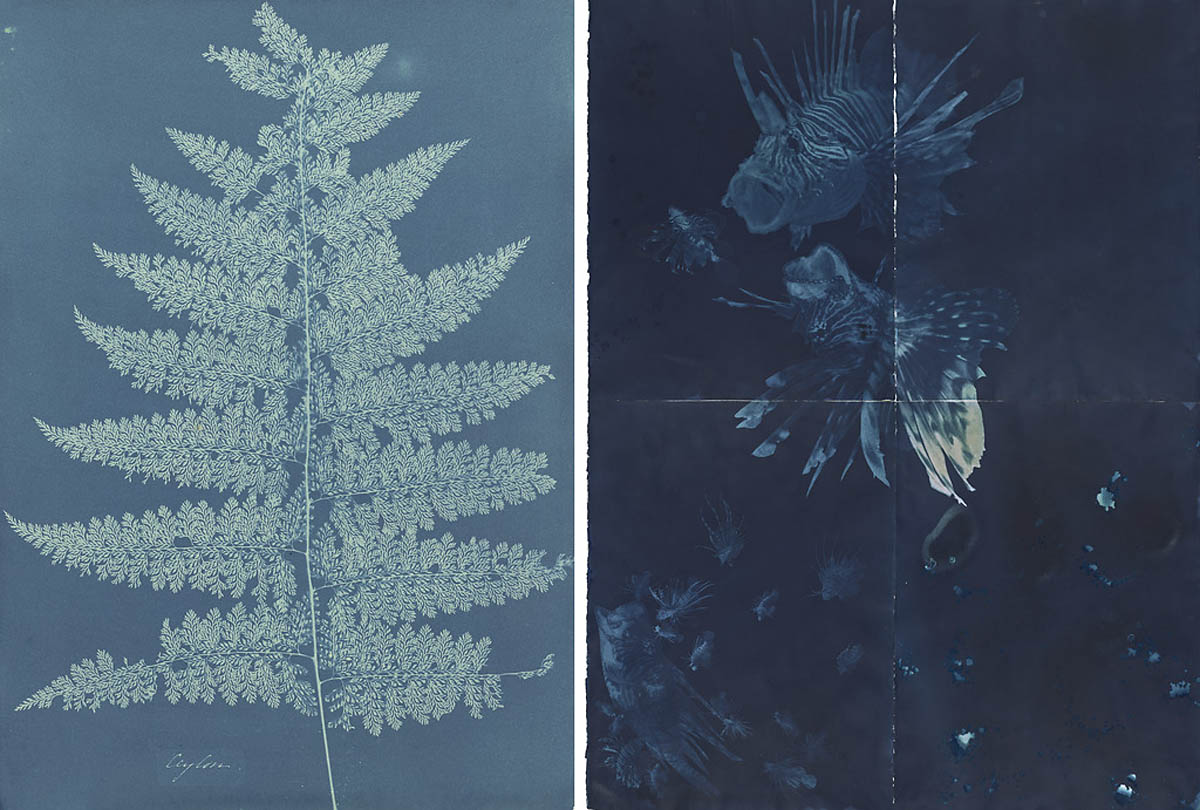
 

At left, Anna Atkins (British, 1799-1871) possibly with Anne Dixon (British, 1799-1877) 'Ceylon/Fern' about 1854; and at right, Andrea Chung (American, b. 1978) 'Untitled' 2016


At left, Anna Atkins (British, 1799-1871) possibly with Anne Dixon (British, 1799-1877) Ceylon/Fern about 1854; and at right, Andrea Chung (American, b. 1978) Untitled 2016
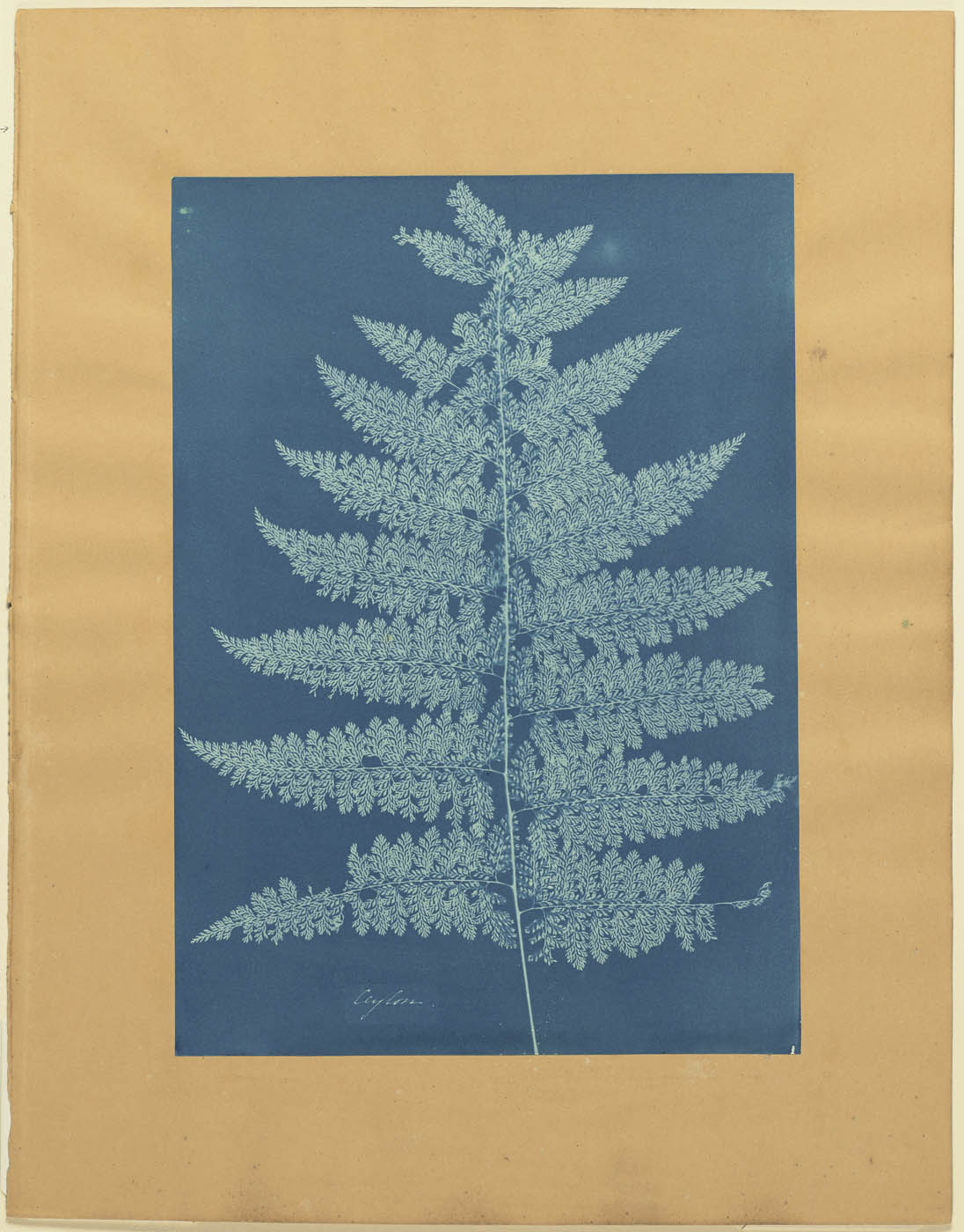
 

Anna Atkins (British, 1799-1871) possibly with Anne Dixon (British, 1799-1877) 'Ceylon/Fern' about 1854


Anna Atkins (British, 1799-1871) possibly with Anne Dixon (British, 1799-1877)
Ceylon/Fern
about 1854
Cyanotype
Image: 34.8 × 24.7cm (13 11/16 × 9 3/4 in.)
Sheet: 48.3 × 37.5cm (19 × 14 3/4 in.)
The J. Paul Getty Museum, Los Angeles
Public domain


Cyanotypes of British and Foreign Flowering Plants

After completing the highly ambitious, decade-long project Photographs of Blue Algae: Cyanotype Impressions in the summer of 1853, Anna Atkins turned to new botanical subjects. She would eventually produce several unique presentation albums with cyanotypes of ferns and flowering plants. Atkins most likely collaborated on these albums with her dear friend, Anne Dixon. Dixon came to Halstead Place for an extended stay in the summer of 1852 to comfort Atkins who was deeply shaken by the death of her father and frequent scientific partner John George Children earlier that year. Photo historian Larry Schaaf suggests that it was during this stay or perhaps one the next summer that Dixon began assisting Atkins and creating her own cyanotypes. Thus, it becomes difficult to know whether surviving works from this time period were created by Atkins, Dixon, or both.1

These seven pieces in the J. Paul Getty Museum Collection (figs. 1-7) were extracted from an 1854 presentation album Cyanotypes of British and Foreign Flowering Plants given by Anna Atkins to Anne Dixon in 1854. The album remained intact until sometime around 1981, when it was broken up after being sold at auction.

Atkins and Dixon shared a deep interest in botany, a science that was considered well suited to women since it could be studied locally, even in one’s own garden. Serious “lady botanists” could join the Botanical Society in London, one of the first scientific organisations to admit women. Atkins joined in 1839. The two friends’ interest in botany is documented in a letter of 1851 from Children to Sir William Hooker in which he discussed the two women’s longtime plant collecting. Later, in a letter that Atkins wrote to Hooker in 1864, she extended an offer from Dixon to send him samples of any of the plants from her own collection.2

Carolyn Peter, J. Paul Getty Museum, Department of Photographs
2019
© J. Paul Getty Trust
Creative Commons Attribution 4.0 International License

1/ Larry Schaaf, Sun Gardens: Cyanotypes by Anna Atkins (New York: The New York Public Library, 2018), 77
2/ Ibid, 80
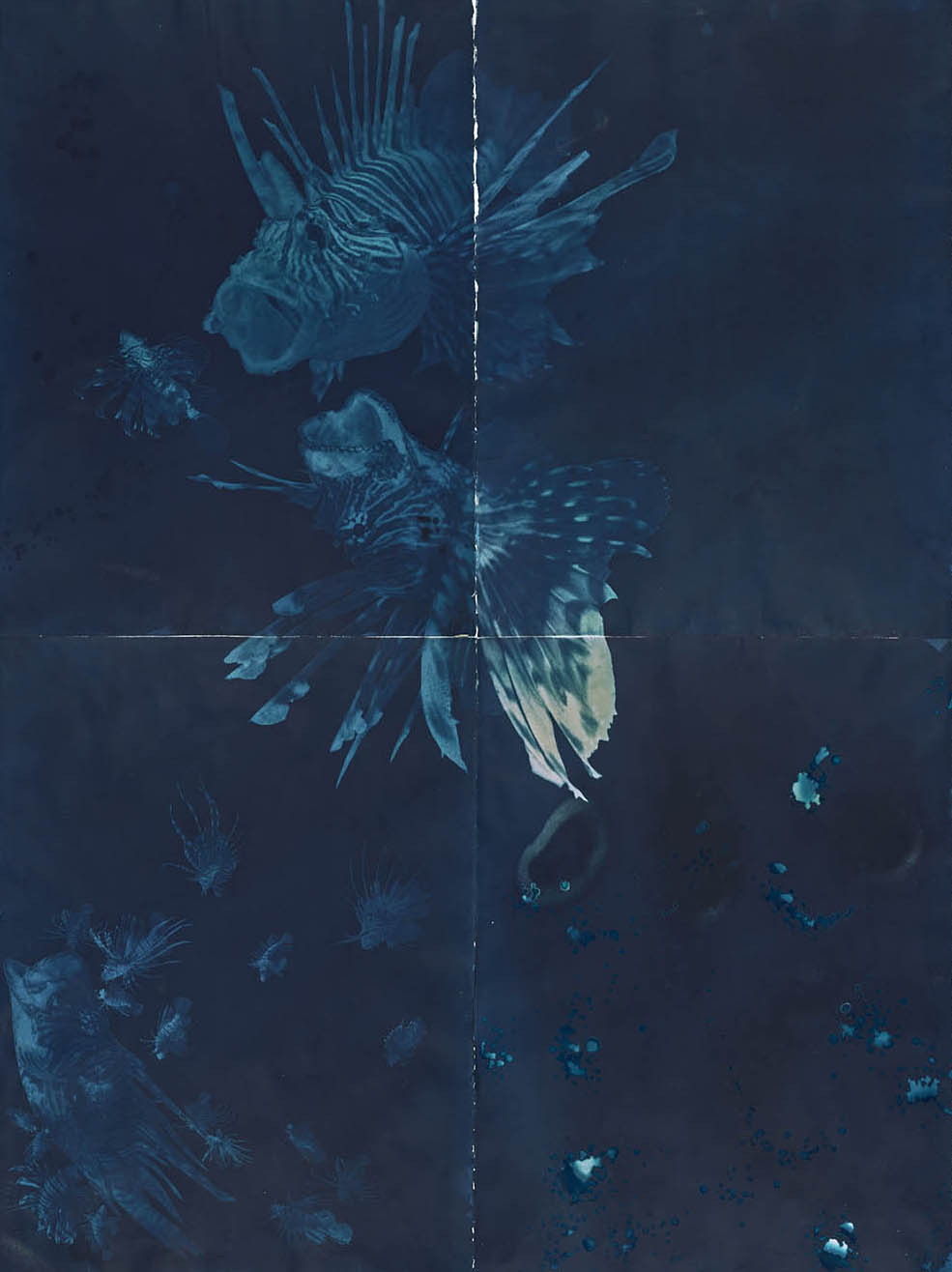
 

Andrea Chung (American, b. 1978) 'Untitled' 2016


Andrea Chung (American, b. 1978)
Untitled
2016
From the series Anthropocene
Cyanotypes
The J. Paul Getty Museum, Los Angeles
© Andrea Chung


Anna Atkins was a 19th-century botanist who documented plant specimens to make the world’s first photo book.

Today, artist Andrea Chung makes images of lionfish. Invasive to the Caribbean, they stand as a metaphor for the impact of colonisation in the region.

Text and photograph from the Getty Museum X web page


The J. Paul Getty Museum
1200 Getty Center Drive
Los Angeles, California 90049

Opening hours:
Daily 10am – 5pm
The J. Paul Getty Museum website

LIKE ART BLACK ON FACEBOOK

Back to top

Review: ‘An-My Lê: On Contested Terrain’ at the Amon Carter Museum of American Art, Fort Worth, Texas

Exhibition dates: 18th April – 8th August, 2021


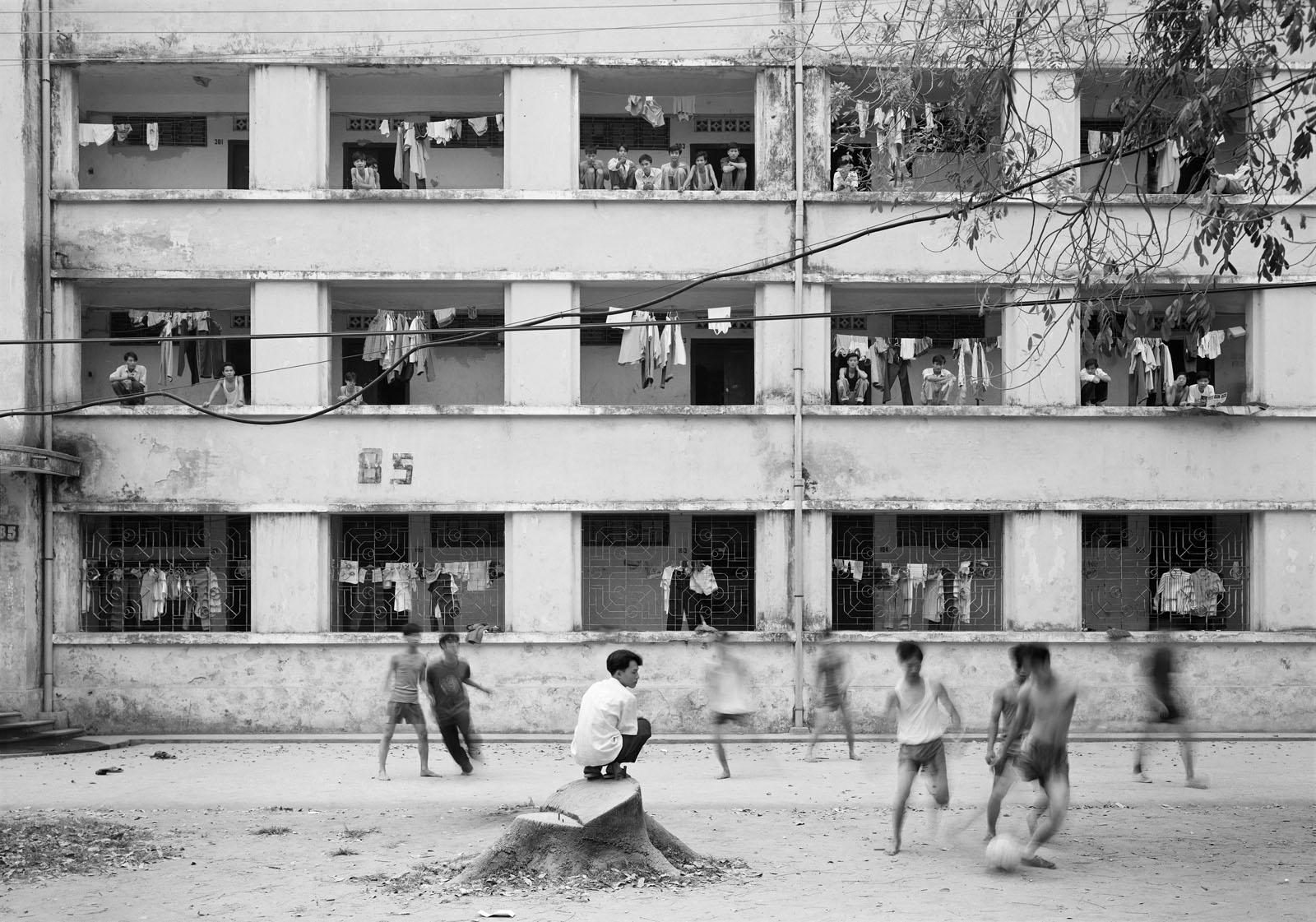
An-My Lê (Vietnamese-American, b. 1960) 'Untitled, Hanoi' 1995 from the exhibition 'An-My Lê: On Contested Terrain' at the Amon Carter Museum of American Art, Fort Worth, Texas, April - August, 2021


An-My Lê (Vietnamese-American, b. 1960)
Untitled, Hanoi
1995
From the series Viêt Nam (1994-1998)
Gelatin silver print
Courtesy of the artist and Marian Goodman Gallery, New York, Paris, and London
© An-My Lê


“In their essential nature men do not change. The great and noble, the Masters of Life, will be great and noble to the end of time, and to contemplate them and their deeds inspires us to endeavour to emulate them. Learn whom a man venerates, and you can come to judge his character. Like is assimilated unto like. The mind approaches that which it continually contemplates, and kindred inevitably follow.”


Alvin Langdon


Disguising power as virtue or, the Inner Landscape of Beauty

One of the great assets of VR, especially in times of lockdown, is that you can view an exhibition from a distance. Such is the case with this strong exhibition by Vietnamese-American photographer An-My Lê at the Amon Carter Museum of American Art, Fort Worth, Texas. It gives the viewer the ability to come to grips with an artists work displayed as a whole, to contemplate the myriad threads that run through the five bodies of work that are presented in the exhibition.

While there are no remarkable “hero” shots contained within the body of Lê’s work, collectively the photographs from each series build a serious interrogation into the contested terrains of colonialism, war, the military, racism and protest. As we know with life nothing is ever black and white, and through her classically inspired photographs Lê probes the interweaving of existence, desire, possession and control in the landscape, in the landscape of life. As assistant curator Kirsten Gaylord observes, “Her photographs consider questions that we are all thinking about now: What does it mean to be an American citizen? How does our country’s history shape our contemporary lives? What should be the role of the U.S. in the world?” These are complex issues which Lê addresses with intelligence and rigorous conceptualisation, fully aware of the paradoxes that exist within her inquiry.

My favourite series are the more personal and engaging, the more empathetic and feeling of the works – the first and the last, Viêt Nam (1994-98) and Silent General (2015-ongoing). In Viêt Nam, Lê returns to her homeland of Vietnam after almost 20 years with her large format camera. The resulting meditation on homeland evidenced in beautiful, perfectly formed photographs are moving and touching, poetic reveries on lost innocence, regained? In Silent General, Lê again again puts more of her self on the line, her photographs confronting the “issues of our time that are rooted in our history, from the fate of Confederate monuments to immigration debates around agricultural labourers.”

I am ambivalent about the other series in the exhibition, which while beautiful have a slightly chilly aura.

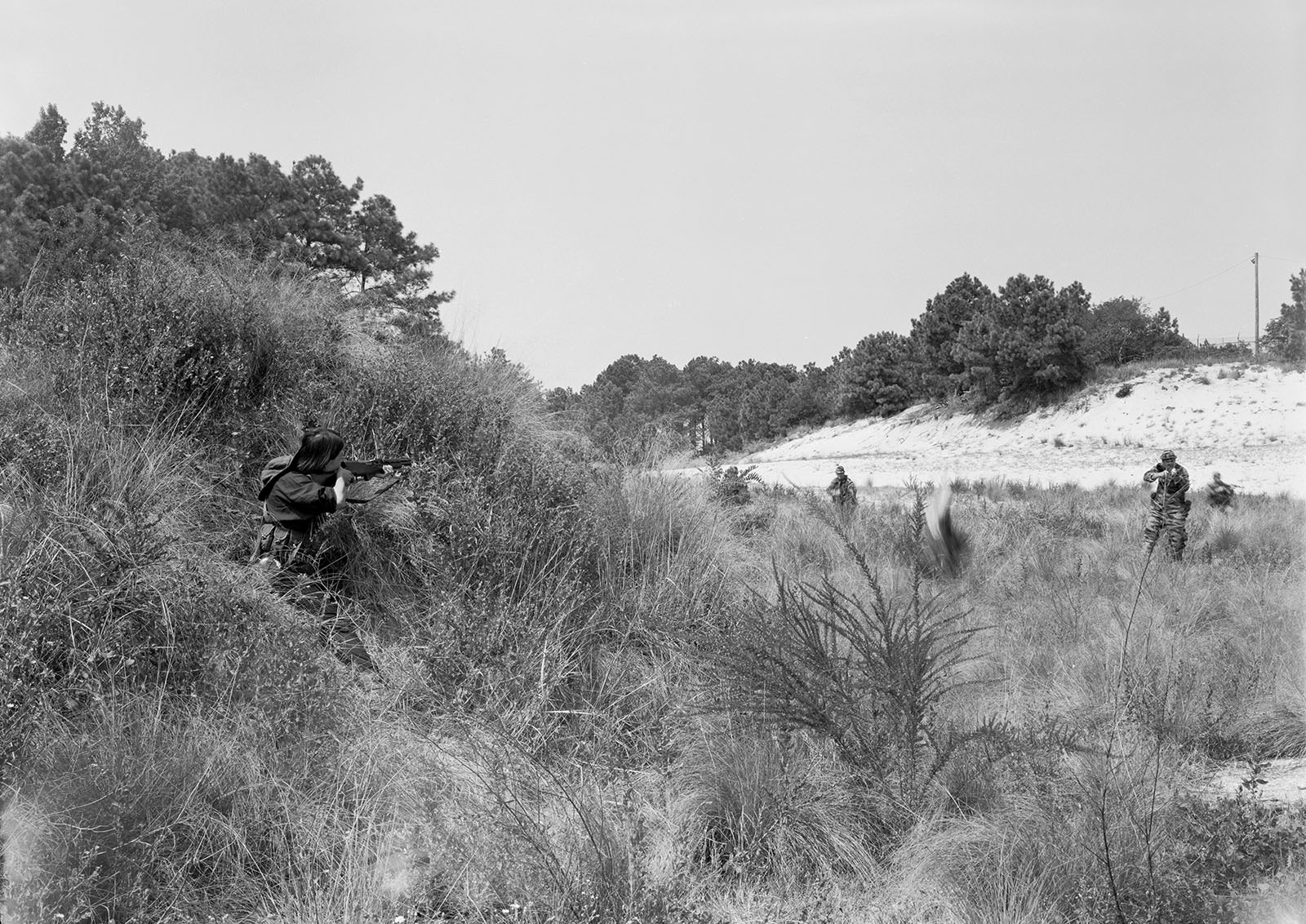
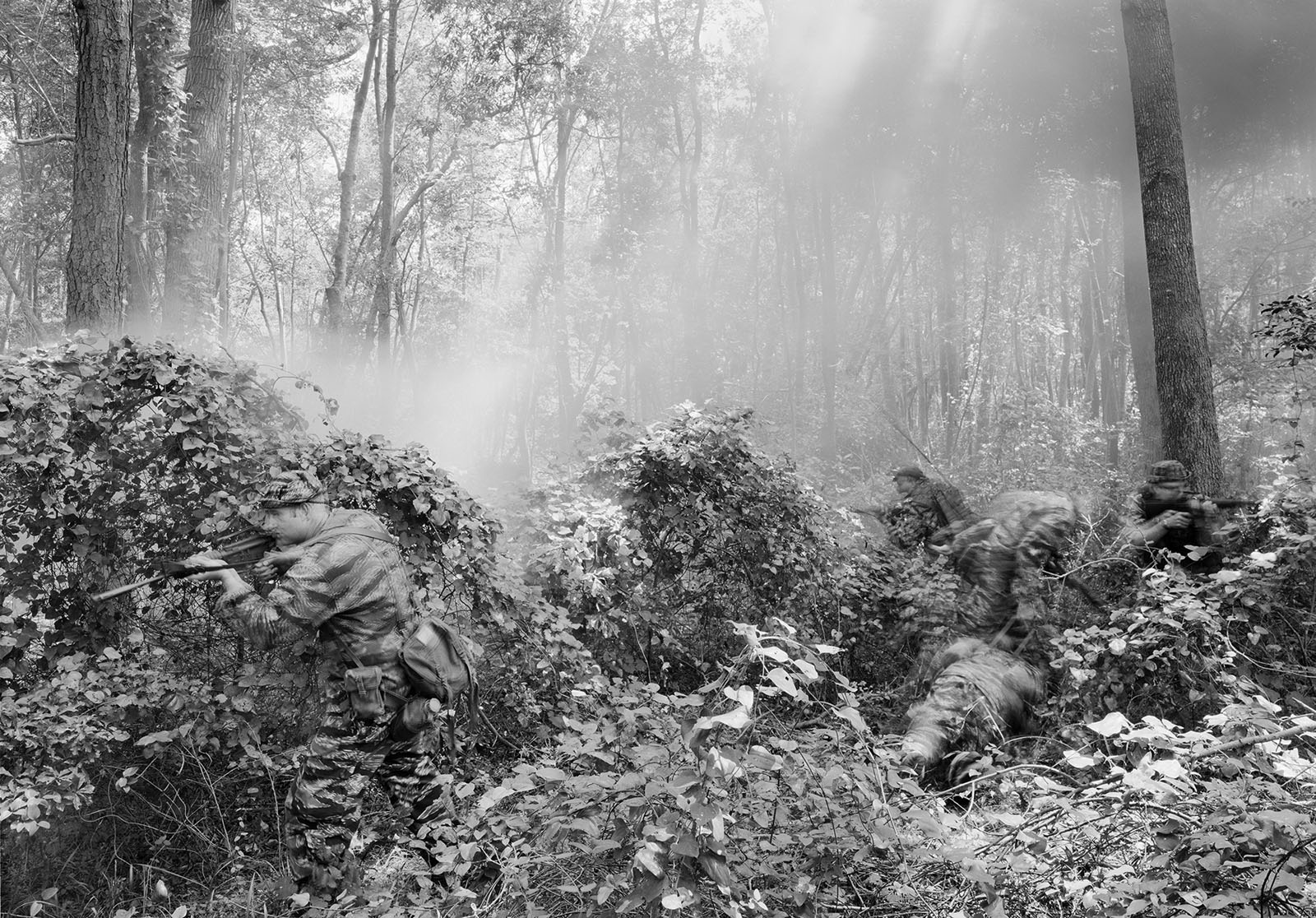
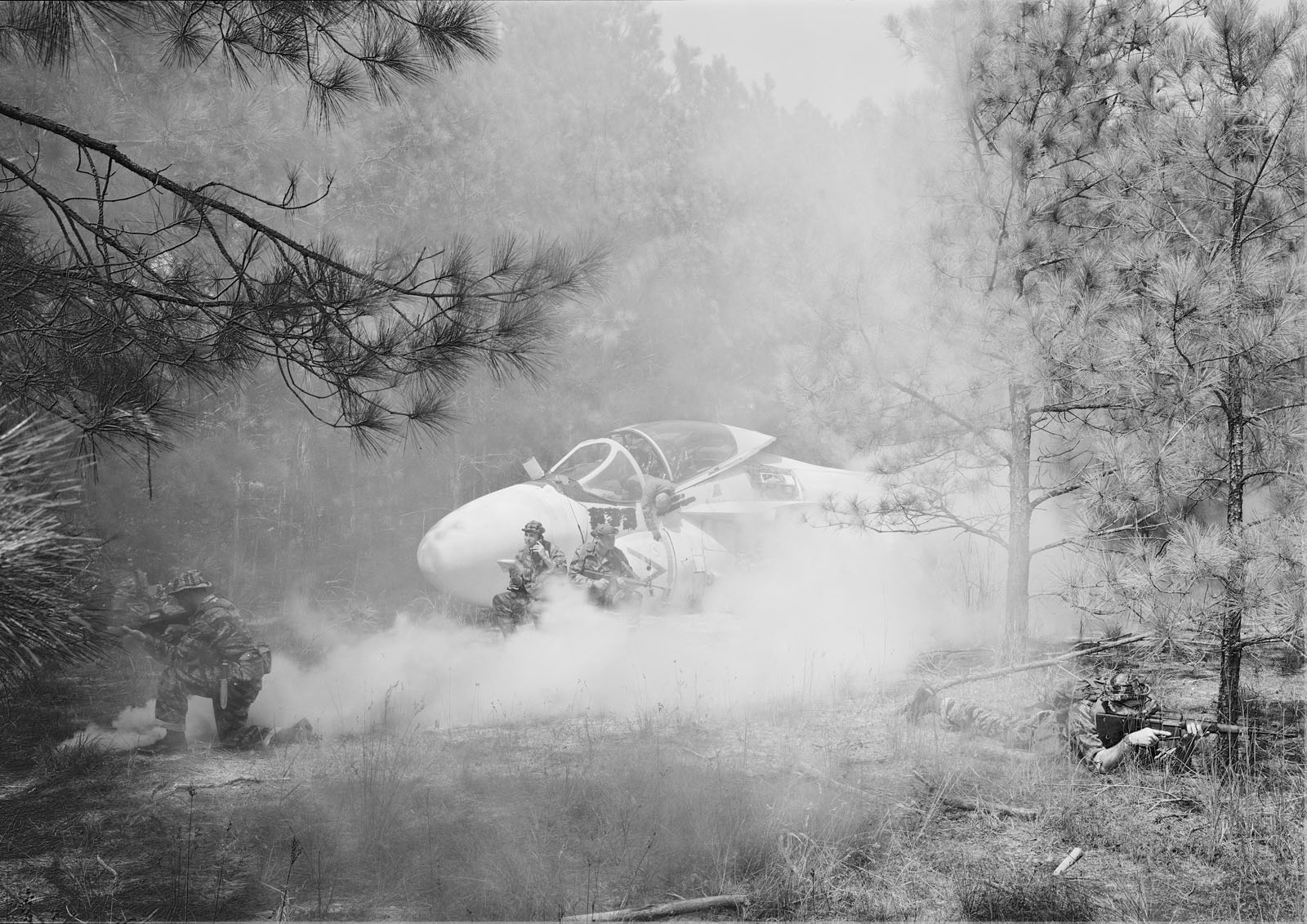
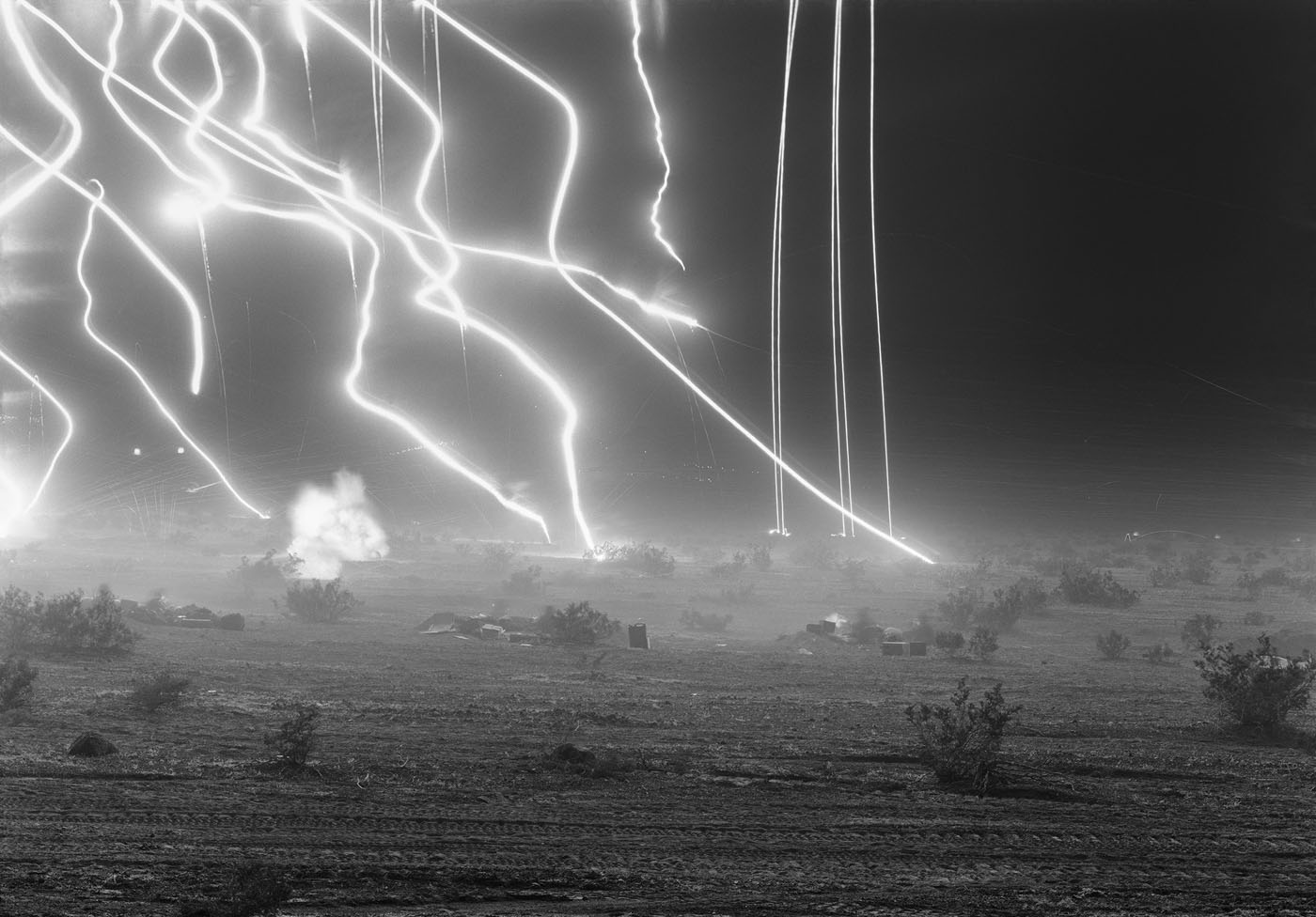
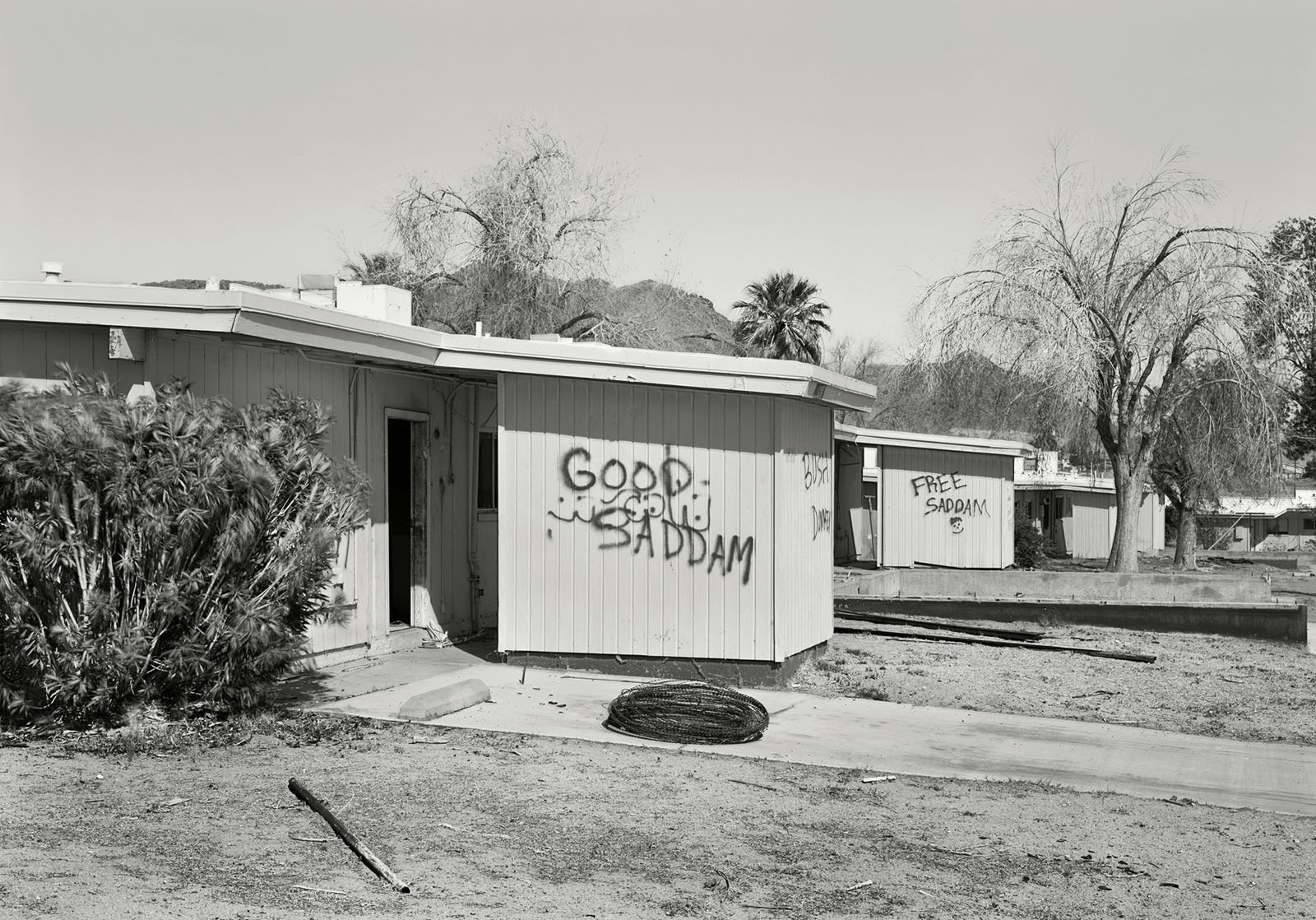
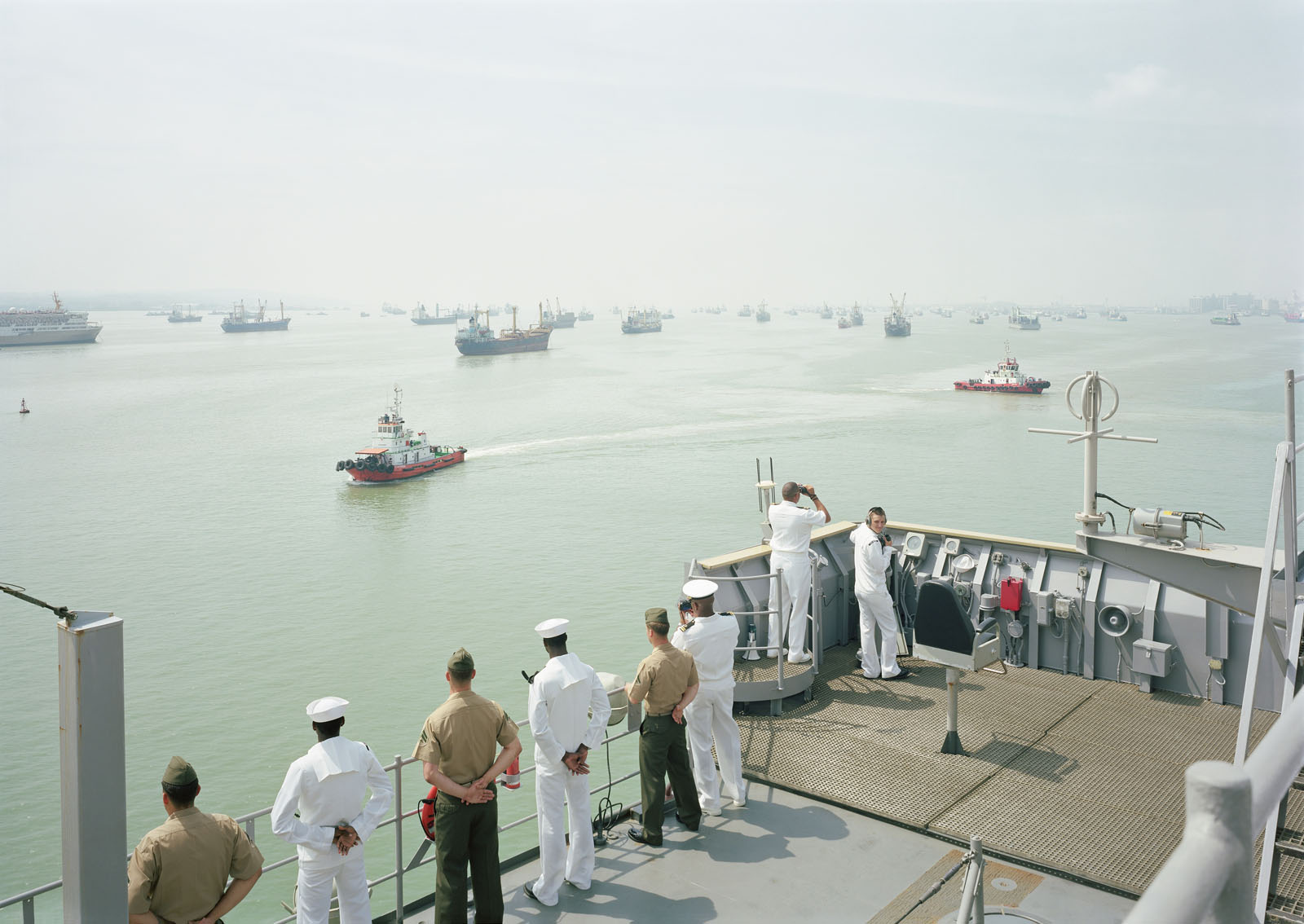
In the series Small Wars (1999-2002), Lê photographs Vietnam War reenactors in North Carolina and Virginia with the utmost sense of “authenticity” creating images that “explore the legacy and mythology of the Vietnam War for contemporary Americans.” In 29 Palms (2003-04) she photographs troops training in an American landscape similar to the one they would soon be deployed to in Iraq. In Events Ashore (2005-14) the artist photographs the crews of U.S. naval vessels around the world exploring the global reach of the American military, its diplomatic, humanitarian, military, and political activities.

In Small Wars and 29 Palms, Lê pictures a simulacra of war, simulations of a war already past (and lost), and a war yet to run its course, which would ultimately lead to the withdrawal of US forces. Her work blurs the boundaries between photojournalism and reality / fiction.

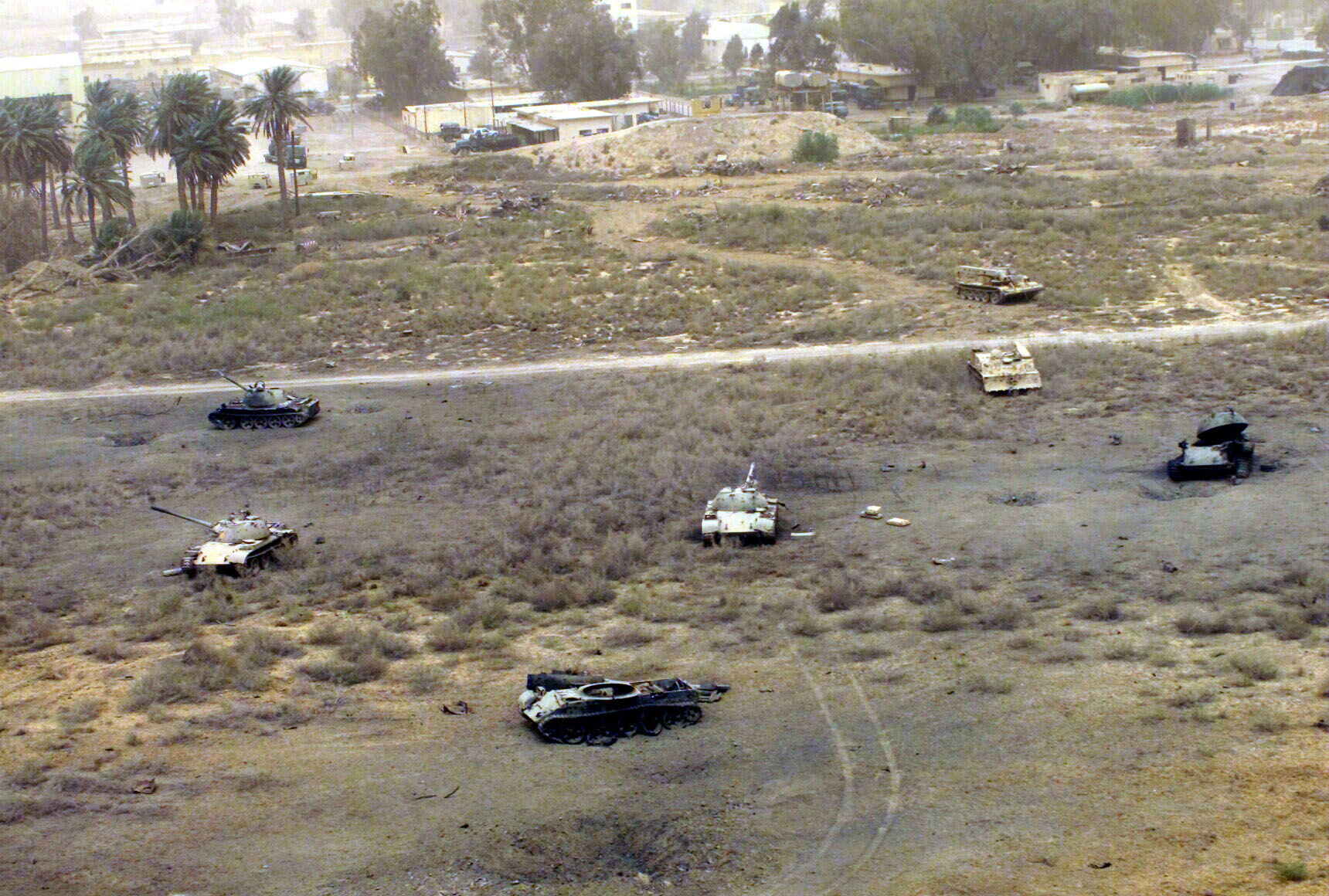
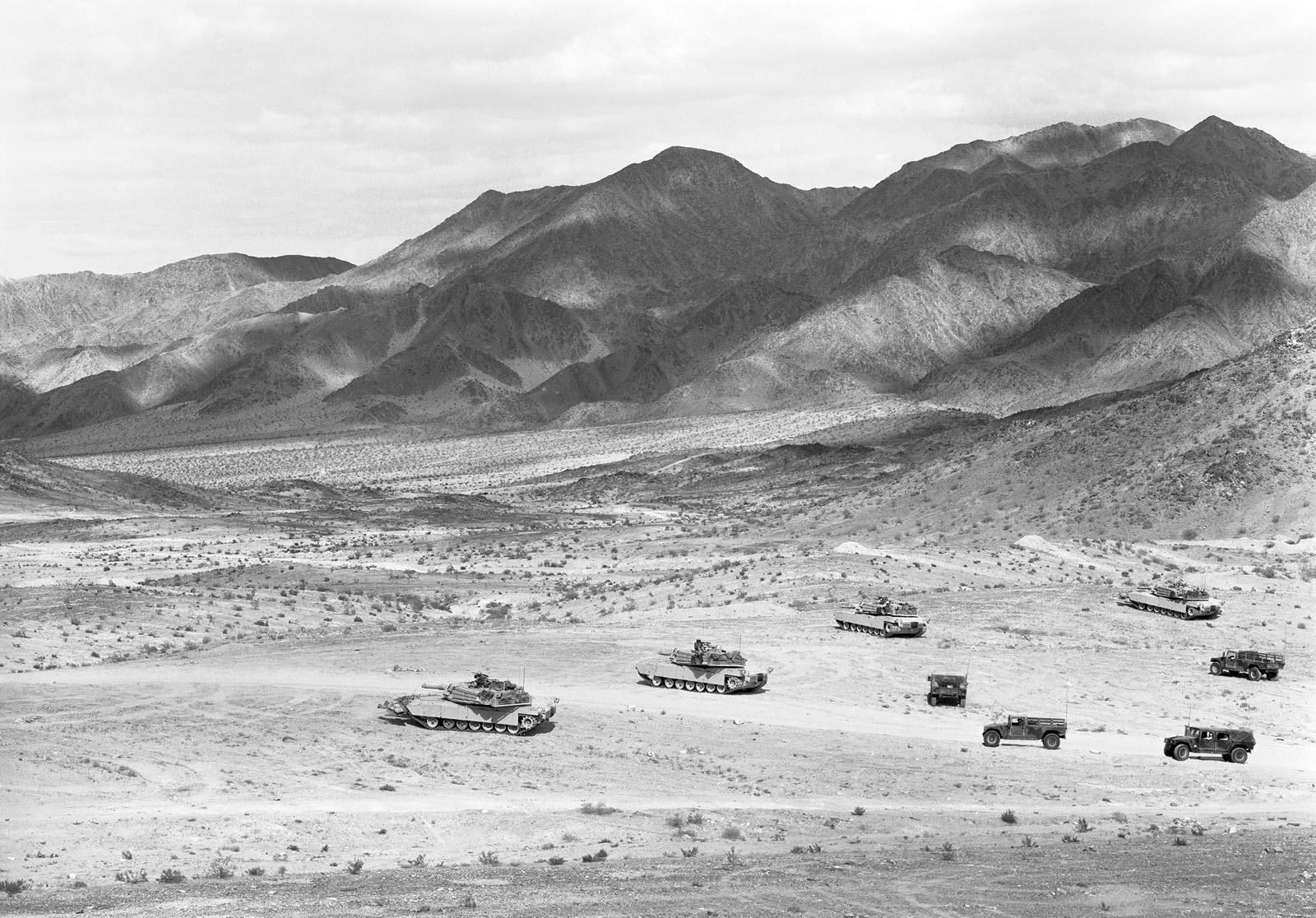
The photograph Ambush I (1999-2002, below) from Small Wars is eerily similar to Henri Huet’s photograph of Life magazine photographer Larry Burrows struggling through elephant grass in 1970 (below) with the difference that Burrows is helping to evacuate a wounded soldier, and that Huet, Burrows and two other photojournalists would be killed when their helicopter was shot down over Laos later in February 1971. Similarly, Lê’s photographs Mechanized Assault (2003-2004) shows a pristine landscape foregrounded with immaculate tanks and personnel carriers in the American landscape… when in reality, American Marines photograph the burnt remains of Iraqi T-55 Main Battle Tanks amongst a non-descript landscape of shell holes and mundane buildings (16 April 2003, below). Further, while not a simulation, the very stillness and chillness of Events Ashore – the physical and metaphorical distance of the photographer from the subject, from the reason of the existence of the military – make the photographs in that series seem almost an apologia for the military.

In a quotation, Lê states that, “… I am not categorically against war. I was more interested in drawing people into my work, to think about the issues that envelop war – representations of war, landscape and terrain in war. When I’m working with the military, I still think of myself as a landscape photographer. My main goal is to try to photograph landscape in such a way that it suggests a universal history, a personal history, a history of culture.”

I understand what the photographer is attempting, but in one sense I remain unconvinced about the success of the mission.

Simply put, the raison d’etre for the military – despite all protestations to the contrary, despite all the good works they otherwise undertake – is “to engage in combat, should it be required to do so by the national defence policy, and to win. This represents an organisational goal of any military, and the primary focus for military thought through military history.” (Wikipedia) In terms of military doctrine,1 we note that in the history of the United States of America, the country has been at war 225 out of 243 years since 1776. America is a militarised society where the military prosecutes war on its own terms, disguising power as virtue. In terms of the prosecution of war, the country seems to be manifestly belligerent.

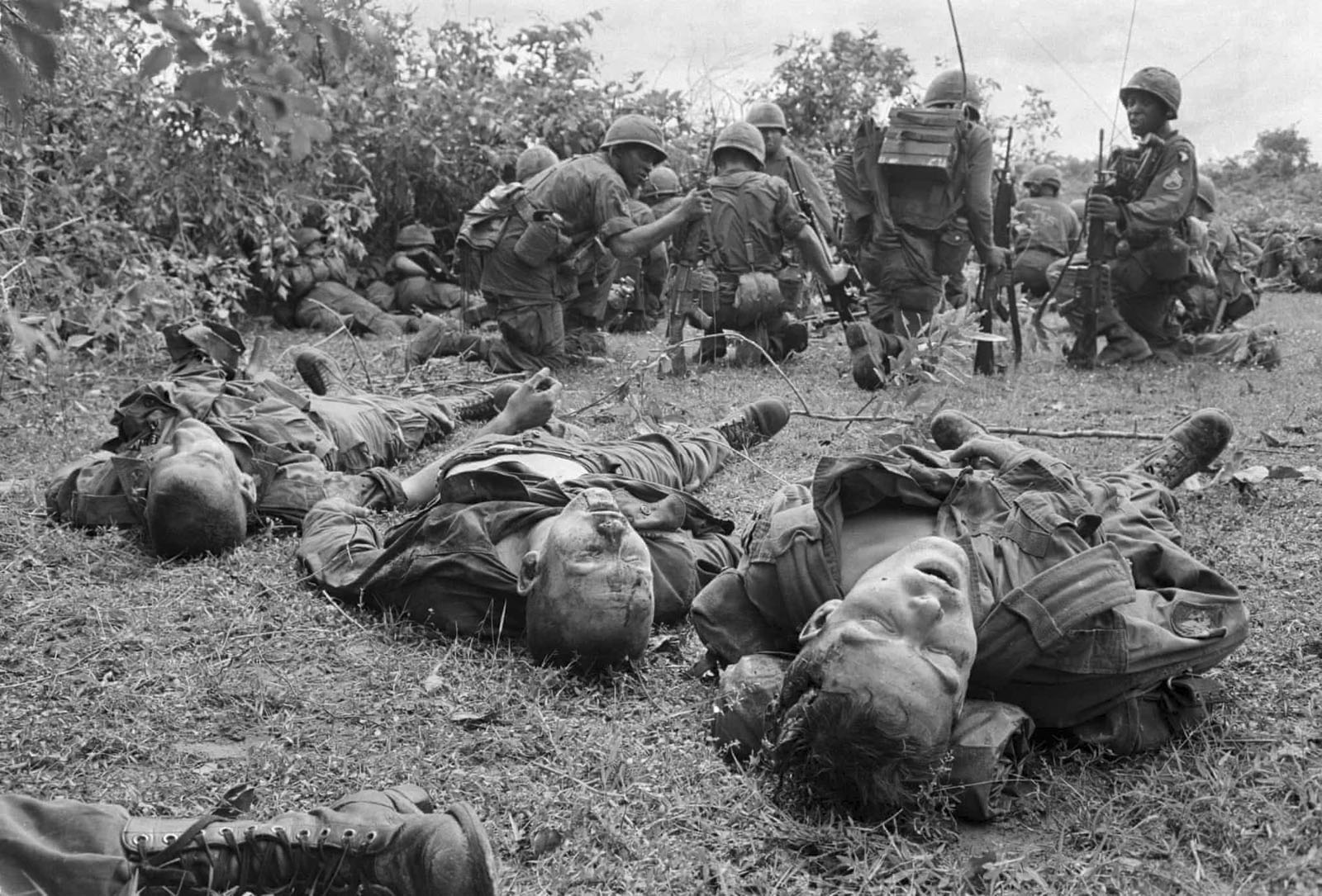
The outcome of any war is death. Sure, the soldiers might be there for economic or social reasons, they may experience fear and exhilaration, boredom and dreams, brotherhood and purpose, travel and education… but ultimately the military is a fighting and killing machine. “Young soldiers in combat inevitably confront killing. They take life away from others, and in so doing breach one of the most fundamental moral values of their society, often with long-term consequences.” Listening to an American veteran from the battle of Caens after the D-Day landings in 1944 recently in a documentary, he observed that all war is, is death – dead German soldiers, dead American soldiers, dead civilians. The reality (not a simulation or a reenactment) of Henri Huet’s photograph of dead soldiers, Bodies of US paratroopers lie near a command post during the battle of An Ninh (1965, below) is shocking and unimpeachable.

Soldiers kill. Human beings, civilian and military, die.

And then the military doesn’t want you to know about that. They cover it up. In World War 1, the British stopped posting lists of the missing and dead in the newspapers because there were so many of them. And in the Iraq war, the American military didn’t want photographs of American coffins in the back of a transport plane published because it would upset the families and the public. Even the metadata (hidden text data) written by the military contained in a public domain image of destroyed Iraqi tanks (see below) in 2003 states, “Operation IRAQI FREEDOM is the multinational coalition effort to liberate the Iraqi people, eliminate Iraq’s weapons of mass destruction and end the regime of Saddam Hussein.” Outright lies and deception … the invasion was illegal under international law as it violated the UN Charter, there were no weapons of mass destruction found, and no link between Saddam Hussein and al-Qaeda. The Iraq War caused at least one hundred thousand civilian deaths, as well as tens of thousands of military deaths.

Everyone is involved in the construction of the world. You can be informed or not. You have choices. Human beings have a choice to go into the military, or not. The problem is that human beings in power, in control (at the top of the military for example) inspire others to endeavour to emulate them. As Alvin Langdon observes, “Like is assimilated unto like. The mind approaches that which it continually contemplates, and kindred inevitably follow.”

Now, in another sense I believe that Lê achieves her aim, to suggest a universal history, a personal history, and a history of culture embodied in the landscape, suggestions that possibly sweep away landscapes of control.

As the Irish poet and philosopher John O’Donohue observed, “Even in landscapes of control you can be swept off your feet by sheer beauty.” Landscapes of control cannot stand before the power of beauty embodied in the landscape and in Lê’s photographs the memory of the landscape, its music, embeds itself in the photograph. Through the power of beauty, the Inner Landscape of Beauty (one that is metaphorical as much as physical, in the mind as much as it is externally verbalised), the photographs of An-My Lê subversively undermine the control of the military over the land: its occupation and colonisation of it, its wars to control it, and its very “uniform” presence in it. Look again at the photograph Mechanized Assault (2003-2004, below) and now it is the distance of the photographer from the subject – the infinite sublime as I call it – that upends the punitive intentions of the military and overwhelms their puny vehicles. It’s an earth, spirit and mind thing.

In the viewers recognition of the beauty of this land(e)scape, we acknowledge our own virtue and assert our desire to be free. Free from restrictive control. Free from oppression. Free from war. The military, police “force” and government are and always will be, afraid of the infinite within us…

Dr Marcus Bunyan

Word count: 1,540


Footnotes

1/ “Development of military doctrine is perhaps the more important of all capability development activities, because it determines how military forces are used in conflicts, the concepts and methods used by the command to employ appropriately military skilled, armed and equipped personnel in achievement of the tangible goals and objectives of the war, campaign, battle, engagement, and action.” (Wikipedia)


Many thankx to the Amon Carter Museum of American Art for allowing me to publish the art work in the posting. Please click on the photographs for a larger version of the image.


Henri Huet (French, 1927-1971) / AP 'Bodies of US paratroopers lie near a command post during the battle of An Ninh' 18 September 1965 from the exhibition 'An-My Lê: On Contested Terrain' at the Amon Carter Museum of American Art, Fort Worth, Texas, April - August, 2021


Henri Huet (French, 1927-1971)/AP
Bodies of US paratroopers lie near a command post during the battle of An Ninh
18 September 1965


The paratroopers, of the 1st Brigade, 101st Airborne Division, were hit by heavy fire from guerrillas that began as soon as the first elements of the unit landed. The dead and wounded were later evacuated to An Khe, where the 101st was based. The battle was one of the first of the war between major units of US forces and the Vietcong.


An-My Lê: On Contested Terrain is the first comprehensive survey of the work of Vietnamese-American photographer An-My Lê. Featuring photographs from a selection of the artist’s five major bodies of work, the nationally touring exhibition considers the celebrated photographer’s nearly 25-year career exploring the edges of war and recording these landscapes of conflict in beautiful, classically composed photographs.

Born in Saigon in the midst of the Vietnam War, Lê was evacuated with her family by the U.S. military. She has spent decades considering the complexity of American history and conflict, from war reenactments to the removal of Confederate monuments. This timely exhibition explores politically-charged topics through Lê’s subtle, evocative images that avoid the sensationalism often seen in newspapers and movies. Sweeping views that emphasise the size and breadth of the theatre of war display the artist’s technical strengths in the classical landscape tradition, which she uses to compose beautiful images that draw the viewer into deeper consideration of complex themes of history and power.


” …as a photographer, I’m interested in looking at and representing the real world, and interpreting it in ways that allow me to learn from it and enlighten the issues I am trying to understand. I feel entirely comfortable using photographs with simple titles and explanatory texts. And I feel comfortable with the fact that some people may interpret a photograph differently from others. My photographs are visually complicated and carry complex messages because of the way I pack the information into the frame and structure the picture. People need to spend time with the work in order to piece together all the information. But of course the reading is subjective. I like that. I like that it could be contradictory, that it could be full of surprises, that it could be confusing. I see a fragile construct between the objective and subjective.

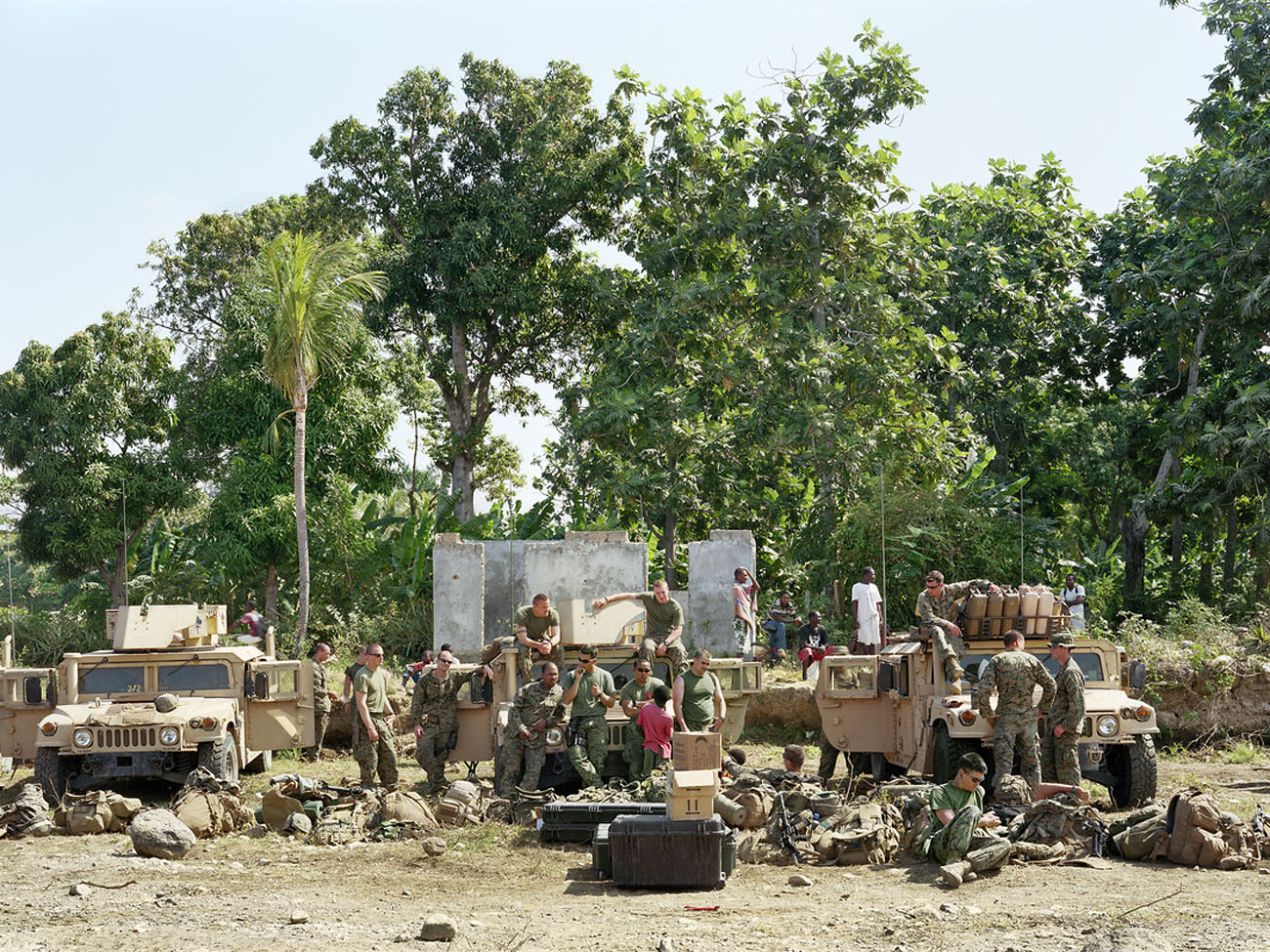
Ultimately, the picture is there to incite someone to think about the issues at stake, rather than say explicitly how I myself feel about the American military. Some of my work could be understood as being supportive of the military. You could look at some pictures and think: wow, those young Americans are so heroic! Or you could see in the same image a reflection of American imperialism: look at the American guy standing there, trying to teach the locals how to do it the American way! There are so many possible interpretations. Sometimes the US military comes in and does help people. For example, after the earthquake in Haiti, the military was able to accomplish what no one else could. It was there with supplies in a matter of hours. But there’s a fine line between coming to help and invading, and it has to do with physical and economic presence and the ways in which Americans occupy the land. So the work is about those tensions.

I think it goes back to my own conflicted perceptions of the US military and what it did to Vietnam. At the end of the war, it was the Americans who could help us escape from the approach of communism. Everyone tried to scale the walls of the American Embassy, not the French Embassy. So it’s about all those conflicted things.”


An-My Lê quoted in Andrew Maerkle. “Fires on the Plain,” on the ART-iT website 28/07/2015 [Online] Cited 26/07/2021.


“Living through the Vietnam War as a child and immigrating to the United States as a teenager, An-My Lê’s life has been indelibly marked by international conflict. For over two decades, her work as a photographer has engaged the unseen facets within the theater of war. With her large-format camera in tow, she has immersed herself in the Appalachian forest with Vietnam War reenactors, and traveled aboard U.S. aircraft carriers around the globe. Lê identifies as a landscape photographer, a perspective that grounds her subtle, impactful images of American interventionism within a larger history of violence.”


Sara Christoph. “An-My Lê with Sara Christoph,” on the Brooklyn Rail website February 2015 [Online] Cited 26/07/2021.


Photographer An-My Lê: 2012 MacArthur Fellow | MacArthur Foundation | October 2012

Meet An-My Lê and learn about how she came to photography, her work with the U.S. military, and her 19th-century-style camera.

Photographer An-My Lê was named a MacArthur Fellow in 2012. The Fellowship is a $500,000, no-strings-attached grant for individuals who have shown exceptional creativity in their work and the promise to do more.


An-My Lê: Landscapes of war | July 2018

Find out more about An-My Lê’s series Small Wars (1992-2002), and Lê’s experiences photographing Vietnam war reenactors.

Photographer An-My Lê, who grew up in Saigon during the Vietnam War, describes her series Small Wars (1999-2002) and 29 Palms (2003-2004). She discusses how contemporary landscape photography can be used to present more than just scenery; it can illuminate culture, architecture, and social and political issues that citizens are concerned with today.


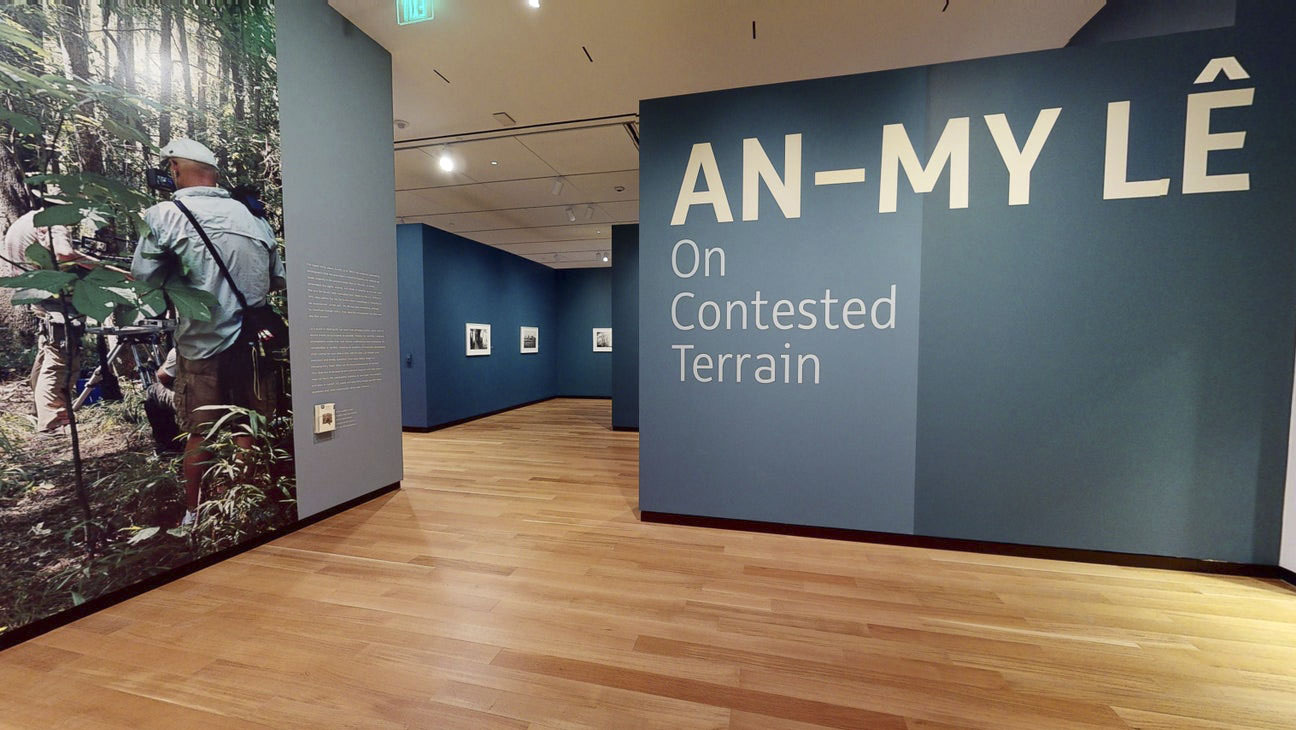
Installation view of the exhibition 'An-My Lê: On Contested Terrain' at the Amon Carter Museum of American Art


Installation view of the exhibition An-My Lê: On Contested Terrain at the Amon Carter Museum of American Art


An-My Lê (Vietnamese-American, b. 1960) 'Untitled, Mekong Delta' 1994


An-My Lê (Vietnamese-American, b. 1960)
Untitled, Mekong Delta
1994
Gelatin silver print
© An-My Lê


Viêt Nam (1994-1998)

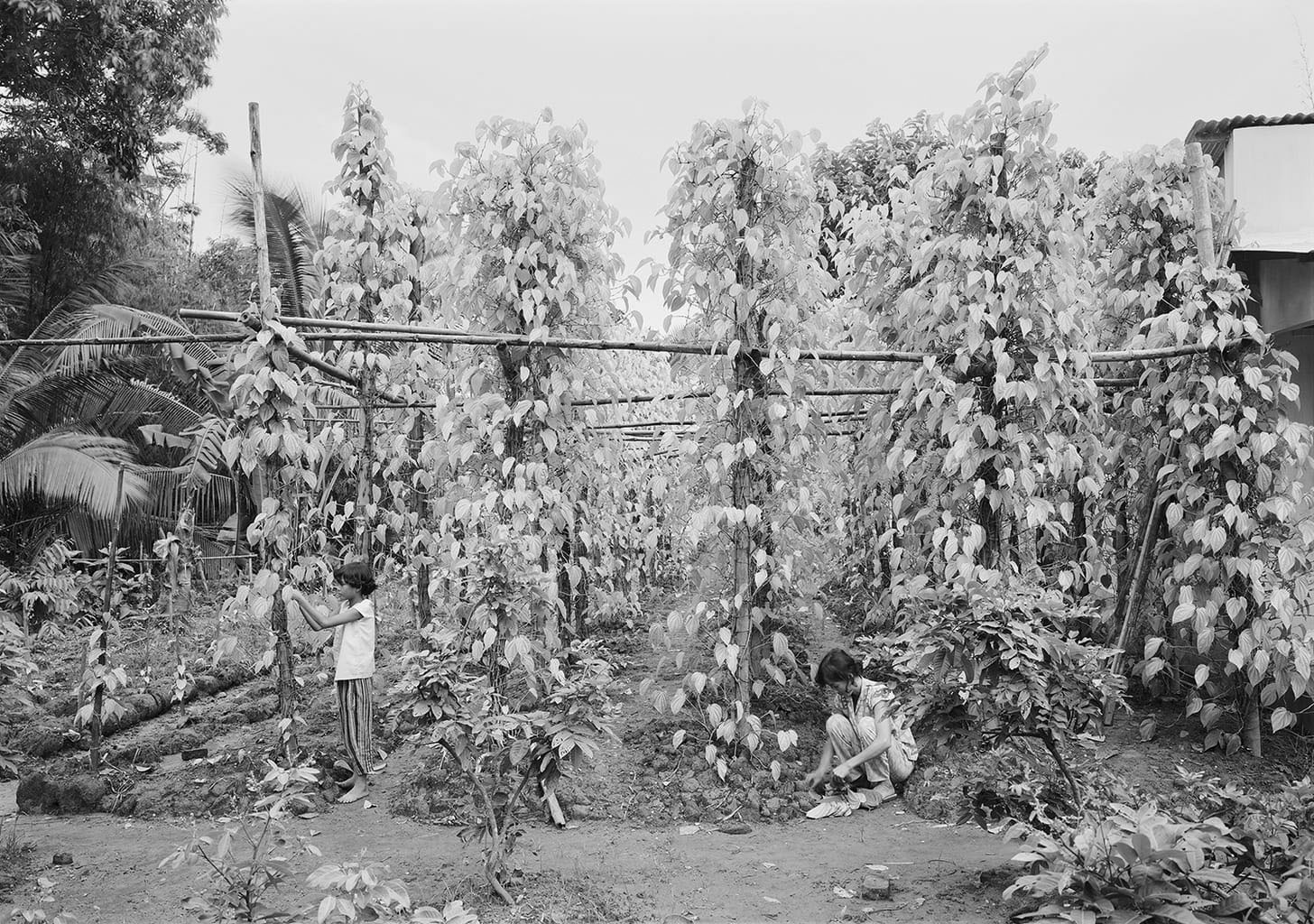
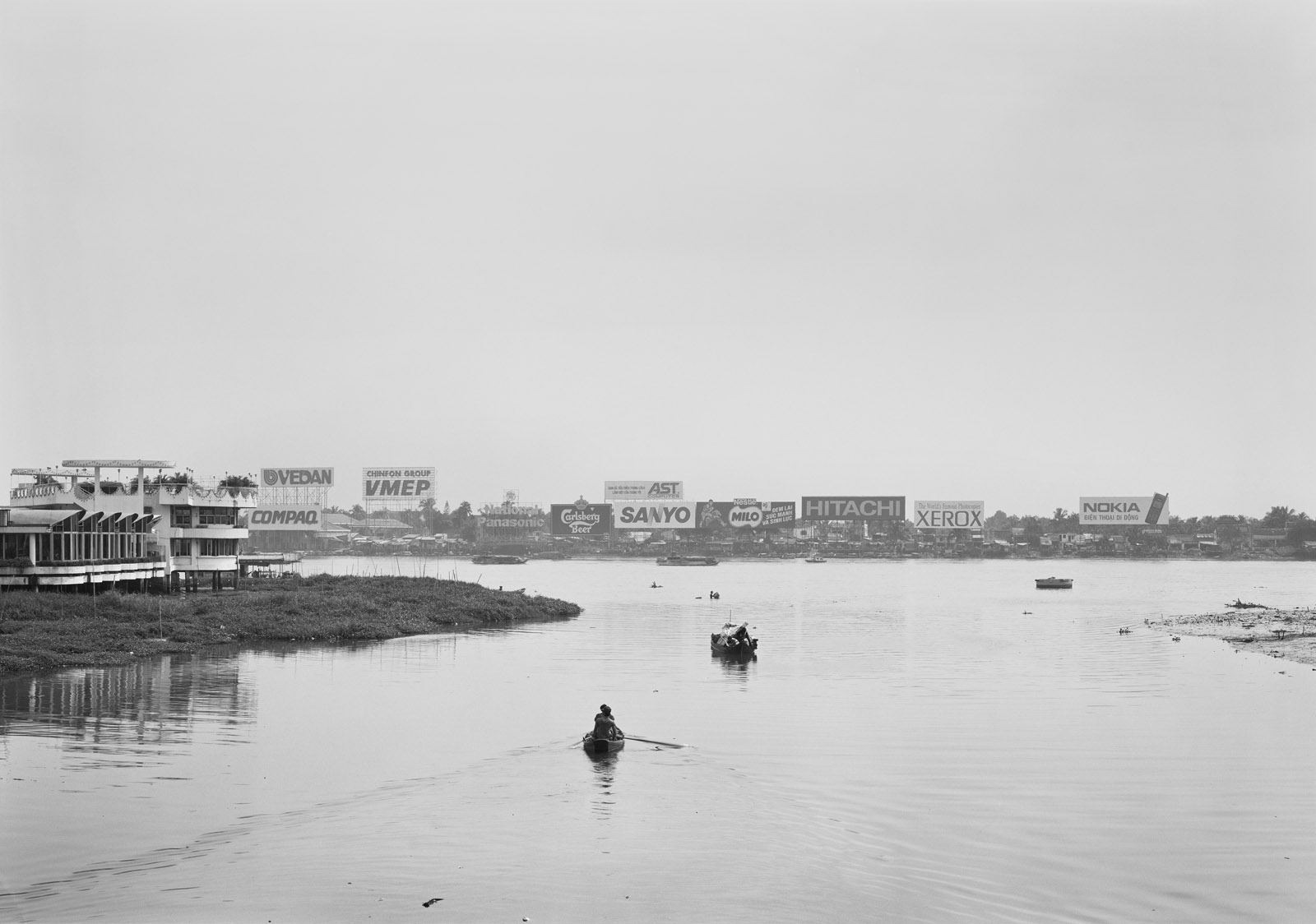
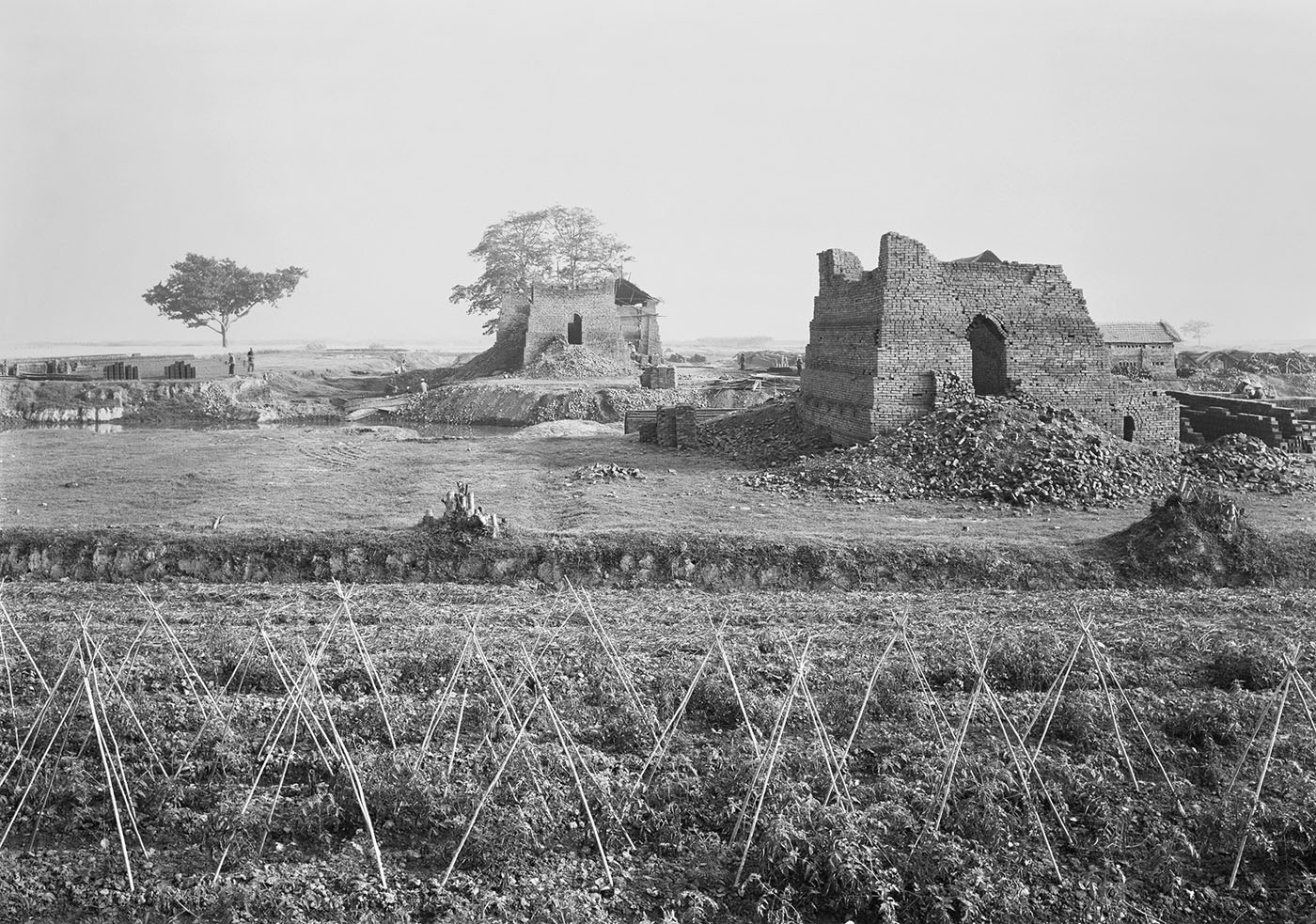
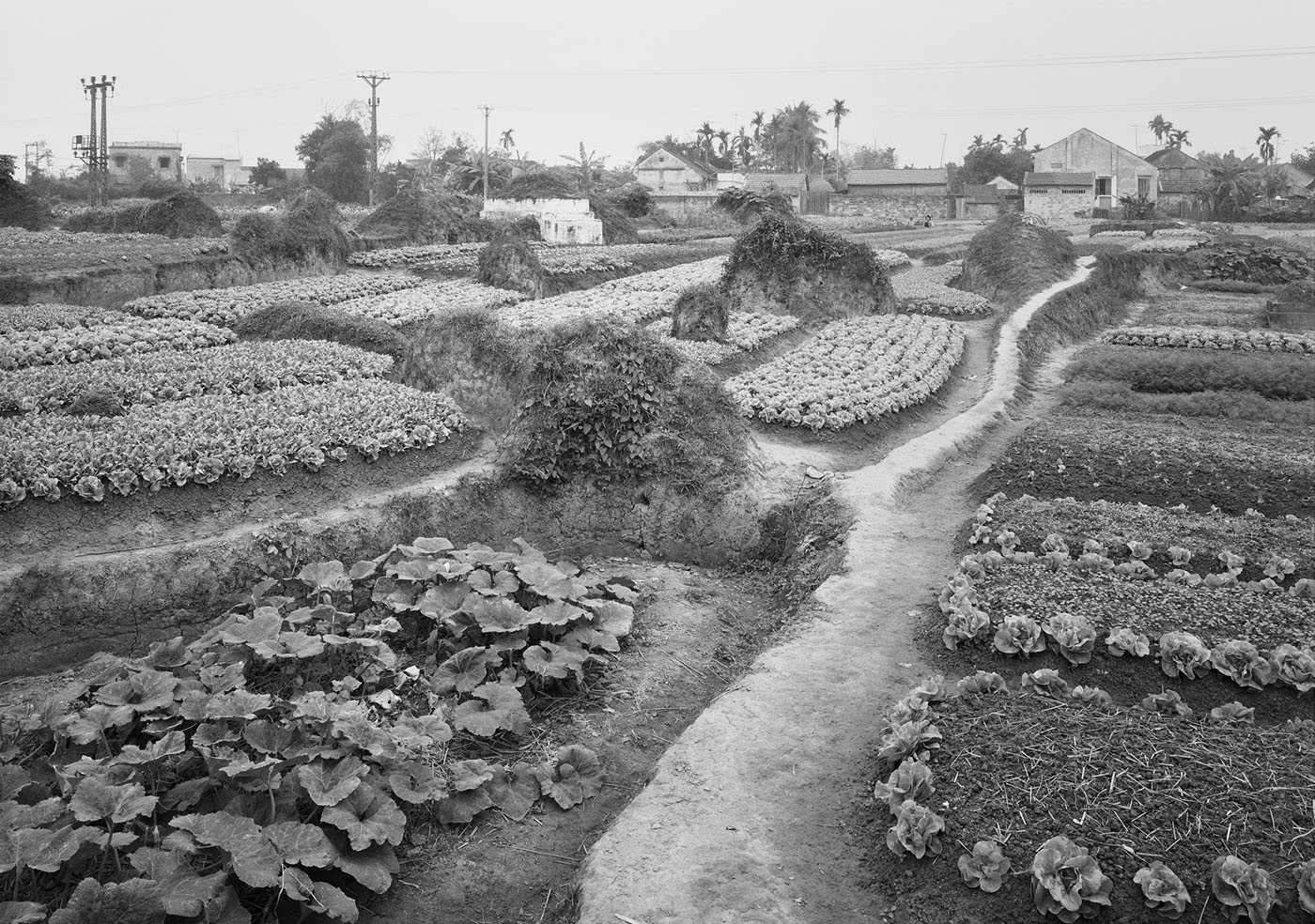
In 1994, Lê returned to her home country for the first time since being evacuated as a teenager in 1975, arriving shortly after relations between the U.S. and Vietnam were normalised. She brought her camera with her, hoping to untangle the reality of her childhood memories from what she had seen over the years in movies and the news. She started the project in her mother’s birthplace, Hanoi, which she had never visited before, and returned to Vietnam three more times, spending about a month there on each trip. Using a large-format camera and shooting from an elevated perspective, Lê portrayed the landscape as a backdrop for human activity – particularly war and conflict – throughout history and into the present. Her series began with images of traditional, rural landscape she recalled from her childhood but eventually evolved into a photographic meditation on the fog of war and its tendency to scramble perceptions. Other images include scenes from urban and modern-day Vietnam unlike anything she had seen represented in the U.S. In this series Lê refined her working methods and began engaging with themes that remain cornerstones of her practice today.

Wall text from the exhibition


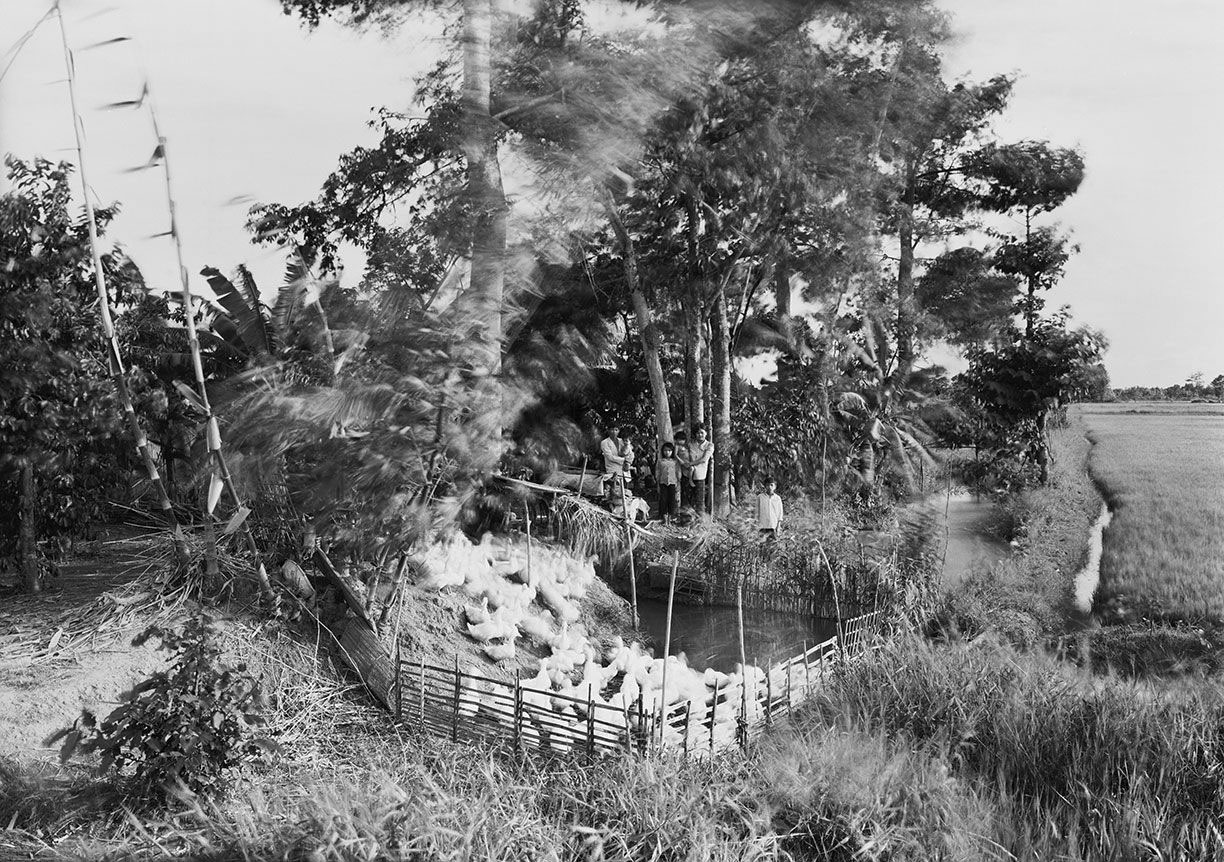
An-My Lê (Vietnamese-American, b. 1960) 'Untitled, Mekong Delta' 1994


An-My Lê (Vietnamese-American, b. 1960)
Untitled, Mekong Delta
1994
Gelatin silver print
© An-My Lê


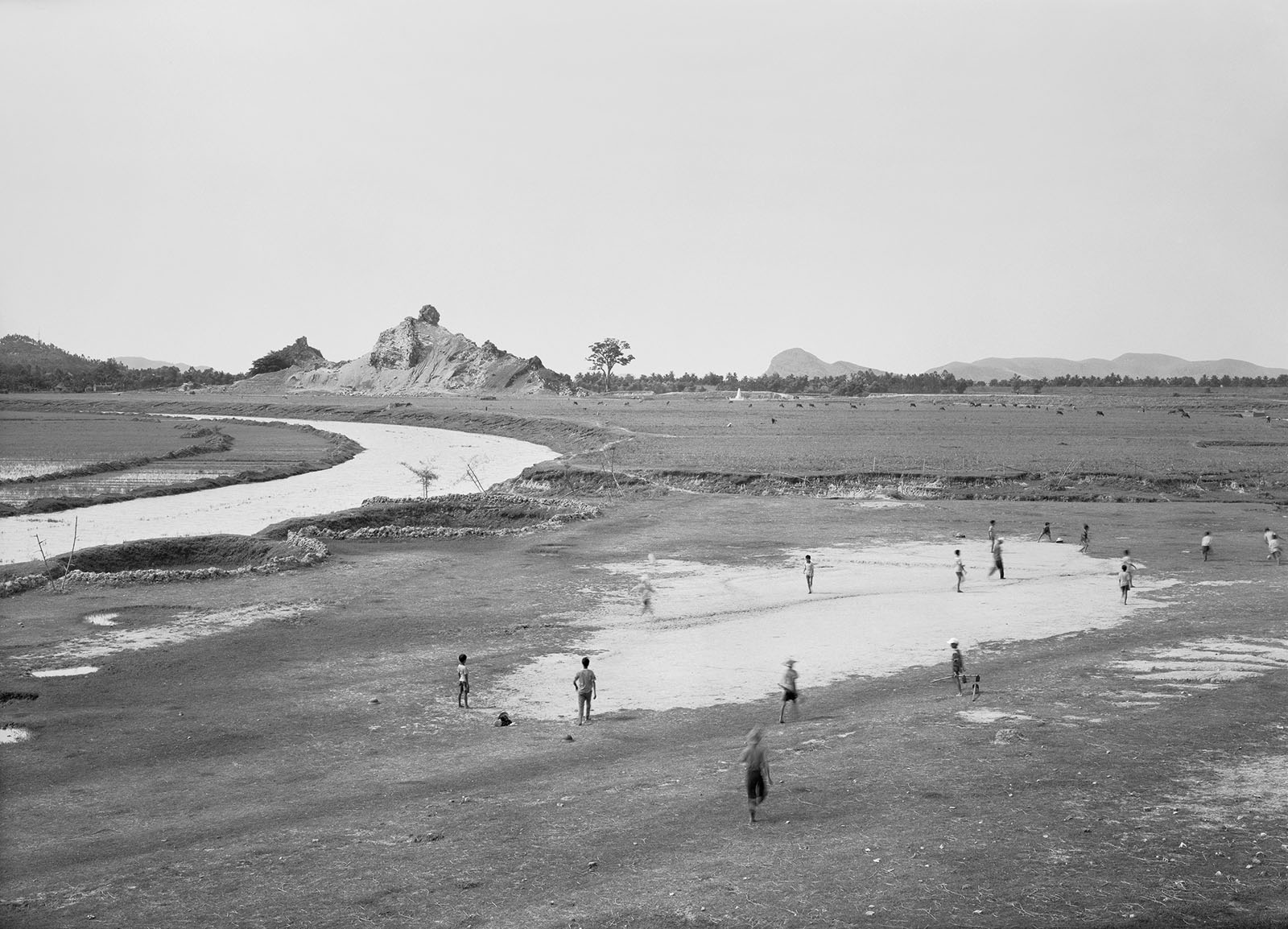
This was the first photograph Lê made in Vietnam after almost twenty years away. It reflects her directorial style: Unlike a photojournalist, who strives to record events without intervening, Lê instructed the members of this farming family to stand still and look at the camera. The movement of their livestock and the surrounding foliage in the wind creates blur – perhaps a nod to the quickening pace of modern life in Vietnam.


An-My Lê (Vietnamese-American, b. 1960) 'Untitled, Ho Chi Minh City' 1995


An-My Lê (Vietnamese-American, b. 1960)
Untitled, Ho Chi Minh City
1995
Gelatin silver print
© An-My Lê


An-My Lê (Vietnamese-American, b. 1960) 'Untitled, Thanh Hoa' 1998


An-My Lê (Vietnamese-American, b. 1960)
Untitled, Thanh Hoa
1998
Gelatin silver print
© An-My Lê


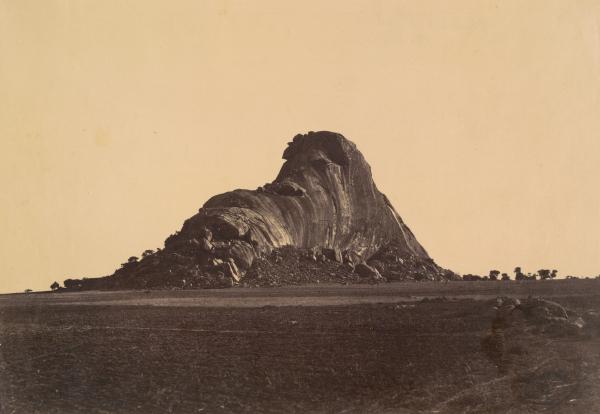
Linnaeus Tripe (British, 1822-1902) 'Between Chittumputty and Teramboor: Elephant Rock, End View, January-February 1858' 1858


Linnaeus Tripe (British, 1822-1902)
Between Chittumputty and Teramboor: Elephant Rock, End View, January-February 1858
1858


Linnaeus Tripe (British, 1822-1902)

Linnaeus Tripe (1822-1902) was a British pioneer of photography, best known for his photographs of India and Burma taken in the 1850s.

Linnaeus Tripe was born in Plymouth Dock (now Devonport), Devon, to Mary (1786-1842) and Cornelius (1785-1860). He was the ninth of twelve children. He joined the East India Company army in 1838, and in 1840, became a lieutenant based in the south of India. He returned to England in 1850, on a leave that was extended due to ill health until 1854. During this time he began to experiment with photography, and joined the Photographic Society of London in 1853. He returned to Bangalore, India, as a captain in June 1854. In December of that year he made his first photographs of India. In February of the following year he took part in the Madras Exhibition of Raw Products, Arts, and Manufactures of Southern India, displaying 68 photographs of previously unphotographed temples. The jury declared these photographs the “Best series of photographic views on paper.”

Text from the Wikipedia website


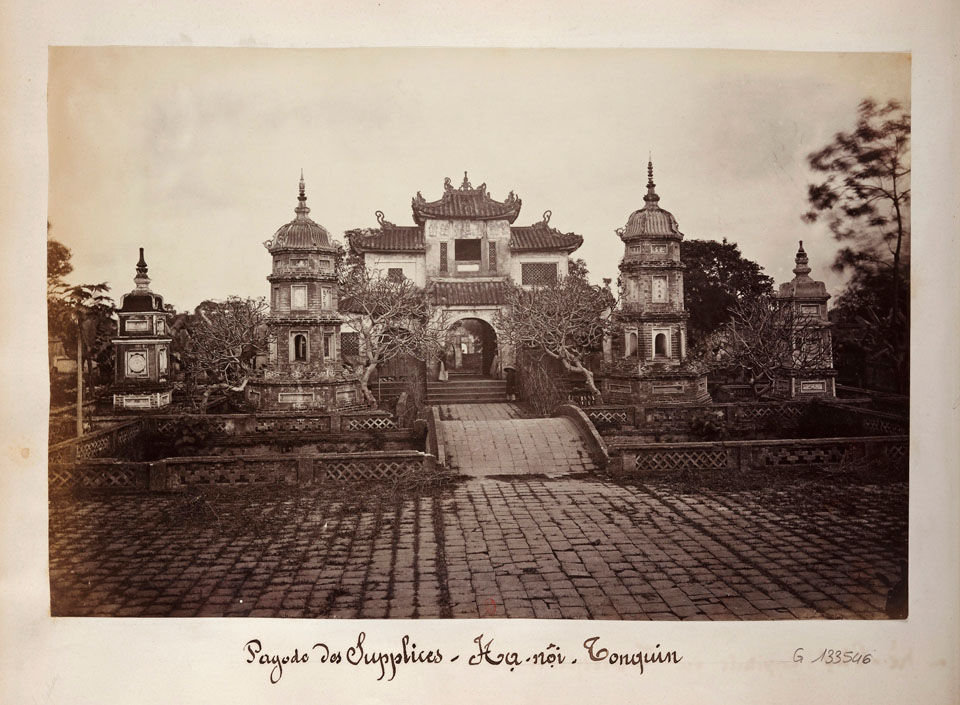
Hippolyte Arnoux (French, (active c. 1860 - c. 1890) and Emile Gsell (French, 1838-1879) 'Pagoda des Supplices, Hanoi' 1880


Hippolyte Arnoux (French, (active c. 1860 – c. 1890) and Emile Gsell (French, 1838-1879)
Pagoda des Supplices, Hanoi
1880
From “The trip from Egypt to Indochina” (Voyage de l’ Egypte à l’ Indochine)


An-My Lê (Vietnamese-American, b. 1960) 'Untitled, But Thap' 1996


An-My Lê (Vietnamese-American, b. 1960)
Untitled, But Thap
1996
Gelatin silver print
© An-My Lê


“In graduate school, I was nudged to draw from my personal experience. This was in 1992, before Bill Clinton lifted the economic embargo against Vietnam, so it was not easy to travel there. Having escaped Vietnam in 1975 without our family albums, I pored through the photography catalogs in the libraries at Yale for references to Vietnam. I was shocked to find devastating images of war, and also patronising ethnographic photographs taken by European photographers during the colonial period, but nothing else. When I was finally able to travel there a few years later, I made a series of black-and-white photographs, mostly landscapes, that were intended to fill in the gaps that existed between the war documentation and the ethnographic archive.”


An-My Lê, 2021. Conversation with Viet Thanh Nguyen, The New York Review of Books


“For me, the landscape has always been the constant in my work. I work with scale as a way to give context to human endeavours, military endeavours, and the history of power. In the end, Vietnam has endured many battles and gone through so many changes. The Chinese invasion, the Japanese occupation, the colonialism of the French, the Indochina War, the Americans – the constancy was always the landscape. And people change, cultures change over time, but there is something about the land. Even as our world modernises, there is a certain consistency, a certain authenticity.”


An-My Lê quoted in Sara Christoph. “An-My Lê with Sara Christoph,” on the Brooklyn Rail website February 2015 [Online] Cited 26/07/2021.


“When I first made the pictures in Vietnam, I was not ready to deal with the war. Being able to go back to Vietnam was a way to reconnect with a homeland, or with the idea of what a homeland is and with the idea of going home. When you live in exile, things like smells and memories and stories from childhood all take on such importance. So, this was an opportunity to reconnect with the real thing, and to be confronted with contemporary Vietnam. It’s not the way it was twenty years ago, or the way it’s described in folktales my grandmother and mother used to tell me, or even in stories from my mother’s own childhood in the North. So, I really looked for things that suggested a certain way of life – agrarian life – things that connect you to the land. Unfortunately, pictures don’t smell; but if I could do that, they would be about smells as well.”


An-My Lê quoted in “Vietnam: An-My Lê,” on the Art21 website Nd [Online] Cited 26/07/2021


An-My Lê (Vietnamese-American, b. 1960) 'Untitled, Son Tay' 1998


An-My Lê (Vietnamese-American, b. 1960)
Untitled, Son Tay
1998
Gelatin silver print
© An-My Lê


“People always say that it is so bizarre how these men reenact the Vietnam War, and go to so much trouble to do so! But then, you think about Steven Spielberg or even Kathryn Bigelow, and in a way, their work is a kind of reenactment pushed to the extreme. And no one has any issues with that! Just because it is a movie and there are millions of dollars involved, it is entertainment. And then you look to the military. All the training, practice drills, etc. They use the same language of reenactment. ‘Today, our scenario is…'”


An-My Lê, 2015

Read the poem “A Brief History of Reënactment” by Vietnamese-American poet Hai-Dang Phan that was inspired by Lê’s series ‘Small Wars’.


“I feared for my safety on my first trip to Virginia, because I didn’t know the reenactors or their motivations. They called themselves ‘living historians.’ They grew up collecting badges and they knew everything about war histories, and this was a way for them to live out some of these fantasies. […]

It was so interesting to see the way who played what was economically replicated in real life. The kids who had more money would play the Americans because the American gear was more expensive, and they also tended to be less fit. They were always up on the hill sleeping on air mattresses and eating C-rations. And then us, the North Vietnamese Army or Viet Cong, we were down sleeping on the ground or in hammocks. We were always hiking up and ambushing them.”


An-My Lê, 2019 conversation with Viet Thanh Nguyen in the catalogue for “An-My Lê: On Contested Terrain.”


An-My Lê (Vietnamese-American, b. 1960) 'Viet Cong Camp' 1999-2002


An-My Lê (Vietnamese-American, b. 1960)
Viet Cong Camp
1999-2002
From the series Small Wars (1999-2002)
Gelatin silver print
© An-My Lê


Small Wars (1999-2002)

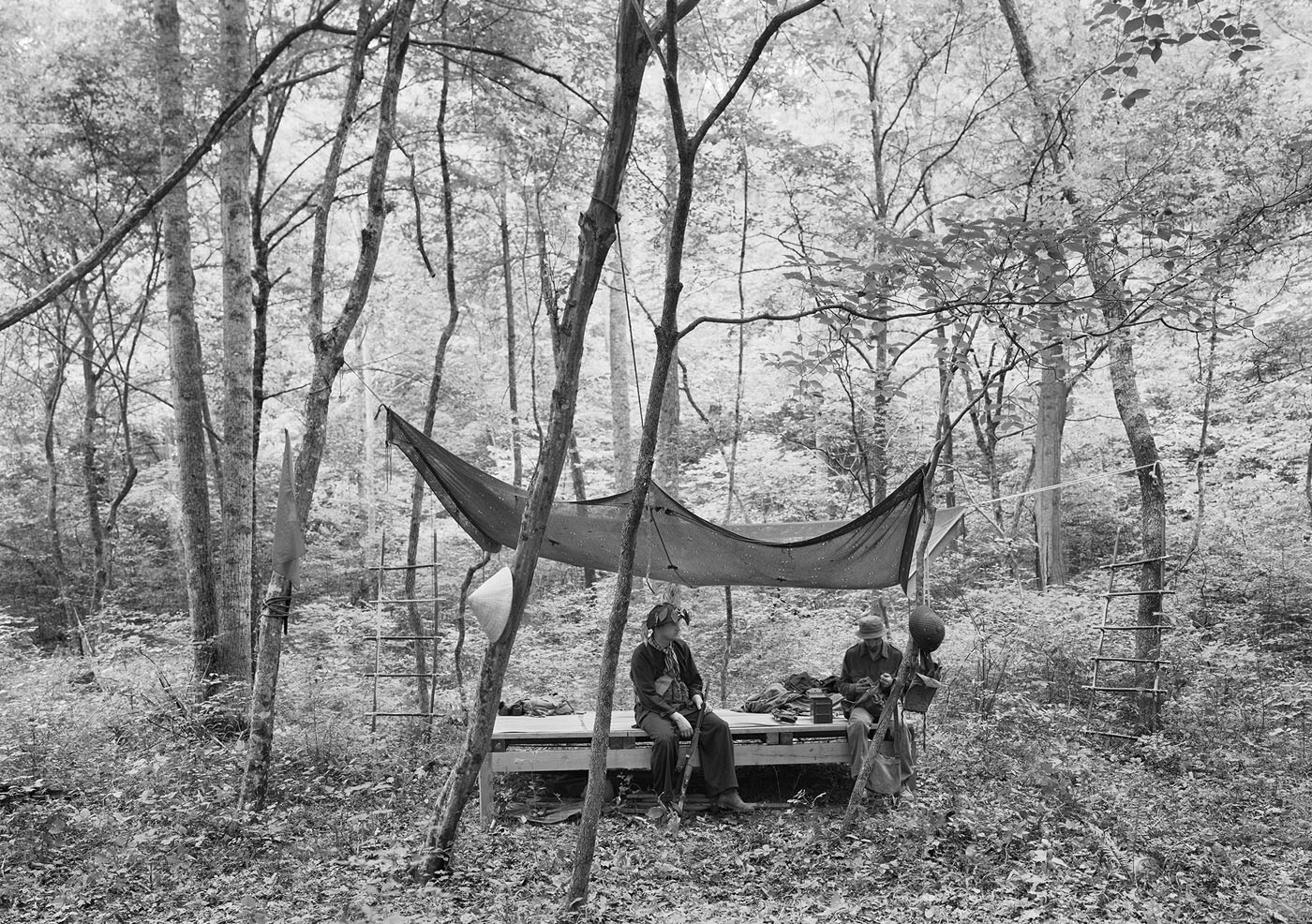
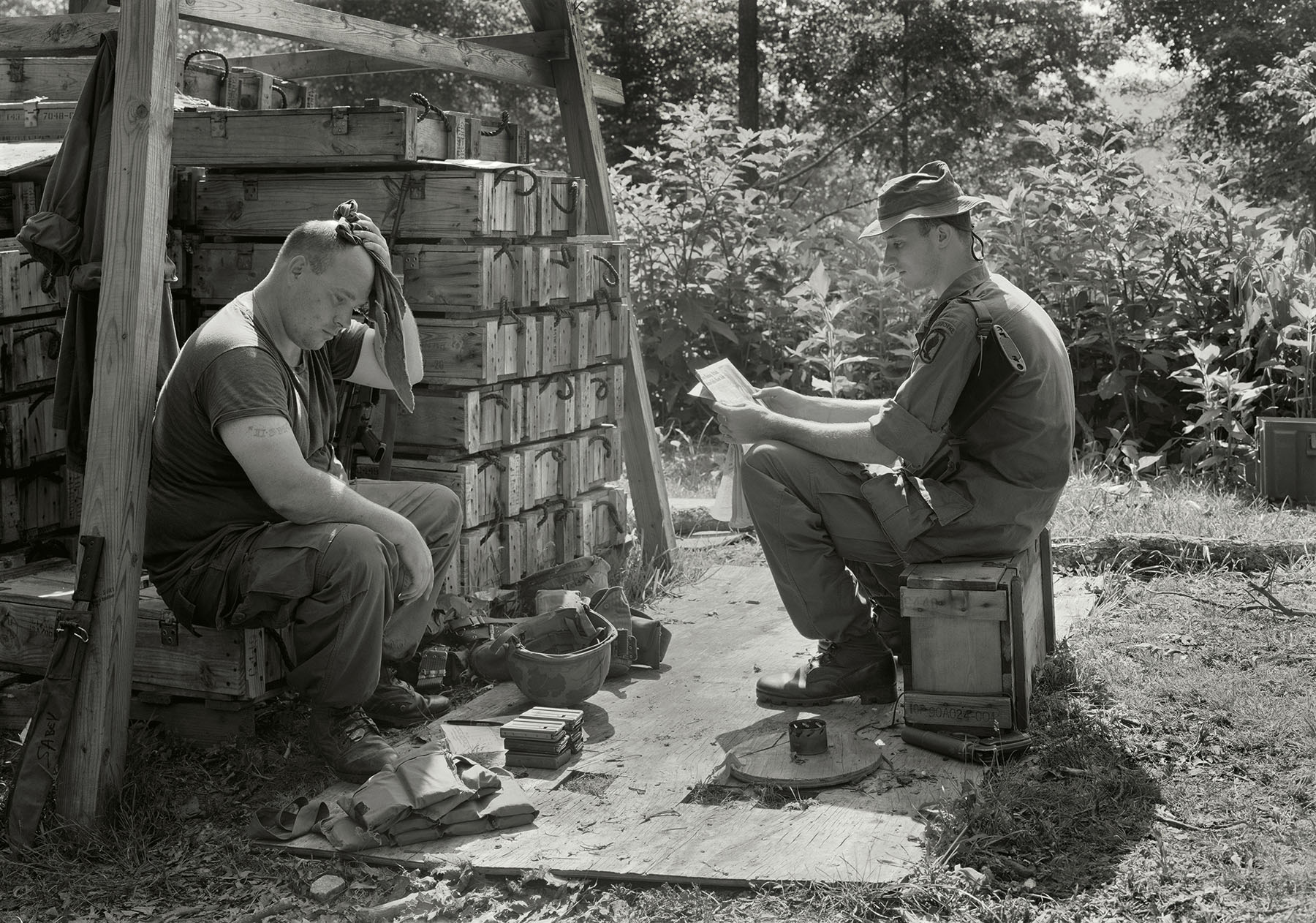
While researching the Vietnam War for her work, Lê discovered small groups of Vietnam War reenactors based in Virginia and North Carolina who were primarily civilians with little or no military experience. The organisers agreed to let her photograph if she also participated, and over the course of three summers she attended and photographed four or five reenactments, which became her series Small Wars. Even though Lê is from South Vietnam and had little firsthand knowledge of the North, she was often enlisted to play the role of North Vietnamese soldier or Viet Cong rebel. The other reenactors appreciated the “authenticity” she brought to the scenes, in part because it made their own experience feel more realistic. Lê’s participation became a way for her to understand personal histories and associations the reenactors brought with them to their performances, and it helped her better imagine what it might have been like for the North Vietnamese soldiers who fought in the war. Matching the reenactors’ commitment to authenticity, and underscoring her control of the scenes occurring in front of her camera, Lê consulted a military expert to restage certain moments and ensure that every detail, from the uniforms to the equipment, was as historically accurate as possible.


An-My Lê (Vietnamese-American, b. 1960) 'Stars and Stripes' 1999-2002


An-My Lê (Vietnamese-American, b. 1960)
Stars and Stripes
1999-2002
From the series Small Wars (1999-2002)
Gelatin silver print
© An-My Lê


An-My Lê (Vietnamese-American, b. 1960) 'Sniper I' 1999-2002


An-My Lê (Vietnamese-American, b. 1960)
Sniper I
1999-2002
From the series Small Wars (1999-2002)
Gelatin silver print
© An-My Lê


Henri Huet (French, 1927-1971) / AP ''Life' magazine photographer Larry Burrows (far left) struggles through elephant grass and the rotor wash of an American evacuation helicopter as he helps GIs carry a wounded soldier on a stretcher from the jungle to the chopper in Mimot, Cambodia' 4 May 1970


Henri Huet (French, 1927-1971) / AP
‘Life’ magazine photographer Larry Burrows (far left) struggles through elephant grass and the rotor wash of an American evacuation helicopter as he helps GIs carry a wounded soldier on a stretcher from the jungle to the chopper in Mimot, Cambodia
4 May 1970


Life magazine photographer Larry Burrows (far left) struggles through elephant grass and the rotor wash of an American evacuation helicopter as he helps GIs carry a wounded soldier on a stretcher from the jungle to the chopper in Mimot, Cambodia on 4 May 1970. The evacuation came during the US incursion into Cambodia. Burrows was killed on 10 February 1971, along with the photographer who took this picture, Henri Huet, and two other photojournalists – Kent Potter of UPI and Keisaburo Shimamoto of Newsweek – when their helicopter was shot down over Laos.


An-My Lê (Vietnamese-American, b. 1960) 'Ambush I' 1999-2002


An-My Lê (Vietnamese-American, b. 1960)
Ambush I
1999-2002
From the series Small Wars (1999-2002)
Gelatin silver print
© An-My Lê


An-My Lê (Vietnamese-American, b. 1960) 'Rescue' 1999-2002


An-My Lê (Vietnamese-American, b. 1960)
Rescue
1999-2002
From the series Small Wars (1999-2002)
Gelatin silver print
Courtesy of the artist and Marian Goodman Gallery, New York, Paris, and London
© An-My Lê


The Vietnam War reenactors Lê photographed were committed to creating “authentic” scenarios. This meant that every element, from their uniforms to their weapons and even their encampments, was meticulously researched and either purchased from approved sources or carefully fabricated. To further heighten the realism of their scenes, the reenactors gained access to Fort Story, a Joint Expeditionary Base in Virginia Beach that has been used as a training site for amphibious combat exercises since the end of World War II. A Vietnam-era jet that is grounded there became the site of a crash reenactment.


An-My Lê (Vietnamese-American, b. 1960) 'Colonel Greenwood' 2003-2004


An-My Lê (Vietnamese-American, b. 1960)
Colonel Greenwood
2003-2004
Gelatin silver print
Collection of the Museum of Contemporary Photography at Columbia College, Chicago, Gift of Lannan Foundation, Santa Fe, NM
Courtesy of the artist and Marian Goodman Gallery, New York, Paris, and London
© An-My Lê


“I came to understand a lot about life in the military through conversations with the marines. At that point, I had never quite understood why someone would join the military. I thought people join because they want to fight, because they want to shoot guns, because they want to combat evil forces. But I realised that some join for economic reasons: just to get a job. Some want to travel. Some see it as a way to get out of difficult circumstances: Some were orphans who grew up in tough foster homes and felt the military gave them an opportunity to escape. So I gradually came to understand the human component, the redemptive aspect of this complicated equation.”


An-My Lê in Andrew Maerkle. “Fires on the Plain,” on the ART-iT website 28/07/2015 [Online] Cited 26/07/2021.


From War Reenactors to the Removal of Confederate Monuments, An-My Lê: On Contested Terrain Spotlights Politically Charged Work that Resonates Today

The Amon Carter Museum of American Art (the Carter) will present the first comprehensive survey of the work of Vietnamese-American photographer An-My Lê (b. 1960), on view April 18 through August 8, 2021. Featuring photographs from a selection of the artist’s five major bodies of work, the nationally touring An-My Lê: On Contested Terrain draws connections across Lê’s career and provides unprecedented insight into her subtle, evocative images that draw on the classical landscape tradition to explore the complexity of American history and conflict.

Celebrated photographer Lê has spent nearly 25 years exploring the edges of war and recording these landscapes of conflict in beautiful, classically composed photographs. Born in Saigon in the midst of the Vietnam War, Lê vividly remembers the sights, sounds, and smells of growing up in a war zone. She and her family were eventually evacuated by the U.S. military in 1975. It would take another 20 years for Lê to return to her homeland, this time with a large-format camera in tow.

“We are proud to bring An-My Lê: On Contested Terrain to our North Texas community,” said Andrew J. Walker, Executive Director. “Lê’s photographs bring history into conversation with the present, confronting head-on, complicated questions that remain relevant today. It feels especially important that we are spotlighting her work during our anniversary year, as it draws on the traditions reflected in our historical photography collection and underlines our 60-year commitment to exhibiting the best American photographers at the Carter.”

Lê follows in the tradition of nineteenth-century photographers like Timothy O’Sullivan and Mathew Brady, whose images of the Civil War brought the realities of combat to everyday Americans. Crafting sweeping views that emphasise the size and breadth of the theatre of war, Lê captures the complexity of conflict and the full scope of military life, avoiding the sensationalism often seen in newspapers and movies. On Contested Terrain highlights the artist’s technical strengths, used to compose beautiful images that draw the viewer into deeper consideration of complex themes of history and power.

The exhibition presents selections from five of Lê’s major series:

Viêt Nam (1994-1998)

Almost 20 years after her family was evacuated, Lê returned to Vietnam with her large-format camera. The resulting series is a meditation on her homeland, addressing both her memories of it and the country’s reality decades later. It depicts the landscape as a backdrop for human history, a theme Lê would return to again and again.

Small Wars (1999-2002)

Back in the United States, Lê photographed Vietnam War reenactors in North Carolina and Virginia, often participating as a North Vietnamese soldier or Viet Cong rebel. Working with the reenactors, many of whom had not fought in the war, to achieve “authenticity” whenever possible, Lê made images that explore the legacy and mythology of the Vietnam War for contemporary Americans.

29 Palms (2003-2004)

Unable to secure credentials to embed on the front lines of the Iraq War, Lê traveled to a California military base to photograph troops training in a landscape similar to the environment in which they would soon be deployed. In addition to the desert training exercises, Lê photographed the debriefings and downtime that filled the soldiers’ days.

Events Ashore (2005-2014)

This series, the artist’s first foray into colour photography, was created over nine years that Lê spent photographing the crews of U.S. naval vessels around the world. An extensive exploration of the global reach of the American military, Events Ashore includes scenes of everyday life on an aircraft carrier alongside diplomatic, humanitarian, military, and political activities.

Silent General (2015-ongoing)

In her current series, Lê grapples with the legacy of America’s Civil War and responds to the complexities of the current socio-political moment. Her poetic photographs of polarised landscapes confront issues of our time that are rooted in our history, from the fate of Confederate monuments to immigration debates around agricultural labourers.


“An-My Lê has spent decades investigating conflicted terrains, both physical and metaphorical” stated Kristen Gaylord, Assistant Curator of Photographs. “Her photographs consider questions that we are all thinking about now: What does it mean to be an American citizen? How does our country’s history shape our contemporary lives? What should be the role of the U.S. in the world? These questions are especially salient for the City of Fort Worth, which includes a major defence contractor, the first Joint Reserve Base in the country, and residents and refugees from around the world, including Vietnam, Somalia, Guatemala, and Afghanistan. The generosity and incisiveness of Lê’s vision are a model for how we can navigate these complexities together.”

An-My Lê: On Contested Terrain is organised by Carnegie Museum of Art, Pittsburgh. Major support for this exhibition is provided by Lannan Foundation and the William Talbott Hillman Foundation. Additional support is generously provided by the Virginia Kaufman Fund, the Henry John Simonds Foundation, the Phillip and Edith Leonian Foundation, the E. Rhodes and Leona B. Carpenter Foundation, Jennifer and Karl Salatka, and the Virginia S. Warner Foundation. Generous support for the exhibition catalogue has been provided by Marian Goodman Gallery. The exhibition debuted at Carnegie Museum of Art in March 2020 and is on view there through January 18, 2021. Following the presentation at the Carter, the exhibition will travel to the Milwaukee Art Museum in fall 2021. An-My Lê: On Contested Terrain is included in the museum’s free admission. The exhibition is accompanied by a fully illustrated catalogue featuring many images never-before-published.

About An-My Lê

An-My Lê was born in Saigon in 1960. She and her family fled Vietnam in 1975, living for a short period of time in Paris, France, before settling in the United States as a political refugee. Lê received her BAS (1981) and MS (1985) degrees in biology from Stanford University and an MFA from Yale University in 1993. While Lê is represented in many major museum collections including the Museum of Modern Art, New York; Metropolitan Museum of Art, New York; Los Angeles County Museum of Art; and the Dallas Museum of Art – An-My Lê: On Contested Terrain is the first survey of her work in an American museum. Currently, a professor of photography at Bard, Lê has received many awards, including the MacArthur Foundation Fellow (2012), the Tiffany Comfort Foundation Fellowship (2010), the National Science Foundation Antarctic Artists and Writers Program Award (2007), and the John Simon Guggenheim Memorial Foundation Fellowship (1997). Her work has been exhibited at museums and galleries across the world, including the Baltimore Museum of Art; Dia Beacon, Beacon, New York; San Francisco Museum of Modern Art; MoMA PS1, New York; and more, and her photography was featured in the 2017 Whitney Biennial.

Press release from the Amon Carter Museum of American Art


An-My Lê (Vietnamese-American, b. 1960) 'Night Operations VII' 2003-2004


An-My Lê (Vietnamese-American, b. 1960)
Night Operations VII
2003-2004
From the series 29 Palms (2003-2004)
Gelatin silver print, 2018
Collection of the Museum of Contemporary Photography at Columbia College Chicago
© An-My Lê


“Twentynine Palms was the first extended period of time I spent in an unpopulated landscape. That was where I first started to think about this idea of the sublime. You see this extraordinary, open land, and you understand how insignificant we are. The most powerful experience I had happened during a night exercise in the middle of the desert. It was completely dark. We were at least a two-hour drive from the camp, and then the whole sky lit up. It was the most extraordinary fireworks I have ever seen – 20 minutes of jets dropping bombs, howitzers firing, and tracers in the air. […] You could feel the tremors in your heart. It was a rush of life power, but at the same time, it was devastating. The kind of destruction that this exercise entails is a destruction that is all our own doing.”


An-My Lê, 2015


29 Palms (2003-2004)

For her series 29 Palms, Lê turned to real soldiers acting out possible scenarios for a war that was still developing. Unable to secure credentials to embed on the front lines of the Iraq War (2003-2011), she instead sought access to the Marine Corps Air Ground Combat Center, also known as Twentynine Palms, outside Joshua Tree National Park in California – a base that was also used by Marines preparing for the Vietnam War decades earlier. Military command had determined that the arid, mountainous landscape was a good approximation to parts of Afghanistan and Iraq, where these soldiers would eventually de deployed. At Twentynine Palms, Lê focused her camera on field exercises, from special ops tactical training to sweeping views of tanks rolling across the desert. Some of the photographs are indistinguishable from images of actual war, while in others the artificiality of the scenario is obvious. She also captured moments that don’t appear in military promotional materials: troops whose attention is drifting during debriefings, huddled together to avoid the hot sun, and smoking and chatting during downtime.

At Twentynine Palms, entire buildings were given over to re-creations of Iraqi towns for security and stabilisation exercises, and cadets were conscripted to role play as Iraqi police. Three images in this gallery show the exercises as well as the facilities, which have been sprayed with anti-USA and pro-Saddam graffiti meant to impart a sense of realism. Simplistic phrases like “Good Saddam” and “Down USA” could never encapsulate an Iraqi’s complicated feelings about the war. Those sentiments, coupled with fake Arabic graffiti, leave a viewer wondering how well the military is preparing these troops who are about to be dropped into a completely foreign country on the other side of the globe.


An-My Lê: “29 Palms” | Art21 “Extended Play” | February 2011

“I just wanted to approach the idea of war in a more complicated and more challenging way” says artist An-My Lê, whose photographic series and film “29 Palms” (2003-2004) explore the training exercises and desert landscape near Joshua Tree National Park as a staging ground for the conflicts in Iraq and Afghanistan.

An-My Lê’s photographs and films examine the impact, consequences, and representation of war, framing a tension between the natural landscape and its violent transformation into battlefields. Suspended between the formal traditions of documentary and staged photography, Lê’s work explores the disjunction between wars as historical events and the ubiquitous representation of war in contemporary entertainment, politics, and collective consciousness.


An-My Lê (Vietnamese-American, b. 1960) 'Security and Stabilization Operations, Iraqi Police' 2003-2004


An-My Lê (Vietnamese-American, b. 1960)
Security and Stabilization Operations, Iraqi Police
2003-2004
From the series 29 Palms (2003-2004)
Gelatin silver print, 2018
Collection of the Museum of Contemporary Photography at Columbia College Chicago, Museum Purchase
© An-My Lê


An-My Lê (Vietnamese-American, b. 1960) 'Security and Stabilization Operations, Graffiti' 2003-2004


An-My Lê (Vietnamese-American, b. 1960)
Security and Stabilization Operations, Graffiti
2003-2004
From the series 29 Palms (2003-2004)
Gelatin silver print
© An-My Lê


MSGT Howard J. Farrell, US Marine Corps. 'T-54s, T-55s, Type 59s or Type 69s at Diwaniyah, Iraq' 16 April 2003


MSGT Howard J. Farrell, US Marine Corps
T-54s, T-55s, Type 59s or Type 69s at Diwaniyah, Iraq
16 April 2003
Public domain


The destroyed remains of Iraqi T-55 Main Battle Tanks (MBT) litter an Iraqi military complex West of Diwaniyah, near Al Qadisiyah, Iraq during Operation Iraqi Freedom. Visible on the picture are also two ARVs (the upper one is a Chinese-made Type 653 while the lower one is a Polish-made WZT-2). The tank in the bottom of the picture is a Type 69 as evidenced by the fender-mounted headlights.


An-My Lê (Vietnamese-American, b. 1960) 'Mechanized Assault' 2003-2004


An-My Lê (Vietnamese-American, b. 1960)
Mechanized Assault
2003-2004
Gelatin silver print
© An-My Lê


“The kind of work that I make is not the standard political work. It’s not agitprop. You would think, because I’ve seen so much devastation and lived through a war, that I should make something that’s outwardly antiwar. But I am not categorically against war. I was more interested in drawing people into my work, to think about the issues that envelop war – representations of war, landscape and terrain in war. When I’m working with the military, I still think of myself as a landscape photographer. My main goal is to try to photograph landscape in such a way that it suggests a universal history, a personal history, a history of culture.”


An-My Lê quoted in “War and Aesthetics: An-My Lê,” on the Art21 website Nd [Online] Cited 26/07/2021


“I love the way things are drawn in black and white but it was evident to me Events Ashore needed to be in color. It was at first a technical issue. I found the [black-and-white] palette restrictive. I was frustrated not being able to distinguish colder from warmer gray. [Black and white] is about a removal of the information provided by color, which is interesting in itself. Only the essential is retained, and this forces the imagination to go into overdrive to compensate. As I was exploring this huge global enterprise that is the U.S. Navy, I wanted to describe my experience in details and overwhelm the viewer with information. Bringing color back was crucial.”


An-My Lê quoted in Jon Feinstein. “An-My Lê: The Landscape of Conflict,” on the Daylight website 10th February 2017 [Online] Cited 26/07/2021


Events Ashore (2005-2014)

Lê’s time at Twentynine Palms let to friendships with military personnel that facilitated her next series, titled Events Ashore. She was invited to join a Marine Expeditionary Unit on an aircraft carrier and over the next nine years spent weeks at a time visiting twenty different countries aboard U.S. naval vessels travelling the world, from Antartica to Greenland. Events Ashore was Lê’s first foray into colour photography, made in part because her standard black-and-white film could not capture the subtle differences in the tonalities of ships, sky and water that filled the views from aircraft carriers, amphibious assault ships, and nuclear-powered submarines.

In this series intimate scenes of life aboard an aircraft carrier are interspersed with coverage of less-known military outreach efforts, like tutoring individuals for an English proficiency exam, and landmark geopolitical moments including the first U.S. naval exchange with Vietnam since the Vietnam War (1955-1975). Lê attempts to fathom the full scope fo the navy’s activities around the world. The result is an extensive exploration of the environmental, financial, human, and political costs of military intervention.


“I [am] interested in many aspects of the military endeavour, from humanitarian missions in Africa and Asia and strategic trainings and engagements in the North Arabian Gulf and Indian Ocean to scientific missions in the Arctic and Antarctic. This work is as much about my perspective and personal history as a political refugee from Vietnam as it is about the vast geopolitical forces and conflicts that shape these landscapes. It is also about how the U.S. military is seen around the world, and how it represents our country. A polarising subject in popular imagination, the U.S. military has inspired fear, patriotism, debate, and suspicion. My goal has been to give a visual analog to that complex topic, to address issues of power and fragility. […] My intention is to stir up thought but not dictate a message. It is not a call to action so much as a call for perspective.”


An-My Lê, 2014 from the exhibition catalogue


An-My Lê (Vietnamese-American, b. 1960) 'Earthquake Relief, Marine Corps Weapons Company Beach Landing Site, Haiti' 2010


An-My Lê (Vietnamese-American, b. 1960)
Earthquake Relief, Marine Corps Weapons Company Beach Landing Site, Haiti
2010
From the series Events Ashore
Inkjet print
© An-My Lê


An-My Lê (Vietnamese-American, b. 1960) 'Portrait Studio, USS Ronald Reagan, North Arabian Gulf' 2009


An-My Lê (Vietnamese-American, b. 1960)
Portrait Studio, USS Ronald Reagan, North Arabian Gulf
2009
From the series Events Ashore
Inkjet print
© An-My Lê


An-My Lê (Vietnamese-American, b. 1960) 'US Naval Hospital Ship Mercy, Vietnam' 2009


An-My Lê (Vietnamese-American, b. 1960)
US Naval Hospital Ship Mercy, Vietnam
2009
From the series Events Ashore
Inkjet print
© An-My Lê


Lê has said that her ultimate subject in Events Ashore was scale, and the ocean is one of the only environments vast enough to dwarf the massive ships of the U.S. Navy. USNS Mercy is the lead ship of a class of hospital ships that are the third largest ship class in the navy, although in this image it seems small. Hospital ships carry only defensive weapons, and it is a war crime to attack them. Last spring, Mercy was sent to Los Angeles to provide relief to local hospitals dealing with COVID-19 cases. A train engineer deliberately ran a train off the tracks in an attempt to crash into it, saying he was suspicious of Mercy and did not believe “the ship is what they say it’s for.”

Wall text from the exhibition


An-My Lê (Vietnamese-American, b. 1960) 'Manning the rail, the U.S.S. Tortuga, Java Sea' 2010


An-My Lê (Vietnamese-American, b. 1960)
Manning the rail, the U.S.S. Tortuga, Java Sea
2010
From the series Events Ashore
Inkjet print
Courtesy of the artist and Marian Goodman Gallery, New York, Paris, and London
© An-My Lê


An-My Lê (Vietnamese-American, b. 1960) 'Fresh Water Wash-Down of Super Structure, USS Ronald Reagan, North Arabian Gulf' 2009


An-My Lê (Vietnamese-American, b. 1960)
Fresh Water Wash-Down of Super Structure, USS Ronald Reagan, North Arabian Gulf
2009
From the series Events Ashore
Inkjet print
© An-My Lê


An-My Lê (Vietnamese-American, b. 1960) 'Damage Control Training, USS Nashville, Dakar, Senegal' 2009


An-My Lê (Vietnamese-American, b. 1960)
Damage Control Training, USS Nashville, Dakar, Senegal
2009
From the series Events Ashore
Inkjet print
© An-My Lê


An-My Lê (Vietnamese-American, b. 1960) 'Ship Divers, USS New Hampshire, Arctic Seas' 2011


An-My Lê (Vietnamese-American, b. 1960)
Ship Divers, USS New Hampshire, Arctic Seas
2011
Inkjet print
Courtesy of the artist and Marian Goodman Gallery, New York, Paris, and London
© An-My Lê


“[Walt] Whitman epitomises the acknowledgment that art offers the most inclusive and accurate method for addressing an experience. Whitman’s work resisted easy categorisation – it was neither journalism nor poetry. It allowed him to explore his curiosity about himself and the world in a way that always inspired complex responses. In a way, a photographer’s independence is what defines their identity as an artist. If your work doesn’t serve a story, document an event, or promote a product, then it must be art. But, in another sense, a photography artist is usually excited by the risk of their work not being considered art at all. When you decide to look at a polarising subject that plenty of non-artists are also working with – like a newsworthy event – then you are begging a question: ‘Are you doing anything better as an artist? Might you be doing something worse?'”


An-My Lê quoted in Tom Seymour. “An-My Lê: Landscape is not a narrow category – it is a source of surprise,” on The Art Newspaper website 13th August 2020 [Online] Cited 26/07/2021


Silent General (2015-ongoing)

Lê’s current project examines the contemporary state of affairs in the united States through the lens of history. It takes its title from Walt Whitman’s tribute to Ulysses S. Grant in Specimen Days (1882), an autobiographical account of Whitman’s time tending to wounded Union and Confederate soldiers during the Civil War (1861-65), another fractured moment in the countries history. Her arrangement of these photographs in groups, or what she calls “fragments,” is an homage to the literary structure of Specimen Days and a poetic way of sequencing the pictures.

Lê made her first photographs for the series in 2015, when the news was dominated by Donald Trump’s candidacy for president and public controversy over monuments commemorating the Confederacy. Since then, Lê has photographed politically polarised landscapes from Louisiana to New York, California to Texas, and down into Mexico. The images in Silent General address much-debated issues including citizenship, immigration, labour rights, land access, and racism, and often trace them back to their historical roots.

Wall text from the exhibition


Confederate Memorials in Texas


Confederate Memorials in Texas

The photographs in this gallery address significant and contested issues facing our country, including the presence of Confederate monuments and markers throughout the United States.

Should these memorials remain, or should they be removed? While some believe that removing them erases history, others think that they were created to assert dominance over Black people.

There are over 150 Confederate memorials in Texas, most of which were created in two eras: first, the 1900 to the mid-1930s, as Jim Crow laws were passed and the Ku Klux Klan resurged; and second, the 1950s and 1960s, during the civil rights movement and coinciding with the centennial of the Civil War.

What, if anything, surprises you about Confederate monuments and markers in Texas?

Information on this map was gathered from the Southern Poverty Law Center, the Texas Historical Commission, “The Texas Tribune,” and various private databases.

Wall text from the exhibition


An-My Lê (Vietnamese-American, b. 1960) 'Fragment I: General P. G. T. Beauregard Monument, New Orleans' 2016


An-My Lê (Vietnamese-American, b. 1960)
Fragment I: General P. G. T. Beauregard Monument, New Orleans
2016
Inkjet print
© An-My Lê


Pierre Gustave Toutant-Beauregard was a well-known Confederate general who conveyed racist views about Black people before, during, and immediately after the Civil War. But he was adamantly against the federalist Reconstruction policies of the postwar period and became part of a group that advocated for Black suffrage and equal rights as a way of uniting Southern interests against them. A statue of him as a Confederate general was unveiled at the main entrance of New Orleans’ City Park in 1915. One hundred years later, it was one of four memorials related to the Confederacy that the New Orleans City Council voted to remove, although the removal took over a year and a half.


An-My Lê (Vietnamese-American, b. 1960) 'Fragment VI: General Robert E. Lee and P.G.T. Beauregard Monuments, Homeland Security Storage, New Orleans' 2017


An-My Lê (Vietnamese-American, b. 1960)
Fragment VI: General Robert E. Lee and P.G.T. Beauregard Monuments, Homeland Security Storage, New Orleans
2017
Inkjet print
© An-My Lê


“We should start with the paradoxical ideas about photography and truth, journalism, and the issue that a photograph is an evidence of something. In film for example, if you talk about documentary films, or feature films, or fictional films, there is never any issue with which is which, but somehow for photography when people see a photograph, they think it is showing the truth. But we know that all photographs are fictional. This creates a kind of dichotomy, but I think artists such as myself like to take advantage of this misunderstanding. I do straddle that, but my pictures are not photojournalism. They do not attest to anything except perhaps of my interest in the world, and what I bring in terms of my baggage and personal biography to it.”


An-My Lê quoted in Cleo Roberts. “Complicated Truths: Interview with An-My Lê,” on the ArtAsiaPacific website Feb 24, 2020 [Online] Cited 26/07/2021


An-My Lê (Vietnamese-American, b. 1960) 'Fragment VII: Film Set (Free State of Jones), Firing Lesson, Chicot State Park, Louisiana' 2016


An-My Lê (Vietnamese-American, b. 1960)
Fragment VII: Film Set (Free State of Jones), Firing Lesson, Chicot State Park, Louisiana
2016
Inkjet print
© An-My Lê


“Protest is a commitment to clarity, urgency, and spontaneity. The slogans and chants only work if they can be shared and invested with belief. I used to shy away from explicit language, political or otherwise, as a subject for my work because I feared I would neither document nor reveal anything that wasn’t already there or already stated. Recently I’ve come to the conclusion that the language of protest and resistance is not complete without a response… It invites and demands a response. So, with these photographs, I’ve tried to present protest and public address as intimate and integral gestures, within time and place, that hopefully push back at the more predictable images and commentaries we expect.”


An-My Lê quoted in Fi Churchman. “‘We Will Dance Again’: Photographer An-My Lê on Reconnecting with New York in Lockdown,” on the ArtReview website 23 September 2020 [Online] Cited 26/07/2021


An-My Lê (Vietnamese-American, b. 1960) 'Fragment VII: High School Students Protesting Gun Violence, Washington Square Park, New York' 2018


An-My Lê (Vietnamese-American, b. 1960)
Fragment VII: High School Students Protesting Gun Violence, Washington Square Park, New York
2018
Inkjet print
© An-My Lê


An-My Lê (Vietnamese-American, b. 1960) 'November 5, Sugar Cane Field, Houma, Louisiana' 2016


An-My Lê (Vietnamese-American, b. 1960)
November 5, Sugar Cane Field, Houma, Louisiana
2016
Inkjet print
© An-My Lê


An-My Lê (Vietnamese-American, b. 1960) 'November 10, Workers, Venice, Louisiana' 2016


An-My Lê (Vietnamese-American, b. 1960)
November 10, Workers, Venice, Louisiana
2016
Inkjet print
© An-My Lê


Monsen Photography Lecture: An-My Lê | March 2021

The annual Monsen Photography Lecture brings key makers and thinkers in photographic practice to the Henry Art Gallery. Named after Drs. Elaine & Joseph Monsen, the series is designed to further knowledge about and appreciation for the art of photography.

The Henry welcomed An-My Lê as the 2018 Monsen Photography Lecture speaker. Lê is renowned for creating images that raise questions about the representations and effects of war, and for leveraging photographic techniques to challenge understandings of what is fictional or historical. Her work “Small Wars (Ambush I)”, (1999-2002) was included in the Henry’s exhibition, “The Time. The Place: Contemporary Art from the Collection.”


Amon Carter Museum of American Art
3501 Camp Bowie Boulevard
Fort Worth, TX 76107-2695

Opening hours:
Tuesday, Wednesday, Friday, Saturday:
 10am – 5pm
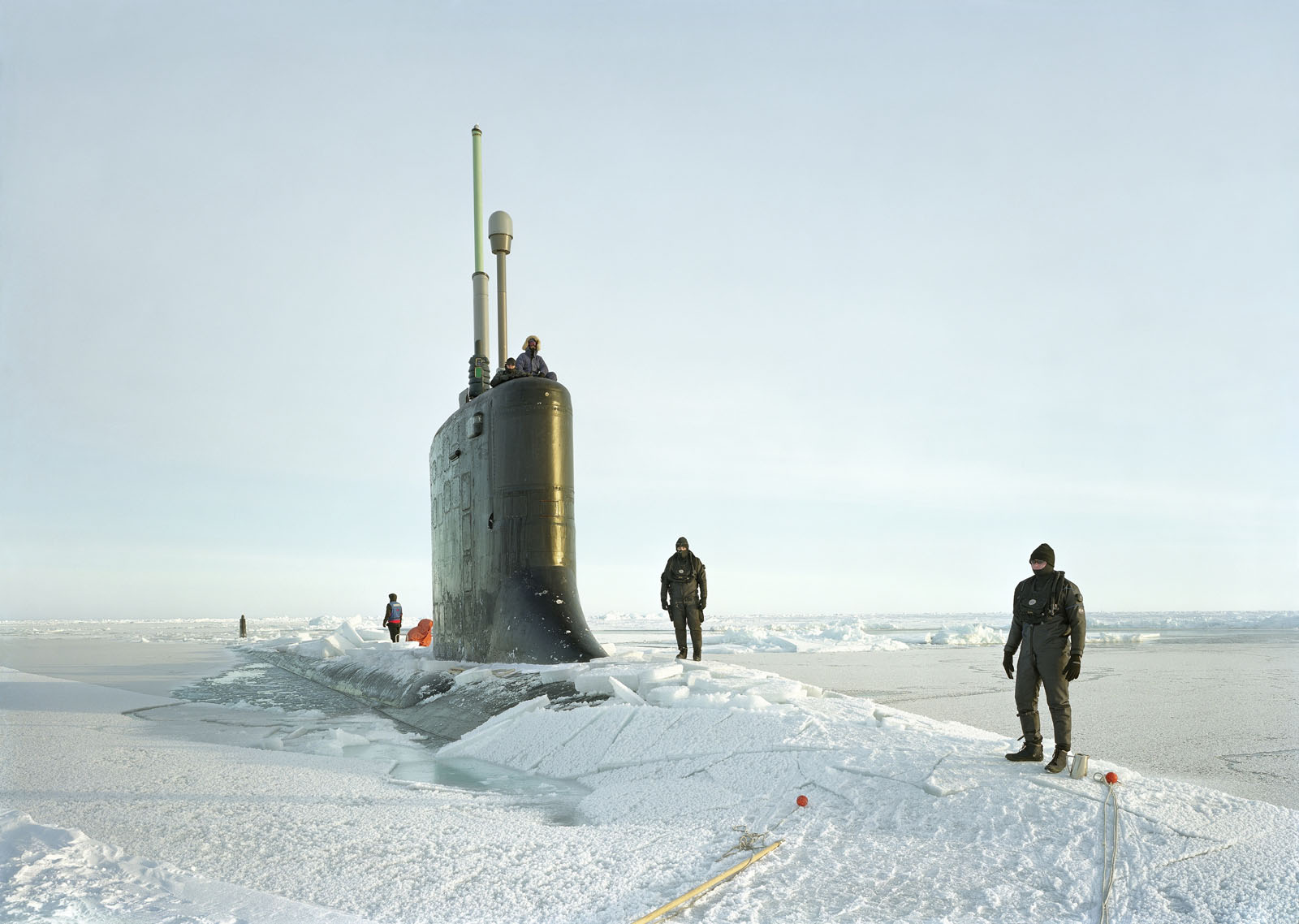
Thursday: 10am – 8pm
Sunday: 12am – 5pm
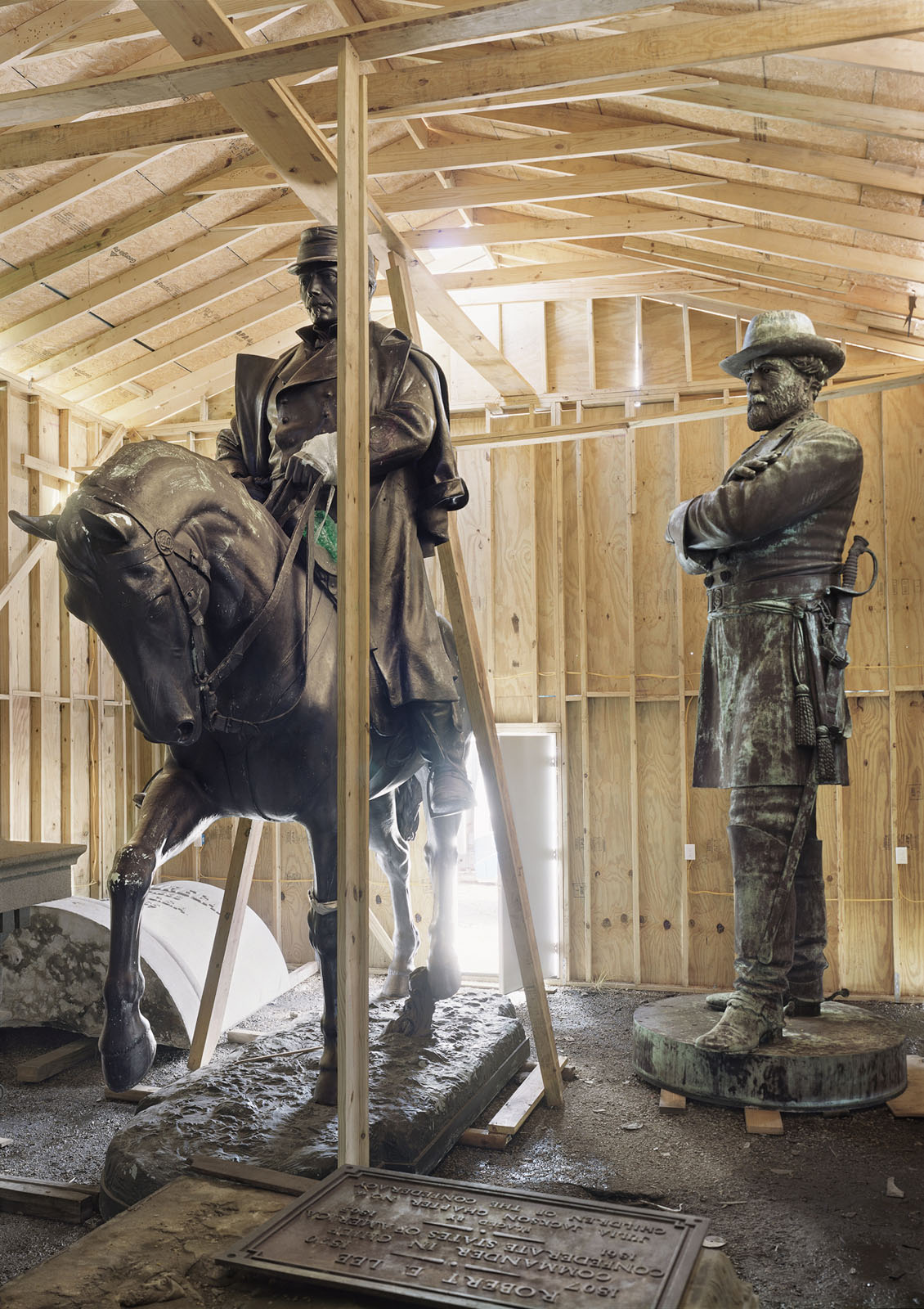
Closed Mondays and major holidays

Amon Carter Museum of American Art website

LIKE ART BLART ON FACEBOOK

Back to top