Exhibition: ‘Fazal Sheikh: Thirst | Exposure | In Place’ at the Denver Art Museum

Exhibition dates: 10th March – 20th October, 2024

Curators: Curator of Photography, Eric Paddock, in collaboration with Kimberly Roberts, Denver Art Museum Curatorial Associate, and Lauren Thompson, Senior Interpretive Specialist
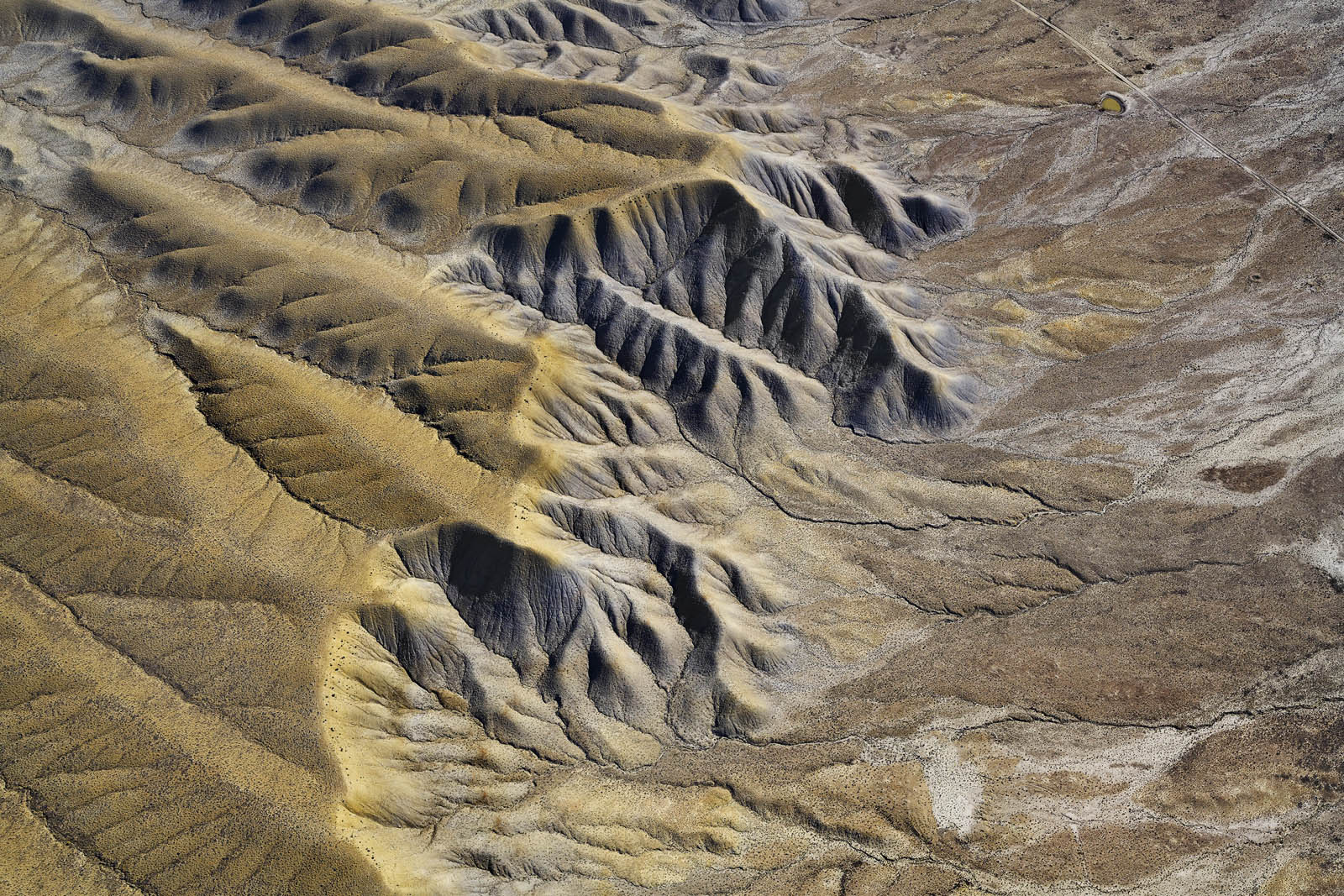
 

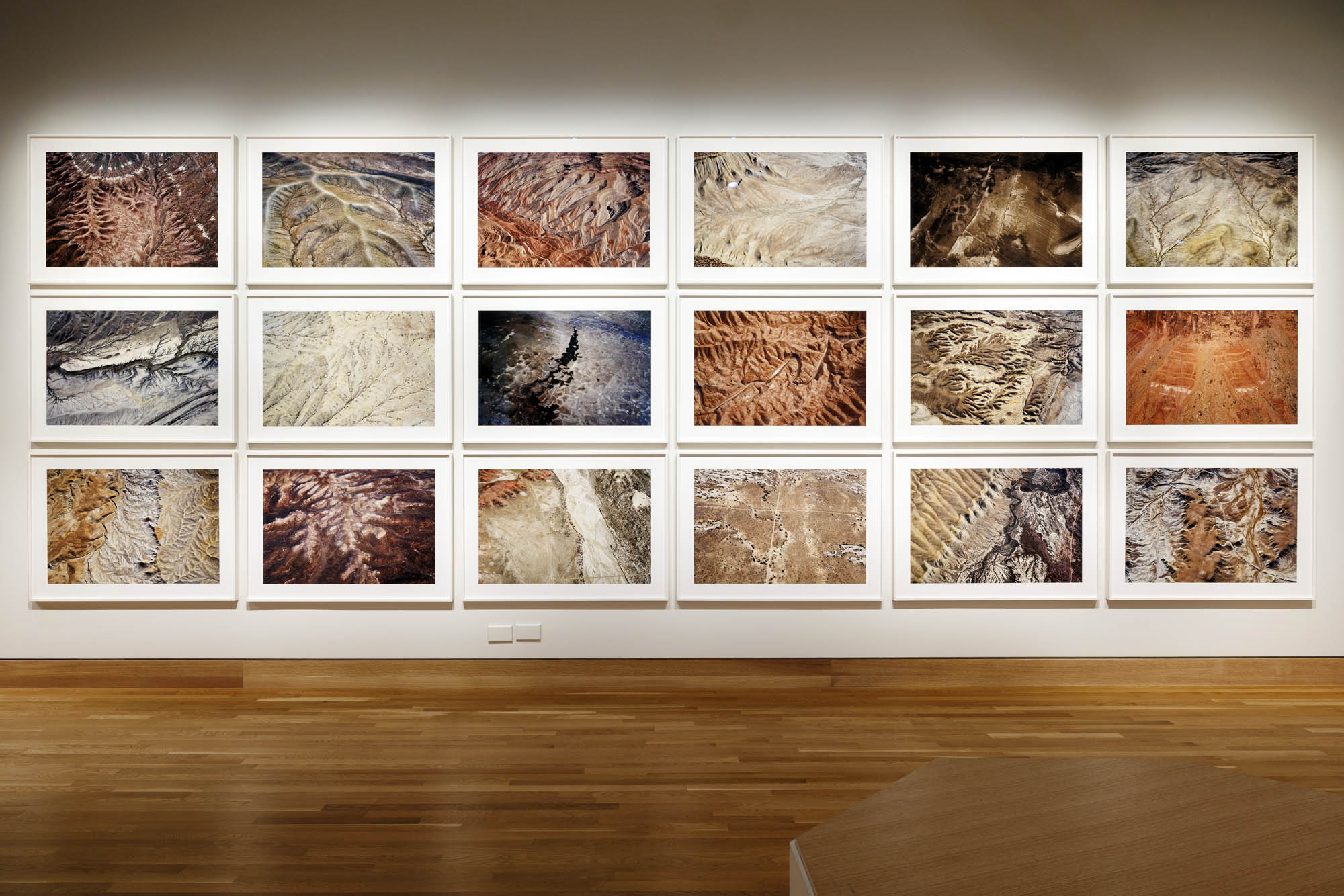
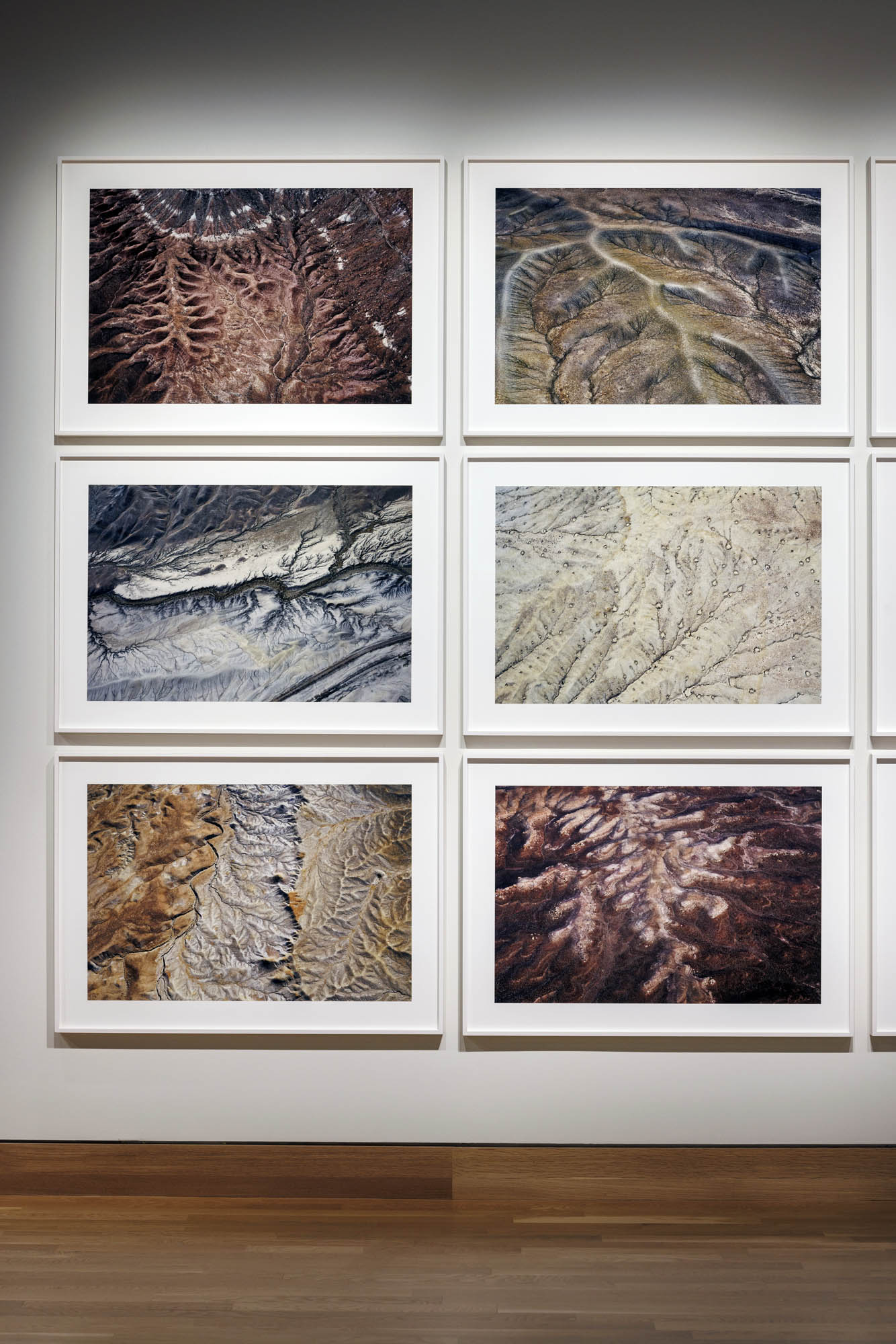
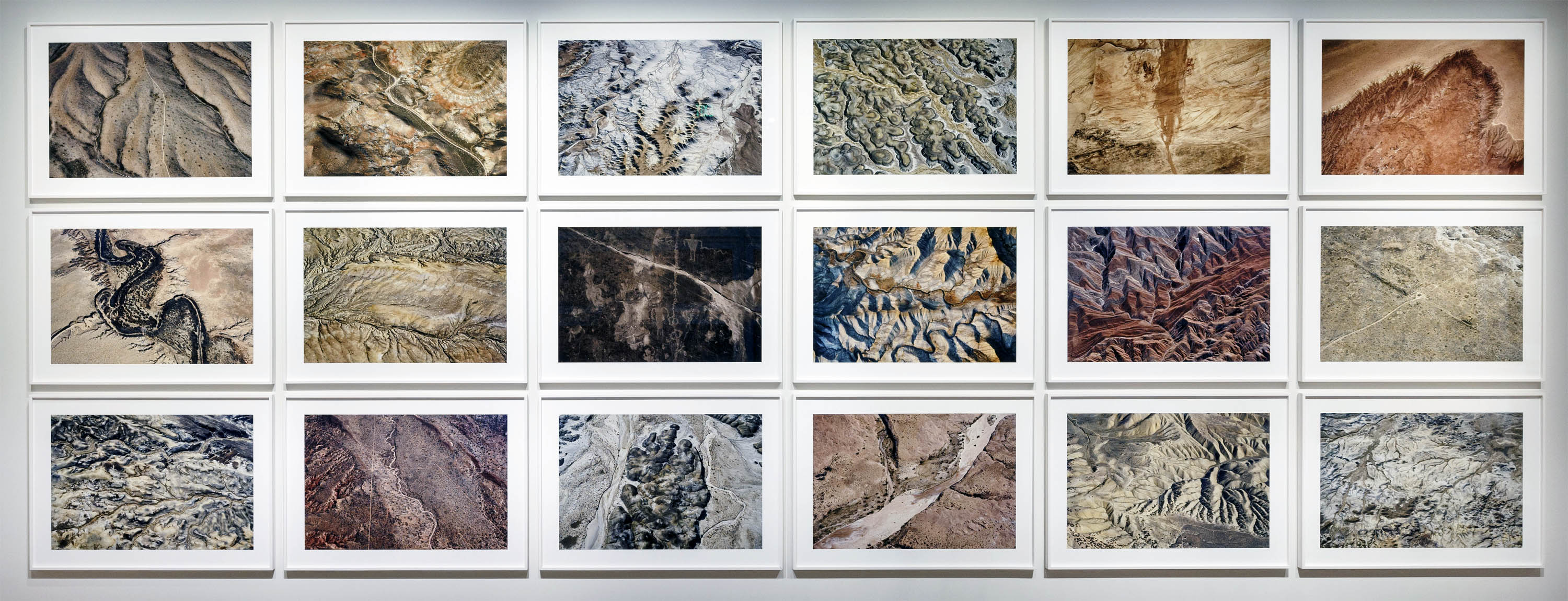
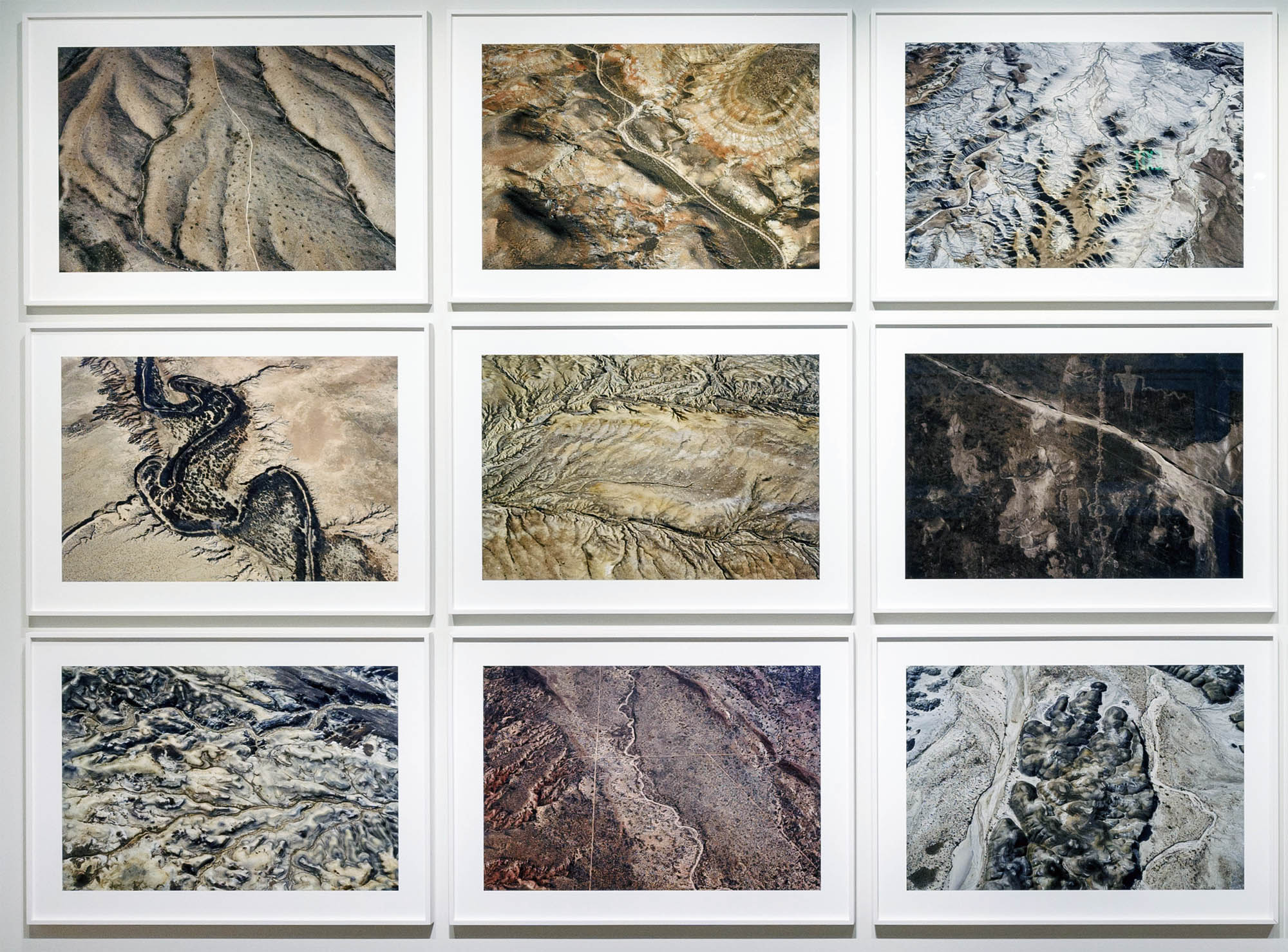
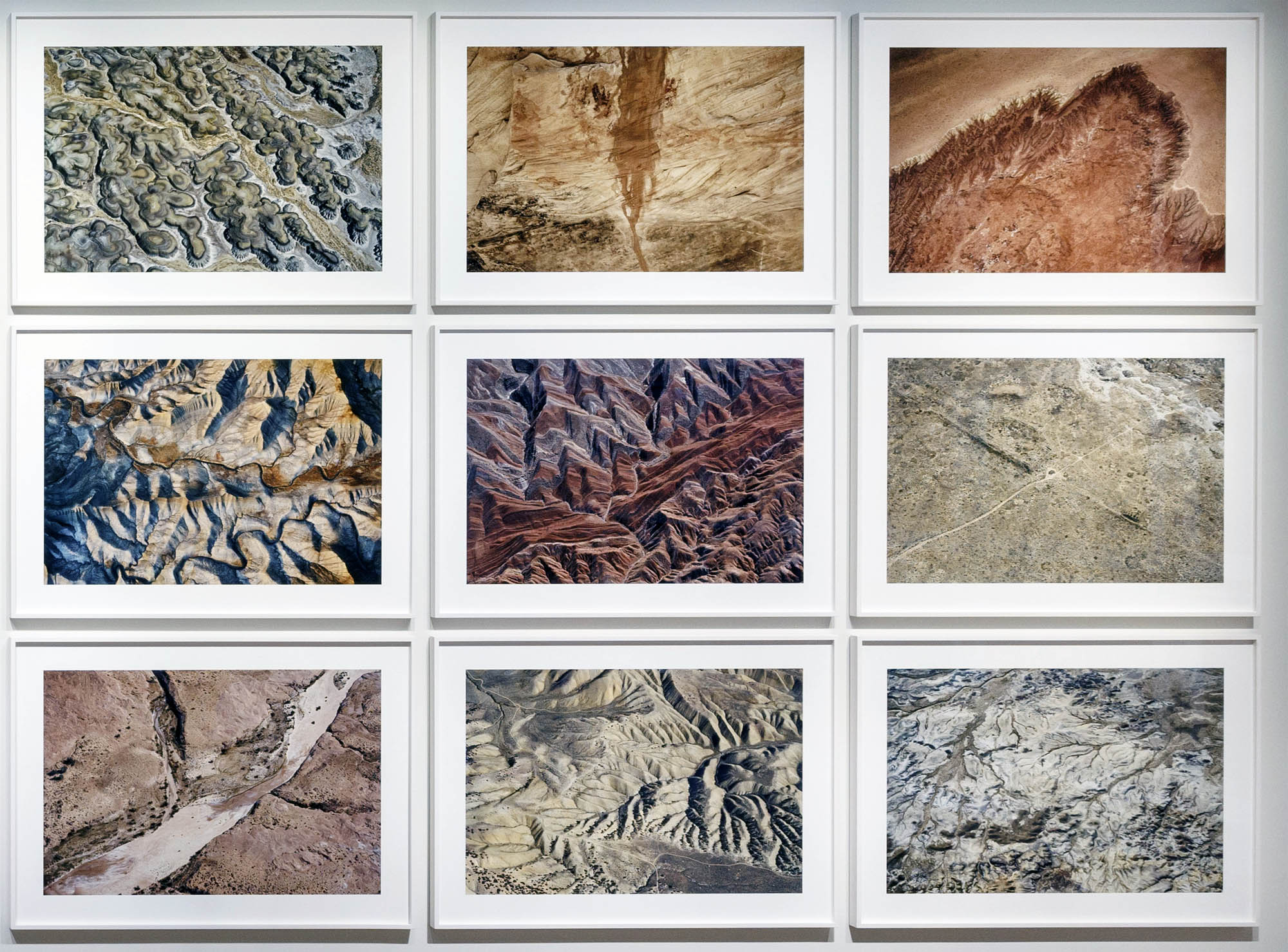
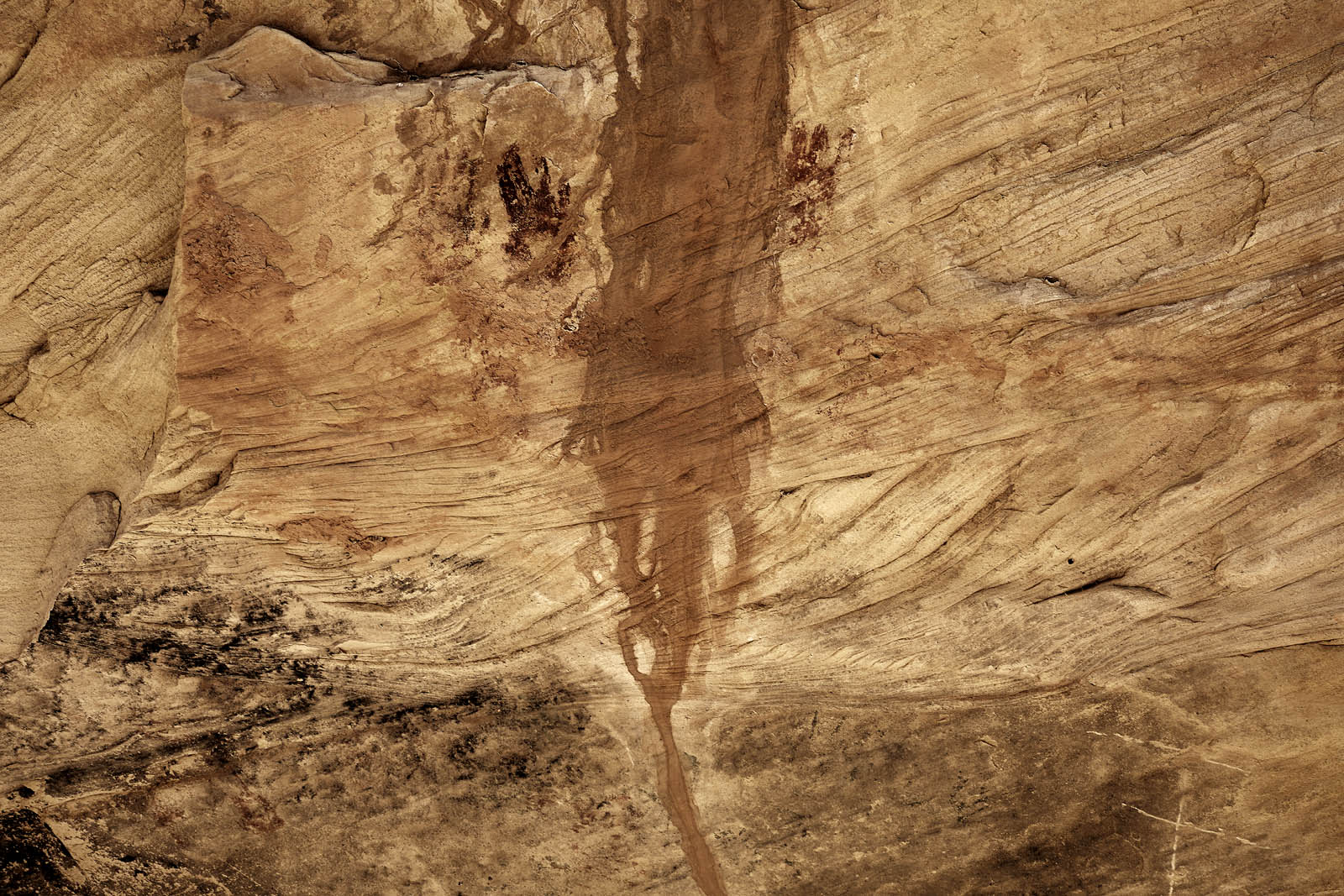
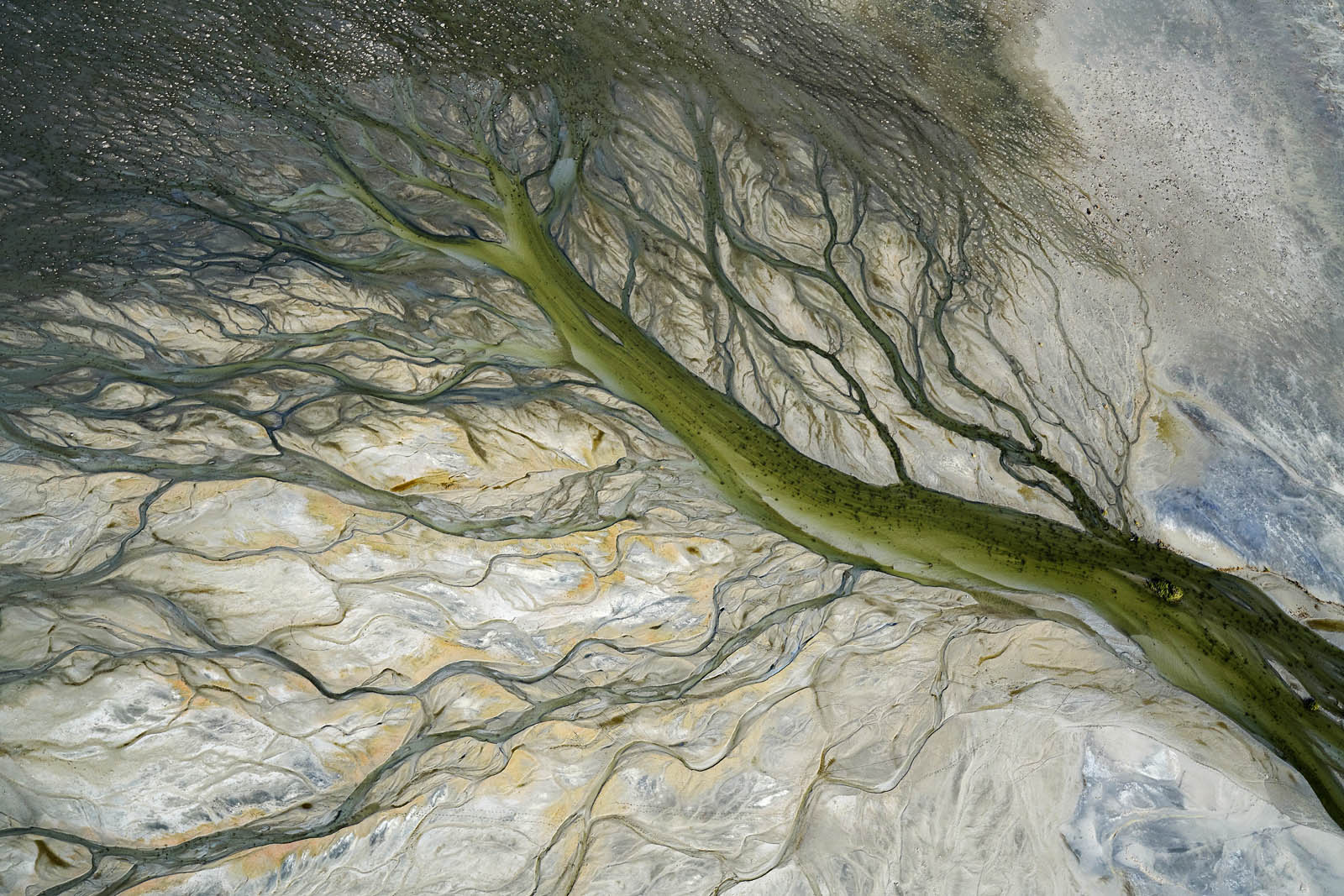
Fazal Sheikh (American, b. 1965) From the installation 'In Place (Utah, Arizona, and New Mexico, Four Corners Region)' 2017-2020


Fazal Sheikh (American, b. 1965)
From the installation In Place (Utah, Arizona, and New Mexico, Four Corners Region)
2017-2020
Pigmented inkjet print
© and courtesy Fazal Sheikh


There are some stunning photographs in this exhibition but their “formula” is well known – aerial photographs of the blighted landscape etched by both geological and human forces (a la Edward Burtynsky, Richard Woldendorp et al) paired with objective, frontal “dead pan” portrait photographs (a la Thomas Ruff, Rineke Dijkstra et al), both forms of topographical mapping (of the land and of the face… as is the regulated presentation) – images which attempt to interrogate “the impact of uranium, coal, oil, and natural-gas extraction on the American Southwest and its Indigenous inhabitants.”

This is strong work but it begs the question: what fresh insight are these photographs giving us into the object of the photographers attention, other than the specifics of “American Southwest” and “Indigenous inhabitants” which turn out to be conceptually and visually generic? Is it necessary for everything to be new again or can work such as this stand in its own right and not just be an echo of what has come before. For the general public the work might seem fresh and new but for the informed observer this is well trodden, indeed trampled ground.

The press release states that “The project reflects on the resilience of Indigenous people in the face of threats to the culture, spirituality, and health.” I don’t feel that with these photographs. Where is the art that expresses through a partnership with the photographer the eloquent, unique voice of the Indigenous inhabitants of this ancestral landscape, its spirit and its fire?

As with any art please make up your own mind.

Dr Marcus Bunyan


Many thankx to the Denver Art Museum for allowing me to publish the photographs in the posting. Please click on the photographs for a larger version of the image.
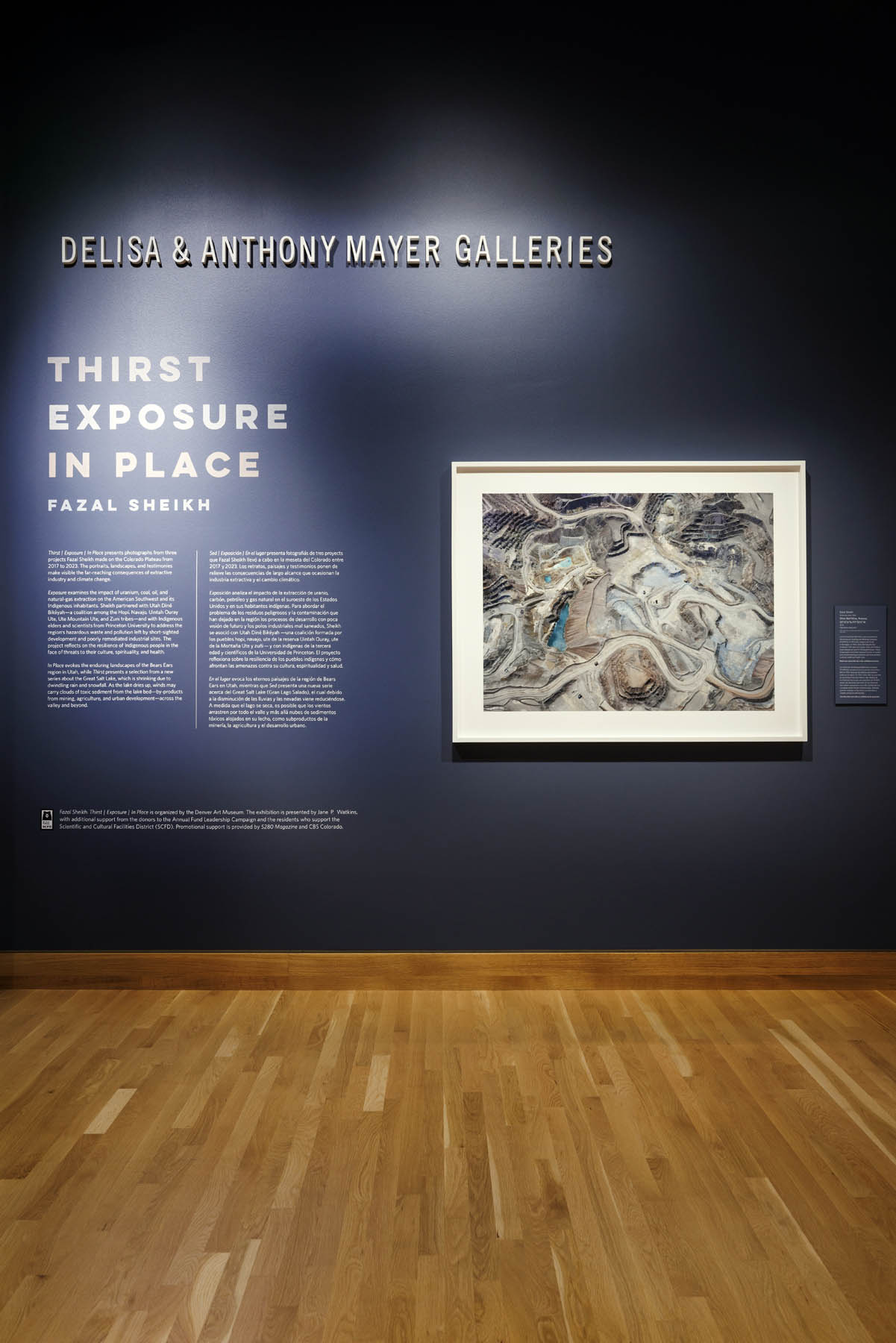


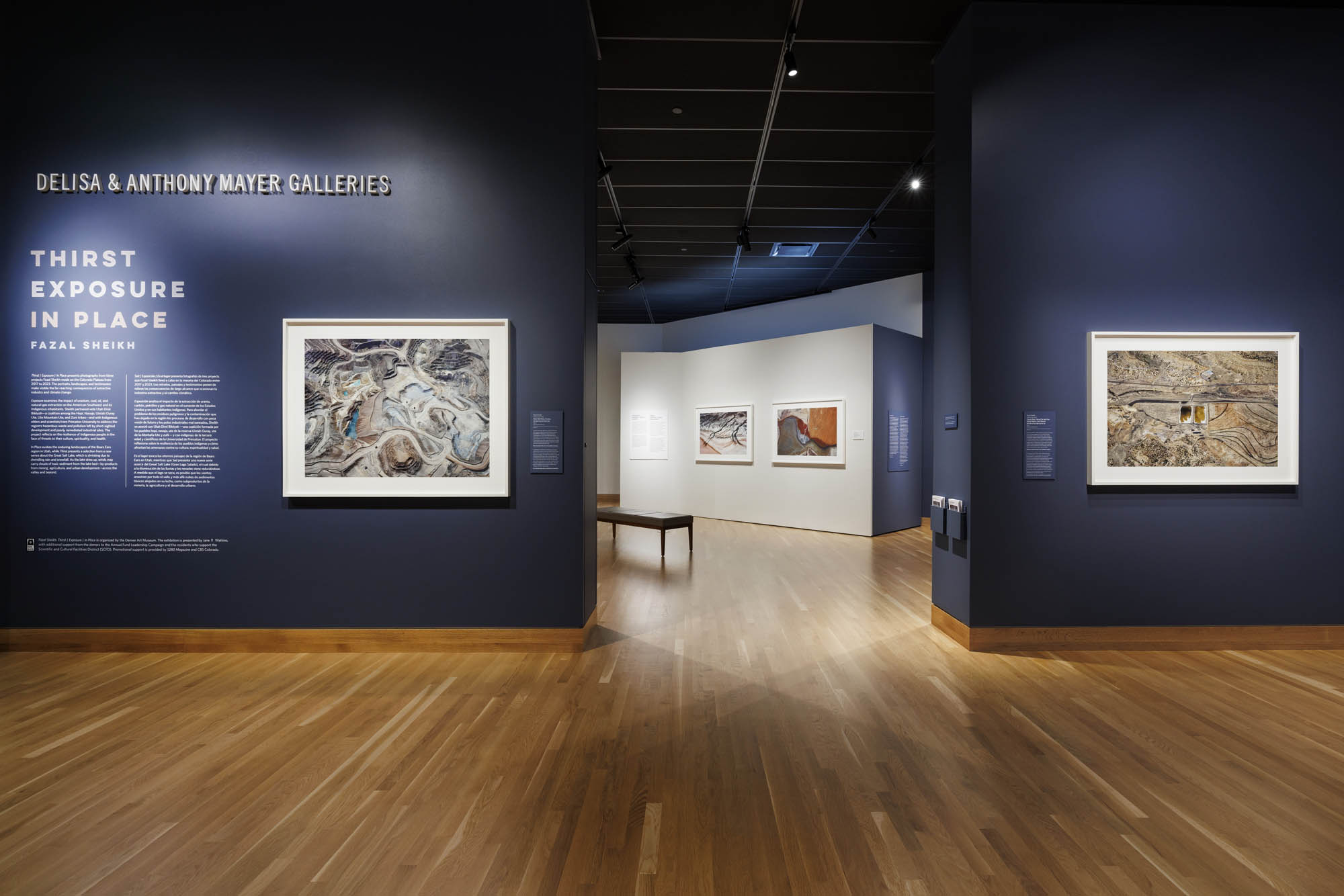
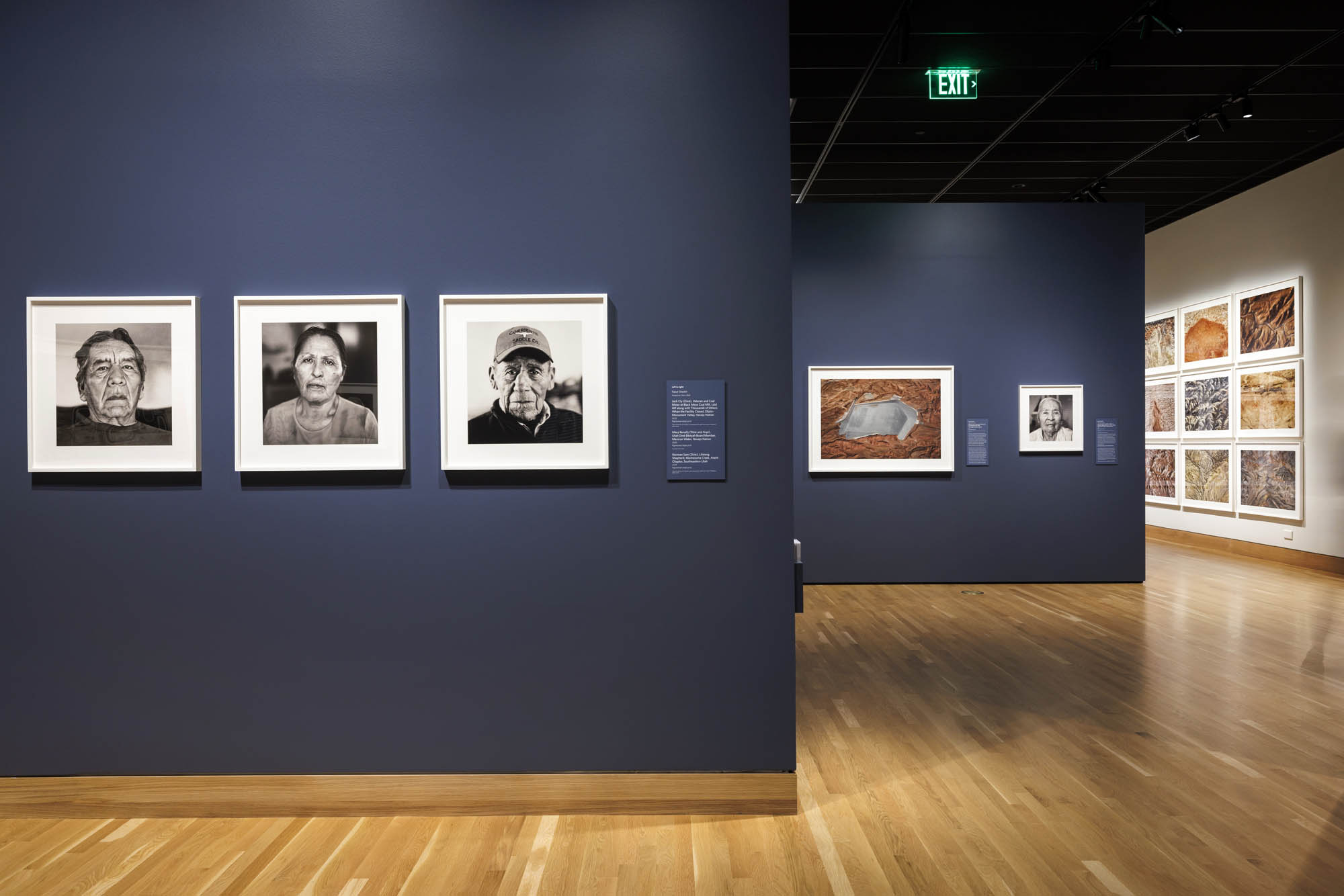
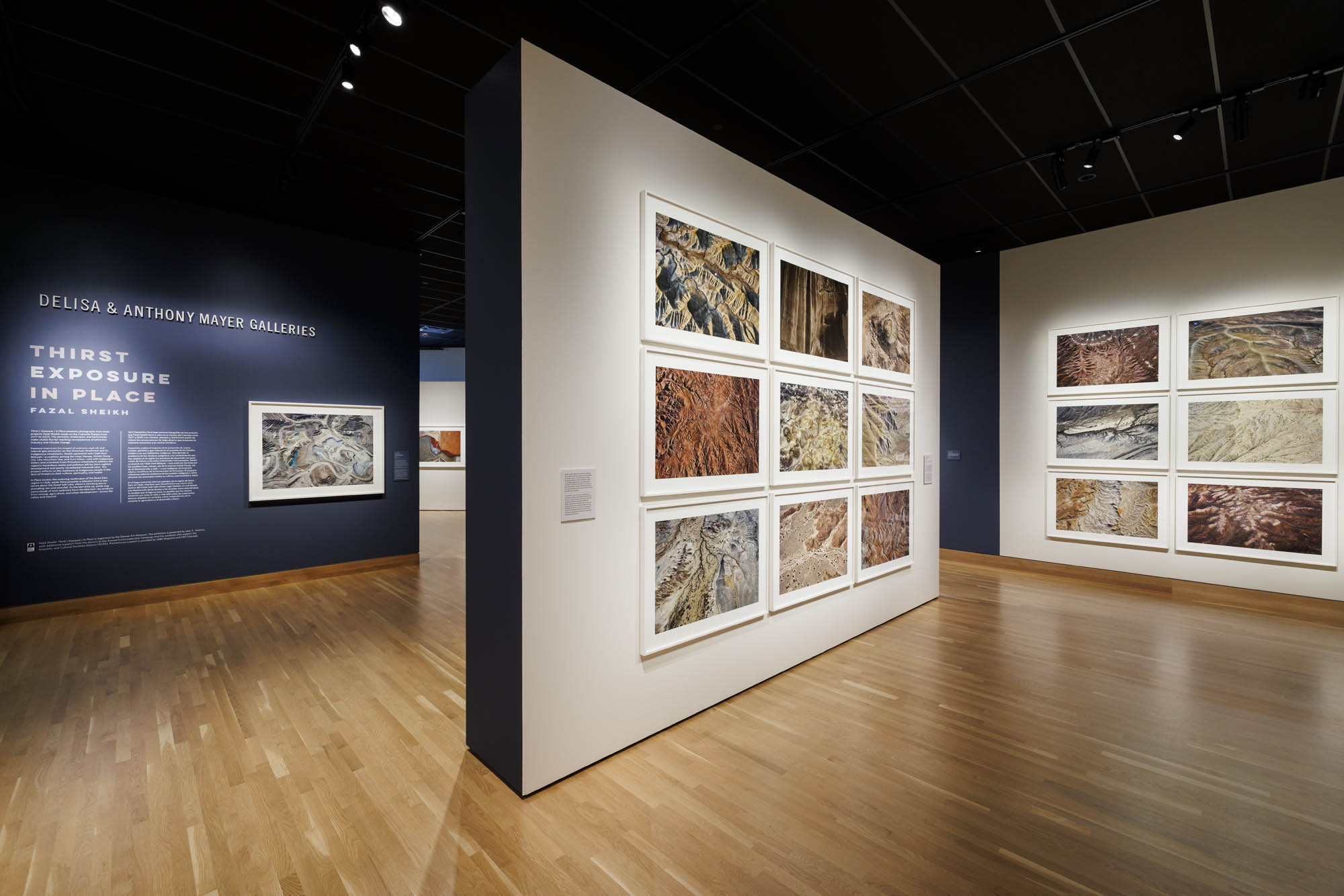
Installation view of the exhibition 'Fazal Sheikh: Thirst | Exposure | In Place' at the Denver Art Museum showing the opening wall text

Installation view of the exhibition 'Fazal Sheikh: Thirst | Exposure | In Place' at the Denver Art Museum showing the opening wall text


Installation views of the exhibition Fazal Sheikh: Thirst | Exposure | In Place at the Denver Art Museum showing the opening wall text (below)


Thirst | Exposure | In Place presents photographs from three projects Fazal Sheikh made on the Colorado Plateau from 2017 to 2023. The portraits, landscapes, and testimonies make visible the far-reaching consequences of extractive industry and climate change.

Exposure examines the impact of uranium, coal, oil, and natural-gas extraction on the American Southwest and its Indigenous inhabitants. Sheikh partnered with Utah Dine Bikeyah – a coalition among the Hopi, Navajo, Uintah Ouray Ute, Ute Mountain Ute, and Zuni tribes – and with Indigenous elders and scientists form Princeton University to address the region’s hazardous waste and pollution left by short-sighted development and poorly remediated industrial sites. The project reflects on the resilience of Indigenous people in the face of threats to the culture, spirituality, and health.

In place evokes the enduring landscape of the Bears Ears region in Utah, while Thirst presents a selection from a new series about the Great Salt Lake, which is shrinking due to dwindling rain and snowfall. As the lake dries up, winds may carry clouds of toxic sediment from the lake bed – by-products from mining, agriculture, and urban development – across the valley and beyond.

Opening wall text from the exhibition


Denver Art Museum Talk with Fazal Sheikh March 9, 2024

Photographer Fazal Sheikh speaks about his recent work in the Four Corners region and at the Great Salt Lake, in connection with his exhibition Fazal Sheikh: Thirst | Exposure | In Place. His photographs address the consequences of industrial land use, engage questions about water use and climate change, and reflect on the ongoing relationship between people and nature. Sheikh discusses the origin of each series, his immersion in the landscapes and communities he photographed, and his collaborations with writers, scientists, and Indigenous community members that are woven throughout this work.

 

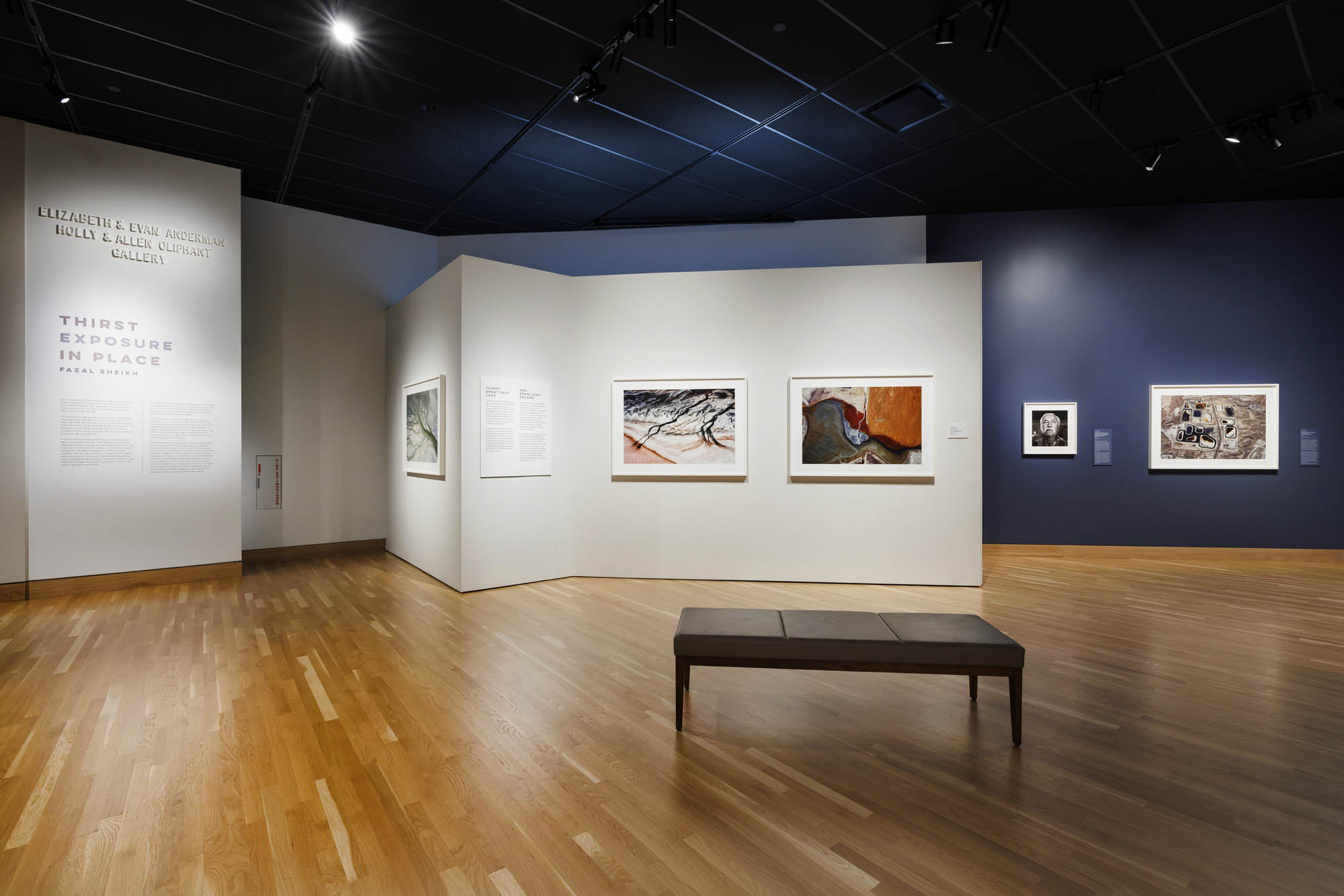
Installation view of the exhibition 'Fazal Sheikh: Thirst | Exposure | In Place' at the Denver Art Museum showing work from the series 'Thirst: Great Salt Lake' 2022

Installation view of the exhibition 'Fazal Sheikh: Thirst | Exposure | In Place' at the Denver Art Museum showing work from the series 'Thirst: Great Salt Lake' 2022

Installation view of the exhibition 'Fazal Sheikh: Thirst | Exposure | In Place' at the Denver Art Museum showing work from the series 'Thirst: Great Salt Lake' 2022

Installation view of the exhibition 'Fazal Sheikh: Thirst | Exposure | In Place' at the Denver Art Museum showing work from the series 'Thirst: Great Salt Lake' 2022


Installation view of the exhibition Fazal Sheikh: Thirst | Exposure | In Place at the Denver Art Museum showing work from the series Thirst: Great Salt Lake 2022


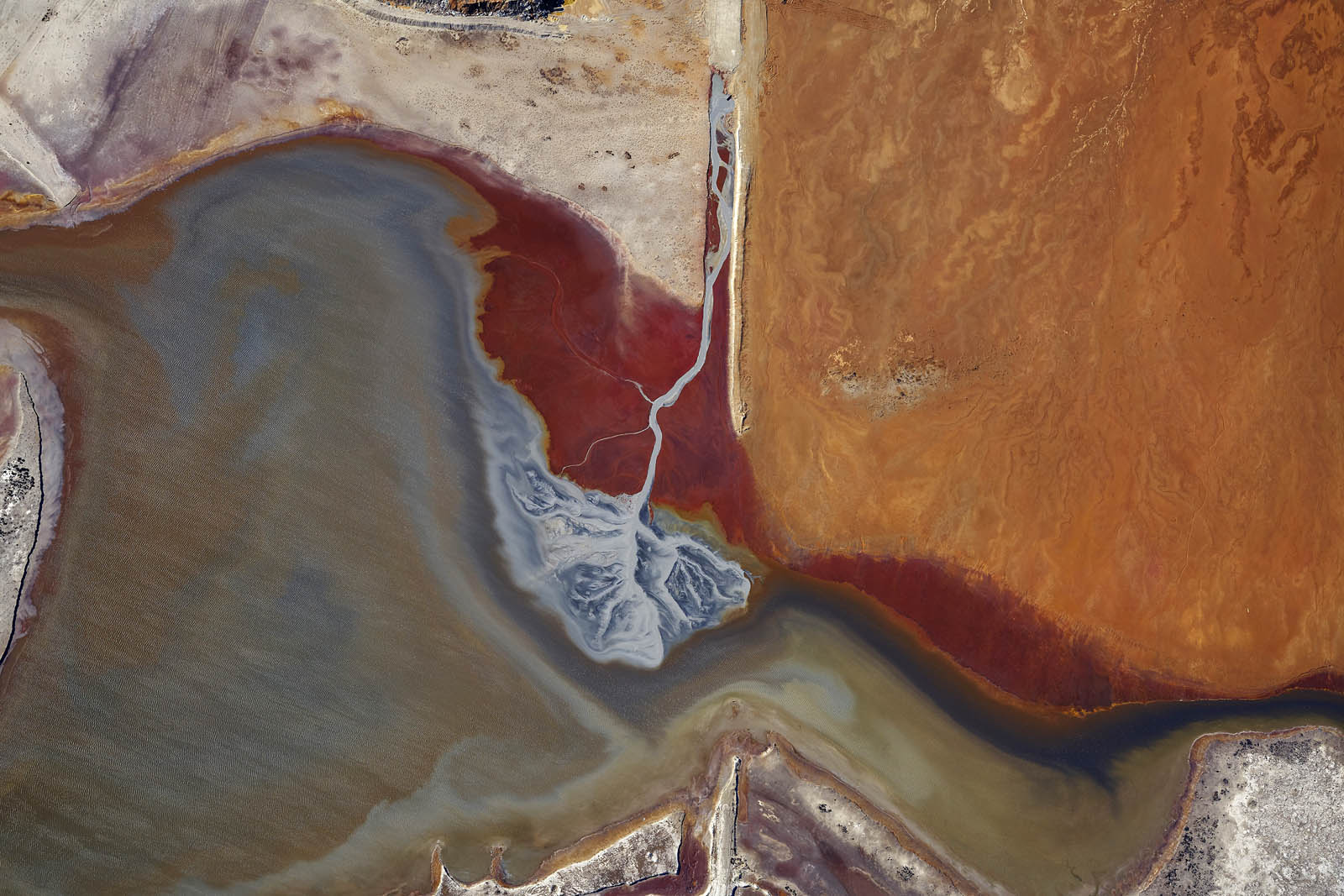
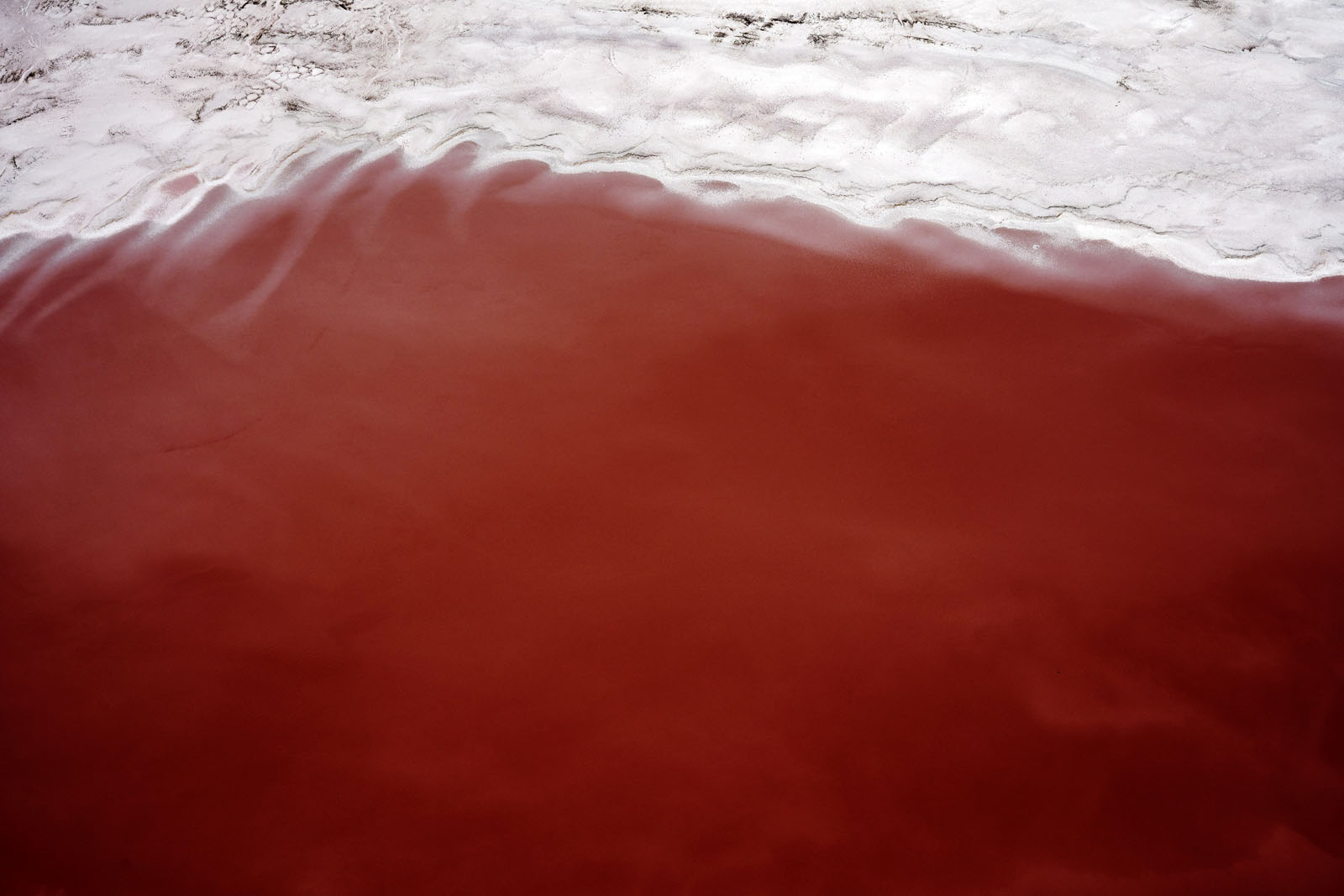
Fazal Sheikh (American, b. 1965) From the series 'Thirst: Great Salt Lake' November 2022


Fazal Sheikh (American, b. 1965)
From the series Thirst: Great Salt Lake
November 2022
Pigmented inkjet print
© and courtesy Fazal Sheikh


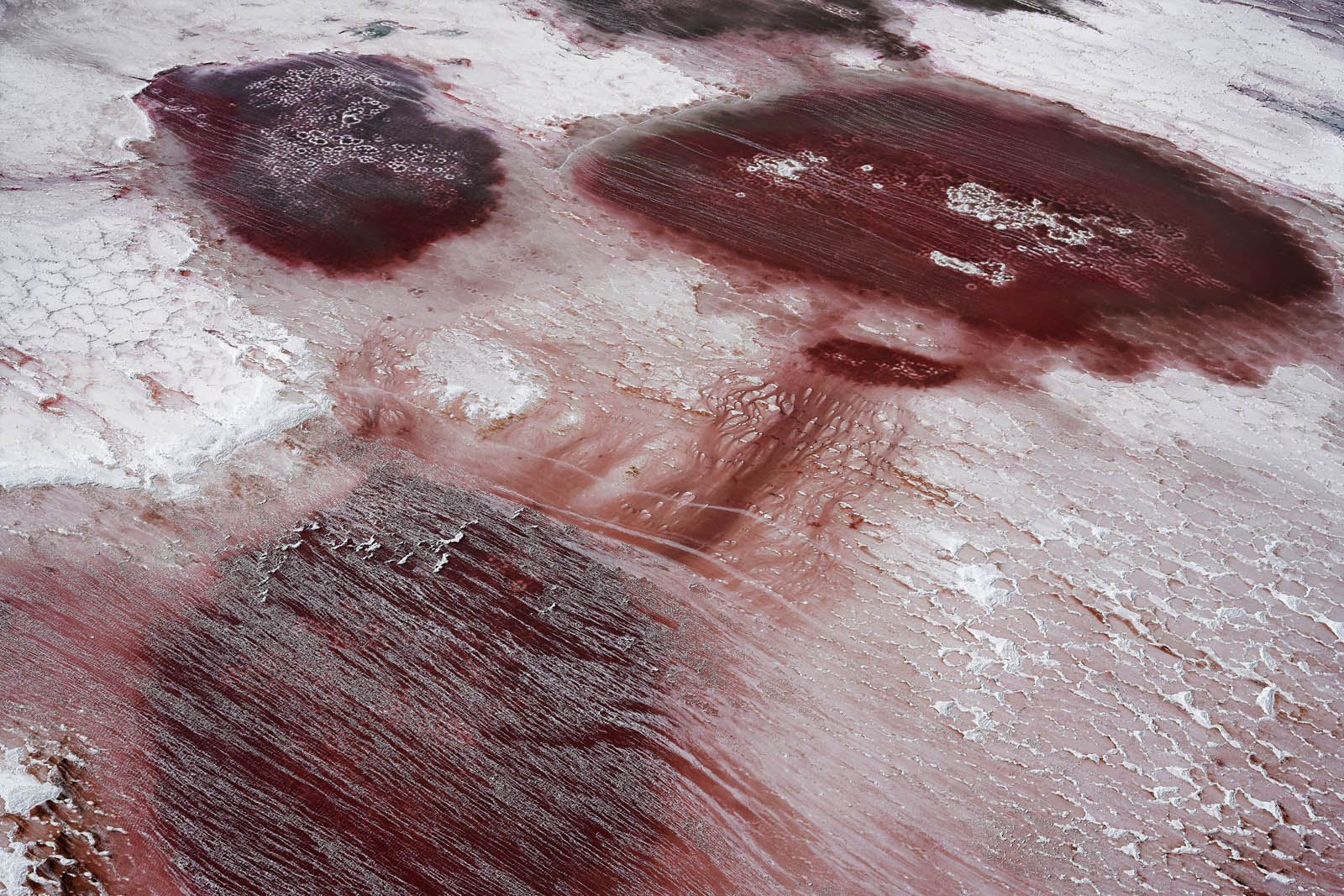
Fazal Sheikh (American, b. 1965) From the series 'Thirst: Great Salt Lake' November 2022


Fazal Sheikh (American, b. 1965)
From the series Thirst: Great Salt Lake
November 2022
Pigmented inkjet print
© and courtesy Fazal Sheikh


Fazal Sheikh (American, b. 1965) From the series 'Thirst: Great Salt Lake' November 2022


Fazal Sheikh (American, b. 1965)
From the series Thirst: Great Salt Lake
November 2022
Pigmented inkjet print
© and courtesy Fazal Sheikh


Fazal Sheikh (American, b. 1965) From the series 'Thirst: Great Salt Lake' November 2022November 2022


Fazal Sheikh (American, b. 1965)
From the series Thirst: Great Salt Lake
November 2022
Pigmented inkjet print
© and courtesy Fazal Sheikh


Fazal Sheikh: Thirst | Exposure | In Place is an exhibition created from three projects photographer Fazal Sheikh made on the Colorado Plateau from 2017 to early 2023. Sheikh’s portraits and landscapes shed light on the far-reaching consequences of extractive industry and climate change.

Born in 1965 in New York City, Sheikh creates images of displaced communities and marginalised people that prompt awareness of the world beyond the museum. The photographs in Thirst ǀ Exposure ǀ In Place expose indelible marks on the Colorado Plateau and American Southwest landscape that have been etched by both geological and human forces. Through this beautiful and sometimes frightening new work, Sheikh encourages viewers to witness the consequences of the past and imagine the shape of the future.

The exhibition presents Sheikh’s recent work in three interrelated sections: Thirst is a new series of aerial photographs that document the decline of the Great Salt Lake in northeast Utah, which is shrinking due to overconsumption and dwindling rain and snowfall. Exposure examines the impacts of uranium, coal, oil and natural-gas extraction on the American Southwest and on its Indigenous inhabitants. In Place evokes the enduring landscapes of the Bears Ears region in Utah, bringing Sheikh’s photographs together with contributions from scientists and Indigenous communities in and around Bears Ears in southeastern Utah.

Visitors will reflect upon the transformation – and often devastation – of these landscapes in the context of the past, present and future, while considering the juxtaposition of beauty and catastrophe, as well as intimate, human-scale stories and those spanning vast geological eras and changes.

Text from the Denver Art Museum website


Installation view of the exhibition 'Fazal Sheikh: Thirst | Exposure | In Place' at the Denver Art Museum

Installation view of the exhibition 'Fazal Sheikh: Thirst | Exposure | In Place' at the Denver Art Museum showing work from the series 'Exposure' 2019 

Installation view of the exhibition 'Fazal Sheikh: Thirst | Exposure | In Place' at the Denver Art Museum showing work from the series 'Exposure' 2019 

Installation view of the exhibition 'Fazal Sheikh: Thirst | Exposure | In Place' at the Denver Art Museum showing work from the series 'Exposure' 2019 


Installation view of the exhibition Fazal Sheikh: Thirst | Exposure | In Place at the Denver Art Museum showing work from the series Exposure 2019


Fazal Sheikh (American, b. 1965) 'Mexican Hat Uranium Mill Disposal Cell, Mexican Hat, Utah, 37°8'0.88"N/109°52'28"W' From the series 'Exposure' 2017


Fazal Sheikh (American, b. 1965)
Mexican Hat Uranium Mill Disposal Cell, Mexican Hat, Utah, 37°8’0.88″N/109°52’28″W
From the series Exposure 2017
Pigmented inkjet print
Yale University Art Gallery, purchased with a gift from Jane P. Watkins, M.P.H. 1979
Image courtesy and © Fazal Sheikh


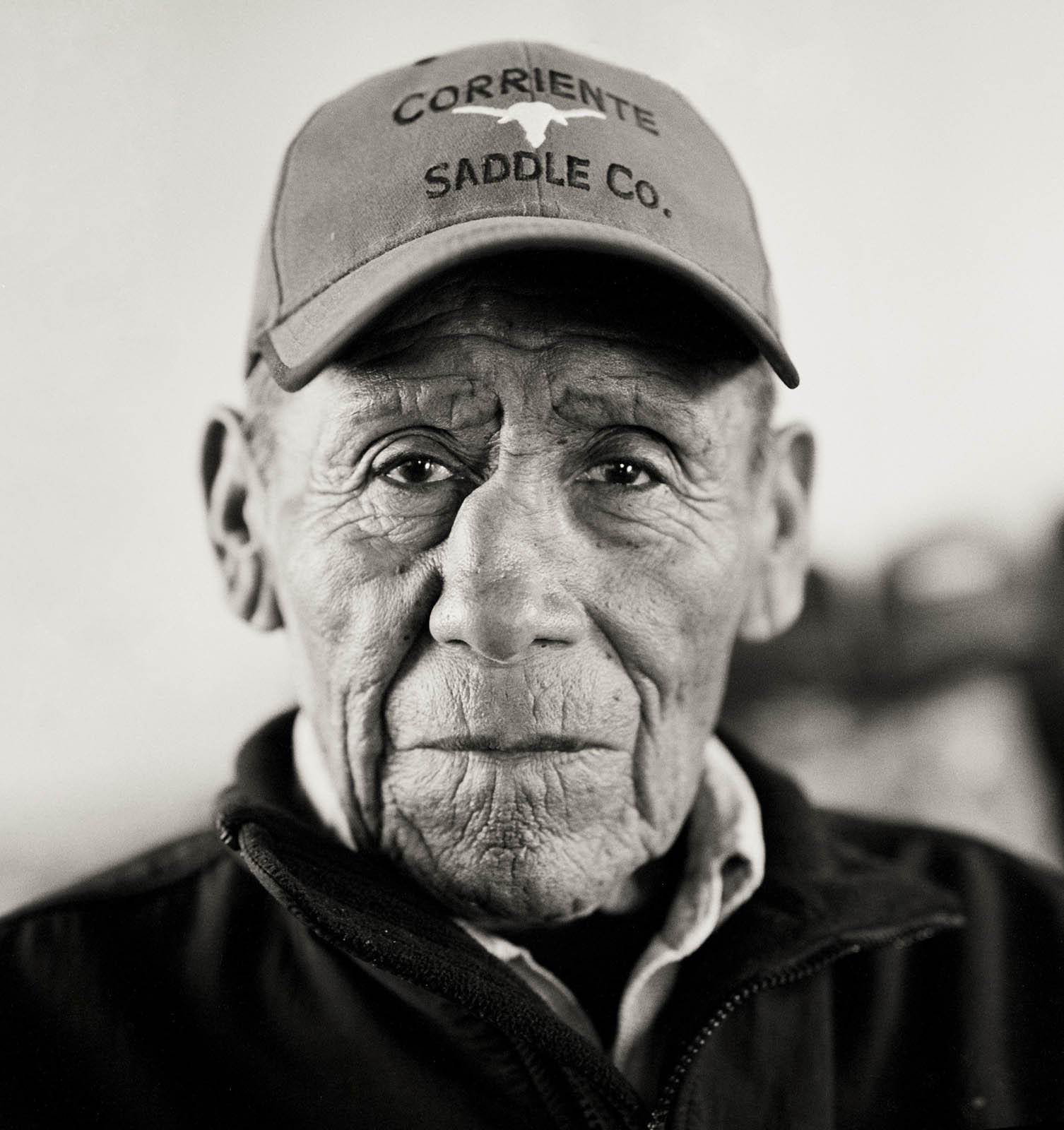
Fazal Sheikh (American, b. 1965) 'Norman Sam (Diné), Lifelong Shepherd, Montezuma Creek, Aneth Chapter, Southeastern Utah' From the series 'Exposure' 2019


Fazal Sheikh (American, b. 1965)
Norman Sam (Diné), Lifelong Shepherd, Montezuma Creek, Aneth Chapter, Southeastern Utah
From the series Exposure 2019
Pigmented inkjet print. Yale University Art Gallery, purchased with a gift from Jane P. Watkins, M.P.H. 1979
Image courtesy and © Fazal Sheikh


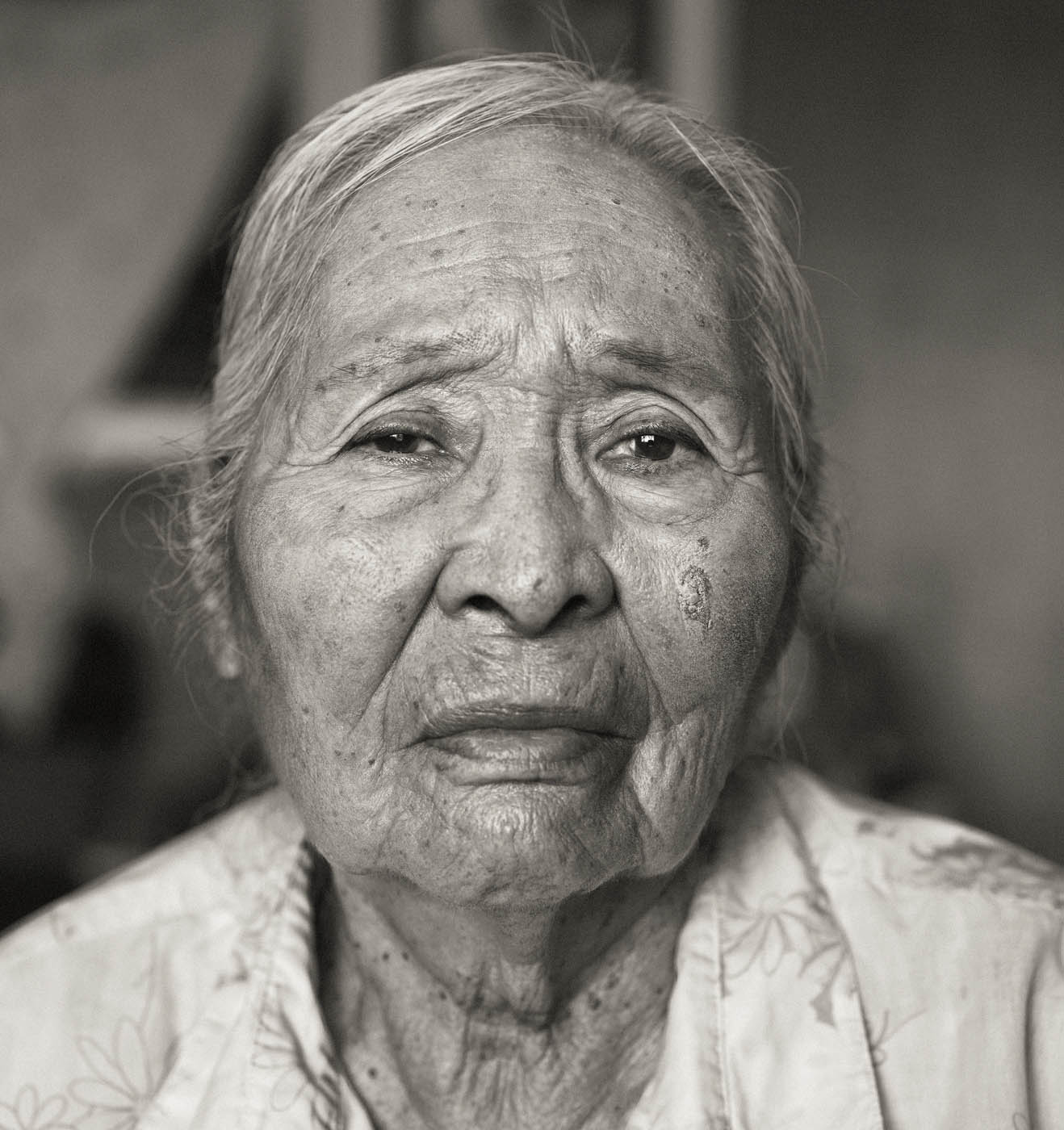
Fazal Sheikh (American, b. 1965) 'Lola Yellowman (Diné), Widow of Uranium Miner John Guy, Cane Valley–Monument Valley, Navajo Nation' From the series 'Exposure' 2019


Fazal Sheikh (American, b. 1965)
Lola Yellowman (Diné), Widow of Uranium Miner John Guy, Cane Valley–Monument Valley, Navajo Nation
From the series Exposure 2019
Pigmented inkjet print
Yale University Art Gallery, purchased with a gift from Jane P. Watkins, M.P.H. 1979
Image courtesy and © Fazal Sheikh


Lola Yellowman’s Testimony

“The medicine men told our men not to work in the mines, that it was dangerous, but the men needed to support their families and had no choice … My husband, John Guy, worked in the mines like my father. He would arrive home during his lunch break with his clothes caked in uranium dust, and I cleaned those clothes in our home every day. The children played on the tailings pile, but no one from the company ever told us the dangers they were being exposed to.”

Wall text from the exhibition


Fazal Sheikh (American, b. 1965) 'Chapita Wells Oil and Gas Field, Uintah Range, Utah, 40°4'10"N/109°27'26"W' From the series 'Exposure' 2017


Fazal Sheikh (American, b. 1965)
Chapita Wells Oil and Gas Field, Uintah Range, Utah, 40°4’10″N/109°27’26″W
From the series Exposure 2017
Pigmented inkjet print
Yale University Art Gallery, purchased with a gift from Jane P. Watkins, M.P.H. 1979
Image courtesy and © Fazal Sheikh


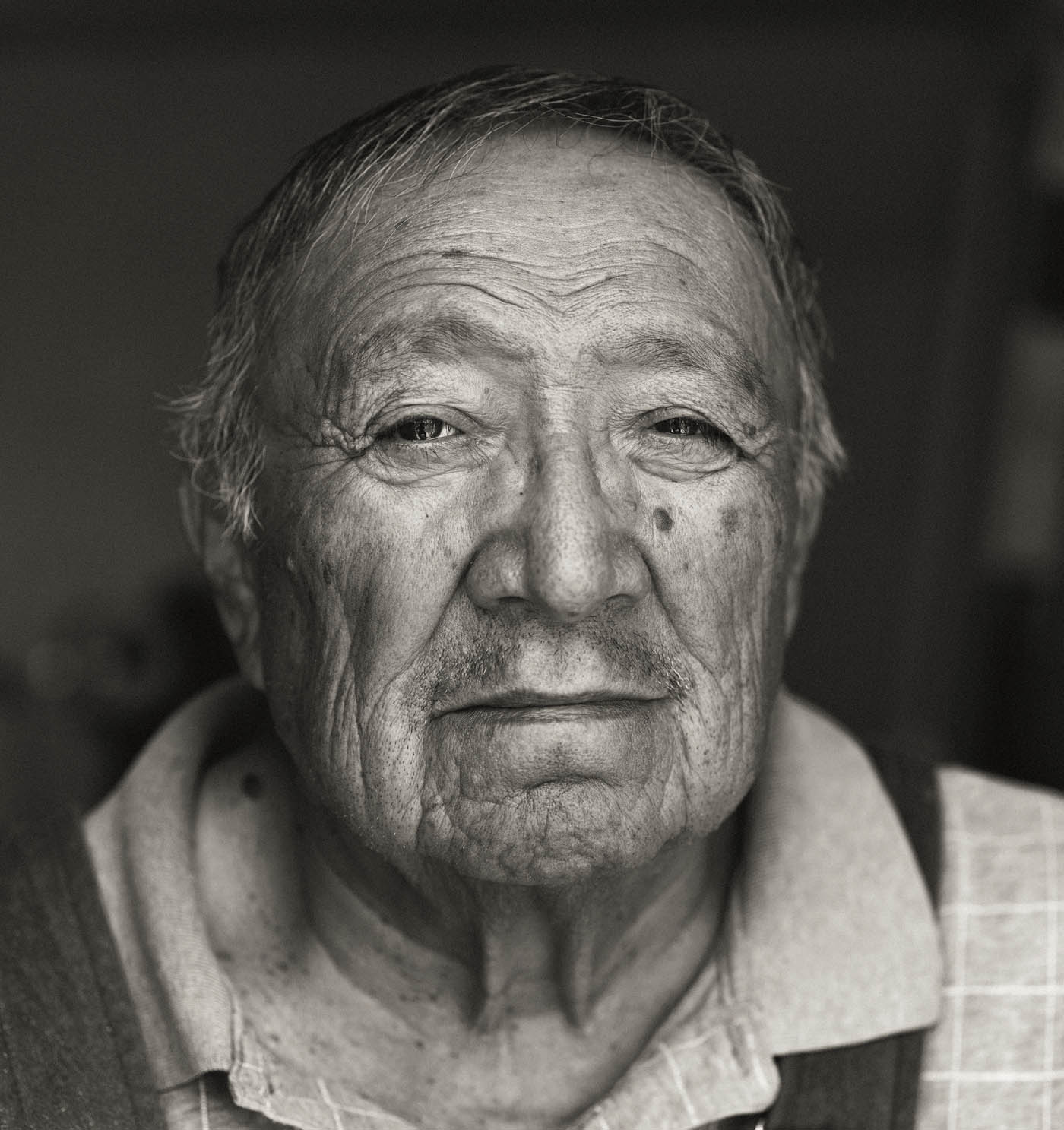
Fazal Sheikh (American, b. 1965) 'Jonah Yellowman (Diné), Spiritual Advisor to Utah Diné Bikéyah, Cane Valley – Monument Valley, Navajo Nation' From the series 'Exposure' 2022


Fazal Sheikh (American, b. 1965)
Jonah Yellowman (Diné), Spiritual Advisor to Utah Diné Bikéyah, Cane Valley – Monument Valley, Navajo Nation
From the series Exposure 2022
Pigmented inkjet print
Image courtesy and © Fazal Sheikh


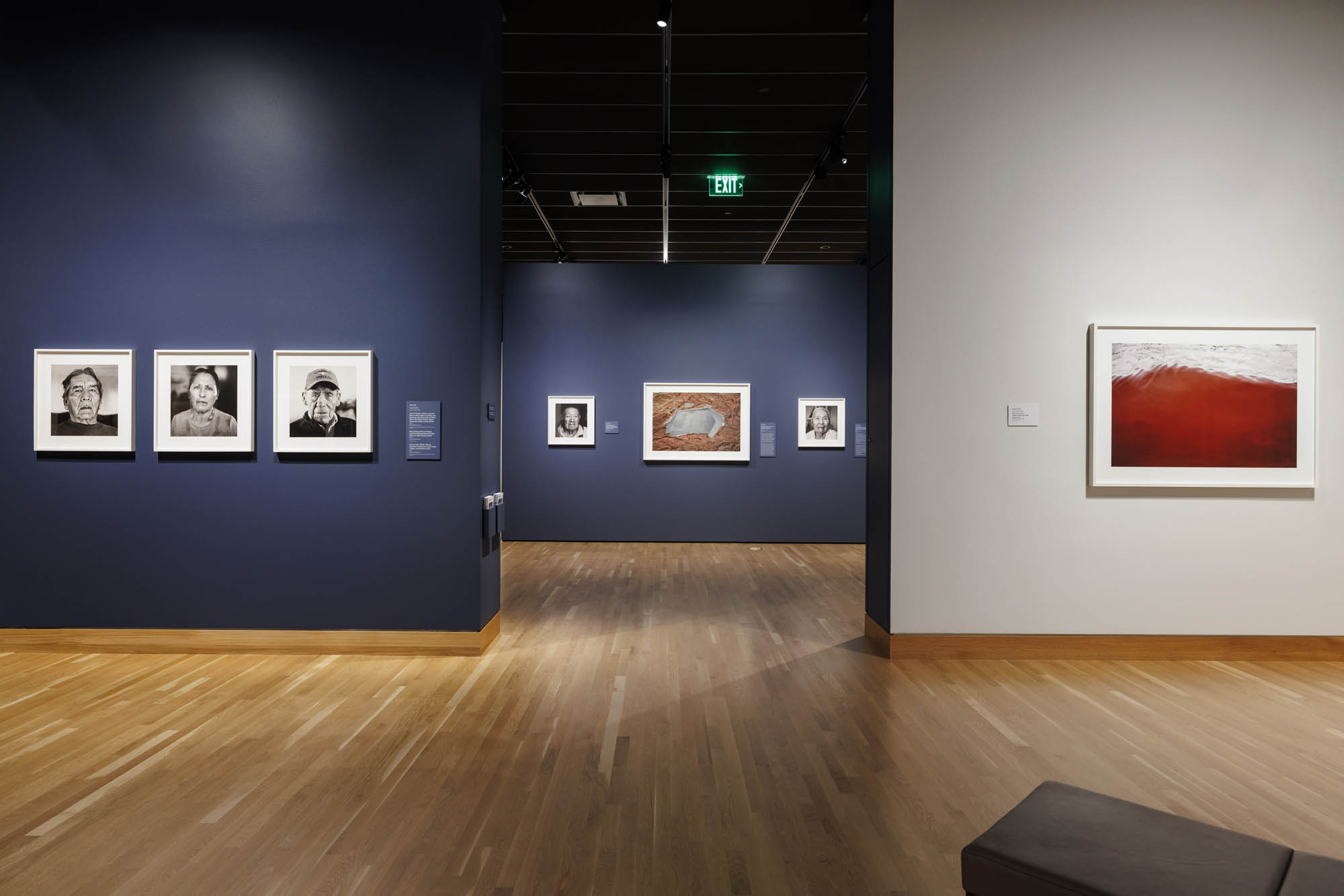
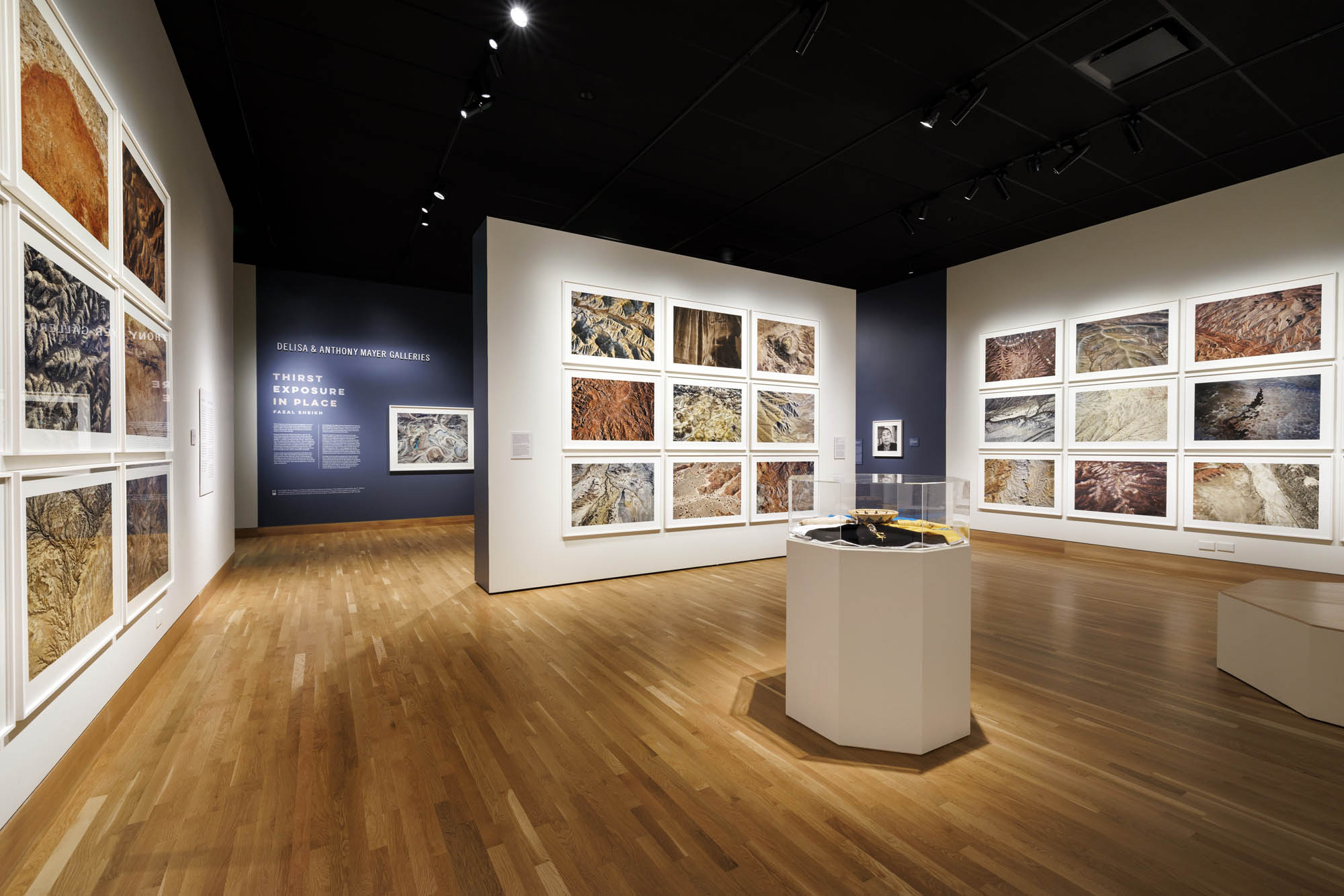
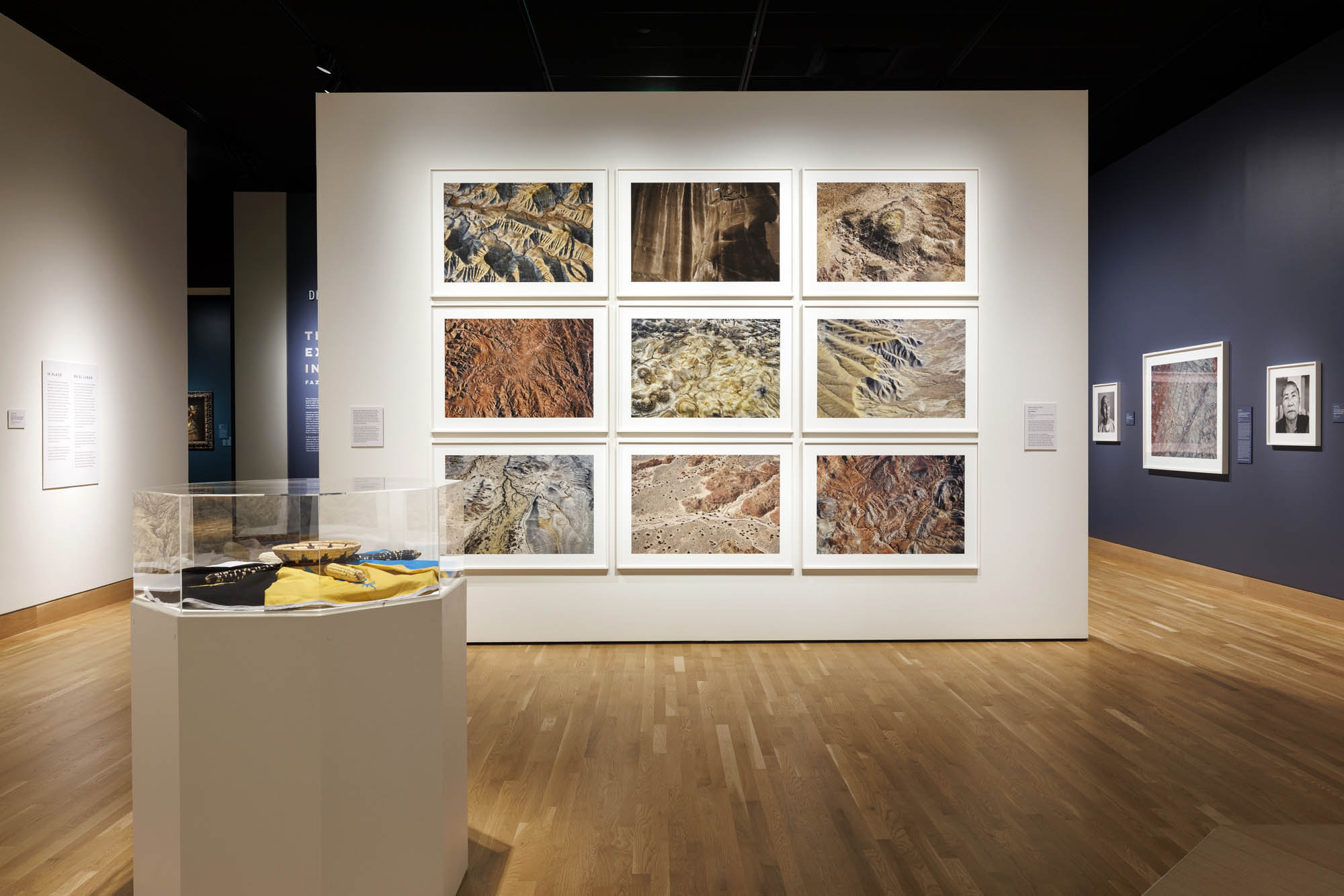
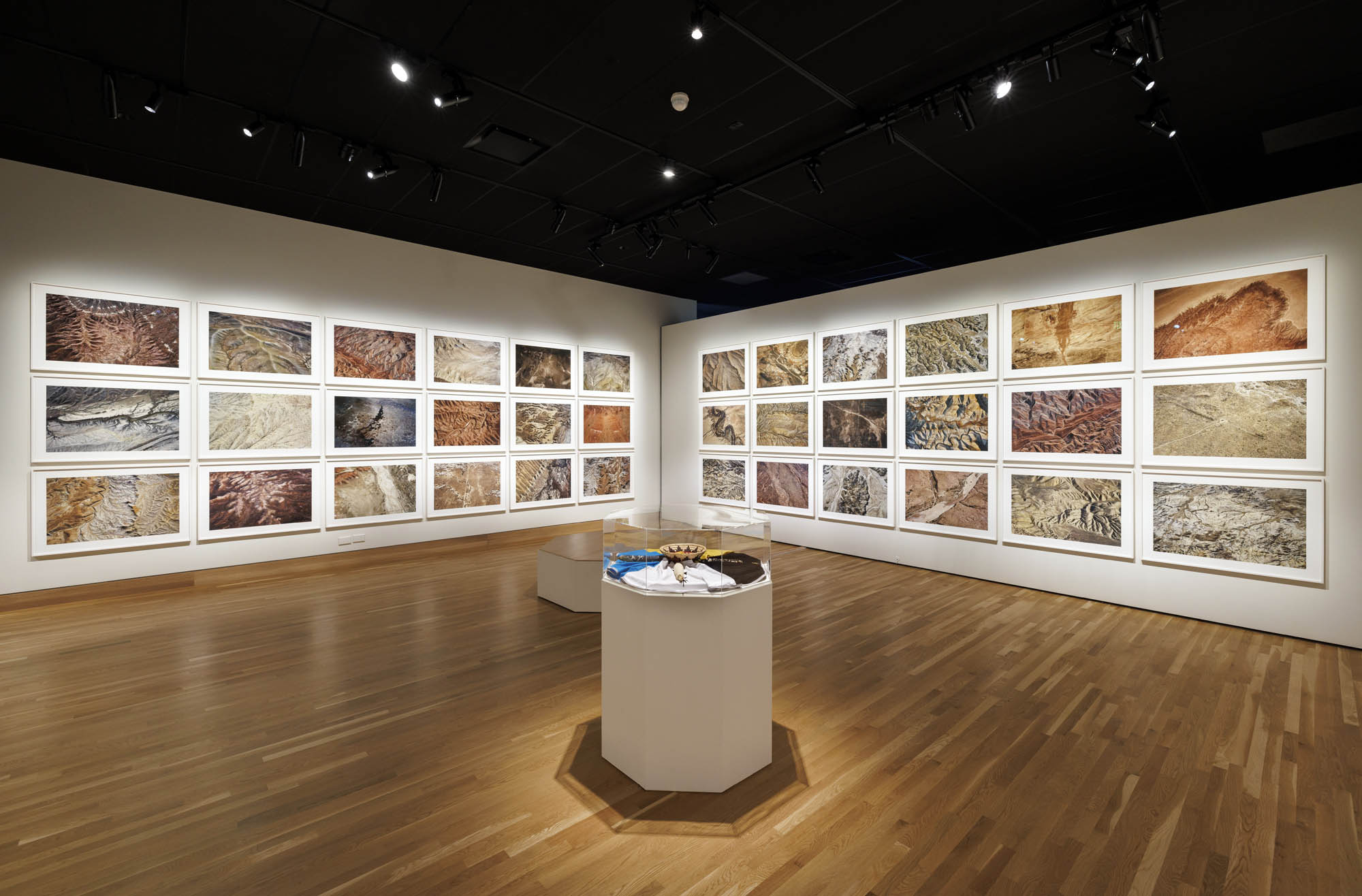
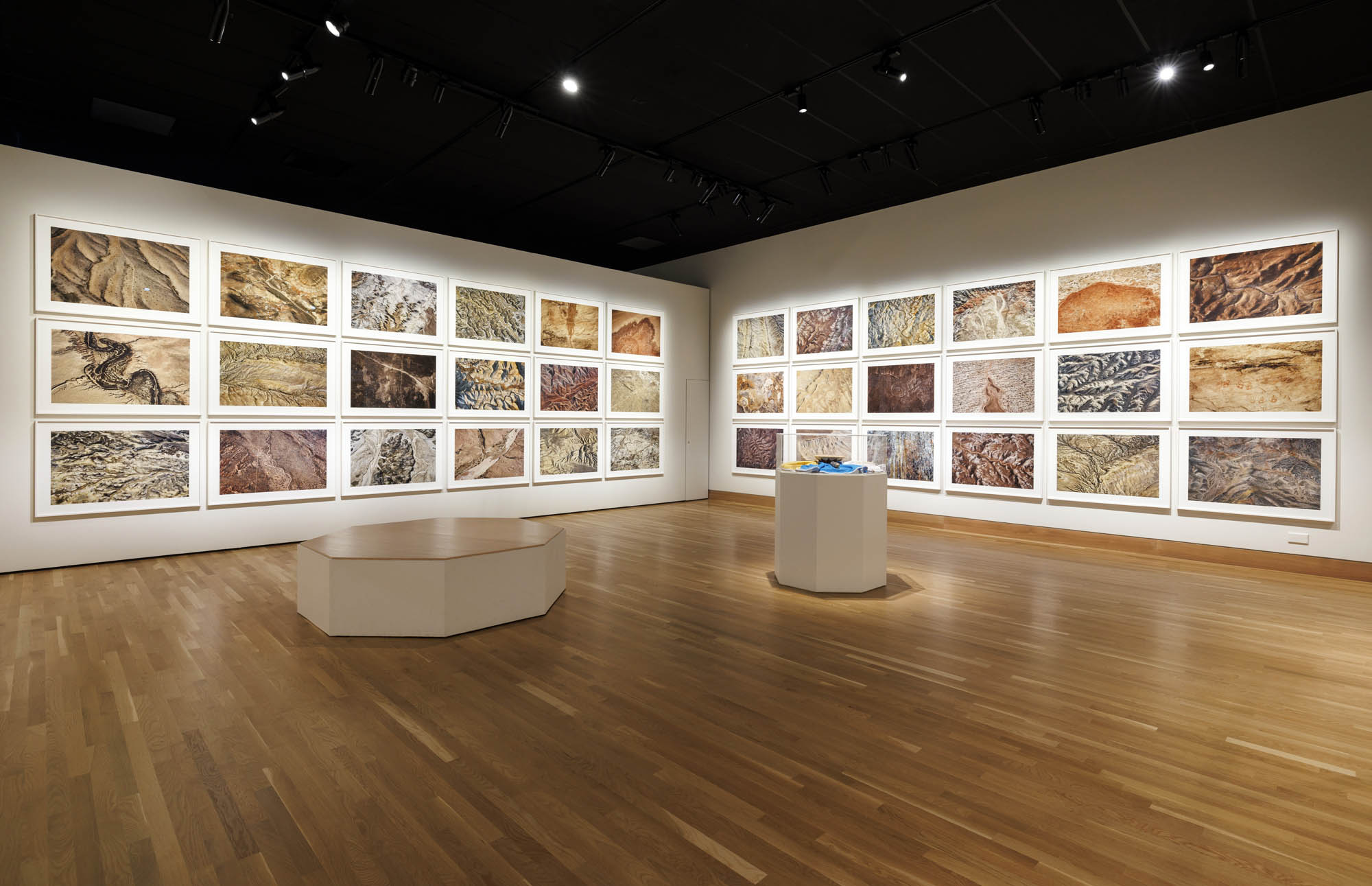
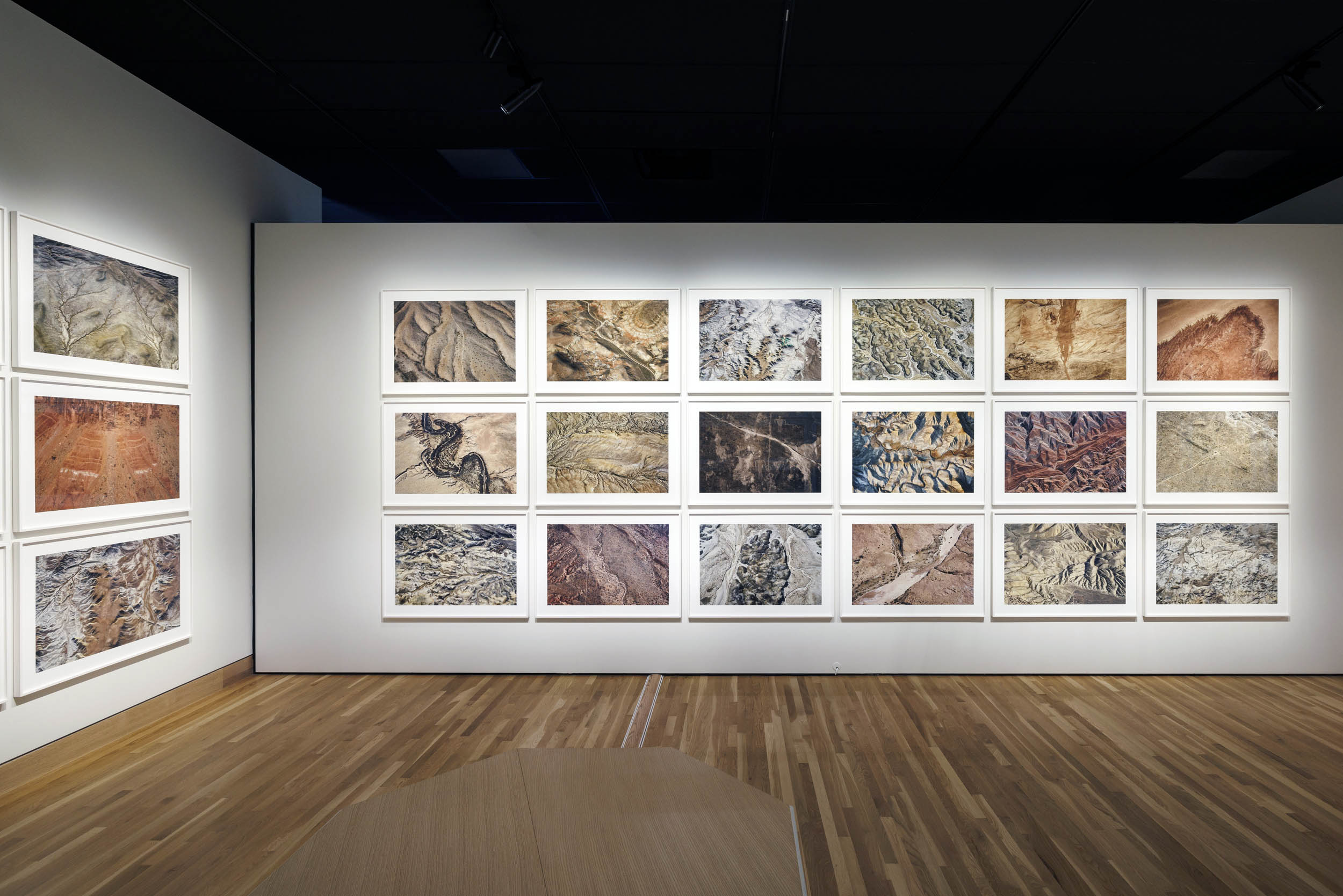
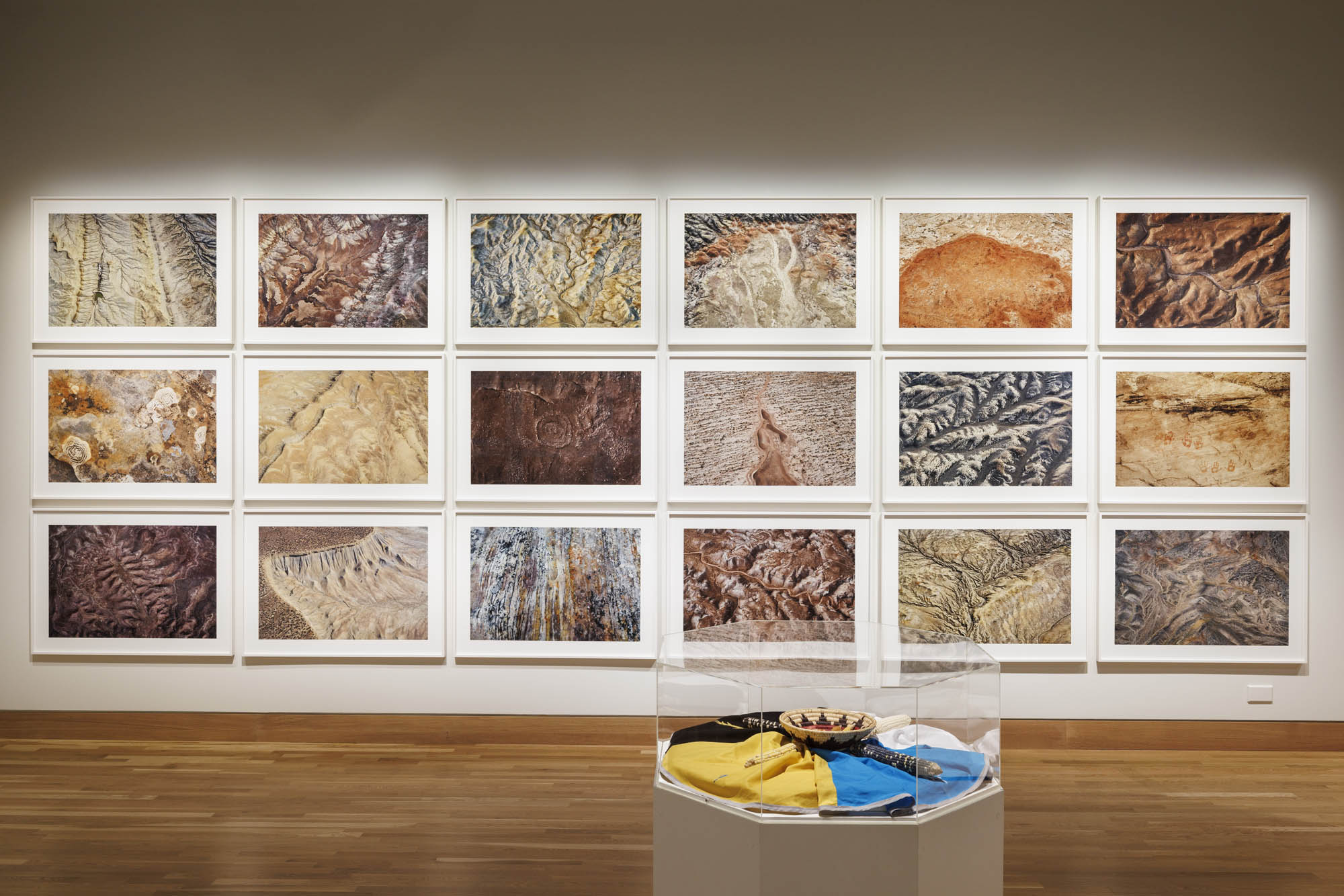
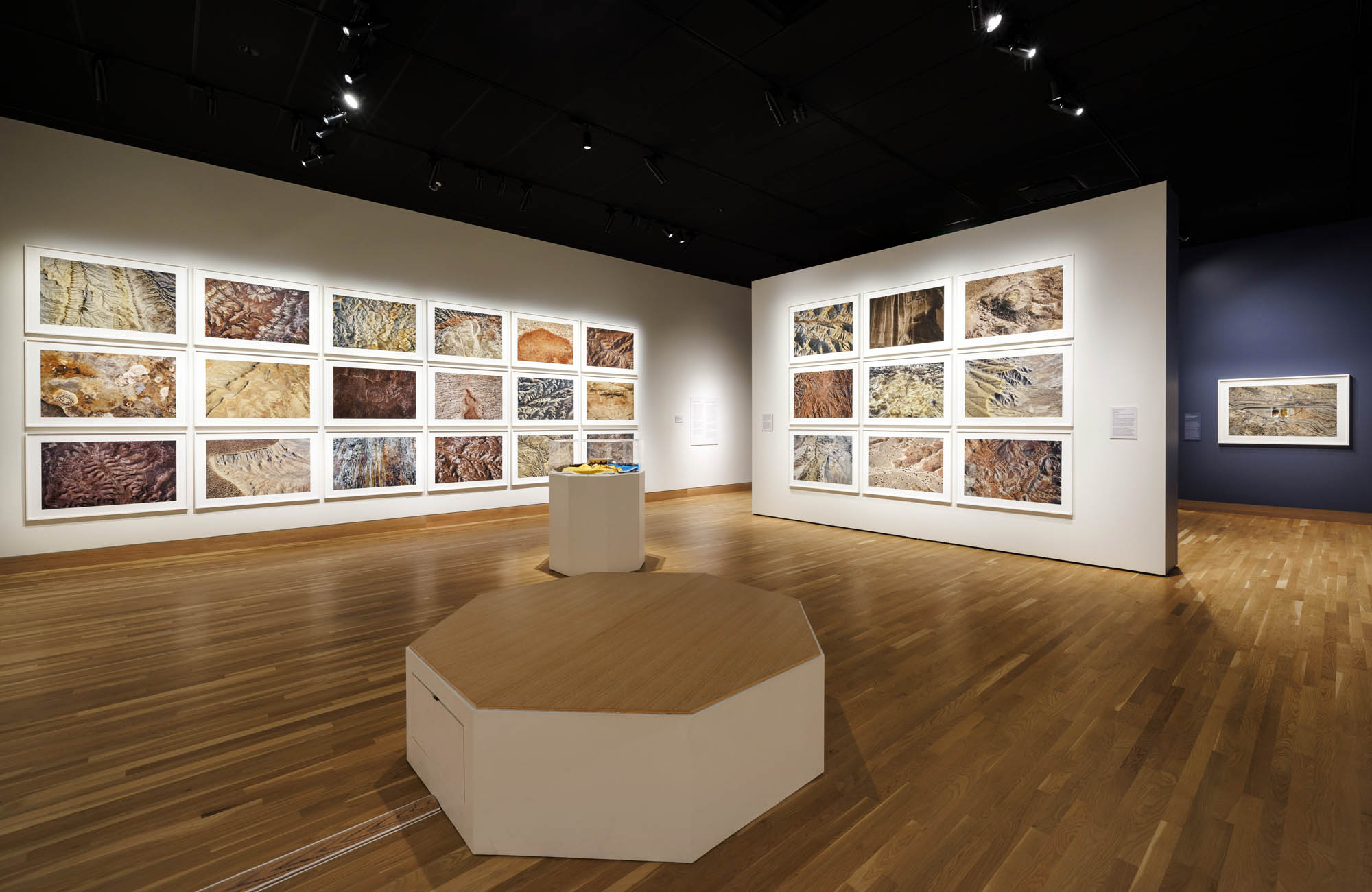
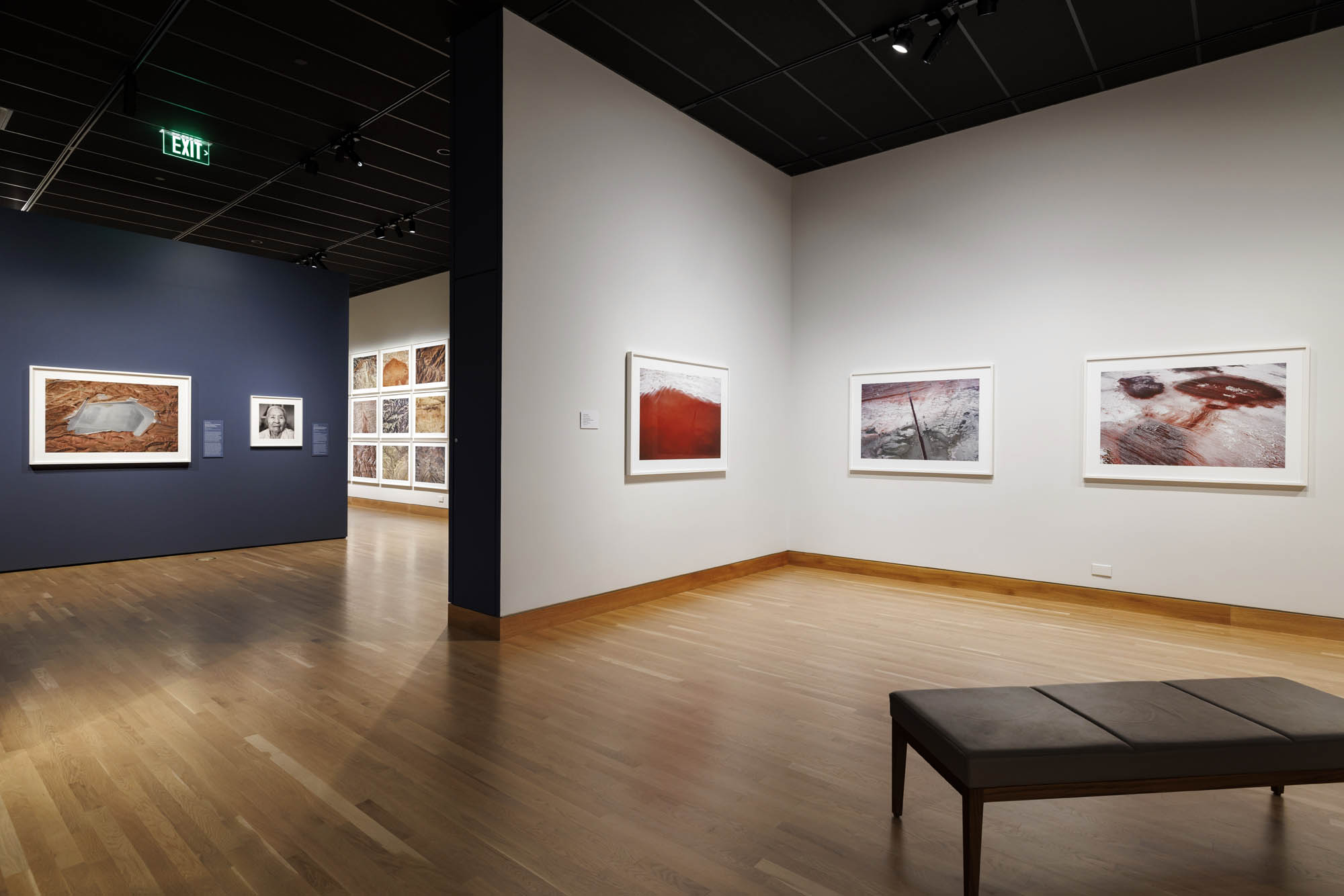
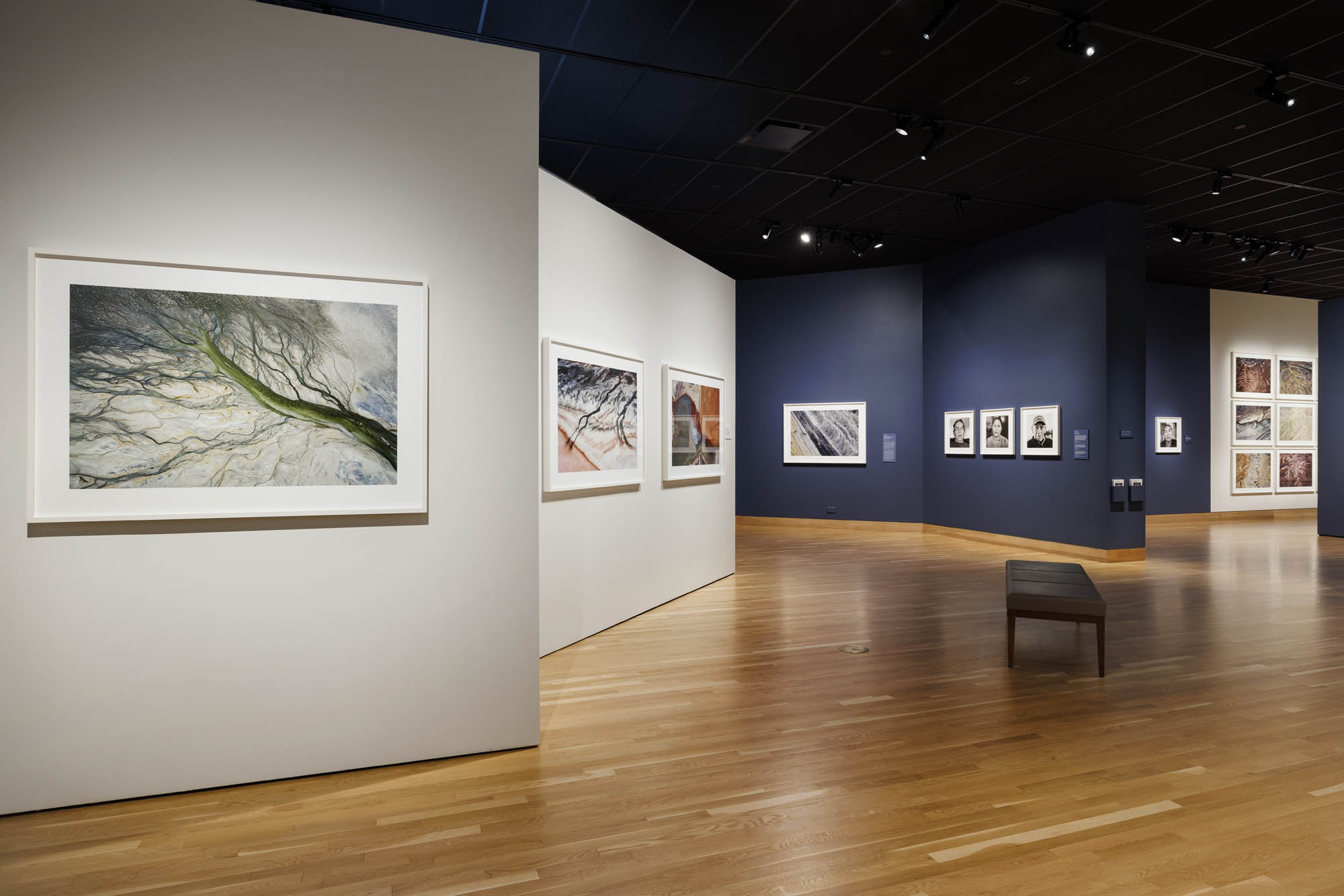
Installation view of the exhibition 'Fazal Sheikh: Thirst | Exposure | In Place' at the Denver Art Museum showing work from the series 'In Place (Utah, Arizona, and New Mexico, Four Corners Region)' 2017-2020

Installation view of the exhibition 'Fazal Sheikh: Thirst | Exposure | In Place' at the Denver Art Museum showing work from the series 'In Place (Utah, Arizona, and New Mexico, Four Corners Region)' 2017-2020

Installation view of the exhibition 'Fazal Sheikh: Thirst | Exposure | In Place' at the Denver Art Museum showing work from the series 'In Place (Utah, Arizona, and New Mexico, Four Corners Region)' 2017-2020

Installation view of the exhibition 'Fazal Sheikh: Thirst | Exposure | In Place' at the Denver Art Museum showing work from the series 'In Place (Utah, Arizona, and New Mexico, Four Corners Region)' 2017-2020

Installation view of the exhibition 'Fazal Sheikh: Thirst | Exposure | In Place' at the Denver Art Museum showing work from the series 'In Place (Utah, Arizona, and New Mexico, Four Corners Region)' 2017-2020

Installation view of the exhibition 'Fazal Sheikh: Thirst | Exposure | In Place' at the Denver Art Museum showing work from the series 'In Place (Utah, Arizona, and New Mexico, Four Corners Region)' 2017-2020

Installation view of the exhibition 'Fazal Sheikh: Thirst | Exposure | In Place' at the Denver Art Museum showing work from the series 'In Place (Utah, Arizona, and New Mexico, Four Corners Region)' 2017-2020

Installation view of the exhibition 'Fazal Sheikh: Thirst | Exposure | In Place' at the Denver Art Museum showing work from the series 'In Place (Utah, Arizona, and New Mexico, Four Corners Region)' 2017-2020

Installation view of the exhibition 'Fazal Sheikh: Thirst | Exposure | In Place' at the Denver Art Museum showing work from the series 'In Place (Utah, Arizona, and New Mexico, Four Corners Region)' 2017-2020

Installation view of the exhibition 'Fazal Sheikh: Thirst | Exposure | In Place' at the Denver Art Museum showing work from the series 'In Place (Utah, Arizona, and New Mexico, Four Corners Region)' 2017-2020

Installation view of the exhibition 'Fazal Sheikh: Thirst | Exposure | In Place' at the Denver Art Museum showing work from the series 'In Place (Utah, Arizona, and New Mexico, Four Corners Region)' 2017-2020Installation view of the exhibition 'Fazal Sheikh: Thirst | Exposure | In Place' at the Denver Art Museum showing work from the series 'In Place (Utah, Arizona, and New Mexico, Four Corners Region)' 2017-2020

Installation view of the exhibition 'Fazal Sheikh: Thirst | Exposure | In Place' at the Denver Art Museum showing work from the series 'In Place (Utah, Arizona, and New Mexico, Four Corners Region)' 2017-2020

Installation view of the exhibition 'Fazal Sheikh: Thirst | Exposure | In Place' at the Denver Art Museum showing work from the series 'In Place (Utah, Arizona, and New Mexico, Four Corners Region)' 2017-2020


Installation view of the exhibition Fazal Sheikh: Thirst | Exposure | In Place at the Denver Art Museum showing work from the series In Place (Utah, Arizona, and New Mexico, Four Corners Region), 2017-2020


The Denver Art Museum (DAM) presents Fazal Sheikh: Thirst | Exposure | In Place, an exhibition created from three projects photographer Fazal Sheikh made on the Colorado Plateau from 2017 to early 2023. Sheikh’s portraits and landscapes shed light on the far-reaching consequences of extractive industry and climate change. Thirst Ç€ Exposure Ç€ In Place will open March 10, 2024, and will be on view through October 20, 2024, in the museum’s Photography galleries, located on level 6 of the Martin Building, and will be included with general admission.

Born in 1965 in New York City, Sheikh creates images of displaced communities and marginalised people that prompt awareness of the world beyond the museum. The photographs in Thirst ǀ Exposure ǀ In Place expose indelible marks on the Colorado Plateau and American Southwest landscape that have been etched by both geological and human forces. Through this beautiful and sometimes frightening new work, Sheikh encourages viewers to witness the consequences of the past and imagine the shape of the future.

“Through expansive aerial shots and intimate portraits, Fazal Sheikh documents these regions and their people with solidarity and honesty,” said Christoph Heinrich, Frederick and Jan Mayer Director of the Denver Art Museum. “The Colorado Plateau is a region deeply impacted by climate change and economic development. This exhibition offers a nuanced view into the past, present and future lives of its inhabitants.”

Sheikh is best known for his deeply humane photographs of refugees and migrants displaced by war and famine. Focusing on the United States for the first time, Sheikh explores how Indigenous people and the lands they call home have been affected by industrial growth and government policy.

“The aerial photographs in this exhibition remind us of the great age and natural beauty of the Colorado Plateau,” said Eric Paddock, Curator of Photography at the DAM and curator of this exhibition for Denver. “They create an awareness of deep human and geological time and raise questions about the future of the region. In that context, Sheikh’s portraits and accompanying text affirm local communities’ need to protect their sacred spaces and encourage wider recognition of that need.”

The DAM exhibition presents Sheikh’s recent work in three interrelated sections:

Thirst is a new series of aerial photographs that document the decline of the Great Salt Lake in northeast Utah, which is shrinking due to overconsumption and dwindling rain and snowfall. As the lake dries up, winds carry clouds of toxic sediment – by-products from mining, agriculture and urban development – from the lakebed, across the valley and beyond.

Exposure examines the impacts of uranium, coal, oil and natural-gas extraction on the American Southwest and on its Indigenous inhabitants. Sheikh partnered with Utah Diné Bikéyah – a coalition among the Hopi, Navajo, Uintah Ouray Ute, Ute Mountain Ute and Zuni tribes – and with Indigenous elders and scientists from Princeton University – to address hazardous waste and pollution left across the region by short-sighted development and poorly remediated industrial sites. The project reflects on the resilience of Indigenous people in the face of threats to their culture, spirituality and health.

In Place evokes the enduring landscapes of the Bears Ears region in Utah, bringing Sheikh’s photographs together with contributions from scientists and Indigenous communities in and around Bears Ears in southeastern Utah. Visitors are surrounded by images made at a close distance and from high in the air. Sixty-three large colour photographs show the tremendous geological variety and the long cultural continuities of the Four Corners region.

Visitors will reflect upon the transformation – and often devastation – of these landscapes in the context of the past, present and future, while considering the juxtaposition of beauty and catastrophe, as well as intimate, human-scale stories and those spanning vast geological eras and changes.

Jonah Yellowman, spiritual advisor for the Utah Diné Bikéyah intertribal coalition and one of its founding members, will present an offering that represents his Navajo (Diné) spirituality and a deep connection to the land. This offering will be present in the gallery during the run of the exhibition.

Sound recordings taken from seismometer readings by University of Utah geologist Jeffrey Ralston Moore will resonate throughout the gallery space. They represent the otherwise inaudible vibrations of rock formations on the Colorado Plateau.

Taken together, the photographs and collaborations in Thirst | Exposure | In Place lay bare the indelible marks etched on the landscape by geological and human forces. Sheikh asks us to witness the consequences of what has passed and imagine what is yet to come.

Sheikh will speak about his recent work in the Four Corners region and at the Great Salt Lake, in connection with his exhibition in a lecture event at the DAM on March 9, 11am – 12pm. The lecture will take place in the Sharp Auditorium, in the lower level of the museum’s Hamilton Building. Sheikh will discuss the origin of each series, his immersion in the landscapes and communities he photographed and his collaborations with writers, scientists and Indigenous community members that are woven throughout this work. This exhibition follows the Denver Art Museum’s 2017 presentation of Common Ground: Photographs by Fazal Sheikh, 1989-2013.
Fazal Sheikh: Thirst | Exposure | In Place is organised by the Denver Art Museum. The exhibition is presented by Jane Watkins, with additional support from the donors to the Annual Fund Leadership Campaign and the residents who support the Scientific and Cultural Facilities District (SCFD). Promotional support is provided by 5280 Magazine and CBS Colorado.

The exhibition was curated in Denver by Curator of Photography, Eric Paddock, in collaboration with Kimberly Roberts, Denver Art Museum Curatorial Associate, and Lauren Thompson, Senior Interpretive Specialist.


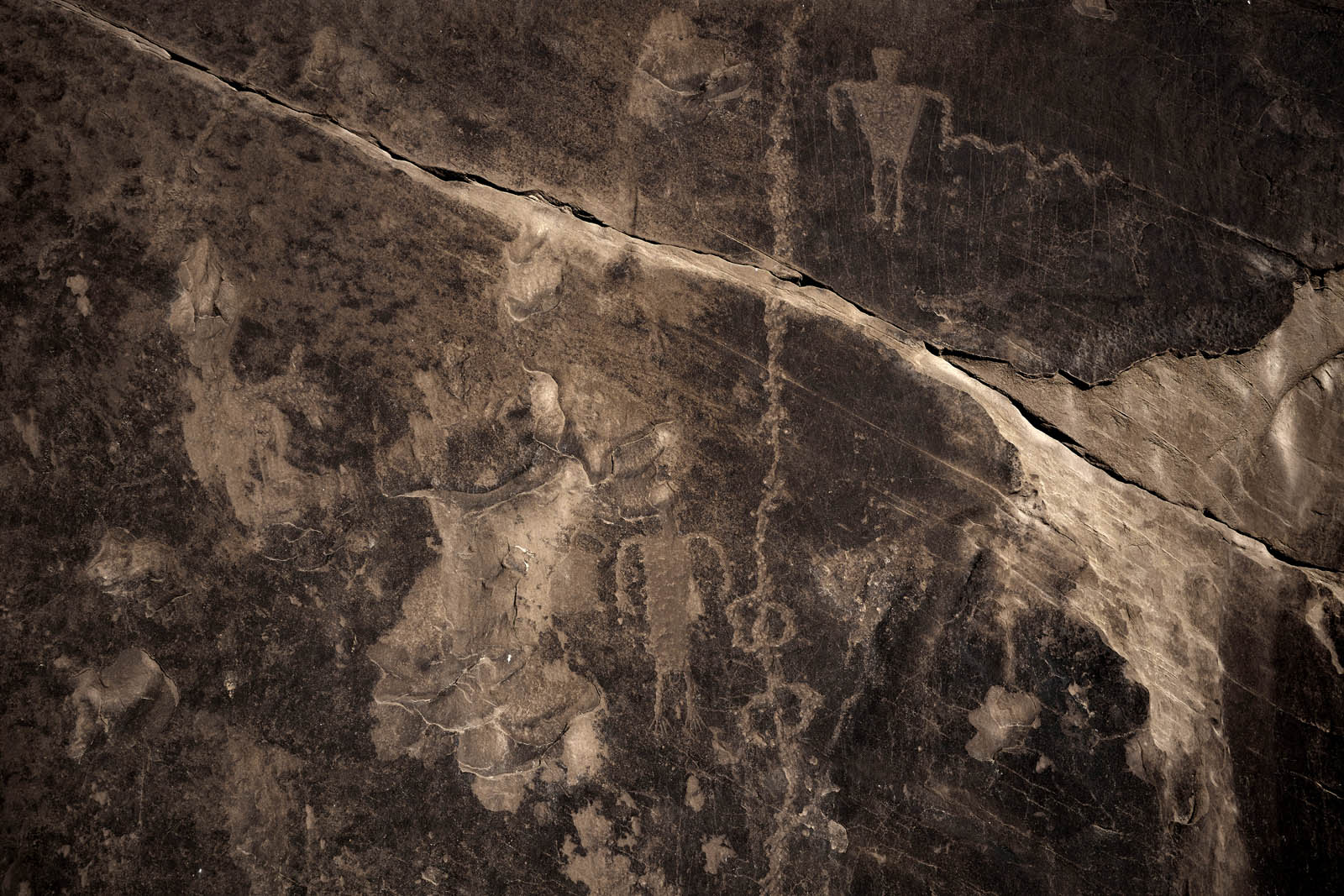
Fazal Sheikh (American, b. 1965) From the installation 'In Place (Utah, Arizona, and New Mexico, Four Corners Region)' 2017-2020


Fazal Sheikh (American, b. 1965)
From the installation In Place (Utah, Arizona, and New Mexico, Four Corners Region)
2017-2020
Pigmented inkjet print
© and courtesy Fazal Sheikh
 

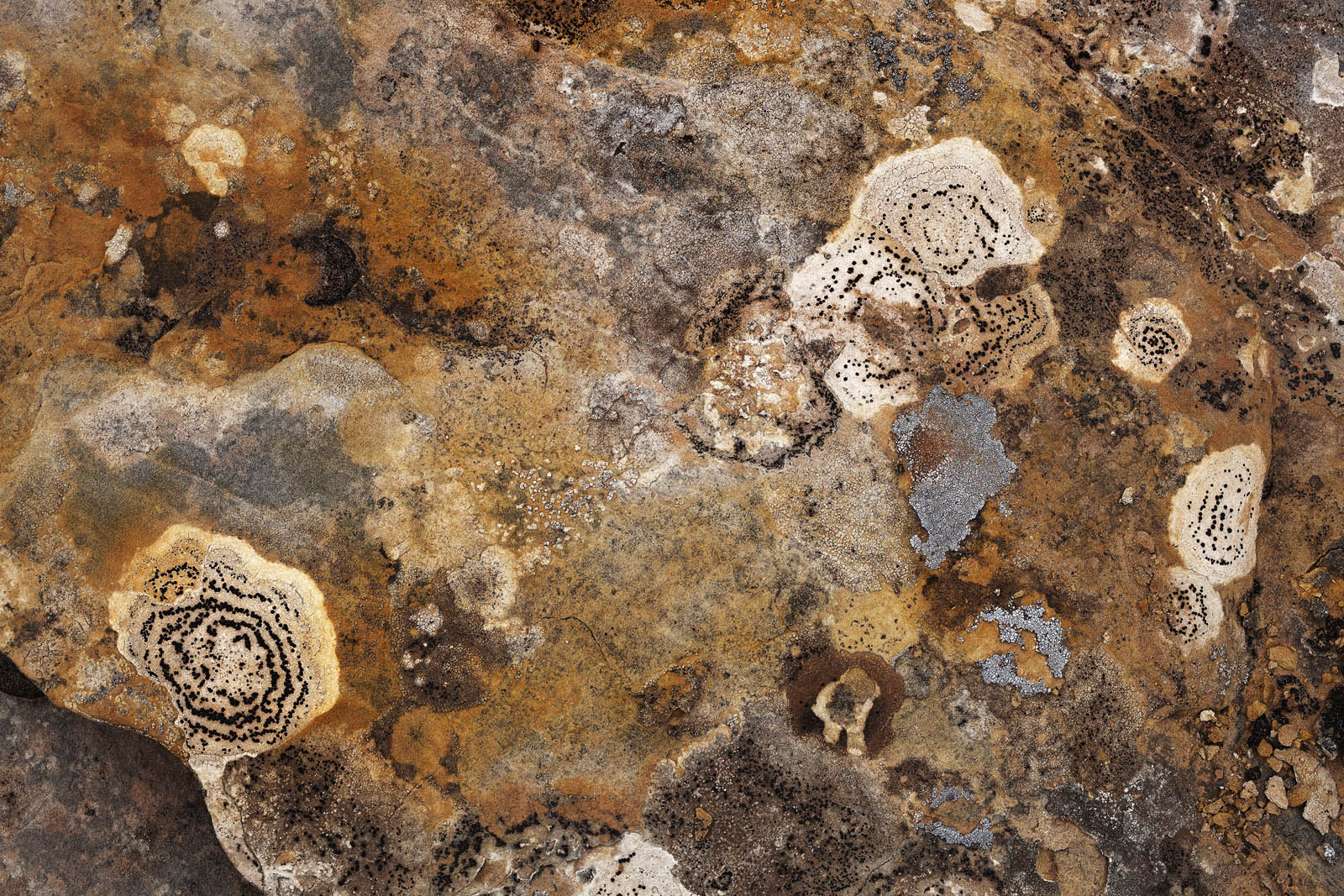
Fazal Sheikh (American, b. 1965) From the installation 'In Place (Utah, Arizona, and New Mexico, Four Corners Region)' 2017-2020


Fazal Sheikh (American, b. 1965)
From the installation In Place (Utah, Arizona, and New Mexico, Four Corners Region)
2017-2020
Pigmented inkjet print
© and courtesy Fazal Sheikh
 

Fazal Sheikh (American, b. 1965) From the installation 'In Place (Utah, Arizona, and New Mexico, Four Corners Region)' 2017-2020


Fazal Sheikh (American, b. 1965)
From the installation In Place (Utah, Arizona, and New Mexico, Four Corners Region)
2017-2020
Pigmented inkjet print
© and courtesy Fazal Sheikh


Denver Art Museum
100 W 14th Ave Pkwy,
Denver, CO 80204, United States
Phone: (720) 865-5000

Opening hours:
Open daily from 10am – 5pm, 10am – 8pm on Tuesdays

Denver Art Museum website

LIKE ART BLART ON FACEBOOK

Back to top

Exhibition: ‘Ansel Adams in Our Time’ at the Museum of Fine Arts, Boston

Exhibition dates: 13th December, 2018 – 24th February, 2019

Curator: Karen Haas, Lane Curator of Photographs


Ansel Adams (American, 1902-1984) 'The Golden Gate Before the Bridge, San Francisco' 1932 from the exhibition 'Ansel Adams in Our Time' at the Museum of Fine Arts, Boston, Dec 2018 - Feb 2019


Ansel Adams (American, 1902-1984)
The Golden Gate Before the Bridge, San Francisco
1932
Gelatin silver print
49.5 x 69.9cm (19 1/2 x 27 1/2 in.)
Gift of Saundra B. Lane
The Lane Collection
Museum of Fine Arts, Boston


Ansel Adams is a wonderful classical, (clinical?), formal photographer… but a photographer of people, Native Indians, Indian dances and the urban landscape, he ain’t. Simply put, he’s not much good at these subjects. In this posting, best stick with what he’s really good at – beautifully balanced art and environmental activist photographs. Oh, the light and form! Images that teeter towards the sublime held in check by F64, perspective and objectivity.

Interesting to have the historical work to riff off, and “contemporary artists whose modern-day concerns centred on the environment, land rights, and the use and misuse of natural resources point directly to Adams’ legacy” … but as with so many exhibitions that try to place an artist within a historical and contemporary context, their work is not necessary. In fact, it probably diminishes the utopian vision of one of the world’s best known photographers.

Dr Marcus Bunyan


Many thankx to the Museum of Fine Arts Boston for allowing me to publish the photographs in the posting. Please click on the photographs for a larger version of the image.


Ansel Adams (American, 1902-1984) 'Lone Pine Peak, Sierra Nevada, California' 1948 from the exhibition 'Ansel Adams in Our Time' at the Museum of Fine Arts, Boston, Dec 2018 - Feb 2019


Ansel Adams (American, 1902-1984)
Lone Pine Peak, Sierra Nevada, California
1948
Gelatin silver print
38.8 x 49.1cm (15 1/4 x 19 5/16 in.)
Gift of Saundra B. Lane
The Lane Collection
Museum of Fine Arts, Boston


Ansel Adams in Our Time traces the iconic visual legacy of Ansel Adams (1902-1984), presenting some of his most celebrated prints, from a symphonic view of snow-dusted peaks in The Tetons and Snake River, Grand Teton National Park, Wyoming (1942) to an aerial shot of a knotted roadway in Freeway Interchange, Los Angeles (1967). The exhibition looks both backward and forward in time: his black-and-white photographs are displayed alongside prints by several of the 19th-century government survey photographers who greatly influenced Adams, as well as work by contemporary artists whose modern-day concerns centred on the environment, land rights, and the use and misuse of natural resources point directly to Adams’ legacy.

While crafting his own modernist vision, Adams was inspired by precursors in government survey and expedition photography such as Carleton Watkins (1829-1916), Eadweard Muybridge (1830-1904), Timothy O’Sullivan (1840-1882) and Frank Jay Haynes (1853-1921), who worked with large bulky cameras and glass-plate negatives and set off into the wilderness carrying their equipment on mules. In some cases, Adams replicated their exact views of the Yosemite Valley, Canyon de Chelly, and Yellowstone, producing images that would become emblematic of the country’s national parks. In Clearing Winter Storm, Yosemite National Park (about 1937), the granite crags of the Yosemite Valley are wreathed in clouds after a sudden storm. Executed with unrivalled sensitivity and rigorous exactitude, the artist’s photographs popularised the notion that the American West was a pristine, and largely uninhabited, wilderness.

Ansel Adams in Our Time also brings Adams forward in time, juxtaposing his work with that of contemporary artists such as Mark Klett (born 1962), Trevor Paglen (born 1974), Catherine Opie (born 1961), Abelardo Morell (born 1948), Victoria Sambunaris (born 1964), and Binh Danh (born 1977). The more than 20 present-day photographers in the exhibition have not only been drawn to some of the same locations, but also engaged with many of the themes central to Adams’ legacy: desert and wilderness spaces, Native Americans and the Southwest, and broader issues affecting the environment: logging, mining, drought and fire, booms and busts, development, and urban sprawl.

Adams’ stunning images were last on view at the MFA in a major exhibition in 2005; this new, even larger presentation places his work in the context of the 21st century, with all that implies about the role photography has played – and continues to play – in our changing perceptions of the land. The Adams photographs in the exhibition are drawn from the Lane Collection, one of the largest and most significant gifts in MFA history.

Text from the MFA website


Ansel Adams (American, 1902-1984) 'Marion Lake, Kings River Canyon, California' c. 1925


Ansel Adams (American, 1902-1984)
Marion Lake, Kings River Canyon, California (from Parmelian Prints of the High Sierras)
c. 1925; print date: 1927
Gelatin silver print
14.6 x 19.8cm (5 3/4 x 7 13/16 in.)
Gift of Saundra B. Lane
The Lane Collection
Museum of Fine Arts, Boston


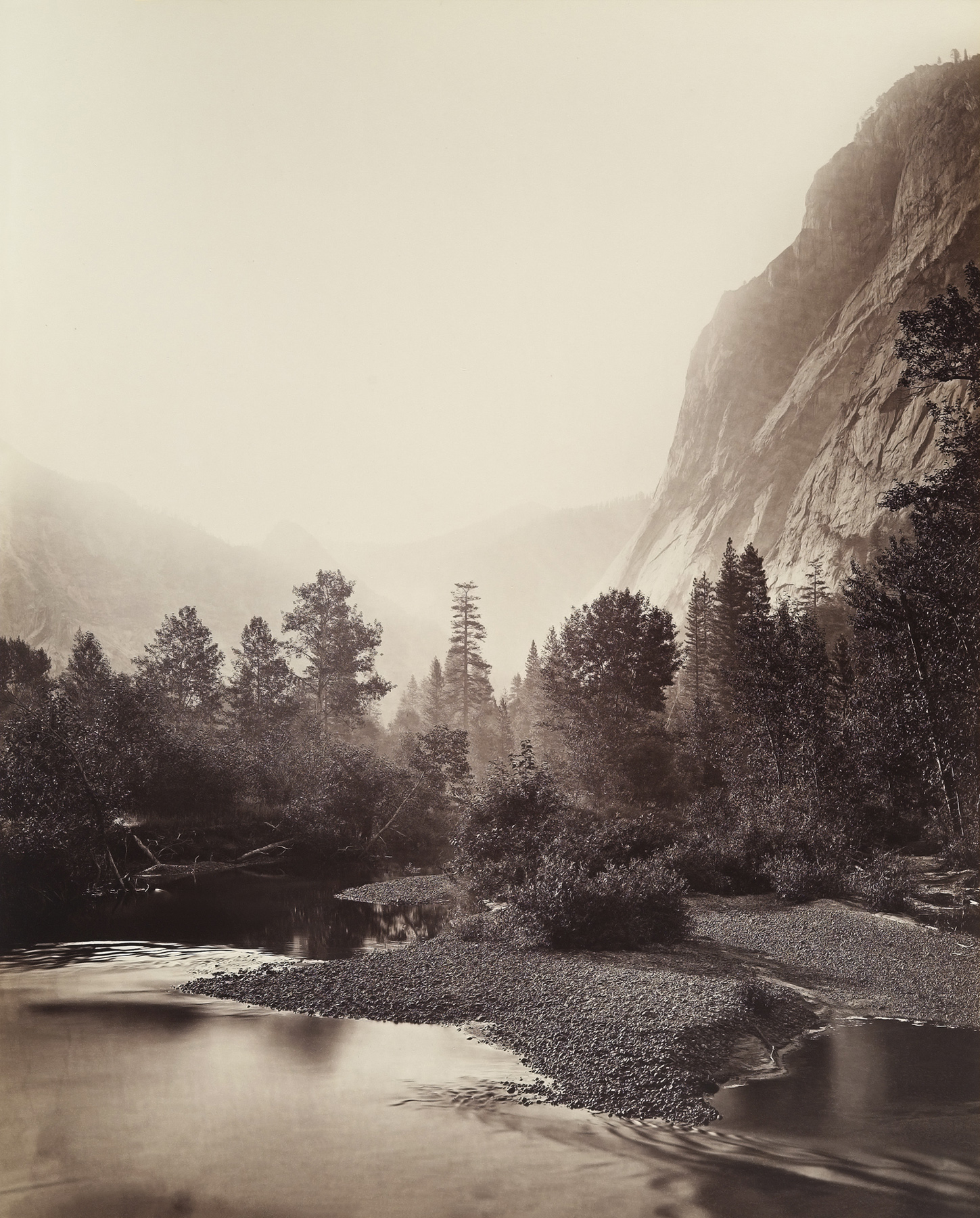
Ansel Adams (American, 1902-1984) 'Early Morning, Merced River Canyon, Yosemite National Park' c. 1950


Ansel Adams (American, 1902-1984)
Early Morning, Merced River Canyon, Yosemite National Park
c. 1950
Gelatin silver print
Image/Sheet: 39.4 x 49.7cm (15 1/2 x 19 9/16 in.)
Gift of Saundra B. Lane
The Lane Collection
Museum of Fine Arts, Boston


Ansel Adams (American, 1902-1984) 'Cliff Palace, Mesa Verde National Park, Colorado' 1941


Ansel Adams (American, 1902-1984)
Cliff Palace, Mesa Verde National Park, Colorado
1941
Gelatin silver print
Image/Sheet: 19.1 x 23.8cm (7 1/2 x 9 3/8 in.)
Gift of Saundra B. Lane
The Lane Collection
Museum of Fine Arts, Boston


Ansel Adams (American, 1902-1984) 'Thunderstorm, Ghost Ranch, Chama River Valley, Northern New Mexico' 1937


Ansel Adams (American, 1902-1984)
Thunderstorm, Ghost Ranch, Chama River Valley, Northern New Mexico
1937; print date: about 1948
Gelatin silver print
16.6 x 22.9cm (6 9/16 x 9 in.)
Gift of Saundra B. Lane
The Lane Collection
Museum of Fine Arts, Boston


Ansel Adams (American, 1902-1984) 'Clearing Winter Storm, Yosemite National Park' c. 1937


Ansel Adams (American, 1902-1984)
Clearing Winter Storm, Yosemite National Park
c. 1937
Gelatin silver print
Gift of Saundra B. Lane
The Lane Collection
Museum of Fine Arts, Boston
© The Ansel Adams Publishing Rights Trust


Ansel Adams (American, 1902-1984) 'Freeway Interchange, Los Angeles' 1967


Ansel Adams (American, 1902-1984)
Freeway Interchange, Los Angeles
1967
Gelatin silver print
37.2 x 34.8cm (14 5/8 x 13 11/16 in.)
Gift of Saundra B. Lane
The Lane Collection
Museum of Fine Arts, Boston


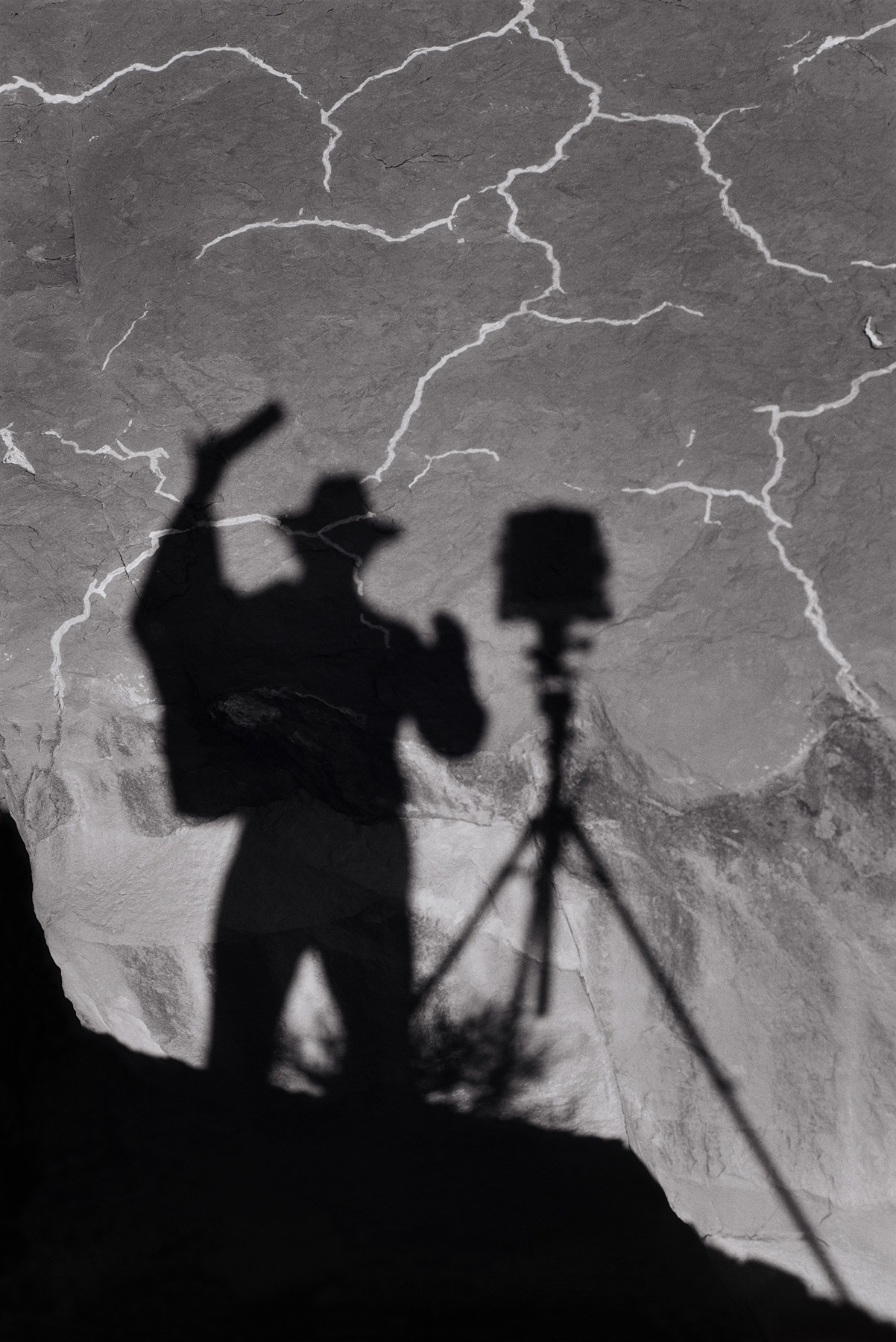
Ansel Adams (American, 1902-1984) 'Self‑Portrait, Monument Valley, Utah' 1958


Ansel Adams (American, 1902-1984)
Self‑Portrait, Monument Valley, Utah
1958
Gelatin silver print
Gift of Saundra B. Lane
The Lane Collection
Museum of Fine Arts, Boston
© The Ansel Adams Publishing Rights Trust


Ansel Adams (1902-1984) is the rare artist whose works have helped to define a genre. Over the last half-century, his black-and-white photographs have become, for many viewers, visual embodiments of the sites he captured: Yosemite and Yellowstone National Parks, the Sierra Nevada, the American Southwest and more. These images constitute an iconic visual legacy – one that continues to inspire and provoke. Organised by the Museum of Fine Arts, Boston (MFA), Ansel Adams in Our Time offers a new perspective on one of the best-known and most beloved American photographers by placing him into a dual conversation with his predecessors and contemporary artists. While crafting his own modernist vision, Adams followed in the footsteps of 19th-century forerunners in government survey and expedition photography such as Carleton Watkins, Eadweard Muybridge, Timothy O’Sullivan and Frank Jay Haynes. Today, photographers including Mark Klett, Trevor Paglen, Catherine Opie, Abelardo Morell, Victoria Sambunaris and Binh Danh are engaging anew with the sites and subjects that occupied Adams, as well as broader environmental issues such as drought and fire, mining and energy, economic booms and busts, protected places and urban sprawl. Approximately half of the nearly 200 works in the exhibition are photographs by Adams, drawn from the Lane Collection – one of the largest and most significant gifts in the MFA’s history, which made the Museum one of the major holders of the artist’s work. The photographs by 19th-century and contemporary artists are on loan from public institutions, galleries and private collectors. Ansel Adams in Our Time is on view in the Ann and Graham Gund Gallery from December 13, 2018 through February 24, 2019. Visitors are encouraged to use #AnselAdamsInOurTime to share their exhibition experiences on social media, as well as submit Adams-inspired landscape photos on Instagram for a chance to win an MFA membership, Ansel Adams publication and a private curatorial tour. Ansel Adams in Our Time is presented with proud recognition of The Wilderness Society and the League of Conservation Voters, made possible by Scott Nathan and Laura DeBonis. Sponsored by Northern Trust. Additional support from the Robert and Jane Burke Fund for Exhibitions, and Peter and Catherine Creighton. With gratitude to the Phillip Leonian and Edith Rosenbaum Leonian Charitable Trust for its generous support of Photography at the MFA.

“Ansel Adams is a larger-than-life figure in the field of photography, and the generous gift of more than 450 of his prints from the Lane Collection has inspired me to revisit his work. With this exhibition, I hope to open up new conversations around this seminal artist, by looking both backward and forward in time,” said Karen Haas, Lane Curator of Photographs. “I invite our visitors to explore the role that photography has historically played in our changing perceptions of the American West, as well as to consider Adams’ legacy of environmental activism – one that still speaks to us today.”

Exhibition overview

Capturing the View

Organised both thematically and chronologically into eight sections, the exhibition begins where Adams’ own photographic life began. Perhaps no place had a more lasting influence on him than Yosemite National Park, in his native California. Adams first visited Yosemite at age 14, bringing along a Kodak Box Brownie camera given to him by his father, and returned almost every year for the rest of his life. It was not only where he honed his skills, but also where he came to recognise the power of photographs to express emotion and meaning. Showcasing its spectacular granite peaks, lakes, rivers and waterfalls, Adams’ photographs of Yosemite have become virtually synonymous with the park itself. Adams, however, was not the first to take a camera into the mountains of California. He acknowledged his debt to the earliest photographers to arrive in the Yosemite Valley, including Carleton Watkins, who in the 1860s began to record scenic views with a cumbersome large-format camera and fragile glass plate negatives processed in the field. Watkins’ 19th-century photographs helped to introduce Americans “back east” to the nation’s dramatic western landscapes, while Adams’ 20th-century images made famous the notion of their “untouched wilderness.” Today, photographers such as Mark Klett are grappling with these legacies. Klett and his longtime collaborator Byron Wolfe have studied canonical views of Yosemite Valley by Adams and Watkins, using the latest technology to produce composite panoramas that document changes made to the landscape over more than a century, as well as the ever-growing presence of human activity.

Marketing the View

As a member of the Sierra Club, which he joined in 1919 at age 17, Adams regularly embarked on the environmental organisation’s annual, month-long “High Trips” to the Sierra Nevada mountains. He produced albums of photographs from these treks, inviting club members to select and order prints. This precocious ingenuity ultimately led to the Parmelian Prints of the High Sierras (1927) – one of the earliest experiments in custom printing, sequencing and distributing fine photographs. Sixteen of the 18 prints from the portfolio, including the iconic Monolith – The Face of Half Dome, are on view in the second gallery of the exhibition, which connects Adams’ innovations in marketing his views of the western U.S. to those of his predecessors. In the 19th century, an entire industry of mass-marketing and distributing images of “the frontier” emerged, catering to a burgeoning tourist trade. In addition to engravings and halftones published in books, magazines and newspapers, photographs such as Valley of the Yosemite from Union Point, No. 33 (1872) by Eadweard Muybridge were circulated through stereo cards, which allowed armchair travellers to experience remote places in three dimensions when viewed through a stereoscope. Today, photography remains closely linked with scenic vistas of the American West. Creating works in extended series or grids, artists including Matthew Brandt, Sharon Harper and Mark Rudewel seem to be responding to the earlier tradition of mass-marketing western views, using photography as a medium to call attention to the passage of time and the changing nature of landscapes.

San Francisco – Becoming a Modernist

The third section of the exhibition focuses on Adams’ hometown of San Francisco, which has long captured photographers’ imaginations with its rolling hills and dramatic orientation toward the water. The city’s transformation over more than a century – including changes made to the urban landscape following the devastating earthquake and fire in 1906 and the rise of skyscrapers in the later 20th century – can be observed in the juxtaposition of panoramas by Eadweard Muybridge and Mark Klett, taken from the same spot 113 years apart. Adams’ images of San Francisco from the 1920s and 1930s trace his development into a modernist photographer, as he experimented with a large-format camera to produce maximum depth of field and extremely sharp-focused images. During the Great Depression, Adams also took on a wider range of subjects, including the challenging reality of urban life in his hometown. He photographed the demolition of abandoned buildings, toppled cemetery headstones, political signs and the patina of a city struggling during difficult times. One sign of hope for the future at the time was the construction of the Golden Gate Bridge, which began in 1933. Adams’ The Golden Gate before the Bridge (1932), taken near his family home five years before the bridge’s opening in 1937, is displayed alongside four contemporary prints from the Golden Gate Bridge project (Private Collection, Cambridge) by Richard Misrach, taken from his own porch in Berkeley Hills. Placing his large-format camera in exactly the same position on each occasion, Misrach recorded hundreds of views of the distant span, at different times of the day and in every season. The series, photographed over three years from 1997 to 2000, was reissued in 2012 to mark the 75th anniversary of the Golden Gate’s landmark opening. The vast expanses of sky in Misrach’s works echo the focus on the massive cumulus cloud in the earlier photograph by Adams, who was fascinated with changing weather and landscapes with seemingly infinite space.

Adams in the American Southwest

Adams produced some of his most memorable images – among them, Moonrise, Hernandez, New Mexico (1941; print date: 1965-1975) – during his frequent travels to the American Southwest. He was intrigued by the region’s distinctive landscape, brilliant sunlight and sudden dramatic storms, as well as its rich mix of cultures. Shortly after his first trip to New Mexico in 1927, Adams collaborated with author Mary Hunter Austin on the illustrated book Taos Pueblo (1930, Harvard Art Museums), for which he contributed 12 photographs that reflect his interest in Taos Pueblo’s architecture and activities. Adams shared Austin’s concern that the artistic and religious traditions of the Pueblo peoples were under threat from the increasing numbers of people traveling through or settling in the region. In contrast to the indigenous peoples of Yosemite, who had been forced out of their native lands many years earlier, Pueblo peoples were still living in their ancestral villages. On his return visits to the American Southwest, Adams often photographed the native communities, their dwellings and their ancient ruins. He also photographed Indian dances, which had become popular among tourists who came by train and automobile to be entertained and to buy pottery, jewellery and other souvenirs. Adams’ images of dancers, which emphasise their costumes, postures and expressions, therefore have a complex legacy, as he was one of the onlookers – though he carefully cropped out any evidence of the gathered crowds. Today, indigenous artists including Diné photographer Will Wilson, are creating work that responds to and confronts past depictions of Native Americans by white artists who travelled west to “document” the people who were viewed as a “vanishing race” in the late 19th and early 20th centuries.

Picturing the National Parks

The largest section of the exhibition examines the critical role that photography has played in the history of the national parks. In the 19th century, dramatic views captured by Carleton Watkins and other photographers ultimately helped convince government officials to take action to protect Yosemite and Yellowstone from private development. Adams, too, was aware of the power of the image to sway opinions on land preservation. In 1941 Harold Ickes, Secretary of the Interior, hired Adams to make a series of mural-sized photographs of the national parks for the capital’s new Interior Building. Although his government funding was cut short by America’s entry into World War II and the murals were never realised, Adams felt so strongly about the value of the project that he sought financial assistance on his own. He secured Guggenheim Foundation grants in 1946 and 1948, which allowed him to travel to national parks from Alaska to Texas, Hawaii to Maine. Marked by a potent combination of art and environmental activism, the photographs he made spread his belief in the transformative power of the parks to a wide audience. Many contemporary artists working in the national parks acknowledge, as Adams did, the work of the photographers who came before them. But the complicated legacies of these protected lands have led some – including Catherine Opie, Arno Rafael Minkkinen, Binh Danh and Abelardo Morell – to take more personal and political approaches to the work they are making in these spaces.

The Other Side of the Mountains

Adams made his reputation mainly through spectacular images of “unspoiled” nature. Less well known are the photographs he produced of the more forbidding, arid landscapes in California’s Death Valley and Owens Valley, just southeast of Yosemite. Here, on the other side of the Sierra Nevada, Adams’ work took a dramatic detour. Fellow photographer Edward Weston introduced Adams to Death Valley, where he captured images of sand dunes, salt flats and sandstones canyons. Owens Valley, located to the west, was once verdant farmland, but was suffering by the 1940s, its water siphoned off to supply the growing city of Los Angeles. In 1943, Adams also traveled to nearby Manzanar, where he photographed Japanese Americans forcibly relocated to internment camps shortly after the U.S. entered World War II. Trevor Paglen, Stephen Tourlentes and David Benjamin Sherry are among the contemporary photographers who continue to find compelling subjects in these remote landscapes. Some are drawn to them as “blank slates” upon which to leave their mark, while others explore the raw beauty of the desolate terrain and the many, sometimes unsettling ways it used today – including as a site for maximum-security prisons and clandestine military projects.

The Changing Landscape

Adams’ photographs are appreciated for their imagery and formal qualities, but they also carry a message of advocacy. The last two sections of the exhibition examine the continually changing landscapes of the sites once captured by Adams. In his own time, the photographer was well aware of the environmental concerns facing California and the nation – thanks, in part, to his involvement with the Sierra Club and Wilderness Society. As his career progressed, Adams began to move away from symphonic and pristine wilderness landscapes in favour of images that showed a more nuanced vision. He photographed urban sprawl, freeways, graffiti, oil drilling, ghost towns, rural cemeteries and mining towns, as well as quieter, less romantic views of nature, such as the aftermath of forest fires – subjects that resonate in new ways today. For contemporary photographers working in the American West, the spirit of advocacy takes on an ever-increasing urgency, as they confront a terrain continually altered by human activity and global warming. Works by artists including Laura McPhee, Victoria Sambunaris, Mitch Epstein, Meghann Riepenhoff, Bryan Schutmaat and Lucas Foglia bear witness to these changes, countering notions that natural resources are somehow limitless and not in need of attention and protection.

Press release from the MFA


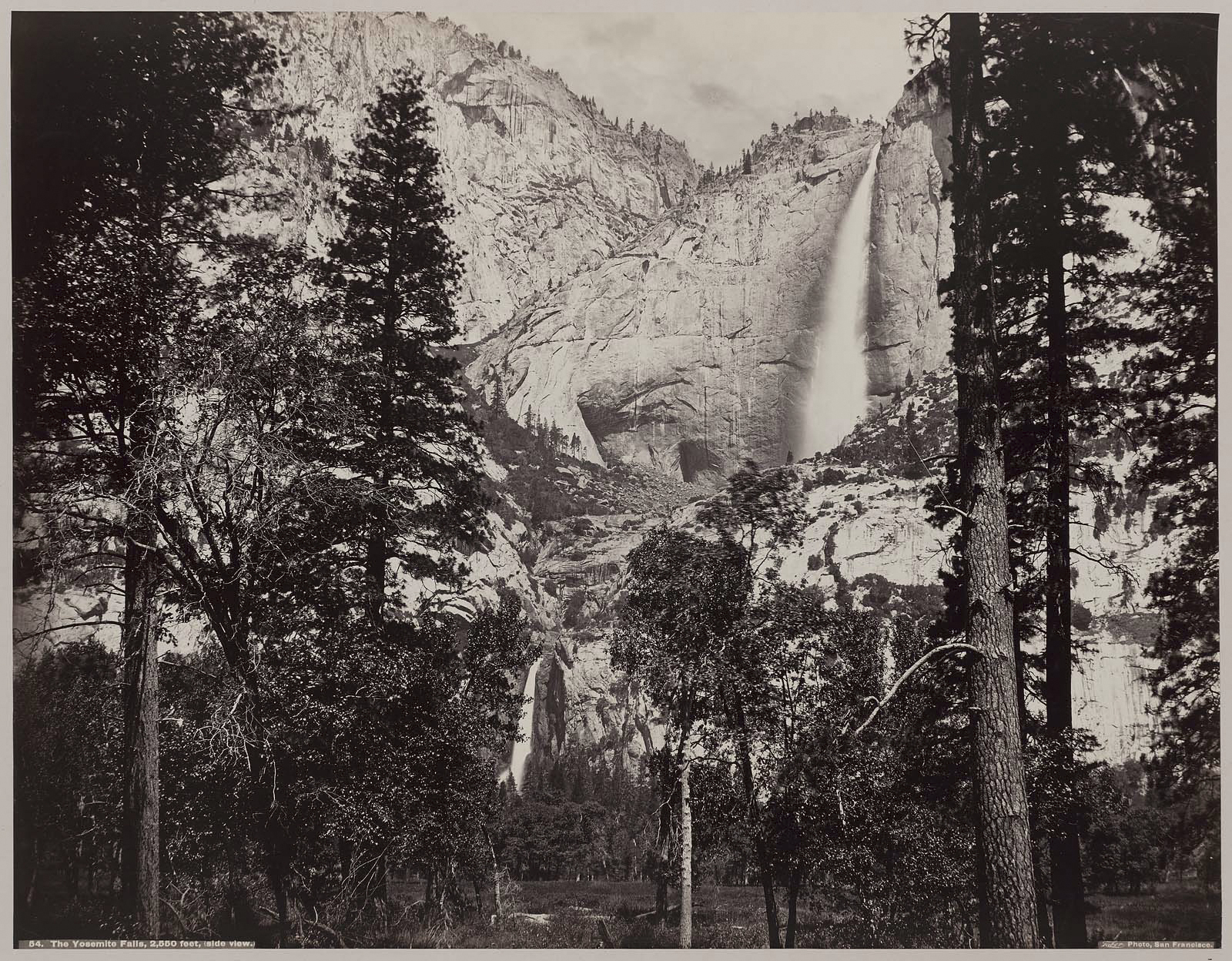
Carleton E. Watkins (American, 1829-1916) 'The Yosemite Falls' 1861


Carleton E. Watkins (American, 1829-1916)
Printed by Taber & Co. (American, active in 1850-1860)
The Yosemite Falls
1861, printed 1880-1890
Albumen print
Image/Sheet: 39.8 x 51.2cm (15 11/16 x 20 3/16 in.)
A. Shuman Collection – Abraham Shuman Fund


Catherine Opie (American, b. 1961) 'Untitled #1 (Yosemite Valley)' 2015


Catherine Opie (American, b. 1961)
Untitled #1 (Yosemite Valley)
2015
Pigment print
Museum of Fine Arts, Boston
Courtesy Regen Projects, Los Angeles and Lehmann Maupin, New York, Hong Kong, and Seoul
© Catherine Opie


Carleton E. Watkins (American, 1829-1916) 'Mount Starr King and Glacier Point, Yosemite, No. 69' 1865-1866


Carleton E. Watkins (American, 1829-1916)
Mount Starr King and Glacier Point, Yosemite, No. 69
1865-1866
Mammoth albumen print from wet collodion negative
Museum of Fine Arts, Boston. Ernest Wadsworth Longfellow Fund
Photograph © Museum of Fine Arts, Boston


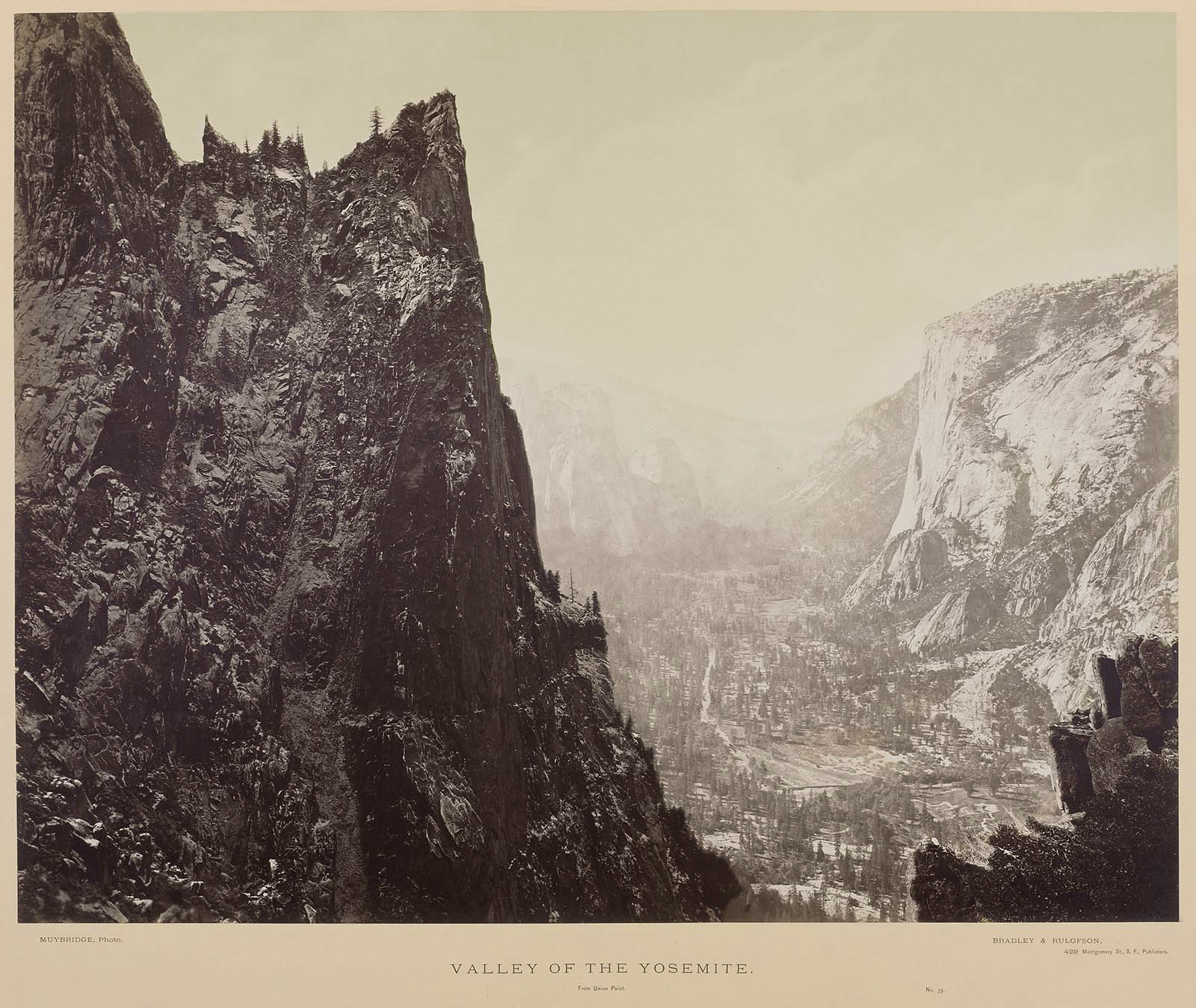
Eadweard J. Muybridge (American, 1830-1904) 'Valley of the Yosemite from Union Point, No. 33' 1872


Eadweard J. Muybridge (American, 1830-1904)
Valley of the Yosemite from Union Point, No. 33
1872
Albumen print
Image/Sheet: 42.5 x 54.2cm (16 3/4 x 21 5/16 in.)
Gift of Charles T. and Alma A. Isaacs
Museum of Fine Arts, Boston


Frank Jay Haynes (American, 1853-1921) 'Grand Canyon of Yellowstone and Falls' c. 1887


Frank Jay Haynes (American, 1853-1921)
Grand Canyon of Yellowstone and Falls
c. 1887
Albumen print
Museum of Fine Arts, Boston. Sophie M. Friedman Fund
Photograph © Museum of Fine Arts, Boston


Ansel Adams (American, 1902-1984) 'The Tetons and Snake River, Grand Teton National Park, Wyoming' 1942


Ansel Adams (American, 1902-1984)
The Tetons and Snake River, Grand Teton National Park, Wyoming
1942
Gelatin silver print
47.1 x 61.2cm (18 9/16 x 24 1/8 in.)
Gift of Saundra B. Lane
The Lane Collection
Museum of Fine Arts, Boston
© The Ansel Adams Publishing Rights Trust


Abelardo Morell (American born Cuba, b. 1948) 'Tent‑Camera Image on Ground: View of Mount Moran and the Snake River from Oxbow Bend, Grand Teton National Park, Wyoming' 2011


Abelardo Morell (American born Cuba, b. 1948)
Tent‑Camera Image on Ground: View of Mount Moran and the Snake River from Oxbow Bend, Grand Teton National Park, Wyoming
2011
Inkjet print
Museum of Fine Arts, Boston


Adam Clark Vroman (American, 1856-1916) 'Four of Hearts (Bashful)' c. 1894


Adam Clark Vroman (American, 1856-1916)
Publisher Lazarus and Melzer (American)
Four of Hearts (Bashful)
c. 1894
Playing card with halftone print
8.9 x 6.4cm (3 1/2 x 2 1/2 in.)
Gift of Lewis A. Shepard
Museum of Fine Arts, Boston


John K. Hillers (American born Germany, 1843-1925) 'Big Navajo' c. 1879-1880


John K. Hillers (American born Germany, 1843-1925)
Big Navajo
c. 1879-1880
Albumen print
22.9 x 19.1cm (9 x 7 1/2 in.)
Gift of Jessie H. Wilkinson – Jessie H. Wilkinson Fund
Museum of Fine Arts, Boston
Photograph © Museum of Fine Arts, Boston


John K. Hillers (American born Germany, 1843-1925) 'Heaipu, Navaho Woman' c. 1879


John K. Hillers (American born Germany, 1843-1925)
Heaipu, Navaho Woman
c. 1879
Albumen print
Gift of Jessie H. Wilkinson – Jessie H. Wilkinson Fund
Museum of Fine Arts, Boston
Photograph © Museum of Fine Arts, Boston


Will Wilson ((Diné (Navajo), b. 1969) 'How the West is One' 2014


Will Wilson ((Diné (Navajo), b. 1969)
How the West is One
2014
Inkjet print
Museum of Fine Arts, Boston
© Will Wilson


Trevor Paglen (American, b. 1974) 'Untitled (Reaper Drone)' 2015


Trevor Paglen (American, b. 1974)
Untitled (Reaper Drone)
2015
Pigment print
Museum of Fine Arts, Boston
Courtesy of the artist and Metro Pictures, New York


Ansel Adams (American, 1902-1984) 'Monolith - The Face of Half Dome, Yosemite National Park' 1927


Ansel Adams (American, 1902-1984)
Monolith – The Face of Half Dome, Yosemite National Park
1927; print date: 1950-1960
Gelatin silver print
Gift of Saundra B. Lane
The Lane Collection
Museum of Fine Arts, Boston
© The Ansel Adams Publishing Rights Trust


Bryan Schutmaat (American, b. 1983) 'Cemetery, Tonopah, NV' 2012


Bryan Schutmaat (American, b. 1983)
Cemetery, Tonopah, NV
2012
Archival inkjet print
Museum of Fine Arts, Boston


Ansel Adams (American, 1902-1984) 'Moonrise, Hernandez, New Mexico' 1941


Ansel Adams (American, 1902-1984)
Moonrise, Hernandez, New Mexico
1941; print date: 1965-1975
Gelatin silver print
Gift of Saundra B. Lane
The Lane Collection
Museum of Fine Arts, Boston
© The Ansel Adams Publishing Rights Trust


Ansel Adams (American, 1902-1984) 'Moonrise, Hernandez, New Mexico' 1941 (detail)


Ansel Adams (American, 1902-1984)
Moonrise, Hernandez, New Mexico (detail)
1941; print date: 1965-1975
Gelatin silver print
Gift of Saundra B. Lane
The Lane Collection
Museum of Fine Arts, Boston
© The Ansel Adams Publishing Rights Trust


Ansel Adams (American, 1902-1984) 'Pine Forest in Snow, Yosemite National Park' c. 1932


Ansel Adams (American, 1902-1984)
Pine Forest in Snow, Yosemite National Park
c. 1932
Gelatin silver print
Gift of Saundra B. Lane
The Lane Collection
Museum of Fine Arts, Boston
© The Ansel Adams Publishing Rights Trust


Laura McPhee (American, b. 1958) 'Midsummer (Lupine and Fireweed)' 2008


Laura McPhee (American, b. 1958)
Midsummer (Lupine and Fireweed)
2008
Archival pigment print
Museum of Fine Arts, Boston
© Laura McPhee


Ansel Adams (American, 1902-1984) 'Grass and Burned Stump, Sierra Nevada, California' 1935


Ansel Adams (American, 1902-1984)
Grass and Burned Stump, Sierra Nevada, California
1935
Gelatin silver print
The Lane Collection
Museum of Fine Arts, Boston
© The Ansel Adams Publishing Rights Trust


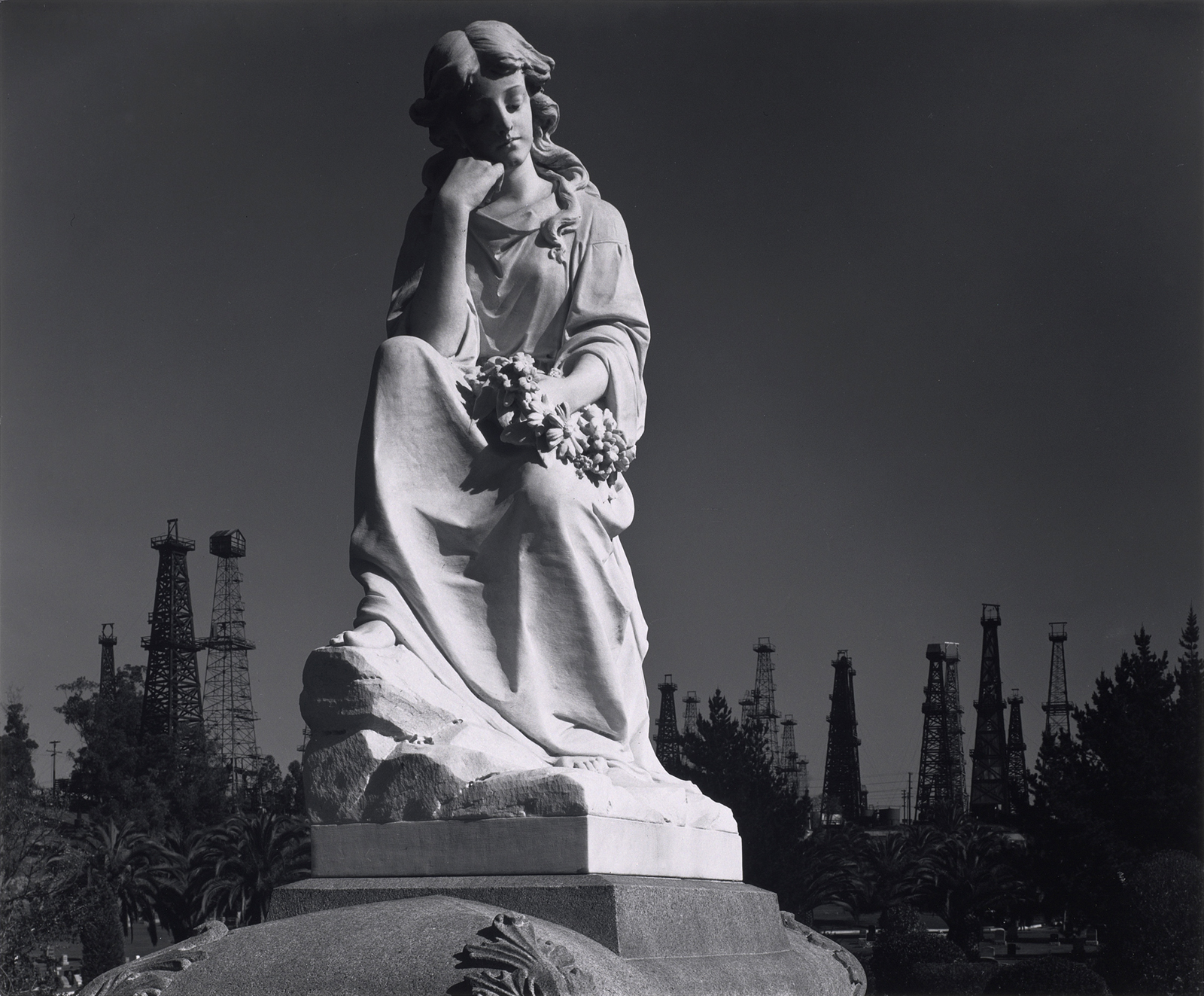
Ansel Adams (American, 1902-1984) 'Cemetery Statue and Oil Derricks, Long Beach, California' 1939


Ansel Adams (American, 1902-1984)
Cemetery Statue and Oil Derricks, Long Beach, California
1939
Gelatin silver print
The Lane Collection
Museum of Fine Arts, Boston
© The Ansel Adams Publishing Rights Trust


Mitch Epstein (American, b. 1952) 'Altamont Pass Wind Farm, California' 2007


Mitch Epstein (American, b. 1952)
Altamont Pass Wind Farm, California
2007
Chromogenic print
Reproduced with permission
Museum of Fine Arts, Boston


Museum of Fine Arts, Boston
Avenue of the Arts
465 Huntington Avenue
Boston, Massachusetts

Opening hours:
Saturday – Monday, Wednesday 10am – 5pm
Thursday – Friday 10am – 10pm
Tuesday Closed

Museum of Fine Arts, Boston website

LIKE ART BLART ON FACEBOOK

Back to top