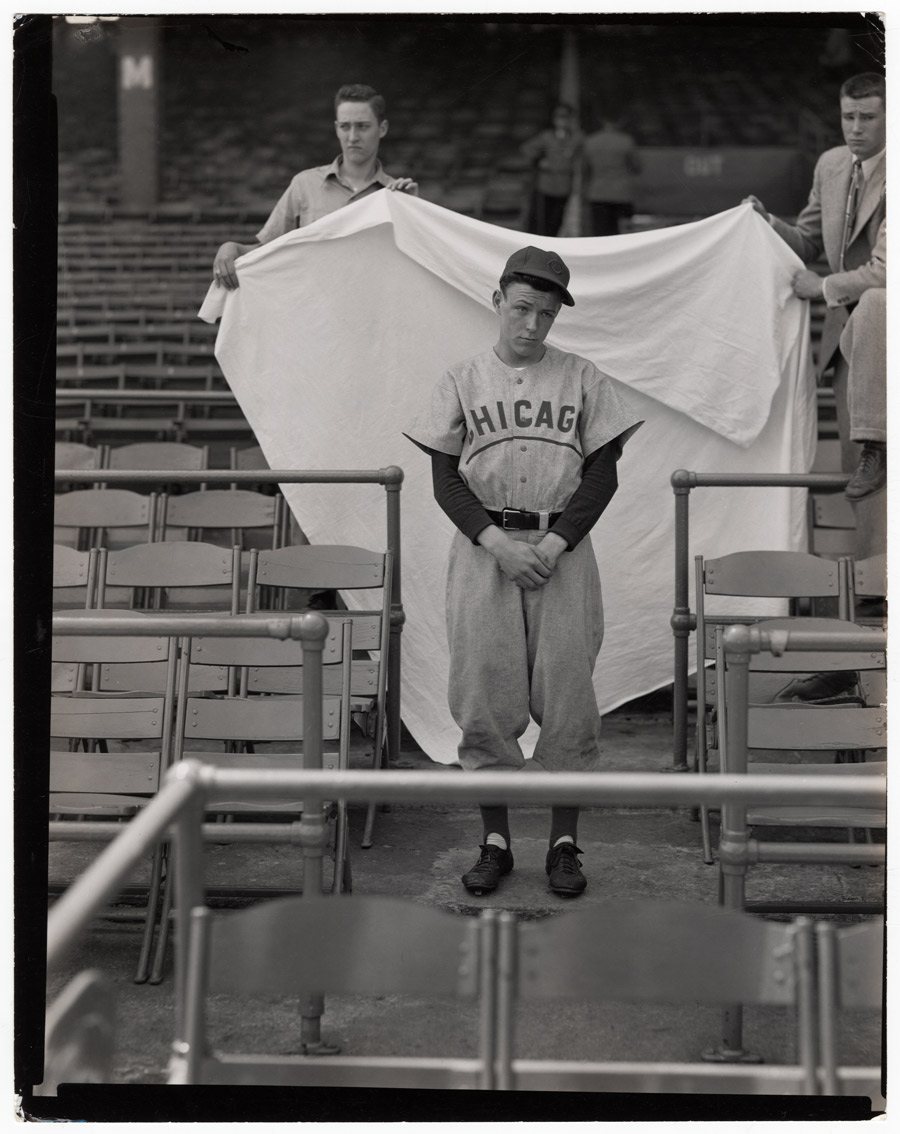
Exhibition: ‘Suburbia. Building the American Dream’ at the Centre de Cultura Contemporània de Barcelona | CCCB

Exhibition dates: 20th March – 8th September 2024

Curators: Philipp Engel and Francesc Muñoz


'Suburbia. Building the American Dream' exhibition poster


Suburbia. Building the American Dream exhibition poster


An offer you can’t refuse

“The “American dream” can be summed up in a mental image that seems frozen in time: a home of one’s own, surrounded by lawns, with a pool in the back garden and a couple of cars slumbering in the garage… Suburbia. Building the American Dream draws us into the imaginary of the idyllic family home and shows how this lifestyle has been sold and promoted by fiction and the entertainment industry.” (Text from the CCCB website)


To me, there has always be something slightly askew, slightly out of kilter about the “American dream”. It promotes a generalised simulation of a imaginary reality, sold as a lifestyle, more fiction than fact. It is the ghost of desire that haunts the everyday reality of life, entirely on the side of demand: I want therefore I must have.

This desire must be satiated in the nuclear family, the white picket fence, the idyllic family home, the loveable children – as much a surface that reflects the approbation of others as for the sustenance of the self. As Anthony Giddens observes we are inescapably involved in a

“‘reflexive project of the self’: this project is reflexive because it involves unremitting self-monitoring, self-scrutiny, planning and ordering of all elements of our lives appearances and performances in order to marshal them into a coherent narrative called ‘the self’. We have to interpret the past and plan the future in relation to an identity we are attempting to constitute in a particularly immediate and transient social present. Consumerism is central to this self-obsession. This is partly because we not only have to choose a self, but (as Foucault’s line of argument also indicates) have to constitute ourselves as a self who choses, a consumer.”1


The American Dream endeavours to direct the identity we are attempting to constitute (through consumerism), so that it fits into a particularly conformist idea of a wholesome life: patriarchal, hegemonic, puritan (most important in America), god fearing, white – a particularly hyperreal simulation of a world that never existed in the first place. An imaginary construction.2

Photographs reinforce this “imaginary” state of being, this desire for the American Dream. As the wonderful Victor Burgin observes,

“The structure of presentation – point-of-view and frame – is intimately implicated in the reproduction of ideology (the ‘frame of mind’ of our ‘points-of-view’). More than any other textual system, the photograph presents itself as ‘an offer you can’t refuse’. The characteristics of the photographic apparatus position the subject in such a way that the object photographed serves to conceal the textuality of the photograph itself – substituting passive receptivity for active (critical) reading. … With most photographs we see, […] decoding and investiture takes place instantaneously, unselfconsciously, ‘naturally’; but it does take place – the wholeness, coherence, identity, which we attribute to the depicted scene is a projection, a refusal of an impoverished reality in favour of an imaginary plenitude. The imaginary object here, however, is not ‘imaginary’ [as in fictive] in the usual sense of the word, it is seen, it has a projected image.”3 (My bold and italics)


The photographs of the American Dream, then, deny an impoverished reality in favour of a desired imaginary plenitude. You too can live the dream, because you have seen the evidence of the projected image, and this imaginary identification can have very real effects.

In the desire for the dream we witness (elsewhere in the world) the egocentric obsession of some of the builders in the British series “Grand Designs” where people mortgage themselves up to the hilt, become sick, have marriage breakdowns and can’t finish the project, because of a dream… to build huge houses with 7 bedrooms and 4 bathrooms that no one in their right mind needs to build for 2 people. Or the case of the Australian Melissa Caddick who, in a Ponzi scheme stole A$30 million from investors, including her friends and family, in order to appear a successful business woman. “Caddick used the proceeds of her crimes to acquire “all the trappings of wealth” and that her “success was all a façade and the financial services business was an elaborate front for Ms. Caddick’s Ponzi scheme”.”4

Ego is reinforced by the image reflected back to us by the photograph.

Christopher Lasch comments that, “The proliferation of recorded images undermines our sense of reality. As Susan Sontag observes in her study of photography, “Reality has come to seem more and more like what we are shown by cameras.” We distrust our perceptions until the camera verifies them. Photographic images provide us with the proof of our existence, without which we would find it difficult even to reconstruct a personal history…”5

Photographs posit a reality that promotes the dream, that verifies the dream, as ‘an offer you can’t refuse’.

Thankfully, some of the contemporary artists in this posting (I particularly like the work of Weronika Gęsicka) undermine the utopian ideal through wit, humour and critical inquiry.

Dr Marcus Bunyan


1/ Anthony Giddens. Modernity and Self-Identity: Self and Society in the Late Modern Age. Polity Press, Cambridge, 1991

2/ “In sociology, the imaginary as a Lacanian term refers to an illusion and fascination with an image of the body as coherent unity, deriving from the dual relationship between the ego and the specular or mirror image… “The term ‘imaginary’ is obviously cognate with ‘fictive’ but in its Lacanian sense it is not simply synonymous with fictional or unreal; on the contrary, imaginary identifications can have very real effects.””

David Macey, “Introduction”, Jacques Lacan, The Four Fundamental Concepts of Psycho-Analysis. London, 1994, p. xxi  quoted in “Imaginary (sociology)” on the Wikipedia website [Online] Cited 01/09/2024

3/ Victor Burgin (ed.,). Thinking Photography. Macmillan, Basingstoke, 1982, pp. 146-148.

4/ Farid Assaf SC quoted in Kate McClymont. “Melissa Caddick’s ‘trappings of wealth’ a front for her Ponzi scheme”. The Sydney Morning Herald 29 June 2021 in “Melissa Caddick,” on the Wikipedia website [Online] Cited 01/09/2024

5/ Christopher Lasch. The Culture of Narcissism. W.W.Norton and Company, New York, 1978, p. 48.


Many thankx to the Centre de Cultura Contemporània de Barcelona for allowing me to publish the photographs in the posting. Please click on the photographs for a larger version of the image.


Inside the exhibition: Suburbia. Building the American Dream 

Philipp Engel, curator of the exhibition “Suburbia”, examines the origin and vast expansion of residential neighbourhoods in the United States, an urban model centred on constructing large swathes of single-family homes on the outskirts of cities. Engel reflects on the allure that suburban landscapes have stirred in Western culture while highlighting the main issues and contradictions of the model, including segregation, safety paranoia and unsustainable consumption of water and energy.


Introduction
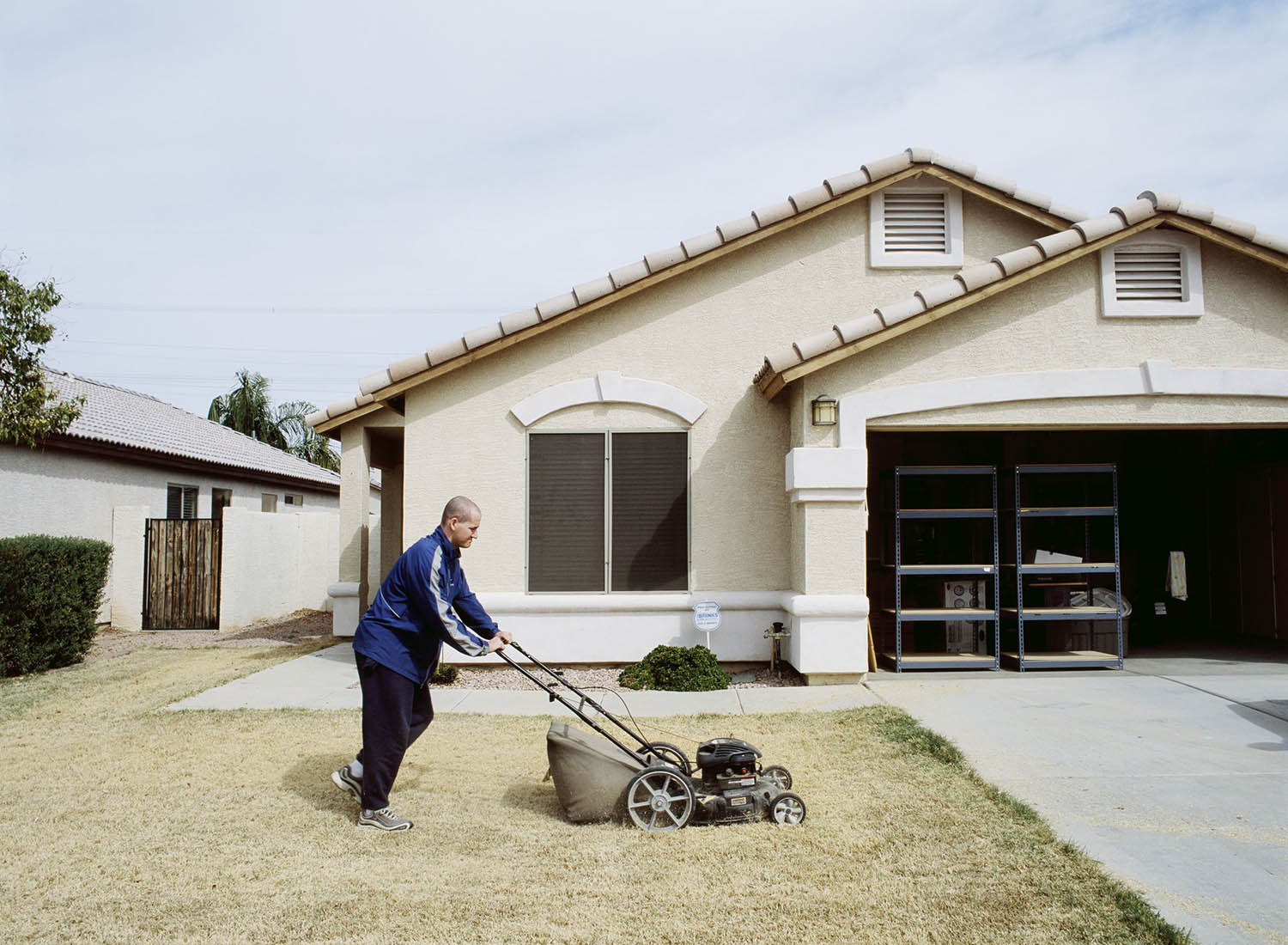
Greg Stimac (American, b. 1976) 'Chandler, Arizona' 2006 From 'Mowing the Lawn' portfolio


Greg Stimac (American, b. 1976)
Chandler, Arizona
2006
From Mowing the Lawn portfolio
Impressió digital Museum of Contemporary Photography, Columbia College Chicago


Who hasn’t longed for the American dream? A big house with a garden, a swimming pool and a couple of cars in the garage. A quiet, safe place to live as a family, close to nature in a people-friendly neighbourhood. This exhibition traces the cultural history of a lifestyle ideal that has been endlessly reproduced on television, in advertising and in cinema, and analyses the validity and the most controversial aspects of its urban planning model.

Suburbia. Building the American Dream draws us into the imaginary of the idyllic family home and shows how this lifestyle has been sold and promoted by fiction and the entertainment industry. The exhibition goes back to the origins of residential neighbourhoods in the early nineteenth century, explains how they developed massively in the 1950s, and reviews the economic, political and social context of their relentless expansion across the United States.

Now, when more and more families are pursuing their own version of the dream on the outskirts of cities, it is a good moment to analyse the contradictions of an urban planning model based on social, ethnic and gender segregation.

The dream of living in a house with a swimming pool is still very much alive today and has been exported all over the world. The exhibition shows the impact of this highly unsustainable model, based on constant car use, with examples of developments around Barcelona and Madrid.

With abundant historical material, period documentaries, photographs, paintings, films and series, novels and magazines, works of art and everyday objects, the exhibition places us in the mental paradise of the suburb and invites us to rethink the value of the city and public space today.

Suburbia. Building the American Dream presents the work of foremost creators who, from different points of view, help us to take a critical look at the famed American way of life: Jessica Chou, Gregory Crewdson, Thomas Doyle, Gerard Freixes, Rodrigo Fresán, Gabriele Galimberti, Weronika Gesicka, Benjamin Grant, Todd Hido, Joel Meyerowitz, Matthias Müller, Blanca Munt, Alberto Ortega, Bill Owens, Sheila Pree Bright, León Siminiani, Todd Solondz, Amy Stein, Greg Stimac, Angela Strassheim, Deborah Stratman, Ed & Deanna Templeton, Kate Wagner and Christopher Willan.

Text from the CCCB website
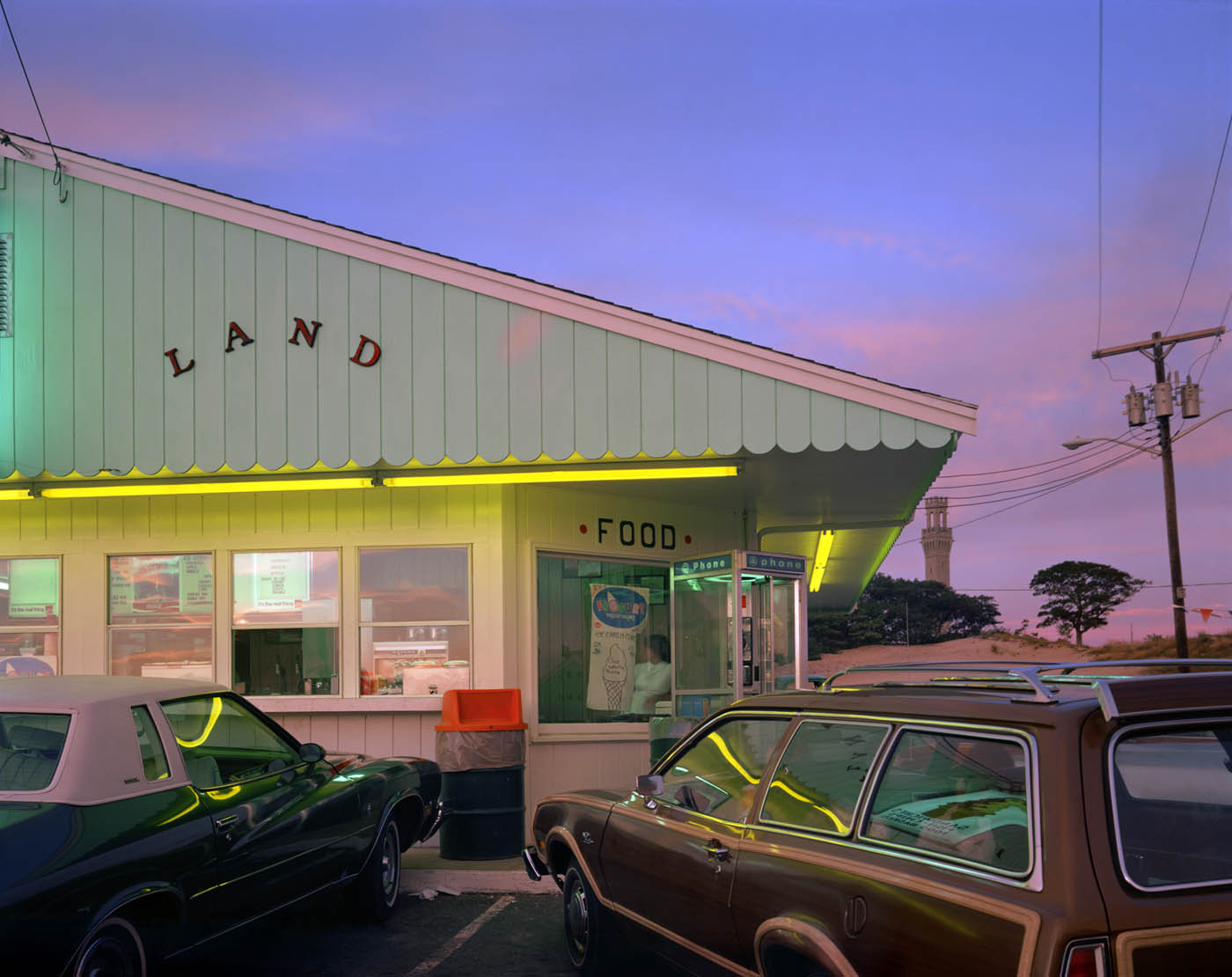
 

Joel Meyerowitz (American, b. 1938) 'Land. Provincetown' 1976


Joel Meyerowitz (American, b. 1938)
Land. Provincetown
1976
Archival pigment print
Collecció Pancho Saula i Michelle Ferrara / Galeria Alta, Andorra


Joel Meyerowitz (American, b. 1938) 'Dusk, New Jersey' 1978


Joel Meyerowitz (American, b. 1938)
Dusk. New Jersey
1978
Archival pigment print
Collecció Pancho Saula i Michelle Ferrara / Galeria Alta, Andorra


The “American dream” can be summed up in a mental image that seems frozen in time: a home of one’s own, surrounded by lawns, with a pool in the back garden and a couple of cars slumbering in the garage. Suburbia. Building the American Dream traces the cultural history of a lifestyle ideal shared far and wide by literature, television, advertising and cinema, and analyses the most controversial aspects of an urban planning model that has spread beyond US territory and reached our shores. Journalist Philipp Engel curates this exhibition with geographer Francesc Muñoz collaborating as adviser on the model in the local context.

Suburbia. Building the American Dream draws us into the imaginary of the idyllic family home and shows how this lifestyle has been sold and promoted by fiction and the entertainment industry. The exhibition goes back to the origins of residential neighbourhoods in the early nineteenth century, explains how they developed massively in the 1950s, and reviews the economic, political and social context of their relentless expansion across the United States.

Since the 1990s most of the American population has lived in this sprawling urban mass that has continued to spread, even beyond US borders. At a time when more and more families are pursuing their own version of the dream on city outskirts, the exhibition analyses the contradictions of an urban planning model based on social, ethnic and gender segregation. It also shows the impact of this highly unsustainable model, based on constant car use, with examples of developments around Barcelona and Madrid. With abundant historical material, photographs, paintings, audiovisuals, literature, works of art and everyday objects, the exhibition situates us in the mental paradise of the model of residential development inspired by American suburbia, and invites us to rethink the value of the city and public space today.

Suburbia. Building the American Dream decodes an almost abstract landscape that is still valid in pop culture. It does so through the work of foremost creators who help us take a critical look at the famed American way of life. It includes works by Jessica Chou, Gregory Crewdson, Thomas Doyle, Gerard Freixes, Gabriele Galimberti, Weronicka Gęsicka, Benjamin Grant, Todd Hido, Joel Meyerowitz, Matthias Müller, Blanca Munt, Alberto Ortega, Bill Owens, Sheila Pree Bright, León Siminiani, Amy Stein, Greg Stimac, Angela Strassheim, Deborah Stratman, Ed & Deanna Templeton, Kate Wagner and Christopher Willan, among others.
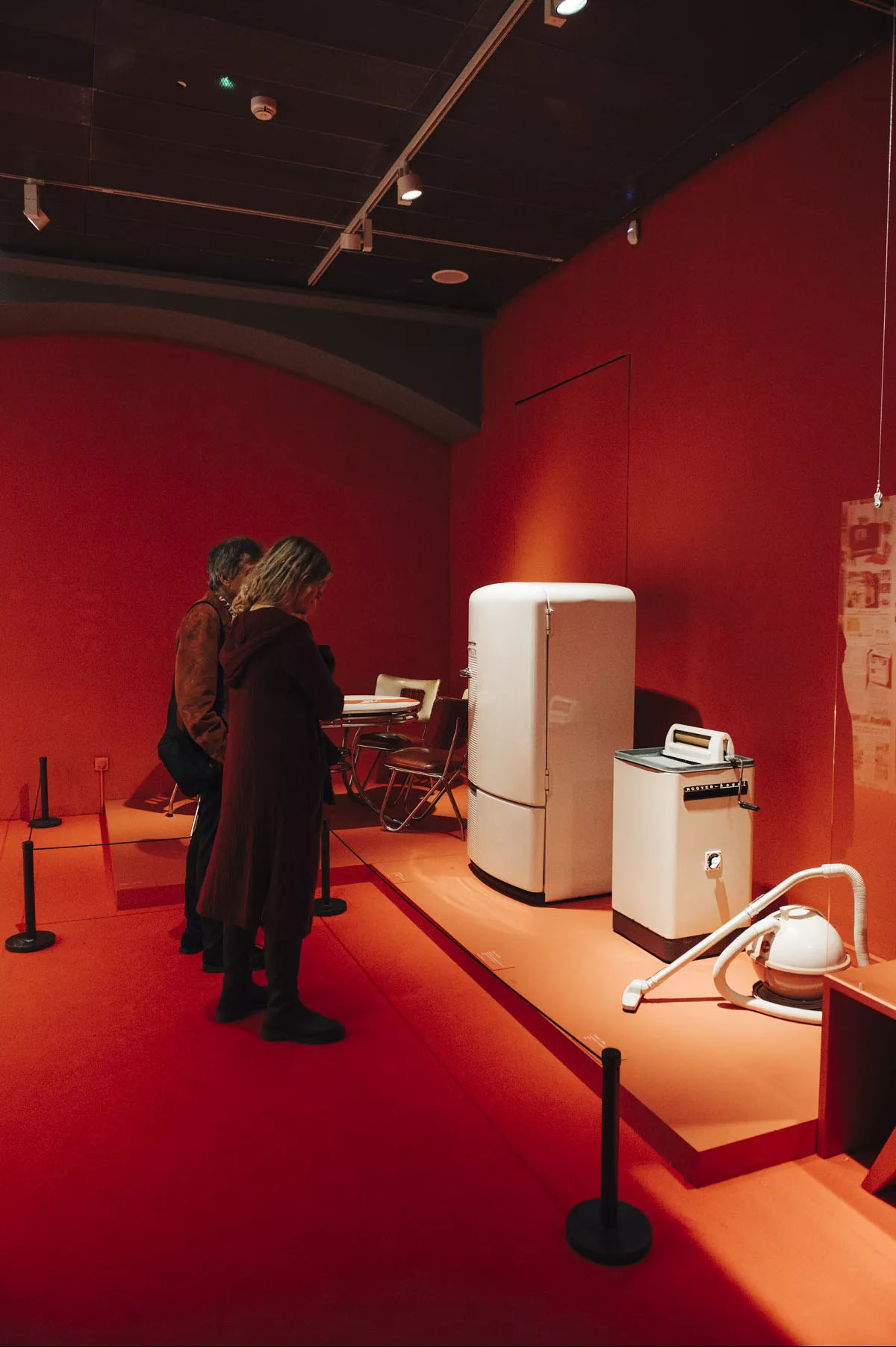
 

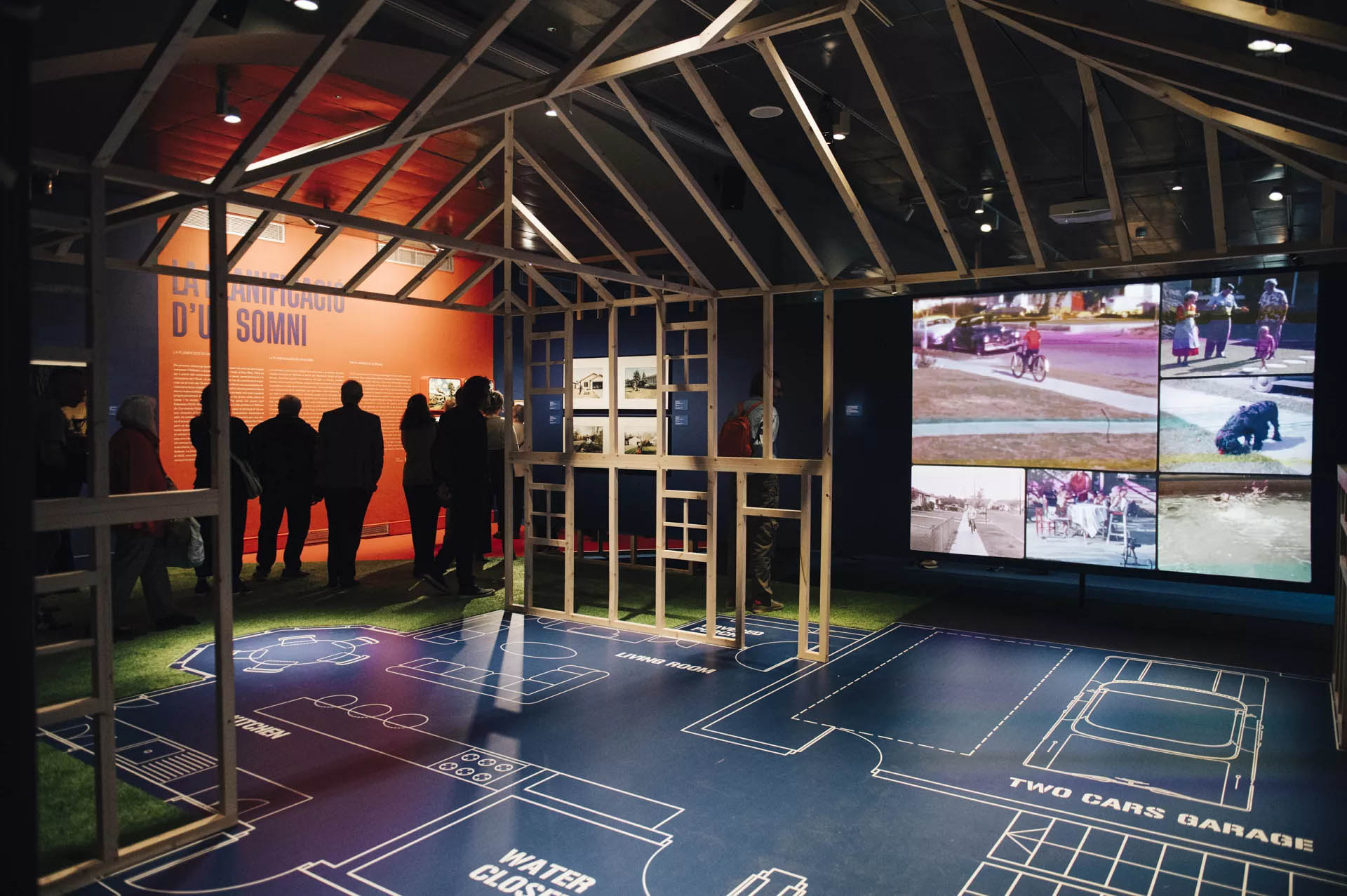
Installation view of the exhibition 'Suburbia. Building the American Dream' at the Centre de Cultura Contemporània de Barcelona | CCCB

Installation view of the exhibition 'Suburbia. Building the American Dream' at the Centre de Cultura Contemporània de Barcelona | CCCB

Installation view of the exhibition 'Suburbia. Building the American Dream' at the Centre de Cultura Contemporània de Barcelona | CCCB

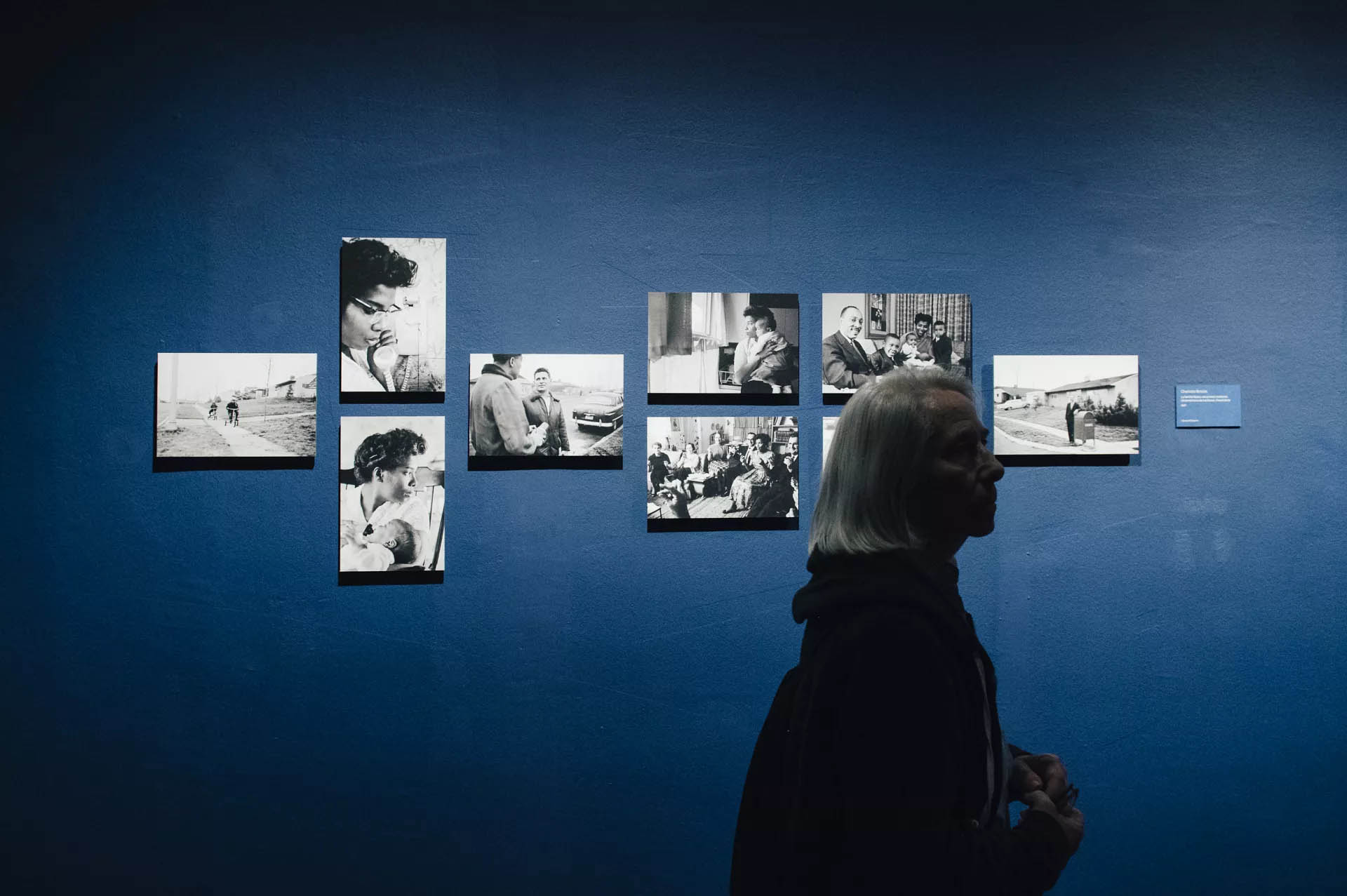
Installation view of the exhibition 'Suburbia. Building the American Dream' at the Centre de Cultura Contemporània de Barcelona | CCCB showing photographs by Charlotte Brooks

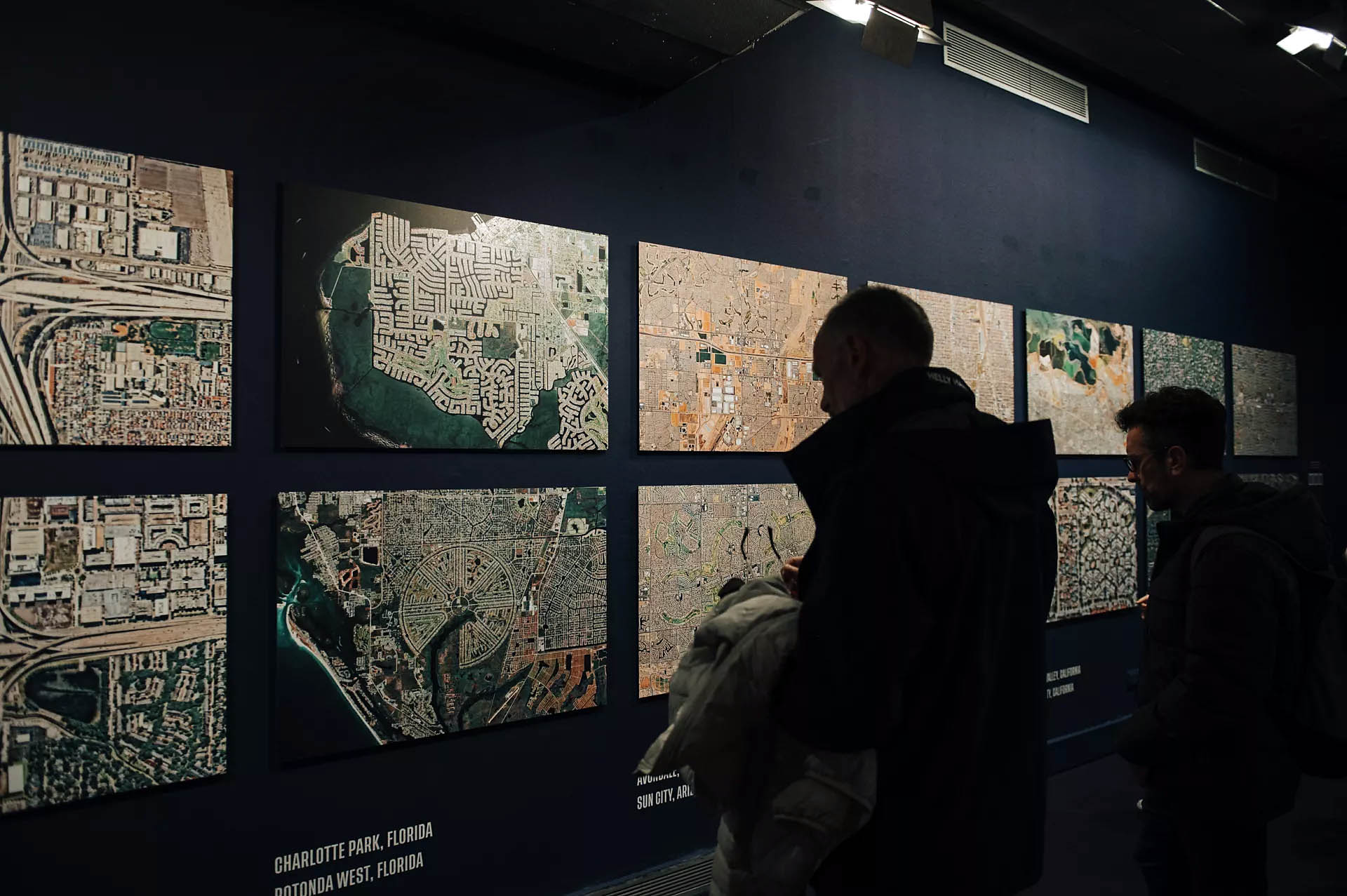
Installation view of the exhibition 'Suburbia. Building the American Dream' at the Centre de Cultura Contemporània de Barcelona | CCCB showing visitors looking at satellite images of US cities and suburbs that show their grid layout


Installation views of the exhibition Suburbia. Building the American Dream at the Centre de Cultura Contemporània de Barcelona | CCCB showing in the second image photographs by Charlotte Brooks (below); and in the bottom image, visitors looking at satellite images of US cities and suburbs that show their grid layout
© Alice Brazzit, CCCB, 2024


Charlotte Brooks (American, 1918-2014) '[Image from LOOK - Job 57-7621 titled Myers family]' 20th December 1957


Charlotte Brooks (American, 1918-2014)
[Image from LOOK – Job 57-7621 titled Myers family]
20th December 1957
Film negative
Look magazine photograph collection (Library of Congress)
Library of Congress Prints and Photographs Division Washington, D.C.


Installation view of the exhibition 'Suburbia. Building the American Dream' at the Centre de Cultura Contemporània de Barcelona | CCCB showing photographs by Gregory Crewdson


Installation view of the exhibition Suburbia. Building the American Dream at the Centre de Cultura Contemporània de Barcelona | CCCB showing photographs by Gregory Crewdson (below)


Gregory Crewdson (American, b. 1962) 'Untitled (Dream House)' 2002


Gregory Crewdson (American, b. 1962)
Untitled (Dream House)
2002
Digital C-print
29 x 44 inches


American photographer Gregory Crewdson is best known for his uncanny images of deceptively serene suburban life.  Using Hollywood film techniques and elaborate sets, Crewdson creates what he calls “frozen moments”: meticulously staged scenes whose narrative meaning remains a mystery.  Throughout this series, special attention is paid to light.  The twilight setting favoured by the photographer functions as a metaphor, an eerie evocation of the darkness on the edge of town.

Crewdson created this twelve-part portfolio, Dream House, as a commission for The New York Times Magazine in 2002.  The cinematic character of these frozen vignettes is underscored by the use of Hollywood actors (Gwyneth Paltrow, Tilda Swinton, and Philip Seymour Hoffman among others) whose celebrity contrasts with the “Anytown” anonymity of their environments.

Text from the Mutual Art website
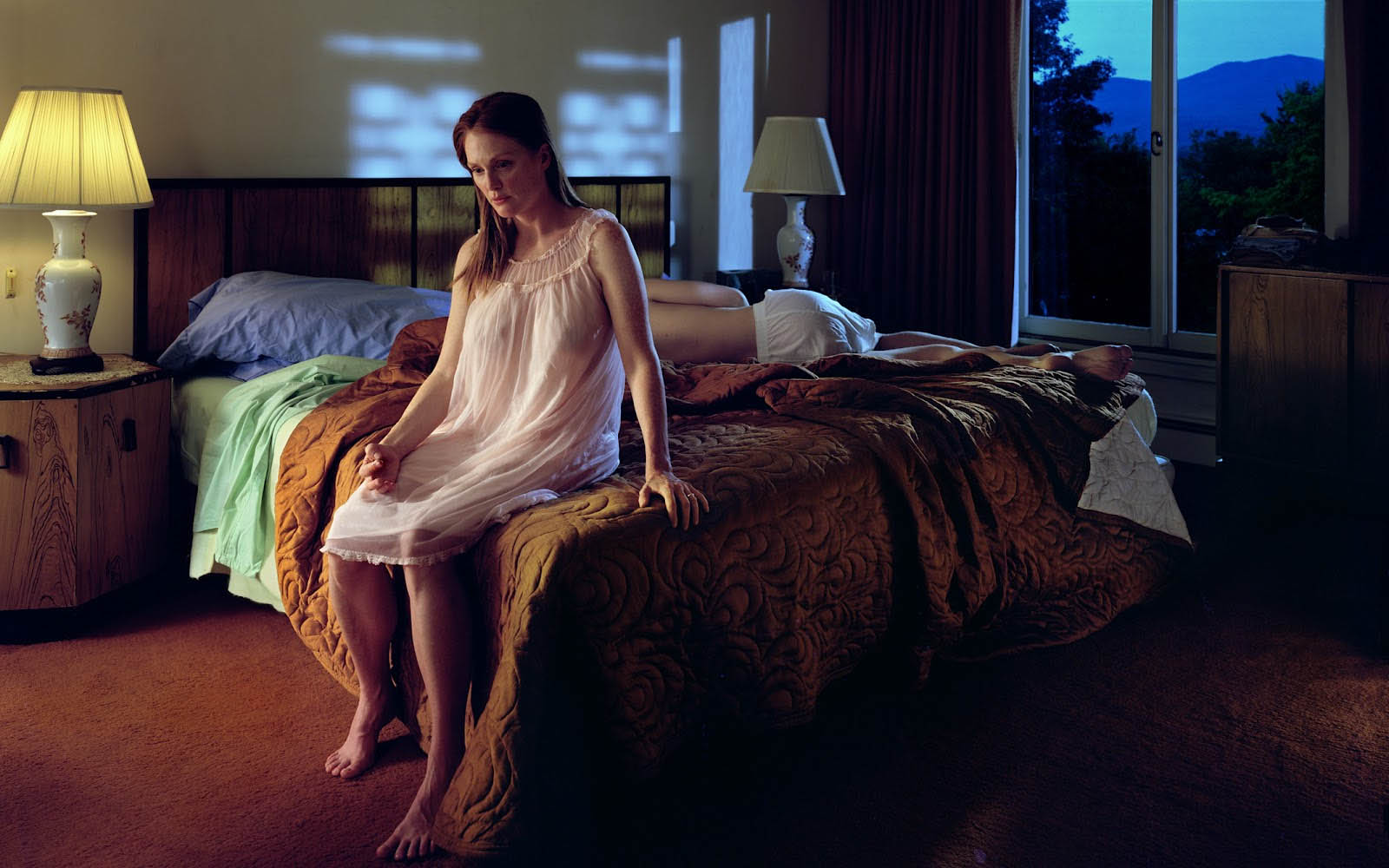
 

Gregory Crewdson (American, b. 1962) 'Julianne Moore (Dream House)' 2002


Gregory Crewdson (American, b. 1962)
Julianne Moore (Dream House)
2002
Digital C-print
29 x 44 inches


Sections of the exhibition

Planning A Dream

When the Industrial Revolution reached the USA in the first half of the 19th century, big cities became engines of progress, but they were also seen as dangerous places, in contrast with the opulent nature of the New World. With the emergence of the railway, the tram and the automobile, the mobility revolution prompted the gradual colonisation of city outskirts, transforming the countryside into residential neighbourhoods.

From Llewellyn Park (New Jersey) to Tuxedo Park (New York), throughout the 19th century the first gated communities began to pop up across the United States. At the end of the century, after the West was won, the appearance of the tram gave the middle classes access to the periphery, giving rise to a new type of housing that led to an orderly arrangement of city grids. But it wasn’t until the popularisation of the famous Ford Model T that the US landscape was radically transformed, crisscrossed by roads that became freeways. The automobile became a symbol of freedom, marking the birth of the suburbs that were to spring up everywhere.

This first section includes historical material like the original lithograph View of New York by John William Hill (1836); The American Woman’s Home by Catharine Beecher, the bible of “domestic feminism”; a Ford T Touring (1923) produced by General Motors, and films like The Suburbanite (1908), among other Harold Lloyd and Buster Keaton classics.


Alexander Jackson Davis (American, 1803–1892) 'Villa for David Codwise, near New Rochelle, NY (project; elevation and four plans)' 1835


Alexander Jackson Davis (American, 1803–1892)
Villa for David Codwise, near New Rochelle, NY (project; elevation and four plans)
1835
Pen and ink, watercolour, graphite
Sheet: 14 5/16 x 9 in. (36.4 x 22.9 cm)
Metropolitan Museum of Art, New York
Harris Brisbane Dick Fund, 1924
Public domain
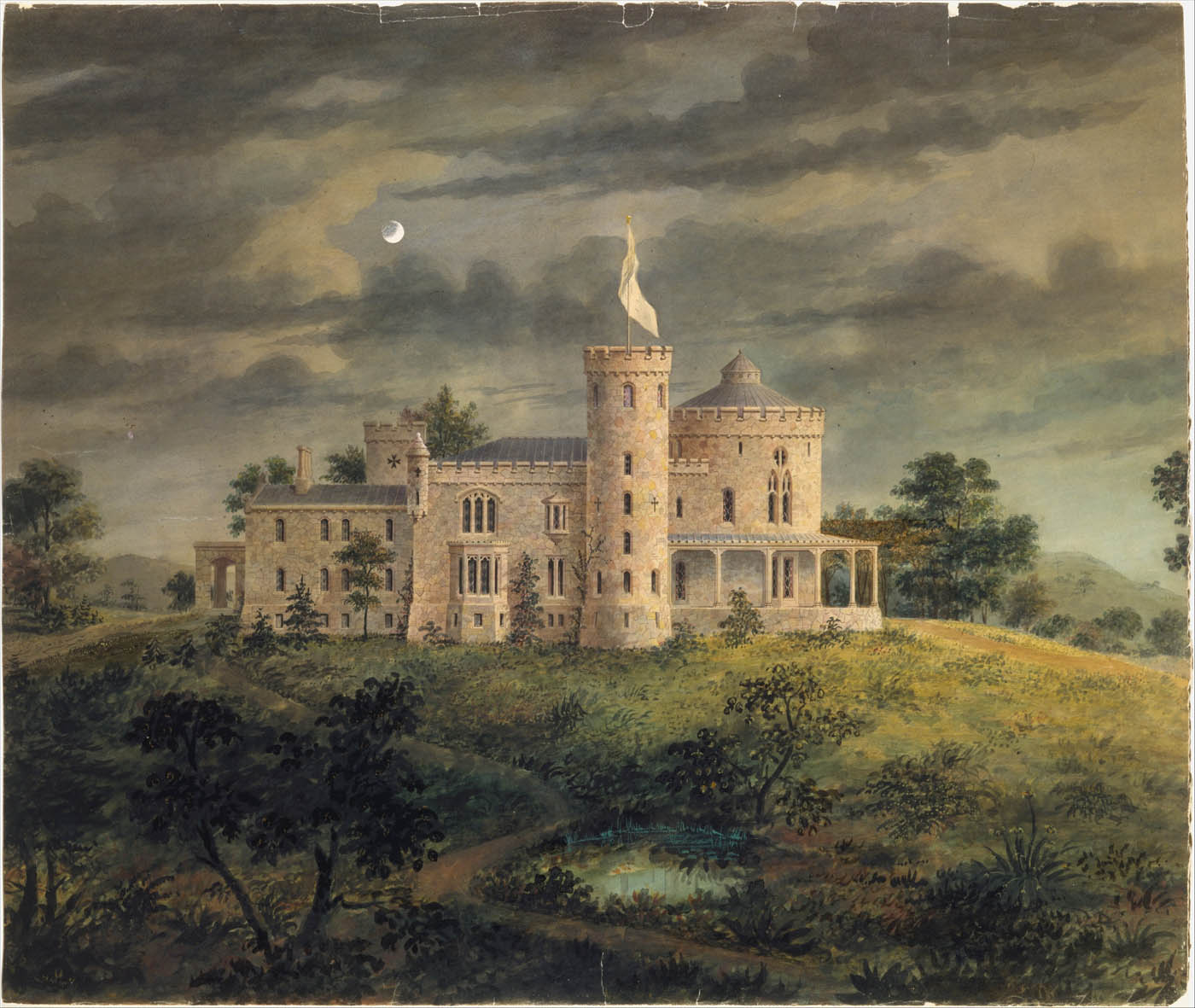
 

Alexander Jackson Davis (American, 1803-1892) 'Ericstan, for John J. Herrick, Tarrytown, New York (perspective)' 1855


Alexander Jackson Davis (American, 1803–1892)
Ericstan, for John J. Herrick, Tarrytown, New York (perspective)
1855
Watercolour, ink, and graphite on paper
25 5/16 x 30in. (64.3 x 76.2cm)
Metropolitan Museum of Art, New York
Harris Brisbane Dick Fund, 1924
Public domain


Davis’ most successful castellated villa was built for dry-goods merchant John J. Herrick. The design was dominated by an enormous three-story circular tower facing west over the Hudson River. The tower housed an extraordinary circular parlor that had an intricately vaulted ceiling springing from a massive central cluster of delicate Gothic columns. Ericstan was demolished in 1944.


After Alexander Jackson Davis (American, 1803-1892) Friend & Aub (Publisher Philadelphia, Pennsylvania) 'Map of Llewellyn Park and Villa Sites, on Eagle Ridge in Orange & West Bloomfield' 1857


After Alexander Jackson Davis (American, 1803-1892)
Friend & Aub (Publisher Philadelphia, Pennsylvania)
Map of Llewellyn Park and Villa Sites, on Eagle Ridge in Orange & West Bloomfield
1857
Lithograph
14 7/16 x 23 7/16 in. (36.7 x 59.6cm)
Metropolitan Museum of Art, New York
Harris Brisbane Dick Fund, 1924
Public domain


Morse & Fronti (Charles W. Morse and J. Fronti) 'Residence of Mr. E. Hooker, Fremont Ave., Orange, N.J.' 1860


Morse & Fronti (Charles W. Morse and J. Fronti)
Residence of Mr. E. Hooker, Fremont Ave., Orange, N.J.
1860
The Miriam and Ira D. Wallach Division of Art, Prints and Photographs: Photography Collection
The New York Public Library
Public domain
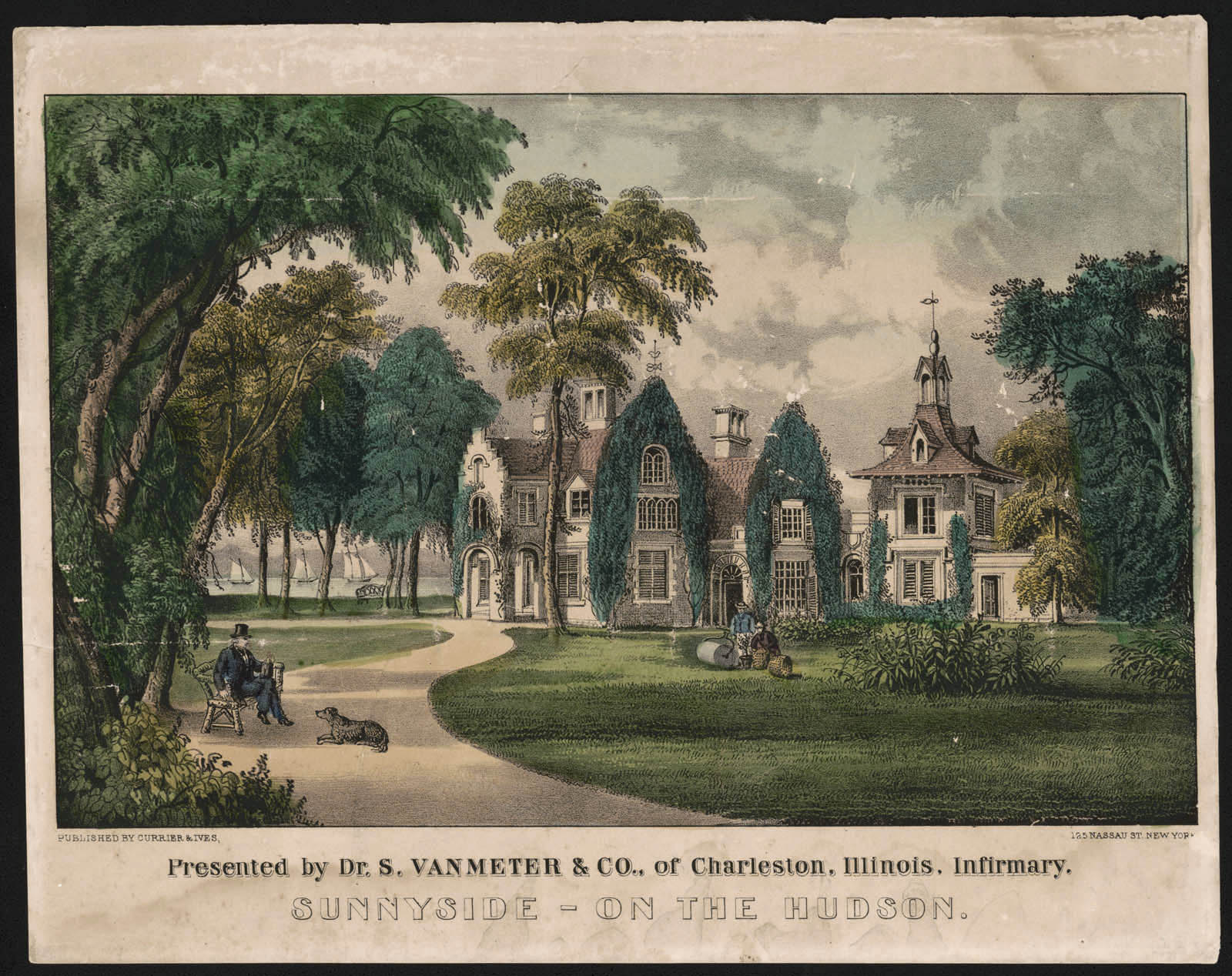
 

Currier & Ives (Publisher, New York active between 1856-1907) 'Sunnyside on the Hudson' 1856-1871


Currier & Ives (Publisher, New York active between 1856-1907)
Sunnyside on the Hudson
1856-1871
Hand coloured lithograph
Library of Congress Prints and Photographs Division Washington, D.C.
Public domain
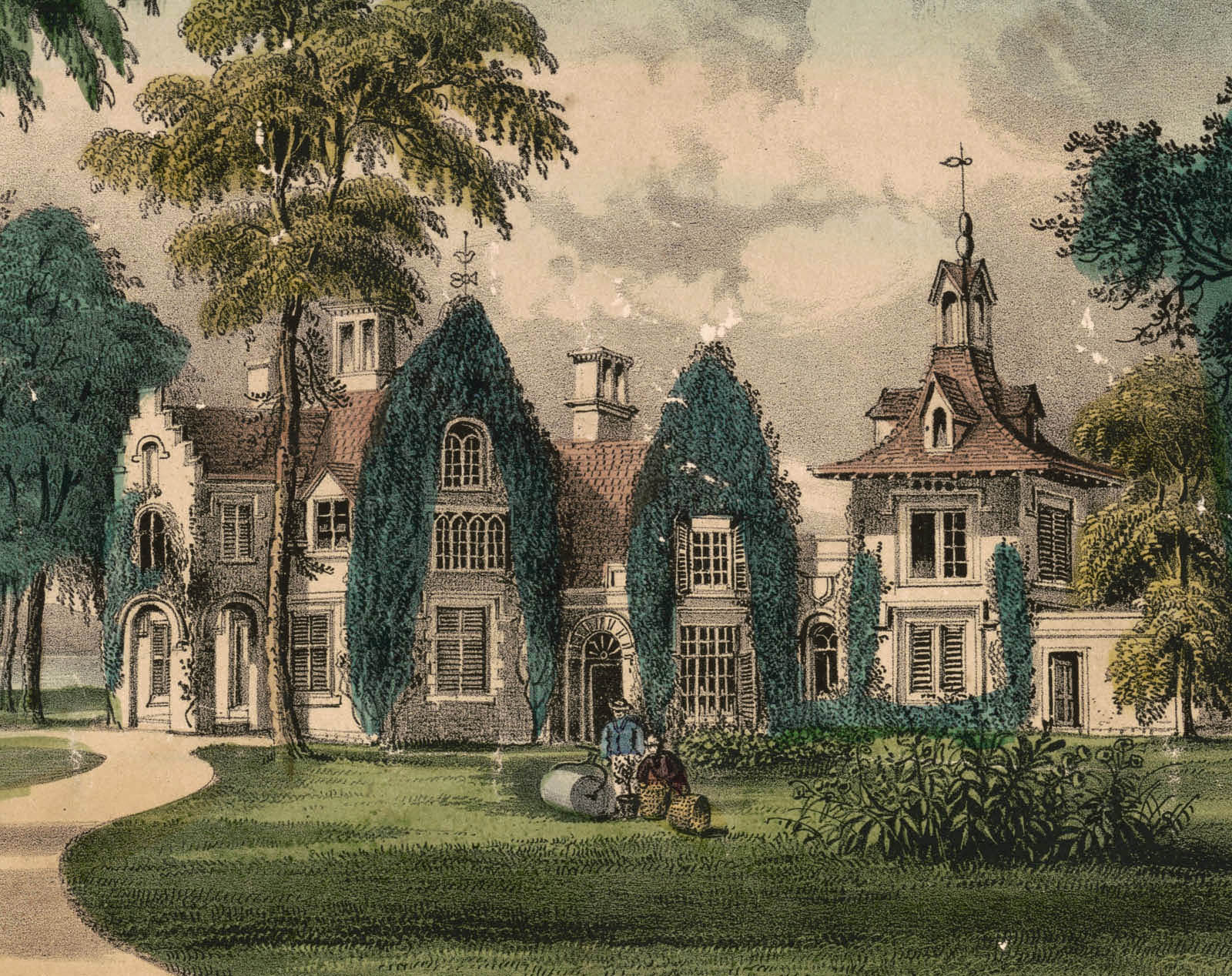
 

Currier & Ives (Publisher, New York active between 1856-1907) 'Sunnyside on the Hudson' 1856-1871 (detail)


Currier & Ives (Publisher, New York active between 1856-1907)
Sunnyside on the Hudson (detail)
1856-1871
Hand coloured lithograph
Library of Congress Prints and Photographs Division Washington, D.C.
Public domain


Currier & Ives (Publisher, New York active between 1856-1907) 'American railroad scene: lightning express trains leaving the junction' 1874


Currier & Ives (Publisher, New York active between 1856-1907)
American railroad scene: lightning express trains leaving the junction
1874
Hand coloured lithograph
Library of Congress Prints and Photographs Division Washington, D.C.
Public domain


Advertising by Samuel. E. Gross 'August Gast & Co. New York' c. 1900


Advertising by Samuel. E. Gross.
August Gast & Co. New York
c. 1900
Lithography
Library of Congress


Advertising by Samuel. E. Gross 'August Gast & Co. New York' c. 1900 (detail)


Advertising by Samuel. E. Gross.
August Gast & Co. New York (detail)
c. 1900
Lithography
Library of Congress
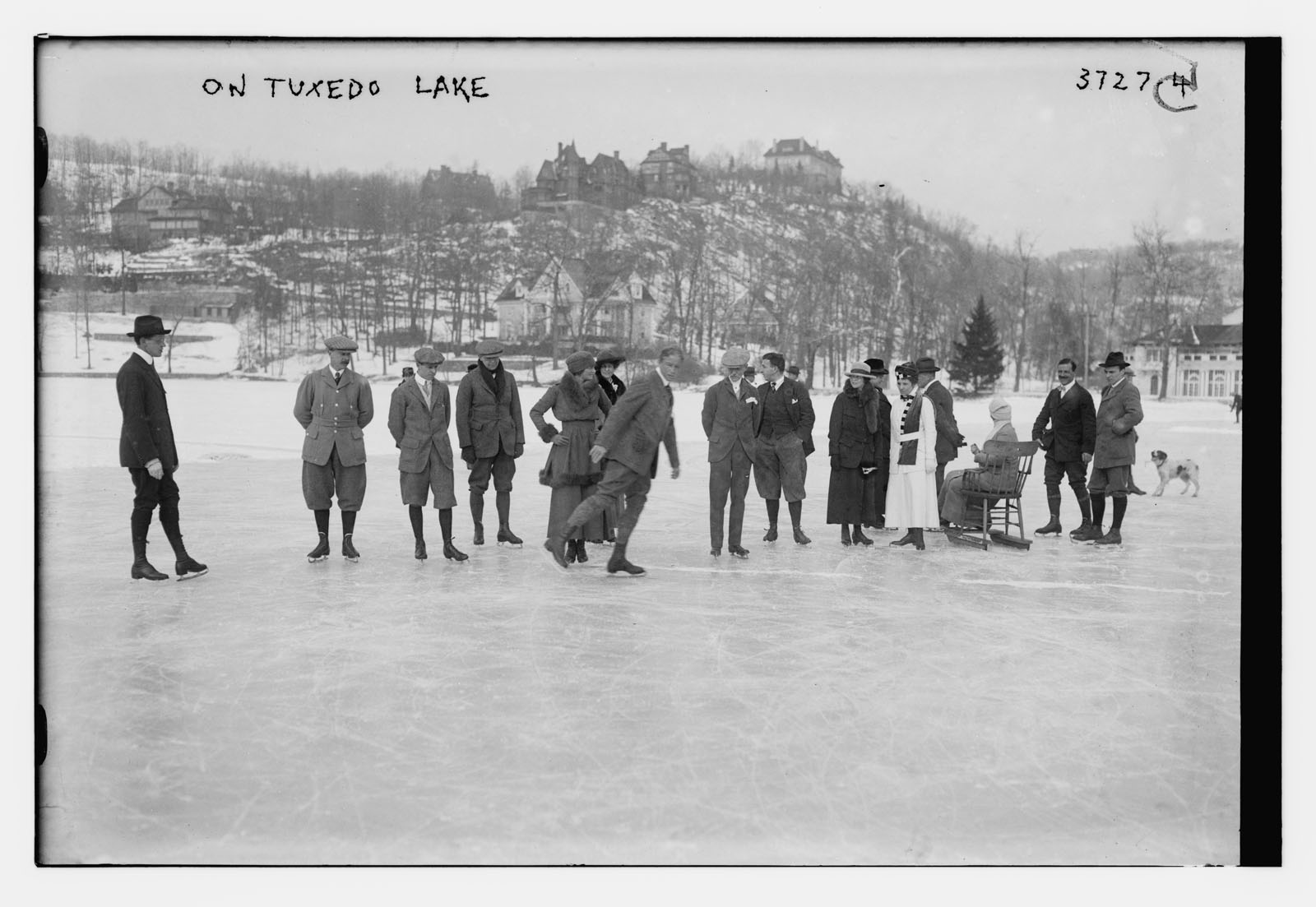
 

Anonymous photographer / Bain News Service (publisher) 'Skaters on the lake at Tuxedo Park' 1910


Anonymous photographer
Bain News Service
(publisher)
Skaters on the lake at Tuxedo Park
1910
Glass negative
Library of Congress Prints and Photographs Division Washington, D.C.
Public domain
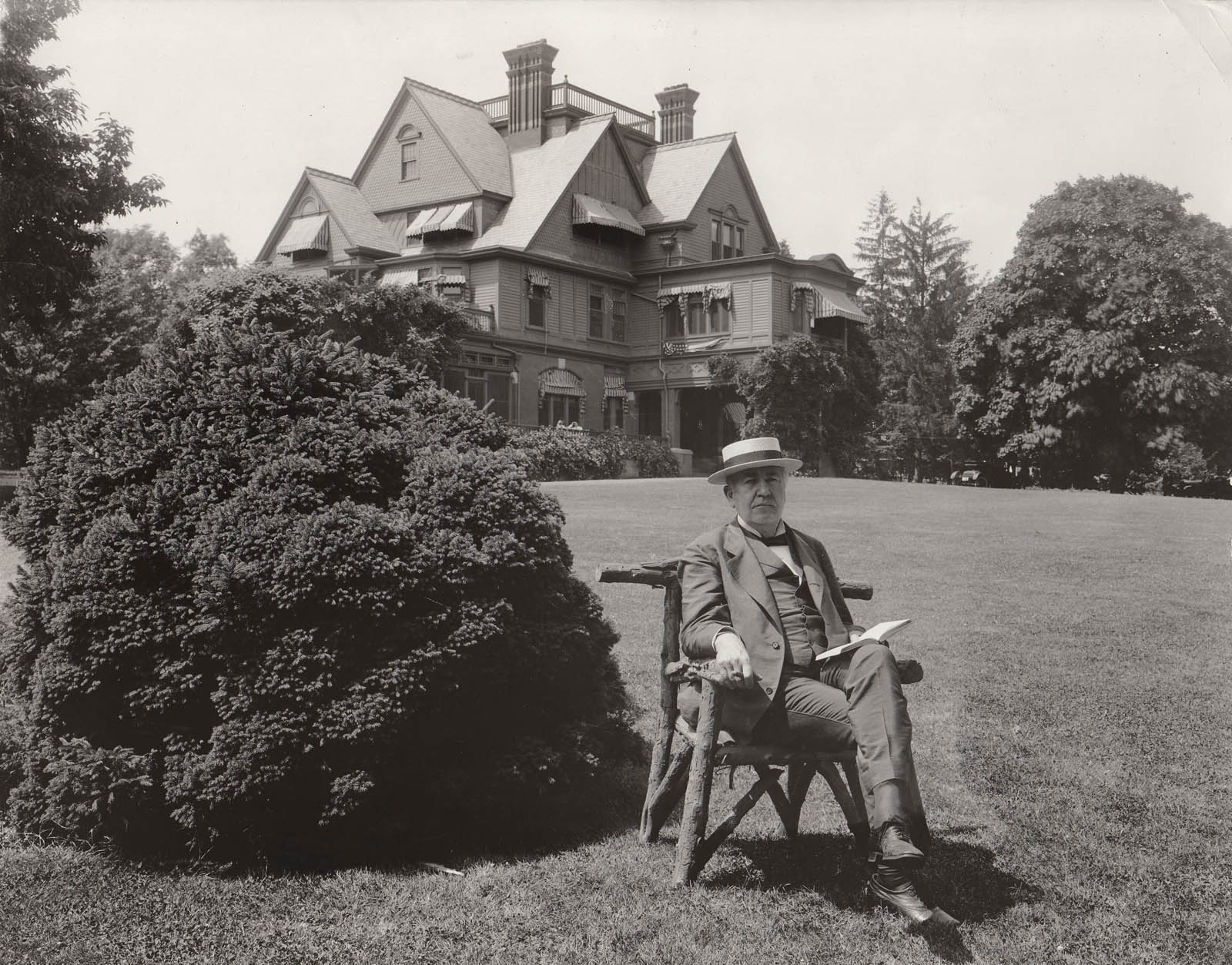
 

Anonymous photographer. 'Thomas Edison in the garden of his residence in Glenmont' 1917


Anonymous photographer
Thomas Edison in the garden of his residence in Glenmont
1917
Thomas Edison National Historical Park, West Orange, New Jersey


Anonymous photographer. 'General Motors Pavilion: Futurama, Norman Bel Geddes. New York World's Fair. General Motors – Crowds leading into Futurama' 1939


Anonymous photographer
General Motors Pavilion: Futurama, Norman Bel Geddes. New York World’s Fair. General Motors – Crowds leading into Futurama
1939
New York World’s Fair 1939-1940 records
Manuscripts and Archives Division, The New York Public Library
Public domain
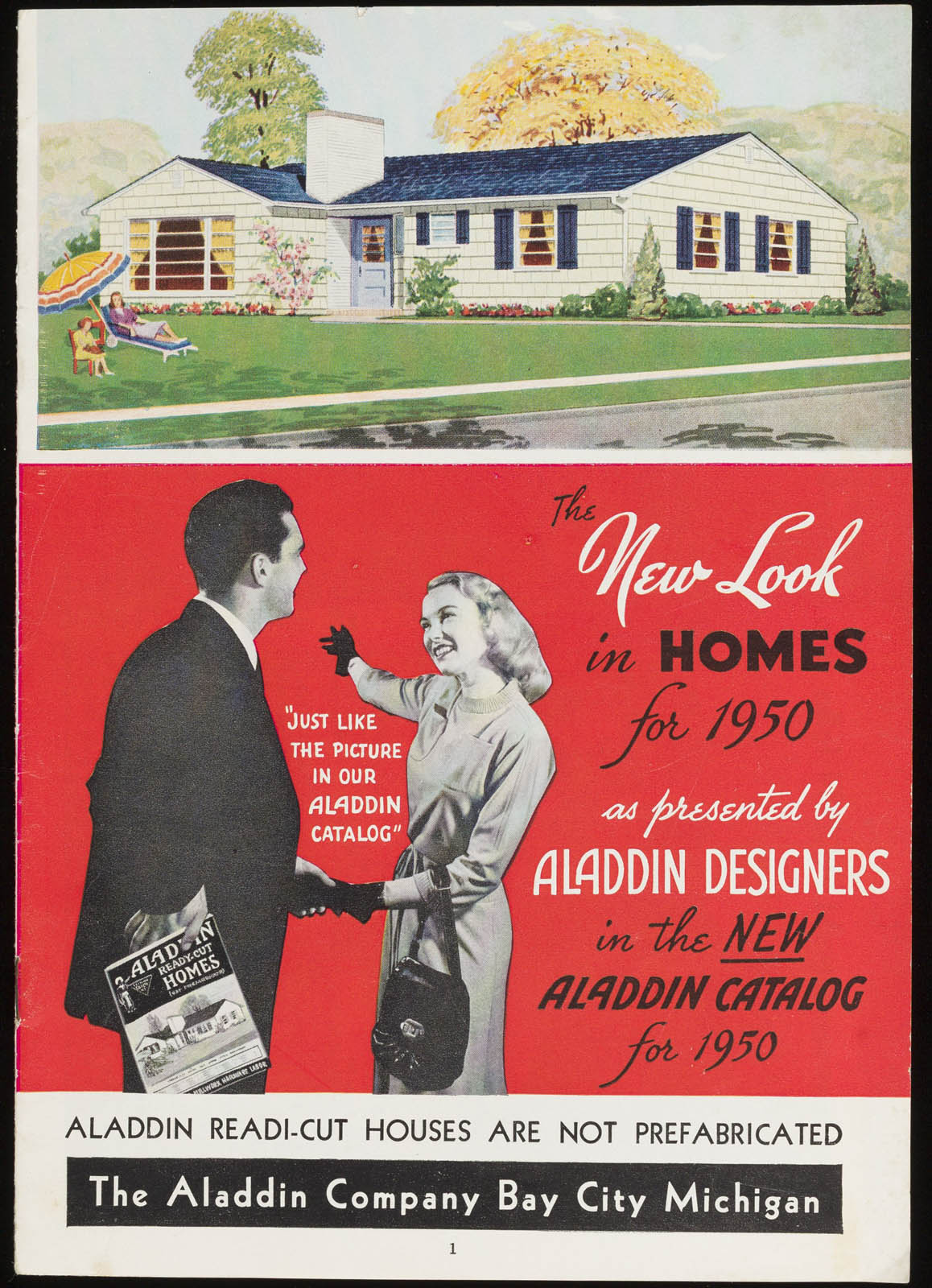
 

'Catalog of the Aladdin company selling houses by mail' 1950


Catalog of the Aladdin company selling houses by mail
1950
Courtesy Historic New England
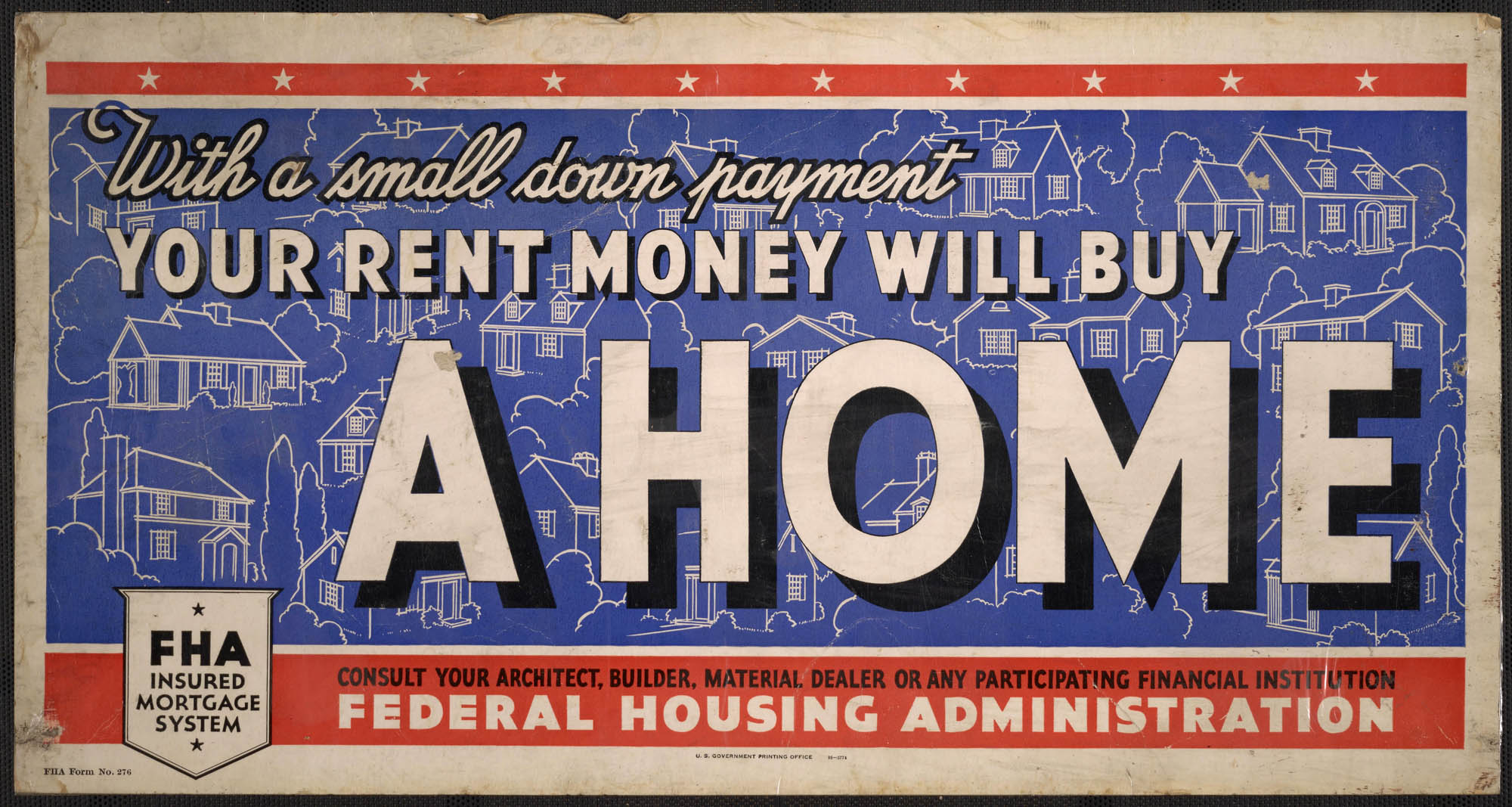
 

'Federal Housing Administration, Minneapolis and St. Paul, Minnesota' c. 1950


Federal Housing Administration, Minneapolis and St. Paul, Minnesota
c. 1950
Courtesy Minnesota Streetcar Museum, Minneapolis


The advertisement reads, “With a small down payment your rent money will buy a home. Consult your architect, builder, material dealer or any participating financial institution. Federal Housing Administration.”


The Suburban Room

The suburban explosion was first and foremost demographic, occurring as World War II soldiers returned, eager to set up home. There was no room for them in the crowded cities. With the support of the state, which offered generous loans, suburbs were built using the Fordist assembly-line production logic. It was the “American way of life”, the start of a collective dream that fascinated the whole world.

And so the baby boom took place in 11 million single-family homes fitted with all kinds of electrical domestic appliances, presided over by a brand new television set on which the new suburbanites watched idealised versions of themselves with identical skin colour and the same war experiences, age, mortgage and feeling of uprootedness. The media echoed this phenomenon, and cinema and literature reflected this standardised landscape in which a wife waited at home for her husband with a drink for him in her hand, children went everywhere by bicycle, and everyone had barbecues on Sundays.

Sponsored by the state, Suburbia became a paradise that excluded racial minorities. But little by little, by the sixties, the gates of paradise were opened to African Americans and other minorities, giving rise to a white exodus, the white flight.

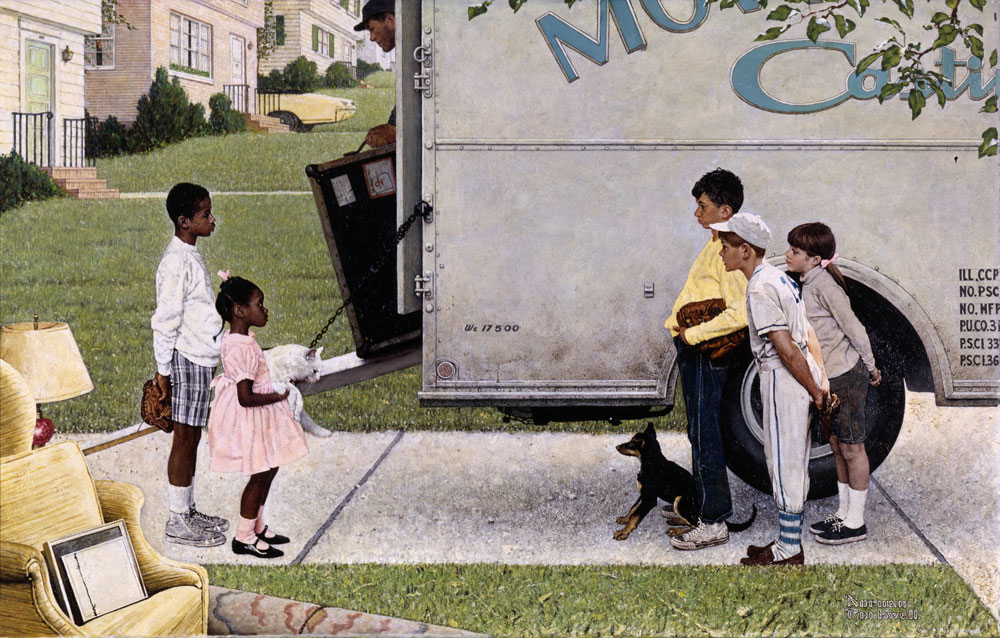
As well as a variety of historical material, this section reviews sitcoms portraying the suburbs, from the 1940s to the present day. It also includes the famous illustration New Kids in the Neighborhood by Norman Rockwell and a broad selection of the photographs that make up Bill Owens’ Suburbia (1972), the first book of photographs about this American urban planning model.
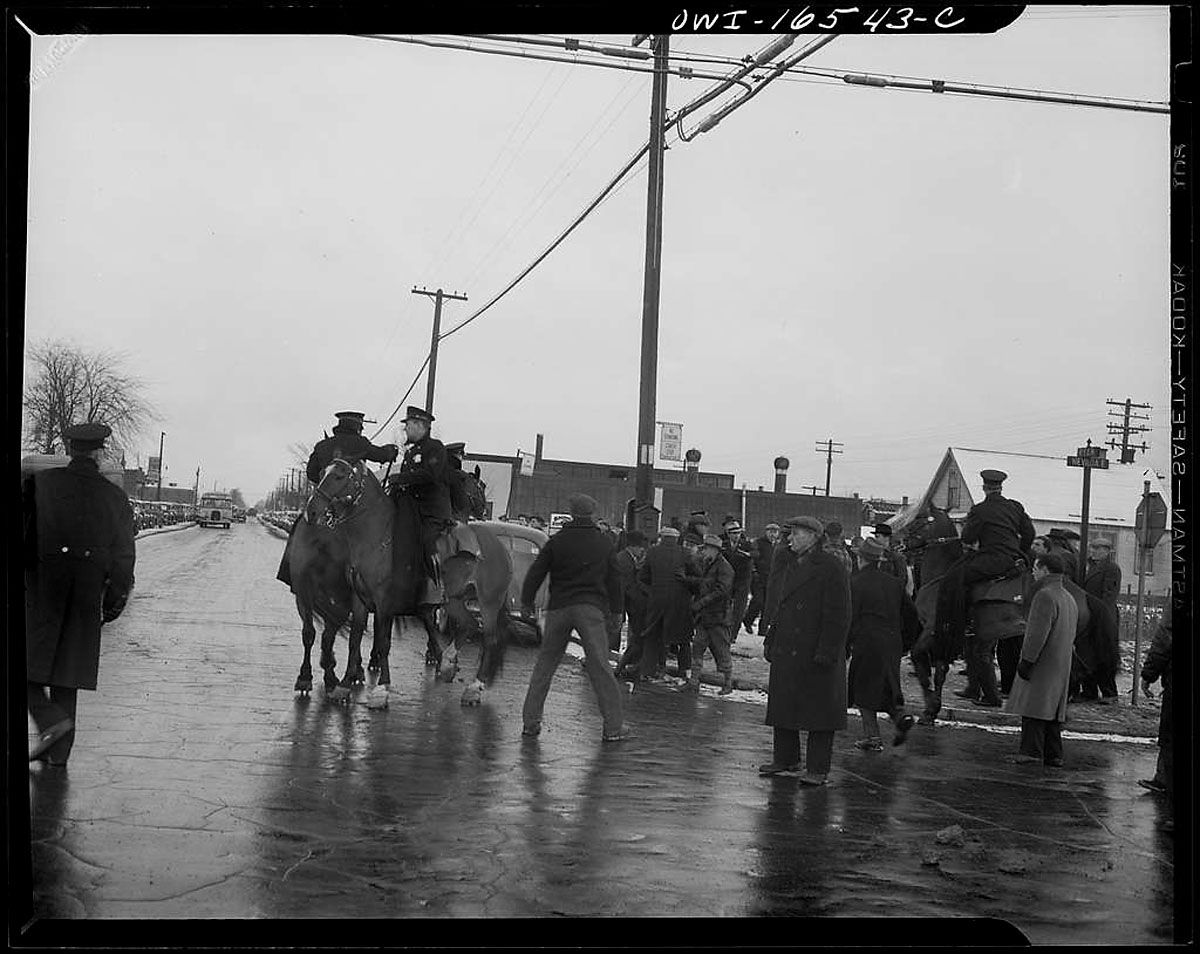
 

Arthur S. Siegel (American, 1913-1978) 'Detroit, Michigan. Riot at the Sojourner Truth homes, a new U.S. federal housing project, caused by white neighbours' attempt to prevent Negro tenants from moving in. Mounted police and whites' Detroit 1942


Arthur S. Siegel (American, 1913-1978)
Detroit, Michigan. Riot at the Sojourner Truth homes, a new U.S. federal housing project, caused by white neighbours’ attempt to prevent Negro tenants from moving in. Mounted police and whites
Detroit 1942
Library of Congress
Public domain


General Electric advertisement 'It's a promise' 1945


General Electric advertisement
It’s a promise
1945
Private collection, Barcelona
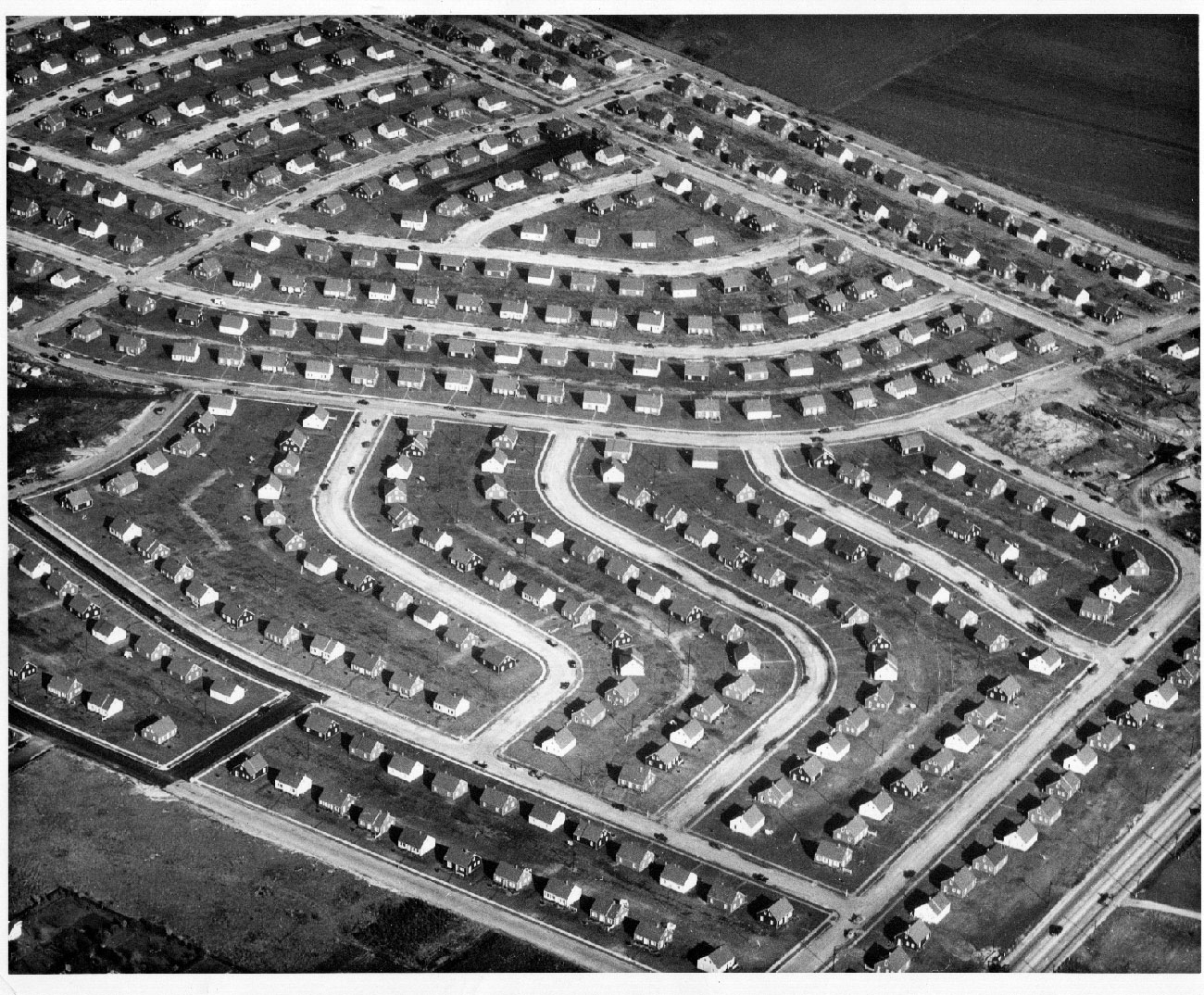
 

Anonymous photographer. 'Aerial view of Levittown' 1949


Anonymous photographer
Aerial view of Levittown
1949
Courtesy Levittown Public Library
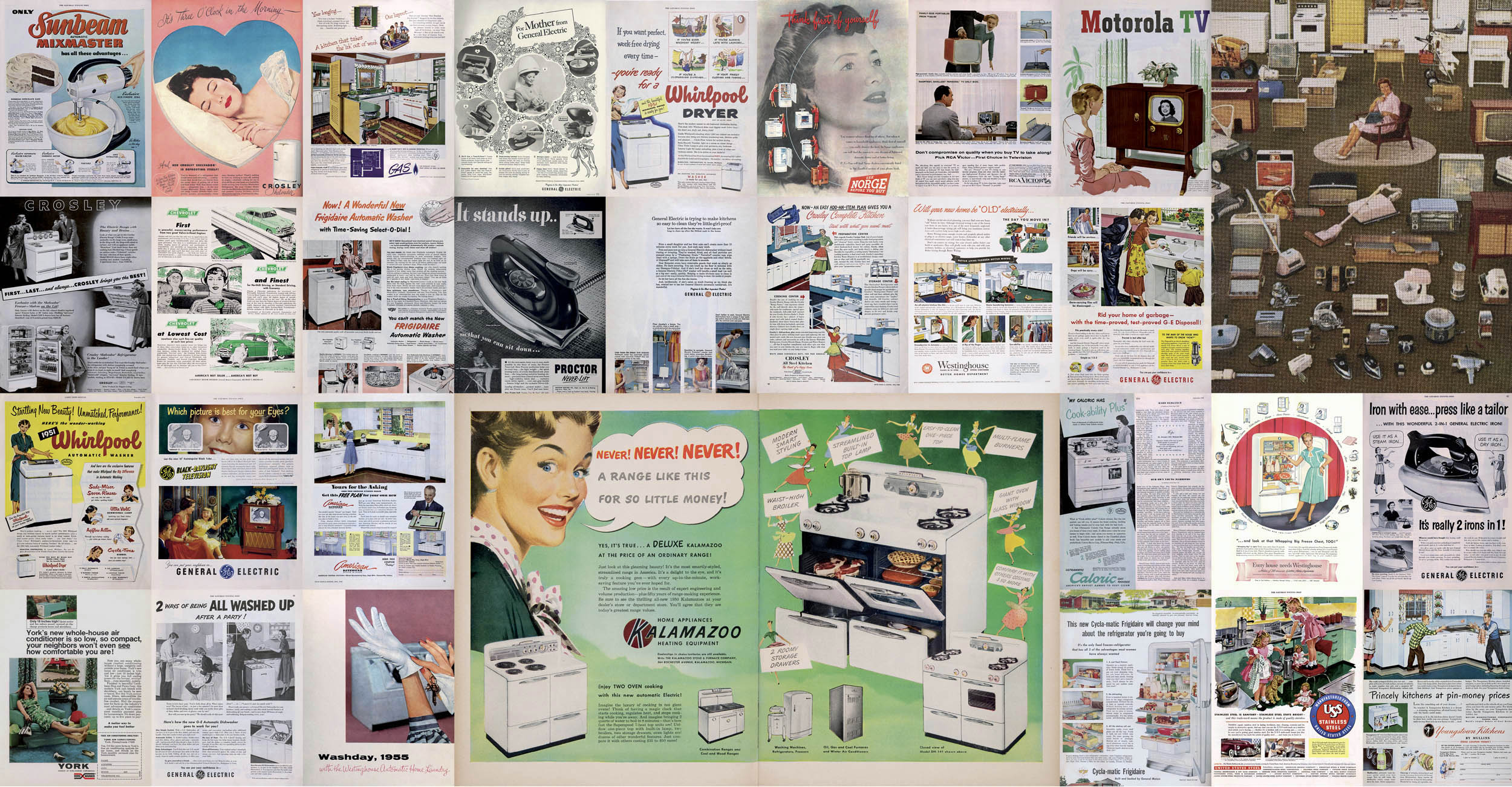
 

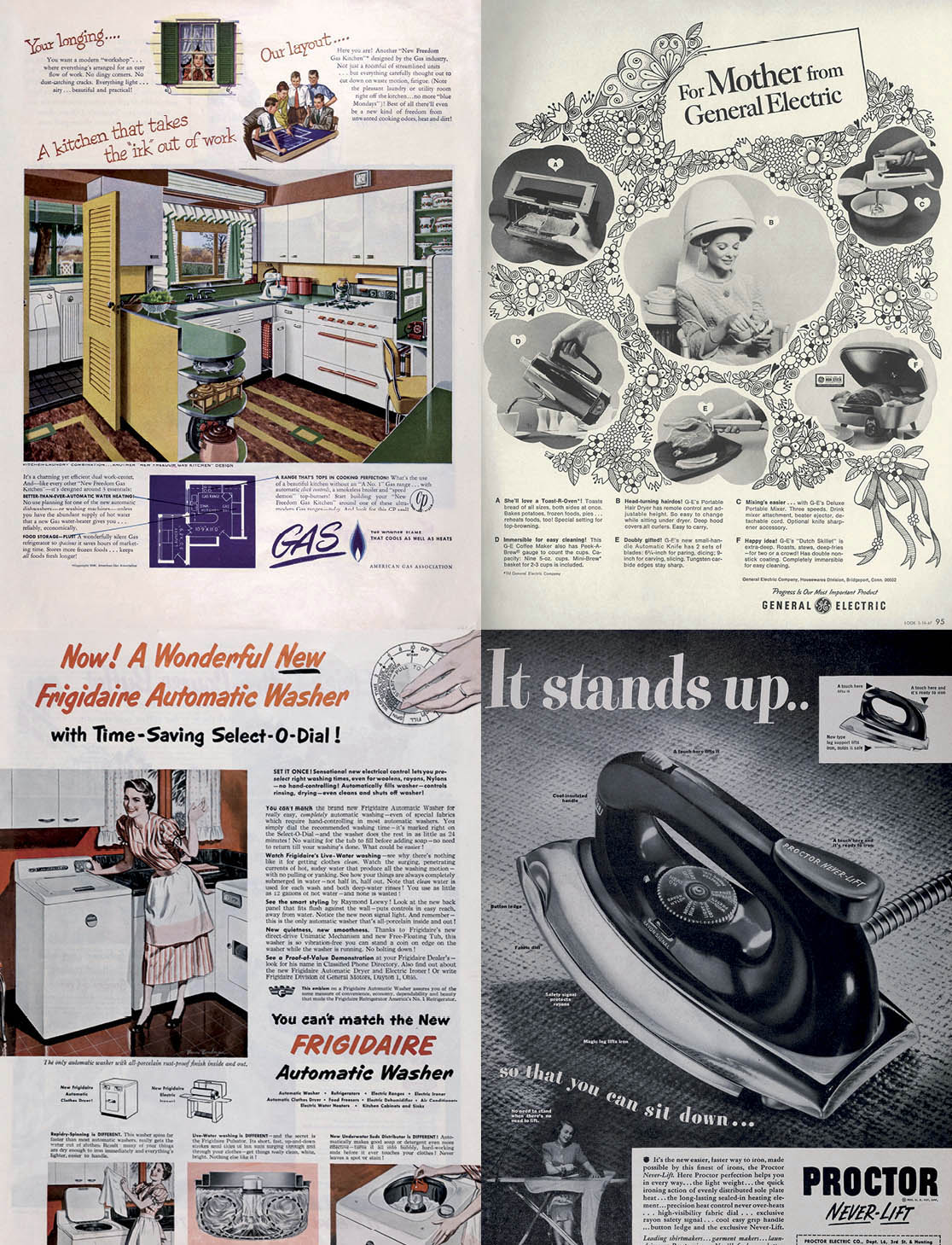
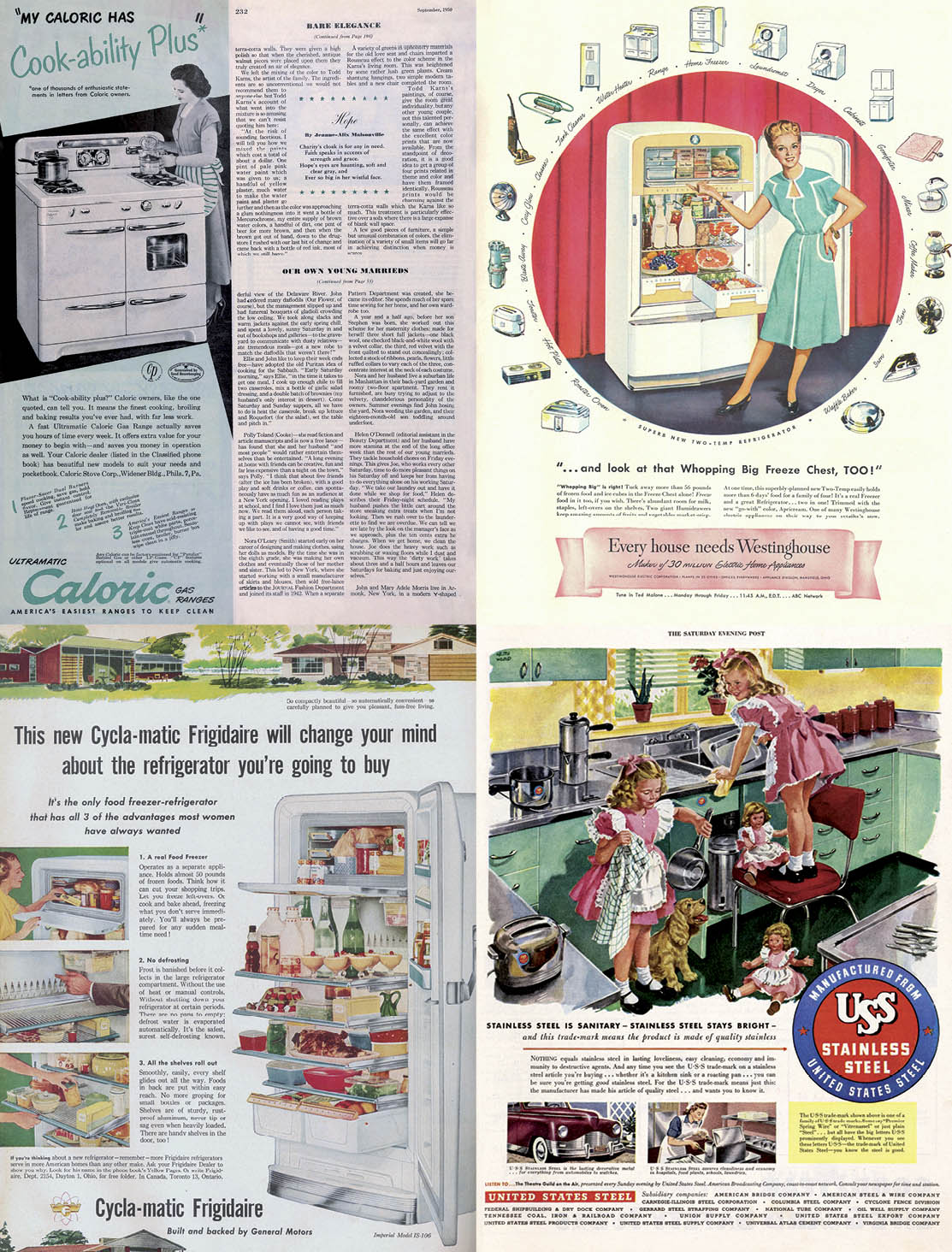
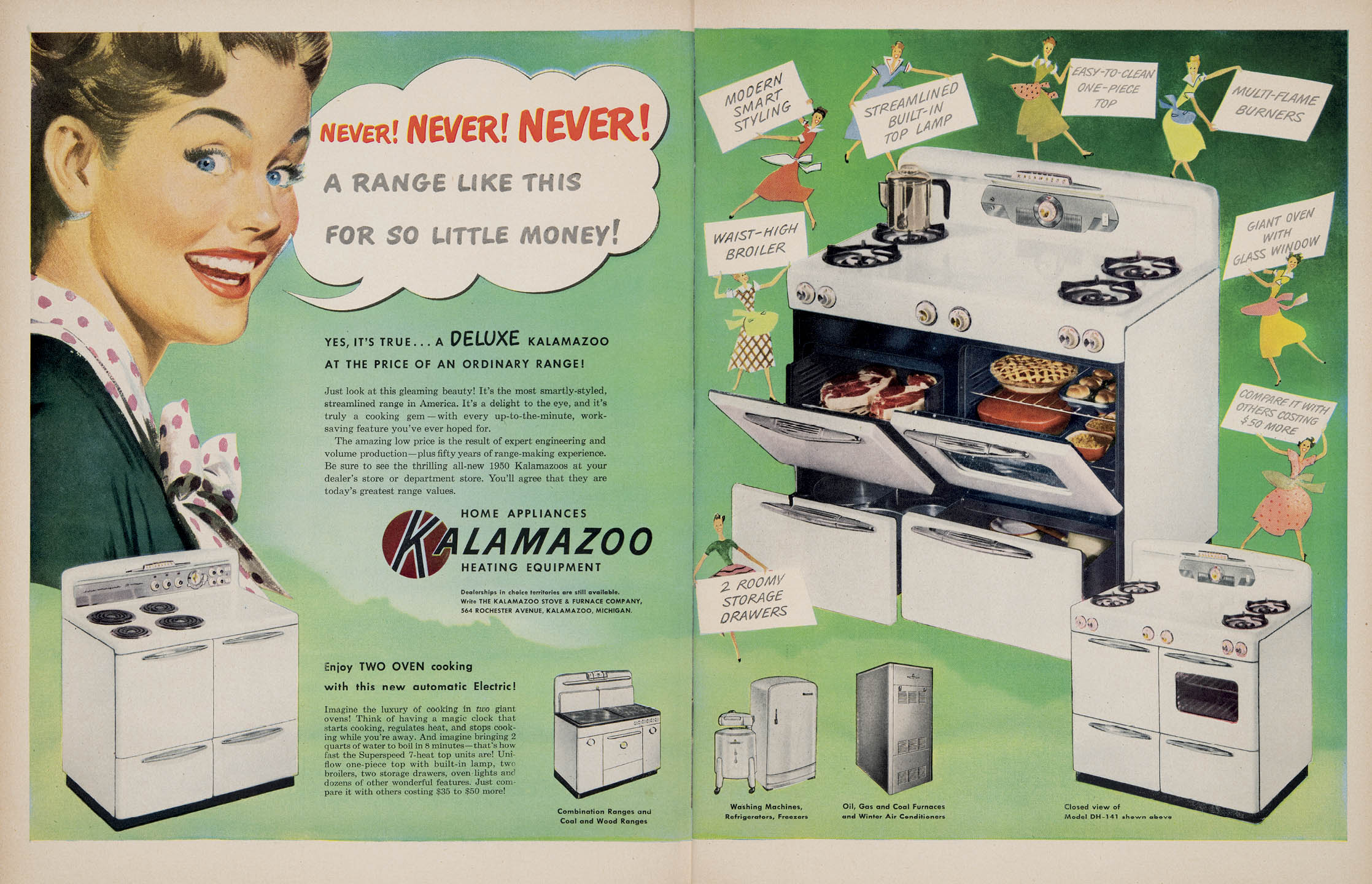
'Mural of household appliance advertisements published in different American magazines' 1947-1962


Mural of household appliance advertisements published in different American magazines
1947-1962
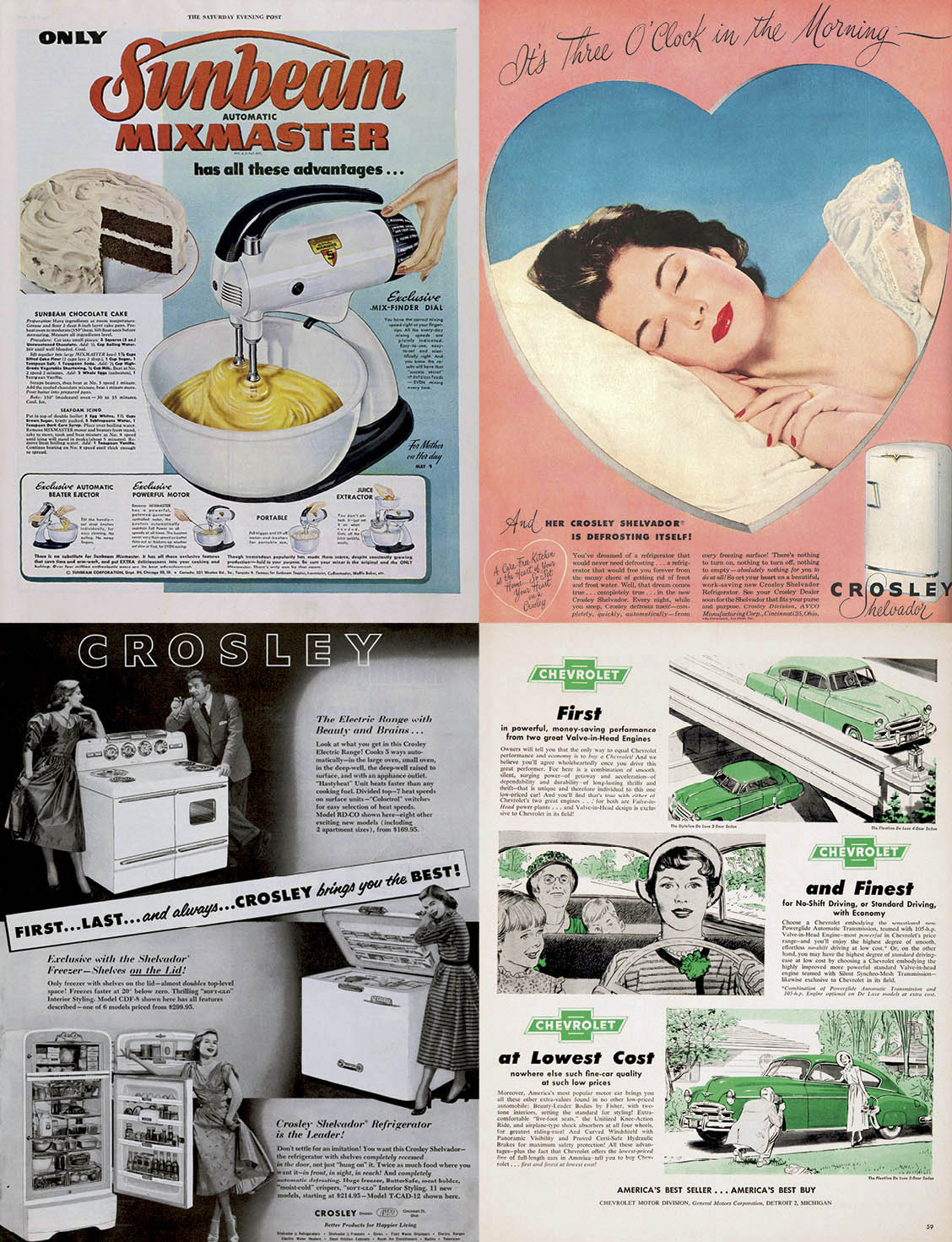
 

'Mural of household appliance advertisements published in different American magazines' 1947-1962 (detail)

'Mural of household appliance advertisements published in different American magazines' 1947-1962 (detail)

'Mural of household appliance advertisements published in different American magazines' 1947-1962 (detail)

'Mural of household appliance advertisements published in different American magazines' 1947-1962 (detail)


Mural of household appliance advertisements published in different American magazines (details)
1947-1962
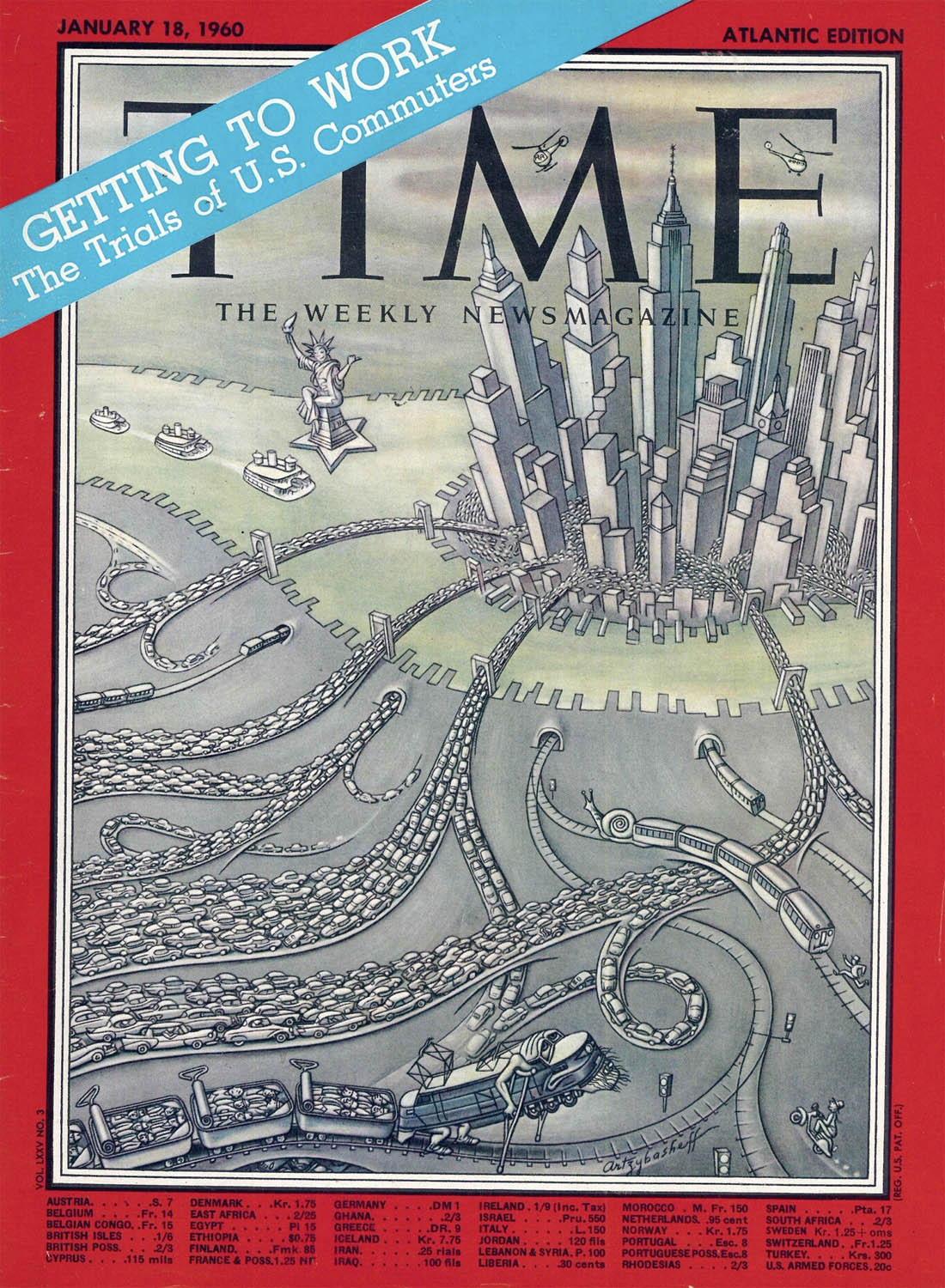
 

Getting to Work. The Trials to U.S. commuters 'Time', January 18, 1960


Getting to Work. The Trials to U.S. commuters
Time, January 18, 1960
Library of Catalonia, Barcelona
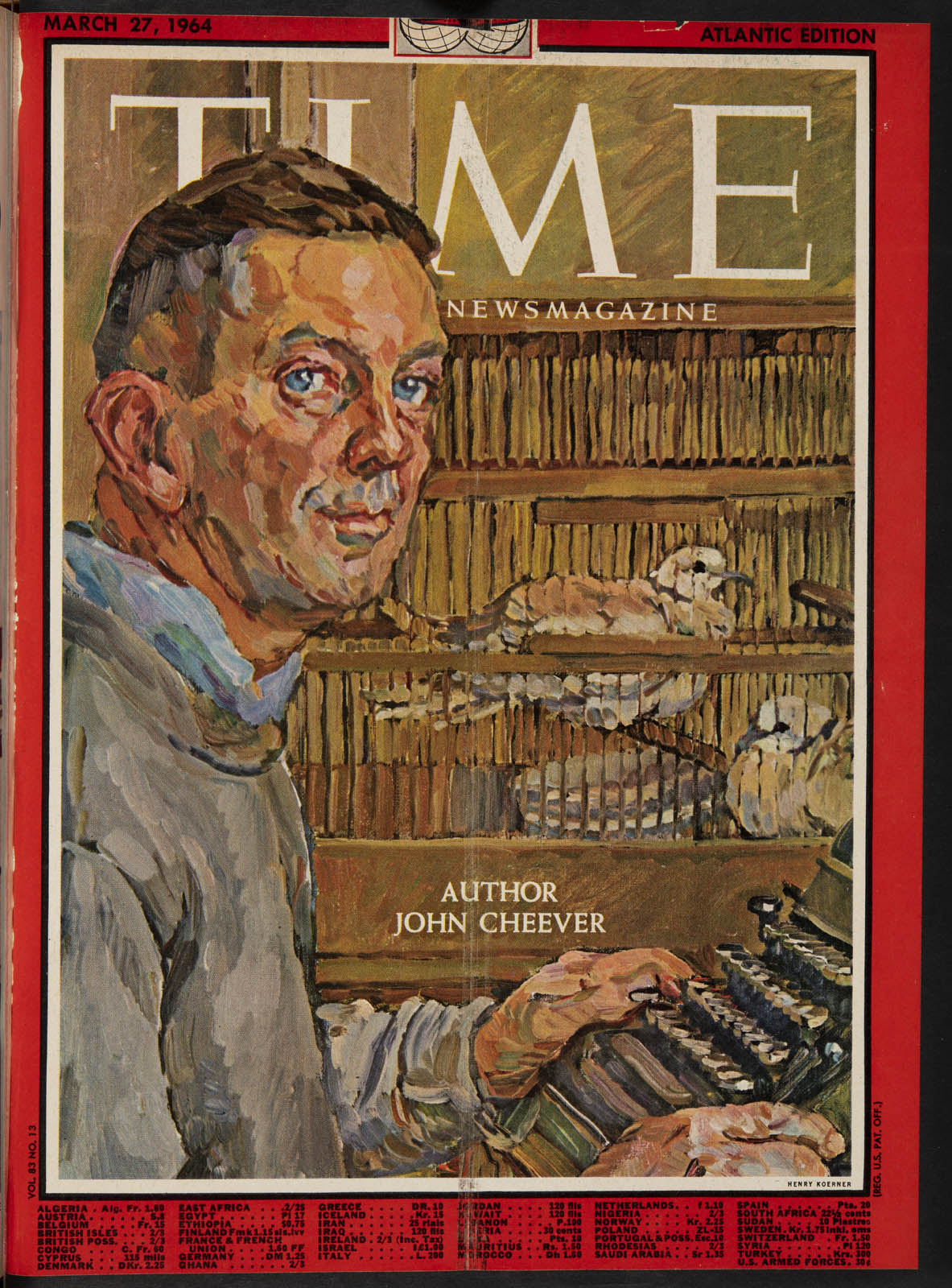
 

John Cheever 'Time', March 27, 1964


John Cheever
Time, March 27, 1964
Library of Catalonia, Barcelona
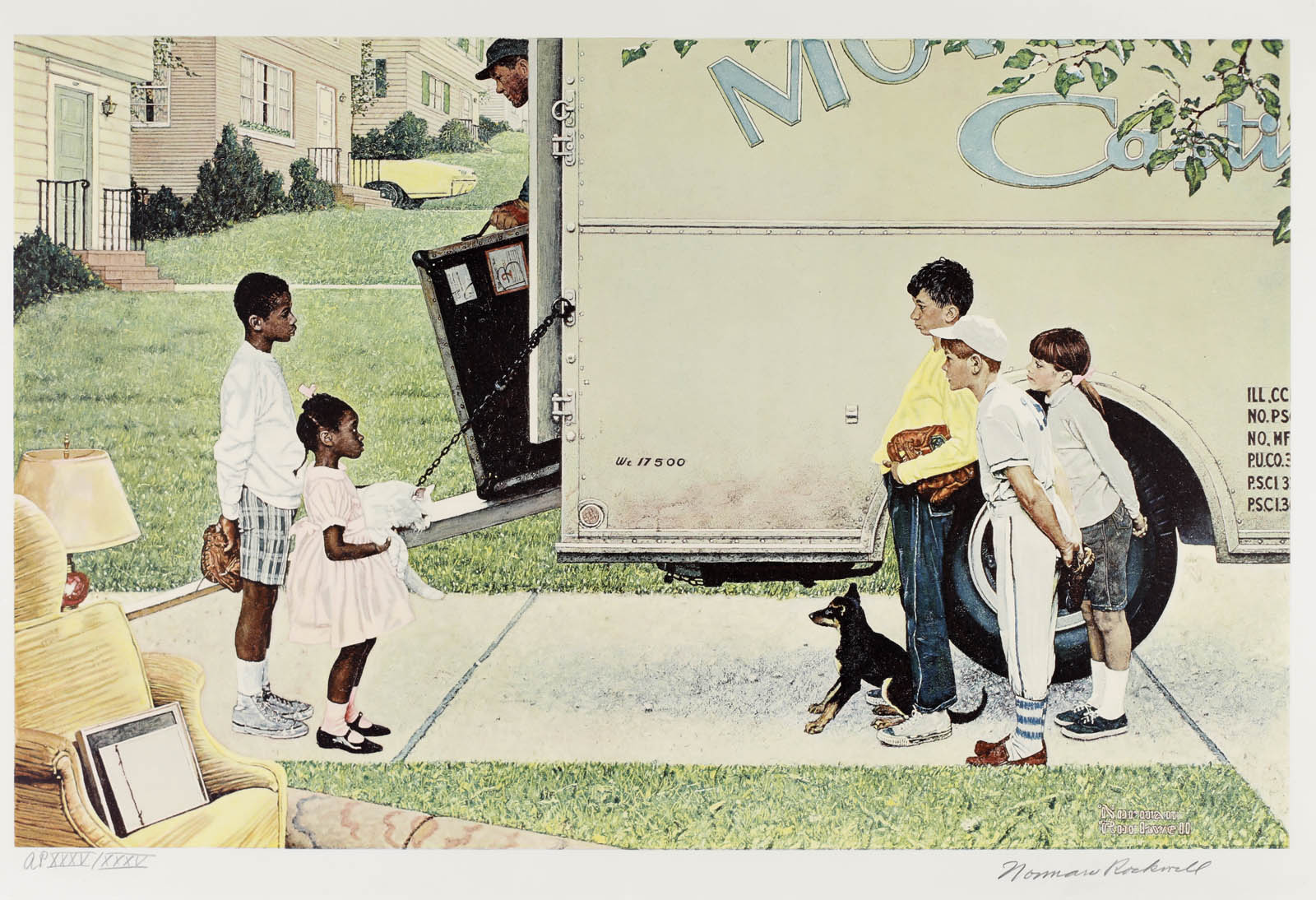
 

Norman Rockwell (American, 1894-1978) 'New Kids in the Neighbourhood' 1967


Norman Rockwell (American, 1894-1978)
New Kids in the Neighbourhood
1967
Lithograph
Norman Rockwell Museum Collection
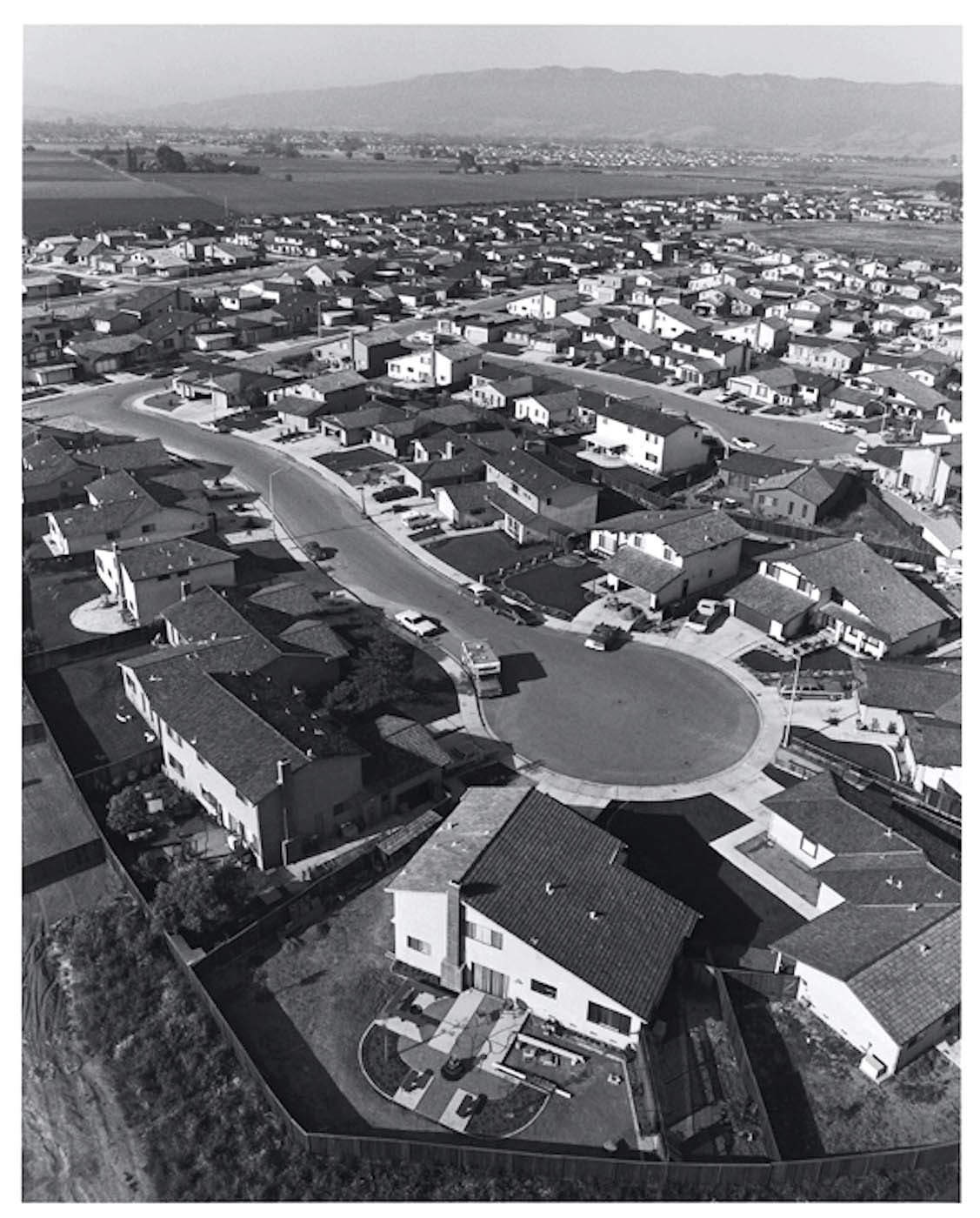
 

Bill Owens (American, b. 1938) 'Suburbia, Cul de sac, Pleseanton, California' 1972


Bill Owens (American, b. 1938)
Suburbia, Cul de sac, Pleseanton, California
1972
Gelatin silver
Bill Owens Archive, Milan


Bill Owens (American, b. 1938) 'I don't feel that Richie playing with guns will have a negative effect on his personality. (He already wants to be a policeman.)' 1972


Bill Owens (American, b. 1938)
I don’t feel that Richie playing with guns will have a negative effect on his personality. (He already wants to be a policeman.)
1972
Gelatin silver
Bill Owens Archive, Milan


The Residential Nightmare

And night fell on Suburbia. What had been a dream became a nightmare. The idea of a safe, healthy, happy place was gradually contaminated with fears, terrors and paranoias. Doors were bolted and alarms installed. After all, in the American Gothic tradition, the house, often haunted, had always been a source of horror – evil lurked there. With the appearance of mass-produced housing, a new sub genre called Suburban Gothic was consolidated, and began to manifest itself both in literature and in cinema. Unlike the traditional Gothic, in this new landscape the family residence was no longer tied to a specific territory, as it had been in New England; now, with its white picket fence and green lawn, it could be anywhere in the country. And evil came from outside, it threatened to invade the home and even undermine it. Under the guise of shiny normality, American suburbs always conceal cracks through which terror creeps.

To illustrate this residential nightmare, we take in historical materials of the atomic age, photographs of the dark side of suburbia by Amy Stein, Todd Hido, Gregory Crewdson, Angela Strassheim and Gabriele Galimberti, and Kate Wagner’s installation, McMansionHell. Alberto Ortega, an artist from Seville resident in the US who has devoted himself to painting the suburbs at night, presents two works for the first time at the CCCB.
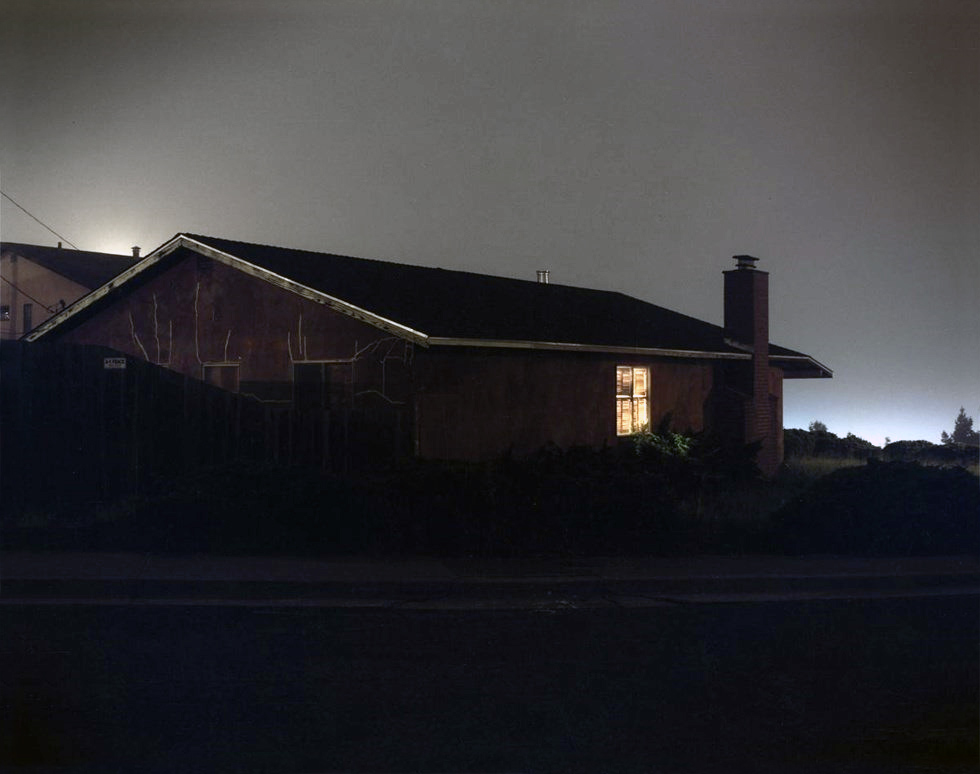
 

Todd Hido (American, b. 1968) 'Untitled #2214' 1998


Todd Hido (American, b. 1968)
Untitled #2214
1998
From the series House Hunting
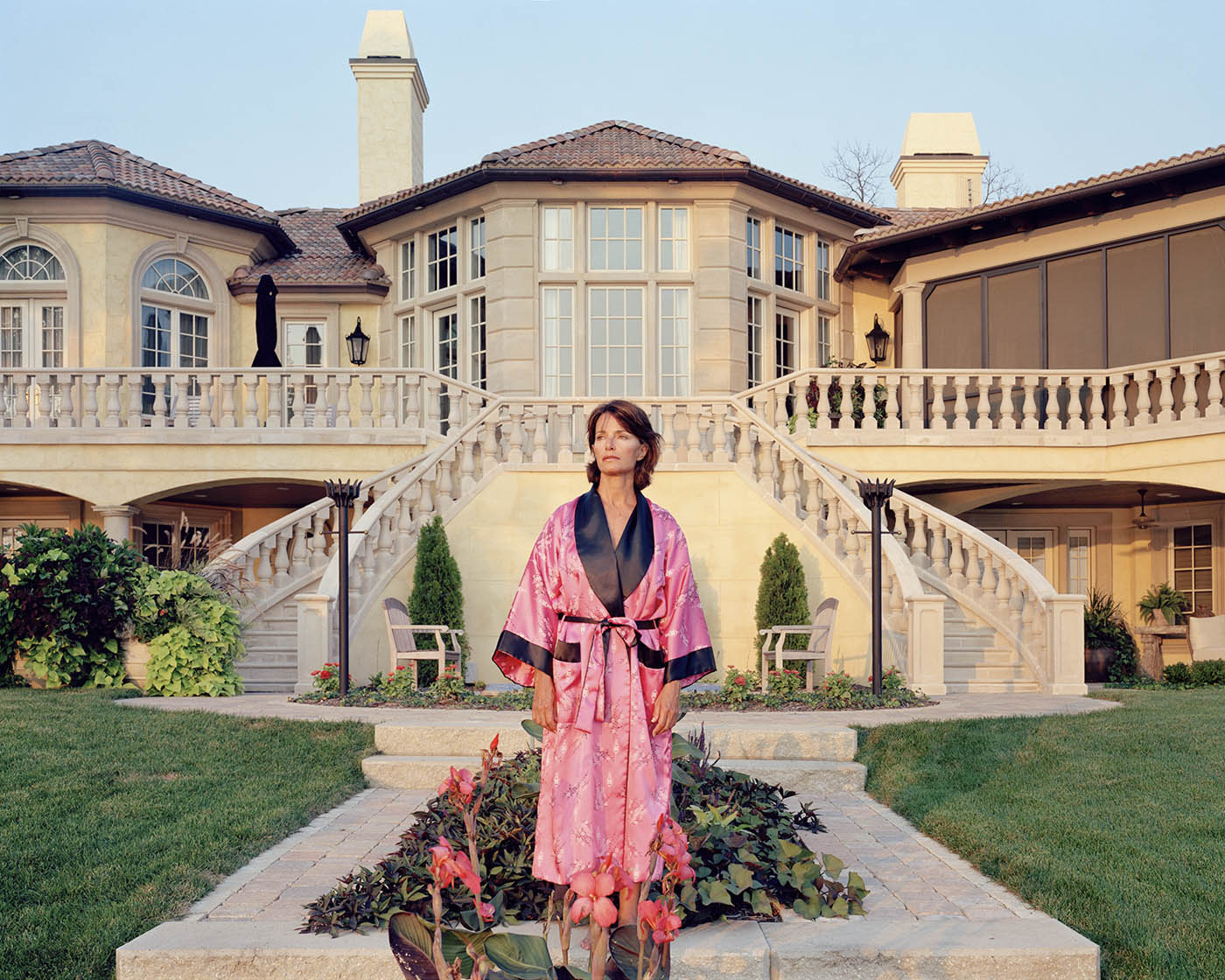
 

Angela Strassheim (American, b. 1969) 'Untitled (Elsa)' 2005


Angela Strassheim (American, b. 1969)
Untitled (Elsa)
2005
Left Behind series
Courtesy of the artist


Installation view of the exhibition 'Suburbia. Building the American Dream' at the Centre de Cultura Contemporània de Barcelona | CCCB showing the work of Gabriele Galimberti from the series 'The Ameriguns' with at top right, 'Joel, Lynne, Paige and Joshua (44, 43, 5 and 11 years old) – central Texas' 2021; and at bottom right, 'Eric Arnsberger (30) and Morgan Gagnier (22) – Lake Forest, California' 2021


Installation view of the exhibition Suburbia. Building the American Dream at the Centre de Cultura Contemporània de Barcelona | CCCB showing the work of Gabriele Galimberti from the series The Ameriguns with at top right, Joel, Lynne, Paige and Joshua (44, 43, 5 and 11 years old) – central Texas 2021; and at bottom right, Eric Arnsberger (30) and Morgan Gagnier (22) – Lake Forest, California 2021
© Alice Brazzit, CCCB, 2024
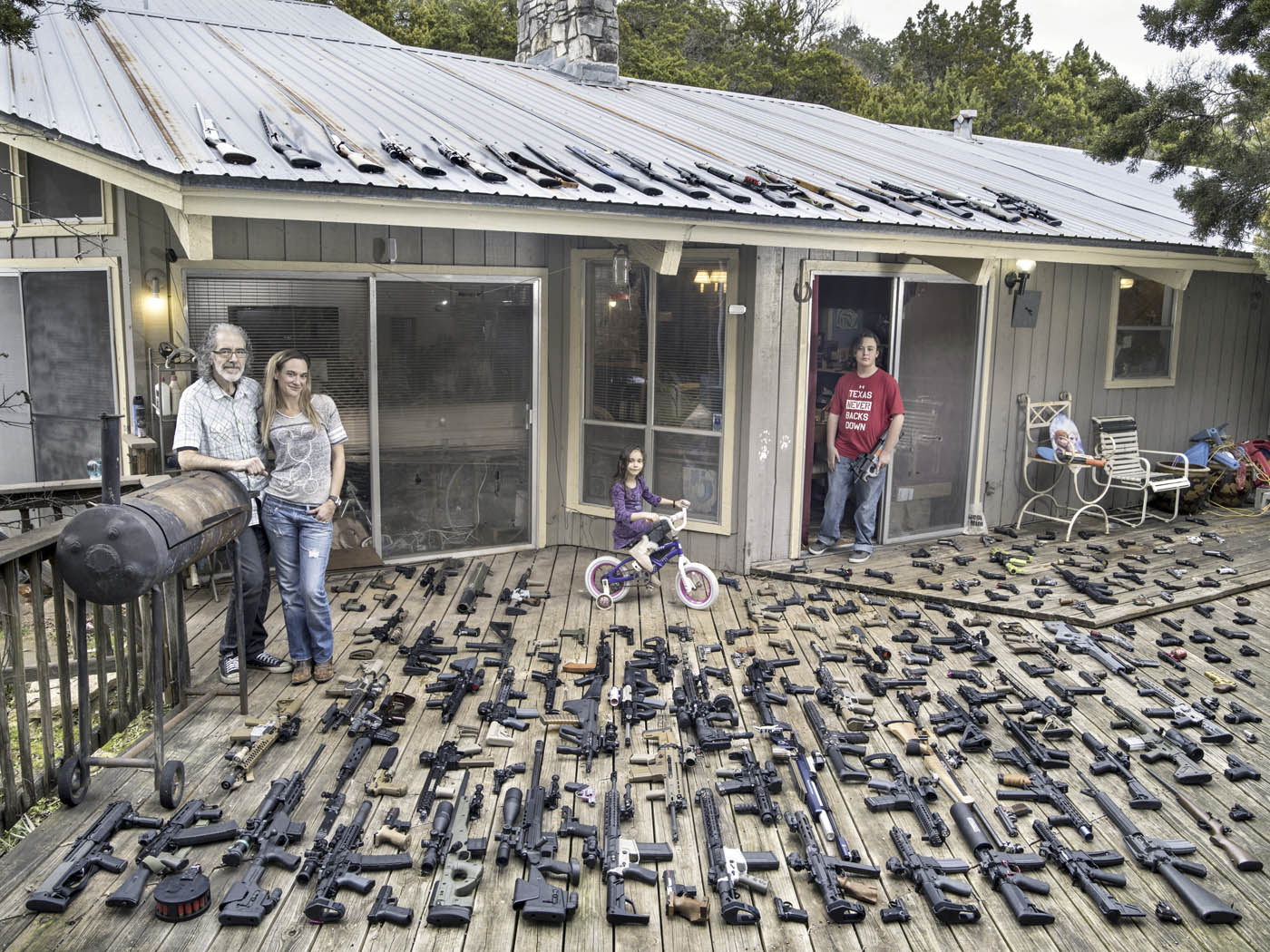
 

Gabriele Galimberti (Italian, b. 1977) 'Joel, Lynne, Paige and Joshua (44, 43, 5 and 11 years old) – central Texas' 2021


Gabriele Galimberti (Italian, b. 1977)
Joel, Lynne, Paige and Joshua (44, 43, 5 and 11 years old) – central Texas
2021
Digital printing
Courtesy of the artist
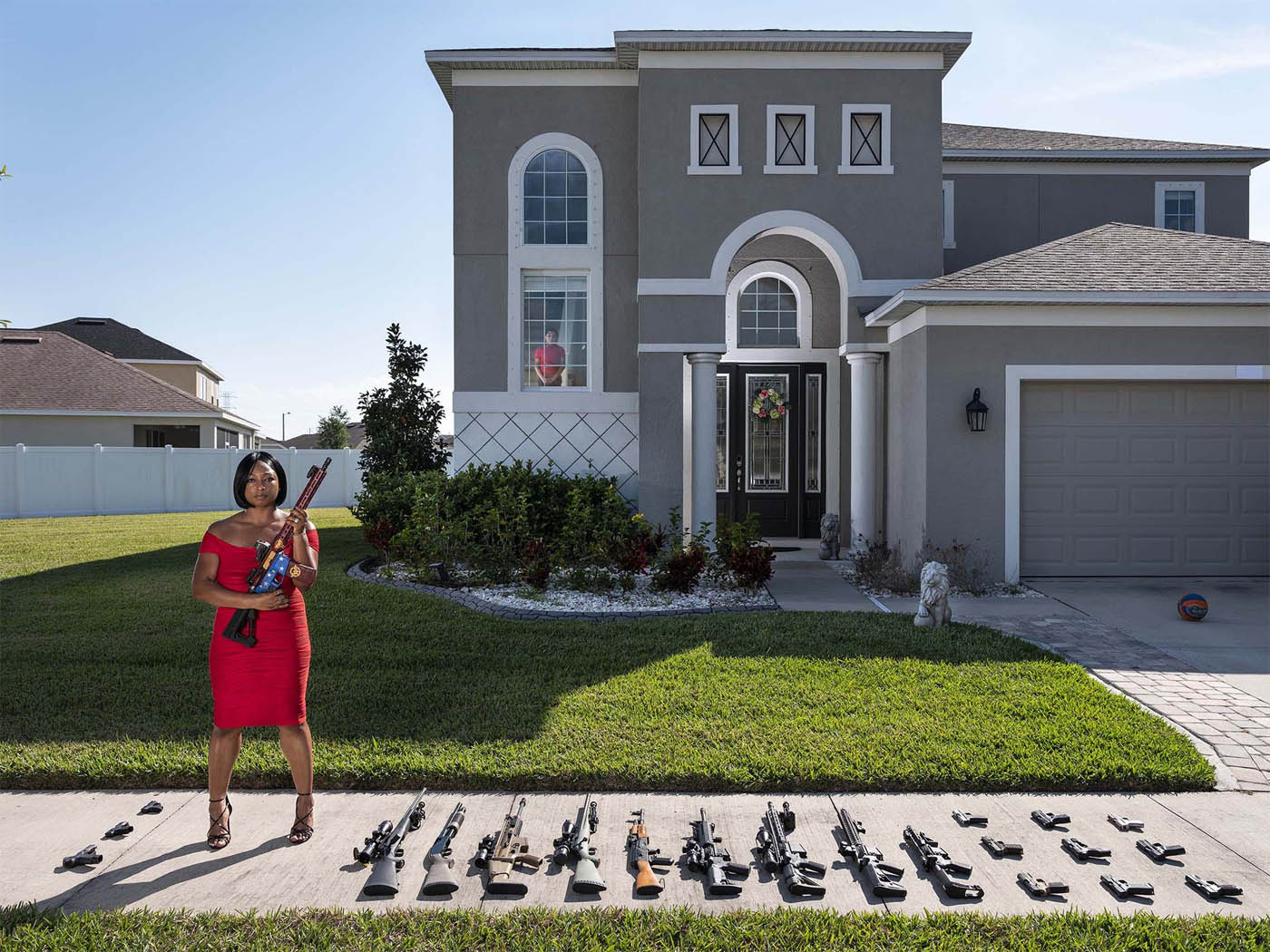
 

Gabriele Galimberti (Italian, b. 1977) 'Avery Skipalis (33) – Tampa, Florida' 2021


Gabriele Galimberti (Italian, b. 1977)
Avery Skipalis (33) – Tampa, Florida
2021
Digital printing
Courtesy of the artist


Avery Skipalis (33) stands with her firearms in front of her house in Tampa, Florida, USA. Her son looks on from a window. Avery joined the US Air Force when she was 17, and after serving in the UAE, Japan and Germany, left to start a company that offers firearms safety classes to adults and children.


Alberto Ortega (American born Spain, b. 1976) 'Annunciation' 2023


Alberto Ortega (American born Spain, b. 1976)
Annunciation
2023
Oil on aluminium panel
Courtesy of the artist


Alberto Ortega (Sevilla, Spain 1976) creates oil paintings made after miniature sets that he builds as references. The small-scale sets enable him to recreate suburban scenes using details that recall the 1950s. Since he’s able to control the angle and point of view, the lighting, the location of every element, much like a film director would do, his works have a strong cinematic feel.

As an immigrant to the United States, Alberto is intrigued by American suburban life as depicted in film, literature, and visual art. Through these images of American homes, buildings, and neighbourhoods, he portrays society and some of its contradictions. These scenes represent hopes and dreams, the threat of their failure, and alienation.

Text from the Alberto Ortega website
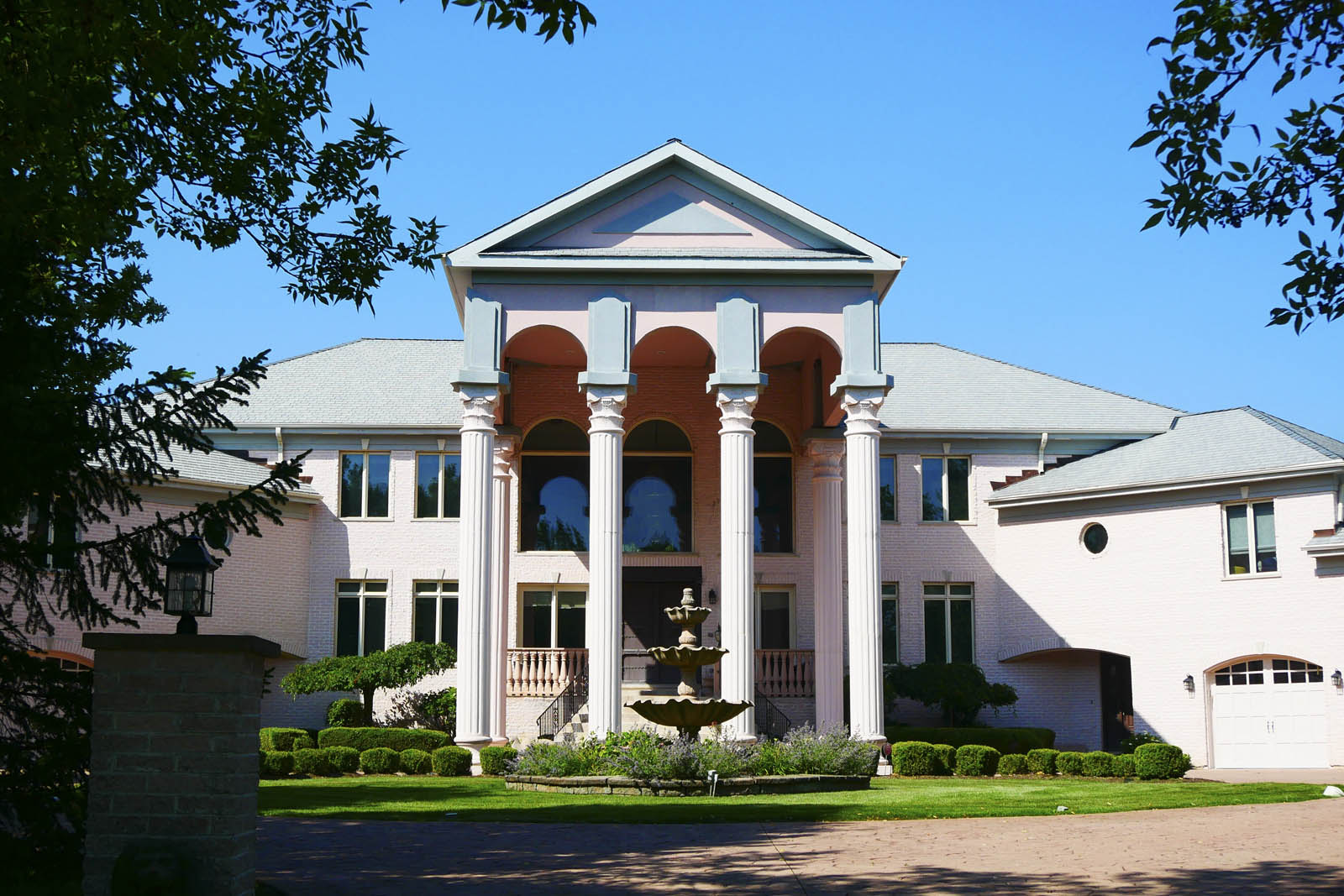
 

Kate Wagner (American, b. 1993) 'Observations from McMansion Hell' 2023


Kate Wagner (American, b. 1993)
Observations from McMansion Hell
2023
Digital print on palboard
Courtesy of the artist


McMansion Hell is a blog that humorously critiques McMansions, large suburban homes typically built from the 1980s to 2008 and known for their stylistic attempt to create the appearance of affluence using mass-produced architecture. The website is run by Kate Wagner, an architectural writer. …

The blog uses Wagner’s commentary atop images of the interiors and exteriors of McMansions, using arrows to note features she finds questionable or in poor taste. Besides critiquing the homes themselves, the website also criticises the perceived material culture of wastefulness McMansions can represent, gives anecdotes of situations when McMansions have been a poor financial investment, and provides other essays on urban planning and architectural history. The blog offers subscriptions with bonus content, generating sufficient funding for Wagner to work on the blog full-time.

Text from the Wikipedia website


Post-Suburbia?

The appearance of New Urbanism in the 1990s began to herald the inevitable death of Suburbia due to the announced depletion of oil that has not yet occurred. Meanwhile, Suburbia continues to spread, transform and diversify. Today, 8 out of 10 Americans live in sprawl and single-family homes, representing 75% of the residential areas where new generations continue to dream of living. This is a new suburbia that is more open but also more unequal.

This suburb is made up of very diverse communities, as captured by the cameras of the photographers Sheila Pree Bright (who portrays African American life around Atlanta) and Jessica Chou (who immortalises the Asian community in Monterrey Park, California). New lifestyles also proliferate there, like at Huntington Beach, a “contemporary suburb” and surfing capital featured in the works of artist and skateboarder Ed Templeton.

This section also focuses on the environmental impact of this highly polluting city model, through the apocalyptic bonsai of artist Thomas Doyle and the satellite photographs of Benjamin Grant, a lethal panorama of the effects of the sprawling city.
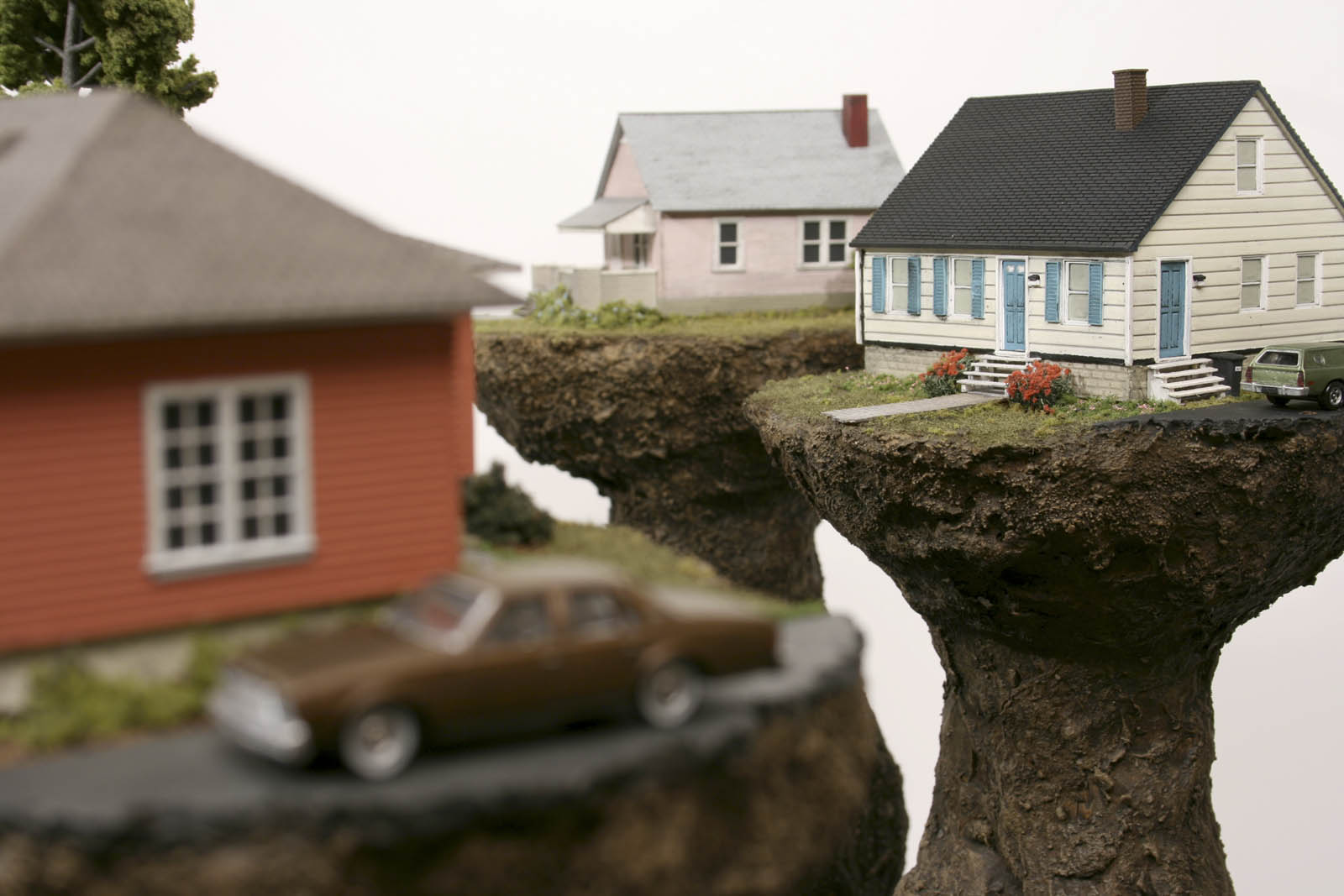
 

Thomas Doyle (American, b. 1976) 'Proxy (Haven Ln.)' 2012


Thomas Doyle (American, b. 1976)
Proxy (Haven Ln.)
2012
Mixed media
Courtesy of the artist


Thomas Doyle work mines the debris of memory through the creation of intricate worlds sculpted in 1:43 scale and smaller. Often sealed under glass, the works depict the remnants of things past – whether major, transformational experiences, or the quieter moments that resonate loudly throughout a life. In much the way the mind recalls events through the fog of time, the works distort reality through a warped and dreamlike lens.

Text from the Ronchini Gallery website


Weronika Gęsicka (Polish, b. 1984) 'Untitled #16' 2015-2017 From the series 'Traces'


Weronika Gęsicka (Polish, b. 1984)
Untitled #16
2015-2017
From the series Traces
Digital printing
Courtesy of the artist and Jednostka Gallery, Warsaw


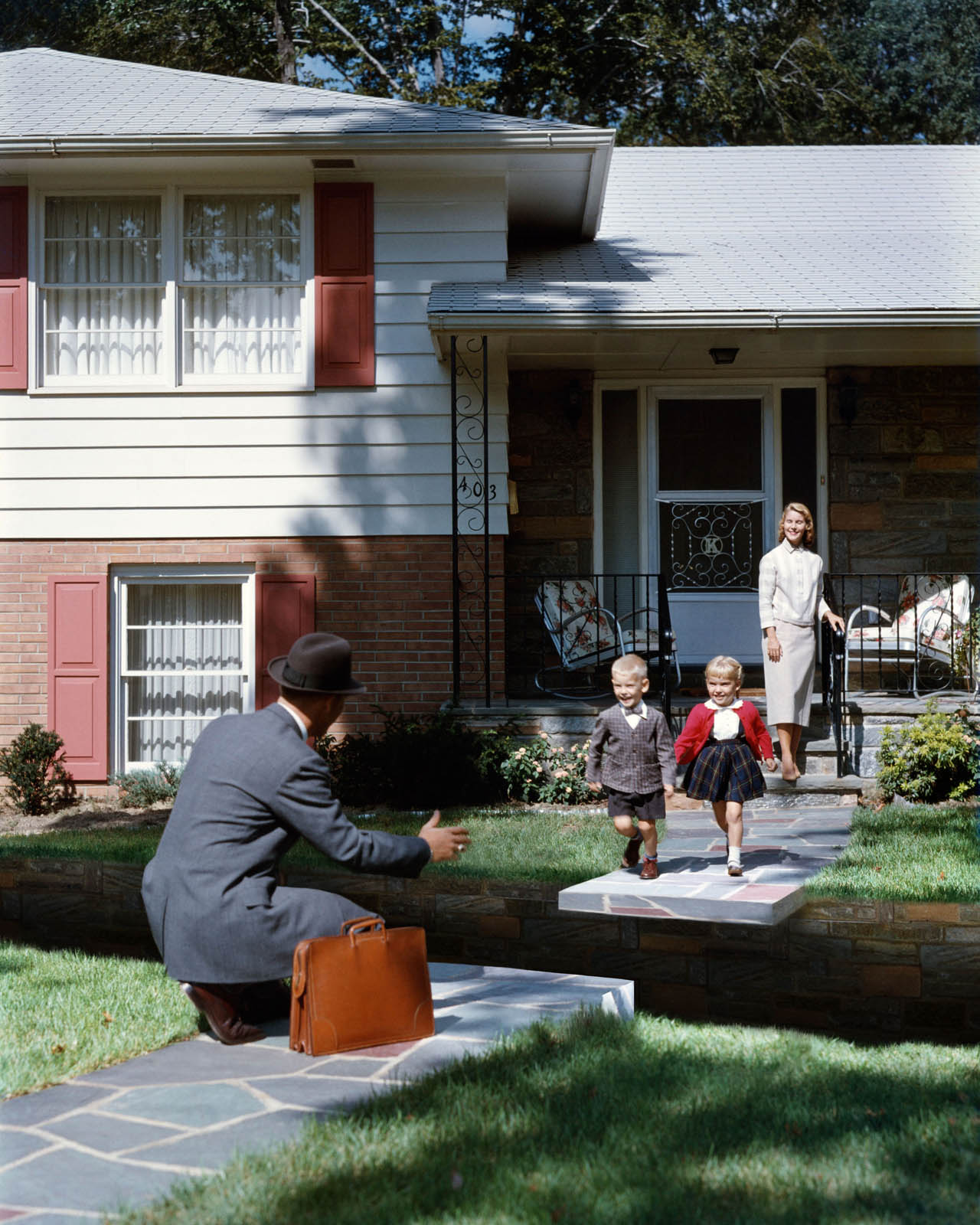
For her series “Traces”, Polish artist Weronika Gęsicka searched through various online image databases for photographs from the 1940s to the 1960s that in her eyes reflect the American way of life at that time. Many of these scenes are full of clichés, showing happy-looking people in an apparently perfect world. The exact origin of the pictures is not verifiable. As a result, they are a mixture of advertisements and private photos. Gęsicka manipulates the idyllic scenes in a playful way by digitally distorting the images. In doing so, she does not follow a strict pattern, but instead decides intuitively what detail she finds fascinating and will edit. In this way, the rather stereotypical scenes of suburban American life are transformed into a humorous, but also uncomfortable reality. Covered faces, deformed bodies and peculiar superimpositions create a distorted version of the American dream. Gęsicka’s photos are characterised by a discomforting, almost oppressive mood that sometimes only reveals itself at second glance: young men at a tea dance, whose heads are submerged in the cleavages of their oversized female partners, family members hidden behind a curtain at the dinner table, or a father coming home from work, separated by a trench from his children, who are running towards him.

In “Traces”, Weronika Gęsicka questions how we perceive images. In doing so, she makes us aware that even the medium of photography, which allegedly reflects reality, is not objective. Each photograph merely satisfies a perception of what is happening and, in the photographer’s eye, remains a subjective likeness. By modifying the images, she is playing with the observer, who is initially confident that he can quickly classify and identify the scene – until he notices that nothing in these pictures is as it seems at first glance.

Anonymous. “Weronika Gęsicka: A Disconcerting Idyll,” on the Deutsche Börse Photography Foundation website Nd [Online] Cited 13/08/2024
 

Weronika Gęsicka (Polish, b. 1984) 'Untitled #52' 2015-2017 From the series 'Traces'


Weronika Gęsicka (Polish, b. 1984)
Untitled #52
2015-2017
From the series Traces
Digital printing
Courtesy of the artist and Jednostka Gallery, Warsaw
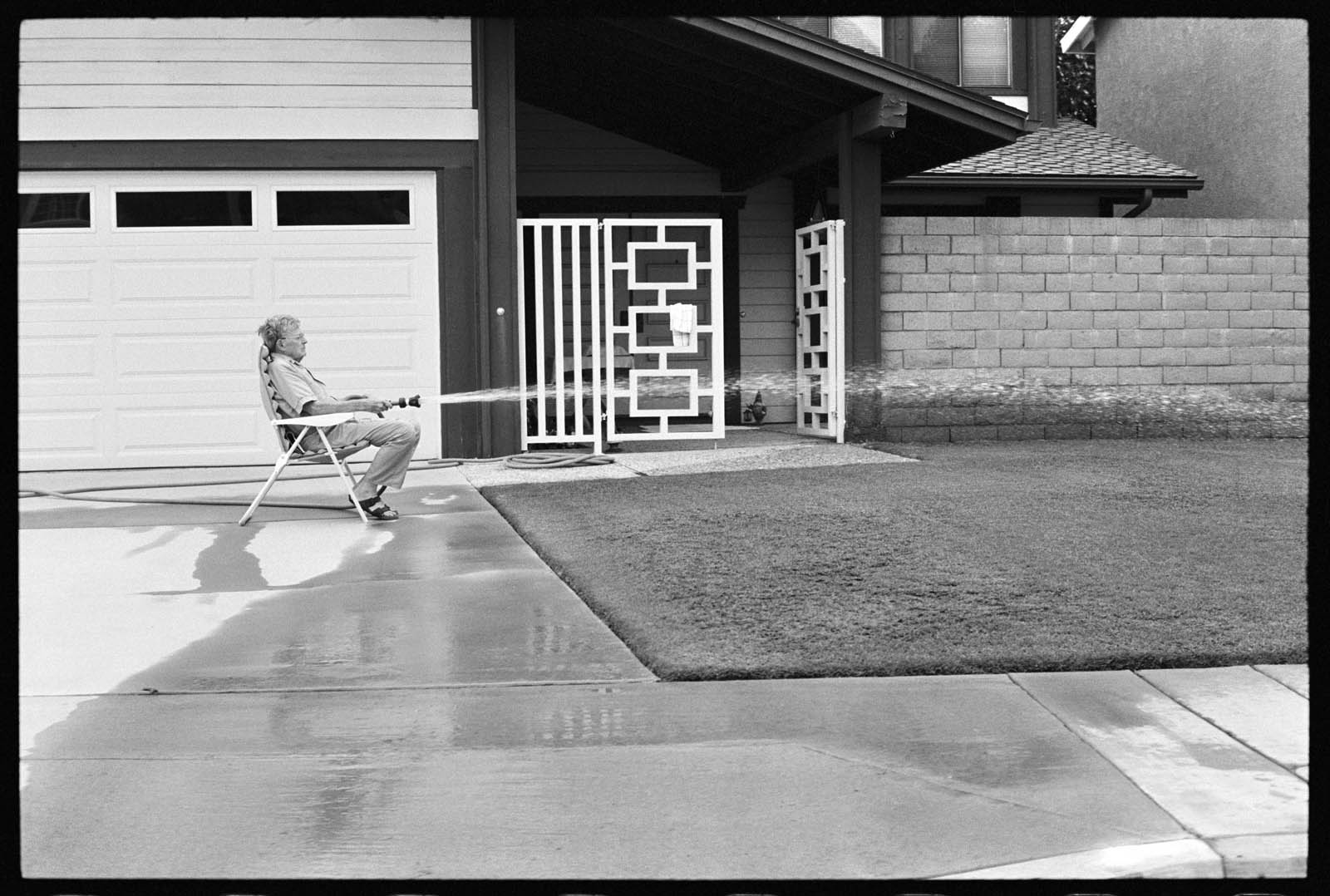
 

Ed Templeton (American, b. 1972) 'Contemporary Suburbium' 2017


Ed Templeton (American, b. 1972)
Contemporary Suburbium
2017
Digital printing on baryta paper
Courtesy of Roberts Projects, Los Angeles

 

Jessica Chou (American born Taiwan, b. 1985) 'The Mark Keppel High School Dance Team at the 2019 Miss Dance Drill Team USA National Dance Competition' 2019


Jessica Chou (American born Taiwan, b. 1985)
The Mark Keppel High School Dance Team at the 2019 Miss Dance Drill Team USA National Dance Competition
2019
Digital printing
Courtesy of the artist
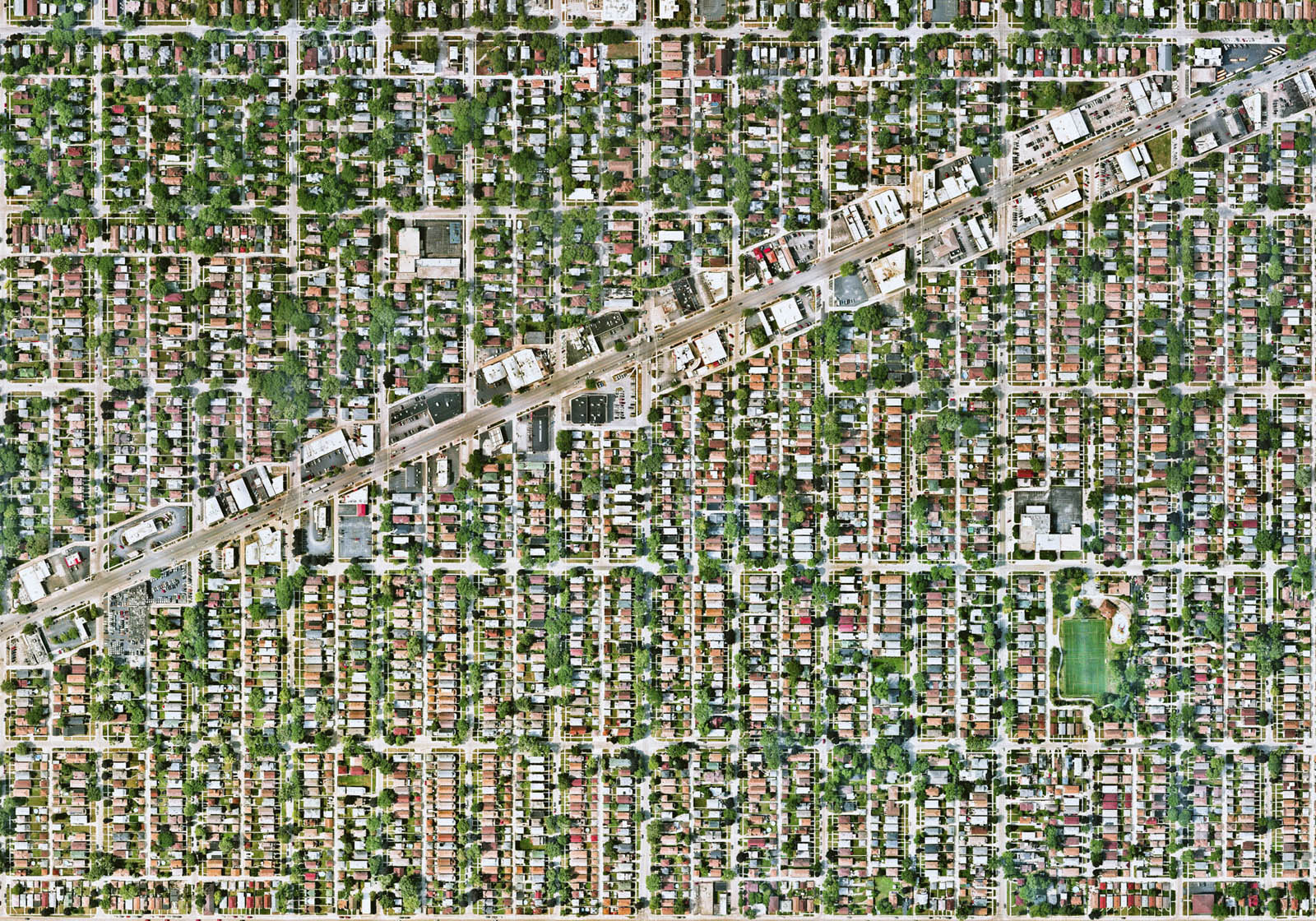
 

Benjamin Grant (American, b. 1984) 'Berwyn, Illinois' 2023


Benjamin Grant (American, b. 1984)
Berwyn, Illinois
2023
Digital printing
Images created by Overview, source images
© Nearmap


Overview takes its inspiration from Daily Overview – an Instagram account established by author Benjamin Grant. Since he began the project in December 2013, his daily posts have both delighted and challenged his audience from all corners of the globe. For Overview, Grant has curated and created more than 200 original images by stitching together numerous high-resolution satellite photographs. With each Overview, Grant aims to not only inspire a fresh perspective of our planet but also encourage a new understanding of what human impact looks like. He lives and rides his bike in New York City.

Text from the Penguin Books website
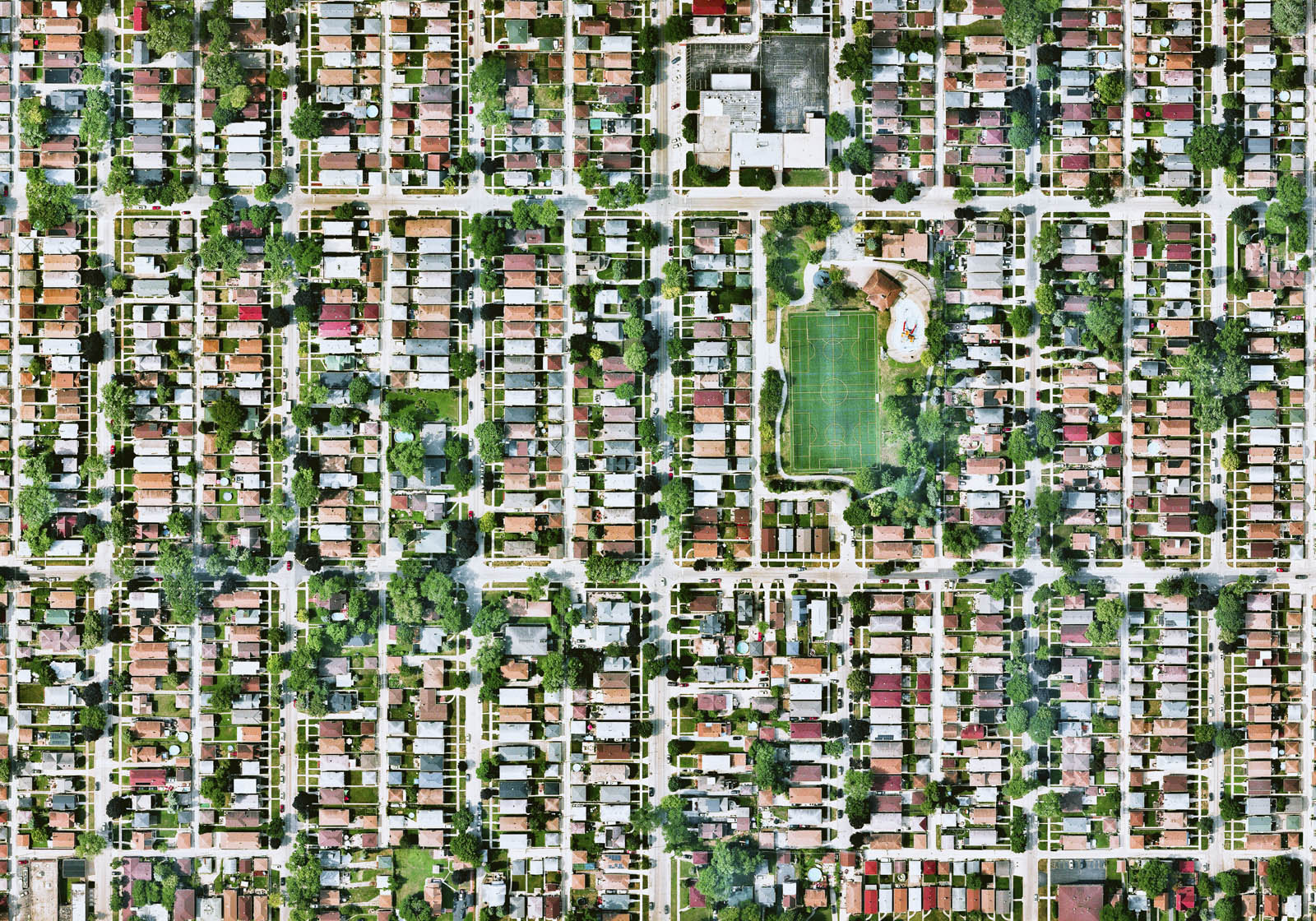
 

Benjamin Grant (American, b. 1984) 'Berwyn, Illinois' 2023 (detail)


Benjamin Grant (American, b. 1984)
Berwyn, Illinois (detail)
2023
Digital printing
Images created by Overview, source images
© Nearmap


Sprawl Reaches Our Shores

The formation of Suburbia as a cultural phenomenon in Catalonia is a reality historically ignored by narratives about the Catalan process of urbanisation, too focused on city growth and the ideological differentiation between an urban, Barcelona-based Catalonia and an “inner” Catalonia, the birthplace of what still today we call the “countryside”.

Suburban Catalonia shows how, in many territories, urban growth no longer corresponds to the well-known metaphor of city growth as an “oil stain”. In fact, an endless mass of oil stains has spread across the territory, giving rise to the same cloned reality everywhere: regional urban sprawl. The sprawl that is so commonplace today developed with the motorisation of society starting in the latter half of the 20th century as part and parcel of a very heterogeneous cultural discourse: the ideological propaganda of the American way of life mixed with local traditions derived from criticism of the built-up, crowded industrial city popularly disseminated in expressions such as “la caseta i l’hortet” (a little house and a garden) that idealised rural life. The path leading from those initial suburban choices to today’s regional urban sprawl is not a straight one, making the Catalan suburb a world yet to be discovered.

Christopher Willan has made a photographic reportage about the Catalan suburban world specially for the exhibition, which also includes Blanca Munt’s installation Mira-Sol Alert about the neighbourhood’s paranoid state of alert and an audiovisual piece by filmmaker León Siminiani that closes the exhibition.


Pere Torné Esquius (Spanish, 1879-1936) 'The rocking chair' 1913


Pere Torné Esquius (Spanish, 1879-1936)
The rocking chair (El balancí)
1913
Oil on canvas
National Art Museum of Catalonia, Barcelona


For different reasons, the singular work of the painter, illustrator and cartoonist Pere Torné Esquius (Barcelona 1879 – Flavancourt, France, 1936) doesn’t fit in with either the modernist proposals or the noucentista style (turn of the century), even though the latter considered him to be one of theirs.

Settled in Paris from 1905 onwards, although he would often return to Barcelona to regularly exhibit there, his work, of apparent simplicity, responded to a certain primitivism which was somewhat naive and with a strong French influence. His painting, highly singular, maintained pictorial and atmospheric values which provided the whole production with a sense of unity.

The favourite topics of Torné Esquius were interior or secluded spaces, such as gardens or living rooms, humble or of artisan extraction. It is worth highlighting, very often, the absence of the human figure and the main presence of inanimate elements that on occasions would cause a disturbing or even alarming effect. He also produced other genres such as landscapes or portraits.

Despite the fact that he was a painter, his professional work was based on illustration, focused on three main lines: children’s literature, the illustration of literary texts and the collaboration in magazines and periodical publications, often satirical, such as Papitu, Picarol or Le Rire, amongst others.

Anonymous. “Torné Esquius. Poetics of the Everyday,” on the Museu Nacional D’Art De Catalunya website 2017 [Online] Cited 13/08/2024


'XXIII Barcelona International Exhibition Fair, 1955. USA Pavilion. OITF: Office of International Trade Fair. Single-family house model: "house beautiful prefabricated"' 1955


XXIII Barcelona International Exhibition Fair, 1955. USA Pavilion. OITF: Office of International Trade Fair. Single-family house model: “house beautiful prefabricated”
1955
Historical Archive of the College of Architects of Catalonia
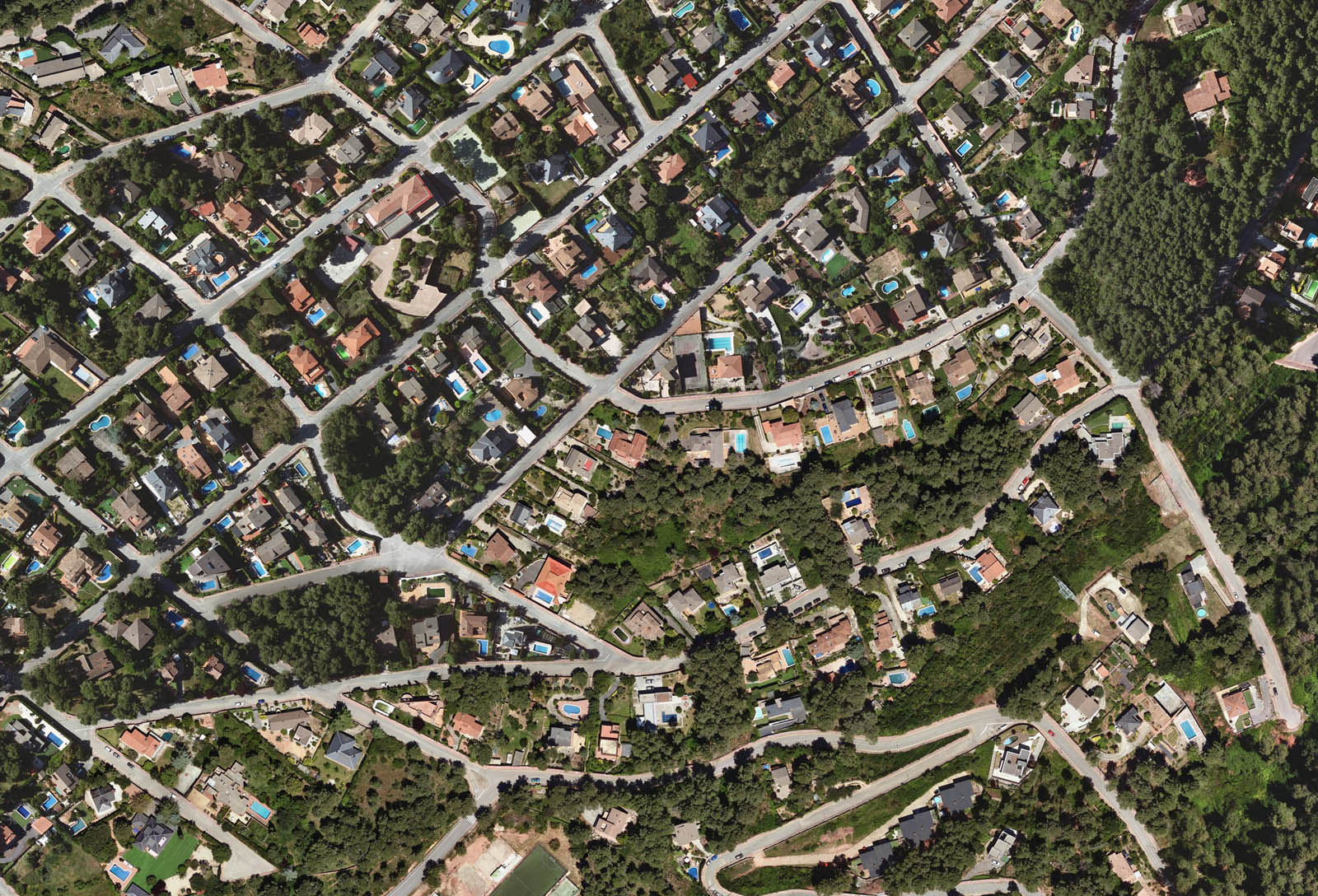
 

Barcelona Metropolitan Area. 'Orthophoto. Dispersed urbanisation in the municipality of Corbera de Llobregat' 2015


Barcelona Metropolitan Area
Orthophoto. Dispersed urbanisation in the municipality of Corbera de Llobregat
2015


Blanca Munt (Spanish, b. 1997) 'Mira-sol alert' 2023


Blanca Munt (Spanish, b. 1997)
Mira-sol alert
2023
Digital printing
Courtesy of the artist


In 2019, photographer Blanca Munt engaged in a neighbourhood chat group created to surveil her own neighbourhood and alert to any potential home burglaries or other suspicious activity. What is initially presented as an effective tool for the neighbours soon becomes a source of speculation, suspicion and paranoia. The seemingly quiet community life in a neighbourhood of well-lit streets and conventional homes founders due to the actual burglaries, but also due to the disintegration of the idea of community when personal security is at stake: mistrust, typically based on suspicious appearance or behaviour, now extends to any neighbours who fail to rigorously conform to the group’s purpose.

With a clean and sober design reminiscent of a real estate or security company brochure, the dispassionate pictures portrayed in Mira-sol Alert intertwine with the mental images stemming from an inflamed rhetoric, which gradually take shape as we learn the self-interested views of the different actors in this landscape – neighbours, suspects, police officers, local authorities – and which appeal strongly to our fears and contradictions. In her own words, Blanca Munt calls for a “reflection on the tension between the privilege of living in a peaceful place and the constant sense of lurking threat encouraged by our current culture of fear.”

Text from the Dalpine website
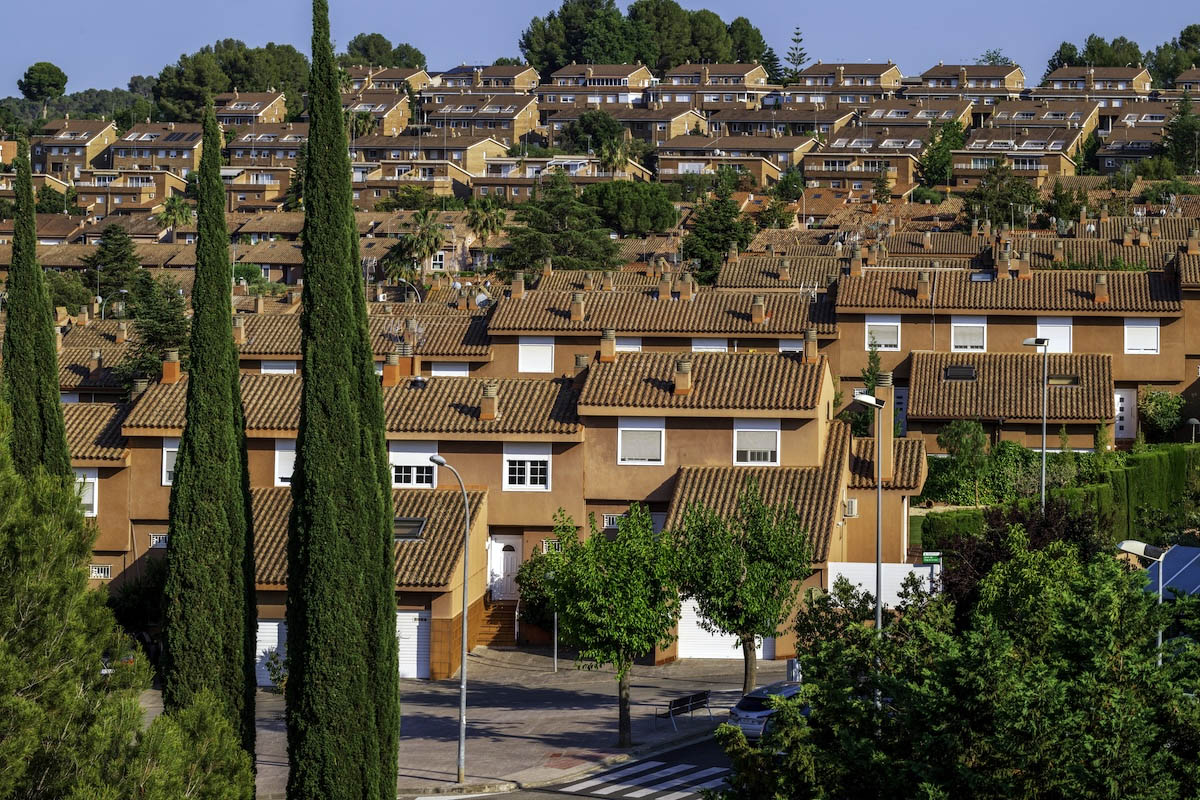
 

Christopher Willan (British lives Spain) 'Sant Quirze del Vallès' 2023


Christopher Willan (British lives Spain)
Sant Quirze del Vallès
2023
Digital printing
Courtesy of the artist
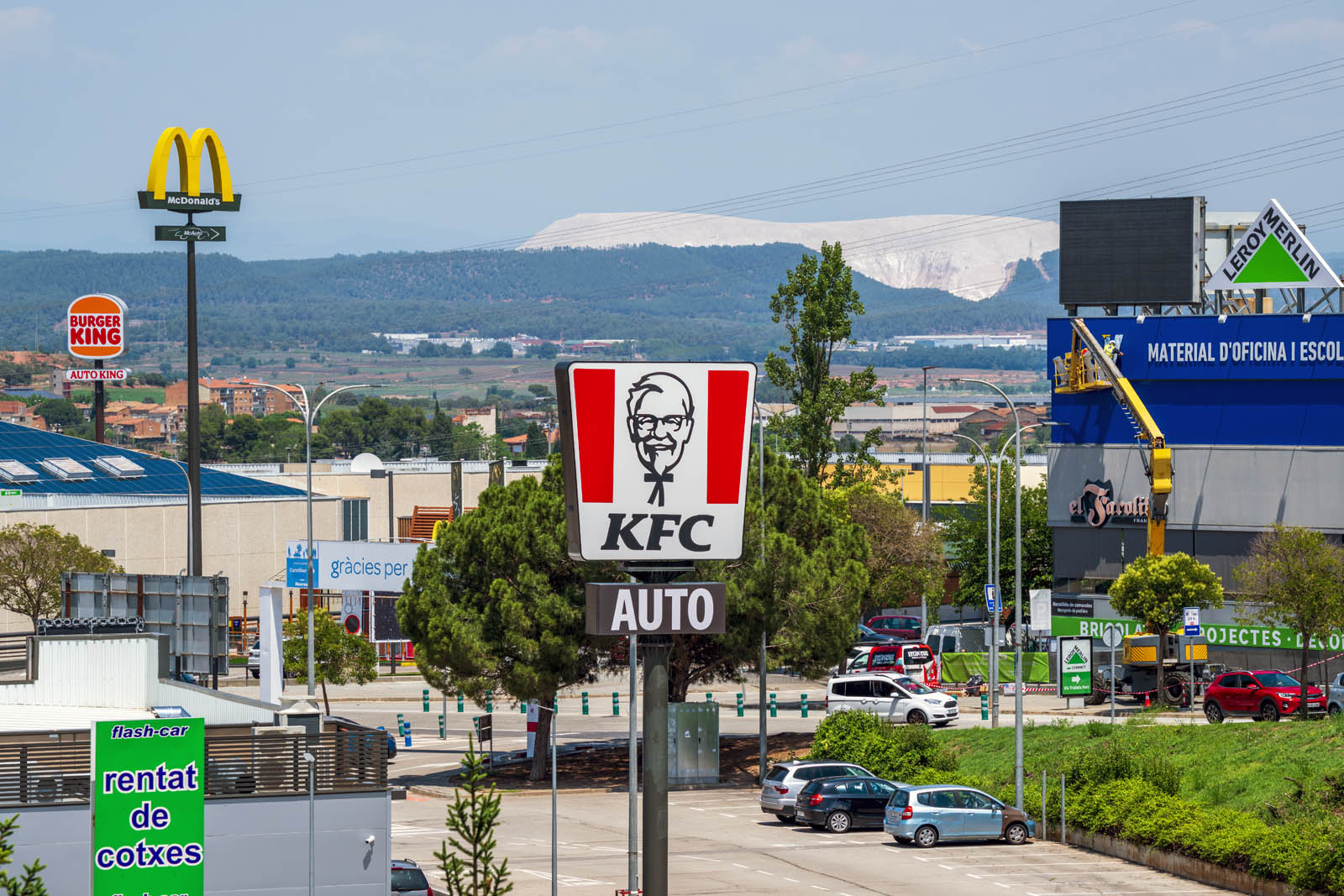
 

Christopher Willan (British lives Spain) 'Els Trullols Park-1' 2023


Christopher Willan (British lives Spain)
Els Trullols Park-1
2023
Digital printing
Courtesy of the artist


The Curators

Philipp Engel: Graduate in Modern Literature from the University of Toulouse, with a thesis on Bret Easton Ellis. After ten years in the music sales and distribution business, he started to work as a cultural journalist, specializing in cinema and literature. He is currently a contributor to various periodicals, such as Cultura(s), El Mundo, Cinemanía, Sofilm and Coolt.

Francesc Muñoz: Lecturer in Urban Geography, director of the Observatory of Urban Planning at the Universitat Autònoma de Barcelona, and professor at the Università IUAV di Venezia. He has received prizes such as the Prize for the Best Doctoral Thesis Attending to Human Values in Engineering (UPC, 2004) and the Bonaplata Award for the exhibition The Light Factory, about the power station in Sant Adrià de Besòs (2014). He has curated shows such as the commemorative exhibition of 30 years of democratic town councils, Local, Local! The City to Come (CCCB, 2010), and the exhibition Architectures on the Waterfront (Fundació Mies van der Rohe, 2019), and was a member of the Cerdà Year Advisory Board (2010).

Press release from the CCCB


Centre de Cultura Contemporània de Barcelona | CCCB
Montalegre, 5 – 08001 Barcelona
Phone: (+34) 933 064 100

Opening hours:
From Tuesday to Sunday and bank holidays 11.00 – 20.00
Closed Monday

Centre de Cultura Contemporània de Barcelona | CCCB website

LIKE ART BLART ON FACEBOOK

Back to top

Exhibition: ‘ “I’ll Have What She’s Having”: The Jewish Deli’ at the New-York Historical Society

Exhibition dates: 11th November 2022 – 2nd April 2023

Co-curated by Skirball curators Cate Thurston and Laura Mart and Lara Rabinovitch, renowned writer, producer, and specialist in immigrant food cultures. The exhibition was coordinated at New-York Historical by Cristian Petru Panaite with Marilyn Kushner, curator and head, Department of Prints, Photographs, and Architectural Collections.


Ei Katsumata (American) 'Carnegie Deli, New York, NY' 2008 from the exhibition Exhibition: '"I'll Have What She's Having": The Jewish Deli' at the New-York Historical Society, Nov 2022 - April 2023
 

Ei Katsumata (American)
Carnegie Deli, New York, NY
2008
Photo by Ei Katsumata /Alamy Stock Photo


Culture and its history – past, present and future – is always so fascinating!

Dr Marcus Bunyan


Many thankx to the New-York Historical Society for allowing me to publish the photographs in the posting. Please click on the photographs for a larger version of the image.


Our special exhibition examines how Jewish immigrants, mostly from Central and Eastern Europe, imported and adapted traditions to create a uniquely American restaurant and reveals how Jewish delicatessens became a cornerstone of American food culture.

Organised by the Skirball Cultural Center, “I’ll Have What She’s Having”: The Jewish Deli examines how Jewish immigrants, mostly from Central and Eastern Europe, imported and adapted traditions to create a uniquely American restaurant and reveals how Jewish delicatessens became a cornerstone of American food culture.

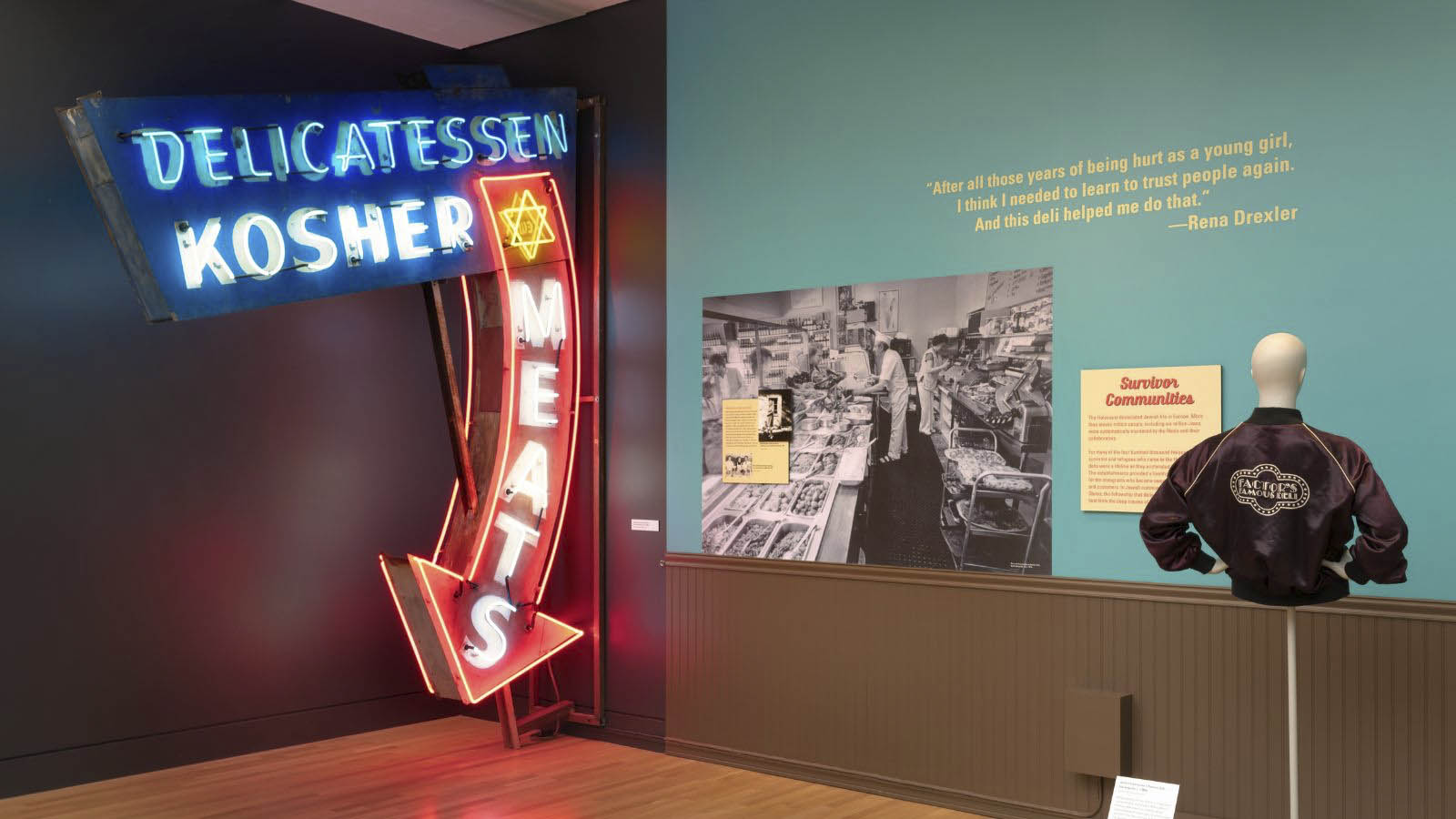
The exhibition explores the food of immigration, the heyday of the deli in the interwar period, delis and Broadway, stories of Holocaust survivors and war refugees who worked in delis, the shifting and shrinking landscapes of delis across the country, and delis in popular culture. On display are neon signs, menus, advertisements, deli workers’ uniforms, and video documentaries. The local presentation is enriched with artwork, artefacts, and photography from New-York Historical’s collection along with restaurant signs, menus and fixtures from local establishments, mouthwatering interactives, and a Bloomberg Connects audio tour. And families: Be sure to pick up a copy of our kid-centric guide to the exhibition in the gallery.

Text from the New-York Historical Society website


2nd Ave Deli // “I’ll Have What She’s Having”: The Jewish Deli

New-York Historical Society

What makes the 2nd Ave Deli so special? The New-York Historical Society takes a trip to the Midtown landmark to talk to the owner, managers, workers, and customers about the special magic of the decades-old delicatessen where they “prepare the foods that our mothers and grandmothers made.”


James Reuel Smith (American, 1852-1935) 'Louis Klepper Confectionary and Sausage Manufacturers, 45 E. Houston Street, New York' c. 1900 from the exhibition Exhibition: '"I'll Have What She's Having": The Jewish Deli' at the New-York Historical Society, Nov 2022 - April 2023


James Reuel Smith (American, 1852-1935)
Louis Klepper Confectionary and Sausage Manufacturers, 45 E. Houston Street, New York
c. 1900
Patricia D. Klingenstein Library, New-York Historical Society


James Reuel Smith (1852-1935) was an American photographer and amateur historian who worked in the late 19th century to early 20th century. He was known for his documentary photographs of historical springs and wells in New York City before they were buried beneath the concrete of the rapidly growing city. Many of these natural water resources disappeared as the New York municipal water system developed.

Smith’s photographs documented a vanishing way of life in urban America. Drawing and fetching water had been an essential activity of daily life prior to the development of the modern municipal water system. In the 1870s New York City undertook efforts to eradicate the natural open wells and springs as they were perceived to be hazardous to health. The official municipal source for city water was the Croton Aqueduct which was endorsed by the NYC sanitation officers, rather than local neighbourhood wells and springs.

Text from the Wikipedia website


'Hester Street, Lower East Side' c. 1900 from the exhibition Exhibition: '"I'll Have What She's Having": The Jewish Deli' at the New-York Historical Society, Nov 2022 - April 2023


Hester Street, Lower East Side
c. 1900
Postcard
Patricia D. Klingenstein Library, New-York Historical Society


Unknown photographer (American) 'Anne Russ Federman serving customers at New York's Russ & Daughters, with Hattie Russ Gold in the background' 1939 from the exhibition Exhibition: '"I'll Have What She's Having": The Jewish Deli' at the New-York Historical Society, Nov 2022 - April 2023


Unknown photographer (American)
Anne Russ Federman serving customers at New York’s Russ & Daughters, with Hattie Russ Gold in the background
1939
From the collection of Russ & Daughters


Benjamin Segan (American, 1924-2017) 'Letter to Judith Berman, April 23, 1944'


Benjamin Segan (American, 1924-2017)
Letter to Judith Berman, April 23, 1944
Caserta, Italy
Patricia D. Klingenstein Library, New-York Historical Society


Benjamin David “Ben” Segan was born in New York City on 27 August 1924, to Jacob and Lillian Segan, immigrants from Vilnius, Lithuania. Ben attended George Washington High School in Manhattan, where he met his future wife, Judith “Judy” Berman. During his senior year he attended school by night to work in a defense plant by day.

Nineteen-year-old Ben was drafted into the United States Army as a private on 28 April 1943. His initial processing took place at Fort Dix, New Jersey, where he began his correspondence with Judy, writing to her almost daily until he left the service. By mid-May 1943 he was at Camp Croft, South Carolina, where he remained in basic training through late September and to operate radio equipment.

By October 1943 he was sent to Fort George G. Meade, Maryland, and from there shipped to Italy to join the 93rd Armored Field Artillery Battalion. In Europe he served in Italy, southern France, and Germany. During the Battle of Monte Cassino (a.k.a. the Battle for Rome), January-May 1944, he worked in the 93rd’s communication section.

Although he saw combat, Ben refrained from graphic descriptions in writing to his fianceé. Some of his reticence was due to restrictions imposed by the censors. For example, on 7 April 1945, during the liberation of the Buchenwald concentration camp from the Nazis, which he witnessed, Ben wrote, cryptically (in letter 574), “I’ve been extremely busy recently darling, & don’t think it’s so necessary to tell you as you must have a[n] inkling from the latest news reports on our progress.”

The war in Europe ended on 8 May 1945, but Ben was still there as late as November 10th (the date of his last letter in the collection), when he wrote from the French port of Le Havre, unsure of which ship he’d be on or indeed when it would sail.

Ben was honoured with the American Service Medal, the European-African-Middle Eastern Service Medal, the Good Conduct Medal, and the World War II Victory Medal.

Once home he married Judy on 10 March 1946 at Temple Ansche Chesed on Manhattan’s Upper West Side. They raised two children and worked together for many years in New York City’s Garment District.

Anonymous. “Biographical/Historical Note: Guide to the Benjamin Segan Letters 1943-1945,” on the New-York Historical Society website Nd [Online] Cited 26/02/2023


Lionel S. Reiss (American born Poland, 1894-1988) 'Frankfurter and Lemonade from Manhattan Crosstown' series c. 1945


Lionel S. Reiss (American born Poland, 1894-1988)
Frankfurter and Lemonade from Manhattan Crosstown series
c. 1945
Watercolour, black ink, white gouache, and graphite on paper
11 × 8 in. (27.9 × 20.3cm)
New-York Historical Society, Foster-Jarvis Fund, and contribution of Harry Goldberg


Lionel S. Reiss (1894-1988) was a Polish-American Jewish painter born in Jaroslaw, Poland (then in the Austro-Hungarian Empire), and grew up on the Lower East Side of Manhattan where he studied commercial art. His family had moved to the United States in 1898 when he was four years old. As immigrants to the United States, Reiss’ parents joined the ranks of other Eastern European Jews who were fleeing their native countries at the start of the 20th century. Lionel Reiss’ family settled on New York’s Lower East Side neighbourhood and Reiss himself spent the majority of his life in the city. Reiss worked as a commercial artist for newspapers, publishers, and a motion picture company. Eventually he became art director for Paramount Studios and is credited to be the creator of the Leo the Lion logo of Metro-Goldwyn-Mayer Studios.

Reiss became known for his portraits of Jewish people and landmarks in Jewish history, which he made during his trip to Europe, Africa, and the Middle East in the early 1920s. Being American and Jewish himself, Reiss became fascinated with Jewish life in the Old World. In 1919 Reiss temporarily left the United States to travel to the aforementioned regions, and recorded the everyday life that he encountered in the ghettos. His trip resulted in exhibitions in major American cities.

At the dawn of the Holocaust in 1938, Reiss, who had long returned to the United States, published his book My Models Were Jews, in which he illustratively argued that there is no such thing as a “Jewish ethnicity”, but the Jewish people are rather a cultural group, whereby there is significant diversity within Jewish communities and between different communities in different geographical regions. Reiss was therefore presenting an argument against what he considered to be a common misconception that existed about the Jews. Later works included a 1954 book, New Lights and Old Shadows, which dealt with “the new lights” of a reborn Israel and the “old shadows” of an almost eradicated European Jewish culture. In his last book, A World of Twilight, published in 1972, with text by Isaac Bashevis Singer, Reiss presented a portrait of the Jewish communities in Eastern Europe before the Holocaust.

Text from the Wikipedia website


'Reuben's Delicatessen Menu [autographed by Arnold Reuben]' 1946


Reuben’s Delicatessen Menu [autographed by Arnold Reuben]
1946
Patricia D Klingenstein Library, New-York Historical Society


This fall, New-York Historical Society presents “I’ll Have What She’s Having”: The Jewish Deli, a fascinating exploration of the rich history of the Jewish immigrant experience that made the delicatessen so integral to New York culture. On view November 11, 2022 – April 2, 2023, the exhibition, organised by the Skirball Cultural Center in Los Angeles, where it is on view through September 18, examines how Jewish immigrants, mostly from Central and Eastern Europe, imported and adapted traditions to create a cuisine that became a cornerstone of popular culture with worldwide influence. The exhibition explores the food of immigrants; the heyday of the deli in the interwar period; delis in the New York Theater District; stories of Holocaust survivors and war refugees who found community in delis; the shifting and shrinking landscapes of delis across the country; and delis in popular culture. On display are neon signs, menus, advertisements, and deli workers’ uniforms alongside film clips and video documentaries. New-York Historical’s expanded presentation includes additional artwork, artefacts, photographs of local establishments, and objects from deli owners, as well as costumes from The Marvelous Mrs. Maisel, a mouthwatering interactive, and a Bloomberg Connects audio tour.

“It’s our great pleasure to present an exhibition on a topic so near and dear to the hearts of New Yorkers of all backgrounds,” said Dr. Louise Mirrer, president and CEO of New-York Historical. “‘I’ll Have What She’s Having’: The Jewish Deli tells a deeply moving story about the American experience of immigration – how immigrants adapted their cuisine to create a new culture that both retained and transcended their own traditions. I hope visitors come away with a newfound appreciation for the Jewish deli, and, with it, the story of the United States.”

“Whether you grew up eating matzoball soup or are learning about lox for the first time, this exhibition demonstrates how Jewish food became a cultural touchstone, familiar to Americans across ethnic backgrounds,” said co-curators Cate Thurston and Laura Mart. “This exhibition reveals facets of the lives of Central and Eastern European Jewish immigrants in the late 19th and early 20th centuries that echo in contemporary immigrant experiences. It shows how people adapt and transform their own cultural traditions over time, resulting in a living style of cooking, eating, and sharing community that is at once deeply rooted in their own heritage and continuously changing.”

“I’ll Have What She’s Having” is co-curated by Skirball curators Cate Thurston and Laura Mart along with Lara Rabinovitch, renowned writer, producer, and specialist in immigrant food cultures. It was coordinated at New-York Historical by Cristian Petru Panaite with Marilyn Kushner, curator and head, Department of Prints, Photographs, and Architectural Collections. The exhibition explores topics including deli culture, the proliferation of delis alongside the expansion of New York’s Jewish communities, kosher meat manufacturing, shortages during World War II, and advertising campaigns that helped popularise Jewish foods throughout the city.

Highlights include a letter in New-York Historical’s Patricia D. Klingenstein Library collection from a soldier fighting in Italy during World War II writing to his fiancée that he “had some tasty Jewish dishes just like home” thanks to the salami his mother had sent – a poignant addition to Katz’s famous “Send a Salami to Your Boy in the Army” campaign. Images show politicians and other notable figures eating and campaigning in delis. Movie clips and film stills include the iconic scene in Nora Ephron’s romantic comedy When Harry Met Sally…, which inspired the exhibition title. This and other movie scenes underscore the prominent role of Jewish delis in American popular culture.

Unique to New-York Historical’s presentation is a closer look at the expansion of Jewish communities at the turn of the 20th century, not just on the Lower East Side but also in Brooklyn, Queens, and the Bronx. In the 1930s, some 3,000 delis operated in the city; today, only about a dozen remain. The exhibition gives special attention to dairy restaurants, which offered a safe meatless eating experience; a portion of the neon sign from the Famous Dairy Restaurant on the Upper West Side is on display. Salvaged artefacts, like the 2nd Avenue Delicatessen storefront sign and vintage meat slicers and scales from other delis, are also on view, along with costumes by Emmy Award-winning costume designer Donna Zakowska from the popular Prime Video series The Marvelous Mrs. Maisel.

Visitors are invited to build their own sandwiches named after celebrities, such as Milton Berle, Sophie Tucker, Frank Sinatra, Ethel Merman, and Sammy Davis Jr., in a digital interactive inspired by menu items from Reuben’s Deli and Stage Deli. On the Bloomberg Connects app, exhibition goers can enjoy popular songs like “Hot Dogs and Knishes” from the 1920s, along with clips of Mayor Fiorello La Guardia discussing kosher meat pricing, 1950s radio ads, and interviews with deli owners forced to close during the pandemic lockdown.

In a nostalgic tribute to departed delis that continue to hold a place in the hearts of many New Yorkers, photographs show restaurants that closed in recent years. Eateries include the Upper West Side’s Fine & Schapiro Kosher Delicatessen, Jay & Lloyd’s Kosher Delicatessen in Brooklyn, and Loeser’s Kosher Deli in the Bronx. An exuberant hot dog-shaped sign from Jay & Lloyds Delicatessen, which closed in May 2020, and folk artist Harry Glaubach’s monumental carved and painted signage for Ben’s Best Kosher Delicatessen in Queens, also pay tribute to beloved establishments. The exhibition concludes on a hopeful note, highlighting new delis that have opened their doors in the past decade, such as Mile End and Frankel’s, both in Brooklyn, and USA Brooklyn Delicatessen, located steps from the site of the former Carnegie and Stage Delis in Manhattan.

Support

“I’ll Have What She’s Having”: The Jewish Deli is organised and circulated by the Skirball Cultural Center, Los Angeles, California. Exhibitions at New-York Historical are made possible by Dr. Agnes Hsu-Tang and Oscar Tang, the Saunders Trust for American History, the Evelyn & Seymour Neuman Fund, the New York City Department of Cultural Affairs in partnership with the City Council, and the New York State Council on the Arts with the support of the Office of the Governor and the New York State Legislature. WNET is the media sponsor.

Press release from the New-York Historical Society


Norman Rockwell (American, 1894-1978) 'Save Freedom of Worship: Buy War Bonds' 1943


Norman Rockwell (American, 1894-1978)
Save Freedom of Worship: Buy War Bonds
1943
Poster; offset lithograph
28 x 20 inches
Public domain


World War II poster encouraging individuals to buy war bonds. The poster includes an image by Norman Rockwell and was published by the United States Government Printing Office in Washington, DC, in 1943.


The poster depicts men and women of various races and faiths, including a woman with rosary beads, with hands clasped in prayer. Norman Rockwell was a 20th-century American painter and illustrator. His works enjoy a broad popular appeal in the United States for their reflection of American culture. Rockwell is most famous for the cover illustrations of everyday life scenarios he created for The Saturday Evening Post magazine for more than four decades. The Four Freedoms or Four Essential Human Freedoms is a series of four oil paintings that Rockwell produced in 1943 for reproduction in The Saturday Evening Post alongside essays by prominent thinkers of the day. Later they were the highlight of a touring exhibition sponsored by the Saturday Evening Post and the United States Department of the Treasury. The Four Freedoms theme was derived from the 1941 State of the Union Address by United States President Franklin Roosevelt in which he identified four essential human rights (Freedom of Speech, Freedom of Worship, Freedom from Want, and Freedom from Fear) that should be universally protected. The Office of War Information printed four million sets of Four Freedoms posters by the end of the war. World War II was a massive conflict which involved a majority of the nations of the world, and became the most widespread and deadliest event in human history; it had profound ramifications politically and economically that lasted into the next century. …

Posters were used extensively throughout the war by countries on both sides for purposes such as propaganda, morale, and the broad dissemination of information. The United States Office of War Information (OWI) was a U.S. government agency created during World War II to consolidate government information services. It operated from June 1942 until September 1945. It coordinated the release of war news for domestic use, and, using posters and radio broadcasts, worked to promote patriotism, warn about foreign spies and recruit women into war work. The office also established an overseas branch, which launched a large scale information and propaganda campaign abroad. The War Finance Committee was placed in charge of supervising the sale of all bonds, and the War Advertising Council promoted voluntary compliance with bond buying. More than a quarter of a billion dollars worth of advertising was donated during the first three years of the National Defense Savings Program. The government appealed to the public through popular culture. Norman Rockwell’s painting series, the Four Freedoms, toured in a war bond effort that raised $132 million.

Text from the Wikipedia website


Unknown photographer. 'Rena Drexler on the day of her liberation from Auschwitz Poland, 1945'


Unknown photographer
Rena Drexler on the day of her liberation from Auschwitz
Poland, 1945
Private collection


Installation view of the exhibition "I'll Have What She's Having": The Jewish Deli at the New-York Historical Society showing at centre, a photograph by an unknown photographer 'Rena and Harry Drexler at Drexler's Deli, North Hollywood, CA' (c. 1970s)


Installation view of the exhibition “I’ll Have What She’s Having”: The Jewish Deli at the New-York Historical Society showing at centre, a photograph by an unknown photographer Rena and Harry Drexler at Drexler’s Deli, North Hollywood, CA (c. 1970s, below)


Unknown photographer (American) 'Rena and Harry Drexler at Drexler's Deli, North Hollywood, CA' c. 1970s


Unknown photographer (American)
Rena and Harry Drexler at Drexler’s Deli, North Hollywood, CA
c. 1970s
Private collection


Unknown photographer (American) 'Vienna Beef Factory, inspecting sausages Chicago, IL' c. 1950s


Unknown photographer (American)
Vienna Beef Factory, inspecting sausages
Chicago, IL c. 1950s
Vienna Beef Museum


Unknown photographer (American) 'Vienna Beef Factory, curing pastrami Chicago, IL' c. 1950s


Unknown photographer (American)
Vienna Beef Factory, curing pastrami
Chicago, IL, c. 1950s
Vienna Beef Museum


'Paula Weissman's Hotel and Restaurant Employees Union Books' 1958-1983


Paula Weissman’s Hotel and Restaurant Employees Union Books
1958-1983
Courtesy of Paula Weissman


Installation view of ads from the "You don't have to be Jewish to love Levy's real Jewish Rye" campaign


Installation view of ads from the “You don’t have to be Jewish to love Levy’s real Jewish Rye” campaign (1960s). Despite the campaign’s success, the ads relied on both ethnic stereotypes and a narrowly focused white, Eurocentric view of Jewish identity that excluded Jews of Color.
Photo by Robert Wedemeyer.


With a self-reflection that is arguably as Jewish as its subject, the exhibition doesn’t shy away from an awareness that the deli, created by Eastern and Central European immigrants, is an almost exclusively Ashkenazi institution, and thus limited in its view of Jewish life and culture. Take, for example, the commentary on the posters featuring the famous “You don’t have to be Jewish to love Levy’s” series of rye bread ads. Considered progressive for their time because of the diversity of the models, in retrospect the ads suggest that racial diversity among the Jewish community is an anomaly, which is not the case.

Edie Jarolim. “”I’ll Have What She’s Having” Explores the American Jewish Deli (And Leaves You Hungry),” on the Nosher website July 21, 2022 [Online] Cited 26/02/2023


Howard Zieff (photographer) 'You don't have to be Jewish to love Levy's real Jewish Rye' 1965


Howard Zieff (photographer)
You don’t have to be Jewish to love Levy’s real Jewish Rye
[New York : s.n., 1965?]
Photomechanical print (poster): offset, colour
Library of Congress
Public domain


Howard Zieff (photographer) 'You don't have to be Jewish to love Levy's real Jewish Rye' 1965


Howard Zieff (photographer)
You don’t have to be Jewish to love Levy’s real Jewish Rye
[New York : s.n., 1965?]
Photomechanical print (poster): offset, colour
Library of Congress
Public domain


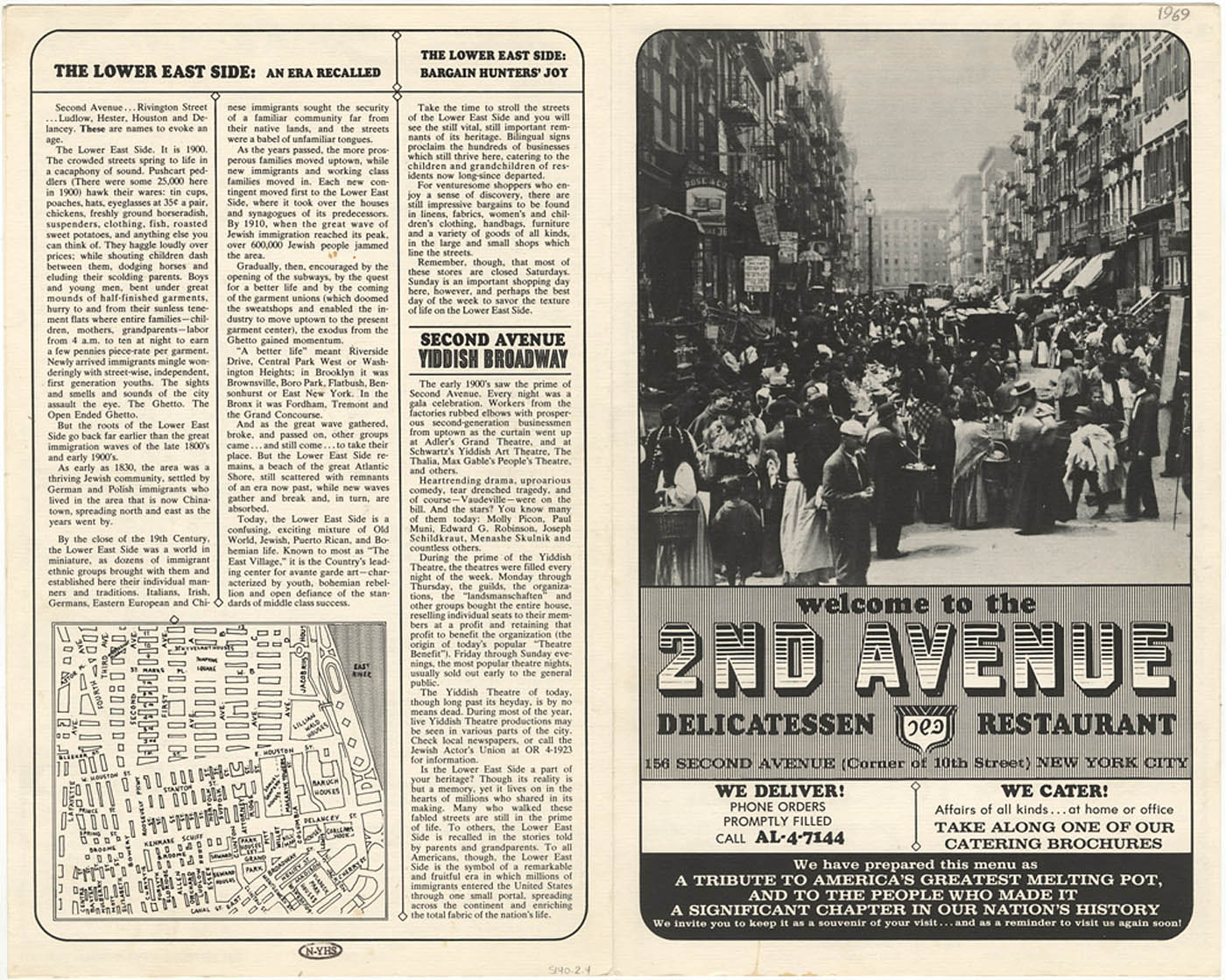
'Menu from 2nd Avenue Delicatessen' (outside cover) New York City, 1968


Menu from 2nd Avenue Delicatessen (outside cover)
New York City, 1968
Patricia D. Klingenstein Library, New-York. Historical Society


'Menu from 2nd Avenue Delicatessen New York City' 1968


Menu from 2nd Avenue Delicatessen
New York City, 1968
Patricia D. Klingenstein Library, New-York. Historical Society


'Katz's Delicatessen Napkin' 1980-2000


Katz’s Delicatessen Napkin
1980-2000
Paper
Overall: 5 × 5 in. (12.7 × 12.7cm)
Gift of Bella C. Landauer


Unknown photographer (American) 'Abe Lebewohl with hero, from the 2nd Ave Deli, New York, NY' c. 1990


Unknown photographer (American)
Abe Lebewohl with hero, from the 2nd Ave Deli, New York, NY
c. 1990


Unknown photographer (American) 'Snack at Manny's Delicatessen Chicago, IL' 2010


Unknown photographer (American)
Snack at Manny’s Delicatessen
Chicago, IL, 2010
Image Professionals GmbH / Alamy Stock Photo


New-York Historical Society
170 Central Park West
at Richard Gilder Way (77th Street)
New York, NY 10024
Phone: (212) 873-3400

Opening hours:
Monday CLOSED
Tuesday – Thursday 11am – 5pm
Friday 11am – 8pm
Saturday – Sunday 11am – 5pm

New-York Historical Society website

LIKE ART BLART ON FACEBOOK

Back to top

Exhibition: ‘Telling Tales: Contemporary Narrative Photography’ at the McNay Art Museum, San Antonio TX

Exhibition dates: 28th September, 2016 – 15th January, 2017

Curator: René Paul Barilleaux, Chief Curator/Curator of Contemporary Art at the McNay


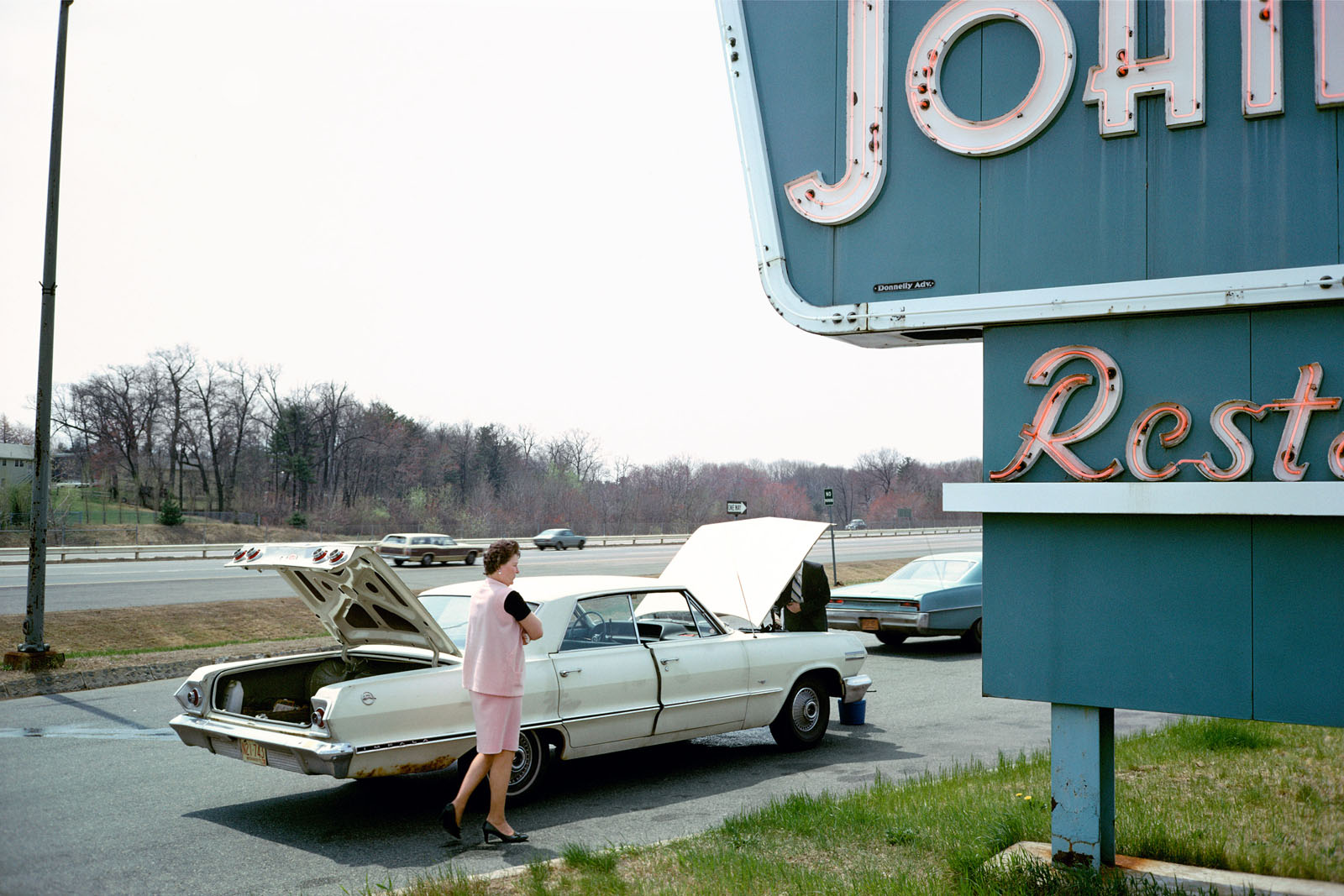
Mitch Epstein (American, b. 1952) 'Massachusetts Turnpike' 1973 from the exhibition Exhibition: 'Telling Tales: Contemporary Narrative Photography' at the McNay Art Museum, San Antonio TX, Sept 2016 - Jan 2017


Mitch Epstein (American, b. 1952)
Massachusetts Turnpike
1973
Dye transfer print
Courtesy of the artist and Sikkema Jenkins & Co., New York City
© Black River Productions, Ltd. / Mitch Epstein. Used with permission. All rights reserved


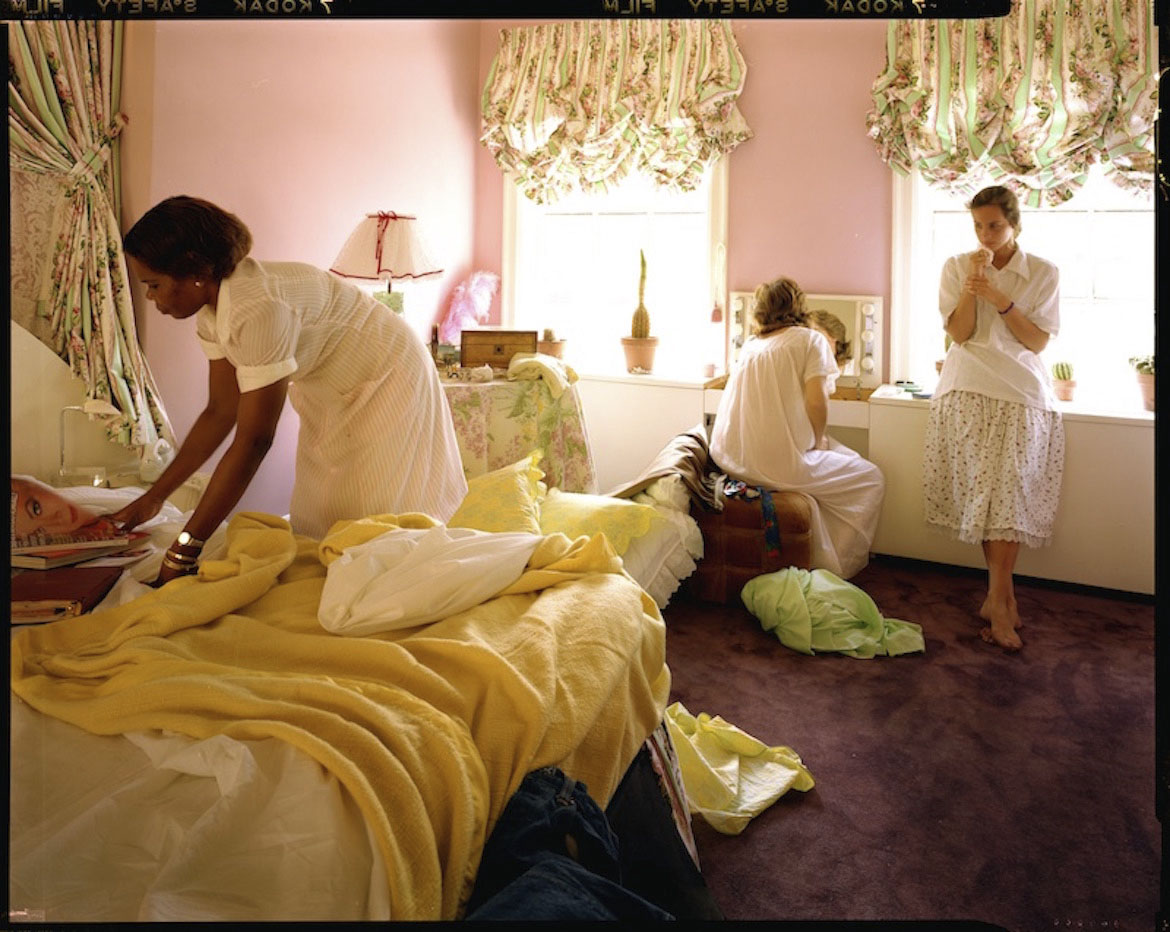
I really, really don’t know what tales I can tell from this disparate group of media images illustrating (and that’s the key word) the exhibition.

Except to say that their stage managed, dead pan style, really, really doesn’t do it for me.

The sensation of loneliness, limited colour palette and total nihilism leaves me as cold as a corpse in a freezer.

The tale that nothing in the world has a real existence, or really matters.

If Norman Rockwell used photographs to compose his painted illustrations, then that is what these are … photographic illustrations.

A perfect example of this composite, stilted painterly overkill is Julie Blackmon’s New Chair (2014, below).

Everything is perfectly posed, poised and positioned in relation to each other: the boy behind the chair; the price on the chair; the pair of legs and two hands lifting the roller door; the children in the background; the blue dress of the child in the forground and her relationship to the horse, baseball, melting icy pole, football and young lad with head wrapped in bubble wrap while another piece lies on the ground. The ramp fills the space delightfully behind these artefacts with the hero splash of colour, the new chair, perched upon its upper reaches.

This, dear friends, is the state of contemporary narrative photography, where “telling tales” – to gossip about or reveal another person’s secrets or wrongdoings – is just this. Gossip about nothing.

Dr Marcus Bunyan


Many thankx to the McNay Art Museum for allowing me to publish the photographs in the posting. Please click on the photographs for a larger version of the image.


Telling Tales: Contemporary Narrative Photography, an introduction with Rene Barilleaux

René Paul Barilleaux, Chief Curator, gives an introduction to Telling Tales: Contemporary Narrative Photography exhibition. Featuring 17 artists, Telling Tales is the McNay’s first large scale photography exhibition. Works such as Nan Goldin’s landmark The Ballad of Sexual Dependency demonstrate some artists’ explorations of the politics of the day – in this case, the onset of the AIDS crisis – while other examples, including photographs by Tina Barney, Justine Kurland, and Paul Graham, investigate class differences, marginalised communities, and social justice. Primarily in colour and often large-scale, the photographs reference everything from classical painting and avant-garde cinema, to science fiction illustration and Alfred Hitchcock.


Nan Goldin (American, b. 1953) 'Cookie at Tin Pan Alley, NYC' 1983 from the exhibition Exhibition: 'Telling Tales: Contemporary Narrative Photography' at the McNay Art Museum, San Antonio TX, Sept 2016 - Jan 2017


Nan Goldin (American, b. 1953)
Cookie at Tin Pan Alley, NYC
1983
Cibachrome
Courtesy of the artist and Matthew Marks Gallery, New York City
© Nan Goldin


Tina Barney (American, b. 1945)
'Beverly, Jill and Polly' 1982


Tina Barney (American, b. 1945)
Beverly, Jill and Polly
1982
Chromogenic print
Courtesy of the artist and Paul Kasmin Gallery, New York City
© Tina Barney


Telling Tales: Contemporary Narrative Photography is a survey of work by artists who record stories through pictures, whether real or imagined. Organised by the McNay’s Chief Curator and Curator of Contemporary Art, René Paul Barilleaux, the exhibition includes approximately fifty photographs from the late 1970s to the present by 17 ground-breaking photographers. Telling Tales is the McNay Art Museum’s first large-scale exhibition of photography and is accompanied by an 88-page illustrated book.

The exhibition presents work such as Nan Goldin’s landmark The Ballad of Sexual Dependency demonstrate some artists’ explorations of the politics of the day – in this case, the onset of the AIDS crisis – while other examples, including photographs by Tina Barney, Justine Kurland, and Paul Graham investigate class differences, marginalised communities, and social justice.

While some contemporary artists explore photographic imagery as it is filtered through and mediated by technology and the internet, others exploit photography’s ability to present a momentary, frozen narrative. Images are staged for the camera or highly manipulated through digital processes, yet they often resemble a casual snapshot or movie still. Primarily in colour and often large-scale, the photographs reference everything from classical painting and avant-garde cinema, to science fiction illustration and Alfred Hitchcock. The exhibition includes examples of these various approaches to image-making.

Telling Tales: Contemporary Narrative Photography features work by Tina Barney, Julie Blackmon, Gregory Crewdson, Philip-Lorca diCorcia, Mitch Epstein, Nan Goldin, Paul Graham, Jessica Todd Harper, Teresa Hubbard and Alexander Birchler, Anna Gaskell, Justine Kurland, Lori Nix, Erwin Olaf, Alex Prager, Alec Soth, and Jeff Wall.

Text from the McNay website


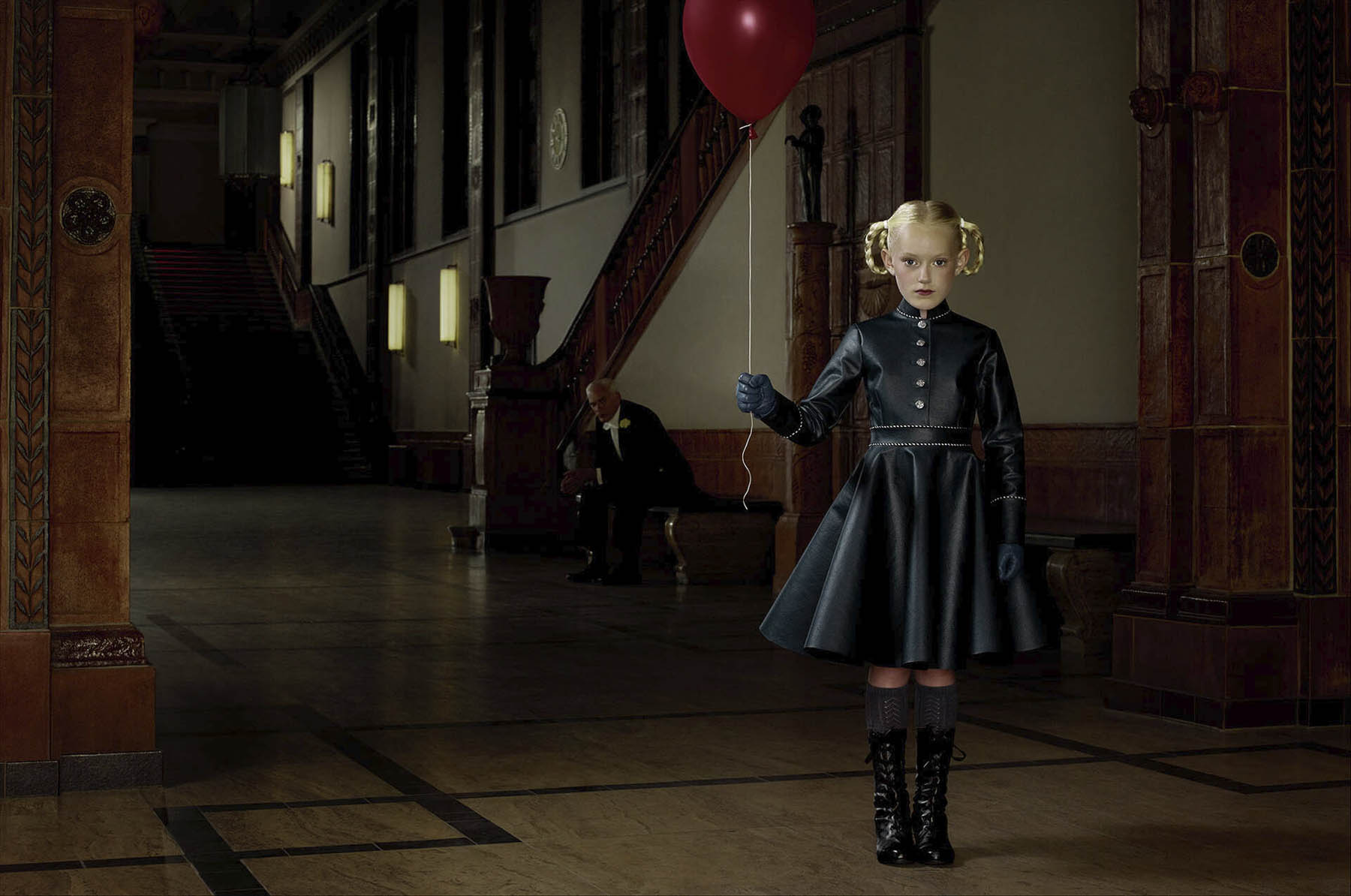
Erwin Olaf (Dutch, 1959-2023) 'Victoria' 2007


Erwin Olaf (Dutch, 1959-2023)
Victoria
2007
Digital chromogenic print
Courtesy of the artist
© Erwin Olaf


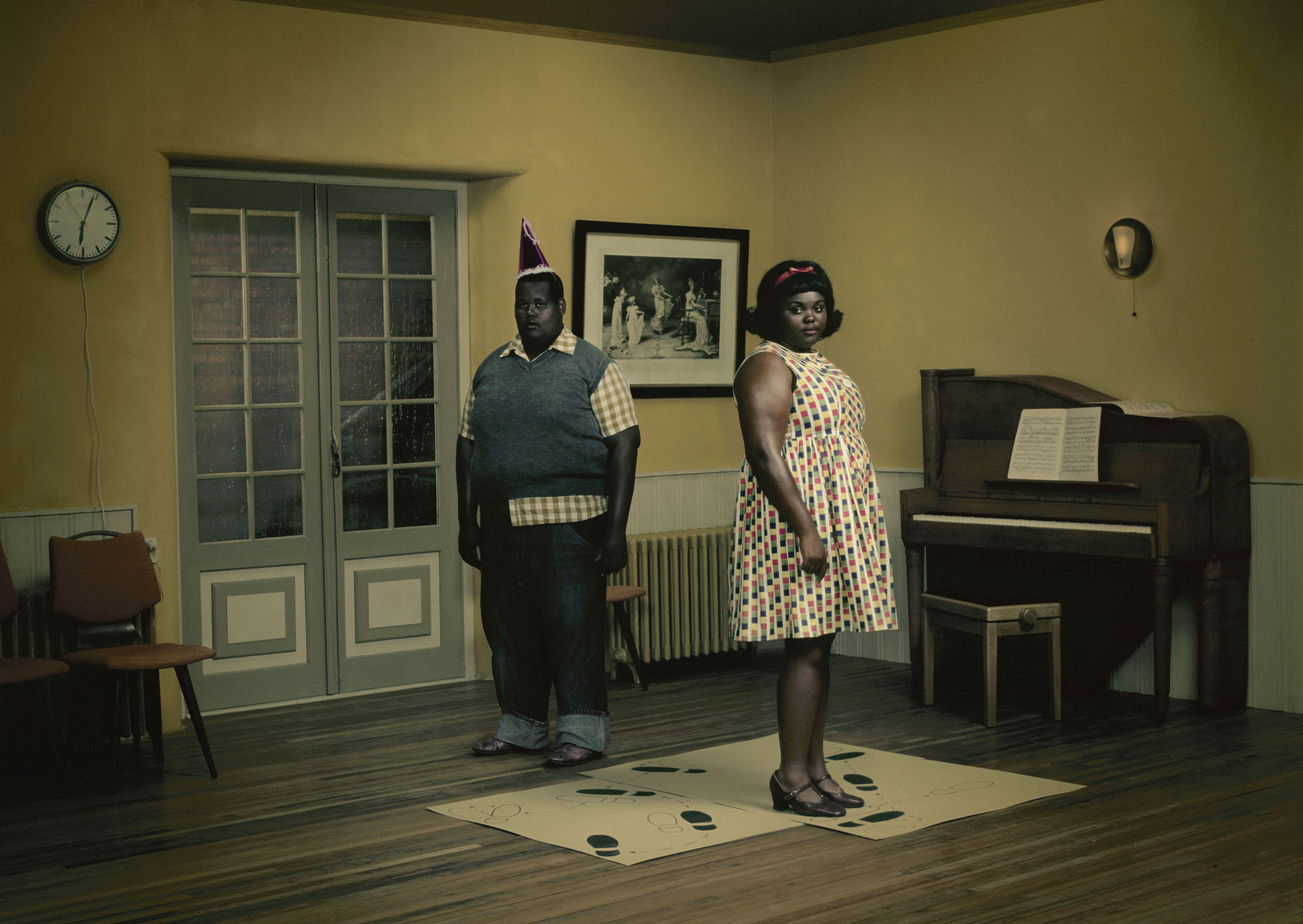
Erwin Olaf (Dutch, 1959-2023) 'The Dancing School' 2004


Erwin Olaf (Dutch, 1959-2023)
The Dancing School
2004
Chromogenic print
Courtesy of the artist
© Erwin Olaf


“It all began with the drawings of Norman Rockwell. I like that sort of nostalgic feeling. Originally, I wanted to do something really happy, up-beat, after all the depression of my last series, Separation (2003). So the starting point was that everybody was going to be beautiful, and that I would ask the models to act funny. But then it somehow became terrible. I realised this was a world which has vanished. So instead, I radically simplified the images. Now, everybody is just waiting for nothing, it’s the moment after happiness. I suppose after Separation, comes the well of loneliness. It’s also been a difficult process because for the first time, I have worked without purposely using eroticism or any sexual jokes…

Dancing School is a dreary party which no one attends. The evening has been carefully mapped out, right down to the dance-steps printed on paper and placed neatly on the floor. Sheet music is open on the piano. It is just after six in the evening, but despite the party hats, this is an event reserved for eternal wall-flowers. The mood in this room is in sharp contrast to the antique print of dancing damsels at play, hanging on the wall behind the two isolated guests.”

Erwin Olaf quoted in Jonathan Turner. “Erwin Olaf: Rain,” on the M+B website Nd [Online] Cited 23/02/2023


Erwin Olaf (Dutch, 1959-2023) 'Berlin, Rathaus Schöneberg' 2012


Erwin Olaf (Dutch, 1959-2023)
Berlin, Rathaus Schöneberg
2012
Chromogenic print
47 x 71 in. (119.4 x 180.3cm)
Courtesy of the artist
© Erwin Olaf


Jessica Todd Harper (American, b. 1975) 'Self Portrait with Marshall' 2008


Jessica Todd Harper (American, b. 1975)
Self Portrait with Marshall
2008
Archival pigment print
Courtesy of the artist and Rick Wester Fine Art, New York City
© Jessica Todd Harper


Jessica Todd Harper (American, b. 1975) 'Self Portrait with Marshall' 2008


Jessica Todd Harper (American, b. 1975)
Self Portrait with Marshall
2008
Archival pigment print
Courtesy of the artist and Rick Wester Fine Art, New York City
© Jessica Todd Harper


Teresa Hubbard / Alexander Birchler (Swiss/Irish/American, b. 1965; Swiss, b. 1962) From the series 'Falling Down' 1996


Teresa Hubbard / Alexander Birchler (Swiss/Irish/American, b. 1965; Swiss, b. 1962)
From the series Falling Down
1996
Chromogenic print
Courtesy of the artists; Tanya Bonakdar Gallery, New York City; and Lora Reynolds Gallery, Austin, Texas


Teresa Hubbard / Alexander Birchler (Swiss/Irish/American, b. 1965; Swiss, b. 1962) From the series 'Falling Down' 1996


Teresa Hubbard / Alexander Birchler (Swiss/Irish/American, b. 1965; Swiss, b. 1962)
From the series Falling Down
1996
Chromogenic print
Courtesy of the artists; Tanya Bonakdar Gallery, New York City; and Lora Reynolds Gallery, Austin, Texas


Anna Gaskell (American, b. 1969) 'Untitled #3 (Turns Gravity)' 2010


Anna Gaskell (American, b. 1969)
Untitled #3 (Turns Gravity)
2010
Archival pigment print
Courtesy of the artist and Galerie Gisela Capitain, Cologne
© Anna Gaskell


“Telling Tales: Contemporary Narrative Photography features the work of seventeen artists who interpret stories through pictures, whether real or imagined. Spanning nearly four decades, this survey begins with the art of ground-breaking photographers who emerged during the 1970s and 1980s and continues through today. The images present a wide range of styles and themes – familiar, mysterious, humorous, perplexing – yet they are always compelling to view. Organised by the McNay, the exhibition presents over fifty photographs. Works such as Nan Goldin’s landmark The Ballad of Sexual Dependency demonstrate some artists’ explorations of the politics of the day – in this case, the onset of the AIDS crisis – while other examples, including photographs by Tina Barney, Justine Kurland, and Paul Graham investigate class differences, marginalised communities, and social justice.

“Since 2015 the McNay has focused its contemporary exhibitions on three areas our visitors had not had the opportunity to explore in depth: installation and performance art with Lesley Dill: Performance as Art and now narrative photography with Telling Tales” says René Paul Barilleaux, McNay Art Museum’s Chief Curator / Curator of Contemporary Art and the exhibition’s organiser. “This presentation is the first major contemporary photography exhibition at the McNay as well as the first to examine and expose recent developments in narrative photography.”

Many contemporary artists explore photographic imagery as it is filtered through and mediated by technology and the Internet; others exploit photography’s ability to present a momentary, frozen narrative. And even when the images are staged for the camera or are highly manipulated through digital processes, they often resemble a casual snapshot or movie still. Primarily in colour and frequently large-scale, references found in this work range from classical painting to avant-garde cinema, from science fiction illustration to the films of Alfred Hitchcock.

Quintessential American storyteller Norman Rockwell employed photographs, created in series, to compose his painted illustrations. He staged elaborate vignettes for the camera using detailed props, live models, and at times even himself. Rockwell used photography in his creative process; he did not present photographs as finished works. Many of the photographs in Telling Tales evoke Rockwell’s spirit, and, not surprisingly, several of the artists identify him as an inspiration.”

Press release from the McNay


Lori Nix (American, b. 1969) 'Flood' 1998


Lori Nix (American, b. 1969)
Flood
1998
Archival pigment print
Courtesy of the artist and ClampArt, New York City
© Lori Nix


Alec Soth (American, b. 1969) 'Adelyn, Ash Wednesday, New Orleans, Louisiana' 2003


Alec Soth (American, b. 1969)
Adelyn, Ash Wednesday, New Orleans, Louisiana
2003
From the series Sleeping by the Mississippi
C-print
20 x 24 inches (50.8 x 60.96cm)
© Alec Soth


Lori Nix (American, b. 1969) 'Chinese Take-Out' 2013


Lori Nix (American, b. 1969)
Chinese Take-Out
2013
Archival pigment print
Courtesy of the artist and ClampArt, New York City
© Lori Nix


Julie Blackmon (American, b. 1966) 'Time Out' 2005


Julie Blackmon (American, b. 1966)
Time Out
2005
Archival pigment print
Courtesy of the artist and Robert Mann Gallery, New York City
© Julie Blackmon


Jeff Wall (Canadian, b. 1946) 'In Front of a Nightclub' 2006


Jeff Wall (Canadian, b. 1946)
In Front of a Nightclub
2006
Color transparency and light box, Edition 2 of 3
Collection of the Museum of Contemporary Art Chicago
Gift of Katherine S. Schamberg by exchange


Julie Blackmon (American, b. 1966) 'New Chair' 2014


Julie Blackmon (American, b. 1966)
New Chair
2014
Archival pigment print
Courtesy of the artist and Robert Mann Gallery, New York City
© Julie Blackmon


Tina Barney (American, b. 1945) 'The Tulips' 2001


Tina Barney (American, b. 1945)
The Tulips
2001
Chromogenic print
Courtesy of the artist and Paul Kasmin Gallery, New York City
© Tina Barney


Tina Barney (American, b. 1945) 'Family Commission with Snake' 2007


Tina Barney (American, b. 1945)
Family Commission with Snake
2007
Chromogenic print
Courtesy of the artist and Paul Kasmin Gallery, New York City
© Tina Barney


Alex Prager (American, b. 1979) 'Hollywood Park' 2014


Alex Prager (American, b. 1979)
Hollywood Park
2014
Archival pigment print
Courtesy of the artist and Lehmann Maupin, New York City and Hong Kong
© Alex Prager


Alec Soth (American, b. 1969) 'Charles, Vasa, Minnesota' 2002


Alec Soth (American, b. 1969)
Charles, Vasa, Minnesota
2002
Chromogenic print
Courtesy of the artist
© Alec Soth


McNay Art Museum
6000 N New Braunfels Ave,
San Antonio TX 78209

Opening hours:
Sunday noon – 5pm
Monday Closed
Tuesday Closed
Wednesday, Friday 10am – 6pm
Thursday 10am – 9pm
Saturday 10am – 5pm

McNay Art Museum website

LIKE ART BLART ON FACEBOOK

Back to top

Exhibition: ‘Norman Rockwell: Behind the Camera’ at the Brooklyn Museum, New York

Exhibition dates: 19th November 2010 – 10th April 2011


Gene Pelham (American, 1909-2004)
 'Photograph for The Tattoo Artist' 1944


Gene Pelham (American, 1909-2004)
Photograph for The Tattoo Artist
1944
Study for The Saturday Evening Post, March 4, 1944
11 1/4 x 8 3/4 in
Norman Rockwell Museum Archival Collections
Norman Rockwell Licensing, Niles, Illinois


The first and last photographs (precursor to Avedon’s white background photographs) are a knockout – and then just look what Rockwell does with them!

The background of traditional tattoo ‘flash’ behind The Tattoo Artist (1944, below) is inspired, as is the humour in the crossing out of the names. The book of the English painter Augustus John nonchalantly placed on the counter in the photographic studies for Soda Jerk (1953) is delicious. Just fantastic to see some of the preparatory work behind the paintings.

Dr Marcus Bunyan


Many thankx to the Brooklyn Museum for allowing me to publish the artwork and text in the posting. Please click on the photographs for a larger version of the image.


Gene Pelham (American, 1909-2004)
 'Photograph for The Tattoo Artist' 1944


Gene Pelham (American, 1909-2004)
Photograph for The Tattoo Artist
1944
Study for The Saturday Evening Post, March 4, 1944
11 1/4 x 8 3/4 in
Norman Rockwell Museum Archival Collections
Norman Rockwell Licensing, Niles, Illinois


Norman Rockwell (American, 1894-1978)
 'The Tattoo Artist' 1944


Norman Rockwell (American, 1894-1978)
The Tattoo Artist
1944
Cover illustration for The Saturday Evening Post, March 4, 1944
Oil on canvas
43 x 33 in
Collection of the Brooklyn Museum
Gift of the artist 
© 1944
SEPS: Curtis Publishing, Indianapolis


Gene Pelham (American, 1909-2004)
 'Photograph for Going and Coming' 1947


Gene Pelham (American, 1909-2004)
Photograph for Going and Coming
1947
Study for The Saturday Evening Post, August 30, 1947
11 1/4 x 15 5/8 in
Norman Rockwell Museum Archival Collections
Norman Rockwell Licensing, Niles, Illinois


Norman Rockwell (American, 1894-1978)
 'Going and Coming' 1947


Norman Rockwell (American, 1894-1978)
Going and Coming
1947
Tear sheet, The Saturday Evening Post, August 30, 1947
13 5/8 x 10 5/8 in
Norman Rockwell Museum Archival Collection 
© 1947
SEPS: Curtis Publishing, Indianapolis


Norman Rockwell (American, 1894-1978)
 'Photographs for The Problem We All Live With' 1964


Norman Rockwell (American, 1894-1978)
Photographs for The Problem We All Live With
1964
Study for Look, January 14, 1964
Norman Rockwell Museum Archival Collections
Norman Rockwell Licensing, Niles, Illinois


To create many of his iconic, quintessentially American paintings, most of which served as magazine covers, norman rockwell worked from carefully staged study photographs that are on view for the first time, alongside his paintings, drawings, and related tear sheets, in Norman Rockwell: Behind the Camera. The exhibition, which will be on view at the Brooklyn Museum from November 19, 2010, through April 10, 2011, was organised by the norman rockwell Museum in Stockbridge, Massachusetts, following a two-year project that preserved and digitised almost 20,000 negatives.

Beginning in the late 1930s, norman rockwell (1894-1978) adopted photography as a tool to bring his illustration ideas to life in studio sessions. Working as a director, he carefully staged his photographs, selecting props, locations, and models and orchestrating every detail. He began by collecting authentic props and costumes, and what he did not have readily available he purchased, borrowed, or rented – from a dime-store hairbrush or coffee cup to a roomful of chairs and tables from a New York City Automat. He created numerous photographs for each new subject, sometimes capturing complete compositions and, in other instances, combining separate pictures of individual elements. Over the forty years that he used photographs as his painting guide, he worked with many skilled photographers, particularly Gene Pelham, Bill Scovill, and Louis Lamone.

Early in his career Norman Rockwell used professional models, but he eventually found that this method inhibited his evolving naturalistic style. When he turned to photography, he turned to friends and neighbours instead of professional models to create his many detailed study photographs, which he found liberating. Working from black-and-white study photographs also allowed Rockwell more freedom in developing his final work. “If a model has worn a red sweater, I have painted it red – I couldn’t possibly make it green… But when working with photographs I seem able to recompose in many ways: as to form, tone, and color,” Rockwell once commented.

Included in the exhibition will be more than one hundred framed digital prints alongside paintings, drawings, magazine tear sheets, photographic equipment, and archival letters, as well as an introductory film. Among the paintings on view will be the Brooklyn Museum’s painting The Tattoo Artist – one of many that Rockwell created during World War II – depicting a young sailor stoically having his arm tattooed, shown alongside working photographs by Gene Pelham, and the watercolour Dugout, also from the Museum’s collection, portraying the Chicago Cubs baseball team being jeered by fans of the Boston Braves. This work will be displayed along with the September 4, 1948, Saturday Evening Post cover on which it appeared and study photographs by Gene Pelham.

Among the magazine covers included in the exhibition are several from The Saturday Evening Post, for which Rockwell worked for nearly fifty years before turning his attentions to more socially relevant subjects for Look magazine, with which he had a decade-long relationship. Included is The Art Critic, showing an aspiring artist scrutinising paintings in a gallery, which appeared in the April 16, 1955, issue. The exhibition also includes several series of photographs and the final paintings and magazine tear sheets, among them the July 13, 1946, Saturday Evening Post illustration Maternity Waiting Room, shown along with a series of images by an unidentified photographer that served as details of the final work, which portrays ten anxious soon-to-be fathers.

Norman Rockwell became one of the most famous illustrators of his generation through his naturalistic, narrative paintings done in a readily recognisable style, which appeared in national magazines that reached millions of readers. Born in 1894 on Manhattan’s Upper West Side, he left high school to study at the National Academy of Design and later the Art Students League of New York. By the age of eighteen he was already a published artist specialising in children’s illustration and had become a regular contributor to magazines such as Boys’ Life, the monthly magazine of the Boy Scouts of America, where he was soon named art director. In 1916 he painted his first cover for The Saturday Evening Post, beginning a forty-seven-year relationship that resulted in 323 covers and was the centerpiece of his career.

Early in his career Rockwell had a studio in New Rochelle, New York. He later moved with his wife and three sons to Arlington, Vermont, where many of his family and neighbours served as models in working photographs for his illustrations, which began to focus on small-town American life. In 1943 a fire destroyed his Vermont studio, along with numerous paintings and many of the photographic studies. A decade later the family relocated to Stockbridge, Massachusetts. In 1963 he severed his forty-seven-year association with The Saturday Evening Post and began to work for Look magazine, where, during his ten-year association, he produced work that reflected his personal concerns, including civil rights, America’s war on poverty, and space exploration.

Press release from the Brooklyn Museum website


Norman Rockwell (American, 1894-1978)
 'New Kids in the Neighborhood' 1967


Norman Rockwell (American, 1894-1978)
New Kids in the Neighborhood
1967
Tear sheet, Look, May 16, 1967
13 x 20 1/2 in
Norman Rockwell Museum Archival Collections
Norman Rockwell Licensing, Niles, Illinois


Gene Pelham (American, 1909-2004) '
Photograph for Shuffleton's Barbershop' 1950


Gene Pelham (American, 1909-2004)
Photograph for Shuffleton’s Barbershop
1950
Study for The Saturday Evening Post, April 29, 1950
11 5/16 x 7 15/16 in
Norman Rockwell Museum Archival Collections
Norman Rockwell Licensing, Niles, Illinois


Norman Rockwell (American, 1894-1978)
 'Shuffleton's Barbershop' 1950


Norman Rockwell (American, 1894-1978)
Shuffleton’s Barbershop
1950
Cover Illustration for The Saturday Evening Post, April 29, 1950
Oil on canvas
45 3/4 x 42 1/2 in
Collection of the Berkshire Museum, Pittsfield, MA 
©1950
SEPS: Curtis Publishing, Indianapolis


Gene Pelham (American, 1909-2004) 'Photograph for Soda Jerk' 1953


Gene Pelham (American, 1909-2004)
Photograph for Soda Jerk
1953
Study for The Saturday Evening Post, August 22, 1953
9 1/2 x 7 9/16 in
Norman Rockwell Museum Archival Collections
Norman Rockwell Licensing, Niles, Illinois


Gene Pelham (American, 1909-2004) 'Photograph for Soda Jerk' 1953


Gene Pelham (American, 1909-2004)
Photograph for Soda Jerk
1953
Study for The Saturday Evening Post, August 22, 1953
9 1/2 x 7 9/16 in
Norman Rockwell Museum Archival Collections
Norman Rockwell Licensing, Niles, Illinois


Norman Rockwell (American, 1894-1978) '
Soda Jerk' 1953


Norman Rockwell (American, 1894-1978)
Soda Jerk
1953
Tear sheet, The Saturday Evening Post, August 22, 1953
13 5/8 x 10 5/8
 in
Norman Rockwell Museum Archival Collections 
© 1953
SEPS: Curtis Publishing, Indianapolis


Norman Rockwell (American, 1894-1978) 'The Dugout' 1948


Norman Rockwell (American, 1894-1978)
The Dugout
1948
Cover illustration for The Saturday Evening Post, September 4, 1948
Transparent and opaque watercolor over graphite on two sheets of conjoined cream, moderately thick, moderately textured wove paper
19 x 17 13/16 in
Collection of the Brooklyn Museum
Gift of Kenneth Stuart 
© 1948
SEPS: Licensed by Curtis Publishing, Indianapolis


Gene Pelham (American, 1909-2004) 
'Photograph for The Dugout' 1948


Gene Pelham (American, 1909-2004)
Photograph for The Dugout
1948
Study for The Saturday Evening Post, September 4, 1948
Norman Rockwell Art Collection Trust
Licensed by Norman Rockwell Licensing, Niles, Illinois


Brooklyn Museum
200 Eastern Parkway
Brooklyn
New York 11238-6052

Opening hours:
Wednesday – Sunday 11am – 6pm

Brooklyn Museum website

LIKE ART BLART ON FACEBOOK

Back to top