Exhibition: ‘True Colors: Color in Photography from 1849 to 1955’ at Albertina Modern, Vienna

Exhibition dates: 24th January – 21st April, 2025

Curators: Dr. Anna Hanreich and Dr. Astrid Mahler
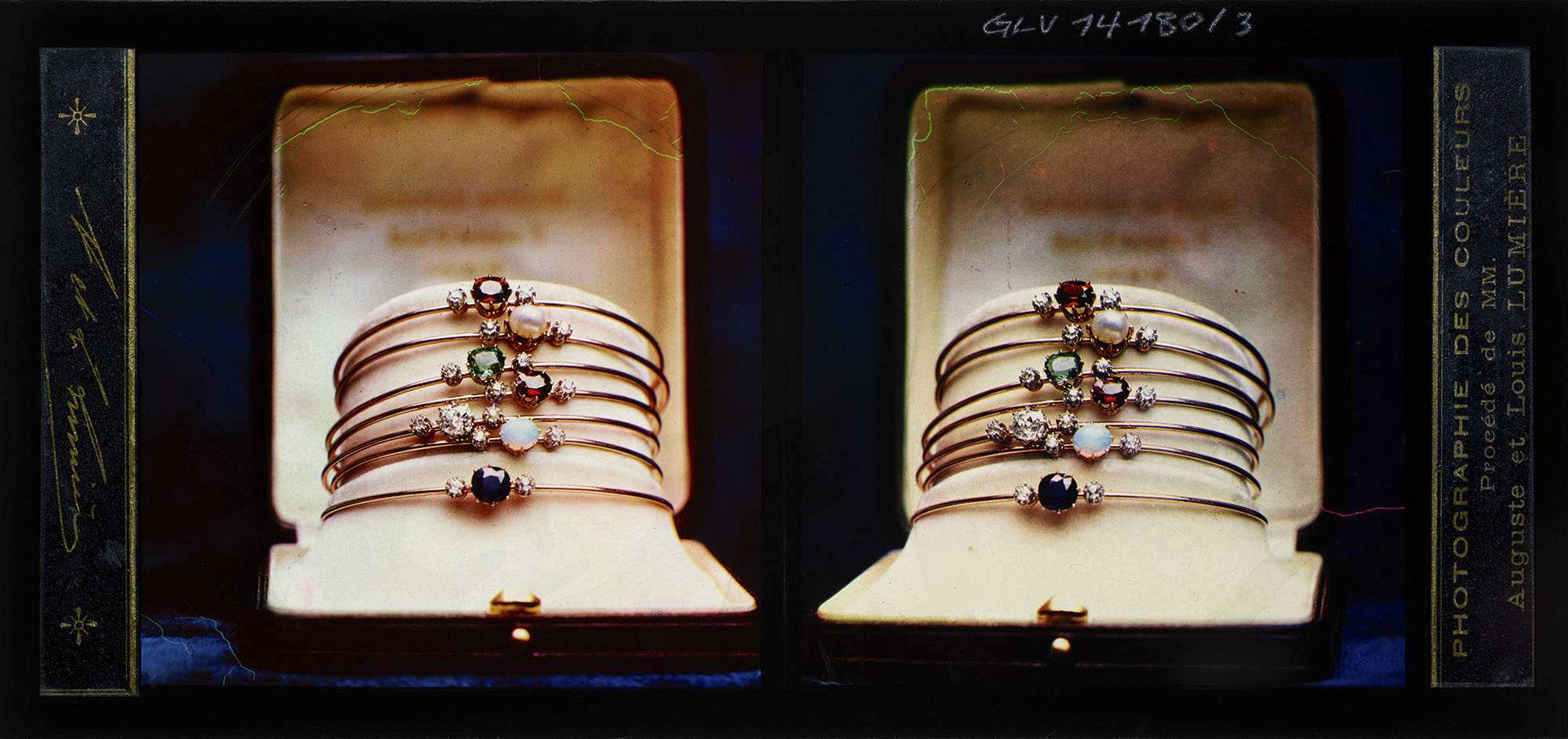
 

Auguste and Louis Lumière (French, 1862-1954) (French, 1864-1948) 'Bangles' 1893-1900 from the exhibition 'True Colors: Color in Photography from 1849 to 1955' at Albertina Modern, Vienna, January - April, 2025


Auguste and Louis Lumière (French, 1862-1954) (French, 1864-1948)
Bangles
1893-1900
ALL Chroma
8.4 x 17.8cm
The ALBERTINA Museum, Vienna – Permanent loan by Höhere Graphische Bundes-Lehr- und Versuchsanstalt


What a wonderful exhibition.

It’s so exciting to see the history and development of colour photography pre the ubiquitous, American artists William Eggleston and Stephen Shore, much as I like both artists.

I would have liked to have seen some early autochromes from Albert Kahn and The Archives of the Planet; some photographs by Bernard F. Eilers whom I greatly admire; and some early colour photographs by Paul Outerbridge Jr.

In my eyes, that would have made the exhibition even better!

Dr Marcus Bunyan


Many thankx to the Albertina Modern for allowing me to publish the photographs in the posting. Gracious thankx also to Karin Svadlenak-Gomez for allowing me to use her wonderful photographs of the exhibition in the posting, noted below each image. Please click on the photographs for a larger version of the image.

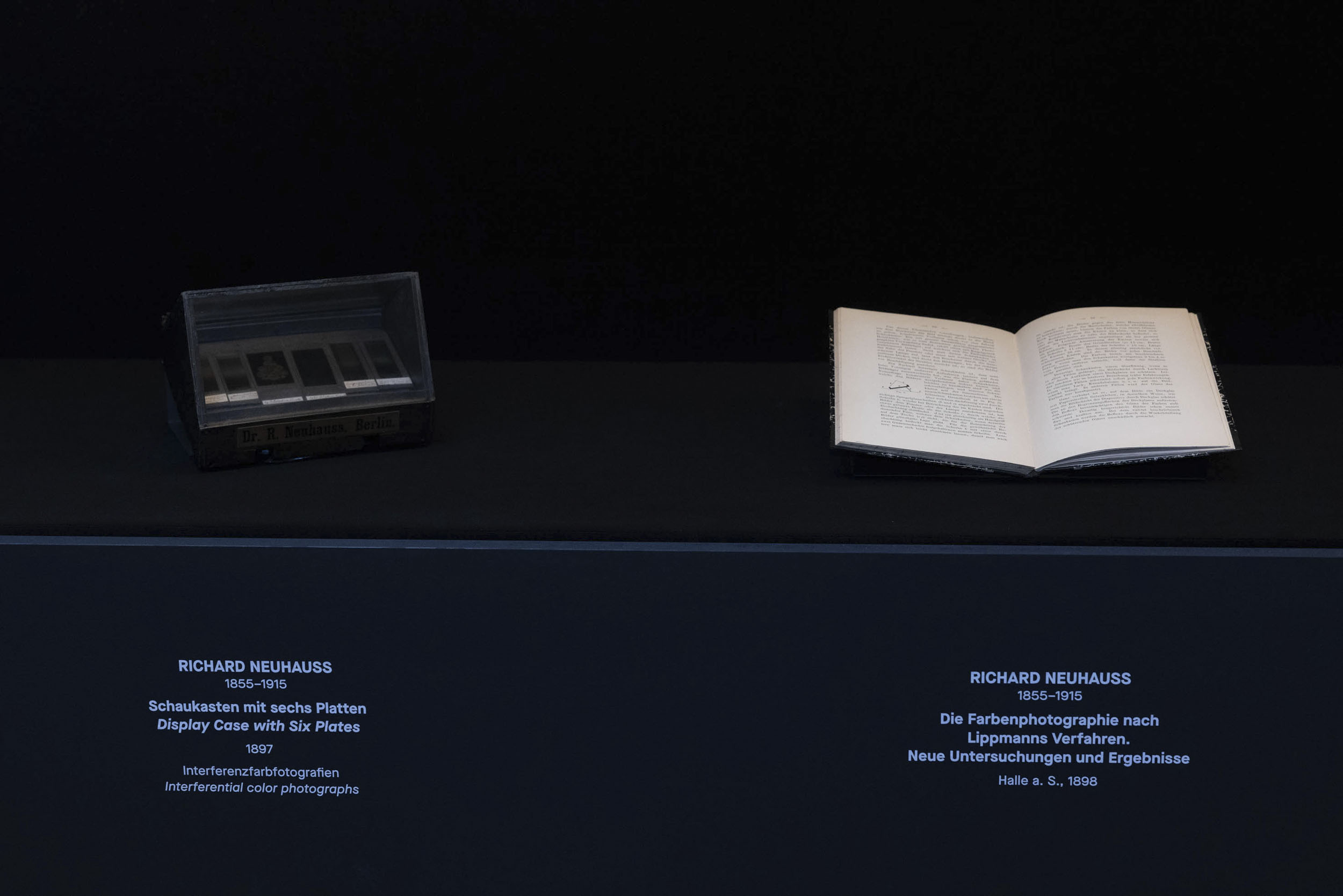


Installation view of the exhibition 'True Colors: Color in Photography from 1849 to 1955' at Albertina Modern, Vienna


Installation view of the exhibition True Colors: Color in Photography from 1849 to 1955 at Albertina Modern, Vienna showing in the bottom image, Léon Vidal’s photograph Oriental Onyx Saucier, 16th century, from Le Tresor artistique de la France, c. 1876-1878 (below)
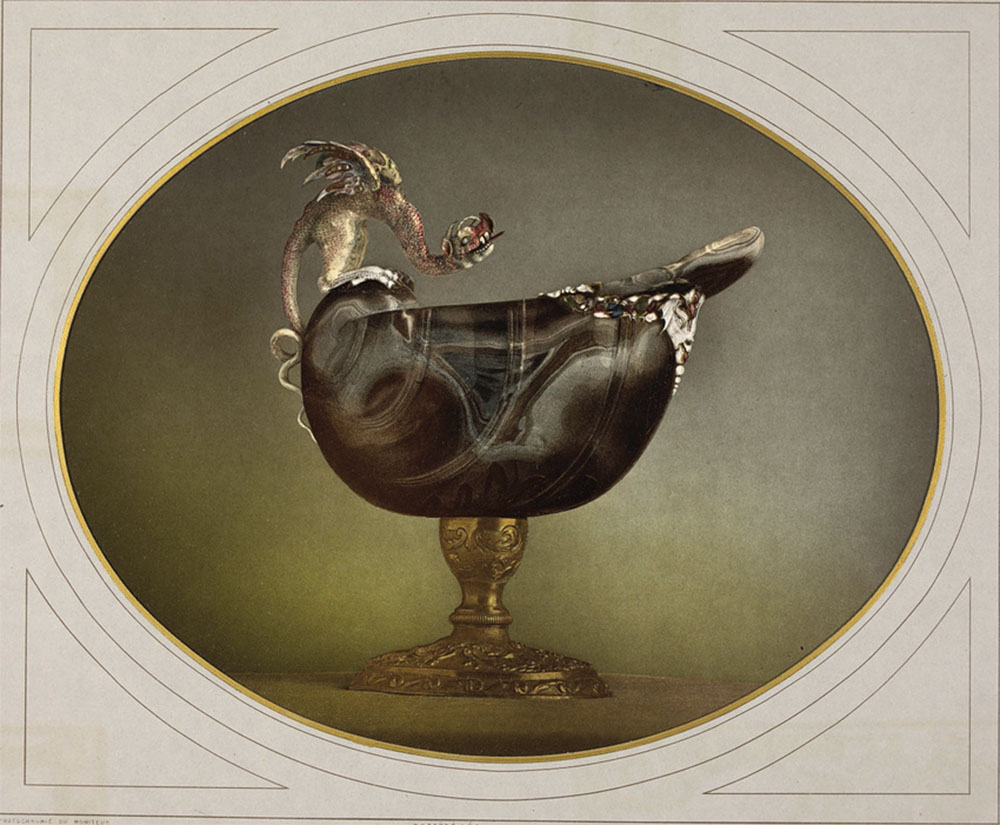
 

Léon Vidal (French, 1833-1906)
'Oriental Onyx Sardonyx Cup (16th century)' 1876 from the exhibition 'True Colors: Color in Photography from 1849 to 1955' at Albertina Modern, Vienna, January - April, 2025


Léon Vidal (French, 1833-1906)
Oriental Onyx Sardonyx Cup (16th century)
1876
Photomechanical proof (photochromy using the Léon Vidal process) mounted on cardboard
H. 20.8 ; L. 26.2 cm.
Don Fondation Kodak-Pathé, 1983
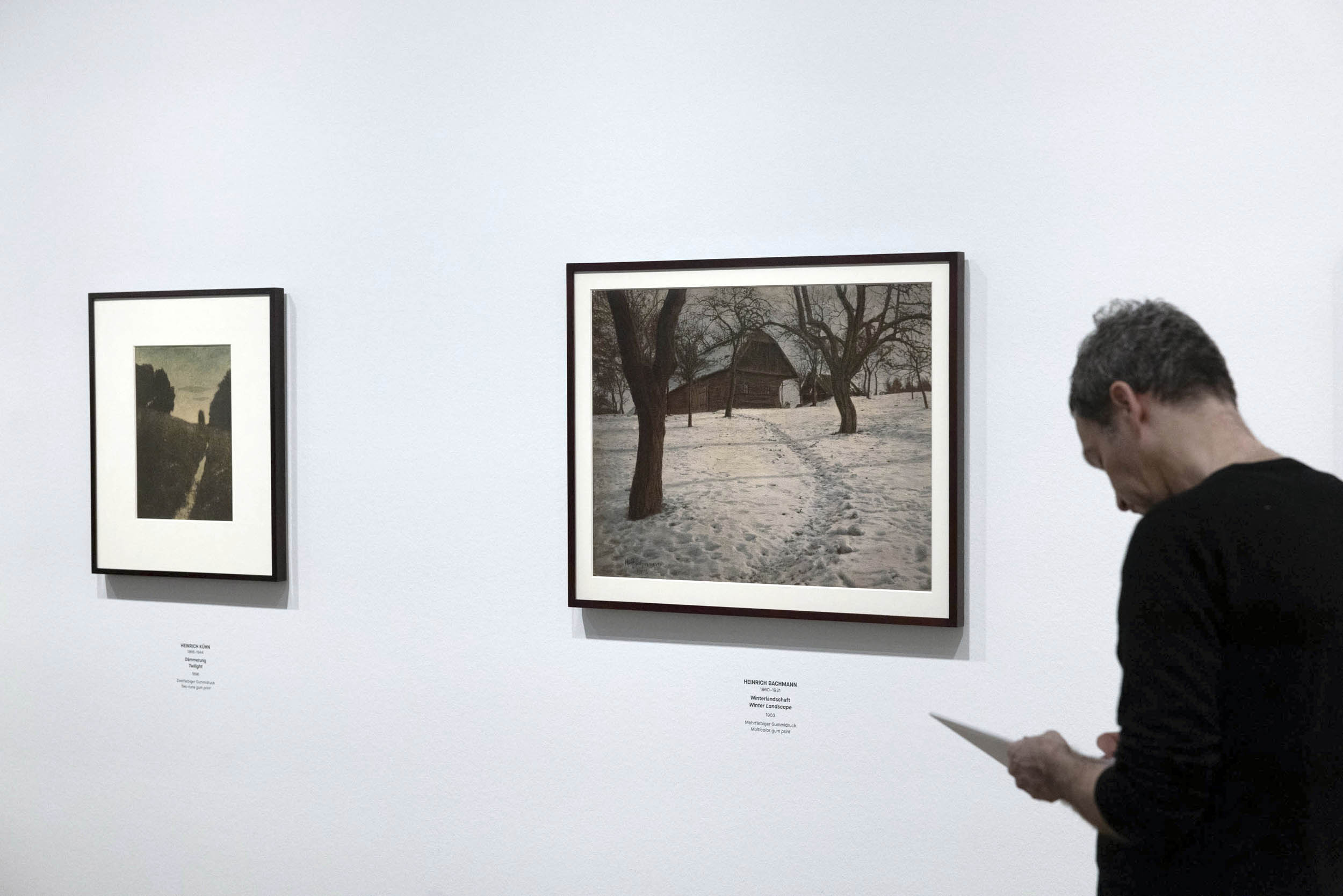
 

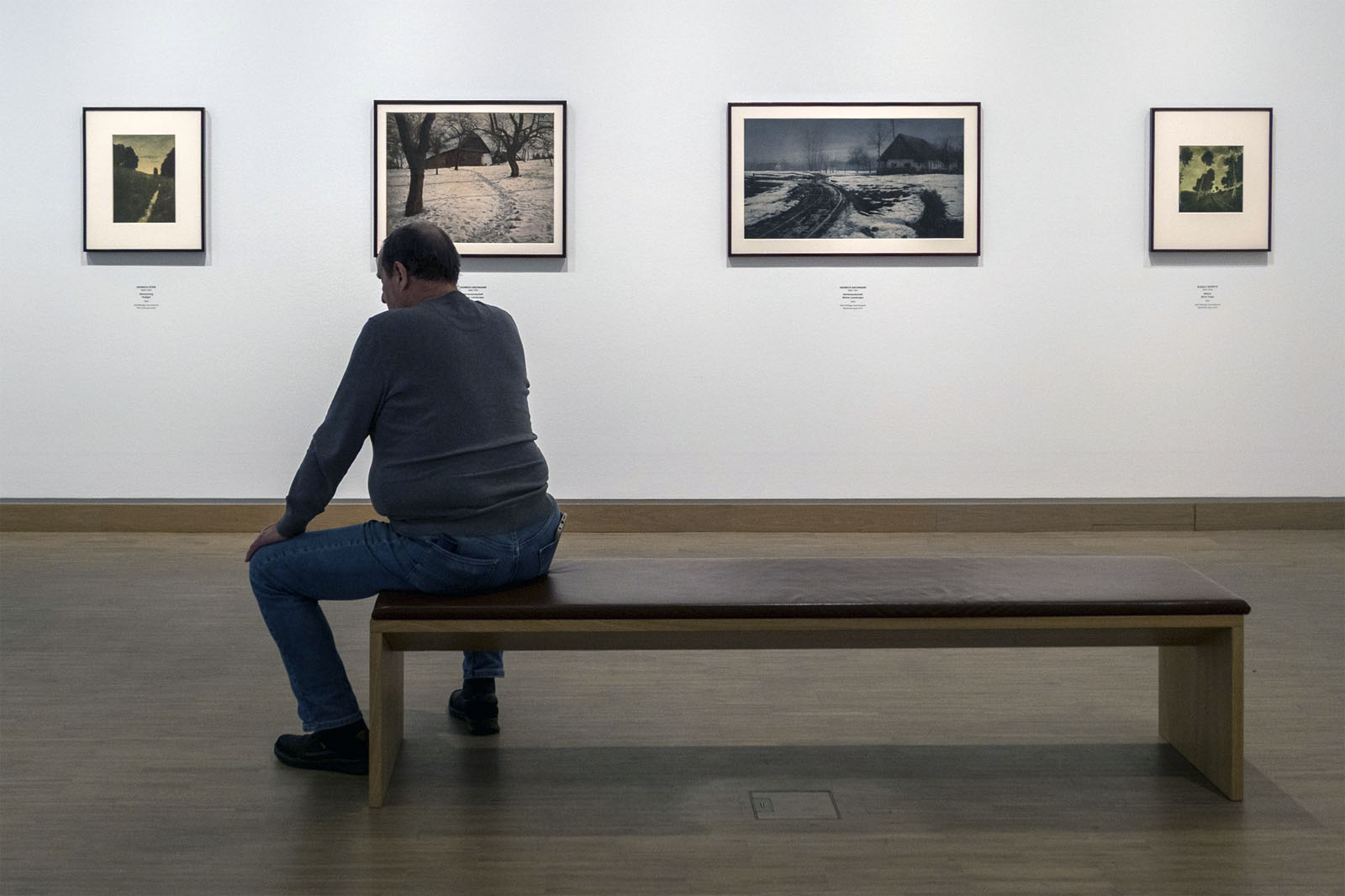
Installation view of the exhibition 'True Colors: Color in Photography from 1849 to 1955' at Albertina Modern, Vienna showing at left, Heinrich Kühn's 'Twilight' 1896 (below); and at right, Heinrich Bachmann's 'Winter Landscape' 1903


Installation view of the exhibition True Colors: Color in Photography from 1849 to 1955 at Albertina Modern, Vienna showing at left, Heinrich Kühn’s Twilight 1896 (below); and at right, Heinrich Bachmann’s Winter Landscape 1903
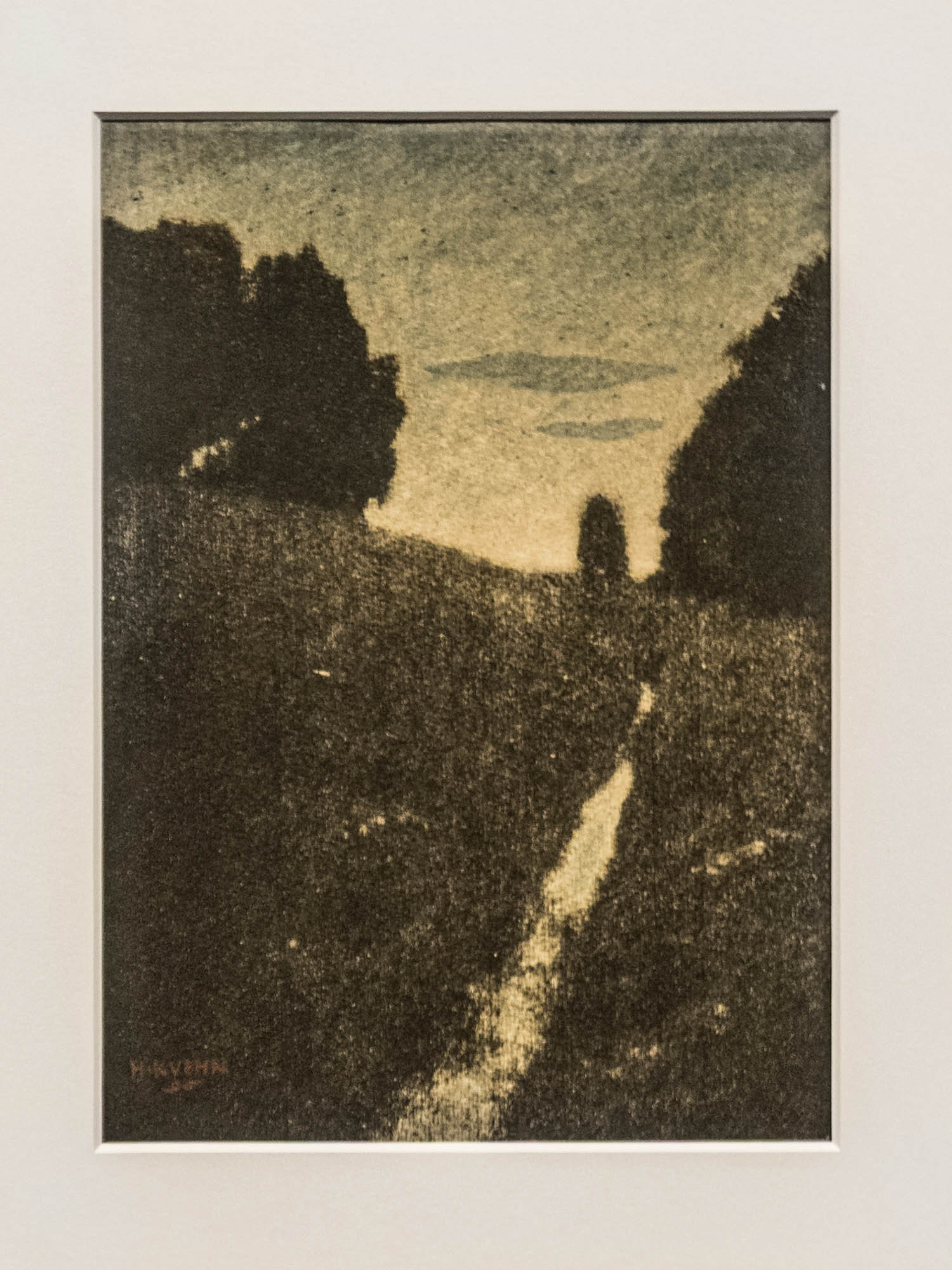
 

Heinrich Kühn (Austrian-German, 1866-1944) 'Twilight' 1896


Heinrich Kühn (Austrian-German, 1866-1944)
Twilight
1896
Two-tone gum print
Photo: Karin Svadlenak-Gomez


The Pictorialist Aesthetic: Photography as Art

One of my personal highlights from True Colours was the section dedicated to pictorialist photography. Emerging in the late 19th and early 20th centuries, pictorialism sought to elevate photography to the level of fine art, favouring soft focus, painterly compositions, and atmospheric effects. In fact the Albertina modern had a whole exhibition on Pictorialism in 2023, which was a great joy to me.

Heinrich Kühn’s Twilight (1896, above), produced through the autochrome process, was a standout for me, its subtle gradations of light and shadow creating an almost dreamlike serenity. Kühn was also one of the pioneers of the autochrome process, the first commercially successful colour photography method introduced by the Lumière brothers in 1907. Autochromes used a fine layer of dyed potato starch grains to filter light, creating rich and softly textured images. Kühn masterfully employed this process to enhance the painterly, impressionistic quality of his photographs, further bridging the gap between photography and fine art. Seeing these images up close, I was reminded of how photographers of the past fought for their medium to be recognised as more than mere documentation – it was, and remains, an art form in its own right.

Karin Svadlenak-Gomez. “Photography in Full Spectrum,” on the ViennaCultgram website 13th March 2025 [Online] Cited 25/03/2024
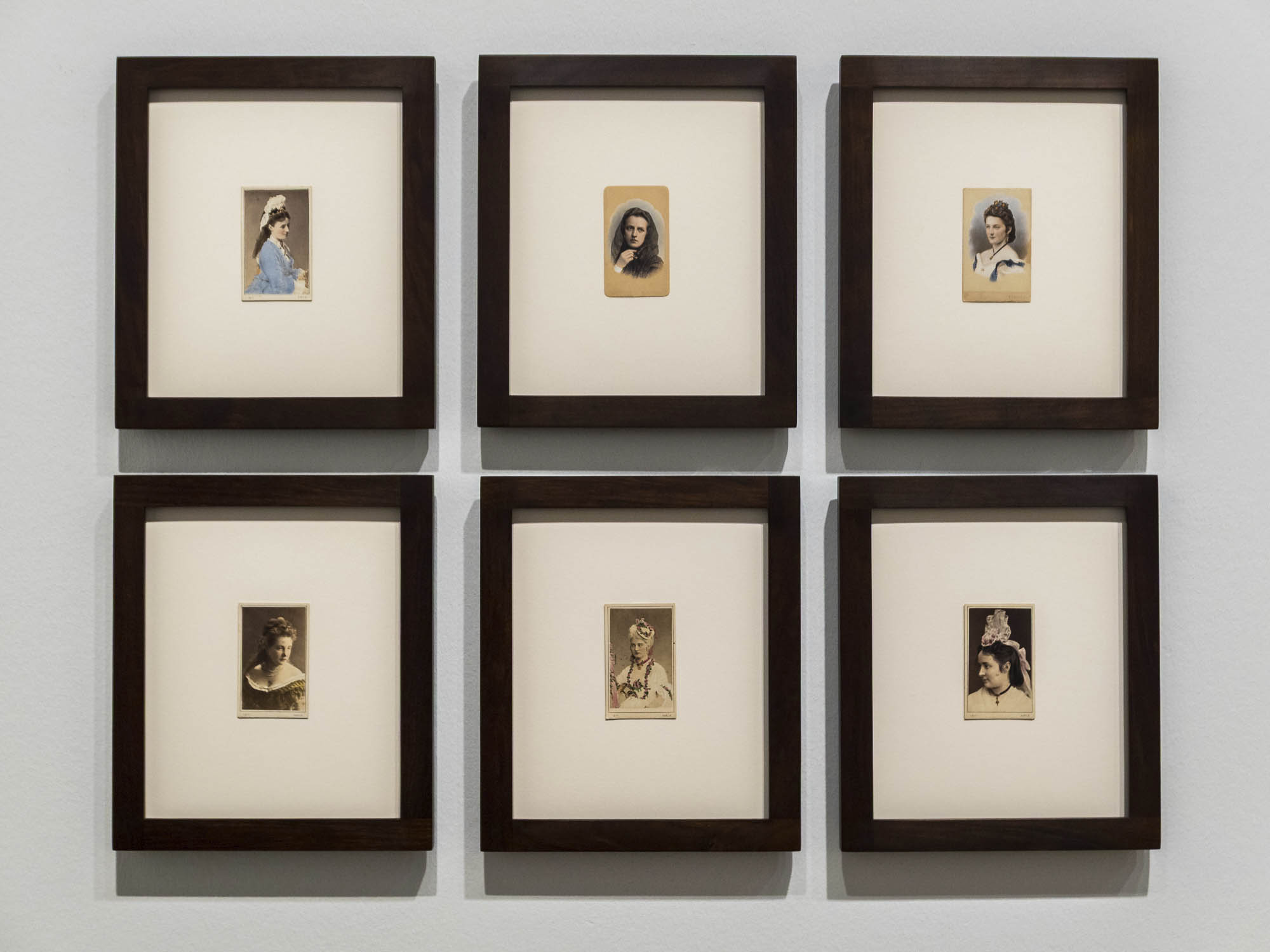
 

Installation view of the exhibition 'True Colors: Color in Photography from 1849 to 1955' at Albertina Modern, Vienna


Installation view of the exhibition True Colors: Color in Photography from 1849 to 1955 at Albertina Modern, Vienna
Photo: Karin Svadlenak-Gomez
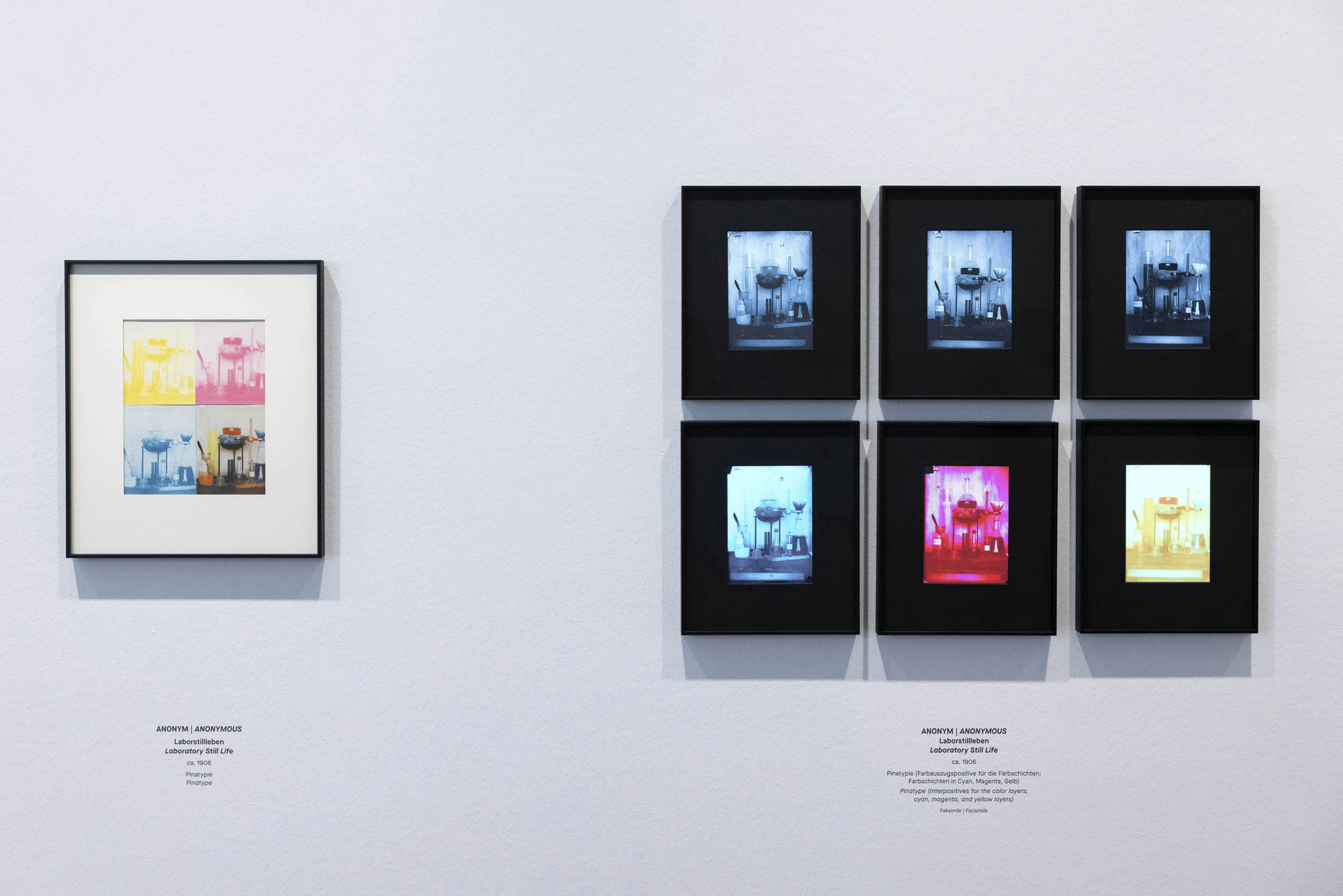
 

Installation view of the exhibition 'True Colors: Color in Photography from 1849 to 1955' at Albertina Modern, Vienna showing Anonymous. 'Laboratory Still Life' 1906


Installation view of the exhibition True Colors: Color in Photography from 1849 to 1955 at Albertina Modern, Vienna showing Anonymous. Laboratory Still Life 1906
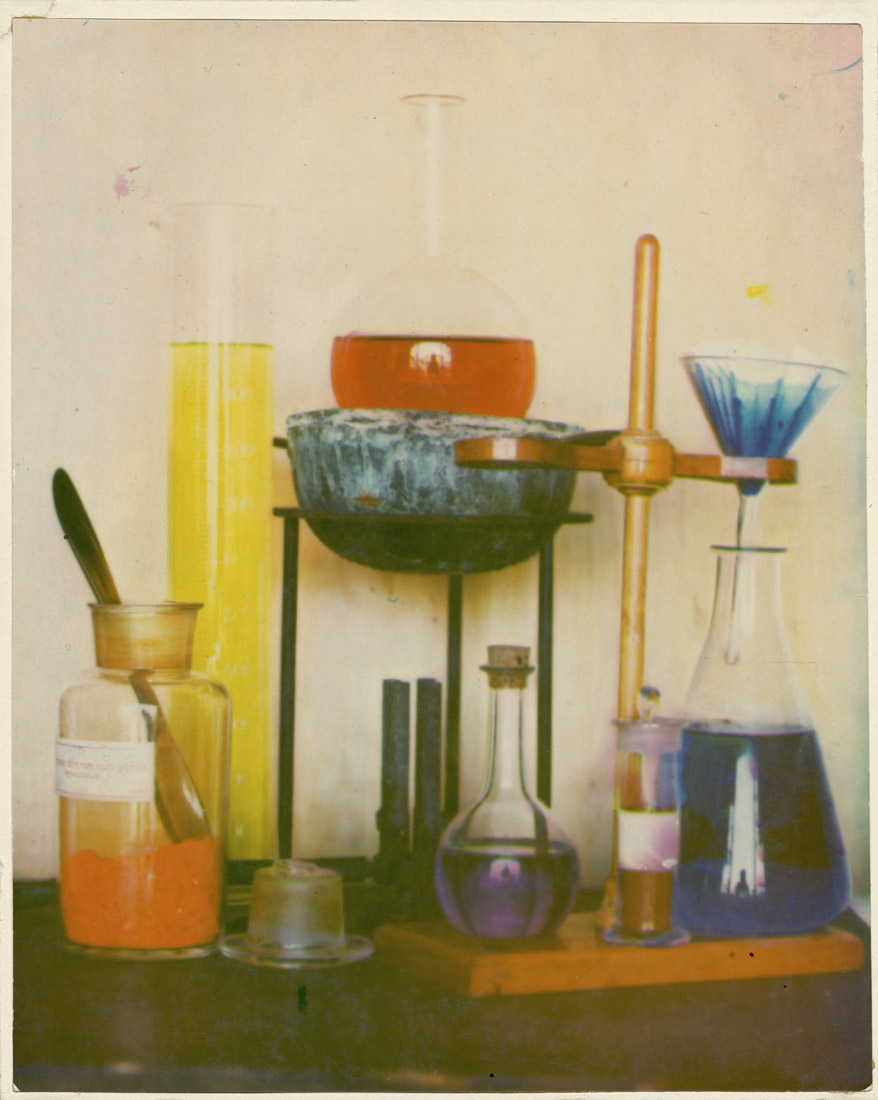
 

Anonymous photographer.
'Laboratory Still Life Around' 1906 from the exhibition 'True Colors: Color in Photography from 1849 to 1955' at Albertina Modern, Vienna, January - April, 2025

Anonymous photographer
Laboratory Still Life
Around 1906
14.2 x 11.2 cm
Pinatype
The Albertina Museum, Vienna – Permanent Loan by Höhere Graphische Bundes-Lehr- und Versuchsanstalt
© Photo: The Albertina Museum, Vienna
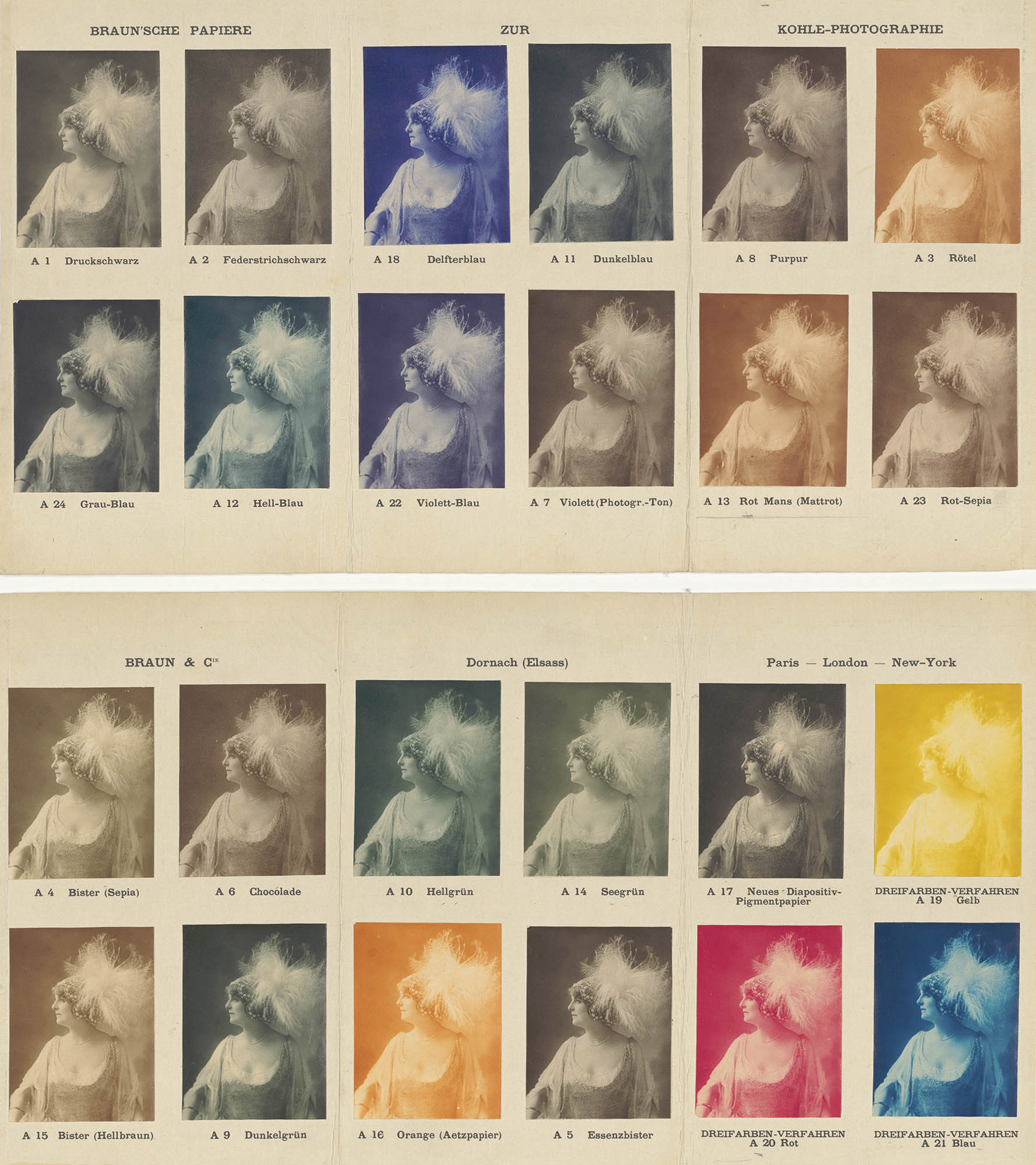
 

Ad. Braun et Cie. (Jean Adolphe Braun (French, 1812-1877))
'Sample board of various pigment papers from Ad. Braun et Cie.' around 1910


Ad. Braun et Cie. (Jean Adolphe Braun (French, 1812-1877))
Sample board of various pigment papers from Ad. Braun et Cie.
Around 1910
38.2 x 32.5cm
Pigment prints
The Albertina Museum, Vienna – Permanent loan by Höhere Graphische Bundes- Lehr- und Versuchsanstalt
© Photo: The Albertina Museum, Vienna


Ad. Braun et Cie. (Jean Adolphe Braun (French, 1812-1877))
'Sample board of various pigment papers from Ad. Braun et Cie.' around 1910 (detail)
Ad. Braun et Cie. (Jean Adolphe Braun (French, 1812-1877))
'Sample board of various pigment papers from Ad. Braun et Cie.' around 1910 (detail)


Ad. Braun et Cie. (Jean Adolphe Braun (French, 1812-1877))
Sample board of various pigment papers from Ad. Braun et Cie. (details)
Around 1910
38.2 x 32.5cm
Pigment prints
The Albertina Museum, Vienna – Permanent loan by Höhere Graphische Bundes- Lehr- und Versuchsanstalt
© Photo: The Albertina Museum, Vienna
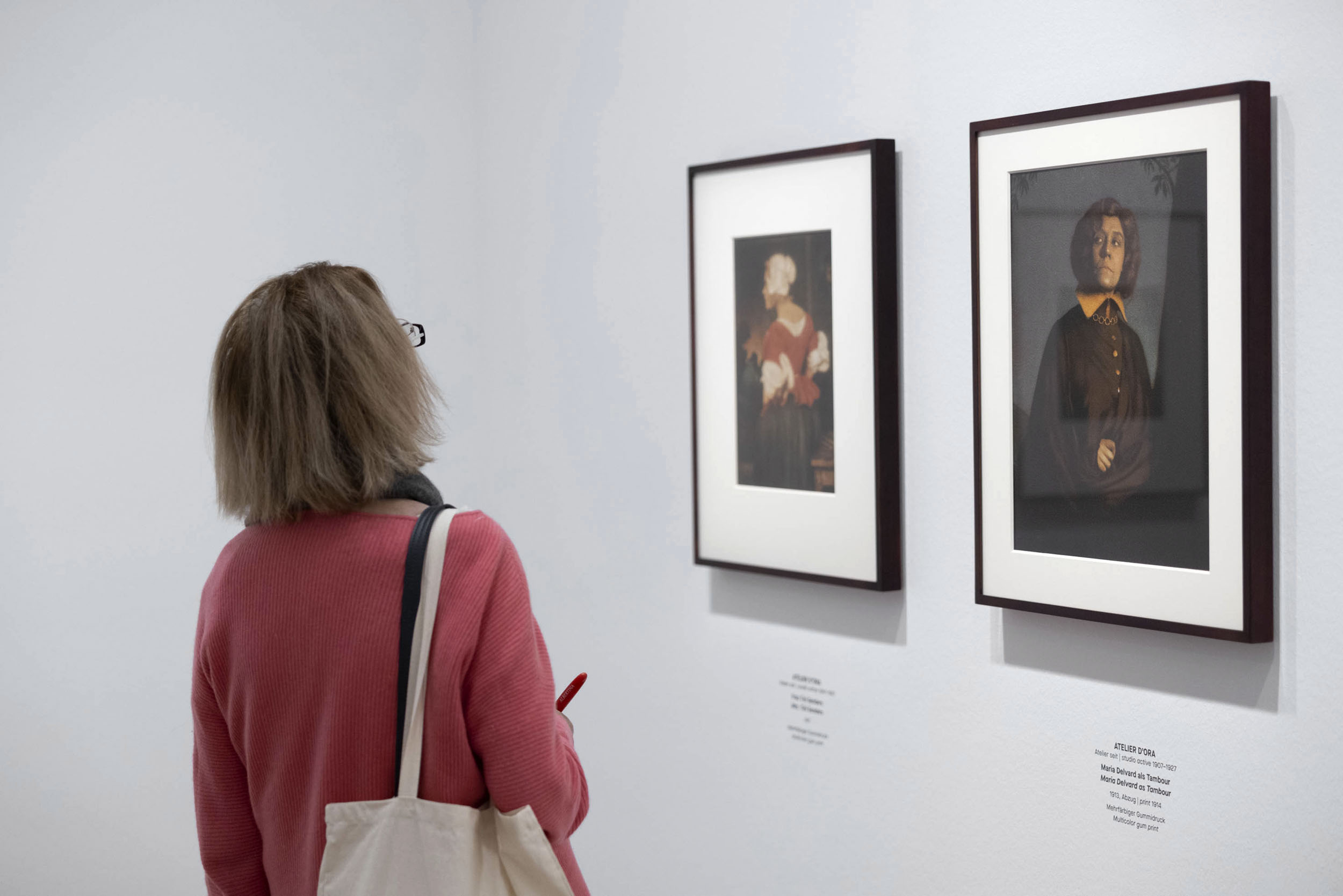
 

Installation view of the exhibition 'True Colors: Color in Photography from 1849 to 1955' at Albertina Modern, Vienna showing two photographs by Atelier D'Ora with at right, 'Maria Delvard as Tambour' 1913


Installation view of the exhibition True Colors: Color in Photography from 1849 to 1955 at Albertina Modern, Vienna showing two photographs by Atelier D’Ora with at right, Maria Delvard as Tambour 1913


The aesthetics of fine art photography had their greatest impact on studio photograph. In the early twentieth century, such progressive studios as Atelier d’Ora (later called Atelier d’Ora Benda) adopted the reformed portrait style and its elaborate techniques. The bromoil and broccoli transfer processes finally offered an alternative to gum prints, so that works in colour could be produced in a much less complicated and inexpensive way.

Wall text from the exhibition


Installation view of the exhibition 'True Colors: Color in Photography from 1849 to 1955' at Albertina Modern, Vienna showing Kurt Husnik's three photographs 'Untitled' 1950s


Installation view of the exhibition True Colors: Color in Photography from 1849 to 1955 at Albertina Modern, Vienna showing Kurt Husnik’s three photographs Untitled 1950s
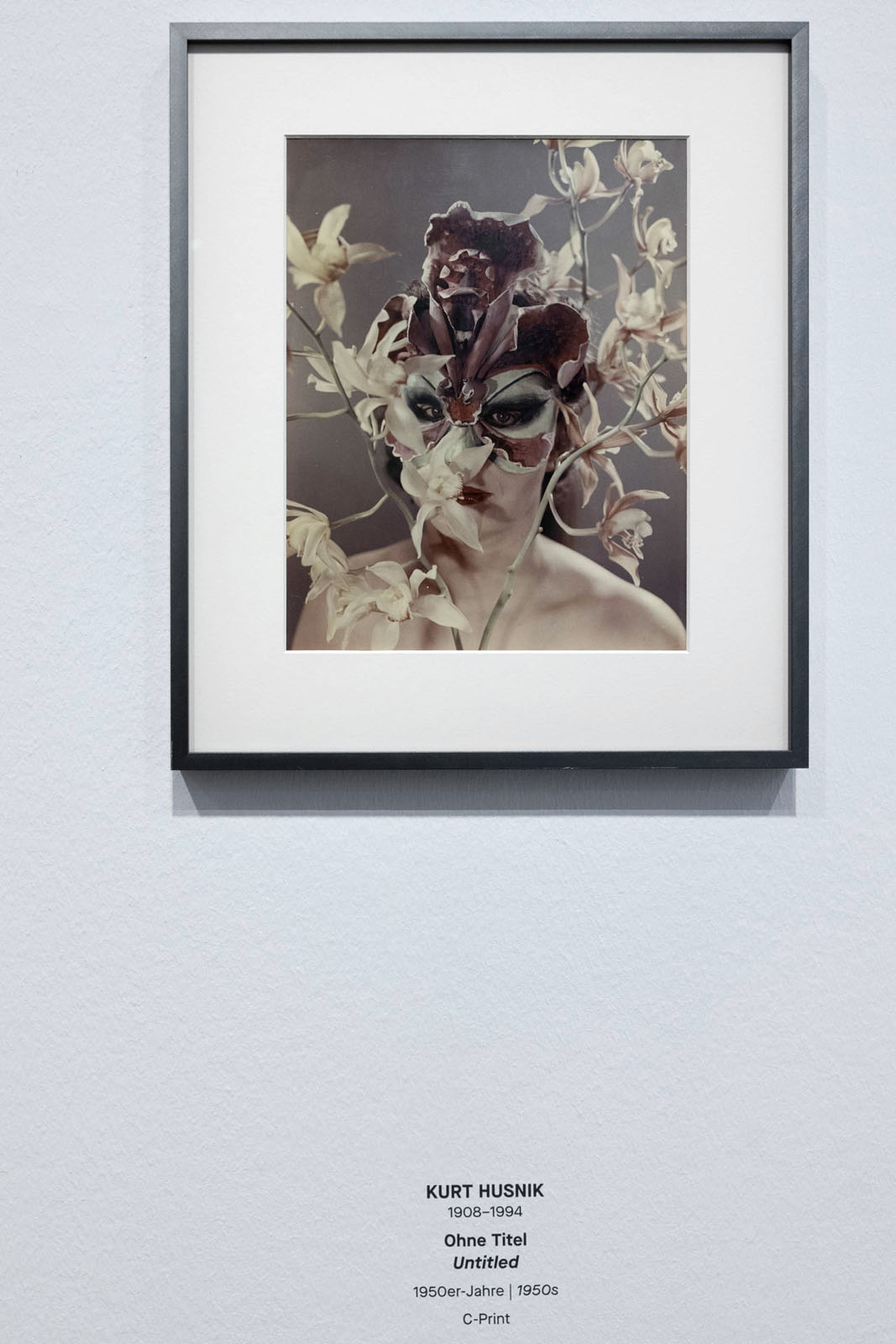
 

Installation view of the exhibition 'True Colors: Color in Photography from 1849 to 1955' at Albertina Modern, Vienna


Installation view of the exhibition True Colors: Color in Photography from 1849 to 1955 at Albertina Modern, Vienna showing Kurt Husnik’s Untitled 1950s


Installation view of the exhibition 'True Colors: Color in Photography from 1849 to 1955' at Albertina Modern, Vienna showing at left, Hans Madensky's 'Fashion Portrait - Student of the Vienna-Hetzendorf School of Fashion' 1952 (below)


Installation view of the exhibition True Colors: Color in Photography from 1849 to 1955 at Albertina Modern, Vienna showing at left, Hans Madensky’s Fashion Portrait – Student of the Vienna-Hetzendorf School of Fashion 1952 (below)


Hans Madensky (Austrian, 1902-1978) 'Fashion Portrait - Student of the Vienna-Hetzendorf School of Fashion' 1952


Hans Madensky (Austrian, 1902-1978)
Fashion portrait – Student from the Vienna Hetzendorf Fashion School
1952
27 x 22.8cm
Kodak Dye Transfer Print
The Albertina Museum, Vienna – Permanent Loan by Höhere Graphische Bundes-Lehr- und Versuchsanstalt
© Photo: The Albertina Museum, Vienna


How did colour get into photography?

The exhibition True Colors – Color in Photography from 1849 to 1955 answers this question with outstanding works from the Albertina Museum’s photo collection.

The desire for colour in photography has dominated the world of photography from the very beginning. True Colors traces the development of colour photography, from the first experimental techniques in the 19th century to generally applicable analog colour photography.

Even in the early days of photography, daguerreotypes and salt paper prints were colored by hand to create colorful images. Monochrome pigment papers, which enjoyed great popularity until the 1890s, also contributed to the broad chromatic diversity of 19th century photographs.

The first successful color process, which was reserved for an exclusive circle, was introduced in 1891. The brilliant images in the so-called interference colour process are based on the physical principle of standing waves, which also allows us to see coloured reflections in soap bubbles. The unique pieces from the Albertina Museum’s Collection represent a unique focal point.

The autochrome process, which was introduced in 1907, brought about a major change in image culture. It was also practicable for amateurs and helped its inventors, the Lumière brothers, to achieve great commercial success. However, it was mainly used as a glass slide for projection. At the same time, around 1900, fine art printing processes were developed that used color pigments to produce multicolored image solutions. They fulfilled the artistic aspirations of the Pictorialists and were commonplace in large photo studios until the 1930s. For a long time, the challenge was to obtain colored prints on paper. This was also achieved at the beginning of the 20th century with the use of various three-color processes, which were assembled in several steps.

Kodak finally achieved the breakthrough to easy-to-use and therefore mass-market colour photography in 1936 with the first 35mm colour slide films. These products revolutionised the use of colour photography in the following decades, which form the conclusion of this Albertina Museum exhibition.

True Colors provides an insight into the rich holdings of the Albertina Museum’s photography collection, the historical part of which is based on the collection of the Höhere Graphische Bundes- Lehr- und Versuchsanstalt (GLV). The exhibition demonstrates the great public interest, the constant development and the various fields of application of historical photography in colour. True Colors also explores the impact of popular colour processes on the visual culture of the early 20th century.

The exhibition is on view from 24 January until 21 April 2025 at the Albertina Modern
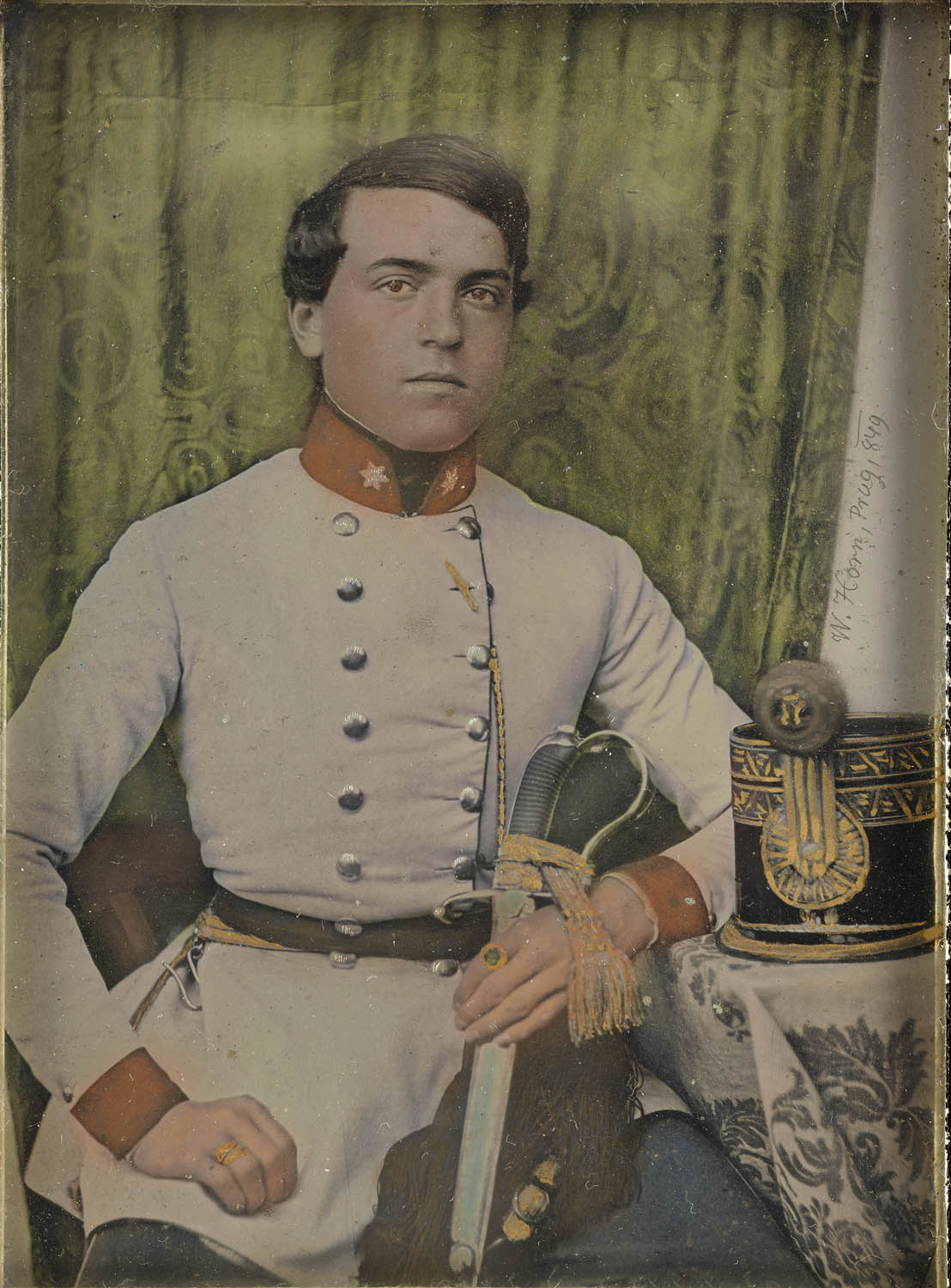
 

Wilhelm Horn (Czech, 1809-1891)
'Portrait of a Young Officer' 1849


Wilhelm Horn (Czech, 1809-1891)
Portrait of a Young Officer
1849
11 x 8.3cm
Daguerreotype, coloured
The Albertina Museum, Vienna – Permanent loan by Höhere Graphische Bundes- Lehr- und Versuchsanstalt
© Photo: The Albertina Museum, Vienna
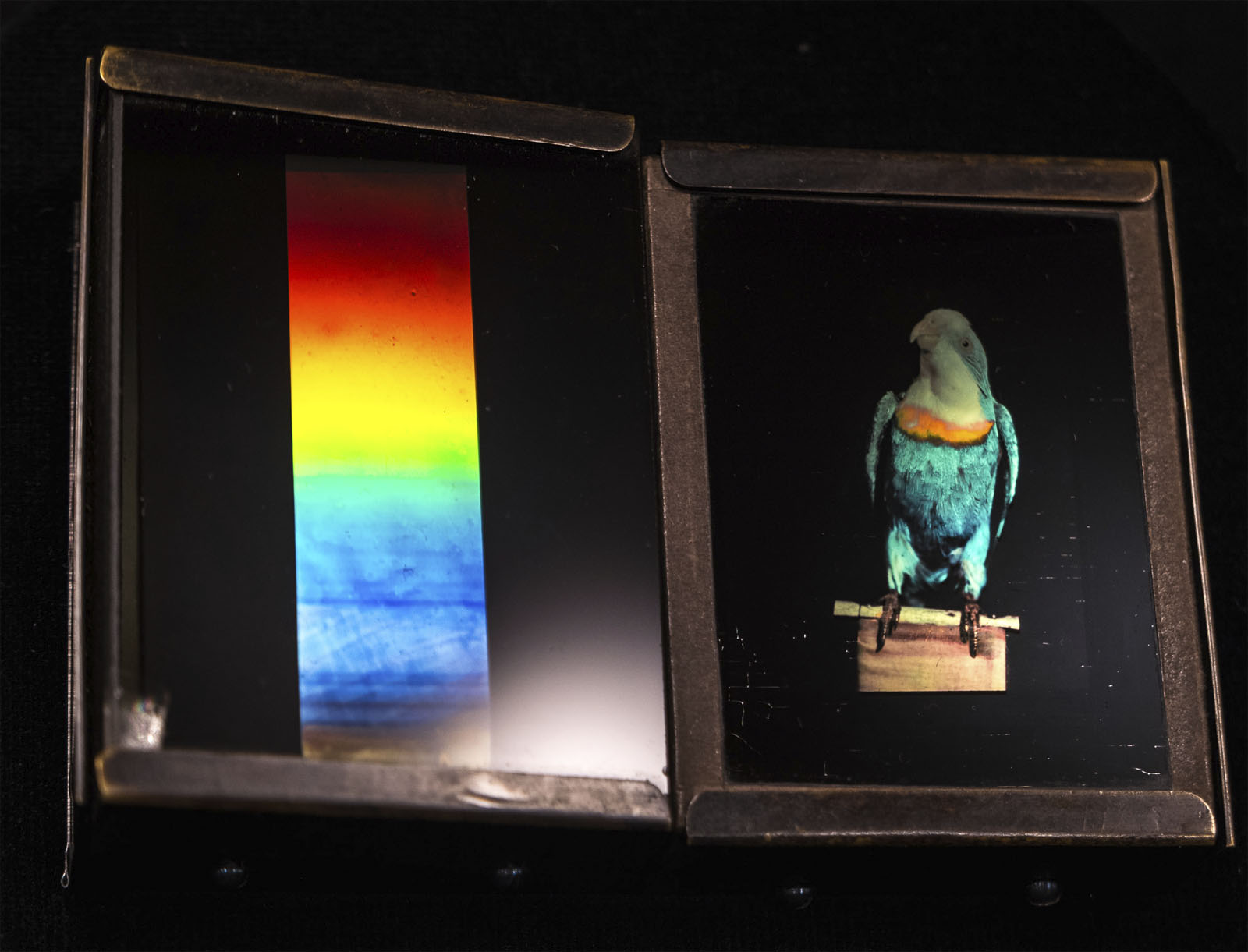
 

Installation view of the exhibition 'True Colors: Color in Photography from 1849 to 1955' at Albertina Modern


Installation view of the exhibition True Colors: Color in Photography from 1849 to 1955 at Albertina Modern
Photo: Karin Svadlenak-Gomez
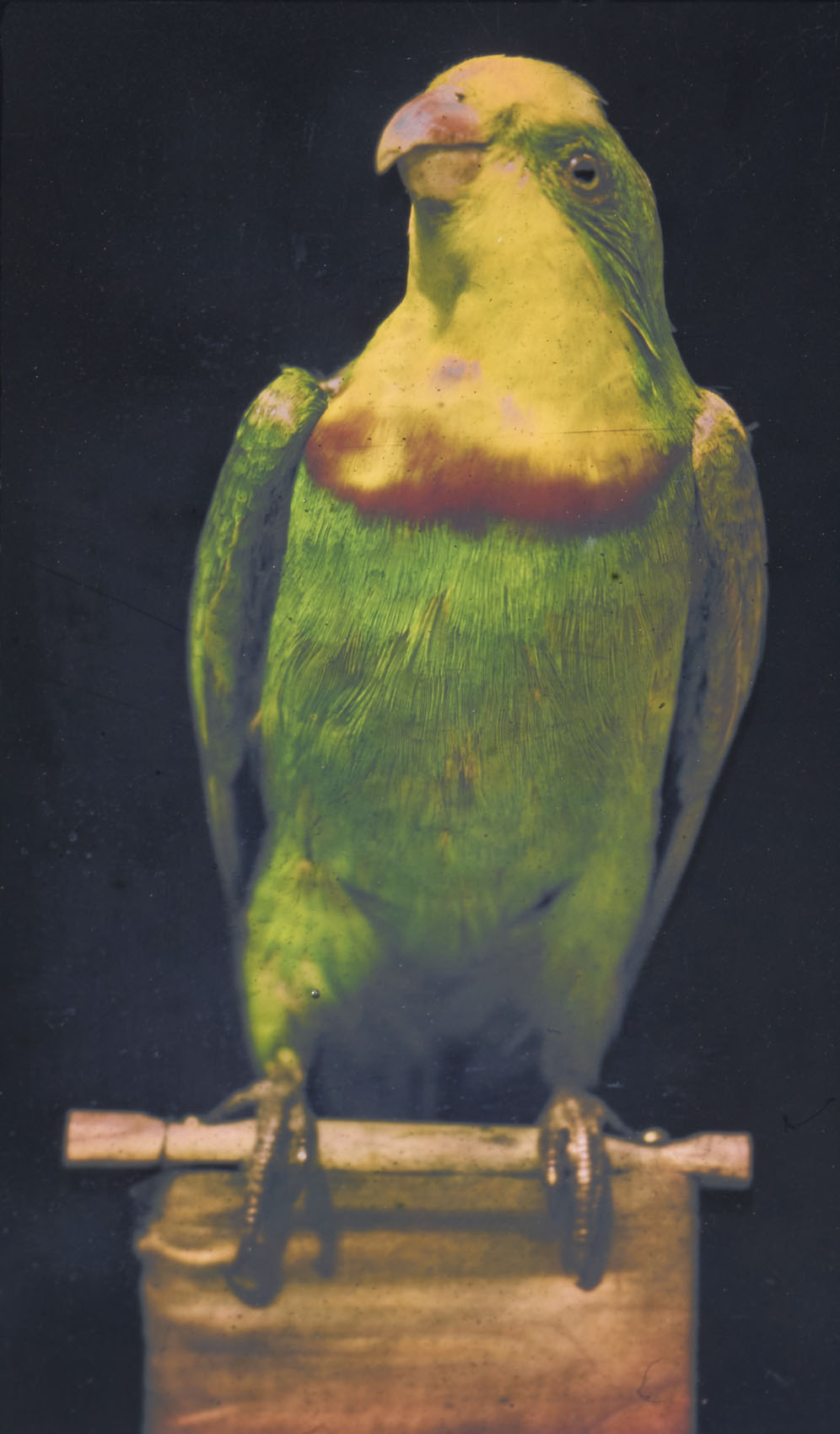
 

Richard Neuhauss (German, 1855-1915) 'Parrot' 1899


Richard Neuhauss (German, 1855-1915)
Parrot
1899
8.3 x 6.4cm
Colour photography
The Albertina Museum, Vienna – Permanent Loan by Höhere Graphische Bundes-Lehr- und Versuchsanstalt
© Photo: The Albertina Museum, Vienna
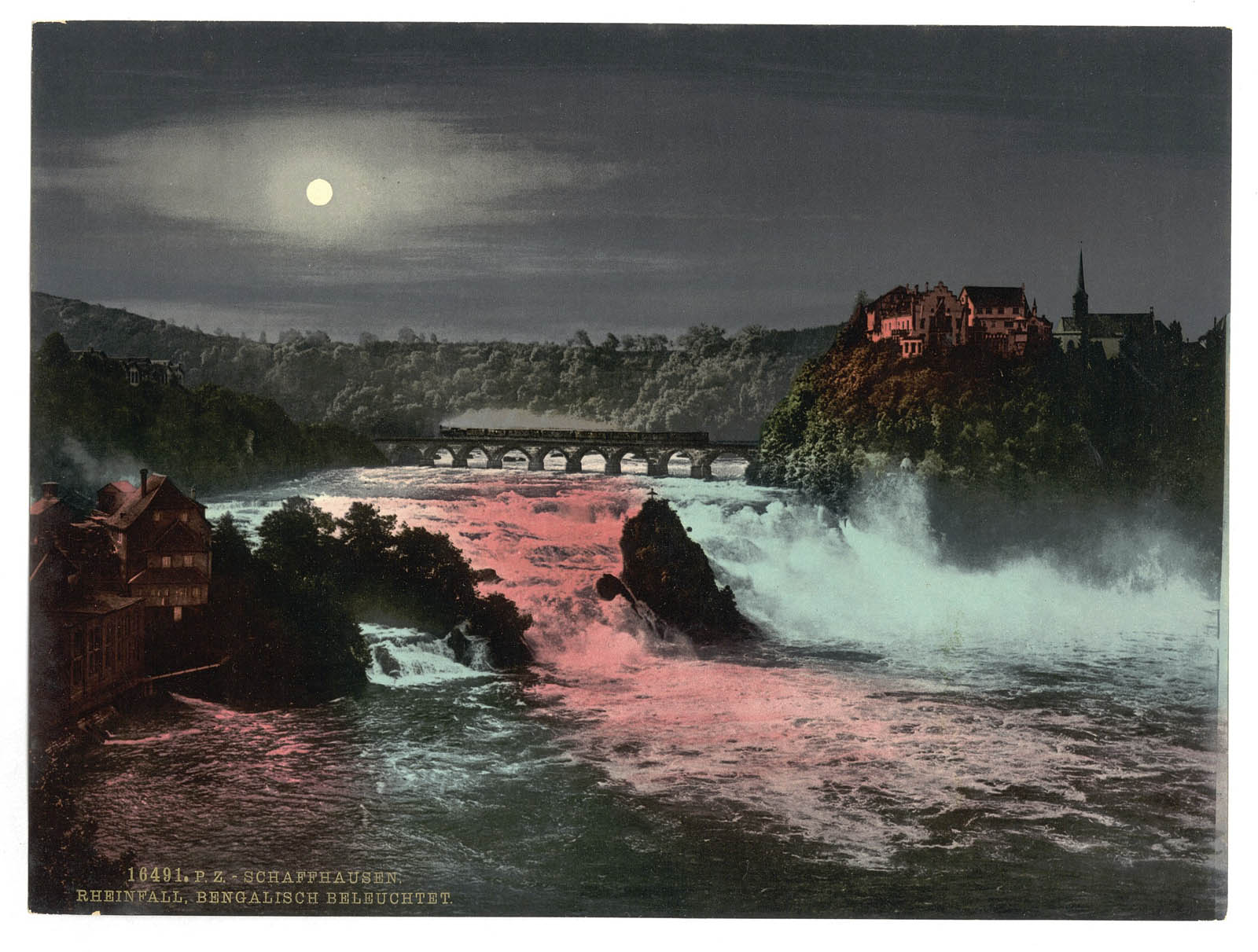
 

Photochrom Print Collection (photographer) 'The Falls of the Rhine, by Bengal Light, Schaffhausen, Switzerland' between 1890 and 1900


Photochrom Print Collection (photographer)
The Falls of the Rhine, by Bengal Light, Schaffhausen, Switzerland
Between 1890 and 1900
Print no. “16491”.; Forms part of: Views of Switzerland in the Photochrom print collection.; Title from the Detroit Publishing Co., Catalogue J-foreign section, Detroit, Mich.: Detroit Publishing Company, 1905.
Photomechanical print, photochrom, colour
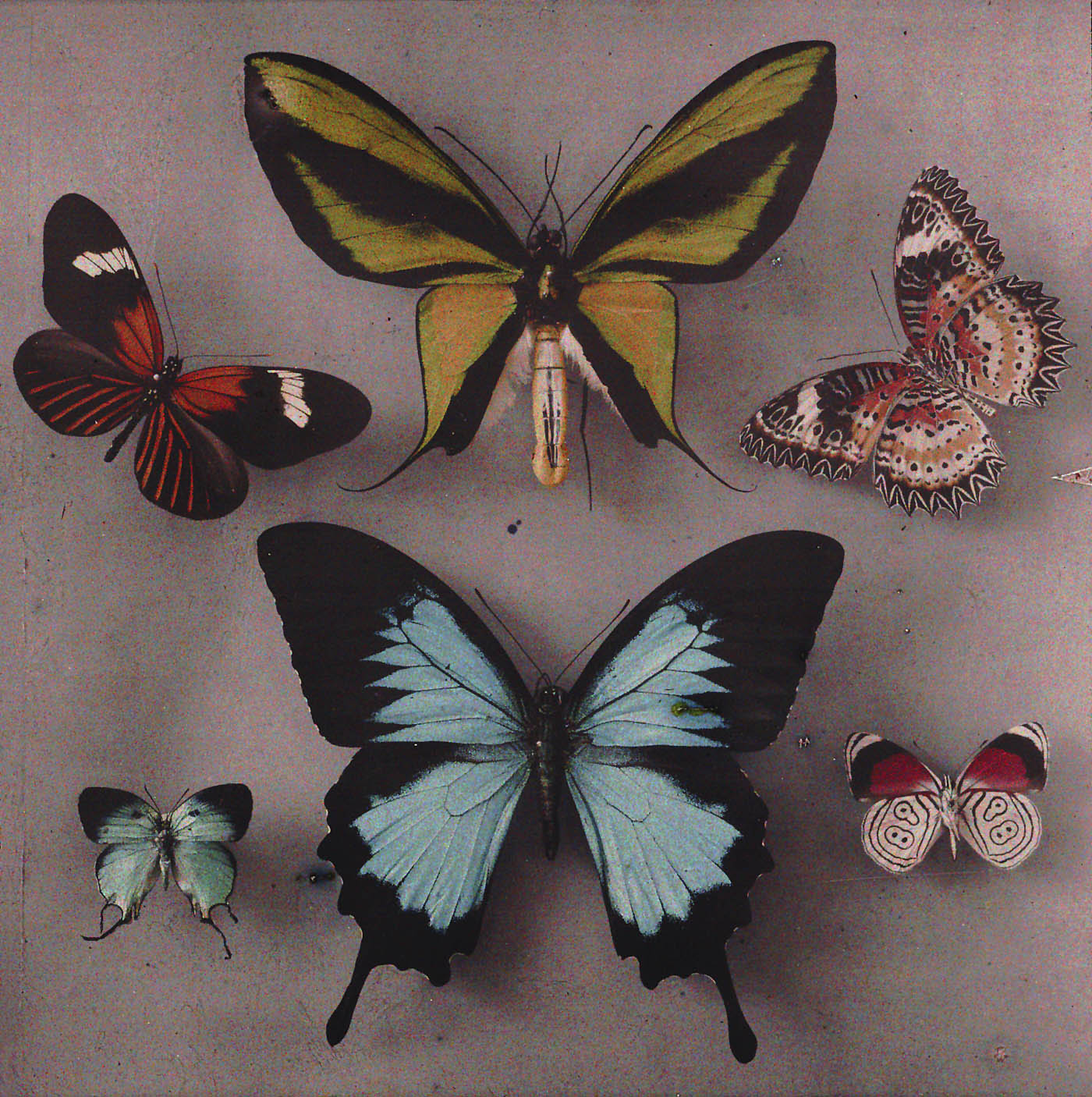
 

Arthur von Hübl (Austrian, 1853-1932) 'Exotic Butterflies' 1908-1914


Arthur von Hübl (Austrian, 1853-1932)
Exotic Butterflies
1908-1914
6.3 x 6.9cm
Autochrome
The Albertina Museum, Vienna – Permanent Loan by Höhere Bundes-Lehr- und Versuchsanstalt
© Photo: The Albertina Museum, Vienna
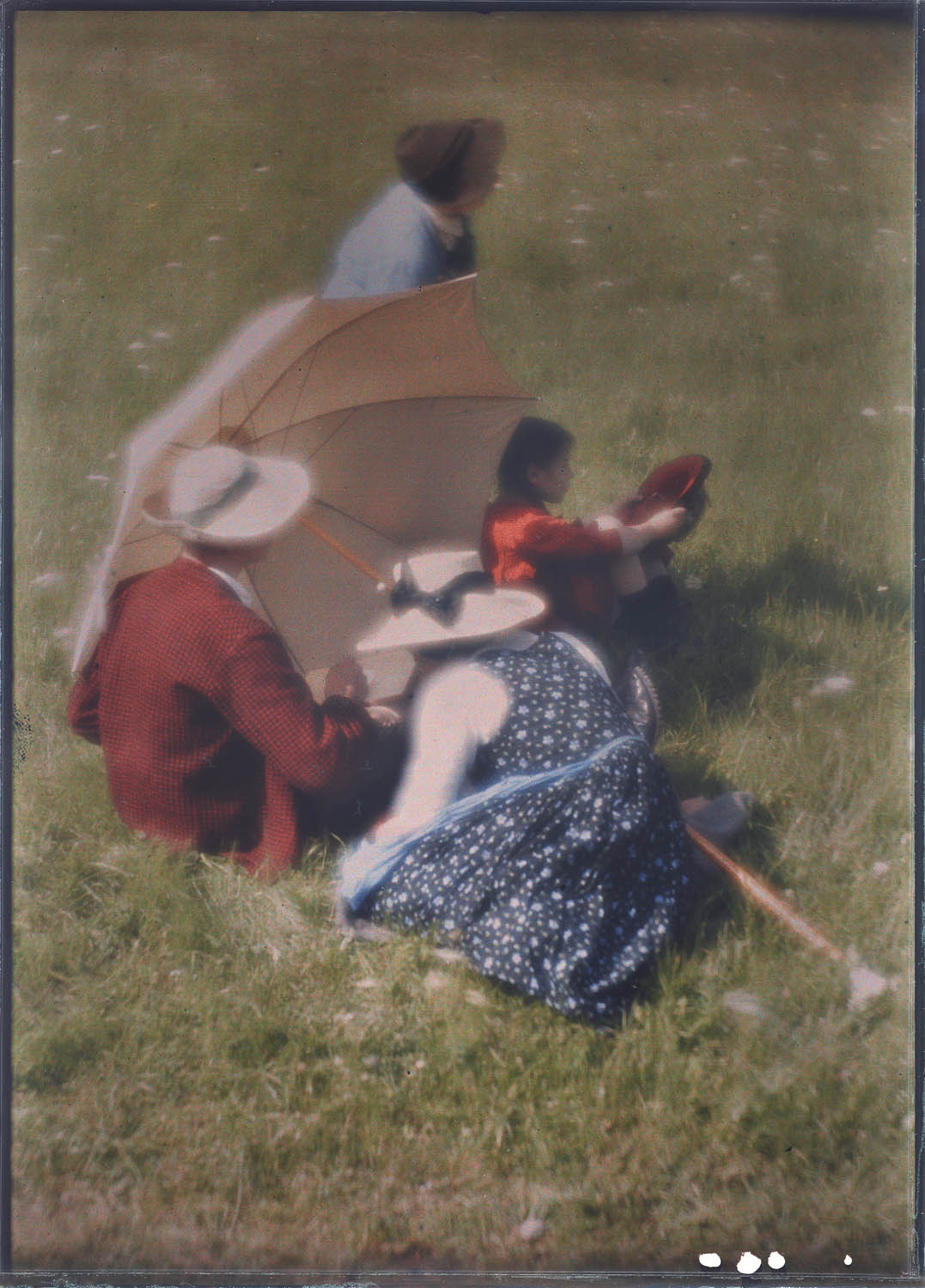
 

Heinrich Kühn (Austrian-German, 1866-1944) 'The Parasol' 1912


Heinrich Kühn (Austrian-German, 1866-1944)
The Parasol
1912
18 x 13cm
Autochrome
The Albertina Museum, Vienna
© Photo: The Albertina Museum, Vienna
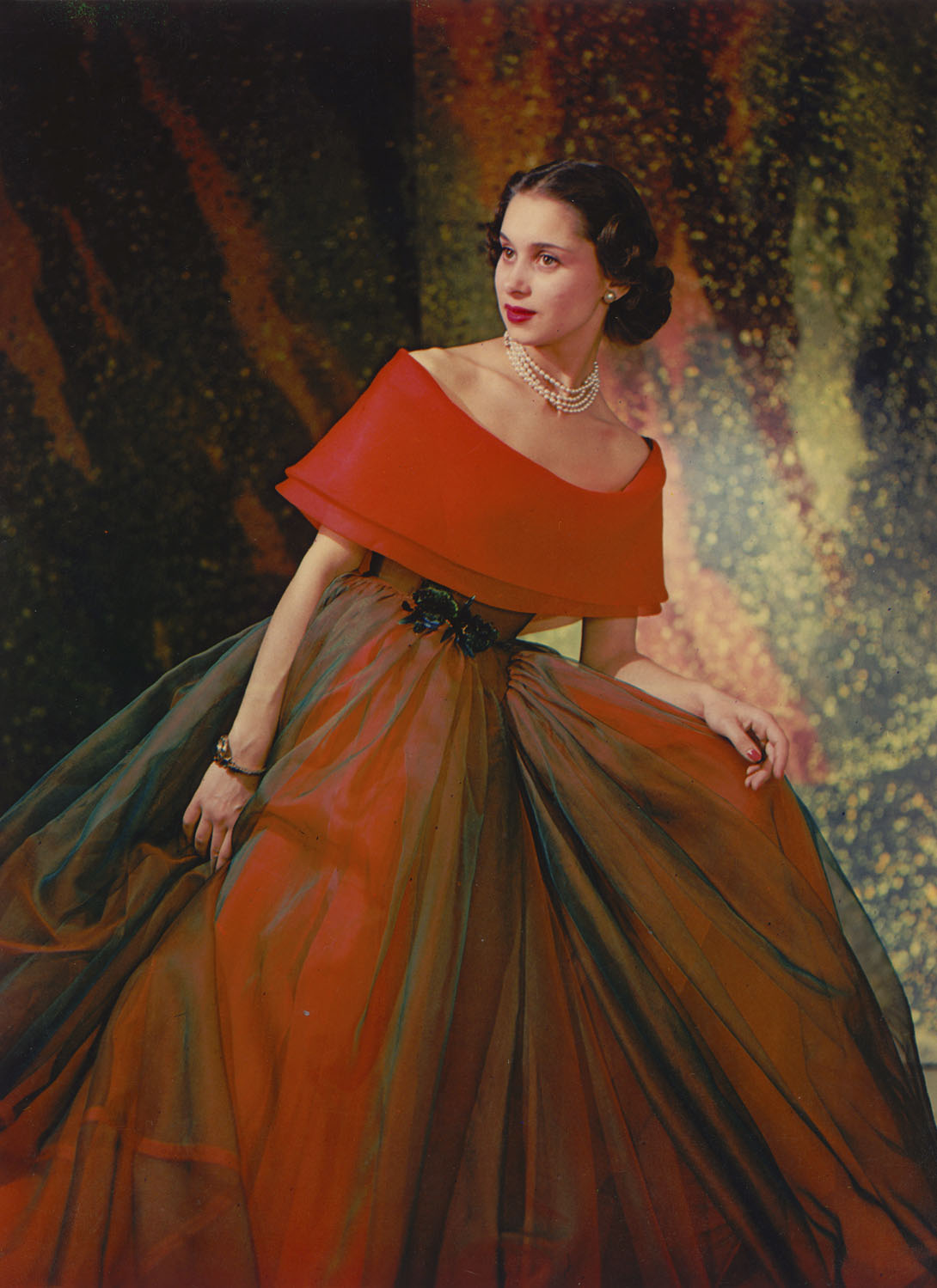
 

Philippe Pottier (French, 1905-1991)
'Evening Gown by Madame Grès' 1950/1954


Philippe Pottier (French, 1905-1991)
Evening Gown by Madame Grès
1950/1954
22.2 x 16.5cm
Kodak Dye Transfer Print
The Albertina Museum, Vienna – Permanent Loan by Höhere Graphische Bundes-Lehr- und Versuchsanstalt
© Photo: The Albertina Museum, Vienna


Exhibition Texts

Introduction

True Colors: Color in Photography from 1849 to 1955

Today, colour photography is omnipresent, but the knowledge about its complex genesis is not very familiar. This exhibition highlights the multifaceted developments that were initiated starting in the mid-nineteenth century to bring colour into photography. Thanks to the extensive photographic collection of the Imperial-Royal Institution of Graphic Education and Research, the Albertina possesses unique holdings of important examples from this exciting chapter of photographic history.

As early as the middle of the nineteenth century, individual scientists managed to create unique photographs in color, which, however, were not intended for everyday use. Therefore, it was common from the early days to employ colouration or toned photographic papers. In 1891, Gabriel Lippmann achieved a crucial success in direct color photography by formulating the interferential colour process, which produced brilliantly vivid images. The Lumière brothers finally accomplished the first revolution in color photography: in 1907, they brought industrially manufactured autochromes to market. It was now for the first time that photographers and amateurs could access a practicable process for the production of colour glass slides. Thanks to more elaborate three-colour processes and Pictorialist fine art printing, which were developed around the same time, it was also possible to produce photographs in colour on paper.

The desire for colour in photography, which had been evident since it had existed, continued to prevail in the twentieth century. A decisive breakthrough was achieved by the Kodak Company in the mid-1930s, when it produced the first 35 mm photographic color slide film. Starting out from the USA, more practical materials for analog color photography, which had been developed gradually, also established themselves in Europe after World War II. It was now impossible to stop the triumph of modern colour photography.

All objects on display here come from the holdings of the Albertina or are on permanent loan from the collection of the Höhere Graphische Bundes-Lehr- und Versuchsanstalt [Higher Federal Institution of Graphic Education and Research].

Chromatic Diversity

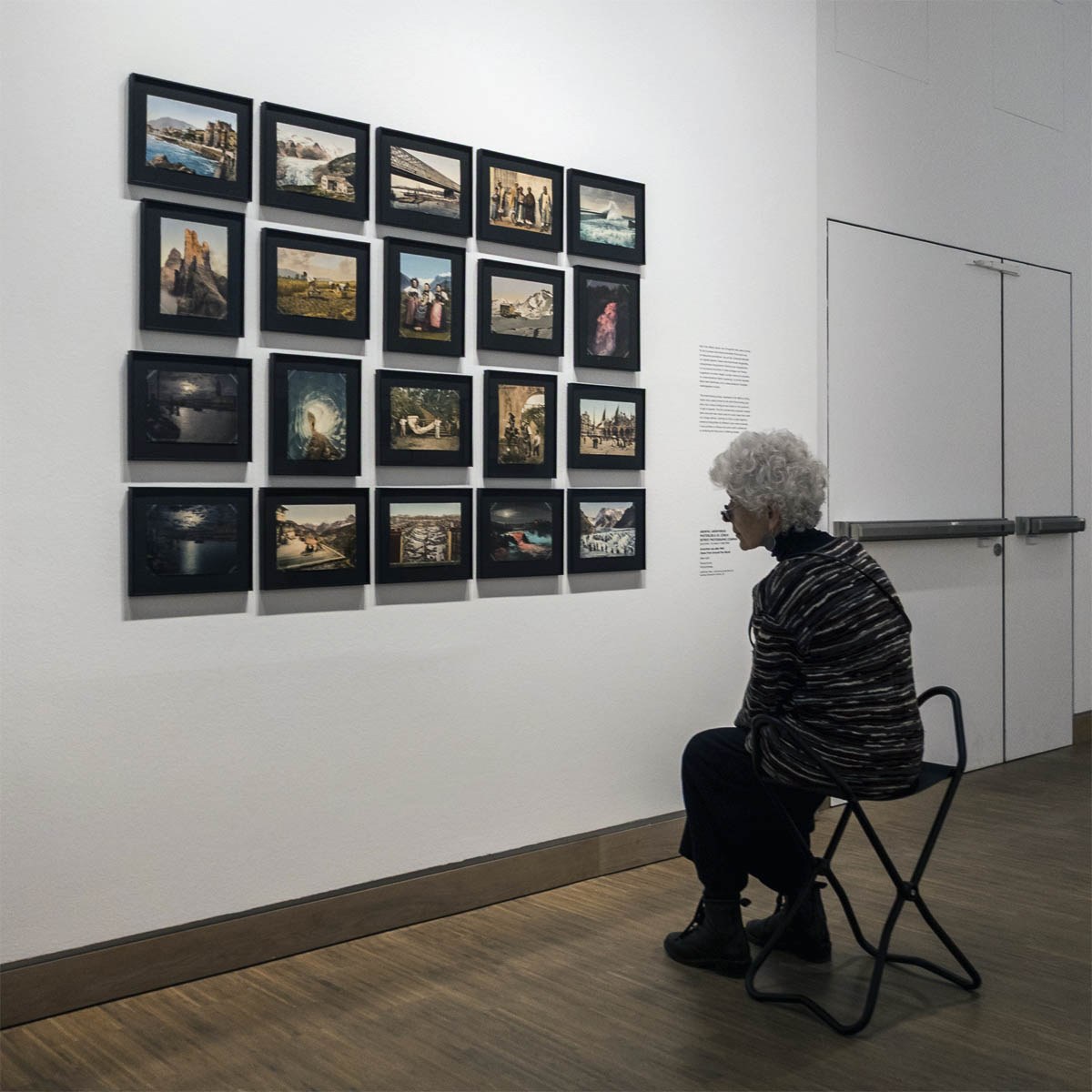
Before it was possible to produce color photographs, photographers made use of a number of methods to bring color into their images. Even in the early days, daguerreotypes and salted paper prints were coloured by hand. While daguerreotypes were usually colored only partially, salted paper prints were sometimes heavily painted over. The so-called pigment papers, which enjoyed great popularity from the 1850s onward, enabled monochrome prints in various colours. Industrial manufacturers offered a wide range of nuances that could be variably used depending on the motif. Another way of lending prints uniform colour effects were toning baths. It was thus variable methods that were employed to produce photographs displaying a rich chromatic diversity.

A vital contribution to photography in colour was the introduction of the so called orthochromatic negative plates. In 1873, Hermann Wilhelm Vogel discovered the sensitisation of the photographic emulsion, so that the plates truthfully rendered the brightness values of blue, orange, yellow, and green. Earlier, the grey values of the blue areas had appeared overly bright, while the other colours had often seemed too dark. With the development of so-called panchromatic negative material it became possible from 1902 on to accurately record the entire visible spectral range according to tonal values. This progress was crucial for colour photography, as an incorrect recording of the tonal values during a shot could result in a distorted colour impression in the final product.

A Solitaire – the Interferential Colour Process

The interferential colour process, with which Gabriel Lippmann went public in Paris in 1891, is considered a first milestone in direct color photography. The method ensured permanently stable, brilliantly vivid colour images. It is based on the interference of light waves caused during exposure by the reflections of incident light rays off a reflective layer of mercury behind the negative. In the photographic emulsion, the finest layers are created alongside the standing waves, in which accumulations of silver are deposited. The spacing between the
layers corresponds to the wavelength of the recorded colour, so that when the image is viewed at the correct angle, the individual parts reflect their original colour. Standing waves are the phenomenon that also causes the colour effects on soap bubbles.

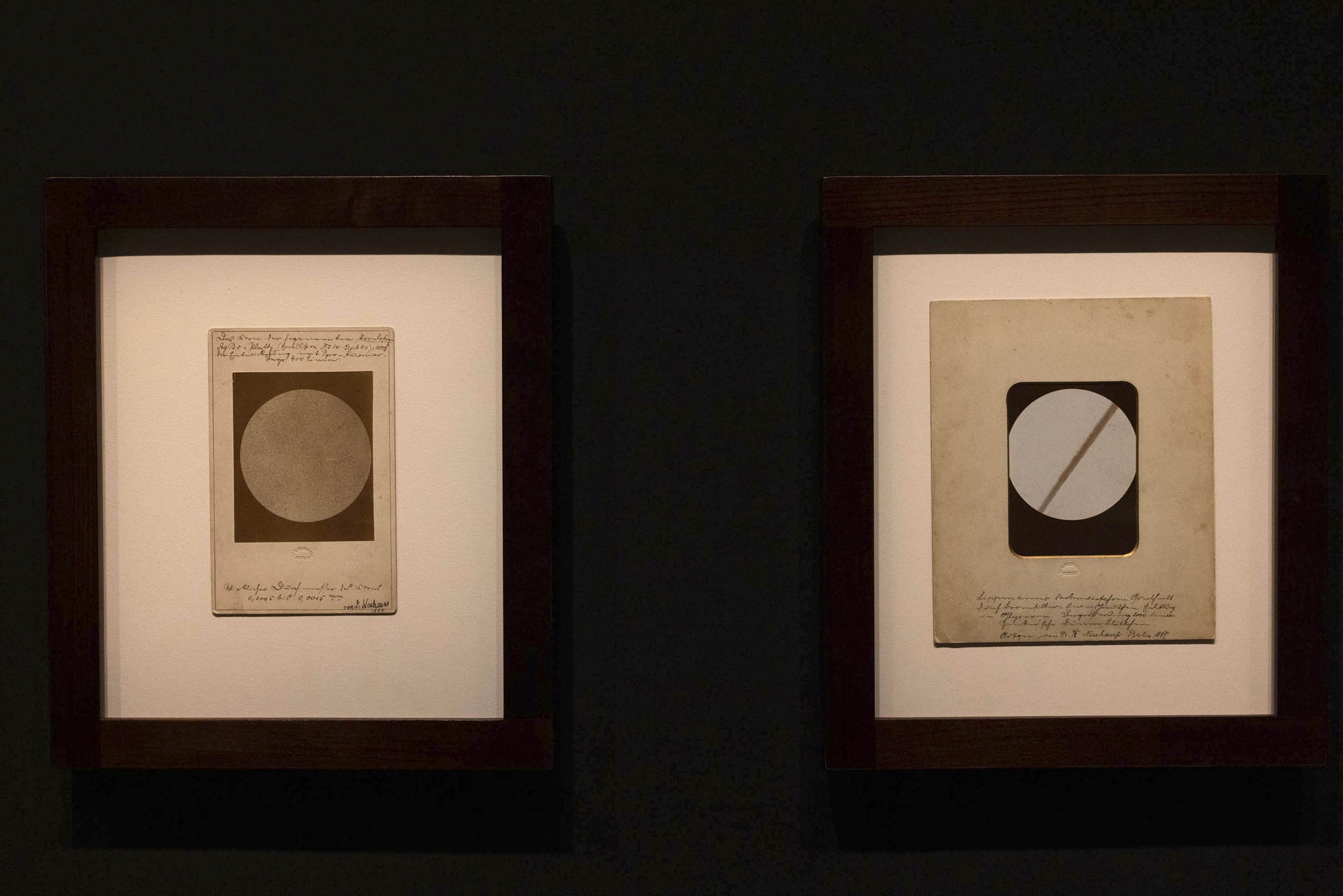
The process, which had its pitfalls, was enthusiastically received by specialists. The Lumière brothers, who as producers of photographic plates were highly interested in colour photography, collaborated with Lippmann to improve emulsions. The Berlin-based scientist Richard Neuhauss also dealt intensively with this method, based on the research conducted by the Viennese photochemist Eduard Valenta. Due to its chromatic purity, the spectrum offered itself as an ideal motif for images. Neuhauss’s plates fascinate us not only because of their luminous colours, but mainly for their wide range of motifs, which was facilitated by the reduction of exposure times.

Photomechanical Color Printing Processes

Since the development of chromolithography in 1837, color reproductions had been increasingly used for luxury volumes. In combination with photography, the printing plates could either be exposed directly, or the photographic images were transferred to the plates by means of transfer printing. This and related procedures led to an increase of elaborately produced publications of scholarly character. For the work Le Trésor artistique de la France, which contained high-quality colour reproductions of art objects held by the Louvre, the French photographer Léon Vidal developed a complex process referred to as photochromie. Photographic prints constituted the base layer onto which he printed several tinted lithographic plates. Through the additional use of metallic colours or papers and a layer of varnish, Vidal achieved three-dimensional effects.

Another important step was the introduction of the collotype process, which, from 1868 onward, allowed printing black-and-white photographs in halftones. Institutions like the Imperial-Royal Austrian Trade Museum in Vienna published such luxurious scholarly publications as the illustrated volume Orientalische Teppiche [Oriental Rugs], which appeared in 1892. For this work, black-and-white collotypes and the chromolithographic plates were partly each executed across the entire surface and partly combined with each other in order to document the knotting technique and the colouration of the objects equally accurately. A colour sample based on the original rug was first painted on the collotype and then transferred by lithography. Up to thirteen individually tinted printing plates were employed in the process. Both publications stand out for the effort to imitate the object character in the coloured reproduction.

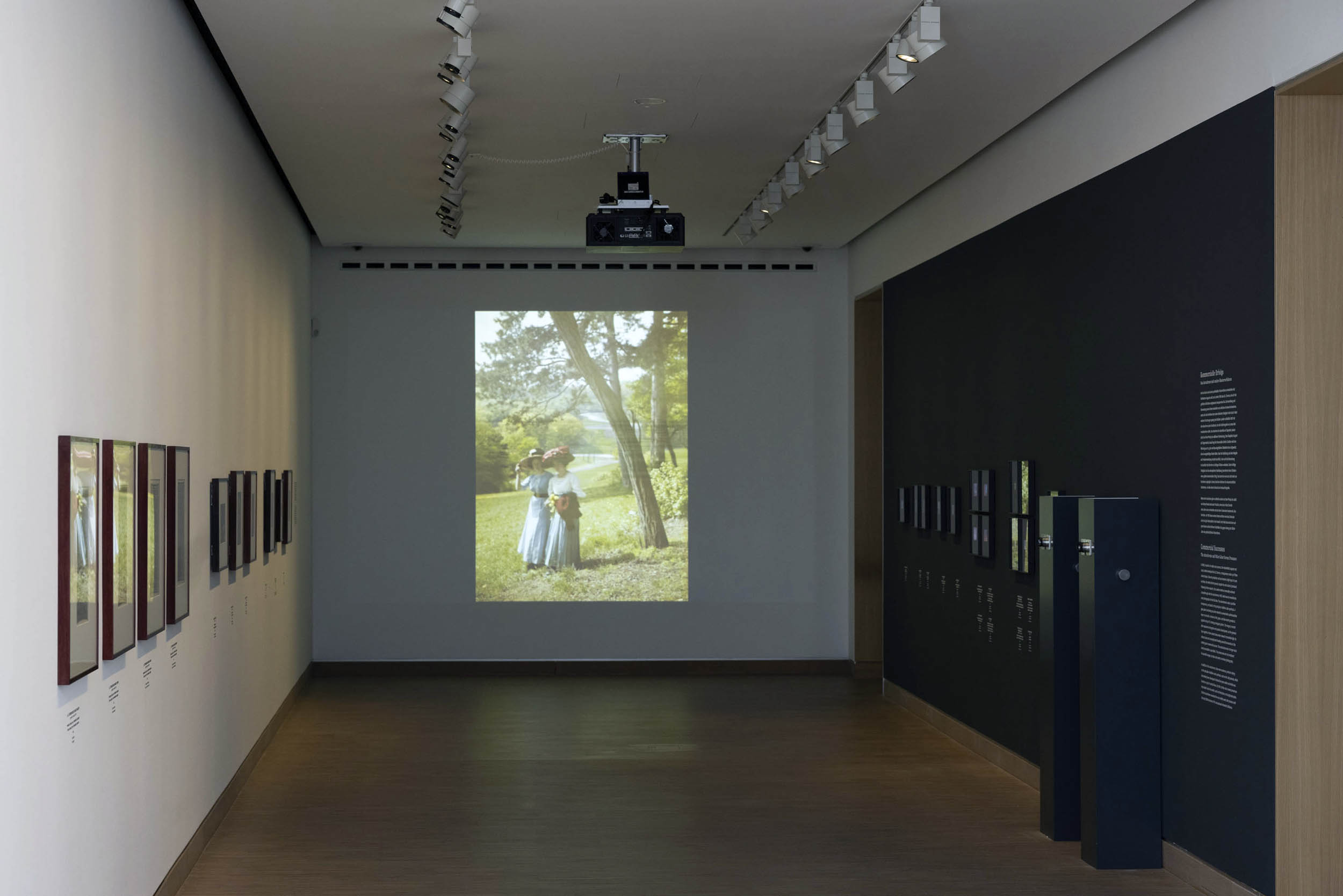
Commercial Successes – the Autochrome and Other Color Screen Processes

In 1893, in search of a viable color process, the industrialists Auguste and Louis Lumière developed the ALL Chroma, a transparency made up of three coloured layers. Since its production and use involved a high input of costs and time, the method did not prevail, despite the vivid colors it produced. Following further research, the Lumière brothers eventually achieved a breakthrough with the autochrome in 1907, which was to revolutionise colour photography for the first time. The autochrome is also a positive transparency, yet based on the principle of additive color synthesis. A glass plate functioning as carrier material is covered with a photosensitive layer on one side. A mixture of red, green, and blue starch granules is applied on top of it, forming an irregular pattern. The image is created after exposure and negative and positive development, as the granules fuse together to form coloured areas when viewed in transmitted light. Its vibrant colors and uncomplicated handling earned the inventors of this method great commercial success. The autochrome was no longer exclusively accessible to specialists. The process was not only employed for scientific images, but also and mainly in amateur photography.

In addition to the autochrome, there were numerous products relying on the principle of additive color synthesis, such as the Joly process, which had already been developed in England ten years earlier and which was based on a grid of vertical lines. By 1910, further colour screen processes had made it onto the market, such as Omnicolore or the Agfacolor plate. But the autochrome remained the most widely used colour process until the early 1930s because of its unsurpassed chromatic brilliance.

Colour by “Indirect” Means – Three-Colour Processes

Three-colour photographic printing methods on paper are based on the principle of subtractive colour mixing. The processes, their implementation differing in detail, followed a multistep procedure. At first, three subsequent black-and-white shots were taken behind red, green, and blue filters. The so called colour separation negatives were then inverted into positives. From the three positives, three matrices – in the complementary colours cyan,
magenta, and yellow – were then produced. The colour image was finally composed of these three colours.

For the pinatype, three matrices were transferred onto a sheet of prepared paper. What mattered for an accomplished picture was not only proper colour adjustment, but also an absolutely precise alignment of the images. The still life of various laboratory utensils demonstrates the individual steps leading to a colourful picture. The so-called interpositives provide the basis for the coloured matrices, which, printed one upon the other, provide the final version of the picture. Apart from still lifes, photographers also employed this technique, which was developed to market maturity by Ernst König in 1905, for portraits. In these photographs, they showcased their creative skills in handling colour.

Pictorialist Endeavors – Fine Art Printing Processes

Artistic photography around 1900 was propagated by wealthy amateurs who wished to elevate photography to the level of fine art. Their ambition was to be able to manipulate the photographic print by hand, as the mechanical aspect of photography was criticised as being inartistic. The gum bichromate print, a so-called fine art printing process, allowed them to control the work as much as possible. A mixture of pigments, gum arabic, and photosensitive salts was applied to coarse paper and then exposed. After washing out the unexposed areas, the image became visible. For multicolor works, this process could be repeated as often as desired, each time using a different pigment. This advancement of the gum bichromate printing technique toward multicolour printing was first implemented by members of the Camera Club in Vienna, an association of amateur photographers. The possibility of creating such colourful images that could be used as decorative works of art on the wall and sometimes reach large dimensions, was particularly enthusiastically received in German-speaking countries.

Paths to Modern Colour Photography

The consequential breakthrough to mass-market color photography was achieved in the mid-1930s, when the companies Eastman Kodak (USA) and, shortly thereafter, Agfa (Germany) put so-called modern multilayer films with dye couplers on the market. By 1936, the first 35mm colour slide films and, by 1942, the first colour films and corresponding photographic papers for the negative-positive process were available, the latter of which revolutionised colour photography a second time. Yet the outbreak of World War II initially delayed the spread of these innovations in Europe. But from the 1950s onward, the triumph of modern analog colour photography could not longer be stopped.

However, contemporary high-quality copying and printing processes were still extremely expensive and complicated. The Duxochrome and dye-transfer processes, for example, were valued not only for the brilliance and stability of their colours, but also because they could be manipulated during the production process. But due to the high cost of production, they were mainly used for commercial purposes. Product and fashion photography accommodated the needs of advertising and the press. In Vienna, the photographers Arthur Benda and Hans Madensky were very successful in these fields.

Text from the Albertina Museum


Installation view of the exhibition 'True Colors: Color in Photography from 1849 to 1955' at Albertina Modern
Installation view of the exhibition 'True Colors: Color in Photography from 1849 to 1955' at Albertina Modern, Vienna


Installation views of the exhibition True Colors: Color in Photography from 1849 to 1955 at Albertina Modern
Photos: Karin Svadlenak-Gomez
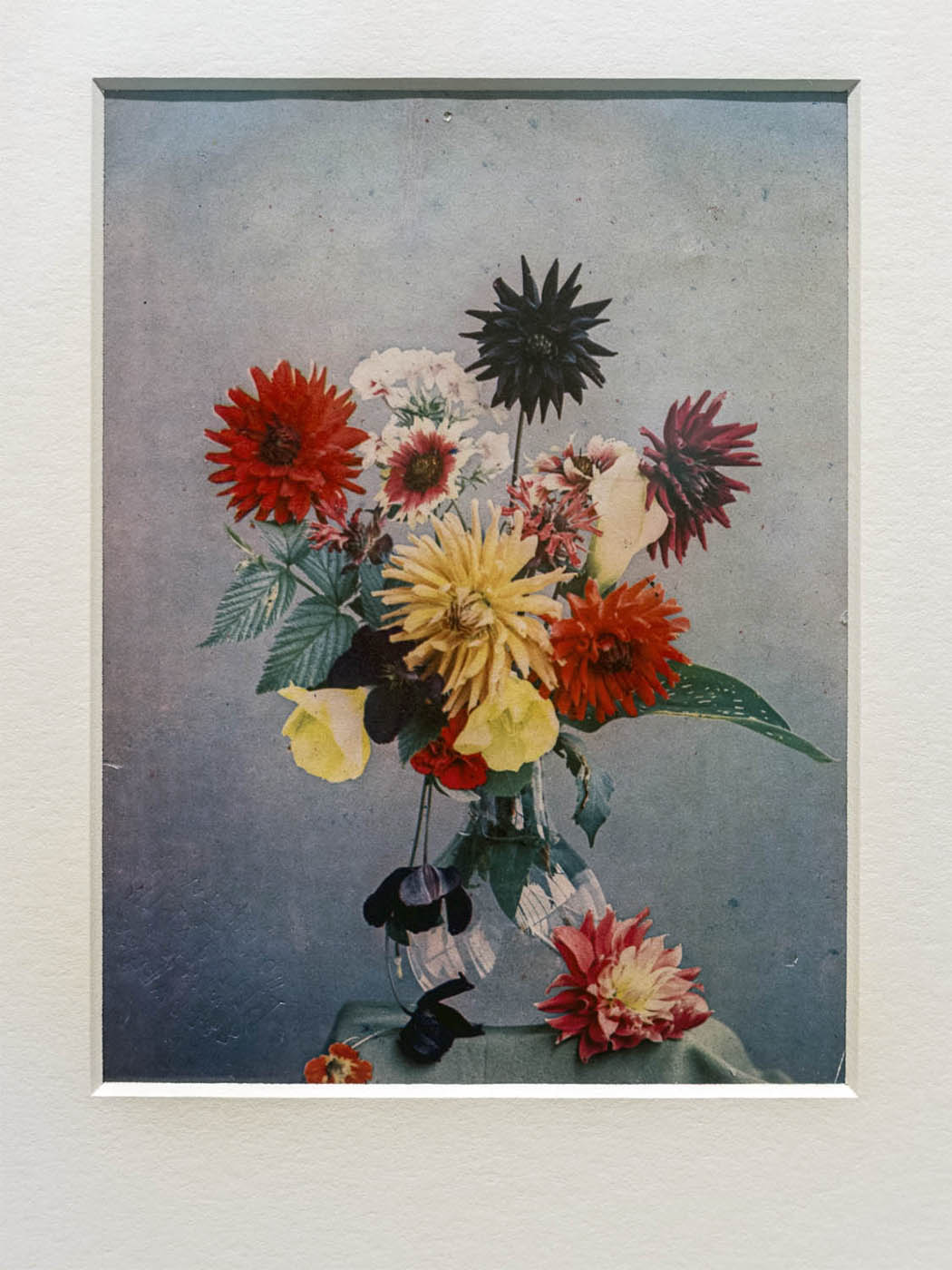
 

Ernst König (German, 1869-1924) 'Still-life with flowers' 1905


Ernst König (German, 1869-1924)
Still-life with flowers
1905
Pinatype
Photo: Karin Svadlenak-Gomez
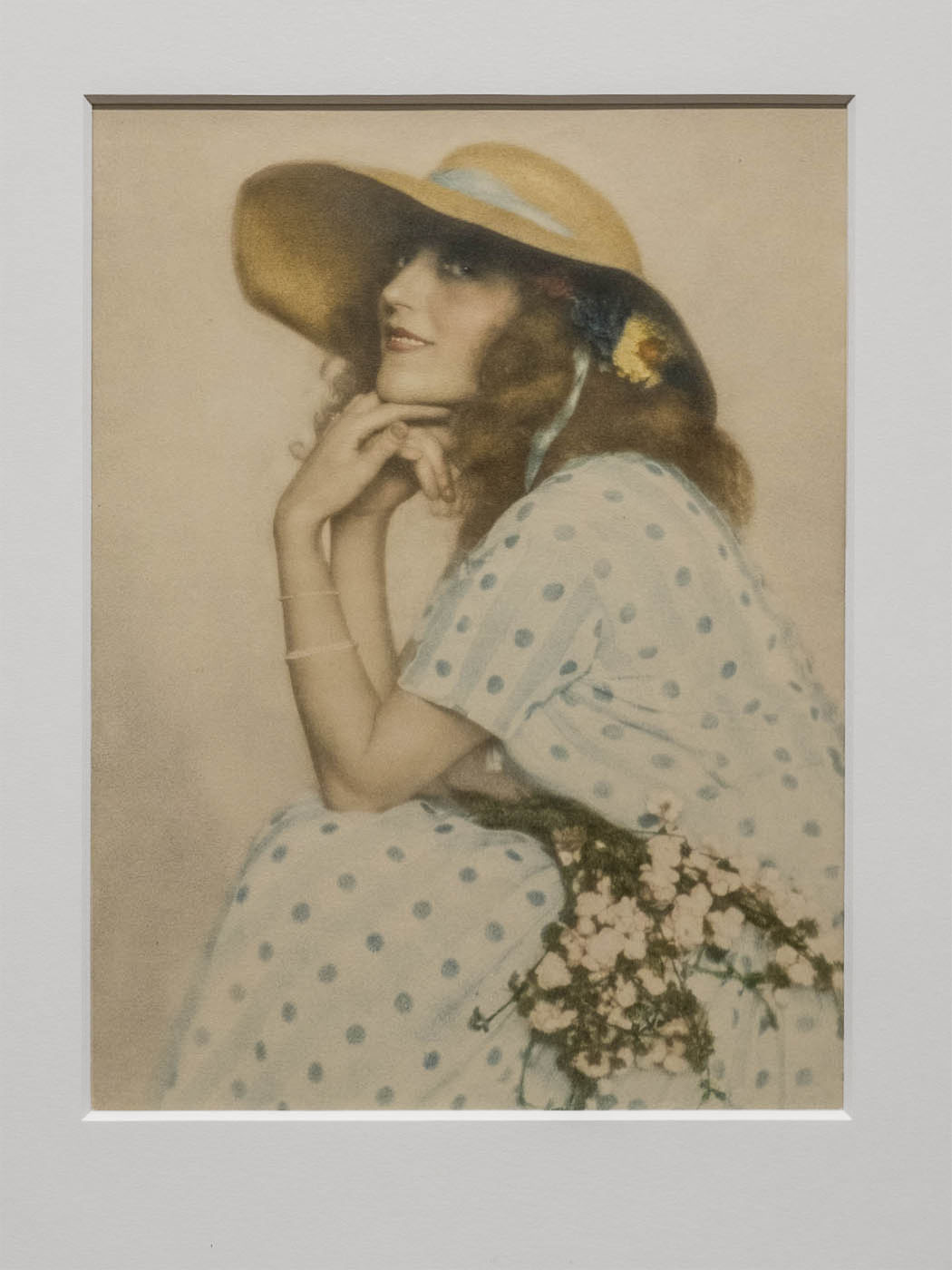
 

Atelier D'Ora (est. 1907) 'Mrs. Oergan' 1924


Atelier D’Ora (est. 1907)
Mrs. Oergan
1924
Bromoil transfer print
Photo: Karin Svadlenak-Gomez
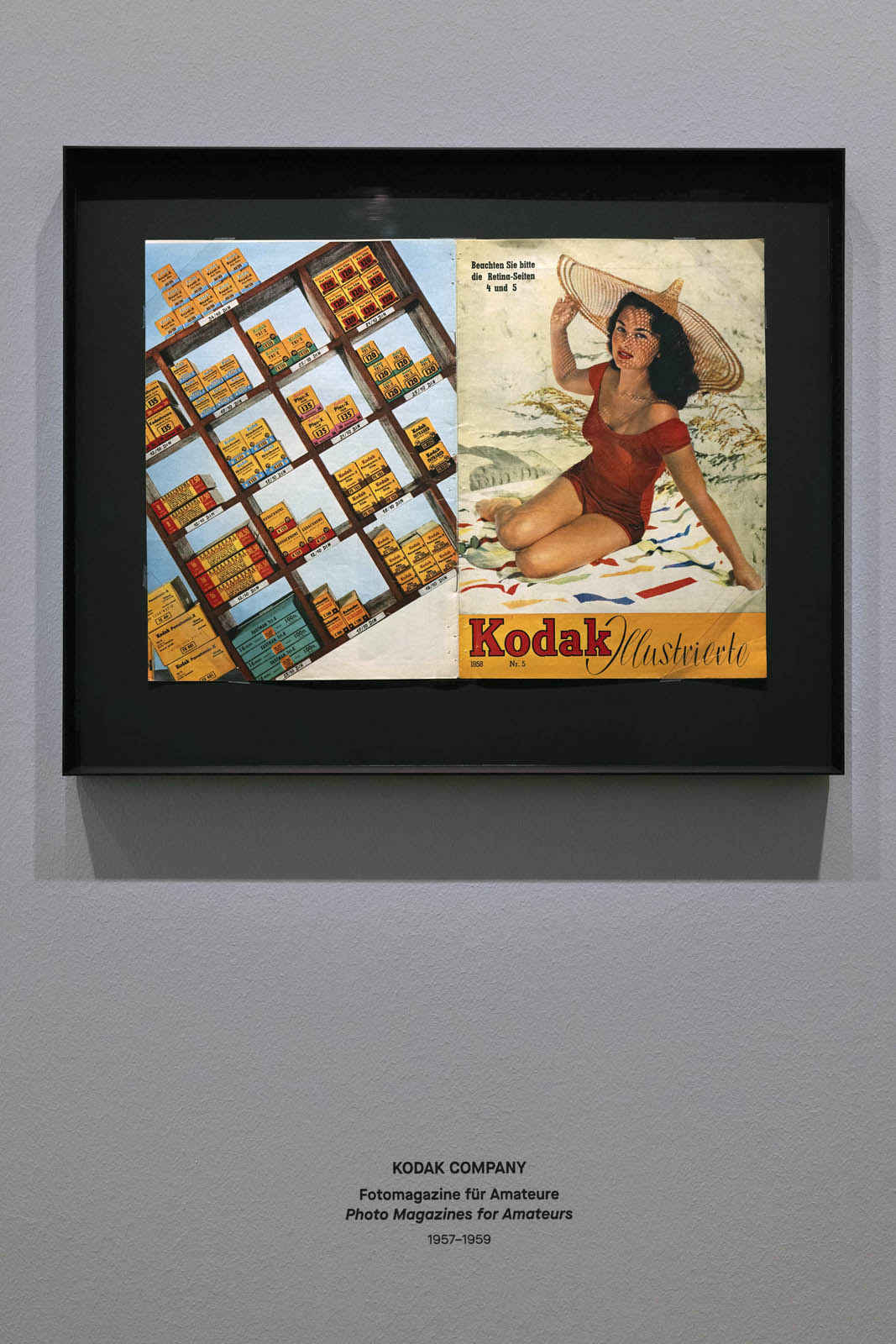
 

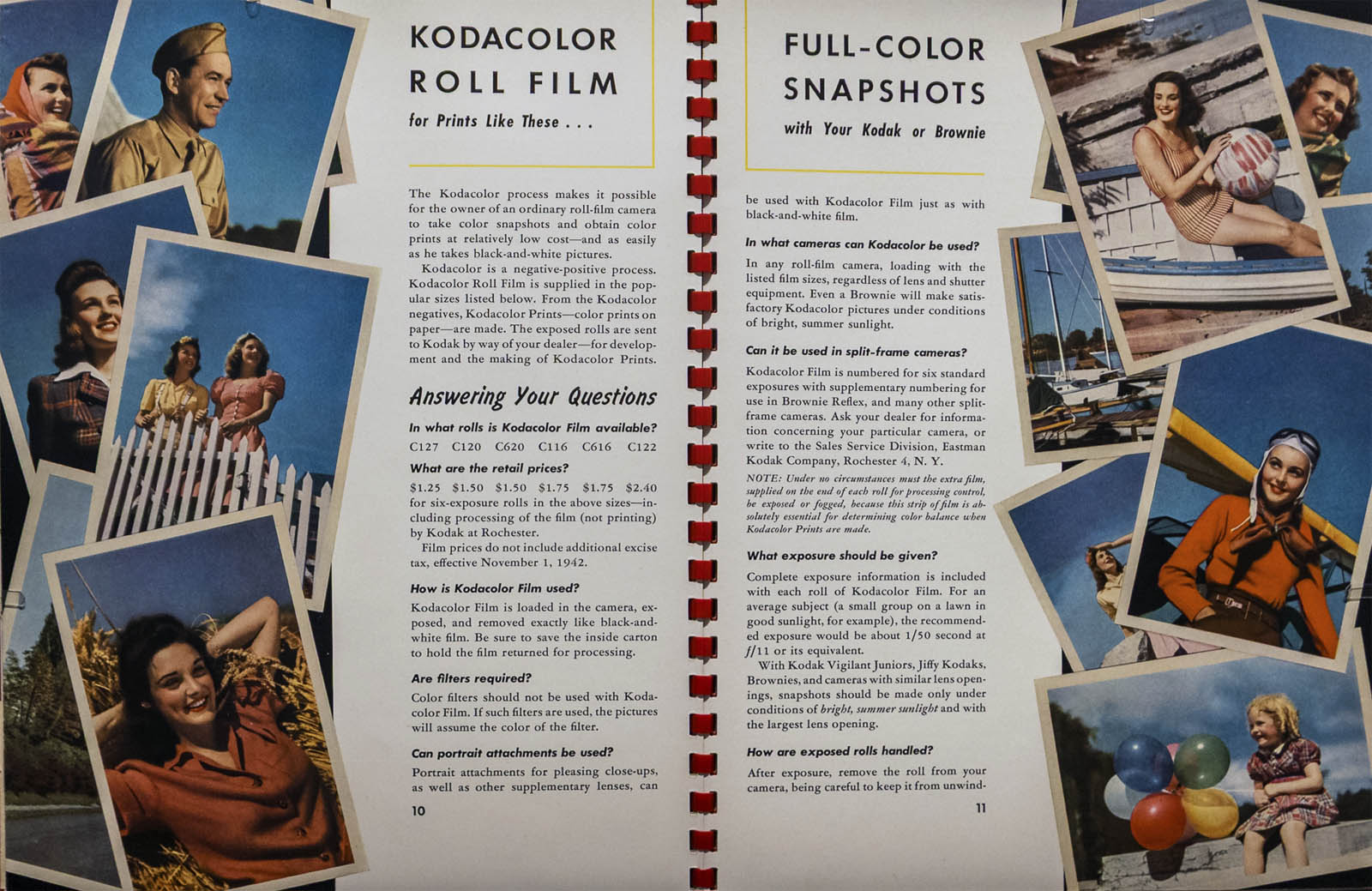
Installation view of the exhibition 'True Colors: Color in Photography from 1849 to 1955' at Albertina Modern, Vienna showing Kodak Company. 'Photo Magazines for Amateurs' 1957-1959


Installation view of the exhibition True Colors: Color in Photography from 1849 to 1955 at Albertina Modern, Vienna showing Kodak Company. Photo Magazines for Amateurs 1957-1959
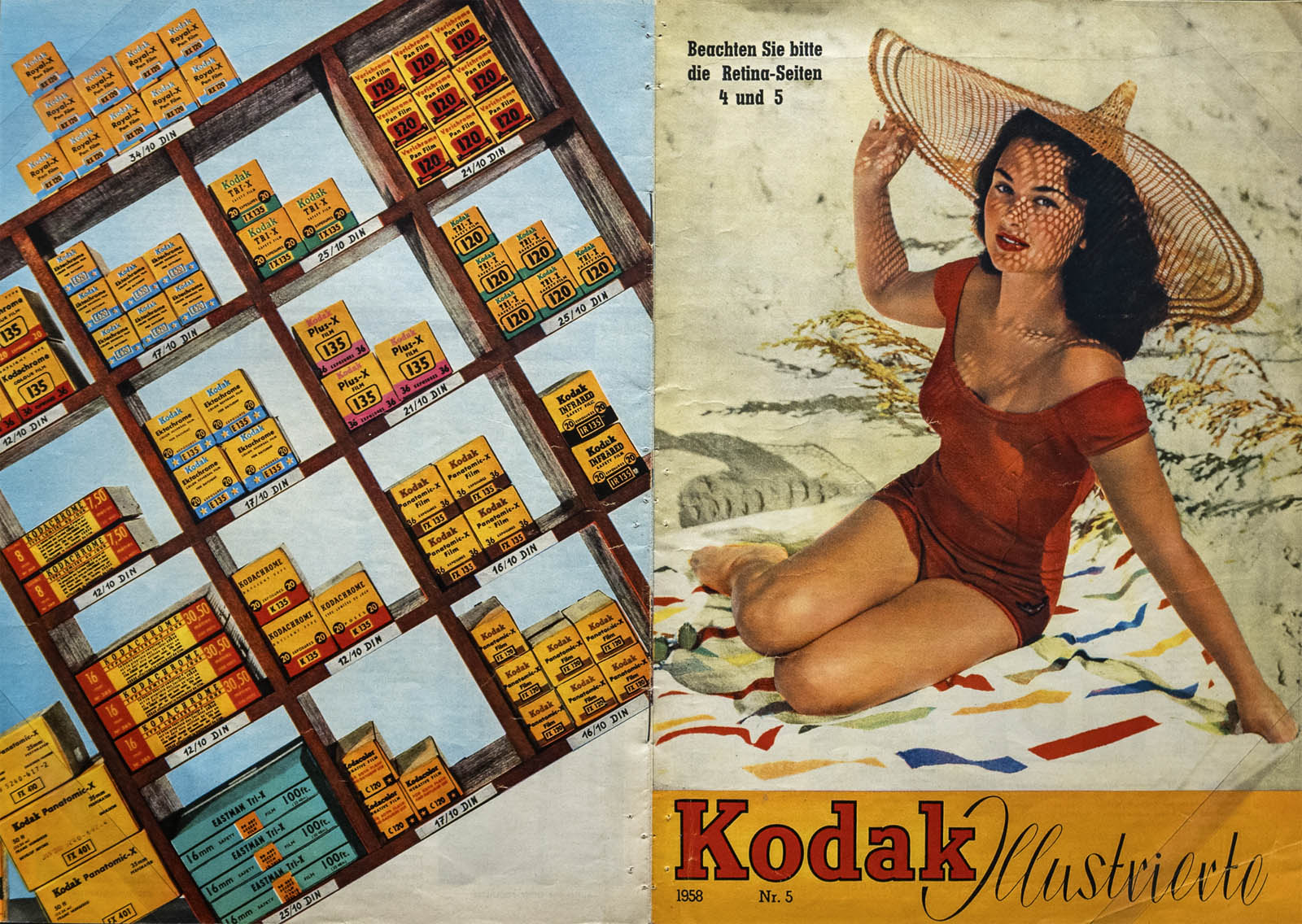
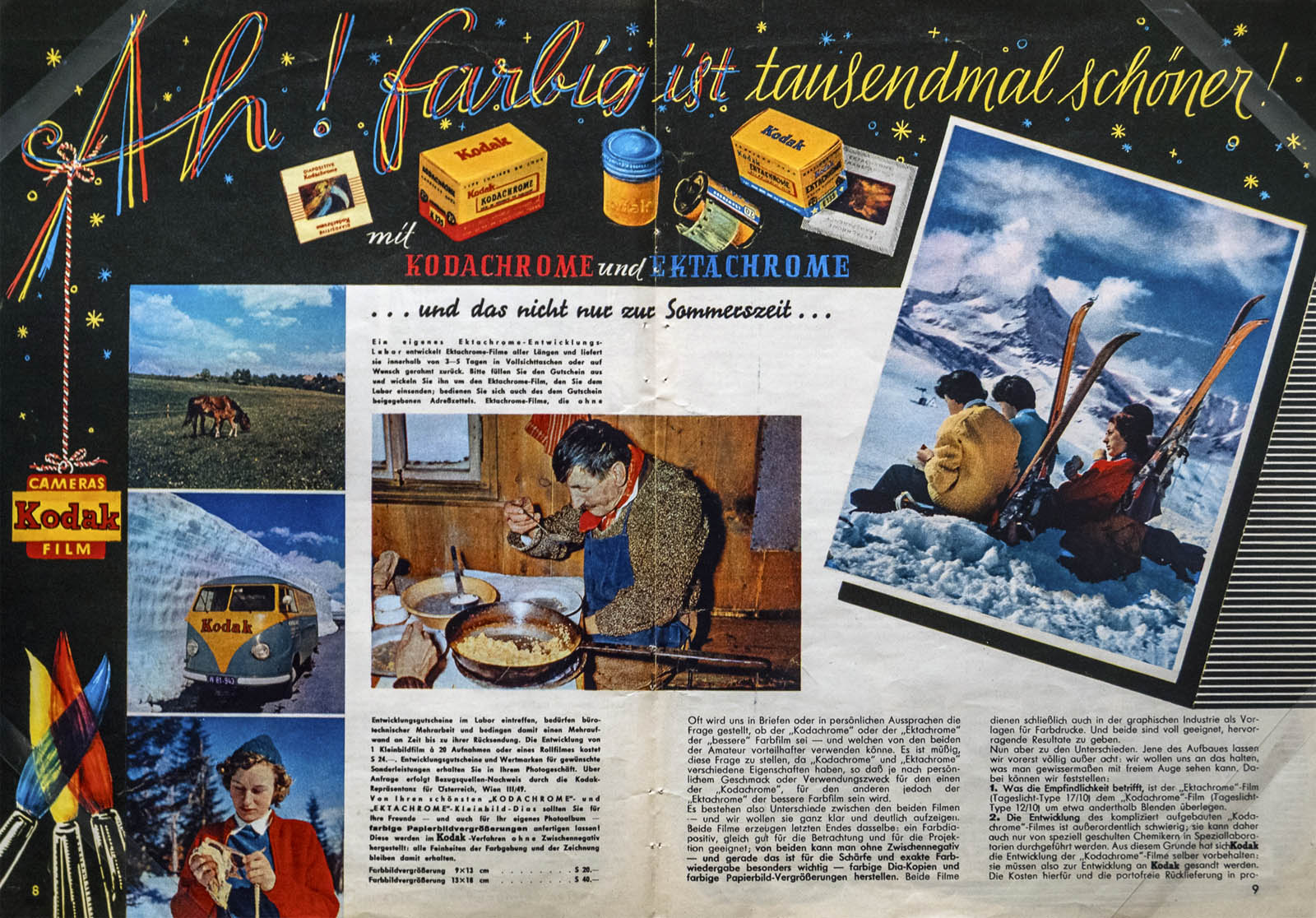
 

Installation view of the exhibition 'True Colors: Color in Photography from 1849 to 1955' at Albertina Modern, Vienna


Installation views of the exhibition True Colors: Color in Photography from 1849 to 1955 at Albertina Modern, Vienna
Photos: Karin Svadlenak-Gomez
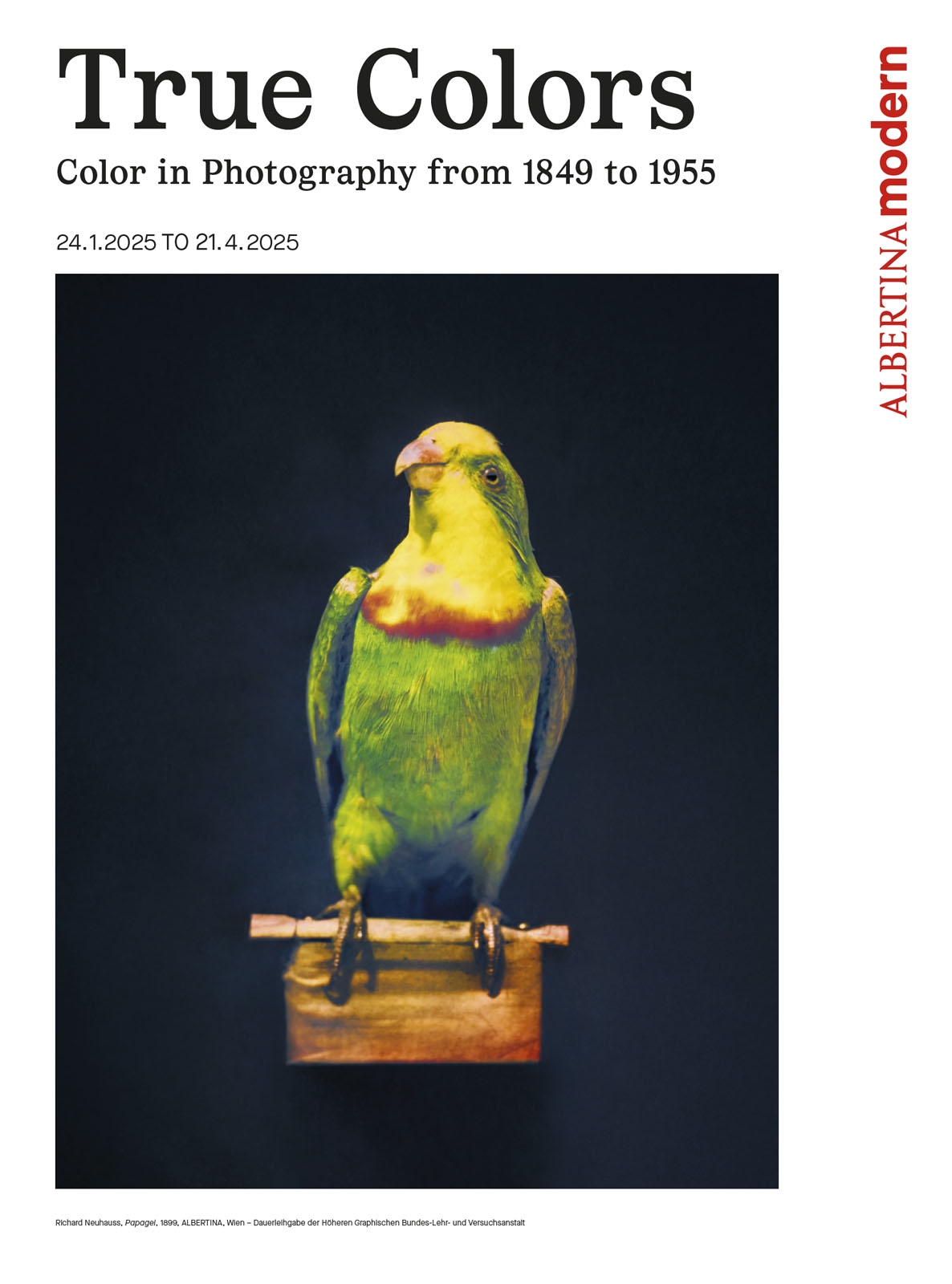
 

'True Colors: Color in Photography from 1849 to 1955' at Albertina Modern poster


True Colors: Color in Photography from 1849 to 1955 at Albertina Modern poster


The Albertina Museum
Albertinaplatz 1
1010 Vienna
Phone: +43 (0)1 534 83 0

Daily 10am – 6pm
Except Wednesday and Friday 10am – 9pm

The Albertina Museum website

LIKE ART BLART ON FACEBOOK

Back to top

Exhibition: ‘Goya: Order and Disorder’ at the Museum of Fine Arts, Boston

Exhibition dates: 12th October 2014 – 19th January 2015

Curators: Stephanie Loeb Stepanek, Curator of Prints and Drawings; Frederick Ilchman, Chair, Art of Europe; and Mrs. Russell W. Baker Curator of Paintings.


Francisco Goya (Spanish, 1746-1828) 'The Parasol' 1777


Francisco Goya (Spanish, 1746-1828)
The Parasol
1777
Oil on canvas, tapestry cartoon
Museo Nacional del Prado, Madrid, España
Photograph © Museum of Fine Arts, Boston


This one is for me, this man of darkness and light.

Marcus


Many thankx to the Museum of Fine Arts, Boston for allowing me to publish the art work in the posting. Please click on the images for a larger version of the art.


Francisco Goya (Spanish, 1746-1828) 'The Family of the Infante Don Luis' 1784


Francisco Goya (Spanish, 1746-1828)
The Family of the Infante Don Luis
1784
Oil on canvas
630 x 838cm
Fondazione Magnani Rocca, Parma, Italy


Francisco Goya (Spanish, 1746-1828)  'Attack on a Military Camp' about 1808-1810


Francisco Goya (Spanish, 1746-1828) 
Attack on a Military Camp
c. 1808-1810
Oil on canvas
Colección Marqués de la Romana
Photograph © Museum of Fine Arts, Boston


Francisco Goya (Spanish, 1746-1828) 'One Can't Look (No se puede mirar), Disasters of War 26' c. 1811-1812


Francisco Goya (Spanish, 1746-1828)
One Can’t Look (No se puede mirar), Disasters of War 26
c. 1811-1812
Etching, direct etching, and drypoint (working proof)
1951 Purchase Fund
Photograph © Museum of Fine Arts, Boston


Francisco Goya (Spanish, 1746-1828) 'A heroic feat! With dead men! (Grande hazaña! Con muertos!)' c.1810-1813


Francisco Goya (Spanish, 1746-1828)
A heroic feat! With dead men! (Grande hazaña! Con muertos!), Disasters of War 39
c. 1810-1813
Etching, direct etching, and drypoint


Francisco Goya (Spanish, 1746-1828) 'Unfortunate events in the front seats of the ring of Madrid, and the death of the Mayor of Torrejón' (Desgracias acaecidas en el tendido de la plaza de Madrid, y muerte del alcalde de Torrejón) 1815-1816


Francisco Goya (Spanish, 1746-1828)
Unfortunate events in the front seats of the ring of Madrid, and the death of the Mayor of Torrejón (Desgracias acaecidas en el tendido de la plaza de Madrid, y muerte del alcalde de Torrejón)
1815-1816
From the 35 etchings making up the Tauromaquia (“Art of Bullfighting”) series
Etching with burnished aquatint, drypoint and burin on paper


Francisco Goya (Spanish, 1746-1828) 'The Agility and Audacity of Juanito Apiñani in the Ring at Madrid' (Ligereza y atrevimiento de Juanito Apiñani en la de Madrid) (Tauromaquia 20) 1815-1816


Francisco Goya (Spanish, 1746-1828)
The Agility and Audacity of Juanito Apiñani in the Ring at Madrid (Ligereza y atrevimiento de Juanito Apiñani en la de Madrid) (Tauromaquia 20)
1815-1816
Etching with burnished aquatint, drypoint and burin on paper
© Museum of Fine Arts, Boston


Francisco Goya (Spanish, 1746-1828) 'Feminine Absurdity (Disparate femenino) Disparates 1' 1815-1817


Francisco Goya (Spanish, 1746-1828)
Feminine Absurdity (Disparate femenino) Disparates 1
1815-1817
Fundación Lázaro Galdiano


This fall, the Museum of Fine Arts, Boston (MFA), presents Goya: Order and Disorder, a landmark exhibition dedicated to Spanish master Francisco Goya (1746-1828). The largest retrospective of the artist to take place in America in 25 years features 170 paintings, prints and drawings – offering the rare opportunity to examine Goya’s powers of observation and invention across the full range of his work. The MFA welcomes many loans from Europe and the US, including 21 works from the Museo Nacional del Prado in Madrid, along with loans from the Musée du Louvre, the Galleria degli Uffizi, The Metropolitan Museum of Art, the National Gallery of Art (Washington) and private collections. Goya: Order and Disorder includes some 60 works from the MFA’s collection of Goya’s works on paper, one of the most important in the world. Many of these prints and drawings have not been on view in Boston in 25 years. Employed as a court painter by four successive rulers of Spain, Goya managed to explore an extraordinarily wide range of subjects, genres and formats. From the striking portrait Duchess of Alba (1797) from the Hispanic Society of America, to the tour de force of Goya’s Seated Giant (by 1818) in the MFA’s collection, to his drawings of lunacy, the works on view demonstrate the artist’s fluency across media. On view in the Museum’s Ann and Graham Gund Gallery from October 12, 2014 – January 19, 2015, the MFA is the only venue for the exhibition, which is accompanied by a publication revealing fresh insights on the artist.

“This exhibition offers a once-in-a-generation look at one of the greatest, most imaginative artists of all time,” said Malcolm Rogers, Ann and Graham Gund Director at the MFA. “Goya: Order and Disorder reflects the Museum’s close collaboration with the Prado, and builds on our proud tradition of Goya scholarship.”

As 18th-century culture gave way to the modern world, little escaped Goya’s penetrating gaze. Working with equal prowess in painting, drawing and printmaking, he was the portraitist of choice for the royal family as well as aristocrats, statesmen and intellectuals – counting many as acquaintances or friends. Living in a time of revolution and radical social and political transformations, Goya witnessed drastic shifts between “order” and “disorder,” from relative prosperity to wartime chaos, famine, crime and retribution. Among the works he created – some 1,800 oil paintings, frescoes, miniatures, etchings, lithographs and drawings – many are not easy to look at, or even to understand. With a keen sensitivity to human nature, Goya could portray the childhood innocence of Manuel Osorio Manrique de Zuñiga (about 1788, The Metropolitan Museum of Art, New York) – his most famous portrait of a child – or the deviance of the Witches’ Sabbath (1797-1798, Fundación Lázaro Galdiano, Madrid).

The full arc of Goya’s creativity is on display in the exhibition, from the elegant full-length portraits of Spanish aristocrats that first brought the artist fame, to caustic drawings of beggars and grotesque witches, to his series of satirical etchings targeting ignorance and superstition, known as the Caprichos. Rather than a chronological arrangement, exhibition curators Stephanie Loeb Stepanek, Curator of Prints and Drawings, and Frederick Ilchman, Chair, Art of Europe and Mrs. Russell W. Baker Curator of Paintings, grouped the works in Goya: Order and Disorder, and its accompanying publication, into eight categories highlighting the significant themes that captured Goya’s attention and imagination. From tranquil to precarious, Goya’s art made the diversity of life, and the conflicting emotions of the human mind, comprehensible to the viewer – and to himself.

“We decided to juxtapose similar subjects or compositions in different media in order to allow visitors to examine how Goya’s choice of technique informed and transformed his ideas, since the characteristics of each medium – and the intended audience – influenced the final appearance of the work,” said Stepanek.

Noted for his satirical eye, Goya reserved his closest scrutiny for himself. The first section of the exhibition, Goya Looks at Himself, is a sweeping group of self-portraits. In the MFA’s etching, The Sleep of Reason Produces Monsters (El sueño de la razon produce monstruos), Caprichos 43 (1797-1799), Goya offers himself as a universal artist sleeping at a desk, while the creatures of his dreams swirl about his head. This print is grouped with two loans from Madrid, The Artist Dreaming (about 1797), a drawing from the Prado that preceded the famous print, and Self-Portrait while Painting (about 1795), from the Museo de la Real Academia de Bellas Artes de San Fernando. Together, these works reflect Goya’s tendency to insert his persona into allegories and fantasies. At the entrance of this section is an imposing group portrait of The Family of the Infante Don Luis (1784, Fondazione Magnani Rocca, Parma, Italy) – the brother of King Charles III – which features 14 figures, including Goya, who depicts himself working on a sizeable canvas on an easel.

“Just as Goya’s imagery is determined by whether he painted, drew or made a print, he also reconsidered certain favoured subjects, reviving them from his memory and returning to them again and again during his long career,” said Ilchman. “Examining his compositional preoccupations across decades – often in the same room of the exhibition – reveals the continuity of Goya’s imagination.”

Through his art, Goya sought to describe, catalogue and satirise the breadth of human experience – embracing both its pleasures and discomforts. The artist tackled the nurturing of children, the pride and infirmity of old age, the risks of romantic love, and all types of women – from young beauties to old women. In the section dedicated to Goya’s depictions of the stages of life, Life Studies, the exhibition explores how the artist transformed observations of human frailty, creating allegories of vanity and the passage of time. A wizened woman, who is unsuccessfully attempting to adopt youthful styles in Until Death (Hasta la muerte), Caprichos 55 (1797-1799, The Boston Athenaeum), is revived in one of Goya’s most haunting monumental paintings – Time (Old Women) (about 1810-1812, Palais des Beaux-Arts de Lille). The aged woman is now decayed and diseased, but still clings to her outdated fashions, and is soon to be swept away by the broom of Time. Goya’s tapestry designs frequently depict young people, with relationships between men and women marked by affection, disaffection and tension. The Parasol (1777, Museo Nacional del Prado) presents a young woman who poses under a parasol with her docile lapdog – she seems to ignore her male companion in favour of engaging viewers who would look up at this tapestry, which was meant to hang over a door.

In the Play and Prey section, Goya’s creative process is revealed through representations of a popular game in which young women toss a well-dressed mannequin in a blanket. In Straw Mannequin, this carnivalesque reversal of class and gender roles is seen in a tapestry (1792-1793, Patrimonio Nacional, Spain), as well as two preparatory paintings (1791, Hammer Museum, Los Angeles and Museo Nacional del Prado). A late print, Feminine Absurdity (Disparate femenino) Disparates 1 (1815-1817, Fundación Lázaro Galdiano), imparts new meaning to the previously simple image of young women at play, as the women now strain to lift several figures, including a peasant and donkey. This more sinister vein is reflected in many of the subjects the artist returned to later in life, following the devastation of the Peninsular War and its political reversals. “Play and Prey” also explores Goya’s famous images of men engaging in hunting (his own favourite pastime) and the bullfight. In these works, including examples from the series of prints, the Tauromaquia and the Bulls of Bordeaux, Goya celebrates both activities while also subtly portraying their darker sides.

The precarious relationship between order and discord, balance and imbalance, is fundamental to Goya’s work, and the subject of the section In the Balance. The theme appears vividly in images of the punishing forces of nature, figures losing their balance and others fighting. This topic is particularly noteworthy given the tumultuous social and political change during Goya’s lifetime, as well as the artist’s own struggles with illness, dizzy spells and deafness. The MFA’s print, The Agility and Audacity of Juanito Apiñani in the Ring at Madrid (Ligereza y atrevimiento de Juanito Apiñani en la de Madrid (Tauromaquia 20) (1815-1816) depicts a precarious matador, who is poised midair as he vaults over a charging bull, anchored only by his upright pole.

Goya earned widespread fame through grand portraits executed in the 1780s and 1790s, and the exhibition displays some of these masterpieces alongside more intimate likenesses of his artistic and family circle. Focusing on the painter’s approach to portraiture – from relations with sitters to his handling of paint – Portraits explores the discipline that remained central to his reputation as Spain’s leading painter and helped sustain him financially throughout his career. Paintings of the Duke of Alba (1795, Museo Nacional del Prado) and Duchess of Alba (1797, Hispanic Society of America), shown together for the first time since the early 19th century, are superb examples of his aristocratic portraits and illustrate two of his most important patrons. In the Duchess of Alba, the darkly clothed sitter points a finger to the ground, where the words “Solo Goya” are written in the sand. The assertion that only Goya was worthy of this commission and that only he could have pulled off such a dramatic likeness, changes the painting’s focus from the aristocrat to the artist.

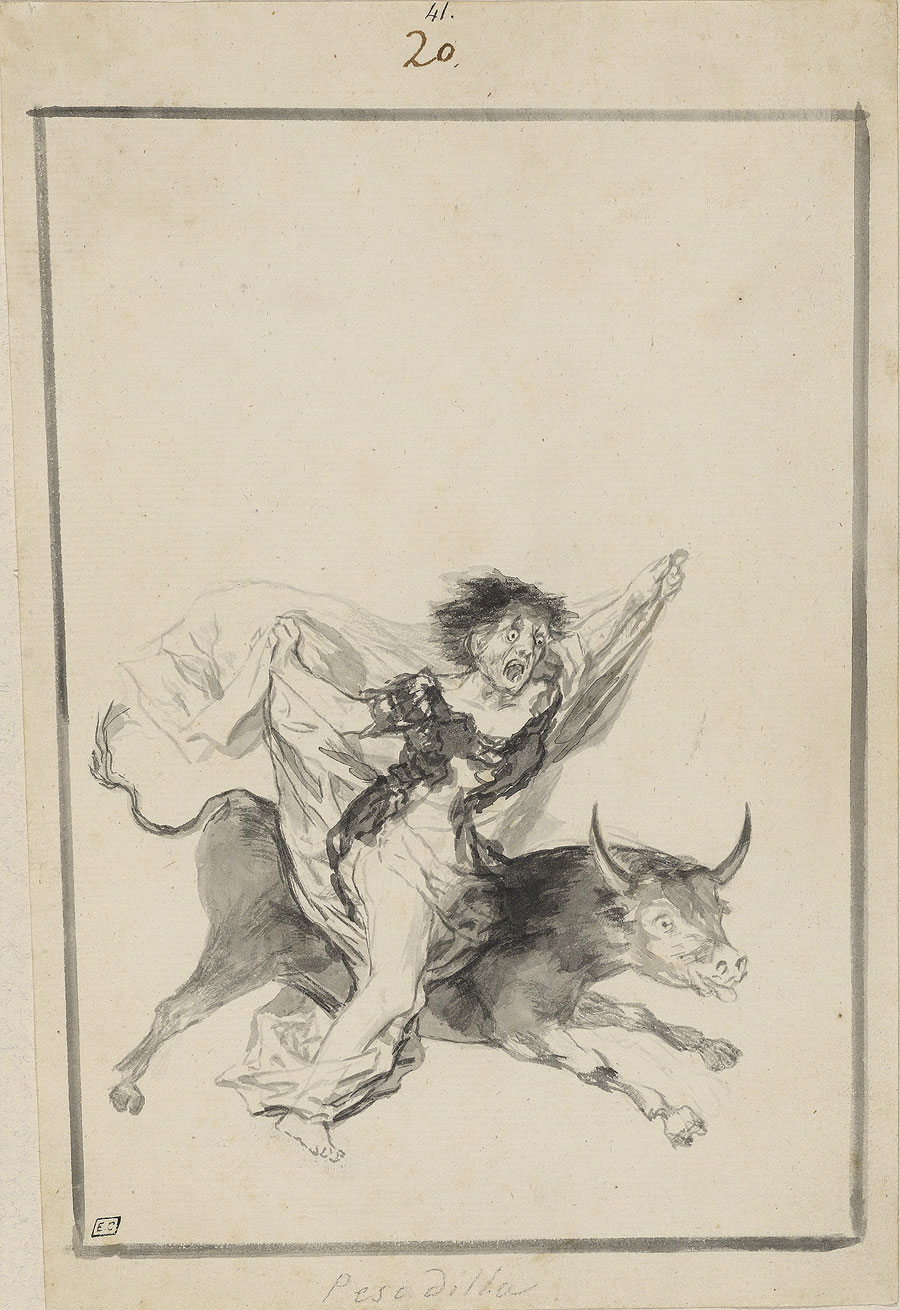
Other Worlds, Other States features two facets of Goya’s spiritual explorations – Christian religious belief and its opposite, superstition. While Goya frequently focused on clerical abuses, religious commissions helped pay the bills throughout his life, and there is no evidence that he lacked personal piety. One of Goya’s greatest legacies is his ability to represent mental and psychological conditions. His depictions of illusions and inner reality are also on view in this section, and include visions, nightmares and the deluded mind of the insane. An imaginative rendering of a particular Spanish nightmare – a witch riding a bull through the air – is depicted in the drawing Pesadilla (Nightmare) (1816-1820).

Many of Goya’s deranged characters highlight the fragile boundary between lunacy and sanity. A luminous painting on copper from the Meadows Museum in Dallas, Yard with Madmen of 1794 – which shows distressed and helpless lunatics – anticipates a sequence of black crayon drawings made three decades later. In these later works, the individuals, whom Goya labeled as “locos,” are in even more desperate condition, restrained in straitjackets or trapped behind bars. Also in this gallery, a “learning space” offers additional educational materials and a timeline that provides context and insight into the mind of the Spanish Master.

A keen awareness of the weight of historical events pervades Goya’s work. Although he belongs in the ranks of great history painters who narrated courageous acts, he is not preoccupied with generals, patriots and battles. Instead, he focuses attention on the anonymous victims of the horrors of war or the Spanish Inquisition, and rarely fails to raise moral questions in these works. In Capturing History, works that blend the epic and mundane include a painting of an imagined scene, Attack on a Military Camp (about 1808-1810, Colección Marqués de la Romana), in which a woman holds a screaming infant as she runs from assailants who have already wounded several people. In One Can’t Look (No se puede mirar), Disasters of War 26 (1810-1814), the viewer is only a step or two away from the victims and the advancing bayonets of the print’s aggressors. The work is part of the wrenching print series, Disasters of War, which depict the artist’s thoughts on violence during the Peninsular War that ripped Spain apart from 1808 to 1814.

The final section of the exhibition, Solo Goya, summarises the characteristics that establish the artist’s greatness – exploring themes such as Goya’s imagery of swarms of human figures as well as his periodic reflection on the concept of redemption. The same artist who took on the abuses of war could also evoke the most sympathetic and poignant moments of human experience, such as the Last Communion of Saint Joseph of Calasanz (1819, Collection of the Padres Escolapios). The altarpiece depicts Joseph of Calasanz, from Goya’s home region of Aragón, who founded the order of the Padres Escolapios (Piarists) to educate poor children. Goya may have attended one of the order’s schools, known as the Escuelas Pías, and might have felt a personal connection to the protagonist of the painting – his final major religious work – which comes to the US for the first time in this exhibition.

One of Goya’s most resonant themes addresses the problem with power, embodied by a central character: the giant. Conditioned by the events of his day, particularly the sudden rise and fall of military and institutional fortunes, Goya explores how power is not necessarily inherent, but comes with a cost. Goya’s Seated Giant (by 1818), from the MFA’s renowned collection of Goya prints and drawings, is among the most enigmatic and compelling of the artist’s graphic works, depicting a looming figure immobilised by the burden of power. While no single work can epitomise an artist’s achievement, this figure embodies the grandest of Goya’s great themes.

The MFA’s Goya collection owes a great debt to former MFA Curator of Prints and Drawings, and esteemed Goya scholar, Eleanor A. Sayre, who worked on the exhibitions The Changing Image: Prints by Francisco Goya (1974) and Goya and the Spirit of Enlightenment (1989) at the MFA. Many of the works on view in Goya: Order and Disorder were acquired by the Museum during her tenure, including the Seated Giant; Woman Reading to Two Children (about 1819); Resignation (La resignacion) (1816-1820); Merry Absurdity (Disparate alegre) (1816-1819); and the oil sketch on canvas of the Annunciation (1785). The Sleep of Reason Produces Monsters (El sueño de la razon produce monstruos), Caprichos 43 (1797-1799) and the drawing of Two Men Fighting (1812-1820) were part of Sayre’s bequest to the MFA after she passed away in 2001.

Press release from the Museum of Fine Arts, Boston website


Francisco Goya (Spanish, 1746-1828) 'Duke of Alba' 1795


Francisco Goya (Spanish, 1746-1828)
Duke of Alba
1795
Oil on canvas
195 x 126cm
Museo del Prado, Madrid, Spain


Francisco Goya (Spanish, 1746-1828) 'María del Pilar Teresa Cayetana de Silva Álvarez de Toledo y Silva, Thirteenth Duchess of Alba' 1797


Francisco Goya (Spanish, 1746-1828)
María del Pilar Teresa Cayetana de Silva Álvarez de Toledo y Silva, Thirteenth Duchess of Alba
1797
Oil on canvas
On loan from The Hispanic Society of America, New York, NY
Photograph © Museum of Fine Arts, Boston


Francisco Goya (Spanish, 1746-1828) 'Self-Portrait While Painting' c. 1795


Francisco Goya (Spanish, 1746-1828)
Self-Portrait While Painting
c. 1795
Oil on canvas
Museo de la Real Academia de Bellas Artes de San Fernando, Madrid
Photograph © Museum of Fine Arts, Boston


The most inquiring self-portraits often display a cool detachment almost to the point of impersonality. These are the real backstage revelations, where the painter’s high seriousness and insight are as palpable as the flaws exposed by these virtues.

Goya in his studio is dressed like a matador or majo, a wideboy, a mistake as he himself owns: his jacket is too tight and the trousers are straining around his bulging thighs. At nearly fifty he is too old and too stout for such clothes, as he very well knows, for in letters to his boyhood friend, Martin Zapater, Goya periodically laments his snub nose, and increasing girth. Yet he chose to paint himself in the least flattering position – side on – and the worst possible light, silhouetted against a whiteness so shattering that every contour is emphasised. He might as well have stood there naked.

It is high noon in the studio. The light is so bright that nothing is visible beyond the window as reflected in the mirror, and you need to squint to see this man of darkness. The brim of his hat is ringed with candleholders; according to his son Javier, Goya preferred to paint in the clear morning light but give ‘the final touches at night in artificial light’. He may not have been the only painter to get a close glow by turning his hat into a lamp stand but he is the only artist to paint himself wearing one of the candle-hats and thus revealing a trick of the trade. Presumably it is acting as an eye-shade at this moment, though he could have taken it off in the final painting for the sake of vanity, this cumbersome pot that’s too tall for his head. But size is a running gag here. Look at the tiny brush he is using to prod away at a painting so big it makes the artist look even smaller beneath his outsize headgear (matador and bull), a painting that is too large to correspond to this one for the self-portrait is surprisingly small – not quite two feet tall.

So small and yet strong enough to carry the full force of the scene, the stark light and the stark disenchantment of a man who turns upon himself very suddenly out of a spell of protracted thought. Just as in his portraits of the Spanish royal family – like the corner barker and his wife, as the French writer Théophile Gautier once described them – Goya doesn’t lay a gloss upon the facts. He is a fat man, quite probably a small fat man, tousled, unshaven, unsuitably dressed and able to see the truth quite clearly. That is what his look declares: I see how I look, I know what I am doing and who I am in this world.

Goya is probably stone-deaf by the time he painted himself in his studio at number 1 calle del Desengano, Madrid, the final cruelty of a long and mysterious illness. And the world is shut out of this picture, the window a white-out, the artist all alone in the little kingdom of his studio. The solo studio – as opposed to the buzzing workshop or atelier – was still quite a recent luxury in Goya’s day, only just becoming a place of withdrawal. It plays its part in the history of self-portraiture not just as a room of one’s own, or a refuge from society; but as the cell that throws you back on yourself and your misfortunes.

Laura Cummings. A Face to the World: On Self-Portraits. London: Harper Press, 2009, pp. 110-111.


Francisco Goya (Spanish, 1746-1828) 'Manuel Osorio Manrique de Zuñiga' c. 1788


Francisco Goya (Spanish, 1746-1828)
Manuel Osorio Manrique de Zuñiga
c. 1788
Oil on canvas
Lent by The Metropolitan Museum of Art, The Jules Bache Collection, 1949
Photograph © Museum of Fine Arts, Boston


Francisco Goya (Spanish, 1746-1828) 'Manuel Osorio Manrique de Zuñiga' c. 1788 (detail)


Francisco Goya (Spanish, 1746-1828)
Manuel Osorio Manrique de Zuñiga (detail)
c. 1788
Oil on canvas
Lent by The Metropolitan Museum of Art, The Jules Bache Collection, 1949
Photograph © Museum of Fine Arts, Boston


Francisco Goya (Spanish, 1746-1828) 'Witches' Sabbath' 1797-1798


Francisco Goya (Spanish, 1746-1828)
Witches’ Sabbath
1797-1798
Oil on canvas
Fundación Lázaro Galdiano, Madrid, España
Photograph © Museum of Fine Arts, Boston


Francisco Goya (Spanish, 1746-1828) 'Last Communion of Saint Joseph of Calasanz' 1819


Francisco Goya (Spanish, 1746-1828)
Last Communion of Saint Joseph of Calasanz
1819
Oil on canvas
Collection of the Padres Escolapios, Madrid, España
Photograph © Museum of Fine Arts, Boston


Francisco Goya (Spanish, 1746-1828) 'Self-Portrait with Doctor Arrieta' 1820


Francisco Goya (Spanish, 1746-1828)
Self-Portrait with Doctor Arrieta
1820
Oil on canvas
Lent by The Minneapolis Institute of Arts, The Ethel Morrison Van Derlip Fund
Photograph © Museum of Fine Arts, Boston


Francisco Goya (Spanish, 1746-1828) 'Seated Giant' by 1818


Francisco Goya (Spanish, 1746-1828)
Seated Giant
by 1818
Burnished aquatint (first state)
Katherine E. Bullard Fund in memory of Francis Bullard
Photograph © Museum of Fine Arts, Boston


Francisco Goya (Spanish, 1746-1828) 'Pesadilla' (Nightmare) 1816-1820


Francisco Goya (Spanish, 1746-1828)
Pesadilla (Nightmare)
1816-1820


Francisco Goya (Spanish, 1746-1828) 'Raging Lunatic (Loco furioso), Bordeaux Album I, G, 3[4?]' 1824-1828


Francisco Goya (Spanish, 1746-1828)
Raging Lunatic (Loco furioso), Bordeaux Album I, G, 3[4?]
1824-1828
Black crayon on laid paper
Collection Andrea Woodner
Photographer: Jim Strong. Courtesy of The Frick Collection.
Photograph © Museum of Fine Arts, Boston


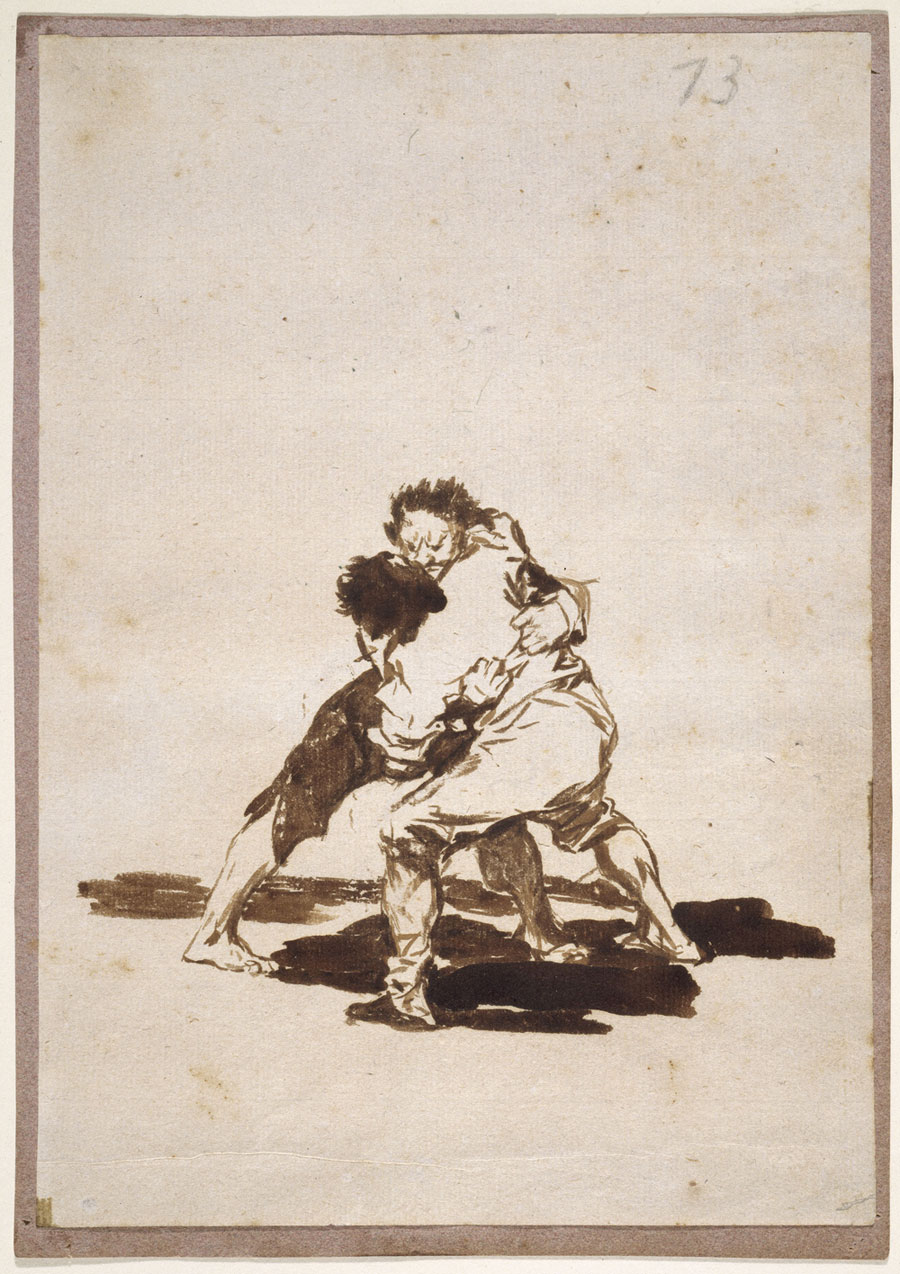
Francisco Goya (Spanish, 1746-1828) 'Two Men Fighting', Album F, 73 1812-1820


Francisco Goya (Spanish, 1746-1828)
Two Men Fighting, Album F, 73
1812-1820
Brush and brown ink, with scraping
Bequest of Eleanor A. Sayre
Photograph © Museum of Fine Arts, Boston


Francisco Goya (Spanish, 1746-1828) 'Old Man on a Swing', Bordeaux Album II, H, 58 1824-1828


Francisco Goya (Spanish, 1746-1828)
Old Man on a Swing, Bordeaux Album II, H, 58
1824-1828
Black crayon on laid paper
On loan from The Hispanic Society of America, New York, NY
Photograph © Museum of Fine Arts, Boston


Francisco Goya (Spanish, 1746-1828) 'The Sleep of Reason Produces Monsters' (El sueño de la razon produce monstruos), Caprichos 43 1797-1799


Francisco Goya (Spanish, 1746-1828)
The Sleep of Reason Produces Monsters (El sueño de la razon produce monstruos), Caprichos 43
1797-1799
Etching and burnished aquatint (first edition)
Bequest of Eleanor A. Sayre
Photograph © Museum of Fine Arts, Boston


Francisco Goya (Spanish, 1746-1828) 'Until Death' (Hasta la muerte), Caprichos 55 1797-1799


Francisco Goya (Spanish, 1746-1828)
Until Death (Hasta la muerte), Caprichos 55
1797-1799
Burnished aquatint etching with drypoint
The Boston Athenaeum


Francisco Goya (Spanish, 1746-1828) 'Time (Old Women)' c. 1810-1812


Francisco Goya (Spanish, 1746-1828)
Time (Old Women)
c. 1810-1812
Oil on canvas
Palais des Beaux-Arts de Lille


Francisco Goya (Spanish, 1746-1828) 'Straw Mannequin' 1791


Francisco Goya (Spanish, 1746-1828)
Straw Mannequin
1791
Oil on canvas


Museum of Fine Arts, Boston
Avenue of the Arts
465 Huntington Avenue
Boston, Massachusetts

Opening hours:
Wednesday – Monday 10am – 5pm

Museum of Fine Arts, Boston website

LIKE ART BLART ON FACEBOOK

Back to top