
Exhibition dates: 16th October 2011 – 8th January 2012

Simon Vouet (French, 1590-1649)
The Fortune Teller
c. 1620
Oil on canvas
National Gallery of Canada, Ottawa
Observe if you will:
1/ The treatment of the background behind Boy Bitten by a Lizard (1594-1596)
2/ The tension of the hands in this painting
3/ The pallor of the skin of Sick Bacchus (1593-1594)
4/ The colour of the bunch of grapes in the same painting
5/ The critical distance between the two apricots and the bowed sash resting on the pediment in the same painting
6/ The youthful innocence of the dupe in The Cardsharps (c. 1595)
7/ The deep, foreboding shadows under the eyes of Saint John the Baptist in the Wilderness (1604-1605)
8/ The astonishingly beautiful skin tones in Gerrit van Honthorst’s Saint Sebastian (c. 1623) and how the blood from the leg wound at left runs in two directions: one direction when Saint Sebastian was standing up, one when he has slumped down. Inspired.
Dr Marcus Bunyan
Many thankx to the Kimbell Museum of Art for allowing me to publish the artwork in the posting. Please click on the photographs for a larger version of the image.
“Not since Michelangelo or Raphael had one artist affected so many of his contemporaries and so irrevocably changed the course of European painting. Caravaggio created a new kind of art: dramatic, deeply emotional, grounded in the vivid details of everyday life, and overwhelmingly human. He used live models, sometimes prostitutes and the very poor, who posed in the studio for his powerful religious scenes as if the events were happening on the streets of Rome. Breaking the boundaries between art and life, he overturned the artistic conventions of the day. He played down details of the setting of a scene, focused on the expressive human figure, and invented a brand of stark realism that shocked many of his patrons.”
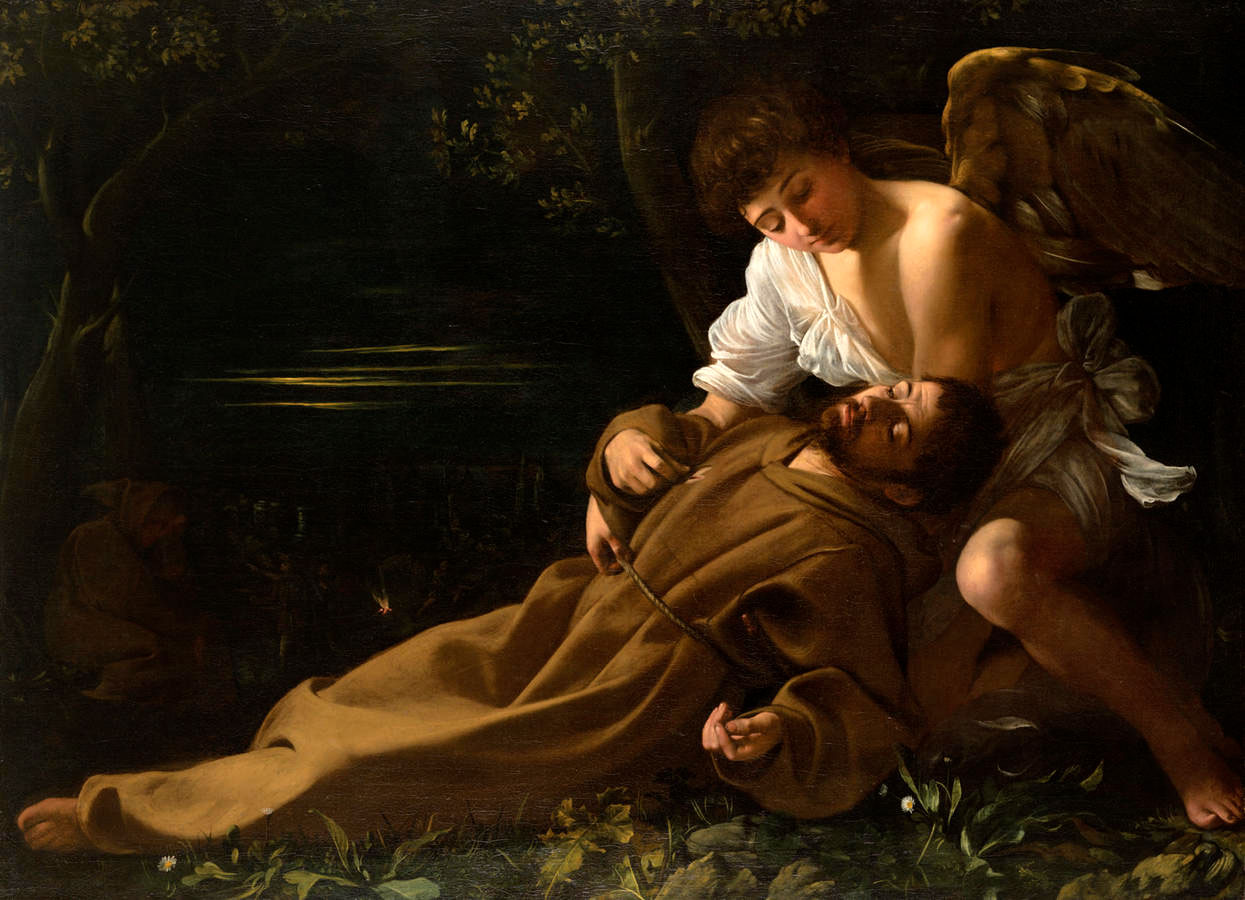
Michelangelo Merisi da Caravaggio (Italian, 1571-1610)
Saint Francis in Ecstasy
c. 1594-1595
Oil on canvas
Wadsworth Atheneum Museum of Art, Hartford, Connecticut
The Ella Gallup Sumner and Mary Catlin Sumner Collection Fund

Michelangelo Merisi da Caravaggio (Italian, 1571-1610)
The Gypsy Fortune Teller
c. 1595
Oil on canvas
45 1/4 x 59 in. (115 x 150cm)
Pinacoteca Capitolina, Musei Capitolini, Rome
Public domain
One of the most influential figures in the history of art, Caravaggio (1571-1610) overturned the artistic conventions of the day and created stunningly dramatic paintings, both sacred and secular. This ambitious exhibition explores the profound impact of his work on the wide range of painters of Italian, French, Dutch, Flemish, and Spanish origin who resided in Rome. Arranged by theme, it includes over 50 paintings, with Caravaggio’s compelling images juxtaposed with those he inspired. This is the second largest display of his paintings in North America and only the third Caravaggio exhibition to be held in the United States.
Music and Youth
Many of Caravaggio’s early paintings feature handsome youths, whether singly or in groups. He seems to have used the same favorite models repeatedly – and sometimes his own features, which a contemporary tells us he studied in a mirror. The origins of these novel paintings lay in the types of pictures – portraits, still lifes, and allegories – that were painted in a realistic style in the artist’s native Lombardy, in the north of Italy, although he blurred the boundaries between genres to suggest real-life scenes. Caravaggio’s paintings of musicians would have appealed to Roman collectors who were passionate patrons of music, and likely were created to decorate rooms used for performances. They have a dreamy, slightly melancholy air. If the songs are about love, as we can assume they are, they are surely about the painful side of love rather than its joys. Caravaggio’s early paintings of youths are usually scenes of sensual pleasure but with a built-in warning against indulgence, as when a youth has his finger bitten by a lizard lurking in some fruit. He brings us close to his figures, often having them make eye contact with us, and includes lovingly observed still-life details that enhance the naturalism and immediacy of the scene. Even when there is a visitation from the beyond, like the winged Cupid in The Musicians, he treats this in a matter-of-fact way, attentive always to breaking down the boundaries between the painted world and our own. Caravaggio’s musical paintings caught on throughout Europe in the work of his followers, who brought their own innovations to the genre.

Michelangelo Merisi da Caravaggio (Italian, 1571-1610)
The Musicians
c. 1595
Oil on canvas
36 1/4 x 46 5/8 in (92.1 x 118.4cm)
The Metropolitan Museum of Art, New York. Rogers Fund, 1952
In this scene, Caravaggio shows some young musicians preparing for a concert. We are brought very close to the figures, as if we share the same space. Caravaggio breaks down the boundaries between art and life, and our reality and the painted world become entwined. The instruments are modern, but the musicians wear antique-inspired dress. The lute player tunes his instrument, and the horn player (possibly a self-portrait) catches our gaze. Another youth studies the musical score; it is no longer legible, but doubtless featured love madrigals. The winged Cupid with a quiver of arrows who is handling some grapes makes explicit the bond between music and love. Wine, like music, makes the spirits light. This painting belonged to Cardinal Francesco Maria del Monte, who hosted concerts at his palace and invited musicians to live in his household, along with artists like Caravaggio.

Theodoor Rombouts (Flemish, 1597-1637)
A Lute Player
c. 1620
Oil on canvas
43 7/8 x 39 1/4 in (111.1 x 99.7cm)
Philadelphia Museum of Art. John G. Johnson Collection, 1917
Caravaggio’s paintings of musicians inspired Rombouts’s depiction of a musician tuning his lute. His intense expression suggests that he is both listening to the sound and sizing up the viewer, his audience. The vividly described carpet and still-life objects on the table recall Caravaggio’s similar close-up presentations. However, the colourful treatment of the costume and the robust delineation of the objects place Rombouts’s work within traditions of Flemish and Dutch painting. The still life, like ephemeral music, serves to remind us of the pleasures of life, but also that pleasure is fleeting. The artist also alludes to the five senses: hearing (the lute), taste (the tankard), smell (the pipe), sight (the musical scores), and touch (the knife).

Michelangelo Merisi da Caravaggio (Italian, 1571-1610)
Boy Bitten by a Lizard
1594-1596
Oil on canvas
25 5/8 x 20 1/2 in (65 x 52cm)
Fondazione di Studi di Storia dell’Arte Roberto Longhi, Florence
One of Caravaggio’s biographers wrote that “he also painted a boy bitten by a lizard emerging from flowers and fruits; you could almost hear the boy scream, and it was done meticulously.” The picture has suggested various interpretations. As an allegory of touch, it provides the basis for a study of how emotion is expressed physically, and arguably Caravaggio alludes to all the five senses (flowers as smell and so on). With the still life of fruits and roses, common emblems of love, he invokes age-old adages – pain can follow pleasure, and love is a rose with thorns that prick. Poets from Petrarch onward played on the similarity of the Italian words for “love” and “bitter” – amore and amaro – to which Caravaggio adds ramarro (lizard), ingeniously enlarging the joke.

Michelangelo Merisi da Caravaggio (Italian, 1571-1610)
Sick Bacchus
1593-1594
Oil on canvas
Galleria Borghese, Rome
Cardsharps and Fortune Tellers
The young Caravaggio introduced another new kind of painting to the Roman art world with his scenes from the seamy side of life, its frauds and ruses. He painted these works on a large scale with half-length figures, and they were among his most widely imitated creations. His followers played countless variations on the same themes, trying various levels of subtlety and buffoonery in the humour and facial expressions. These highly animated compositions conjure up an underworld of wily cardsharps, soldiers of fortune, foolish dupes, sensuous and deceitful gypsy women, pickpockets, and thugs. They are based partly on everyday observations in the streets, partly on the stock characters and improvised comedies of the commedia dell’arte, partly on sheer fantasy. In such works, Caravaggio and his followers developed ingenious ways of involving us in the action. We read these amusingly moralising pictures through gestures and expressions – but to unravel the trickery takes time. Despite being frozen in a static image, the story seems to unfold before our eyes like one of the popular plays that were its inspiration. The artist extends the theme of deception by painting his subjects with such a high level of naturalism that the viewer is duped and astounded by his artistry.
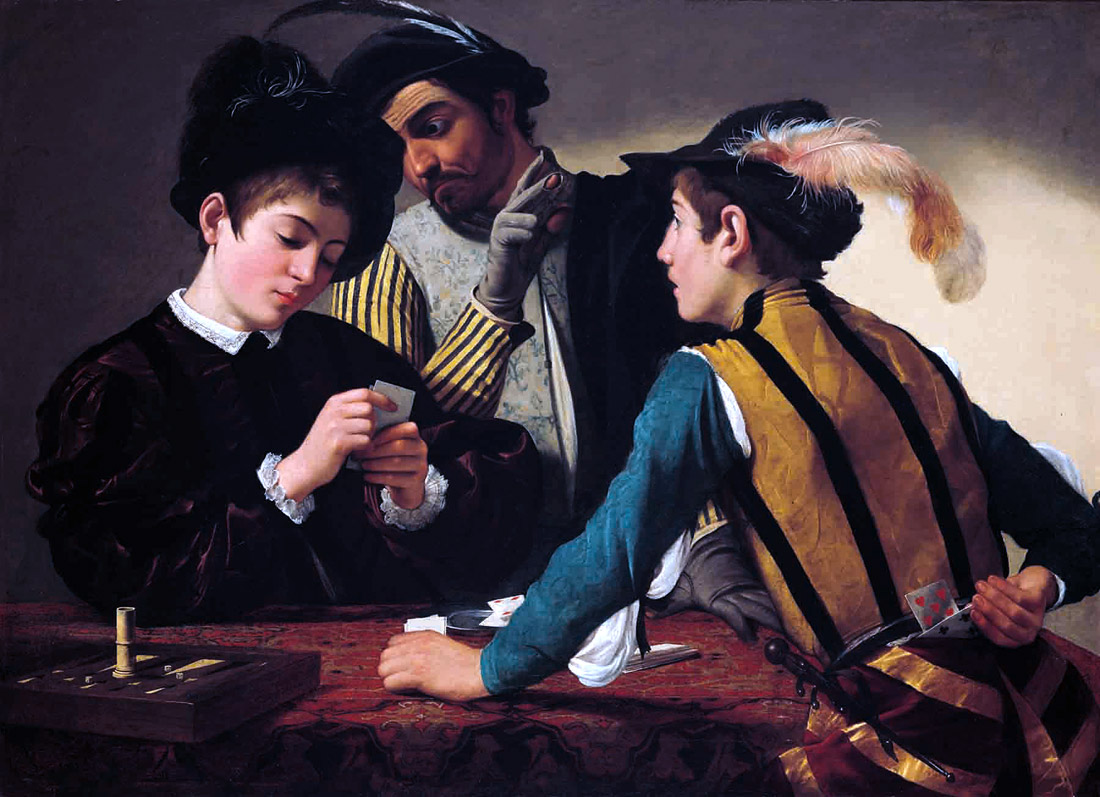
Michelangelo Merisi da Caravaggio (Italian, 1571-1610)
The Cardsharps
c. 1595
Oil on canvas
37 1/8 x 51 5/8 in (94.2 x 130.9cm)
Kimbell Art Museum, Fort Worth
The players are engaged in a game of primero, a forerunner of poker. Engrossed in his cards, the dupe is unaware that the older cardsharp signals his accomplice, who reaches to pull a hidden card from his breeches. The fingertips of the cheat’s gloved hand are exposed to better feel marked cards. According to an early biographer, Cardinal Francesco Maria del Monte, a great patron of the arts, took the young Caravaggio into his household soon after purchasing this picture. It hung along with The Gypsy Fortune Teller in his palace. Together they would surely have reminded the cardinal and his guests of the story of the prodigal son, warning about the perils of greed and fraud. Caravaggio has treated this subject not as a caricature of vice but in a fresh way, in which the interaction of gesture and glance evokes the drama of deception and lost innocence in the most human of terms. He structures the picture to allow us to witness everything, implicating us in the trickery.
Saints
Caravaggio grounded his saints in everyday reality, indicating their spiritual states by means of natural phenomena, especially light. In his early painting of Saint Francis, he shows the saint’s ecstasy – his mystic identification with Christ – by directing a strong light upon his figure and the consoling angel. God’s grace is signalled by light in other images of the saints, such as the scene of Mary Magdalene’s conversion from her former life of sin. In paintings of Saints Matthew and Jerome in their studies, much emulated in Caravaggio’s circle, light is a metaphor of divine inspiration. Generally the saints seem to be emerging from darkness into light, which adds drama, symbolism, and also a sense of mass – as if they were sculpted, not merely painted. In a break from Roman and Florentine traditions, Caravaggio rejected the practice of refining his composition through drawings before he began to paint and instead worked directly from a live model in the studio, preserving that model’s particular appearance, never making the features or body conform to an ideal of beauty. The effect, central to Caravaggio’s art and that of many of his followers, was startling. At this time, many people believed that the painting of sacred personages such as saints called for a special, elevated style that set them apart from the mundane reality of the here and now. Caravaggio’s radical departure from this principle brought him much harsh criticism. He was accused of merely copying and so failing to capture a higher truth. But others recognised in his work a new kind of religious art that directly engaged the faithful and made old subjects new and alive.

Michelangelo Merisi da Caravaggio (Italian, 1571-1610)
Saint John the Baptist in the Wilderness
1604-1605
Oil on canvas
68 x 52 in (172.7 x 132.1cm)
The Nelson-Atkins Museum of Art, Kansas City, Missouri. Purchase William Rockhill Nelson Trust
Caravaggio’s practice of painting a live model in his studio brings this young, brooding saint to life – as if his image were inhabited by the model’s being. Ottavio Costa, a Roman banker, commissioned this painting for a chapel on a pilgrimage route in the countryside outside of Genoa, where his family had its origins. We can imagine what a powerful experience it would have been to encounter the image of the scarlet-robed saint there, dramatically emerging from the shadows into a strong light. When Caravaggio delivered the painting, Costa decided to keep it and placed a copy in the chapel. But even the copy proved inspiring. An early guide described how it “moves not only the members of the brotherhood but also visitors to penitence.”

Gerrit van Honthorst (Dutch, 1592-1656)
Saint Sebastian
c. 1623
Oil on canvas
The National Gallery, London
The Sacred Narrative
Caravaggio was a masterful storyteller who could bring home the drama and significance of a biblical event with tremendous power. In his scenes from the Old and New Testaments, he created a new kind of painting – dramatic, even theatrical, yet grounded in the observation of ordinary reality – and it proved infectious among his contemporaries in Rome. His approach was to make the scene clear and simple, with the main actors in the drama seen close-up and caught in mid-action at a decisive moment, embodying the whole meaning of the event. He played down the setting, sometimes to the point that it is a mere pool of darkness from which the figures emerge. It was the actions and states of mind of the characters in the story that counted, and Caravaggio presented these with sometimes shocking directness and intensity, breaking all the rules of decorum that restrained more conventional painters. He mastered the art of concealing art, re-creating a scene with such a flavour of reality that it comes across as an eyewitness account. It was his power to draw viewers into the emotion and importance of a scene that made his work an essential object of study, even for such an independent genius as the great Peter Paul Rubens.

Michelangelo Merisi da Caravaggio (Italian, 1571-1610)
Martha and Mary Magdalene
c. 1598
Oil and tempera on canvas
38 1/2 x 52 1/4 in (97.8 x 132.7cm)
Detroit Institute of Arts. Gift of the Kresge Foundation and Mrs. Edsel B. Ford
Martha’s expressive hands, intensely illuminated, underscore her attempt to convert her sister Mary Magdalene from a life of worldly pleasures to one of spirituality. Several details recall Mary’s life of indulgence: the elegant dress, the ivory comb, the alabaster cosmetic jar. The mirror, a powerful symbol of vanity, becomes here an instrument reflecting the divine light that is penetrating Mary’s soul. Martha’s words seem to have been convincing, and her open mouth signals her amazement as she witnesses Mary’s transformation. The orange blossom in Mary’s right hand and the ring on her left indicate her new status as the blessed bride of Christ.

Michelangelo Merisi da Caravaggio (Italian, 1571-1610)
Sacrifice of Isaac
1602-1603
Oil on canvas
41 x 53 1/8 in (104 x 135cm)
Galleria degli Uffizi, Florence
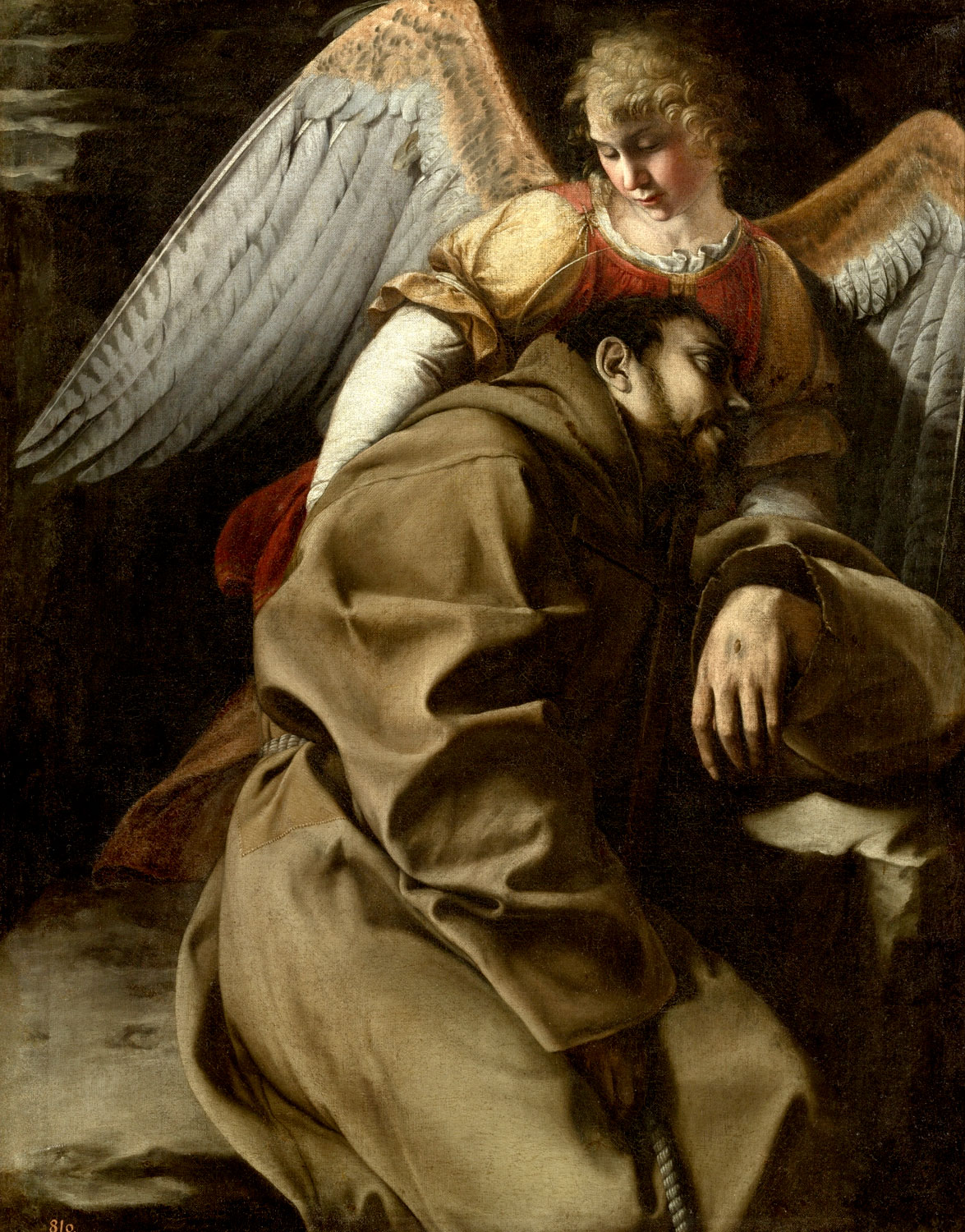
Orazio Gentileschi (Italian, 1563-1639)
Saint Francis in Ecstasy
c. 1607
Oil on canvas
49 5/8 x 38 5/8 in. (126 x 98 cm)
Museo Nacional del Prado, Madrid
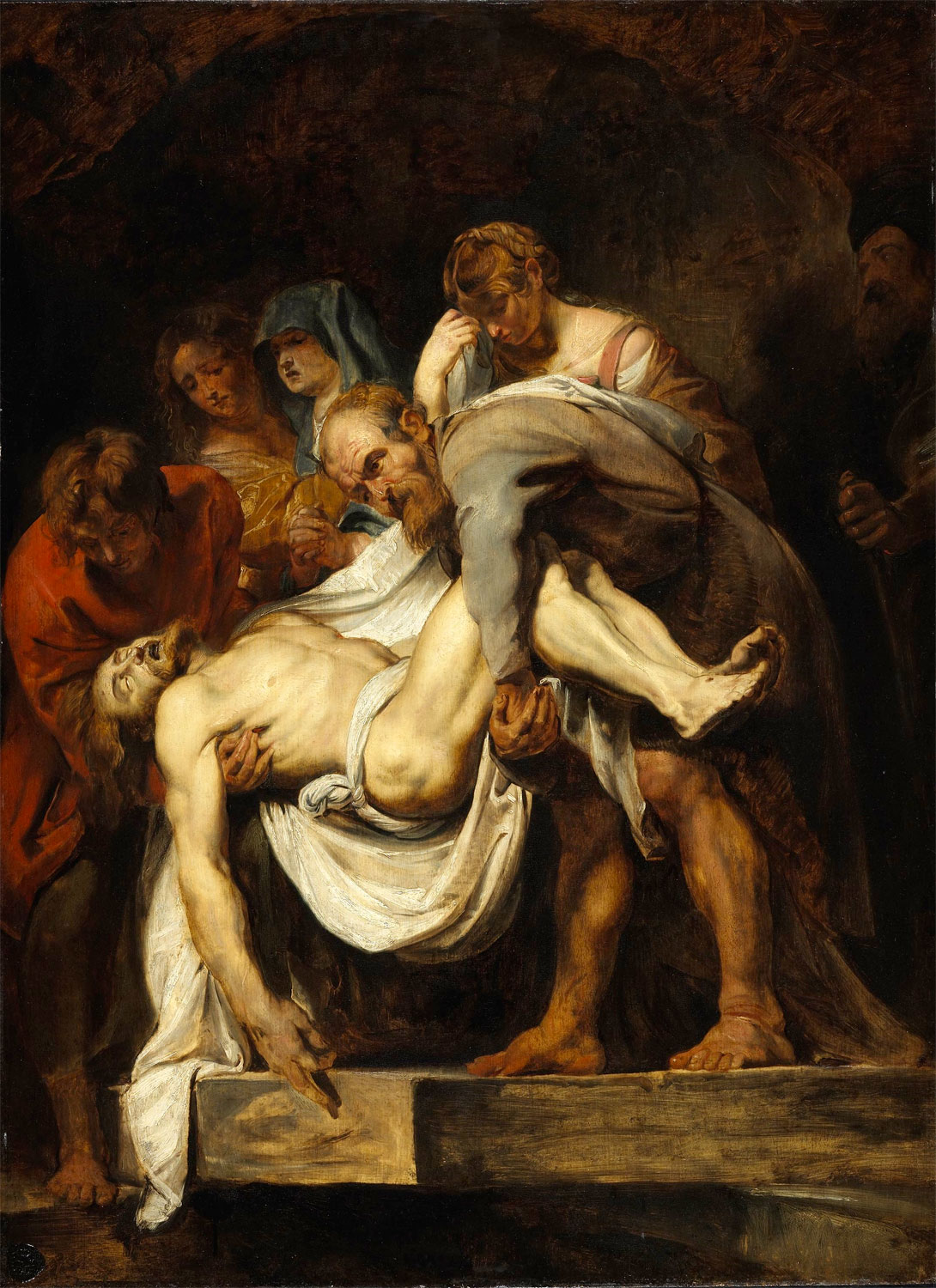
Peter Paul Rubens (Flemish, 1577-1640)
The Entombment
c. 1612-1614
Oil on panel
34 3/4 x 26 1/8 in. (88.3 x 66.5 cm)
National Gallery of Canada, Ottawa
Purchased 1956
Public domain
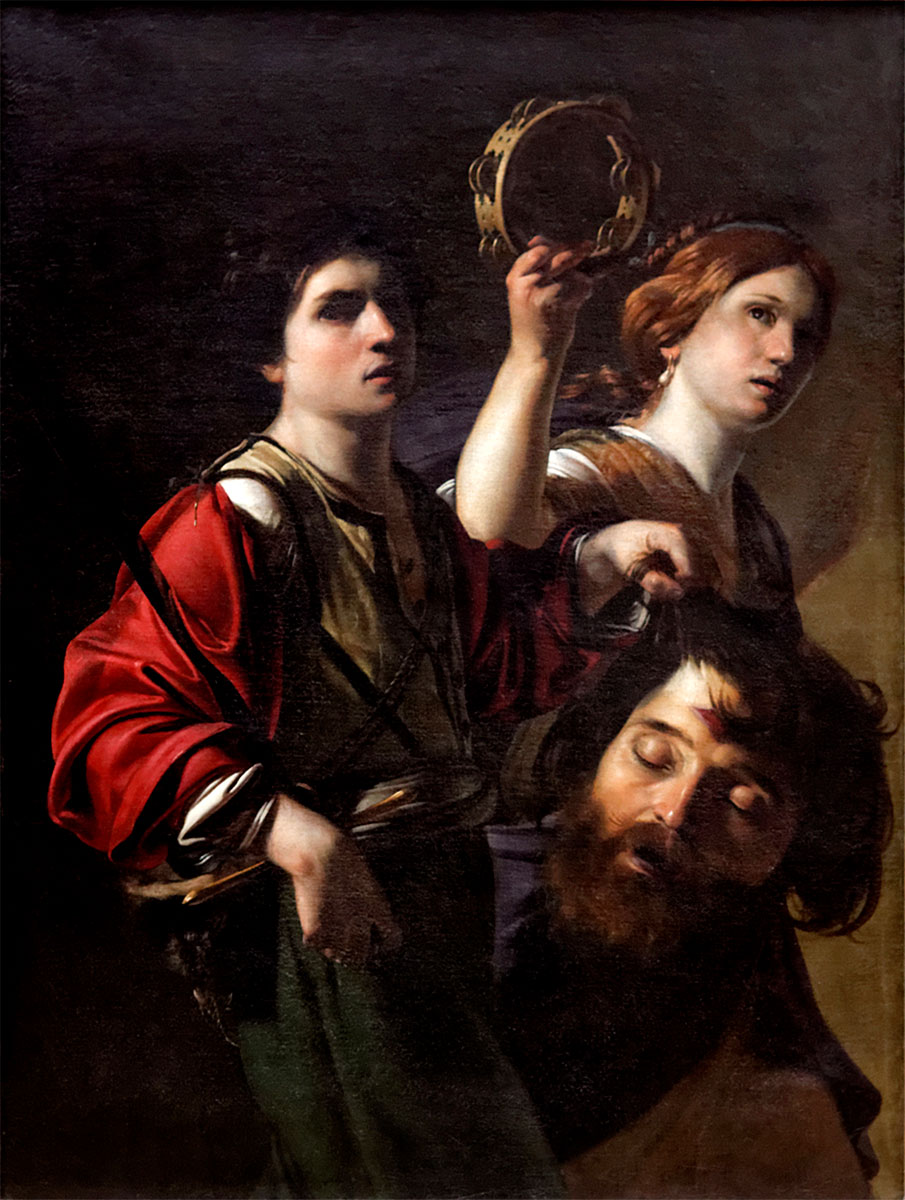
Bartolomeo Manfredi (Italian, 1582-1622)
David and Goliath (The Triumph of David)
c. 1615
Oil on canvas
50 3/8 x 38 1/4 in. (128 x 97cm)
Musée du Louvre, Paris
Acquired in 1990
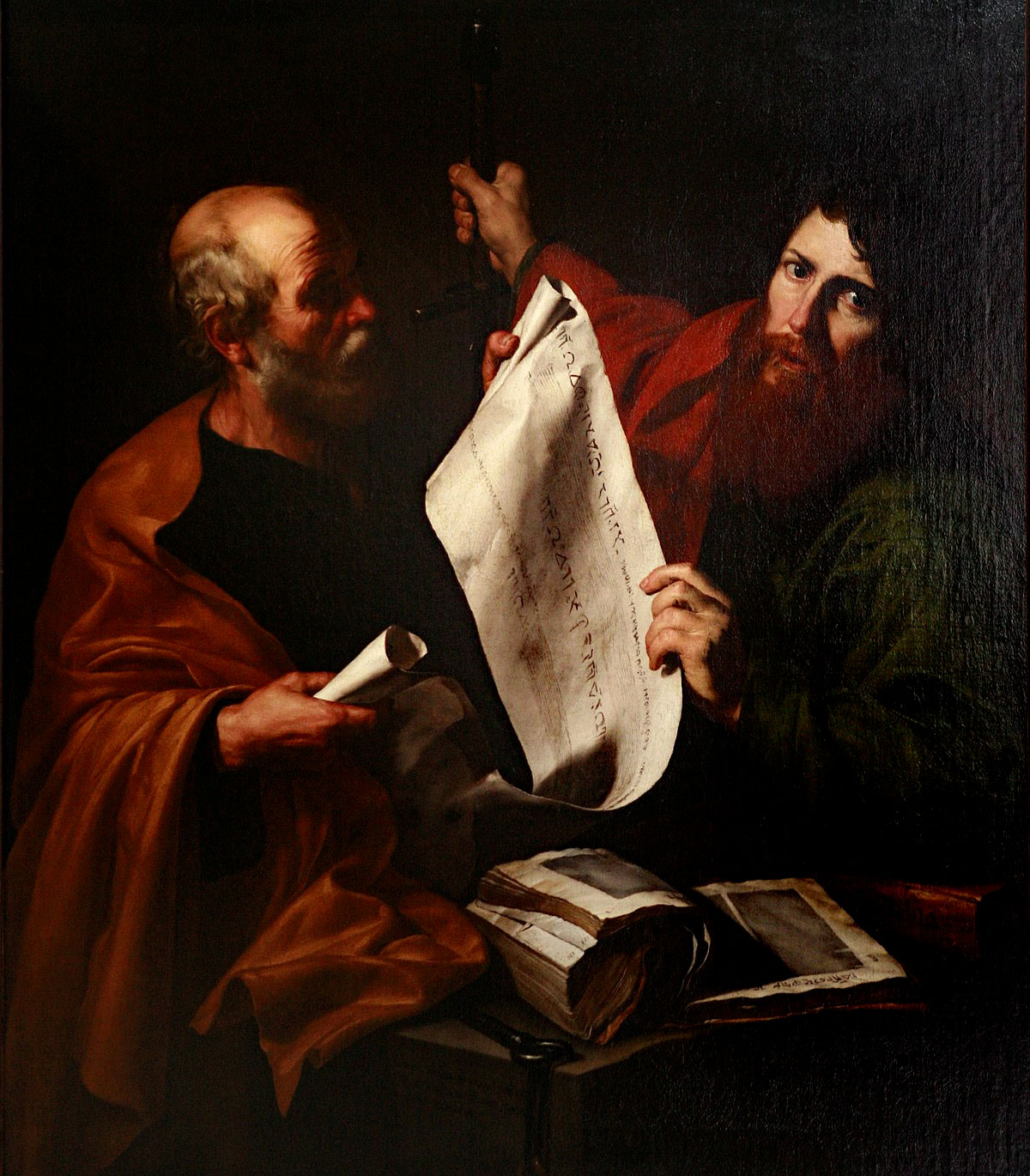
Jusepe de Ribera (Spanish, 1591-1652)
Saints Peter and Paul
c. 1616
Oil on canvas
49 5/8 x 44 1/8 in. (126 x 112cm)
Musée des Beaux-Arts, Strasbourg
Public domain
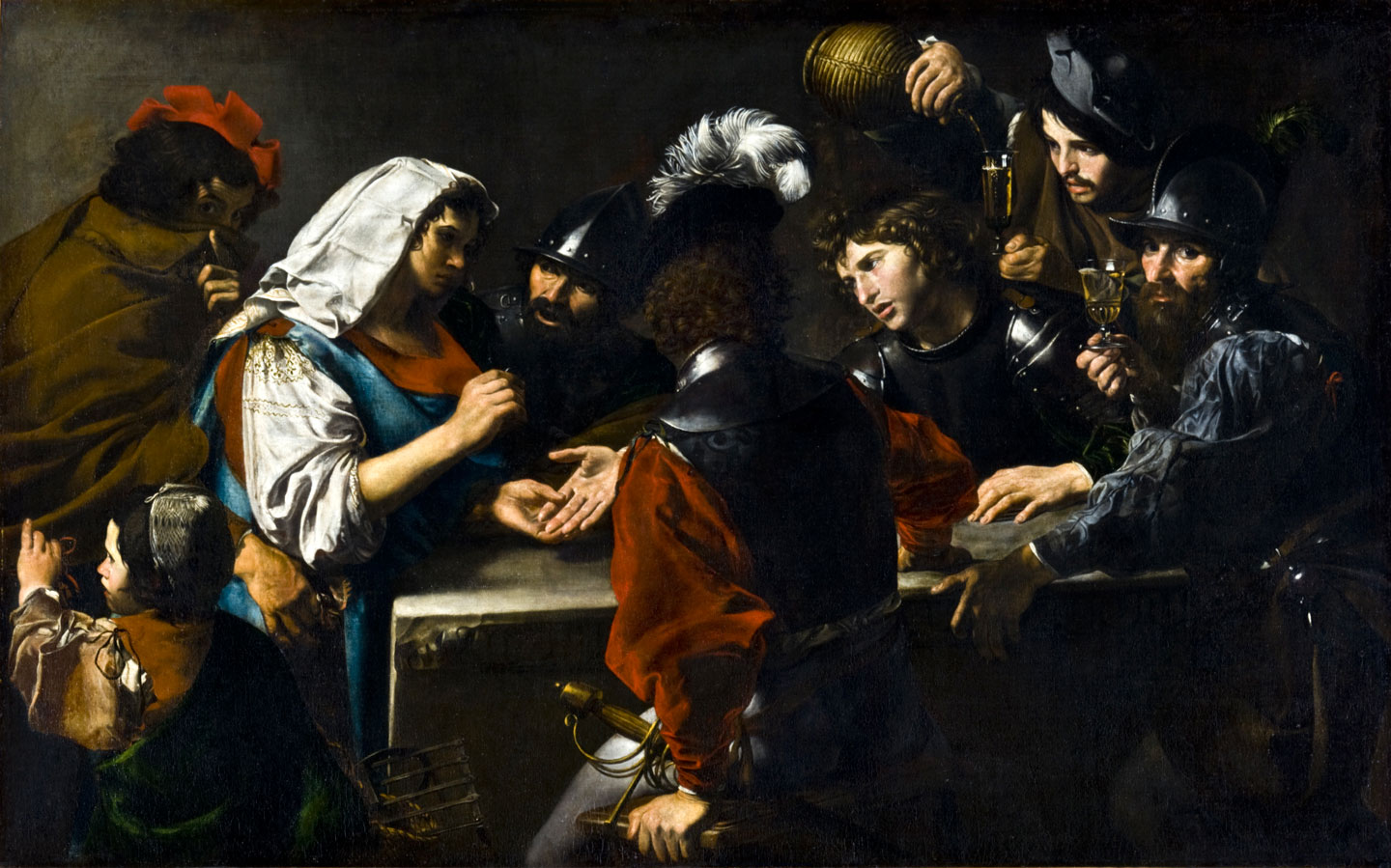
Valentin de Boulogne (French, 1591-1632)
Fortune Teller with Soldiers
c. 1620
Oil on canvas
58 7/8 x 93 7/8 in. (149.5 x 238.5cm)
Toledo Museum of Art
Purchased with funds from the Libbey Endowment. Gift of Edward Drummond Libbey
Public domain
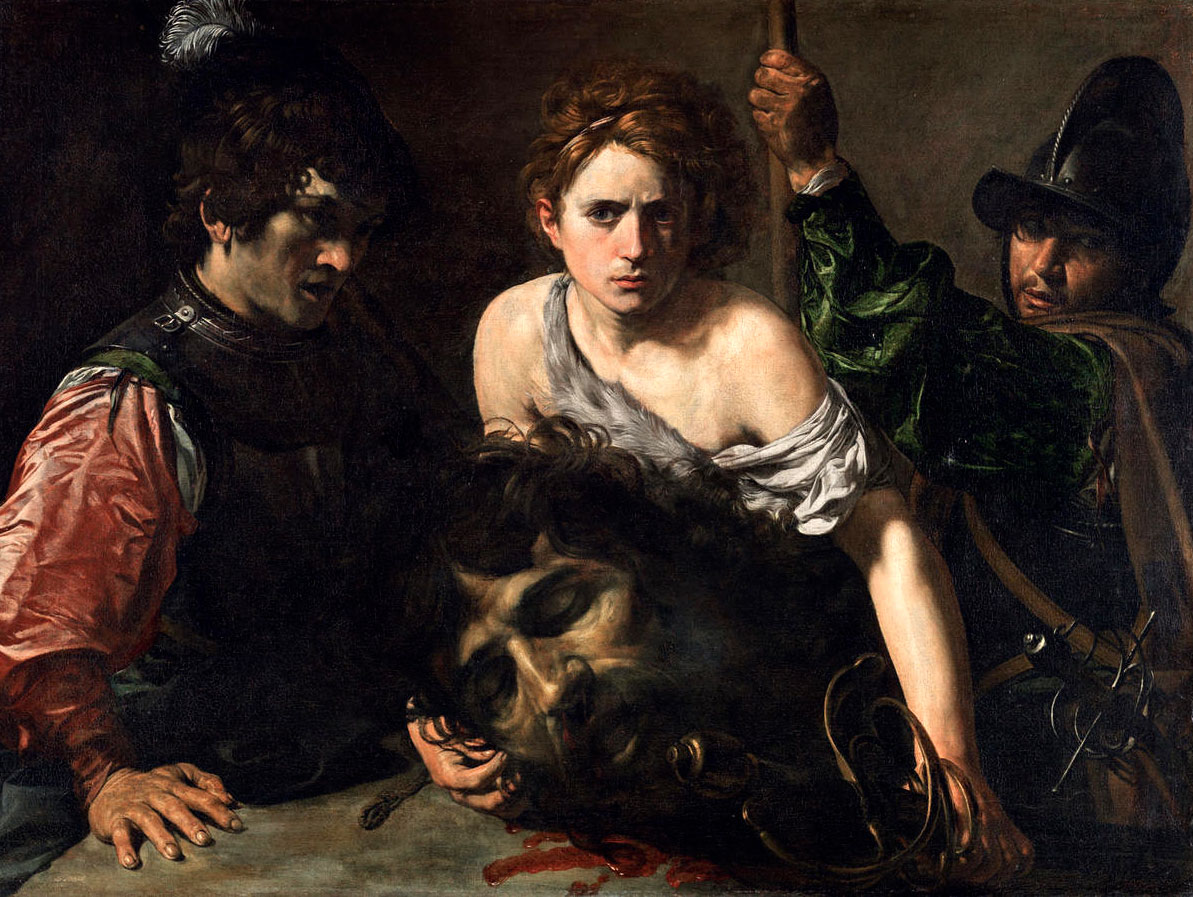
Valentin de Boulogne (French, 1591-1632)
David with the Head of Goliath and Two Soldiers
1620-1622
Oil on canvas
Museo Thyssen-Bornemisza, Madrid
Public domain
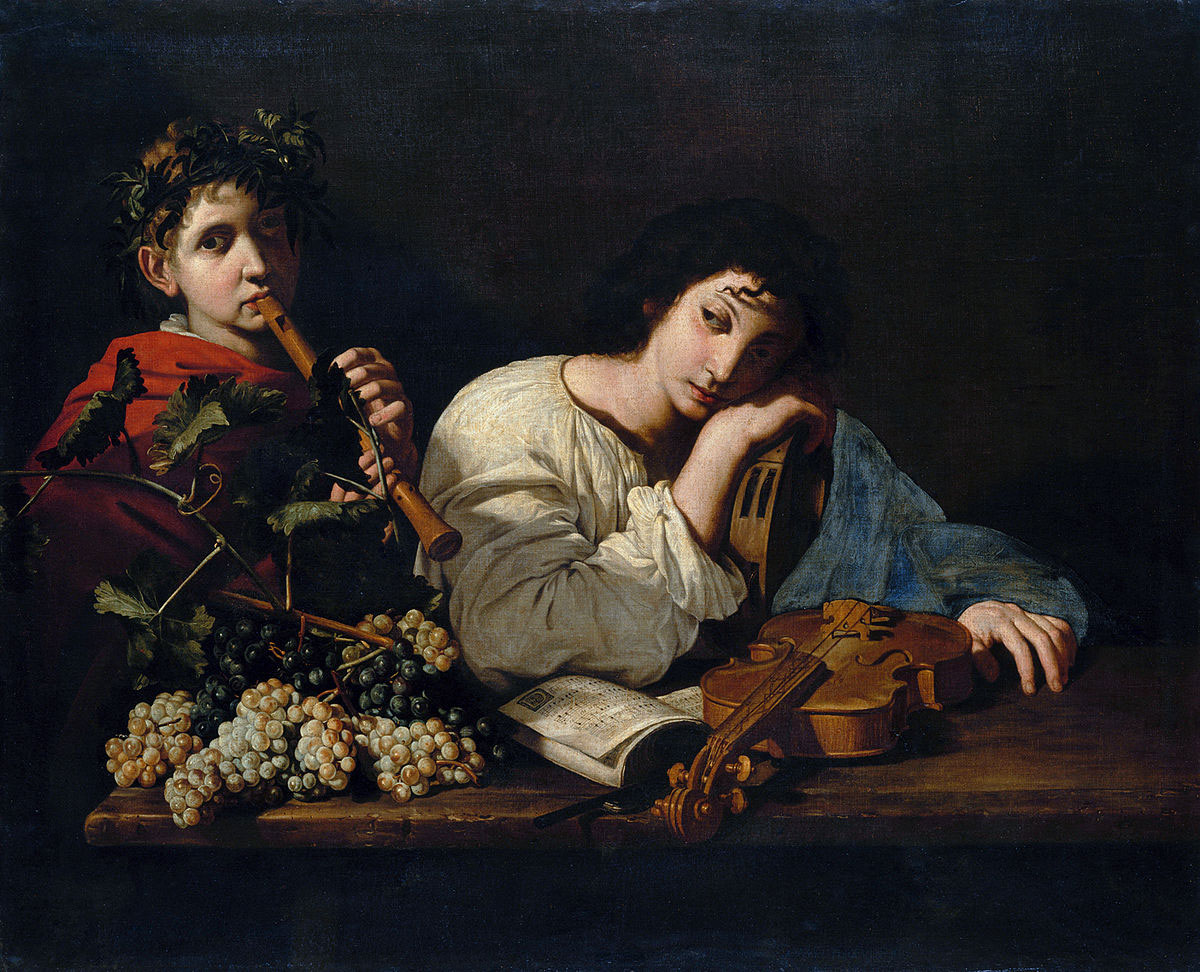
Bartolomeo Cavarozzi (Italian, 1587-1625)
The Sorrows of Aminta
c. 1625
Oil on canvas
39 3/8 x 47 1/4 in. (100 x 120cm)
Musée du Louvre, Paris
Gift of Paul Jamot, 1937
Public domain
Kimbell Art Museum
3333 Camp Bowie Boulevard,
Fort Worth, TX 76107
Opening hours:
Tuesday – Sunday 10am – 5pm
Closed Mondays
 Art Blart _ art and cultural memory archive
You must be logged in to post a comment.