Exhibition: ‘Masterpieces from the Hermitage: The Legacy of Catherine the Great’ at NGV International, Melbourne

Exhibition dates: 31th July 2015 – 8th November 2015

Melbourne Winter Masterpieces 2015


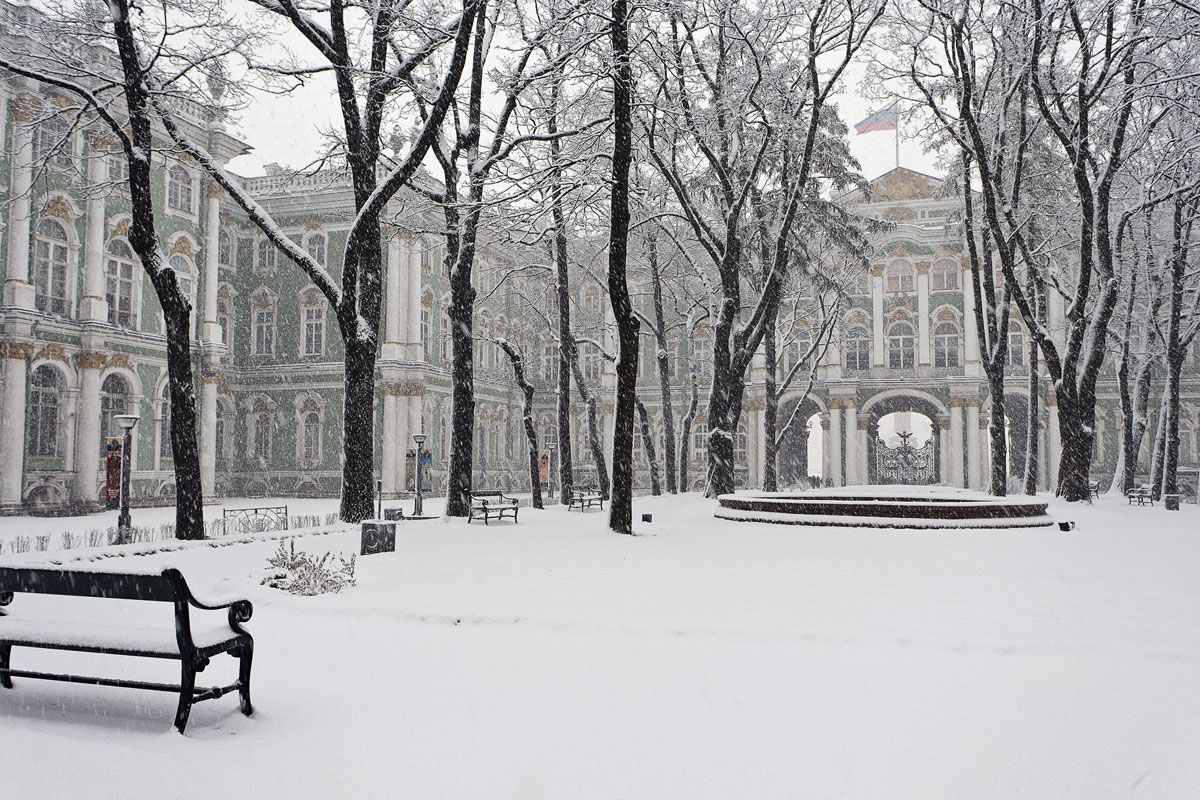
Hermitage Museum, the Winter Palace in Winter, St Petersburg Photo: Pavel Demidov


Hermitage Museum, the Winter Palace in Winter, St Petersburg 
Photo: Pavel Demidov


Some beauty to cheer me up from my sickbed.

These are the official press photographs for the exhibition Masterpieces from the Hermitage: The Legacy of Catherine the Great. To see my installation photographs of the exhibition go to this posting.

The paintings look as fresh today as when they were first painted, some of them in the early 1500s. To see the thumbs up gesture in Diego Velázquez’s Luncheon (c. 1617-1618, below) echoing down the centuries, is worth the price of admission alone. We cannot imagine what life would have been like back then… no medication, rampant disease and malnutrition, little law enforcement with danger lurking around each turn (see Matthew Beaumont. Night Walking: A Nocturnal History of London, Chaucer to Dickens. London and New York: Verso, 2015).

And yet these talented artists, supported by the elite, produced work which still touches us today.

Dr Marcus Bunyan


Many thankx to the National Gallery of Victoria for allowing me to publish the art works in the posting. Please click on the photographs for a larger version of the art works.


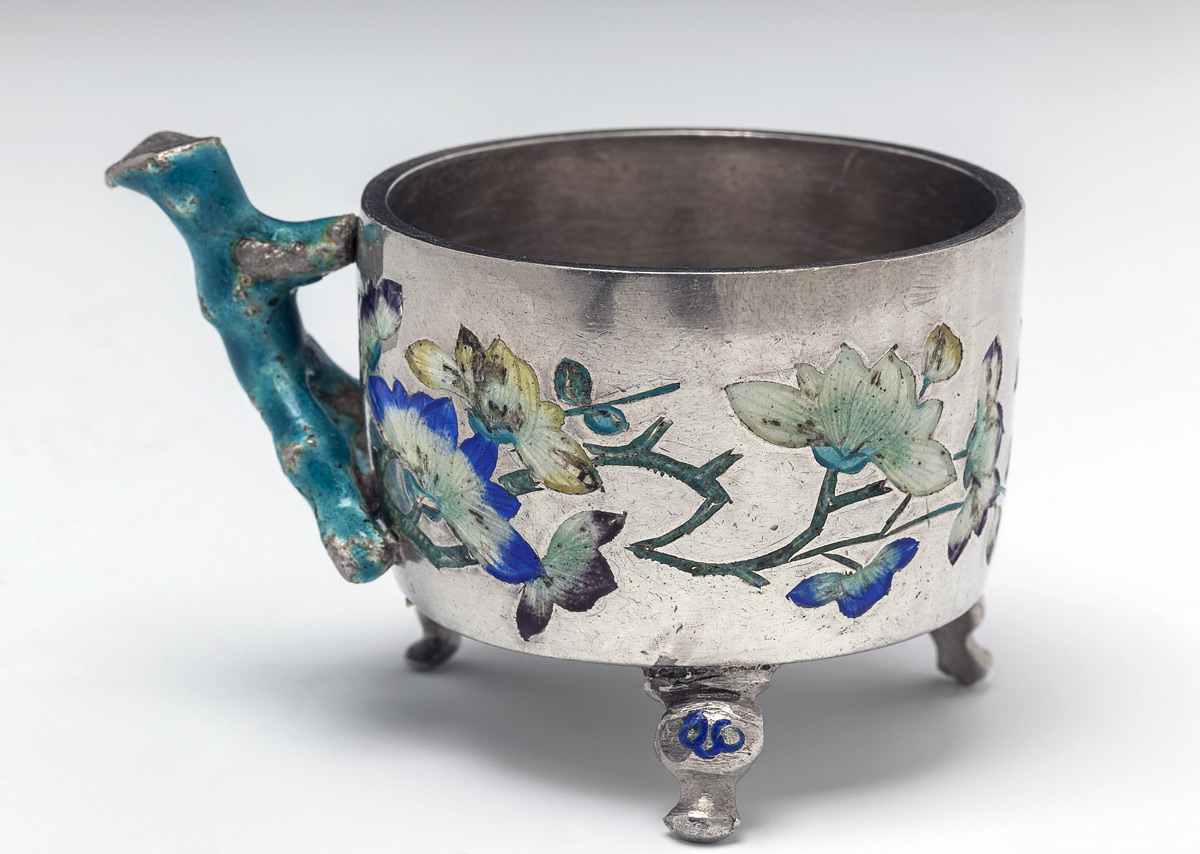
Chinese. 'Cup' early 17th century


Chinese
Cup
early 17th century
Silver, enamel
4 x 3 x 7cm
The State Hermitage Museum, St Petersburg (Inv. no. ЛС-133, ВВс-250)
Acquired before 1789


Chinese. 'Teapot with lid' 17th century


Chinese
Teapot with lid
17th century
Silver, enamel
18.0 x 5.5cm
The State Hermitage Museum, St Petersburg (Inv. no. ЛС-80 а, б, ВВс-219)
Acquired before 1789


Sevres Porcelain Factory Sèvres (manufacturer) France est. 1756 'Cameo Service' 1778-1779


Sèvres Porcelain Factory
Sèvres (manufacturer) France est. 1756
Cameo Service
1778-1779
Porcelain (soft-paste), gilt
The State Hermitage Museum, St Petersburg Commissioned by Catherine ll as a gift for Prince Grigory Potemkin in 1777; Potemkin’s Taurida Palace, St Petersburg from 1779; transferred to the Hofmarshal’s Office of the Winter Palace after his death; 1922 transferred to the State Hermitage Museum


Grand Duchess Maria Fyodorovna (Russian, 1795-1828) (engraver)
Russia (manufacturer) 'Catherine the Great as Minerva' cameo 1789


Grand Duchess Maria Fyodorovna (Russian, 1795-1828) (engraver)
Russia (manufacturer)
Catherine the Great as Minerva
1789
Cameo
Jasper, gold
6.5 x 4.7cm
The State Hermitage Museum, St Petersburg (Inv. no. К 1077)
Acquired 1789


James Tassie, London (England, 1735-1799) (workshop of) 'Head of Medusa' 1780s


James Tassie, London (England, 1735-1799) (workshop of)
Head of Medusa
1780s
Coloured glass, gilded paper
7.6 x 9.2cm
The State Hermitage Museum, St Petersburg (Inv. no. R-T, 3296 a)
Purchased from James Tassie 1783-88


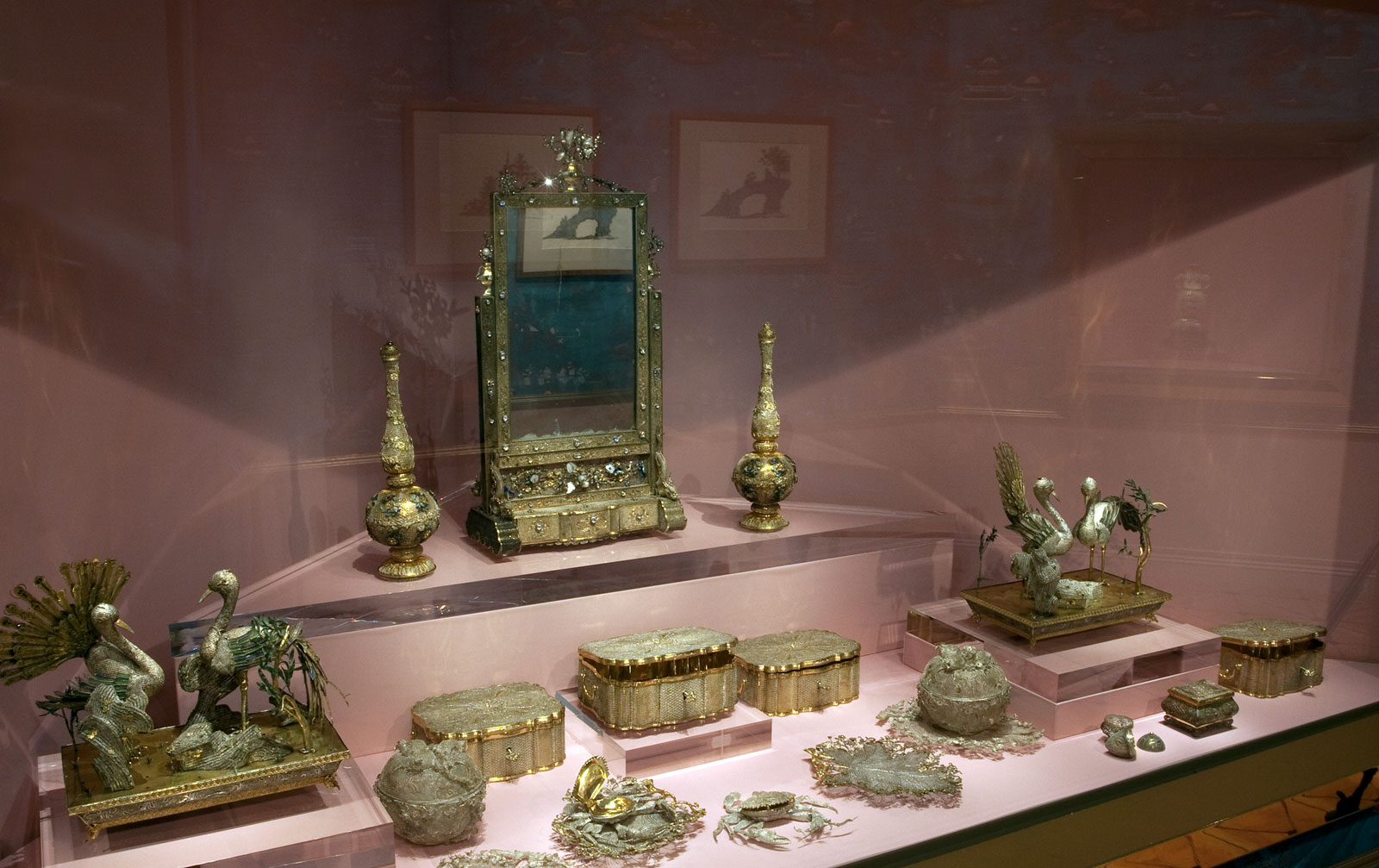
Chinese. 'Toilet service' early 18th century


Chinese
Toilet service
early 18th century
Glass, mercury amalgam, paper, silver, filigree, parcel-gilt, wood, velvet, peacock and king-fisher feathers, mother-of-pearl, crystals
The State Hermitage Museum, St Petersburg (Inv. no. ЛС-472/ 1,2, ВВс-373)
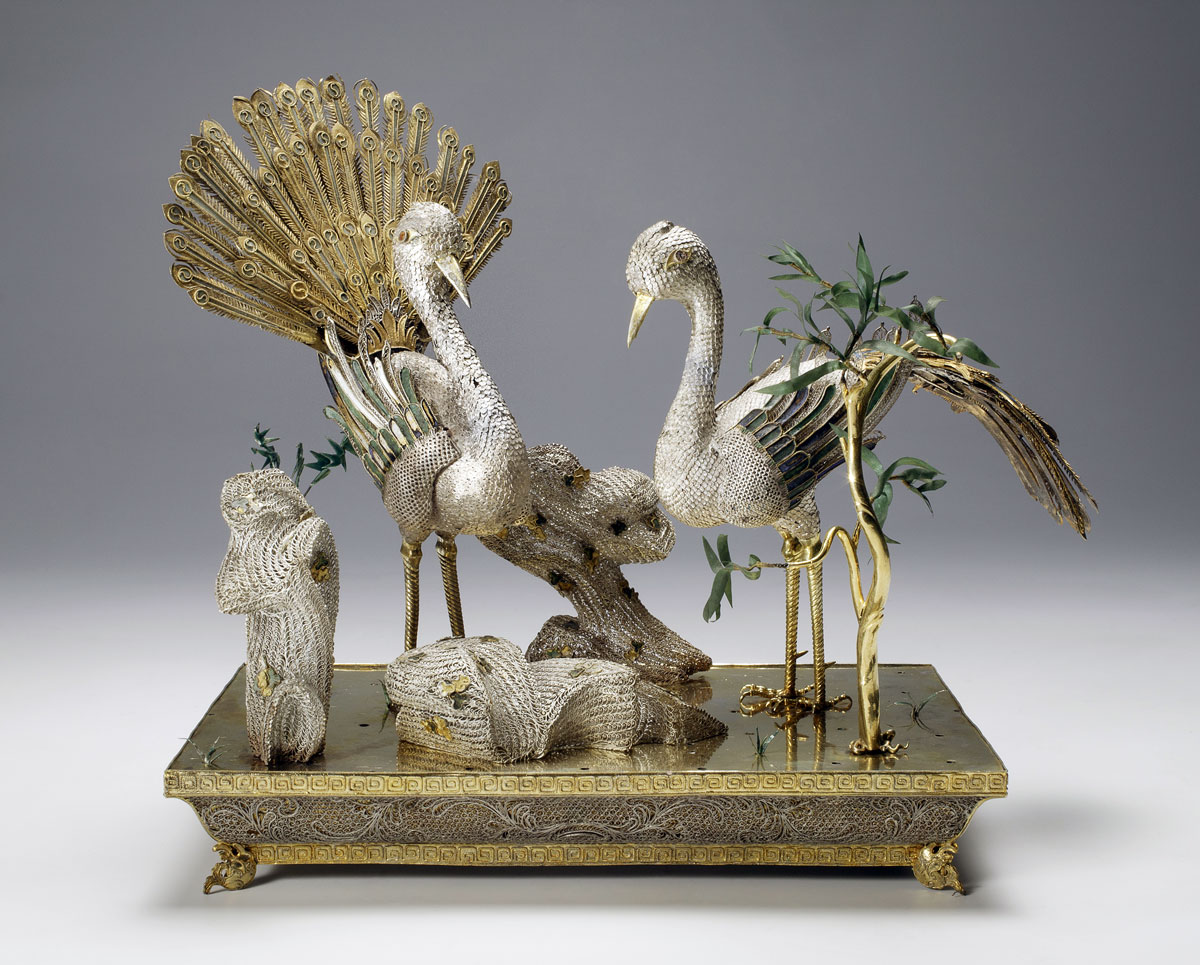
 

Chinese. 'Table decoration in the form of a pair of birds' 1740s-50s


Chinese
Table decoration in the form of a pair of birds
1740s-50s
Silver, enamel, silver-gilt
26.0 x 26.0 x 15.0cm
The State Hermitage Museum, St Petersburg (Inv. no. ЛС-26, ВВс-189)
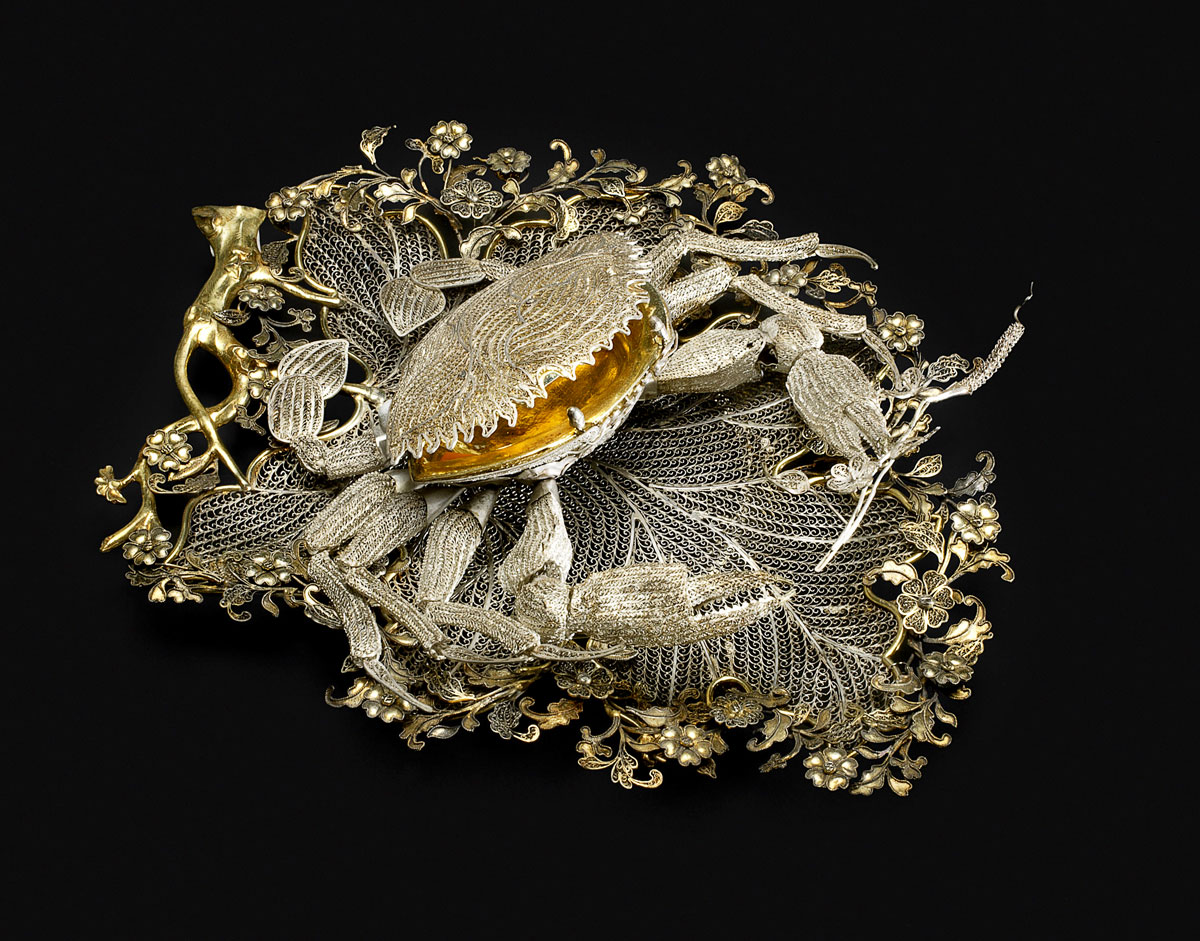
 

Chinese. 'Crab-shaped box on a leaf tray' 1740s-50s


Chinese
Crab-shaped box on a leaf tray
1740s-50s
Silver, enamel, silver-gilt
(a) 4.0 x 14.0 x 13.0cm (box)
(b) 3.0 x 22.0 x 17.0cm (stand)
The State Hermitage Museum, St Petersburg (Inv. no. ЛС-9 а,б, ВВс-186)


Marie-Anne Collot (French, 1748-1821) 'Voltaire' 1770s


Marie-Anne Collot (French, 1748-1821)
Voltaire
1770s
Marble
49 x 30 x 28cm
The State Hermitage Museum, St Petersburg (Inv. no. Н.ск. 3)
Acquired from the artist, 1778


Jean-Antoine Houdon (French, 1741-1828) 'Catherine II' 1773


Jean-Antoine Houdon (French, 1741-1828)
Catherine II
1773
Marble
90 x 50 x 32cm
The State Hermitage Museum, St Petersburg (Inv. no. Н.ск. 1676)
Transferred from the Stroganov Palace, Leningrad, 1928


Jean-Baptiste Greuze (French, 1725-1805) 'Head of an old man. Study for The paralytic' 1760s


Jean-Baptiste Greuze (French, 1725-1805)
Head of an old man. Study for The paralytic
1760s
Red and black chalk
49.3 x 40cm (sheet)
The State Hermitage Museum, St Petersburg (Inv. no. ОР-14727)
Acquired from the artist in 1769 for the Museum of the Academy of Arts. Transferred to the Hermitage in 1924
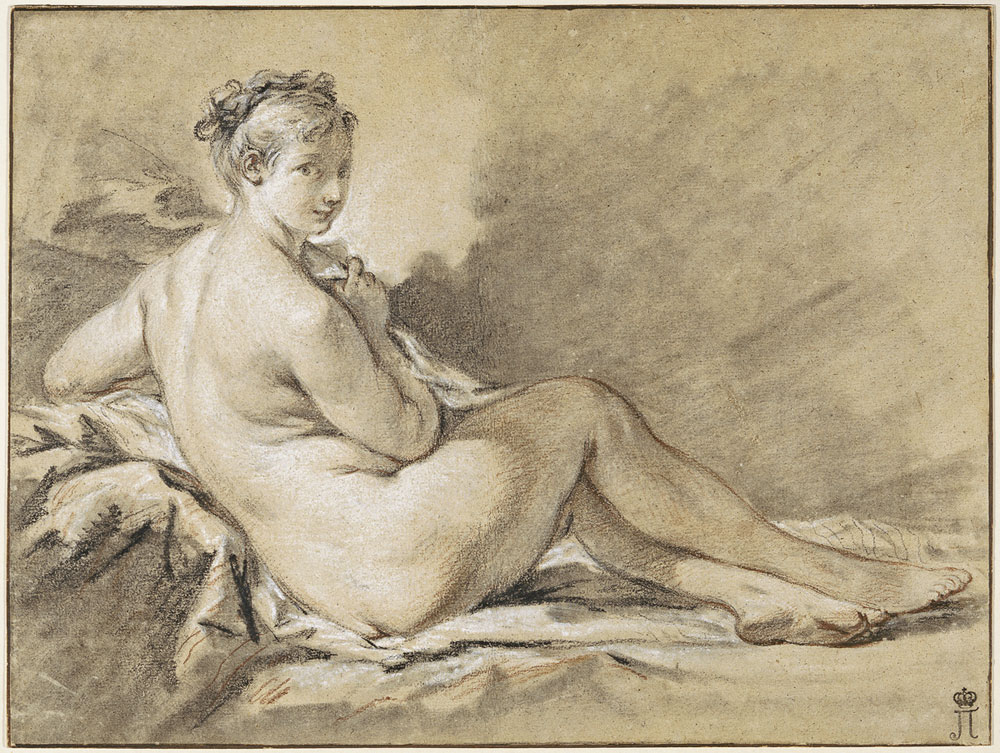
 

François Boucher (French, 1703-1770) 'Study of a female nude' 1740


François Boucher (French, 1703-1770)
Study of a female nude
1740
Red, black and white chalk on brown paper
26.2 x 34.6cm
The State Hermitage Museum, St Petersburg (Inv. no. ОР-382)
Acquired from the collection of Count Cobenzl, Brussels, 1768


Charles-Louis Clérisseau (French, 1721-1820) 'Design for the paintings in the cell of Father Lesueur in the Monastery of Santissima Trinità dei Monti in Rome' 1766-1768


Charles-Louis Clérisseau (French, 1721-1820)
Design for the paintings in the cell of Father Lesueur in the Monastery of Santissima Trinità dei Monti in Rome
1766-1768
Pen and black and brown ink, brown and grey wash
36.9 x 53cm (sheet)
The State Hermitage Museum, St Petersburg (Inv. no. ОР-2597)
Acquired from the artist by Catherine II on 5 May 1780, Provenance: before 1797


Carlo Galli-Bibiena (Austrian, 1728-87) 'Design for the interior decoration of a library' 1770s


Carlo Galli-Bibiena (Austrian, 1728-1787)
Design for the interior decoration of a library
1770s
Pen and ink, grey wash and watercolour over pencil
32 х 44cm (sheet)
The State Hermitage Museum, St Petersburg (Inv. no. ОР-231)
Acquired before 1797


Giacomo Quarenghi (Italian, 1744-1817) 'Façade of the Hermitage Theatre' 1780s


Giacomo Quarenghi (Italian, 1744-1817)
Façade of the Hermitage Theatre
1780s
Pen and ink, watercolour
33 х 47cm (sheet)
The State Hermitage Museum, St Petersburg (Inv. no. ОР-9626)
Acquired from Giulio Quarenghi in 1818
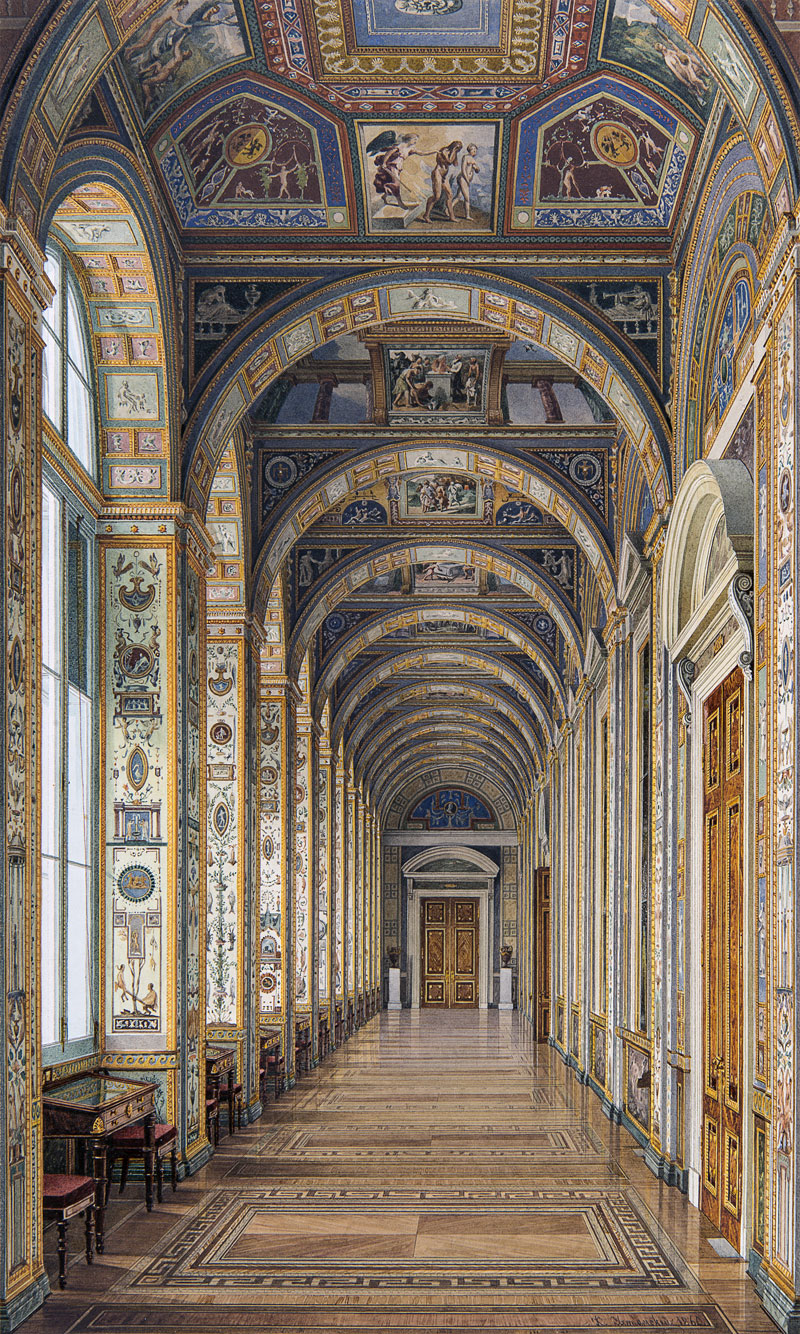
 

Konstantin Ukhtomsky (Russian, 1818-1881) 'The Raphael Loggia' 1860


Konstantin Ukhtomsky (Russian, 1818-1881)
The Raphael Loggia
1860
Watercolour
42 х 25cm
The State Hermitage Museum, St Petersburg (Inv. no. ОР-11741)
Acquired from the artist, 1860


Over 500 works from the personal collection of Catherine the Great will travel to Australia in July. Gathered over a 34-year period, the exhibition represents the foundation of the Hermitage’s collection and includes outstanding works from artists such as Rembrandt, Velasquez, Rubens and Titian. Exemplary works from Van Dyck, Snyders, Teniers and Hals will also travel, collectively offering some of the finest Dutch and Flemish art to come to Australia. The exhibition, presented by the Hermitage Museum, National Gallery of Victoria and Art Exhibitions Australia, is exclusive to Melbourne as part of the Melbourne Winter Masterpieces series.

The Premier of Victoria, the Hon. Daniel Andrews MP said: “Masterpieces from the Hermitage: The Legacy of Catherine the Great will showcase treasures from one of the largest, oldest and most visited museums in the world. Another major event for Melbourne, this exhibition will provide visitors with a once-in-a-lifetime opportunity to see first-hand the extraordinary personal collection of Catherine the Great, drawn from the Hermitage Museum, St Petersburg.”

NGV Director, Tony Ellwood said, “This exhibition celebrates the tenacity and vision of a true innovator in the arts. Catherine the Great’s inexhaustible passion for the arts, education and culture heralded a renaissance, leading to the formation of one of the world’s great museums, the Hermitage.”

“We are delighted that we have the good fortune of bringing one of the world’s most important collections to Australian audiences. The exhibition is a rare opportunity to be immersed in the world of Catherine the Great and her magnificent collection of art,” Tony Ellwood said.

Catherine the Great’s reign from 1762 to 1796 was known as the golden age and is remembered for her exceptional patronage of the arts, literature and education. Of German heritage, Catherine the Great was well connected in European art and literature circles. She saw herself as a reine-philosophe (Philosopher Queen), a new kind of ruler in the Age of Enlightenment. Guided by Europe’s leading intellectuals, such as the French philosophers Voltaire and Diderot, she sought to modernise Russia’s economy, industry and government, drawing inspiration both from classical antiquity and contemporary cultural and political developments in Western Europe.

A prolific acquirer of art of the period, Catherine the Great’s collection reflects the finest contemporary art of the 18th century as well as the world’s best old masters of the time, with great works by French, German, Chinese, British, Dutch and Flemish artists. Notable in this exhibition are entire groups of works acquired from renowned collections from France, Germany and England representing the best collections offered for sale at the time. The exhibition will feature four Rembrandts, including the notable Young woman with earrings, known as one of most intimate images Rembrandt ever created. The exhibition will also include 80 particularly fine drawings by artists including Poussin, Rubens, Clouet and Greuze.

Exquisite decorative arts will be brought to Australia for this exhibition, including 60 items from the Cameo Service of striking enamel-painted porcelain made by the Sèvres Porcelain Manufactory in Paris. Commissioned by Catherine the Great for her former lover and military commander, Prince Grigory Potemkin, the dinner service features carved and painted imitation cameos, miniature works of art, based on motifs from the French Royal collection.

Director of the Hermitage Museum, Mikhail Piotrovsky said, “These outstanding works from the personal collection of Catherine the Great represent the crown jewels of the Museum. It was through the collection of these works and Catherine the Great’s exceptional vision that the Hermitage was founded. Today it is one of the most visited museums in the world. We are very pleased to be able to share these precious works with Australian audiences at the 250-year anniversary of this important institution.”

Catherine the Great’s love of education, art and culture inspired a period of enlightenment and architectural renaissance that saw the construction of the Hermitage complex. This construction includes six historic buildings along the Palace Embankment as well as the spectacular Winter Palace, a former residence of Russian emperors. On view in the exhibition will be remarkable drawings by the Hermitage’s first architects Georg Velten and Giacomo Quarenghi, complemented by excellent painted views of the new Hermitage by Benjamin Patersen. These, along with Alexander Roslin’s majestic life-size portrait of Catherine, set the scene for a truly spectacular exhibition.

Visitors to the exhibition will be able to immerse themselves in Catherine the Great’s world evoking a sensory experience of a visit to the Hermitage Museum in St Petersburg. The exhibition design will have rich treatments of architectural details, interior furnishings, wallpapers and a colour palette directly inspired by the Hermitage’s gallery spaces. Enveloping multimedia elements will give visitors a sense of being inside the Hermitage, evoking the lush and opulent interiors.

The Hermitage Museum was founded in 1764 by Catherine the Great and has been open to the public since 1852. With 3 million items in its holdings, the Hermitage is often regarded as having the finest collection of paintings in the world today. In 2014, The Hermitage celebrated its 250-year anniversary and opened a new wing of the museum with 800 rooms dedicated to art from the 19th to 21st centuries. The exhibition is organised by The Hermitage Museum, St Petersburg in association with the National Gallery of Victoria and Art Exhibitions Australia.

Masterpieces from the Hermitage: The Legacy of Catherine the Great will be at NGV International from 31 July – 8 November 2015 and will be presented alongside the David Bowie is exhibition at the Australian Centre for the Moving Image as part of the 2015 Melbourne Winter Masterpieces series.

Press release from the National Gallery of Victoria
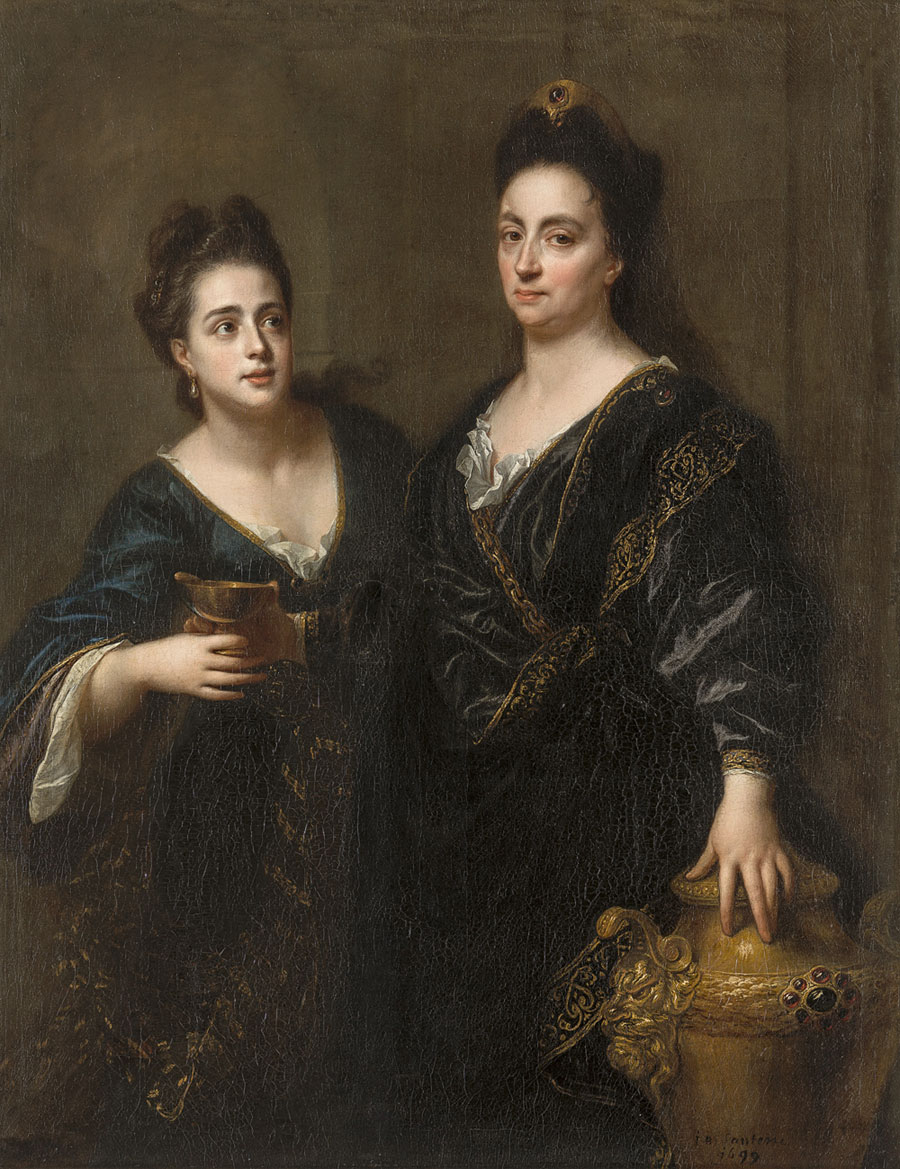
 

Jean-Baptiste Santerre (French, 1651-1717) 'Two actresses' 1699


Jean-Baptiste Santerre (French, 1651-1717)
Two actresses
1699
Oil on canvas
146 х 114cm
The State Hermitage Museum, St Petersburg (Inv. no. ГЭ-1284)
Acquired 1768


Anthony van Dyck (Flemish, 1599-1641) 'Portrait of Philadelphia and Elizabeth Wharton' 1640


Anthony van Dyck (Flemish, 1599-1641)
Portrait of Philadelphia and Elizabeth Wharton
1640
Oil on canvas
162 х 130cm
The State Hermitage Museum, St Petersburg (Inv. no. ГЭ-533)
Acquired from the collection of Sir Robert Walpole, Houghton Hall, 1779
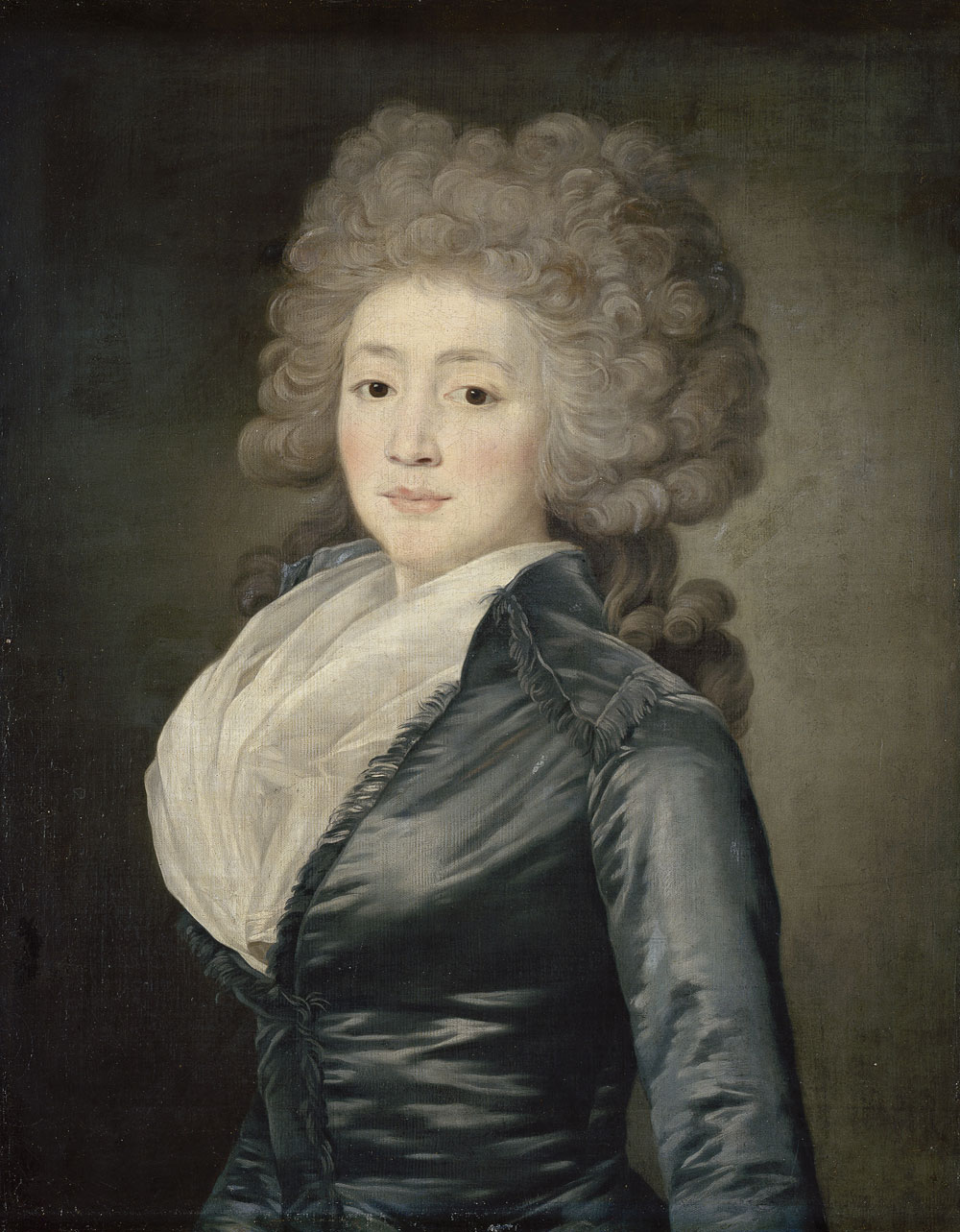
 

Jean Louis Voille (French, 1744-1804) 'Portrait of Olga Zherebtsova' 1790s


Jean Louis Voille (French, 1744-1804)
Portrait of Olga Zherebtsova
1790s
Oil on canvas
73.5 х 58cm
The State Hermitage Museum, St Petersburg (Inv. no. ГЭ-5654)
Acquired from the collection of E. P. Oliv, Petrograd, 1923
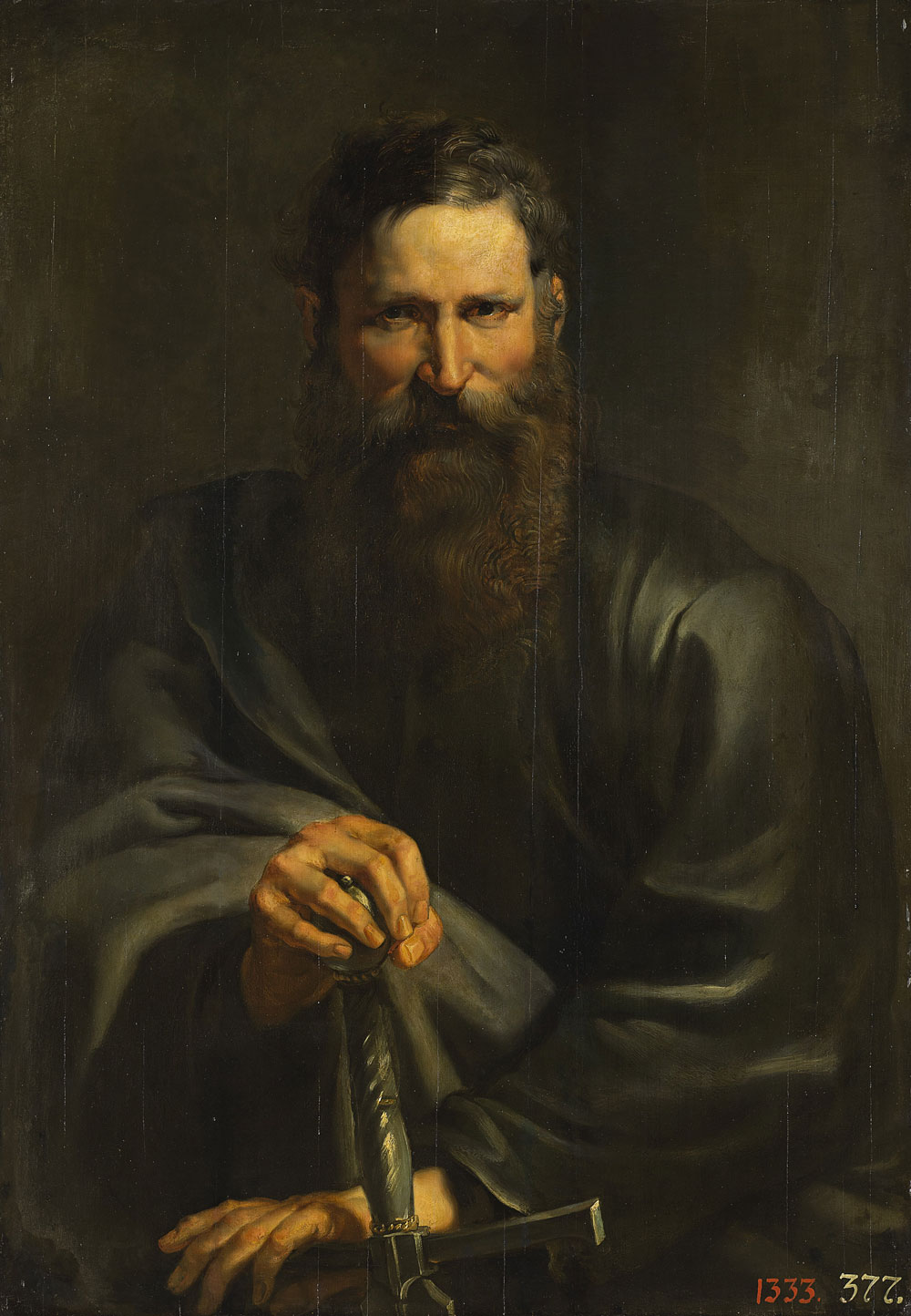
 

Peter Paul Rubens and workshop (Flemish, 1577-1640) 'The Apostle Paul' c. 1615


Peter Paul Rubens and workshop (Flemish, 1577-1640)
The Apostle Paul
c. 1615
Oil on wood panel
105.6 х 74cm
The State Hermitage Museum, St Petersburg (Inv. no. ГЭ-489)
Acquired before 1774


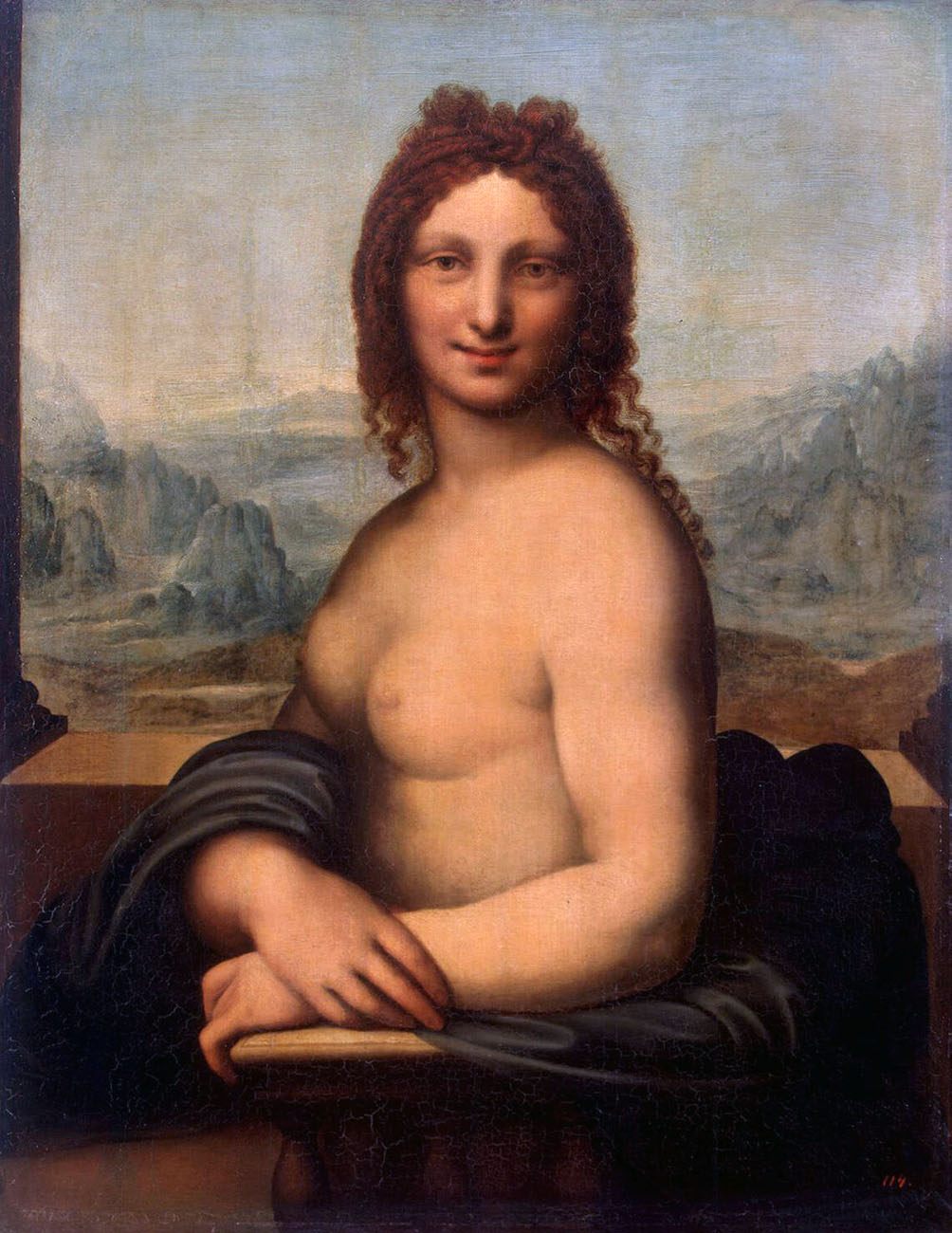
Leonardo Da Vinci (school of) 'Female nude (Donna Nuda)' early 16th century


Leonardo Da Vinci (school of)
Female nude (Donna Nuda)
Early 16th century
Oil on canvas
86.5 х 66.5cm
The State Hermitage Museum, St Petersburg (Inv. no. ГЭ-110)
Acquired from the collection of Sir Robert Walpole, Houghton Hall, 1779
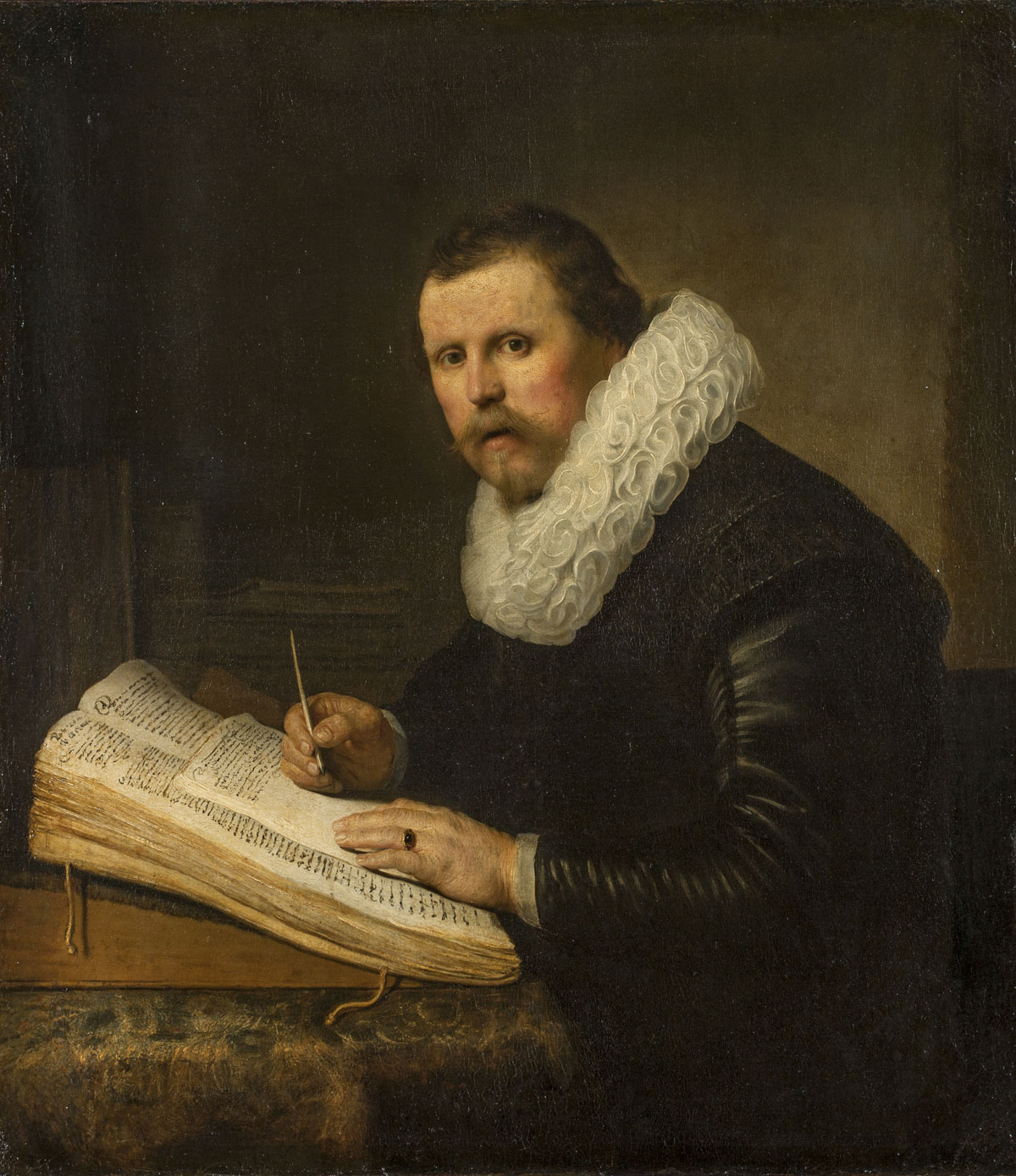
 

Rembrandt Harmensz. van Rijn (Dutch, 1606-69) 'Portrait of a scholar' 1631


Rembrandt Harmensz. van Rijn (Dutch, 1606-1669)
Portrait of a scholar
1631
Oil on canvas
104.5 х 92cm
The State Hermitage Museum, St Petersburg (Inv. no. ГЭ-744)
Acquired from the collection of Count Heinrich von Brühl, Dresden, 1769


Jean-Baptiste Perronneau (French, 1715–83) 'Portrait of a boy with a book' 1740s


Jean-Baptiste Perronneau (French, 1715-1783)
Portrait of a boy with a book
1740s
Oil on canvas
63.0 х 52cm
The State Hermitage Museum, St Petersburg (Inv. no. ГЭ-1270)
Acquired from the collection of A. G. Teplov, St Petersburg, 1781
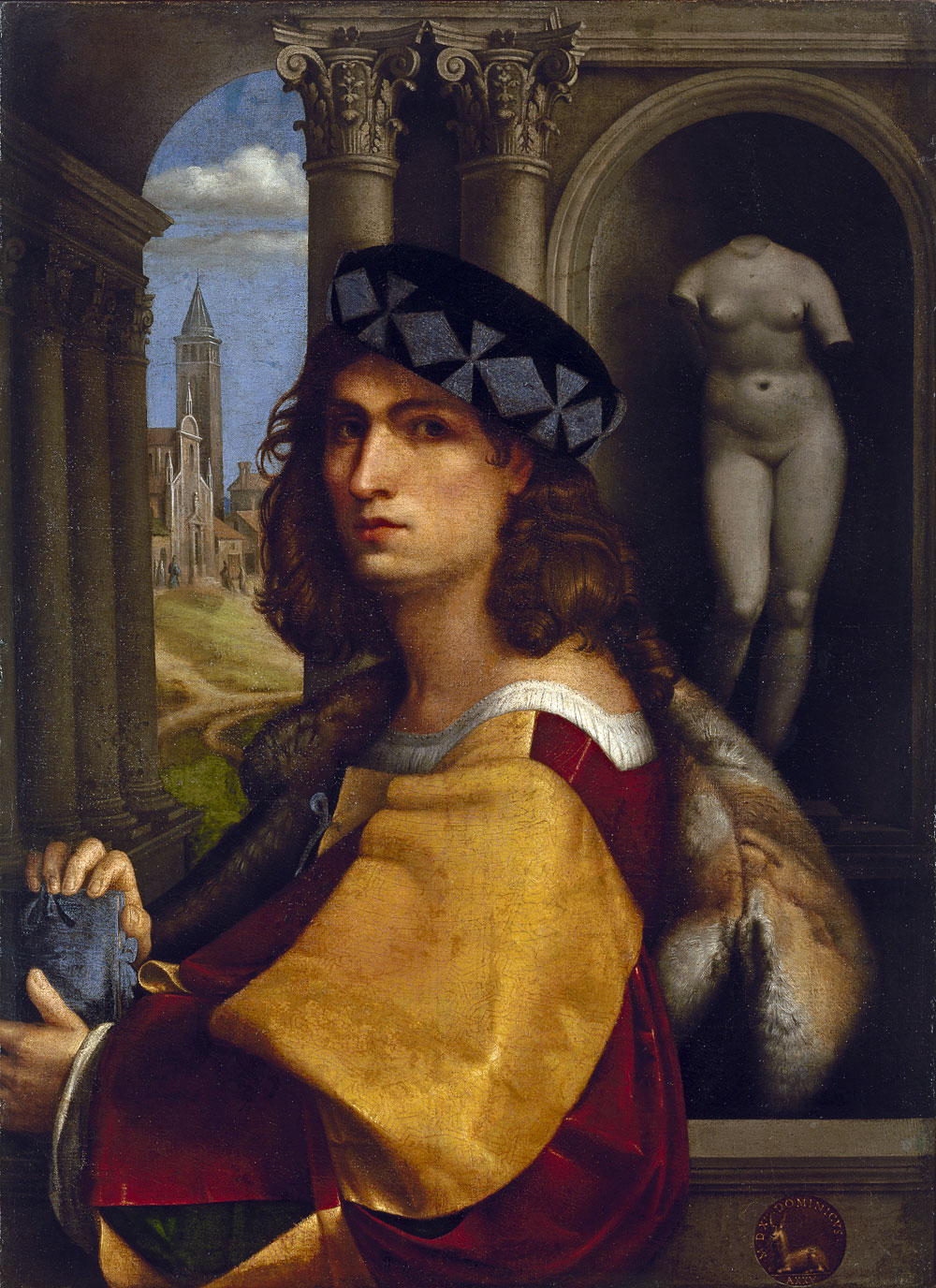
 

Domenico Capriolo (Italian, c. 1494-1528) 'Portrait of a young man' 1512


Domenico Capriolo (Italian, c. 1494-1528)
Portrait of a young man
1512
Oil on canvas
117 х 85cm
The State Hermitage Museum, St Petersburg (Inv. no. ГЭ-21)
Acquired from the collection of Baron Louis-Antoine Crozat de Thiers, Paris, 1772


Alexander Roslin (Swedish, 1718-93) 'Portrait of Catherine II' 1776-1777


Alexander Roslin (Swedish, 1718-1793)
Portrait of Catherine II
1776-1777
Oil on canvas
271 х 189.5cm
The State Hermitage Museum, St Petersburg (Inv. no. ГЭ-1316)
Acquired from the artist, 1777
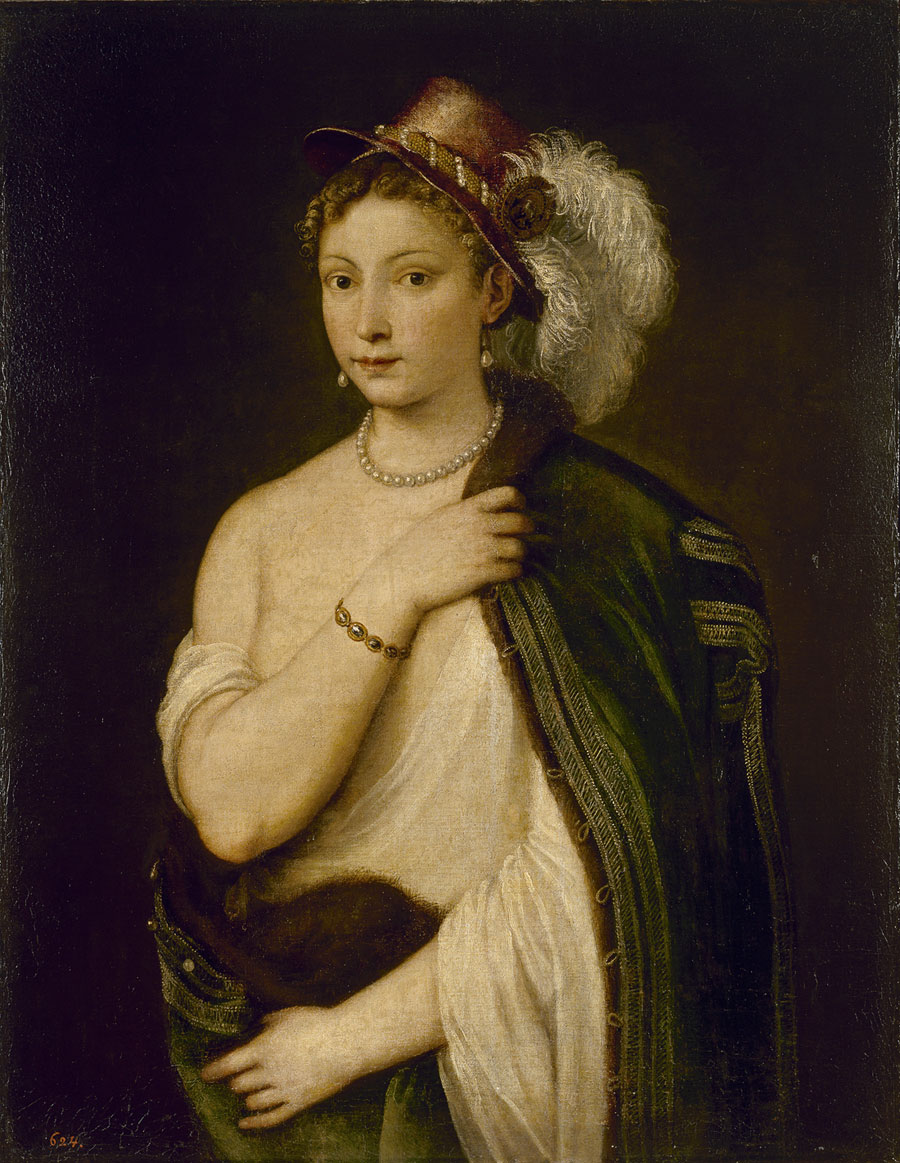
 

Titian (Italian, 1485-90 - 1576) 'Portrait of a young woman' c. 1536


Titian (Italian, 1485-1490 – 1576)
Portrait of a young woman
c. 1536
Oil on canvas
96 х 75cm
The State Hermitage Museum, St Petersburg (Inv. no. ГЭ-71)
Acquired from the collection of Baron Louis-Antoine Crozat de Thiers, Paris, 1772


Rembrandt Harmensz. van Rijn (Dutch, 1606-69) 'Young woman trying on earrings' 1657


Rembrandt Harmensz. van Rijn (Dutch, 1606-1669)
Young woman trying on earrings
1657
Oil on wood panel
39.5 х 32.5cm
The State Hermitage Museum, St Petersburg (Inv. no. ГЭ-784)
Acquired from the collection of the Comte de Baudouin, Paris, 1781


Francois Clouet (French, c. 1516-1572) 'Portrait of Charles IX' 1566


Francois Clouet (French, c. 1516-1572)
Portrait of Charles IX
1566
Black and red chalk
33.1 x 22.5cm (sheet)
The State Hermitage Museum, St Petersburg (Inv. no. OР-2893)
Acquired from the collection of Count Cobenzl, Brussels, 1768


David Teniers II (Flemish, 1610-1690) 'Kitchen' 1646


David Teniers II (Flemish, 1610-1690)
Kitchen
1646
Oil on canvas
171 х 237cm
The State Hermitage Museum, St Petersburg (Inv. no. ГЭ-586)
Acquired from the collection of Sir Robert Walpole, Houghton Hall, 1779


Cornelis de Vos (Dutch/Flemish, c. 1584-1651) 'Self-portrait of the artist with his wife Suzanne Cock and their children' c. 1634


Cornelis de Vos (Dutch/Flemish, c. 1584-1651)
Self-portrait of the artist with his wife Suzanne Cock and their children
c. 1634
Oil on canvas
185.5 х 221cm
The State Hermitage Museum, St Petersburg (Inv. no. ГЭ-623)
Donated by Prince G. A. Potemkin, 1780s
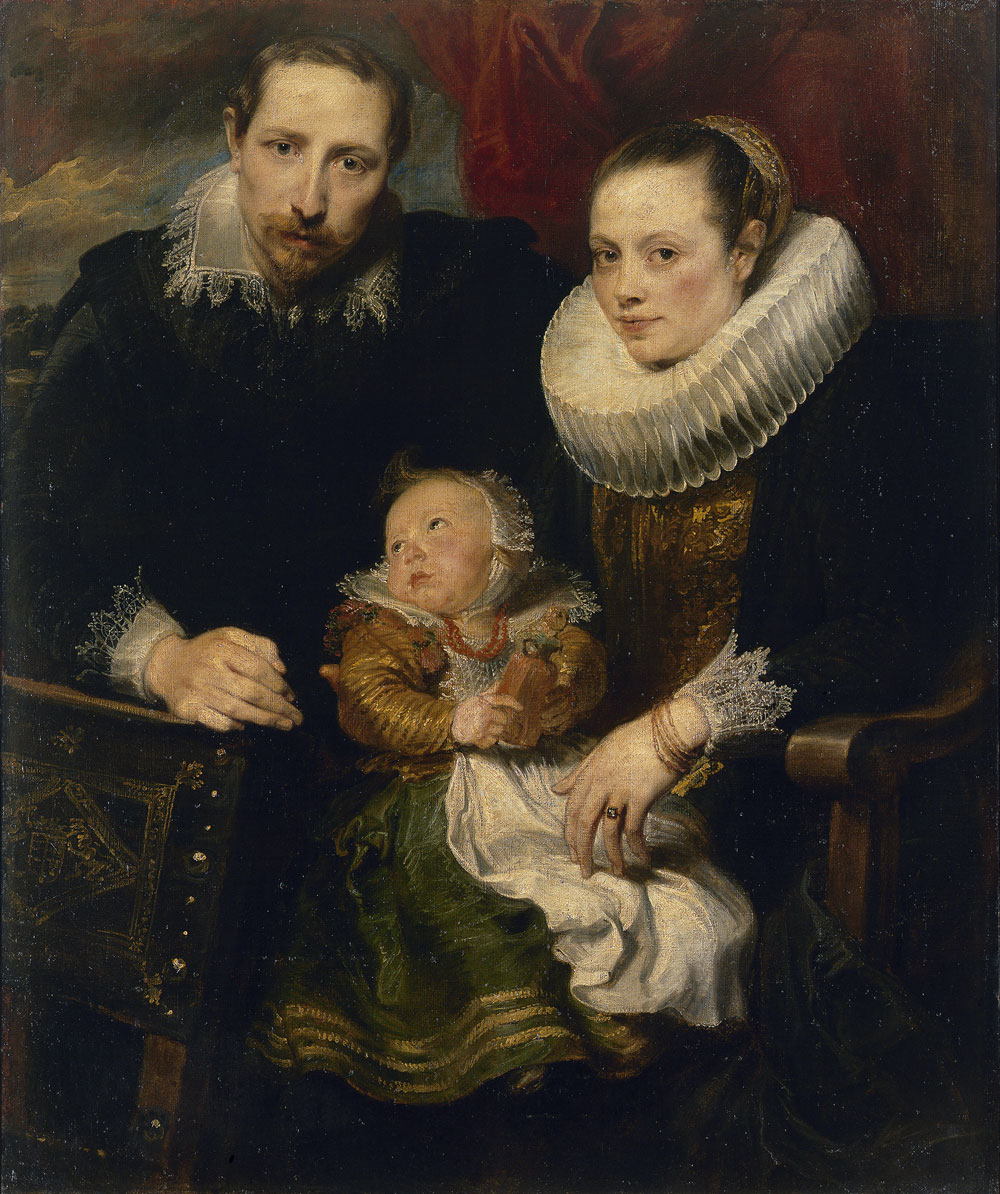
 

Anthony van Dyck (Flemish, 1599-1641) 'Family portrait' c. 1619


Anthony van Dyck (Flemish, 1599-1641)
Family portrait
c. 1619
Oil on canvas
113.5 х 93.5cm
The State Hermitage Museum, St Petersburg (Inv. no. ГЭ-534)
Acquired from a private collection, Brussels, 1774


Charles Vanloo (French, 1705-1765) 'Sultan's wife drinking coffee' 1750s


Charles Vanloo (French, 1705-1765)
Sultan’s wife drinking coffee
1750s
Oil on canvas
120 х 127cm
The State Hermitage Museum, St Petersburg (Inv. no. ГЭ-7489)
Acquired from the collection of Madame Marie-Thérèse Geoffrin, Paris, 1772


Peter Paul Rubens and workshop (Flemish, 1577-1640) 'The Adoration of the Magi' c. 1620


Peter Paul Rubens and workshop (Flemish, 1577-1640)
The Adoration of the Magi
c. 1620
Oil on canvas
235 х 277.5cm
The State Hermitage Museum, St Petersburg (Inv. № ГЭ-494)
Acquired from the collection of Dufresne, Amsterdam, 1770


Diego Velazquez (Spanish, 1599-1660) 'Luncheon' c. 1617-1618


Diego Velázquez (Spanish, 1599-1660)
Luncheon
c. 1617-1618
Oil on canvas
108.5 х 102cm
The State Hermitage Museum, St Petersburg (Inv. no. ГЭ-389)
Acquired 1763-1774


Melchior d'Hondecoeter (Dutch, 1636-1695) 'Birds in a park' 1686


Melchior d’Hondecoeter (Dutch, 1636-1695)
Birds in a park
1686
Oil on canvas
136 х 164cm
The State Hermitage Museum, St Petersburg (Inv. no. ГЭ-1042)
Acquired from the collection of Jacques Aved, Paris, 1766


Frans Snyders (Flemish 1579-1657) 'Concert of birds' 1630-1640


Frans Snyders (Flemish, 1579-1657)
Concert of birds
1630-1640
Oil on canvas
136.5 х 240cm
The State Hermitage Museum, St Petersburg (Inv. no. ГЭ-607)
Acquired from the collection of Sir Robert Walpole, Houghton Hall, 1779


NGV International
180 St Kilda Road

Opening hours for exhibition
10am – 5pm daily

National Gallery of Victoria website

LIKE ART BLART ON FACEBOOK

Back to top

Exhibition: ‘Masterpieces from the Hermitage: The Legacy of Catherine the Great’ at NGV International, Melbourne

Exhibition dates: 31st July – 8th November 2015


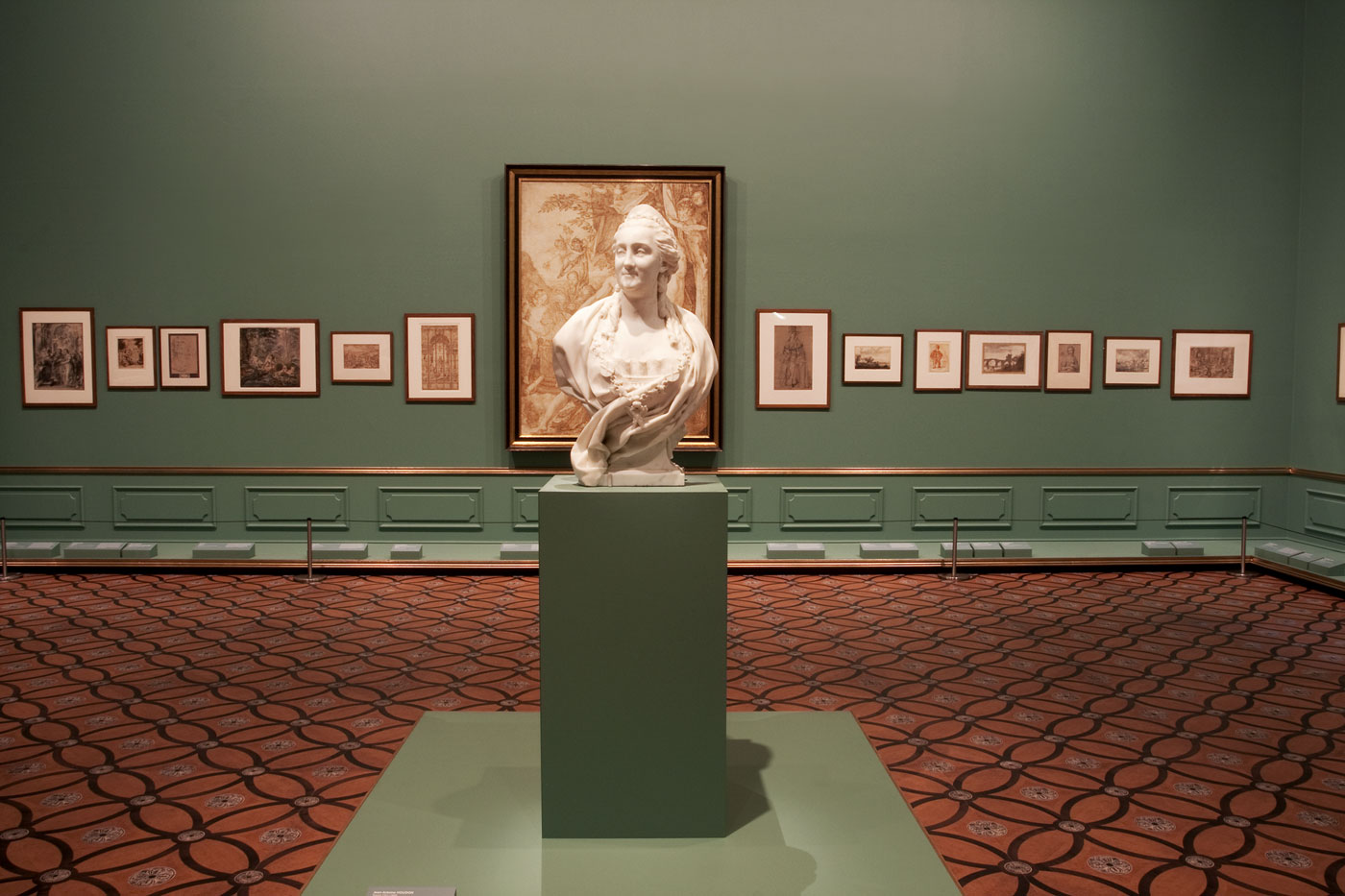
Installation view of room 1 of the exhibition 'Masterpieces from the Hermitage: The Legacy of Catherine the Great' featuring Alexander Roslin (Swedish 1718-1793) 'Portrait of Catherine II' 1776-1777


Installation view of room 1 of the exhibition Masterpieces from the Hermitage: The Legacy of Catherine the Great at NGV International, Melbourne featuring Alexander Roslin (Swedish 1718-93) Portrait of Catherine II 1776-77
Photo: Marcus Bunyan


A scintillating exhibition at NGV International which showcases one of the world’s greatest art collections. Exhibition design is outstanding (particularly the floor tiling), as are the Da Vinci, Titian, Rembrandt, van Dyck, Rubens and Flemish still life. Among my favourites is a small Watteau Savoyard with a Marmot (1716) which is absolutely still, delicate and exquisite: I thought of the photographs of Atget, his street sellers, when I saw this painting; and Frans Snyders’ tour-de-force Concert of birds (1630-40) which has such presence.

Well done to the curators, the Hermitage Museum and the NGV for staging such a magnificent exhibition.

Marcus


Many thankx to the National Gallery of Victoria for allowing me to publish the photographs in the posting. Please click on the photographs for a larger version of the image. All photographs © Dr Marcus Bunyan and the National Gallery of Victoria.


Masterpieces from the Hermitage: The Legacy of Catherine the Great showcases one of the world’s greatest art collections. Featuring works by artists including Rembrandt, Rubens, Velázquez and Van Dyck, the exhibition offers a dazzling array of works including the finest group of Dutch and Flemish art to come to Australia.

This exclusive Melbourne exhibition will also highlight the innovation and vision of Catherine the Great, whose inexhaustible passion for education, the arts and culture heralded a period of enlightenment in the region. The extraordinary works sourced and commissioned by Catherine during her thirty-four year reign, created the foundations for the Hermitage today – considered to be one of the world’s greatest treasure houses of art and decorative arts. The exhibition will offer audiences an immersive experience, recreating the rich atmosphere of the Hermitage to showcase these exquisite works.

German-born Catherine the Great (Catherine II) came to power in 1762, aged thirty-three, and ruled Russia for the next thirty-four years, until her death in 1796. She saw herself as a Philosopher Queen, a new kind of ruler in the Age of Enlightenment. Guided by Europe’s leading intellectuals, she modernised Russia’s economy, industry and government, drawing inspiration both from Antiquity and contemporary cultural and political developments in Western Europe. A fluent speaker of Russian, French and German, Catherine was largely self-educated, independent, idealistic and visionary.

While her reign was not always peaceful, Catherine sought to bring order, stability and prosperity to the vast Russian Empire. Her ideals of abolishing serfdom and ensuring the equality of all citizens under the law were ahead of her time, and strongly resisted by the nobility of the day; however, she achieved numerous other reforms, including the introduction of paper money and modernisation of Russia’s education system. French philosopher Denis Diderot, who visited St Petersburg in 1773, described an audience with Catherine as being ‘more like study than anything else: she is a stranger to no subject; there is no man in the Empire who knows her nation as well as she’.

Room 1 Catherine the collector

Between 1762 and 1796, the years of her reign, Catherine the Great oversaw a period of cultural renaissance in Russia. The world of ideas in which she was deeply involved from an early age found tangible expression in the material world the Empress later created around herself. The great complexes of imperial buildings Catherine constructed reflected her informed interest in both Classical and Chinese culture.

Catherine not only assembled a collection of Old Master paintings equal in scale and quality to leading European collections, but also paid considerable attention to the acquisition of contemporary art. While the richness and technical perfection of her diverse collections of decorative arts aimed to dazzle and please, they also had the more practical purpose of raising standards of artistic production in Russia. The fact that more than 400 exemplary works of art from her personal collection, including paintings, sculptures, drawings, porcelain, silver and precious gems, are seen here for the first time in Australia is cause for celebration.


Installation view of room 1 of the exhibition 'Masterpieces from the Hermitage: The Legacy of Catherine the Great' featuring Alexander Roslin (Swedish 1718-1793) 'Portrait of Catherine II' 1776-1777

Installation view of room 1 of the exhibition 'Masterpieces from the Hermitage: The Legacy of Catherine the Great' featuring Alexander Roslin (Swedish 1718-1793) 'Portrait of Catherine II' 1776-1777


Installation views of room 1 of the exhibition Masterpieces from the Hermitage: The Legacy of Catherine the Great at NGV International, Melbourne featuring Alexander Roslin (Swedish 1718-1793) Portrait of Catherine II 1776-1777
Photos: Marcus Bunyan


Installation view of room 1 of the exhibition 'Masterpieces from the Hermitage: The Legacy of Catherine the Great' at NGV International, Melbourne

Installation view of room 1 of the exhibition 'Masterpieces from the Hermitage: The Legacy of Catherine the Great' at NGV International, Melbourne

Installation view of room 1 of the exhibition 'Masterpieces from the Hermitage: The Legacy of Catherine the Great' at NGV International, Melbourne

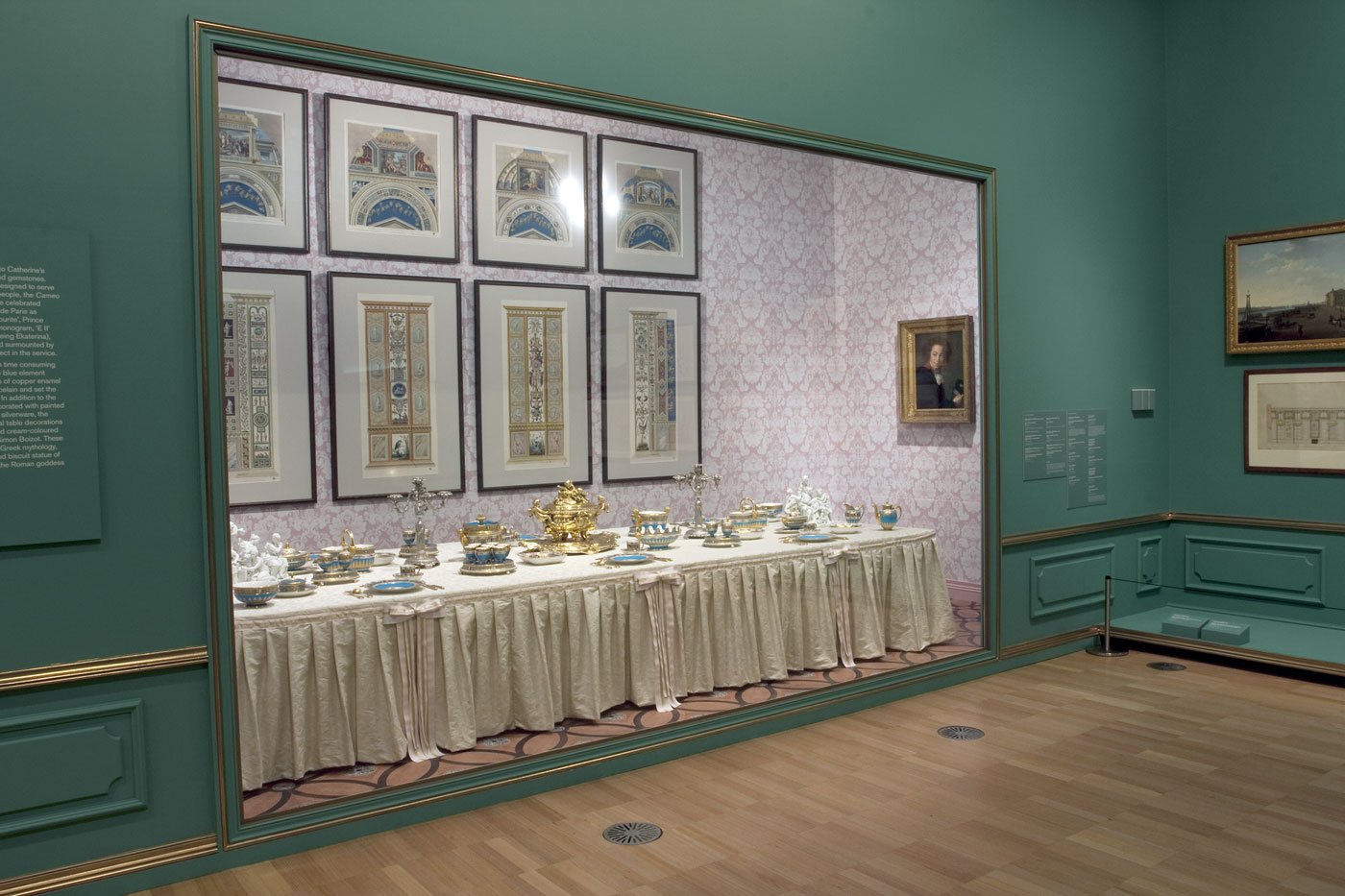
Installation view of room 1 of the exhibition 'Masterpieces from the Hermitage: The Legacy of Catherine the Great' at NGV International, Melbourne featuring the Sèvres Cameo Service. Cameo Service 1778-1779. Sevres Porcelain Factory (manufacturer) France, est. 1756. The State Hermitage Museum, St. Petersburg


Installation views of room 1 of the exhibition Masterpieces from the Hermitage: The Legacy of Catherine the Great at NGV International, Melbourne featuring in the last three photographs, the Sèvres Cameo Service. Cameo Service 1778-1779. Sevres Porcelain Factory (manufacturer) France, est. 1756. The State Hermitage Museum, St. Petersburg.
Photos: Marcus Bunyan


Sèvres Cameo Service

The Sèvres Cameo Service (1778-1779) relates to Catherine’s great passion for collecting engraved gemstones. Comprising 797 individual pieces designed to serve dinner, dessert and coffee to sixty people, the Cameo Service was commissioned from the celebrated Sèvres porcelain manufactory outside Paris as a present for Catherine’s court ‘favourite’, Prince Grigory Potemkin. The Empress’s monogram, ‘E II’ (the Russian version of her name being Ekaterina), woven from garlands of flowers and surmounted by a crown, adorned almost every object in the service.

Production of the service was both time consuming and labour-intensive. The exquisite blue element alone – made from separate layers of copper enamel that gradually seeped into the porcelain and set the pure colour – required five firings. In addition to the hundreds of porcelain objects decorated with painted and sculpted cameos and related silverware, the service also included grand central table decorations fashioned from biscuit, or unglazed cream-coloured porcelain, by the sculptor Louis-Simon Boizot. These decorations illustrated tales from Greek mythology, and were presided over by a grand biscuit statue of Catherine the Great as Minerva, the Roman goddess of wisdom and the arts.


Installation view of room 1 of the exhibition 'Masterpieces from the Hermitage: The Legacy of Catherine the Great' at NGV International, Melbourne

Installation view of room 1 of the exhibition 'Masterpieces from the Hermitage: The Legacy of Catherine the Great' at NGV International, Melbourne


Installation views of room 1 of the exhibition Masterpieces from the Hermitage: The Legacy of Catherine the Great at NGV International, Melbourne
Photos: Marcus Bunyan


Exhibition passageway


Installation view of passageway video of the exhibition 'Masterpieces from the Hermitage: The Legacy of Catherine the Great' at NGV International, Melbourne


Installation view of passageway video of the exhibition Masterpieces from the Hermitage: The Legacy of Catherine the Great at NGV International, Melbourne
Photo: Marcus Bunyan


Room 2 Italian art

When Catherine the Great began collecting European art, opportunities to acquire fine Italian Old Master paintings were already severely limited. Demand from wealthy collectors was high and the marketplace was saturated with misattributed works, some of which inevitably made their way to the Hermitage and other great collections.

Despite this, Catherine achieved great success collecting sixteenth and seventeenth century paintings, particularly from Venice, including great paintings by Titian, Paris Bordone and the enigmatic Lorenzo Lotto. These are complemented by fine examples of Roman and Florentine paintings, such as the famous Female nude (Donna nuda), by an artist very close to Leonardo da Vinci. This select group of paintings beautifully illustrate developments in figurative art, portraiture and religious art in Italy from the sixteenth to the eighteenth century.

In the early years of her reign, Catherine the Great acquired en masse several large collections of drawings representing all the main European schools. This set the foundations for the current Hermitage Museum’s outstanding Cabinet of Drawings. In terms of quality, Catherine’s acquisitions of Italian drawings were of the highest standard. The majority of these date from the mid sixteenth to late eighteenth centuries and include many rare and precious works.


Installation view of room 2 of the exhibition 'Masterpieces from the Hermitage: The Legacy of Catherine the Great' at NGV International, Melbourne showing at centre, Domenico Fetti (Italian 1589-1623) 'Portrait of an actor' 1620s


Installation view of room 2 of the exhibition Masterpieces from the Hermitage: The Legacy of Catherine the Great at NGV International, Melbourne showing at centre, Domenico Fetti (Italian 1589-1623) Portrait of an actor 1620s
Photo: Marcus Bunyan


Domenico Fetti (Italian, 1589-1623) 'Portrait of an actor' 1620s (installation view)


Domenico Fetti (Italian, 1589-1623)
Portrait of an actor (installation view)
1620s
Oil on canvas
The State Hermitage Museum, St. Petersburg
Photo: Marcus Bunyan


Domenico Fetti was court painter to Gerdinand II Gonzaga, Duke of Mantua, when he made this striking portrait of an actor. It is though to be Tristano Martinelli who made his fame working in the commedia dell’arte tradition. It is believe that Marinelli created and popularised the standard roll of the Harlequin in theatre. Fetti himself was involved with the theatre in both Mantua and Venice.


Installation view of room 2 of the exhibition 'Masterpieces from the Hermitage: The Legacy of Catherine the Great' at NGV International, Melbourne featuring at centre, Paris Bordone (Italian 1500-71) 'Portrait of a lady with a boy' Mid 1530s


Installation view of room 2 of the exhibition Masterpieces from the Hermitage: The Legacy of Catherine the Great at NGV International, Melbourne featuring at centre, Paris Bordone (Italian 1500-1571) Portrait of a lady with a boy Mid 1530s
Photo: Marcus Bunyan


Paris Bordone (Italian, 1500-1571) 'Portrait of a lady with a boy' Mid 1530s (installation view)


Paris Bordone (Italian, 1500-1571)
Portrait of a lady with a boy (installation view)
Mid 1530s
Oil on canvas
97cm (38.1 in) x 77cm (30.3 in)
The State Hermitage Museum, St. Petersburg
Photo: Marcus Bunyan


This work by Venetian artist Paris Bordone is a typical example of formal Renaissance portraiture. Bordone’s main aim was to show the high social standing of the sitters, so he painted their luxurious costumes in great detail. He draws our attention to the sumptuous sleeves of this woman’s dress, the headgear resembling a turban, as well as her opulent jewellery. Bordone was one of Titian’s most talented pupils whose work is characterised by a level of precision not often present in his master’s work. This painting entered the Hermitage as a work by Giorgione.


Paris Bordone (Italian, 1500-1571) 'Portrait of a lady with a boy' Mid 1530s


Paris Bordone (Italian 1500-1571)
Portrait of a lady with a boy
Mid 1530s
Oil on canvas
97cm (38.1 in) x 77cm (30.3 in)
The State Hermitage Museum, St. Petersburg
Public domain


Installation view of room 2 of the exhibition 'Masterpieces from the Hermitage: The Legacy of Catherine the Great' at NGV International, Melbourne

Installation view of room 2 of the exhibition 'Masterpieces from the Hermitage: The Legacy of Catherine the Great' at NGV International, Melbourne showing at left, Domenico Capriolo (Italian c. 1494-1528) 'Portrait of a young man' 1512 and to the right, Lorenzo Lotto (Italian c. 1480-1556) 'The Rest on the Flight into Egypt with Saint Justine' 1529-1530


Installation view of room 2 of the exhibition Masterpieces from the Hermitage: The Legacy of Catherine the Great at NGV International, Melbourne showing at left in the bottom image, Domenico Capriolo (Italian c. 1494-1528) Portrait of a young man 1512 and to the right, Lorenzo Lotto (Italian c. 1480-1556) The Rest on the Flight into Egypt with Saint Justine 1529-1530
Photos: Marcus Bunyan


Portrait of a young man by the Venetian master Domenico Capriolo captures the intellectual values of Renaissance art. Everything that surrounds this youth speaks of his interests, such as the church that indicates his piety; the statue of Venus that reveals his passion for Antiquity; and the folder (containing verses or drawings) that illustrates the richness of his inner world. The painting is dated 1512 and the artist’s name symbolised by a medallion containing a Capreolus, or deer, which is a play on his name. Such allusions were common in Renaissance art and would have been readily understood by his contemporaries.


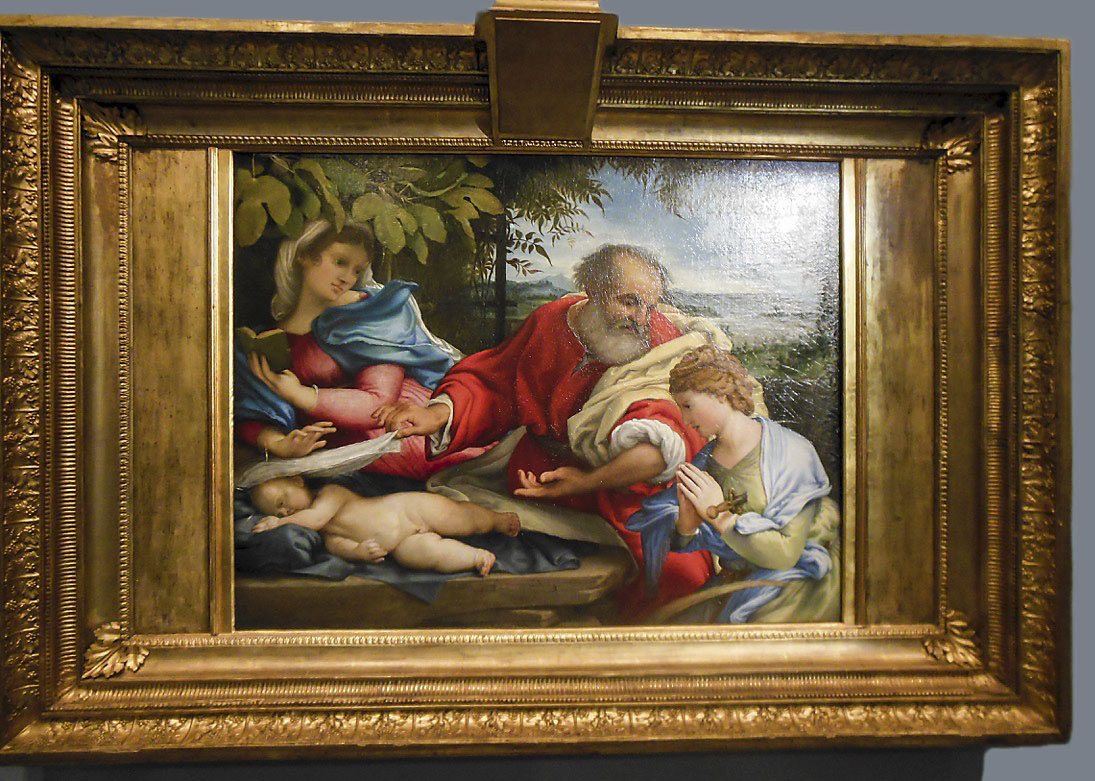
Lorenzo Lotto (Italian c. 1480-1556) 'The Rest on the Flight into Egypt with Saint Justine' 1529-1530 (installation view)

Lorenzo Lotto (Italian c. 1480-1556) 'The Rest on the Flight into Egypt with Saint Justine' 1529-1530 (installation view)


Lorenzo Lotto (Italian c. 1480-1556)
The Rest on the Flight into Egypt with Saint Justine (installation views)
1529-1530
Oil on canvas
82cm (32.2 in) x 133cm (52.3 in)
The State Hermitage Museum, St. Petersburg
Photos: Marcus Bunyan


Lorenzo Lotto is a much admired sixteenth-century Venetian artist. The Rest on the Flight into Egypt with Saint Justine has the typical dynamism of Lotto’s work, achieved not only through the poses, gestures and movement of the foliage, but also through his intense colour palette and the juxtaposition of resonant blues with red and yellow tones. Here, the Holy Family has been joined by Saint Justine of Padua, martyred in 304 AD, identifiable through her attribute of a sword piercing her breast. Justine was a very popular subject for artists of Northern Italy.


Lorenzo Lotto (Italian c. 1480-1556) 'The Rest on the Flight into Egypt with Saint Justine' 1529-1530


Lorenzo Lotto (Italian c. 1480-1556)
The Rest on the Flight into Egypt with Saint Justine
1529-1530
Oil on canvas
82cm (32.2 in) x 133cm (52.3 in)
The State Hermitage Museum, St. Petersburg
Public domain


Installation view of room 2 of the exhibition 'Masterpieces from the Hermitage: The Legacy of Catherine the Great' at NGV International, Melbourne showing Leonardo da Vinci (school of) 'Female nude (Donna Nuda)' Early 16th century


Installation view of room 2 of the exhibition Masterpieces from the Hermitage: The Legacy of Catherine the Great at NGV International, Melbourne showing Leonardo da Vinci (school of) Female nude (Donna Nuda) Early 16th century
Photo: Marcus Bunyan


Leonardo da Vinci (school of) 'Female nude (Donna Nuda)' Early 16th century (installation view)


Leonardo da Vinci (school of)
Female nude (Donna Nuda) (installation view)
Early 16th century
Oil on canvas
86.5cm (34 in) x 66.5cm (26.1 in)
The State Hermitage Museum, St. Petersburg
Photo: Marcus Bunyan


This painting entered the Hermitage collection as a work by Leonardo da Vinci, but is now widely accepted to be by one of his close followers, possibly his pupil Salai. Perhaps more important is that it may be a close copy of a lost painting by Leonardo. Female nude (Donna Nuda) also shares some of the qualities of the famous Mona Lisa c. 1503-1519, in the Louvre Museum, Paris; namely the repetition of the pose, the position of the hands and the landscape setting seen behind a stone ledge in front of which the figure is set. This is the most refined of numerous variants of this composition in existence.


Leonardo da Vinci (school of) 'Female nude (Donna Nuda)' Early 16th century


Leonardo da Vinci (school of)
Female nude (Donna Nuda)
Early 16th century
Oil on canvas
86.5cm (34 in) x 66.5cm (26.1 in)
The State Hermitage Museum, St. Petersburg
Public domain


Room 3 Flemish art

In the seventeenth century, Flanders comprised the Catholic-dominated Southern Netherlands or ‘Spanish’ Austrian Netherlands, an area larger than modern Belgium. Thanks in large part to the talents of artist Peter Paul Rubens, the Flanders or ‘Flemish’ school in this era became very prestigious. While chiefly a painter, Rubens had far-reaching stylistic influence on many visual art forms, from prints to silverware and architecture. Every leading artist of seventeenth-century Flanders studied in, passed through or was connected with Rubens’s studio.

A diplomat and court insider, Rubens operated on an international stage. His art was correspondingly monumental; characterised by large forms modelled with loose brushstrokes in glowing, brilliant colours. Rubens’s pupil Anthony van Dyck and collaborator Cornelis de Vos led the way in bringing new naturalism to portraiture. While they catered to different markets (van Dyck to the nobility and de Vos to a rich merchant class) their mutual influence is apparent.

Flanders was a nation built on trade, and Flemish artists travelled widely, especially to Italy. From Italy they brought back new pictorial trends, such as the theatrical naturalism of Caravaggio. Flemish artists excelled in naturalistic effects, which they applied even to traditionally humble subjects, such as still lifes and animal pictures, seen to brilliant effect in the art of Frans Snyders and David Teniers II.


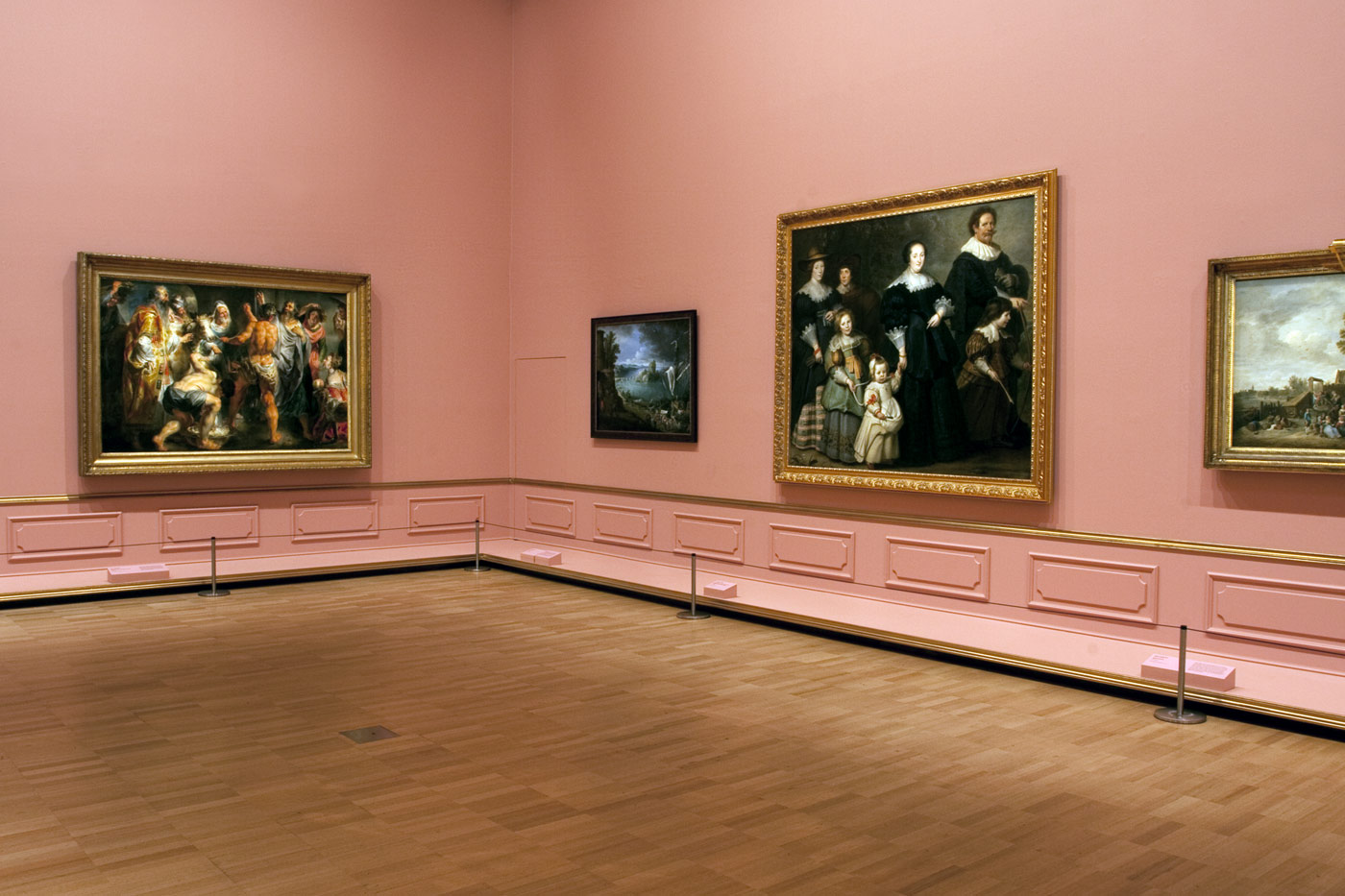
Installation view of room 3 of the exhibition 'Masterpieces from the Hermitage: The Legacy of Catherine the Great' at NGV International, Melbourne

Installation view of room 3 of the exhibition 'Masterpieces from the Hermitage: The Legacy of Catherine the Great' at NGV International, Melbourne

Installation view of room 3 of the exhibition 'Masterpieces from the Hermitage: The Legacy of Catherine the Great' at NGV International, Melbourne

Installation view of room 3 of the exhibition 'Masterpieces from the Hermitage: The Legacy of Catherine the Great' at NGV International, Melbourne

Installation view of room 3 of the exhibition 'Masterpieces from the Hermitage: The Legacy of Catherine the Great' at NGV International, Melbourne showing at centre, Peter Paul Rubens and workshop (Flemish 1577-1640) 'The Adoration of the Magi' c. 1620


Installation views of room 3 of the exhibition Masterpieces from the Hermitage: The Legacy of Catherine the Great at NGV International, Melbourne showing in the centre in the bottom photograph, Peter Paul Rubens and workshop (Flemish 1577-1640) The Adoration of the Magi, c. 1620 at centre
Photos: Marcus Bunyan


Rubens painted the subject of the Adoration of the Magi (Matthew 2:1) more often than any other episode from Christ’s life. Rendered at life-sized scale, this painting combines the humility of Christ’s birth with splendid, worldly pageantry. Three Kings from the East are shown crowding into Christ’s stable (portrayed as a cave, in an allusion to Christ’s later interment) wearing gold- embroidered silks and satins, and offering gifts. The eldest king, Caspar, kneels before Christ with gold; behind him is Melchior, with frankincense; and Balthazar with myrrh, used for embalming. With the help of his studio, Rubens produced more than sixty altarpieces during his career.


Installation view of room 3 of the exhibition 'Masterpieces from the Hermitage: The Legacy of Catherine the Great' at NGV International, Melbourne

Installation view of room 3 of the exhibition 'Masterpieces from the Hermitage: The Legacy of Catherine the Great' at NGV International, Melbourne


Installation views of room 3 of the exhibition Masterpieces from the Hermitage: The Legacy of Catherine the Great at NGV International, Melbourne
Photos: Marcus Bunyan


Peter Paul Rubens (Flemish 1577–1640) 'Roman Charity (Cimon and Pero)' c. 1612 (installation view)


Peter Paul Rubens (Flemish 1577-1640)
Roman Charity (Cimon and Pero) (installation view)
c. 1612
Oil on canvas
141cm (55.5 in) x 180cm (70.8 in)
The State Hermitage Museum, St Petersburg
Acquired from the collection of Count Cobenzl, Brussels, 1768
Photo: Marcus Bunyan


Roman Charity (Cimon and Pero) depicts a story told by the Roman historian Valerius Maximus in his Factorum ac dictorum memorabilium libri IX (Nine Books of Memorable Deeds and Sayings), written around 30 AD. The story involves Cimon, an old man awaiting execution in prison who was not given food. Cimon’s daughter Pero visited him, and suckled him at her breast like a child. Pero’s nourishing of Cimon was considered an outstanding example of paying honour to one’s parents.


Peter Paul Rubens (Flemish 1577-1640) 'Roman Charity (Cimon and Pero)' c. 1612


Peter Paul Rubens (Flemish 1577-1640)
Roman Charity (Cimon and Pero)
c. 1612
Oil on canvas
141cm (55.5 in) x 180cm (70.8 in)
The State Hermitage Museum, St Petersburg
Acquired from the collection of Count Cobenzl, Brussels, 1768
Public domain


Room 4 Dutch art

The Hermitage holds the finest collection of Dutch art outside the Netherlands. While Peter the Great (1672-1725) had a passion for Dutch art and acquired some notable masterpieces, Catherine the Great established the depth and breadth of this extraordinary collection, beginning in 1764 with her first acquisitions. In that year Catherine purchased 317 paintings that had been assembled for Frederick II of Prussia by the German merchant Johann Ernst Gotzkowsky. Among this substantial group were more than 100 Dutch paintings by the most notable masters.

In 1769 Catherine purchased the collection of Count Heinrich von Brühl, which included spectacular landscapes by Jacob van Ruisdael, Isaack Jansz. van Ostade and Aert van der Neer, as well as four Rembrandt portraits, including the wonderful Portrait of a scholar, 1631. For the rest of her life Catherine continued to add outstanding Dutch works to her rich collection.Although the paintings and drawings from the Dutch school included here are only a fragment of the extensive and diverse collection assembled by Catherine the Great, they reveal her artistic preferences and taste.


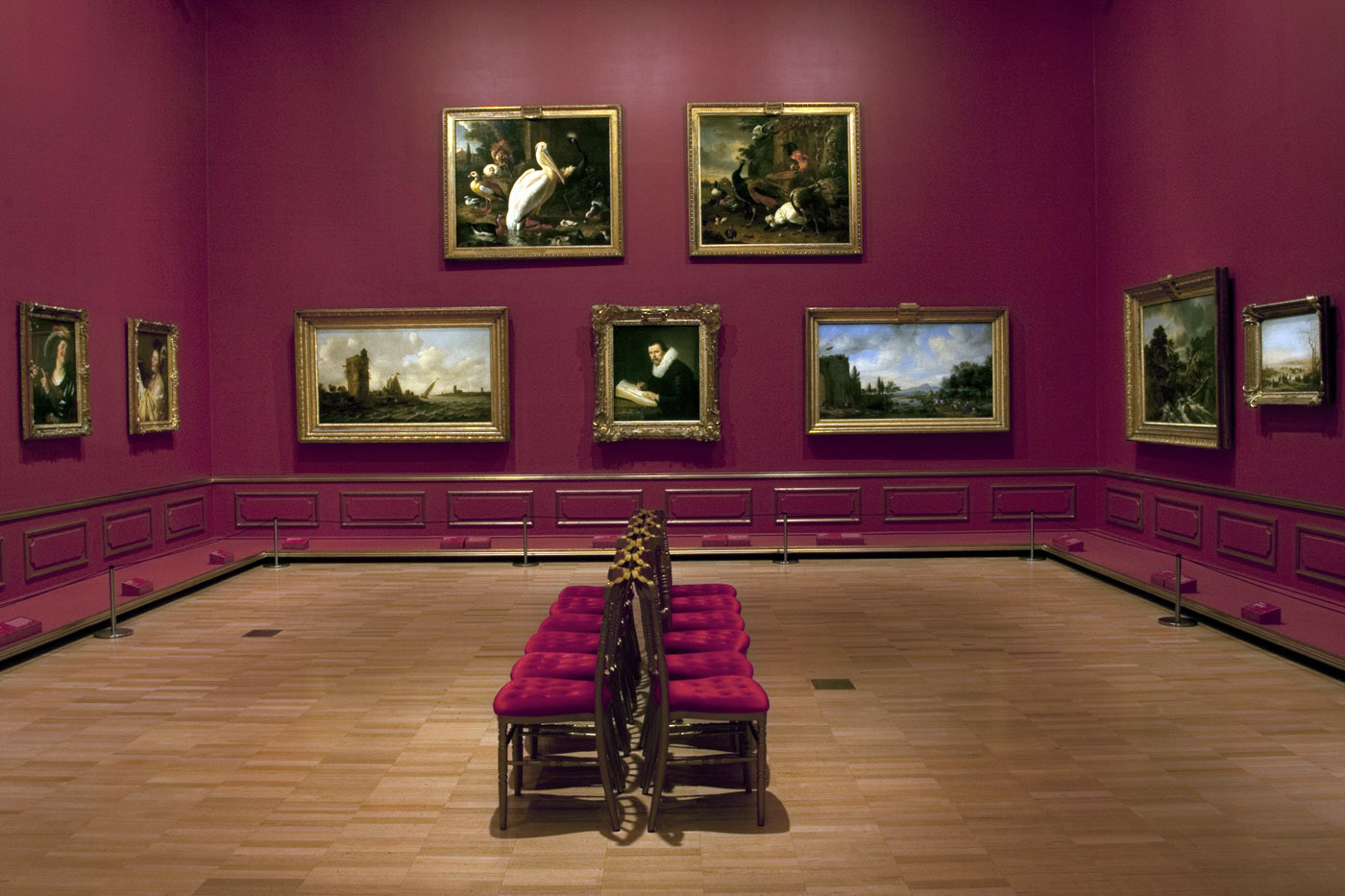
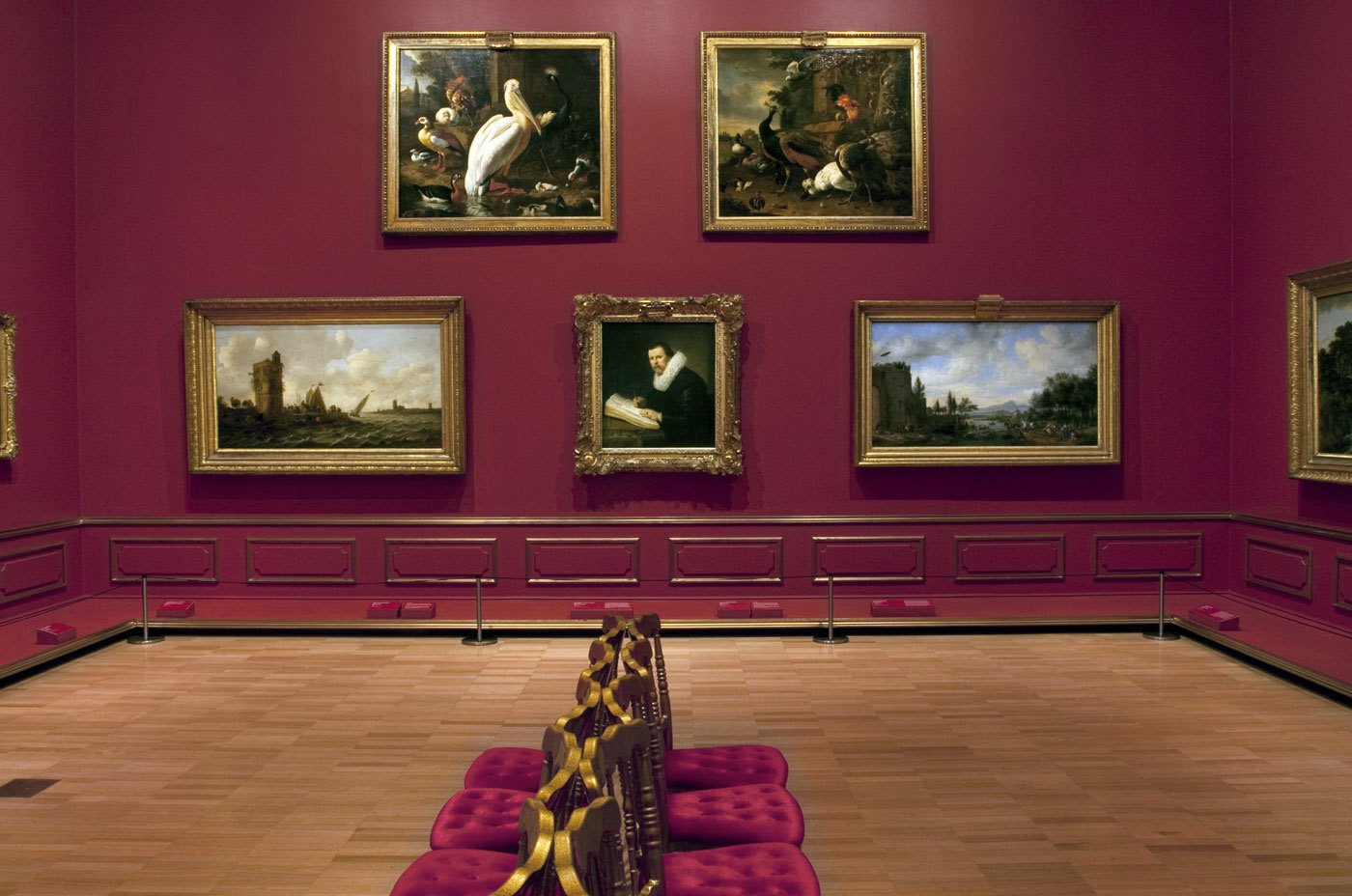
Installation view of room 4 of the exhibition 'Masterpieces from the Hermitage: The Legacy of Catherine the Great' at NGV International, Melbourne

Installation view of room 4 of the exhibition 'Masterpieces from the Hermitage: The Legacy of Catherine the Great' at NGV International, Melbourne


Installation views of room 4 of the exhibition Masterpieces from the Hermitage: The Legacy of Catherine the Great at NGV International, Melbourne with Rembrandt Harmensz van Rijn (Dutch 1606-1669) Portrait of a scholar 1631 at centre
Photos: Marcus Bunyan


Rembrandt painted Portrait of a scholar shortly after moving from his native Leiden to Amsterdam in 1630. He had already established a growing reputation in Leiden and was enticed to the capital by the art dealer Hendrick van Uylenburgh, father of his future wife Saskia. Once completing the move, Rembrandt rapidly became the city’s leading artist, mainly on account of dazzling portraits such as this early masterpiece. He then secured the most prestigious commissions from wealthy and powerful citizens of Amsterdam.


Room 5 French taste

The Russian aristocracy spoke French and modelled their manners and style on those of the French Court. Catherine followed the vast intellectual strides of the French philosophes with passionate interest. She also embraced the arts, luring French artists, architects and craftsmen to St Petersburg.

Catherine relied on agents and advisors in France and Germany to identify and acquire works of art on her behalf. In this way she acquired the collection of Paris banker Louis Antoine Crozat, Baron de Thiers and other important bodies of work in France. Her holdings of French art came to encompass works by Renaissance masters as well as seventeenth-century landscapes and history paintings.

Catherine also acquired examples of work of her own century by Rococo artists such as Antoine Watteau. The playful, erotic and at times wistful art of Watteau’s generation gave rise to the intimate and worldly art of François Boucher, whose pictures Catherine also purchased. The Empress collected modern masterpieces created in reaction to French courtly and decadent styles. Her paintings by Jean-Baptiste Siméon Chardin are premier examples of a new, moralising directness in ambitious French art.

Catherine’s buying in France was not limited to French art. Also in this room are paintings by great German, Spanish and Italian masters that were acquired in Paris from prestigious collections under the direction of Catherine’s French advisors.


Installation view of room 5 of the exhibition 'Masterpieces from the Hermitage: The Legacy of Catherine the Great' at NGV International, Melbourne

Installation view of room 5 of the exhibition 'Masterpieces from the Hermitage: The Legacy of Catherine the Great' at NGV International, Melbourne


Installation views of room 5 of the exhibition Masterpieces from the Hermitage: The Legacy of Catherine the Great at NGV International, Melbourne
Photos: Marcus Bunyan


Room 6 Catherine and the world

For Catherine the Great, collecting art was part of a wider economic and diplomatic program designed to stimulate economic and cultural activity at home and abroad. At a meeting in December 1762 with the Moscow Senate, Catherine suggested that consuls be stationed in Spain, Holland and England not only to promote maritime trade but also to source luxury goods and works of art as examples for Russian artists and manufacturers to aspire to.

Through Catherine’s consuls and agents, such items began to flow into St Petersburg, steadily elevating that city into a vibrant centre of European culture. While her cultural sympathies were French, Catherine was also very curious about Britain – the economic success story of the age. She informed herself about Britain’s trade, commerce, manufacturing, philosophy and political system, and purchased works by modern British neoclassical masters, such as Joseph Wright of Derby and Joshua Reynolds. Examples of Spanish, Italian and German art were often not sourced in their own countries of origin but acquired as a part of larger collections.


Installation view of room 6 of the exhibition 'Masterpieces from the Hermitage: The Legacy of Catherine the Great' at NGV International, Melbourne

Installation view of room 6 of the exhibition 'Masterpieces from the Hermitage: The Legacy of Catherine the Great' at NGV International, Melbourne

Installation view of room 6 of the exhibition 'Masterpieces from the Hermitage: The Legacy of Catherine the Great' at NGV International, Melbourne

Installation view of room 6 of the exhibition 'Masterpieces from the Hermitage: The Legacy of Catherine the Great' at NGV International, Melbourne

Installation view of room 6 of the exhibition 'Masterpieces from the Hermitage: The Legacy of Catherine the Great' at NGV International, Melbourne

Installation view of room 6 of the exhibition 'Masterpieces from the Hermitage: The Legacy of Catherine the Great' at NGV International, Melbourne with the 1773 sculpture 'Catherine II' by Jean-Antoine Houdon (French 1741-1826) at left


Installation views of room 6 of the exhibition Masterpieces from the Hermitage: The Legacy of Catherine the Great at NGV International, Melbourne with the 1773 sculpture Catherine II by Jean-Antoine Houdon (French 1741-1826) at centre
Photos: Marcus Bunyan


Room 7 The Walpole collection

In 1779 Catherine the Great acquired 198 paintings from a celebrated collection formed by Sir Robert Walpole, 1st Earl of Orford, Britain’s first prime minister. They were bought from the family estate, Houghton Hall, and sold by Walpole’s grandson, George Walpole, 3rd Earl of Orford, who approached the Russian ambassador to Britain directly about the sale. At more than £40,000, the price was high, but the transaction was concluded in only two months. Attempts were made to keep this famous collection in Britain, to no avail.

The Walpole collection was outstanding in quality, and significantly enhanced the Hermitage’s range of Flemish and Italian works. The Russian ambassador to Great Britain, Alexey Musin-Pushkin, who organised the valuable purchase, wrote to Catherine the Great: ‘The greater part of the nobility here are displaying general dissatisfaction and regret that these paintings are being allowed out of this country, and are setting in train various projects to keep them here … No little assistance comes from Lord Orford’s zealous desire to unite [the collection for] the gallery of Your Imperial Majesty, rather than to sell it to parliament itself or, least of all, to divide it through sale to different individuals’.


Installation view of room 7 of the exhibition 'Masterpieces from the Hermitage: The Legacy of Catherine the Great' at NGV International, Melbourne

Installation view of room 7 of the exhibition 'Masterpieces from the Hermitage: The Legacy of Catherine the Great' at NGV International, Melbourne showing Frans Snyders (Flemish 1579-1657) Concert of birds, 1630-1640 at right and Frans Snyders (Flemish 1579-1657) Cook at a kitchen table with dead game, c. 1636-1637 at second left


Installation views of room 7 of the exhibition Masterpieces from the Hermitage: The Legacy of Catherine the Great at NGV International, Melbourne showing in the bottom image, Frans Snyders (Flemish 1579-1657) Concert of birds, 1630-1640 at right and Frans Snyders (Flemish 1579-1657) Cook at a kitchen table with dead game, c. 1636-1637 at second left
Photos: Marcus Bunyan


Frans Snyders (Flemish 1579-1657) 'Concert of birds' 1630-1640 (installation view)


Frans Snyders (Flemish 1579-1657)
Concert of birds (installation view)
1630-1640
Oil on canvas
137cm (53.9 in) x 240cm (94.4 in)
The State Hermitage Museum, St Petersburg
Acquired from the collection of Sir Robert Walpole, Houghton Hall, 1779
Photo: Marcus Bunyan


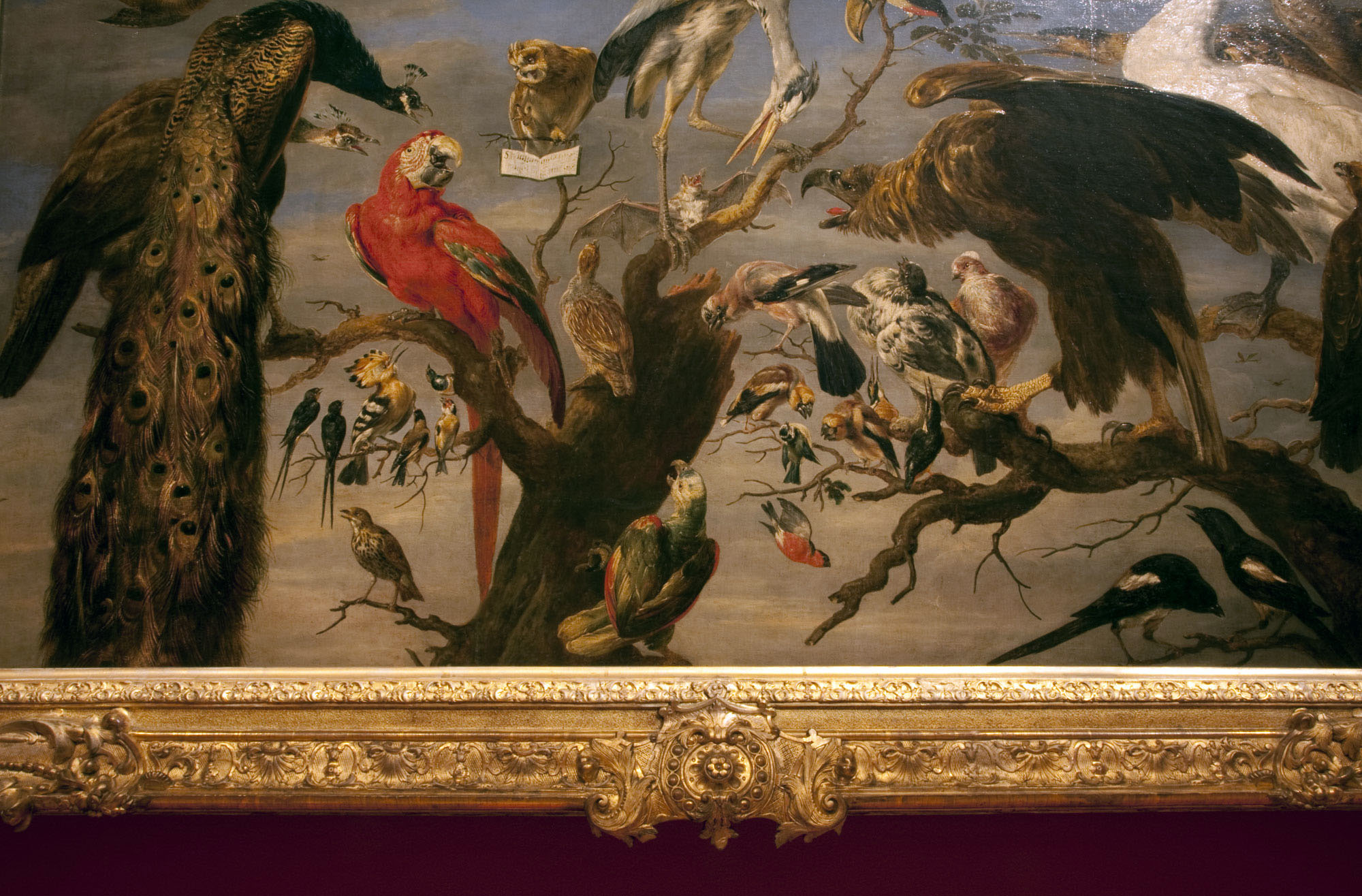
An important place in Flemish seventeenth-century painting is occupied by two specific genres: animal painting and the still life. One of the most important animal and still-life painters was Frans Snyders, a very close collaborator of Peter Paul Rubens who often painted still-life details and animals on the master’s canvases. Snyders’s superb skill as a painter of animals is revealed by Concert of birds, based on a subject from Aesop’s Fables. It shows a gathering of feathered creatures screeching and singing under the direction of an owl seated on a dried branch in front of an open music score.


Frans Snyders (Flemish 1579-1657) 'Concert of birds' 1630-1640


Frans Snyders (Flemish 1579-1657)
Concert of birds
1630-1640
Oil on canvas
137cm (53.9 in) x 240cm (94.4 in)
The State Hermitage Museum, St Petersburg
Acquired from the collection of Sir Robert Walpole, Houghton Hall, 1779
Public domain


Frans Snyders (Flemish 1579-1657) 'Concert of birds' 1630-1640 (installation view detail)


Frans Snyders (Flemish 1579-1657)
Concert of birds (installation view detail)
1630-1640
Oil on canvas
137cm (53.9 in) x 240cm (94.4 in)
The State Hermitage Museum, St Petersburg
Acquired from the collection of Sir Robert Walpole, Houghton Hall, 1779
Photo: Marcus Bunyan


Frans Snyders (Flemish 1579-1657) 'Cook at a kitchen table with dead game' c. 1636-1637 (installation view detail)


Frans Snyders (Flemish 1579-1657)
Cook at a kitchen table with dead game (installation view detail)
c. 1636-1637
Oil on canvas
The State Hermitage Museum, St. Petersburg
Photo: Marcus Bunyan


Frans Snyders was the son of the owner of one of Antwerp’s largest wine and eating houses. His dramatically realistic still lifes celebrate the exotic variety of rare fowls available at Antwerp’s markets. Images of dead animals being prepared for a banquet were understood in Snyder’s time as lessons in Christian morality. Many Dutch and Flemish still lifes featuring the sacrifice of an animal for the table functioned as allusions to Christ’s Passion and the transience of the flesh.


Frans Snyders (Flemish 1579-1657) 'Cook at a kitchen table with dead game' c. 1636-1637


Frans Snyders (Flemish 1579-1657)
Cook at a kitchen table with dead game
c. 1636-1637
Oil on canvas
171cm (67.3 in) x 173cm (68.1 in)
The State Hermitage Museum, St. Petersburg
Public domain


Installation view of room 7 of the exhibition 'Masterpieces from the Hermitage: The Legacy of Catherine the Great' at NGV International, Melbourne

Installation view of room 7 of the exhibition 'Masterpieces from the Hermitage: The Legacy of Catherine the Great' at NGV International, Melbourne showing at left, Anthony van Dyck (Flemish 1599-1641) 'Portrait of Philadelphia and Elizabeth Wharton' 1640


Installation views of room 7 of the exhibition Masterpieces from the Hermitage: The Legacy of Catherine the Great at NGV International, Melbourne showing at left in the bottom image, Anthony van Dyck (Flemish 1599-1641) Portrait of Philadelphia and Elizabeth Wharton, 1640
Photos: Marcus Bunyan


This is one of the most charming portraits of children paint by van Dyck, who had particular talent for such works. It is one of a group of family portraits commissioned from can Dyck by Philip, Lord Wharton in the late 1630s. Van Dyck worked in England for approximately ten ears and brought a new standard of elegance and style to English portraiture. He largely conveyed this through his flair for painting lavish costumes and sumptuous fabrics, a sensibility he carried through to his portraits of children.


Anthony van Dyck (Flemish 1599-1641) 'Portrait of Philadelphia and Elizabeth Wharton' 1640


Anthony van Dyck (Flemish 1599-1641)
Portrait of Philadelphia and Elizabeth Wharton
1640
Oil on canvas
162cm (63.7 in) x 130cm (51.1 in)
Hermitage Museum
Public domain


Room 8 China

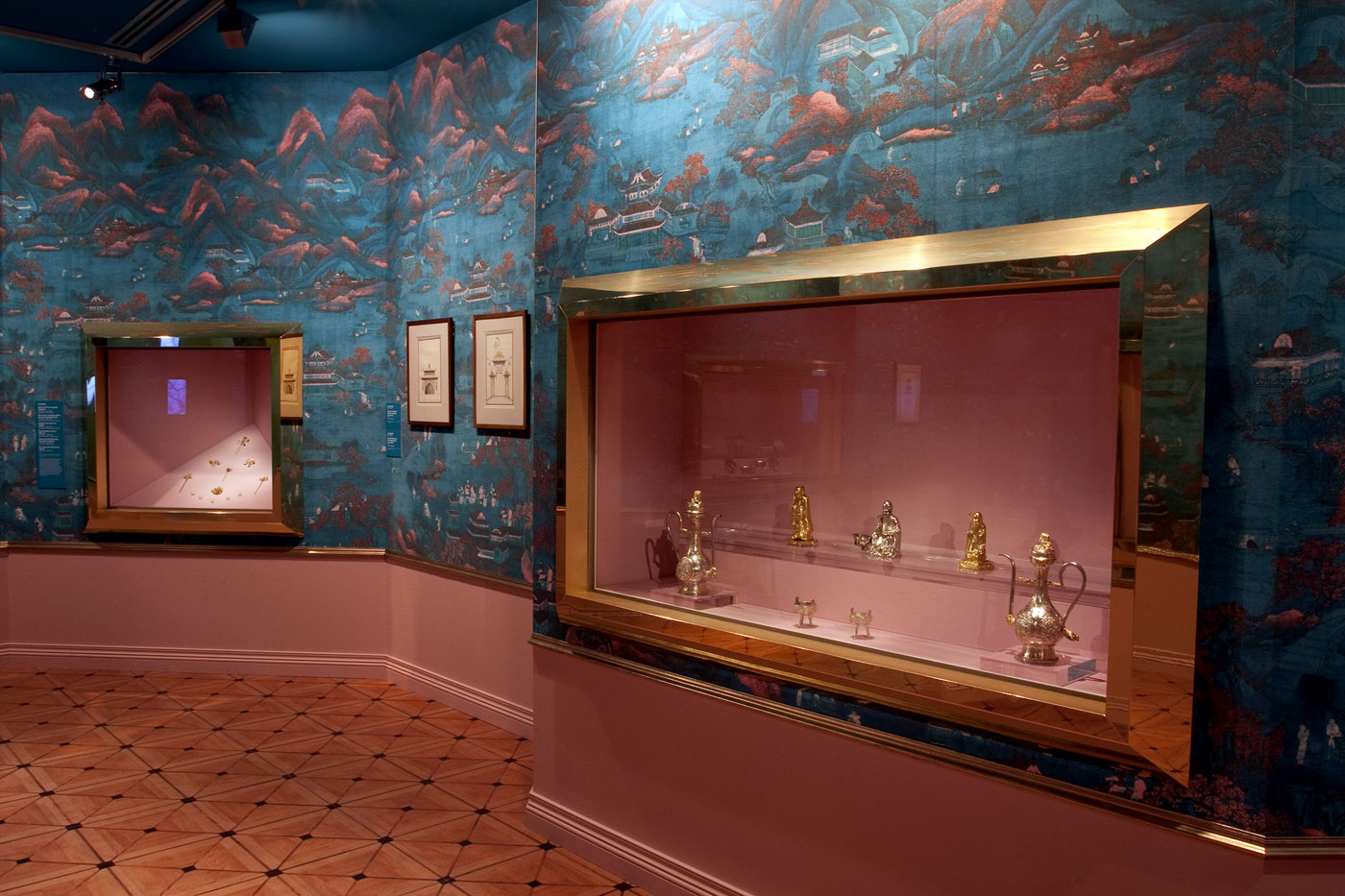
Eighteenth-century Enlightenment fascination with the East, particularly China, is reflected by Catherine the Great’s architectural and landscaping works completed in St Petersburg and at her summer and winter palaces, as well as by her collecting of Oriental curiosities and philosophical texts. Russian interest in China can be traced to the reign of the Romanov tsars in the seventeenth century, when several missions brought back Chinese treasures and goods to the Russian Court. Importantly, in 1689 the first treaty between Russia and China was signed at Nerchinsk, outlining the border between the countries and rules about caravan trade.

Like many educated people of her time, Catherine was fascinated by the concept of the enlightened ruler thought to be found in China, such as the Kangxi Emperor (reigned 1662-1722), Yongzhèng Emperor (reigned 1723-35), and Qianlong Emperor (reigned 1736-95). One of her regular and most influential correspondents was French philosopher Voltaire, who praised the Celestial Kingdom, its monarchs and men of wisdom; only in China, he thought, was a man’s life, honour and property truly protected by law. Such a clear link between Catherine’s desire for justice and order in Russia and general perceptions of good Chinese government, combined with the Enlightenment fashion for curiosities of all kinds, led to great Russian interest in China in the second half of the eighteenth century.


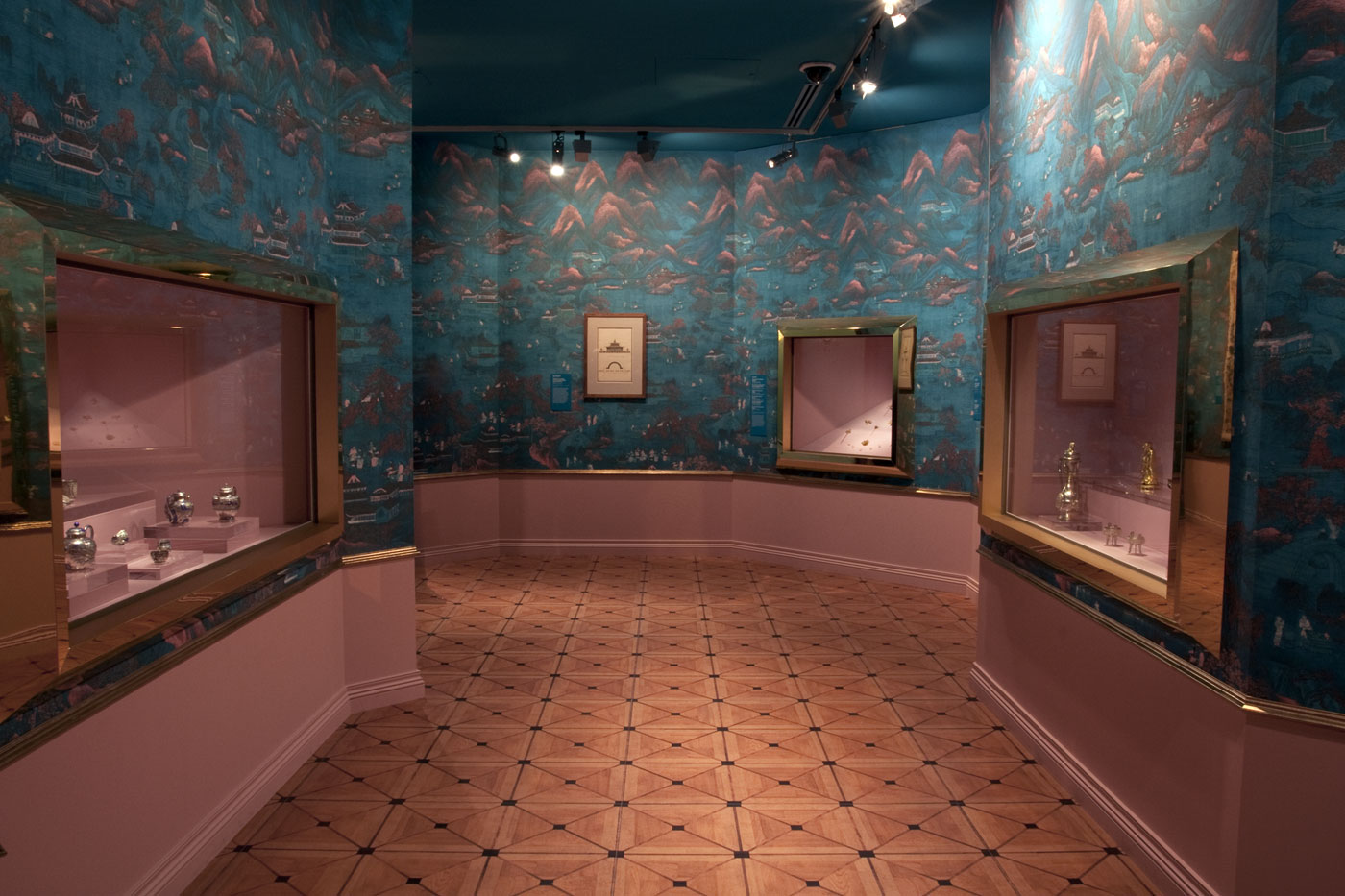
Installation view of room 8 of the exhibition 'Masterpieces from the Hermitage: The Legacy of Catherine the Great' at NGV International, Melbourne

Installation view of room 8 of the exhibition 'Masterpieces from the Hermitage: The Legacy of Catherine the Great' at NGV International, Melbourne

Installation view of room 8 of the exhibition 'Masterpieces from the Hermitage: The Legacy of Catherine the Great' at NGV International, Melbourne

Installation view of room 8 of the exhibition 'Masterpieces from the Hermitage: The Legacy of Catherine the Great' at NGV International, Melbourne

Installation view of room 8 of the exhibition 'Masterpieces from the Hermitage: The Legacy of Catherine the Great' at NGV International, Melbourne

Installation view of room 8 of the exhibition 'Masterpieces from the Hermitage: The Legacy of Catherine the Great' at NGV International, Melbourne

Installation view of room 8 of the exhibition 'Masterpieces from the Hermitage: The Legacy of Catherine the Great' at NGV International, Melbourne


Installation views of room 8 of the exhibition Masterpieces from the Hermitage: The Legacy of Catherine the Great at NGV International, Melbourne
Photos: Marcus Bunyan


NGV International
180 St Kilda Road

Opening hours for exhibition
10am – 5pm daily

NGV Masterpieces from the Hermitage website

LIKE ART BLART ON FACEBOOK

Back to top

Exhibition: ‘Caravaggio and His Followers in Rome’ at the Kimbell Art Museum, Fort Worth, Texas

Exhibition dates: 16th October 2011 – 8th January 2012


Simon Vouet (French, 1590-1649) 'The Fortune Teller' c. 1620


Simon Vouet (French, 1590-1649)
The Fortune Teller
c. 1620
Oil on canvas
National Gallery of Canada, Ottawa


Observe if you will:

1/ The treatment of the background behind Boy Bitten by a Lizard (1594-1596)

2/ The tension of the hands in this painting

3/ The pallor of the skin of Sick Bacchus (1593-1594)

4/ The colour of the bunch of grapes in the same painting

5/ The critical distance between the two apricots and the bowed sash resting on the pediment in the same painting

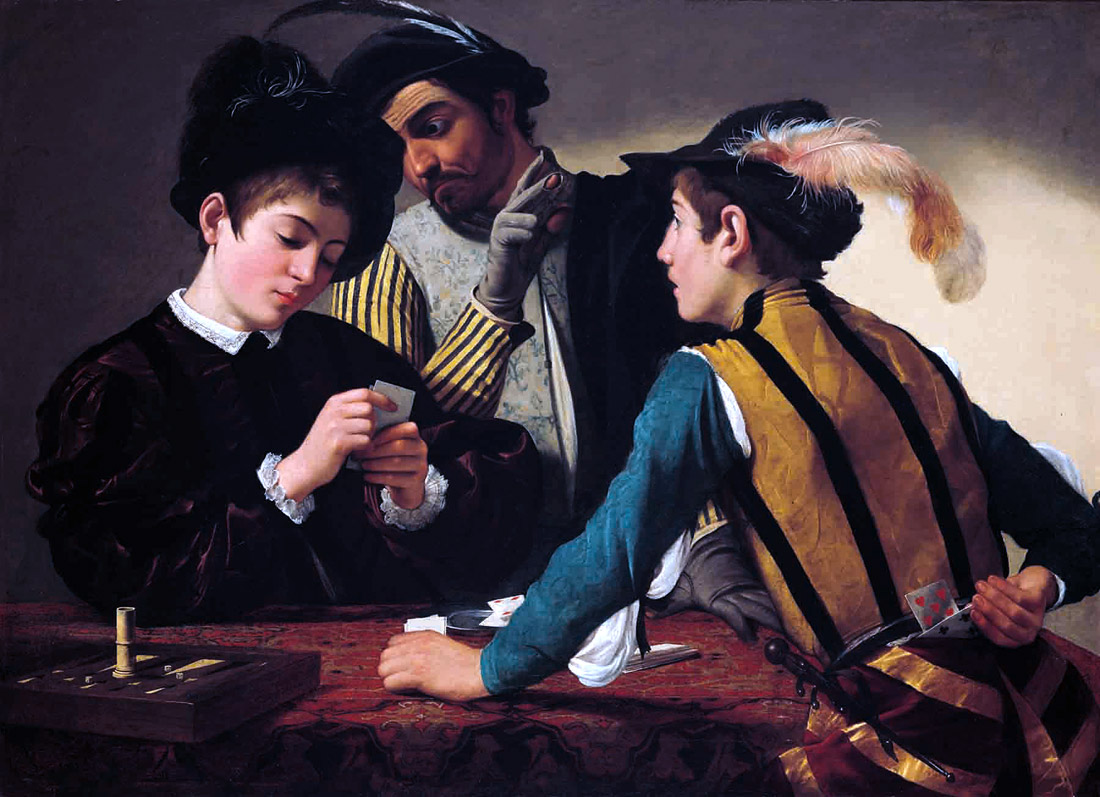
6/ The youthful innocence of the dupe in The Cardsharps (c. 1595)

7/ The deep, foreboding shadows under the eyes of Saint John the Baptist in the Wilderness (1604-1605)

8/ The astonishingly beautiful skin tones in Gerrit van Honthorst’s Saint Sebastian (c. 1623) and how the blood from the leg wound at left runs in two directions: one direction when Saint Sebastian was standing up, one when he has slumped down. Inspired.


Dr Marcus Bunyan


Many thankx to the Kimbell Museum of Art for allowing me to publish the artwork in the posting. Please click on the photographs for a larger version of the image.


“Not since Michelangelo or Raphael had one artist affected so many of his contemporaries and so irrevocably changed the course of European painting. Caravaggio created a new kind of art: dramatic, deeply emotional, grounded in the vivid details of everyday life, and overwhelmingly human. He used live models, sometimes prostitutes and the very poor, who posed in the studio for his powerful religious scenes as if the events were happening on the streets of Rome. Breaking the boundaries between art and life, he overturned the artistic conventions of the day. He played down details of the setting of a scene, focused on the expressive human figure, and invented a brand of stark realism that shocked many of his patrons.”


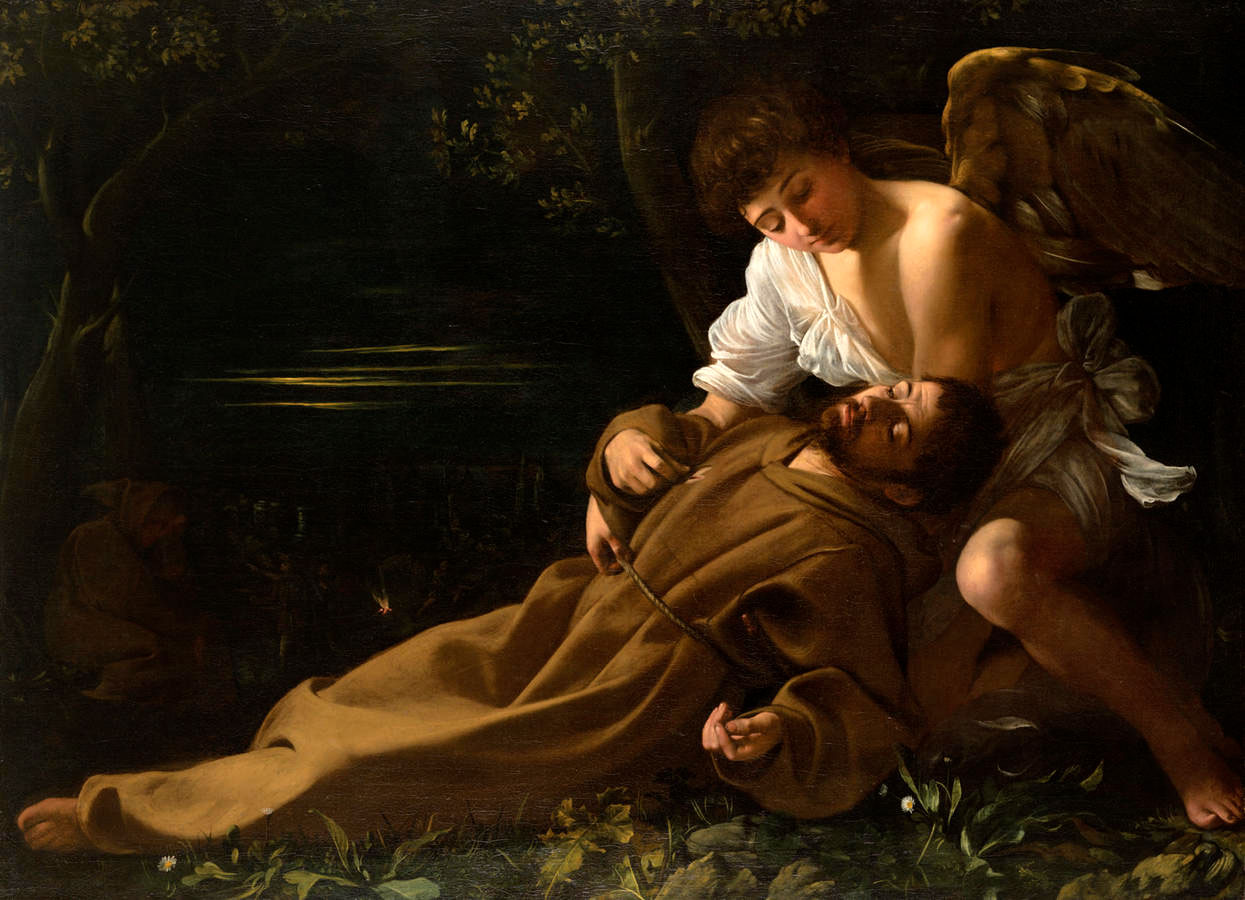
Michelangelo Merisi da Caravaggio (Italian, 1571-1610) 'Saint Francis in Ecstasy' c. 1594-1595


Michelangelo Merisi da Caravaggio (Italian, 1571-1610)
Saint Francis in Ecstasy
c. 1594-1595
Oil on canvas
Wadsworth Atheneum Museum of Art, Hartford, Connecticut
The Ella Gallup Sumner and Mary Catlin Sumner Collection Fund


Michelangelo Merisi da Caravaggio (Italian, 1571-1610) 'The Gypsy Fortune Teller' c. 1595


Michelangelo Merisi da Caravaggio (Italian, 1571-1610)
The Gypsy Fortune Teller
c. 1595
Oil on canvas
45 1/4 x 59 in. (115 x 150cm)
Pinacoteca Capitolina, Musei Capitolini, Rome
Public domain


One of the most influential figures in the history of art, Caravaggio (1571-1610) overturned the artistic conventions of the day and created stunningly dramatic paintings, both sacred and secular. This ambitious exhibition explores the profound impact of his work on the wide range of painters of Italian, French, Dutch, Flemish, and Spanish origin who resided in Rome. Arranged by theme, it includes over 50 paintings, with Caravaggio’s compelling images juxtaposed with those he inspired. This is the second largest display of his paintings in North America and only the third Caravaggio exhibition to be held in the United States.


Music and Youth

Many of Caravaggio’s early paintings feature handsome youths, whether singly or in groups. He seems to have used the same favorite models repeatedly – and sometimes his own features, which a contemporary tells us he studied in a mirror. The origins of these novel paintings lay in the types of pictures – portraits, still lifes, and allegories – that were painted in a realistic style in the artist’s native Lombardy, in the north of Italy, although he blurred the boundaries between genres to suggest real-life scenes. Caravaggio’s paintings of musicians would have appealed to Roman collectors who were passionate patrons of music, and likely were created to decorate rooms used for performances. They have a dreamy, slightly melancholy air. If the songs are about love, as we can assume they are, they are surely about the painful side of love rather than its joys. Caravaggio’s early paintings of youths are usually scenes of sensual pleasure but with a built-in warning against indulgence, as when a youth has his finger bitten by a lizard lurking in some fruit. He brings us close to his figures, often having them make eye contact with us, and includes lovingly observed still-life details that enhance the naturalism and immediacy of the scene. Even when there is a visitation from the beyond, like the winged Cupid in The Musicians, he treats this in a matter-of-fact way, attentive always to breaking down the boundaries between the painted world and our own. Caravaggio’s musical paintings caught on throughout Europe in the work of his followers, who brought their own innovations to the genre.


Michelangelo Merisi da Caravaggio (Italian, 1571-1610) 'The Musicians' c. 1595


Michelangelo Merisi da Caravaggio (Italian, 1571-1610)
The Musicians
c. 1595
Oil on canvas
36 1/4 x 46 5/8 in (92.1 x 118.4cm)
The Metropolitan Museum of Art, New York. Rogers Fund, 1952


In this scene, Caravaggio shows some young musicians preparing for a concert. We are brought very close to the figures, as if we share the same space. Caravaggio breaks down the boundaries between art and life, and our reality and the painted world become entwined. The instruments are modern, but the musicians wear antique-inspired dress. The lute player tunes his instrument, and the horn player (possibly a self-portrait) catches our gaze. Another youth studies the musical score; it is no longer legible, but doubtless featured love madrigals. The winged Cupid with a quiver of arrows who is handling some grapes makes explicit the bond between music and love. Wine, like music, makes the spirits light. This painting belonged to Cardinal Francesco Maria del Monte, who hosted concerts at his palace and invited musicians to live in his household, along with artists like Caravaggio.


Theodoor Rombouts (Flemish, 1597-1637) 'A Lute Player' c. 1620


Theodoor Rombouts (Flemish, 1597-1637)
A Lute Player
c. 1620
Oil on canvas
43 7/8 x 39 1/4 in (111.1 x 99.7cm)
Philadelphia Museum of Art. John G. Johnson Collection, 1917


Caravaggio’s paintings of musicians inspired Rombouts’s depiction of a musician tuning his lute. His intense expression suggests that he is both listening to the sound and sizing up the viewer, his audience. The vividly described carpet and still-life objects on the table recall Caravaggio’s similar close-up presentations. However, the colourful treatment of the costume and the robust delineation of the objects place Rombouts’s work within traditions of Flemish and Dutch painting. The still life, like ephemeral music, serves to remind us of the pleasures of life, but also that pleasure is fleeting. The artist also alludes to the five senses: hearing (the lute), taste (the tankard), smell (the pipe), sight (the musical scores), and touch (the knife).


Michelangelo Merisi da Caravaggio (Italian, 1571-1610) 'Boy Bitten by a Lizard' 1594–1596


Michelangelo Merisi da Caravaggio (Italian, 1571-1610)
Boy Bitten by a Lizard
1594-1596
Oil on canvas
25 5/8 x 20 1/2 in (65 x 52cm)
Fondazione di Studi di Storia dell’Arte Roberto Longhi, Florence


One of Caravaggio’s biographers wrote that “he also painted a boy bitten by a lizard emerging from flowers and fruits; you could almost hear the boy scream, and it was done meticulously.” The picture has suggested various interpretations. As an allegory of touch, it provides the basis for a study of how emotion is expressed physically, and arguably Caravaggio alludes to all the five senses (flowers as smell and so on). With the still life of fruits and roses, common emblems of love, he invokes age-old adages – pain can follow pleasure, and love is a rose with thorns that prick. Poets from Petrarch onward played on the similarity of the Italian words for “love” and “bitter” – amore and amaro – to which Caravaggio adds ramarro (lizard), ingeniously enlarging the joke.


Michelangelo Merisi da Caravaggio (Italian, 1571-1610) 'Sick Bacchus' 1593-1594


Michelangelo Merisi da Caravaggio (Italian, 1571-1610)
Sick Bacchus
1593-1594
Oil on canvas
Galleria Borghese, Rome


Cardsharps and Fortune Tellers

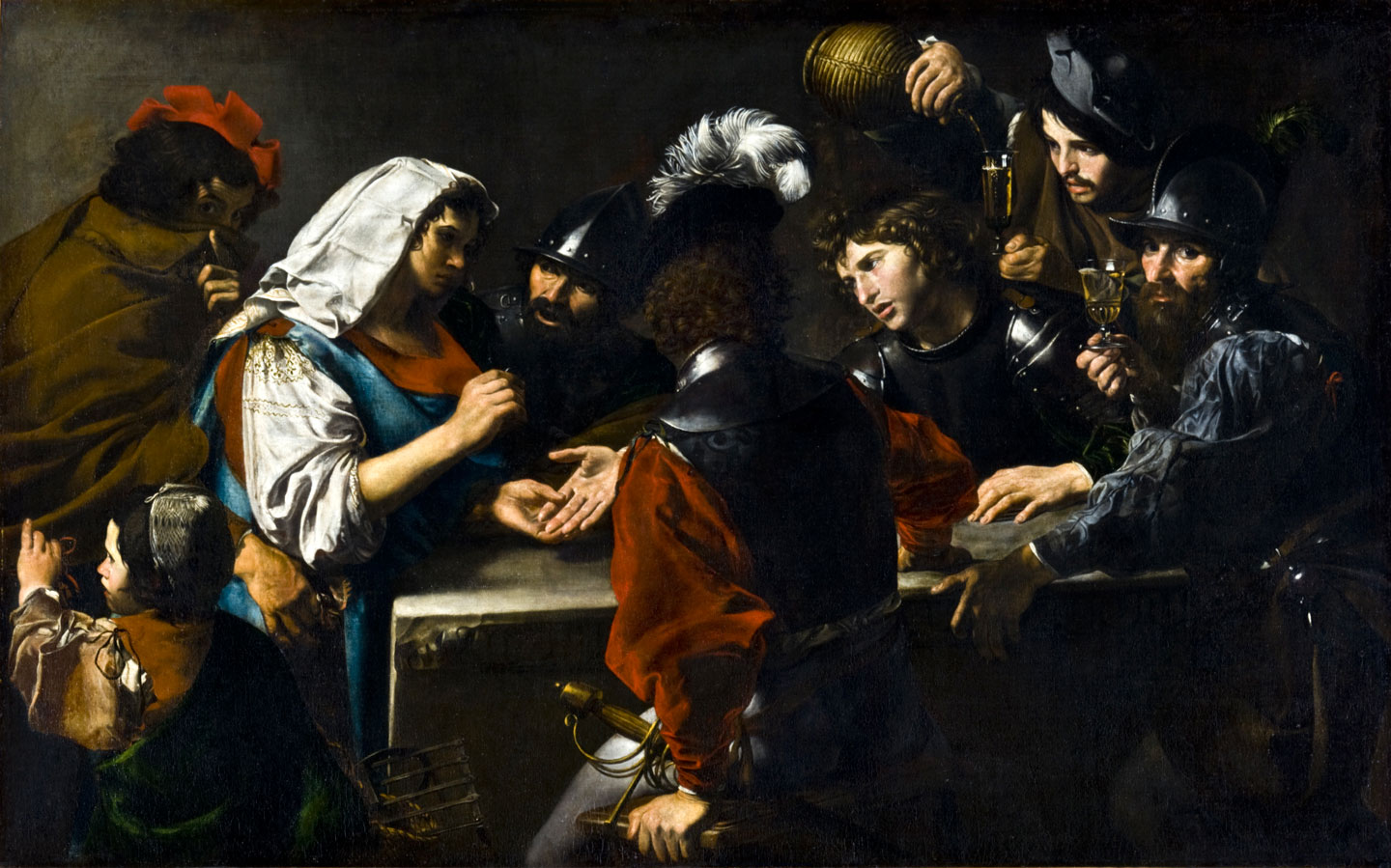
The young Caravaggio introduced another new kind of painting to the Roman art world with his scenes from the seamy side of life, its frauds and ruses. He painted these works on a large scale with half-length figures, and they were among his most widely imitated creations. His followers played countless variations on the same themes, trying various levels of subtlety and buffoonery in the humour and facial expressions. These highly animated compositions conjure up an underworld of wily cardsharps, soldiers of fortune, foolish dupes, sensuous and deceitful gypsy women, pickpockets, and thugs. They are based partly on everyday observations in the streets, partly on the stock characters and improvised comedies of the commedia dell’arte, partly on sheer fantasy. In such works, Caravaggio and his followers developed ingenious ways of involving us in the action. We read these amusingly moralising pictures through gestures and expressions – but to unravel the trickery takes time. Despite being frozen in a static image, the story seems to unfold before our eyes like one of the popular plays that were its inspiration. The artist extends the theme of deception by painting his subjects with such a high level of naturalism that the viewer is duped and astounded by his artistry.


Michelangelo Merisi da Caravaggio (Italian, 1571-1610) 'The Cardsharps' c. 1595


Michelangelo Merisi da Caravaggio (Italian, 1571-1610)
The Cardsharps
c. 1595
Oil on canvas
37 1/8 x 51 5/8 in (94.2 x 130.9cm)
Kimbell Art Museum, Fort Worth


The players are engaged in a game of primero, a forerunner of poker. Engrossed in his cards, the dupe is unaware that the older cardsharp signals his accomplice, who reaches to pull a hidden card from his breeches. The fingertips of the cheat’s gloved hand are exposed to better feel marked cards. According to an early biographer, Cardinal Francesco Maria del Monte, a great patron of the arts, took the young Caravaggio into his household soon after purchasing this picture. It hung along with The Gypsy Fortune Teller in his palace. Together they would surely have reminded the cardinal and his guests of the story of the prodigal son, warning about the perils of greed and fraud. Caravaggio has treated this subject not as a caricature of vice but in a fresh way, in which the interaction of gesture and glance evokes the drama of deception and lost innocence in the most human of terms. He structures the picture to allow us to witness everything, implicating us in the trickery.


Saints

Caravaggio grounded his saints in everyday reality, indicating their spiritual states by means of natural phenomena, especially light. In his early painting of Saint Francis, he shows the saint’s ecstasy – his mystic identification with Christ – by directing a strong light upon his figure and the consoling angel. God’s grace is signalled by light in other images of the saints, such as the scene of Mary Magdalene’s conversion from her former life of sin. In paintings of Saints Matthew and Jerome in their studies, much emulated in Caravaggio’s circle, light is a metaphor of divine inspiration. Generally the saints seem to be emerging from darkness into light, which adds drama, symbolism, and also a sense of mass – as if they were sculpted, not merely painted. In a break from Roman and Florentine traditions, Caravaggio rejected the practice of refining his composition through drawings before he began to paint and instead worked directly from a live model in the studio, preserving that model’s particular appearance, never making the features or body conform to an ideal of beauty. The effect, central to Caravaggio’s art and that of many of his followers, was startling. At this time, many people believed that the painting of sacred personages such as saints called for a special, elevated style that set them apart from the mundane reality of the here and now. Caravaggio’s radical departure from this principle brought him much harsh criticism. He was accused of merely copying and so failing to capture a higher truth. But others recognised in his work a new kind of religious art that directly engaged the faithful and made old subjects new and alive.


Michelangelo Merisi da Caravaggio (Italian, 1571-1610) 'Saint John the Baptist in the Wilderness' 1604


Michelangelo Merisi da Caravaggio (Italian, 1571-1610)
Saint John the Baptist in the Wilderness
1604-1605
Oil on canvas
68 x 52 in (172.7 x 132.1cm)
The Nelson-Atkins Museum of Art, Kansas City, Missouri. Purchase William Rockhill Nelson Trust


Caravaggio’s practice of painting a live model in his studio brings this young, brooding saint to life – as if his image were inhabited by the model’s being. Ottavio Costa, a Roman banker, commissioned this painting for a chapel on a pilgrimage route in the countryside outside of Genoa, where his family had its origins. We can imagine what a powerful experience it would have been to encounter the image of the scarlet-robed saint there, dramatically emerging from the shadows into a strong light. When Caravaggio delivered the painting, Costa decided to keep it and placed a copy in the chapel. But even the copy proved inspiring. An early guide described how it “moves not only the members of the brotherhood but also visitors to penitence.”


Gerrit van Honthorst (Dutch, 1592-1656) 'Saint Sebastian' c. 1623


Gerrit van Honthorst (Dutch, 1592-1656)
Saint Sebastian
c. 1623
Oil on canvas
The National Gallery, London


The Sacred Narrative

Caravaggio was a masterful storyteller who could bring home the drama and significance of a biblical event with tremendous power. In his scenes from the Old and New Testaments, he created a new kind of painting – dramatic, even theatrical, yet grounded in the observation of ordinary reality – and it proved infectious among his contemporaries in Rome. His approach was to make the scene clear and simple, with the main actors in the drama seen close-up and caught in mid-action at a decisive moment, embodying the whole meaning of the event. He played down the setting, sometimes to the point that it is a mere pool of darkness from which the figures emerge. It was the actions and states of mind of the characters in the story that counted, and Caravaggio presented these with sometimes shocking directness and intensity, breaking all the rules of decorum that restrained more conventional painters. He mastered the art of concealing art, re-creating a scene with such a flavour of reality that it comes across as an eyewitness account. It was his power to draw viewers into the emotion and importance of a scene that made his work an essential object of study, even for such an independent genius as the great Peter Paul Rubens.


Michelangelo Merisi da Caravaggio (Italian, 1571-1610) 'Martha and Mary Magdalene' c. 1598


Michelangelo Merisi da Caravaggio (Italian, 1571-1610)
Martha and Mary Magdalene
c. 1598
Oil and tempera on canvas
38 1/2 x 52 1/4 in (97.8 x 132.7cm)
Detroit Institute of Arts. Gift of the Kresge Foundation and Mrs. Edsel B. Ford


Martha’s expressive hands, intensely illuminated, underscore her attempt to convert her sister Mary Magdalene from a life of worldly pleasures to one of spirituality. Several details recall Mary’s life of indulgence: the elegant dress, the ivory comb, the alabaster cosmetic jar. The mirror, a powerful symbol of vanity, becomes here an instrument reflecting the divine light that is penetrating Mary’s soul. Martha’s words seem to have been convincing, and her open mouth signals her amazement as she witnesses Mary’s transformation. The orange blossom in Mary’s right hand and the ring on her left indicate her new status as the blessed bride of Christ.


Michelangelo Merisi da Caravaggio (Italian, 1571-1610) 'Sacrifice of Isaac' 1602-1603


Michelangelo Merisi da Caravaggio (Italian, 1571-1610)
Sacrifice of Isaac
1602-1603
Oil on canvas
41 x 53 1/8 in (104 x 135cm)
Galleria degli Uffizi, Florence


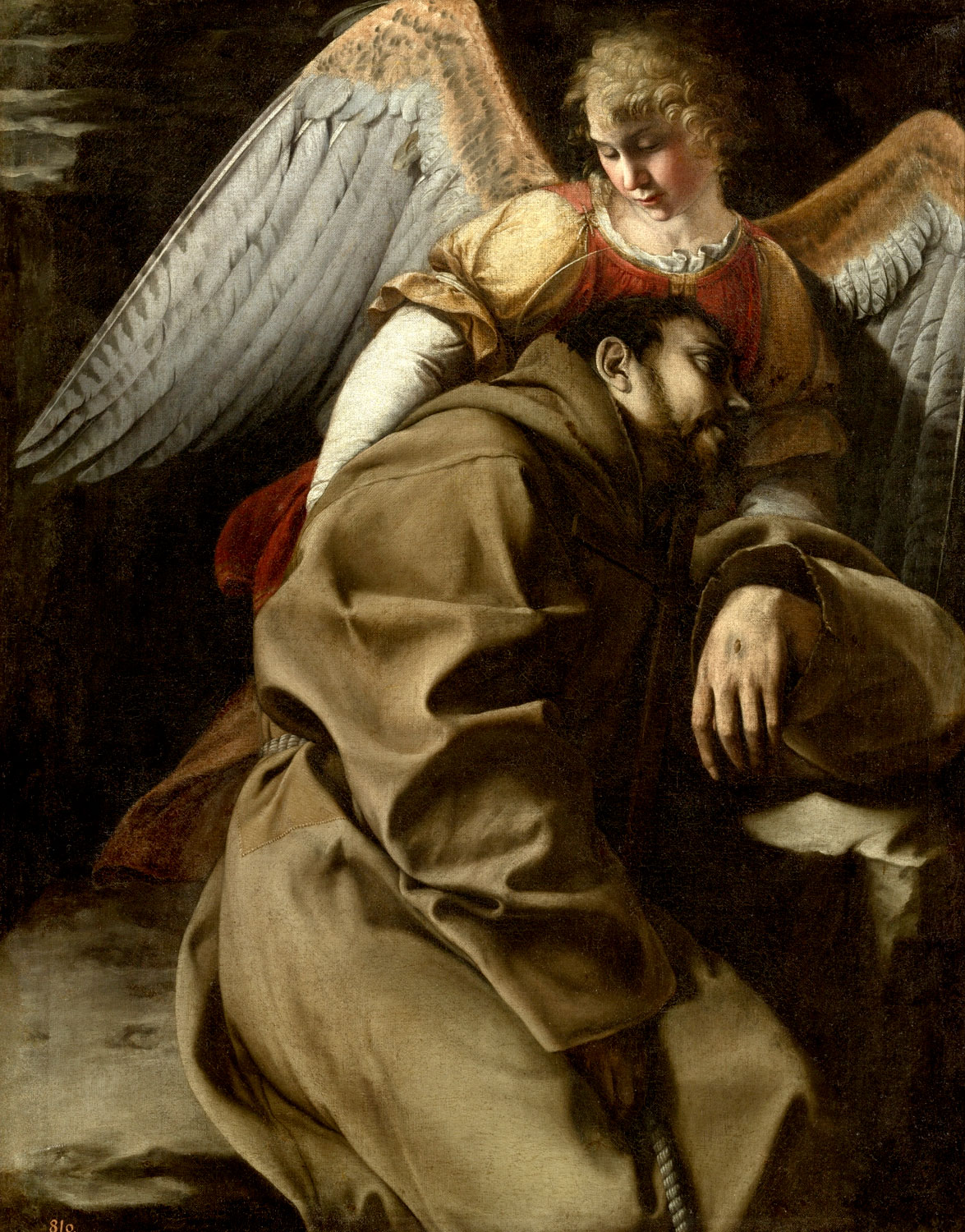
Orazio Gentileschi (Italian, 1563-1639) 'Saint Francis in Ecstasy' c. 1607


Orazio Gentileschi (Italian, 1563-1639)
Saint Francis in Ecstasy
c. 1607
Oil on canvas
49 5/8 x 38 5/8 in. (126 x 98 cm)
Museo Nacional del Prado, Madrid


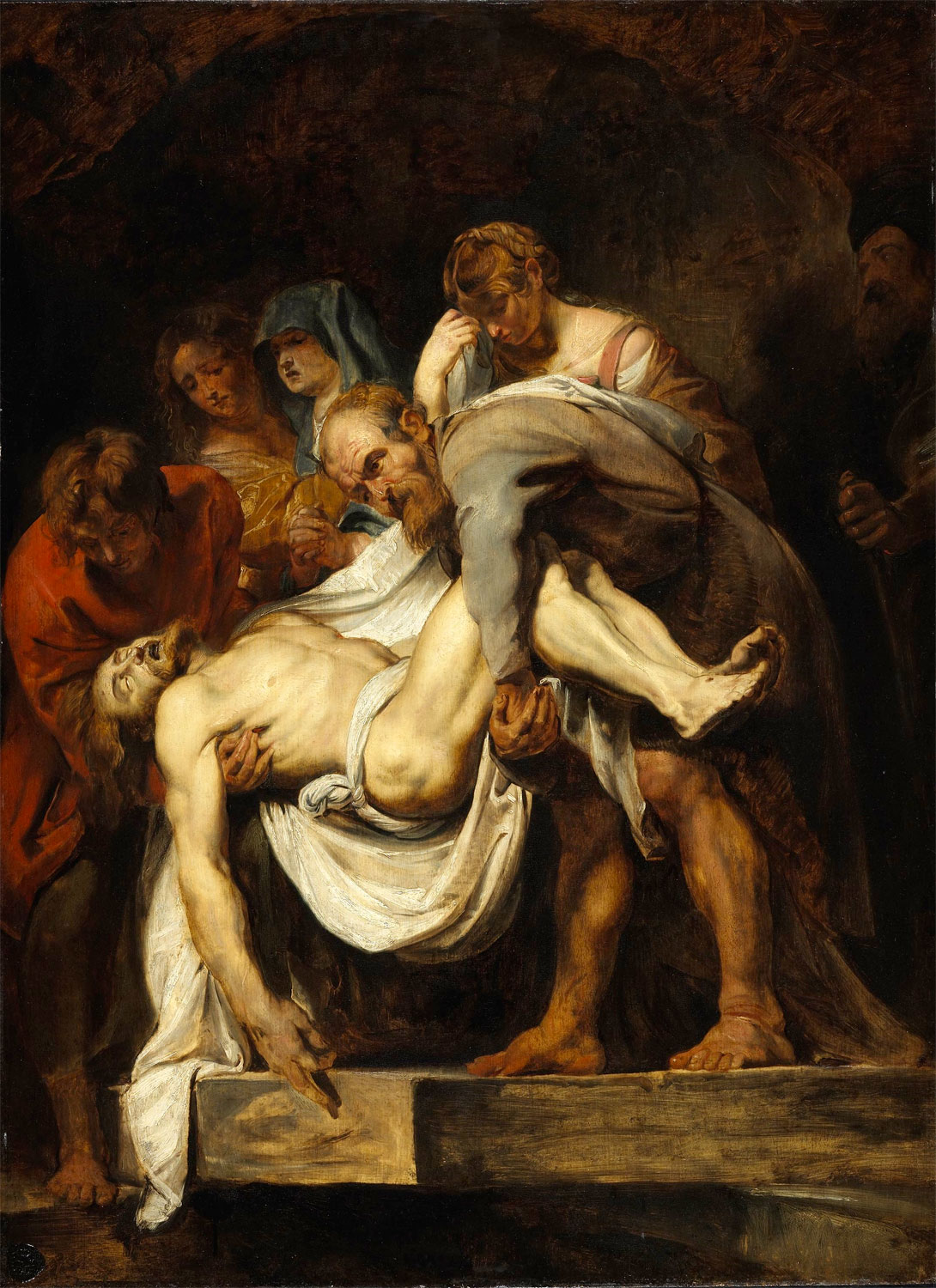
Peter Paul Rubens (Flemish, 1577-1640) 'The Entombment' c. 1612-1614


Peter Paul Rubens (Flemish, 1577-1640)
The Entombment
c. 1612-1614
Oil on panel
34 3/4 x 26 1/8 in. (88.3 x 66.5 cm)
National Gallery of Canada, Ottawa
Purchased 1956
Public domain


Bartolomeo Manfredi (Italian, 1582-1622) 'David and Goliath (The Triumph of David)' c. 1615


Bartolomeo Manfredi (Italian, 1582-1622)
David and Goliath (The Triumph of David)
c. 1615
Oil on canvas
50 3/8 x 38 1/4 in. (128 x 97cm)
Musée du Louvre, Paris
Acquired in 1990


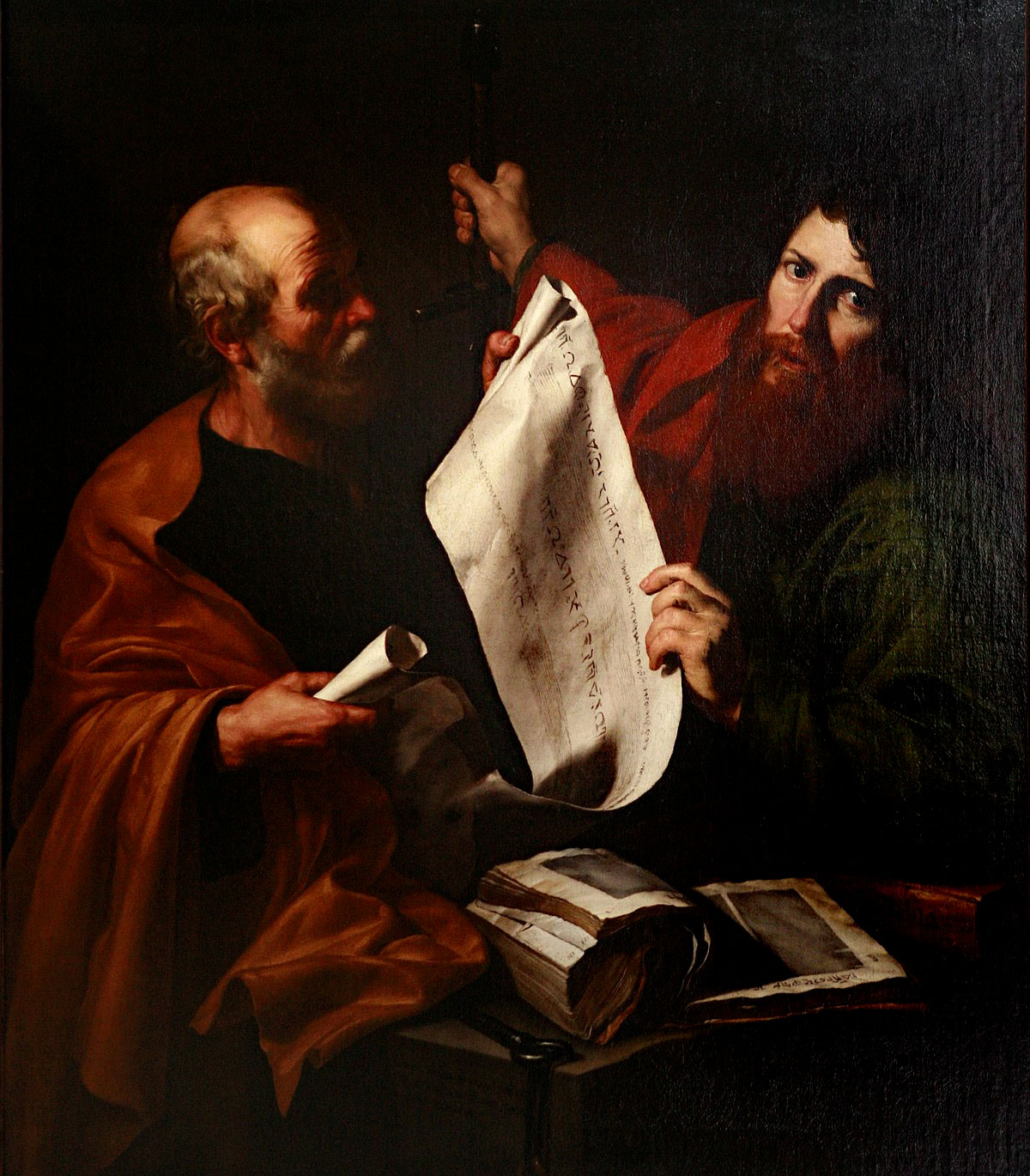
Jusepe de Ribera (Spanish, 1591-1652) 'Saints Peter and Paul' c. 1616


Jusepe de Ribera (Spanish, 1591-1652)
Saints Peter and Paul
c. 1616
Oil on canvas
49 5/8 x 44 1/8 in. (126 x 112cm)
Musée des Beaux-Arts, Strasbourg
Public domain


Valentin de Boulogne (French, 1591-1632) 'Fortune Teller with Soldiers' c. 1620


Valentin de Boulogne (French, 1591-1632)
Fortune Teller with Soldiers
c. 1620
Oil on canvas
58 7/8 x 93 7/8 in. (149.5 x 238.5cm)
Toledo Museum of Art
Purchased with funds from the Libbey Endowment. Gift of Edward Drummond Libbey
Public domain


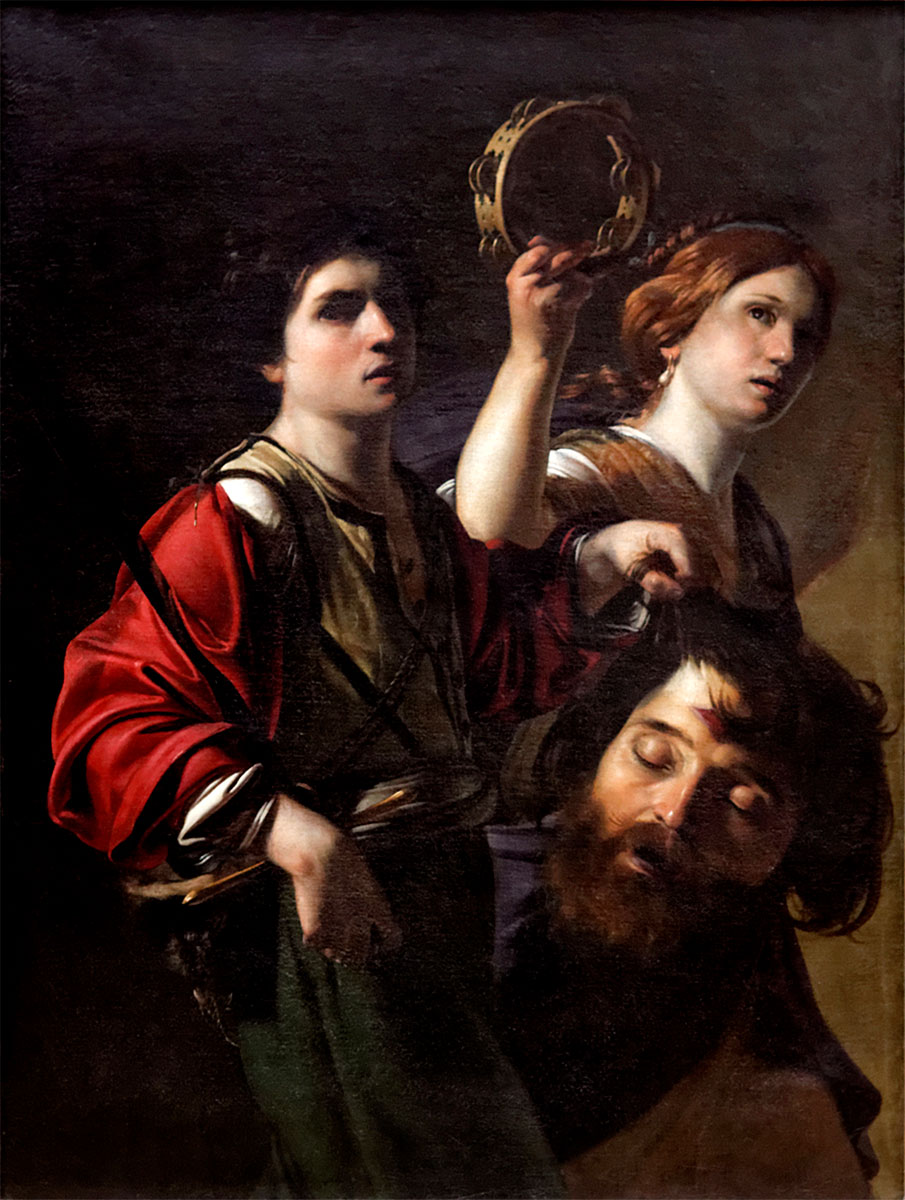
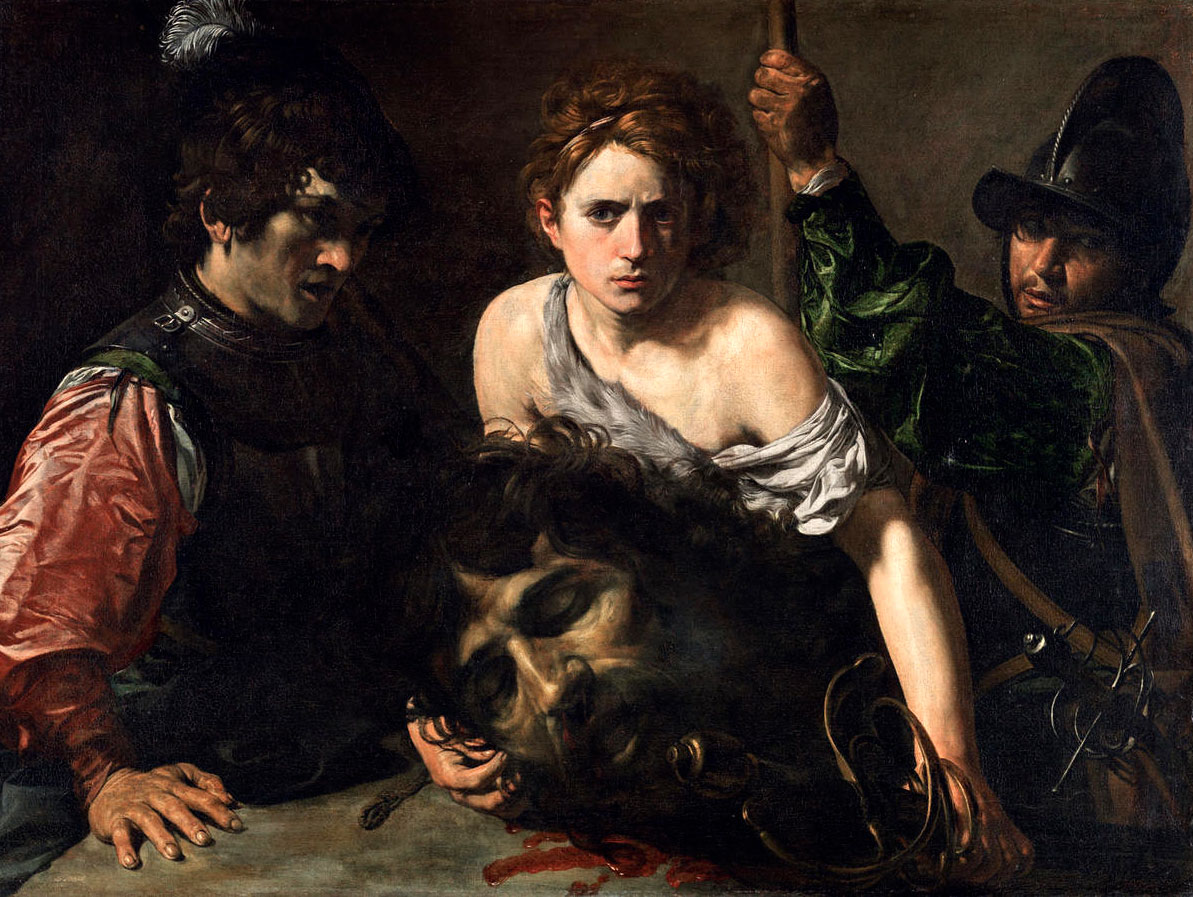
Valentin de Boulogne (French, 1591-1632) 'David with the Head of Goliath and Two Soldiers' 1620-1622


Valentin de Boulogne (French, 1591-1632)
David with the Head of Goliath and Two Soldiers
1620-1622
Oil on canvas
Museo Thyssen-Bornemisza, Madrid
Public domain


Bartolomeo Cavarozzi (Italian, 1587-1625) 'The Sorrows of Aminta' c. 1625


Bartolomeo Cavarozzi (Italian, 1587-1625)
The Sorrows of Aminta
c. 1625
Oil on canvas
39 3/8 x 47 1/4 in. (100 x 120cm)
Musée du Louvre, Paris
Gift of Paul Jamot, 1937
Public domain


Kimbell Art Museum
3333 Camp Bowie Boulevard,
Fort Worth, TX 76107

Opening hours:
Tuesday – Sunday 10am – 5pm
Closed Mondays

Kimbell Art Museum website

LIKE ART BLART ON FACEBOOK

Back to top