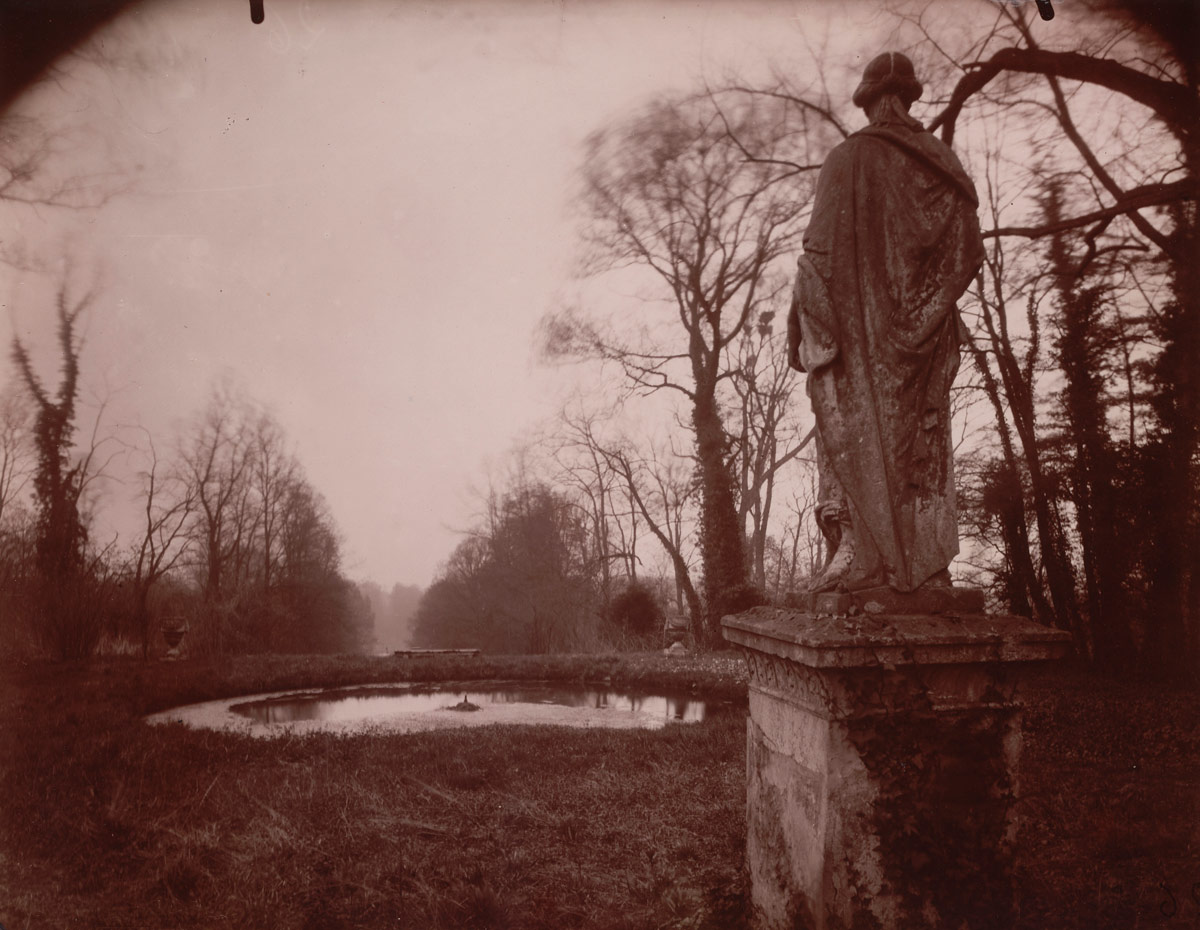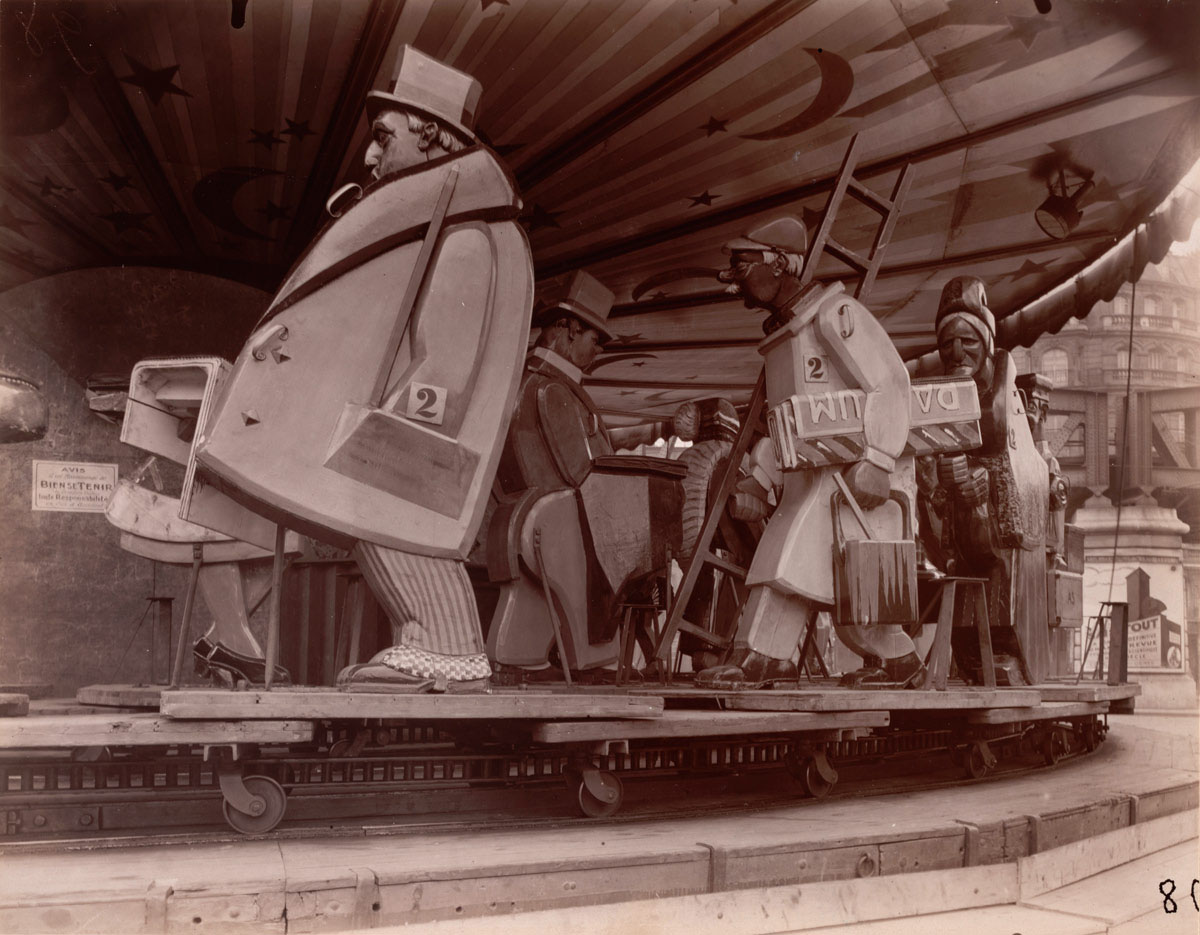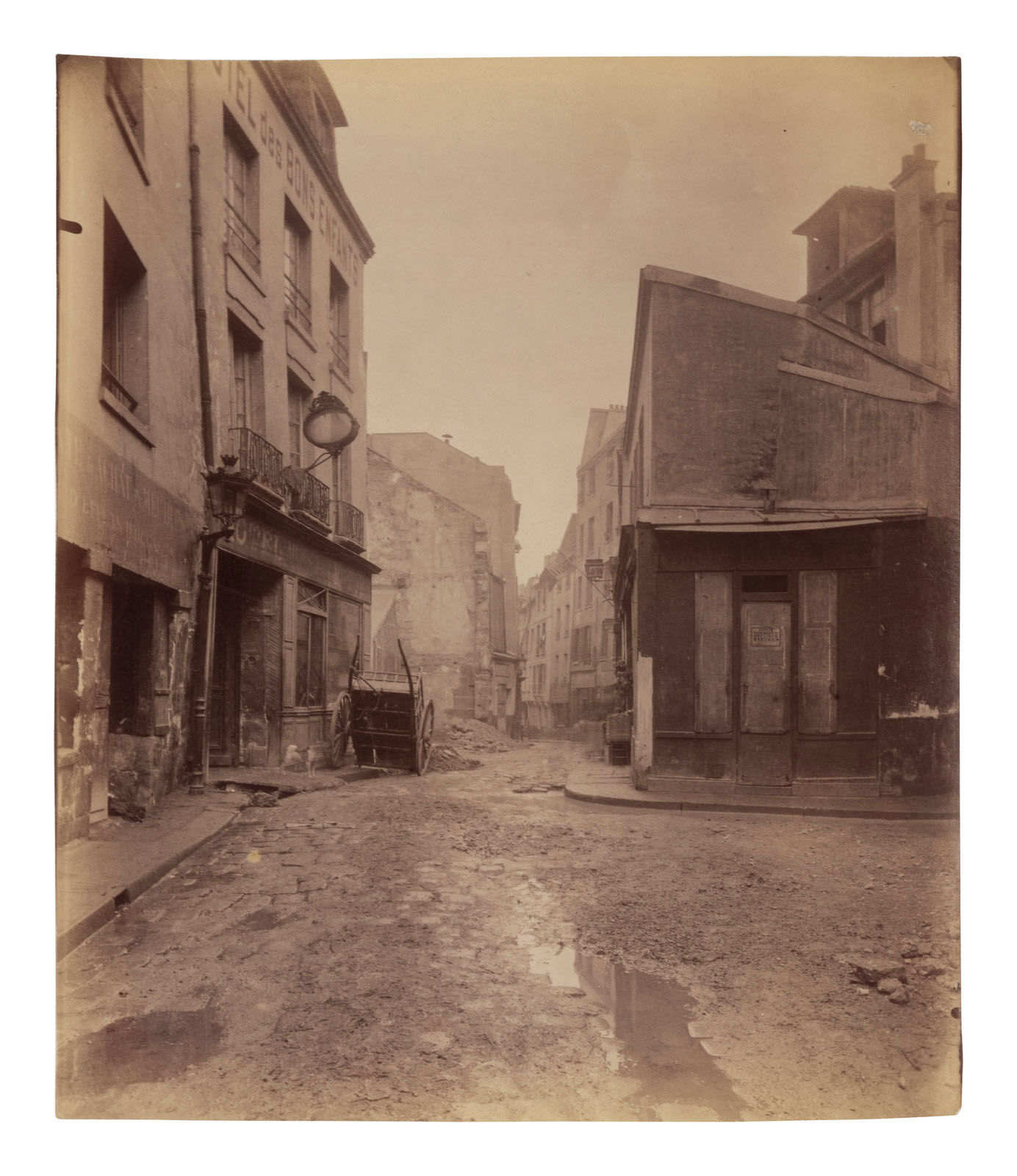
Photographs: Eugène Atget (French, 1857-1927)

November 2023


Eugène Atget (French, 1857-1927) 'Rue Saint-Médard, 5e arrondissement' 1899-1900


Eugène Atget (French, 1857-1927)
Rue Saint-Médard, 5e arrondissement
1899-1900
Albumen print


I am devastated at news of the loss of my very close friend and photographer Ian Lobb today.

An intelligent, compassionate, creative and spiritual man who was a guiding light during the last 33 years of my life.

He said of Atget, “You always have a sense of feeling self surprised at where his camera is.”

Atget was always an inspiration to us both.

Bless him for his wise counsel all these years.

A tribute will appear at a later time.

Dr Marcus Bunyan


Please click on the photographs for a larger version of the image.


Again

Why are the waves,
Coming straight at me?
Fold upon fold
Waves in wind –
And why is the wind
Becoming my breath,
And my breath, the wind?

So now you
Beautiful friend
Breathe my friend
Jump the wave,
Jump up, laughing
The sun right above you,
Here on the coast
Among waves and trees.

Enter your home
Like a nest
Beautiful friend,
Dear friend,
Read till you sleep –
Your breath on the pages
That tell of the road and
On that road where you meet
Those twilight lit:
One, two,
Then three   again.

Ian Lobb


“His prints are direct and emotionally clean records of a rare and subtle perception, and represent perhaps the earliest expression of true photographic art.”


Ansel Adams


“There is nothing I could ask for better than to roll myself between sheets of Atgets, each new one I find (and there are thousands) is a revelation.”


Julien Levy


“In looking at the work of Eugène Atget, a new world is opened up in the world of creative expression.”


Berenice Abbott


Eugène Atget (French, 1857-1927) 'Soleil' c. 1896


Eugène Atget (French, 1857-1927)
Soleil
c. 1896


Eugène Atget (French, 1857-1927) 'Fontaine Jarente – impasse Jarente' 1898


Eugène Atget (French, 1857-1927)
Fontaine Jarente – impasse Jarente (Fountain Jarente – Jarente dead end)
1898
Albumen print


Eugène Atget (French, 1857-1927) 'Fontaine Minerve, Institut' 1899


Eugène Atget (French, 1857-1927)
Fontaine Minerve, Institut (Minerva Fountain, Institute)
1899
Albumen print


Eugène Atget (French, 1857-1927) 'Hôtel de la Comtess de Verrue, rue du Regard' 1899


Eugène Atget (French, 1857-1927)
Hôtel de la Comtess de Verrue, rue du Regard
1899
Albumen print
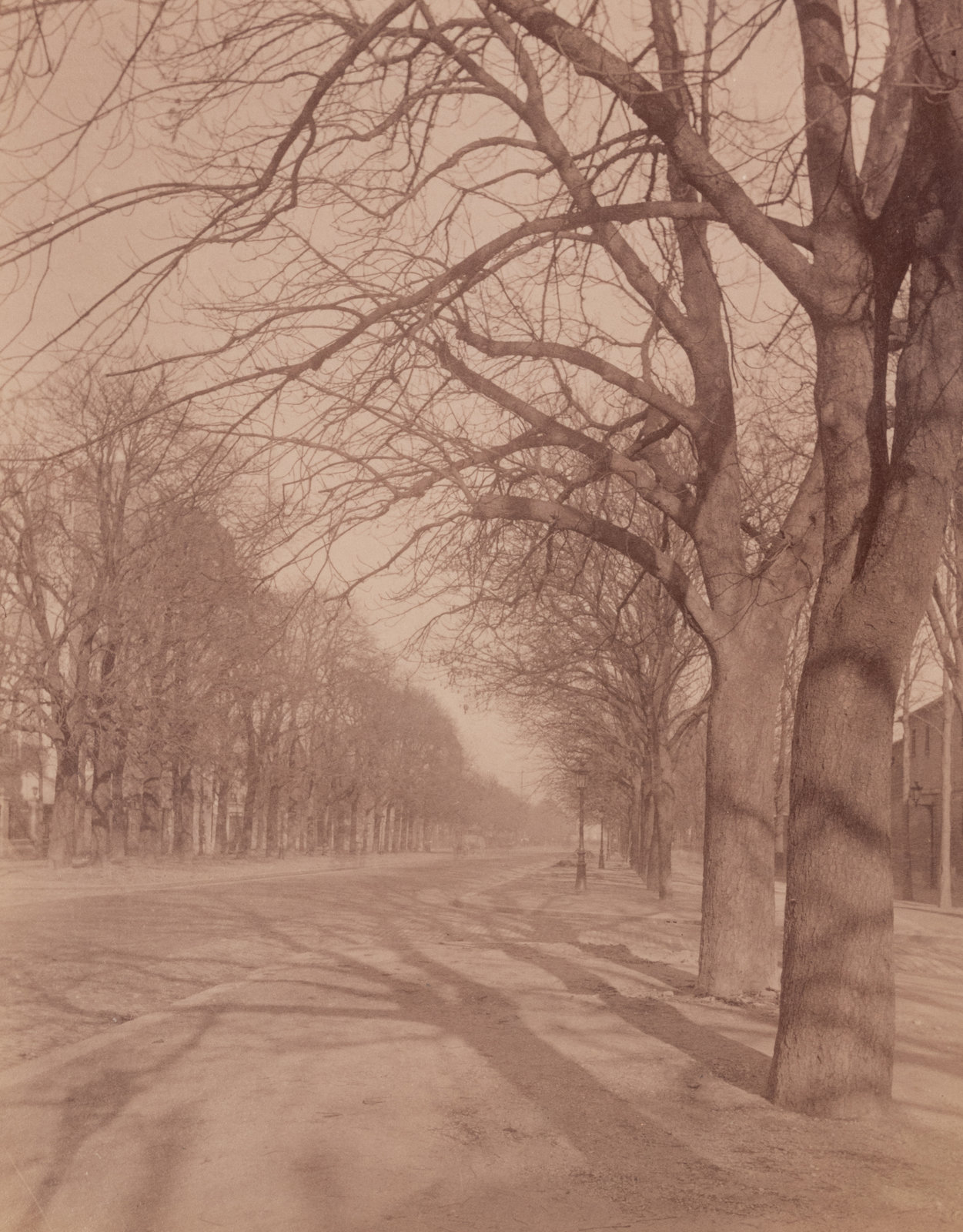
 

Eugène Atget (French, 1857-1927) 'Avenue de l'Observatoire' 1899-1900


Eugène Atget (French, 1857-1927)
Avenue de l’Observatoire
1899-1900
Albumen print
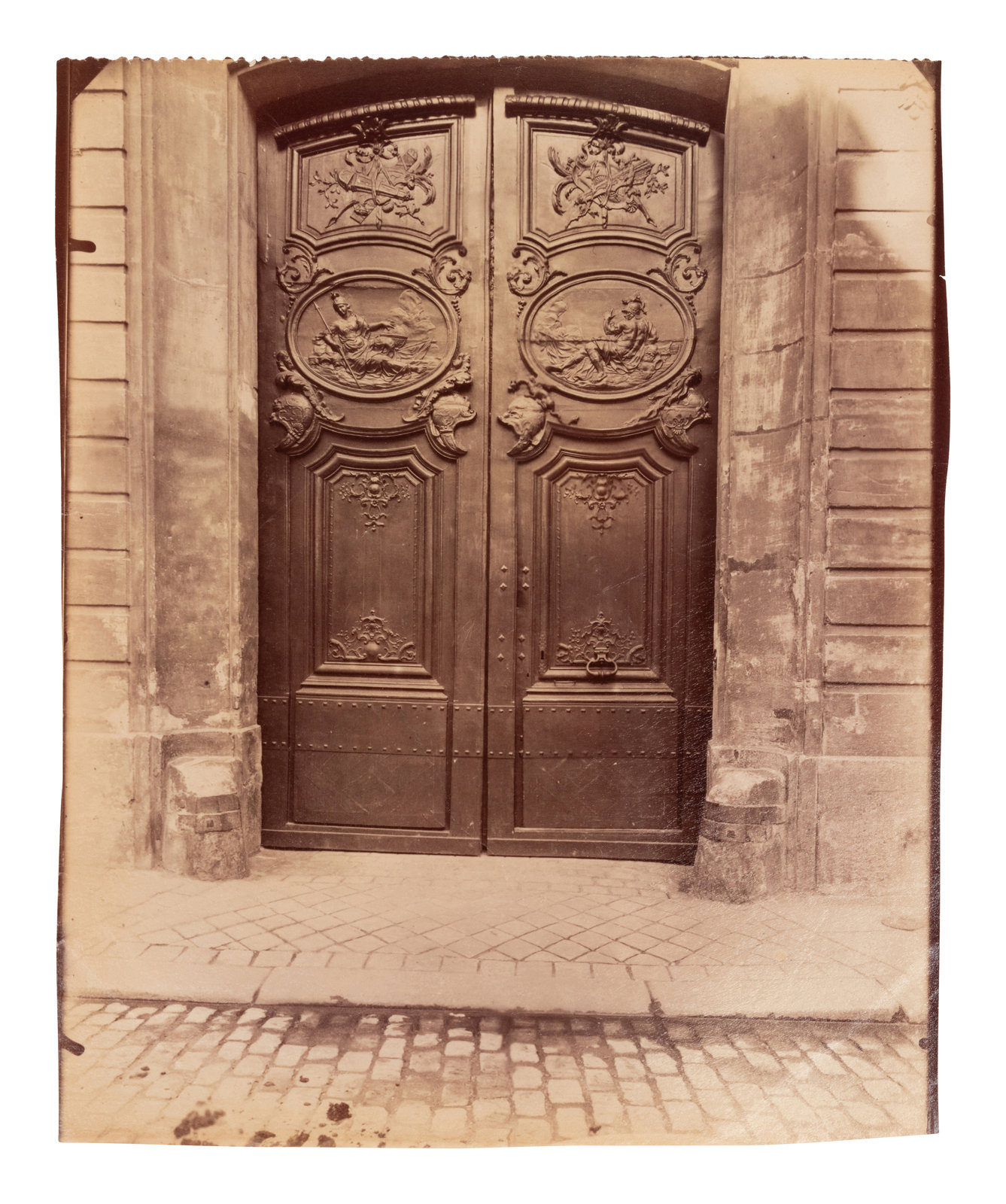
 

Eugène Atget (French, 1857-1927) 'Hôtel de Gouffier, rue de Varenne 56' 1899-1900


Eugène Atget (French, 1857-1927)
Hôtel de Gouffier, rue de Varenne 56
1899-1900
Albumen print


Eugène Atget (French, 1857-1927) 'Cactus [Nice]' before 1900


Eugène Atget (French, 1857-1927)
Cactus [Nice]
Before 1900
Albumen print
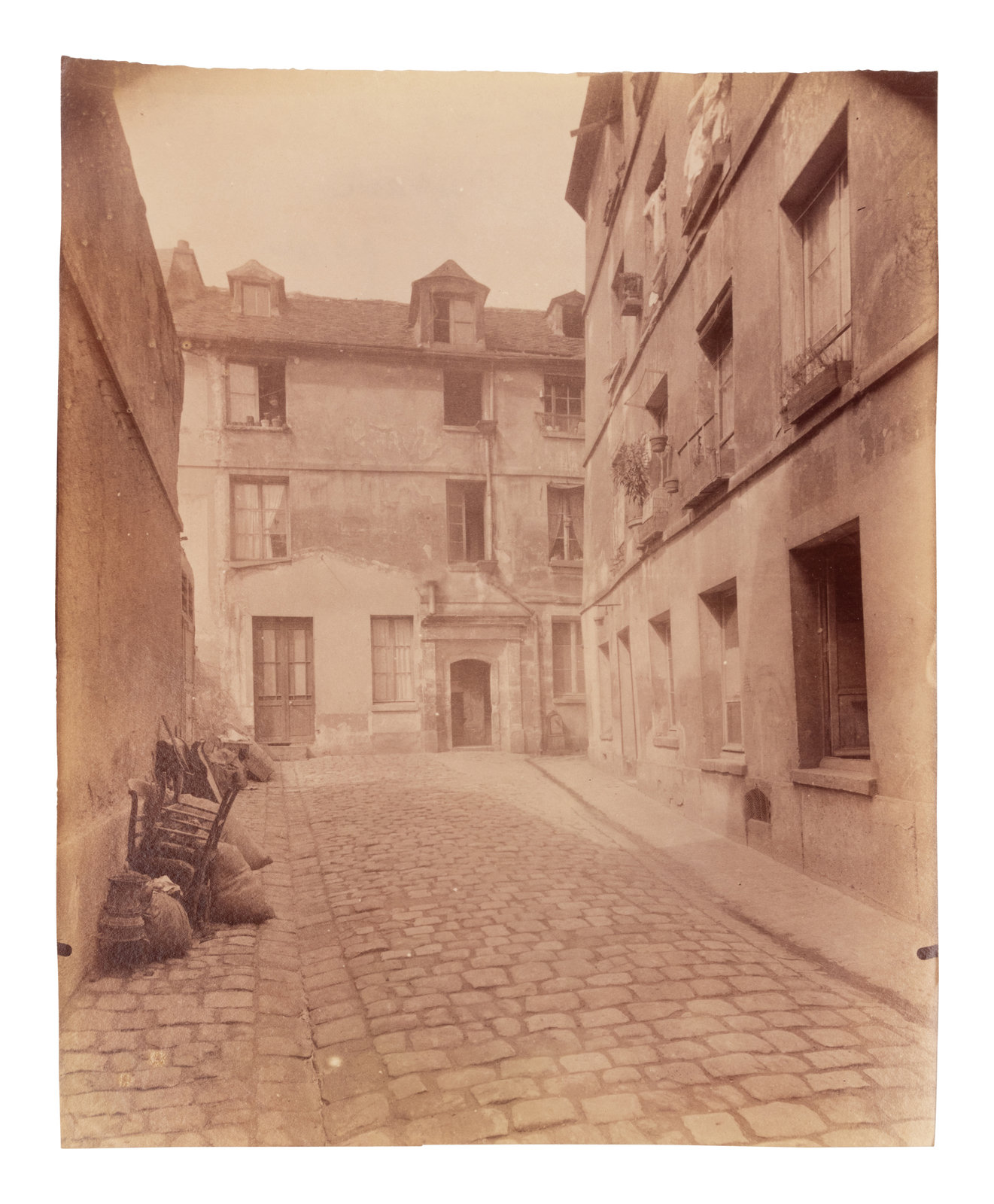
 

Eugène Atget (French, 1857-1927) 'Cour, rue Saint-Jacques 346, disparu, 5e arrondissement' 1900


Eugène Atget (French, 1857-1927)
Cour, rue Saint-Jacques 346, disparu, 5e arrondissement (Court, rue Saint-Jacques 346)
1900
Albumen print


Eugène Atget (French, 1857-1927) 'Hôtel d'Argouges de Lyon, rue Séguier 16' 1900


Eugène Atget (French, 1857-1927)
Hôtel d’Argouges de Lyon, rue Séguier 16
1900
Albumen print


Eugène Atget (French, 1857-1927) 'Presbytère de Saint-Sulpice, rue de Vaugirard 50' 1900


Eugène Atget (French, 1857-1927)
Presbytère de Saint-Sulpice, rue de Vaugirard 50 (Presbytery of Saint-Sulpice)
1900
Albumen print
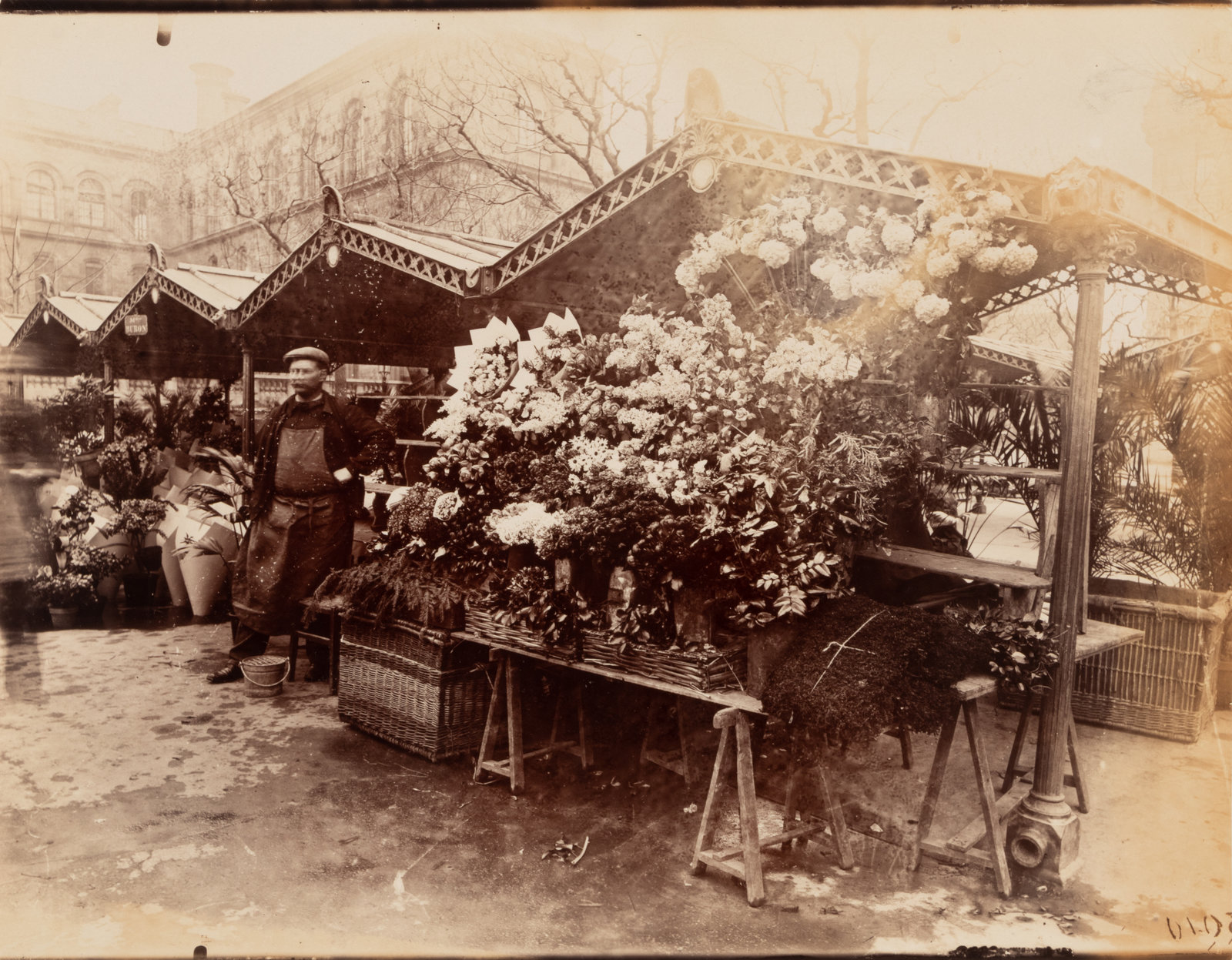
 

Eugène Atget (French, 1857-1927) 'Marché aux fleurs' c. 1900s


Eugène Atget (French, 1857-1927)
Marché aux fleurs (Flower market)
c. 1900s
Albumen print


Eugène Atget (French, 1857-1927) 'Cours d'Honneur, Versailles' 1901


Eugène Atget (French, 1857-1927)
Cours d’Honneur, Versailles (Gentilly – old castle, Versailles)
1901
Albumen print


Eugène Atget (French, 1857-1927) 'Gentilly – ancien château' 1901


Eugène Atget (French, 1857-1927)
Gentilly – ancien château
1901
Albumen print


Eugène Atget (French, 1857-1927) 'Hôtel Beauffremont, rue de Grenelle 87' 1901


Eugène Atget (French, 1857-1927)
Hôtel Beauffremont, rue de Grenelle 87
1901
Albumen print


Eugène Atget (French, 1857-1927) 'Hôtel du Maréchal de Tallard, rue des Archives 78' 1901-1902


Eugène Atget (French, 1857-1927)
Hôtel du Maréchal de Tallard, rue des Archives 78
1901-1902
Albumen print


Eugène Atget (French, 1857-1927) 'Grand Trianon Le Buffet' 1902


Eugène Atget (French, 1857-1927)
Grand Trianon Le Buffet
1902
Albumen print


Eugène Atget (French, 1857-1927) 'La Vénus accroupie, par Coysevox (Versailles)' 1902


Eugène Atget (French, 1857-1927)
La Vénus accroupie, par Coysevox (Versailles) (The Crouching Venus, by Coysevox, (Versailles))
1902
Albumen print
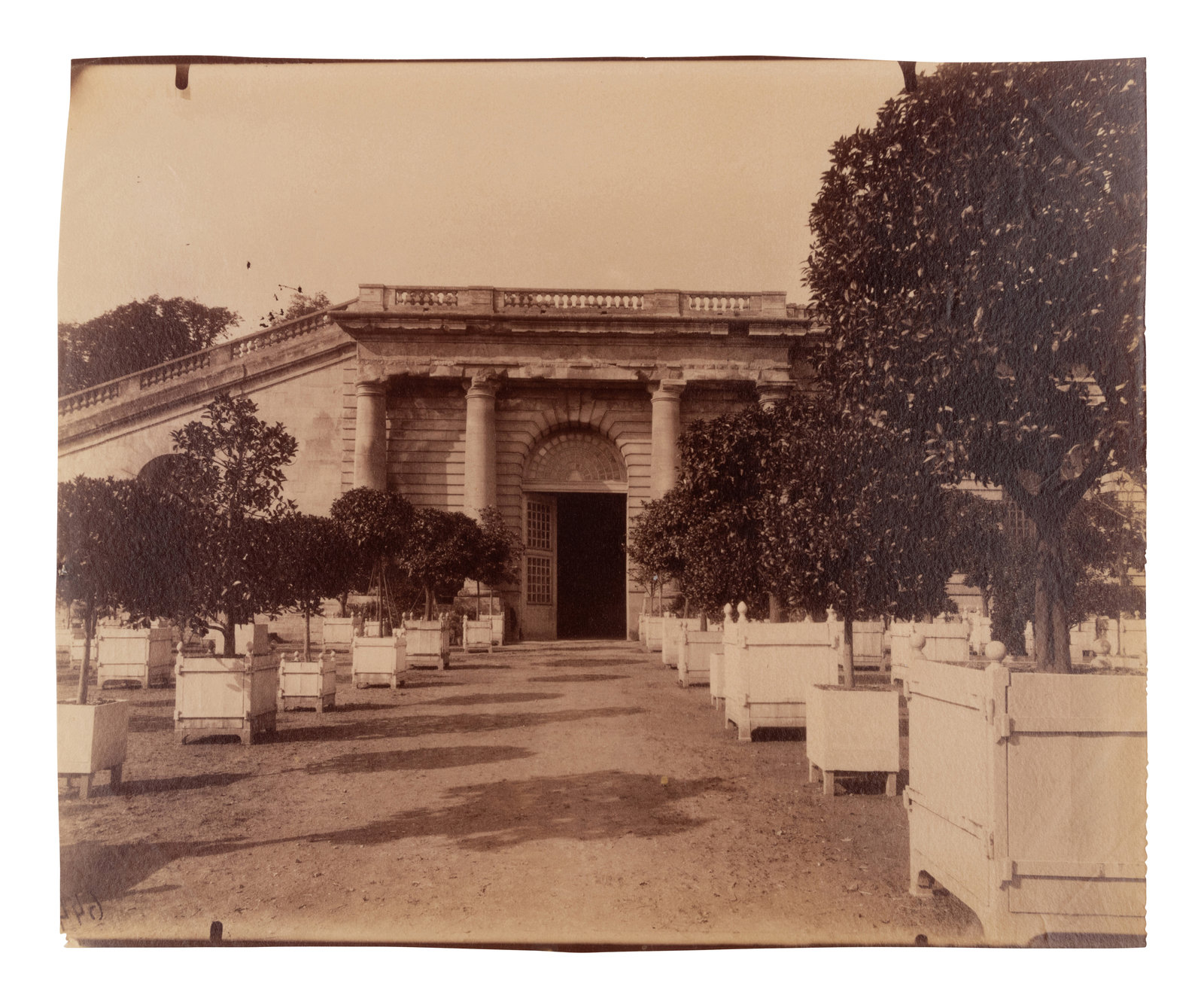
 

Eugène Atget (French, 1857-1927) 'Versailles – l'Orangerie' 1903


Eugène Atget (French, 1857-1927)
Versailles – l’Orangerie
1903
Albumen print


Eugène Atget (French, 1857-1927) 'Oratoire Marie de Médicis, Petit Luxembourg' 1903


Eugène Atget (French, 1857-1927)
Oratoire Marie de Médicis, Petit Luxembourg (Marie de Medici Oratory)
1903
Albumen print


Eugène Atget (French, 1857-1927) 'Fontaine du Marché Saint-Honoré' 1903


Eugène Atget (French, 1857-1927)
Fontaine du Marché Saint-Honoré (Saint-Honoré Market Fountain)
1903
Albumen print


Atget used a view camera with a bellows placed on a tripod, typical of the second half of the 19th century. He worked with 18 × 24 cm negative glass plates, oriented to obtain either a vertical or horizontal photograph. A tilt-shift technique was used to make perspective corrections. This resulted in vignetting (a circular shadow around the edges of the image), a phenomenon seen in a number of Atget’s photographs.

Atget always used gelatin-silver negative glass plates, 1.5mm thick. The plate was held in the camera in a wooden frame by clips that left characteristic marks on many of the prints. A long exposure time resulted in numerous blurs caused by the presence of moving people or objects. Atget developed the negatives himself and wrote the negative number directly onto the gelatin with a pointed stiletto.

Atget made all of his own photographic prints using a technique in which light-sensitive paper, in contact with the glass negative, was printed-out in natural light (never developed). The printing-out process proceeded until Atget determined that the image had the proper density. The photograph was then washed, gold toned, fixed and washed again. Atget’s prints are never black-and-white; their tone varies from deep sepia to violet-brown. Atget was capable of producing high-quality prints but there is great variation in these today depending on his printing and toning techniques and the way his photographs were preserved and exhibited. He never enlarged his photographs.


Atget’s paper

Atget used three types of paper:

Albumen

The light-sensitive emulsion was formed by silver chloride introduced into an albumen binder (beaten egg whites). The majority of Atget’s prints were on albumen paper. He turned to other processes after the First World War, when such paper could no longer be found on the market.

Matt albumen

After the war Atget used another kind of industrially produced printing-out paper with a matt surface.

Aristotype

Atget chose a commercially manufactured printing-out paper made with gelatin. Aesthetically similar to albumen prints, although thicker and with a glossier surface, the process was the same for toning and printing. Some of these prints have yellow stains from sulphuration due to poor processing of the image (such as the use of an exhausted fixing bath or insufficient washing).

Anonymous. “Atget’s technique,” on the Art Gallery of New South Wales website Nd [Online] Cited 03/10/2023


Eugène Atget (French, 1857-1927) 'Fontaine, rue Geoffrey Saint-Hilaire' 1905


Eugène Atget (French, 1857-1927)
Fontaine, rue Geoffrey Saint-Hilaire
1905
Albumen print


Eugène Atget (French, 1857-1927) 'Grand Trianon (escalier)' 1905


Eugène Atget (French, 1857-1927)
Grand Trianon (escalier) (Grand Trianon (staircase))
1905
Albumen print


Eugène Atget (French, 1857-1927) 'Saint-Severin – rue Saint Séverin' 1905-1906


Eugène Atget (French, 1857-1927)
Saint-Severin – rue Saint Séverin
1905-1906
Albumen print
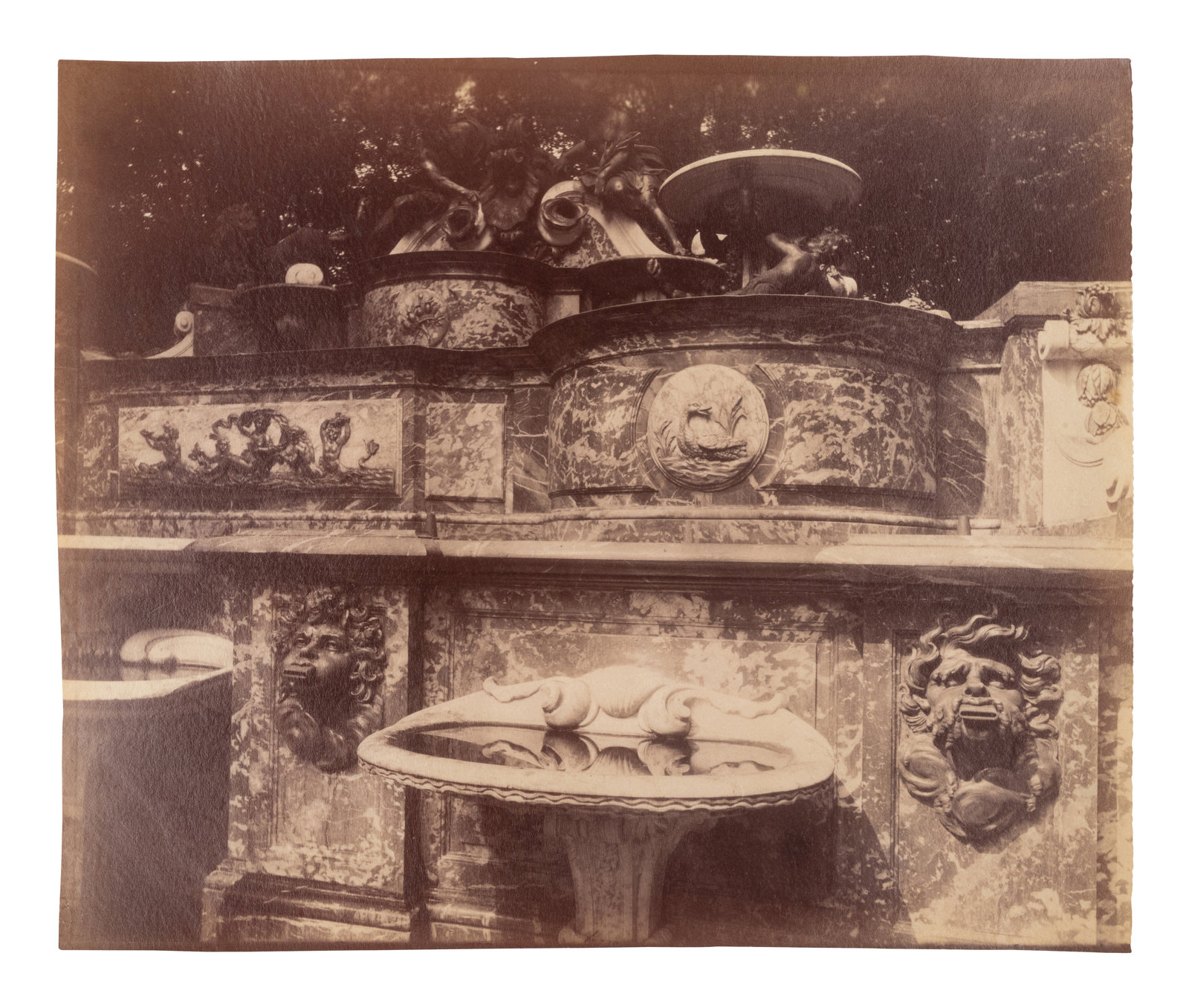
 

Eugène Atget (French, 1857-1927) 'Grand Trianon – le Buffet' 1906


Eugène Atget (French, 1857-1927)
Grand Trianon – le Buffet
1906
Albumen print


Eugène Atget (French, 1857-1927) 'Maison, rue Saint-Romain [Rouen]' 1907


Eugène Atget (French, 1857-1927)
Maison, rue Saint-Romain [Rouen]
1907
Albumen print


Eugène Atget (French, 1857-1927) 'Nantes – fontaine et Mairie' 1907


Eugène Atget (French, 1857-1927)
Nantes – fontaine et Mairie (Nantes – fountain and town hall)
1907
Albumen print


Eugène Atget (French, 1857-1927) 'Tuileries – Coureuse par Coustou' 1907


Eugène Atget (French, 1857-1927)
Tuileries – Coureuse par Coustou (Tuileries – Runner by Coustou)
1907
Albumen print


Eugène Atget (French, 1857-1927) 'Hôtel d'Imbercourt, 15 rue de l'Universite' 1909


Eugène Atget (French, 1857-1927)
Hôtel d’Imbercourt, 15 rue de l’Universite
1909
Albumen print


Eugène Atget (French, 1857-1927) 'Folie Thoinard, 9 rue Coq-Héron' 1909


Eugène Atget (French, 1857-1927)
Folie Thoinard, 9 rue Coq-Héron
1909
Albumen print


Eugène Atget (French, 1857-1927) 'Façade Saint-Lazare, faubourg Saint-Denis 107' 1909


Eugène Atget (French, 1857-1927)
Façade Saint-Lazare, faubourg Saint-Denis 107
1909
Albumen print


Eugène Atget (French, 1857-1927) 'Hôtel de Vendôme, rue Béranger 3' 1909


Eugène Atget (French, 1857-1927)
Hôtel de Vendôme, rue Béranger 3
1909
Albumen print


Eugène Atget (French, 1857-1927) 'Pommiers [et blés]' 1910 or earlier


Eugène Atget (French, 1857-1927)
Pommiers [et blés] (Apple trees [and wheat])
1910 or earlier
Albumen print


Eugène Atget (French, 1857-1927) 'Sapin ([Petit] Trianon)' 1910 or earlier


Eugène Atget (French, 1857-1927)
Sapin ([Petit] Trianon)
1910 or earlier
Albumen print


Eugène Atget (French, 1857-1927) 'Colonne Moris (Place Saint Sulpice)' 1910


Eugène Atget (French, 1857-1927)
Colonne Moris (Place Saint Sulpice) (Morris Column (Place Saint Sulpice))
1910
Albumen print


Eugène Atget (French, 1857-1927) 'Hôtel de Canhillac, place des Vosges 14' 1911-1912


Eugène Atget (French, 1857-1927)
Hôtel de Canhillac, place des Vosges 14
1911-1912
Albumen print


Eugène Atget (French, 1857-1927) 'Fontaine, faubourg Saint-Martin' 1912


Eugène Atget (French, 1857-1927)
Fontaine, faubourg Saint-Martin (Fountain, Saint-Martin suburb)
1912
Albumen print


Eugène Atget (French, 1857-1927) 'Balcon, [15] rue du Petit Pont' 1913


Eugène Atget (French, 1857-1927)
Balcon, [15] rue du Petit Pont
1913
Albumen print


Eugène Atget (French, 1857-1927) 'Pavilion du Hanovre, boulevard des Capucines 33' 1913


Eugène Atget (French, 1857-1927)
Pavilion du Hanovre, boulevard des Capucines 33
1913
Albumen print


Eugène Atget (French, 1857-1927) 'Fête du Trône' 1914


Eugène Atget (French, 1857-1927)
Fête du Trône
1914
Albumen print


“My excitement at seeing these few photographs would not let me rest. Who was this man? I learned that Atget lived up the street from where I worked – at 17 bis rue Campagne Premiere, and that his prints were for sale. Perhaps I could own some. I wanted to see more, and lost no time in seeking him out. I mounted the four flights to his fifth floor apartment. On the door was a modest handmade sign, “Documents pour Artistes”. He ushered me into a room approximately fifteen feet long, the ordinary room of a small apartment, sparsely and simply furnished. Atget, slightly stooped, impressed me as being tired, sad, remote, appealing. He was not talkative. He did not try to “sell” anything. He showed me some albums, which he had made himself, and I selected as many prints as I could afford to pay for from my meager wages as a photographer’s assistant. I returned many times, and we became more friendly.” Several years passed and Berenice Abbott became a portrait photographer. “By that time I had become a portrait photographer on my own, and I persuaded Atget to come to my studio at 44 rue du Bac to sit for his portrait. To my surprise he arrived in a handsome overcoat. I had always seen him in his patched work clothes. It would have been desirable to photograph him in these too, since they were exquisitely photogenic, but time is a fickle unpredictable master and did not permit another sitting. After developing the portraits she took the images to show Atget. Abbott missed the sign and made one more flight of stairs to find the concierge.” She asked about Atget and was shocked to hear that he had died. “Youth is little equipped to accept or even anticipate the fact of death. And I had just finished his portraits.” Inquiring about his collection of photographs, she found that they had been left to Andre Calmette. It took months of correspondence and convincing, but she eventually acquired Atget’s entire collection. Abbott also wrote a book about Atget and published many of his prints. Many critics have attacked Atget’s work, saying Atget was merely a disappointed painter or actor, and a little ashamed of his medium. Claims have been made that Atget did not really know what he was doing, that reflections in his shop front windows were accidents which he did not even see. Berenice Abbott fiercely defended Atget and his work. Goethe had said, “there is no variety of Art that should be looked upon lightly. Each has delights which great talent can bring to fulfillment.” If Atget had not had this talent he would have been just another record producer of the travel guide variety – tourist fare. I believe the photographer’s eye develops to a more intense awareness than other people’s, as a dancer develops his muscles and limbs, and a musician his ear. The photographer’s act is to see the outside world precisely, with intelligence as well as sensuous insight. This act of seeing sharpens the eye to an unprecedented acuteness. He often sees swiftly an entire scene that most people would pass unnoticed. Capturing the city of Paris and its people was the photographic art of Atget. How one becomes a photographer, well-schooled or self-taught, does not matter. Ultimately, it is the test of time. As with many of the world’s great photographer’s, their images are timeless and still have the appeal as when first developed. Not only did Atget document a city; he also captured its essence.

Lori Oden. “Eugène Atget,” on the International Photography Hall of Fame and Museum website Nd [Online] Cited 03/10/2023


 Eugène Atget (French, 1857-1927) 'Plessis Piquet [Entrée pittoresque, Châtillon]' 1921


Eugène Atget (French, 1857-1927)
Plessis Piquet [Entrée pittoresque, Châtillon]
1921
Albumen print


Eugène Atget (French, 1857-1927) 'Porte, avenue de Paris (Versailles)' 1922


Eugène Atget (French, 1857-1927)
Porte, avenue de Paris (Versailles)
1922
Albumen print
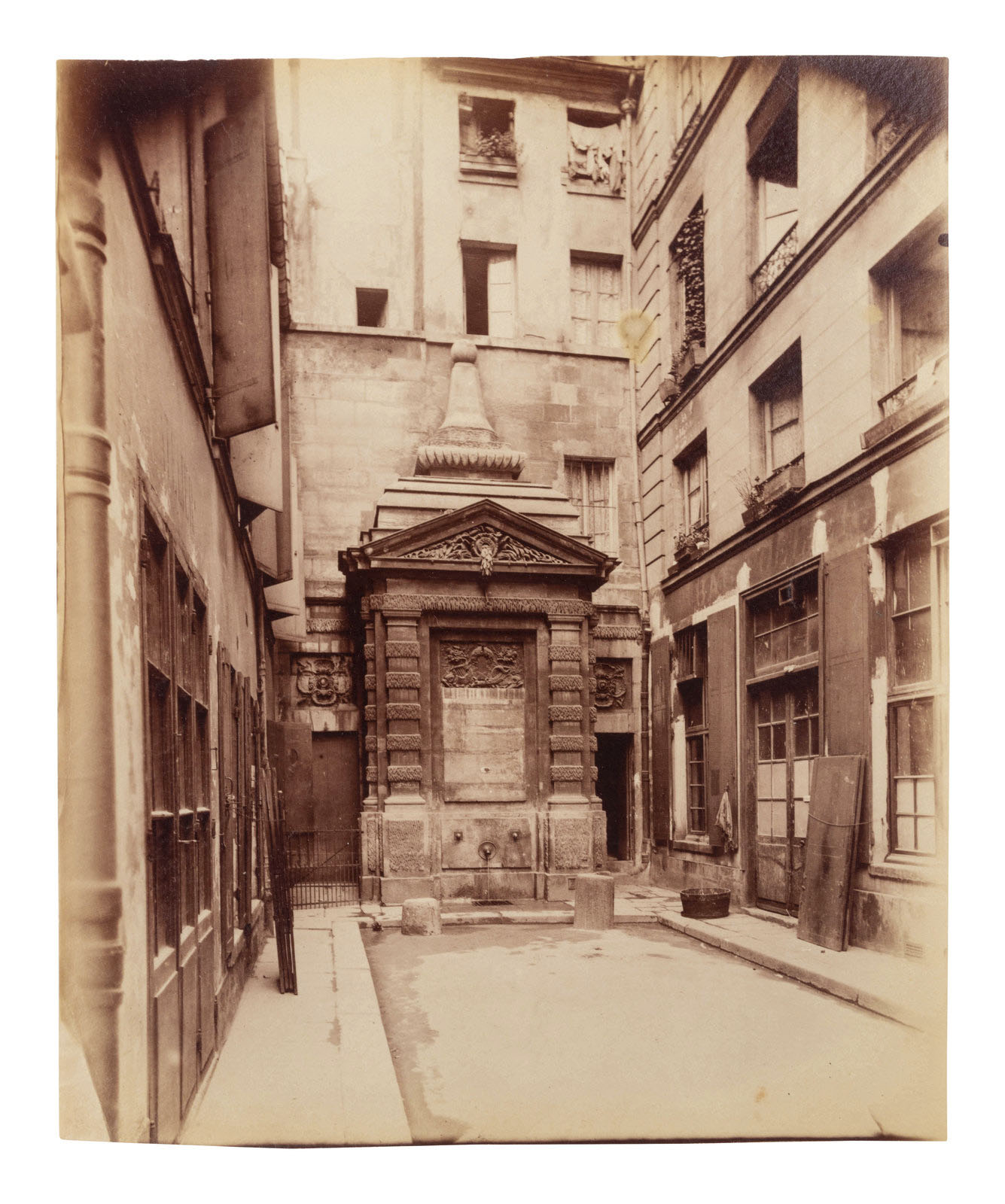
 

Eugène Atget (French, 1857-1927) 'Fontaine Jarente, rue Jarente' 1922


Eugène Atget (French, 1857-1927)
Fontaine Jarente, rue Jarente
1922
Albumen print


Eugène Atget (French, 1857-1927) 'Coin, rue Norvins et des Saules' 1925


Eugène Atget (French, 1857-1927)
Coin, rue Norvins et des Saules (Corner, rue Norvins et des Saules)
1925
Albumen print


Eugène Atget (French, 1857-1927) 'Parc de Sceaux' 1925


Eugène Atget (French, 1857-1927)
Parc de Sceaux
1925
Albumen print


Eugène Atget (French, 1857-1927) 'Moulin Rouge [86 boulevard de Clichy]' 1926


Eugène Atget (French, 1857-1927)
Moulin Rouge [86 boulevard de Clichy]
1926
Albumen print


Eugène Atget (French, 1857-1927) 'Rue Lanneau' 1925


Eugène Atget (French, 1857-1927)
Rue Lanneau
1925
Albumen print


Eugène Atget (French, 1857-1927) 'Passage Moret, ruelle des Gobelins' 1926


Eugène Atget (French, 1857-1927)
Passage Moret, ruelle des Gobelins
1926
Albumen print
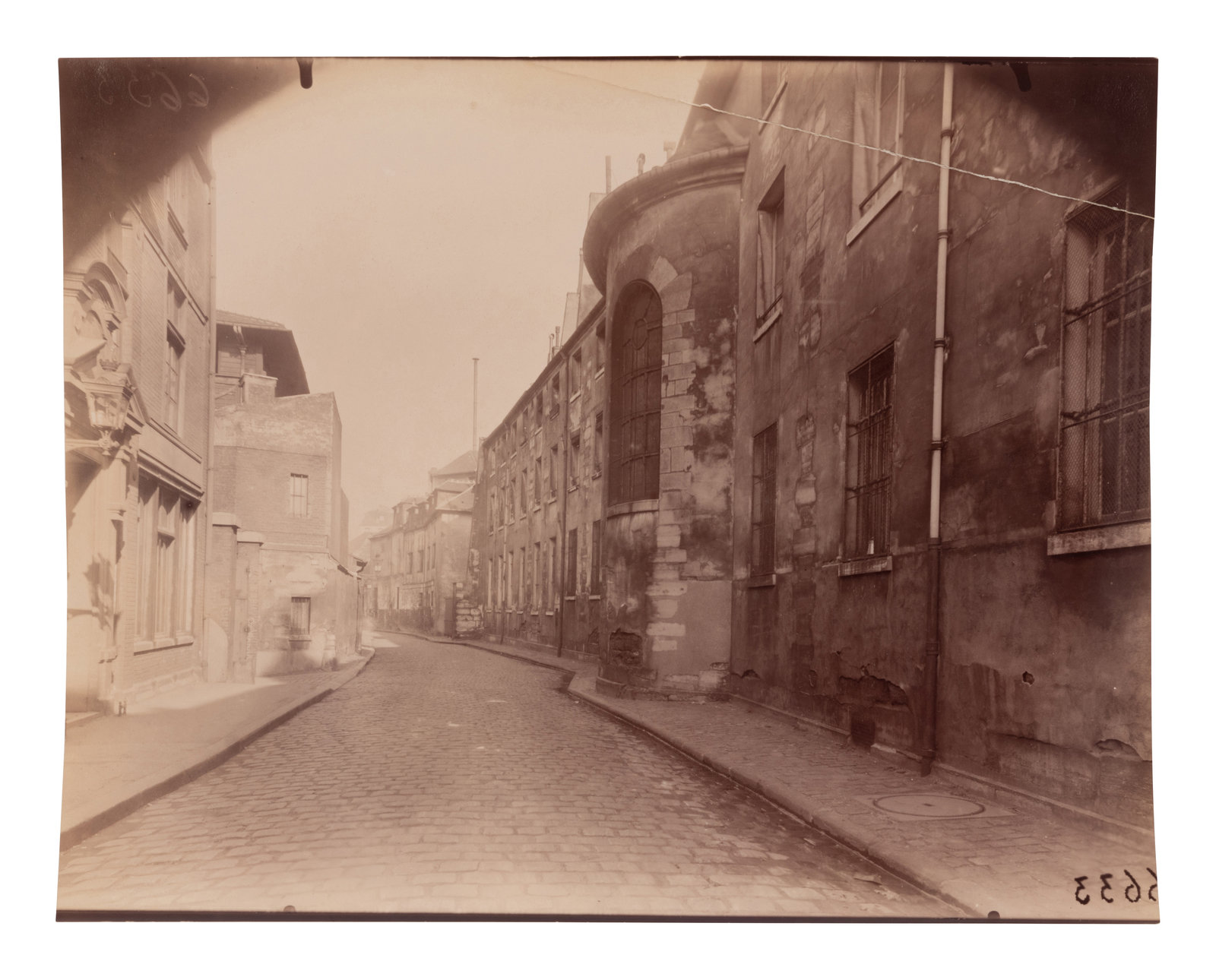
 

Eugène Atget (French, 1857-1927) 'Rue des Gobelins' 1926


Eugène Atget (French, 1857-1927)
Rue des Gobelins
1926
Albumen print


Eugène Atget (French, 1857-1927) 'Rue des Prêtres Saint-Séverin, au fond rue Boutebrie' 1926


Eugène Atget (French, 1857-1927)
Rue des Prêtres Saint-Séverin, au fond rue Boutebrie
1926
Albumen print
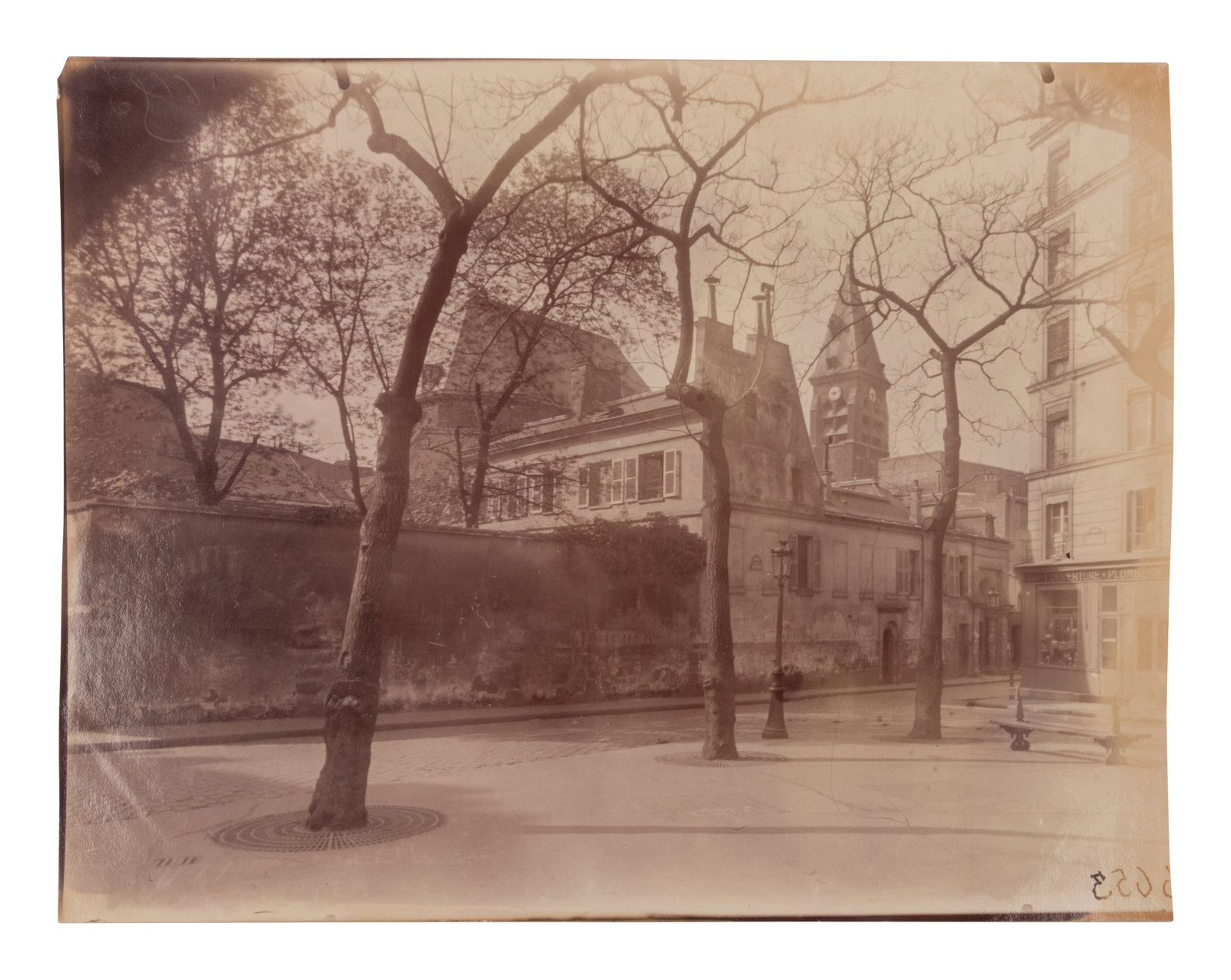
 

Eugène Atget (French, 1857-1927) 'Saint-Médard' 1926


Eugène Atget (French, 1857-1927)
Saint-Médard
1926
Albumen print
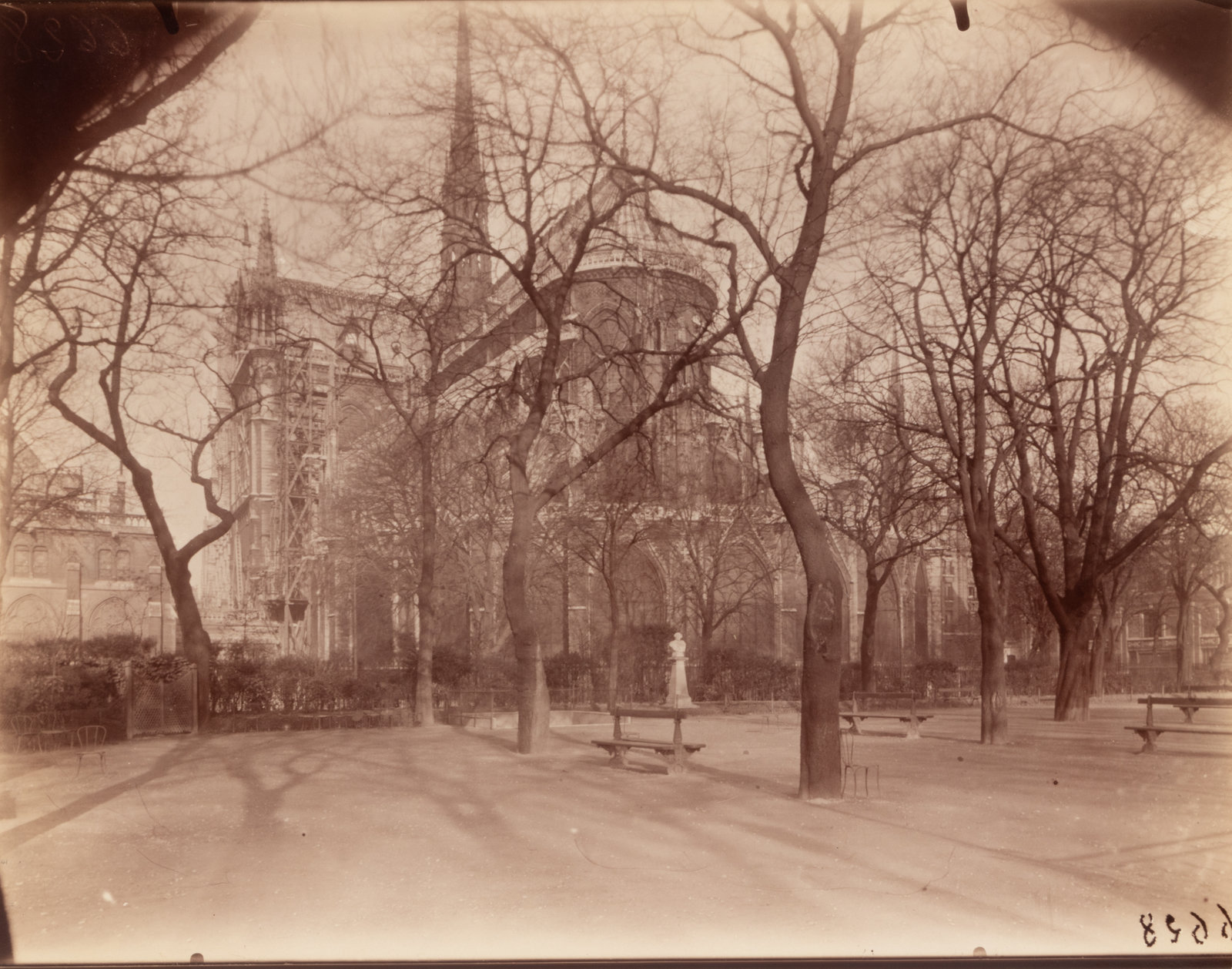
 

Eugène Atget (French, 1857-1927) 'Square Notre-Dame' 1926


Eugène Atget (French, 1857-1927)
Square Notre-Dame
1926
Albumen print


Eugène Atget (French, 1857-1927) 'Ruelle des Reculettes, Gobelins' 1926


Eugène Atget (French, 1857-1927)
Ruelle des Reculettes, Gobelins
1926
Albumen print


Eugène Atget (French, 1857-1927) 'Saint-Cloud [19h matin, mars 1926]' 1926


Eugène Atget (French, 1857-1927)
Saint-Cloud [19h matin, mars 1926]
1926
Albumen print


LIKE ART BLART ON FACEBOOK

Back to top

Exhibition: ‘Eugène Atget: “Documents pour artistes”‘ at the Museum of Modern Art (MoMA), New York

Exhibition dates: 6th February – 9th April 2012


Eugène Atget (French, 1857-1927) 'Coin, Boulevard de la Chapelle et rue Fleury 76,18e' June 1921


Eugène Atget (French, 1857-1927)
Coin, Boulevard de la Chapelle et rue Fleury 76,18e
June 1921
Matte albumen silver print
6 13/16 x 9 inches (17.3 x 22.9cm)
The Museum of Modern Art, New York
Abbott-Levy Collection. Partial gift of Shirley C. Burden


“These are simply documents I make.”


Eugène Atget


“One might think of Atget’s work at Sceaux as… a summation and as the consummate achievement of his work as a photographer – a coherent, uncompromising statement of what he had learned of his craft, and of how he had amplified and elaborated the sensibility with which he had begun. Or perhaps one might see the work at Sceaux as a portrait of Atget himself, not excluding petty flaws, but showing most clearly the boldness and certainty – what his old friend Calmettes called the intransigence – of his taste, his method, his vision.


John Szarkowski


The first of two postings about the work of Eugène Atget, this exhibition at MoMA the first in twenty-five years to focus on his “Documents for artists.” Atget was my first hero in photography and the greatest influence on my early black and white photography before I departed and found my own voice as an artist. Through his photographs, his vision he remains a life-long friend. He taught me so much about where to place the camera and how to see the world. He made me aware. For that I am eternally grateful.

Dr Marcus Bunyan


Many thankx to MOMA for allowing me to publish the photographs in the posting. Please click on the photographs for a larger version of the image.


Eugène Atget (French, 1857-1927) 'Cour, 7 rue de Valence' June 1922


Eugène Atget (French, 1857-1927)
Cour, 7 rue de Valence
June 1922
Matte albumen silver print
7 x 8 15/16 inches (17.8 x 22.7cm)
The Museum of Modern Art, New York
Abbott-Levy Collection. Partial gift of Shirley C. Burden


Eugène Atget (French, 1857-1927) 'Cour, 41 rue Broca' 1912


Eugène Atget (French, 1857-1927)
Cour, 41 rue Broca
1912
Albumen silver print
6 5/8 x 8 1/4 inches (16.9 x 21cm)
The Museum of Modern Art, New York
Abbott-Levy Collection. Partial gift of Shirley C. Burden


The sign above the entrance to Eugène Atget’s studio in Paris read Documents pour artistes (Documents for artists), declaring his modest ambition to create photographs for others to use as source material in their work. Atget (French, 1857-1927) made more than 8,500 pictures of Paris and its environs in a career that spanned over thirty years, from the late nineteenth century until his death. To facilitate access to this vast body of work for himself and his clients, he organised his photographs into discrete series, a model that guides the organisation of this exhibition. The works are presented here in six groups, demonstrating Atget’s sustained attention to certain motifs or locations and his consistently inventive and elegant methods of rendering the complexity of the three-dimensional world on a flat, rectangular plate.

In 1925 the American artist Man Ray purchased forty-two photographs from Atget, who lived down the street from him in Montparnasse. Man Ray believed he detected a kindred Surrealist sensibility in the work, to which suggestion Atget replied, “These are simply documents I make.” This humility belies the extraordinary pictorial sophistication and beauty that is characteristic of much of Atget’s oeuvre and his role as touchstone and inspiration for subsequent generations of photographers, from Walker Evans to Lee Friedlander. This exhibition bears witness to his success, no matter the unassuming description he gave of his life’s work.

A Note on the Prints

Atget made photographs with a view camera resting on a tripod. An example of his 24-by-18-centimeter glass plate negatives is on display here. Each print was made by exposing light-sensitive paper to the sun in direct contact with one of these negatives, which Atget numbered sequentially within each series. He frequently scratched the number into the emulsion on the negative, and thus it appears in reverse at the bottom of most prints. He also inscribed the number, along with the work’s title, in pencil on the verso of each print. These titles appear (with English translations where necessary) on the individual wall labels, preserving Atget’s occasionally idiosyncratic titling practices. The Abbott-Levy Collection at The Museum of Modern Art, to which the prints in this exhibition belong (except where noted), is composed of close to 5,000 distinct photographs and 1,200 glass plate negatives that were in Atget’s studio at the time of his death. The Museum purchased this collection in 1968 from photographer Berenice Abbott and art dealer Julien Levy, thanks to the unflagging efforts of John Szarkowski, then director of the Department of Photography, and in part to the generosity of Shirley C. Burden.

Fifth arrondissement

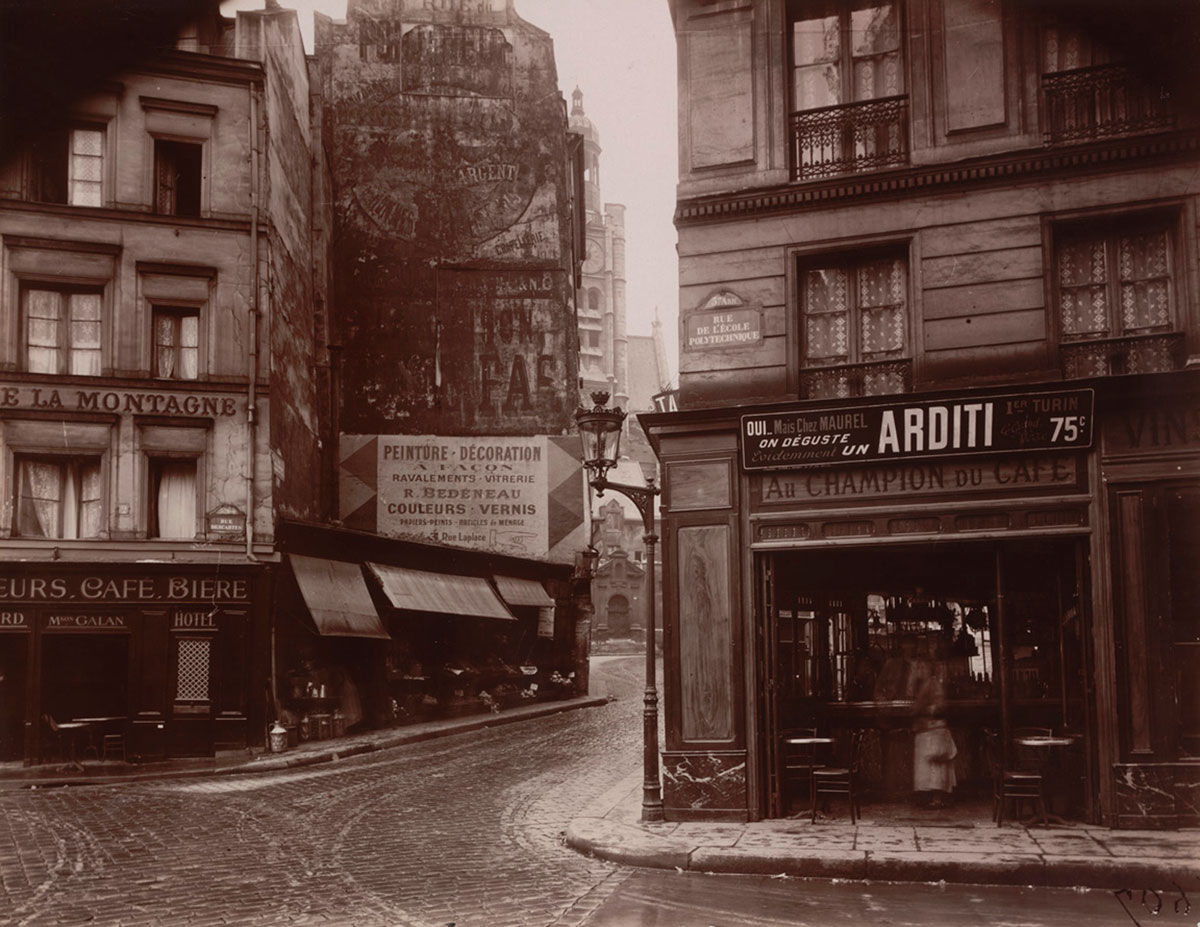
For more than thirty years, Atget photographed in and around Paris. Curiously, given the depth of this investigation, he never photographed the Eiffel Tower, generally avoided the grand boulevards, and eschewed picture postcard views. Instead Atget focused on the fabric of the city: facades of individual buildings (both notable and anonymous), meandering streetscapes, details of stonework and ironwork, churches, shops, and the occasional monument. Even a selective cross section of the photographs he made in the fifth arrondissement over the course of his career suggests that his approach, while far from systematic, might yet be termed comprehensive.

Courtyards

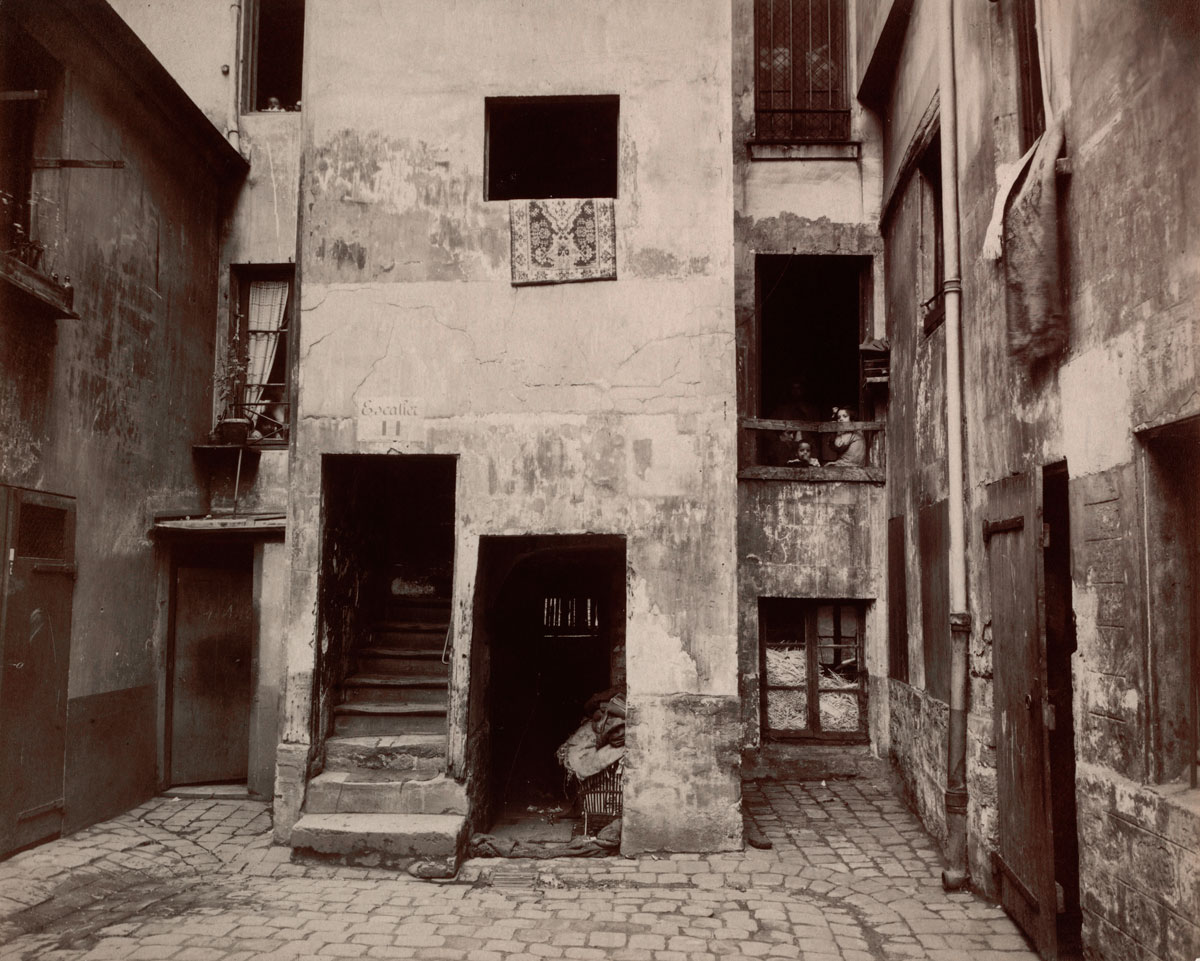
Atget clearly relished the metaphorical and physical aspects of the courtyard – a space that hovers between public and private, interior and exterior – and he photographed scores of them, both rural and urban. The motif was chosen as the backdrop for what was likely Atget’s first photograph of an automobile (Cour, 7 rue de Valence), and it was versatile enough to transform itself depending on where Atget placed his camera (see the two views of the courtyard at 27 quai d’Anjou). The dark areas that appear in the upper corners of some prints are the result of vignetting: a technique in which the light coming through the camera’s lens does not fully cover the glass plate negative, allowing Atget to create an arched pictorial space that echoed the physical one before his camera.

Wall text from the exhibition


Eugène Atget (French, 1857-1927) 'Rue de la Montagne-Sainte-Geneviève' June 1925


Eugène Atget (French, 1857-1927)
Rue de la Montagne-Sainte-Geneviève
June 1925
Gelatin silver printing-out-paper print
6 11/16 x 8 3/4 inches (17 x 22.2cm)
The Museum of Modern Art, New York
Abbott-Levy Collection. Partial gift of Shirley C. Burden


Eugène Atget (French, 1857-1927) 'Maison où Mourut Voltaire en 1778, 1 rue de Beaune' 1909


Eugène Atget (French, 1857-1927)
Maison où Mourut Voltaire en 1778, 1 rue de Beaune
1909
Albumen silver print
8 9/16 x 7 inches (21.8 x 17.8cm)
The Museum of Modern Art, New York
Abbott-Levy Collection. Partial gift of Shirley C. Burden


Eugène Atget (French, 1857-1927) 'Balcon, 17 rue du Petit-Pont' 1913


Eugène Atget (French, 1857-1927)
Balcon, 17 rue du Petit-Pont
1913
Albumen silver print
8 5/8 x 6 15/16 inches (21.9 x 17.7cm)
The Museum of Modern Art, New York
Abbott-Levy Collection. Partial gift of Shirley C. Burden


Eugène Atget: “Documents pour artistes presents six fresh and highly focused cross sections of the career of master photographer Eugène Atget (French, 1857-1927), drawn exclusively from The Museum of Modern Art’s unparalleled holdings of his work. The exhibition, on view at MoMA from February 6 through April 9, 2012, gets its name from the sign outside Atget’s studio door, which declared his modest ambition to create documents for other artists to use as source material in their own work. Whether exploring Paris’s fifth arrondissement across several decades, or the decayed grandeur of parks at Sceaux in a remarkable creative outburst at the twilight of his career, Atget’s lens captured the essence of his chosen subject with increasing complexity and sensitivity. Also featured are Atget’s photographs made in the Luxembourg gardens; his urban and rural courtyards; his pictures of select Parisian types; and his photographs of mannequins, store windows, and street fairs, which deeply appealed to Surrealist artists living in Paris after the First World War. The exhibition is organised by Sarah Hermanson Meister, Curator, Department of Photography, The Museum of Modern Art.

Atget made more than 8,500 pictures of Paris and its environs in a career that spanned over 30 years, from the late-19th century until his death. To facilitate access to this vast body of work for himself and his clients, he organised his photographs into discrete series, a model that guides the organisation of this exhibition. More than 100 photographs are presented in six groups, demonstrating Atget’s sustained attention to certain motifs or locations and his consistently inventive and elegant methods of rendering the complexity of the three-dimensional world on a flat, rectangular plate.

With seemingly inexhaustible curiosity, Atget photographed the streets of Paris. Eschewing picture-postcard views, and, remarkably, never once photographing the Eiffel Tower, he instead focused on the fabric of the city, taking pictures along the Seine, in every arrondissement, and in the “zone” outside the fortified wall that encompassed Paris at the time. His photographs of the fifth arrondissement are typical of this approach, and include facades of individual buildings (both notable and anonymous), meandering streetscapes, details of stonework and ironwork, churches, and the occasional monument.

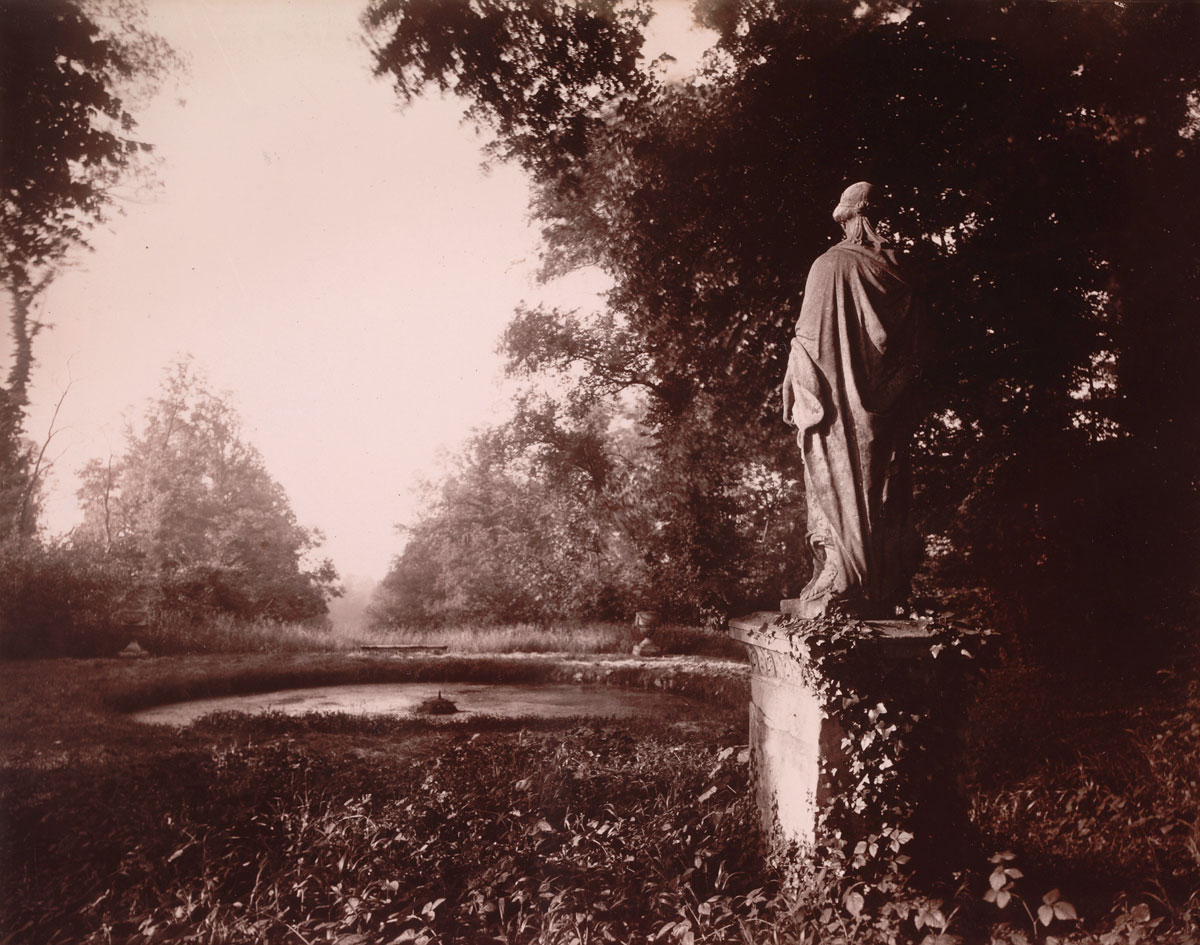
Between March and June 1925, Atget made 66 photographs in the abandoned Parc de Sceaux, on the outskirts of Paris, almost half of which are on view in this exhibition. His approach was confident and personal, even quixotic, and his notations of the time of day for certain exposures read almost like diary entries. These photographs have long been recognised as among Atget’s finest, and this is the first opportunity for audiences outside of France to appreciate the full diversity and richness of this accomplishment.

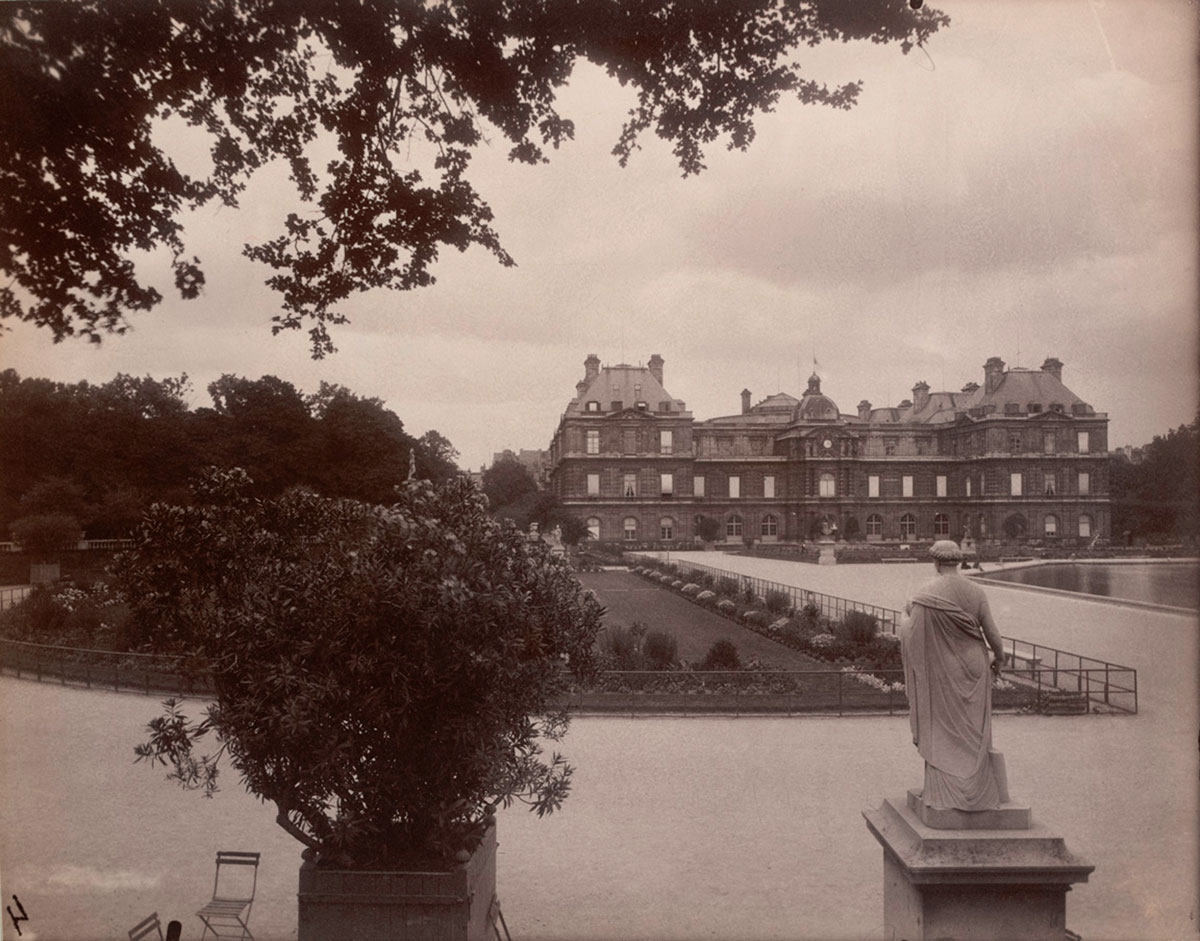
Atget photographed the Jardin de Luxembourg more than any other Parisian park, likely reflecting his preference for its character and its proximity to his home and studio on rue Campagne-Première in Montparnasse. His early photographs there tend to capture human activity – children with their governesses or men conversing in the shade – but this gave way to a more focused exploration of the garden’s botanical and sculptural components following the First World War, and culminated in studies that delicately balance masses of light and shadow, as is typical of Atget’s late work.

Atget firmly resisted public association with the Surrealists, yet his work – in particular his photographs of shop windows, mannequins, and the street fairs around Paris – captured the eye of artists with decidedly avant-garde inclinations, such as Man Ray and Tristan Tzara. Man Ray lived down the street from Atget, and the young American photographer Berenice Abbott, while working as Man Ray’s studio assistant, made Atget’s acquaintance in the mid-1920s – a relationship that ultimately brought the contents of Atget’s studio at the time of his death to MoMA, almost 40 years later.

Atget clearly relished the metaphorical and physical aspects of the courtyard – a space that hovers between public and private, interior and exterior – and he photographed scores of them, both rural and urban. This exhibition marks the first time these pictures have been grouped together, allowing the public to appreciate previously unexplored aspects of the Abbott-Levy Collection, which includes prints of nearly 5,000 different images.

Only a tiny fraction of the negatives Atget exposed during his lifetime are photographs of people, yet they have attracted attention disproportionate to their number. With few exceptions, this segment of his creative output can be divided into three types: street merchants (petits métiers); ragpickers (chiffonniers) or Romanies (romanichels, or Gypsies), who lived in impermanent structures just outside the fortified wall surrounding Paris; and prostitutes. As with each section of this exhibition, Atget’s career is represented by the finest prints drawn from critically distinct and essential aspects of his practice, allowing a fresh appreciation of photography’s first modern master.

Press release from the MoMA website


Eugène Atget (French, 1857-1927) 'Luxembourg' 1923-25


Eugène Atget (French, 1857-1927)
Luxembourg
1923-1925
Matte albumen silver print
6 7/8 x 9 inches (17.5 x 22.8cm)
The Museum of Modern Art, New York
Abbott-Levy Collection. Partial gift of Shirley C. Burden


Eugène Atget (French, 1857-1927) 'Luxembourg' 1923-25


Eugène Atget (French, 1857-1927)
Luxembourg
1923-1925
Matte albumen silver print
7 x 8 13/16 inches (17.8 x 22.4cm)
The Museum of Modern Art, New York
Abbott-Levy Collection. Partial gift of Shirley C. Burden


Eugène Atget (French, 1857-1927) 'Luxembourg' 1902-1903


Eugène Atget (French, 1857-1927)
Luxembourg
1902-1903
Albumen silver print
6 5/8 x 8 3/8 inches (16.8 x 21.3cm)
The Museum of Modern Art, New York
Abbott-Levy Collection. Partial gift of Shirley C. Burden


Jardin de Luxembourg

Atget photographed the Jardin de Luxembourg more than any other Parisian park, likely reflecting his preference for its character as well as its proximity to his home and studio on rue Campagne-Première in Montparnasse (about a ten-minute walk away). His photographs of the gardens made around 1900 tend to capture human activity (children with their governesses, men conversing in the shade), but this gave way to a more focused exploration of the garden’s botanical and sculptural components following the First World War and culminated in studies that delicately balance masses of light and shadow, typical of Atget’s late work.

Parc de Sceaux

Between March and June 1925, Atget made sixty-six photographs in the abandoned Parc de Sceaux, on the outskirts of Paris. His approach was confident and personal, even quixotic, and his notations of the time of day for certain exposures read almost like diary entries. John Szarkowski wrote of this body of work: “One might think of Atget’s work at Sceaux as… a summation and as the consummate achievement of his work as a photographer – a coherent, uncompromising statement of what he had learned of his craft, and of how he had amplified and elaborated the sensibility with which he had begun. Or perhaps one might see the work at Sceaux as a portrait of Atget himself, not excluding petty flaws, but showing most clearly the boldness and certainty – what his old friend Calmettes called the intransigence – of his taste, his method, his vision. Atget made his last photograph at Sceaux after its restoration had begun. He perceived that the effort to tidy the grounds in anticipation of their conversion to a public park would fundamentally alter the untended, decayed grandeur that had been his muse.”

Wall text from the exhibition


Eugène Atget (French, 1857-1927) 'Parc de Sceaux' June 1925


Eugène Atget (French, 1857-1927)
Parc de Sceaux
June 1925
Gelatin silver printing-out-paper print
7 x 8 7/8 inches (17.8 x 22.5cm)
The Museum of Modern Art, New York
Abbott-Levy Collection. Partial gift of Shirley C. Burden


Eugène Atget (French, 1857-1927) 'Parc de Sceaux, mars, 8 h. matin' 1925


Eugène Atget (French, 1857-1927)
Parc de Sceaux, mars, 8 h. matin
1925
Gelatin silver printing-out-paper print
7 1/16 x 8 13/16 inches (17.9 x 22.4cm)
The Museum of Modern Art, New York
Abbott-Levy Collection. Partial gift of Shirley C. Burden


Eugène Atget (French, 1857-1927) 'Parc de Sceaux, 7 h. matin' March 1925


Eugène Atget (French, 1857-1927)
Parc de Sceaux, 7 h. matin
March 1925
Matte albumen silver print
6 15/16 x 9 1/16 inches (17.6 x 23cm)
The Museum of Modern Art, New York
Abbott-Levy Collection. Partial gift of Shirley C. Burden


People of Paris

Only a tiny fraction of the negatives Atget exposed during his lifetime feature the human figure as a central element. With few exceptions, this segment of his creative output can be divided into three types: street merchants (petits métiers); zoniers – ragpickers (chiffonniers) and Romanies (romanichels, or Gypsies) – who lived in impermanent structures in the zone just outside the fortified wall surrounding Paris; and prostitutes. The painter André Dignimont commissioned Atget to pursue this third subject in the spring of 1921, but the decidedly untawdry resulting images of brothels and prostitutes are only obliquely suggestive of the nature of their trade, so it is not difficult to imagine why the commission was concluded after only about a dozen negatives.

Surrogates and the Surreal 

Atget’s photograph Pendant l’éclipse (During the eclipse) was featured on the cover of the seventh issue of the Parisian Surrealists’ publication La Révolution surréaliste, with the caption Les Dernières Conversions (The last converts), in June 1926. The picture was uncredited, as were the two additional photographs reproduced inside. Although Atget firmly resisted the association, his work – in particular his photographs of shop windows, mannequins, and the street fairs around Paris – had captured the attention of artists with decidedly avant-garde inclinations, such as Man Ray and Tristan Tzara. Man Ray lived on the same street as Atget, and the young American photographer Berenice Abbott (working as Man Ray’s studio assistant) learned of the French photographer and made his acquaintance in the mid-1920s – a relationship that ultimately brought the contents of Atget’s studio at the time of his death (in 1927) to The Museum of Modern Art almost forty years later.

Wall text from the exhibition


Eugène Atget (French, 1857-1927) 'Fête du Trône' 1925


Eugène Atget (French, 1857-1927)
Fête du Trône
1925
Gelatin silver printing-out-paper print
6 7/16 x 8 7/16 inches (16.4 x 21.5cm)
The Museum of Modern Art, New York
Abbott-Levy Collection. Partial gift of Shirley C. Burden


Eugène Atget (French, 1857-1927) 'Fête de Vaugirard' 1926


Eugène Atget (French, 1857-1927)
Fête de Vaugirard
1926
Gelatin silver printing-out-paper print
6 13/16 x 8 3/4 inches (17.3 x 22.2cm)
The Museum of Modern Art, New York
Abbott-Levy Collection. Partial gift of Shirley C. Burden


Eugène Atget (French, 1857-1927) 'Avenue des Gobelins' 1925


Eugène Atget (French, 1857-1927)
Avenue des Gobelins
1925
Gelatin silver printing-out-paper print
8 1/4 x 6 1/2inches (21 x 16.7cm)
The Museum of Modern Art, New York
Abbott-Levy Collection. Partial gift of Shirley C. Burden


Eugène Atget (French, 1857-1927) 'Romanichels, groupe' 1912


Eugène Atget (French, 1857-1927)
Romanichels, groupe
1912
Gelatin silver printing-out-paper print
8 3/8 x 6 11/16 inches (21.2 x 17cm)
The Museum of Modern Art, New York
Abbott-Levy Collection. Partial gift of Shirley C. Burden


The Museum of Modern Art
11 West 53 Street
New York, NY 10019
Phone: (212) 708-9400

Opening hours:
10.30am – 5.30pm
Open seven days a week

MoMA website

LIKE ART BLART ON FACEBOOK

Back to top