
Exhibition dates: 23rd December, 2023 – 14th April, 2024
Co-curators: Sophie Hackett, AGO Curator of Photography and photography art historian, writer and curator Isabelle Bonnet
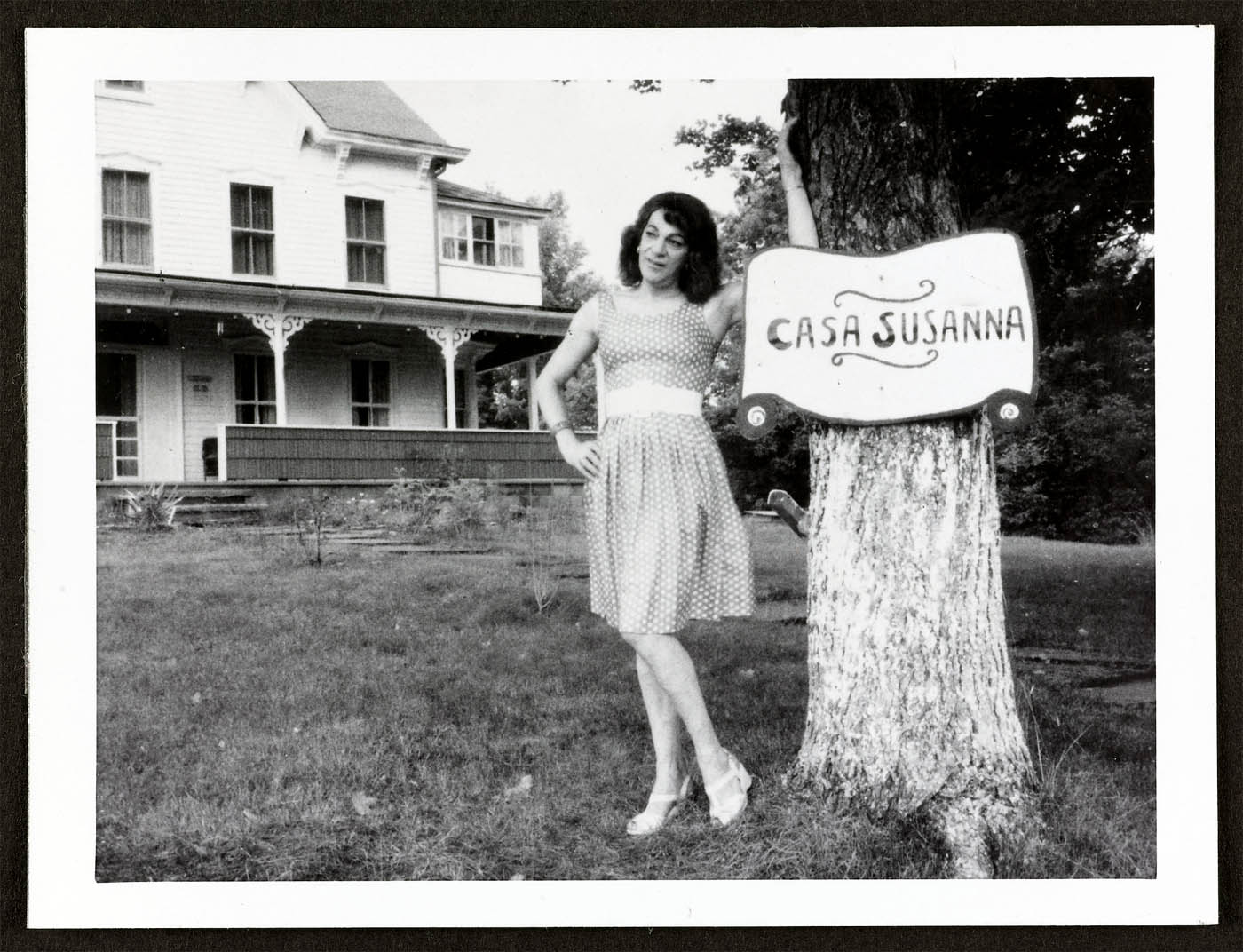
Unknown photographer (American)
Susanna at Casa Susanna
1964-1969
Gelatin silver print
Collection Art Gallery of Ontario, Toronto.
Purchase, with funds generously donated by Martha LA McCain, 2015
Photo © AGO
A very private club / This is me
There has been much written about these photographs of crossdressers at Casa Susanna and the issues surrounding them – for example, privacy of the individuals; gender roles in culture; oppression, criminalisation and anti-cross-dressing laws; how they were mainly white and from a higher socio-economic background (1950s stereotypes of white, middle-class womanhood); and celebrity adulation – to name but a few. I will let you read the text below to find out more.
What I will say is that it is a delight to see these intimate snapshot photographs of humans, being who they want to be without prejudice… “the healthy expression of fun and joy.”
“Most guests at Casa Susanna were married, and considered themselves heterosexual men who enjoyed cross-dressing, but many others later identified as transgender and lived out their lives as women, including Virginia Prince and Susanna herself.” (Wikipedia)
“Photography was essential to them,” said Michel Hurst. “Photography was proof that they existed.”
The photograph Large group in the living room with Louise Lawrence (1963, below) shows a large group of crossdressers in a New York apartment. Attached to the photograph is a note: “This is me” with an arrow pointing to a crossdresser in the photo.
I find it poignant that “This is me” possesses a double meaning: being both a photographic representation of the person and also how they would like to be seen as a crossdresser, a declamation of the freedom to express themselves in the light of day … without the fear of being arrested or institutionalised, losing their jobs and being ostracised by their families and communities.
Dr Marcus Bunyan
Many thankx to the Art Gallery of Ontario for allowing me to publish the photographs in the posting. Please click on the photographs for a larger version of the image.
For the first time, three photography collections of Casa Susanna will be brought together, including the one from Cindy Sherman, Betsy Wollheim, and the AGO, which acquired the albums previously owned by Swope and Hurst. The show delves deeper into the narratives and ideals of the community’s protagonists, illuminating their radical approach to femininity and the importance of photography in sustaining identity and ideology.
From the mid-1950s until 1969, Susanna Valenti and her wife, Marie, operated two resorts for masculine-to-feminine cross-dressers in upstate New York: the Chevalier d’Eon Bungalows and Casa Susanna. The resorts provided a safe haven for visitors to explore alternative forms of gender expression. Guests spent weekends revelling in the freedom to dress in women’s clothing and accessories – something they could not do in day-to-day life – talking, performing skits, sharing fashion and makeup tips, and photographing one another. The snapshots, taken by the participants themselves, are typically candid and full of camaraderie: groups of friends at parties, enjoying a summer afternoon, celebrating birthdays. But many also feature individuals playing different female roles, including the femme fatale and the matron, highlighting a keen awareness of image, appearance, and gender roles in the culture.
The quiet banality of these scenes belies the violence and ridicule the subjects might have faced in the world at large. At the time, laws in Canada and the U.S. criminalized queer life. In New York, for instance, if an individual wore fewer than three items of clothing of their supposed gender, they could be arrested on charges of “sexual deviancy.” For decades, anti-cross-dressing laws were a flexible tool used by police to enforce normative notions of gender. These laws have now been repealed, human rights laws have been passed, and trans visibility has increased dramatically in recent years.
Anonymous. “Casa Susanna,” on the Contact Photography Festival website, May 2016 [Online] Cited 10/03/2024
“The resort itself is secluded, way off the highway. The guests are never introduced to each other by their real names. Each gives a first name (a girl’s name of course) and that’s all. Discretion is a “must”… But to make things really fool proof, the management of the Resort maintains most cordial and friendly relations with the town’s chief of Police. He protects us!! ~ Susanna Says,” May 1960
“To take TV pictures it isn’t always necessary to stand in front of the camera making believe we are some sort of Rita Hayworth or Elizabeth Taylor… we decided to register on film the healthy expression of fun and joy that pervades a TV gathering… candid camera style… unposed and unexpected…these show the TV as she really looks to others. ~ Susanna Says,” December 1965
“Through these wonderfully intimate shots-perhaps never intended to see the light of day outside the sanctum of the “house”-Susanna and her gorgeous friends styled era-specific fashion shows and dress-up Christmas and tea parties. As gloriously primped as these documentary snaps are, it is in the more private and intimate life at Casa Susanna, where the girls sweep the front porch, cook, knit, play Scrabble, relax at the nearby lake and, of course, dress for the occasion, that the stunning insight to a very private club becomes nothing less than brilliant and awe inspiring in its pre-glam, pre-drag-pose ordinariness and nascent preening and posturing in new identities. It is not glamour for the stage but for each other, like other women who dress up to spend time with friends, flaunting their own sense of style. There is an evident pleasure of being here, at Casa Susanna, that is a liberation, a simplification of the conflicts inherent in a double life.”
Michel Hurst and Robert Swope. “About The Casa Susanna Book,” on the Simon & Schuster website Nd [Online] Cited 16/03/2024
But there was just one catch: no openly homosexual men were allowed. Living and working at a time when both gender expression and sexuality were criminalized, Tornell and Valenti restricted admittance to self-professed heterosexual men and their wives. The presence of wives signified deference to patriarchal notions of heterosexual gender roles, simultaneously averting unfounded fears of the presence of queer desires that upended the status quo. …
“Virginia Prince was a polarising figure in the queer and trans communities because she stuck to very rigid ideas of crossdressing: that you were a straight man who sometimes liked to wear women’s clothing,” says Sophie Hackett. “Her whole project was to normalise it but not everyone wanted to adhere to those dictates or the Ladies Home Journal kind of femininity that she and Susanna advocated.”
Miss Rosen. “Inside case Susanna,” on the Blind Magazine website July 12, 2023 [Online] Cited 14/03/2024
CASA SUSANNA | Trailer | AMERICAN EXPERIENCE | PBS
In the 1950s and ’60s, an underground network of transgender women and cross-dressing men found refuge at a modest house in the Catskills region of New York. Known as Casa Susanna, the house provided a safe place to express their true selves and live for a few days as they had always dreamed – dressed as and living as women without fear of being incarcerated or institutionalised. Told through the memories of those who visited the house, CASA SUSANNA provides a moving look back at a secret world where the persecuted and frightened found freedom, acceptance and, often, the courage to live out of the shadows.
Casa Susanna: An Inside Look
York University Professor, Michael Gilbert, also known as Miqqi Alicia, is a life-long cross-dresser who spoke with us about Casa Susanna, a safe haven and resort for cross-dressers in upstate New York during the ’50s and ’60s.
Susanna and Marie

Unknown photographer (American)
Susanna in a pink, green and yellow dress, sitting with friends
1960s
Chromogenic print
Purchase, with funds generously donated by Martha LA McCain, 2015
Photo © AGO

Attributed to Andrea Susan
Susanna in black lingerie
1960s
Chromogenic print
© Art Gallery of Ontario
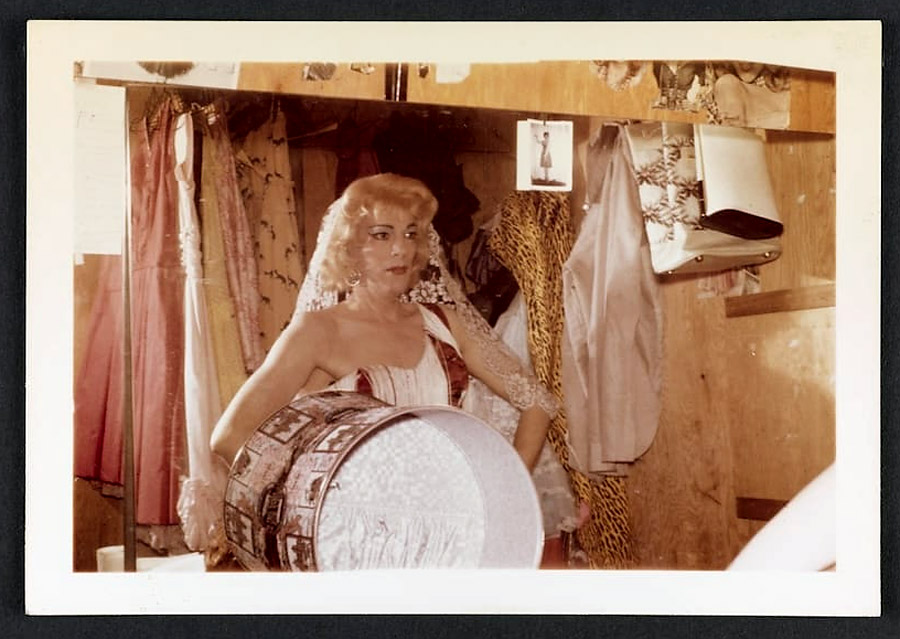
Unknown photographer (American)
Susanna looking in the mirror
1955-1963
Chromogenic print
8.9 × 12.8cm
Purchase, with funds generously donated by Martha LA McCain, 2015
Photo © AGO

Attributed to Andrea Susan
Susanna standing in the road
October 1964
Chromogenic print
Sheet: 13.5 × 9cm
Purchase, with funds generously donated by Martha LA McCain, 2015
© Art Gallery of Ontario

Unknown photographer (American)
Susanna in a shiny gown on the stage at the Chevalier d’Eon, Hunter, NY
1960-1963
Gelatin silver print
14 x 9cm
Collection of Cindy Sherman
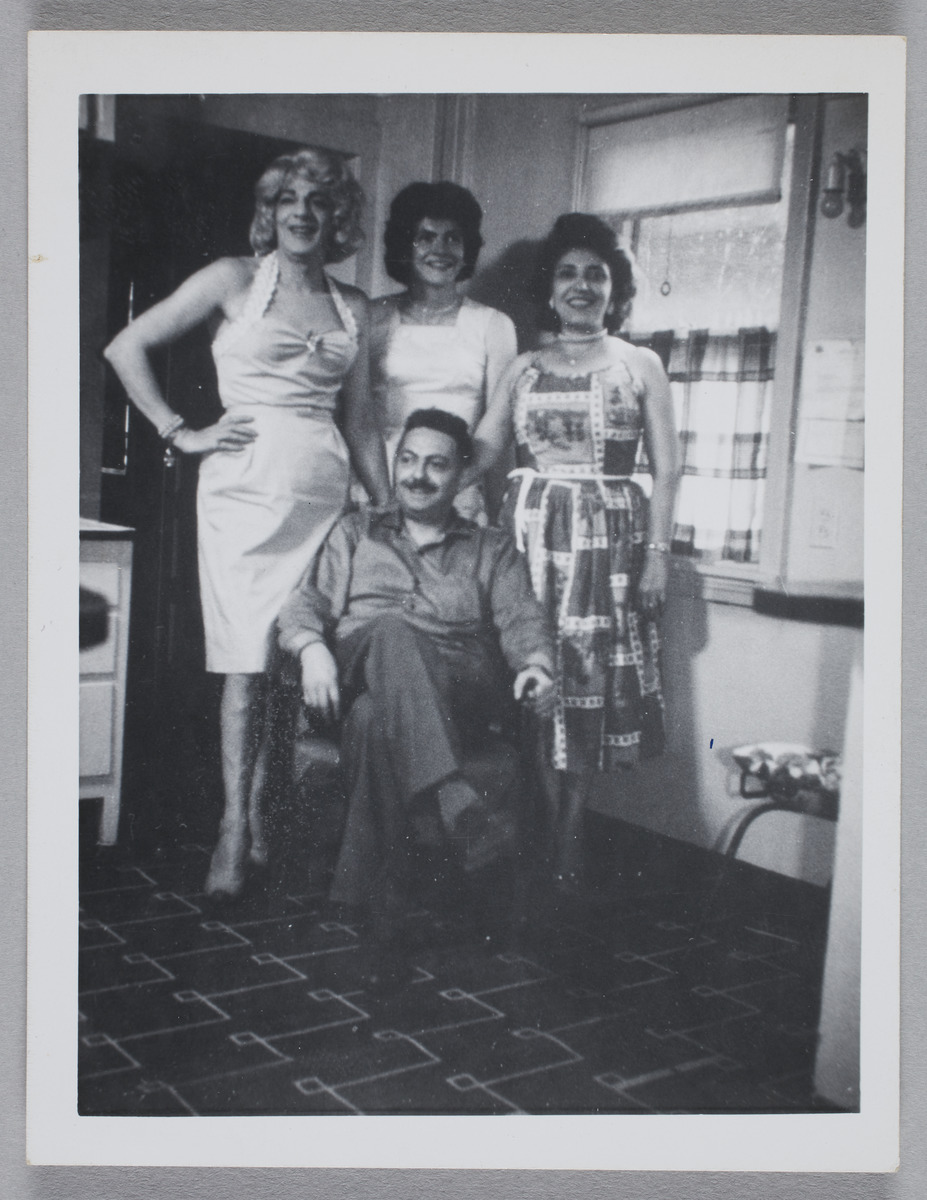
Unknown photographer (American)
Susanna, Edith, and Marie with a man holding a cable release, Chevalier d’Éon, Hunter, NY
1960-1963
Gelatin silver print
11 × 8.5cm
Purchase, with funds generously donated by Martha LA McCain, 2015
Photo © AGO
Exhibition overview
From the mid-1950s to the late 1960s, a network of crossdressers found refuge in the Catskills region of New York State. Susanna with her wife Marie created safe spaces at two modest resorts for guests to freely crossdress en femme at a time of strictly defined gender roles. Guests used photography to build their femme identities and their network. These snapshots – candid, playful, and at times staged, blending family and fashion photography conventions – have since come to be known collectively as the Casa Susanna photographs.
Casa Susanna brings together for the first time three collections of photographs created by this network of crossdressers: from the AGO’s holdings, from the personal collection of artist Cindy Sherman, and from the collection of Betsy Wollheim. Seen together, these 250 images, provide insight into this historically significant crossdressing scene, allowing us to develop an understanding of this world and its connection to the lives of trans and crossdressing people today. These affirming photographs circulated among crossdressers by mail, as well as in the pages of Transvestia, a community magazine, copies of which will also be on view
The exhibition is accompanied by an illustrated publication that brings together recent research, an expansive selection of photographs, and pages of Transvestia, adding another important account of the ways photographs have served to build queer communities. Co-published by Editions Textuel, it includes essays by co-curators French photo historian, Isabelle Bonnet and AGO Curator of Photography, Sophie Hackett, as well as noted American scholar of trans history Susan Stryker.
Casa Susanna is coproduced by the Art Gallery of Ontario and the Rencontres D’Arles.
New York City / Parties

Unknown photographer (American)
Large group in the living room with Louise Lawrence
1963
Chromogenic print
8.8 × 19cm
Purchase, with funds generously donated by Martha LA McCain, 2015
Photo © AGO

Unknown photographer (American)
Gloria in Susanna and Marie’s New York City apartment
1960-1963
Chromogenic print
8.9 × 9cm
Purchase, with funds generously donated by Martha LA McCain, 2015
Photo © AGO

Unknown photographer (American)
Susanna and two friends showing some leg in Susanna and Marie’s New York City apartment
1960s
Gelatin silver print
9 × 9cm
Purchase, with funds generously donated by Martha LA McCain, 2015
Photo © AGO
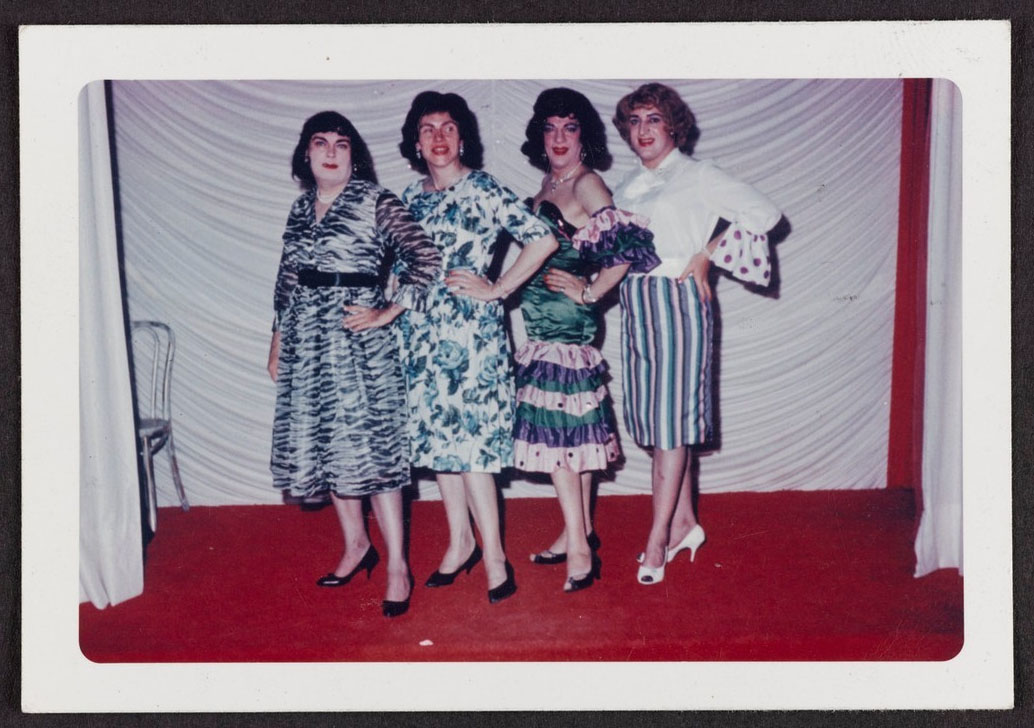
Attributed to Andrea Susan
Susanna and three friends on stage
July 1961
Chromogenic print
Sheet: 6.1 × 8.6cm (2 3/8 × 3 3/8 in.)
Art Gallery of Ontario. Purchase, with funds generously donated by Martha LA McCain, 2015
© Art Gallery of Ontario
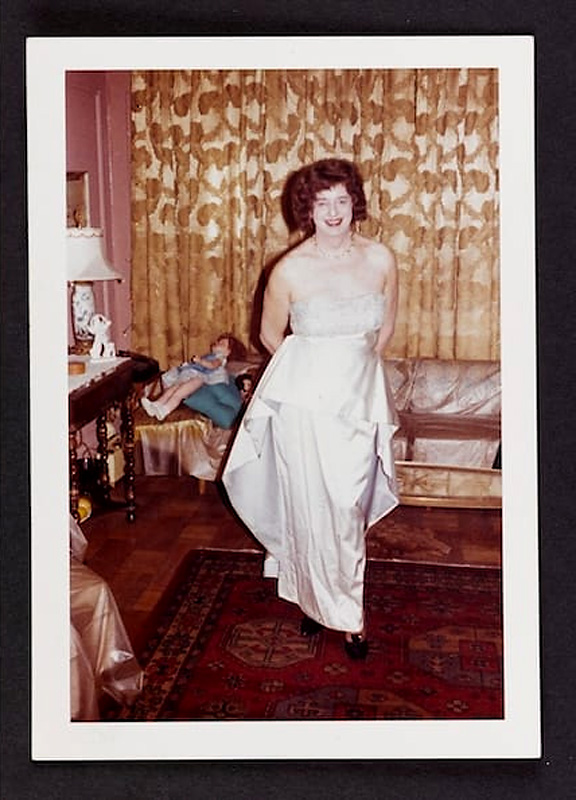
Unknown photographer (American)
Vicky in the living room in a white evening gown, New York City apartment
January 1962
Chromogenic print
12.5 × 9cm
Purchase, with funds generously donated by Martha LA McCain, 2015
Photo © AGO
“If the photographs had been revealed 50 years prior, people like Susanna Valenti, Katherine Cummings and Diana Merry-Shapiro could have been arrested or institutionalized, lost their jobs and been ostracized by their families and communities. For more than a century, cross-dressing was criminalized in the United States through statutes like “masquerade laws,” which were used to persecute many forms of gender expression in public spaces under the guise of limiting prostitution and “immoral performances” – an echo of the drag-show bans currently being passed in Tennessee and other states. …
More recently, several states have introduced laws to limit or ban drag shows as part of a wider attack on LGBTQ+ rights around the country. Nearly 500 anti-LGBTQ+ bills have been filed in state legislatures this year, according to the American Civil Liberties Union, which is tracking legislation across the country. An Associated Press analysis showed lawmakers have been motivated to file these bills by a handful of conservative interest groups, not constituent demand.”
Maria M. Silva. “Casa Susanna, a onetime underground Catskills LGBTQ+ haven,” on the Times Union website June 15, 2023 [Online] Cited 05/03/2024
“Some of these snapshots are black and white, some in colour. The photographer was often either the subject herself (using a self-timer or cable release, both relatively new at the time) or a trusted member of the community (easily obtainable in group settings). Initially, many would develop the pictures themselves rather than risk involvement of an external lab. As the Polaroid instant camera became more affordable it revolutionized photography for this community, which was a critical tool for them to image / imagine themselves for their own use or for sharing with others in their society. …
Some pictures were taken at home, or in a hotel room, with the curtains carefully drawn, to ensure privacy and create a little world where freedom was momentarily possible. They are typically deliberately posed, with a definite sense of happiness and an aura of breaking a constricting taboo. Other photographs were shot at one of the resorts, often outdoors. The joy here is quite evident, with a strong quality of relief. The pictures taken later on seem to become less performative, and show people simply being.
In constructing their female appearance and persona, the subjects here (who were almost all white) leaned heavily on 1950s stereotypes of white, middle-class womanhood. There would seem to be an irony in that they thereby leveraged a patriarchy that oppressed them. However, from my perspective, their goal (which I instinctively understand) was to externalize an inner truth in a way that was meaningful to them, that could be seen by select others, and by themselves in a mirror or in their photographs; and in this they were successful.
One display was a case containing a distinctive snapshot and a short biography for each of 18 different individuals who appear in the pictures. These are poignant reminders of the humanity of this community and the serious challenges that they faced. And it provided positive proof that my intuition from 2014 was correct, my personal sisterhood was indeed there. First, I hasten to stress that even without physical transition one can still be a woman, it is an internal identification; however, when someone assigned male at birth followed that path (especially during that era) it is very suggestive of a female gender. With that in mind, it was personally moving to find that one of the 18, whose name was Gloria, and who happened to be a millionaire, used her fortune to support women seeking (pioneering at that time) gender affirmation surgery in Mexico, before, during and afterwards; and that two others, Kate and Irène, successfully underwent the procedure.”
Jennifer Wenn is a trans-identified writer from London, Ontario, Canada.
Jennifer Wenn. “Casa Susanna, at the Art Gallery of Ontario,” on the Centred.ca website January 4, 2024 [Online’ Cited 05/03/2024
Casa Susanna
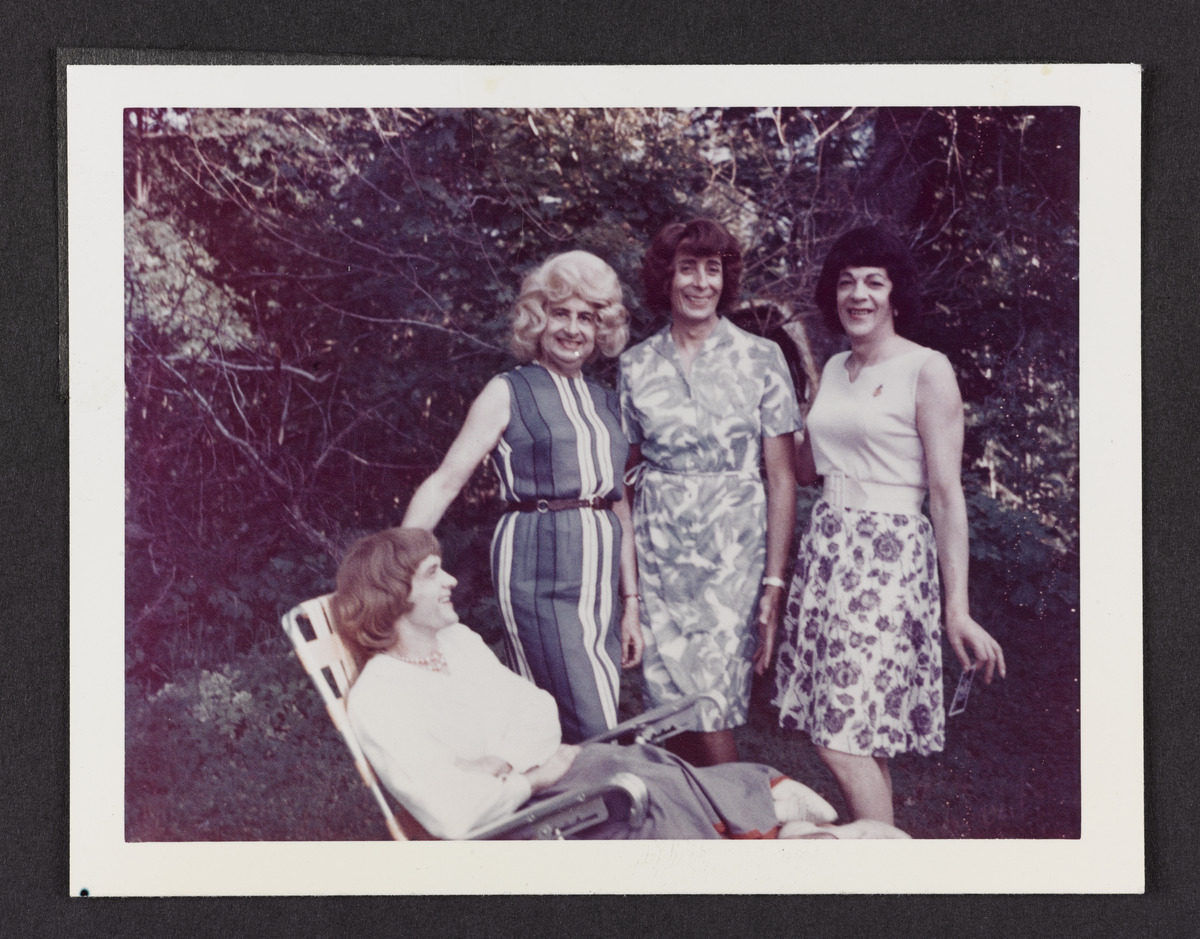
Attributed to Andrea Susan
Daphne sitting on a lawn chair with Ann, Susanna, and a friend outside, Casa Susanna, Hunter, NY
1964-1968
Chromogenic print
8.9 × 10.8cm
Purchase, with funds generously donated by Martha LA McCain, 2015
Photo © AGO
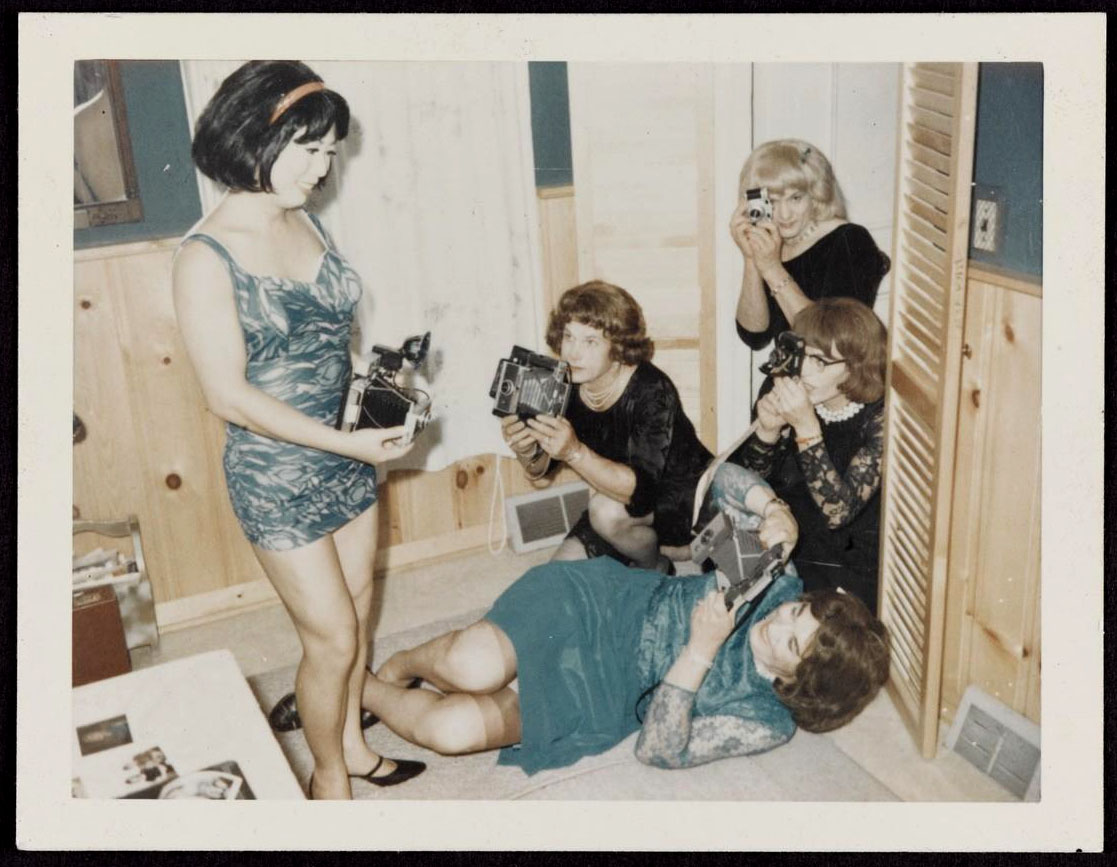
Attributed to Andrea Susan
Photo shoot with Lili, Wilma, and friends, Casa Susanna, Hunter, NY
1964-1967
Chromogenic print
8.4 × 10.8cm
Purchase, with funds generously donated by Martha LA McCain, 2015
Photo © AGO
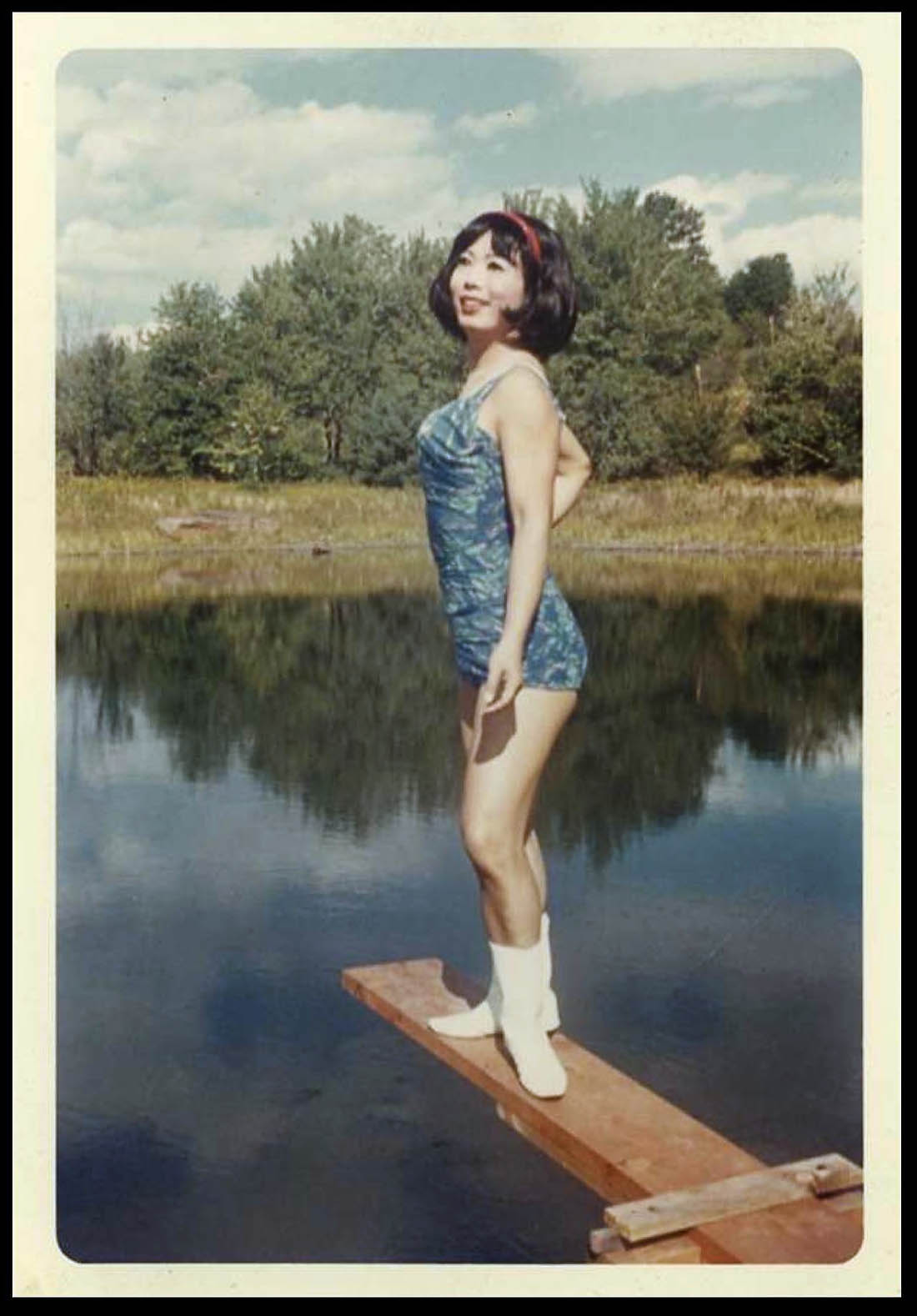
Unknown photographer
Lili on the diving board, Casa Susanna, Hunter, NY
September 1966
Chromogenic print
12.8 × 8.8cm
Purchase, with funds generously donated by Martha LA McCain, 2015
Photo © AGO

Unknown photographer
Lili on the diving board, Casa Susanna, Hunter, NY
September 1966
Chromogenic print
12.8 × 8.8cm
Purchase, with funds generously donated by Martha LA McCain, 2015
Photo © AGO

Unknown photographer
Lili on the diving board, Casa Susanna, Hunter, NY
September 1966
Chromogenic print
12.8 × 8.8cm
Purchase, with funds generously donated by Martha LA McCain, 2015
Photo © AGO
Chevalier
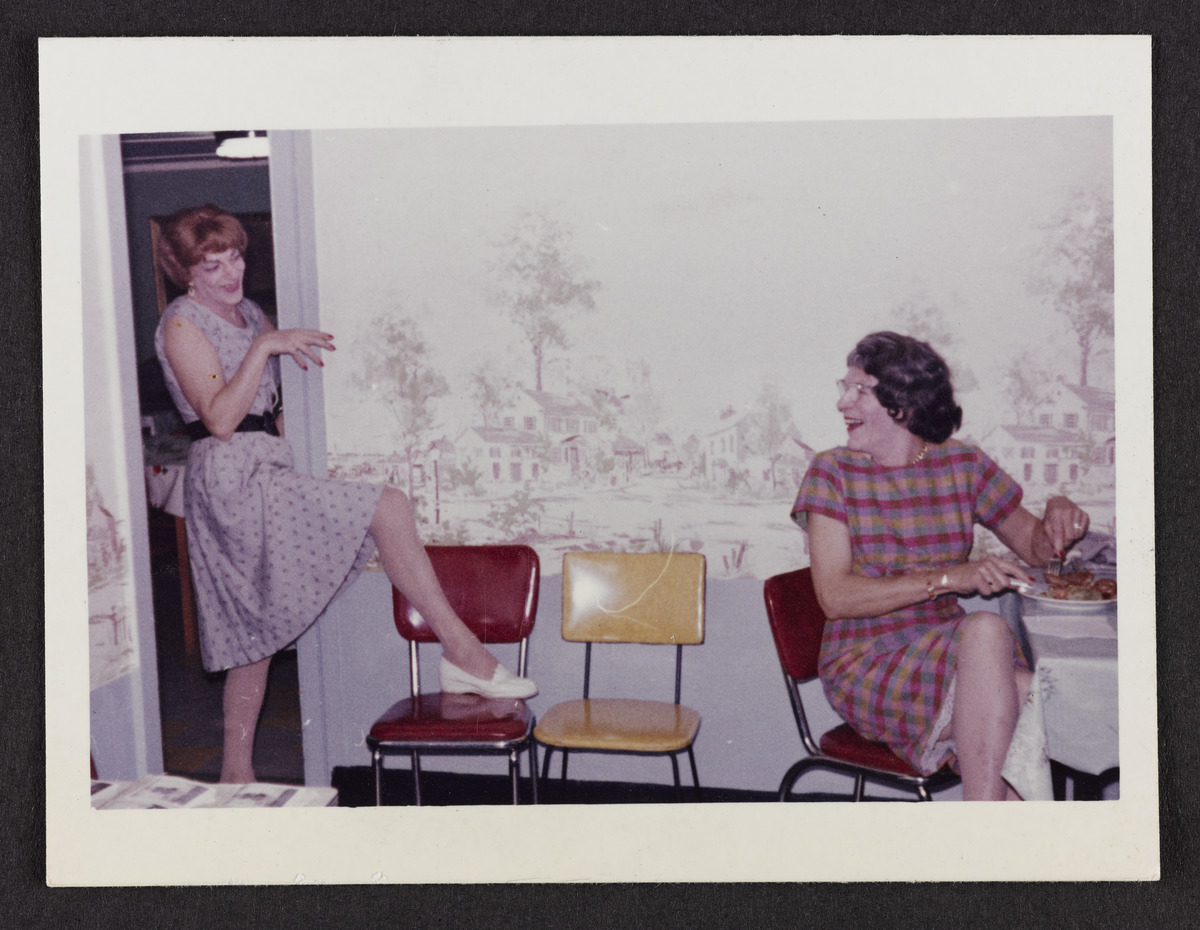
Unknown photographer (American)
Susanna and Felicity in the kitchen, Chevalier d’Éon, Hunter, NY
1960-1963
Chromogenic print
6.4 × 8.4cm
Purchase, with funds generously donated by Martha LA McCain, 2015
Photo © AGO
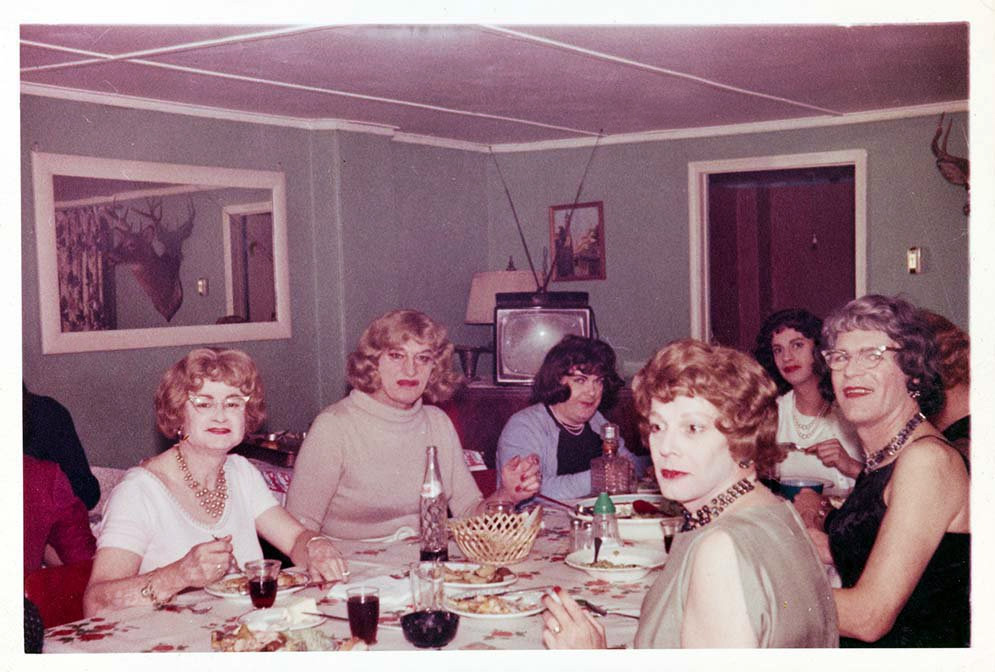
Unknown photographer (American)
Halloween 1962: Virginia at left, Felicity at right at Chevalier D’Eon Resort
1962
Photo © AGO
Of particular note is the gathering of 71 transvestites at the Chevalier D’Eon Resort for Halloween 1962, held a day after the New York police unusually raided the annual National Variety Artists costume ball and 30 cross-dressed “men” were arrested. The guests at Chevalier D’Eon Resort included Virginia Prince, Katherine Cummings, Felicity Chandelle, Darrell Raynor and Gail Wilde, and psychologists Hugo Beigel and Wardell Pomeroy. Raynor, Cummings and Beigel later wrote about the event.
Both Virginia and Susanna were upset by one guest who not only did not bother to shave, he also smoked a cigar. This brought Susanna closer to Virginia’s point of view that a cultivation of ‘inner femininity’ distinguished true transvestites from drag queens and fetishists. She expressed this opinion in her column several times. Initially ‘fetishism’ had been equated with partial dressing, but FPE increasingly identified as fetishistic those who fully dressed as female but failed or didn’t bother to fashion themselves as truly feminine. A few years later Sheila Niles would propose the term ‘whole girl fetishist’.
Anonymous. “Susanna Valenti (192? – 1996) translator, broadcaster, activist” on the A Gender Variance Who’s Who website 1st February 2012 [Online] Cited 11/03/2024

Attributed to Andrea Susan
Carlene playing scrabble, Chevalier d’Éon, Hunter, NY
1955-1963
Gelatin silver print
10.7 × 8.6cm
Purchase, with funds generously donated by Martha LA McCain, 2015
Photo © AGO
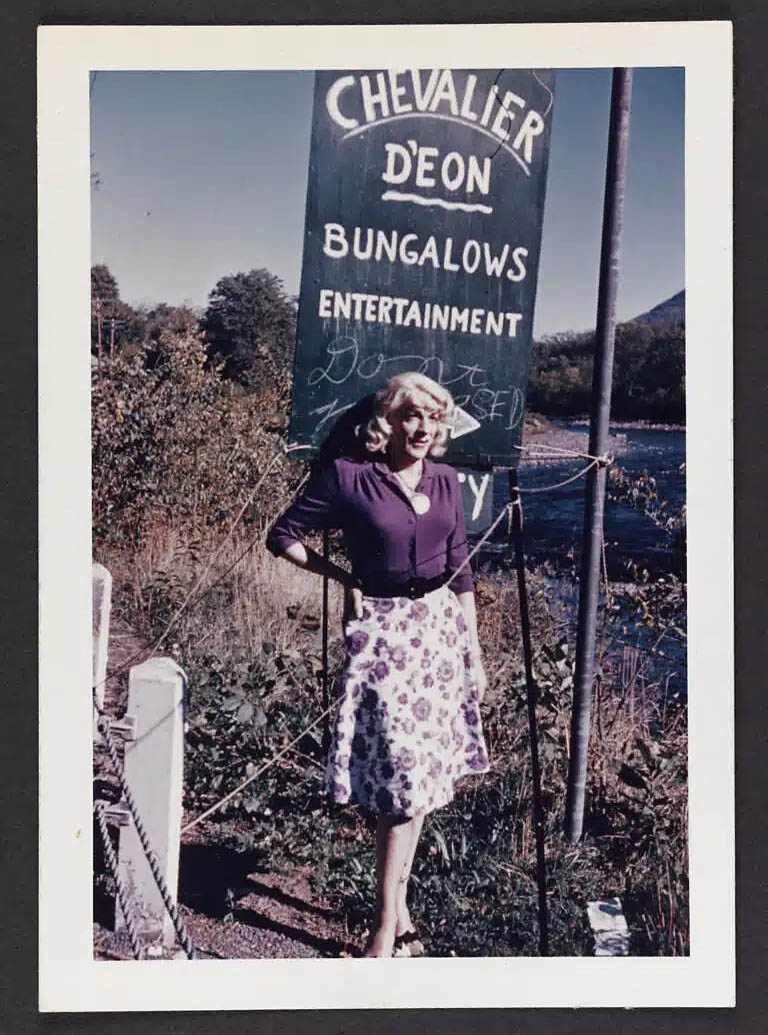
Unknown photographer (American)
Susanna by the Chevalier d’Éon sign, Hunter, NY, November
1960
Chromogenic print
12.6 × 8.9cm
Purchase, with funds generously donated by Martha LA McCain, 2015
Photo © AGO

Edith Eden (American)
Audrey, Edith, and Irene in the front yard, Chevalier d’Éon, Hunter, NY
1960-1963
Gelatin silver print, 8.8 × 11.2 cm. Purchase, with funds generously donated by Martha LA McCain, 2015. Photo © AGO
Attributed to Andrea Susan
Audrey, Edith, Susanna, and Doreen on stage at the Chevalier d’Éon, Hunter, NY
July 1961
Chromogenic print
6.1 × 8.6cm
Purchase, with funds generously donated by Martha LA McCain, 2015
Photo © AGO

Unknown photographer (American)
Anita and Gloria on stage, Chevalier d’Éon
1960s
Chromogenic print
12 × 8.2cm
Purchase, with funds generously donated by Martha LA McCain, 2015
Photo © AGO
This winter, the Art Gallery of Ontario and Rencontres D’Arles present Casa Susanna, an exhibition of snapshots taken by members of the earliest known American crossdressing network, which operated in upstate New York from the mid-1950s through the end of the 1960s. Co-curated by Sophie Hackett, the AGO’s curator of photography and Dr. Isabelle Bonnet, a photography historian and independent curator, this is the first museum exhibition dedicated to what are collectively known as the Casa Susanna photographs and features previously unseen images.
“These joyful snapshots provide insight into a historically significant crossdressing scene, allowing us to develop an understanding of this world and its connection to the lives of trans and crossdressing people today,” says Sophie Hackett, AGO Curator of Photography. “Looking at these snapshots, I am not only touched by their familial atmosphere and conviviality, but also reminded of the ways photography has been – and continues to be – used as a powerful tool for affirming personal identity and forging community.”
“At a time when trans people – and more broadly, 2SLGBTQ+ people – are attacked from many sides, I think that this exhibition and this book serve a public purpose: the story of the members of Casa Susanna, which is that of thousands of people across the world throughout the centuries, call for respect and tolerance,” says Dr. Isabelle Bonnet. “The personalities that gradually emerged during my research, notably those of Gloria, Kate, Vicky, Felicity, Gail, Susanna and Marie, filled me with admiration and I hope to pass it on to those who come to see the exhibition.”
Bringing together three collections of amateur photographs for the first time – from the AGO’s holdings, from the personal collection of artist Cindy Sherman, and from the collection of Betsy Wollheim, the exhibition tells the story of a community of men, including Wollheim’s own father, who regularly met at two upstate New York retreats organized by Susanna Valenti and her wife Marie, where they were free to safely dress as women and express their feminine identities. Organised thematically, the exhibition shines a spotlight on many of the community’s leading figures and describes how and where they came gathered and the feminine ideals they celebrated.
Snapshots of and by the community – all White, upper middle-class professionals – reveal days spent dressing up, swimming, playing cards, and generally enjoying life as women. The photographs bring to light the type of femininity they aspired to, drawn from images in their visual culture, for instance widely seen in magazines like Ladies Home Journal: traditional and appropriate, even as the crossdressers defied the strict gender prescriptions of their time. The exhibition includes copies of Transvestia magazine, a clandestine publication founded by Virginia Prince in 1960 that provided a vital forum for connection, information, and images to crossdressers across the United States and beyond. It also highlights the radical nature of this community, and the role photographs played in affirming and sustaining trans identities.
A leader in the presentation and research of vernacular photography, the AGO has acquired numerous collections showcasing historically underrepresented photographers, makers, and subjects, among them the Casa Susanna Collection. First discovered at the 26th Street flea market in New York City by furniture dealers Michel Hurst and Robert Swope in 2004, the AGO’s collection of 340 Casa Susanna photographs – acquired in 2015 – originally belonged to Susanna Valenti.
Accompanying the exhibition is a 480-page illustrated publication, edited by co-curators Sophie Hackett and Isabelle Bonnet. Bringing together recent research, an expansive selection of photographs, and pages of Transvestia, Casa Susanna was shortlisted for the Paris Photo – Aperture Foundation Photobook Awards 2023. Published by Editions Textuel in both English and French, Casa Susanna is available at shopAGO for $73.
Press release from the Art Gallery of Ontario
Feminine Identity

Attributed to Andrea Susan
Lee in a white dress, Chevalier d’Éon, Hunter, NY
October 1961
Chromogenic print
12.1 × 8.3cm
Purchase, with funds generously donated by Martha LA McCain, 2015
Photo © AGO

Attributed to Andrea Susan
Christmas card, Gloria in a red suit at home, Clarion, Michigan
1962
Chromogenic print
17.7 × 9cm
Purchase, with funds generously donated by Martha LA McCain, 2015. Photo © AGO
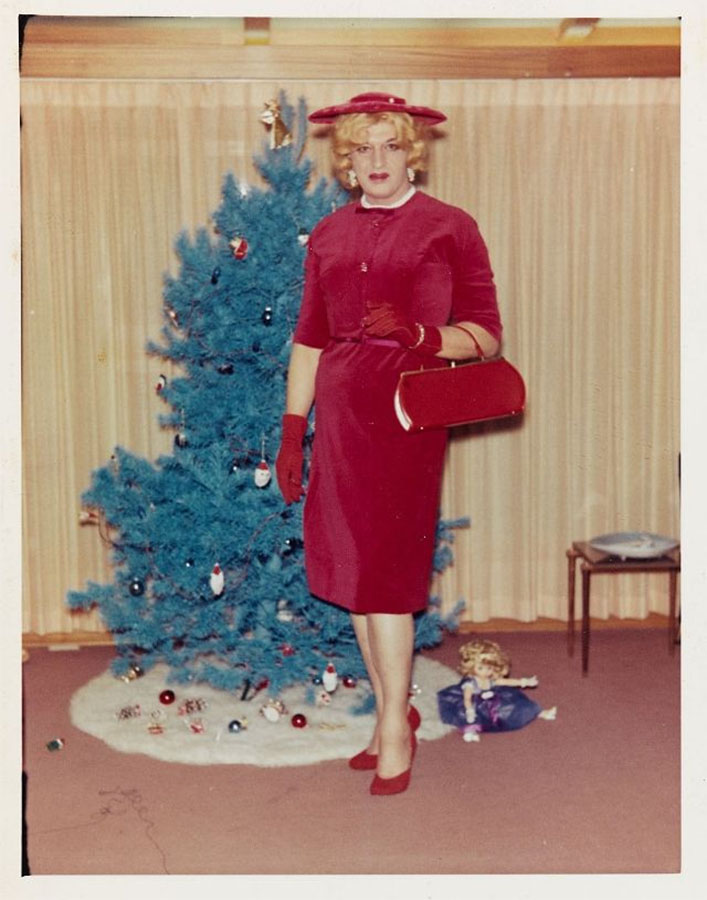
Attributed to Andrea Susan
Gloria in a red suit at home, Clarion, Michigan
1962
Chromogenic print
17.7 × 9cm
Purchase, with funds generously donated by Martha LA McCain, 2015
Photo © AGO
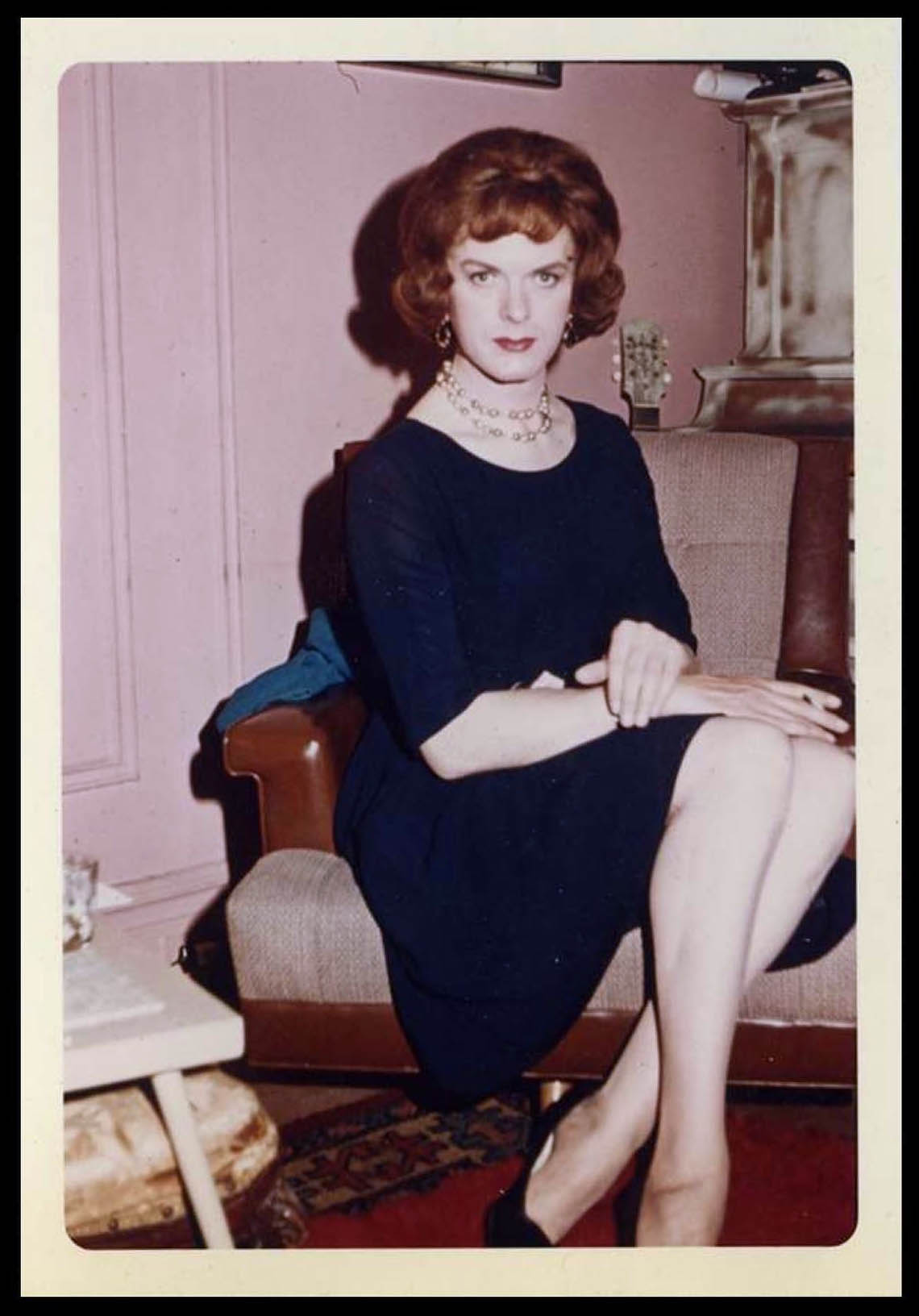
Attributed to Andrea Susan
Donna (Buff/Cynthia) in a navy dress in Susanna and Marie’s New York City apartment
1960s
Chromogenic print
12.9 × 9cm
Purchase, with funds generously donated by Martha LA McCain, 2015
Photo © AGO
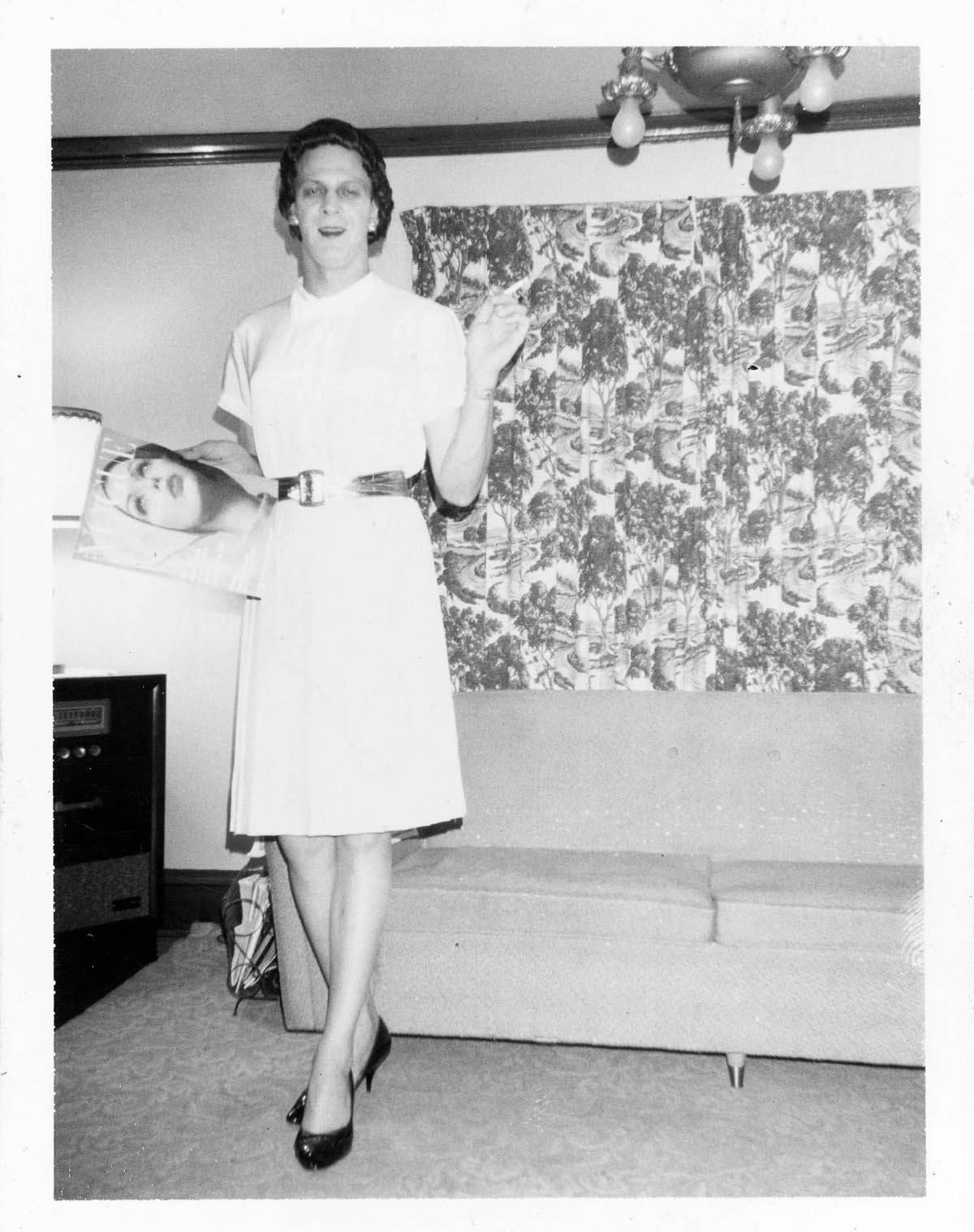
Unknown photographer (American)
Beverly Holding a Copy of Vogue
1960’s
Gelatin Silver Print
10.8 x 8.5cm
Collection of the Art Gallery of Ontario. Purchase, with funds generously donated by Martha LA McCain, 2015
© Art Gallery of Ontario
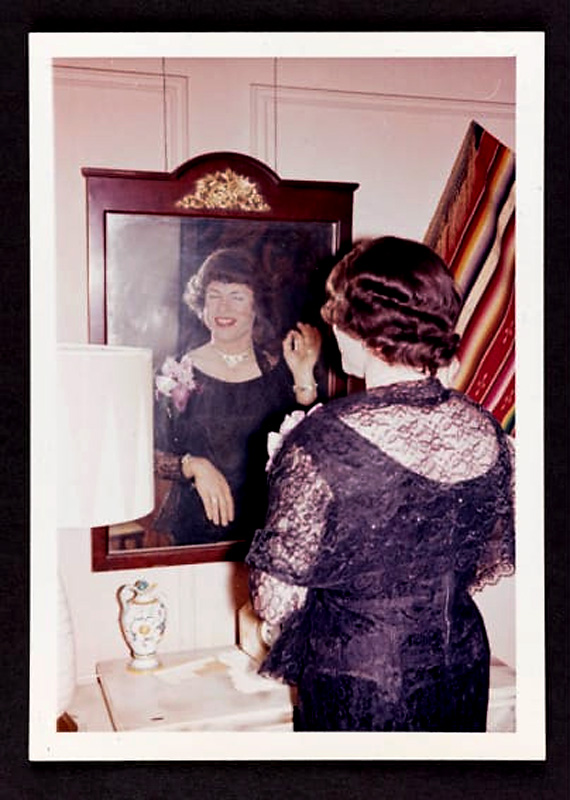
Attributed to Andrea Susan
Bobbie at the mirror
1960s
Chromogenic print
12.7 × 9cm
Purchase, with funds generously donated by Martha LA McCain, 2015
Photo © AGO
Isabelle Bonnet, Sophie Hackett
Casa Susanna: The Story of the First Trans Network in the United States, 1959-1968
Thames and Hudson Ltd, January 2024
480 pp softback
[This book] Brings together a wealth of research and an expansive selection of photographs to create an enduring account of America’s first known trans network, Casa Susanna.
In the 1950s and 60s, an underground network of transgender women and cross-dressing men found refuge at a modest house in the Catskills region of New York. Known as Casa Susanna, the house provided a safe place to express their true selves and live for a few days as they had always dreamed – dressed as and living as women without fear of being incarcerated or institutionalised for their self-expression.
This book opens up that now-lost world. The photographs – mostly discovered by chance in a New York flea market in 2004 – chronicle the experiences of men who dressed as women, gender nonconforming people, and trans women in states of relaxation, experimentation, connection and joy. All of this was made possible by Susanna Valenti who – on her own journey toward womanhood – created Casa Susanna, a protected space where others could crossdress and live freely as women. Supplementing the images are excerpts from Transvestia, a magazine that allowed those who had been cast out by a rigidly binary society to connect in a different medium.
The people who came to Casa Susanna found a spot where they could explore and celebrate their own and each other’s femininity, as they could not do elsewhere. Their creations are also a reminder that there were, and still are, many ways to explore the boundaries of gender.
Isabelle Bonnet is an independent curator, currently completing a thesis in history / visual culture devoted to the crime scene in contemporary photography. Sophie Hackett is the Curator, Photography at the Art Gallery of Ontario, Toronto. Susan Stryker is professor of gender and women’s studies at the University of Arizona.
Text from the Thames & Hudson Australia website
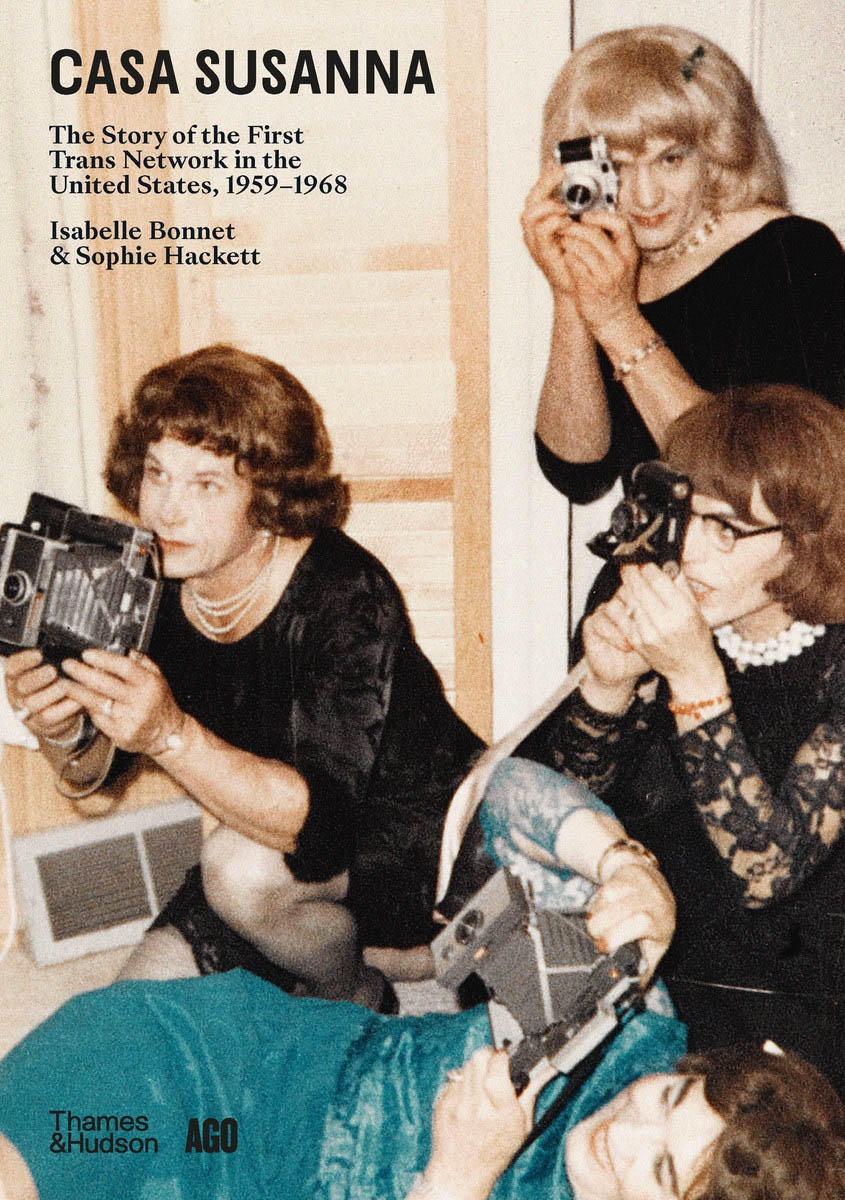
Casa Susanna: The Story of the First Trans Network in the United States, 1959-1968 book cover

Casa Susanna: The Story of the First Trans Network in the United States, 1959-1968 book cover

Casa Susanna: The Story of the First Trans Network in the United States, 1959-1968 book text
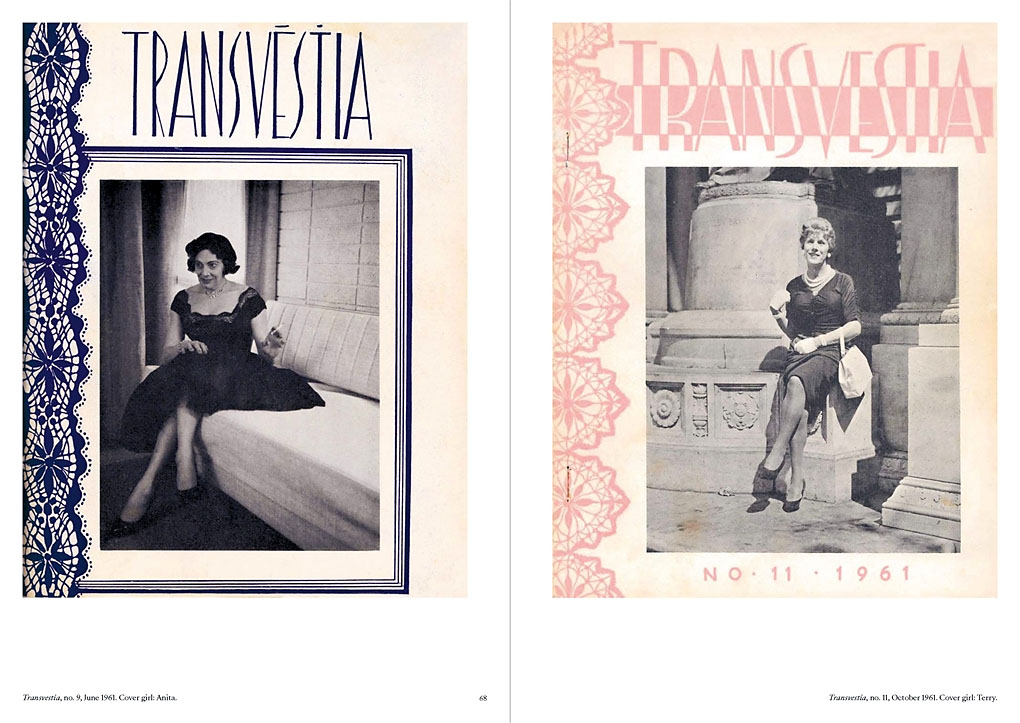
Transvestia magazine covers, pp. 68-69 from the book Casa Susanna: The Story of the First Trans Network in the United States, 1959-1968
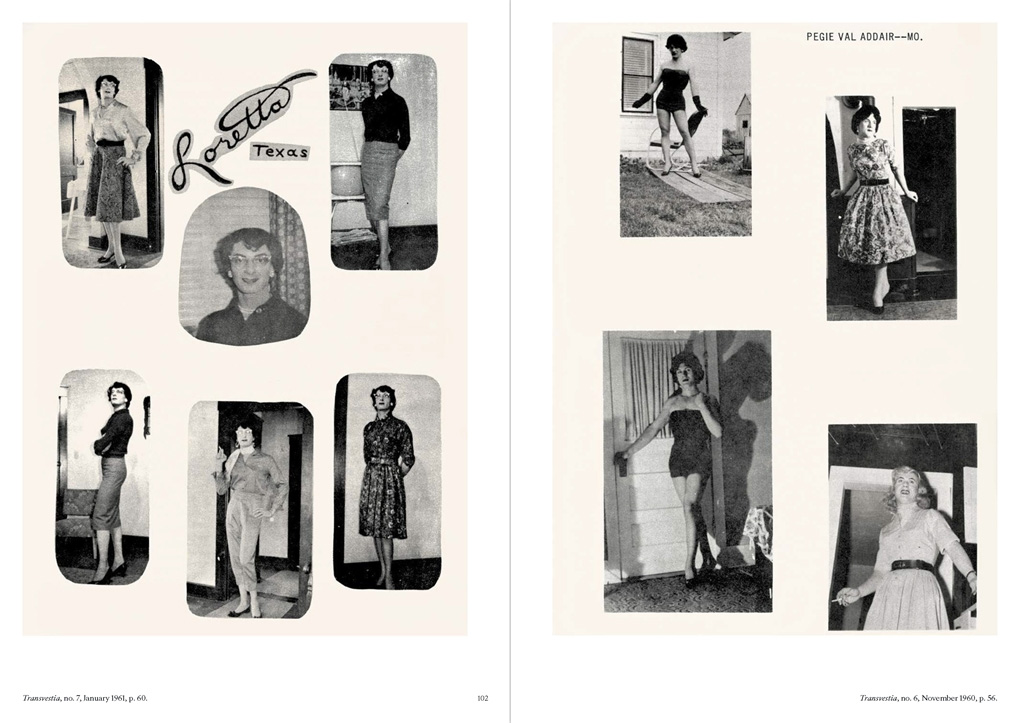
Transvestia magazine pages, pp. 102-103 from the book Casa Susanna: The Story of the First Trans Network in the United States, 1959-1968
Art Gallery of Ontario
Musée des beaux-arts de l’Ontario
317 Dundas Street West
Toronto Ontario Canada M5T 1G4
Opening hours:
Tuesday – Sunday 10.30am – 5.00pm
Closed Mondays


 Art Blart _ art and cultural memory archive
You must be logged in to post a comment.