Exhibition: ‘Unexpected Pleasures: The Art and Design of Contemporary Jewellery’ at the National Gallery of Victoria, Melbourne

Exhibition dates: 20th April – 26th August 2012


Installation photograph of the exhibition 'Unexpected Pleasures' at the National Gallery of Victoria


Installation photograph of the exhibition Unexpected Pleasures at the National Gallery of Victoria
Photo: Dr Marcus Bunyan


An elegant, refined exhibition of contemporary jewellery at the National Gallery of Victoria’s newly redeveloped Contemporary Exhibitions space. The most striking and beautiful pieces are the neck ornaments, although I am a very much over some relatively unstructured jewellery made out of found objects. It really has been done to death. Trying to take photographs of jewellery in cases with reflections and extraneous light is very difficult but I hope my photographs below give you an idea of the design, installation and some specific pieces in the exhibition.

Dr Marcus Bunyan


Many thankx to the NGV for inviting me to the media preview and for allowing me to take photographs of the exhibition. Please click on the photographs for a larger version of the image. All photographs not otherwise labelled © Marcus Bunyan and the National Gallery of Victoria.


Installation photograph of the exhibition 'Unexpected Pleasures' at the National Gallery of Victoria


Installation photograph of the exhibition Unexpected Pleasures at the National Gallery of Victoria
Photo: Dr Marcus Bunyan
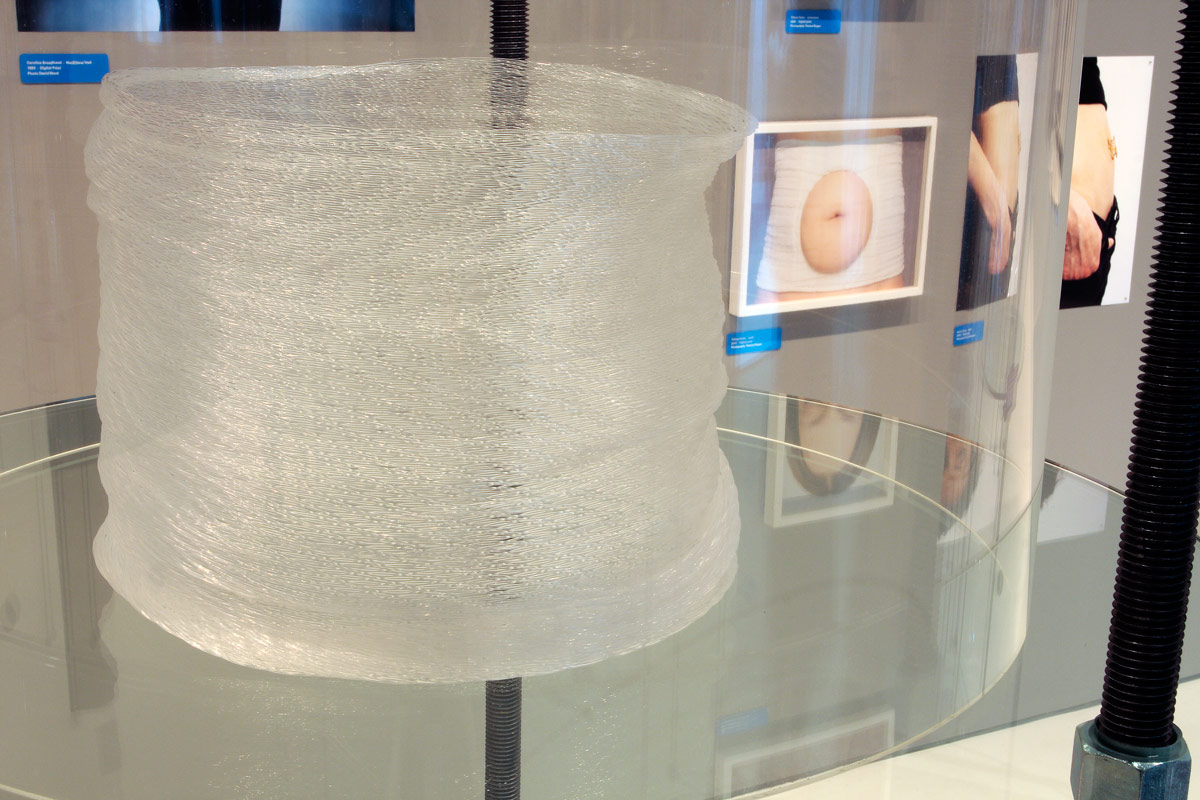
 

Caroline Broadhead (British, b. 1950) 'Necklace/Veil' 1983 (installation view)


Caroline Broadhead (British, b. 1950)
Necklace/Veil (installation view)
1983
Nylon
Photo: Dr Marcus Bunyan
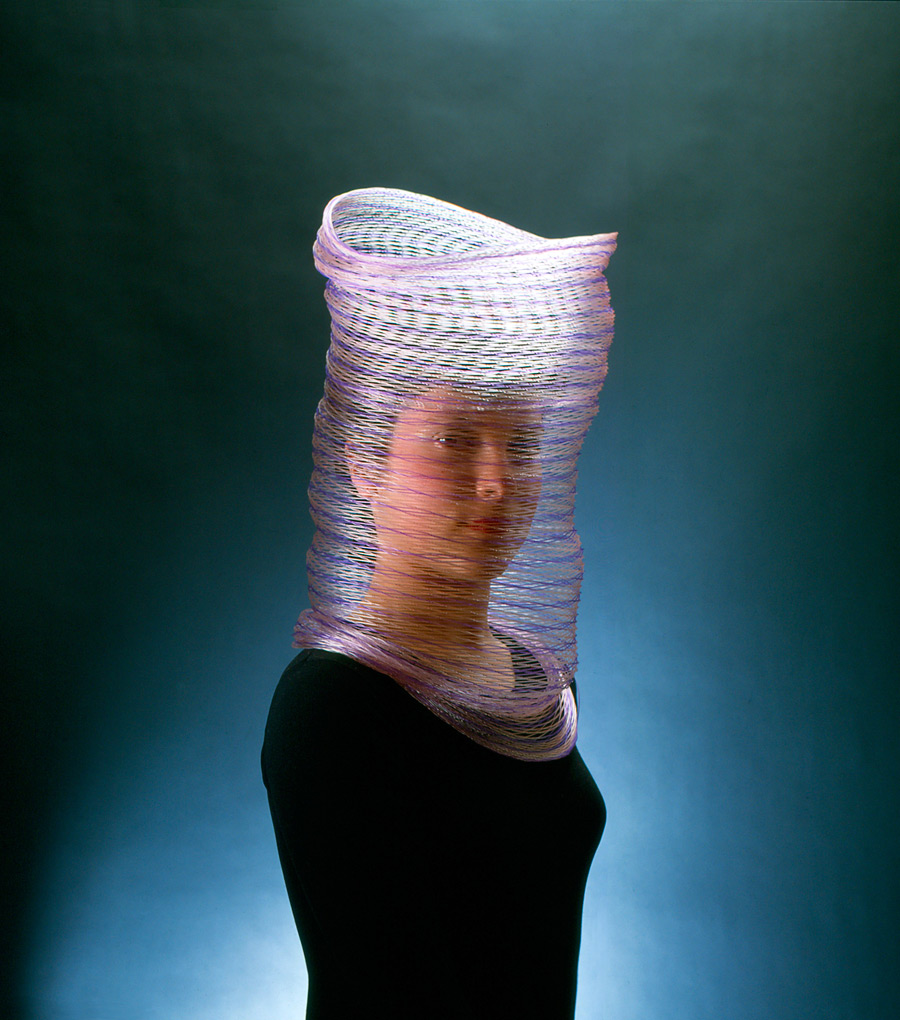
 

Caroline Broadhead (British, b. 1950) 'Veil, necklace' 1983


Caroline Broadhead (British, b. 1950)
Veil, necklace
1983
Nylon
60 x 30 x 30cm
Collection of the artist
© Caroline Broadhead
Photo: David Ward


Susanne Klemm (Swiss, b. 1965) 'Frozen' 2007 (installation view)


Susanne Klemm (Swiss, b. 1965)
Frozen (installation view)
2007
Polyolefin
Courtesy of Anna Schwartz Gallery
Photo: Dr Marcus Bunyan


Lisa Walker (New Zealand, b. 1967) 'Necklace' 2009 (installation view)


Lisa Walker (New Zealand, b. 1967)
Necklace (installation view)
2009
Plastic, thread
Photo: Dr Marcus Bunyan
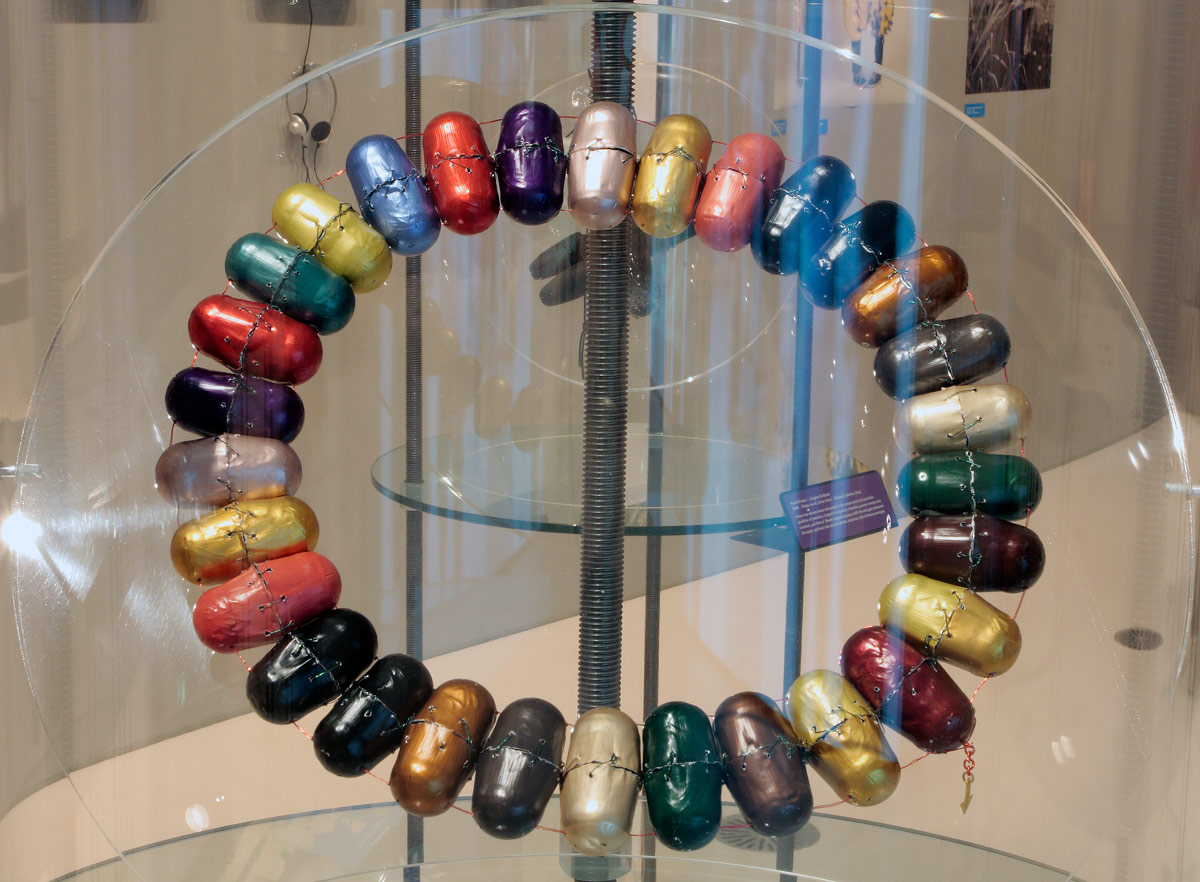
 

Beverley Price. 'Nespresso Collier' 2012 (installation view)


Beverley Price
Nespresso Collier (installation view)
2012
Anodised aluminium, plastic coated wire, fine gold
Photo: Dr Marcus Bunyan


Gijs Bakker (Dutch, b. 1942) 'Shoulder piece' 1967 (installation view)


Gijs Bakker (Dutch, b. 1942)
Shoulder piece (installation view)
1967
Anodised aluminium
Photo: Dr Marcus Bunyan


Unexpected Pleasures: The Art and Design of Contemporary Jewellery displays over 200 works by important Australian and international contemporary jewellers who have pushed conceptual and material boundaries within their practices. This Design Museum, London exhibition is curated by Guest Curator and Melbourne jeweller Susan Cohn, and is complemented by a selection of NGV Collection works and private loans.

Unexpected Pleasures looks at what we mean by jewellery from a number of different perspectives. Taking as its starting point the radical experiments of the Contemporary Jewellery Movement that challenged a conventional understanding of the language of personal adornment, and looking instead at the essential meanings of jewellery, the exhibition brings together important work from around the world, and looks at it from the point of view of the wearer as well as the maker. Contemporary Jewellery in this sense is at the intersection of art and design.

Dr Gerard Vaughan, Director, NGV said: “This is a remarkable and exciting exhibition, brilliantly installed in the Gallery’s newly redeveloped Contemporary Exhibitions space at NGV International.”

The exhibition explores the essential meanings of jewellery, bypassing traditional perceptions and instead tracing the radical experiments of contemporary jewellers who have challenged the conventions of jewellery design. The exhibition is curated through a number of themes: Worn Out – celebrating the experience of wearing jewellery; Linking Links – looking at the ways in which ‘meaning’ and narratives are invested and expressed through sub-themes such as Social Expressions and Creative Systems, and; A Fine Line – offering insight into the origins of contemporary jewellery today, highlighting key instigators of the Contemporary Jewellery Movement that started in the late 1970s.

Each theme within the exhibition provides an outline of current thinking and offers a unique view on how people use and interact with objects, through which design and production processes come to light. Photography in this context becomes a vital instrument for expressing the ‘wearability’ and the performative aspects of jewellery, and a selection of photographic works are also included in the exhibition.

New techniques and experimentation continue to question the relevance of preciousness, highlighting the shifting values from material worth to the personal associations that jewellery holds. The exhibition celebrates jewellery from the point of view of both the maker and the wearer. It considers the pleasures of wearing jewellery and the many meanings associated with jewellery which are at times unpredictable and, in turn, unexpected.

Press release from the NGV website


Otto Künzli (German, b. 1948) 'Wallpaper brooches' 1982 (installation view)


Otto Künzli (German, b. 1948)
Wallpaper brooches (installation view)
1982
Wallpaper, synthetic polymer core, steel
Photo: Dr Marcus Bunyan


Kiko Gianocca (Swiss, b. 1974) 'Who am I? rings' 2008-2011


Kiko Gianocca (Swiss, b. 1974)
Who am I? rings
2008-2011
Gold, silver, polyurethane
Various sizes
Collection of the artist
© Esther Knobel
Photo: Jeremy Dillon


Paul Derrez (Dutch, b. 1950) 'Pleated Collar' 1982 (installation view)


Paul Derrez (Dutch, b. 1950)
Pleated Collar (installation view)
1982
Plastic, steel
Collection of Paul Derrez
Photo: Dr Marcus Bunyan


Doug Bucci (American) 'Trans-Hematopoietic neckpiece' 2010


Doug Bucci (American)
Trans-Hematopoietic neckpiece
2010
3-D printed acrylic resin as one interlinked piece
45.7 x 45.7 x 5.1cm
Collection of the artist
© Doug Bucci
Photo: Rebecca Annand


David Bielander (Swiss, b. 1968) 'Scampi' 2007


David Bielander (Swiss, b. 1968)
Scampi
2007
Silver (copper anodised), elastic
10.0 cm (diam)
Collection of the artist
© David Bielander
Photo: Simon Bielander


Blanche Tilden (Australian, b. 1968) 'Speed, neckpiece' 2000


Blanche Tilden (Australian, b. 1968)
Speed, neckpiece
2000
Borosilicate glass, titanium, anodised aluminium
1.2 x 24cm
Collection of the artist
© Blanche Tilden
Photo: Marcus Scholz


Karl Fritsch (New Zealand born Germany, 1963) 'Screw ring' 2010


Karl Fritsch (New Zealand born Germany, 1963)
Screw ring
2010
Silver, nails, screws
6 x 4 x 4cm
Collection of the artist
© Karl Fritsch
Photo: Karl Fritsch
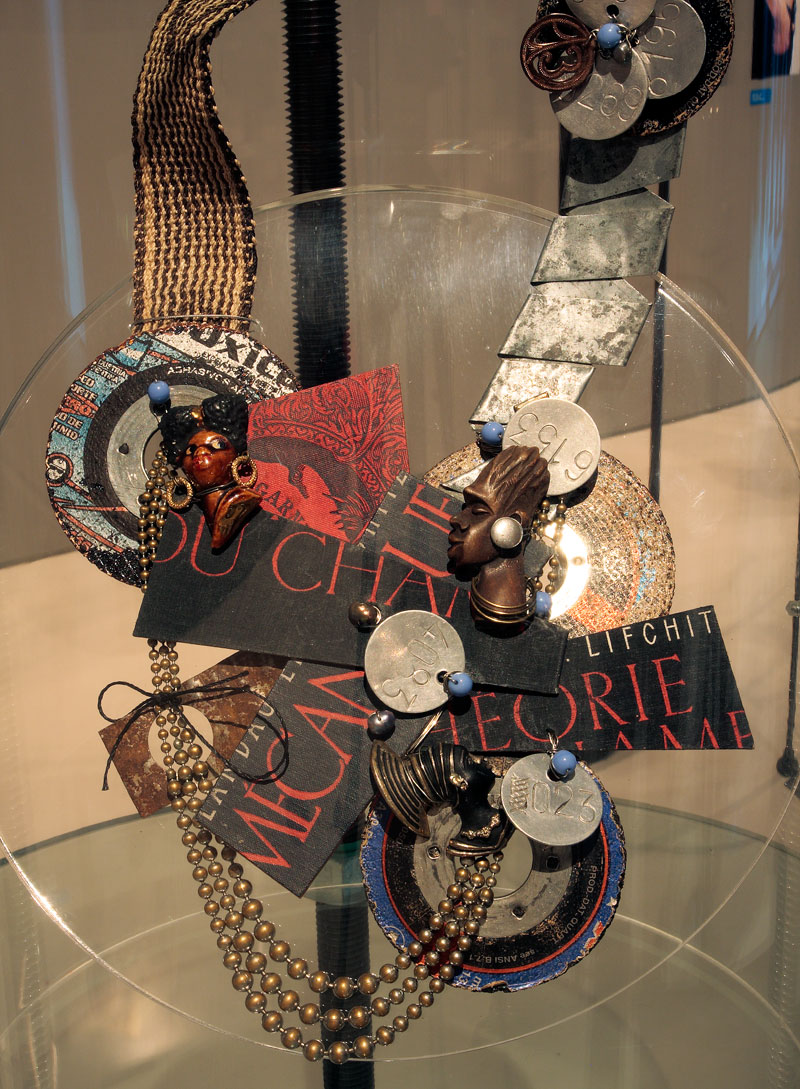
 

Tota Reciclados. 'Theorie du champ mechanique' 2010


Tota Reciclados
Theorie du champ mechanique (installation view)
2010
Found objects, book cover, mixed media
Photo: Dr Marcus Bunyan


NGV International
180 St Kilda Road

Opening hours
Daily 10am – 5pm

National Gallery of Victoria website

LIKE ART BLART ON FACEBOOK

Back to top

Review: ‘Ice Structure’ by Kirsten Haydon at Gallery Funaki, Melbourne

Exhibition dates: 24th May – 18th June, 2011

Kirsten Haydon (New Zealand, b. 1973) 'ice objects', 2011 Kirsten Haydon (New Zealand, b. 1973) ice objects 2011 Enamel, copper, reflector beads Various dimensions
“Confronted by the immensity and power of desert and ice, one cannot simply stand to the side and evaluate as though one were standing before a landscape garden and other works of art. Conflicting emotions, including fear, are aroused and simultaneously absorbed or taken over by the overmastering presence of nature.”

Yi Fu Tuan. Desert and Ice: Ambivalent Aesthetics, 1993

There are many things to like about this exhibition: the fine craftsmanship, the forms, the observation and the beauty of some of the pieces. The symbolism is simple and effective – re-imaged relics of white, vitreous enamel objects from the huts of Robert Scott and Ernest Shackleton, the use of reflector beads to imitate snow and Meccano-like steel girders to symbolise human construction and encroachment on a pristine land. Some of the ‘objects’ remind me of the beauty and simplicity of Etruscan vessels, seemingly delicate apports, being the transference of an article from one place and time to another; the use of reflector beads at the bottom of ice sample (2011, below) is also inspired. So too is the occlusion of the image in the brooch ice plane (2011, below) which adds further mystery to an already surreal landscape. One piece is absolutely stunning. The wonderful neckpiece ice movement (2011, see two photographs below) is ravishing in it’s articulation and form, its snow-covered twig-like coolness. Unfortunately where the exhibition fails is in the use of banal images in several works such as ice depot, ice runway, ice industry (brooch, all 2011, not pictured) and ice industry (2011, neckpiece, below). The obvious point being made is that of man made construction in a pristine landscape but the simple symbology used so effectively in other pieces becomes a little awkward in these pieces. The images used are quite ugly and while this fits the symbolic use of them it doesn’t make for very interesting or illuminating art. There needed to be more layering for the message to be effective – which is why the occluded brooch works so well, human construction blinded, dissolved. This is a pity because the rest of the exhibition is excellent. Enter this ice world and you will be delightfully surprised! Dr Marcus Bunyan Many thankx to Katie Scott for her help and Gallery Funaki for allowing me to publish the photographs and text in the posting. Please click on the photographs for a larger version of the image. Kirsten Haydon (New Zealand, b. 1973) 'ice edge' and 'ice sheet flow' both 2011 Kirsten Haydon (New Zealand, b. 1973) ice edge (left) Object 2011, enamel, reflector beads, copper, silver 60 x 350 x 210 mm ice sheet flow (right) Object 2011 Enamel, reflector beads, copper, silver 70 x 130 x 195 mm Kirsten Haydon (New Zealand, b. 1973) 'ice plane', brooch, 2011 Kirsten Haydon (New Zealand, b. 1973) ice plane Brooch 2011 Enamel, photo transfer, reflector beads, silver, copper, steel 80 x 80 x 10 mm Kirsten Haydon (New Zealand, b. 1973) 'ice movement', neckpiece, 2011 Kirsten Haydon (New Zealand, b. 1973) ice industry neckpiece 2011 enamel, copper, photo transfer, paint, silver 280 x 160 x 10 mm I make jewellery and objects that both connect to and explore human experience and place. Since Antarctica’s discovery explorers, expeditioners, artists and writers have attempted to record and visualise this isolated continent. In 2004 I was awarded a New Zealand Antarctic Arts Fellowship en joined those who communicate their experiences of Antarctica. Antarctica is often regarded as a pristine yet harsh environment, home to extraordinary wildlife and the domain of scientists. Due to its remoteness projects that are supported by international Antarctic programmes are predominantly science-based and as a result artistic research in Antarctica is limited. The cultural theorist, Yi Fu Tuan describes the experience of the explorer as: “the longing to be taken out of oneself and ones habitual world into something vast, overpowering and indifferent.” His statement resonates with my experience of Antarctica where I found myself drawn to the minutiae of the ice crystal and the structures and forms that I could associate with in the extraordinary landscape. While in that place, so removed from the conventions of civilisation, I came to understand the immensity of nature and to see that it exists without the necessity for human presence … Inside the historic huts of Robert Scott and Ernest Shackleton I was captivated by the history, contained both in the interior spaces themselves and in the material artefacts left by the expeditioners … These seemingly mundane objects are transformed into a still life of significant artefacts of a previous time, preserving the memory and story of their parties of explorers. My interpretations engage through the iconography of personal jewellery, domestic objects and the environment of Antarctica. In the course of making I continue to investigate and portray Antarctica through my own and others’ personal experiences. The objects I produce reference valued souvenir jewellery and objects now displayed in museums as historical artefacts, which were once personal mementos … Excerpts from the catalogue text by Kirsten Haydon May 2011 Kirsten Haydon (New Zealand, b. 1973) 'ice movement' neckpiece 2011 Kirsten Haydon (New Zealand, b. 1973) 'ice movement' neckpiece 2011 Kirsten Haydon (New Zealand, b. 1973) ice movement Neckpiece 2011 Enamel, copper, reflector beads, silver Kirsten Haydon (New Zealand, b. 1973) 'ice sample', object, 2011 Kirsten Haydon (New Zealand, b. 1973) ice sample Object 2011 Enamel, copper, reflector beads Gallery Funaki Sackville House Apartment 33 27 Flinders Lane Melbourne 3000 Australia Opening hours: Wednesday – Friday 12 – 5pm Saturday on occasion (check our socials) or by appointment Gallery Funaki website LIKE ART BLART ON FACEBOOK Back to top