Exhibition: ‘True Colors: Color in Photography from 1849 to 1955’ at Albertina Modern, Vienna

Exhibition dates: 24th January – 21st April, 2025

Curators: Dr. Anna Hanreich and Dr. Astrid Mahler
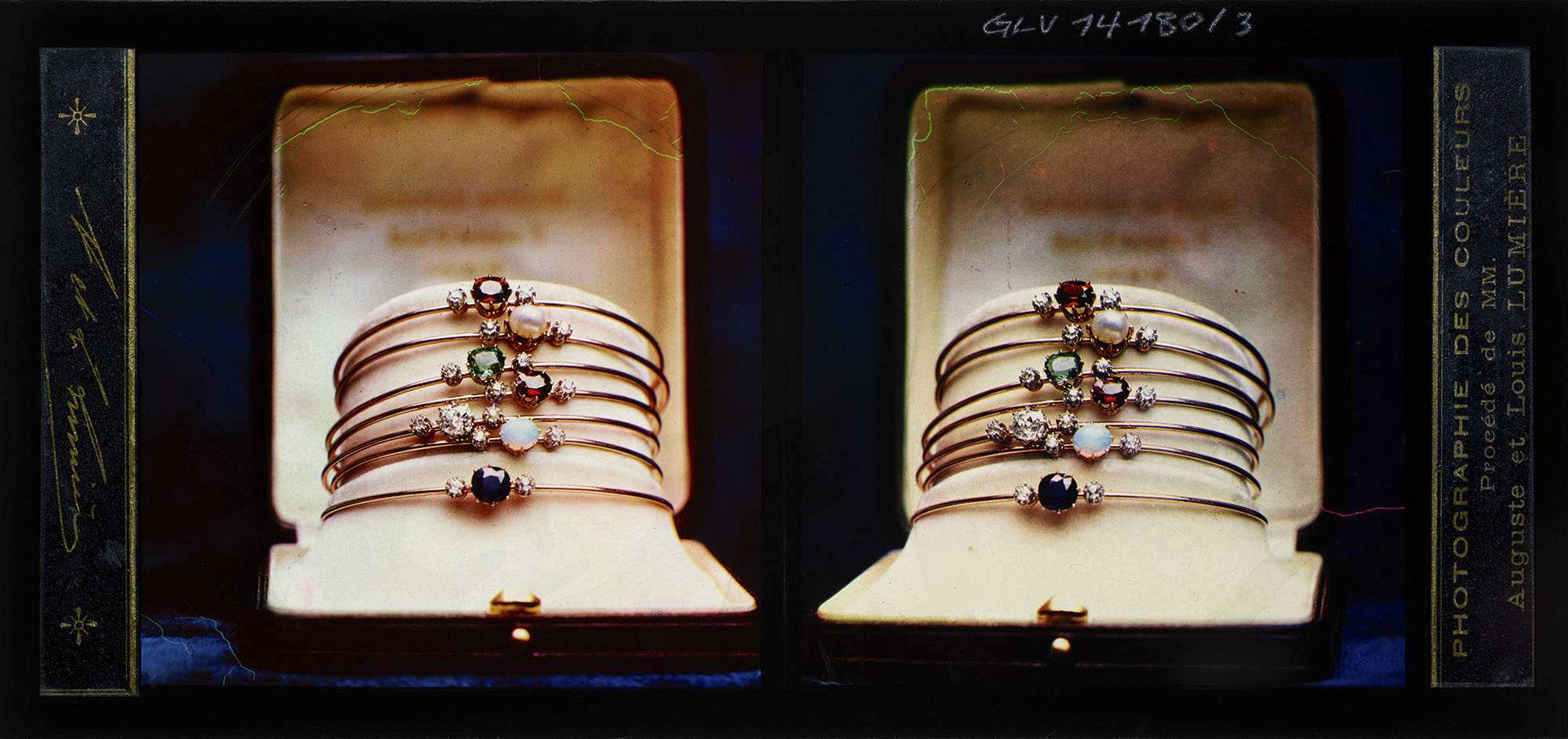
 

Auguste and Louis Lumière (French, 1862-1954) (French, 1864-1948) 'Bangles' 1893-1900 from the exhibition 'True Colors: Color in Photography from 1849 to 1955' at Albertina Modern, Vienna, January - April, 2025


Auguste and Louis Lumière (French, 1862-1954) (French, 1864-1948)
Bangles
1893-1900
ALL Chroma
8.4 x 17.8cm
The ALBERTINA Museum, Vienna – Permanent loan by Höhere Graphische Bundes-Lehr- und Versuchsanstalt


What a wonderful exhibition.

It’s so exciting to see the history and development of colour photography pre the ubiquitous, American artists William Eggleston and Stephen Shore, much as I like both artists.

I would have liked to have seen some early autochromes from Albert Kahn and The Archives of the Planet; some photographs by Bernard F. Eilers whom I greatly admire; and some early colour photographs by Paul Outerbridge Jr.

In my eyes, that would have made the exhibition even better!

Dr Marcus Bunyan


Many thankx to the Albertina Modern for allowing me to publish the photographs in the posting. Gracious thankx also to Karin Svadlenak-Gomez for allowing me to use her wonderful photographs of the exhibition in the posting, noted below each image. Please click on the photographs for a larger version of the image.



Installation view of the exhibition 'True Colors: Color in Photography from 1849 to 1955' at Albertina Modern, Vienna


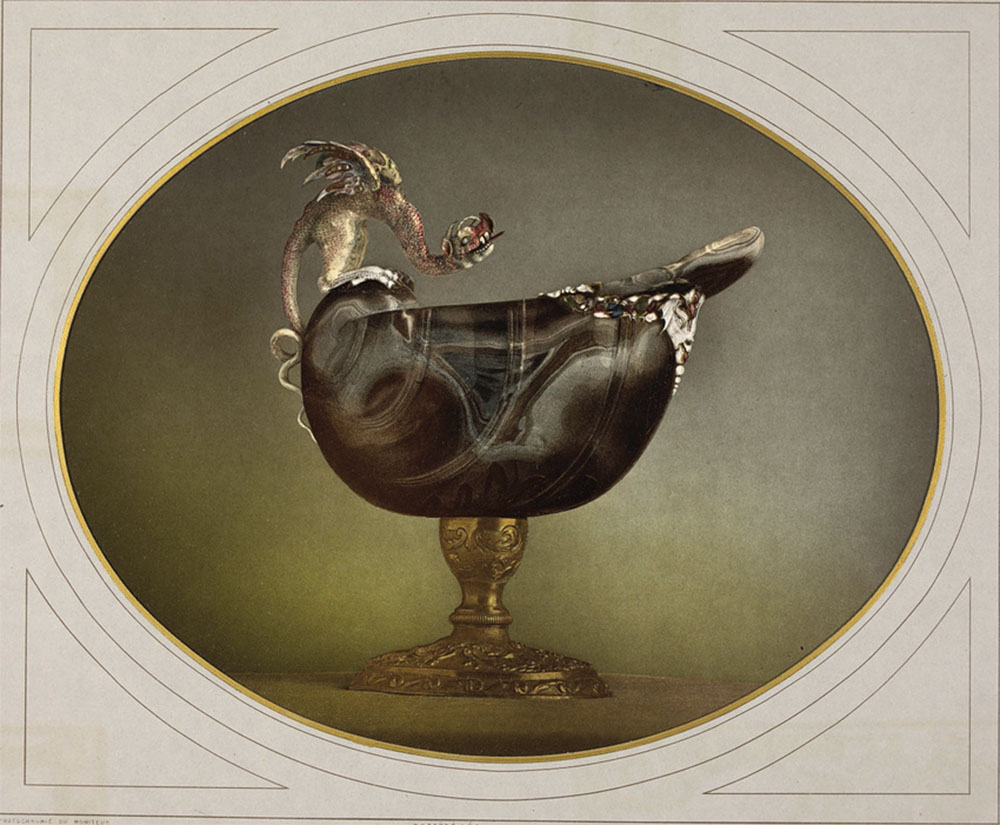
Installation view of the exhibition True Colors: Color in Photography from 1849 to 1955 at Albertina Modern, Vienna showing in the bottom image, Léon Vidal’s photograph Oriental Onyx Saucier, 16th century, from Le Tresor artistique de la France, c. 1876-1878 (below)


Léon Vidal (French, 1833-1906)
'Oriental Onyx Sardonyx Cup (16th century)' 1876 from the exhibition 'True Colors: Color in Photography from 1849 to 1955' at Albertina Modern, Vienna, January - April, 2025


Léon Vidal (French, 1833-1906)
Oriental Onyx Sardonyx Cup (16th century)
1876
Photomechanical proof (photochromy using the Léon Vidal process) mounted on cardboard
H. 20.8 ; L. 26.2 cm.
Don Fondation Kodak-Pathé, 1983


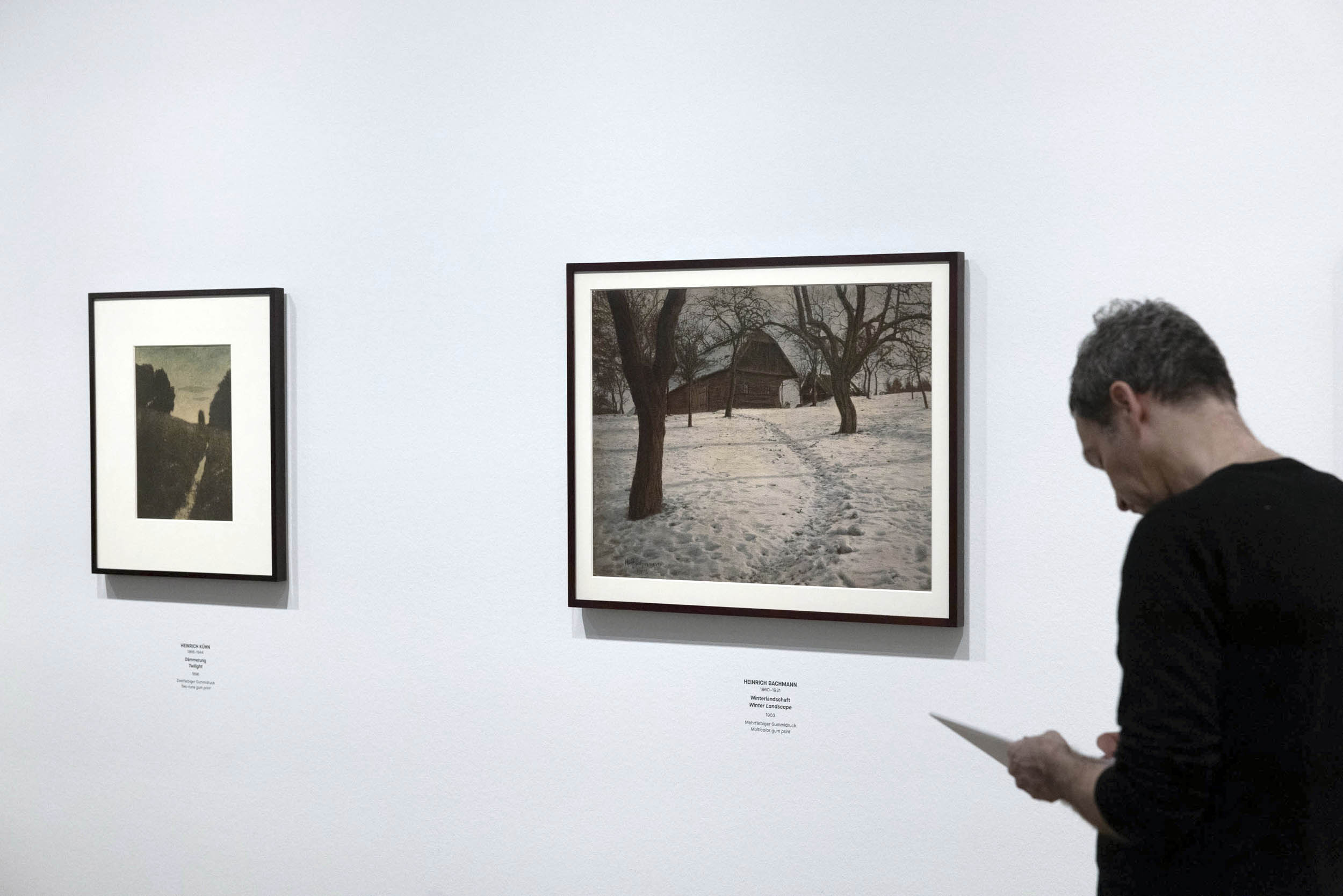
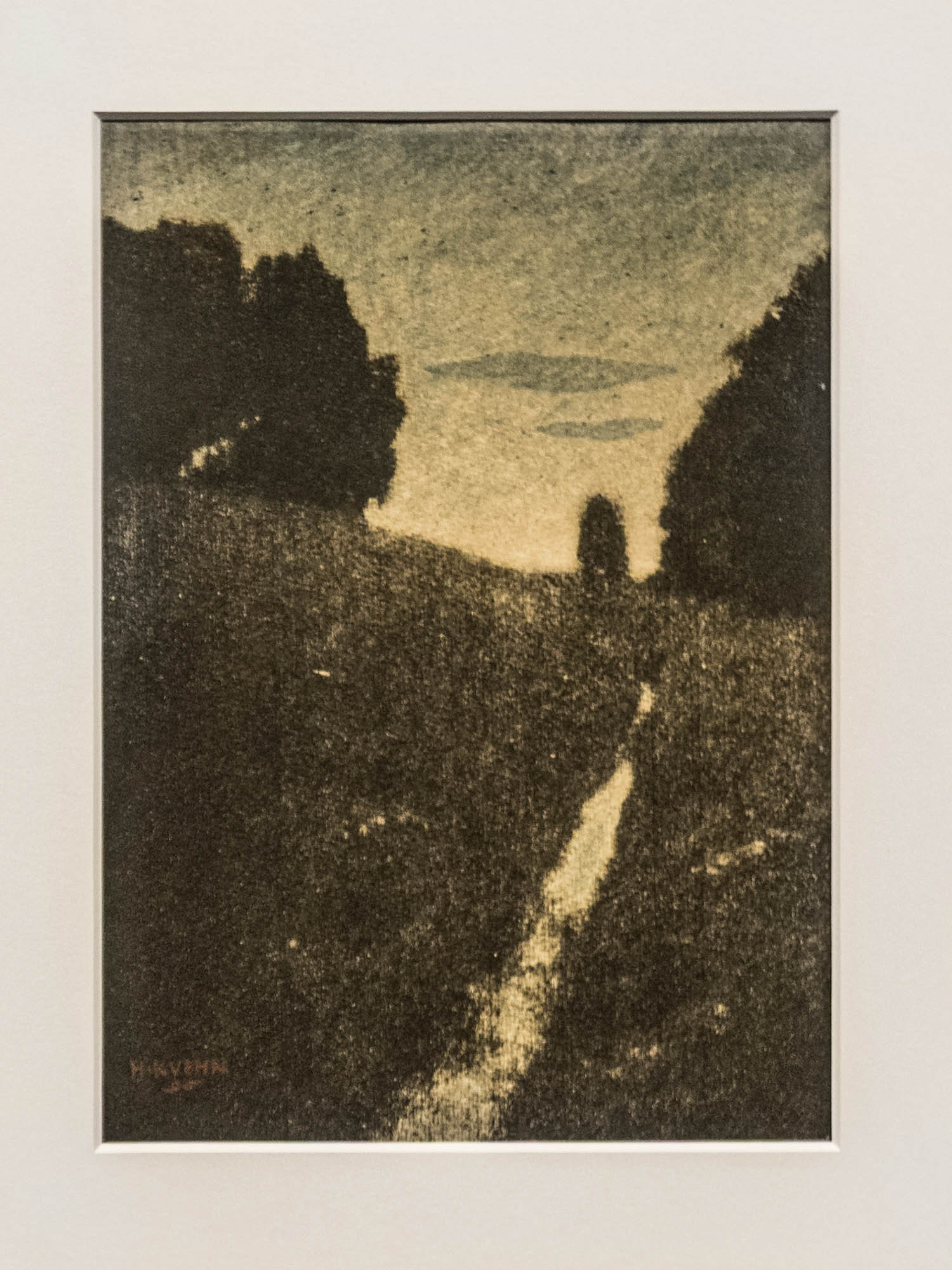
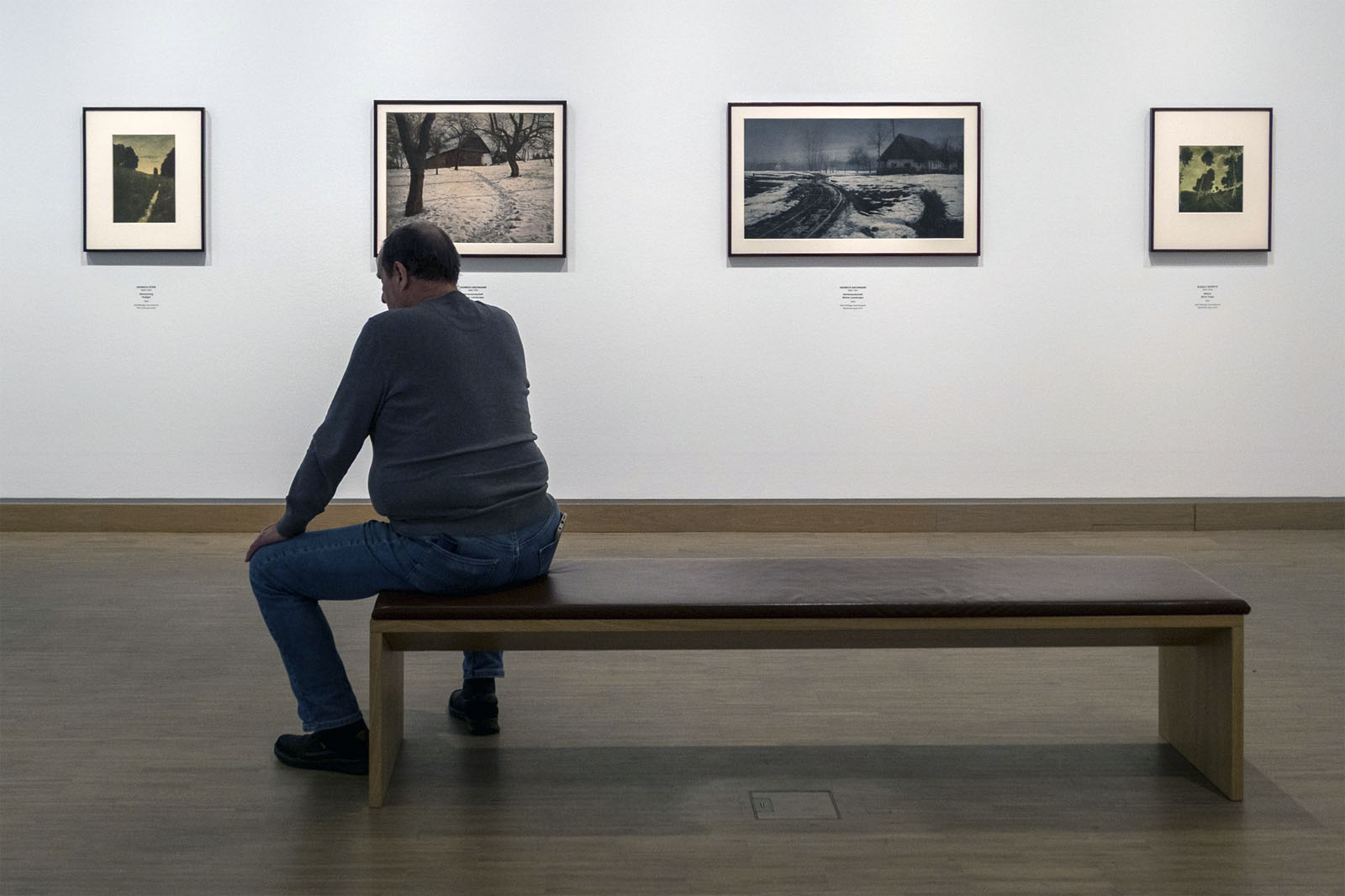
Installation view of the exhibition 'True Colors: Color in Photography from 1849 to 1955' at Albertina Modern, Vienna showing at left, Heinrich Kühn's 'Twilight' 1896 (below); and at right, Heinrich Bachmann's 'Winter Landscape' 1903


Installation view of the exhibition True Colors: Color in Photography from 1849 to 1955 at Albertina Modern, Vienna showing at left, Heinrich Kühn’s Twilight 1896 (below); and at right, Heinrich Bachmann’s Winter Landscape 1903


Heinrich Kühn (Austrian-German, 1866-1944) 'Twilight' 1896


Heinrich Kühn (Austrian-German, 1866-1944)
Twilight
1896
Two-tone gum print
Photo: Karin Svadlenak-Gomez


The Pictorialist Aesthetic: Photography as Art

One of my personal highlights from True Colours was the section dedicated to pictorialist photography. Emerging in the late 19th and early 20th centuries, pictorialism sought to elevate photography to the level of fine art, favouring soft focus, painterly compositions, and atmospheric effects. In fact the Albertina modern had a whole exhibition on Pictorialism in 2023, which was a great joy to me.

Heinrich Kühn’s Twilight (1896, above), produced through the autochrome process, was a standout for me, its subtle gradations of light and shadow creating an almost dreamlike serenity. Kühn was also one of the pioneers of the autochrome process, the first commercially successful colour photography method introduced by the Lumière brothers in 1907. Autochromes used a fine layer of dyed potato starch grains to filter light, creating rich and softly textured images. Kühn masterfully employed this process to enhance the painterly, impressionistic quality of his photographs, further bridging the gap between photography and fine art. Seeing these images up close, I was reminded of how photographers of the past fought for their medium to be recognised as more than mere documentation – it was, and remains, an art form in its own right.

Karin Svadlenak-Gomez. “Photography in Full Spectrum,” on the ViennaCultgram website 13th March 2025 [Online] Cited 25/03/2024


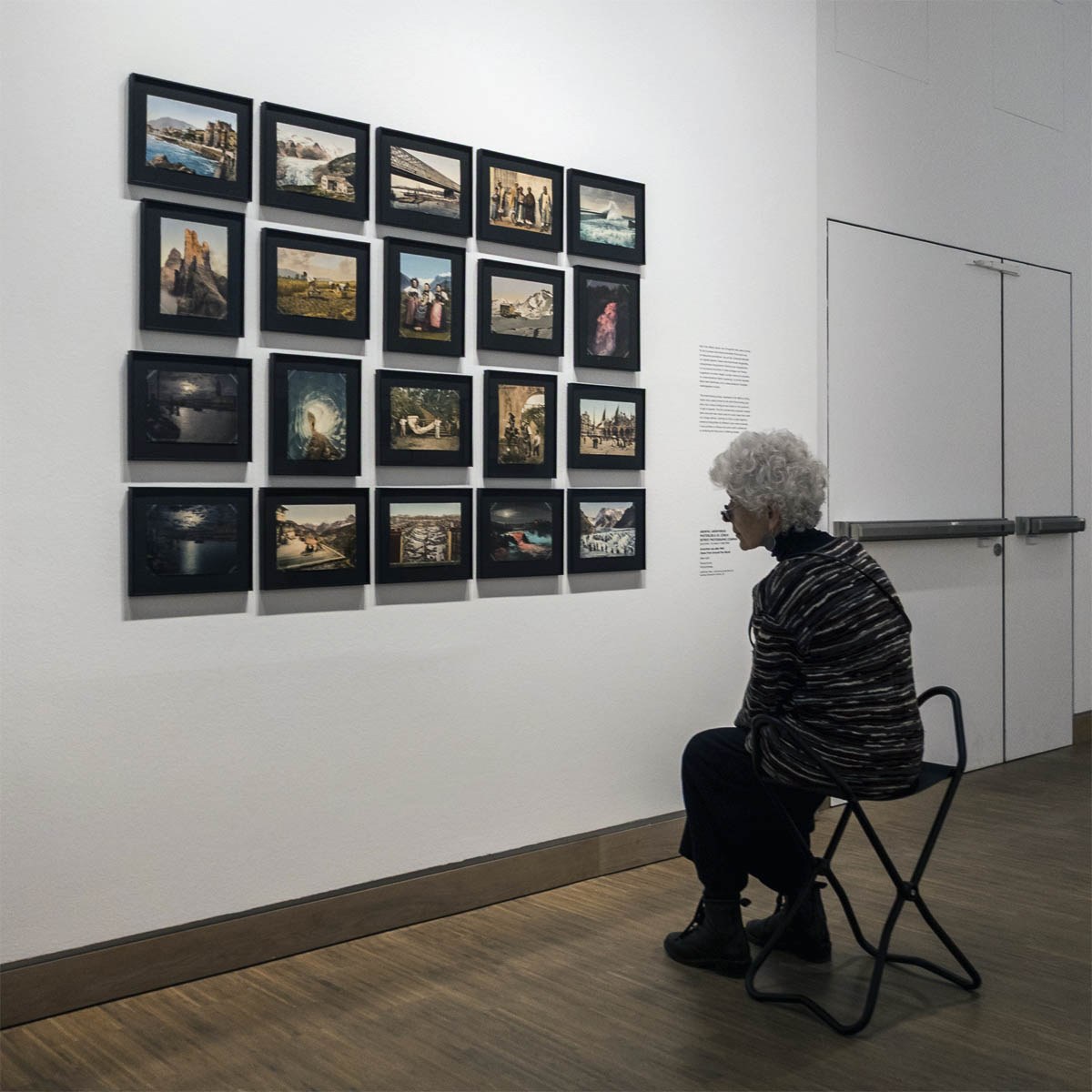
Installation view of the exhibition 'True Colors: Color in Photography from 1849 to 1955' at Albertina Modern, Vienna


Installation view of the exhibition True Colors: Color in Photography from 1849 to 1955 at Albertina Modern, Vienna
Photo: Karin Svadlenak-Gomez


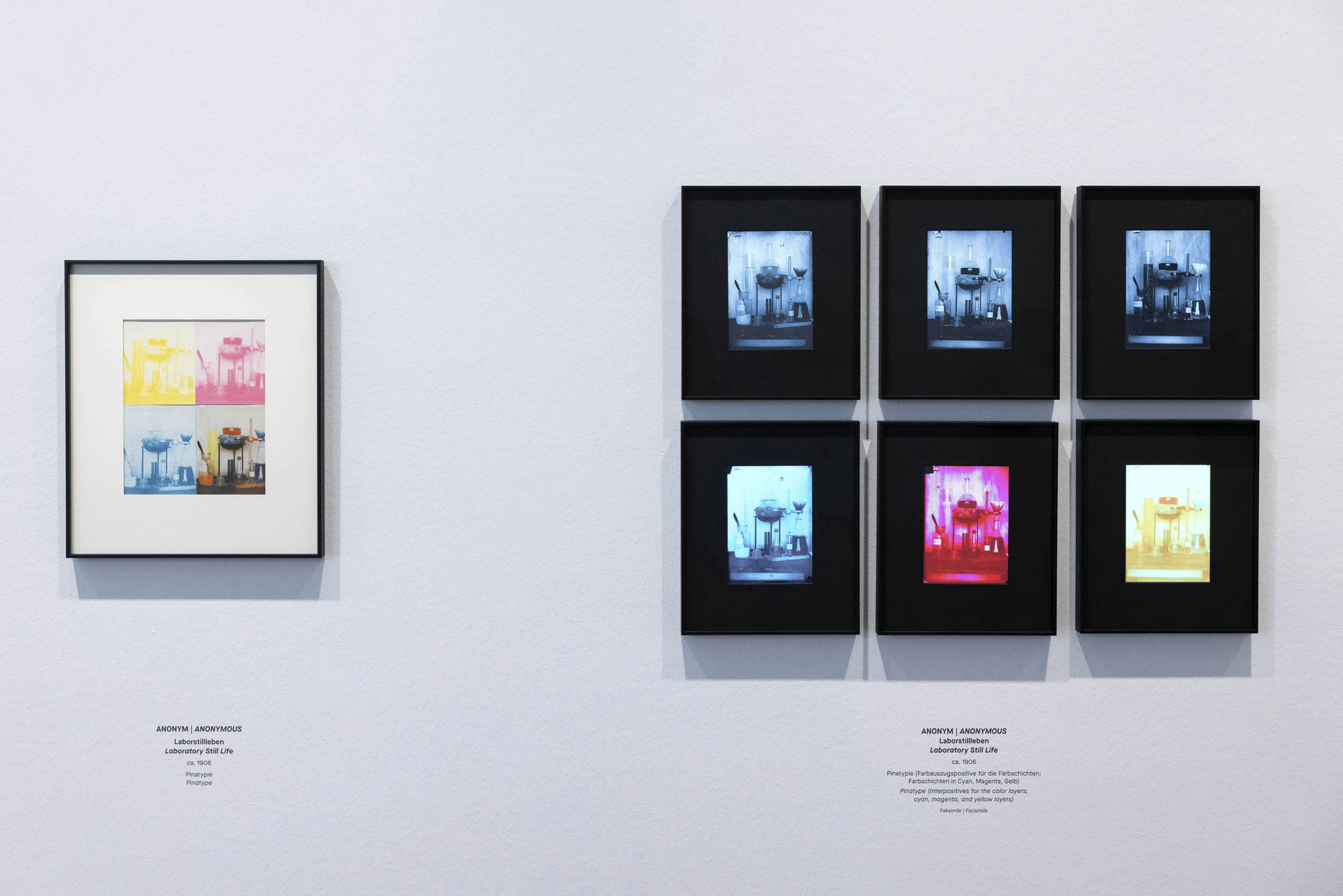
Installation view of the exhibition 'True Colors: Color in Photography from 1849 to 1955' at Albertina Modern, Vienna showing Anonymous. 'Laboratory Still Life' 1906


Installation view of the exhibition True Colors: Color in Photography from 1849 to 1955 at Albertina Modern, Vienna showing Anonymous. Laboratory Still Life 1906


Anonymous photographer.
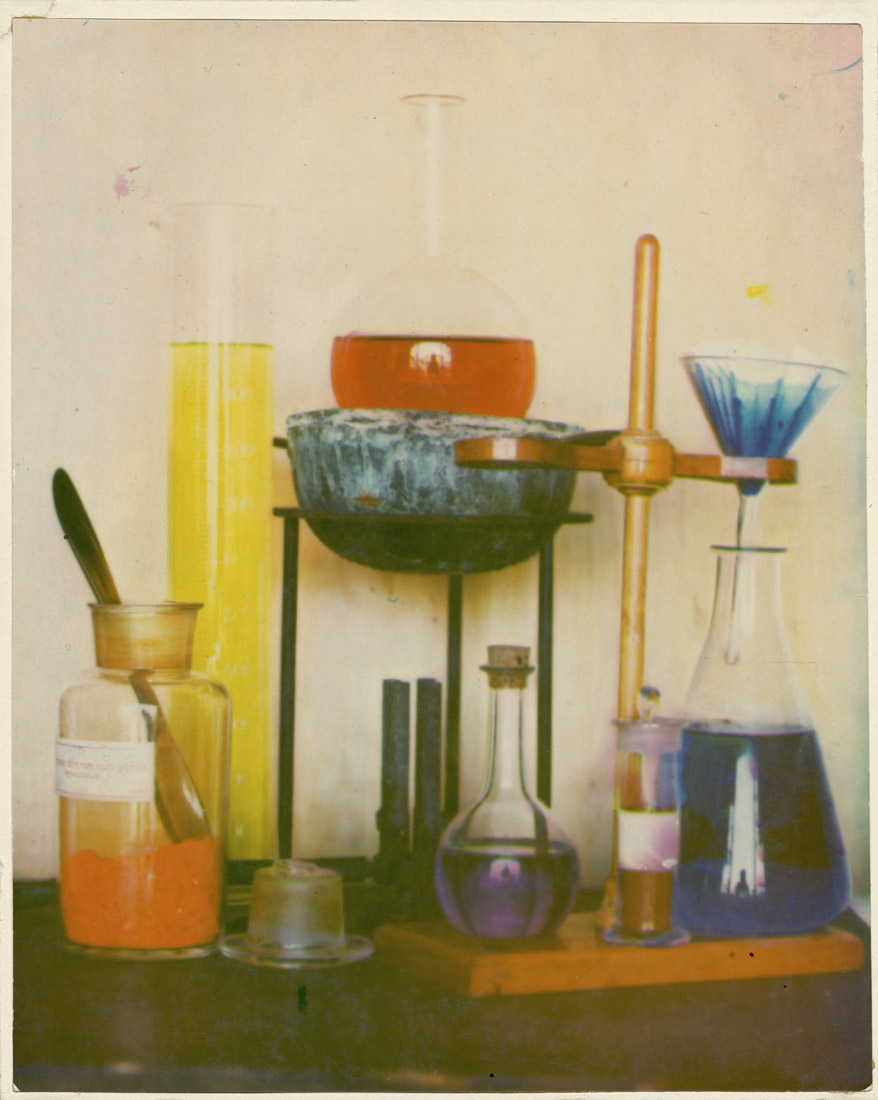
'Laboratory Still Life Around' 1906 from the exhibition 'True Colors: Color in Photography from 1849 to 1955' at Albertina Modern, Vienna, January - April, 2025

Anonymous photographer
Laboratory Still Life
Around 1906
14.2 x 11.2 cm
Pinatype
The Albertina Museum, Vienna – Permanent Loan by Höhere Graphische Bundes-Lehr- und Versuchsanstalt
© Photo: The Albertina Museum, Vienna


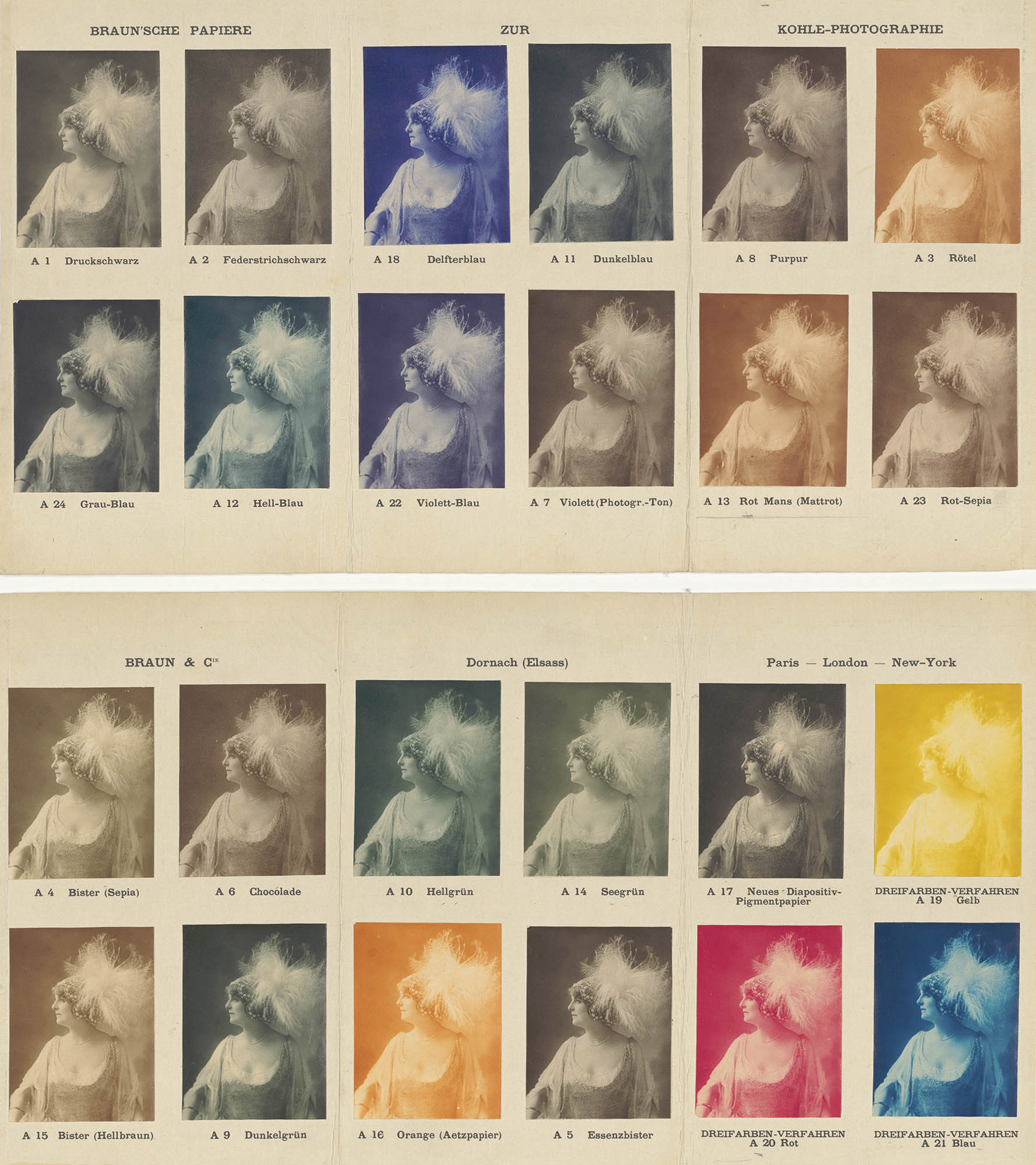
Ad. Braun et Cie. (Jean Adolphe Braun (French, 1812-1877))
'Sample board of various pigment papers from Ad. Braun et Cie.' around 1910


Ad. Braun et Cie. (Jean Adolphe Braun (French, 1812-1877))
Sample board of various pigment papers from Ad. Braun et Cie.
Around 1910
38.2 x 32.5cm
Pigment prints
The Albertina Museum, Vienna – Permanent loan by Höhere Graphische Bundes- Lehr- und Versuchsanstalt
© Photo: The Albertina Museum, Vienna


Ad. Braun et Cie. (Jean Adolphe Braun (French, 1812-1877))
'Sample board of various pigment papers from Ad. Braun et Cie.' around 1910 (detail)
Ad. Braun et Cie. (Jean Adolphe Braun (French, 1812-1877))
'Sample board of various pigment papers from Ad. Braun et Cie.' around 1910 (detail)


Ad. Braun et Cie. (Jean Adolphe Braun (French, 1812-1877))
Sample board of various pigment papers from Ad. Braun et Cie. (details)
Around 1910
38.2 x 32.5cm
Pigment prints
The Albertina Museum, Vienna – Permanent loan by Höhere Graphische Bundes- Lehr- und Versuchsanstalt
© Photo: The Albertina Museum, Vienna


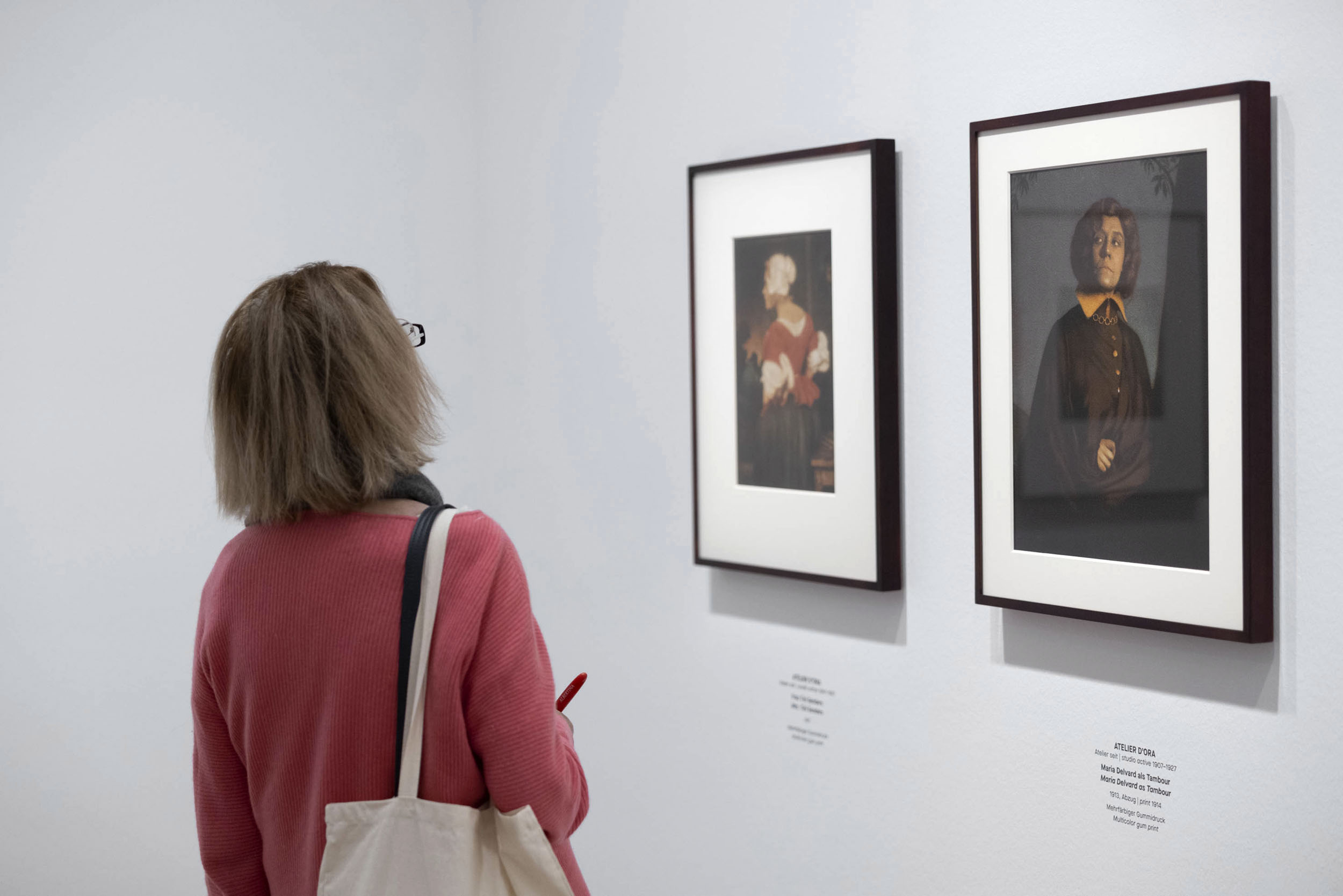
Installation view of the exhibition 'True Colors: Color in Photography from 1849 to 1955' at Albertina Modern, Vienna showing two photographs by Atelier D'Ora with at right, 'Maria Delvard as Tambour' 1913


Installation view of the exhibition True Colors: Color in Photography from 1849 to 1955 at Albertina Modern, Vienna showing two photographs by Atelier D’Ora with at right, Maria Delvard as Tambour 1913


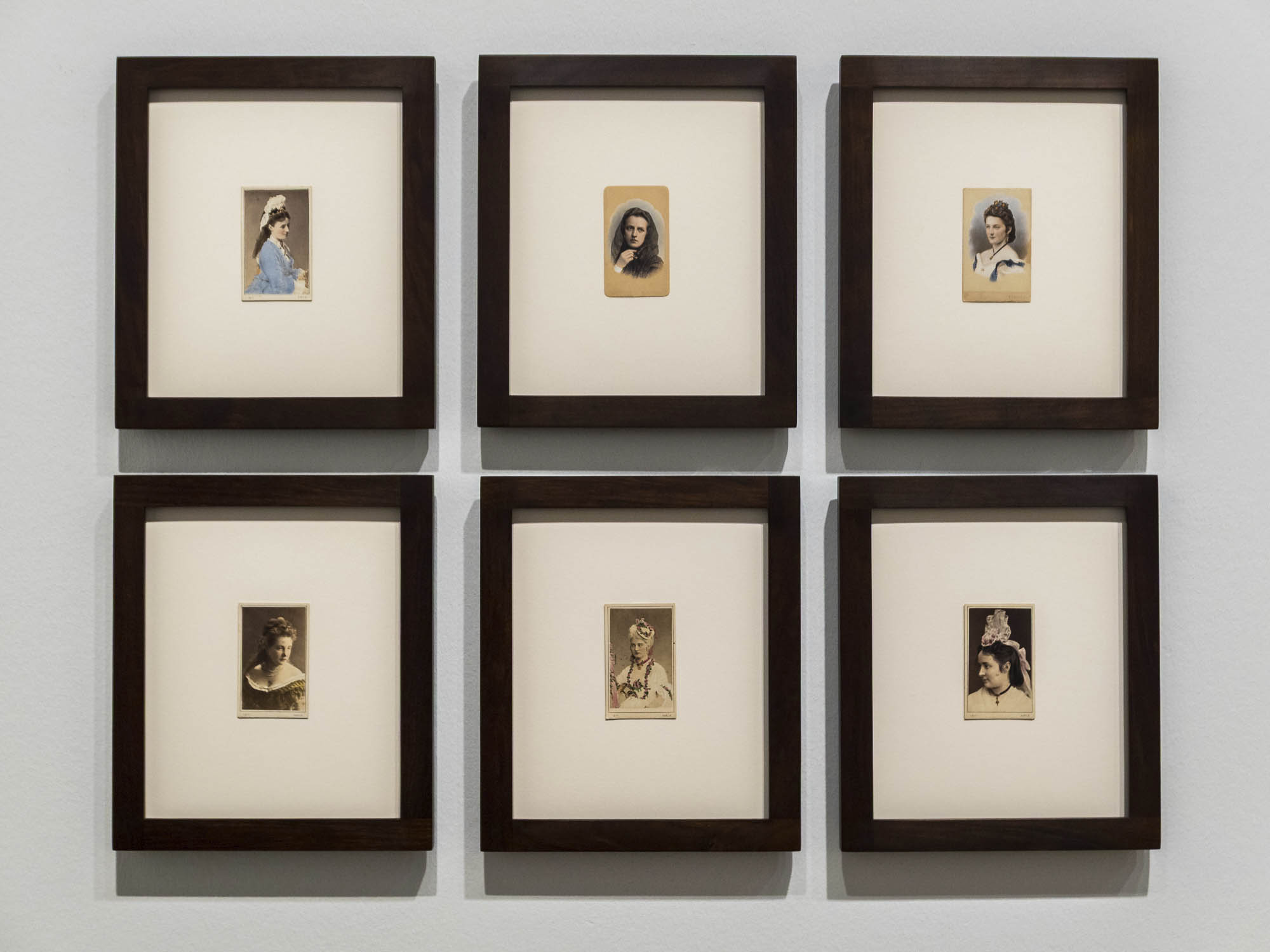
The aesthetics of fine art photography had their greatest impact on studio photograph. In the early twentieth century, such progressive studios as Atelier d’Ora (later called Atelier d’Ora Benda) adopted the reformed portrait style and its elaborate techniques. The bromoil and broccoli transfer processes finally offered an alternative to gum prints, so that works in colour could be produced in a much less complicated and inexpensive way.

Wall text from the exhibition


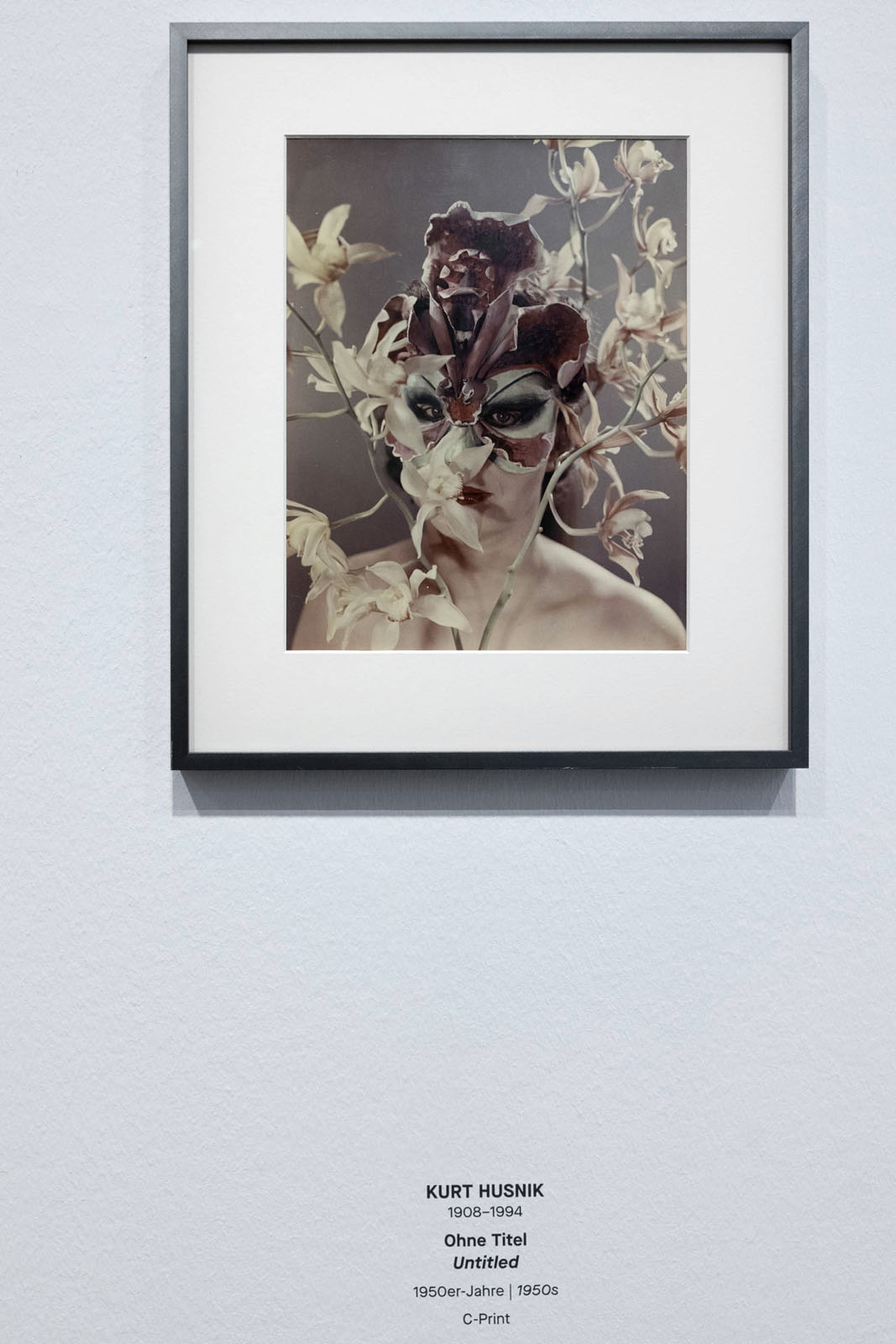
Installation view of the exhibition 'True Colors: Color in Photography from 1849 to 1955' at Albertina Modern, Vienna showing Kurt Husnik's three photographs 'Untitled' 1950s


Installation view of the exhibition True Colors: Color in Photography from 1849 to 1955 at Albertina Modern, Vienna showing Kurt Husnik’s three photographs Untitled 1950s


Installation view of the exhibition 'True Colors: Color in Photography from 1849 to 1955' at Albertina Modern, Vienna


Installation view of the exhibition True Colors: Color in Photography from 1849 to 1955 at Albertina Modern, Vienna showing Kurt Husnik’s Untitled 1950s


Installation view of the exhibition 'True Colors: Color in Photography from 1849 to 1955' at Albertina Modern, Vienna showing at left, Hans Madensky's 'Fashion Portrait - Student of the Vienna-Hetzendorf School of Fashion' 1952 (below)


Installation view of the exhibition True Colors: Color in Photography from 1849 to 1955 at Albertina Modern, Vienna showing at left, Hans Madensky’s Fashion Portrait – Student of the Vienna-Hetzendorf School of Fashion 1952 (below)


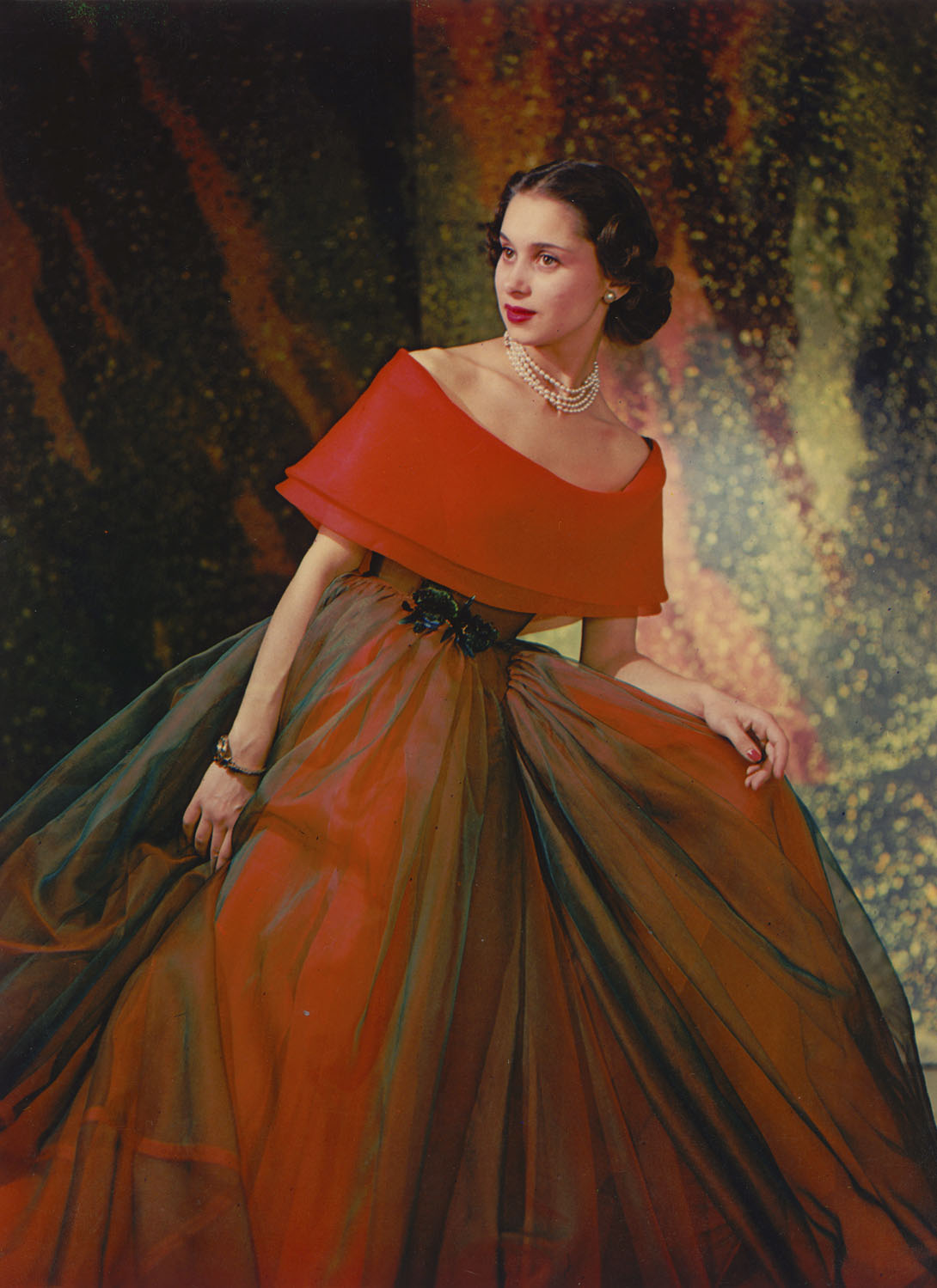
Hans Madensky (Austrian, 1902-1978) 'Fashion Portrait - Student of the Vienna-Hetzendorf School of Fashion' 1952


Hans Madensky (Austrian, 1902-1978)
Fashion portrait – Student from the Vienna Hetzendorf Fashion School
1952
27 x 22.8cm
Kodak Dye Transfer Print
The Albertina Museum, Vienna – Permanent Loan by Höhere Graphische Bundes-Lehr- und Versuchsanstalt
© Photo: The Albertina Museum, Vienna


How did colour get into photography?

The exhibition True Colors – Color in Photography from 1849 to 1955 answers this question with outstanding works from the Albertina Museum’s photo collection.

The desire for colour in photography has dominated the world of photography from the very beginning. True Colors traces the development of colour photography, from the first experimental techniques in the 19th century to generally applicable analog colour photography.

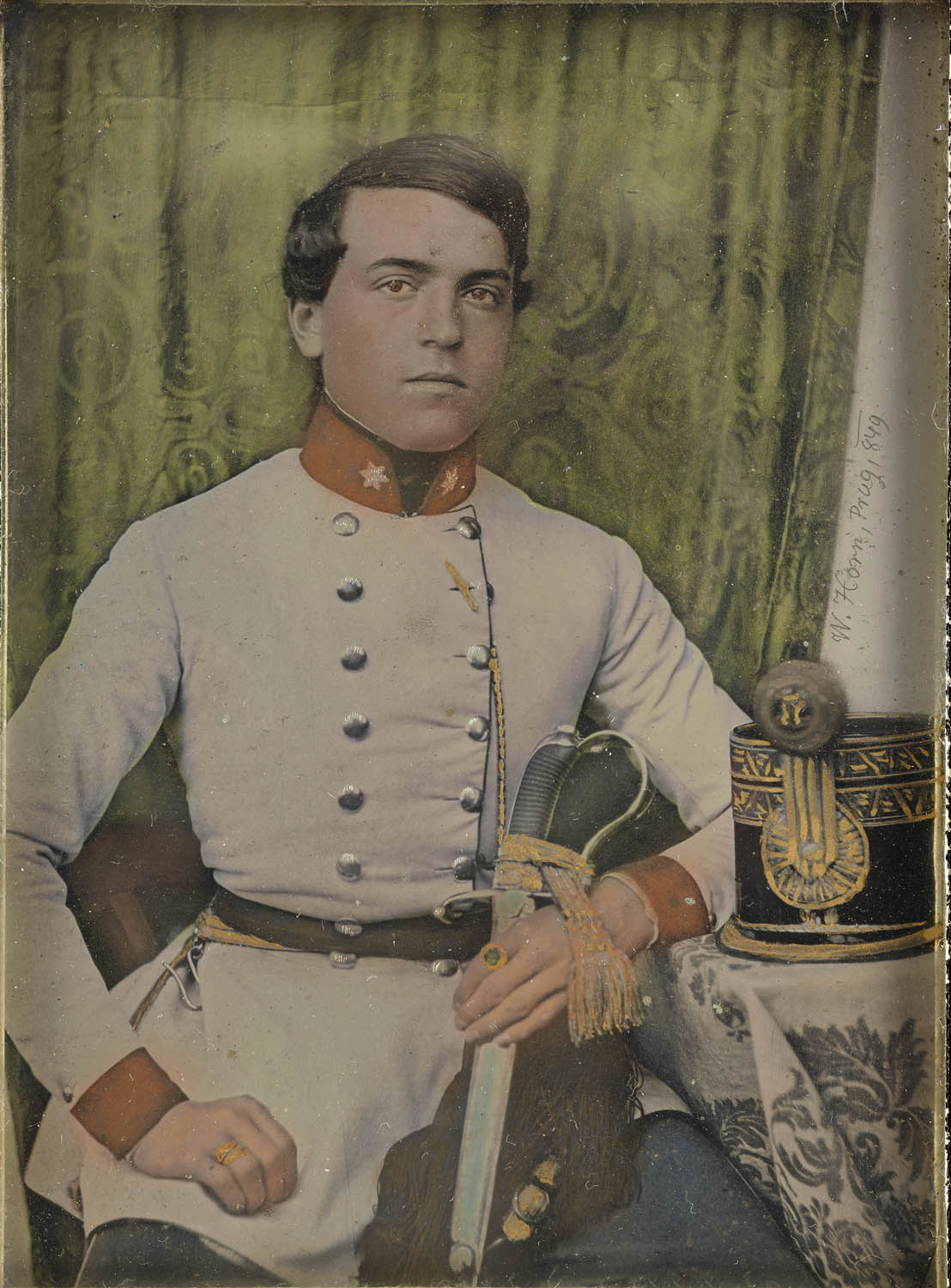
Even in the early days of photography, daguerreotypes and salt paper prints were colored by hand to create colorful images. Monochrome pigment papers, which enjoyed great popularity until the 1890s, also contributed to the broad chromatic diversity of 19th century photographs.

The first successful color process, which was reserved for an exclusive circle, was introduced in 1891. The brilliant images in the so-called interference colour process are based on the physical principle of standing waves, which also allows us to see coloured reflections in soap bubbles. The unique pieces from the Albertina Museum’s Collection represent a unique focal point.

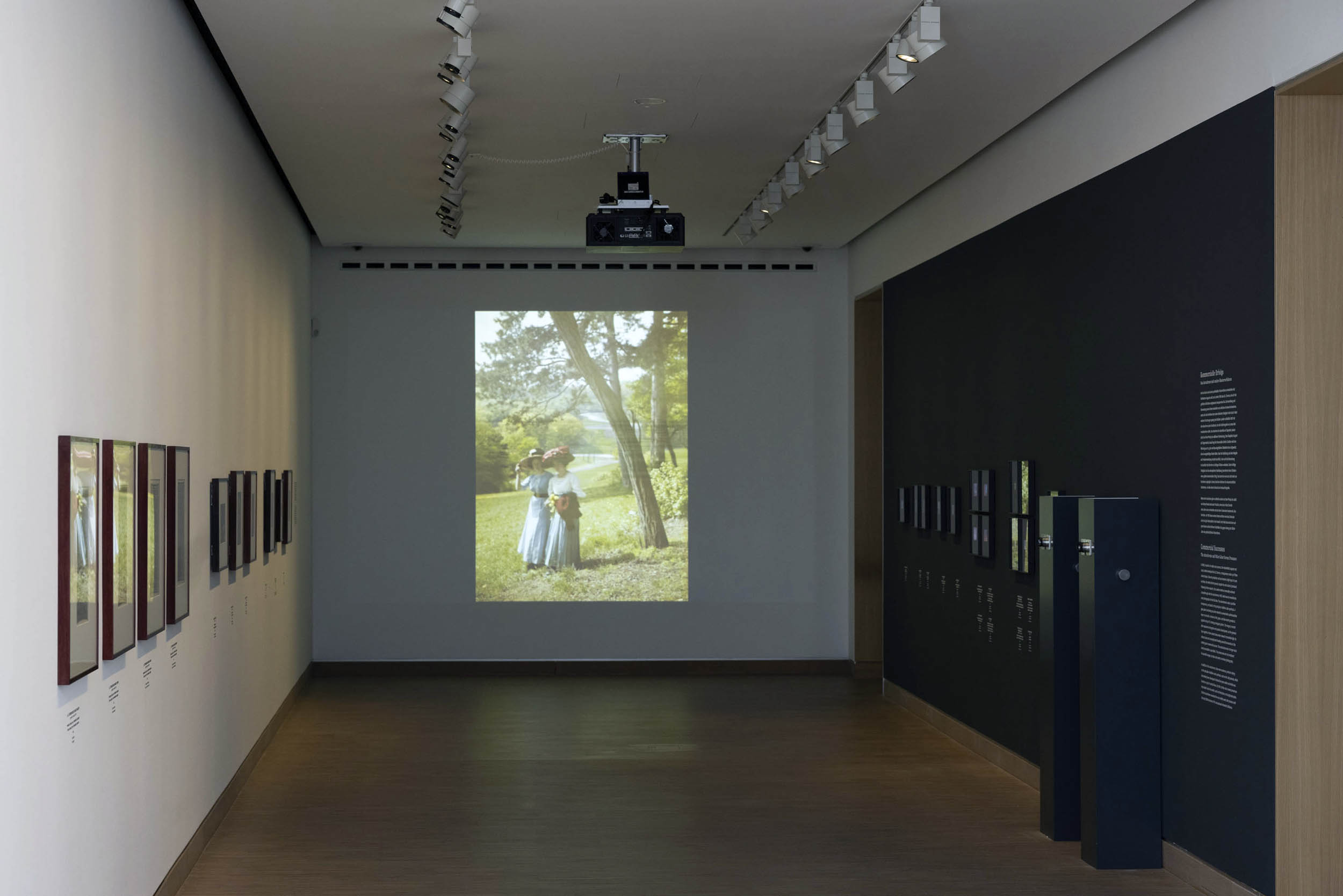
The autochrome process, which was introduced in 1907, brought about a major change in image culture. It was also practicable for amateurs and helped its inventors, the Lumière brothers, to achieve great commercial success. However, it was mainly used as a glass slide for projection. At the same time, around 1900, fine art printing processes were developed that used color pigments to produce multicolored image solutions. They fulfilled the artistic aspirations of the Pictorialists and were commonplace in large photo studios until the 1930s. For a long time, the challenge was to obtain colored prints on paper. This was also achieved at the beginning of the 20th century with the use of various three-color processes, which were assembled in several steps.

Kodak finally achieved the breakthrough to easy-to-use and therefore mass-market colour photography in 1936 with the first 35mm colour slide films. These products revolutionised the use of colour photography in the following decades, which form the conclusion of this Albertina Museum exhibition.

True Colors provides an insight into the rich holdings of the Albertina Museum’s photography collection, the historical part of which is based on the collection of the Höhere Graphische Bundes- Lehr- und Versuchsanstalt (GLV). The exhibition demonstrates the great public interest, the constant development and the various fields of application of historical photography in colour. True Colors also explores the impact of popular colour processes on the visual culture of the early 20th century.

The exhibition is on view from 24 January until 21 April 2025 at the Albertina Modern


Wilhelm Horn (Czech, 1809-1891)
'Portrait of a Young Officer' 1849


Wilhelm Horn (Czech, 1809-1891)
Portrait of a Young Officer
1849
11 x 8.3cm
Daguerreotype, coloured
The Albertina Museum, Vienna – Permanent loan by Höhere Graphische Bundes- Lehr- und Versuchsanstalt
© Photo: The Albertina Museum, Vienna


Installation view of the exhibition 'True Colors: Color in Photography from 1849 to 1955' at Albertina Modern


Installation view of the exhibition True Colors: Color in Photography from 1849 to 1955 at Albertina Modern
Photo: Karin Svadlenak-Gomez


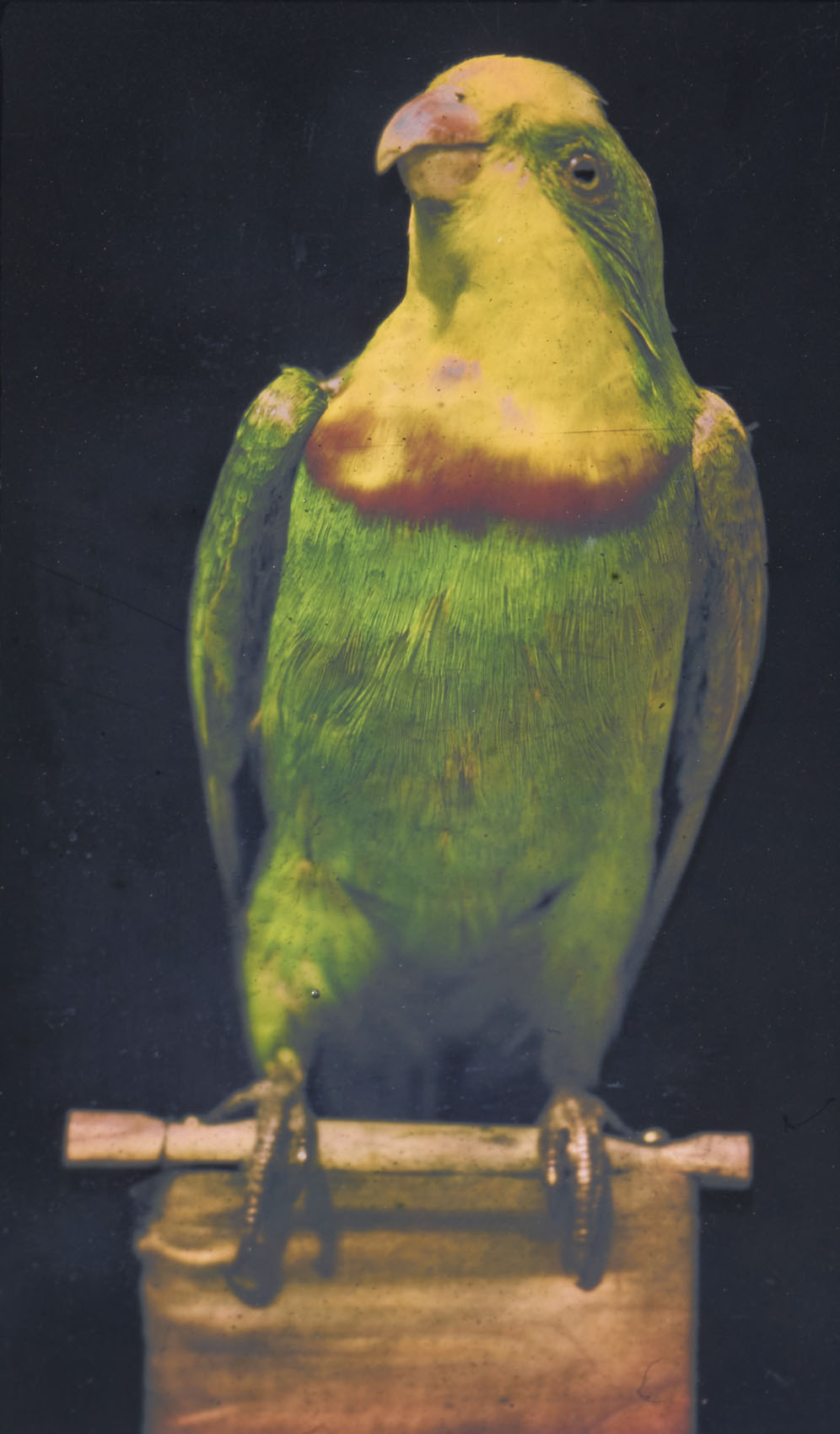
Richard Neuhauss (German, 1855-1915) 'Parrot' 1899


Richard Neuhauss (German, 1855-1915)
Parrot
1899
8.3 x 6.4cm
Colour photography
The Albertina Museum, Vienna – Permanent Loan by Höhere Graphische Bundes-Lehr- und Versuchsanstalt
© Photo: The Albertina Museum, Vienna


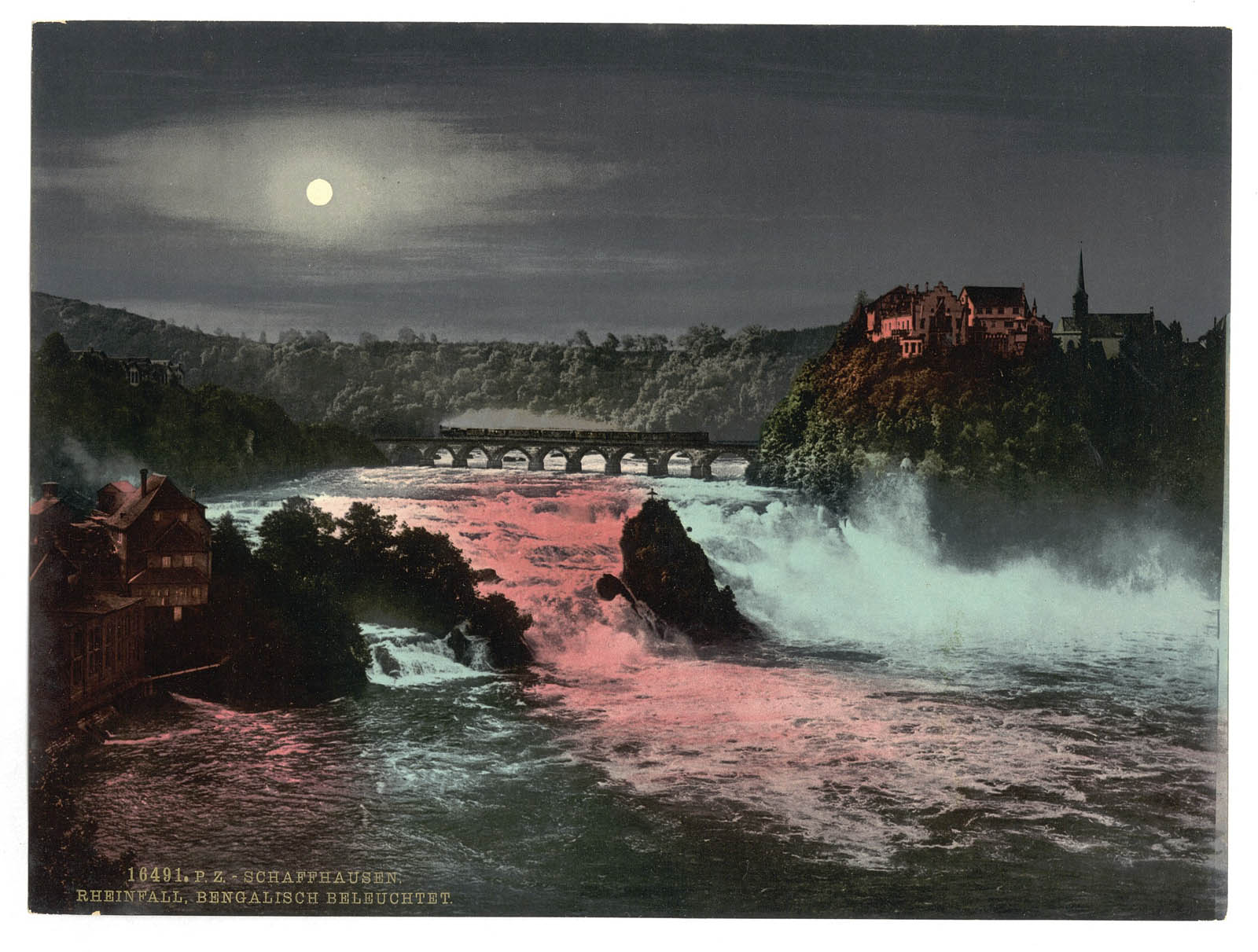
Photochrom Print Collection (photographer) 'The Falls of the Rhine, by Bengal Light, Schaffhausen, Switzerland' between 1890 and 1900


Photochrom Print Collection (photographer)
The Falls of the Rhine, by Bengal Light, Schaffhausen, Switzerland
Between 1890 and 1900
Print no. “16491”.; Forms part of: Views of Switzerland in the Photochrom print collection.; Title from the Detroit Publishing Co., Catalogue J-foreign section, Detroit, Mich.: Detroit Publishing Company, 1905.
Photomechanical print, photochrom, colour


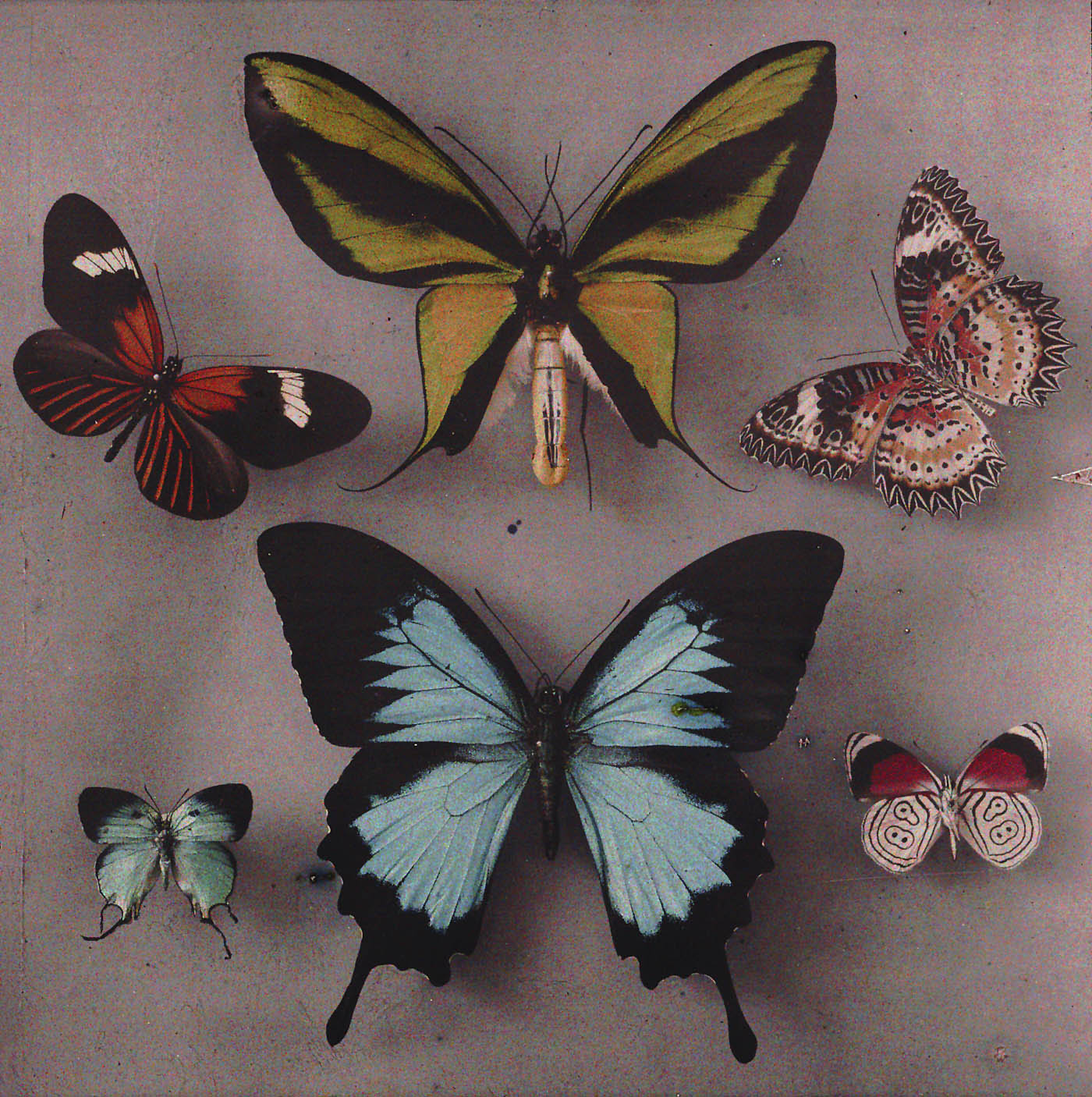
Arthur von Hübl (Austrian, 1853-1932) 'Exotic Butterflies' 1908-1914


Arthur von Hübl (Austrian, 1853-1932)
Exotic Butterflies
1908-1914
6.3 x 6.9cm
Autochrome
The Albertina Museum, Vienna – Permanent Loan by Höhere Bundes-Lehr- und Versuchsanstalt
© Photo: The Albertina Museum, Vienna


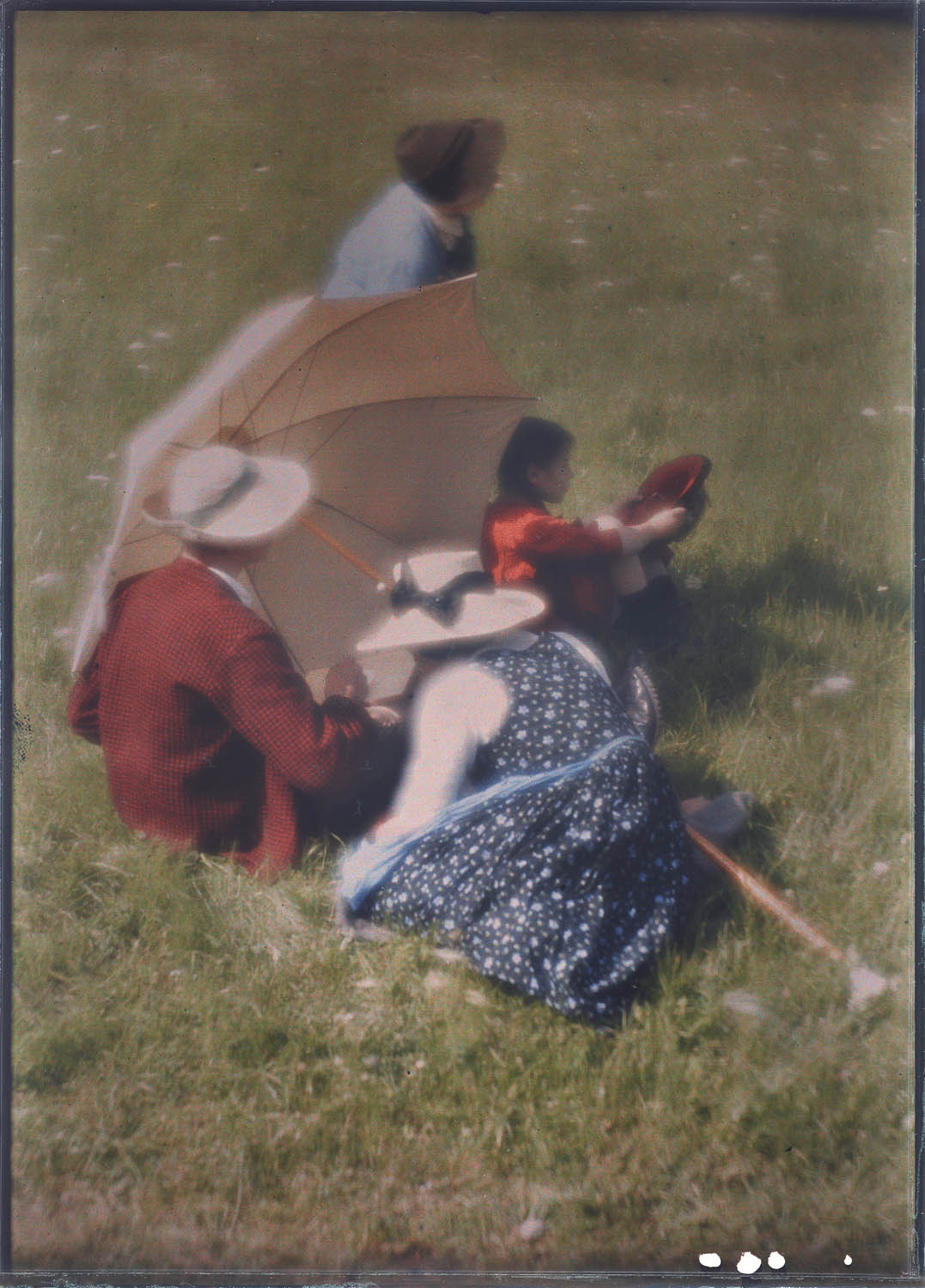
Heinrich Kühn (Austrian-German, 1866-1944) 'The Parasol' 1912


Heinrich Kühn (Austrian-German, 1866-1944)
The Parasol
1912
18 x 13cm
Autochrome
The Albertina Museum, Vienna
© Photo: The Albertina Museum, Vienna


Philippe Pottier (French, 1905-1991)
'Evening Gown by Madame Grès' 1950/1954


Philippe Pottier (French, 1905-1991)
Evening Gown by Madame Grès
1950/1954
22.2 x 16.5cm
Kodak Dye Transfer Print
The Albertina Museum, Vienna – Permanent Loan by Höhere Graphische Bundes-Lehr- und Versuchsanstalt
© Photo: The Albertina Museum, Vienna


Exhibition Texts

Introduction

True Colors: Color in Photography from 1849 to 1955

Today, colour photography is omnipresent, but the knowledge about its complex genesis is not very familiar. This exhibition highlights the multifaceted developments that were initiated starting in the mid-nineteenth century to bring colour into photography. Thanks to the extensive photographic collection of the Imperial-Royal Institution of Graphic Education and Research, the Albertina possesses unique holdings of important examples from this exciting chapter of photographic history.

As early as the middle of the nineteenth century, individual scientists managed to create unique photographs in color, which, however, were not intended for everyday use. Therefore, it was common from the early days to employ colouration or toned photographic papers. In 1891, Gabriel Lippmann achieved a crucial success in direct color photography by formulating the interferential colour process, which produced brilliantly vivid images. The Lumière brothers finally accomplished the first revolution in color photography: in 1907, they brought industrially manufactured autochromes to market. It was now for the first time that photographers and amateurs could access a practicable process for the production of colour glass slides. Thanks to more elaborate three-colour processes and Pictorialist fine art printing, which were developed around the same time, it was also possible to produce photographs in colour on paper.

The desire for colour in photography, which had been evident since it had existed, continued to prevail in the twentieth century. A decisive breakthrough was achieved by the Kodak Company in the mid-1930s, when it produced the first 35 mm photographic color slide film. Starting out from the USA, more practical materials for analog color photography, which had been developed gradually, also established themselves in Europe after World War II. It was now impossible to stop the triumph of modern colour photography.

All objects on display here come from the holdings of the Albertina or are on permanent loan from the collection of the Höhere Graphische Bundes-Lehr- und Versuchsanstalt [Higher Federal Institution of Graphic Education and Research].

Chromatic Diversity

Before it was possible to produce color photographs, photographers made use of a number of methods to bring color into their images. Even in the early days, daguerreotypes and salted paper prints were coloured by hand. While daguerreotypes were usually colored only partially, salted paper prints were sometimes heavily painted over. The so-called pigment papers, which enjoyed great popularity from the 1850s onward, enabled monochrome prints in various colours. Industrial manufacturers offered a wide range of nuances that could be variably used depending on the motif. Another way of lending prints uniform colour effects were toning baths. It was thus variable methods that were employed to produce photographs displaying a rich chromatic diversity.

A vital contribution to photography in colour was the introduction of the so called orthochromatic negative plates. In 1873, Hermann Wilhelm Vogel discovered the sensitisation of the photographic emulsion, so that the plates truthfully rendered the brightness values of blue, orange, yellow, and green. Earlier, the grey values of the blue areas had appeared overly bright, while the other colours had often seemed too dark. With the development of so-called panchromatic negative material it became possible from 1902 on to accurately record the entire visible spectral range according to tonal values. This progress was crucial for colour photography, as an incorrect recording of the tonal values during a shot could result in a distorted colour impression in the final product.

A Solitaire – the Interferential Colour Process

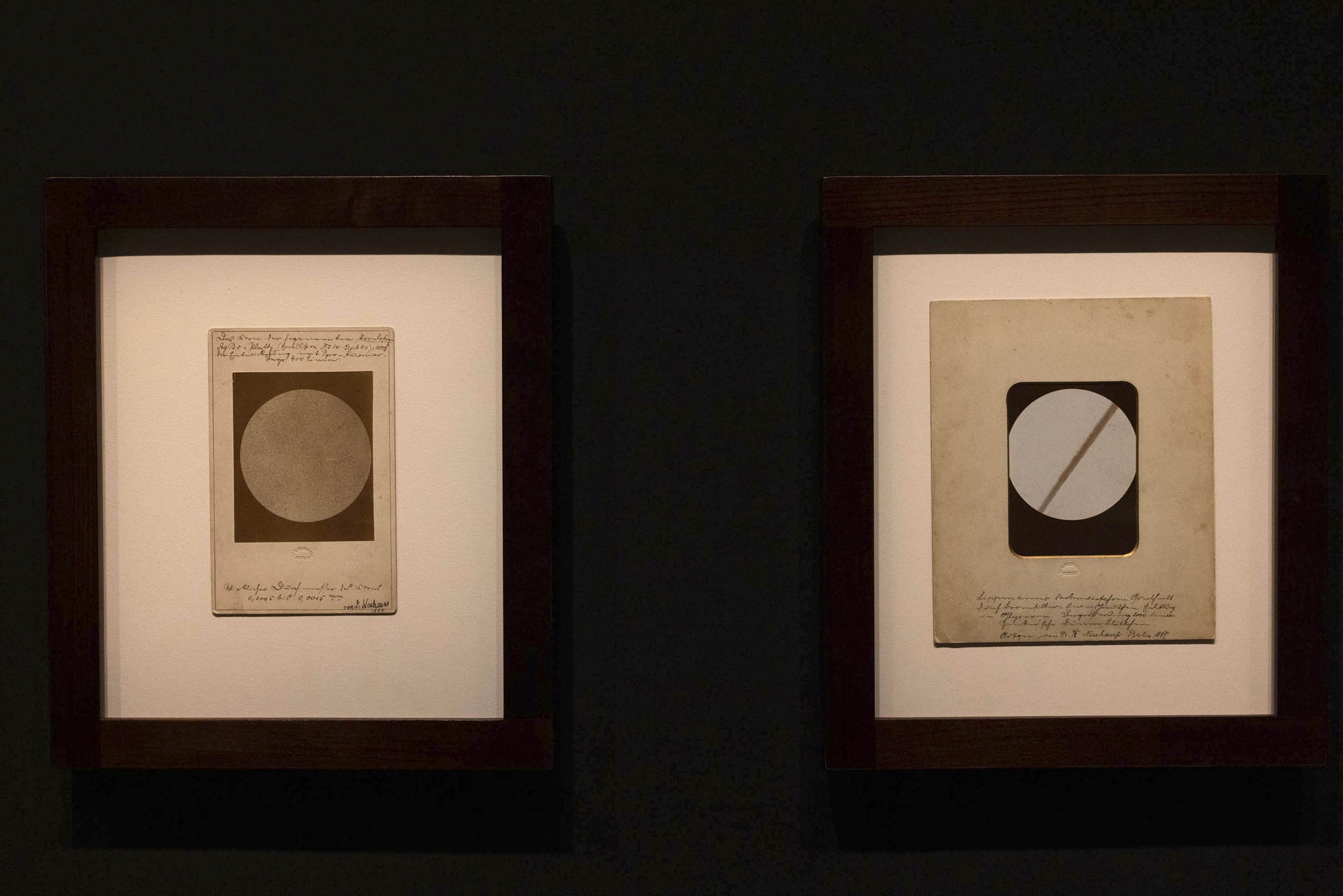
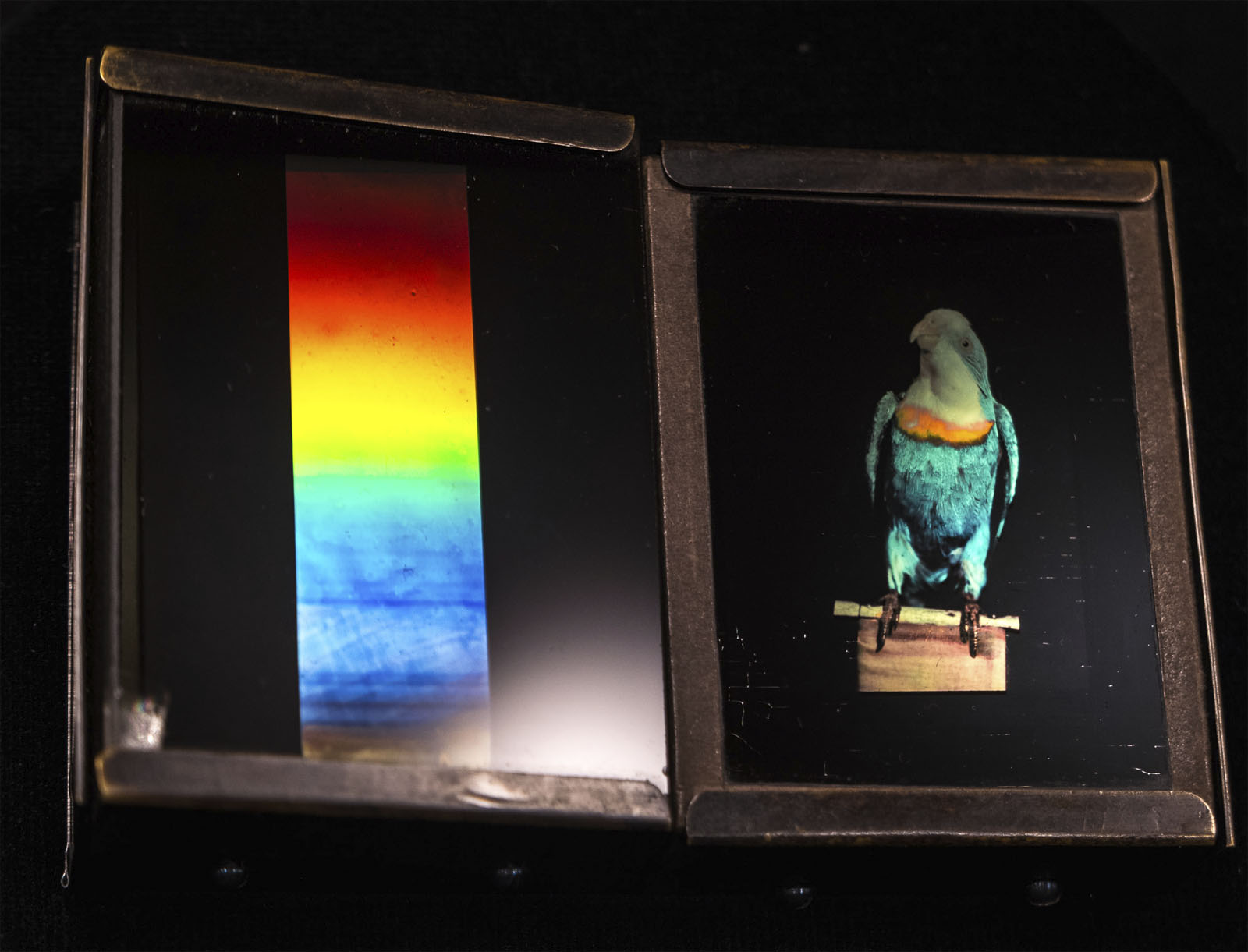
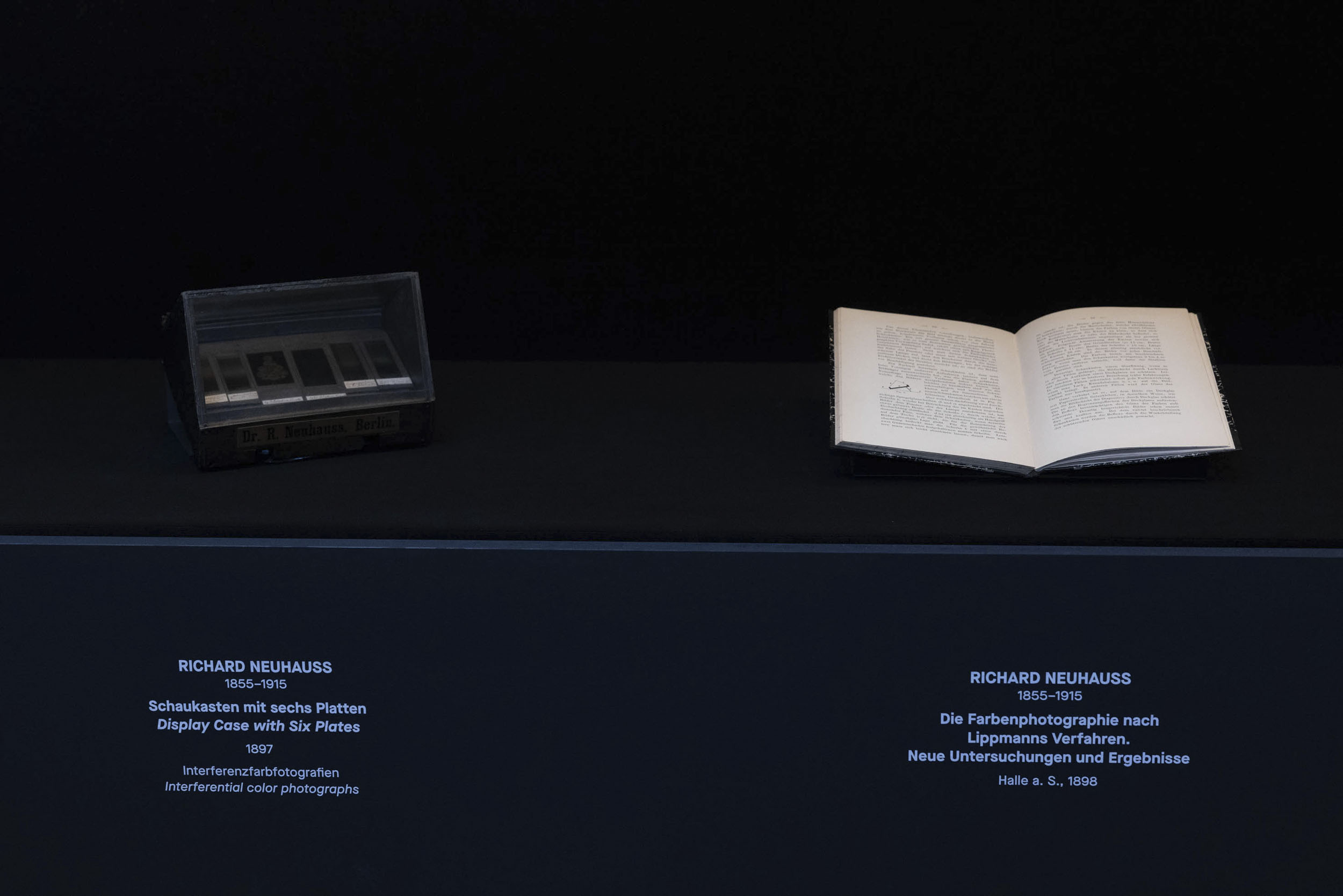
The interferential colour process, with which Gabriel Lippmann went public in Paris in 1891, is considered a first milestone in direct color photography. The method ensured permanently stable, brilliantly vivid colour images. It is based on the interference of light waves caused during exposure by the reflections of incident light rays off a reflective layer of mercury behind the negative. In the photographic emulsion, the finest layers are created alongside the standing waves, in which accumulations of silver are deposited. The spacing between the
layers corresponds to the wavelength of the recorded colour, so that when the image is viewed at the correct angle, the individual parts reflect their original colour. Standing waves are the phenomenon that also causes the colour effects on soap bubbles.

The process, which had its pitfalls, was enthusiastically received by specialists. The Lumière brothers, who as producers of photographic plates were highly interested in colour photography, collaborated with Lippmann to improve emulsions. The Berlin-based scientist Richard Neuhauss also dealt intensively with this method, based on the research conducted by the Viennese photochemist Eduard Valenta. Due to its chromatic purity, the spectrum offered itself as an ideal motif for images. Neuhauss’s plates fascinate us not only because of their luminous colours, but mainly for their wide range of motifs, which was facilitated by the reduction of exposure times.

Photomechanical Color Printing Processes

Since the development of chromolithography in 1837, color reproductions had been increasingly used for luxury volumes. In combination with photography, the printing plates could either be exposed directly, or the photographic images were transferred to the plates by means of transfer printing. This and related procedures led to an increase of elaborately produced publications of scholarly character. For the work Le Trésor artistique de la France, which contained high-quality colour reproductions of art objects held by the Louvre, the French photographer Léon Vidal developed a complex process referred to as photochromie. Photographic prints constituted the base layer onto which he printed several tinted lithographic plates. Through the additional use of metallic colours or papers and a layer of varnish, Vidal achieved three-dimensional effects.

Another important step was the introduction of the collotype process, which, from 1868 onward, allowed printing black-and-white photographs in halftones. Institutions like the Imperial-Royal Austrian Trade Museum in Vienna published such luxurious scholarly publications as the illustrated volume Orientalische Teppiche [Oriental Rugs], which appeared in 1892. For this work, black-and-white collotypes and the chromolithographic plates were partly each executed across the entire surface and partly combined with each other in order to document the knotting technique and the colouration of the objects equally accurately. A colour sample based on the original rug was first painted on the collotype and then transferred by lithography. Up to thirteen individually tinted printing plates were employed in the process. Both publications stand out for the effort to imitate the object character in the coloured reproduction.

Commercial Successes – the Autochrome and Other Color Screen Processes

In 1893, in search of a viable color process, the industrialists Auguste and Louis Lumière developed the ALL Chroma, a transparency made up of three coloured layers. Since its production and use involved a high input of costs and time, the method did not prevail, despite the vivid colors it produced. Following further research, the Lumière brothers eventually achieved a breakthrough with the autochrome in 1907, which was to revolutionise colour photography for the first time. The autochrome is also a positive transparency, yet based on the principle of additive color synthesis. A glass plate functioning as carrier material is covered with a photosensitive layer on one side. A mixture of red, green, and blue starch granules is applied on top of it, forming an irregular pattern. The image is created after exposure and negative and positive development, as the granules fuse together to form coloured areas when viewed in transmitted light. Its vibrant colors and uncomplicated handling earned the inventors of this method great commercial success. The autochrome was no longer exclusively accessible to specialists. The process was not only employed for scientific images, but also and mainly in amateur photography.

In addition to the autochrome, there were numerous products relying on the principle of additive color synthesis, such as the Joly process, which had already been developed in England ten years earlier and which was based on a grid of vertical lines. By 1910, further colour screen processes had made it onto the market, such as Omnicolore or the Agfacolor plate. But the autochrome remained the most widely used colour process until the early 1930s because of its unsurpassed chromatic brilliance.

Colour by “Indirect” Means – Three-Colour Processes

Three-colour photographic printing methods on paper are based on the principle of subtractive colour mixing. The processes, their implementation differing in detail, followed a multistep procedure. At first, three subsequent black-and-white shots were taken behind red, green, and blue filters. The so called colour separation negatives were then inverted into positives. From the three positives, three matrices – in the complementary colours cyan,
magenta, and yellow – were then produced. The colour image was finally composed of these three colours.

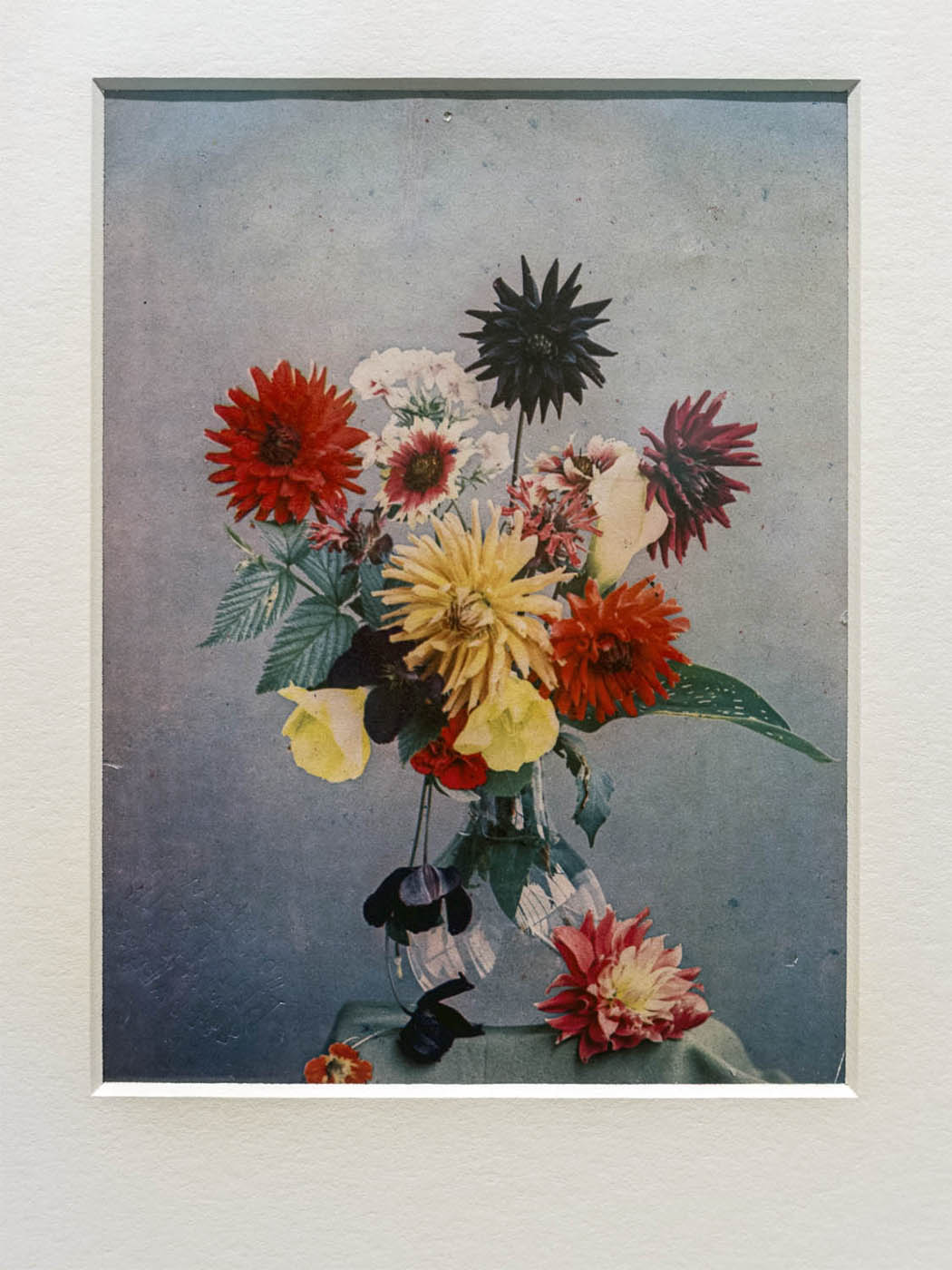
For the pinatype, three matrices were transferred onto a sheet of prepared paper. What mattered for an accomplished picture was not only proper colour adjustment, but also an absolutely precise alignment of the images. The still life of various laboratory utensils demonstrates the individual steps leading to a colourful picture. The so-called interpositives provide the basis for the coloured matrices, which, printed one upon the other, provide the final version of the picture. Apart from still lifes, photographers also employed this technique, which was developed to market maturity by Ernst König in 1905, for portraits. In these photographs, they showcased their creative skills in handling colour.

Pictorialist Endeavors – Fine Art Printing Processes

Artistic photography around 1900 was propagated by wealthy amateurs who wished to elevate photography to the level of fine art. Their ambition was to be able to manipulate the photographic print by hand, as the mechanical aspect of photography was criticised as being inartistic. The gum bichromate print, a so-called fine art printing process, allowed them to control the work as much as possible. A mixture of pigments, gum arabic, and photosensitive salts was applied to coarse paper and then exposed. After washing out the unexposed areas, the image became visible. For multicolor works, this process could be repeated as often as desired, each time using a different pigment. This advancement of the gum bichromate printing technique toward multicolour printing was first implemented by members of the Camera Club in Vienna, an association of amateur photographers. The possibility of creating such colourful images that could be used as decorative works of art on the wall and sometimes reach large dimensions, was particularly enthusiastically received in German-speaking countries.

Paths to Modern Colour Photography

The consequential breakthrough to mass-market color photography was achieved in the mid-1930s, when the companies Eastman Kodak (USA) and, shortly thereafter, Agfa (Germany) put so-called modern multilayer films with dye couplers on the market. By 1936, the first 35mm colour slide films and, by 1942, the first colour films and corresponding photographic papers for the negative-positive process were available, the latter of which revolutionised colour photography a second time. Yet the outbreak of World War II initially delayed the spread of these innovations in Europe. But from the 1950s onward, the triumph of modern analog colour photography could not longer be stopped.

However, contemporary high-quality copying and printing processes were still extremely expensive and complicated. The Duxochrome and dye-transfer processes, for example, were valued not only for the brilliance and stability of their colours, but also because they could be manipulated during the production process. But due to the high cost of production, they were mainly used for commercial purposes. Product and fashion photography accommodated the needs of advertising and the press. In Vienna, the photographers Arthur Benda and Hans Madensky were very successful in these fields.

Text from the Albertina Museum


Installation view of the exhibition 'True Colors: Color in Photography from 1849 to 1955' at Albertina Modern
Installation view of the exhibition 'True Colors: Color in Photography from 1849 to 1955' at Albertina Modern, Vienna


Installation views of the exhibition True Colors: Color in Photography from 1849 to 1955 at Albertina Modern
Photos: Karin Svadlenak-Gomez


Ernst König (German, 1869-1924) 'Still-life with flowers' 1905


Ernst König (German, 1869-1924)
Still-life with flowers
1905
Pinatype
Photo: Karin Svadlenak-Gomez


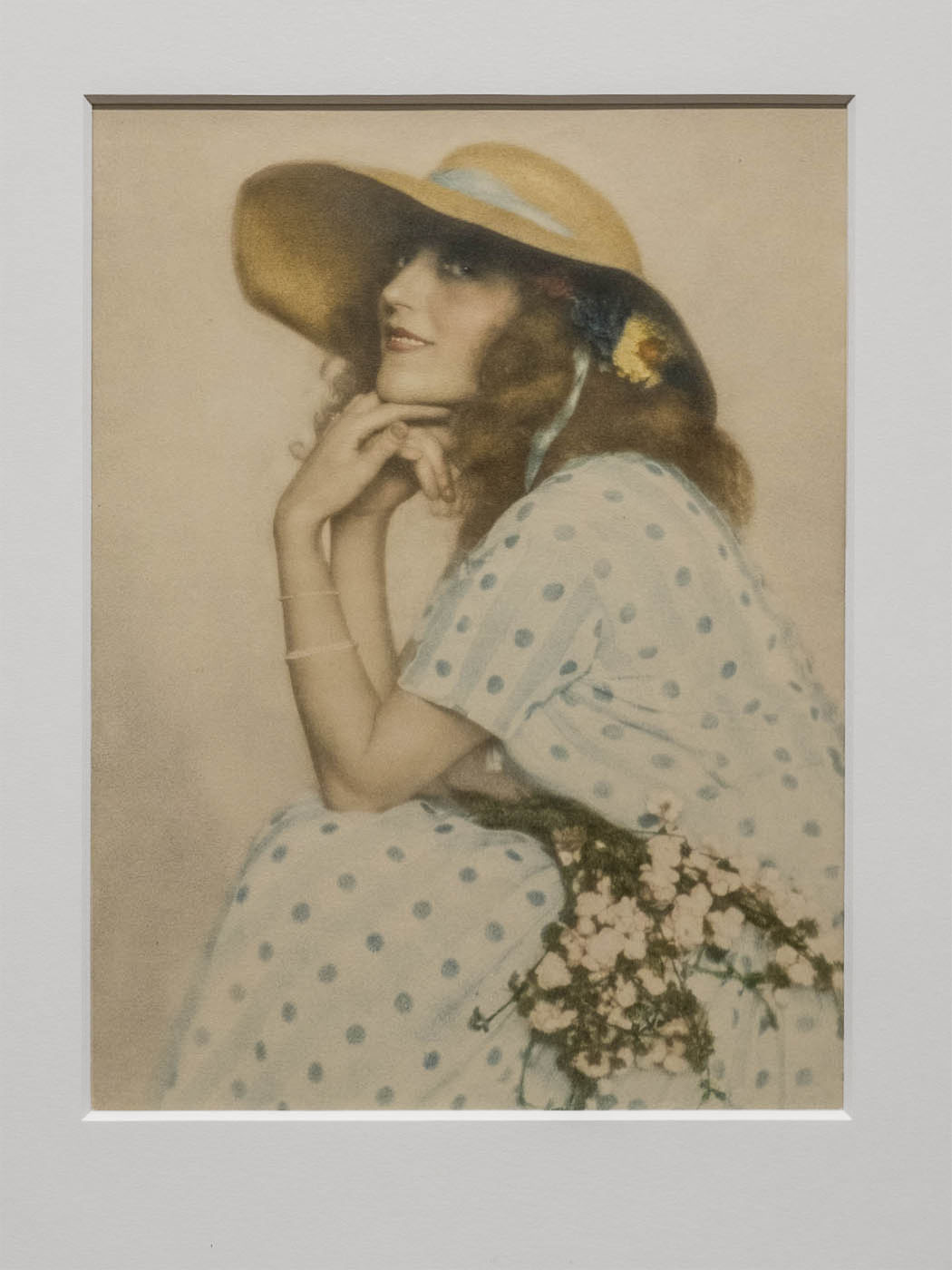
Atelier D'Ora (est. 1907) 'Mrs. Oergan' 1924


Atelier D’Ora (est. 1907)
Mrs. Oergan
1924
Bromoil transfer print
Photo: Karin Svadlenak-Gomez


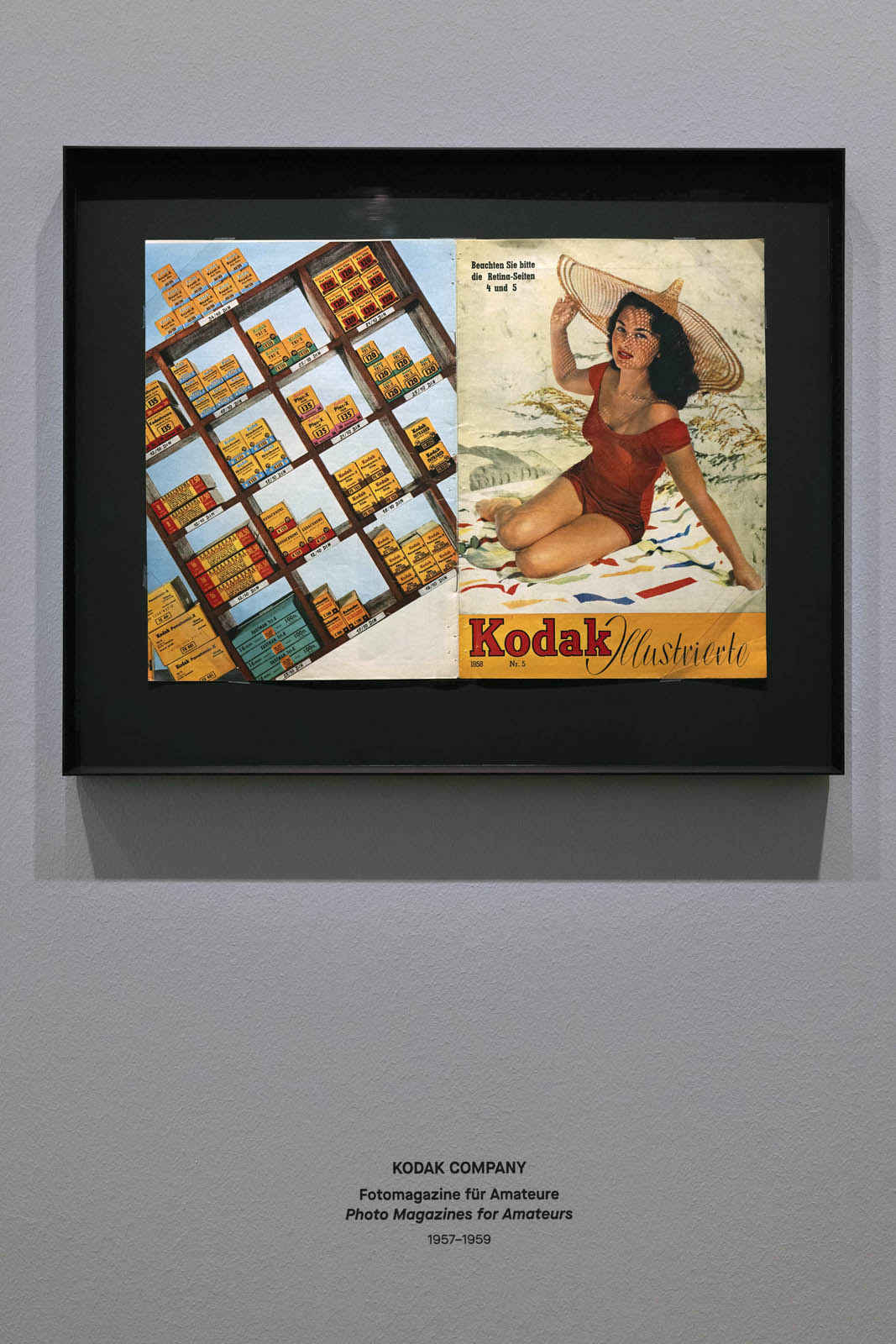
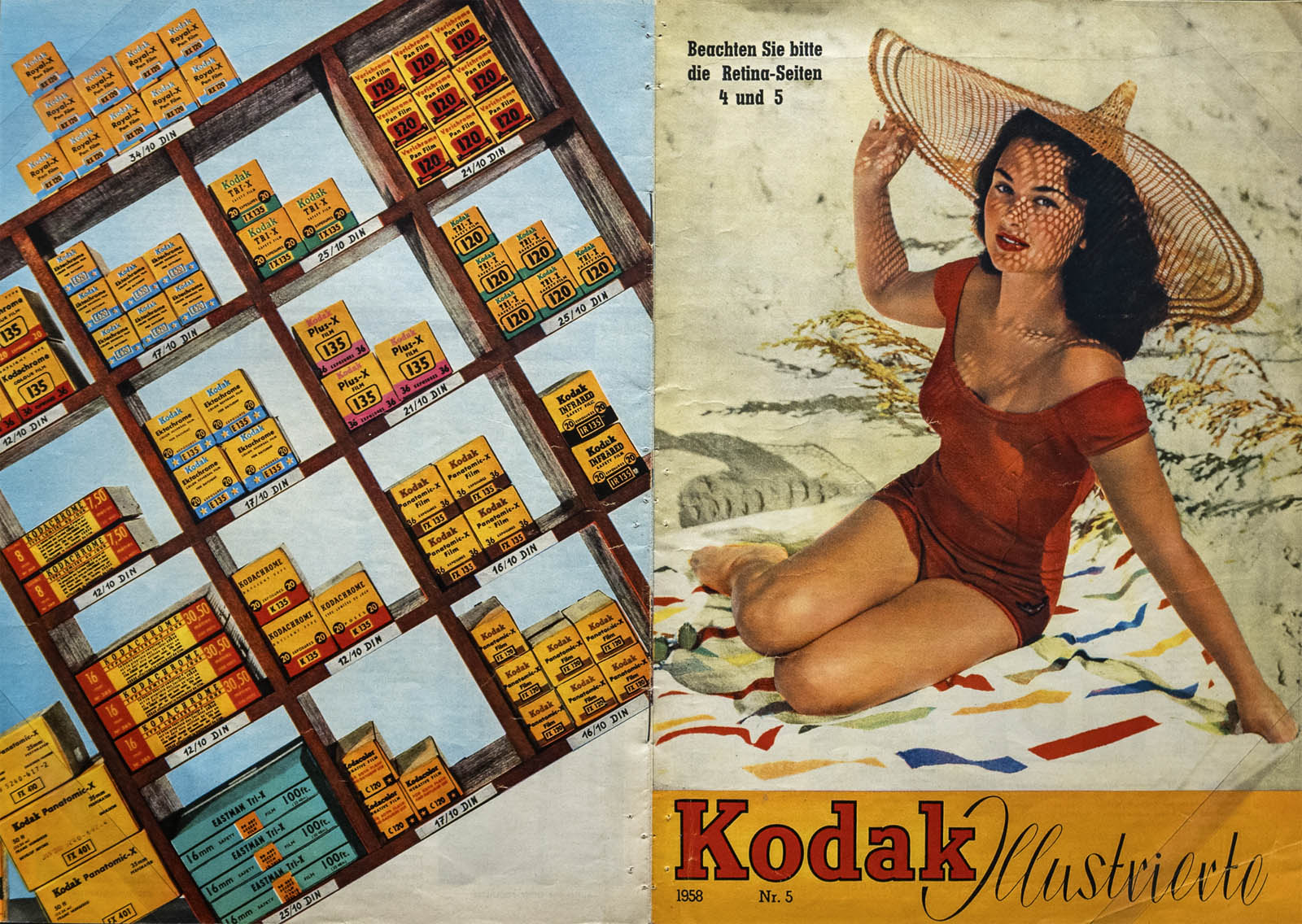
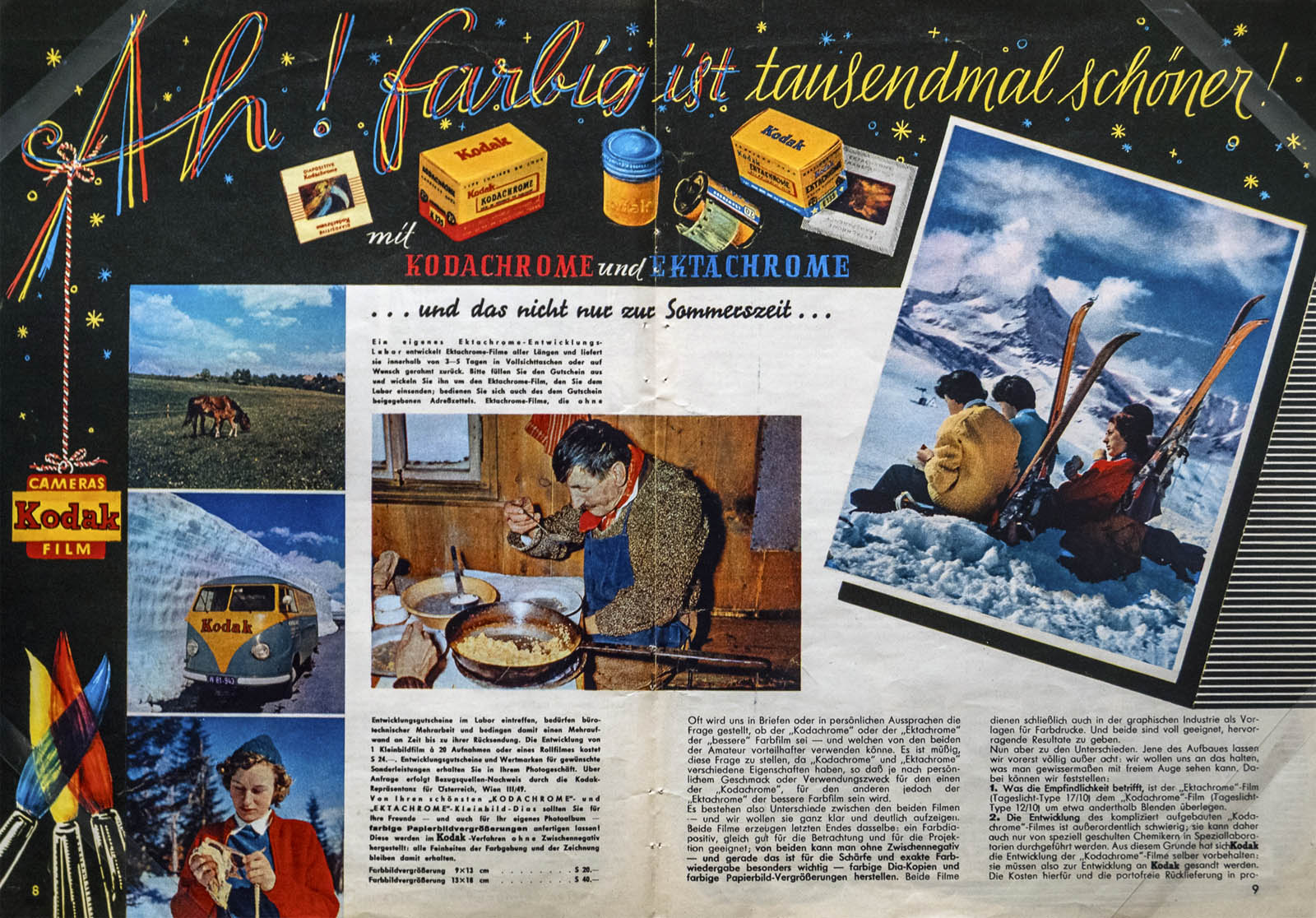
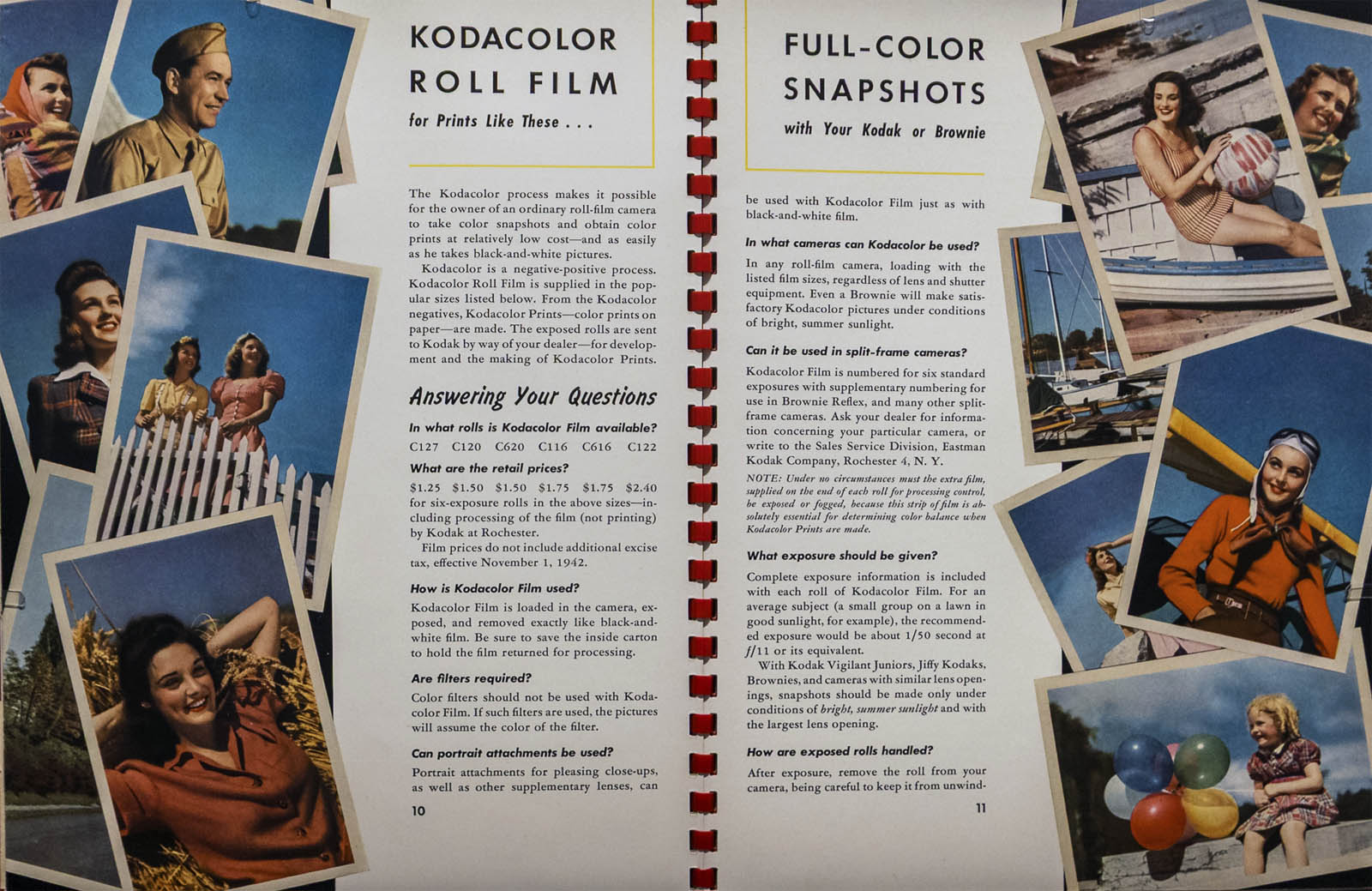
Installation view of the exhibition 'True Colors: Color in Photography from 1849 to 1955' at Albertina Modern, Vienna showing Kodak Company. 'Photo Magazines for Amateurs' 1957-1959


Installation view of the exhibition True Colors: Color in Photography from 1849 to 1955 at Albertina Modern, Vienna showing Kodak Company. Photo Magazines for Amateurs 1957-1959


Installation view of the exhibition 'True Colors: Color in Photography from 1849 to 1955' at Albertina Modern, Vienna


Installation views of the exhibition True Colors: Color in Photography from 1849 to 1955 at Albertina Modern, Vienna
Photos: Karin Svadlenak-Gomez


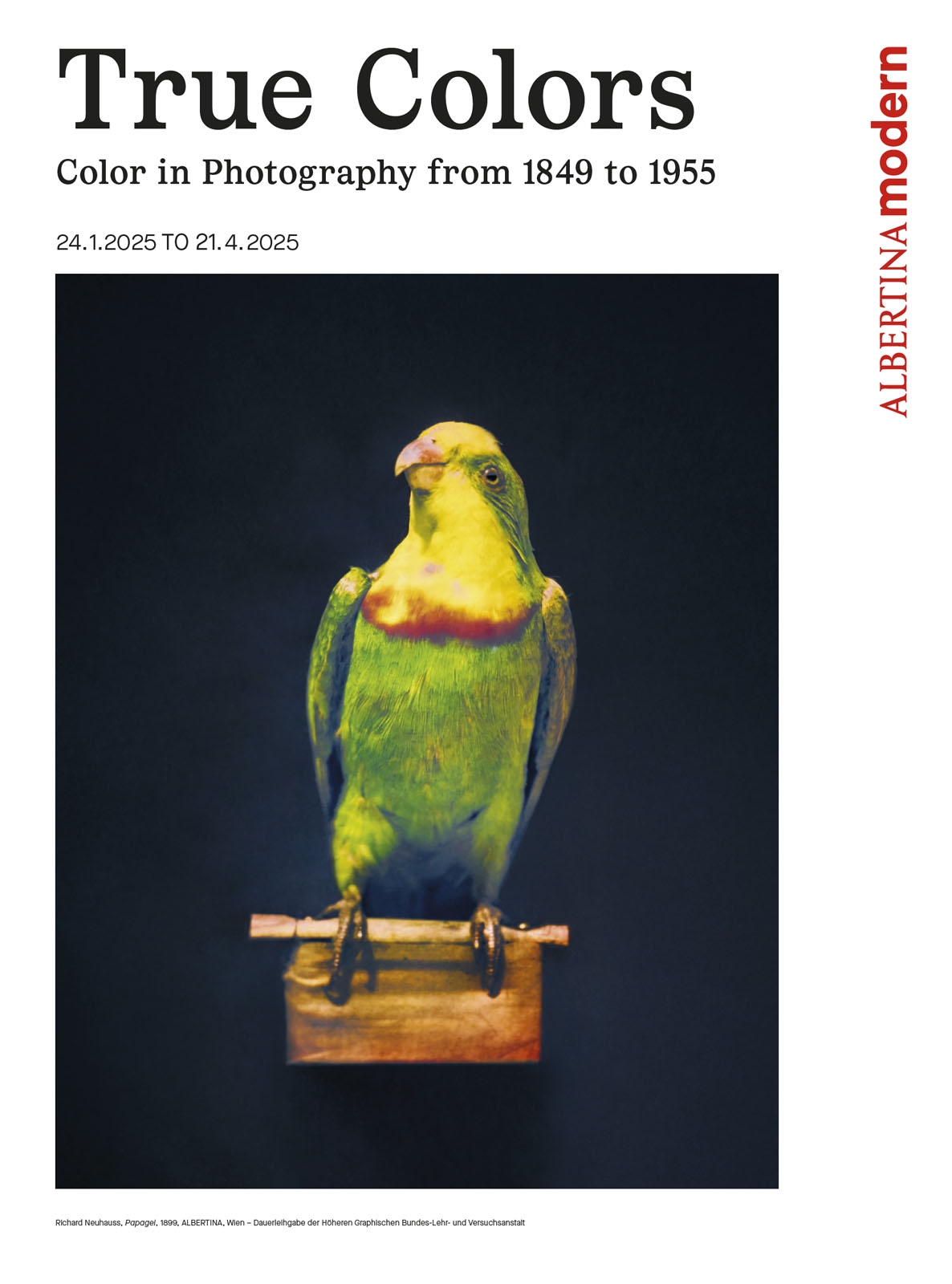
'True Colors: Color in Photography from 1849 to 1955' at Albertina Modern poster


True Colors: Color in Photography from 1849 to 1955 at Albertina Modern poster


The Albertina Museum
Albertinaplatz 1
1010 Vienna
Phone: +43 (0)1 534 83 0

Daily 10am – 6pm
Except Wednesday and Friday 10am – 9pm

The Albertina Museum website

LIKE ART BLART ON FACEBOOK

Back to top

European research tour exhibition: ‘Into the Night: Cabarets and Clubs in Modern Art’ at the Barbican Art Gallery, UK Part 2

Exhibition dates: 4th October, 2019 – 19th January, 2020
Visited October 2019 posted January 2020

Curator: Florence Ostende


Theo van Doesburg (Dutch, 1883-1931) 'The Ciné-bal (cinema-ballroom) at Café L'Aubette, Strasbourg, designed by Theo van Doesburg' 1926-1928 from the exhibition 'Into the Night: Cabarets and Clubs in Modern Art' at the Barbican Art Gallery, Oct 2019 - Jan 2020


Theo van Doesburg (Dutch, 1883-1931)
The Ciné-bal (cinema-ballroom) at Café L’Aubette, Strasbourg, designed by Theo van Doesburg
1926-1928
Image: Collection Het Nieuwe Instituut, donation Van Moorsel, archive (code): DOES, inv.nr AB5252


Part 2 on this exceptional exhibition. Of particular interest here are:

the inspired paintings and drawings by Jeanne Mammen of Berlin nightlife which documents “the changing role of women and offer rare images of queer female desire.” Her work, associated with the New Objectivity and Symbolism movements, is incisive and sympathetic in its observation of difference and “depravity”. Her line is strong and the characterisation, assured;

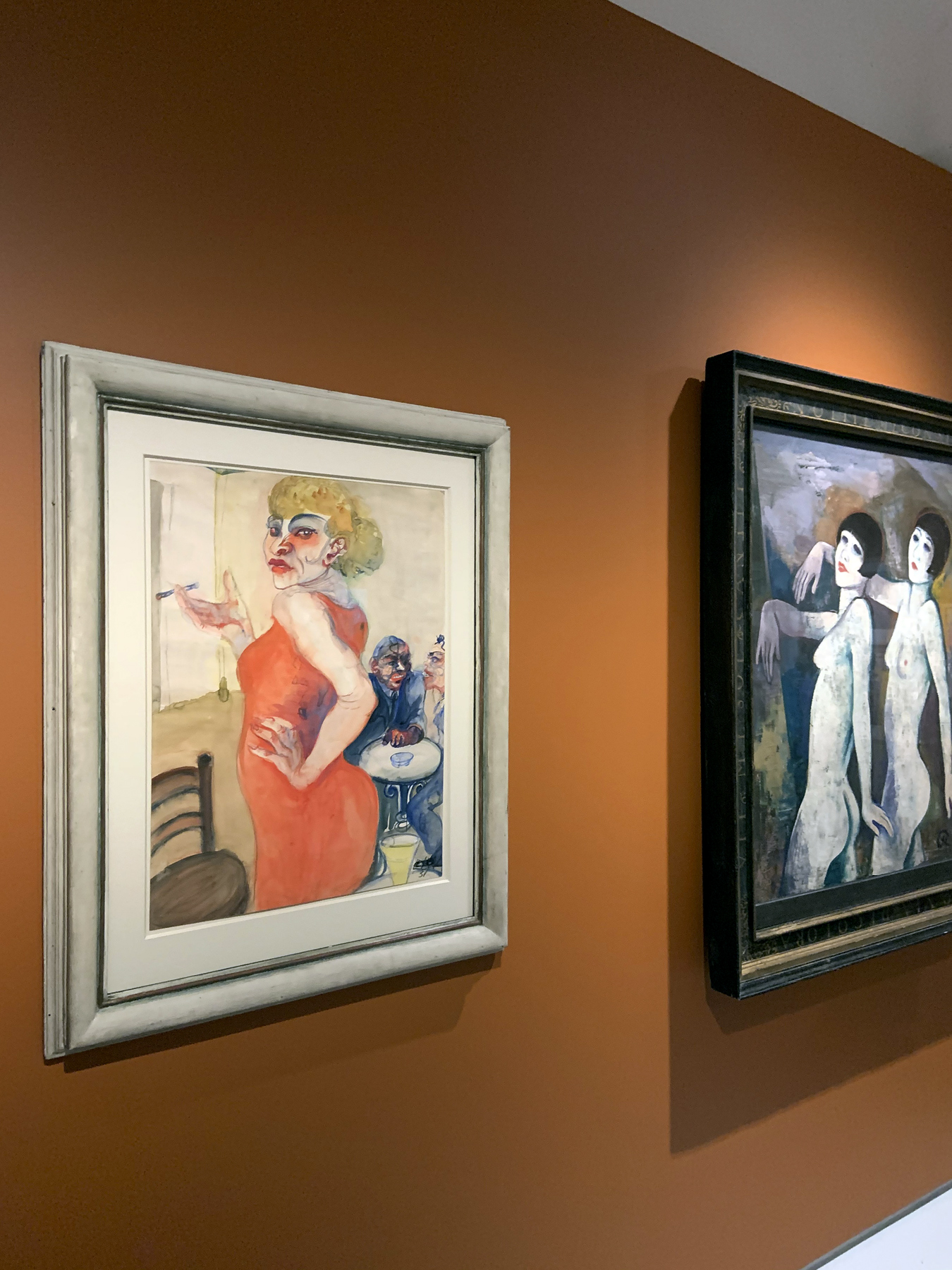
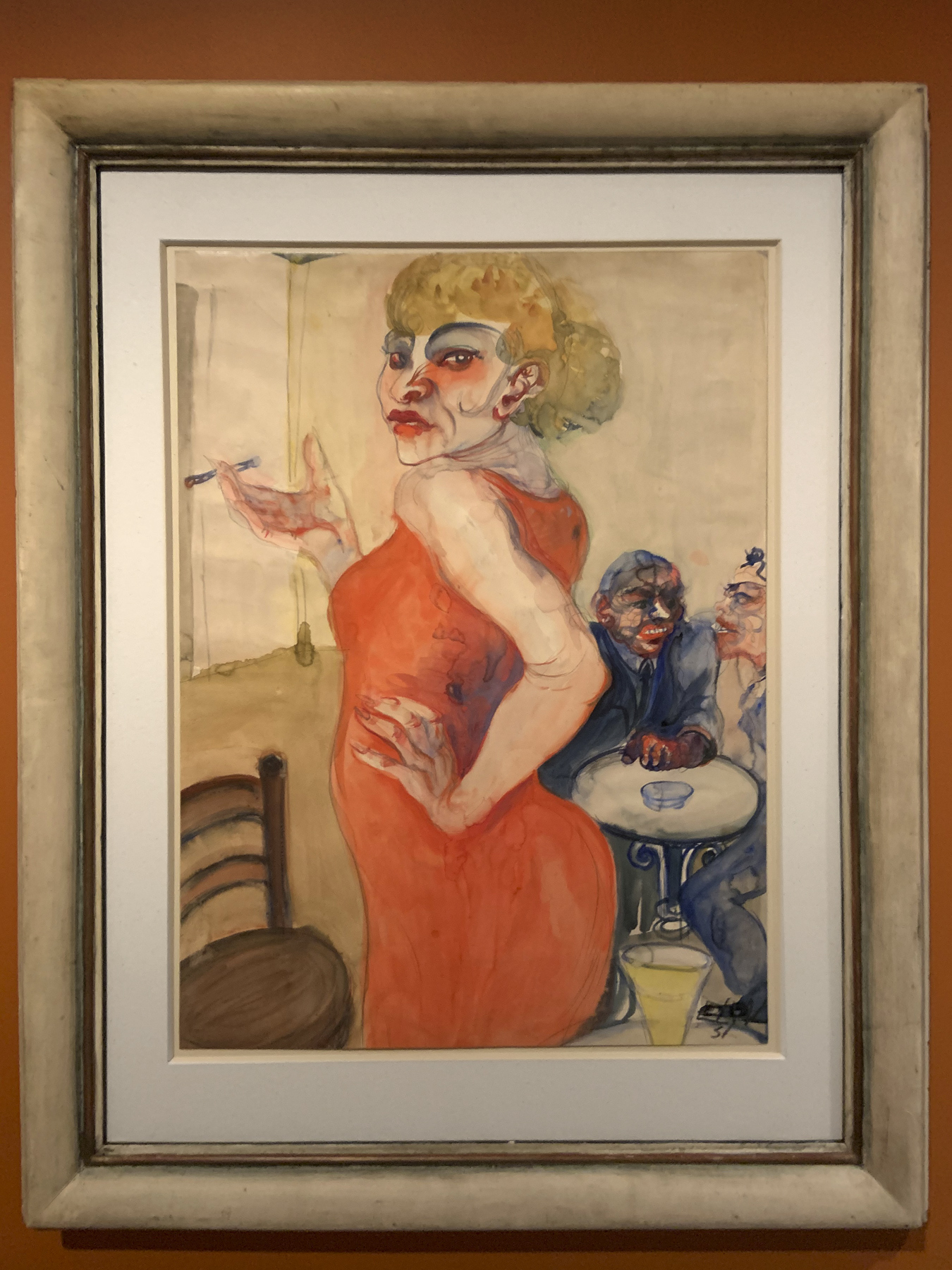
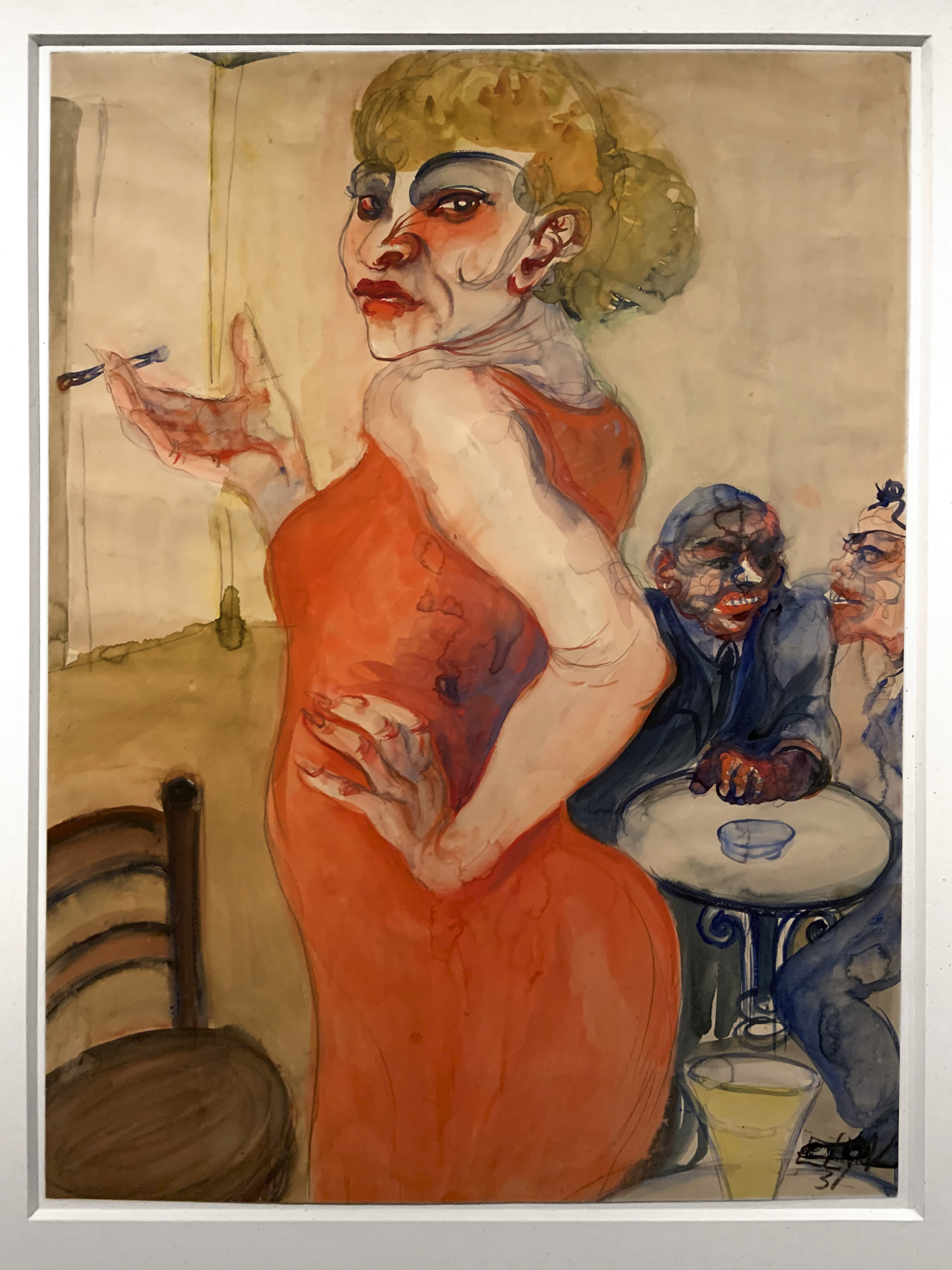
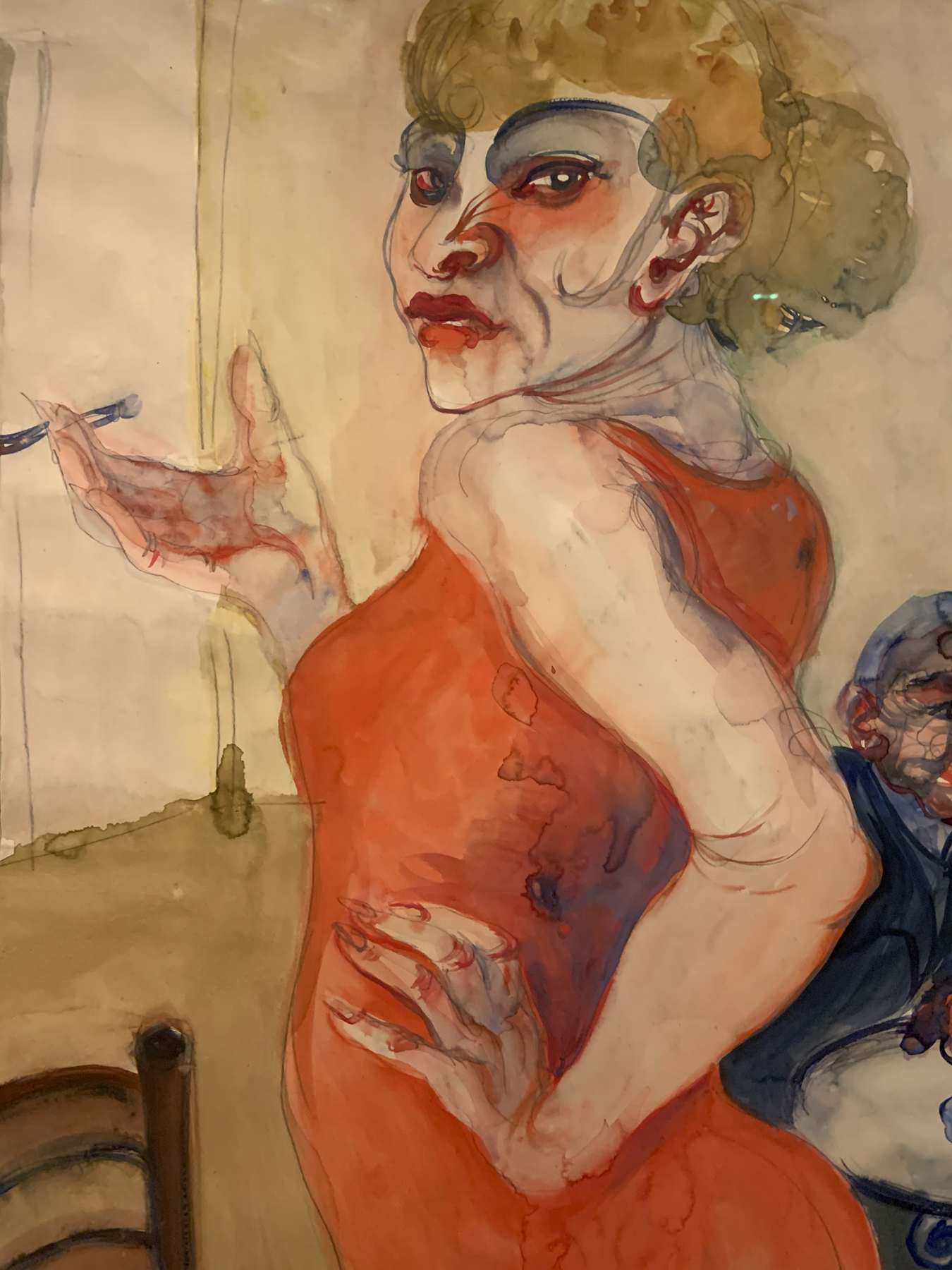
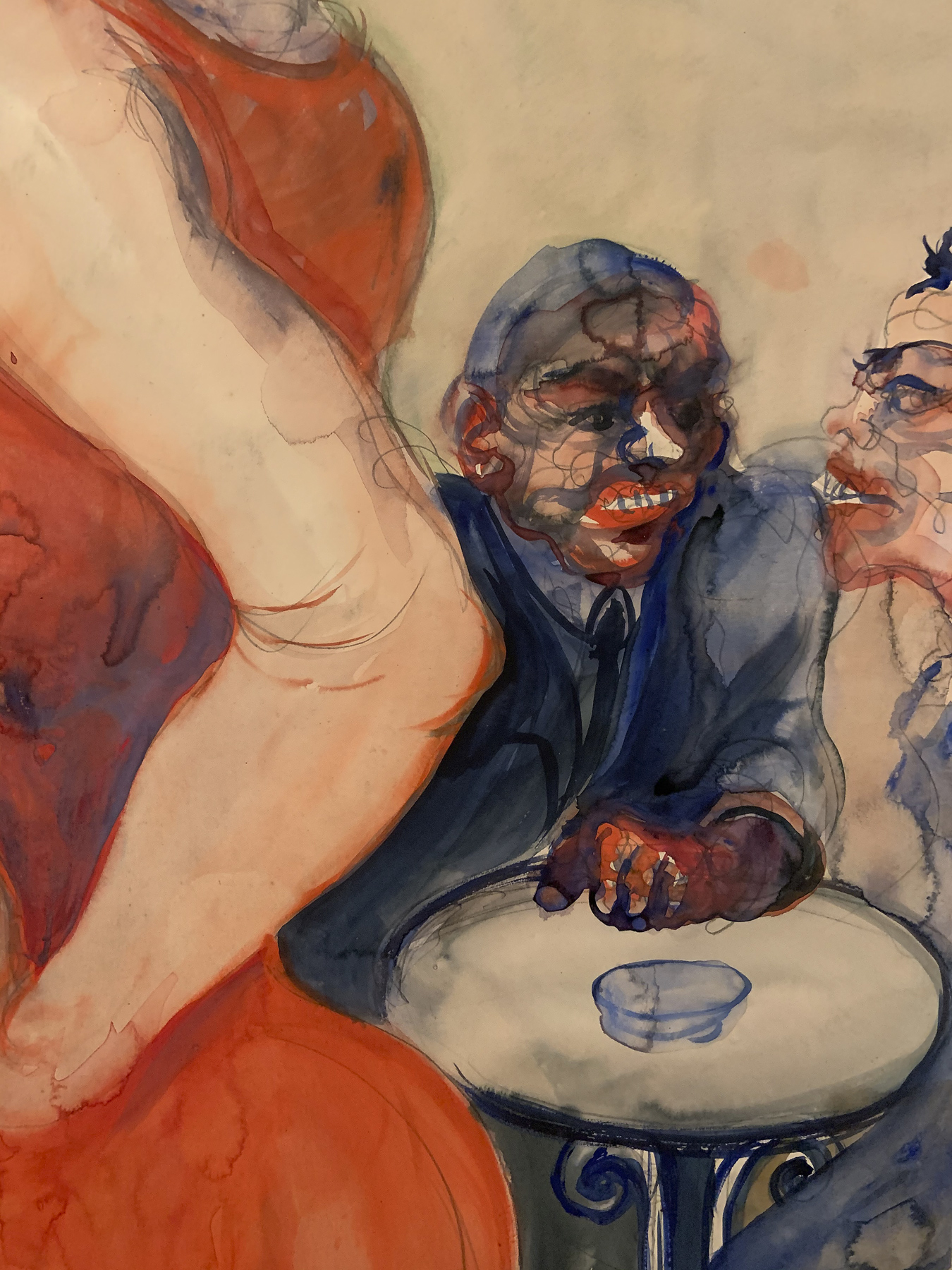
Elfriede Lohse-Wächtler’s “scenes of Hamburg after dark [which] convey a raw sense of possibility through bold line, clashing colour and startling imagery.” The attitude of the hands in the painting Lissy (1931, below) balanced by the simplicity of the chair at left, and the furious line and bleeding, washes of watercolour of the men at the table at right – replete with their protruding, predatory teeth – make this a compelling image.

I think I might have found myself a new art hero.

Dr Marcus Bunyan


Many thankx to the Barbican Art Gallery for allowing me to publish the media photographs in the posting. All installation images are iPhone images © Dr Marcus Bunyan unless otherwise stated. Please click on the photographs for a larger version of the image. See Part 1 of the posting with my comments on the exhibition.


Strasbourg L'Aubette 1928 wall text from the exhibition Theo van Doesburg (Dutch, 1883-1931) 'The Ciné-bal (cinema-ballroom) at Café L'Aubette, Strasbourg, designed by Theo van Doesburg' 1926-1928 from the exhibition 'Into the Night: Cabarets and Clubs in Modern Art' at the Barbican Art Gallery, Oct 2019 - Jan 2020

Strasbourg L'Aubette 1928 wall text Theo van Doesburg (Dutch, 1883-1931) 'The Ciné-bal (cinema-ballroom) at Café L'Aubette, Strasbourg, designed by Theo van Doesburg' 1926-1928 from the exhibition 'Into the Night: Cabarets and Clubs in Modern Art' at the Barbican Art Gallery, Oct 2019 - Jan 2020


Strasbourg: L’Aubette 1928 wall text
Photos: Marcus Bunyan


Installation view of the exhibition 'Into the Night: Cabarets and Clubs in Modern Art' at the Barbican Art Gallery, Oct 2019 - Jan 2020


Into the Night: Cabarets and Clubs in Modern Art
Installation view Barbican Art Gallery 4 October 2019 – 19 January 2020
© Tristan Fewings / Getty Images


Installation view of the exhibition 'Into the Night: Cabarets and Clubs in Modern Art' at the Barbican Art Gallery, Oct 2019 - Jan 2020

Installation view of the exhibition 'Into the Night: Cabarets and Clubs in Modern Art' at the Barbican Art Gallery, Oct 2019 - Jan 2020

Installation view of the exhibition 'Into the Night: Cabarets and Clubs in Modern Art' at the Barbican Art Gallery, Oct 2019 - Jan 2020


Installation views of the exhibition Into the Night: Cabarets and Clubs in Modern Art at the Barbican Art Gallery, London
Photos: Marcus Bunyan


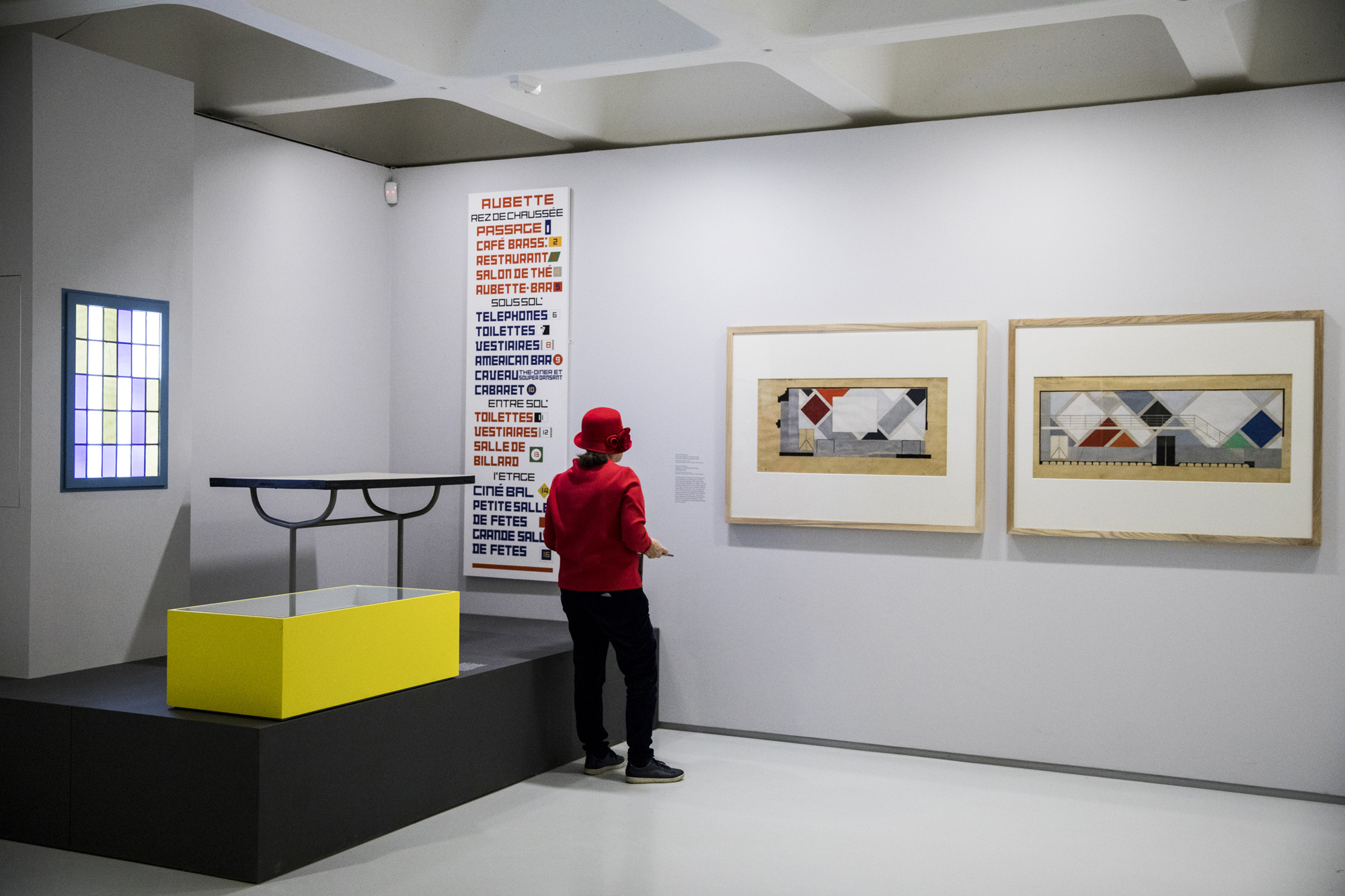
Theo van Doesburg (Dutch, 1883-1931) 'L'Aubette: Projet de composition pour le sol du café-brasserie et du café-restaurant' (L'Aubette: Design for a composition for the floor of the café-brasserie and the café-restaurant) 1927 (installation view)


Theo van Doesburg (Dutch, 1883-1931)
L’Aubette: Projet de composition pour le sol du café-brasserie et du café-restaurant (L’Aubette: Design for a composition for the floor of the café-brasserie and the café-restaurant) (installation view)
1927
Gouache and graphite pencil on tracing paper
Paris, Centre Pompidou – Museé national d’art moderne – Centre de création industrielle
Photo: Marcus Bunyan


Theo van Doesburg (Dutch, 1883-1931) 'L'Aubette: Projet de composition pour le sol du café-brasserie et du café-restaurant' (L'Aubette: Design for a composition for the floor of the café-brasserie and the café-restaurant) 1927 (installation view)


Theo van Doesburg (Dutch, 1883-1931)
L’Aubette: Projet de composition pour le sol du café-brasserie et du café-restaurant (L’Aubette: Design for a composition for the floor of the café-brasserie and the café-restaurant) (installation view)
1927
Gouache and graphite pencil on tracing paper
Paris, Centre Pompidou – Museé national d’art moderne – Centre de création industrielle
Photo: Marcus Bunyan


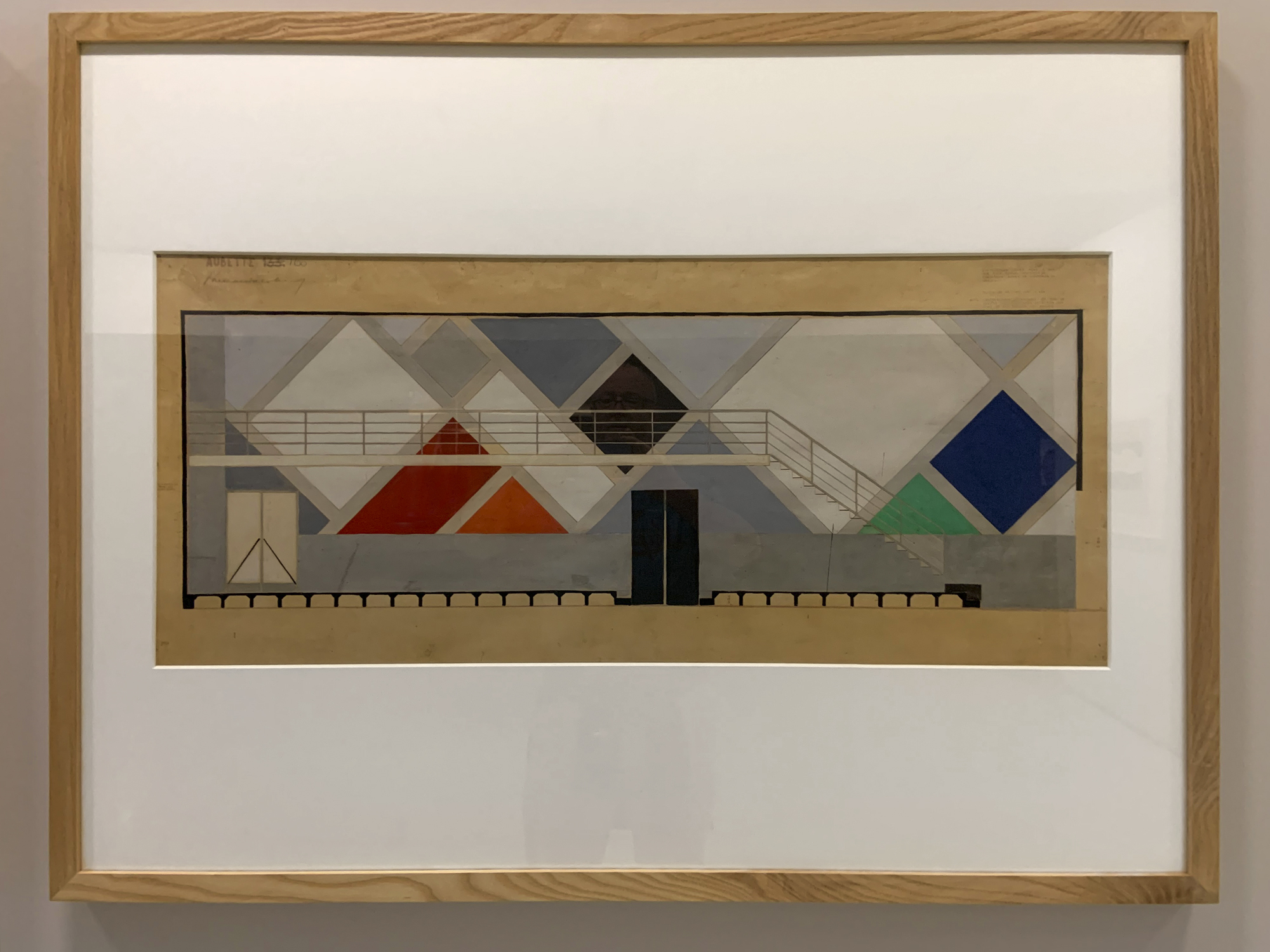
Theo van Doesburg (Dutch, 1883-1931) 'Final colour design for the screen wall of the Ciné-Dancing at L'Aubette' 1927 (installation view)


Theo van Doesburg (Dutch, 1883-1931)
Final colour design for the screen wall of the Ciné-Dancing at L’Aubette (installation view)
1927
East India ink and paint on paper
Collection Het Nieuwe Instituut, Rotterdam. Gift Van Moorsel
Photo: Marcus Bunyan


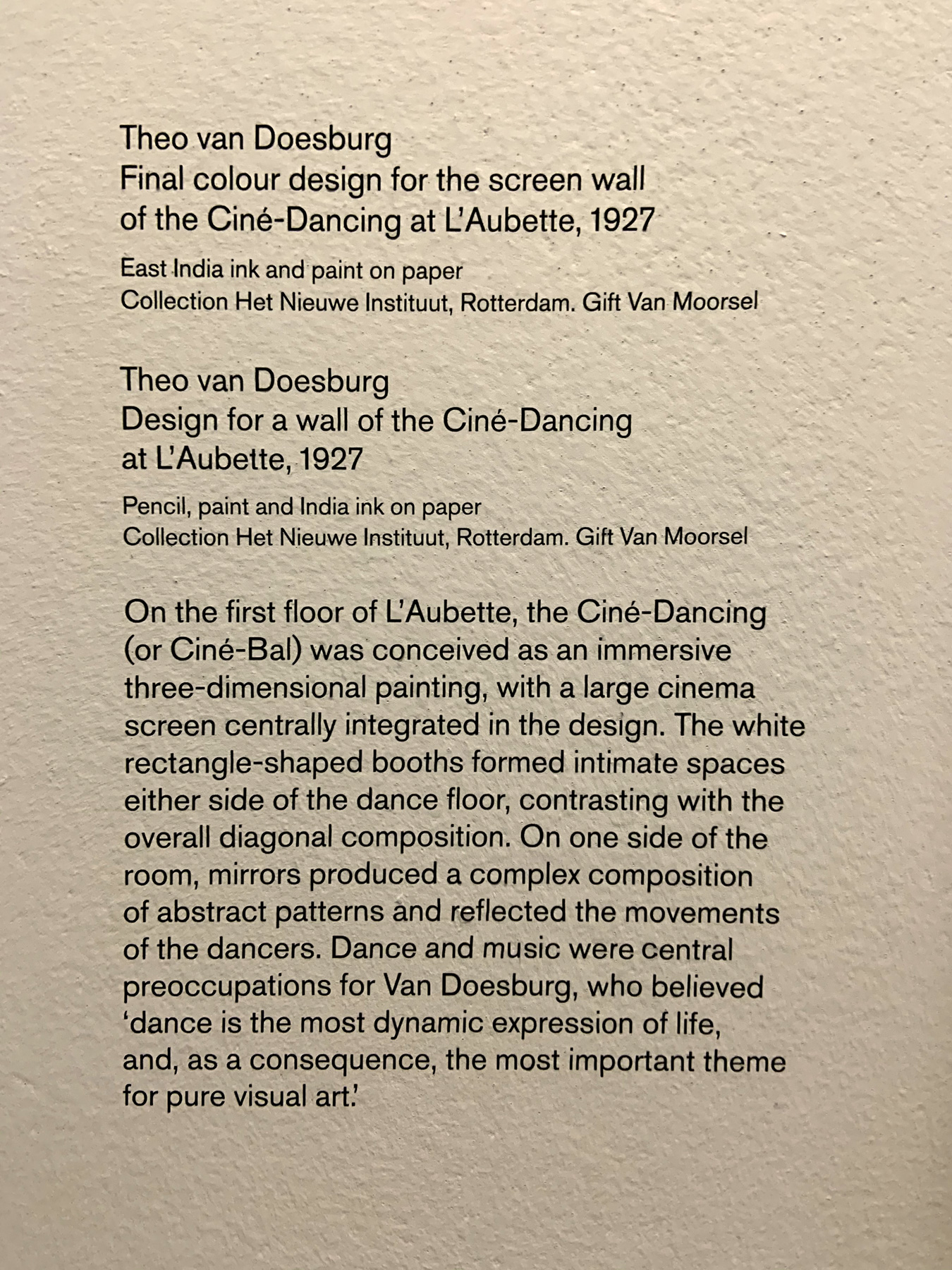
Theo van Doesburg Ciné-Dancing wall text from the exhibition 'Into the Night: Cabarets and Clubs in Modern Art' at the Barbican Art Gallery, Oct 2019 - Jan 2020


Theo van Doesburg Ciné-Dancing wall text
Photo: Marcus Bunyan


Installation view of the exhibition 'Into the Night: Cabarets and Clubs in Modern Art' (downstairs gallery, room recreation)


Into the Night: Cabarets and Clubs in Modern Art (downstairs gallery, room recreation)
Installation view Barbican Art Gallery 4 October 2019 – 19 January 2020
© Tristan Fewings / Getty Images


Downstairs gallery, room recreation


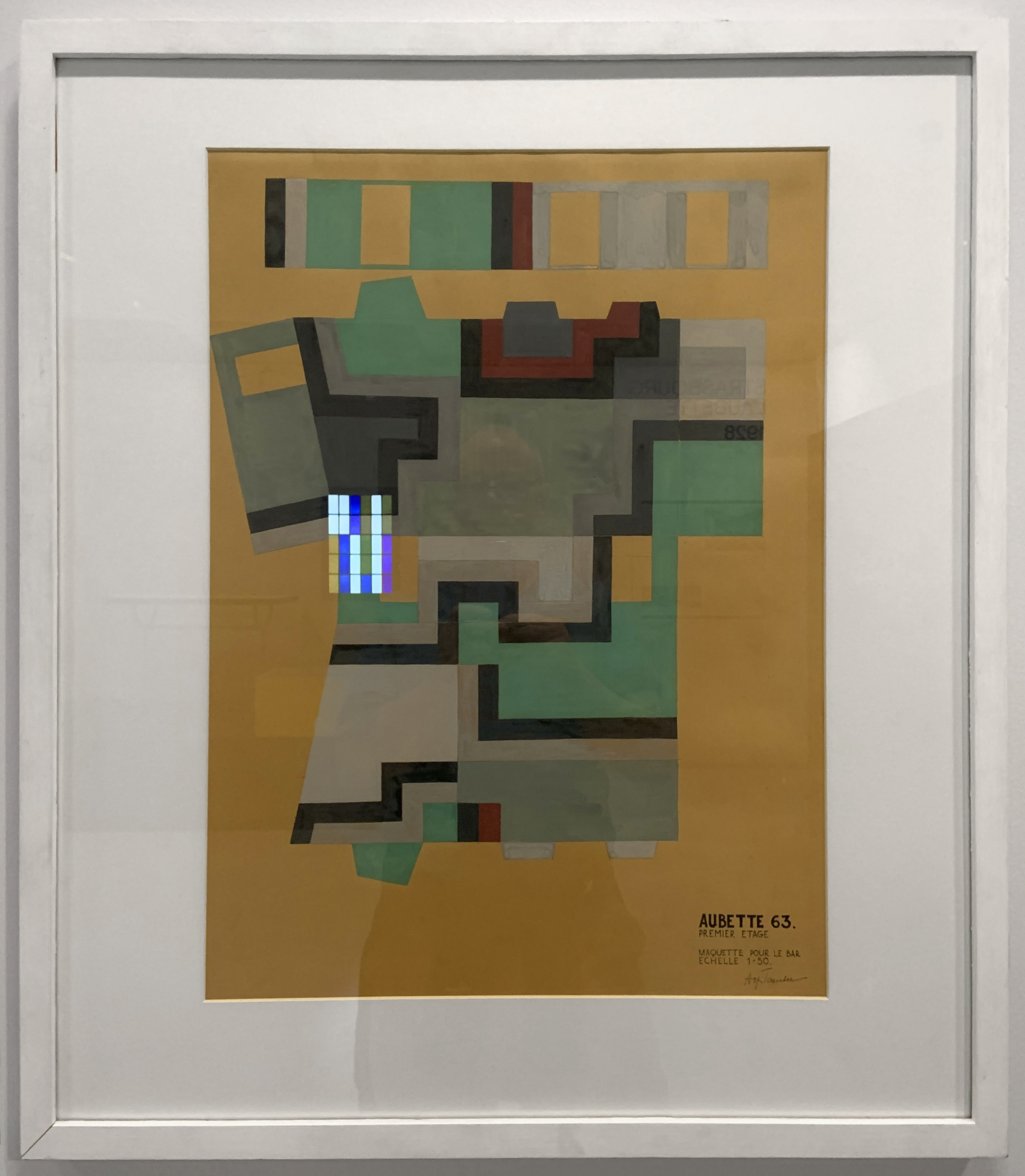
Sophie Taeuber-Arp (Swiss, 1889-1943) 'Aubette 63' 1927 (installation view)


Sophie Taeuber-Arp (Swiss, 1889-1943)
Aubette 63 (installation view)
1927
Gouache on paper
Musée d’Art Moderne et Contemporain de Strasbourg
Photo: Marcus Bunyan


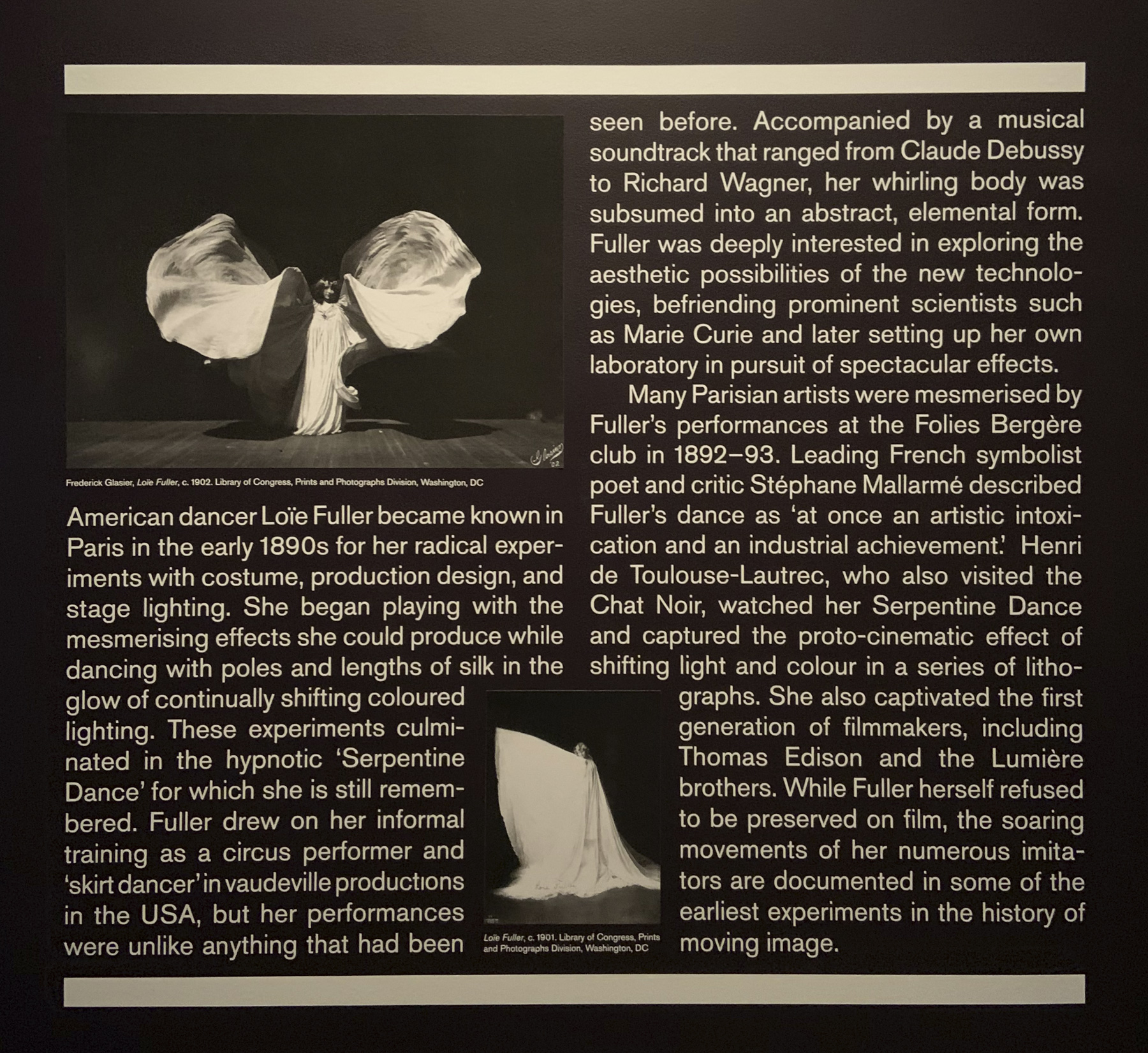
Paris: Loïe Fuller 1890s wall text from the exhibition 'Into the Night: Cabarets and Clubs in Modern Art' at the Barbican Art Gallery, Oct 2019 - Jan 2020

Paris: Loïe Fuller 1890s wall text from the exhibition 'Into the Night: Cabarets and Clubs in Modern Art' at the Barbican Art Gallery, Oct 2019 - Jan 2020


Paris: Loïe Fuller 1890s wall text
Photos: Marcus Bunyan


Unknown photographer (attributed to Falk Studio). 'Loie Fuller' c. 1901


Unknown photographer (attributed to Falk Studio)
Loïe Fuller
c. 1901
Courtesy of the Library of Congress, Prints and Photographs Division, Washington, DC


1895-1908 Loie Fuller’s Serpentine Dance (highlights from the greatest movie pioneers’ films)

Many of the earliest filmmakers chose Loie Fuller’s Serpentine Dance as a subject for one or more films: the Skladanowsky brothers (1895), Dickson and Heise for Edison Manifacturing Company (1895), Dickson for American Mutoscope (1896), Lumière (1896), Demeny (1897), possibly Alice Guy (1899+1900+1902), Méliès (1899), G.A. Smith (1902), De Chomon (1902+1908) and many others.

Loie Fuller was a pioneer of modern dance and of theatrical lighting effects. She developed this dance in 1891 and combined her choreography with silk costumes illuminated by multi-colored lighting of her own design. In several of the Serpentine Dance movies her lighting has been reinterpreted through hand-colored effects. Fuller also had a successful Fire Dance of which elements are often incorporated in filmed Serpentine Dance performances (yet rarelymentioned).

It is unclear whether any performance by Loie Fuller herself has ever been filmed. Possibly all of the featured dancers are imitators, although Segundo de Chomon’s 1902 film title “Loie Fuller” makes a strong claim.

 Text from the YouTube website

Magnificent! Not Loïe Fuller but one of her many imitators. She refused to be captured on film.


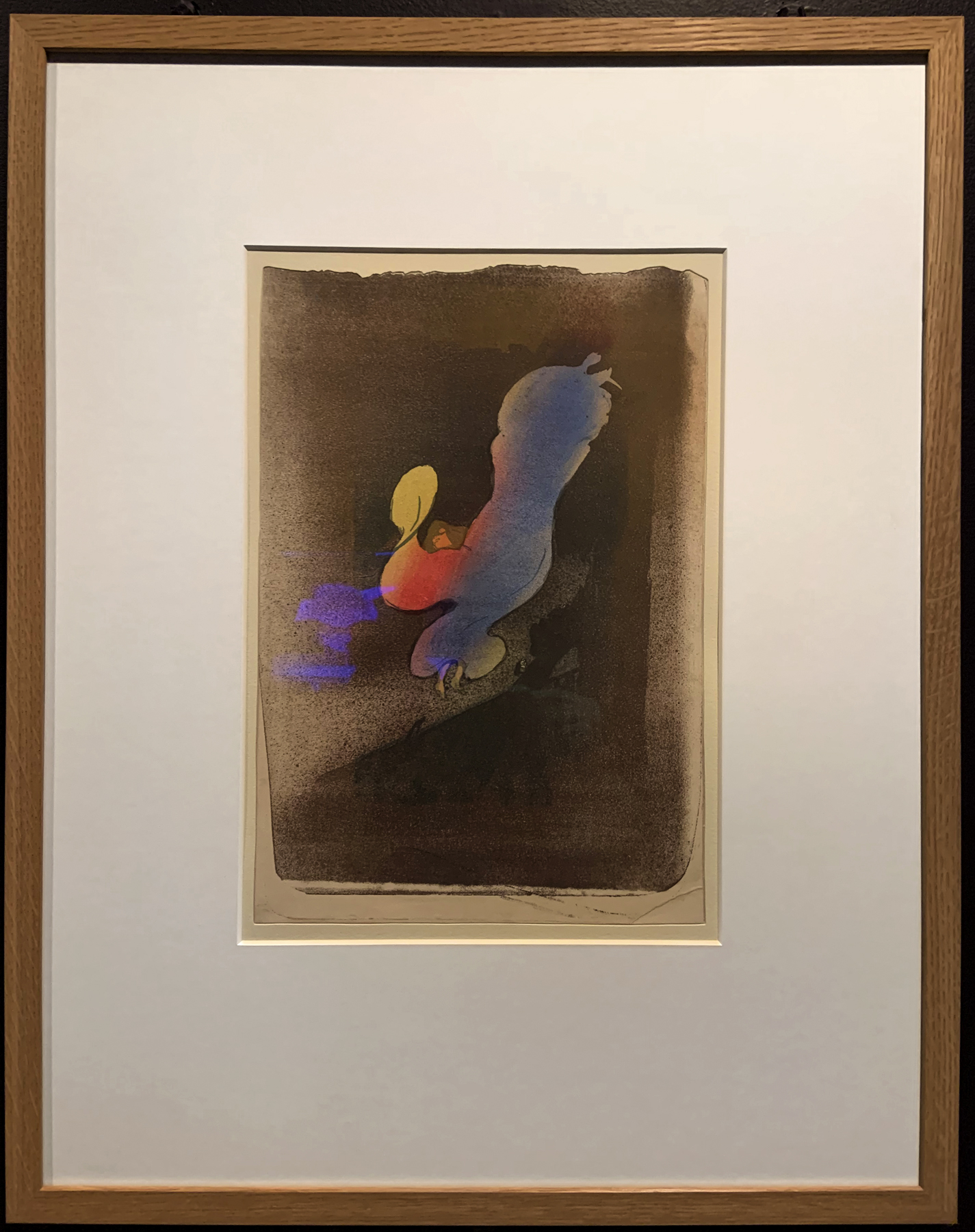
Henri de Toulouse-Lautrec (French, 1864-1901) 'Miss Loïe Fuller' 1893 (installation view)

Henri de Toulouse-Lautrec (French, 1864-1901) 'Miss Loïe Fuller' 1893 (installation view)

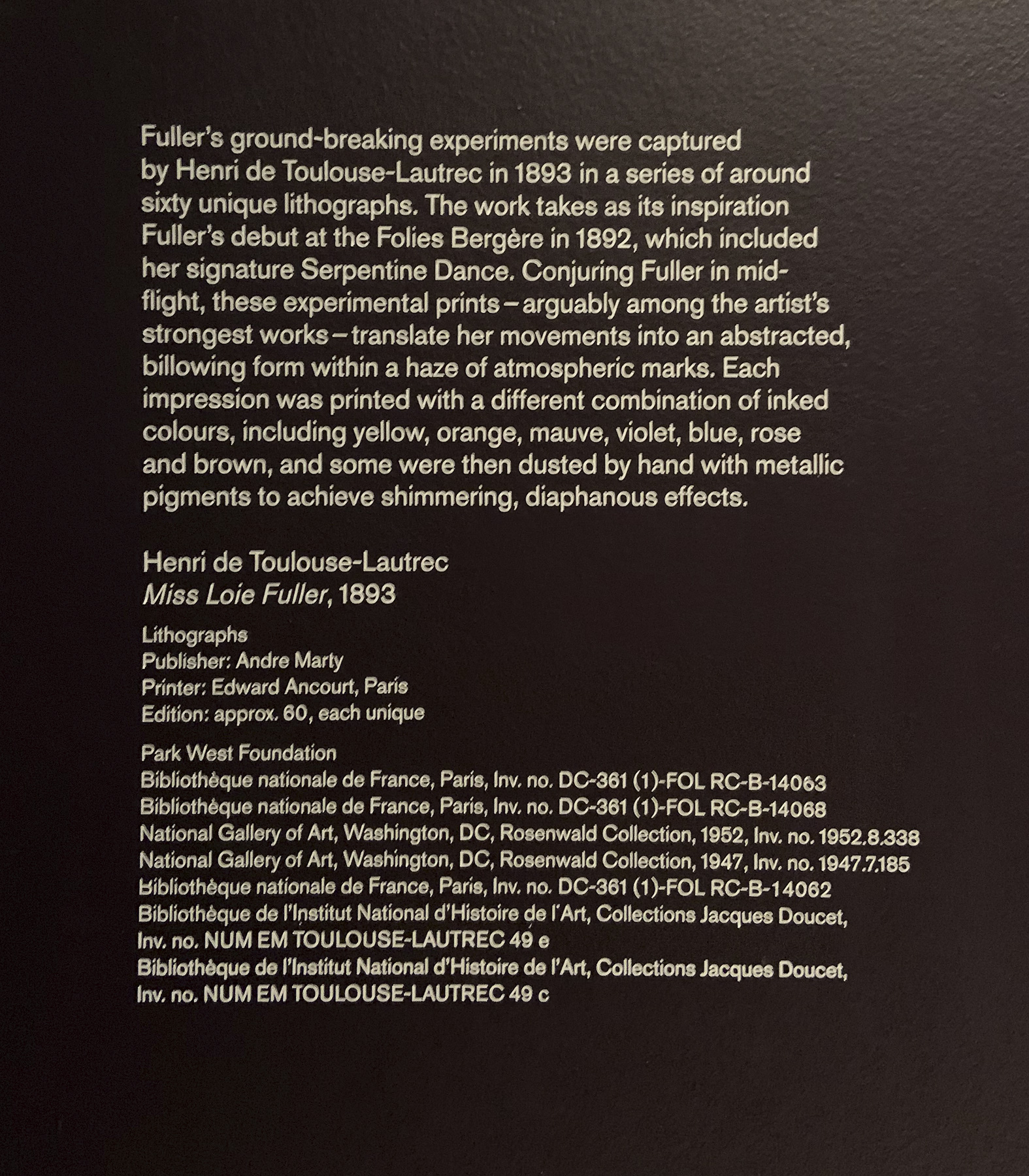
Henri de Toulouse-Lautrec. 'Miss Loïe Fuller' 1893 wall text from the exhibition 'Into the Night: Cabarets and Clubs in Modern Art' at the Barbican Art Gallery, Oct 2019 - Jan 2020


Installation views of the exhibition Into the Night: Cabarets and Clubs in Modern Art at the Barbican Art Gallery, London showing the work of Henri de Toulouse-Lautrec
Photos: Marcus Bunyan


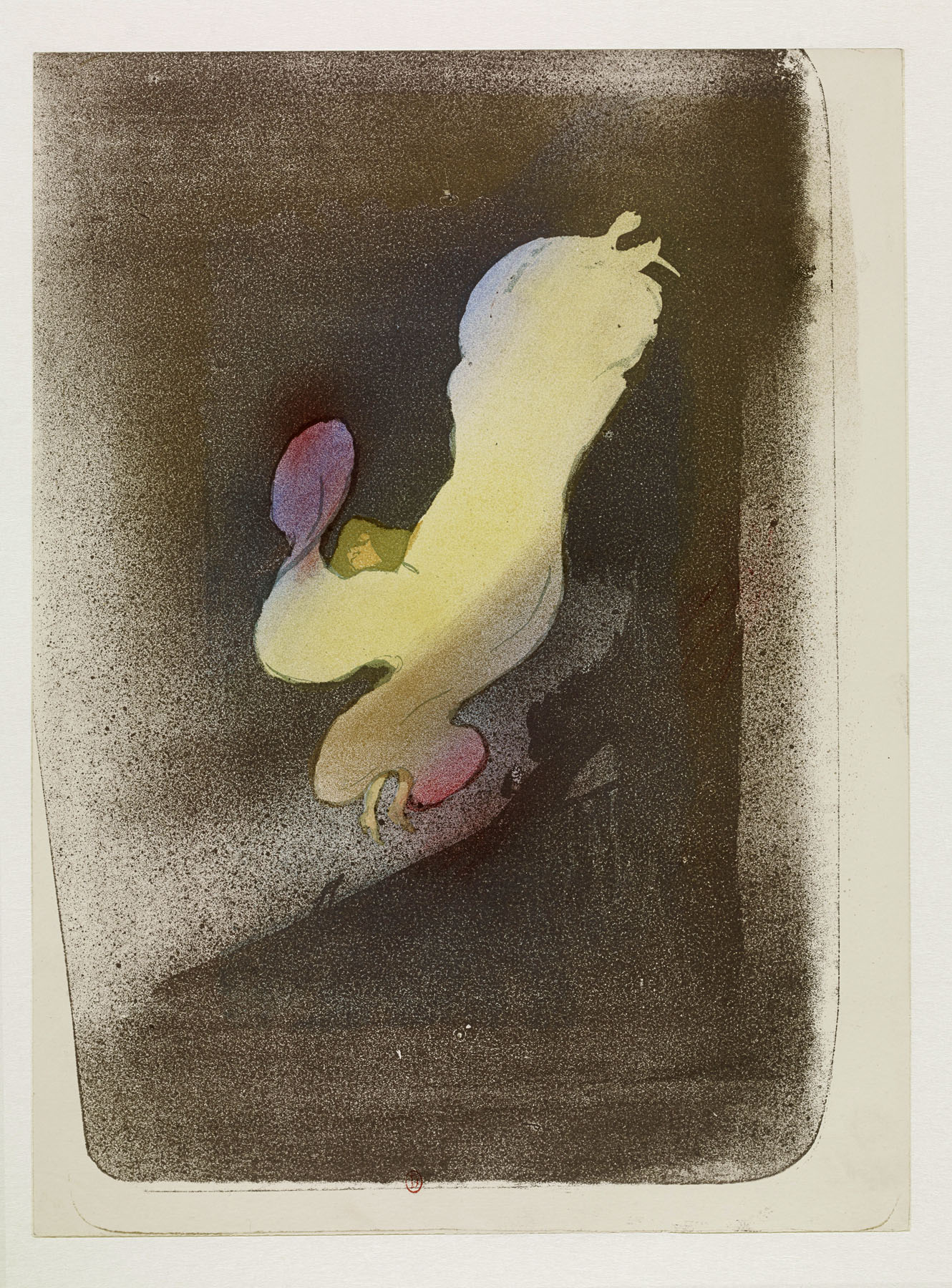
Henri de Toulouse-Lautrec (French, 1864-1901) 'Miss Loïe Fuller' 1893


Henri de Toulouse-Lautrec (French, 1864-1901)
Miss Loïe Fuller
1893
Bibliothèque de l’Institut National d’Histoire de l’Art, Collections Jacques Doucet
Inv. no. NUM EM TOULOUSE-LAUTREC 49 e
Courtesy Bibliothèque de l’Institut National d’Histoire de l’Art, Collections Jacques Doucet


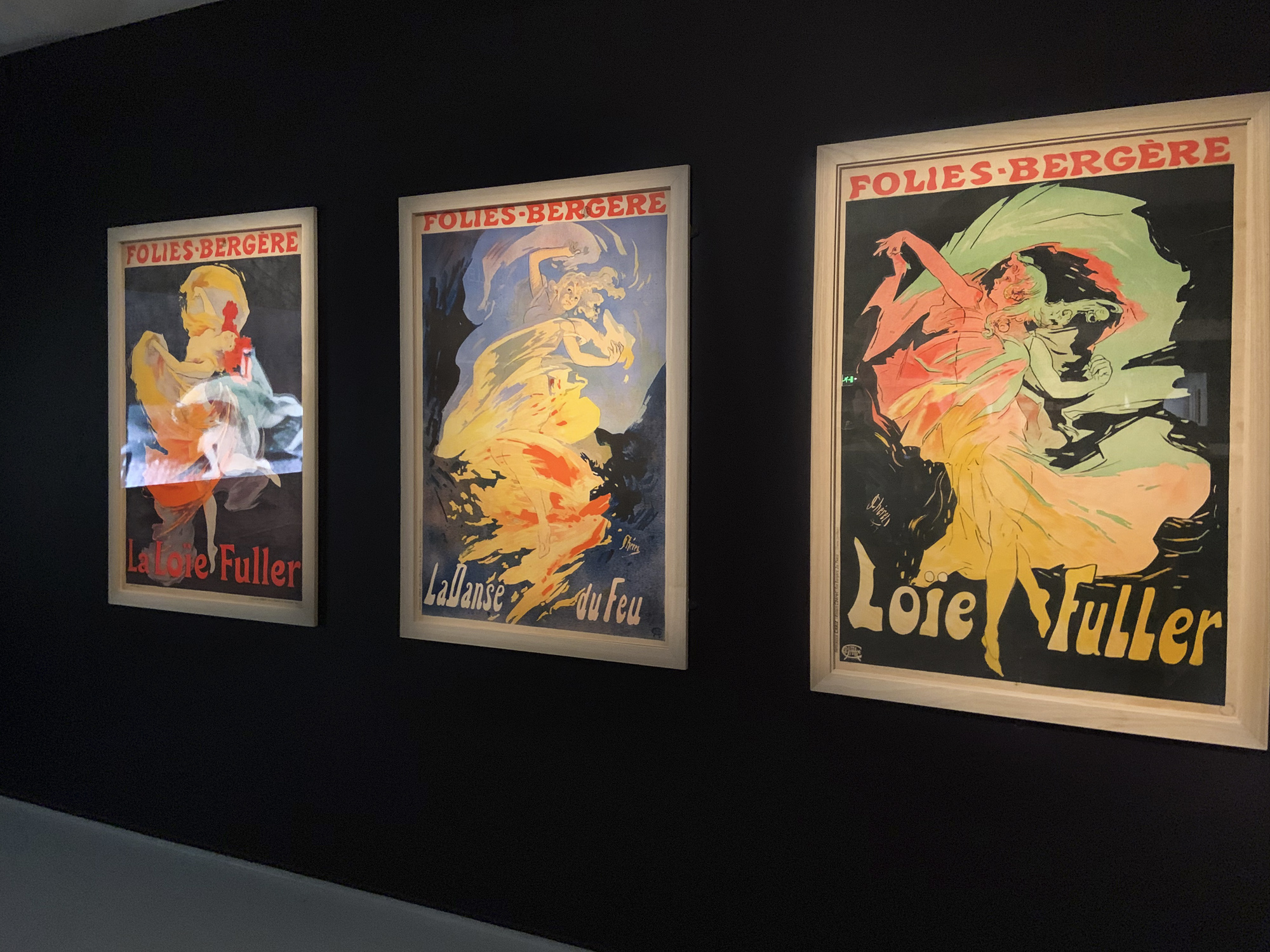
Installation view showing Jules Chéret (French, 1836-1932) 'Folies Bergere La Loie Fuller' lithographs from the exhibition 'Into the Night: Cabarets and Clubs in Modern Art' at the Barbican Art Gallery, Oct 2019 - Jan 2020

Jules Chéret (French, 1836-1932) 'Fioles Bergère, La Loïe Fuller' 1893 (installation view)


Jules Chéret (French, 1836-1932)
Fioles Bergère, La Loïe Fuller (installation view)
1893
Lithograph
Paris, Musée des Arts Décoratifs
Photos: Marcus Bunyan


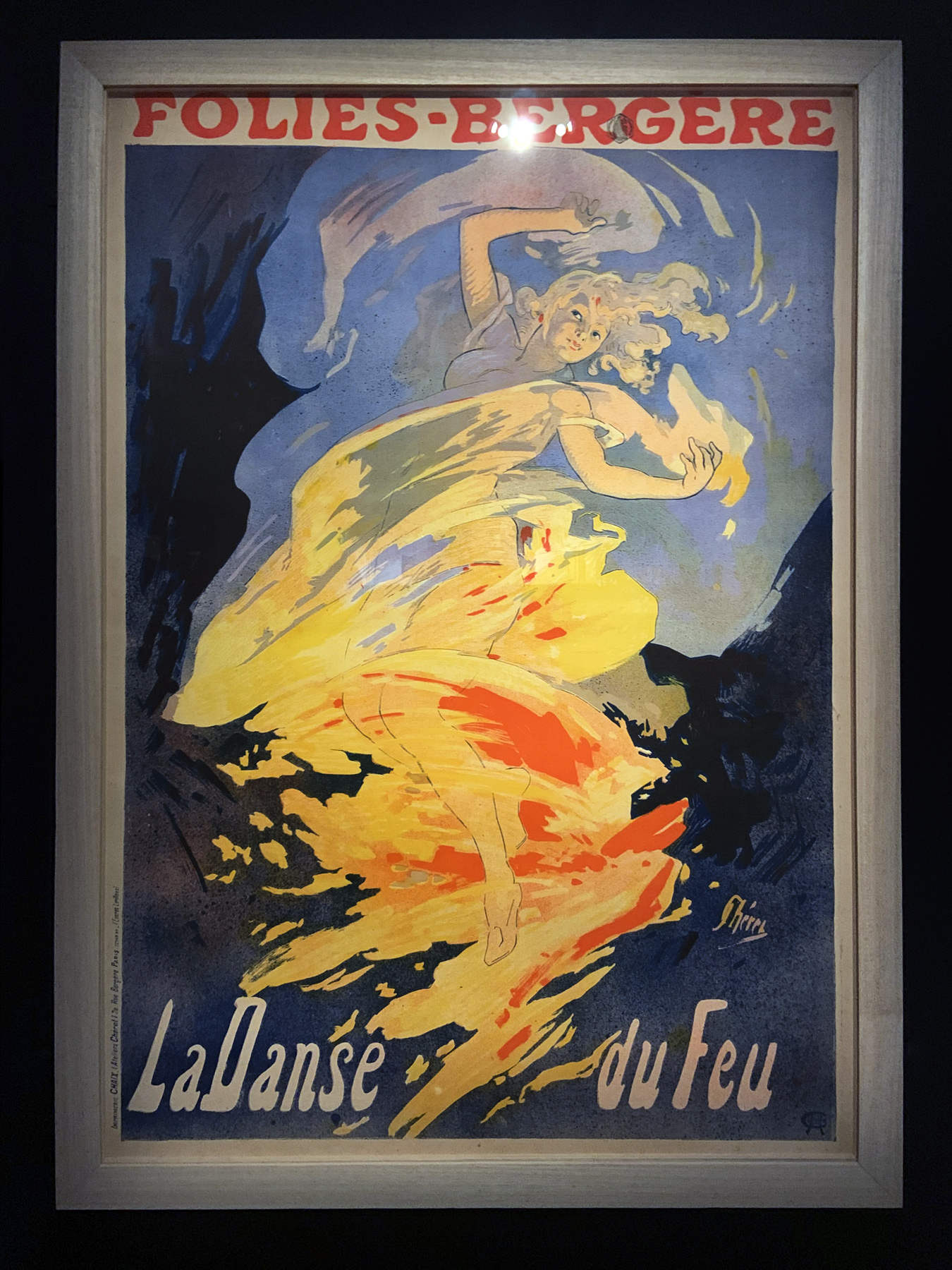
Jules Chéret (French, 1836-1932) 'Folies Bergère, La Danse du Feu' (The Fire Dance) 1897 (installation view)


Jules Chéret (French, 1836-1932)
Folies Bergère, La Danse du Feu (The Fire Dance) (installation view)
1897
Lithograph
Paris, Musée des Arts Décoratifs
Photos: Marcus Bunyan


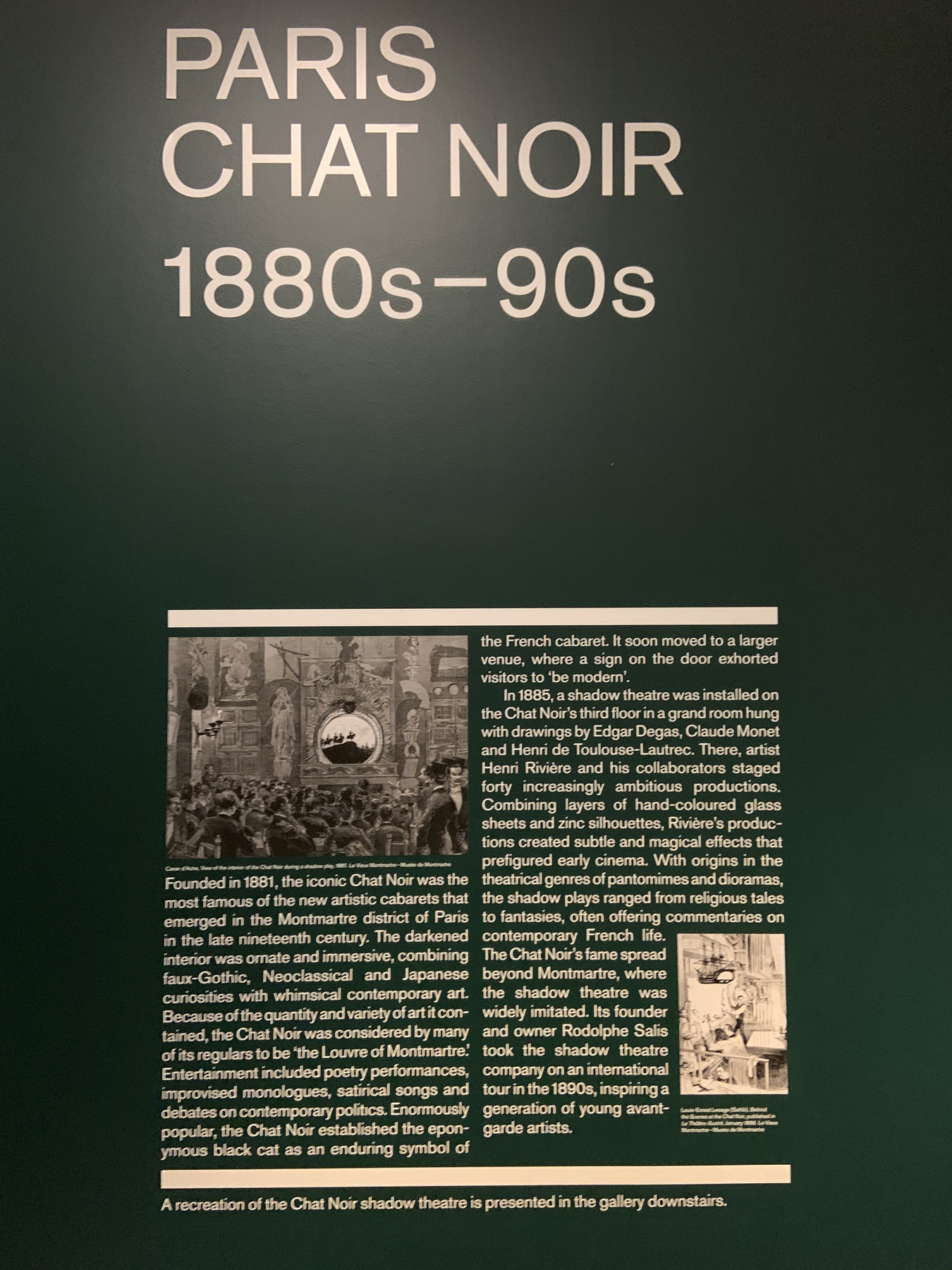
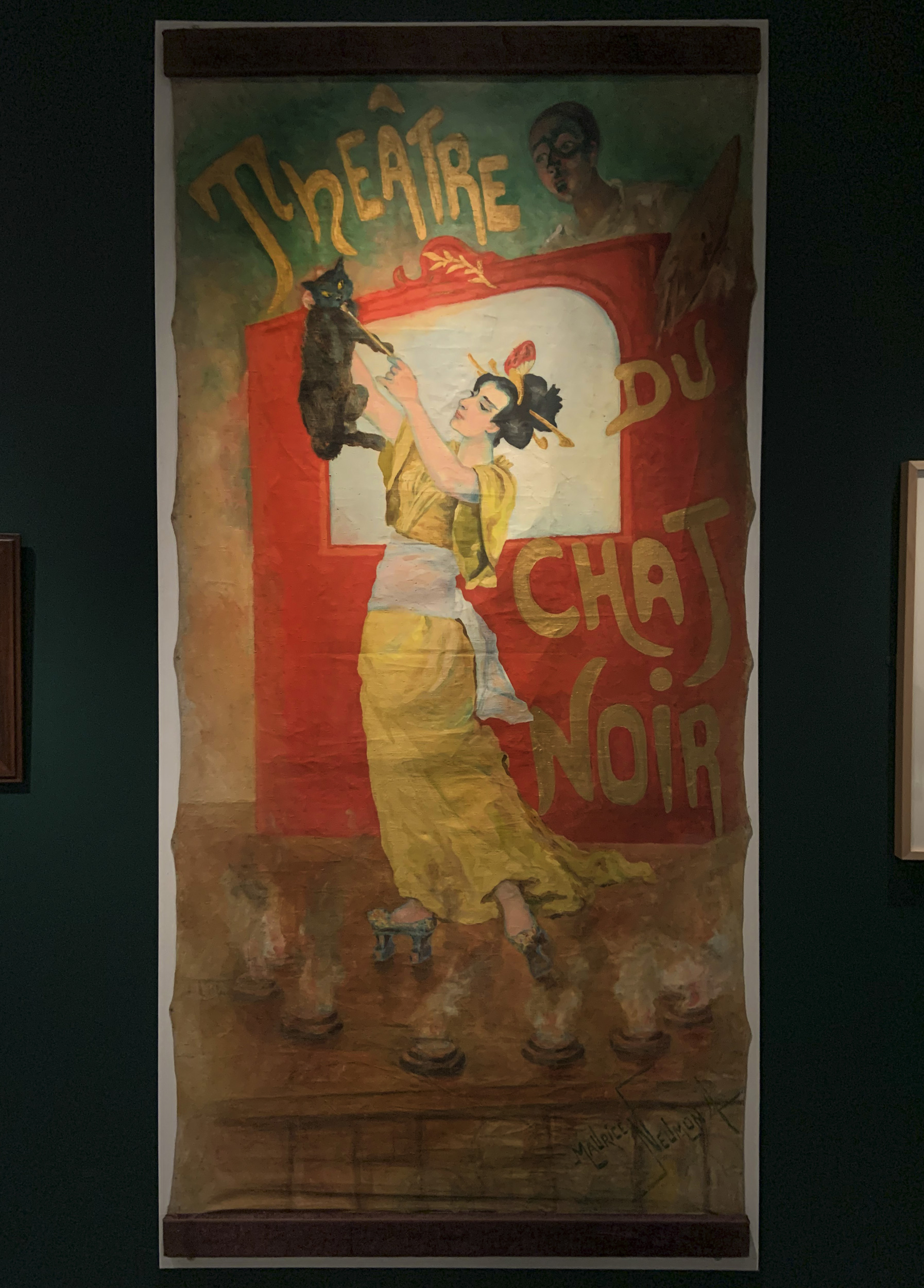
Paris: Chat Noir 1880s-90s wall text from the exhibition 'Into the Night: Cabarets and Clubs in Modern Art' at the Barbican Art Gallery, Oct 2019 - Jan 2020

Paris: Chat Noir 1880s-90s wall text from the exhibition 'Into the Night: Cabarets and Clubs in Modern Art' at the Barbican Art Gallery, Oct 2019 - Jan 2020


Paris: Chat Noir 1880s-90s wall text
Photos: Marcus Bunyan


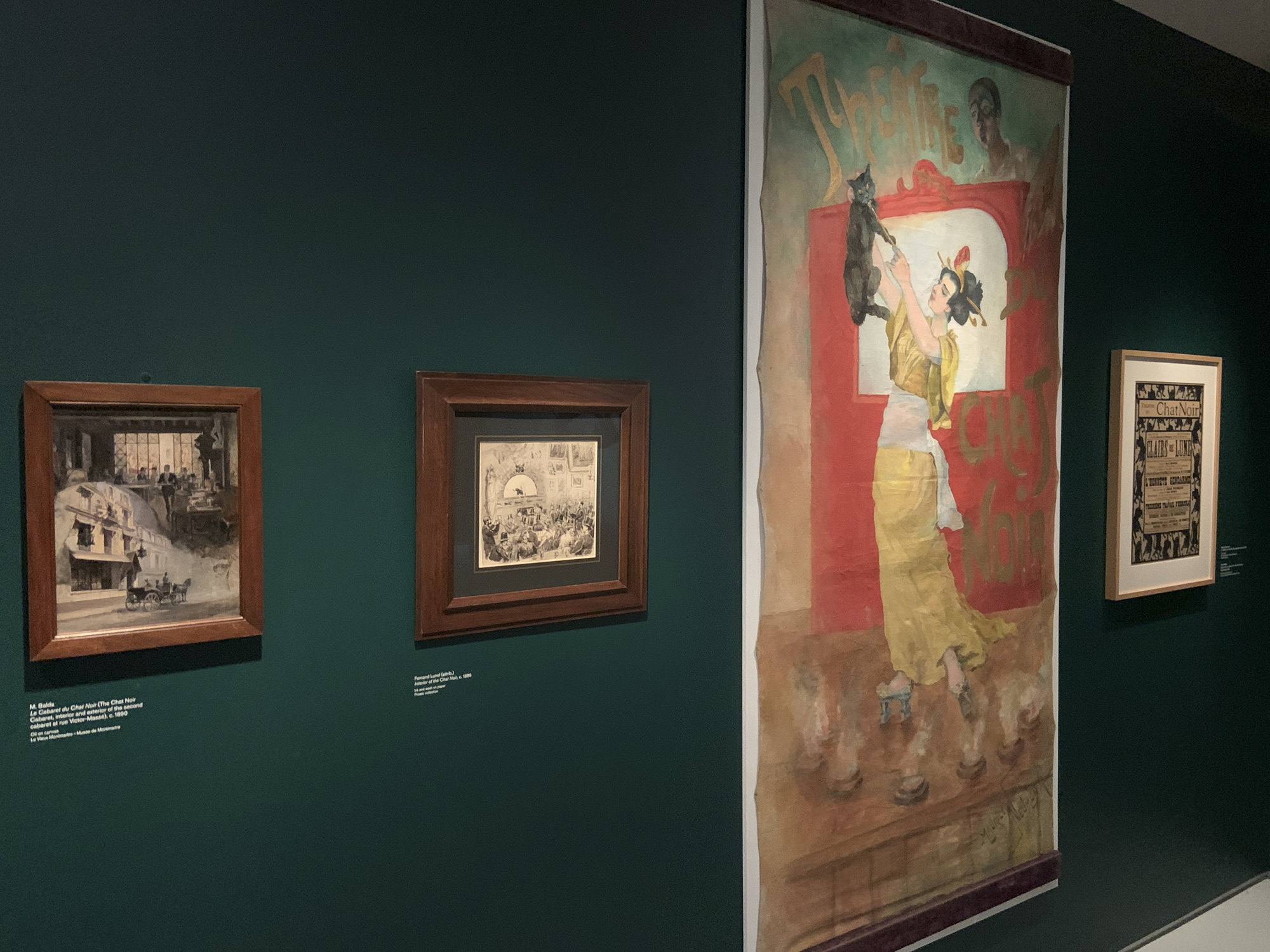
Installation view of the exhibition 'Into the Night: Cabarets and Clubs in Modern Art' at the Barbican Art Gallery, London

Installation view of the exhibition 'Into the Night: Cabarets and Clubs in Modern Art' at the Barbican Art Gallery, London


Installation views of the exhibition Into the Night: Cabarets and Clubs in Modern Art at the Barbican Art Gallery, London
Photos: Marcus Bunyan


Henri Rivière (French, 1864-1951) 'Poster for the performances Clairs de lune by Georges Fragerolle, L'honnête gendarme by Jean Richepin and Le treizième travail d'Hercule by Eugène Courboin (Le Chat Noir, 16 December 1896)' (installation view)


Henri Rivière (French, 1864-1951)
Poster for the performances Clairs de lune by Georges Fragerolle, L’honnête gendarme by Jean Richepin and Le treizième travail d’Hercule by Eugène Courboin (Le Chat Noir, 16 December 1896) (installation view)
Cliché and letterpress printing in black on wove paper on linen
58.7cm x 42.2cm
Van Gogh Museum, Amsterdam
Photo: Marcus Bunyan


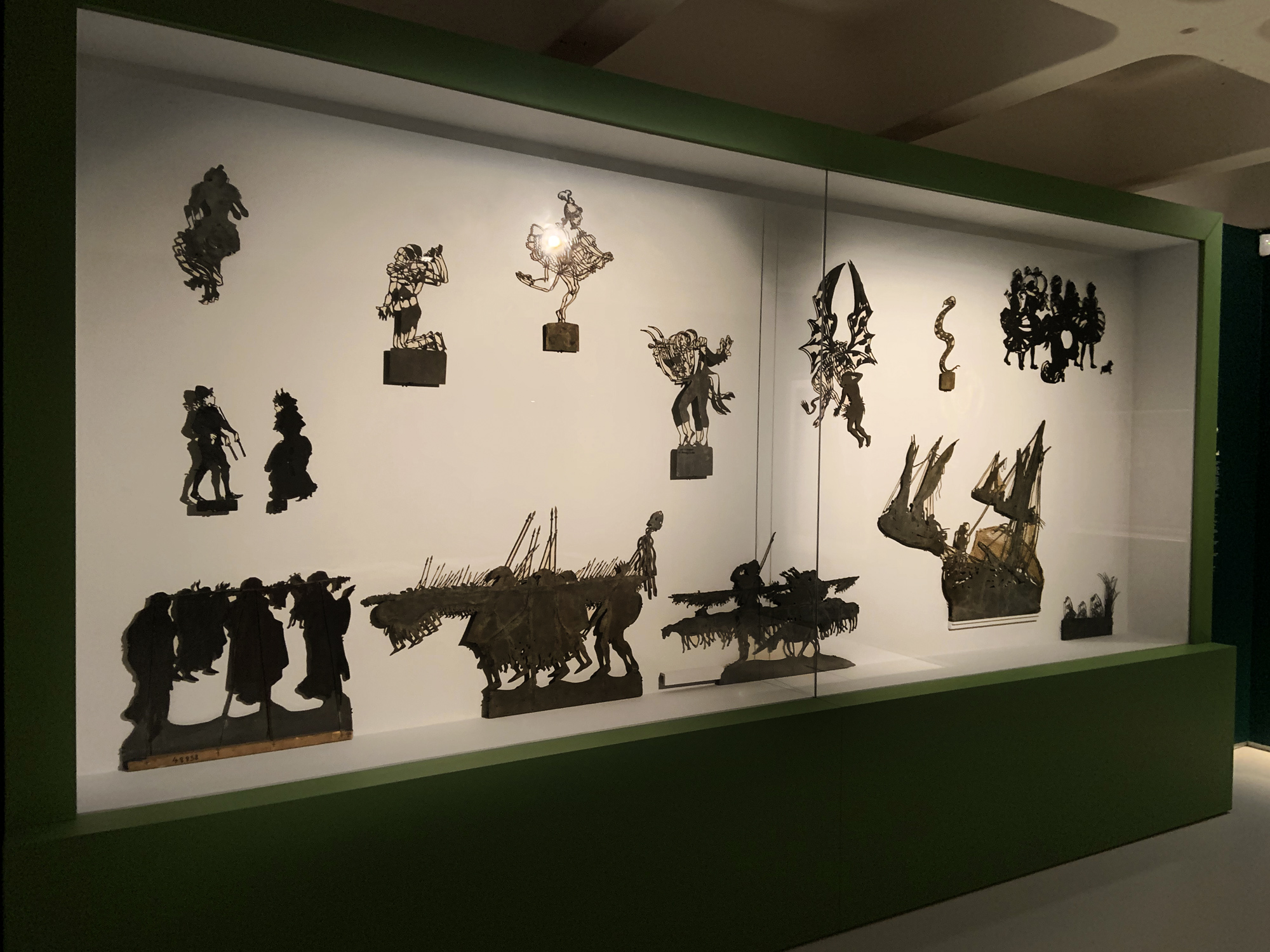
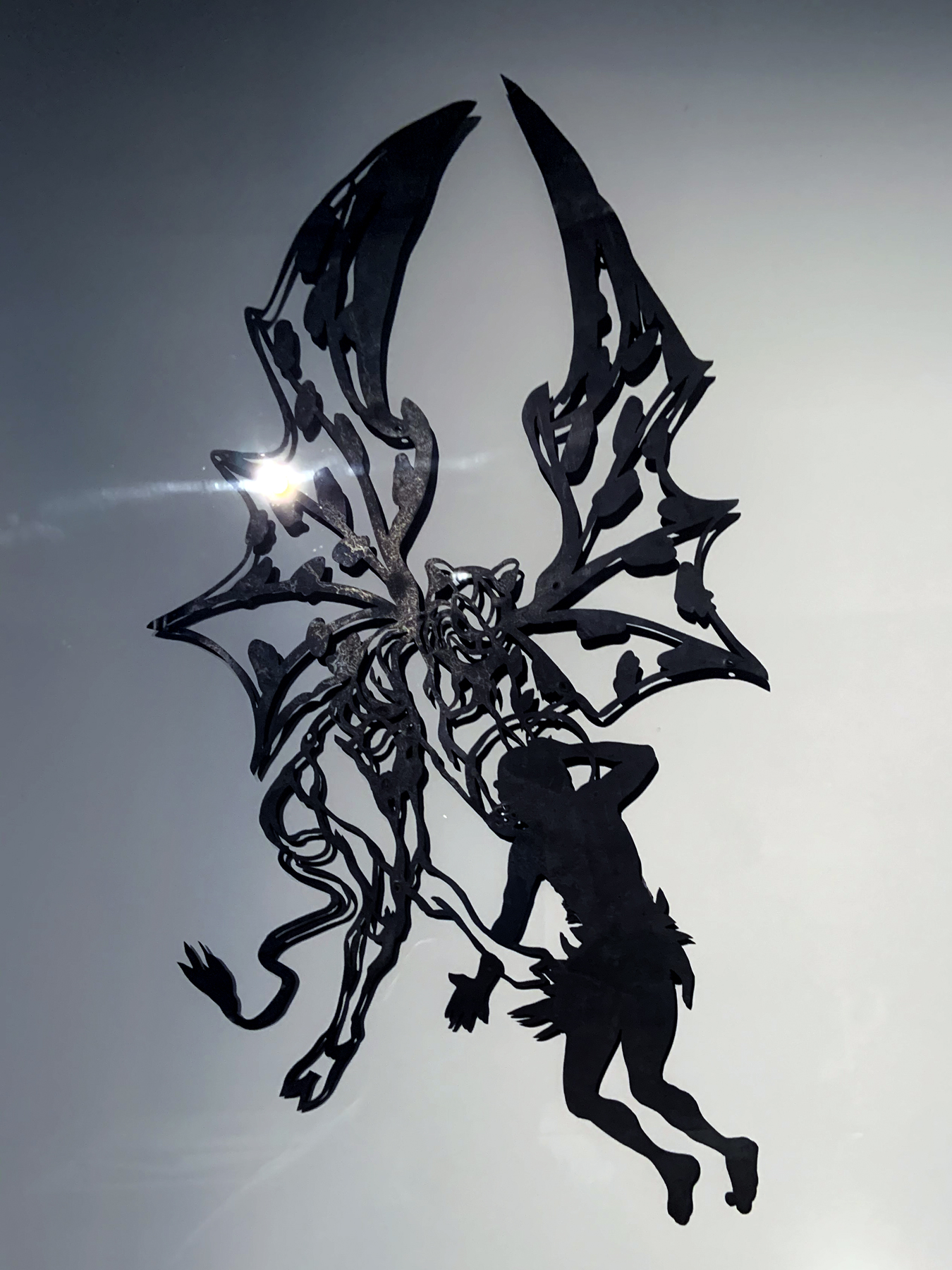
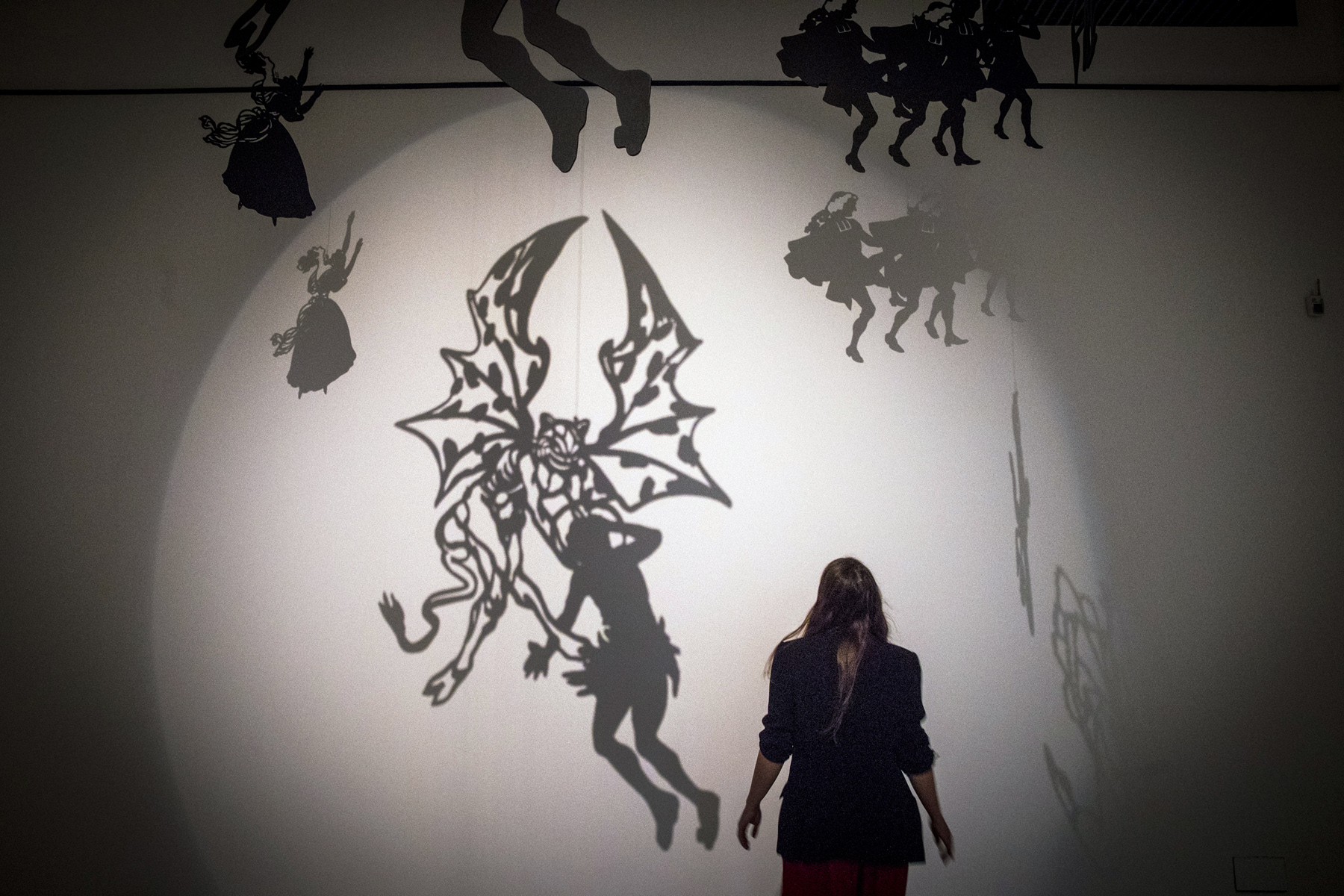
Installation view of the exhibition 'Into the Night: Cabarets and Clubs in Modern Art' at the Barbican Art Gallery, London showing Henri Rivière and Henry Somm's shadow theatre

Installation view of the exhibition 'Into the Night: Cabarets and Clubs in Modern Art' at the Barbican Art Gallery, London showing Henri Rivière and Henry Somm's shadow theatre

Installation view of the exhibition 'Into the Night: Cabarets and Clubs in Modern Art' at the Barbican Art Gallery, London showing Henri Rivière and Henry Somm's shadow theatre

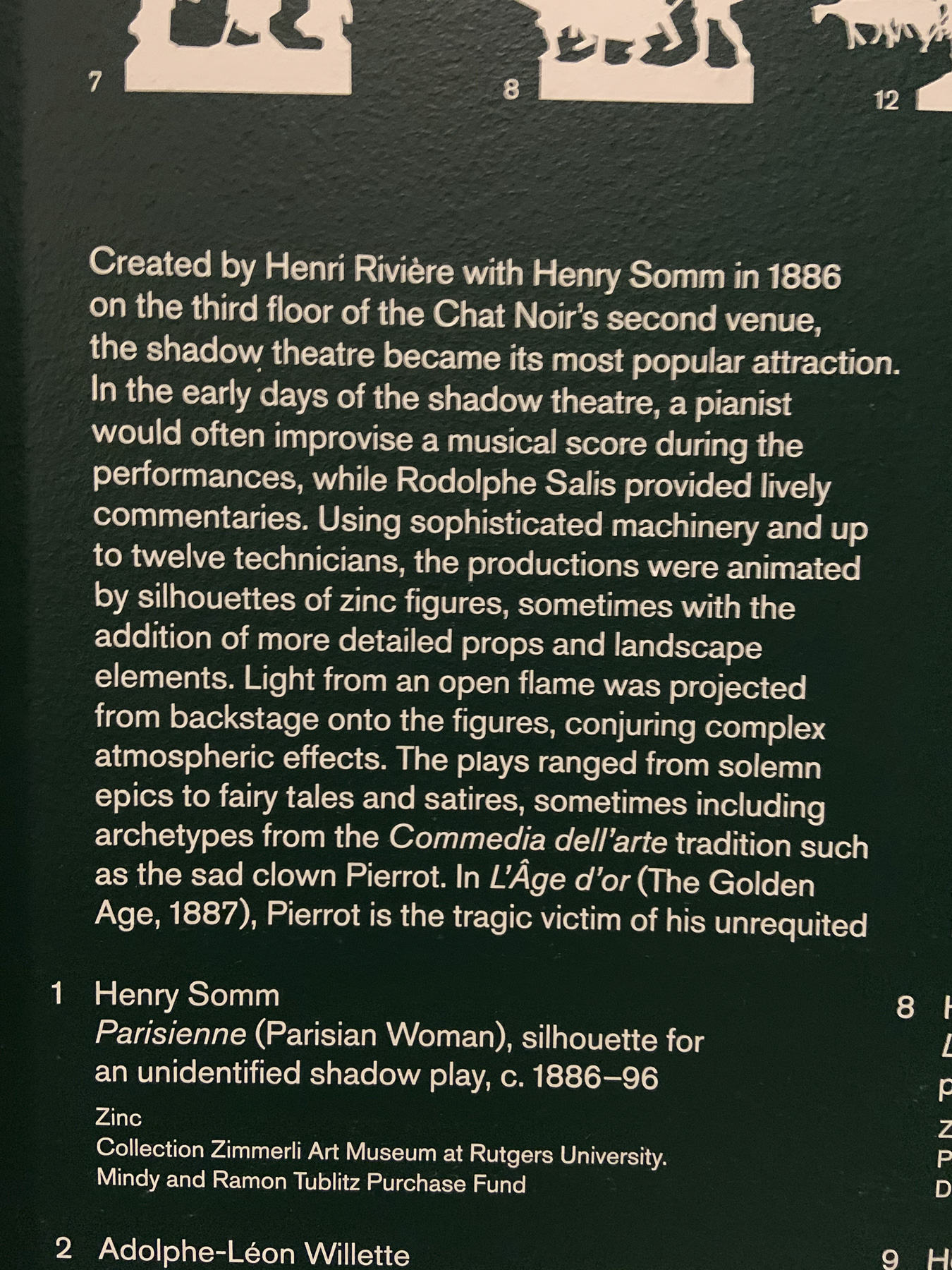
Installation view of the exhibition 'Into the Night: Cabarets and Clubs in Modern Art' at the Barbican Art Gallery, London showing Henri Rivière and Henry Somm's shadow theatre wall text

Installation view of the exhibition 'Into the Night: Cabarets and Clubs in Modern Art' at the Barbican Art Gallery, London showing Henri Rivière and Henry Somm's shadow theatre wall text


Installation views of the exhibition Into the Night: Cabarets and Clubs in Modern Art at the Barbican Art Gallery, London showing Henri Rivière and Henry Somm’s shadow theatre and wall text
Photos: Marcus Bunyan


Installation view of the exhibition 'Into the Night: Cabarets and Clubs in Modern Art' (downstairs gallery, room recreation)

Installation view of the exhibition 'Into the Night: Cabarets and Clubs in Modern Art' (downstairs gallery, room recreation)


Into the Night: Cabarets and Clubs in Modern Art (downstairs gallery, room recreation)
Installation view Barbican Art Gallery 4 October 2019 – 19 January 2020
© Tristan Fewings / Getty Images


Downstairs gallery, room recreation


Adolphe-Leon Wilette (French, 1857-1926) 'La Vierge verte' (The Green Virgin) c. 1881 (installation view)


Adolphe-Leon Wilette (French, 1857-1926)
La Vierge verte (The Green Virgin) (installation view)
c. 1881
Oil on canvas
Collection Zimmerli Art Museum at Rutgers University
Photo: Marcus Bunyan


In this oil study for a stained-glass window exhibited inside the cabaret, the black cat is held aloft in adoration under the full moon, as though part of an occult ceremony. The ‘chat’ noir’ of the cabaret’s title was celebrated throughout its design, symbolising fierce independence as well as night-time frolics. It gazes imperiously at the onlooker from Théophile-Alexandre Steinlen’s famous posters, perches on a crescent moon in Adolphe-Léon Willette’s street sign, and endangers pet goldfish in humorous cartoons.

Wall text from the exhibition


Installation view of the exhibition 'Into the Night: Cabarets and Clubs in Modern Art' at the Barbican Art Gallery, London


Installation view of the exhibition Into the Night: Cabarets and Clubs in Modern Art at the Barbican Art Gallery, London
Photo: Marcus Bunyan


Théophile-Alexandre Steinlen (Swiss-born French, 1859-1923) 'Réouverture du cabaret du Chat Noir' (Reopening of the Chat Noir Cabaret) 1896 (installation view)


Théophile-Alexandre Steinlen (Swiss-born French, 1859-1923)
Réouverture du cabaret du Chat Noir (Reopening of the Chat Noir Cabaret) (installation view)
1896
Lithograph
Victoria and Albert Museum, London
Photo: Marcus Bunyan


Théophile-Alexandre Steinlen (Swiss-born French, 1859-1923) 'Réouverture du cabaret du Chat Noir' (Reopening of the Chat Noir Cabaret) 1896


Théophile-Alexandre Steinlen (Swiss-born French, 1859-1923)
Réouverture du cabaret du Chat Noir (Reopening of the Chat Noir Cabaret)
1896
Victoria and Albert Museum, London
© Victoria and Albert Museum, London


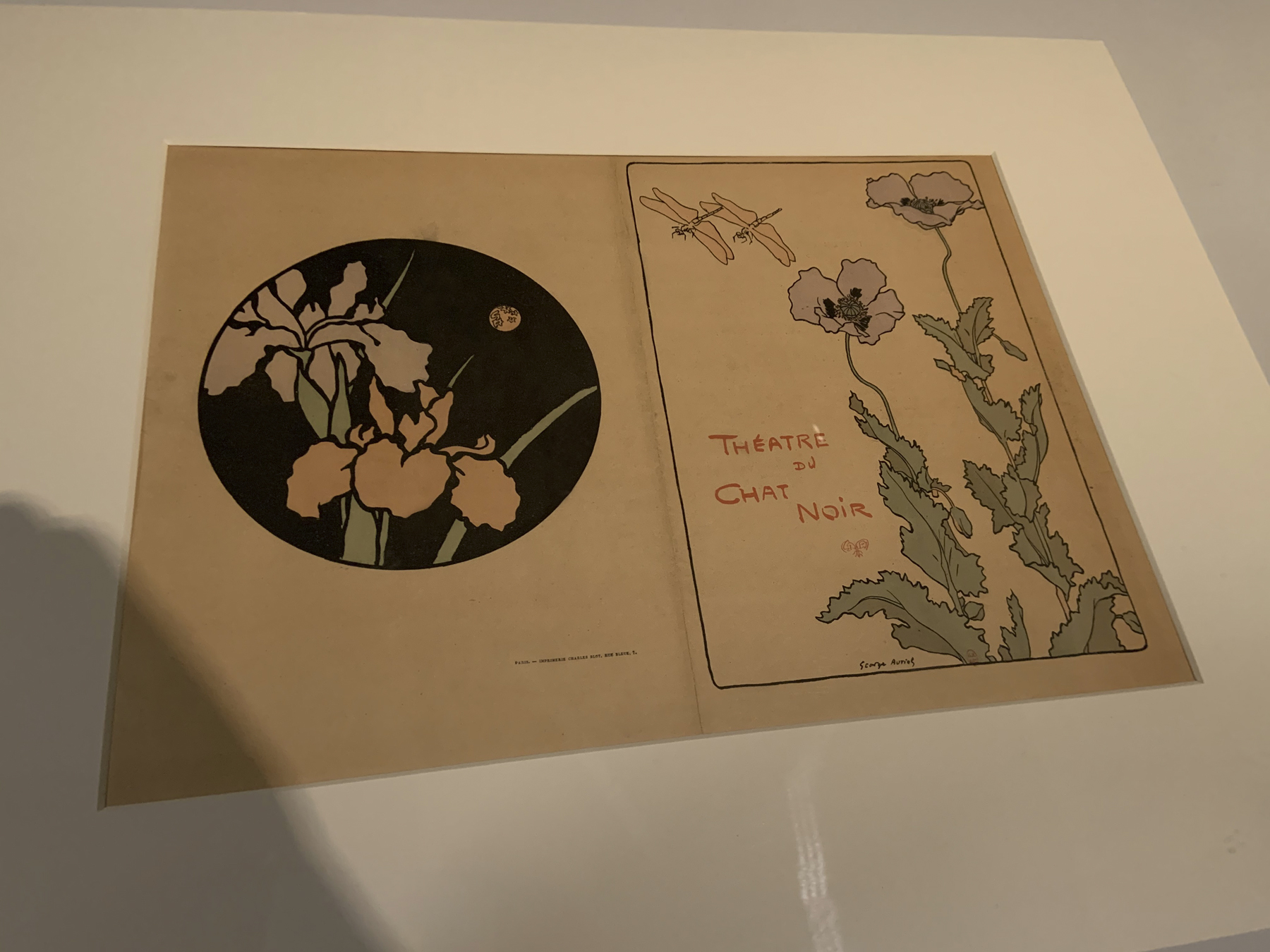
George Auriol (French, 1863-1938) 'Théâtre du Chat Noir (Couverture aux coquelicots)' (Programme for the Chat noir Theatre (Cover with Poppies)) 1890 (installation view)


George Auriol (French, 1863-1938)
Théâtre du Chat Noir (Couverture aux coquelicots) (Programme for the Chat noir Theatre (Cover with Poppies)) (installation view)
1890
Photomechanical print
Bibliothèque nationale de France, Paris
Photo: Marcus Bunyan


Opening 4 October 2019, Into the Night: Cabarets and Clubs in Modern Art explores the social and artistic role of cabarets, cafés and clubs around the world. Spanning the 1880s to the 1960s, the exhibition presents a dynamic and multi-faceted history of artistic production. The first major show staged on this theme, it features both famed and little-known sites of the avant-garde – these creative spaces were incubators of radical thinking, where artists could exchange provocative ideas and create new forms of artistic expression. Into the Night offers an alternative history of modern art that highlights the spirit of experimentation and collaboration between artists, performers, designers, musicians and writers such as Henri de Toulouse-Lautrec, Loïe Fuller, Josef Hoffmann, Giacomo Balla, Theo van Doesburg and Sophie Taeuber-Arp, as well as Josephine Baker, Jeanne Mammen, Aaron Douglas, Jacob Lawrence, Ramón Alva de la Canal and Ibrahim El-Salahi.

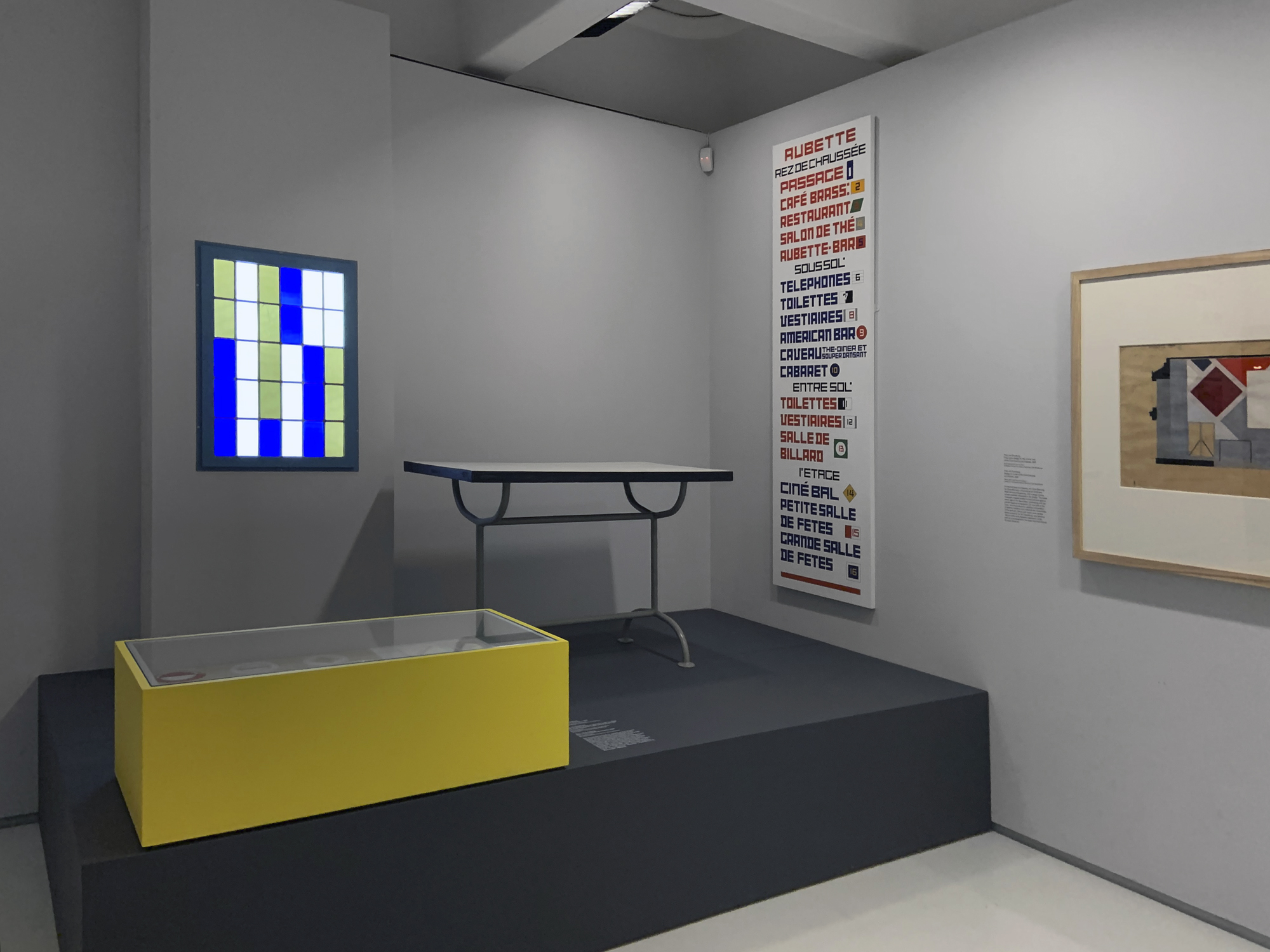
Focusing on global locations from New York to Tehran, London, Paris, Mexico City, Berlin, Vienna and Ibadan, Into the Night brings together over 350 works rarely seen in the UK, including paintings, drawings, prints, photographs, films and archival material. Liberated from the confines of social and political norms, many of the sites provided immersive, often visceral experiences, manifesting the ideals of the artists and audiences who founded and frequented them. The exhibition features full-scale recreations of specific spaces, such as the multi-coloured ceramic tiled bar of the Cabaret Fledermaus in Vienna (1907), designed by Josef Hoffmann for the Wiener Werkstätte, and the striking abstract composition of the Ciné-Dancing designed by Theo van Doesburg for L’Aubette in Strasbourg (1926-1928). The exhibition will feature a soundscape created by hrm199, the studio of acclaimed artist Haroon Mirza, specifically commissioned for the show.

Jane Alison, Head of Visual Arts, Barbican, said: “Into the Night casts a spotlight on some of the most electrifying cabarets and clubs of the modern era. Whether a creative haven, intoxicating stage or liberal hangout, all were magnets for artists, designers and performers to come together, collaborate and express themselves freely. Capturing the essence of these global incubators of experimentation and cross-disciplinarity, immersive 1:1 scale interiors will take the visitor on a captivating journey of discovery.”

Into the Night begins in Paris, on the eve of the 20th century, with two thrilling and iconic locations of the avant-garde. The theatrical shadow plays of the Chat Noir in the 1880s are brought to life through original silhouettes and works that decorated the interior of the cabaret, which acted as a forum for satire and debate for figures such as founder Rodolphe Salis, artist Henri Rivière and composer Erik Satie. The captivating serpentine dances of Loïe Fuller staged at the Folies Bergère in the 1890s were trail-blazing experiments in costume, light and movement. Henri de Toulouse-Lautrec captured her performances in his extraordinary series of delicately hand-coloured lithographs, brought together for the exhibition. Visitors will encounter the immersive “Gesamtkunstwerk” (total work of art) design of the Cabaret Fledermaus (1907) in Vienna by the Wiener Werkstätte, where experimental cabaret productions were staged. The exhibition includes original documentation of Oskar Kokoschka’s exuberant puppet theatre and Gertrude Barrison’s expressionist dance.

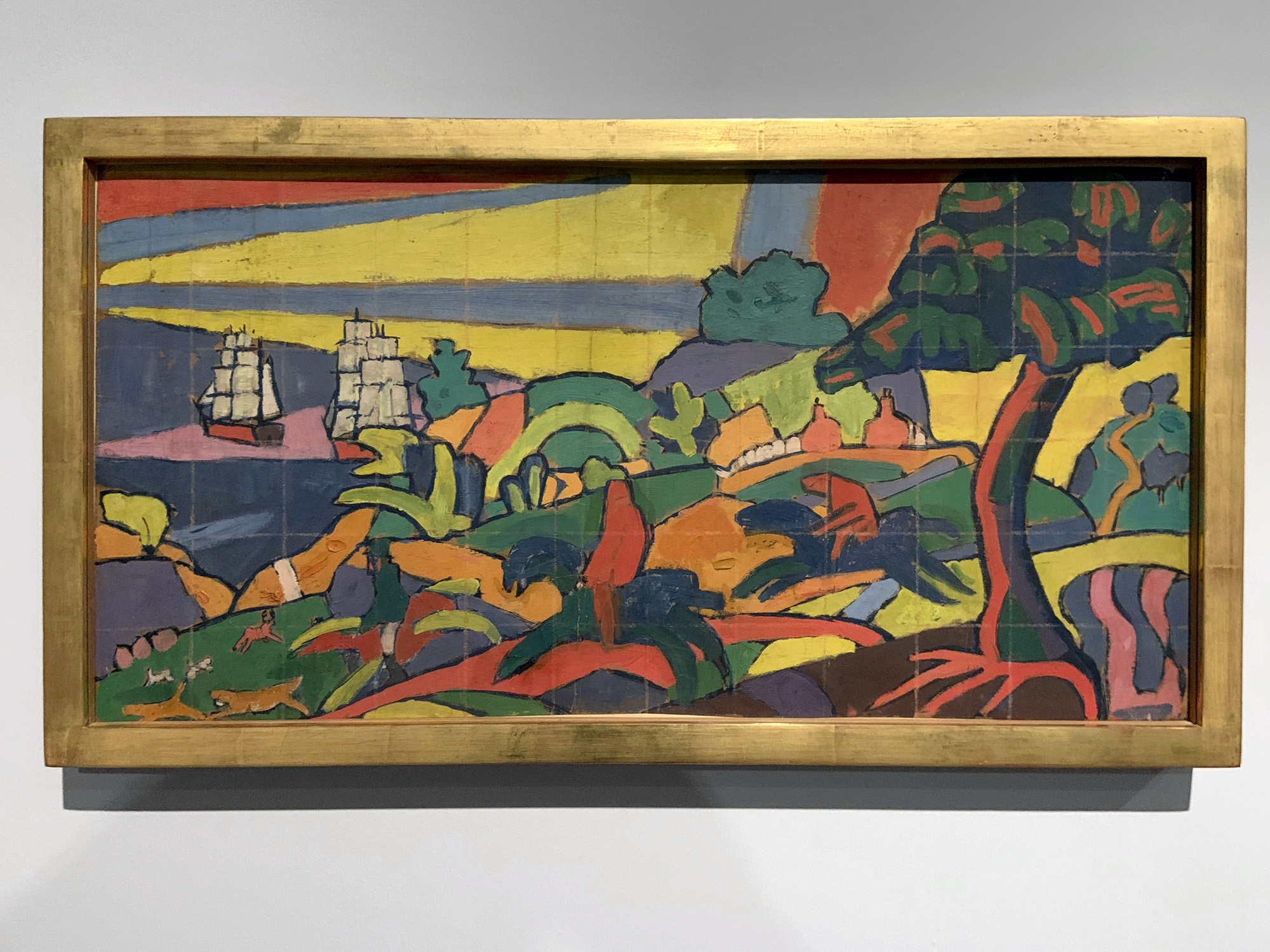
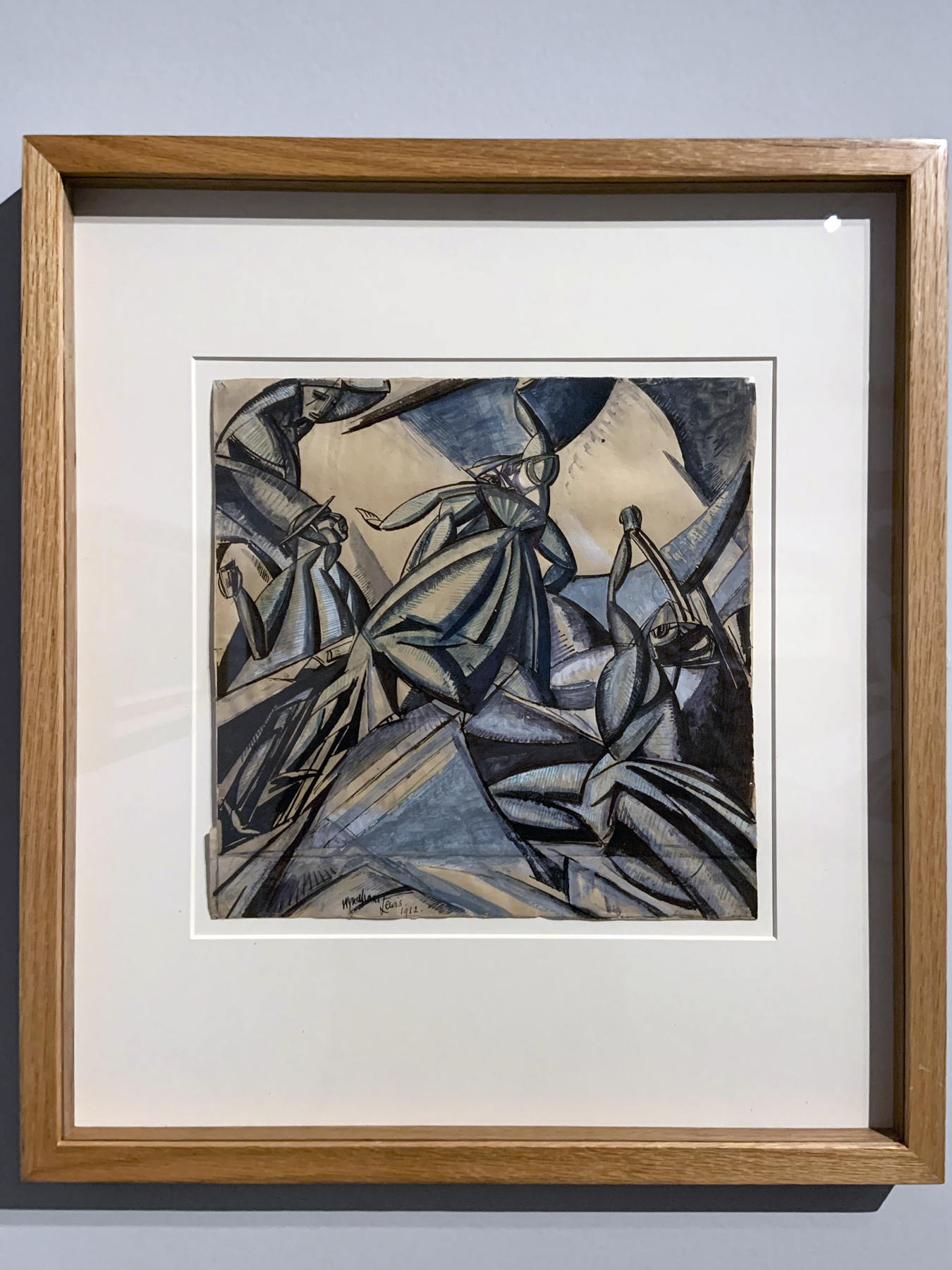
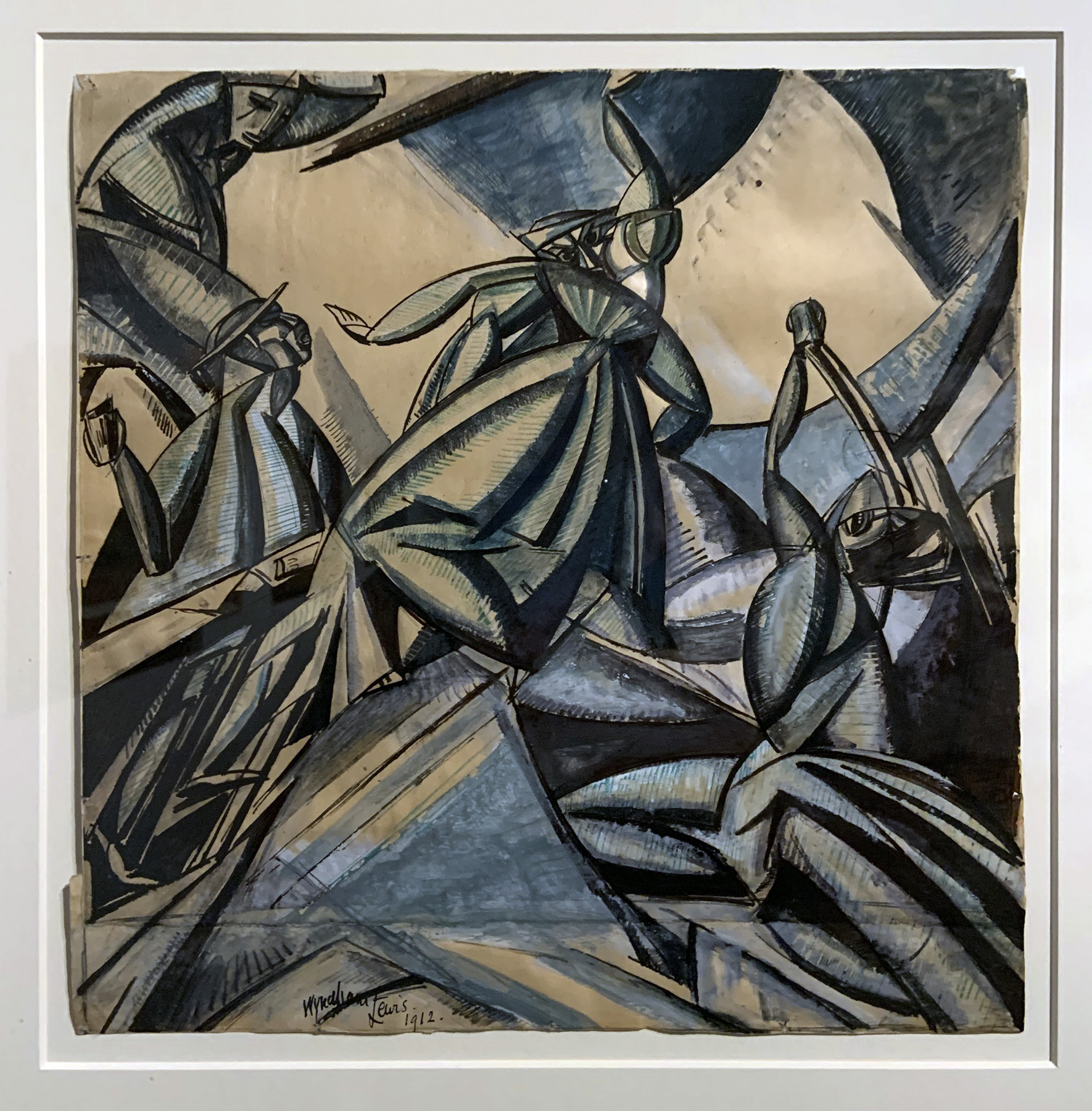
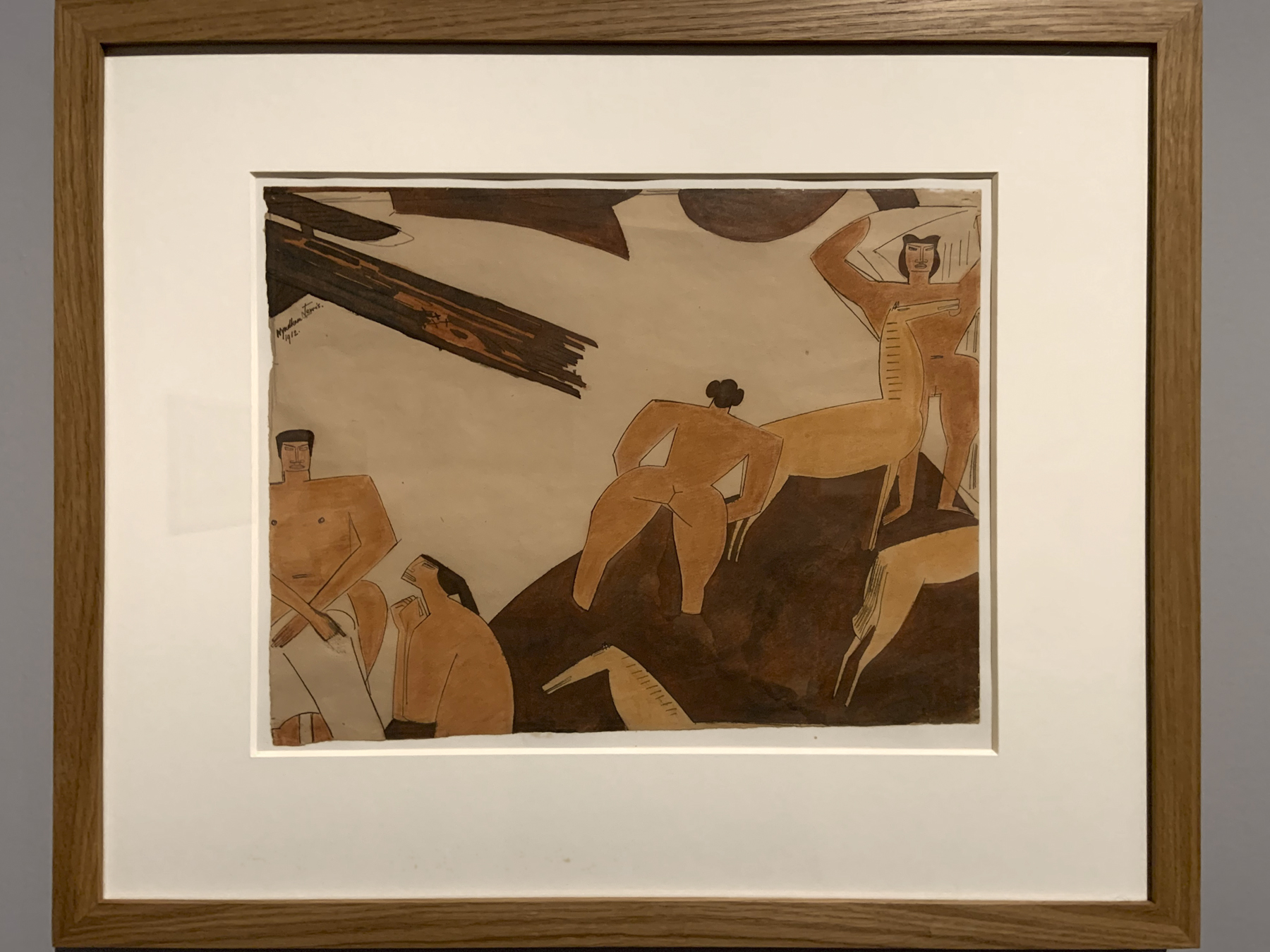
The Cave of the Golden Calf (1912), an underground haunt in Soho epitomising decadence and hedonism, is evoked through designs for the interior by British artists Spencer Gore and Eric Gill, as well as Wyndham Lewis’s highly stylised programmes for the eclectic performance evenings – advertised at the time as encompassing “the picturesque dances of the South, its fervid melodies, Parisian wit, English humour.” In Zurich, the radical atmosphere of the Cabaret Voltaire (1916) is manifested through absurdist sound poetry and fantastical masks that deconstruct body and language, evoking the anarchic performances by Hugo Ball, Emmy Hennings and Marcel Janco. This is the birthplace of Dada, where humour, chaos and ridicule reign. Two significant clubs in Rome provide insights into the electrifying dynamism of Futurism in Italy in the 1920s. Giacomo Balla’s mesmerising Bal Tic Tac (1921) is summoned by colour-saturated designs for the club’s interior, capturing the swirling movement of dancers. Also on show are drawings and furnishings for Fortunato Depero’s spectacular inferno-inspired Cabaret del Diavolo (1922) which occupied three floors representing heaven, purgatory and hell. Depero’s flamboyant tapestry writhes with dancing demons, expressing the club’s motto “Tutti all’inferno!!! (Everyone to hell!!!)”.

A few years later, a group of artists and writers from the radical movement Estridentismo, including Ramón Alva de la Canal, Manuel Maples Arce and Germán Cueto, began to meet at the Café de Nadie (Nobody’s Café) in Mexico City, responding to volatile Post-Revolutionary change and the urban metropolis. The ¡30-30! group expressed its values by holding a major print exhibition (partially reassembled here) in a travelling circus tent open to all. Meanwhile in Strasbourg, Theo van Doesburg, Hans Arp and Sophie Taeuber-Arp worked together to create the L’Aubette (1926-1928), conceived as the ultimate “deconstruction of architecture”, with bold geometric abstraction as its guiding principle. The vast building housed a cinema-ballroom, bar, tearoom, billiards room, restaurant and more, each designed as immersive environments.

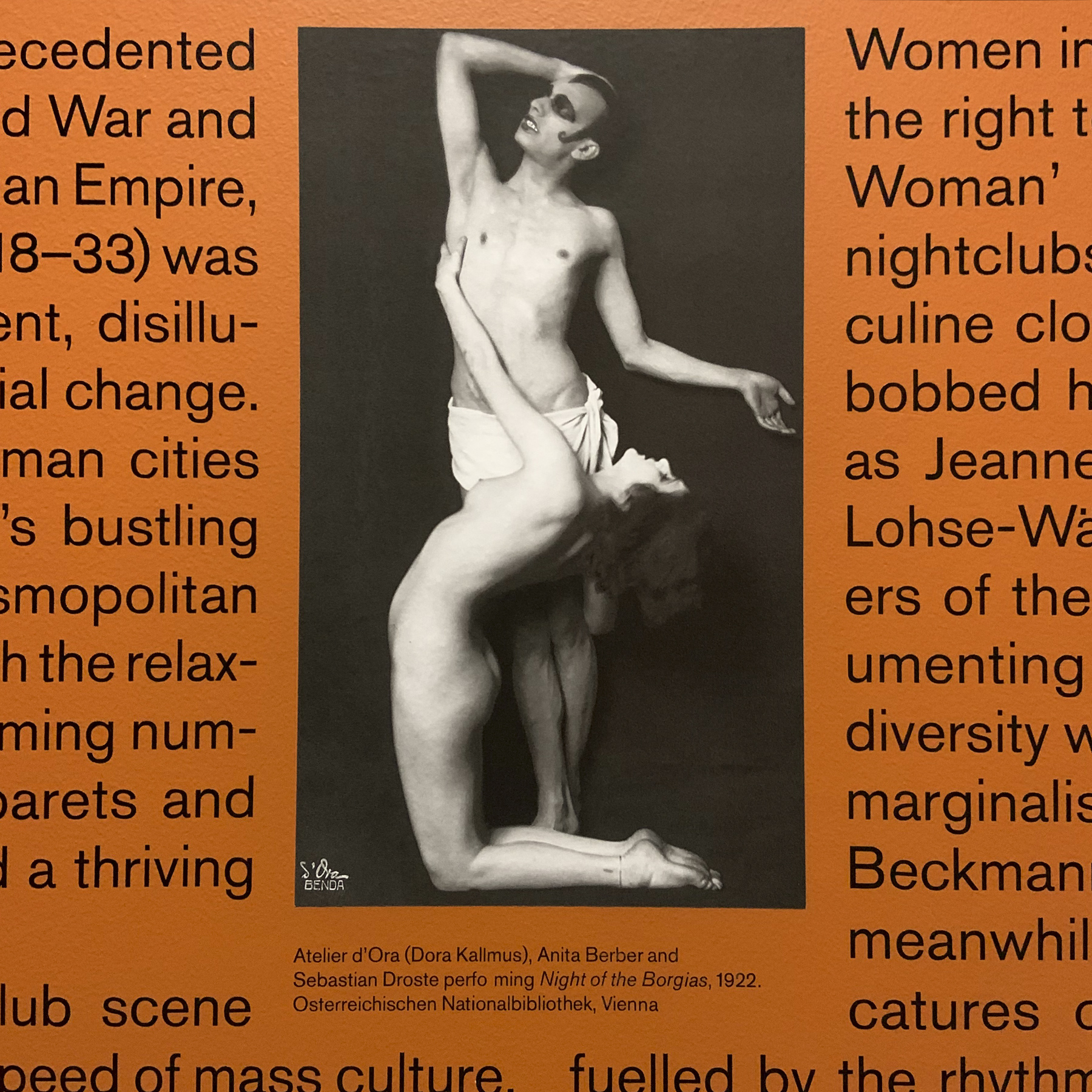
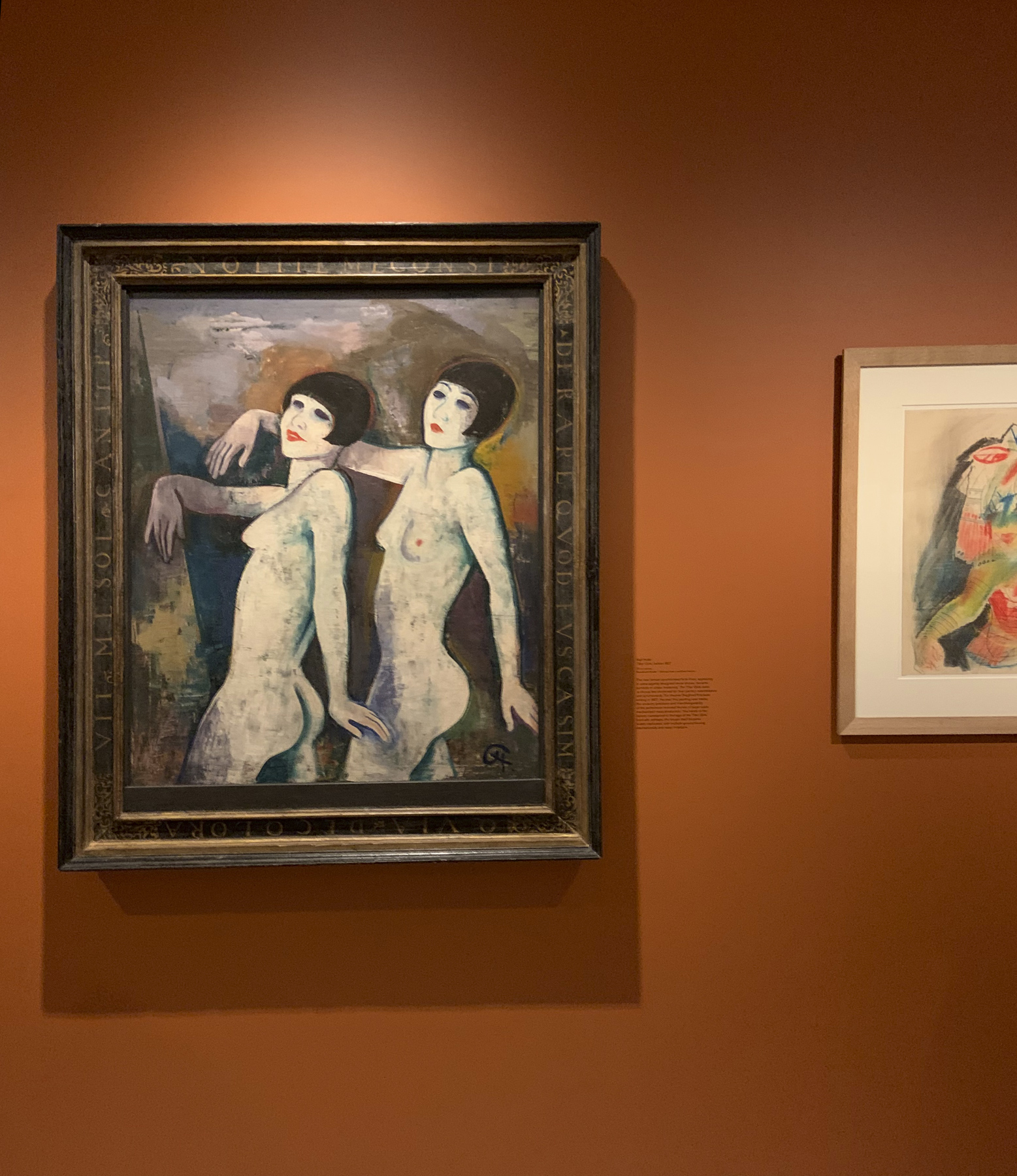
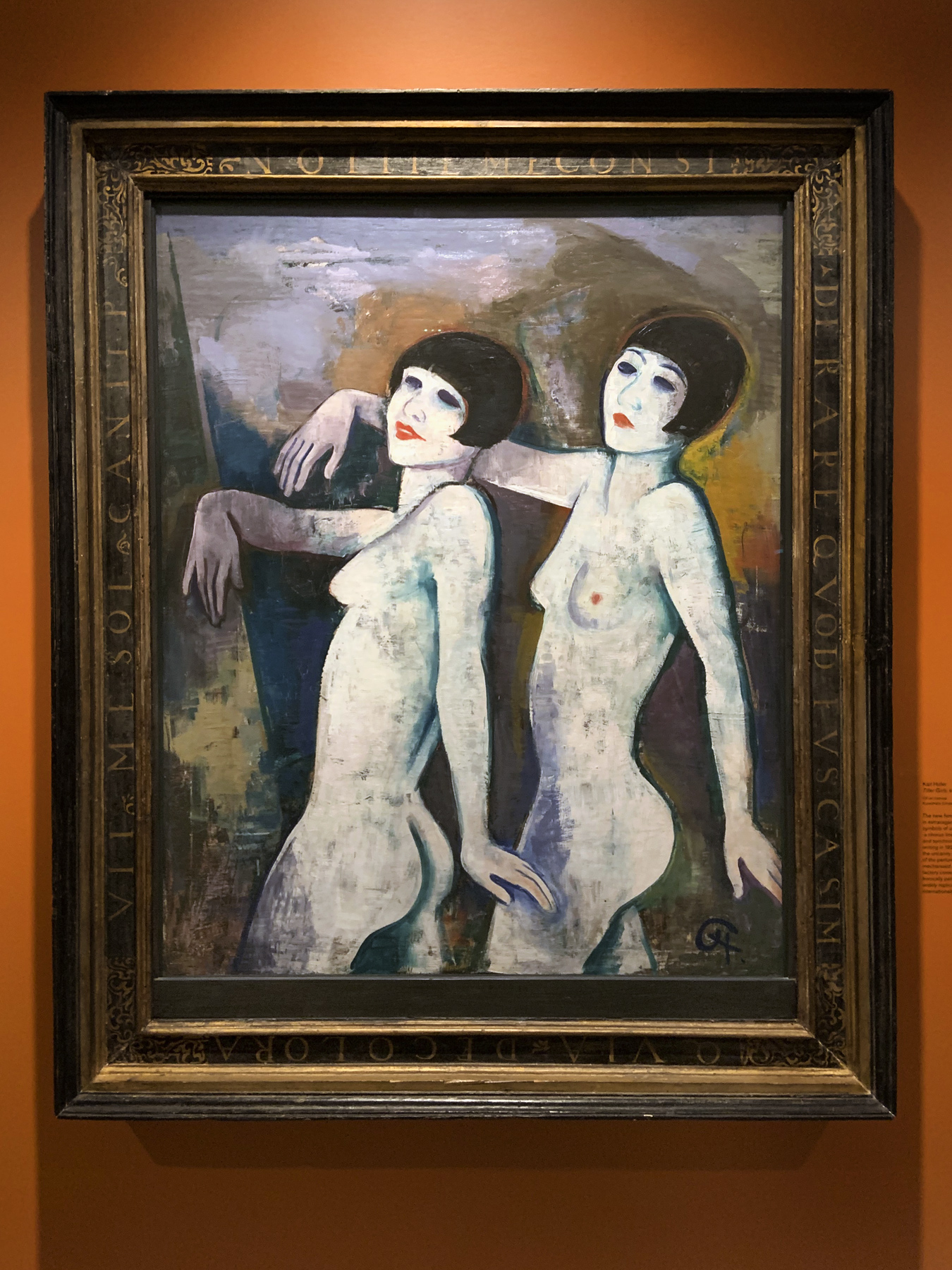
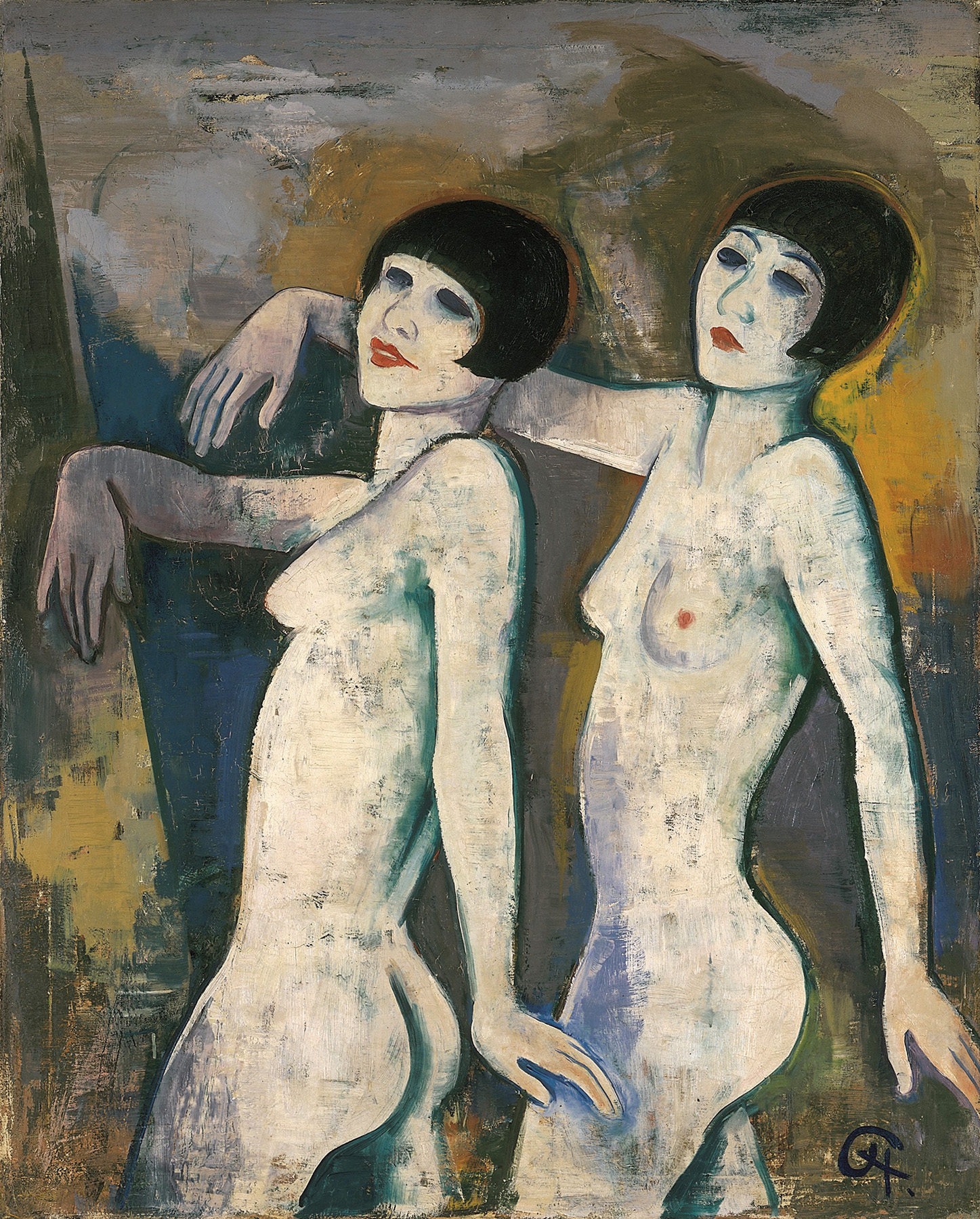
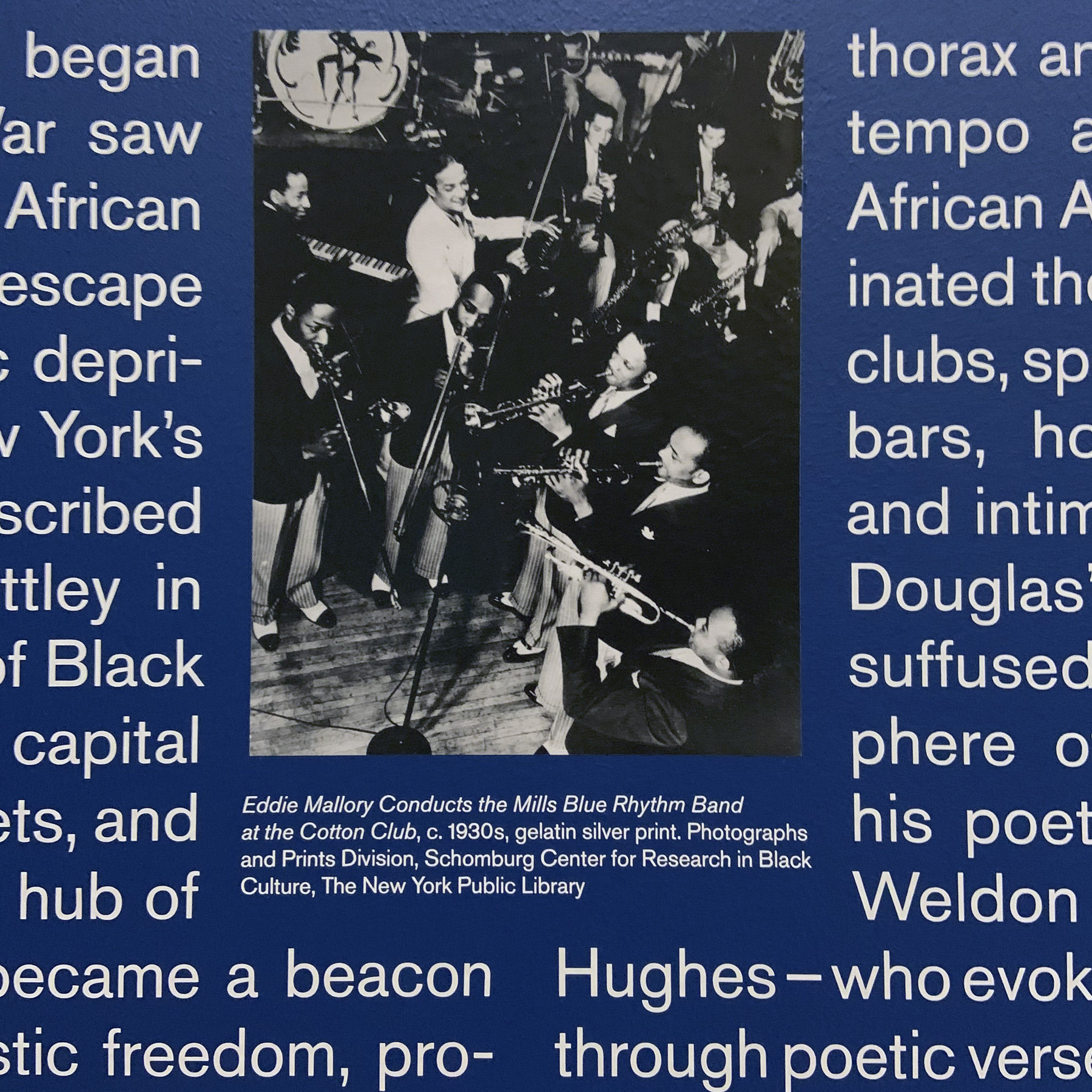
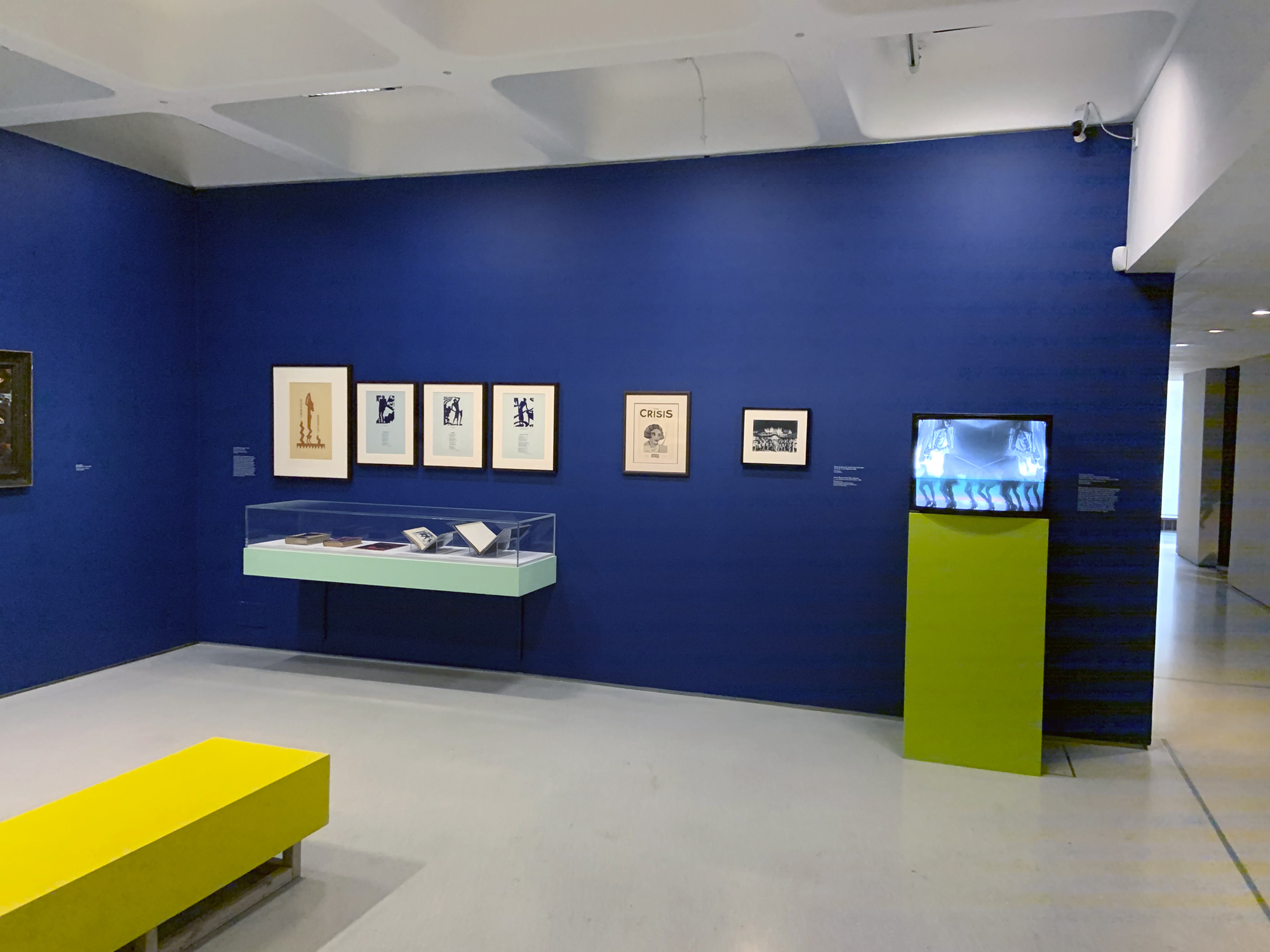
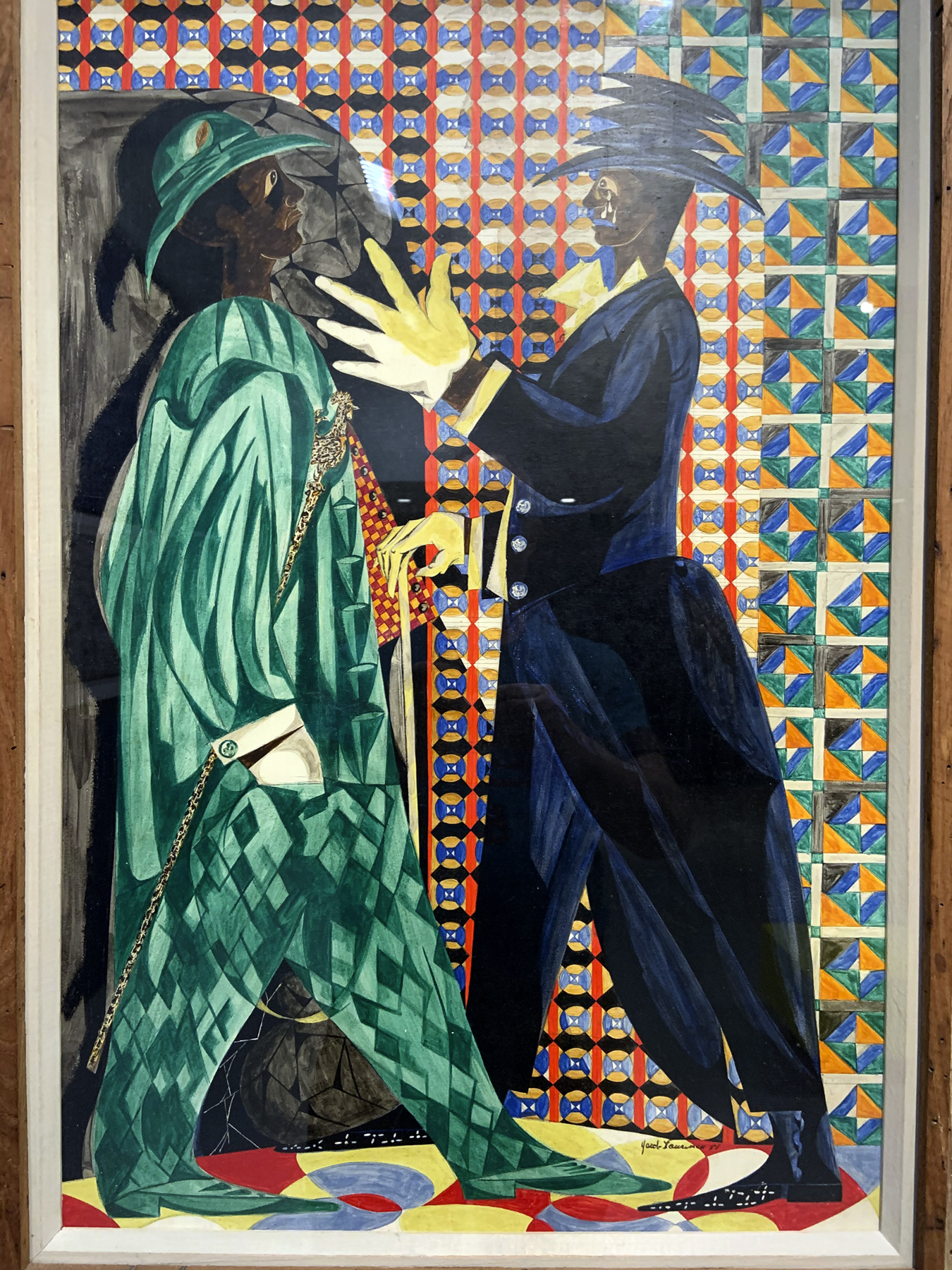
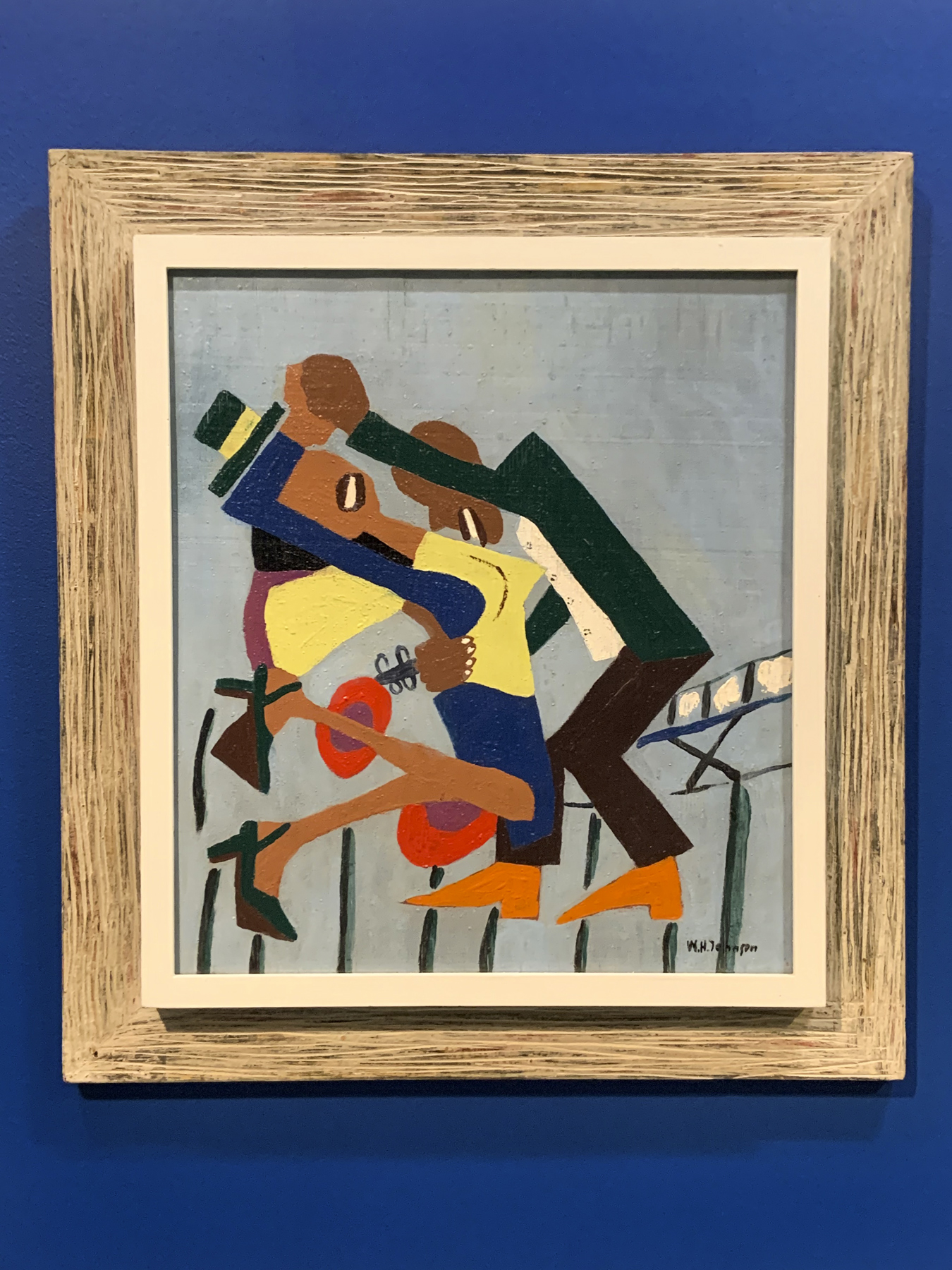
After a period of restraint in Germany during the First World War, the 1920s heralded an era of liberation and the relaxation of censorship laws. Numerous clubs and bars in metropolitan cities, such as Berlin, playing host to heady cabaret revues and daring striptease; the notorious synchronised Tiller Girls are captured in Karl Hofer’s iconic portrait. Major works by often overlooked female artists such as Jeanne Mammen and Elfriede Lohse-Wächtler, as well as George Grosz, Otto Dix and Max Beckmann, capture the pulsating energy of these nightclubs and the alternative lifestyles that flourished within them during the 1920s and 1930s. During the same time in New York, the literary and jazz scenes thrived and co-mingled in the predominantly African American neighbourhood of Harlem, where black identity was re-forged and debated. Paintings and prints by Aaron Douglas and Jacob Lawrence convey the vibrant atmosphere and complex racial and sexual politics of the time, while poetry by Langston Hughes and early cinema featuring Duke Ellington shed light on the rich range of creative expression thriving within the city.

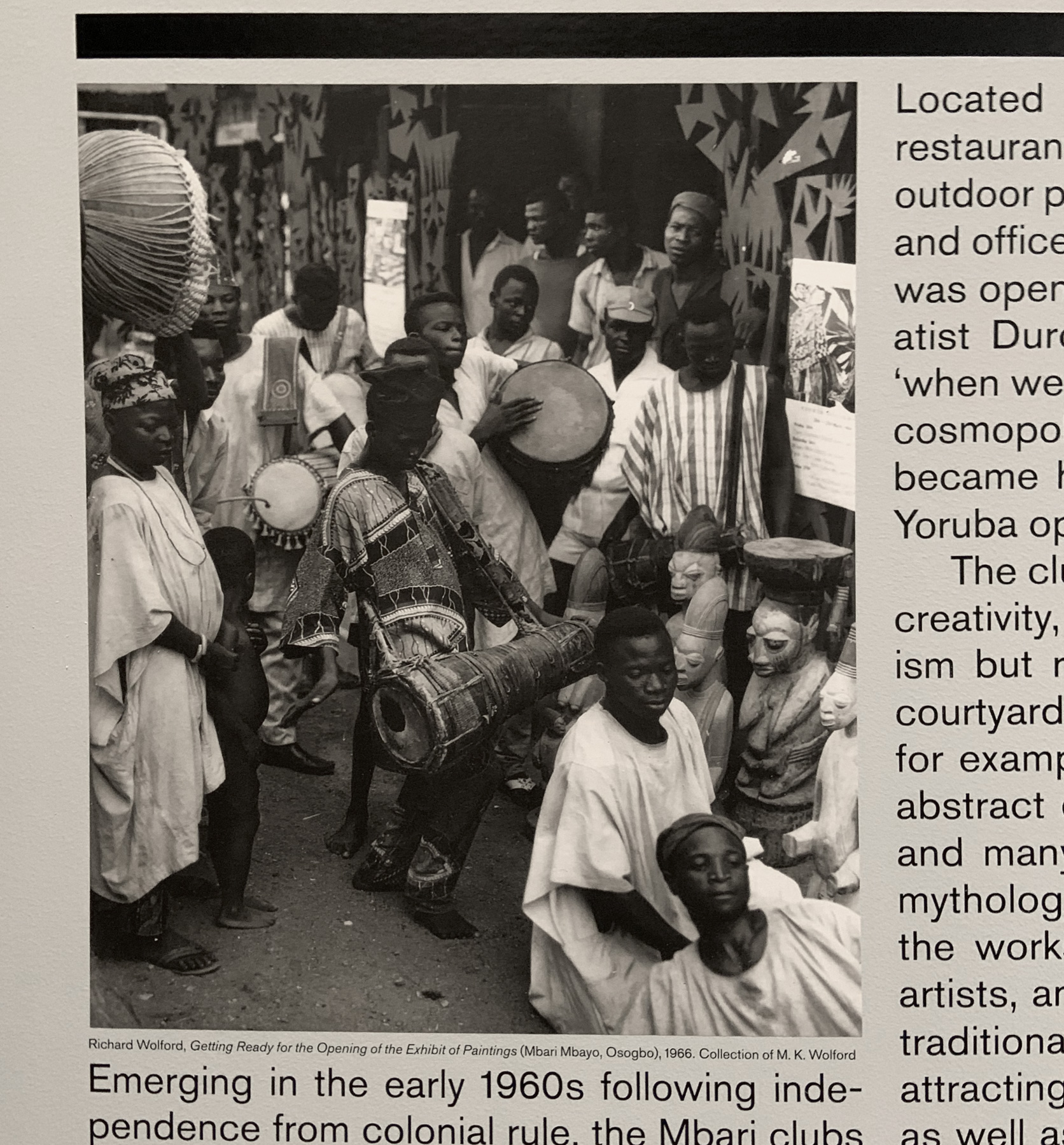
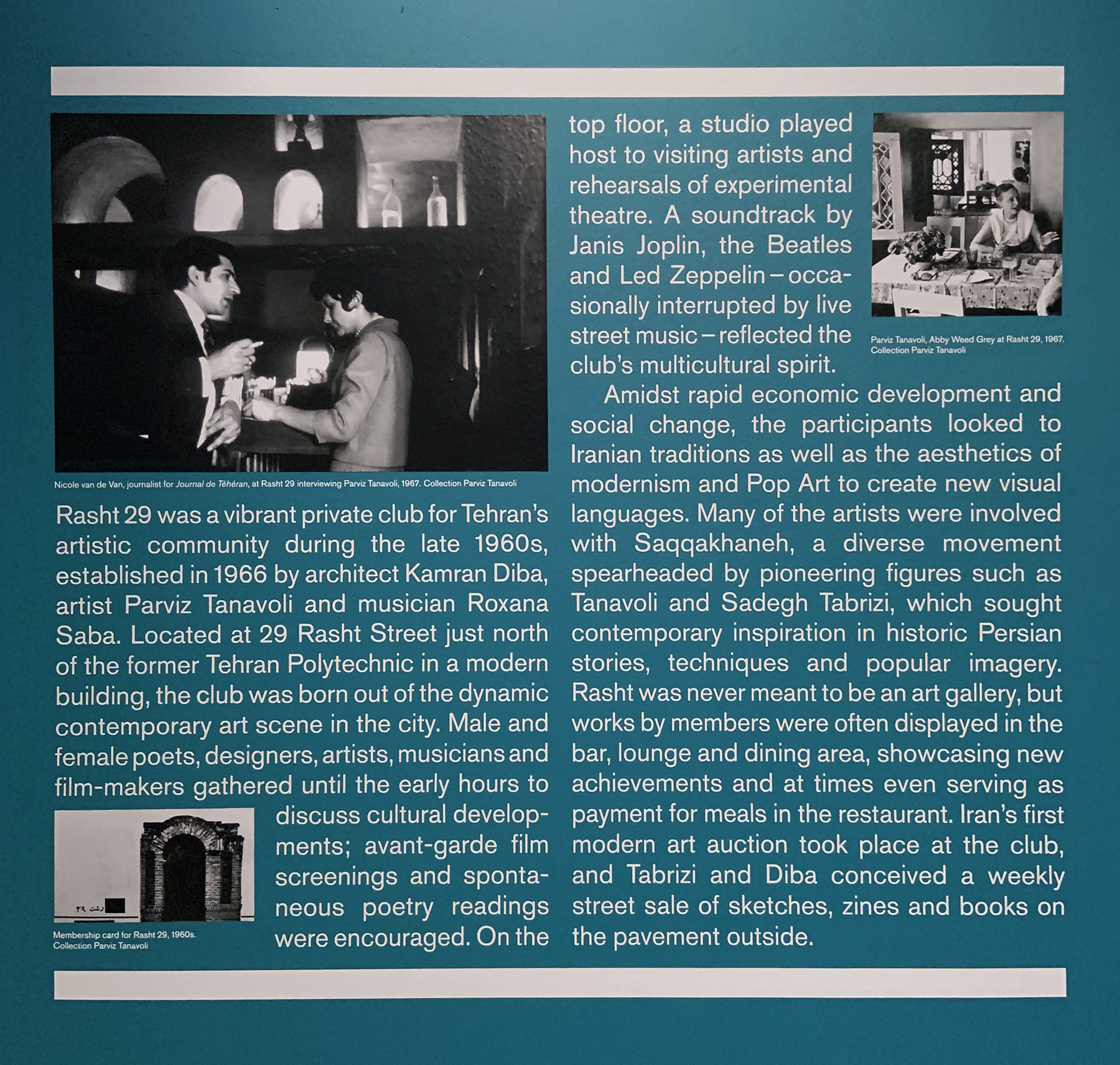
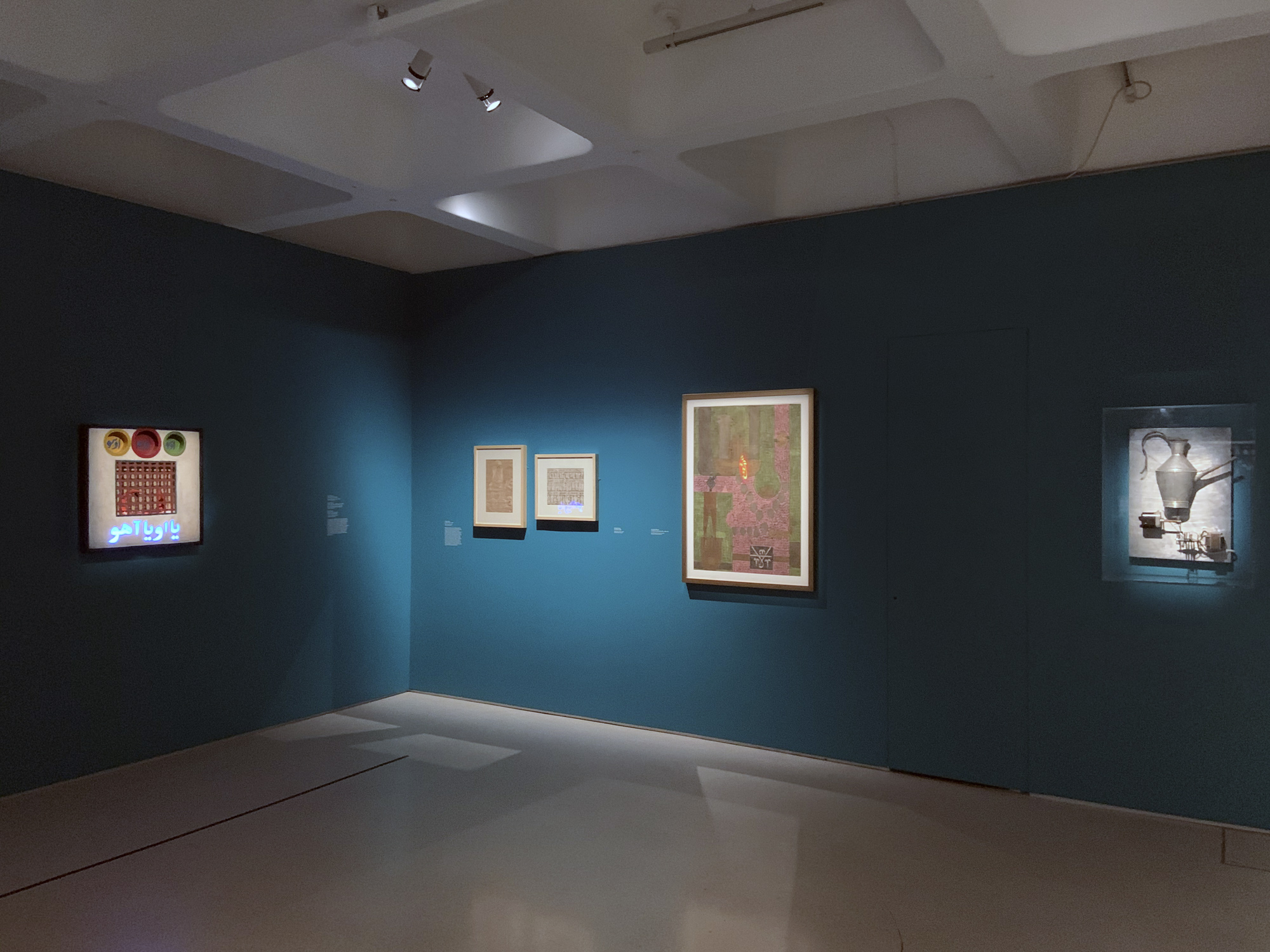
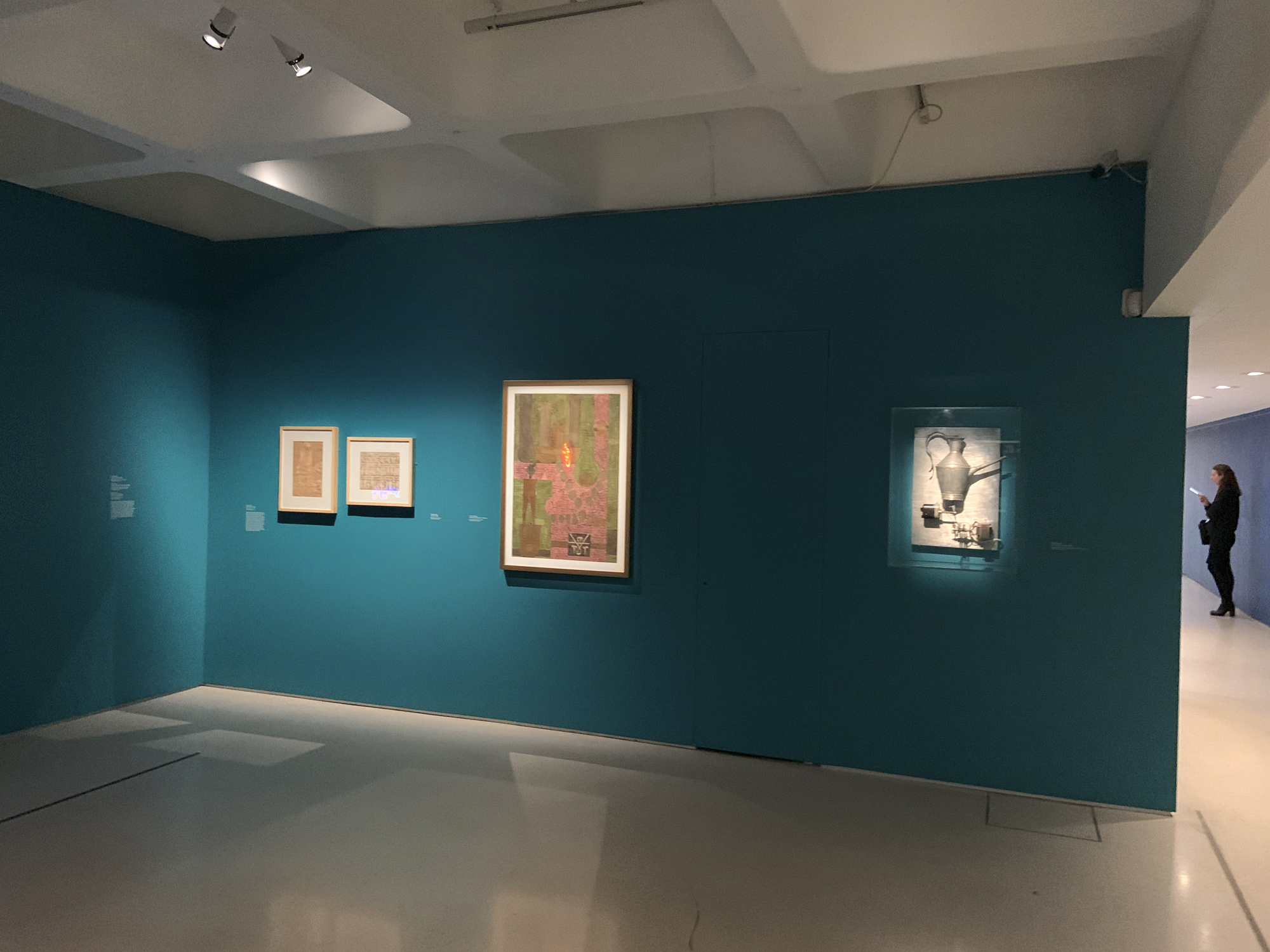
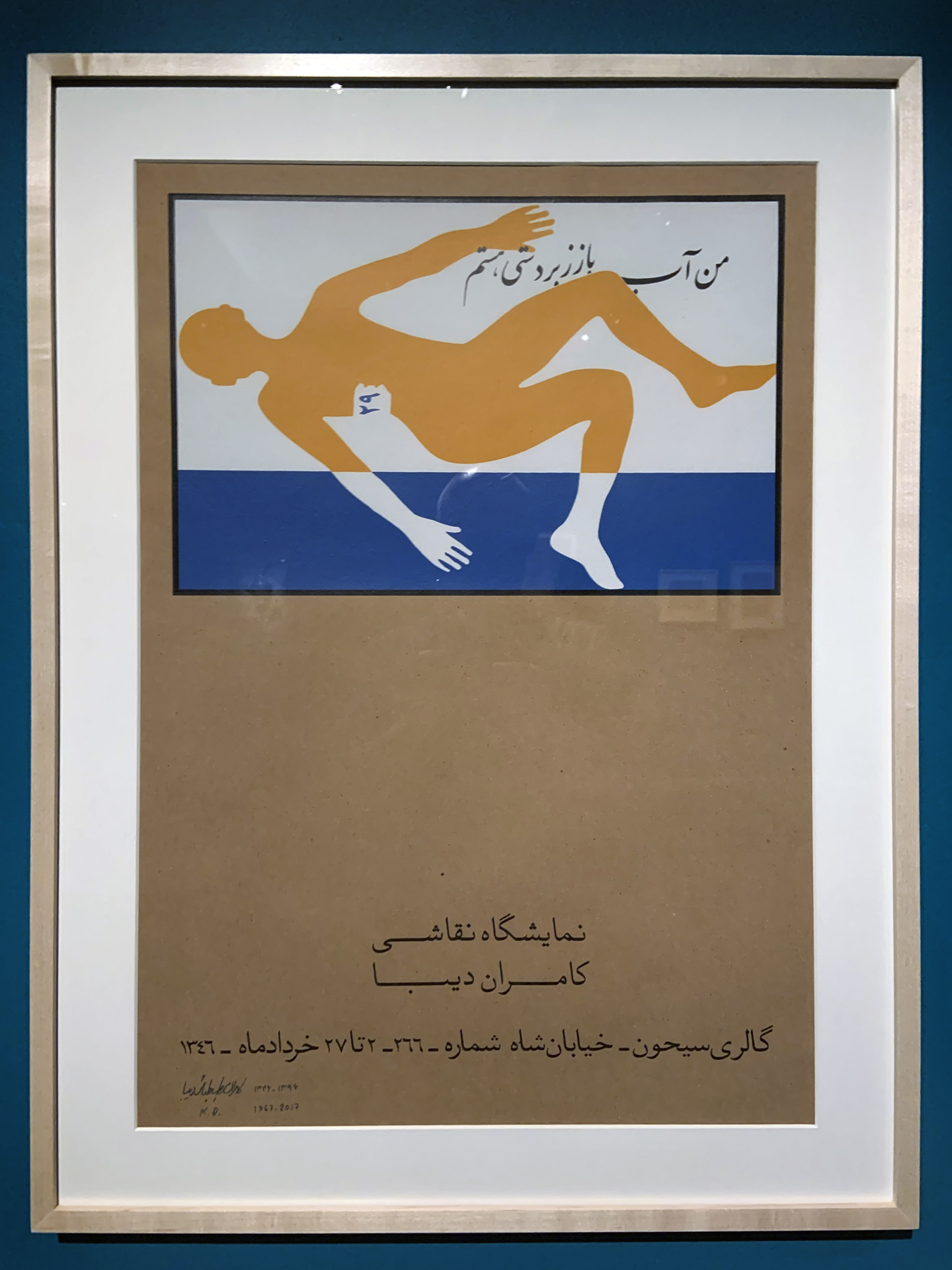
Into the Night also celebrates the lesser known but highly influential Mbari Artists and Writers Club, founded in the early 1960s in Nigeria. Focusing on two of the club’s key locations, in Ibadan and Osogbo, the exhibition explores how they were founded as laboratories for postcolonial artistic practices, providing a platform for a dazzling range of activities – including open-air dance and theatre performances, featuring ground breaking Yoruba operas by Duro Ladipo and Fela Kuti’s Afro-jazz; poetry and literature readings; experimental art workshops; and pioneering exhibitions by African and international artists such as Colette Omogbai, Ibrahim El-Salahi and Uche Okeke. Meanwhile in Tehran, Rasht 29 emerged in1966 as a creative space for avant-garde painters, poets, musicians and filmmakers to freely discuss their practice. Spontaneous performances were celebrated and works by artists like Parviz Tanavoli and Faramarz Pilaram hung in the lounge while a soundtrack including Led Zeppelin and the Beatles played constantly.

The exhibition is curated and organised by Barbican Centre, London, in collaboration with the Belvedere, Vienna.

Press release from the Barbican Art Gallery [Online] Cited 28/12/2019


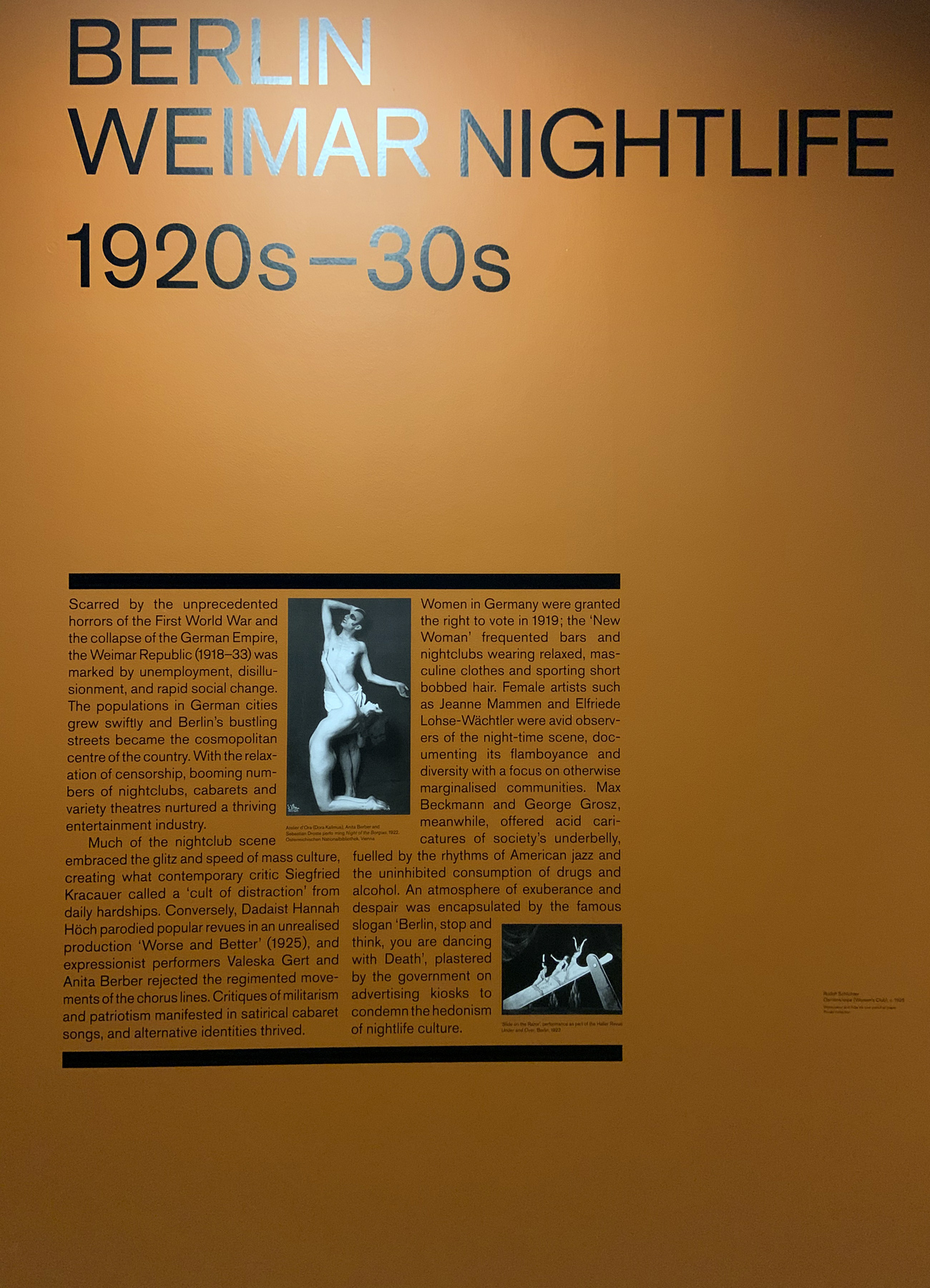
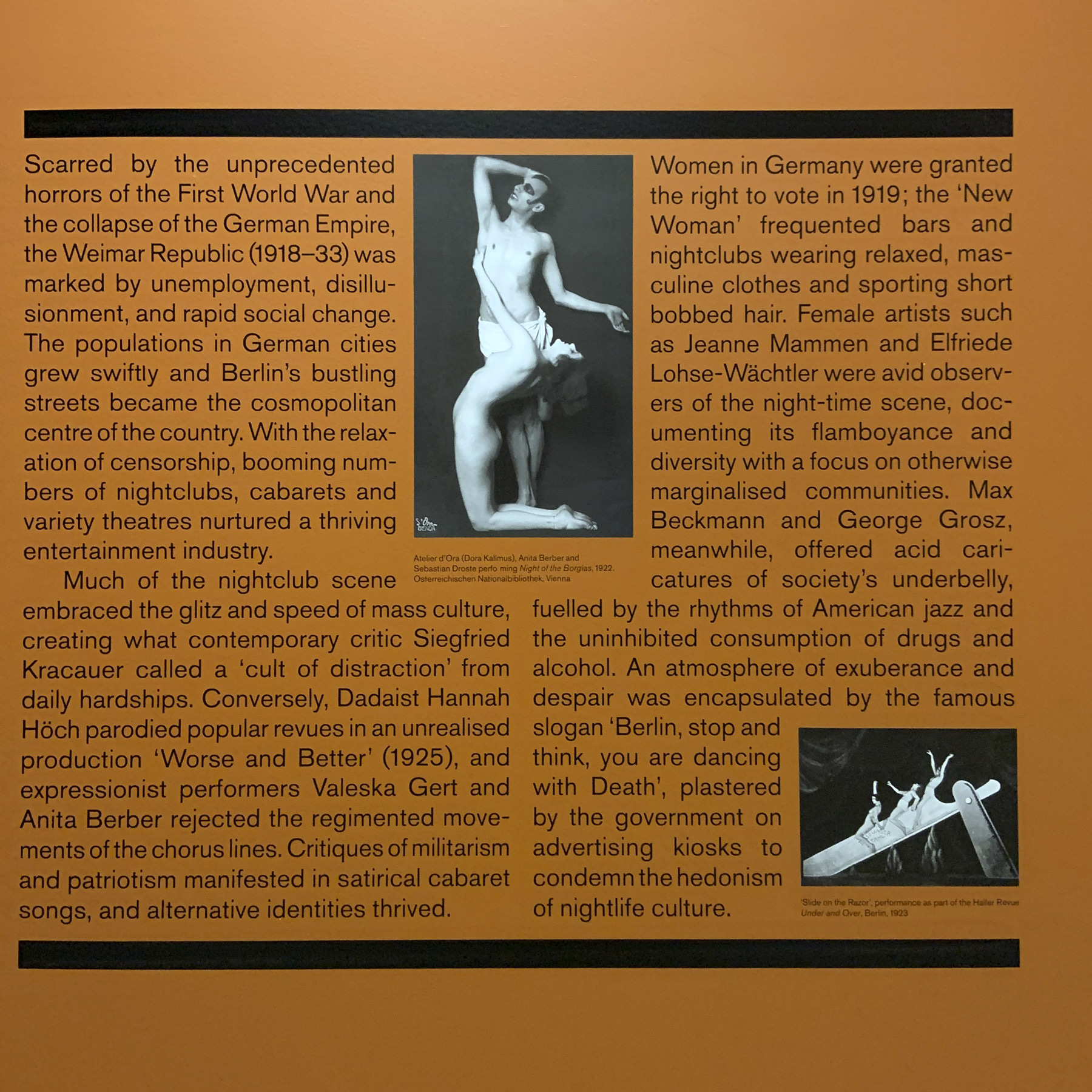
Berlin: Weimar Nightlife 1920s-30s wall text from the exhibition 'Into the Night: Cabarets and Clubs in Modern Art' at the Barbican Art Gallery, Oct 2019 - Jan 2020

Berlin: Weimar Nightlife 1920s-30s wall text from the exhibition 'Into the Night: Cabarets and Clubs in Modern Art' at the Barbican Art Gallery, Oct 2019 - Jan 2020

Berlin: Weimar Nightlife 1920s-30 wall text from the exhibition 'Into the Night: Cabarets and Clubs in Modern Art' at the Barbican Art Gallery, Oct 2019 - Jan 2020


Berlin: Weimar Nightlife 1920s-30s wall text from the exhibition
Photos: Marcus Bunyan


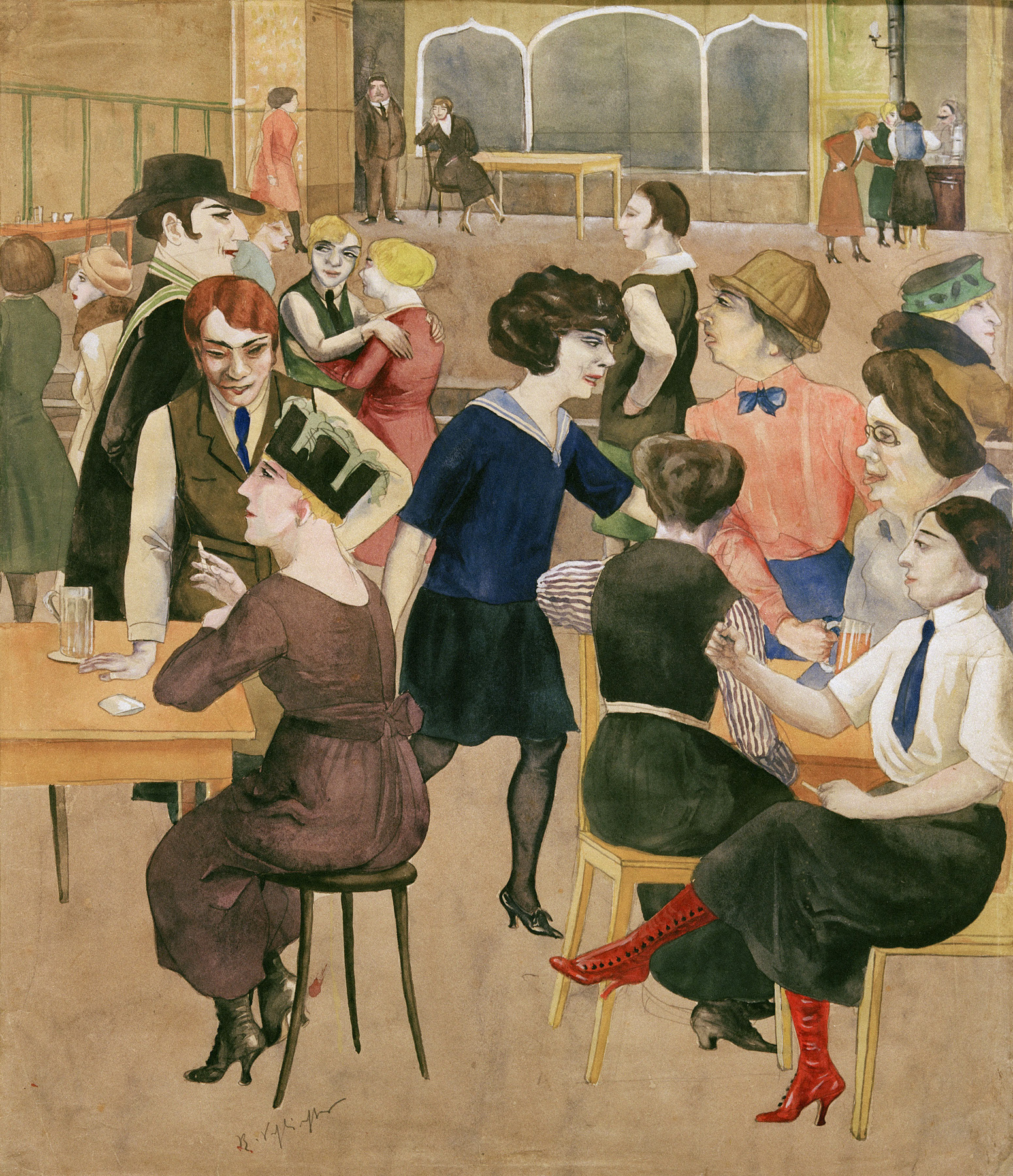
Rudolf Schlichter (German, 1890-1955) 'Damenkneipe' (Women's Club) c. 1925


Rudolf Schlichter (German, 1890-1955)
Damenkneipe (Women’s Club)
c. 1925
Private collection
© Viola Roehr v. Alvensleben, Munich
Photo: akg-images


Rudolf Schlichter (German, 1890-1955) 'Damenkneipe' (Women's Club) c. 1925 (installation view)


Rudolf Schlichter (German, 1890-1955)
Damenkneipe (Women’s Club) (installation view)
c. 1925
Photo: Marcus Bunyan


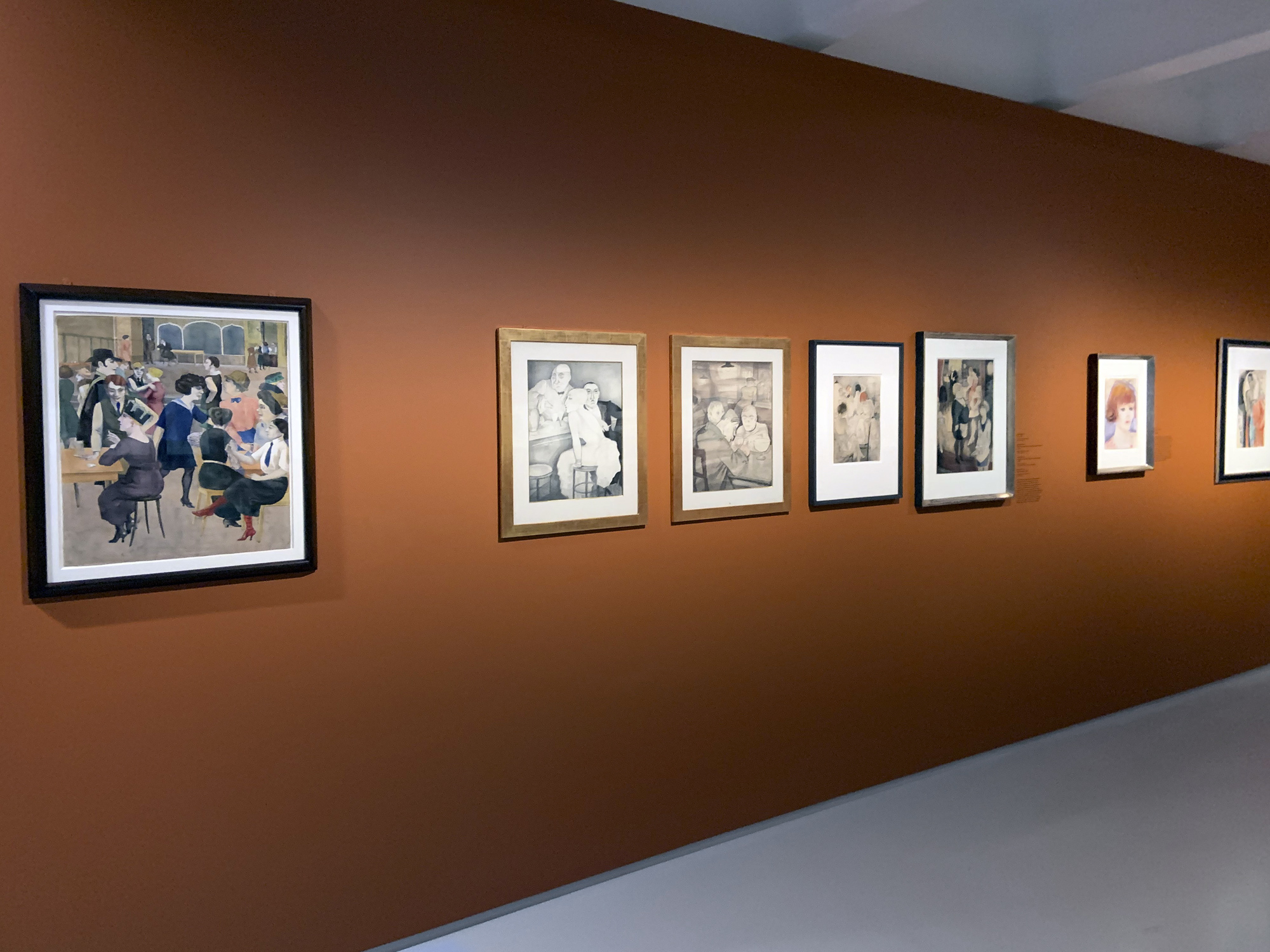
Installation view of the exhibition 'Into the Night: Cabarets and Clubs in Modern Art' at the Barbican Art Gallery, London with Rudolf Schlichter's 'Damenkneipe' (Women's Club) c. 1925 at left, followed by work by Jeanne Mammen


Installation view with Rudolf Schlichter’s Damenkneipe (Women’s Club) c. 1925 at left, followed by work by Jeanne Mammen
Photo: Marcus Bunyan


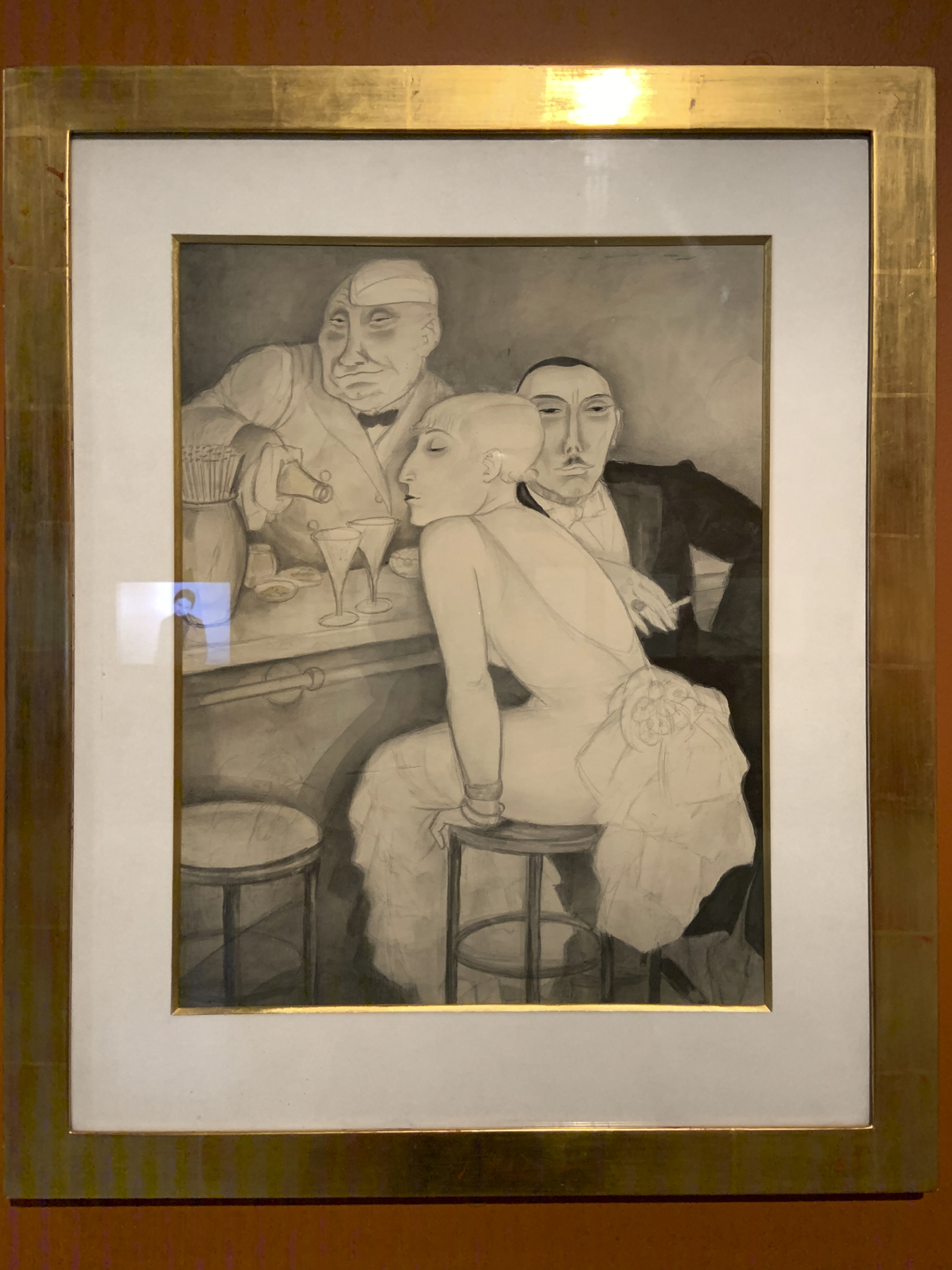
Jeanne Mammen (German, 1890-1976) 'Bar' c. 1930 (installation view)


Jeanne Mammen (German, 1890-1976)
Bar (installation view)
c. 1930
Ömer Koç Collection
Photo: Marcus Bunyan


Jeanne Mammen (German, 1890-1976) 'Bar' c. 1930


Jeanne Mammen (German, 1890-1976)
Bar
c. 1930
Ömer Koç Collection
© DACS, 2019


Jeanne Mammen (German, 1890-1976) 'Bierseidelbetrachtung I' (The Contemplative Drinkers I) c. 1929 (installation view)

Jeanne Mammen (German, 1890-1976) 'Bierseidelbetrachtung I' (The Contemplative Drinkers I) c. 1929 (installation view detail)


Jeanne Mammen (German, 1890-1976)
Bierseidelbetrachtung I (The Contemplative Drinkers I) (installation views)
c. 1929
Watercolour and pencil on paper
Ömer Koç Collection
Photos: Marcus Bunyan


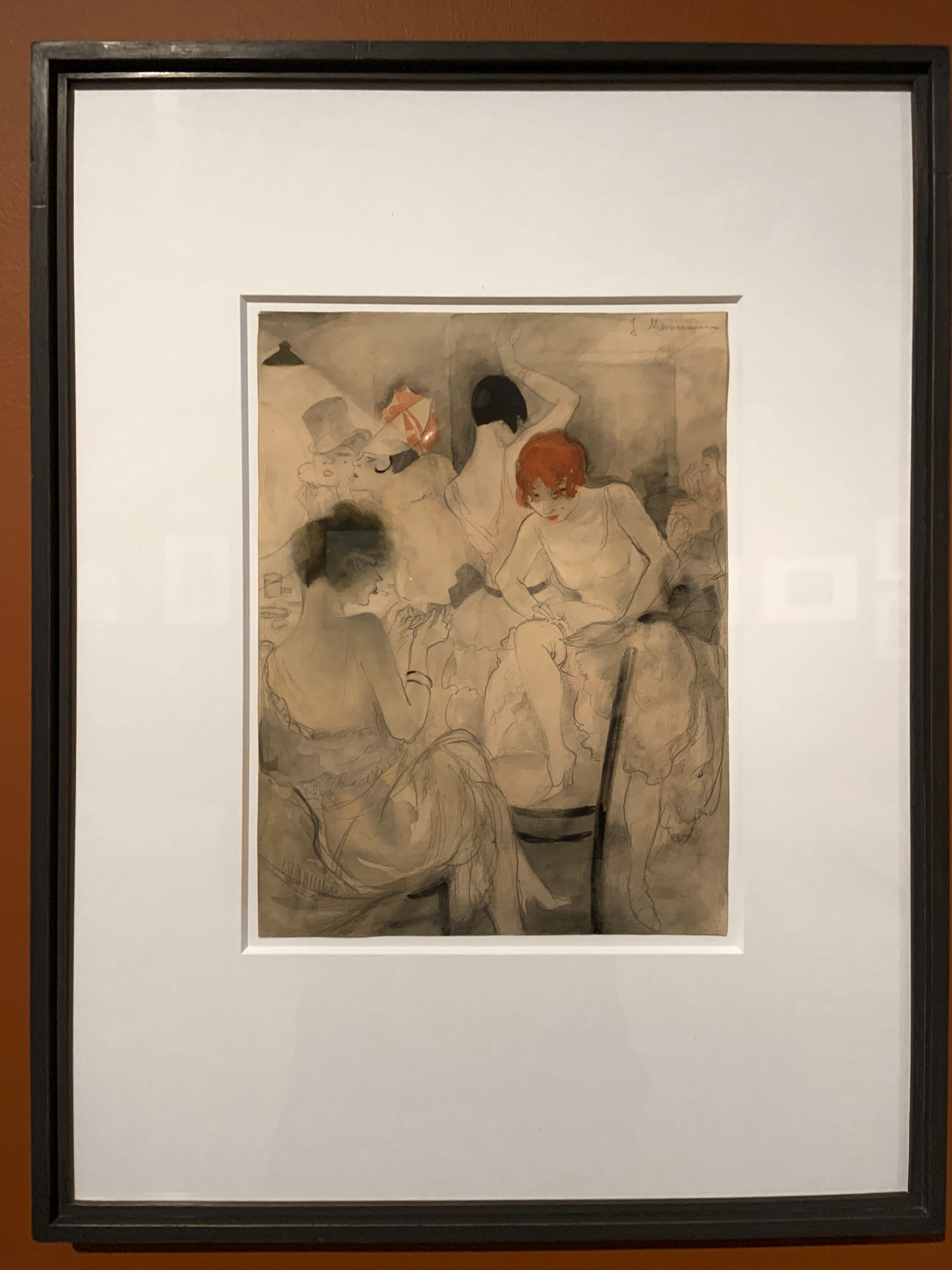
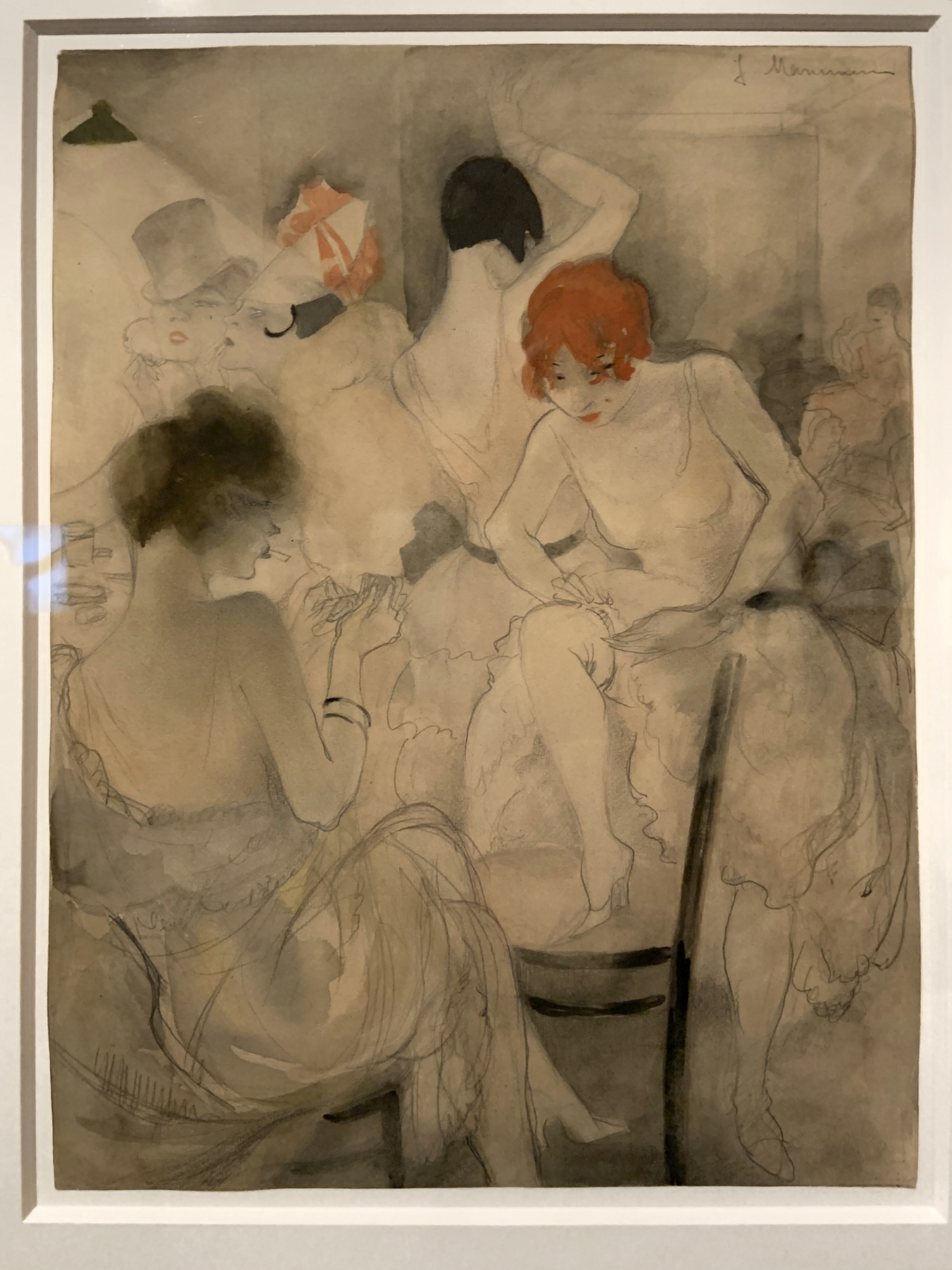
Jeanne Mammen (German, 1890-1976) 'Untitled (Vor dem Auftritt)' (Before the Performance) c. 1928 (installation view)

Jeanne Mammen (German, 1890-1976) 'Untitled (Vor dem Auftritt)' (Before the Performance) c. 1928 (installation view)


Jeanne Mammen (German, 1890-1976)
Untitled (Vor dem Auftritt) (Before the Performance) (installation views)
c. 1928
Jeanne Mammen Foundation at Stadtmuseum Berlin
Photos: Marcus Bunyan


Jeanne Mammen (German, 1890-1976) 'Café Nollendorf' c. 1931 (installation view)


Jeanne Mammen (German, 1890-1976)
Café Nollendorf (installation view)
c. 1931
Watercolour and India ink over pencil
Private collection
Photo: Marcus Bunyan


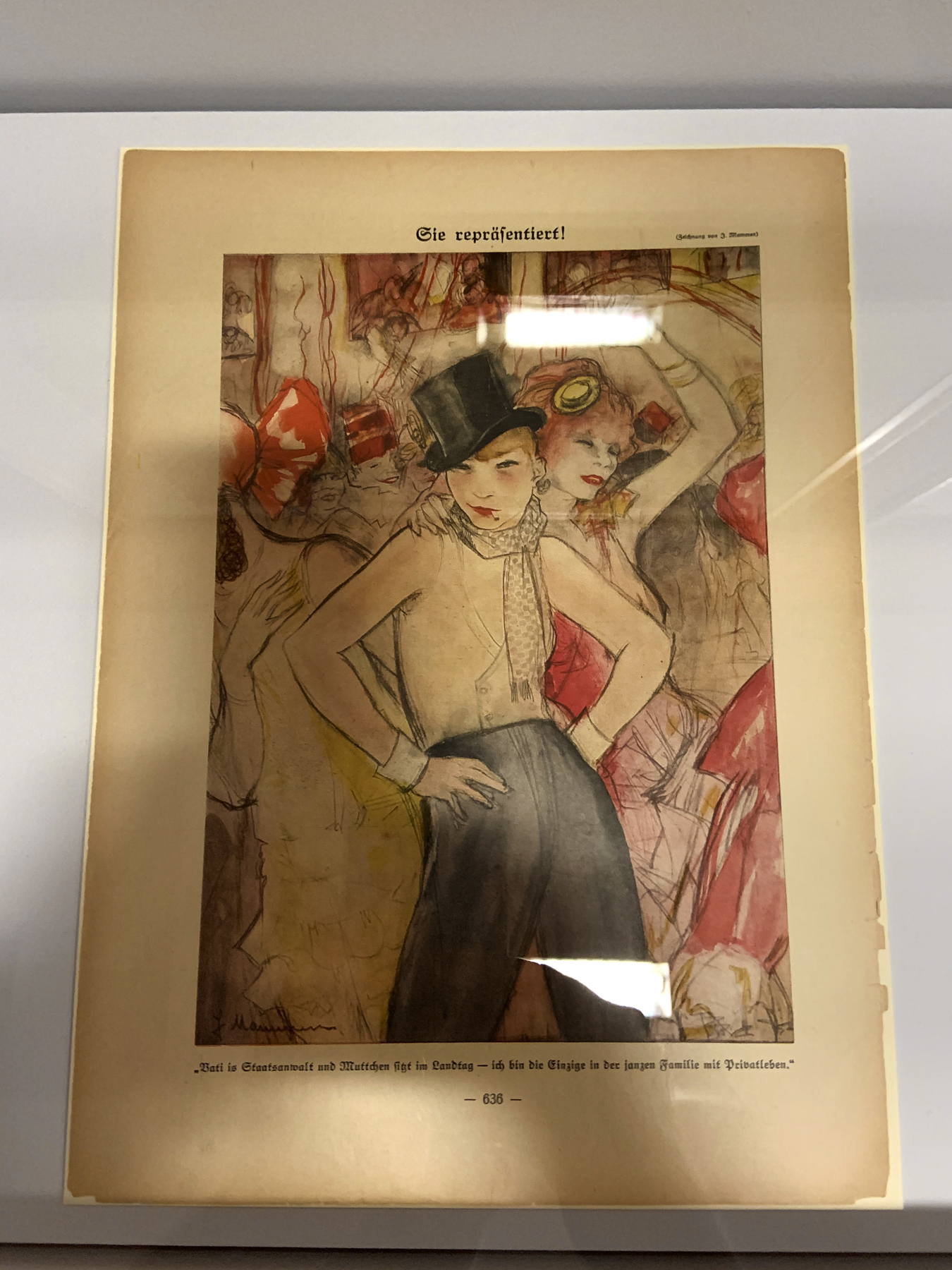
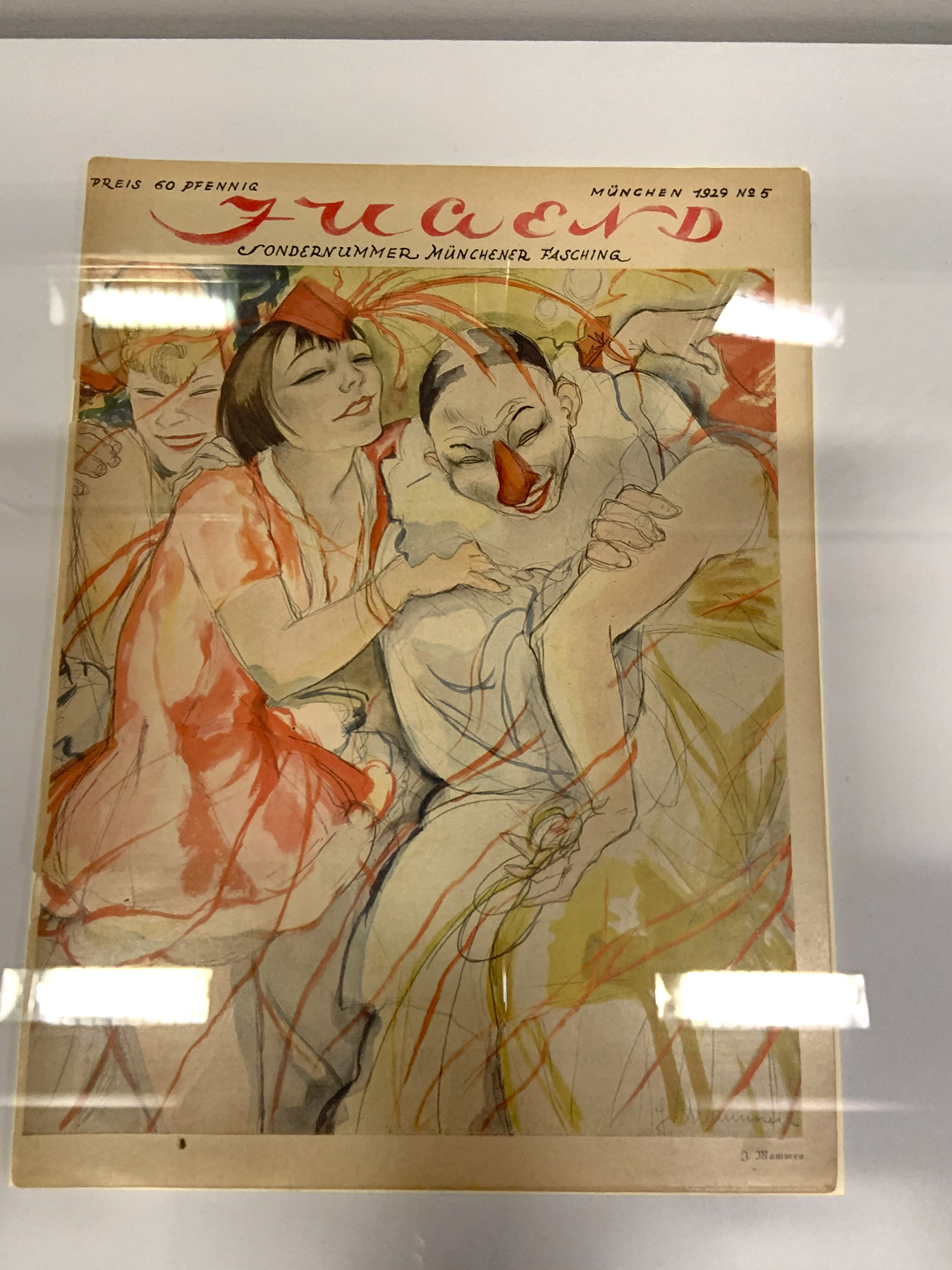
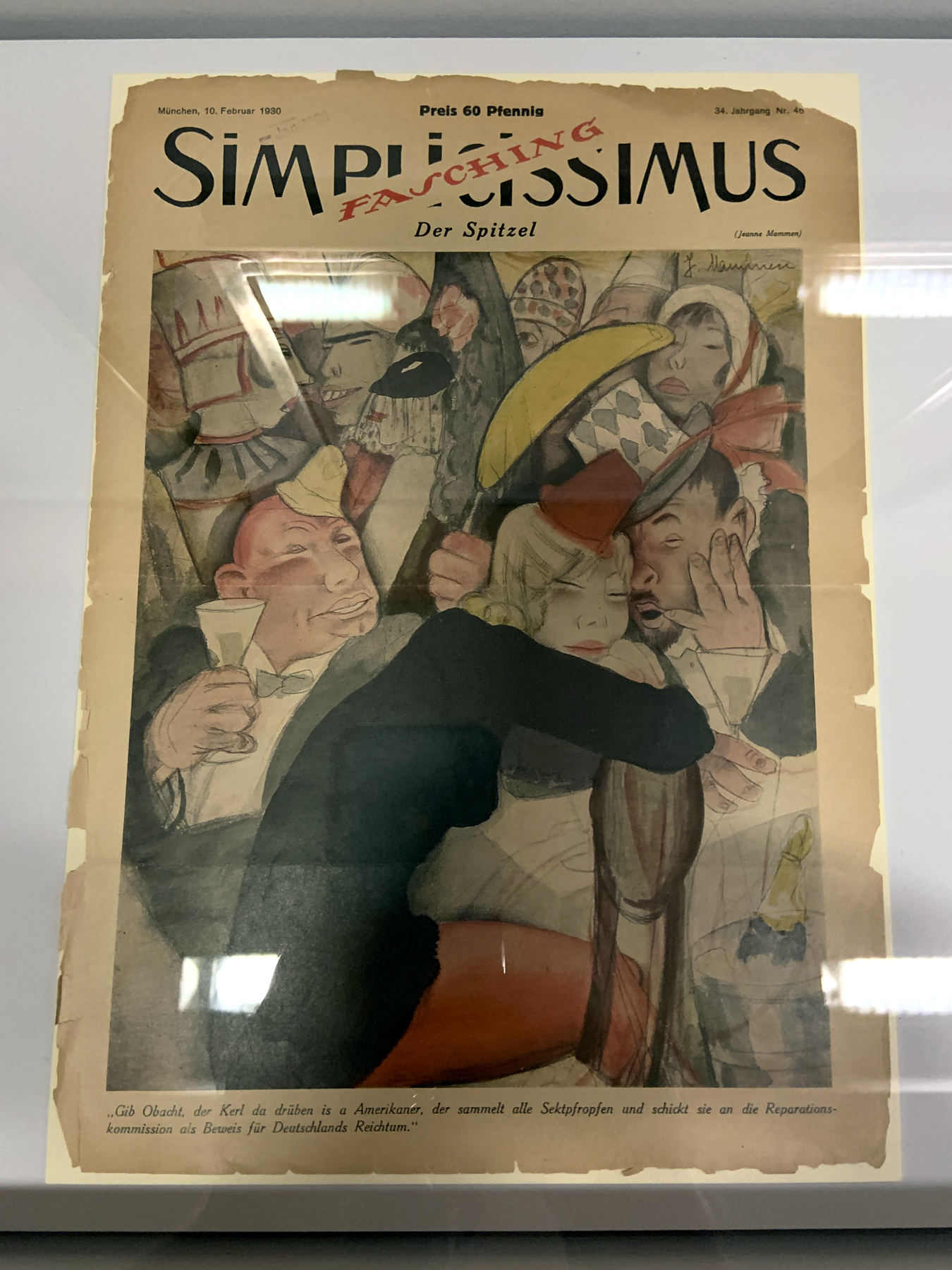
Jeanne Mammen’s paintings and drawings of Berlin nightlife document the changing role of women and offer rare images of queer female desire. In contrast to the bitingly satirical images characteristic of George Grosz and Max Beckmann, Mammen sympathetically portrays her mostly female figures. Café Nollendorf is one of several by Mammen published in Curt Moreck’s subversive 1931 Guide to ‘Depraved’ Berlin (shown nearby). It illustrates his account of a lesbian club for ‘open-minded’ clientele. Mammen was also a successful commercial artist, recording modern fashions and mores in popular magazines.

Wall text from the exhibition


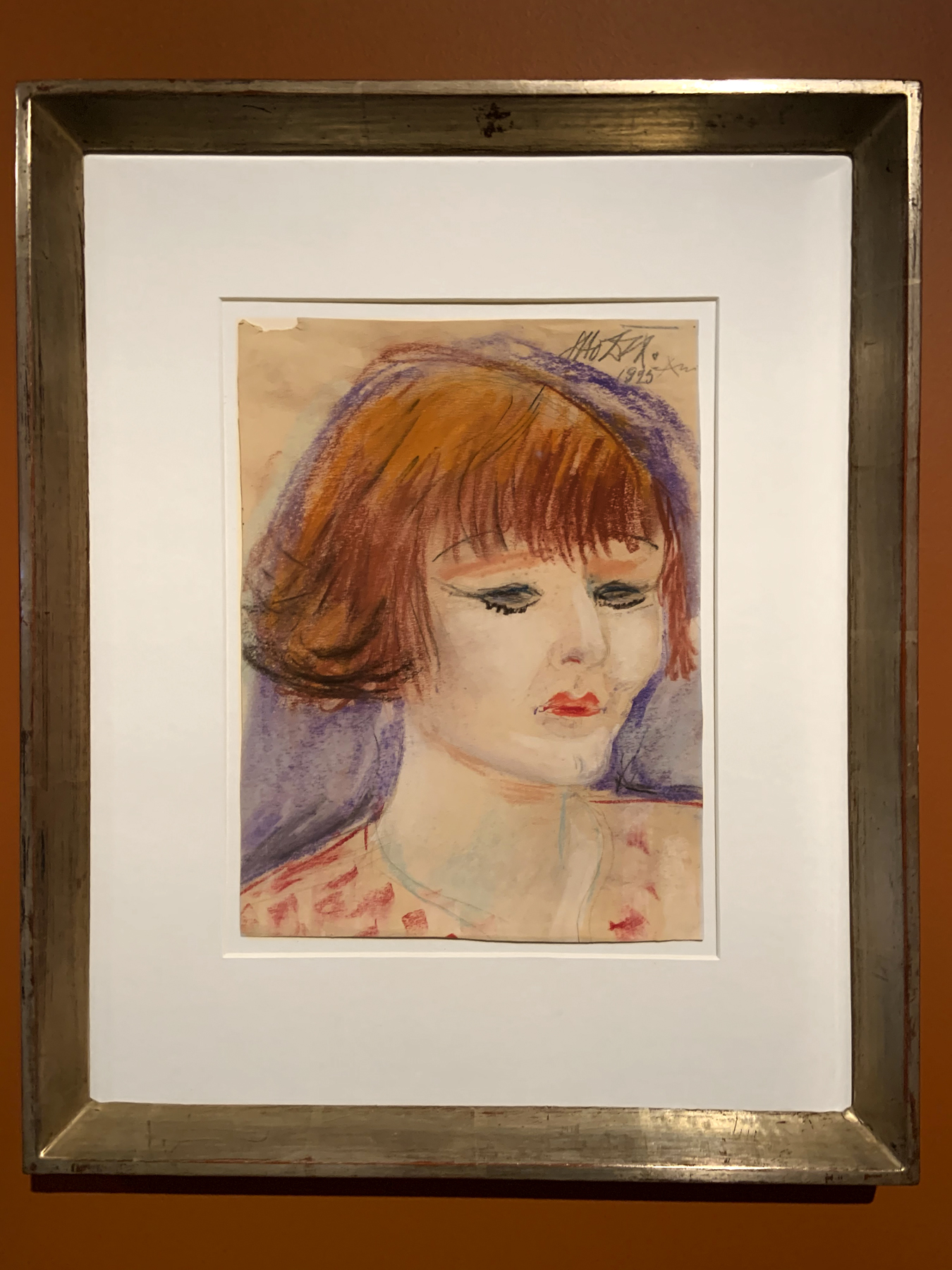
Otto Dix (German, 1891-1969) 'Anita Berber' 1925 (installation view)


Otto Dix (German, 1891-1969)
Anita Berber (installation view)
1925
Pastel on paper
Private collection
Photo: Marcus Bunyan


Otto Dix met the 26-year-old cabaret dancer and silent film star Anita Berber in DÅ«sseldorf in 1925. Berber was among the most provocative performers of her time, appearing at major Berlin venues like the Wintergarten and the Apollo, as well as the political cabaret Schall und Rauch and the lesbian club Topkeller. In her notorious dance ‘Cocaine’, accompanied by Camille Saint-Saëns’ Valse mignonne (1896), Berber played a sex worker and addict, wearing a leather corset with her breast exposed. Simulating trembles of pain, she dances spasms of hallucination before collapsing on the floor. Despite her theatrical makeup, Dix’s portrait offers a more intimate side of Berber.

Wall text from the exhibition


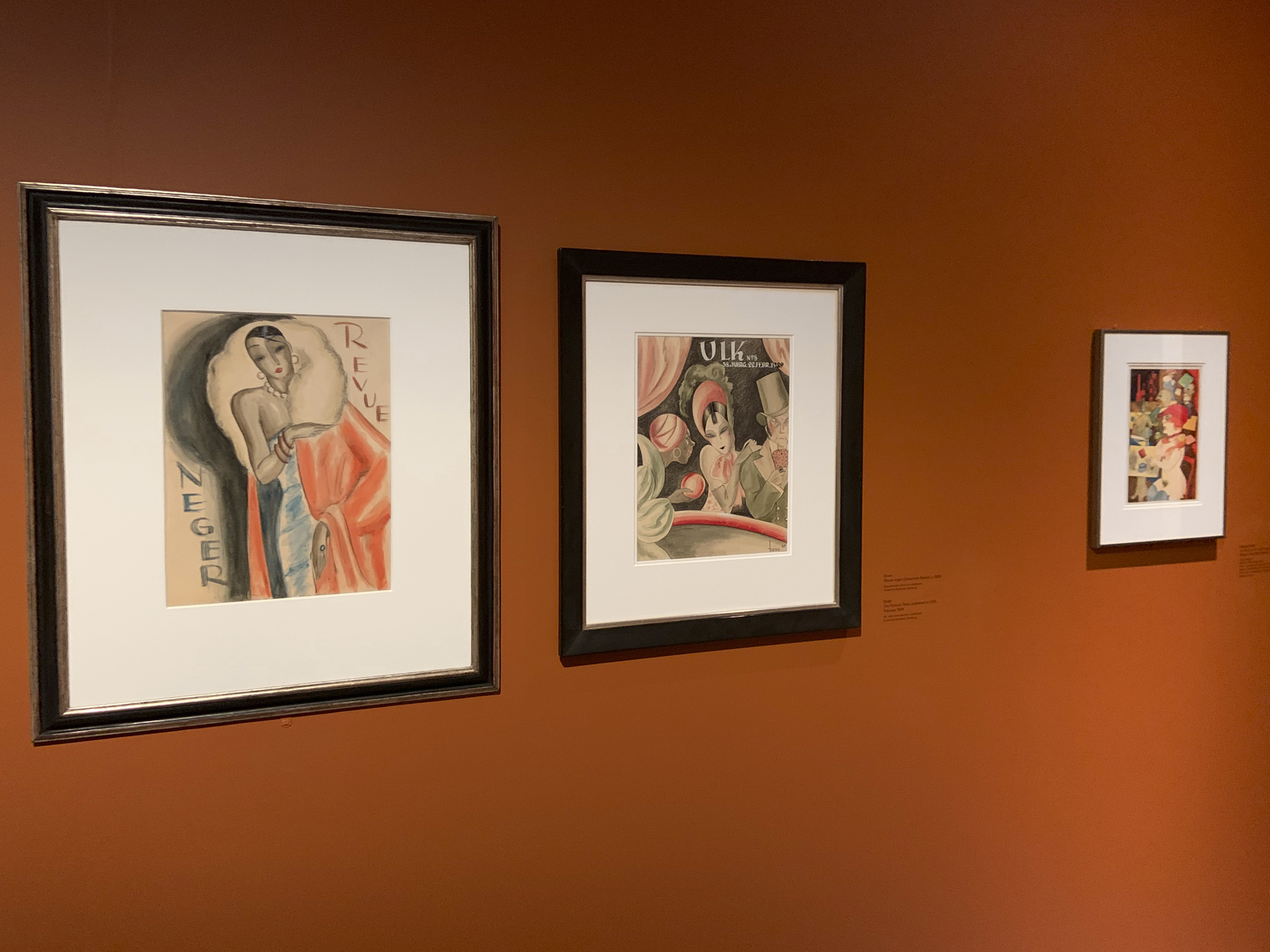
Installation view of the exhibition 'Into the Night: Cabarets and Clubs in Modern Art' at the Barbican Art Gallery, London showing on the left, the work of Dodo Burgner and on the right, the work of George Grosz


Installation view of the exhibition Into the Night: Cabarets and Clubs in Modern Art at the Barbican Art Gallery, London showing on the left, the work of Dodo Burgner and on the right, the work of George Grosz.
Photo: Marcus Bunyan


Dodo (Dodo Burgner, German, 1927-1933) 'Revue neger (Josephine Baker)' c. 1926 (installation view)


Dodo (Dodo Burgner, German, 1927-1933)
Revue neger (Josephine Baker) (installation view)
c. 1926
Gouache over pencil on cardboard
Collection Krümmer, Hamburg
Photo: Marcus Bunyan


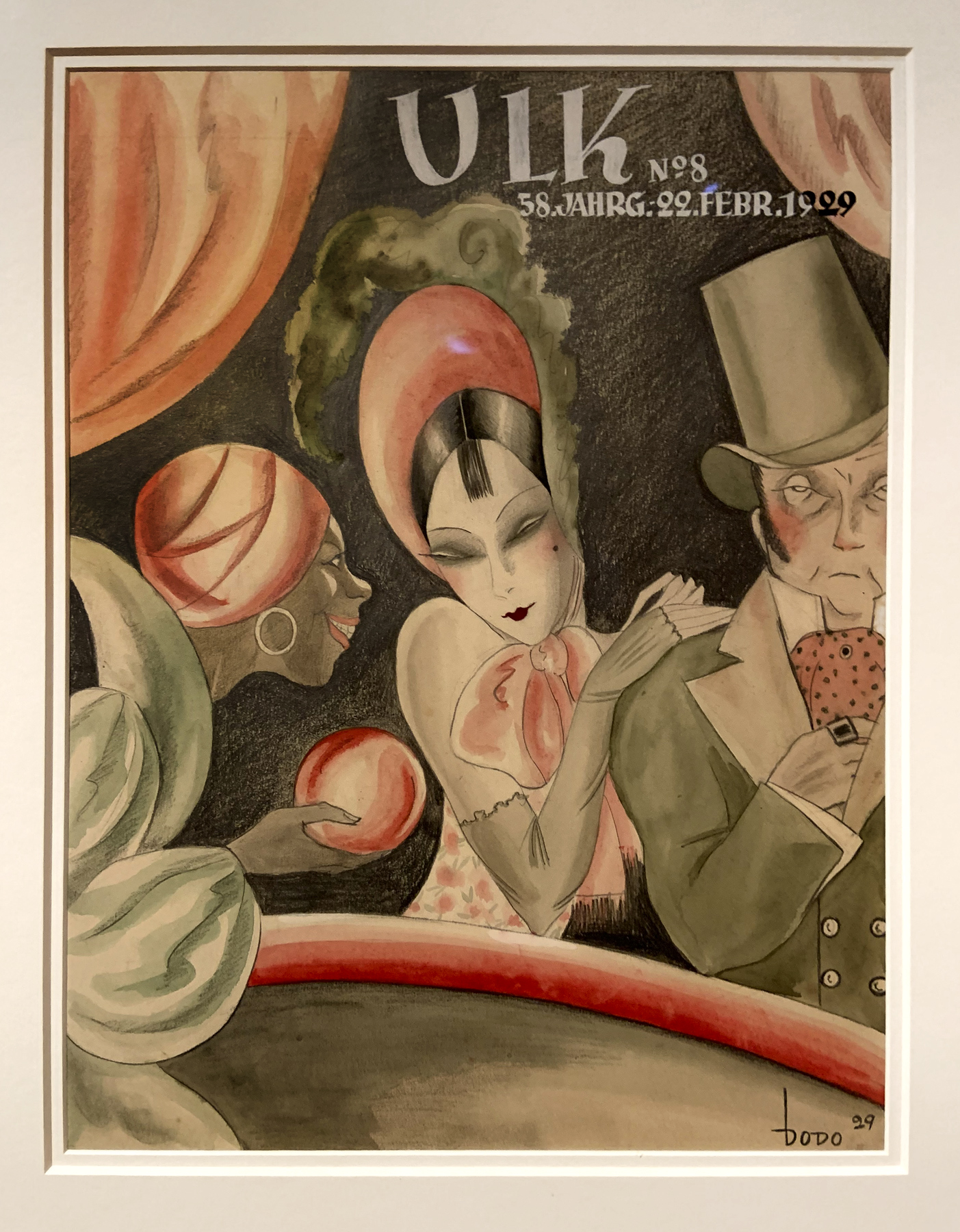
Dodo (Dodo Burgner, German, 1927-1933) 'The Fortune Teller', published in 'ULK' February 1929 (installation view)

Dodo (Dodo Burgner, German, 1927-1933) 'The Fortune Teller', published in 'ULK' February 1929 (installation view)


Dodo (Dodo Burgner, German, 1927-1933)
The Fortune Teller, published in ULK (installation views)
February 1929
Gouache over pencil on cardboard
Collection Krümmer, Hamburg
Photos: Marcus Bunyan


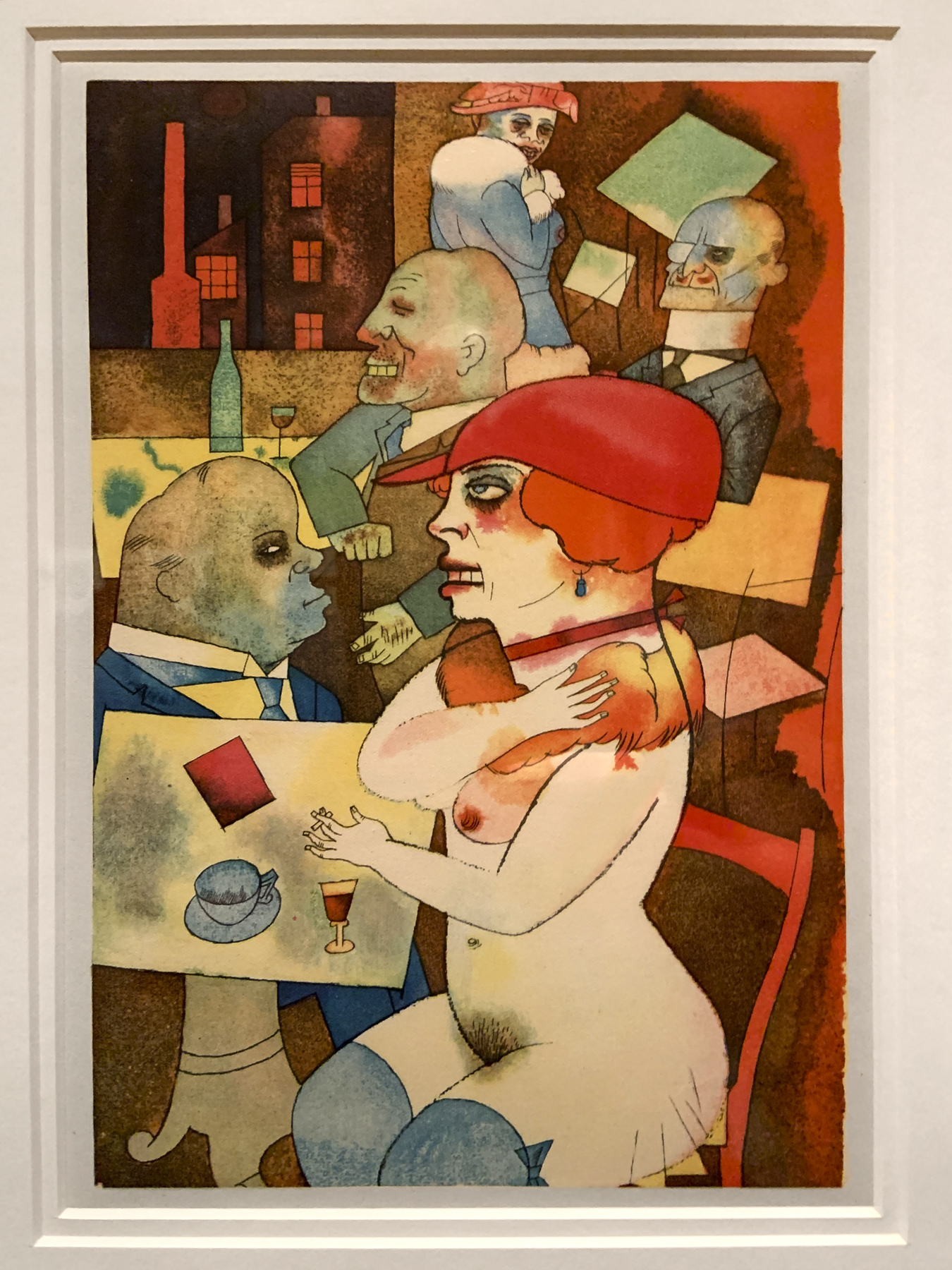
George Grosz (German, 1893-1959) 'Schönheit, dich will ich preisen' (Beauty, Thee Will I Praise) 1923 (installation view)

George Grosz (German, 1893-1959) 'Schönheit, dich will ich preisen' (Beauty, Thee Will I Praise) 1923 (installation view)


George Grosz (German, 1893-1959)
Schönheit, dich will ich preisen (Beauty, Thee Will I Praise) (installation views)
1923
Offset lithograph
Publisher: Malik-Verlag, Berlin
Printer: Kunstanstalt Dr. Selle & Co. A.G. Berlin
Photos: Marcus Bunyan


Installation view of the exhibition 'Into the Night: Cabarets and Clubs in Modern Art' at the Barbican Art Gallery, London


Installation view of the exhibition Into the Night: Cabarets and Clubs in Modern Art at the Barbican Art Gallery, London
Photos: Marcus Bunyan


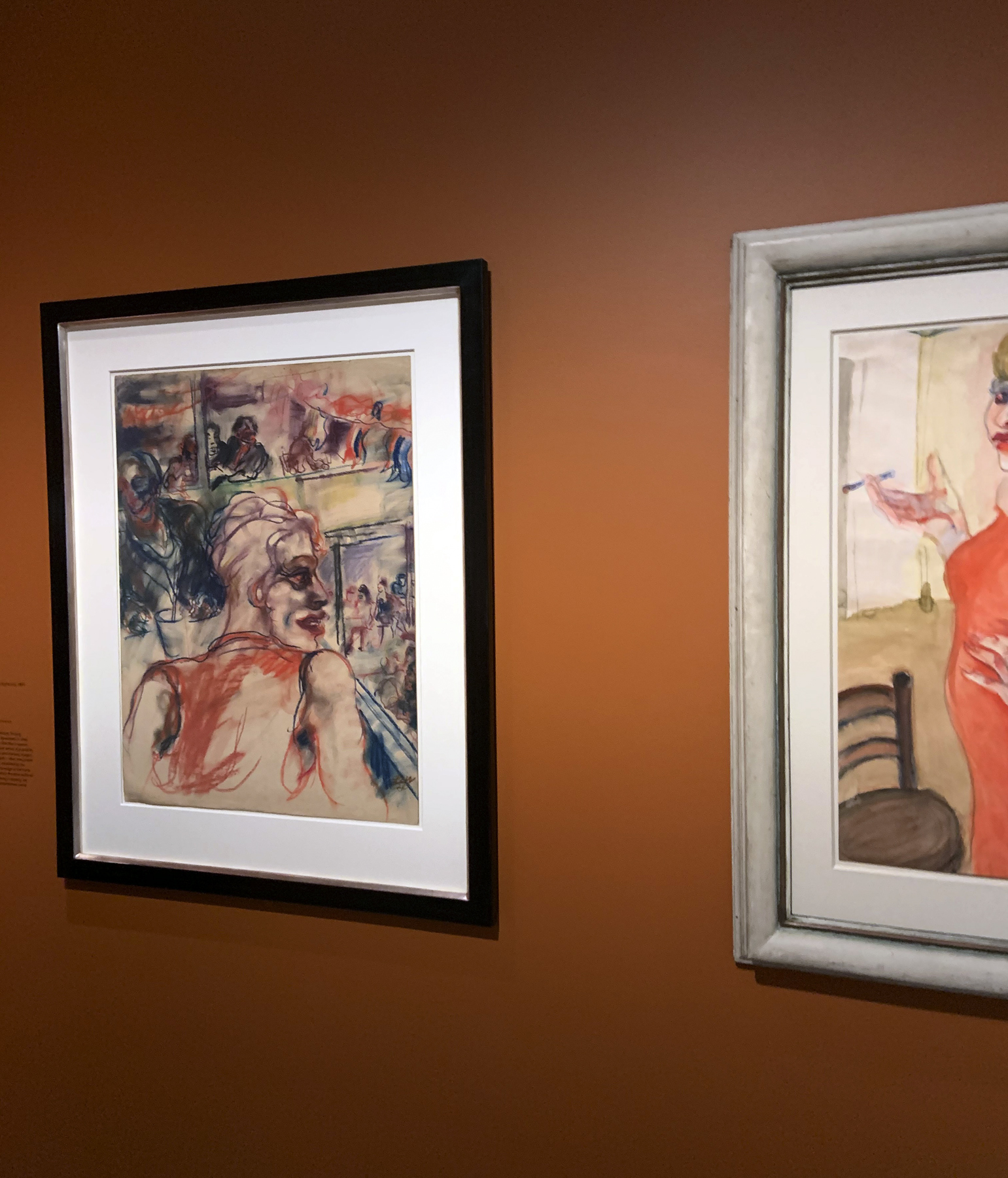
Installation view of the exhibition 'Into the Night: Cabarets and Clubs in Modern Art' at the Barbican Art Gallery, London showing at left, Elfriede Lohse-Wächtler's 'Ausblick im Nachtlokal' (View of a Nightclub) 1930


Installation view of the exhibition Into the Night: Cabarets and Clubs in Modern Art at the Barbican Art Gallery, London showing at left, Elfriede Lohse-Wächtler’s Ausblick im Nachtlokal (View of a Nightclub) 1930
Photo: Marcus Bunyan


Elfriede Lohse-Wächtler (German, 1899-1940) 'Ausblick im Nachtlokal' (View of a Nightclub) 1930 (installation view)

Elfriede Lohse-Wächtler (German, 1899-1940) 'Ausblick im Nachtlokal' (View of a Nightclub) 1930 (installation view)


Elfriede Lohse-Wächtler (German, 1899-1940)
Ausblick im Nachtlokal (View of a Nightclub) (installation view)
1930
Pastel on paper
Private collection, Berlin
Photos: Marcus Bunyan


Elfriede Lohse-Wächtler 'Ausblick im Nachtlokal' (View of a Nightclub) wall text from the exhibition 'Into the Night: Cabarets and Clubs in Modern Art' at the Barbican Art Gallery, Oct 2019 - Jan 2020


Elfriede Lohse-Wächtler Ausblick im Nachtlokal (View of a Nightclub) wall text
Photo: Marcus Bunyan


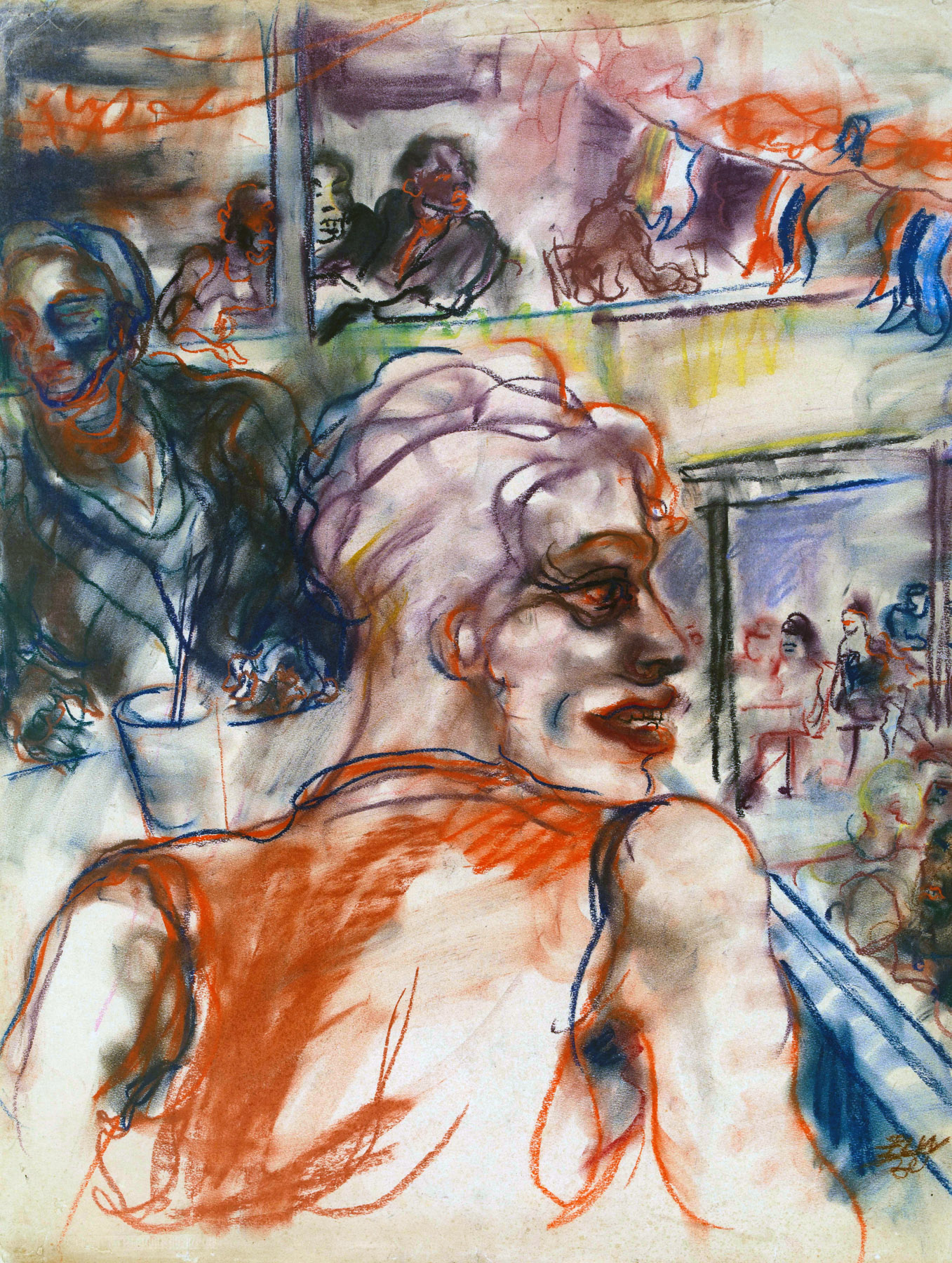
Elfriede Lohse-Wächtler (German, 1899-1940) 'Ausblick im Nachtlokal' (View of a Nightclub) 1930


Elfriede Lohse-Wächtler (German, 1899-1940)
Ausblick im Nachtlokal (View of a Nightclub)
1930
Private collection, Berlin


Installation view of the exhibition 'Into the Night: Cabarets and Clubs in Modern Art' at the Barbican Art Gallery, London showing at left, Elfriede Lohse-Wächtler's 'Lissy' (1931) and at right, Karl Hofer's 'Tiller Girls' (before 1927)


Installation view of the exhibition Into the Night: Cabarets and Clubs in Modern Art at the Barbican Art Gallery, London showing at left, showing at left, Elfriede Lohse-Wächtler’s Lissy (1931) and at right, Karl Hofer’s Tiller Girls (before 1927)
Photo: Marcus Bunyan


Elfriede Lohse-Wächtler (German, 1899-1940) 'Lissy' 1931 (installation view)

Elfriede Lohse-Wächtler (German, 1899-1940) 'Lissy' 1931 (installation view)

Elfriede Lohse-Wächtler (German, 1899-1940) 'Lissy' 1931 (installation view)

Elfriede Lohse-Wächtler (German, 1899-1940) 'Lissy' 1931 (installation view detail)


Elfriede Lohse-Wächtler (German, 1899-1940)
Lissy (installation views)
1931
Watercolour and pencil on paper
Private collection. Courtesy Städel Museum, Frankfurt
Photos: Marcus Bunyan


Elfriede Lohse-Wächtler (born Anna Frieda Wächtler; 4 December 1899 – 31 July 1940) was a German painter of the avant-garde whose works were banned as “degenerate art”, and in some cases destroyed, in Nazi Germany. She was murdered in a former psychiatric institution at Sonnenstein castle in Pirna under Action T4, a forced euthanasia program of Nazi Germany. Since 2000, a memorial centre for the T4 program in the house commemorates her life and work in a permanent exhibition.

Life

Elfriede Lohse-Wächtler grew up in a middle-class family, but left at the age of 16 to study at the Royal Arts School Dresden from 1915 to 1918 (fashion, then applied graphics). From 1916 to 1919, she also attended drawing and painting courses at the Dresden Art Academy. She came into contact with the Dresden Secession Group 1919 and became part of the circle of friends around Otto Dix, Otto Griebel, and Conrad Felixmüller. Renting part of the studio of the latter near the Dresden city center she made a living with batiks, postcards and illustrations.

In June 1921, she married the painter and opera singer Kurt Lohse [de], following him to Görlitz in 1922 and in 1925 to Hamburg. The marriage was a difficult one and the couple separated several times in the following years. In 1926, Elfriede Lohse-Wächtler joined the Federation of female Hamburgian artists and art lovers; in 1928. she was able to participate in some exhibitions of the New Objectivity.

In 1929, she suffered a nervous breakdown because of financial and partnership difficulties and was committed to a psychiatric institution in Hamburg-Friedrichsberg. During the two months’ stay she painted the Friedrichsberg heads, a piece of work consisting of about 60 drawings and pastels, mainly portraits of fellow patients. After her recovery and a final separation from Kurt Lohse (in 1926), she had a very creative phase. She painted numerous paintings of Hamburg’s harbor, scenes from the life of workers and prostitutes, and pitiless self-portraits. But despite some exhibitions, sales, and smaller grants, she lived in grinding poverty.

Due to financial problems and increasing social isolation, she returned to her parents’ home in Dresden by midyear 1931. When her mental state worsened her father admitted her to the state mental home at Arnsdorf in 1932. There she was diagnosed with schizophrenia. From 1932 to 1935 she was still creatively active, drawing portraits and creating arts and crafts. After Kurt Lohse divorced her in May 1935 she was incapacitated due to “incurable insanity”.

After refusing to consent to a sterilisation, she was denied the permission to go out of the hospital any more. In December 1935, she underwent a forced surgical sterilisation in the Dresden-Friedrichstadt women’s hospital on the grounds of Nazi eugenicist policies. After this traumatic event she never painted again. In 1940 she was deported to the former psychiatric institution at Pirna-Sonnenstein (located in the Sonnenstein castle in Pirna), where, on 31 July, she was murdered along with the majority of the other residents as part of the Nazi “euthanasia” program, Action T4. The official cause of death was “pneumonia with myocardial insufficiency”. In the years of 1940 and 1941, a total of 13,720 mainly mentally ill or handicapped people were gassed by Nazis in this institution formerly well known for its humanistic traditions.

Text from the Wikipedia website


Installation view of the exhibition 'Into the Night: Cabarets and Clubs in Modern Art' at the Barbican Art Gallery, London showing at left, Karl Hofer's 'Tiller Girls' (before 1927)


Installation view of the exhibition Into the Night: Cabarets and Clubs in Modern Art at the Barbican Art Gallery, London showing at left, Karl Hofer’s Tiller Girls (before 1927)
Photo: Marcus Bunyan


Karl Hofer. 'Tiller Girls' before 1927 (installation view)


Karl Hofer (German, 1878-1955)
Tiller Girls (installation view)
before 1927
Photo: Marcus Bunyan


Karl Hofer (German, 1878-1955) 'Tiller Girls' before 1927


Karl Hofer (German, 1878-1955)
Tiller Girls
before 1927
Kunsthalle Emden – Stiftung Henri und Eske Nannen
© Elke Walford, Fotowerkstatt Hamburg


Installation view of the exhibition 'Into The Night: Cabarets And Clubs In Modern Art' showing at left, Elfriede Lohse-Wächtler's 'Lissy' (1931); and at centre, Karl Hofer's 'Tiller Girls' (before 1927)


Into the Night: Cabarets and Clubs in Modern Art
Installation view Barbican Art Gallery 4 October 2019 – 19 January 2020 showing at left, Elfriede Lohse-Wächtler’s Lissy (1931, above); and at centre, Karl Hofer’s Tiller Girls (before 1927, above)
© Tristan Fewings / Getty Images


Installation view of the exhibition 'Into the Night: Cabarets and Clubs in Modern Art' at the Barbican Art Gallery, London showing at left, Karl Hofer's 'Tiller Girls' (before 1927); and at third from left, Erna Schmidt-Caroll's 'Chansonette' (Singer) (c. 1928)


Installation view of the exhibition Into the Night: Cabarets and Clubs in Modern Art at the Barbican Art Gallery, London showing at left, Karl Hofer’s Tiller Girls (before 1927, above); and at third from left, Erna Schmidt-Caroll’s Chansonette (Singer) (c. 1928, below)
Photo: Marcus Bunyan


Erna Schmidt-Caroll (German, 1896-1964) 'Chansonette' (Singer) c. 1928 (installation view)

Erna Schmidt-Caroll (German, 1896-1964) 'Chansonette' (Singer) c. 1928 (installation view)


Erna Schmidt-Caroll (German, 1896-1964)
Chansonette (Singer) (installation views)
c. 1928
Private collection
© Estate Erna Schmidt-Caroll
Photos: Marcus Bunyan


Erna Schmidt-Caroll (German, 1896-1964) 'Chansonette' (Singer) c. 1928


Erna Schmidt-Caroll (German, 1896-1964)
Chansonette (Singer)
c. 1928
Private collection
© Estate Erna Schmidt-Caroll


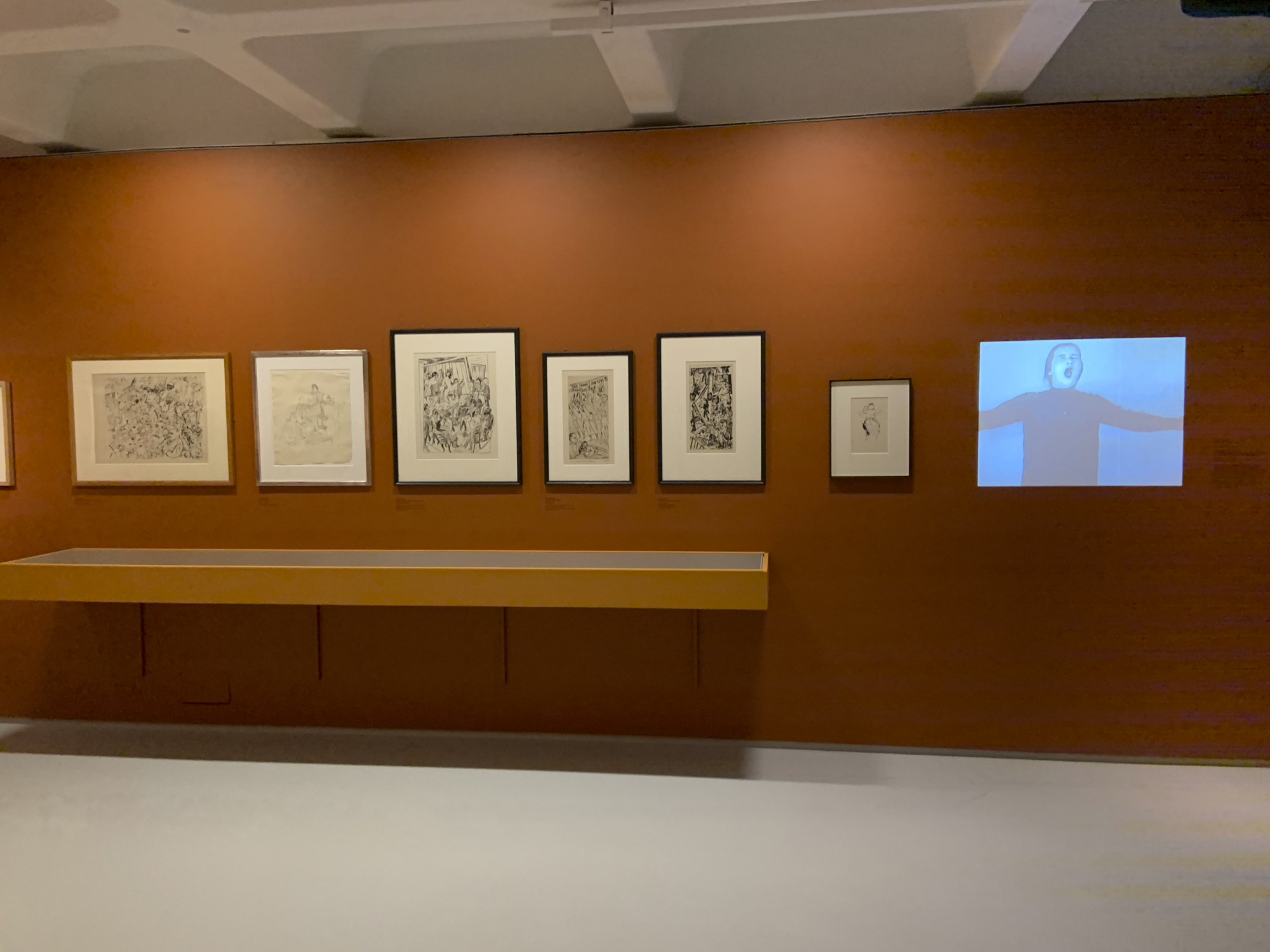
Installation view of the exhibition 'Into the Night: Cabarets and Clubs in Modern Art' at the Barbican Art Gallery, London showing the work of George Grosz and Max Beckmann


Installation view of the exhibition Into the Night: Cabarets and Clubs in Modern Art at the Barbican Art Gallery, London showing the work of George Grosz and Max Beckmann
Photo: Marcus Bunyan


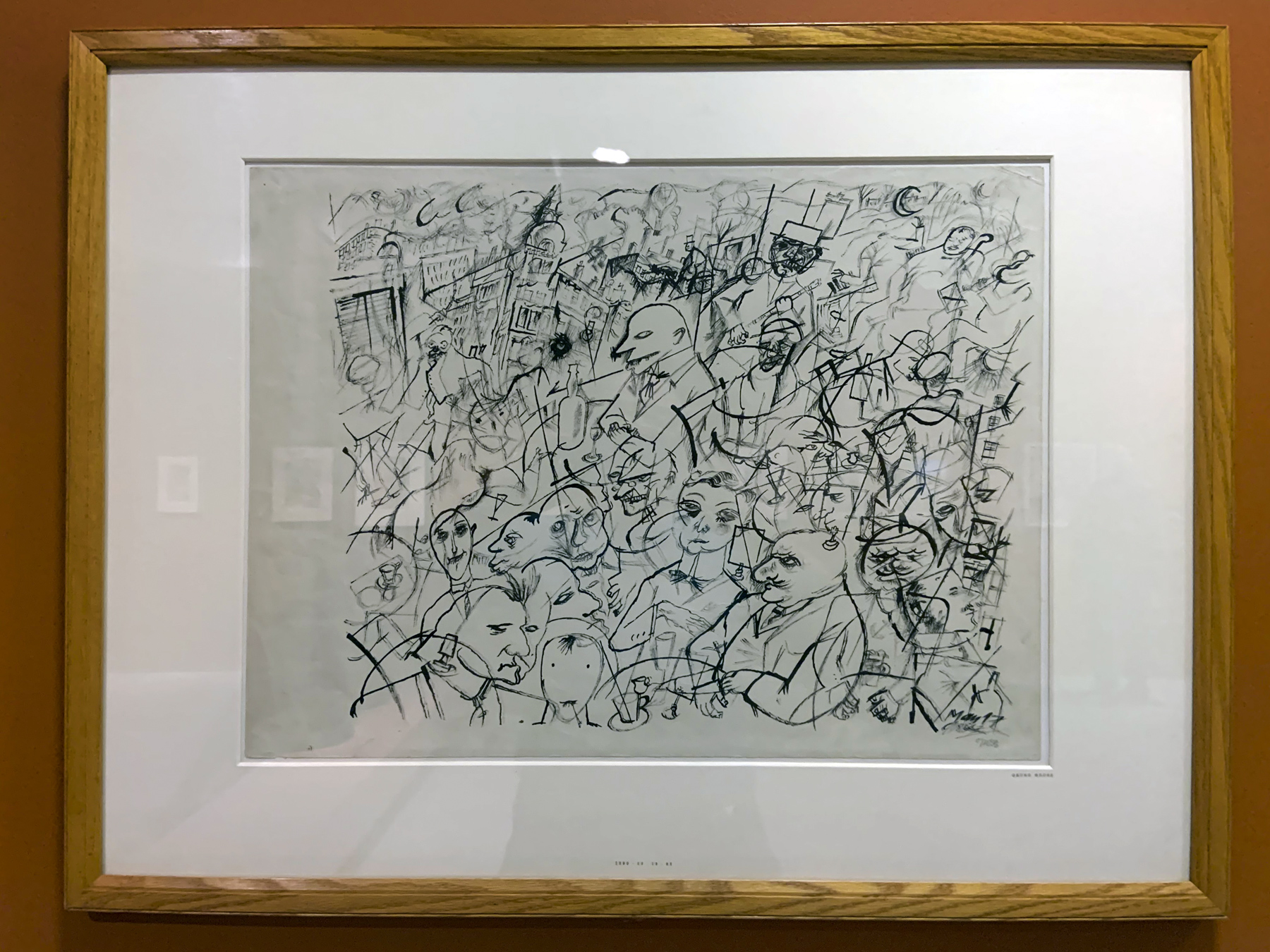
George Grosz (German, 1893-1959) 'Menschen in Cáfe' (People in a Cáfe) 1917 (installation view)


George Grosz (German, 1893-1959)
Menschen in Cáfe (People in a Cáfe) (installation view)
1917
Black ink and pen on paper
On loan from the Trustees of the British Museum
Photo: Marcus Bunyan


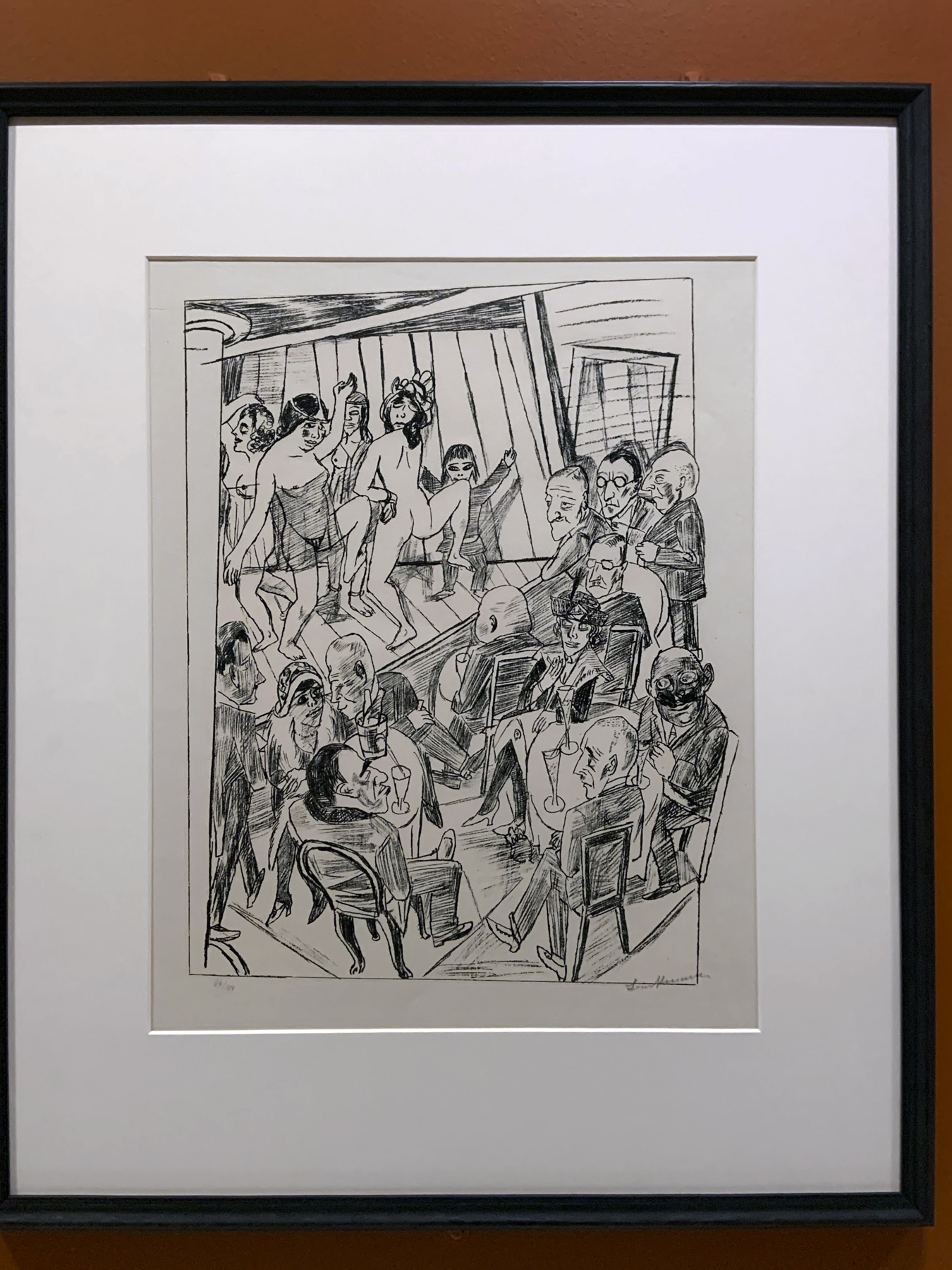
Max Beckmann (German, 1884-1950) 'Nackttanz' (Striptease), from 'Berliner Reise' (Trip to Berlin) 1922 (installation view)


Max Beckmann (German, 1884-1950)
Nackttanz (Striptease), from Berliner Reise (Trip to Berlin) (installation view)
1922
Lithograph, one from a portfolio of eleven (including cover)
Publisher: J.B. Neumann, Berlin
Photo: Marcus Bunyan


Jeanne Mammen (German, 1890-1976) 'Sie reprasentiert!' (She Represents!), published in 'Simplicissimus' vol. 32, no 47, February 1928


Jeanne Mammen (German, 1890-1976)
Sie reprasentiert! (She Represents!), published in Simplicissimus vol. 32, no 47, February 1928
Printed magazine
Jeanne Mammen Foundation at Stadtmuseum Berlin
Photo: Marcus Bunyan


Jeanne Mammen (German, 1890-1976) 'Maskenball' (Masked Ball), published in 'Jugend' vol. 34, no 5, January 1929


Jeanne Mammen (German, 1890-1976)
Maskenball (Masked Ball), published in Jugend vol. 34, no 5, January 1929
Printed magazine
Jeanne Mammen Foundation at Stadtmuseum Berlin
Photo: Marcus Bunyan


Jeanne Mammen (German, 1890-1976) 'Fasting' (Carnival), published in Simplicissimus vol. 34, no 46, February 1930


Jeanne Mammen (German, 1890-1976)
Fasting (Carnival), published in Simplicissimus vol. 34, no 46, February 1930
Printed magazine
Jeanne Mammen Foundation at Stadtmuseum Berlin
Photo: Marcus Bunyan


Unknown photographer. 'Slide on the Razor', performance as part of the Haller Revue 'Under and Over', Berlin, 1923


Unknown photographer
‘Slide on the Razor’, performance as part of the Haller Revue ‘Under and Over’, Berlin, 1923
Courtesy Feral House


Ibadan & Osogbo Mbari Clubs 1961-66 wall text from the exhibition 'Into the Night: Cabarets and Clubs in Modern Art' at the Barbican Art Gallery, Oct 2019 - Jan 2020

Ibadan & Osogbo Mbari Clubs 1961-66 wall text from the exhibition 'Into the Night: Cabarets and Clubs in Modern Art' at the Barbican Art Gallery, Oct 2019 - Jan 2020

Ibadan & Osogbo Mbari Clubs 1961-66 wall text from the exhibition 'Into the Night: Cabarets and Clubs in Modern Art' at the Barbican Art Gallery, Oct 2019 - Jan 2020


Ibadan & Osogbo Mbari Clubs 1961-66 wall text
Photos: Marcus Bunyan


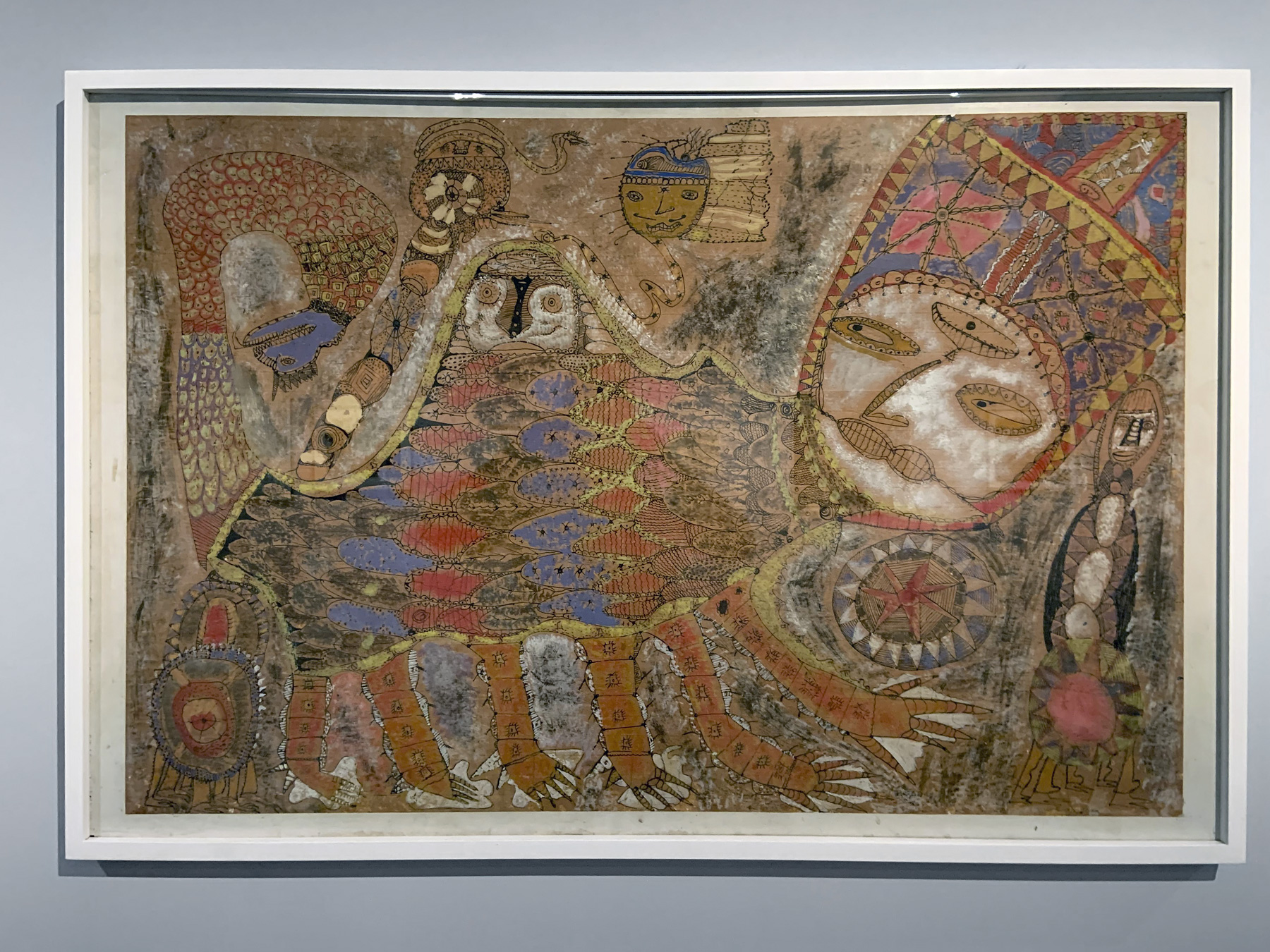
Installation view of the exhibition 'Into the Night: Cabarets and Clubs in Modern Art' at the Barbican Art Gallery, London showing at left, Twins Seven-Seven 'Devil's Dog' (1964) and at right, Twins Seven-Seven 'THE BEAUTIFUL LADY and THE FULLBODIED GENTLEMAN THAT REDUCED TO HEAD' (1967)


Installation view of the exhibition Into the Night: Cabarets and Clubs in Modern Art at the Barbican Art Gallery, London showing at left, Twins Seven-Seven Devil’s Dog (1964) and at right, Twins Seven-Seven THE BEAUTIFUL LADY and THE FULLBODIED GENTLEMAN THAT REDUCED TO HEAD (1967)
Photo: Marcus Bunyan


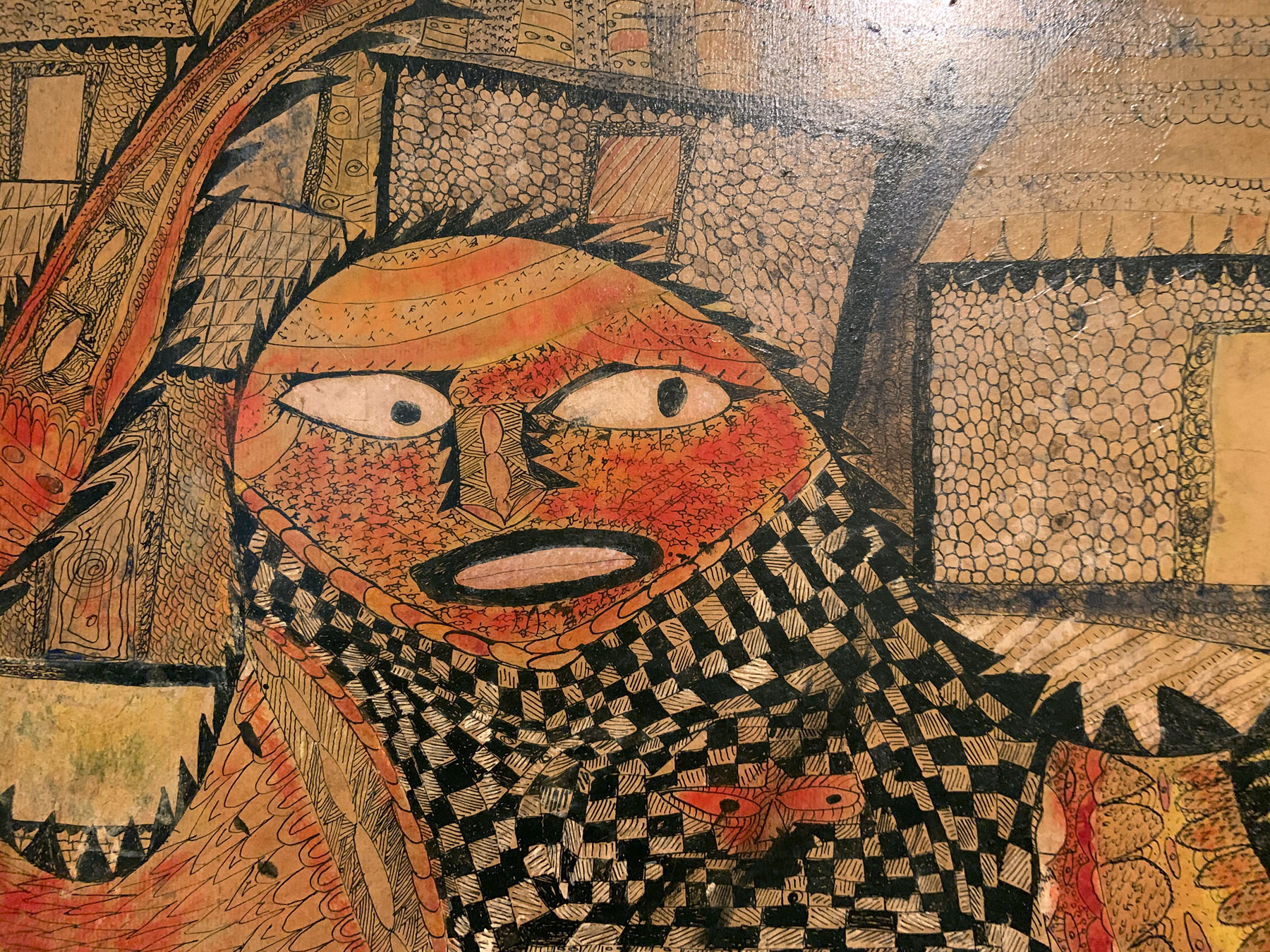
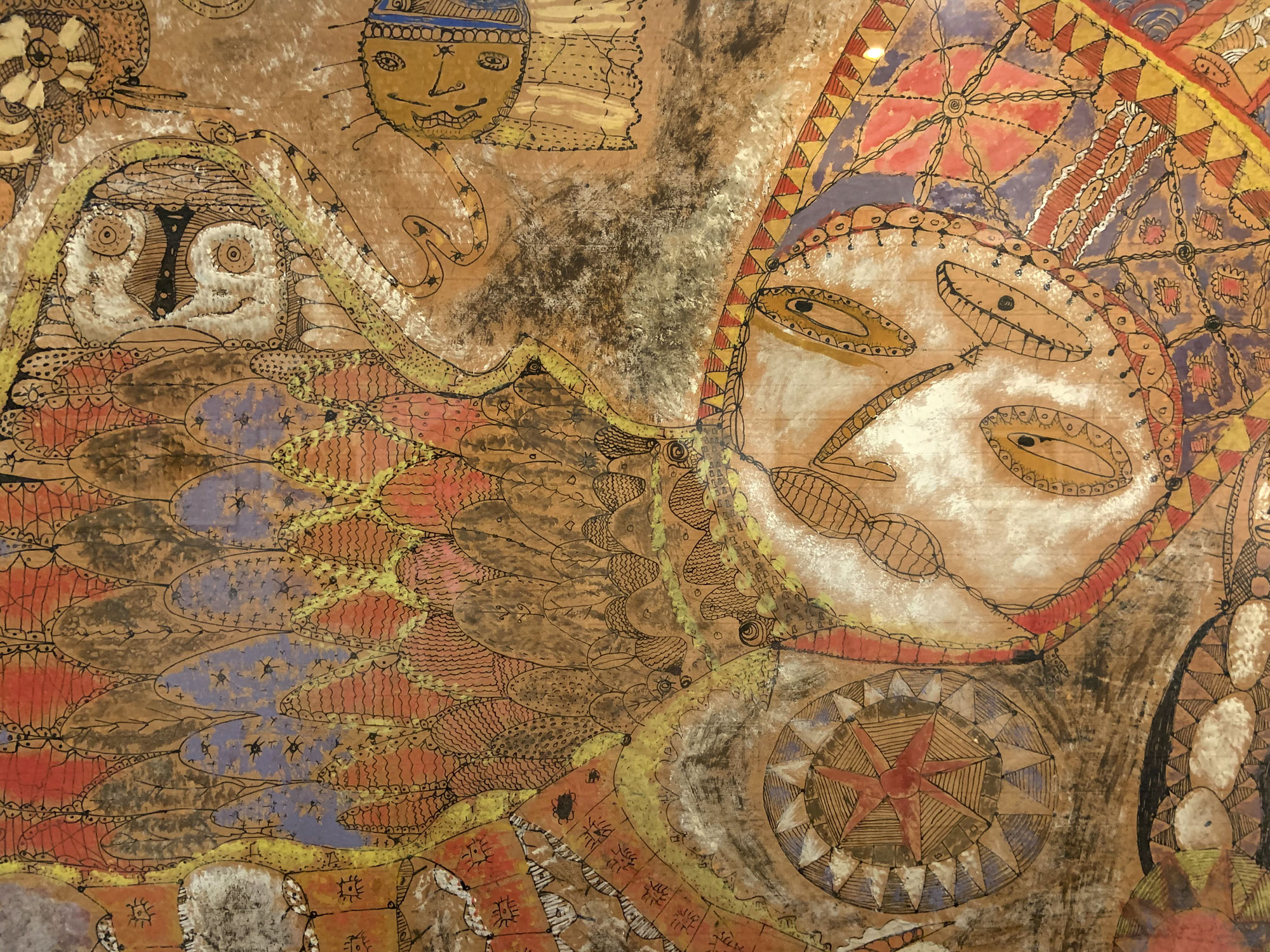
Twins Seven-Seven. 'Devil's Dog' (1964) (installation view detail)


Twins Seven-Seven
Devil’s Dog (installation view detail)
1964
Ink, gouache and varnish  on paper
Iwalewahaus, Universitat Bayreuth
Photos: Marcus Bunyan


Twins Seven-Seven. 'THE BEAUTIFUL LADY and THE FULLBODIED GENTLEMAN THAT REDUCED TO HEAD' 1967 (installation view)

Twins Seven-Seven. 'THE BEAUTIFUL LADY and THE FULLBODIED GENTLEMAN THAT REDUCED TO HEAD' 1967  (installation view)


Twins Seven-Seven
THE BEAUTIFUL LADY and THE FULLBODIED GENTLEMAN THAT REDUCED TO HEAD (installation views)
1967
Gouache on paper
Iwalewahaus, Universitat Bayreuth
Photos: Marcus Bunyan


Installation view of the exhibition 'Into the Night: Cabarets and Clubs in Modern Art' at the Barbican Art Gallery, London showing at left, Muraina Oyelami's 'Burial Ground (1967) with Georgina Beier's 'Gelede' (1966) third from right


Installation view of the exhibition Into the Night: Cabarets and Clubs in Modern Art at the Barbican Art Gallery, London showing at left, Muraina Oyelami’s Burial Ground (1967) with Georgina Beier’s Gelede (1966) third from right
Photo: Marcus Bunyan


Muraina Oyelami (Nigerian, b. 1940) 'Burial Ground' 1967 (installation view)

Muraina Oyelami (Nigerian, b. 1940) 'Burial Ground' 1967 (installation view)

Muraina Oyelami (Nigerian, b. 1940) 'Burial Ground' 1967 (installation view detail)


Muraina Oyelami (Nigerian, b. 1940)
Burial Ground (installation views)
1967
Oil on board
Collection of M.K. Wolford
Photos:
Marcus Bunyan


Georgina Beier (British, 1938-2021) 'Gelede' 1966 (installation view)


Georgina Beier (British, 1938-2021)
Gelede (installation view)
1966
Woodcut
Iwalewahaus, Universitat Bayreuth
Photo: Marcus Bunyan


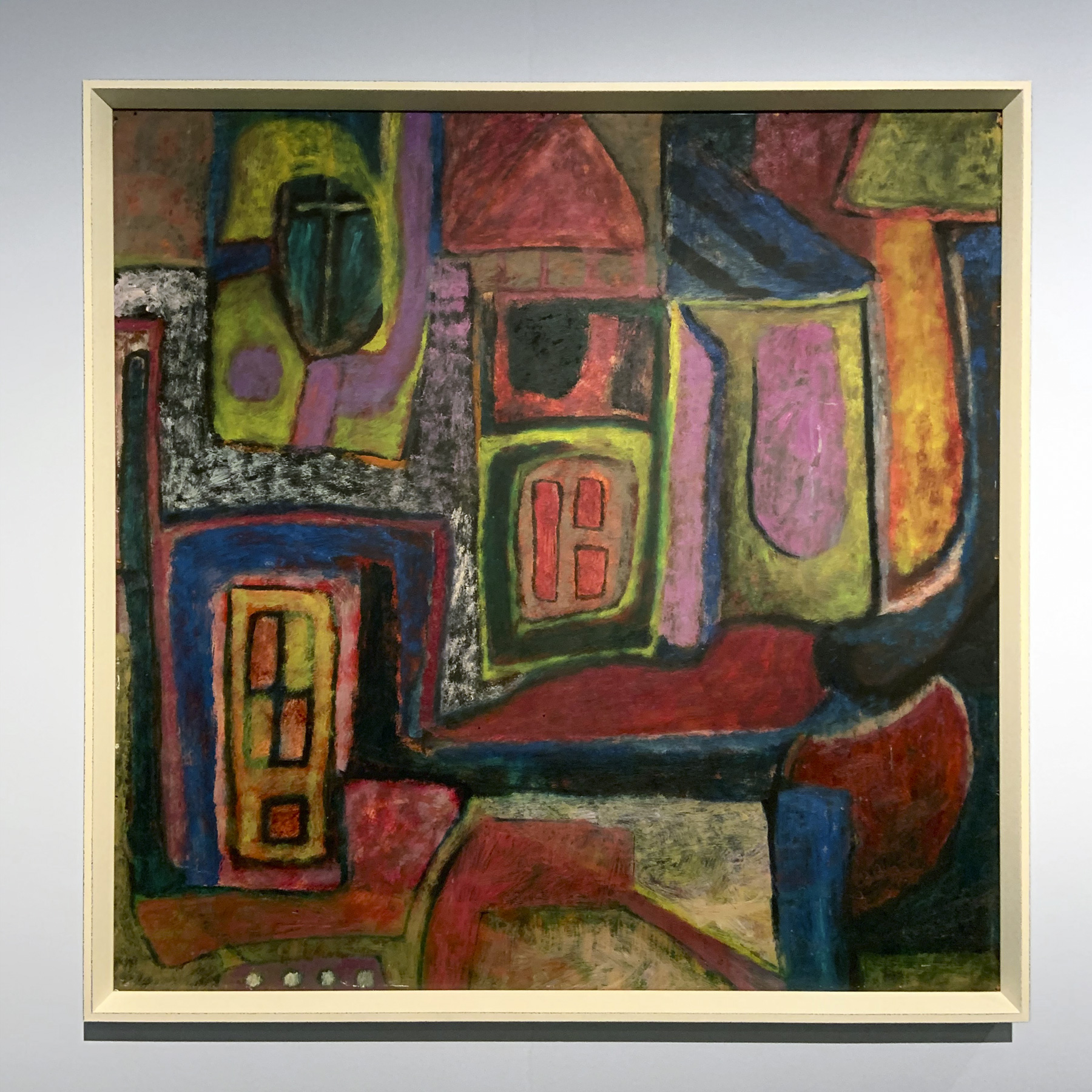
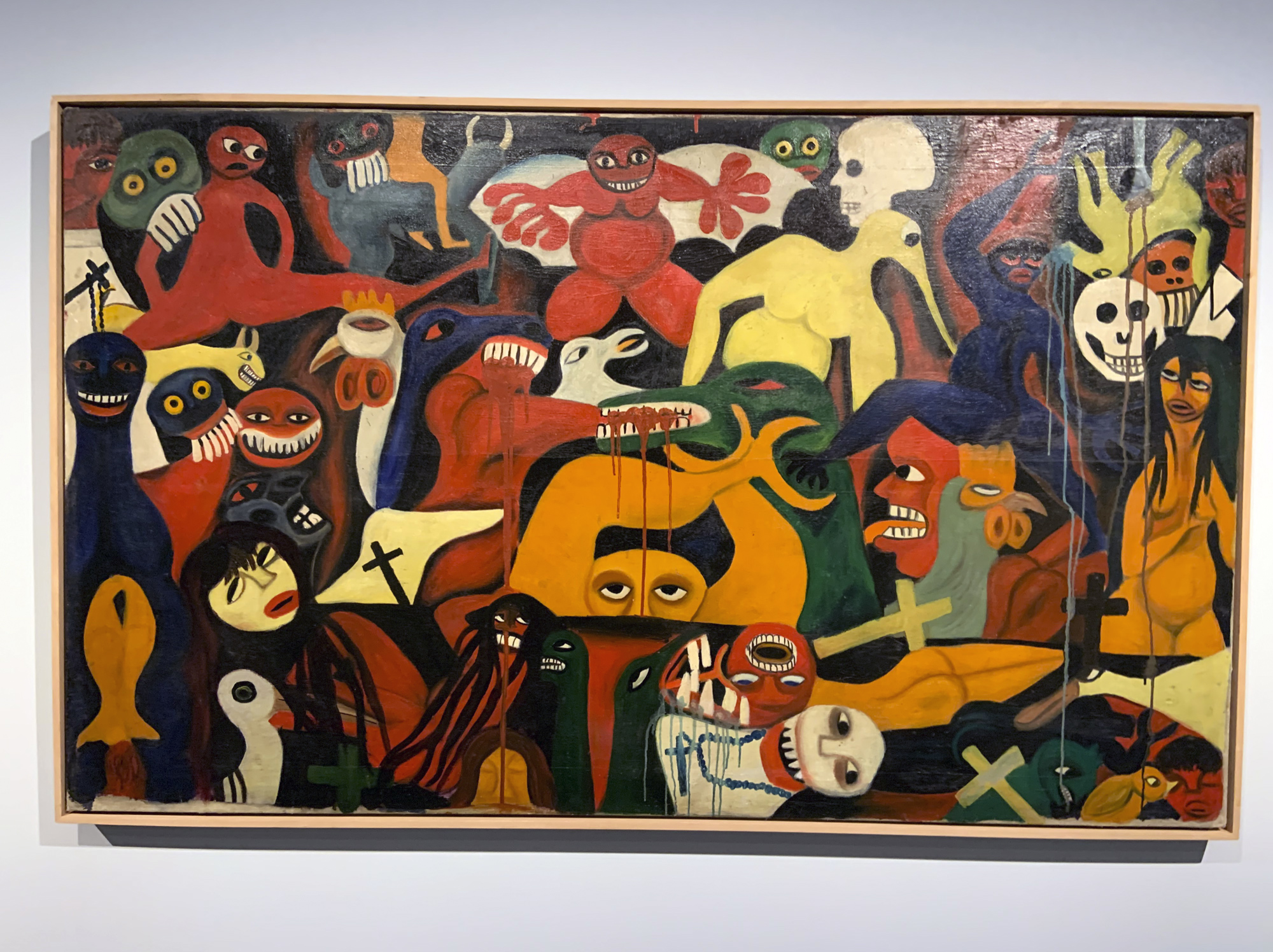
Installation view of the exhibition 'Into the Night: Cabarets and Clubs in Modern Art' at the Barbican Art Gallery, London showing at second left, Valente Malangatana Ngwenya's 'Untitled' (1961)


Installation view of the exhibition Into the Night: Cabarets and Clubs in Modern Art at the Barbican Art Gallery, London showing at second left, Valente Malangatana Ngwenya’s Untitled (1961)
Photo: Marcus Bunyan


Valente Malangatana Ngwenya (Mozambican, 1936-2011) 'Untitled' 1961 (installation view)

Valente Malangatana Ngwenya (Mozambican, 1936-2011) 'Untitled' 1961 (installation view)


Valente Malangatana Ngwenya (Mozambican, 1936-2011)
Untitled (installation views)
1961
Oil on canvas
Iwalewahaus, Universität Bayreuth
Photos: Marcus Bunyan


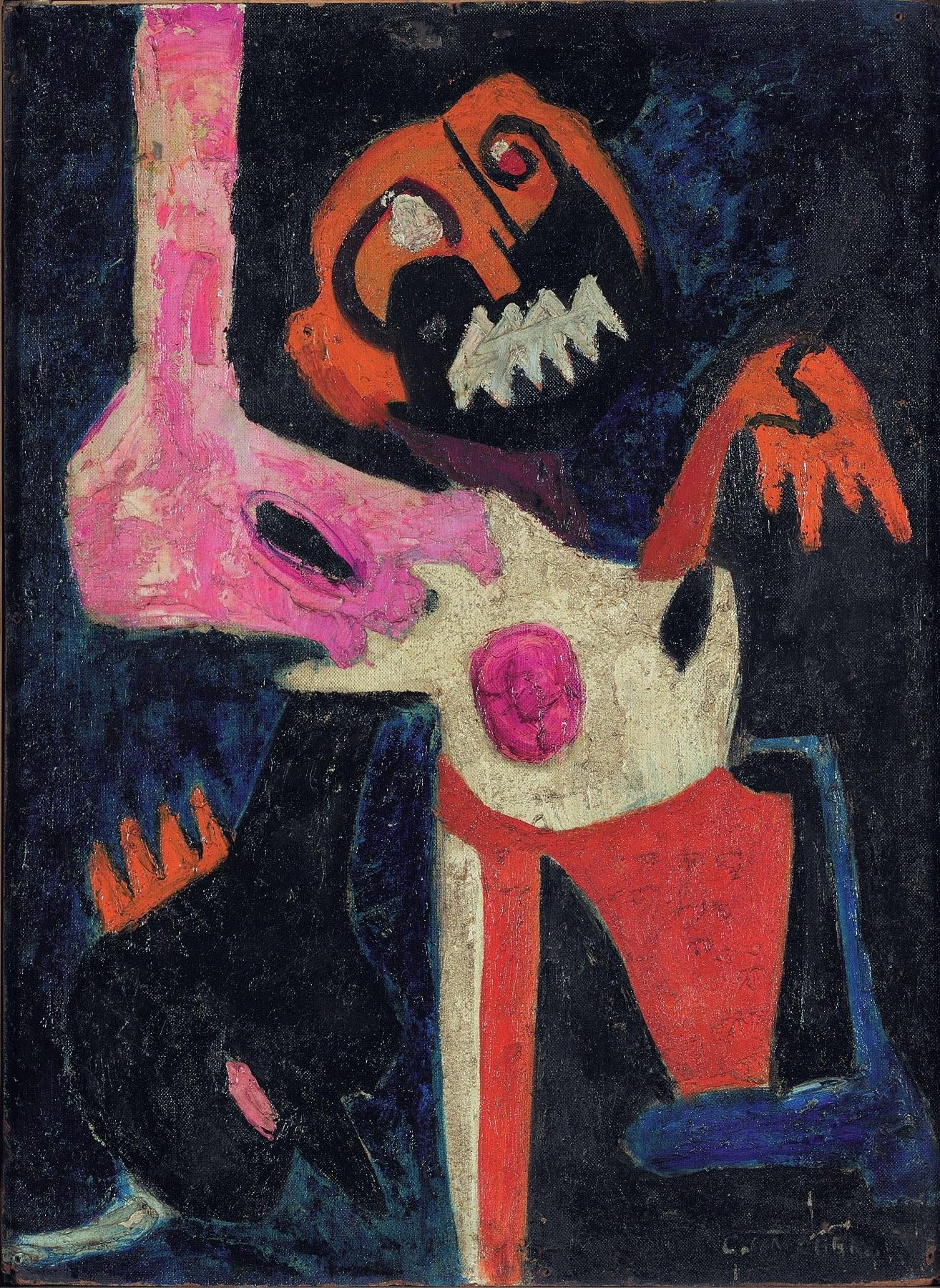
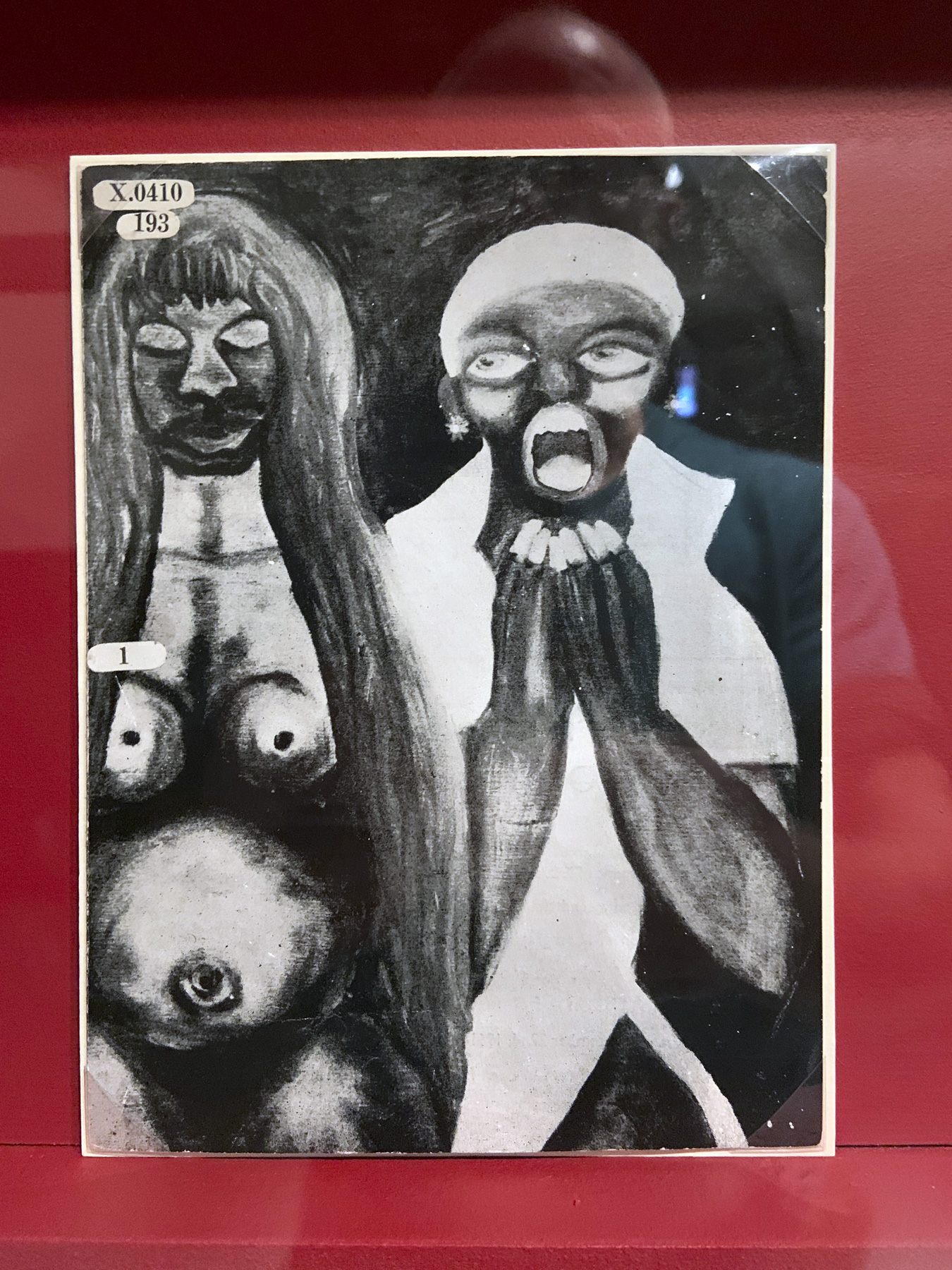
The programme at the Mbari clubs was highly international: in addition to artists from across Africa, those from Europe, the Caribbean and the UA (particularly African Americans) were often invited to participate. When Mozambican artist Malangatana exhibited in Ibadan in 1962, Uli Beier’s accompanying text described his work as ‘wild and powerful but it is more than that. Far from being repelled by the scenes of horror, we are brought under an irresistible spell. For Malangatana’s work also contains a strong element of human sympathy and suffering and agony… he is full of stories. The artist was closely involved in the struggle against Portuguese rule in Mozambique and many of his works can be seen as allegories of colonial oppression.

Wall text from the exhibition


Colette Omogbai (Nigeria, b. 1942) 'Agony' 1963 (installation view)


Colette Omogbai (Nigeria, b. 1942)
Agony (installation view)
1963
Oil on hardboard
Iwalewahaus, Universität Bayreuth
Photo: Marcus Bunyan


Collete Omogbai held her first solo exhibition at the Mbari club in Ibadan in 1963, while still a student. Deconstructing the body ith saturated colours and jagged shapes, Agony conveys great emotional intensity. Omogbai’s highly expressive forms reflect the modernist ideas advocated in her 1965 manifesto, ‘Man Loves What is “Sweet” and Obvious’, in which she parodied mainstream taste: “‘Give us reality’, Man proclaims, ‘if possible, the reality as real as that of Bouguereau… No touch of black’.” Like many of the works in this section, it was acquired by Mbari founder Ulli Beier and later entered the collection of the University of Bayreuth in Germany.

Wall text from the exhibition


Colette Omogbai (Nigeria, b. 1942) 'Agony' c. 1963


Colette Omogbai (Nigeria, b. 1942)
Agony
c. 1963
Iwalewahaus|DEVA, University of Bayreuth
© Colette Omogbai


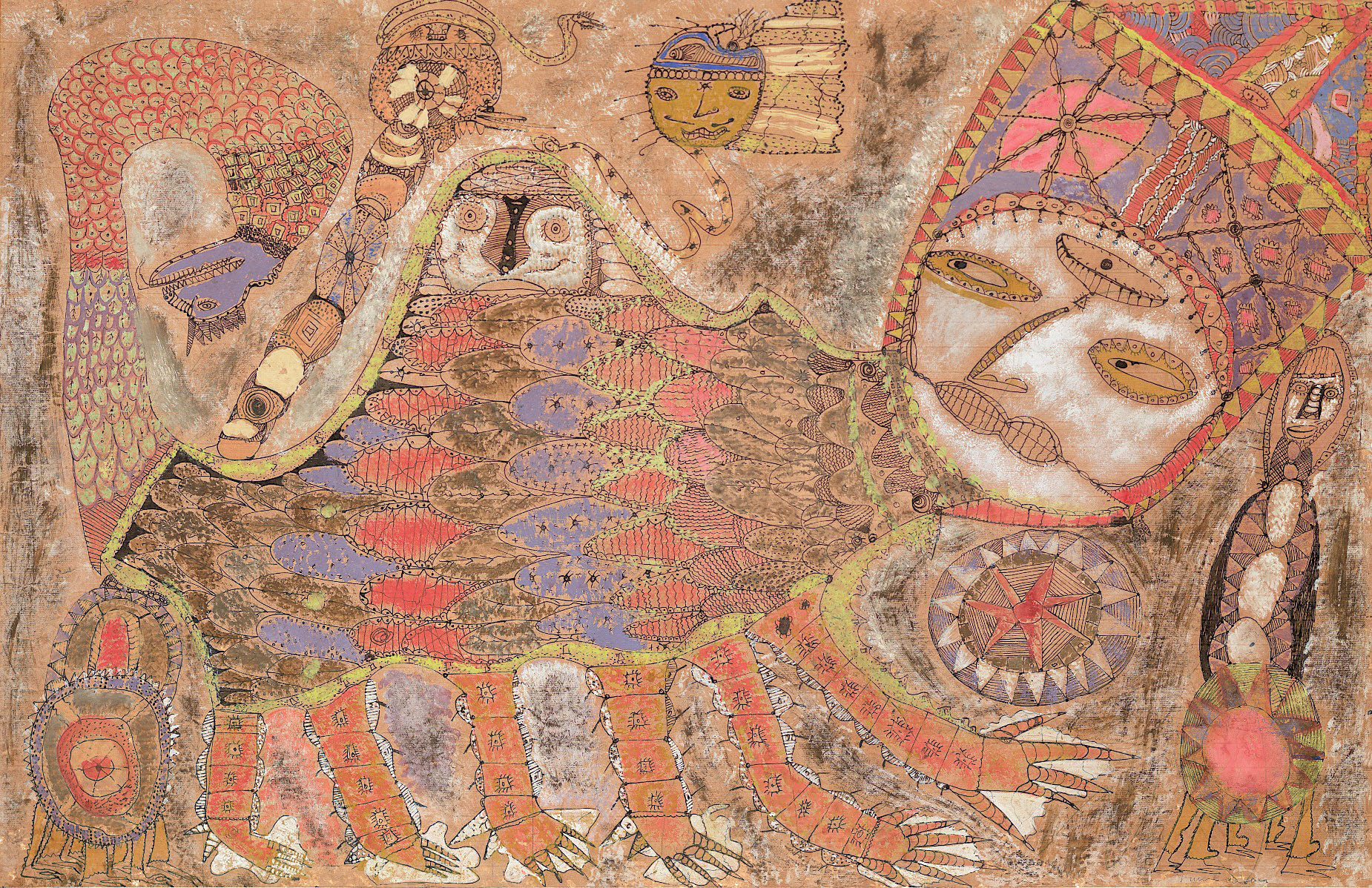
Twins Seven-Seven. 'Untitled (Devil's Dog)' 1964 (installation view)

Twins Seven-Seven. 'Untitled (Devil's Dog)' 1964 (installation view detail)


Twins Seven-Seven
Untitled (Devil’s Dog) (installation views)
1964
Iwalewahaus, Universität Bayreuth
Photos: Marcus Bunyan


Twins Seven-Seven 'Devil's Dog' wall text from the exhibition 'Into the Night: Cabarets and Clubs in Modern Art' at the Barbican Art Gallery, Oct 2019 - Jan 2020


Devil’s Dog wall text
Photo: Marcus Bunyan


Twins Seven-Seven. 'Untitled (Devil's Dog)' 1964


Twins Seven-Seven
Untitled (Devil’s Dog)
1964
Iwalewahaus, Universität Bayreuth
© DACS, 2019. Courtesy DEVA|Iwalewahaus, University of Bayreuth and CBCIU, Oshogbo


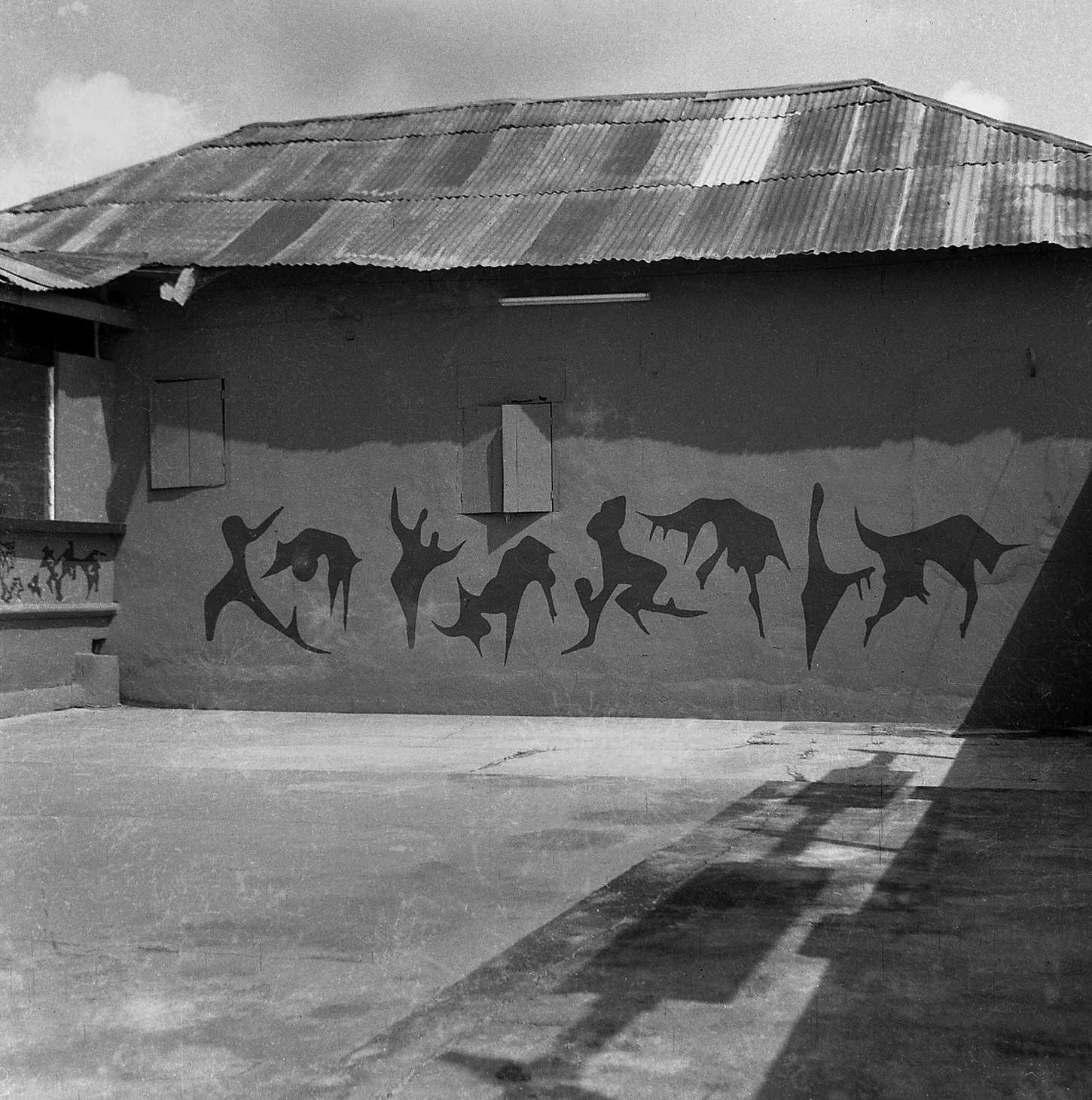
Interior courtyard of the Mbari Artists' and Writers' Club, Ibadan, with murals by Uche Okeke © Centre for Black Culture and International Understanding (CBCIU), Osogbo, Oshun State, Nigeria / Iwalewahaus, University of Bayreuth, Germany


Interior courtyard of the Mbari Artists’ and Writers’ Club, Ibadan, with murals by Uche Okeke
© Centre for Black Culture and International Understanding (CBCIU), Osogbo, Oshun State, Nigeria / Iwalewahaus, University of Bayreuth, Germany


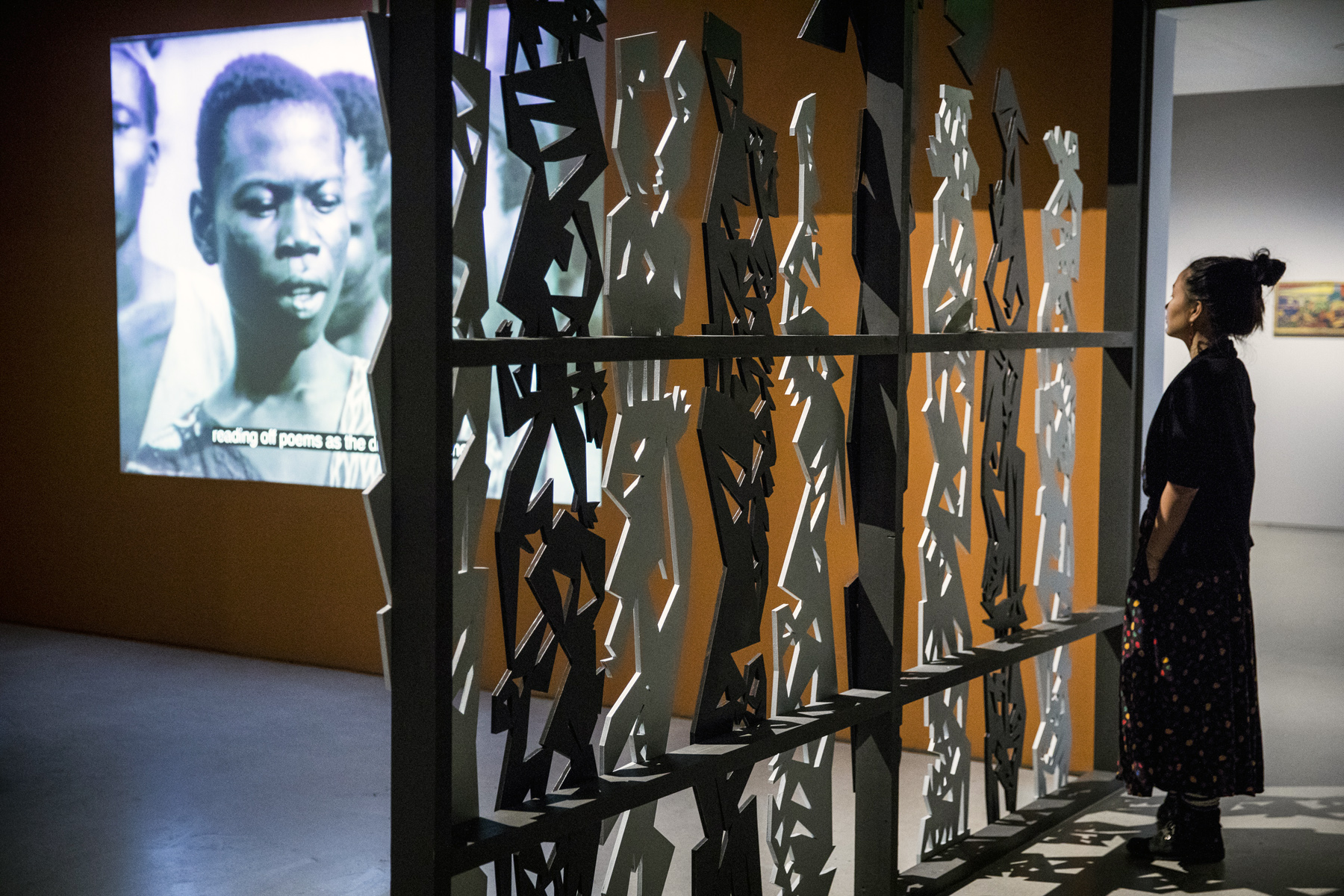
Installation view of the exhibition 'Into The Night: Cabarets And Clubs In Modern Art'

Installation view of the exhibition 'Into The Night: Cabarets And Clubs In Modern Art'


Into the Night: Cabarets and Clubs in Modern Art
Installation view Barbican Art Gallery 4 October 2019 – 19 January 2020
© Tristan Fewings / Getty Images


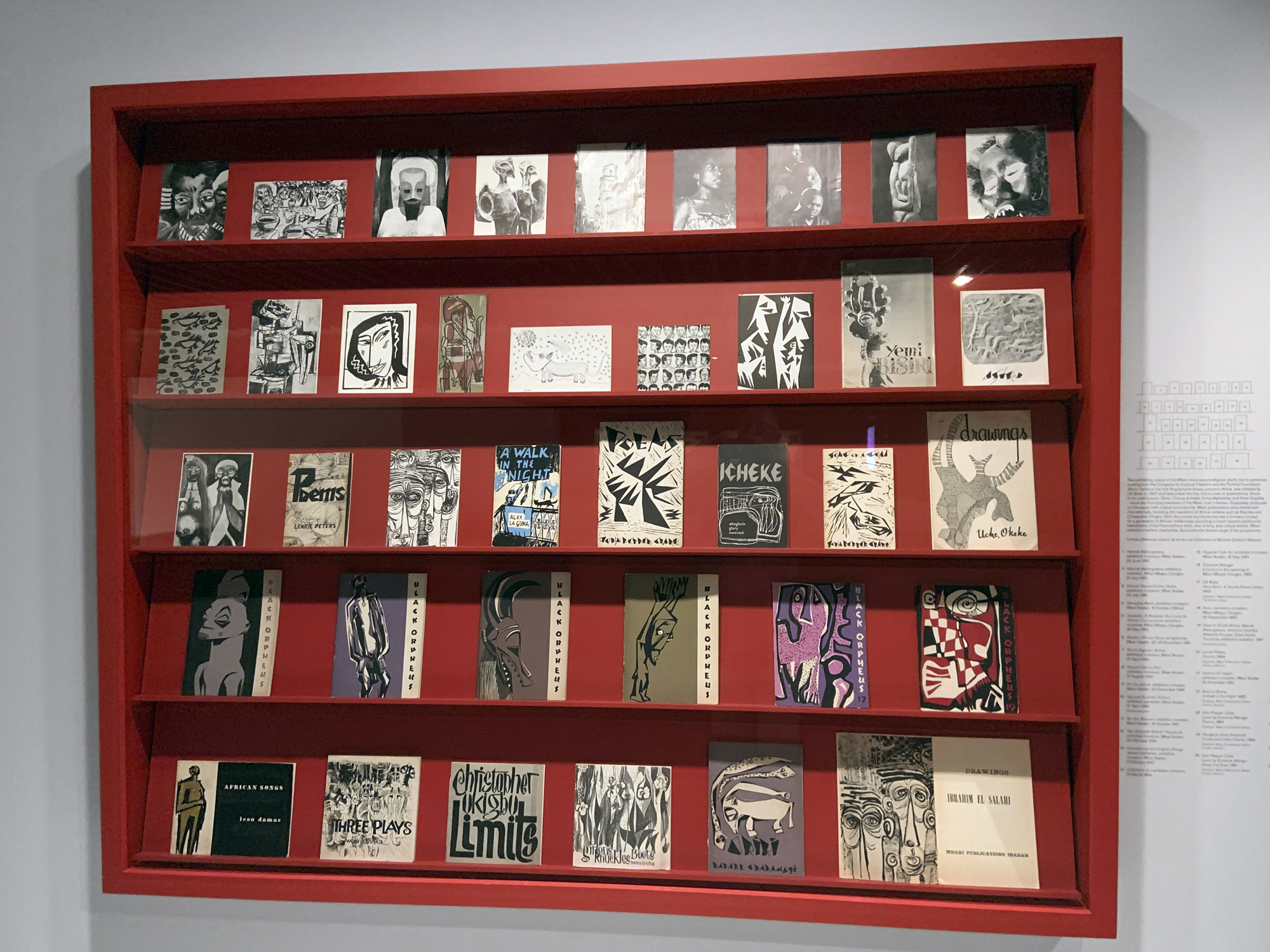
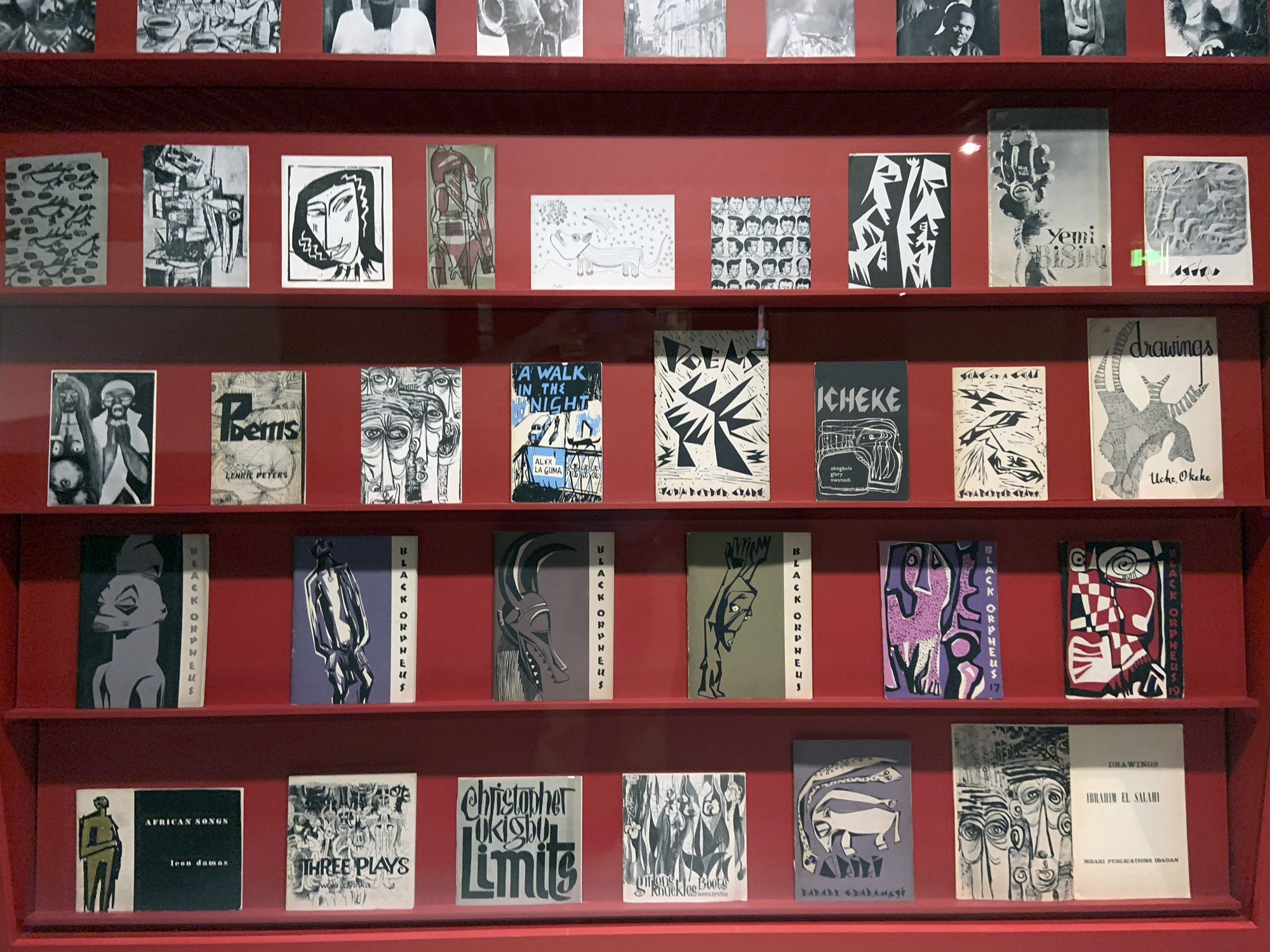
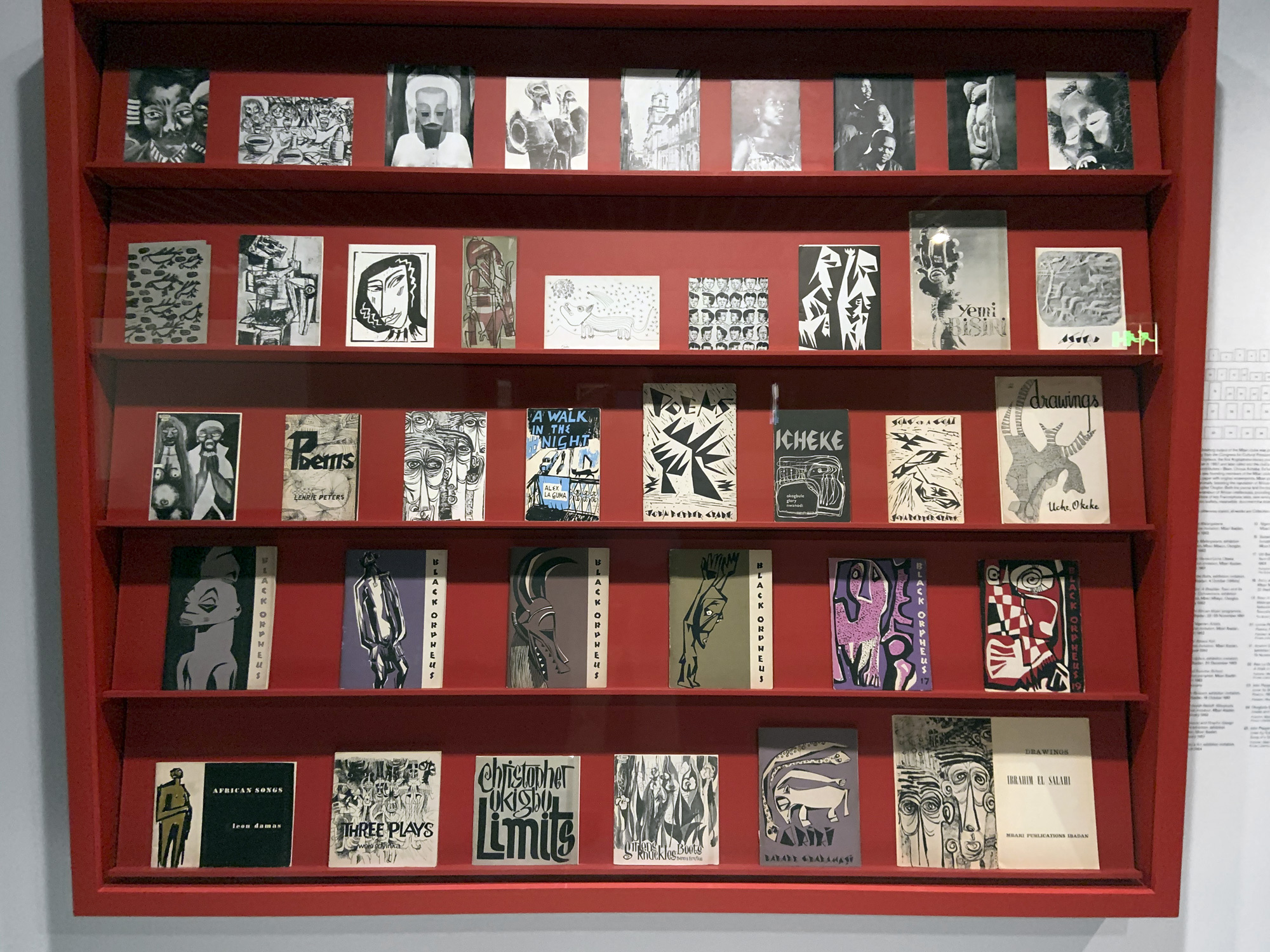
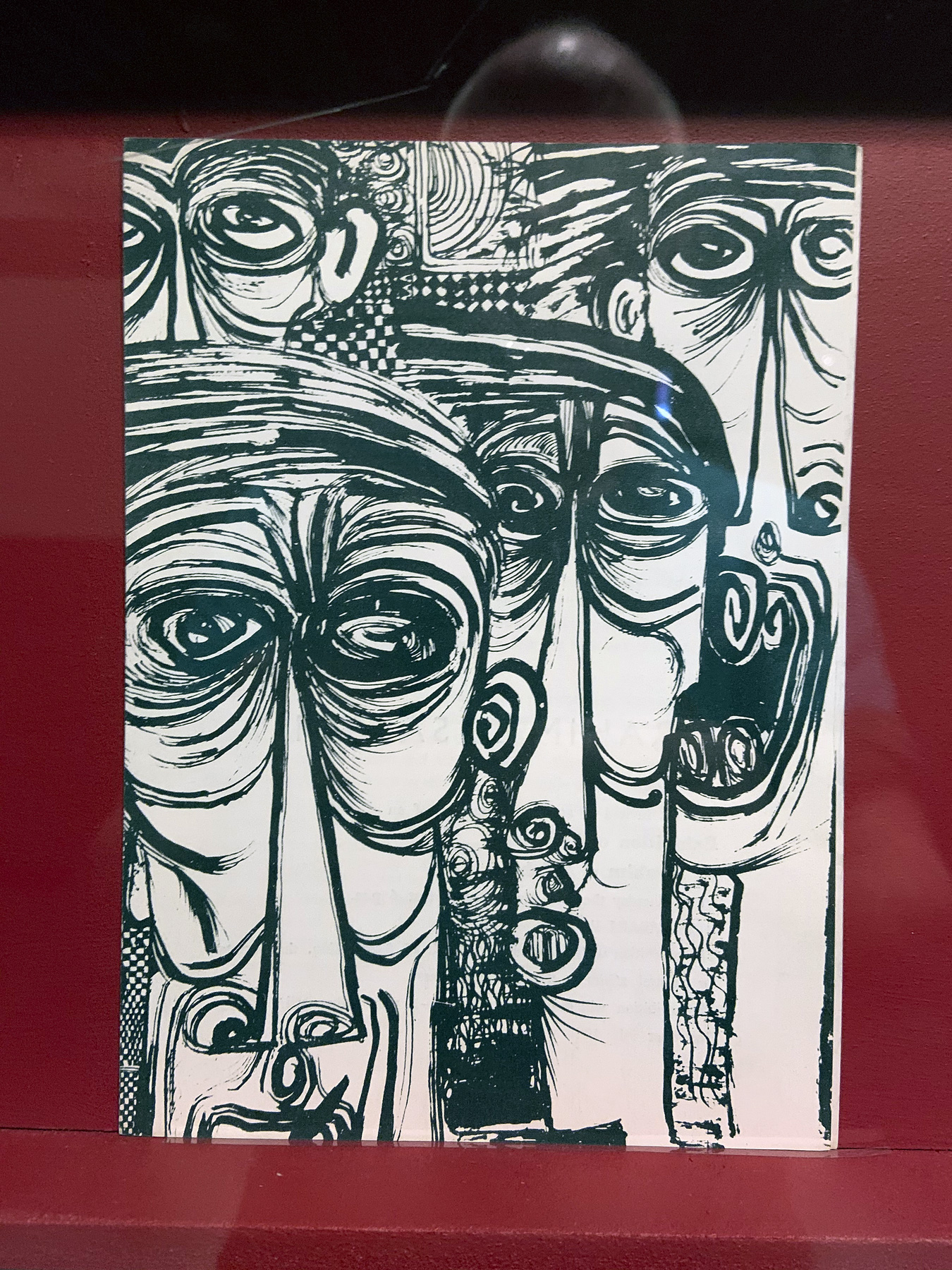
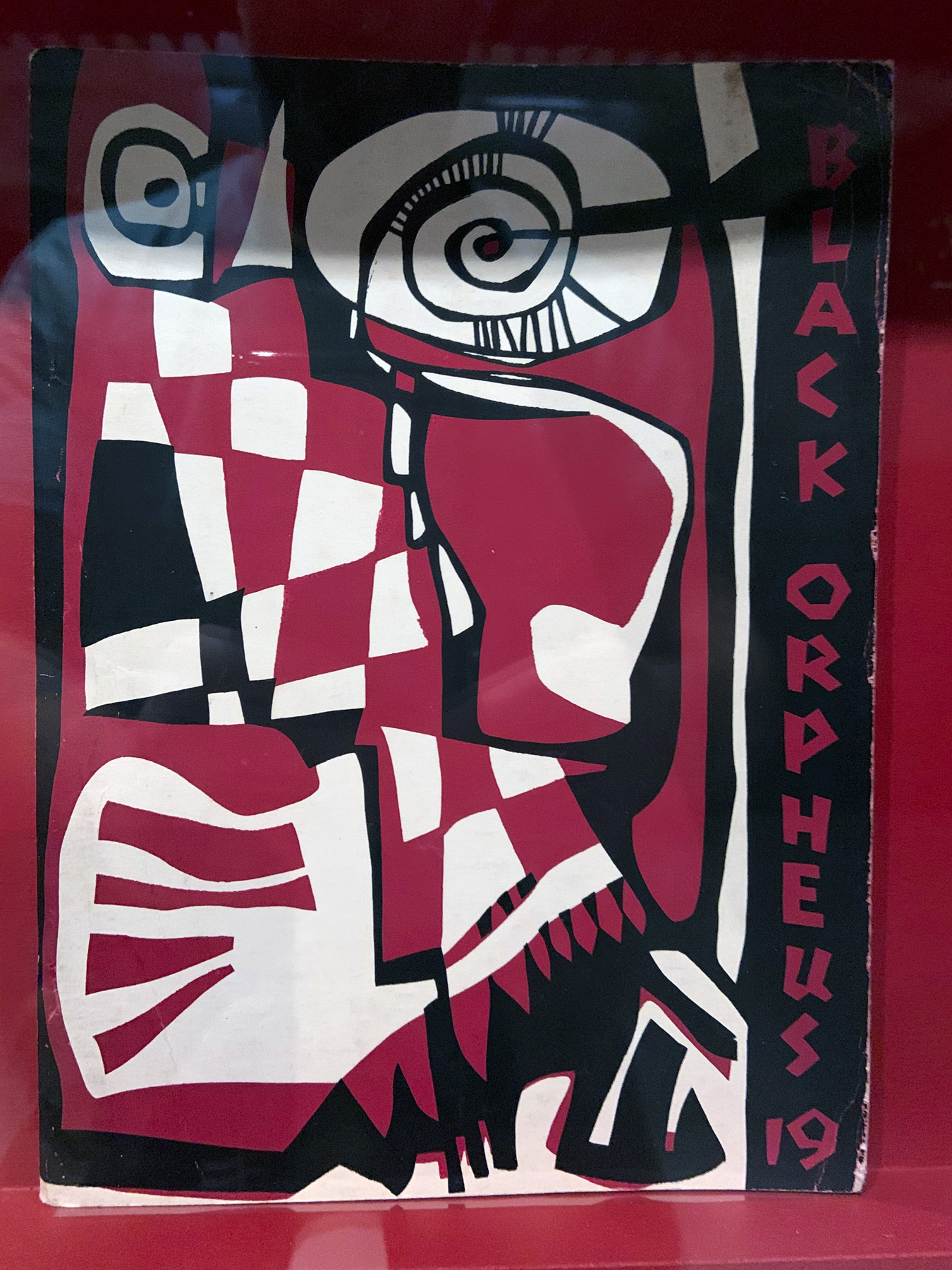
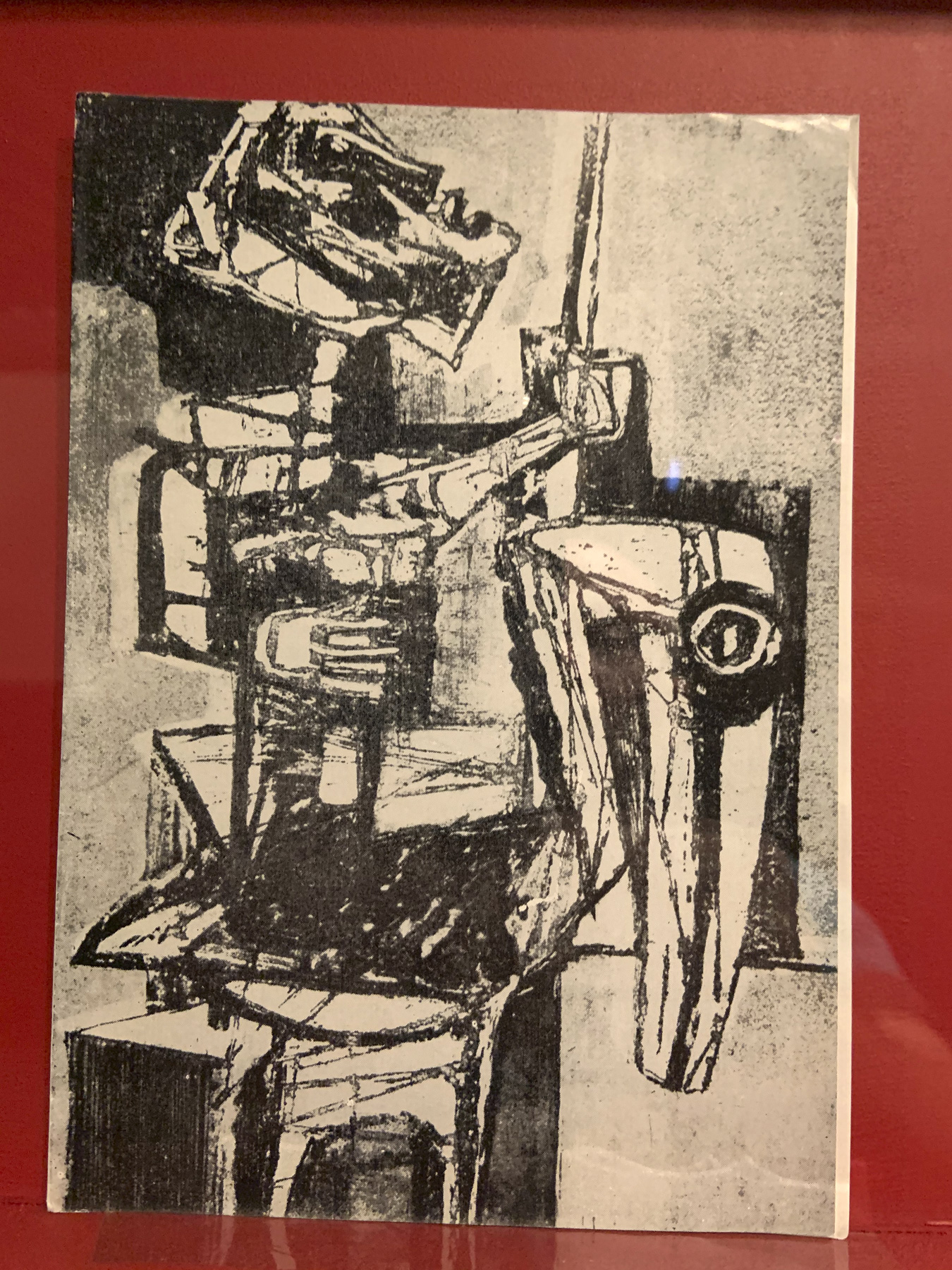
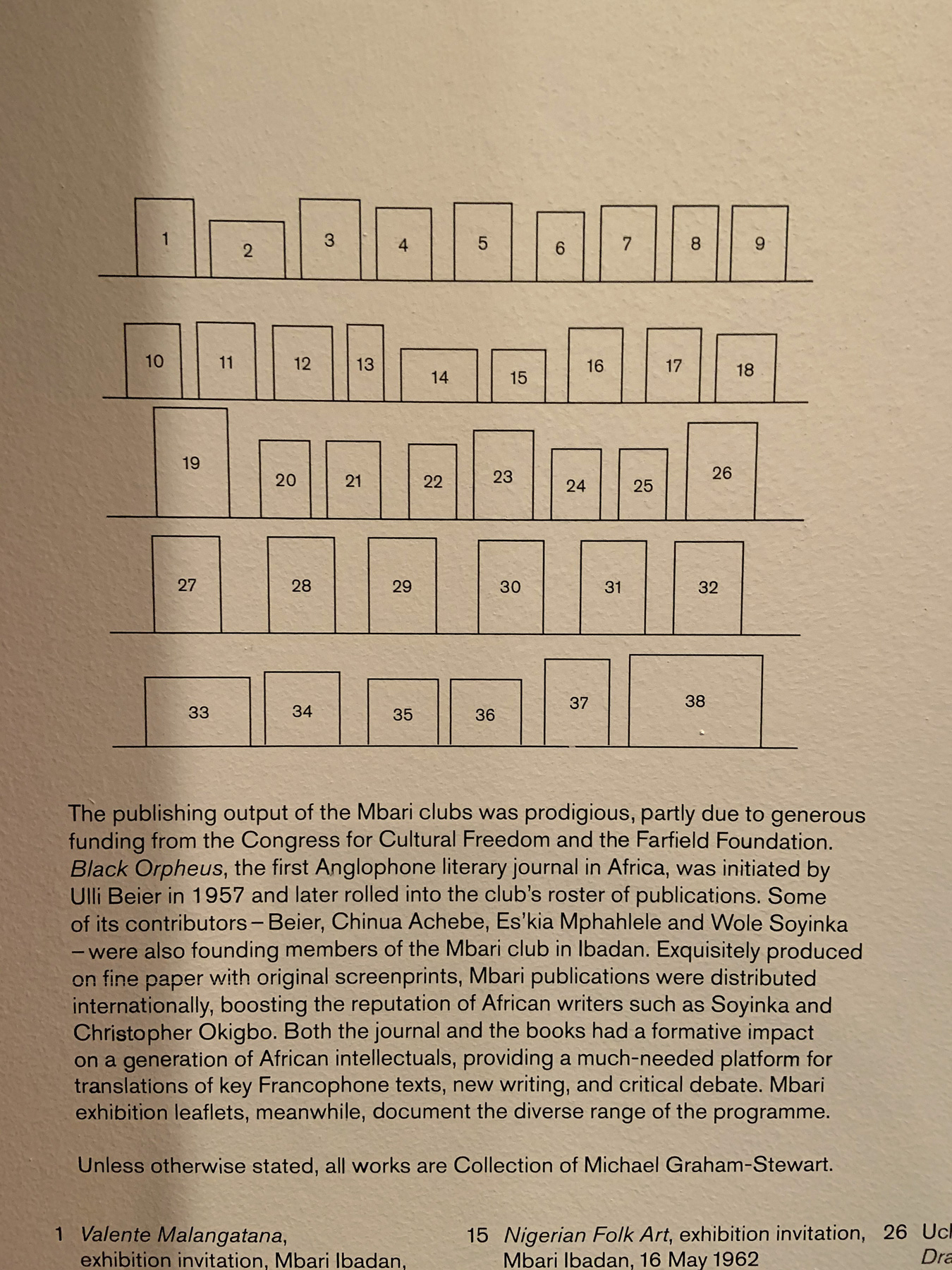
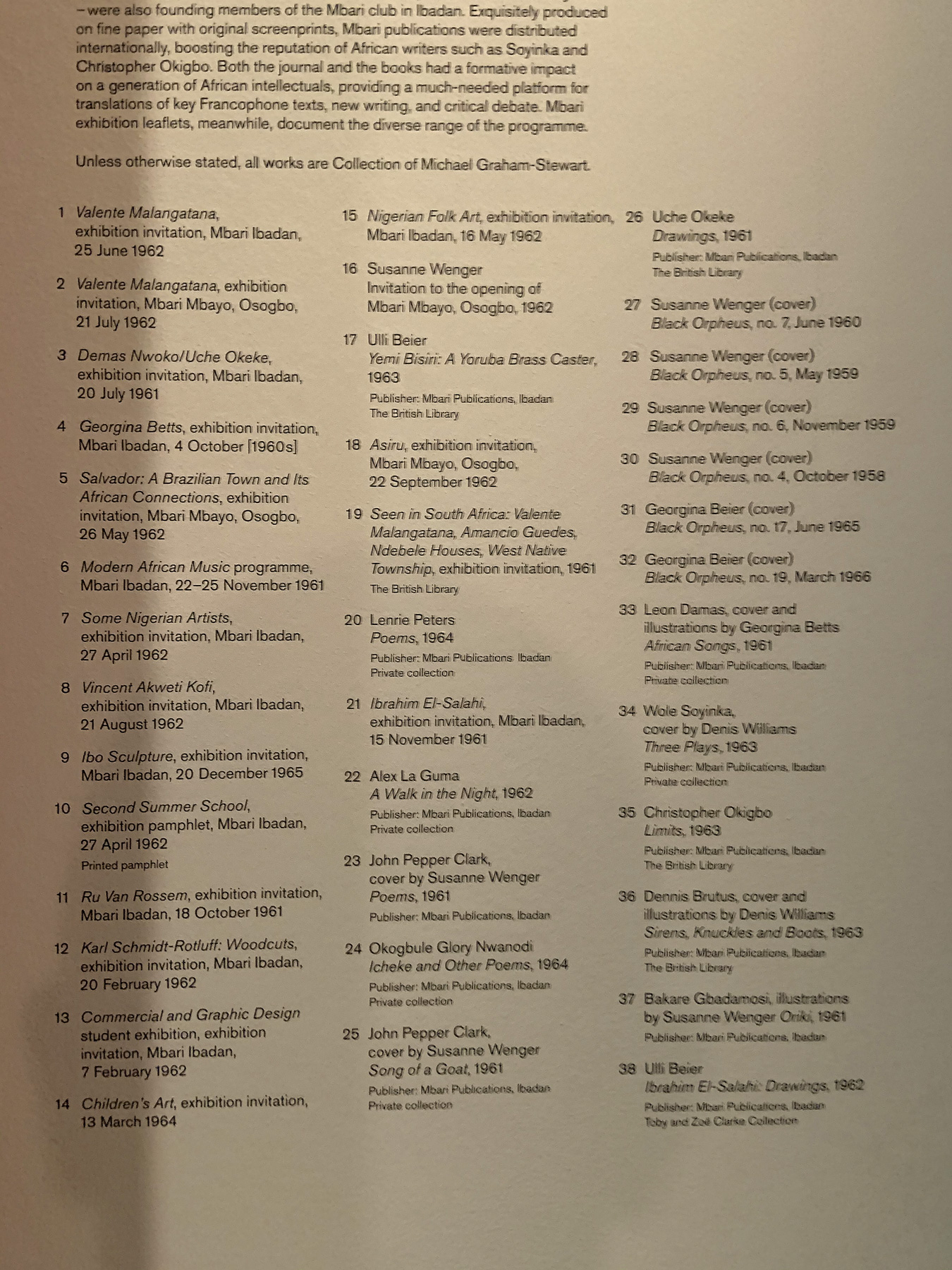
Installation view of the exhibition 'Into the Night: Cabarets and Clubs in Modern Art' at the Barbican Art Gallery showing some of the publishing output of the Mbari clubs

Installation view of the exhibition 'Into the Night: Cabarets and Clubs in Modern Art' at the Barbican Art Gallery showing some of the publishing output of the Mbari clubs

Installation view of the exhibition 'Into the Night: Cabarets and Clubs in Modern Art' at the Barbican Art Gallery showing some of the publishing output of the Mbari clubs

Installation view of the exhibition 'Into the Night: Cabarets and Clubs in Modern Art' at the Barbican Art Gallery showing some of the publishing output of the Mbari clubs

Installation view of the exhibition 'Into the Night: Cabarets and Clubs in Modern Art' at the Barbican Art Gallery showing some of the publishing output of the Mbari clubs

Installation view of the exhibition 'Into the Night: Cabarets and Clubs in Modern Art' at the Barbican Art Gallery showing some of the publishing output of the Mbari clubs

Installation view of the exhibition 'Into the Night: Cabarets and Clubs in Modern Art' at the Barbican Art Gallery showing some of the publishing output of the Mbari clubs

Installation view of the exhibition 'Into the Night: Cabarets and Clubs in Modern Art' at the Barbican Art Gallery showing some of the publishing output of the Mbari clubs

Installation view of the exhibition 'Into the Night: Cabarets and Clubs in Modern Art' at the Barbican Art Gallery showing some of the publishing output of the Mbari clubs

Installation view of the exhibition 'Into the Night: Cabarets and Clubs in Modern Art' at the Barbican Art Gallery showing some of the publishing output of the Mbari clubs

Installation view of the exhibition 'Into the Night: Cabarets and Clubs in Modern Art' at the Barbican Art Gallery showing some of the publishing output of the Mbari clubs

Installation view of the exhibition 'Into the Night: Cabarets and Clubs in Modern Art' at the Barbican Art Gallery showing some of the publishing output of the Mbari clubs

Installation view of the exhibition 'Into the Night: Cabarets and Clubs in Modern Art' at the Barbican Art Gallery showing some of the publishing output of the Mbari clubs

Installation view of the exhibition 'Into the Night: Cabarets and Clubs in Modern Art' at the Barbican Art Gallery showing some of the publishing output of the Mbari clubs

Installation view of the exhibition 'Into the Night: Cabarets and Clubs in Modern Art' at the Barbican Art Gallery showing some of the publishing output of the Mbari clubs

Installation view of the exhibition 'Into the Night: Cabarets and Clubs in Modern Art' at the Barbican Art Gallery showing some of the publishing output of the Mbari clubs

Installation view of the exhibition 'Into the Night: Cabarets and Clubs in Modern Art' at the Barbican Art Gallery showing some of the publishing output of the Mbari clubs

Installation view of the exhibition 'Into the Night: Cabarets and Clubs in Modern Art' at the Barbican Art Gallery showing some of the publishing output of the Mbari clubs and wall text

Installation view of the exhibition 'Into the Night: Cabarets and Clubs in Modern Art' at the Barbican Art Gallery showing some of the publishing output of the Mbari clubs and wall text


Installation views of the exhibition Into the Night: Cabarets and Clubs in Modern Art at the Barbican Art Gallery showing some of the publishing output of the Mbari clubs and wall text
Photos: Marcus Bunyan


London Cave of the Golden Calf wall text from the exhibition 'Into the Night: Cabarets and Clubs in Modern Art' at the Barbican Art Gallery, Oct 2019 - Jan 2020

London Cave of the Golden Calf wall text from the exhibition 'Into the Night: Cabarets and Clubs in Modern Art' at the Barbican Art Gallery, Oct 2019 - Jan 2020


London Cave of the Golden Calf wall text
Photos: Marcus Bunyan


Installation view of the exhibition 'Into the Night: Cabarets and Clubs in Modern Art' at the Barbican Art Gallery


Installation view of the exhibition Into the Night: Cabarets and Clubs in Modern Art at the Barbican Art Gallery
Photo: Marcus Bunyan


Spencer Gore (British, 1878-1914) 'Design for Tiger Hunting Mural in the Cabaret Theatre Club' 1912 (installation view)


Spencer Gore (British, 1878-1914)
Design for Tiger Hunting Mural in the Cabaret Theatre Club (installation view)
1912
Oil and pencil on card
Yale Center for British Art, Paul Mellon Fund
Photo: Marcus Bunyan


Spencer Gore (British, 1878-1914) 'Design for Deer Hunting Mural in the Cabaret Theatre Club 1912' (installation view)


Spencer Gore (British, 1878-1914)
Design for Deer Hunting Mural in the Cabaret Theatre Club (installation view)
1912
Oil and chalk on paper
Yale Center for British Art, Paul Mellon Fund
Photo: Marcus Bunyan


None of the original decorations from the Cave of the Golden Calf survive except for Eric Gill’s carved bull calf. Contemporaneous reports, however, describe their collective impact as intense, conveying a hedonistic energy. Gore’s murals depicted an Arcadian hunt, with frisking tigers and deep portrayed in glowing colours. The Times recounted ‘mural decorations representing we should not care to say what precise stage beyond impressionism – they would easily, however, turn into appalling goblins after a little too much supper in the cave’. The artists then at the forefront of modernism in Britain, were dubbed ‘Troglodytes’ or ‘Cave-dwellers’ by the press.

Wall text from the exhibition


Installation view of the exhibition 'Into the Night: Cabarets and Clubs in Modern Art' at the Barbican Art Gallery showing some of the works by Wyndham Lewis


Installation view of the exhibition Into the Night: Cabarets and Clubs in Modern Art at the Barbican Art Gallery showing some of the works by Wyndham Lewis (below)
Photo: Marcus Bunyan


Wyndham Lewis (English, 1882-1957) 'Kermesse' 1912 (installation view)

Wyndham Lewis (English, 1882-1957) 'Kermesse' 1912 (installation view)


Wyndham Lewis (English, 1882-1957)
Kermesse (installation views)
1912
Gouache, watercolour, pen and black ink, black wash and graphite on paper
Yale Center for British Art, Paul Mellon Fund
Photos: Marcus Bunyan


Wyndham Lewis designed the cabaret’s programme and posted as well as some of its interior decorations, which are now lost. His large oil painting, Kermesse (1912), whose dynamic figures evoked a carnival spirit hung on the club’s wall; only this drawing now survives. Along with other British modernist contemporaries, Lewis was fascinated by dance during this period, producing multiple works that may have been inspired by the cabaret’s ‘exotic’ programme.

Wall text


Wyndham Lewis (English, 1882-1957) 'Drop curtain design' 1912 (installation view)

Wyndham Lewis (English, 1882-1957) 'Drop curtain design' 1912 (installation view)


Wyndham Lewis (English, 1882-1957)
Drop curtain design (installation views)
1912
Pencil, black in and watercolour on paper
V&A Theatre and Performance, London
Photos: Marcus Bunyan


Wyndham Lewis (English, 1882-1957) 'Indian Dance' 1912 (installation view)


Wyndham Lewis (English, 1882-1957)
Indian Dance (installation view)
1912
Chalk and watercolour on paper
Tate, Purchased 1955
Photo: Marcus Bunyan


Harlem Jazz Clubs and Cabarets 1920s-40s wall text from the exhibition 'Into the Night: Cabarets and Clubs in Modern Art' at the Barbican Art Gallery, Oct 2019 - Jan 2020

Harlem Jazz Clubs and Cabarets 1920s-40s wall text from the exhibition 'Into the Night: Cabarets and Clubs in Modern Art' at the Barbican Art Gallery, Oct 2019 - Jan 2020

Harlem Jazz Clubs and Cabarets 1920s-40s wall text from the exhibition 'Into the Night: Cabarets and Clubs in Modern Art' at the Barbican Art Gallery, Oct 2019 - Jan 2020


Harlem Jazz Clubs and Cabarets 1920s-1940s wall text
Photos: Marcus Bunyan


Installation view of the exhibition 'Into the Night: Cabarets and Clubs in Modern Art' at the Barbican Art Gallery

Installation view of the exhibition 'Into the Night: Cabarets and Clubs in Modern Art' at the Barbican Art Gallery showing at left, Jacob Lawrence's 'Vaudeville' (1951); at second left, William H, Johnson's 'Jitterbugs (III)' (c. 1941); at second right, William H, Johnson's 'Jitterbugs (II)' (c. 1941); and at right, Edward Burra's 'Savoy Ballroom, Harlem' (1934)


Installation view of the exhibition Into the Night: Cabarets and Clubs in Modern Art at the Barbican Art Gallery showing at left in the bottom image, Jacob Lawrence’s Vaudeville (1951); at second left, William H, Johnson’s Jitterbugs (III) (c. 1941); at second right, William H, Johnson’s Jitterbugs (II) (c. 1941); and at right, Edward Burra’s Savoy Ballroom, Harlem (1934)
Photos: Marcus Bunyan


Jacob Lawrence (American, 1917-2000) 'Vaudeville' 1951 (installation view)

Jacob Lawrence (American, 1917-2000) 'Vaudeville' 1951 (installation view)


Jacob Lawrence (American, 1917-2000)
Vaudeville (installation view)
1951
Egg tempera and pencil on Fibreboard
Hirshhorn Museum and Sculpture Garden
Photos: Marcus Bunyan


in this work, Lawrence pays tribute to his formative experiences watching vaudeville performances at the Apollo Theater as a young man during the Harlem renaissance. He later recalled, ‘I wanted a staccato-type thing – raw, sharp, rough – that’s what I tried to get’. The vibrant composition reveals Lawrence’s virtuoso handling of colour and form. The patterned backdrop comprises circles, triangles and organic forms in myriad colours, interlocking to create a syncopated, rhythmic effect. In contrast to their carnivalesque costumes and the comedic nature of vaudeville, the figure bear sorrowful expressions, perhaps reflecting the ‘melancholy-comic’ mood that contemporary Harlem writer Claude McKay identified as central to the black American experience.

Wall text from the exhibition


William H. Johnson (American, 1901-1970) 'Jitterbugs (III)' c. 1941 (installation view)


William H. Johnson (American, 1901-1970)
Jitterbugs (III) (installation view)
c. 1941
Oil on plywood
Smithsonian American Art Museum
Gift of the Harmon Foundation
Photo: Marcus Bunyan


William H. Johnson (American, 1901-1970) 'Jitterbugs (II)' c. 1941 (installation view)


William H. Johnson (American, 1901-1970)
Jitterbugs (II) (installation view)
c. 1941
Oil on paperboard
Smithsonian American Art Museum
Gift of the Harmon Foundation
Photo: Marcus Bunyan


Edward Burra (English, 1905-1976) 'Savoy Ballroom, Harlem' 1934 (installation view)

Edward Burra (English, 1905-1976) 'Savoy Ballroom, Harlem' 1934 (installation view)


Edward Burra (English, 1905-1976)
Savoy Ballroom, Harlem (installation views)
1934
Gouache and watercolour on paper
Omer Koc Collection
Photos: Marcus Bunyan


Aaron Douglas (American, 1899-1979) 'Dance' c. 1930 (installation view)


Aaron Douglas (American, 1899-1979)
Dance (installation view)
c. 1930
Gouache on illustration board
Collection of Dr Anita White
Photo: Marcus Bunyan


Aaron Douglas (American, 1899-1979) 'Dance' c. 1930


Aaron Douglas (American, 1899-1979)
Dance
c. 1930
© Heirs of Aaron Douglas/VAGA at ARS, NY and DACS, London 2019


Aaron Douglas (American, 1899-1979) 'Untitled (Dancers and Cityscape)' c. 1928 (installation view)

Aaron Douglas (American, 1899-1979) 'Untitled (Dancers and Cityscape)' c. 1928 (installation view)


Aaron Douglas (American, 1899-1979)
Untitled (Dancers and Cityscape) (installation views)
c. 1928
Ink on paper
Private collection
Photos: Marcus Bunyan


Tehran Rasht 29 1966-69 wall text from the exhibition 'Into the Night: Cabarets and Clubs in Modern Art' at the Barbican Art Gallery, Oct 2019 - Jan 2020

Tehran Rasht 29 1966-69 wall text from the exhibition 'Into the Night: Cabarets and Clubs in Modern Art' at the Barbican Art Gallery, Oct 2019 - Jan 2020


Tehran Rasht 29 1966-69 wall text
Photos: Marcus Bunyan


Installation view of the exhibition 'Into the Night: Cabarets and Clubs in Modern Art' at the Barbican Art Gallery showing the Tehran Rasht 29 1966-69 section

Installation view of the exhibition 'Into the Night: Cabarets and Clubs in Modern Art' at the Barbican Art Gallery

Installation view of the exhibition 'Into the Night: Cabarets and Clubs in Modern Art' at the Barbican Art Gallery

Installation view of the exhibition 'Into the Night: Cabarets and Clubs in Modern Art' at the Barbican Art Gallery


Installation views of the exhibition Into the Night: Cabarets and Clubs in Modern Art at the Barbican Art Gallery showing the Tehran Rasht 29 1966-69 section
Photos: Marcus Bunyan


Kamran Diba (Iranian, b. 1937) 'I'm a Clever Waterman' 1966 (installation view)


Kamran Diba (Iranian, b. 1937)
I’m a Clever Waterman (installation view)
1966
Lithograph (reproduction of lost painting)
Collection Kamran Diba
Photo: Marcus Bunyan


I’m a Clever Waterman was first created during a performance by artist and architect Kamran Diba and his contemporaries, which combined movement and live music with live painting. Faramarz Pilaram added the calligraphic text, which includes the work’s enigmatic title and the number 29, reflecting the importance of the Rasht 29 club to their artistic circle. The painting was shown at the bar area at Rasht but was lost during the 1979 Iranian Revolution: only the print survives now.

Wall text from the exhibition


Kamran Diba (Iranian, b. 1937) 'I'm a Clever Waterman' 1966


Kamran Diba (Iranian, b. 1937)
I’m a Clever Waterman
1966
Collection Kamran Diba
© Kamran Diba


Leyl Matine-Daftary (Iranian, 1937-2007) 'Still-life' 1962 (installation view)


Leyl Matine-Daftary (Iranian, 1937-2007)
Still-life (installation view)
1962
Oil on canvas
Mohammed Afkhami Collection
Photo: Marcus Bunyan


Parviz Tanavoli (Iranian, b. 1937) 'Heech and Hands' 1964


Parviz Tanavoli (Iranian, b. 1937)
Heech and Hands
1964
Collection Parviz Tanavoli
© Parviz Tanavoli


Parviz Tanavoli (Iranian, b. 1937) 'Cage, cage, cage' 1966 (repaired 2009) (installation view)


Parviz Tanavoli (Iranian, b. 1937)
Cage, cage, cage (installation view)
1966 (repaired 2009)
Wood, metal, feather, glass, paint and light
Tate
Photo: Marcus Bunyan


Parviz Tanavoli (Iranian, b. 1937) 'Boohoo, boohoo, boohoo, or her, or a gazelle' 1966 (installation view)


Parviz Tanavoli (Iranian, b. 1937)
Boohoo, boohoo, boohoo, or her, or a gazelle (installation view)
1966
Wood, paint, plexiglass and metal
Collection Parviz Tanavoli
Photo: Marcus Bunyan


Throughout the 1960s Iran’s economy was rapidly industrialising. Tanavoli began incorporating found industrial elements into his work, scouring welding shops, blacksmiths, potteries and street vendors for salvage. Boohoo, boohoo, boohoo, or her, or a gazelle, which was shown at Rasht 29, incorporates the decorative grille motif that recurs in the artists work. Playfully juxtaposed with elements from pop culture, the grille alludes to the traditional design of a saqqakhaneh, the sacred commemorative water fountains from which the artistic community took its name.

Wall text from the exhibition


Faramarz Pilaram (Iranian, 1937-1982) 'Untitled (Composition 8)' c. 1960-65 (installation view)


Faramarz Pilaram (Iranian, 1937-1982)
Untitled (Composition 8) (installation view)
c. 1960-1965
Ink, metallic paint and acrylic on paper
Mohammed Afkhami Collection
Photo: Marcus Bunyan


Barbican Art Gallery
Silk Street, London
EC2Y 8DS

Opening hours:
Sat – Wed 10am – 6pm
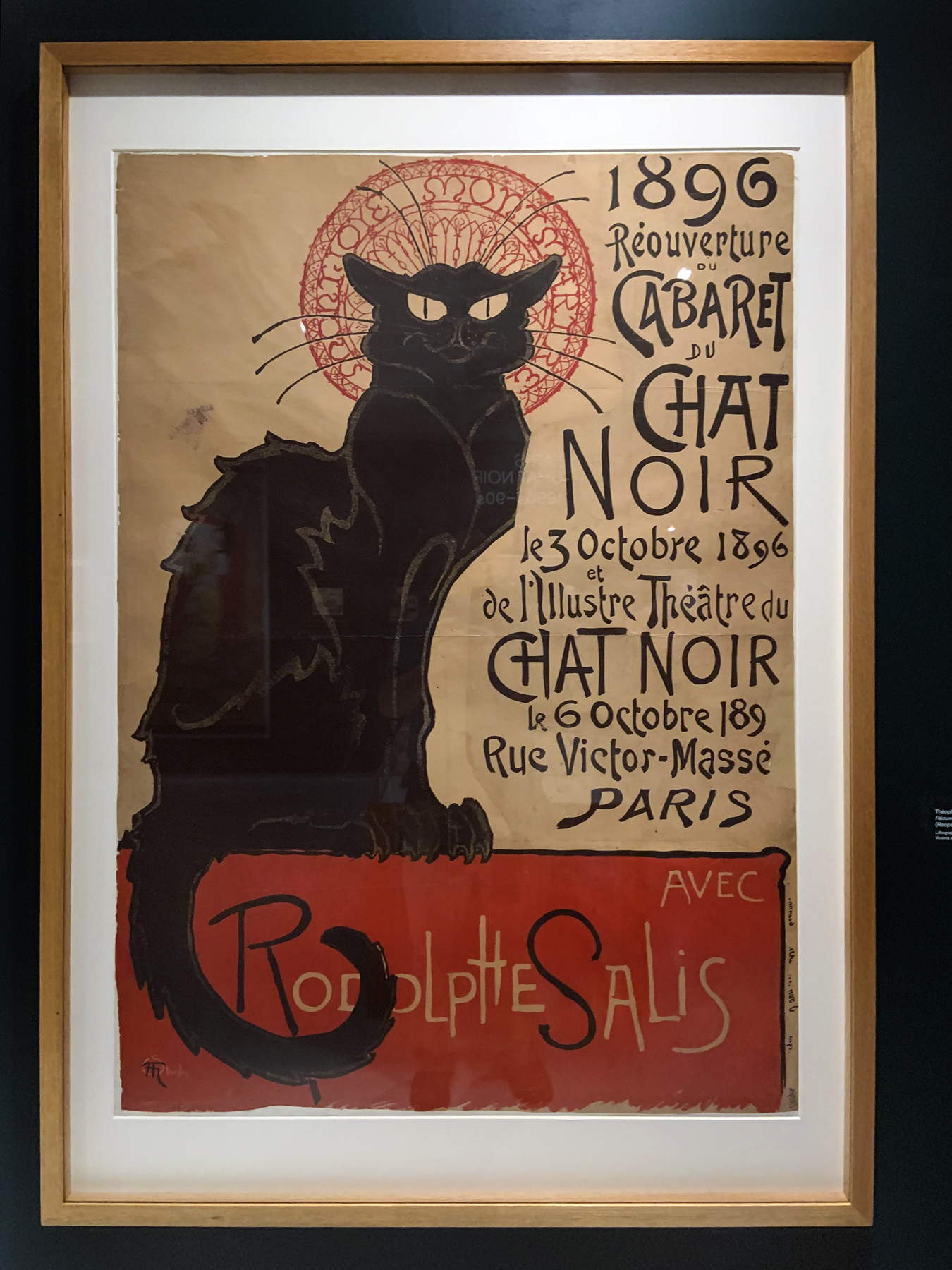
Thu – Fri 10am – 8pm
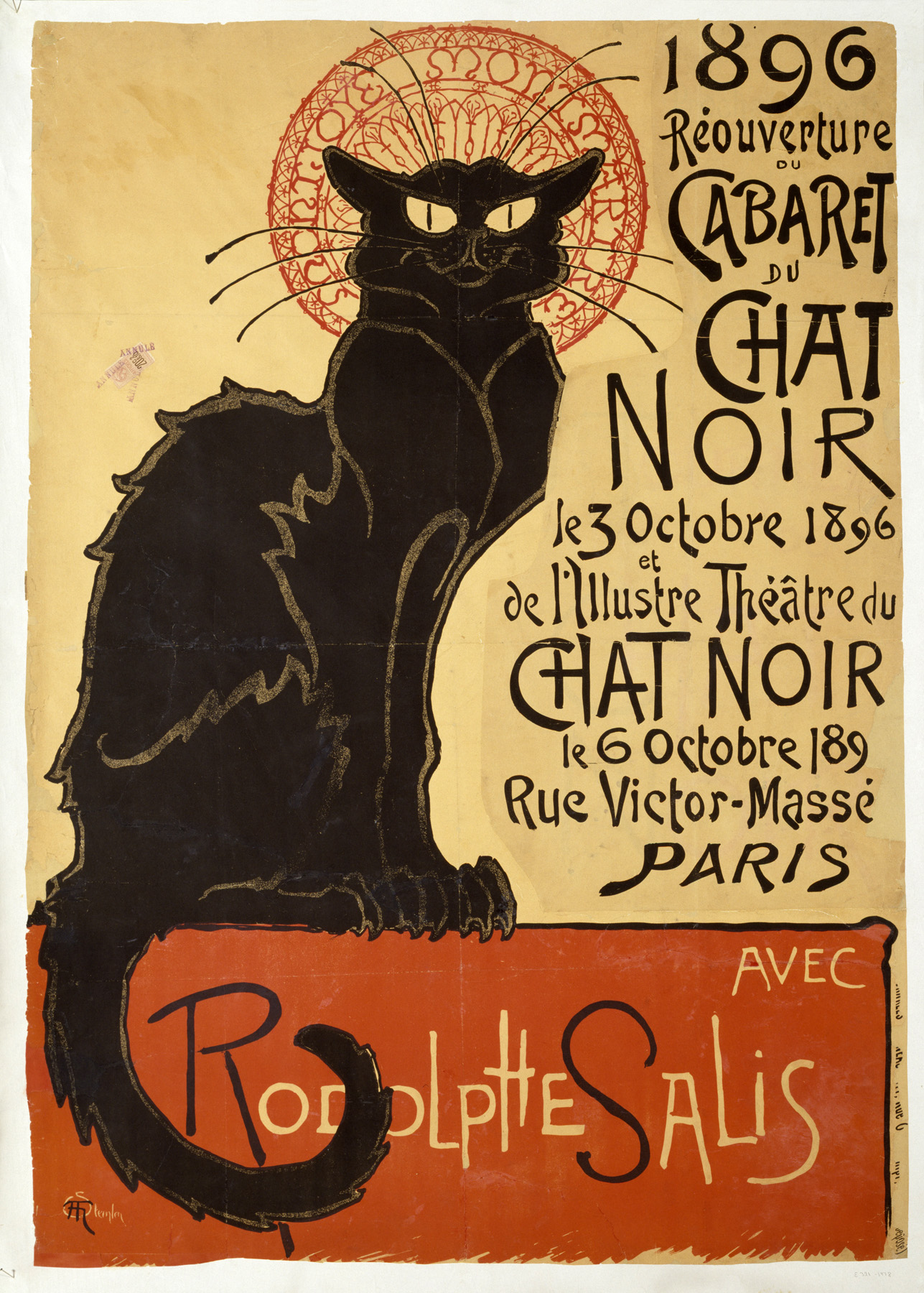
Barbican Art Gallery website

LIKE ART BLART ON FACEBOOK

Back to top