
Exhibition dates: 27th April, 2025 – 1st June, 2026
Curators: Reggie Baay and Bibi de Vrie
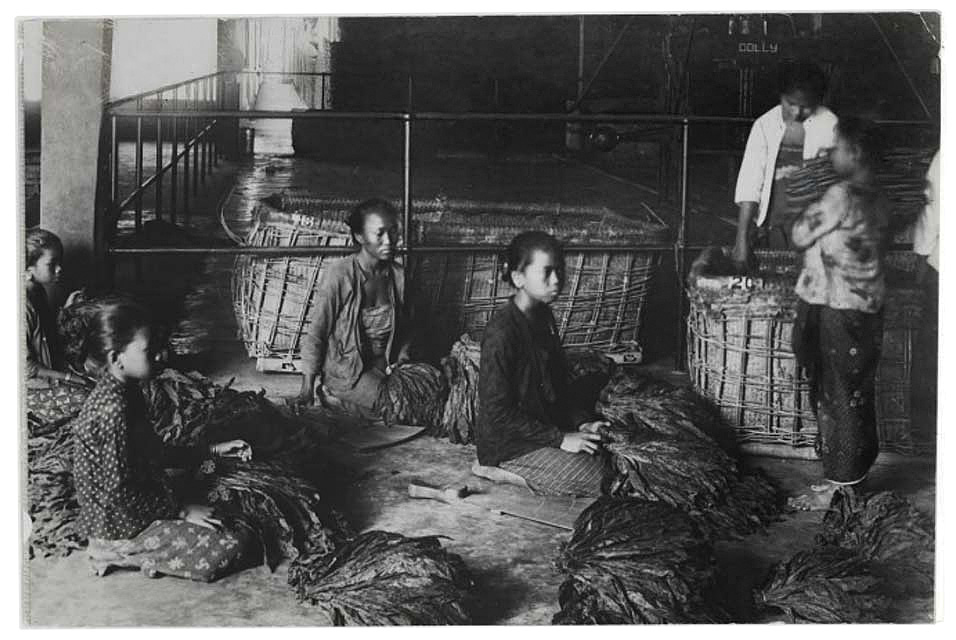
Unknown photographer
Women sort tobacco leaves by length in a shed at the Tegalsirondo (also Tegalgondo) enterprise near Oengaran south of Semarang
c. 1910
University Libraries Le
Hidden histories
Exposed (in photographs, in texts)
The effects of colonialism are immediate (slavery, subjugation, exploitation, prison, murder) and pernicious, ongoing in so many obvious, subtle and insidious ways.
“… we must be ever vigilant in understanding the networks of power, dispossession and enslavement that patriarchal societies use to marginalise the poor, the weak, the different for their gain.”1
Dr Marcus Bunyan
PS. I so dislike Piet van der Hem’s painting of Henri Van Abbe – the self importance of the man, dressed to the nine, staring out at the viewer in all his entitlement, hands clasped over his masculine power even as it radiates through every pore of the painting – the epitome of white hegemonic power. And the museum is named after him …
Sejarah Tersembunyi
Terungkap (dalam foto, dalam teks)
Dampak kolonialisme bersifat langsung (perbudakan, penaklukan, eksploitasi, penjara, pembunuhan) dan merusak, berkelanjutan dalam begitu banyak cara yang nyata, halus, dan licik.
“… kita harus selalu waspada dalam memahami jaringan kekuasaan, perampasan, dan perbudakan yang digunakan masyarakat patriarki untuk meminggirkan kaum miskin, yang lemah, yang berbeda demi keuntungan mereka.”1
Dr. Marcus Bunyan
PS. Saya sangat tidak menyukai lukisan Henri Van Abbe karya Piet van der Hem – sosok pria yang sangat penting, berpakaian rapi, menatap penonton dengan segala keistimewaannya, tangan tergenggam di atas kekuatan maskulinnya, bahkan saat kekuatan itu terpancar melalui setiap pori lukisan – lambang kekuatan hegemoni kulit putih. Dan museum ini dinamai menurut namanya …
1/ Marcus Bunyan. “Hermann Kummler (1863-1949) (compiler) ‘Ethnographic portraits of Indigenous women of Pernambuco and Bahia’ 1861-1862,” on Art Blart, 1st August, 2018
Many thankx to the Van Abbemuseum for allowing me to publish the photographs in the posting. Please click on the photographs for a larger version of the image.
“The horrific history of contract labour in Deli in Sumatra, which forced people to work for western entrepreneurs, seems to have been covered up. Stories of resistance were often not written down but passed on orally instead. This deliberate oppression and denial of the plantation workers and their experiences is still palpable to this very day.”
“Sejarah mengerikan buruh kontrak di Deli, Sumatra, yang memaksa orang bekerja untuk pengusaha Barat, tampaknya telah ditutup-tutupi. Kisah-kisah perlawanan seringkali tidak tertulis, melainkan diwariskan secara lisan. Penindasan dan penyangkalan yang disengaja terhadap para pekerja perkebunan dan pengalaman mereka masih terasa hingga saat ini.”
Press release from the Van Abbemuseum
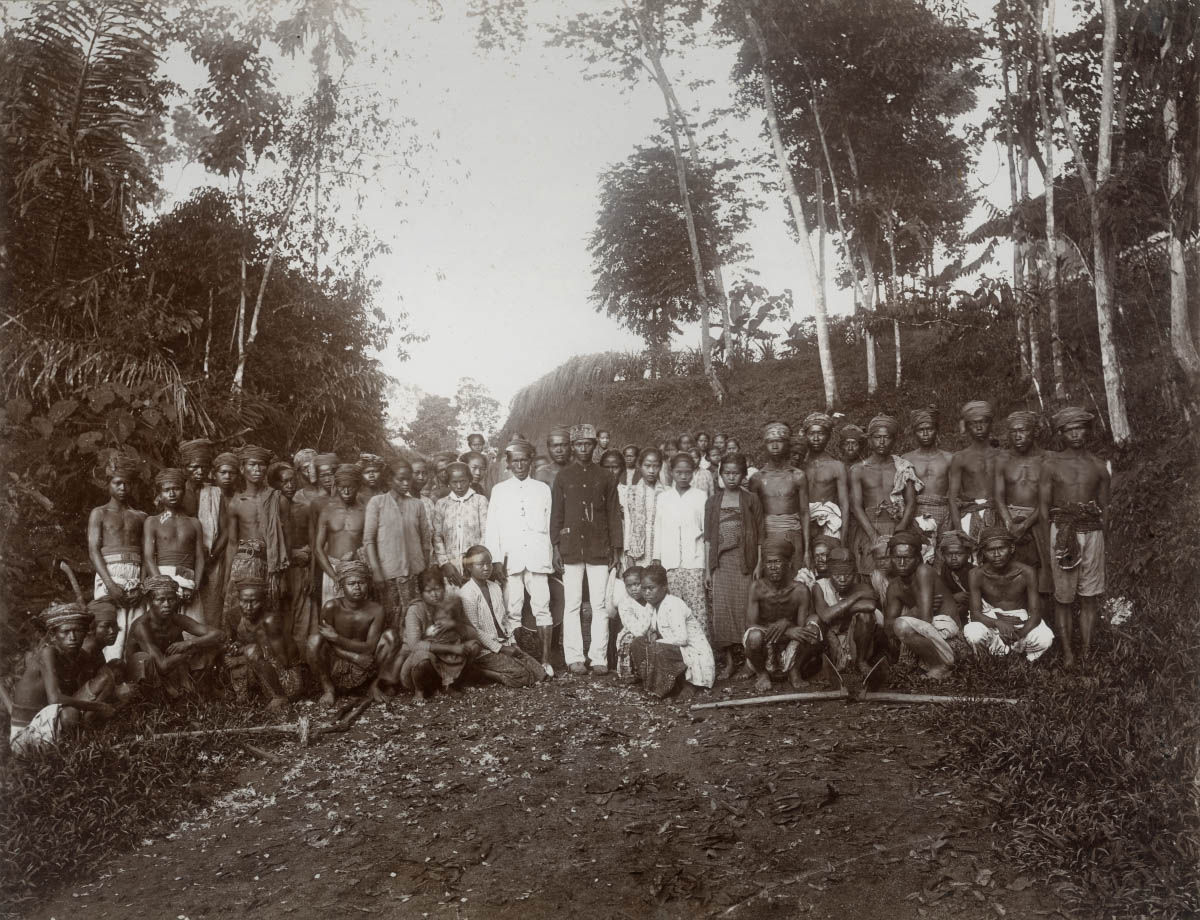
Unknown photographer
Workers on a plantation in Deli (now Medan)
c. 1900
Photo: Stafhell-Kleingrothe
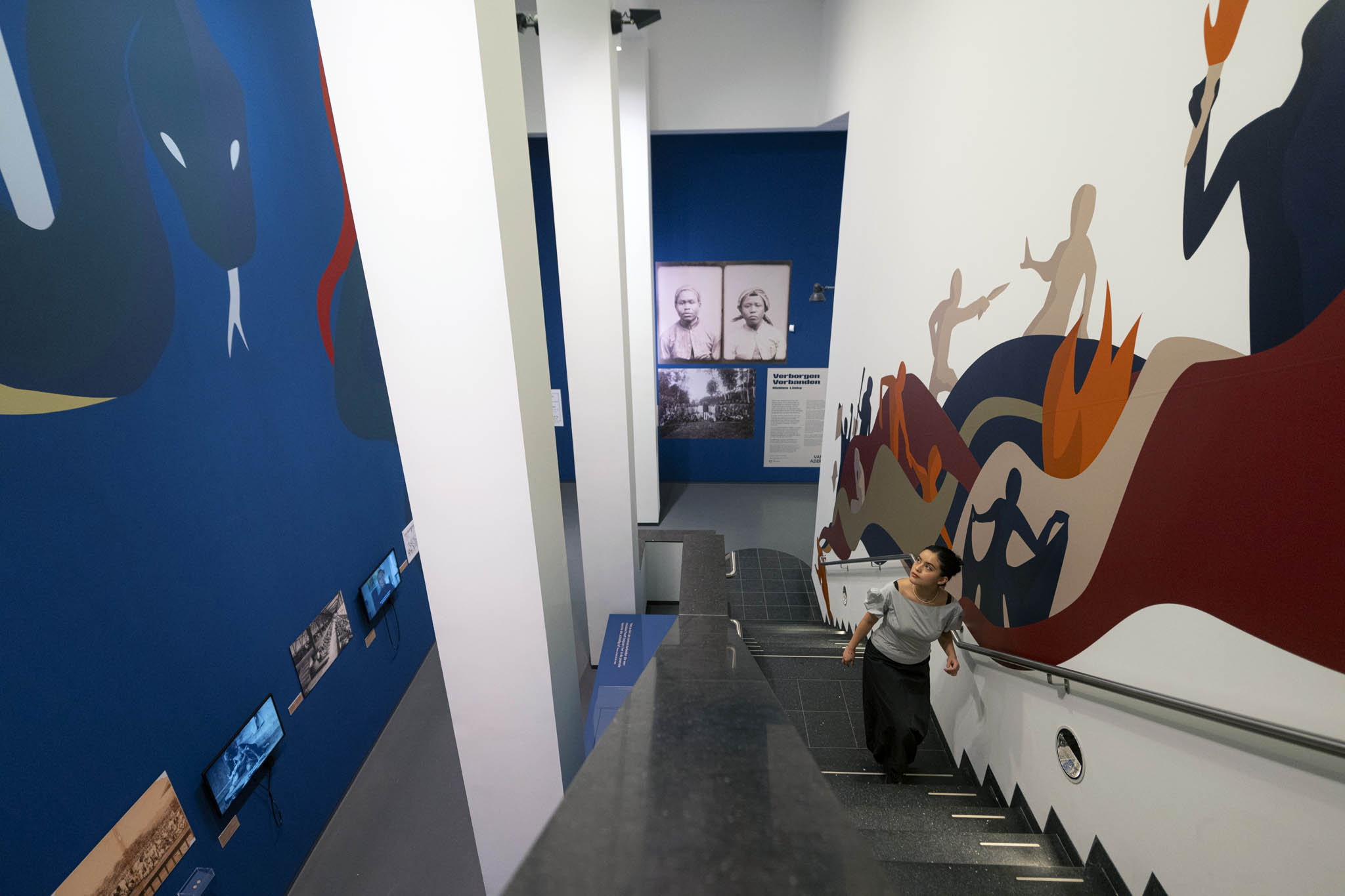
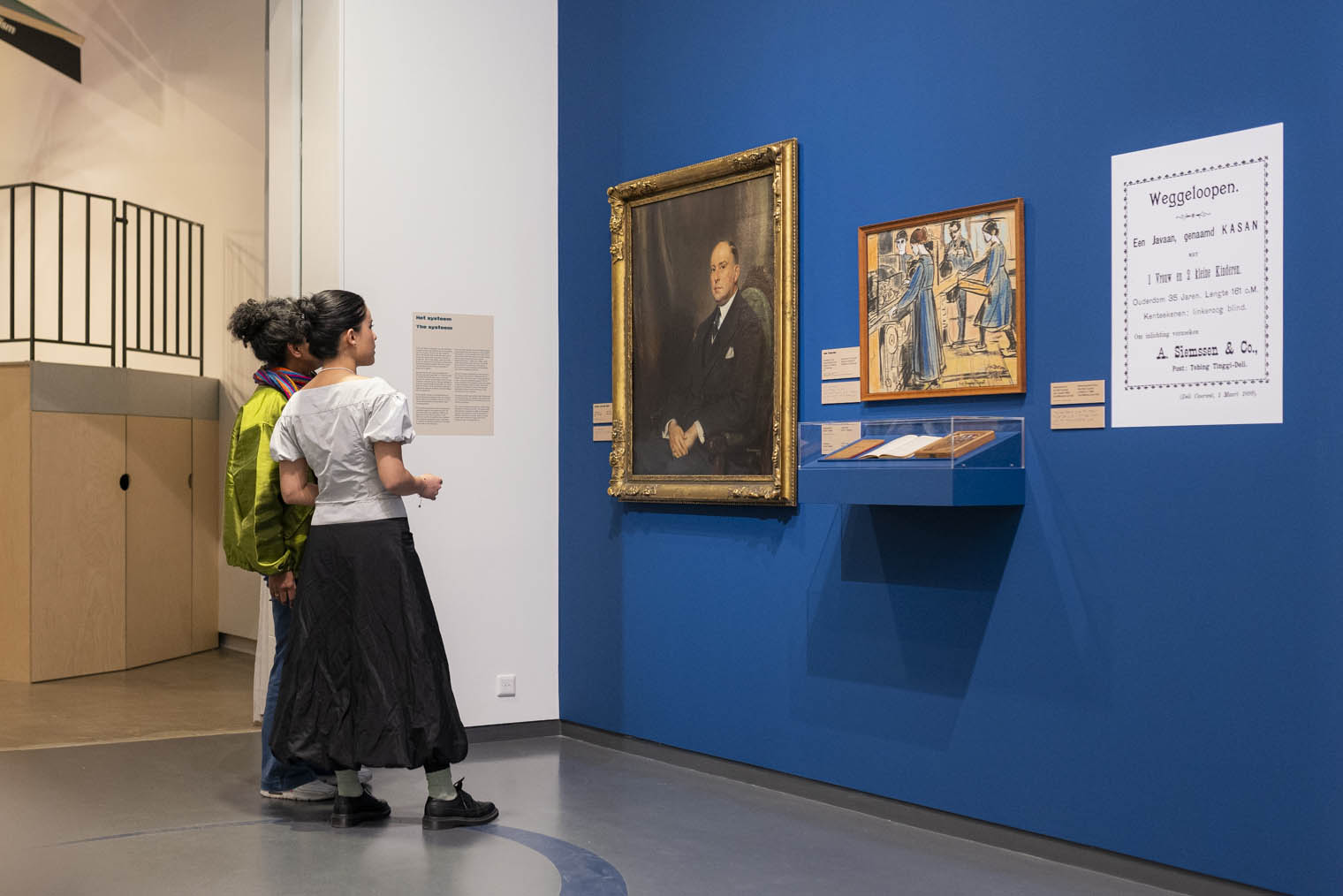
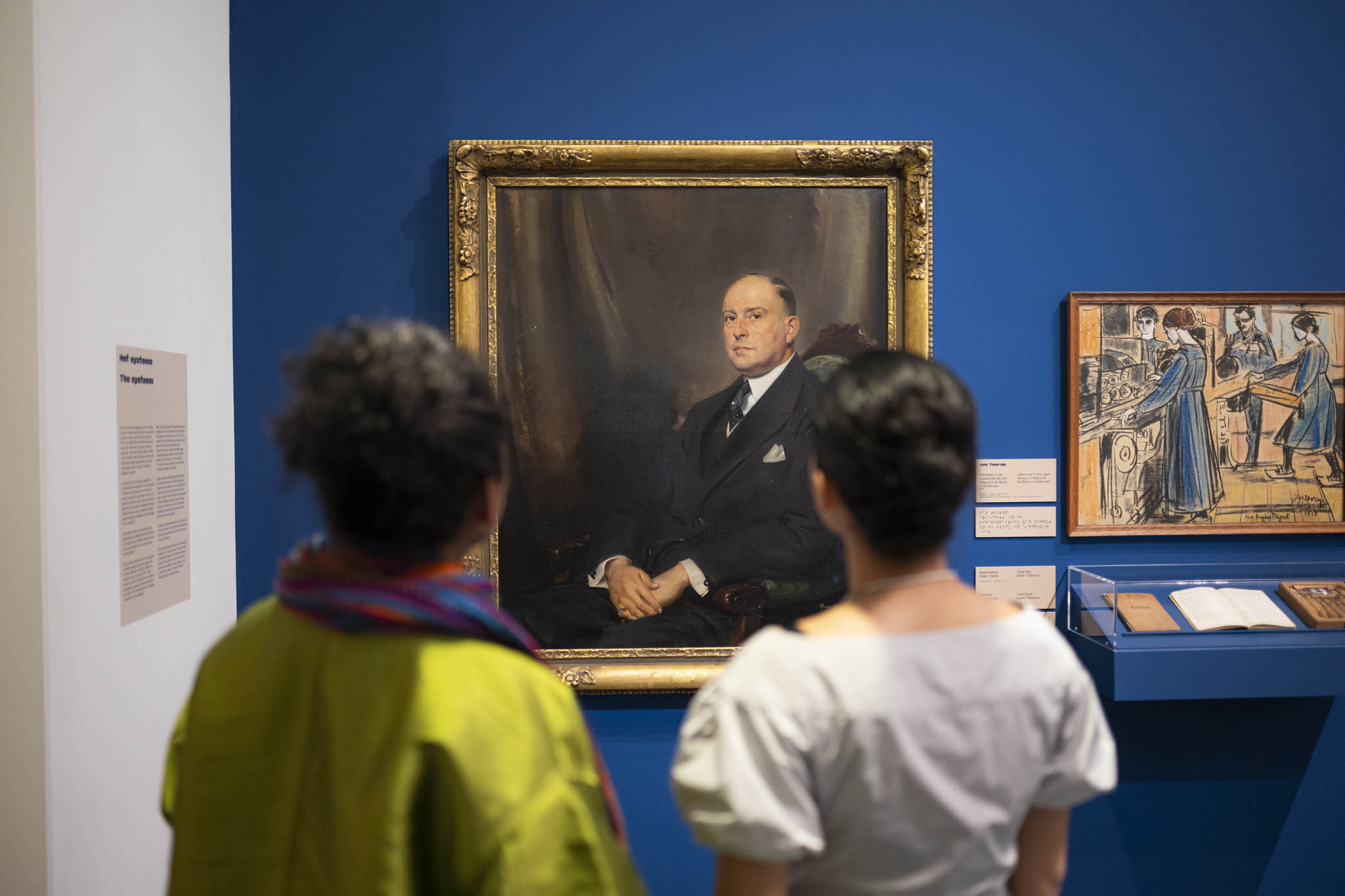
Installation views of the exhibition Hidden Connections at the Van Abbemuseum, Eindhoven, Holland
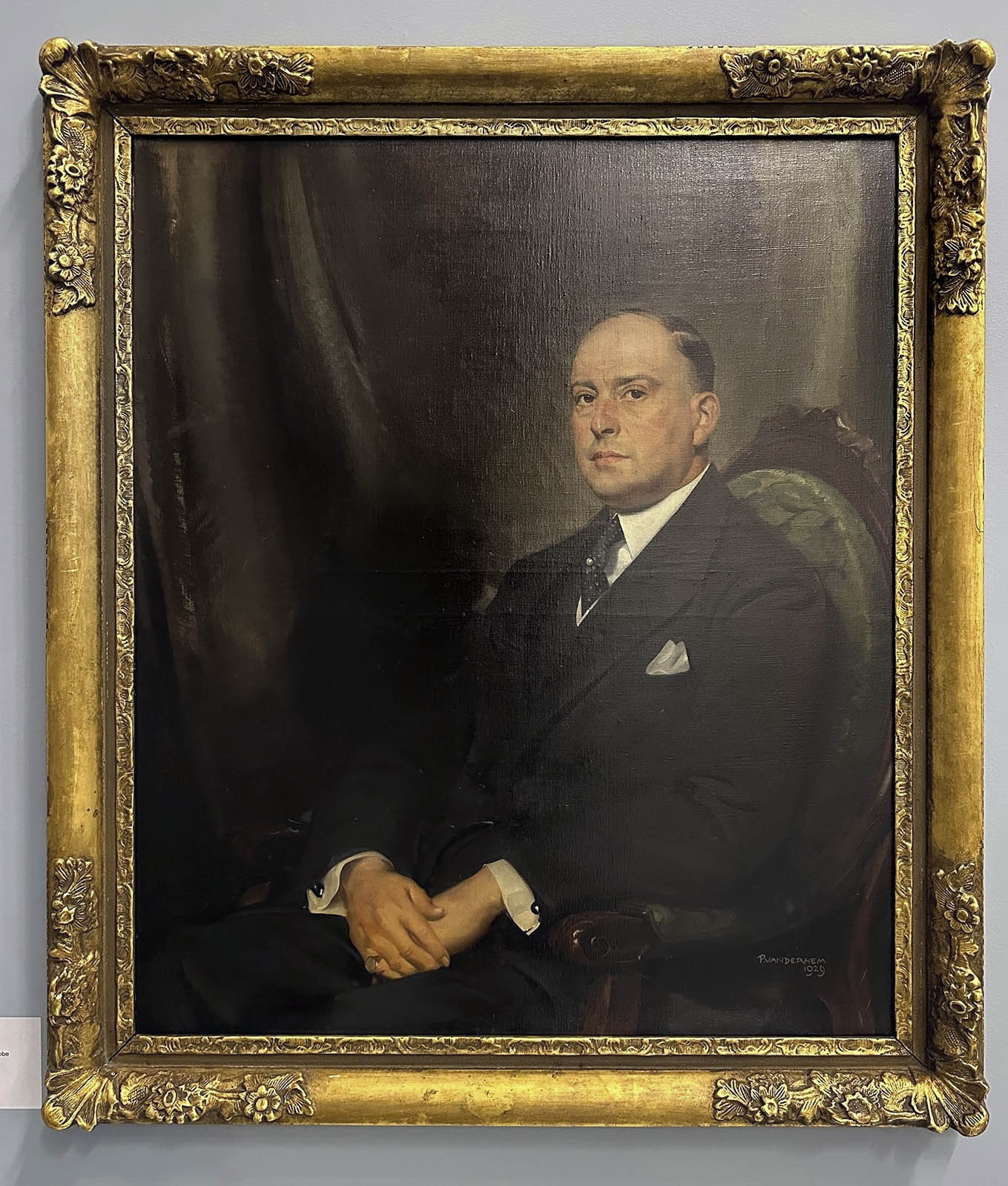
Piet van der Hem (Dutch, 1885-1961)
Henri Van Abbe
1929
Oil on canvas
Why do we know so little about what happened on the plantations in the former Dutch East Indies? The horrific history of contract labour in Deli in Sumatra, which forced people to work for western entrepreneurs, seems to have been covered up. Stories of resistance were often not written down but passed on orally instead. This deliberate oppression and denial of the plantation workers and their experiences is still palpable to this very day. In its multi-year Hidden Connections research project, the Van Abbemuseum discovers the role it played in the Netherlands’ colonial past. The museum is presenting its research results in an exhibition and podcast and on a heritage platform.
Founder Henri van Abbe
The Van Abbemuseum was named after Henri van Abbe (1880-1940), the founder of the Karel 1 cigar factories, once the second biggest employer in Eindhoven and the surrounding area. The tobacco for Karel 1 cigars was sourced largely from plantations in the Dutch East Indies. Even though Van Abbe was not based in the Dutch East Indies, the tobacco he bought from Deli, on the island of Sumatra, had a big impact on the region and its inhabitants. In 1933, Van Abbe founded a museum for contemporary art, funded partly with money he had made from tobacco. Besides a building, Van Abbe donated 26 paintings from his personal collection, including works by Isaac Israëls, Carel Willink and Jan Sluijters.
Ongoing research
Over the last 10 years, the Van Abbemuseum has become increasingly aware of its roots in the tobacco industry. The donation of the Van Abbe family archive to the museum in 2018 was the starting point for ongoing research into its past. The initial results have been presented in the museum since autumn 2021. This presentation has been expanded to include new work inspired by this research. Why have events on the plantations in Sumatra been kept hidden? And why don’t we know anything about the different forms of resistance to it? Author and historian Reggie Baay has searched Dutch archives for forgotten stories about this period. At the same time, artists and researchers Ferial Affif and Dwihandono Ahmad spoke to descendants of contract workers on the plantations in Deli. Isabelle Britto also did research to find out how much Henri van Abbe could have known about the conditions there.
Hidden stories of resistance
Curators Reggie Baay and Bibi de Vries present the results of the research above in the exhibition Hidden Connections. Archive material, audio and video interviews and illustrations in the exhibition all focus on the perspective of the plantation workers in Deli and their working and living conditions. Graphic designer Gayle Tjong KimSang took inspiration for her huge wall drawings from the inventive ways contract workers chose to express their anger, sadness and warnings. Plantation owners were not always aware of resistance, but if contract workers were caught, they were thrown into prison, abused or even murdered. One form of resistance was the story ‘De Slang van Sumatra’ (which translates as ‘the snake of Sumatra’). This parable warned workers about a maneating snake on the neighbouring island. After eating its prey, it excreted gold for the Dutch. Another example of resistance was improvisation during theatre and wayang performances. Workers used this opportunity to criticise the western enterprises and sometimes tell (satirical) stories about the plantation owners.
Addition to the Delinking and Relinking collection presentation
The exhibition Hidden Connections is located in the basement of the collection building at the Van Abbemuseum. The longterm Delinking and Relinking collection presentation (2021-2026) can currently be seen on the three floors above; it allows visitors to experience art by smelling, hearing, feeling and seeing it. Hidden Connections, as the literal and figurative foundation for the multi-sensory Delinking and Relinking collection presentation, enlighten visitors on the origins of this longstanding display and offer a new perspective on the circumstances in which it was created. This new chapter provides a more complete historiography that includes the contemporary significance of the museum’s colonial past.
Collective memory
The Van Abbemuseum places great importance on the permanent preservation and communication of the stories from its Hidden Connections research. They are part of our cultural heritage and must be findable by and accessible to everyone. With this in mind, the museum is working with Erfgoed Brabant, the province’s knowledge and expertise centre, and is integrating its ongoing research into the platform Koloniale Historie Brabant (a platform on Brabant’s colonial history). The museum also launched a podcast with Reggie Baay and Aldus’ producties. In it, Baay explores why it is we know so little about this colonial past via a search in which he attempts to uncover his own Indonesian family history.
Press release from the Van Abbemuseum
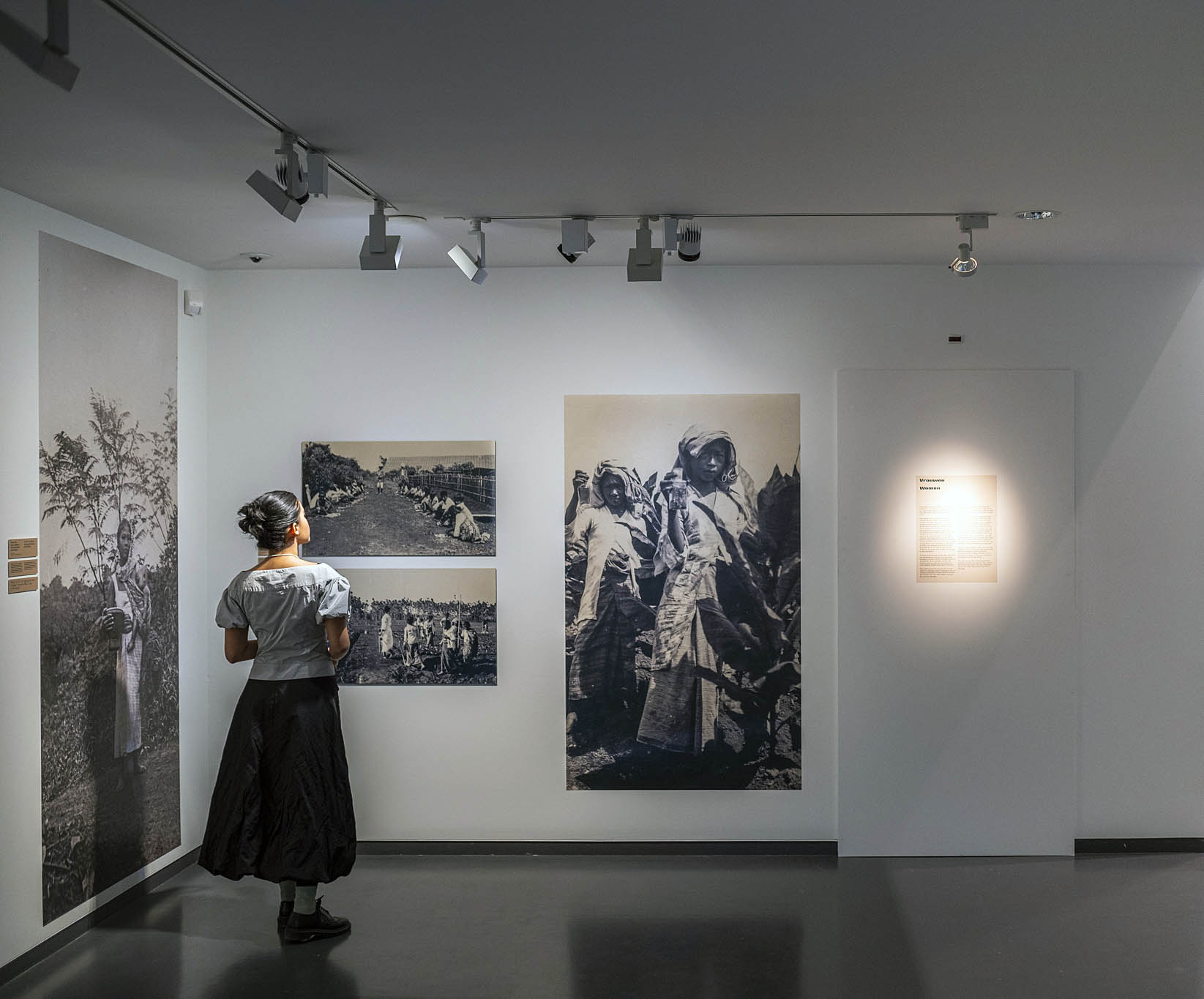
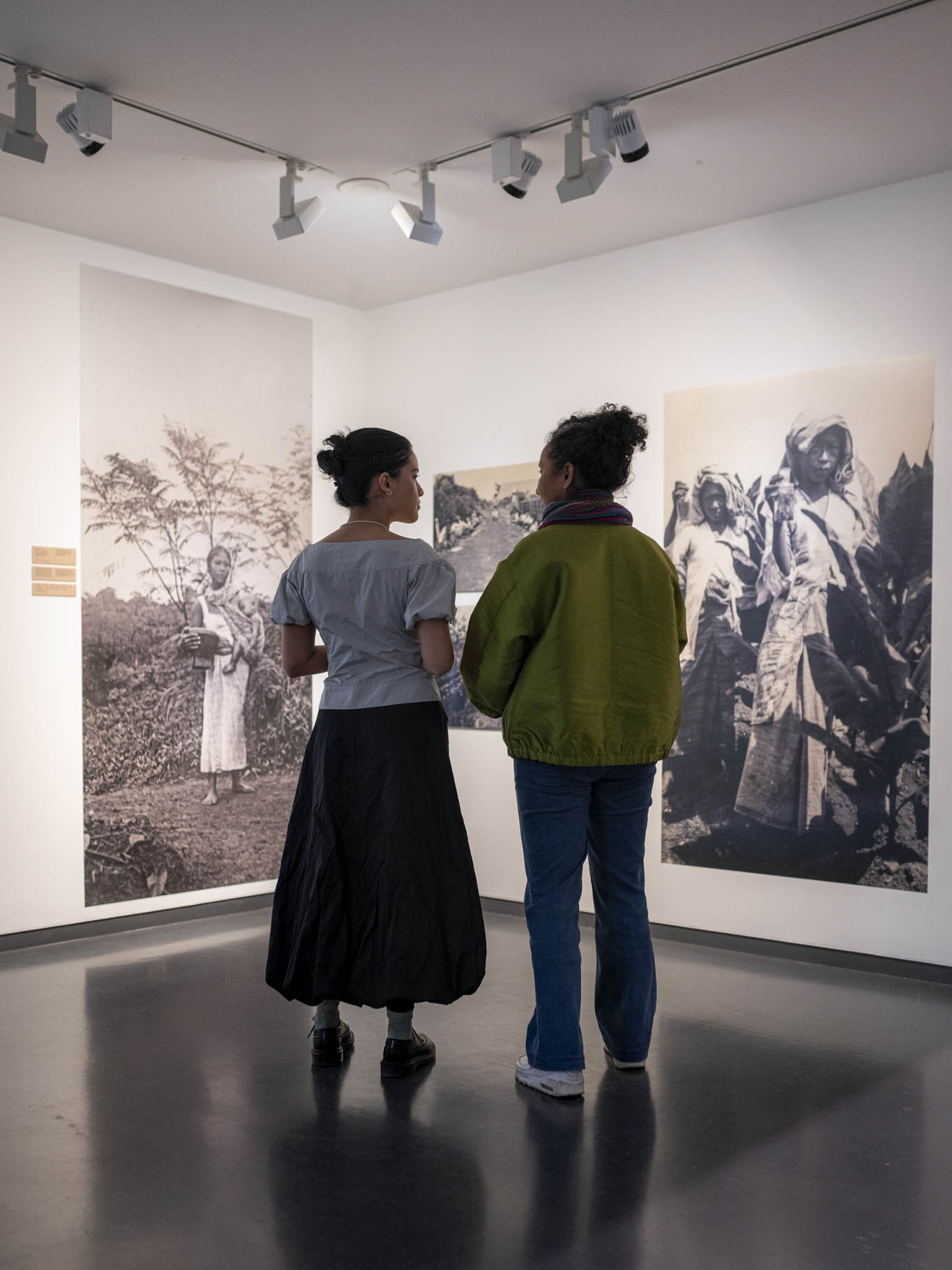
Installation views of the exhibition Hidden Connections at the Van Abbemuseum, Eindhoven, Holland
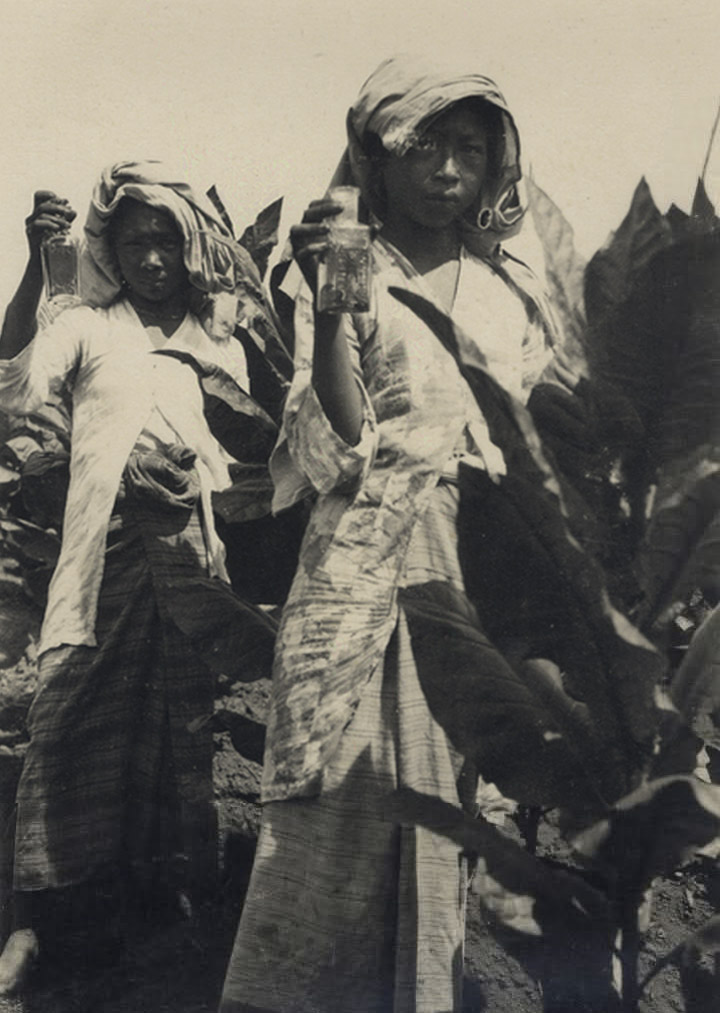
Unknown photographer
Coolies on a tobacco plantation of the Deli Maatschappij in Deli Shelfmark KITLV Deli Serdang
1920-1922
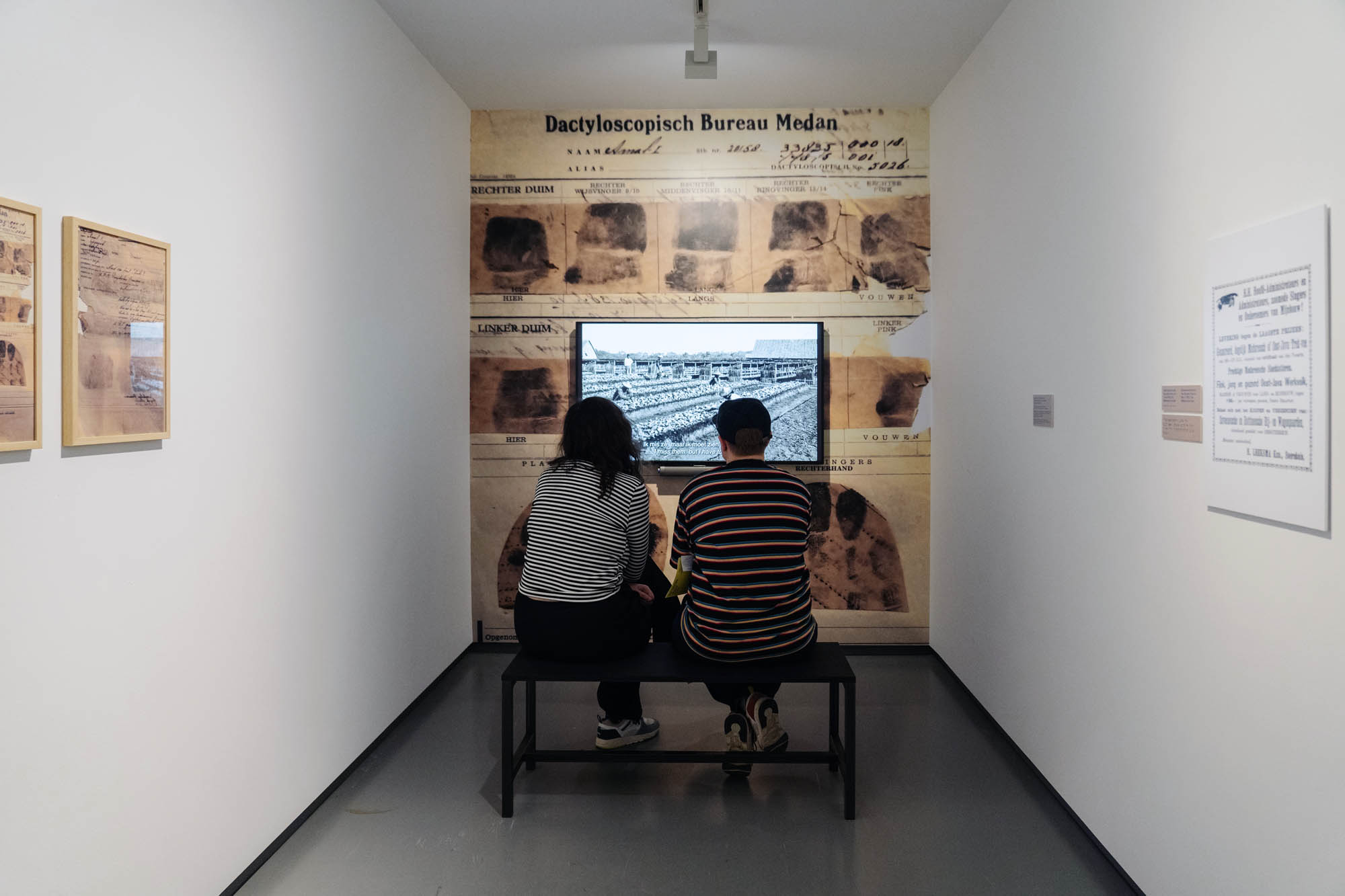
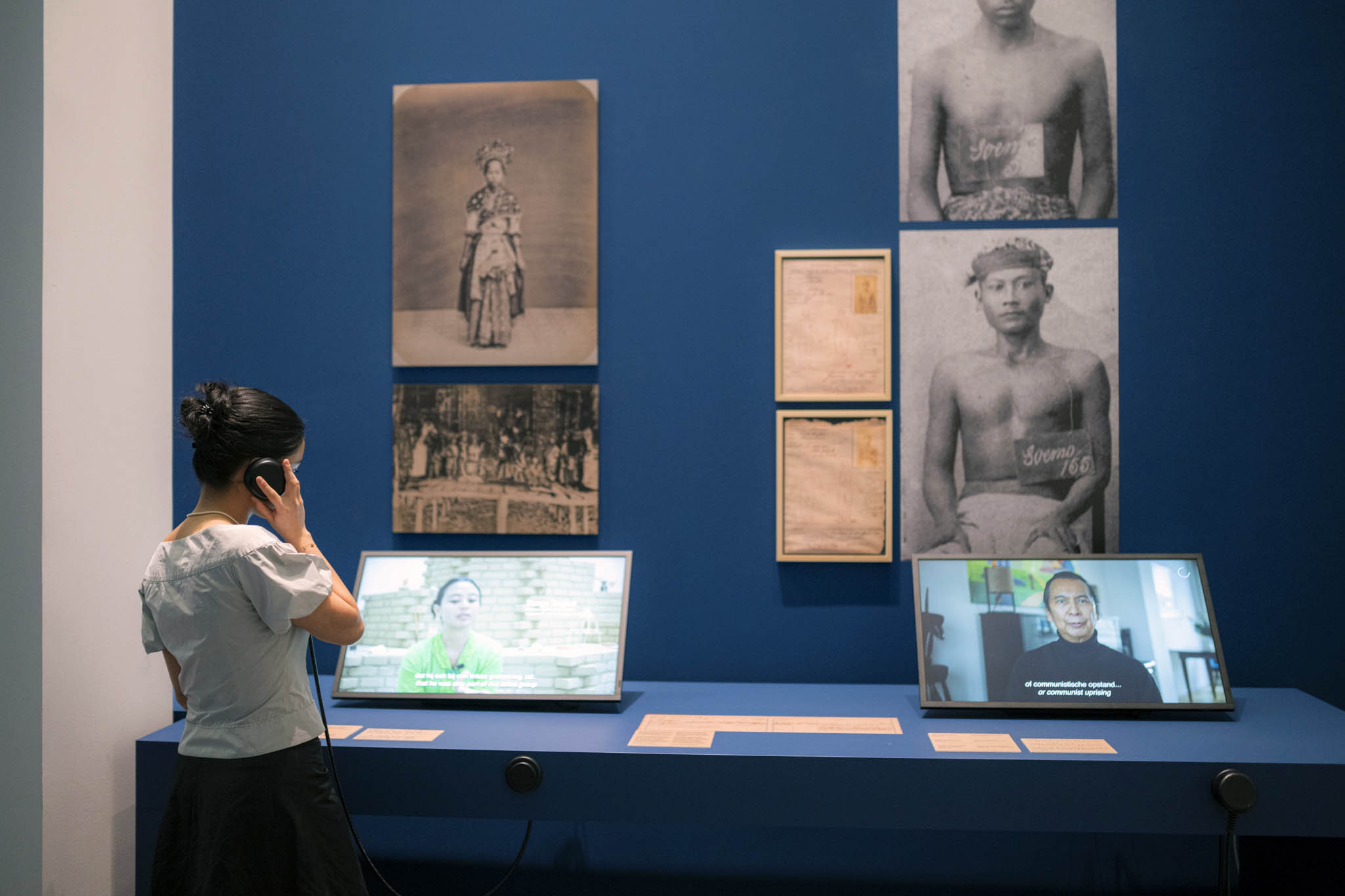
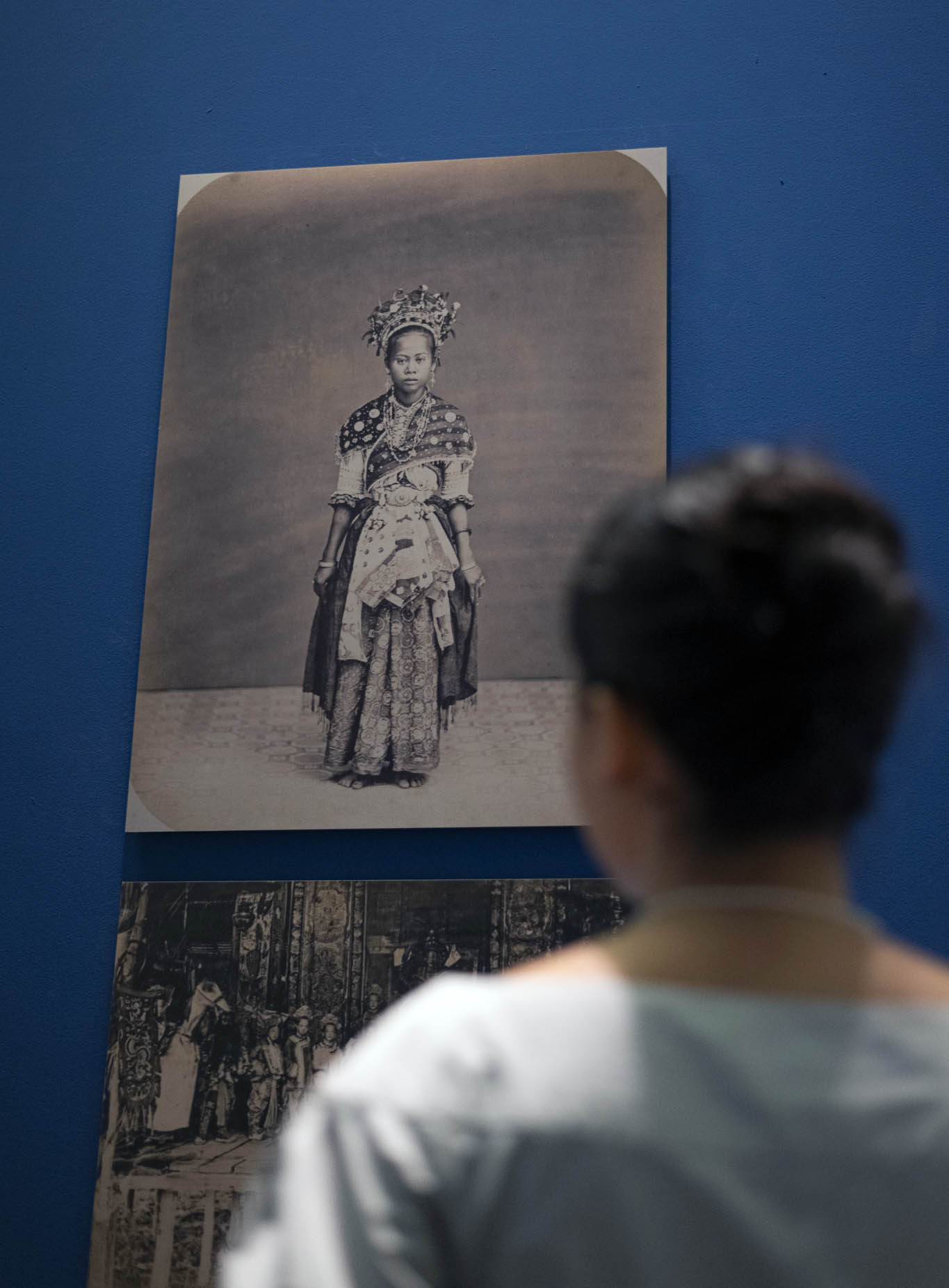
Installation views of the exhibition Hidden Connections at the Van Abbemuseum, Eindhoven, Holland
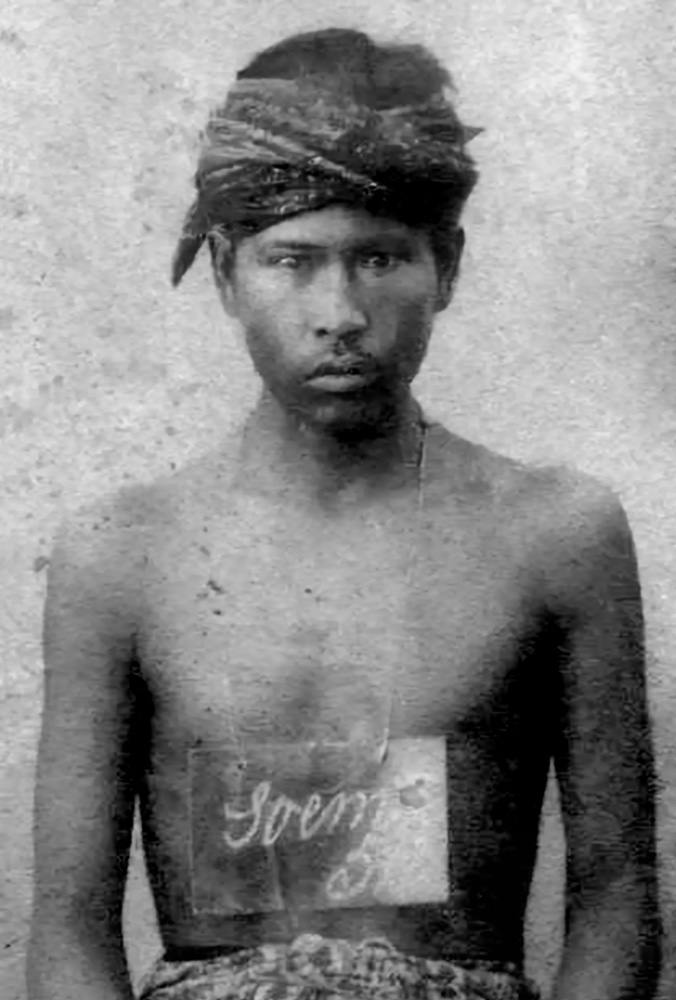
Identification card Soemo
1907
Loan from the National Archives of Suriname
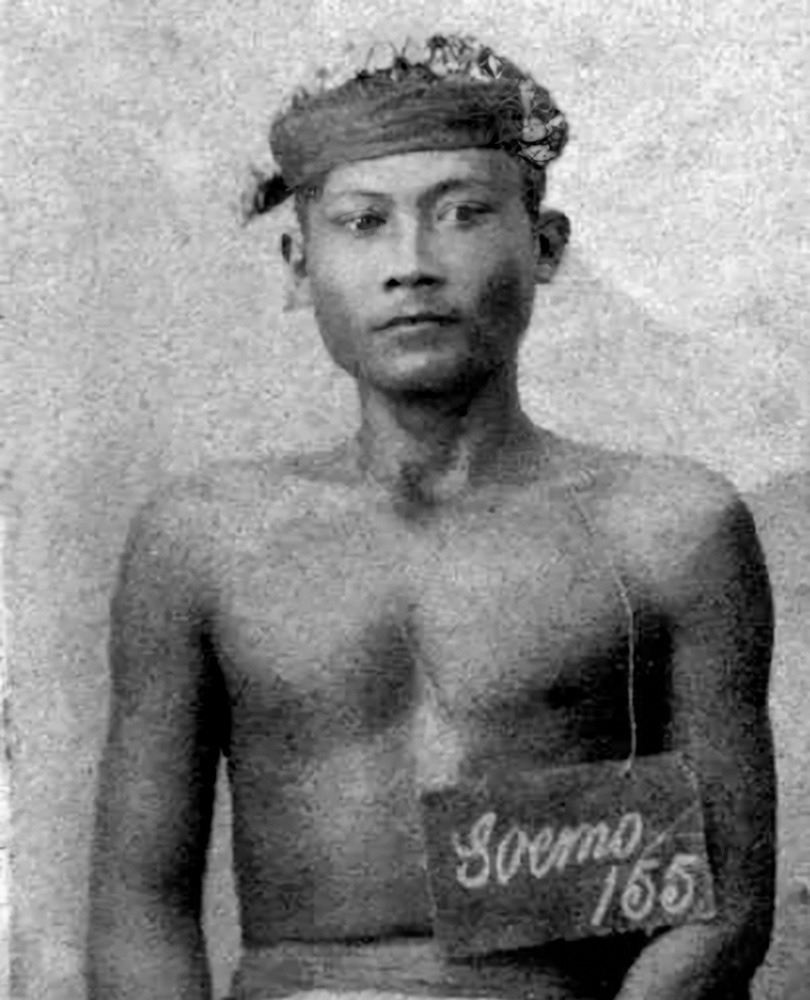
Identification card Soemo
1908
Loan from the National Archives of Suriname
![Johan Braakensiek (Dutch, 1848-1940) "The coolie ordinances" in
'De [Groene] Amsterdammer', Date 23 November 1902](https://artblart.com/wp-content/uploads/2025/04/johan-braakensiek-de-koelie-ordonantien-de-groene-amsterdammer-datum-23-november-1902.jpg "Johan Braakensiek (Dutch, 1848-1940) \"The coolie ordinances\" in 'De [Groene] Amsterdammer', Date 23 November 1902")
Johan Braakensiek (Dutch, 1848-1940)
“The coolie ordinances”
De [Groene] Amsterdammer, Date 23 November 1902
The Coolie Ordinances
From Koi. (To former Minister Cramer): What do you think about that?
Cremer: Yes, we Deli Men [Deli on the island of Sumatra] … prefer to keep quiet about that.
Advertisement from Deli-Courant and the Sumatrapost:
“Emigration, sales and commission office. Telegram address: Esas, Surabaya. Supply: Strong, young, and healthy workers, including Madurese, Javanese, and Sudanese, as well as Chinese, for agricultural and mining companies. Risk of desertion on board at our expense. – We have had the most success with our coolie projects and are willing to send copies of satisfaction reports for review. Also supply: Chinese and Javanese artisans. We undertake to fulfil all possible orders, including for beautiful Madura and Balinese slaughter and draught cattle, at competitive prices.”
Dari Koi. (Kepada mantan Menteri Cramer): Apa pendapat Anda tentang itu?
Cremer: Ya, kami, Deli Men [Deli di Pulau Sumatra] … lebih suka diam tentang itu.
Iklan dari Deli-Courant dan Sumatrapost:
“Kantor emigrasi, penjualan, dan komisi. Alamat Telegram: Esas, Surabaya. Pasokan: Pekerja yang kuat, muda, dan sehat, termasuk orang Madura, Jawa, dan Sudan, serta Tionghoa, untuk perusahaan pertanian dan pertambangan. Risiko desersi di kapal ditanggung oleh kami. – Kami telah meraih kesuksesan terbesar dengan proyek kuli kami dan bersedia mengirimkan salinan laporan kepuasan untuk ditinjau. Juga pasokan: pengrajin Tionghoa dan Jawa. Kami berkomitmen untuk memenuhi semua pesanan yang memungkinkan, termasuk sapi potong dan sapi penarik Madura dan Bali yang indah, dengan harga yang kompetitif.”
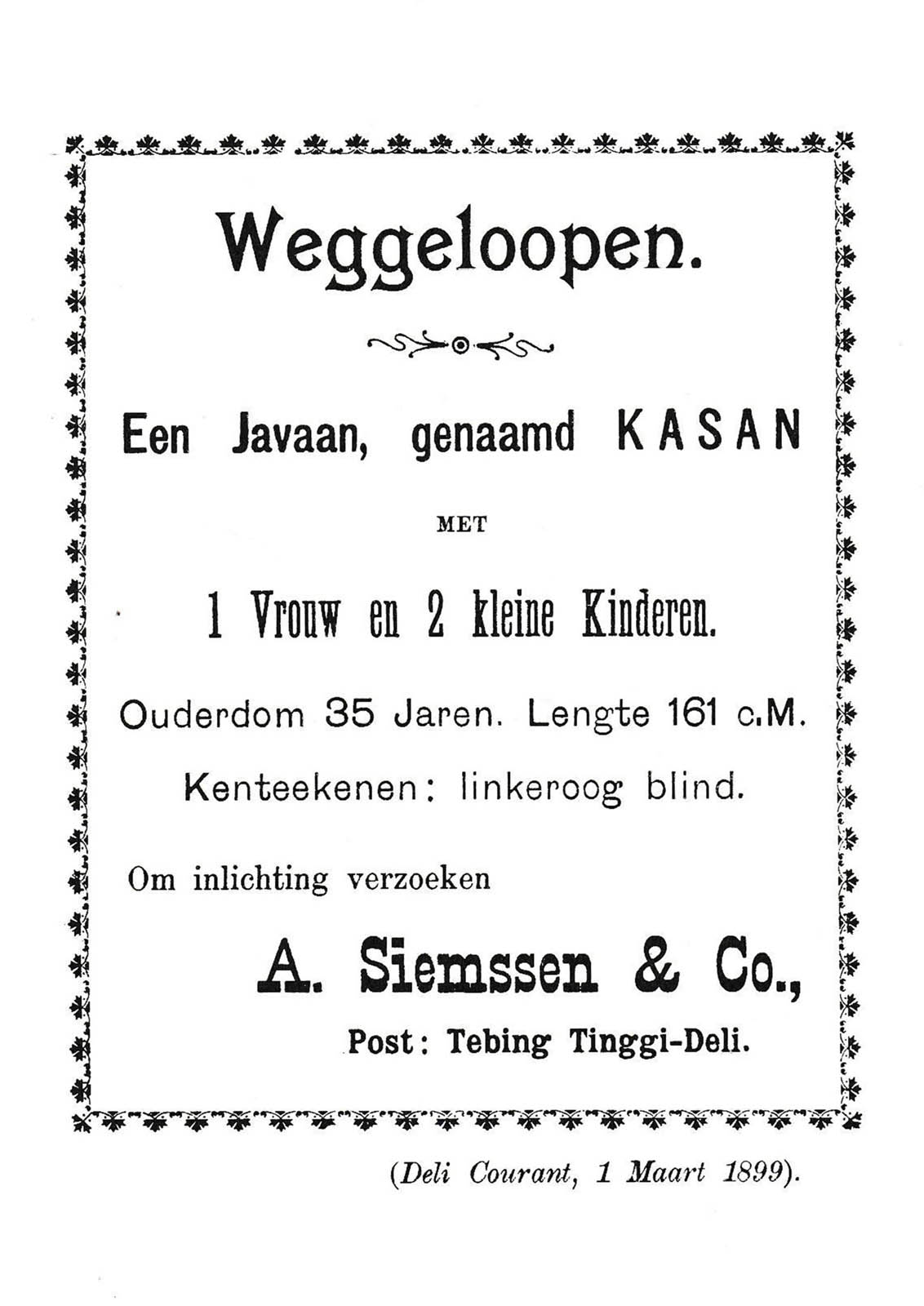
Unknown maker
Advertisement from the Deli Courant of March 1, 1899
from De Millionenen uit Deli (Private collection), 1902
“Runaway
A Javanese, named Kasan
with
1 wife and 2 small children
Age 35 years, height 161 cm
Signs: left eye blind
Request information
A. Siemssen & Co.,
Post: Tebing Tinggi-Deli”
“Pelarian
Seorang Jawa, bernama Kasan
dengan
1 istri dan 2 anak kecil
Usia 35 tahun, tinggi badan 161 cm
Tanda-tanda: buta mata kiri
Minta informasi
A. Siemssen & Co.,
Pos: Tebing Tinggi-Deli”
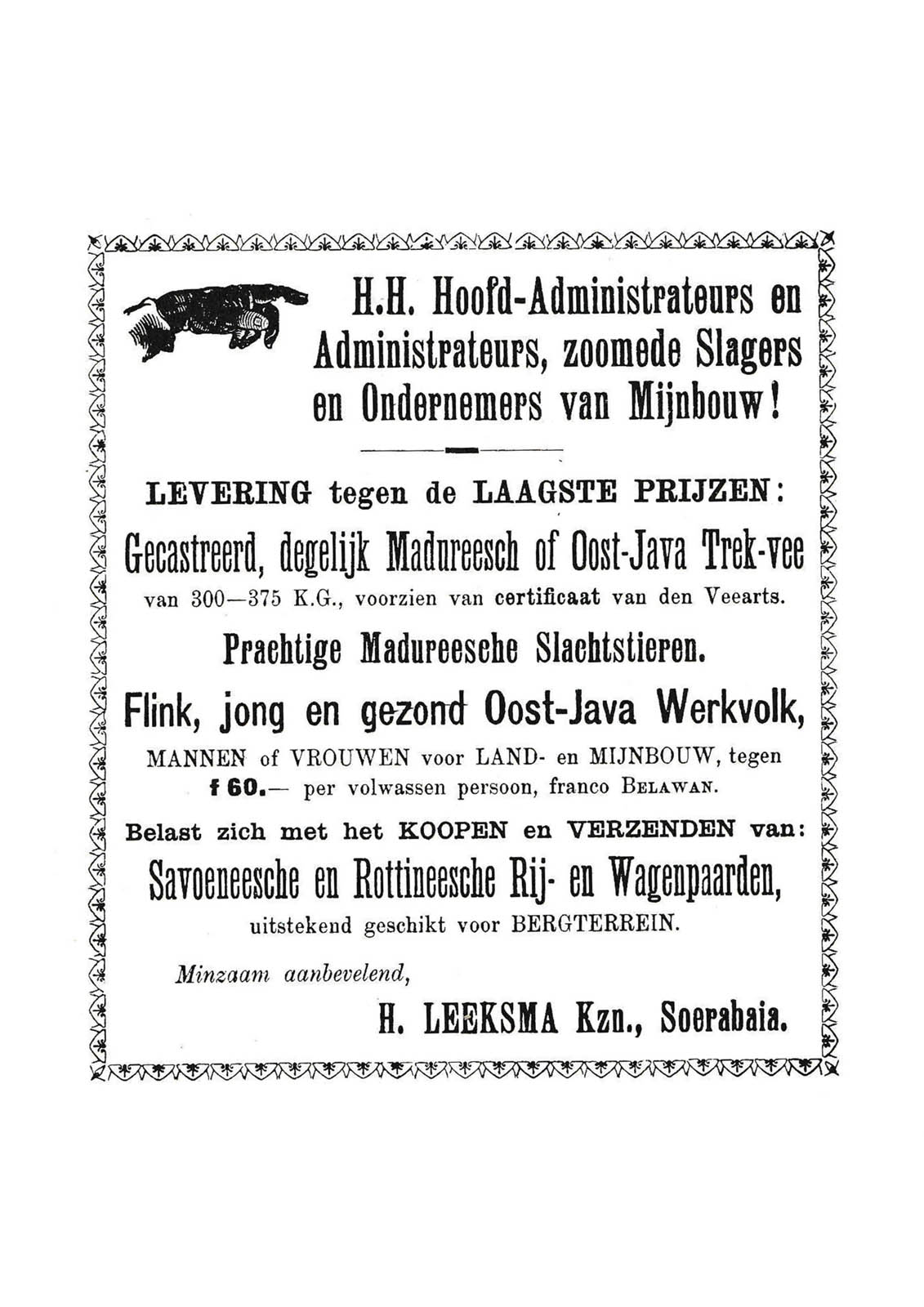
Unknown maker
Advertisement from the Sumatra-Post of May 7, 1902
from De Millionenen uit Deli(Private collection), 1902
“H.H. Chief-Administrators and Administrators, also Butchers and Mining Entrepreneurs!
Delivery at the lowest prices:
Castrated, solid Madurese or East Java draught cattle
From 300-375 kg, with veterinary certificate
Beautiful Madurese slaughter bulls
Strong, young, and healthy East Java work force,
Men or women for agriculture and mining, for
60 guilders per adult, free of charge Belawan.
In charge of purchasing and selling:
Savonian and Rottinean riding and carriage horses,
Excellently suited for mountain terrain.
Highly recommended,
H. Leeksma Kzn., Surabaya.”
“Yang Mulia Kepala Administrator dan Administrator, juga Tukang Jagal dan Pengusaha Pertambangan!
Pengiriman dengan harga terendah:
Sapi penarik Madura atau Jawa Timur yang dikebiri dan sehat
Berat 300-375 kg, dengan sertifikat dokter hewan
Sapi potong Madura yang cantik
Tenaga kerja Jawa Timur yang kuat, muda, dan sehat,
Pria atau wanita untuk pertanian dan pertambangan, dengan harga
60 gulden per orang dewasa, gratis untuk Belawan.
Bertanggung jawab atas pembelian dan penjualan:
Kuda tunggang dan kereta Savonian dan Rottinean,
Sangat cocok untuk medan pegunungan.
Sangat direkomendasikan,
H. Leeksma Kzn., Surabaya.”
Van Abbemuseum
Stratumsedijk 2 Eindhoven
+31 40 238 10 00
Opening hours:
Tuesday – Sunday from 11am – 5pm
 Art Blart _ art and cultural memory archive
You must be logged in to post a comment.